Category Archives: Muslim Illustrator

The Muslims: Book 1: The Test by Ahmad Philips

Standard
The Muslims: Book 1: The Test by Ahmad Philips

the muslims

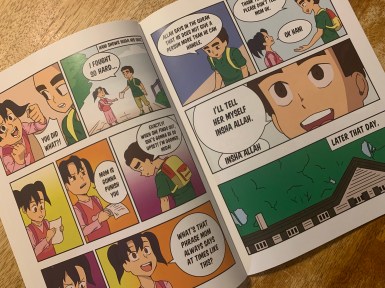
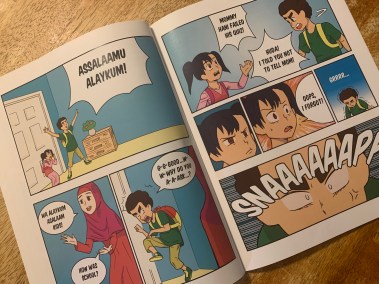
This is the first anime comic book in an eight book series aimed at early elementary readers.  Often books have lessons, this however, simply presents as an illustrated moral.  There is a situation that contains the lesson that one should always try their best for the sake of Allah swt and that is about it.  The knowledge isn’t tested a few additional times or in different situations, it is just 22 pages to illustrate the concept of doing things for the right reason, in this case studying after a failed test.  There isn’t anything wrong with the bright colorful book, the brother sister duo read authentic as they try and recall Islamic teachings, and get each other in trouble by accident, the diverse family is supportive and understanding, it just seems that it would apply to a specific lesson in a home or classroom and then sit on a shelf unasked for and not very memorable.

img_2858

The book starts with seven year old Hani trying his best on a multiple choice test that he didn’t study for.  He battles the personified Quiz Monster to no avail and on the way home from school confesses all to his little sister, Huda.  She reassures him that Allah swt doesn’t give us more than we can handle and agrees to not tell their parents.  Hani plans to tell them himself, inshaAllah.

img_2859

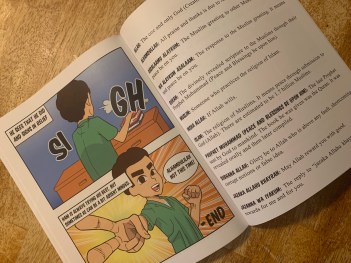
When they get home though, she slips, and spills the news to their mom.  Their dad comes home soon after and everyone knows.  The parents he imagines will turn into evil monsters themselves, but rather they laugh and remind him that he should have the intention of pleasing Allah swt in all things, so that he will assuredly never fail.  That if he makes that his goal, then he will inshaAllah find success.  Hani decides that he isn’t going to be careless in his studying and keeps focused.  He has a nightmare that he studies the wrong material, but alhumdulillah it is just a dream and he is ready, inshaAllah.

img_2860

The Islamic lesson and the situational allegory isn’t super clear, and I feel some discussion will need to take place to connect all the dots and convey the lesson in a way to be succinct and memorable.  Had he maybe made dua or intention before he studied, then the message would have been put in to practice, not just something the father talked to him about.  It is admirable that Hani was honest, that he didn’t try and hide is score, which I wish would have been praised.  Additionally, a little resolution between the siblings to show all was forgiven would have been nice.  The mom wears hijab even in the home, and there is a glossary at the end as well.

Salaam: Mindfulness for Muslims by Humera Malik illustrated by Najwa Awatiff

Standard
Salaam: Mindfulness for Muslims by Humera Malik illustrated by Najwa Awatiff

img_3300

I had planned to wait until the physical book comes out on the 15th to offer up my thoughts, but the Kindle version has released and I want to help put it on everyone’s radar.  My own kids went back to school today and emotions and feelings are all over the place: excitement, nerves, anxiety, worry.  Changes in general cause heightened feelings, throw in Covid cases on the rise, puberty, friends, more open discussions about mental health, etc., and kids need tools to be successful.  Alhumdulillah, the Qur’an and Sunnah offer guidance, reassurance, and direction, and this book helps organize and present coping tools for ages seven to adult.  Thirteen emotions over 85 pages follow a pattern of a title page, a “Remember” page with an ayat from the Qur’an (except in one case it is a hadith), then an affirmation to be said that is either a verse, a dua, or dhikr, followed by an adorably illustrated spread of simple activities to do and try in a checklist manner.  Not only will young Muslims find reassurance and direction in the text provided, but inshaAllah, they will also be comforted knowing that what they are experiencing is very human and that Allah swt and Prophet Muhammad saw have provided insight and acknowledgement of such emotions.

The 13 emotions highlighted are: afraid, angry, disappointed, grief, jealous, lonely, overwhelmed, sad, shy, sorry, upset worried, grateful.  There is an author note to parents at the beginning that mentions that the book is meant to be read “cover to cover in peaceful times and to be dipped into to find specific advice” when needed, and I couldn’t agree more.  There is also a note for the readers normalizing big emotions and reassuring them that Allah swt does not want them to despair.

The diverse character illustrations are absolutely heartwarming and I hope that they will be made in to pictures or charts to be purchased so they can be hung.  They are really well done, and the visual mapping will help kids retain and put the tips in to practice.  I’m not sure what the sizing will be in the physical paper back book, but I hope it is large enough for them to be properly enjoyed.


Ahmed and the Very Stuck Teapot by Sarah Musa illustrated by Rania Hassan

Standard
Ahmed and the Very Stuck Teapot by Sarah Musa illustrated by Rania Hassan

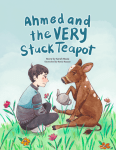
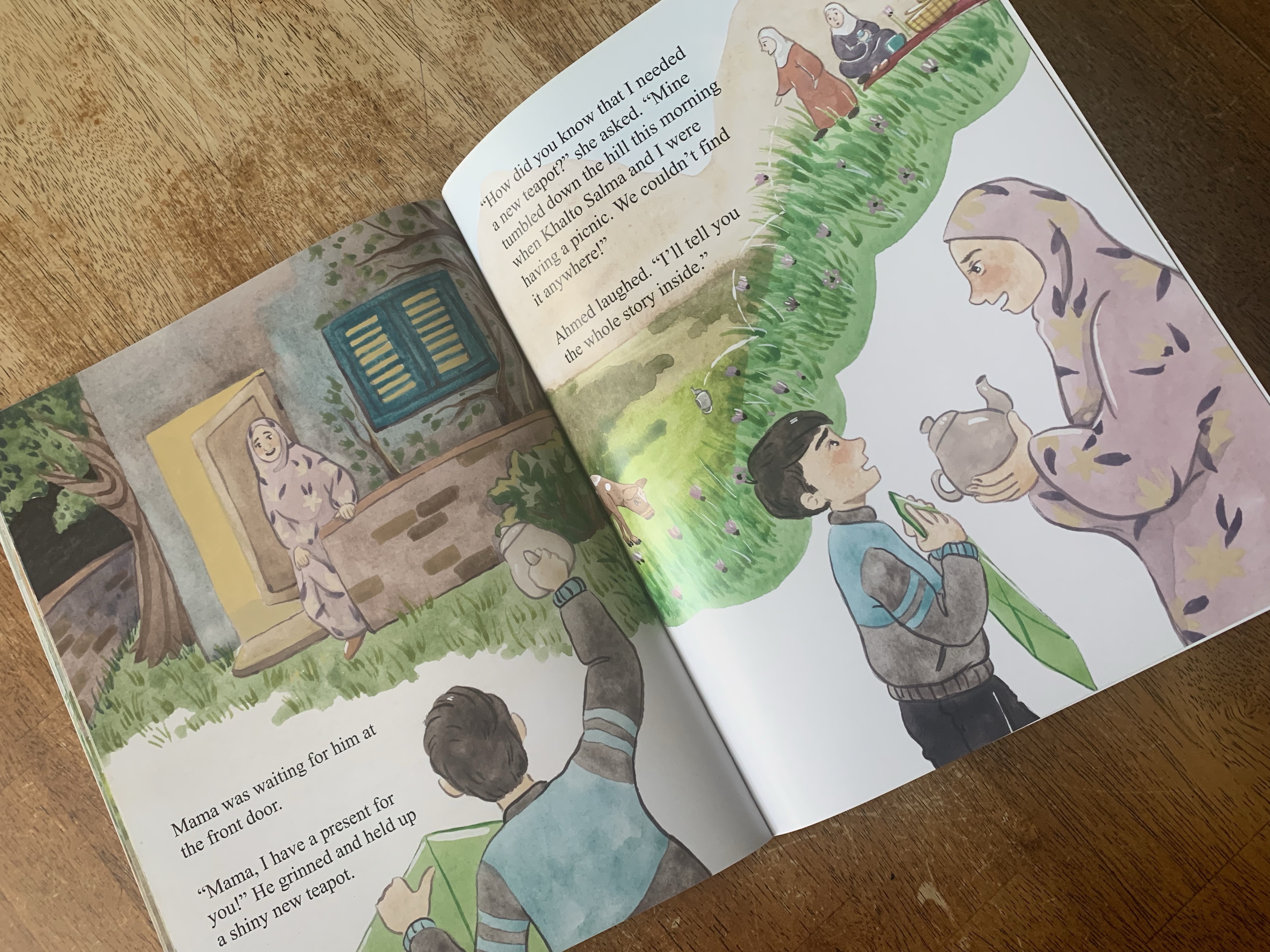
This 36 page early elementary book is packed full of choices and lessons packaged in a sweet story that kids and adults will enjoy reading and discussing over and over. My only real critique is the title. I’ve had this book sitting on my shelf for nearly a year thinking it was just a silly book about a calf with a teapot on her hoof that is stuck and would probably involve different people and methods and attempts to get it off. But the teapot is off by the tenth page, and the story is really just getting started. Like all Ruqaya’s Bookshelf picture books, the large thick shiny pages with a stiff soft cover binding make the story a great choice for storytime and bedtime alike. There are Islamic threads and references, but the story overall is universal.

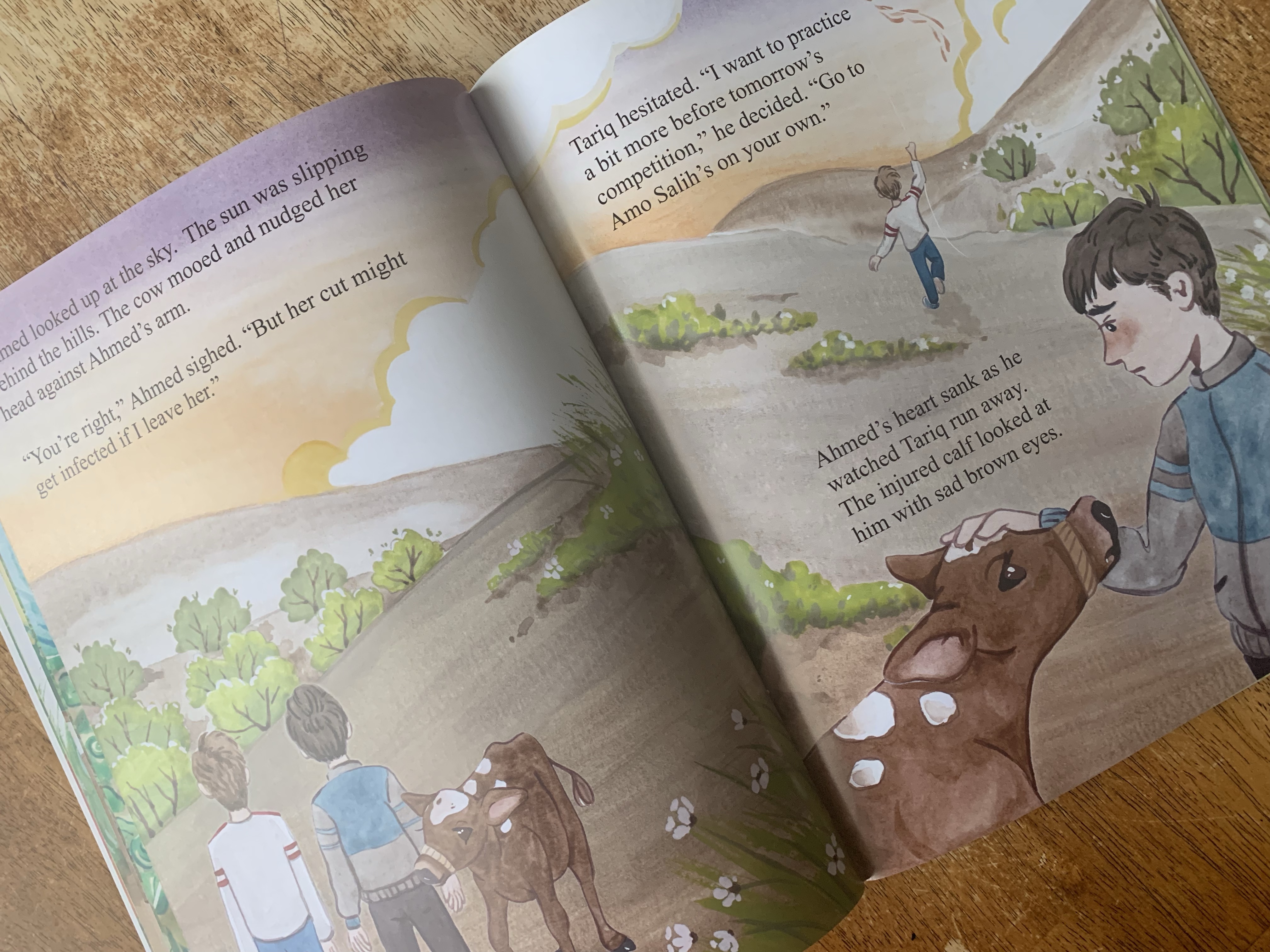
Ahmed and his friend Tariq are practicing their kite flying skills for tomorrow’s annual competition, when Ahmed’s kite gets destroyed in a tree. Heartbroken Tariq suggests he hurry to buy a new one before the store closes at Maghrib. As the boys rush off they come across a brown calf with a teapot on her hoof. Ahmad recognizes the teapot as his mother’s and feels like he should help the poor animal. Tariq keeps reminding him that the shop will close, but Ahmed decides to take the cow to Amo Waseem’s to get help.

Amo Waseem, is able to help the cow get free, but in the process, the cow get’s hurt. The cow needs help from a shepard, Amo Salih, but Amo Waseem can’t go, and Tariq wants to practice more. Ahmed knows the cow can’t be left untreated, and takes the little cow to get help. The cow then needs to get to his owner, and the story continues until the shop is closed, and Ahmed realizes he won’t have a kite for the competition. He goes to the mosque for salat and starts to feel better, he knows that he did the right thing, and inshaAllah Allah will reward him in some other way. His reward comes quickly, however, much to Ahmed’s surprise and in gratitude he also manages to find a way to help his mother.

I love the gentleness of the lessons of doing what needs to be done, even when you don’t really want to, and your friends are not supporting you. Ahmed had chances to walk away, but he didn’t and he was at peace with the outcome. His friend wasn’t mean or bad, he just made different choices. There are discussion questions at the end as well. I think this book would foster great conversation with even the littlest listeners, and I can’t wait to share it at our masjid’s storytime.

Talaal and the Whispering Worrier by Shereeza Boodhoo illustrated by Khalif Koleoso

Standard
Talaal and the Whispering Worrier by Shereeza Boodhoo illustrated by Khalif Koleoso

talaal

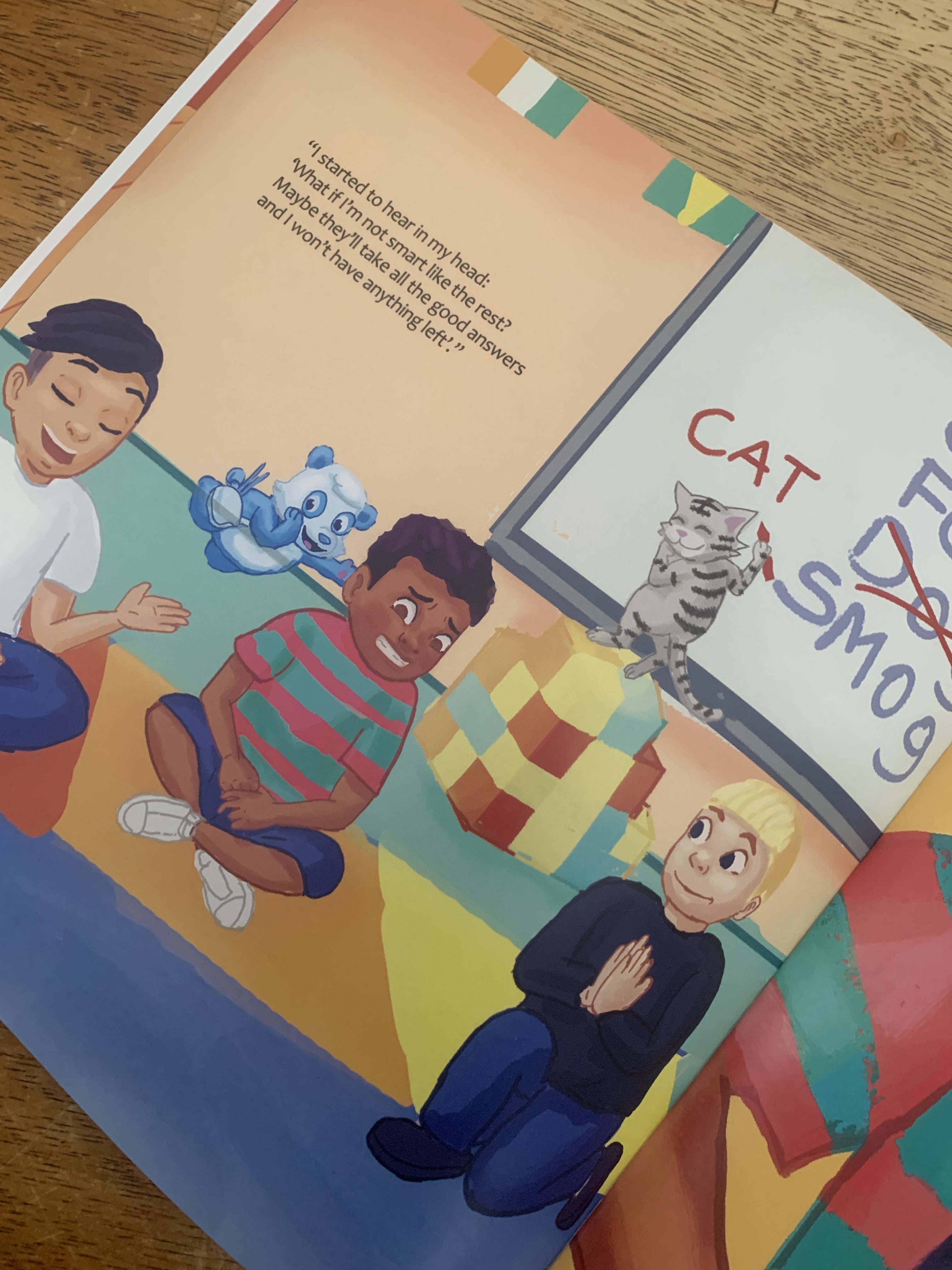
This 38 page book addresses anxiety and self confidence with Islamic tips and tools to help kids cope and feel less alone in their struggles.  The rhyming text on some pages is flawless, and elsewhere falters and distracts from the text.  Similarly, the panda that personifies the “Whispering Worrier” is at times a compliment to the story, and at other times seems to muddle the seriousness being discussed (I don’t understand the ever-present watering can).  The book is long and the text small, but overall the message is good and presentation sufficient.  Books like this by qualified professionals are incredibly valuable and important.  The use of Quran and trust in Allah swt to feel confident and at ease is something we need to share with our young ones early, often, and regularly. 

img_2530

Talaal comes home from school and declares that he feels sick and is not going back to school.  His parents can’t seem to find anything wrong and send him to go do his homework.  He passes his older sister who is praying and seems so relaxed, when she is done she comes and talks to him.  He explains how he felt when the teacher asked them to share and how the fear and nerves felt like his heart was being beat on.  She reassures him that she feels the same way at times and that a Whispering Worrier whispers unhelpful thoughts to tear us down.

img_2531

She suggests countering the negative thoughts with helpful positive ones.  She also suggests reciting Qur’an.  She then has him practice some ayats.  He recites the begining of Surah Ikhlas, and starts to feel better.  Talaal excitedly goes to tell his parents what is going on, and the suggestions his sister has given him for coping and overcoming his stresses.  They let him know that they too get nervous.  His mom, goes a bit off topic and explains various wonders that Allah swt has created and they reassure Talaal that he too is beautifully made.  Talaal starts practicing and finds over time, in different situations, he starts to calm his Whispering Worrier.

img_2533

I like that the advice is rooted in Islamic concepts and that his sister, not an adult, is who coaches him and guides him, making it seem normal and not a punishment.  I like that it isn’t an instant fix, but something to work out and be consistent with over time.  The end has a note to caregivers and some tips.  I think reading the book and having discussions is the first step and inshaAllah if your child or student is struggling that professional help will be sought, so that children don’t have to suffer needlessly.  

img_2534

I read this to a group of early elementary students to try and normalize the topic and encourage them to talk to a parent or teacher if they felt similar to Talaal.  Unfortunately, the book had a hard time keeping their attention and I think, in retrospect, it might be a better selection for smaller groups or one-on-one so that discussion and feedback can safely occur.

img_2539

Samira Surfs by Rukhsanna Guidroz illustrated by Fahmida Azim

Standard
Samira Surfs by Rukhsanna Guidroz illustrated by Fahmida Azim

surfs

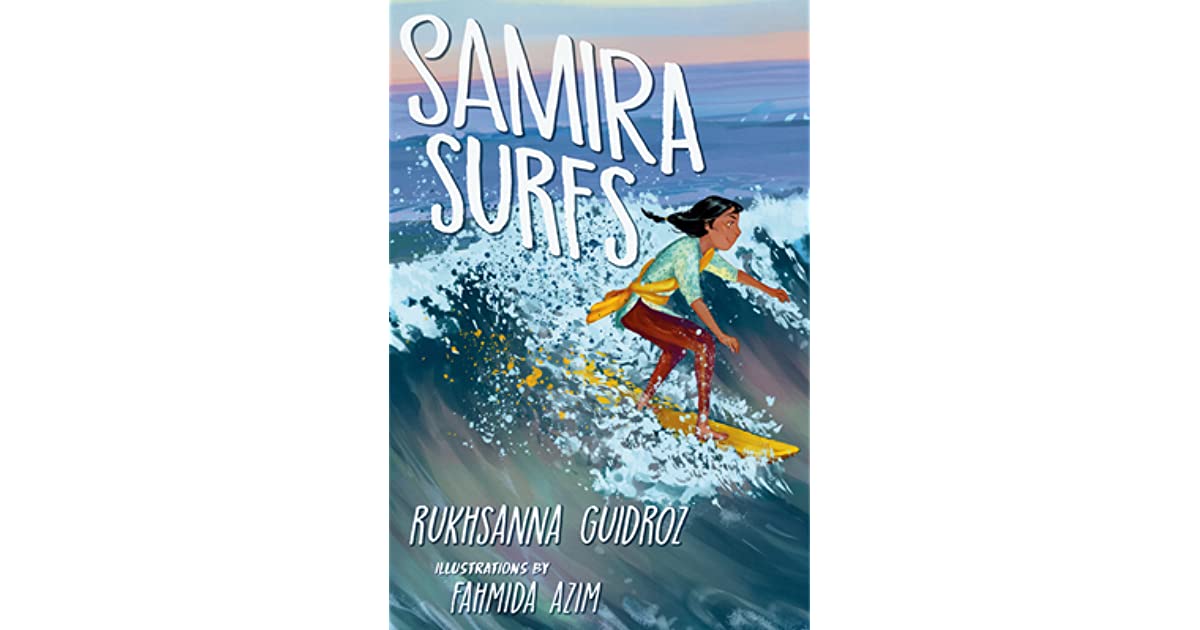
I have been anxiously waiting for this middle grades 411 page book in verse to be published.  The last few books I’ve read in this style with smart strong female protagonists have blown me away.  This book unfortunately really fell flat.  I think the difference is most OWN voice narrative do so well in prose when the emotion can be felt and explored deeply, so that when the story moves forward with sparse words the reader can forgive the gaps and jumps.  This didn’t have that insight, sadly, and just left a lot of holes for me. The author’s family on her father’s side is Muslim, she is Persian Indian Chinese, not Rohingya or Bangladeshi, and that isn’t to say that she can’t write a story about them, but it just felt lacking, and this is my assumption as to why.  The author is a surfer, and that is where the detail and passion really shines. The book is fine, it just didn’t inspire me or move me.  It checks boxes for having characters with strong Muslim identities, highlighting a persecuted population, showing diversity within subcultures, and showing universal similarities, so I’m glad the book was written and is available, I just wanted it to be so much more.

img_2388

SYNOPSIS:

Samira and her family have recently made the perilous escape from Burma to Bangladesh.  Burma decided that the Rohingya must be killed and convinced the majority Buddhist to turn on their Muslim neighbors.  Her parents and brother survived, but her grandparents, her Nana and Nani, drowned on the way.  Samira’s family were turned away from the over filled refugee camp in Cox’s Bazar and have set up with others, their own meager living on the outskirts.  Samira’s father works for very little illegally as a shrimper, her brother as a waiter, and she sells eggs on the beach to tourist.  Ever on the lookout for police and from angry Bangladeshis, life is lonely and frightening.  Slowly Samira starts to make friends with other girls, her brother Khaled is helping translate and is beloved by his employer.  When their father gets injured however, the family is thrown in turmoil as they need his income.  At this same time Samira starts to be tempted by the ocean and the surfer girls that seem so free and fearless as they take on the waves.  Knowing that her family will not support her surfing, her brother agrees to teach her how to surf in secret, like he is teaching her to read and write English.  A surfing contest is announced for boys and girls with a substantial monetary prize for the winner, but Samira is not allowed to be in the water, and the Bangladeshis in charge of the surf boards are not happy with how much potential Samira has to win the competition.

img_2389

WHY I LIKE IT:

I love that the story brings some awareness to the under represented Rohingya and that it shows resilience and strength.  It talks about religion, they opt not to fast in Ramadan because the father is weak after his accident and he proclaims that if he isn’t fasting no one should.  The men go to the mosque, the mom talks about hijab.  Cultural words are dropped in and foods mentioned.  The illustrations are fun and engaging and do a good job of breaking up the text and keeping the reader connected.  I loved the dad and his way of supporting his kids, I also loved the brother sister relationship, but ultimately, the plot holes just overwhelmed the straightforward story line.

I wanted to know more about the tourist near this refugee camp, who were they (Bangladeshis? foreigners?) and what was that dynamic like.  I wanted to know where the eggs came from and how that was set up as a job for Samira.  How come the family was nervous about Samira being on the water since that was how her grandparents died, but not her brother? I get that as a female grows the family might not want her in a bathing suit out swimming for modesty issues, but I didn’t like how the book just chopped it up to swimming being against Islam, clearly she was taught to swim and obviously it isn’t.  I was looking forward to some big reveal about the brothers notebook of drawings.  I thought maybe he would get them to a newspaper or get them shared somehow to give insight to what his people were experiencing.  It seemed like it was teased that there was going to be a climax there, but there wasn’t and it felt misleading.   I didn’t get the whole standoff with the other surfers protesting if Samira wasn’t allowed to surf they wouldn’t either.  If the organizers weren’t letting her that makes sense, but why would her parents care? There wasn’t a clear connection and the speed and vagueness in which it was resolved was disappointing as it was presumably the point of the story.

img_2390

FLAGS:

Fairly clean.  There is bullying and mention of death.

img_2379

TOOLS FOR LEADING THE DISCUSSION:

I don’t think I would do this for a middle school book club.  It is a solid middle grade read.  Possibly it could be used to supplement a larger unit of study about refugees or particularly the Rohingya.  Older readers will be left with more questions than they had when they began the book though, and wonder what the point of the story was at all.

img_2373

The Colours of My Eid: Memories of Hajj and Eid al-Adha by Suzanne Muir illustrated by Azra Momin

Standard
The Colours of My Eid: Memories of Hajj and Eid al-Adha by Suzanne Muir illustrated by Azra Momin


colour


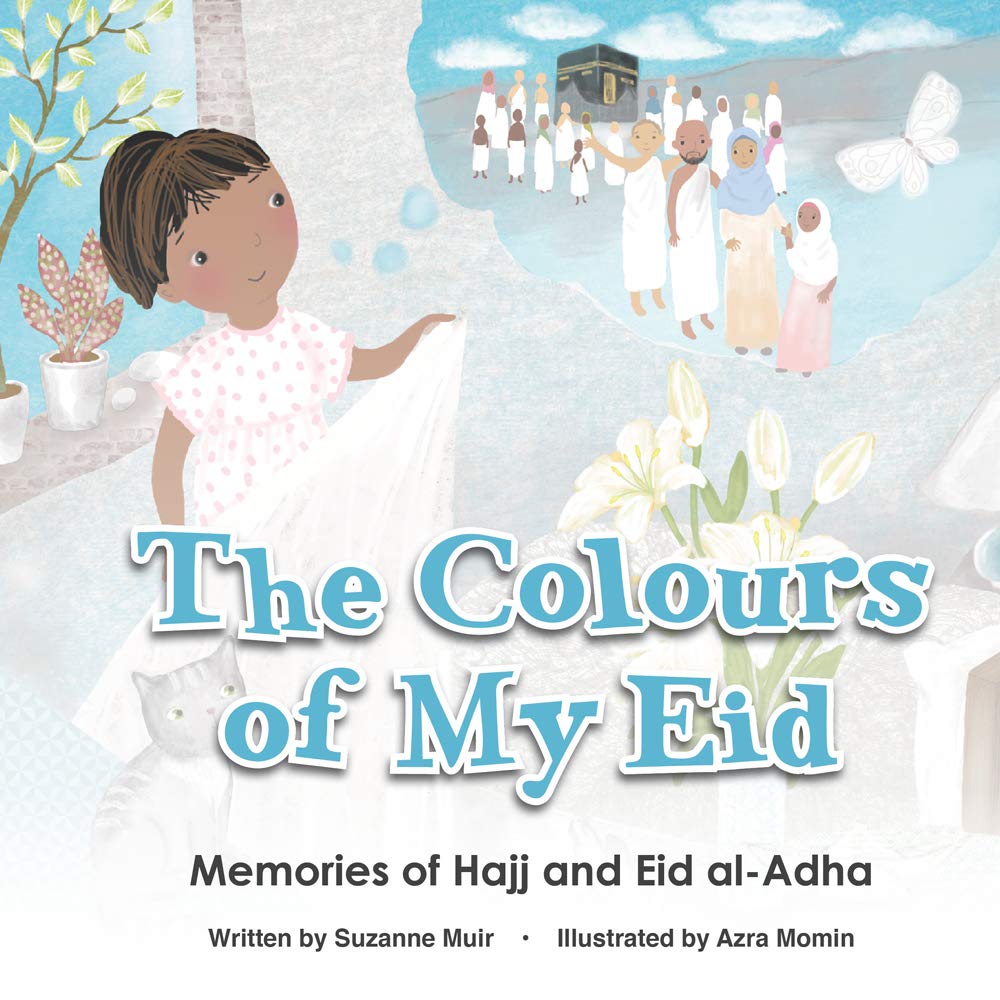
At 18 pages, this 8 x 8 book focused around colors contains a lot more information than what initially meets your eyes.  The warm beautiful, full page pictures fall opposite a highlighted color and a description of that color in the child’s world that reminds the characters of their time at Hajj or celebrating Eid al-Adha.  On each of the fun text pages is a light green text box at the bottom with factual information that older children or adults will benefit from and be able to share with younger listeners.  The main text is ideal for toddlers and up, and older kids up to 3rd grade will benefit from the nonfiction highlights that can educate or remind Muslims and non Muslims alike, about the importance of Hajj and Eid al-Adha.  

The book starts with an introduction about the Islamic language and perspective used, and clarifies that the colours emphasized are to help visualize the point being made, it also gives information about Eid al-Adha.

The colors highlighted are: white, black, brown, green, grey, yellow, and purple.  The large simple text takes something relatable such as the monkey bars, or balloons, or the sky and corresponds it to a memory of Arafat, or ihram, or the hills of Safa and Marwa.

The nonfiction text gives specific dimensions of the Ka’aba, the story of Hajar and baby Ismail, the requirement of Hajj and some of the steps.  There is a lot of information conveyed which at times is incredibly detailed, and sometimes, rather vague and generic, i.e. Tawaf is when Muslim pilgrims circle the Ka’aba as part of the Hajj rituals. Overall, this little book packs a punch, and I was equally impressed at how it held my five year old’s attention with the colors, and my interest with the facts detailed below.


Baddawi by Leila Abdelrazaq

Standard
Baddawi by Leila Abdelrazaq

Baddawi-cover

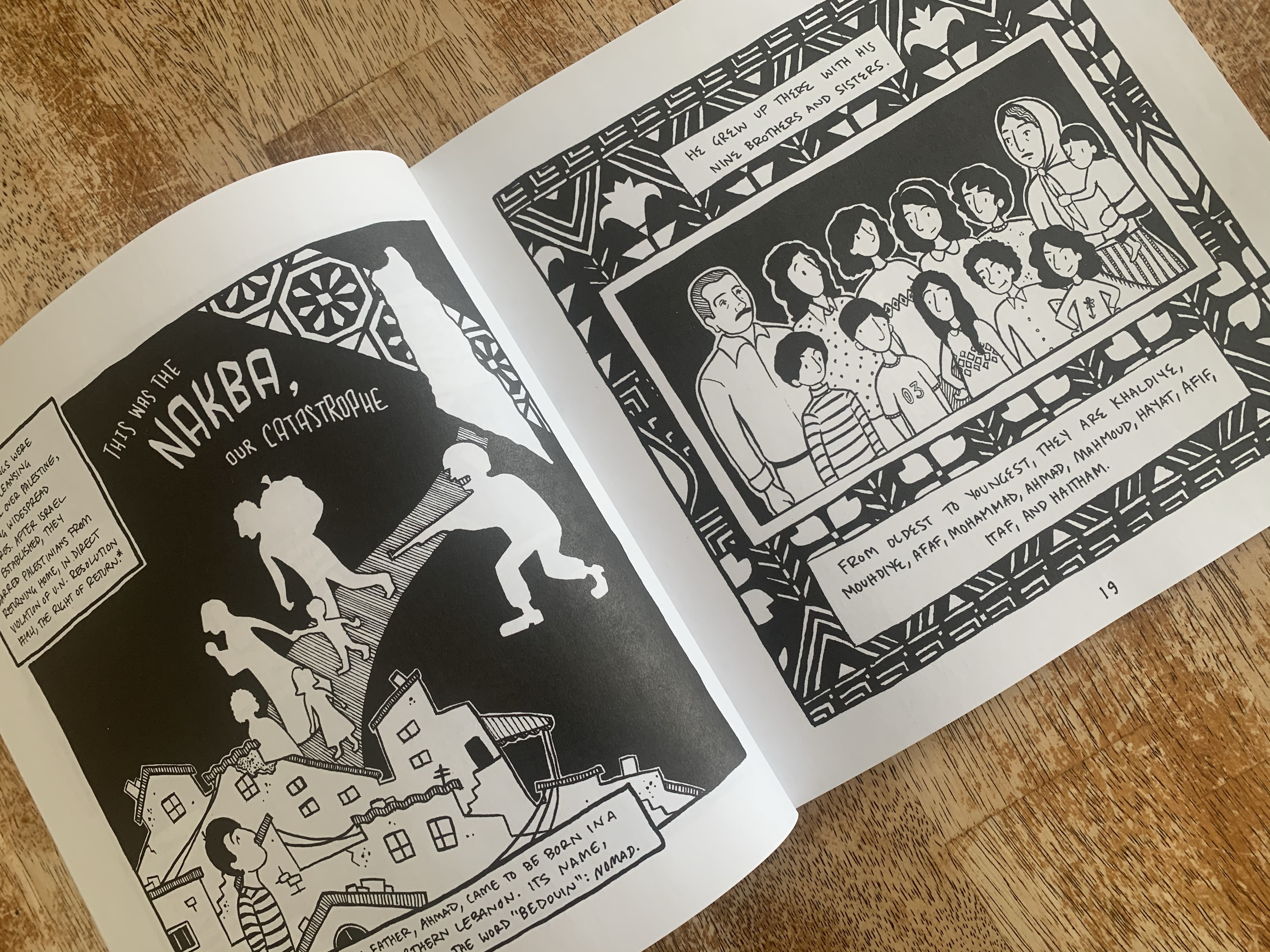
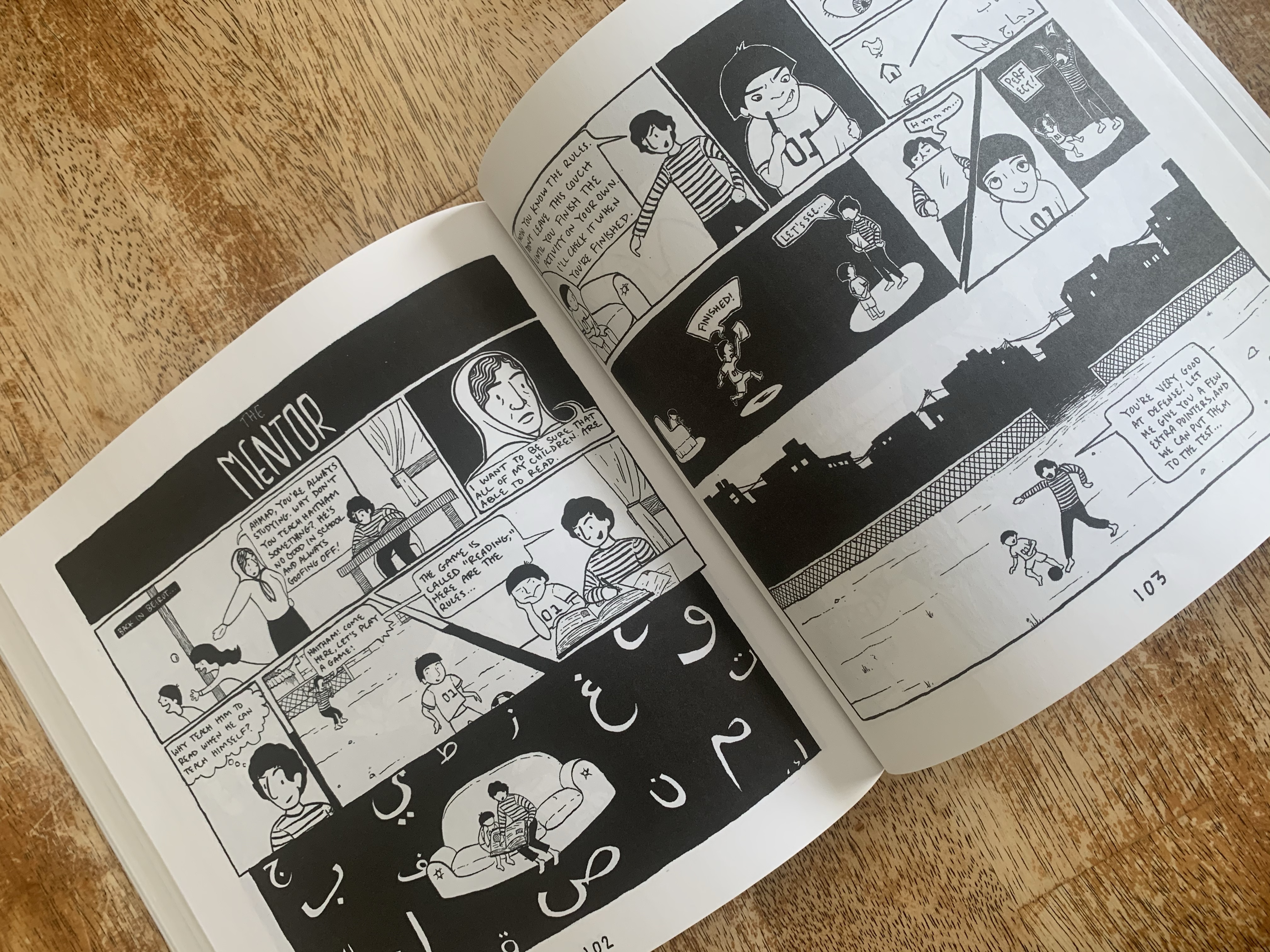
This 8.5 x 8.5 middle school graphic novel biography tells a powerful story of a young boy coming of age and striving to find his place in the chaos of the Nakba and its aftermath.  Over 128 pages the reader will learn and be outraged about the displacement and genocide of so many Palestinians as they see the events through Ahmad’s eyes and relate to his dreams and experiences despite the terror around him. The book has violence, destruction, death and mentions rape, yet the humanity shines through as it is also heartfelt and memorable.  I had my 14, 12, and 10 year olds read it and we have discussed it at length in context to what they already know about Palestine and the ethnic cleansing occurring.  It is a seamless mix of history and character driven narratives brought to life by the black and white illustrations of the author/illustrator’s family history.
img_1656

SYNOPSIS:

There are 10 children in the author’s father’s family, and her father, Ahmad, was born in a refugee camp in northern Lebanon, called Baddawi.  The story starts on October 29, 1948 when Safsaf was ethnically cleansed.  Ahmad’s father, the author’s grandfather had been in Akka at the time of the massacre, and her grandmother hid from the Israeli soldiers, the family, once reunited, would escape for a refugee camp, hoping that they would one day return.

We first get to know Ahmad as he starts first grade in Baddawi.  Things do not start well for the little guy as right away he gets teased by other students, his class is too large so he is selected to be joined with a girls class, and he doesn’t have soccer cleats so he isn’t allowed to play soccer, luckily he gets two good crayons, unlike his friend who gets a white one.  Ahmad is identifiable by his striped shirt that he wears throughout as a nod to Handala, the boy depicted with a striped shirt with his hands clasped behind his back and his face not shown.  The artist said his face would be revealed when Palestine was free, sadly the artist, Naji al-Ali passed away, and Palestine is still occupied.

Ahmad desperate to purchase soccer cleats devises a business plan that his mother takes as gambling and quickly puts an end to, in exchange she offers to pay him if he helps her collect and prepare za’atar.  It isn’t as fun, or as lucrative, but they family is busy packing up to return to Palestine.  Unfortunately the Naksa, the setback, the six day war occurs, and more Palestinians are ethnically cleansed and the families cannot return. Ahmad and all those in Baddawi carry on, playing, celebrating Eid, trying to claim normalcy.  The camp however, is not safe and soldiers raid the camp killing PLO leaders and innocent people in their way.  With no option but to keep on keeping on, these acts of violence are often taken in stride. It is so hard to believe, but what else can they do, the children still play, deal with bullies, and cope with universal struggles in addition to being shot by rubber bullets, and fearing cluster bombs and shellings.  At one point Ahmad and his siblings are left in Baddawi to finish school while his parents are in Beirut.

When the family is reunited in Beirut, Ahmad is in a better school, but violence follows as Mossad agents start raiding PLO homes in Lebanon.  Ahmad goes back and forth between Beirut and Baddawi, wherever he can go to school.  His favorite library is the one at the American University in Beirut and he hopes to attend school there, but without connections, he is at a loss to come up with funding.  His intellect finally lands him an opportunity to leave the Middle East to pursue higher education, he ends up in the United States, and when the story ends, readers are left hoping that everything works out even knowing it will be 10 years before he can return home to see his family.

img_1657

WHY I LIKE IT:

I love that the harsh horrific life is not shied away from in a war, but the little things are just as important in shaping and showing Palestinians to be resilient and culture rich.  I love how the concept of Handala is included and amplified.  The book is at times funny, and at other times devastating.  The connection to the characters is pretty remarkable, in such a relatively short book, and I am fairly confident it will be pulled off the shelf and thumbed through often.  I really wanted to know if the girl in the book that Ahmad left behind ended up being the author’s mother, or if he married someone else, but I couldn’t find it by Googling.  This book is truly powerful, and I highly recommend it.  There isn’t a lot of religion, the family is shown praying on Eid and celebrating.  It mentions the diversity in Beirut, but nothing too detailed.  Similarly, there isn’t a lot of political detail.  There is a glossary at the end, some actual photographs of Ahmad and his family.  At the beginning of the book there is a preface about Handala and how Ahmad represents more than just her father’s experience as well as information about the tatreez patterns on the pages and a map.

img_1658

FLAGS:

There is violence, torture, killing, death, bullying, and possibly gambling.  The book mentions that women were raped, but it isn’t detailed.  The war is ever present and depicted, but it isn’t sensationalized.  Ahmad and a girl study together and the family wants them to get married, but Ahmad opts instead to leave for school, nothing inappropriate.
img_1661

TOOLS FOR LEADING THE DISCUSSION:

This book might not work as a book club selection, but I hope middle school children and their teachers or parents will encourage them to read this book and think about it.  Imagine if it was their homes that were taken, imagine what they would do, and how they would manage, and to be aware that it is still going on and that we cannot be silent.

img_1660

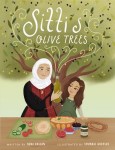
Sitti’s Olive Tree by Ndaa Hassan illustrated by Soumbal Qureshi

Standard
Sitti’s Olive Tree by Ndaa Hassan illustrated by Soumbal Qureshi

olive trees

This lovely 27 page book is a story infused with love, culture, and olive oil.  The hardbound, large thick pages are richly illustrated as the text, perfect for ages preschool to second grade, tell of the olive harvesting season in Palestine.  The story is framed between a young girl learning about the past from her grandma’s memories and enjoying the olive oil sent by her uncles from their homeland.  The story is warm and informative and does not discuss politics or conflict. There is a key hanging on a map of Palestine in the illustrations, but nothing in the text.

img_1213

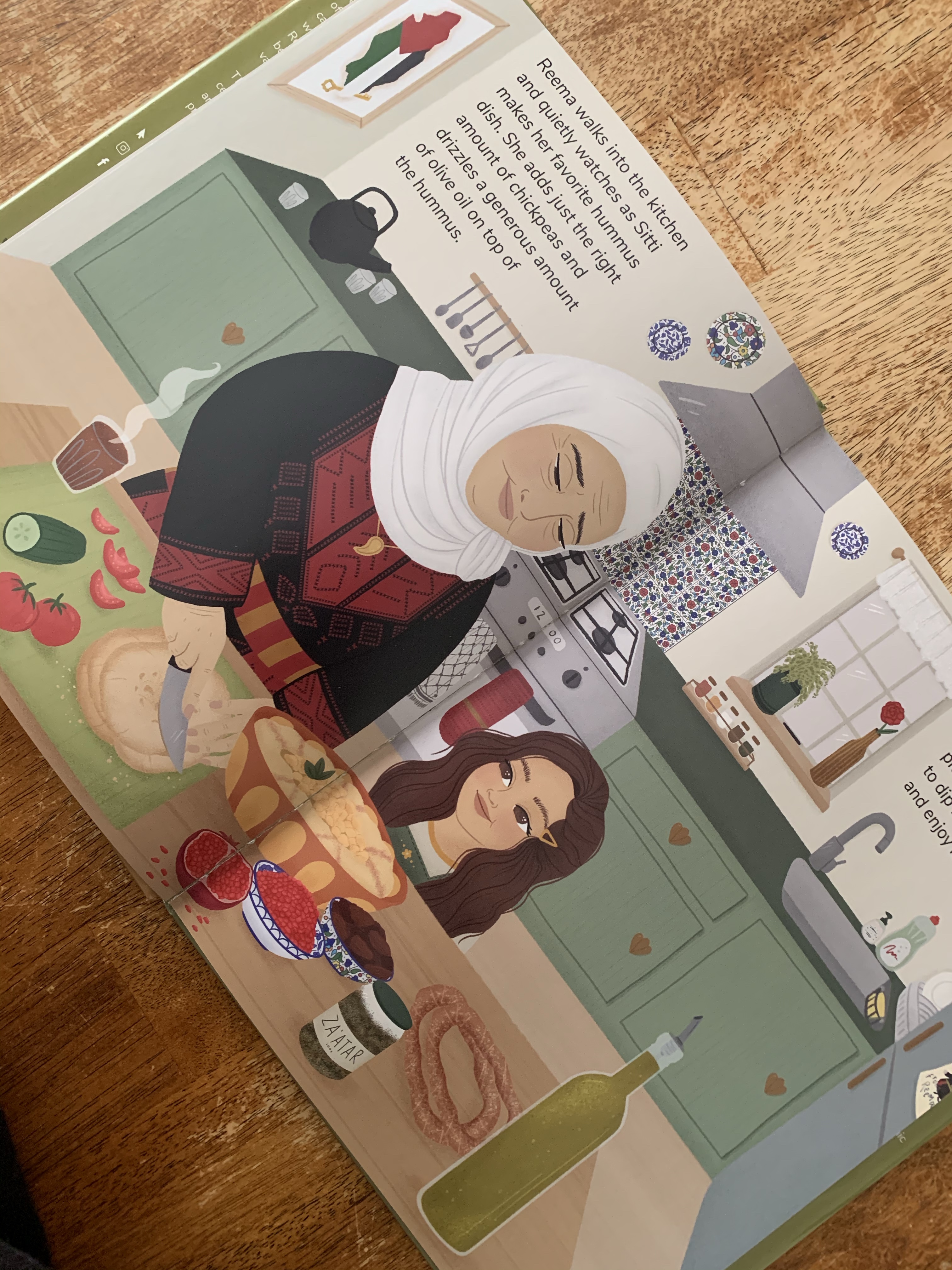
Young Reema watches her Sitti make hummus. When a drop of olive oil slips down the side of the bottle and Sitti wipes it up and rubs it in Reema’s hair.  Reema wants to know how olive oil, zeit zaytoun, can be used in such different ways. As Reema is reminded of how far the oil has traveled and recalls that her Sitti never buys olive oil at the store, the two settle in for Sitti to tell Reema some of her memories about the harvest on her ancestral land.

img_1214

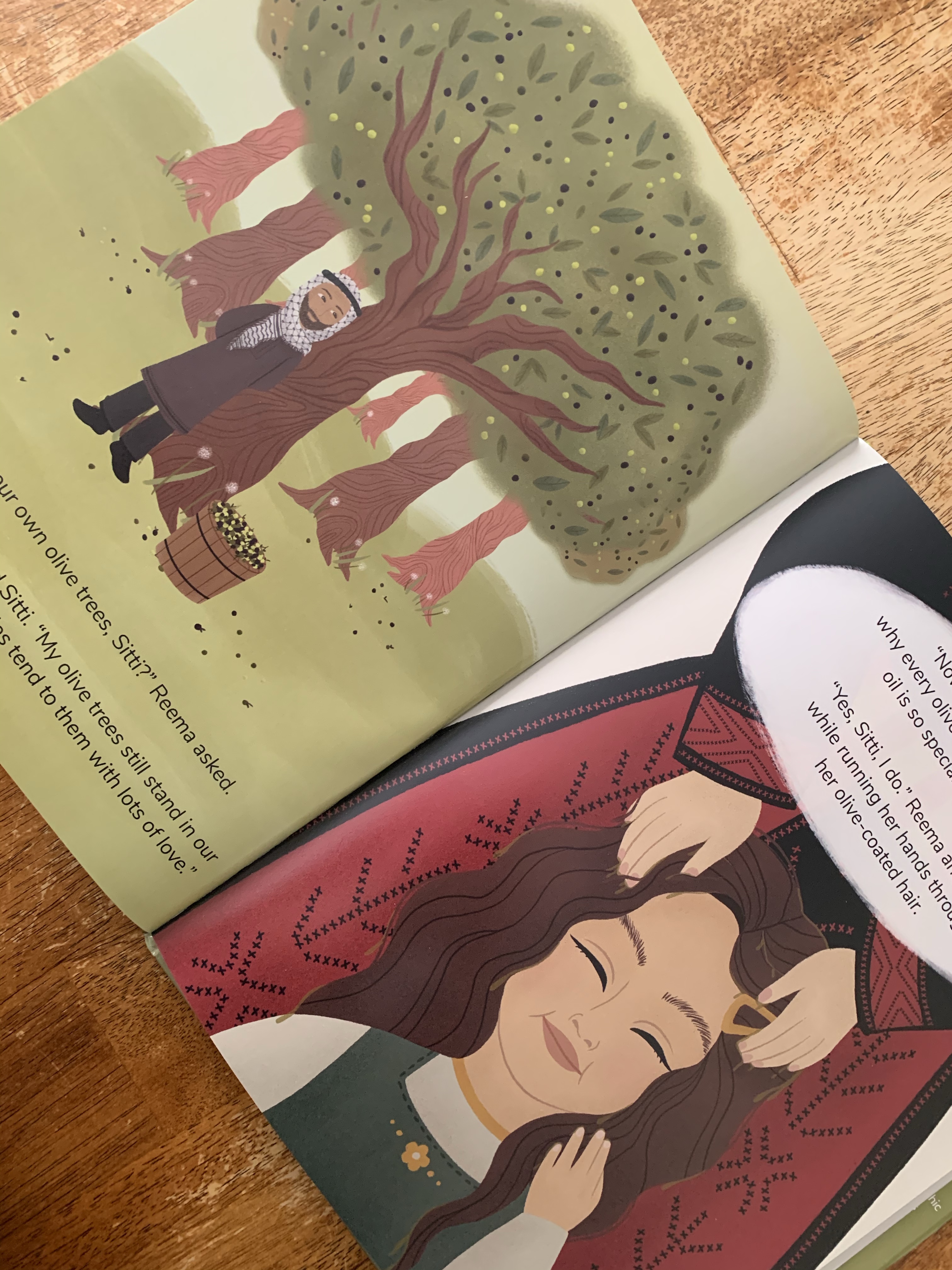
Olive harvesting season comes at the end of the year and the families gather to pick the olives and fill the buckets before climbing ladders and catch the falling olives on blankets.  The elders sort them, and at the end of the day they eat and drink tea and coffee and laugh and enjoy each other’s company.

img_1215

They tell stories to pass on to the next generation just like Sitti is doing to Reema, because the olives keep the families together.  Sitti hopes one day Reema will go to Palestine and play among her family’s trees.

I wish there was a bit more detail about the hummus, it seems to imply that the garbanzo beans are whole and not smooshed or blended, also when it lists the other things Sitti’s grandparents would do with the olives, the list is olive oil, olive soap and olives for eating.  I would imagine there are more things to do with the olives, even perhaps detailing the way the olives for eating are pickled, or preserved, or prepared would have been nice.

img_1216

There is a glossary of a few terms at the end.  There is nothing religious in the text, but many of the women wear hijab in the illustrations.

Overall this book is well done and serves an important point in showing a culture that is rich and full, aside from conflict and politics.  It is a sweet story between a grandmother and her granddaughter and shows how stories, traditions, and food help pass on culture and heritage.

.

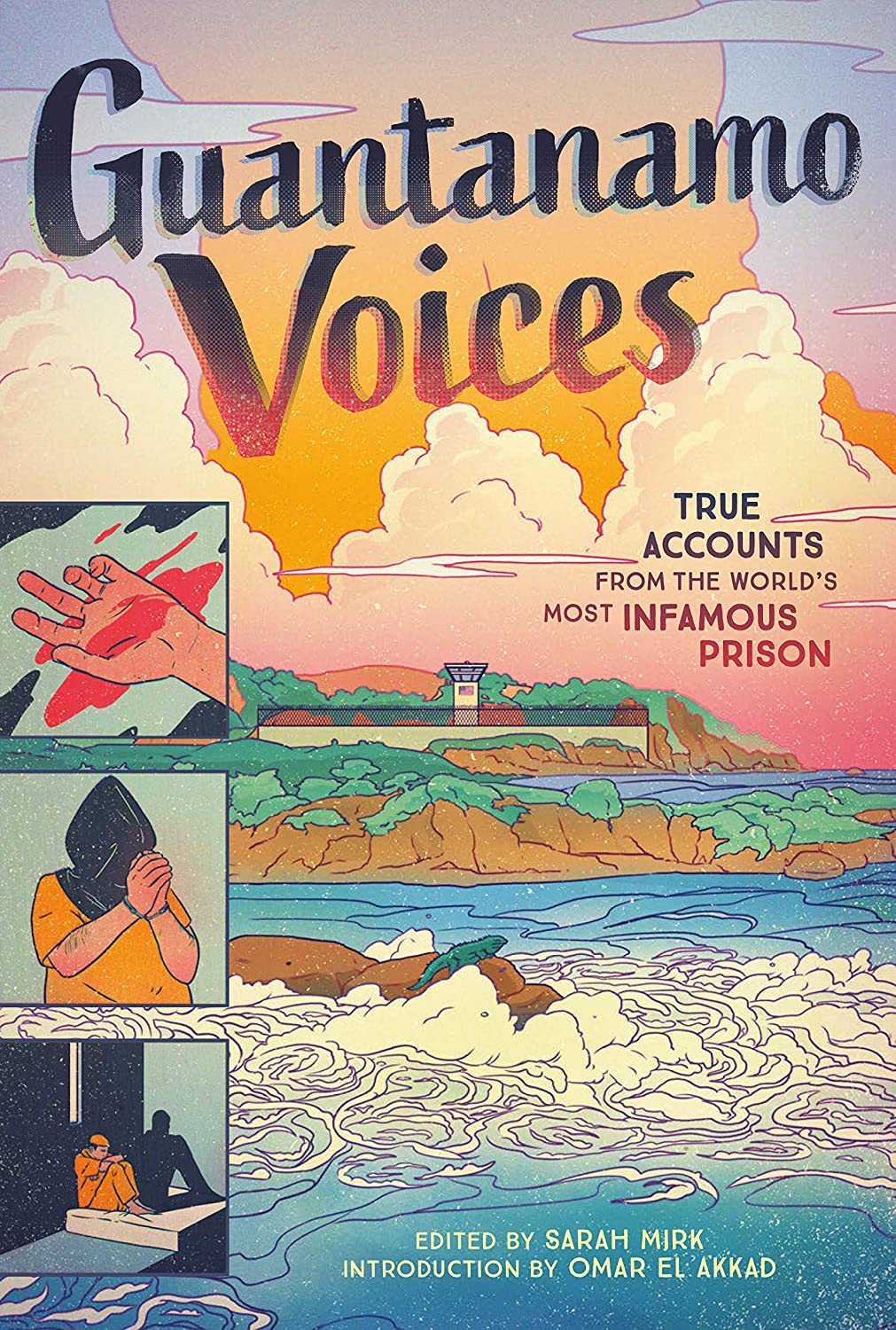
Guantanamo Voices: True Accounts from the World’s most Infamous Prison by Sarah Mirk, introduction by Omar Al Akkad, illustrated by Gerardo Alba, Kasia Babis, Alex Beguez, Tracy Chahwan, Nomi Kane, Omar Khouri, Kane Lynch, Maki Naro, Hazel Newlewant, Jeremy Nguyen, Chelsea Saunders, and Abu Zubaydah

Standard
Guantanamo Voices: True Accounts from the World’s most Infamous Prison by Sarah Mirk, introduction by Omar Al Akkad, illustrated by Gerardo Alba,  Kasia Babis,  Alex Beguez,  Tracy Chahwan,  Nomi Kane,  Omar Khouri,  Kane Lynch,  Maki Naro,  Hazel Newlewant,  Jeremy Nguyen,  Chelsea Saunders,  and Abu Zubaydah

guantanamo voices

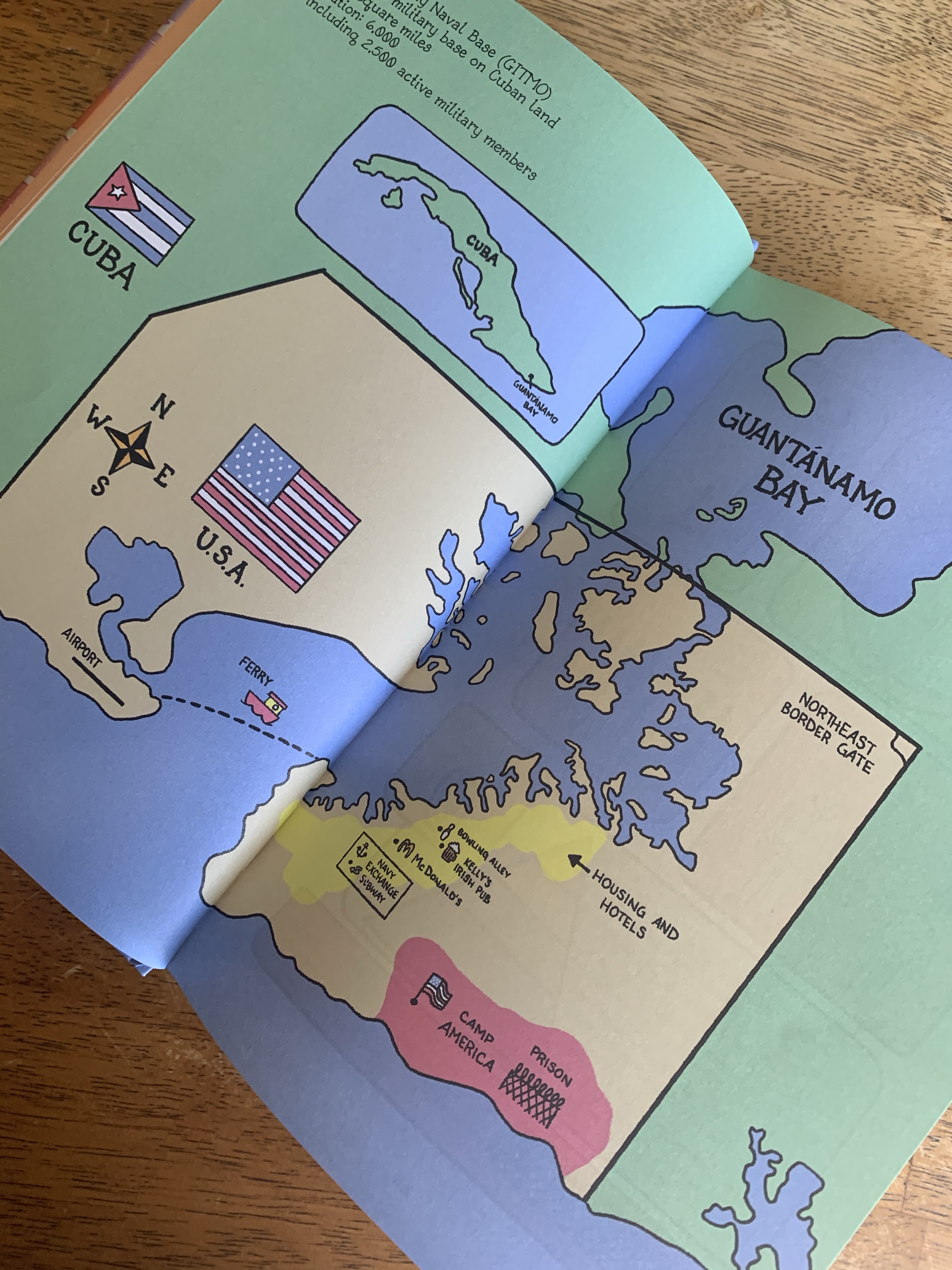
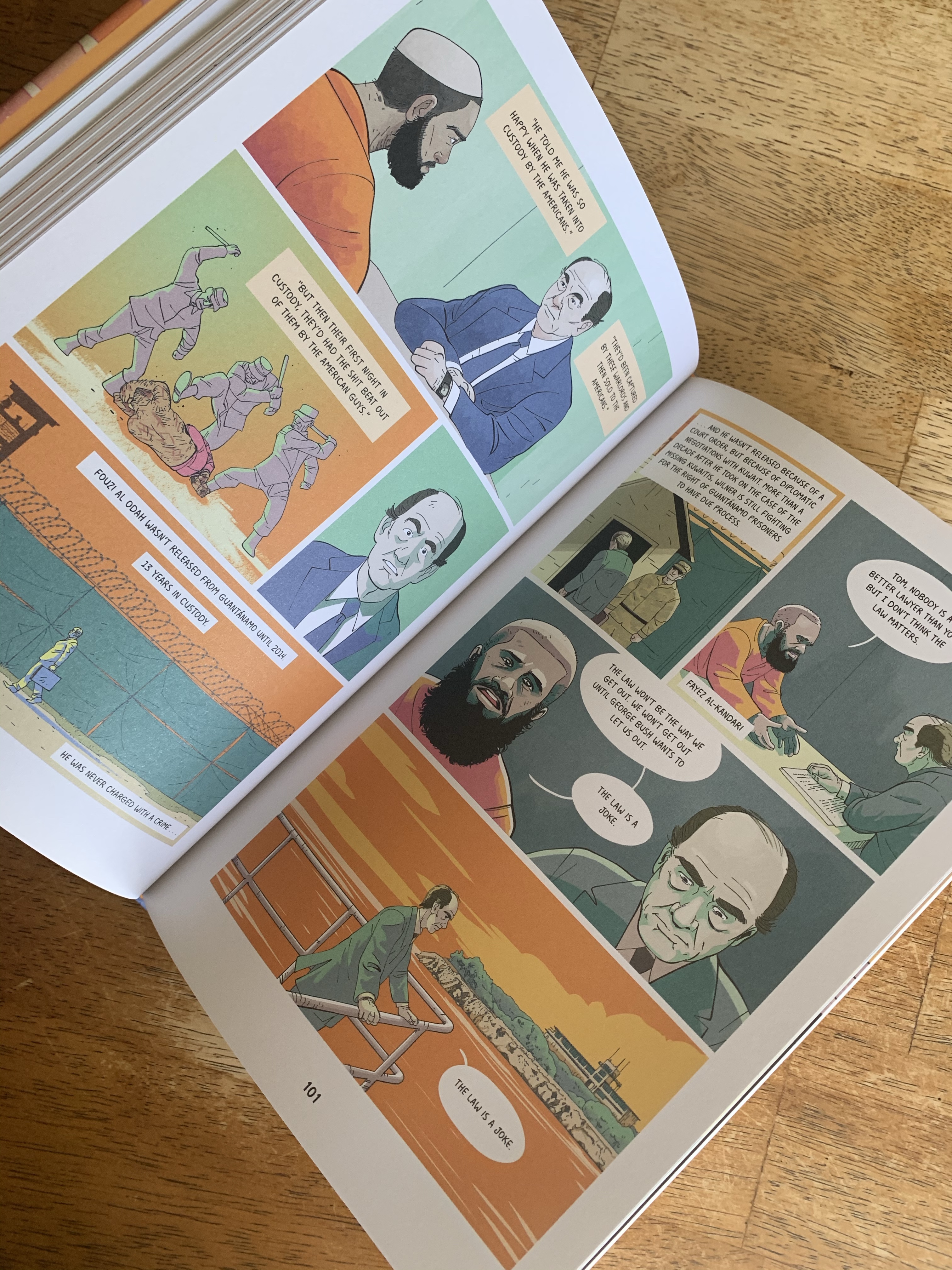
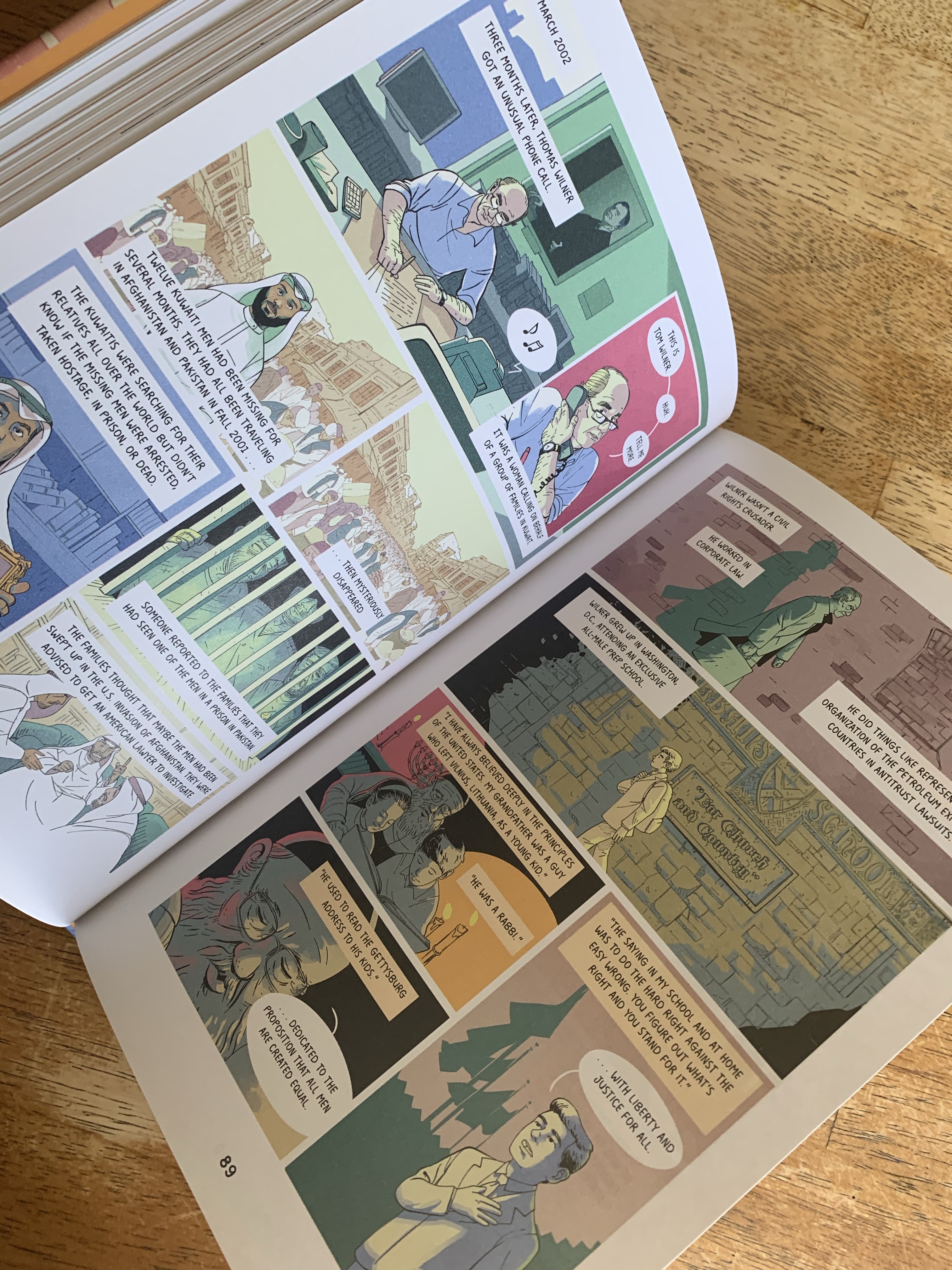
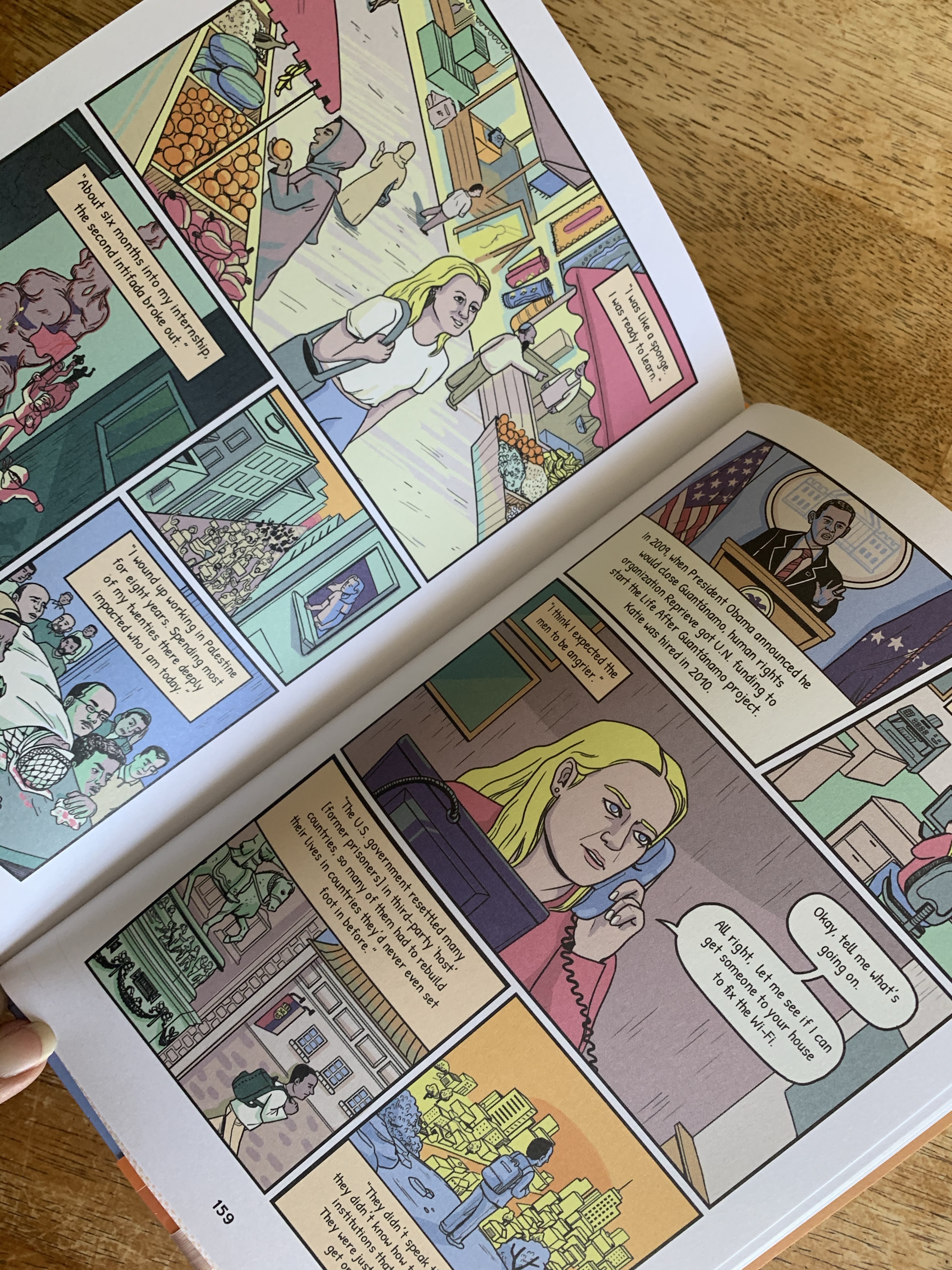
This 208 page graphic novel, is indeed graphic.  The unbelievable horrors detailed in the stories shared are all sourced and referenced in the nonfiction anthology. The intent isn’t shock and awe like the war that created such abysmal breaches of justice to be done in our name (Americans’), but is definitely a painful reminder of how fear and mismanagement allows the US treatment of individuals to grow and continue outside of the rule of law, and all that the US claims to represent.  The careful use of words such as “detainees” instead of “prisoners,” “enemy combatants” instead of “terrorists” or “criminals,” have allowed Muslim men to be held since 2002 without charges, legal representation, habeas corpus, or basic human rights.  When the prison was being filled, you’d hear about it in the news, when the government released heavily redacted reports on torture, you’d catch a headline or two, but there are still people being held, and for the most part, we, the world, have perhaps forgotten.  This book is a reminder, it is insight, it is so important that high school and college aged children are aware of what we are capable of, that adults are not allowed to forget what we are doing.  As it says in the intro, “To indict the people who did this is to indict the country that allowed it to happen.” We are all guilty, and this book is not an easy to read as it will make you angry, and devastated, and exasperated.  Don’t let the graphic novel format and simple text fool you, this is a difficult read, emotionally, and you should force yourself to sit with it- sit with the outrage and frustration, and see if it can spur you to action.
img_0435

SYNOPSIS:

The book is broken up to provide an introduction, map, facts, and a timeline, it then starts with the author arriving for a media tour to Cuba.  Some background stories about key individuals in understanding the effects of torture and better and more accurate ways to interrogate, and then the fateful day September, 11, that changed everything.  From here the stories are individual accounts of prisoners, lawyers, politicians, etc., each depicted by a different illustrator, to show a very rounded view of the effects of the prison, and thoughts by different people in a  variety of associations. 

img_0434

Some of the prisoners were swept up by neighbors responding to leaflets promising wealth for turning people in.  Some were taken from their homes for no reason, a few were taken from the battle field, but every single one has never had charges against them, nor a day in court, the few that have been able to be represented have been released without being accused of anything, hence, found to be innocent.  The doubling down on the concept of Guantanamo being the worst of the worst, administration after administration has made it so prisoners have to be released to countries they have never been to, with unknown rights or a way forward.  Those that are still detained have been there for nearly 20 years. 

img_0437

WHAT I LIKE ABOUT THE BOOK:

I like that the book is personal, it is harder to dismiss or forget, or be unaffected when you are looking at images and surrounding yourself with guards and lawyers that are saying over and over, that these prisoners are innocent.  I like that it challenges Americans to demand more of America, it isn’t just putting the USA down nor does it read like the narrative has it out for the USA, it is very much an personal calling out, that we have made errors and continue to make errors out of arrogance.    

img_0440

FLAGS:

The images and language are at times graphic and one should be aware of the potential triggers of torture, and abuse. There are curse words spoken, and violence detailed.  High school and up.

img_0439

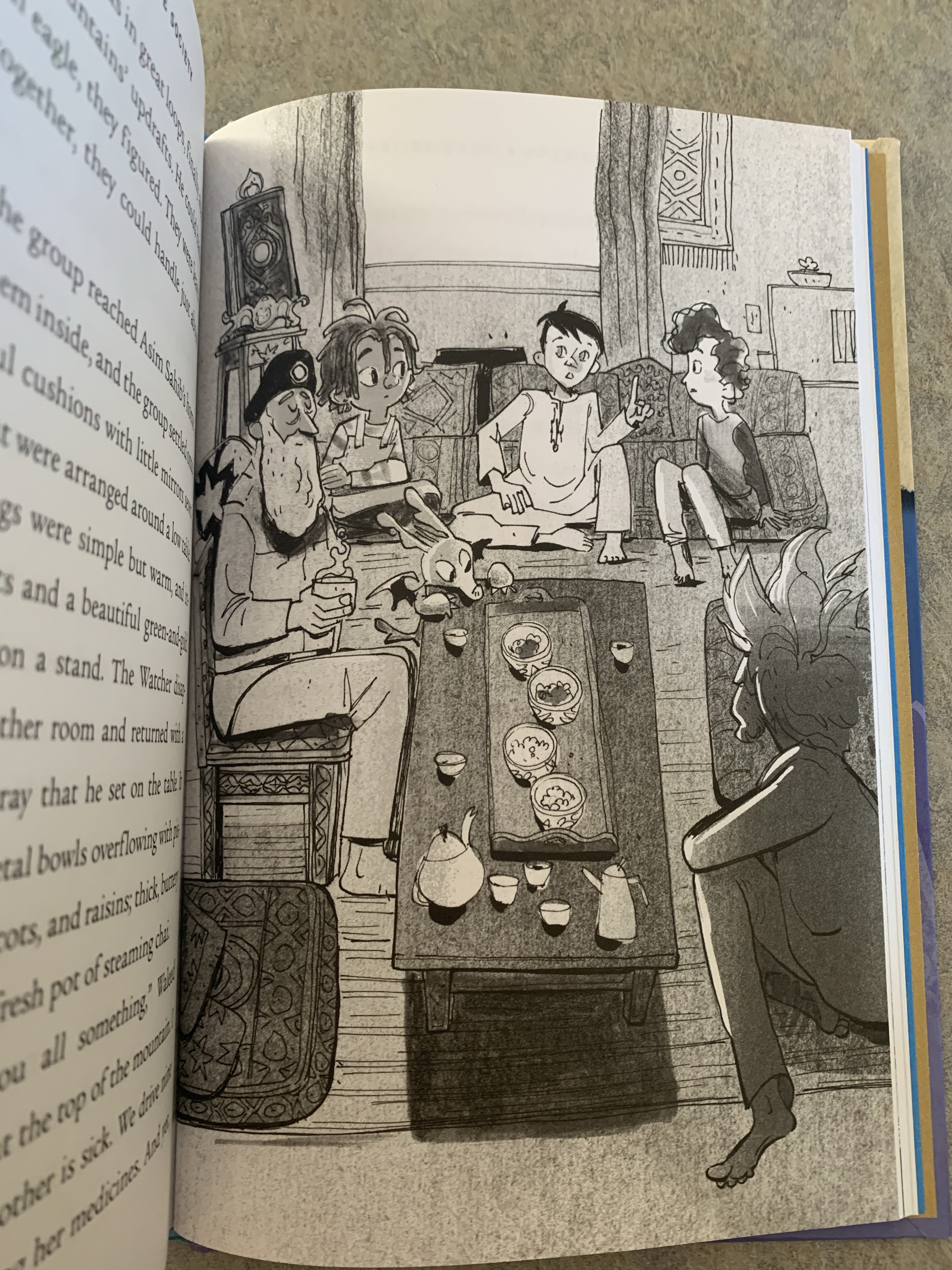
The Unicorn Rescue Society: The Secret of the Himalayas by Adam Gidwitz and Hena Khan illustrated by Hatem Aly

Standard
The Unicorn Rescue Society: The Secret of the Himalayas by Adam Gidwitz and Hena Khan illustrated by Hatem Aly

unicorn

This middle grades 208 page book is part of a series, but this particular installment is co-authored by Hena Khan, takes place in Pakistan, and features Muslim side characters in the quest to find and protect the mythical, magical, and illusive unicorns.  The adventure is quick, the cultural and religious references sincere and appreciated, the characters quirky and fun, and the writing smooth and enjoyable.  I can’t speak for the whole series, but I think second to fourth grade readers will enjoy the eccentric teacher, the clever kids, and the knowledge about animals, culture, and geography that is woven in to the story to keep it engaging.  I don’t think you need to read the books in order, but I would encourage it.

img_0785

SYNOPSIS:

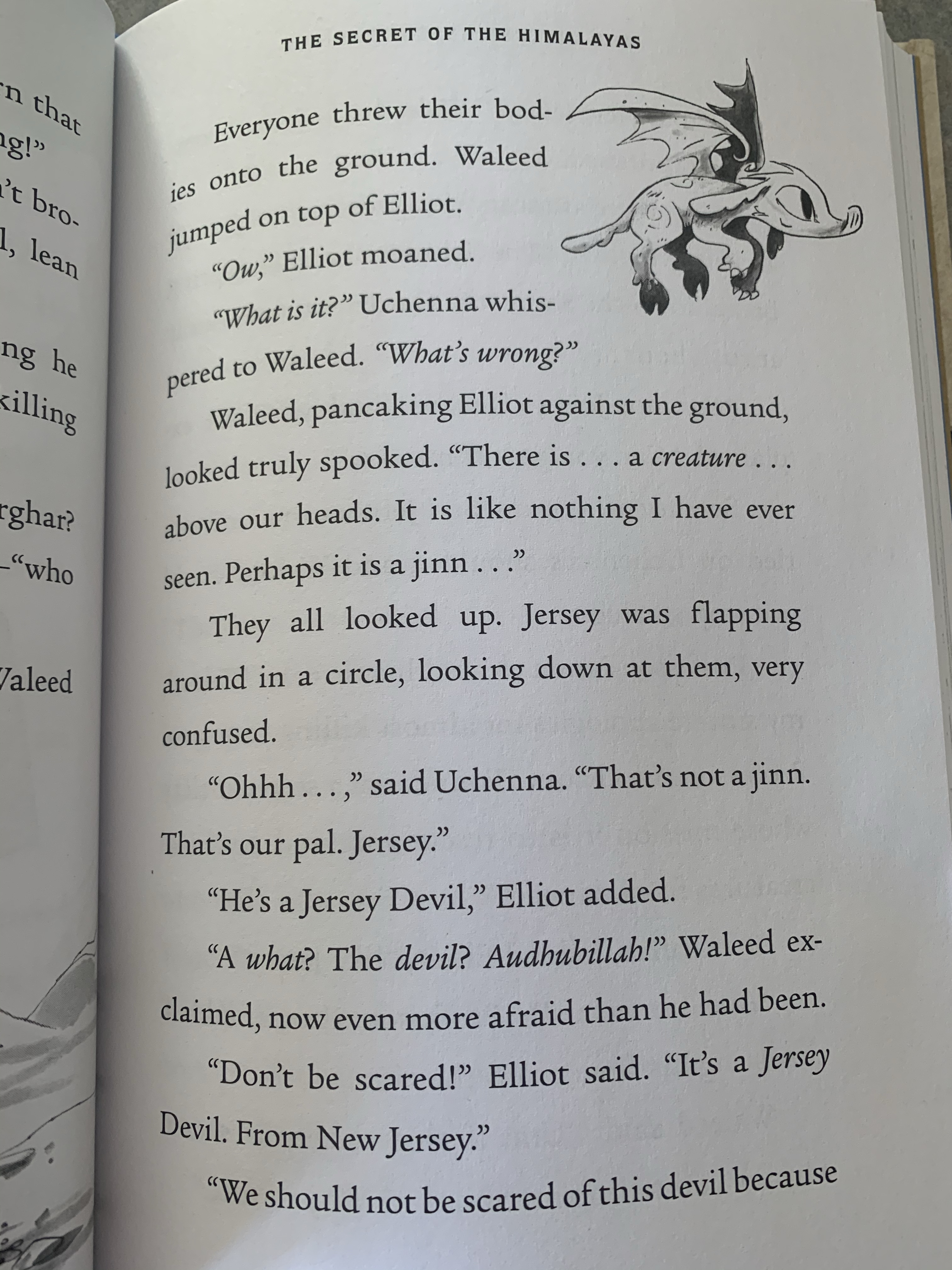
Elliot and Uchenna are elementary aged students and also members of the secret, Unicorn Rescue Society.  When a classmate starts a newspaper and interviews local businessman, the kids teacher, Professor Mito Fauna spots what he thinks is a unicorn horn in an accompanying picture and is determined to go and protect, once found, the imaginative creatures.  He enlists the kids and Jersey, a creature with a blue body, red wings, a goat face, clawed front legs and hooved hindlegs, to set off in his single propeller plane for the Himalaya mountains of Pakistan.

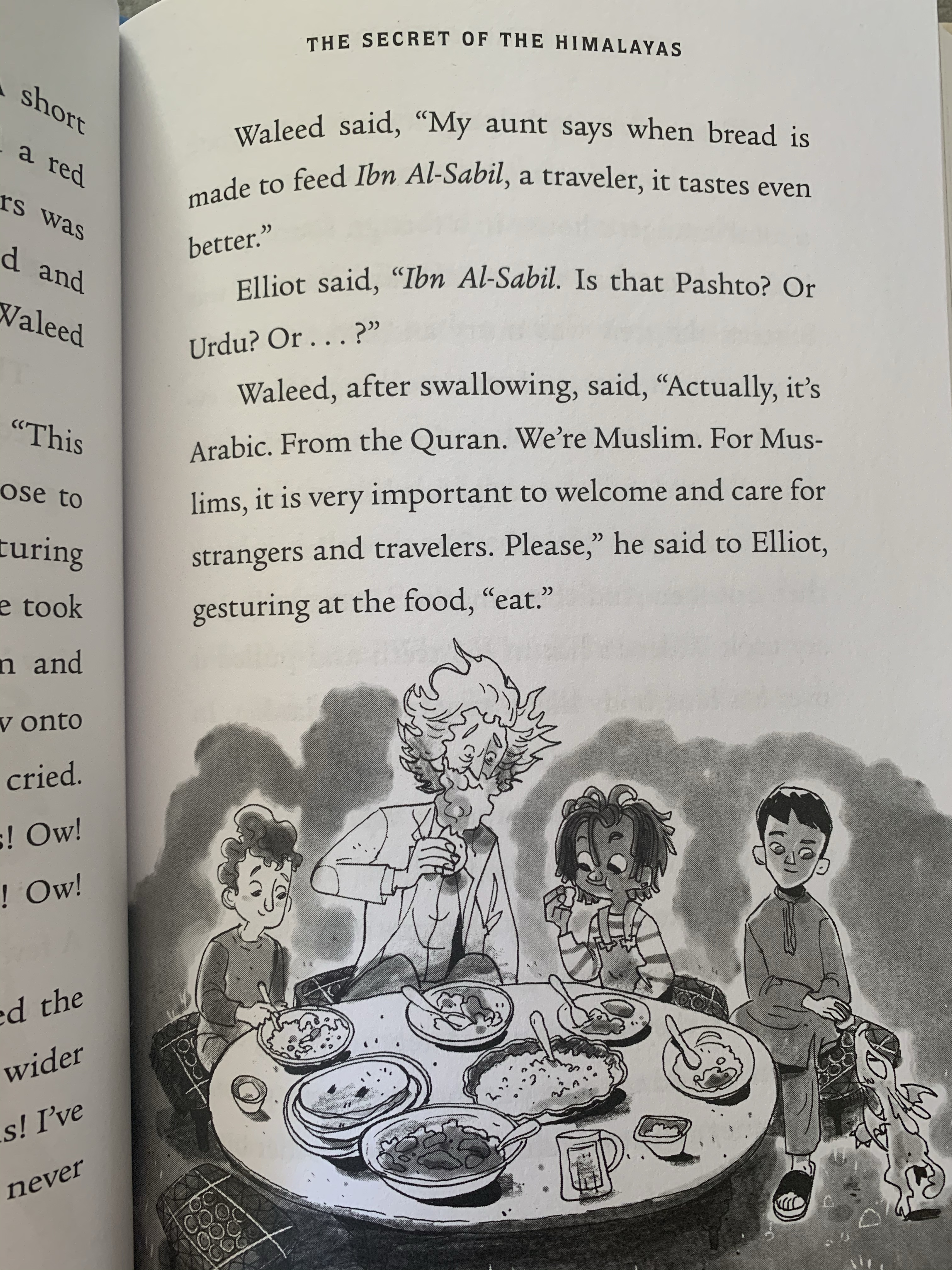
They arrive in Torghar, Pakistan and make a rough landing that nearly kills a local boy.  Alhumdulillah, Waleed is fine, and in true Pakistani and Islamic tradition the boy takes the visitors to his grandmothers home to be fed and welcomed.  Waleed agrees to help the Americans find a man known only as the “Watcher,” to see what he knows about unicorns and the hunters that come to poach for sport.

Hiking the mountains and getting short of breath makes each act that much more difficult, but alas the kids find the Watcher, aka Asim Sahib, but sadly *SPOILER* don’t find unicorns.  Rather a species of mountain goats, markhors, that have two long twisted magical looking horns. The wealthy businessman brothers also show up in their helicopter to capture, not kill the markhors.

The rescue society follows them and learn that the sinister brother are testing out the magical properties of a bezoar on pit viper bites.  Needless to say it doesn’t work and the rescue society must rescue the dying butler, and captured markhors.  All is not lost, even if they didn’t find any unicorns, at least they made new friends, and know that if they haven’t found the unicorns yet, hopefully no one else has either.

img_0778

WHY I LIKE IT:

I love that there is praying, and thikr, and ayats from the Quran quoted and explained in the book regarding saving animals, caring for each other and trusting Allah swt.  There is culture regarding taking gifts, welcoming guests, drinking tea and even breaking stereotypes of what a boy from Lahore visiting his family in the mountains knows and doesn’t know.  It isn’t preachy on any accounts, but the messages relayed in their silly way are very well woven in and leave a wonderfully represented impression of Islam, Muslims, and Pakistan.

The diversity featured in the book is nice, even within the main characters: one is an African American girl, one a Jewish boy, and the teacher is Hispanic.  The story at the end, A History of The Secret Order of the Unicorns, takes place during the reign of Charlemagne at a monastery, and features a boy named Khaled and his little sister Lubna. It is clearly intentional and a reflection of the author and illustrator.

img_0776

FLAGS:

There are some possibly gross moments featuring the goats licking urine, tea being made from the markhors’ saliva and the near death of a man requiring venom to be sucked from his leg.

img_0777

TOOLS FOR LEADING THE DISCUSSION:

The book is definitely below a middle school book club level, but I think younger elementary teachers and parents would see students get hooked on the series and would benefit from having the books around.

img_0780