Mission Memorise: The Twins’ Hifdh Quest by Quranic Tarbiyah

Standard
Mission Memorise: The Twins’ Hifdh Quest by Quranic Tarbiyah

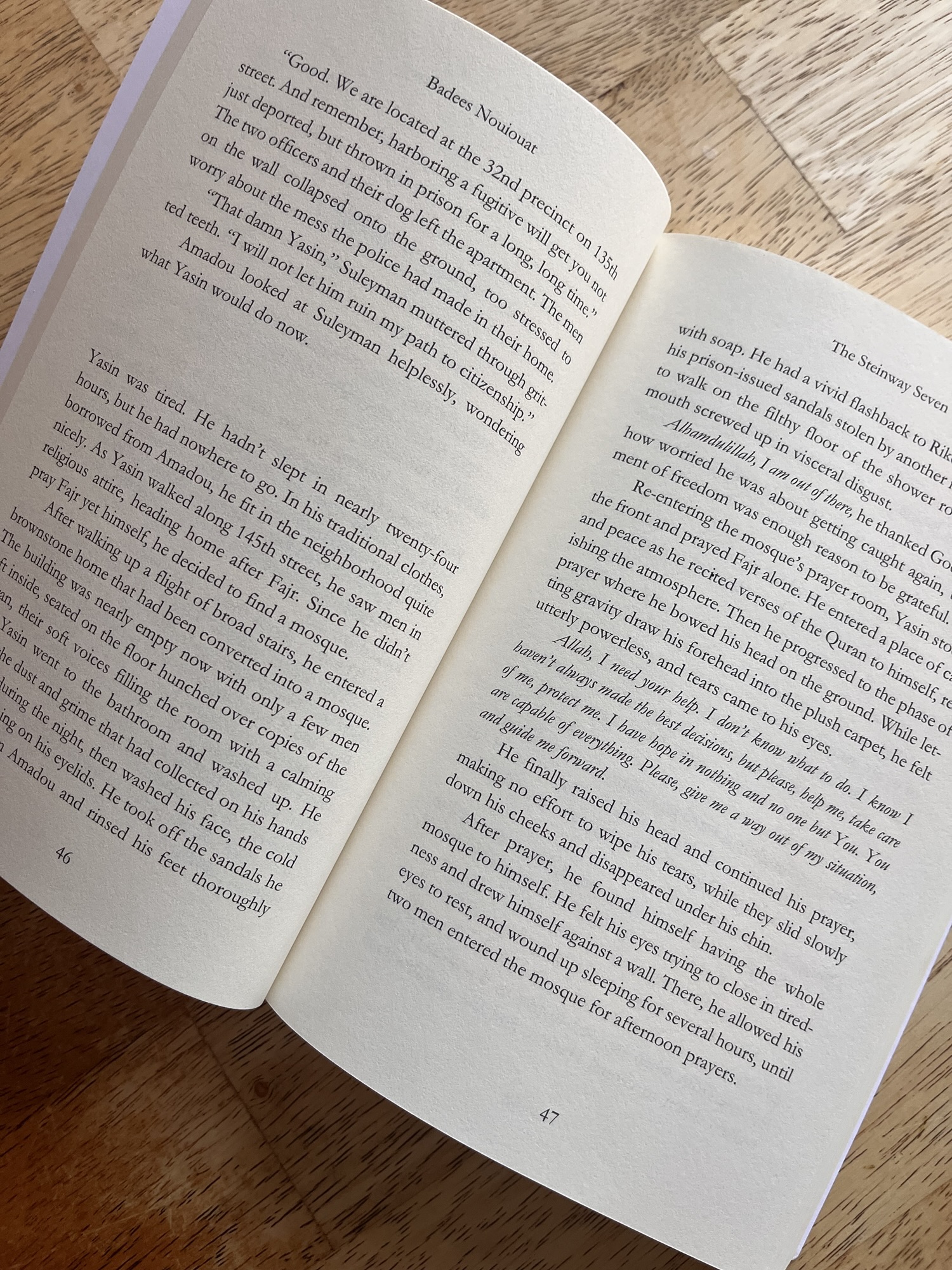
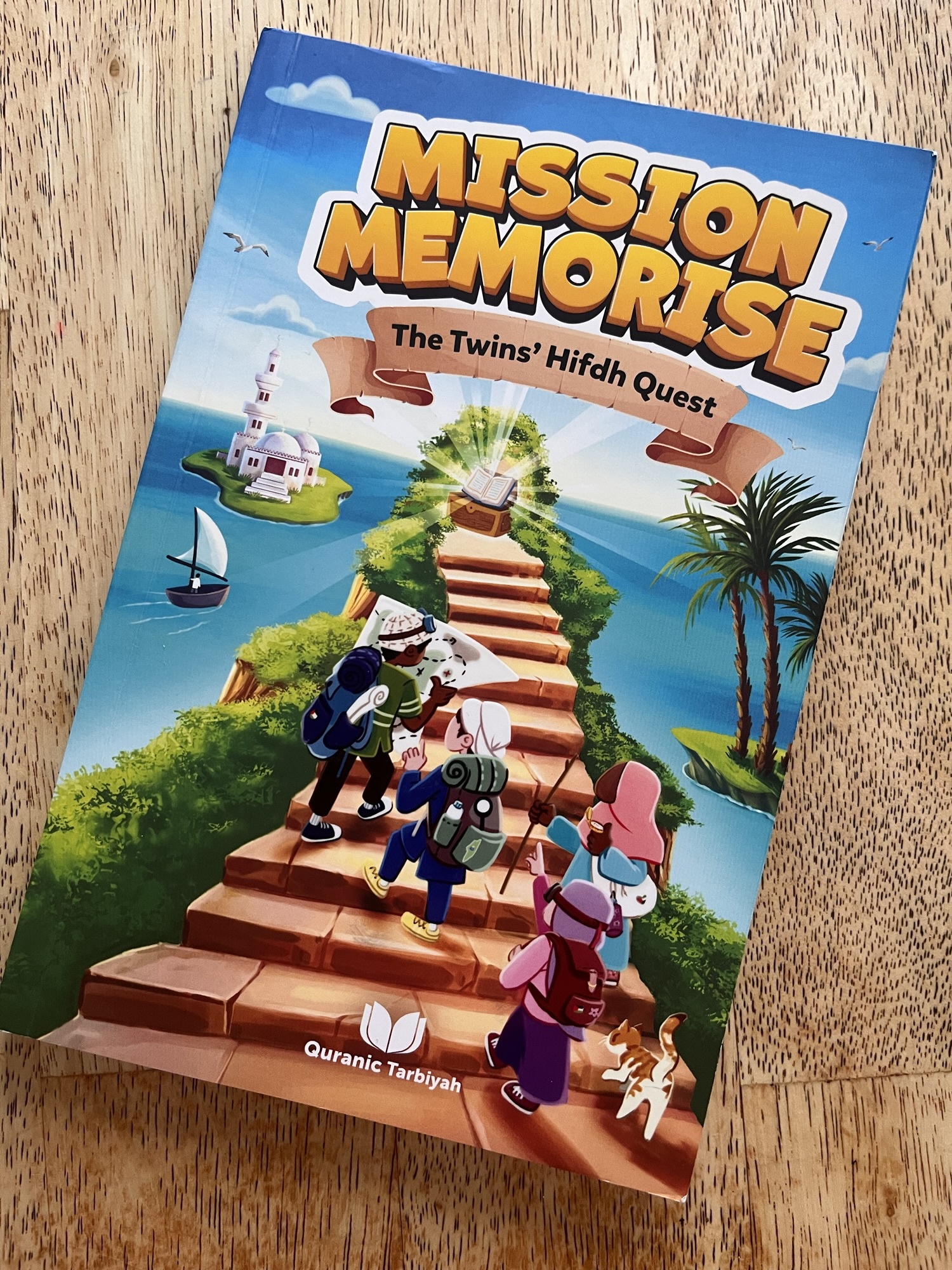
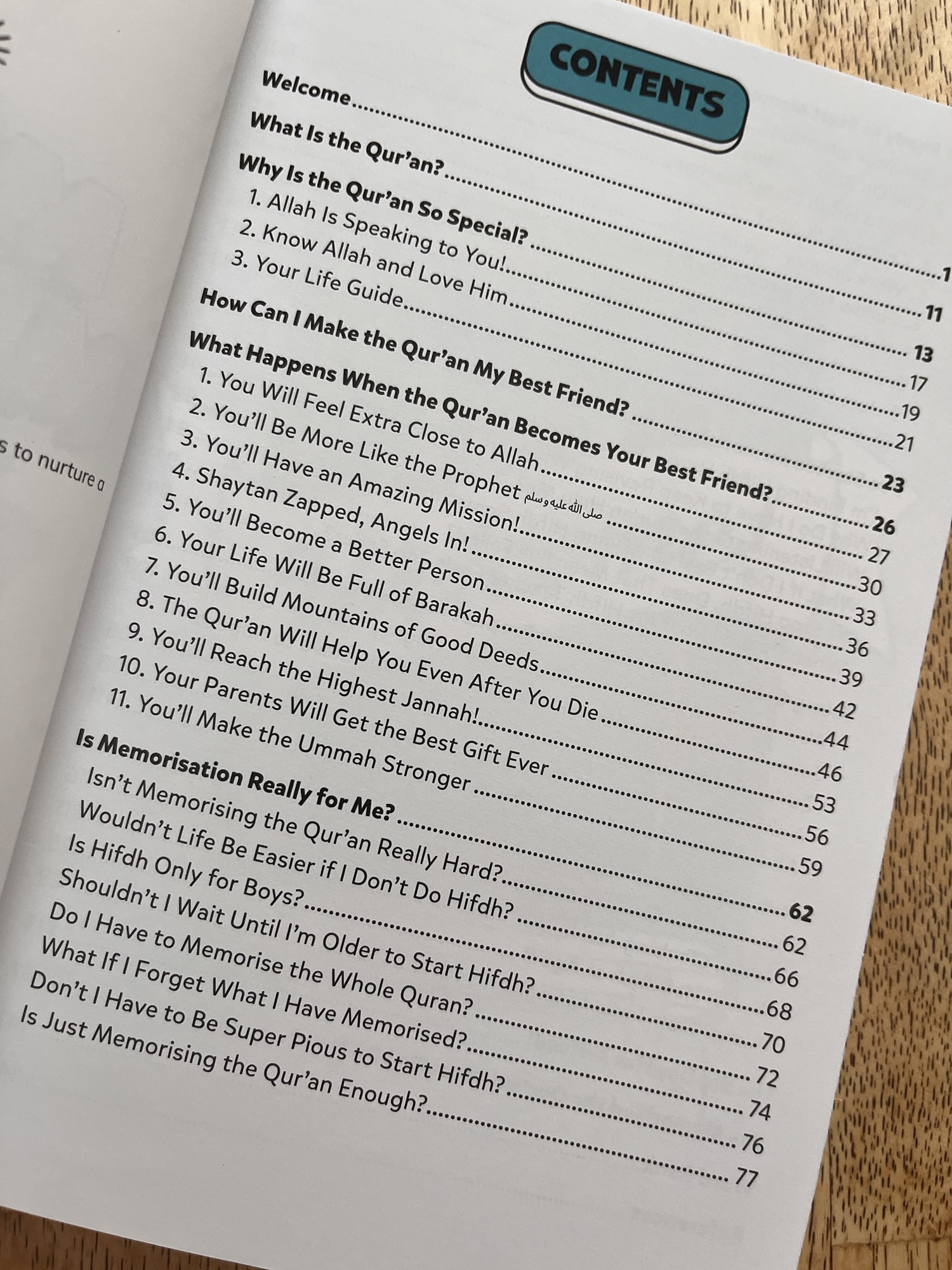
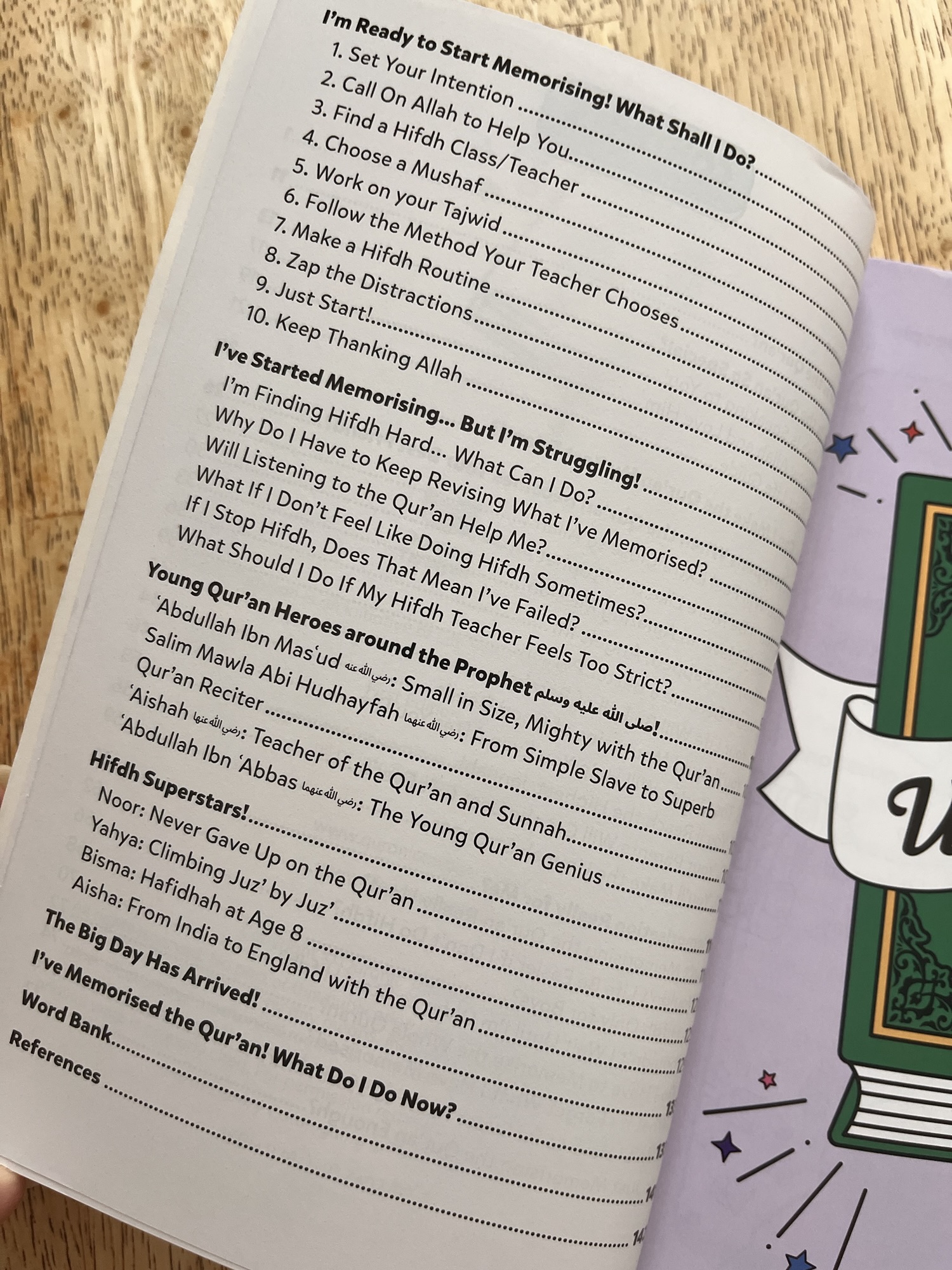
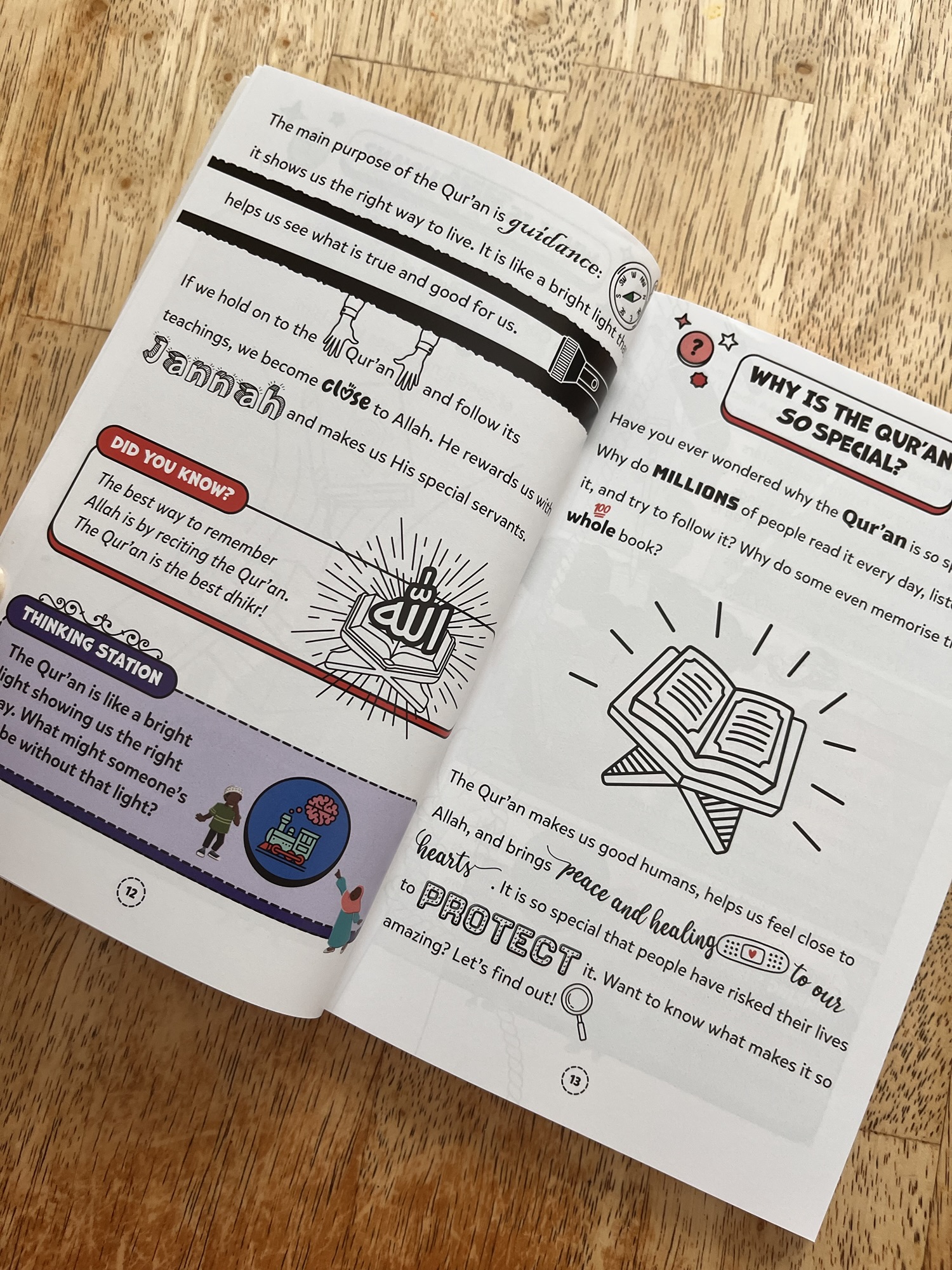
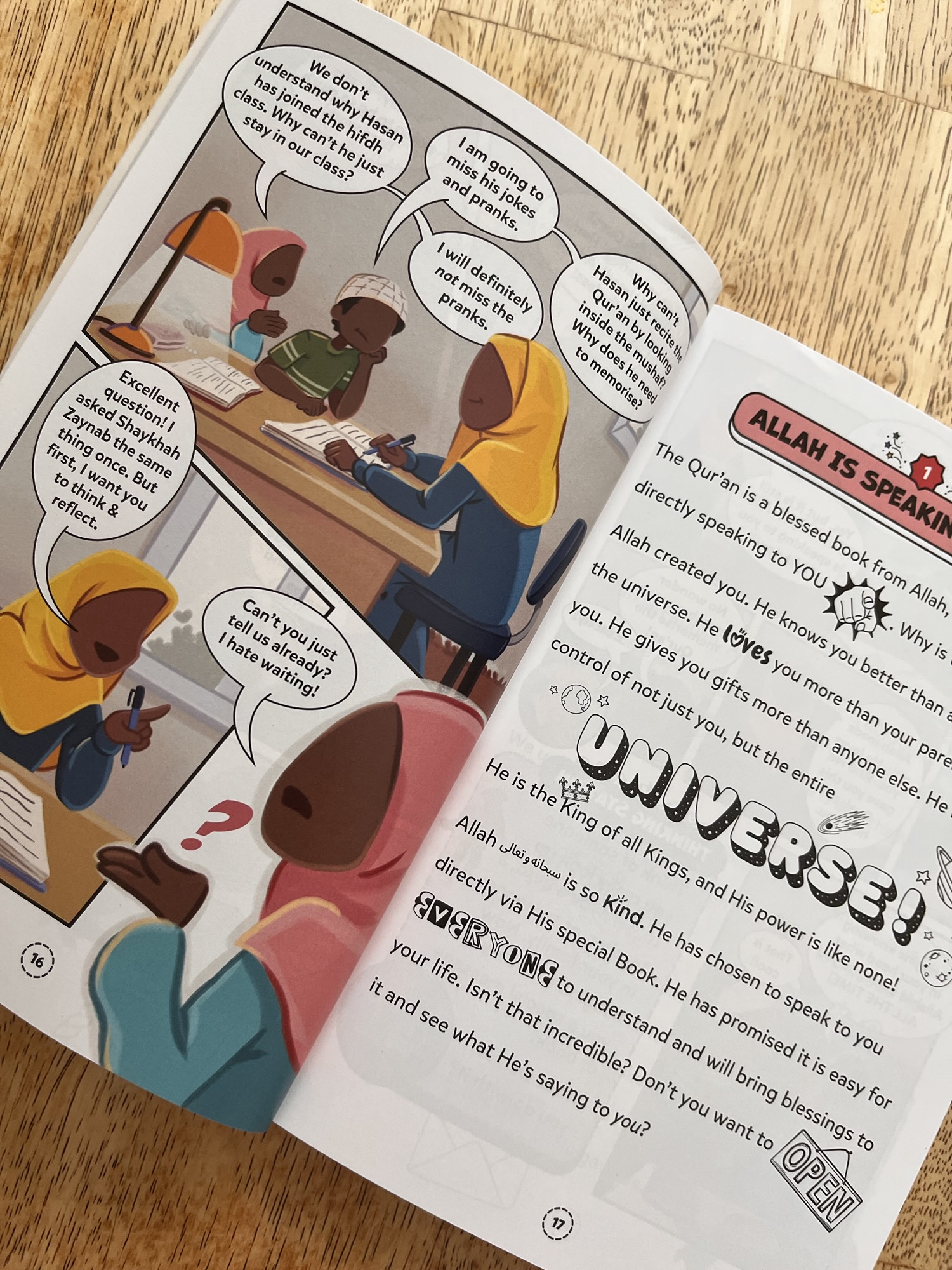
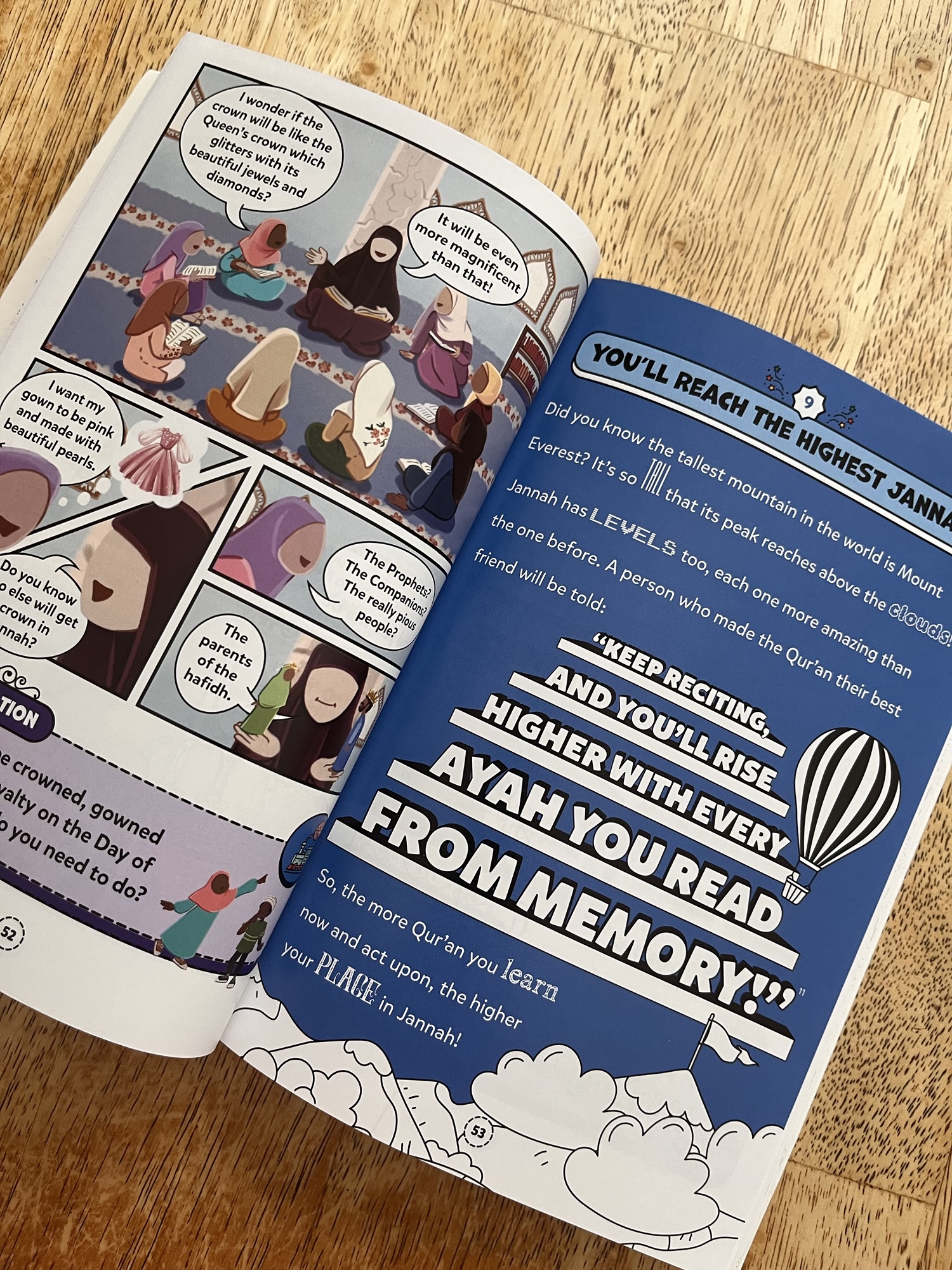
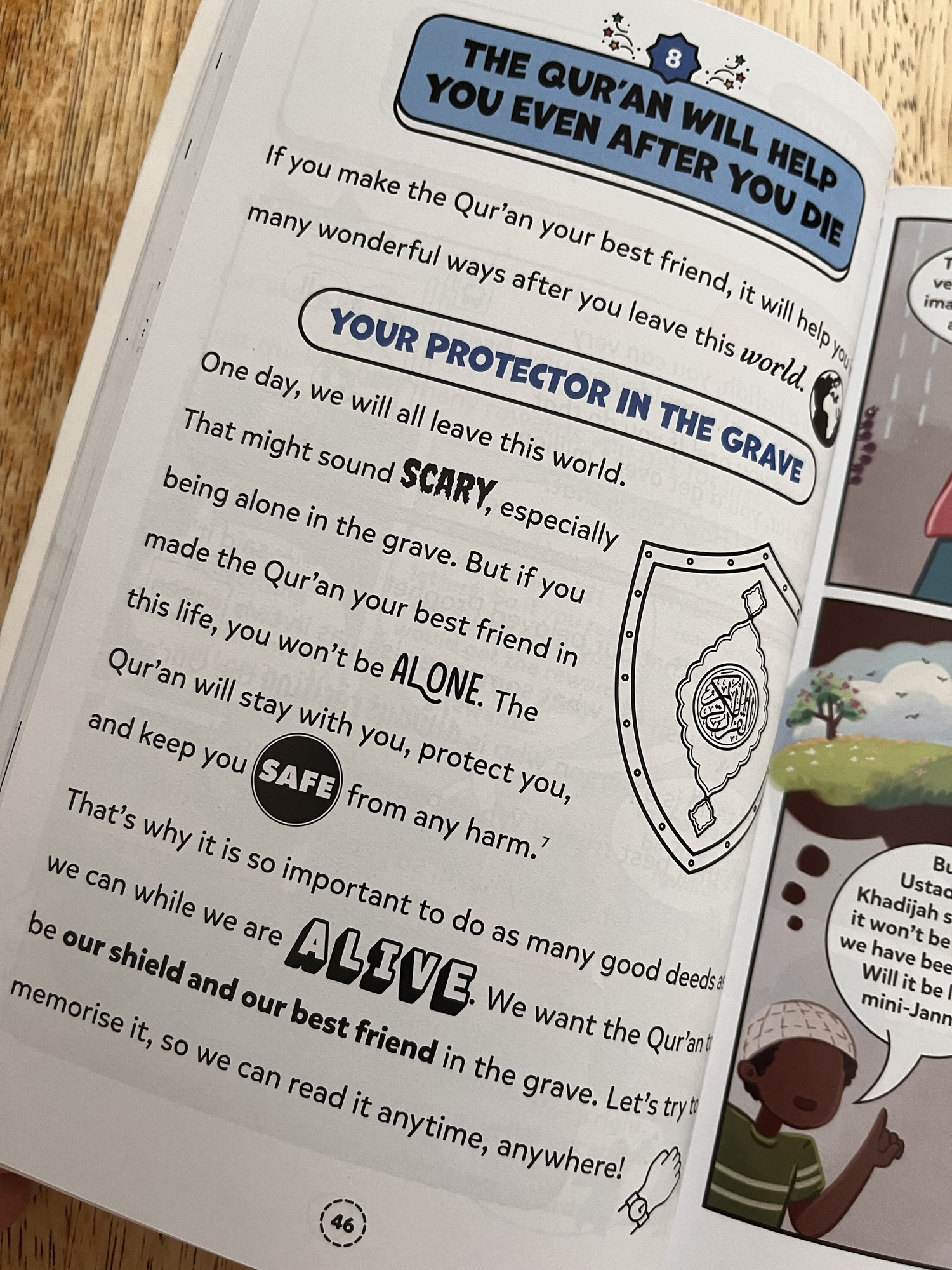
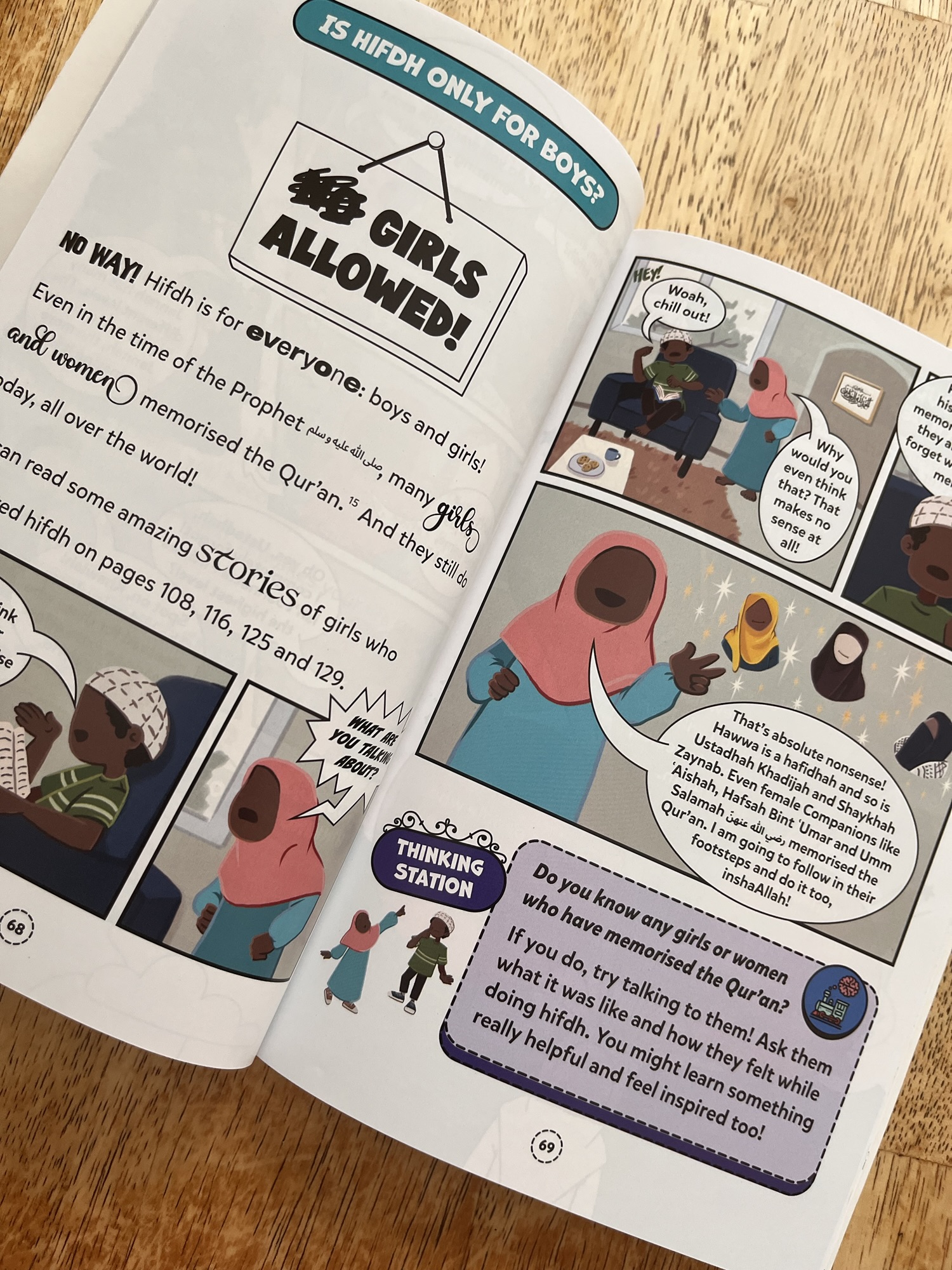
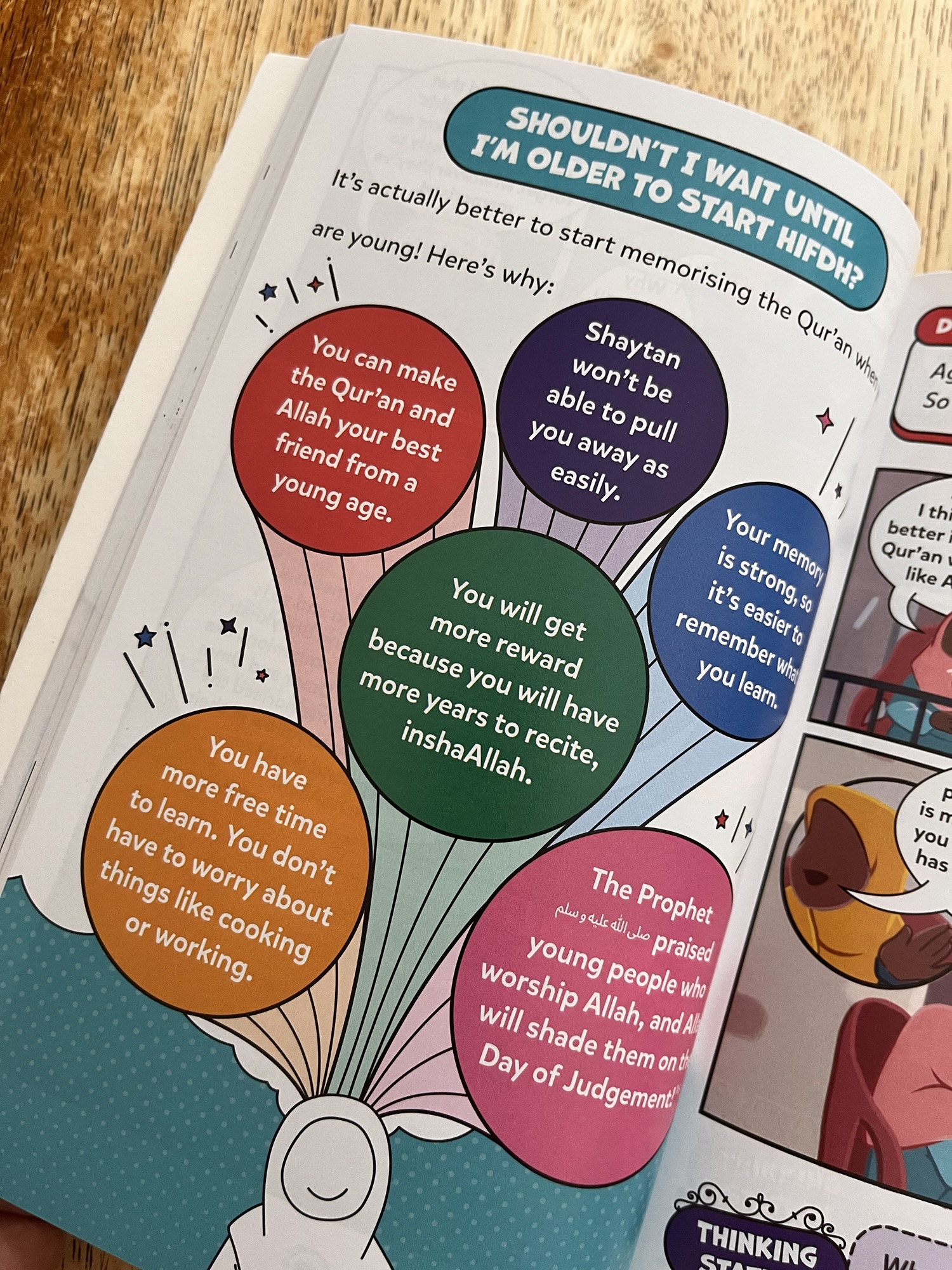
This 145 page full colored nonfiction book, uses a fictionalized story to cover some important concepts and topics to consider, work through, and be inspired by in a child’s hifdh journey.  A mix of story, information, comic style panels, pull out boxes and every font in the system, gives this 8 inch by 5.5 inch book a lot of visual appeal to readers and fulfills an important gap in our literary options.  I’m not entirely sure how best to utilize the book aimed at 8 year olds and up, I don’t know if handing it to any child to read from start to finish will overwhelm them, or if it should be read and shared with an adult for those seeking to inspire their child to consider memorizing the whole Qur’an, or should be used for those who have already made the commitment and are seeking to see themselves reflected and motivated to not give up.  I think the creators, there is no single author listed, want it to be for all of the above, and as a result the book often feels very repetitive. And yes I get the themes and benefits of memorizing the Qur’an do need to be repeated in various ways, but the phrase “the Qur’an your best friend” is in the book a lot.  Like it isn’t uncommon to see it three times on a page.  Additionally a concept or benefit of the Qur’an is mentioned more than once in multiple ways and then repeated again later, not in a circling back way, or even in a let me further emphasize this way, or even a lets go deeper in understanding this important matter, it reads as if the chapters were written and edited in isolation and then just put together, and thus the continuity from the start to end doesn’t feel smooth, hence I don’t know the best way to utilize the book. All that being said, the book covers some desperately needed topics such as: am I failure if I can’t memorize, is hifdh only for boys, what if my teacher is strict, etc.. Unfortunately, I feel like some of these important topics get lost in a lot of repetitive fluff that distracts from the clarity of what the book sets out to do.

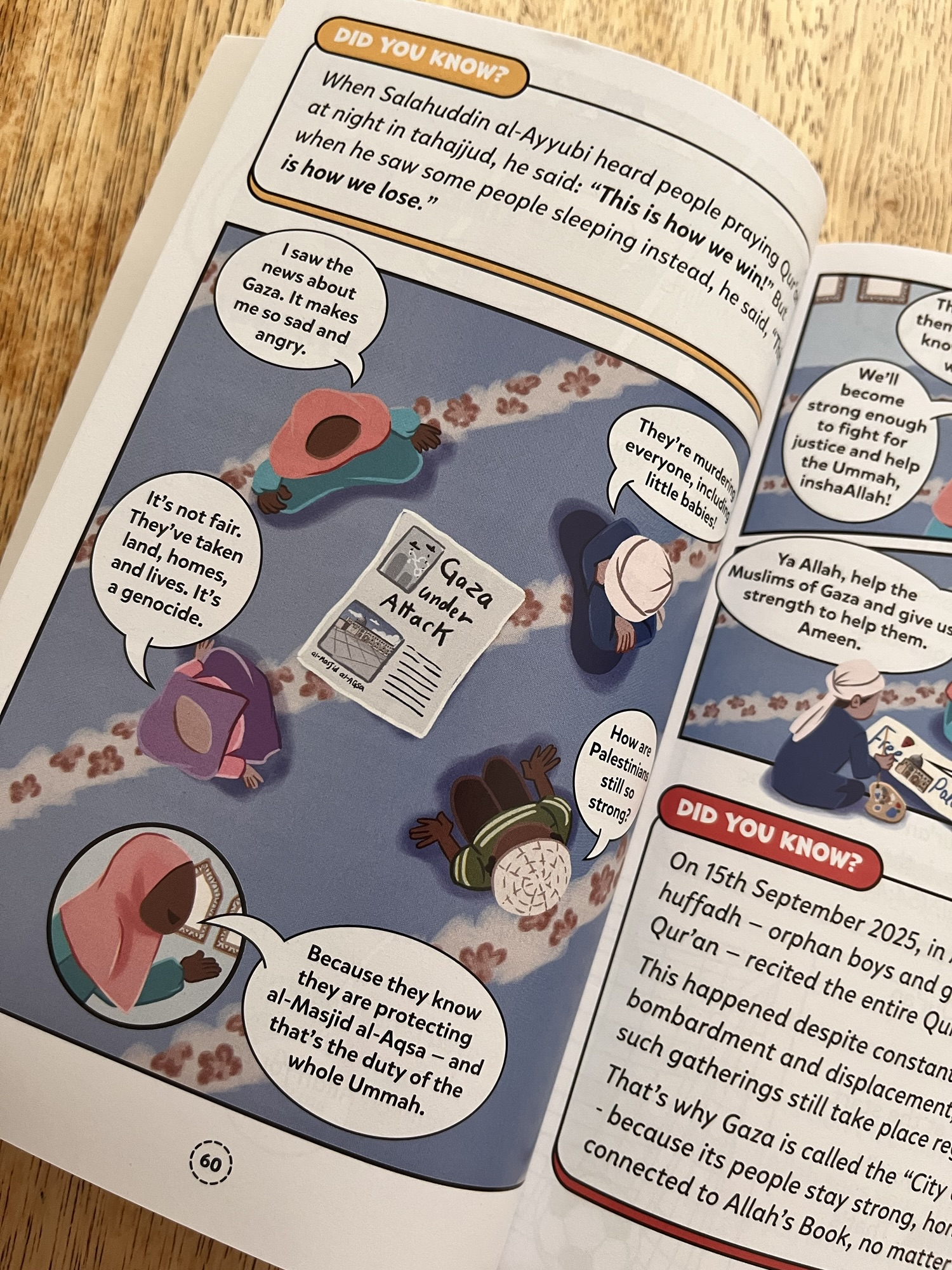
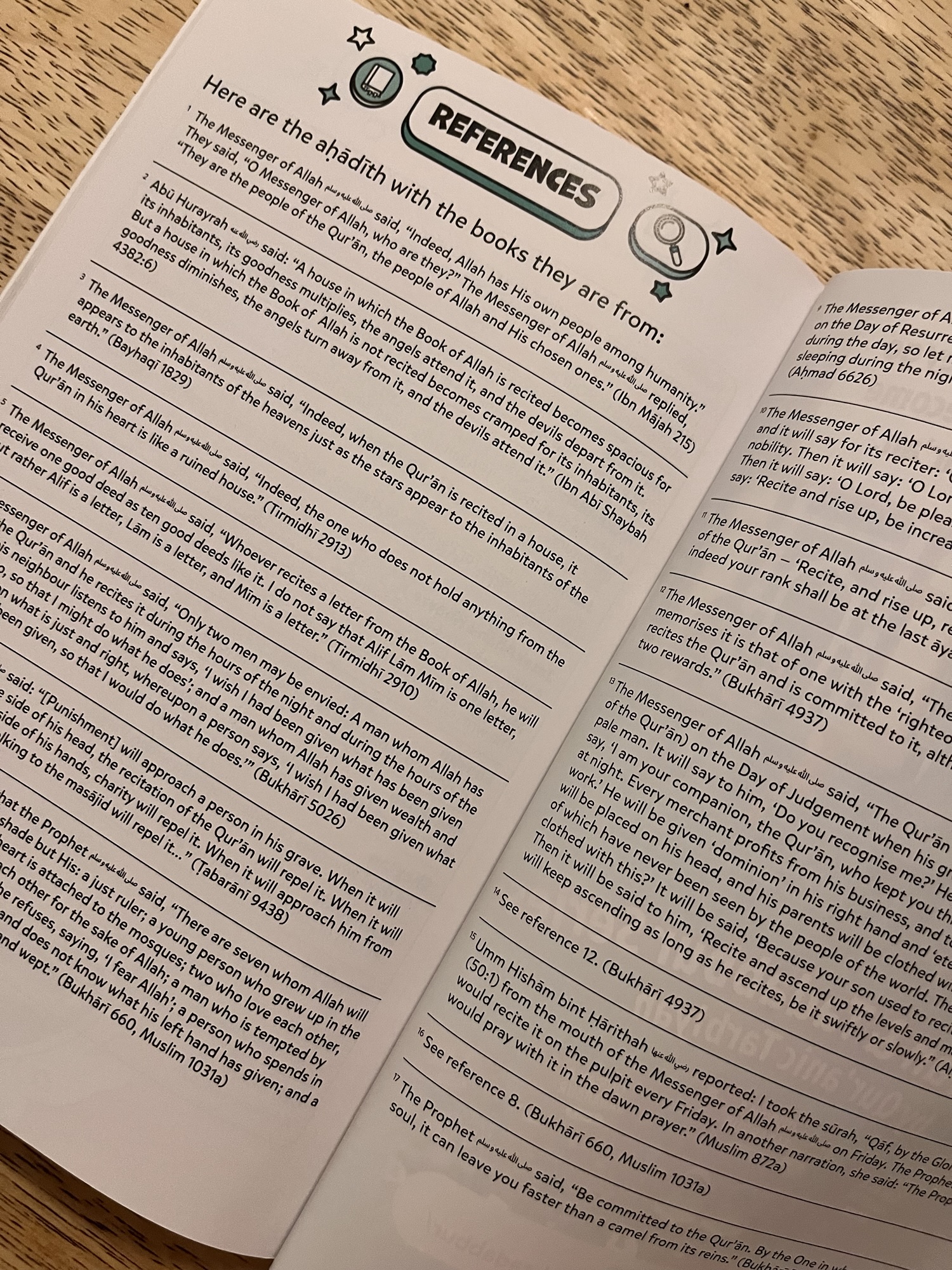
The book has some Zanib Mian vibes with the characters being introduced at the start and the fictionalized story carrying the non fiction lessons and information with fun fonts and illustrations throughout.  I like that it is a “how to” in many ways for those wondering what to consider before making a commitment, and how to get started. And I love that it tries to connect through characters past and present, real and fictional, and all ages.  The references to Gaza and Bosnia are nice, but not woven in particularly well, again I could go both ways, I appreciate that too much information is not given that would distract from the theme of the book, but if kids aren’t knowledgeable about the situation, I don’t know that they will fully gleam the intent of their inclusion.  I appreciate the references in the backmatter, thank you. I would love to hear how parents have used the book and what kid’s think.  I read the book as an adult, who struggles with memorization from cover to cover, my children have memorized portions of the Quran and work at it daily, but not at the level of become a hafidh, so admittedly I may not fully grasp the potential this book offers and the full utility of it. I’ve included inside pages to help parents make an informed decision for their children and decide how best the book can be used.

The Lustrous Dark by Loretta Chefchaouni

Standard
The Lustrous Dark by Loretta Chefchaouni

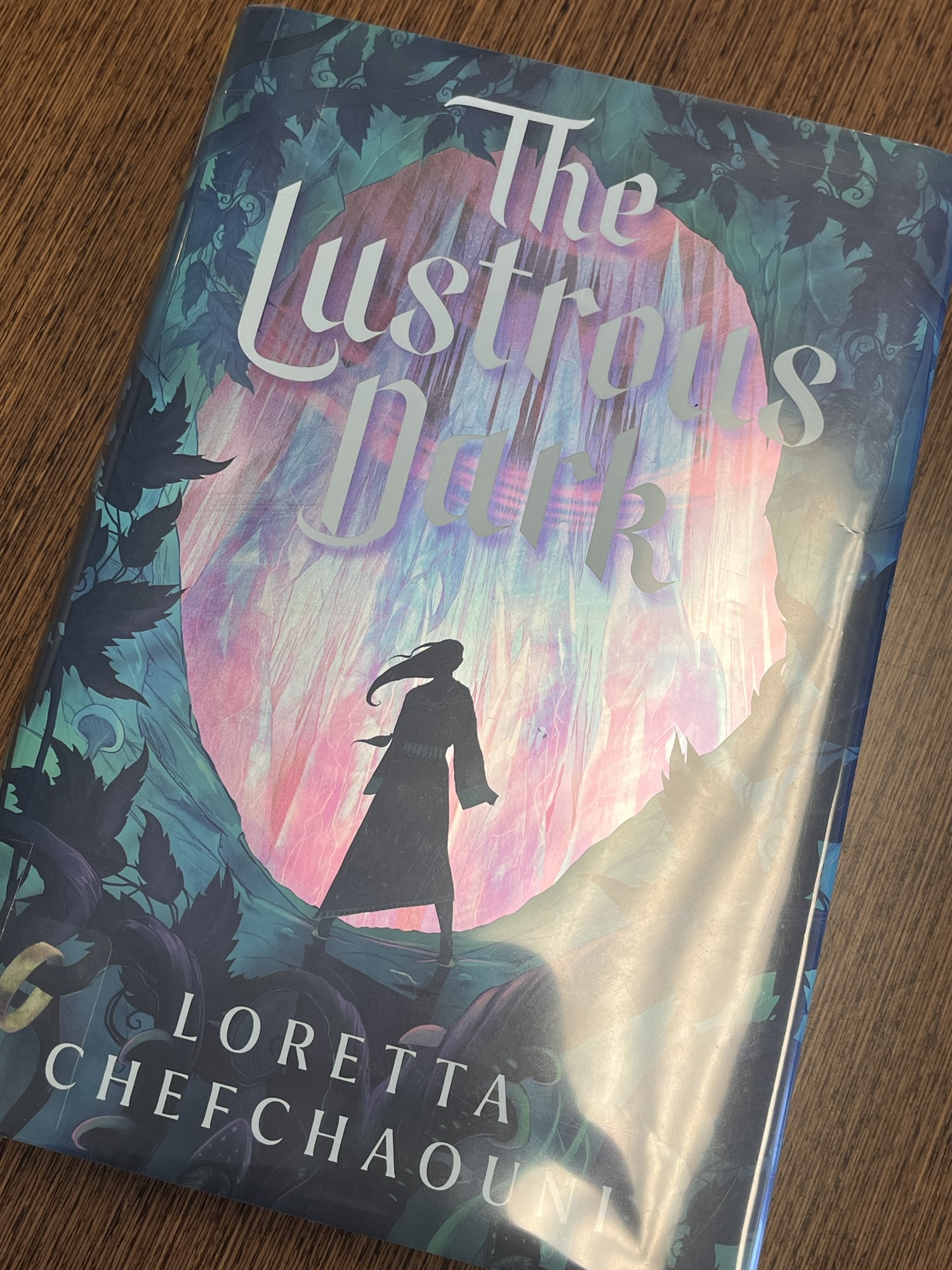
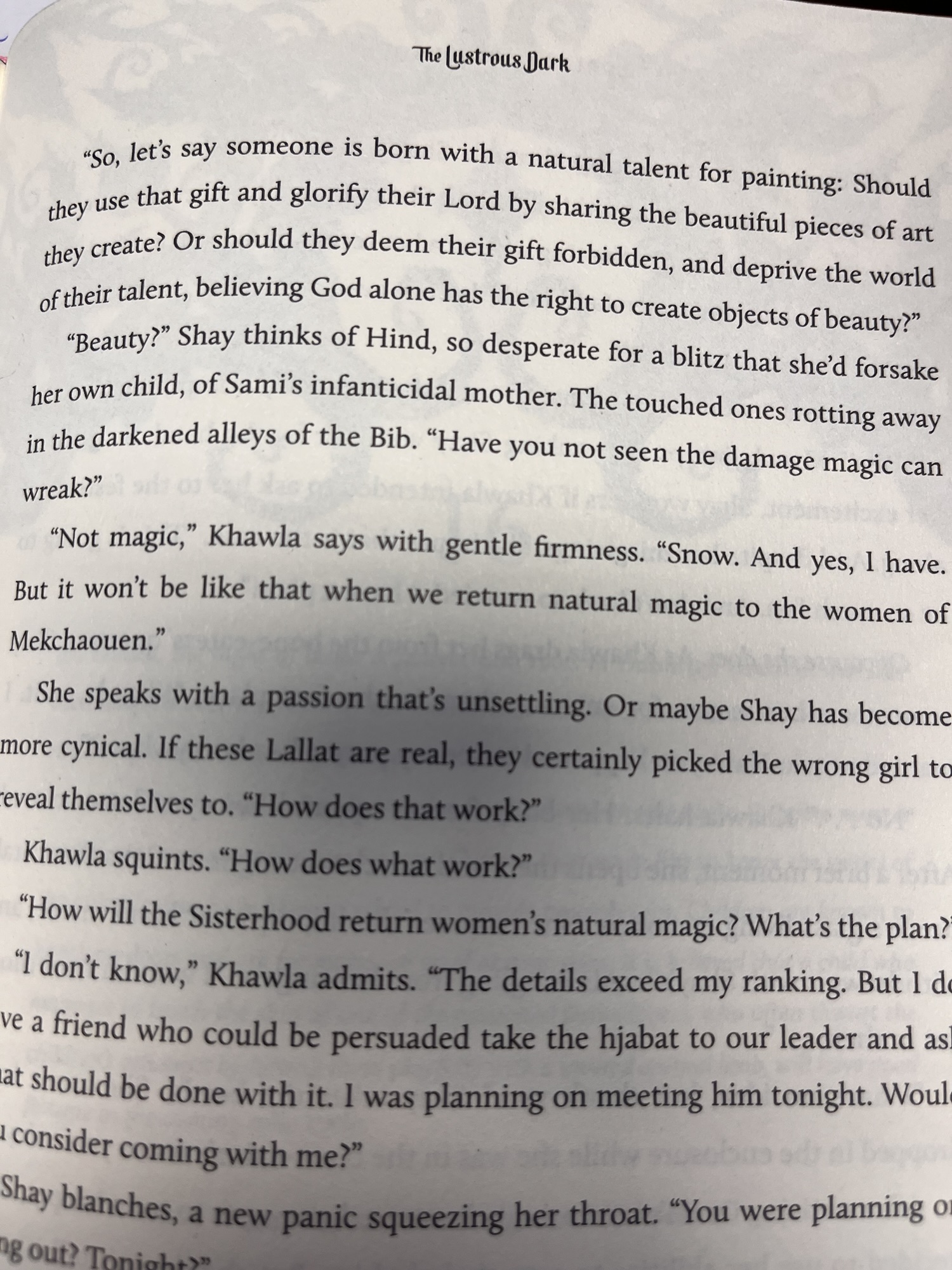
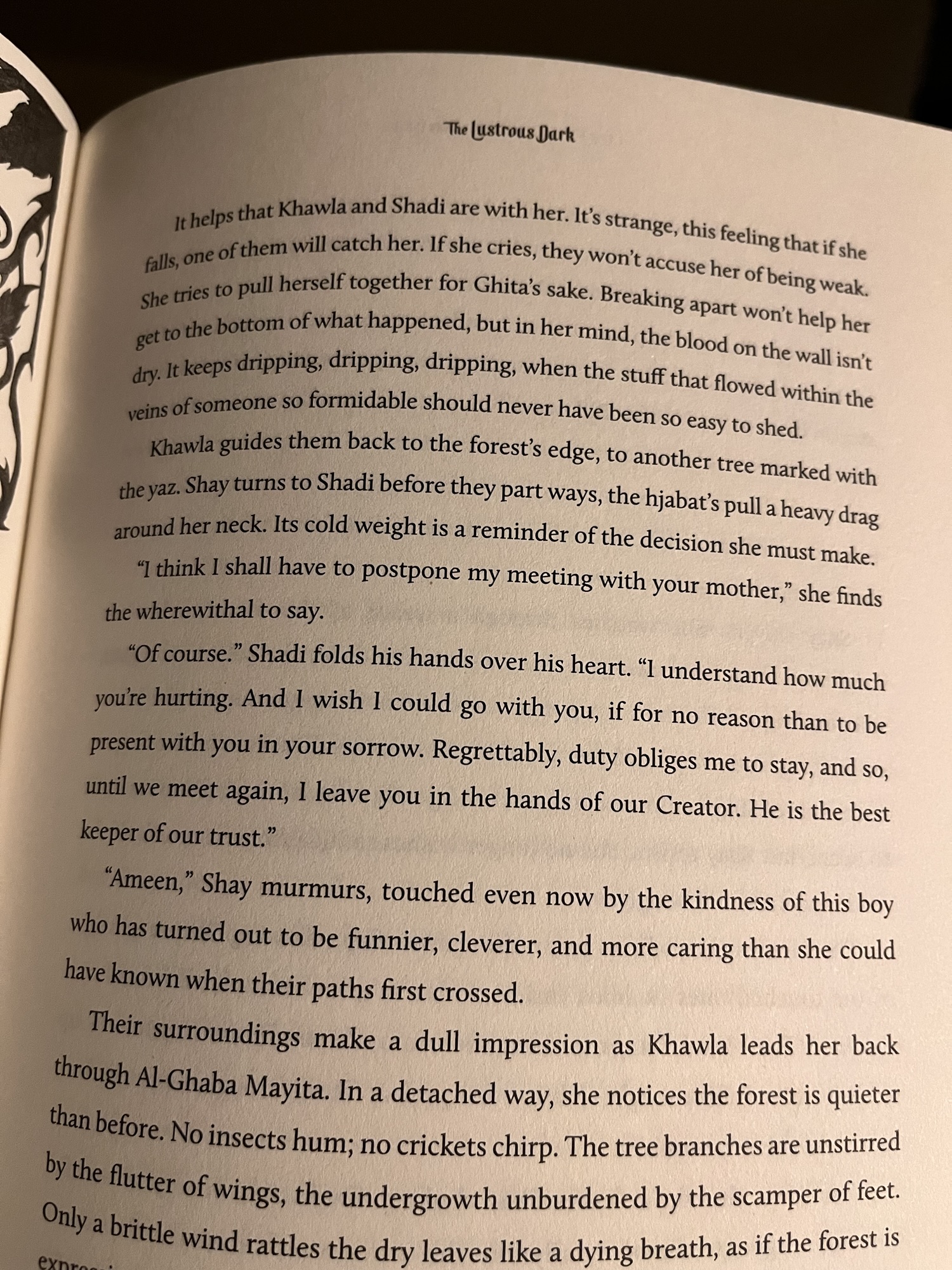
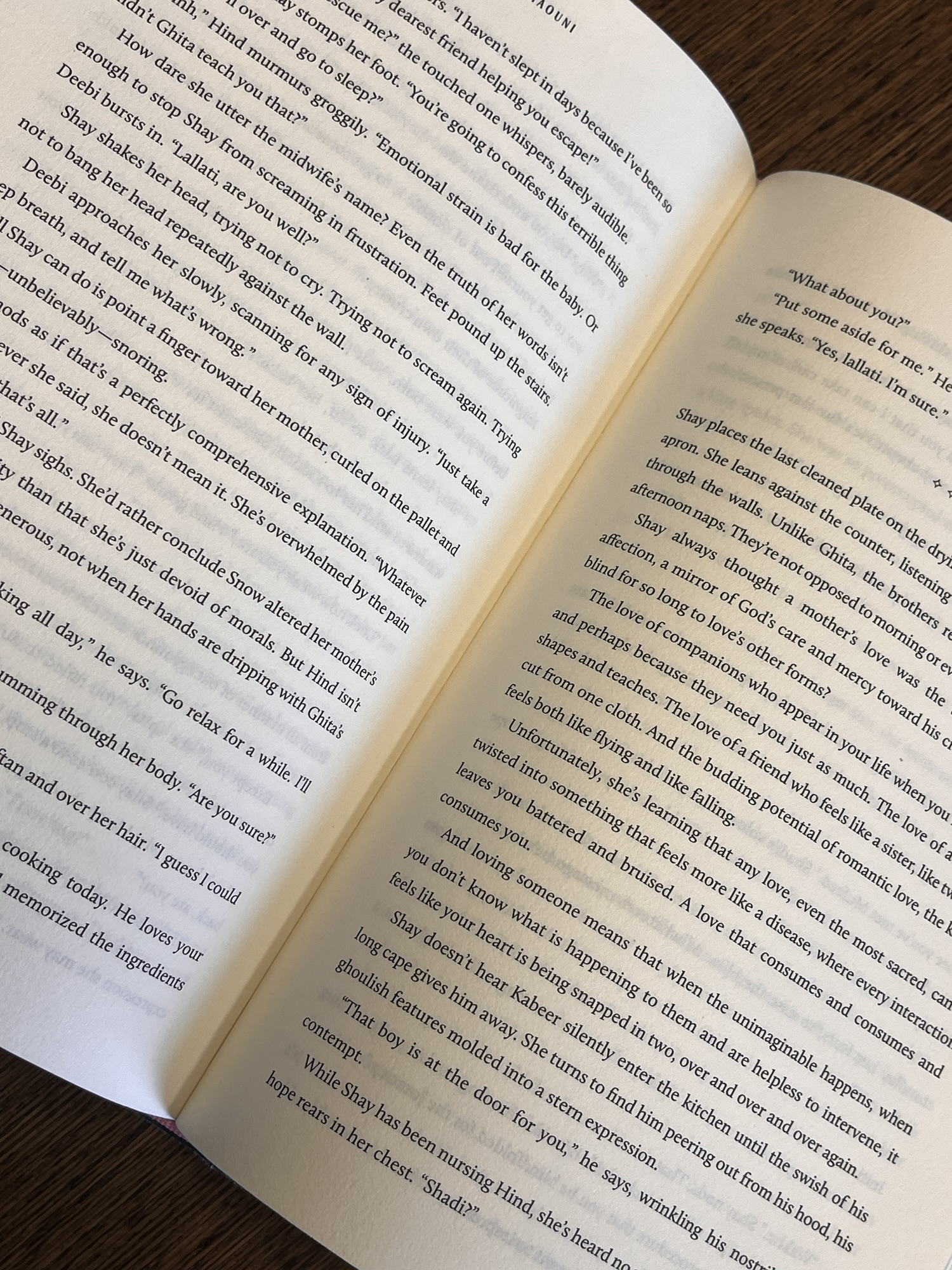
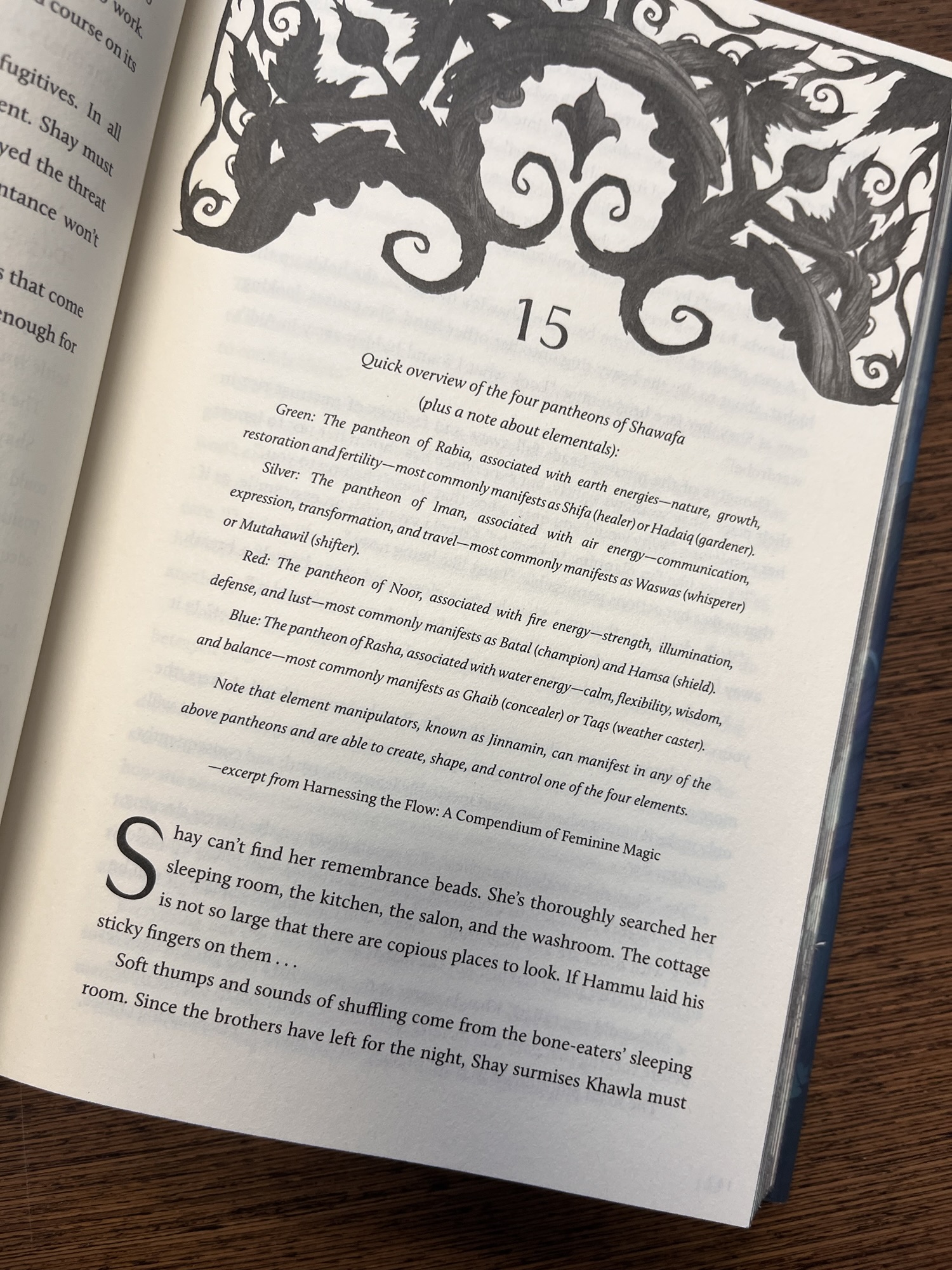
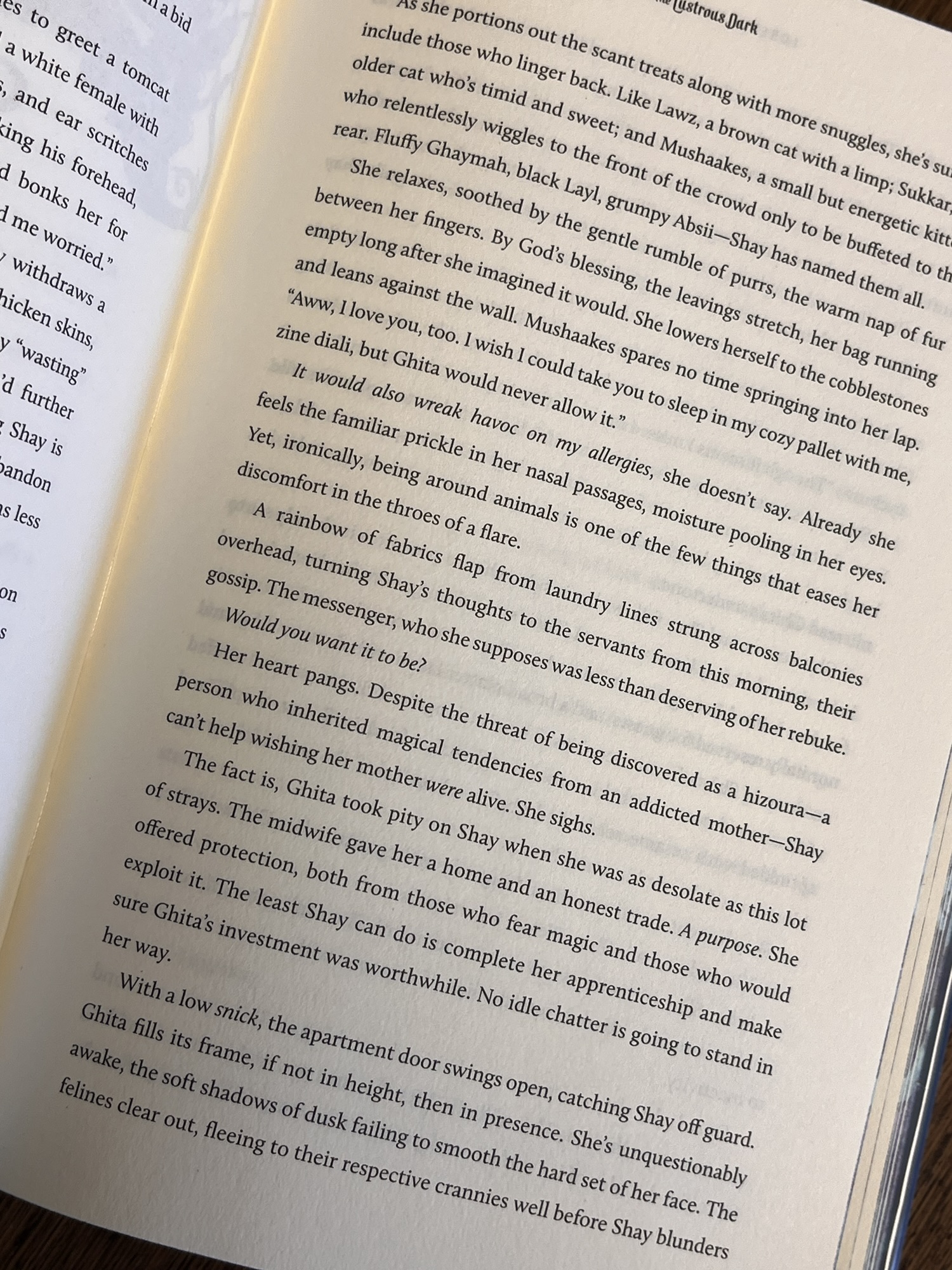
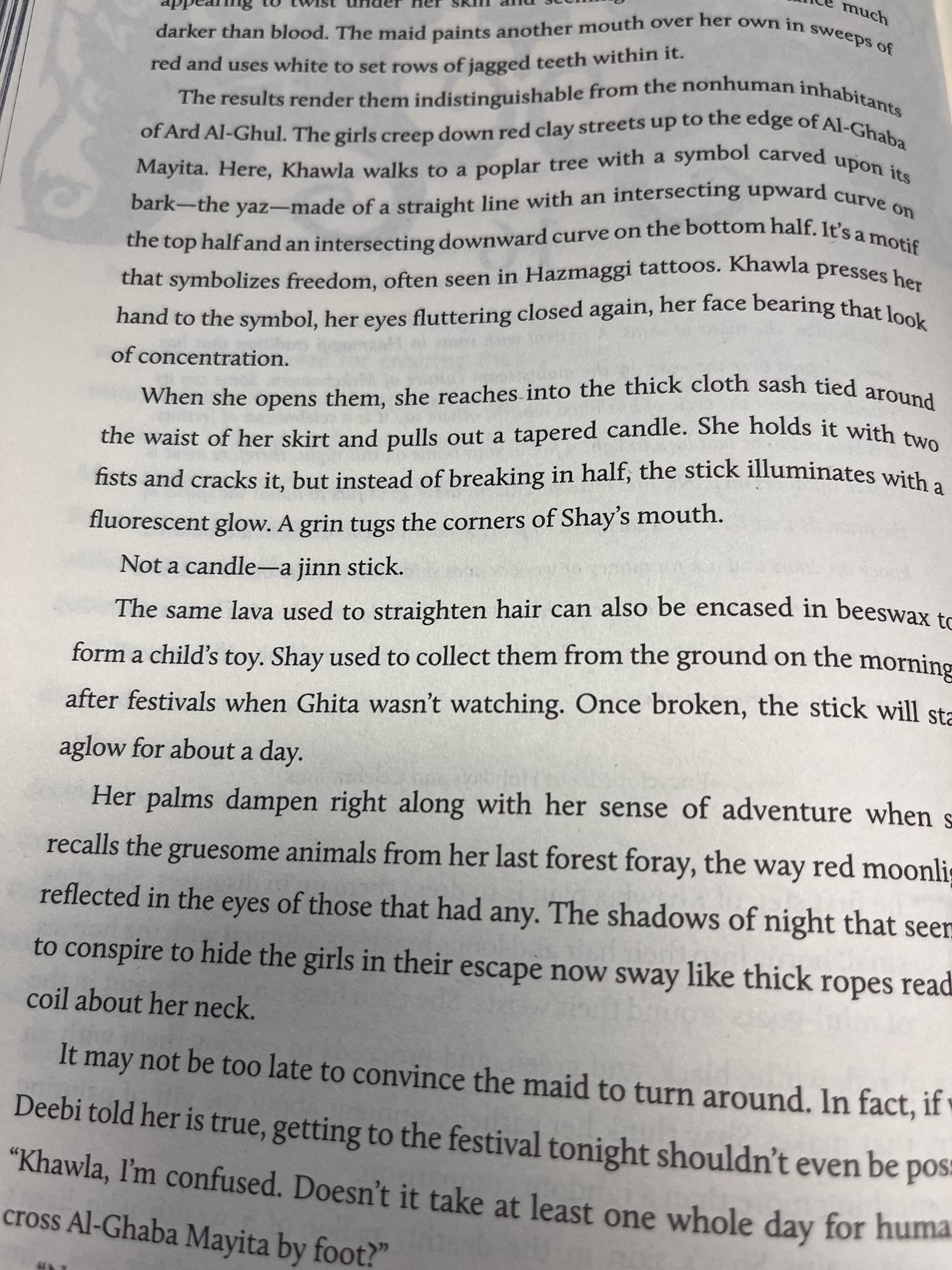
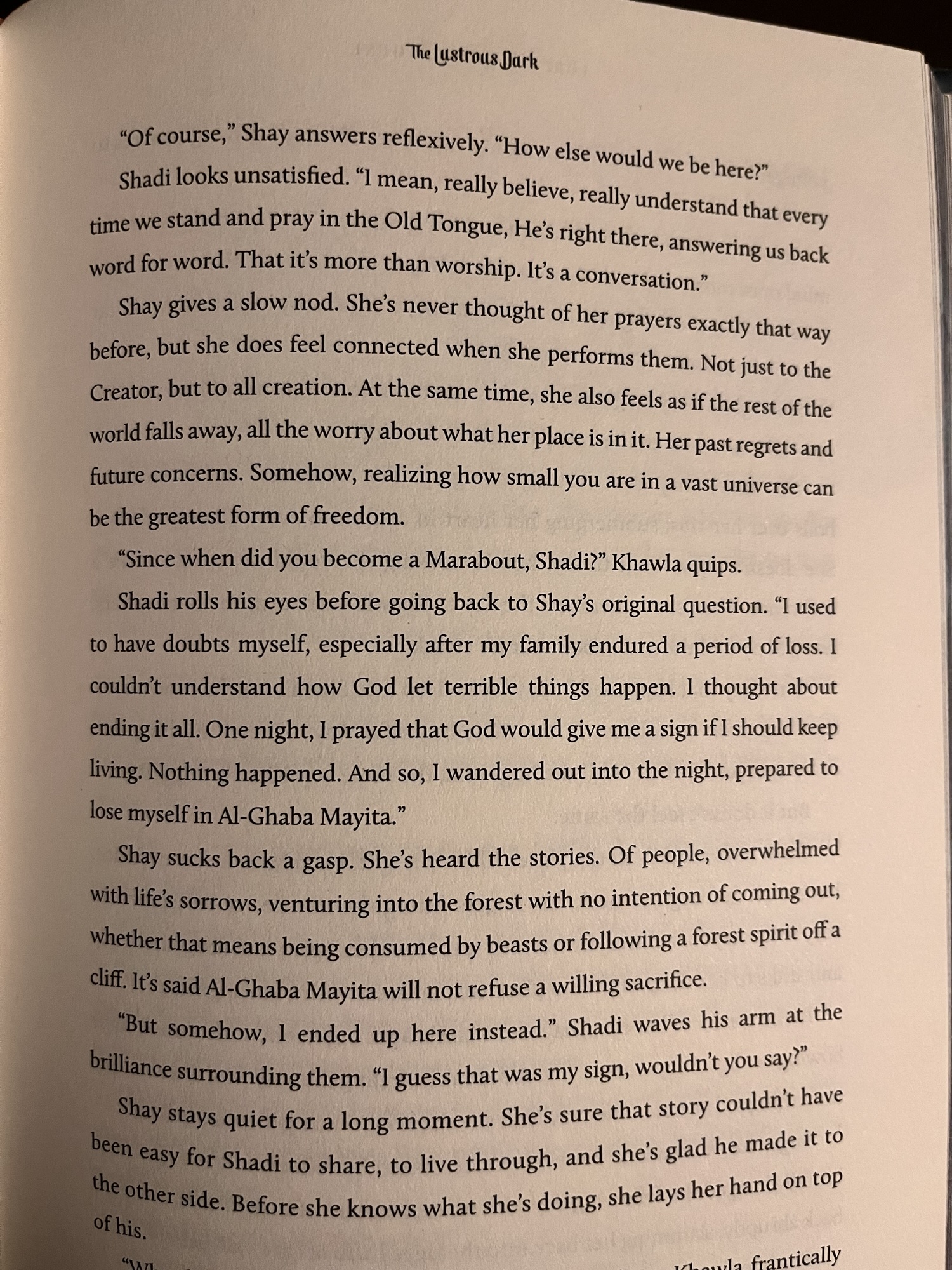
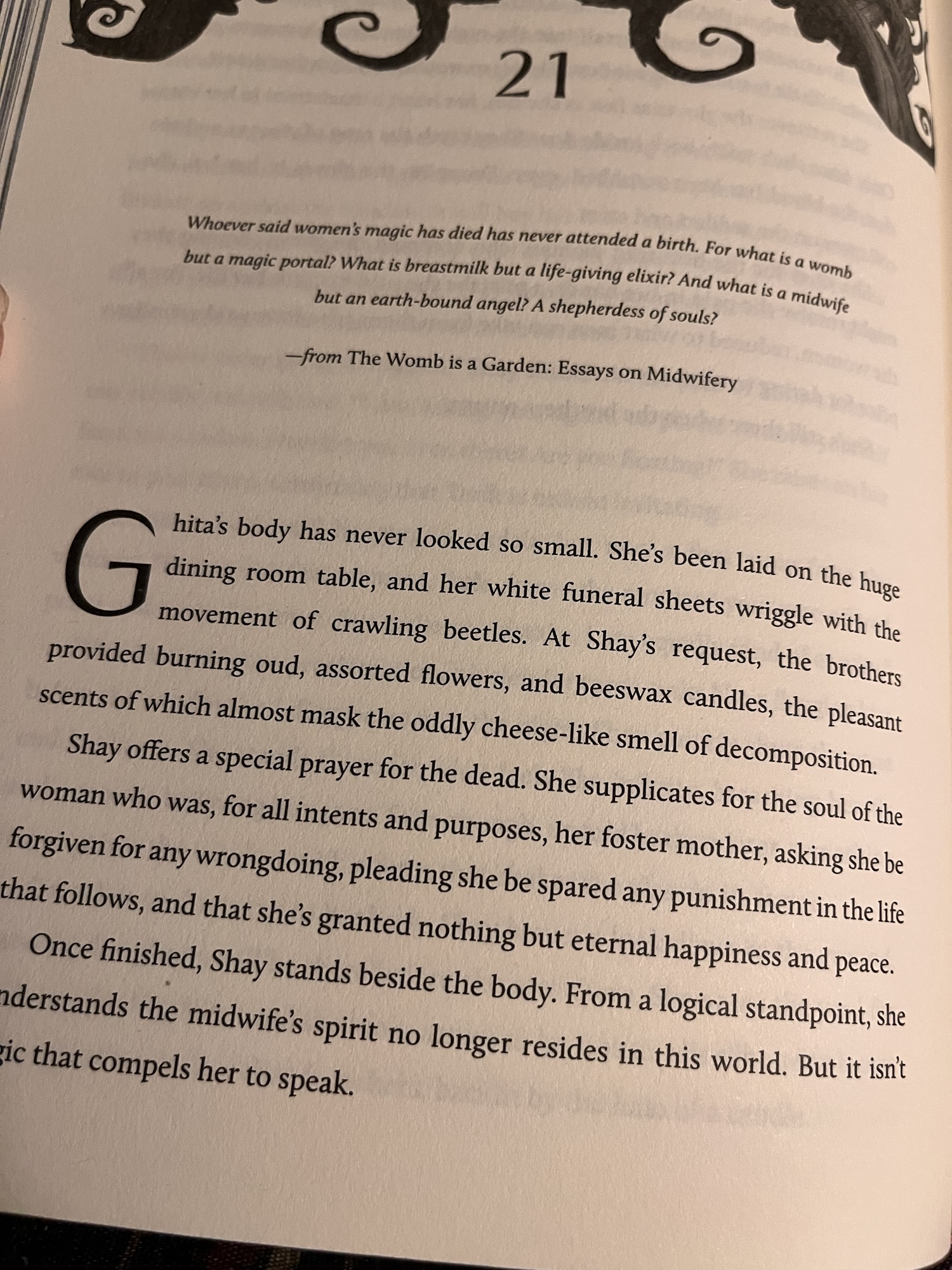
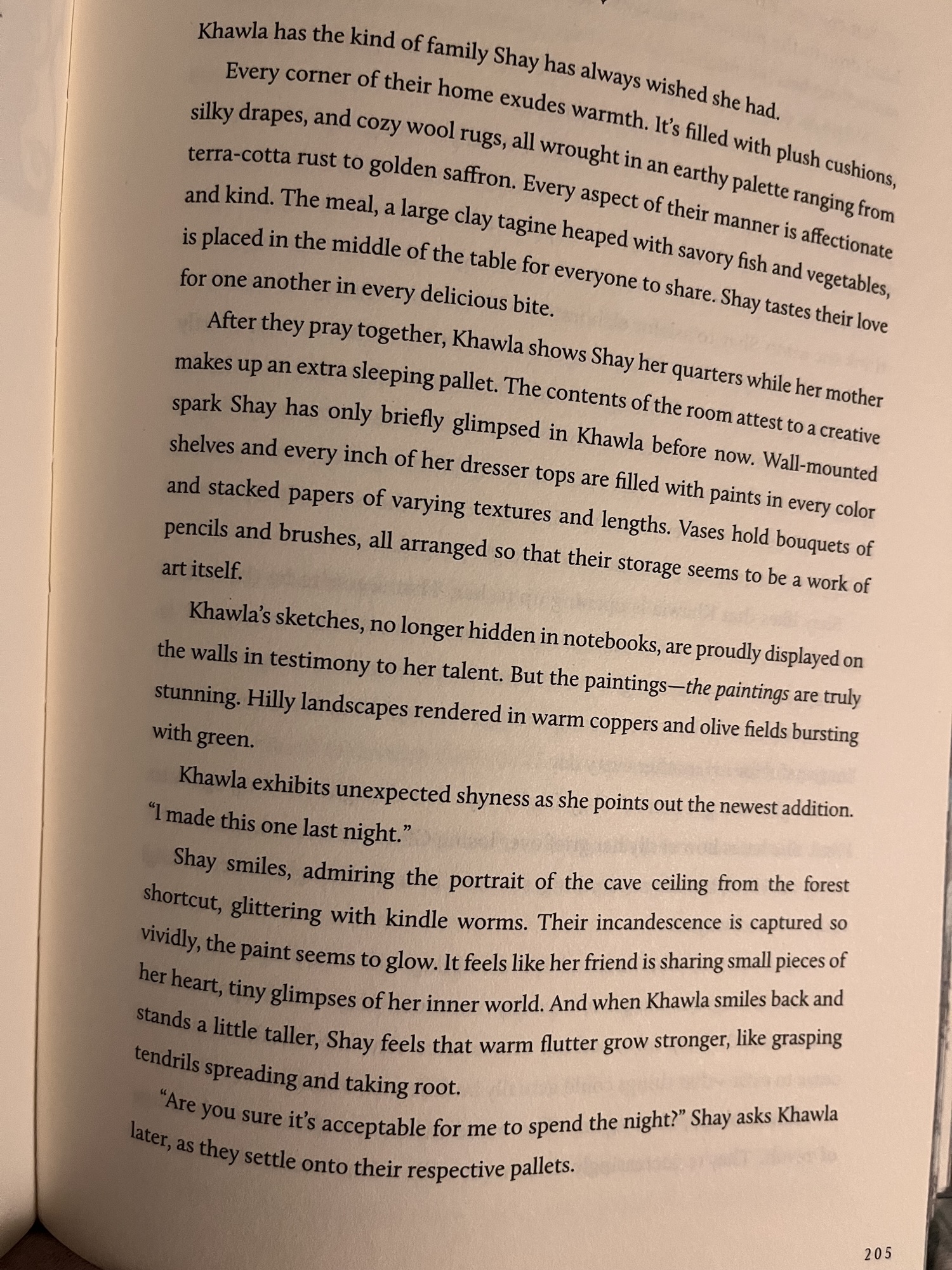
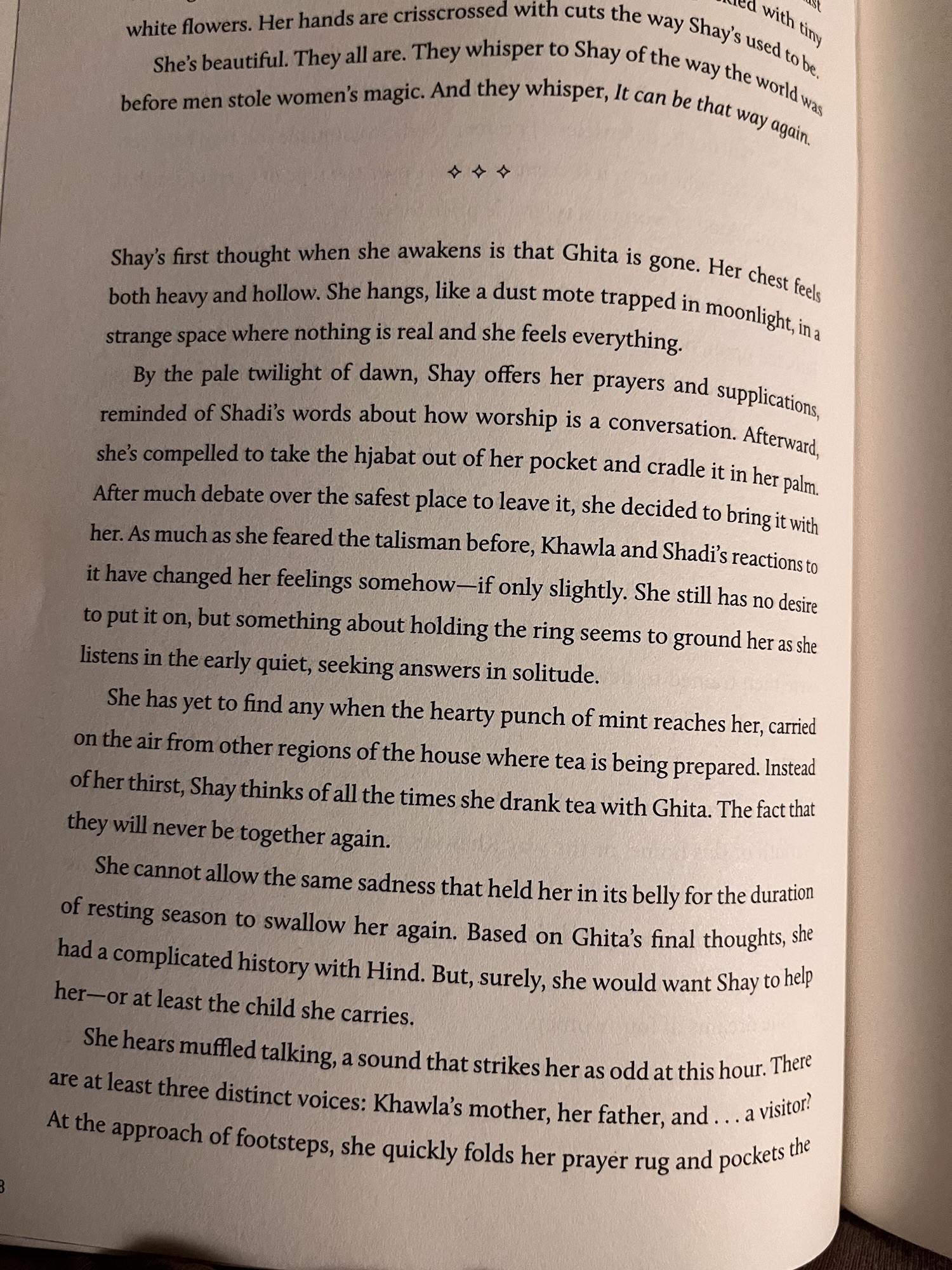
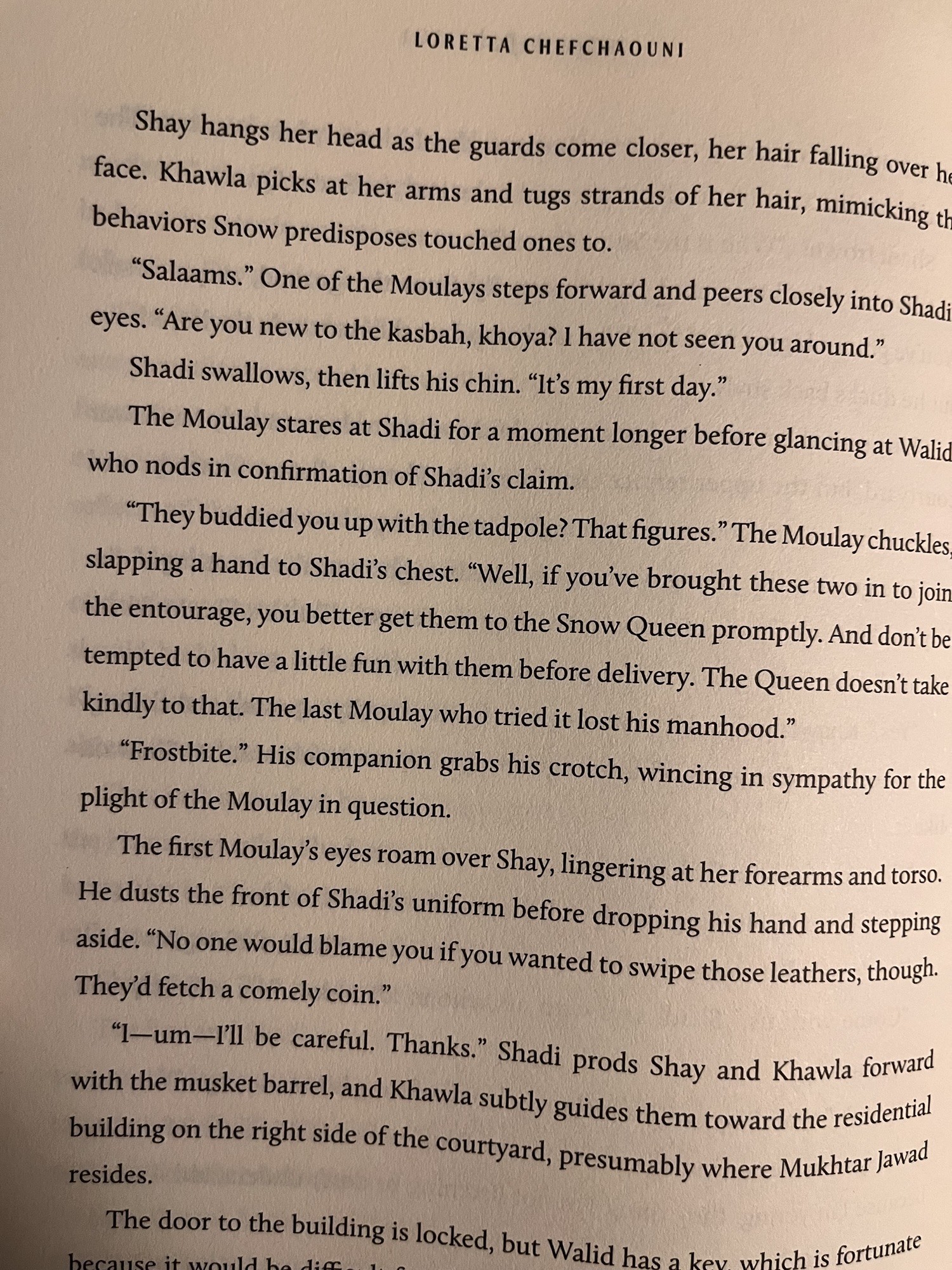
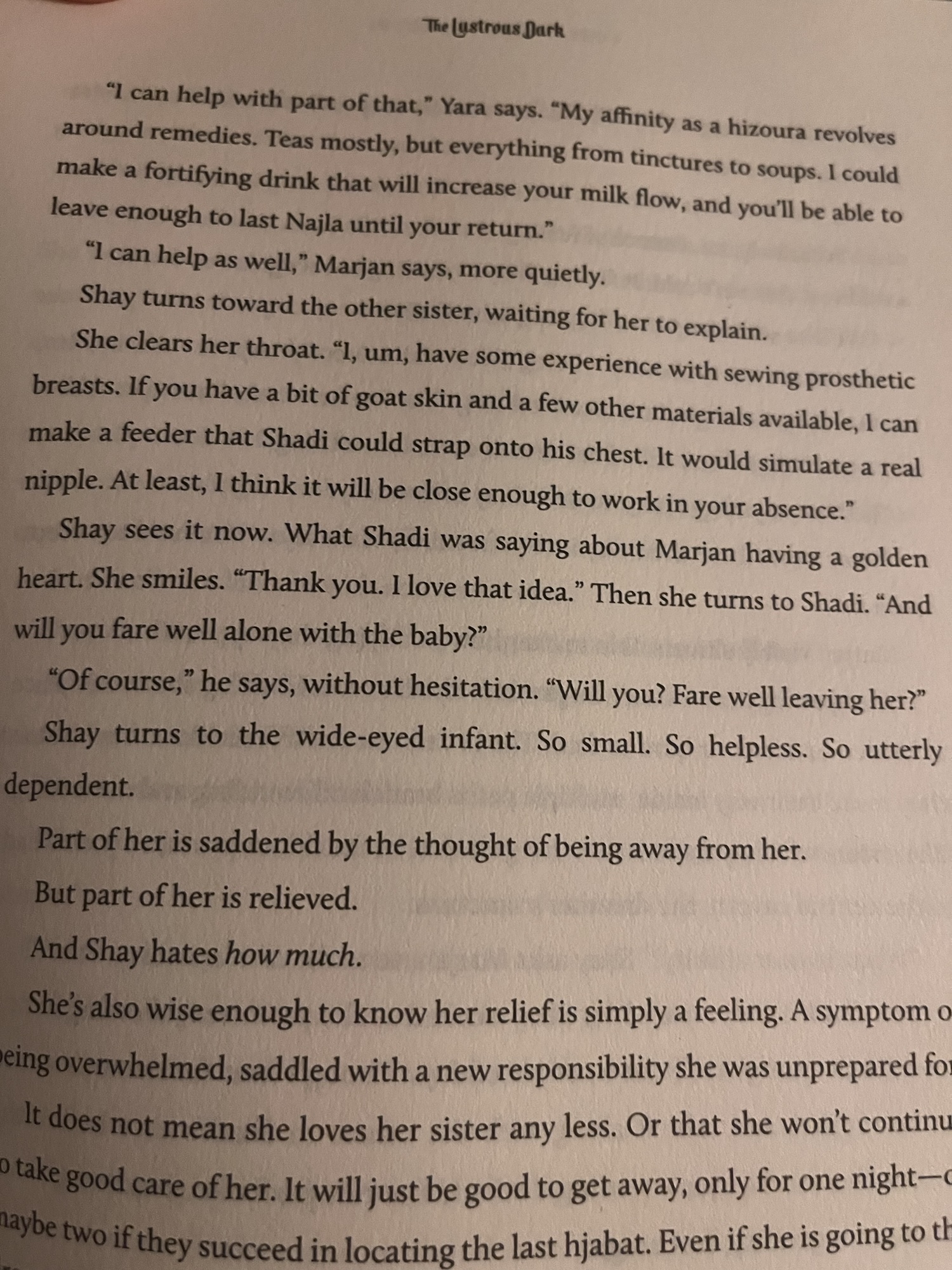
Parts of this 368 page YA fantasy were gripping and impossible to put down, other parts slow and disjointed making the book hard to pick back up. The book almost seems to function in acts, with the first act being the midwife premise, the second act in the forest with the campy/creepy version of the seven dwarfs and a vampire, and the third being the rushed climax of what presumably is the plot that will carry into the second book in the duology. The choppiness and inconsistent pacing made me feel like the world building at times took over the story, at the risk of understanding exactly how the threads of themes and characters were meant to make this a feminist fantasy. I appreciated the abandonment and found family aspects, but the political positioning and fighting the patriarchy aspects read painfully forced and underdeveloped.  As for the fairy tale retelling, I found it silly and inconsistent with the amazing night hag creatures. If the back of the book blurb didn’t position this as covering all the aforementioned themes, I might have enjoyed it more, it seemed to force themes that didn’t naturally come from the characters, plot, and prose naturally. I do acknowledge that the second book may illuminate some of the telling in a more showing manner and resolve the lost plot critique I’ve asserted, but I honestly don’t know if I am compelled to see how the second half of the story plays out. The book is a mature read with death, drug addiction, hangings, rape, violence, an assortment of relationships and gender identities, oppression, threat, etc.  I do not think this qualifies as OWN voice for the Moroccan cultural rep, the author I believe is not Arab, but I think the characters might be Muslim just not by name, which would qualify it as such. The protagonist prays “predawn prayers” in the “old tongue” and translated phrases after death reflect on the one-ness of the creator, and at times the characters even opine on their thoughts of Muslamic concepts. I don’t know if that was the author’s intent or if it is meant to come from the Morrocan culture, but I don’t know that it ultimately matters. The world created within the pages is rich and unique, I just didn’t connect with the story or characters. If someone 16-17 and up wanted to read it that enjoyed fantasy, I wouldn’t dissuade them, but for novice fantasy readers like myself, it was at times difficult to get through.

SYNOPSIS: TAKEN FROM THE PUBLISHER:

For fans of Sabaa Tahir and Guillermo del Toro comes The Lustrous Dark, a sweeping YA fantasy inspired by a Moroccan folktale, in which a young midwife’s apprentice rises up to take back the power that’s been stolen from women.

Orphaned as a baby, Shay has spent her life training as the midwife’s apprentice. Her role grants her stability, yet Shay has always yearned for more. Namely, motherly affection and answers regarding her mysterious birth—neither of which the midwife deems practical to provide.

After Shay discovers her birth mother, Hind, is still alive and addicted to a magical drug called Snow, she determines to get the woman clean. But when Hind betrays Shay to get her hands on more Snow, Shay’s abandoned within a deadly forest and forced to rely on a band of monstrous ghouls for safety.

Shay’s realm has long stood on the brink of war between the men who control magic and the revolutionaries who want to eliminate it. But in the forest, Shay hears the pleading call of ancient spirits who claim that not only has magic been stolen, but she has the power to return it. With the help of a spitfire revolutionary and the boy who’s winning over her heart, Shay discovers the horrific truth of who produces Snow and will have to decide for herself whether to heed the spirits’ charge or fade into obscurity.

This emotionally raw and gorgeously rendered fairytale combines the lush worldbuilding of This Woven Kingdom with the mother trauma of Snow White and a dash of Tim Burton. Steeped in mysticism and mythology, The Lustrous Dark confronts injustices against women with a righteous scream that’ll inspire readers to rally against the patriarchy and oppressive regimes worldwide.

Perfect for readers who love Political Revolutions, Fighting the Patriarchy, Toxic Mothers, Reawakening the Gods, Ancient Magic, Bone-Chilling Monsters, Haunted Forests, Female Friendships, Fairytale Retellings, North African Folklore, and Cinnamon Roll Love Interests.

WHY I LIKE IT:
I really liked many of the parts in isolation, the midwife beginning, the ending with the night hags, even at times the bone eaters, but as a cohesive story I feel it leaves too much to be desired.  Why was the forest such a plot point to navigate early on, but largely not a threat after the midpoint?  Where did Khawla just appear from, and did her family live in the forest? And then suddenly the two girls, Marjan and Yara, who are perceived to be quite young and shy suddenly are transversing the forest alone and emerging as strong capable decision makers.  The age of many of the characters seems inconsistent, or maybe rather their maturity, at times even the protagonist feels very young compared to other times. Ultimately the women’s magic and reclaiming it for women specifically, seems so forced that it took me out of the story. I get that Shadi is an ally, but seems like he is the most honest of the bunch. Multiple women are manipulative and corrupt, the mothers come to mind, and I think it could have been shown more how they were made that way by systems, but I felt it just kept telling us that Jawad is bad, and that men took the power, rather than showing it being more systemic and patriarchal in nature. Routinely the book seemed to build up to big plot points and then just have Shay go along with it, to the detriment of giving her a clear character arc of growth and coming in to her own, which sadly kept me from ever clearly cheering for her, or knowing what I hoped she could accomplish.

Muslim Mavericks: The True Story of…Mo Farah: The Boy Who Ran to Be Free by Dr. Seema Yasmin illustrated by Noha Habaieb

Standard
Muslim Mavericks: The True Story of…Mo Farah: The Boy Who Ran to Be Free by Dr. Seema Yasmin illustrated by Noha Habaieb

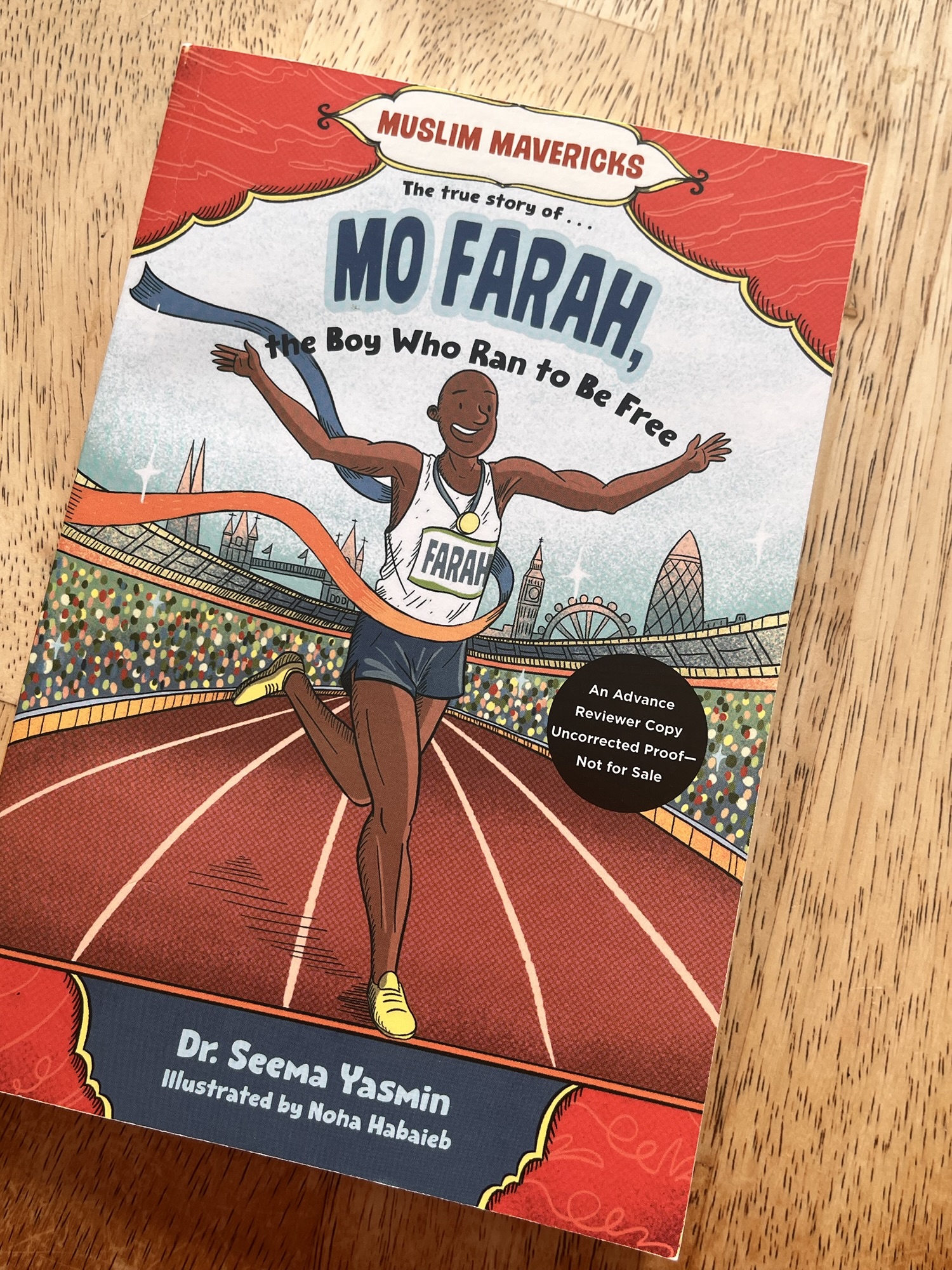
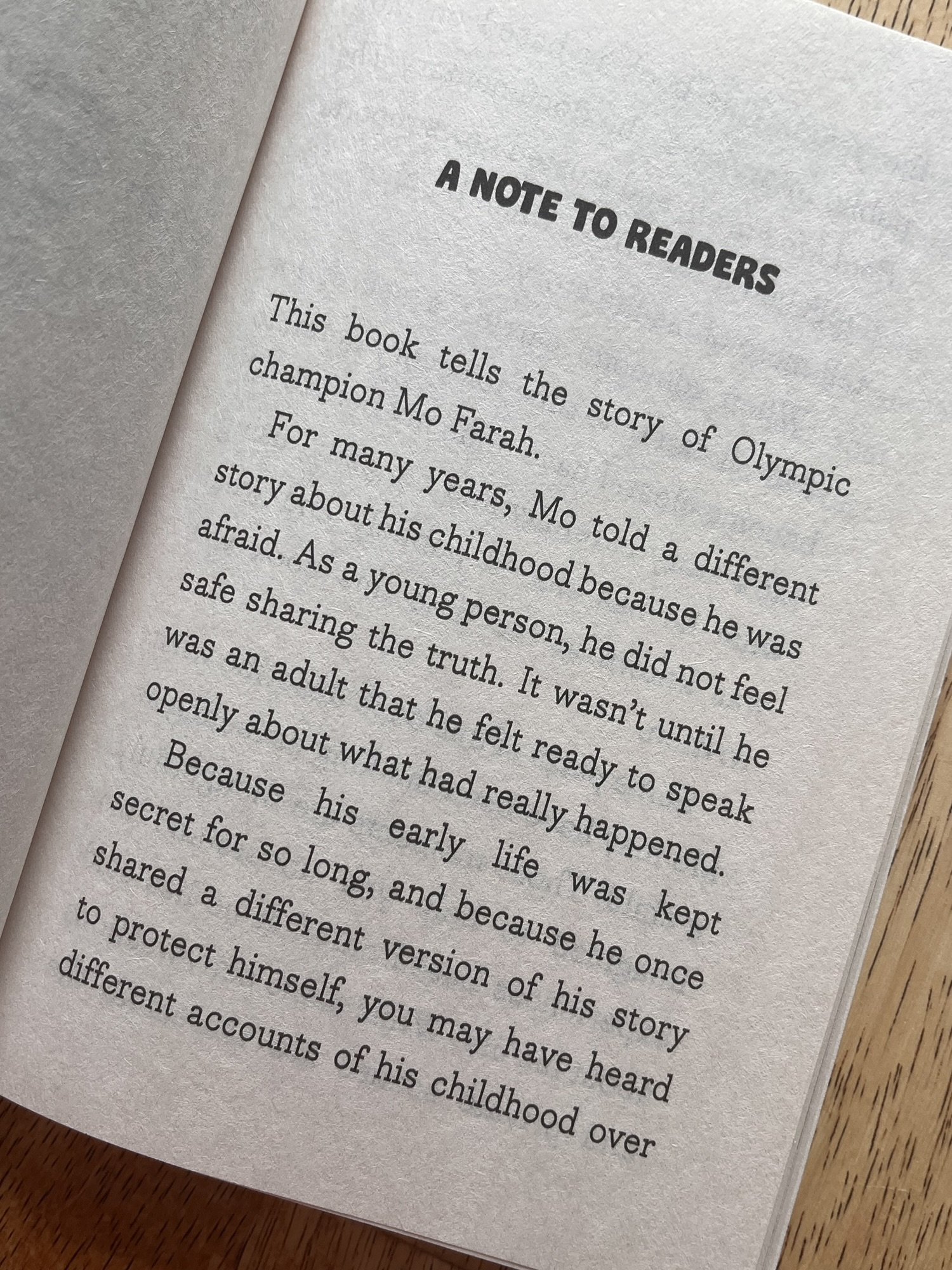
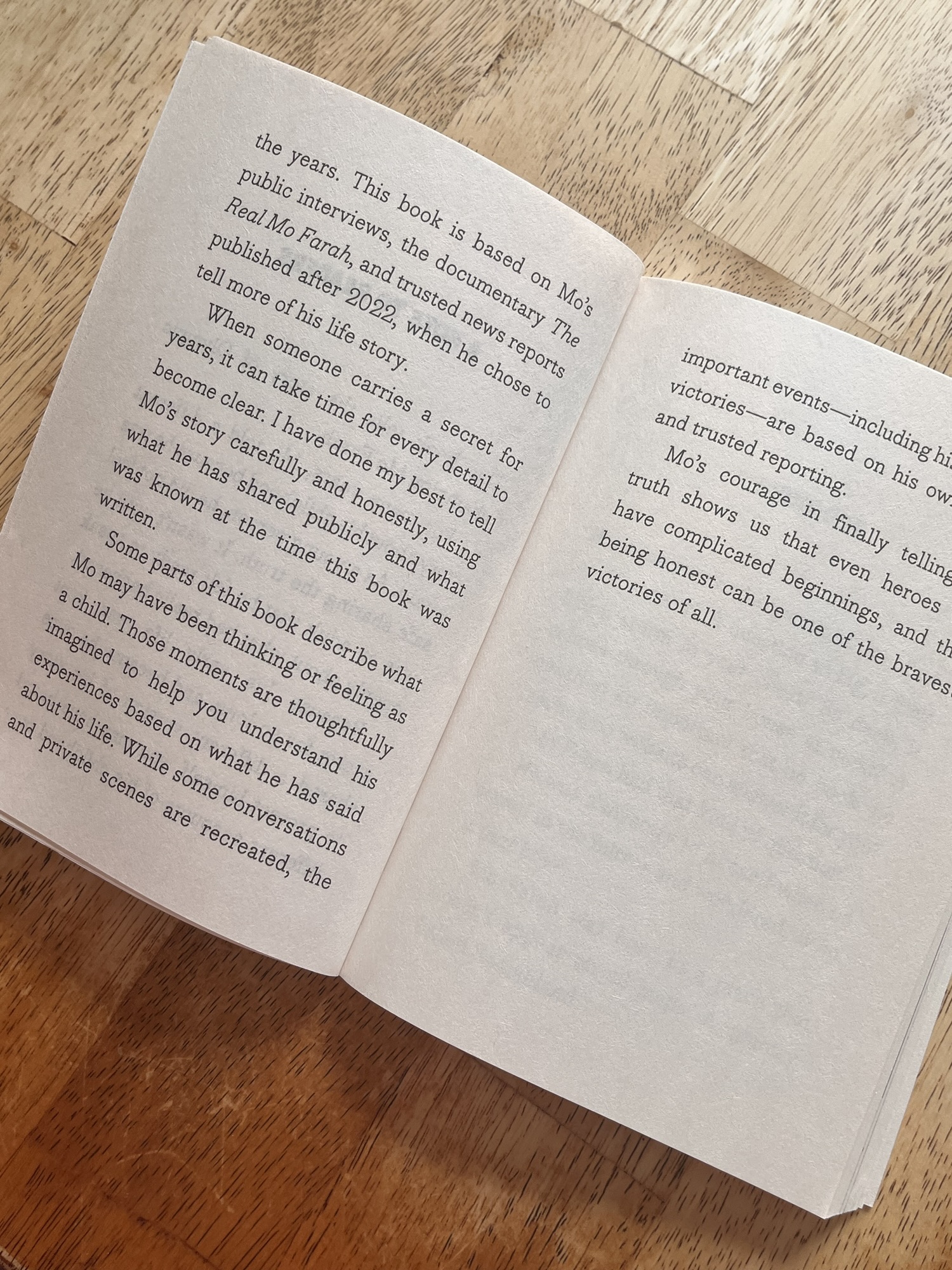
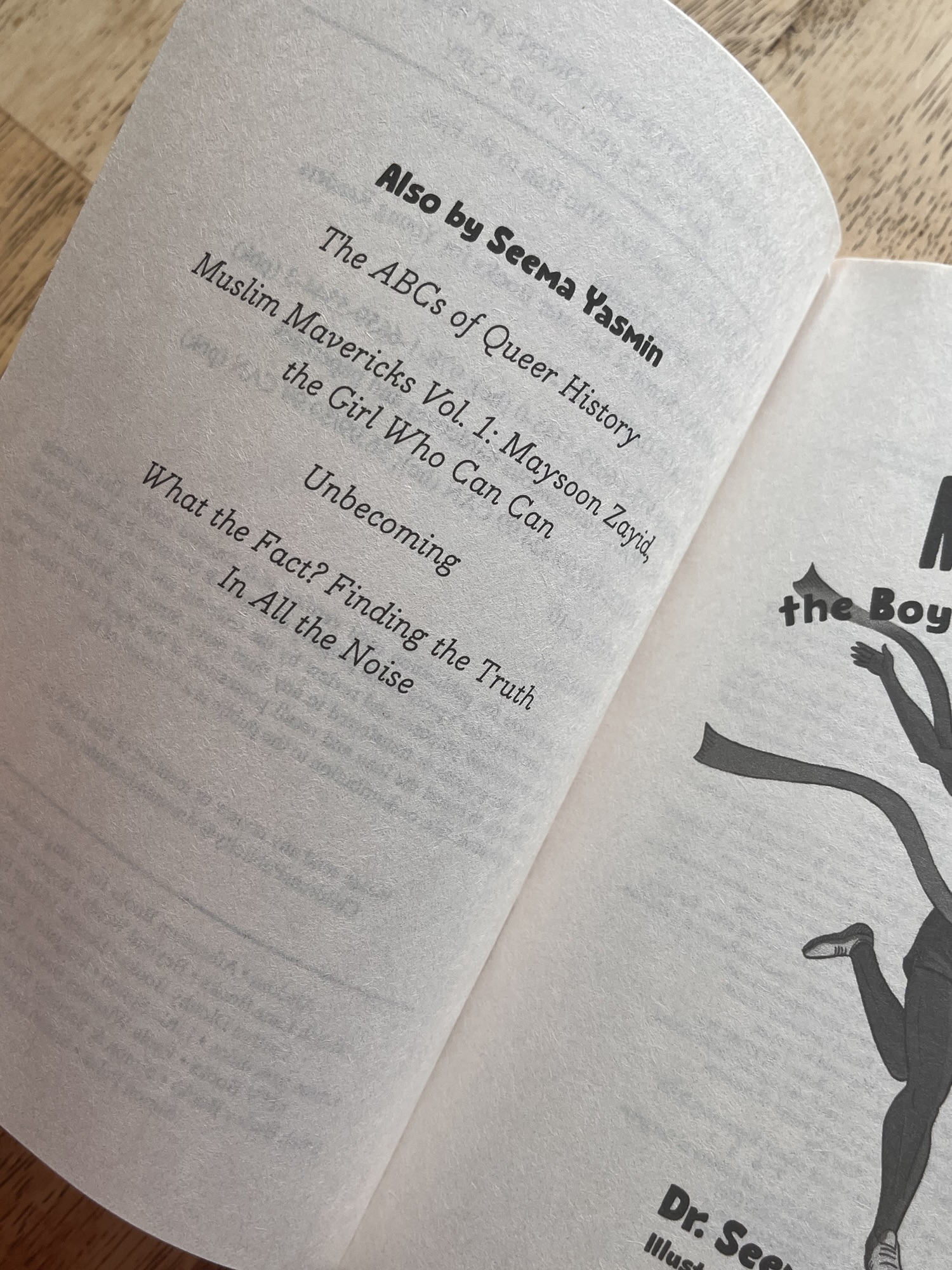
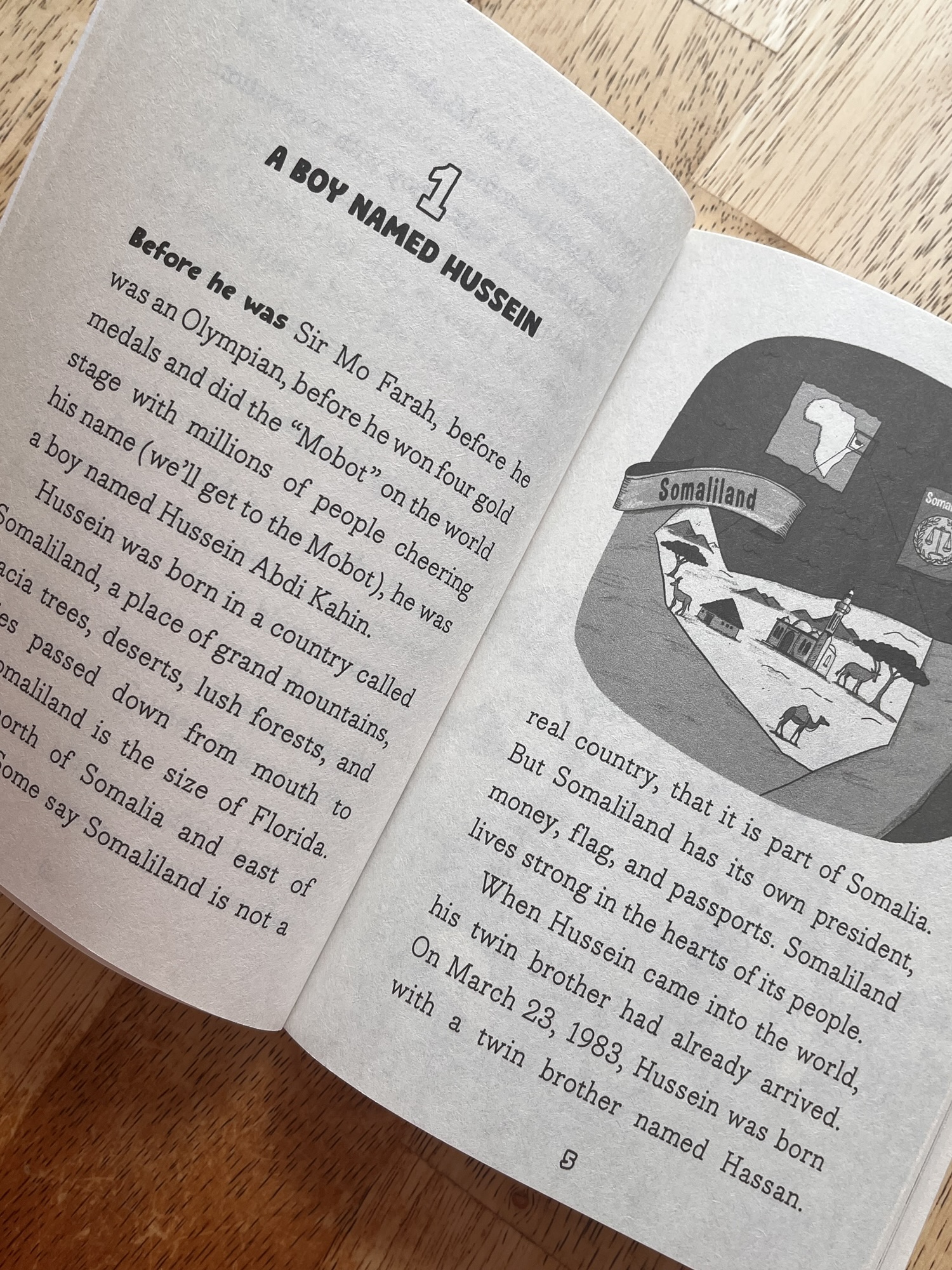
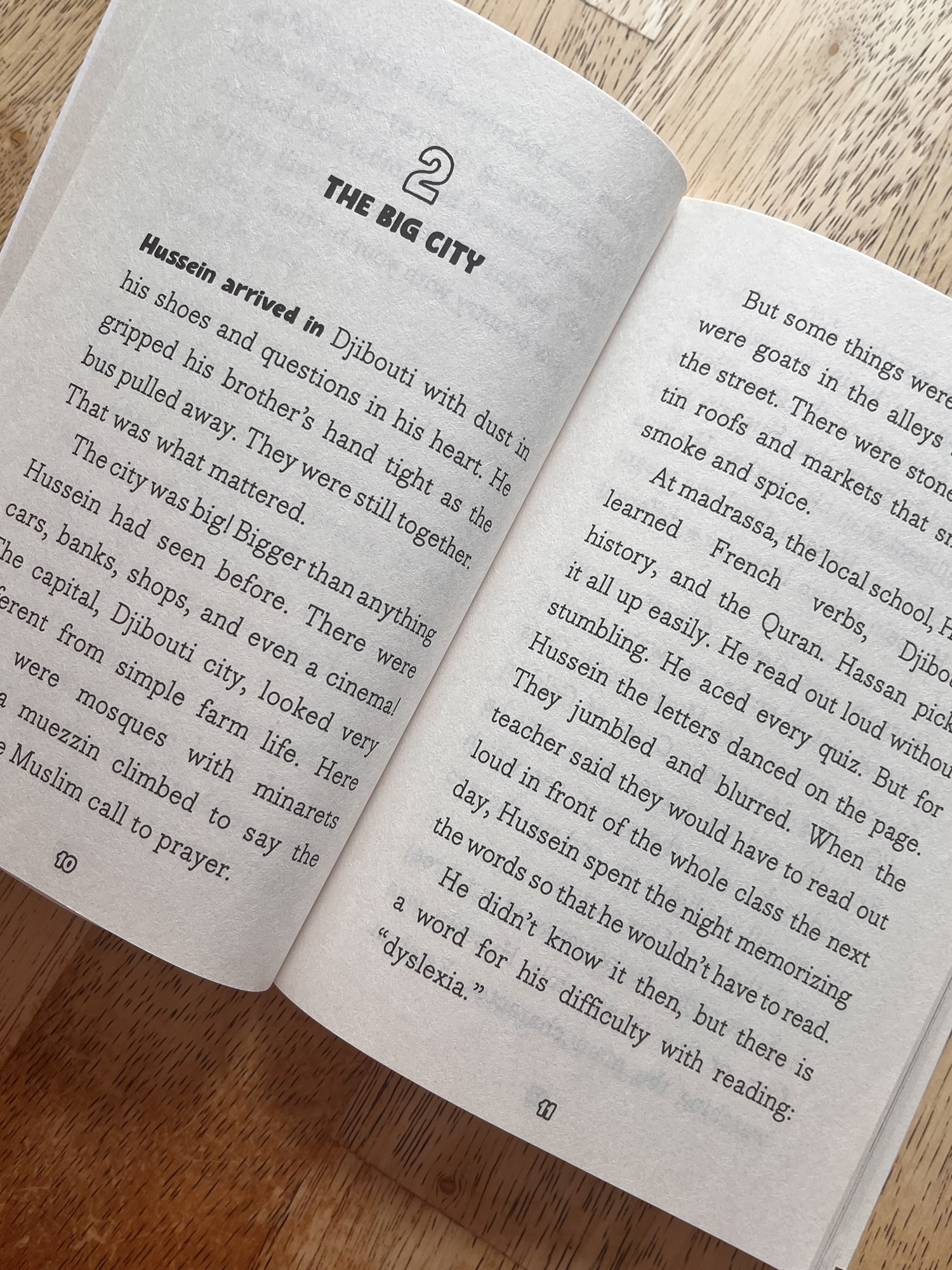
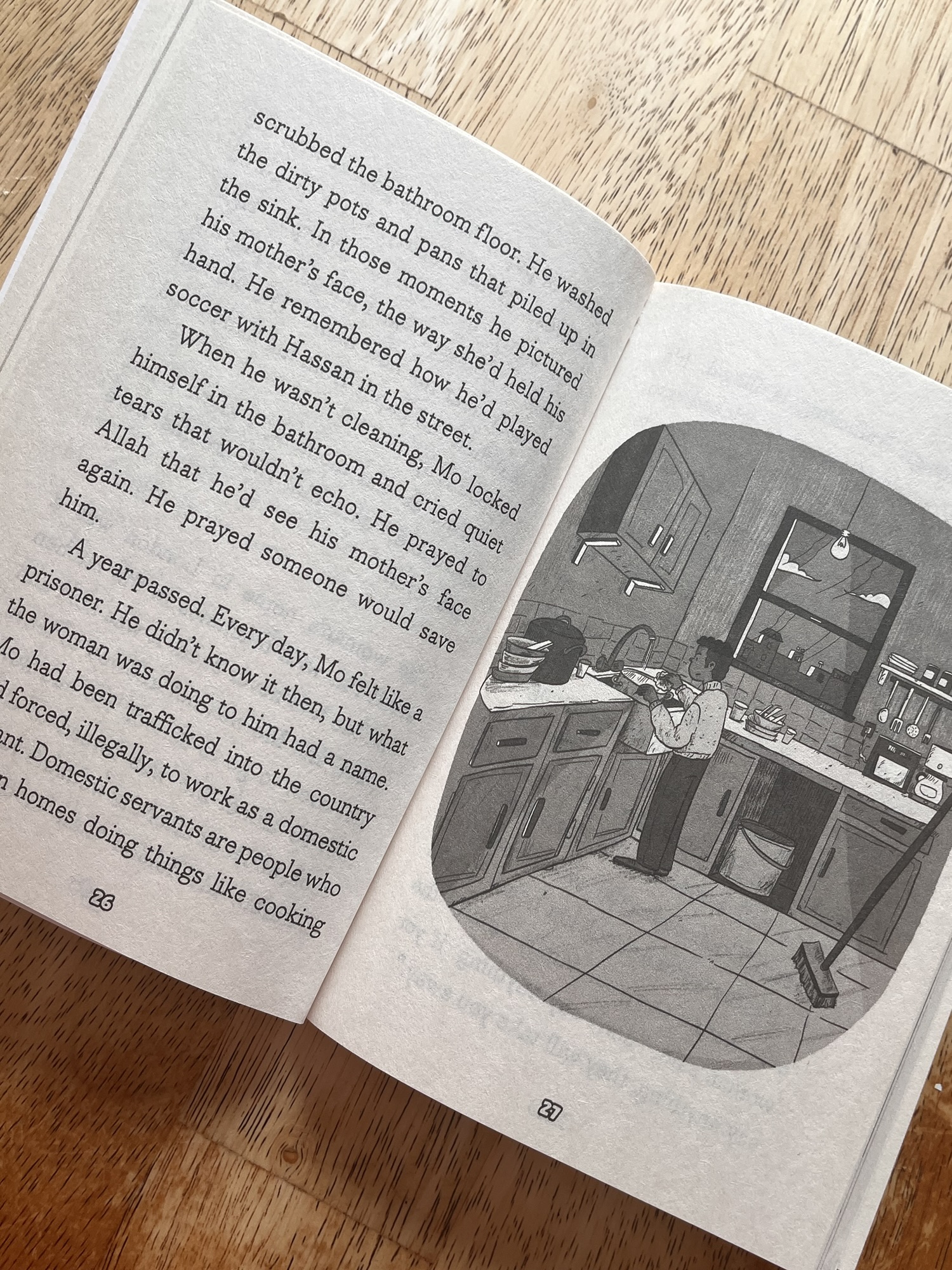
This 80 page illustrated early chapter book biography/non fiction story is the second in the Muslim Mavericks series, with the first being, Maysoon Zayid, the Girl who Can Can, and cements that the series is framed around verifiable facts with the author taking liberties to fill int he gaps and assume internalized processing and feelings since the author has not interviewed the subject matter themselves.  The book is clear on this, so I don’t find it problematic necessarily, but have included pictures of the inside pages stating it and information sources so that readers can decide for themselves.  I think young readers will be entertained by the story, gain empathy, and be saddened that human trafficking exists and happened to Hussein.  The book reads a bit choppy and I found myself wanting more information, but recognize I’m not in the target audience, and can easily research it myself.  My critiques of the first book still more or less exist for this one, I do not know who will be covered next in the series, and Islam is not a key element in the book and presumably in the subject matters public life.  Islam is personal and I’m not passing judgement on the person, but just mentioning it in terms of the book series being about Muslim Mavericks by a Muslim focused imprint.  The text mentions that he hears the athan, learns Quran in school, and prays to Allah swt, all this happens though in his very early life, no mention as it enduring or part of his identity as he matures.


SYNOPSIS:
Taken from the publisher:

From Somaliland to the Olympic arena, there’s no distance Mo can’t go!

At the age of eight, Mo Farah moved across the world from Somaliland to London. It was difficult starting over in a new country, especially since he spoke very little English. But fortunately for Mo, running was a language everyone understood.

Once he started, he never stopped—smashing records and winning championships. Now, with four Olympic gold medals and six World titles, he is considered one of the most successful male track distance runners ever!

WHY I LIKE IT:
I like that it shows someone overcoming a hard life and introduces them to a set of circumstances they have probably never considered.  It also provides some insight and understanding of what trafficking is, and does it in a child appropriate way. I also like that the teachers in the book are his support and his friend’s mom in many ways the hero of the story.  Readers may not be able to identify with being a super athlete, having to leave home at a young age, being forced into servitude and having your name changed, but they can recognize the support that exists around them.

FLAGS:
War, conflict, death, human trafficking, forced servitude, prevented from going to school, political unrest, struggles with dyslexia, stress.

Zaman Kids Series (The Story of Al-Andalus, The Story of the Ottoman Empire, Muslim Heroes & Muslim Heroines for Kids) by’Issa Meyer illustrated by Robi Dalimonte

Standard
Zaman Kids Series (The Story of Al-Andalus, The Story of the Ottoman Empire, Muslim Heroes & Muslim Heroines for Kids) by’Issa Meyer illustrated by Robi Dalimonte


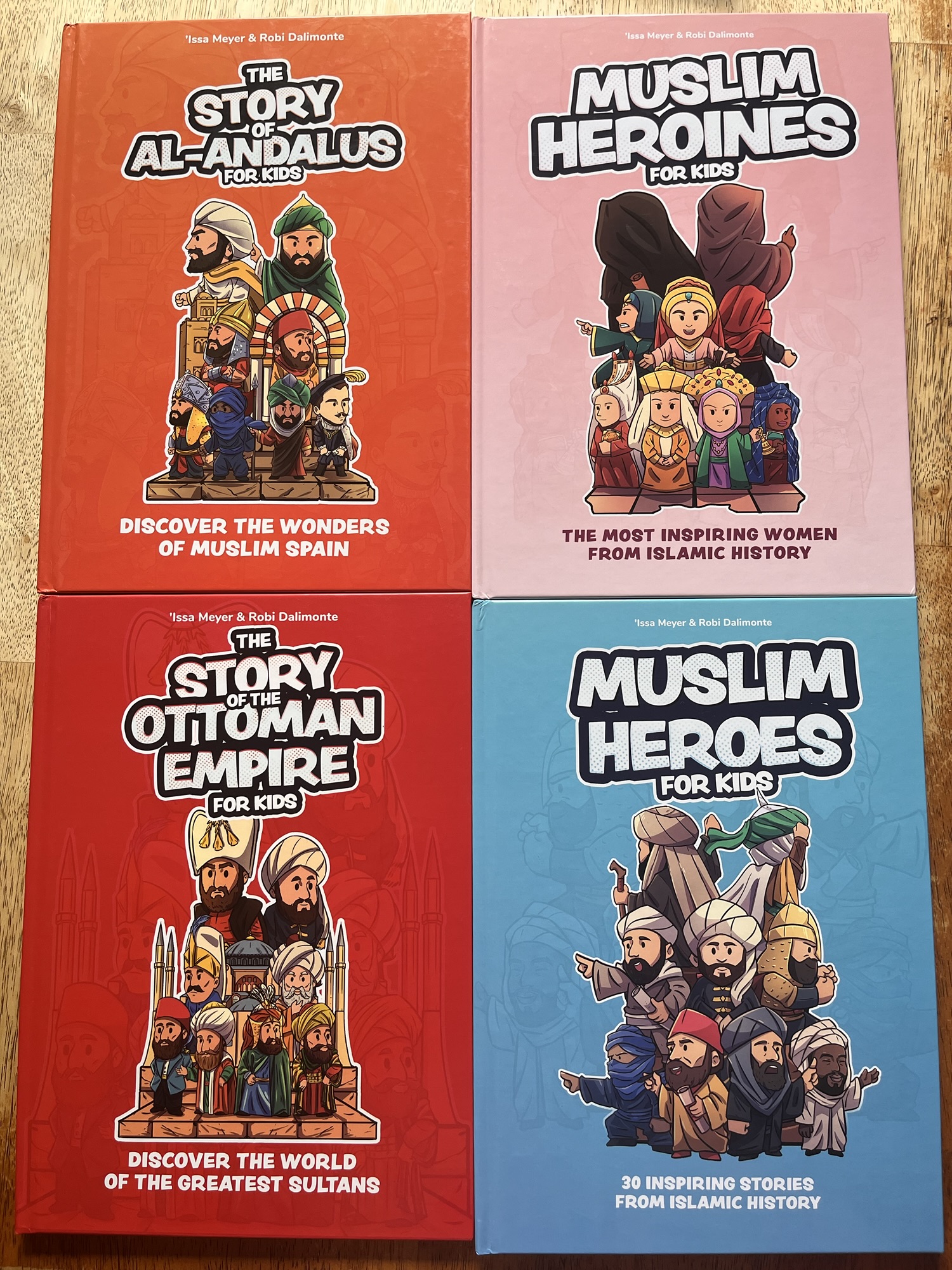
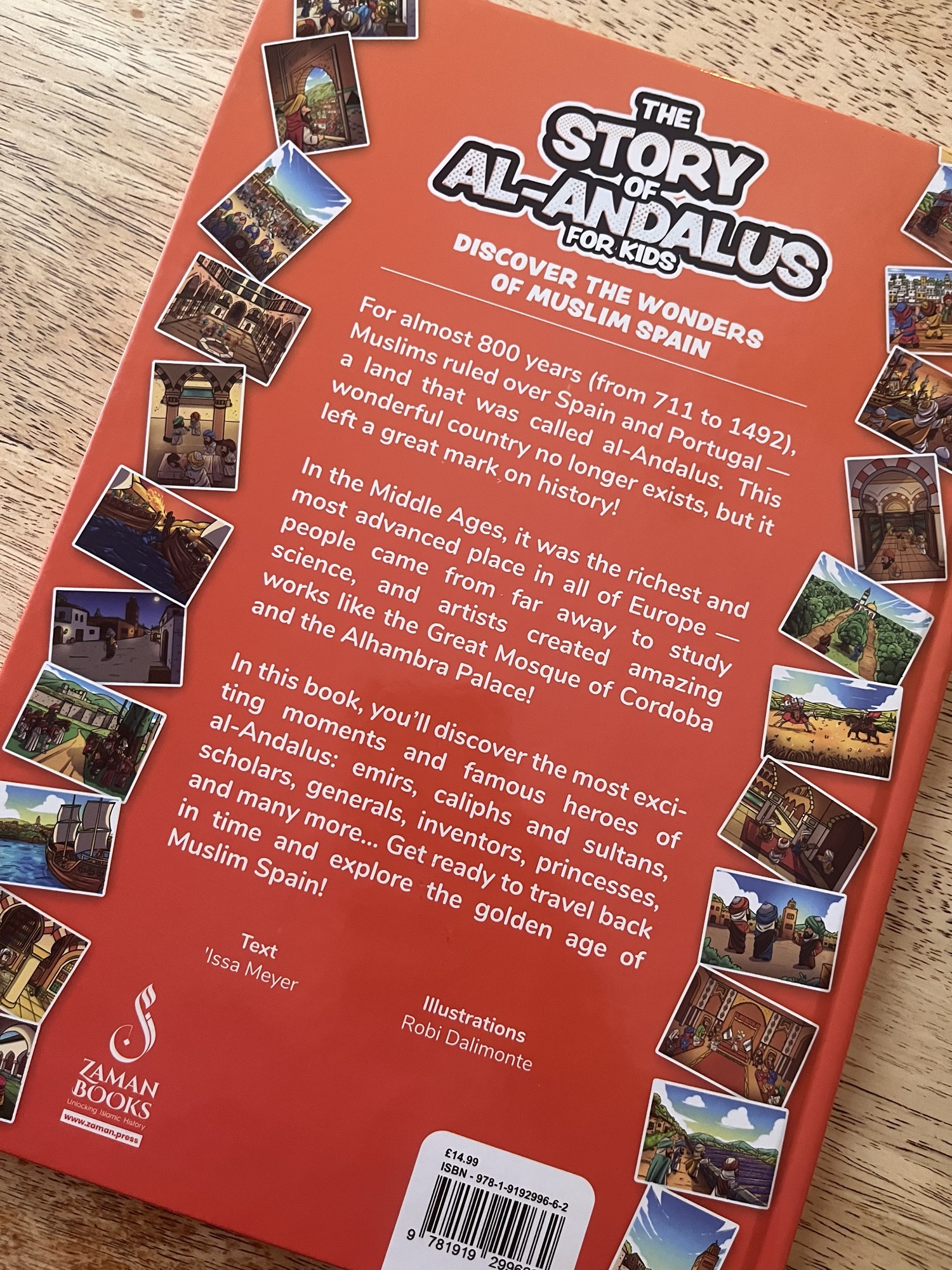
These gorgeous Islamic history books aimed at kids middle grade and up, should probably be reviewed individually, but their organization, presentation, and style are similar that even with different content, I’m opting to comment on them collectively.

  • Thick 8.5 x 12 hardback covers and sturdy binding, check!
  • 64 glossary full color illustrated pages, check!
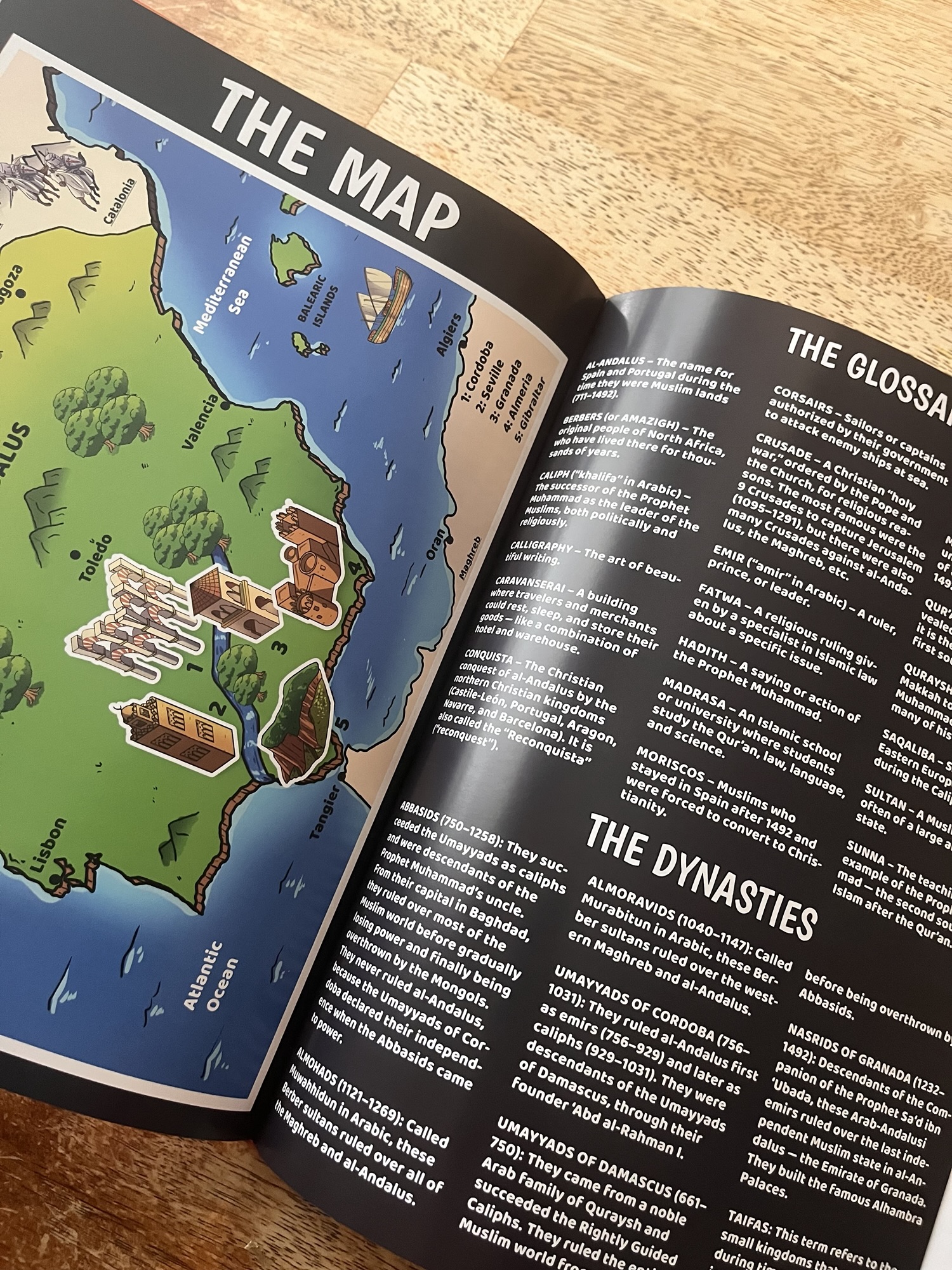
  • Backmatter that includes a map, glossary, and information about Islamic Dynasties, check!
  • Visual appeal and writing style aimed at kids, check!
  • Sourcing and bibliography…….NOPE!

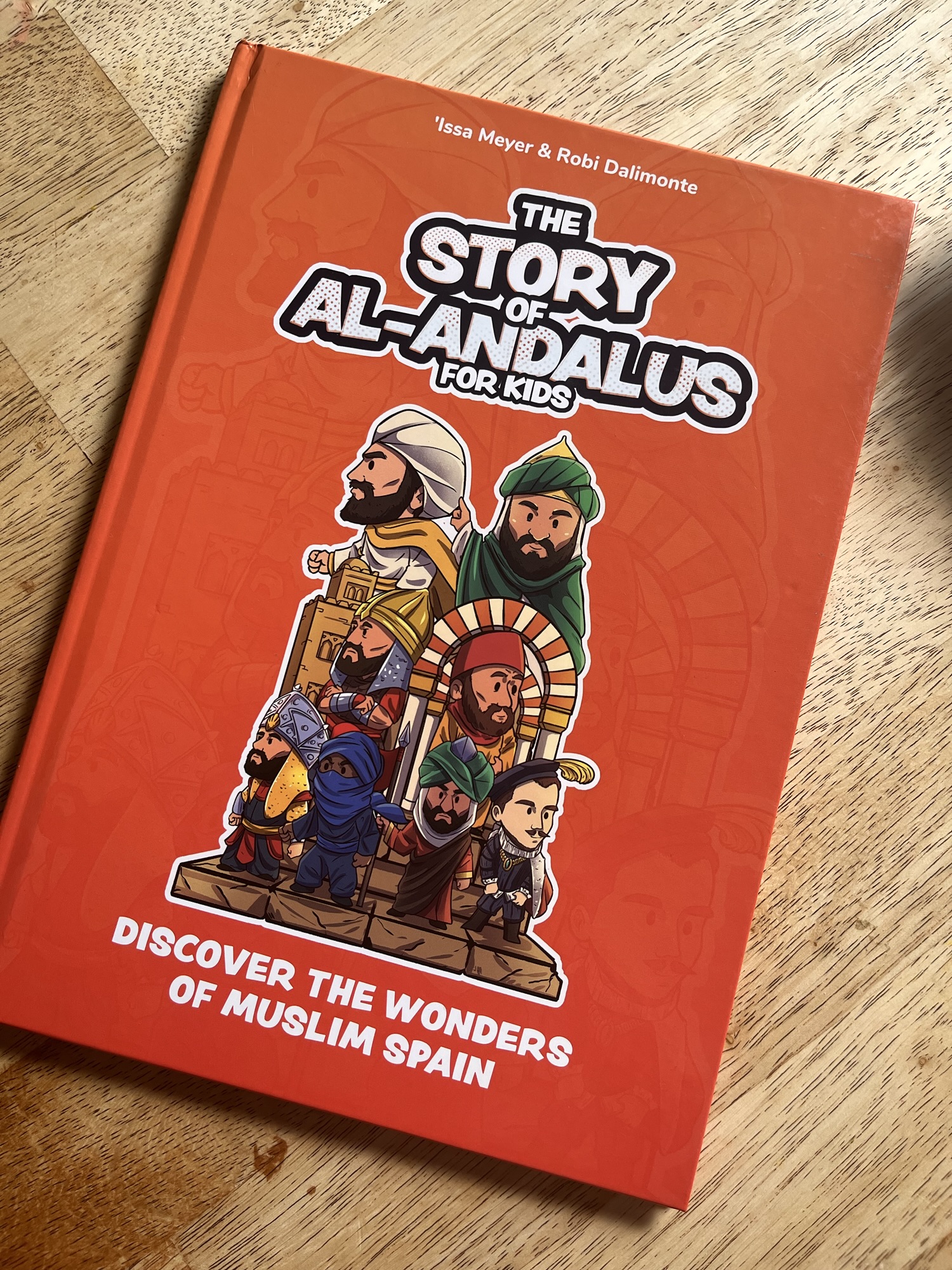
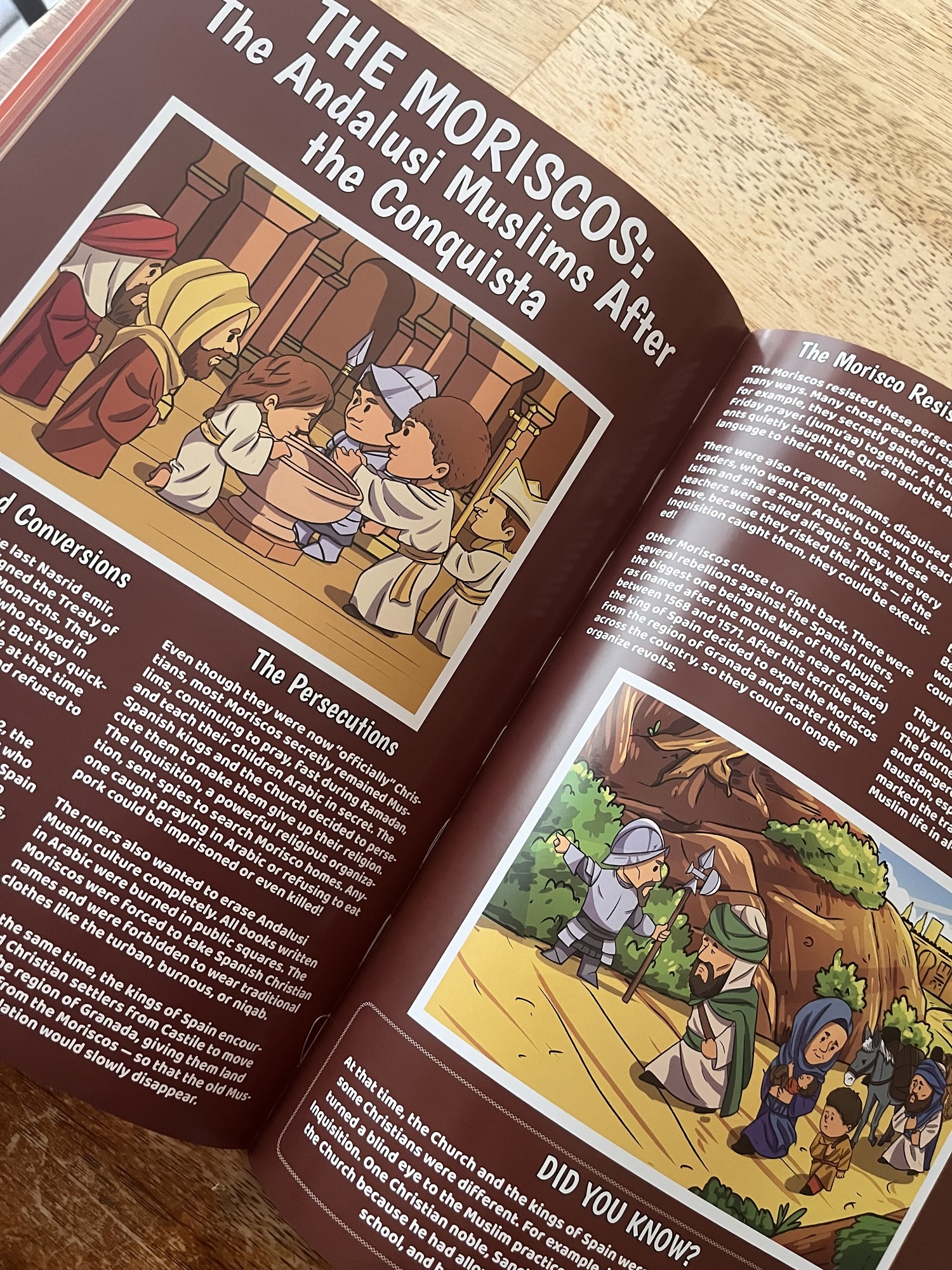
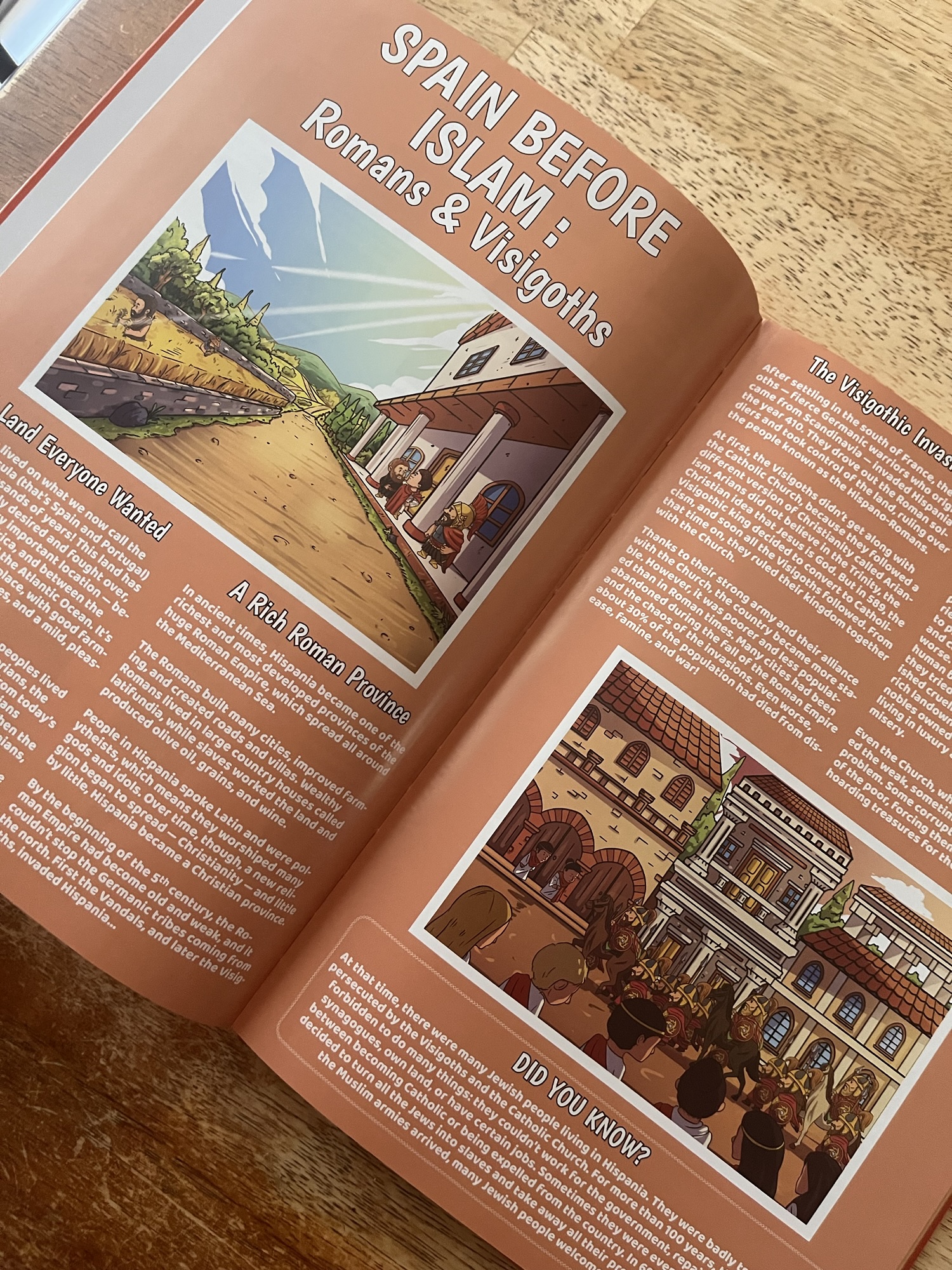
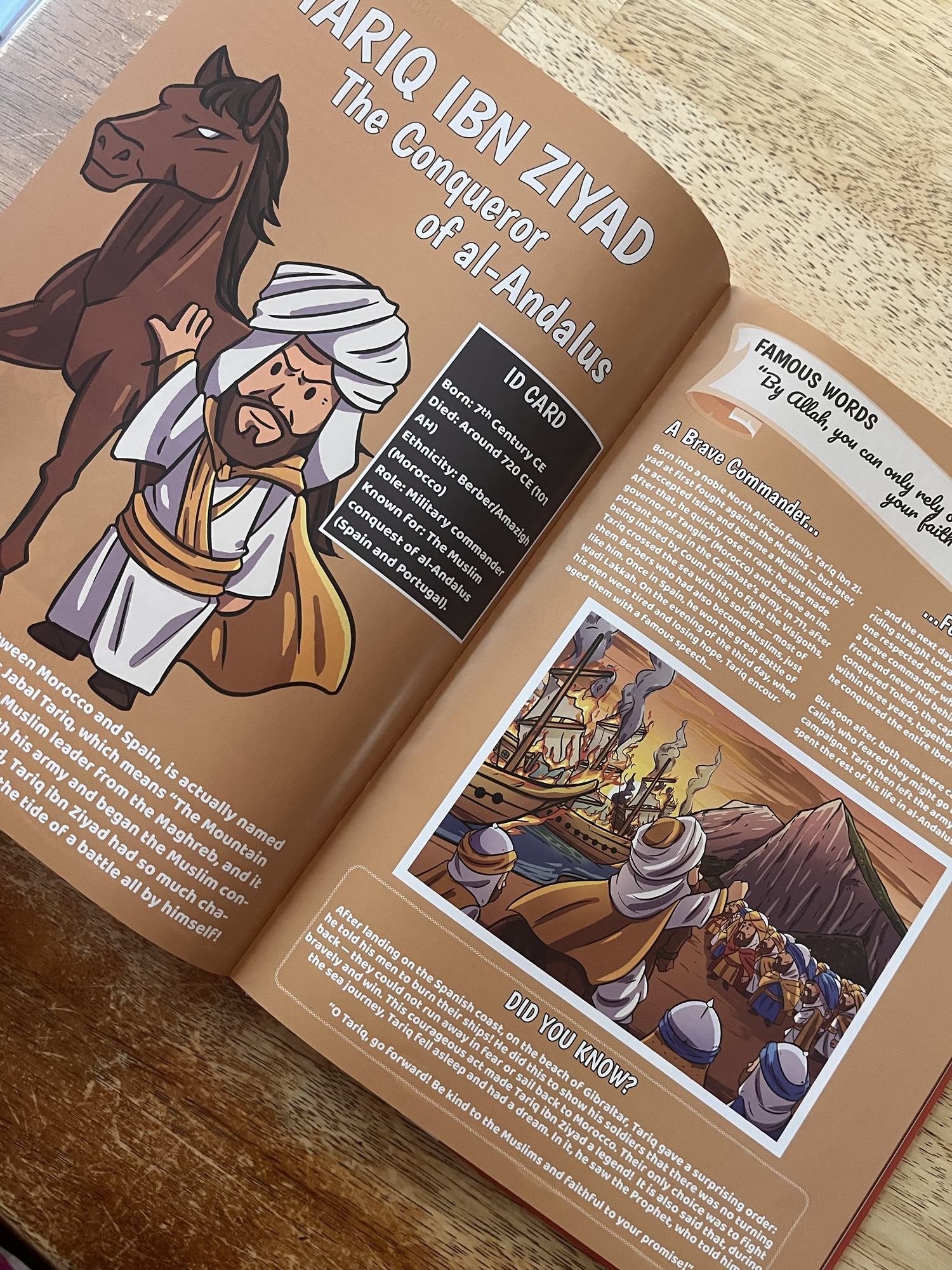
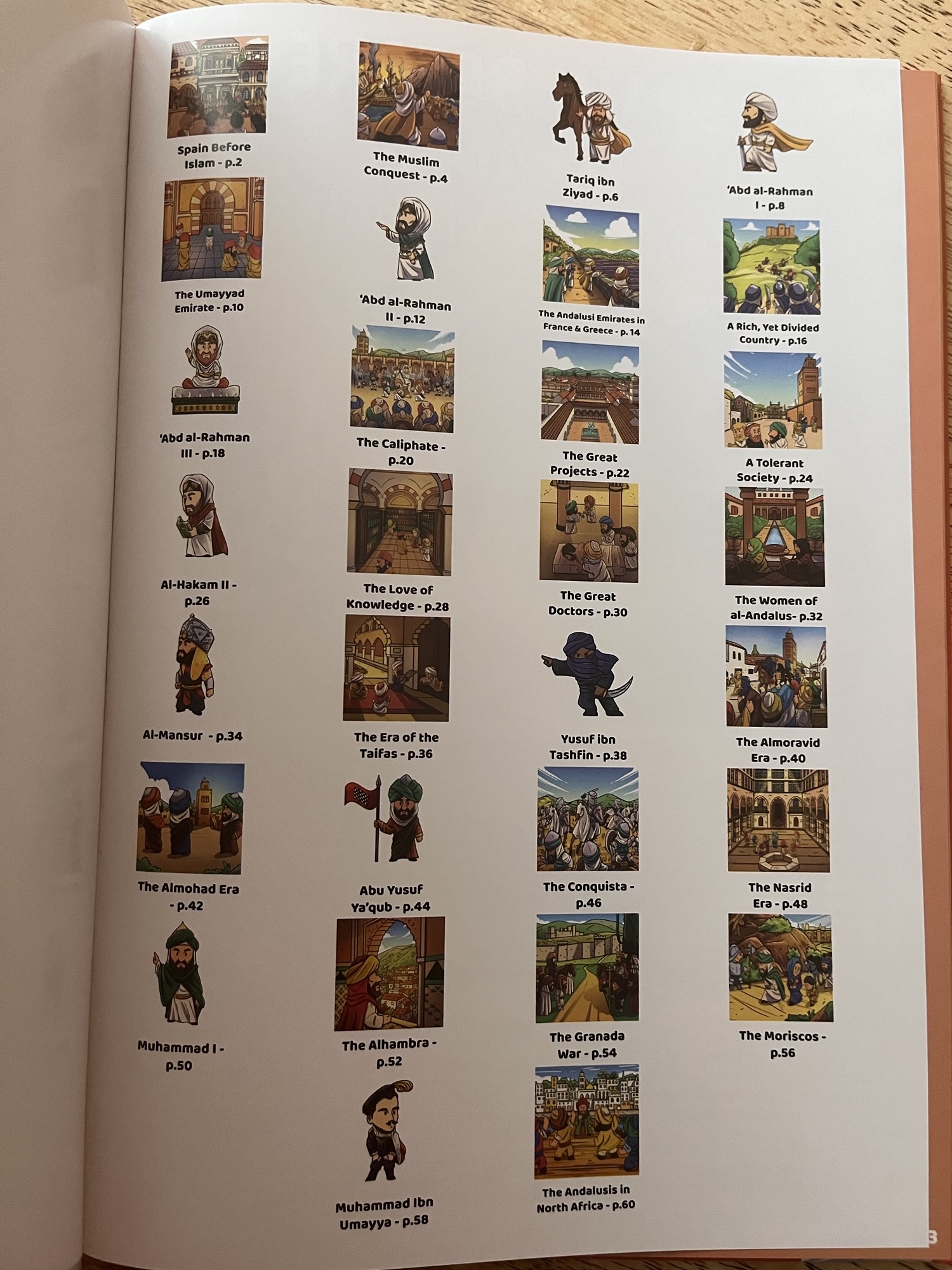
I’m baffled, truly.  These books are made with intention, the Ottoman Empire and Story of Al-Andalus feature information about the times and places being discussed, with a “Did You Know” pullout section, and feature key individuals in the same manner Muslim Heroes and Muslim Heroine books have, with an image of the person, an “ID” card, “Famous Words” along with the text broken up into key sections.  So why is there no sourcing regarding where the information was acquired or some proof that a knowledgeable person has checked the contents.  There is nothing about the author either, providing no reassurance to the reader that the information is coming from someone who is qualified to present it and attest to the accuracy.

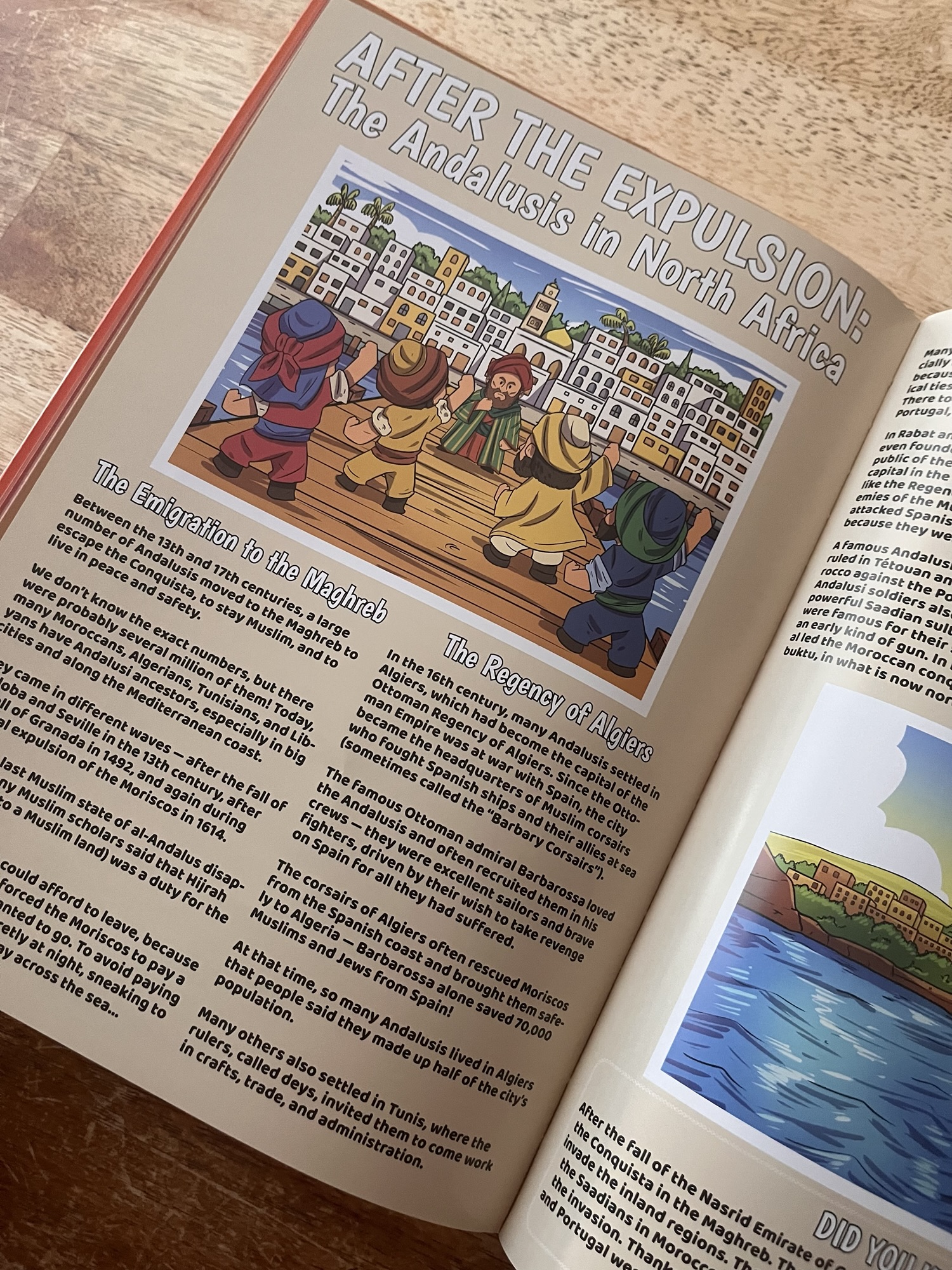
Since I am not knowledgeable to give my opinion on the information contained, I will not.  And since I am praising the visual presentation of the books, I will add a criticism that the titles on the bindings read backwards.  I’ve included inside pictures from “The Story of Al-Andalus for Kids” for you to determine your own thoughts on accuracy, presentation, and utility.


You Only Live Twice by Autumn Allen

Standard
You Only Live Twice by Autumn Allen

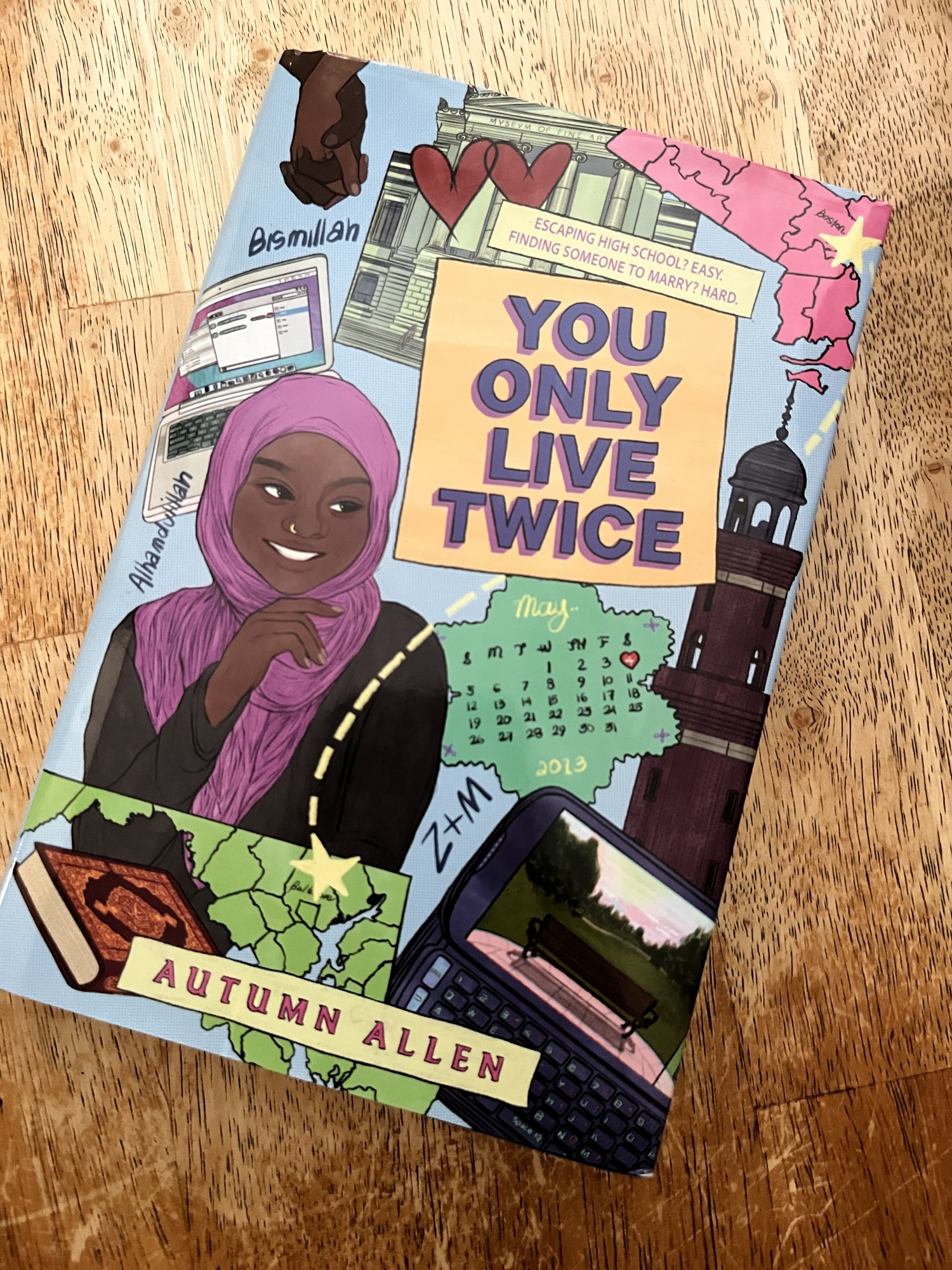
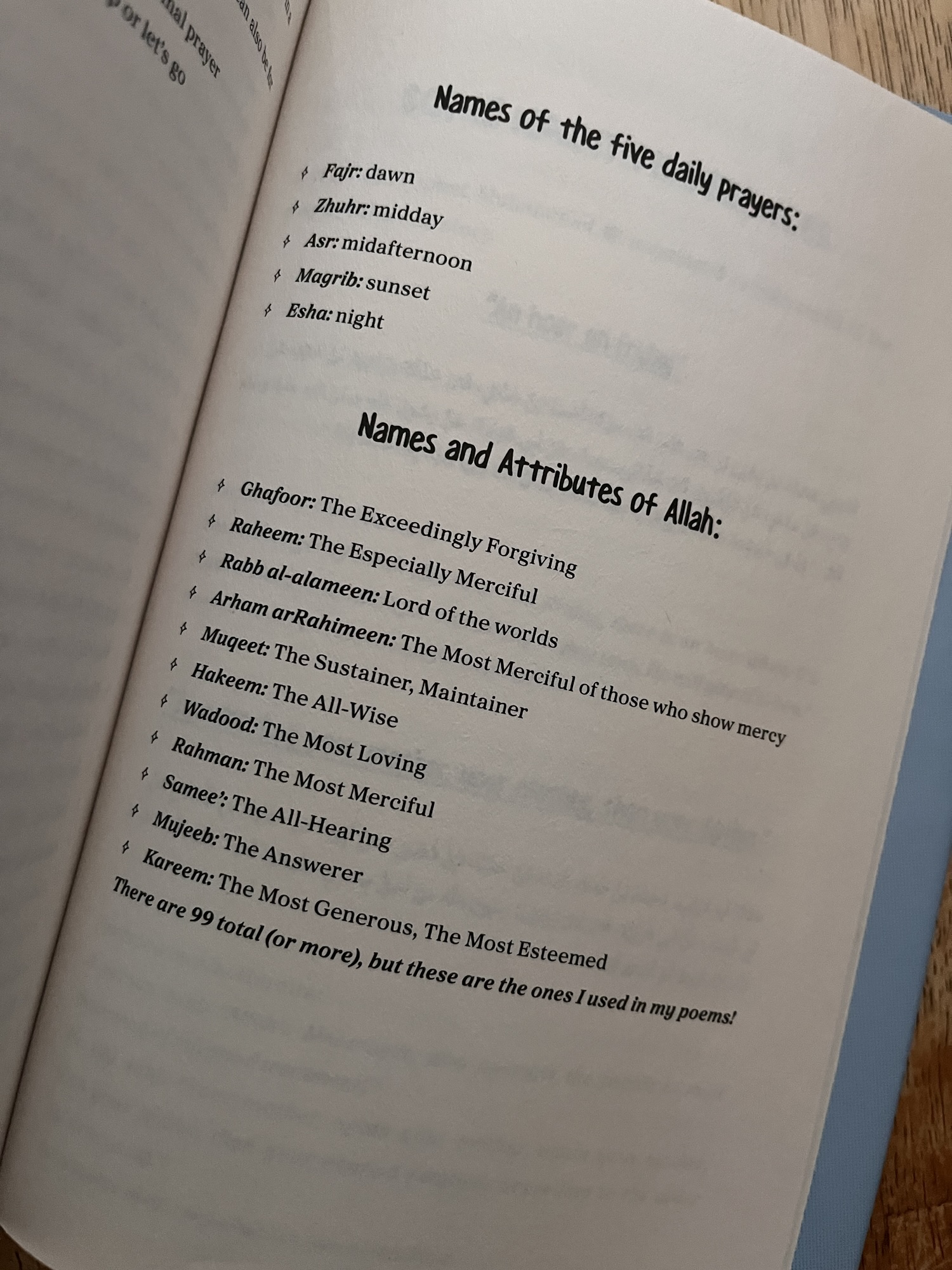
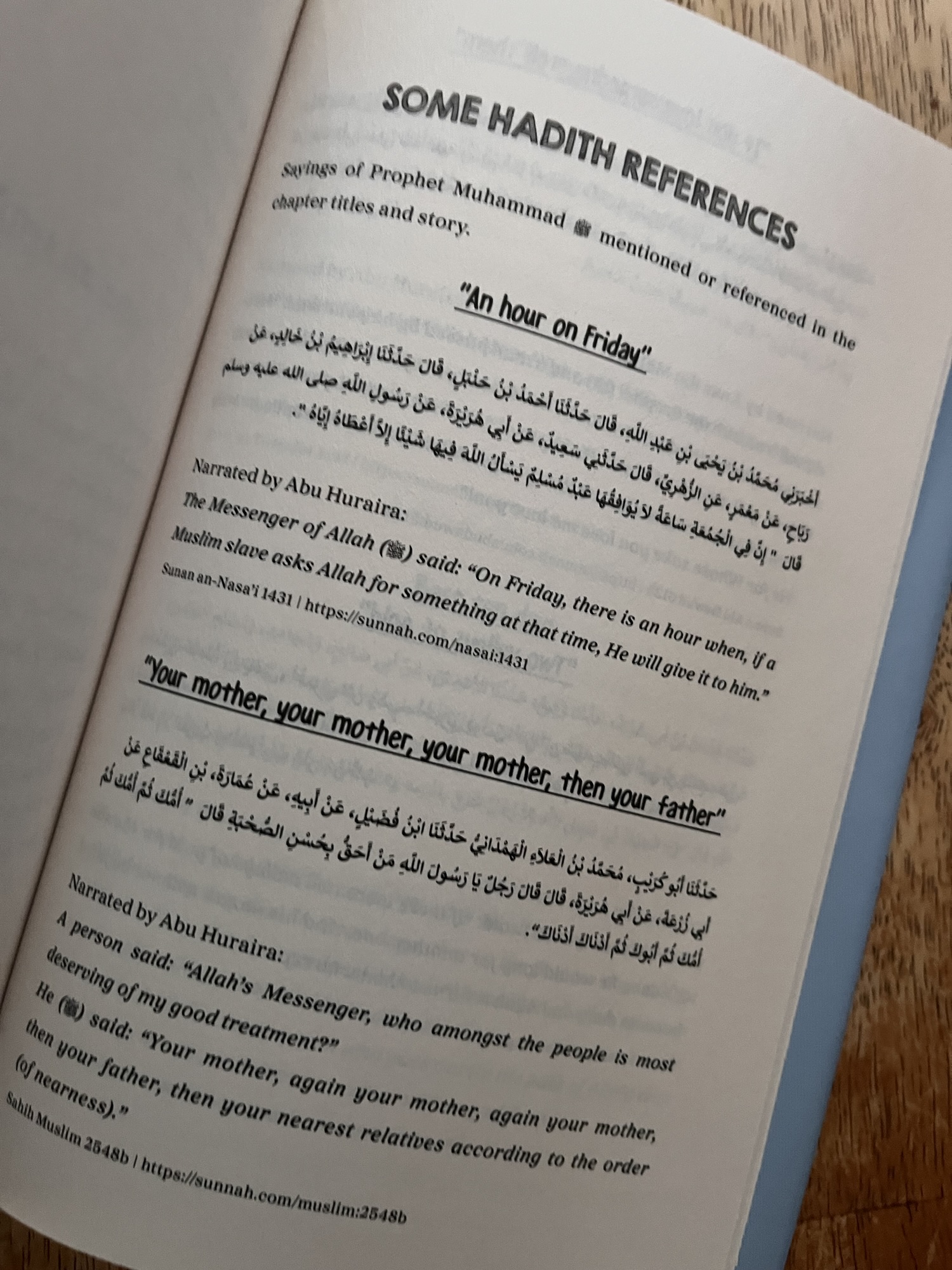
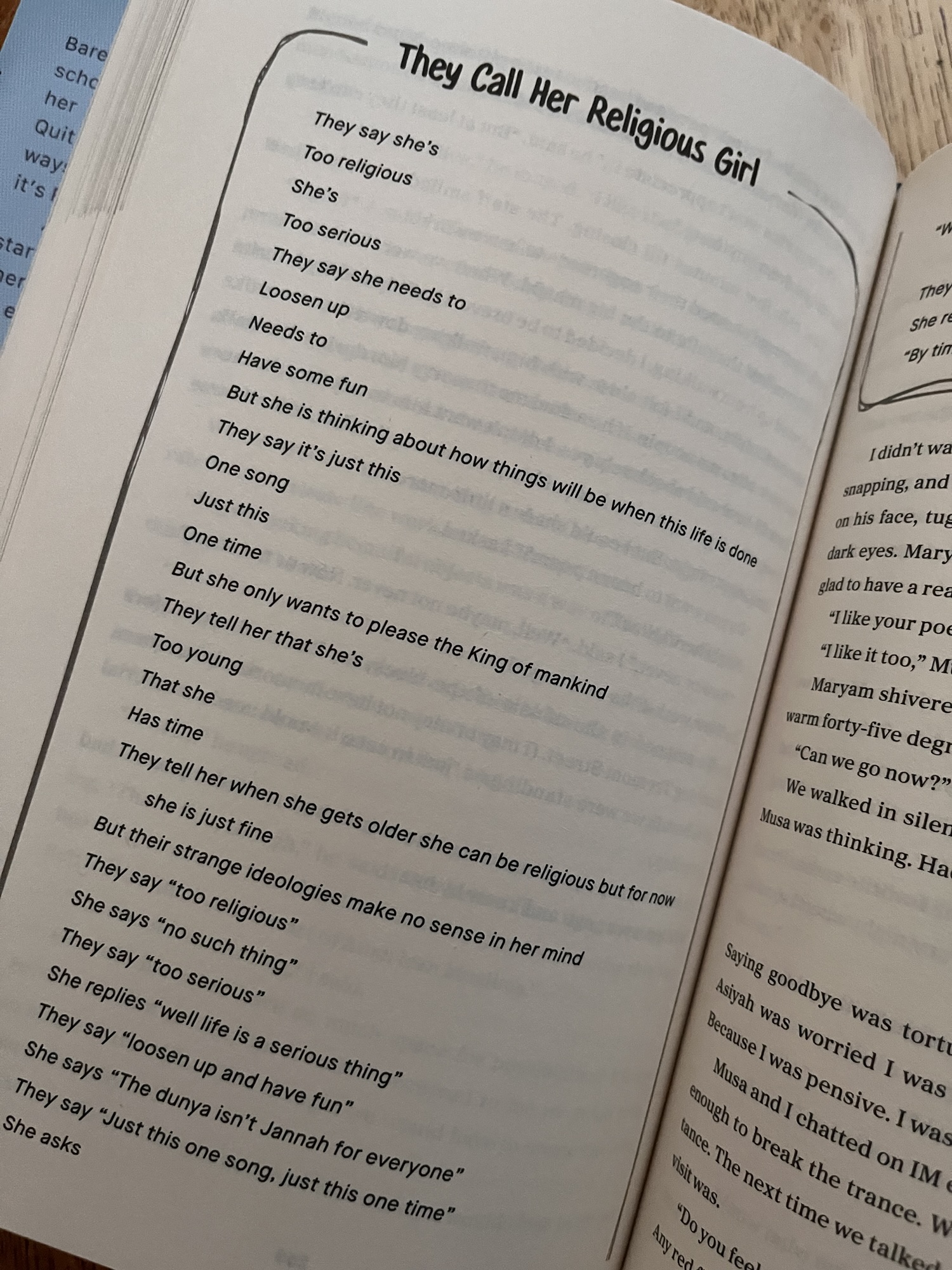
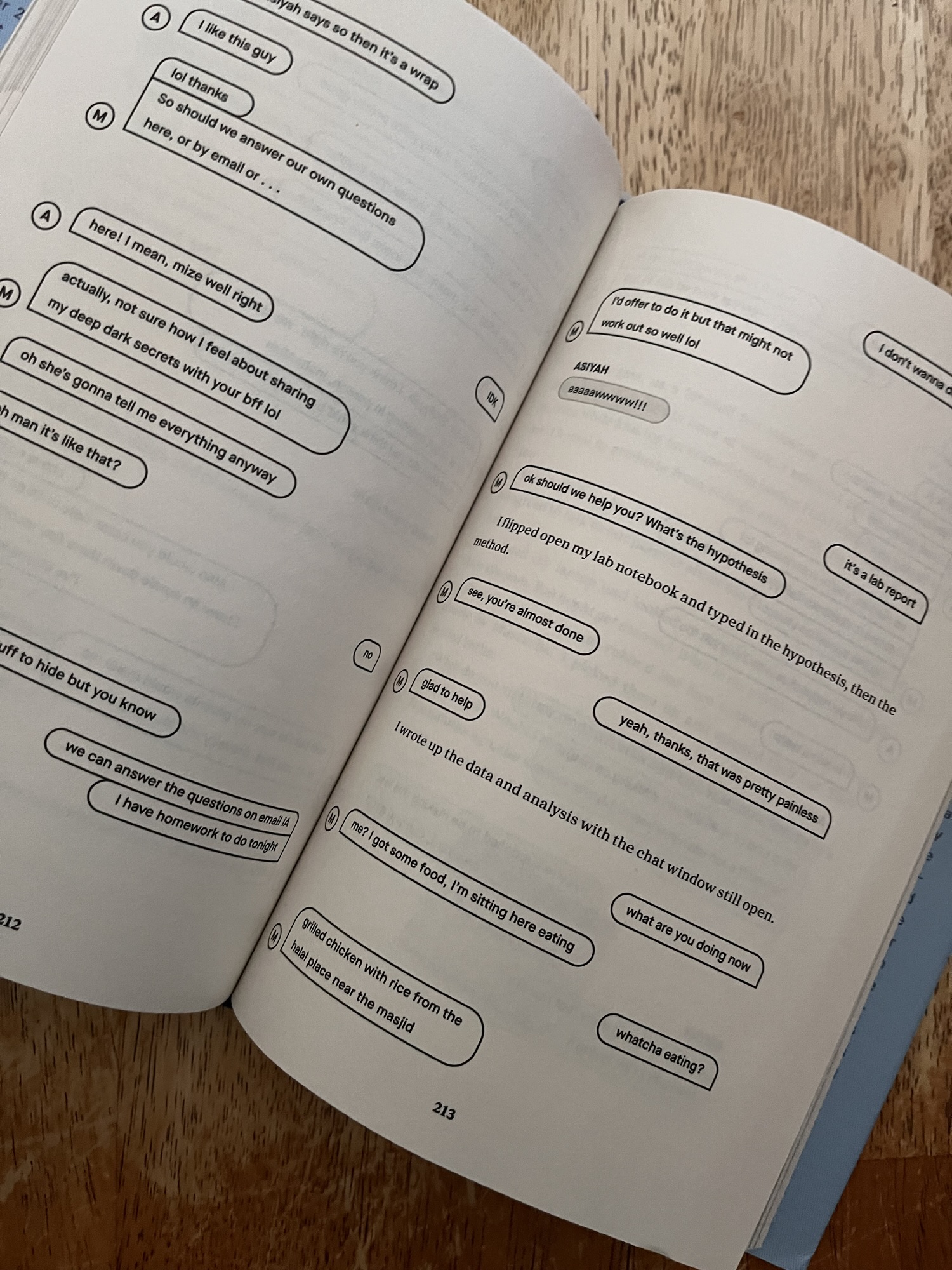
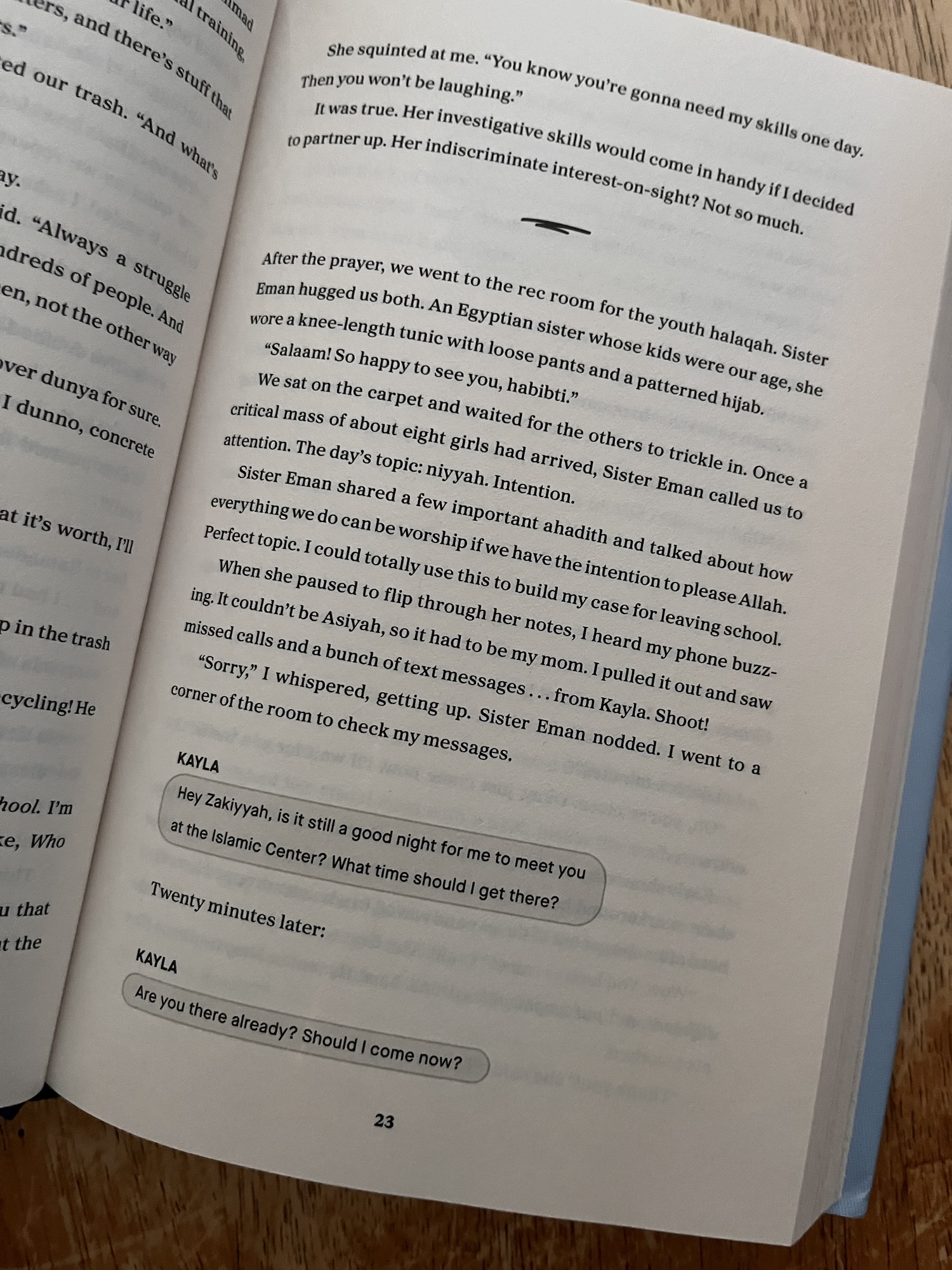
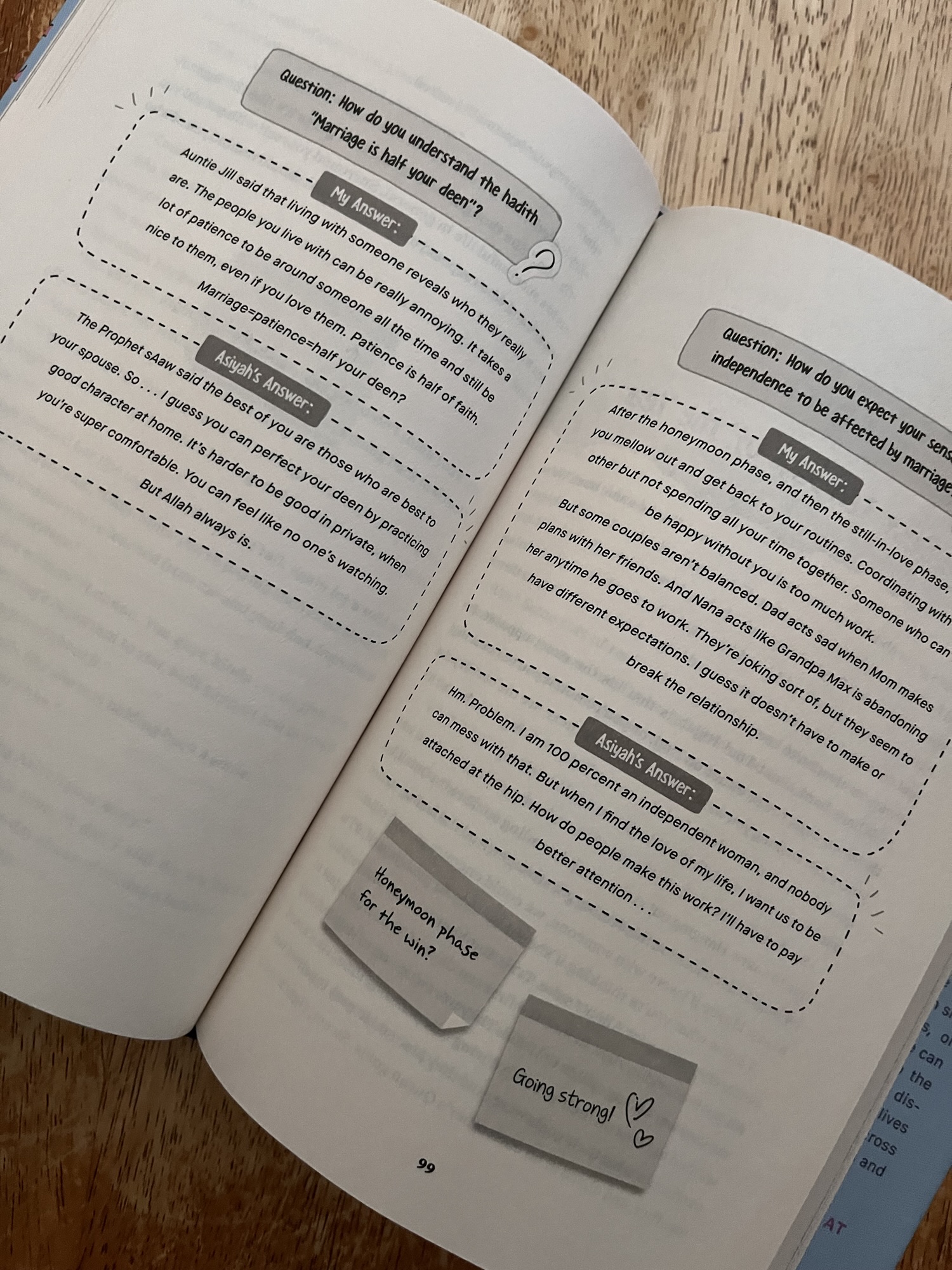
Your rizq is written by Allah swt, and this book is such an easy to see example of that, in a time when Islamophobia, DEI, book bans, and diverse stories are not being published, this 368 page YA book has more Islam than the majority of self-pubbed Islamic fiction reads I’ve EVER read, and it is traditionally published, SubhanAllah! it is a halal romance, that features niqabi (why doesn’t she have her niqabi on on the cover?), Black Muslims, supportive friends and family, it is written for everyone, but teenage Muslim girls are going to love this. If you are waiting on the but, here it is, I loved a lot about the book, but- it required me to accept the premise and I just don’t. I don’t have anything against getting married young, but I never really felt I understood the protagonist and her motives from the start: why did she all of a sudden just quit high school, why all of a sudden want to get married, and why were her reasonings told and not shown. Had high school been awful maybe I’d get it, but just because she missed the focus of deen that Ramadan held and now feels high school cuts in to, seems weak to me. Wants to get married because she sees a couple on the bus, but doesn’t really know what she wants in a spouse and why, seems unfortunate. Why couldn’t she be done with high school and then be looking to get married, would have definitely made the positioning craftwise less cumbersome, and perhaps would have allowed Zakiyyah to be seen as a more thought out and defined character.  Readers would have seen her determination, her stubbornness, her backstory and why we should be cheering her on and hoping she is making good choices, as is, I didn’t support her leaving school, she had at least one really good friend, she still will need to learn how to balance deen and duniya and Islamphobes, so what does it accomplish?  Also in many ways the book is a roadmap for young people looking to get married (intentional or not), what should be considered and discussed, but the protagonists age and the initial plot point I think will limit potential readers from engaging with the book, and thus miss out on a fun and informative read.  Ok back to the positives, I can imagine the emails, and post-it notes, and convo bubbles didn’t work for everyone, but I enjoyed them, and thought they added some levity and cuteness to the story. The book is YA, I think 15-16 and up will enjoy it, the Islam holds the halalness at it’s core, the focus is marriage, there is some conversations that younger readers might not be ready for, birth control pops in my head, and the Boston Marathon tragedy happens in the story and could be a potential flag for some readers, I hope mature readers though, will spend extra time reading those parts and understanding the author’s perspective and commentary from the mc’s perspective as I found them to be powerful and important.

SYNOPSIS: As provided by the publisher

An unforgettable, heartwarming, hilarious coming-of-age story about faith, family, all kinds of love, and a Black Muslim teen pursuing an ordinary goal in an extraordinary time.

Barely one week into senior year of high school, Boston native Zakiyyah is making her 2012-2013 Get Free Plan.

Step one: quit high school. (PSA: There are other ways to get to college!)

Step two: live like it’s Ramadan year-round.

As she gets deeper into her Plan, she starts to wonder if there’s someone out there who would be a good companion. To everyone’s surprise, Zakiyyah decides she wants to get married. But there are some complications.

Problem one: she’s never met a guy she liked. Zakiyyah’s family (reluctantly) and friends (eagerly) agree to support the search.

Problem two: what’s the secret to choosing a good life partner?

Enter Musa, by way of mutual friends. With marriage in mind, Zakiyyah and Musa get to know each other, progressing from email to instant messaging to phone calls. Things are going well… thrillingly well… until tragedy strikes Boston. In a moment of heightened emotion and stress, Zakiyyah and Musa have their first major disagreement.

Zakiyyah can call the whole thing off. But with or without Musa, what does it mean to live on her own terms?

WHY I LIKE IT:
I love the unapologetic Islam. I love the normalization of going to the masjid and watching baseball games, getting married over dating, and parents being kind and not toxic, and good solid friendships, and community support- like truly this book offers so much reality and insight that all Muslims long for living in the west particularly. I love how easy the read is, and that it honestly stays halal.
Also I love that grandma is not Muslim but so supportive, I have two non Muslim grandmas and one is super supportive of my choices, and one not so much, and I love seeing the supportive rep in books, alhumdulillah.

FLAGS:

relationships, terrorism, racism, stereotypes, hate crimes, talk about societal pressures, I think there were some discussions about birth control.

*Disclaimer, I read the book a while ago and was unable to write up the review immediately after, please forgive any errors, or oversights.

TOOLS FOR LEADING THE DISCUSSION:
Oh this book needs to be discussed in classrooms, book clubs, masjids, friend circles, it will be read, no doubt, but the discussion and putting it into practice will be such a gift to the youth group, moms, aunties, and community leaders already doing the work with our youth to get them aware of what marriage and looking for a life partner should look like.


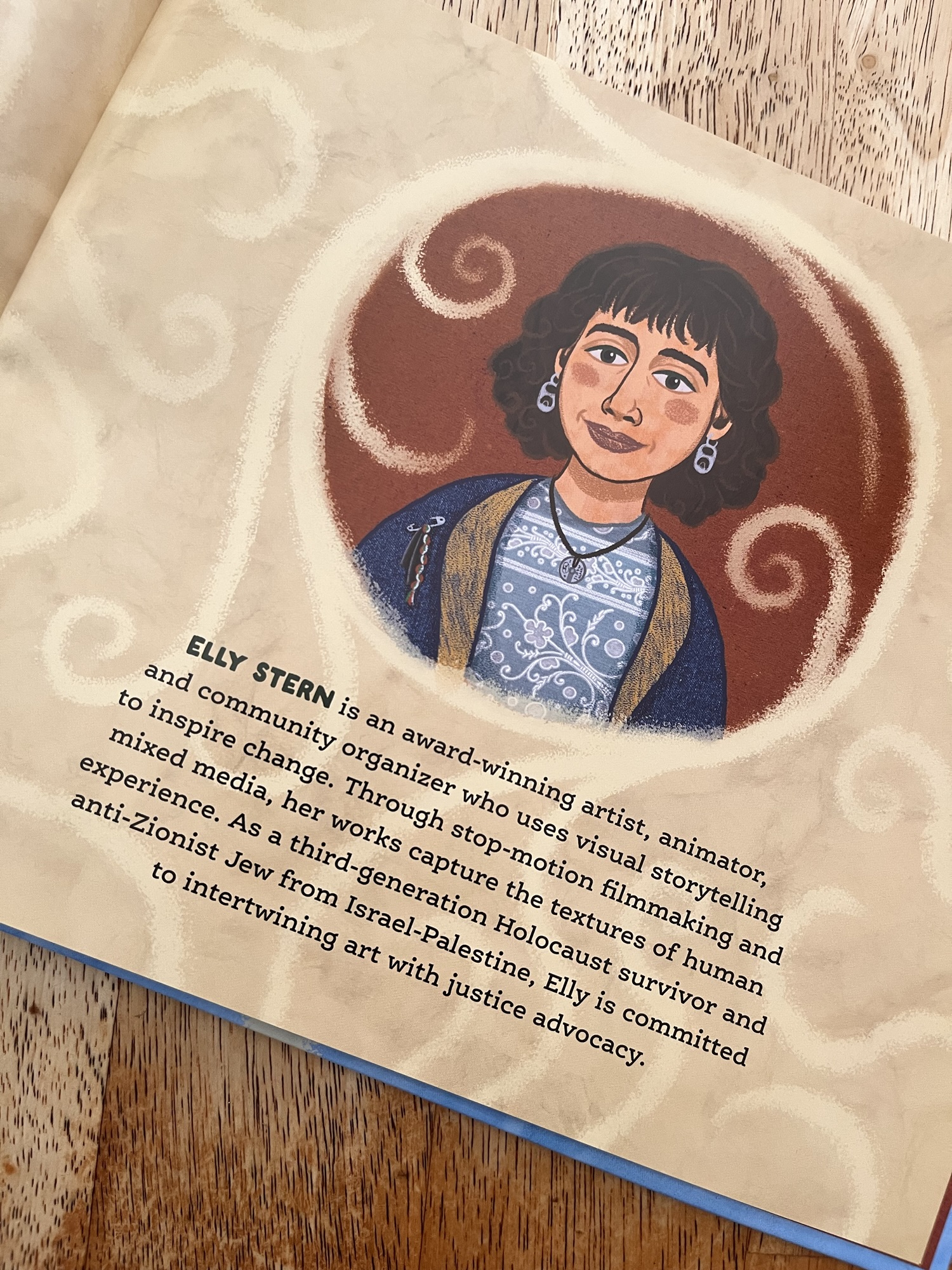
Never Again, For Anyone by Stacy Friedman illustrated by Elly Stern

Standard
Never Again, For Anyone by Stacy Friedman illustrated by Elly Stern

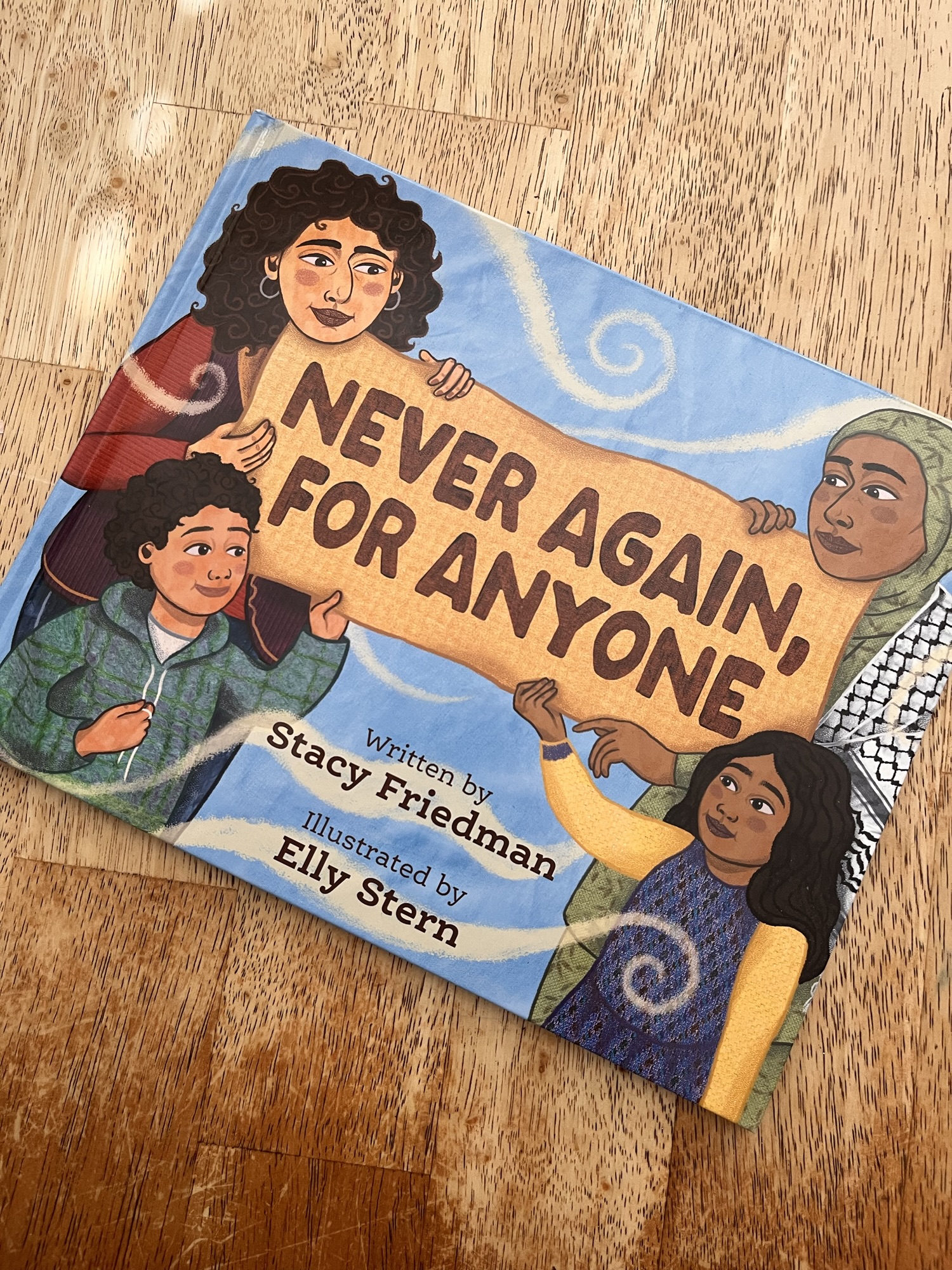
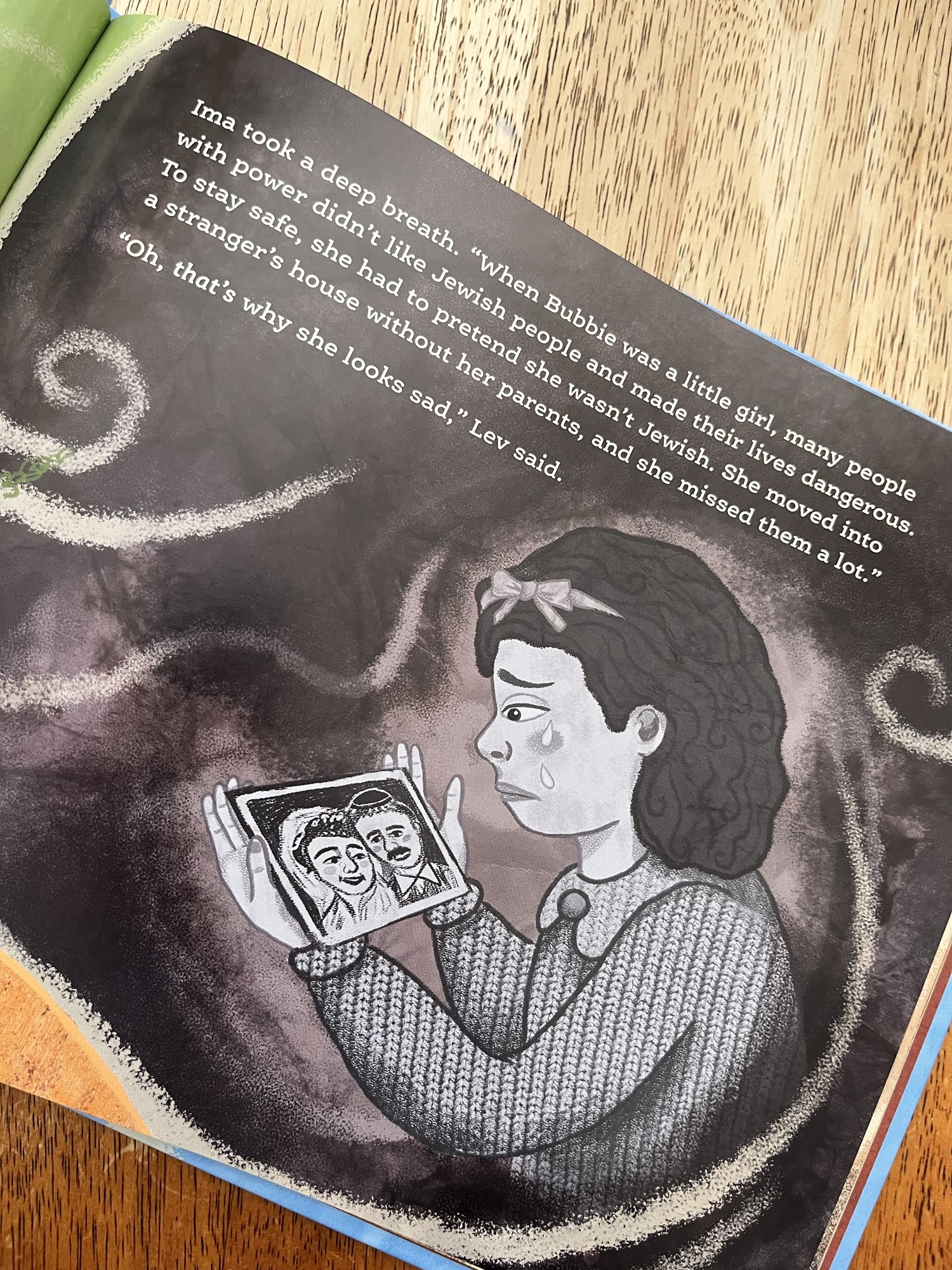
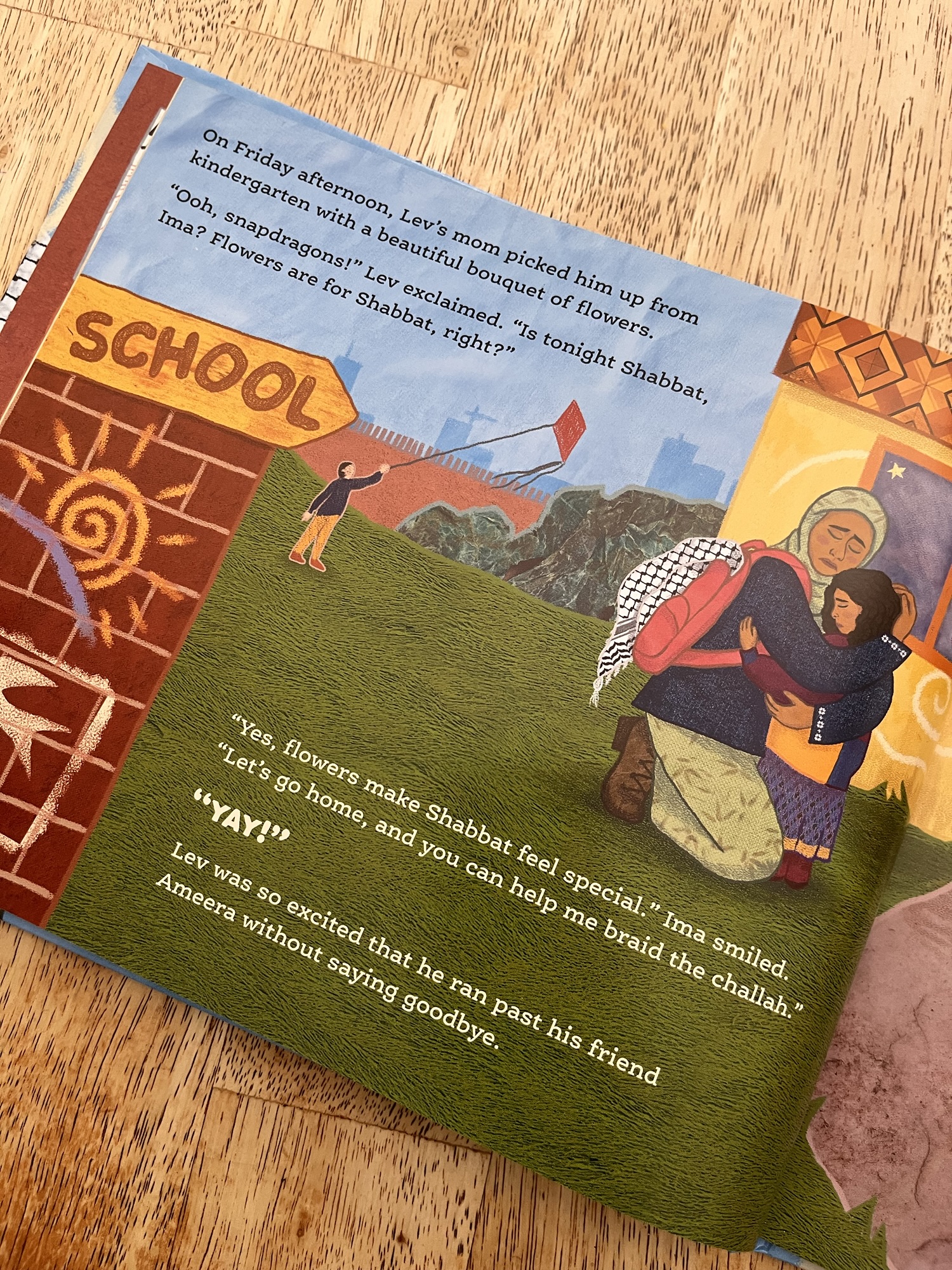
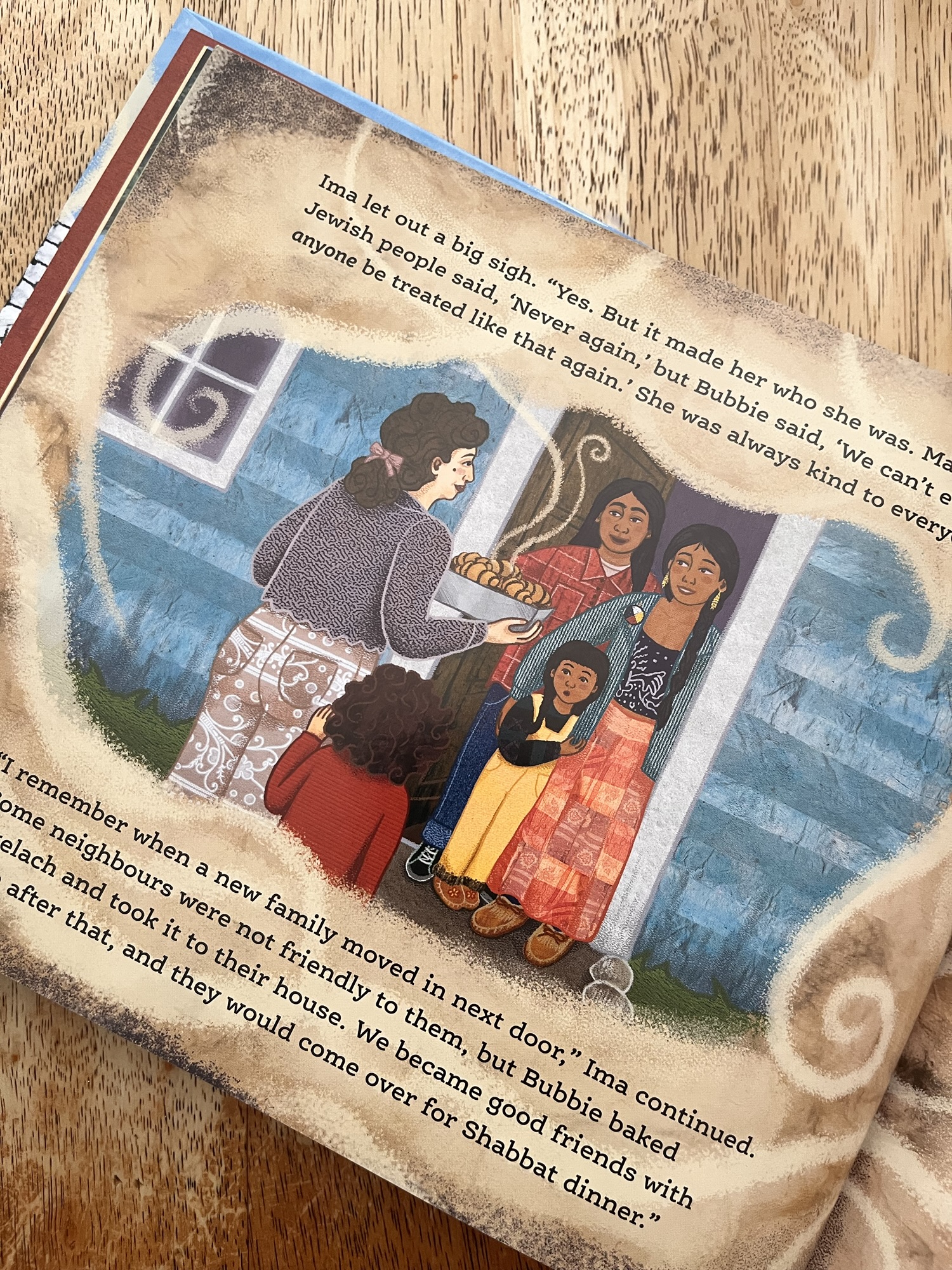
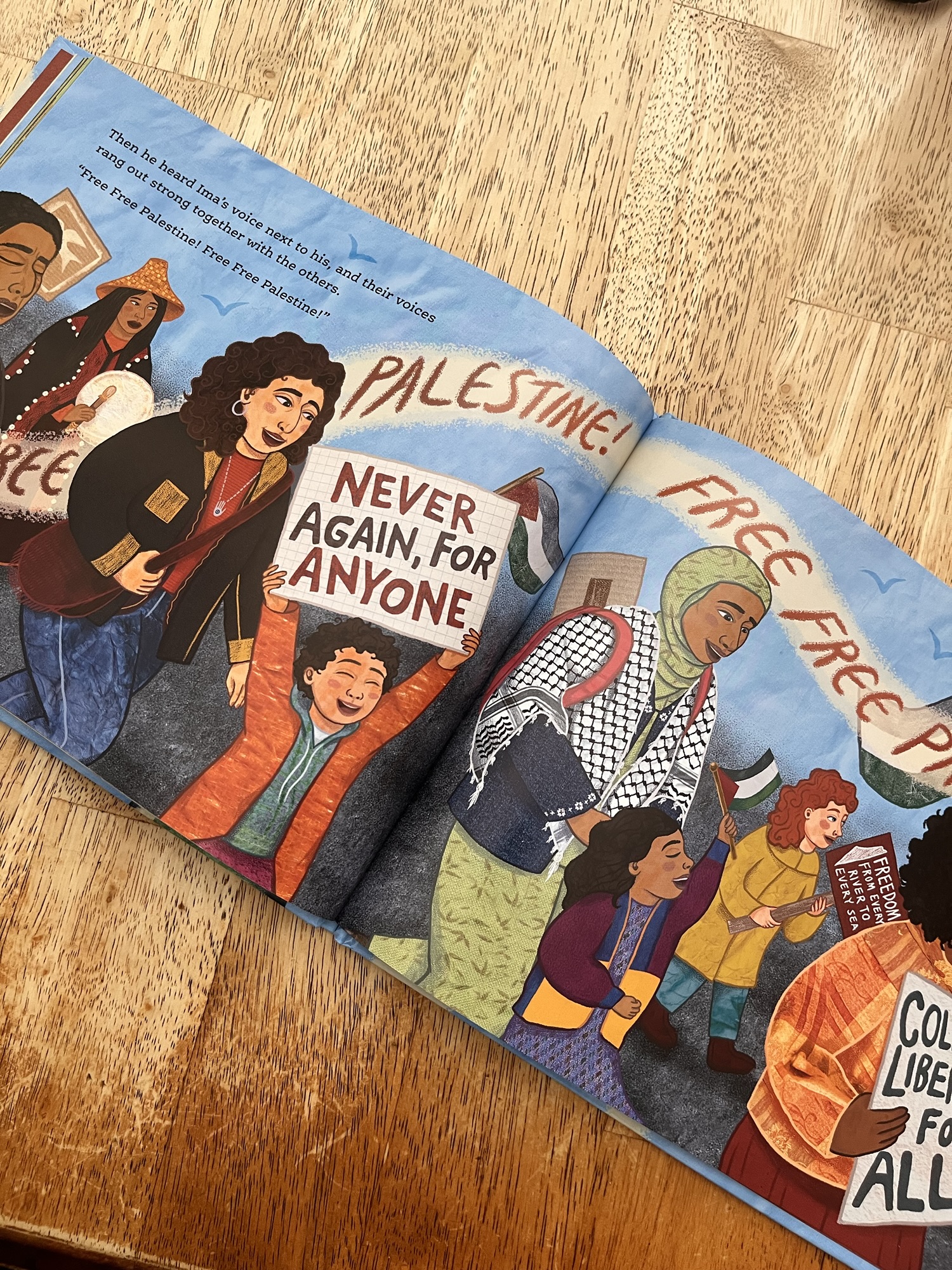
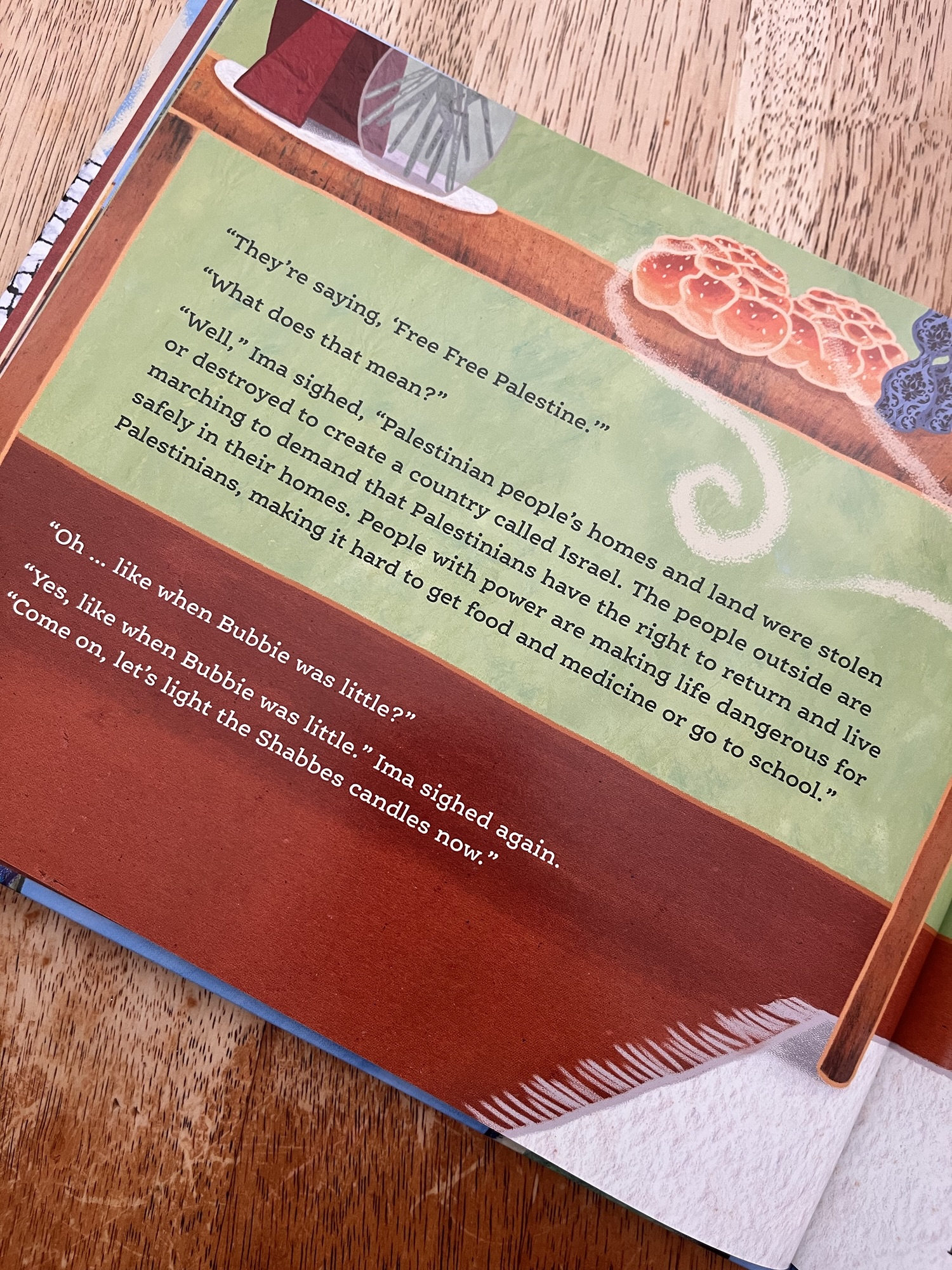
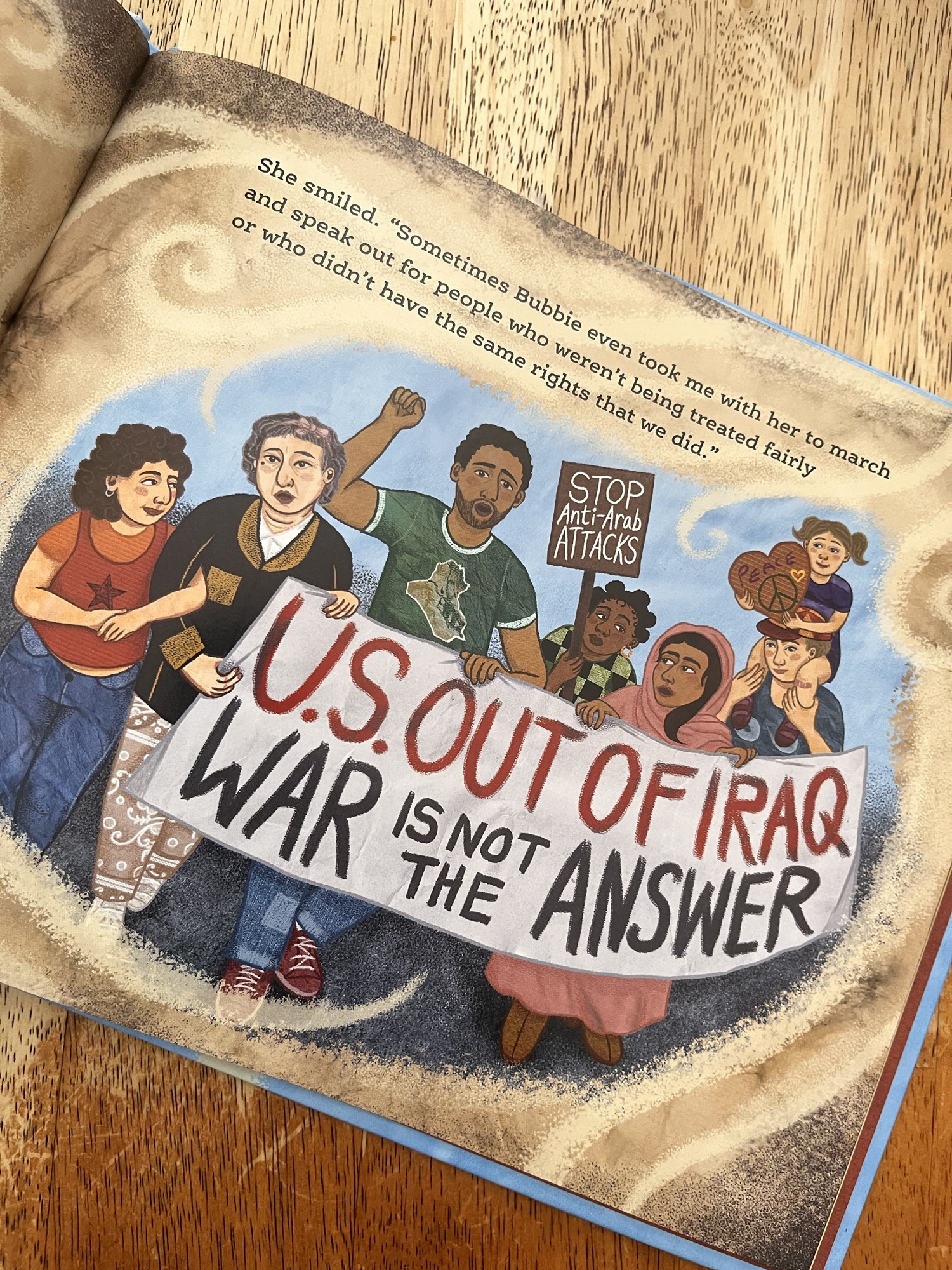
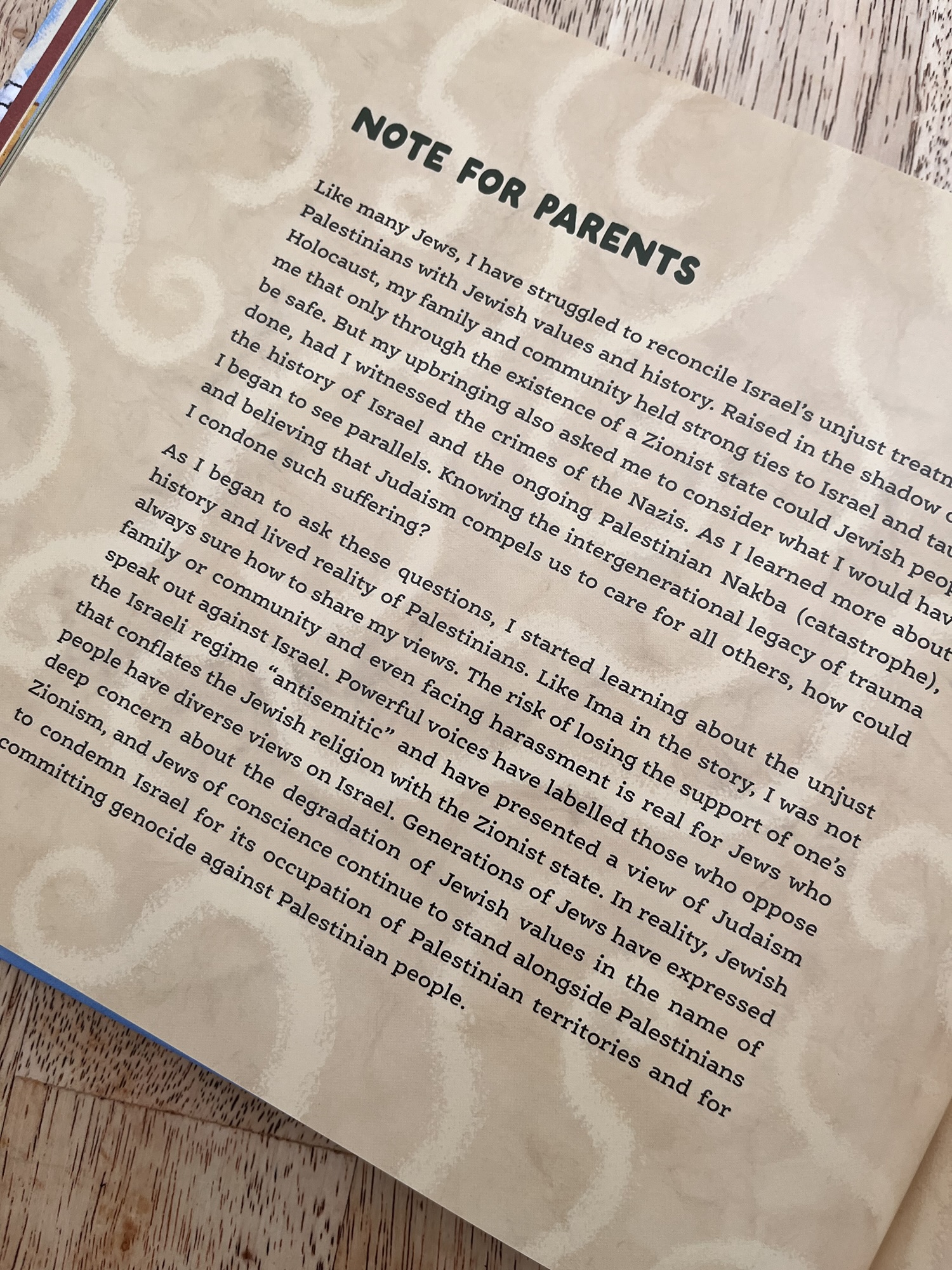
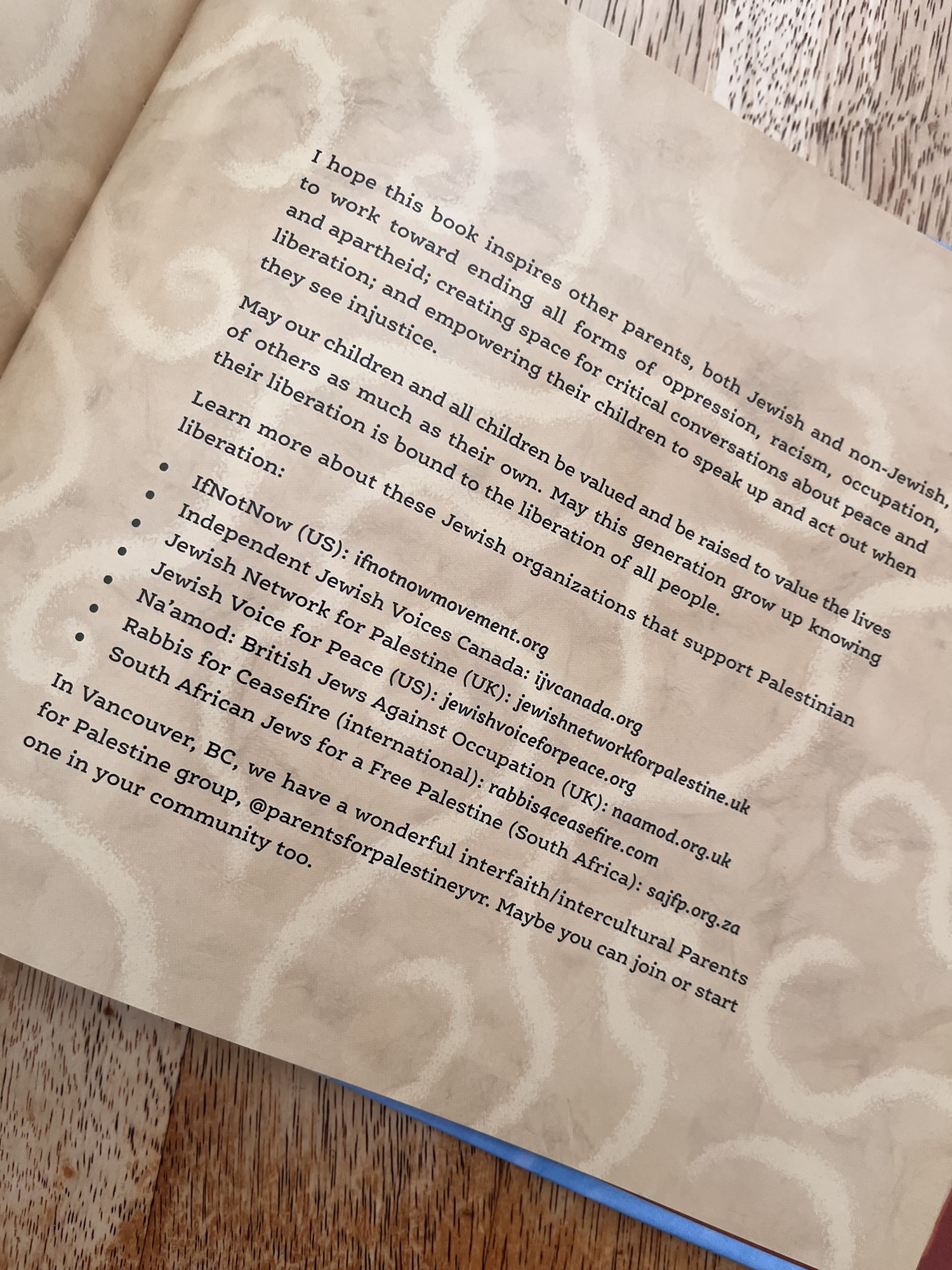
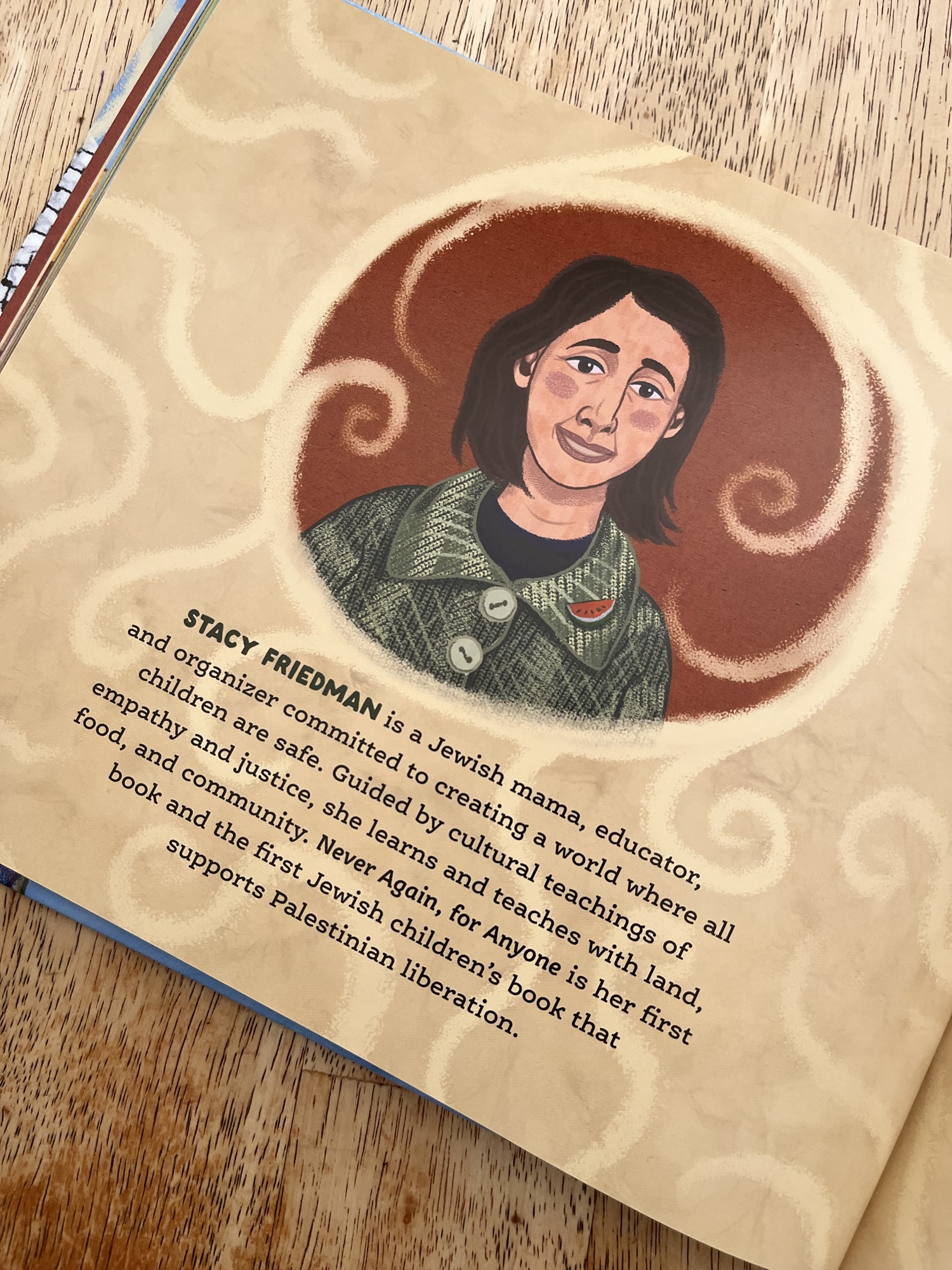
I am not Palestinian and I am not Jewish. I am human with a heart and have known and spoken out from a very early age that the treatment of Palestinians at the hands of Zionists is a genocide, but that does not make me able to decide how to evaluate anything but the literary elements of this book, and I definitely can’t tell Palestinians or Jews how it should be received.  The 40 page picture book is OWN voice by a Jewish author that “supports Palestinian liberation” and is illustrated by an “anti-Zionist Jew from Israel-Palestine.” It is framed as a conversation between a young boy and his mom after school, as they see a Pro Palestinian rally, prepare for Shabbat, recall what Lev’s great grandmother Bubbie experienced during the Holocaust, establish the parallels between that time and the plight of the Palestinians, and decide that “Never Again, for Anyone” means they need to join the movement for a free Palestine.  I like that the reader is taken along the journey from awareness to activism, I think most young readers though, will need some assistance in connecting some of the dots, and some additional understanding about the Holocaust.

I understand the framing is under the famous pledge and the controversy of, if it means never again for anyone or just never again for Jews, but I still struggle to understand why even with the more expansive view, the recognizing of the atrocities happening to Palestinians is built on the fact that because it happened to us, it shouldn’t happen to others.  Why isn’t it enough that we are all human and shouldn’t treat people like this period?  That being said, I don’t pretend to know the societal, religious, cultural and ingrained norms that have to be overcome for a Jewish person to denounce Zionism and openly speak up and speak out on behalf of Palestine.

A common discourse about speaking on Palestine is why do we listen more to non Palestinians than to the Palestinians themselves, and to this I can only offer that I did not take this as trying to take away from that voice, but rather offer why Jews should speak up against Zionism in support of freedom and life.  Am I glad this book exists? Absolutely. Do I pray that the more awareness, the more allies, and the more normative we can make it that the call for a Free Palestine is not against Jews but against Zionism the better, yes, but my opinion is only my own, and my thoughts on this are not those of a Palestinian or a Jew.

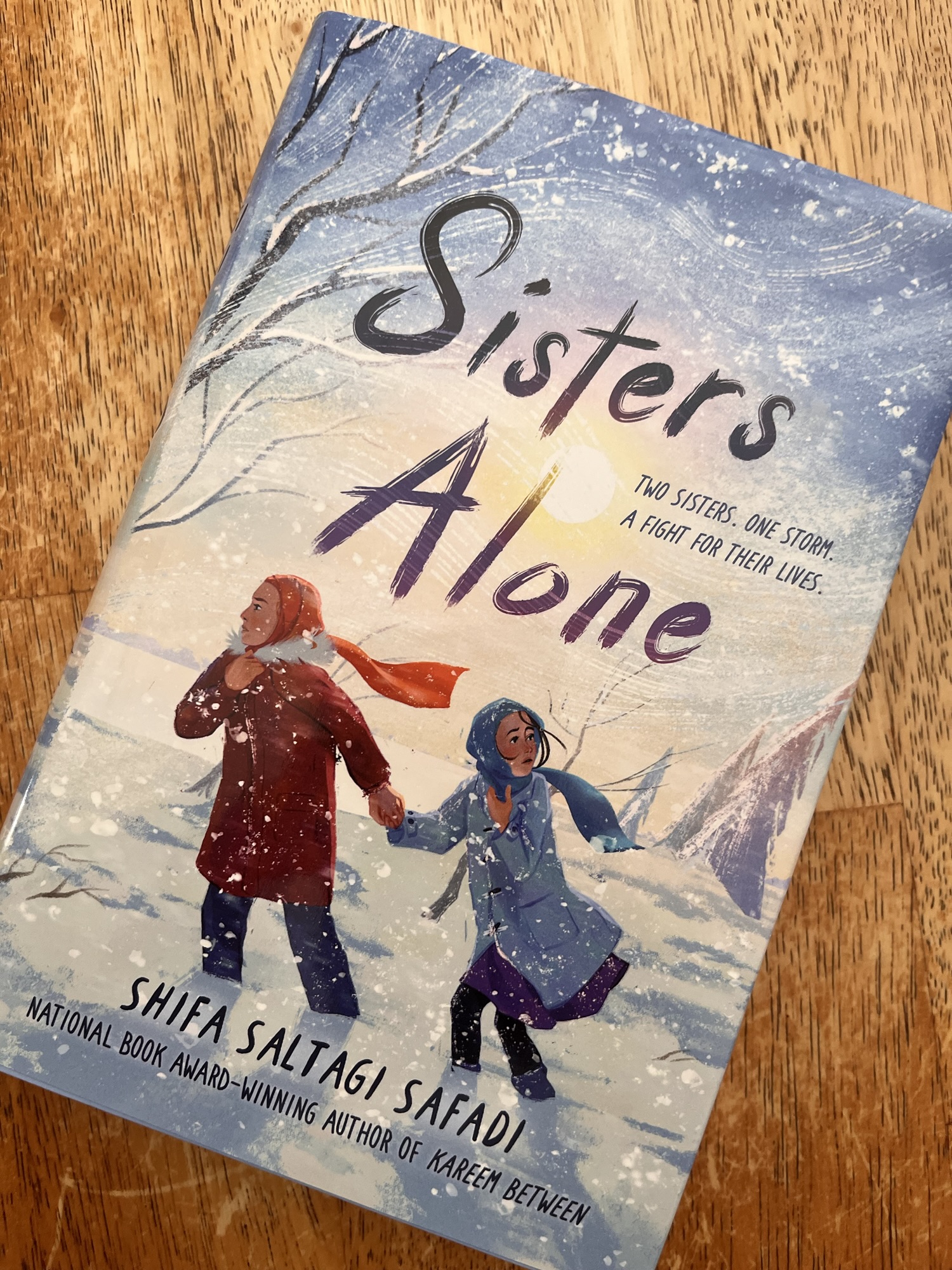
Sisters Alone by Shifa Saltagi Safadi

Standard
Sisters Alone by Shifa Saltagi Safadi

It is known from my public postings that I am friends with the author and I love this book, (see previous posts to read my gushings about the process, the challenges, and the fact that I think it should win the Newberry) so I will try and write an objective review, but I’m clearly biased.

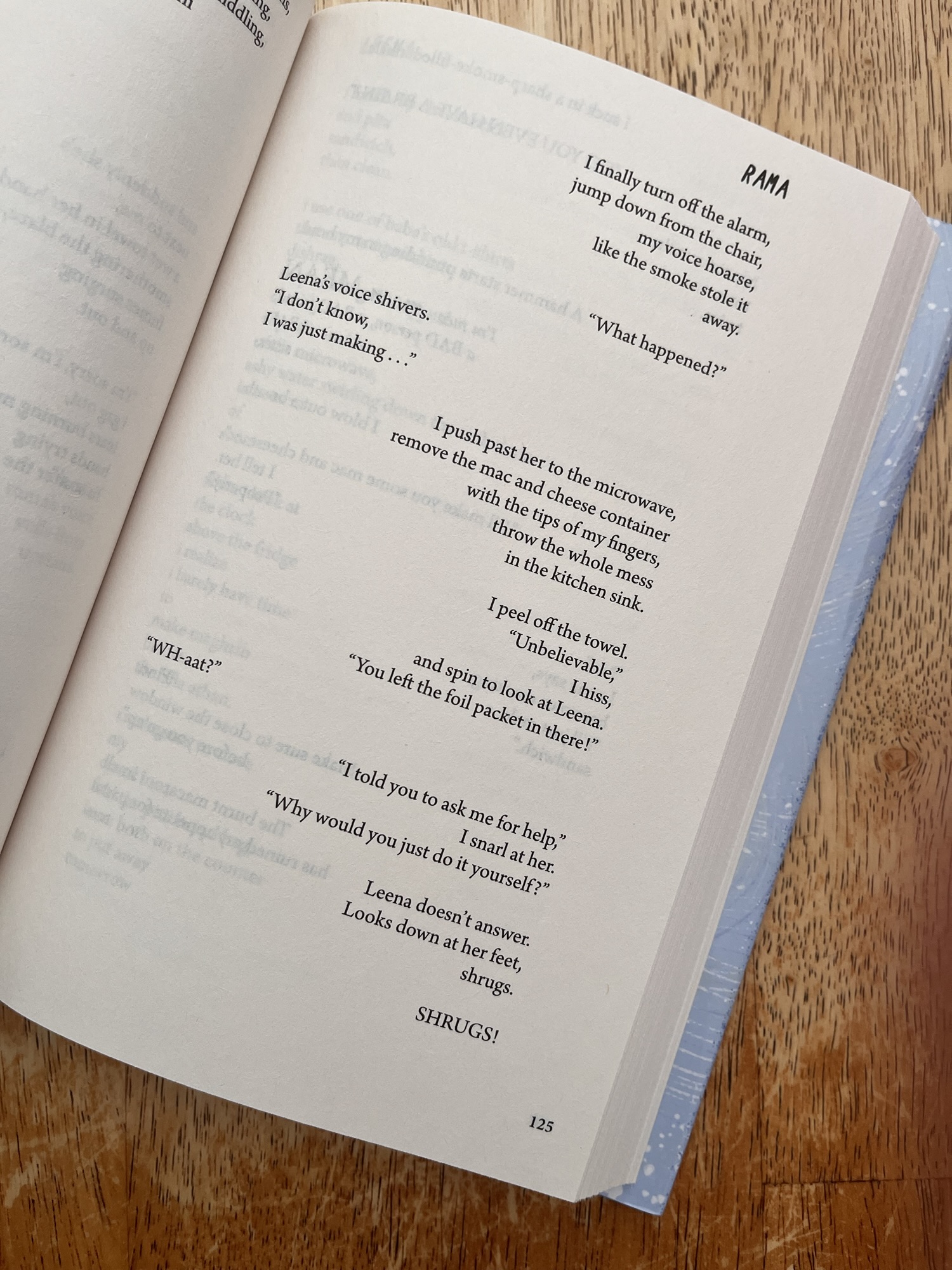
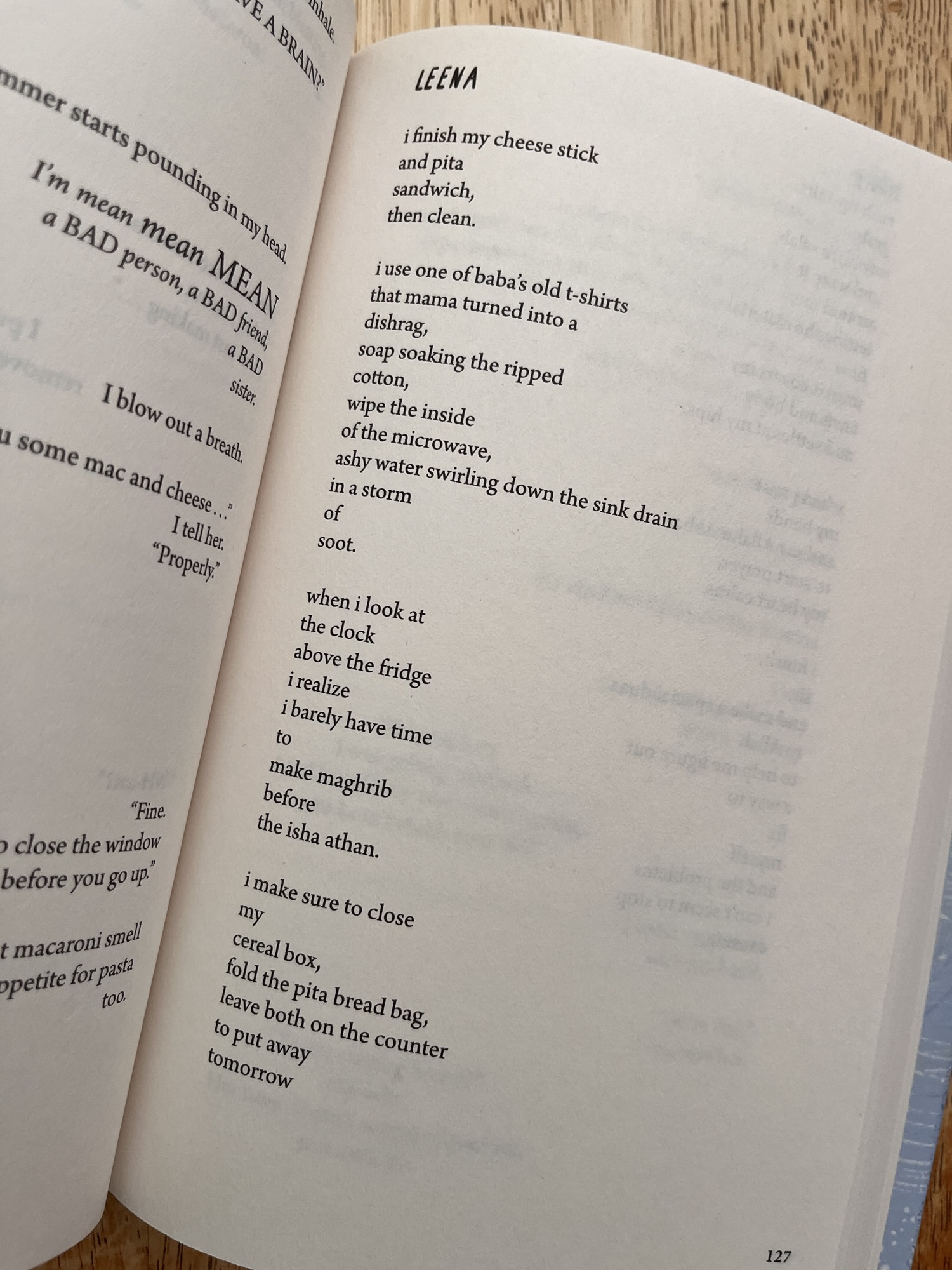
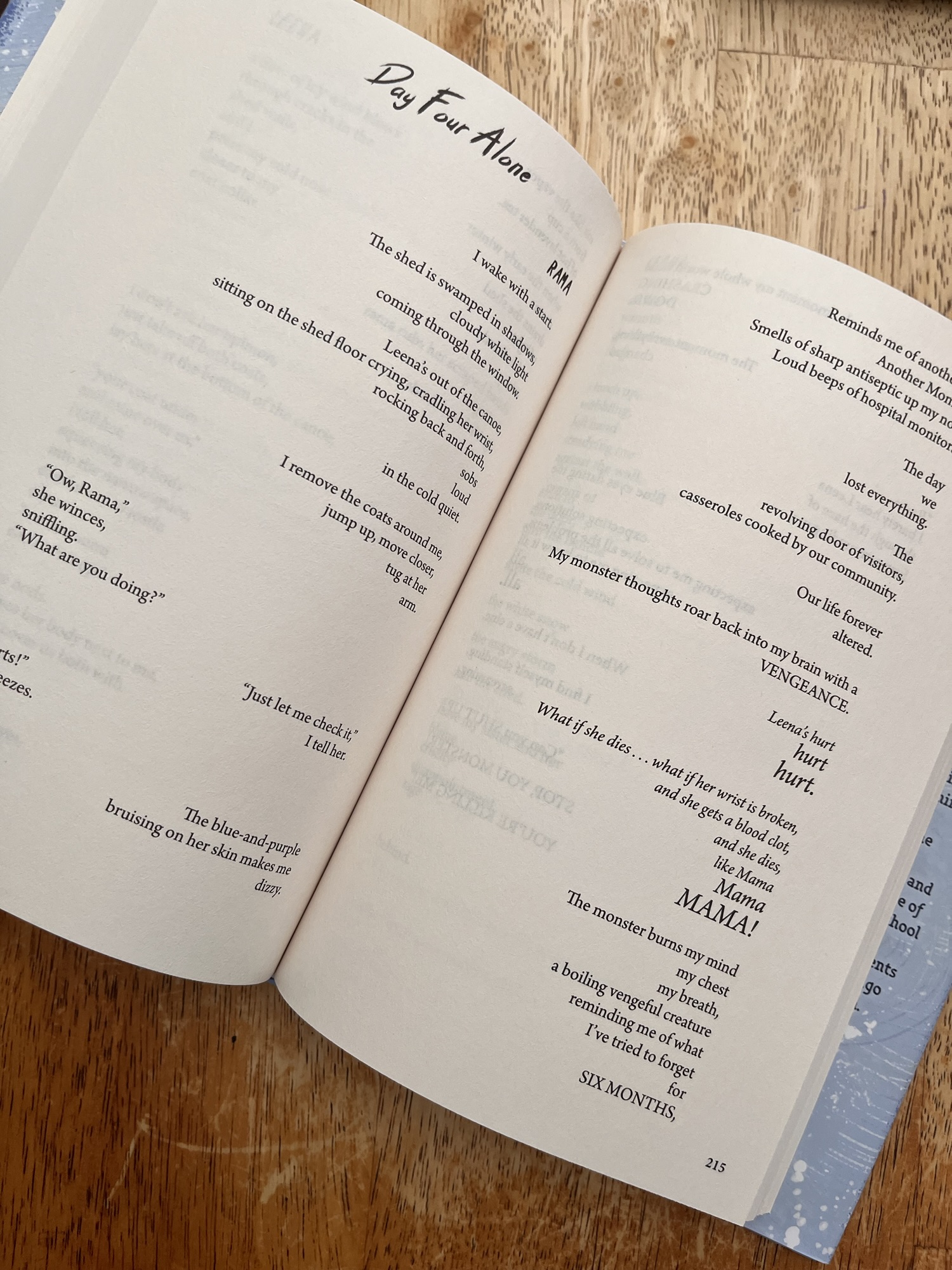
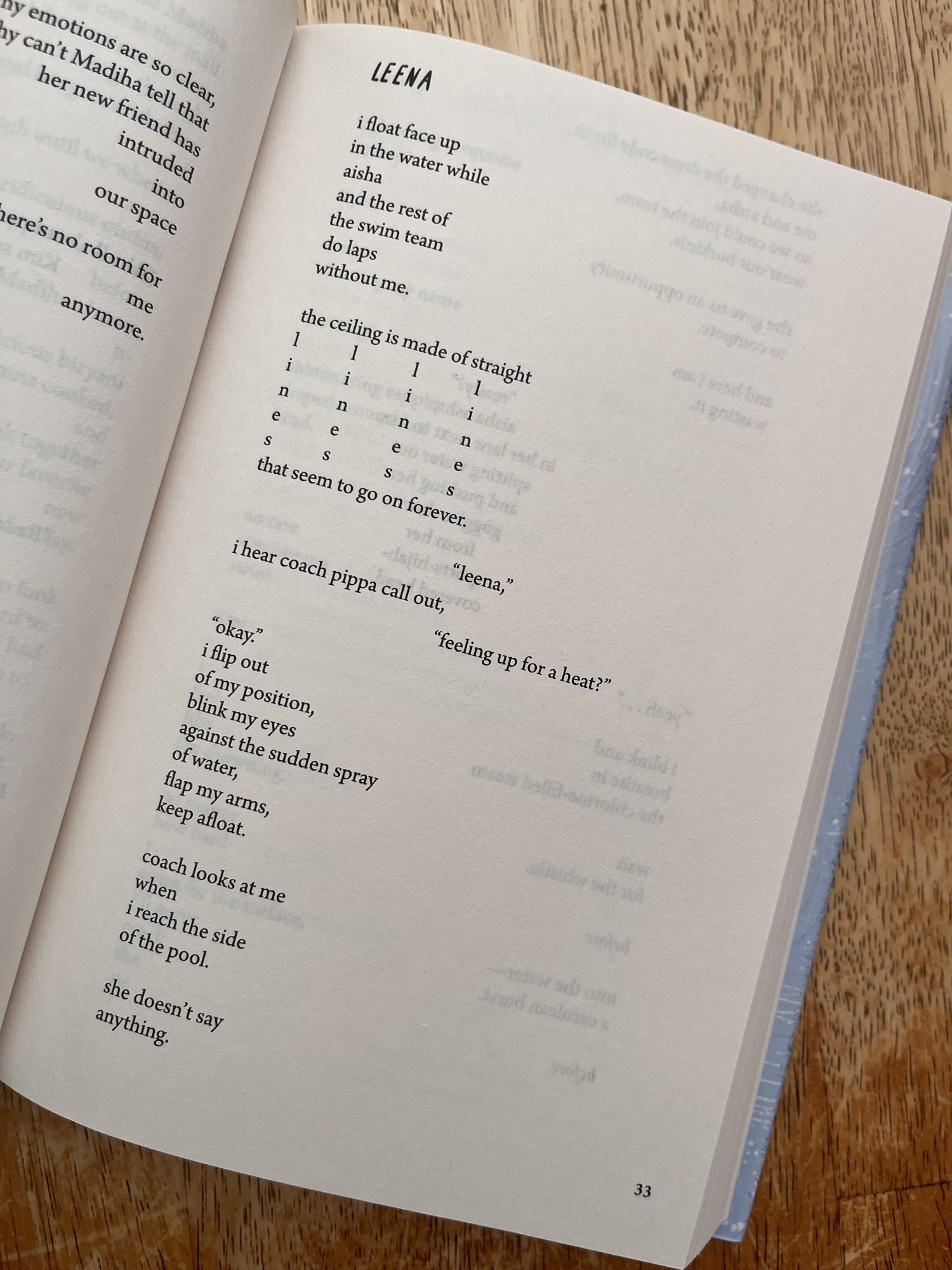
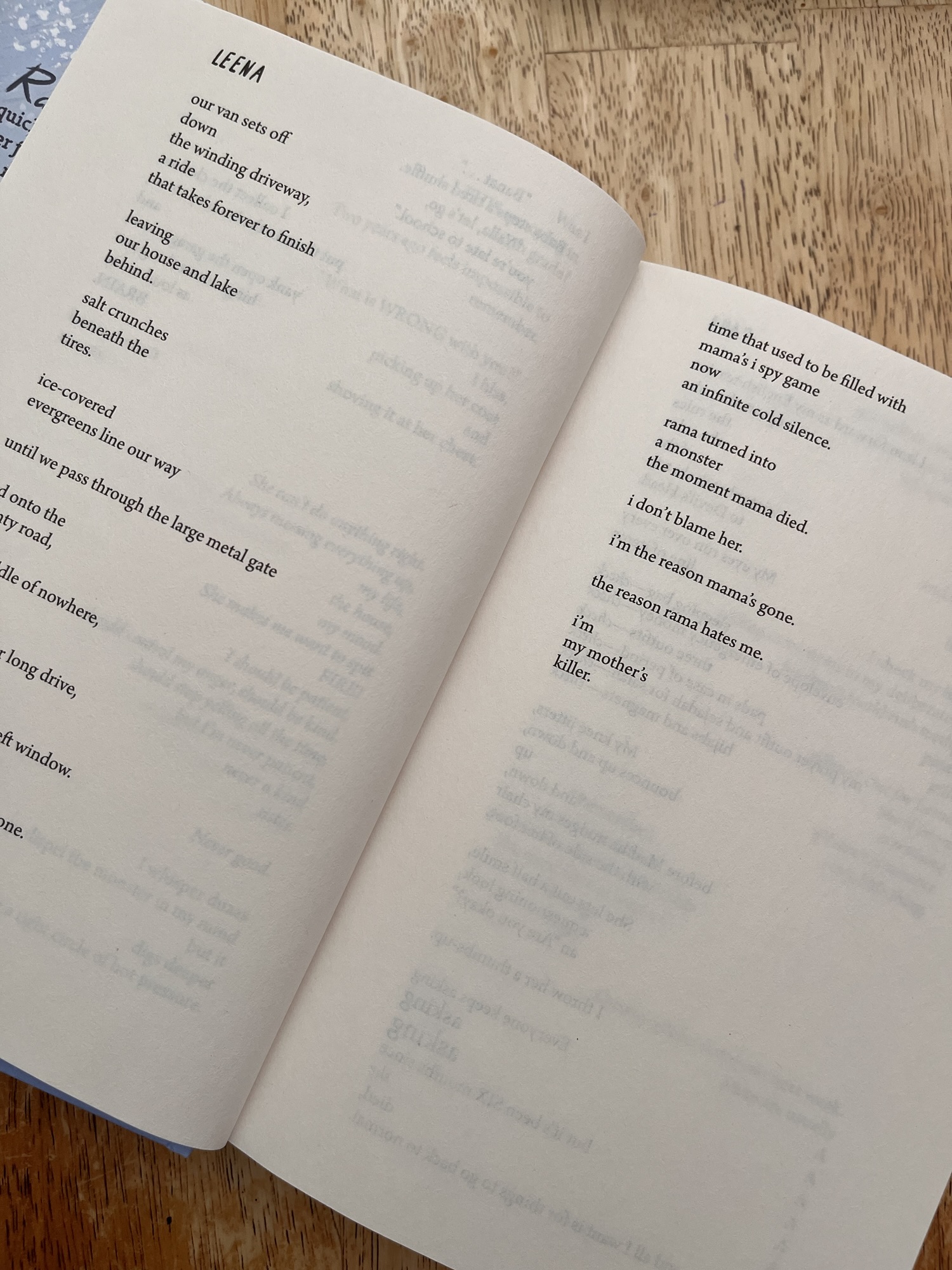
This novel in verse told from two perspectives is best targeted for mature middle grade readers and up that can handle grief, anxiety, intrusive thoughts, survival situations, and injury.  The lyrical writing, quick pace and normalization of Islam into the characters make the pages fly by and it impossible to put down. Do not let the sparse words on the page make you assume the story is simple, the crafting of this book, is nothing short of spectacular. The numerous entry points allow the story to work on the surface, and I can promise you each reading will provide new details and connections to be discovered. From the color motifs, the weight of tragedy, the devastation of loss, the desperation, the self doubting amplified by the past, their girls’ ages, and their present predicament, are expertly balanced with the relatability of friend troubles, school trips, grades, comparisons, expectations, and family dynamics.  The heaviness is felt, but the pacing keeps the themes from bogging down the story and allows it to flow effortlessly. The only thing difficult about this book is: one: not spoiling it, hence the minimal amount of inside pages being shared, and  two: not staying up late to read it in one sitting.

This book would work wonderfully for a book club reading, even for middle school, and allow intuitive discussions about mental health to take place.  The personal backmatter into the author’s relationship to both a storm and intrusive thoughts and worries normalize that help is available, that talking to people about our challenges is not weakness, and that understanding and empathy for our ourselves and others are important skills to develop.

Minecraft: Battle of the Block by Jamilah Thompkins-Bigelow

Standard
Minecraft: Battle of the Block by Jamilah Thompkins-Bigelow

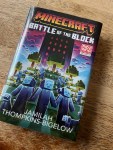
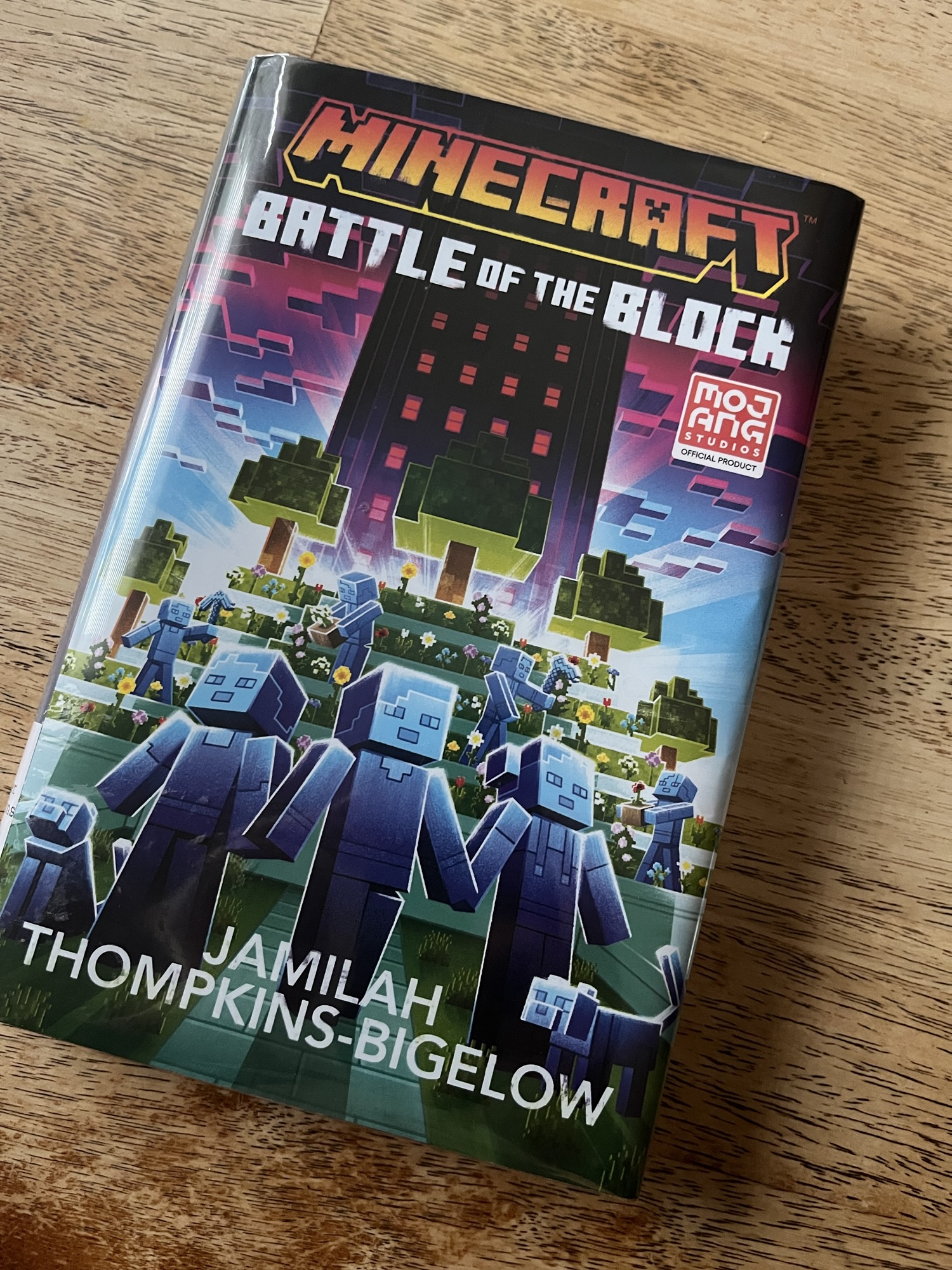
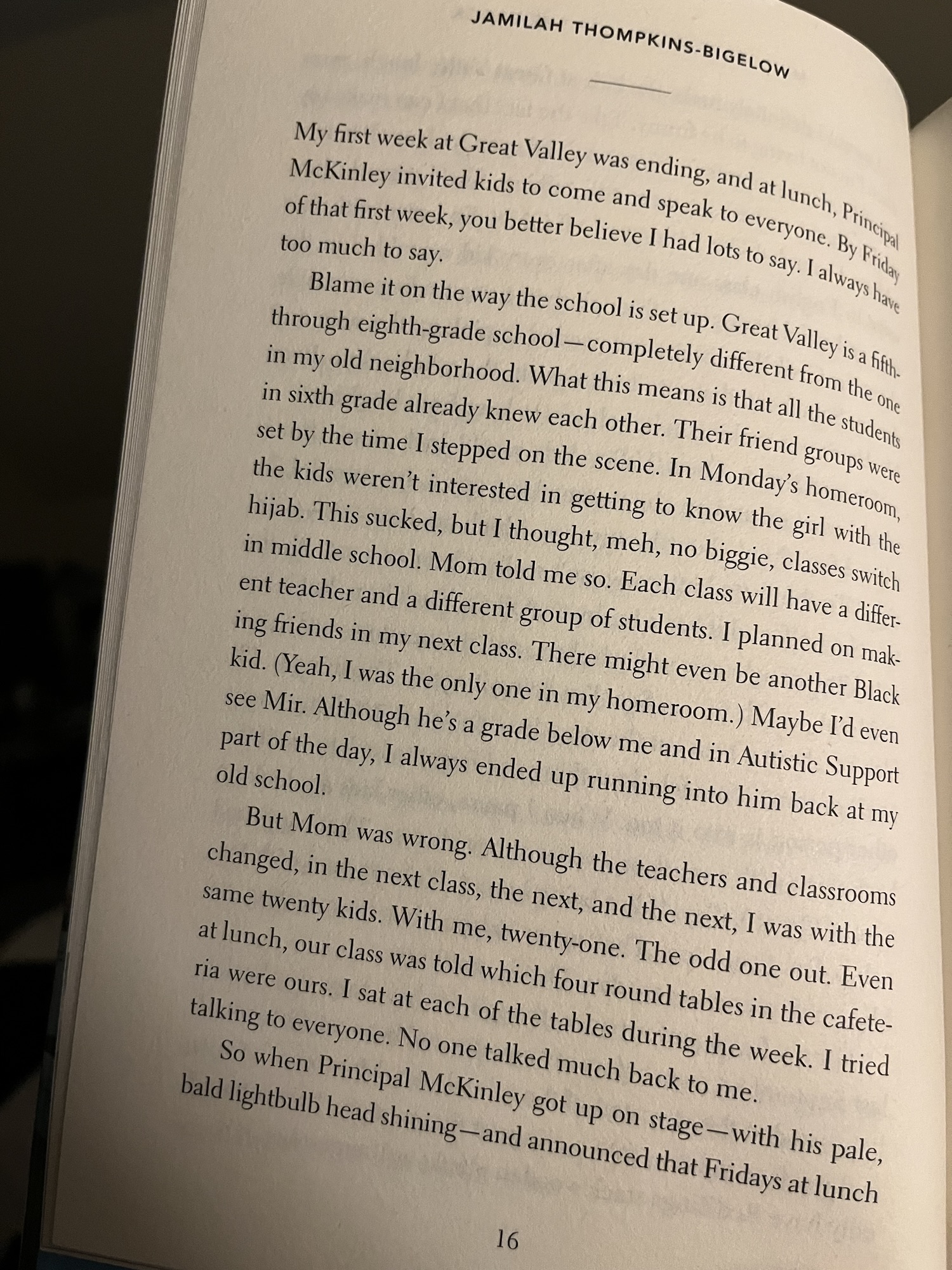
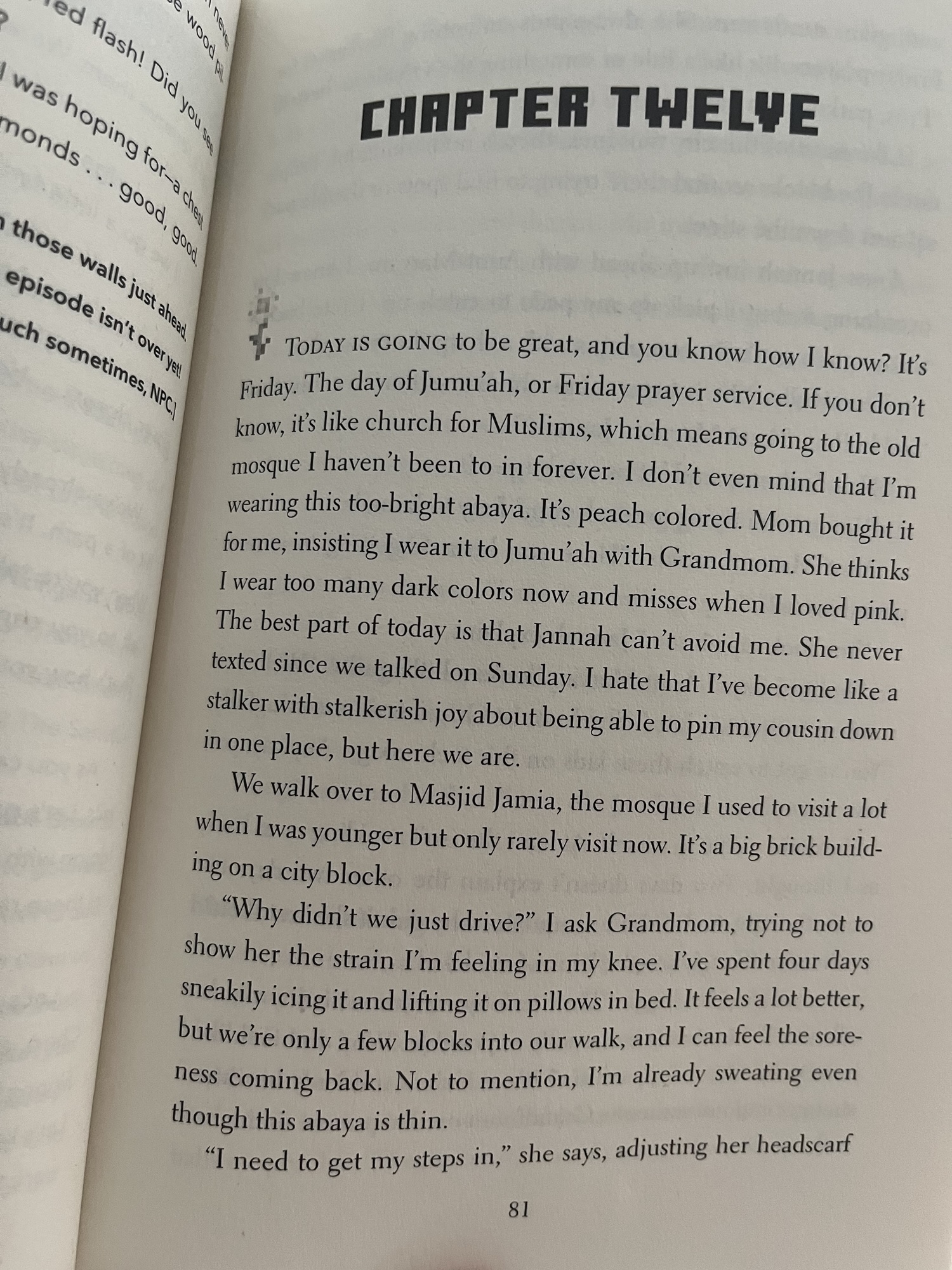
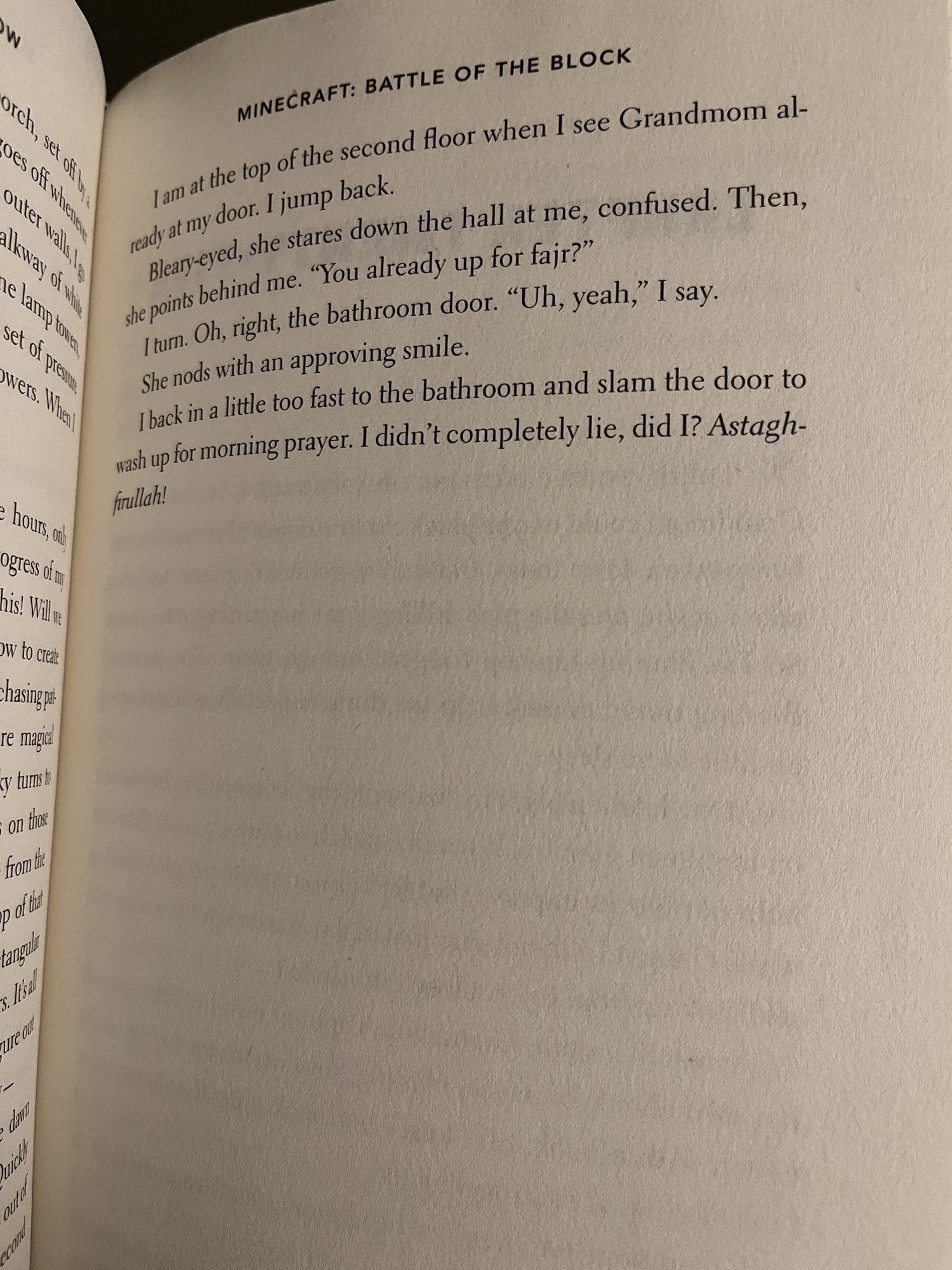
Before I ever opened the book and read the first words, this book in my heart had already accomplished so much. Not only is it an official Mojang studios official product written by a Muslim woman of color but the characters are unapologetically Muslim, neurodivergent, and burgeoning activists battling gentrification and noise pollution. I must confess I have not read a lot of Minecraft IP literature, so I don’t know where the requirements and parameters start and stop or even overlap with the author’s own style and vision. I mention this because the Islam at times feels a little overly explained, which is not typical of the author’s other work, the heartfelt cathartic release at the end though, is very much all the feels that you would expect if you are a long time fan of the author, or a sweet surprise tug-on-the heart if this is your first read of hers.  I do worry that many kids might not get to the climax though, as the pacing of this 268 page middle grade read is very slow. Perhaps the lack of movement is meant to add to the tension, and build relatability to Nzinga’s feelings of isolation and need, not just enjoyment for Minecraft, but for me it ultimately made it feel like a lot of telling and not showing, frustration with the side characters, and annoyance at inconsistencies. Yes, I contradict myself a lot in the above sentences, and I own that, I loved the ending and to get there all the threads throughout must have been intentional. I loved the Islam but felt at times it was over explained, I’m reviewing a book in a specific genre that I have not read before, focused in a world I only know about through a movie, and listening and watching my kids interact with, so this review is probably useless. Maybe the only worthwhile take away is: the book is clean, it has amazing messaging about activism, community, and speaking out, and if your kids want to read it, let them, if they can finish it they will be better for it.
SYNOPSIS: Summary taken from publisher’s blurb:

A young girl learns how to make a difference both in the real world and in the world of Minecraft in this exciting original novel!

Ever since her family moved to the suburbs and Nzinga started middle school, she’s been really lonely. Her only consolation has been working on Phantasy Philly, a special build she and her team will present at a huge Minecraft convention in just a few weeks. Nzinga, her brother Samir, and her cousin Jannah have decided to recreate and reimagine a blocky version of their old Philadelphia street. Now that summer is here, Nzinga can’t wait to return to the old neighborhood and finish their build.

But when Nzinga and Samir arrive at their grandmom’s house, things aren’t how she pictured. Jannah, usually a design whiz, seems distracted and unwilling to work on their project. Incessant drilling can be heard all hours of the day as new apartments are constructed, replacing beloved parts of their street. The constant noise makes it hard to think straight, let alone get anything done.

Nzinga sees how noise pollution and redevelopment are hurting the street, but what can she do about it? And how is she supposed to fight that battle while also inspiring her team to build their ideal Minecraft neighborhood? As Nzinga struggles to answer these questions, she may just learn how even the quietest voices can have the biggest impact.

WHY I LIKE IT:
I love a lot about this book, even aside from just the positioning and all mentioned in the opening paragraph.  I love the perspective of  the protagonist, Zing, a neurodivergent character that isn’t steeped in pity or woe is me, she offers really great insight for readers to see themselves and/or have some understanding for those around them.  Same for how Mir’s autism is presented as who he is and part of the story, not his whole identity and the point of the book.  I also love Grandmom and her modeling how the systems work to have your voice heard, to speak at a city council meeting, how to fight and get through the red tape and how exhausting that can be.  The imam is also pretty great, which is great rep to see.
I don’t like Jannah, I don’t find her arc redeeming, I don’t know why, but I just found her pretentious and mean. Her mom and Grandmom needed to sit her down and have a good conversations with her and Nzinga and help them sort through their issues as soon as they all realized that Mir and Zing have come back to the neighborhood and the two cousins are not spending time together, at all.
I think ultimately for me the problem with the characters and the pacing came down to telling not showing aspects which seemed to reveal inconsistencies as well.  Why does Nzinga want to come back so bad, all the stories of connection and community are non existent when she returns, the kids are mean to her or ignore her, the neighbors seem distant as well, and I get that it is to show the effects of the noise pollution, but it makes it feel like a huge disconnect, is she just being extra in her memories?
The Minecraft elements as well seem a bit far fetched in why Zing so desperately wants to do well at Phantasy Philly, wants to have a crew, but seems consistently waiting for someone to tell her what to build or green light her builds, at some point she should show off her abilities. We see her ability to destruct, we see Jannah and Mir’s skill, but to cheer her on, the reader needs to know what we know she is capable of, and then see her rise up.  I didn’t really feel her understanding of the noise pollution and the gentrification was properly explained either, she truly was in agreement at one point with the developers and the transition was a bit too quick. I think she needed to see the manipulation and thus the readers could also grow in their understanding of how the systems and corporations position themselves to harm society  while making the image and messaging seem like they are doing something beneficial.
FLAGS:
Lying
*Disclaimer I read this book months ago and was unable to write up a review while memories and thoughts were fresh, hence the condensed review. Forgive me for any errors.
TOOLS FOR LEADING THE DISCUSSION:
I think the political and activism threads about gentrification and community is incredible to start discussions about, I also think the idea of Phantasy Philly could and should become a reality.

Huda F Would Love You? by Huda Fahmy

Standard
Huda F Would Love You? by Huda Fahmy

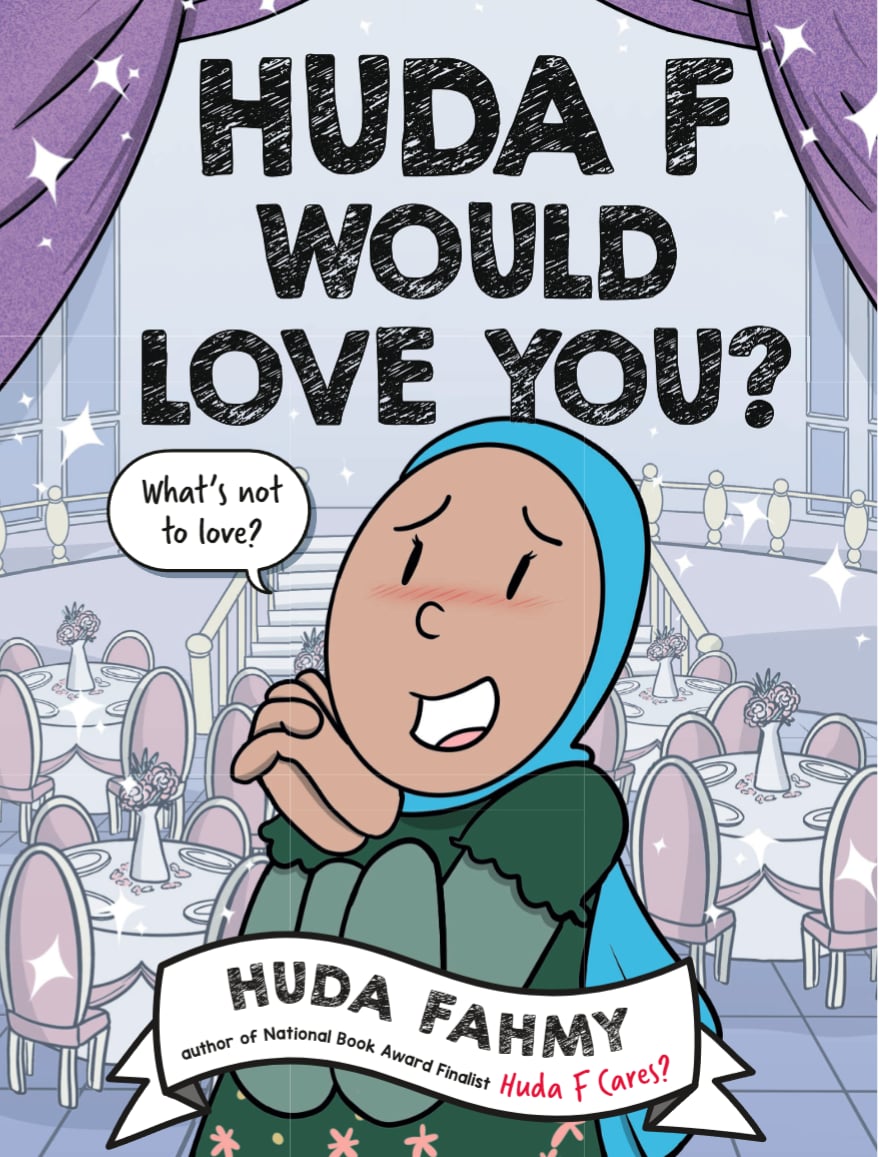
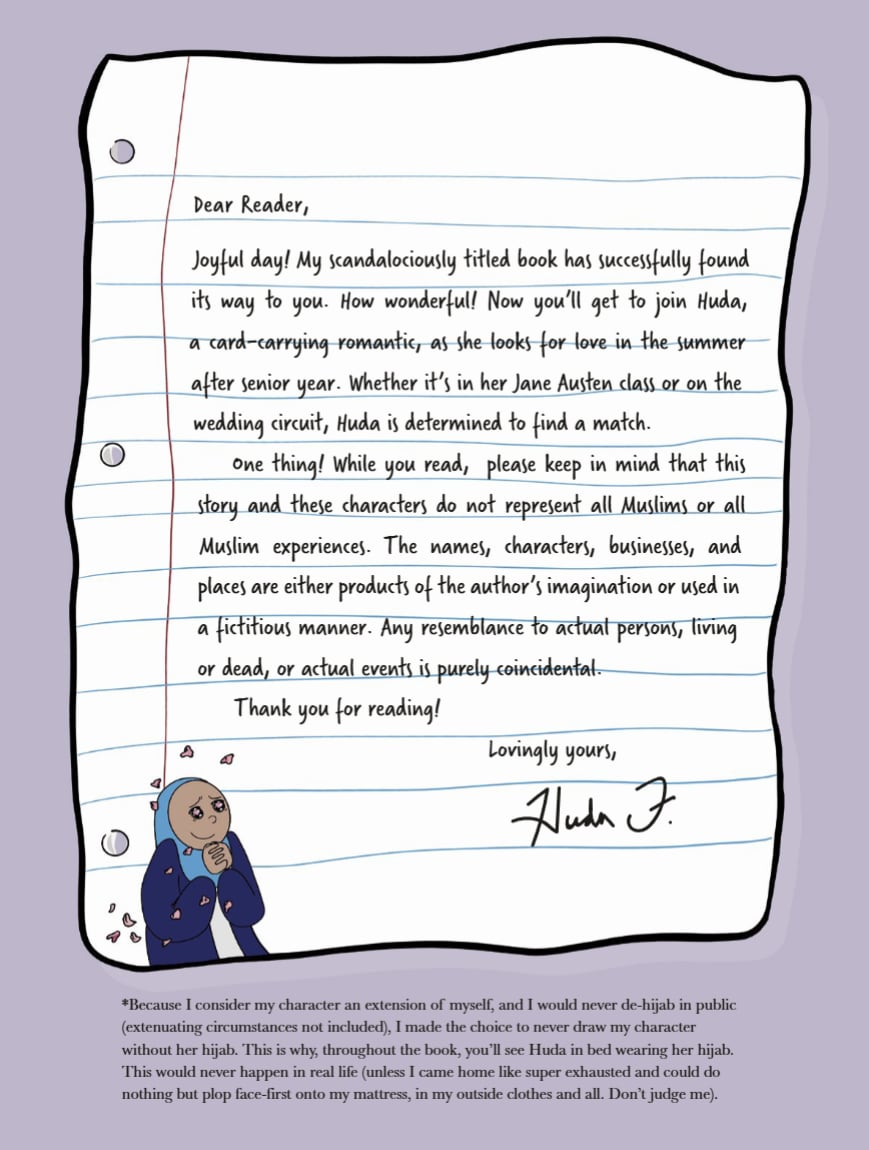
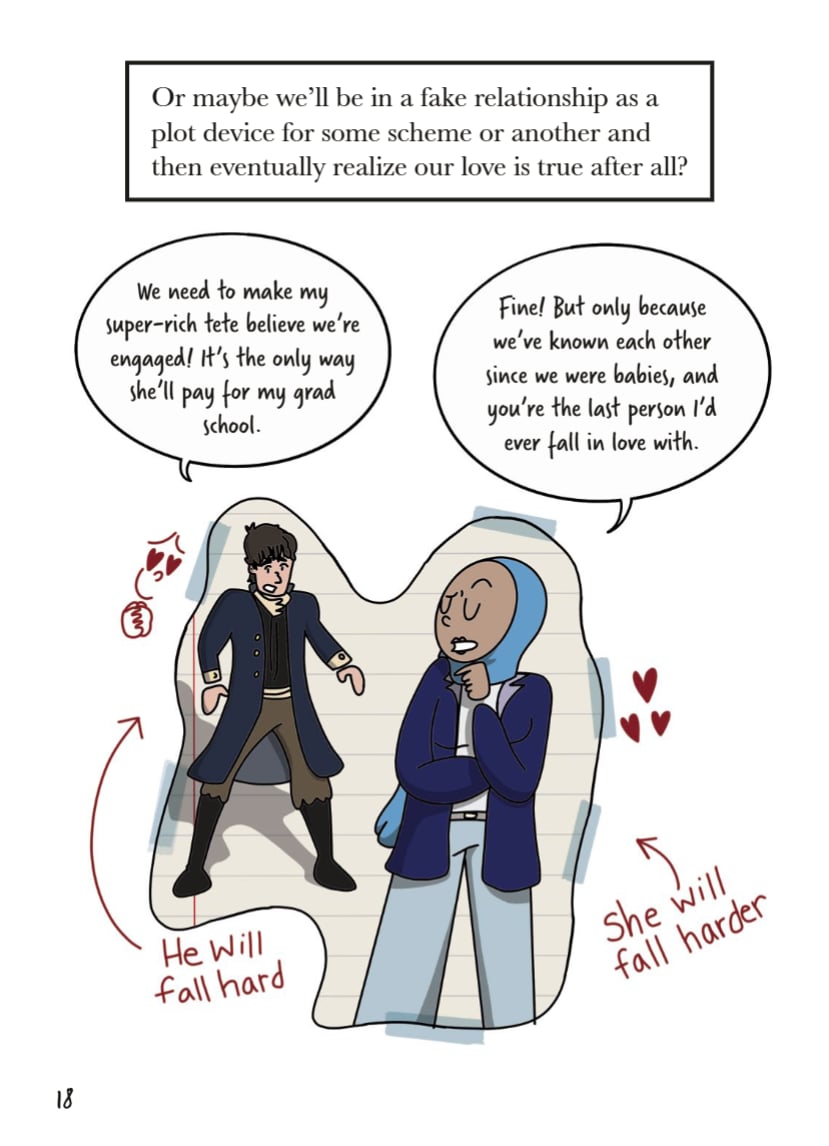
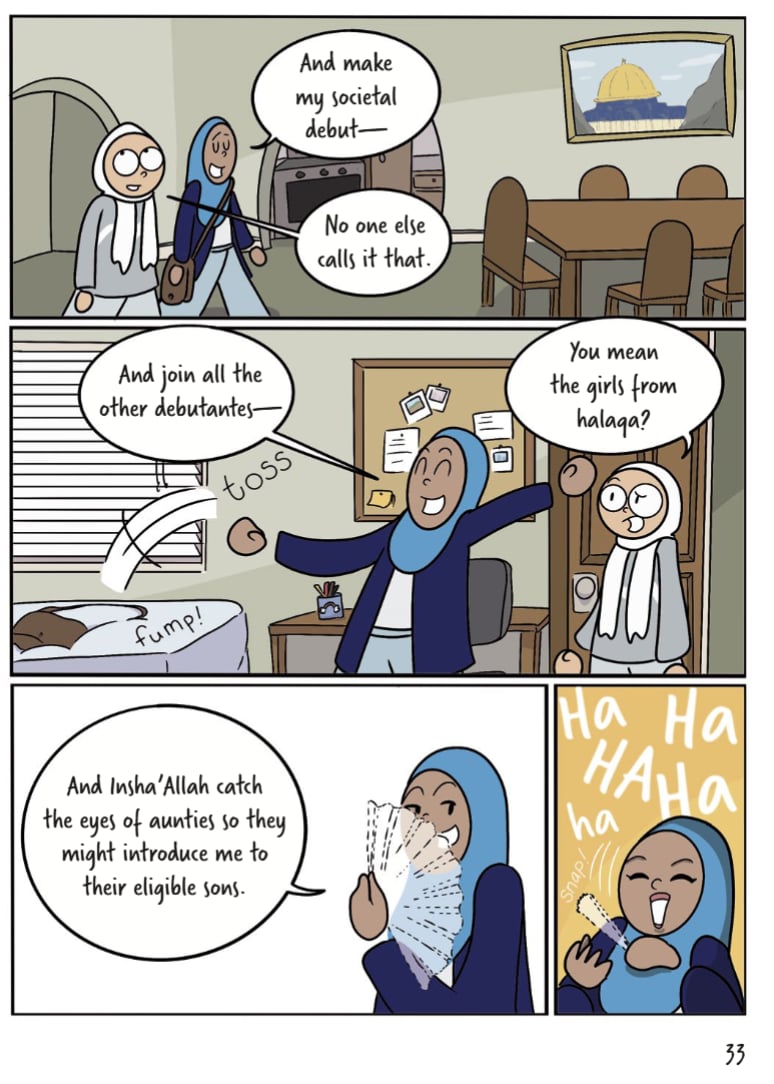
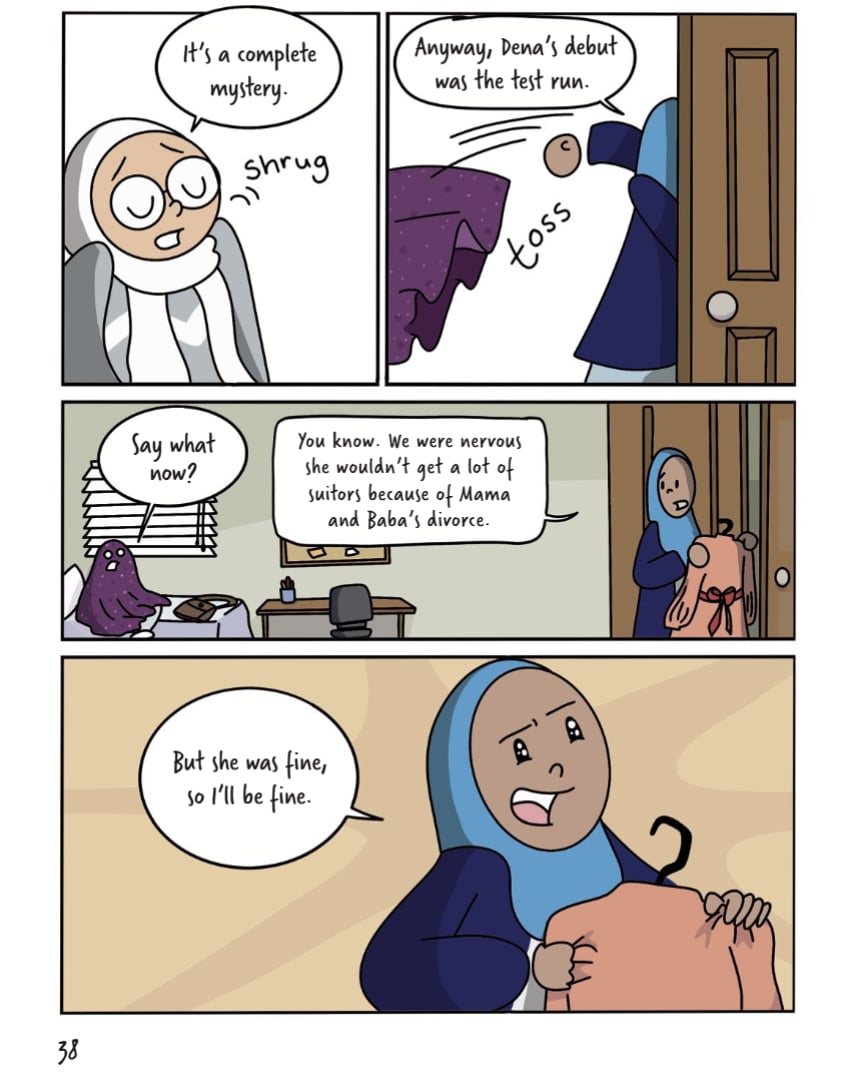
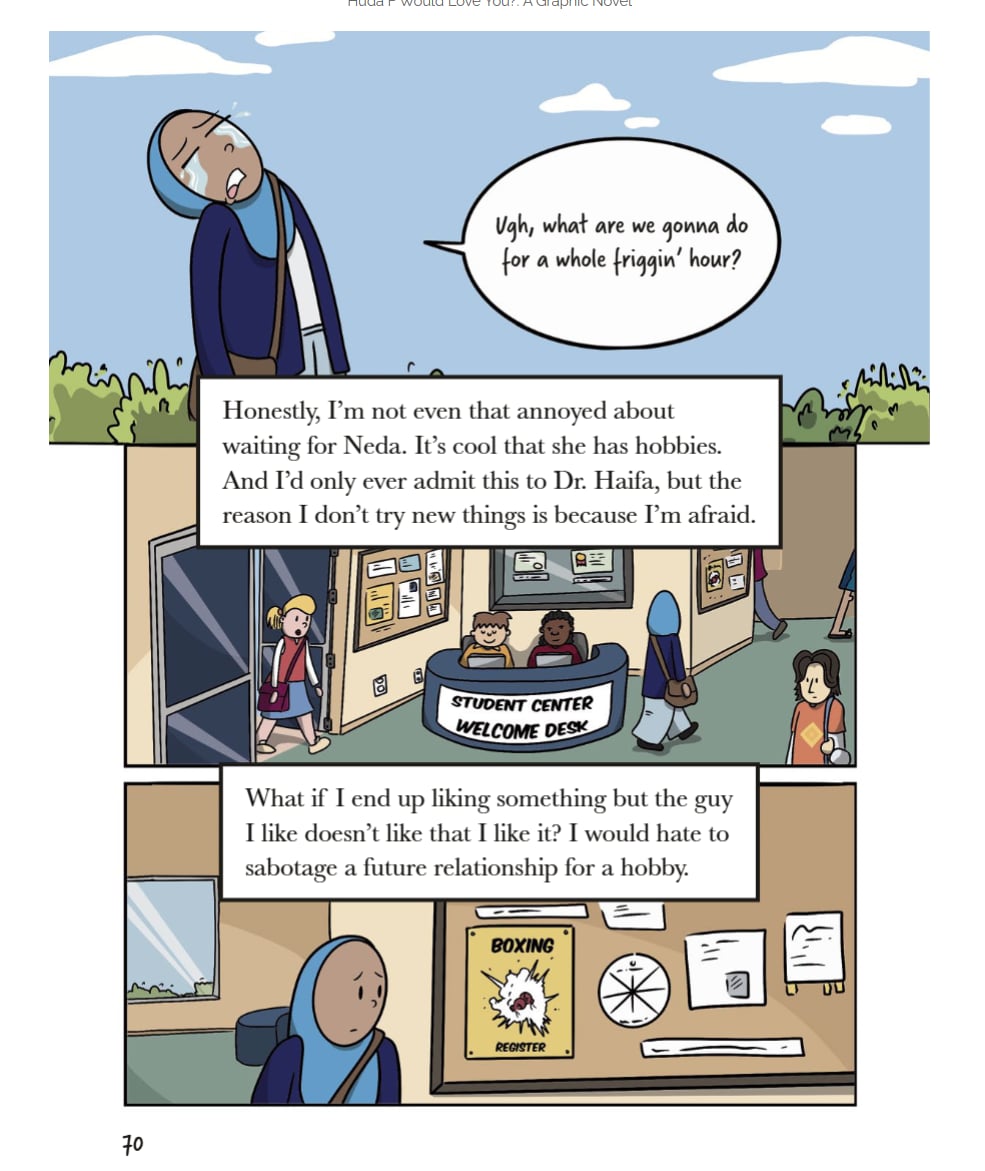
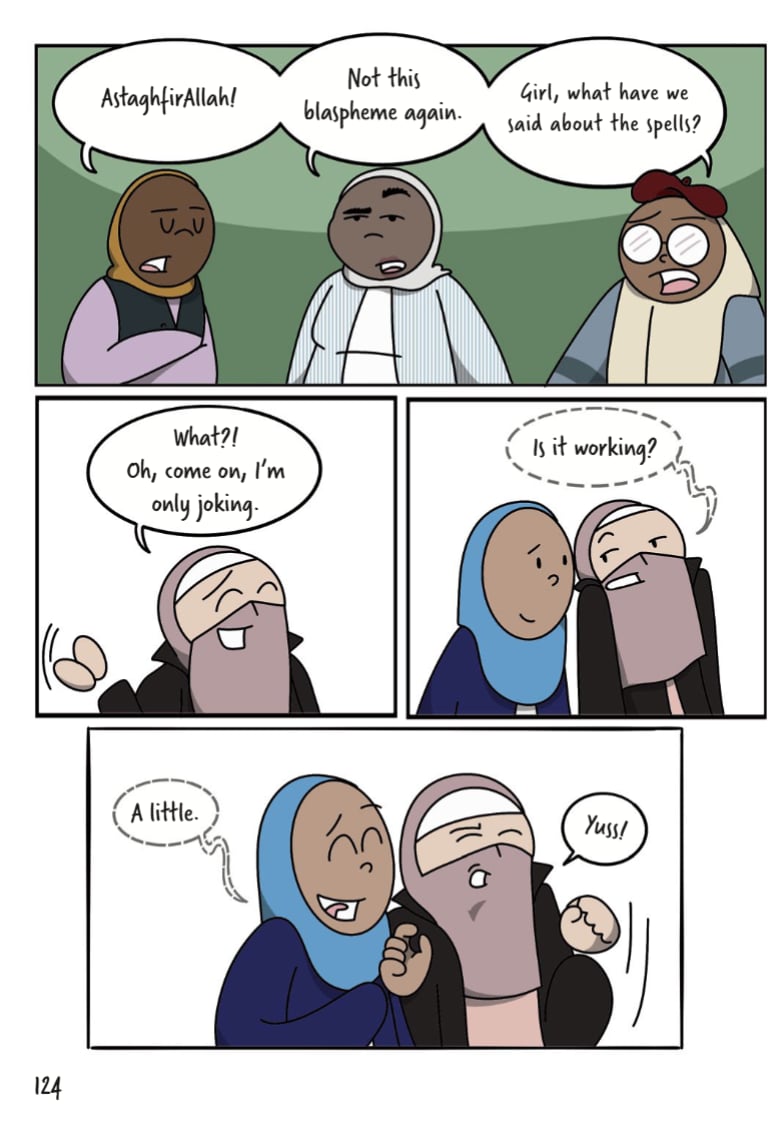
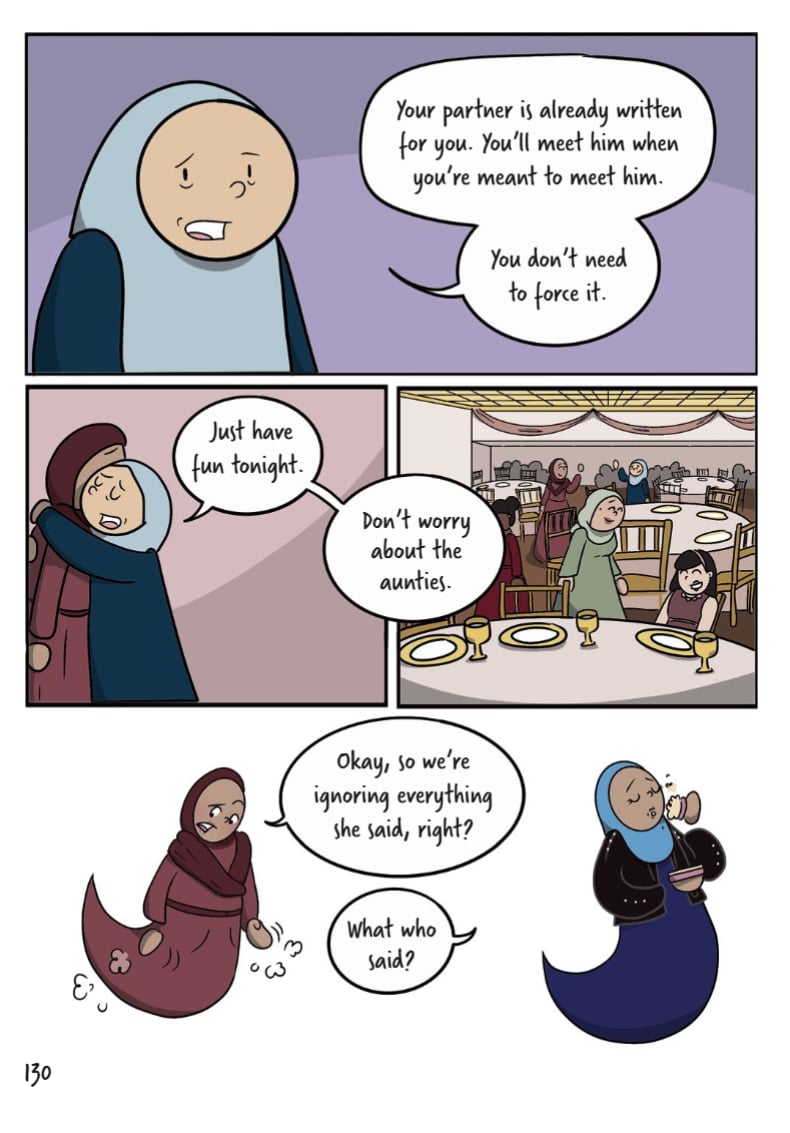
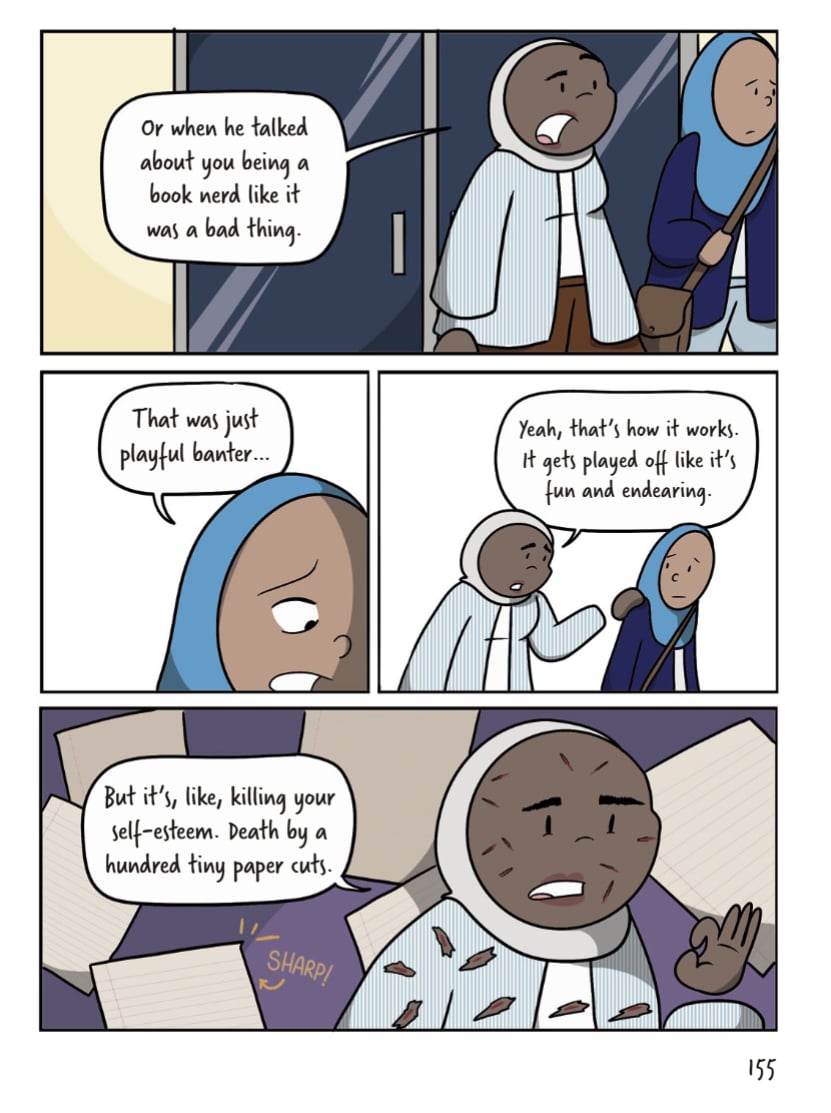
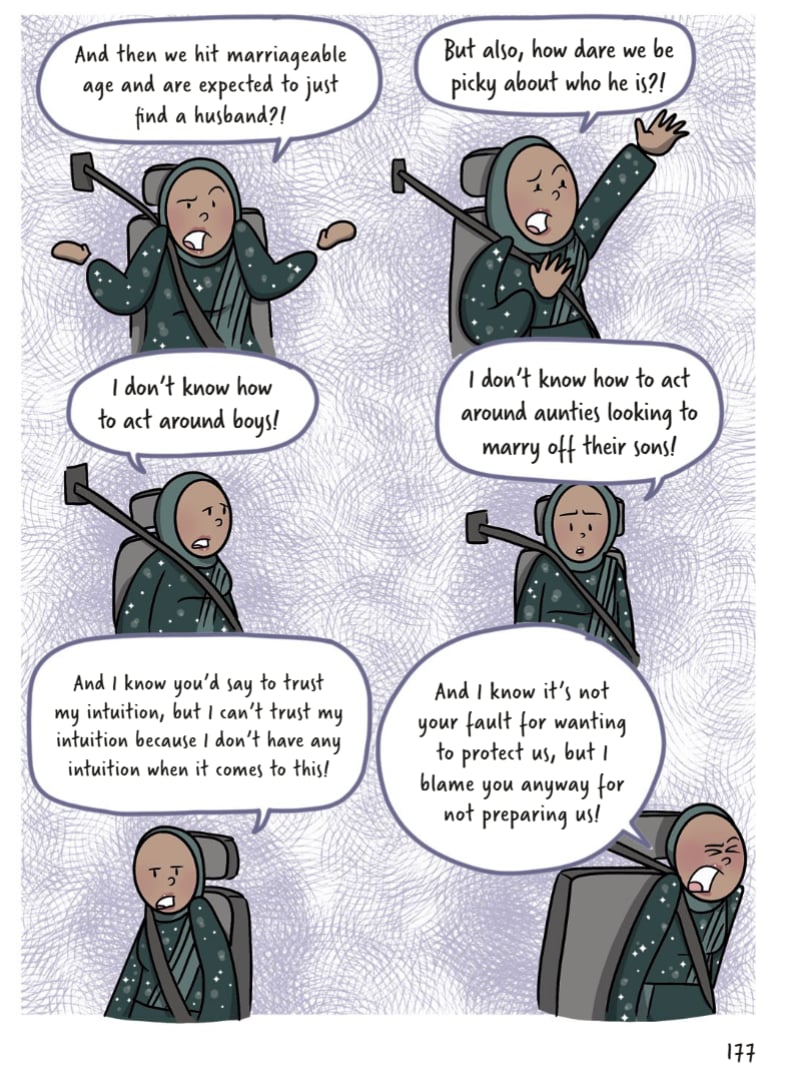
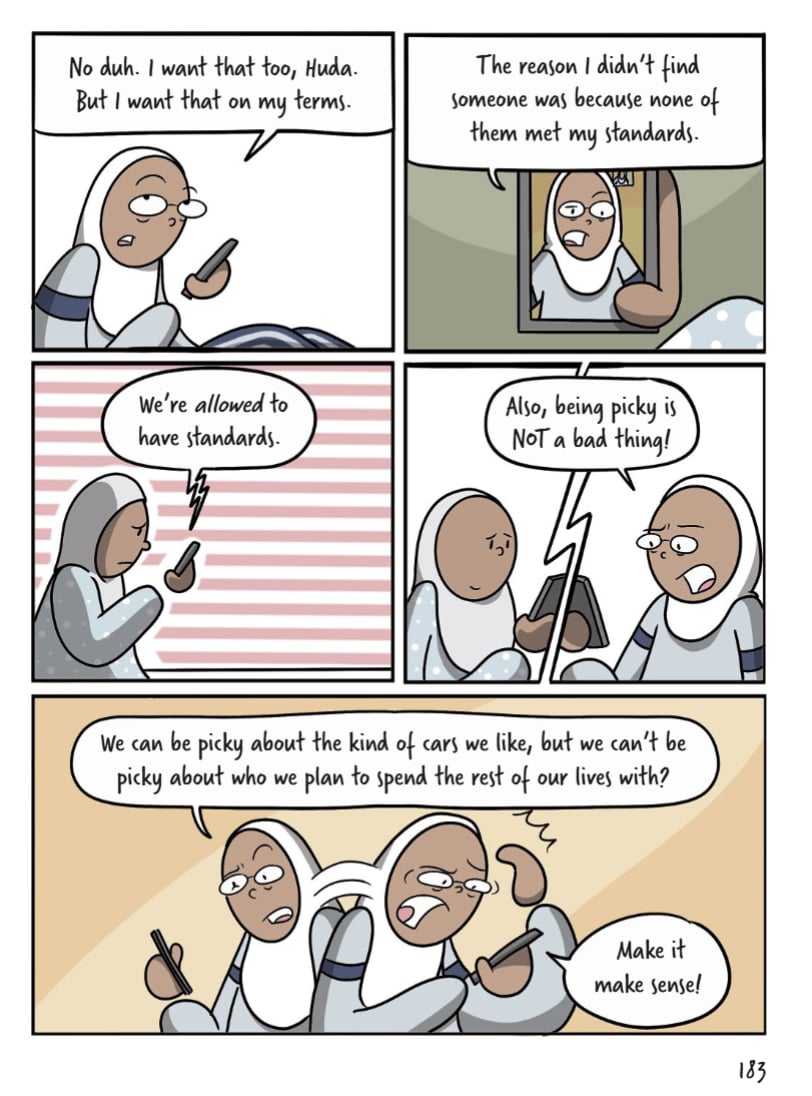
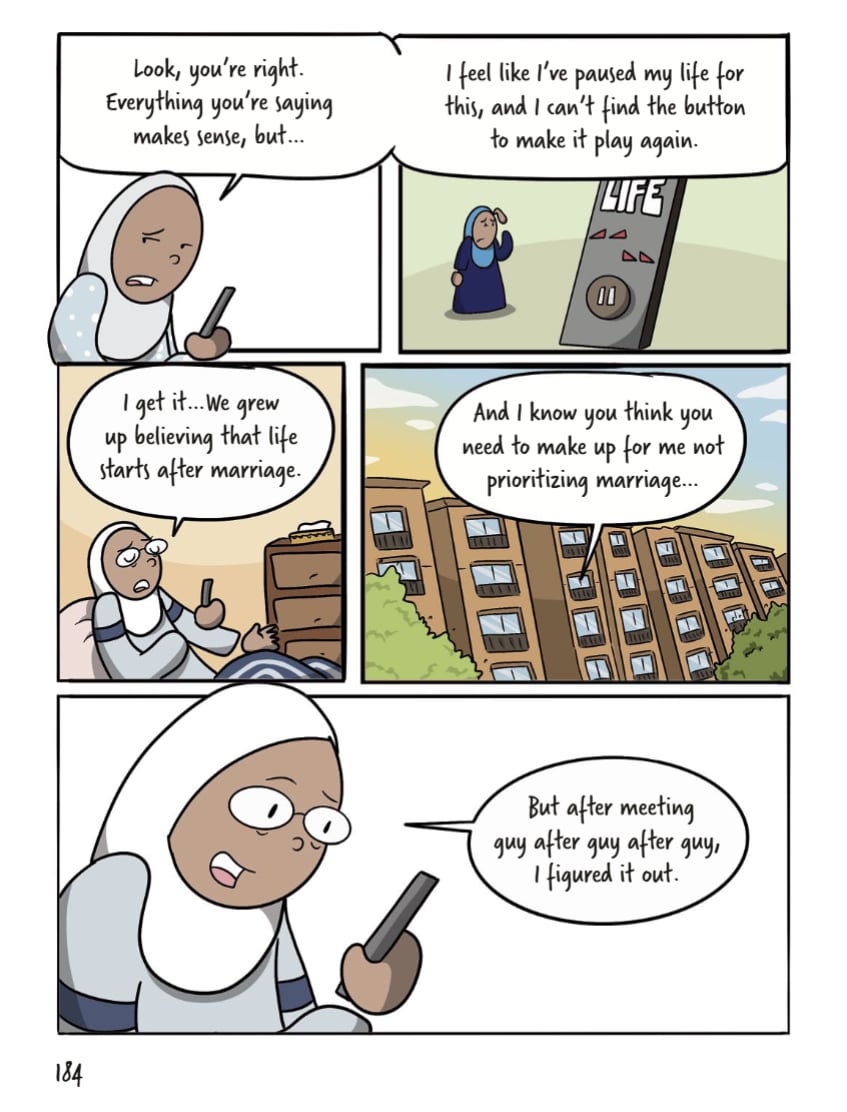
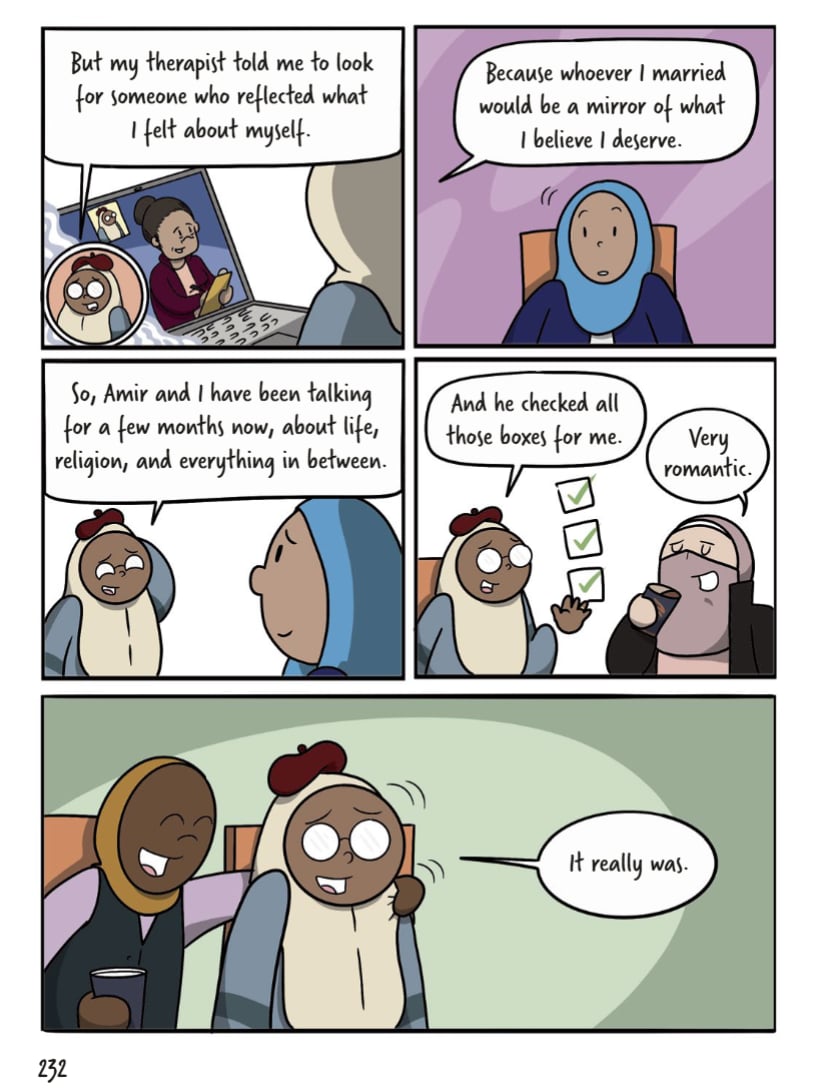
The fourth book in the beloved Huda F graphic novel series once again expertly weaves humor, life lessons, relatability, and unapologetic Islamic rep. Add in that the book is framed around a “Life and Work of Jane Austen” class, goes meta blurring tropes and plot points, and features strong real and fictional Muslim women, and I think this might be my favorite Huda F book yet, yes I’m hoping it isn’t the last. SuhanAllah truly, the author and her books are such a blessing to us all.  At 256 pages this book is a solid YA, but I think older and younger audiences, boys and girls alike, will enjoy and benefit.  The surface is a bit of a rom com, coming of age, Huda finding herself in the summer after high school with friends and family away on their own adventures, and her wanting to get married. Alhumdulillah, the author’s style and the graphic novel format keeps the story from being didactic but the character’s growth is articulated clearly to ensure the messaging does not miss.  The book dives into marriage readiness, expectations, self awareness, and as I’ve always said since her very first books, they are great conversation starters with the young people in your life.  Whether discussing mental health, family dynamics, hijab, and in this one, love, the author really has a knack for conveying powerful and important themes in Islamic ways that are hilarious, consumable, and lingering.  I highly recommend mamas (aka aunties) also read it as a reminder (haha) for how we should help our kids at this stage in their lives.
SYNOPSIS:
From the publisher
It’s the summer after Huda’s high school graduation, and love is in the air! Or it’s about to be, anyway. Because Huda has the ingredients for a perfect love story: a butt-kicking girl power squad of new friends, and a plan to woo all the aunties into setting her up with their eligible sons. But when she finds herself caught between her friends and her heart, gender roles and ambitions, and her fears and dreams, Huda begins to realize that finding her own “happily ever after” might require changing herself—or her expectations.

WHY I LIKE IT:

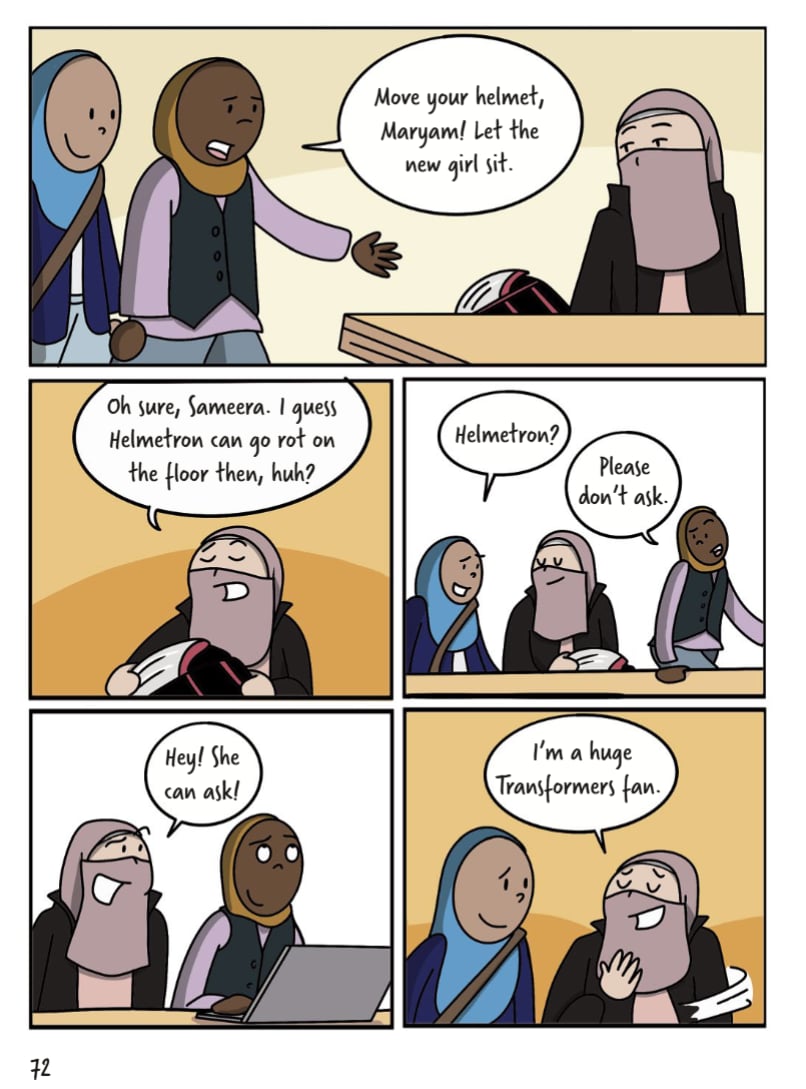
I love the Jane Austen references and the tropes of enemies to lovers, slow burn, and friends to lovers pages with the period inspired drawings, seriously had me squealing and feeling seen. I also love that no one is forcing her to marry, it is completely on her, and that everyone is supporting her to find her self, not compromise who she is, and not rush anything.  I know the disclaimer says it is all fictionalized, but the references to earlier books, and the layers of the character Huda, really make her feel very very real.  I also love how Khadijah RA and Fatima Al-Fihriyyah are brought in and mentioned, that there is a niqabi biker, and that even with Huda having sisters, she also needs her sisters in Islam.


FLAGS:

Relationships, gossip, misleading presentation

TOOLS FOR LEADING THE DISCUSSION:

This should seriously be required high school Islamic school, college/university MSA, masjid older youth group required reading. We need to be having these conversations with our youth that are wanting to get married, and humor is such a great vehicle to address the topic.  To see what awareness about our own expectations is and how it might need to be adjusted, and how to assess the potential spouse and their motives, along with building a community that truly will support you in your own growth whether marriage is the goal or not, is so needed.  Truly a great book, with a lot of entry points and utilization.

The Ocean Would Paint Me Blue by Zoulfa Katouh

Standard
The Ocean Would Paint Me Blue by Zoulfa Katouh

I approached reading this 358 page book with a plan: as much as possible I began with no expectations and rid myself of any Lemon Trees comparisons. And after I finished this book, which I read in two days, I have now waited a week before writing this review up, to sit with its lingering effects and takeaway impact. I did this because a YA coming of age book with a female Muslim protagonist in a new school facing Islamophobia, has been done before, the premise isn’t remarkable necessarily (like Lemon Trees), on its own. I also am not a fan of magical realism. All that to say, I really, really enjoyed the book, and appreciate what it accomplished, and the unapologetic Islam and strength of voice it did it with. A few friends remarked that teen them would have loved it, so I’d like to add that 45 year old me, also loved it. The magic realism isn’t a small thread, it is a plot point, and it adds imagery and power to a book that raises the stakes on every level. It provides a balance to the heaviness felt by Jihad’s grief, loneliness, and present bullying. I felt in many ways it also softened the questionable “halal or harmness” of the book. The relationship between Jihad and Jamie does place them in classrooms and cars alone together and sure that close of a friendship between a boy and a girl is not typically encouraged, but I would let teens read this. The book is not overly angsty, emotions are there but no acting on it, in my opinion the focus is Jihad and her finding her strength, which as a Muslim going through so much, is really empowering to see. I think young Muslim readers might find bits of her story that they relate too, but inshaAllah no one is being bullied that hard, is grieving that loss alone, is feeling that abandoned, and coupled with the “magic,” I don’t think that Jihad’s choices will normalize any haram, but rather leave the readers inspired to not lose hope. The book has a lot of Islam, not necessarily a lot of spirituality though, for me it fits with the character and what she is enduring, that she just doesn’t have any bandwidth to feel anything more. The beautiful prose brings you into the character and keeps the focus on the protagonist, the unapologetic positioning is consistent and a reminder to us all that when well done, our OWN voice stories are not just accessible and relatable to us, but to all.

SYNOPSIS:
I really don’t want to spoil this book, so I’m going to just copy the publisher’s blurb for the summary portion, you are welcome.

Seventeen-year-old Jihad Dabbagh has always seen life with a heightened sense for colors, one of many magical blessings the women in her family possess. But Jihad’s gift changes depending on her mood. When depression sets in, the world is a colorless oasis, and in the wake of her mother’s sudden death, the world has become a permanent shade of grey.

Broken by tragedy, Jihad’s family doesn’t believe her color loss. Her father sends her to the elite Braxton Academy to finish her senior year. There, Jihad’s name and hijab put a target on her back. Her haven comes in the form of an old sketchbook carved from a tree in her hometown in Syria—a country she only knew through her mother’s stories. Jihad hasn’t picked up a brush in over a year, but finds herself channeling the colors of her hurt, pain, and grief as she paints the story of her mother’s journey in Syria.

When graffiti of that same mural starts magically popping up all over New York, her art goes viral and the world takes notice, the threat of legal consequences is imminent. To reclaim her voice, Jihad will have to paint a new future for herself and Braxton, guided by the resilience of her mother’s story.

WHY I LOVE IT:

I love that regardless of what I would have done in many of the situations Jihad is put in, I can totally see, and argue, why Jihad does what she does. I think that is a testament to the writing, and while some of the relationships or side character arcs might make the most craft focused readers long for more, I was fully seeing Jihad’s world through her eyes, and ok with it. Even when major events happen to side characters, it really feeds in to how it affects Jihad and her character arc and growth.

I love the Islam and unapologetic way it is presented. There was one error about washing the bottom of her shoe while making wudu at school, but the Islam feels very real, the actions, the framing, the practice, the struggles, and it was quite refreshing.

I think in the past we have seen identity books really “other” Islam or culture and this book definitely raises the bar, by not doing that. We have also seen books that normalize haram relationships, or spend page after page trying to position the couple to not be haram at the expense of boring the reader, and I think this book is so natural in weaving it all together, that I really hope it becomes the new standard, and new chapter, pun intended, for YA Muslamic books. The book has threads of “romance,” bullying, Islamophobia, neglect, grief, family drama, violent crime, magic, but for me at the heart, once that all falls away and I sit thinking back, a week later on what I recall, it really is Muslim female strength and empowerment.

FLAGS:

Death, loss, bullying, Islamophobia, abandonment, violence, manipulation, grief, loss, boy girl friendship, threat of sexual assault, threat of violence, unwanted touch, vandalism, graffiti, systemic failure, racism, stereotypes.

TOOLS FOR LEADING THE DISCUSSION:

I would love to do this as a book club read with high schoolers. Let’s make this happen!!!