Tag Archives: generations

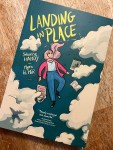
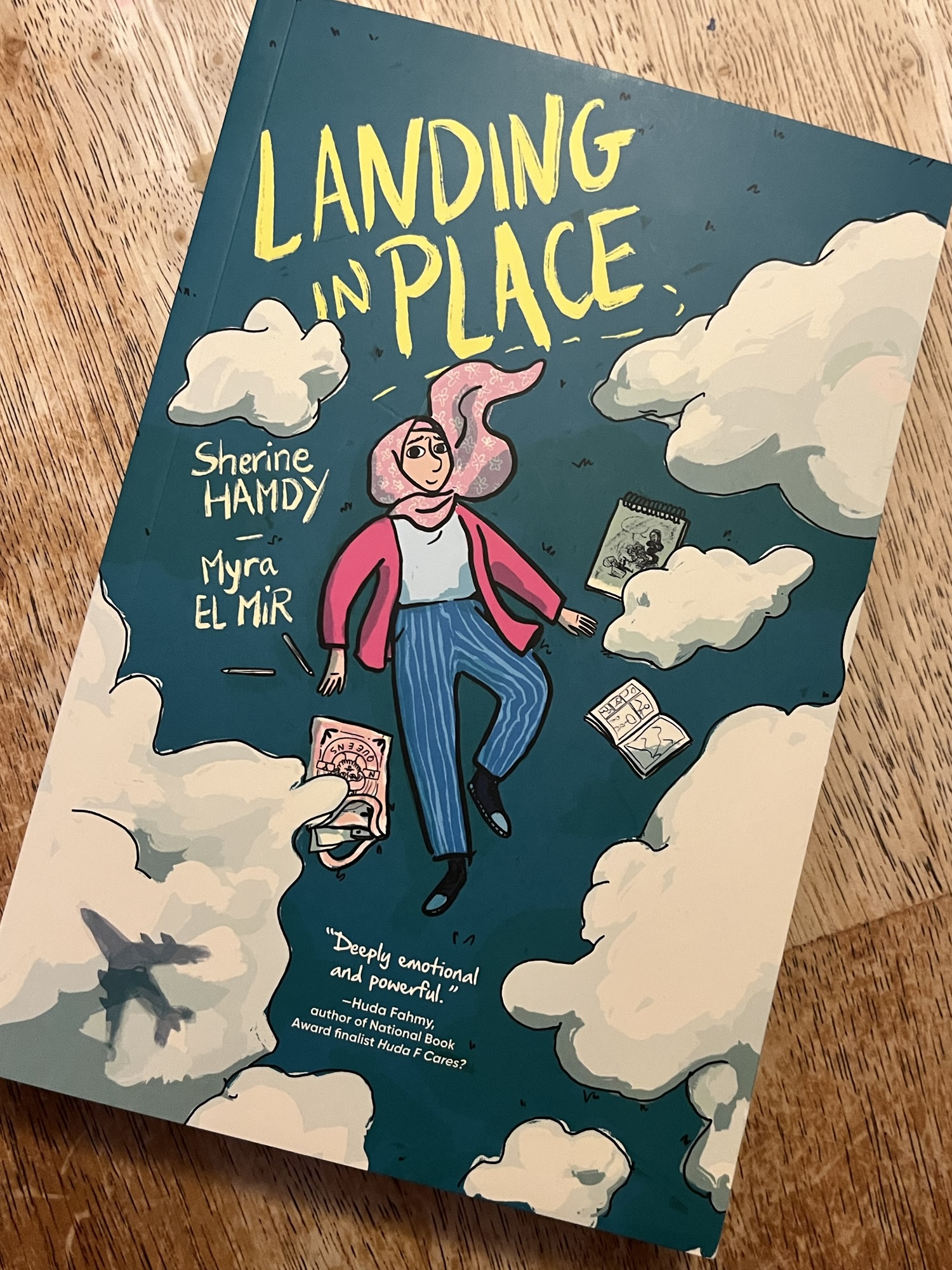
Landing in Place by Sherine Hamdy illustrated by Myra El Mir

Standard
Landing in Place by Sherine Hamdy illustrated by Myra El Mir

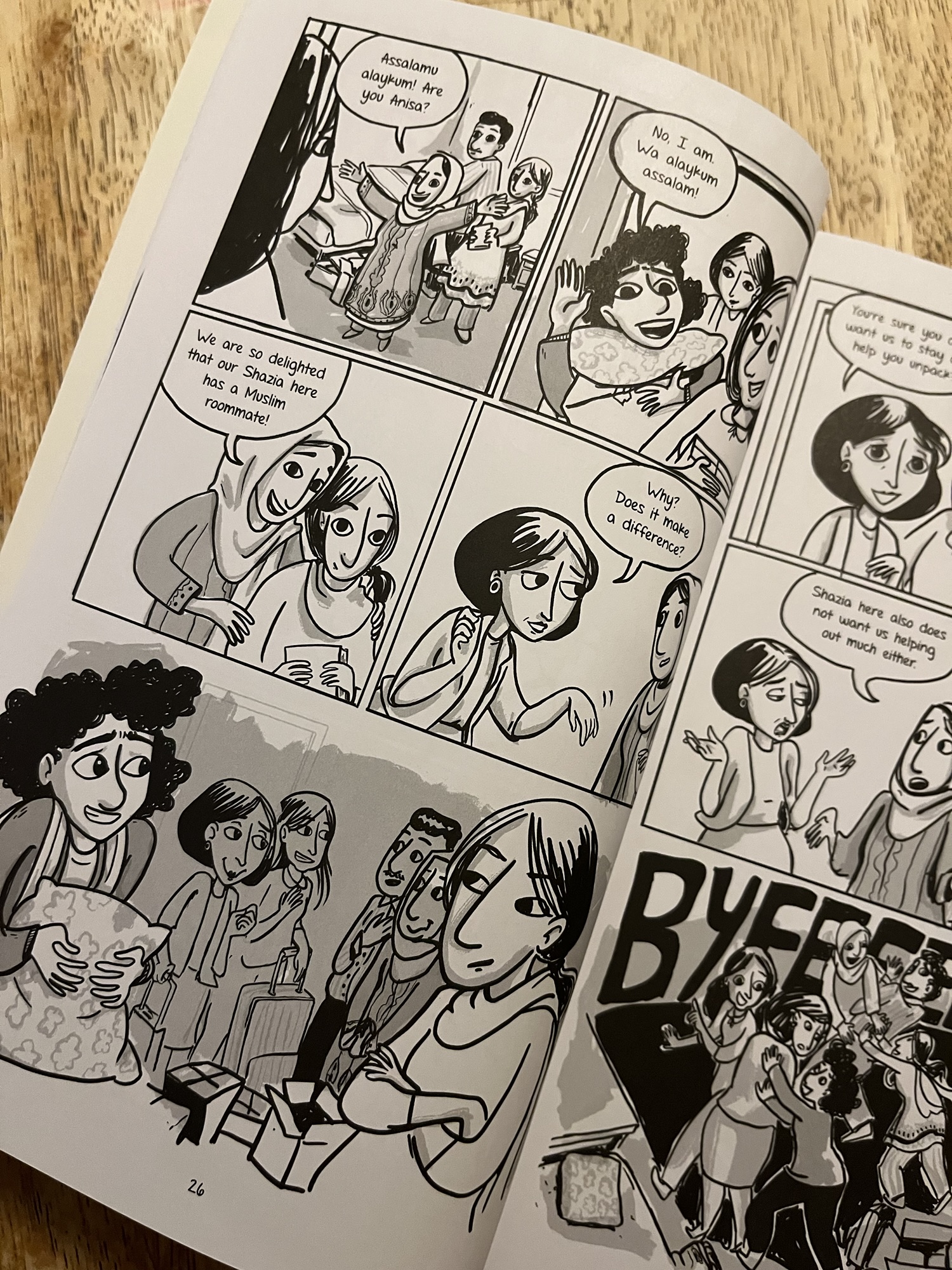
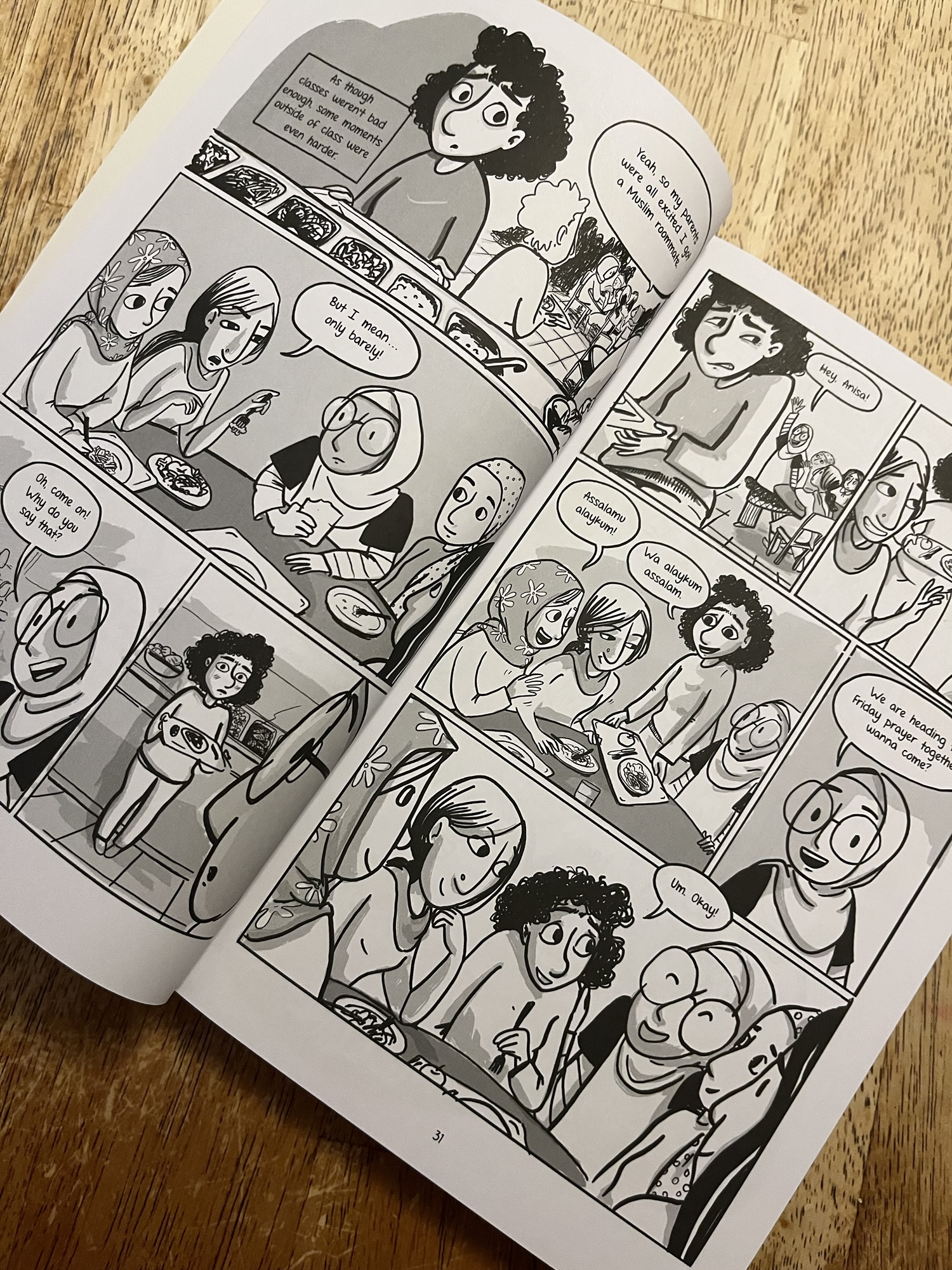
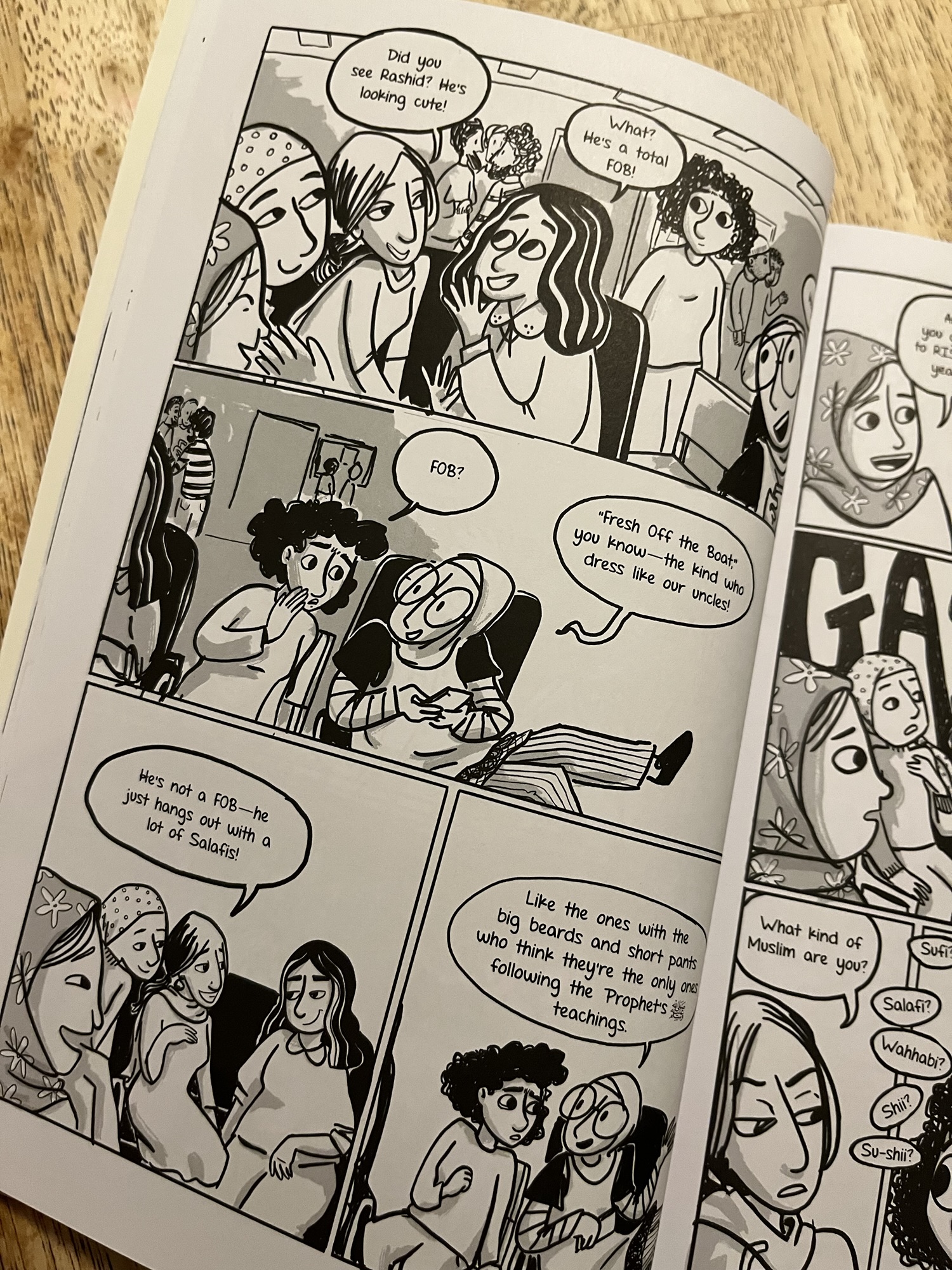
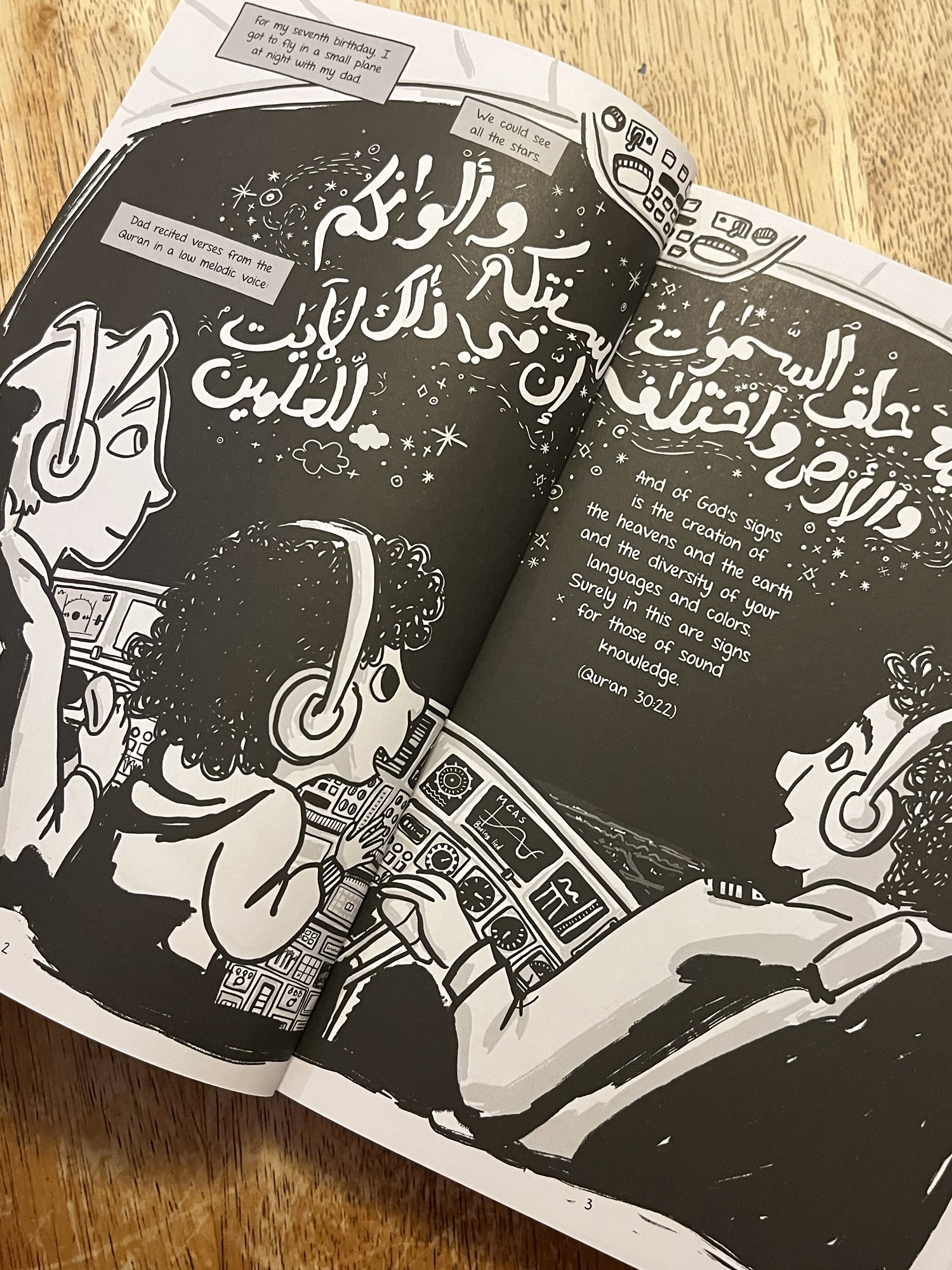
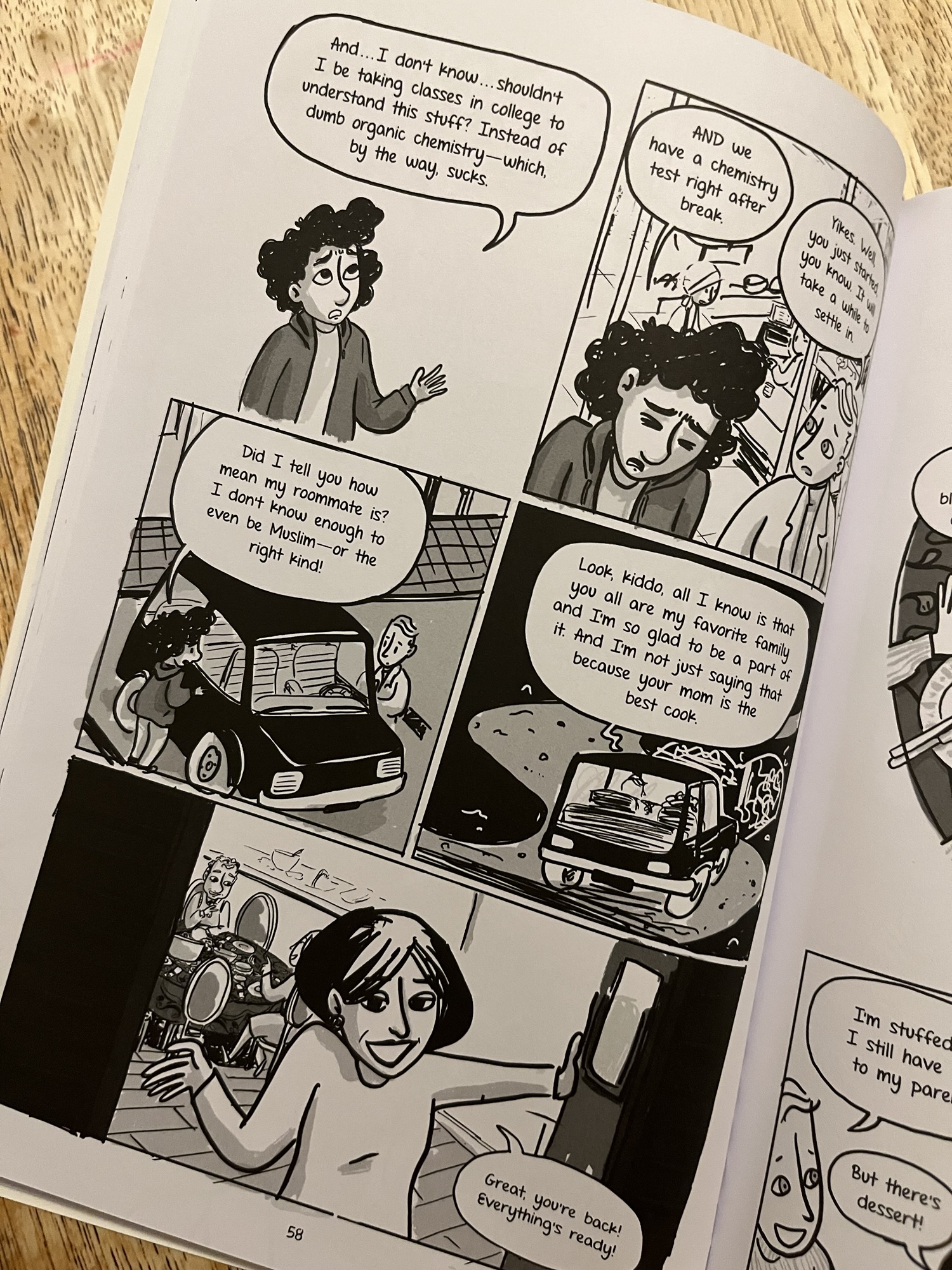
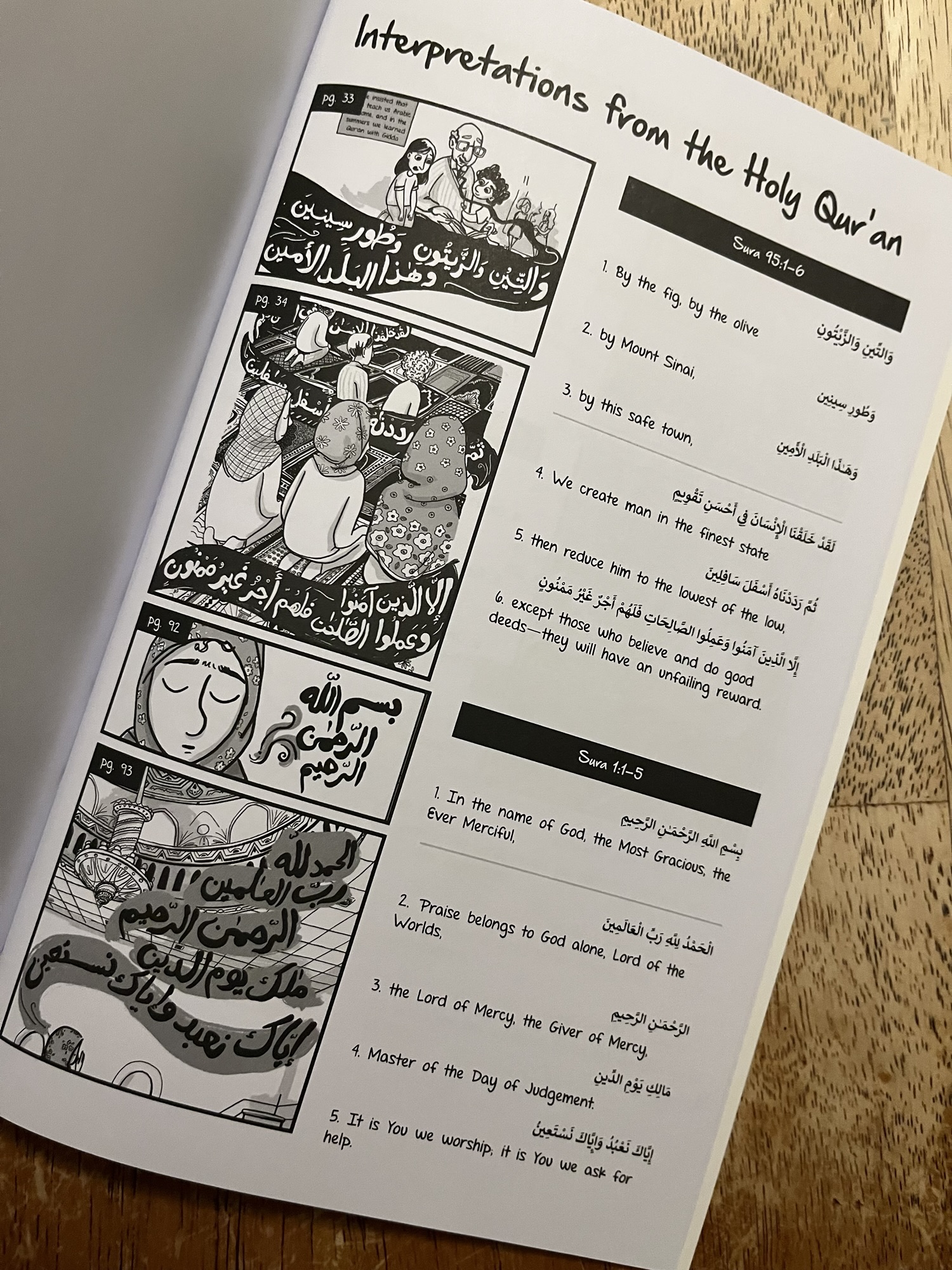
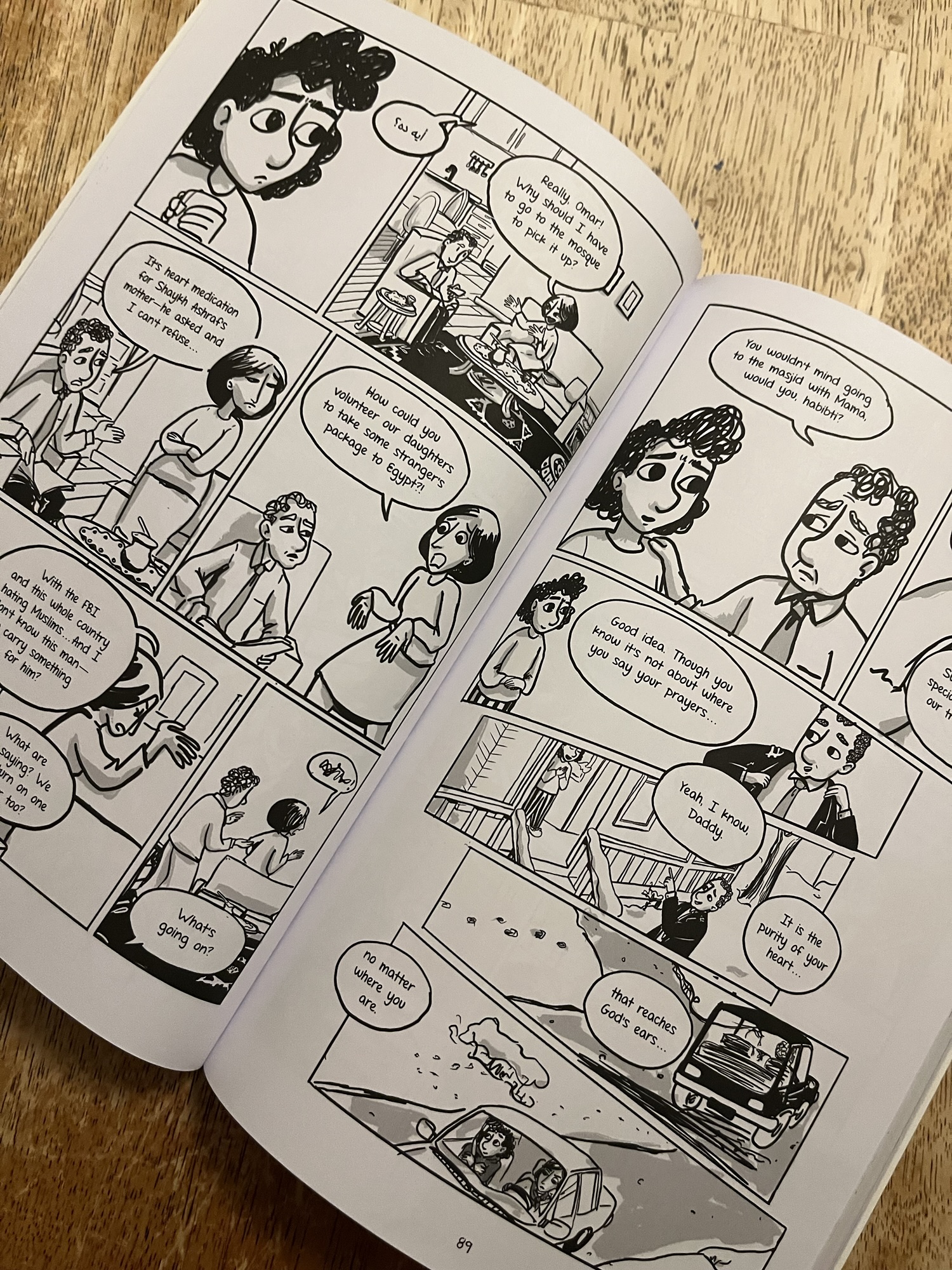
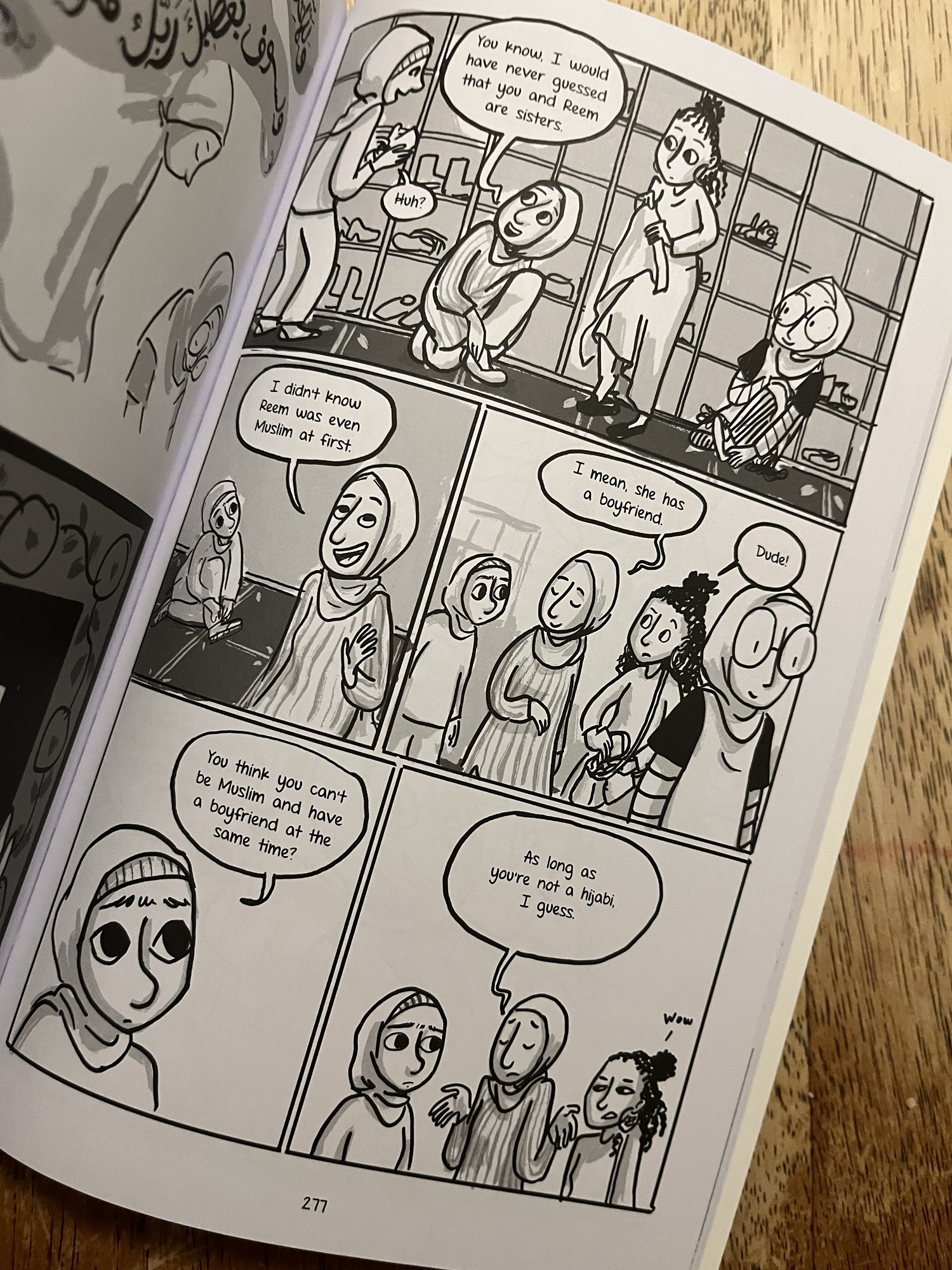
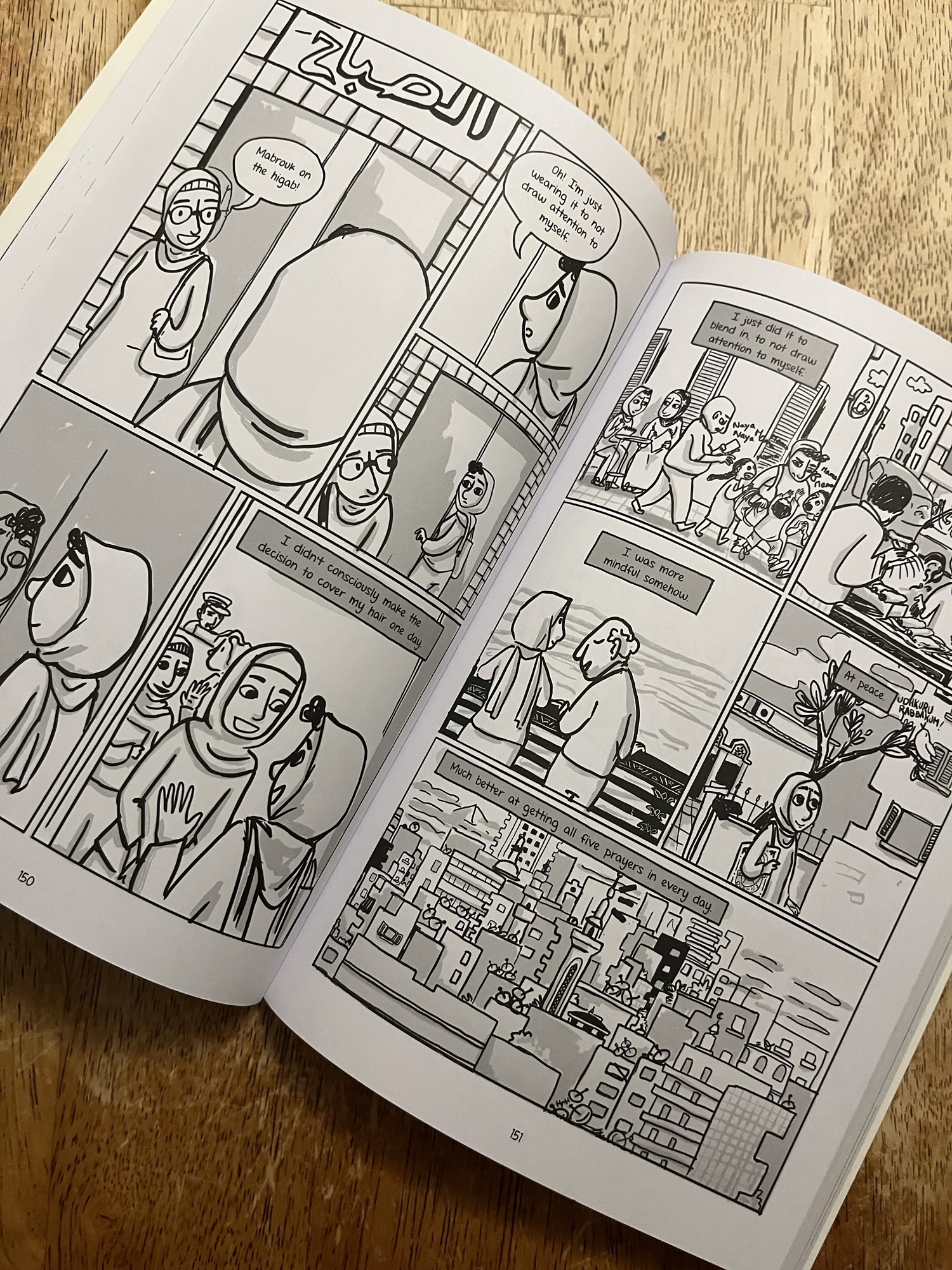
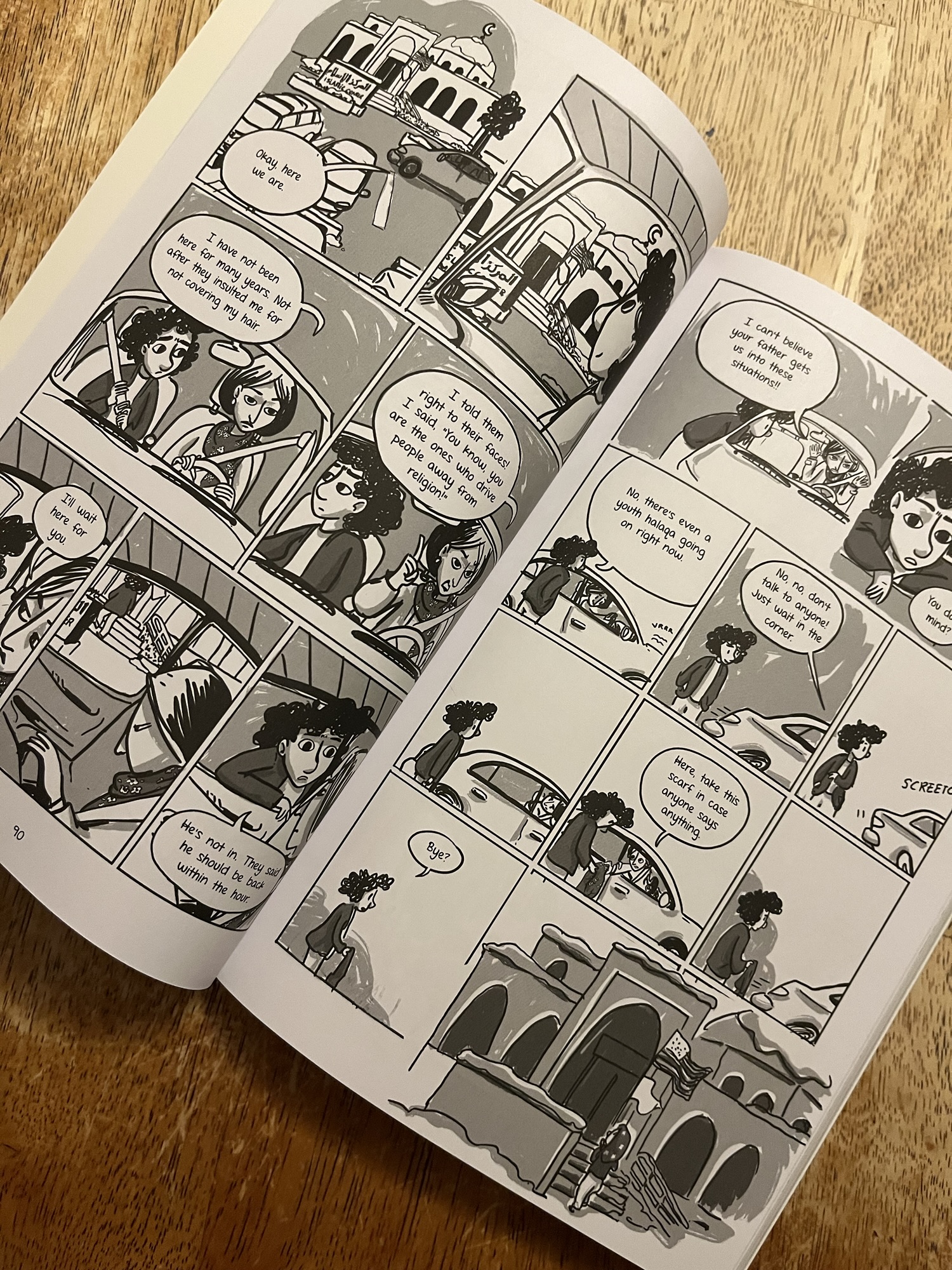
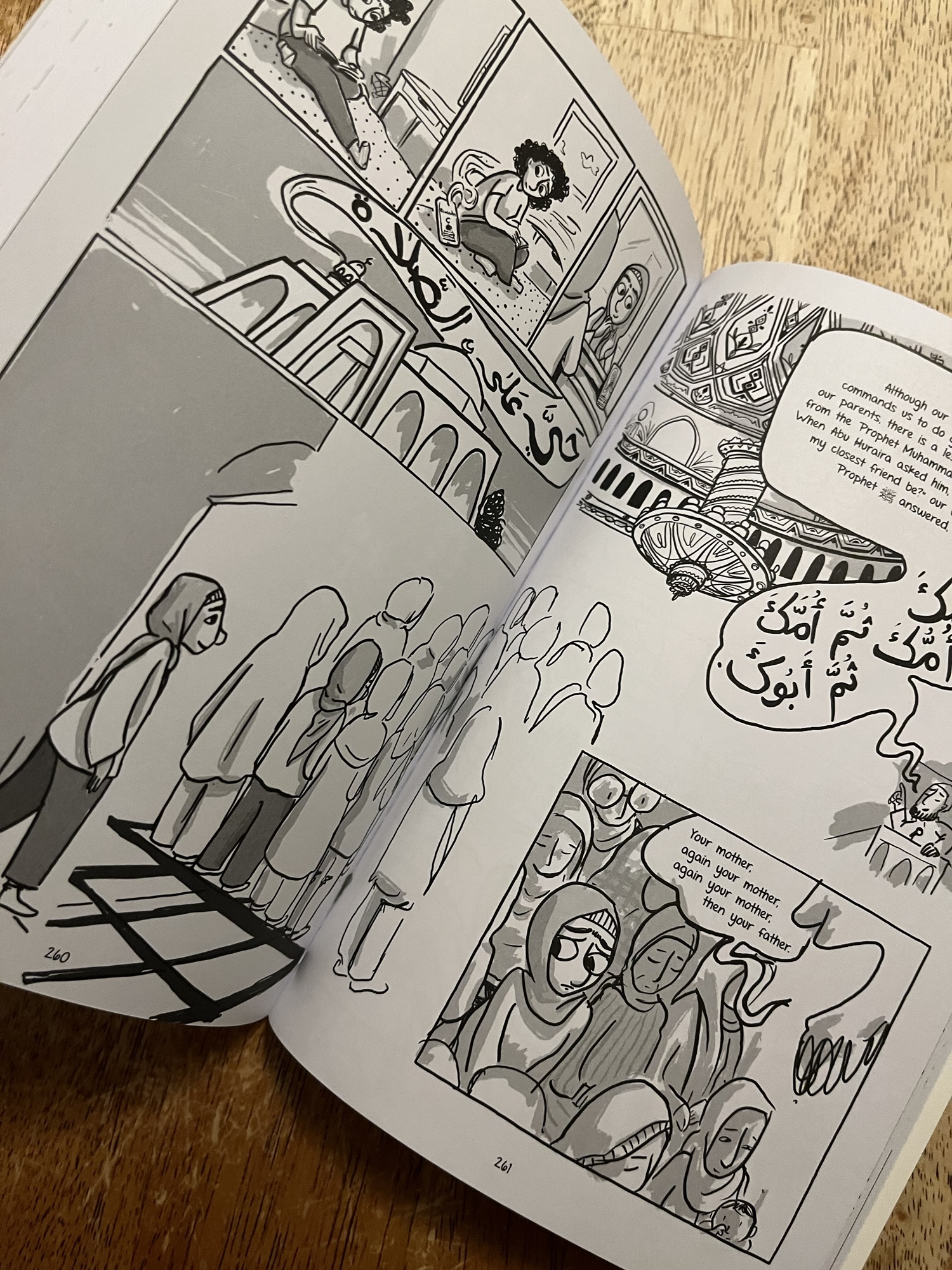
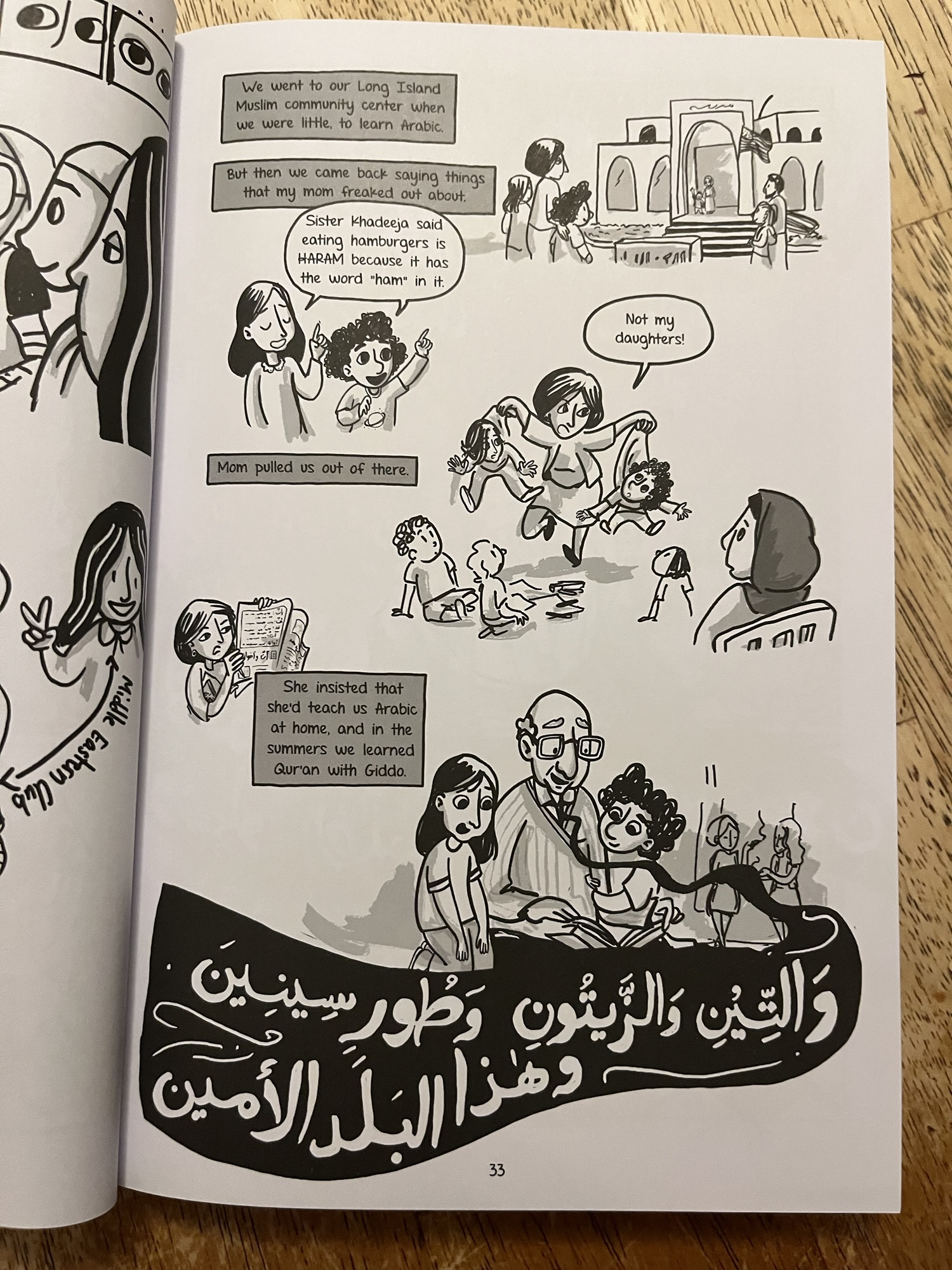
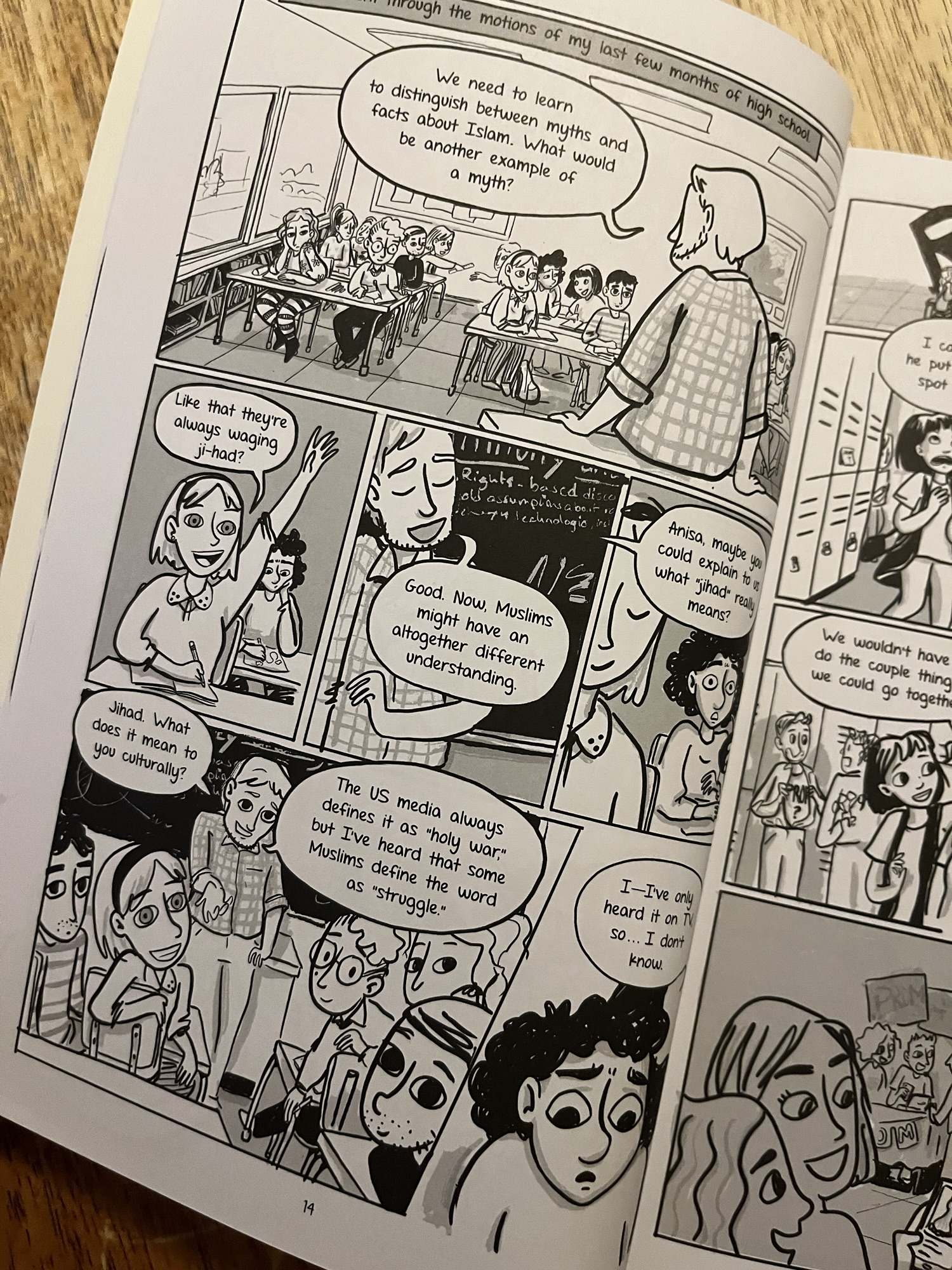
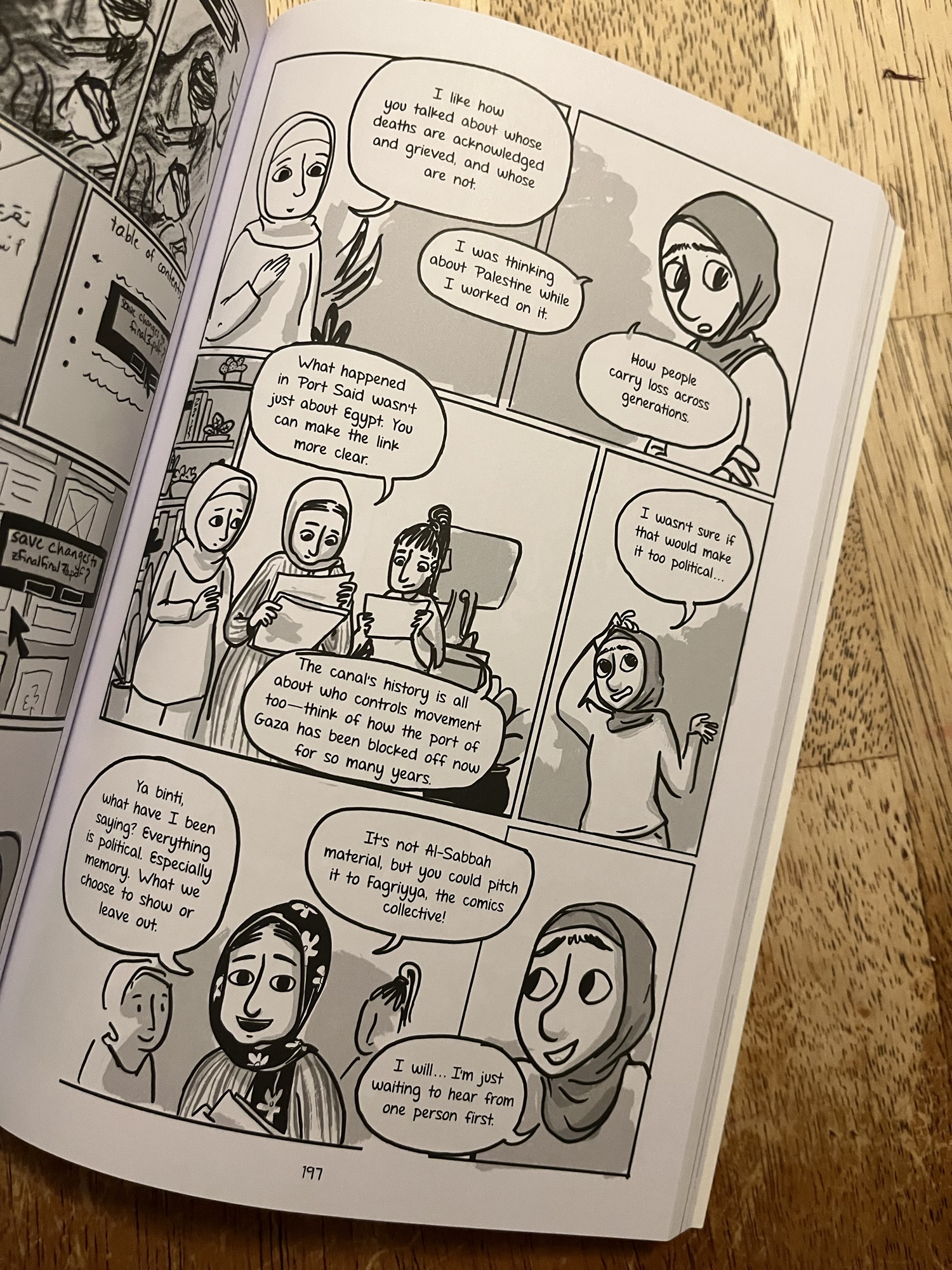
I think first and foremost I want to stress that this is a mature YA read. The majority of the book takes place after the protagonist has graduated high school, it involves a toxic mother who smokes, politics, romantic relationships, generational trauma, death, commentary on Islamic practices, relationships with opposite genders including when they are LGBTQ+, lying, and some profanity.  YA is classified as 12 and up, which given the graphic novel format, and the plot of her coming of age, I entered the book viewing it from an Islamic school librarian lens of handing or shelving the book for middle school and up, and thus it is not appropriate in my opinion. If you read it from a more adult lens, please share your impressions, as the book has a TON of Islam, and I would love to discuss.  It has Quranic ayats, it has Hadith, it has a girl fighting her family to wear hijab, it has incredible points, unfortunately  I just couldn’t quite support how the points were connected. If the book were a memoir, or I met someone and this was their lived experience, I wouldn’t find it concerning, it would be one person’s journey and them simply doing the best they can, Allahualam.  BUT, somehow the tone seems to extend beyond just Anisa living her life and growing as a result, and reads more of the author opining that this is how Islam is or this is how Muslims should or should do things, or view things, or not feel constrained by things, and by its end I just couldn’t support the character’s choices and the justifying framing, perhaps because it is fiction.

SYNOPSIS:

Because I want to spend more time on the Islam and why I struggled with how it was connected, I’m simply going to copy and paste the publisher provided summary of the book:

A poignant coming-of-age graphic novel about an Egyptian American girl grappling with college, her family, and the political realities of her wider world.

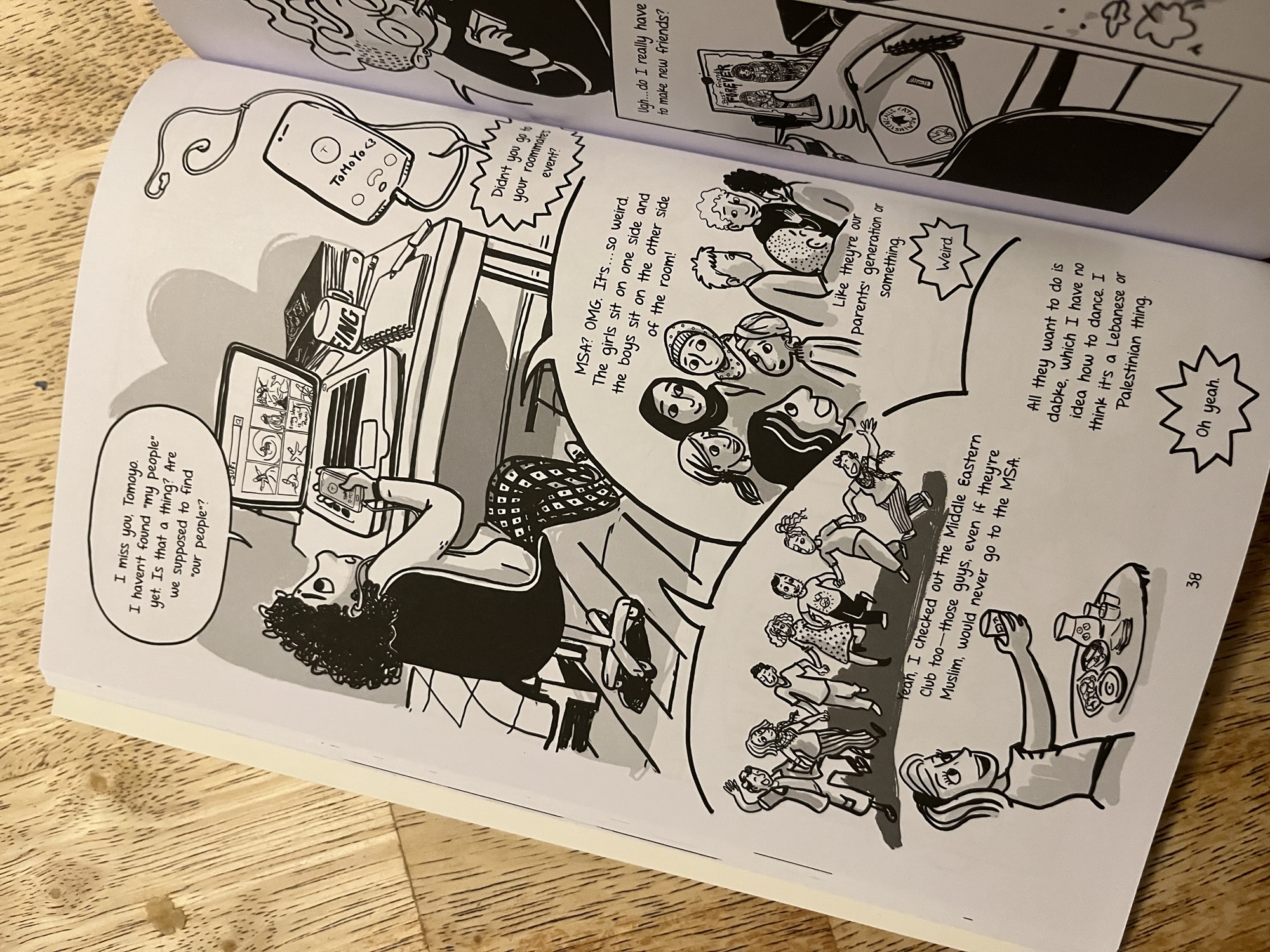
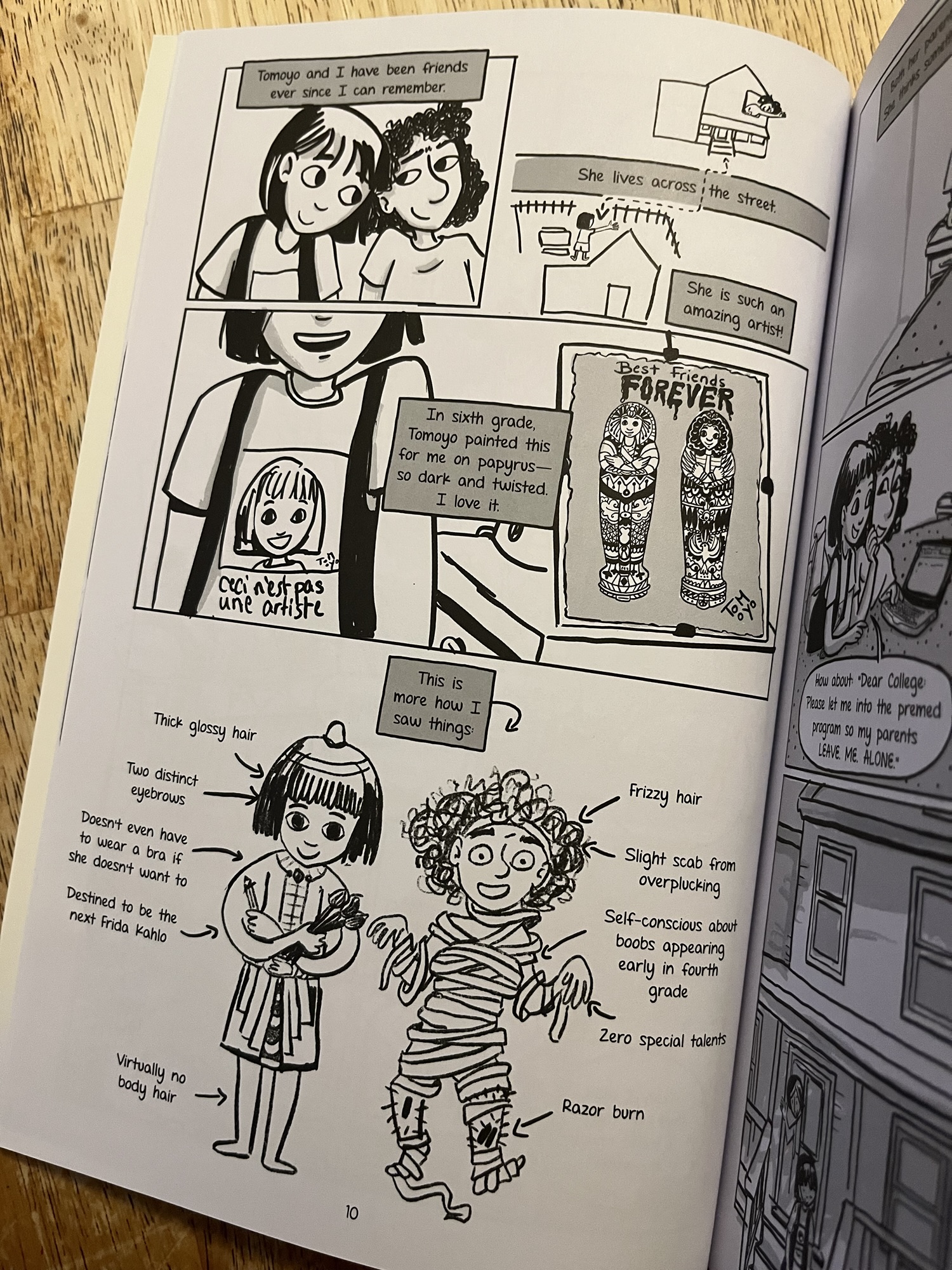
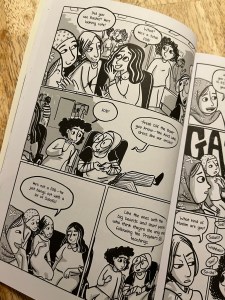
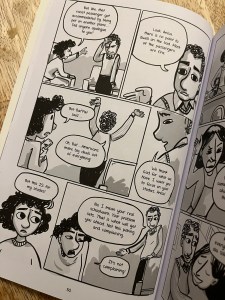
Anisa is following in her sister Reem’s footsteps: She’s a freshman at her sister’s alma mater, she’s on the same premed track, and she’s inherited Reem’s old hotpot, mini-fridge, and textbooks. Even though Anisa would prefer to study art, her parents discount that as a valid career choice. The path laid out before her starts to crumble as Anisa feels she doesn’t belong—either in her organic chemistry class or among the other Muslim students on campus.

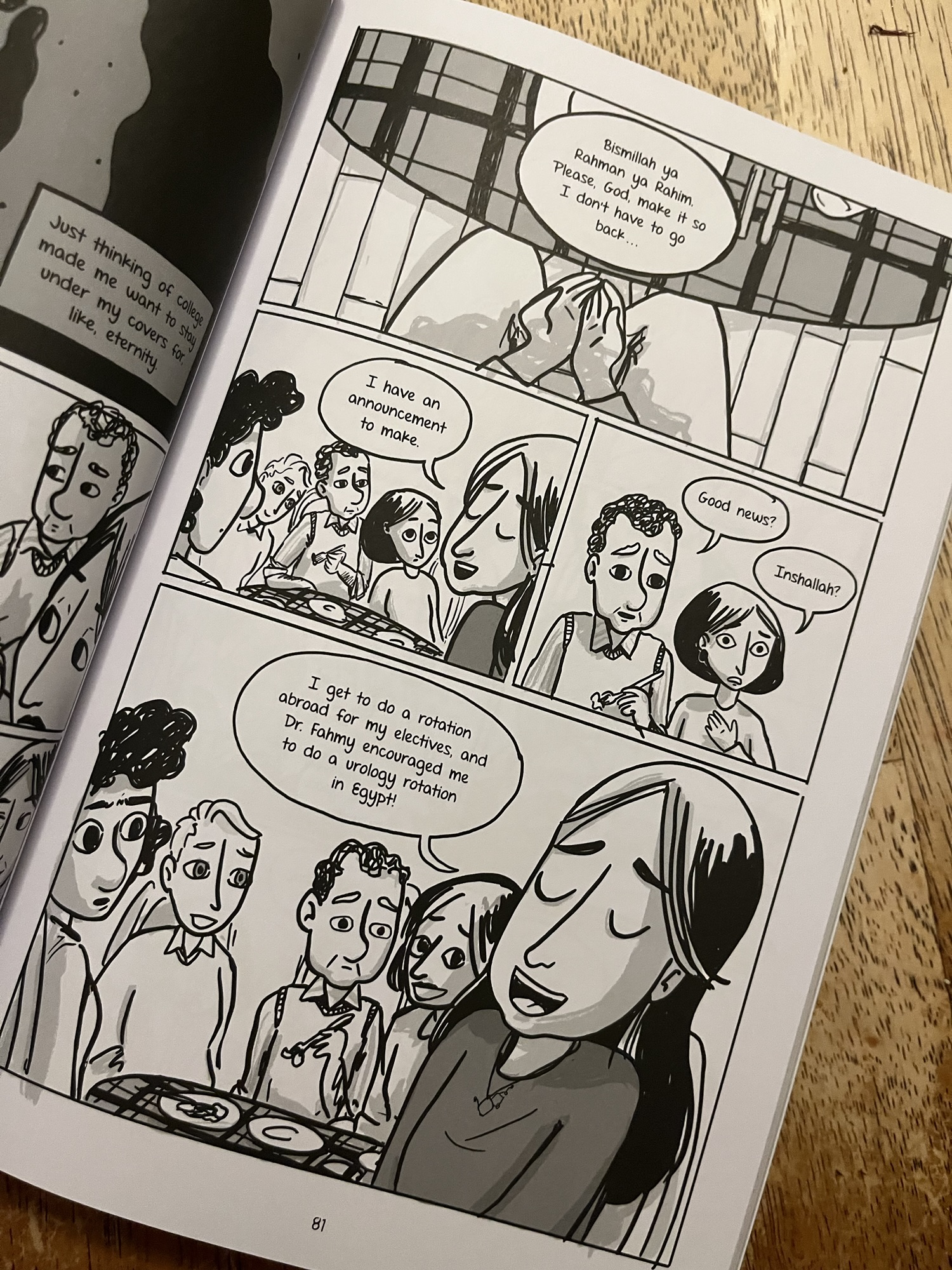
When Anisa fails her first semester, she begs her parents to let her take time off to visit Cairo and stay with her beloved grandfather. Finally free to have her own experiences, Anisa begins a journey of self-discovery and, as she bumps up against familial, societal, and religious expectations, she starts to develop her own artistic voice. When Anisa returns to the United States, many of these expectations shift, but she learns to draw on the love of friends and family—including those she’s often at odds with—in order to stay true to herself.
 

WHY I LIKE IT:
I like that the book feels very real, that the character arc and growth, challenges and setbacks, struggles and character’s voice, radiate authenticity and seeks to shed light on what not only shapes us and our view of the world, but understanding the politics, culture, religious, and lived experiences of what our parents also have been shaped by in a manner that is neither overly naive or harsh.

I appreciated the political commentary, the internal reflections of faith and her closeness with her grandfather in Egypt which often centers Islam. And as a work of fiction I understand in the broad sense that the book does not want to get didactic in its sharing of the deen, but it seems to want to have it both ways.  It shares the Quranic Arabic in the pages with meaning of the translation in the backmatter, quotes uncited hadith and references Islamic customs, yet I feel by staying gray in how the character interpreted Islamic teachings and failing to commit to her showing her own rationale for the choices and understanding driving those choices, the book leaves holes in the plot and a lot of questions.  For example, why is kissing her Sikh boyfriend considered a “mistake,” only because she wears hijab? She commits to him by getting her mom and Muslim friends on board with their relationship with the book sharing that different opinions are good according to Prophet Muhammad (saw).  She starts to wear hijab and says she is doing it for the right reasons, but those reasons are never shared.  She develops a relationship with Allah swt which is beautiful, but what is the messaging for the reader, with her justifying her actions in light of that relationship?

Yes, I realize that that makes me the very hypocrite the characters push back against in the book: not being able to be human and error, and struggle, and inshaAllah come back to Allah, swt, I know that, but I also know that our  youth are impressionable and we want to inspire them, not give them a “pass” through a fictional story to do haram because Allah swt is forgiving.  I also know that a 13 year old reading this and a 19 year old reading this will view it very differently  (see opening paragraph why my mindset going in was a disservice that I struggled to overcome, and why I mentioned that this is a mature read).  I also know that life, real life, is never linear and clear, and yeah people fall in love with people that are not Muslim, I’m the daughter of a convert, and my parents met in college, I get the hypocrisy, I own it, I really do.

I can’t reiterate enough how many of the points I loved about her finding herself, understanding and connecting to her deen and extended family, laughing in the relatability the book has in its commentary on Islamophobia, expectations, politics, but none-the-less, I ultimately cannot support the normalized conclusions and justifications of many of the threads.
FLAGS:
See opening paragraph

TOOLS FOR LEADING THE DISCUSSION:
Not appropriate for Islamic school book clubs, I can see perhaps college or University MSAs reading it for fun and then offering up their thoughts as being an incredible pulse on how our “New Adult” Muslims view the themes and topics the book tackles, but I take handing a book to a person as an amanah, and I don’t think I could hand this to a middle or high school student.
Kamal’s Key by Rifk Ebeid illustrated by Sophia Soliman

Standard
Kamal’s Key by Rifk Ebeid illustrated by Sophia Soliman

This 44 page hardback book gently, yet powerfully, focuses on the Palestinian resistance symbol of the key, by sharing a multi generational tale of new beginnings, heartache, hope, and resilience. The writing is moving, and flows with simple lines, beautiful illustrations, and maintaining a focus on a singular theme. So often well meaning books about oppression, war, politics, try and include numerous details that the picture book suffers in its appeal to younger audiences, the opposite is often true with books being so generalized that it isn’t clear exactly where refugees are from or what turmoil is being discussed. This book strikes a beautiful balance of calling the incoming occupiers a dark cloud and not giving them space or attention, while focusing on Palestinian experiences through a lens of hope, joy, and love.

The book starts with the key. It is a beginning to Kamal’s home. It is on his belt at his wedding, it is the beginning of his and Huda’s new life starting together, a symbol of their home when their son is born. It is the beginning of Jalal’s imaginative play of using it as a dhulfiqar. It is secured around Huda’s neck when they are forced to leave their home, and find refuge in tents. It is hung when the tents become walls.

One day Jalal takes it down, when the hurt in his father’s eyes is too much for him to witness. When Jalal becomes a father though to Salma, the key becomes her toy, her microphone, her connection. When Kamal gifts the key to his granddaughter it becomes her art, her poetry, her necklace, a symbol of her hope and a people’s right to return.

I’ve read this story a few times to myself, as well as with my children, and I only wish it was a little larger in size. It works well one-on-one or with a few, but it is a story that needs to be shared in large story time groups, and the 9 x 9 inch size makes it a bit difficult.

img_8454-1

The book concludes with an author’s note, an illustrator’s note and a glossary, not just of terms, but traditions, concepts, and information about the song. I purchased my copy from Crescent Moon Store.

House of Yesterday by Deeba Zargarpur

Standard
House of Yesterday by Deeba Zargarpur

house of yesterday

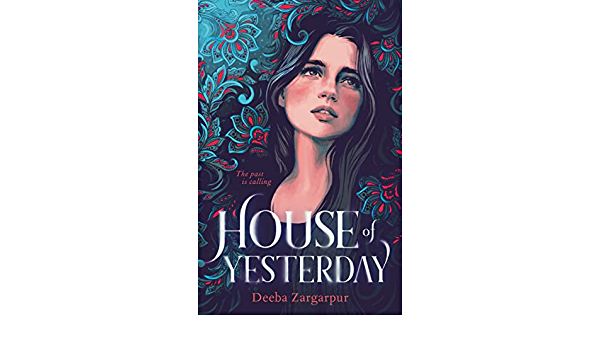
While reading this 320 page YA supernatural/contemporary book-I couldn’t turn the pages fast enough.  When finished- I was bothered that certain threads weren’t resolved, now that I’ve ruminated a bit- I think the vagueness of the author’s prose in sharing her “fever dream” on paper has lingered and the gaps not as troublesome.  The author’s OWN voice Afghan-Uzbek Muslim identity adds layers to a story that is both haunting in the literal sense and familiar in the immigration inter-generational traumas and secrets shared.  Even deeper though, the book pokes at universal themes of regret, holding on to the past, family, friendships, and grief.   The book’s characters identify as Muslim, but the story is not Islamic, nor is there much religion save a few salams and mentions of Eid.  The supernatural elements in the book, whether you understand it to be ghosts, or personified memories, or jinn, are a large part of the book, but are not framed in a belief or spiritual manner, and while some may find it Islamically off-putting, I felt the book explored what the main character was enduring and what the weight of the past was doing to her, didn’t necessarily cross the haram line.  Her father has a girlfriend he is looking to marry, but it isn’t celebrated, and there are close male/female friendships, but the book is relatively clean for the genre and would be a good fit for high school readers and up.

SYNOPSIS:

Summer on Long Island has Sara retreating into herself.  Surrounded by nearly a dozen aunts and uncles and numerous cousins, it is the separation of her parents and trouble with her best friend that makes getting out of bed every morning a challenge.  As a result, her mother ropes her in to helping with her latest remodeling project.  When she enters an old crumbling house one morning to take “before” pictures, she starts seeing things, and feeling things.  Things about her past.  Things about her beloved grandma, Bibi Jan, who is alive and deteriorating from dementia.  What is the house trying to tell her? Why won’t anyone tell the truth?

WHY I LIKE IT:

I love the mystery and the chills of the story.  As the reader you aren’t entirely sure where the story is headed, what you are to do with the bits of the puzzle you are given, but the intrigue to find out pulls you forward.  That being said, the book does reads debut, a few of the side story lines are not fleshed out enough to feel important, satisfying, or resolved and they come across as being abandoned.  I would have liked to see more of Sara and her father’s relationship, the details don’t seem to fit, and the continuity seems halfhearted.  At times so does the “night” it all changed with Sam.  I like the interpretive vagueness of the supernatural threads and that they are up for interpretation amongst readers not just at the end, but throughout the book.  I also like the family’s closeness even when they are disagreeing. For most of the book Sara and her cousins aren’t portrayed as particularly close and I didn’t invest time to differentiate one from another, but by the end, I felt that they were grounded and different and relatable, and I am not sure when that change occurred.  At times the writing seemed a bit repetitive, but the lyrical style would then catapult the story ahead.  There was one place that the fourth wall was broken though, and I was bothered by that slip.

Overall I loved that the Uzben Afghan culture sprinkles showed immigrant nuances, and that the love between the generations countered the trauma being shared as well.  The messaging is subtle but powerful long after the last page has been read.

FLAGS:

For the most part the book stays clean, the father has moved on and has met someone he would like to marry, the mom and aunts briefly recall sneaking out to attend a prom decades earlier.  There is mention of a child bride, and swimsuits, tank tops, and cocktail dresses being worn with no second thought.  For a YA book, the flags are incredibly minimal, save the “ghosts”(?). There are flags of a death that is detailed, the book is “spooky” at times, there is mental health, divorce, pain, dementia, abandonment, theft, running away, and fear.

TOOLS FOR LEADING THE DISCUSSION:

I would love to read this book with some high schoolers.  It is a quick read that would allow for a lot of self reflection, arguments, and entertainment.  The book is available here and releases in a few days, so if planning to purchase, please consider preordering and showing your support.

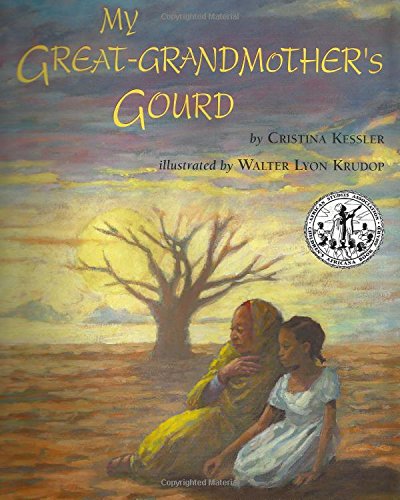
My Great-Grandmother’s Gourd by Cristina Kessler illustrated by Walter Lyon Krudop

Standard
My Great-Grandmother’s Gourd by Cristina Kessler illustrated by Walter Lyon Krudop

gourd
A beautiful story based on a true event in Sudan, this 32 page AR 4.2 book contains lessons about tradition, new technology, village life, culture, family, love, and community.  Unfortunately it is one of those books that I doubt any child would pick up and want to read.  Meant for fourth graders, there is a lot of text on each page, and the story is not quick and light, it is thoughtful and memorable. The book is a powerful one in opening one’s eyes to a different culture, environmental challenges, and innovations making it an important one for parents and teachers to share with younger children and encourage older ones to spend some time with.

8A5303D5-525F-4D37-A886-F22F18D0FE0B

Fatima’s Sudanese village has just installed a new pump, and to show how easy it is to use, Fatima is chosen to try it out first.  With all the excitement over new technology, life for the village is about to get easier.  No more hauling the water with camels and filling the baobab trees to store the water in for the dry season.

104E36DC-E27A-47BB-8C4C-A510198CE604

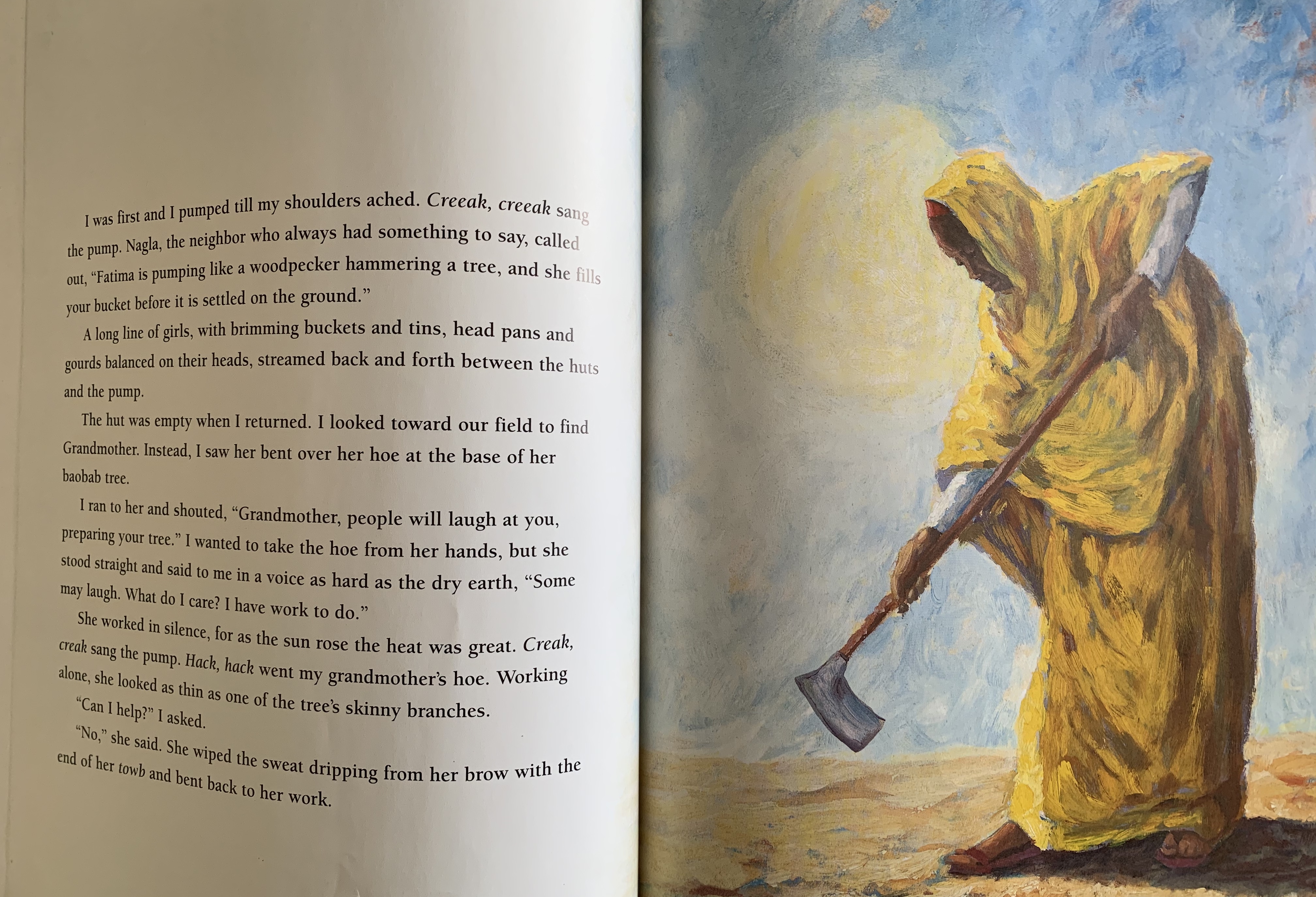
Easier for everyone except Fatima’s grandmother.  She refuses to abandon the methods of the past so easily, and independently begins to prepare her tree, her great-grandmother’s gourd.  Fatima tries to talk her out of it, and the other villagers mock her refusal to accept technology.

DCB3DBD3-7EC3-4631-9A9D-EC34DE46055F

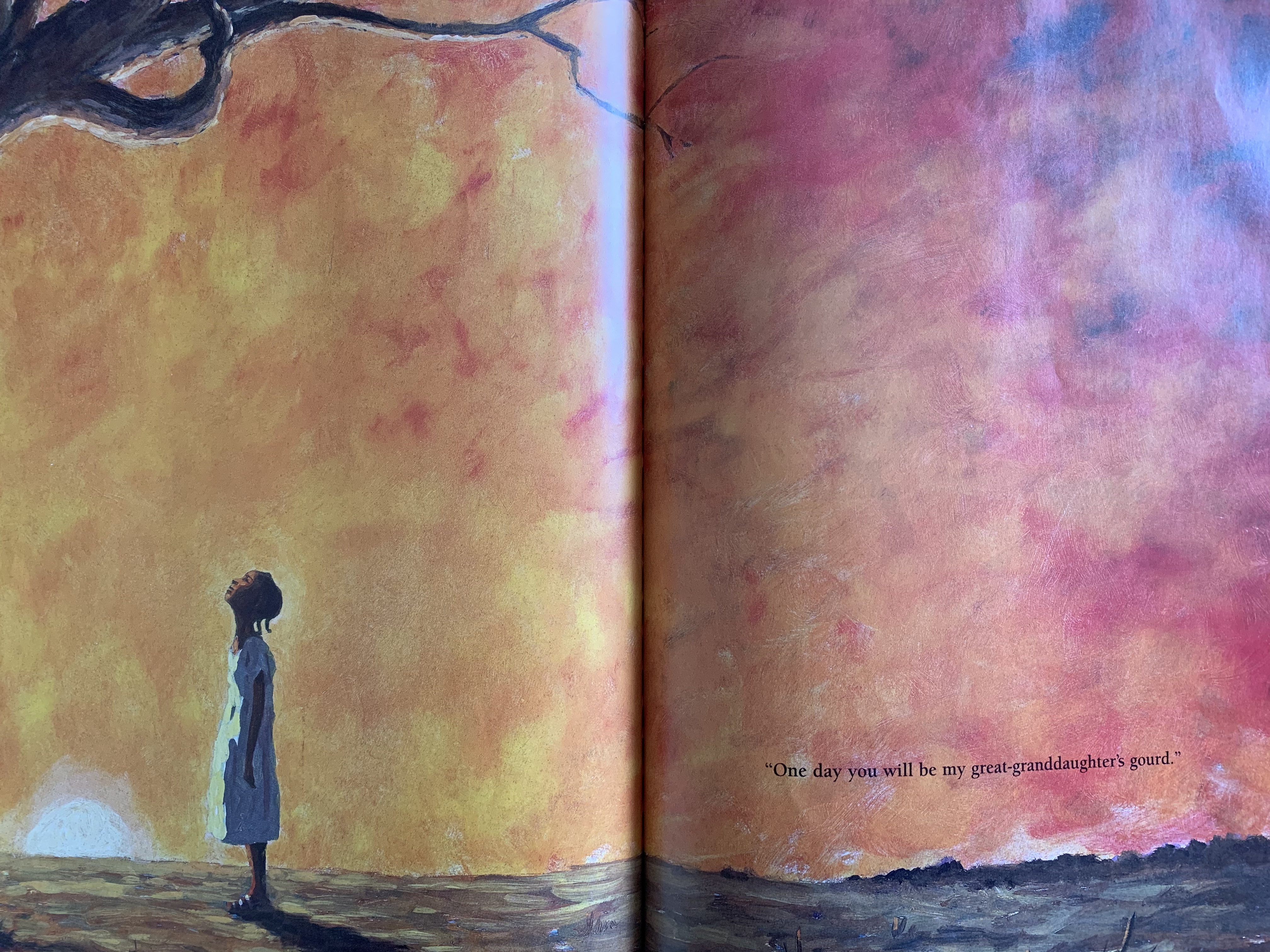
When Fatima hears the neighbor louder than the call to prayer calling her grandmother a fool and laughing at her, Fatima boldly and defiantly joins her grandmother in preparing the tree for when the rains come.

84F665EB-EFD6-49A6-BFDA-FF348CD80D00

The two dig a circle, a necklace, around the old tree to catch the water in the hard red clay, when the rains come, it catches the water, and when it stops, the two move the water to the inside of the tree with buckets. All the while, the villagers shake their heads at the two hard at work.

56BA11B5-7314-4D88-BDAA-50FE61765467

When, in the middle of the dry season, the pump breaks and it will be days before it can be repaired, the chief, Ibrahim, declares they must resort back to the old ways and Fatima and her grandma offer to share their water to hold everyone over.  “Maybe it’s wise to mix old with the new,” Grandma poignantly notes.  The following year the village works together to prepare the trees, just in case the pump breaks.

E4443445-EDEA-4C9C-99E4-4BE6AFB96C1A

There is a glossary of Arabic Words at the beginning of the book and an Author’s note about the “Thirst Triangle” and the use of the baobabs or tabaldi trees used to store water.

F429299A-BFD4-4BCC-9DA4-134FEAF09E4F

There is nothing overtly religious in this culturally rich story.  The women cover their head, they say “inshaAllah,” the call to prayer is mentioned and they have Islamic names: Fatima, Ibrahim, Musa, Ahmed, Ali, Osman etc..