Tag Archives: Expectations

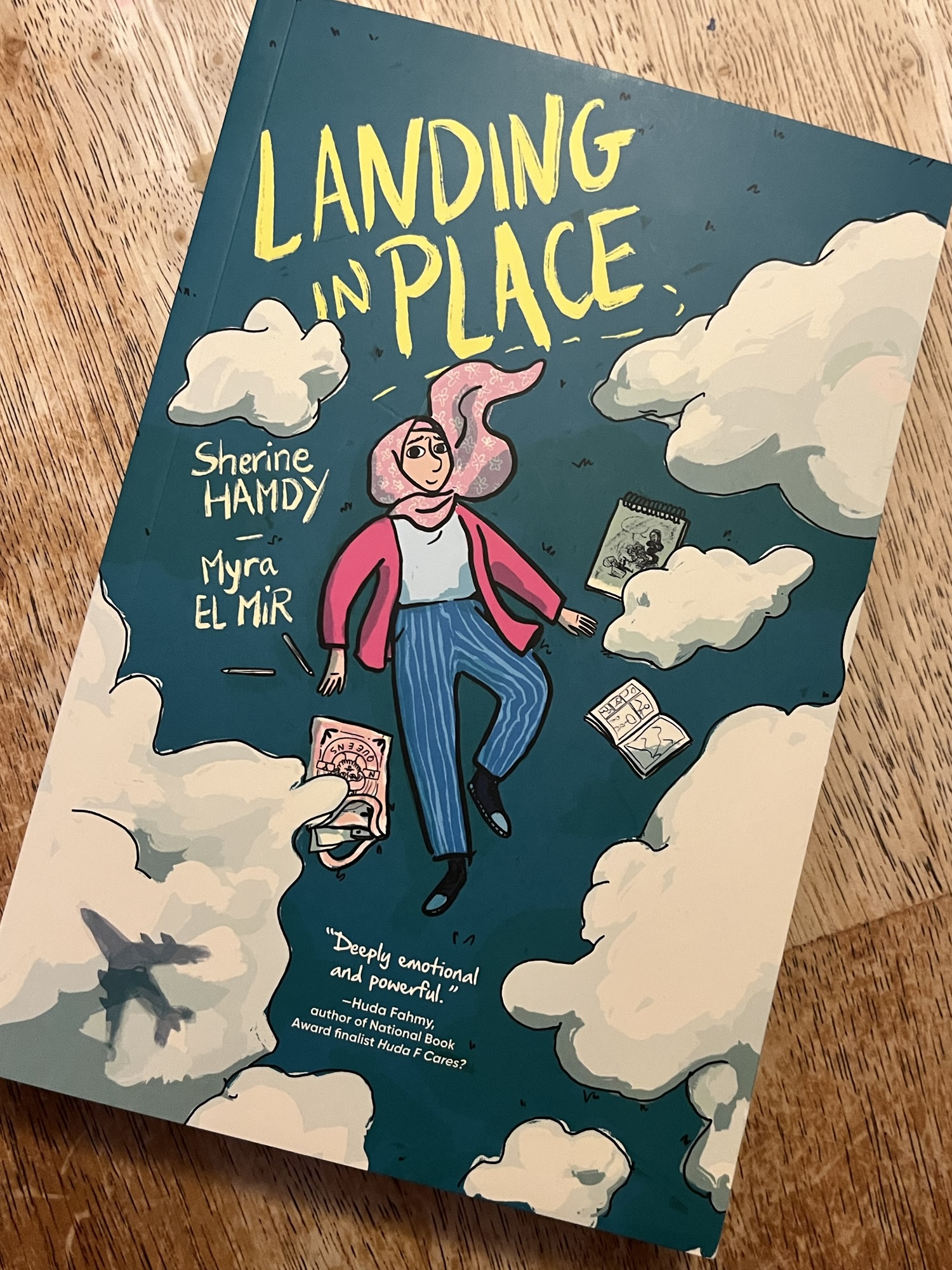
Landing in Place by Sherine Hamdy illustrated by Myra El Mir

Standard
Landing in Place by Sherine Hamdy illustrated by Myra El Mir

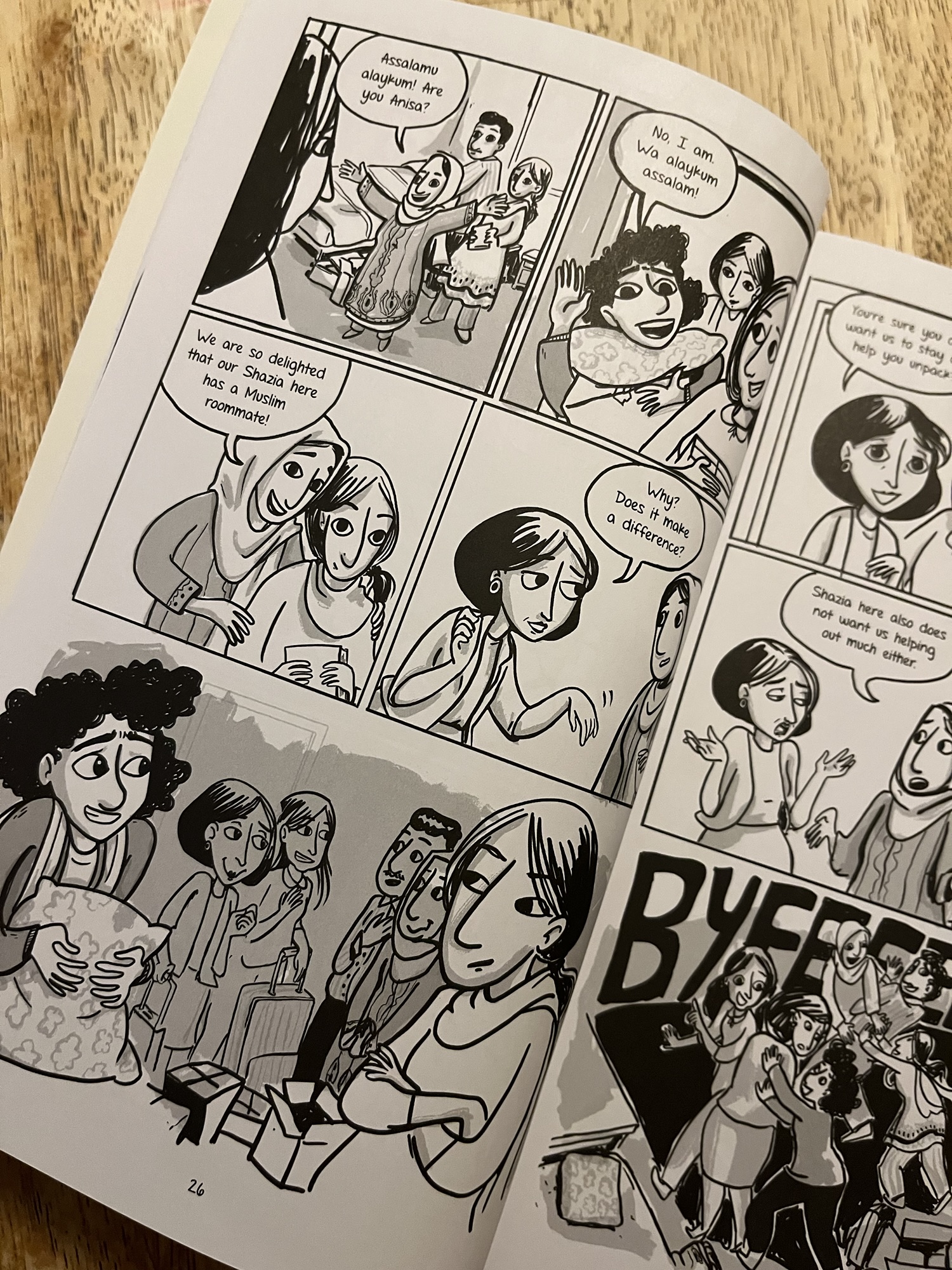
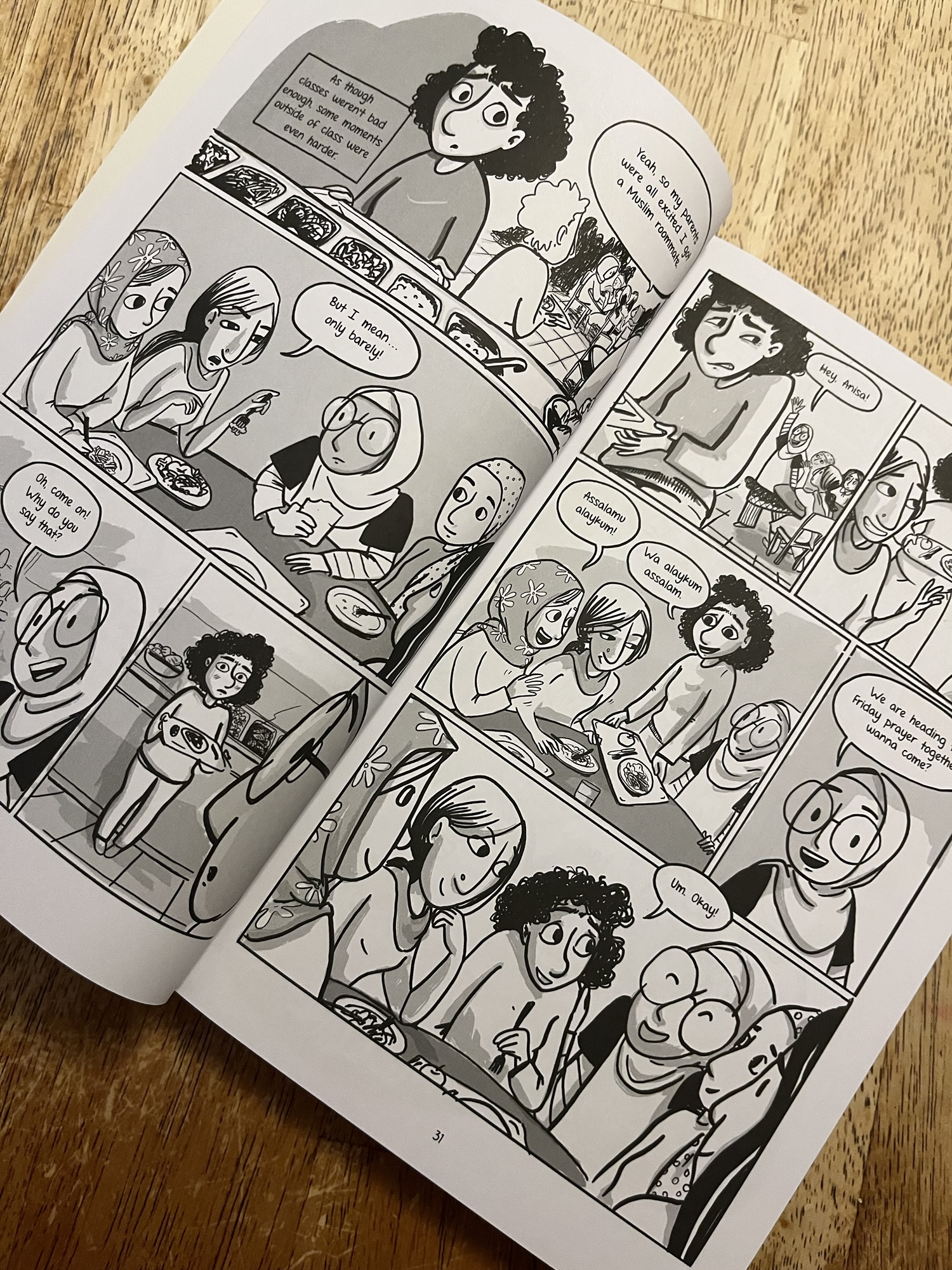
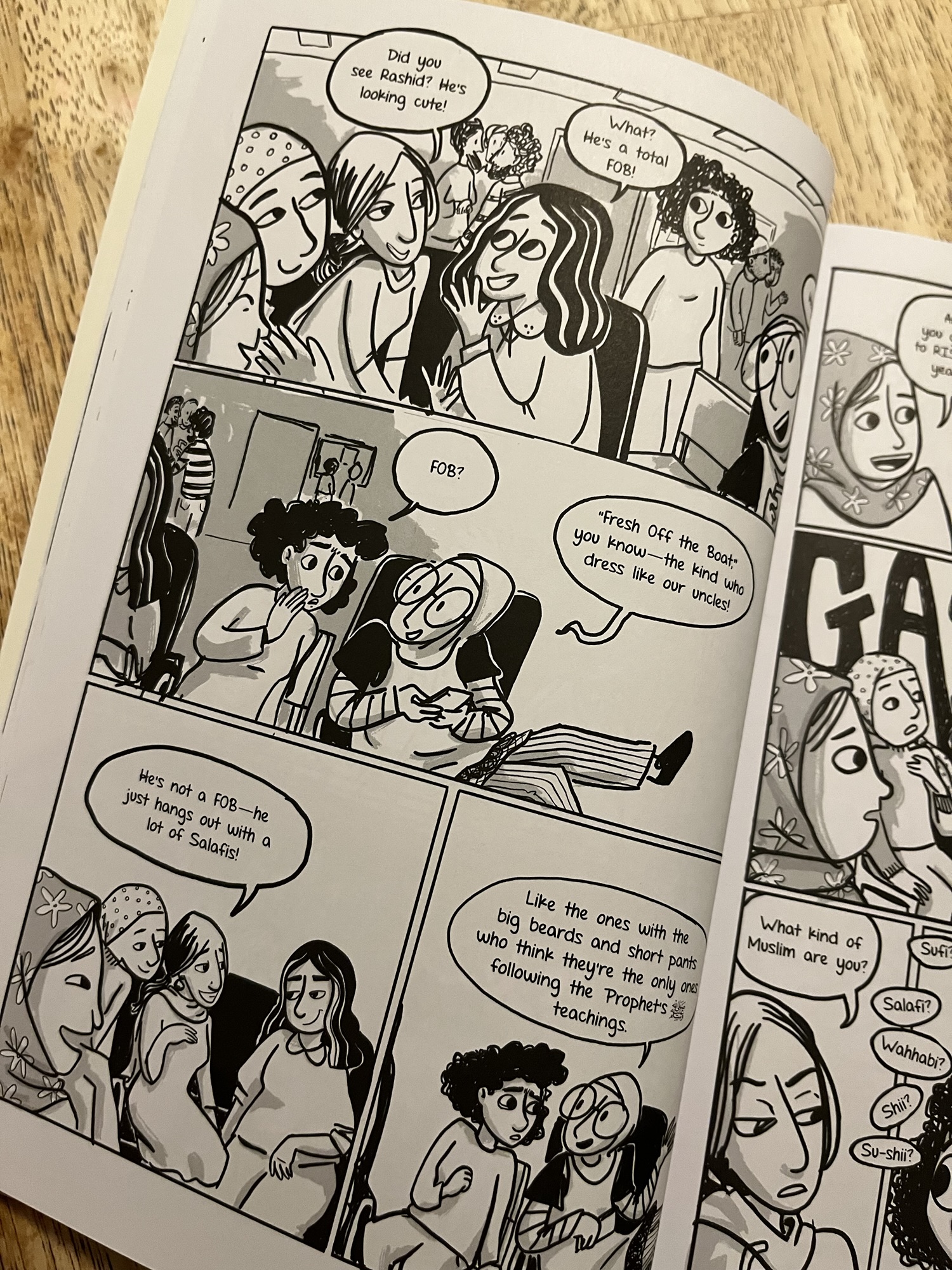
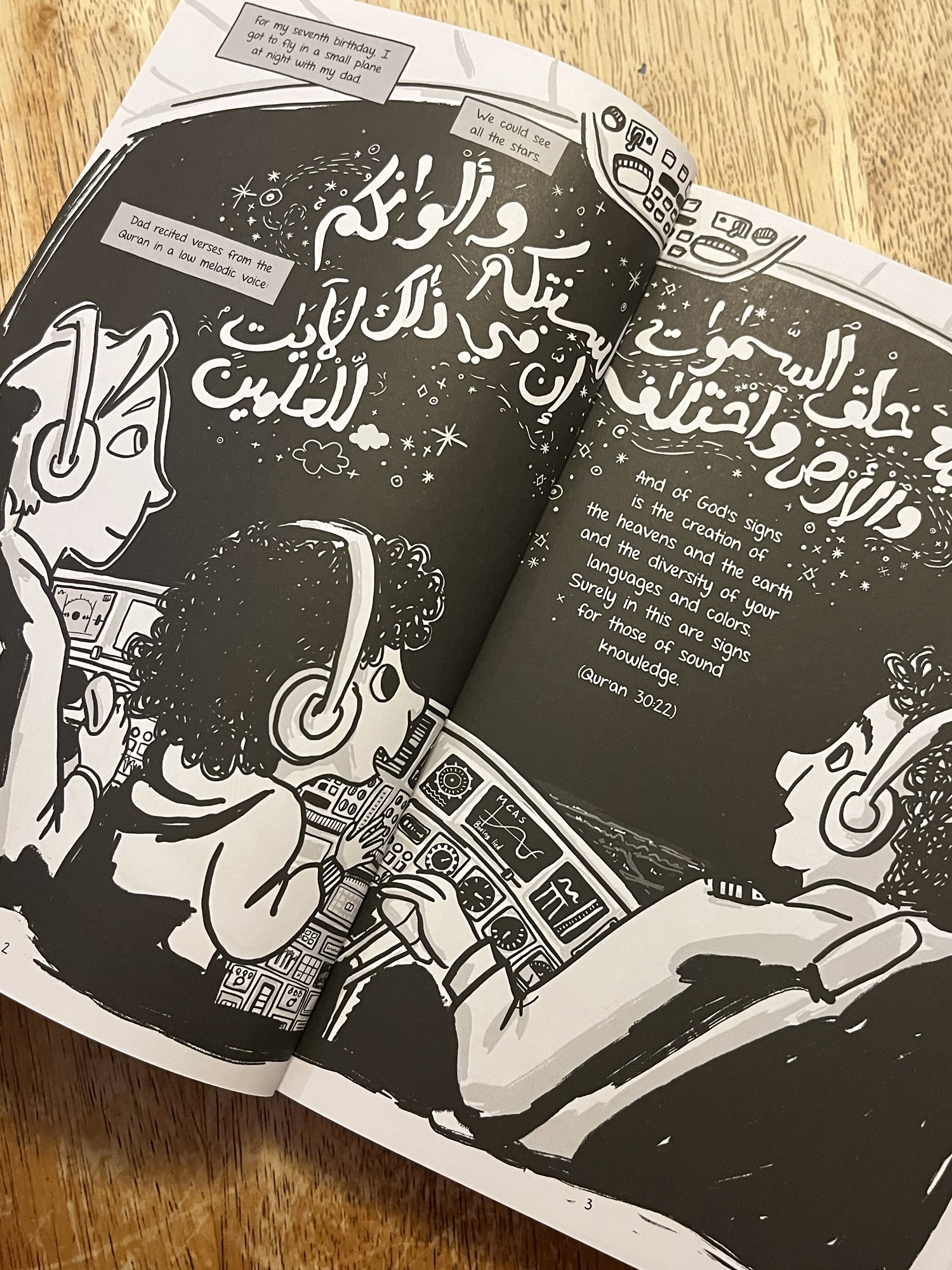
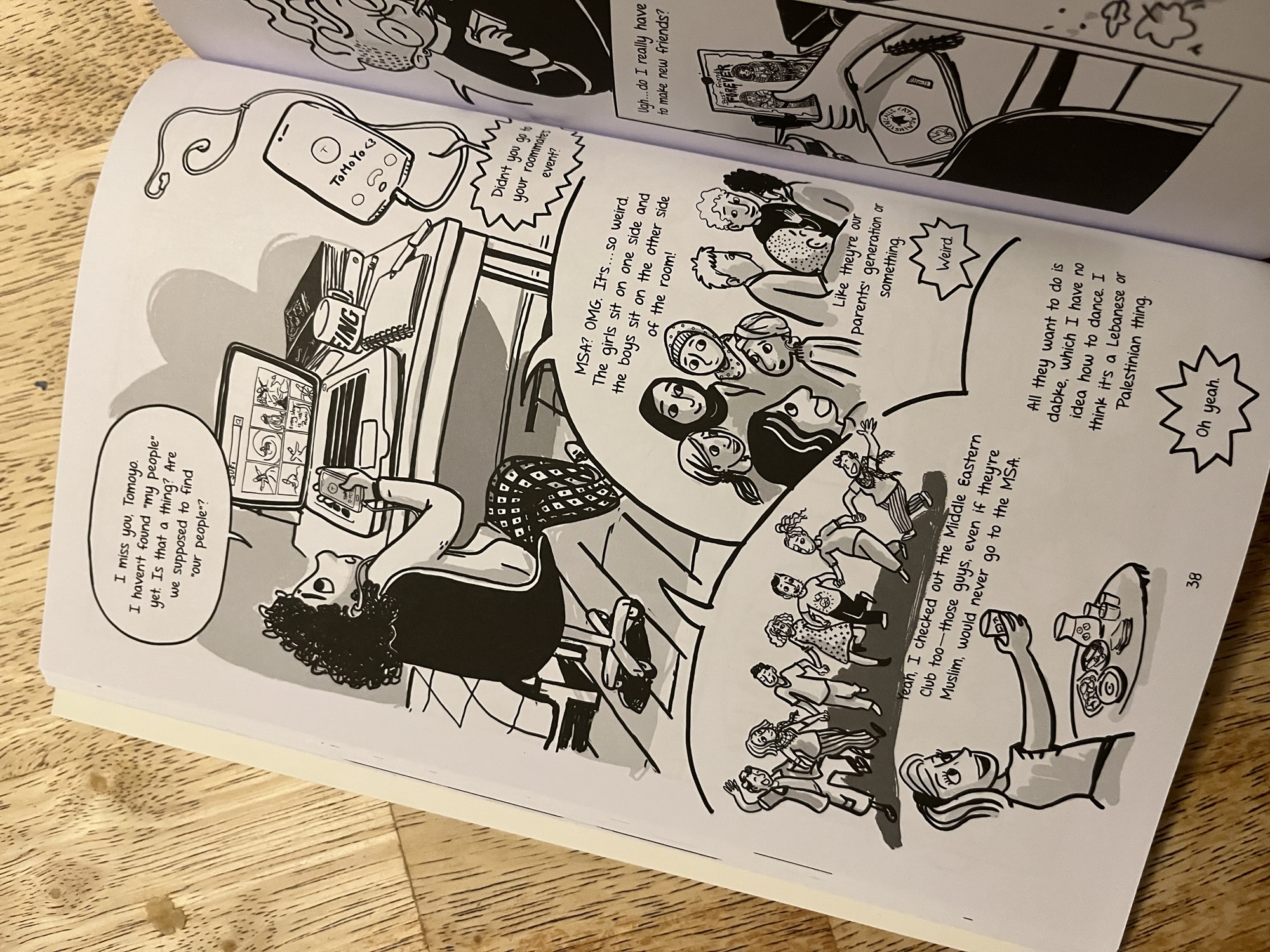
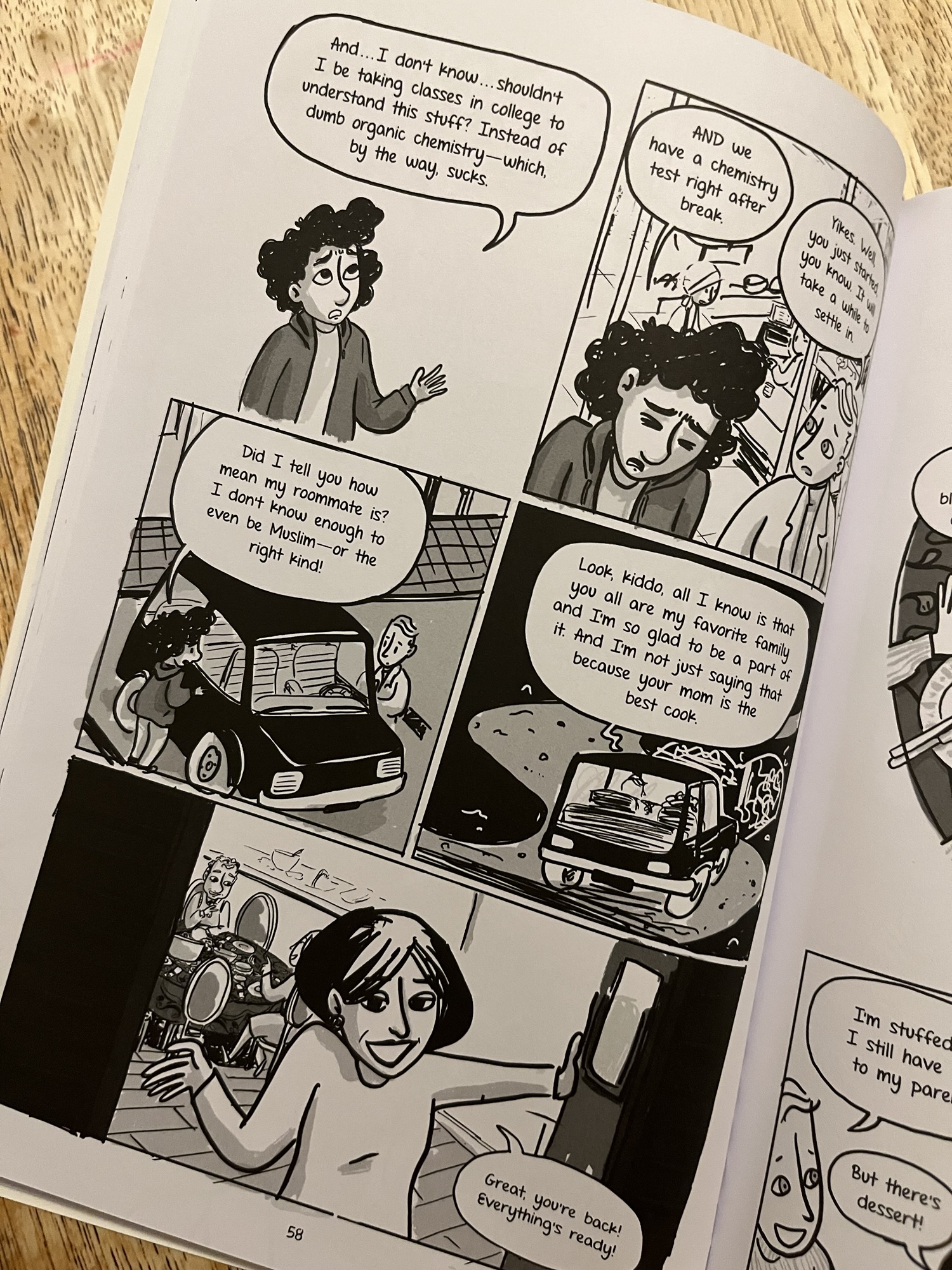
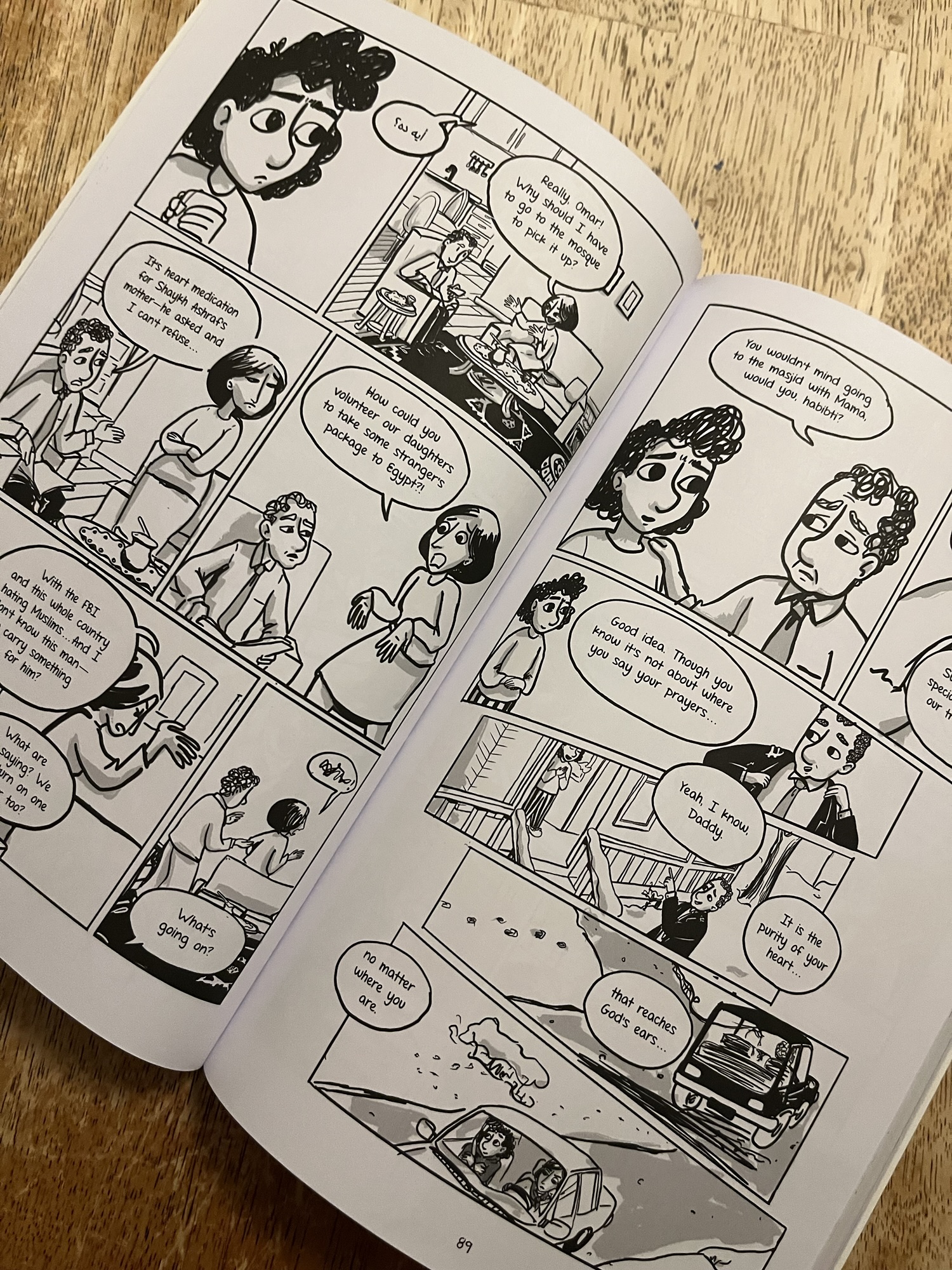
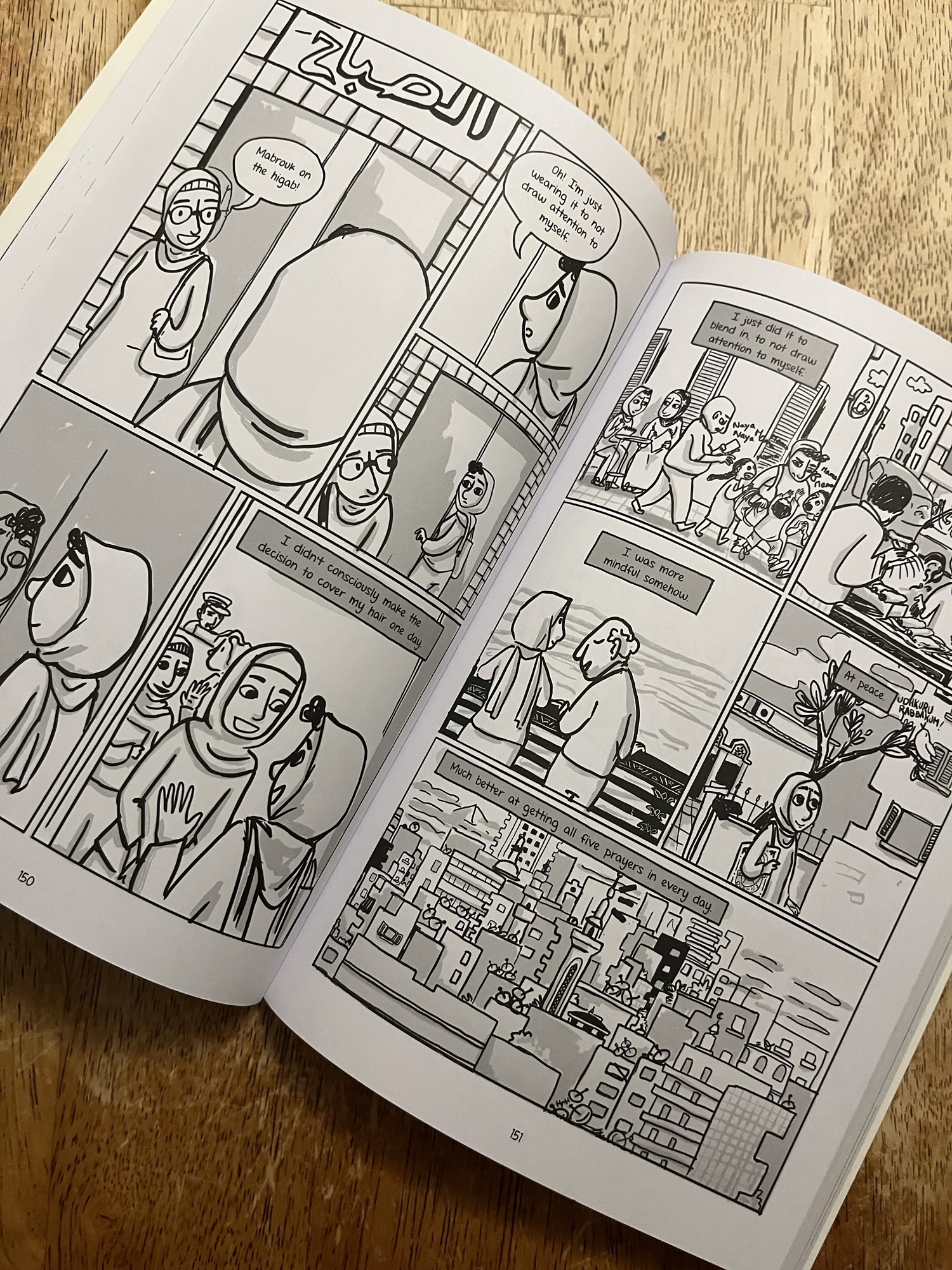
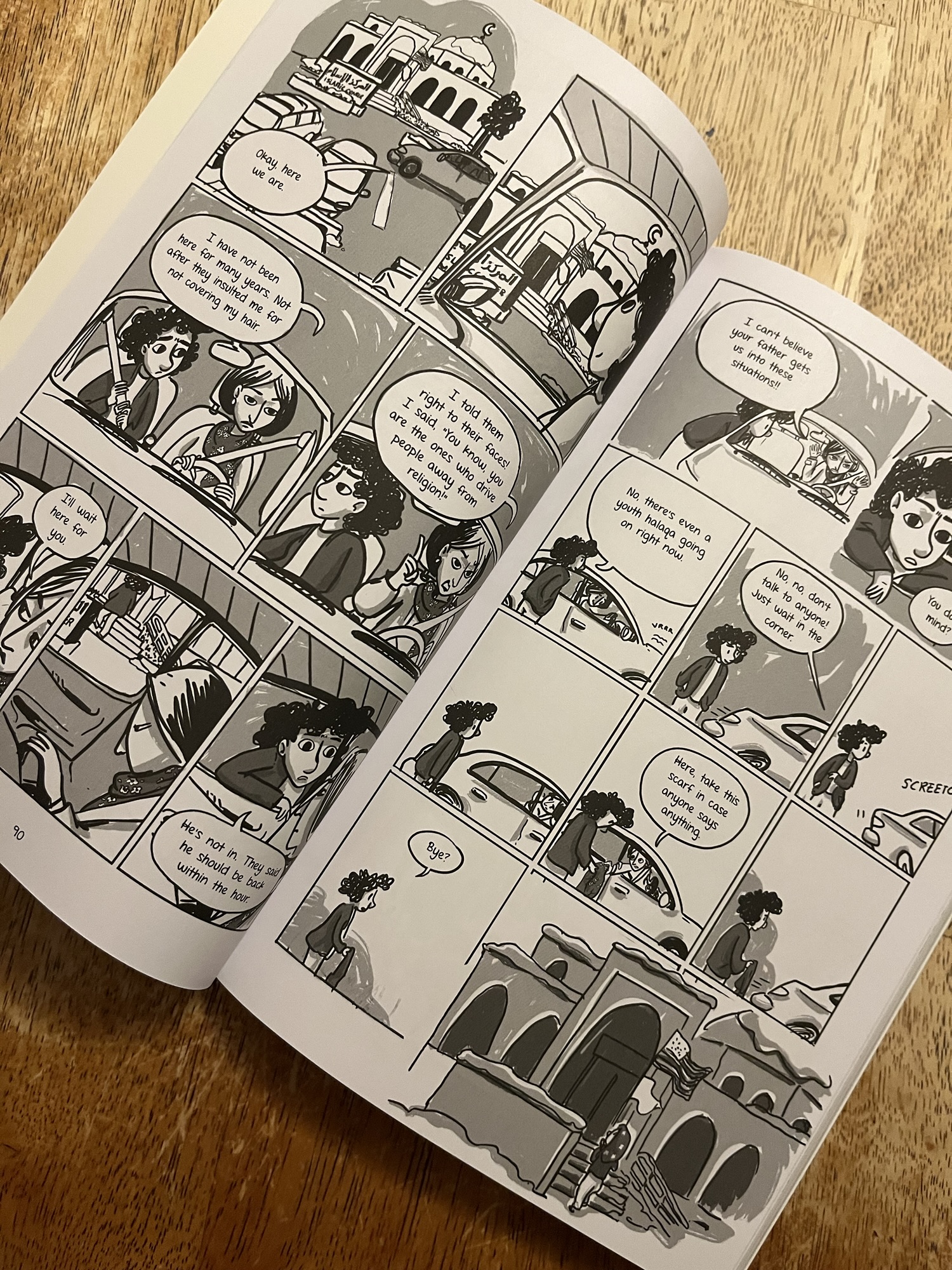
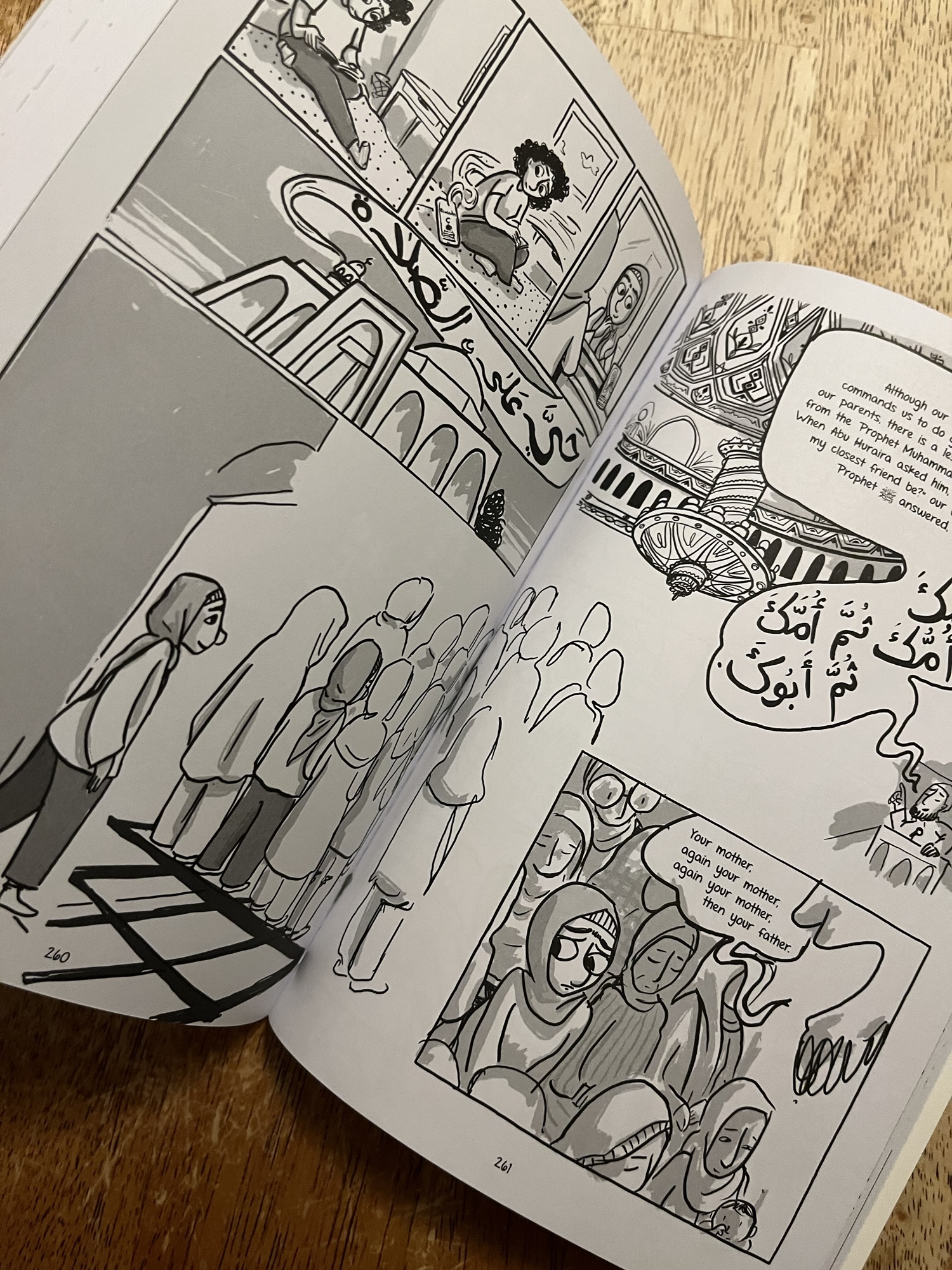
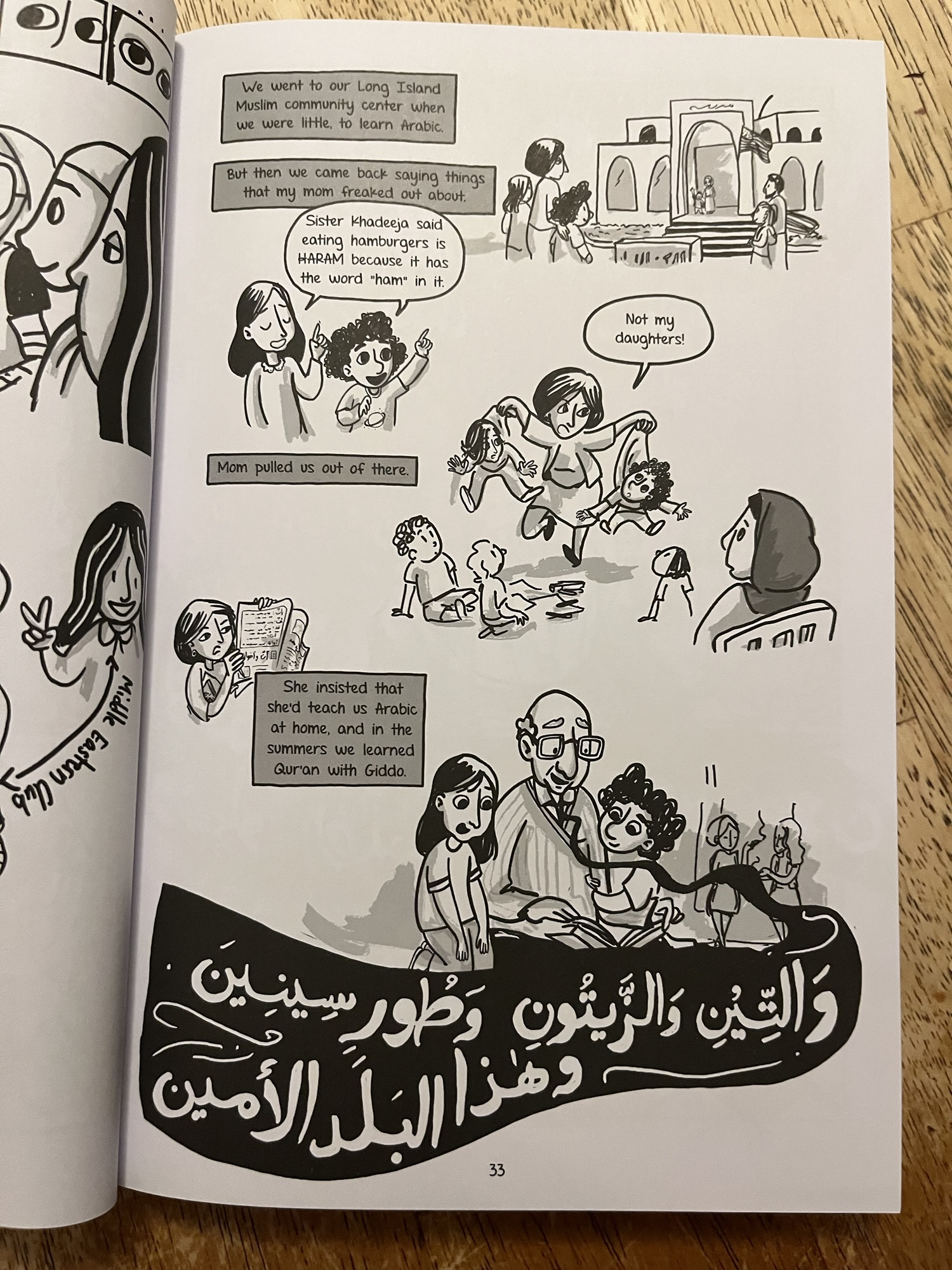
I think first and foremost I want to stress that this is a mature YA read. The majority of the book takes place after the protagonist has graduated high school, it involves a toxic mother who smokes, politics, romantic relationships, generational trauma, death, commentary on Islamic practices, relationships with opposite genders including when they are LGBTQ+, lying, and some profanity.  YA is classified as 12 and up, which given the graphic novel format, and the plot of her coming of age, I entered the book viewing it from an Islamic school librarian lens of handing or shelving the book for middle school and up, and thus it is not appropriate in my opinion. If you read it from a more adult lens, please share your impressions, as the book has a TON of Islam, and I would love to discuss.  It has Quranic ayats, it has Hadith, it has a girl fighting her family to wear hijab, it has incredible points, unfortunately  I just couldn’t quite support how the points were connected. If the book were a memoir, or I met someone and this was their lived experience, I wouldn’t find it concerning, it would be one person’s journey and them simply doing the best they can, Allahualam.  BUT, somehow the tone seems to extend beyond just Anisa living her life and growing as a result, and reads more of the author opining that this is how Islam is or this is how Muslims should or should do things, or view things, or not feel constrained by things, and by its end I just couldn’t support the character’s choices and the justifying framing, perhaps because it is fiction.

SYNOPSIS:

Because I want to spend more time on the Islam and why I struggled with how it was connected, I’m simply going to copy and paste the publisher provided summary of the book:

A poignant coming-of-age graphic novel about an Egyptian American girl grappling with college, her family, and the political realities of her wider world.

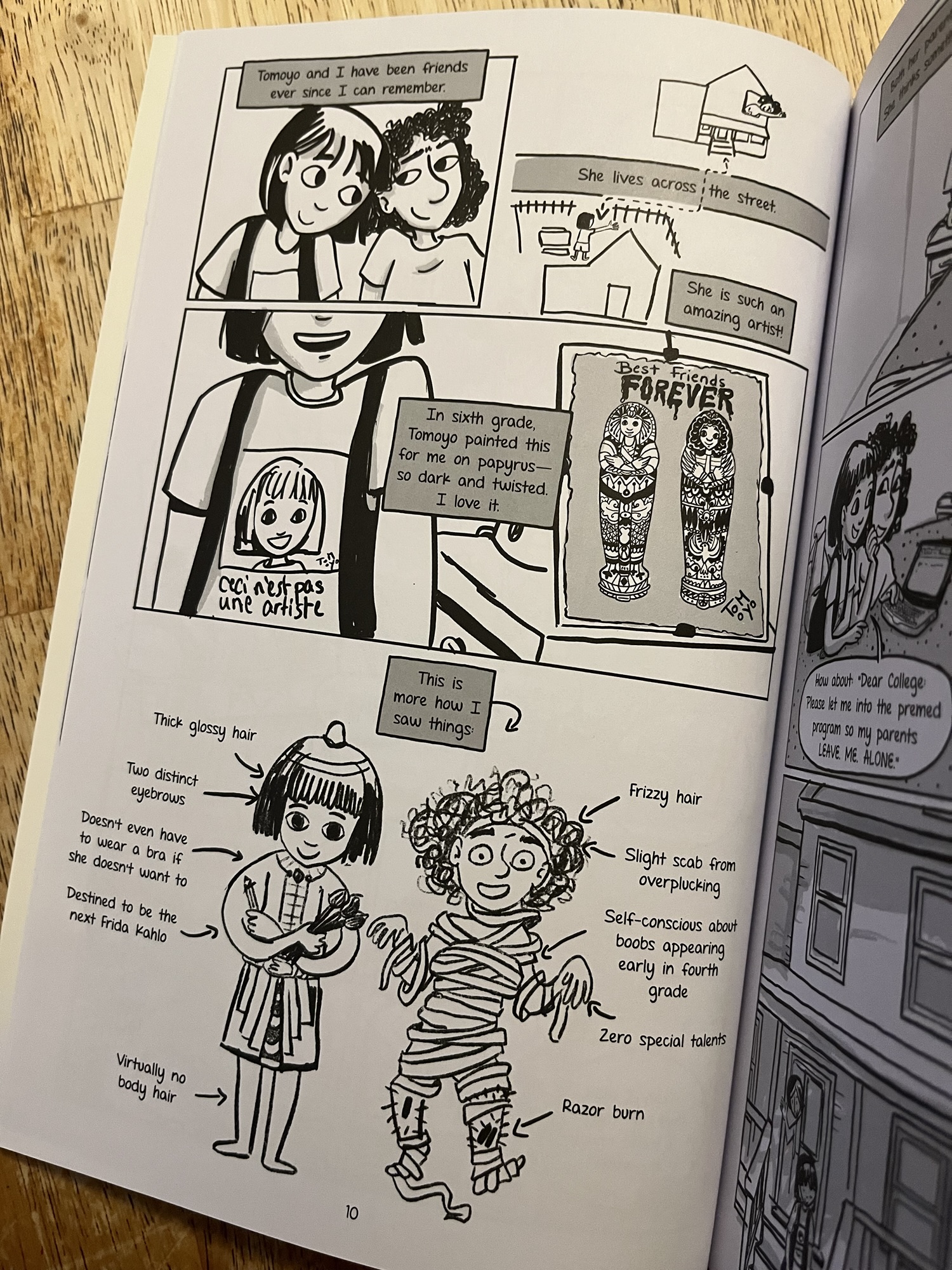
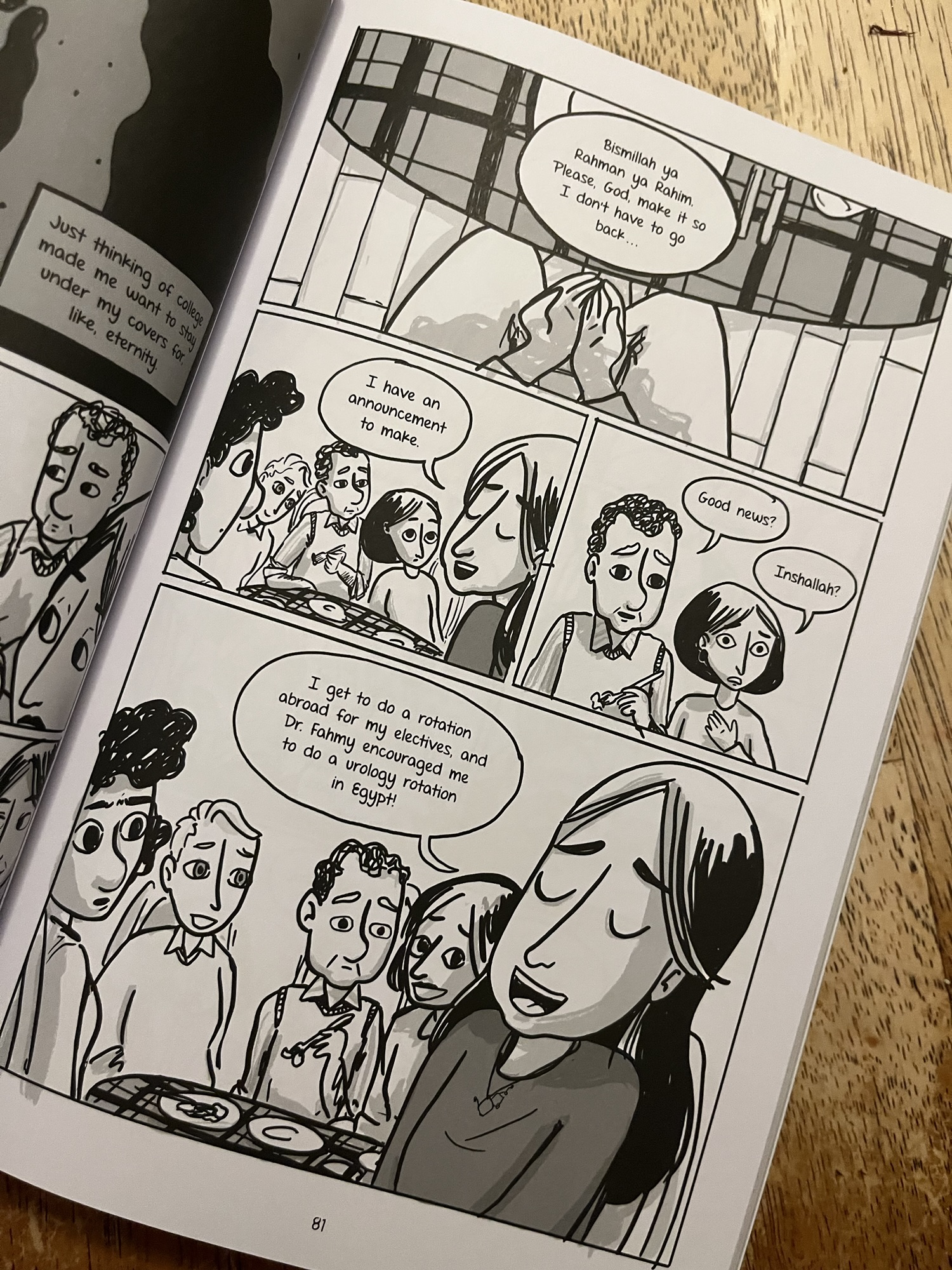
Anisa is following in her sister Reem’s footsteps: She’s a freshman at her sister’s alma mater, she’s on the same premed track, and she’s inherited Reem’s old hotpot, mini-fridge, and textbooks. Even though Anisa would prefer to study art, her parents discount that as a valid career choice. The path laid out before her starts to crumble as Anisa feels she doesn’t belong—either in her organic chemistry class or among the other Muslim students on campus.

When Anisa fails her first semester, she begs her parents to let her take time off to visit Cairo and stay with her beloved grandfather. Finally free to have her own experiences, Anisa begins a journey of self-discovery and, as she bumps up against familial, societal, and religious expectations, she starts to develop her own artistic voice. When Anisa returns to the United States, many of these expectations shift, but she learns to draw on the love of friends and family—including those she’s often at odds with—in order to stay true to herself.
 

WHY I LIKE IT:
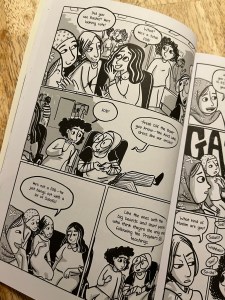
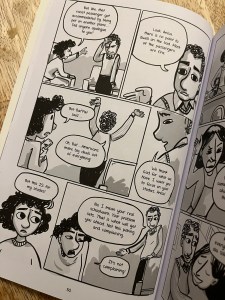
I like that the book feels very real, that the character arc and growth, challenges and setbacks, struggles and character’s voice, radiate authenticity and seeks to shed light on what not only shapes us and our view of the world, but understanding the politics, culture, religious, and lived experiences of what our parents also have been shaped by in a manner that is neither overly naive or harsh.

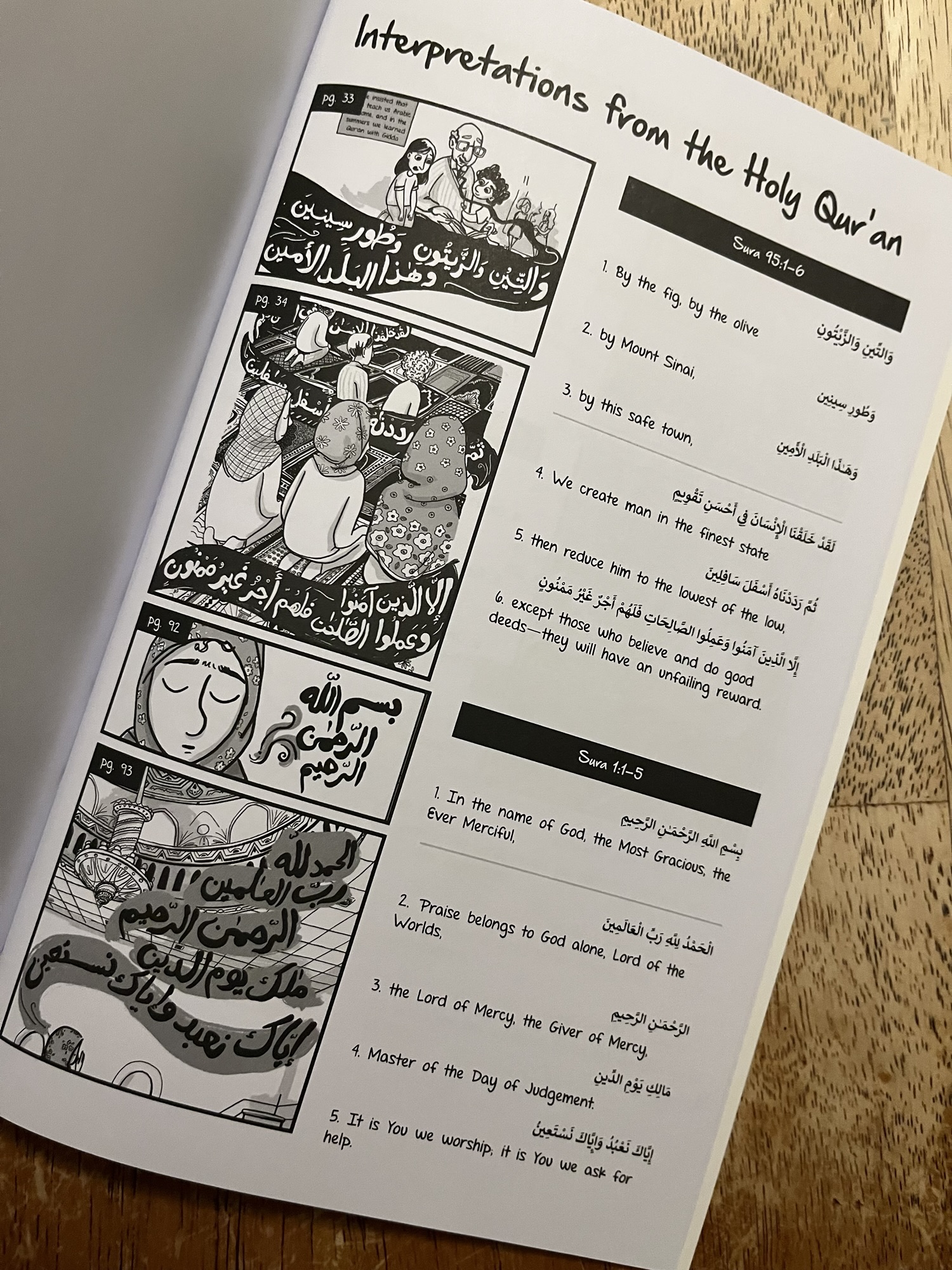
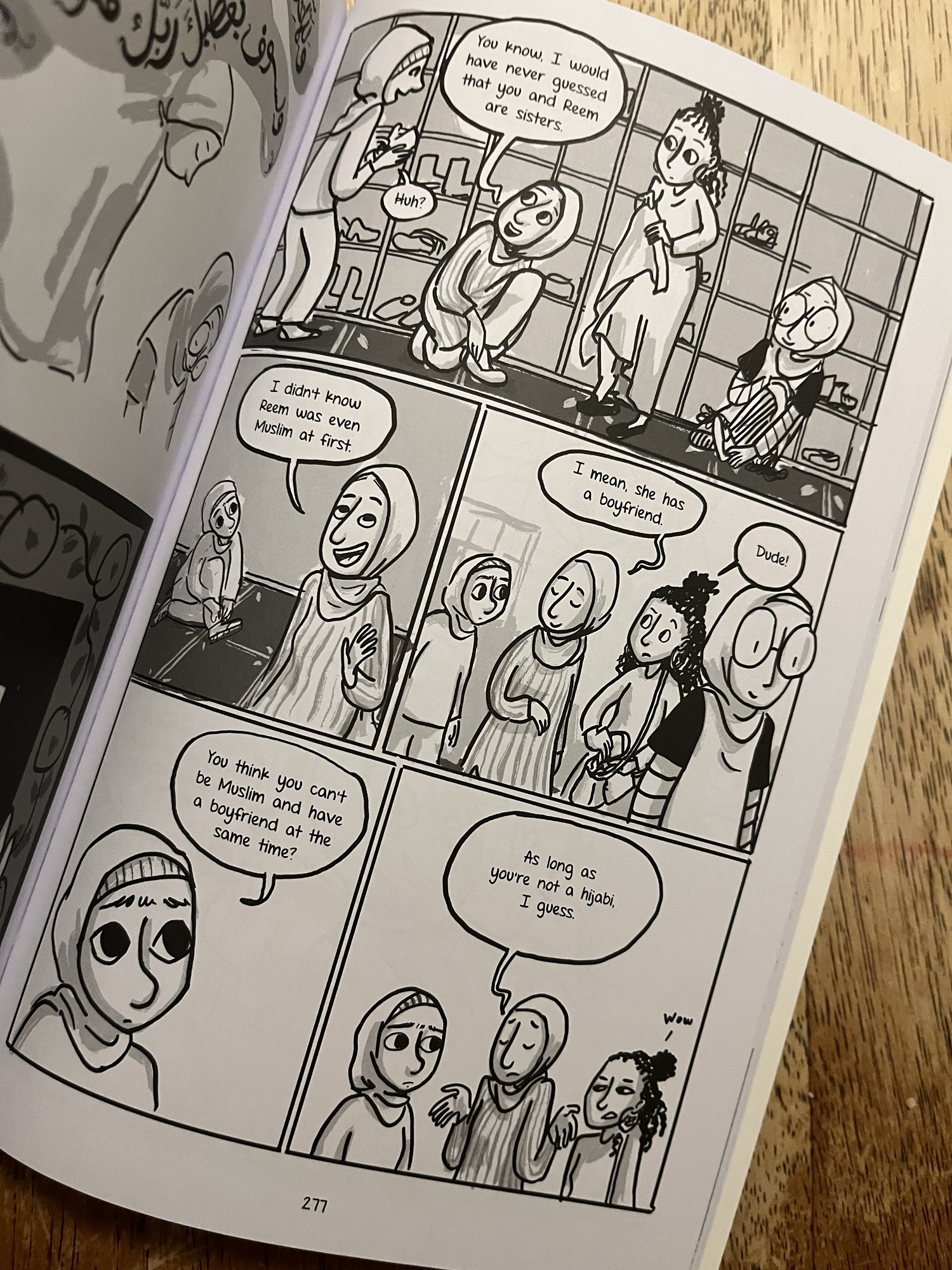
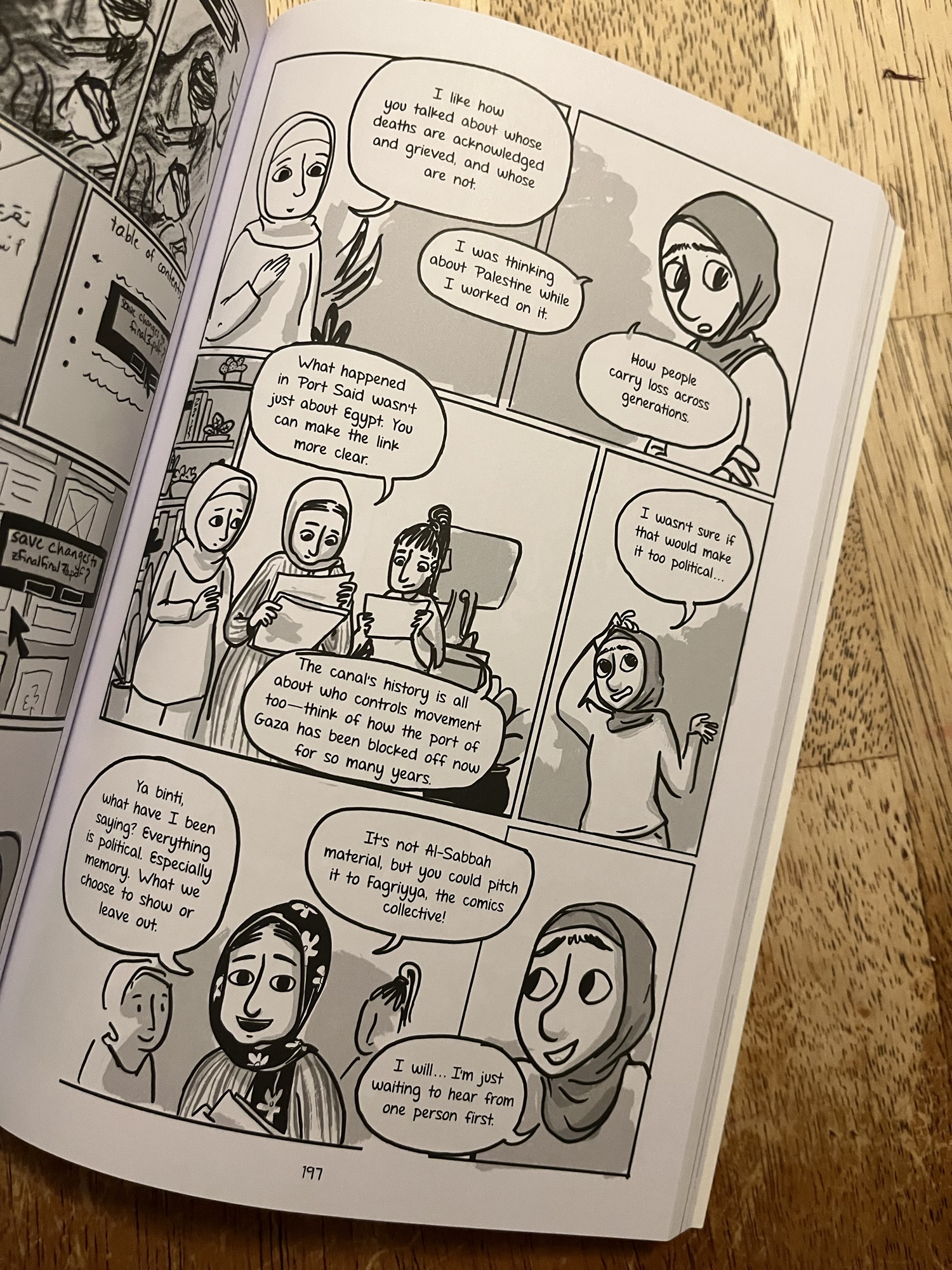
I appreciated the political commentary, the internal reflections of faith and her closeness with her grandfather in Egypt which often centers Islam. And as a work of fiction I understand in the broad sense that the book does not want to get didactic in its sharing of the deen, but it seems to want to have it both ways.  It shares the Quranic Arabic in the pages with meaning of the translation in the backmatter, quotes uncited hadith and references Islamic customs, yet I feel by staying gray in how the character interpreted Islamic teachings and failing to commit to her showing her own rationale for the choices and understanding driving those choices, the book leaves holes in the plot and a lot of questions.  For example, why is kissing her Sikh boyfriend considered a “mistake,” only because she wears hijab? She commits to him by getting her mom and Muslim friends on board with their relationship with the book sharing that different opinions are good according to Prophet Muhammad (saw).  She starts to wear hijab and says she is doing it for the right reasons, but those reasons are never shared.  She develops a relationship with Allah swt which is beautiful, but what is the messaging for the reader, with her justifying her actions in light of that relationship?

Yes, I realize that that makes me the very hypocrite the characters push back against in the book: not being able to be human and error, and struggle, and inshaAllah come back to Allah, swt, I know that, but I also know that our  youth are impressionable and we want to inspire them, not give them a “pass” through a fictional story to do haram because Allah swt is forgiving.  I also know that a 13 year old reading this and a 19 year old reading this will view it very differently  (see opening paragraph why my mindset going in was a disservice that I struggled to overcome, and why I mentioned that this is a mature read).  I also know that life, real life, is never linear and clear, and yeah people fall in love with people that are not Muslim, I’m the daughter of a convert, and my parents met in college, I get the hypocrisy, I own it, I really do.

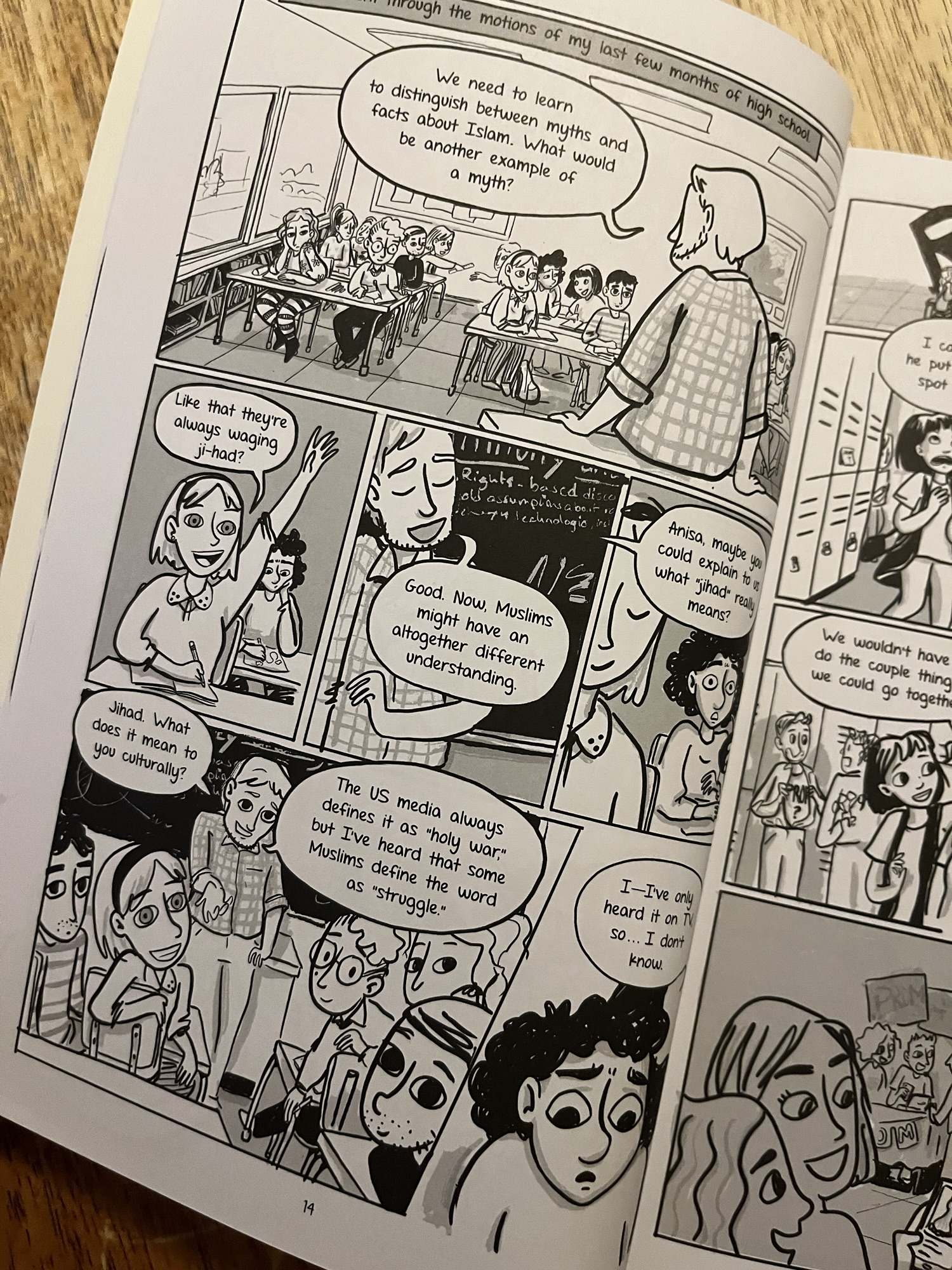
I can’t reiterate enough how many of the points I loved about her finding herself, understanding and connecting to her deen and extended family, laughing in the relatability the book has in its commentary on Islamophobia, expectations, politics, but none-the-less, I ultimately cannot support the normalized conclusions and justifications of many of the threads.
FLAGS:
See opening paragraph

TOOLS FOR LEADING THE DISCUSSION:
Not appropriate for Islamic school book clubs, I can see perhaps college or University MSAs reading it for fun and then offering up their thoughts as being an incredible pulse on how our “New Adult” Muslims view the themes and topics the book tackles, but I take handing a book to a person as an amanah, and I don’t think I could hand this to a middle or high school student.
Ms. Marvel No Normal & Generation Why by G. Willow Wilson illustrated byAdrian Alphona & Jacob Wyatt

Standard
Ms. Marvel No Normal & Generation Why by G. Willow Wilson illustrated byAdrian Alphona & Jacob Wyatt

I have to be completely honest these are the first comic books I’ve ever read from cover to cover.  So, while I’m in no position to review the art work, or historical role of the original Ms. Marvel or even have a valid opinion on the superhero story lines, I do want to cover the Islamic elements because even as someone as outside the comic book world as I am, I knew that Marvel’s new Ms. Marvel is a Pakistani-American Muslim girl from Jersey and that’s pretty big.

I was intimidated to read No Normal, I ordered it from Scholastic and have had it on my shelf for a while, I was excited, but nervous. But then I ordered the second one, which is also a collection of 5 comic books, and thought, let’s do this.  Both collections are easy reads, and the text and what to read first in each story frame is clear.  As with comics and graphic novels the pictures convey much of the story so there isn’t a lot of “explanation,” but the story is compelling enough, that even a novice like me didn’t get too hung up on what was going on and how it could be possible.   While it may tempt younger children, I would hold off until the reader is a teen, especially if the reader is Muslim.  There is a bit of drug use and alcohol in No Normal and obviously violence, but at it’s core it is a story of a girl trying to discover who she is and there is some angsty teenage stuff that someone who hasn’t gone through the emotions, might take as attacks on Islam, parents, and culture.

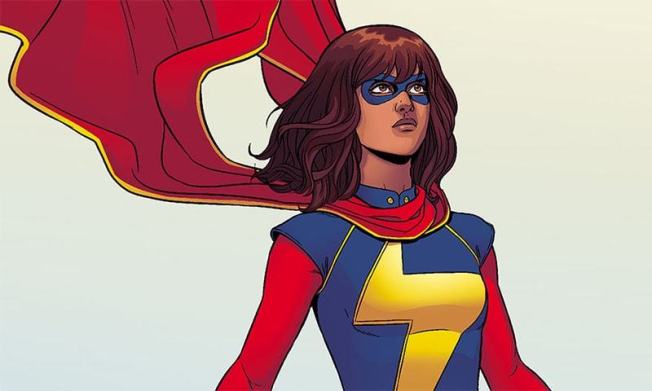
Kamala Khan is a high school student in Jersey City, New Jersey.  She has a Muslim friend, Nakia, who wears hijab, and non Muslim friends of both genders that seem to support her faith and culture, almost more than she does.  The story opens with her sniffing bacon and her friends humoring her oddness.  Having grown up with the same group of friends around her, they understand her quirks and nerdiness and she seems to fit in.  As with most teens though, she feels on the “outside” and Kamala right away tries to seem cool with the more popular crowd.  She  is struggling to find herself within her Pakistani culture, her American life, her Islamic beliefs and teenage friends, information all presented in the first few pages while at the local convenience store hangout.  A lot for Kamala to balance and she hasn’t even discovered her “powers” yet.

Kamala’s parents initially seem more “cultural” than religious as her father chastises Kamala’s brother Aamir for being too religious, yet is constantly on Kamala, presumably because she is a girl.  In a fit of defiance against her parents strict curfew, Kamala sneaks out of the house to attend a party, accidentally drinks alcohol (she spits it out) and gets caught in some “fog” that gives her morphing, stretching, embiggening, and quick healing powers.

As Kamala tests how her powers work, and what they mean, there are a few funny asides that appeal to Muslim readers: she attempts to use her Burkini as a base for her super hero disguise, and her mother threatens to send her to the Sheikh if she gets caught sneaking out again.  Her parents start to grow on you though, the mom is a very stereotypical immigrant mother who cares for her daughter in a worrying nagging way, the dad actually tries to communicate with Kamala and comes across a little more genuine toward the end of the first collection.  Her brother seems to be level headed, but a minor influence.  He sticks up for her and tries to help, but it doesn’t seem like they are that close.   The final scene in No Normal left a little bit of a bitter taste in my mouth and I was glad that I already had Generation Why to dive right into and not let the conclusion of the first one fester in my head.  Kamala shows up to a wedding late, complete in Shalwar Kameez (Pakistani clothing) and gets in an argument with her mom.  Kamala says, “You and Baba want me to be a perfect little Muslim Girl–straight A’s, med school, no boys, no booze, then some hand picked rich husband from Karachi and a billion babies.”  The mom says, “Your father and I want the best for our only daughter our expectations are high so that your successes will be many.”  It goes back and fourth then the mom says she is grounded and the book ends with Kamala retorting, “wanna bet…?”  While I’m sure most every Muslim American teen has felt this way, I don’t think I’d want my 9 year-old-daughter thinking that is how narrow success is defined, or that being the best you can be is a punishment. It’s probably a realistic gripe, but to have it be the last impression, naturally brought out my defensive instincts.

A lot of the awkwardness and stage setting in No Normal is resolved by Generation Why and I found I enjoyed it a lot more than I thought I would.  I might even be anxiously waiting to see what happens next.  Kamala is sent to the Sheikh and while she is intentionally vague about telling him what is going on with her, she does suffice it to say she is trying to help people and he responds by telling her to do it with as much honor and skill as she can. I love that he wasn’t putting her down, but rather trying to mentor her spiritually to find her self and do so honorably.  Really the only other religious/cultural scene is when Lockjaw a giant dog with transporting abilities shows up to help Kamala and her parents say he can stay, but outside because he isn’t clean.  I don’t know if non-Muslims will fully understand why, but it made me chuckle.  It also made me like her family a bit more.  They are strict, but not unreasonable.  They didn’t say, “no” they found a compromise.

Generation Why contains more action than back story.  I’m not entirely sure why Wolverine shows up, I have no idea who the lady in charge of stuff is with Captain America, and I’m not sure why no one finds it odd that the Inventor is a bird man, but hey it is fun.  And it definitely had me cheering on Ms. Marvel as she empowers her generation and learns that being American Muslim might be the easiest of her identity issues when she learns she is inhuman.  It gets a little cheesy, but the foundation of comic books being good against evil, lends itself to that right?

Overall, I think I would recommend both collections are read together, as it gives a better picture of what Ms. Marvel is and can be.  I think thus far the author has done a good job of showing that she is Muslim and that her faith adds depth to the character.  Her tenacity, persistence, determination, compassion for animals, her humor, her nerdiness, all make her very like-able and admirable.  I probably wouldn’t do it as a Book Club selection, because our school only goes to 8th grade and being an Islamic School I don’t know that most of the students feel the identity crisis until possibly much later if at all.  But I think the books would work well for discussion with older kids.  Topics of what youth can do, their role in preserving the planet, discovering your sense of self and purposes are all there in comic book, super hero, action packed form!

Kamala Khan