Tag Archives: Shia

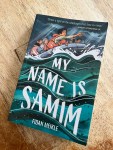
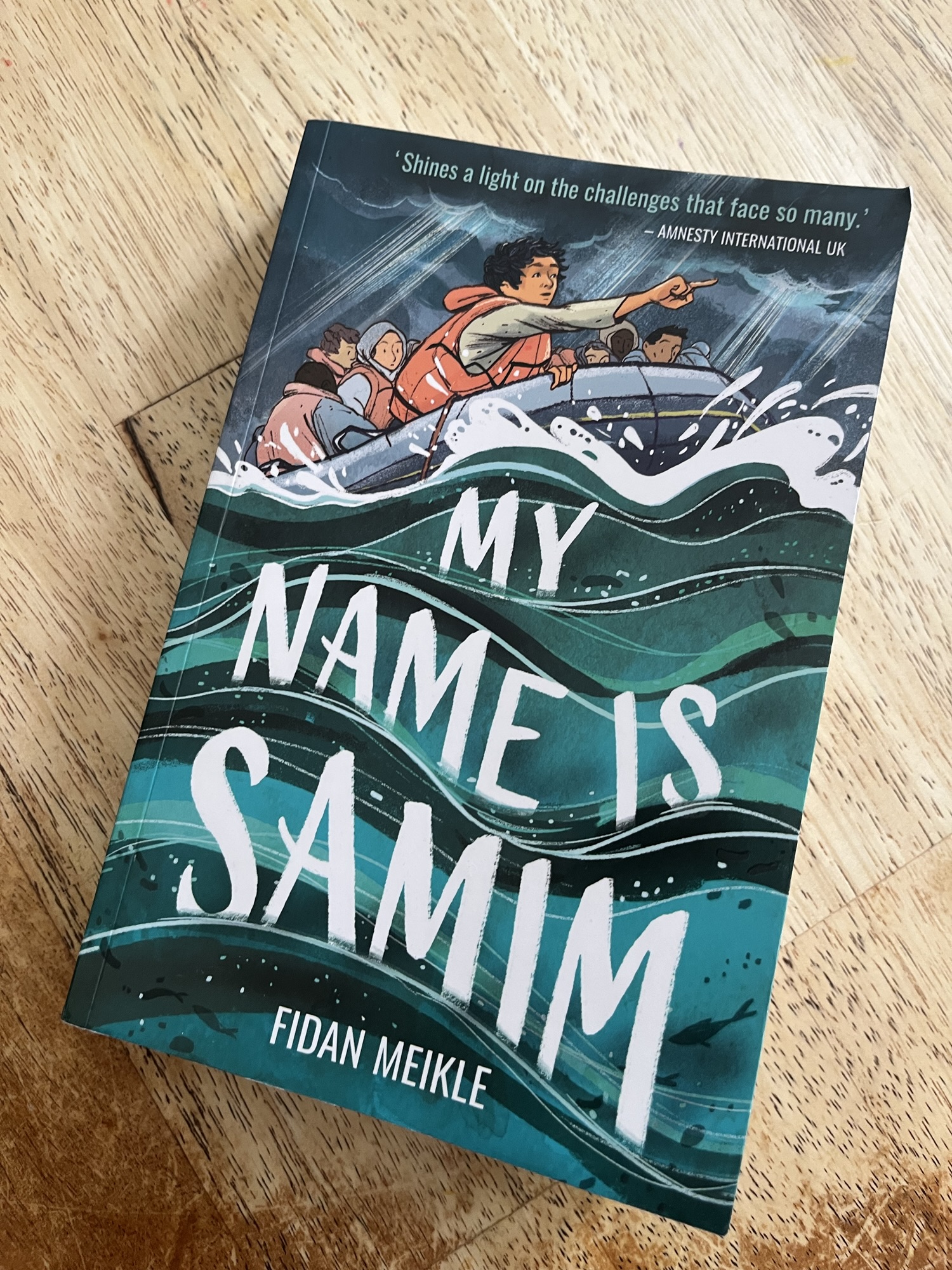
My Name is Samim by Fidan Meikle

Standard
My Name is Samim by Fidan Meikle

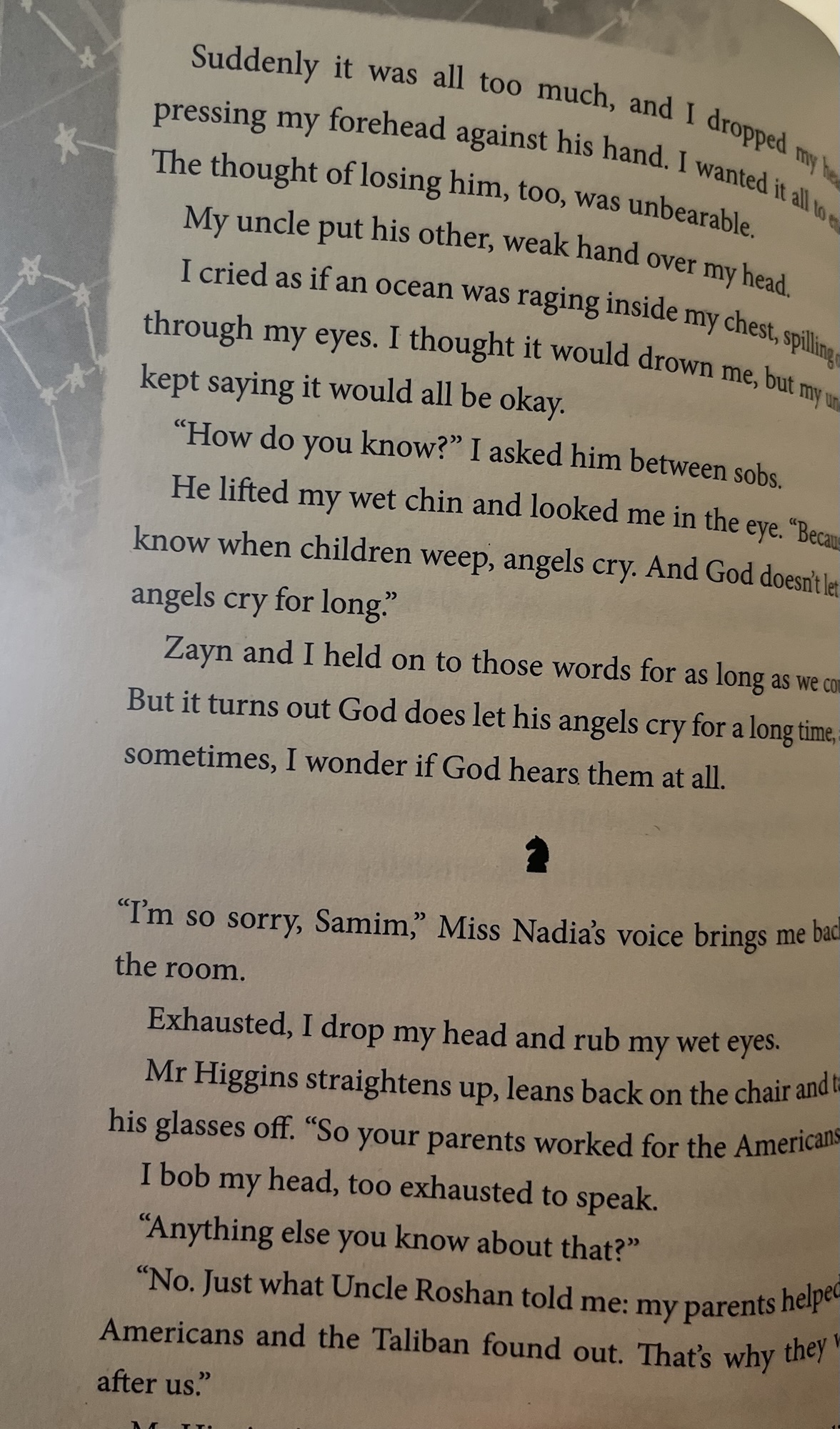
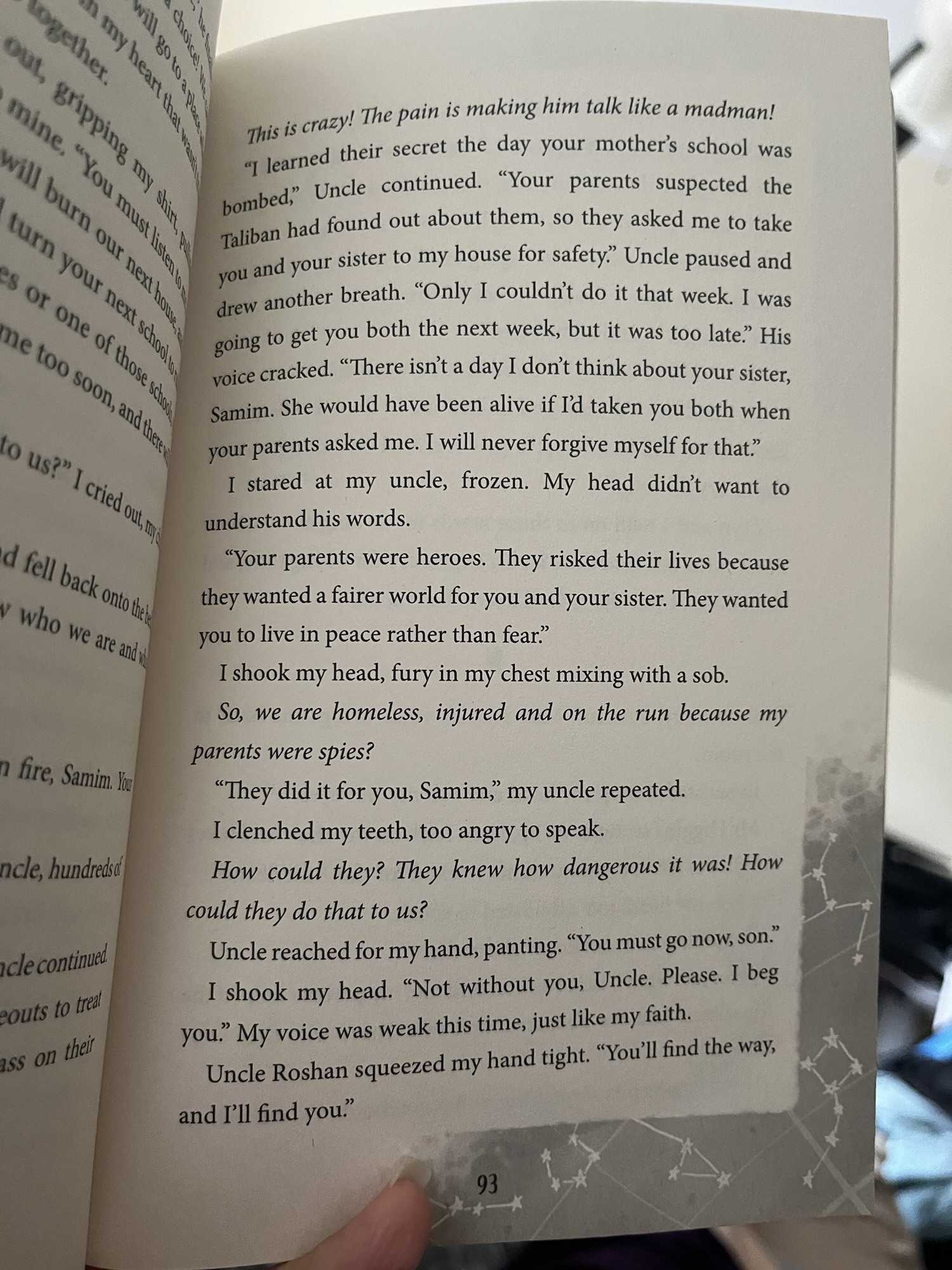
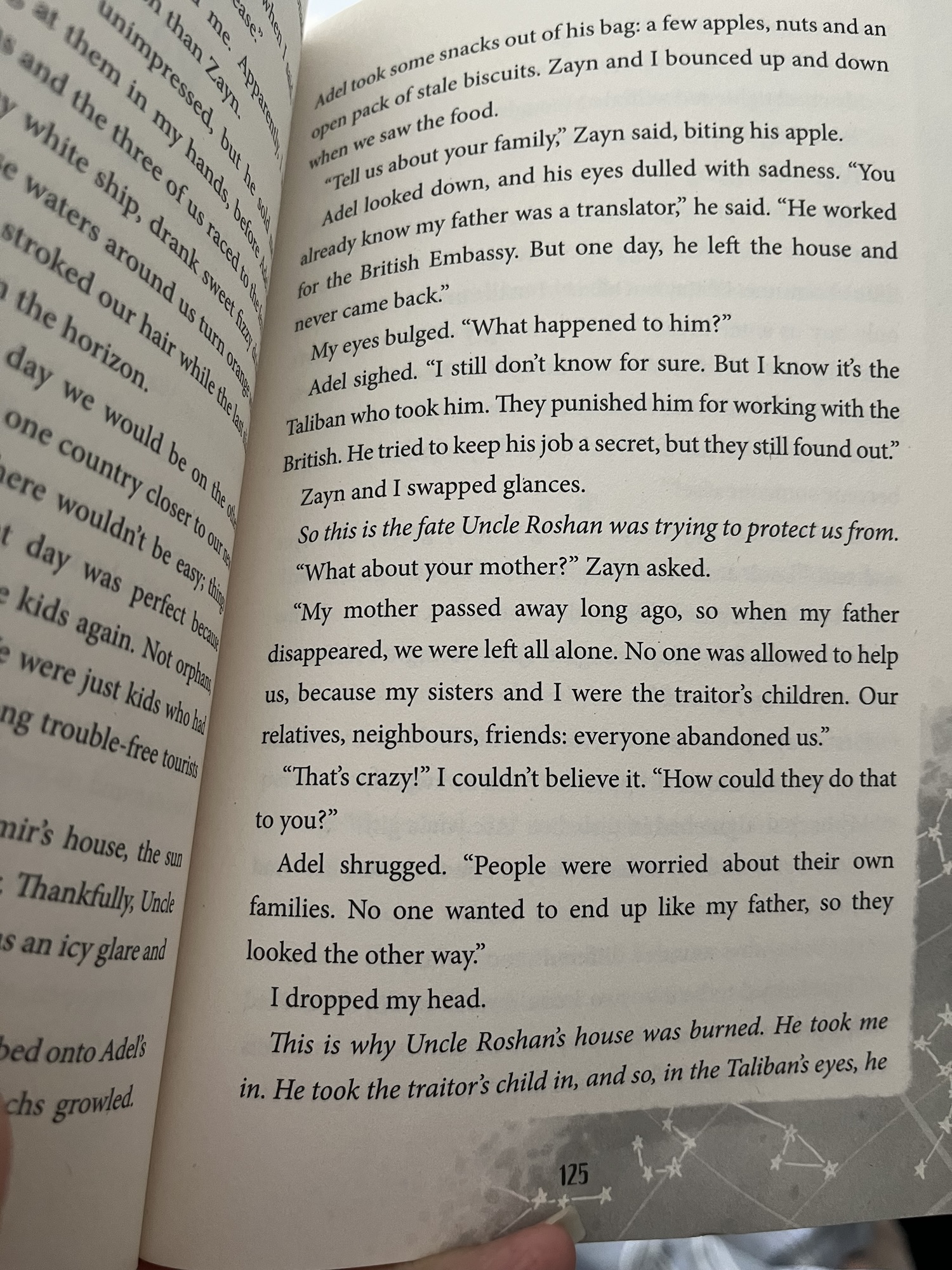
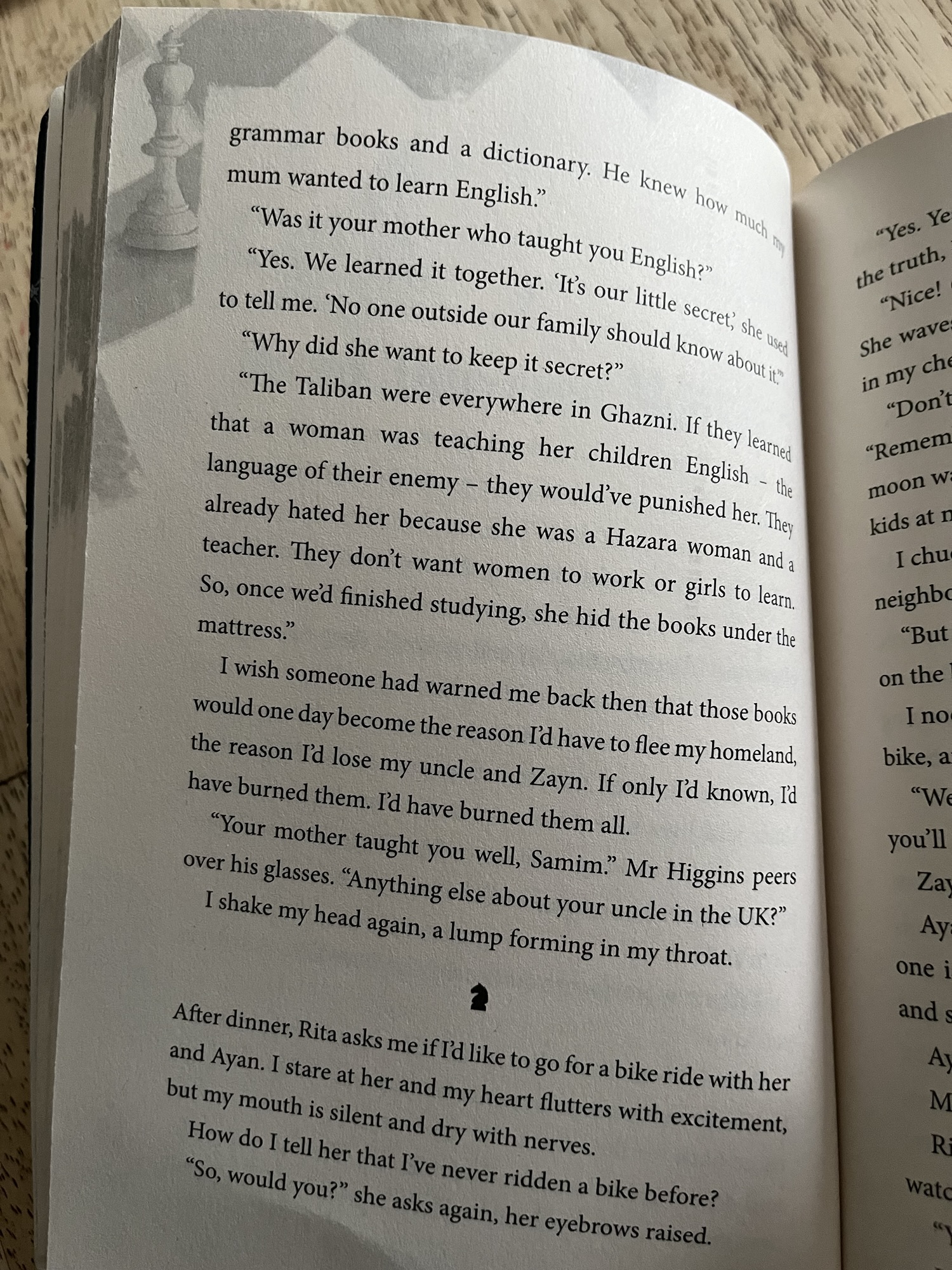
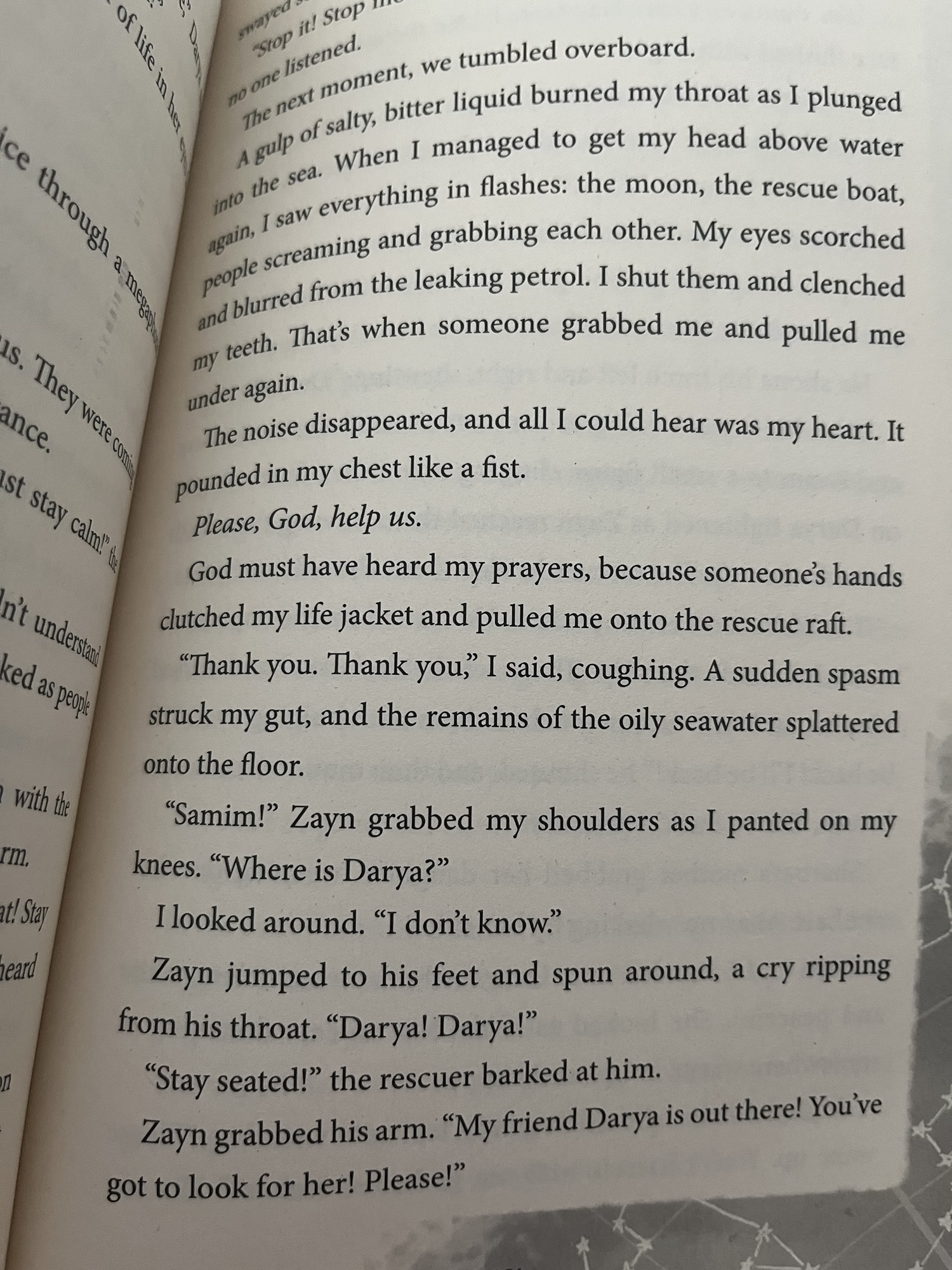
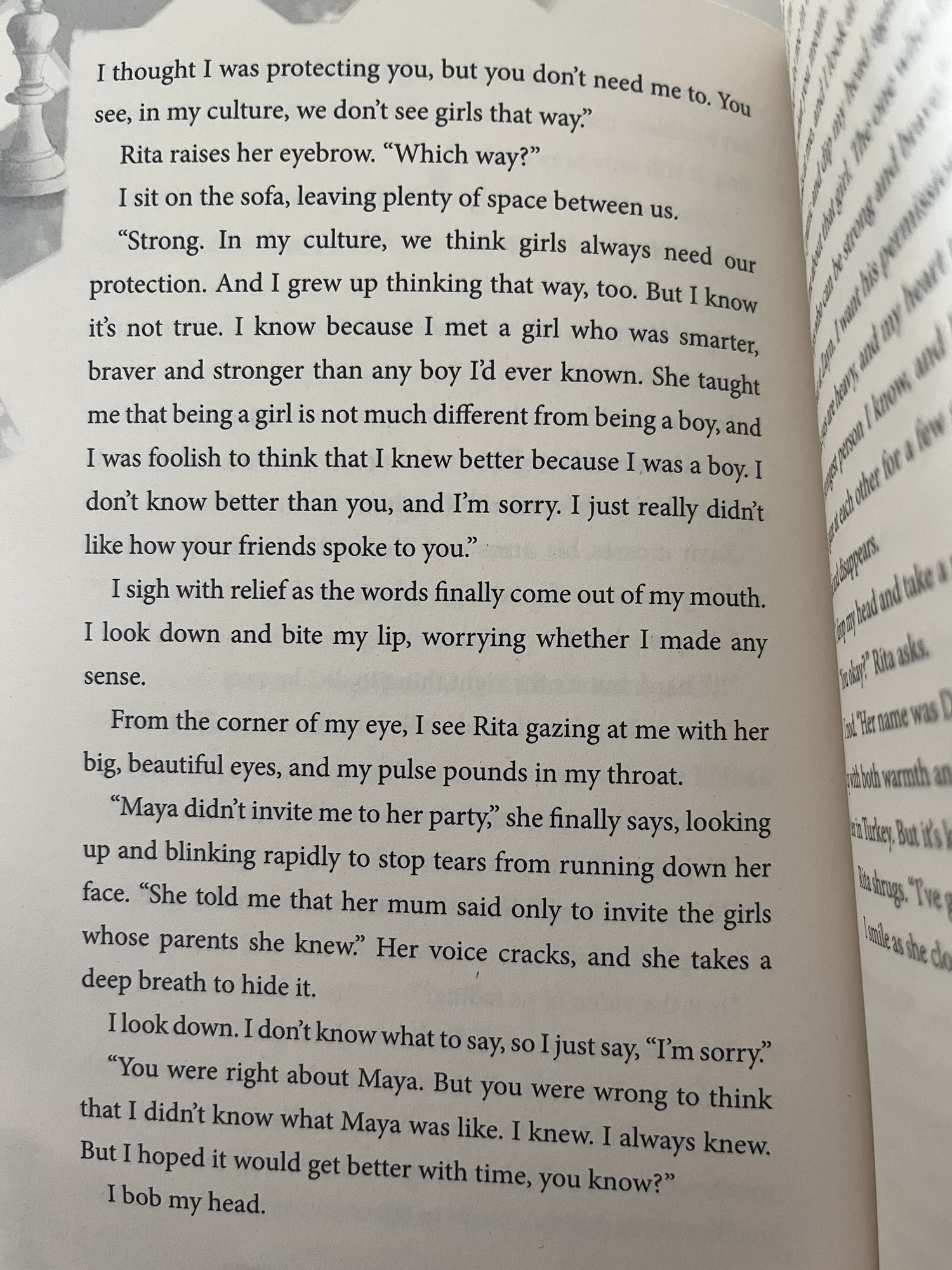
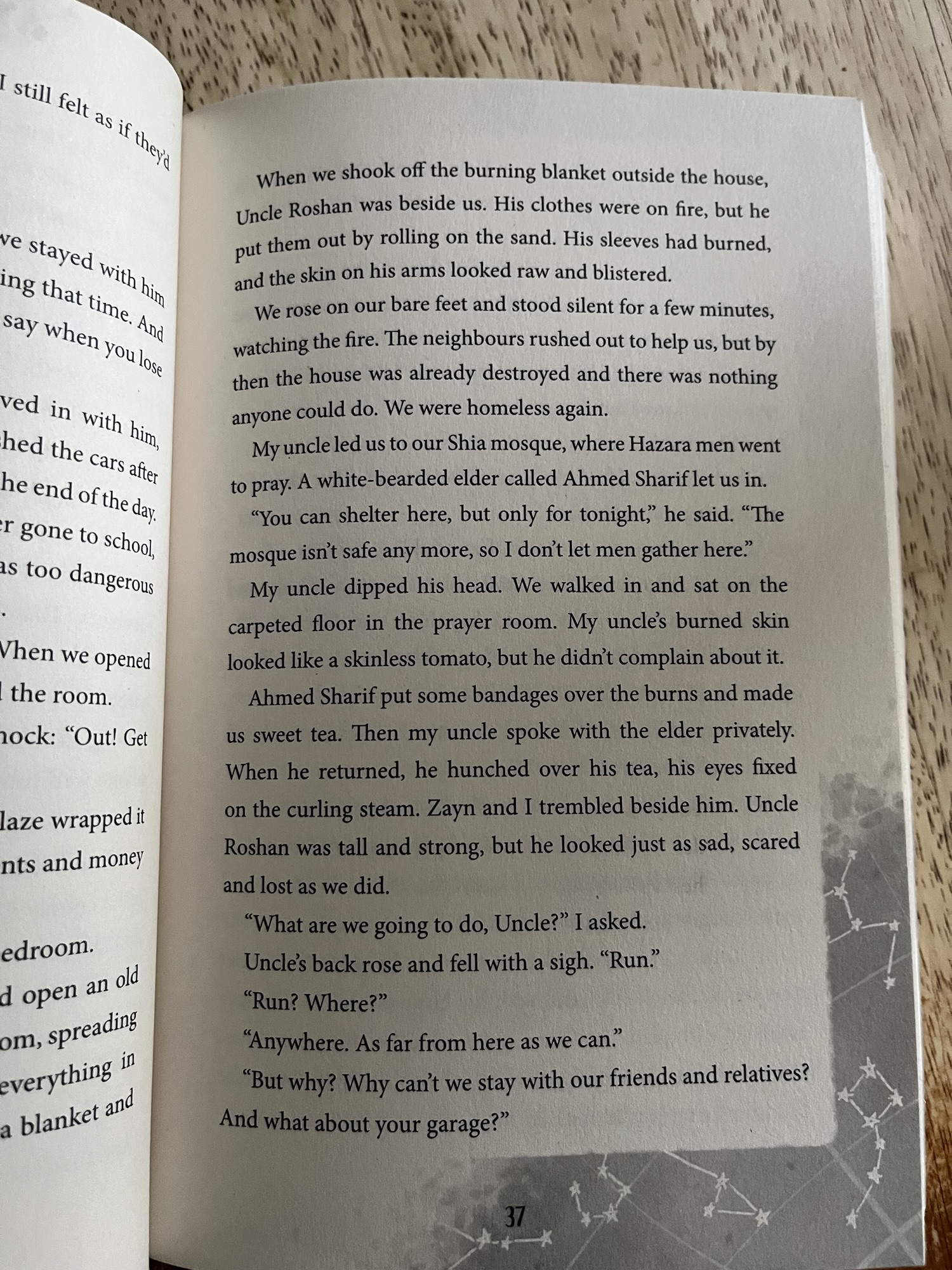
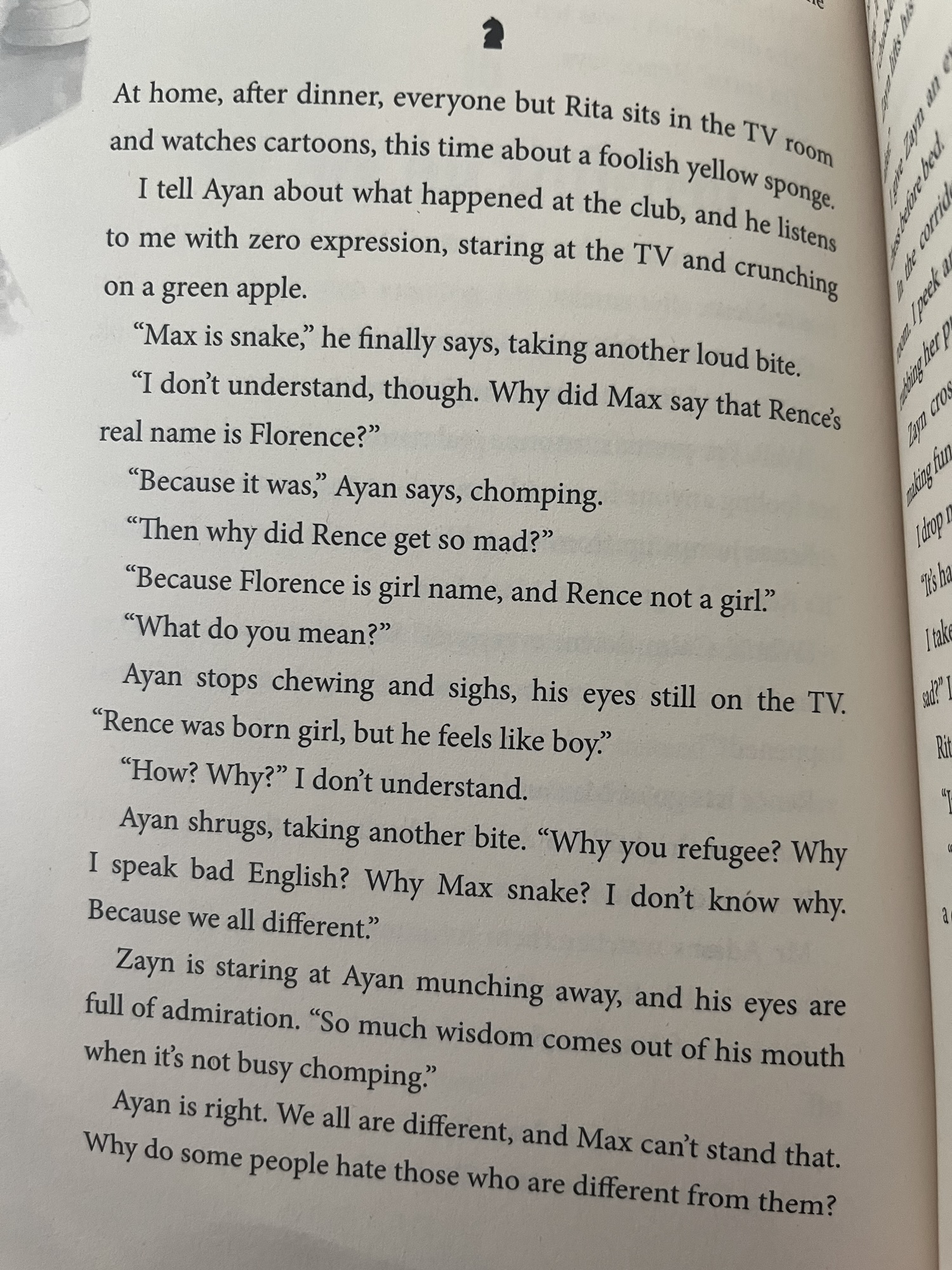
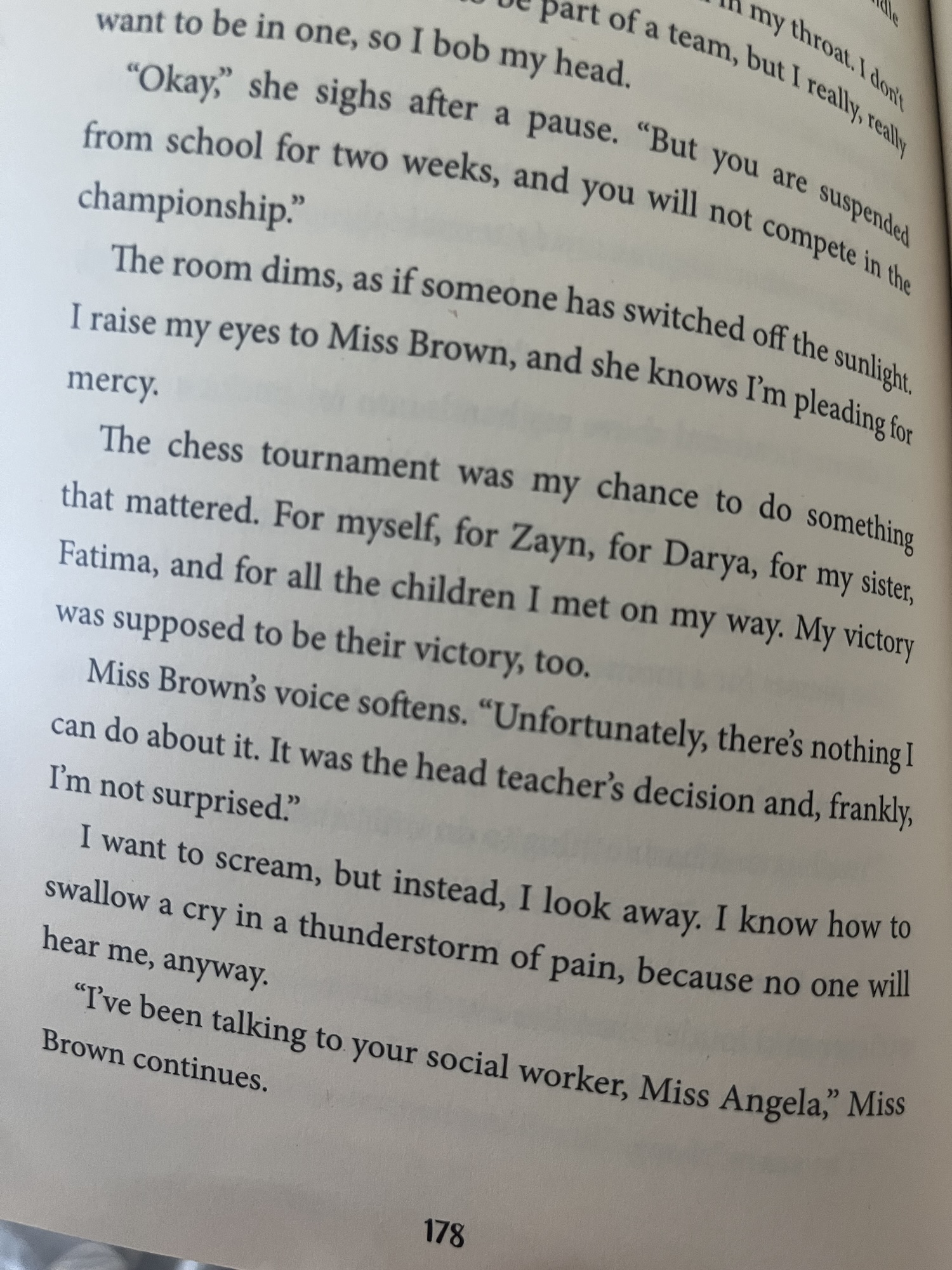
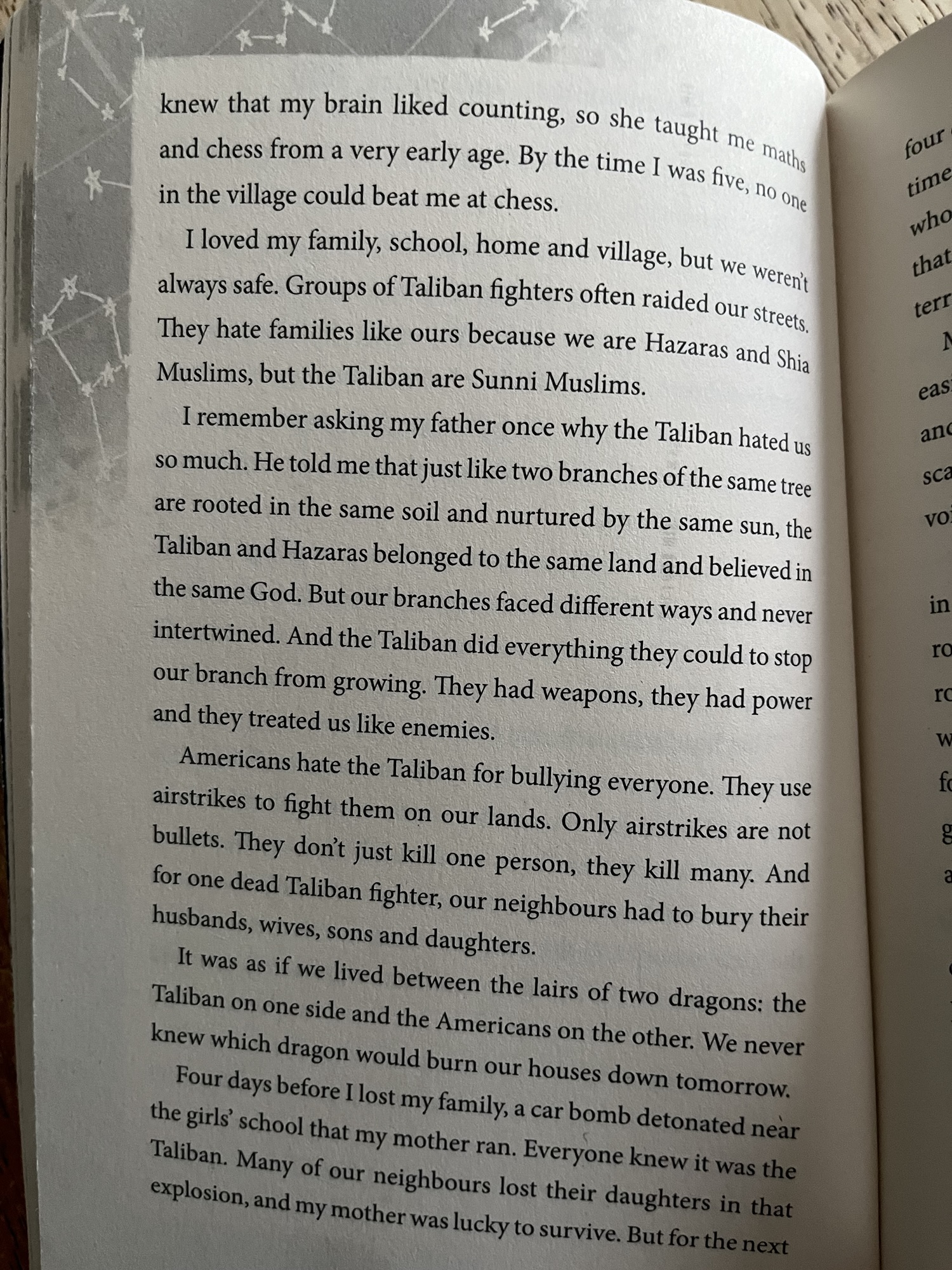
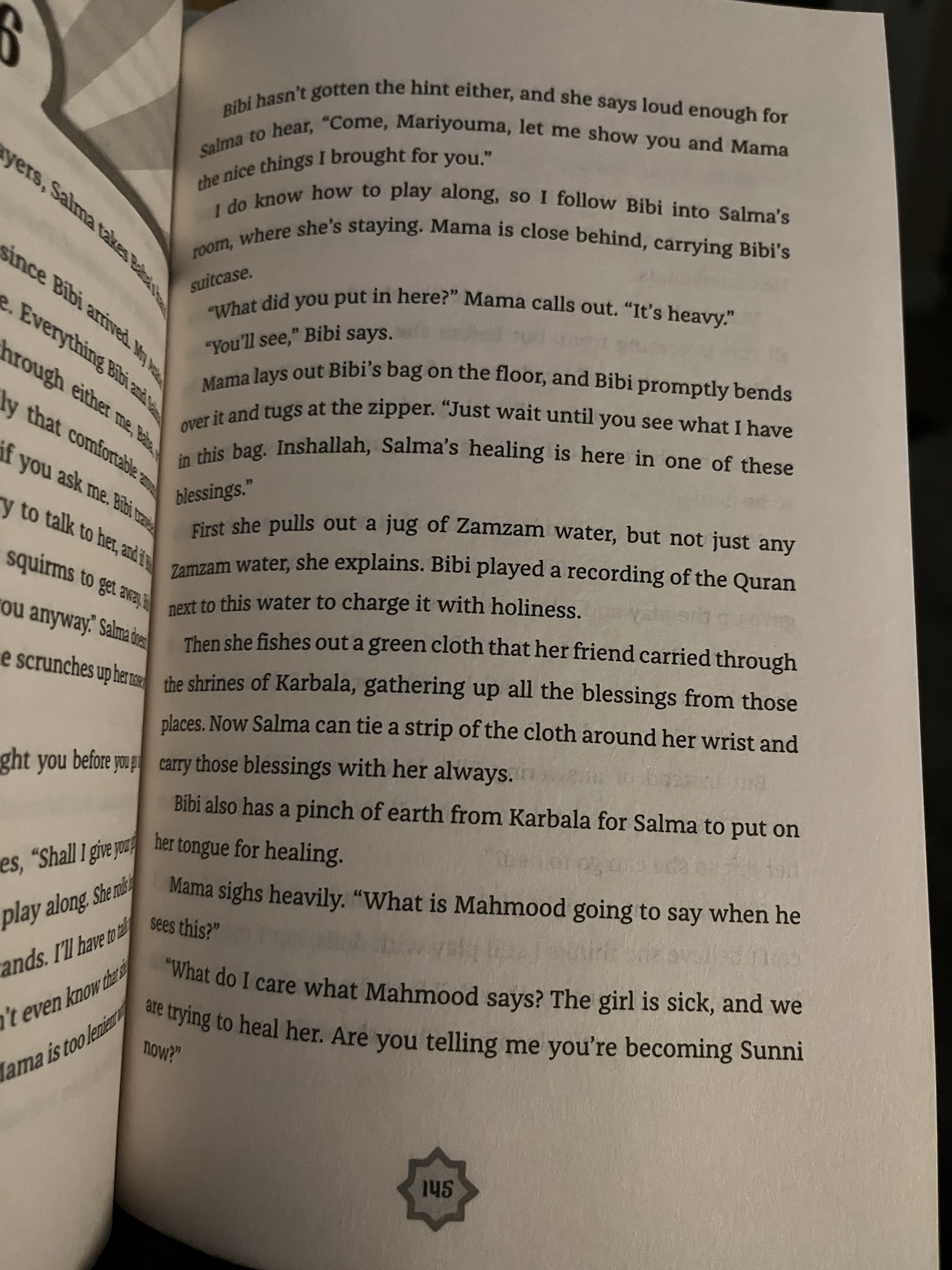
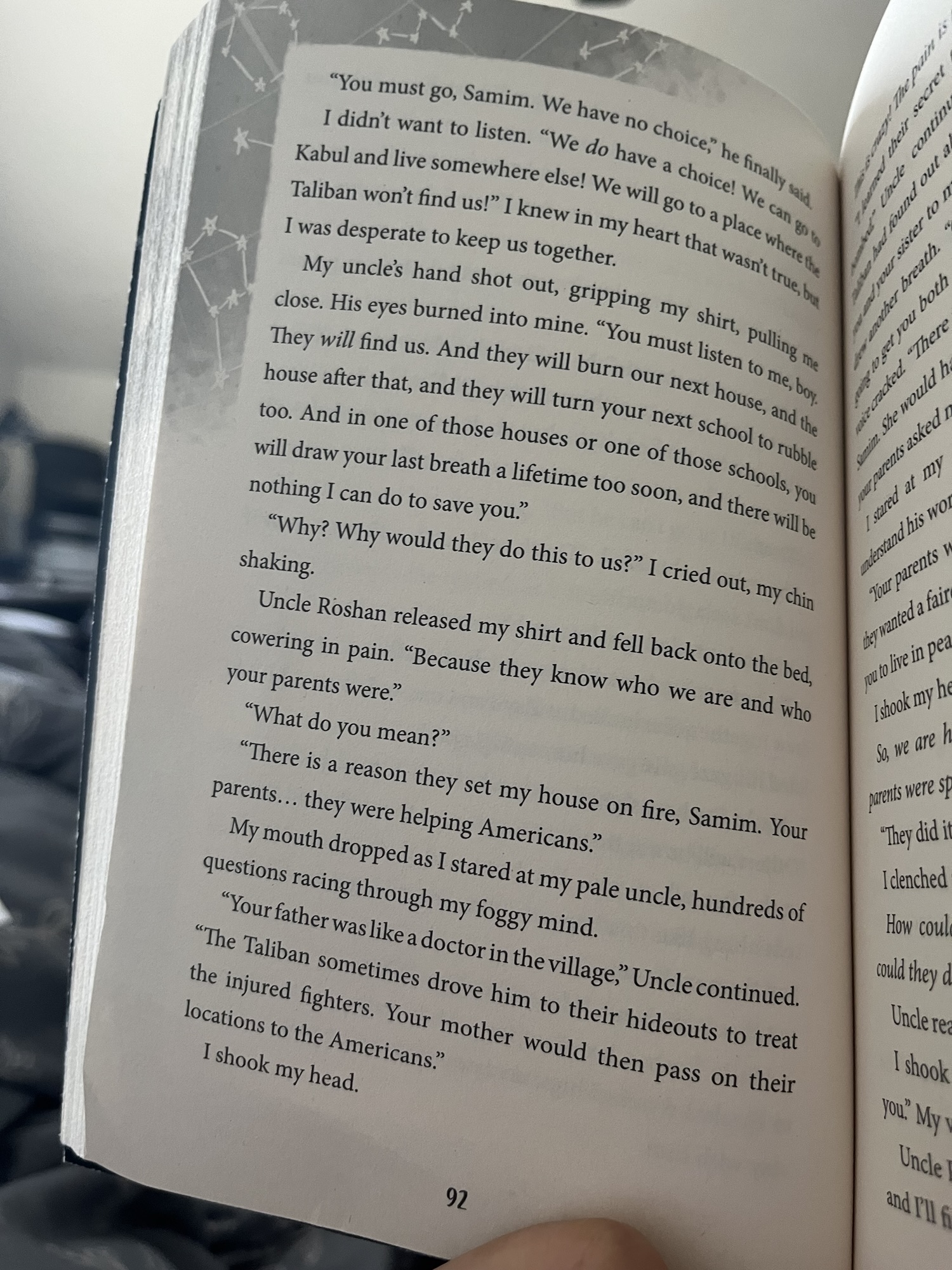
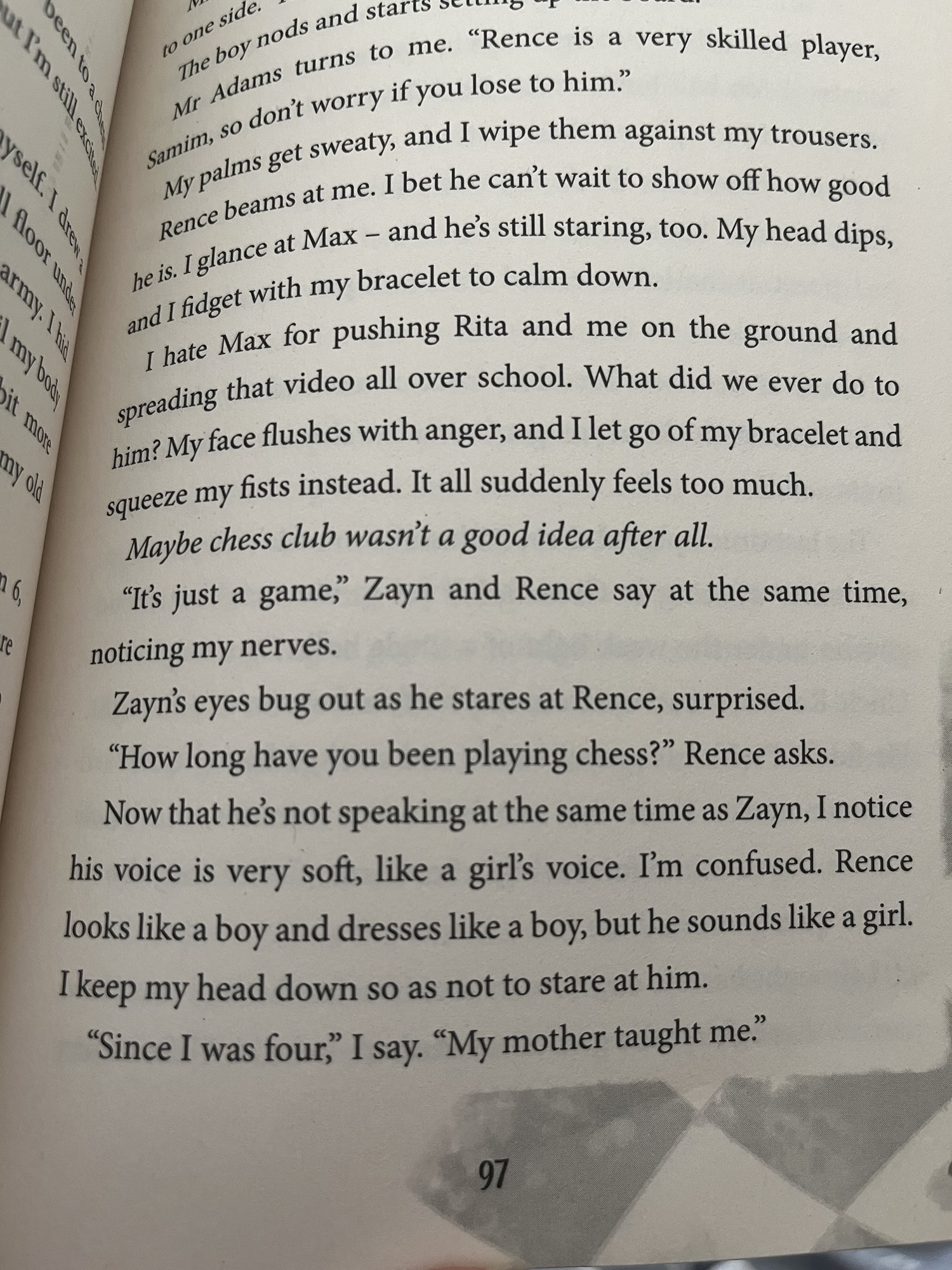
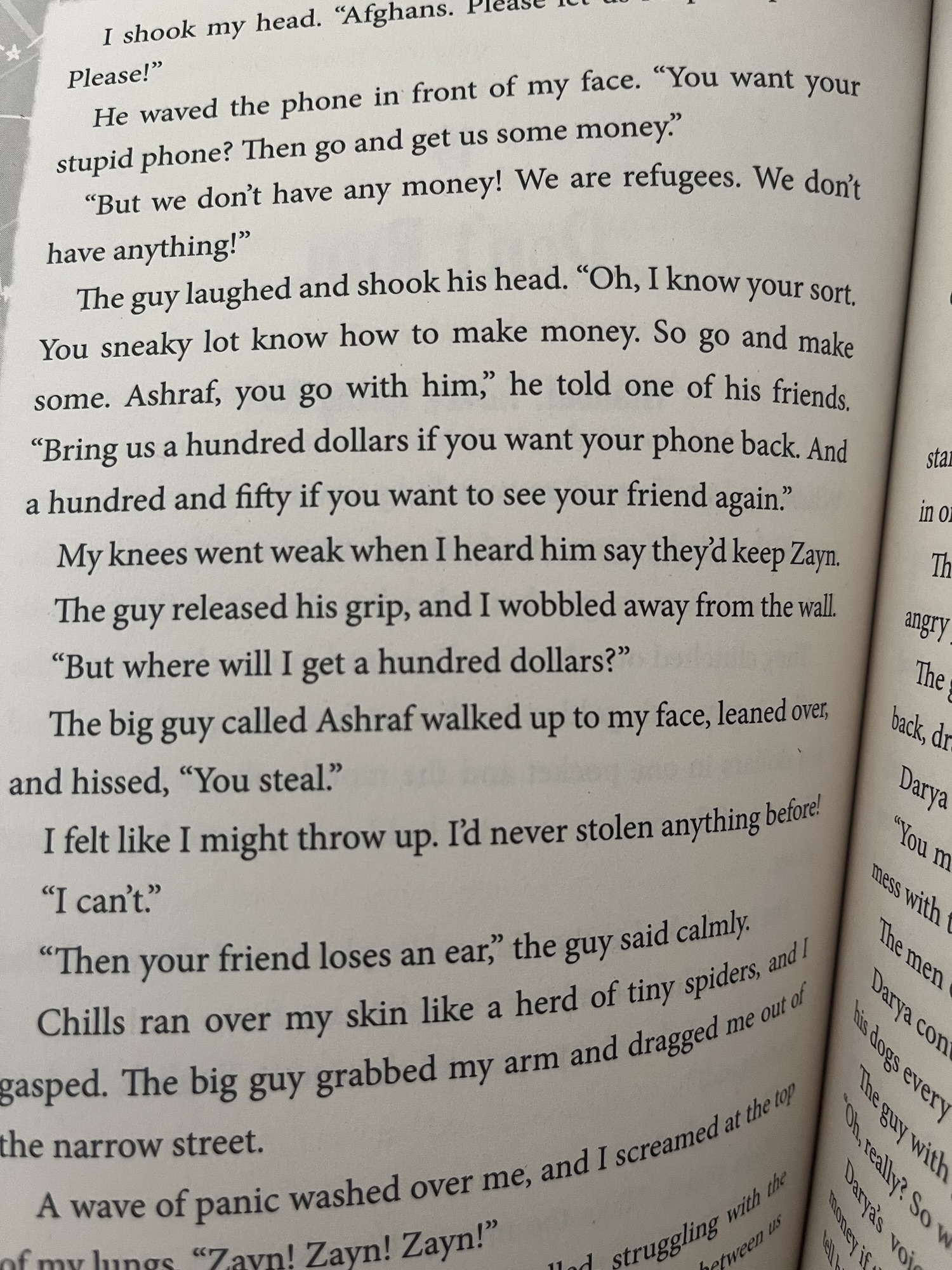
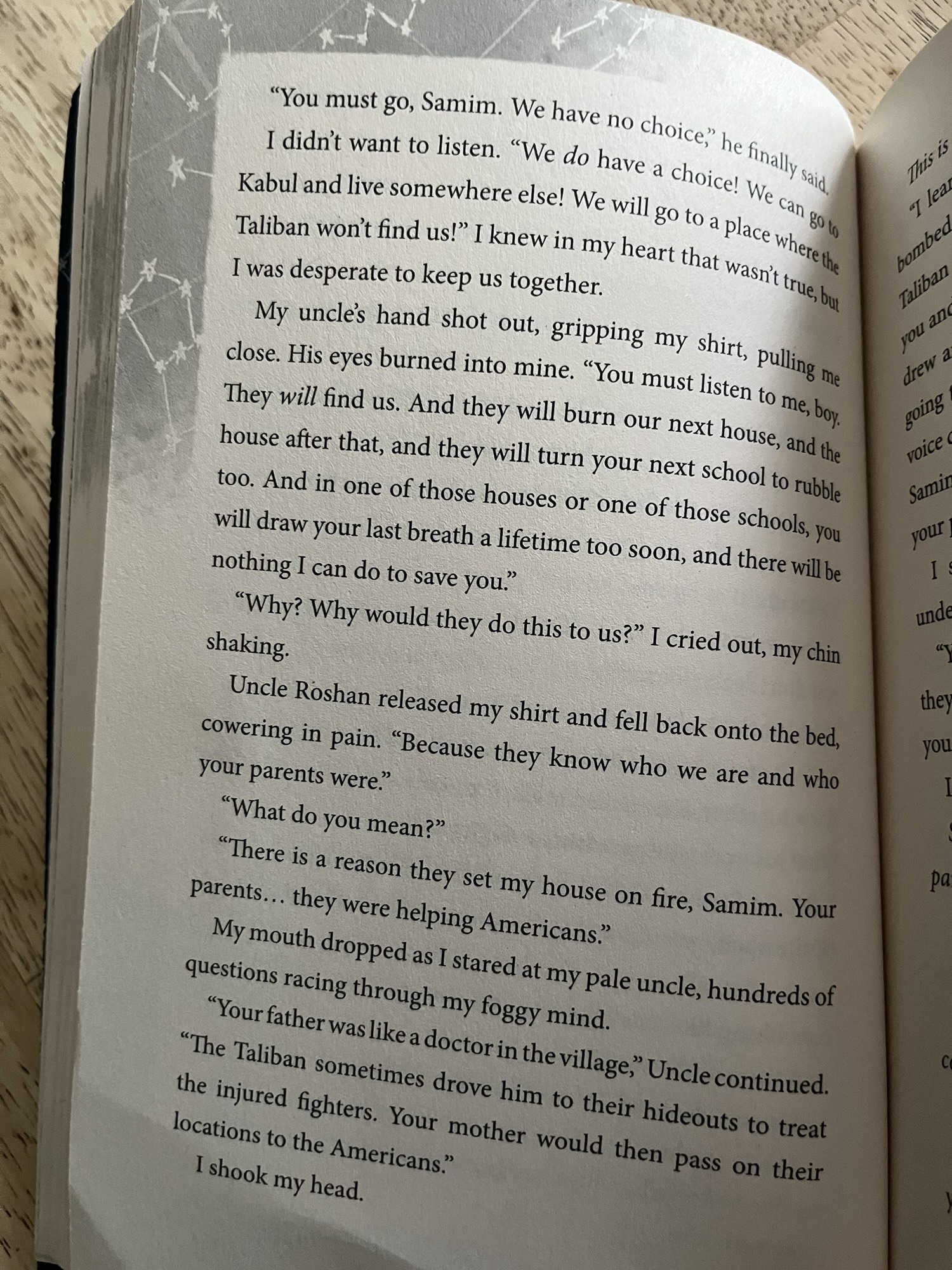
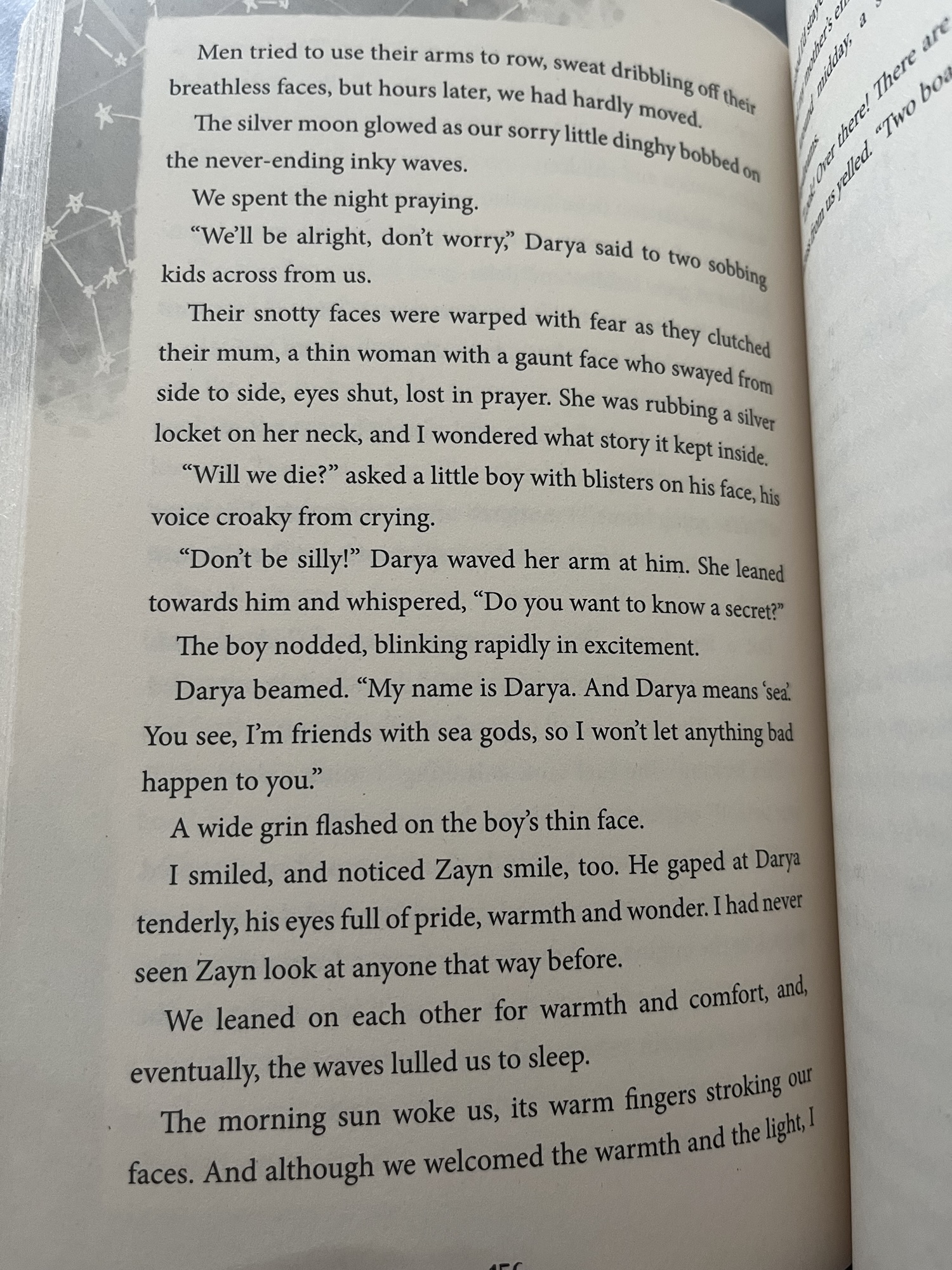
It has been a minute since I have read a refugee story, and was glad to see a new middle grade title published as the timeliness of immigrants and empathy is as critical as ever. I will admit though I was skeptical upon starting when I saw it is not OWN voice, and while grateful that a photojournalist source is named in the backmatter, through the lens of an Muslim book reviewer though, I can’t help but feel like the richness of having lived experiences reflected in the narrative or child immigrants researched to draw upon, left the Islam nonexistent and the cultural details and specifics weak. That is not to say that I wasn’t cheering for Samim, or that the craft of the book as a whole was not well done, it was. I was invested, emotional at the end, and Samim will stay with me for a while, but the protagonist is positioned as being a Shia Hazara, and for much of the story why he believes his family was killed, and yet even as he is facing repeated horrors and challenges, there are no Bismillahs, or crying out to Allah swt during a horrific series of events, no acts of worship, or relationship to faith. Nearly every time religion was mentioned I took a picture, so what you see is the religious rep nearly in its entirety not a sample. Similarly, there is some cultural foods dropped in, and awareness of gender differences once he is in the West, but honestly aside from the countries he passes through along the way, it could be a refugee from any war ravished country fleeing. Perhaps that is the point, if so it isn’t a terrible one, I just feel inclined to point it out. It is also worth nothing that this isn’t a juxtaposition story of life in Afghanistan to life in the United Kingdom, or political commentary aside from the initial premise of the Taliban wanting Shias out, it is really just a spotlight on Samim and his journey and what he, and so many go through when home is no longer safe. There is hardship, abuse, death, violence, transgender rep, bullying, human rights abuses, assault, drowning, persecution, stereotypes, bombings, displacement, theft, cruelty, violent death, loss, guilt, regret, etc. The book is not overly graphic, but the subject matter and commentary about Samim’s journey and the characters along the way may not be suitable for all children.
SYNOPSIS:

Samim is forced to leave Afghanistan when his entire family, save one uncle, are killed at the hands of the Taliban. With his uncle, and his best friend, Zayn, who has also lost everyone, a perilous journey to the United Kingdom is taken.  Once he arrives, alone, the story of how he got to the UK is shared with the readers as he seeks asylum and makes his case to stay.  His retelling of the journey is interspersed with him starting school and dealing with the stresses of uncertainty, bullies, grief, and anger.  Samim is shaped by his experiences and the people he meets, those whose stories he wants to ensure live on, and those that he longs to forget.  He is a wiz at chess, he knows 230 digits of pi, and he is carrying more, and been through more, than any child ever should.
WHY I LIKE IT:
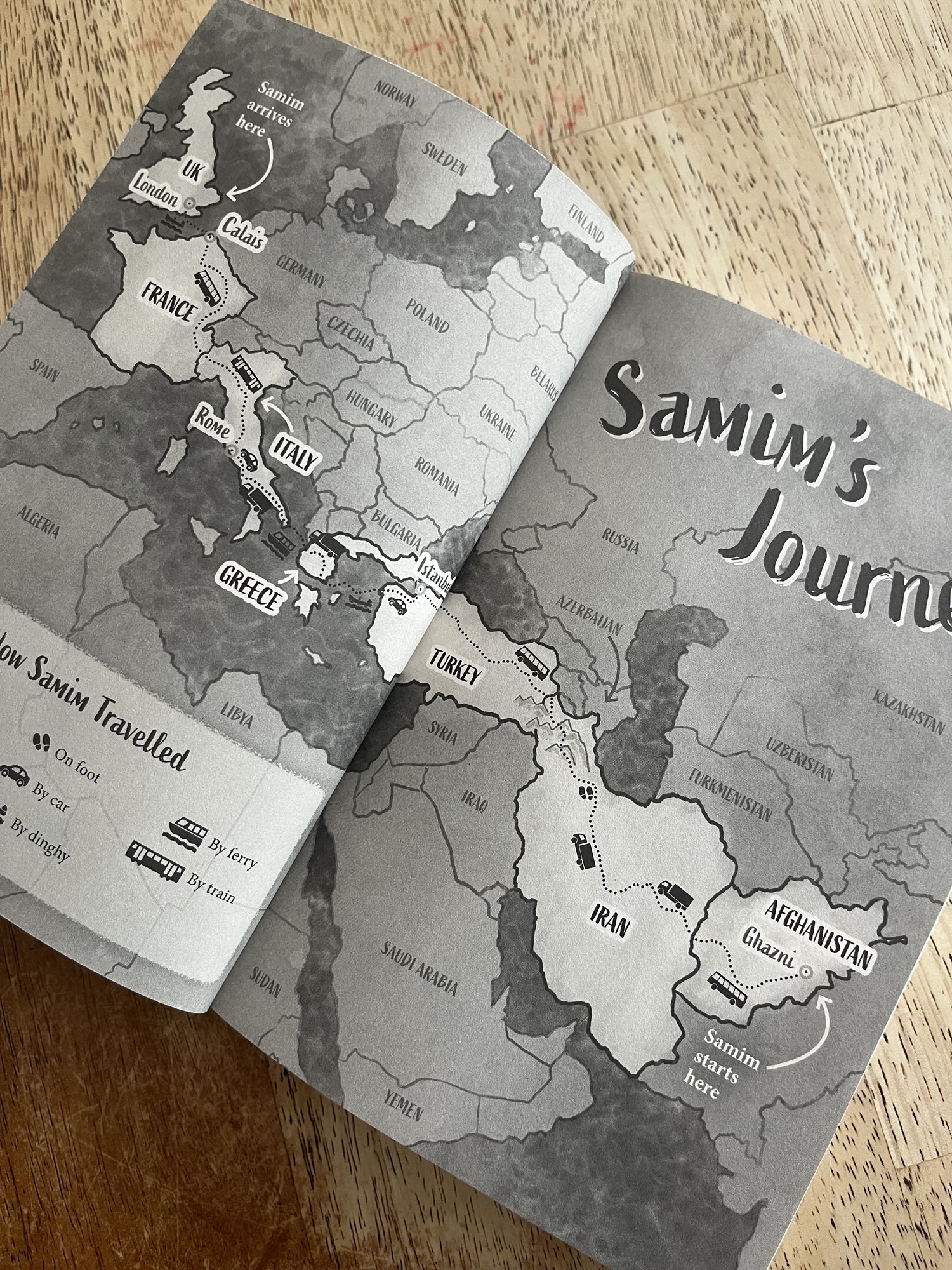
I love that there is a map, that a source is named and that the book has a lot of heart, you really can’t help but feel for Samim. I would have liked more Hazara rep, or Shia rep, their plight is under represented in children’s literature, but I recognize I’m looking at that with adult eyes, and the target audience is probably not as critical.  I also would have liked to see more raw emotion regarding the loss of his family, and stories tying him to them.  I didn’t feel the weight of who this lone uncle was, and what his loss meant other than on the journey at hand.  Some backstory and fleshing out of family and connection would go a long way to showing additional heart and humanity for those dealing with grief and loss that would hopefully connect with young readers. And yes, I think it could have been stronger without changing the direction and purpose of the story.

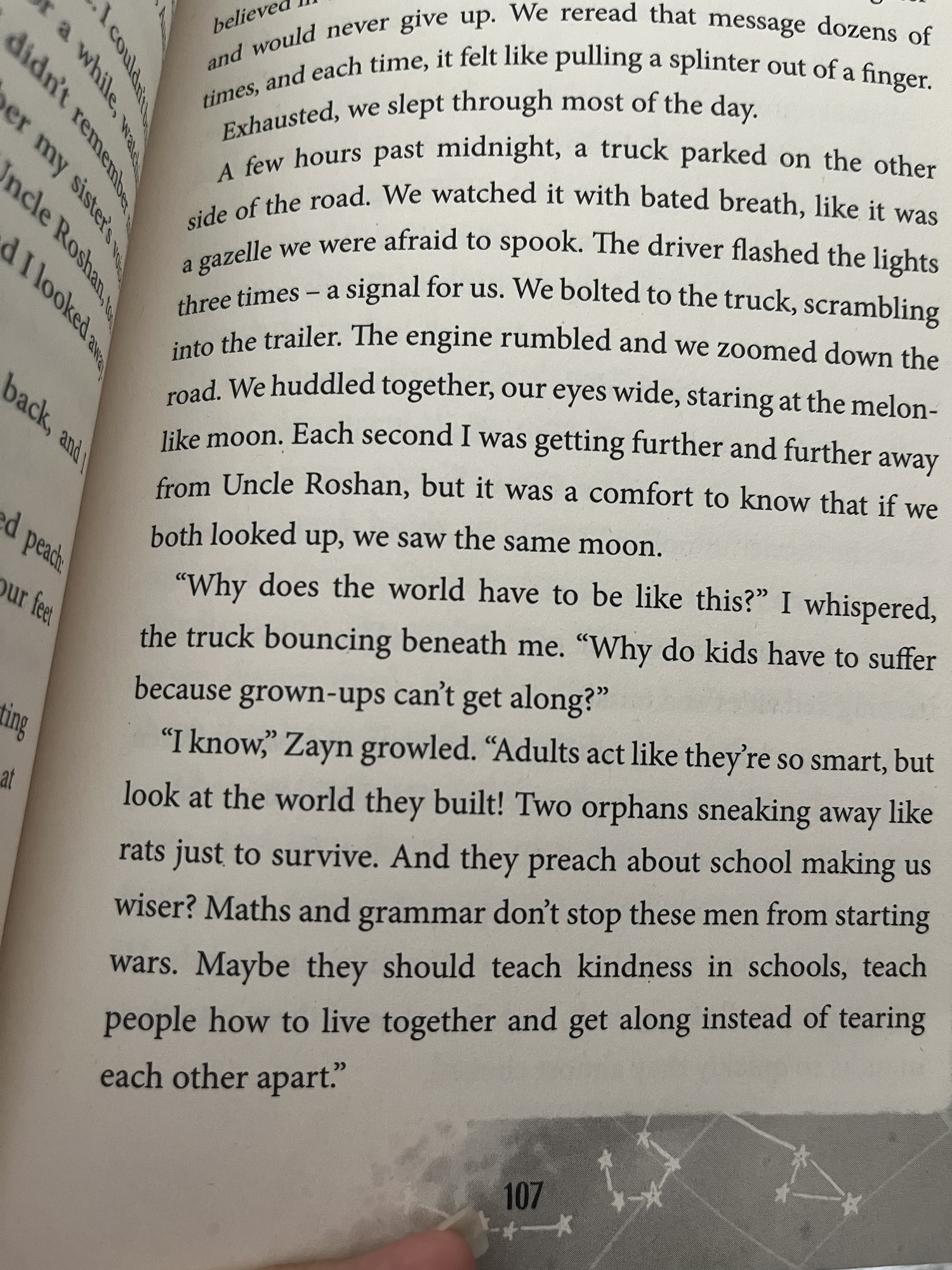
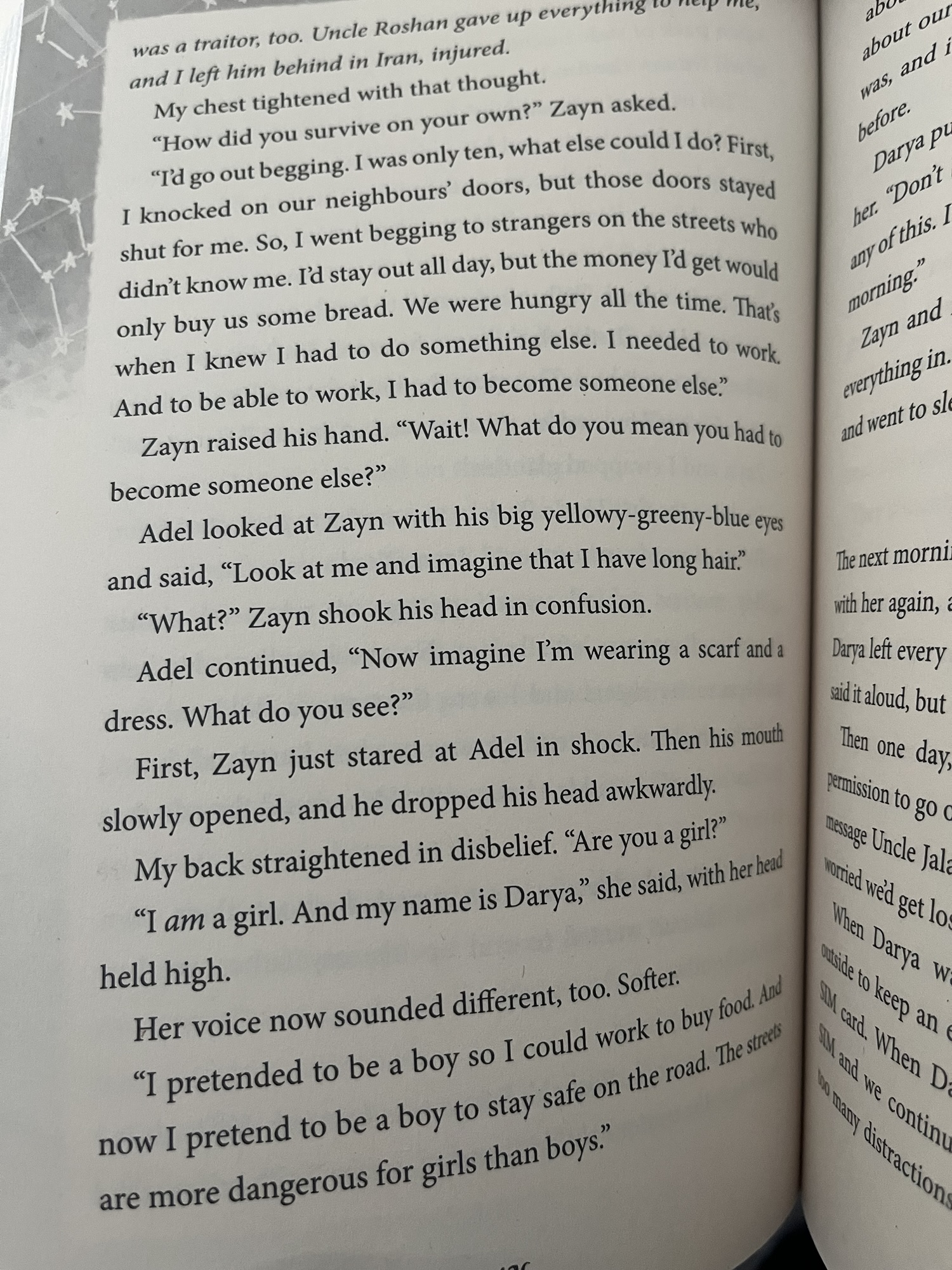
While some of the exploration of themes is subtle, the commentary on gender and gender identity is not.  The reader is introduced to to a female refugee character dressing as a boy on the journey for safety, and highlights how Samim and Zayn grapple with that reveal.  And then Samim meets Rence, a trans character in the UK, who becomes a close friend, and thus shows the continuation of that normalization while also highlighting stereotypes about women and identity in both the Afghan and Western cultures.  The author also seems to be quite deliberate in showing good and bad, kind and manipulative, cruel and generous people throughout so as not to have a single character’s religion, or culture, or gender, or ethnicity shoulder the stereotype of more than just themselves in that moment.  It keeps the book from perpetuating assumptions as Samim meets and interacts with such diversity on his journey.
FLAGS:
There is hardship, abuse, death, violence, transgender rep, bullying, human rights abuses, assault, drowning, persecution, stereotypes, bombings, displacement, theft, cruelty, violent death, loss, guilt, regret, etc.

TOOLS FOR LEADING THE DISCUSSION:

As I searched to see how authentic the book is, I did find a good article about the author’s research and expertise in the area:

https://www.thebookseller.com/trade-interviews/author-fidan-meikle-on-the-story-behind-her-middle-grade-debut

I think if you know your audience, this book could work for a class or book club read, but I think with the triggers and some of the commentary, one would need to be confident that it is a good fit.  I would be ok to shelve it on a library or classroom shelf for upper middle grade, as I think the book is clear about the contents within and readers drawn to it, should hopefully be aware that refugees endure a lot of hardships, and thus the story may be difficult at times.
Hail Mariam by Huda Al Marashi

Standard
Hail Mariam by Huda Al Marashi

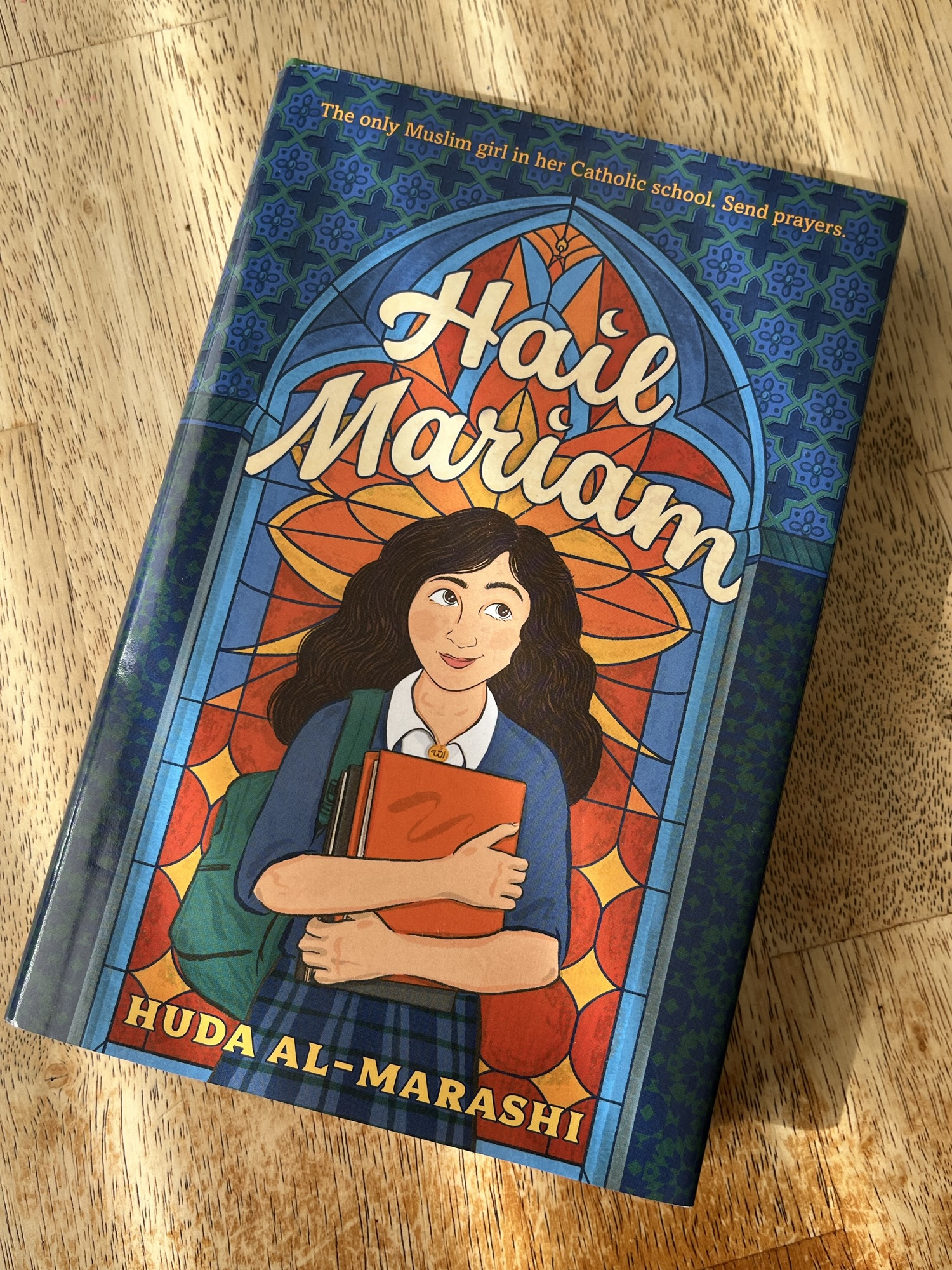
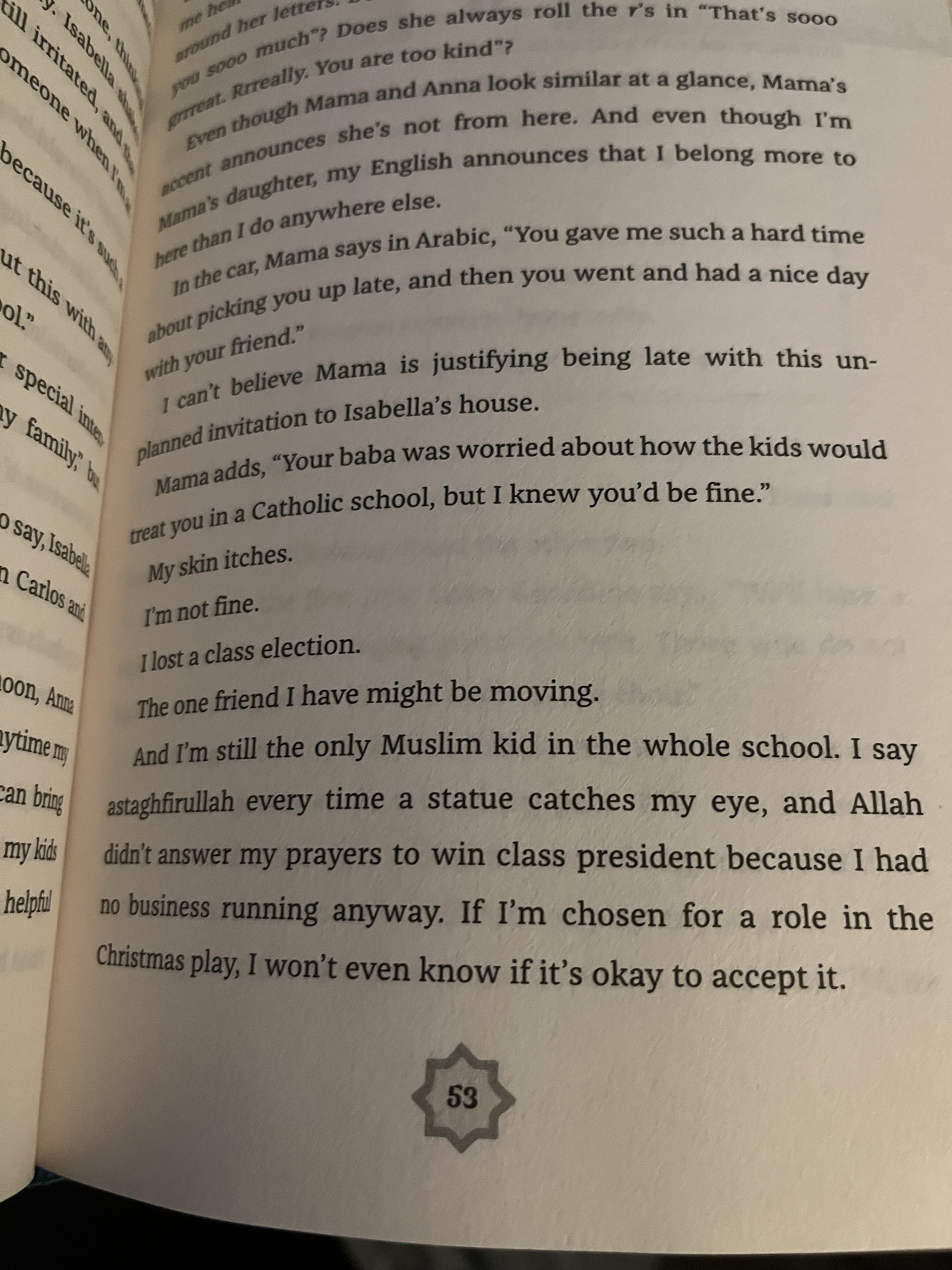
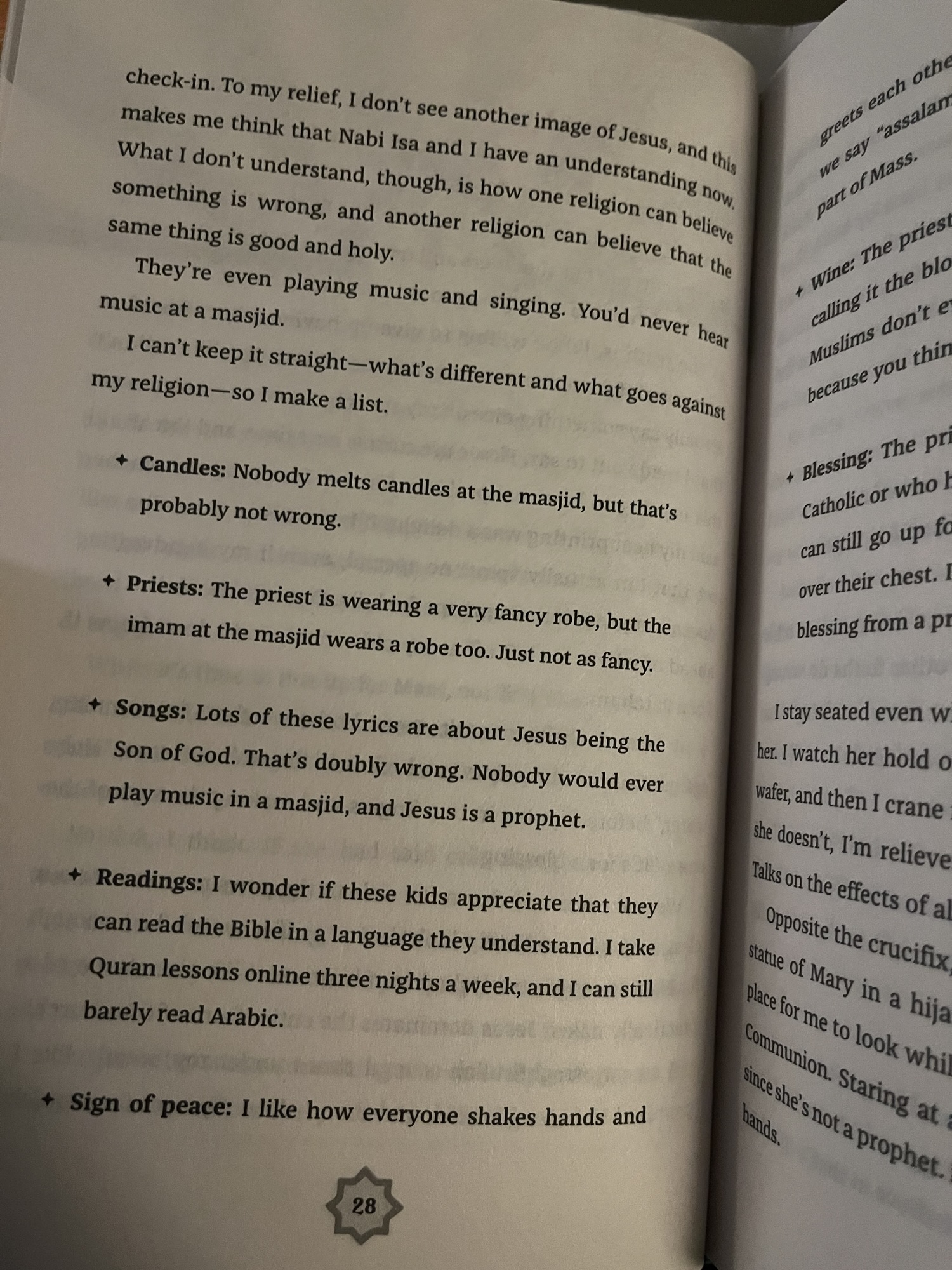
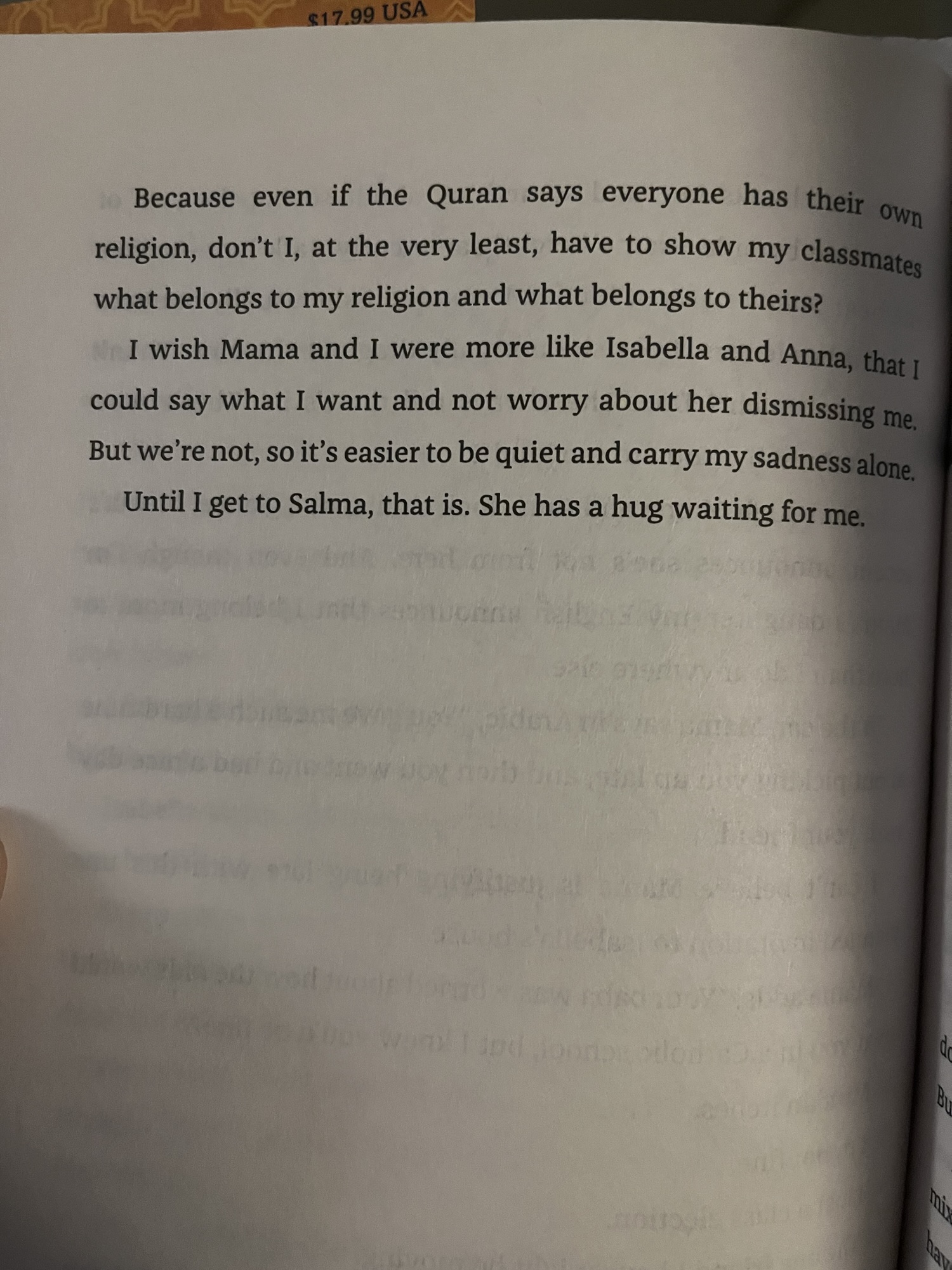
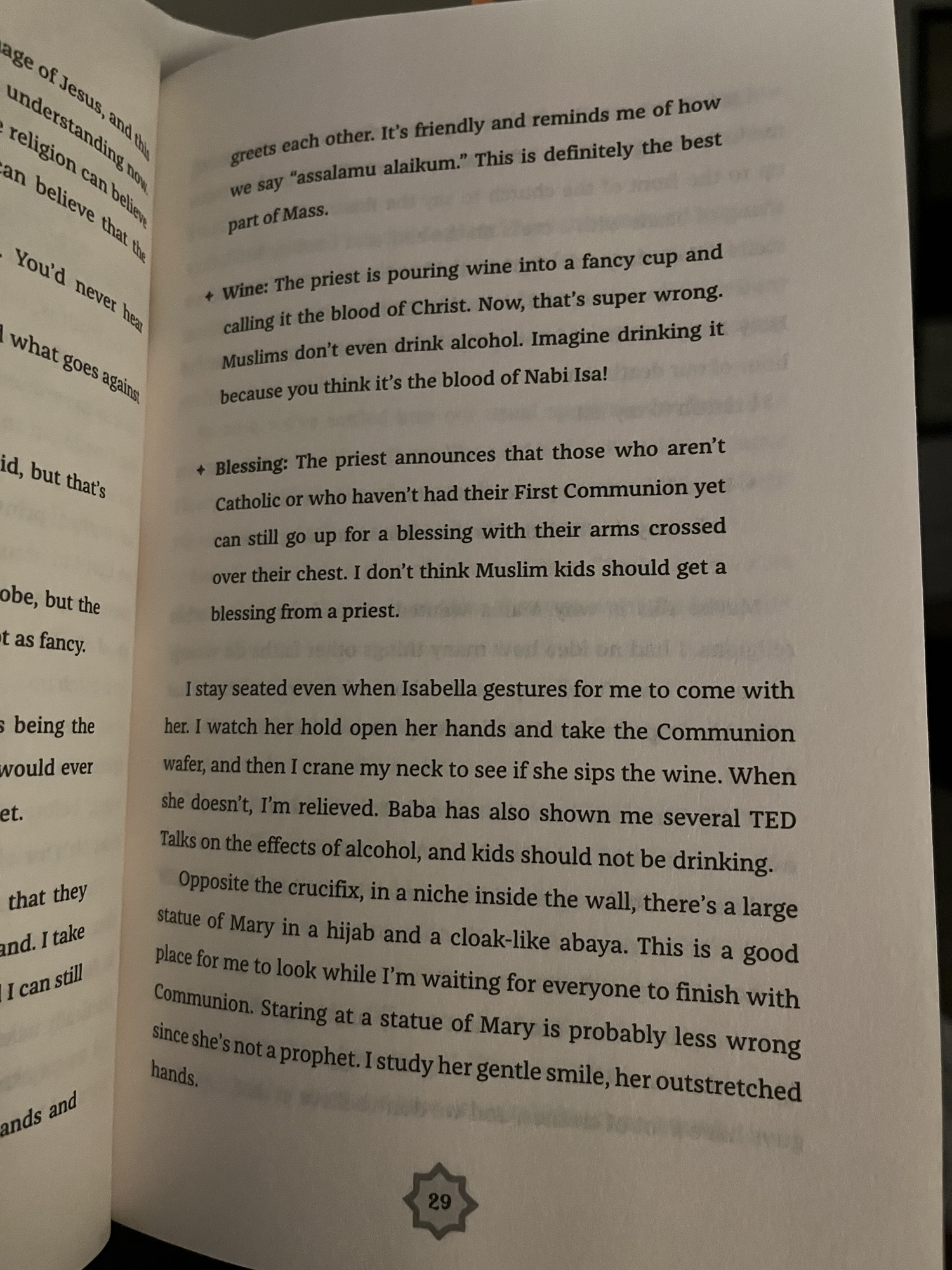
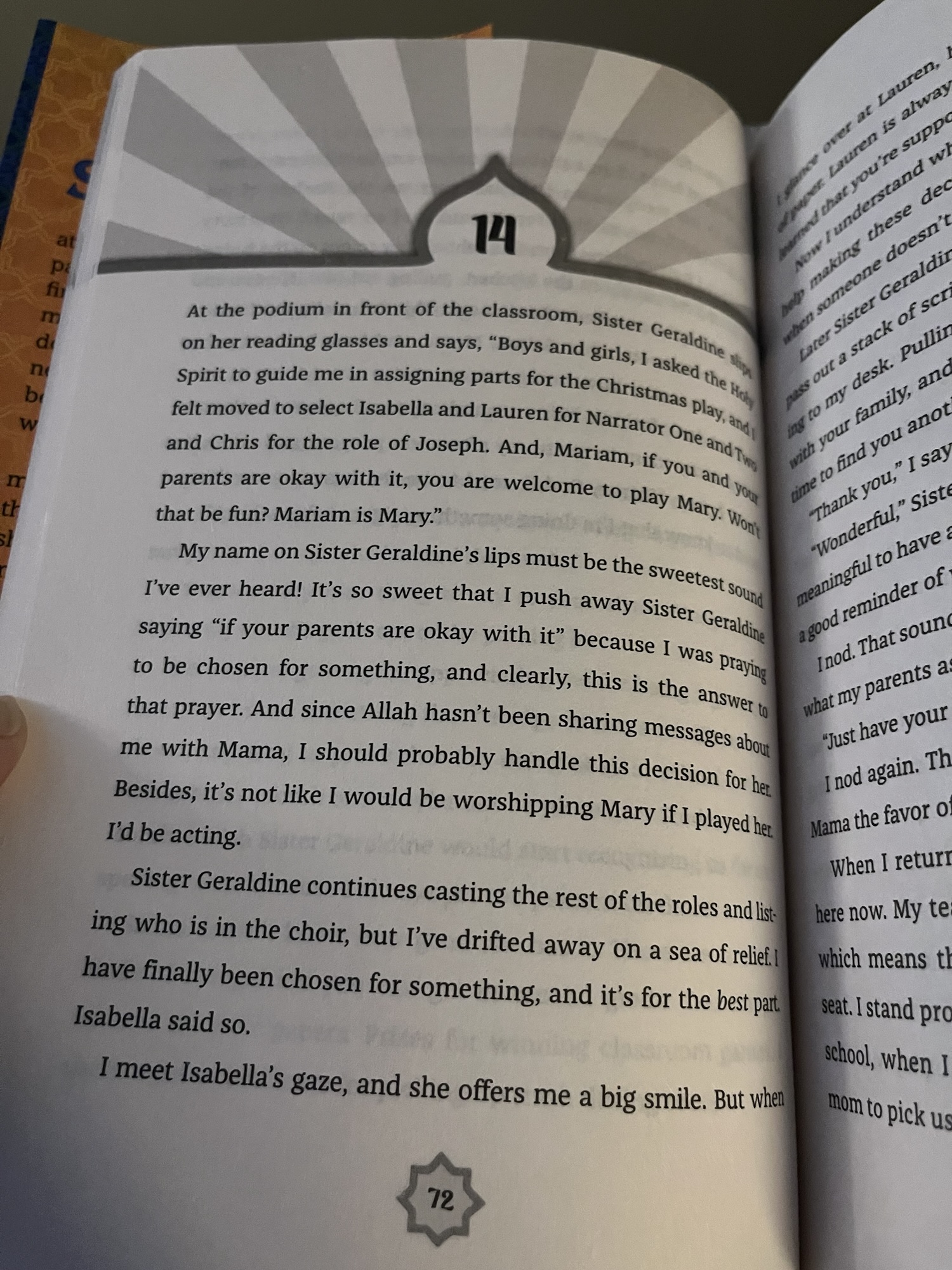
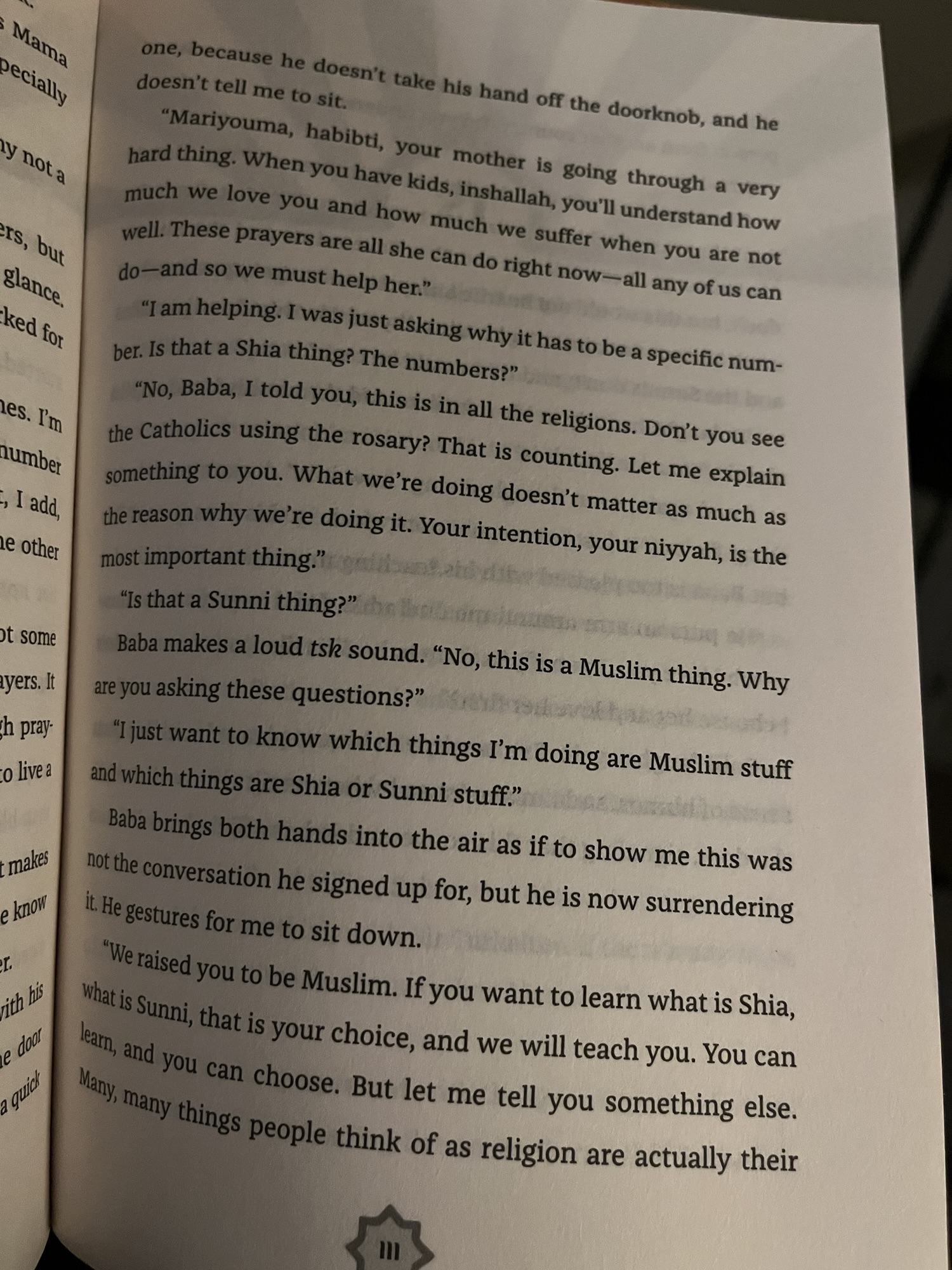
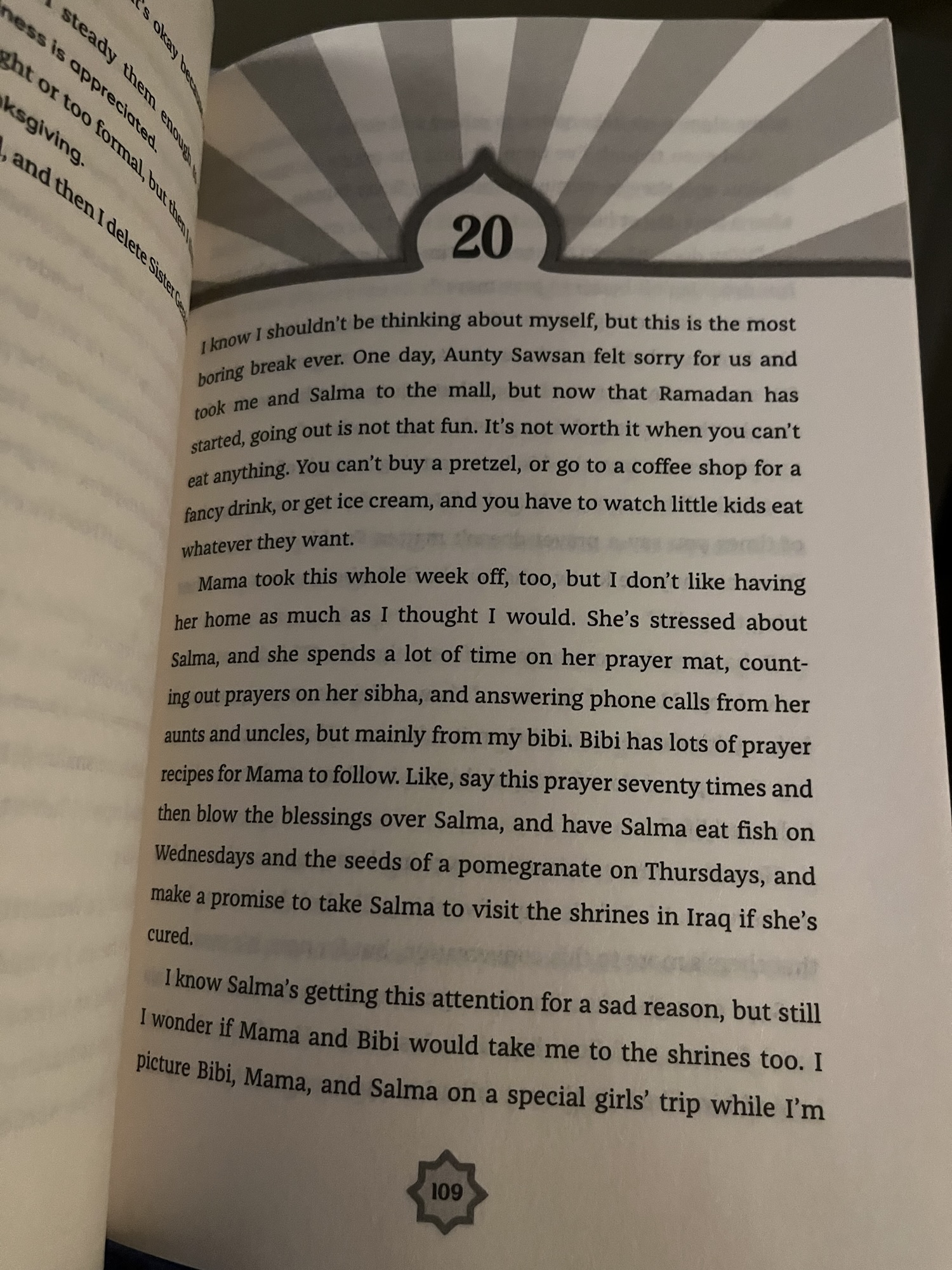
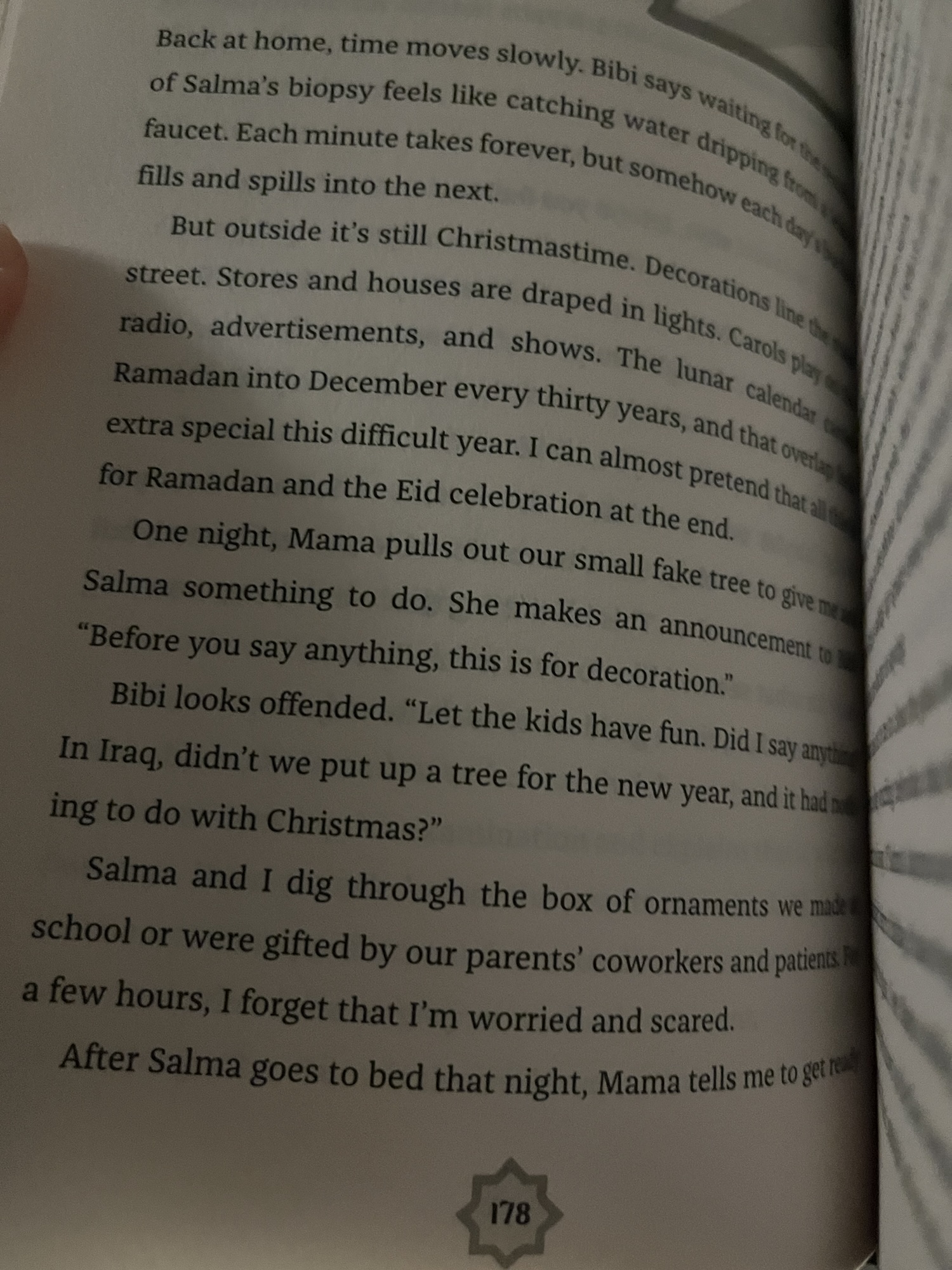
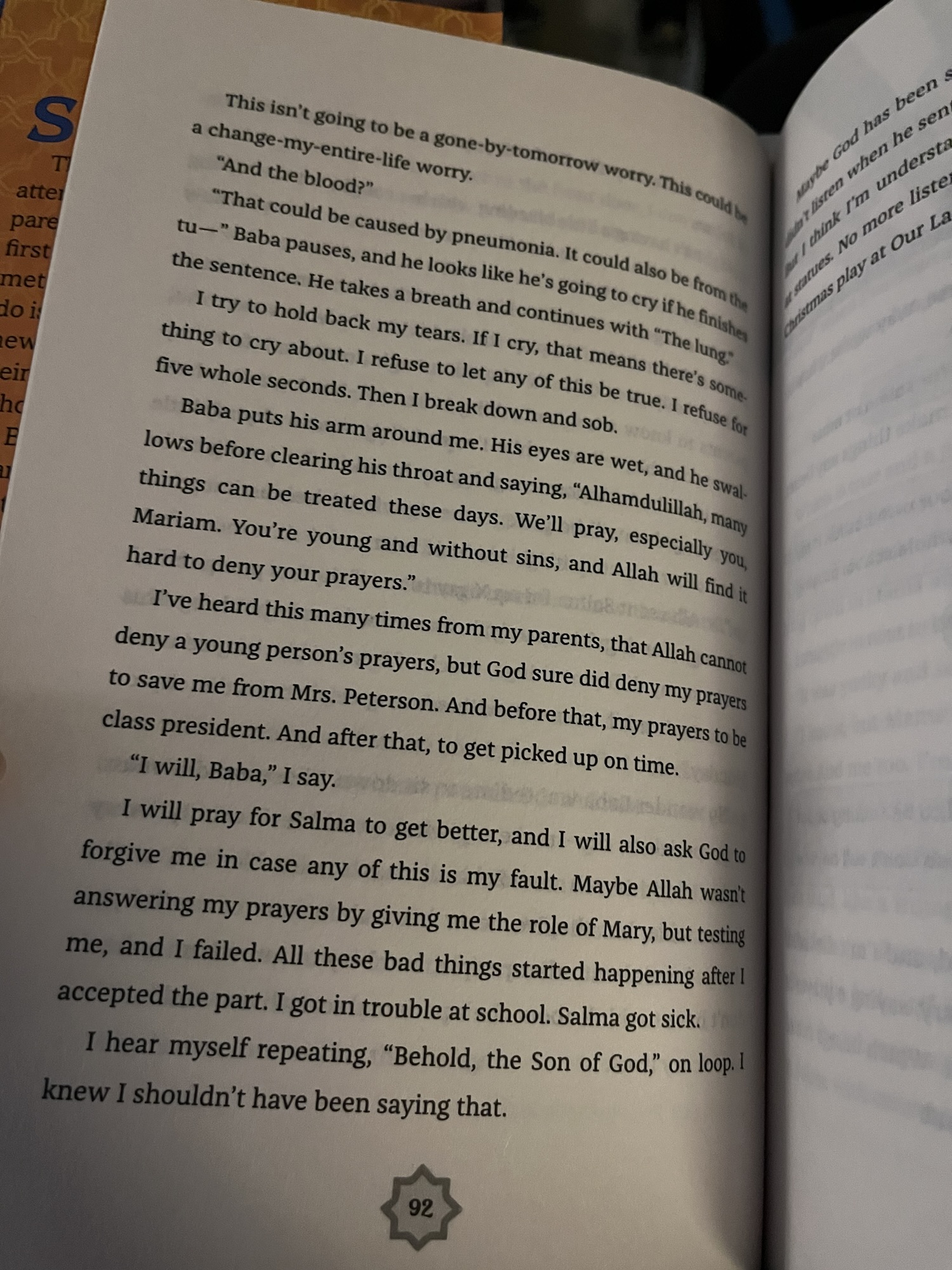
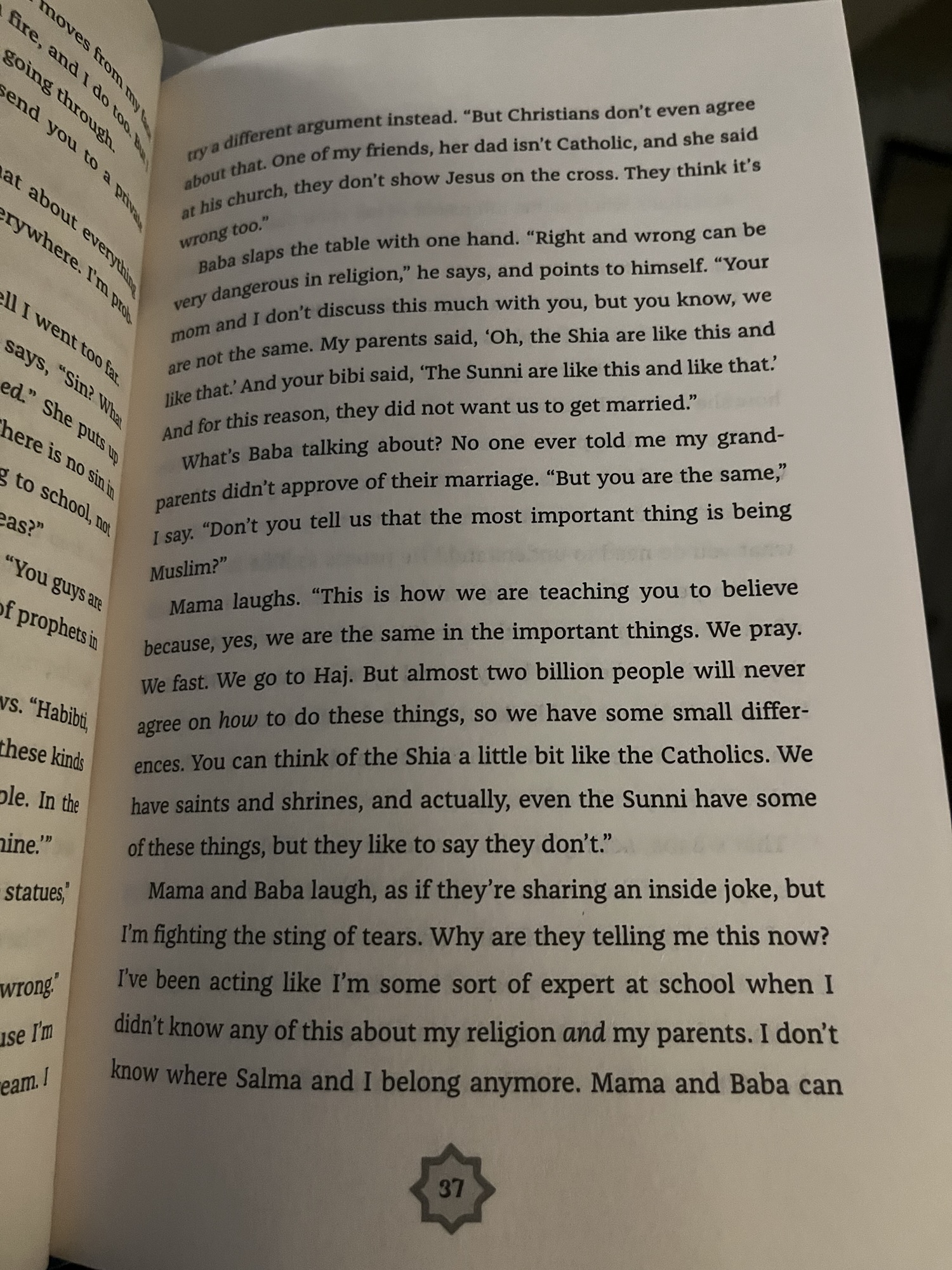
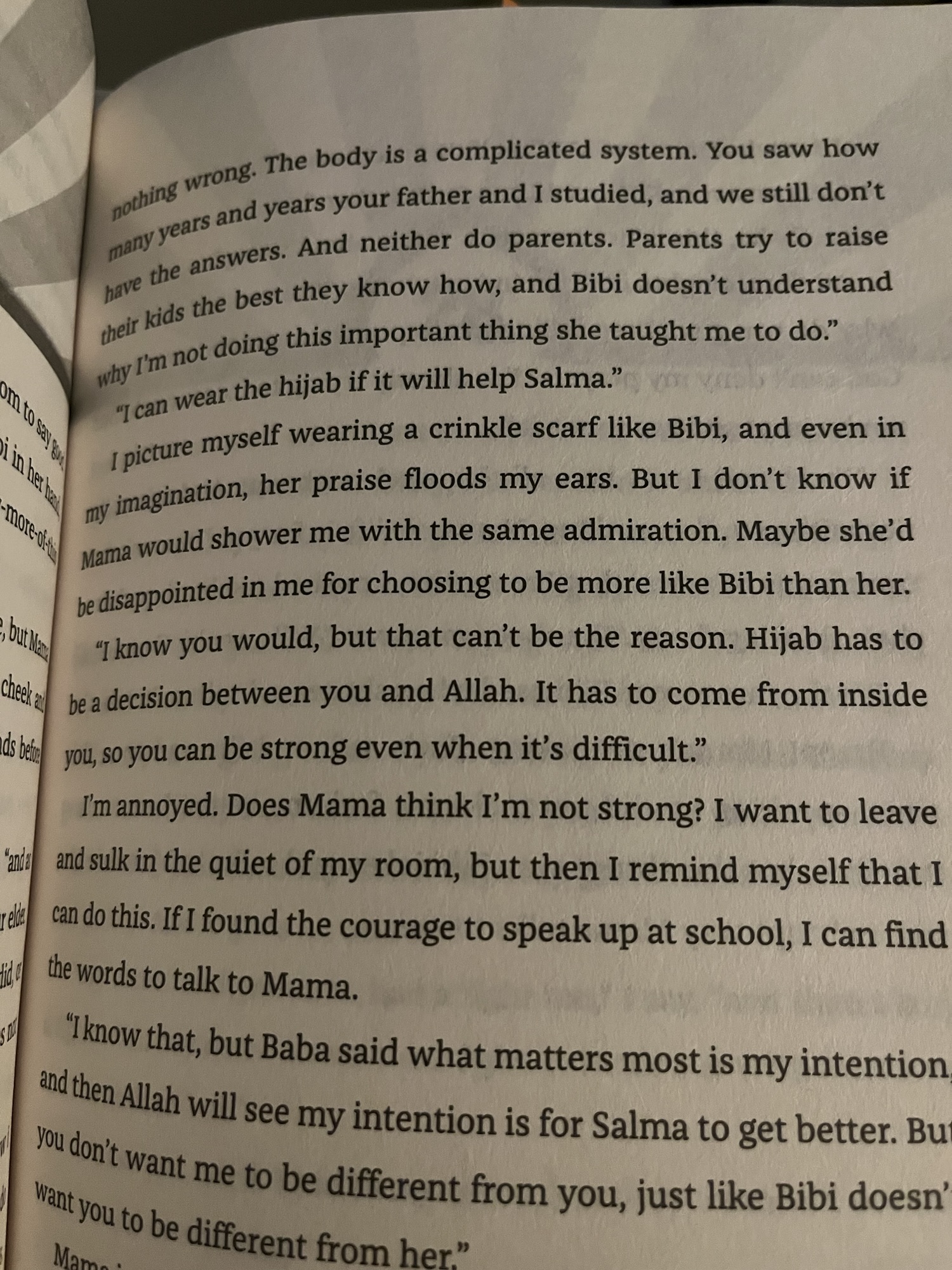
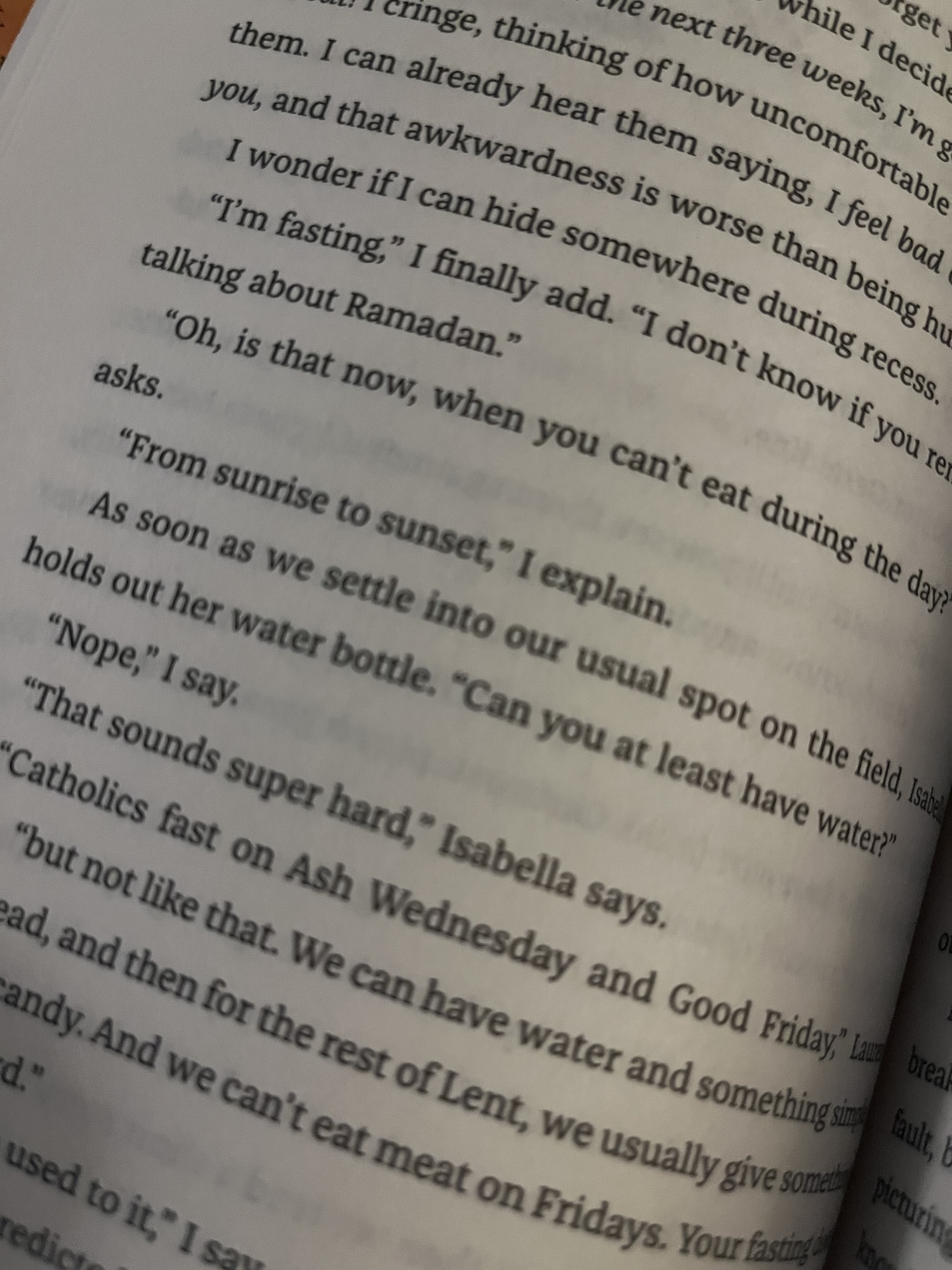
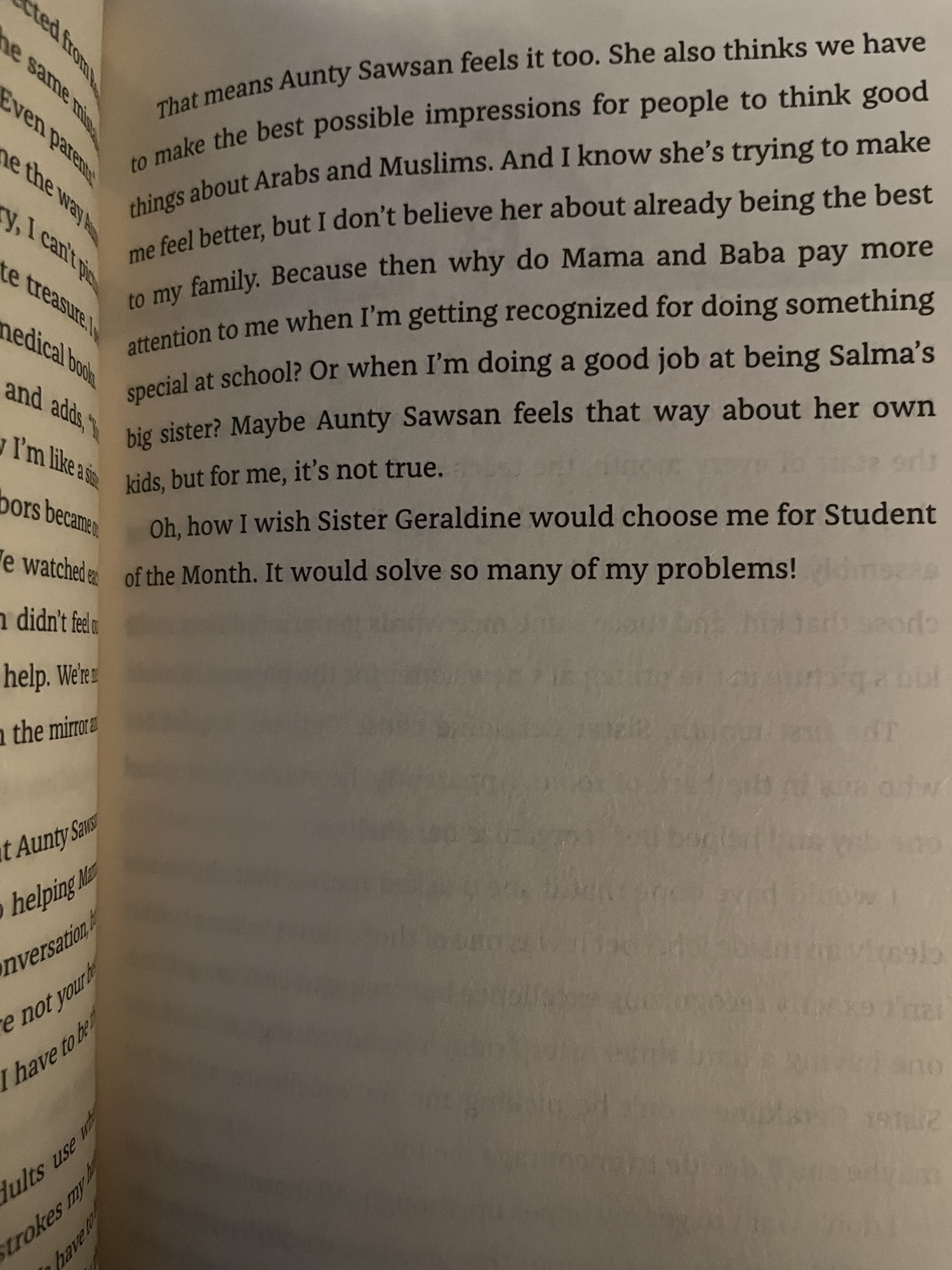
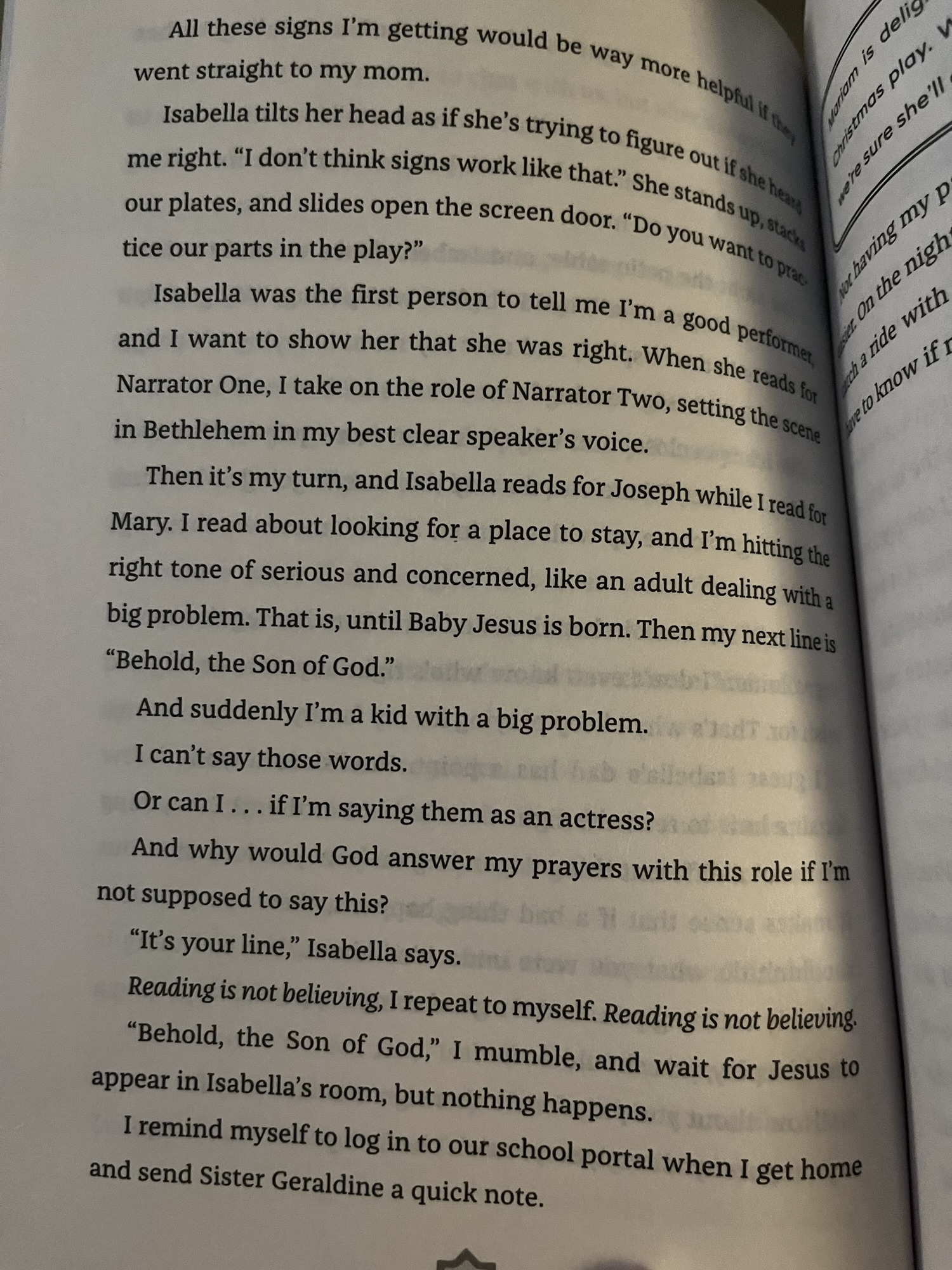
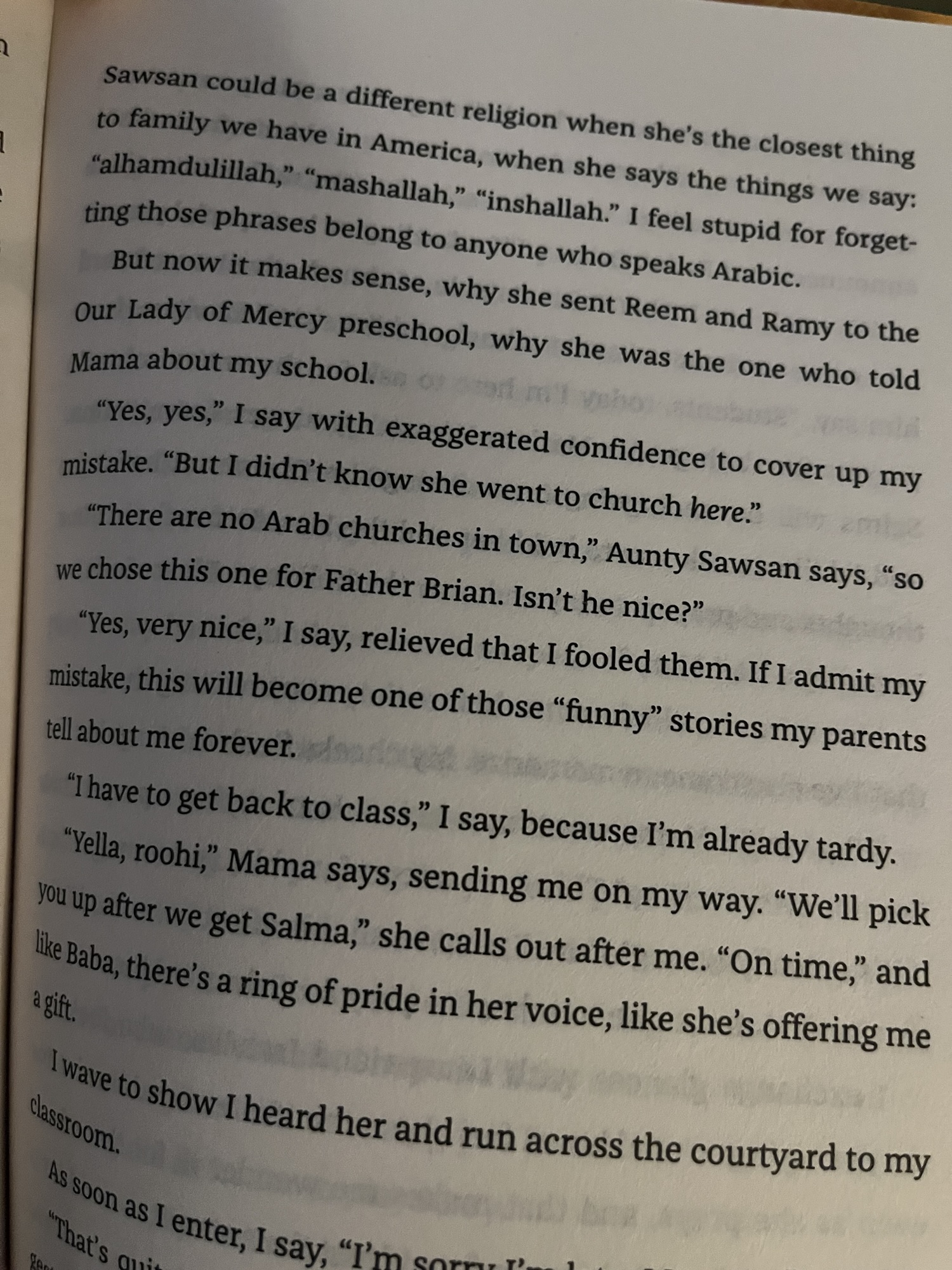
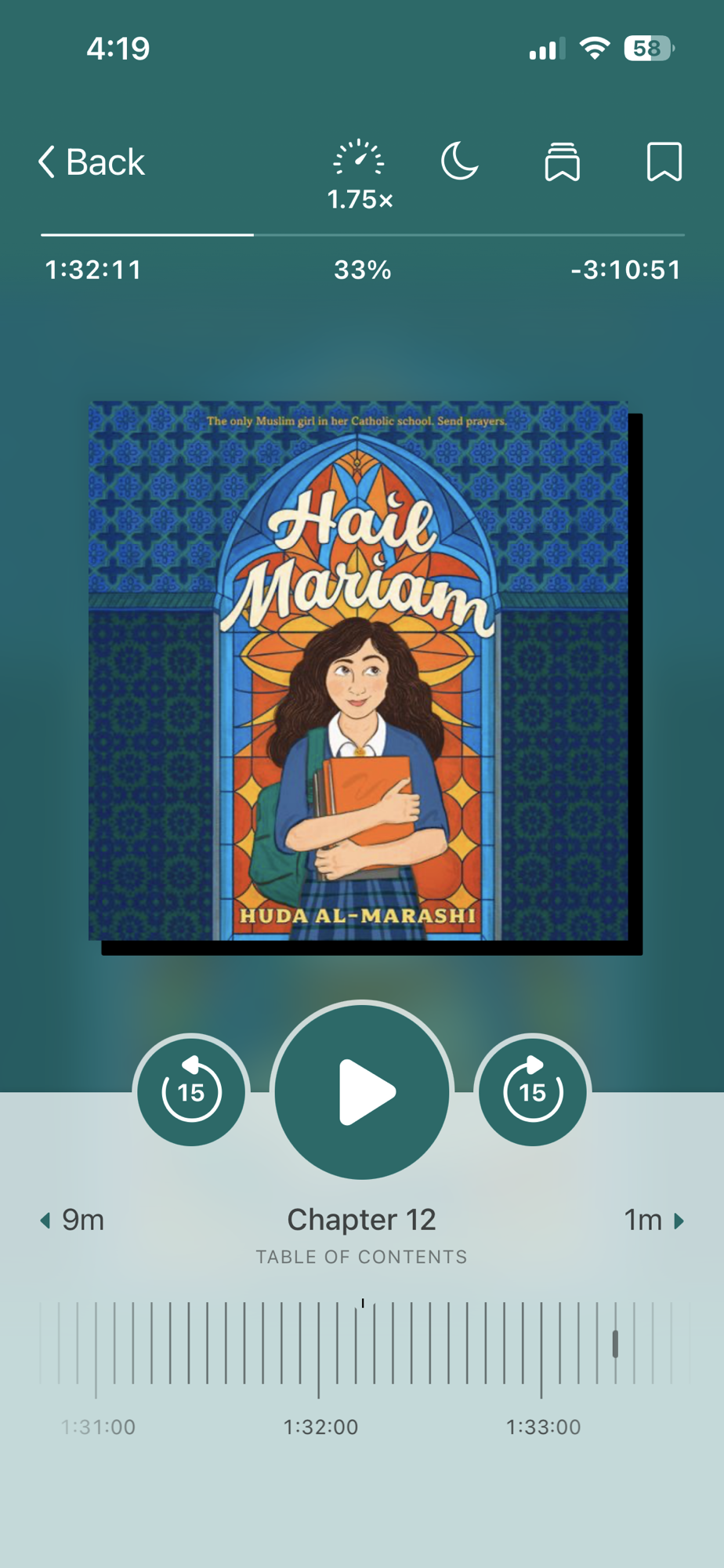
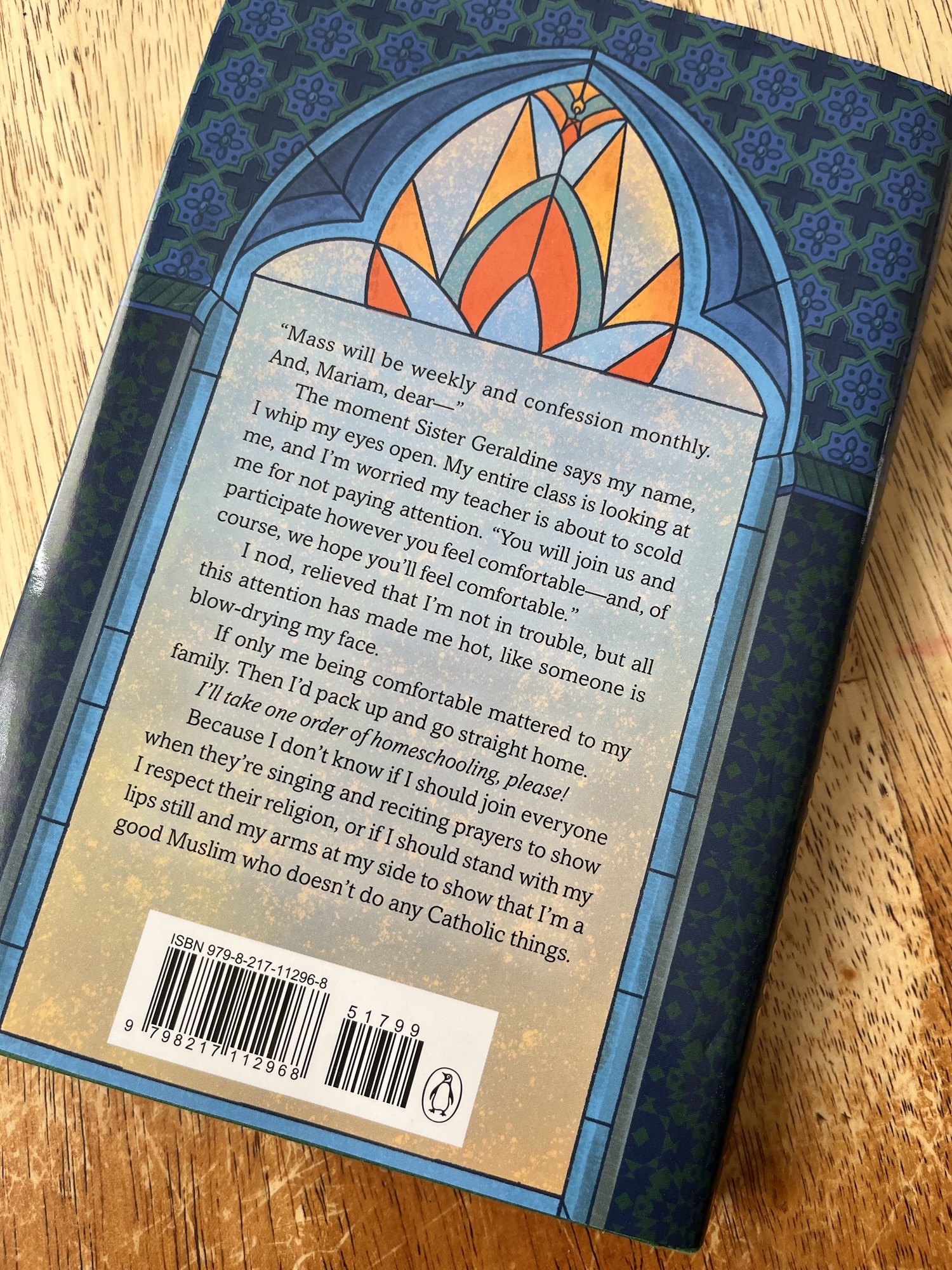
In 188 pages, this middle grade book packs a lot in: immigrant children expectations, the similarities and differences between Catholics and Muslims, Sunnis and Shias, culture and religion, all while sixth grader Mariam is starting a new school, a Catholic one- as a Muslim, having her first period start during church, and handling her sister’s health crisis.  Throw in Ramadan, Bibi coming to visit, family dynamics, friendships new and old, and a school Christmas play, and phew, just writing all that out seems exhaustive, yet somehow the book doesn’t get bogged down in the heaviness of it all.  It stays relatable, funny even, interesting.  The book’s short chapters, Mariam’s voice, and the author’s ability to make this Mariam’s story, not an expectation or explanation of how all Muslims, or Iraqis, or immigrants, etc., should be, really is well done. Written first person through Mariam’s perspective, allows even her lens of comparing what she is seeing at her Catholic school with her Muslim upbringing, to not come across as critical or overly agenda filled, it is just a girl leading with her heart and making sense of life.  A lot, according to the backmatter, is based on the author’s own life, and readers should know they may or may not agree with her conclusions, and her families practices, but I think this book has a lot of potential to be enjoyed on the surface, and start dialogue and understanding if one chooses to look deeper.  I additionally think with Ramadan and Christmas aligning again in a few years, that this book will continue to have wide appeal and be a great resource to remind us that we often have more alike than we think. Just one scene really bothered me, but, I’ll delve into that more below.

SYNOPSIS:
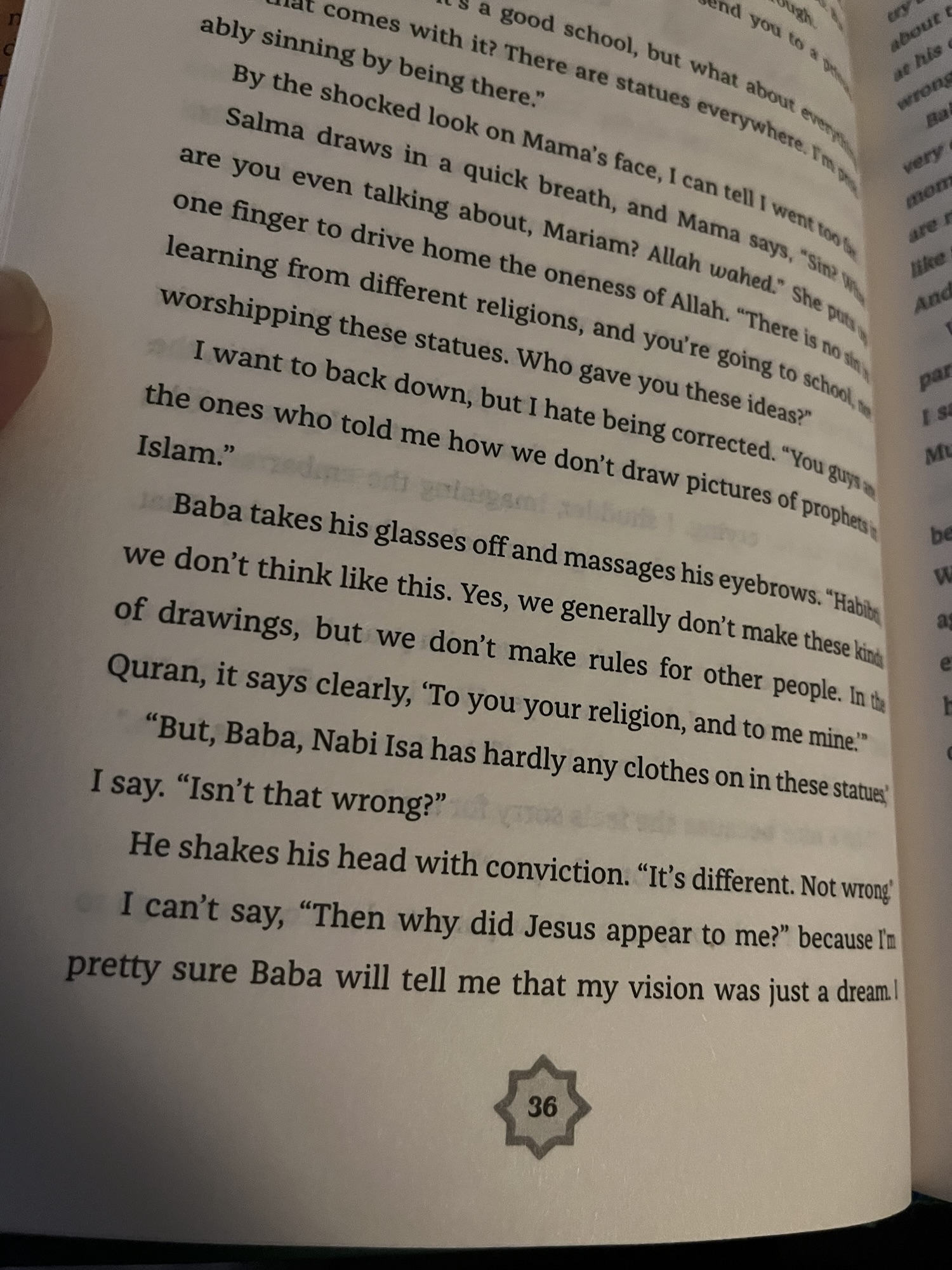
Mariam is the eldest daughter of two Iraqi immigrant physicians, and she has been informed that she is starting a new school, a Catholic one. She would love to discuss this with her mother, but her mom doesn’t seem to have time for her, only her younger sister, Salma, nor understand why a more rigorous school isn’t a good thing. Mariam is expected to be able to handle everything, and for the most part does, to be the best example of Arabs and of Muslims, and to be a great big sister.  But idols of Nabi Isa around every turn and being chosen for the part of Mary in the school play, has Mariam confused about what is ok and what is not, and how to handle it all.  When Salma’s health starts deteriorating, the weight of Mariam’s decisions escalate in her head and she doesn’t want to mess up.  When she learns her Aunty Sawsan is Catholic, her Mom is Shia, and Dad is Sunni, she is even more determined to find common ground, to keep those closest to her happy, her sister healthy, and Allah swt pleased with her.

WHY I LIKE IT:
There is a lot of Islam in the book, and while Mariam sorts through what she thinks is right and wrong, I didn’t feel there was internalized Islamophobia or that she was ashamed of her faith. She doesn’t necessarily have all the answers about how to navigate the situations at hand, but she doesn’t hide her religion, or question the core of it. It is  something she values and believes in.  She does get a little hard on her mom’s accent and culture gets a little confusing, but even when she questions her grandmother’s prayer recipes, I didn’t feel that it was insulting or disrespectful.

The only scene I felt was off was when at the end the family put up a Christmas tree, I get craft wise that it was perhaps to highlight the religion vs culture thread, but I took it as undermining so much of Mariam’s battles at school.  By the family partaking in a clearly Pagan based Christian adopted practices when not prompted by any environment or outside expectation, I felt it was a bit forced in perhaps trying to justify that it is something a lot of Muslims do.  Mariam through much of the book was trying to be respectful to her school and their practices while staying true to herself, the family got gifts for the Christian “family,” and they brough Eid gifts to them, so blurring the line when it wasn’t needed, seemed like so much of Mariam’s stress was for not.  I feel the conversations about culture and religion were sufficient.

FLAGS:
Mariam has a crush on a hospital volunteer, religious discussions, period starting, lying, impersonating her mom in school emails, jealousy, medical worry, illness.

TOOLS FOR LEADING THE DISCUSSION:

No tools are needed, just read, and the discussions will happen


I read and listened to the audio, both were great.


The Broken Kingdom by H.G. Hussein

Standard
The Broken Kingdom by H.G. Hussein

broken kingdom.jpg

An engaging chapter book that blends adventure, friendship, battles, mystery, and faith over 292 pages of easy reading and rich storytelling.  The book appeals to readers 10 and up with it being completely clean and age appropriate for anyone younger who can handle the storyline.  The characters are not just active and practicing Muslims, but the story too, is Islamic in nature.   The story is unabashedly pro-Islam and slightly dogmatic, but not overly preachy and faith is woven in seamlessly throughout the story.

SYNOPSIS:

The Sultan of the Islamic Empire is having a recurring dream that involves a floating city falling when a flying object hits it, when he asks his guiding Imam what it means he learns that the city will be destroyed unless the Sultan assists.  Not knowing where the city is, what the object is, and trusting the Sheikh explicitly, a retired soldier is brought back in to service to find the city and save it.  Adam, before he leaves the capital is joined by two others to help him on his journey, Ali and Umar.  Ali is a quiet man whose voice when reciting is absolutely beautiful and whose eyesight and archery skills are unparalleled.  Umar is the Muezzin and the Grand Mosque and a seemingly close figure to the Sultan with familial ties to the area.  The trio sets off to Benghazi to talk with some Bedouins who were ambushed by some man-beasts and are too afraid to speak of the encounter.  It is believed that their experience and the dream are linked.

To reach Benghazi they must travel first by boat for about a week, while at sea they come across an abandoned vessel that has but one survivor and a lion aboard.  After the lion is killed and the injured man brought with them, they are able to continue to try and get information from the Bedouins.  Finally, the Bedouins and the trio are off to the place of the attack and the journey moves on.  When a rockslide and attack from these same mysterious beasts separates the group, Adam, Ali, and Umar are on their own to make there way through the mountains and figure out the threat on their own without the Bedouins.  They journey through a river within a mountain for days on end before meeting soldiers that take them back to their unnamed city.  The city is the one from the dream.  And as they must search to understand what plagues the inhabitants, how to defeat it, and how to survive, they suffer loses, confusion and only a few answers.   They do save the city from the immediate threat, but not from a larger looming one.

WHY I LIKE IT:

The book reads really smooth, a lot of self published chapter books are all over the place, and this one, sticks to the story pretty well.  There are a few tangents, such as the lion on the ship, that really have very little baring on the story, except to show maybe how good of an archer Ali is, however, most are mildly amusing and thus not terribly frustrating.  There are a few smaller incidents that make the book a little less cohesive, for example a passage about a man named Tarek, who brings the Sultan a message and is rewarded with gold, or such detail about Umar not being allowed to go on the assignment and then the Sultan allowing him to go, perhaps it is to show the Sultan’s generosity and willingness to take other people’s opinions in to consideration, but they aren’t particularly smooth anecdotes to the book and read a bit unpolished.  Often these little dives into side issues with fair amounts of detail made me think they would play a role later in the book, but by-and-large, they don’t. One that particularly stood out was Adam meeting the Chief’s daughter in the forbidden woods. I still really want to know why she and her children were there.  I also wanted more information about the man-beast figures and the man and woman that were so quickly killed, and the markings on the trees and in the caves (trying not to spoil too much), in the climax.

I love that the book is Islamic fiction from top to bottom, there are lots of morals exposed and teachings mentioned in real tangible situations.  The character’s pray and carry themselves at all times as Muslims and it is refreshing to read.  Characters in the book take shahada based on the manners of the Muslim characters and the readers see and understand repeatedly the power actions and values have in defining a person.  One of my favorite exchanges in the book is when Adam tells Ali, “The main reason for failure is manners.  To be specific, lack of manners.”  The details continue, and hopefully reinforce and articulate what parents everywhere are trying to teach their children.

The font and binding and all are adequate, I don’t love the cover though.  It seems this is the second cover, and I wish it was more eye catching, it is really bland, and unfortunately won’t compel readers to pick it up.  I also really wish their was a map.

FLAGS:

There is violence, nothing sensationalized or celebrated and it even mentions how heavy hearted characters should be about going in to battle and taking a life.

TOOLS FOR LEADING THE DISCUSSION:

I would love to do this as a middle school book club book. I’d love to hear how the students take the Sultan being referred to as Allah’s representative on Earth.  I get Leader of the Believers, and even Caliph, but I felt this description to be a bit grandiose.  I actually thought it was perhaps a Shia perspective, nothing wrong with that, it just wasn’t something I’d ever heard before and yes I assumed, but the author said, “Of course not.“  He then said, “The Caliph must ensure that the laws of Allah, Most High, are present on Earth.  Every Caliph represented the Creator ensuring Shariah was present, the same as every Prophet and Messenger.” Still not completely clear, I asked a trusted source (not Google) who said it comes from the Ummayads under Muawiyah. So, I’m not sure if anyone else would be hung-up on this, but it is something that stood out to me, although definitely not making the book something to avoid.

I think kids will have strong opinions on the mystery at hand being the book ends on a cliff hanger.  With a lot of questions still up in the air and no real right or wrong answer, I think discussing the book would be a lot of fun.

The book’s website: https://www.thebrokenkingdom.com/


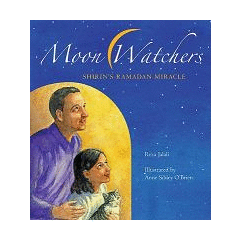
Moon Watchers Shirin’s Ramadan Miracle By Reza Jalali Illustrated by Anne Sibley O’Brien

Standard

moon watchers


This book is similar to Night of the Moon By Hena Khan as it focuses on a young girl experiencing the month of Ramadan and Eid, through the waxing and waning of the moon.  This is an AR book 3.5 and the text is driven by dialogue between nine-year-old Shirin and her Persian American family.

Too young to fast Shirin is feeling left out of the blessed month of Ramadan, her older brother Ali and her bicker until her Grandma encourages her to do “part-time fasts.”  Facts about Islam and Ramadan are slightly peppered in to the story, primarily through vocabulary, and the characters do discuss hijab and why Shirin’s mother doesn’t wear it.  It is important to note that the tale is told from a Shia perspective that is made clear as it explains how the family prays, touching the prayer stone, and kissing it three times.  The illustration here is more peculiar as it shows Shirin praying next to her dad and her brother, mom, and grandma in the row behind.

The pictures show a happy family that most readers or listeners would probably be able to identify with, along with the sibling bickering and excitement felt with the blessed month.  Persian culture is represented in the foods and sweets they prepare as a family and the henna Shirin gets on her hands.  The family prays together, spends time together and they discuss doing good deeds, not just fasting in Ramadan.

The book is beautifully done, but I think because of the brushing aside of hijab being a cultural practice, not a religious one and the presentation of prayer, I don’t know if I would give the book without discussion to a third grader in a Sunni school to read independently.  As for story time, I might simply omit those few sentences, but I’m not sure, it would depend on my audience.

If your children are aware of the differences between Sunni and Shia or you are Shia, this book is wonderful.  If your children would be greatly confused or get hung up on a few lines in a 32 page book, then it would be better to hold off.