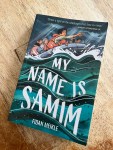
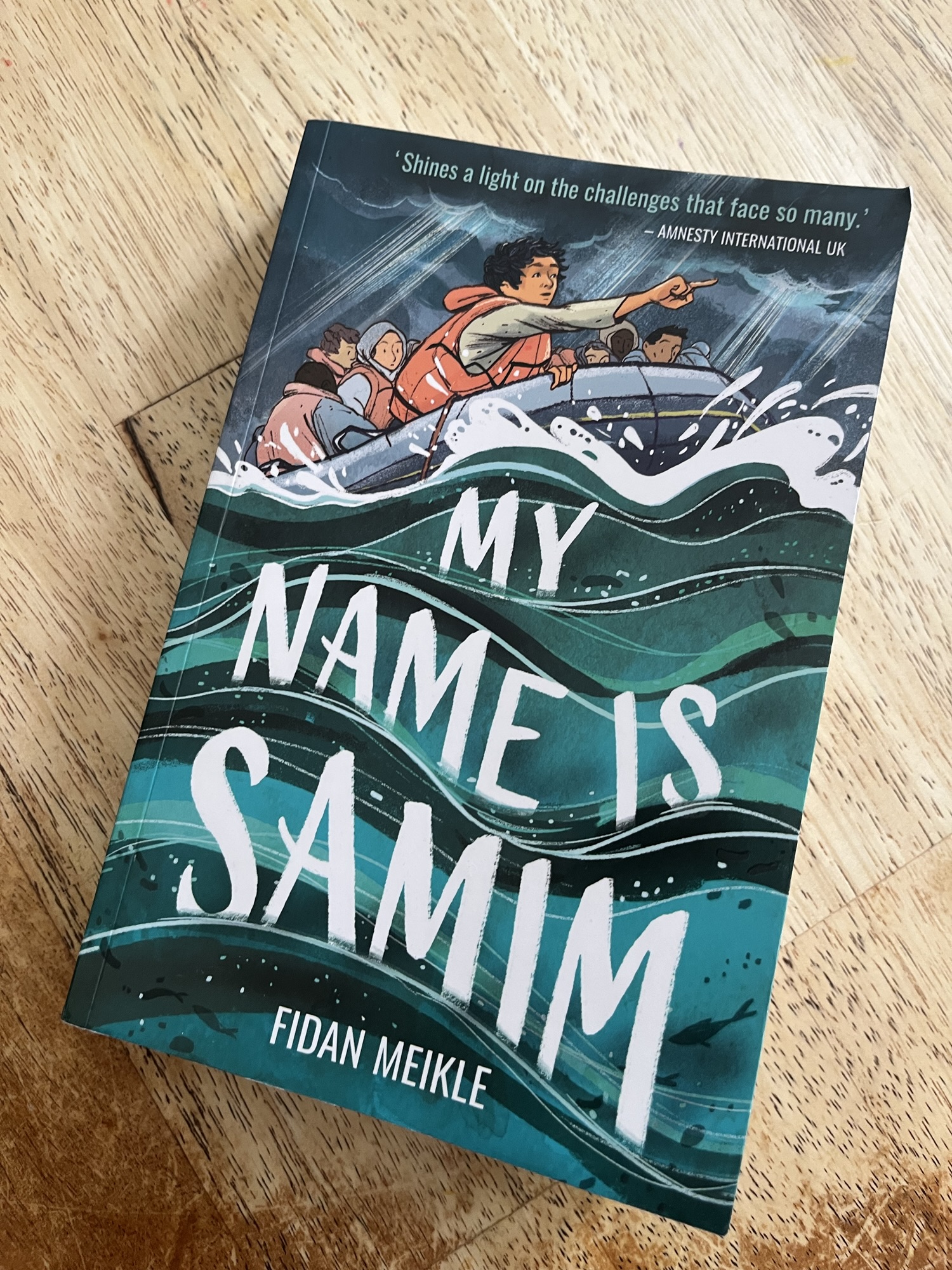
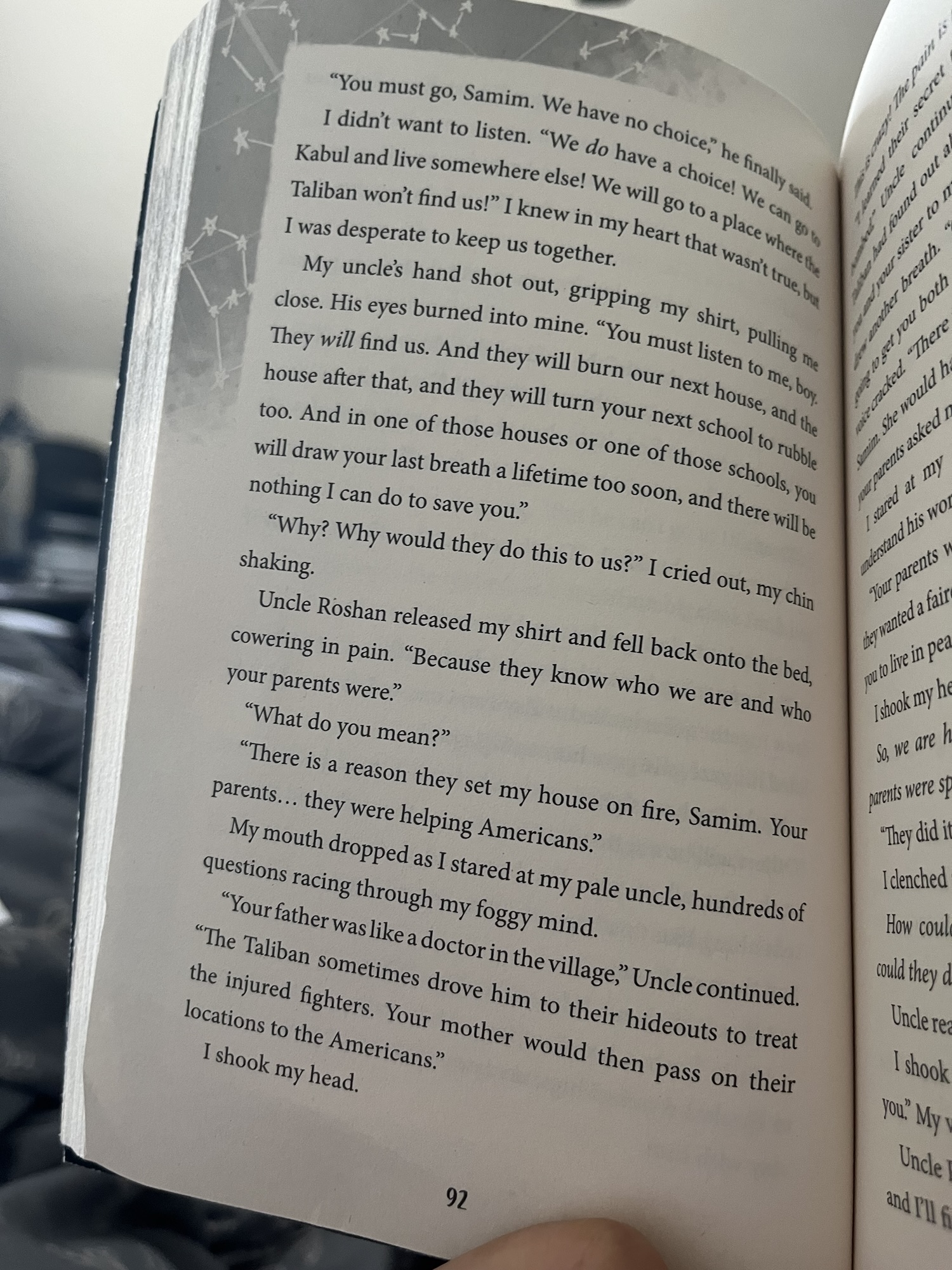
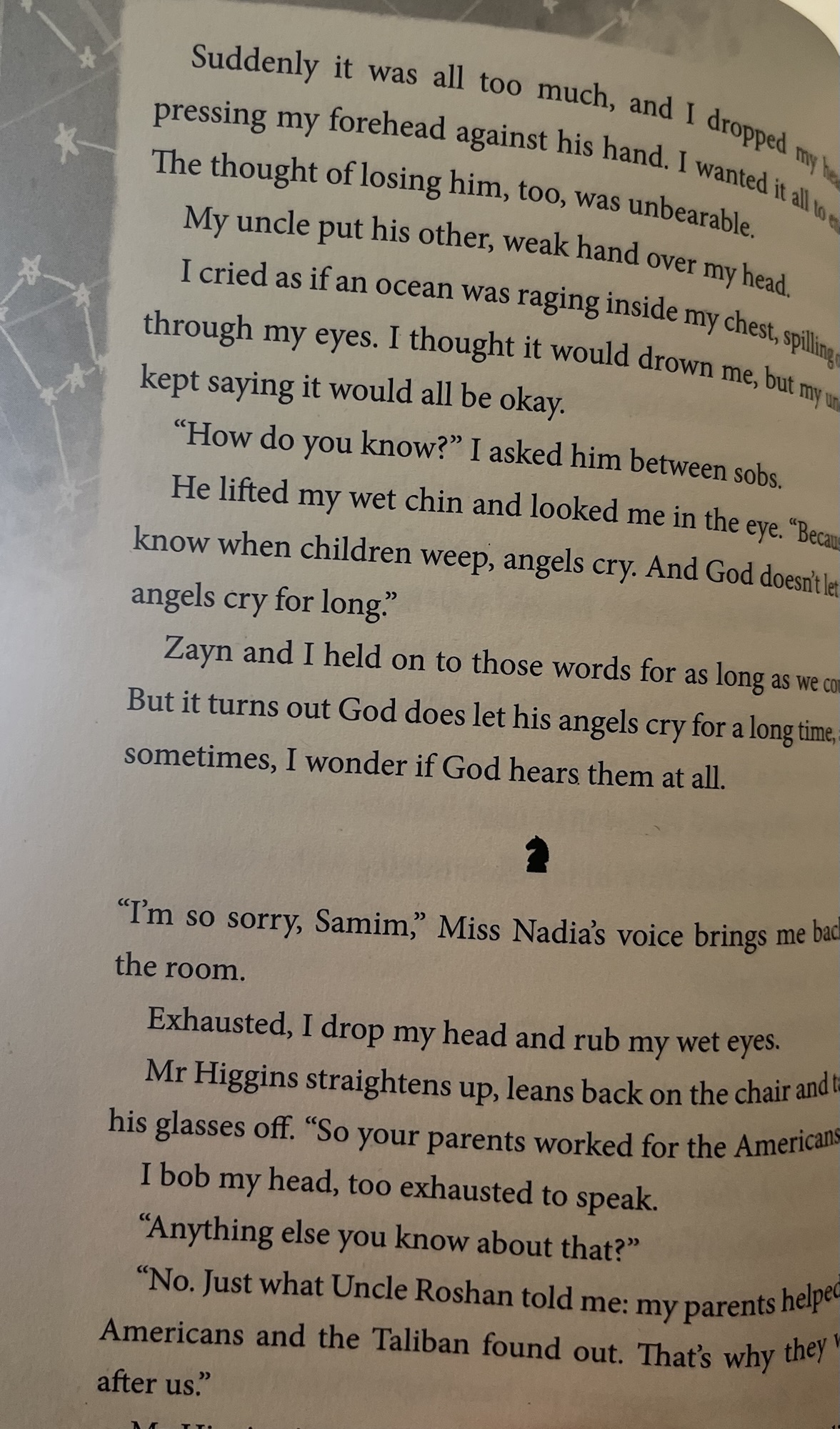
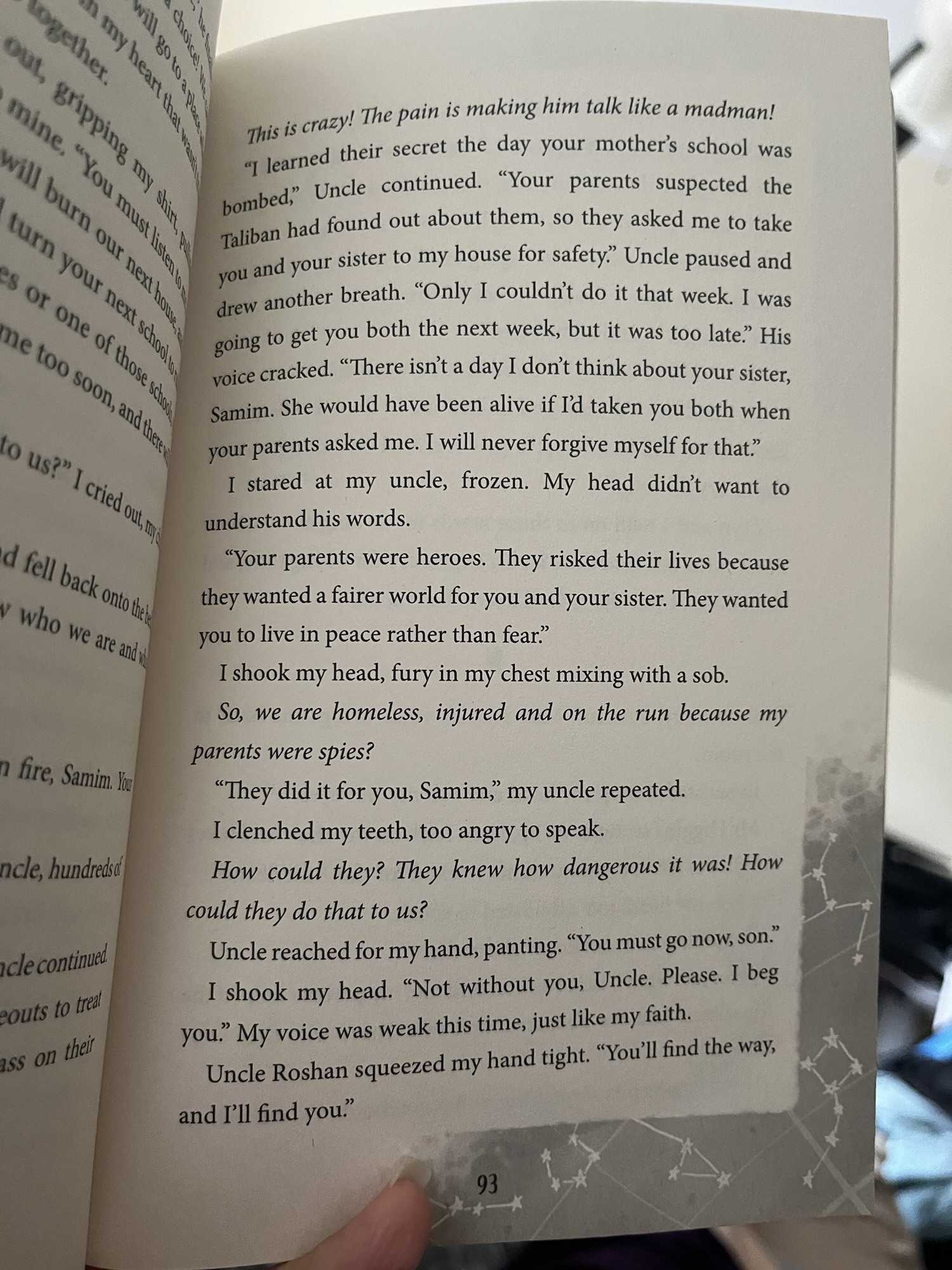
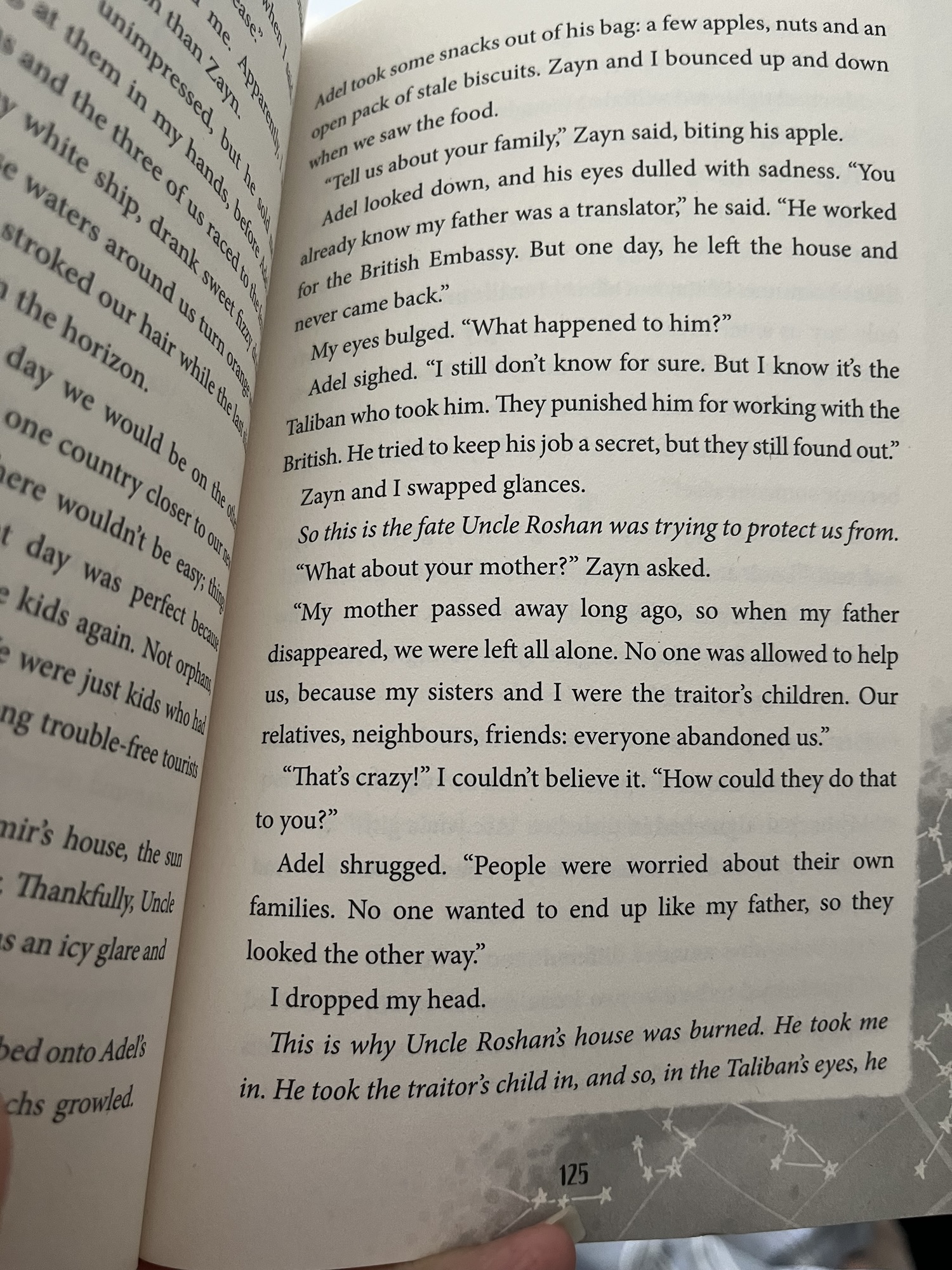
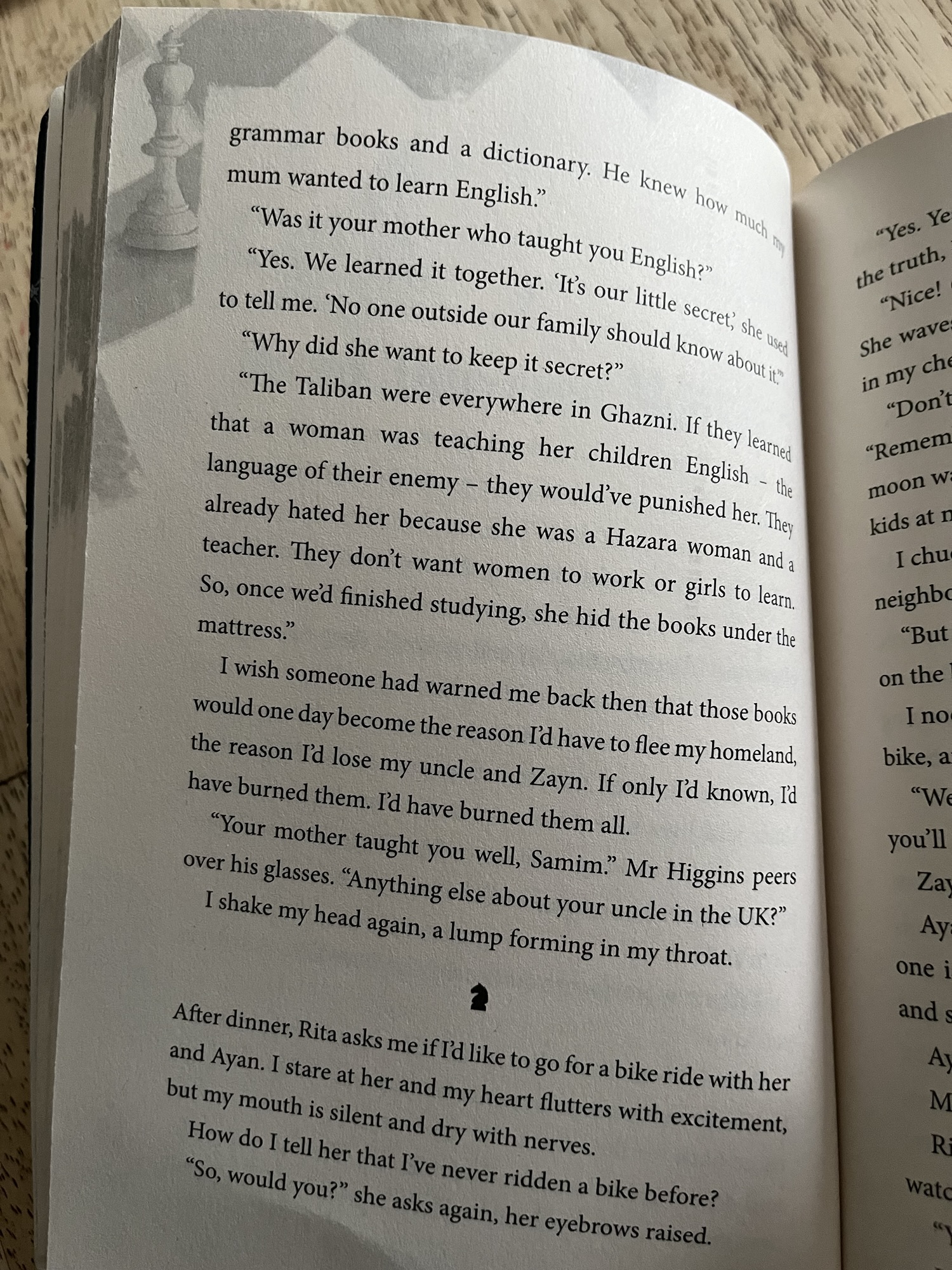
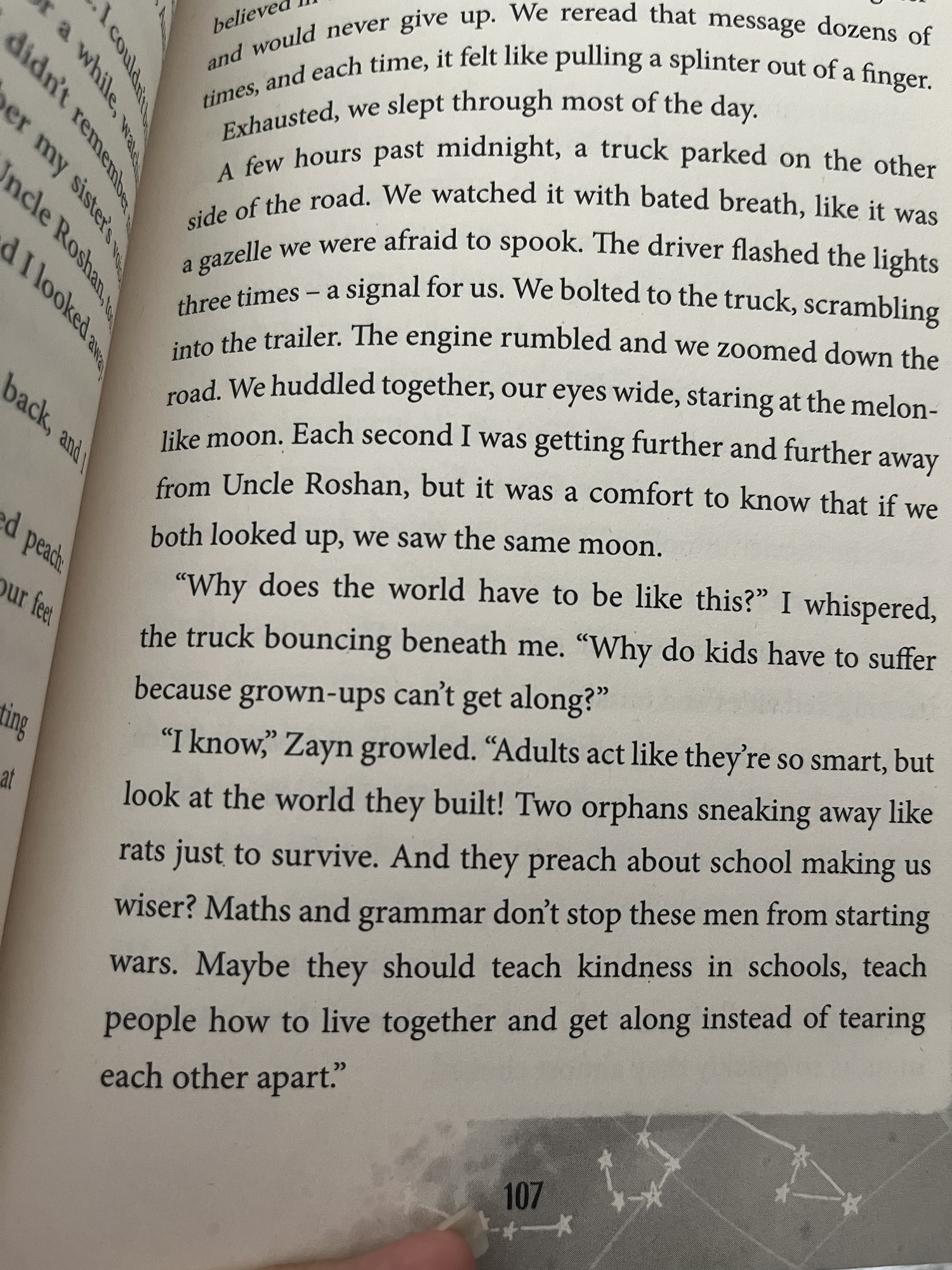
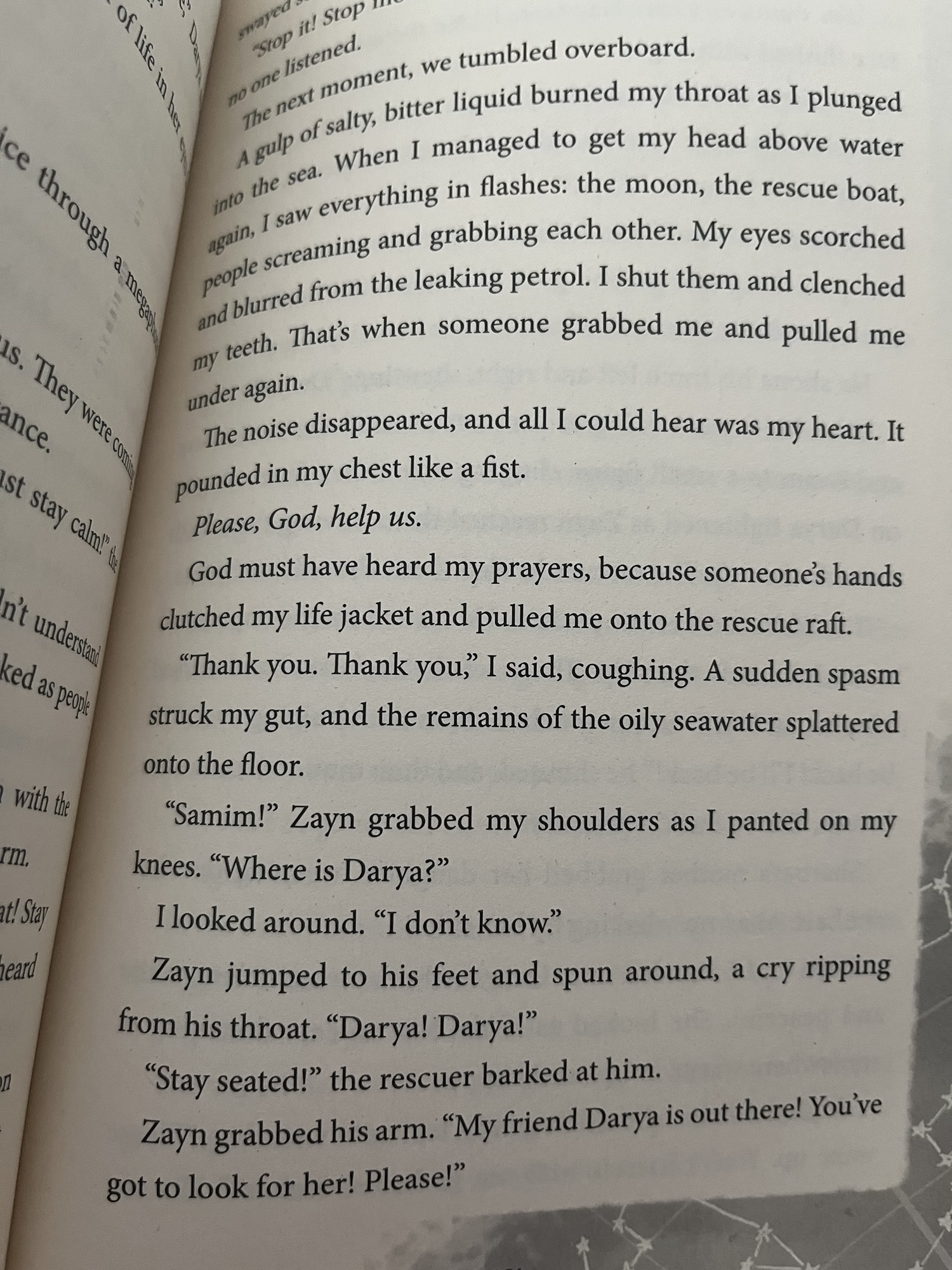
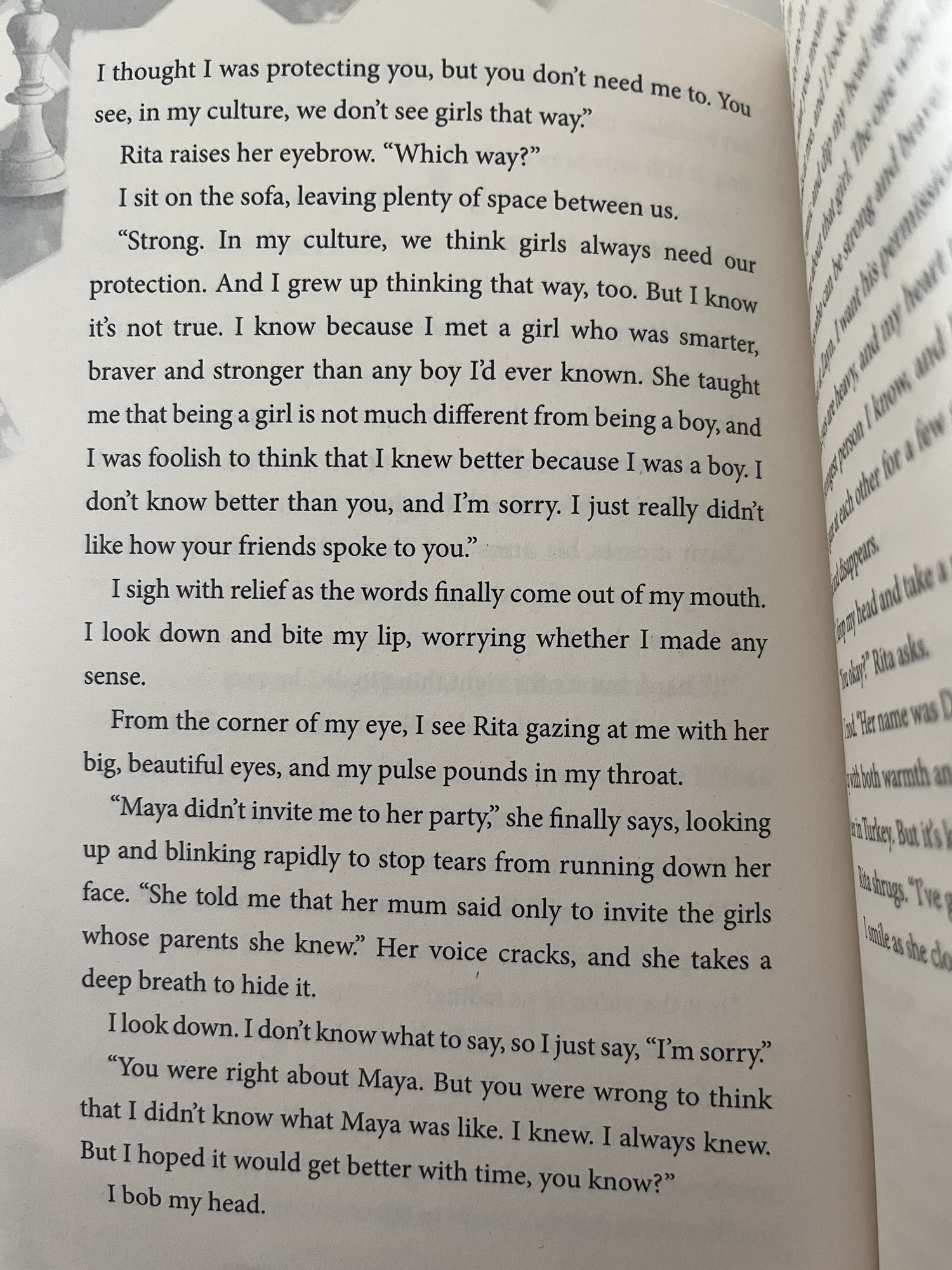
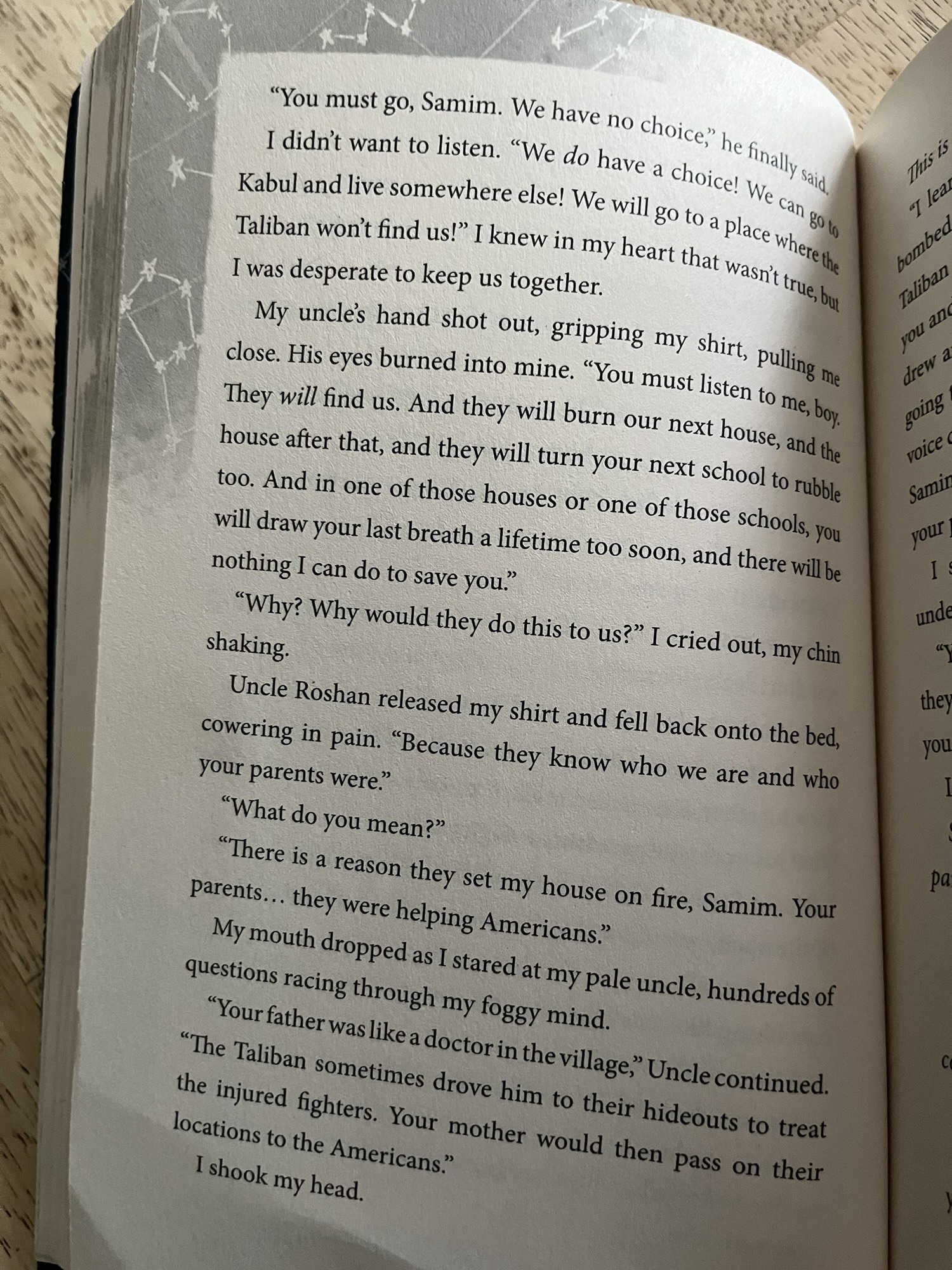
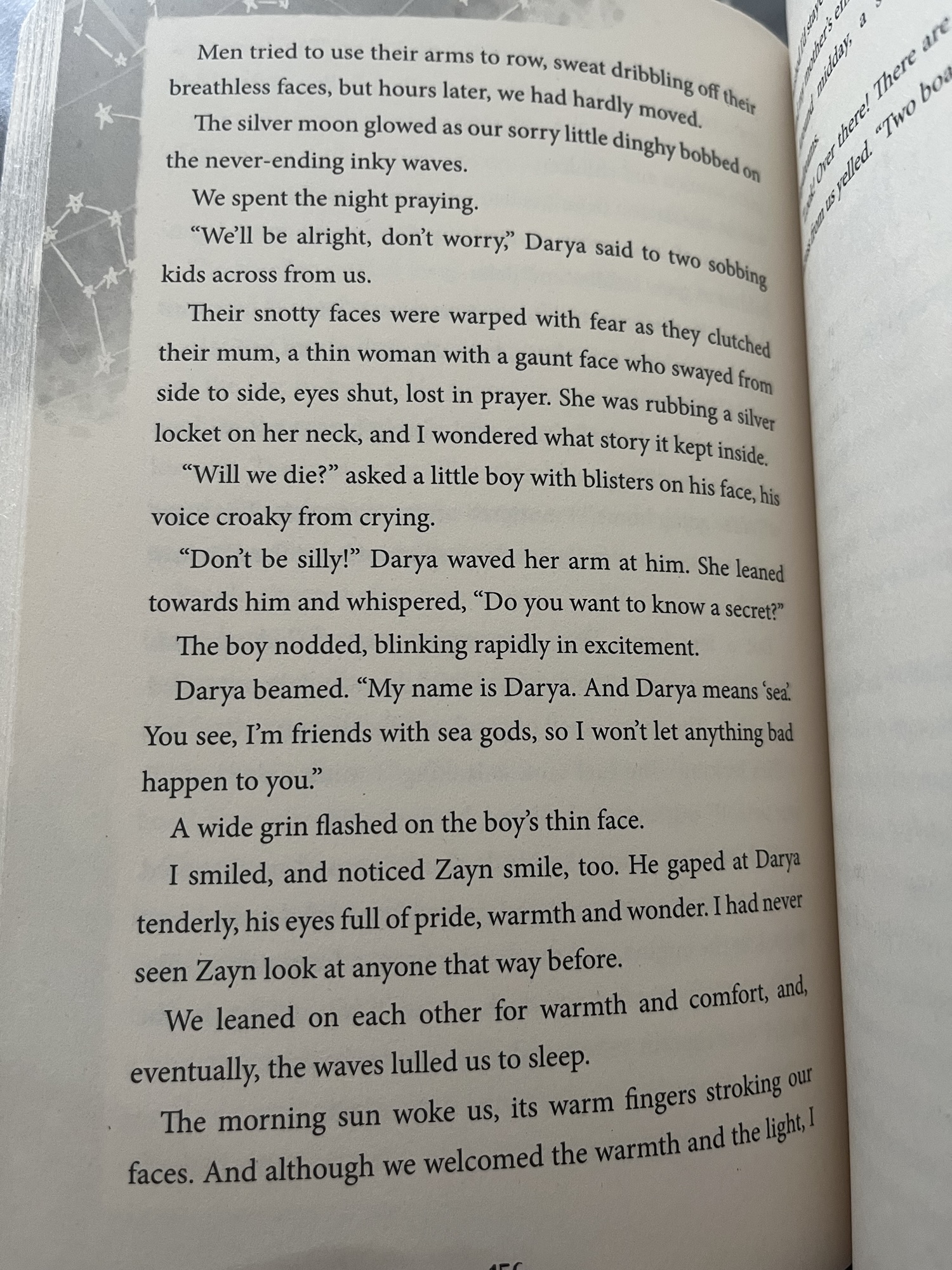
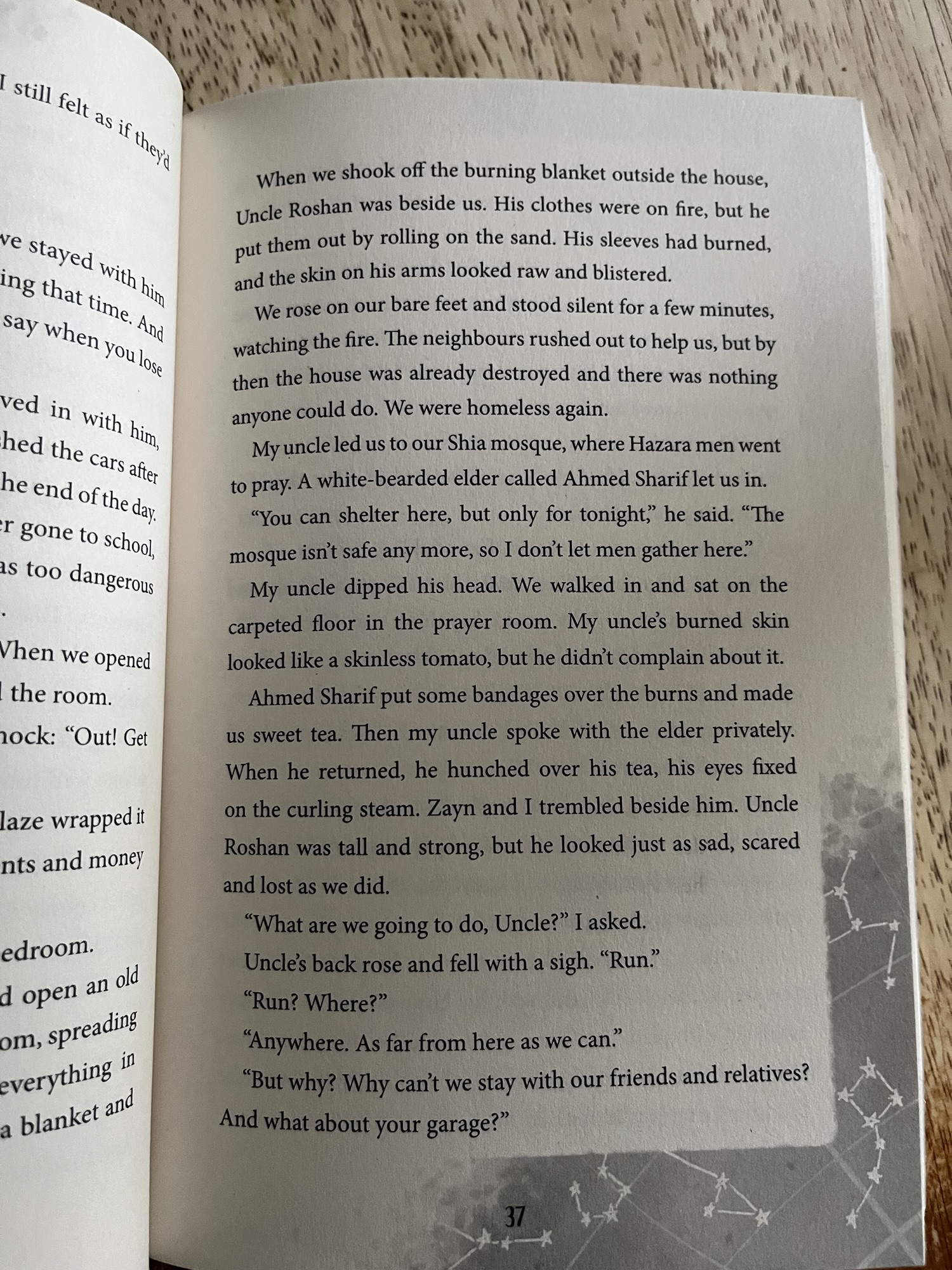
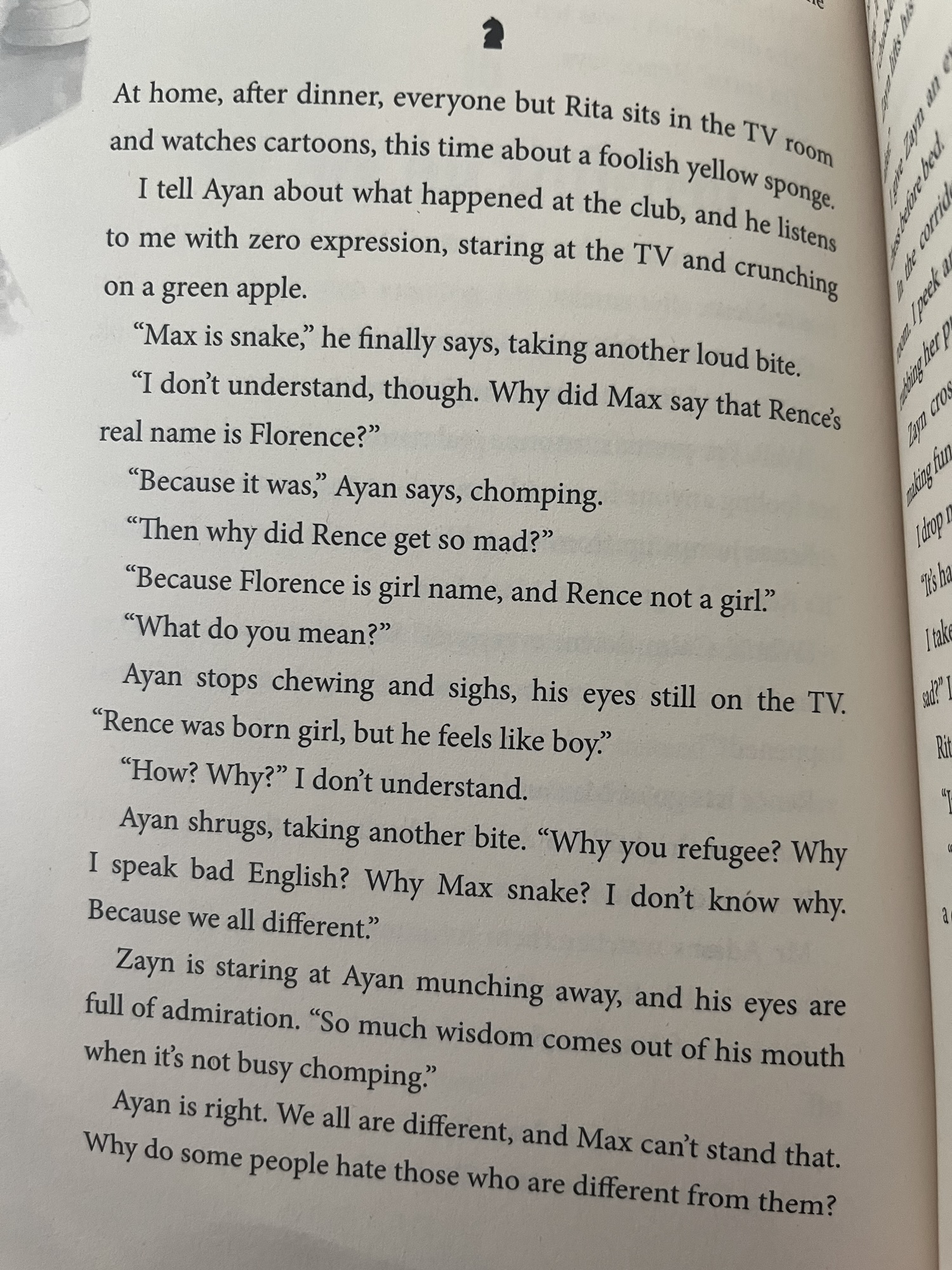
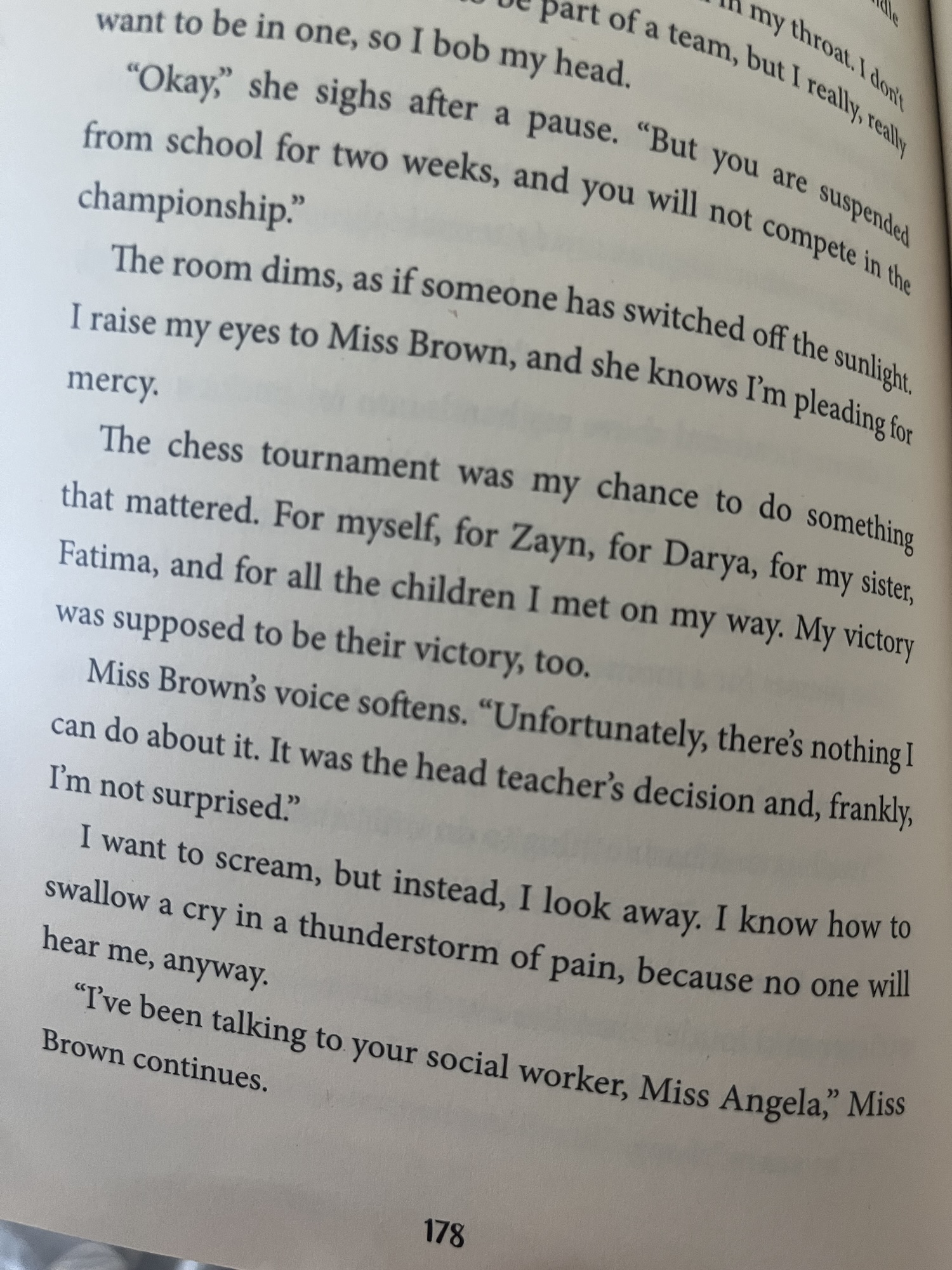
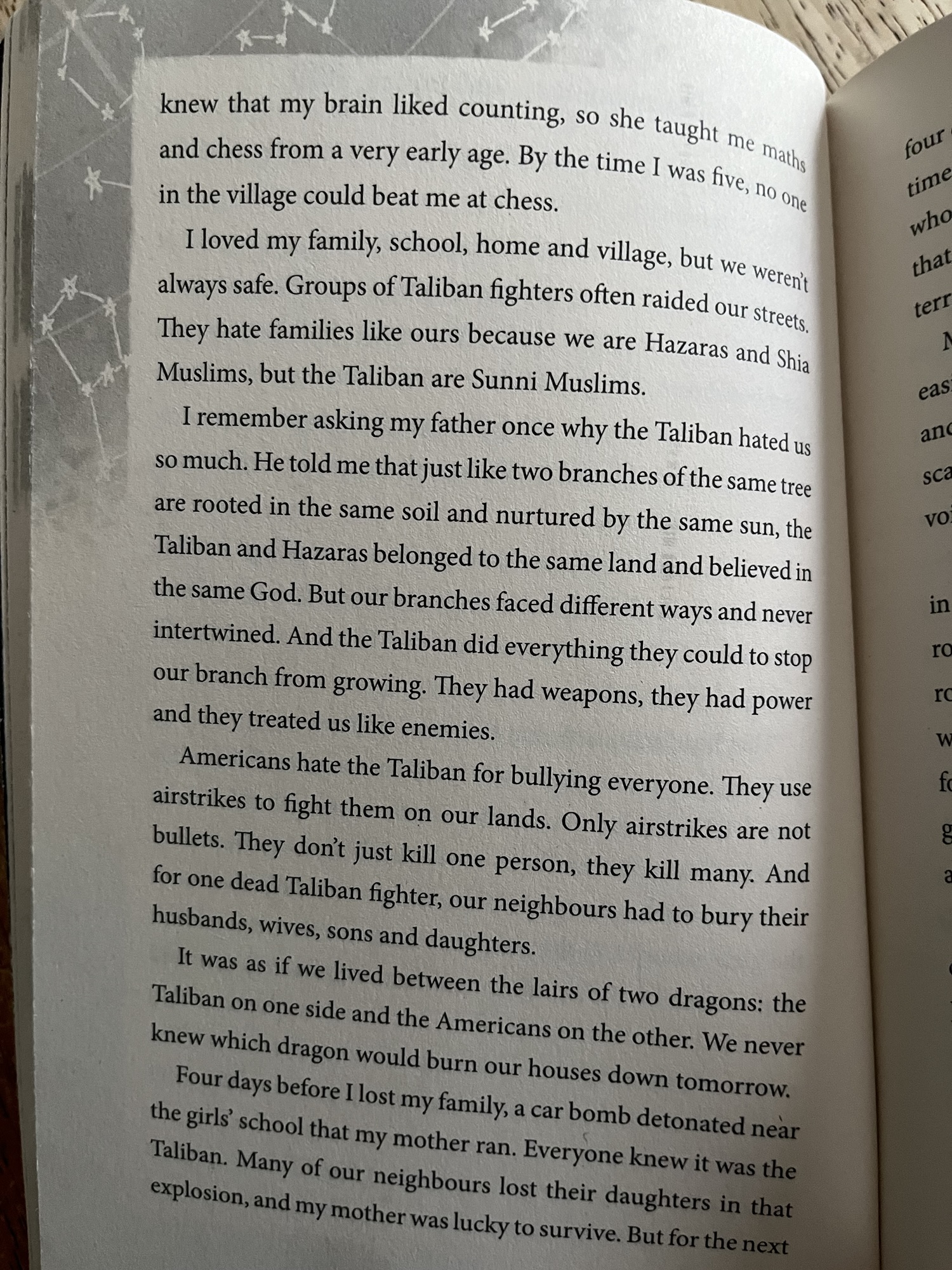
It has been a minute since I have read a refugee story, and was glad to see a new middle grade title published as the timeliness of immigrants and empathy is as critical as ever. I will admit though I was skeptical upon starting when I saw it is not OWN voice, and while grateful that a photojournalist source is named in the backmatter, through the lens of an Muslim book reviewer though, I can’t help but feel like the richness of having lived experiences reflected in the narrative or child immigrants researched to draw upon, left the Islam nonexistent and the cultural details and specifics weak. That is not to say that I wasn’t cheering for Samim, or that the craft of the book as a whole was not well done, it was. I was invested, emotional at the end, and Samim will stay with me for a while, but the protagonist is positioned as being a Shia Hazara, and for much of the story why he believes his family was killed, and yet even as he is facing repeated horrors and challenges, there are no Bismillahs, or crying out to Allah swt during a horrific series of events, no acts of worship, or relationship to faith. Nearly every time religion was mentioned I took a picture, so what you see is the religious rep nearly in its entirety not a sample. Similarly, there is some cultural foods dropped in, and awareness of gender differences once he is in the West, but honestly aside from the countries he passes through along the way, it could be a refugee from any war ravished country fleeing. Perhaps that is the point, if so it isn’t a terrible one, I just feel inclined to point it out. It is also worth nothing that this isn’t a juxtaposition story of life in Afghanistan to life in the United Kingdom, or political commentary aside from the initial premise of the Taliban wanting Shias out, it is really just a spotlight on Samim and his journey and what he, and so many go through when home is no longer safe. There is hardship, abuse, death, violence, transgender rep, bullying, human rights abuses, assault, drowning, persecution, stereotypes, bombings, displacement, theft, cruelty, violent death, loss, guilt, regret, etc. The book is not overly graphic, but the subject matter and commentary about Samim’s journey and the characters along the way may not be suitable for all children.
SYNOPSIS:
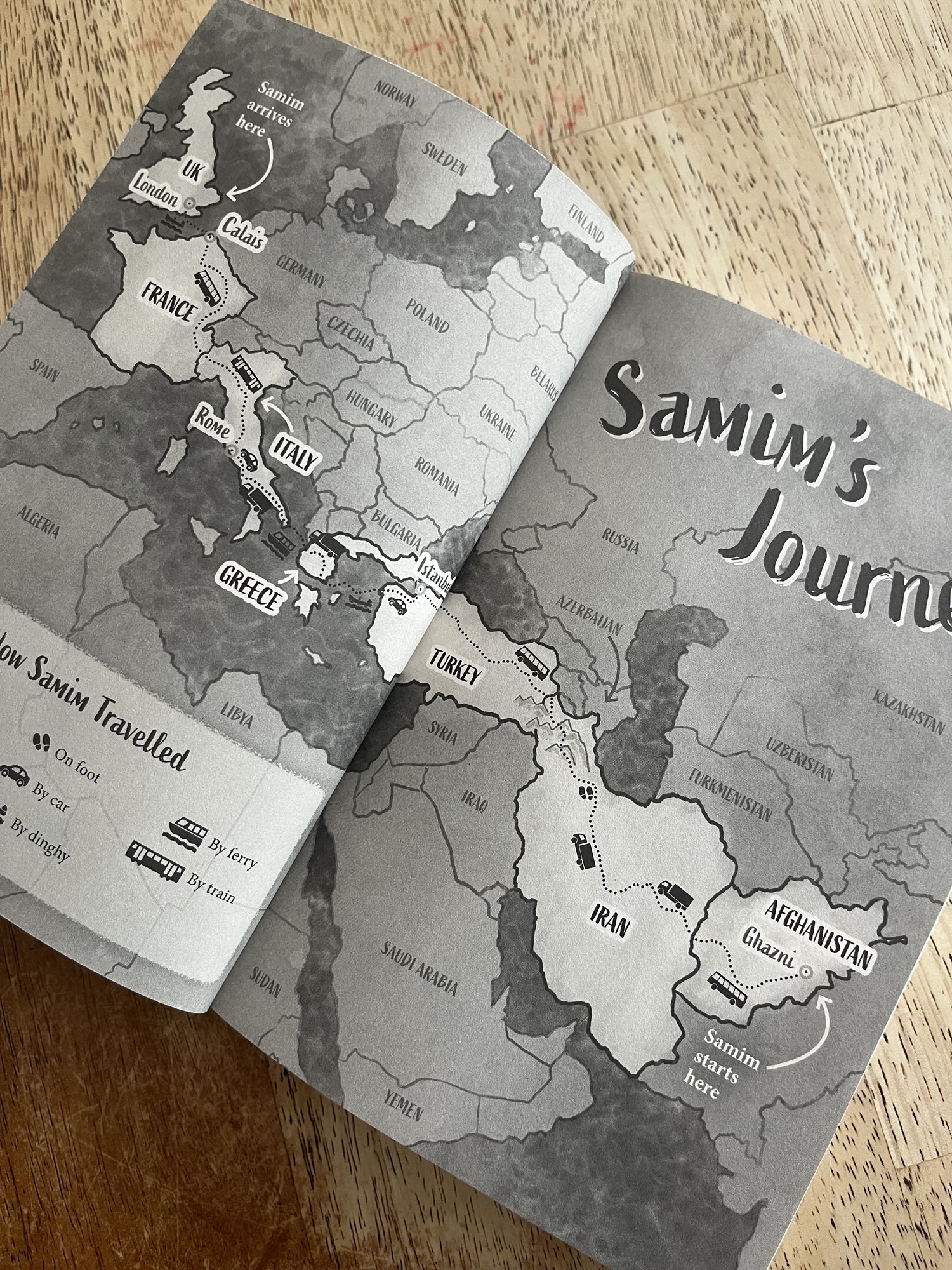
Samim is forced to leave Afghanistan when his entire family, save one uncle, are killed at the hands of the Taliban. With his uncle, and his best friend, Zayn, who has also lost everyone, a perilous journey to the United Kingdom is taken. Once he arrives, alone, the story of how he got to the UK is shared with the readers as he seeks asylum and makes his case to stay. His retelling of the journey is interspersed with him starting school and dealing with the stresses of uncertainty, bullies, grief, and anger. Samim is shaped by his experiences and the people he meets, those whose stories he wants to ensure live on, and those that he longs to forget. He is a wiz at chess, he knows 230 digits of pi, and he is carrying more, and been through more, than any child ever should.
WHY I LIKE IT:
I love that there is a map, that a source is named and that the book has a lot of heart, you really can’t help but feel for Samim. I would have liked more Hazara rep, or Shia rep, their plight is under represented in children’s literature, but I recognize I’m looking at that with adult eyes, and the target audience is probably not as critical. I also would have liked to see more raw emotion regarding the loss of his family, and stories tying him to them. I didn’t feel the weight of who this lone uncle was, and what his loss meant other than on the journey at hand. Some backstory and fleshing out of family and connection would go a long way to showing additional heart and humanity for those dealing with grief and loss that would hopefully connect with young readers. And yes, I think it could have been stronger without changing the direction and purpose of the story.
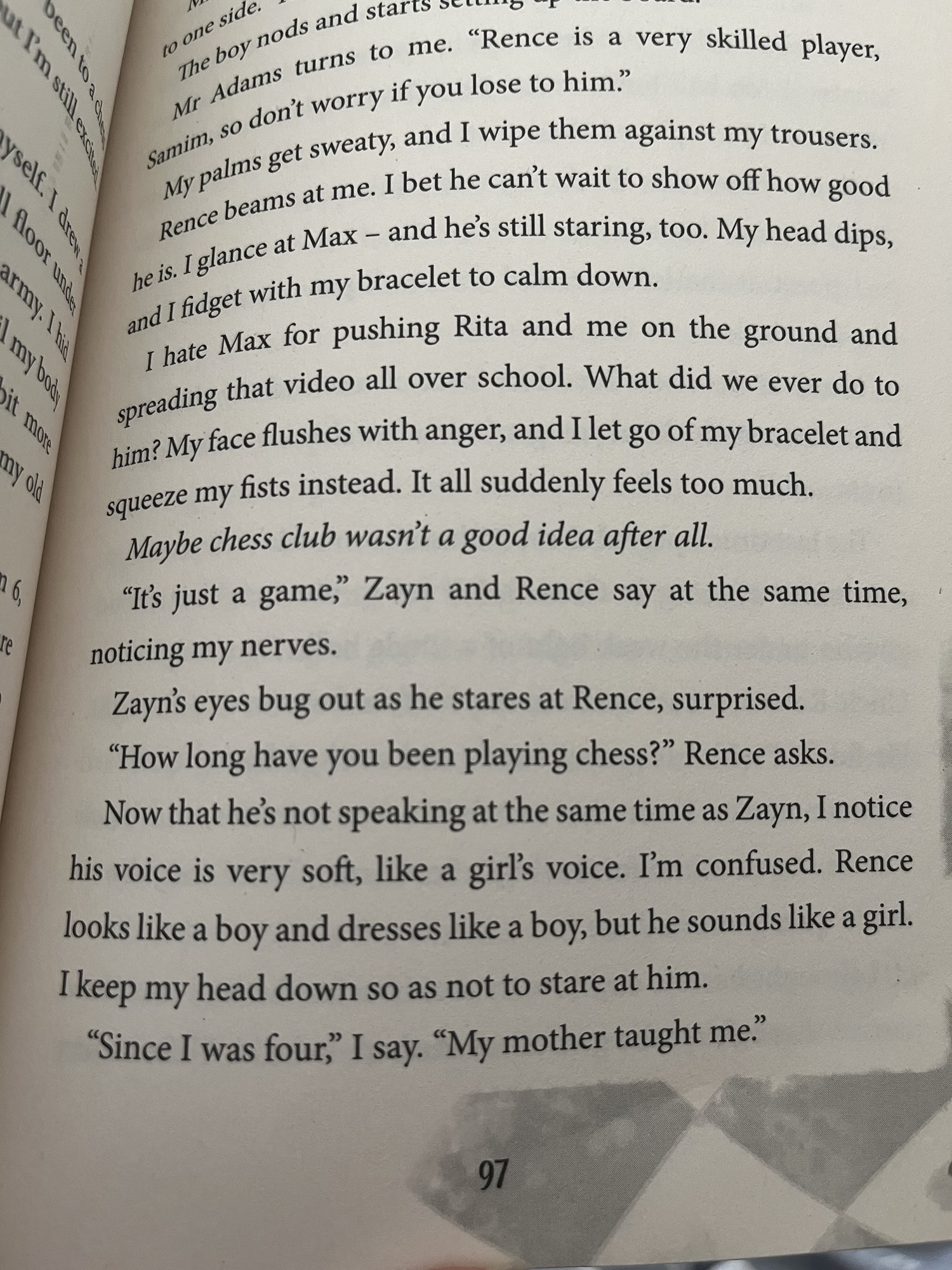
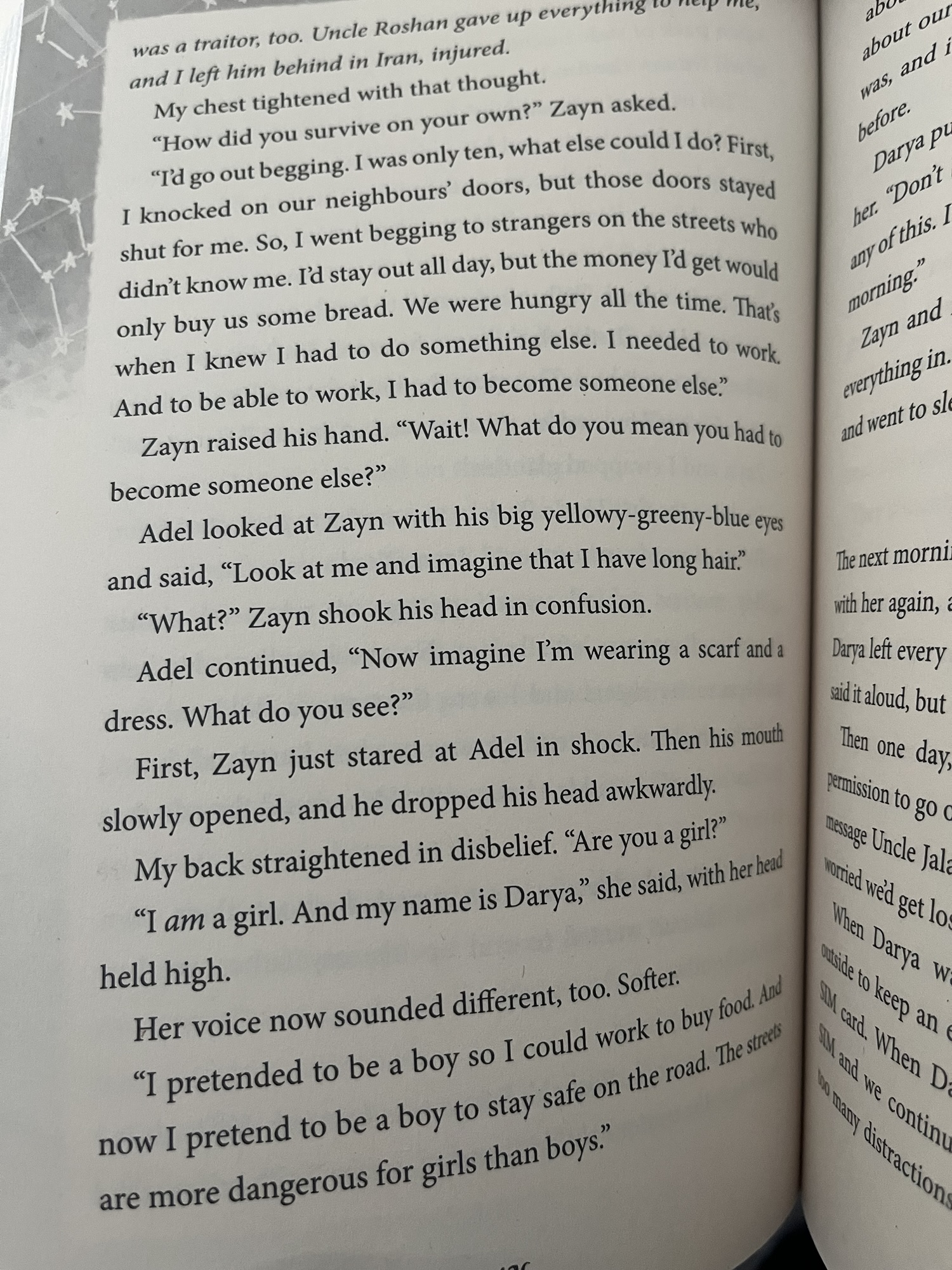
While some of the exploration of themes is subtle, the commentary on gender and gender identity is not. The reader is introduced to to a female refugee character dressing as a boy on the journey for safety, and highlights how Samim and Zayn grapple with that reveal. And then Samim meets Rence, a trans character in the UK, who becomes a close friend, and thus shows the continuation of that normalization while also highlighting stereotypes about women and identity in both the Afghan and Western cultures. The author also seems to be quite deliberate in showing good and bad, kind and manipulative, cruel and generous people throughout so as not to have a single character’s religion, or culture, or gender, or ethnicity shoulder the stereotype of more than just themselves in that moment. It keeps the book from perpetuating assumptions as Samim meets and interacts with such diversity on his journey.
FLAGS:
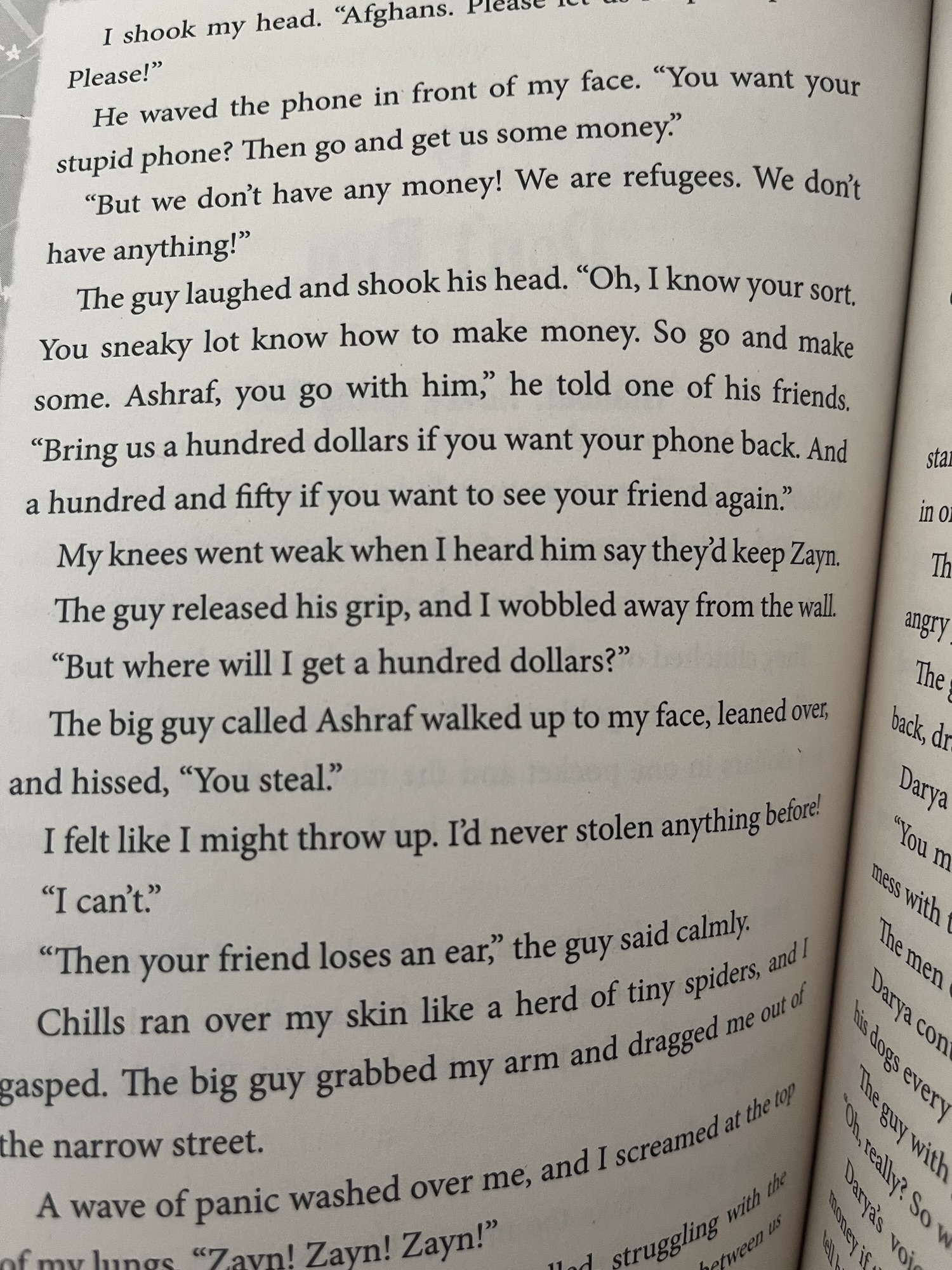
There is hardship, abuse, death, violence, transgender rep, bullying, human rights abuses, assault, drowning, persecution, stereotypes, bombings, displacement, theft, cruelty, violent death, loss, guilt, regret, etc.
TOOLS FOR LEADING THE DISCUSSION:
As I searched to see how authentic the book is, I did find a good article about the author’s research and expertise in the area:
I think if you know your audience, this book could work for a class or book club read, but I think with the triggers and some of the commentary, one would need to be confident that it is a good fit. I would be ok to shelve it on a library or classroom shelf for upper middle grade, as I think the book is clear about the contents within and readers drawn to it, should hopefully be aware that refugees endure a lot of hardships, and thus the story may be difficult at times.
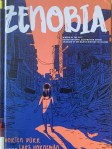
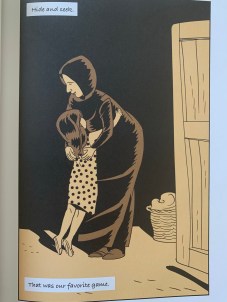
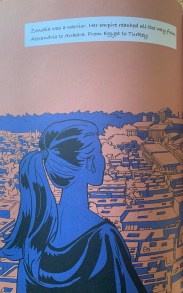
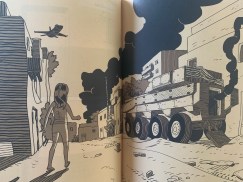
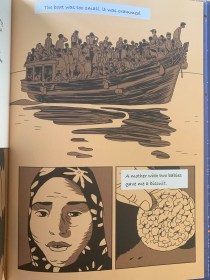
 There is a reason that this 93 page graphic novel is labeled as “Teens.” There may only be 300 or so words in the entire book, and the pictures at times are very basic, but oh subhanAllah is it devastating. Real, unfortunately, but I was not expecting my heart to be shredded and for me to be haunted by the framing and perspective of the story. I read a fair amount of books both fiction and nonfiction regarding Syrian refugees and I try not to ever become numb to the plight of so many, but this book was such a reminder that things don’t always turn out well, that sometimes no matter how inspired your life is to follow in the footsteps of a warrior queen, there isn’t always hope. That no matter how brave you are, horrible things will still happen, and that sometimes there is no one to hear your cries and pleas, and for so many in this cruel world, there is only silence.