Tag Archives: colonization

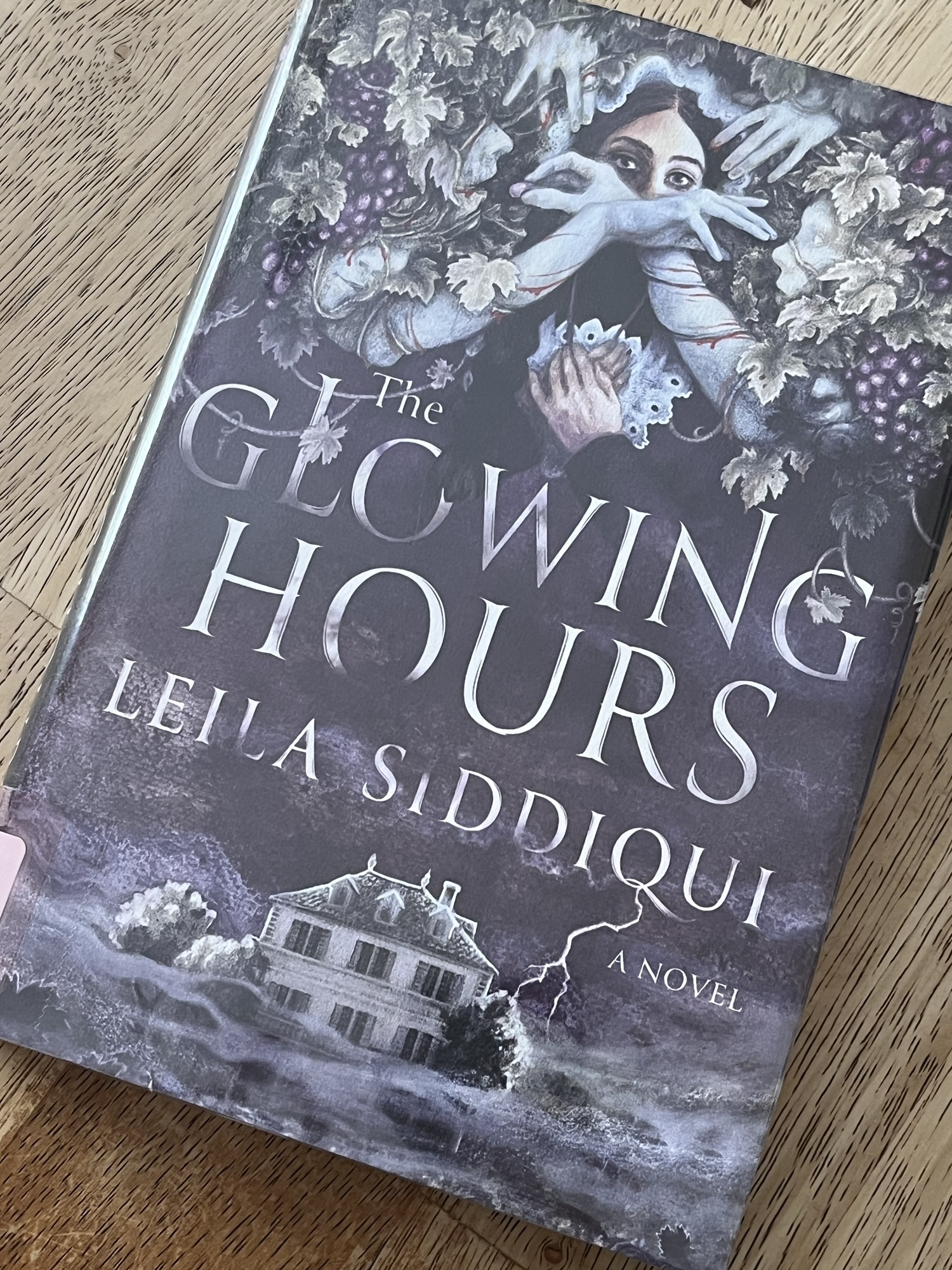
The Glowing Hours by Leila Siddiqui

Standard
The Glowing Hours by Leila Siddiqui

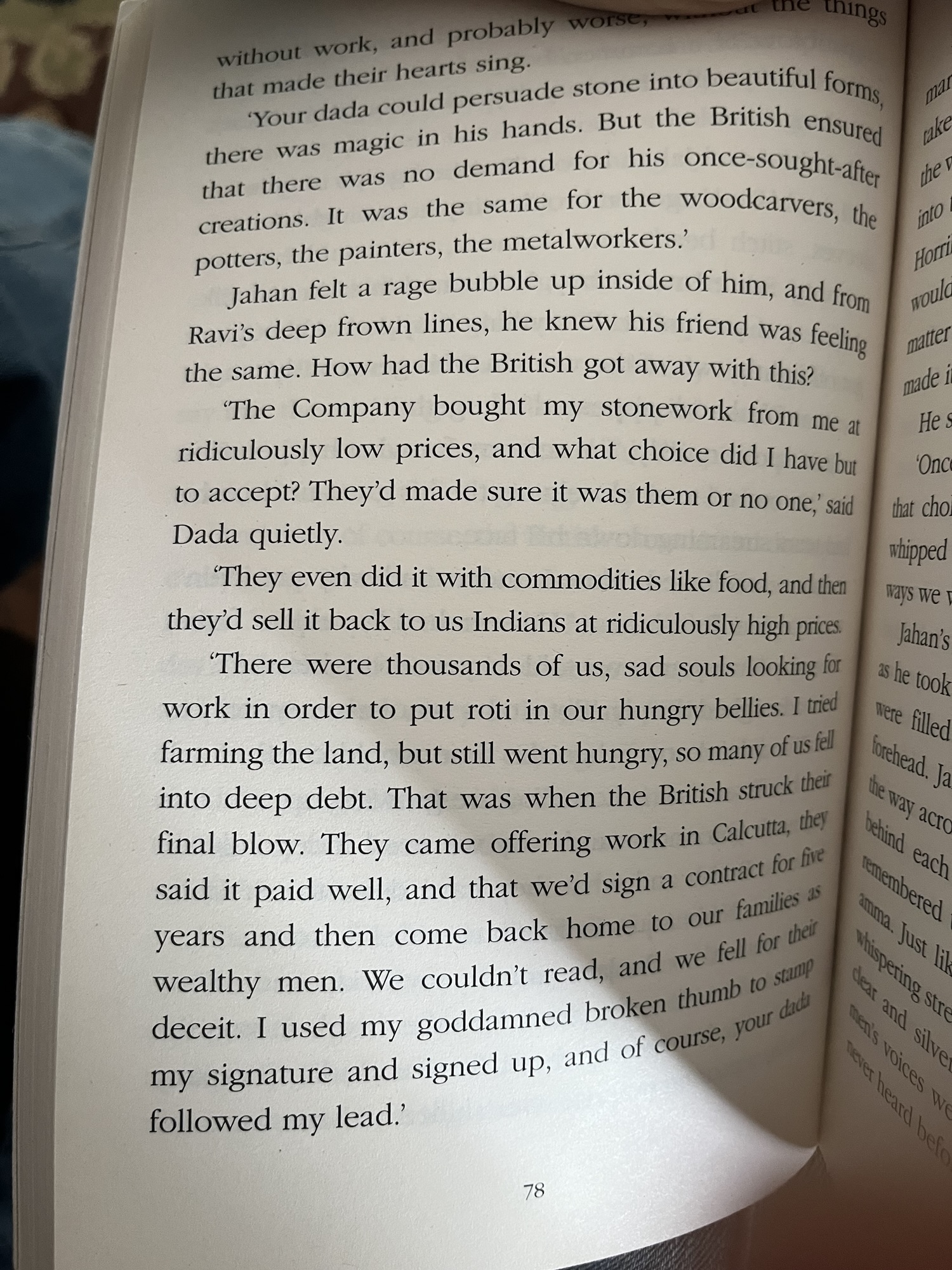
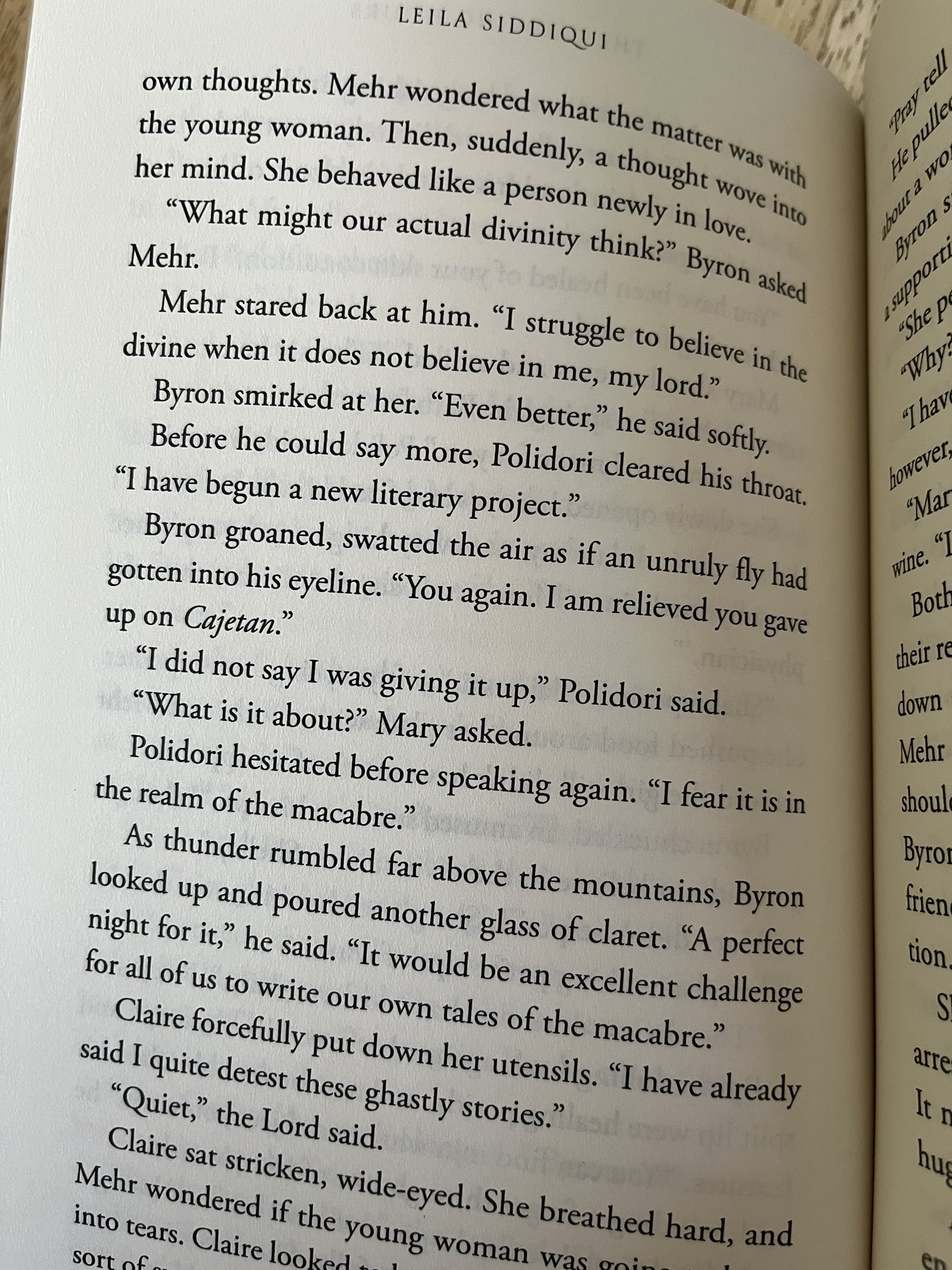
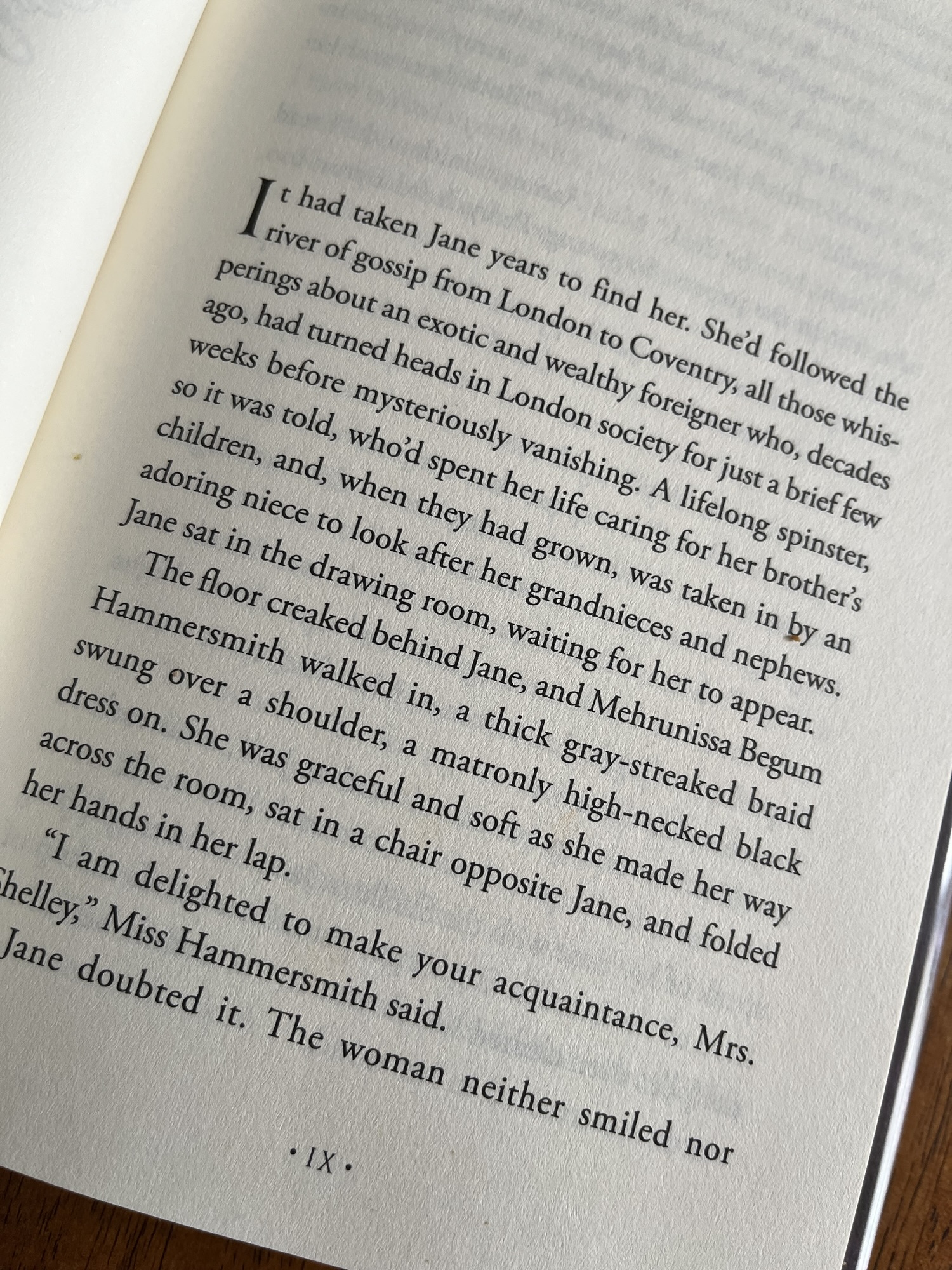
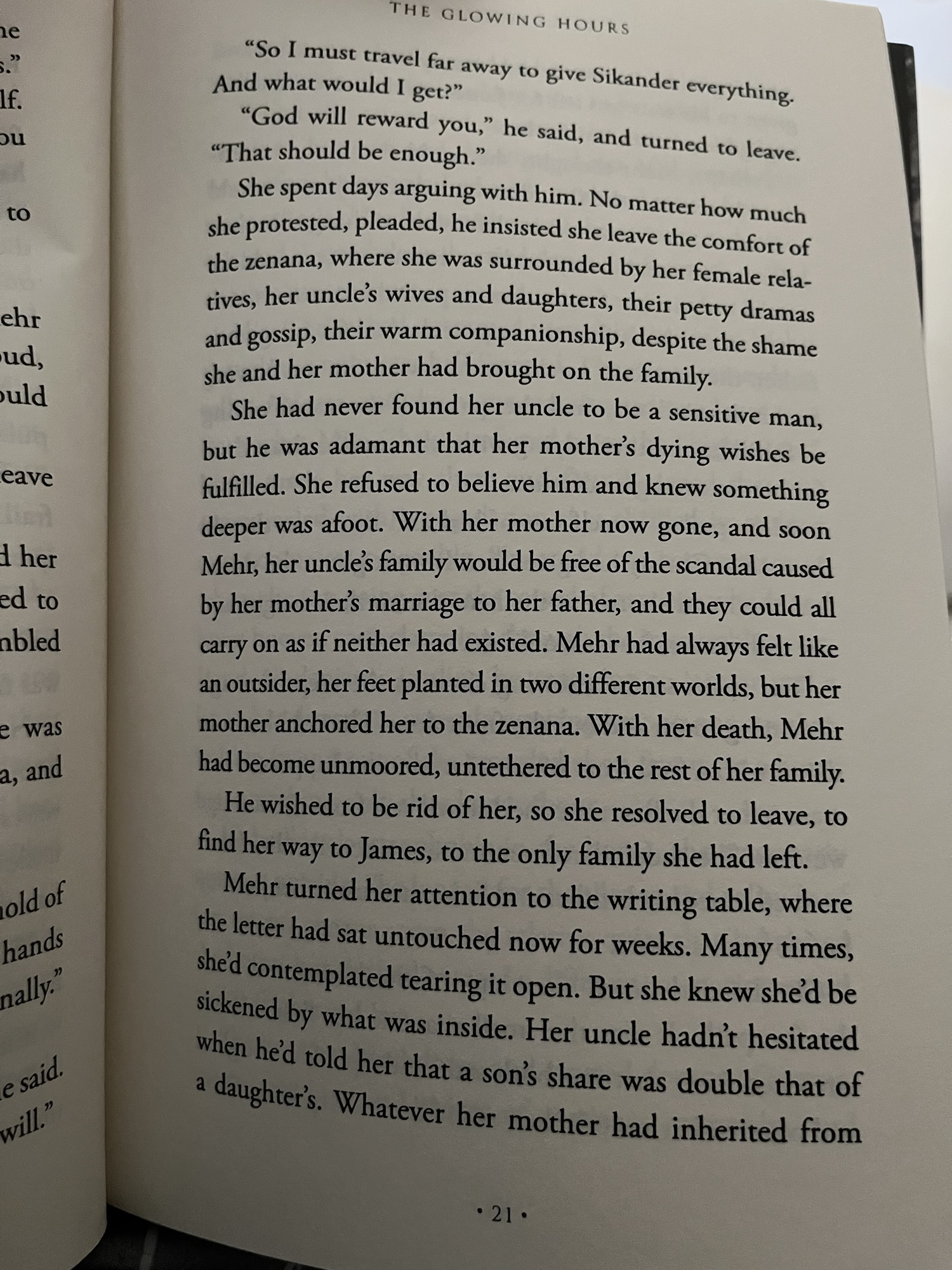
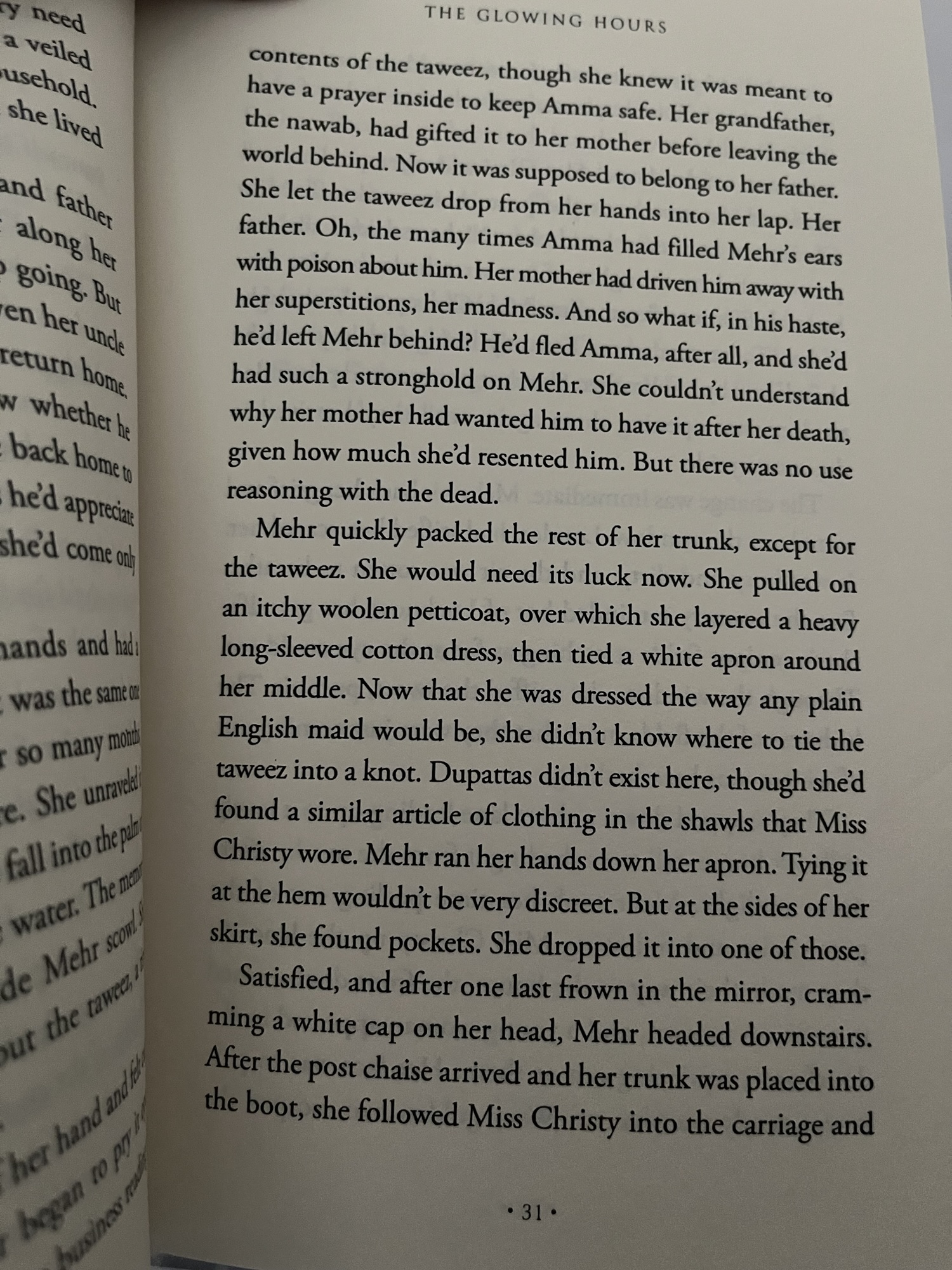
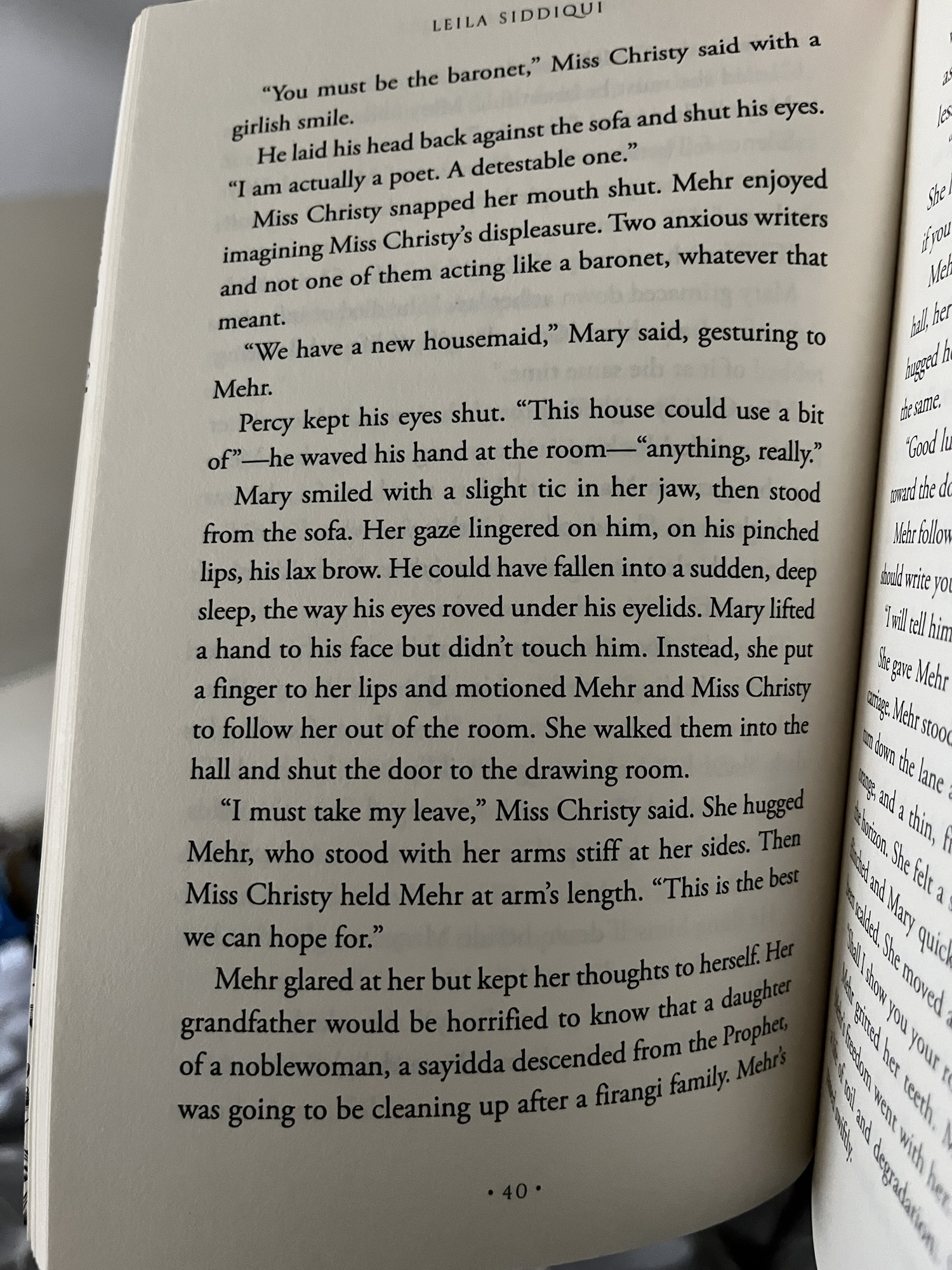
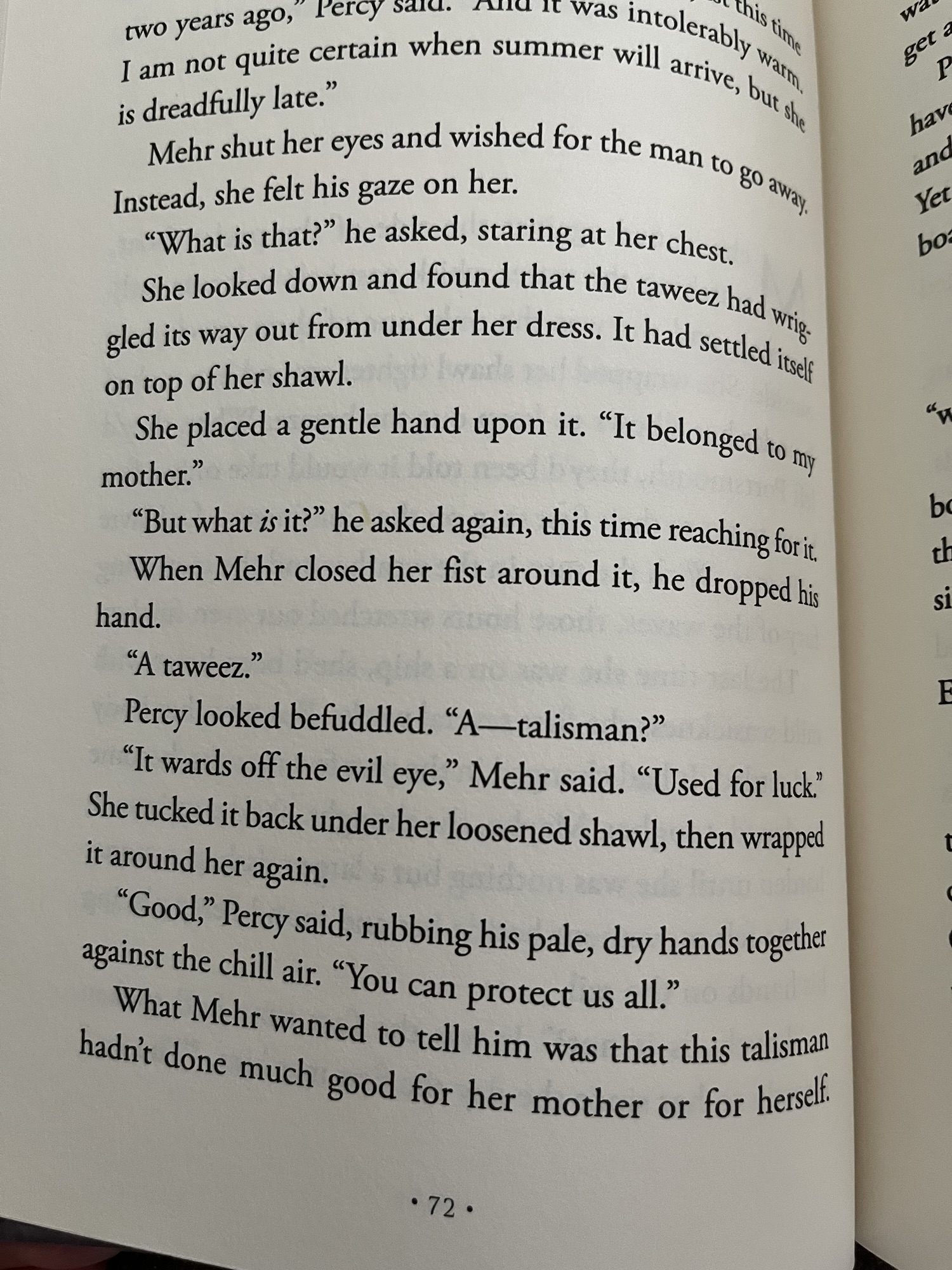
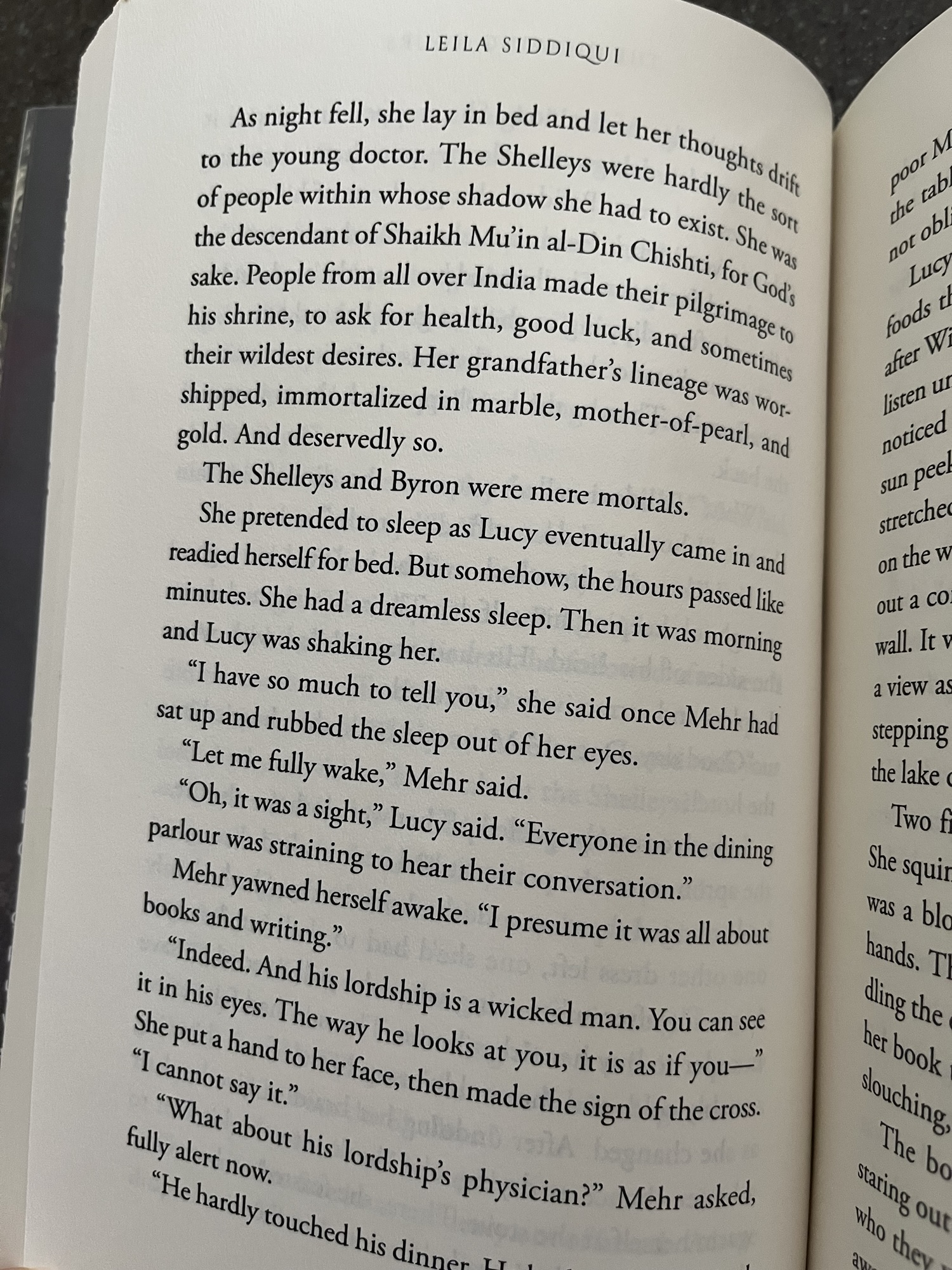
This 336 page adult gothic horror book frustrated me.  When I got stuck reading the electronic arc, I waited until publication and checked out the physical copy, when I got stuck reading that I switched to an audio version.  It had so much positioning and build up and details that I really was hoping I’d be rewarded with some fantastical imagining and historical fan fic bringing to life a period of history among real notable writers and a mysterious summer they spent together in 1816.  Told from a “Mohammedan” house maid, Mehrunissa Begam’s experience working for the Shelleys, shows us how her misfortune brings her into the company of Mary, Percy, Polidori, Claire, and Lord Byron at Lake Geneva and specifically the Villa Diodati. The author researched the people, the times, and the setting, and obviously took liberties to not only fill in the blanks, but to make a fictional story of it all. But so many threads and details left untugged on, made the book slow and drag in some places, and seem glossed over and underdeveloped in others.  The book is an adult read, with a mature scene, killing, death, power struggles, manipulation, haunting, and the like, and there is really no Islam.  Mehr doesn’t put the label of faith on herself even though she regular recounts her family lineage as being religious and the shrines that people come to pray to as being salvation for so many.  The crux of the hauntings, or at least a contributing factor, I think, SPOILER is not the literary folks Mehr looks down on, or the love and power triangles the house manipulates amongst them all, but the taweez, the amulet she wears from her deceased mother.  So culture more than religion is definitely a part of the story, but in an othered sort of way. The tale at hand hints at the horrors the house hosts and its inhabitance endure, that inspire the writings of Mary Shelley’s Frankenstein and John Polidori’s The Vampyre.

SYNOPSIS:
I’m just going to copy and paste the blurb from the publisher, so as to not give anything further away. 

Summer 1816: London is a hostile place for the newly disembarked Mehrunissa Begum, who’s come to deliver her brother’s letter of inheritance before returning to her comfortable life in Lucknow, India. Only, she can’t find her brother anywhere and has no money for the return trip. With nowhere else to go, Mehr finds refuge in a boardinghouse for Indian maids. If she can’t find her brother, she reasons, she will get a job and start saving.

Mehr is soon hired at the English estate of Mary and Percy Shelley, young artists of burgeoning fame who are on the run from secrets of their own. Mary is brooding and quiet, but takes a curious liking to her new maid, asking her to accompany the Shelleys and her stepsister, Claire—as well as the eccentric Lord Byron and his physician, John Polidori—to Lake Geneva for the summer.

Almost immediately, Mehr notices strange, ghostly events at the villa. The walls breathe, portraits shift, and phantoms appear like unbidden guests who refuse to leave. The weather is fierce and foreboding, showing no signs of softening its relentless pall. And as Mary Shelley begins work on what will become her earth-shattering literary phenomenon, Mehr finds herself trapped in the villa as the rest of its inhabitants descend into madness.

WHY I LIKE IT:
I don’t find the last paragraph of the provided above blurb accurate, it takes a while for creepy to be fully recognized, and by the time it does, I felt short changed by all the hints that amounted to nothing.  It is highly possible I missed a lot of the symbolism or connections, I’m happy to be schooled on the literary merits, but key players being absent from scenes while everyone is in one house, conversations being stilted, random items being stressed, only to be of no consequence later, example: What was up with the grapes? The grape pickers? What did sleep quality have to do with it all? Why did Mehr even need to be there, she was a terrible maid, and wasn’t likeable.  I get trying to show the hold Byron had on them all, but so often I couldn’t make sense of Percy and Mary’s dynamic, seemed they were all sleeping with each other and trying to gain literary genius credentials, but it was almost like the showing and telling didn’t always match.  I love the premise and I do get that the historical truths and intertwining relationships and power struggles and emerging the reader in the time really do resemble world building, but it takes forever to get to any action, and once it does it seems too shallow. I reread the prologue at the end, and appreciated it much more after completing the book, so if you pick it up and it makes little sense, you aren’t alone.
As for the Islam, I understand a Westerner may have called a Muslim, a Mohammedan, but it felt icky that Mehr didn’t push back on it.  She mentions the athan, and that she is descended from Prophet Muhammad saw, but says she doesn’t believe in it.  She is prodded to do what she does because the inheritance that her brother is to receive is larger than hers per Islamic rulings, her Uncle is shamed by Mehr’s mother’s actions, marrying a foreigner, and, Mehr’s actions don’t ever imply that she is Muslim or that she views the world through an Islamic lens.  I hope it is clear that a taweez is not religious, but rather cultural practice, but since it ushers in the supernatural, I don’t know how it is perceived or intended to be perceived.

FLAGS:

Very adult

TOOLS FOR LEADING THE DISCUSSION:

As odd as it is, I actually would love to talk to someone who read this.  I really hope I just missed some crucial, aha moment, and that it really wasn’t just sadly underdeveloped for what it set out to do.  I maybe might have enjoyed this article interview with the author more than the book itself.

https://www.lapl.org/collections-resources/blogs/lapl/interview-author-leila-siddiqui

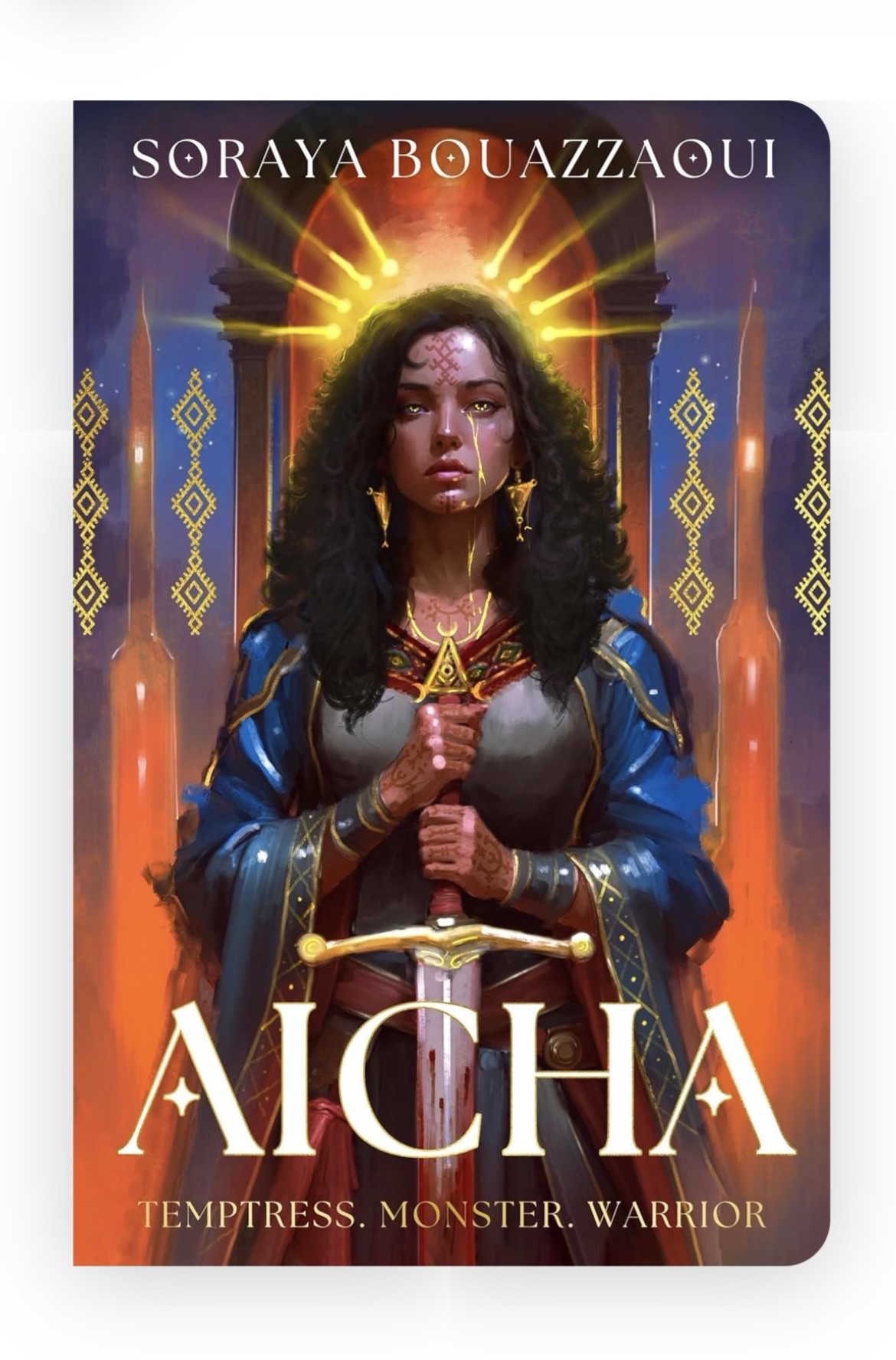
Aicha by Soraya Bouazzaoui

Standard
Aicha by Soraya Bouazzaoui

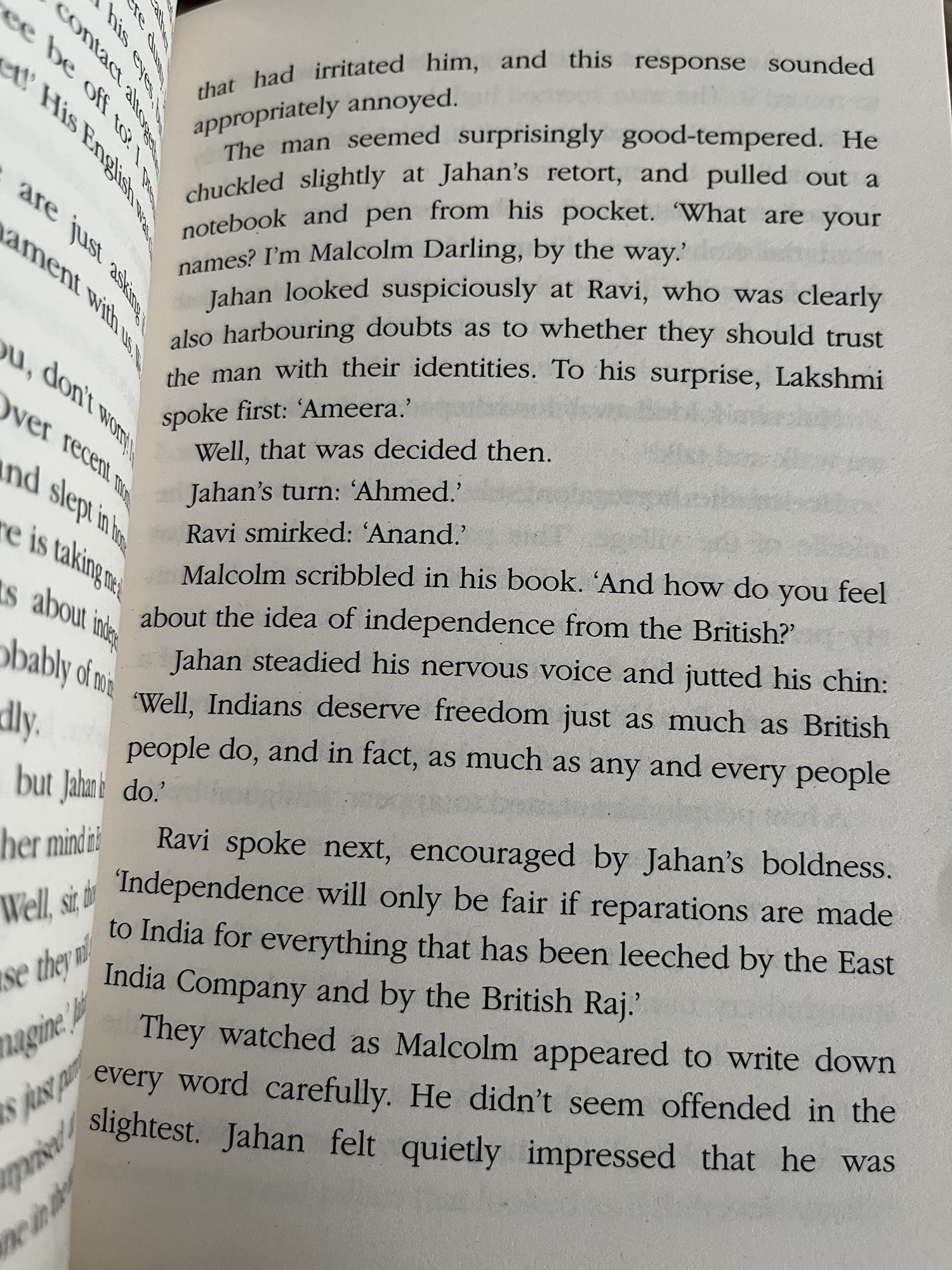
I listened to this book on my work commute, to and fro daily for weeks, Aicha would go about her day in Portuguese occupied Morocco and I would go about mine, and as the hours built, I realized this book has no plot, there is no building up for something, it really is just the two of us going about our days, granted, hers is far more interesting, but rather plotless just the same. There is world building of life under occupation and the rebel forces her family is a part of, there is even foreshadowing about who she is, but I do not, and did not, have prior knowledge of the myth the story stems from. And the more I listened and the closer we got to the approaching “siege,” the more I felt like I was mislead with the promises of what the book would be. Before I continue, there will be spoilers, and I admit while I was listening to it, I wasn’t bored, the pacing is off but the prose is lush and descriptive, albeit overly telling at the expense of showing, but none-the-less listening to it in 15 minute intervals twice a day at 1.5x speed was not a a burden, and was often enjoyable. Had I been reading it though, I think I would have dnfed mid way through after skipping pages at a time.

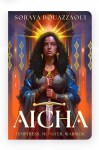
The front of the book says “Temptress, Monster, Warrior.” She is in love with Rachid, they are in a relationship, chapter 19 is a pretty intense, very adult, and mature, open door testament to that relationship, the occupiers threaten sexual assault, but she is not out flirting or tempting anyone, she is often dressed to look like a boy and disappear into shadows. Is she a monster? She has a jinn tied to her, so I’m going to say no, she is not, the jinn is blood thirsty and perhaps a monster, but the book title is her name. The daily musings, 352 pages, over 10 hours, are her life, the jinn doesn’t get top billing until the end. As for the warrior description, sure, she is a rebel, who trains at the hands of her blacksmith father, but the book is also teased as a female rage story, so when coupled with the term, warrior, why does she have to have Rachid step in to fight for her at the end? She couldn’t beat Duarte? She didn’t get to exact her revenge? Only once Aicha was dead was the jinn freed and the jinn given the pleasure of killing him-which cheapened the expectation and made the whole book feel misleading.

I also didn’t like on the back it saying, “Aicha is the story of Morocco’s warrior goddess,” the term
“goddess,” distracts for me how much Islam really is in the book. I loved how much actually. The book from the very first Author’s Note Flag Warning positions that the characters are Muslim, but they are not examples of Islam, and I might buy the book just to screen shot how fabulous the warning/statement is. The characters are Muslim through and through and that made me have a soft spot to keep listening. I’ll even admit the hasty nikkah to make it halal was emotionally charged, and nice to see.

Craft wise, aside from the lacking plot and slow pacing, I’m not sure why one chapter switched perspectives to Rachid, it felt sloppy. I don’t get why the siege wasn’t more robustly fleshed out, why the open door sex scene was so long, (I could just be a prude, and I’ve never done an audio with spice, so yeah, I might be unreliable on this point), and why did they all have to die, if it was so devastating in real life, we need backmatter to feel the weight of these characters. I will probably read anything future the author writes, so I own that, and I truly did enjoy the commentary on colonization and occupation and the last line of the backmatter being, “Free Palestine!”

I listened to the audio of this book and did not have access to the text of the book, so forgive misspellings of characters’ names.

Tyger by SF Said illustrated by Dave McKean

Standard
Tyger by SF Said illustrated by Dave McKean

I don’t know that I’ve ever read a book like this 304 page middle grade fantasy, dystopian, highly illustrated adventure. It delves into philosophy, alternate universes, slavery, racism, politics, magic, identity, friendship, betrayal, human rights, education, following your dreams, saving the world, and a talking immortal tiger. It started a little stilted for me, but as the book progressed, I began to see that a lot of detail about all the above mentioned threads would make for a very adult, very lengthy read, and this is meant for 9-12 year olds, albeit they would need to be able to handle the darkness of the book at times, and caregivers, be aware there is a public hanging of a child. The author is Muslim, and the protagonist and a side character identify as Muslim.  There is not much about Islam, or shown in practice, but that they are afraid to learn and practice their faith is mentioned briefly. I think kids will enjoy the read, and not get hung up on threads unexplored as I did.  The illustrations really make it a book that feels exciting to spend time with, and one that will linger with the reader.  I look forward to sharing it when it releases soon in the US, as it was published in 2022 in the UK.

SYNOPSIS:

In short the book is about a boy, Adam, living “in an alternate London where the British Empire hasn’t ended and slavery was never abolished.” In a partitioned off Ghetto as a minority from the vague “Middle East,” who is unable to go to school, or even draw, he makes deliveries for his family to help keep them afloat. During one such delivery he encounters a tiger, an animal like so many others that is extinct, her name is Tyger, and she speaks.  She is an immortal searching for Guardians to help her heal and open a portal to the city.  When Adam, who is immediately connected to her, cannot find a Guardian, she begins to train him, time is short and when he discovers his friend Zadie, short for Scheherazade, has some training from her father, the two set out to open the doors of perception, imagination, creation, and  revelation, to save the day.

WHY I LIKE IT:

I really like that this book opens up larger discussions about society, self, literature, imagination etc, and can really be adapted to mean different things depending on what the reader brings to it. The book addresses these themes in a way that doesn’t talk down to the reader, and in many ways allows the simple bad guy of the story to not be the takeaway point, but rather the journey of understanding perspective, points of view, empathy, creating something, and hope to be far more important.

The identity of the characters being Muslim initially was just a label, one that just made Adam and Zadie more “other,” but a few cleverly crafted sentences about hiding their names, their skin color, and whether it worked or not, allow the reader to reflect on if denying yourself to appease others is effective or not, or rather more importantly knowing when and in which situations it could be a benefit or a selling out of who you are.  Zadie and her father seem to practice, and one point Solomon ( Suleiman), offers his prayers, he says Assalamualaikum and Bismilliah. Adam and his family on the other hand, have hidden their faith so as to fit in better, and thus it is simply an identity label.

I liked that the illustrations weren’t just stunning in their own right, but also highlighted the mood, and metaphysical elements of the story.  I feel like I could teach not just a few lessons on this book, but dozens, and who knows if they would be correct, but I think this book would be fantastic as a read aloud in a classroom for the story at hand and for the discussions.  The darkness, the excitement, the hope, really gripped me, and while I could opine on plot holes and lack of articulation, in some key scenes, I appreciate that over explanation would take away from all that the book gets right.

FLAGS:

Racism, oppression, colonialism, slavery, hanging, power imbalance, betrayal, lying, sneaking, fighting, killing, magic, fantasy elements.

TOOLS FOR LEADING THE DISCUSSION:

Where to even start, this book needs an educators guide, stat. I looked online and couldn’t find one and I hope that will be corrected soon because if you read my thought above, you know there is a lot to discuss.

The Djinn Waits A Hundred Years by Shubnum Khan

Standard
The Djinn Waits A Hundred Years by Shubnum Khan

img_8259-1

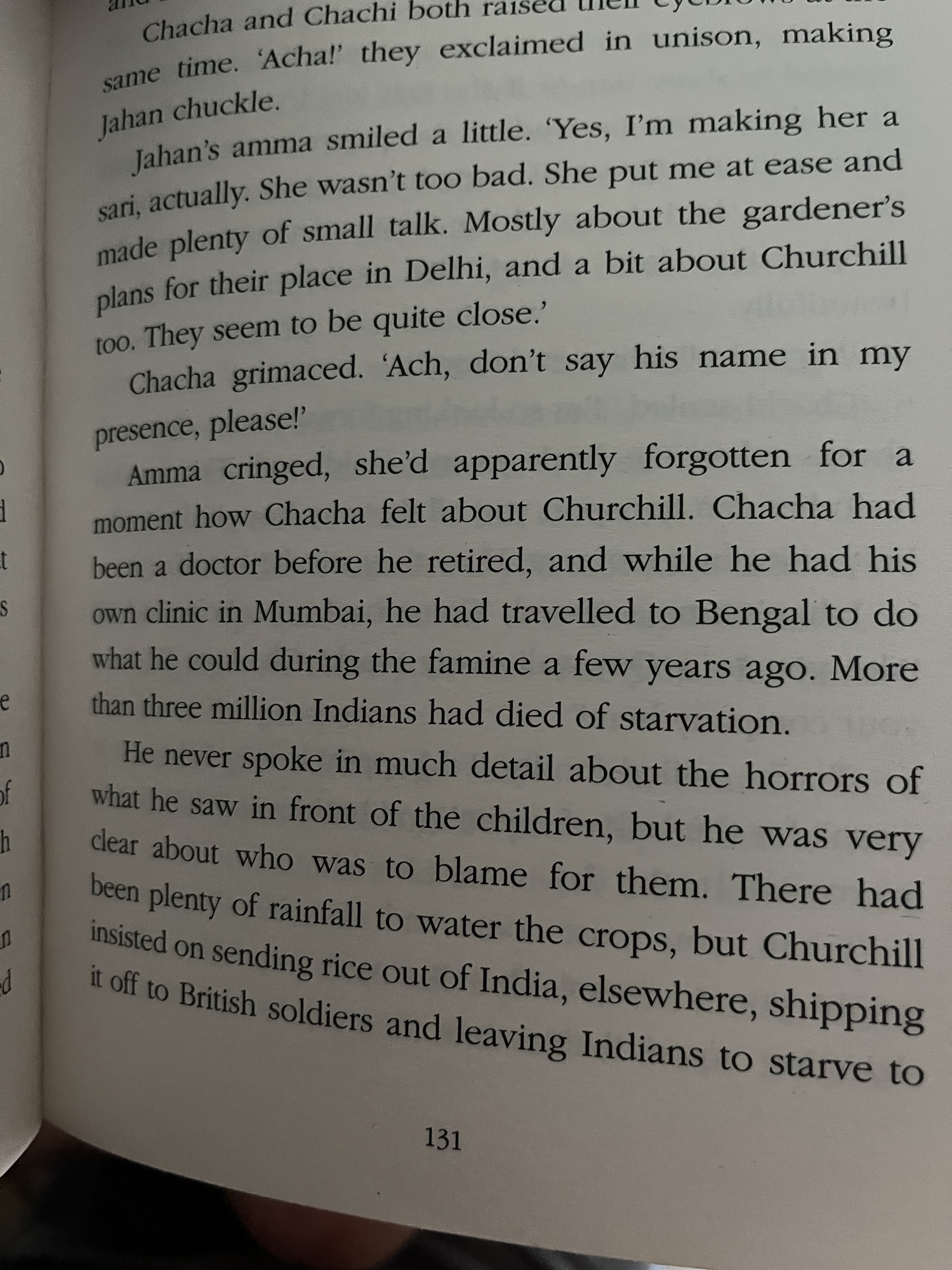
I didn’t realize how many characters this 308 page adult book has until I sat down to write this review.  The slow peeling back of layers into their backstories, motivations, perspectives, and insecurities, makes you get to know them in a way that feels real and deep, but in no way can be succinctly explained in a review.  First off to clarify, I feel the title is a bit of click bait, the djinn is there, but not a big part of the book, there is also a ghost, who is a more impactful character, so the vibe is more haunting than Islamic lens.  In fact, a few characters are Muslim, but that is about it.  The writing though, oh the writing is quite lovely and immersive.  The culture of desi characters in South Africa, the slivers of colonization and caste that get commentary, and the heartache of all those who have called, and do call Akbar Manzil home, will linger even if the details fade over time.  I listened to the audio book, so it is possible that triggers or flags might have been missed, for the most part the book is relatively clean, death, murder, attempted murder, and supernatural beings being the most obvious.

SYNOPSIS:

The main character is very much the grand estate of Akbar Manzil, a palatial home off the coast of South Africa that shaped lives and futures and hid horrors and loss.  In modern times it has been subdivided into apartments where lives and futures are still shaped and horrors and loss are also hid, and hid from.  When Sana and her father arrive to take up residence, the past and the present begin to unite, a djinn that has never left the house is stirred, and the more Sana pokes and prods, and the more she understands about the original inhabitants of the home, the more the house pushes back.

I don’t know how much to tell, as spoilers aren’t so easily defined in this book.  The family in the past is a man from India, Akbar, who falls in love with the area, builds a house despite his wife hating it all and desperate to leave, opens a sugar factory, his mother comes to live with them, they have two children, servants, friends, he stocks the gardens with monkeys, giraffes, a lion, and then one day he is enamored by a Hindu worker, Meena, at the factory and takes her as his second wife.  The jealously and family drama reaches a crescendo when she is pregnant and has a little boy.  Beyond the family storyline is a djinn also enamored by Meena, who takes up residence in the house to be close to her.

In present times, the other tenants in the house have their own baggage, loss, regret, and fears that cause daily squabbles and plottings.  Sana deals with the loss of her mother who hated her, and a dead sister who haunts her.  There is also Pinky in love with Shah Rukh Khan, Zuleikha a former famous pianist who has lost her edge, the Doctor who owns the home, a mother waiting for her son to visit, a parrot named Mr. Patel, Fancy, Razia Bibi, and so on. The house is occupied, but hollow, not full, and the the lingering djinn seems to always lurk just beyond the surface, in the corners and shadows that haunt them all.

WHY I LIKE IT:
I like that the writing keeps you hooked, even at times when there is no rising action, or conflict, you are genuinely drawn in and invested in just learning about the characters and how their lives, both those in the past and the present, intersect.  I didn’t like the fact that there is a djinn and a ghost, I feel like the ghost negates the realness that djinn.  It is possible that the ghost was a metaphor, or symbolism, but it was a little off to me, to have both as I understood it.  I don’t know how I feel about the vagueness of the final climax, yes I’m trying not to give anything away, but SPOILER: who set the fire?

FLAGS:

Loss, death, ghosts, djinn, murder, attempted murder, lying plotting, manipulation, music.

TOOLS FOR LEADING THE DISCUSSION:

I don’t know that this would work for an Islamic school book club, that doesn’t mean it wouldn’t work, but rather I need someone to discuss with me, so that I feel like I understood some of the lingering threads that are unresolved.  Basically, I would need to have someone explain parts to me, before I could help 15-16 year olds and up make sense of it all.

Tipu’s Roar: A Freedom Fighter’s Tale by Subia J. Ali illustrated by Gabriel Sorondo

Standard
Tipu’s Roar: A Freedom Fighter’s Tale by Subia J. Ali illustrated by Gabriel Sorondo

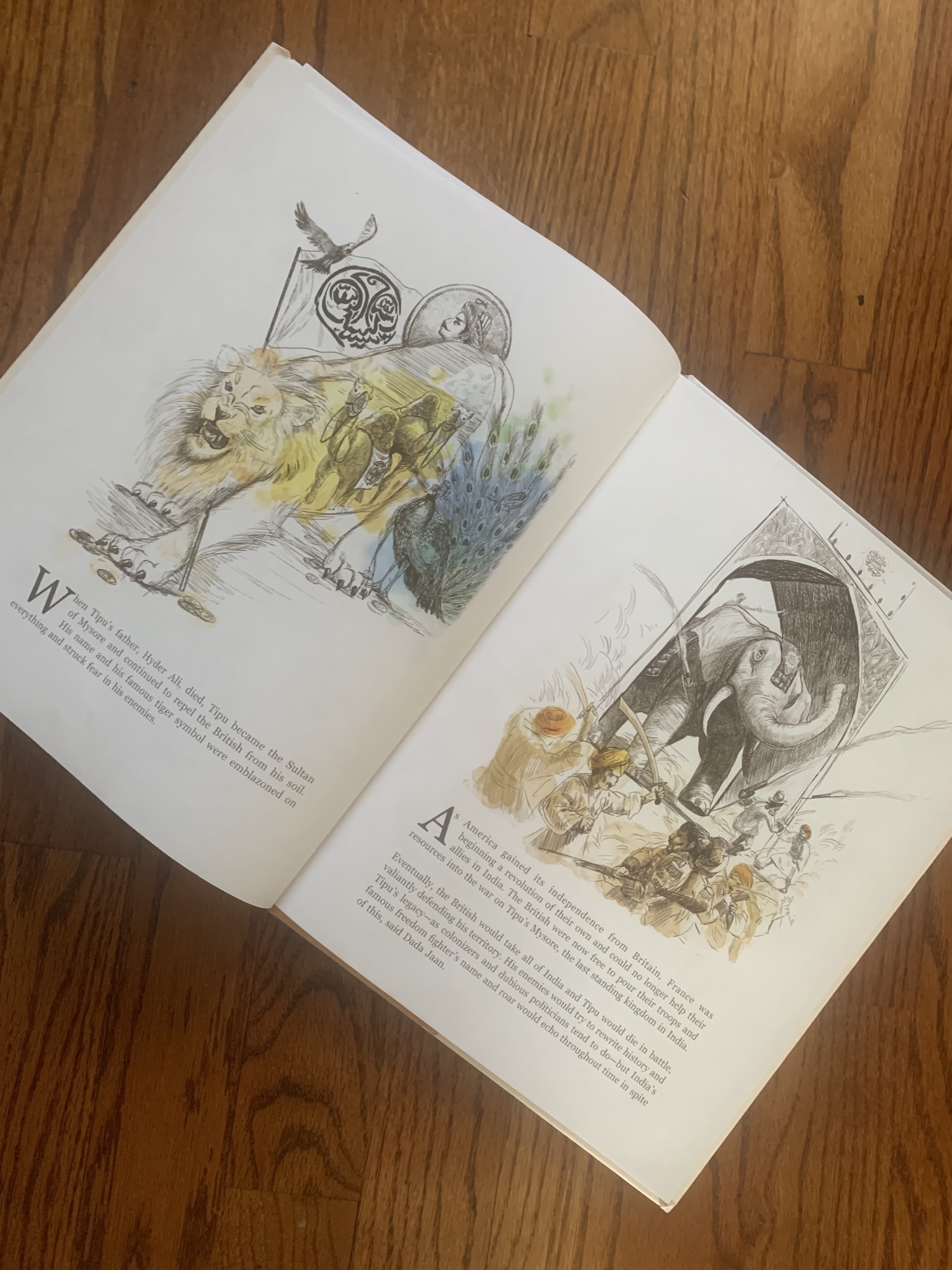
This large (9×11) hardback book is for the most part gorgeously illustrated in sepia tones, but the story is only 11 pages long; a pretty steep price point for 11 pages.  A story nestled with in a story, the premise of bringing to light a not well-known historical figure is admirable, but with no sourcing, it is hard to know what is real, and what is legend.  The concept and angle of being a freedom fighter and resisting colonization is timely, sadly it lacks the inspiration that I feel the author set out to convey.  I read the book a few times, and still had to Google a map of Mysore, Tipu Sultan and the role of the French in the subcontinent in the 1700s.  It would seem a book dedicated to the children of Palestine, defining words of freedom fighter, colonization, and imperialism before the book even begins, would answer the basic questions about the hero at hand.  

The book starts with an old man feeling gentlemanly wearing a bush shirt, chatting with his grand daughter who is being corrected to call him Dada Jaan instead of Grandpa. He then gets lost in thought and begins to tell his grand daughter the power of names to emphasize his point.  Tipu Sultan, known as the Tiger of Mysore, he tells her, “fought the British, who had come to colonize the Indian subcontinent.”

He doesn’t so much as convey the information in an entertaining way, as he lists off details and then pulls out to make sure she is still listening.  He tells her about the British East India Company draining the wealth of the subcontinent by taking tea, cotton, gems and spices.  He tells how Tipu “studied Islam, spoke many languages, and was a pioneer in rocket artillery.”  He credits Tipu’s rockets as revolutionizing warfare all around the world, and connects India, France and America as fighting off their Imperial colonizers, with the French being close allies in India’s struggle against the British.

Once her Dada Jaan’s retelling is through, and Tipu has lost, and Mysore falls, the little girls ponders over the story and years later appreciates her Dada Jaan in his traditional tunic rather than his bush shirt from before.

The book is in many ways needs to be fleshed out, sourced, and the messages articulated for today’s readers. 

Spice Road by Maiya Ibrahim

Standard
Spice Road by Maiya Ibrahim

spice

I have no idea if the author identifies as Muslim. I saw the 2023 YA book described as a Middle Eastern fantasy, characters with Arabic names,  djinn representation and possibly a hijab wearing protagonist on the cover, so I requested an advanced reader’s copy, squealed with delight when I got approved, and happily fell into the 464 page world of The Sahir and Kingdom of Alqibah.  Their is no Islam in the book, it is not a hijab, but I’m sharing it here, not just to let readers know it isn’t Islamic rep, but to let them know that for the genre it is pretty clean, and the story is an engaging easy read.  At times Imani is whiney and annoying, but she has a developed arc, and the book has a few slow patches, but nothing that lasted long enough to tempt me to give up on it.  I think 14 year olds and up can handle the three brief kisses, the sexual assault that is thwarted, the lusting glances, the killing, the potential addiction, and the commentary on colonizers and oppressors.  It is the first book in a series, so this review is only for this book and not an evaluation of the rest of the books that perhaps are not even written yet.

SYNOPSIS:

In Qalia, the Shields protect their community from monsters with the Spice entrusted to them, misra, that magically empowers affinities in them.  The top Shield, Imani, has an affinity for iron, and with the support of her powerful clan she exists in a world of privilege and opportunity.  When her powerful brother, Atheer, is assumed dead after stealing misra and suffering from magical obsession, the family’s reputation is not as pristine as it once was.  Imani’s younger sister, Amira, is also keeping secrets as she is caught stealing, skipping school, and refusing to follow family orders and country laws.  When the two girls find themselves following Atheer’s horse into the forbidden waste, they learn that their brother might not be dead and that there is more to their world than they ever were allowed to know.  With desperation to learn more about her brother’s location clouding her judgement, the Djinni Slayer, Imani, bonds with Qayn, a djinni who claims to not only know Atheer, but to have been his close friend.  Imani scrambles to know what to do, and seeks out answers and permission from Council, that results in her and three other’s heading off on a rescue mission to the Kingdom of Alqibah.  Everyone’s orders, however, are not the same, and first they must survive the desert, the monsters, and each other if they are to find Atheer.

WHY I LIKE IT:

I love  that the world building is not at the expense of character development.  The single linear story line does mean that at times side characters are seemingly forgotten, but the focus of the world through Imani’s eyes allows the gaps to be overlooked as her concerns and priorities take center stage.  I love the emphasis on family, it is sibling love that is motivating the protagonist and closeness to an aunt that allows for privilege and opportunity. The romantic threads and tangents never overshadow the familial importance- it isn’t a forced obligation it is very warm and it is nice to see and feel the truth in the characters approach to family.  I love the Arabic names, foods, and while my electronic version did not have a map, the author has one on her Instagram page that suggests the physical book will have a map.

I love that the book discusses colonizers and oppressors.  It may be fiction and fantasy, but there are some very real themes included in fleshed out way that would allow for a lot of deeper discussion and connections to be made. The book is well polished, I don’t know that it reads like a debut, which is always a good thing I suppose.  At times Imani is really unlikeable, but fortunately it doesn’t last too long, same goes for Amira and her bouts of childishness juxtaposed with her glimpses of maturity. Taha, is noted to be very different depending on the company he keeps, so while frustrating- it seems to be intentional. The only real hiccup I felt in the book was understanding how at times the language differences were such an obstacle and how at other times Imani could read the graffiti and be understood.

FLAGS:

Magic, romance, lust, kisses, flirting, attempted sexual assault, lying, killing, addiction, alcohol, drinking, murder, abuse, physical abuse, bullying, oppression, colonizing.

TOOLS FOR LEADING THE DISCUSSION:

I don’t know that I would pick this as a book club read, but I would definitely shelve it in a class, school, or home library.  I think it is a fun read for teens and up and I look forward to the rest of the series.  The book releases in January 2023 and as always presales are the biggest way to show support to authors and titles.  You can find the book here.


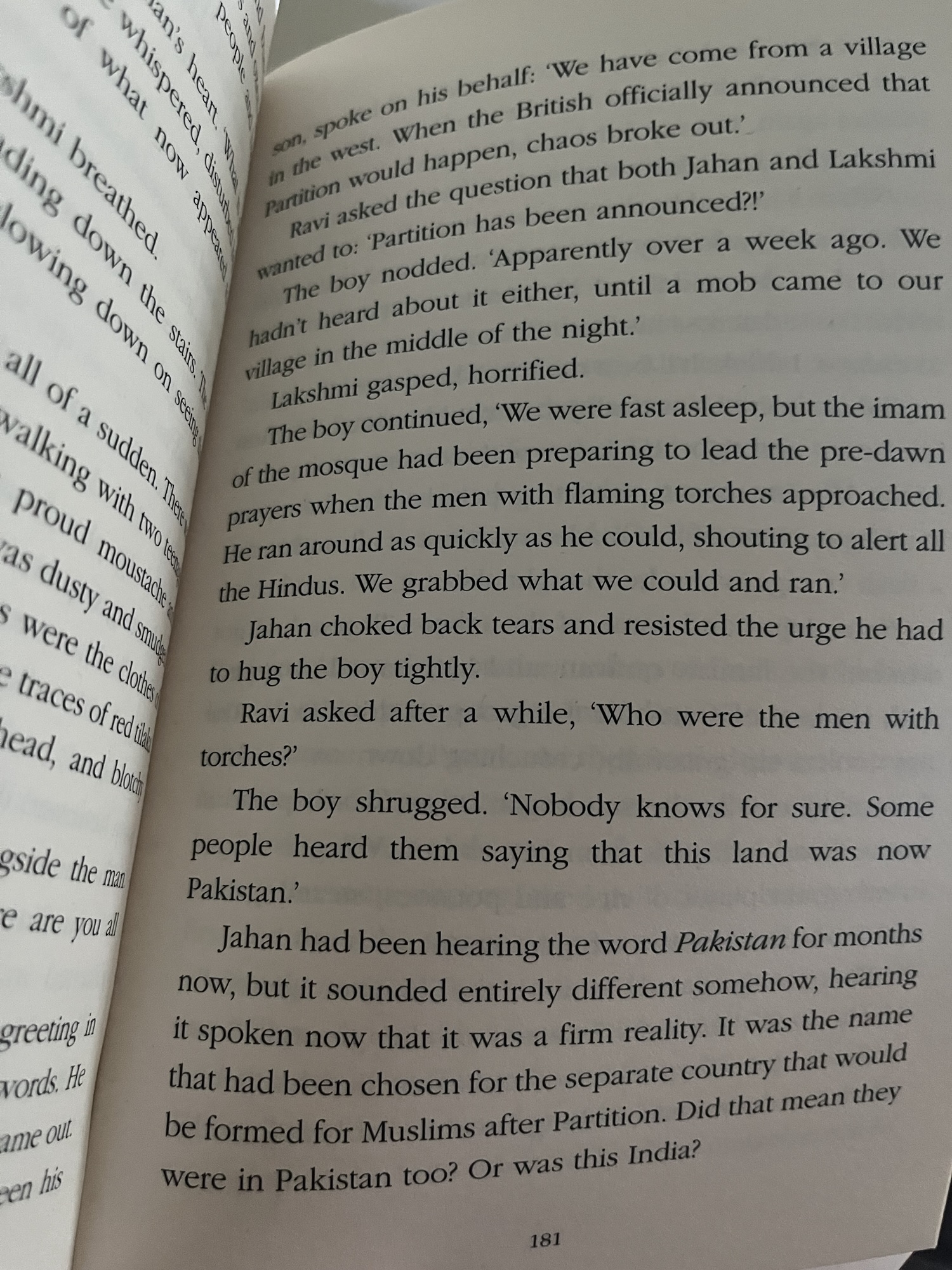
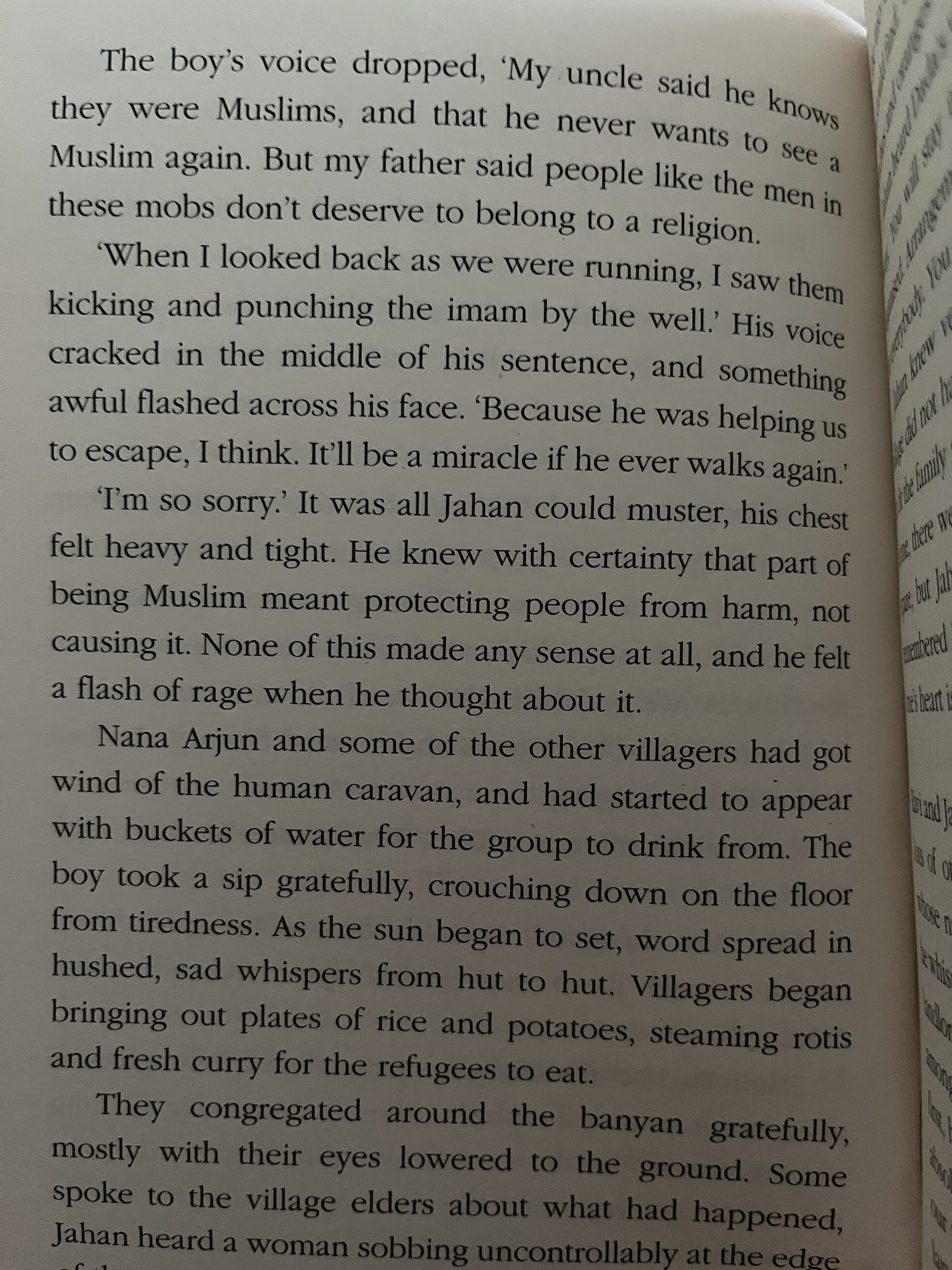
The Moon from Dehradun: A Story of Partition by Shirin Shamsi illustrated by Tarun Lak

Standard
The Moon from Dehradun: A Story of Partition by Shirin Shamsi illustrated by Tarun Lak

partition

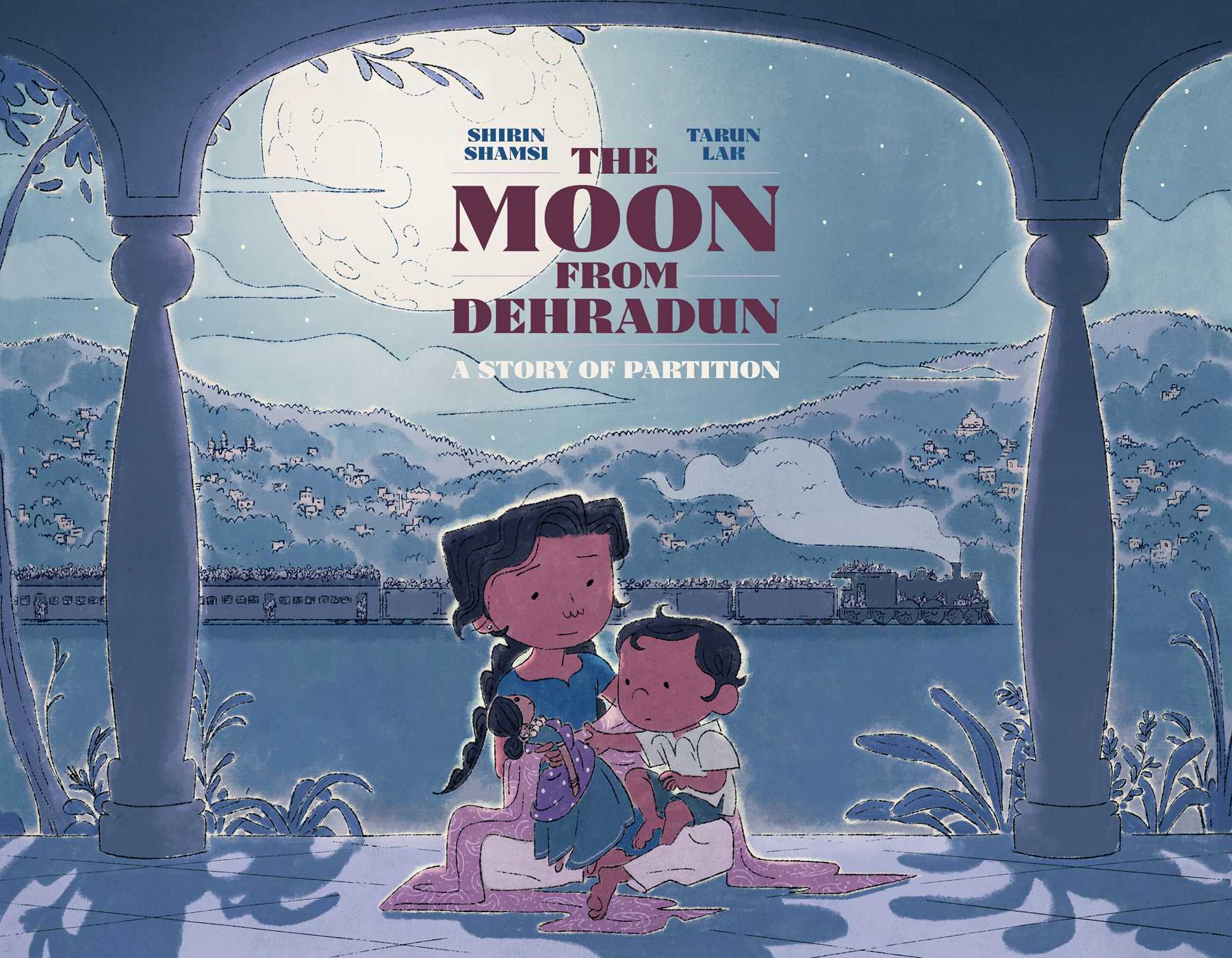
I’ve read this book numerous times: sometimes for the text, sometimes for the tone, sometimes to slowly immerse myself in the pictures. I know the basics of my own family’s journey to Pakistan, and this book added to that understanding. I like that it forced me to slow down and to really appreciate what partition was for both sides, from a child’s perspective. Pakistan and India gained freedom from British rule 75 years ago. Nearly every Pakistani or Indian you know today, has a parent or grandparent that lived through it. It is not history from long ago, it is still very much with us, and no I’m not talking about the lingering effects of colonization, I’m talking family stories, and loss of property and wealth, memories of the journey, the terror, the fear, the relief, the determination. This book is one story, perhaps the first mainstream published in the west, of one family’s experience. There could be a thousand more books and they would all be different, all powerful, all reflective. I love that this book is Pakistani authored, Indian illustrated, I love that it offers pages with no words at all. I love that a child’s perspective for such a monumental event is told for other children. There is a lot there for desi readers to unpack, and consider, there is also a lot there for non desi’s to be made aware of, and I hope that you will seek out this book no matter who you are, and share it.

img_3563

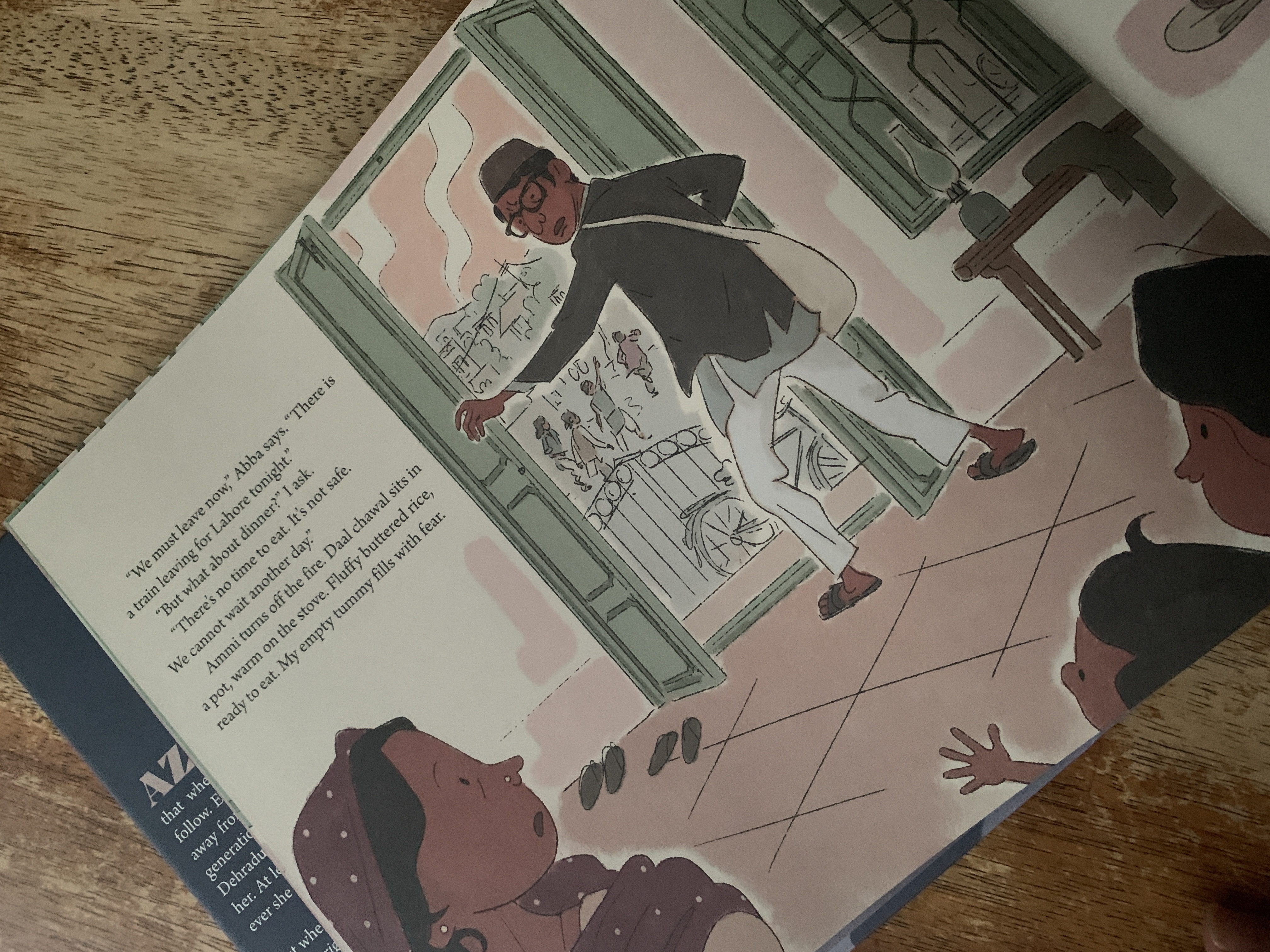
The book starts with excitement from Azra about an upcoming train ride, even though her family has lived in Dehradun, at the base of the Himalayas, for generations. Suddenly though there is yelling outside because people are afraid, and her Abba runs in saying they have to leave now. Ammi, Abba, Azra, and the baby “Chotu,” rush out the door, leaving the cooking dinner still on the stove. When they get to the train, Azra realizes she has left her beloved doll, Gurya behind. They cannot go back for her.

img_3564

Azra blames Chotu, for making her forget her doll, for taking her parent’s attention, yet as the days and nights on the train reveal tired people, sad faces, and fear, Azra finds comfort in her little brother’s embrace.

img_3568

When they arrive in Lahore, they are met with food, and shelter. They are given a house that looks like the owners left in the same manner that they had to flee. There are balls of dough with a rolling pin, laundry strewn about, and even a doll left abandoned under a bed.

img_3565

The book concludes with a map, a glossary, and an informative author’s note addressing pre-partition, partition, and the author’s own family story. There is hardship and frantic upheaval, but peace and welcome too. The illustrations illuminate the text and show the powerful emotion when words sometime simply don’t exist.

img_3566

The book is not political or even religious. There is an Indian flag when they leave and a Pakistani flag when they enter, there are sounds of athan, and packing of a rehl, and a comparison to Eid, and the doll at the end has a bindi on her forehead. The book does not make one side out to be in the right or in the wrong, if you do not know that partition of the subcontinent was a mass migration based on religion and the chaos further exacerbated by the British, this book will not spell it out for you.

img_3567

I preordered mine here and it can now be purchased from all major book sellers.