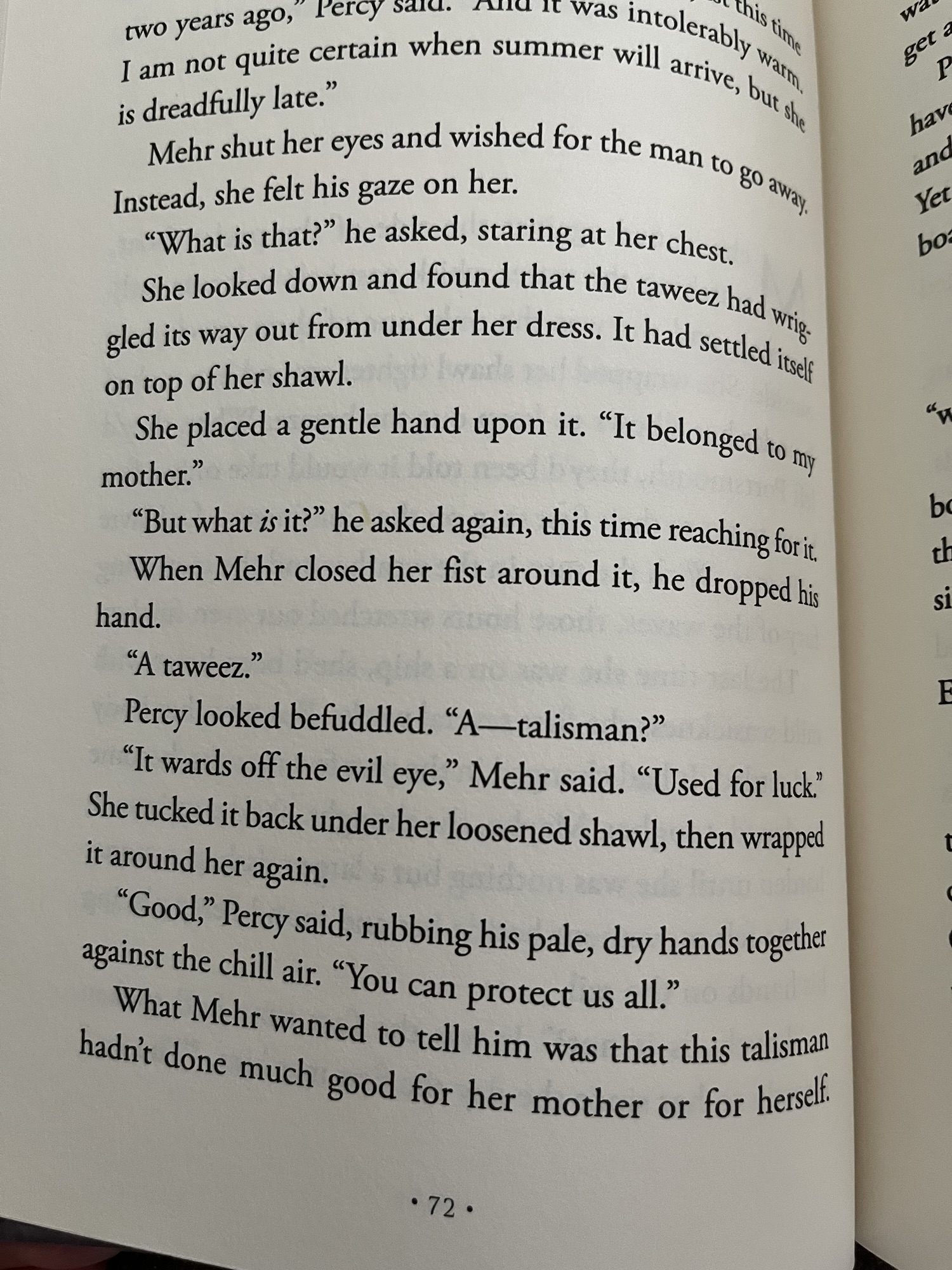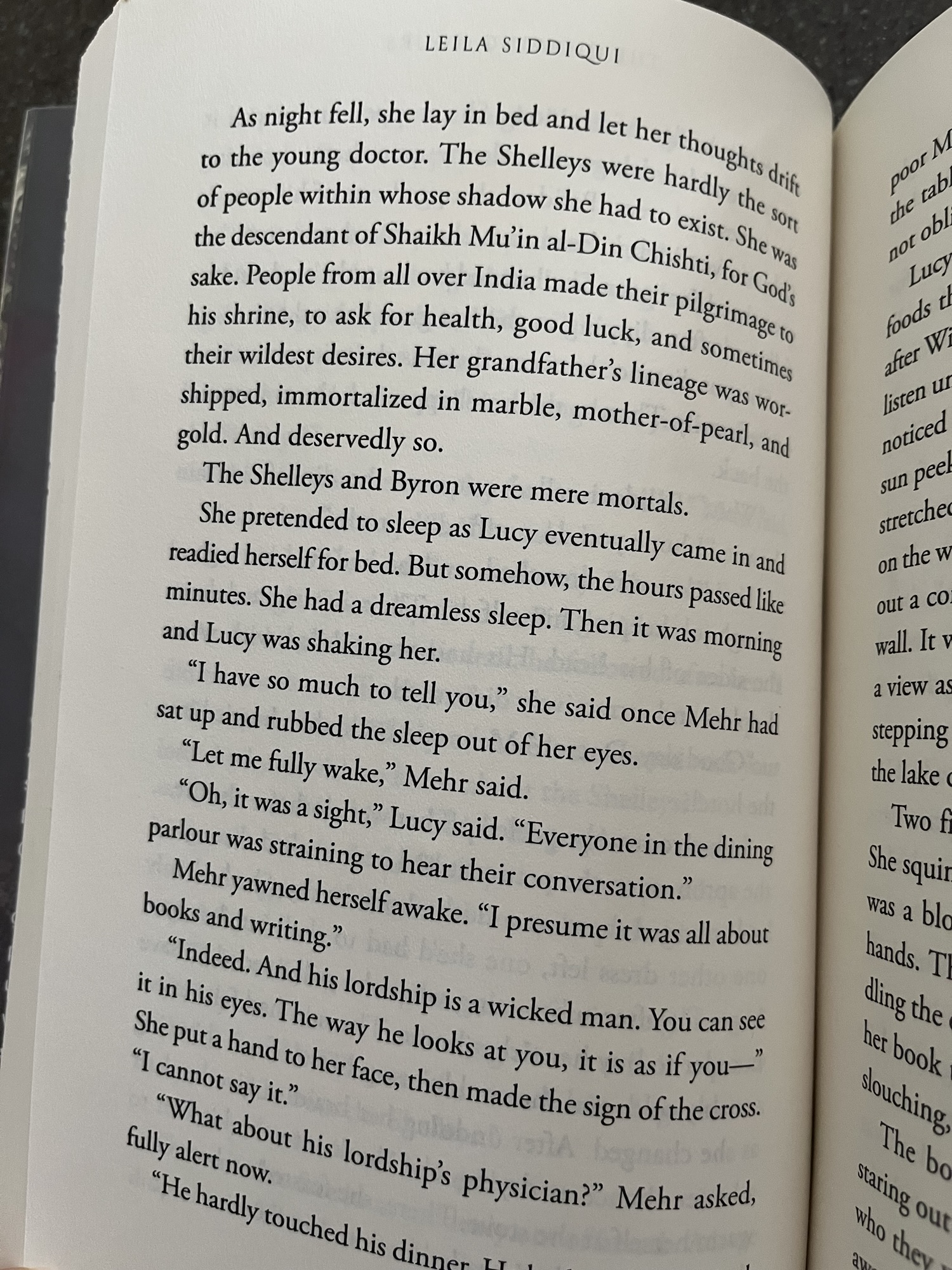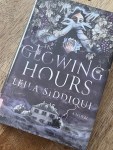
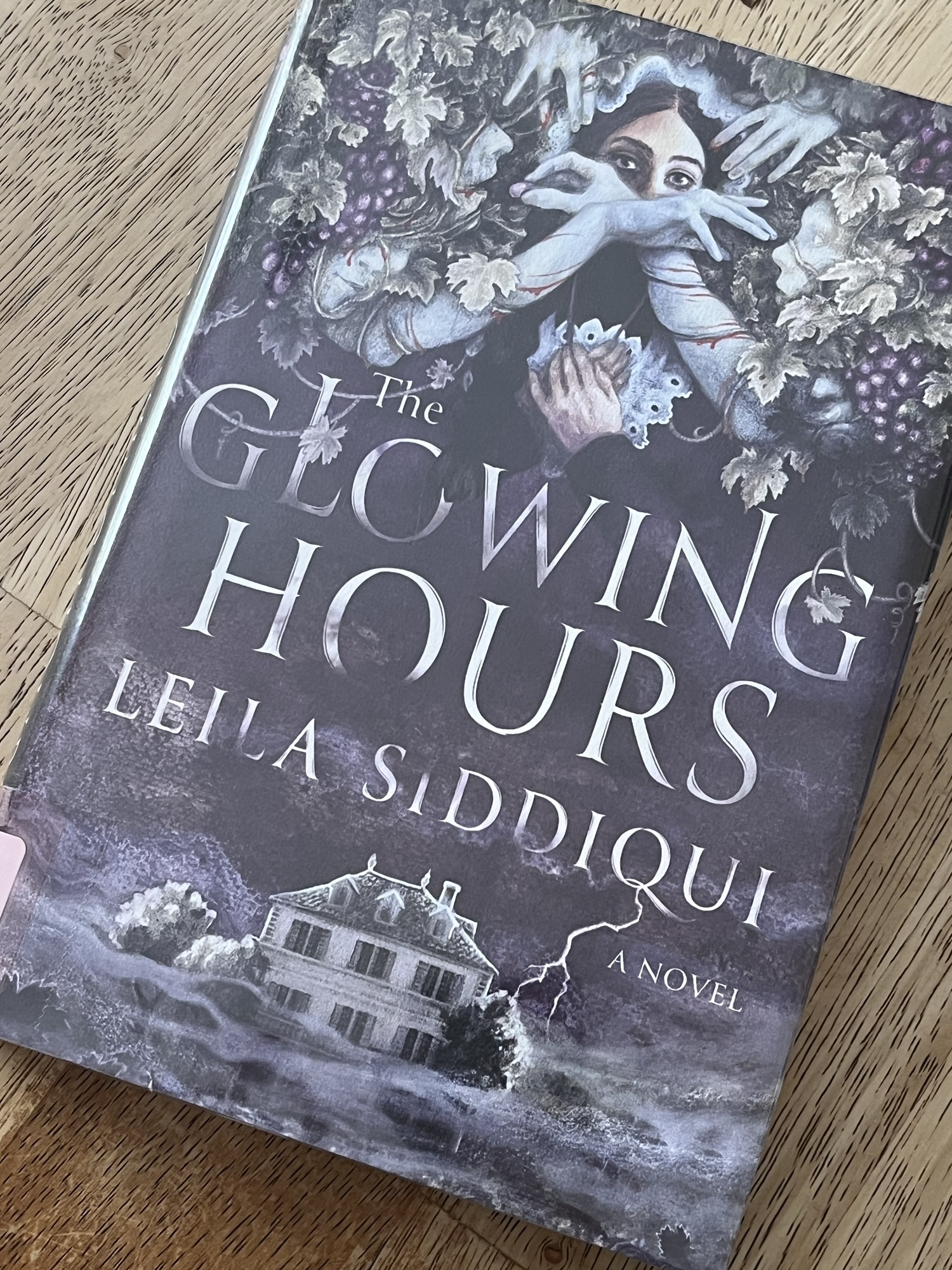
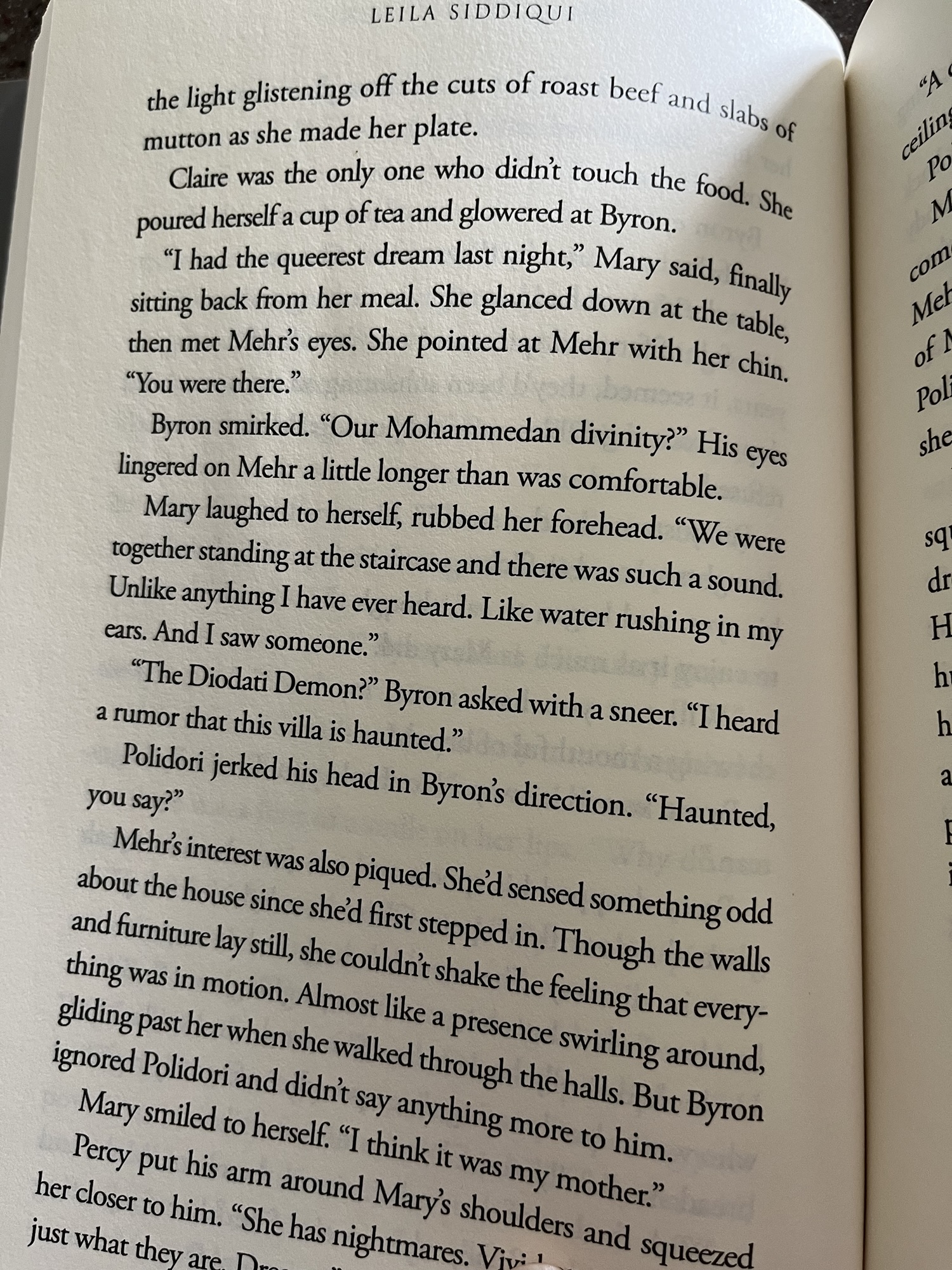
This 336 page adult gothic horror book frustrated me. When I got stuck reading the electronic arc, I waited until publication and checked out the physical copy, when I got stuck reading that I switched to an audio version. It had so much positioning and build up and details that I really was hoping I’d be rewarded with some fantastical imagining and historical fan fic bringing to life a period of history among real notable writers and a mysterious summer they spent together in 1816. Told from a “Mohammedan” house maid, Mehrunissa Begam’s experience working for the Shelleys, shows us how her misfortune brings her into the company of Mary, Percy, Polidori, Claire, and Lord Byron at Lake Geneva and specifically the Villa Diodati. The author researched the people, the times, and the setting, and obviously took liberties to not only fill in the blanks, but to make a fictional story of it all. But so many threads and details left untugged on, made the book slow and drag in some places, and seem glossed over and underdeveloped in others. The book is an adult read, with a mature scene, killing, death, power struggles, manipulation, haunting, and the like, and there is really no Islam. Mehr doesn’t put the label of faith on herself even though she regular recounts her family lineage as being religious and the shrines that people come to pray to as being salvation for so many. The crux of the hauntings, or at least a contributing factor, I think, SPOILER is not the literary folks Mehr looks down on, or the love and power triangles the house manipulates amongst them all, but the taweez, the amulet she wears from her deceased mother. So culture more than religion is definitely a part of the story, but in an othered sort of way. The tale at hand hints at the horrors the house hosts and its inhabitance endure, that inspire the writings of Mary Shelley’s Frankenstein and John Polidori’s The Vampyre.
SYNOPSIS:
I’m just going to copy and paste the blurb from the publisher, so as to not give anything further away.
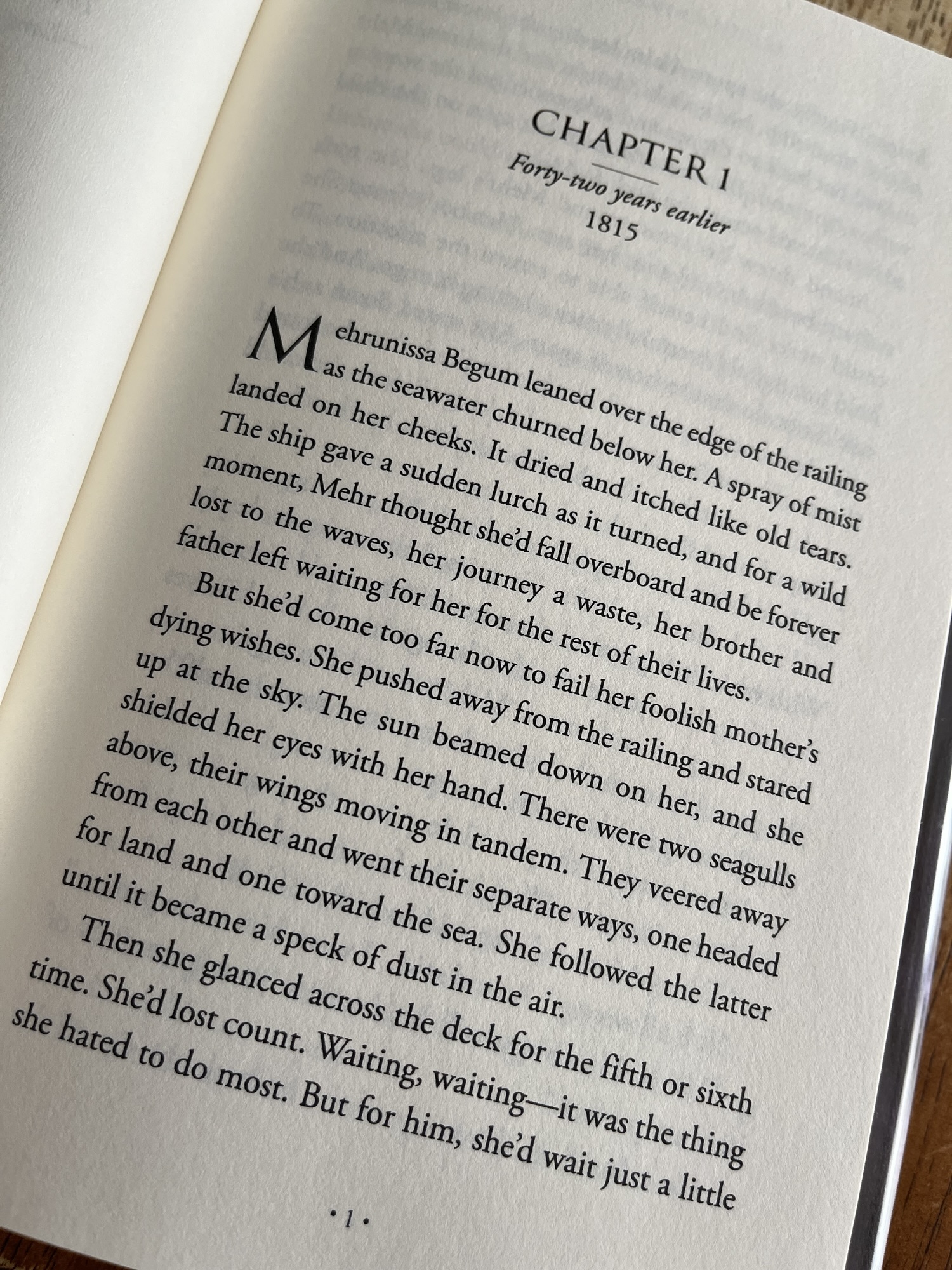
Summer 1816: London is a hostile place for the newly disembarked Mehrunissa Begum, who’s come to deliver her brother’s letter of inheritance before returning to her comfortable life in Lucknow, India. Only, she can’t find her brother anywhere and has no money for the return trip. With nowhere else to go, Mehr finds refuge in a boardinghouse for Indian maids. If she can’t find her brother, she reasons, she will get a job and start saving.
Mehr is soon hired at the English estate of Mary and Percy Shelley, young artists of burgeoning fame who are on the run from secrets of their own. Mary is brooding and quiet, but takes a curious liking to her new maid, asking her to accompany the Shelleys and her stepsister, Claire—as well as the eccentric Lord Byron and his physician, John Polidori—to Lake Geneva for the summer.
Almost immediately, Mehr notices strange, ghostly events at the villa. The walls breathe, portraits shift, and phantoms appear like unbidden guests who refuse to leave. The weather is fierce and foreboding, showing no signs of softening its relentless pall. And as Mary Shelley begins work on what will become her earth-shattering literary phenomenon, Mehr finds herself trapped in the villa as the rest of its inhabitants descend into madness.
WHY I LIKE IT:
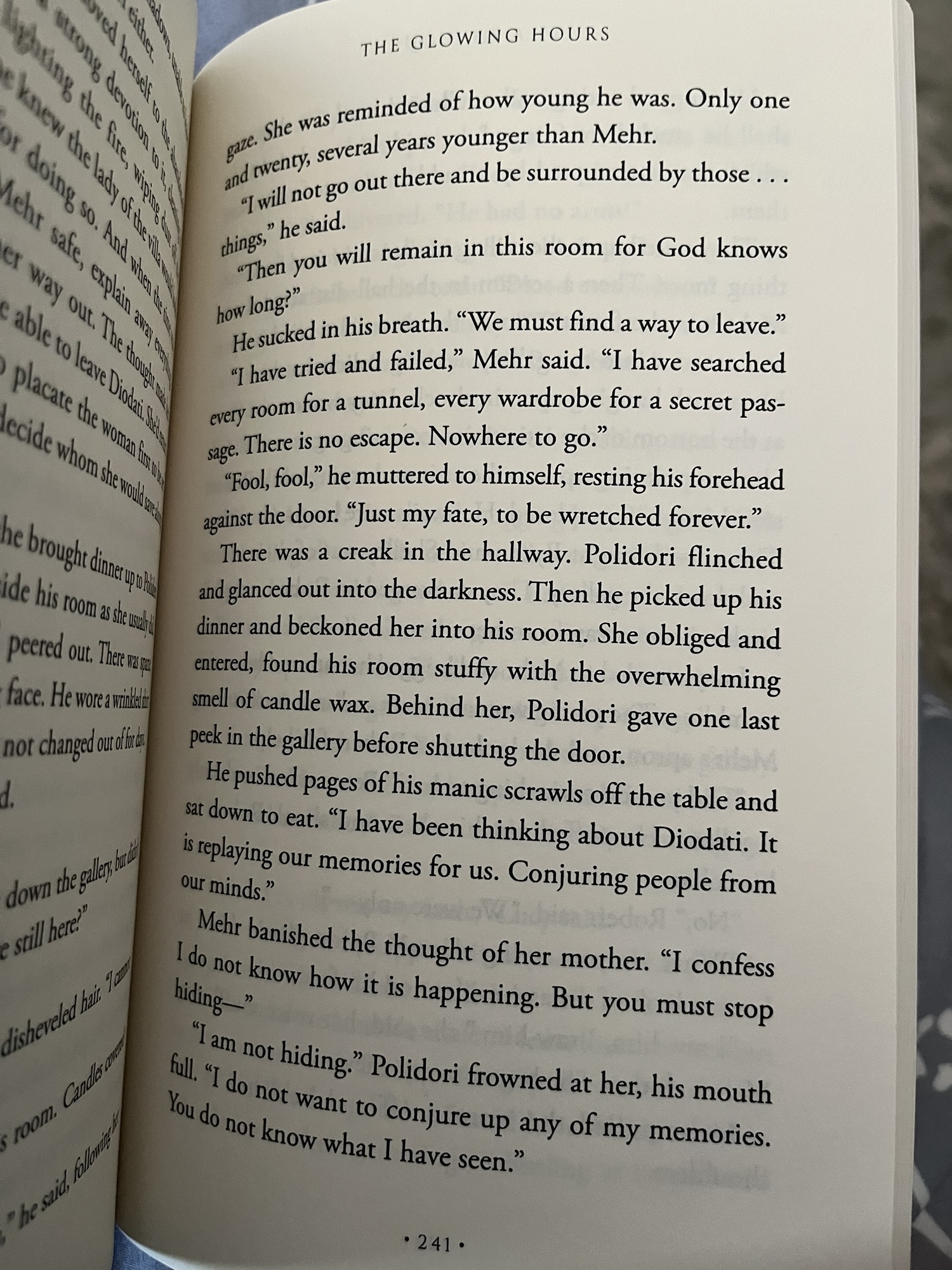
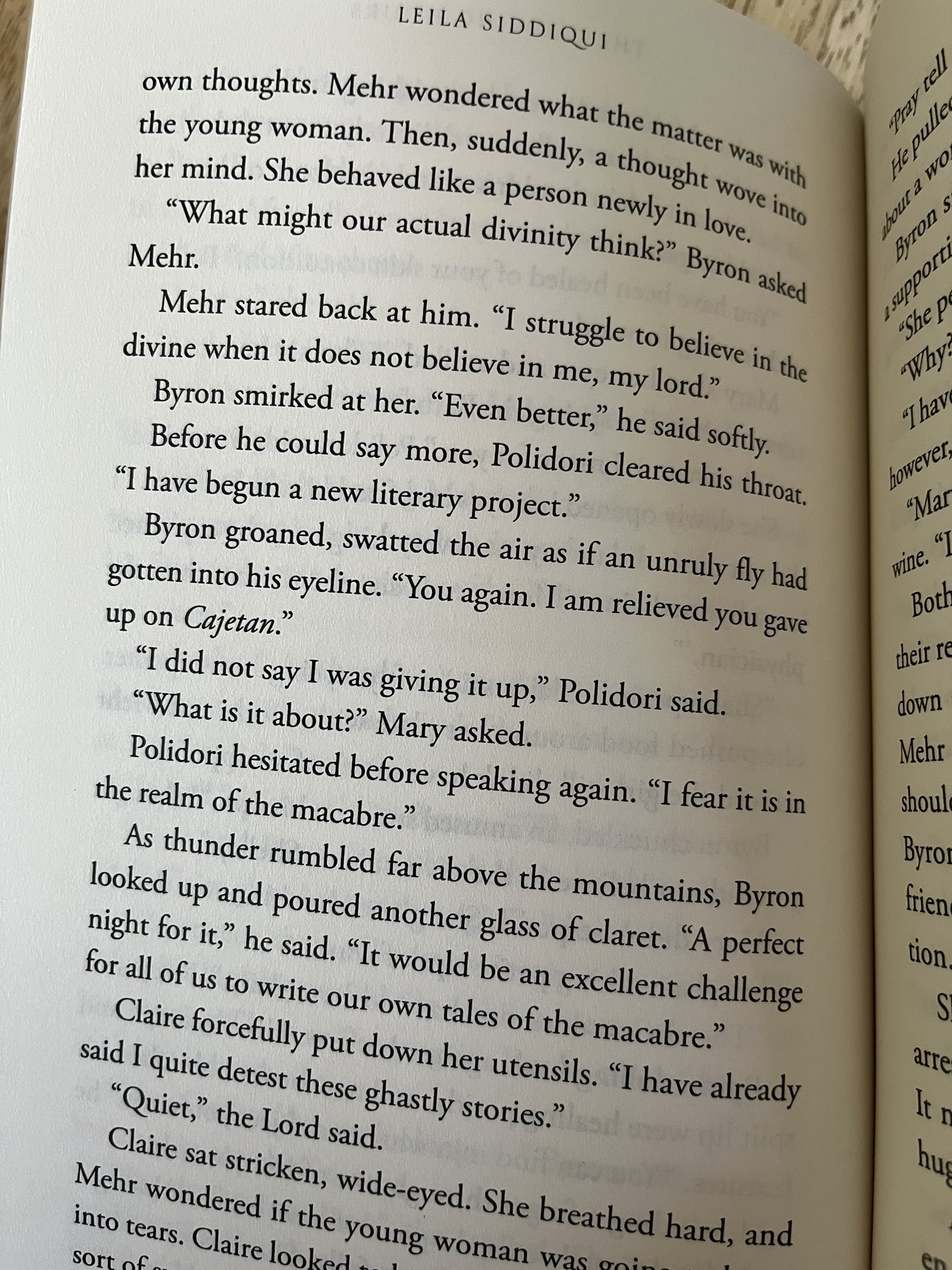
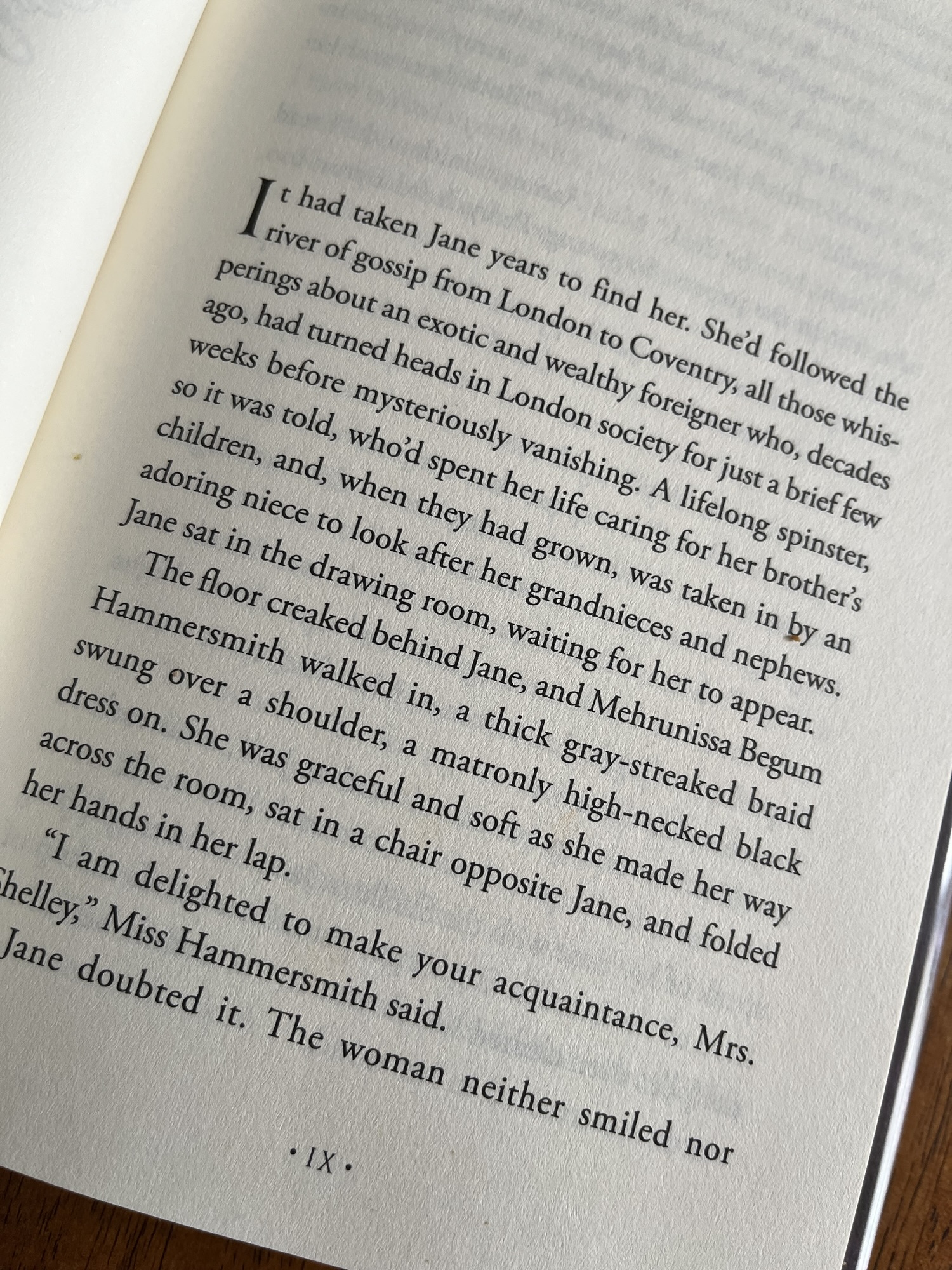
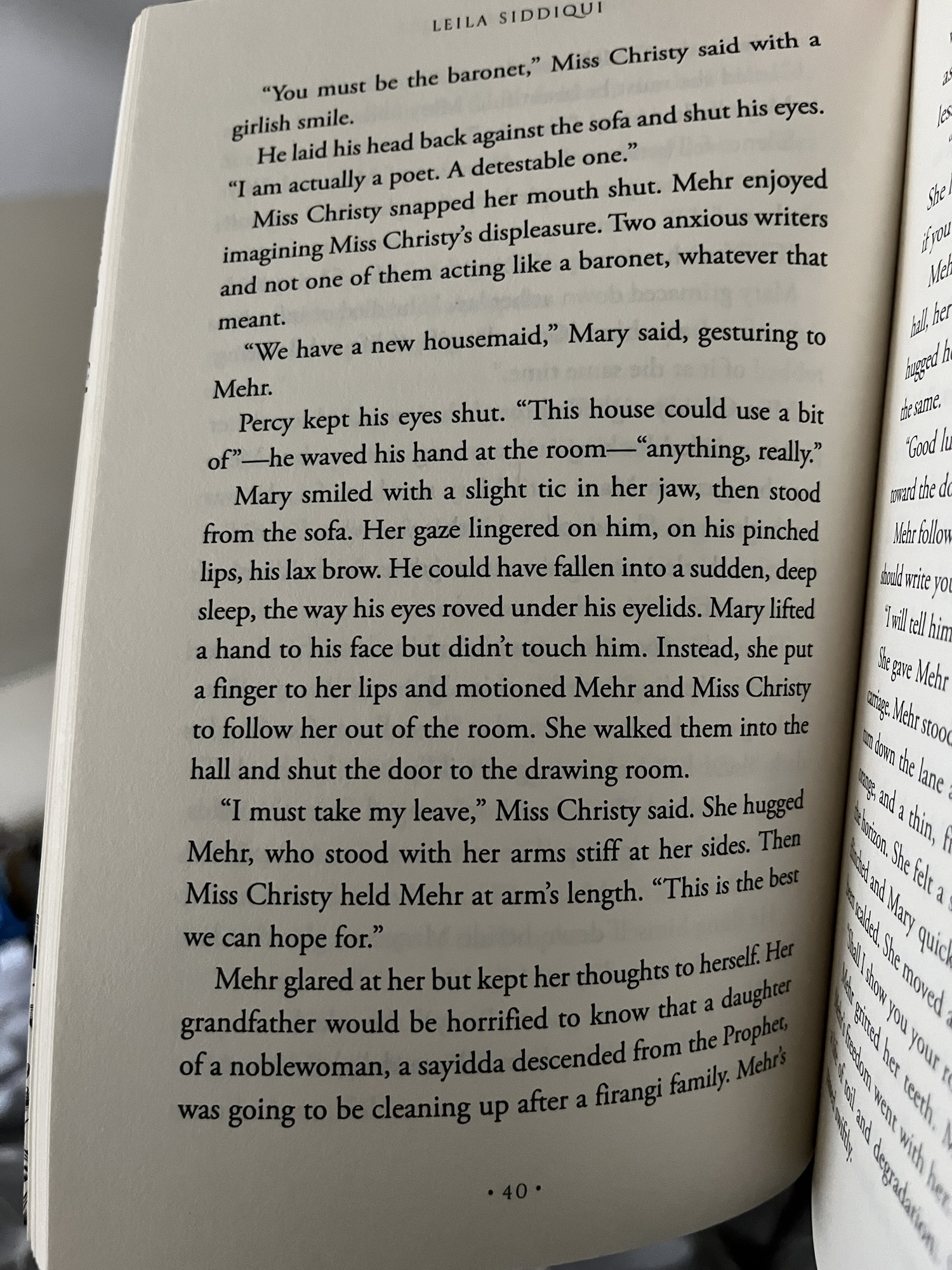
I don’t find the last paragraph of the provided above blurb accurate, it takes a while for creepy to be fully recognized, and by the time it does, I felt short changed by all the hints that amounted to nothing. It is highly possible I missed a lot of the symbolism or connections, I’m happy to be schooled on the literary merits, but key players being absent from scenes while everyone is in one house, conversations being stilted, random items being stressed, only to be of no consequence later, example: What was up with the grapes? The grape pickers? What did sleep quality have to do with it all? Why did Mehr even need to be there, she was a terrible maid, and wasn’t likeable. I get trying to show the hold Byron had on them all, but so often I couldn’t make sense of Percy and Mary’s dynamic, seemed they were all sleeping with each other and trying to gain literary genius credentials, but it was almost like the showing and telling didn’t always match. I love the premise and I do get that the historical truths and intertwining relationships and power struggles and emerging the reader in the time really do resemble world building, but it takes forever to get to any action, and once it does it seems too shallow. I reread the prologue at the end, and appreciated it much more after completing the book, so if you pick it up and it makes little sense, you aren’t alone.
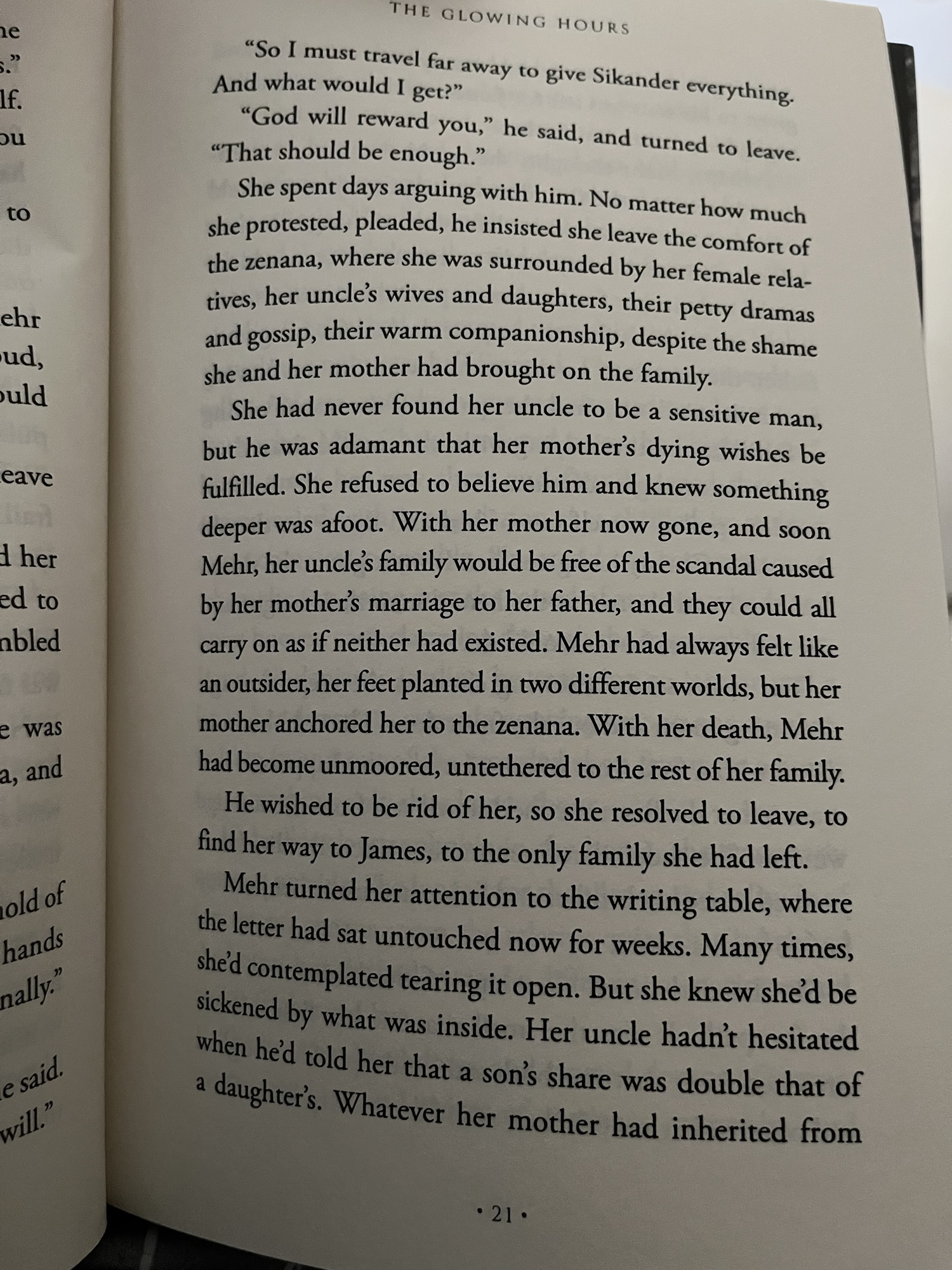
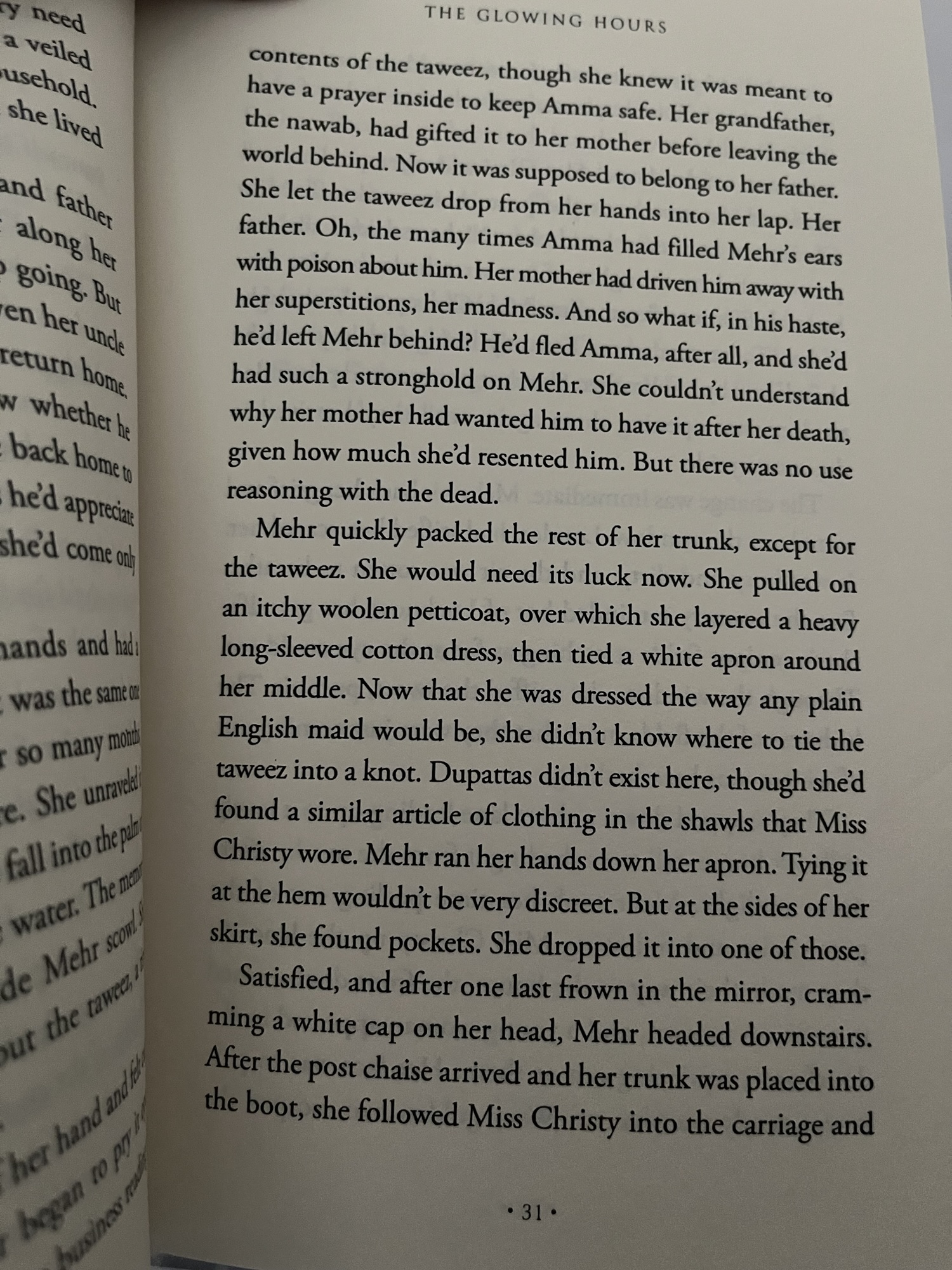
As for the Islam, I understand a Westerner may have called a Muslim, a Mohammedan, but it felt icky that Mehr didn’t push back on it. She mentions the athan, and that she is descended from Prophet Muhammad saw, but says she doesn’t believe in it. She is prodded to do what she does because the inheritance that her brother is to receive is larger than hers per Islamic rulings, her Uncle is shamed by Mehr’s mother’s actions, marrying a foreigner, and, Mehr’s actions don’t ever imply that she is Muslim or that she views the world through an Islamic lens. I hope it is clear that a taweez is not religious, but rather cultural practice, but since it ushers in the supernatural, I don’t know how it is perceived or intended to be perceived.
FLAGS:
Very adult
TOOLS FOR LEADING THE DISCUSSION:
As odd as it is, I actually would love to talk to someone who read this. I really hope I just missed some crucial, aha moment, and that it really wasn’t just sadly underdeveloped for what it set out to do. I maybe might have enjoyed this article interview with the author more than the book itself.
https://www.lapl.org/collections-resources/blogs/lapl/interview-author-leila-siddiqui