Tag Archives: Muslim Character

Amir’s Blue Jacket by Sarah Musa illustrated by Rania Hasan

Standard
Amir’s Blue Jacket by Sarah Musa illustrated by Rania Hasan

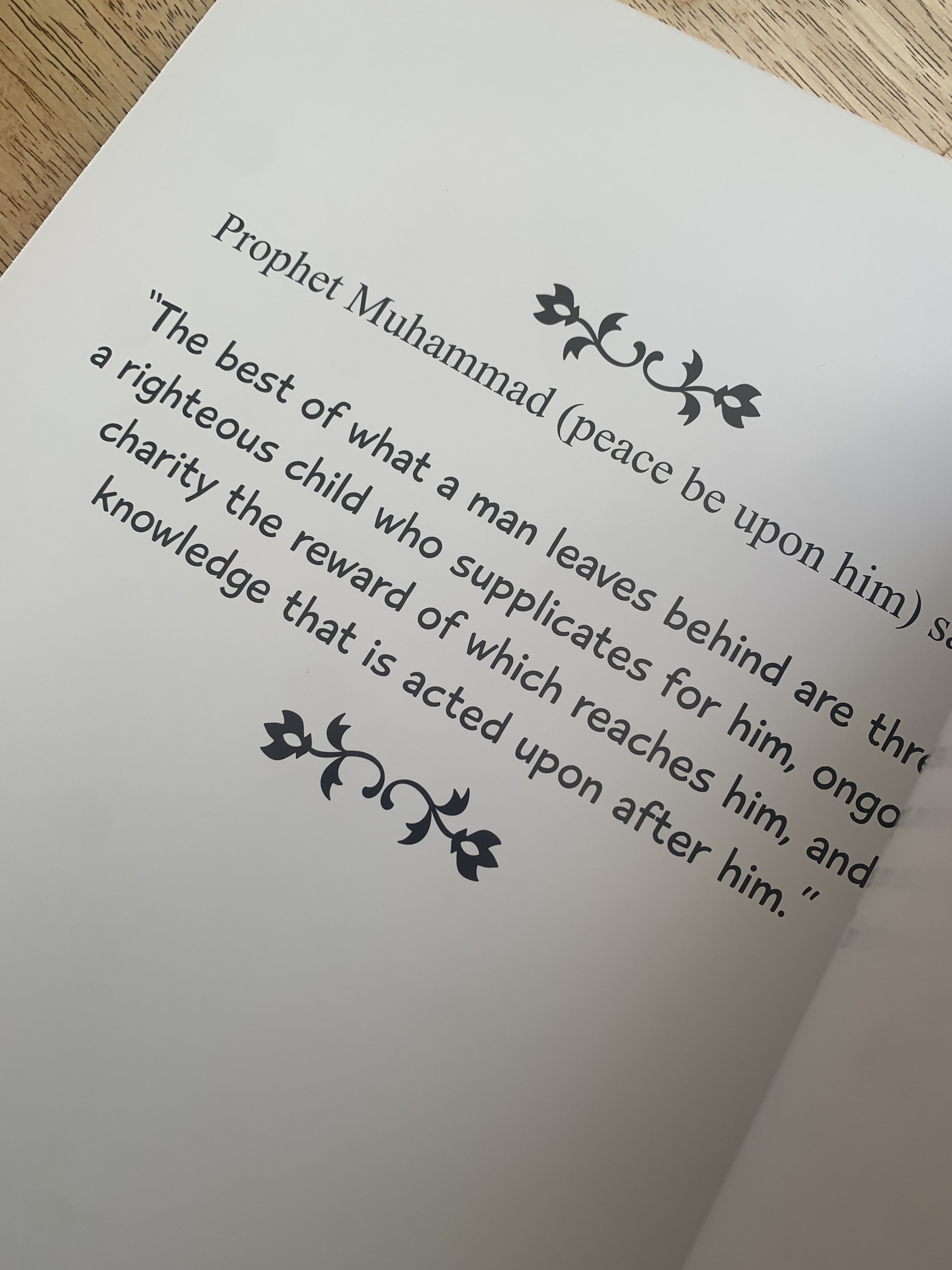
This heartfelt elementary picture book does a remarkable job of drawing the reader in to the emotions of the main character, his relationship with his grandfather, and imparting a moral message without being preachy. The illustrations are lovely on their own, but the way the muted tones convey the memories and illustrate the text really ties the book together. Whether it is for a larger story time or a one-on-one bedtime read, the book will offer discussion, comfort, guidance, and a little surprise at the end for Muslim and non Muslims alike. The slightly allegorical book does conclude with a widely known hadith (it is attributed to Prophet Muhammad saw, but is not further cited/sourced) and the family is clearly Muslim with their names mentions of Eid and God, and a hijab clad woman, but the book is universal and a lovely addition to any book shelf.

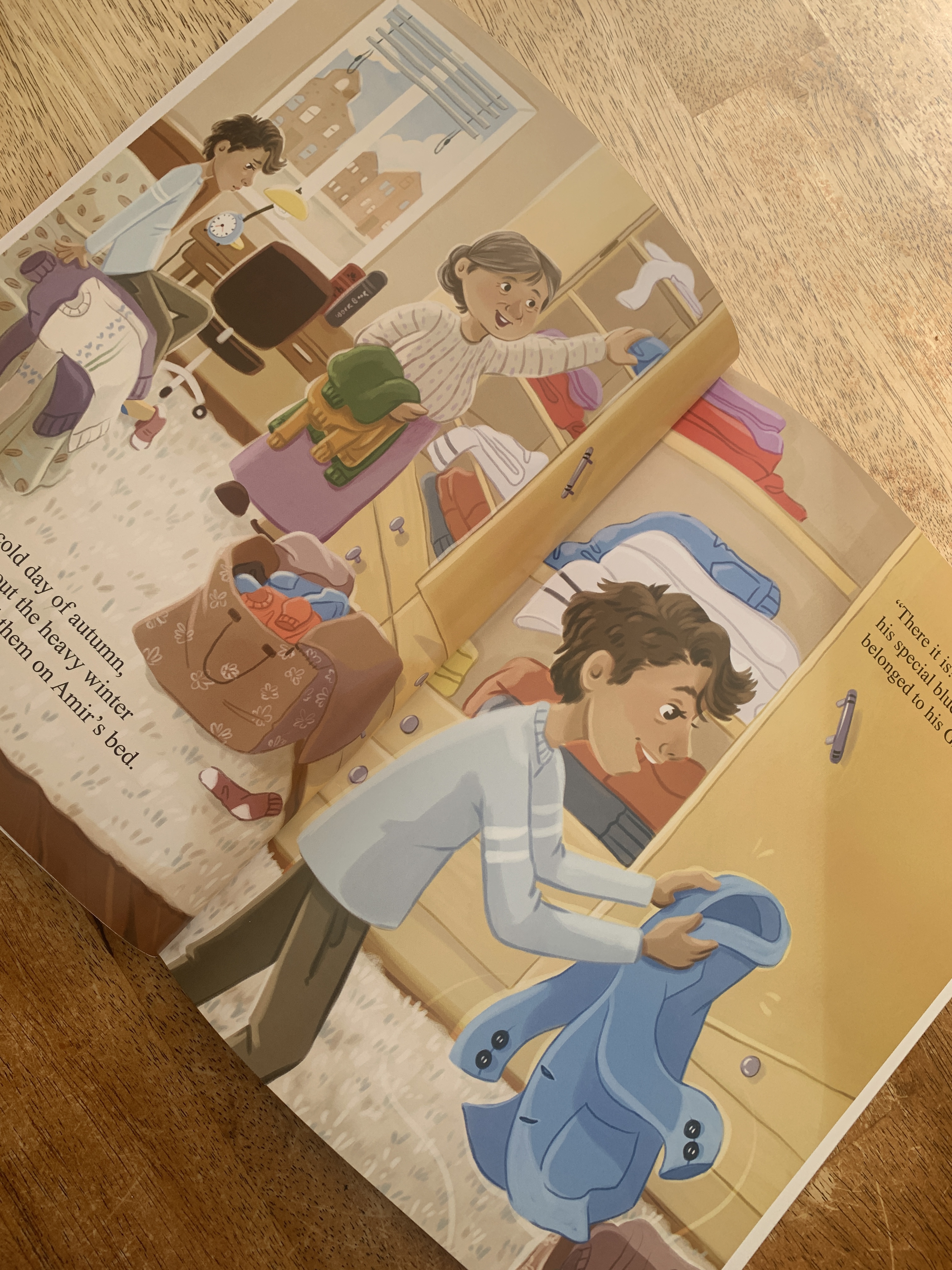
The book starts with Amir finding his Grandpa’s old blue jacket and recalling wrapping himself in it the day after his beloved Grandpa died. With it smelling like mothballs, he tosses it in the washing machine, but unfortunately when it comes out it has clearly shrunk. Amir is in denial, he says it fits fine and he has no desire for a new one. It is Grandpa’s jacket, and Amir is going to wear it, no matter how tight it is. Amir storms off to sit under the apple tree and recalls picking apples and making applesauce the year before for the whole neighborhood. Grandma shares that she used to keep grandpa’s cane but when someone needed it, she let it go.

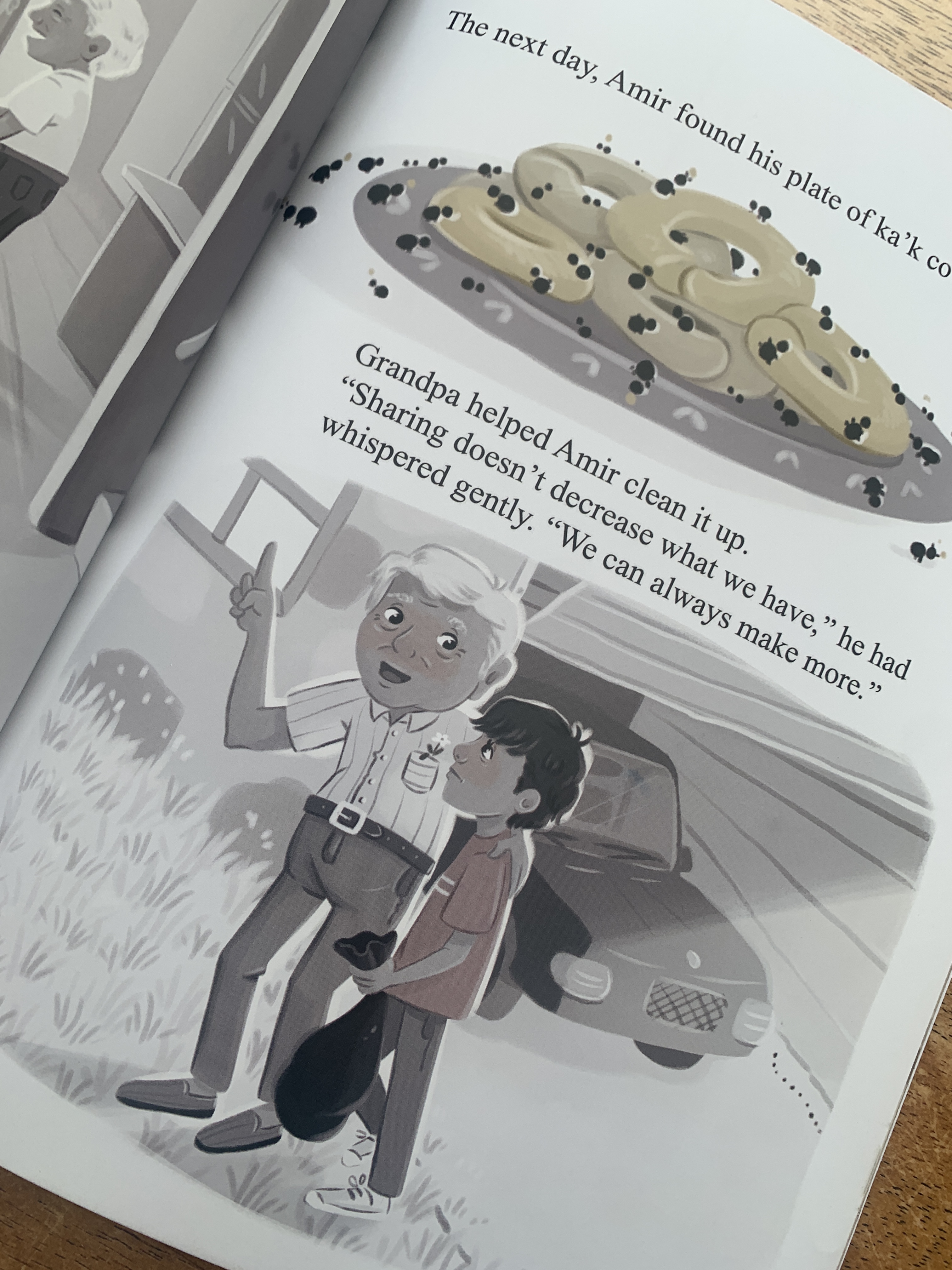
Grandma stirs another memory in Amir when she pulls the tray of ka’k out of the oven, of him trying to sneak a whole plate for himself only to have his hiding spot taken over by ants. When he is asked this time to share a plate, every step to the neighbors house reminds him even more of making the trip with his grandfather. Slowly he starts to realize that his memories are with him, not in his grandfather’s things, and Amir makes a decision that would make his grandfather proud, and (inshaAllah) give him more good deeds, even though he is gone.

The idea of sadaqah jariyah is understood through the story, and present in the hadith at the back, but it is never mentioned outright. Just as God is used, not the term Allah (swt). As Amir feels denial, frustration, and eventually peace, nothing is really told, it is shown, which really opens the book up to be a tremendous tool in sharing it with children and asking them to discuss what they understand, what they feel, and what they took away from Amir and his Grandpa’s blue jacket story.

The book is available through the publisher Ruqaya’s Bookshelf as well as HERE at Crescent Moon Bookstore where code ISL will save you 10%.

Hamra and the Jungle of Memories by Hanna Alkaf

Standard
Hamra and the Jungle of Memories by Hanna Alkaf

hamra1

This 400 page middle grade retelling of Little Red Riding Hood bursts with Malaysian culture, magic, action, and adventure.  The main character and her family are Muslim and hijab, duas, zikr, halal, Qur’an and salat are included throughout.  The mix of legends and characters from Malaysian culture in building the fae world is not contrasted with religious faith, but assumed to both coexist without issue.  The book is clean for ages nine and up and the only concepts worth noting are some intense life and death situations, close male and female friendships, dementia, and the element of fantasy.  The book is set during the Covid-19 pandemic which will ultimately date the book as it doesn’t convey the tone for readers unfamiliar with the curfews, social distancing, controversies, and masking.  Those who have just lived through it, will not need the framing, but in a few years I do fear that the book will be lacking in fully understanding why the tourists, parents, and markets are so absent.  As with all of the author’s books there are also dated pop culture references, that slow the narrative down for today’s readers.  The book grabs you from the start and the second half flies by smoothly, but the middle quarter is a bit slow as the world building is not robust, and the reader is thrust into a magical world that is just accepted without pause, and the reader is asked to accept it at face value as well.

SYNOPSIS:

It is Hamra’s birthday, but the independent 13 year old is not being celebrated- everyone has forgotten: her mother is a front line worker, her father helping those with limited resources, and her aging grandfather and her are left to care for her memory slipping grandmother.  When Hamra, Little Red, storms off to the jungle to collect some herbs, in an act of spite, she defies the rules drilled in to her 1- Always ask permission before you enter.  2- Don’t challenge what you can’t even see. 3- Never use your true name. 4-Never take what isn’t yours. 5-If you hear someone calling your name, never, ever look behind you. She also doesn’t listen to the regular reminders to tie her shoes.  Simple rules, that when broken set the story in to motion.  Along with her best friend Ilyas, the two will strike a deal with a weretiger for their transgressions that takes them on a journey to try and save Opah, themselves, and prove their quest a success.  The characters they meet, the clues they unravel, the legends they understand, and the scenic islands they explore are as lush as the love Hamra has for her family and the drive she has to return home safely.

WHY I LIKE IT:

I love the way Islam is truly part of the characters, and a natural extension of how they see the world and act within it.  I wish there was stronger world building blending the world of the known and the fantasy for the reader.  The writing of the Malaysian setting is beautifully unapologetic and I love that there is not a glossary or overly explained descriptions, it is immersive and I appreciate that, but the framing of the two worlds I felt was a bit disjointed and needed some fleshing out.  At times it feels more telling than showing in detailing the depths of the legends or the superstitions that are true for the story.  I did enjoy the characters’ quirks and stubbornness, there is not a lot of arc and growth, but with the intensity of the adventure and culture, I didn’t feel it lacking in development.  For much of the book I didn’t quite appreciate the Covid-19 framing, but by the end I understood that it was a way to have the tourist spots void of people, the parent’s out of the way; a little more development though would have had the uncertainty of so much more fully realized.

FLAGS:

Fear, trickery, danger, loss, death, music, musical references, dammit is said.  There is some violence, close male and female friendships, and a possible trigger of dementia in a loved one.  There is myth, legend, magic, fairies, fae, and fantasy, if you are ok with the concepts in general the presentation is clean even with mixing religion and these concepts.  If you are uncomfortable of fantasy and Islam coexisting, this book draws the two worlds very close.

TOOLS FOR LEADING THE DISCUSSION:

I have taught two of her books in middle school book club discussions, and I would teach this one as well.  It is enjoyable to see Malaysian Muslim characters so confident in their identity and having adventures that are enhanced by their faith and culture while focusing on larger themes of friendship, family, forgiveness, and adventure.

The book comes out in March of 2023, I’ve preorderd mine HERE and I hope you will as well.

A Bit of Earth by Karuna Riazi

Standard
A Bit of Earth by Karuna Riazi

earth

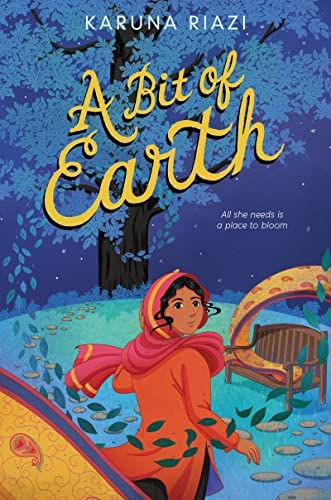
This Secret Garden retelling mixes the heart of the original with a dash of modernity, the flavor of desi culture, and the lyricism of a good writer.  Over 368 pages the slow plot but rich imagery will draw readers in, hold their attention, and leave them thinking about the characters they have been fortunate to spend time with on Long Island.  Islam is practiced and normalized and naturally woven into the Muslim characters’ daily lives without othering or over explaining.  I did struggle a bit trying to keep the relationships of who was supposed to be caring for the protagonist at various points since her parent’s died clear, but once I abandoned stressing about it I was able to be swept away.  I recently reread The Secret Garden with my own children and the original is not plot heavy, nor action packed, but I watched as my own children were drawn to the slower, more grounded (pun intended) nuanced tale, and I think this book, in the same vein, will find its way in to the hearts of middle grade readers.  The book is clean, there is a possible crush hinted very slightly at the end, periods are also endured, and I do have reservations of the terrible marital relationship between Mr. and Mrs. Clayborne, but it establishes that change will occur, so at least it isn’t normalized.  There are sprinkles of magic implied regarding the house, but it is always framed without clarity and in a subtle way to set the tone and the emotions the characters are feeling more than centralizing something rooted (see I did it again) in fantasy.

SYNOPSIS:

The book updates and mirrors the original fairly well with an obstinate orphan arriving at a sprawling house, finding a prickly boy, and setting off to form a tentative toleration of one another with friendly neighbor kids in a garden that is unquestionably off limits.

Maria Latif arrives from Pakistan against her will to be taken in by a distant relative (I’m not sure how she is related), but Asra has been called away and she is forced to stay with Lyndsay, the new wife of Mr. Clayborne.  The first wife was a friend of Maria’s family, but Lyndsay is just as emotionally overwhelmed and lost as the child in her charge.  With Mr. Clayborne away on businesses, his mother Charlotte keeps them all on edge.  When Colin Clayborne is expelled and returns home, more tension erupts and the two children find themselves in an off limits garden trying to make the most of a difficult situation.

WHY I LIKE IT:

I love the mix of poetry and standard novel format.  It is beautifully written and clearly the author does a remarkable job of making her very unlikeable characters worm their way in to the reader’s heart.  Both Maria and Colin are thorny and difficult, stubborn and rude, but you seriously cheer for them, and I did shed a few tears at the end.  With the author’s writing ability apparent, I’m still not sure why the foundation of the relationships and getting Maria to the Clayborne home is so cumbersome.  It is too muddled and it drags the book down every time it is revisited.  The Dadi having the aunt’s phone number was too easy, the inconsistency of the neighbors having no relationship to the Clayborne’s for so long and Lyndsay not even pausing to think another Bangladeshi family living a few houses down might be my husband’s first wife’s friends, seems inconsistent.  Honestly Lyndsey in general needed to read like a competent woman struggling, not a teenager in over her head. I disliked her and Mr. Clayborne’s relationship and I would hate to think any reader would find it ok or normal.

I love the Islam and how it presents when the character has to pray, she goes and prays, it is part of the story and it is seamless.  I don’t think the culture is handled quite as well.  Lyndsay is a foot writer who is always cooking, yet knows nothing of desi foods? If Colin’s mom is desi, wouldn’t she at some point tried to cook familiar foods for him.  Half the neighborhood is Bangledeshi, so it seems everyone has a parent or step parent or distant relative that is desi and I loved the normalizing, but it seemed a bit assuming.  I don’t think kids will wish it was more clear, but as an adult reading it, I felt like it needed to be interjected more without explanation, or if left as is, adding some context. I also wanted to know what Maria’s parents did and a little introspection from Maria.  Again as an adult I see how her anger and grief changes how she remembers them, but from them always being away, to such soft poignant memories at the end, I think kids will need a little hand holding to understand the grief process and her understanding of them.  As it is, they just seem terrible and then all of the sudden great, and the pacing gets thrown off in the process.

FLAGS:

It seems to hint at the end that Maria might have a bit of a crush on Colin, I honestly thought up until a single line that they were making a chosen family with the people who cared for them, but that line seemed to suggest it might be more of a romantic feeling than friend or brotherly.  I read an early copy, so this is subject to change.

Maria gets her period and it is detailed what she is feeling.  I think boys and girls can and should read it.  It is presented on age and appropriately: cramps, achy, dry about blood leakage, having it start young like her mother, etc..

Implied magic (possibly), music and musical instruments being played, milaad, lying, sneaking, being kicked out of school for physical assault, close male and female friendships, ADHD stigma.

TOOLS FOR LEADING THE DISCUSSION

I think this book would work in a classroom and would appeal to readers in an Islamic or public library.  I would consider it for a middle school book club, I think readers will connect and feel empathy for Maria, Colin, and Lyndsay and be better for it.

I preordered my copy HERE and I hope you will do the same

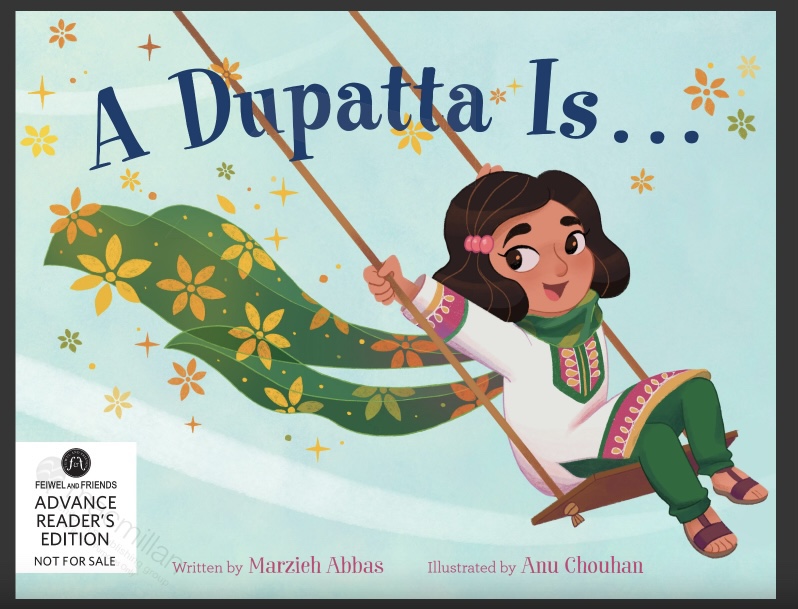
A Dupatta Is…by Marzieh Abbas illustrated by Anu Chouhan

Standard
A Dupatta Is…by Marzieh Abbas illustrated by Anu Chouhan

img_6073

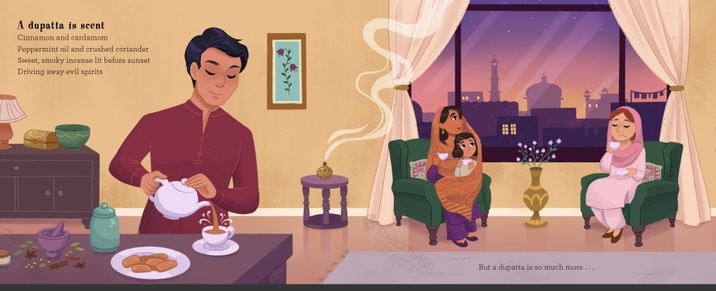
I read this 30 page early elementary book a few times before writing this review and honestly my cheeks hurt because I cannot stop smiling.  The lyrical writing radiates warmth and pride, culture and tradition, legacy and identity, while acknowledging both the playfulness and solemnness of a piece of fabric.  My heart breathed with the clarity and articulation that is felt and contained within the fabric that perhaps all Pakistanis feel, but cannot convey so poetically.  The book may be meant for children four to eight years old, but all readers will appreciate the text and illustrations that seamlessly flow like a favorite dupatta grabbed while running out the door. I struggled with picking only a few images to share, as every page became my new favorite as the book progressed.  Admittedly though, one page did give me pause as it conflated incense burning with getting rid of evil spirits which comes across as a religious belief, but is a cultural practice.

img_6074

The book starts out with the actual physical description of what a dupatta is and how it is adorned.  It then moves on to describing the color, the sound, the smell, the place, the function, the art, the beauty, the fun, the faith, the legacy, and the identity.  Each spread ends with the words, “but a dupatta is so much more…” seamlessly weaving so many facets of what a dupatta is together to create a true understanding of it from a tangible, to cultural, to practical perspective.

img_6076

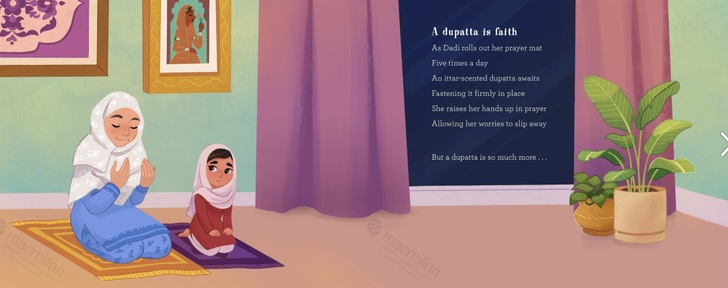
I love that there is a page about faith, and praying five times a day with a dupatta being worn, it is a little odd that there is a portrait decorating the wall behind the two characters making dua, but at least it is clearly behind them.  I absolutely loved that so often the wearer of the dupatta was also wearing a hijab, particularly the bride picture- which is absolutely gorgeous.  It signals without words that a dupatta can be worn to cover a Muslim woman’s head, but it is also often not.  The backmatter further details that it was once worn as part of the national dress and as a form of modesty, but now is often worn as an accessory.

img_6077

One summer in Pakistan, a friend and some cousins and I started trying to formulate 101 Things to do with a dupatta (wipe noses, pull things out of the oven, catch fish), it was the year of net dupattas so clearly covering your head was not one of them.  Sure we were being silly, but to see the book also highlight wiping sticky hands, and wrapping it up like a sari, and using it as a cradle to rock a baby was very, very accurate and heartwarming.

img_6079

Please pre order this book, it signals to publishers that these books are in demand and is a way to show what type of books we want to see.  I preordered  mine here.

Hamza Attends a Janaza by Shabana Hussain illustrated by Atefeh Mohammadzadeh

Standard
Hamza Attends a Janaza by Shabana Hussain illustrated by Atefeh Mohammadzadeh

img_5141

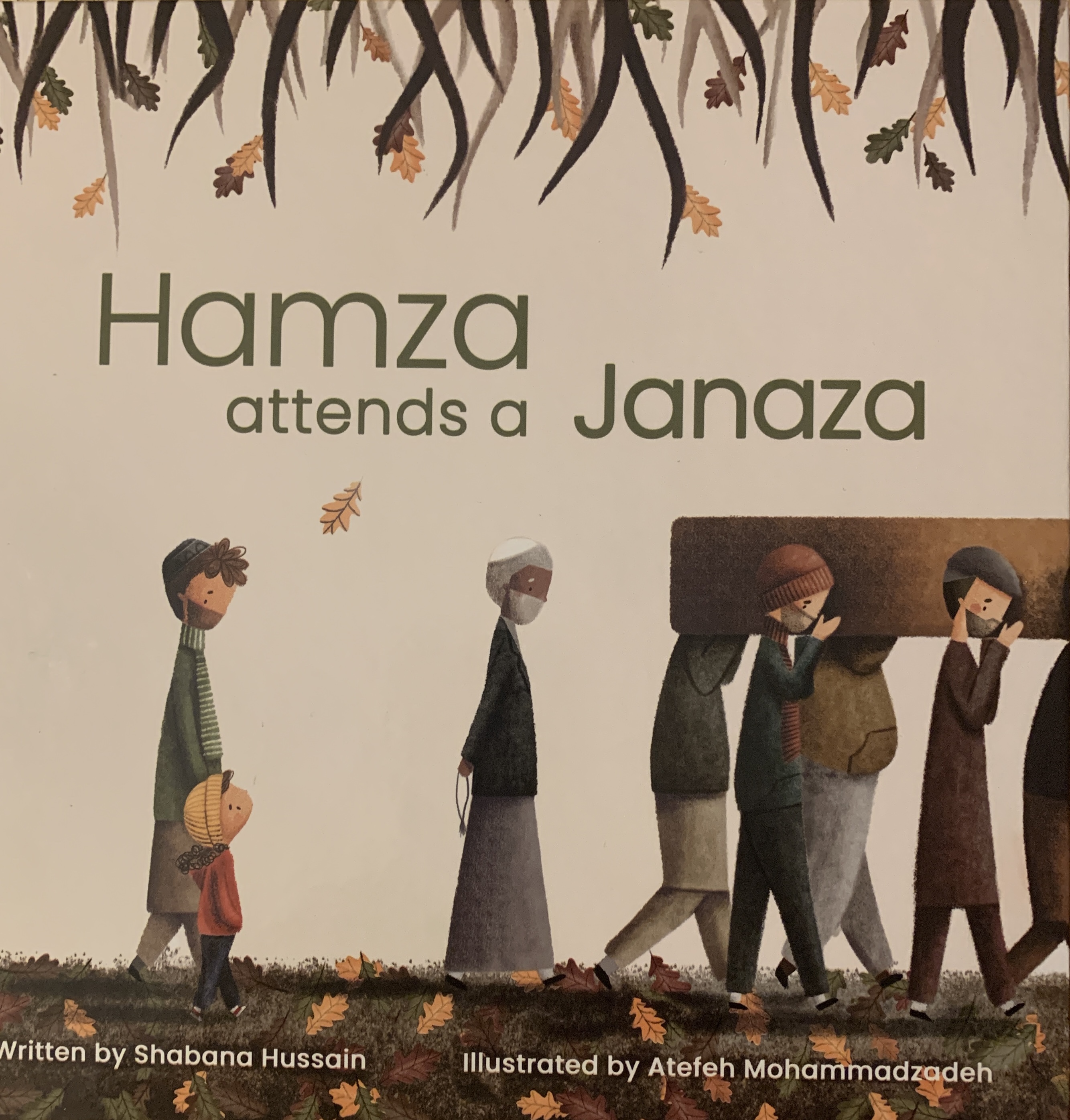
For years it has been noted how few children’s Islamic books about grief and loss are available, and while numerous titles have come out in the last few years, it wasn’t until I saw this new book, did I realize how desperately we were in need of a book on janaza.  I love that the author establishes on the first page that this book is not focused on grief, but rather about death, the burial, and preparing to meet Allah (saw) in the hereafter with our deeds.  The beauty is that while the topic is critical and needed, the story is also well done.  It may not focus on emotion, but it has a lot of heart and tenderness, thus making it a wonderful addition to all book shelves for children preschool and up as a brief introduction to how Islam views death, the rituals of burial, and the worship that surrounds it. Packaged with clear text, robust backmatter and absolutely adorable illustrations, I am very happily impressed with this book.

img_5142

The book starts with Hamza telling about his favorite day of the week, Saturday, the day he spends with his Nano-ji and cousins, but one day all that changes when his mom gets a phone call about the loss of a community Uncle.  Mom says, inna lillahi wa inna illahi rajioon quietly in to the phone and Hamza knows something is wrong, but doesn’t quite understand why the passing of Uncle Sameer, the owner of the local sweet shop, means he has to attend a janaza instead of going to his grandfather’s house.

Hamza’s parents explain the reward of going, and remind him that we all have to leave this world one day. They recall Uncle Sameer helping bandage his knee when he got hurt and gave him a lollipop.  Once in the car, Hamza wants to know what is going to happen.  His parents explain the ghusl and the body being wrapped in the kafan and the body being put in the ground.

img_5144

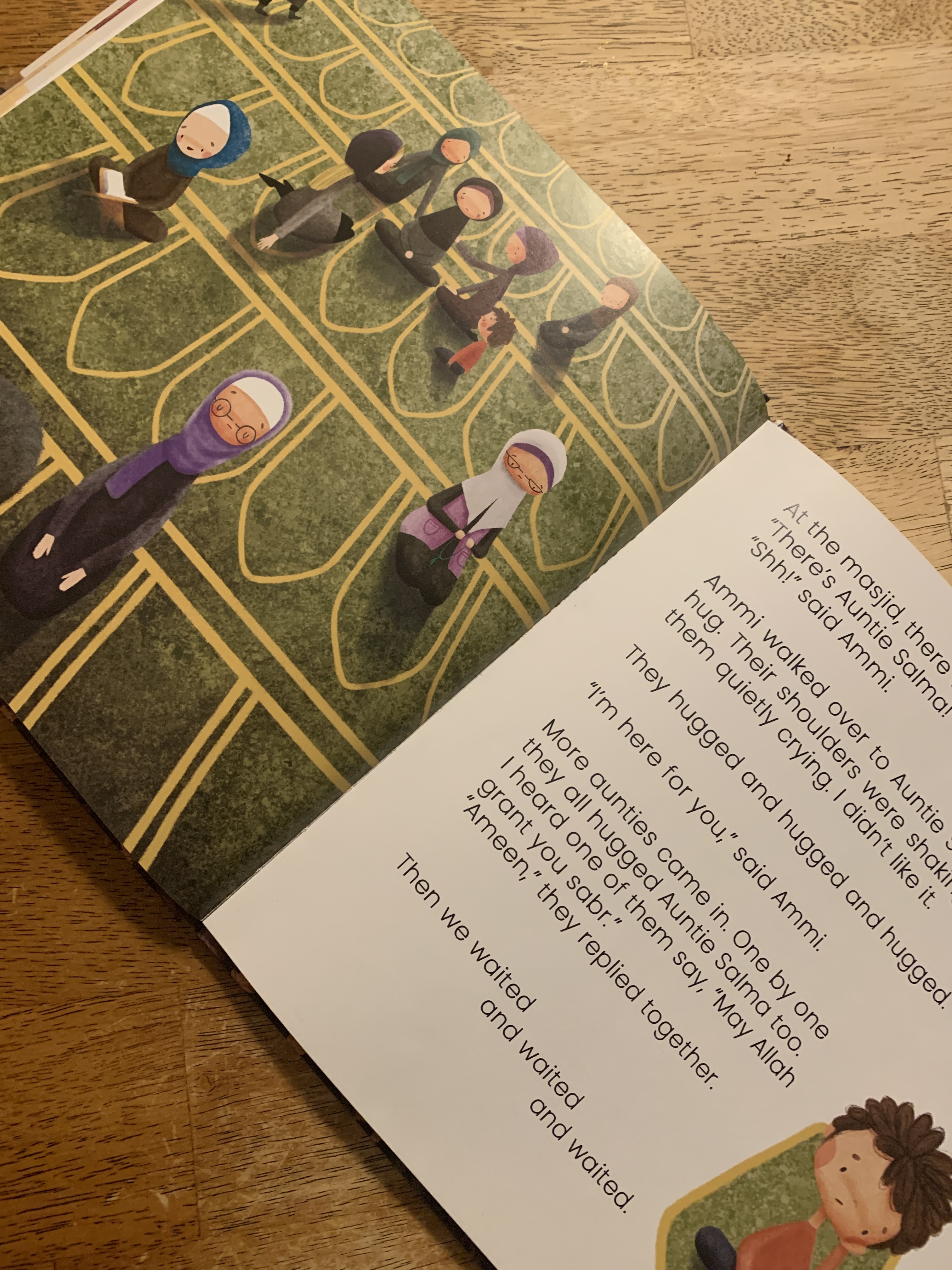
When they get to the masjid there are a lot of aunties on the women’s side, including Auntie Salma who everyone is hugging and reassuring.  After dhuhr the janaza begins, but it is a standing up namaz, and is very short, and Hamza is confused. Later outside the long box is loaded into the car, duas are made, and the body taken to the cemetery.

At the graveside, more duas are made, and Hamza worries that Uncle will be lonely.  When his father explains that his good deeds will keep him company, Hamza remembers the kindness Uncle Sameer has shown him and makes duas.

img_5146

The backmatter contains hadith about what still benefits those that have died, reward for attending a janaza, a glossary, discussion points, suggested activities, and duas.  The book is a great starting point to introducing death, rituals, and answering questions any child might have in a gentle manner.  

I bought the book from Crescent Moon Store 


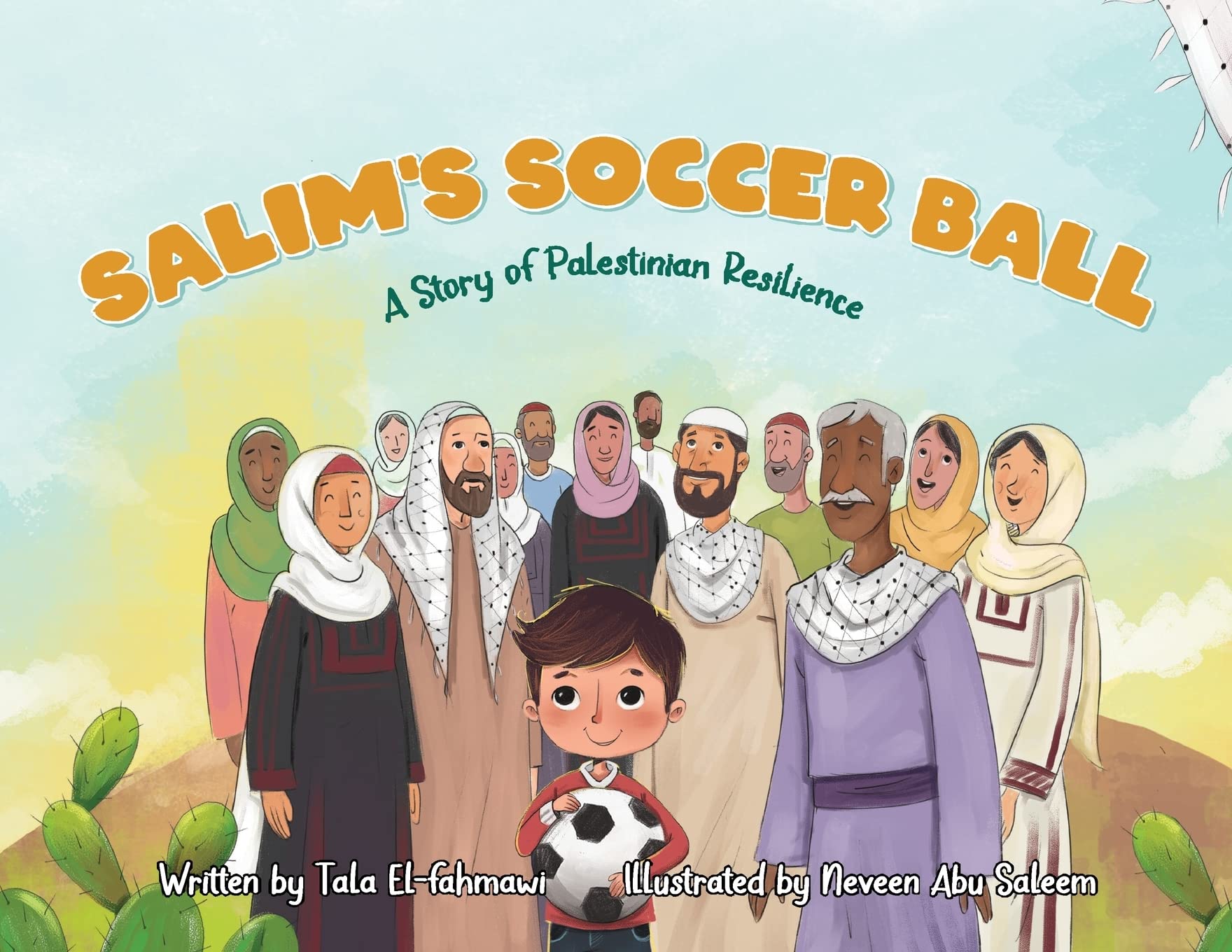
Salim’s Soccer Ball: A Story of Palestinian Resilience by Tala El-fahmawi illustrated by Naveen Abu Saleem

Standard
Salim’s Soccer Ball: A Story of Palestinian Resilience by Tala El-fahmawi illustrated by Naveen Abu Saleem

salim

This 58 page rhyming picture book weaves together a tale of a little boy and his lost soccer ball, with larger issues of community, oppression, and perspective for the youngest of readers to older children too.  I am noted to be skeptical of rhyming books, but the large font, the sweeping pictures, and the dropping of occupation, struggle, and resilience really make this book a treat. Add in discussion questions and an author’s note and you have a solid book that deserves space on home, library, and classroom shelves.  My only wish, was that the book was hardback.  The horizontal layout with a soft cover make the book difficult to read during story times as the pages flop back.  The book is long, but the text on most spreads is minimal and while I could not identify the author’s religious identity, their are numerous hijab wearing #muslimsintheillustrations as Salim journey’s around his neighborhood and into his grand father’s memories.

Salim wakes up, brushes his teeth, and is out the door to play soccer with his best friend Qusai, but the ball goes flying and Salim can’t find it. He starts walking down the hill and it seems to have disappeared.

img_5055

He asks the fisherman, Abu Zaid, if he has seen it, and he hasn’t, but he offers to help.  They then go and ask the seamstress, she hasn’t either, but she puts down her tatreez, offers reassurance, and offers to help.  As they head out they bump in to Dr. Bassam.  “‘I will help you look,’ the kindly man said. “I can fix broken bones with very few supplies.  A lack of resources has made me clever and wise. Resilience and courage are plentiful here. We will find your ball. Salim, no need to fear.'”

img_5054

The searching continues, with a small break for khanfeh, and then Qusai is found, and so is the ball.  Like so many joyful items, the barbed wire of the apartheid wall has destroyed the soccer ball. Upset, Abu Omar, calls out to Salim, and his grandpa embraces and consoles the young boy recalling a donkey with wonky ears and life on the farm.  With resilience and joy Salim heads home to a community surprise and a hopeful future inshaAllah.

img_5053

The book concludes with five discussion questions that connect Salim’s experience to universal experiences of people everywhere.  It is followed by factual and personal author’s note about Palestine and the book.  

img_5056

There is nothing religious aside from the hijabs worn, Dome of the Rock, Masjid al Aqsa, and Church of The Holy Sepulcher in the backgrounds of a few images.  I purchased my copy from Amazon HERE and can also be purchased through Shop Palestine HERE.

img_5057


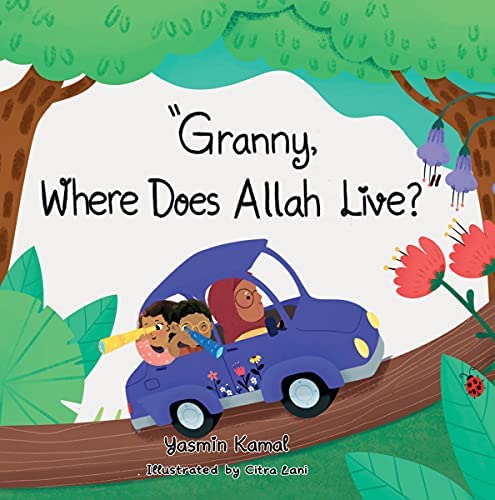
“Granny, Where Does Allah Live?” by Yasmin Kamal illustrated by Citra Lani

Standard
“Granny, Where Does Allah Live?” by Yasmin Kamal illustrated by Citra Lani


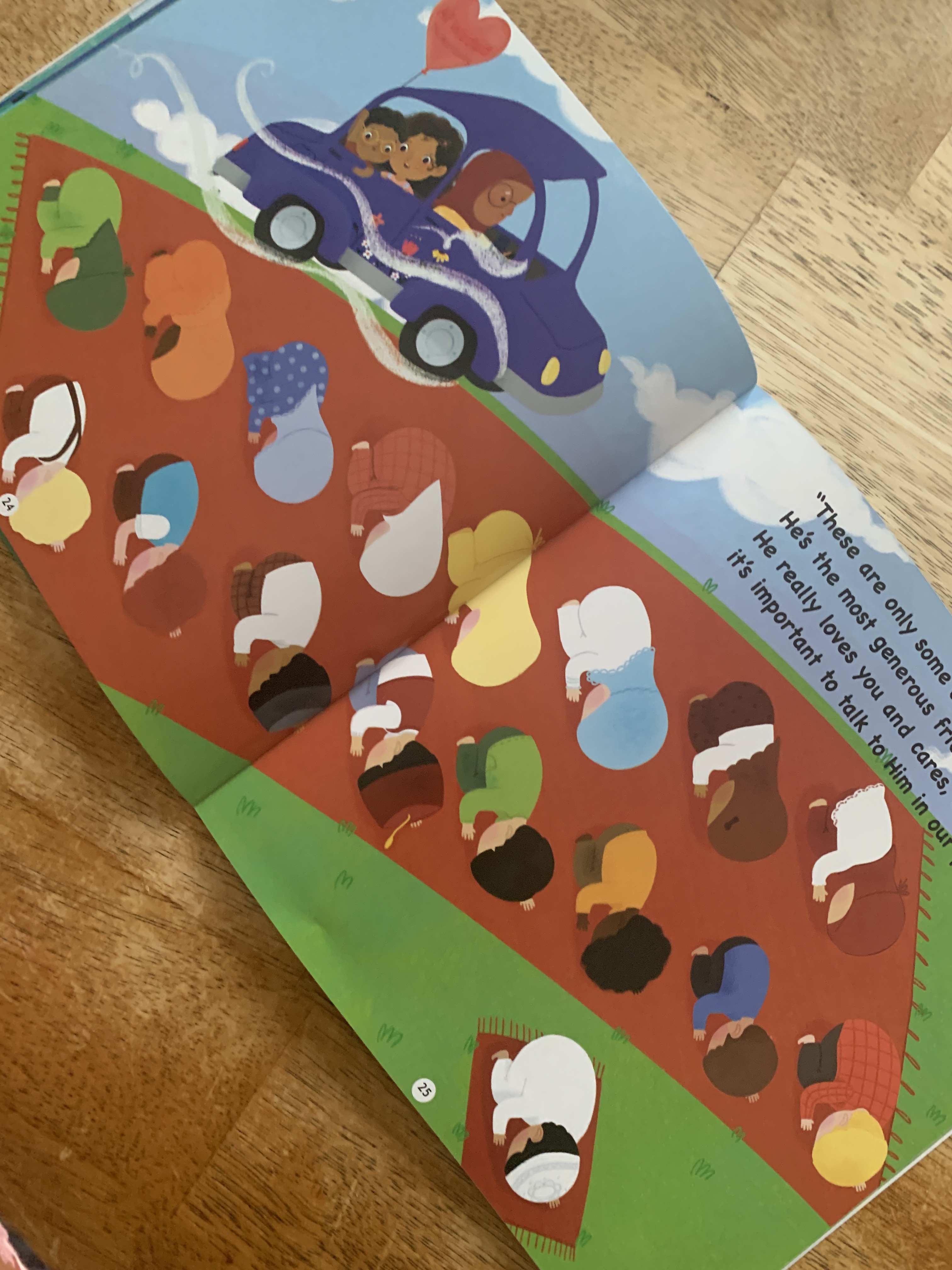
This 32 page picture book for 3-6 year olds takes readers and listeners on a car ride with Granny as questions are asked, sights are seen, and love is spread.  The rhyme is actually pretty decent, the explanation of Allah swt being on a throne above us wherever we are adhered to, and the illustrations are bright, bold, and have a lot to hold little one’s interest.  Overall, the banter between the kids and their Granny, the drive to the mosque being filled with joy and love, make me overlook a lot of little annoyances.  The book packs a lot in, but the voice and tone is easy and I think most kids will see the connection of asking where Allah is, to asking why we have to go to the mosque, to why it is important to talk to Allah swt in our prayers, etc., as a way to have their own questions touched upon.  I do wish the book was a little bigger and perhaps hardbound, to make story time sharing a possibility, the book is 7.5 x 7.5, so good for little hands and sufficient for in lap reading.  The book concludes with three activities that incorporate a few of Allah’s beautiful names.

The book starts out with a young boy and girl excited to be spending the day with their Granny and going on a ride in her special car.  No idea why it is special, but it is purple and has flowers painted on it, so lets go! The kids love to ask Granny questions when they drive.  So after saying bismillah, they wonder why people don’t have tails or shells on their backs, or where they are going, or if they can have ice creams. 

As they head to the mosque to meet Grandad  they wonder if that is where Allah (swt) lives.  Granny tells them no, so they ask if He lives in the sky, when she says no, they wonder about in the trees or in the sea.  Finally she says that they “don’t have to go anywhere to find Allah, His throne is above us where ever we are.”

She then details how we can be reminded of Allah in things around us, nature, animals, land formations and then tells the children Allah is the most generous friend and it is important to talk to Him in our prayers. The children ask what we can tell Him, and Granny shares that we can tell Him everything and anything because He always hears.

Granny then explains that when we do good, we make Allah swt happy and when we aren’t nice we make him sad.  So then the kids want to know why we have to go to the mosque, Granny replies, to be part of a community.

The book is a string of questions, so it doesn’t come across as overly preachy, even though it is Islamic fiction, and the voice is natural.  It sounds like a conversation a grandma and some kids would have, I’m guessing the book was spawned by some real life experiences.  My kids and my mom definitely have this relationship.

 All this though, isn’t too say the book is perfect.  If  you read my reviews, you know there is always going to be a little nudge to try and elevate it from my perspective for the next go round. So with that in mind, the book does read a little long, the tangents get a little away from the simple articulate answer of stressing where Allah swt is, the text runs over the pictures a few too many times, and the people praying are not foot-to-foot shoulder-to-shoulder.  There are no salutations, saw, or asterisks after Allah. The word Jummah is not used although they are going to the mosque on Friday and a lot of people are gathering in the day, and the word mosque is used, not masjid.

The pictures are fun and will appeal to kids, especially when the car goes all magic school bus and starts flying, and going underwater.  I hope this is the first book in the series as it really does have potential to present answers to kids questions in a joyful colorful way.

Book available on Amazon 


Iman’s Sunnah Adventures: Mama Once Told Me by Sharifah Huseinah Madihid illustrated by Lakhaula S. Aulia

Standard
Iman’s Sunnah Adventures: Mama Once Told Me by Sharifah Huseinah Madihid illustrated by Lakhaula S. Aulia

img_4560

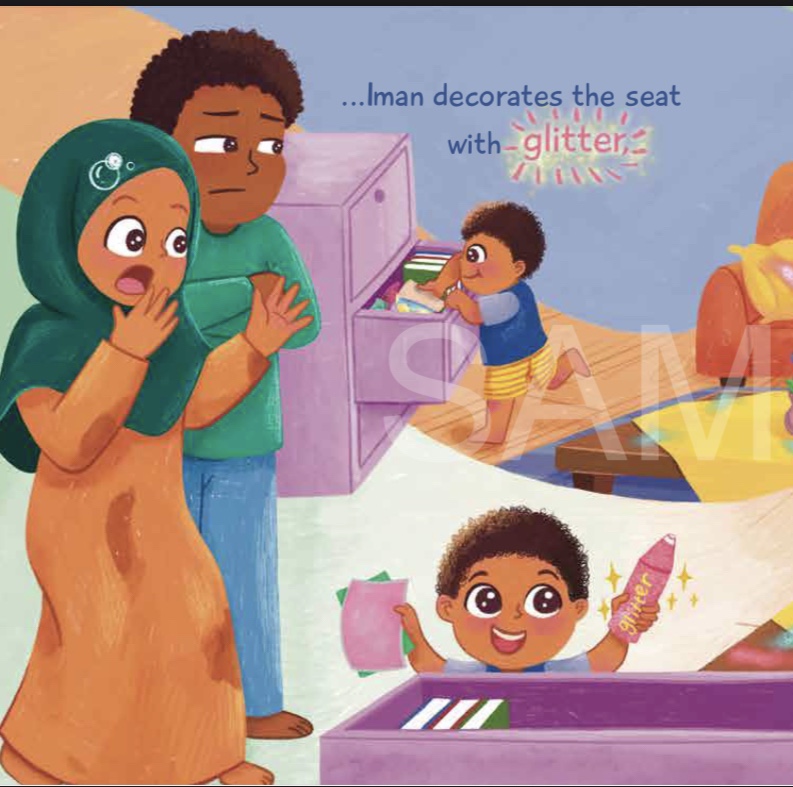
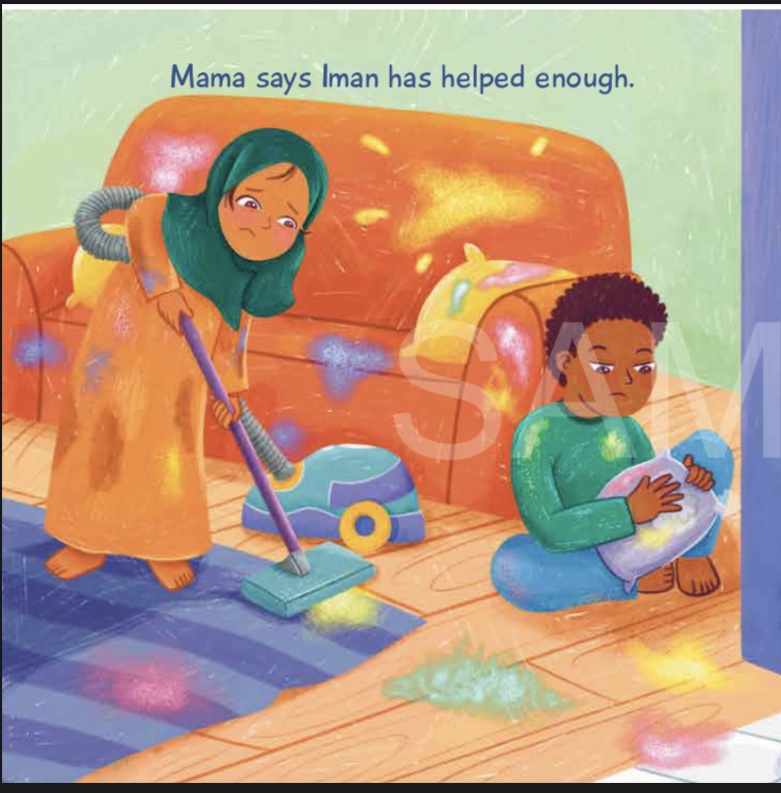
This adorable 36 page board book had me laughing as a mom watching the increasing exasperation and dishevelment of the poor mother in the book page after page.  The book focuses on the sunnahs of welcoming guests, but the interpretations are the efforts and understandings of a small child being overly helpful, and the toll it takes on his parents.  The humor, the presentation, the introduction to various sunnahs is well done for little ones and their caregivers alike.  The book has not released yet, I viewed an e-version and I’m assuming the final spread is a lift the flap review of sunnahs.  Nothing is sourced, and salutations on Prophet Muhammad ﷺ are denoted by an asterisk throughout the book with a footnote at the end.  There are two books in the series and both share sunnahs, humor, and the main character Iman.

img_4561

The book starts with Iman feeling bored as his parents prepare for the arrival of guests.  Iman then remembers something Mama once told me (him), “That the Prophet* said cleanliness is half of eeman…” and with that the little one is off to help clean. Bubbles and more mess later, Iman is proud of himself and his parents are shocked and the bigger mess that greets them.

img_4562

Up next is recalling that Prophet Muhammad ﷺ “would make a special seat to honor his guests” and Iman decides that glitter will be a great way to fulfill that sunnah.  When Iman is sent to get himself ready, more fulfillment occurs until Mama is exhausted and Iman finds a way to fulfill the sunnah of making his parents happy.

img_4563

The book might be a little above level of a toddler, but I think the silliness makes it a great introduction to sunnahs and will be a joy to read over and over again.

For more information about availability you can check the publisher’s website

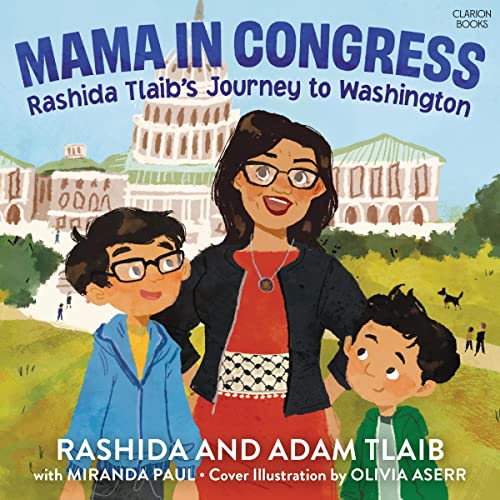
Mama in Congress: Rashida Tlaib’s Journey to Washington by Rashida and Adam Tlaib with Miranda Paul illustrated by Olivia Aserr

Standard
Mama in Congress: Rashida Tlaib’s Journey to Washington by Rashida and Adam Tlaib with Miranda Paul illustrated by Olivia Aserr

mama in congress

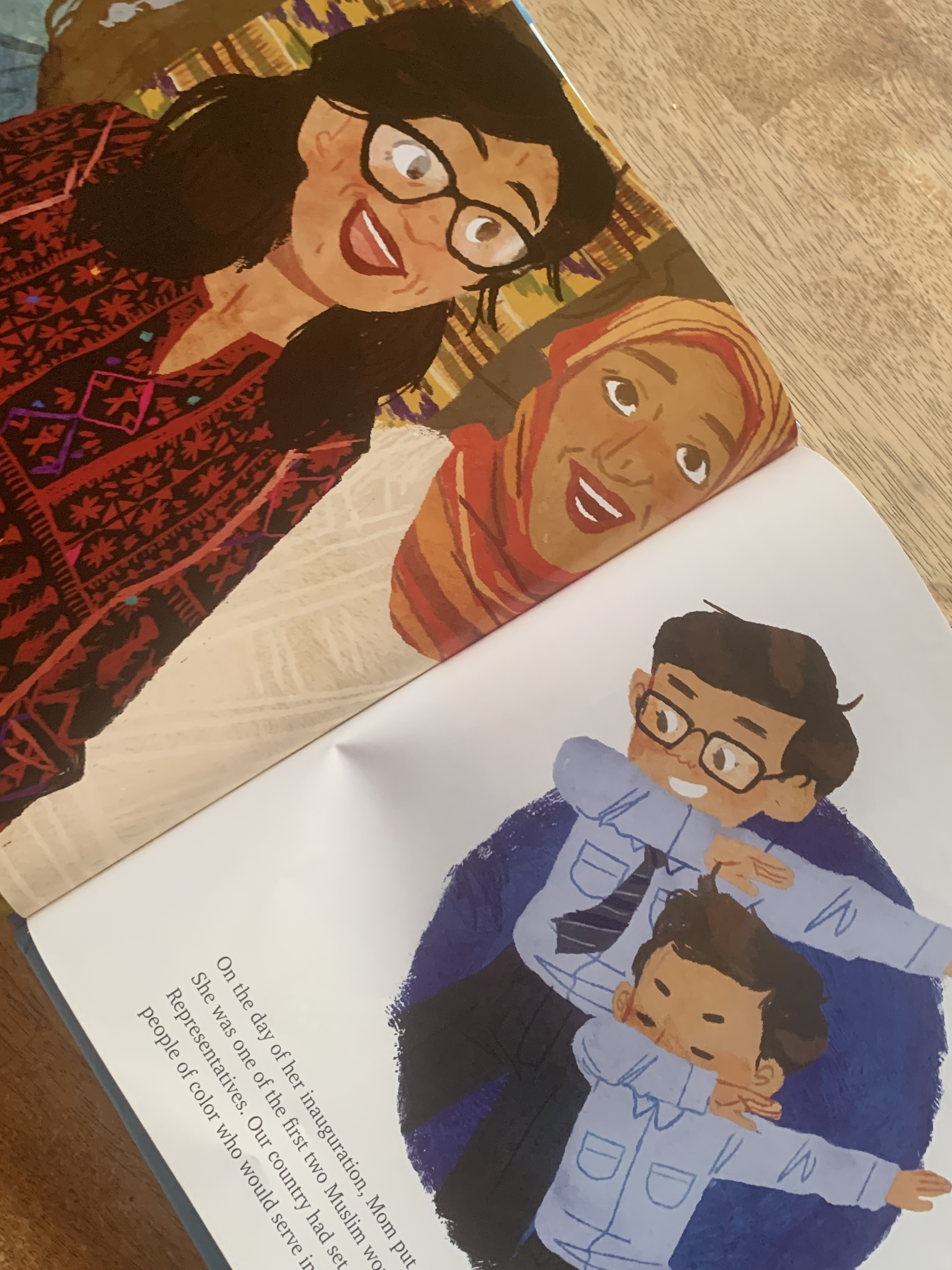
I wasn’t particularly looking forward to this book.  Books by politicians are always suspect, by a politician currently in office- more so, and a book written about one’s self can be a little self promoting to say the least, but when I saw my library had it, I put it on hold and thought to give it a shot.  Surprisingly, the book is really cute.  It is framed as her son (one of the contributors) telling his mom’s story, it owns that while yes she was one of the First Muslim Congresswomen, there were a lot of people before her that ran and paved the way.  What really shocked me was the amount of Islam in the book: Salat-al-Istikharha, actively learning about Islam not just as culture, there is an Ayat from the Quran, etc.. The book says for ages 4-8 and for the amount of text on the pages, there is no way a preschooler will sit through this. I can see this book, however, being used in an elementary classroom to teach about the American political system, and inspiring kids that they can make a difference, that they can rise to positions of leadership without compromising who they are, and that no matter their background, and that they can be successful in following their dreams.  I don’t think Congresswoman Tlaib should be put on a pedal stool for some of the policies she has supported or bills endorsed, but I think even if you don’t support her politically, her story and her accomplishments do show possibilities for minorities to reach the highest levels of government.  The fact that she is a Palestinian Muslim Women and has found success in the context of American government as told from a child’s perspective, really surprised and impressed me, and I can see it being a worthwhile story to share with young students.

The book starts with two boys on the steps of the capitol, Adam and Yousif wondering if the president is their mom’s boss, and mom, saying that no, the 700,000 people in the district she represents are.  The book then pulls back and Adam starts to tell the story of him and his brother going to work with their mom, Congresswomen Rashida Tlaib the representative from Michigan.

img_4036

Before she was elected their yama and yaba immigrated from the West Bank to America, where Rashida was born.  Eventually there would be 14 kids born and Rashida would choreograph dances, basketball games, and seek privacy to dance like a pop star, or chase after the bookmobile.

img_4037

Comments toward her well-spoken mother to learn English, embarrassment at the smell of the factory polluted environment, and an offer by a high school teacher to join the debate team, helped pave the way for Rashida to find her voice and make changes.

img_4038

Rashida was the first in her family to graduate high school and from there she went to college and then law school.  She also started to learn more about Islam and the reasons behind her family’s traditions.  Her favorite passage from the Quran became, “with hardship comes ease.”

img_4039

She started working with an elected official from the Michigan House of Representatives and started a family.  When a seat became vacant she was encouraged to run.  No Muslim had ever been elected to the Michigan House and even her own yaba didn’t think people would vote for an Arab, so she prayed Salat al-Istikhara and did a lot of thinking.

img_4040

The book shows what she wanted to accomplish and how she went door-to-door and found both success and hardship meeting with the people.  Ultimately though, she won the seat and held it for many years.  When Adam was 12 she decided to run for the U.S. House of Representatives, and he and his brother joined in to help knock on doors.

img_4041

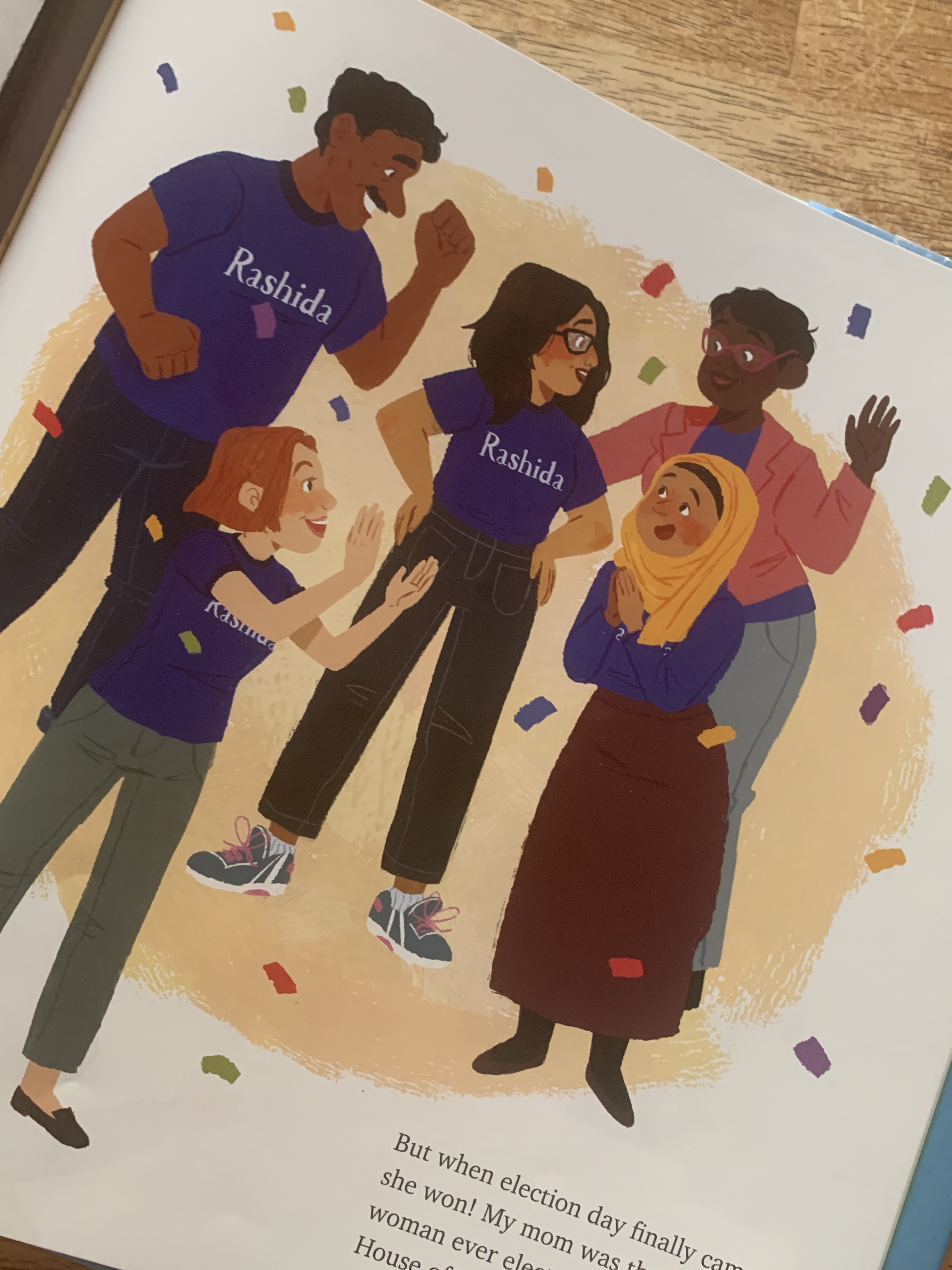
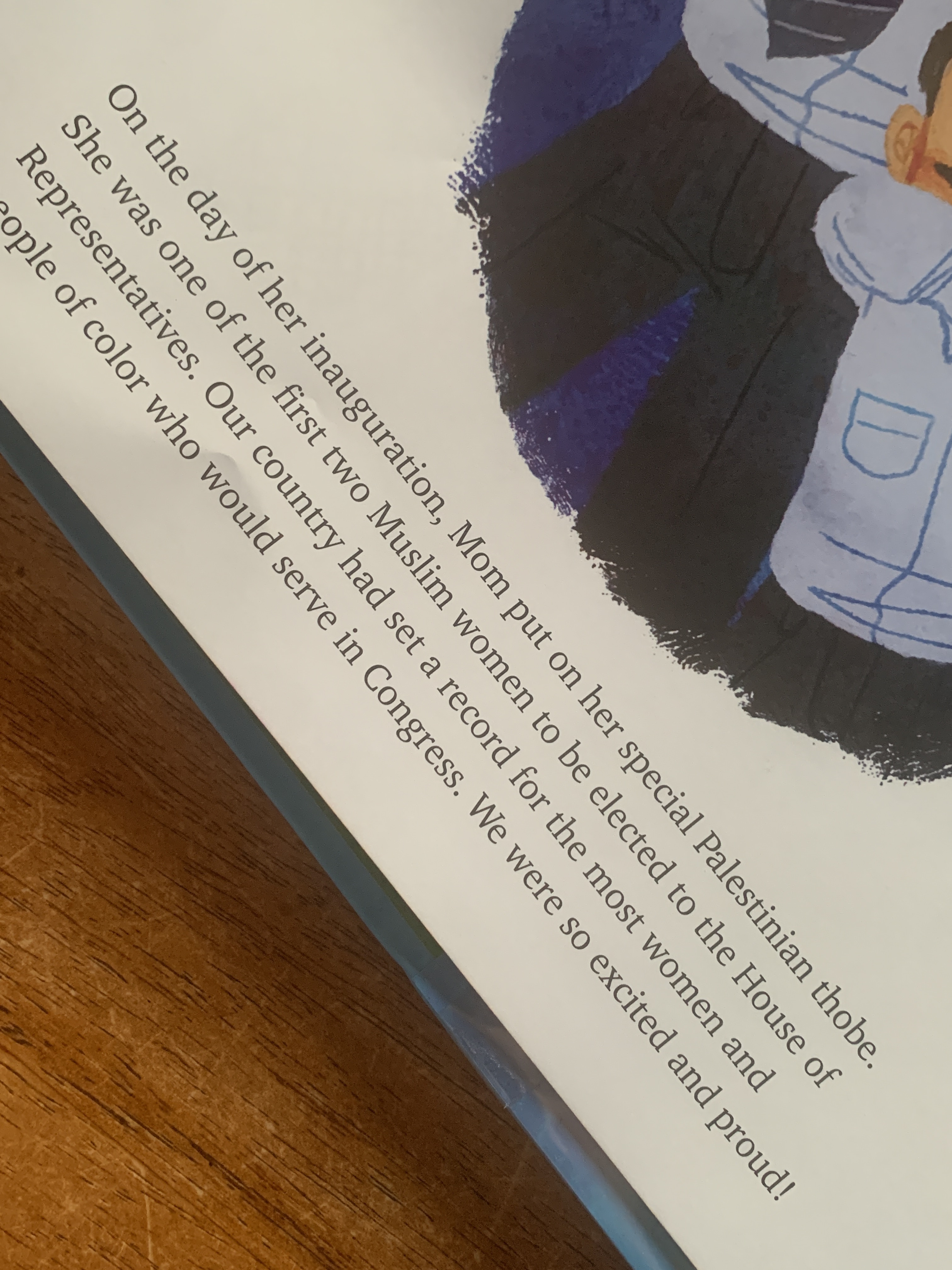
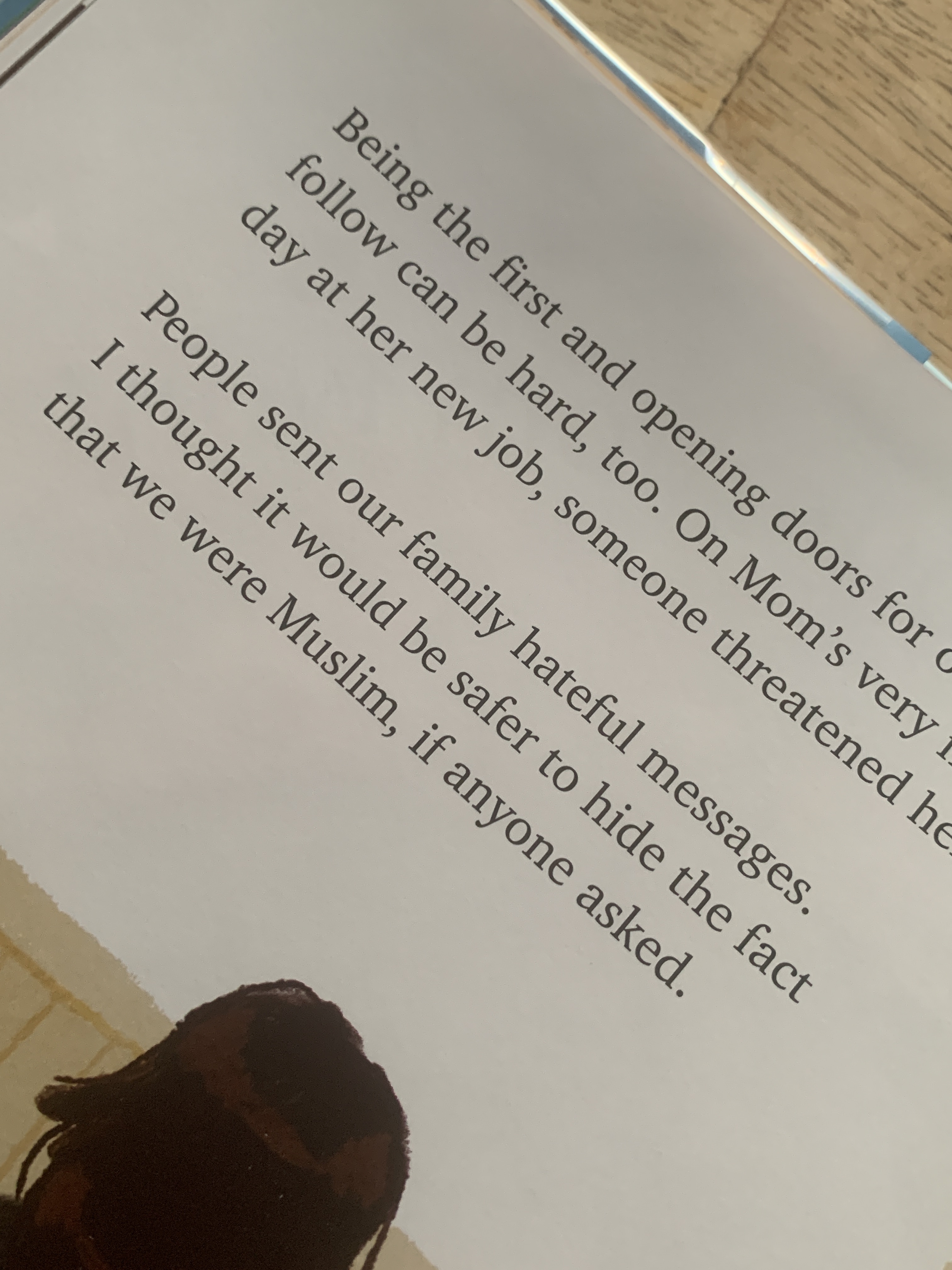
She won, and was one of two Muslim women to be elected that year.  Adam and Yousif dabbed in celebration at the inauguration as their mom was sworn in in her Palestinian thobe. On her first day, however, there were threats, and Adam though they should hide the fact that they were Muslims.  Their mom told them it is important to be their authentic selves, “that sometimes it takes many to run for there to be a first.”

img_4042

The book concludes with a glossary, an infographic of the branches of government. Can be purchased here.

Heroes Like Us: Two Stories by Onjali Q. Raúf

Standard
Heroes Like Us: Two Stories by Onjali Q. Raúf

So this book is a little unique in that it is two stories, and The Great Food Bank Heist, one of the stories, has already been published, and the other story is a bit of an epilogue to The Boy at the Back of the Class.  So, I’m just going to review the first story in the book, The Day We Met the Queen, and while you probably can get away with not reading The Boy at the Back of the Class first, I wouldn’t want you to.  It is such a good book and you really should read it, everyone should. Yes, it is that good. So back to The Day We Met the Queen, the first story in the upcoming middle grade 176 page book, about refugees and kids making a difference.

SYNOPSIS:

This charming story shows what happens to Alexa and Ahmet and the whole crew as they prepare to met the Queen for tea.  The group of friends is about to show the entire school their invitations and share the two questions each that they plan to ask the monarch, the list was 52 questions, but because the Queen is nearly 100 years old, they have been advised to shorten the list.  On the day of the assembly news crews are present and Brenden-the-Bully is acting a little strange, as Ahmet starts talking the auditorium erupts with stink bombs and everyone leaves running.  The kids think it is just the bully striking again, but the gossip at the school and reports on the news imply it might be more than that, and the kids might not make it to the Queen’s tea after all.

WHY I LIKE IT:

I love getting some closure on the story, while simultaneously showing that refugee treatment and rights is not a thing yet resolved.  The idea of the Queen being at the center of the book definitely adds to the coincidental timeliness of it all, but that she is easy going and relatable to the children is still the takeaway whether you were a fan of the real Queen or not.  I love the voice of the protagonist and the relatability that her concerns are with the target audience. I particularly enjoy the critique about the media and the clarity in which the children understand the flaws and limitations of what they are told in the news both on the school level and on a global stage.  There isn’t anything Islamic in the text, Ahment is Muslim, as is the author.

FLAGS:

Hate speech, deception, bullying

TOOLS FOR LEADING THE DISCUSSION:

I don’t think there is an author that brings big real issues to children’s stories as well or as consistently as Onjali Rauf. Both stories in this book should be shared with middle grade readers and up to be discussed, reflected upon, and learned from as often as possible.  You can preorder your copy here: https://amzn.to/3Eq2G4M