Tag Archives: Muslim Character

Freestyle: A Graphic Novel by Gale Galligan

Standard
Freestyle: A Graphic Novel by Gale Galligan

img_3208

I one hundred percent understand that Muslims are not a monolith, but, I’m truly tempted to reach out to the author/illustrator of this upcoming 272 page middle grade graphic novel and ask her why she chose to have the female instigator in this coming of age story- that focuses on a dance crew, said girl tutoring a boy one-on-one in his bedroom, Halloween and a school dance, wear hijab? Yes there is also parental expectations, friend drama, leaving for high school stresses, and yo-yoing, but Sunna Ahmad being presented as a Muslim definitely gives me pause.  There is no romance in the book save a few background characters filling in frames holding hands, and it never articulates that Sunna or her older brother Imran are Muslim, but she doesn’t wear hijab when home with her family, does wear it when she goes out, so it definitely seems to imply it.  The cover and inside pages are bright and clear, and I think the book will be very tempting for young Muslim readers with the visible hijabi on the front.  Additionally the book is published by Scholastic, so if you are a parent whose kids get book order forms and attends a school where the Scholastic Book Fair is a big deal, you might want to read the entire review to see if it is Islamic representation that you are comfortable with supporting.

SYNOPSIS:

The Eight Bitz B Boy band is in their final year of middle school before they all go in separate directions for high school.  They want to win this year’s competition, or at least the leader of the crew, Tess, does.  Tess doesn’t want them freestyling and messing around, she wants the choreography and dancing in-synch and on-point.  Her military dictatorship is tearing the crew a part.  When Cory’s grades are not where his parents want them, he is grounded from dancing and forced to work with a tutor, Sunna Ahmad.  Sunna is weird, always writing intently in a secret notebook at school, and Cory wants nothing to do with her.  When he happens to see her throwing her yo-yo at school, though, he is impressed.  Reluctantly she trades teaching him yo-yo tricks if he agrees to do the work needed to get his grades up. Using yo-yo angles to teach geometry, it doesn’t take long before the two are friends.  It comes to a culmination when he invites her to the Halloween dance and his crew is both shocked and mad that he is hanging out with her, when he should be practicing with them.  As secrets and intentions come out, Cory has to make things right with his parents, his crew, Sunna, and himself.

WHY I LIKE IT:
I love graphic novels, they show context and setting and emotion, that often can’t be conveyed as well with words.  I absolutely love that Sunna wears different clothes on different days, from the hijab to the outfit, she has personality in her clothes as any middle schooler would, and nothing is mentioned about her hijab or her long sleeves, but the reader see’s it hopefully in a positive light. I do like the detail of her not covering at home when she is alone, or in the flashbacks when she is younger.

The story overall is decent and the added hip hop dancing and yo-yo infused details set the story apart, but some of the character building and plot points are a little rough.  When Sunna first starts tutoring Cory she feels like an adult disciplining, and reprimanding him.  She comes across as really arrogant and condescending, that he is somehow beneath her, yet they are the same age, in the same school, and are lab partners.  It reads off for no reason.

Similarly, I understand that the tension between middle schoolers and parents can be a source of contention, but the forced apology from Cory’s parents is incredible demeaning and cringe.  Sure flesh out that he shouldn’t yell at his parents, (Sunna shouldn’t either for that matter), but while the delivery was poor, the message was heartfelt and I think a book like this encouraging young kids to talk to their parents would be a great message, rather than have it almost glorified to not make the effort at all.  Not saying that the effort will always be received, but the forced apology would turn even kids with a good relationship with their parents questioning if it is worth talking to their mom and dad.

Poor communication and the stress it causes is a theme of the book, and I don’t understand why Tess keeps her choreography dreams a secret from the crew.  It seems underdeveloped, had she said that, that was the motivation, I think all the other seven members would have stepped up, not walked away.

FLAGS:

Music, dancing, girl and boys being alone with each other, girls and boys arms around each other, attending a school dance, girls and boys dancing together, Halloween being celebrated, birthday being celebrated, yelling back at parents, lying, secrets.

TOOLS FOR LEADING THE DISCUSSION:

In all honesty, I would probably not have this book on the library shelves, and would not display it during the book fair.  It normalizes a lot of gray if not haram actions for a very impressionable demographic because the character is visibly Muslim.  If the character was not visibly Muslim, I actually might be ok with shelving it and selling it.  The rep may be intended to show inclusion, but the character does not show actions that Islamically are appropriate.  If it were one or two actions, I might reconsider, but it is a lot very specific and varied activities.

freestyle3

The Girl Who Lost a Leopard by Nizrani Farook

Standard
The Girl Who Lost a Leopard by Nizrani Farook

leopard

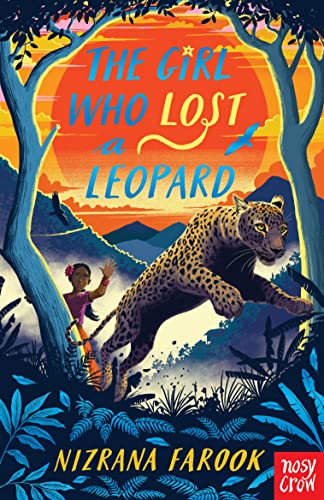
This stand alone middle grade read by Muslim author Nizrana Farook is similar to her first two books about an elephant and a whale in that it is set in Serendib a long time ago and revolves around a beautiful wild animal and clever, endearing, determined young children. This actual story is an easy read at 203 pages (the end of the book is the first four chapters of one of her previously published books).  I think seven and eight year olds will enjoy getting to know Selvi and the beautiful leopard Lakka that she considers a friend.  For me the ending took an odd turn that seemed out of place, but up until then I was enchanted by the lush imagery, sheer determination, and sweet friendship shared within the pages.  The main character is not Muslim, but presumably some of the side characters are with names such as, Amir and Salma.

SYNOPSIS:
Selvi and her mother live in a small home on the mountain.  Most days she runs wild with a golden leopard she has named Lakka.  She keeps her distance, but there is a pattern to their interactions, and when Selvi’s mother finally allows her to go to school, and she finds the other children unkind, Lakka becomes her only friend.  One day poachers are on the mountain hunting not just any leopards, which are protected by the queen, but the rare golden one that is often seen in the area, Selvi tries to interfere.  And before she knows it, they are after her.  She hides near a home, and when the poacher’s come looking for her, she is at the mercy of Amir to lie and say he hasn’t seen her.  Amir is a classmate, a mean one, but he has seen her before with the leopard, and suddenly Lakka is not so alone.

Between making friends at school, battling her uncle’s rules to start behaving more ladylike, and keeping a leopard safe, the adventure is fast paced and the story entertaining.

WHY I LIKE IT:

I love kids outsmarting adults and saving the day, it makes for good story telling.  I don’t want to spoil the ending, but I really felt like it was forced.  I truly do not understand why the children needed to take a drugged Lakka to the port and back.  Why not leave him with the new friends and go to the port without him? He is a wild animal, we have been given reasoning for so much of the human animal interactions to be believable, that this seems to be negligent.  So much could have gone wrong and for what? There was no need.  The kids wanting to see punishment handed out is motivation enough for them to make the journey in my opinion.  Sigh, I don’t know that younger kids will be as bothered as I am, but I think fourth graders and up will definitely question it and be confused.  I also don’t know that I have ever seen the sneak peak of another book included at the end, being for a book previously published.  Aren’t they usually for upcoming releases? Either way, it seemed to make the last portion of the book deflate a bit for a story that was engaging, entertaining, and hard to put down until then.

FLAGS:

Lying, poaching, abuse, threats, killing, animal cruelty, bullying.

TOOLS FOR LEADING THE DISCUSSION:

This would be a fun read aloud in a classroom or at bedtime.  The short chapters have little illustrations above the headings that hint at what is to come, and the writing style is perfect for short blocks of time.

The book is available on Amazon

Mr. Grizzley’s Class: Rahma’s Gift by Bryan Patrick Avery illustrated by Arief Putra

Standard
Mr. Grizzley’s Class: Rahma’s Gift by Bryan Patrick Avery illustrated by Arief Putra

rahma

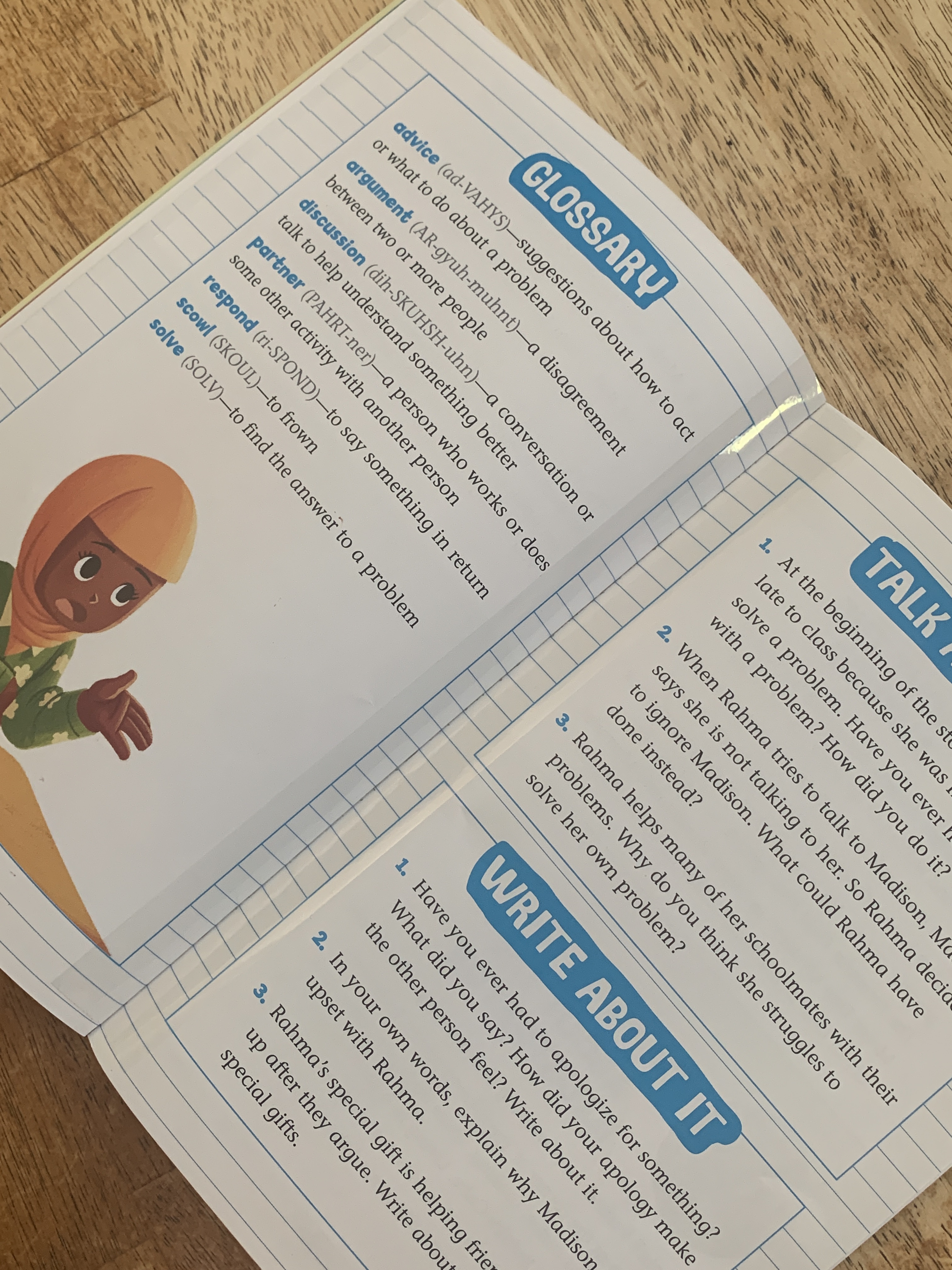
This 32 page early reader is part of Mr. Grizzley’s class, a series that sets out to help promote social and emotional skills in real life settings for ages five to seven.  The diverse class is featured in all the books with one student being the focus of each individual book.  This book highlights Rahma, a visibly Muslim girl of color, who has a gift of helping others with their problems.  The richly illustrated story shows what happens when she is having troubles with a friend, and what Mr. Grizzley and fellow classmates can do to help her find a solution.  I like the premise, I like the focus, I like the illustrations, but I did not understand the messaging.  I don’t understand why Rahma had to own the entire apology.  Sure, friendship is more important than a small misunderstanding and moving on by saying your sorry, even when it isn’t all your fault, has merit- but the book doesn’t take all that in to consideration.  It has Rahma taking responsibility for Madison not talking to her, Madison misinterpreting something Rahma did and getting jealous, and Rahma owning all the lacking communication, when clearly both of them failed to do so.  I found myself confused reading the book the first time, clearly I must have missed something, right? No.  And now writing this, I’m actually quite upset.  So, while the idea of the book and series might be sweet, I don’t feel like this particular book was well executed.  I have not read any others in the series, and thankfully checked this out from the library.  There is nothing particularly Islamic or religious in the book other than the hijab Rahma wears.

img_3111

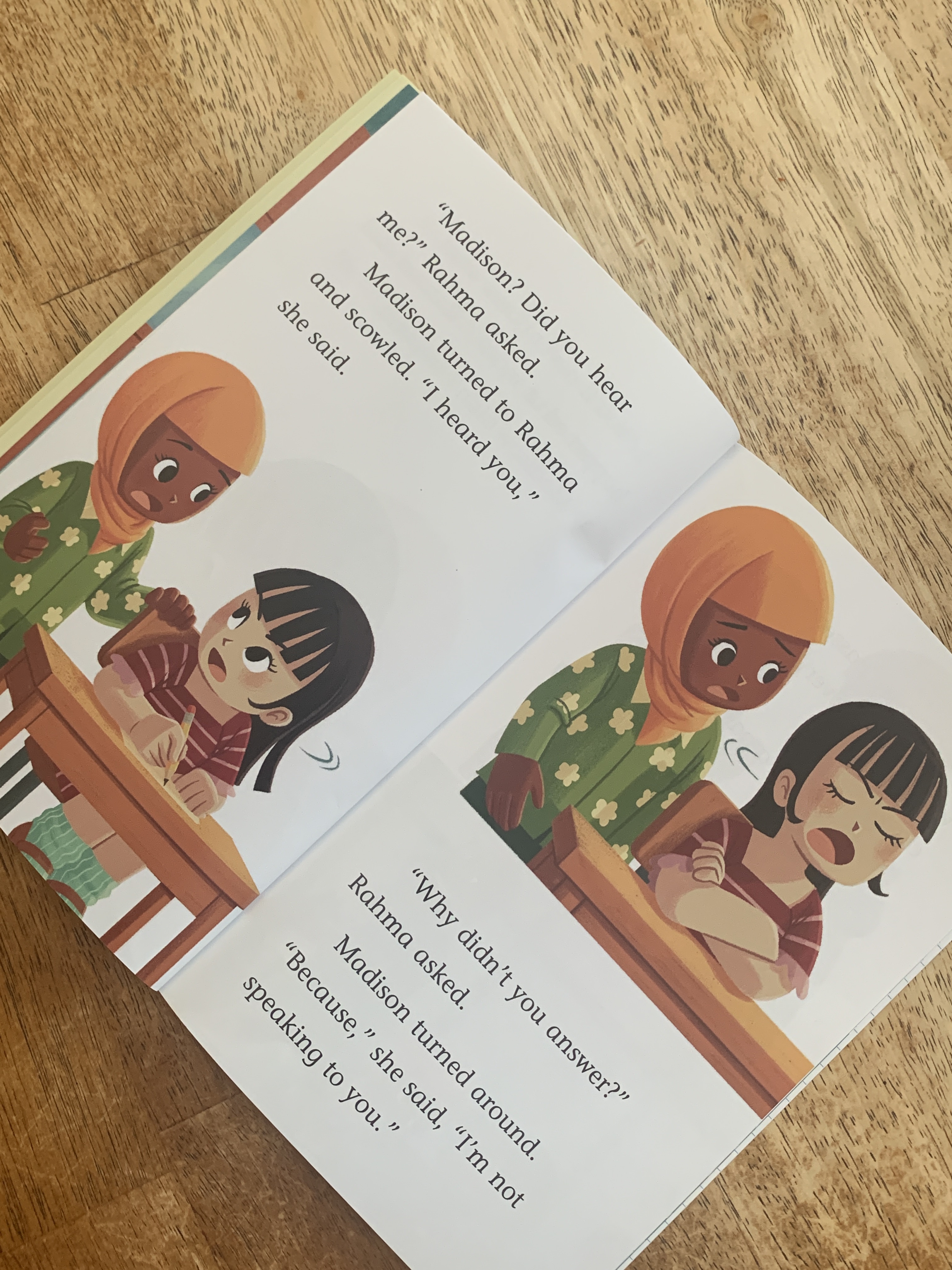
The book starts out with Rahma nearly late for class because she was helping other kids resolve an argument.  It is a gift of Rahma’s to help others work out their problems.  When she tries to tell her best friend Madison about it, Madison doesn’t respond.  When Rahma tries again, Madison says, “I’m not speaking to you.”

img_3112

As a result when they pair up for math, Rahma works with Annie.  She tells Annie she isn’t working with Madison because she is mad at Madison for not speaking with her. Annie prods a bit and Rahma says, “I’m not talking to her if she won’t talk to me.”  Annie encourages Rahma to find out what is wrong.

Mr. Grizzley is then told, and he also tells her to find a way to find out why she is mad. At recess, Chad comes to thank Rahma for helping him and Ashok, and when she tells him her problem he gives her, her advice back, “listen to the other person.”

img_3113

Rahma definitely is in a pickle since Madison won’t talk to her, but with incredible maturity she tells Madison she doesn’t know what she did to make her angry, but she is sorry that she feels bad.  Madison caves and tells her she is jealous because Rahma made a necklace for Semira and she understood it to mean that because she didn’t make one for her, she didn’t want to be her best friend any more.  Semira and Rahma explain that Semira’s dog was sick and she was sad, so Rahma made it for Semira to cheer her up. The girls hug and all is well.

img_3114

The book concludes with directions on how to write an apology letter, a glossary, questions to talk about, and prompts to write about.

I loved Rahma’s phrasing of her verbal apology and wish that would have been the focus of the book: how to take someone’s feelings in to account even if you don’t know how you contributed or even if you feel you did not do something wrong.  As it is written with the two page spread at the end on how to write an apology note though, I feel like Rahma took on a lot of the blame unnecessarily.  I know I’m reading in to it a lot, but I don’t like the vibes that the book gives.  Madison in my opinion was in the wrong multiple times throughout, and Rahma each time took ownership and worked through it.  Yes, truly that is a gift, but I really hope people don’t take advantage of Rahma in the future.

img_3115

The Kaya Girl by Mamle Wolo

Standard
The Kaya Girl by Mamle Wolo

This sweet middle grades book about two girls in Ghana is a friendship story and a rags to riches gem.  The 336 pages immerse you in a rich and vibrant culture and share a story that while at times simplistic, really pulls you in and makes the over the top happy ending, tearful and joyful.  I read the entire book in one setting and loved that there was no glossary, or white pandering; the story works in the explanations and details for those unfamiliar with West African cultures to share a story about classism, friendship, growing up, and challenging stereotypes.  I loved while so much was new to me and culture specific, so much, at the same time, was universal and relatable to all.  The story is OWN voice, the main character is a wealthy girl,  but the friend is a poor Muslim one.  I am not sure where the religious representation ended and the cultural practices started, but the book does not criticize any culture or traditions, it only criticizes the mindset that one is superior to another because of where they are from.  I also don’t know that the Muslim character will mirror global Muslim experiences, but having the character identify as Muslim and be such a wise and determined friend, makes her a great character to cheer on and love no matter the reader’s background.  This would be a great book to teach, to shelve, to read aloud, and to discuss.

SYNOPSIS:

Fourteen year old Abena is spending her summer with her aunt in Makola market while her mother has traveled to London to give birth.  Abena’s father is a physician and her friends are part of the wealthy and privileged class that attends American schools, vacations abroad, lives in mansions with servants, and have the latest phones.  In a bit of a culture shock spending the weekdays with her aunt at the bustling market, Abena starts to see her country and its people in a different light. One day while getting out of her aunt’s car she makes eye contact with a kayayoo, a porter who carries customers purchases on their head.  She snaps a picture of the girl who appears about her age wearing an orange scarf, as she secretly is working on a journalism competition, and something about the girl intrigues her.  The two smile and carry on.  Later when they meet again they realize they do not share any common languages, they both speak a number of dialects and languages, yet somehow the girls connect.  Day after day they sneak away to have lunch together and learn about one another as they learn each other’s language, culture, history, and dreams.  Faiza opens Abena’s eyes to so much about Ghana that she had never known existed and Abena teaches Faiza English, science, shows her the internet and gives her the foundation for how to read and write.  Abena’s aunty does not approve of their friendship: stereotypes and assumptions about poor Muslims from the North prevent her from treating Faiza as an equal.  Yet, she doesn’t forbid the friendship either.  As the girls’ friendship grows, summer vacation comes to an end and goodbyes will have to be made.  Things get expediated though, in a climax of misunderstandings, regrets, and friendships separated by class and religion.

WHY I LIKE IT:

I love that right before Abena sneaks Faiza on to the laptop to Google dinosaurs, and the solar system, and cities in Ghana and maps, I was Googling images of geles, okro and Makola market, maps to see where Hausa and Dagomba regions are, and enjoying learning about people because it is so enriching whether fictional or in real life.

I love that there isn’t judgement by either girl on trying to understand why children are given to aunts to raise or why women are forced to marry.  It shows so much without othering any facet of sub culture within Ghana or anywhere for that matter.  Abena’s cousins aren’t put down for being wealthy, or Faiza for being poor.  Even the Haji looking for a fourth wife is not favorable because he is old and has brown stained teeth, not because there is judgement upon him having more than one wife or the family wanting their daughter to marry him.

I often remark that I like middle grade books that don’t tie everything up in a neat and tidy bow, but this book went the other extreme and tied everything up far in to the future, that I ended up loving the extreme nature of it as the tears of joy dripped off my cheeks.  If you are going to do it, do it for a reason, and this book did it to great effect.

Faiza is Muslim she wears hijab and stops Abena from taking it off at one point, but then at the end she has braids hanging out from underneath her scarf.  There are crushes and hugging between Faiza and males and an implied potential romantic relationship between Faiza and a non Muslim male that is never given pause.  A character goes for hajj, it mentions a space that Faiza uses for prayer, and it mentions Faiza’s Muslim family members getting drunk.  Nothing more than these details are given about being Muslim, other than her being labeled as a Muslim and identifying as one.

FLAGS:

Theft, crushes, lying, classism, racism, running away, drinking beer, getting drunk, forced marriage.

TOOLS FOR LEADING THE DISCUSSION:

I think that the book would lend itself very easy toward discussion and appreciating a people and culture that for many in the west would be new and unfamiliar.  I think outside research to supplement would be a natural extension and that the characters, their voices, their lives, and experiences, will stay with readers of all ages as we can rest easy knowing that they got their happy endings.

The Bird and the Blade by Megan Bannen

Standard
The Bird and the Blade by Megan Bannen

bird

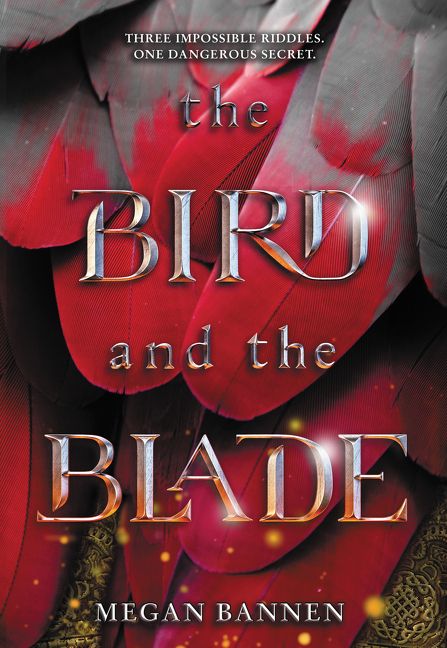
I didn’t know what to expect as I opened this 416 page book: it was recommended to me, my library had it, and I wanted a break from reading on a screen, so I dived in.  The map, the character list, and the setting of 13th century Mongol empire had me bracing for a complex read. I gave myself a goal of a few chapters to see if I could connect, but by page 20 I was completely absorbed and not to be disturbed.  The character driven plot is written in a rather contemporary manner, although the setting is historical fiction (with a lot of noted liberties) it reads really quickly and easily.  It is definitely 16 and up, romantic YA and has triggers of suicide, murder, drowning, death, war, abuse, misogyny.  While reading it, there often felt like there were holes in the plot as the story builds on itself in quiet layers- the story is fairly linear just broken up and rearranged in time, but the informatio

n shared is gently teased out, and nearly every hole filled by the final page.  I think if someone told me about the book in detail, I would not have read it.  There are many things that I feel like I shouldn’t like about it, but truth be told, I enjoyed the story.  The tokenish Islam found a way to convince me it was done intentionally, the (few) main characters present held my intention at all times, the backmatter detailing the research and liberties just all combined masterfully, that I feel compelled to share the story on my platforms even though the Islamic rep is only slightly more that the YA equivalent of a #muslimsintheillustrations tag.

I tried really hard not to include spoilers, so forgive some of the vague sentiments.

SYNOPSIS:

The story without any spoilers is quite simple- a slave girl, Jinghua, is mourning her dead brother and comes across Prince Khalaf, son of Timur, the ruler of the Kipchak Khanate, while working in the family’s service.  Shocked by his kindness, and persona, she falls hopelessly in love with him and when his family is exiled she decides to stay with the prince and the khan rather than flee.  They journey together and their feelings grow.  To save his family’s rule, however, Prince Khalaf decides to attempt to wed the daughter of the the Great Khan.  Princess Turandokht is exceptionally beautiful, wise, and powerful.  She refuses to wed and has set up a test for any prince wishing to try and marry her.  She has three riddles, each one to be answered in seven minutes, anyone who answers wrong is immediately put to death.  Numerous suitors have been killed.  When Khalaf sneaks off in the night to test his wits, the story of how how intertwined Jinghua and Khalaf’s stories are comes to light before the final riddle is answered.

WHY I LIKE IT:

It is not OWN voice, it is researched and based on a tale from The Thousand and One Days, but having very little to no knowledge of Mongol history (I’ve read the book Ghenghis Khan and the Making of the Modern World years ago, but that is about it), and have never seen or read the opera, poetry, or stories that this tale has presented as, I have nothing to compare it to. The book does not need knowledge of the story or time frame to make sense, but the backmatter is well done and makes the process of the story more fulfilling.

For the majority of the book, Islam and the khan and prince being Muslim is just a label occasionally remarked upon when the khan praises the Eternal Blue Sky, instead of Allah swt, and that is about all.  In fact Allah swt I don’t think is ever mentioned in the book.  Based on the information in the back about Mongol’s and a few dialogues in the book it seems that many practices were a hodgepodge of many faiths and traditions, especially by leaders to unite their subjects.  A few ayats from the Quran are mentioned as are some hadiths loosely, which are sourced at the end.  Khalaf gets drunk, and acknowledges that it is haram, and sleeps next to Jinghua for warmth which he also notes is haram.  It mentions a few times that he prays.  There is a weird emphasis on his turban, but it could be culturally Muslim (?), so I let it slide.

The first person voice really sets a good pace for the story, and all of its twists and turns, but does make the love, crush, infatuation theme seem very naïve in the beginning, with more telling than showing.  I think it is accurate for Jinghua, but does require the reader to just accept it and keep reading.  It seems at times she is also rather helpless and so desperate to be seen that the stereotype is a bit cringe, particularly at the end.  I get that appearance and women’s worth is tied to the time and setting, but it still doesn’t completely absolve how triggering the main character’s portrayal can be.

Jinghua’s religious beliefs of the Song Dynasty made me understand the offerings made to her ancestors and the ghost of her slain brother to be religious in context, not literary fantasy.  Many places have labeled this a fantasy romance book, but I don’t know that the world building was fantasy as much as it was historical reimagining.  Either way, there are ancestral ghosts that the main character dreams about and often sees, the epilogue pushes this element, but in my mind still adheres to the same point of ghosts and ancestors being a religious thread.

A found the fear of water story detail a little forced as she was not scared of water when washing out the bloody clothing in the river alone, but then was terrified to stand near a river.  Perhaps a minor detail, but one that I noticed none the less.

My favorite character is the the cantankerous old goat, I’m not going to say much about him other than if at first you hate him, stick around, he might win you over.

FLAGS:

There are multiple suicides and it is glorified, seen as a mercy, and shown as an act of desperation.  There is cruelty and classism along with misogyny and reducing a woman to her appearance.  There is talk of penises and them being seen when urinating, as well as one scene of an erection being felt.  There is killing, war, battle. murder, death, that is fairly detailed.  There is language and crudeness.  There is talk of rape, and affairs, and fornicating.  There are a few kisses, one while a character is drunk, one forced upon a nonconsenting woman. Jinghua disguises herself as a boy. There are theological concepts present and ghosts.  Alcohol and wine are consumed. Nothing is over the top or overly stressed to the point of being obnoxious, but it is present and older YA readers can probably handle it.

TOOLS FOR LEADING THE DISCUSSION:

I would love to discuss with readers, but not my students, I don’t think it would work for an Islamic school book club selection.  The “Muslim” character gets drunk, kisses two different women, has an alter to honor the dead, places offerings of wine.

Mona’s Scrapbook Adventure by Nouha Deliou illustrated by Kadhima Tung

Standard
Mona’s Scrapbook Adventure by Nouha Deliou illustrated by Kadhima Tung

mona

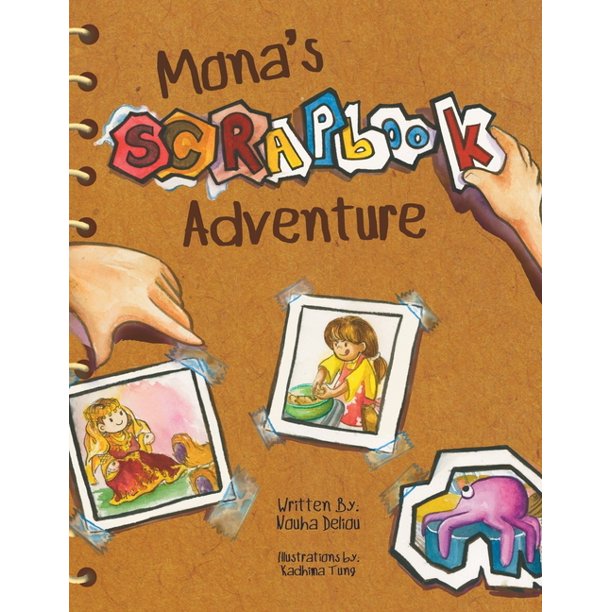
Algerian culture, as far as I’ve seen, is incredibly underrepresented in western literature and not represented at all in children’s books.  I love that this author, who felt the same- did something about it.  This 40 page colorful story incorporates Algerian traditions and culture with universal themes of sibling love, wedding excitement, and being sad about change.  The OWN voice warmth shows Muslim characters in America holding to traditions and making new ones.  The book is long, but is not text heavy.  For toddlers and preschoolers up to second grade, I can see readers enjoying the detailed descriptions of the dresses and foods, and feeling the feelings of little Mona as her beloved older sister prepares for her wedding and ultimately leaving with her husband.

img_2564

The book starts on the morning of the big day, Layla’s engagement.  Mama explains to Mona that the Imam will do the kitab and that her older sister is excited because she has known Ahmed since school and likes him a lot.  Once dressed Mona watches Layla get ready in traditional Algerian clothes.

img_2565

When Ahmed and his family arrive, he and Layla announce that after the wedding they will be moving from New York to Arizona.  Mona is devastated, as the women start to zaghreet in celebration. She wonders if she can go with them, but decides she can’t leave her parents.  Later that night, Layla and Mona chat and decide that Mona will help plan for the wedding and they will make a scrapbook.

img_2566

Over the next few months, clothes are bought, cakes are tasted, flowers are decided upon, and Arayech is made.  The night of the henna is fun, but then it is the wedding, and then time for Layla and Ahmed to go. Happy tears and promises to always be connected conclude the story before a scrapbook page for the readers is revealed to make their own designs.  That is followed by a glossary, and information about the author and illustrator.

img_2567

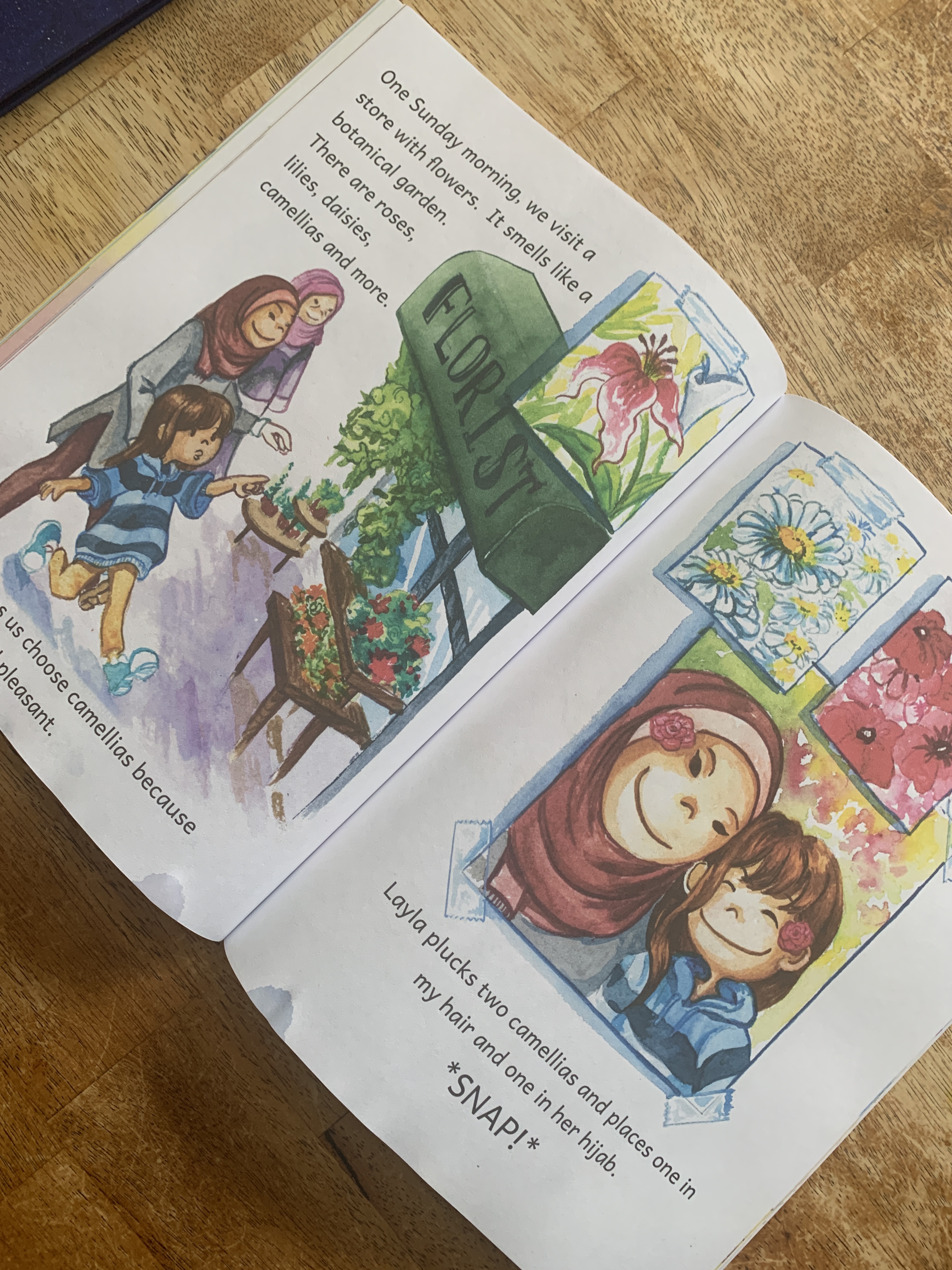
I love the detail about the different cultural and regional Algerian dresses in the illustrations, the Algerian traditions shared through the text, and the connection between the two sisters. The book is available in hard back or paper back and I got mine from Crescent Moon Store  

https://crescentmoonstore.com/products/monas-scrapbook-adventure?sca_ref=1601585.fIPhoqtScY

Fight Back by A.M. Dassu

Standard
Fight Back by A.M. Dassu

fight back

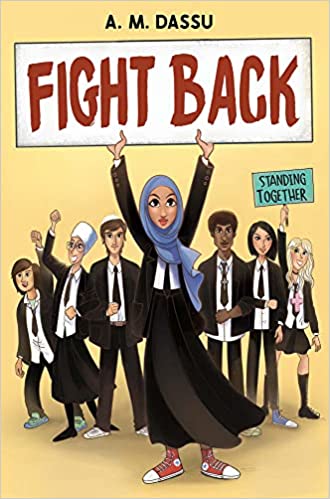
At 384 pages, this middle grades book takes on hijab, terrorism, Islamophobia, finding your voice, and fighting back.  At times the book was insightful and smoothly written, at other times the voice seemed childish and the writing directionless.  The inconsistencies don’t ultimately make the book good or bad for me, but rather very forgettable.  I read the book over the span of three days, but honestly remember very little about the book without looking at my notes.  The writing just isn’t particularly strong.  I never connected with the main character, and no it wasn’t because I didn’t agree with her wearing hijab out of solidarity, I accept that people make the decision for a variety of reasons, somehow I just never felt sympathetic to her as a person, or found myself cheering her on.  Her naivety vacillated too much for me to find her believable, and the pacing of the book made it hard to get revved up.  I think upper MG and middle school readers will be a better fit for the book with hate speech, assault, school bans, concert, musical references, and alt right indoctrination.  I think the book is worth shelving in a classroom/school library and I’m considering it for a book club selection, but I’m skeptical that the book would be finished, even if started, by most readers without some incentive to see it through.

SYNOPSIS:

Aaliyah and her friends are at a K-pop concert when a terrorist attack kills and injures numerous people.  A Muslim takes responsibility and with it coming on the heels of numerous London attacks, Islamophobia is at an all time high.  For 13-year-old Aaliyah, it is a stranger yelling at her mother in a parking lot, her best friend Lisa ignoring her, and her brother getting riled up in retaliation, that gets her to wonder why her mother wears hijab, when she started, and decide to start covering herself, in solidarity. As a result for Aaliyah there is now increased bullying at school which results in physical assault, and teachers turning a blind-eye.  It reaches an all time high when a religious display ban goes in to effect.  Still dealing with trauma from witnessing horrific violence, Aaliyah decides to push back.  Finding her inner strength and finding allies in a few good friends, and a secret cat adoption, she finds enough motivation to keep her plugging forward against the growing hate in her world. When she finally finds her voice will it be enough to overturn the ban and save her brother? Nope, not going to spoil it.  The fight is not a one-and-done, as anyone who has gone up against racism and systemic oppression knows, and this fictional book keeps that integrity and doesn’t give a happy ending, but rather hope and motivation.

WHY I LIKE IT:

I like that the Islam is centered in a consistent and empowering way.  At times it is a perspective that I’m not completely onboard with, but a few pages later the insight is powerful and the messaging clear.  I found it odd that Aaliyah doesn’t know when her mom started covering or why, or anything about hijab, it comes off very immature. The book keeps culture and religion separate, hijab a choice, and I like that it was Aaliyah who wants to cover even when her parents try to talk/force her out of it.  I find it a little off that she doesn’t go to the mosque, but her father consulted with masjid folks when looking for advice for handling the alt right groups.  She prays a few times in the book and it being mentioned is nice.

I like that the kids in the book think for themselves, and that the adults don’t have all the answers.  I enjoyed the passages asserting why the family came to the UK generations ago and why they have stayed, is powerful.   A few of the characters that are really strong at the start don’t ever get mentioned again.  Which is fine, but I did wonder about Harpreet and why Yusuf’s friends weren’t contacted when Aaliyah was sleuthing about.

Loved the literary shout-outs, and the hypocrisy of allowing swim caps and hats but not hijab, but sigh, didn’t love the cat thread.  I think I just don’t like fictional cats, I sound like a broken record.  I think the inclusion was to show how much Aaliyah had to keep hidden in her life and how she needed comfort, but I don’t know, sigh, I found the contrast of tone jarring to the pacing.

There is a glossary at the end, and the definition of Hijab is a bit odd, highlighting Western and South Asian terminology and not the Middle Eastern or even global use of the Arabic word.  I don’t know that the glossary is even needed as the book really tries to establish that the characters are a part of their society and don’t need footnotes and differential treatment, so the inclusion of a glossary for me, diminished the point a bit.

FLAGS:

Assault, hate speech, bullying, fear, death, injuries, bombing, terrorist attack, lying, music, mention of a transgender/gender neutral student, a rainbow pin. sneaking out.  Criticism of police, alt right indoctrination.

TOOLS FOR LEADING THE DISCUSSION:

The book is unique in showing affects of the alt right and not having it all work out in an MG book.  It shows the anxiety and fear that Muslims often feel and the determination of not becoming victims. It also does a good job of showing that something like a religious symbolism ban doesn’t just affect Muslims, but people of various faiths and culture, and thus when common ground is found, there are more allies that one often thinks.  I think it could work for a middle school book club and undoubtedly the discussions would be great, but I am given pause with the main characters view of hijab as not being something in the Quran, but rather done in protest and in solidarity.  I think once I see which kids are interested in book club I can gauge if it is something that we can work through and discuss or not.

Anisa’s International Day by Reem Faruqi

Standard
Anisa’s International Day by Reem Faruqi

international

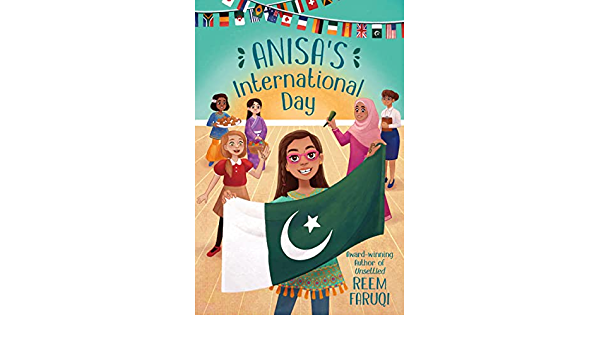
Full of determination, creativity, culture, misunderstandings, and learning from your mistakes, this story will resonate with readers 6-10 who want to solve problems on their own, stand out and be special, and who must own up to their mistakes when they happen.  In just under a hundred pages of story, the characters are developed and made memorable, the voice realistic, and the story engaging and enjoyable.  I love that there is no cultural or religious identity crisis, no parental fixing of problems, and no preachy moral overtones.  There are many lessons learned, explored, and threaded through the book, but the incredible writing never lets the threads overpower the story.  The emotional attachment to Anisa has you cringing when she messes up, cheering for her to solve a problem, and sighing in relief when amends are made.  The backmatter is quite robust with recipes, a glossary, numerous activities, and notes from the author.  I know the book says it is meant for grades 3rd through 7th, but I think early chapter book readers will enjoy it the most.  There is not a lot of Islam in the book, but enough that Muslim readers will appreciate the representation and OWN voice authenticity.

SYNOPSIS:

Anisa is an artist, a baker, and pushes herself to be ingenious in all she does.  With her aunt’s wedding coming up, her and her sister and their A-Z Bakery are tasked with making cookies for a party, and her Nani in Pakistan has even sent clothes for her to wear.  Included in the package is a beautiful kurta that Anisa decides to wear to school.  Inspired by her pride in her culture the teacher, Miss Torres, decides the class will have an international day.  Anisa can’t wait to bring samosas, but Prerna from India commits to bringing them first and ingenious Anisa can’t copy her.  To make matters worse, Anisa’s best friend Katie doesn’t seem to like the mehndi Anisa got put on at the dholki.  Misunderstandings, assumptions, and hurt feelings get amplified when Anisa takes action, and when everything gets put out in the open, she will have to find a way to make things right.

WHY I LIKE IT:

I love that the drama is not over sensationalized, it is on par for 3rd grade and the solutions are as well. The teacher and Anisa’s parents are supportive and present, but they don’t solve the problems or force reflection, the children in the story do.  I love the subtle backstory of Anisa and Prerna seeming to be in competition, but finding support in one another as the story moves through.  I also love that no one puts pressure on Anisa to be the most creative or the best at anything, it genuinely feels like her personality and a standard she expects for herself.  I was glad that there was no cultural (or religious) self doubting.  The problems with a friend is communication, approval, and misunderstanding.  The mehndi is the catalyst, but it is not meant or perceived to be a symbol of a whole culture and identity.  It is just mehndi. Of course I also love that the apologizing is not just saying sorry, but rather making things right.

There is mention of the aunt wearing hijab and taking it off because Anisa’s dad is not home, that is tucked in and appreciated.  There are black and white illustrations sprinkled throughout that show women in hijab (#muslimsintheillustrations) as well.  The pictures are not finalized in the arc I received, so I will update the included images in this review at a later time.

FLAGS:

There is mention of music, not sure if it is just drums, or other instruments as well. Makeup is also worn by the adult women and mentioned a few times.  Anisa is mean, but she does apologize.

TOOLS FOR LEADING THE DISCUSSION:

I think fans of the Yasmin series (Saadia Faruqi) will move on to this book, and also enjoy the upcoming Marya Khan series also by Saadia Faruqi. The book fills a gap for this reading demographic, and will add relatability, representation, and warmth to whatever shelf it is placed on.

Muhammad Najem, War Reporter: How One Boy Put the Spotlight on Syria by Muhammad Najem and Nora Neus illustrated by Julie Robine

Standard
Muhammad Najem, War Reporter: How One Boy Put the Spotlight on Syria by Muhammad Najem and Nora Neus illustrated by Julie Robine

img_2326

This 320 page full color middle grade graphic novel is a powerful and moving read. The memoir focuses on the young Syrian boy who began reporting on the war from the perspective of children and sharing his work on social media.  The raw emotion, the determination to make a difference, the familial love, are conveyed in a way that allows eight and nine year old readers to connect to living through horror with compassion and outrage and empathy.  Older readers will also be drawn in and moved by the relatability of a boy their age having his world turned upside down.  I particularly like how the book dispels so many assumptions and stereotypes by showing what life was like before the devastation, a bit about the role of outside forces and political oppression, and really creating a mood where you can imagine what you would do if you were in Muhammad’s situation.  The book is heavy, but also has a lot of hope and and joy. I tend to like nonfiction graphic novels that are character driven like this one.  I find I understand the scope of what they are enduring by seeing it through their eyes and feeling like I know them and thus can better grasp what their reality is.  There are photographs at the end which further connect the readers to Muhammad and Syria, and I hope this book finds its way into classrooms, libraries, homes, and hearts, so that we might be better to one another.  Readers of When Stars are Scattered will similarly love this book.

SYNOPSIS:

The book begins with eight-year-old Muhammad hanging around his father’s carpentry shop in Eastern Ghouta, playing soccer and pleading to by treats from the candy seller.  When Assad’s soldiers come, destroy his soccer ball, and his family warns him not to trust anyone, including the new candy seller, Muhammad’s world is suddenly not so certain.  When his family must seek shelter at a moments notice, homework is left, videogames paused, and fear very real.

Muhammad is the miracle child, born after the family didn’t know if they could have any more children, he is the fourth, and spoiled. Even with destruction and sheltering though, there is joy, more children are born in to the family, and while Muhammad’s status might be in question, his love of his little brother and sister, motivate him to do something to create a safer home.

At age 13, his father and uncle go for Jummah salat, and his father is killed while praying.  At 15 Muhammad is done hiding, he knows he will never be safe and he starts filming and sharing stories of children as a way to honor is father and fight back against oppression.

With the support of his family, and constant worry that Assad’s army will target him, Muhammad keeps telling the stories of those with no voice.  Eventually his following grows, catches international attention, and gives Muhammad purpose.

WHY I LIKE IT:

I love the format for this story, you truly can’t put it down.  It shows the emotion so powerfully that you cry when characters are lost.  You know hundreds die every day, but the singling in on a character that you have grown to love dying moves the reader, add in that you know this was a real person and that Muhammad really endured the loss, and it reminds you of your humanity.  The love the characters all have for their oldest sister is absolutely incredible.  The pages of the family just being so connected are my absolute favorites.

The characters are Muslim and it is a part of their daily lives, there is no pulling out of the narrative and explaining or preaching.  The women wear hijab, they plead with Allah swt, they reflect on Allah’s plan, they go for prayers at the masjid.

FLAGS:

Death, destruction, war, fear. It is not sensationalized, and I truly think middle grade and middle school readers will benefit from reading, even the sensitive ones.

TOOLS FOR LEADING THE DISCUSSION:
I think the book would be wonderful to teach in the classroom tying literature, current events, and history together.  I absolutely think every library, classroom, and home bookshelf should feature this book.

It can be pre-orderd here

img_2325

A Mermaid Girl by Sana Rafi illustrated by Olivia Aserr

Standard
A Mermaid Girl by Sana Rafi illustrated by Olivia Aserr

mermaid girl

I honestly don’t know how I feel about this book.  I have read it and reread it and thought about it and read it again, and ignored it and read it again, and alas I have no idea.  I really am having a hard time articulating my thoughts on this 40 page children’s book.  I think part of the problem is that I’m reading it shortly after reading another “religiously inclined” clothing inspired picture book for the same target demographic and I’m having a hard time not comparing them.  When I intentionally start to write a review that doesn’t compare them, I am cognizant that my readers probably will and the review spirals.  So I’m going to establish what I love about this book, and then highlight why I’m torn and leave it to you all to draw your own conclusions and opinions.  InshaAllah this will not be the new norm, I will not make a habit of straddling the fence, but for this book, I think it is the only way.

img_2174

I absolutely love the illustrations.  The warmth and joy the pictures portray are endearing and smile inducing.  I love the mother and daughter relationship and how feelings are not dismissed or belittled.  The mom connects the little girl to a legacy of strength and conveys her confidence, that the little girl is similarly brave, not just when things are hard, but especially when they are.  The little girl is shown to “feel” confident and joy in her clothing, not just “look” pretty, which is messaging that I love.  It is never too early to show that how one feels is more important than how one looks.  This depth, is not examined, but by simply using the words “When I put it on, I feel like a dainty seahorse,” rather than saying, “I look like a dainty seahorse,” the priority is not lost on the reader.  I like that the character has growth and challenges and has to reaffirm her position and as a result raises herself and those around her as well.

img_2175

So why some confusion you ask.  Well- the word burkini is used to explain the little girl’s new swimsuit.  Burkini traditionally is a Muslim implied modest swimsuit, derived from combining the words burka and bikini.  That said, anyone of any faith can order a burkini online and their faith is not a factor.  The little girl is young and doesn’t wear hijab, her hair is not covered.  The mother and the ancestors pictured wear hijab, but Islam or Muslim is never in the text.  Part of me likes this, people wear modest swimwear for a lot of reasons: comfort, religion, sun protection, personal preference.  Similarly for head coverings in a pool some people where them for hair preservation, modesty, hijab, aerodynamics, speed, preference, comfort, etc..  Unlike hijab which is in the Quran, birkini is not an “Islamic requirement.”  No one is forcing you to swim, no one is forcing you to wear this brand or that style if you choose to swim.  Covering and wearing modest clothing is a must on Muslim women, covering the awrah is required after puberty.  I both like that the little girl is covering up and wish that it said why she is, but also appreciate that it is left open.  I like that you should be able to wear whatever you want and be comfortable with it.  I like that you don’t have to conform, and you can be you and whether that comes from a religious rationale or a fashion one or a health one or a comfort one, it doesn’t matter, don’t police what women wear.  But the implied illustrated framing is Islamic and the link is not there in the text.  See why my thoughts are scattered.

img_2176

Similarly, the term “mermaid” is gender specific.  But colloquially it is often used to just describe someone with a human top half and fist tail.  So, isn’t “mermaid girl” redundant? At the end when male presenting Sam asks if he can be a Mermaid girl too is it implying gender neutrality? Is it like female kids saying they want to be a girl policeman or a lady firefighter?  Does it matter?

img_2177

The story starts with Heba and her mother looking at photographs of past generations on their wall remarking how they are all mermaid girls.  Heba has gotten a new swimsuit, and her and mama are going to match in their new burkinis.  When they get to the pool however, all the excitement is pushed back on when her friends ask her if she can swim in that, and they tell her it doesn’t look like a real swimsuit. Heba sticks up for herself, but when she looks around, she sees, they are right, she doesn’t look like everyone else.  Mama reminds her of those before her and reassures her that she is not alone. She rejoins her friends, doing all the things she wants to do, and by the end they too want to be mermaid girls.

img_2178

There is music depicted and women in one and two piece swimsuits.  As someone who wore modest swimwear my whole life, this book had a lot of mirroring of summers arguing with life guards, showing up with other Muslims at public pools to rude comments and aggressive stares, and swimming all over the world to people asking where they could get a suit like mine as well.  Definitely normalizing swimwear that looks like a burkini is a great concept to see in a book.

I do wish there was backmatter.  Perhaps giving voice to the many reasons women should be free to wear what they want at all times, but how particularly in water activities it has become a political point of judgement and policing.  Perhaps something about how this little girl is wearing it for religion and modesty, but that people everywhere wear things for lots of reasons.  I like the ambiguity, but also wish their was more of a connection to Islam/Muslims.  I leave it to you to make your own decisions.  I found my copy at my local library, it is mainstream published and can be purchased here as well.