Tag Archives: Family

Ali the Great and the Market Mishap by Saadia Faruqi illustrated by Debby Rahmalia

Standard
Ali the Great and the Market Mishap by Saadia Faruqi illustrated by Debby Rahmalia

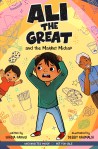
Akin to her beloved Yasmin series, author Saadia Faruqi offers up a new set of books similarly rich with culture, family mishaps, problem solving, and fun for early readers.  This is the first book in the series, with three more announced that follow the Pakistani American family, and seem to perhaps even connect to Yasmin (based on the cover pictures).  The books are not religious, Ali’s mom wears hijab, and there is an Eid title in the series, but having only seen this particular book I’m not sure if it is faith detailed or not.  Over three chapters and 32 brightly illustrated pages, second grader Ali Tahir, along with his little brother and Dada head to the South Asian store to find some snacks and ends up having to find little Fateh.  With a family portrait and Urdu words defined at the start, the story concludes with some jokes, some details about traditional desi snacks, questions to consider and info about the Muslim author and Muslim illustrator.

It has finally stopped raining and Dada needs snacks, so he puts Fateh in the stroller and the three of them head off to the market.  Dada is from Pakistan and he and Dadi live with Ali’s family.  Once they make their way to the store, they take in the sights and start looking for Dada’s favorite chips.   Ali has to let go of Fateh’s hand to catch a spicy chips display from falling over, and that quickly Fateh disappears.?

I love that the Yasmin series is such a staple and so widely beloved that a similar series with a boy protagonist is now going to grace our classroom, school and public libraries.  This particular book might only have a #Muslimintheillustrations, but it normalizes religious garb, cultural traditions, and larger themes that unite us all in a fun, age appropriate book that will get early readers smiling and brown Muslim kids glad that yet another mirror exists for them and a window for those around them.

Fatima Tate Takes the Cake by Khadijah VanBrakle 

Standard
Fatima Tate Takes the Cake by Khadijah VanBrakle 

fatimatate

I really want to be raging furious and upset by the lying, premarital hetero sex, normalized/celebrated lesbian Muslim, internalized Islamophobia, gaslighting, abuse, and labeling of Muslims as “conservative” and Islamic principles as “ancient and ridiculous” (keep in mind the characters and author are all Muslim). But honestly, the writing is so terrible that to feel that much emotion is just not that warranted for what the story is. I’m so disappointed in the entire writing quality of the book, that I couldn’t appreciate the characters or story as written.  I know elements of the story probably ring true, my privilege and arrogance don’t blind me to recognizing that, and whether I agree or relate or identify with the Islamic representation is subjective, but it is not a good sign when reading- that screen shots are not enough, and I have to break out paper and pens to note the contradictions, plot holes, and inconsistencies.  The cover is the best part, with its beautiful Black Muslim inviting YA readers to crack open the book and spend time with Fatima who dreams of following her culinary dreams despite family and toxic relationship obstacles.  Sadly though, the text does not live up to the expectations the cover sets forth.  It reads like a very early draft where the plot points, the climax, and the conclusion are laid out, but the dialogue, backstories, and relationships are yet to come in this very mature 304 page book.

SYNOPSIS:

Fatima Tate dreams of culinary school, but her mother demands a more practical degree of nursing.  The only child of a nurse and mechanic, Fatima goes to a virtual charter school and has a best friend since 5th grade, Zaynab. who goes to a private school, yet constantly chauffeurs her around, covers for her, and whose relationship with Amber is a major thread in the story.  One day, when Zaynab fails to pick Fatima up from her shift at the soup kitchen, Raheem, her crush who she has never really spoken to, offers to drop her off, he uses the excuse of not wanting to miss Asr salat to get in her house, and by the time the prayer rug is put away the two are kissing and holding hands.  It has been a busy day for Fatima, she was also invited to join a teen cooking competition, and with that, all in the first chapter, the direction of the story is set.  Add in the twist that her parents don’t know about her joining the cooking competition, Raheem being revealed as a narcissistic, controlling, wealthy, manipulator who has his mom properly meet Fatima’s parents resulting in the two quickly become engaged, and Fatima at some point having to finalize her college plans and you have most of the plot and spoilers of the book.

WHY I LIKE IT:

I wish there was more OWN voice Black Muslim culture inclusions.  As with all the potential themes of the book, the writing just feels so superficial.  The only thing quicker than the instant romance, is the reader’s (my) instant disdain for the creep that Raheem is: from his arrogance to his ghosting, his hypocrisy to his gaslighting.  There is no angst, attraction, sympathy, intrigue, nothing in his character makeup or in the relationship he and Fatima have.

The cooking thread is equally lackluster, I think most bakers have heard of refrigerating cookie dough, and where I should have been hungry or had my senses tingling, I found myself annoyed by the almost childish portrayal of the food scenes.  If it was meant to show passion or a divide with her parents, it was all talk and no show.  At times the text says how close Fatima is with her parents, how much she respects her mother’s strength and her father’s kindness, but lie after lie to them and their distance from the heart of the book, definitely do not show a complicated relationship, it once again, yep you guessed it, reads really flat and one dimensional.

Islamically there are concerns with the premarital relations, but even before that with the male and female being alone, the lying, the lgbtq+ relationships.  I never understood why Fatima refuses to pray in congregation and attend Jummah it just says she doesn’t join the community prayer, but she also doesn’t pray with Raheem, which might have actually been sweet.  She is noted to pray fajr late and it is a point of contention, she wears hijab, and says a lot of inshaAllahs, but while the text sprinkles in these touchstones, they don’t seem to shape her identity, it feels like it is just the paradigm that she knows.  She finds the mahr concept to be “ancient” and “ridiculous.” The one character that speaks out against same sex relationships wears abayas, black abayas to be exact. She is also labeled the “haram police.”  Zaynab doesn’t pray, doesn’t cover, but presumably identifies as Muslim.  Raheem says he is fine with her lesbian identity, but fears Fatima’s relationship with her will ruin his future political career.  The book never has any substantial commentary on the Islamic view of queer relationships and labels any one that has a problem with them as being “strict” and “conservative.”  The book says “love is love” and leaves it at that.

Constantly the reader is told that Fatima and Zaynab are best friends since 5th grade, no backstory as to why Fatima left for virtual school and Zaynab for private.  We never see Fatima add anything to the friendship, Zaynab drives Fatima, feeds Fatima, consoles Fatima, it is all very one sided.  So many story lines just fall off the page without resolution or insight.  At one point Fatima is angry at Zaynab and doesn’t want to share her with Amber, but then is mad that Raheem is wanting to take her away but nothing is ever done or explained or internally pondered over, it is just forgotten.  I really despise how we are also told that Zaynab and Amber are the ideal couple, but nothing ever shows it. NOTHING. They are always fighting, Fatima is always on edge to even ask Zaynab about Amber.  Zaynab and Amber fight about their graduation party and it magically all works out.  Amber is shocked to know that Muslims won’t accept them, and they seem to break up, but then they are together at the end so how did that get resolved?

Major plot holes: When Fatima’s mom asks Fatima if she knows Raheem, she says no and four pages later her dad asks her what she thinks about Raheem and she answers him.  This inconsistency mitigates the “reveal” at the end that they knew each other at the soup kitchen.  Speaking of soup kitchen, the reader sees she goes once and then stops for finals and never resumes going, so how is it such and important part of her or Raheem’s life? Does he return? Fatima gets driving lessons and a car, and is then driving alone, time line doesn’t work, nor does what she is driving get articulated if she returned the Lexus.  Extravagant gifts aside, it never fully explains where Raheem’s grandfather made his wealth, it seems lacking because he doesn’t want Fatima to work, but his mother does, in managing her father’s inherited wealth.  At the walimah it is very awkward between Zaynab and Fatima’s mom, almost to the point I thought they might not know each other, or might have issues with her lifestyle, but by the end it is clear they know each other well, so I think the scene is just written poorly.  I went back and read it and the familiarity of the families is definitely unclear and not consistent throughout.  For Fatima’s graduation Raheem gets permission to take her to dinner alone, for someone who is constantly watching money and loves cooking, it felt like it would be a big deal to be able to go out alone with her finance, to a fancy restaurant and savor all the flavors and ambiance.  Nope, the scene is skipped, no details, no nothing.  Lots of little details are skipped quite often, for example five people are qualified for the finals, only three names are given, just throw two more names in there, nope we get dot dot dot- it reads unfinished.  At one point when Zaynab once again saves the day and picks up Fatima, they come back to Zaynab’s house with Starbucks and meet at the fridge to get Pepsi’s out, like three sentences later, Starbucks on the table forgotten.

Zaynab does have a slight character arc, but throughout needs someone to constantly side with her, and I don’t know that she is very independent at the end.   I don’t think there is a decent relationship in the book between any of the characters, which is unfortunate, and religion and the masjid (labeled “patriarchal”) are often portrayed in a negative light. The internalized Islamophobia was hard to swallow.  At one point Fatima shakes a man’s hand and says that she isn’t one of those Muslims that has issues with that.  It seems like this book checked a lot of boxes and for whatever reason didn’t get the polishing it needed.  It is unfortunate because OWN voice Black Muslim books with authentic rep and joy and complexities and nuances are so desperately needed, and this one just felt underdeveloped and raw.

FLAGS:

Language, closed door premarital sex, talk of sex, talk of condoms, child out of wedlock, cheating, lying, hetero and same sex couples, dancing, music, physical abuse, verbal abuse, gaslighting, controlling, stereotypes, internalized Islamophobia, male and female friendships, manipulation, blackmail, judging, deceit, hypocrisy.

TOOLS FOR LEADING THE DISCUSSION:

The cover will tempt younger readers to pick up the book, my only hope is the poor writing will cause it to be abandoned before the haram is glorified, normalized, and celebrated.
I Was Their American Dream: A Graphic Memoir by Malaka Gharib

Standard
I Was Their American Dream: A Graphic Memoir by Malaka Gharib

img_7800

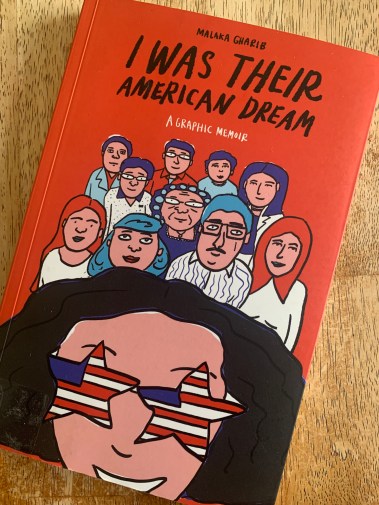
I was hesitant to read the book, afraid it would pit the author’s two cultures (Egyptian and Filipino) and faiths (Catholic and Muslim) that her parents identified with against each other.  Raised as the daughter of immigrants from very different backgrounds in California I was very pleasantly surprised that the book leads with heart and positivity for the unique, yet universal feelings she experienced in her life.  The short 156 page red, white, and blue filled pages are funny, poignant, and reflective, that I think high school readers and up will enjoy spending time in Cerritos and Egypt through the eyes of Malaka.  It is easy to say that you can’t be Muslim and Catholic, but she doesn’t opine on the right or wrong of it in large terms, she discusses her life and her own situation.  As a teacher I would see students that would attend Islamic school five days a week and then go to church on Sundays, whether you agree with the choices this author/character makes is not what I intend to review, it is her life, but rather the manner in which it is shared.  There are many kids out there from “conflicting” backgrounds, and to see someone take the love and benefits offered to forge their own path in creating their own American dream, was a nice twist on the immigrant identity finding narrative.

SYNOPSIS:

The book starts with introductions to the characters, her family members that influence her, and then begins the tales of what brought her Filipino mother and Egyptian father to America, how they met, married, started a family, and divorced. Malaka exists outside her family in school, balancing her heritage and coming of age.  Raised during the school year by her mother and extended Filipino family, she spends summers in Egypt where her father resides with his new wife and children.  Coming of age as an immigrant, balancing cultures, religions, school, and dreams, the book concludes with her marrying a white Southerner and adding to the mix.

WHY I LIKE IT:

Even though she identifies more as Filipino American and goes to Catholic school, there is a fair amount of Islam and Egyptian culture included in the book.  I love that she loves her step mom and step siblings and finds beauty in Islam, learns to pray, read Quran, and mentions her love of Prophet Muhammad saw.  Sure as an Islamic school librarian, I wish she chose Islam, lived it and centered it in her life, but this is not a character, this is a real person, and to see her lovingly showing the goodness in Islam and how it has positively influenced her, is nice to see nonetheless.  There are a few storylines I didn’t quite understand, the skateboarding in Egypt a big one, but the quick pace of her narrative life-story flows well and is easily consumable.  Often stories like this are overly dragged down by dated pop cultural references and over criticizing “othering” paradigms, but this book contains enough to keep it grounded without it alienating contemporary readers.

FLAGS:

Stereotypes, lying, relationships, periods, music, dancing, nothing really stands out, there might have been some language, I read it a few days ago and honestly don’t recall anything overly problematic, but content wise it is a mature teenage read with retrospection and marriage being a part of the narrative.

TOOLS FOR LEADING THE DISCUSSION:
I don’t know that I would shelve or teach this book, but I think it is one to file away in my head for people I might encounter looking for a book about blended faiths and cultures benefitting from the many worlds they have one foot in and one foot out of, and those ultimately looking for a place to see their experiences mirrored.

I found my copy of this book at my local public library and it is also available here from Amazon.

The Kingdom Over the Sea by Zohra Nabi

Standard
The Kingdom Over the Sea by Zohra Nabi

kigdom

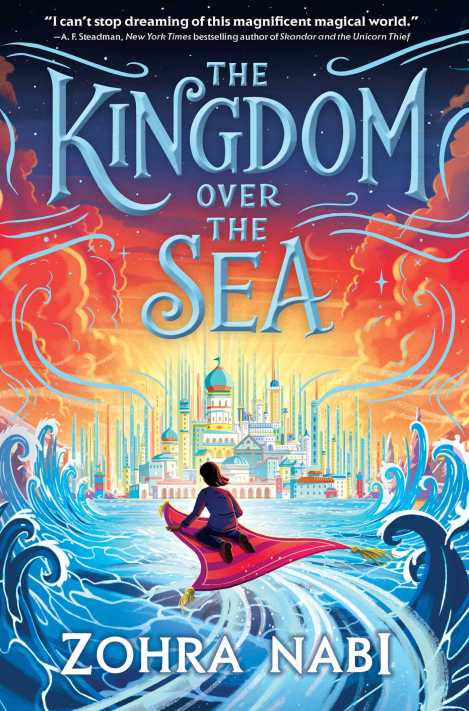
This 336 page middle grade fantasy book had a lot of promise for me, but ultimately fell a little flat.  The protagonist was likeable, there was emotion, the story was compelling, and I know it is widely said that debut novels tend to be a little weak or be underdeveloped or having pacing problems, yet I hesitate these days to use this as an excuse.  I’ve been around the industry a few years and it seems many author’s debut novel, is not, in fact, the first book they’ve written or even the first book they’ve “sold.” Books are written and finalized years before they are released for some genres particularly of late, so I’m trying not to let myself get caught up in the author’s writing journey (I’m sure I’m all sorts of wrong about what I think it would be anyway), and just review the book in front of me. This book has no religion, and I don’t know if the author identifies as Muslim.  There are a hodgepodge of Arab and Desi cultural references in the characters’ names, and in the sprinkling in of salwar qamis, abaya, head scarf, sambusak, and there is a ma’a salama at one point along with the presence of jinn (not religiously referenced). There is also mention of medicinal wine, magic, a lady who has a crush on another lady in her youth, music, and dancing. The book held my interest as I wanted to see how it unraveled, and I recognize that there is a book two, so some of my thoughts might be premature, but I struggled with the premise of the protagonist trying to understand the journey her deceased mother has sent her on, and how the person she was supposed to find for the answers simply won’t talk, even though the two are living together.  It made the story really drag in places and seem underdeveloped.  The world building, the backstories, the adventure at hand, really is imaginative, but the development of the relationships in the story are absolutely non existent, and the book overall suffers because of it. Also the ease in which rising action is resolved is often the kids just throwing an idea out and it being right.  I read and review through a critical lens and many recent middle grade fantasy books have been absolutely incredible, perhaps it isn’t fair to compare, but this book just came up short for me in developing memorable characters and plot, even though all the elements were present, capitalizing on bringing it all together stayed just out of reach unfortunately.

SYNOPSIS:

Yara’s mother has died and when she finds a letter with instructions of what to do and where to go should this moment arrive, she decides to dodge her social worker and journey to a world of magic across the sea.  Unsure of her own background, she thinks she might be Iraqi, but doesn’t speak Arabic, she longs to find a place to belong, and when she arrives in Zehaira and hears the language of her mother, she is hopeful that this Leyla Khatoun, who lives in the third to last house on Istehar Way, will provide her with answers. But alas Leyla is not there, the Sultan’s alchemists are, and Yara is now on the run in a foreign land.  Help finds her and with a little magic she finds Leyla.  Leyla begrudgingly takes her in, but refuses her any insight into her past, her relationship with her mother, or why the letter directed Yara to her.  As the alchemists poison the sorcerers, Leyla and some other kids (friends?) have to find a way to save the settlement and magic in the land.

WHY I LIKE IT:

Yara as a character is likeable, she is plucky, resourceful, determined, and despite her circumstance does not want or need pity or handouts.  She advocates for animals, the poor, is a grassroots organizer, and unapologetic in how she carries herself.  I love that she isn’t whiney or helpless, and that she trusts herself to problem solve and isn’t afraid to think outside the box, while maintaining her kindness and appreciation for those around her.

As someone who doesn’t like Alice in Wonderland type stories, this book grounded the world building in an easily consumable way, so even though it is Yara leaving the UK and stepping into a new world, the functioning of the new world didn’t feel random or surprising.  While this was beneficial for someone like me, it made the focus of the story more on the characters’ relationships in enhancing the plot, and the book wasn’t strong in showing those connections.  Yara meets a map maker for a moment and a cat, and months later recalls the cat and the map maker by name and face.  A boy, Rafi, who is also studying magic and Yara don’t get along, yet are friends because it says so, the book doesn’t show us their bond.  Rafi meets some great uncle and the great uncle is painfully underdeveloped (along with his “friend”) and the tangent weak in reinforcing the major climax. The relationship between Yara and Leyla is the center of the story and so glossed over, there is no tangible connection, or cathartic release when details emerge, it was very disappointing to say the least. Yara and Ajal, the jinn, what is that relationship even, she frees him à la Aladdin freeing the Genie, but they are friends, not friends, he looks out for her, but doesn’t like her, the telling and the showing don’t align.  Even Yara’s relationship with the settlement and the inhabitants is disconnected from the plot of saving magic.  The climax is weak because we, the reader, don’t feel any connection to any magical folk.  The emotion of the mother dying at the beginning and the slight retrospection (I’m not going to spoil it) of the mother’s love at the end, was developed and made me invested in Yara, that same energy did not present itself, sadly, in any other relationships in the book.


FLAGS:

Death, loss, poison, imprisonment, magic, mention of medicinal wine, one line mention of a female character liking another female character as more than a friend, dancing, singing, jinn, torture, male and female friendships, destruction, lying, sneaking.

TOOLS FOR LEADING THE DISCUSSION:

I wouldn’t use this as a book club selection and wouldn’t go out of my way to shelve it in the school library or classroom library.  I will probably read the second book though and see where the series goes and reevaluate. I will also probably read future works from the author as the sparks of good story telling and writing definitely show promise for the author even though this particularly book wasn’t “magical” for me.


Egyptian Lullaby by Zeena M. Pliska illustrated by Hatem Aly

Standard
Egyptian Lullaby by Zeena M. Pliska illustrated by Hatem Aly

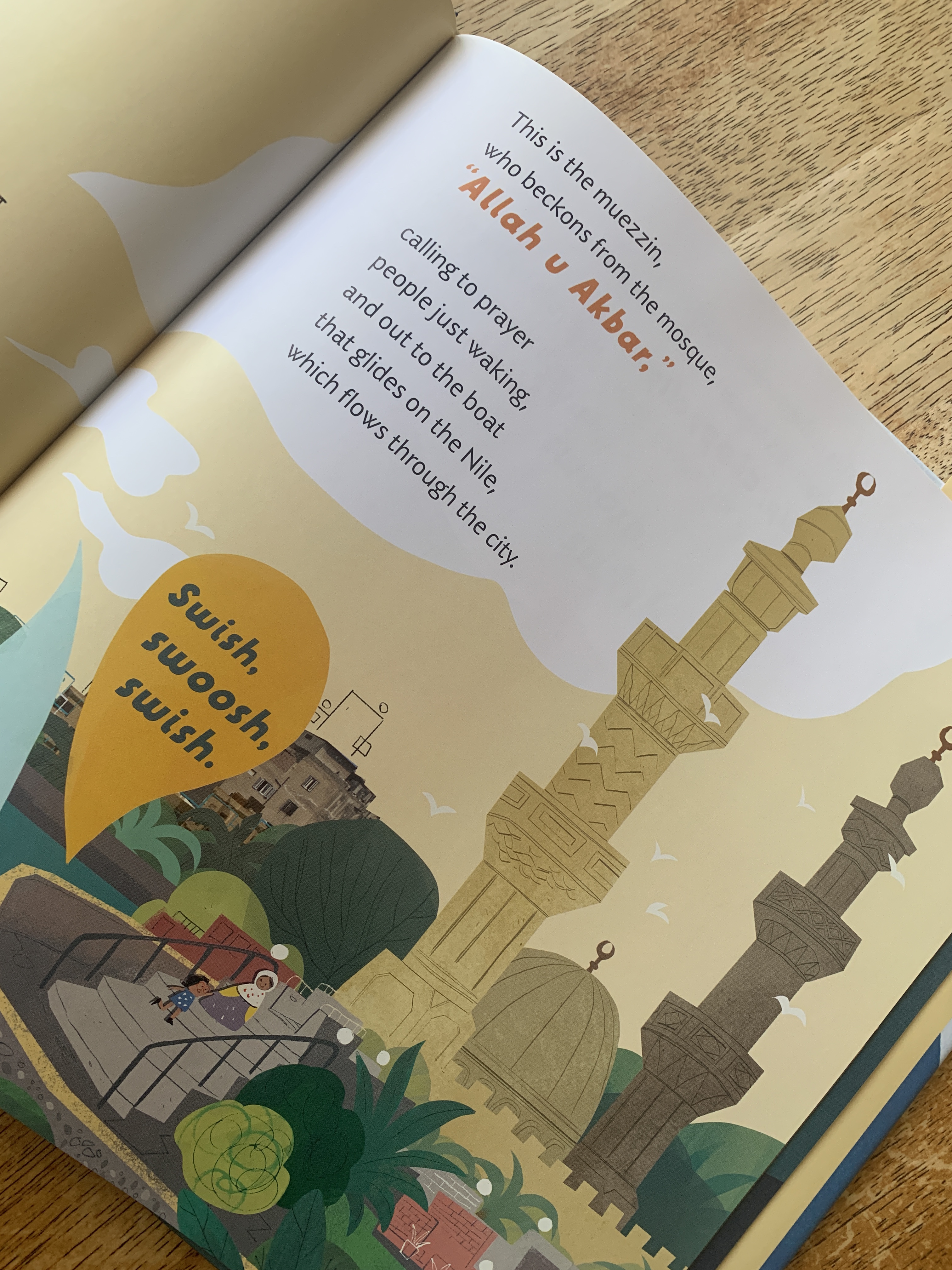
There was a time in college when my friends and I would gift each other Cinderella retellings and versions from all over the world, that was nearly 20 years ago, and I haven’t thought much of it, until this book reminded again of “This is the House that Jack Built.” Having just read and reviewed “The Masjid that Kamal Loves” which is structed similarly, I can confidently say forget Cinderella, I’m loving this new trend, of a repetitive layered story conveying love and excitement and joy to little readers in such an engaging way. This book has more of a story than the original and shows relationships and longing, even though it is primarily a love letter to Cairo.  The swapping out in some verses for Arabic words and English translations, the sound affects and the connections really elevate the OWN voice details in the text and make the book an absolute treat to read and share even for those of us who are not Egyptian and have never visited.  The Auntie who visits wears hijab, the muezzin calling Allah u Akbar is a repeated refrain, their are numerous illustrations of women in hijab and a masjid is shown repeatedly throughout allowing Muslims everywhere to feel seen with this culturally specific story.  The Glossary with the Arabic script and pronunciation guides and Notes from the Author and Illustrator really radiate with love and invite the reader to participate in the celebration on the pages.  I have no doubt children (and their parents) three and up everywhere will fall in love with the 40 page story and delightful illustrations.
Auntie Fatma comes to visit a little girl’s family from Egypt and brings sahlab and changes for two weeks to the home.  Arabic is spoken, and a nightly lullaby of the sounds of Cairo are among the beloved additions to connect the little girl to her Auntie and her culture.

The lullaby begins with the sound of the Nile, the boats floating through the city, the athan calling to prayer, the carts on the streets, the traffic.  The halawa ya battekh, swish, swoosh, swish, Allah u Akbar, beep honk toot, all add layers to the bustle of the city as the little girls memories of the sights and sounds of Egypt soothe her to sleep.  When it is time for Auntie to return the little girl’s sadness is palpable, but Auntie finds a way to reassure her and all those that have drunk from the Nile and long to return.

It is hard to say if the text adds to the illustrations or the illustrations to the story, both combine to make this book impossible to read without smiling.  I love that the mosque is shown in the daytime and at night implying that the call to prayer is not a one time thing without articulating that Muslims pray five times a day. I don’t know if the author identifies as Muslim or if the inclusion of the athan and Allah u Akbar is just an environmental reality of Egyptian daily life and thus featured.  The illustrator could have very well added the hijabs on his own as there is nothing religious or explanatory in the text.  Perhaps it is worth noting that there is a dog in the family’s home that seems to sleep with the little girl.  The book is a cultural heartfelt portrayal, and that Islam is prominently featured so beautifully made for a lovely surprise.
I hope you will consider preordering the book here, requesting it at your library, and sharing it on classroom and home bookshelves.  Happy Reading!

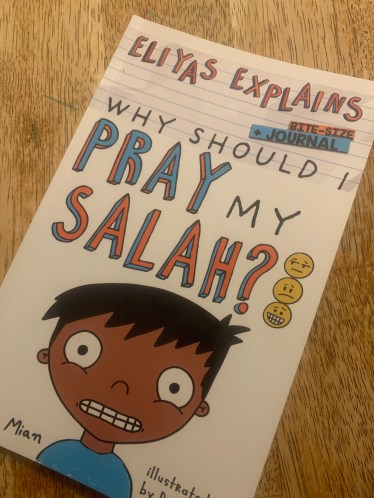
Eliyas Explains Why Should I Pray My Salah? Bite Size Journal by Zanib Mian illustrated by Daniel Hills

Standard
Eliyas Explains Why Should I Pray My Salah? Bite Size Journal by Zanib Mian illustrated by Daniel Hills

img_7821

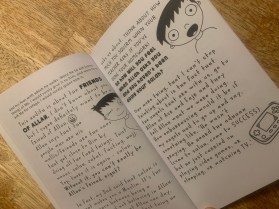
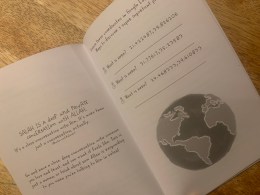
I love the Eliyas Explains books, but was a little curious what a “Bite-Size Journal” version would be, and Alhumdulillah, the silly relatable voice is the same, there just isn’t as much fictional story weaving together as the Angels and Miracles books had.  Instead it has activities and guided prompts for the reader to engage with and space for them to write.  The first 15 pages or so are Eliyas explaining about salah and what he has learned and how he has improved, and some parables through his point of view.  Then the journal pages begin, and while the first few are truly “journalistic” as it progresses to the last of the 60 pages you realize along the way there was a lot of “story” included on the activity pages as well.  The book isn’t blank pages and bound together as a book, it has text, it has hadith, it has games, it has questions, and trackers, and a lot of information.  I love that it states that it has been checked and the Shaykh’s name is included, the positive child framing, and the reasonable price point.  For first through third graders learning about salah, wudu, athan, and inshaAllah becoming more mindful of their actions and behavior, this book will be relatable, funny, and informative.
img_7823

SYNOPSIS:

The book starts with Eliyas remembering when he was too lazy to make wudu and pray his salah, he then offers a story of an orphan and a muffin and a lady who makes the muffin to try and show readers that salah benefits and nourishes us and the maker of the muffin truly loves us.  It is a little random, but it somehow all works and kids will go along with the allegory, it isn’t drawn out.  He then moves to talking about how Allah swt loves him and what his parents told him that helped him to love praying.  There are hadith and Eliyas’s explanation attempts, drawings, and some really powerful points about angels and being accountable on the day of judgement to Allah swt.  The journal pages involve decoding, timing your prayers, writing down all the places you’ve prayed, latitude and longitude decoding and a lot more.  The book also discusses the athan and Surah Fatiha.

img_7824

WHY I LIKE IT:

I love the voice of Eliyas.  It isn’t fear driven, or punishment framed, it stays positive and motivates from a place of love, but the conscience and priorities are highlighted too.  It is such a crucial part of raising young Muslims, to lead with Allah’s love, but as kids get older you want to introduce consequences, and choices, and being accountable, and this book does it seamlessly with out it being overwhelming.

I honestly don’t know if I like the journal format or the other Eliya’s Explains books more, I do like the storytelling of Miracles and Angels and the way the facts are woven in, but I think for the topic of Salah this format works.  I am happy with mine, and you can purchase yours here from Crescent Moon Store.

img_7825

FLAGS:
None

TOOLS FOR LEADING THE DISCUSSION:

I don’t think the book would work for a book club, but in small groups at an Islamic School or Weekend School the teacher could very easily and affordably have a book for each student, or read aloud the story parts and engage the students in the activities without any difficulty at all.

The Masjid Kamal Loves by Ashley Fraklin illustrated by Aaliya Jaleel

Standard
The Masjid Kamal Loves by Ashley Fraklin illustrated by Aaliya Jaleel

img_7811

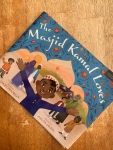
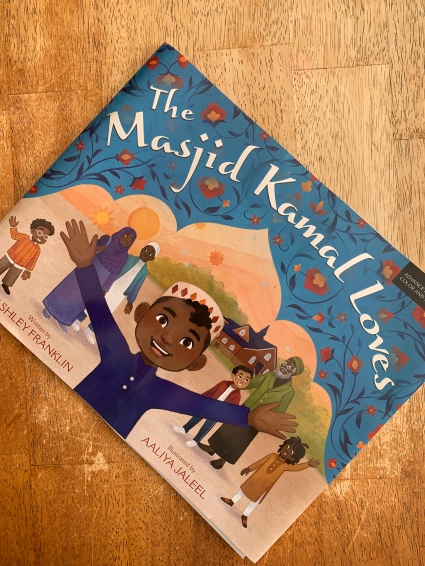
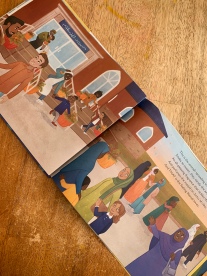
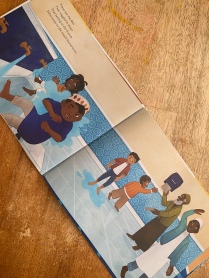
I don’t normally post about upcoming releases this far in advance (2.5 months), but I am hoping that if I share the link for preorders, I just might help in signaling to the traditional publishing world that books like this are so so so important and that we will support unapologetic, well written, Muslim centered, Muslim and Black joy featured books with our purchasing power.  This book is incredible for toddlers to early elementary in its “This is the House that Jack Built” format.  Muslim kids will giggle with excitement as they see themselves happy to see their friends at Jumu’ah, flinging shoes a little too hard before entering the musallah, splashing a bit when making wudu, playing while helping put out the prayer rugs, and getting a little wiggly or tired during the khutbah.  The happiness and love radiates off the pictures and through the text that even non Muslim readers will feel our connection to our Masjids and the prayers that occur within.  Muslim authored, Muslim illustrated, masjid not mosque, and a beautiful Author’s Note, makes this book a must have on every shelf where young children need books that mirror their experiences and provide windows into the beauty of Islam.

img_7814

The book starts out describing Kamal’s smile and offering the reason for such joy as being Jumu’ah at the masjid. It then starts with describing the masjid and all that is contained with the lines adding on the refrain of “the masjid Kamal loves.”  The friends, the shoes, the feet, the rugs, etc.. Terms such as imam, ummah, salaam are in the text and the illustrations show wudu, salat, khutbah, conveying a Jumu’ah experience.

img_7813

Each page is brightly illustrated across horizontal orientated scenes.  The expressions on the kids faces, are engaging and smile inducing and the lyrical text has a rhythm and strength that makes you feel proud to also have a masjid to love like Kamal.

img_7816

I have an arc, but have preordered a copy for myself here and hope you will do the same. Please also request your public libraries to order it, and if they have already you can place the book on hold, inshaAllah little steps to show support.

Not Now Noor! by Farhana Islam illustrated by Nabila Adani

Standard
Not Now Noor! by Farhana Islam illustrated by Nabila Adani

img_7621

This 32 page book is incredibly adorable and silly, and yet so vague in the answer that is the whole premise of the book, that it really has me wondering why we are so afraid (in children’s books and possibly in our daily lives) to say that we wear hijab because Allah swt commands it?  The book articulates that we are Muslim and that hijab defines us, which I love, it just seems that while the rest of the book is incredibly direct and funny, the answer is fuzzy and lyrical.  It is by no means wrong, it just at the end presents what hijab means, the benefits of wearing it, and one’s personal feelings toward it, while skirting the answer the girl keeps asking of why? It seems to be a common approach lately, and I wish that more picture books about hijab would clearly articulate that the commandment to cover is in the Quran.  It isn’t for any other reasons. It may have perks of keeping your ears warm, fashion, or hiding your earbuds, but that isn’t why Muslim women wear hijab.  Perhaps the trend has me more frustrated than this book on its own warrants, it really is sweet and I don’t regret purchasing it and having it sent from the UK.  It allows for a serious conversation about hijab to occur after, and it intentionally pushes the humor, which I definitely think we need more of in Muslim centered books.

img_7623

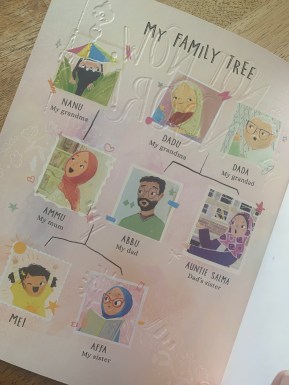
The book starts with Noor identifying what her Ammu’s hijab is and isn’t, how she wears it and how she doesn’t.  The next page shows Noor’s bustling family and she compares how her Ammu’s hijab is not the same as her Nanu’s or Dadu’s or Aunt’s or even her sister’s, but she doesn’t know why any of them wear it.  Yes, I’m sure there is some pointed criticism I should make about how can a child her age not know, but I think for the sake of it being a book and being comically done, I am willing to let it slide.  I do wish that the spread had the women and their style of wearing a scarf shown.  I appreciate that they are in the dining room at home and thus not wearing a scarf, Nanu is because Dada is in the picture, authenticity which I love seeing, but children need a little more hand holding to see which person the text is talking about. Yes I know there is a family tree on the inside cover, but at story time, it is cumbersome to flip back and forth.

img_7626

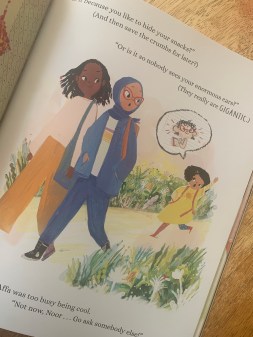
Back to the story, Noor starts by asking her sister, the coolest hijabi she knows, if she wears it to hide her snacks in, or hide her big ears, but Affa brushes her off with a, “not now, Noor” and she is off to the next family member to ask.  Each time the rationale gets more outrageous: hide the eyes on the back of your head, prevent you from getting nits, etc..  And each time the person she asks sends her on her way with a “not now, Noor.”

When Noor finally gets to her mom it is she who answers with poetic lyricism, “We are Muslim women, my Noor, Unapologetic and true.  We are believers.  We are dreamers.  We are thinkers. We are leaders. We can wear our hijabs on our heads like our hearts on our sleeves.  Whether you choose to or not, my Noor,, we are so many things…and we are more than enough.” On the next page it continues, “My hijab is not just a scarf.  It means more to me.  It is a reminder of who I am, where I’m from, and where I’m going to be.  And perhaps one day you’ll understand what I mean.  Because, most of all without my hijab, my Noor, I don’t feel like me.”

img_7622

A flowery sentiment, but little Noor and the reader never got the answer as to why Muslim women wear hijab, and I think that it is unfortunate.  The book is beautifully illustrated, the size is great to be shared, the text funny, the voice playful, the joy contagious but the answer for me, just missed the mark, not by a lot, but by enough that I think an adult would need to supplement the overall takeaway message.

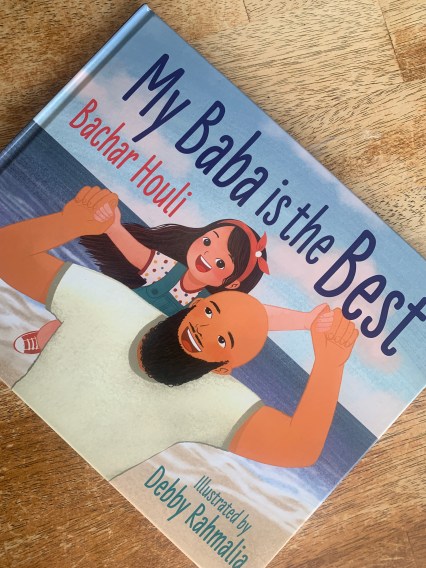
My Baba is the Best by Bachar Houli illustrated by Debby Rahmalia

Standard
My Baba is the Best by Bachar Houli illustrated by Debby Rahmalia

img_7434

This 32 page horizontal picture book by an Australian footballer starts out much like a list detailing why a little girl loves her Baba, after a few pages though of more superficial delights, the book gets deeper.  It shows the family making duas at bedtime, going to the masjid on Fridays, it even gives a little insight into Eid and fasting before it then takes readers on a camping trip.  There isn’t really a story or plot, but the bouncing around fits the narrator’s point of view and will appeal to the intended target audience.  The book is mainstream published by Penguin in Australia, so I absolutely love the inclusion of Islam, the mom in hijab, the dad’s beard and the love shown between the little girl and her Baba.  Sometimes celebrity books feel a little forced, but having never heard of this athlete, I still found the book incredibly sweet and joyful, and the illustrations by a Muslim illustrator a great amplification of the simple heartfelt text.

The book starts with a little girl rushing to give her Baba a hug on the field as fans cheer in the background.  After all her Baba gives the best hugs, it then mentions that he is always doing something and shows him washing his boat and jumping on a trampoline with the little girl and her younger sister.  The trio garden, exercise, ride bikes, train and go fishing. They also watch movies at the theater or at home with the whole family. At night Baba reads special prayers to protect them while they sleep.

On Fridays, the family goes to the mosque for prayers, and the most special time is when they all go for Eid in their best clothes.  They listen to the imam and give donations to those in need. They open presents and after fasting they eat Lebanese pizza before going to visit teta and jeddo.

The best time is when they go camping.  They all set up the tent, and get sticks to roast marshmallows.  They even see kangaroos eating dinner before heading back to eat theirs.  On many of the pages it is just the girl and her Baba, but even when the whole family is present, the focus is on the strong relationship between the two.

The book is very endearing and as a daddy’s girl myself, I love seeing the relationship unfold on the pages with big things, and little things, fun things, and reflective things, and from the little girl’s point of view.  The book is not readily available in the United States, I purchased mine from Book Depository, where they offer free shipping.

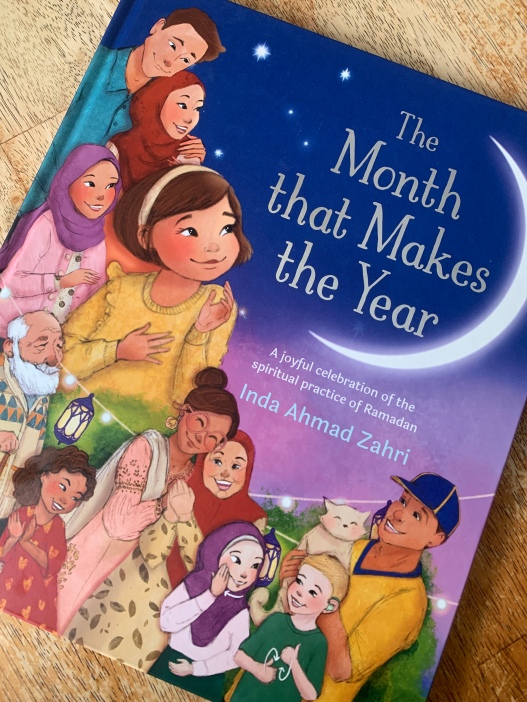
The Month that Makes the Year: A Joyful Celebration of the Spiritual Practices of Ramadan by Inda Ahmad Zahri

Standard
The Month that Makes the Year: A Joyful Celebration of the Spiritual Practices of Ramadan by Inda Ahmad Zahri

img_7355

This book was definitely worth the wait, alhumdulillah.  For all the complaining I do about books regurgitating facts, or Ramadan joy books leaving out the religion, and presentation feeling like it is more for non Muslims than for our own little children; this book does a great job of sharing key points about Ramadan with authenticity and heart that Muslims and non Muslims alike will benefit from the light story, engaging and adorable illustrations, and Muslim child centering.  This 32 page book works well for preschool to early elementary readers and listeners at bedtime, at story time, and in settings were introductions to Ramadan are shared.

img_7358

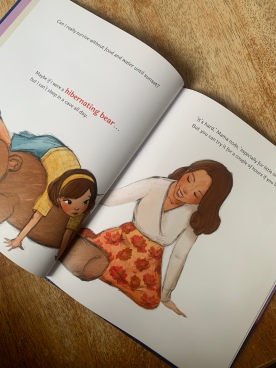
I was a little nervous that this book was framed as a child’s first fast, but a few pages in my concerns disappeared.  Little Deenie knows what Ramadan is, her family is encouraging her to try and fast for a few hours, and she knows that she can’t hide in a cave and sleep like a hibernating bear because Ramadan is so much more than going without food and drink.

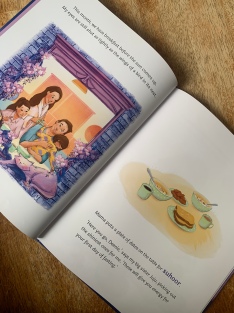
I love the shelving of tempting snacks and bad habits of unkind words, waste, impatience, and that little changes lead to big changes one at a time: kindness, love, attention, gratitude.

img_7361

Deenie goes a little longer each day, and her tummy rumbles, but where she once felt lonely in the quite spaces, she is finding new things that otherwise would have been missed.  She helps the coach off the pitch at soccer, the family connects without screens, the “ordinary feels extra-ordinary.”

img_7357

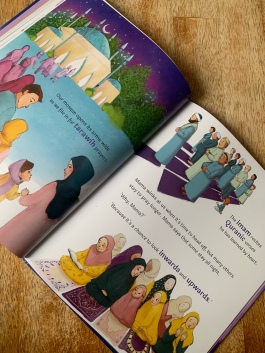
The mosque opens its arms for tarawih, and extra prayers are “a chance to look inwards and upwards.” A chance to belong.  There is sadaqah and Zakat, and being thankful, learning about traditions and connecting with others.  There are non Muslim friends changing a lunch date to a gallery stroll, and realizing the kindness is not required, but appreciated none-the-less.  The human body is amazing, and Deenie is growing stronger with each Ramadan day.  Eid is a time of celebration, but Ramadan is missed, and we are not the same people we were before the blessed month..

img_7356

The book starts with an Author’s Note and ends with a Glossary.  The hardback 11 x 9 book is a great size to allow kids to truly enjoy the sweet illustrations that add to the text and bring the feelings to life.  There are a variety of skin tones, mobilities, clothing styles and head coverings, or not covered characters shown.  There are so many smiling faces, and relatable scenes.  This book is really well done and an absolute joy to read and share.

I personally needed to see that my expectations for a Ramadan read were not unrealistic, and this book alhumdulillah, not only proved that good representation can be beautiful and heartfelt and unapologetic, but raised the bar.  I can’t wait to share this for our Masjid Ramadan story time, I only wish it was easier to obtain in the USA.  I preordered mine from Book Depository, but since publication the price has gone up, inshaAllah if we all show our support, local stockists will find a way (www.allenandunwin.com).