Tag Archives: Black Muslim

You Only Live Twice by Autumn Allen

Standard
You Only Live Twice by Autumn Allen

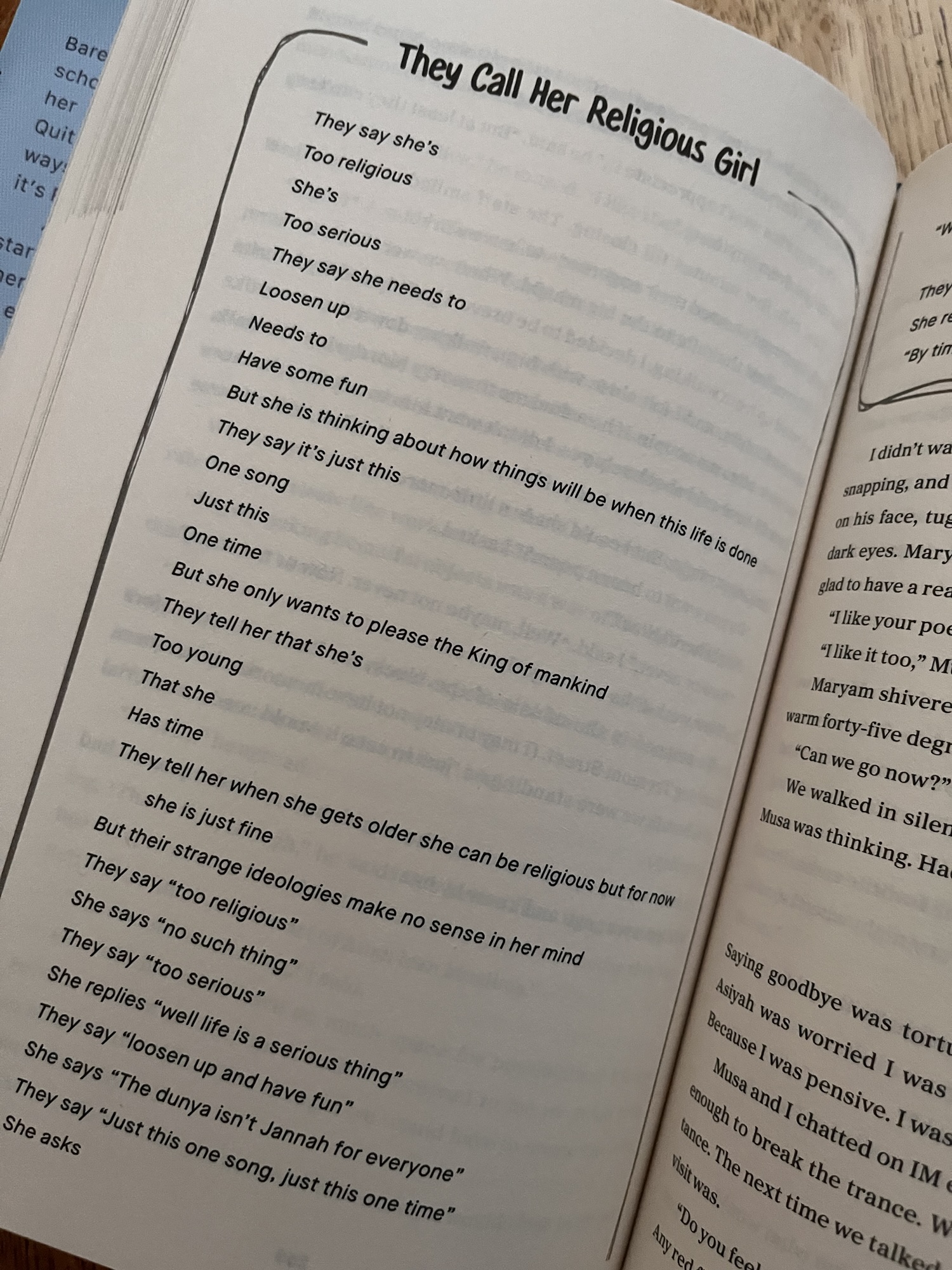
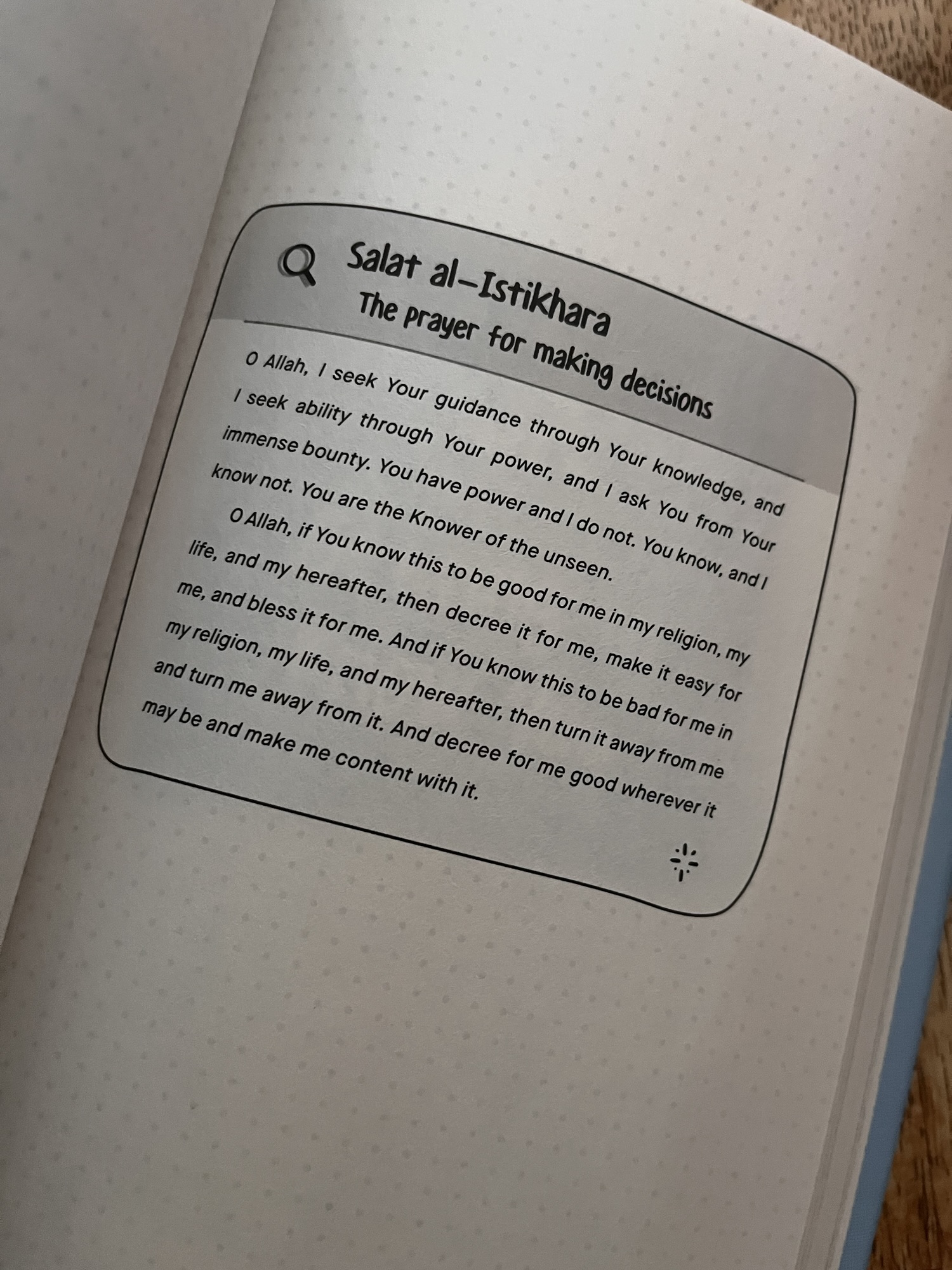
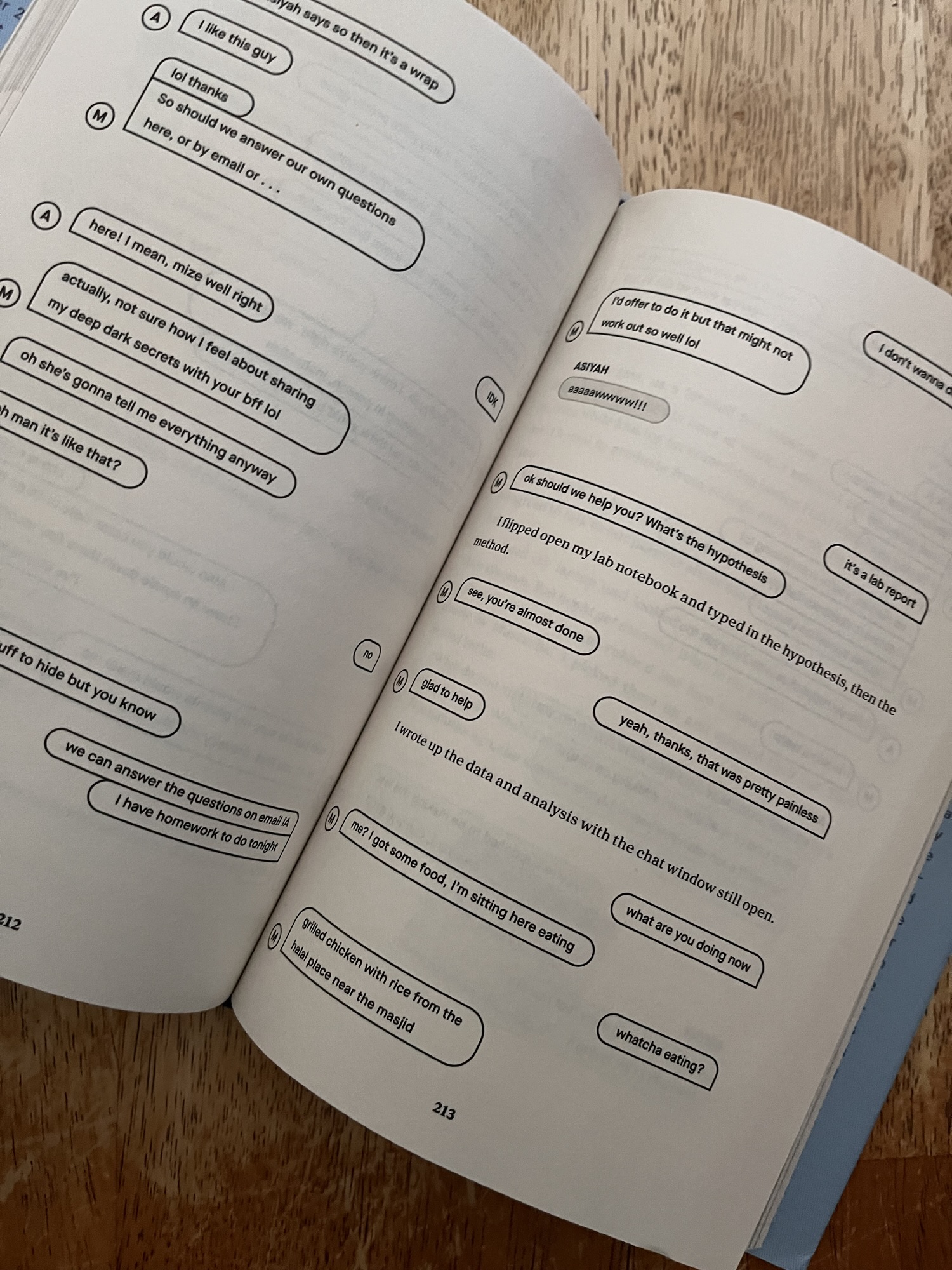
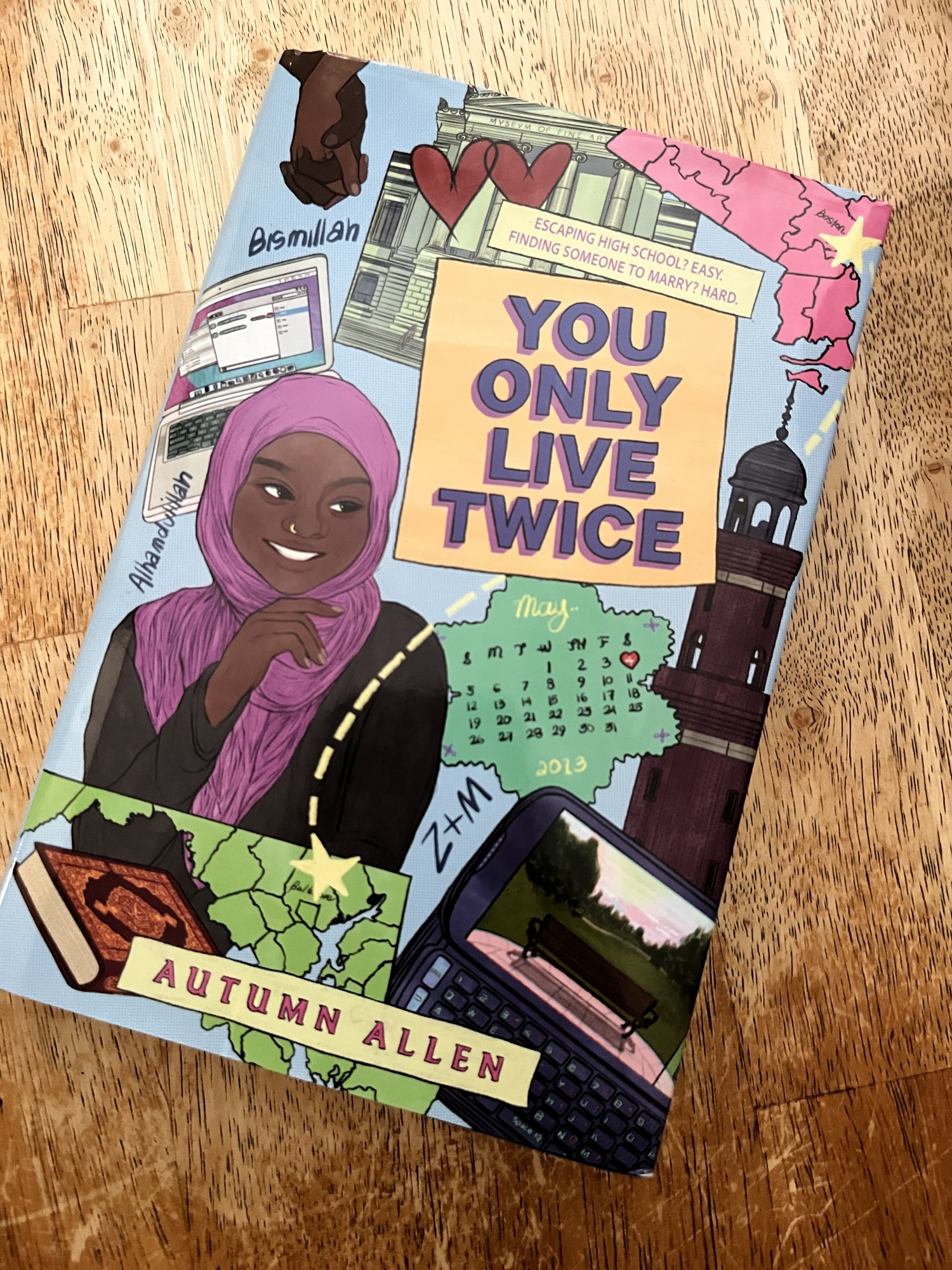
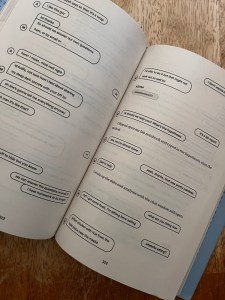
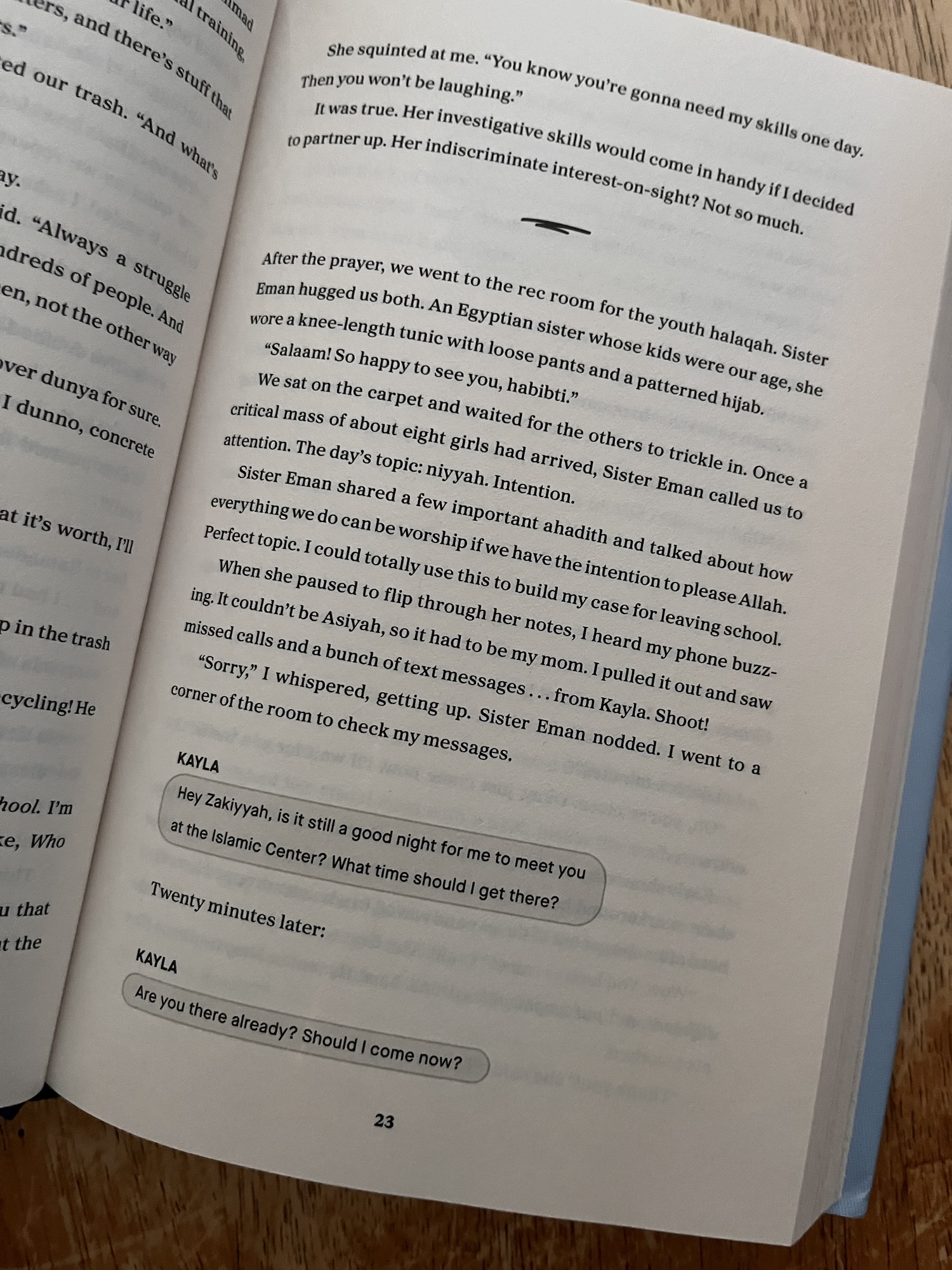
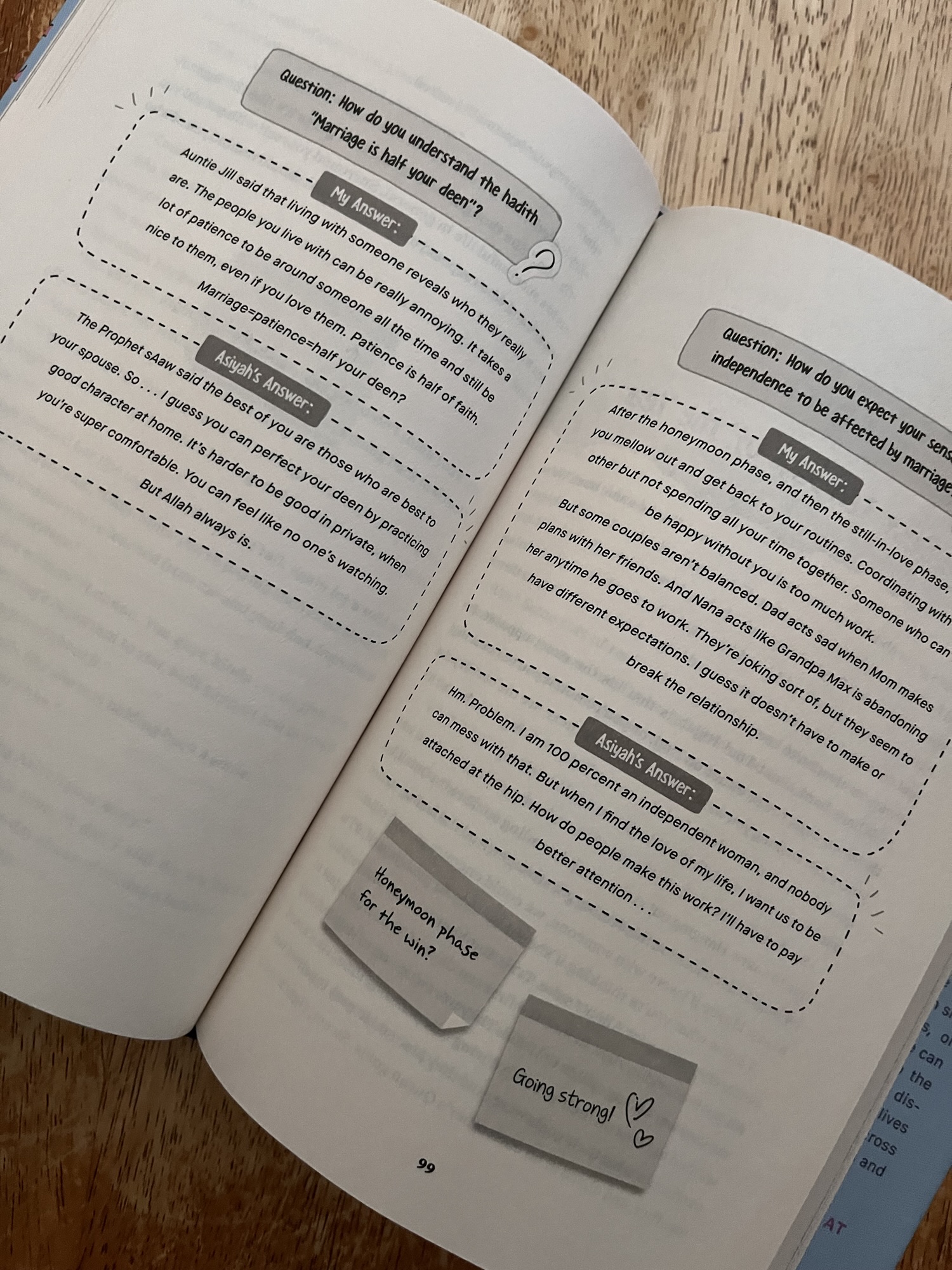
Your rizq is written by Allah swt, and this book is such an easy to see example of that, in a time when Islamophobia, DEI, book bans, and diverse stories are not being published, this 368 page YA book has more Islam than the majority of self-pubbed Islamic fiction reads I’ve EVER read, and it is traditionally published, SubhanAllah! it is a halal romance, that features niqabi (why doesn’t she have her niqabi on on the cover?), Black Muslims, supportive friends and family, it is written for everyone, but teenage Muslim girls are going to love this. If you are waiting on the but, here it is, I loved a lot about the book, but- it required me to accept the premise and I just don’t. I don’t have anything against getting married young, but I never really felt I understood the protagonist and her motives from the start: why did she all of a sudden just quit high school, why all of a sudden want to get married, and why were her reasonings told and not shown. Had high school been awful maybe I’d get it, but just because she missed the focus of deen that Ramadan held and now feels high school cuts in to, seems weak to me. Wants to get married because she sees a couple on the bus, but doesn’t really know what she wants in a spouse and why, seems unfortunate. Why couldn’t she be done with high school and then be looking to get married, would have definitely made the positioning craftwise less cumbersome, and perhaps would have allowed Zakiyyah to be seen as a more thought out and defined character.  Readers would have seen her determination, her stubbornness, her backstory and why we should be cheering her on and hoping she is making good choices, as is, I didn’t support her leaving school, she had at least one really good friend, she still will need to learn how to balance deen and duniya and Islamphobes, so what does it accomplish?  Also in many ways the book is a roadmap for young people looking to get married (intentional or not), what should be considered and discussed, but the protagonists age and the initial plot point I think will limit potential readers from engaging with the book, and thus miss out on a fun and informative read.  Ok back to the positives, I can imagine the emails, and post-it notes, and convo bubbles didn’t work for everyone, but I enjoyed them, and thought they added some levity and cuteness to the story. The book is YA, I think 15-16 and up will enjoy it, the Islam holds the halalness at it’s core, the focus is marriage, there is some conversations that younger readers might not be ready for, birth control pops in my head, and the Boston Marathon tragedy happens in the story and could be a potential flag for some readers, I hope mature readers though, will spend extra time reading those parts and understanding the author’s perspective and commentary from the mc’s perspective as I found them to be powerful and important.
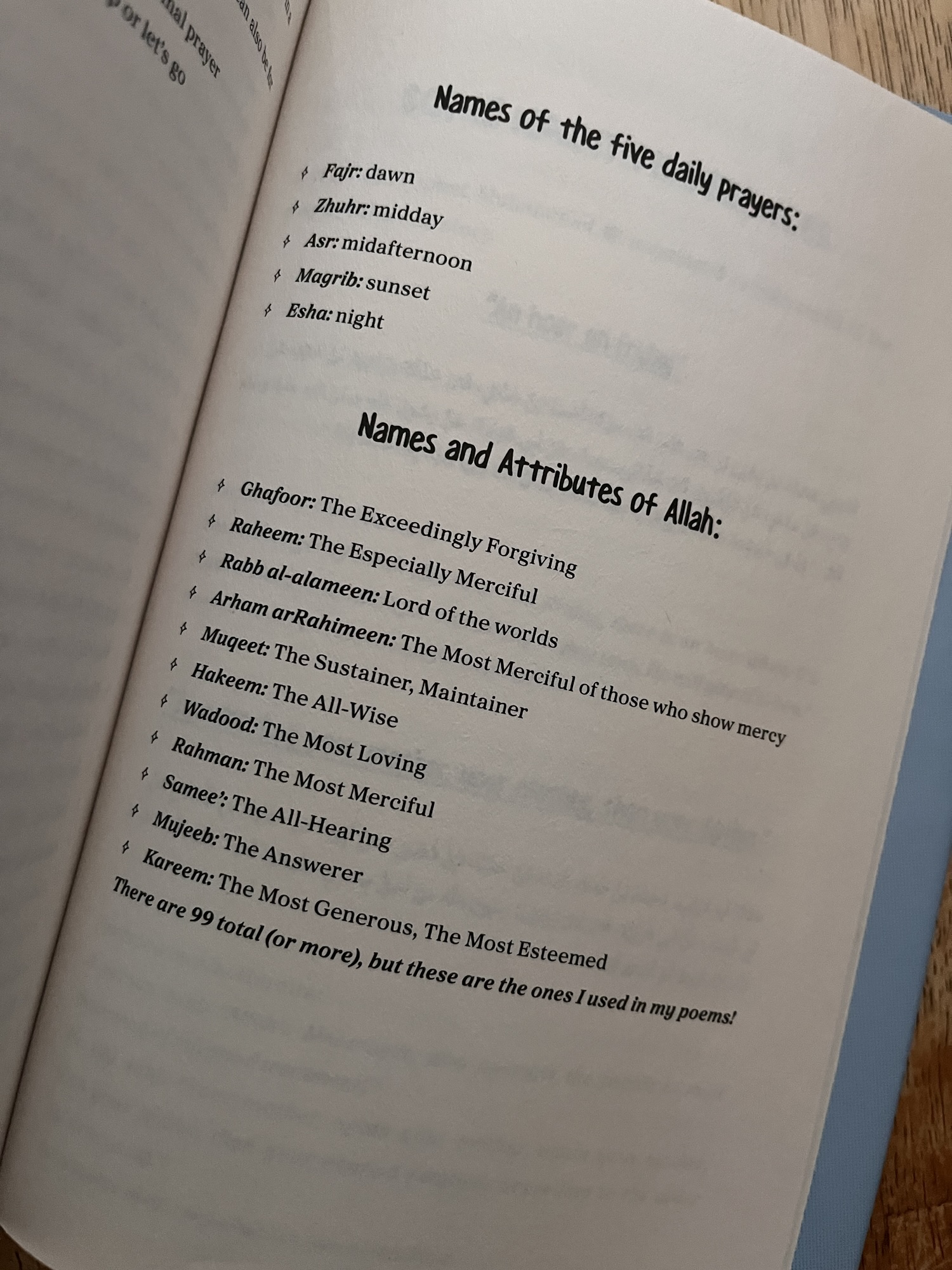
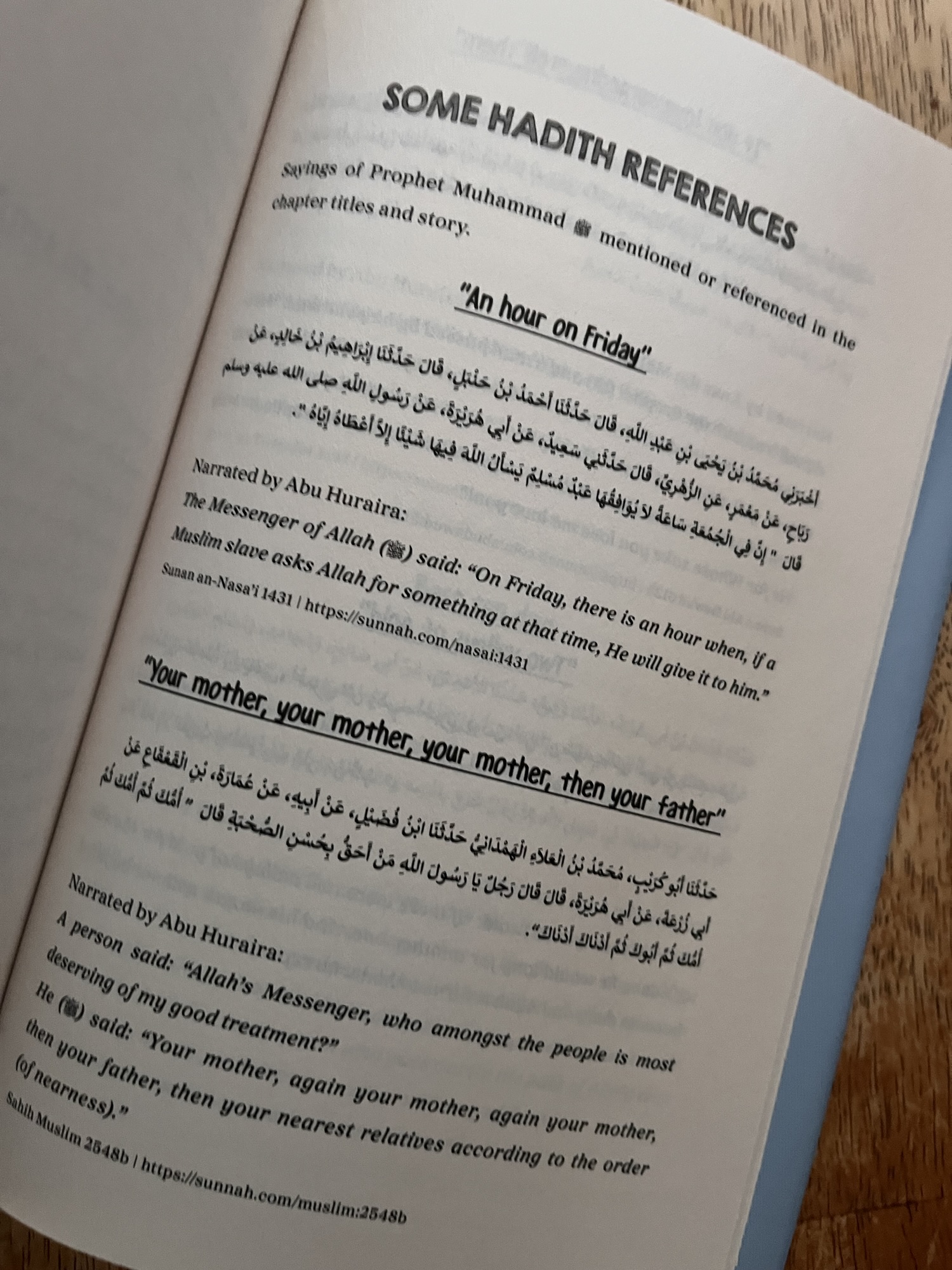
SYNOPSIS: As provided by the publisher

An unforgettable, heartwarming, hilarious coming-of-age story about faith, family, all kinds of love, and a Black Muslim teen pursuing an ordinary goal in an extraordinary time.

Barely one week into senior year of high school, Boston native Zakiyyah is making her 2012-2013 Get Free Plan.

Step one: quit high school. (PSA: There are other ways to get to college!)

Step two: live like it’s Ramadan year-round.

As she gets deeper into her Plan, she starts to wonder if there’s someone out there who would be a good companion. To everyone’s surprise, Zakiyyah decides she wants to get married. But there are some complications.

Problem one: she’s never met a guy she liked. Zakiyyah’s family (reluctantly) and friends (eagerly) agree to support the search.

Problem two: what’s the secret to choosing a good life partner?

Enter Musa, by way of mutual friends. With marriage in mind, Zakiyyah and Musa get to know each other, progressing from email to instant messaging to phone calls. Things are going well… thrillingly well… until tragedy strikes Boston. In a moment of heightened emotion and stress, Zakiyyah and Musa have their first major disagreement.

Zakiyyah can call the whole thing off. But with or without Musa, what does it mean to live on her own terms?
WHY I LIKE IT:
I love the unapologetic Islam. I love the normalization of going to the masjid and watching baseball games, getting married over dating, and parents being kind and not toxic, and good solid friendships, and community support- like truly this book offers so much reality and insight that all Muslims long for living in the west particularly. I love how easy the read is, and that it honestly stays halal.

Also I love that grandma is not Muslim but so supportive, I have two non Muslim grandmas and one is super supportive of my choices, and one not so much, and I love seeing the supportive rep in books, alhumdulillah.

FLAGS:

relationships, terrorism, racism, stereotypes, hate crimes, talk about societal pressures, I think there were some discussions about birth control.

*Disclaimer, I read the book a while ago and was unable to write up the review immediately after, please forgive any errors, or oversights.

TOOLS FOR LEADING THE DISCUSSION:
Oh this book needs to be discussed in classrooms, book clubs, masjids, friend circles, it will be read, no doubt, but the discussion and putting it into practice will be such a gift to the youth group, moms, aunties, and community leaders already doing the work with our youth to get them aware of what marriage and looking for a life partner should look like.
 

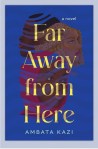
Far Away from Here by Ambata Kazi

Standard
Far Away from Here by Ambata Kazi

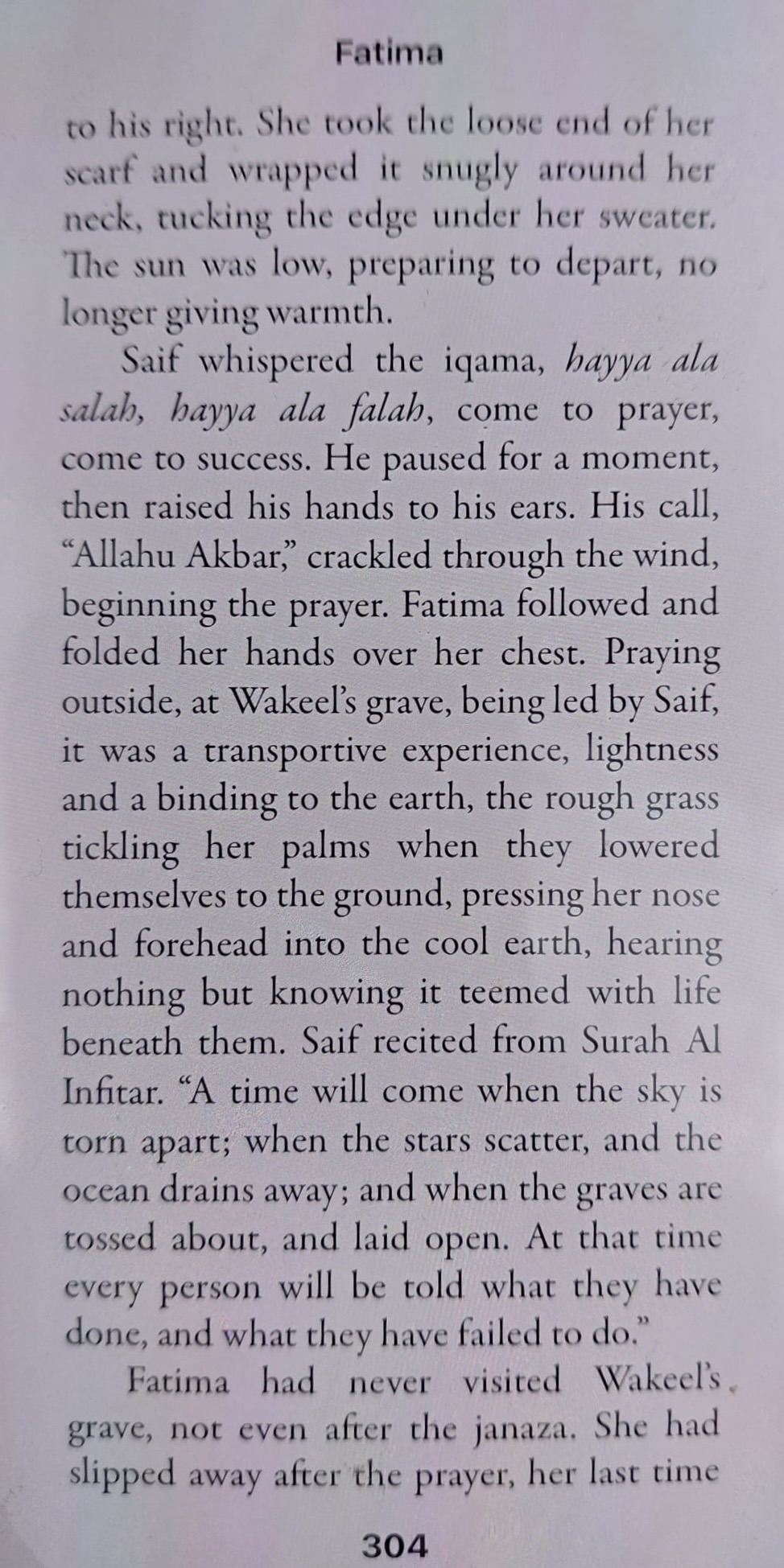
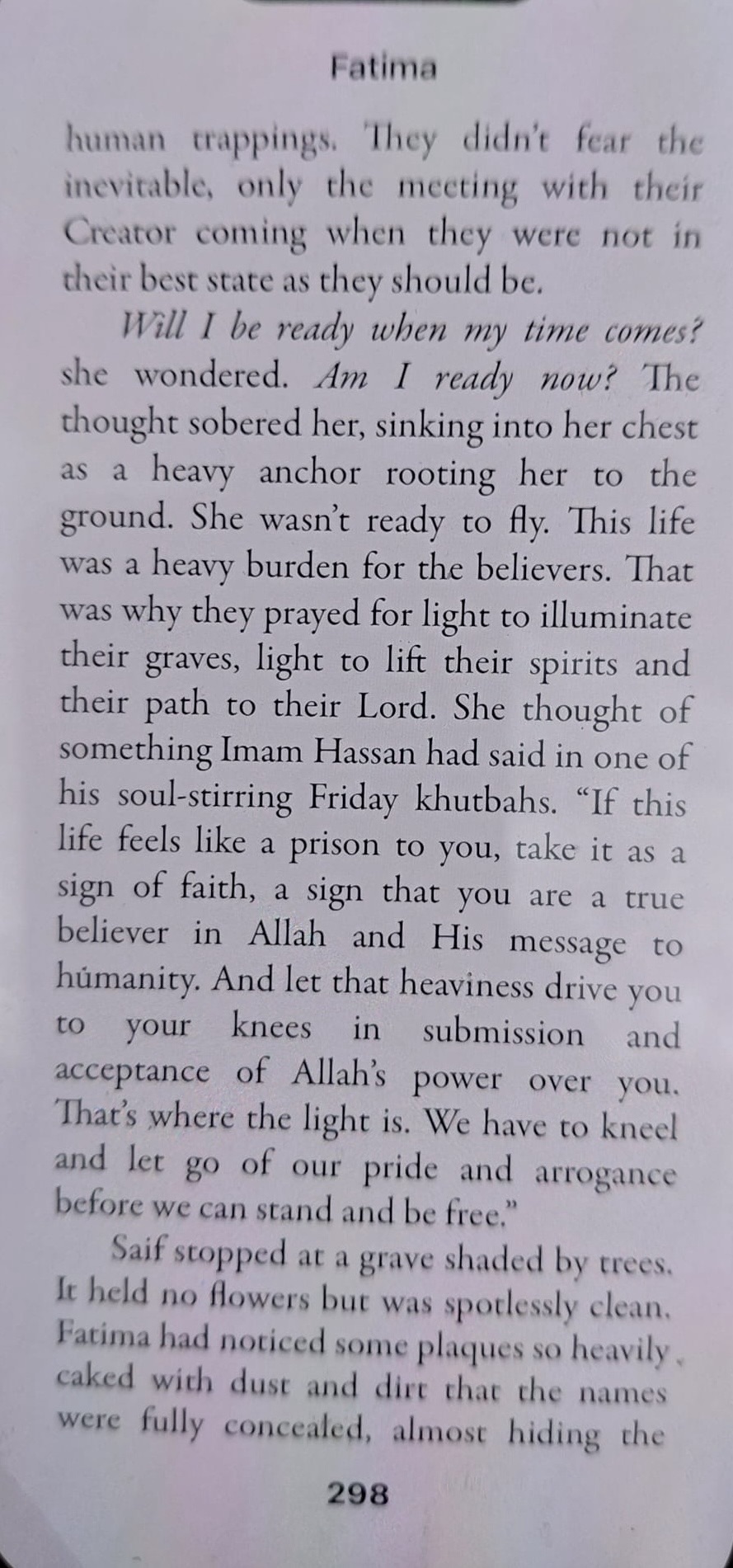
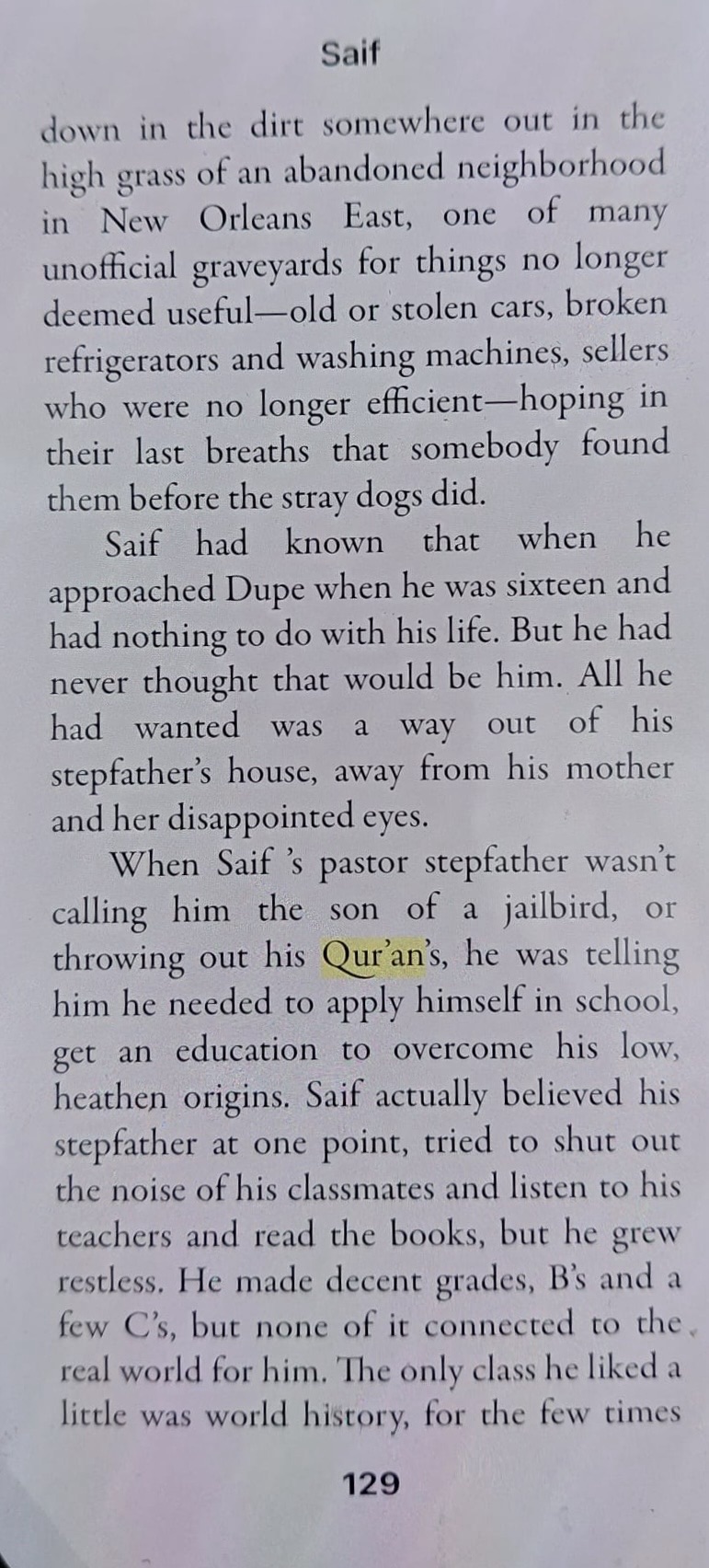
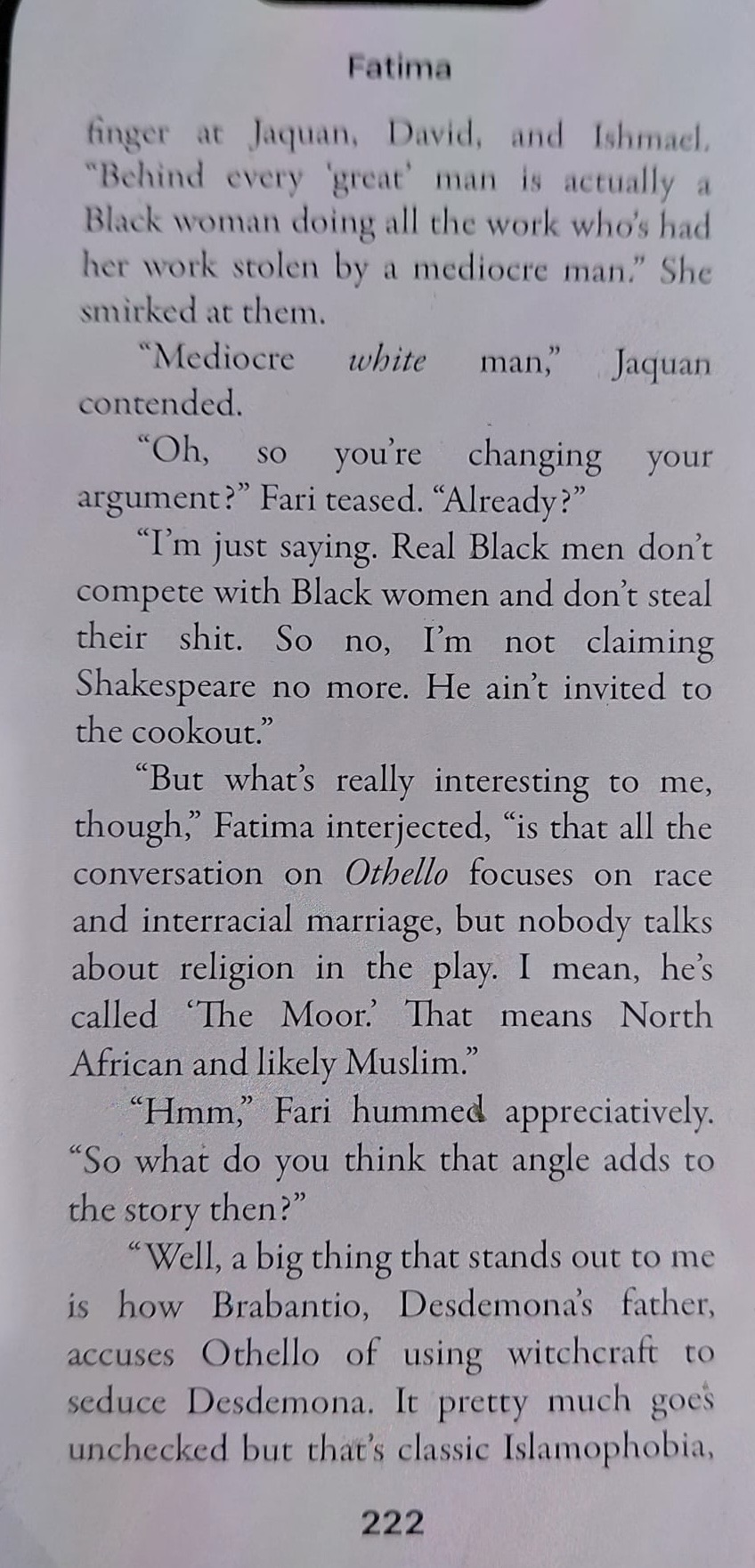
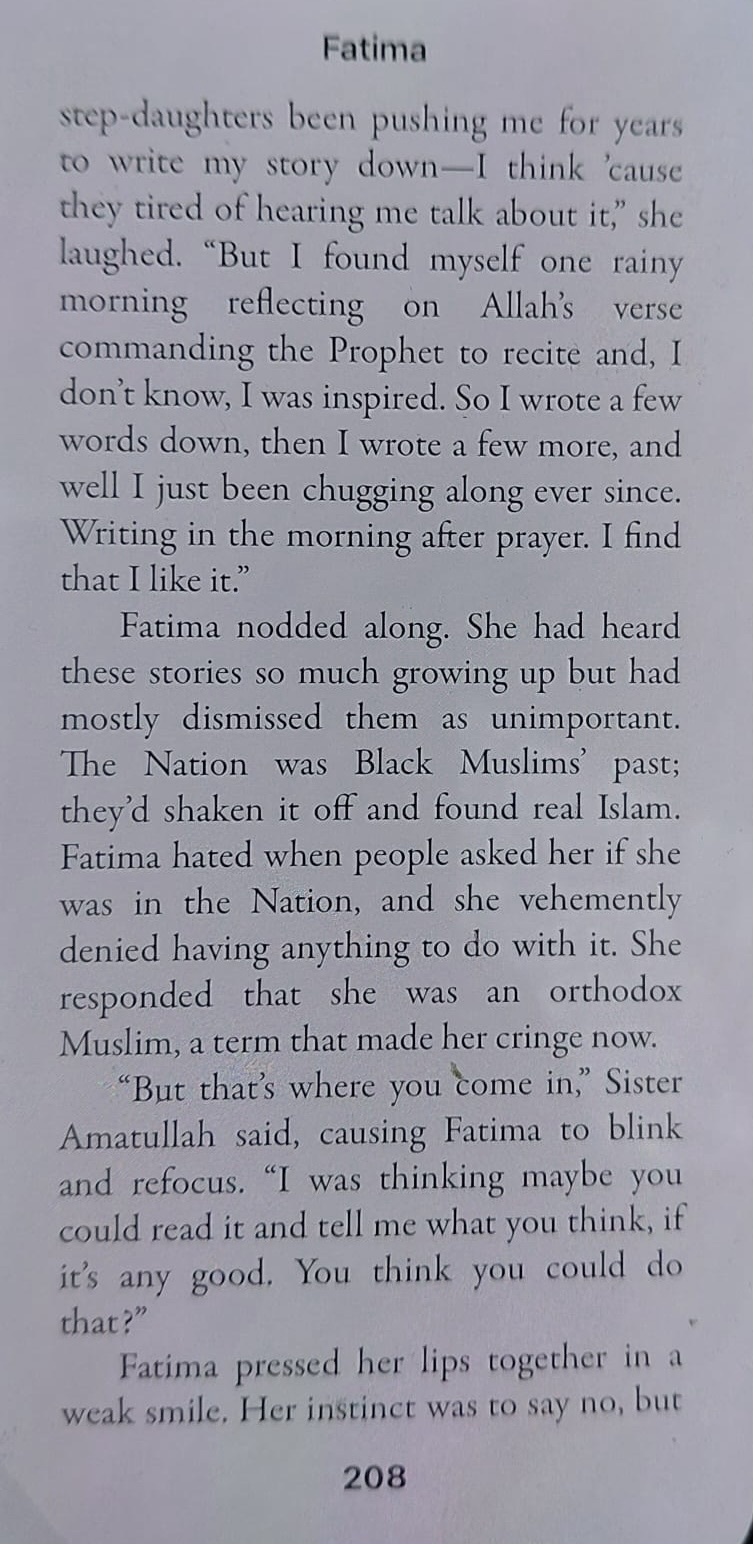
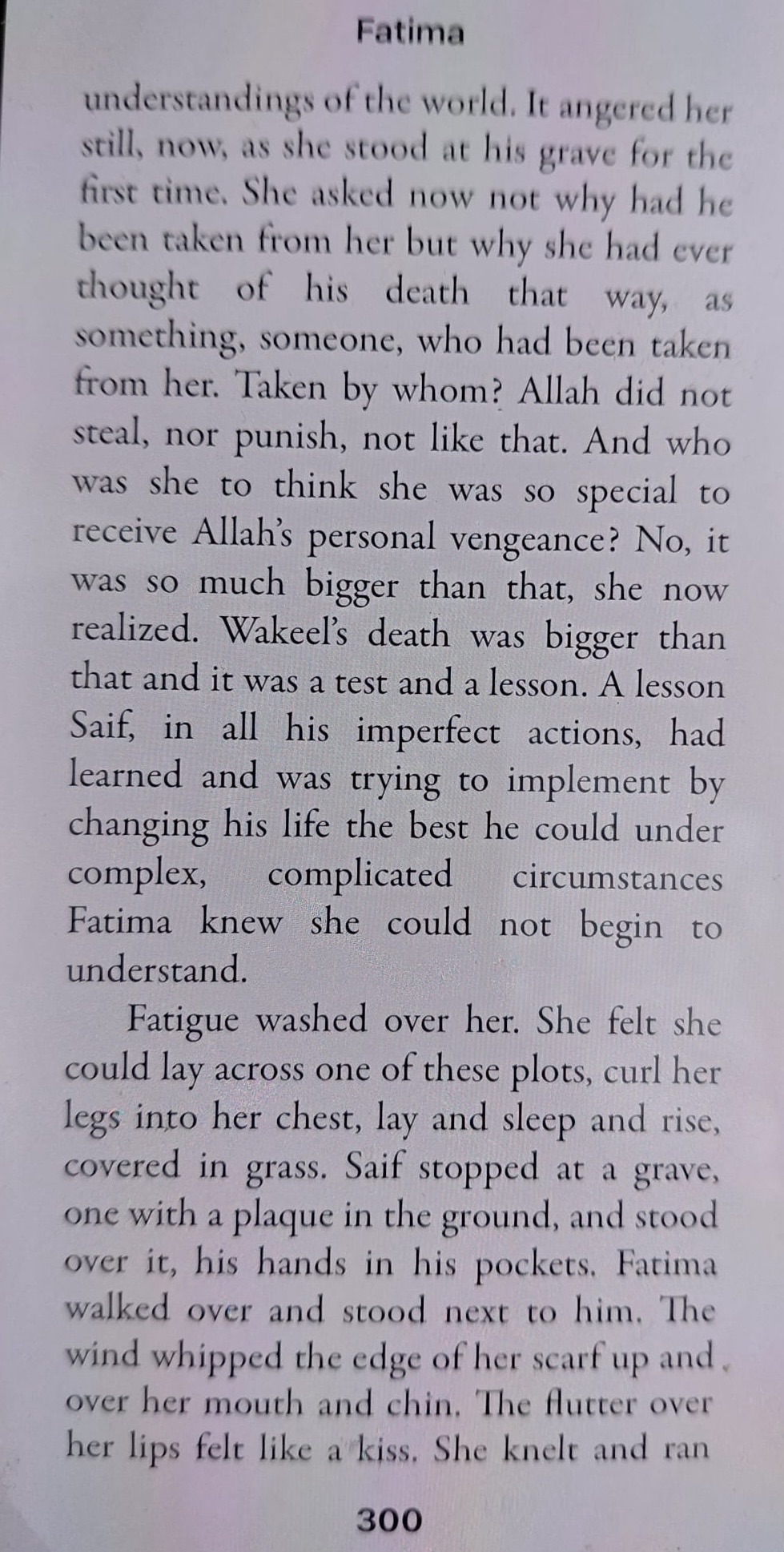
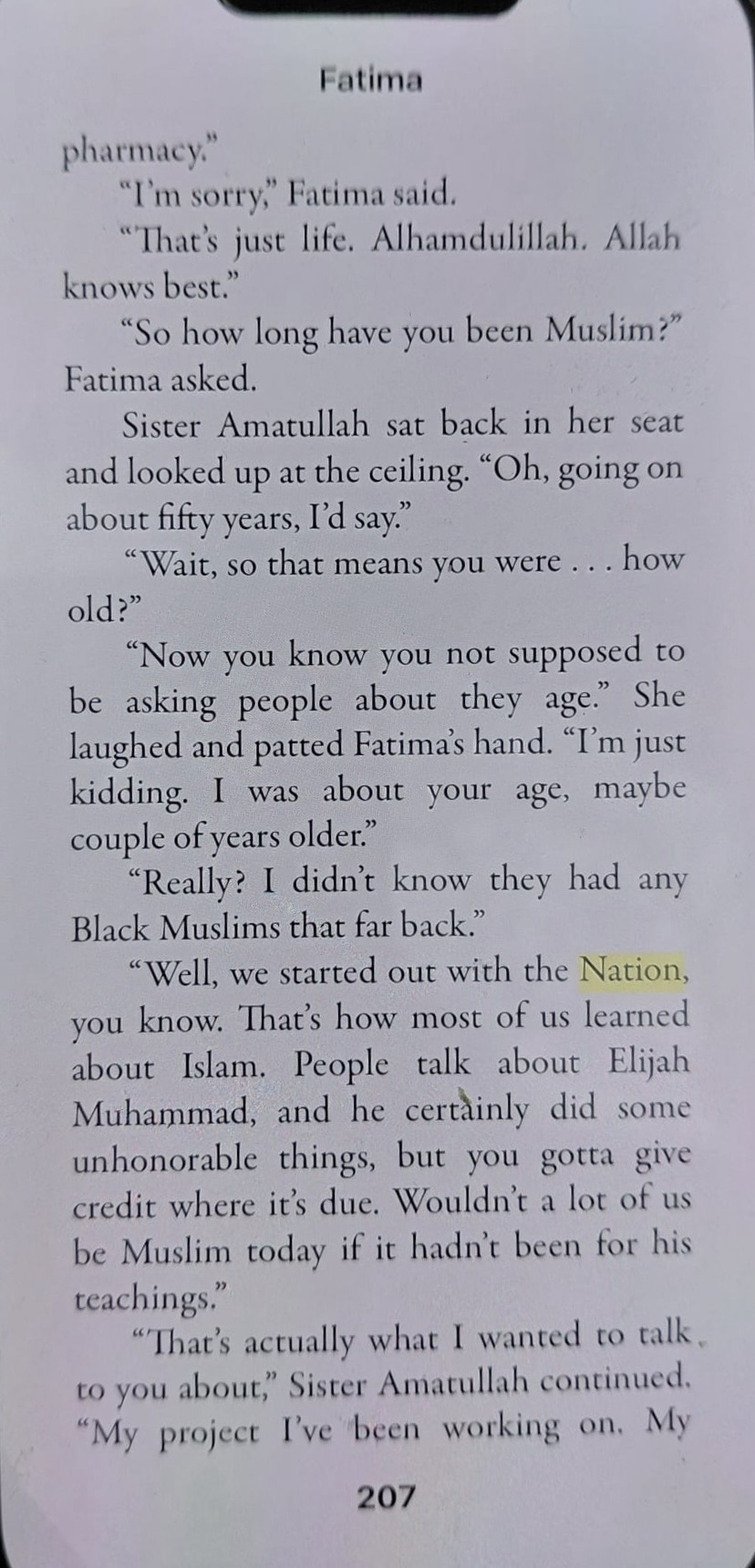
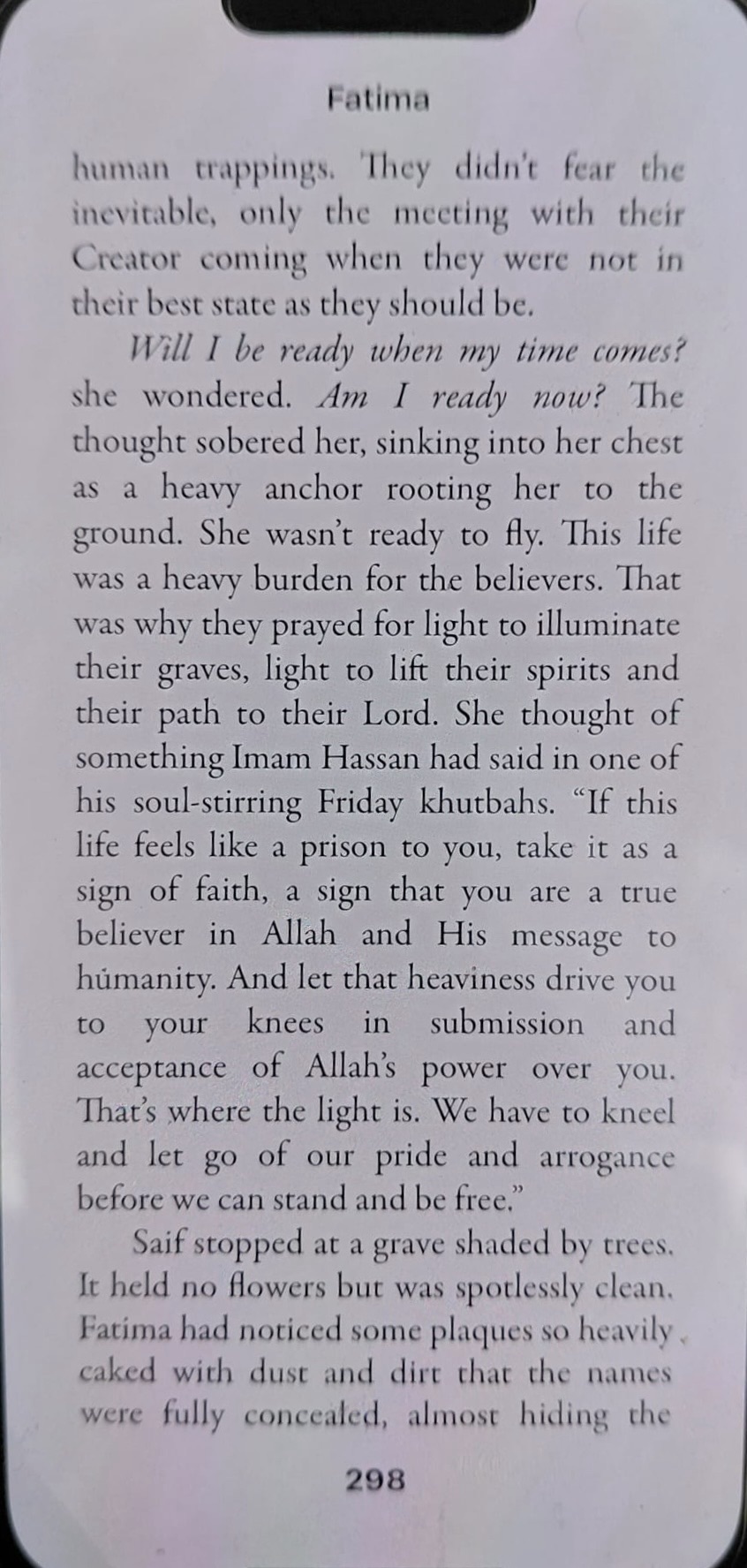
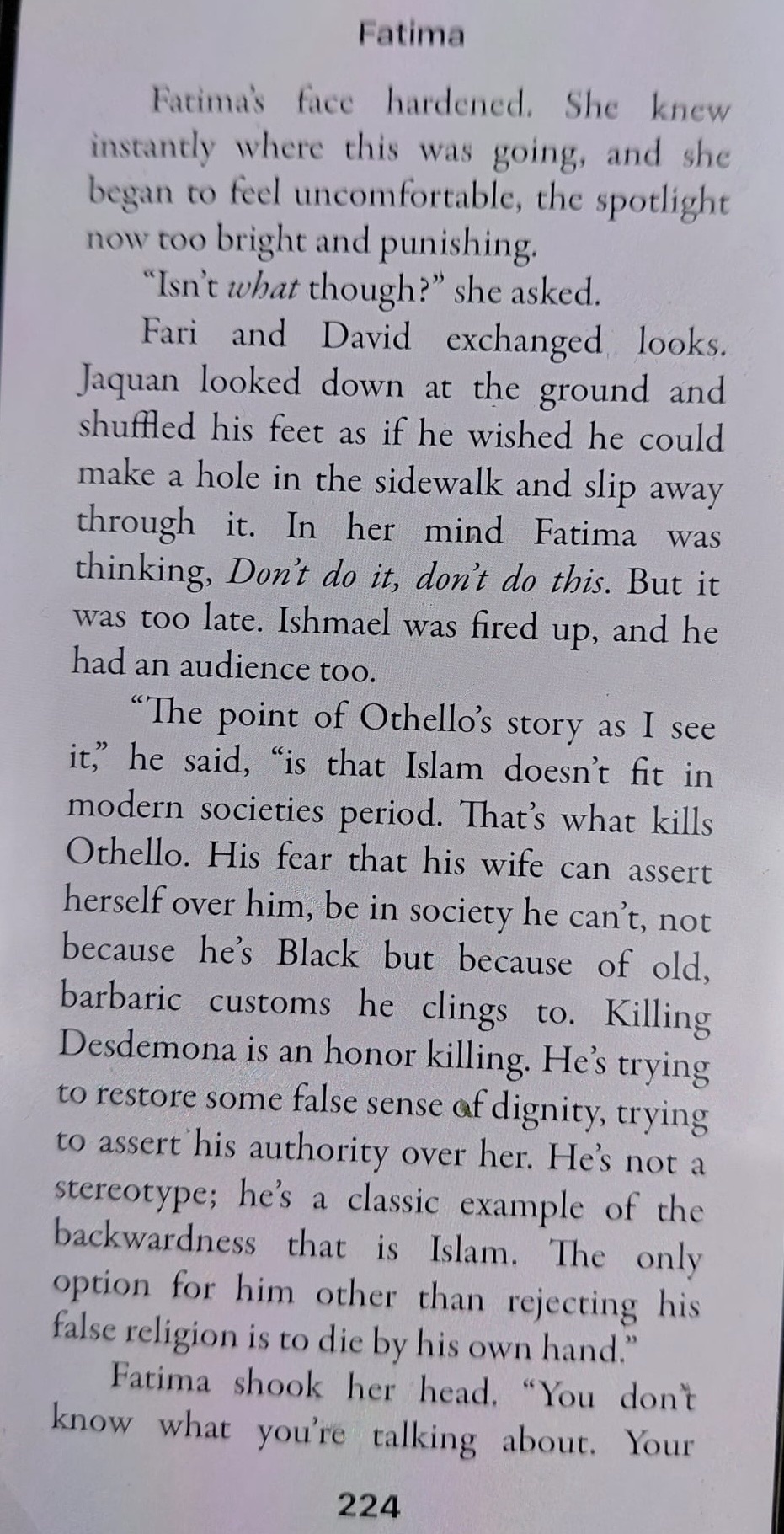
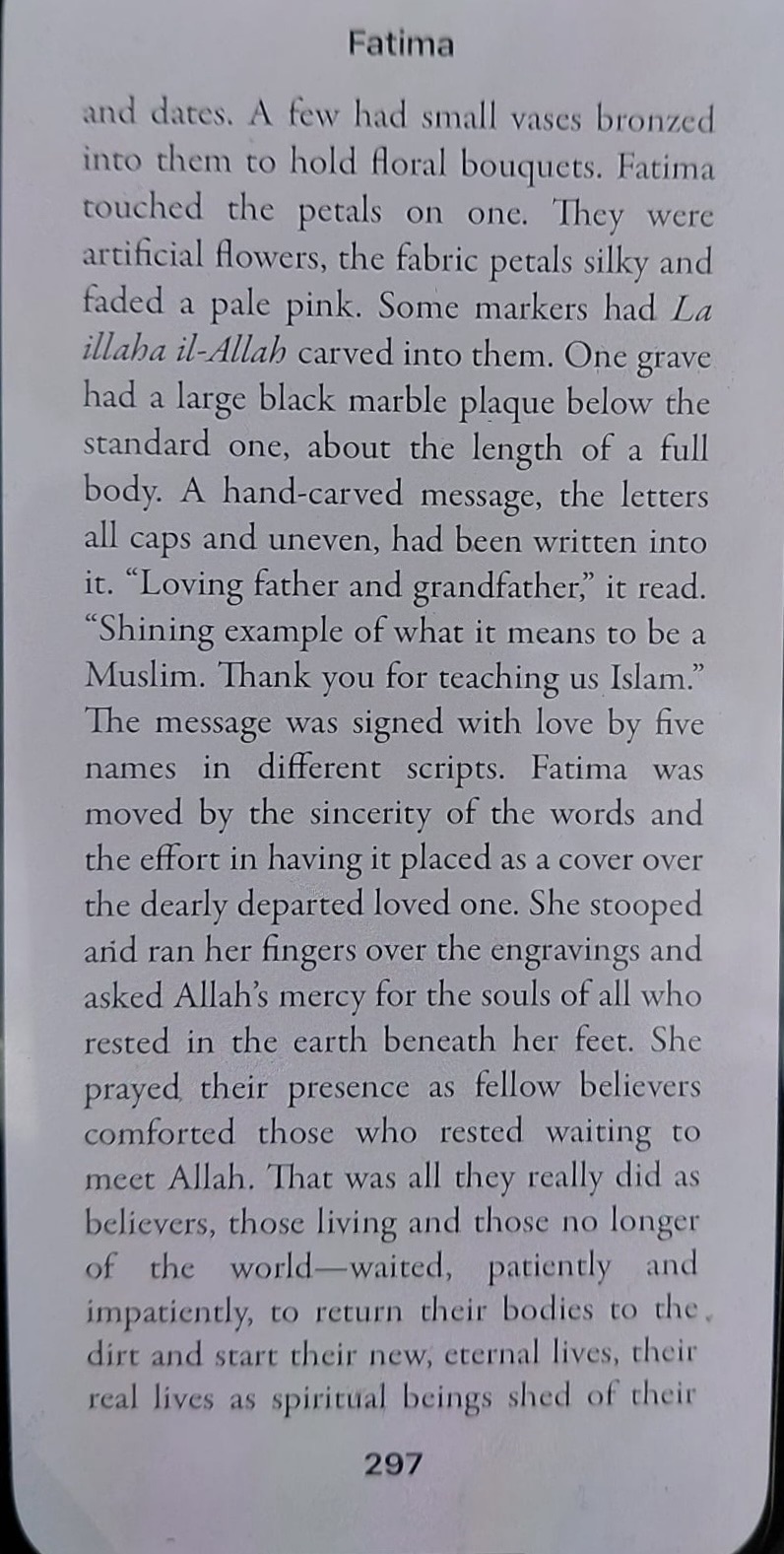
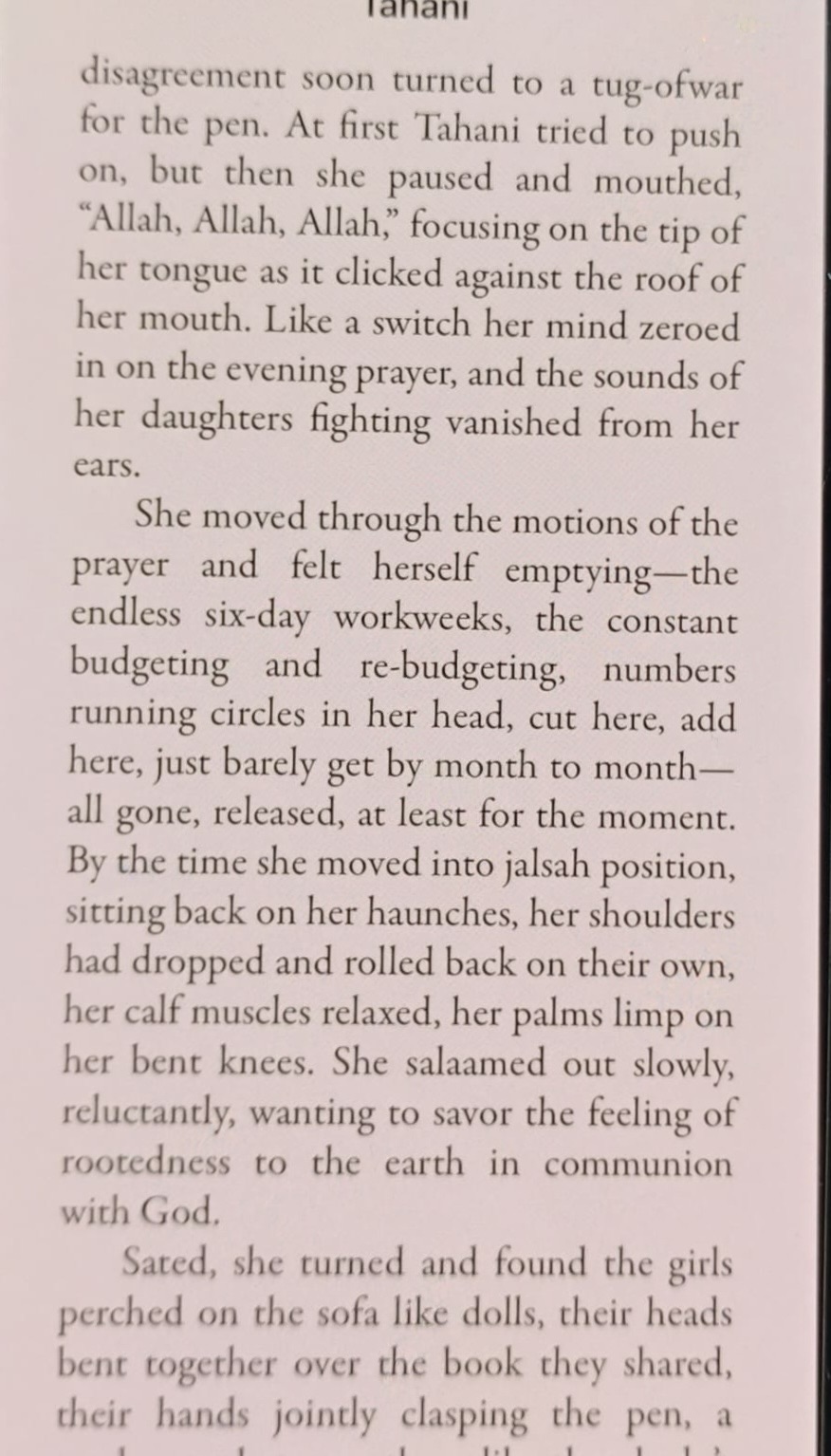
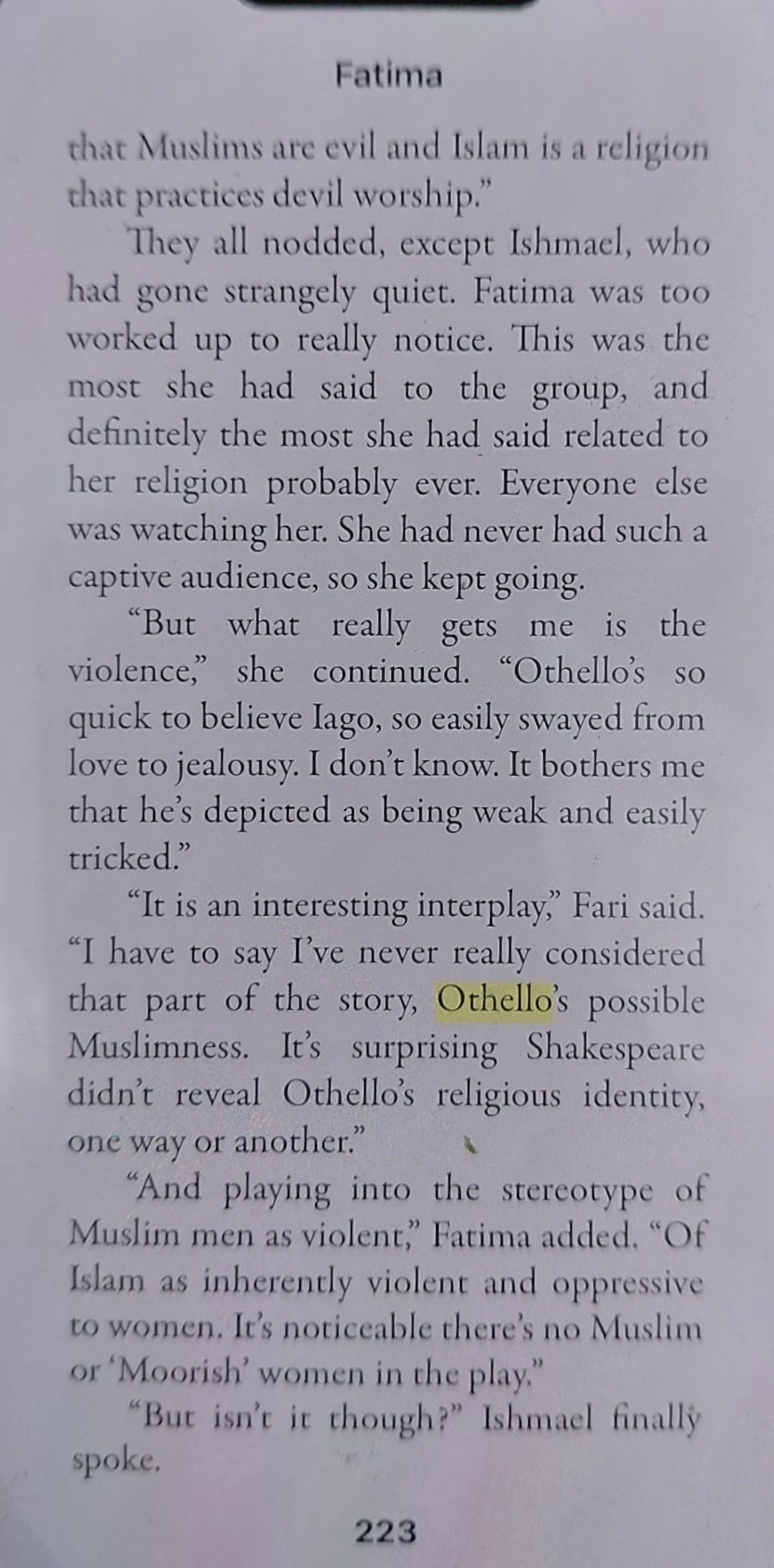
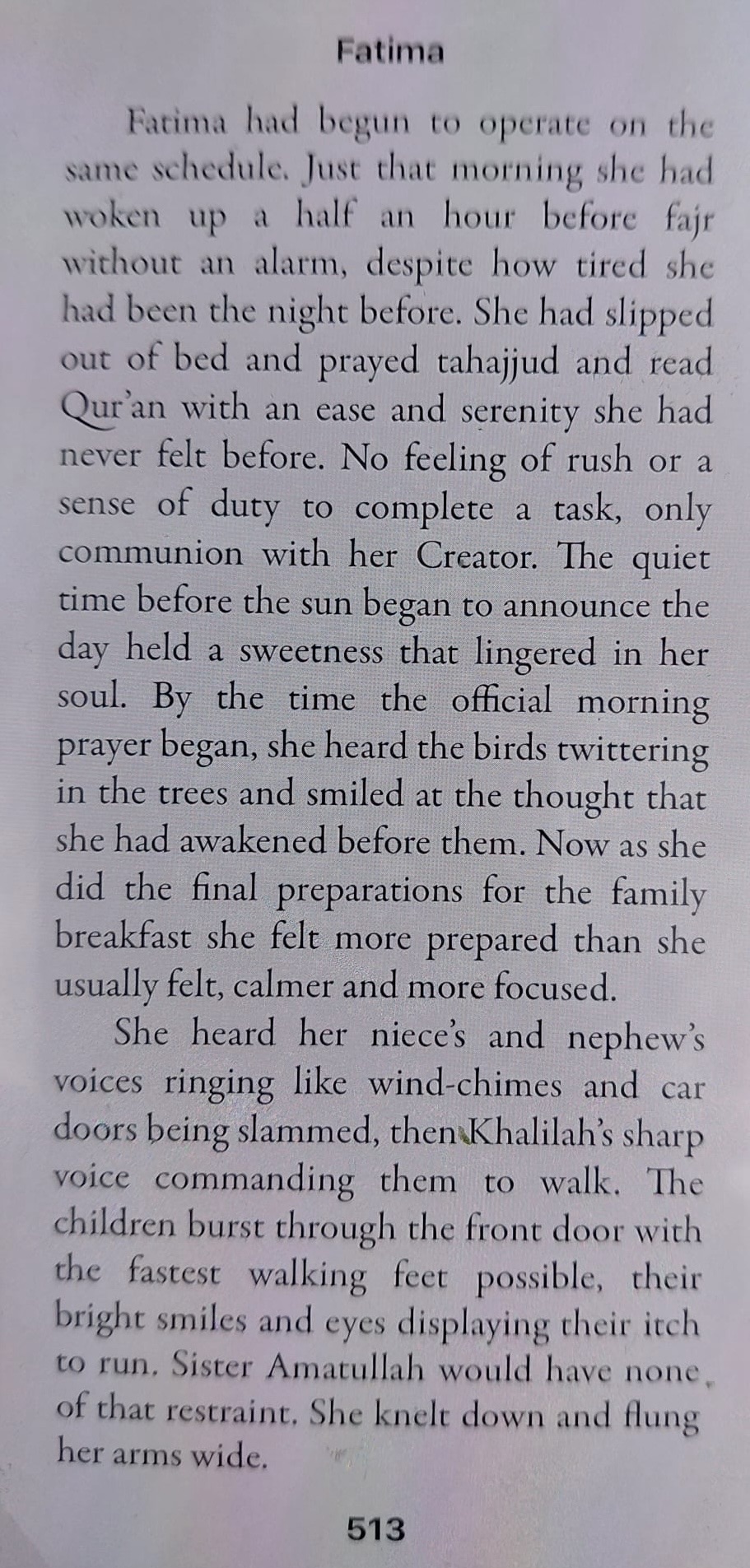
This character centered book takes the lives of three young adults, and through their own interwoven points of views shares their trauma, their choices, their dreams, and their fears in a poignant book that centers Islam and the characters relationship with their faith, their masjid community, and the concept of home.  The Islam in this OWN voice love letter to New Orleans is so much a part of the characters’ lives that I found myself snapping pictures on every page to share before quitting because it was taking me out of the story. The pictures I’m sharing, as a result are arbitrary as so many beautifully spoke to me. This adult book intentionally or not, forced me to confront my own assumptions, stereotypes, faults, and guilt, while tugging at my heart to see the growth and future possibilities for Fatima, Tahani, and Saif. The three distinct pov narratives feel real, the Black Muslim perspective so important, and the living breathing role of Islam so beautifully conveyed, that I’m just in awe of this book, and didn’t want to miss a beat recommending it to others.

SYNOPSIS:

The book opens from Fatima’s perspective as she leaves Atlanta for New Orleans.  She is returning to the place of her childhood and heartache, to care for her ex fiance’s mother in her final days.  Entering the home, reliving the memories of how Wakeel was killed, and facing Mama Tayyibah’s looming death, highlight her weakened faith and force her to confront the community and friendships she left behind.

Tahani, the only daughter in a large family of boys finds herself a single mother to two little girls when she rebelled against her mother and made her own choices.  She never really left Islam though, and the community who raised her is still a part of her life, even though her own family is not.  As she tries to chart her own career dreams and balance her daily survival, she is surprised to find her childhood friend Fatima once again part of her life.

Saif, straddles two worlds: the young man learning his deen as a respected member of the masjid community, and a seasoned criminal unable to stop selling drugs.  He blames himself for Wakeel’s death, and everyone else seems to agree that it should have been him gunned down, but Allah swt is All Forgiving and with Fatima’s return, perhaps if she can find a way to forgive him, he can forgive himself.

WHY I LOVE IT:
Oh my heart. The characters and their dichotomies brought tears to my eyes multiple times.  The drug dealer teaching the hijabi grappling with Allah’s will how to do tayammum, the young mom in revealing clothes waking up for fajr and taking her girls regularly to the masjid. What is in one’s heart is for Allah swt alone, and this message forced me to face my own assumptions, stereotypes, and judgmental paradigms without didactically calling me out, and I love the book for the fictional shaking.

The beauty of the convert stories, the history of Black Muslims in NOLA, the warmth and found family of the community, completely broke me in the best way possible.  None of the characters are having identity crisis as most literature depicts it, they are fighting their nafs, and other’s expectations, and to be shown their struggles, and yearning, in the proses gentle manner warmed my heart.

I wanted some epilogue space for Baba Kareem, and I honestly tried and failed to figure out the time line as the story circles around itself numerous times in its telling. But, I hope this author keeps writing and telling the stories we need as an ummah and larger community to hear, but to also feel so deeply.

FLAGS:

There is nothing sensationalized, but there are themes of drugs, killing, shooting, death, illness, dating, rebelling, rape, children out of wedlock, disowning, judging, fear, racism, Islamophobia.

TOOLS FOR LEADING THE DISCUSSION:

This is too adult for middle school, I do think upper high school could handle it, but it is solidly that “New Adult” category, with characters in their twenties.  At times they have some adult stresses, or coming of age options, and/or youthful possibilities. Often in multitudes they vacillate with what they have to face, and the limited experiences they have, with family expectations and independent choices.

Fatima Tate Takes the Cake by Khadijah VanBrakle 

Standard
Fatima Tate Takes the Cake by Khadijah VanBrakle 

fatimatate

I really want to be raging furious and upset by the lying, premarital hetero sex, normalized/celebrated lesbian Muslim, internalized Islamophobia, gaslighting, abuse, and labeling of Muslims as “conservative” and Islamic principles as “ancient and ridiculous” (keep in mind the characters and author are all Muslim). But honestly, the writing is so terrible that to feel that much emotion is just not that warranted for what the story is. I’m so disappointed in the entire writing quality of the book, that I couldn’t appreciate the characters or story as written.  I know elements of the story probably ring true, my privilege and arrogance don’t blind me to recognizing that, and whether I agree or relate or identify with the Islamic representation is subjective, but it is not a good sign when reading- that screen shots are not enough, and I have to break out paper and pens to note the contradictions, plot holes, and inconsistencies.  The cover is the best part, with its beautiful Black Muslim inviting YA readers to crack open the book and spend time with Fatima who dreams of following her culinary dreams despite family and toxic relationship obstacles.  Sadly though, the text does not live up to the expectations the cover sets forth.  It reads like a very early draft where the plot points, the climax, and the conclusion are laid out, but the dialogue, backstories, and relationships are yet to come in this very mature 304 page book.

SYNOPSIS:

Fatima Tate dreams of culinary school, but her mother demands a more practical degree of nursing.  The only child of a nurse and mechanic, Fatima goes to a virtual charter school and has a best friend since 5th grade, Zaynab. who goes to a private school, yet constantly chauffeurs her around, covers for her, and whose relationship with Amber is a major thread in the story.  One day, when Zaynab fails to pick Fatima up from her shift at the soup kitchen, Raheem, her crush who she has never really spoken to, offers to drop her off, he uses the excuse of not wanting to miss Asr salat to get in her house, and by the time the prayer rug is put away the two are kissing and holding hands.  It has been a busy day for Fatima, she was also invited to join a teen cooking competition, and with that, all in the first chapter, the direction of the story is set.  Add in the twist that her parents don’t know about her joining the cooking competition, Raheem being revealed as a narcissistic, controlling, wealthy, manipulator who has his mom properly meet Fatima’s parents resulting in the two quickly become engaged, and Fatima at some point having to finalize her college plans and you have most of the plot and spoilers of the book.

WHY I LIKE IT:

I wish there was more OWN voice Black Muslim culture inclusions.  As with all the potential themes of the book, the writing just feels so superficial.  The only thing quicker than the instant romance, is the reader’s (my) instant disdain for the creep that Raheem is: from his arrogance to his ghosting, his hypocrisy to his gaslighting.  There is no angst, attraction, sympathy, intrigue, nothing in his character makeup or in the relationship he and Fatima have.

The cooking thread is equally lackluster, I think most bakers have heard of refrigerating cookie dough, and where I should have been hungry or had my senses tingling, I found myself annoyed by the almost childish portrayal of the food scenes.  If it was meant to show passion or a divide with her parents, it was all talk and no show.  At times the text says how close Fatima is with her parents, how much she respects her mother’s strength and her father’s kindness, but lie after lie to them and their distance from the heart of the book, definitely do not show a complicated relationship, it once again, yep you guessed it, reads really flat and one dimensional.

Islamically there are concerns with the premarital relations, but even before that with the male and female being alone, the lying, the lgbtq+ relationships.  I never understood why Fatima refuses to pray in congregation and attend Jummah it just says she doesn’t join the community prayer, but she also doesn’t pray with Raheem, which might have actually been sweet.  She is noted to pray fajr late and it is a point of contention, she wears hijab, and says a lot of inshaAllahs, but while the text sprinkles in these touchstones, they don’t seem to shape her identity, it feels like it is just the paradigm that she knows.  She finds the mahr concept to be “ancient” and “ridiculous.” The one character that speaks out against same sex relationships wears abayas, black abayas to be exact. She is also labeled the “haram police.”  Zaynab doesn’t pray, doesn’t cover, but presumably identifies as Muslim.  Raheem says he is fine with her lesbian identity, but fears Fatima’s relationship with her will ruin his future political career.  The book never has any substantial commentary on the Islamic view of queer relationships and labels any one that has a problem with them as being “strict” and “conservative.”  The book says “love is love” and leaves it at that.

Constantly the reader is told that Fatima and Zaynab are best friends since 5th grade, no backstory as to why Fatima left for virtual school and Zaynab for private.  We never see Fatima add anything to the friendship, Zaynab drives Fatima, feeds Fatima, consoles Fatima, it is all very one sided.  So many story lines just fall off the page without resolution or insight.  At one point Fatima is angry at Zaynab and doesn’t want to share her with Amber, but then is mad that Raheem is wanting to take her away but nothing is ever done or explained or internally pondered over, it is just forgotten.  I really despise how we are also told that Zaynab and Amber are the ideal couple, but nothing ever shows it. NOTHING. They are always fighting, Fatima is always on edge to even ask Zaynab about Amber.  Zaynab and Amber fight about their graduation party and it magically all works out.  Amber is shocked to know that Muslims won’t accept them, and they seem to break up, but then they are together at the end so how did that get resolved?

Major plot holes: When Fatima’s mom asks Fatima if she knows Raheem, she says no and four pages later her dad asks her what she thinks about Raheem and she answers him.  This inconsistency mitigates the “reveal” at the end that they knew each other at the soup kitchen.  Speaking of soup kitchen, the reader sees she goes once and then stops for finals and never resumes going, so how is it such and important part of her or Raheem’s life? Does he return? Fatima gets driving lessons and a car, and is then driving alone, time line doesn’t work, nor does what she is driving get articulated if she returned the Lexus.  Extravagant gifts aside, it never fully explains where Raheem’s grandfather made his wealth, it seems lacking because he doesn’t want Fatima to work, but his mother does, in managing her father’s inherited wealth.  At the walimah it is very awkward between Zaynab and Fatima’s mom, almost to the point I thought they might not know each other, or might have issues with her lifestyle, but by the end it is clear they know each other well, so I think the scene is just written poorly.  I went back and read it and the familiarity of the families is definitely unclear and not consistent throughout.  For Fatima’s graduation Raheem gets permission to take her to dinner alone, for someone who is constantly watching money and loves cooking, it felt like it would be a big deal to be able to go out alone with her finance, to a fancy restaurant and savor all the flavors and ambiance.  Nope, the scene is skipped, no details, no nothing.  Lots of little details are skipped quite often, for example five people are qualified for the finals, only three names are given, just throw two more names in there, nope we get dot dot dot- it reads unfinished.  At one point when Zaynab once again saves the day and picks up Fatima, they come back to Zaynab’s house with Starbucks and meet at the fridge to get Pepsi’s out, like three sentences later, Starbucks on the table forgotten.

Zaynab does have a slight character arc, but throughout needs someone to constantly side with her, and I don’t know that she is very independent at the end.   I don’t think there is a decent relationship in the book between any of the characters, which is unfortunate, and religion and the masjid (labeled “patriarchal”) are often portrayed in a negative light. The internalized Islamophobia was hard to swallow.  At one point Fatima shakes a man’s hand and says that she isn’t one of those Muslims that has issues with that.  It seems like this book checked a lot of boxes and for whatever reason didn’t get the polishing it needed.  It is unfortunate because OWN voice Black Muslim books with authentic rep and joy and complexities and nuances are so desperately needed, and this one just felt underdeveloped and raw.

FLAGS:

Language, closed door premarital sex, talk of sex, talk of condoms, child out of wedlock, cheating, lying, hetero and same sex couples, dancing, music, physical abuse, verbal abuse, gaslighting, controlling, stereotypes, internalized Islamophobia, male and female friendships, manipulation, blackmail, judging, deceit, hypocrisy.

TOOLS FOR LEADING THE DISCUSSION:

The cover will tempt younger readers to pick up the book, my only hope is the poor writing will cause it to be abandoned before the haram is glorified, normalized, and celebrated.