Tag Archives: 2022

The Wonders We Seek: Thirty Incredible Muslims Who Helped Shape the World by Saadia Faruqi and Aneesa Mumtaz illustrated by Saffa Khan

Standard
The Wonders We Seek: Thirty Incredible Muslims Who Helped Shape the World by Saadia Faruqi and Aneesa Mumtaz illustrated by Saffa Khan

wonders we seek

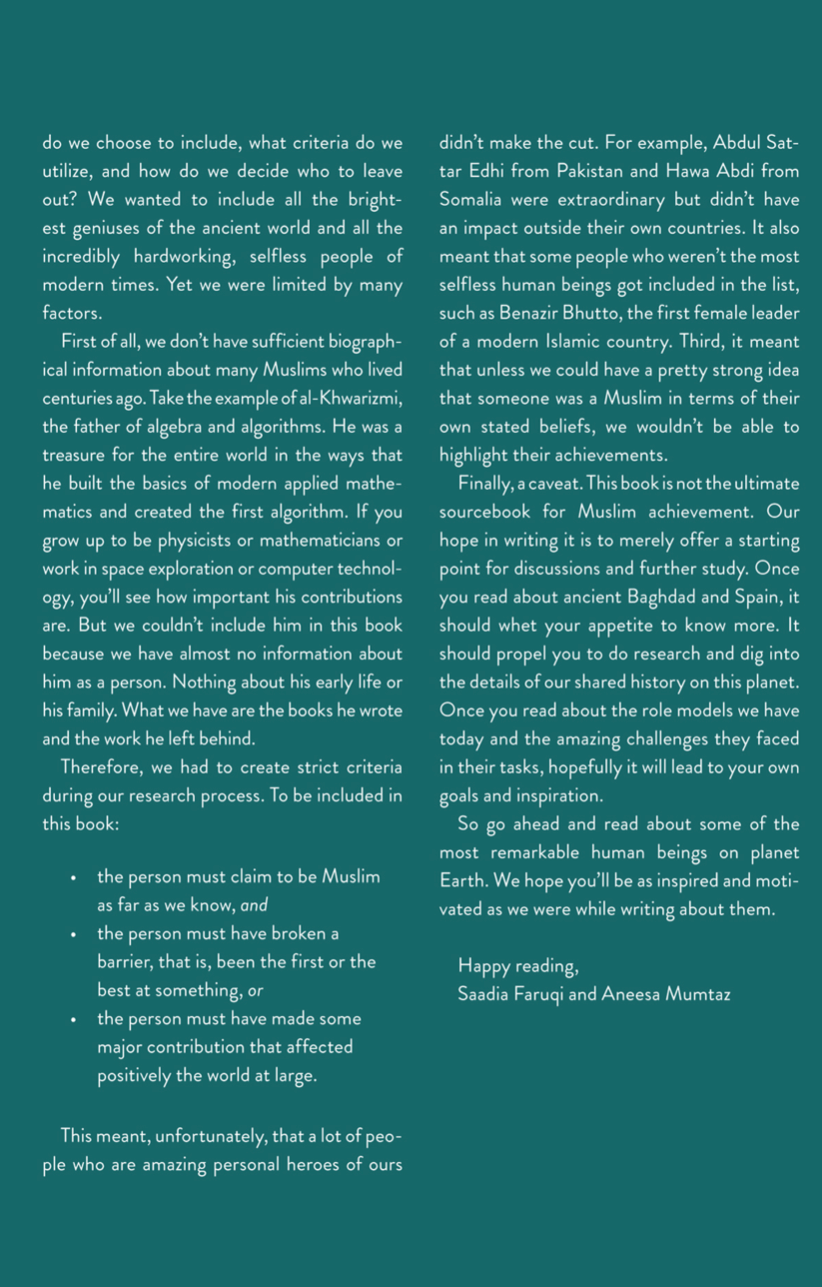
I’ve noted over the years how much I want to love these type of collections, but ultimately I just don’t.  The reason I gave this one a try was quite simply the reassuring introduction.  The book immediately detailed the checklist required to make it into the book, the criteria required, and acknowledged the limitations that the book overall, and personalities included, would have in the presentation. There are sources at the end for each of the 30 people included as well.  Unlike most books in the genre, this book got out in front of my most common complaints: the lack of transparency for how the people were selected, where the primary source information was obtained from, how the order is organized, and the Eurocentric and pop culture framing that is both pandering and renders the book cumbersome a few years after it is published.  For the most part, this book is the best I’ve seen yet, but that isn’t to say I loved it.  While the requirements to be included were made apparent, there is still a lot of opinionated statements about how “religious” or “conservative” or “devout” or “mainstream” or “strict” a person is or was, that rubbed me the wrong way.  Also knowing that the person had to identify as Muslim to be eligible seems like a black and white issue, but a few of the personalities are very controversial (some noted and some not), and I am not an expert at all.  One of the problems with books like this is they present as non fiction, and no matter the transparency, just the mere fact of who is included and who is not is a judgement call and wrought with bias.  It is nice to thumb through, but I don’t know that it would get repeated use, or that it could really be used as a reference.  It is informative and I recognize that I went in to it very skeptical, but only a few text passages connected faith to the person’s accomplishments, and so while they identify as Muslim, it doesn’t necessarily radiate pride or admiration for Muslims as a whole.  For better or worse, if anything, it made me want to conduct my own research on many that were featured. 
img_9998

The 30 included in the book:


A few I was concerned by, which made me question the ones that I learned something new about. Clearly there are reasons that I shy away from non-fiction.  I wish the book would have had Muslim beta readers, I am willing to assume that it did not.  Take for example the section on Saladin, I absolutely get why his name is shown as both Saladin and Salah al-Din, the book is in English presumably for western readers and that is how he is known.  But why when it says that his real name is Yusuf, is Joseph in the parenthesis? No one else’s names in the book are given the English equivalents of their Arabic or Persian or other native language. Similarly so few tied back to Islam or an Islamic perspective being credited for having a role in their noteworthy accomplishments.  Even Muhammad Yunus when it discusses how interest was not a part of the micro loan process- it didn’t add even one more sentence explaining that interest is not allowed in Islam, why leave that out?  

I liked that the parameters required that the person was influential more globally than just to their own country, but Rebiya Kadeer seemed to be more localized in her work with Muslims in China even when she moved out of China, blurring the rigid standards of who was to be included and who was to be left out.  

img_9968

I do like that it mentions Rumi’s religion is often conveniently ignored as the west has made him a hero and chosen to forget his faith.  Similarly, I like that it tries to correct when Ibn Battuta is called the Marco Polo of Islam, for in reality Marco Polo was the Ibn Battuta of Europe.  And I appreciated that Benazir Bhutto was noted as being controversial and not well liked. 

If this type of book appeals to you, you can purchase it here.
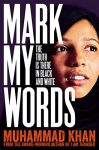
 

Mark My Words: The Truth is There in Black and White by Muhammad Khan

Standard
Mark My Words: The Truth is There in Black and White by Muhammad Khan

This 304 page YA/Teen book was surprisingly well written, gripping, relevant, and engaging.  I say “surprisingly” because the cover and title don’t scream pick-me-up-and-read-me, at all.  If I’m being completely honest, it looks like a self published book from the 90s, not one about to be released on June 1, 2022.  Appearances aside, it reads real and raw and even though it is very British and I didn’t understand a lot of the slang or the framing, I still was very invested.  The main character is Muslim and while part of the plot is focused on her identity, it isn’t her doubting herself, it is her in all her facets taking on stresses in her life, sticking up for what’s right, and going to bat against some very heavy hitters in the community.  The book has drugs, parties, racism, islamophobia, lying, crushes, cross dressers, gay and straight characters and relationships, privilege, assault, theft, robbery, language, hate crimes, talk of condoms, rape, sexual assault- it is raw, but the Muslim characters know who they are and engage in the environment around them as informed practicing Muslims.  The main character wears hijab and when she goes undercover she wears a wig and that conversation with herself if it is ok or not takes place, as she starts to have feelings for a boy and she tries to justify if it is ok for her, that conversation in her mind also is written out, many of her friends are of different sexual orientation and there is no judging or preaching, she accepts and celebrates them and they do the same for her. The drug use is never glorified and racism and misogyny are called out. The author is a teacher and it states in the backmatter the role his classroom and the students have in his writing and I think it shows.  The book says ages 12 and up, but I think for the content, critique on systemic racism, details about drug and drug use, gentrification, and media bias, the book is better suited for 16 year old readers and up.

SYNOPSIS:

Fifteen year old Dua’s school is under renovations which means her whole grade is being integrated with students at Minerva College, an elite private school on the other side of town.  It is an exam year, and what should be a dream for hard working Dua to get a foot in the door at her ideal school, quickly becomes anything but.  The kids from Bodley are made the scapegoats for a growing drug problem and the journalist in Dua is not standing for it.  When she doesn’t make the Minerva paper, she decides to start her own, and the dirt her and her news crew start uncovering isn’t mere gossip, it is outright illegal.  While journalism starts taking over her school life, Dua’s home life is quickly crumbling.  Her mother is falling apart mentally, failing to get to work, and struggling to keep her own demons at bay.  When Dua’s slightly estranged father tries to step in to help, Dua has to reconcile her past relationship with him and find a way to move forward.  In between all the drama at school and home is Dua’s time on the basketball court, and star Minerva Rugby player, Hugo, has taken an interest in her Kobe sneakers, and her.  The two spend some flirty time on the court leaving Dua with some decisions to make, and her questioning who to trust as everything starts to blow up.

WHY I LIKE IT:

I love how fierce and strong Dua is.  Yes, she over does it at times, but just as fiercely as she pushes for what is right in her mind, she acknowledges her errors and works to correct them.  She is Muslim because she is Muslim it is never a label she wears for attention or for someone else, it is who she is.  I love that there are also Muslim side characters including the principal.  Dua and Huda, another girl at school are always getting mistaken for one another, which is a great OWN voice (even though the author is male) inclusion.  Additionally Huda has a boyfriend, and when in the midst of a conversation she refers to him as her fiancé, Dua freezes, and Huda explains that they are getting married as soon as they turn 16 since dating is Haram and their parents all know.  I love that there is no explaining or judging at 16 year olds getting married, it just is what it is. Most of the book is written in that tone, that there are girls wearing hijab, and yes it gets pulled off at some point, there are guys writing make-up columns, there are gay guys explaining sub groups within the minority, but it all comes across as judgement free.  When racist, or homophobic, or Islamophobic, or misogynistic, or classist comments are made, other characters call them out, not to debate or preach, but to just emphasize the live and let live tone the book seems to advocate.

I was thrilled to see Dua’s best friend Liam wears hearing aids and that is very much a part of him, it isn’t a label stuck on and forgotten.  It is joked about, it is a daily presence and the author notes it in the backmatter as well.

There were some side storylines that felt a little under devolved, I would have liked a stronger emotional arc in Dua’s mom’s mental health deterioration, as well as what drove her parents to divorce.  The book is fast paced, so I wouldn’t want a lot more back story, but a little more to connect with would have been nice.

Honestly it took a few attempts to get in to the story, just because I’m American and the book is British.  I finally just read through the first twenty pages and kept going and then I was fine.  I know that is my own bias, but it is worth noting since the title, and cover aren’t attractive and then once you start it isn’t immediately clear what is going on, that some determination might be required before the book becomes difficult to put down.

FLAGS:

Drugs, drug use, sexual assault, physical assault, corrupt police, racial profiling, gentrification, systemic racism, media bias, partying, deception, bribery, expulsion, mental health, bullying, cross dressing, relationships, attraction, misogyny, hate crimes, threats, corruption, property damage, theft, stealing, cursing, language, alcohol consumption, dealing, to name a few, it is a contemporary high school setting with students taking on racist elitists.

TOOLS FOR LEADING THE DISCUSSION:

I know the flag list seems long, but I think there is a lot of sleuthing, action, character and story building and investment that give the book a lot of heart.  I think it could be shared in an Islamic high school and would result with some amazing discussions.  If you want to grab a copy, you can go through this link that will benefit me, I think Amazon gives me 2.2% back, lol, but when you pay for your own books, truly every little bit helps! Happy Reading!

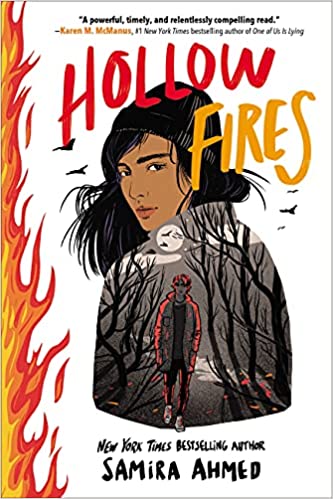
Hollow Fires by Samira Ahmed

Standard
Hollow Fires by Samira Ahmed

hollow fires

Every YA Samira Ahmed review I have written I remark at how amazing the premise is, how flat the characters are, and how forced the romance feels.  I am so happy that I did not dismiss this book, and when I return this copy to the library, I will be eagerly awaiting the purchased one to arrive so as to be placed on my book shelf.  There is connection to the protagonist, she is even likeable, the brief flirty romance is natural and not heavy handed, and the only thing better than the premise is the contemporary commentary.  The multiple writing styles, lyrical voices, and thriller/mystery elements make this 404 page teen book hard to put down.  Islam is present in different forms in different characters. There are very gentle elements of faith that really contrast the chaos of the plot and radiate peace: fajr salat, wanting a janazah, identifying as Muslim.  And while the book says 7th grade and up, I think it is more suited for high school readers.  There are strong themes of islamophobia, media, and privilege, there is killing, murder, a gay Muslim, a ghost, assault, language, planning to go to a school dance, racism, vandalism, misogyny, Halloween, relationships, hate crimes, and abuse of power, to name a few reasons that I think older readers (and adults) will appreciate and understand more deeply than most middle schoolers, how remarkable this book truly is.

SYNOPSIS:

Safiya is in her senior year at her elite private school, she’s a scholarship kid, and her passion is journalism.  As the editor of the paper she is unafraid to challenge the principal and spur others to action.  When a fellow Muslim kid, Jawad, at a nearby local school gets arrested for bringing a makerspace jetpack to school, it bothers her.  When Jawad goes missing, and events at school and in the community start putting Muslims and other minorities on edge, Safiya finds herself collecting bread crumbs and getting closer to the truth.  Throw in vandalism to her parents Desi store, smoke bombs in the bathrooms, swastikas graffitied at school, and a dead boy whispering to her and you have yourself an action packed thriller that hits close to home.  When the circumstances of how Jawad’s body are found and the clues start to fall in place, Safiya and readers will find themselves rushing against the clock.  Her to safety, and readers to see if their suspensions are correct.

WHY I LIKE IT:

I love, love, love how each chapter starts with a fact, or a lie, or an alternate fact, or truth, I keep rereading them. They are so clever, and thought provoking as the short lines stare at you in black and white and get under your skin.

I don’t think the book explains if a ghost in Islamic doctrine would be possible, but I do like that the book on more than one occasions tries to explore it.  I think for me acknowledging that it doesn’t fit, but that jinn exist and that maybe it just is what it is allowed me to overlook it and read the story for what it is.  I appreciate that the author gave the characters presence of mind to try and view it through an Islamic perspective and see answers that way, even if it did come up short.

I love the parents in the book, all of them. There is no oppression or force or lack of understanding, from the parents which was a nice break from the normal YA Muslim family dynamic presentation.  As a result perhaps, Safiya has never gone to a school dance, but when asked to Winter Formal she doesn’t have any religious or cultural hesitation in agreeing to go.  Part of me wishes it would have crossed her mind, but I think the other part wins out- that for her it is a non issue and that her view and practice of Islam is just different than mine and that is ok.  I think part of the reason I am ok with it is because there is no overly forced make-out sessions or drawn out angsty scenes.  There is a kiss on the cheek and one on the forehead, a tiny bit of snuggling, and maybe a handhold.  Suffice it to say it isn’t overboard and extreme, it never says that Safiya prays, she notes her parents do, but it seems she goes to the mosque, she identifies as Muslim and she is unapologetic, so by moving the choice to her to go or not go to a dance allows Islam to stay Islam and her actions to stay her actions.  A subtle difference I’m sure for most, but for me a very powerful one in a book that is about more than Islam’s view of premarital relationships.  I think it is also promising in that it shows how far literature has come that these nuances can exist without being overly explained or made into black and white issues.

In a similar vein is how the three Muslim characters are presented.  At one point it says they all go to different mosques because of geography or ethnicity, but to them they are just Muslim.  This includes Usman a kufi wearing Shia Hazara from Afghanistan who is always crushing on his tennis partner, or some other guy.  There is nothing more said about it, and the book carries on.

The style of the writing between the alternating voices of Safiya and Jawad are nice, but I particularly liked the inclusion of the interviews, articles, excerpts, and court transcripts.  The change of pace made it feel like it was more than a fictionalized story about the characters at hand, and a societal trend that is impactful to us all.  Which of course is a theme of the book, and was a nice way to show and convey that sentiment without having to say it over and over again to be heard.

FLAGS:

Copy and pasted from above:  There are strong themes of islamophobia, media, and privilege, there is killing, murder, attempted murder, a gay Muslim, a ghost, assault, language, planning to go to a school dance, racism, vandalism, misogyny, Halloween, relationships, hate crimes, and abuse of power. The hand of Fatima symbol is apparent in the marketing of the book, it isn’t a huge part of the story itself.  It is a key chain that was given to a character and then passed on with a message that it will keep you safe.  Clearly it doesn’t keep you safe and the irony and the passing of it from one character to another (I’m really trying not to spoil anything, can you tell) is the only significance it has on the story.

TOOLS FOR LEADING THE DISCUSSION:

I have already told my daughter she needs to read the book this summer after finals (she is 15), and while I would love to do this as a high school book club book, I don’t know that the ease of going to a dance, the normative presentation of a gay Muslim, and the ghost as a main character would be widely accepted at an Islamic school.  I think I will suggest it to high schoolers that I know, and would do so confidently as the writing, overall messaging, and critique on the media and privilege are so well executed in a compelling story, but I think the flags might keep me from “teaching” the book or shelving it in the school library.

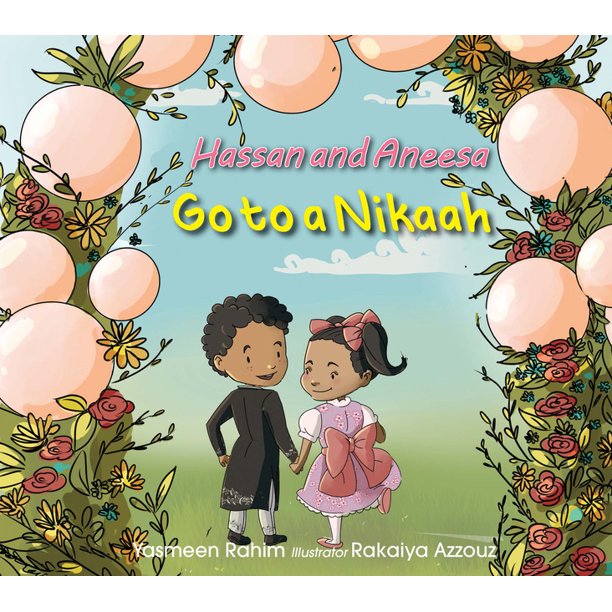
Hassan and Aneesa Go To a Nikaah by Yasmeen Rahim illustrated by Rakaiya Azzouz

Standard
Hassan and Aneesa Go To a Nikaah by Yasmeen Rahim illustrated by Rakaiya Azzouz

hassan and aneesa

The latest installment in the Hassan and Aneesa series caught my attention because there just aren’t a lot of books about an Islamic marriage process (it is Desi tinged).  Cultural weddings you often see, but despite the misleading title of them just attending a Nikaah, they actually walk the reader through the steps from wanting to get married, to getting to know someone, praying Salatul-Istikhara,  agreeing on a mahr, signing contracts, and a walima.  The idea and premise is brilliant and greatly needed, the finished product, not so much.  Somehow I had forgotten how tiny in size the books in the series are (6.5×7.5), making it all visually cluttered and the text often hard to see over the illustrations.  And while I love how the concepts and terms are defined, the point of view of having it witnessed and detailed by the brother sister duo is often awkward and wordy.  I wish the author would have ditched the familiar characters, and just written a book about the marriage process for kids.  The vacillating between a fictionalized story, factual requirements, kids witnessing their parents helping their cousin get married, makes for a tangled book that fails to connect to readers seven and up, let alone two and up like the book claims. If you’re kids are asking about how Muslims marry or seem curious about a halal way it can be done, I suppose this book would provide a way to understand some of the key facets in broad strokes, but it needs editing, and more space to show joy and excitement in a book about families and a couple coming together.

img_9813

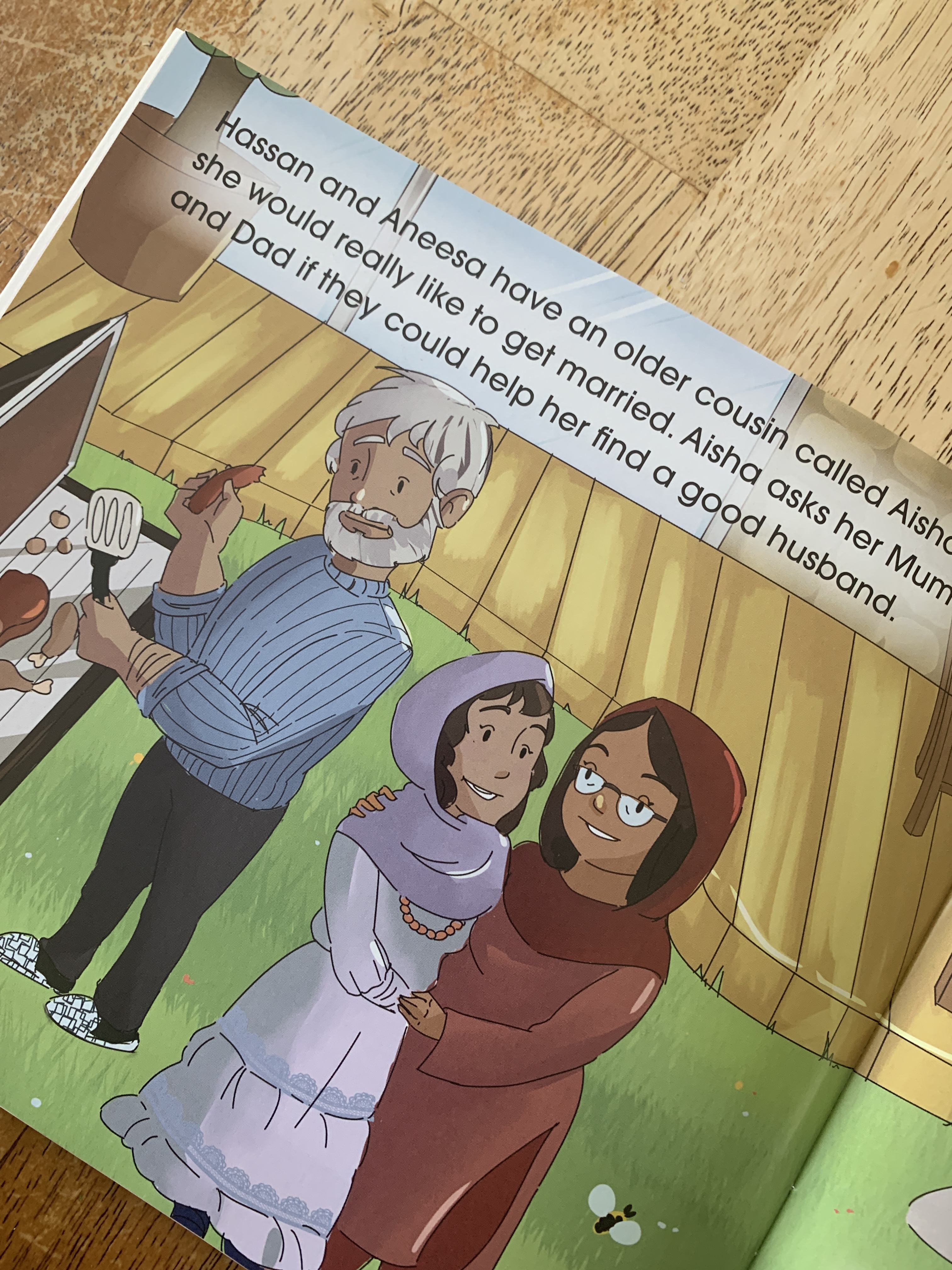
The very first page set the tone for me, the overly dressed girl at a barbecue and the way her name seems to be so formally introduced.  Perhaps it is a difference of culture, but the book never bounced back from the heavy handed tone.  Aisha wants to get married and asks her parents to help her find someone.  They ask her what she is looking for and she tells them.  I like what she includes kindness, love of Allah, funny, etc.  I wish it would have suggested that she had given it a lot of thought before answering though.

img_9814

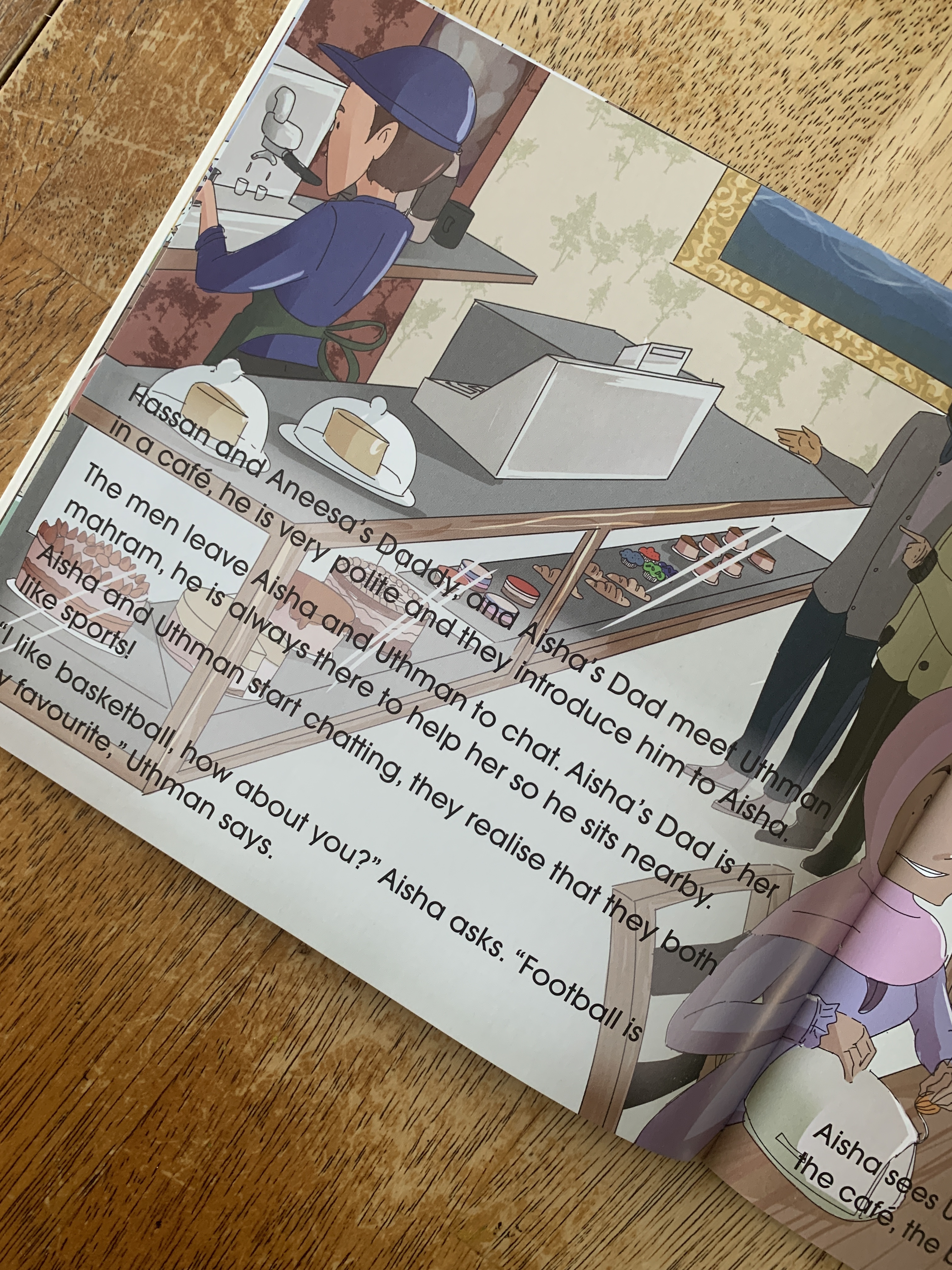
Aneesa and Hassan’s mom and their aunt are discussing Aisha’s want to marry at their painting class and a friend over hears and suggests her son Uthman.  The families agree to have the two meet in a cafe with Aneesa and Hassan’s dad and uncle so that her mahram is nearby.  Uthman and Aisha both enjoy sports and Uthman interacts with a baby at another table impressing Aisha.  They both pray istikhara and decide that the families should all meet.

img_9815

It is then time to pick out a dress and hand out invitations, which at least involves Hassan and Aneesa, but the pages are so cringe and awkward from the phrasing, to the structure of the concepts.  The spread is disjointed and you’ll catch yourself shaking your head and making a face every time you read it.

Mehndi is next and I’m not sure why it focuses on Aneesa not sitting still and looking sad when her design is ruined.  It seems like an odd inclusion in what should be a joyous book.  Hassan is entrusted with gift to hold on to by Uthman for Aisha, and the Imam gives a khutbah about marriage.

Contracts are then signed with Aisha her wali, uthman and the imam and each party is asked if they agree.  They have already decided on the mahr and then Hassan hands over the gift.  The walima feast is delicious and the reader is encouraged to go back and find the cat in the illustrations.

As for illustrations I do like that the main females are shown out of hijab at home, and in hijab while out.  At the wedding there are different shades of brown, different loves of covering and not covering, there is a guest in a wheel chair and the couple and their families seem happy.  I found it odd that it says they are in love, since there isn’t a lot of emotion mentioned before the last page and I wish the text on numerous pages wasn’t mixed in with the pictures.

The book concludes with a glossary of terms.

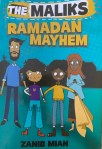
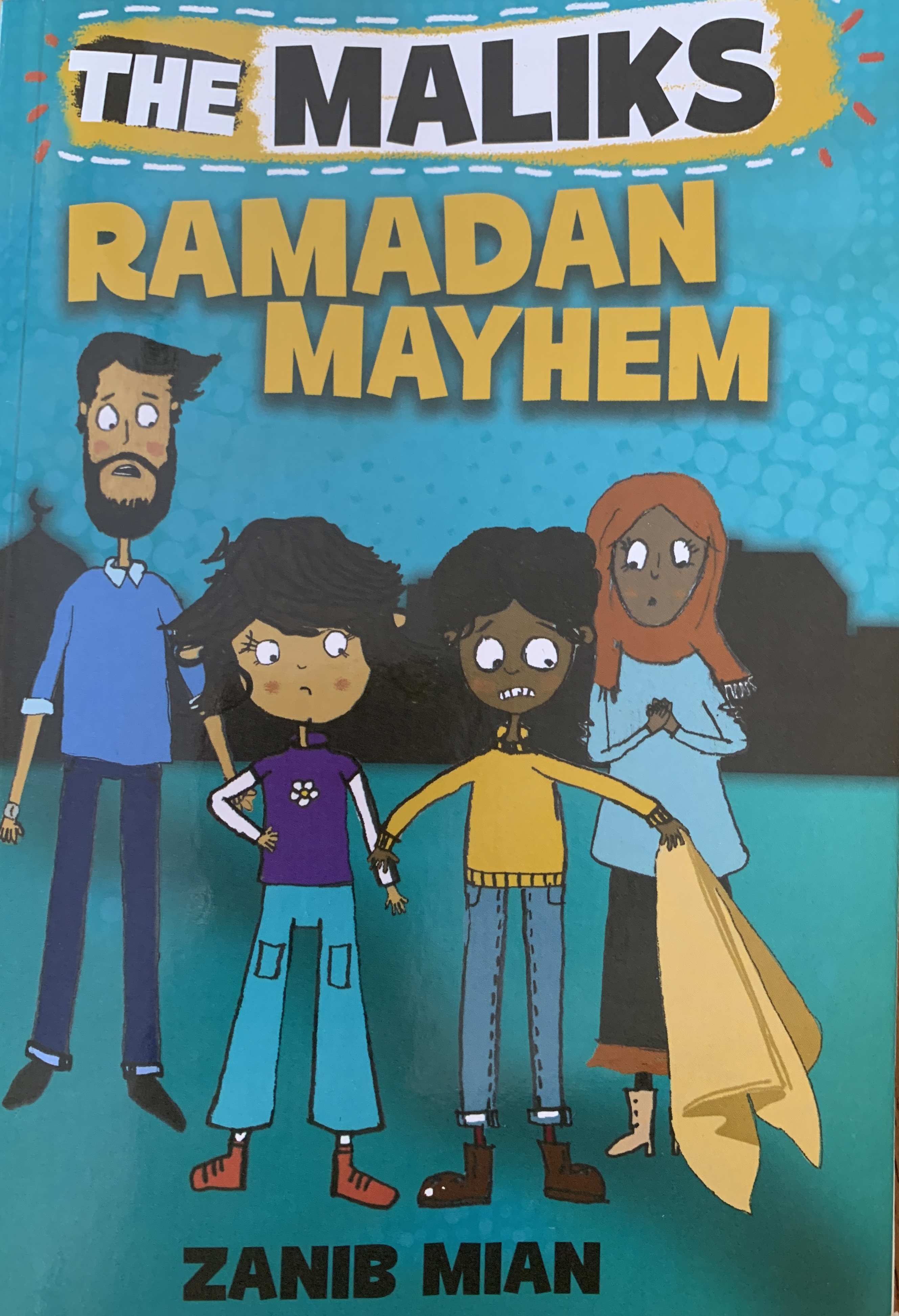
The Maliks Ramadan Mayhem by Zanib Mian

Standard
The Maliks Ramadan Mayhem by Zanib Mian

This 93 page Islam centered, action packed, humor filled book was written as a gift by the fabulous Zanib Mian for her readers. The book was to be free, all you had to do was pay shipping. Well, if you lived outside of the UK, that would make the book pretty expensive, so like any entitled book lover, I started annoying the author, my friend Noura the owner of Crescent Moon Store, and any and all connections I could muster to get the book during Ramadan. I wasn’t trying to get it for free, I just really wanted it in my hands. So, when the author did a second printing for purchasing, and my US stockist was on the list, I was giddy. Then I went out of town to be able to spend Eid with family and the lovely book sat on my neighbors dining table until the blessed month and the festivities of Eid, had come and gone. But guess what, it is ok. This book is fun, no matter what time of year you read it. It is as silly and informative and relatable as all the Omar books, and the characters just as delightful, the mystery just as teasing, and the quirkiness just as charming for readers 7 to 100. Thank you for this gift, thank you dear friend for stocking it at an incredibly affordable price and getting it to me with such speed and love. And dear readers, don’t wait until next Ramadan to get your copy, you and your children will enjoy the book now, repeatedly, and as they get excited for Ramadan next year (and the year after, and the one after that too), inshaAllah.

SYNOPSIS:

Maysa Malik is often misunderstood, and crossing lines at school, with friends, and at madrassah that get her in trouble, even while making others laugh. Her twin brother Musa doesn’t have Maysa’s penchant for getting in trouble, and so their parents are letting him go on the school trip, but not her. Maysa is determined to prove to her parents that she isn’t a class clown and can stay out of trouble. With help from Musa and their neighbor Norman, a cookie tower competition might be just the thing to raise money for charity and get in her parents’ good graces. But, a little lie to avoid teasing has big consequences and destroyed cookie towers mean her plan to go on her residential trip is failing. And no, I’m not going to spoil the plan b the kids come up with, or reveal the snowballing implications of the lie, I wouldn’t want to ruin it for you.

WHY I LIKE IT:

I love that the Islamic tidbits are woven in and made a part of the story. It doesn’t pull out to give facts about Ramadan, salat, and charity, it is all part of the story and works well for both Muslims and non Muslims without compromising or watering down important aspects of our faith. I absolutely love that Norman makes wudu before doing anything and everything related to Islam, and is very aware that farting is a wudu popping act.

There is a “moral” about honesty and self confidence, but it doesn’t come off preachy, and as I’ve grown to expect from the author, her voice reads very genuine and true. The lessons from one character to another and from within internal reflection of a character, feels organic and age appropriate.

The only thing that bothered me initially, but perhaps not so much at the end (I’m going to try not to spoil anything here). Is that the one character that speaks “broken” English is painted as being strict, mean, and short tempered. There is redemption for him, but I wish the characters were more aware of their own impressions of Mr Saleh, and that the stereotype wasn’t perpetuated.

FLAGS:

Lying, accusations, some retaliation against a bully, gossip, gambling is mentioned, butt jokes, fart and bathroom mentions. Nothing offensive, but it is funny.

TOOLS FOR LEADING THE DISCUSSION:

I won’t do this as a book club selection, but I am hoping to read it aloud to 2-4th grade next year before or during Ramadan. It would probably just take a few library sessions and I think the kids will love it.

Zachary Ying and the Dragon Emperor by Xiran Jay Zhao

Standard
Zachary Ying and the Dragon Emperor by Xiran Jay Zhao

zachary ying

It is hard to believe that this book is middle grade- the world building, the social and political commentary, the authenticity, the history, the humor, the writing quality, the richness, really makes me embarrassed that as a child I never gravitated towards books like this.  Everything I love about contemporary fiction seems to be done so well in the handful of fantasy books I’ve read of late, add in layers of adventure, imagination, and nuance, and I don’t know why I took so long to embrace this genre.  Not to say every MG fantasy is written this well, but why settle for only friendship, family, and identity issues when you can have all of it and dragons?  This 352 page book about a Chinese American Hui Muslim kid is action packed, culture rich, unapologetically Muslim, and a gripping good time.  While I think lower MG could handle and enjoy the book, there is nothing explicit, it does in passing mention eunuchs, concubines, and adult entertainment, along with the main character stating that he is not attracted to girls a few times and that he acts like a girl, but presents as a boy, thus making me think middle school aged might be a better fit.  If younger kids read it, they may or may not even pause or notice the aforementioned possible flags, I only highlight them, so that my readers are aware and can be prepared to explain and discuss if needed.  As an adult reading it, I can see clearly that Zach is gay, but I don’t know that most kids will catch it.  The author skillfully hints at it, but doesn’t make it the focus of the story, ultimately making me feel like if you want to see it you will, if you don’t, you probably won’t. Oh and the chapter titles, they are awesome!

SYNOPSIS:

Zachary Ying is twelve and while he isn’t comfortable in his Maine school, he manages.  He dumps the delicious Chinese food his mom makes every day so that no one teases him for the smell it carries.  He tries to impress the other members of the Mythrealm club, a vr video game, without rocking the boat, and he loves his single mom who works hard since his father was killed in China advocating for the rights of Uyghurs.  He knows little about Chinese history, the language, or myths, but that all starts to change when his VR gaming headset becomes the host for the spirit of the First Emperor of China, Qin Shi Huang. 

His mom becomes the target of demons and when her soul is taken, Zachary is off to China to secure the barrier that divides the worlds and keeps the spirits at bay.  To do that though he is going to need to learn Chinese history, the power of artifacts, and the role of myths in keeping stories alive.  With two friends, also possessed by past emperors, joining him, the adventure is non stop.

WHY I LIKE IT:

I love that Ramadan is mentioned on the very first page, that Zach’s mom wears hijab, that he only eats halal, and that details about life in China for Muslims is shared.  It isn’t the main part of the story, but it adds such a powerful layer, that I found myself looking up Hui Muslims and trying to rectify how little I know about Islam in China.  

The social commentary about which individuals from history are remembered and why some are celebrated and others vilified was so impressive to see in a MG fantasy book.  It doesn’t ask you to agree with the narrative, nor does it preach anything, it just presents it in all its beautiful shades of gray glory albeit often shrouded in humor.  I truly feel that most MG authors talk down to their readers, if these themes can be so strongly presented and consumed, what superficial fluff did I waste my time reading as a preteen?  Thankfully I’m an adult that loves juvenile fiction, so there is still hope for me yet.

FLAGS:

Magic, mythical gods, fighting, violence, lying, deceit, killing, crushes, same sex attraction, concubines are mentioned as are eunuchs, but nothing more is said about them.  Affairs and mistresses in context to myths and past emperors are mentioned.  

TOOLS FOR LEADING THE DISCUSSION:

I don’t know if I could teach this.  Once you sense that he is gay it is hard to unsee, and in an Islamic school, that would be problematic.  I will have my own kids read the book, I don’t think there would be any concerns for me there.  A few weeks ago concubines were mentioned in a khutbah, so I’ve already had to explain that to one of my kids. 

PRE-ORDER BEFORE MAY 10, 2022 or PURCHASE AFTER HERE

Mr. Men Little Miss Happy Eid by Roger Hargreaves

Standard
Mr. Men Little Miss Happy Eid by Roger Hargreaves

mr men

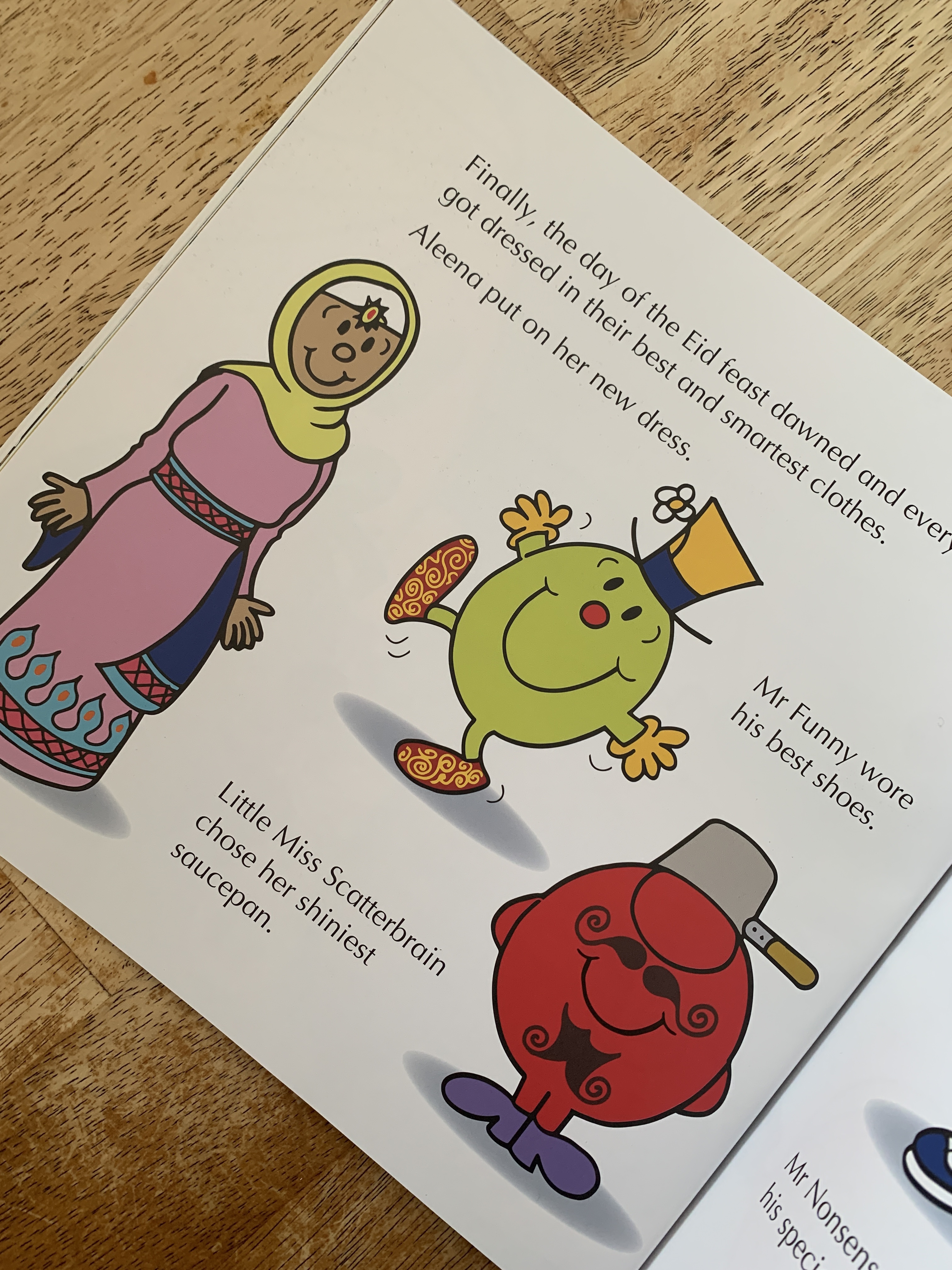
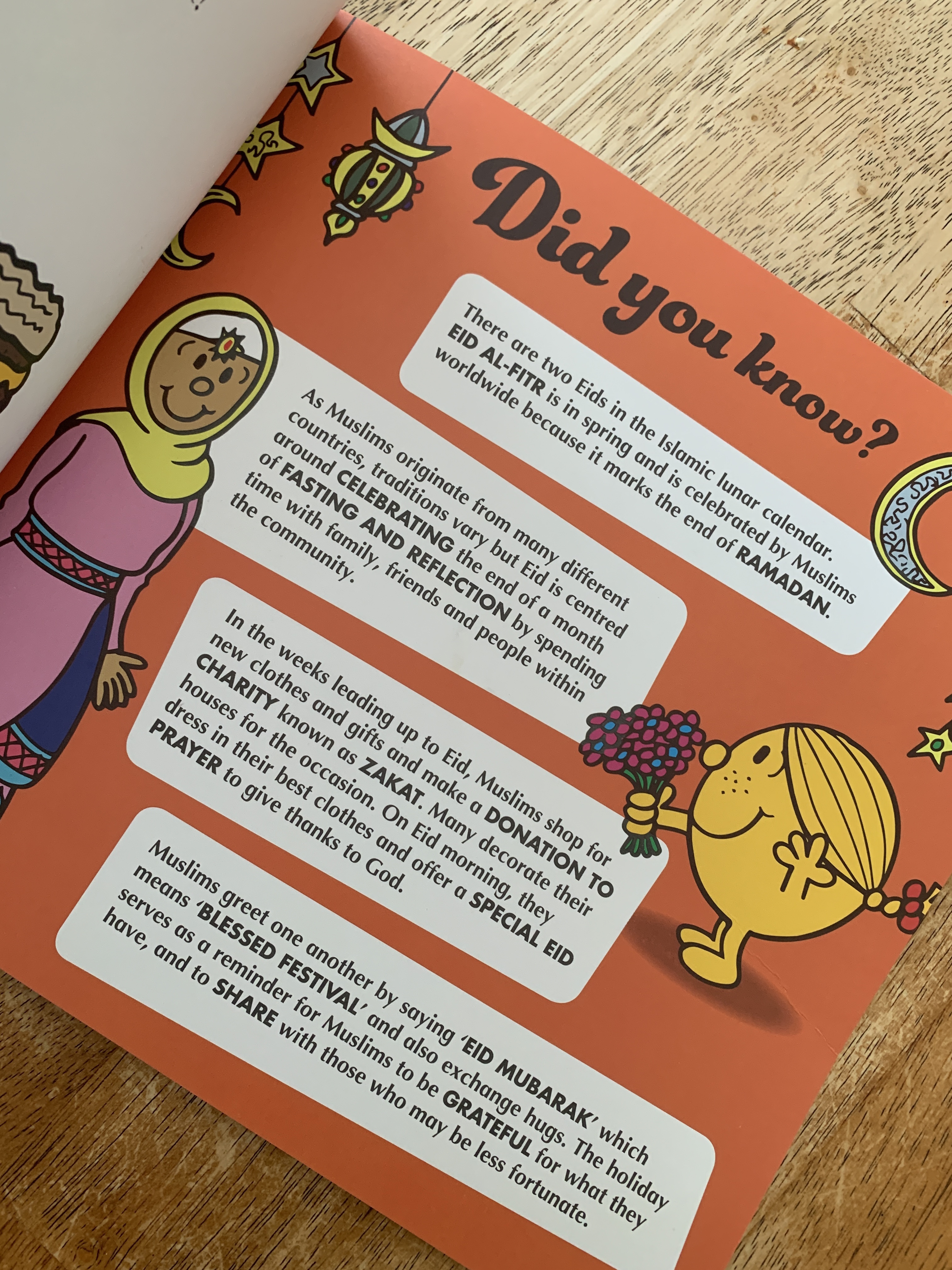
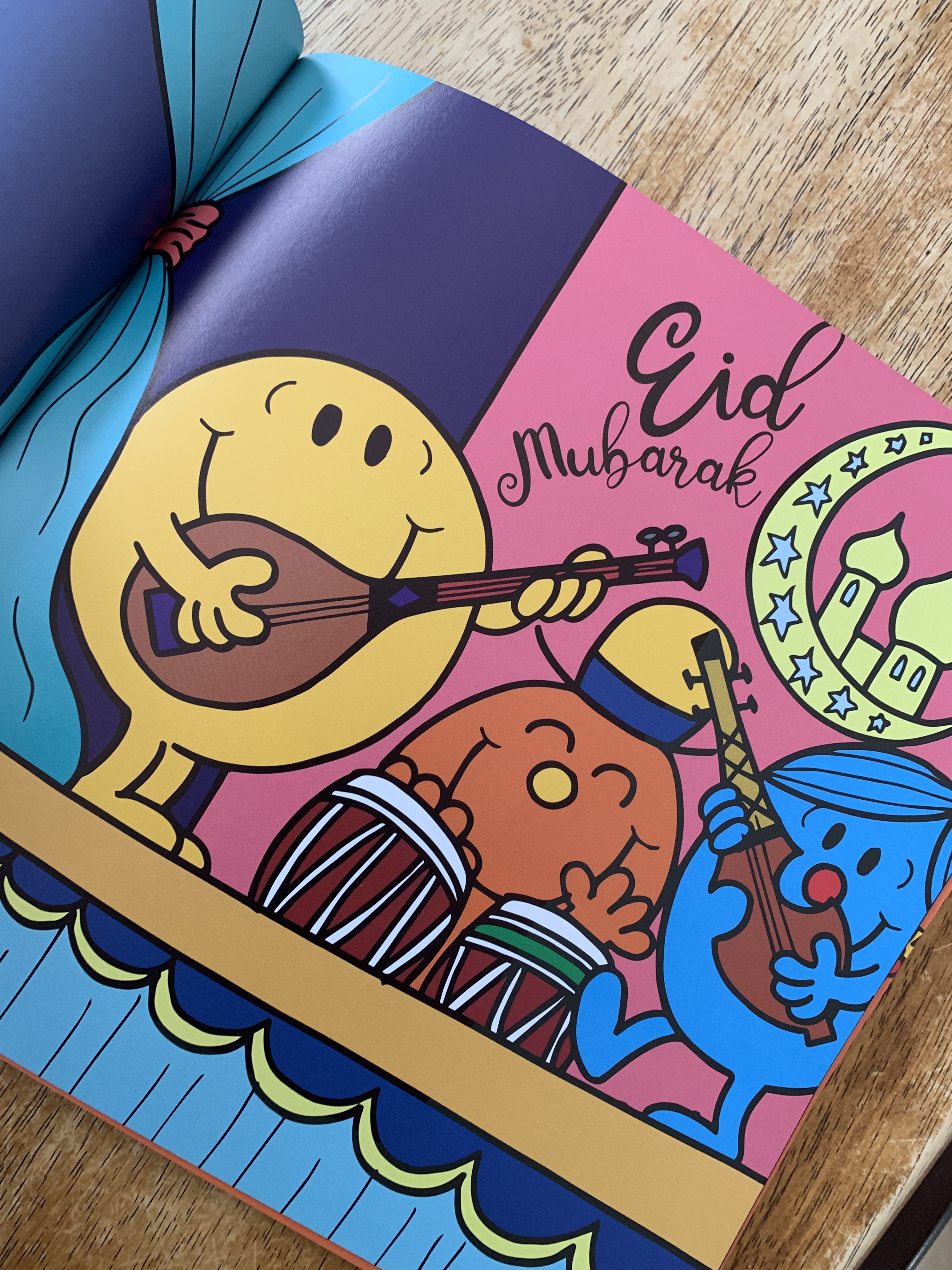
The nostalgic cast has reassembled recently, and now have an Eid title available.  Whether you grew up with Mr. Men and Little Miss or have never heard of them before, this book covers the basics of an Eid day celebration with (familiar) characters such as: Mr Greedy, Mr Bump, Miss Splendid, Mr Funny, Little Miss Scatterbrain and more.  The characters’ friend Aleena is fasting for Ramadan, the colorful crew help her to plan, and finally they all join in for the celebration.  The 32 pages are silly and random at best, but with a little discussion to help bridge the British to American English (if needed) ages three and up will enjoy the funny characters, seeing Aleena in hijab, and relating to the activities mentioned.  I love that generosity and forgiveness are included in the messaging, but was really irritated that a musical band is how they celebrate Eid night, and that Eid is compared to Christmas with gift giving.  The book is not written by a Muslim, so perhaps I should be forgiving about the Christian holiday comparison, but why write a book about Muslim joy, if you won’t let the Islamic holiday be enough on its own?  Thank you to Shifa @Muslimmommyblog for gifting me this after making fun of me for being old!

img_9333

Mr Greedy’s friend Aleena is fasting, and Mr Greedy breaks his fast nearly every hour so he is helping her.  Little Miss Inventor is out with her telescope and sees the moon, it is time for Eid.

img_9334

The days before Eid had been spent cleaning and decorating with the help of Mr Rush and Mr Bump.  They weren’t very helpful.

img_9337

Ramadan is also a time of generosity.  The football club receives donation, but what will they do with Mr Silly’s grandfather clock donation.

img_9336

Aleena puts mehndi on and is smart enough to not let Little Miss Naughty help, Little Miss Scatterbrain was not so wise.

img_9339

They all get dressed up, they give each other gifts, and share a meal. They then all settle arguments and forgive each other.

img_9338

Finally, they head to an Eid fair in town and eat treats while they watch a music show.  The book concludes with some factual information about Ramadan, Eid, and Zakat.

Title is available on Amazon.

The Stardust Thief by Chelsea Abdullah

Standard
The Stardust Thief by Chelsea Abdullah

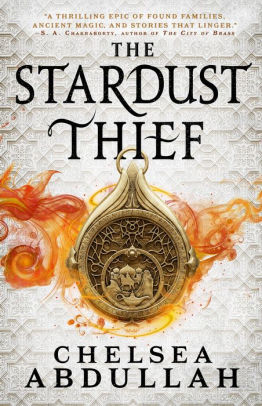
I was a little nervous to read an adult fantasy book with jinns, both in terms of length and knowing I would undoubtedly compare it to the Daevabad trilogy, but I got an ARC and dove in.  I was put off by the use of gods, and that there was no Islam present at all.  I’m not sure if the author identifies as Muslim, or what her background is, so I told myself I’d read at least 25% and then state I didn’t finish it because I primarily review juvenile fiction with Islamic content or by Muslim authors.  Well, lets suffice it to say that arbitrary percentage came and went and I had no intention of putting the book down.  So why am I featuring it? Simple, it is clean and I liked it.  Aside from the plural little g gods, the book is Arab culture rich as a retelling of the Arabian Nights, according to @muslimmommyblog the Arabic is accurate, the story is engaging, and really my only question is, why isn’t it YA?  I have a handful of reasons why I focus on children and teen lit, but one very strong one is that the books are “cleaner” in theory.  Lately though, it has been hard finding YA that followers of my reviews can confidently share with teen readers.  I think this one, although it isn’t a religious mirror, the salaams, culture, Arabic, and storyline, tinge the framing and make it a fun “safe” read to suggest to our kids.  At 480 pages, it probably is best for ages 15 and up, and it ends on a cliff hanger, so I’m not sure what the next book might introduce, just be aware this review is for this book alone.

SYNOPSIS:

Layla aka Loulie aka The Midnight Merchant hunts and sells magic jinn relics that she locates with the help of her jinn bodyguard Qadir.  After her tribe was slaughtered by a mysterious army, and she the only survivor, Qadir and her have been a team.  When her skills align with the needs of a powerful sultan she is forced to go on a journey with his son, the prince and one of his 40 thieves, to find a magic lamp that will lead her to answers about her past, offer her chances of revenge, test her abilities, plague her with loss, and fill the pages with adventure.  Stories of the One Thousand and One Nights are weaved in through oral storytelling, world building is built and explored through the characters’ understanding their world and the jinn, and the non stop action keeps the story moving forward with minimal dialogue and a lot of high energy showing.  Clearly if I say too much, the excitement will be lost, and I don’t want to spoil the characters’ arcs, their foibles, their illusions, and the climax- seeing as it is a linear story and if the motivation to move forward is lost, the book will lose its charm.

WHY I LIKE IT:

The book keeps pace pretty well, a lot of the spoilers are not dragged out and I appreciate that they are not used to dangle the reader’s interest.  The story has depth, the characters are fleshed out, and the truth and illusion reveals are done without insulting the reader.  I’m still undecided about the (SPOILER) comic book quality of death for the main characters, but it keeps it interesting, so for now at least, I’ll play along.

There aren’t a lot of characters, but there are a lot of names for each character and at times in the thick of fast paced action sequences, I did get a little confused as to what was happening to whom and who was saying what.

I don’t truly understand why the divinity is plural or why they say salaam, but nothing else “Islamic” is remotely present save the concept of jinn.  I suppose though for all the fantasy books that use Islamic terms and imagery and then present them horribly, I should be glad that this one really doesn’t conflate the two, but an athan in the background or a few inshaAllahs, sigh I suppose a girl can dream.

FLAGS:

Language, violence, murder, killing, deceit, minor seduction, betrayal.  Very clean not just for an adult fantasy, clean for most any YA or Teen book.

TOOLS FOR LEADING THE DISCUSSION:

It would be a bit of a pivot for me to feature this book as a book club selection because there is plural deities and NO Islam, but it is very tempting to suggest it to the high school advisor.  The book comes out May 17, 2022, you can preorder it which helps show support, or order after it releases on Amazon.

The Turtle of Michigan by Naomi Shihab Nye

Standard
The Turtle of Michigan by Naomi Shihab Nye

turtle

This is not a religious story, it is part cultural, but it is really all heart.  The sweet relationship between a boy and his sidi stole my heart in The Turtle of Oman, and in this stand alone companion book, I once again was swept away by the admiration and relationship of the two.  This lyrical middle grade book is slow and enveloping with its cadence and detail.  There is no real climax, but the character driven story will linger long after the last of the 322 pages are read.  The book is clean, and never states the characters are Muslim, but it hints at it.  It celebrates Oman and America, and would be a great read aloud in a classroom or at bedtime with its poetic passages, lists, and emails back and forth across the ocean.

SYNOPSIS:

Aref has finally left Oman for Michigan and as he and his mother board the plane and start their adventure to America to join their father who has gone ahead to set everything up, Aref’s heart aches for all he has known in Oman, and for his beloved grandfather.  Once in Michigan, his days are filled with tagging along with his parents to their university classes, exploring Ann Arbor, making friends, and getting to know the neighbors.  Everything in America is new and different, but sometimes the same too.  He writes messages catching his Sidi up on all that he is taking in, and Sidi writes back, but it isn’t the same.  From new flavors of ice cream, the first snow, celebrating Christmas for the first time, and giving a speech on Martin Luther King Jr Day in an Omani hat, there are so many new things Aref feels his Sidi is missing, if only he would come and visit.

Sidi on the other side of the world is lonely.  He is trying to take computer classes so he can email his grandson, he can’t figure out how to message on his smart phone, and tries to avoid going anywhere that reminds him of Aref.  But he and Aref went everywhere in his jeep, so Sidi doesn’t go out, and is not doing well as a result.  It will be three long years before they return to Oman, and Sidi might need to be brave and board a plane.  The reunion is not a surprise for the reader, only for Aref, but it is tender and warm and worth the journey for them both.

WHY I LIKE IT:

I wish there was some clear Islam, there is mention of not celebrating Christmas normally, a prayer room at the airport, peace be upon him when there is a death, and prayer beads, so it is possibly there if you search, but it isn’t at the same time.  I know I say this a lot in books like this, but it seems that when the religion and culturally religious words are withheld it seems a bit hollow.  A family coming straight from Oman to America doesn’t say Assalamualaikum ever, or make dua when hardships arise, or say InshaAllah or MashaAllah? It seems watered down and overly dismissed. I guess the way Christmas is framed is understandable, they are trying so many new American things they decide to give each other one gift to try it too, I wish though Ramadan would have been mentioned or Eid.

All that being said, I absolutely love Aref and the world through his daily actions.  He is endearing and his love for his grandpa is goals.  I love that Aref’s new school is so diverse and that everyone is celebrated and accepted, it isn’t a story of him being the new kid, but rather them all bringing something unique to the school experience.  The first graders as conflict resolvers is either a bit hard to believe or based on something real and absolutely brilliant, I am still undecided about that. Also as an adult reader, I couldn’t help but notice how money never seems to be a problem, and while I don’t know if children will pick up on it, it seemed a little surprising for two parents that are professors to never stress about it.

The language and emotional pull the story has is remarkable, and I think the slower pace would be hard for kids to get used to initially, but it will win them over and the rhythm of the story will hook them and make it hard for them to put the book down once they get going.

FLAGS:

Some bullying discussions

TOOLS FOR LEADING THE DISCUSSION:

Too young for any book clubs I host, but definitely want it on the library shelf.

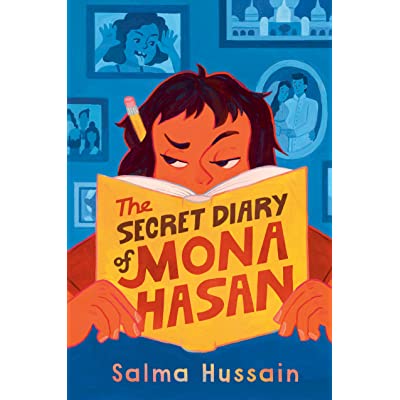
The Secret Diary of Mona Hasan by Salma Hussain

Standard
The Secret Diary of Mona Hasan by Salma Hussain

mona

I really don’t know how to review this book. Is it funny and engaging, yes at times, but I am a 41 year old, and I can attribute it (hopefully/possibly) to satire, hubris, character voice, and commentary, except it isn’t written for me, it is written for 10-14 year olds.   There is no way would I put this in the hands of a fourth grader, let alone a high schooler.  The book starts on New Year’s eve with a “Muslim” family drinking alcohol, later the 11 year old drinks to get brave enough to meet up with her boyfriend (he wanted to wait until after Ramadan), after a bad haircut she starts wearing hijab and later takes it off, her period starts and she is baffled at which hole it comes out of, she is no longer allowed to be alone in a room with a boy because that is how babies are made, but it is ok to go to a school dance and kiss them, women are rather useless, old people (31 year olds and up)  should know their place and act their age, dark skin is bad, chests need to be big, slut is both something you are and something you can do,  Aisha (RA)’s age of marriage is criticized as is Khadeeja (RA)’s, no one is as good at her, Ramadan is annoying because she has to hide when she eats in public for a whole month, Friday prayers even though they rush through them limit their fun time, the Tablighi Jamaat have to be lied to and hidden from, her mom is pregnant months after coming out of her bedroom smiling, her father claims he will only ever enter a mosque horizontally, you can see the list goes on and on.  Yet at the same time, there are true moments of strength, such as when she fights back against the creepy sexual assault vibes from “uncle annoying” and then protects her sister when her parents dismiss it, when she sticks up to a bully to protect her gay friend in Canada, the dad getting caught one day praying salat, the love of family felt despite her perceived privilege while visiting Pakistan, her constant reference to Allah swt as she asks Him and tries to understand the world around her, and her terrible, terrible poetry.  The diary style is both brilliant in trying to show the world through Mona’s eyes, and irritating as NONE of the aforementioned concerns are given any context, explanation, reflection, anything.  The thoughts pour out of her head, onto the paper, and the reader is left to figure out if this is how things are, is this her naïve view, is she commenting on society, is the author, is this fact, is it satire, is it someone with an axe to grind on culture and religion, is it showing the ridiculousness of so many stereotypes? And to be honest, I have no idea.  Which is why I can’t say that the book is good or bad, I think it is well written, my problem with it is, I don’t know who it is written for.  I think it would be very damaging to young children, the vulgarity, misogyny, racism, arrogance, will hurt both those that see parts of themselves in Mona and those that read it and assume too much about what Mona represents.

SYNOPSIS:

Mona is an 11 year old girl, and this is her diary.  She is arrogant and opinionated, but she grows and mellows as her view of the world moves from privilege in Dubai to immigrant in Canada with a bit of an awakening in Pakistan in between.  It is her view of her life, her place in the world, and the greater society around her.  It is an easy read on the surface of her living through the war without getting any days off of school, friends, maturation, first loves, hoping for a bigger chest, pulling a fire alarm to get time with a boyfriend, feminism, and the annoyance of being better than everyone else in everything she does.  There are side characters that flit in and out and family members that shape her, but the point of view is uniquely hers in all matters regarding leaving the Middle East as a Pakistani living there, spending time with her mother and father’s families in Pakistan and the rift her parents’ love marriage caused on their acceptance of her, their move to Canada to start a more peaceful life that ends up being grueling and difficult and through it all threads of Islam, fitting in, and growing up.  It is a snapshot of so much that the reader is left to connect the pieces, assign them value, and understand the larger message, if one exists.

WHY I LIKE IT:

I still don’t know if I like it or dislike it.  I dislike it for kids.  I like it for adults as a light over the top snarky read, but I think my opening paragraph is sufficient and the 296 page book doesn’t need my concerns and praises rehashed here.

FLAGS:

Misogyny, anti Islam, sexism, racism, ageism, lying, vulgarity, cursing, crude talk, lying, disrespect, lack of religious respect, kissing, sexual assault (attempt), deceit, pulling a fire alarm, physical fighting/assault, family trauma, arrogance, pettiness, stereotypes, bullying, sexual innuendos,

TOOLS FOR LEADING THE DISCUSSION:

I have suggested a few ADULT friends read the book so we can chat, but no kiddos, no teens, no early twenties, old ladies (31 plus according to the main character)!