Author Archives: islamicschoollibrarian

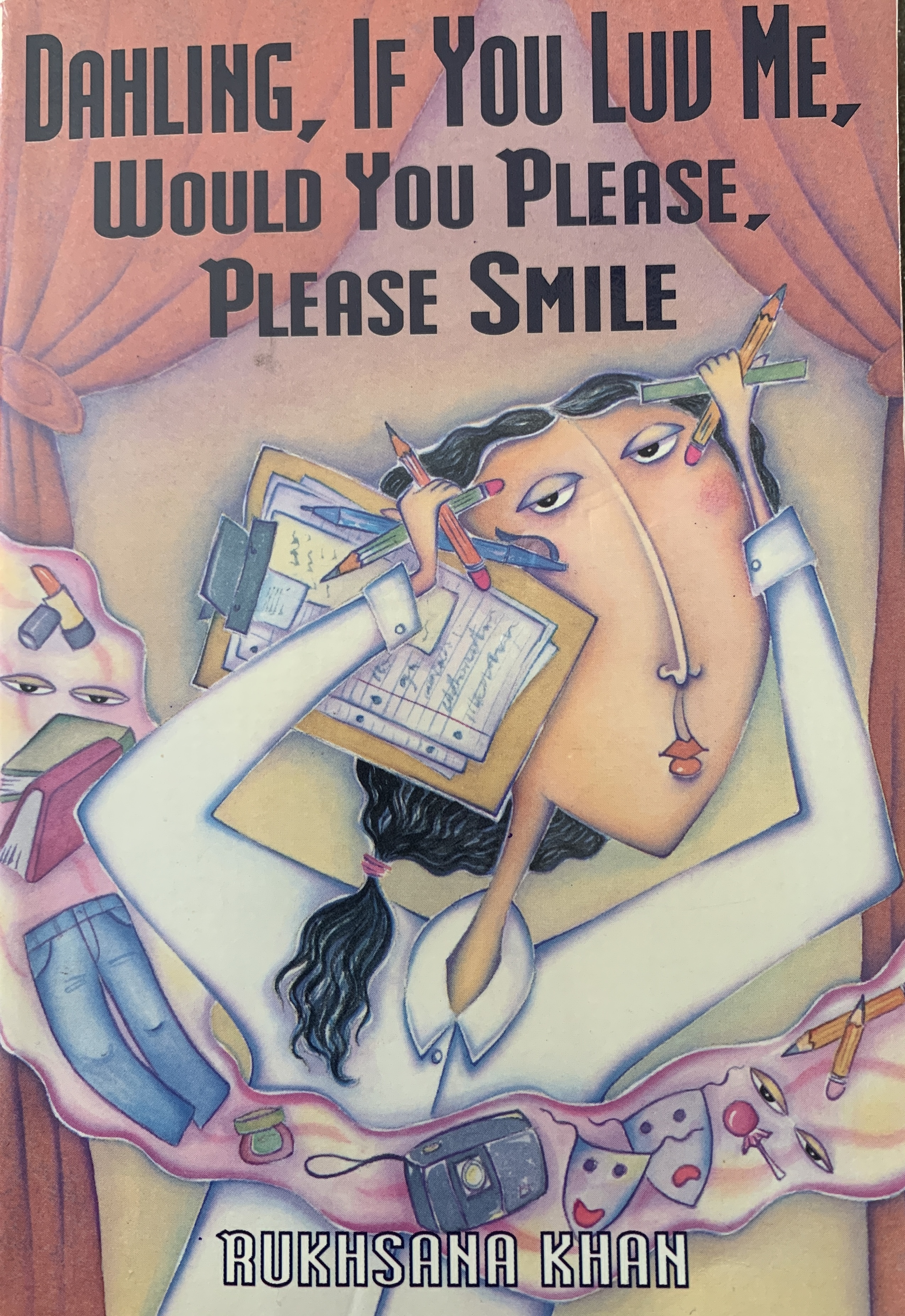
Dahling, If You Luv Me, Would You Please, Please Smile by Rukhsana Khan

Standard
Dahling, If You Luv Me, Would You Please, Please Smile by Rukhsana Khan

img_1788

I’m not sure how I missed this 1999 published YA book by the OG-groundbreaking-industry-changing- Rukhsana Khan, but until @bintyounus mentioned it to me recently I didn’t even know it existed.  The book has so much Islam, ayats, hadith, salat- Islamic fiction self-published often doesn’t have as much as this mainstream book has, but I would be lying if I didn’t say that some of the content was a bit shocking.  Part of my surprise I think comes from the fact that the book is only 206 pages, it takes its title from a game I remember playing in elementary school at recess, the main character is in 8th grade and the cover is soft pinks.  This book is solid YA both now, and nearly 25 years ago, it carries some incredibly heavy themes: attempted suicide, topless photographs, sexual coercion, cigarette smoking, assault, racism, misogyny, toxic relationships, neglect and more (see flags below).  The book is memorable and hard to put down, the Islam is confident and explored, even when weaponized by an older sister, but there is no denying the story telling abilities of the author, and  while I won’t be letting my 11 or 13 year old read it any time soon, I know I benefitted from reading it- reminiscing about wanting Lucky Jeans and standing in awe of how EVERY. MUSLIM. DESI. author making it in mainstream today is benefitting from the path paved by Rukhsana Khan.  On behalf of readers everywhere- thank you.  Thank you for fighting to tell your stories your way, raising the bar, and offering real Muslim characters from a Muslim voice. 

SYNOPSIS:

Zainab has no friends and doesn’t own a pair of Lucky Jeans, she is the only one in 8th grade that doesn’t.  She feels like if she could trade in her polyester pants for the “cool” pants everyone has, she’d be accepted.  When that plan fails and lands her in trouble, she gets tasked with directing her house’s school play.  The teacher convinces her that it will be a way for her to make friends, and earn her classmates respect, but middle school is never that easy.  Everyone is in love with Kevin, including Zainab, but he is a jerk and if he isn’t the lead, no one else will audition.  Jenny is poor, but has a big chest, so even though she is nice to Zainab, she is more in love with Kevin who only wants her for one thing, and takes advantage whenever his girlfriend isn’t around.  Add to the drama Zainab’s very strict older sister who lists off Zainab’s faults every night with Islamic references to try and make Zainab a better person, and this coming of age story will require Zainab to sort through it all and find her own way to be.  There are a lot of subplots that circle around the play, social circles, toxic relationships, and self growth, that while the characters are worried if they will win the competition and break the curse, the readers (at least this 41 year old mama) are hoping that the characters will survive the year unscathed. 

WHY I LIKE IT:

I love that the family is the same family that will become its own story in Big Red Lollipop just grown up, with names changes, and that the story is summarized.  I’m still a little torn if I love the raw grittiness of the way the two sisters interact or if it goes too far and leaves a bitter taste about Islam.  I really am on the fence about how young readers, both Muslim and non Muslim, in 1999 and in 2022, would view the role of Islam in the dynamic.  I think it reads powerfully, but I had a hard time going back to look at it through my 13 year old eyes and it as an adult it is intense.  I still can’t believe that this book was published with how much Islam it contains, even the play put on in a public school was religiously centered.  White privilege is called out and stereotypes about whites are stated, a Hindu character and the Muslim main character work through their baggage, economic privilege is opined on, women’s rights and expectations discussed, comments about “othering” are present-  it really covers a lot. Quite impressive in a lot of ways. 

The relationship and love themes are not shied away from which caught me off guard.  I expected some making-out and heavy petting, but was surprised it went to topless photos, a character’s mom being a nudist, and that there is a lot of forced touching.  I think for most Islamic school 8th graders, this book would be too mature, in fact I genuinely hope it is. Not to say it is not accurate, but it is very critical to the story and I think would need some discussion.  

I love that the characters draw you in, as much as you despise everyone picking on Zainab, you know she isn’t a pushover and you really pull for her.  I didn’t want to put the book down and kept reading because I wanted to make sure she was ok, see what choices she made, and in a fairly short book, that is remarkable story telling.

FLAGS:

The book is for mature readers in my opinion.  There are relationships, assault, cigarettes’, nudists, kissing, spying, sexual assault, coercion, topless nude photographs, attempted suicide, bullying, teasing, cheating, physical assault, language, verbal abuse, stereotypes, talk of female anatomy, and use of Islam to hurt.

TOOLS FOR LEADING THE DISCUSSION:

I don’t know that I would shelve this in the library, I would see if perhaps there is a version with a different cover, one that might signal a more mature reader.  I would worry if an early middle schooler read this, I think it would be a lot for them to take in, process, and reflect on.  It isn’t a light read, and would need some discussion, but ultimately I don’t know that a middle school book club at an Islamic school would be the right place for it. It could be for sure, but not the one I’m currently at.

52 Poems for 52 Weeks: A Lunar Year by Abdullah Mansoor

Standard
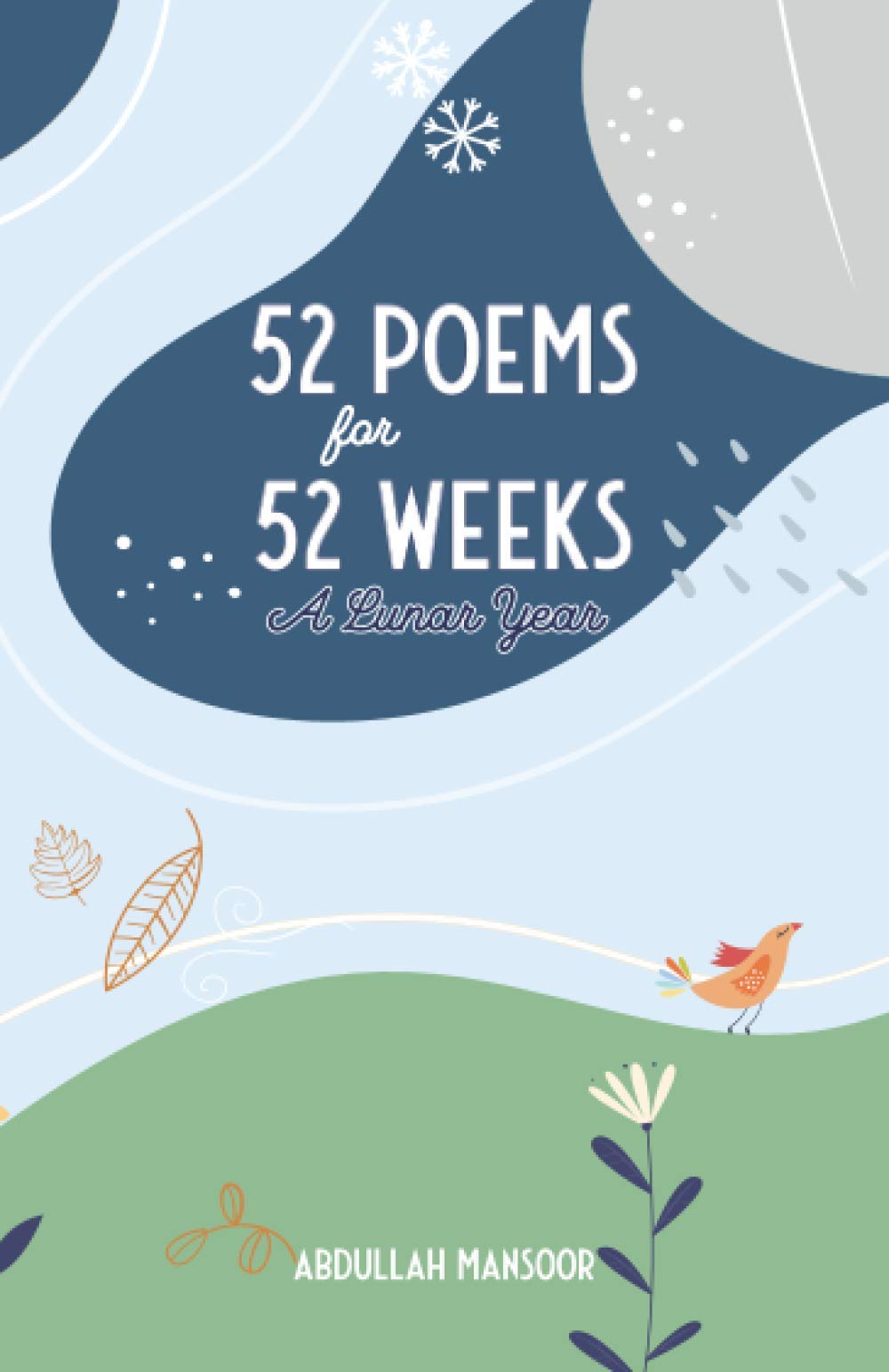
52 Poems for 52 Weeks: A Lunar Year by Abdullah Mansoor

poems

This isn’t the typical book I would review, but after spending some time in a middle school language arts classroom teaching this school year, I thought I should at least acknowledge the value a book like this can have in a classroom or homeschool curriculum, and that it shouldn’t be completely overlooked and dismissed.  I didn’t get swept away by any of the poems, and honestly am confused by the title seeing as the title page quickly clarifies that a lunar year is 51 weeks? That being said, poetry is such a religious and cultural staple that haikus, sonnets, acrostic poems, free verse absolutely should be taught through an Islamic lens, and why not.  So, while it might not be a book that an upper elementary through middle schooler would pick up and read on their own, it is structured to be taught, and I think educators should consider implementing it in whole, or in part, when teaching structure, and rhyme scheme, and iambic beats.
The poems vary in style and topic and length, and are divided by the Islamic lunar calendar months written in Arabic calligraphy. The true value of the book is the backmatter, though in my opinion.  The details about the poem, about form and structure and prompts to try your own.

I could really see slipping in an Islamic poem when teaching Shakespearean sonnets, and encouraging children to write a ballad or limerick in praise of an Islamic tenant.  I’m a big fan of blurring what is Islamic and what is secular as I don’t find them mutually exclusive, and this little book did a great job reminding me that Islamic centered poetry is important, and Islamic poetry isn’t just translated from other languages.

Happy reading, and inshaAllah happy writing!  The book can be found HERE for purchase.

A Darkness at the Door by Intisar Khanani

Standard
A Darkness at the Door by Intisar Khanani

darkness

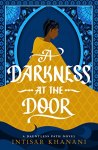
Y’all I was devastated when Theft of Sunlight ended on a cliffhanger, but Alhumdulillah, this conclusion was well worth the wait.  My heart is at ease, even if I am trying to figure out how to get the “Blessing” so that I can forget I read the book, and enjoy it all over again for the “first” time.  I don’t normally review second books in the series, and this won’t be a typical review, but truly if you have not read Thorn or Theft, what are you waiting for, go get those books and start reading.  I don’t know a lot about the publication drama of this fantastic book, but I do know that it was not published in the USA by the same publisher as the first book in the duology, and the thought that we, the readers, could have stepped up the pre-sales and shown our love for the series, the author, and the characters weighs heavy on me.  Thankfully, the UK publisher kept the book and the author found a way to get Darkness to us in the US (it publishes later this summer), but truly we have the power to support good, quality stories, and we must actively show it so that they get published, rather than simply complain about what options are made available to us. This is the author’s website: http://booksbyintisar.com/ if you sign up for her newsletters you can get all the bookishly delicious info.  She is not asking me to promote her or her books, but I happily share and direct support to her, because her stories really are great, and from what I can fangirl find out about the author, so is she.

The book picks up where Theft leaves off, and manages to remind readers what might have been forgotten in the interim.  It had been over a year since I read book one and while I fumbled a little at the beginning, the author caught me up to speed and didn’t let me lose a beat in Rae’s latest and ongoing adventures.  It starts with Rae aboard a slavers ship with children bound for a horrible fate.  More than just her life is at stake, as the information she has recently discovered implicates palace officials, the Circle of Mages, an heir to the throne and so much corruption.  With the help of street thief Bren, Rae gets herself in and out of trouble quicker than most expect.  Her clubfoot, sharp brain, and genuine values, force anyone who underestimates Rae to find themselves scrambling to keep up.  She has grown to love her body and the strengths that it affords her, and in her actions and dedication to changing the world she becomes a formidable river Pirate Queen that you genuinely care for, cheer on, and hope gets a happy ending.

Yes, if you have read Theft and are wondering why I didn’t mention Princess Alyrra, Red Hawk, the Cormorant, Niya, Stonemare, Artemian, and everyone else, fear not, they are all present, and get their story arcs, I just don’t want to risk a single spoiler.  If you’ve waited for this conclusion, you will find yourself desperately dreading the final pages, and wishing the story would never end.  The fantasy, action, characters, world building is all incredible and so hard to put down.  The author is Muslim, but there is no Islam present in the stories, although hints of desi culture do seem to present in the Sweetening atleast. 

The book is YA, but I think 15 and up or so would be a good fit. Like the others in the series, it has magic, murder, killing, lying, thieving, alcohol, corruption, implications of sexual abuse, assault and threat of rape, but this book also has some language, talk of infertility, and some implied banter about marital relations. The romance is very halal and clean, but the violence is graphic as dealing with the implications of murder and slavery are grappled with and thus a thematic element of the story.

Thank you Netgalley UK for the arc, if the book looks interesting and fun for you, please preorder the book wherever you are.

Ordinary People Change the World: I am Muhammad Ali by Brad Meltzer illustrated by Christopher Eliopoulos

Standard
Ordinary People Change the World: I am Muhammad Ali by Brad Meltzer illustrated by Christopher Eliopoulos

muhammad ali

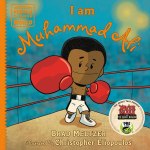
I think this 2022 published biography of Muhammad Ali just might be my favorite.  At 40 pages long and meant for first graders and up, it actually mentions that he is Muslim in multiple places.  So often these biographies about him or Malcolm X fail to incorporate their religion and just relegate their name changes to a footnote or after thought.  The book is engaging, informative, it is sourced, and the illustrations adorable.  My kids and I have read the book multiple times and are still enjoying the detailed illustrations (they even include #muslimsintheillustrations) and text.  Sports fans and even those that are not will appreciate what Muhammad Ali achieved, overcame, and accomplished.

The biography starts at Muhammad Ali’s birth and ends with his fight in Zaire- detailing his personality, growing up, how he got into boxing, becoming Muslim, refusing to go to war, and his biggest fights.  It weaves in how he worked against racism, standing up for his religion, and living life on his terms, at every step.  As the chronological story fades, it shows him lighting the Olympic flame in Atlanta, and the text starts to focus on the lessons that Ali fought to highlight, by encouraging us to continue his legacy.

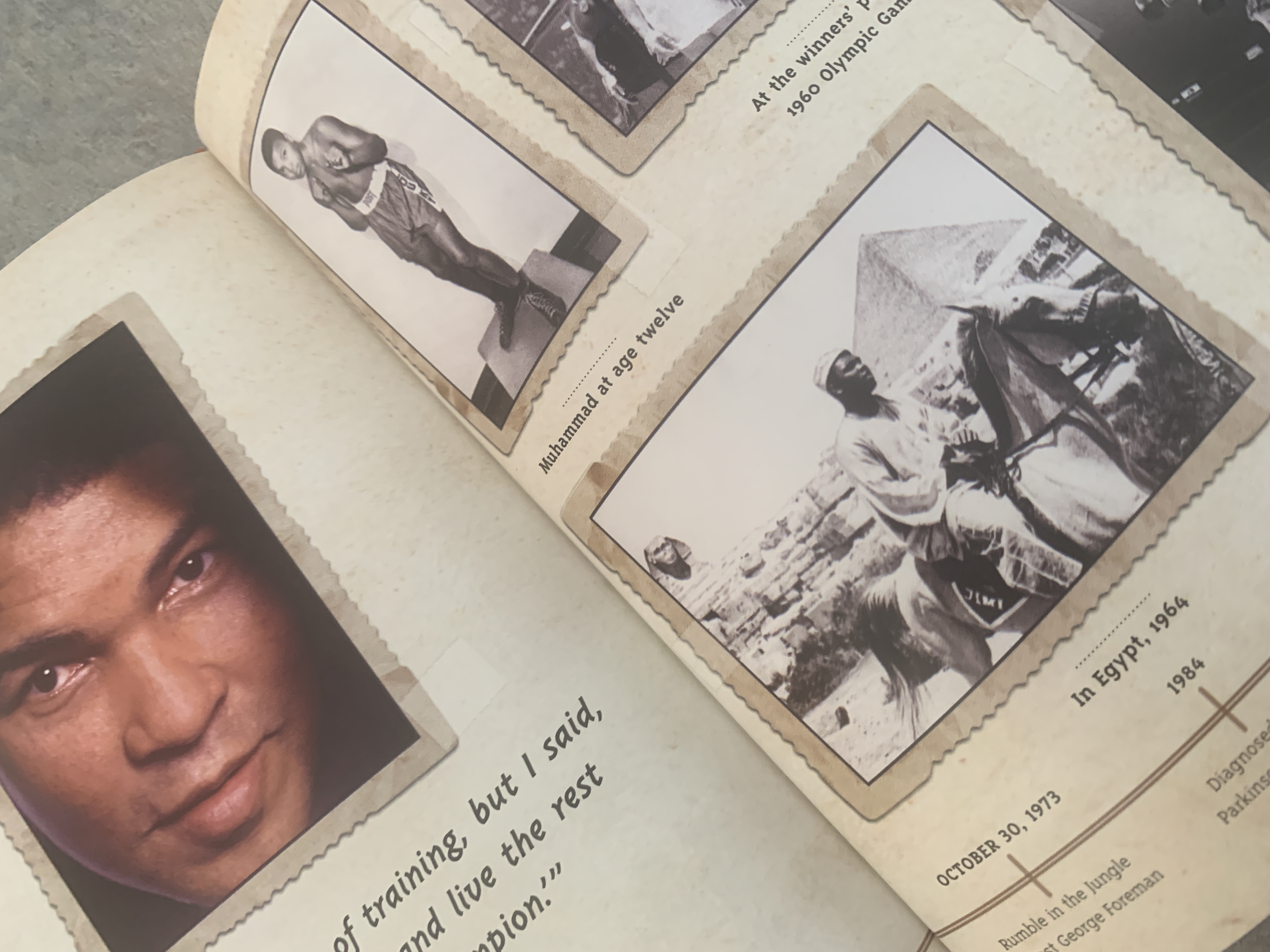
The illustrations show how his message is still powerful and inspiring to athletes, kids, ordinary people-everyone, the world over.  Ali stays depicted as a small child throughout, and the author captures his charisma, charm, and entertaining persona.  The final spread before the sources and further reading suggestions show a timeline of Muhammad Ali’s life and a few photographs of his life.

I need to read the other books in the series to see if they are just as engaging.  Undoubtedly Muhammad Ali’s story is entertaining and inspiring even when poorly written, but I have a feeling this particular biography really shines because the author and the subject matter came together.  I highly recommend this book for families, schools, and classrooms alike.

You can order it at Amazon and if you use this link, I get a few pennies! Thanks!

img_1293

Hope on the Horizon: A Children’s Handbook on Empathy, Kindness, & Making a Better World by Onjali Q. Rauf illustrated by Isobel Lundie

Standard
Hope on the Horizon: A Children’s Handbook on Empathy, Kindness, & Making a  Better World by Onjali Q. Rauf illustrated by Isobel Lundie

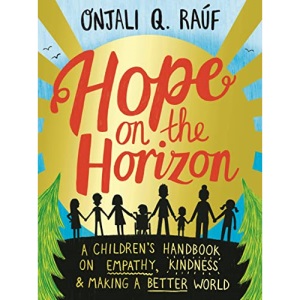
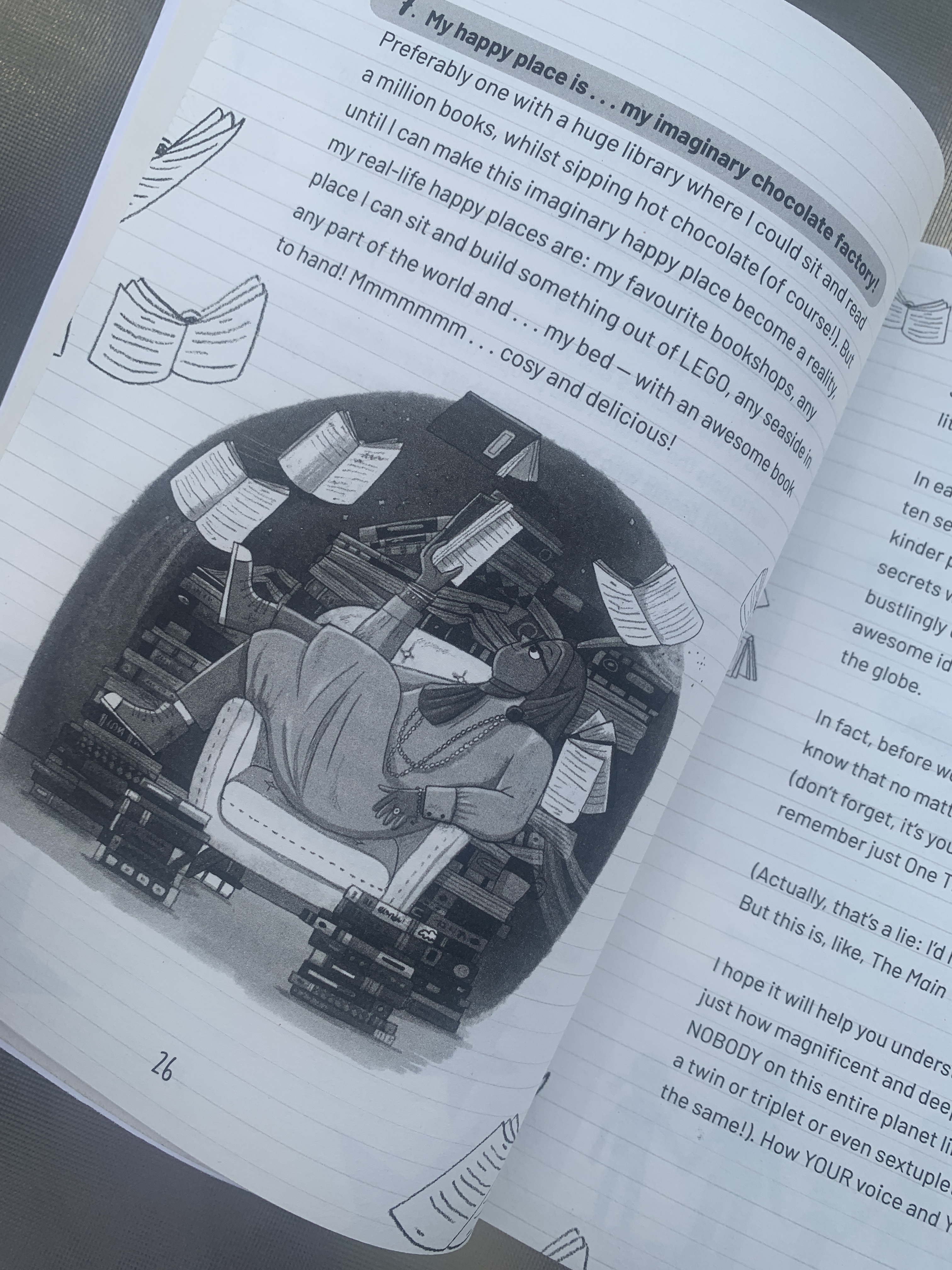
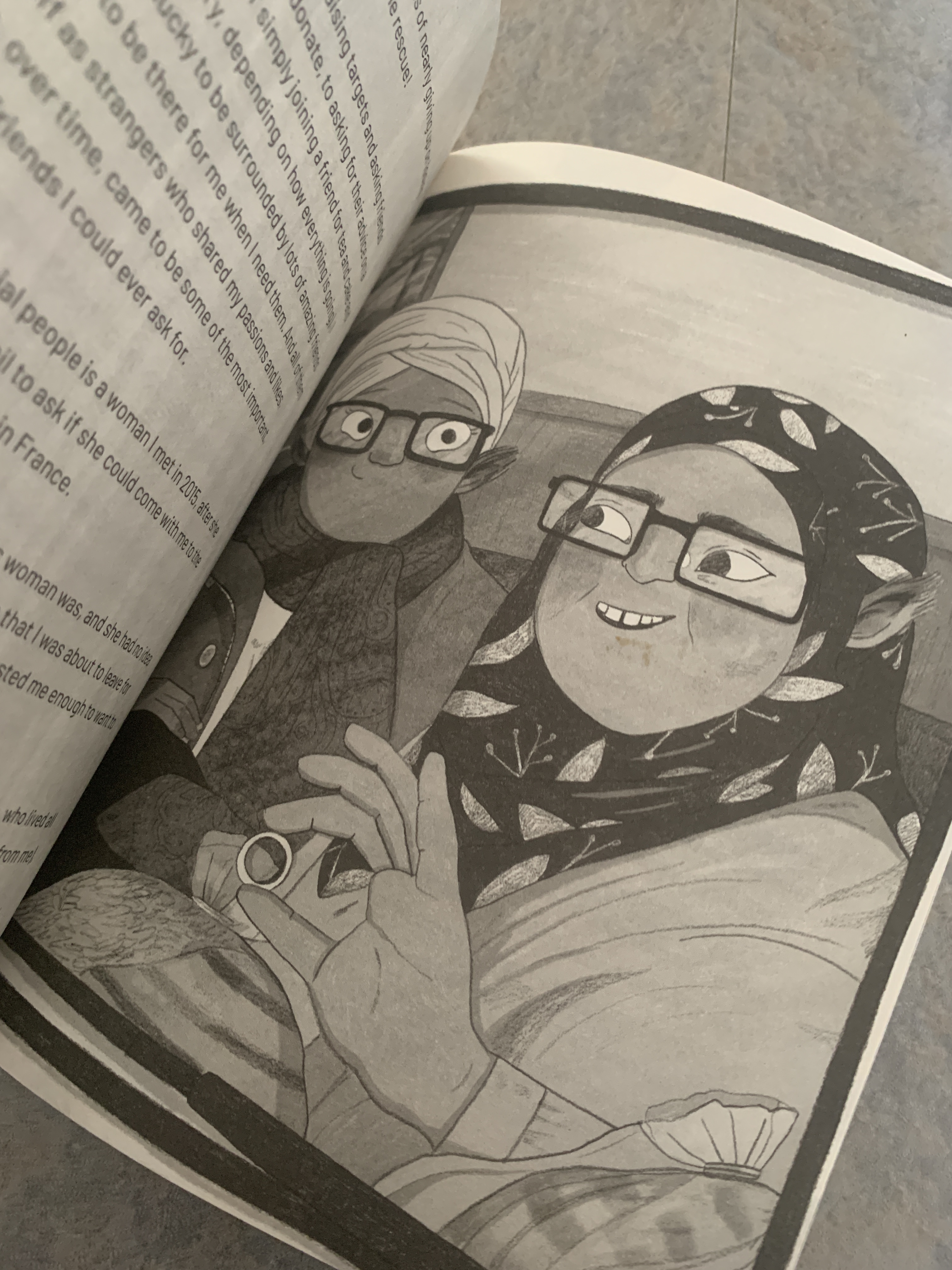
This delightful 288 page handbook pulled me in, inspired me, enlightened me, and allowed me to reminisce about incredible fictional characters from iconic books, tv shows, and movies.  Concepts such as kindness, empathy, friendship, deflecting negativity, seeing beyond labels, and asking for help, are framed around the fictional character’s strengths to introduce famous real life people from the past and present, as well as not so famous people the author personally knows and works with.  Written with the author speaking directly to the reader, there are also calls to actions, questions, prompts, and resources to help mature middle grade readers and up.

SYNOPSIS:

The book starts with an introduction about who the author is and her getting to know the reader, before introducing the concepts the book will cover and how it will go about doing so.  It establishes the super power of kindness and five golden rules.  The 10 chapters of the book then follow a loose format of introducing a fictional character and why the author admires them: Charlie Bucket from Charlie and the Chocolate Factory, Tintin, She-Ra, Superman, Samwise Gamgee, etc., her connection to them and to a theme: hope, being a ripple starter, never giving up. to name a few.  The book then highlights how the character and theme tie in to a cause that the author is passionate about, refugees, education, feeding the hungry, foster care, etc., then spotlights exceptional people the author has gotten to know personally in her activism that have made an incredible difference in the world, before offering a checklist of how you too can take action.  And finally a famous person is celebrated as being the culmination of all the strengths, characteristics, and super powers mentioned.  People such as Greta Thunberg, Albert Einstein, aerospace engineer Mary Jackson, footballer activist Marcus Rashford and more.  Often there are reflections, and the easy banter and conversation between the author and the young reader never leaves the text.  The reader and the connection to the reader is always prioritized and included in the sharing of information, motivation to action, and celebration of individuals real and pretend that have made a positive difference.

WHY I LIKE IT:

There is nothing overtly Islamic in the book, but there are Muslims featured as both famous real life examples and the author’s personal acquaintances.  Most importantly the author is unapologetically Muslim and offers glimpses of her own childhood growing up Muslim in the UK.  And as a hijab wearing Muslim, the illustrations also proudly show her smiling, eating chocolate and being an activist making the world a better place for all.

I love that the tone of the book is optimistic even when discussing difficult themes and heartbreaking realities of society.  The playfulness of the banter keeps the reader engaged and the text light.  Even if you don’t know the characters referenced, the urge to read their stories is a secondary benefit, and one that I think will further young world changers’ critical thinking skills.  Finding the good in people, even if they aren’t real, is such a lens that needs to be used more often, and the book does a tremendous job of stressing this.

FLAGS:

Talk of refugees, homelessness, food insecurities, abuse, poverty. Nothing is overly detailed, but the concepts are touched upon and explained as needed which could possibly be triggering or difficult to fully grasp to younger readers.

TOOLS FOR LEADING THE DISCUSSION:

The book can be read straight through or referenced, you can even thumb through and read sections that appeal to you.  I don’t know exactly who the book will resonate strongest with, but I’ve got my own children reading it, so I will happily report back. I think it deserves a place on every book shelf and even if only portions are shared with a class, the discussion and foundation that it could provide would be incredibly powerful.  I could see an English teacher encouraging essays about fictional character traits in the “real” world being assigned after reading, or History teachers spending time on some of the characters highlighted, it really is a great tool, a handbook, for young and old alike.

Lina, the Tree and the Woodcutter by Eman Salem

Standard
Lina, the Tree and the Woodcutter by Eman Salem

lina

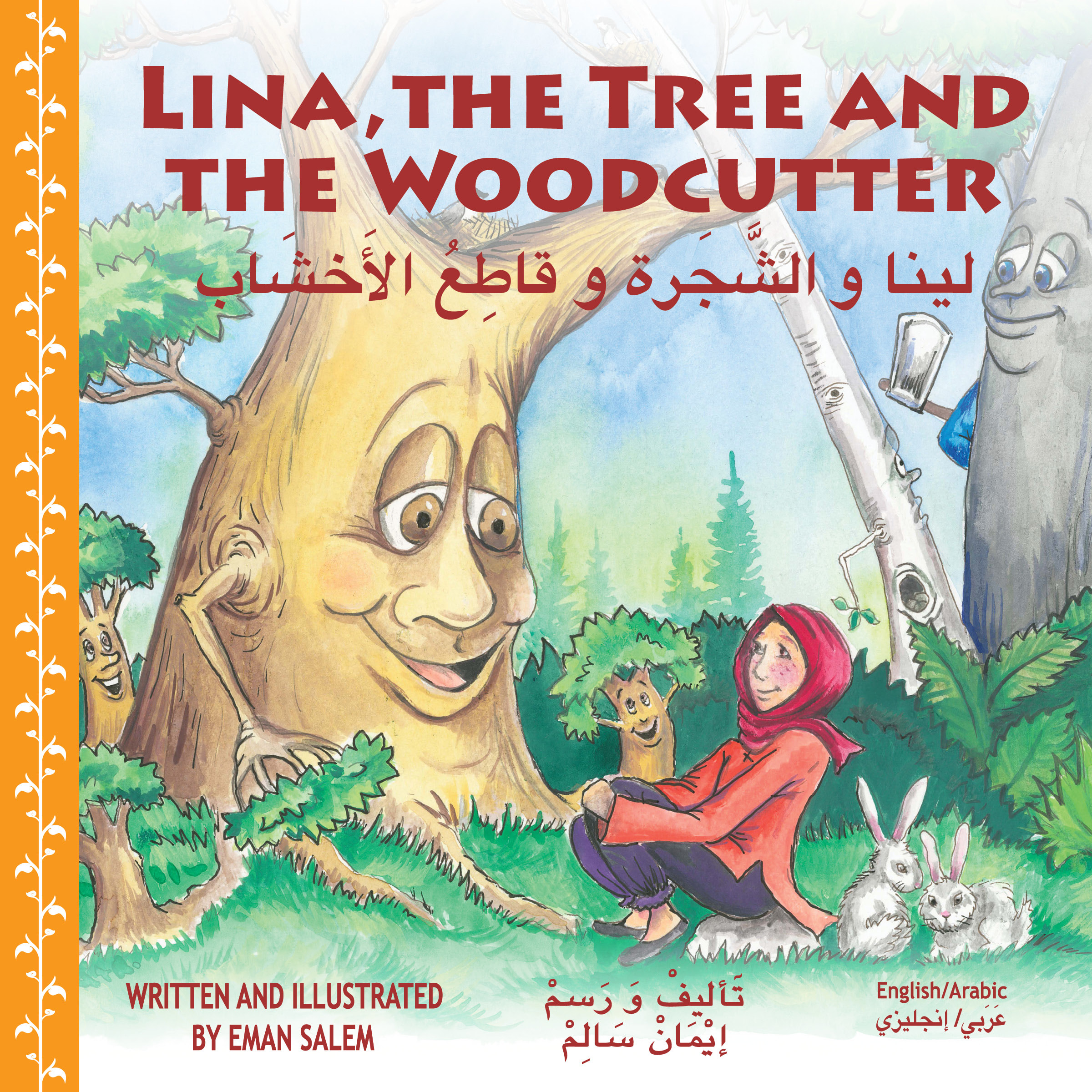
I’ve enjoyed another book in this bilingual series, Little Tree Goes for Hajj,  and was excited to see little tree all grown up and the focus of a book on the environment.  The 22 pages in Arabic and English start out promising, setting the stage, establishing the familiar characters, discussing caring for trees and not harming them for no purpose, but then the book just kind of ends.  It is wordy, the English anyway, I cannot comment on the Arabic, but it is sweet and warm in its own Islamic fiction way.  I didn’t feel like a glossary was needed, it mentions Allah in the text and seems meant for Muslims, so why the definitions of Allah, Hajj, and Mecca are included is a bit odd especially when it uses Christianity and Judaism in the explanation of the oneness of Allah.

img_9825

Little tree is now an old tree and was a friend of Lina’s grandfather, they had traveled to hajj together.  As they sit chatting, they hear a horrible noise and discover it is a woodcutter chopping down a tree.  When the young man stumbles upon the talking tree and Lina they question his motives.

img_9826

He wasn’t chopping wood for fuel, or to build a home, he was just chopping it because he could.  Lina and the old tree explain what was lost with the destruction of the tree and teach him that Allah swt has made people the earth’s caretakers.  The woodcutter learns from his mistakes and apologizes.

I wish the book maybe would have made a stronger point that trees take a while to grow and that sorry is well and good, but not enough to restore what was lost.  I like that the woodcutter wants to learn more, but a few lines detailing what he learns or that he came every day to sit with them or some sort of ending would have been nice.

Swimming on the Lawn by Yasmin Hamid

Standard
Swimming on the Lawn by Yasmin Hamid

swimming on the lawn

This 176 page book about life in Khartoum, Sudan reads almost like a memoir with short, loosely connected chapters detailing a young protagonists day-to-day life growing up.  There is no real conflict  until the very, very end, and the majority of the chapters just seem like snapshots with little to no continuity.  That isn’t to say that I didn’t enjoy all the stage setting and the easy voice detailing a time and place that I know too little about, but I don’t know that most kids will feel compelled to keep reading.  The book is slow and wandering, best suited for lower YA/middle school, if they can be persuaded to read it.  I think the book would do well taught, as some good discussions about Sudan, growing up with an English mother in Africa, the role of religion,  the 1960s, the impact of financial comfort, and the threat of violence would make the book very relatable while also being eye opening.  The power and beauty of OWN voice makes this prose filled book thought provoking and memorable in a subtle and light way.

img_0276

SYNOPSIS:

The standalone chapters follow Farida and her siblings in Sudan in the 1960s.  Their summer vacations, visiting friends, trips to villages, making tea, lots and lots of tea, reading books sent by their Grandma in England, and the abrupt arrival of soldiers.  Told from a child’s perspective the short chapters focus on the events front and center and don’t carry over or carry morals or lessons.

WHY I LIKE IT:

I like that the chapters titles are written in English and Arabic and that Islamic holidays and customs are mentioned.  Interestingly though, the family doesn’t seem to practice.  There is cultural presentation of Eid and Mawlid and talk of hajj, but not of praying or saying Bismillah or inshaAllah in daily conversations.

I wish there was more information about the mom being English and how the parents met, and what cultural obstacles maybe had to be ironed out.  I also wish there was a bit more at the end, an afterward even something that gave some closure or insight into what the ending means for Farida and for Sudan.  The choppiness grows on you, but some stories even at that were too unresolved.  The whole chapter detailing her traveling with her uncle to his village only to find her back at home the next chapter without any reflection on the journey, how she returned, the cousins she met, etc., just seemed unresolved.

FLAGS:

A birth and burying the placenta is described, alcohol is mentioned, fear of a friends dad is hinted at, soldiers being present, father being taken away by force, shootings.

TOOLS FOR LEADING THE DISCUSSION:

I think in a middle school classroom setting the book would have a lot of potential.  Read a chapter and have kids journal their impressions or thoughts perhaps, or have them imitate the style and write about themselves.  It probably wouldn’t work as a book club, but it definitely should be shelved in a school or classroom library.

You are the Color by Rifk Ebeid illustrated by Noor Alshalabi

Standard
You are the Color by Rifk Ebeid illustrated by Noor Alshalabi

you are the color

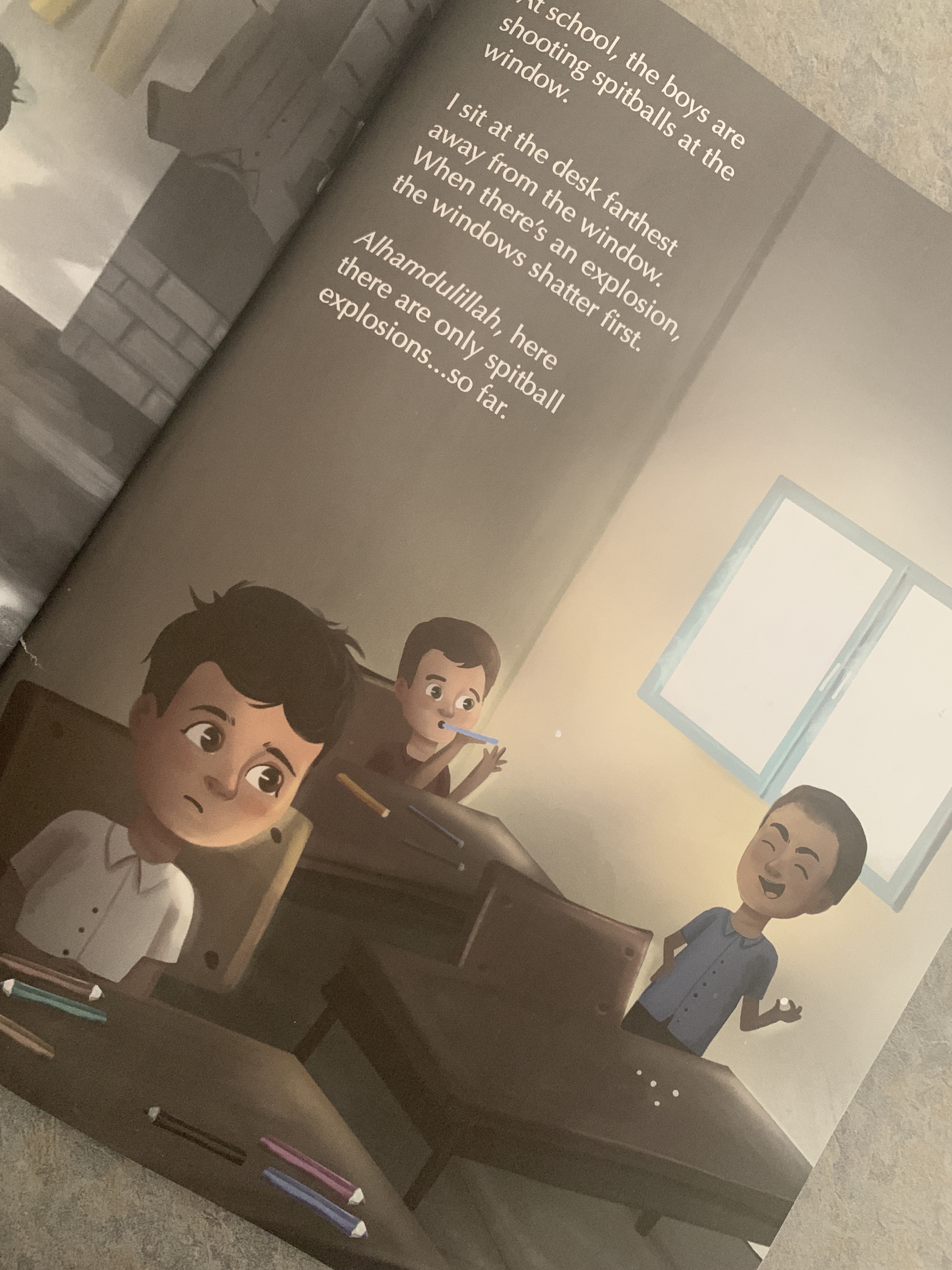
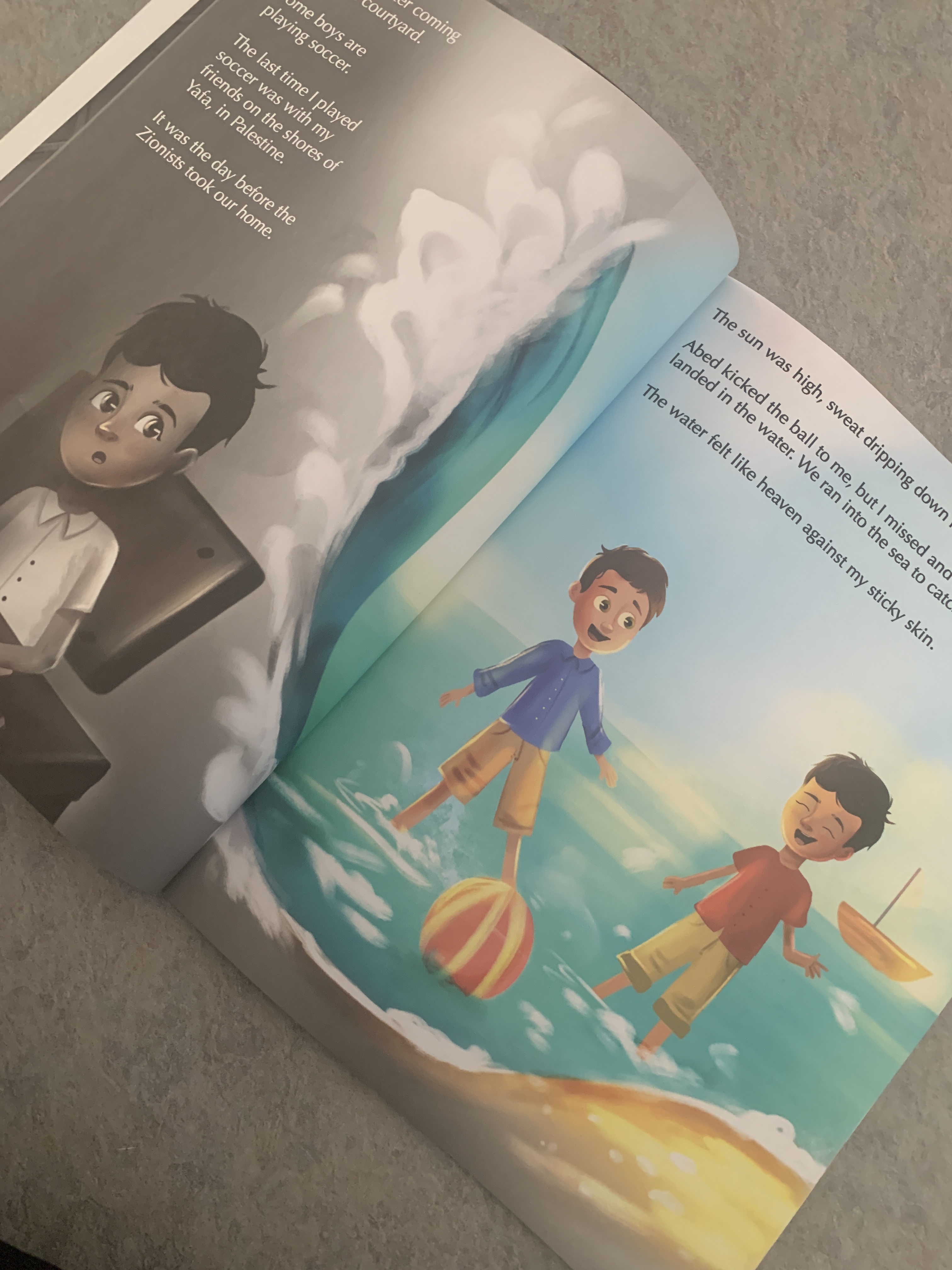
Books like this are hard for me to review, and I have gone back and forth on whether I should post anything or not.  On the one hand, we need books that are unapologetically Palestinian written by Palestinians.  They need to be celebrated and elevated and I want to offer my support to the stories, to the voices, to the authors, illustrators, everyone involved.  On the other hand, if I didn’t love it, why should I shy away from saying so, when I have purchased the book (pre-ordered and changed the shipping address even, to have it delivered to me on vacation because I didn’t want to wait to read it).  The book is emotional, but the last six pages unraveled the whole book for me, and in a picture book particularly of this nature, when you finish- if you don’t have a cathartic pull, you start to find holes in the story as you feel deflated.  The book, I would go out on a limb to say, needs to be discussed and given context even if you are Palestinian.  As someone who is not, I recognize my arrogance in such a statement and am happy to be corrected, but from a literary reviewer standpoint the book needs discussion and additional context.  The Nakba is only articulated in one paragraph in the author’s note.  In the story itself there is no indication that what happened to Thaer happened to so many Palestinians in 1948.  The use of color and how it is depicted in the illustrations is tangible and powerful, but as odd as it is to say, the words got in the way of the story.

img_0713

The book starts with Thaer trudging to school in dull sepia filled pages to begrudgingly sit at a desk and begin an art lesson.  He is glad the spitballs are just spitballs and not real explosions, but the tone is still melancholy.  When he sees boys playing soccer he recalls the last time he played soccer, and the memory comes alive in color.  He was in Yafa, it was the day before the Zionists came and took his family’s home.

img_0714

The teacher, back in muted tones, asks him to draw what has made him smile, and Thaer gives it a try.  Blue for the color of the sea, green for zeit and za’tar, brown for taboon to get fresh bread, etc..  When he takes the drawings home to his mother, she is not impressed.  Drawings are silly and colors aren’t going to bring Baba and Susu back.

img_0716

Defeated, the next day in class, Thaer recalls the men pounding down the door and Baba being shoved in a truck and Susu falling.  The next day at school they hang up some of their pictures and Thaer talks about his sister.  (SPOILER) On the way home Thaer paints the alleyway and brings color to his and his mom’s world.  His mama says that he is the color, and when the following day’s prompt is to draw what you want to be when you grow up it shows Thaer (presumably) on the beach as an adult painting.

img_0715

The disconnect for me occurred with the painting of the alleyway.  I was incredibly invested in the story, my heartstrings were being tugged, I was breaking for this character and his experiences, and it all came to a screeching halt because I couldn’t understand where the paint and the alleyway and the mama’s change of heart all manifested from.  As for the ending, I think I know what the author was going for, but it didn’t connect with any of my kids aged 2-15 nor my mother, a 40+ year early elementary veteran teacher.  I wish I could have taken a picture of their faces as she read the book to them.  The frozen expressions of huh and confusion at the end, until my 11 year old to broke the awkward silence to ask if the boy wants to be a painter or a father or an adult?  Those facets coupled with the often advanced vocabulary, makes the book an important one, but one that needs a lot of outside commentary to connect with the readers and to further the conversation about Zionism, al-Nakba, the occupation, and the continued oppression of Palestine.

There are flags of loss, kidnapping, sorrow, violence, etc., that parents will have to gauge if their children can handle. I’m not sure what age group is the best fit, the murder of a young girl, the forced displacement from one’s home, the removal of the father are all heavy themes.  I appreciate that it isn’t “watered down” for a western gaze so to speak, but I wish there was more about what happened to the dad, is there hope he is alive? I wish there was something about this not being an isolated reality for the protagonist and his family.  I wish there was some conversation or connection between the mother and son, because the loss of continuity really derailed the story.

As for the idea of the story, and the use of the illustrations to physically show two worlds I think is a great idea, it just sadly fell apart for me at the end: the faltering conclusion and the loss of emotional buildup that the first two thirds of the story worked so hard to create.

Welcome to the New World by Jake Halpern illustrated by Michael Sloan

Standard
Welcome to the New World by Jake Halpern illustrated by Michael Sloan

new world

I really like the concept and approach of this 192 page non-fiction graphic novel.  It isn’t a memoir or OWN voice retelling, it is basically an in-depth news story about a Syrian refugee family that has been fact checked and then illustrated.  Unfortunately, parts of the story are really choppy and unresolved, details shared for no purpose and occasionally reinforcing of stereotypes.  The book is an easy read and the Muslim family is shown to practice and be fleshed out, but more than once I found myself questioning what the author’s commentary was suggesting/implying based on what was being included.  I allowed my 12 year old son to read it before I was finished, but the last few pages had both misogynistic and homophobic slurs coming from bullies so I made sure to discuss that with him.  I think upper middle school to YA is probably the ideal readership because of the subject matter of escaping war, facing financial insecurities, PTSD, bullies, islamophobia, and navigating a new environment when you are not quite a child, but not yet an adult either.

SYNOPSIS:

Naji’s family is undecided if they should leave Syria or not.  Part of the family has permission to travel to Connecticut in America, but part of them still do not, including Naji’s grandmother.  The war has already imprisoned Naji’s father and uncles in the past and with the US election showing Trump having a chance, they feel like they need to make a decision quickly.  Naji loves all things American and is the only one in the family anxious to get to the US and get on with life, but when the moment of saying good-bye arrives, he has doubts.

Once they arrive in America, all their doubts multiply as life is difficult, help is hard to come by, and day to day fears of safety have not been left behind.  School, finding jobs, learning the language, and facing hate are just the big things that plague a family who has left everything to start over in this detailed account that follows Naji and his family as they navigate their new world.

WHY I LIKE IT:

I like that the book has been approached as a news article.  I just didn’t like the unresolved threads that seem to take up so much of the narrative only to be abandoned.  I really struggled with the idea that Naji knows America and obviously media is global, but is shown to be confused by a dining table.  I didn’t like the commentary of Naji’s sister Amal and her hijab, I find it hard to believe there aren’t other hijabs in the school or larger community and why it is made to be such a big deal by her, and those trying to help her.  It would seem small after everything she has been through.  I do like that there are a few other Muslims in the school and at least they discuss that there is not a nearby masjid.  I wish other Muslims would have been around to help settle the new family.  I know a few groups that helped in immigrants in New England, so that there were no Muslims in the welcoming groups seemed hard to accept.  By and large it does show Islam being practiced, not just names and hijabs, which I appreciated, but for a book that is based on a real family, with graphics, I really expected a stronger emotional impact that ultimately for me was just not there.

FLAGS:

Death, abuse of power, war, language, bullets, shooting, kidnappings, detainment, destruction, kids making out in hallways, implied rape/sexual assault, death threats, racism, islamophobia, misogyny, slurs, name calling, differential treatment, fear.

TOOLS FOR LEADING THE DISCUSSION:

This wouldn’t work for me for a book club selection, but if I ever teach a journalism class again, I think I would some how incorporate this book as a way to show what journalism can be, and also as a clear way to show how what parts you include and what parts you keep out affect the messaging of the story as well.

Let’s Think about Allah’s Great Garden by Ali Gator

Standard
Let’s Think about Allah’s Great Garden by Ali Gator

allah's garden

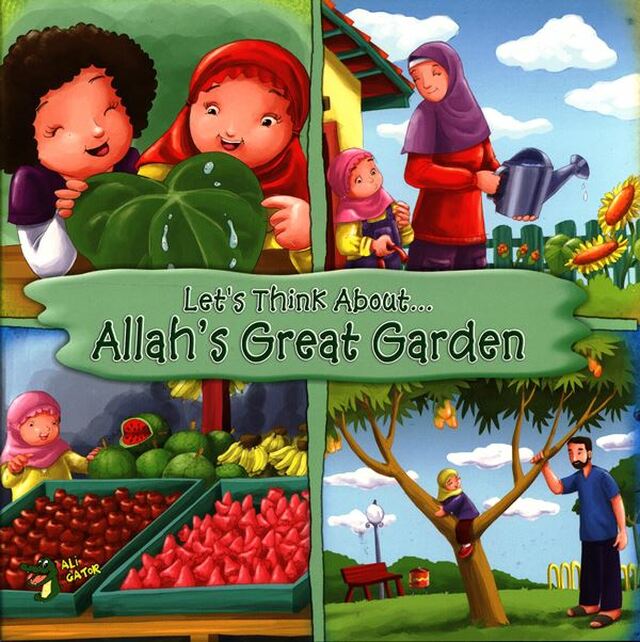
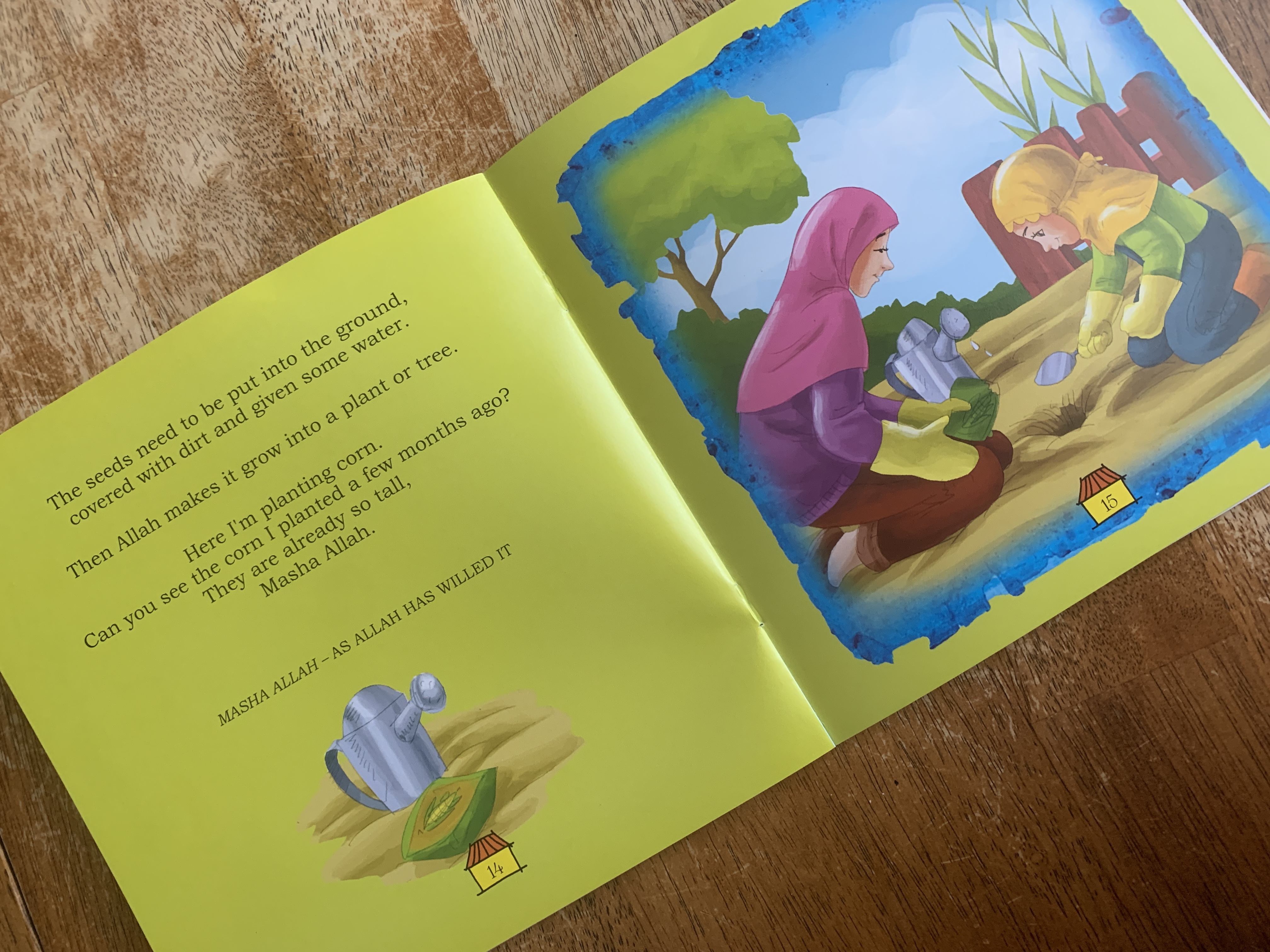
At 22 pages this book’s title aptly describes the contents within: at times factual, sometimes breaking down the fourth wall and asking readers to do something engaging, at times fictionalized, and often meandering and reflective.  The book is all over the place and only cohesive in theme.  It has sat on my shelf untouched by my children for quite a while, but when I needed options for the library during Earth Day, this book did a great job in facilitating discussion with pre k to 1st grade.  It isn’t a story time book so to speak, but it gets kids thinking and can be tailored to their level of discussion.  I don’t think that is how the book was intended, and as it is written it is rather unimpressive, but when pulled apart it did serve a very specific purpose.

img_9837

The book starts out with a few lines about Allah’s blessings of all things particularly trees and plants and gardens.  I wasn’t sure if it was trying to rhyme or not, but I think the first lines are just incidental rhyme as the flow and words quickly unravel. It talks of climbing trees and the narrator’s father telling him to be careful. It then discusses watermelons and how they grow in the ground, not on a tree and asks readers if they can see the watermelon seeds in the illustrations.

img_9836

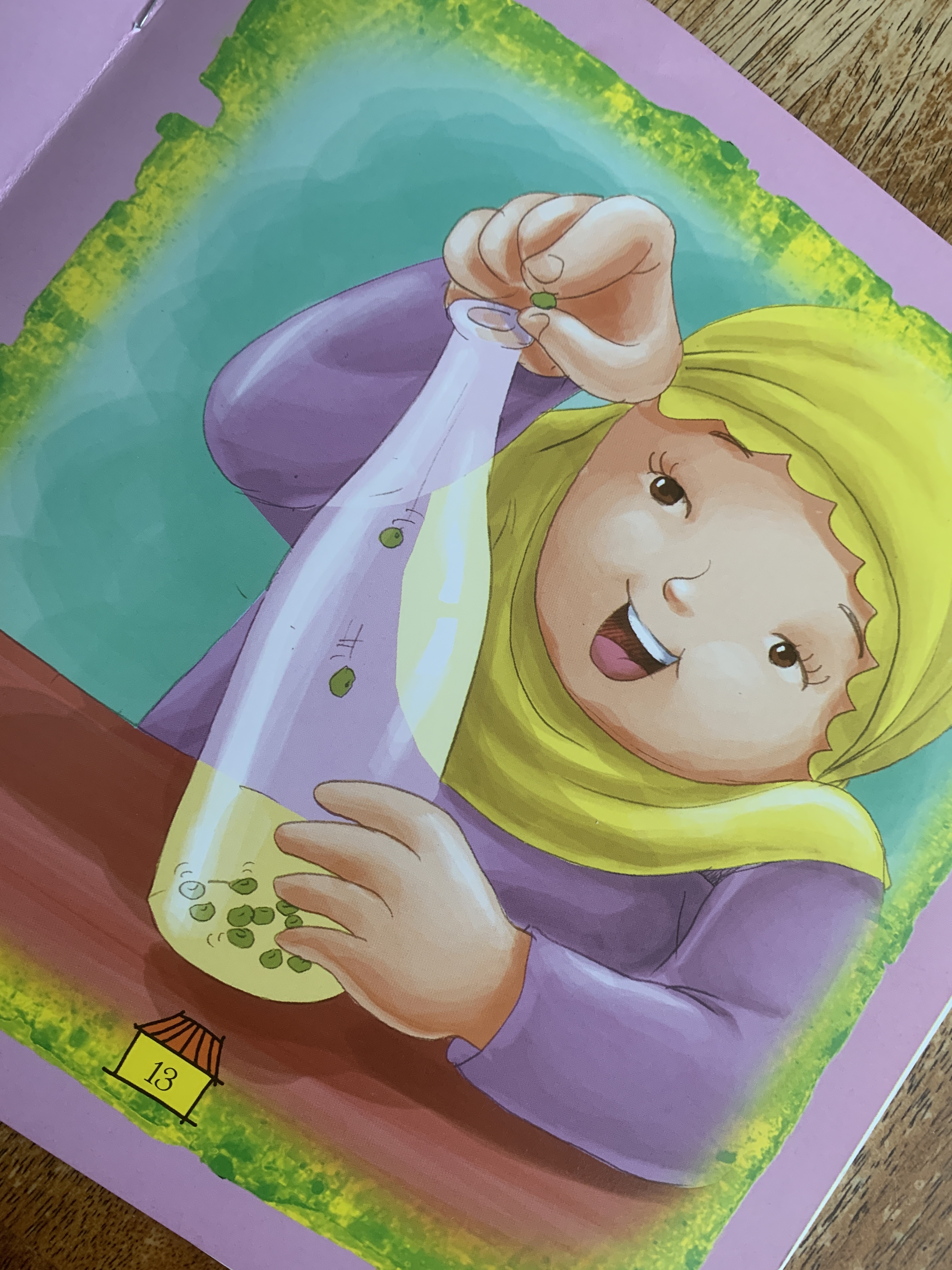
The book focuses on the life cycle of plants: seeds, flowers, trees. Drawing on that information it then shows the little girl collecting seeds to plant.  It then talks about the planting process and the needs all growing things have to prosper if Allah so wills it.

img_9838

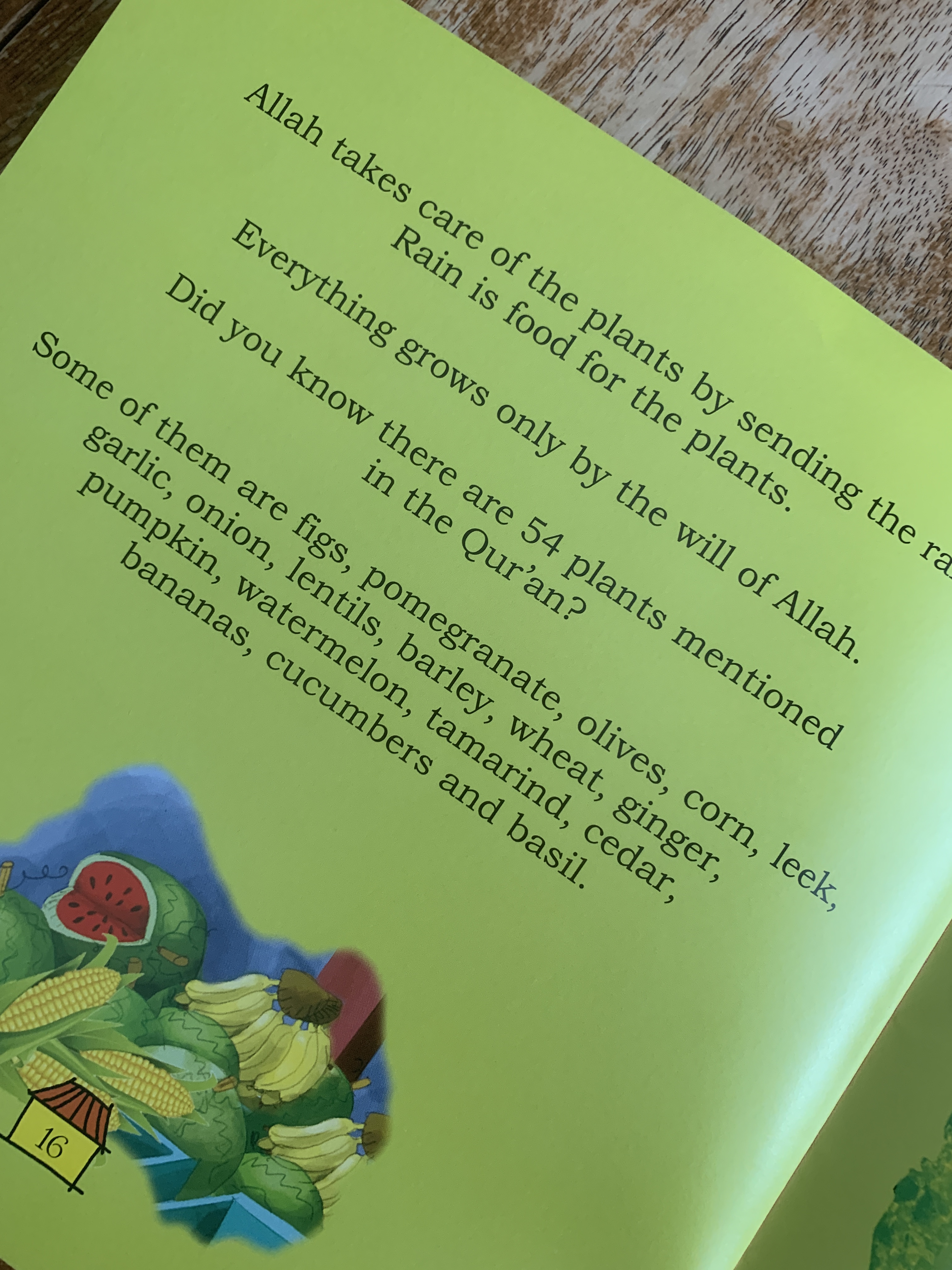
Then the book gets interesting and starts to discuss the plants mentioned in the Qur’an before returning back to the half hearted narrative remarking on how the flowers complement the color of their house.

img_9839

The story seems to then end, but it isn’t denoted that the remaining pages are factual or set aside as back matter, it just pivots and begins discussing rain in Surah an-Nahl, Trees in Paradise as mentioned in Qur’an and Hadith, and then again, but this time in table form, the fruits and vegetables mentioned in the Qur’an, and highlighting dates specifically.

img_9841

The book is all over the place, and I doubt it will be read again until next year.  There are a few other books that have come out about his topic, and I plan to look in to them to see if they work better for story time readings and child engagement.