Tag Archives: Muslim Characters

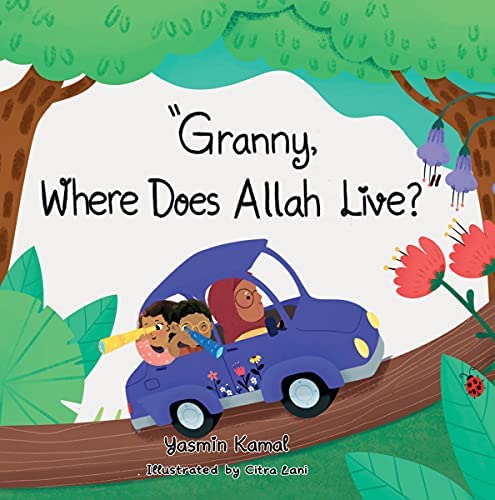
“Granny, Where Does Allah Live?” by Yasmin Kamal illustrated by Citra Lani

Standard
“Granny, Where Does Allah Live?” by Yasmin Kamal illustrated by Citra Lani


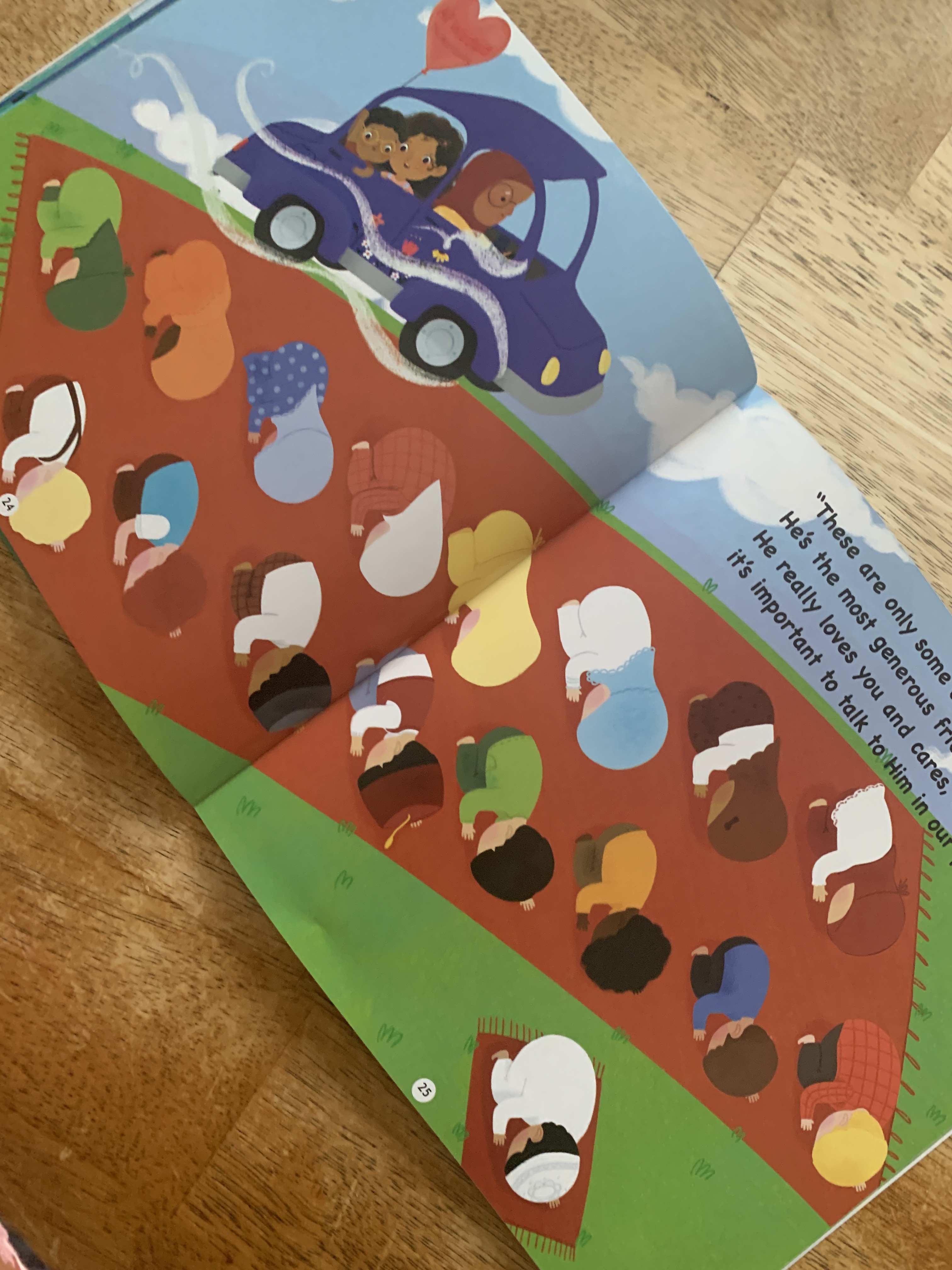
This 32 page picture book for 3-6 year olds takes readers and listeners on a car ride with Granny as questions are asked, sights are seen, and love is spread.  The rhyme is actually pretty decent, the explanation of Allah swt being on a throne above us wherever we are adhered to, and the illustrations are bright, bold, and have a lot to hold little one’s interest.  Overall, the banter between the kids and their Granny, the drive to the mosque being filled with joy and love, make me overlook a lot of little annoyances.  The book packs a lot in, but the voice and tone is easy and I think most kids will see the connection of asking where Allah is, to asking why we have to go to the mosque, to why it is important to talk to Allah swt in our prayers, etc., as a way to have their own questions touched upon.  I do wish the book was a little bigger and perhaps hardbound, to make story time sharing a possibility, the book is 7.5 x 7.5, so good for little hands and sufficient for in lap reading.  The book concludes with three activities that incorporate a few of Allah’s beautiful names.

The book starts out with a young boy and girl excited to be spending the day with their Granny and going on a ride in her special car.  No idea why it is special, but it is purple and has flowers painted on it, so lets go! The kids love to ask Granny questions when they drive.  So after saying bismillah, they wonder why people don’t have tails or shells on their backs, or where they are going, or if they can have ice creams. 

As they head to the mosque to meet Grandad  they wonder if that is where Allah (swt) lives.  Granny tells them no, so they ask if He lives in the sky, when she says no, they wonder about in the trees or in the sea.  Finally she says that they “don’t have to go anywhere to find Allah, His throne is above us where ever we are.”

She then details how we can be reminded of Allah in things around us, nature, animals, land formations and then tells the children Allah is the most generous friend and it is important to talk to Him in our prayers. The children ask what we can tell Him, and Granny shares that we can tell Him everything and anything because He always hears.

Granny then explains that when we do good, we make Allah swt happy and when we aren’t nice we make him sad.  So then the kids want to know why we have to go to the mosque, Granny replies, to be part of a community.

The book is a string of questions, so it doesn’t come across as overly preachy, even though it is Islamic fiction, and the voice is natural.  It sounds like a conversation a grandma and some kids would have, I’m guessing the book was spawned by some real life experiences.  My kids and my mom definitely have this relationship.

 All this though, isn’t too say the book is perfect.  If  you read my reviews, you know there is always going to be a little nudge to try and elevate it from my perspective for the next go round. So with that in mind, the book does read a little long, the tangents get a little away from the simple articulate answer of stressing where Allah swt is, the text runs over the pictures a few too many times, and the people praying are not foot-to-foot shoulder-to-shoulder.  There are no salutations, saw, or asterisks after Allah. The word Jummah is not used although they are going to the mosque on Friday and a lot of people are gathering in the day, and the word mosque is used, not masjid.

The pictures are fun and will appeal to kids, especially when the car goes all magic school bus and starts flying, and going underwater.  I hope this is the first book in the series as it really does have potential to present answers to kids questions in a joyful colorful way.

Book available on Amazon 


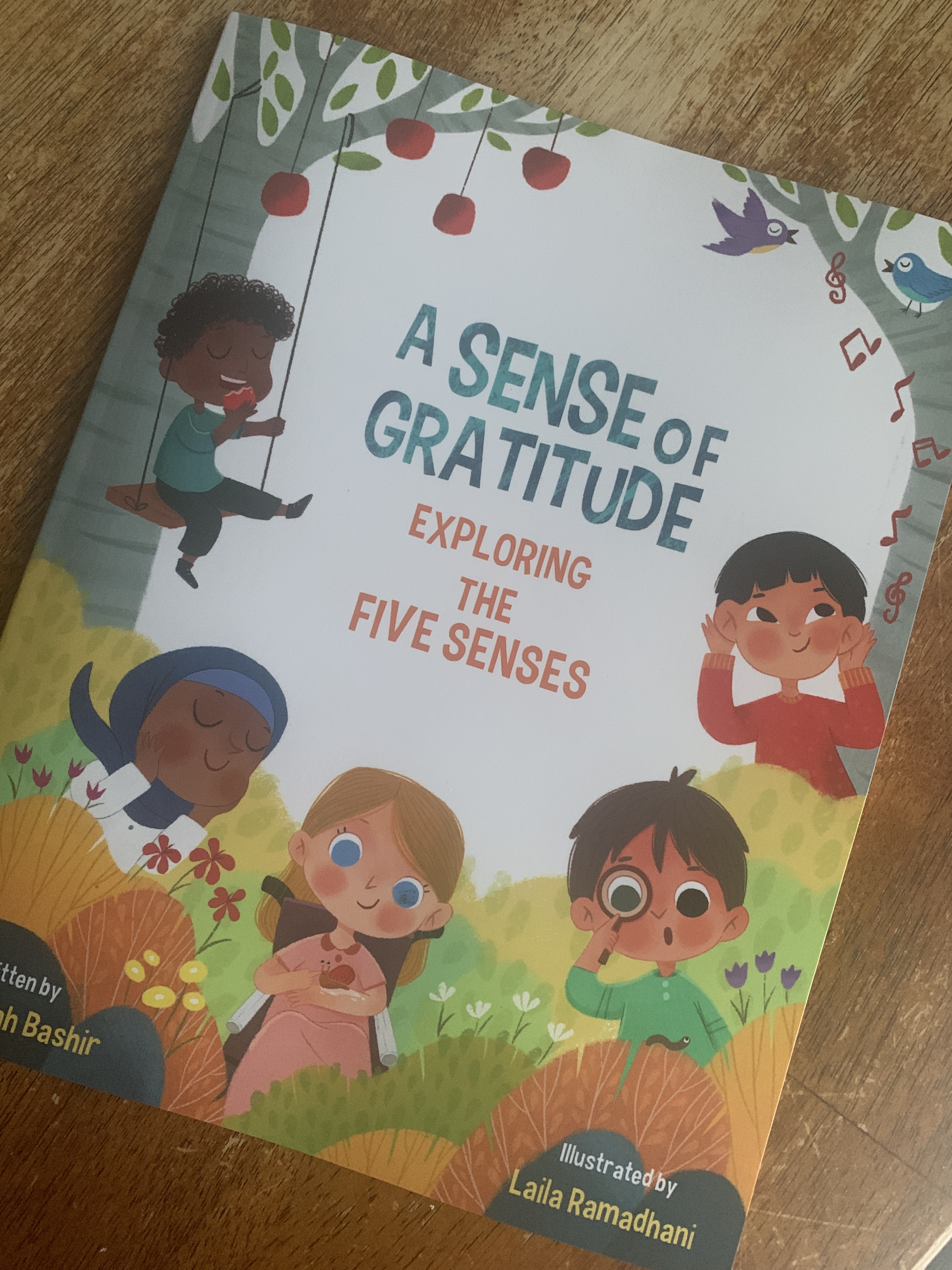
A Sense of Gratitude: Exploring the Five Senses by Halimah Bashir illustrated by Laila Ramadhani

Standard
A Sense of Gratitude: Exploring the Five Senses by Halimah Bashir illustrated by Laila Ramadhani

img_4855

As a story time host for littles, you always need books about the five senses.  Additionally as a story reader at an Islamic school, thanking Allah swt while talking about your senses and the world around us is a staple year after year.  So purchasing this book with large adorable pictures and claims of rhyme was an easy decision to make, and while it will get used, sigh, the rhyme and lacking rhythm is terrible.  There’s also frequent illogical sentence structures and a bizarre tangent- two pages on wafting.  The book is for toddlers through kindergarteners, not kids learning experiment safety protocols.  @muslimkidsbooknook did a wonderful Instagram post regarding rhyme in kid’s books, and this book really would have benefitted from some additional editing and outside eyes reading the book aloud repeatedly.  That being said, the book will still be used and will be enjoyed with real time editing.  A positive about the book, in addition to the illustrations, is Allah (swt) in Arabic script.  But overall, it really could have, and should have been so much better.

The book starts with a note to grown ups reminding them to stress the importance of being grateful and exploring God’s creation.  It starts with what eyes can be used for, stressing the beauty in nature. and moves to the nose, and has the pages on wafting chemicals, enjoying baked goods, and saying please pardon when passing bad smells.

Tongue is next and stresses that sweets are not nutritious, and then assumes that veggies and fruits are unliked by children, but the narrator admits that they enjoy consuming them.  Hands and skin- touch and feel, and also convey love.  As an FYI- the text states and illustrations show kids petting a dog. The final sense of ears and the gift of hearing wraps up the book.

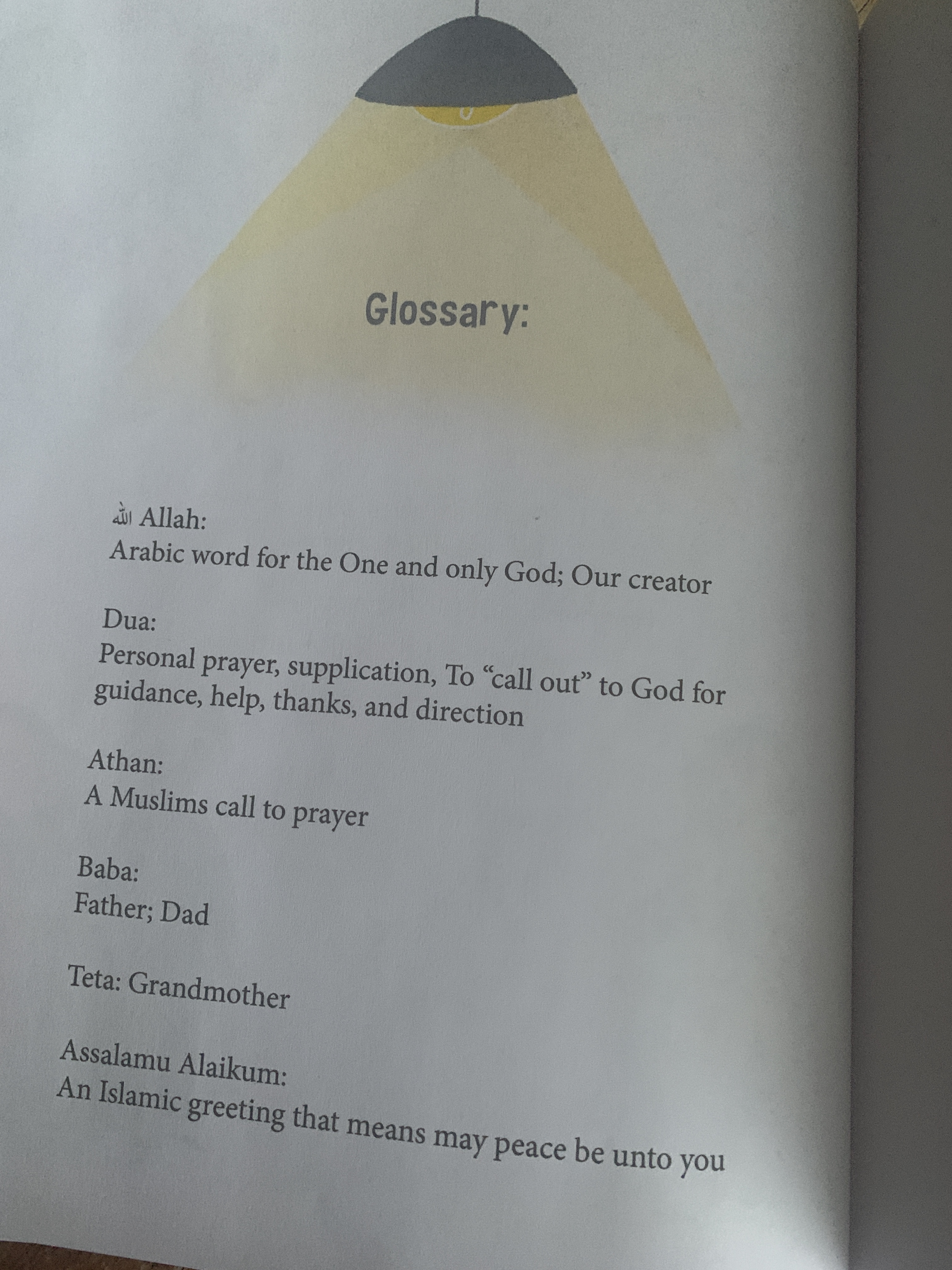
I’m terrible at grammar, really bad, but even I know not to say “colors like purple,” it should be colors “such as” purple, not “smells like Teta’s baked cookies,” but smells “such as” Teta’s baked cookies.  The formatting on a spread seems off as well with “Like slimy frogs” being under a a two line refrain and the rest of the sentence, “and hairy dogs…” being on the next page with another line and a half, it throws you off when reading aloud to keep some rhyme and rhythm going, every. single. time. On some pages the chopping of normal speech structure to make the “rhyme” is difficult to understand, and I don’t think the glossary, nor putting (God) in English was particularly necessary.

My favorite pages are when they tie directly back to ibadah and Islam, hearing the athan, using your hands to make dua and the little rhyme that starts and concludes the book. Truly the concept makes the book important on a shelf and the illustrations make it attractive, the text needs some editing.

img_4866

The Love Match by Priyanka Taslim

Standard
The Love Match by Priyanka Taslim

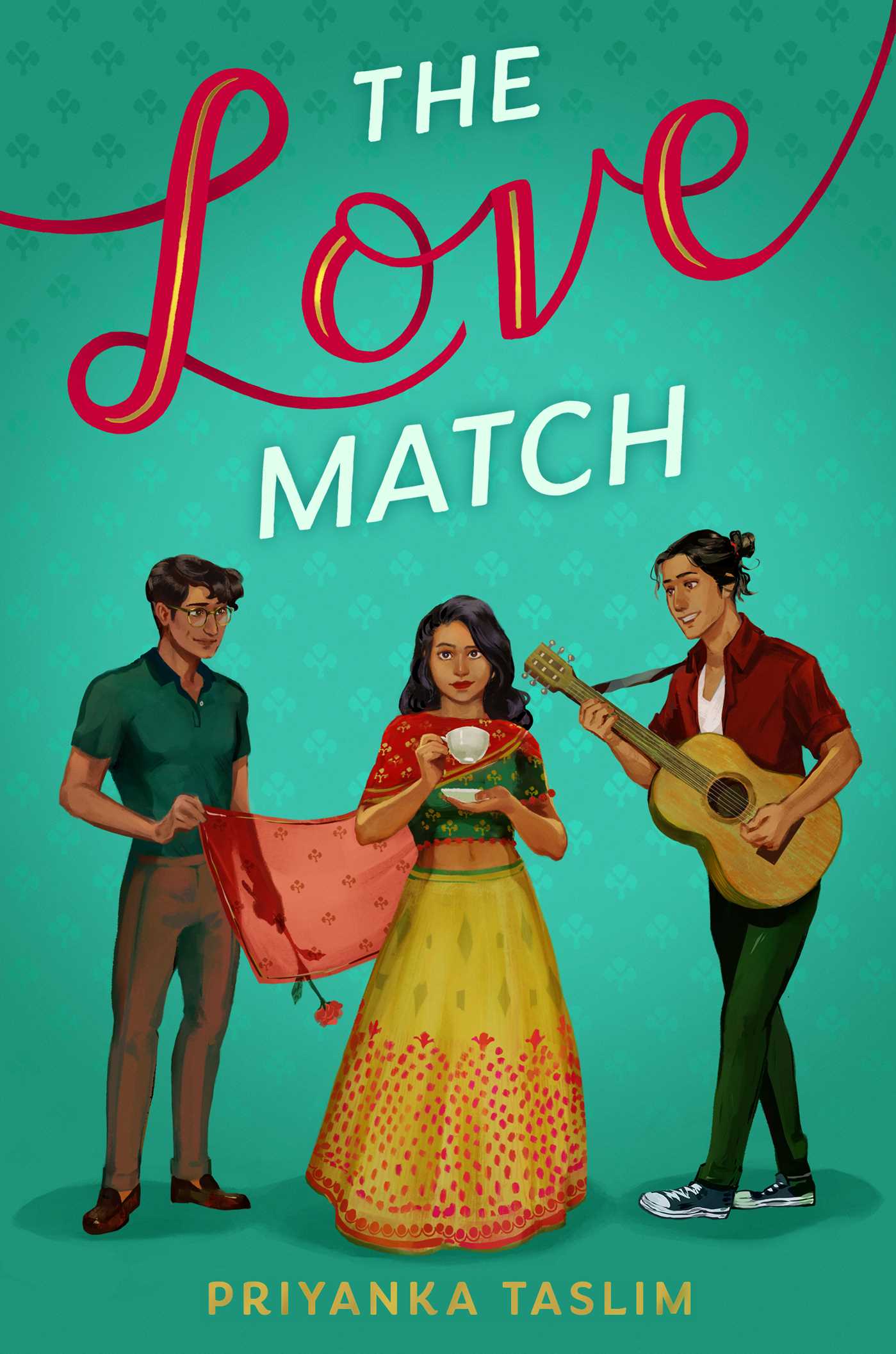
This new YA book features Muslim characters, but is not a religious conscious read that fits in the halal category.  There is a lot of Islam: waking up for fajr, celebrating Eid, a hijabi, mention of jummah, but the OWN voice rom com sets boundaries based on Bangladeshi culture and American perspectives.  The book does not other, or have internalized Islamophobia, or fall in to tropes of oppression and rebelling- quite the contrary- it normalizes everything: LGBTQ+ relationships, dating, music, etc.  The book is well written from a literary perspective: easy read, fleshed out characters, resolved plot lines, I wish there would have been more slow burn and heightened emotion, and cathartic release, but it happily held my attention for 388 pages, so I can’t really complain about plot holes or development.  The problem I have as an Islamic School Librarian is the non issue dating and romance is for the characters with their parents knowledge, both lesbian and heterosexual.  The book doesn’t get graphic, in fact there is only a handful of kisses, but there is a lot of hand holding and pdas in front of parents and even a sleepover with a lesbian couple in a Muslim family’s home, again, nothing “racy” occurs, but the normalization is worth noting for those thinking a Salaam Reads book is going to be a more Islamically centered publication.

SYNOPSIS:

Zahra Khan has graduated high school, and while she’d love to be heading to Columbia to study writing with her best friends, she is stuck deferring her admission and scholarships, and hiding her dream to be an author.  Two years earlier her father has passed away and Zahra works in a tea shop to help keep a roof over the heads of her mother, grandmother, and siblings.  In the Bangladeshi community in Patterson, New Jersey Zahra’s mom imagines arranging a marriage to a wealthy family for Zahra to ease their financial stresses.  When a potential match comes a possible reality, Zahra takes control to try and keep the peace and keep her dreams within reach.  In Jane Austin-y feels, a love triangle emerges, friends step up, culture and family touchstones shared and appreciated, and decisions about the future will have to be figured out at 18 years old.

WHY I LIKE IT:

I loved how easy a read the book is, the cultural framing was warm and rich and never overly explained or apologized for.  It is what it is, it is who the characters are, and while at times they push back on the negatives, it doesn’t disregard the love that exists at the core.  Unfortunately, I really struggled though with the ease in which the characters date with their parents’ knowledge, hold hands, cuddle.  I really couldn’t imagine a practicing Muslim family being so supportive of a lesbian daughter in the way that the Tahir family is and allowing a sleepover, nor could I see a hafiz attending musical concerts and Bollywood movies or an imam passing on “love” notes, even side comments about a loan between mother and daughter being paid back with interest felt off.  I know I know, there are lots of shades of Muslims, but the normalcy of haram I feel in a review of this book should be noted. It isn’t side mentions, they are central to the story and large portions of the book.  The reason I also feel they are worthy of note, is because the book includes a lot of Islam as well.  The characters pray and fast and eat halal.  They are conscious of chaperones in some settings and keeping things appropriate.  There is no doubt that the characters are Muslim, but I think intentionally, to avoid perhaps critiques such as mine, Islam is not used as a reason to do or not do anything, Islam is not used in the thought process or conscience of the characters, culture is.  There is no haram police setting boundaries, it just isn’t what “good Deshi girls do.” To be fair, I don’t think the author has ever claimed that this is a halal love story, or that the characters are exploring their Muslim identities, it is a love story that features Muslims is all.

FLAGS:

Straight and sapphic relationships, secret relationships, kissing, hand holding, hugging, lying, music, loss, bullying, interest.

TOOLS FOR LEADING THE DISCUSSION:

I would not be able to use this book, it would be very damaging to be given to a Muslim child from a Muslim teacher in an Islamic school.  It normalizes a lot of haram in a familiar Islamic framing that I think would really confuse YA readers who see themselves and see no push back or consequences for actions they know to be against Islamic ideology.

House of Yesterday by Deeba Zargarpur

Standard
House of Yesterday by Deeba Zargarpur

house of yesterday

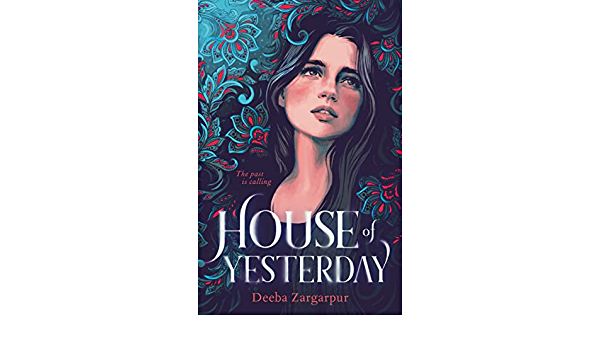
While reading this 320 page YA supernatural/contemporary book-I couldn’t turn the pages fast enough.  When finished- I was bothered that certain threads weren’t resolved, now that I’ve ruminated a bit- I think the vagueness of the author’s prose in sharing her “fever dream” on paper has lingered and the gaps not as troublesome.  The author’s OWN voice Afghan-Uzbek Muslim identity adds layers to a story that is both haunting in the literal sense and familiar in the immigration inter-generational traumas and secrets shared.  Even deeper though, the book pokes at universal themes of regret, holding on to the past, family, friendships, and grief.   The book’s characters identify as Muslim, but the story is not Islamic, nor is there much religion save a few salams and mentions of Eid.  The supernatural elements in the book, whether you understand it to be ghosts, or personified memories, or jinn, are a large part of the book, but are not framed in a belief or spiritual manner, and while some may find it Islamically off-putting, I felt the book explored what the main character was enduring and what the weight of the past was doing to her, didn’t necessarily cross the haram line.  Her father has a girlfriend he is looking to marry, but it isn’t celebrated, and there are close male/female friendships, but the book is relatively clean for the genre and would be a good fit for high school readers and up.

SYNOPSIS:

Summer on Long Island has Sara retreating into herself.  Surrounded by nearly a dozen aunts and uncles and numerous cousins, it is the separation of her parents and trouble with her best friend that makes getting out of bed every morning a challenge.  As a result, her mother ropes her in to helping with her latest remodeling project.  When she enters an old crumbling house one morning to take “before” pictures, she starts seeing things, and feeling things.  Things about her past.  Things about her beloved grandma, Bibi Jan, who is alive and deteriorating from dementia.  What is the house trying to tell her? Why won’t anyone tell the truth?

WHY I LIKE IT:

I love the mystery and the chills of the story.  As the reader you aren’t entirely sure where the story is headed, what you are to do with the bits of the puzzle you are given, but the intrigue to find out pulls you forward.  That being said, the book does reads debut, a few of the side story lines are not fleshed out enough to feel important, satisfying, or resolved and they come across as being abandoned.  I would have liked to see more of Sara and her father’s relationship, the details don’t seem to fit, and the continuity seems halfhearted.  At times so does the “night” it all changed with Sam.  I like the interpretive vagueness of the supernatural threads and that they are up for interpretation amongst readers not just at the end, but throughout the book.  I also like the family’s closeness even when they are disagreeing. For most of the book Sara and her cousins aren’t portrayed as particularly close and I didn’t invest time to differentiate one from another, but by the end, I felt that they were grounded and different and relatable, and I am not sure when that change occurred.  At times the writing seemed a bit repetitive, but the lyrical style would then catapult the story ahead.  There was one place that the fourth wall was broken though, and I was bothered by that slip.

Overall I loved that the Uzben Afghan culture sprinkles showed immigrant nuances, and that the love between the generations countered the trauma being shared as well.  The messaging is subtle but powerful long after the last page has been read.

FLAGS:

For the most part the book stays clean, the father has moved on and has met someone he would like to marry, the mom and aunts briefly recall sneaking out to attend a prom decades earlier.  There is mention of a child bride, and swimsuits, tank tops, and cocktail dresses being worn with no second thought.  For a YA book, the flags are incredibly minimal, save the “ghosts”(?). There are flags of a death that is detailed, the book is “spooky” at times, there is mental health, divorce, pain, dementia, abandonment, theft, running away, and fear.

TOOLS FOR LEADING THE DISCUSSION:

I would love to read this book with some high schoolers.  It is a quick read that would allow for a lot of self reflection, arguments, and entertainment.  The book is available here and releases in a few days, so if planning to purchase, please consider preordering and showing your support.

Iman’s Sunnah Adventures: Mama Once Told Me by Sharifah Huseinah Madihid illustrated by Lakhaula S. Aulia

Standard
Iman’s Sunnah Adventures: Mama Once Told Me by Sharifah Huseinah Madihid illustrated by Lakhaula S. Aulia

img_4560

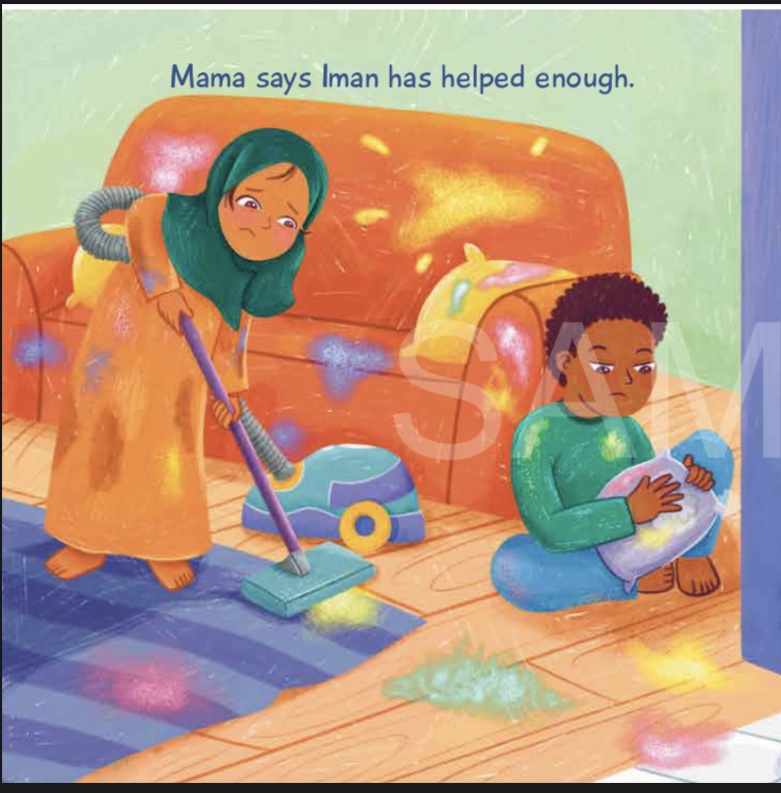
This adorable 36 page board book had me laughing as a mom watching the increasing exasperation and dishevelment of the poor mother in the book page after page.  The book focuses on the sunnahs of welcoming guests, but the interpretations are the efforts and understandings of a small child being overly helpful, and the toll it takes on his parents.  The humor, the presentation, the introduction to various sunnahs is well done for little ones and their caregivers alike.  The book has not released yet, I viewed an e-version and I’m assuming the final spread is a lift the flap review of sunnahs.  Nothing is sourced, and salutations on Prophet Muhammad ﷺ are denoted by an asterisk throughout the book with a footnote at the end.  There are two books in the series and both share sunnahs, humor, and the main character Iman.

img_4561

The book starts with Iman feeling bored as his parents prepare for the arrival of guests.  Iman then remembers something Mama once told me (him), “That the Prophet* said cleanliness is half of eeman…” and with that the little one is off to help clean. Bubbles and more mess later, Iman is proud of himself and his parents are shocked and the bigger mess that greets them.

img_4562

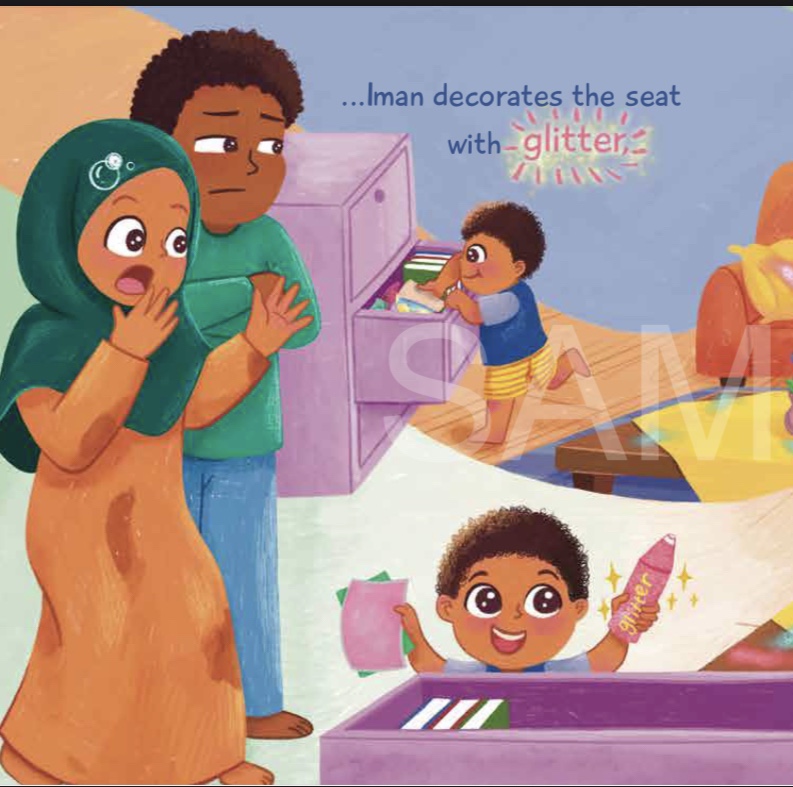
Up next is recalling that Prophet Muhammad ﷺ “would make a special seat to honor his guests” and Iman decides that glitter will be a great way to fulfill that sunnah.  When Iman is sent to get himself ready, more fulfillment occurs until Mama is exhausted and Iman finds a way to fulfill the sunnah of making his parents happy.

img_4563

The book might be a little above level of a toddler, but I think the silliness makes it a great introduction to sunnahs and will be a joy to read over and over again.

For more information about availability you can check the publisher’s website

My Garden Over Gaza by Sarah Musa illustrated by Saffia Bazlamit

Standard
My Garden Over Gaza by Sarah Musa illustrated by Saffia Bazlamit

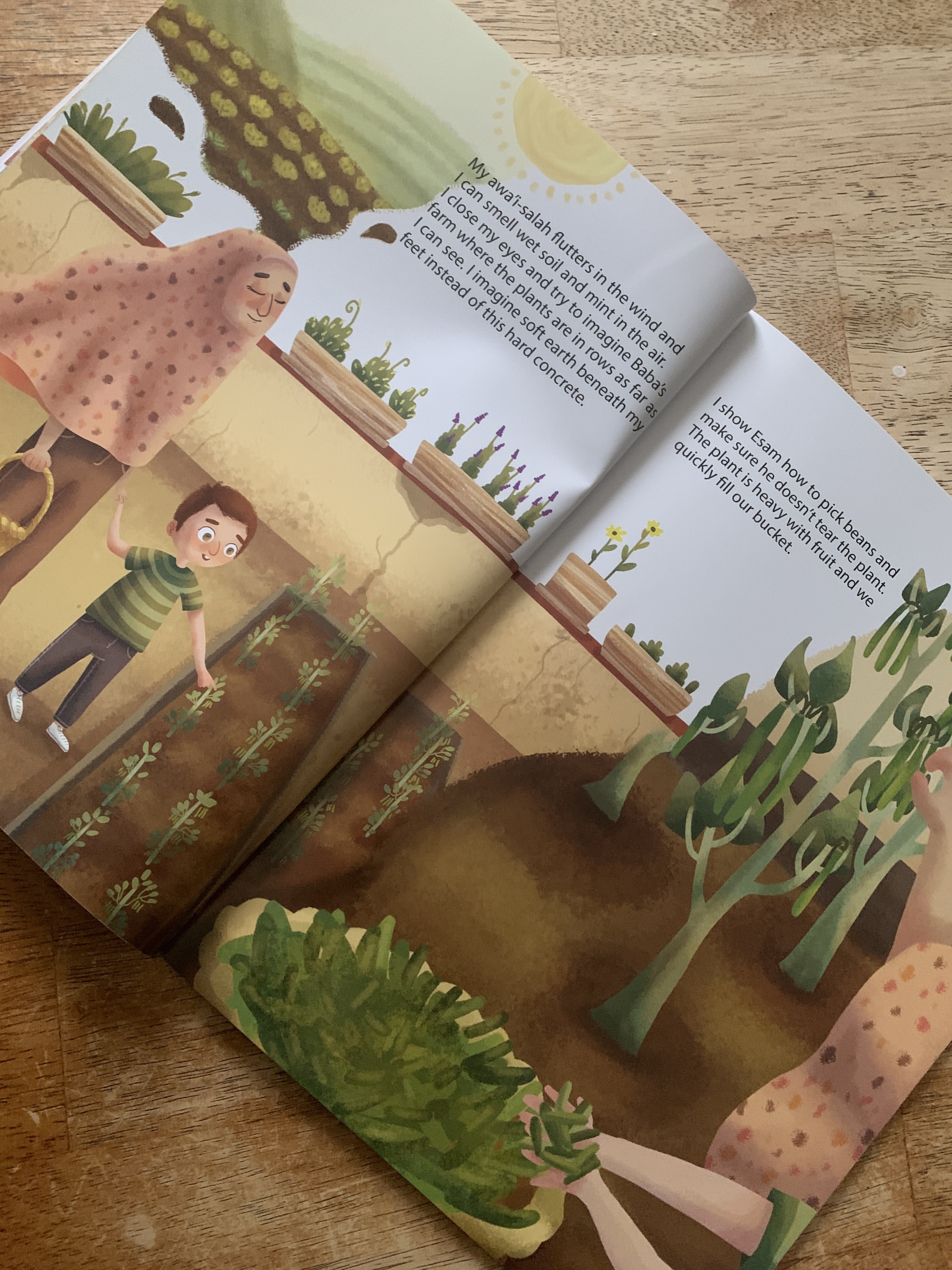
This book is hard to read, it hurts the heart, it doesn’t let you claim ignorance regarding the plight of Palestinians, and it shows cruelty,  a specific inexcusable cruelty, in a children’s book that will haunt you and infuriate you for weeks and months, if not indefinitely.  I’ve read a number of Palestine set books, but this one, in its simplicity, leaves me raw.  A child with a rooftop garden that helps feed her family is deliberately targeted by Israeli drones and destroyed.  This isn’t science fiction or dystopian, this is based on real acts.  The book itself threads in themes of hope, of not giving up, of remembering strength of a lost parent, of vowing to move forwards, but the catalyst for it all is not happenstance, and while the details of the occupation and oppression are not stressed and articulated, they are referenced and skillfully present to be discussed with children on their level with the included backmatter at the end.  This book is powerful and should be required reading. It is a difficult read and it has flags, but it is also a glimpse of the reality of our world, and the manner in which this book is told allows for the discussion to taken place with middle grade readers and up. The book is not text heavy, but the nature of the content makes me suggest it for mature children.

Noura, a young girl, is in her home in Gaza when drones are seen just out the window and she quickly pulls her little brother Esam away to safety.  To distract him she tells him about their father and his farm that he used to have in Umm An-Naser.  She explains how the wall cut them off from their land and when the drone noises fade, she takes him up to her rooftop garden to pick green beans.  Their mama works downstairs as a seamstress, and while they wish they had meat, the garden helps them have fresh vegetables.

The next day after Noura gets her little brother ready for the day they head to the roof, but drones arrive and start spraying chemicals on the growing plants, killing them, and sending Noura gasping to breathe.  She tries to cover the plants and swing a shovel at the drone, but it does little to save any of the food and Noura is devastated.

Noura’s mama reassures her daughter that the food can be regrown, but she is irreplaceable, as Noura goes to scrub the chemicals from her skin.  The frustration is real, but determination prevails as the family cleans the garden and begins again, just as their father did.

The last two page spread of the book is a basic map, general touchstones of the situation in Palestine, and the very real drones that fly in to Gaza to surveil, attack, and spray herbicides on crops. You can purchase a copy on the publisher’s website or HERE at Crescent Moon Store.

A Second Look by Hannah Matus

Standard
A Second Look by Hannah Matus

a second look

Ok, so y’all, don’t be like me, don’t judge this book by it’s cover, its inside font and spacing, or even the blurb on the back.  Judge it based on this sentence: A modern ISLAMIC Libyan cultural retelling of Jane Austen’s classic Pride and Prejudice, that is done so, so well.  It is seriously so well written and so effortlessly adapted that for those that know the original by heart you will giggle and be giddy with anticipation of how the characters and plot points are turned Islamic.  And those that have never read or watched the original or any of the many adaptations, will be sucked in and swept away by the story at hand.  Oh sure it needs a few tweaks here and there, but truly this hidden gem sat untouched on my shelf with it’s unattractive cover for way too long.  Alhumdulillah for @bintyounus giving the book a start and squealing with glee until the entire @muslimbookreviewer crew dropped everything and read the book.  Not that it was hard, once started, this book stayed glued to me as I tried to sneak minutes at dismissal, at work, while cooking, and talking on the phone to stay in the world so masterfully created.  The book is  halal, but the characters for the most part are in their twenties and I think I wouldn’t object to older teens reading it, but it is an Adult or New Adult book, in both characters’ ages and readers’ interest and appeal.

SYNOPSIS:

The five sisters in the BenTaleb family are all unmarried, balancing life, school, jobs, and daily stresses as varied Muslim Libyan young women in America. With so many girls, the parents of Jana, Elizza, Maryam, Leedya, and Kawthar are known in the small Midwest community as Abu l’Banaat and Umm l’Banaat.  When two young businessmen from Libya come in to town to teach at the local university, the eligible bachelor’s are sough after and all the drama, angst, longing, and courtship comes to fruition. Throw in a distant cousin who is an imam, a scandal with a younger sister, social media updates, and cultural expectations, and you have yourself a book full of laughs, tears, cheering, and joy.

WHY I LIKE IT:

I love how seamless the retelling is, the pop culture references, and how relatable and rich the writing is.  I was blown away by the beautiful strong Islam present that somehow never comes across as preachy, but is so thoughtfully present in presenting ideology, cultural pushback, western conflict, that Muslims and non Muslims will enjoy the story.  I’m fairly certain every Muslim Jane Austen fan has thought how similar books written so long ago mirror the courting etiquette of Muslims, and this book delivers all of those hopes and imaginings: the names of the characters, the opposing perspectives of the sisters- I really can’t stop gushing, and haven’t since I finished the 200 page book.  There is so much Islam, swoon, and it is presented so well.

FLAGS:

As an Adult book it is clean, even as a New Adult book it is clean.  I hesitate to call it Young Adult because it is about marriage, and there is a scandal with a sister, and mention of wedding nights, and STDS and lingerie, nothing is explicit, but for as halal as it all is and how practicing the character’s all are, these few mentions elevate the story from suitable for a 13 year old, to being ok for older teens.

TOOLS FOR LEADING THE DISCUSSION:

I think everyone should read it and come gush with me.  You can purchase the book here.

Heroes Like Us: Two Stories by Onjali Q. Raúf

Standard
Heroes Like Us: Two Stories by Onjali Q. Raúf

So this book is a little unique in that it is two stories, and The Great Food Bank Heist, one of the stories, has already been published, and the other story is a bit of an epilogue to The Boy at the Back of the Class.  So, I’m just going to review the first story in the book, The Day We Met the Queen, and while you probably can get away with not reading The Boy at the Back of the Class first, I wouldn’t want you to.  It is such a good book and you really should read it, everyone should. Yes, it is that good. So back to The Day We Met the Queen, the first story in the upcoming middle grade 176 page book, about refugees and kids making a difference.

SYNOPSIS:

This charming story shows what happens to Alexa and Ahmet and the whole crew as they prepare to met the Queen for tea.  The group of friends is about to show the entire school their invitations and share the two questions each that they plan to ask the monarch, the list was 52 questions, but because the Queen is nearly 100 years old, they have been advised to shorten the list.  On the day of the assembly news crews are present and Brenden-the-Bully is acting a little strange, as Ahmet starts talking the auditorium erupts with stink bombs and everyone leaves running.  The kids think it is just the bully striking again, but the gossip at the school and reports on the news imply it might be more than that, and the kids might not make it to the Queen’s tea after all.

WHY I LIKE IT:

I love getting some closure on the story, while simultaneously showing that refugee treatment and rights is not a thing yet resolved.  The idea of the Queen being at the center of the book definitely adds to the coincidental timeliness of it all, but that she is easy going and relatable to the children is still the takeaway whether you were a fan of the real Queen or not.  I love the voice of the protagonist and the relatability that her concerns are with the target audience. I particularly enjoy the critique about the media and the clarity in which the children understand the flaws and limitations of what they are told in the news both on the school level and on a global stage.  There isn’t anything Islamic in the text, Ahment is Muslim, as is the author.

FLAGS:

Hate speech, deception, bullying

TOOLS FOR LEADING THE DISCUSSION:

I don’t think there is an author that brings big real issues to children’s stories as well or as consistently as Onjali Rauf. Both stories in this book should be shared with middle grade readers and up to be discussed, reflected upon, and learned from as often as possible.  You can preorder your copy here: https://amzn.to/3Eq2G4M

We are All We Have by Marina Budhos

Standard
We are All We Have by Marina Budhos

all we have

In many ways this book reads like a reboot of the author’s 2007 book Ask Me No Questions, there are sprinkled in references to Islamic culture, but nothing about the characters or the author truly show the book to be a Muslim story, or Islam centered.   Much like Ask Me No Questions, the book is told through a female protagonist who is forced to figure out why a parent is detained, what to do now that they are on their own with a sibling, and figuring out why they are being forced to leave America if they are not undocumented, but asylum seekers.  And much like that book, the protagonist is really whiney, entitled, and annoying, as is the mother.  This 256 page middle school/young YA read draws drama from the 2019 Muslim ban and ICE raids, but is more a character based plot than a political focused telling.  Because of the similarities to the earlier published book, and the lack of Islam in the text, and being unclear regarding the faith of the author, I’m just going to write a quick review and move on. The book is a quick read it has flashbacks to Pakistan and in those scenes mentions mosques, Eid, and Ramadan in passing. A few cultural side characters mutter an inshaAllah on occasion and there is a clear #muslimintheillustrations like side character that is remarked to wear a scarf on her head named Amirah, but is barely in the story.  Worth being aware of for younger readers is romance, kissing, making out, between Rania and Carlos, and *SPOILER* that the mother left her husband for another man years earlier.

SYNOPSIS:

Rania is weeks away from high school graduation when an ICE raid casts a wide net and picks up her mother as collateral.  Rania has always known they check in regularly to appeal their status, but with her journalist father killed years earlier in Pakistan, the family fled to America for safety, Kamal was even born in America, it has never been a concern.  As her mother gets taken away, Rania starts to wonder about the secrets her mother has always kept and the truth starts to unravel.  In the process though, protective services takes her and her brother to a shelter where they meet Carlos and escape.  Once on the run, they attend Rania’s graduation, spend months on Cape Cod, gain protection from a congregation at a synagogue all while trying to piece together Rania’s truth.

WHY I LIKE IT:

I like that it touches on the Muslim Ban and the fear that gripped the nation for anyone in the process of being a citizen or trying to travel to the flagged countries.  I wish it would have actually spent a bit more time on that.  The title of the book makes it sound like the family is completely alone and isolated, yet, they are constantly surrounded by people that are looking out for them and sympathetic in their choice not to ask too many questions.  I struggled with liking Rania, when you write a book about people that may or may not have broken a law, regardless of if you agree with the law or not, you really have to make it compelling. You have to get behind the character and their motives, and I never did.  I did not understand why she for example finally finds her uncle or an aunt and doesn’t demand answers, it is like, I’m tired, I’ll nap and we will talk later, no, not believable.  Additionally, I could not get a feel for the younger brother, I get that he is sheltered, but he reads like he is four years old, not that he is in second grade at best, I think he might be in fourth.  Really all over the place.  And the Rania and Carlos relationship, should have stayed awkward.  They at times are like siblings, and when the line is crossed, Carlos even remarks on it, and I think having it be weird, but clear that they have a bond, would have been a much stronger choice.  A lot of the plot holes make the story drag such as what was the problems at the bank for the uncle, but because it is short, I think older readers will get through it. I don’t think I’d suggest anyone read the book, but it isn’t so awful that I would warn too harshly against it.   The characters don’t identify or act Muslim, so when they kiss or lie, it isn’t a reflection on the religion.

FLAGS:

Kissing, lying, running away, making-out. Muslim friend sneaking out, drinking, partying, stereotypical oppressive Muslim dad and meek mom.

TOOLS FOR LEADING THE DISCUSSION:

I don’t know that I would throw the book out, but I wouldn’t actively seek to acquire it to shelve either.

Ida in the Middle by Nora Lester Murad

Standard
Ida in the Middle by Nora Lester Murad

ida-in-the-middle-9781623718060_lg

Ideal for middle school readers (upper mg/lower ya), this magical realism book takes readers from middle school in American to a Palestinian village outside of Jerusalem through the consumption of some magical olives.  Written by a Jewish author married to a Palestinian Muslim who raised their three daughters in Palestine, the book features a lot of Islam, but is Palestinian centered in its insight, critique, culture, and dreams.  Over 224 pages, Ida starts to find where she fits in both in understanding her self within her family, her place in America, her passion in life, and what it means to be Palestinian.  The story is important, and is told in a way that will encourage readers to learn more about the occupation.  Nuances are shown in characters and groups, but the line that the occupation is oppressive is never compromised.  I appreciate that the author writes from her own experiences and openly acknowledges that she is not trying to take away from Palestinian born and raised OWN voice stories, but she is an advocate, she has raised her children and lived in the West Bank, and her characters reflect a sense of intimate knowledge, love, and appreciation.  Even with Ida having to decide to stay in America or Palestine, the two countries are not pitted against each other or seen as black or white, as to which is better or worse, the middle is where much of the story takes place, and appreciating your culture no matter how much others are trying to erase your existence, is always stressed.

SYNOPSIS:

Ida is the middle child of her Palestinian immigrant family and isn’t artistic like her younger sister, a ballet dancer like her older sister, or a soccer player like her father.  She wishes she was invisible.  Especially when her classmates turn on her every time there are conflicts in the middle east.  When it seems that everyone wants to diminish her heritage, she finds herself at a new school, unsure of where she fits in.  With anti Palestinian attitudes and Islamophobic people, Ida just wants to go unnoticed, unfortunately middle school requires a passion project to be presented and Ida has no idea what her passions are, and how she will face the crowds.

One day when looking for a snack she finds a jar of olives stuffed in a cupboard- olives brought by a family friend from her now deceased aunt in Busala, one bite and she is magically transported to the familial village.  It is an alternate reality of what life would be if her parents never came to America.  Not only is she in a country she has never seen before, meeting family members she has never met before, but even her own parents and sisters are somehow different.  She enjoys the warmth, the communal activities, the extended family.  Her mom in hijab, the athan being heard, the men all going for jummah, but then they sit down for a meal and the same olives are served and Ida accidently takes a bite and is whisked back home.

Once home, she longs for so much of Palestinian life, but relishes in the convenience and ease of America as well.  Her passion project still looms and she finds herself hoping to escape it by going back to Palestine.  When she finds herself back near Jerusalem she ventures out with her Aunt, who isn’t dead in this reality, and learns more about the occupation and oppression, and how the families interact with the various Israelis: some sympathetic to Palestinians, some actively working to help Palestinians, and some settlers- forcefully killing and bulldozing Palestinian homes.

When Israeli military troops enter their village, the families meet to discuss the best course of action, the families do not agree, there is no clear way to prepare, there is no guarantee of survival.  Ida starts to find her voice, and when the soldiers enter, Ida finds herself rushing out to help a small boy. Guns, demolition, rocks, tear gas, fear, so much fear, what can one person do? What can one village do?  What will Ida do?

WHY I LIKE IT:

The book is relatable and moving, not just for those with a tie or interest in Palestine.  It is a coming of age story that shows a girl grappling with forces so much bigger than herself, while at the same time dealing with homework and friends and stereotypes.  Ida has a lot to figure out and the book doesn’t sugar coat a happy ending, it simply provides a moving story based on reality, through a character whose quirks and personality you find yourself rooting for.

I love the presence of Islam and the way it is apart of Ida and her surroundings, even though she makes it clear early on that her family is not religious.  The Quran is mentioned, the athan, various salat, hijab, Hajj, Ayatul Kursi, Ramadan, Eid, wasting food as being haram.  In Boston her friend knows she doesn’t eat pork, she went to Sunday school to learn Arabic at the mosque when she was younger.  It doesn’t gush with Islam, but it is present, for example Ida’s sister and her joke about a good Palestinian girl shouldn’t have a boyfriend, it isn’t tied to their religion. The story is a Palestinian one, and as someone who is not Palestinian, the images, the foods, the smells, the love all seemed to embrace everything I’ve ever heard Palestinian friends talk about, and it feels like a warm hug to read the effects being in Palestine has on Ida.

I love that the author is upfront about her perspective, and I love that she is putting this story out there.  The writing is sufficient: I was invested in the story, and it was an easy read. I don’t know that I’ll remember it months from now for it’s imagery or power, but I’m certain I’ll remember the commentary about life under occupation and the struggle to not be erased by a world that doesn’t seem to care about the settlers still taking Palestinian homes and their way of life away by force.

FLAGS:

Fear, crushes, death, injuries, loss, magic, bullying, racism, Islamophobia, guns, physical assault, threat of force, destruction.

TOOLS FOR LEADING THE DISCUSSION:

Our school is majority Palestinian.  Years ago when we read Where the Streets Had a Name, I learned so much about the students, their families, their own experience living under oppression, that I can’t wait to present this book with the middle schoolers and take notes on their thoughts.  I would not lead the discussion, I would let them, their voices will not be erased by me.

Preorder available here: Amazon