Tag Archives: Love

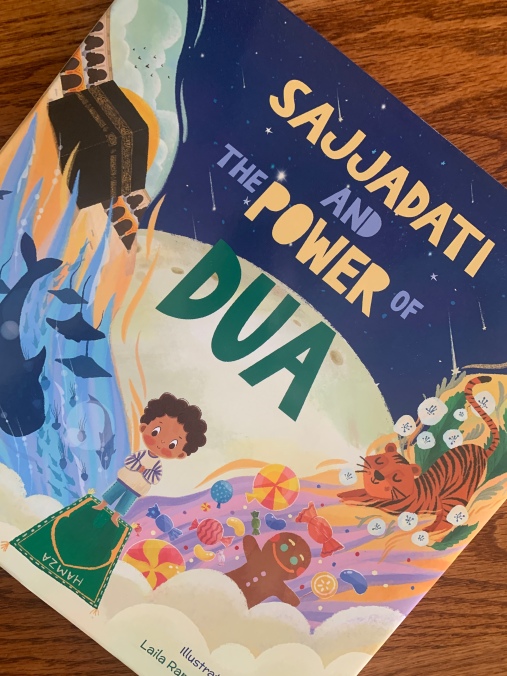
Sajjadati and the Power of Dua by Ayesha N. Rahmaan illustrated by Laila Ramadhani Ritonga

Standard
Sajjadati and the Power of Dua by Ayesha N. Rahmaan illustrated by Laila Ramadhani Ritonga

img_7520

This 38 page large hard back picture book is absolutely beautiful: the illustrations, the tone, the thickness of the pages, all come together to create a child’s wonderment about the power of salah and dua with grounding in the actual parts of prayer.  On my first reading the imaginative “magical” aspects of the prayer rug, “Sajjadati,” was sweet and endearing, but as I thought about the story and then reread it, I had some concerns.  I know the book is meant for children, I know I am a reviewer and thus am over analyzing it, so I point the following out as a “heads up” so to speak, and for you to make your own decisions if the literal text will be misleading or if the overall mood of the book will be taken as loving dua and the closeness prayer brings one to Allah swt.
img_7521

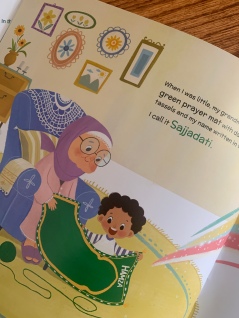
The book starts with a little boy recalling when he got his green prayer rug from his grandma, that has his name on the corner (in the illustration it is centered on the top, not in the corner) and him naming the prayer rug, “Sajjadati.” The following page, same spread, then says,  “When I have Sajjadati with me, I can pray anywhere.  And when I pray on Sajjadati, I can go anywhere.” These lines give me pause, because even if the prayer rug is lost or not with him as he grows up, he is still going to need to pray. The importance of the prayer rug seems over elevated, albeit sweet, religiously a little unsettling.  The second of the two lines, about going anywhere, is also a bit of a gateway to the rest of the book and almost encouraging one’s mind to wander during salah.
img_7522

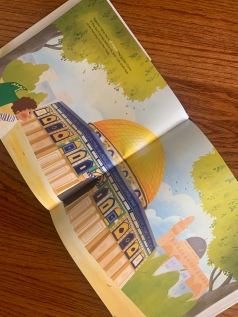
The next page gets back on track saying that starting to pray and saying “Allahu Akbar” leaves this world behind, the little boy says surahs he has memorized, and knows Allah swt is watching him.  He asks Allah for what he wants, and his imagination takes him on adventures after each salah. He imagines flying, and being a superhero.
img_7524

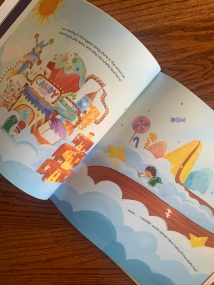
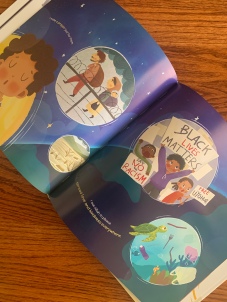
The story then returns to being in prayer, not after, and going in to ruku.  The text has him imagining he is in the “biggest candy store in the universe” wondering if Jannah has rivers of chocolate before standing up straight again saying “Sami Allahu liman hamidah,” and contemplating if there is a place where his prayers would be worth more and Sajjadati taking him to al-Aqsa.
img_7523

In sujud Sajjadati tickles his nose, but he doesn’t mind because he is closest to Allah swt in this position, and while he won’t let his “annoying little sister,” bother him, his mind does drift to being on a boat in the sea with seagulls squawking, “salaam.”

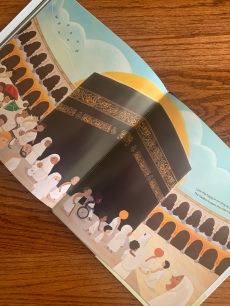
Hamza is then making dua for those suffering.  Since nothing is impossible when making dua, he is also asking for pets from the savanna, but knowing that Allah swt will provide what is best.  He makes duas to go for hajj and concludes his salah by folding up Sajjadati and finding peace in Allah swt being al-Mujeeb.
img_7525

I love the heartfelt framing of salah and the interweaving of both real and whimsical wants, as well as the sprinkling of facts about prayer into the story, but I honestly struggled a bit with the juxtaposition of the parts of prayer with the day dreaming elements.  I also struggled with the tenses, and find myself constantly rewording this review to reflect the book’s timeline.  Hamza is with his family, for example, hearing the current event news, while the next set of pages has him back making dua at the end of the prayer he started at the beginning of the book.  And the hearing the news and the praying for people is all being conveyed in the present tense, not clear if he recalled hearing about strife in the world and then made dua, or paused heard and resumed his prayer, it all seemingly happening at once, but that doesn’t really make sense. The title also says dua, not salah, and so much of the book is about prayer, that I feel like the two get conflated erroneously, and dreaming big during dua is different than having your mind wander during your salah.
img_7526

The book starts with an ayat from the Quran in Arabic text and meaning of the translation in English and concludes with a glossary and space to complete a Dua List.

If this book seems like a good fit for your young child, I ordered mine from Crescent Moon Store and you if you use my initials ISL (Islamic School Librarian) at checkout you’ll save 10%.

My Baba is the Best by Bachar Houli illustrated by Debby Rahmalia

Standard
My Baba is the Best by Bachar Houli illustrated by Debby Rahmalia

img_7434

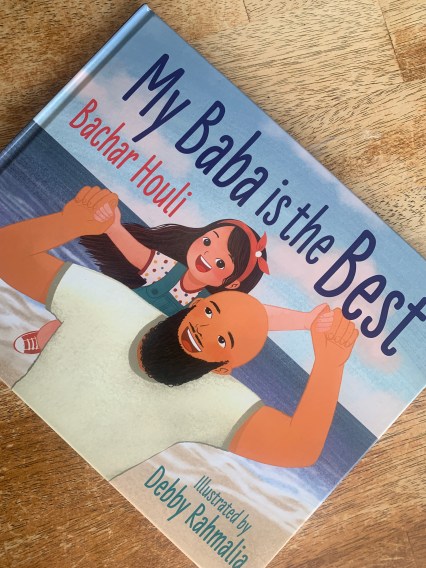
This 32 page horizontal picture book by an Australian footballer starts out much like a list detailing why a little girl loves her Baba, after a few pages though of more superficial delights, the book gets deeper.  It shows the family making duas at bedtime, going to the masjid on Fridays, it even gives a little insight into Eid and fasting before it then takes readers on a camping trip.  There isn’t really a story or plot, but the bouncing around fits the narrator’s point of view and will appeal to the intended target audience.  The book is mainstream published by Penguin in Australia, so I absolutely love the inclusion of Islam, the mom in hijab, the dad’s beard and the love shown between the little girl and her Baba.  Sometimes celebrity books feel a little forced, but having never heard of this athlete, I still found the book incredibly sweet and joyful, and the illustrations by a Muslim illustrator a great amplification of the simple heartfelt text.

The book starts with a little girl rushing to give her Baba a hug on the field as fans cheer in the background.  After all her Baba gives the best hugs, it then mentions that he is always doing something and shows him washing his boat and jumping on a trampoline with the little girl and her younger sister.  The trio garden, exercise, ride bikes, train and go fishing. They also watch movies at the theater or at home with the whole family. At night Baba reads special prayers to protect them while they sleep.

On Fridays, the family goes to the mosque for prayers, and the most special time is when they all go for Eid in their best clothes.  They listen to the imam and give donations to those in need. They open presents and after fasting they eat Lebanese pizza before going to visit teta and jeddo.

The best time is when they go camping.  They all set up the tent, and get sticks to roast marshmallows.  They even see kangaroos eating dinner before heading back to eat theirs.  On many of the pages it is just the girl and her Baba, but even when the whole family is present, the focus is on the strong relationship between the two.

The book is very endearing and as a daddy’s girl myself, I love seeing the relationship unfold on the pages with big things, and little things, fun things, and reflective things, and from the little girl’s point of view.  The book is not readily available in the United States, I purchased mine from Book Depository, where they offer free shipping.

The Night Before Eid: A Muslim Family Story by Aya Khalil illustrated by Rashin Kheiriyeh

Standard
The Night Before Eid: A Muslim Family Story by Aya Khalil illustrated by Rashin Kheiriyeh

img_7123

This 40 page early elementary picture book is set the night before Eid and radiates with love from a boy to his Teita, traditional ka’ak, and the family’s Egyptian culture.  The robust and personal backmatter shares a glimpse into the threads from the author’s real life that the story touches upon, and makes the book extend beyond the pages.  It is worth noting that this book does not articulate if it is for Eid al Fitr or Eid al Adha and thus works for both.   There is nothing religious in the book except a reference to something happening after Eid prayer in a memory, and the shape of the cookie being round like the Ramadan moon, Eid day is not mentioned, it is simply the catalyst for this warm family story about a boy and his grandma making a special treat for the first time and sharing it at school.  The large hardback book with fun illustrations is ideal for both story time and bedtime readings alike.

img_7124

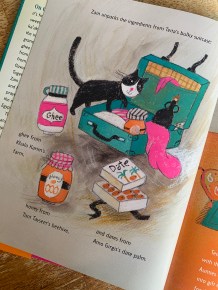
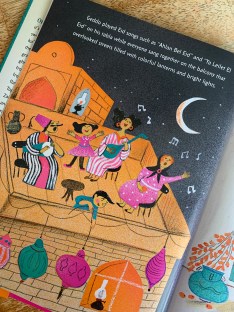
It is the night before Eid and Teita has arrived from Egypt.  Zain can’t wait to make ka’ak to take to school and share with his friends.  The beloved powdered sugar cookies are steeped in tradition, both in Zain’s family and in Egyptian history.  Once the suitcases is unpacked and the special ingredients found, Teita and Mama share memories of baking with cousins, painting henna designs on hands and putting eidiya in envelopes.  The family recalls singing together on the balcony while Geddo played the tabla and lights and lanterns filled the streets below, after Eid prayer they would hand out the ka’ak.

img_7125

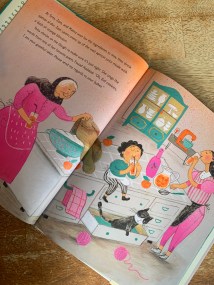
Zain wants the ka’ak to turn out perfectly so his teacher and friends will like them.  Teita tells him that ka’ak is as old as the ancient pharaohs, and that recipes were found in the pyramids.  At one time rulers would even put gold coins in the cookies.  Zain and his Teita mix and add the required ingredients, and drink iced apricot juice as they wait for the dough to be just right.  Getting the cookies pressed with the molds though is harder than it looks, and Zain gets frustrated. Teita’s love and patience and Zain’s clever thinking get the treat making back on track.  The ka’ak doesn’t have a gold coin filling, but they are filled with tradition.

img_7126

The timeline is a bit off for me with the grandma coming before Eid and then the cookies going to school on Monday, and then Monday evening when Zain is writing down the recipe with Teita he is telling her Eid Mubarak and that it is the best Eid ever.  So, it seems that he went to school on Eid, not to Eid prayers, which is fine, just a little sad that there was no Eid celebration or prayers.  I don’t know that kids will be bothered by it, but the lack of mirroring and stressing how joyous Eid is does somehow get lost and mitigated, in my opinion, by skipping acknowledgement of the religious holiday.   In the backmatter the author remarks that she has “outgrown the magic of Eid,” so perhaps it is intentional that the day is not included in the text.

img_7127

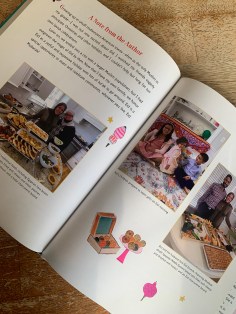
The last six pages of the book are filled with informative and engaging information about What is Eid, Ka’ak Time Line, A Note from the Author with photographs of her and her family celebrating Eid, a Simple Ka’ak Recipe and Additional Resources.

I purchased my copy from Crescent Moon Store where if you put my initials ISL (Islamic School Librarian) in at checkout you will save 10% or is available here on Amazon where the book currently has a coupon for $3.80 off.

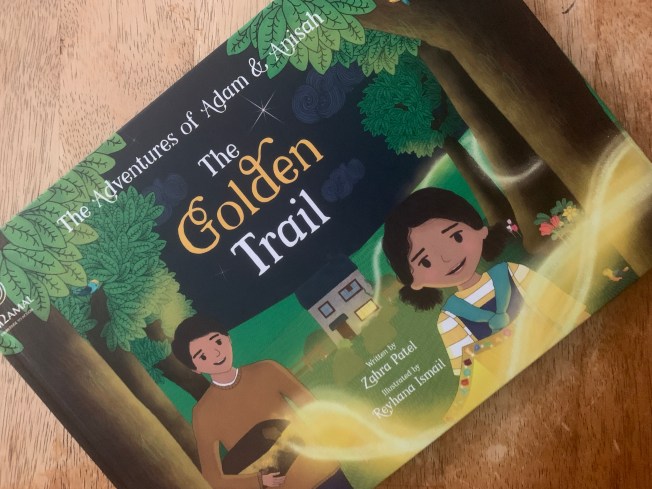
The Adventures of Adam and Anisah: The Golden Trail by Zahra Patel illustrated by Reyhana Ismail

Standard
The Adventures of Adam and Anisah: The Golden Trail by Zahra Patel illustrated by Reyhana Ismail

img_6818

This third book in the Adam and Zahra series, also available with a workbook, focuses on zakat and can be read alone.  Aimed at toddlers to early preschoolers, this rhyming story can also work at story time with slightly older kids as a reminder of zakat and giving to those in needs.  The book has very minimal text and as a result if you overthink it, it could be slightly problematic: there is magic, they are taking and giving something that doesn’t belong to them, Zakat is a portion of your wealth not sharing something you found-even if a note says otherwise.  I think the book is sweet though, and the discussions to have with little ones outweigh the adult concerns I’ve mentioned. It touches on giving to others, on people in need, of people in need living very close to you, that everything being a gift from Allah (swt), it shows siblings working together, sharing, generosity, a lemonade stand for Yemen, giving of food and money, and befriending others.  I think if you liked the other books in the series regarding a “magic” pray rug and a fasting shield, both mentioned in this, you will like the presentation of sharing and the term zakat presented in a similar fantasy laced manner; if those books felt uncomfortable for you and your family, this one probably will as well.

Adam and Anisa start the story in Ramadan, a week before Eid, digging in the sand at the beach.  Adam finds a treasure box and a message in a bottle.  The treasure box is locked and the message says that “My name is Zakat and I’m for someone in need…”  Once the kids get the box home and the lock off, a beam of light shines a path for them to follow.

img_6821

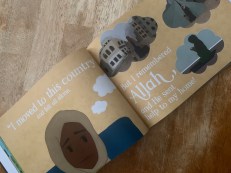
They follow the light out the door and through the field, and past the mosque and their friends, along the way they purchase a pie from the bakery for when they break their fast and keep following the light to the field as the sun starts to set.  They find a house in the forest with a mom, a baby, and a little boy, to whom they give the money and the pie. They learn that they had moved to this country and were all alone, but Allah swt provided for them, and He is never far. They all break their fast together and learn that “Whenever you give, Allah will give you more.”

img_6822

The backmatter of the book contains Context to the Story, Developing Character Strengths, Learning through Practice and a map of their adventure.  I purchased my copy from Crescent Moon Store here and if you use my initials (Islamic School Librarian) ISL at checkout you will save 10%.

img_6823

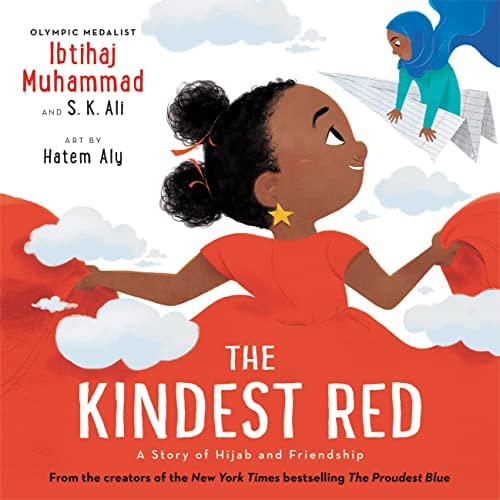
The Kindest Red: A Story of Hijab and Friendship by Ibtihaj Muhammad and S.K. Ali illustrated by Hatem Aly

Standard
The Kindest Red: A Story of Hijab and Friendship by Ibtihaj Muhammad and S.K. Ali illustrated by Hatem Aly

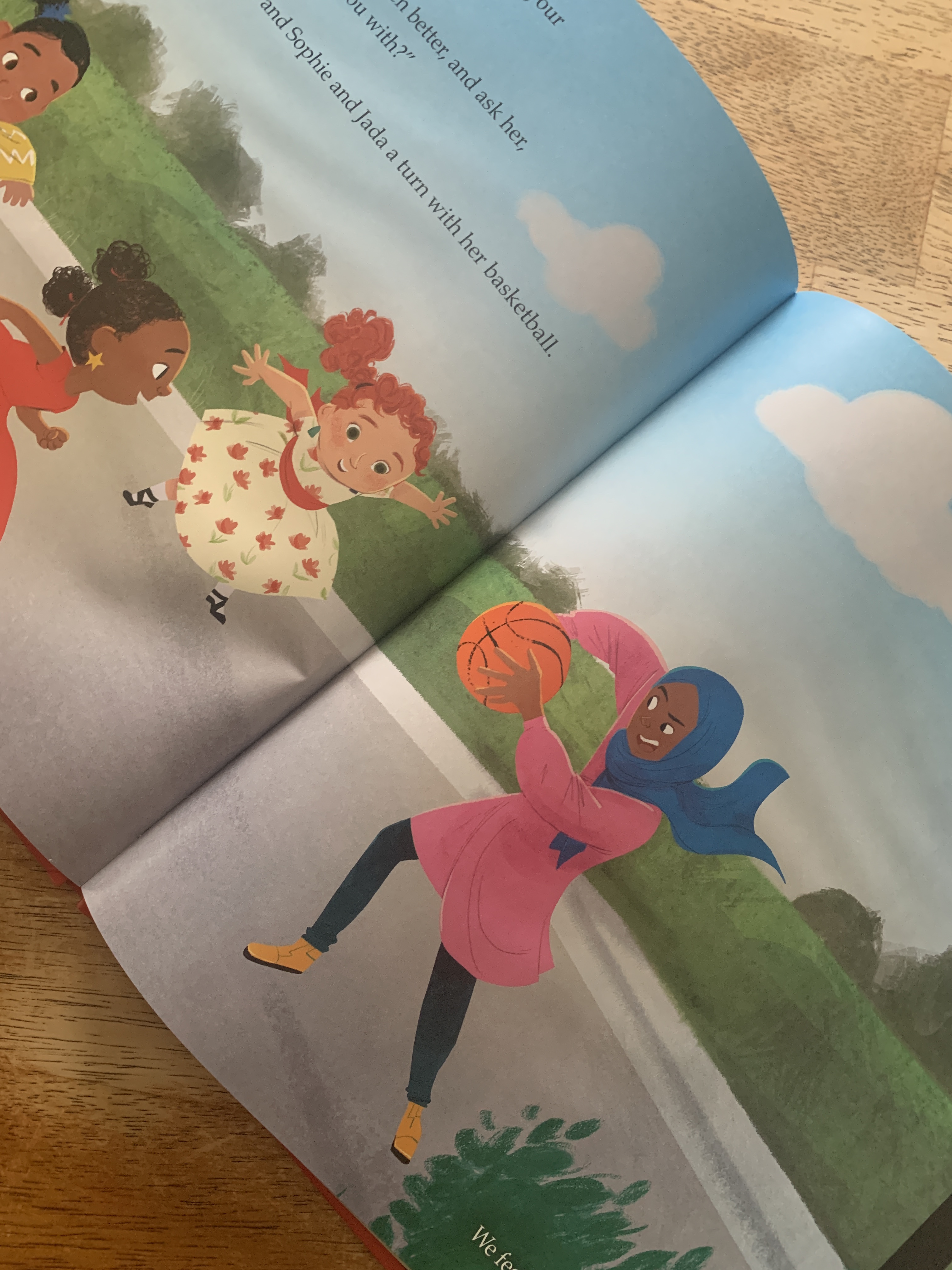
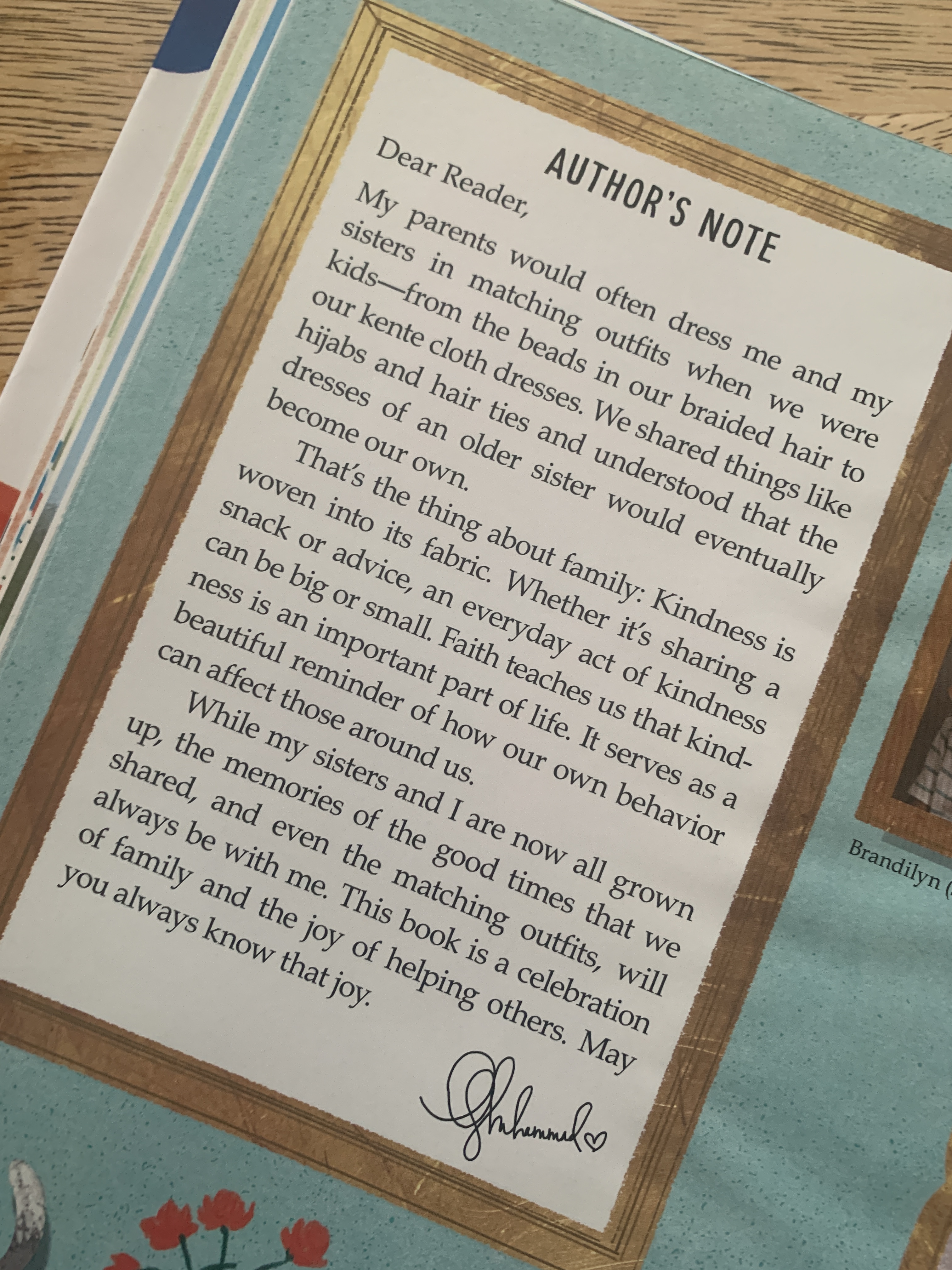
This heartwarming book centers kindness, family, and friendship in an inclusive way; and while the tagline says “A Story of Hijab and Friendship” I think the hijab angle is a bit of a stretch.  The authors are Muslims that wear hijab, the older sister and older females in the family wear hijab, but there is nothing in the story or text that connect hijab to Islam or to something Muslim women wear as part of religion.  I don’t want to compare the first book in the series, The Proudest Blue, to this book, but hijab really was centered in that book and the Author’s Note mentioned that hijab is an Islamic act.  This book does not make those same connections, which is fine, I just want consumers to be aware.  This book is beautiful and the messaging endearing, and the tone and heart over 40 pages ideal for preschool to early elementary children.  It works as a standalone, but with the same characters and sisterly love, I think most people will enjoy keeping them together.

The book starts with Mama passing on Asiya’s dress to Faizah, that had been Mama’s even before that.  It is picture day, and the girls are helping each other get ready. At school Faizah and her friend Sophie twirl in their pretty dresses before heading in to class to discuss what kind of world they want.

Faizah wants a kind world, where there’s always a friend nearby, where everyone helps. At recess, Sophie and Faizah combine their visions, superheroes and kindness, to help other kids on the playground.  When picture time arrives the class is full of smiles, but when it is time for sibling pictures, Faiza and Asiya realize they don’t match.

Faizah is sad, and Sophie notices, can the kindness be passed along like the dress to help the sisters? To make Faizah happy too? I’m not going to give away the conclusion, but it is sweet and idyllic and shows how lovely the world can be if we all just share some kindness.

I love the illustrations and the hijab wearing super hero that presumably Sophie drew is powerful.  I think the book does wonders to normalize hijab, even if I do wish it articulated why one would wear hijab.  It seems that the industry trend is to keep hijab superficial and I recognize I am in the minority that wants religious centering for religious tenants.  So yes, I’m fully prepared for the backlash when people want to point out that it is joyful and that I’m a naysayer, but I deal with people on a daily basis that do not know that my own hijab is a reflection of me being Muslim.  With as connected as the world is through technology, I  think those in diverse environments take for granted the understanding of basic Islamic principals in the general population.  However, not everyone has those real life connections and rely on books and media to fill the gaps, so when books about hijab, don’t actually connect hijab to faith, I feel obligated to point it out.

I purchased (preordered) my copy here, but I hope you will support small business and order yours here  use code ISL for 10% off.

The Great Labne Trade by Eman Saleh illustrated by Eilnaz Barmayeh

Standard
The Great Labne Trade by Eman Saleh illustrated by Eilnaz Barmayeh

labne

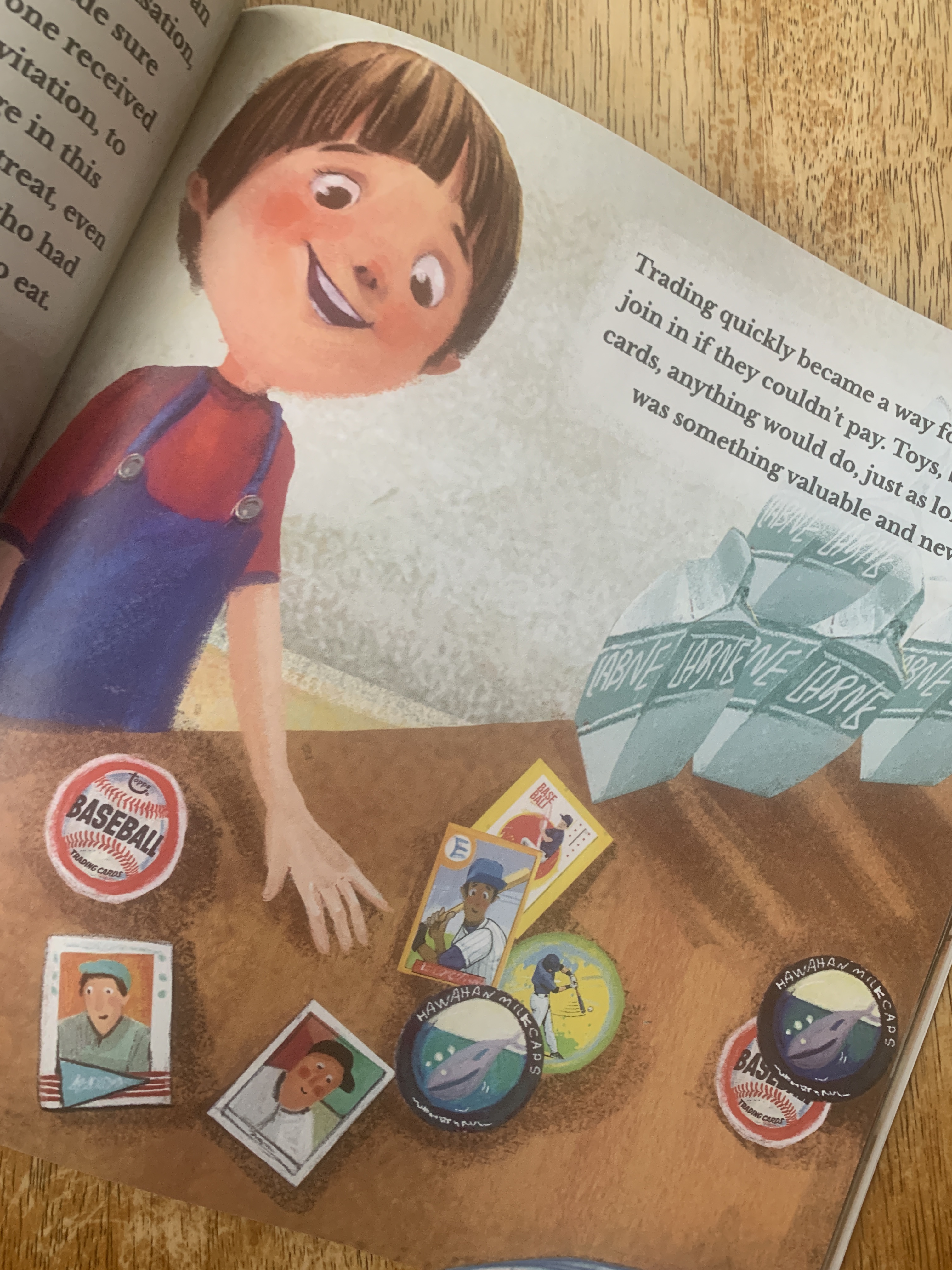
My friend Noura, owner of Crescent Moon Store, said this book was good, so when I saw the amazing illustrations on the cover, I didn’t even look into what the book was about, I bought it and waited impatiently for it to arrive.  When it came I started reading it and thought ok, ok another book about lunch food that is perceived as “other” and the bullying that ensues with having a “smelly” lunch.  But the bullying never really came, and the book was suddenly not about being different, it was about entrepreneurship, and a mother’s love and support, and appreciating good food, and sharing culture, and raging against an oppressive system. Ok, so there was no raging, the book ended with determination and a following of the “rules,” in a very kid appropriate manner, but it was fun and a nice change from the typical storyline in rhyming children’s books.  There is no “Islam” aside from a boy named Ahmed and his sweet hijab wearing mother, but this book will result in smiles for kids preschool to early elementary and encourage business creativity and thinking outside the box.

img_5127

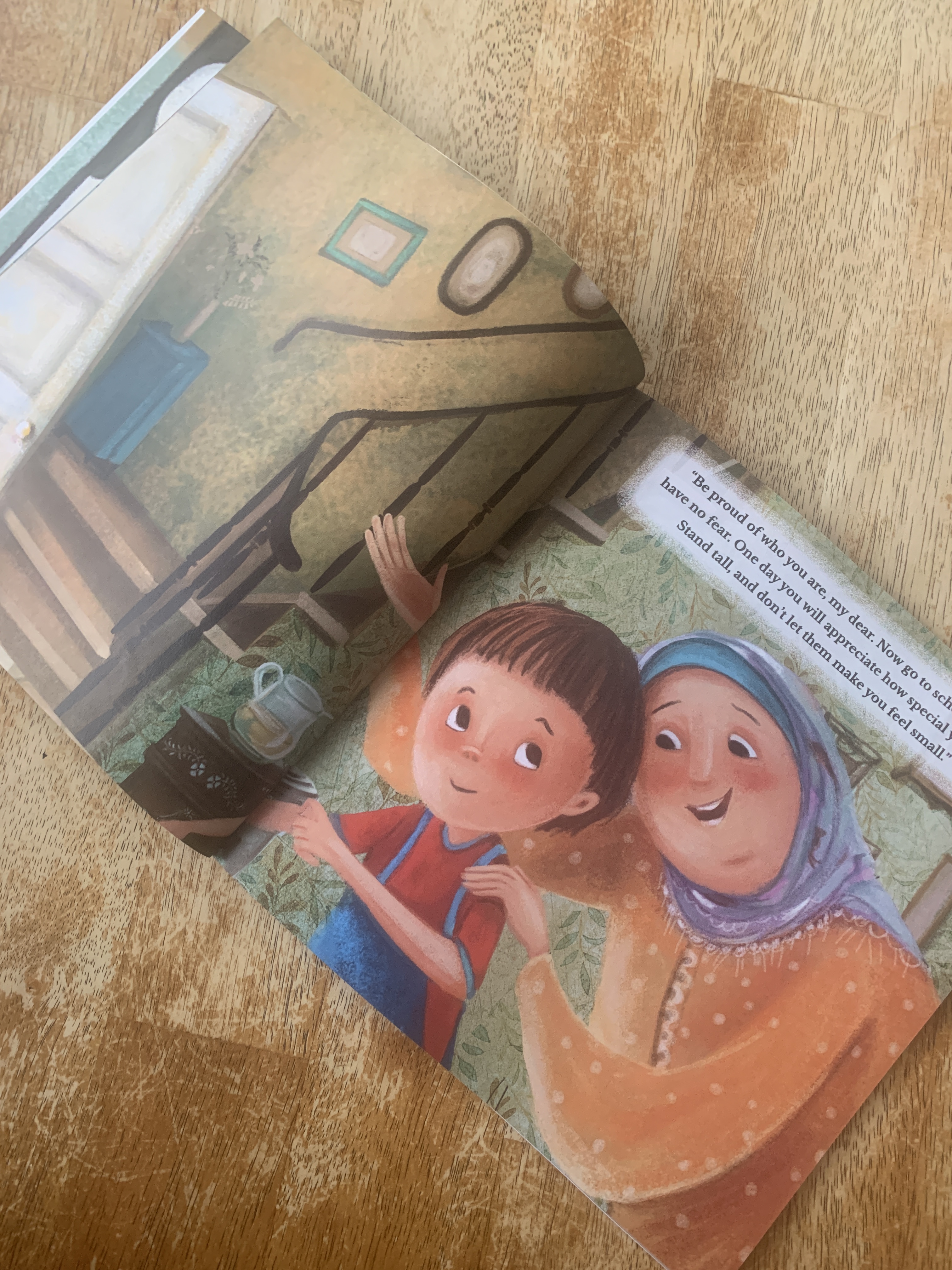
Ahmed is not thrilled to be taking a labne sandwich to school and would rather have a pb&j like everyone else. His mom encourages him to “be proud of who you are, appreciate how special you are, stand tall, don’t let other’s make you feel small,” and sends him out the door.  At lunch when the kids start to turn up their noses, Ahmed gets them to try the sandwich, and they love it.

img_5128

Ahmed gets an idea, maybe he can sell labne sandwiches to his classmates. Mama stays up late making them and Ahmed sets up shop in the cafeteria. He sets his price, and they sell out, so he increases the charge, and they are still selling. He also is open to trades for those that can’t pay.  Before you know it he is adding dishes to the menu.  Things are going well for entrepreneur Ahmed, until the lunch ladies have had enough and take matters to the principal.

img_5130

The 58 page book is not text heavy and the rhyme is fairly good, it is hit and miss at times, but the story is not hindered by it. I did feel like the book took a few pages to set the stage and get into the story. The initial timeline and the “smelly” lunch could be cleaned up a little, but once the business storyline presents it is smooth and enjoyable. And the illustrations, they are perfect for the story and for keeping Ahmed and his dream in your heart.

The book is available here at Crescent Moon or on Amazon.

img_5129

Mama Shamsi at the Bazaar by Mohdeh Hassani and Samira Iravani illustrated by Maya Fidawi

Standard
Mama Shamsi at the Bazaar by Mohdeh Hassani and Samira Iravani illustrated by Maya Fidawi

shamsi

At first glance it might seem that this Iranian set book with a chador at it’s core is a political statement.  I do not believe that it is.  The backmatter does state that, “Our wish in writing this book is to add to the growing list of stories for children that demystify this veil (that is too often used as a symbol of hate) and instead present a different view of it as the safe and comforting space we always knew it to be.”  This is an OWN voice authored book, from what I can find online the authors do not cover. It is a warm memory of finding love and humor and safety in the modest coverings worn by a grandmother.   I do wear hijab and I choose to do it based on my understanding of what Allah swt commands, I have never been forced to cover by a person or government, and do not know how that would effect my love of fulfilling a tenant of my faith.  But all that is an aside to make the point that this book to me is not weighing in on Iran’s politics, books are written and slated to be published years before they finally release, and this book is a silly heartfelt picture book about a girl and her chador wearing grandmother heading to the bazaar.

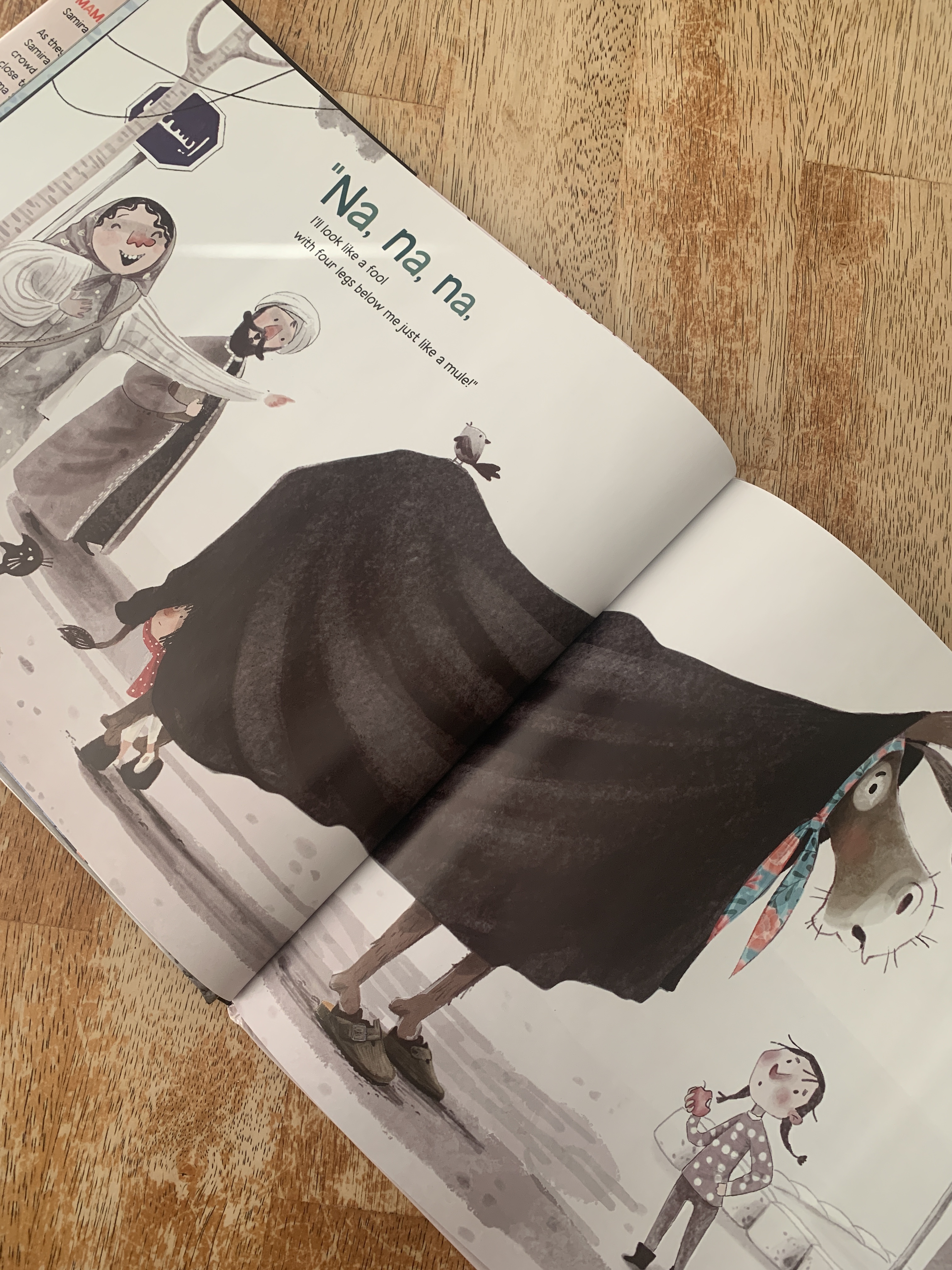
In the bustling city of Tehran, Samira is heading out to buy groceries in the big bazaar for the first time with her grandmother. Samira is nervous that it will be loud, and she might get lost, she asks her grandmother if she can rider under chador on her back. Her grandmother tells her no, she will look like a turtle.

Samira then suggest they walk in a line with grandma in front and her behind.  Grandmother Shamsi says, na, na, na, she doesn’t want to look like a donkey. Various other suggestions involving hiding under the big black chador and staying close to Mama Shamsi are suggested, but all make grandma look like a funny animal, and she declines.

When at last they arrive at the bazaar, Mama Shamsi encourages Samira to not hide but to use her eyes, and ears, and nose to learn about the world around her. Hand in hand, they stick close together, and enter the market.

The love between the two characters is heart warming in the text and truly elevated by the remarkable illustrations.  You love their relationship, you can feel Samira’s nerves, you appreciate Mama Shamsi’s humor to lovingly empower her granddaughter, and at the end you truly long to have your grandma next to you guiding you.

I enjoyed this book and don’t mind one bit reading it over and over again as kids giggle at the pictures and find details they hadn’t noticed before.  The book releases in February, and I hope that presales can reinforce the power of OWN voice authentic tales to be shared.  You can preorder/purchase it here.


“Granny, Where Does Allah Live?” by Yasmin Kamal illustrated by Citra Lani

Standard
“Granny, Where Does Allah Live?” by Yasmin Kamal illustrated by Citra Lani


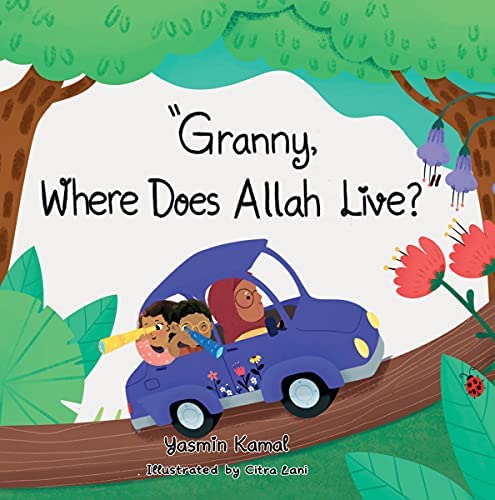
This 32 page picture book for 3-6 year olds takes readers and listeners on a car ride with Granny as questions are asked, sights are seen, and love is spread.  The rhyme is actually pretty decent, the explanation of Allah swt being on a throne above us wherever we are adhered to, and the illustrations are bright, bold, and have a lot to hold little one’s interest.  Overall, the banter between the kids and their Granny, the drive to the mosque being filled with joy and love, make me overlook a lot of little annoyances.  The book packs a lot in, but the voice and tone is easy and I think most kids will see the connection of asking where Allah is, to asking why we have to go to the mosque, to why it is important to talk to Allah swt in our prayers, etc., as a way to have their own questions touched upon.  I do wish the book was a little bigger and perhaps hardbound, to make story time sharing a possibility, the book is 7.5 x 7.5, so good for little hands and sufficient for in lap reading.  The book concludes with three activities that incorporate a few of Allah’s beautiful names.

The book starts out with a young boy and girl excited to be spending the day with their Granny and going on a ride in her special car.  No idea why it is special, but it is purple and has flowers painted on it, so lets go! The kids love to ask Granny questions when they drive.  So after saying bismillah, they wonder why people don’t have tails or shells on their backs, or where they are going, or if they can have ice creams. 

As they head to the mosque to meet Grandad  they wonder if that is where Allah (swt) lives.  Granny tells them no, so they ask if He lives in the sky, when she says no, they wonder about in the trees or in the sea.  Finally she says that they “don’t have to go anywhere to find Allah, His throne is above us where ever we are.”

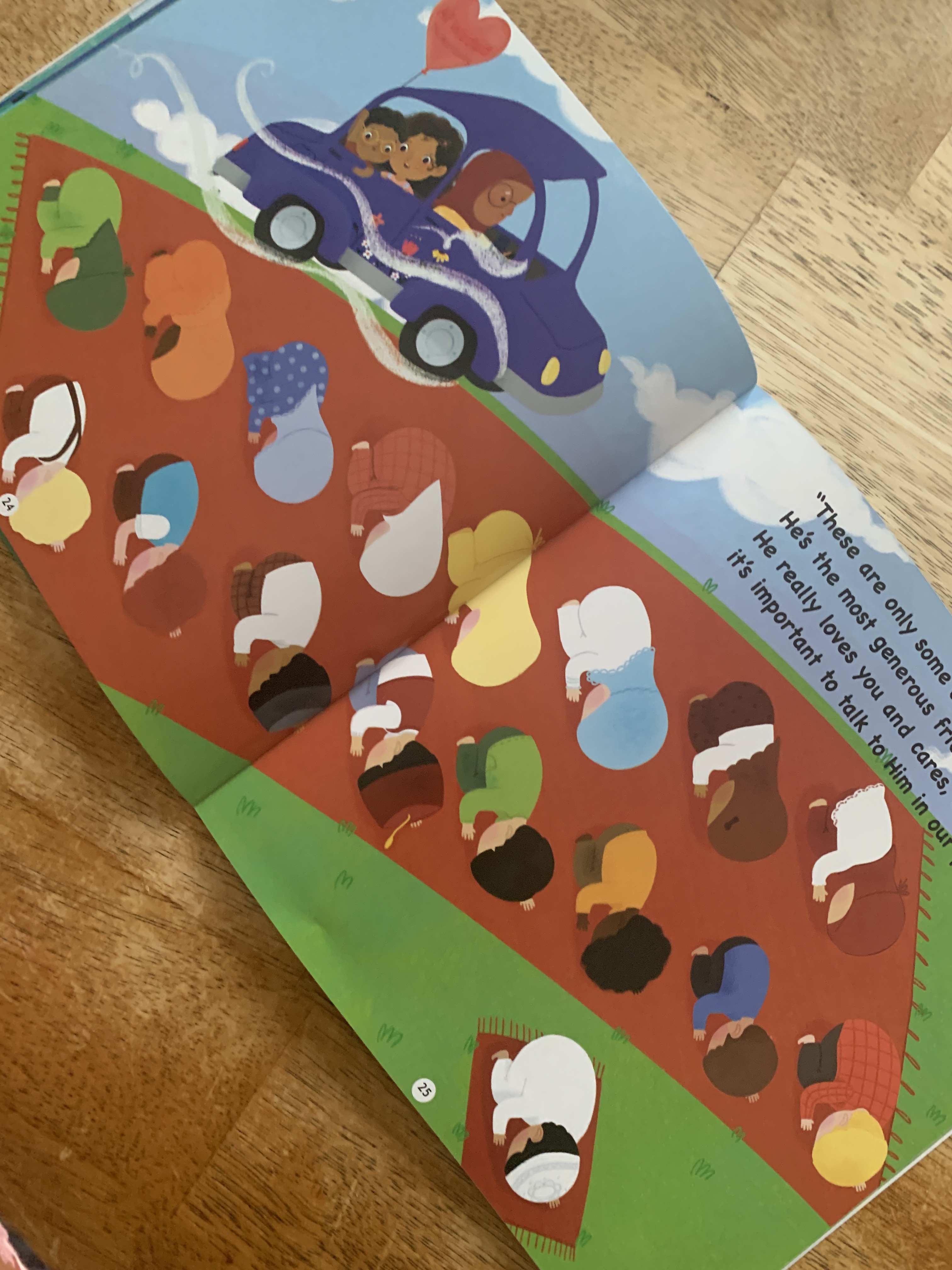
She then details how we can be reminded of Allah in things around us, nature, animals, land formations and then tells the children Allah is the most generous friend and it is important to talk to Him in our prayers. The children ask what we can tell Him, and Granny shares that we can tell Him everything and anything because He always hears.

Granny then explains that when we do good, we make Allah swt happy and when we aren’t nice we make him sad.  So then the kids want to know why we have to go to the mosque, Granny replies, to be part of a community.

The book is a string of questions, so it doesn’t come across as overly preachy, even though it is Islamic fiction, and the voice is natural.  It sounds like a conversation a grandma and some kids would have, I’m guessing the book was spawned by some real life experiences.  My kids and my mom definitely have this relationship.

 All this though, isn’t too say the book is perfect.  If  you read my reviews, you know there is always going to be a little nudge to try and elevate it from my perspective for the next go round. So with that in mind, the book does read a little long, the tangents get a little away from the simple articulate answer of stressing where Allah swt is, the text runs over the pictures a few too many times, and the people praying are not foot-to-foot shoulder-to-shoulder.  There are no salutations, saw, or asterisks after Allah. The word Jummah is not used although they are going to the mosque on Friday and a lot of people are gathering in the day, and the word mosque is used, not masjid.

The pictures are fun and will appeal to kids, especially when the car goes all magic school bus and starts flying, and going underwater.  I hope this is the first book in the series as it really does have potential to present answers to kids questions in a joyful colorful way.

Book available on Amazon 


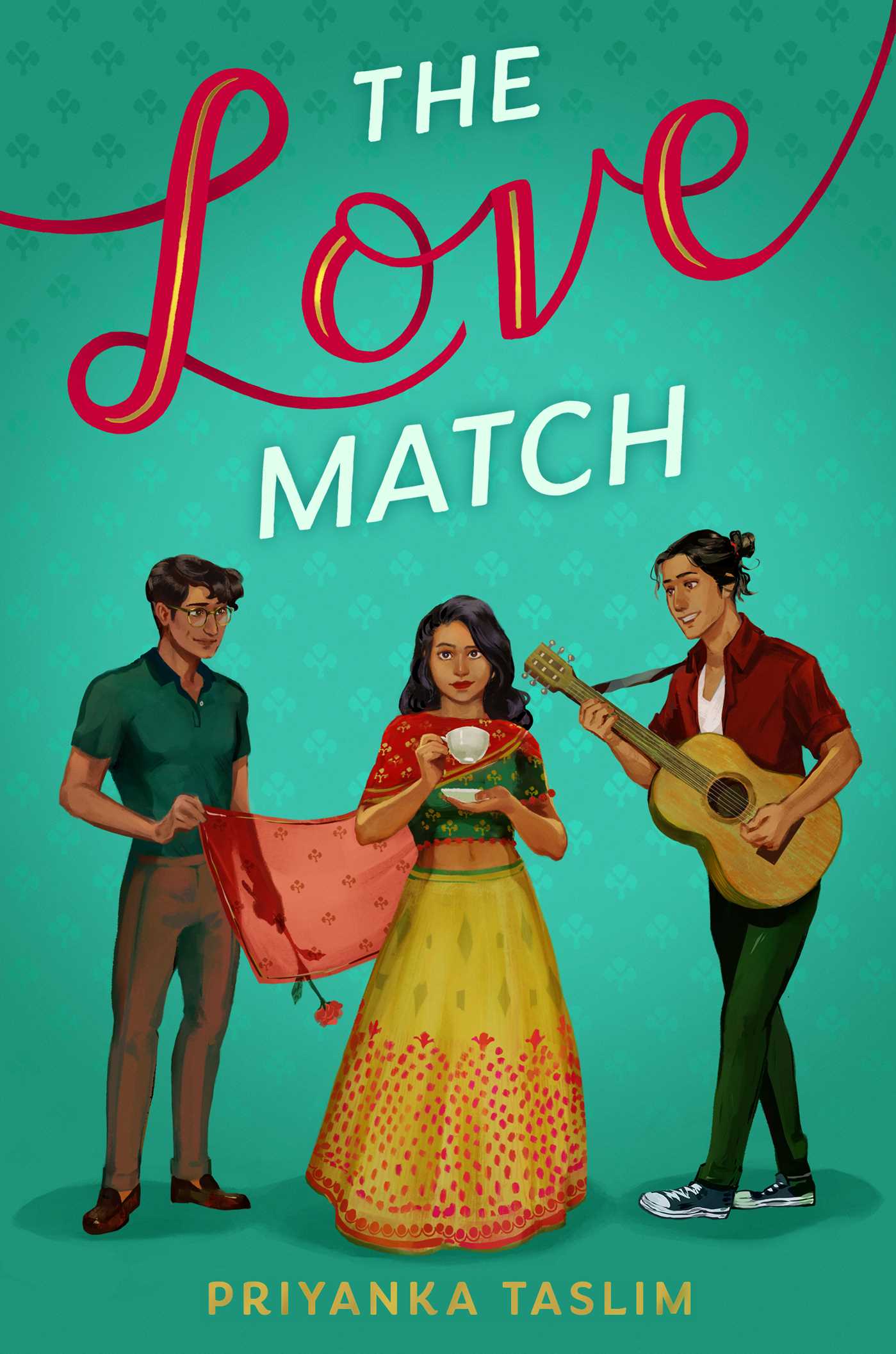
The Love Match by Priyanka Taslim

Standard
The Love Match by Priyanka Taslim

This new YA book features Muslim characters, but is not a religious conscious read that fits in the halal category.  There is a lot of Islam: waking up for fajr, celebrating Eid, a hijabi, mention of jummah, but the OWN voice rom com sets boundaries based on Bangladeshi culture and American perspectives.  The book does not other, or have internalized Islamophobia, or fall in to tropes of oppression and rebelling- quite the contrary- it normalizes everything: LGBTQ+ relationships, dating, music, etc.  The book is well written from a literary perspective: easy read, fleshed out characters, resolved plot lines, I wish there would have been more slow burn and heightened emotion, and cathartic release, but it happily held my attention for 388 pages, so I can’t really complain about plot holes or development.  The problem I have as an Islamic School Librarian is the non issue dating and romance is for the characters with their parents knowledge, both lesbian and heterosexual.  The book doesn’t get graphic, in fact there is only a handful of kisses, but there is a lot of hand holding and pdas in front of parents and even a sleepover with a lesbian couple in a Muslim family’s home, again, nothing “racy” occurs, but the normalization is worth noting for those thinking a Salaam Reads book is going to be a more Islamically centered publication.

SYNOPSIS:

Zahra Khan has graduated high school, and while she’d love to be heading to Columbia to study writing with her best friends, she is stuck deferring her admission and scholarships, and hiding her dream to be an author.  Two years earlier her father has passed away and Zahra works in a tea shop to help keep a roof over the heads of her mother, grandmother, and siblings.  In the Bangladeshi community in Patterson, New Jersey Zahra’s mom imagines arranging a marriage to a wealthy family for Zahra to ease their financial stresses.  When a potential match comes a possible reality, Zahra takes control to try and keep the peace and keep her dreams within reach.  In Jane Austin-y feels, a love triangle emerges, friends step up, culture and family touchstones shared and appreciated, and decisions about the future will have to be figured out at 18 years old.

WHY I LIKE IT:

I loved how easy a read the book is, the cultural framing was warm and rich and never overly explained or apologized for.  It is what it is, it is who the characters are, and while at times they push back on the negatives, it doesn’t disregard the love that exists at the core.  Unfortunately, I really struggled though with the ease in which the characters date with their parents’ knowledge, hold hands, cuddle.  I really couldn’t imagine a practicing Muslim family being so supportive of a lesbian daughter in the way that the Tahir family is and allowing a sleepover, nor could I see a hafiz attending musical concerts and Bollywood movies or an imam passing on “love” notes, even side comments about a loan between mother and daughter being paid back with interest felt off.  I know I know, there are lots of shades of Muslims, but the normalcy of haram I feel in a review of this book should be noted. It isn’t side mentions, they are central to the story and large portions of the book.  The reason I also feel they are worthy of note, is because the book includes a lot of Islam as well.  The characters pray and fast and eat halal.  They are conscious of chaperones in some settings and keeping things appropriate.  There is no doubt that the characters are Muslim, but I think intentionally, to avoid perhaps critiques such as mine, Islam is not used as a reason to do or not do anything, Islam is not used in the thought process or conscience of the characters, culture is.  There is no haram police setting boundaries, it just isn’t what “good Deshi girls do.” To be fair, I don’t think the author has ever claimed that this is a halal love story, or that the characters are exploring their Muslim identities, it is a love story that features Muslims is all.

FLAGS:

Straight and sapphic relationships, secret relationships, kissing, hand holding, hugging, lying, music, loss, bullying, interest.

TOOLS FOR LEADING THE DISCUSSION:

I would not be able to use this book, it would be very damaging to be given to a Muslim child from a Muslim teacher in an Islamic school.  It normalizes a lot of haram in a familiar Islamic framing that I think would really confuse YA readers who see themselves and see no push back or consequences for actions they know to be against Islamic ideology.

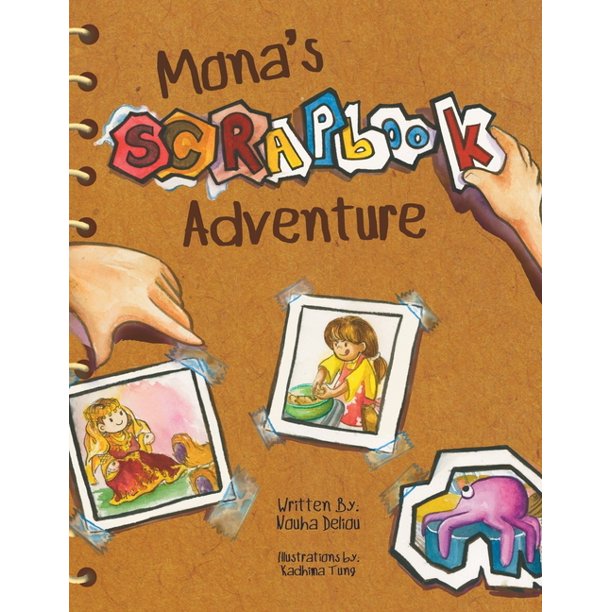
Mona’s Scrapbook Adventure by Nouha Deliou illustrated by Kadhima Tung

Standard
Mona’s Scrapbook Adventure by Nouha Deliou illustrated by Kadhima Tung

mona

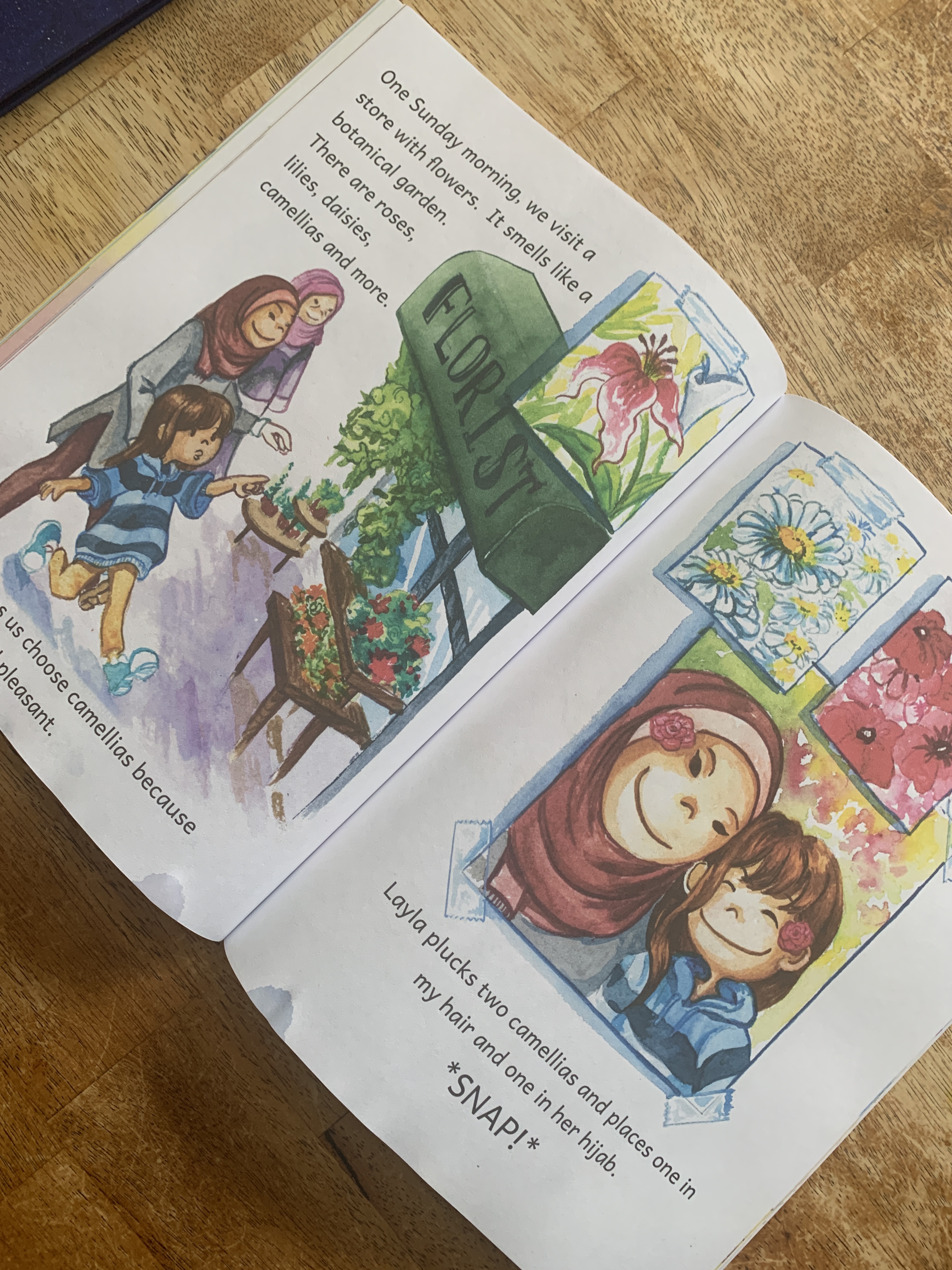
Algerian culture, as far as I’ve seen, is incredibly underrepresented in western literature and not represented at all in children’s books.  I love that this author, who felt the same- did something about it.  This 40 page colorful story incorporates Algerian traditions and culture with universal themes of sibling love, wedding excitement, and being sad about change.  The OWN voice warmth shows Muslim characters in America holding to traditions and making new ones.  The book is long, but is not text heavy.  For toddlers and preschoolers up to second grade, I can see readers enjoying the detailed descriptions of the dresses and foods, and feeling the feelings of little Mona as her beloved older sister prepares for her wedding and ultimately leaving with her husband.

img_2564

The book starts on the morning of the big day, Layla’s engagement.  Mama explains to Mona that the Imam will do the kitab and that her older sister is excited because she has known Ahmed since school and likes him a lot.  Once dressed Mona watches Layla get ready in traditional Algerian clothes.

img_2565

When Ahmed and his family arrive, he and Layla announce that after the wedding they will be moving from New York to Arizona.  Mona is devastated, as the women start to zaghreet in celebration. She wonders if she can go with them, but decides she can’t leave her parents.  Later that night, Layla and Mona chat and decide that Mona will help plan for the wedding and they will make a scrapbook.

img_2566

Over the next few months, clothes are bought, cakes are tasted, flowers are decided upon, and Arayech is made.  The night of the henna is fun, but then it is the wedding, and then time for Layla and Ahmed to go. Happy tears and promises to always be connected conclude the story before a scrapbook page for the readers is revealed to make their own designs.  That is followed by a glossary, and information about the author and illustrator.

img_2567

I love the detail about the different cultural and regional Algerian dresses in the illustrations, the Algerian traditions shared through the text, and the connection between the two sisters. The book is available in hard back or paper back and I got mine from Crescent Moon Store  

https://crescentmoonstore.com/products/monas-scrapbook-adventure?sca_ref=1601585.fIPhoqtScY