Tag Archives: friends

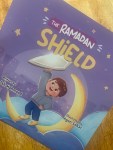
The Ramadan Shield by Fadelah Mahmood illustrated by Ayun Sekar

Standard
The Ramadan Shield by Fadelah Mahmood illustrated by Ayun Sekar

img_7028

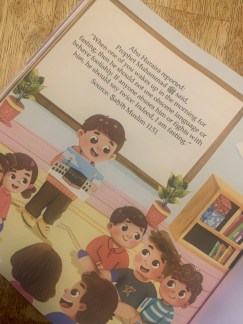
This new 32 page rhyming book focuses on a boy who gets frustrated and often loses his temper and how the onset of Ramadan has his father imparting the lesson that fasting isn’t just staying away from food and drink, but also about behavior and controlling your anger.  He shares the hadith of saying “…I’m fasting, I’m fasting,” which is shared in its entirety and sourced at the end.  The book has a lot of text and scenarios in its moral framed telling that creates a bit of a disconnect between the presentation and the target audience.  The characters are fasting, there is no discussion about why they are fasting or that it is a first time fasting (thank you). the child’s art assignment is pretty advanced, and friends are seen independently out and about, but the rhyming lines and illustrations at the end of the kids on the rug seems aimed at a much younger reader/listener.  For my purpose of story times to children 4-9 it is a great choice, because it can appeal to the large range of relatability and attention spans, but for repeated readings in a home, it might need some shortening or additional explaining to connect as intended.

img_7029

The story starts with Nuh working on an assignment to draw and paint a picture of the Kaba, but it keeps coming out tilted and he crumples and throws page after page.  His dad snuggles him close and explains that Shabaan is over and Ramadan is about to start which means that he needs to go without food and water, but also work on his behavior.  He explains, how to use the advice of saying, “Fasting is my shield; I will not be defeated! I am fasting, I am fasting.”

img_7030

Empowered by the words, Nuh starts his next morning remembering his father’s advice.  When he spills water on his painting he remembers the advice. When a grocery cart collision at the store with his nemesis gets his fist clenching, he remembers his father’s advice.  He even gets a chance to share his knowledge with his friends.

img_7031

When the day is over he is eating iftar with his family and determined to keep his temper at bay throughout he whole month and beyond, inshaAllah, starting with him trying his drawing of the Kaba again.

img_7032

I like that the focus is on behavior, I think that is a good reminder for older kids, and something younger kids that may or may not be fasting need to implement in Ramadan.  I also like that the parents are encouraging and invested, but not controlling the individual situations.  The book is preachy, and when the kid takes the lesson and starts preaching it to him, it is a little heavy handed, but I think it fits with the nature of the book.  I appreciate that the kid knows what Ramadan and fasting is, so that the lesson can go a bit deeper in this Islamic fiction story.

I got my copy from Crescent Moon store, and you can get yours there as well by clicking this link here.  If you use code ISL (Islamic School Librain initials) at checkout you will save 10%,

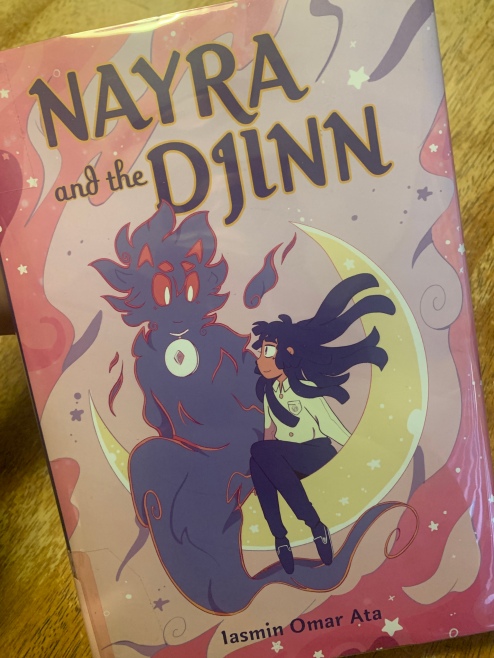
Nayra and the Djinn by Iasmin Omar Ata

Standard
Nayra and the Djinn by Iasmin Omar Ata

img_6973

Set in Ramadan this graphic novel for middle grades has a coming of age theme brought to life with fantasy, religious practices, and storylines of bullying, acceptance, and folklore.  Nayra is fasting, she prays, she says bismillah and Assalamualaikum, her  practice of her deen is never in question and by and large I don’t know that anything is “haram” in the Islamic representation.  Yes, she says bismillah in julus, the sitting position of salat, there is sihr, magic. done by the djinn, and a lot of liberties about the ghayb (you can’t really disprove them), but honestly my biggest problem with this book is that somehow even though it is a graphic novel, more visual than text, there is way too much telling and not enough showing.  The reader is told that there is bullying, but only shown that one girl calls her “baba ghanoush,” we are told over and over that she is friends with Rami and that she needs to fix the relationship, but we never see what the friendship was before, only the forced awkwardness that it is now. The inside flap of the book stereotypes the “strict family,” but we never really see them being overly demanding or difficult, and the conclusion is very naïve with both the two girls and the two djinn resolving everything on Eid. I wanted to care about the characters, but never felt a connection to their stresses, traumas, and relationships, and many mirror my own life.  In full transparency though, I must acknowledge to you all, that I do not read a lot of fantasy graphic novels or even comic books, if the choppiness, and lack of depth is what makes the genre work for others, then this book will be fun with its pink and purple pallet and tracking of the Ramadan moon.  I really might just be the wrong person to review this OWN voice djinn fantasy authored by a Palestinian Muslim who like her fictitious djinn goes by they/them pronouns.

SYNOPSIS:

Nayra is being picked on by Tanya for messing up in volleyball in PE, and gets to calling Nayra “baba ganoush.”  When the book opens Nayra fasting for Ramadan is what Tanya chooses to attribute Nayra’s lacking skill too, and Nayra is ready to find a new school.  Her family offers no support, her older siblings set the bar high and got through by ignoring the bullies, and expect her to do the same.  The one other Muslim at school is Rami, and Nayra needs a break from her, they meet to break fast every evening, but Rami is exhausting.  When an online forum somehow gets a visit from a djinn, Nayra offers to be the anchor that Marjan needs to escape the ghayb and exist in the human world.  Marjan’s past comes back to haunt them, and when Zirkouniya arrives, there is only so much protection the month of Ramadan can offer as Eid arrives and the djinn are returned to full strength.  Djinn and human alike will have to own up to their mistakes, forgive others, and rebuild the relationships that matter.

WHY I LIKE IT:

I like the Ramadan centering, and appreciate that the coming of age story line was not an identity crisis about Nayra’s faith.  I  finished the book feeling like I didn’t understand much.  There was a lot of build up for a strict family, and djinn wisdom, that just didn’t exist.  The conflict with the friends was superficial and the resolution the same.  Maybe I missed the visual resonance as I tend to enjoy lyrical writing and relatable text, but the story seemed really simplistic, and the characters flat.

I honestly don’t know if the liberties of the djinn world and djinn themselves goes too far or if folklore, mythology, and fantasy give it fictional protection.  There are details that perhaps come from culture, or are completely made up, I don’t know.  Djinn in Islam are real, they are made of smokeless fire, some are good, some are bad, they have genders, and families, and feelings, and communities.  Outside of that, I don’t know much, and do not presume to, when I sent @bintyounus some of the pictures from the book, she remarked, “Djinn are part of the Ghayb/unseen, So it’s not like we say oh none of it is true, but we also don’t take it as 100% true.”

The magic is minor just a fixing of a flower and flower pot, so in reality the only fantasy are the details about the djinn and the journey to the djinn world.

FLAGS:

Lying, bullying, magic, sneaking out.

TOOLS FOR LEADING THE DISCUSSION:

There is not enough in the book to discuss in a book club, and because of the lacking resonance, I don’t know that most kids would read the book or be interested in it. I can see it being thumbed through, but I don’t think it would be finished by Muslim kids at the Islamic school, or by my own children.  Those that know the Islamic view of djinns won’t find that enough of a hook when the story inside is about a friendship, and not a particularly deep or fleshed out one.  They might see the bullying as relatable, but being called baba ganoush doesn’t really seem that bad compared to what many endure and pining for friends, when you have a very loyal friend, also will probably be met with some confusion.

Hamra and the Jungle of Memories by Hanna Alkaf

Standard
Hamra and the Jungle of Memories by Hanna Alkaf

hamra1

This 400 page middle grade retelling of Little Red Riding Hood bursts with Malaysian culture, magic, action, and adventure.  The main character and her family are Muslim and hijab, duas, zikr, halal, Qur’an and salat are included throughout.  The mix of legends and characters from Malaysian culture in building the fae world is not contrasted with religious faith, but assumed to both coexist without issue.  The book is clean for ages nine and up and the only concepts worth noting are some intense life and death situations, close male and female friendships, dementia, and the element of fantasy.  The book is set during the Covid-19 pandemic which will ultimately date the book as it doesn’t convey the tone for readers unfamiliar with the curfews, social distancing, controversies, and masking.  Those who have just lived through it, will not need the framing, but in a few years I do fear that the book will be lacking in fully understanding why the tourists, parents, and markets are so absent.  As with all of the author’s books there are also dated pop culture references, that slow the narrative down for today’s readers.  The book grabs you from the start and the second half flies by smoothly, but the middle quarter is a bit slow as the world building is not robust, and the reader is thrust into a magical world that is just accepted without pause, and the reader is asked to accept it at face value as well.

SYNOPSIS:

It is Hamra’s birthday, but the independent 13 year old is not being celebrated- everyone has forgotten: her mother is a front line worker, her father helping those with limited resources, and her aging grandfather and her are left to care for her memory slipping grandmother.  When Hamra, Little Red, storms off to the jungle to collect some herbs, in an act of spite, she defies the rules drilled in to her 1- Always ask permission before you enter.  2- Don’t challenge what you can’t even see. 3- Never use your true name. 4-Never take what isn’t yours. 5-If you hear someone calling your name, never, ever look behind you. She also doesn’t listen to the regular reminders to tie her shoes.  Simple rules, that when broken set the story in to motion.  Along with her best friend Ilyas, the two will strike a deal with a weretiger for their transgressions that takes them on a journey to try and save Opah, themselves, and prove their quest a success.  The characters they meet, the clues they unravel, the legends they understand, and the scenic islands they explore are as lush as the love Hamra has for her family and the drive she has to return home safely.

WHY I LIKE IT:

I love the way Islam is truly part of the characters, and a natural extension of how they see the world and act within it.  I wish there was stronger world building blending the world of the known and the fantasy for the reader.  The writing of the Malaysian setting is beautifully unapologetic and I love that there is not a glossary or overly explained descriptions, it is immersive and I appreciate that, but the framing of the two worlds I felt was a bit disjointed and needed some fleshing out.  At times it feels more telling than showing in detailing the depths of the legends or the superstitions that are true for the story.  I did enjoy the characters’ quirks and stubbornness, there is not a lot of arc and growth, but with the intensity of the adventure and culture, I didn’t feel it lacking in development.  For much of the book I didn’t quite appreciate the Covid-19 framing, but by the end I understood that it was a way to have the tourist spots void of people, the parent’s out of the way; a little more development though would have had the uncertainty of so much more fully realized.

FLAGS:

Fear, trickery, danger, loss, death, music, musical references, dammit is said.  There is some violence, close male and female friendships, and a possible trigger of dementia in a loved one.  There is myth, legend, magic, fairies, fae, and fantasy, if you are ok with the concepts in general the presentation is clean even with mixing religion and these concepts.  If you are uncomfortable of fantasy and Islam coexisting, this book draws the two worlds very close.

TOOLS FOR LEADING THE DISCUSSION:

I have taught two of her books in middle school book club discussions, and I would teach this one as well.  It is enjoyable to see Malaysian Muslim characters so confident in their identity and having adventures that are enhanced by their faith and culture while focusing on larger themes of friendship, family, forgiveness, and adventure.

The book comes out in March of 2023, I’ve preorderd mine HERE and I hope you will as well.

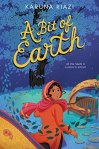
A Bit of Earth by Karuna Riazi

Standard
A Bit of Earth by Karuna Riazi

earth

This Secret Garden retelling mixes the heart of the original with a dash of modernity, the flavor of desi culture, and the lyricism of a good writer.  Over 368 pages the slow plot but rich imagery will draw readers in, hold their attention, and leave them thinking about the characters they have been fortunate to spend time with on Long Island.  Islam is practiced and normalized and naturally woven into the Muslim characters’ daily lives without othering or over explaining.  I did struggle a bit trying to keep the relationships of who was supposed to be caring for the protagonist at various points since her parent’s died clear, but once I abandoned stressing about it I was able to be swept away.  I recently reread The Secret Garden with my own children and the original is not plot heavy, nor action packed, but I watched as my own children were drawn to the slower, more grounded (pun intended) nuanced tale, and I think this book, in the same vein, will find its way in to the hearts of middle grade readers.  The book is clean, there is a possible crush hinted very slightly at the end, periods are also endured, and I do have reservations of the terrible marital relationship between Mr. and Mrs. Clayborne, but it establishes that change will occur, so at least it isn’t normalized.  There are sprinkles of magic implied regarding the house, but it is always framed without clarity and in a subtle way to set the tone and the emotions the characters are feeling more than centralizing something rooted (see I did it again) in fantasy.

SYNOPSIS:

The book updates and mirrors the original fairly well with an obstinate orphan arriving at a sprawling house, finding a prickly boy, and setting off to form a tentative toleration of one another with friendly neighbor kids in a garden that is unquestionably off limits.

Maria Latif arrives from Pakistan against her will to be taken in by a distant relative (I’m not sure how she is related), but Asra has been called away and she is forced to stay with Lyndsay, the new wife of Mr. Clayborne.  The first wife was a friend of Maria’s family, but Lyndsay is just as emotionally overwhelmed and lost as the child in her charge.  With Mr. Clayborne away on businesses, his mother Charlotte keeps them all on edge.  When Colin Clayborne is expelled and returns home, more tension erupts and the two children find themselves in an off limits garden trying to make the most of a difficult situation.

WHY I LIKE IT:

I love the mix of poetry and standard novel format.  It is beautifully written and clearly the author does a remarkable job of making her very unlikeable characters worm their way in to the reader’s heart.  Both Maria and Colin are thorny and difficult, stubborn and rude, but you seriously cheer for them, and I did shed a few tears at the end.  With the author’s writing ability apparent, I’m still not sure why the foundation of the relationships and getting Maria to the Clayborne home is so cumbersome.  It is too muddled and it drags the book down every time it is revisited.  The Dadi having the aunt’s phone number was too easy, the inconsistency of the neighbors having no relationship to the Clayborne’s for so long and Lyndsay not even pausing to think another Bangladeshi family living a few houses down might be my husband’s first wife’s friends, seems inconsistent.  Honestly Lyndsey in general needed to read like a competent woman struggling, not a teenager in over her head. I disliked her and Mr. Clayborne’s relationship and I would hate to think any reader would find it ok or normal.

I love the Islam and how it presents when the character has to pray, she goes and prays, it is part of the story and it is seamless.  I don’t think the culture is handled quite as well.  Lyndsay is a foot writer who is always cooking, yet knows nothing of desi foods? If Colin’s mom is desi, wouldn’t she at some point tried to cook familiar foods for him.  Half the neighborhood is Bangledeshi, so it seems everyone has a parent or step parent or distant relative that is desi and I loved the normalizing, but it seemed a bit assuming.  I don’t think kids will wish it was more clear, but as an adult reading it, I felt like it needed to be interjected more without explanation, or if left as is, adding some context. I also wanted to know what Maria’s parents did and a little introspection from Maria.  Again as an adult I see how her anger and grief changes how she remembers them, but from them always being away, to such soft poignant memories at the end, I think kids will need a little hand holding to understand the grief process and her understanding of them.  As it is, they just seem terrible and then all of the sudden great, and the pacing gets thrown off in the process.

FLAGS:

It seems to hint at the end that Maria might have a bit of a crush on Colin, I honestly thought up until a single line that they were making a chosen family with the people who cared for them, but that line seemed to suggest it might be more of a romantic feeling than friend or brotherly.  I read an early copy, so this is subject to change.

Maria gets her period and it is detailed what she is feeling.  I think boys and girls can and should read it.  It is presented on age and appropriately: cramps, achy, dry about blood leakage, having it start young like her mother, etc..

Implied magic (possibly), music and musical instruments being played, milaad, lying, sneaking, being kicked out of school for physical assault, close male and female friendships, ADHD stigma.

TOOLS FOR LEADING THE DISCUSSION

I think this book would work in a classroom and would appeal to readers in an Islamic or public library.  I would consider it for a middle school book club, I think readers will connect and feel empathy for Maria, Colin, and Lyndsay and be better for it.

I preordered my copy HERE and I hope you will do the same

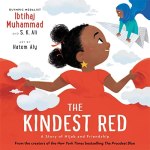
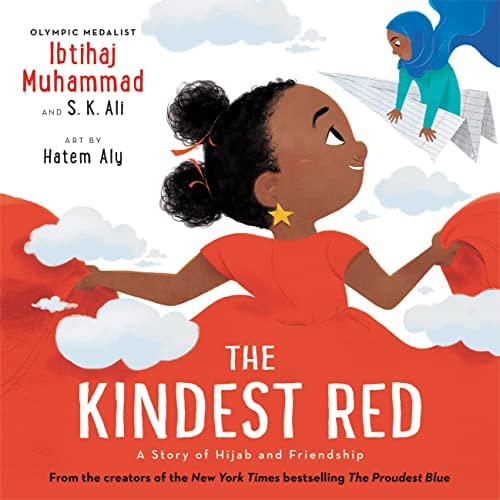
The Kindest Red: A Story of Hijab and Friendship by Ibtihaj Muhammad and S.K. Ali illustrated by Hatem Aly

Standard
The Kindest Red: A Story of Hijab and Friendship by Ibtihaj Muhammad and S.K. Ali illustrated by Hatem Aly

This heartwarming book centers kindness, family, and friendship in an inclusive way; and while the tagline says “A Story of Hijab and Friendship” I think the hijab angle is a bit of a stretch.  The authors are Muslims that wear hijab, the older sister and older females in the family wear hijab, but there is nothing in the story or text that connect hijab to Islam or to something Muslim women wear as part of religion.  I don’t want to compare the first book in the series, The Proudest Blue, to this book, but hijab really was centered in that book and the Author’s Note mentioned that hijab is an Islamic act.  This book does not make those same connections, which is fine, I just want consumers to be aware.  This book is beautiful and the messaging endearing, and the tone and heart over 40 pages ideal for preschool to early elementary children.  It works as a standalone, but with the same characters and sisterly love, I think most people will enjoy keeping them together.

The book starts with Mama passing on Asiya’s dress to Faizah, that had been Mama’s even before that.  It is picture day, and the girls are helping each other get ready. At school Faizah and her friend Sophie twirl in their pretty dresses before heading in to class to discuss what kind of world they want.

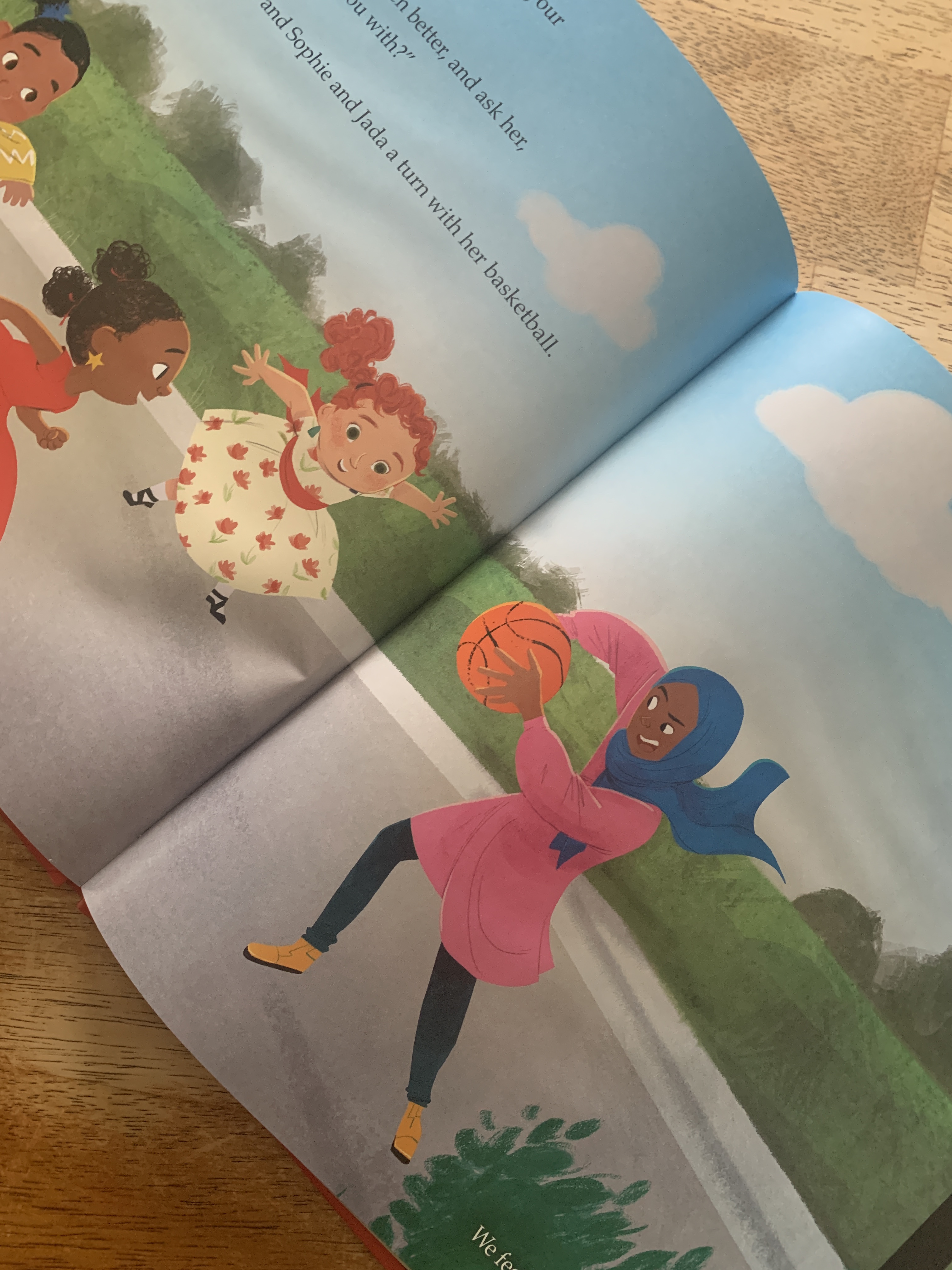
Faizah wants a kind world, where there’s always a friend nearby, where everyone helps. At recess, Sophie and Faizah combine their visions, superheroes and kindness, to help other kids on the playground.  When picture time arrives the class is full of smiles, but when it is time for sibling pictures, Faiza and Asiya realize they don’t match.

Faizah is sad, and Sophie notices, can the kindness be passed along like the dress to help the sisters? To make Faizah happy too? I’m not going to give away the conclusion, but it is sweet and idyllic and shows how lovely the world can be if we all just share some kindness.

I love the illustrations and the hijab wearing super hero that presumably Sophie drew is powerful.  I think the book does wonders to normalize hijab, even if I do wish it articulated why one would wear hijab.  It seems that the industry trend is to keep hijab superficial and I recognize I am in the minority that wants religious centering for religious tenants.  So yes, I’m fully prepared for the backlash when people want to point out that it is joyful and that I’m a naysayer, but I deal with people on a daily basis that do not know that my own hijab is a reflection of me being Muslim.  With as connected as the world is through technology, I  think those in diverse environments take for granted the understanding of basic Islamic principals in the general population.  However, not everyone has those real life connections and rely on books and media to fill the gaps, so when books about hijab, don’t actually connect hijab to faith, I feel obligated to point it out.

I purchased (preordered) my copy here, but I hope you will support small business and order yours here  use code ISL for 10% off.

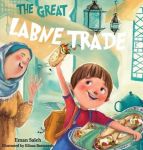
The Great Labne Trade by Eman Saleh illustrated by Eilnaz Barmayeh

Standard
The Great Labne Trade by Eman Saleh illustrated by Eilnaz Barmayeh

labne

My friend Noura, owner of Crescent Moon Store, said this book was good, so when I saw the amazing illustrations on the cover, I didn’t even look into what the book was about, I bought it and waited impatiently for it to arrive.  When it came I started reading it and thought ok, ok another book about lunch food that is perceived as “other” and the bullying that ensues with having a “smelly” lunch.  But the bullying never really came, and the book was suddenly not about being different, it was about entrepreneurship, and a mother’s love and support, and appreciating good food, and sharing culture, and raging against an oppressive system. Ok, so there was no raging, the book ended with determination and a following of the “rules,” in a very kid appropriate manner, but it was fun and a nice change from the typical storyline in rhyming children’s books.  There is no “Islam” aside from a boy named Ahmed and his sweet hijab wearing mother, but this book will result in smiles for kids preschool to early elementary and encourage business creativity and thinking outside the box.

img_5127

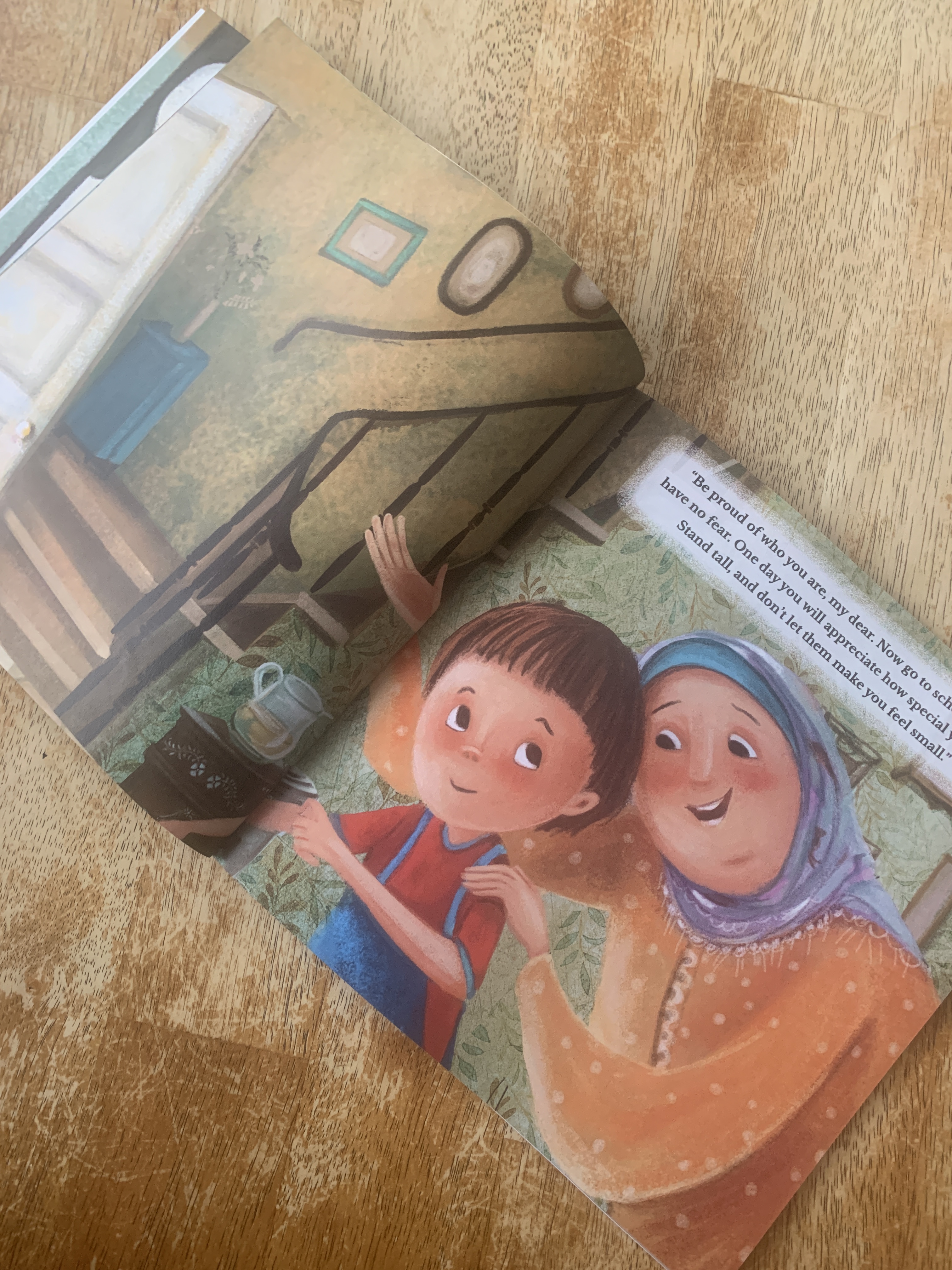
Ahmed is not thrilled to be taking a labne sandwich to school and would rather have a pb&j like everyone else. His mom encourages him to “be proud of who you are, appreciate how special you are, stand tall, don’t let other’s make you feel small,” and sends him out the door.  At lunch when the kids start to turn up their noses, Ahmed gets them to try the sandwich, and they love it.

img_5128

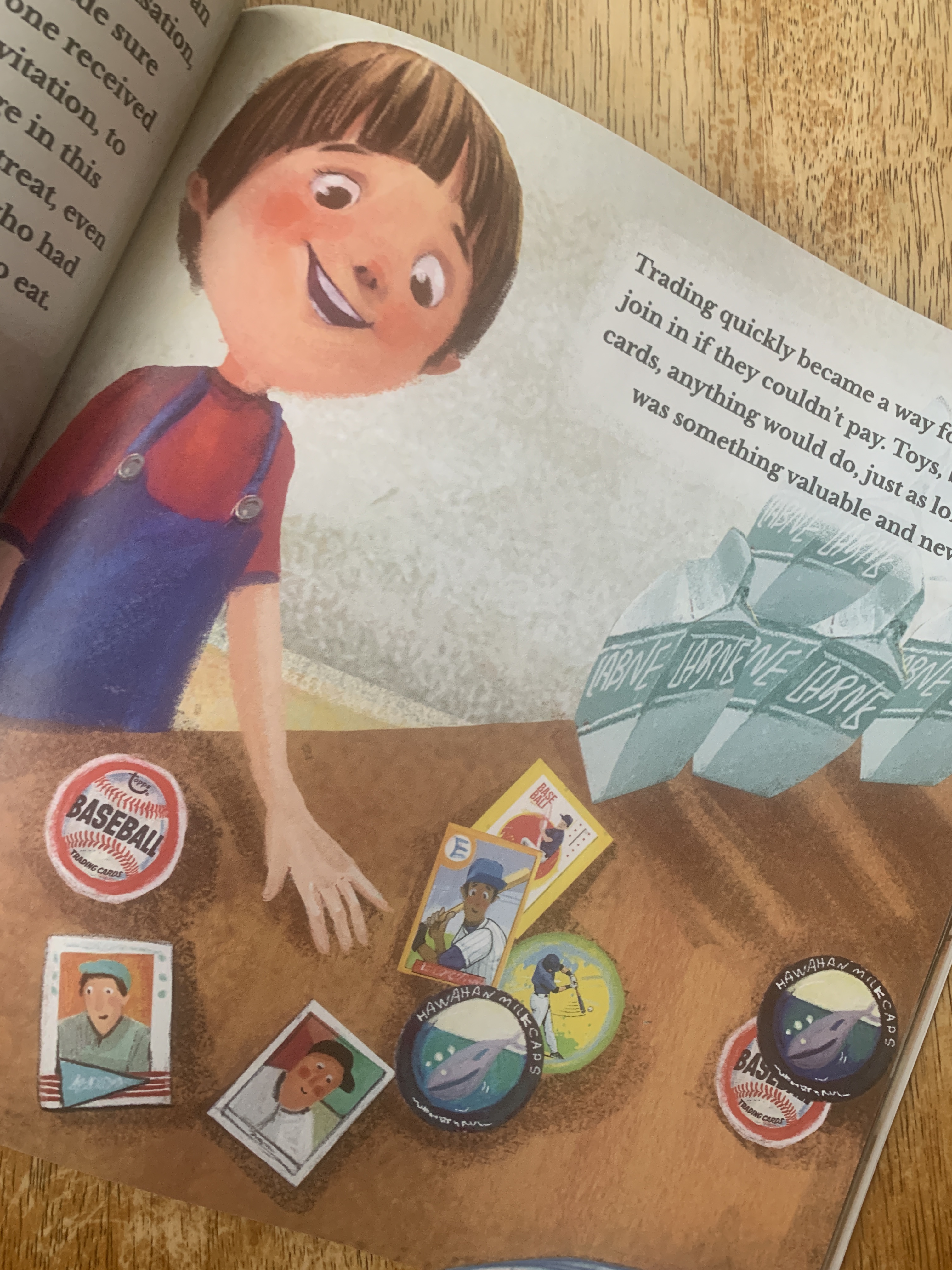
Ahmed gets an idea, maybe he can sell labne sandwiches to his classmates. Mama stays up late making them and Ahmed sets up shop in the cafeteria. He sets his price, and they sell out, so he increases the charge, and they are still selling. He also is open to trades for those that can’t pay.  Before you know it he is adding dishes to the menu.  Things are going well for entrepreneur Ahmed, until the lunch ladies have had enough and take matters to the principal.

img_5130

The 58 page book is not text heavy and the rhyme is fairly good, it is hit and miss at times, but the story is not hindered by it. I did feel like the book took a few pages to set the stage and get into the story. The initial timeline and the “smelly” lunch could be cleaned up a little, but once the business storyline presents it is smooth and enjoyable. And the illustrations, they are perfect for the story and for keeping Ahmed and his dream in your heart.

The book is available here at Crescent Moon or on Amazon.

img_5129

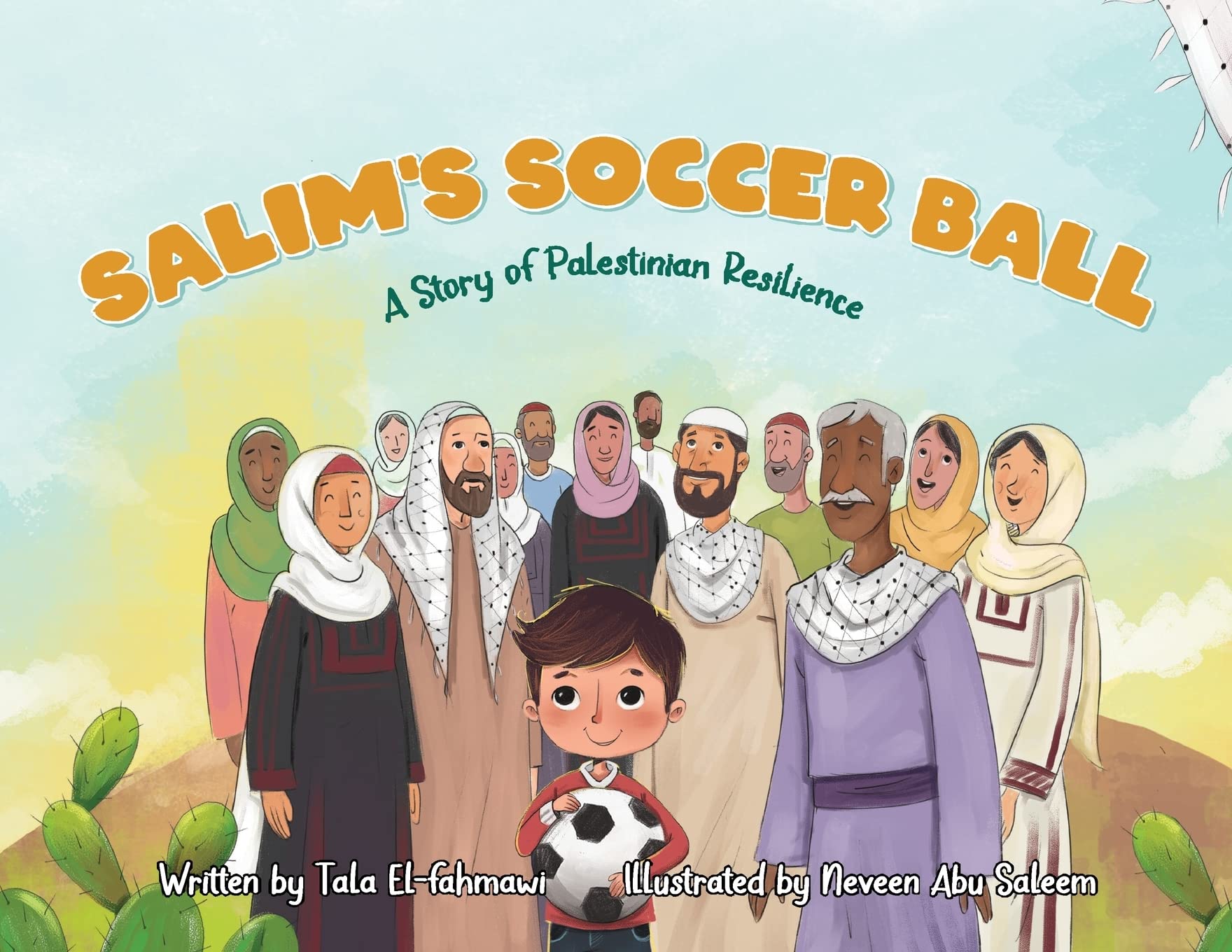
Salim’s Soccer Ball: A Story of Palestinian Resilience by Tala El-fahmawi illustrated by Naveen Abu Saleem

Standard
Salim’s Soccer Ball: A Story of Palestinian Resilience by Tala El-fahmawi illustrated by Naveen Abu Saleem

salim

This 58 page rhyming picture book weaves together a tale of a little boy and his lost soccer ball, with larger issues of community, oppression, and perspective for the youngest of readers to older children too.  I am noted to be skeptical of rhyming books, but the large font, the sweeping pictures, and the dropping of occupation, struggle, and resilience really make this book a treat. Add in discussion questions and an author’s note and you have a solid book that deserves space on home, library, and classroom shelves.  My only wish, was that the book was hardback.  The horizontal layout with a soft cover make the book difficult to read during story times as the pages flop back.  The book is long, but the text on most spreads is minimal and while I could not identify the author’s religious identity, their are numerous hijab wearing #muslimsintheillustrations as Salim journey’s around his neighborhood and into his grand father’s memories.

Salim wakes up, brushes his teeth, and is out the door to play soccer with his best friend Qusai, but the ball goes flying and Salim can’t find it. He starts walking down the hill and it seems to have disappeared.

img_5055

He asks the fisherman, Abu Zaid, if he has seen it, and he hasn’t, but he offers to help.  They then go and ask the seamstress, she hasn’t either, but she puts down her tatreez, offers reassurance, and offers to help.  As they head out they bump in to Dr. Bassam.  “‘I will help you look,’ the kindly man said. “I can fix broken bones with very few supplies.  A lack of resources has made me clever and wise. Resilience and courage are plentiful here. We will find your ball. Salim, no need to fear.'”

img_5054

The searching continues, with a small break for khanfeh, and then Qusai is found, and so is the ball.  Like so many joyful items, the barbed wire of the apartheid wall has destroyed the soccer ball. Upset, Abu Omar, calls out to Salim, and his grandpa embraces and consoles the young boy recalling a donkey with wonky ears and life on the farm.  With resilience and joy Salim heads home to a community surprise and a hopeful future inshaAllah.

img_5053

The book concludes with five discussion questions that connect Salim’s experience to universal experiences of people everywhere.  It is followed by factual and personal author’s note about Palestine and the book.  

img_5056

There is nothing religious aside from the hijabs worn, Dome of the Rock, Masjid al Aqsa, and Church of The Holy Sepulcher in the backgrounds of a few images.  I purchased my copy from Amazon HERE and can also be purchased through Shop Palestine HERE.

img_5057


Heroes Like Us: Two Stories by Onjali Q. Raúf

Standard
Heroes Like Us: Two Stories by Onjali Q. Raúf

So this book is a little unique in that it is two stories, and The Great Food Bank Heist, one of the stories, has already been published, and the other story is a bit of an epilogue to The Boy at the Back of the Class.  So, I’m just going to review the first story in the book, The Day We Met the Queen, and while you probably can get away with not reading The Boy at the Back of the Class first, I wouldn’t want you to.  It is such a good book and you really should read it, everyone should. Yes, it is that good. So back to The Day We Met the Queen, the first story in the upcoming middle grade 176 page book, about refugees and kids making a difference.

SYNOPSIS:

This charming story shows what happens to Alexa and Ahmet and the whole crew as they prepare to met the Queen for tea.  The group of friends is about to show the entire school their invitations and share the two questions each that they plan to ask the monarch, the list was 52 questions, but because the Queen is nearly 100 years old, they have been advised to shorten the list.  On the day of the assembly news crews are present and Brenden-the-Bully is acting a little strange, as Ahmet starts talking the auditorium erupts with stink bombs and everyone leaves running.  The kids think it is just the bully striking again, but the gossip at the school and reports on the news imply it might be more than that, and the kids might not make it to the Queen’s tea after all.

WHY I LIKE IT:

I love getting some closure on the story, while simultaneously showing that refugee treatment and rights is not a thing yet resolved.  The idea of the Queen being at the center of the book definitely adds to the coincidental timeliness of it all, but that she is easy going and relatable to the children is still the takeaway whether you were a fan of the real Queen or not.  I love the voice of the protagonist and the relatability that her concerns are with the target audience. I particularly enjoy the critique about the media and the clarity in which the children understand the flaws and limitations of what they are told in the news both on the school level and on a global stage.  There isn’t anything Islamic in the text, Ahment is Muslim, as is the author.

FLAGS:

Hate speech, deception, bullying

TOOLS FOR LEADING THE DISCUSSION:

I don’t think there is an author that brings big real issues to children’s stories as well or as consistently as Onjali Rauf. Both stories in this book should be shared with middle grade readers and up to be discussed, reflected upon, and learned from as often as possible.  You can preorder your copy here: https://amzn.to/3Eq2G4M

Ida in the Middle by Nora Lester Murad

Standard
Ida in the Middle by Nora Lester Murad

ida-in-the-middle-9781623718060_lg

Ideal for middle school readers (upper mg/lower ya), this magical realism book takes readers from middle school in American to a Palestinian village outside of Jerusalem through the consumption of some magical olives.  Written by a Jewish author married to a Palestinian Muslim who raised their three daughters in Palestine, the book features a lot of Islam, but is Palestinian centered in its insight, critique, culture, and dreams.  Over 224 pages, Ida starts to find where she fits in both in understanding her self within her family, her place in America, her passion in life, and what it means to be Palestinian.  The story is important, and is told in a way that will encourage readers to learn more about the occupation.  Nuances are shown in characters and groups, but the line that the occupation is oppressive is never compromised.  I appreciate that the author writes from her own experiences and openly acknowledges that she is not trying to take away from Palestinian born and raised OWN voice stories, but she is an advocate, she has raised her children and lived in the West Bank, and her characters reflect a sense of intimate knowledge, love, and appreciation.  Even with Ida having to decide to stay in America or Palestine, the two countries are not pitted against each other or seen as black or white, as to which is better or worse, the middle is where much of the story takes place, and appreciating your culture no matter how much others are trying to erase your existence, is always stressed.
SYNOPSIS:

Ida is the middle child of her Palestinian immigrant family and isn’t artistic like her younger sister, a ballet dancer like her older sister, or a soccer player like her father.  She wishes she was invisible.  Especially when her classmates turn on her every time there are conflicts in the middle east.  When it seems that everyone wants to diminish her heritage, she finds herself at a new school, unsure of where she fits in.  With anti Palestinian attitudes and Islamophobic people, Ida just wants to go unnoticed, unfortunately middle school requires a passion project to be presented and Ida has no idea what her passions are, and how she will face the crowds.

One day when looking for a snack she finds a jar of olives stuffed in a cupboard- olives brought by a family friend from her now deceased aunt in Busala, one bite and she is magically transported to the familial village.  It is an alternate reality of what life would be if her parents never came to America.  Not only is she in a country she has never seen before, meeting family members she has never met before, but even her own parents and sisters are somehow different.  She enjoys the warmth, the communal activities, the extended family.  Her mom in hijab, the athan being heard, the men all going for jummah, but then they sit down for a meal and the same olives are served and Ida accidently takes a bite and is whisked back home.

Once home, she longs for so much of Palestinian life, but relishes in the convenience and ease of America as well.  Her passion project still looms and she finds herself hoping to escape it by going back to Palestine.  When she finds herself back near Jerusalem she ventures out with her Aunt, who isn’t dead in this reality, and learns more about the occupation and oppression, and how the families interact with the various Israelis: some sympathetic to Palestinians, some actively working to help Palestinians, and some settlers- forcefully killing and bulldozing Palestinian homes.

When Israeli military troops enter their village, the families meet to discuss the best course of action, the families do not agree, there is no clear way to prepare, there is no guarantee of survival.  Ida starts to find her voice, and when the soldiers enter, Ida finds herself rushing out to help a small boy. Guns, demolition, rocks, tear gas, fear, so much fear, what can one person do? What can one village do?  What will Ida do?

WHY I LIKE IT:

The book is relatable and moving, not just for those with a tie or interest in Palestine.  It is a coming of age story that shows a girl grappling with forces so much bigger than herself, while at the same time dealing with homework and friends and stereotypes.  Ida has a lot to figure out and the book doesn’t sugar coat a happy ending, it simply provides a moving story based on reality, through a character whose quirks and personality you find yourself rooting for.

I love the presence of Islam and the way it is apart of Ida and her surroundings, even though she makes it clear early on that her family is not religious.  The Quran is mentioned, the athan, various salat, hijab, Hajj, Ayatul Kursi, Ramadan, Eid, wasting food as being haram.  In Boston her friend knows she doesn’t eat pork, she went to Sunday school to learn Arabic at the mosque when she was younger.  It doesn’t gush with Islam, but it is present, for example Ida’s sister and her joke about a good Palestinian girl shouldn’t have a boyfriend, it isn’t tied to their religion. The story is a Palestinian one, and as someone who is not Palestinian, the images, the foods, the smells, the love all seemed to embrace everything I’ve ever heard Palestinian friends talk about, and it feels like a warm hug to read the effects being in Palestine has on Ida.

I love that the author is upfront about her perspective, and I love that she is putting this story out there.  The writing is sufficient: I was invested in the story, and it was an easy read. I don’t know that I’ll remember it months from now for it’s imagery or power, but I’m certain I’ll remember the commentary about life under occupation and the struggle to not be erased by a world that doesn’t seem to care about the settlers still taking Palestinian homes and their way of life away by force.

FLAGS:

Fear, crushes, death, injuries, loss, magic, bullying, racism, Islamophobia, guns, physical assault, threat of force, destruction.

TOOLS FOR LEADING THE DISCUSSION:

Our school is majority Palestinian.  Years ago when we read Where the Streets Had a Name, I learned so much about the students, their families, their own experience living under oppression, that I can’t wait to present this book with the middle schoolers and take notes on their thoughts.  I would not lead the discussion, I would let them, their voices will not be erased by me.

Preorder available here: Amazon

Freestyle: A Graphic Novel by Gale Galligan

Standard
Freestyle: A Graphic Novel by Gale Galligan

img_3208

I one hundred percent understand that Muslims are not a monolith, but, I’m truly tempted to reach out to the author/illustrator of this upcoming 272 page middle grade graphic novel and ask her why she chose to have the female instigator in this coming of age story- that focuses on a dance crew, said girl tutoring a boy one-on-one in his bedroom, Halloween and a school dance, wear hijab? Yes there is also parental expectations, friend drama, leaving for high school stresses, and yo-yoing, but Sunna Ahmad being presented as a Muslim definitely gives me pause.  There is no romance in the book save a few background characters filling in frames holding hands, and it never articulates that Sunna or her older brother Imran are Muslim, but she doesn’t wear hijab when home with her family, does wear it when she goes out, so it definitely seems to imply it.  The cover and inside pages are bright and clear, and I think the book will be very tempting for young Muslim readers with the visible hijabi on the front.  Additionally the book is published by Scholastic, so if you are a parent whose kids get book order forms and attends a school where the Scholastic Book Fair is a big deal, you might want to read the entire review to see if it is Islamic representation that you are comfortable with supporting.

SYNOPSIS:

The Eight Bitz B Boy band is in their final year of middle school before they all go in separate directions for high school.  They want to win this year’s competition, or at least the leader of the crew, Tess, does.  Tess doesn’t want them freestyling and messing around, she wants the choreography and dancing in-synch and on-point.  Her military dictatorship is tearing the crew a part.  When Cory’s grades are not where his parents want them, he is grounded from dancing and forced to work with a tutor, Sunna Ahmad.  Sunna is weird, always writing intently in a secret notebook at school, and Cory wants nothing to do with her.  When he happens to see her throwing her yo-yo at school, though, he is impressed.  Reluctantly she trades teaching him yo-yo tricks if he agrees to do the work needed to get his grades up. Using yo-yo angles to teach geometry, it doesn’t take long before the two are friends.  It comes to a culmination when he invites her to the Halloween dance and his crew is both shocked and mad that he is hanging out with her, when he should be practicing with them.  As secrets and intentions come out, Cory has to make things right with his parents, his crew, Sunna, and himself.

WHY I LIKE IT:
I love graphic novels, they show context and setting and emotion, that often can’t be conveyed as well with words.  I absolutely love that Sunna wears different clothes on different days, from the hijab to the outfit, she has personality in her clothes as any middle schooler would, and nothing is mentioned about her hijab or her long sleeves, but the reader see’s it hopefully in a positive light. I do like the detail of her not covering at home when she is alone, or in the flashbacks when she is younger.

The story overall is decent and the added hip hop dancing and yo-yo infused details set the story apart, but some of the character building and plot points are a little rough.  When Sunna first starts tutoring Cory she feels like an adult disciplining, and reprimanding him.  She comes across as really arrogant and condescending, that he is somehow beneath her, yet they are the same age, in the same school, and are lab partners.  It reads off for no reason.

Similarly, I understand that the tension between middle schoolers and parents can be a source of contention, but the forced apology from Cory’s parents is incredible demeaning and cringe.  Sure flesh out that he shouldn’t yell at his parents, (Sunna shouldn’t either for that matter), but while the delivery was poor, the message was heartfelt and I think a book like this encouraging young kids to talk to their parents would be a great message, rather than have it almost glorified to not make the effort at all.  Not saying that the effort will always be received, but the forced apology would turn even kids with a good relationship with their parents questioning if it is worth talking to their mom and dad.

Poor communication and the stress it causes is a theme of the book, and I don’t understand why Tess keeps her choreography dreams a secret from the crew.  It seems underdeveloped, had she said that, that was the motivation, I think all the other seven members would have stepped up, not walked away.

FLAGS:

Music, dancing, girl and boys being alone with each other, girls and boys arms around each other, attending a school dance, girls and boys dancing together, Halloween being celebrated, birthday being celebrated, yelling back at parents, lying, secrets.

TOOLS FOR LEADING THE DISCUSSION:

In all honesty, I would probably not have this book on the library shelves, and would not display it during the book fair.  It normalizes a lot of gray if not haram actions for a very impressionable demographic because the character is visibly Muslim.  If the character was not visibly Muslim, I actually might be ok with shelving it and selling it.  The rep may be intended to show inclusion, but the character does not show actions that Islamically are appropriate.  If it were one or two actions, I might reconsider, but it is a lot very specific and varied activities.

freestyle3