Tag Archives: speaking up

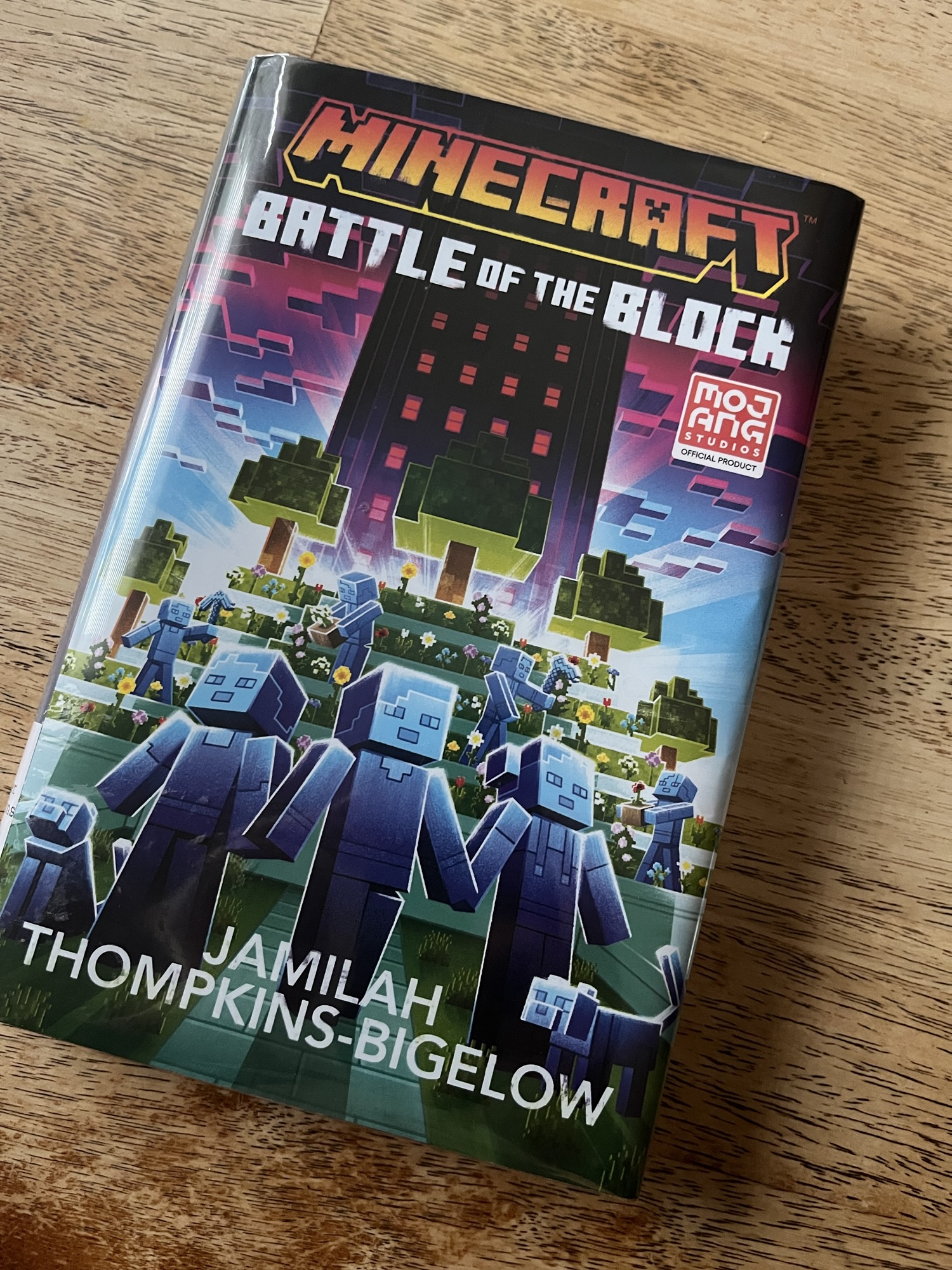
Minecraft: Battle of the Block by Jamilah Thompkins-Bigelow

Standard
Minecraft: Battle of the Block by Jamilah Thompkins-Bigelow

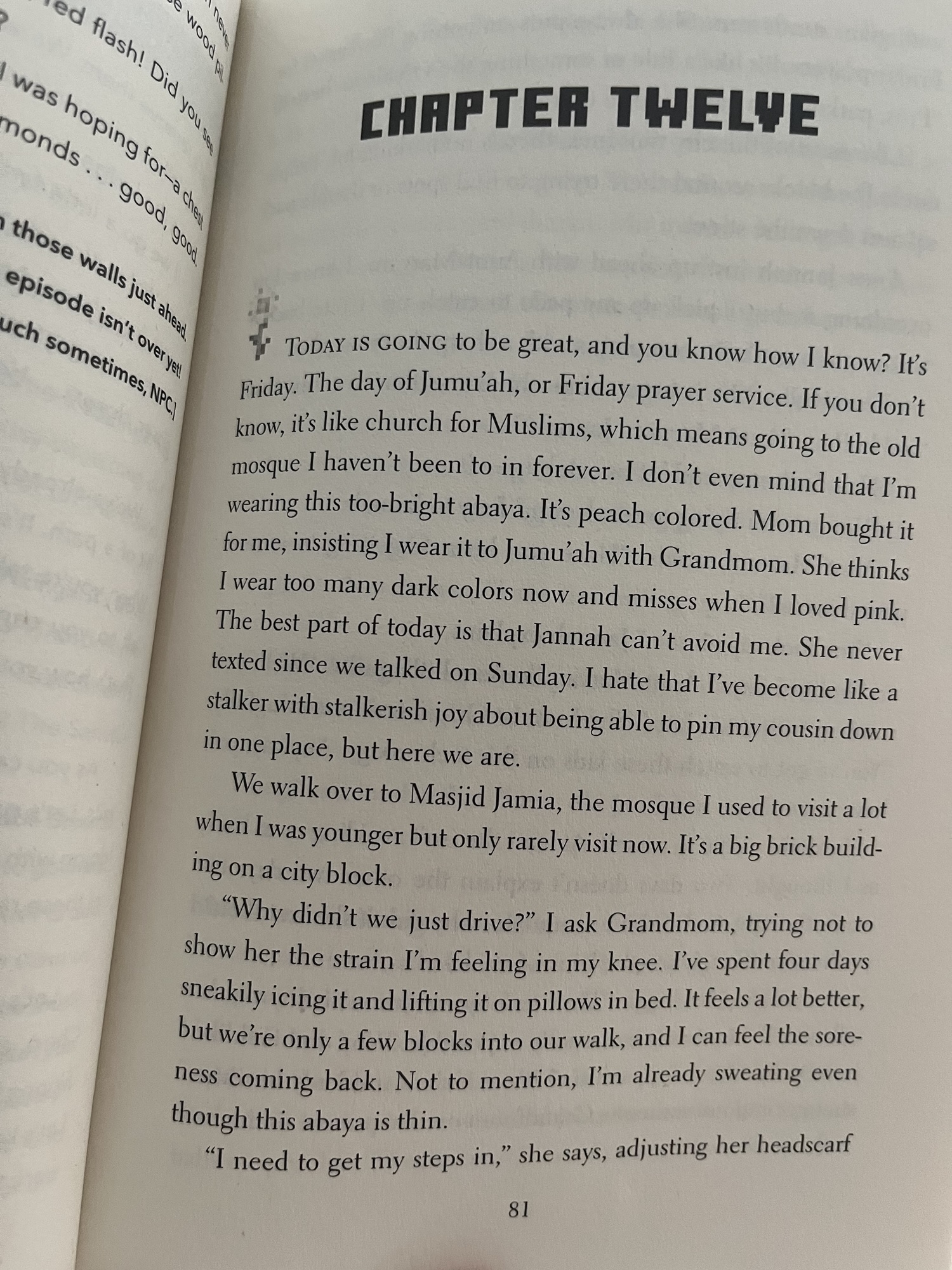
Before I ever opened the book and read the first words, this book in my heart had already accomplished so much. Not only is it an official Mojang studios official product written by a Muslim woman of color but the characters are unapologetically Muslim, neurodivergent, and burgeoning activists battling gentrification and noise pollution. I must confess I have not read a lot of Minecraft IP literature, so I don’t know where the requirements and parameters start and stop or even overlap with the author’s own style and vision. I mention this because the Islam at times feels a little overly explained, which is not typical of the author’s other work, the heartfelt cathartic release at the end though, is very much all the feels that you would expect if you are a long time fan of the author, or a sweet surprise tug-on-the heart if this is your first read of hers.  I do worry that many kids might not get to the climax though, as the pacing of this 268 page middle grade read is very slow. Perhaps the lack of movement is meant to add to the tension, and build relatability to Nzinga’s feelings of isolation and need, not just enjoyment for Minecraft, but for me it ultimately made it feel like a lot of telling and not showing, frustration with the side characters, and annoyance at inconsistencies. Yes, I contradict myself a lot in the above sentences, and I own that, I loved the ending and to get there all the threads throughout must have been intentional. I loved the Islam but felt at times it was over explained, I’m reviewing a book in a specific genre that I have not read before, focused in a world I only know about through a movie, and listening and watching my kids interact with, so this review is probably useless. Maybe the only worthwhile take away is: the book is clean, it has amazing messaging about activism, community, and speaking out, and if your kids want to read it, let them, if they can finish it they will be better for it.
SYNOPSIS: Summary taken from publisher’s blurb:

A young girl learns how to make a difference both in the real world and in the world of Minecraft in this exciting original novel!

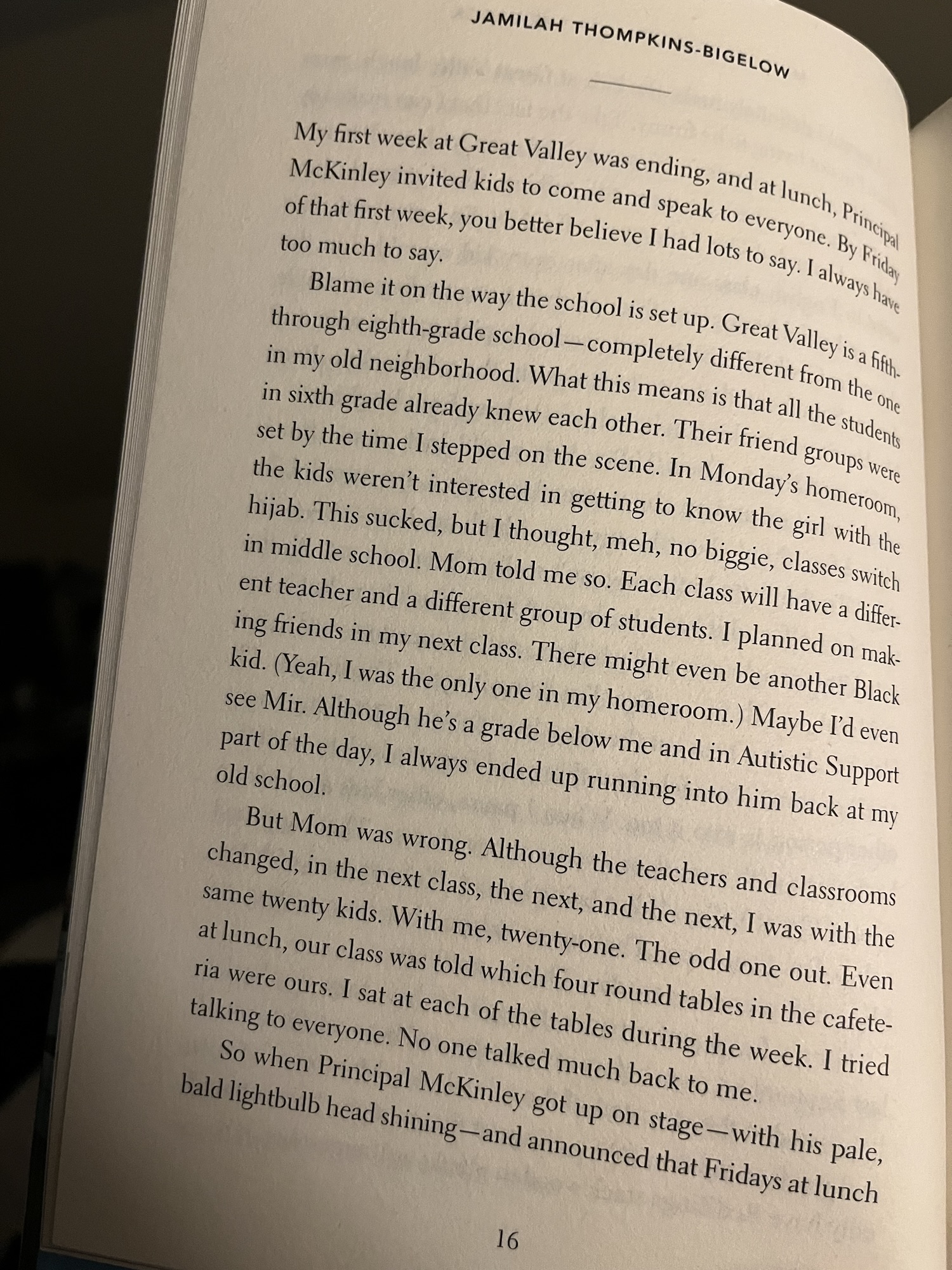
Ever since her family moved to the suburbs and Nzinga started middle school, she’s been really lonely. Her only consolation has been working on Phantasy Philly, a special build she and her team will present at a huge Minecraft convention in just a few weeks. Nzinga, her brother Samir, and her cousin Jannah have decided to recreate and reimagine a blocky version of their old Philadelphia street. Now that summer is here, Nzinga can’t wait to return to the old neighborhood and finish their build.

But when Nzinga and Samir arrive at their grandmom’s house, things aren’t how she pictured. Jannah, usually a design whiz, seems distracted and unwilling to work on their project. Incessant drilling can be heard all hours of the day as new apartments are constructed, replacing beloved parts of their street. The constant noise makes it hard to think straight, let alone get anything done.

Nzinga sees how noise pollution and redevelopment are hurting the street, but what can she do about it? And how is she supposed to fight that battle while also inspiring her team to build their ideal Minecraft neighborhood? As Nzinga struggles to answer these questions, she may just learn how even the quietest voices can have the biggest impact.

WHY I LIKE IT:
I love a lot about this book, even aside from just the positioning and all mentioned in the opening paragraph.  I love the perspective of  the protagonist, Zing, a neurodivergent character that isn’t steeped in pity or woe is me, she offers really great insight for readers to see themselves and/or have some understanding for those around them.  Same for how Mir’s autism is presented as who he is and part of the story, not his whole identity and the point of the book.  I also love Grandmom and her modeling how the systems work to have your voice heard, to speak at a city council meeting, how to fight and get through the red tape and how exhausting that can be.  The imam is also pretty great, which is great rep to see.
I don’t like Jannah, I don’t find her arc redeeming, I don’t know why, but I just found her pretentious and mean. Her mom and Grandmom needed to sit her down and have a good conversations with her and Nzinga and help them sort through their issues as soon as they all realized that Mir and Zing have come back to the neighborhood and the two cousins are not spending time together, at all.

I think ultimately for me the problem with the characters and the pacing came down to telling not showing aspects which seemed to reveal inconsistencies as well.  Why does Nzinga want to come back so bad, all the stories of connection and community are non existent when she returns, the kids are mean to her or ignore her, the neighbors seem distant as well, and I get that it is to show the effects of the noise pollution, but it makes it feel like a huge disconnect, is she just being extra in her memories?

The Minecraft elements as well seem a bit far fetched in why Zing so desperately wants to do well at Phantasy Philly, wants to have a crew, but seems consistently waiting for someone to tell her what to build or green light her builds, at some point she should show off her abilities. We see her ability to destruct, we see Jannah and Mir’s skill, but to cheer her on, the reader needs to know what we know she is capable of, and then see her rise up.  I didn’t really feel her understanding of the noise pollution and the gentrification was properly explained either, she truly was in agreement at one point with the developers and the transition was a bit too quick. I think she needed to see the manipulation and thus the readers could also grow in their understanding of how the systems and corporations position themselves to harm society  while making the image and messaging seem like they are doing something beneficial.
FLAGS:
Lying
*Disclaimer I read this book months ago and was unable to write up a review while memories and thoughts were fresh, hence the condensed review. Forgive me for any errors.
TOOLS FOR LEADING THE DISCUSSION:
I think the political and activism threads about gentrification and community is incredible to start discussions about, I also think the idea of Phantasy Philly could and should become a reality.
The Together Tree by Aisha Saeed illustrated by LeUyen Pham

Standard
The Together Tree by Aisha Saeed illustrated by LeUyen Pham

img_7924

Being the new kid, not having friends, and being teased are not new themes in literature (or life), so if you are going to write a book about them, take a lesson from Muslim author Aisha Saeed and make sure the story is heartfelt, emotional, and well-told.  There is no Islam in the book, no foreign culture, or teasing because of skin color, it is a boy named Rumi who has moved from San Francisco to the other side of America and his shoes, with their drawings and colorings, that cause the kids to stare and start bullying.  Rumi seeks solace under a willow tree and fellow classmate Han has to be brave to put a stop to the mistreatment by finding his voice and not simply staying silent.  The text and illustrations provide a lot of opportunities for children to see themselves in the story, in the various characters, and ruminate over the actions and feelings from different points of view.  The book is lyrical, it is not heavy handed or preachy, and the Author’s Note at the end is equally touching and hopeful.

img_7925

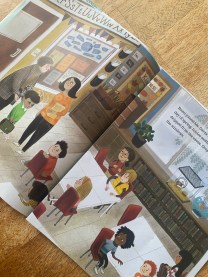
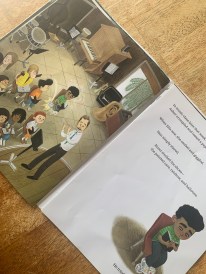
Rumi is quiet, and on his first day in Ms. Garza’s class the kids stare at him as he stares out the window.  At recess he wanders off to sit beneath the willow tree when Asher, Ella and Han leave the swings to see what he is up to.  Asher and Ella start to make fun of Rumi, Han is uncomfortable, but stays quiet.

Rumi recalls coloring his shoes with his friends, and how different it was to where he is now, he picks up a twig to twirl as the hurt grows. In music class when the giggling starts, he tries not to cry.  At recess he retreats to his refuge under the tree.

When the bullying escalates, and tears fall, Han speaks up and breaks the cycle. Others follow and see the world Rumi has created with his twig and are drawn to it and to Rumi.  Forgiveness is asked for, and granted and the tree becomes a place of friendship and togetherness.

img_7928

The Author’s Note shares the real life observations of the author about her son in kindergarten and how while heartbreaking, there was also hope in the concern shown by other kids that simply weren’t sure what to do.  I love that even though Rumi is being teased for his shoes and being different, he doesn’t stop wearing his shoes or try and clean the drawings off.

img_7926

I think this book is a must read in classrooms and homes were kids can slowly peel back the pieces and see where they can relate, how they can plan to act, and what parts they identify with.  The book is deliberate and slow, and while a child could read it on their own and enjoy the story and illustrations at hand, the real power it has, is being a catalyst for discussion and empathy and speaking up.

Pre order/order here on Amazon

img_7927


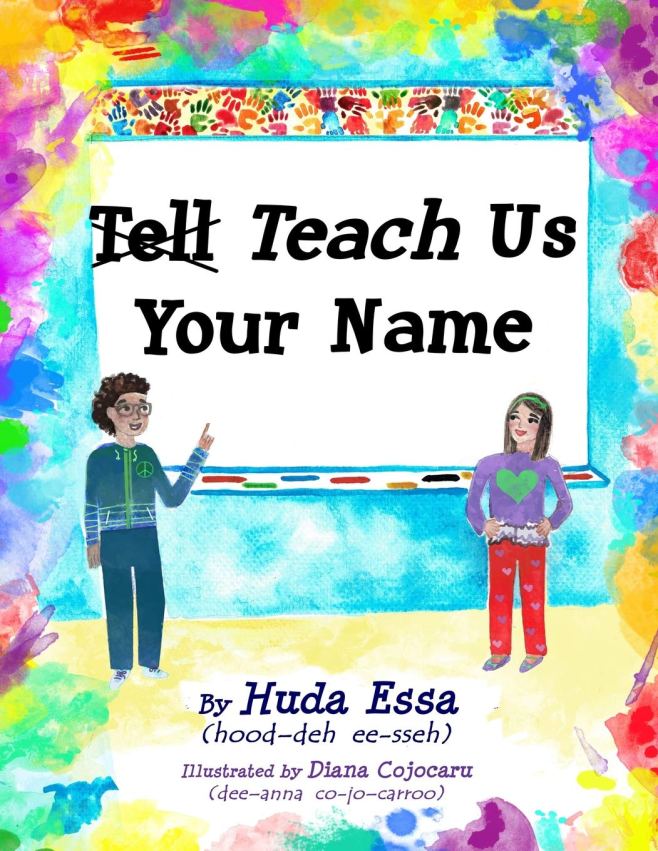
Teach Us Your Name by Huda Essa illustrated by Diana Cojocaru

Standard
Teach Us Your Name by Huda Essa illustrated by Diana Cojocaru

name cover

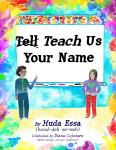
This book will resonate and empower anyone who has a “different” name, and hopefully provide insight and awareness for us all.  This 32 page picture book for grades 1st and up has a self empowering message, a confidence building approach, and problem solving tips to achieve a desired goal in a respectful way.  Written by a Muslim author, the book’s text is well done, unfortunately the pictures are inconsistent to me, some are beautiful and detailed, others seem rushed and unfinished.

IMG_0476

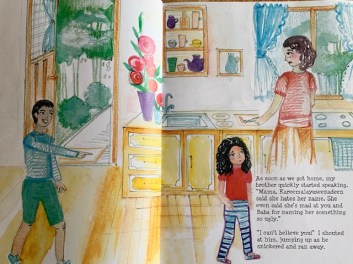
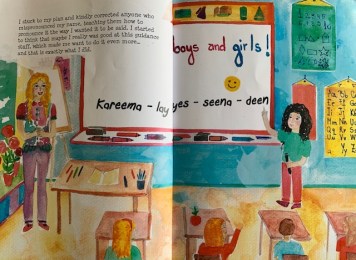
There are 20 letters in Kareemalayaseenadeen’s name, and the first day of school is such a stress for her.  She fears the teacher stumbling over her name, the other children laughing, and her unable to tell them how to pronounce her name correctly.  Her mom tries to explain that for some people the kids at school have hard names, and that for some people her name is easy.

IMG_0477

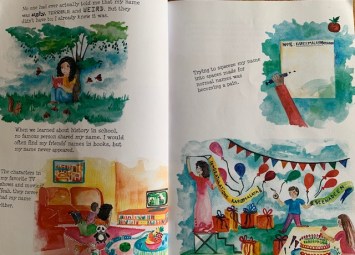
She reflects that in fact no one has ever made fun of her for her name, but that in history class she never sees her name, or on TV or in movies or on key chains.  She can hardly fit her name on her worksheets, and fitting it on banners is impossible too.  Eventually the kids kust call her Karma-Deen and even though she dislikes it, she is too shy to speak up.

IMG_0478

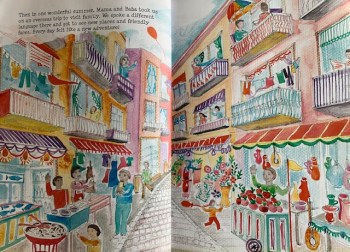
Over the summer, Kareemalayaseenadeen goes on vacation to visit family.  She doesn’t even think much about her name where everyone can pronounce it and say it with ease. Her Sittee though, has heard about her anxiety and sits with her to help her work through it.

IMG_0479

Sittee asks Kareemalayaseenadeen if she knows that her name means “excellent guidance” and that her name is a big part of her.  If she doesn’t like her name she isn’t liking an important part of herself.  She then urges her grandaughter to guide others on the proper way to pronounce her name.

IMG_0480

On the flight home, she ponders her grandma’s words and how to guide others to proper pronouncation, without being rude or settling on them shortening her name.  When she gets home she puts her plan in to action. And it works!

IMG_0481

When Kareemalayaseenadeen grows up, she becomes a teacher and each year she reads this book she has written (the one I’m reviewing) and asks her students to teach her how to say their names.

IMG_0482

The importance of how valuing someones name values the person and their family and culture is really one that as a society we have to keep working on.  We can say  names from Lord of the Rings, and Star Wars and Game of Thrones with no problem, so why can’t we try and pronounce someone’s name who is real and next to us and important to us? We have become lazy, and we need to do better, this book is sweet and kind and should really be read regularly as a reminder to us all, that names are beautiful.

IMG_0483

There is nothing religious about the book or even culture specific. There is a hijabi in the illustration of the market place in the unspecified “overseas country” and the name Kareemalayaseenadeen has Arabic bits, but a lot of names do as well, grandma is refereed to as Sitti, but isn’t defined, so the book is definitely meant for eveyone, especially those who will never find their name on a mug at a gift shop!