Tag Archives: video games

Minecraft: Battle of the Block by Jamilah Thompkins-Bigelow

Standard
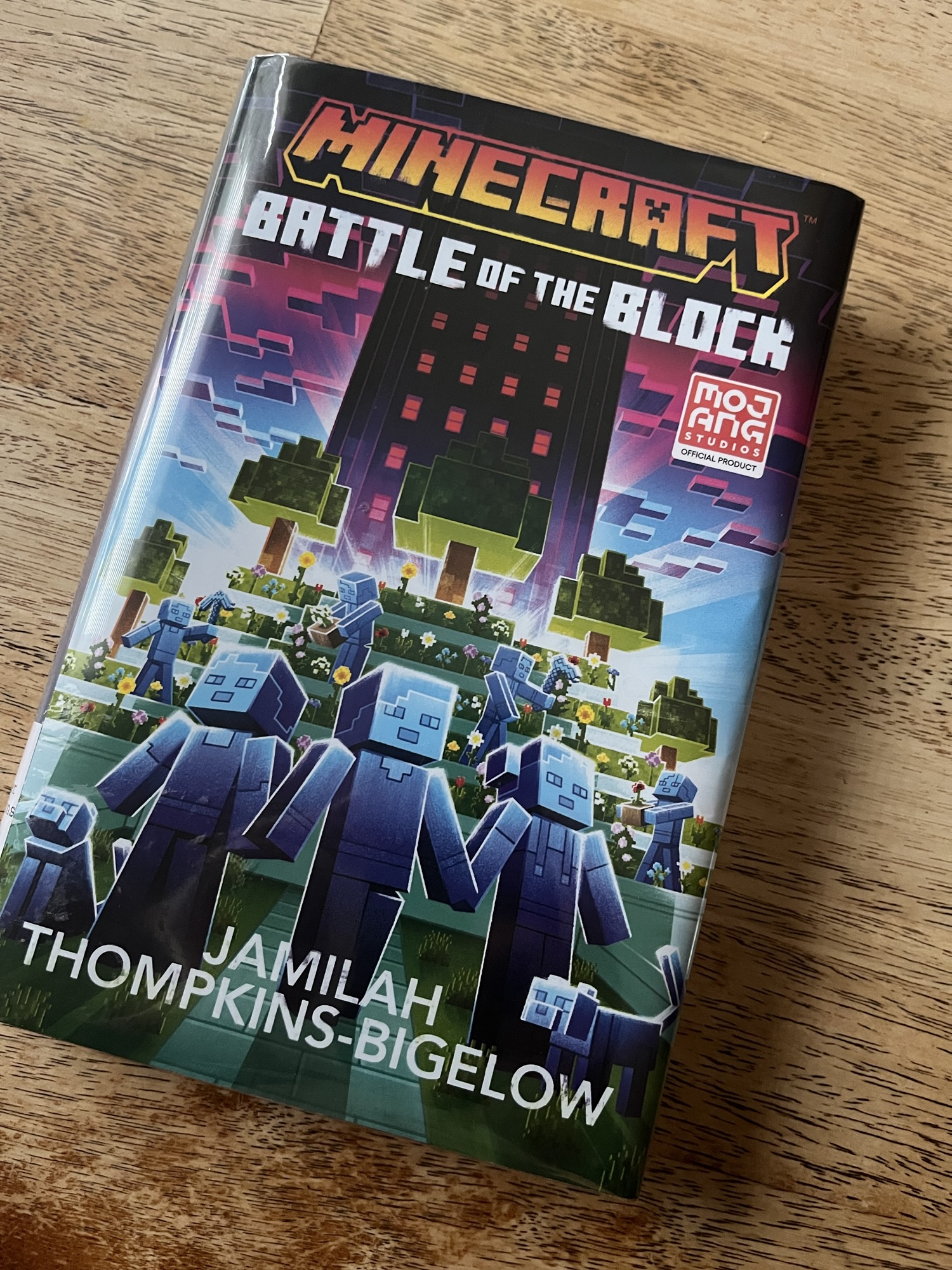
Minecraft: Battle of the Block by Jamilah Thompkins-Bigelow

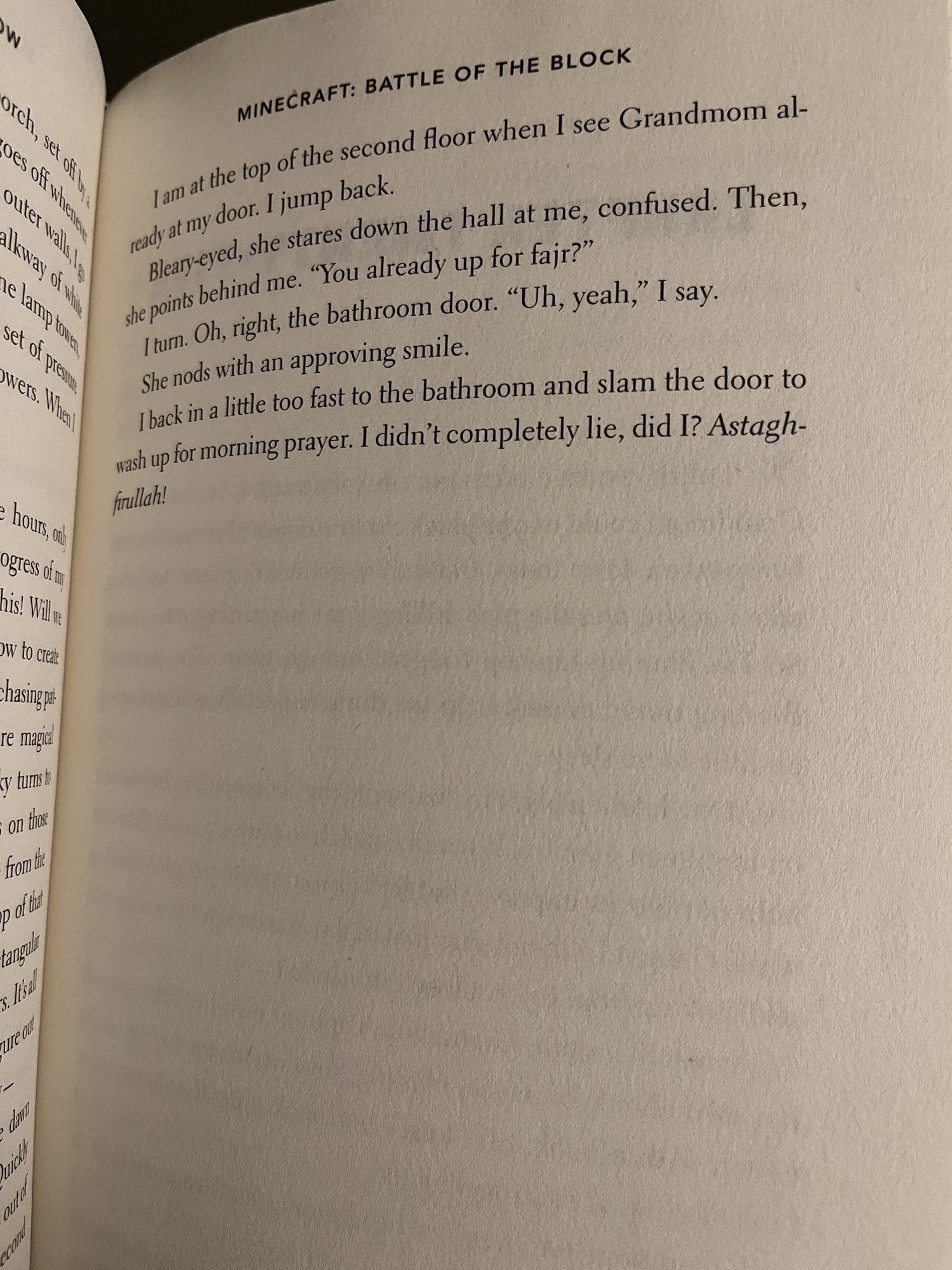
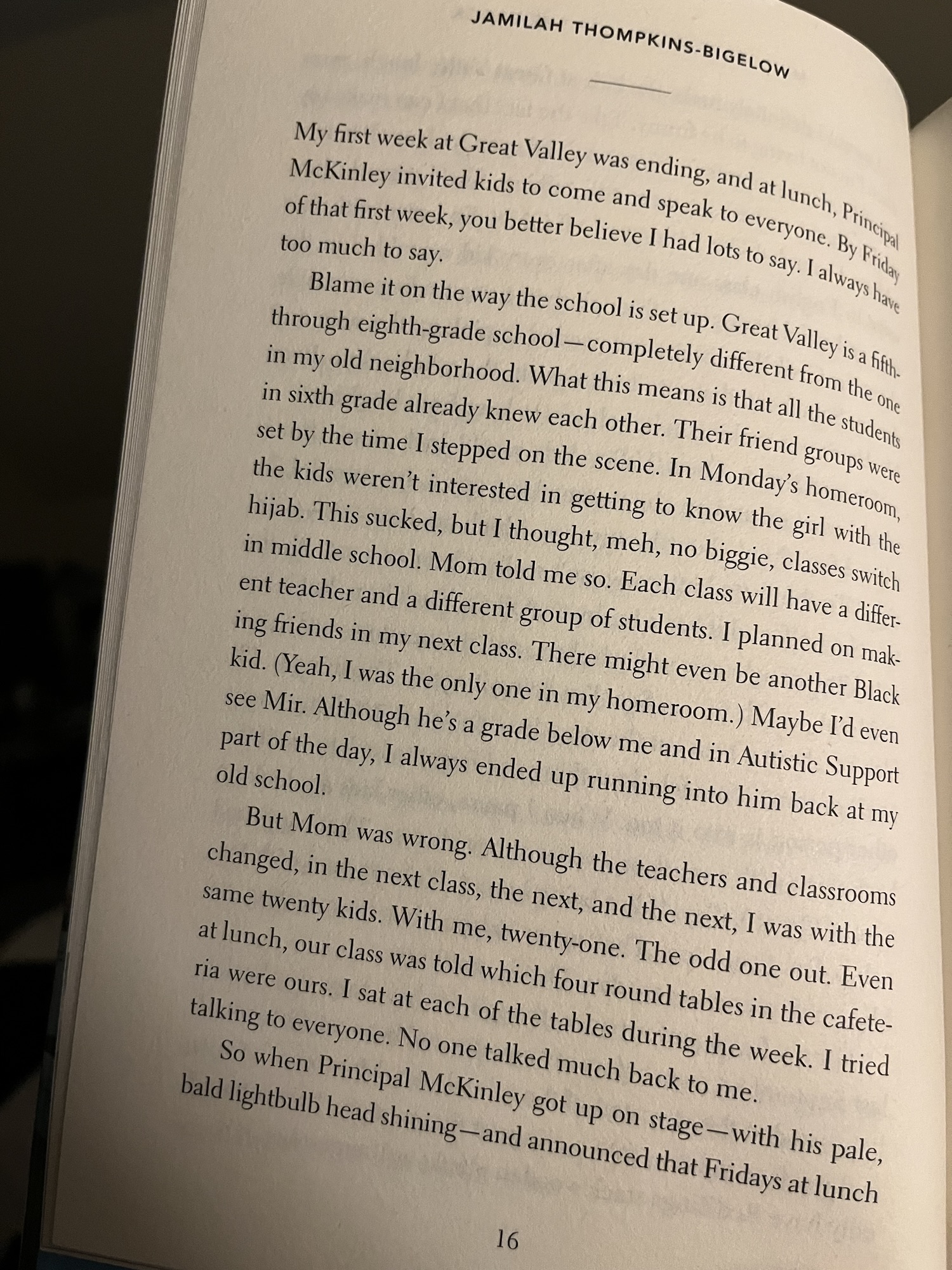
Before I ever opened the book and read the first words, this book in my heart had already accomplished so much. Not only is it an official Mojang studios official product written by a Muslim woman of color but the characters are unapologetically Muslim, neurodivergent, and burgeoning activists battling gentrification and noise pollution. I must confess I have not read a lot of Minecraft IP literature, so I don’t know where the requirements and parameters start and stop or even overlap with the author’s own style and vision. I mention this because the Islam at times feels a little overly explained, which is not typical of the author’s other work, the heartfelt cathartic release at the end though, is very much all the feels that you would expect if you are a long time fan of the author, or a sweet surprise tug-on-the heart if this is your first read of hers.  I do worry that many kids might not get to the climax though, as the pacing of this 268 page middle grade read is very slow. Perhaps the lack of movement is meant to add to the tension, and build relatability to Nzinga’s feelings of isolation and need, not just enjoyment for Minecraft, but for me it ultimately made it feel like a lot of telling and not showing, frustration with the side characters, and annoyance at inconsistencies. Yes, I contradict myself a lot in the above sentences, and I own that, I loved the ending and to get there all the threads throughout must have been intentional. I loved the Islam but felt at times it was over explained, I’m reviewing a book in a specific genre that I have not read before, focused in a world I only know about through a movie, and listening and watching my kids interact with, so this review is probably useless. Maybe the only worthwhile take away is: the book is clean, it has amazing messaging about activism, community, and speaking out, and if your kids want to read it, let them, if they can finish it they will be better for it.
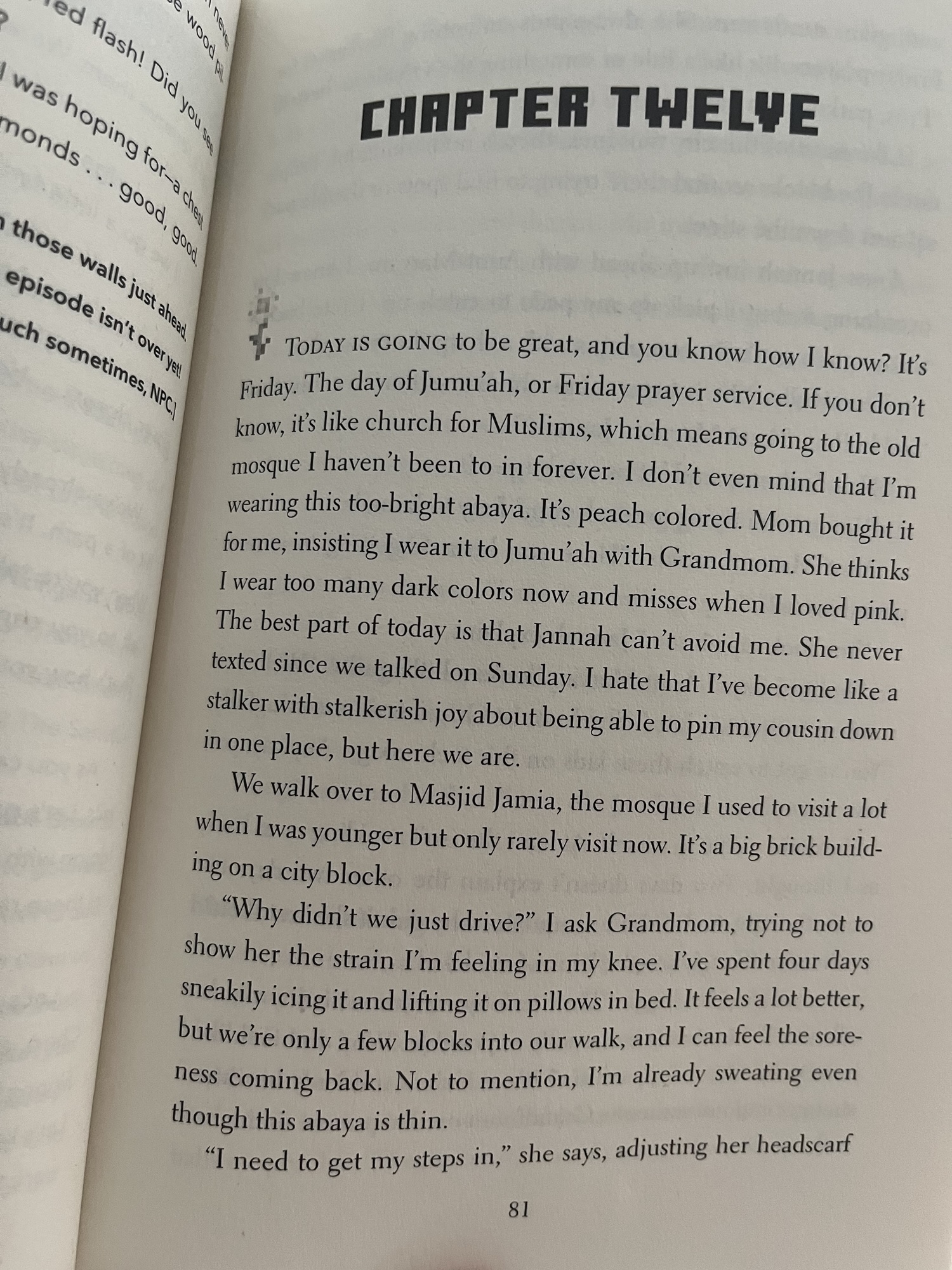
SYNOPSIS: Summary taken from publisher’s blurb:

A young girl learns how to make a difference both in the real world and in the world of Minecraft in this exciting original novel!

Ever since her family moved to the suburbs and Nzinga started middle school, she’s been really lonely. Her only consolation has been working on Phantasy Philly, a special build she and her team will present at a huge Minecraft convention in just a few weeks. Nzinga, her brother Samir, and her cousin Jannah have decided to recreate and reimagine a blocky version of their old Philadelphia street. Now that summer is here, Nzinga can’t wait to return to the old neighborhood and finish their build.

But when Nzinga and Samir arrive at their grandmom’s house, things aren’t how she pictured. Jannah, usually a design whiz, seems distracted and unwilling to work on their project. Incessant drilling can be heard all hours of the day as new apartments are constructed, replacing beloved parts of their street. The constant noise makes it hard to think straight, let alone get anything done.

Nzinga sees how noise pollution and redevelopment are hurting the street, but what can she do about it? And how is she supposed to fight that battle while also inspiring her team to build their ideal Minecraft neighborhood? As Nzinga struggles to answer these questions, she may just learn how even the quietest voices can have the biggest impact.

WHY I LIKE IT:
I love a lot about this book, even aside from just the positioning and all mentioned in the opening paragraph.  I love the perspective of  the protagonist, Zing, a neurodivergent character that isn’t steeped in pity or woe is me, she offers really great insight for readers to see themselves and/or have some understanding for those around them.  Same for how Mir’s autism is presented as who he is and part of the story, not his whole identity and the point of the book.  I also love Grandmom and her modeling how the systems work to have your voice heard, to speak at a city council meeting, how to fight and get through the red tape and how exhausting that can be.  The imam is also pretty great, which is great rep to see.
I don’t like Jannah, I don’t find her arc redeeming, I don’t know why, but I just found her pretentious and mean. Her mom and Grandmom needed to sit her down and have a good conversations with her and Nzinga and help them sort through their issues as soon as they all realized that Mir and Zing have come back to the neighborhood and the two cousins are not spending time together, at all.

I think ultimately for me the problem with the characters and the pacing came down to telling not showing aspects which seemed to reveal inconsistencies as well.  Why does Nzinga want to come back so bad, all the stories of connection and community are non existent when she returns, the kids are mean to her or ignore her, the neighbors seem distant as well, and I get that it is to show the effects of the noise pollution, but it makes it feel like a huge disconnect, is she just being extra in her memories?

The Minecraft elements as well seem a bit far fetched in why Zing so desperately wants to do well at Phantasy Philly, wants to have a crew, but seems consistently waiting for someone to tell her what to build or green light her builds, at some point she should show off her abilities. We see her ability to destruct, we see Jannah and Mir’s skill, but to cheer her on, the reader needs to know what we know she is capable of, and then see her rise up.  I didn’t really feel her understanding of the noise pollution and the gentrification was properly explained either, she truly was in agreement at one point with the developers and the transition was a bit too quick. I think she needed to see the manipulation and thus the readers could also grow in their understanding of how the systems and corporations position themselves to harm society  while making the image and messaging seem like they are doing something beneficial.
FLAGS:
Lying
*Disclaimer I read this book months ago and was unable to write up a review while memories and thoughts were fresh, hence the condensed review. Forgive me for any errors.
TOOLS FOR LEADING THE DISCUSSION:
I think the political and activism threads about gentrification and community is incredible to start discussions about, I also think the idea of Phantasy Philly could and should become a reality.
Hidaya: Wira and the Spiritual World by Fahem & Hamid illustrated by Fahem

Standard
Hidaya: Wira and the Spiritual World by Fahem & Hamid illustrated by Fahem

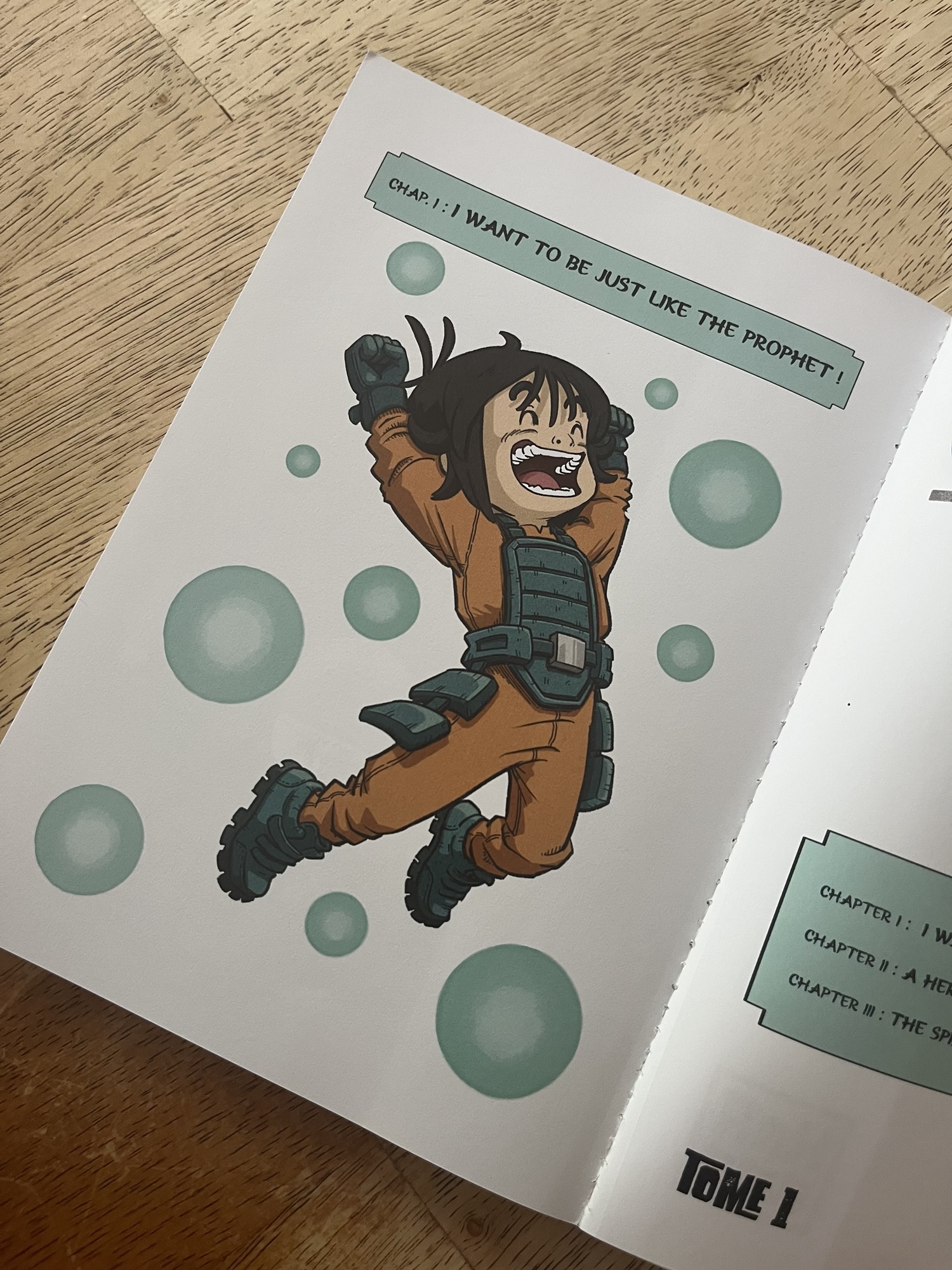
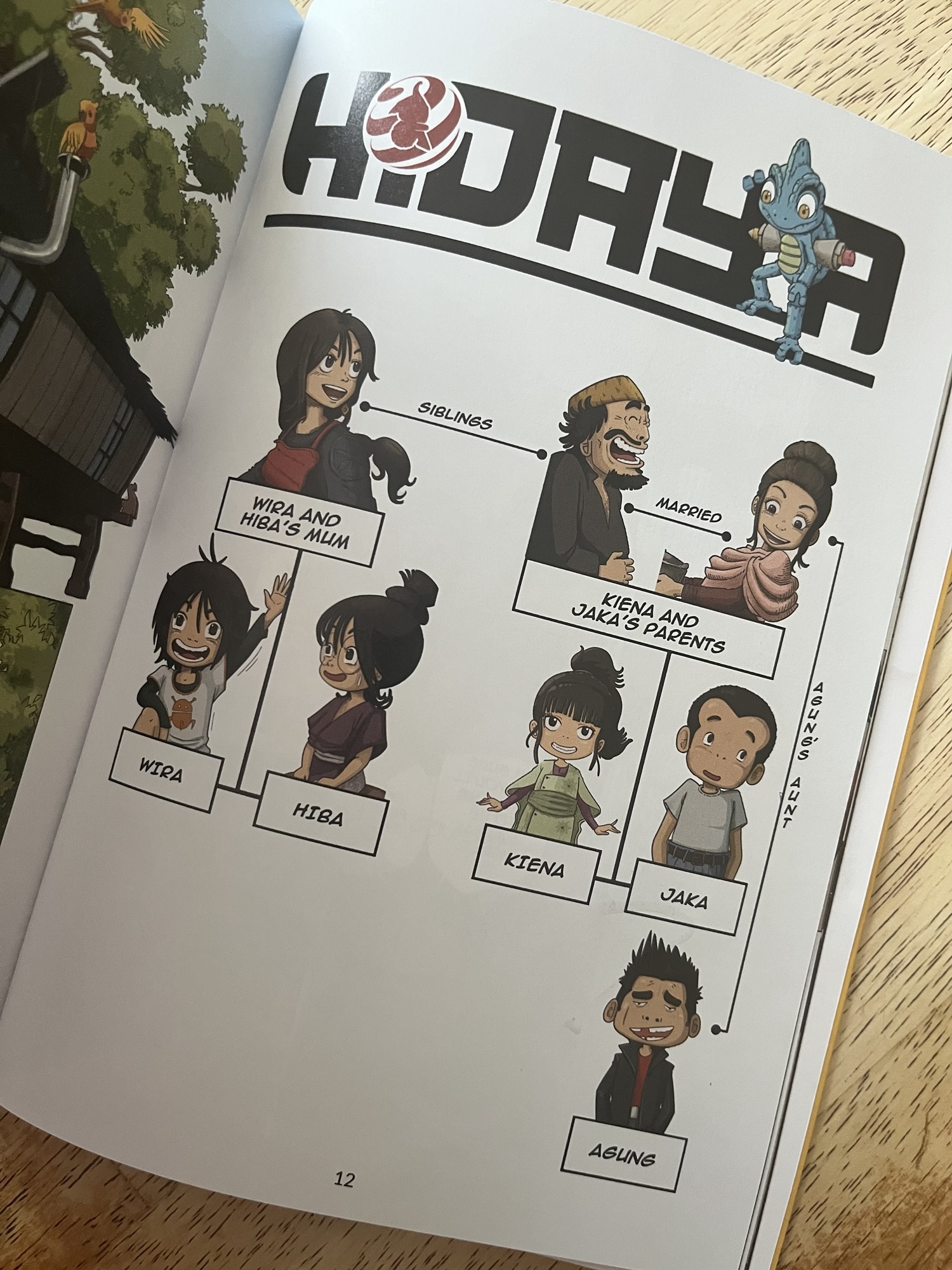
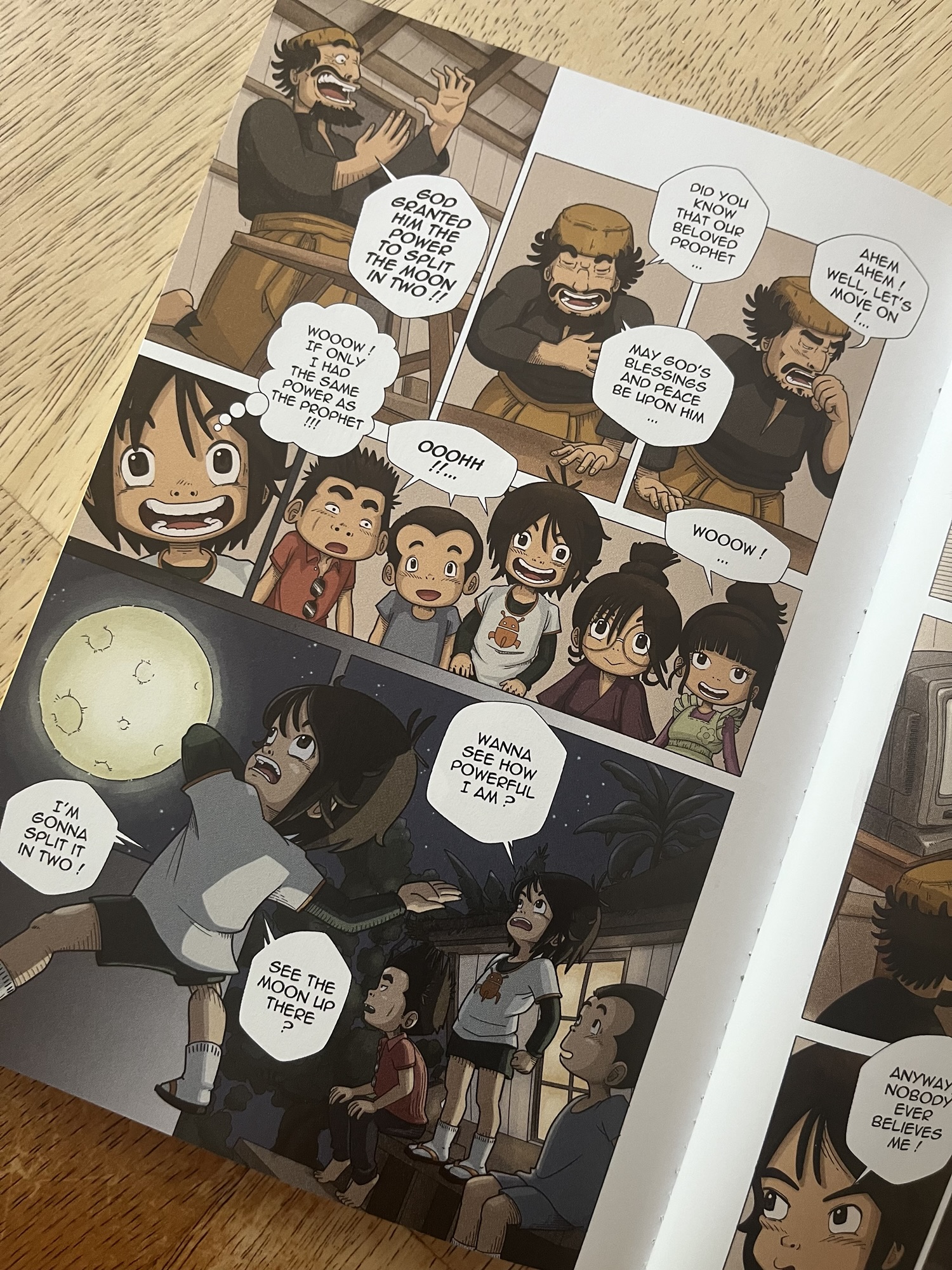
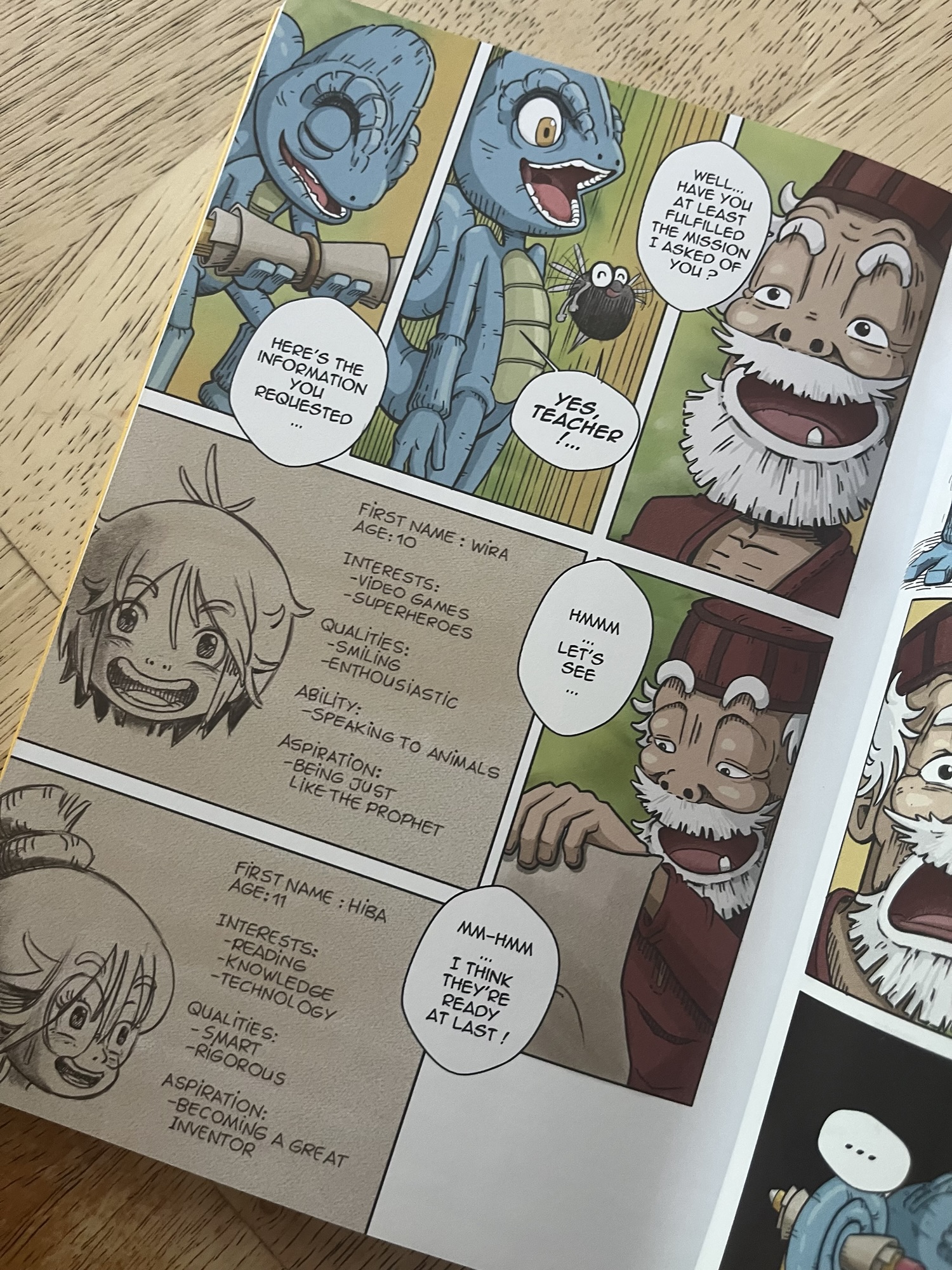
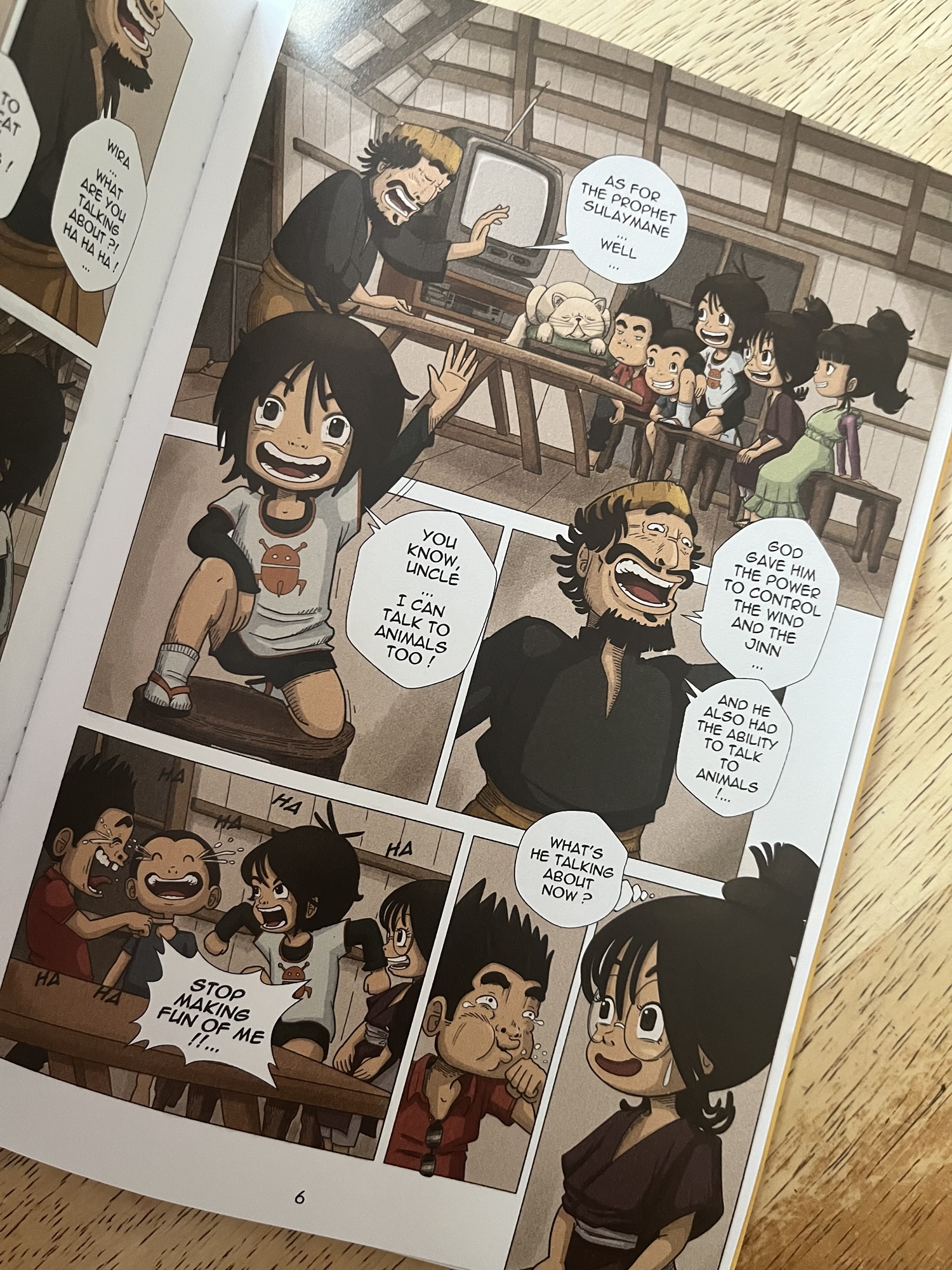
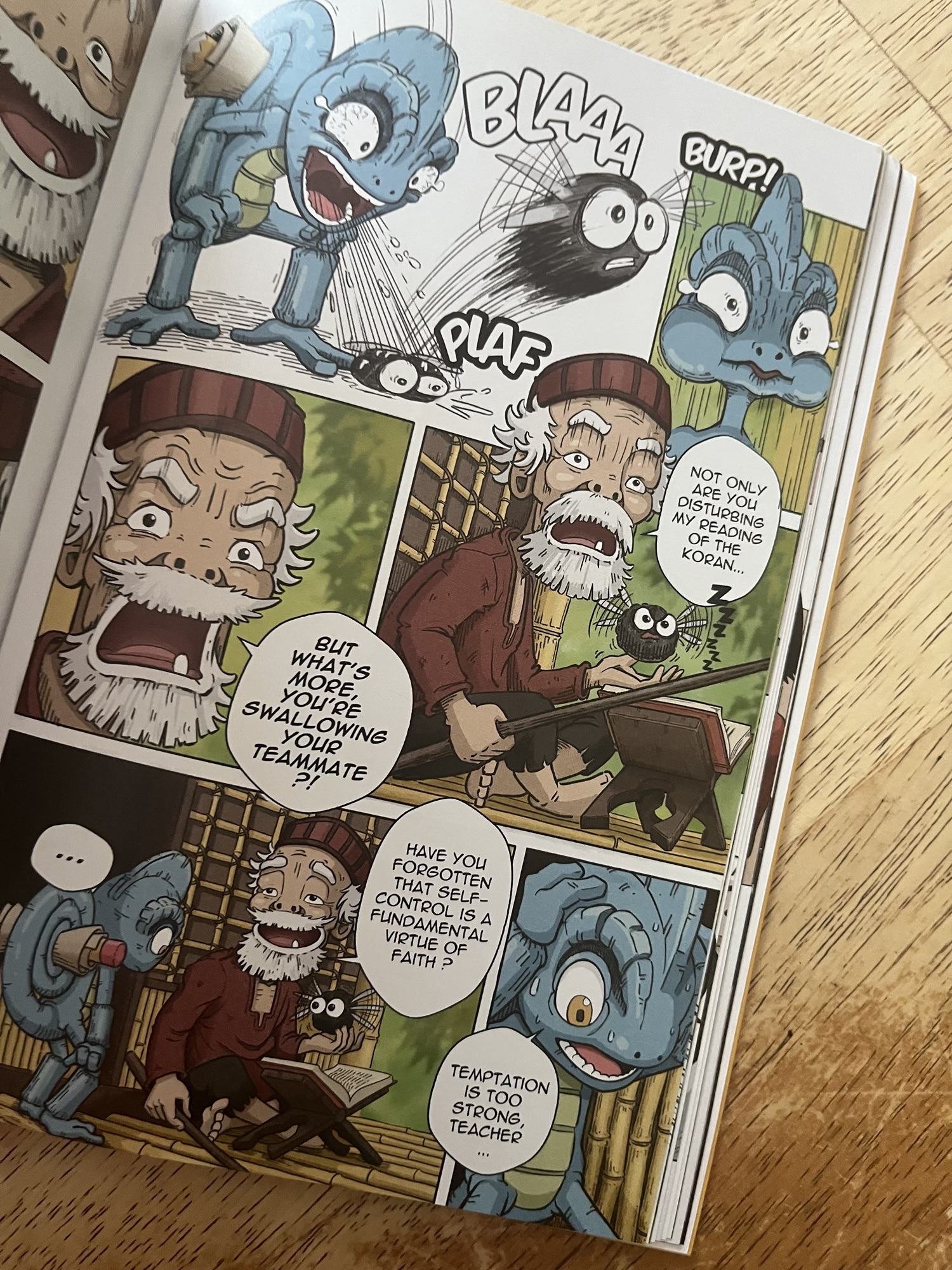
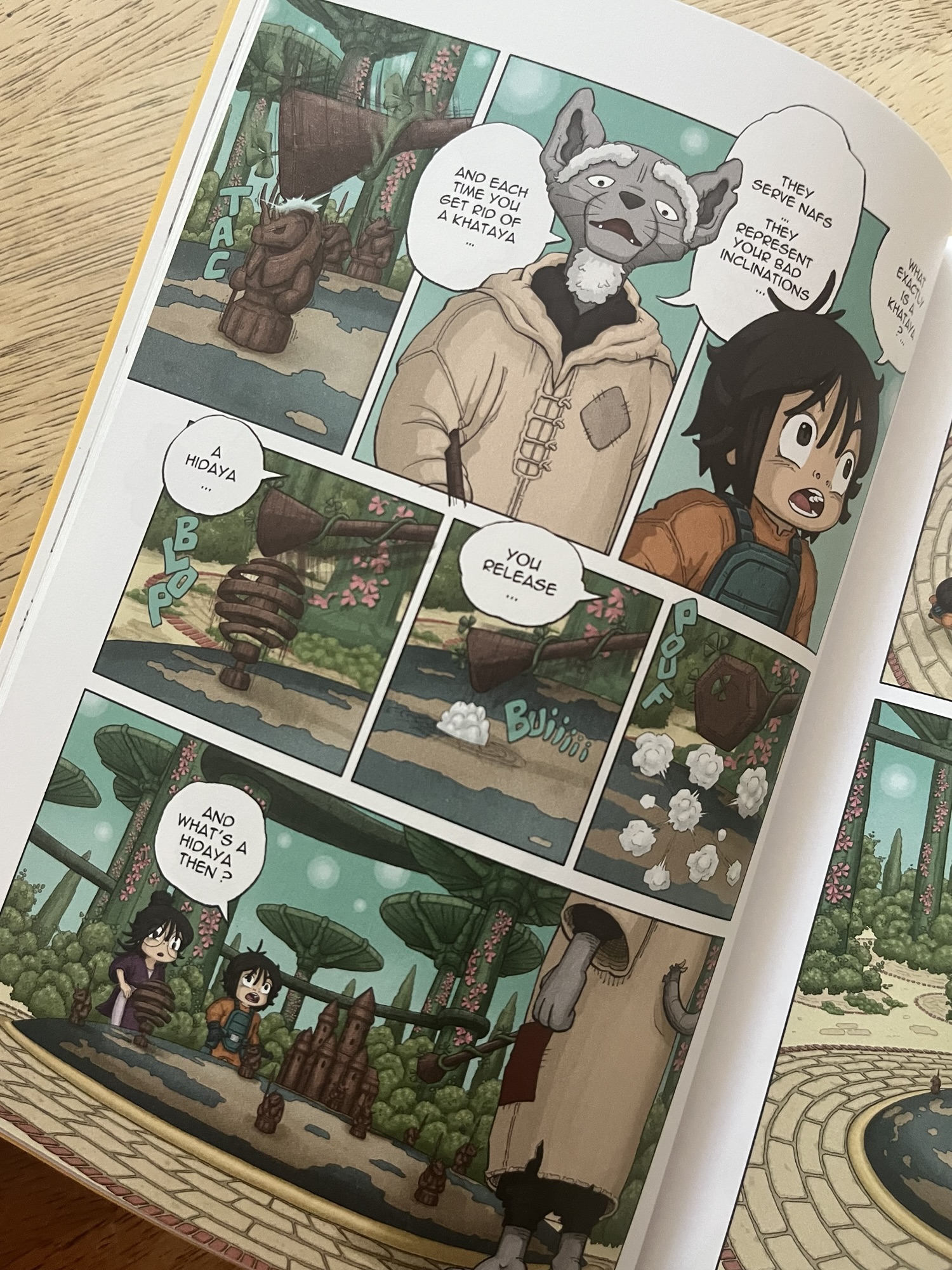
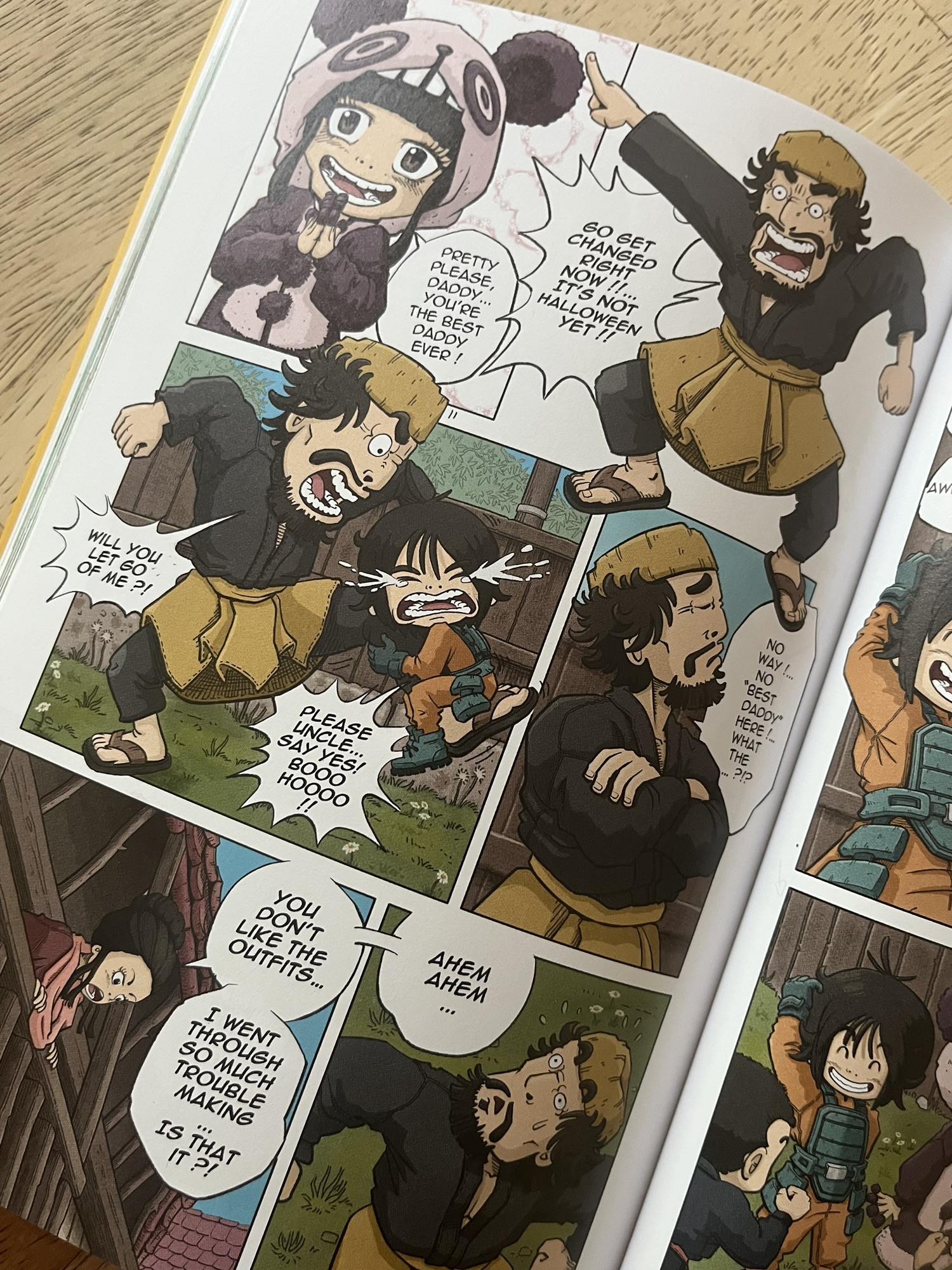
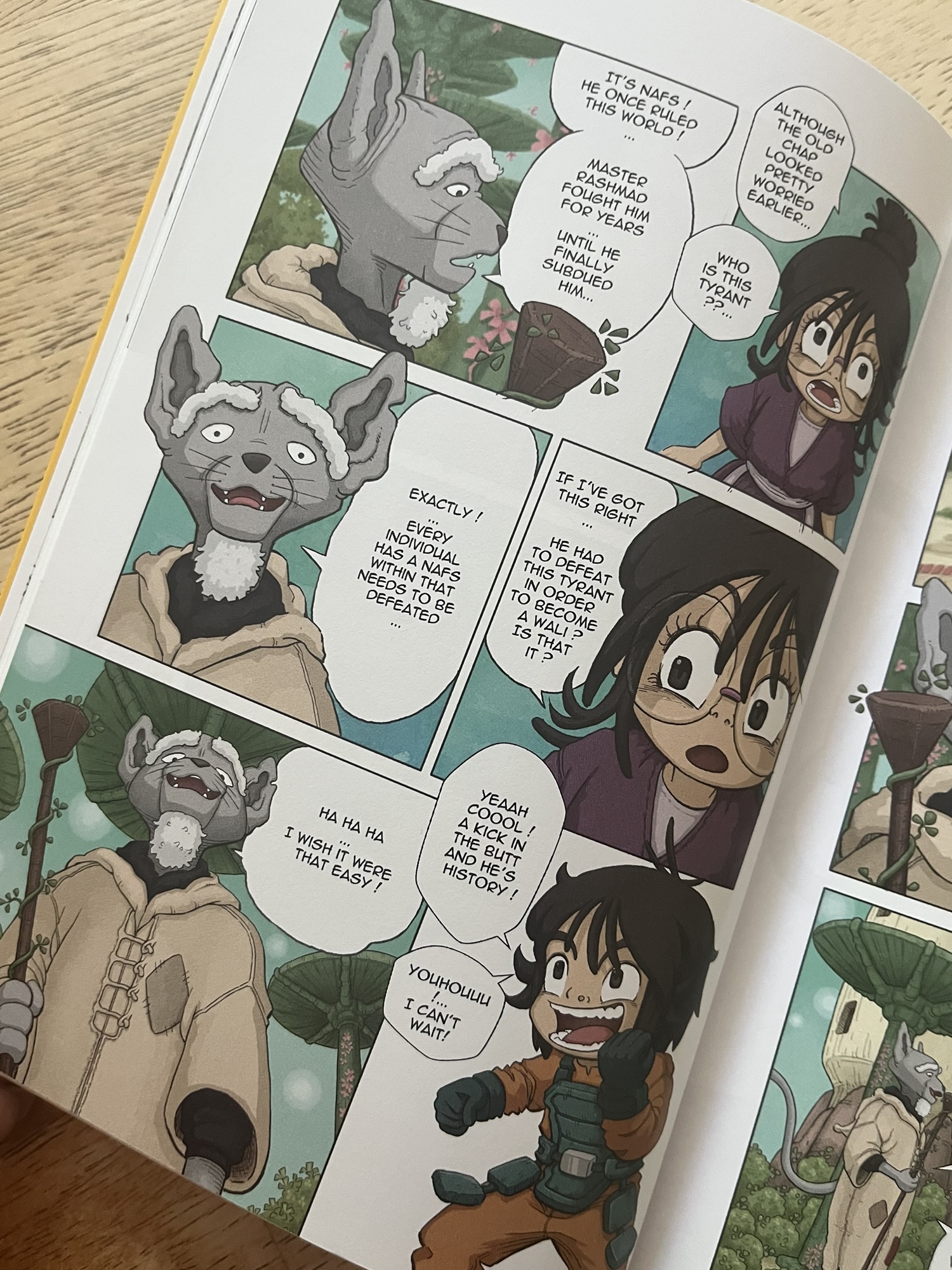
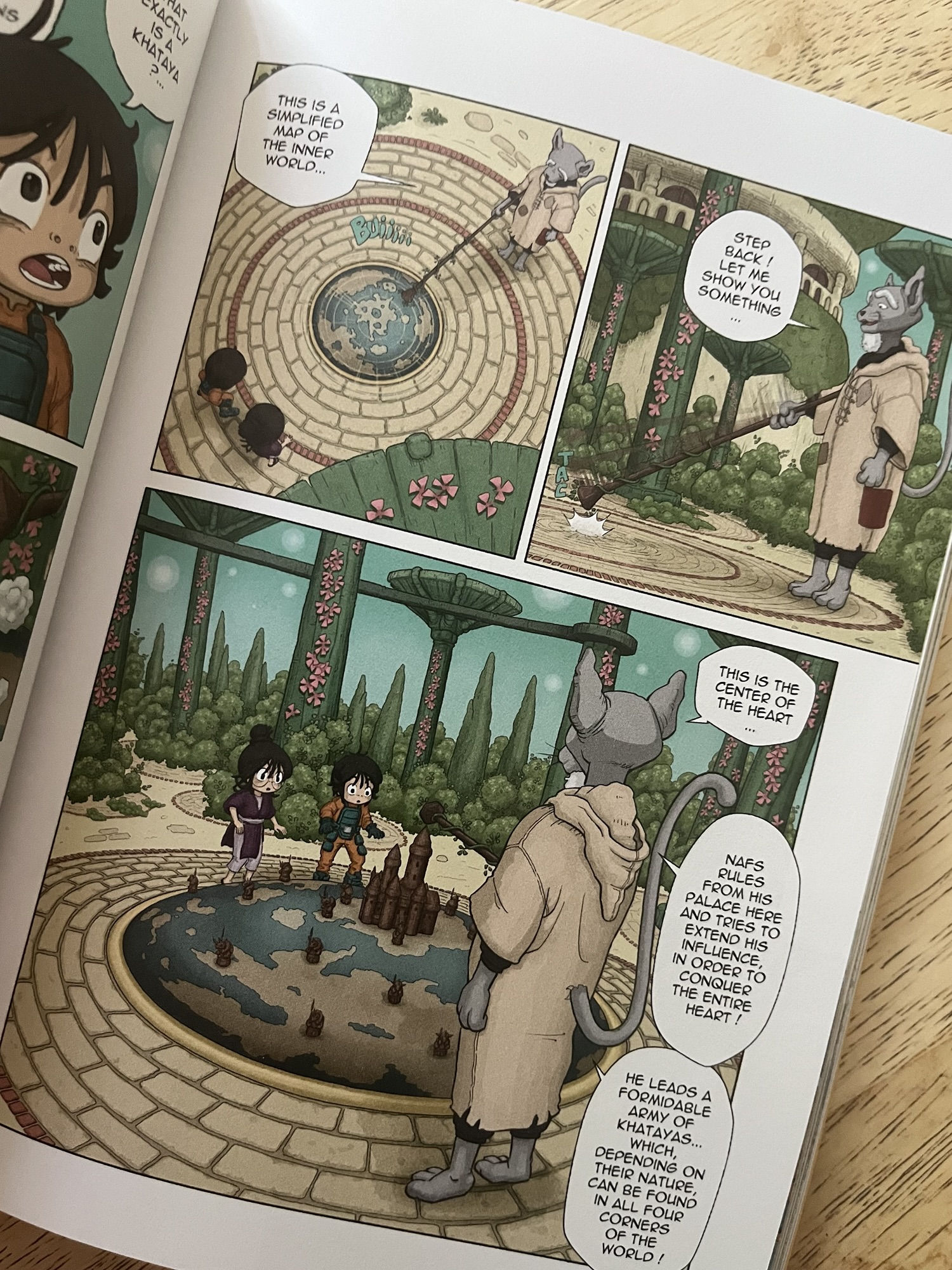
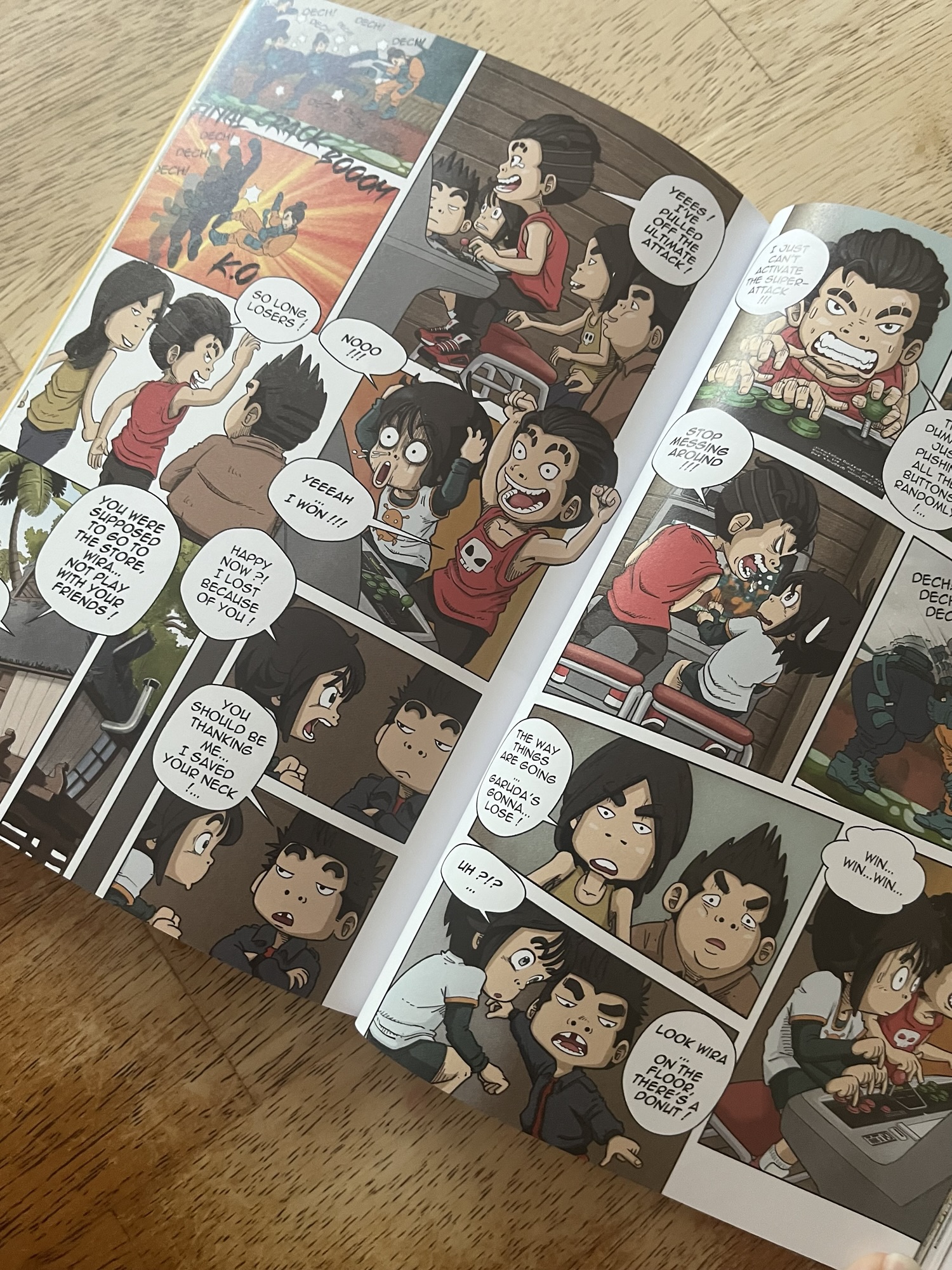
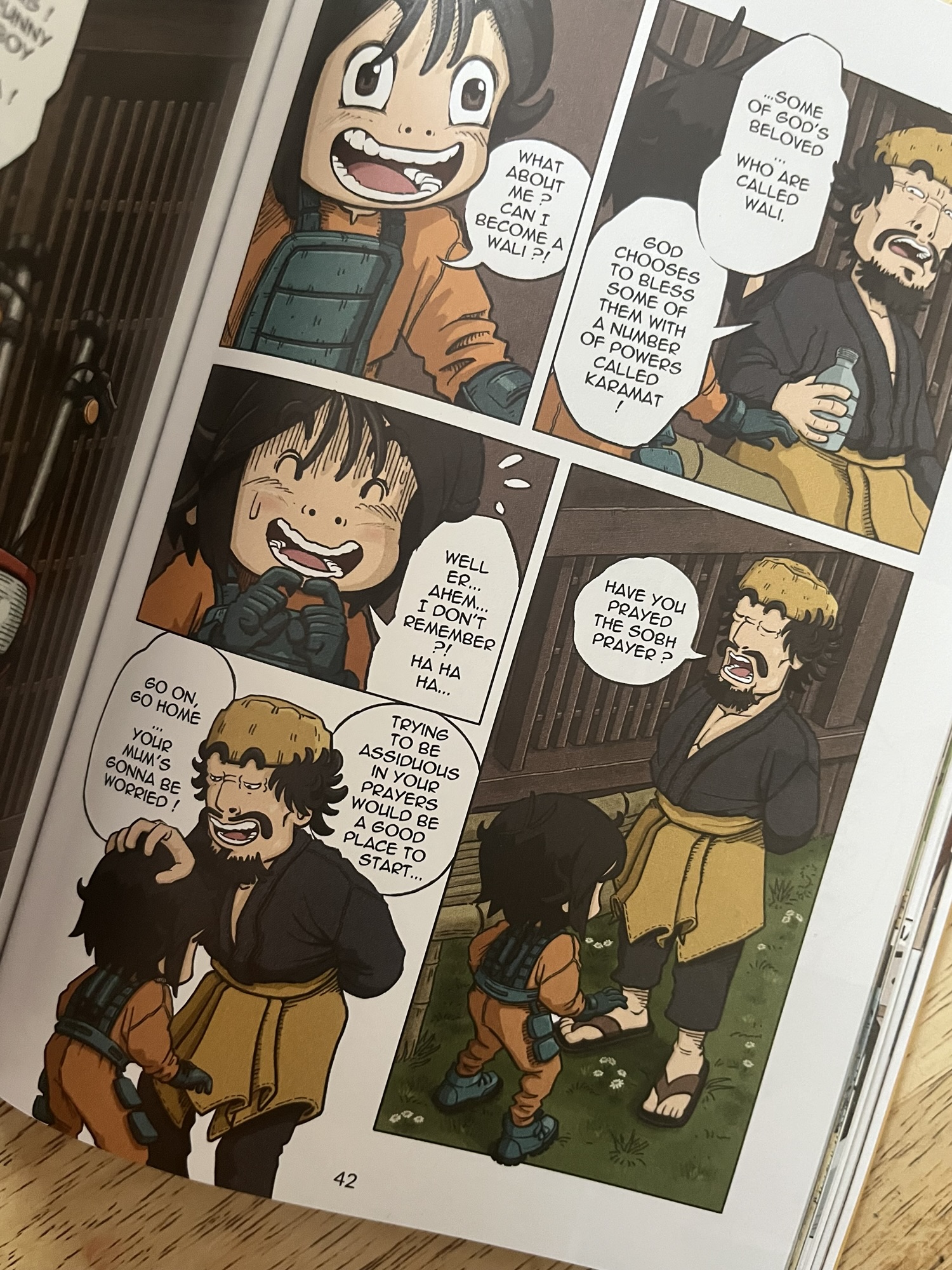
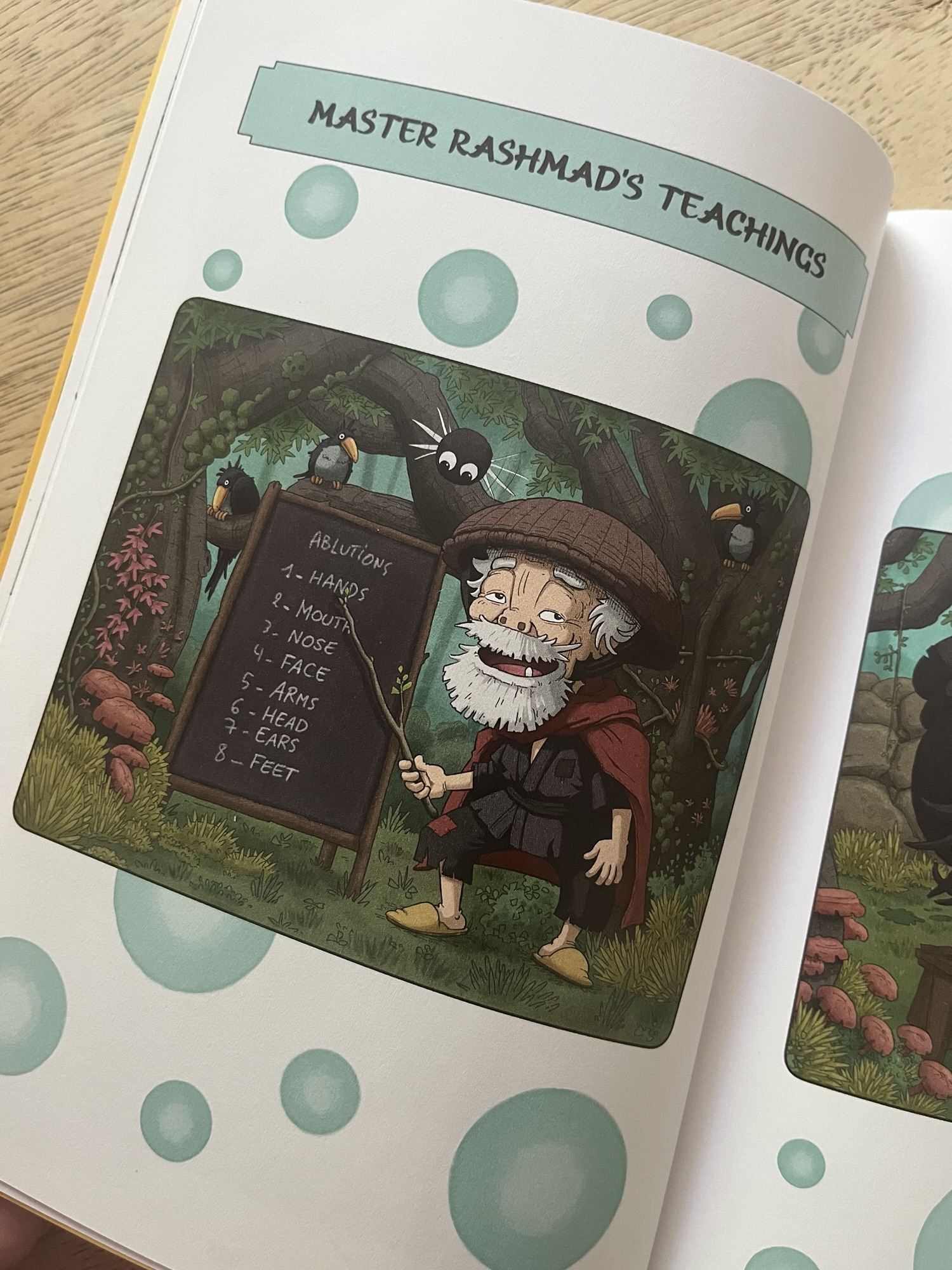
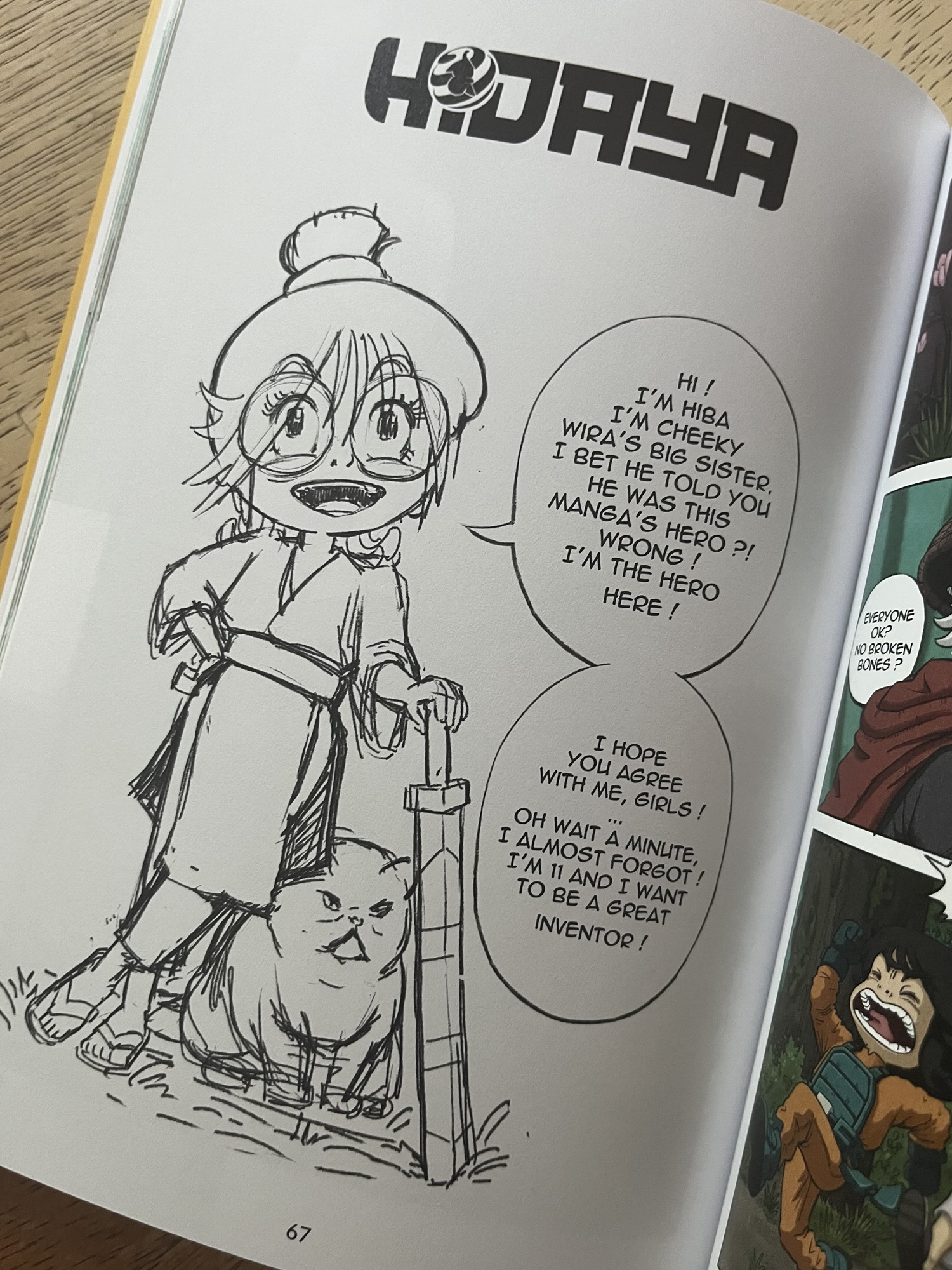
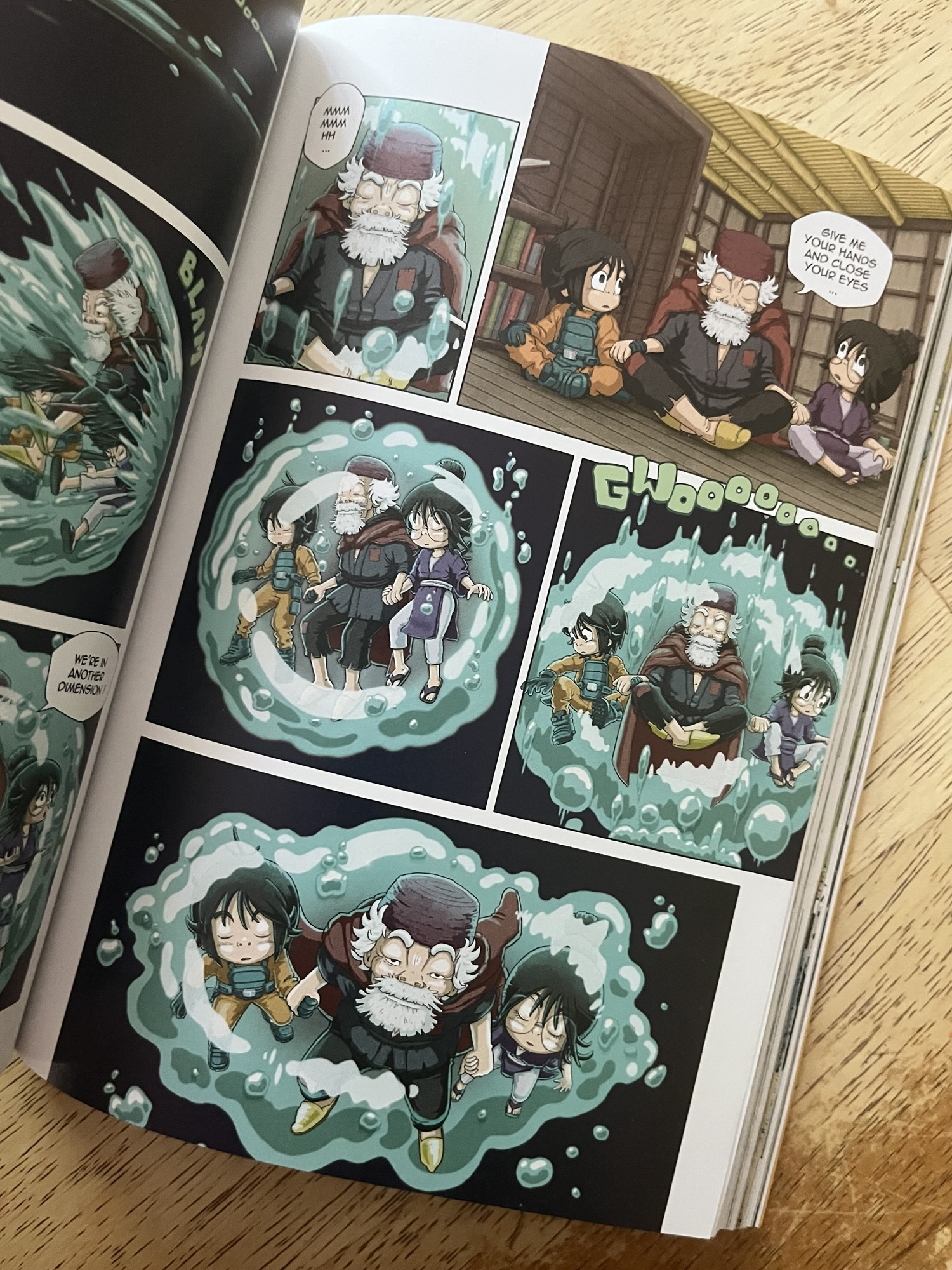
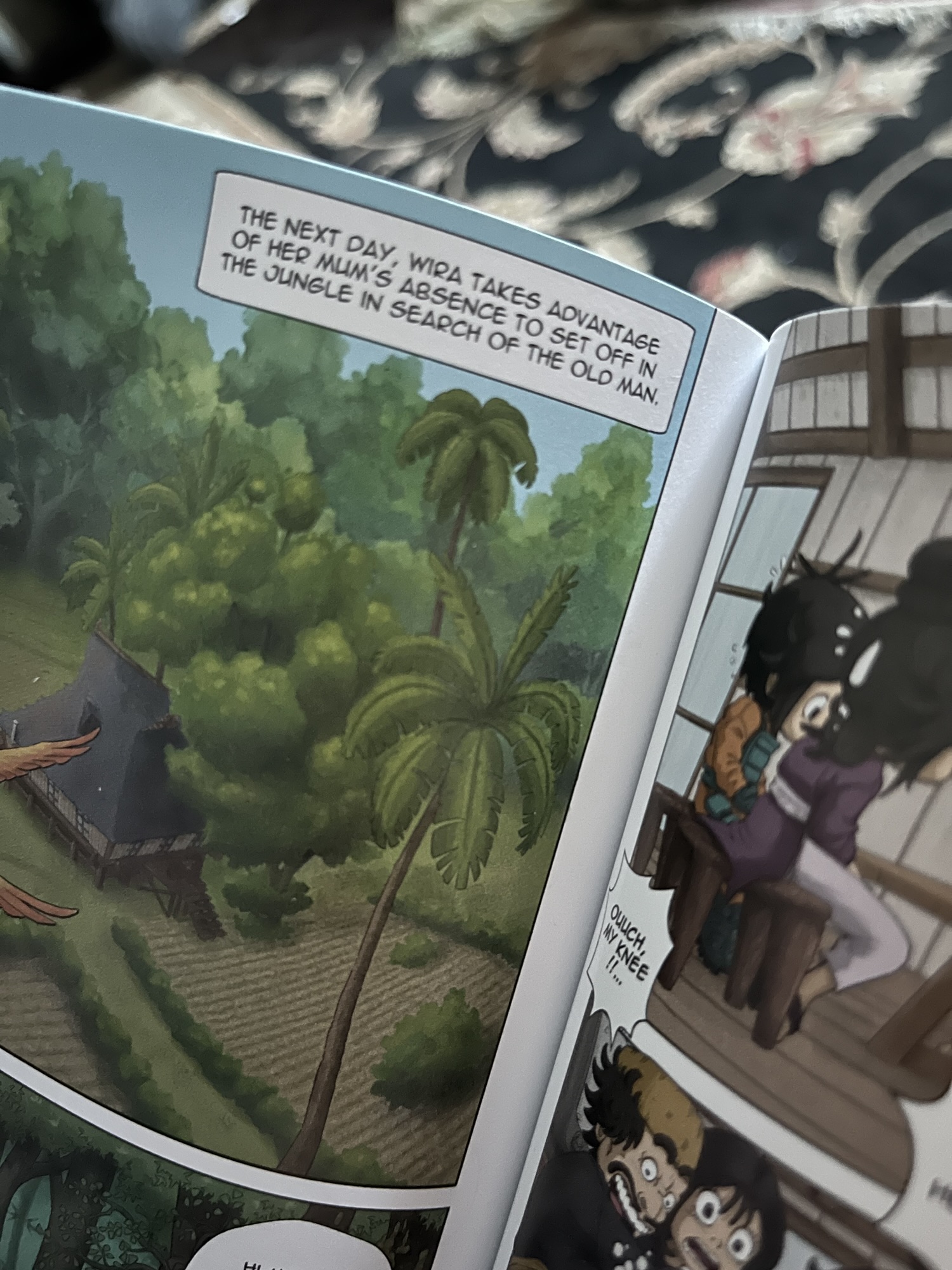
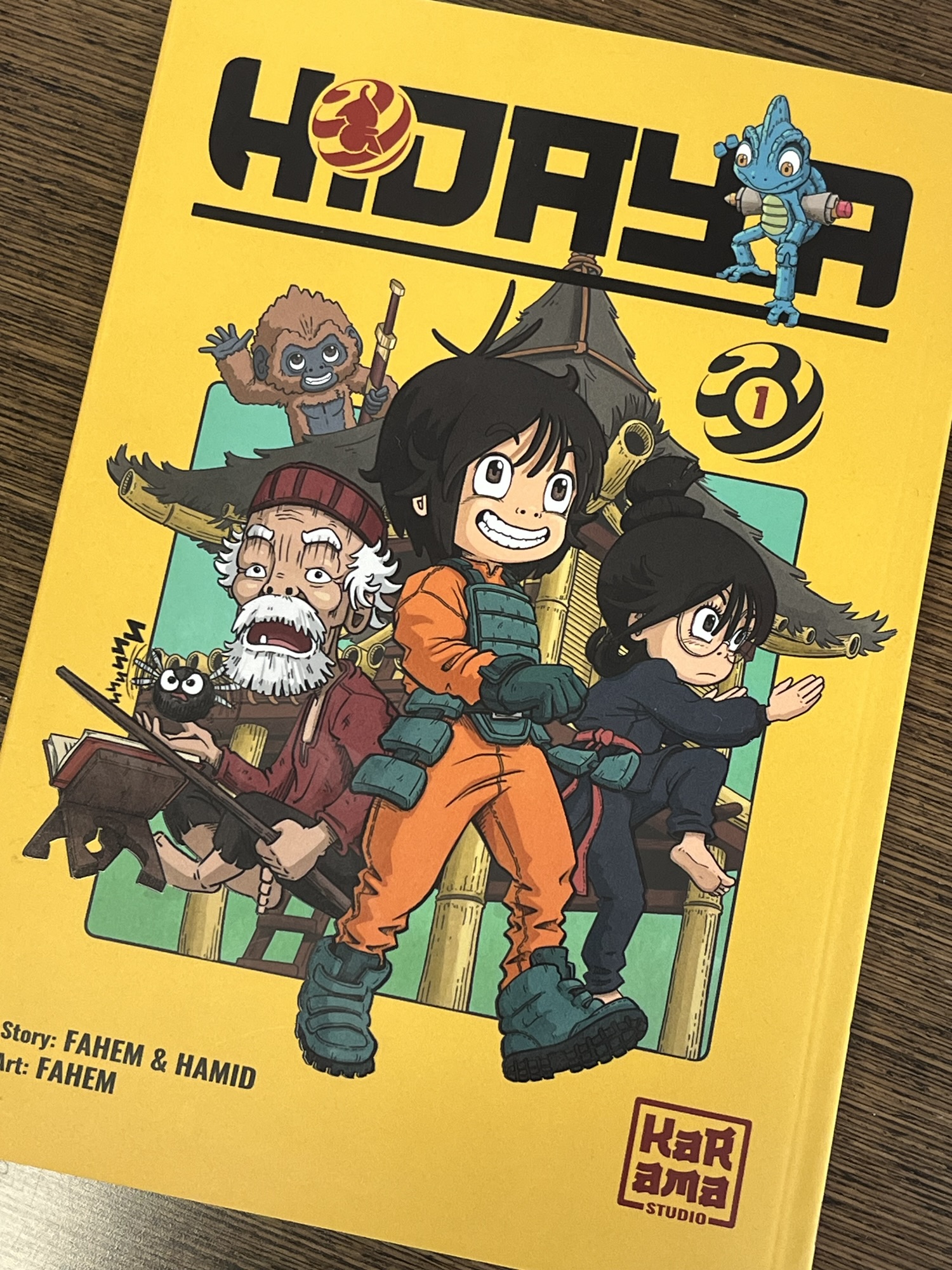
First published in 2024 I have been anxious to get ahold of this Muslim manga, and curious why no commentary reviews seem available for the book that recently released in the United States. After reading the book, I think I know, readers, myself included, aren’t quite sure what to make of it: does it skirt the line, really close, to being shirk or cross it? Does it take an Islamic concept and just twist it for fictionalized exploration? Is it a Sufi read, and thus not palatable to those that don’t practice that way? The book is just an introduction, it leaves off on rising action and so much of the aforementioned questions are left very vague, with nothing to back up any argument one way or another. As someone not familiar with Karamat and walis (other than in wedding environments), I felt uncomfortable with the premise of the book, and despite my 5th grader asking about it, I did not hand it over. The art is fantastic, I love the concept of going to a different realm to battle nafs, but again we don’t see how it is developed to know what results from that thread. The book does mention Halloween when costumes appear, presumably there is an error as it has Wira having a female pronoun on one page, when he is a boy, but it could be indicative of something more to come in the future, and there is bullying, dishonesty, and very choppy scenes, which perhaps are manga style, admittedly a genre I’m not familiar with as well. As a result, please look through the inside pages I am sharing, and decide for yourself if it is a good fit for your family or not, clearly this review is indecisive based on my own limited knowledge of manga and karamat.


The book follows Wira, his sister Hiba and some cousins as they train in martial arts, deal with bullies, and play video games. Wira, additionally dreams of being amazing like the Prophets, being a wali, and having powers. When he encounters a hermit in the jungle who has unworldly abilities and a retinue of animals that serve as spies, he and Hiba are whisked away to the Spiritual World of the Hearts. Once there they lose Master Rashmad and meet Master Hikmah. The book abruptly ends with promises of volume two to come.

The buildup is rather disjointed at this point, it is unclear why bullies and video games and a martial arts tournament and money woes have been presented. I don’t know if I will follow up with a second volume to get answers, but I did feel that even with my own lack of knowledge, just putting some thoughts out there and some inside pages, families could be better equipped to decide if the book is a worthwhile investment.


Almost Sunset by Wahab Algarmi

Standard
Almost Sunset by Wahab Algarmi

At 224 pages, this middle grade graphic novel has a whole lot of heart. Seventh grade is not easy for anyone, and Hassan is balancing school, grades, soccer, fasting, and taraweeh every night, while dealing with friends, video games, cousins, and falling asleep in class. I love that this OWN voice book really centers Islam. It doesn’t shy away from showing the stresses that the character and presumably the readers of immigrant kids in public schools might encounter, right alongside stresses with Muslim cousins and friends at the masjid trying to pressure you to do something you don’t want to do.  And as in any coming of age story, young Hassan does not want any special treatment or parents to get involved. SPOILER: Hassan does hide his faith and that he is fasting for Ramadan at school, he also does make mistakes, notably among them is when he breaks his fast in what he is told is a loophole of sorts, but by the end he grows and trusts and realizes he doesn’t have to do it all, all the time, and that he isn’t alone. The book is not heavy, but it has layers that serve as relatable mirrors and windows for kids who are going to thoroughly enjoy this richly illustrated book.

SYNOPSIS:

The story starts with seventh grader, Hassan dreaming about food, drooling on his arm, and then being woken up by his teacher, again.  It is Ramadan and Hassan is fasting, going to taraweeh at night, trying to keep up with school and soccer, and on top of it all, he doesn’t want anyone to know.  He also doesn’t have the latest version of the popular video game that all his friends have, and he has to explain to his childhood friend Rosie why it is no longer appropriate for them to hang out together.  Nights and weekends with family and at the masjid should be a reprieve, but somehow even there he is the odd one out, opting to pray instead of play, and being unsure if closing your eyes while sneaking food really prevents Allah swt from seeing you eating like his cousins claim.  Threaded through it all are soccer practices, games, and falling grades that are going to get him tossed off the team, making this a Ramadan to remember.

WHY I LOVE IT:

Wahoo, some Yemeni representation, I loved the flashback/dream longing for Yemen.  I like that Hassan isn’t expecting adults or others to speak for him, and his heart is really in the right place.  I did feel a bit of a disconnect though when his friends knew he fasted the previous year, why he wouldn’t just explain it was time again for him to do so. Increasingly even the most isolated western cities are aware of Ramadan, so I didn’t feel that hesitation for Hassan to own it, even when a friend explicitly asks.  SPOILER, On a similar thread, his soccer coach is Muslim and their isn’t a huge sigh of relief and immediate kinship when the information is revealed.  If Hassan really feels he is shouldering it alone, why wouldn’t this empower him to step into himself so to speak.  I also didn’t understand why the end of the season pizza party wouldn’t have just been at iftar time. The book really had a chance to model how others can support their Muslim friends, and moving a food based celebration a few hours is an easy accommodation, but the Muslim coach didn’t even do it, so why would non Muslims.  

When Hassan does sneak food during his fast, he gets away with it, but it doesn’t sit right with him and I think it is powerfully done, him coming clean also is not punished as it really is something between Hassan and Allah swt and I love how it is left to that.  Regardless of if you feel it is required of a 7th grade boy or not, the ownership of faith I feel is more important than the getting in trouble by your parents in this case.

FLAGS:

Lying, failing grades, sneaks food during fasting, boy girl friendship, hints at internalized Islamophobia.

TOOLS FOR LEADING THE DISCUSSION:

I wouldn’t do this as a book club, but would absolutely have it on shelves for kids to easily access, and I would absolutely discuss with them, what their takeaways were.