Tag Archives: manga

Hidaya: Wira and the Spiritual World by Fahem & Hamid illustrated by Fahem

Standard
Hidaya: Wira and the Spiritual World by Fahem & Hamid illustrated by Fahem

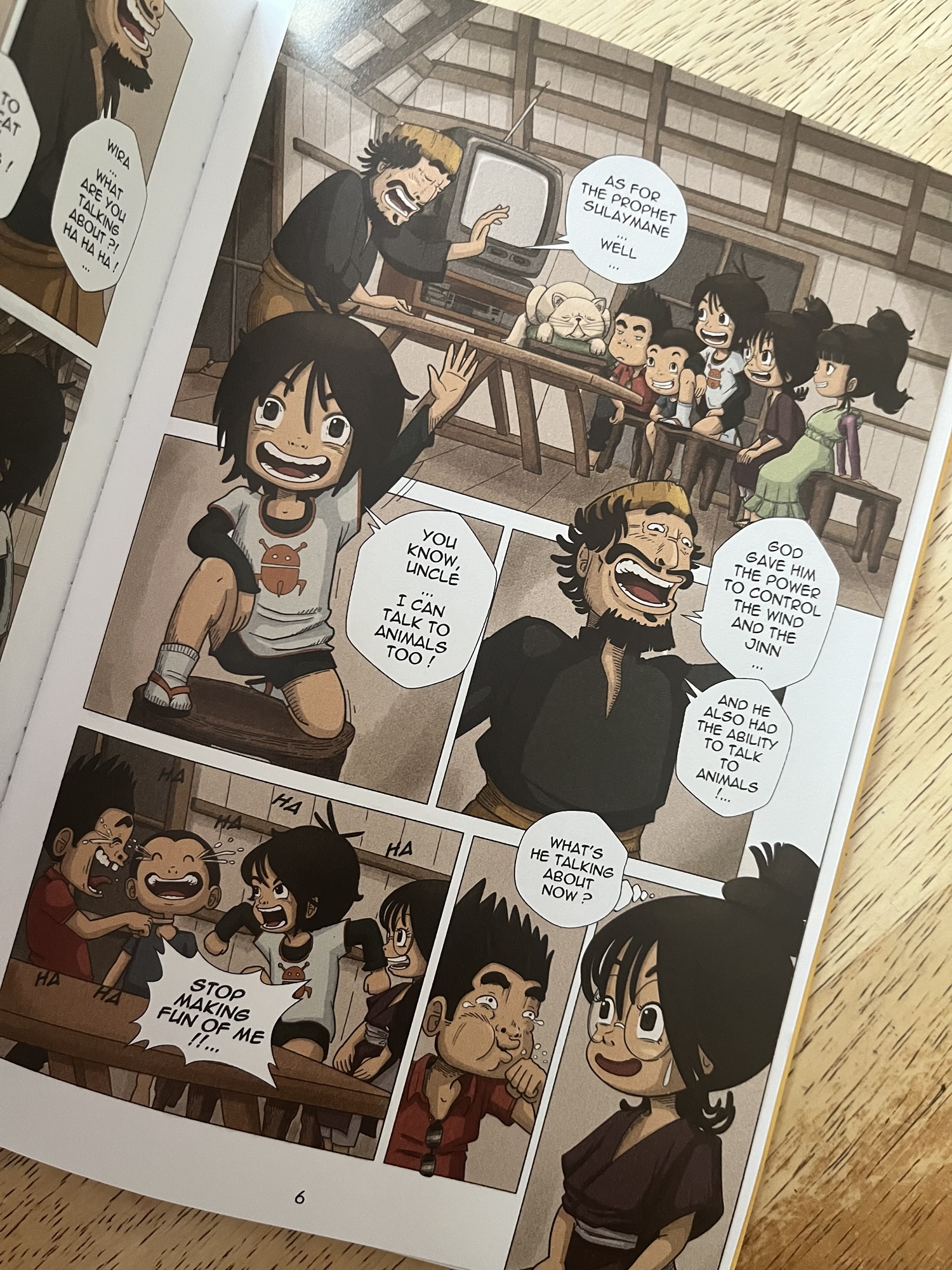
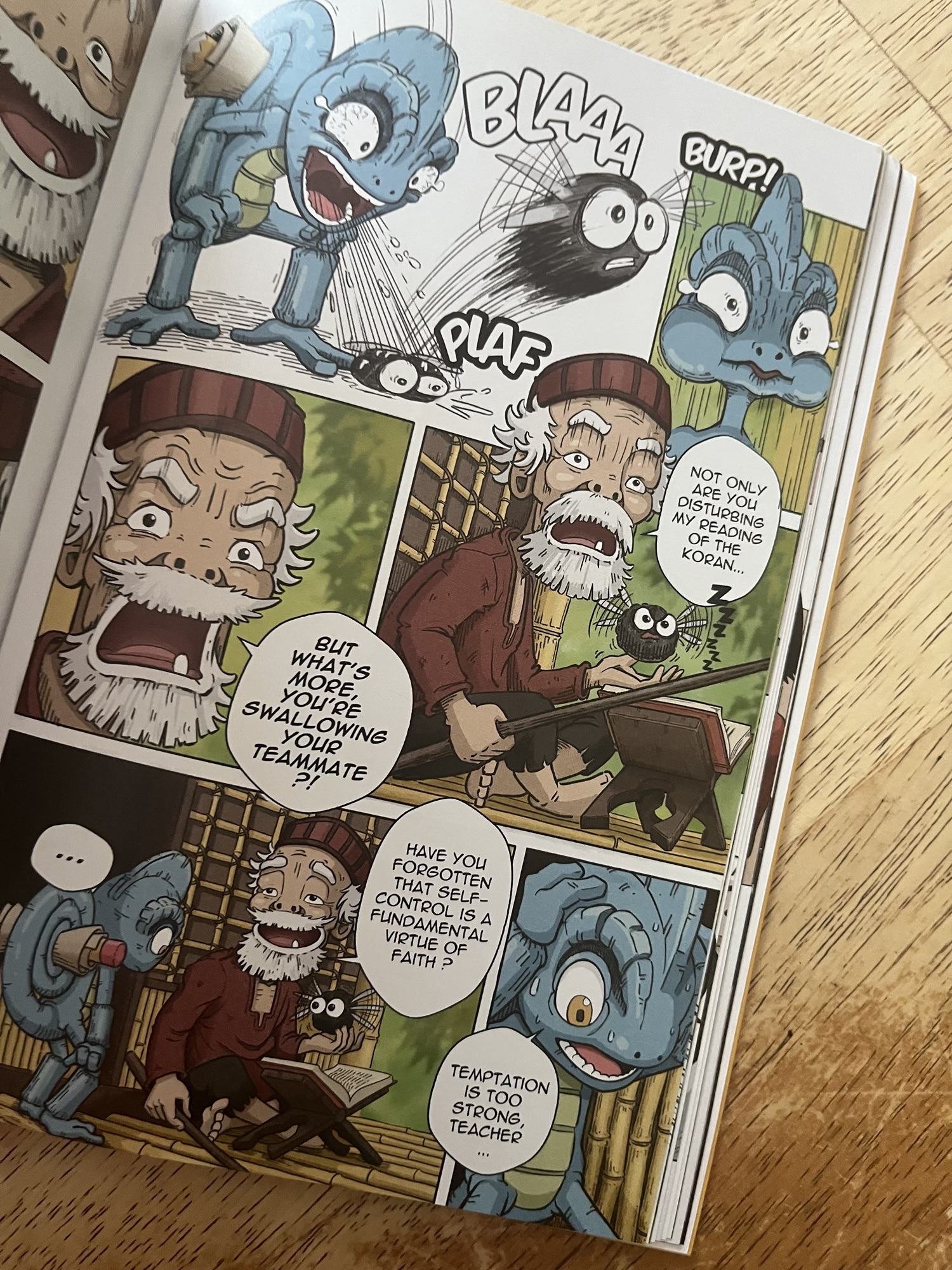
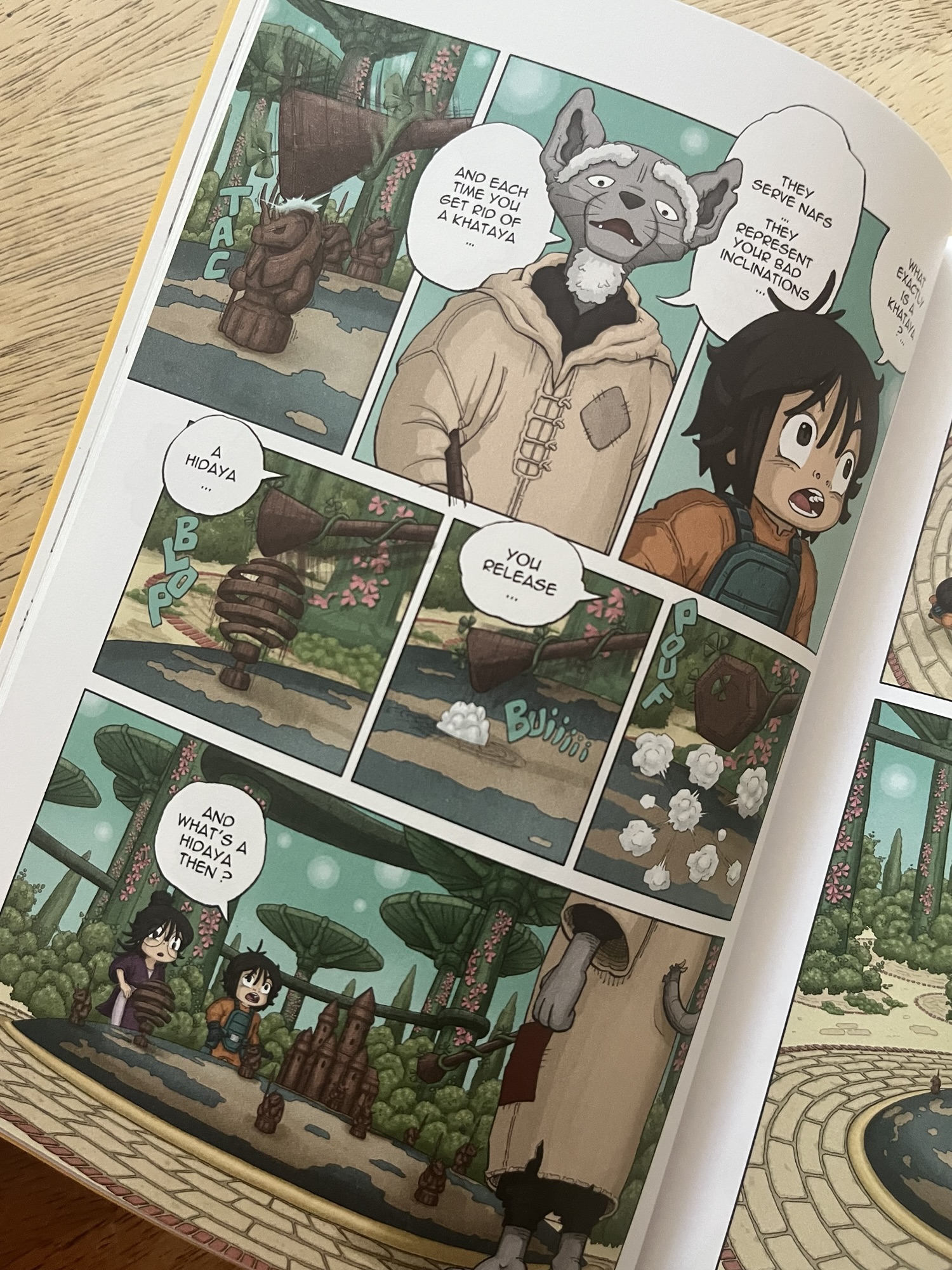
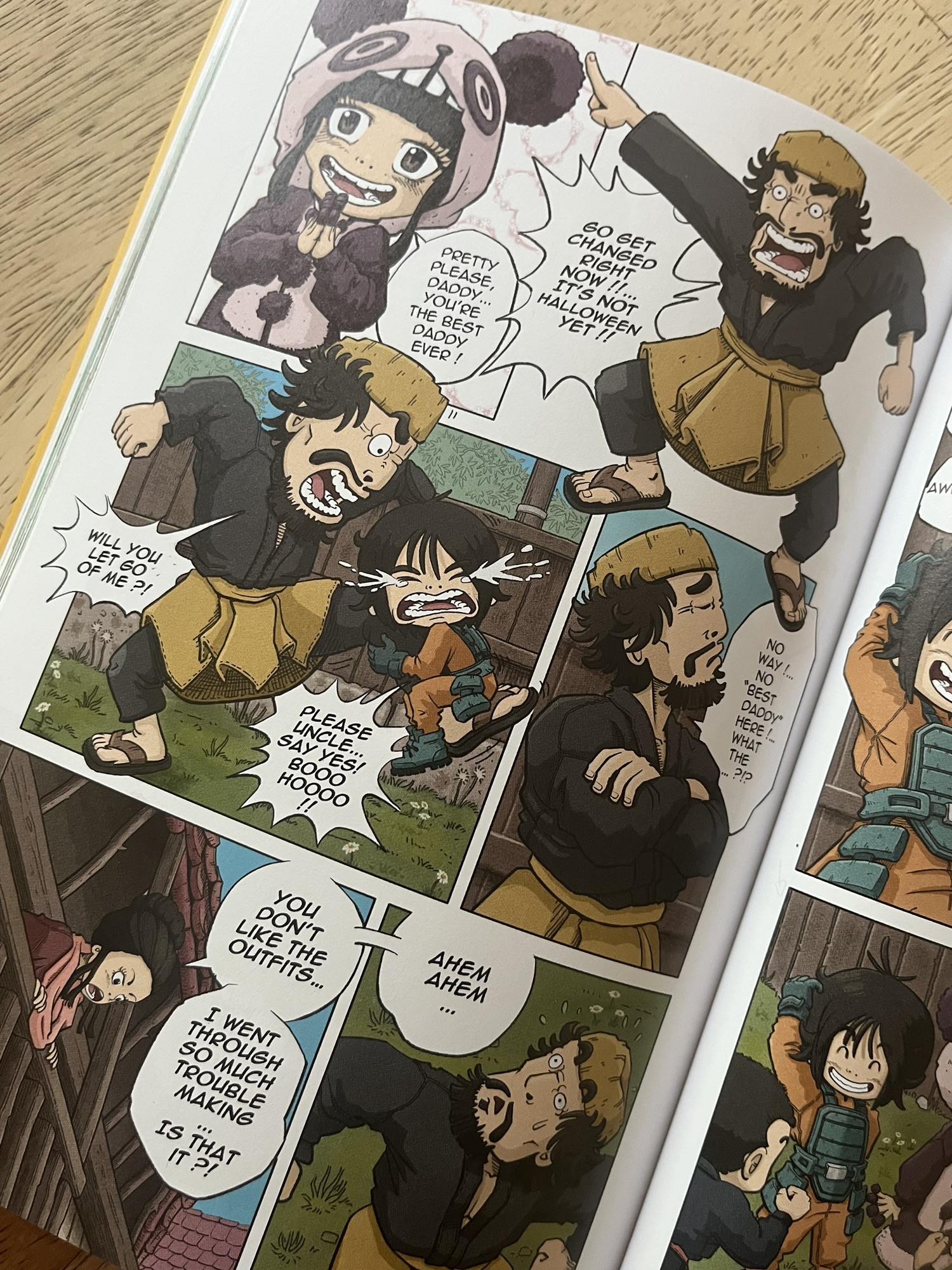
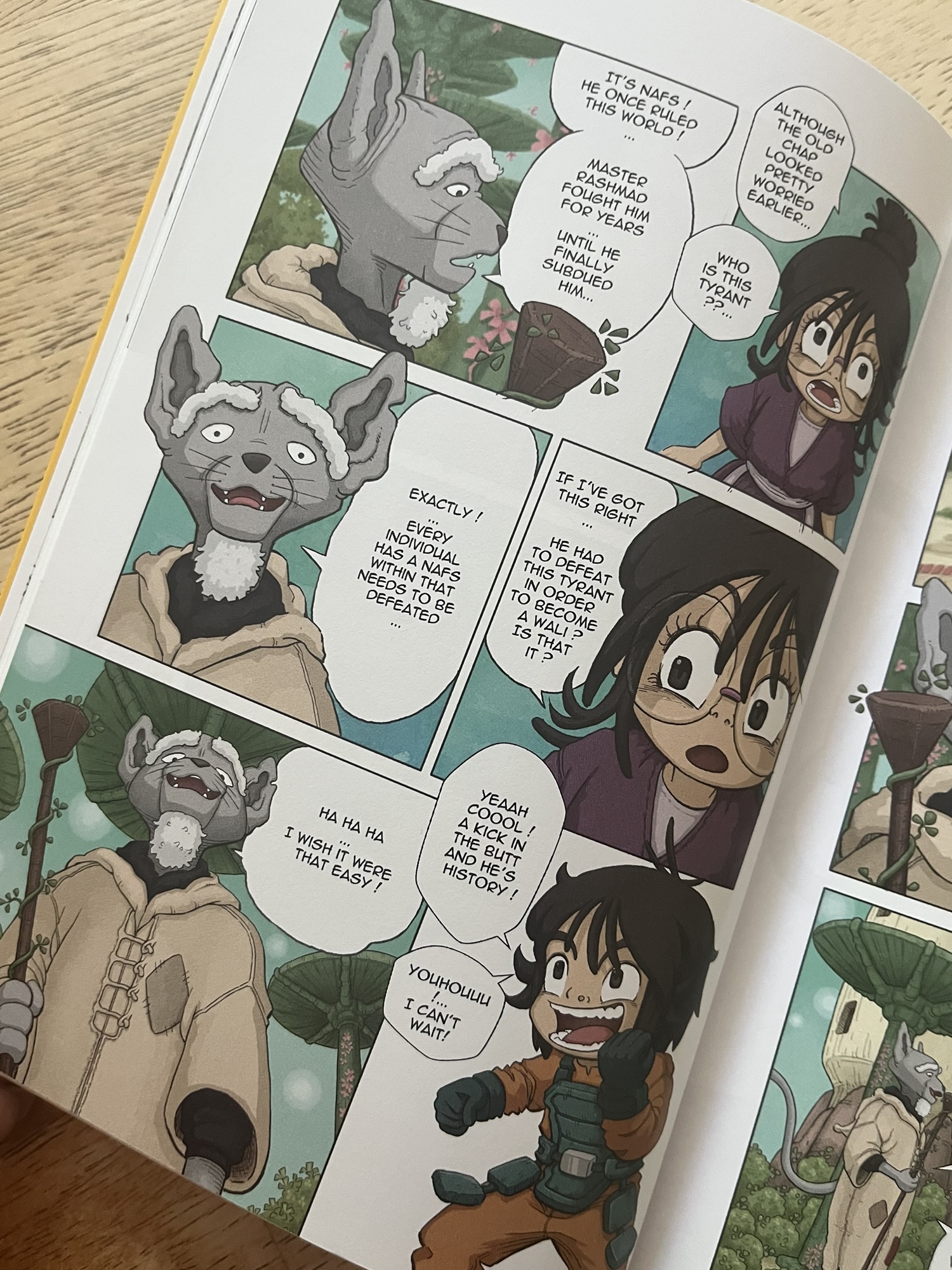
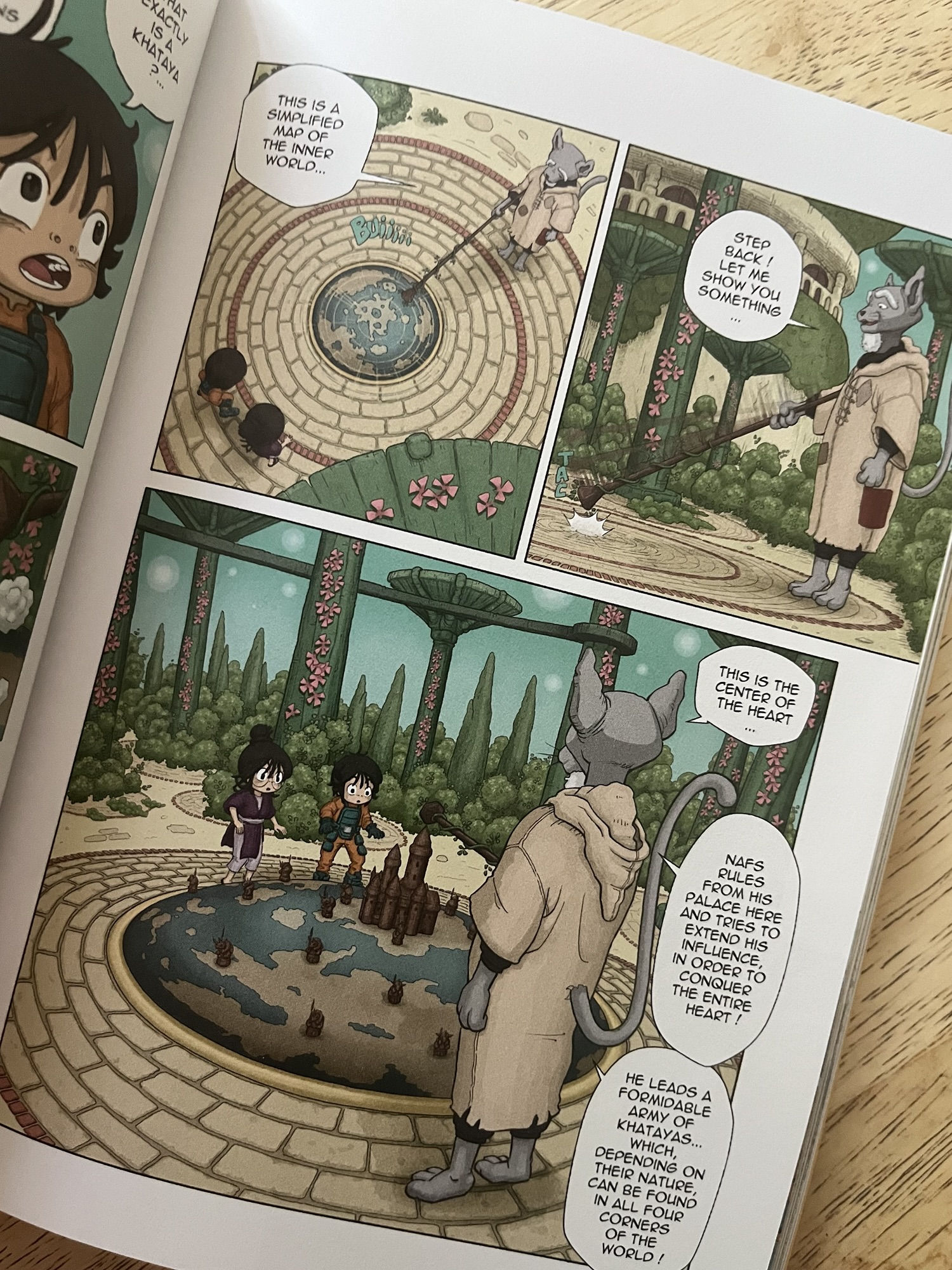
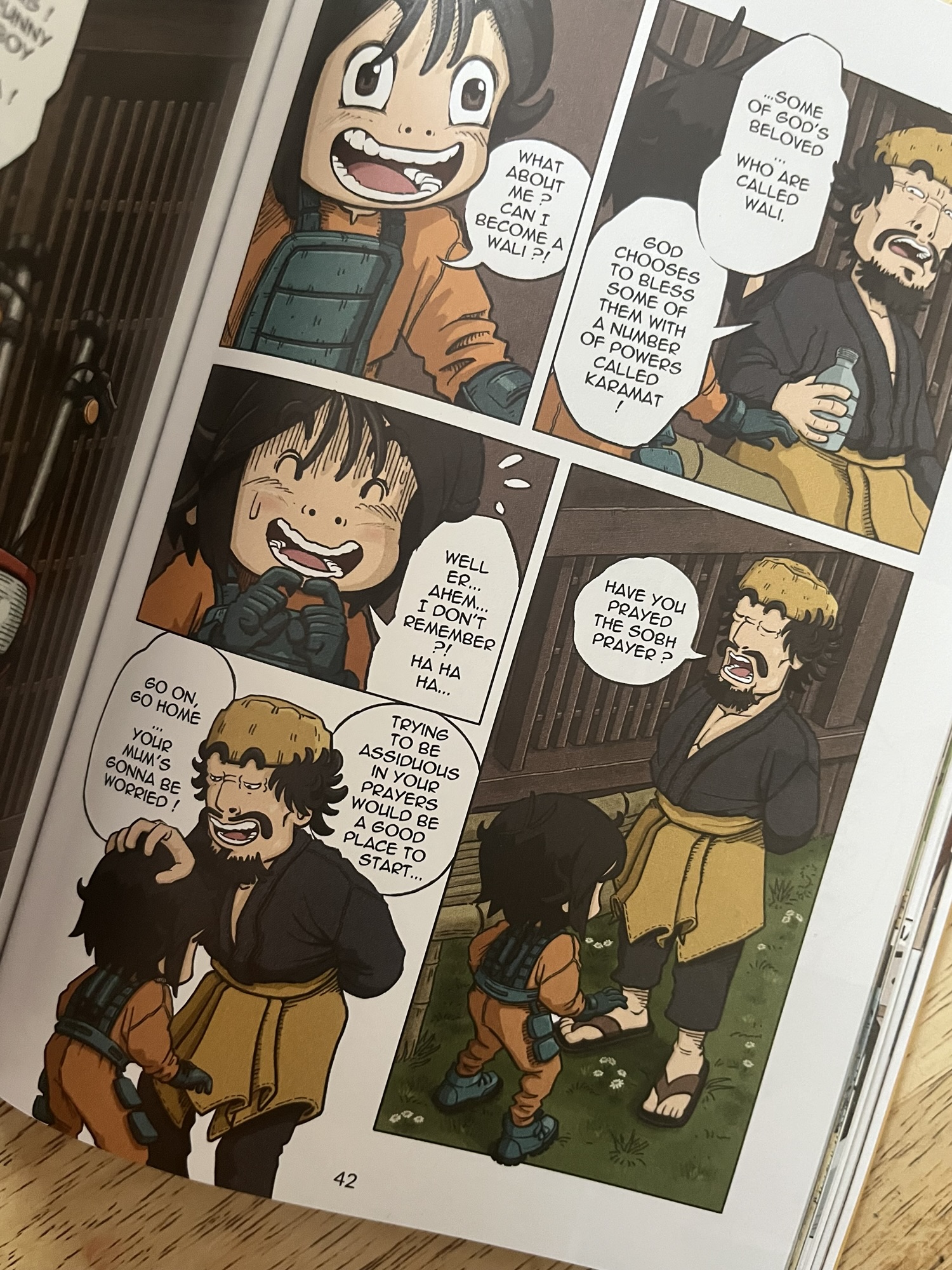
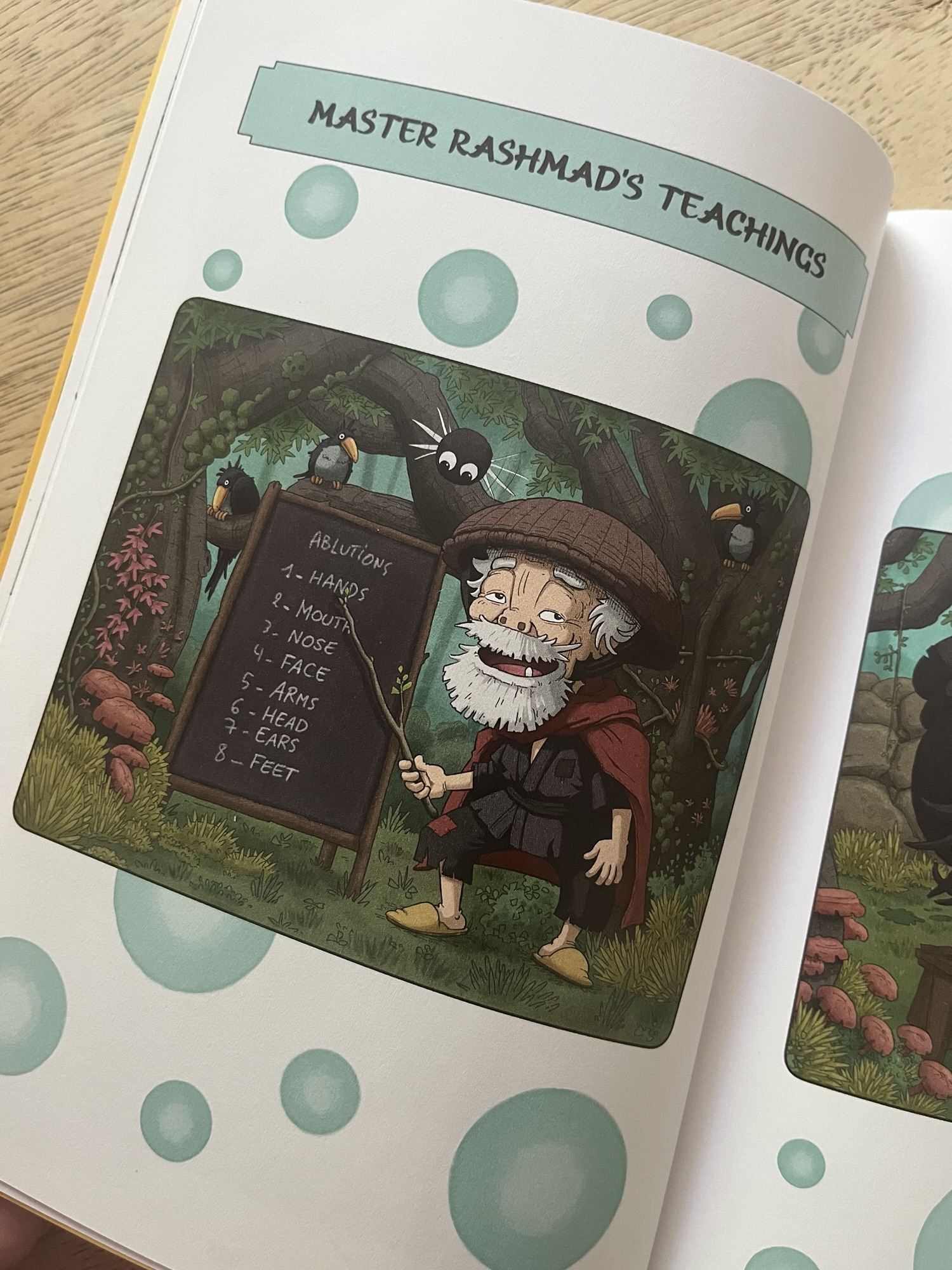
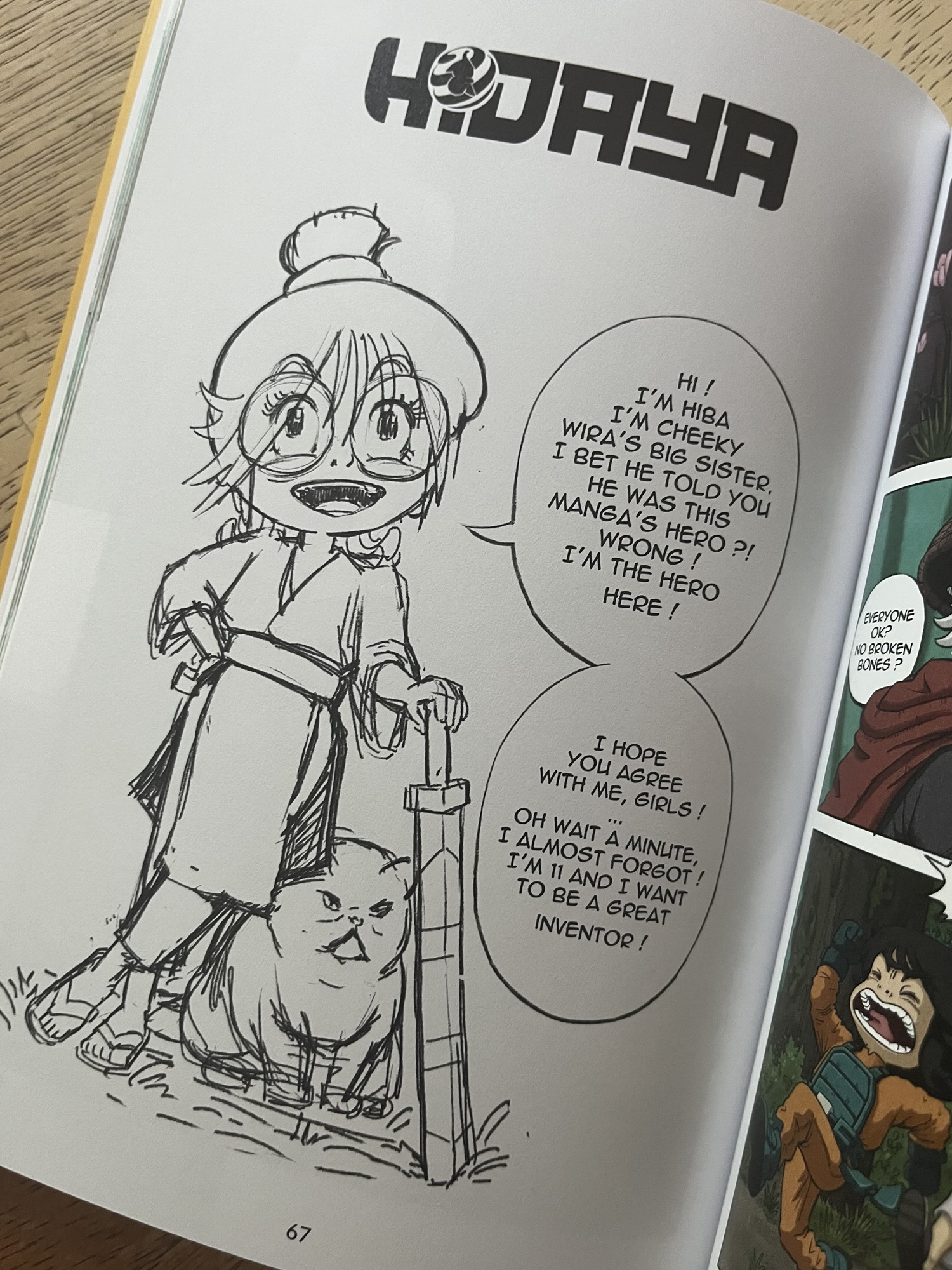
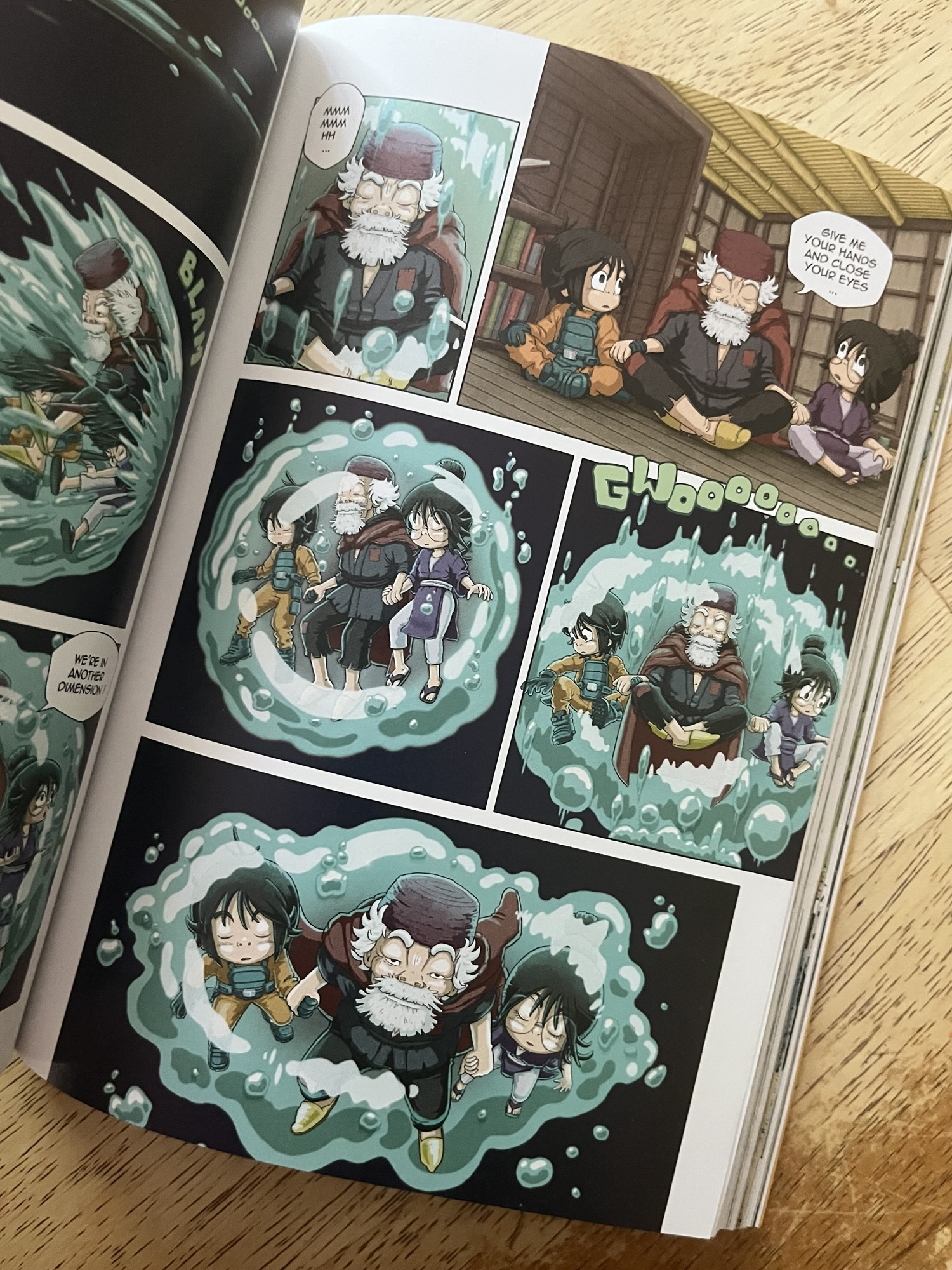
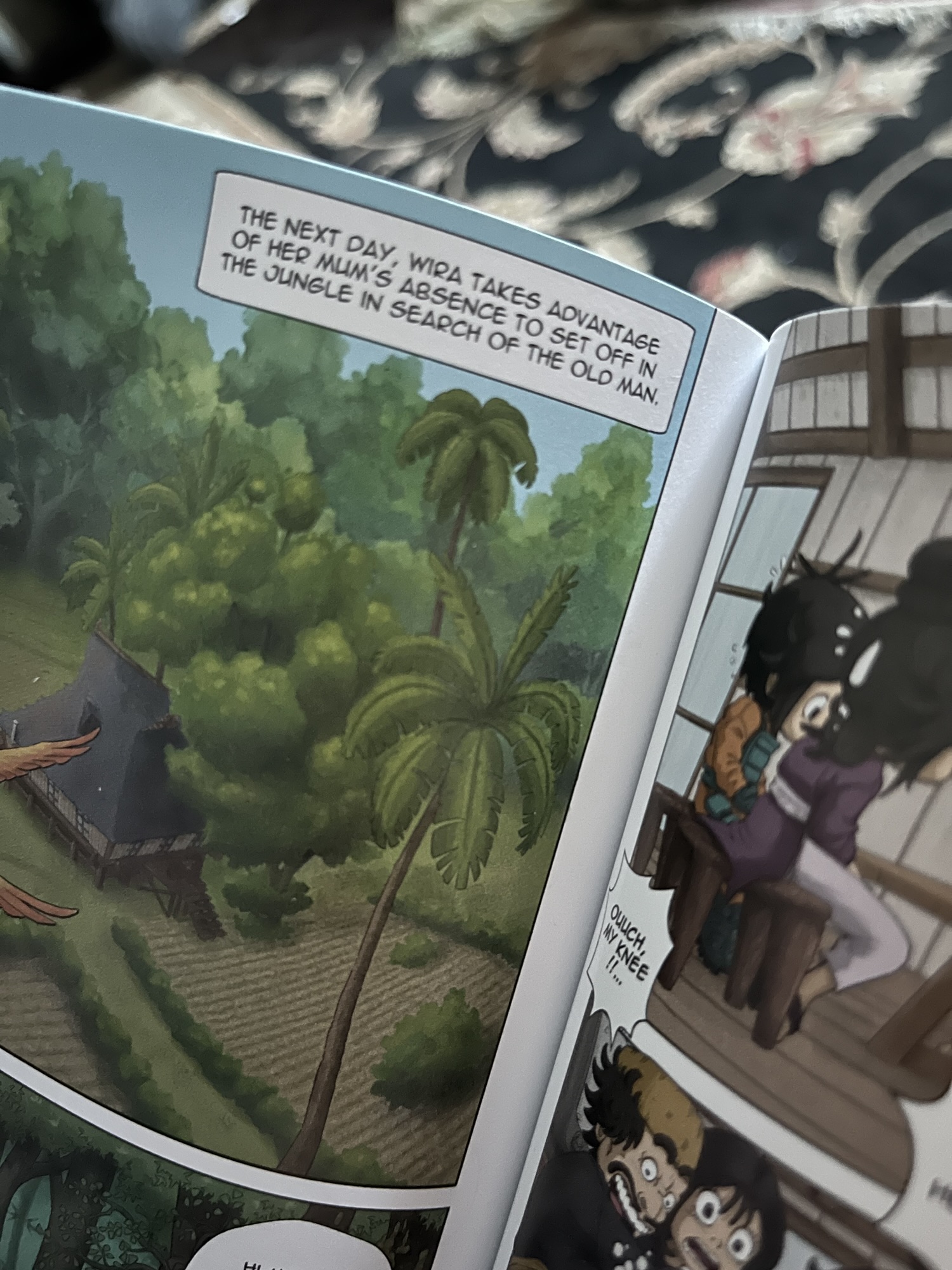
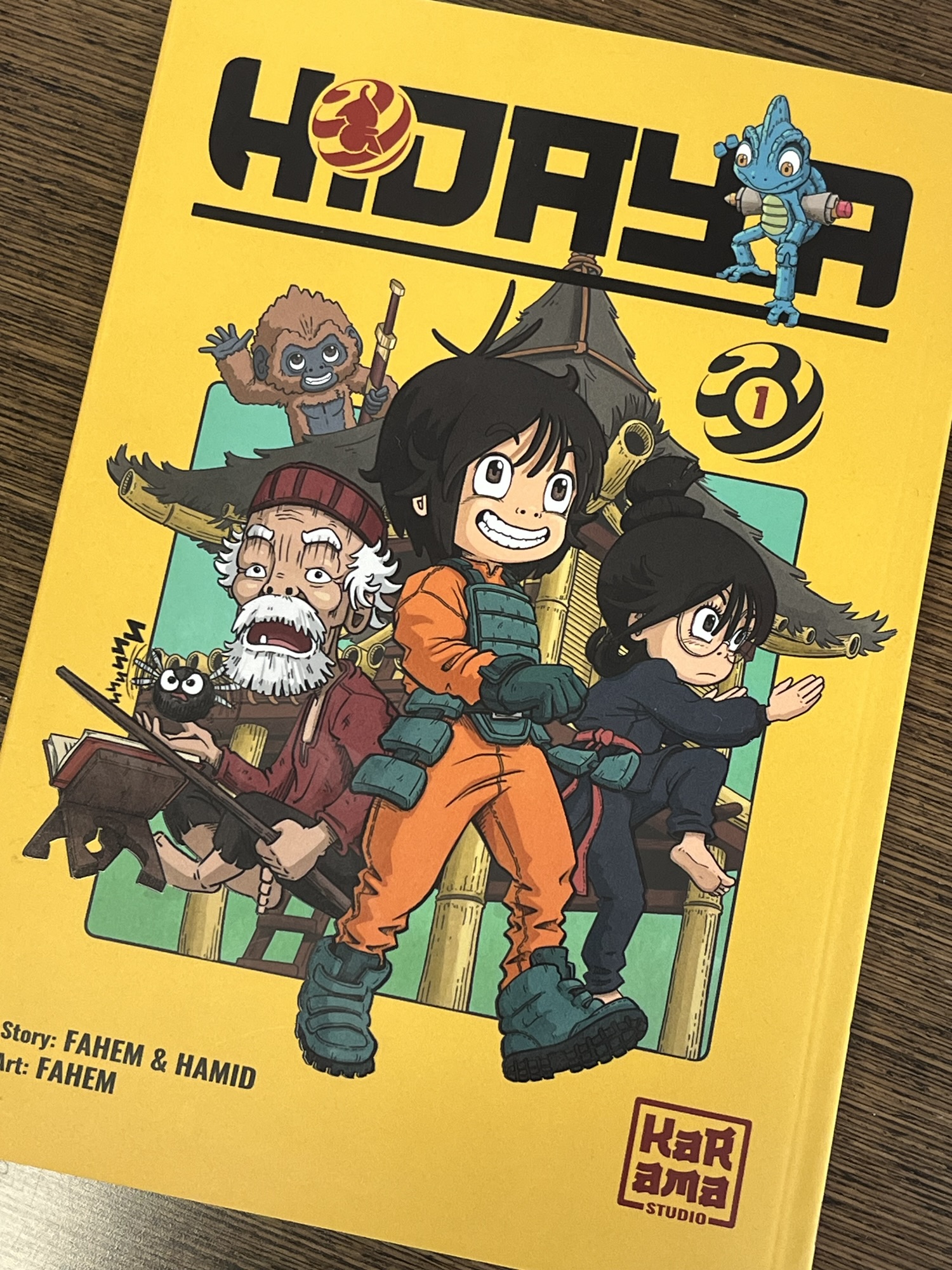
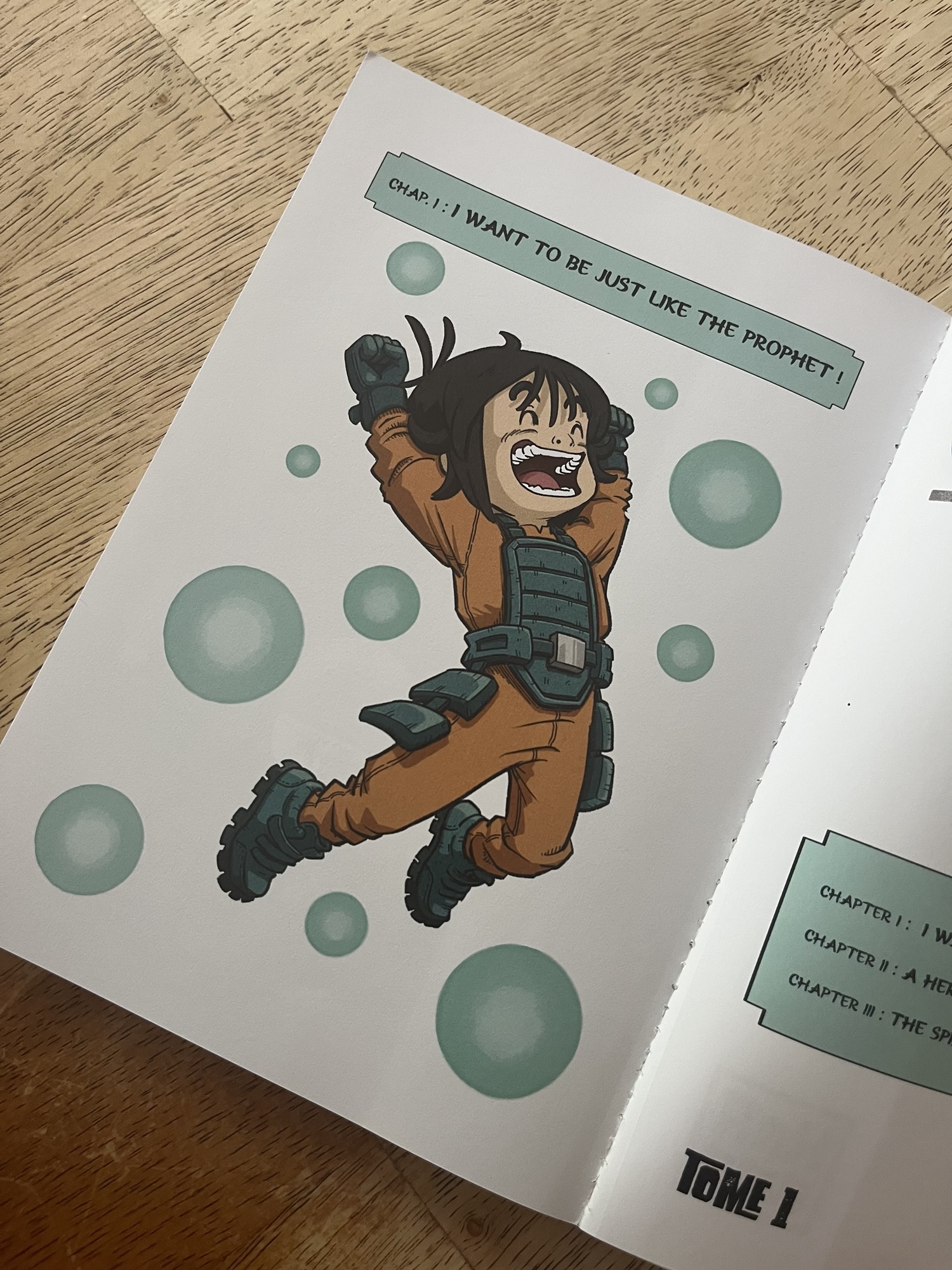
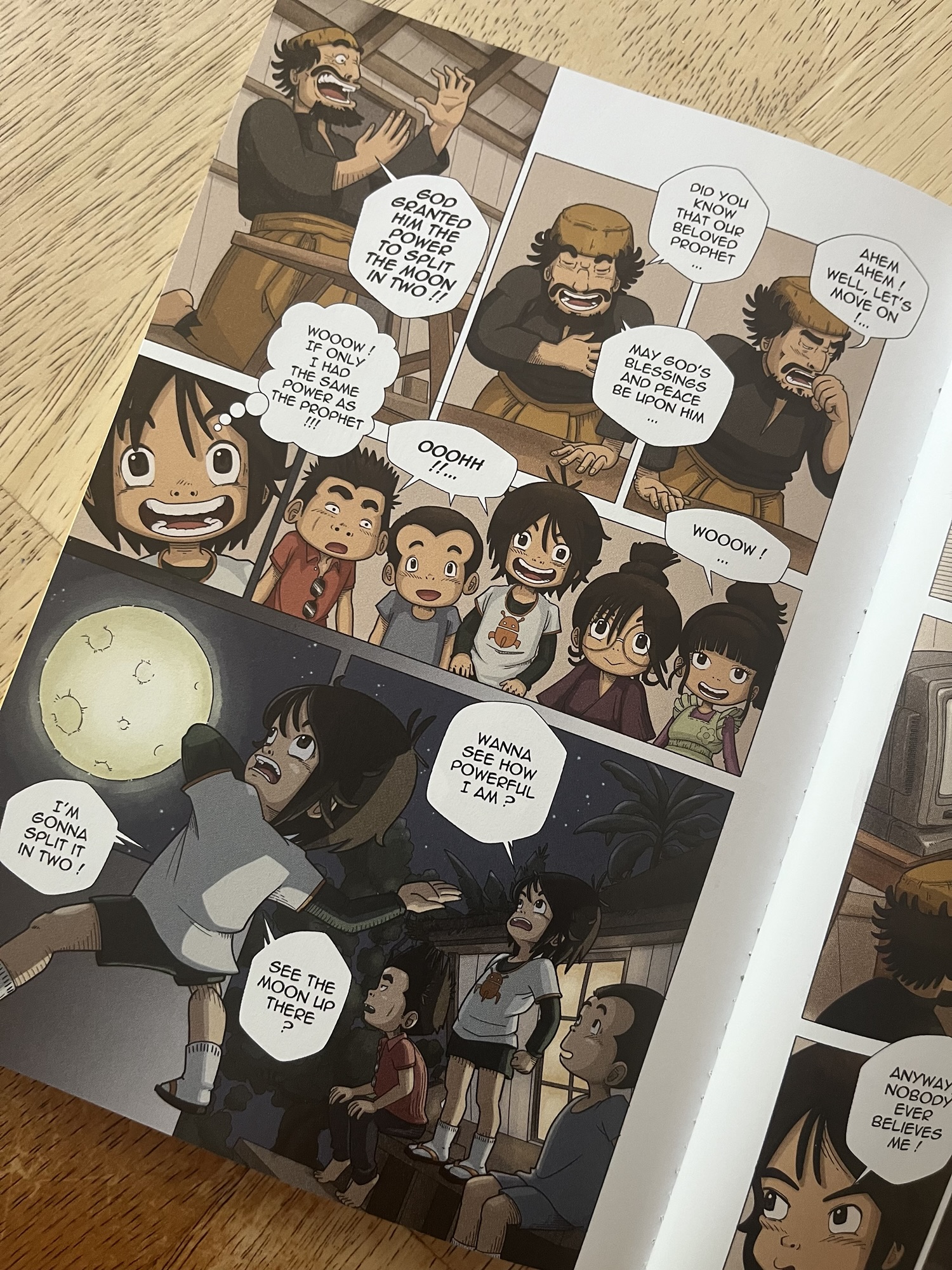
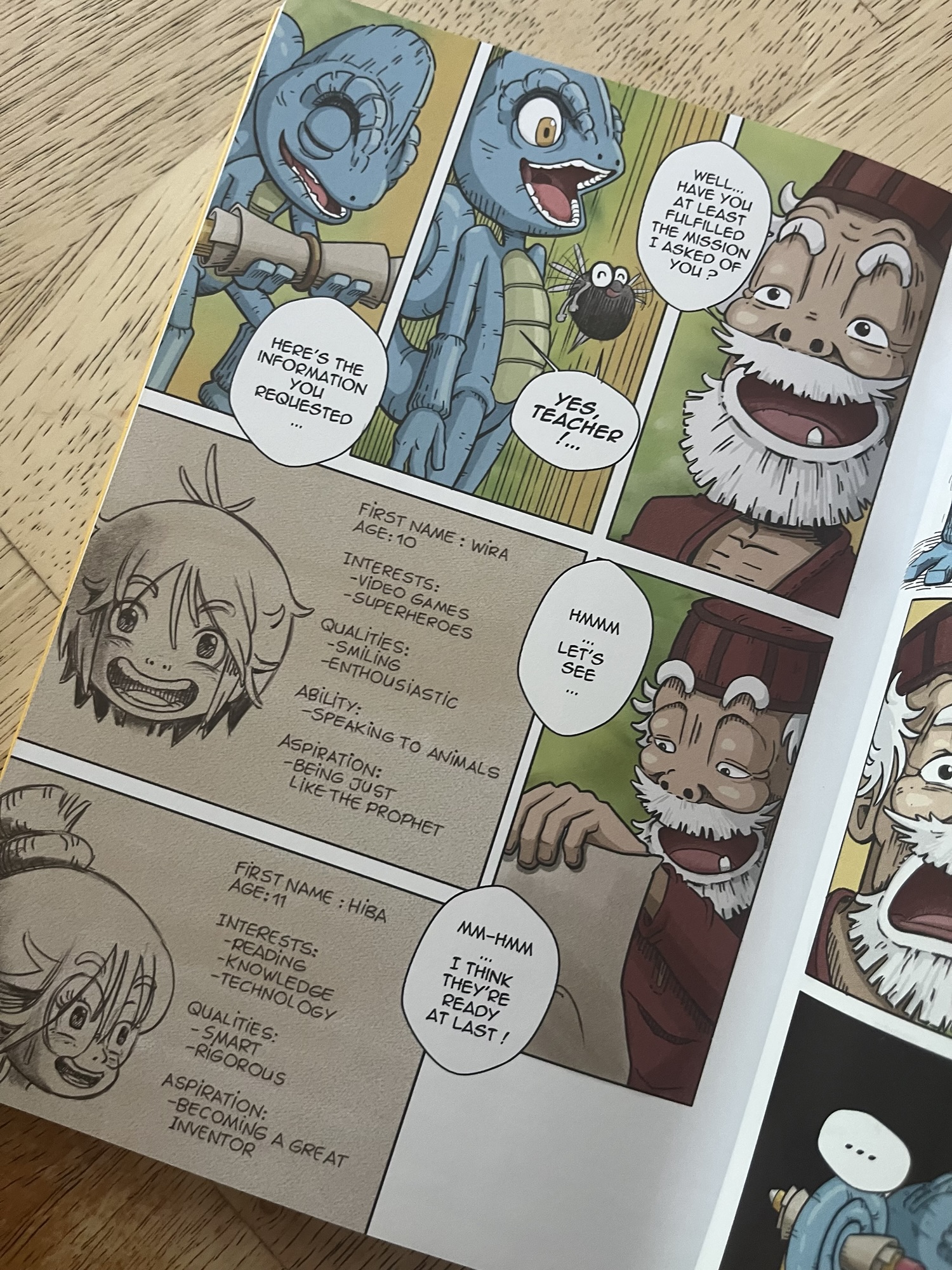
First published in 2024 I have been anxious to get ahold of this Muslim manga, and curious why no commentary reviews seem available for the book that recently released in the United States. After reading the book, I think I know, readers, myself included, aren’t quite sure what to make of it: does it skirt the line, really close, to being shirk or cross it? Does it take an Islamic concept and just twist it for fictionalized exploration? Is it a Sufi read, and thus not palatable to those that don’t practice that way? The book is just an introduction, it leaves off on rising action and so much of the aforementioned questions are left very vague, with nothing to back up any argument one way or another. As someone not familiar with Karamat and walis (other than in wedding environments), I felt uncomfortable with the premise of the book, and despite my 5th grader asking about it, I did not hand it over. The art is fantastic, I love the concept of going to a different realm to battle nafs, but again we don’t see how it is developed to know what results from that thread. The book does mention Halloween when costumes appear, presumably there is an error as it has Wira having a female pronoun on one page, when he is a boy, but it could be indicative of something more to come in the future, and there is bullying, dishonesty, and very choppy scenes, which perhaps are manga style, admittedly a genre I’m not familiar with as well. As a result, please look through the inside pages I am sharing, and decide for yourself if it is a good fit for your family or not, clearly this review is indecisive based on my own limited knowledge of manga and karamat.


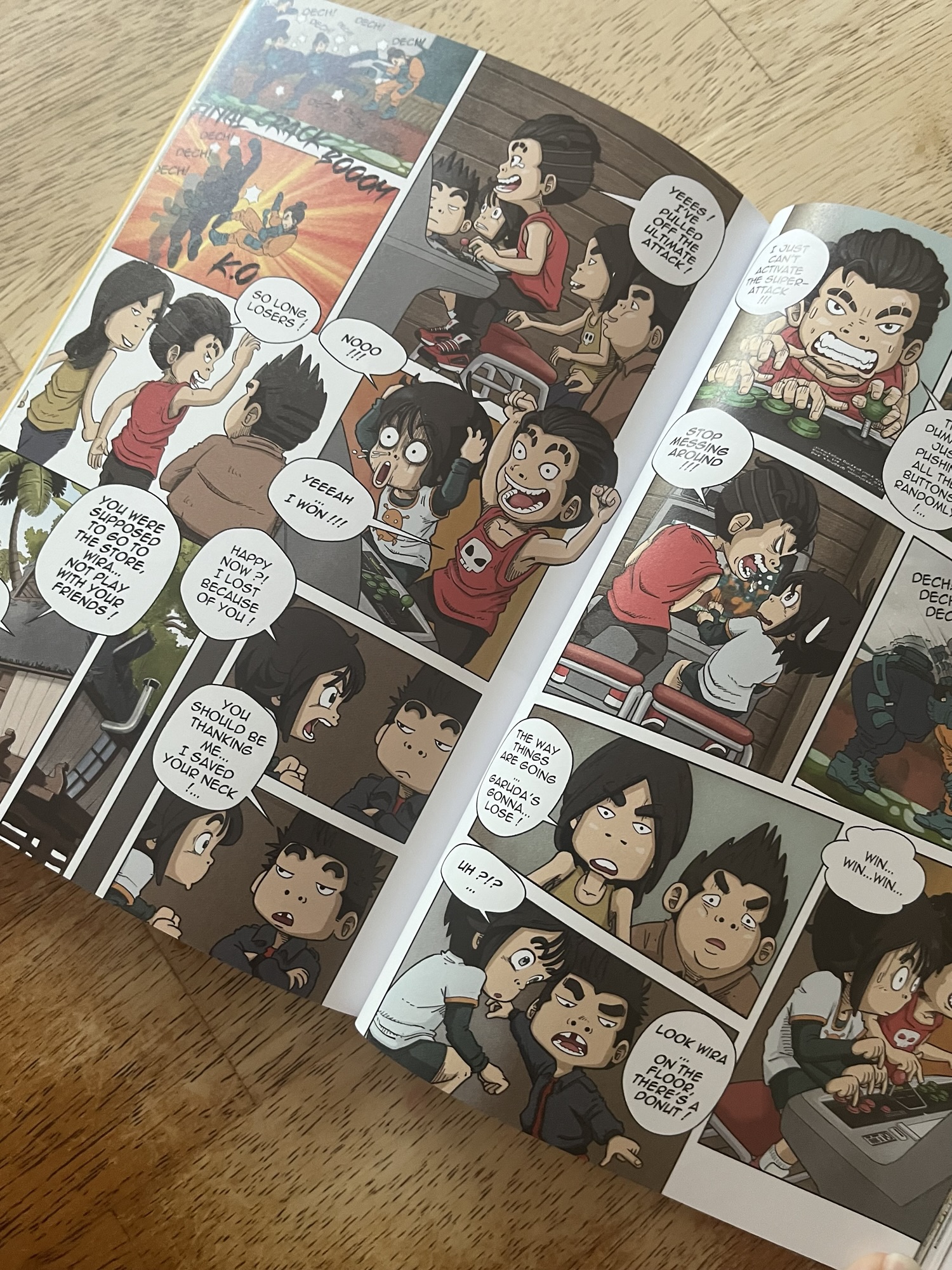
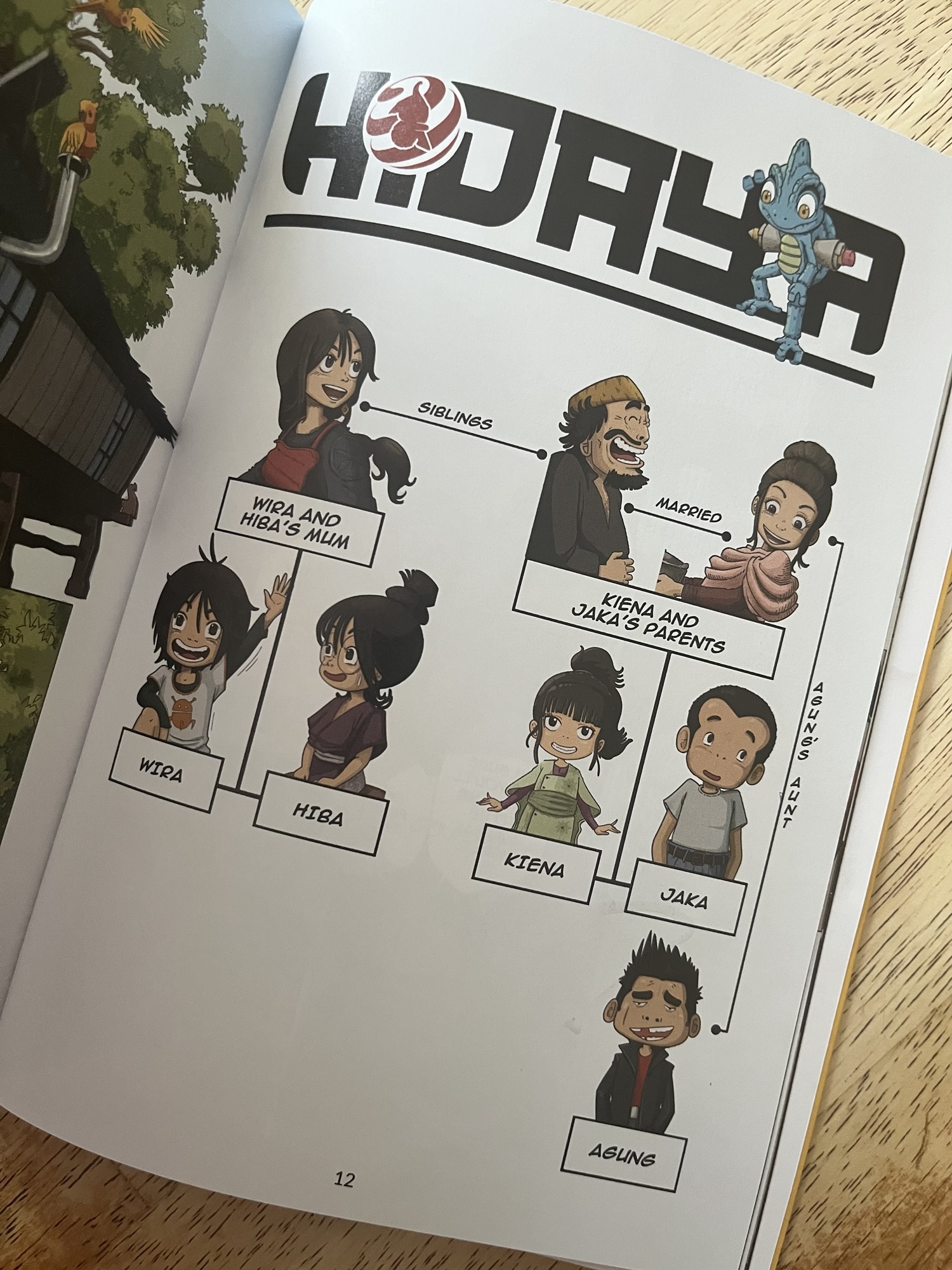
The book follows Wira, his sister Hiba and some cousins as they train in martial arts, deal with bullies, and play video games. Wira, additionally dreams of being amazing like the Prophets, being a wali, and having powers. When he encounters a hermit in the jungle who has unworldly abilities and a retinue of animals that serve as spies, he and Hiba are whisked away to the Spiritual World of the Hearts. Once there they lose Master Rashmad and meet Master Hikmah. The book abruptly ends with promises of volume two to come.

The buildup is rather disjointed at this point, it is unclear why bullies and video games and a martial arts tournament and money woes have been presented. I don’t know if I will follow up with a second volume to get answers, but I did feel that even with my own lack of knowledge, just putting some thoughts out there and some inside pages, families could be better equipped to decide if the book is a worthwhile investment.
Satoko and Nada 1 by Yupechika

Standard
Satoko and Nada 1 by Yupechika

satoko.jpg

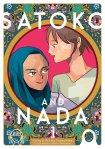
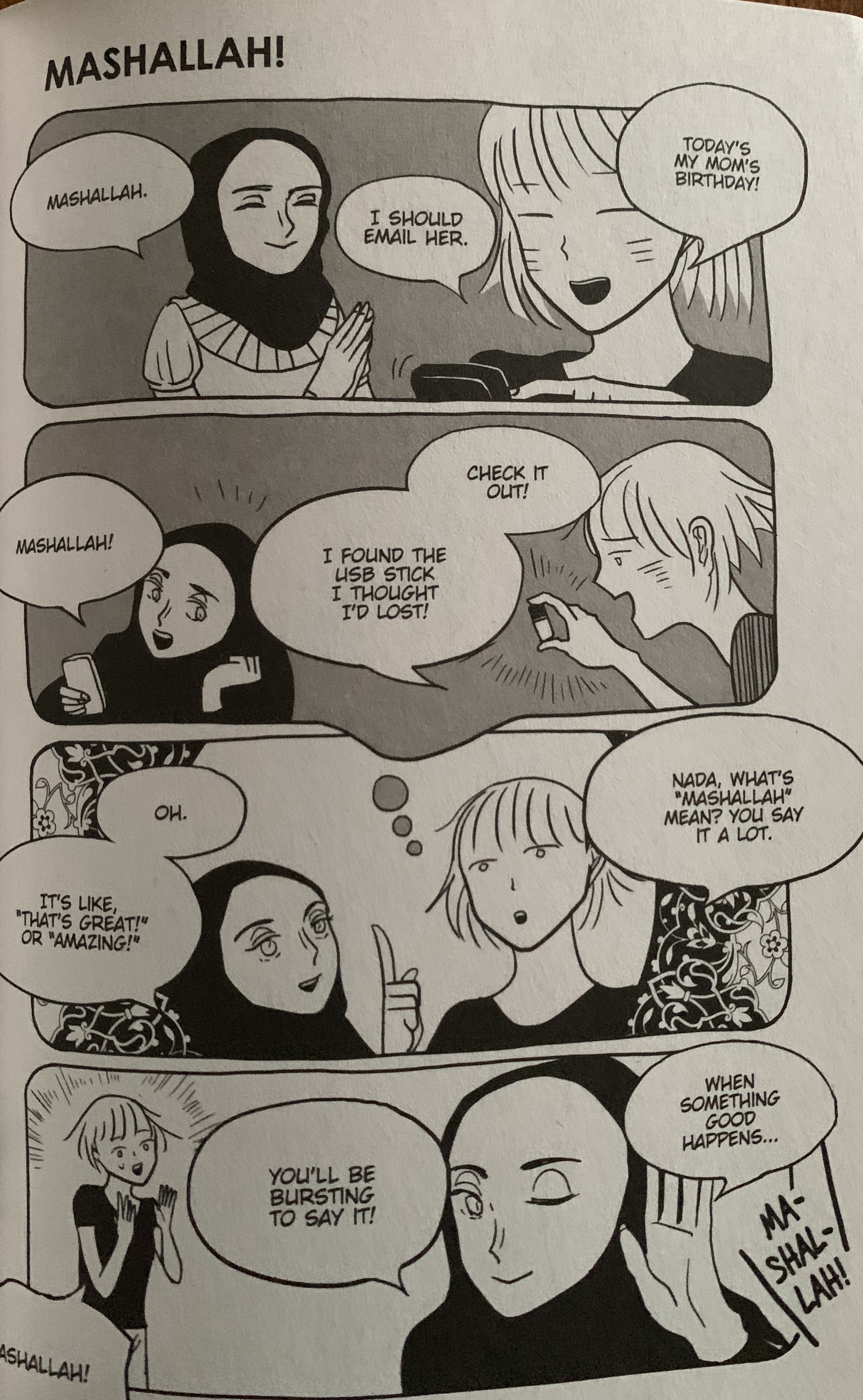
A manga series about two college roommates who have come to America to study, Nada from Saudi Arabia and Satoko from Japan.  Written by a Japanese author and translated into English, there is a lot about Muslims, particularly Muslims from Saudi, as the two characters get to know each other and become friends.  Their interactions work to dispel a lot of stereotypes and promote how rewarding getting to know people different from your self can be.  Volume one (there are three) is 127 pages, read right to left in four panel pages, and is fairly clean for all ages (they do buy underwear and bras at one point), but would most likely appeal to female readers in 4th or 5th grade and up.
8CE09DE5-2BEB-48C0-9157-96B13CC78CD9

SYNOPSIS:

The book is about two girls getting to know each other, learning about each other’s culture, and navigating life in America.  There isn’t really a plot or a story line outside of this basic framework, and with a heading every page or two it reads like a quick scene about the topic expressed in the heading.  So, for example there are headings of Veils, Ramadan, Birthday, MashAllah Choice, etc, and then a few panels showing the girls having an interaction about it, resulting in understanding, humor, or a lesson.

In a bit of a stereotype twist, Nada is more street savvy then Satoko when approached by a stranger for a ride, and thus Nada hasto educate her a bit.  The book brings in a Christian American character and a third generation Japanese character learning Japanese, to further show how assumptions plague as all and how simple conversation and an open mind, can lead to some amazing friendships.

WHY I LIKE IT:

The book is really choppy, but you get used to it and soon you forget that it isn’t a typical story.  I admittedly haven’t read a lot of manga so, I have no idea if this is the norm, or something unique.  I love that its upfront about stereotypes, if it was an American writing it, or a even a Muslim it would probably come across as preachy or arrogant, but somehow it doesn’t seem like the two characters have much baggage, nor feel a need to defend their culture by putting another’s down.  They deal with issues such as women driving in Saudi, differences between hijab, burka, abaya, niqab, being around alcohol,  the joy of a fatwa allowing soy sauce and its alcohol content to be permissible, etc.  Some things are cited for clarity and something are very Saudi, but it really contains a lot of information, about Islam that I am pretty impressed by.  There isn’t a ton about Japanese culture since I would assume it was written for Japanese readers, so it would be redundant, but I did learn, according to Satoko, how religion is viewed by Japanese, how putting age and gender and race on forms seems incredibly personal, and some information about food.

FLAGS:

There is a possible failed abduction, not sure what the guys intention was, but the girls treated it as such.  The girls do go buy undergarments, so they are visually depicted.  There is mention of alcohol.

2DF66805-A246-4150-89BA-E7E1EAF90E90
TOOLS FOR LEADING THE DISCUSSION:

I wouldn’t do this as a traditional book club, but I think I am going to get a copy of the series to pass around my daughters middle school group of friends, to

one- give them a taste of manga

two- see what they think of the Islamic rep from a Japanese paradigm and

three- give us all something to chat about

The book is fun, I got it at the public library and think it might open up a new book type for kids to try and a new point of view for many of us to consider.