Tag Archives: Family

Moonlight Hope: A Muslim American Coming of Age Story by Nora Salam

Standard
Moonlight Hope: A Muslim American Coming of Age Story by Nora Salam

moonlight hope

This 354 page New Adult read is truly Islamic fiction, and as long as you know what you are getting in to, you probably will thoroughly enjoy it.  It is Islamic centered, it is preachy, it is idyllic, it counters many stereotypes about Muslims and various cultures, while simultaneously falling into other tropes that define the genre, it has mature framing that is not suitable for younger readers, but doesn’t detail anything that is super “haram.”  If you are looking for a potentially halal romance between YA and Adult ages with Islamic messaging this book is a solid choice.  If however, you will be annoyed by any of the aforementioned labels, this book will not hold your attention or beg to be finished.  It reminds me a lot of Umm Zakiyyah’s If I Should Speak and A Voice books where the story has its own twists and character arcs but it spends a lot of time preaching and setting itself up to tout an Islamic perspective, or concept as well.  I wanted to read two books in the “New Adult” category and see if I could spread my reviews to include them, and with this being the second,  I think I should resist the temptation, and stick to what my library background familiarized me with.

SYNOPSIS:

Told in alternating voices of Intisar and Majed, two individuals in New York City, at different places in their life, but finding that when they hit rock bottom, Islam is the answer.

Intisar is graduating nursing school when the story opens and has only one goal in mind, get married.  She has strict Sudanese parents and has put all of her dreams on finding freedom in the perfect spouse.  She meets a guy at a friend’s house and they secretly date, kiss, and hold hands.  When he ghosts her, she is devastated and reluctantly finds herself agreeing to marry a much older man of her parent’s choosing.  Loosing herself in the idea of marriage, she finds herself heartbroken, ostracized and falling apart.  She starts to put herself back together slowly by finding Islam, her confidence, and some much needed perspective.

Majed has a famous family: his mother a model, his father and siblings singers, and he manages their careers.  After passing out from drugs and alcohol more than once he really starts to examine his life and the road he is on.  He sneaks away to rehab and in the process stumbles on to Islam.  He is Egyptian, but the family is not religious at all, and infact stop talking to him when he converts.  The trials of being a Muslim in New York with no family are not easy, but he feels it is worth it and his journey to Hajj and through loss brings him closer to Allah (swt).

The two stories are parallel and collide slightly in the periphery, but the book ends with them finally coming together and the ever dreaded words of “to be continued,” leaving the reader hanging.

WHY I LIKE IT:

I do like that the story shows struggles when one comes (back) to Islam, it isn’t always a walk in the park, it has challenges and stresses.  The book starts each chapter with a verse from the Quran and is very open about what it is.  So, while at times, the preachiness did get to me, it was very clear what type of book it was from the beginning and I kept reading.

Some of the side characters I felt needed to be fleshed out a bit.  I didn’t understand many of the random friends, how they affected the main character often seemed off, or completely underdeveloped in what was revealed about them: particularly Izzedine, Parita, the girl that married Mansour, the uncle at the Masjid that thought Majed was a spy, etc..  I also really struggled with the presentation of Uncle Munir and his calling Majed, baby, and how he just happened to bump in to him outside the bar, and the kisses.  I’m guessing it was meant to show him as over the top affectionate, but it just read as odd.

I like that the book addresses hypocrisy, mental health, and expectations.  It doesn’t paint all Muslims as good or bad, nor society at large.  The book reads as a journey, and many characters are given a chance to correct their errors and be seen in a new light.

The majority of the book is written well, but right away the book gave me pause as Intisar and her friends chat all through the Jummah khutbah, I get that it is trying to show her disregard for intentional practice of her faith and her “boy crazy/marriage” obsession, but you cannot speak during the khutbah, it isn’t just dirty looks, you truly cannot talk for it to count, and it isn’t even remarked upon, and it made me skeptical of the book for a while.  There is a word missing from a sentence on page 161 and at one point a brother in the prayer hall aims a shoe to throw.  But you wouldn’t be wearing shoes in the room where you pray, and the mosque has hallways and a glassed off section for women, so this seemed like an obvious oversight that should be fixed.

FLAGS:

Drugs, alcohol, lying, overdose, sneaking out, kissing, hooking up, physical affection, violence, temptation, sexual predatory behavior, it is an adult book, so I’m not going to continue listing everything. Nothing haram is overtly detailed or glorified. Ages 17 and up, could handle it.

TOOLS FOR LEADING THE DISCUSSION:
Too mature for my book club crew, but I wouldn’t mind it on a shelf in the school library.
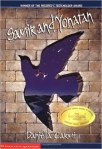
Samir and Yonatan by Daniella Carmi

Standard
Samir and Yonatan by Daniella Carmi

samirandyon

I saw this book at the library and was shocked: a Palestinian pov story written by an Israeli.  I checked it out, braced myself, and got ready to rage.  Except it isn’t blatant, and I can’t just chop it up to obvious hate, but that isn’t to say that the 183 page middle school book should be shared and deemed harmless: it subtly minimizes the occupation of an entire people, it in many ways glosses over the apartheid taking place.  It gives the inequity lip service, and I’m sure many western non Muslim, non Palestinian readers will find the book balanced, but I never could quite shake the looming shadow throughout, of trivializing the oppressive regime that is Israel.  I don’t know if the undermining is intentional, and I couldn’t find anything with a Google search to see how the book was received by Israelis in 1994 when it was published (it was translated in 2000), but either way it provides a great example as to why OWN voice books are so much more powerful.  This is not the oppressors’ story to tell.  I’m not saying the author isn’t sympathetic to the Palestinian struggles or that she actively supports encroachment of Palestinian homes, I honestly don’t know her stance.  I do know that the lived experiences of Palestinians though, is best left to be told by people that live it, have lived it, and those that feel loss because of it.  It is not a narrative to be told by the force that is causing the pain.  My biggest worry is that readers will take away from the story that the situation isn’t that bad, that Israelis are taking care of this poor injured Palestinian boy out of the goodness of their hearts so they must be nice, and at the end of the day the two sides are just two opposing forces, but the people once they get to know each other, bond over the fact that they pee the same and can be friends.  It waters down that it is, and was, major international powers backing the Israelis and that it is not, nor has it ever been, a simple disagreement between two equal sides. No I don’t expect every book about the region to detail the specifics, but don’t tell me that killing of children, a life of checkpoints, curfews, and fear can all disappear over a few months when the “enemy” provides medical care, regular meals, and arts and craft times. I’m not Palestinian and I can see the short-sided reality of that real quick.  It leaves young impressionable readers with a very skewed view, no matter how diplomatic the author attempts to be on the surface.  And I cannot support it.

SYNOPSIS:

Palestinian boy Samir injures his leg in a bicycle accident, quite seriously, and his mother who cleans for an Israeli lawyer is able to get him a special permit to be taken to the Jew’s hospital to be cared for by a visiting American surgeon.  He speaks broken Hebrew, but understands quite a bit as he has worked in a Jewish grocery store in the past.  When he gets to the hospital, he is placed in a room with other children to wait.  He stays there for weeks until the doctor can arrive and then even after the procedure he stays for physical therapy for weeks before he can return home.

While he is there, he gets to observe and know, in some ways, the other patients.  Yonatan is always buried in a book, but at night, when the other kids go to sleep he talks to Samir and plots with him a trip to Mars.  Yonatan’s mom lives in American, he lives with his dad who is an astronomy professor.  He also ethically is a vegetarian and saves his kabobs and chicken from his meals to give to Samir.  There is a girl that was hit by her father and refuses to see him, and one that is like a princess that doesn’t like to eat.  Tzahi wears a colostomy bag and is always jumping around and causing trouble.  His brother is a paratrooper in the Israeli army and he hates Palestinians.  It is hard for Samir when the brother comes to visit, the fear is real.

Samir’s younger brother Fadi was recently killed by Israeli soldiers and the memory, horror, and anguish is still very fresh for Samir and his entire family.

WHY I LIKE IT:

At first I really couldn’t articulate the saccharin taste the book was causing to form in my mouth as I read.  The curfews, and check points and loss of Fadi was being discussed and contrasted to the luxury of the Israeli hospital, and then it began to occur to me that, it was almost worse than just being blatantly hateful.  The placating and sugar coating slowly diminishes the horrors of reality.  At the beginning Samir doesn’t want to go to the hospital, he would rather have a limp, but the narrative slowly becomes about the kids in the hospital also have stressing and hard lives, and that seems sweet, except, their issues while specific, are universal.  Samir’s leg is as well, but the oppression of his people is systemic and helping him doesn’t erase that the same people running the hospital killed his brother, dictate his reality, and his future opportunities.  It is not enough for the “anti Palestinian child” to have a surgery that corrects his ability to urinate and at the very end, they pee in to the planters.  It might work on the surface, but it trivializes too much. If Samir would have gotten to tell them about his life and his pains, and his experiences, and they would have accepted them as valid, maybe I could see bridges being built, but bonding over basic human functions, and celebrating that an Israeli boy finally talks to a Palestinian, isn’t compassion, it is arrogance.

The only real positive takeaway I had of the book was that even in the tiniest human kindnesses Yonatan showed Samir it was something for Samir to contrast with his life long friendship with Adnan.  That growth of realizing what makes a good friend was more humanizing and affectionate than any other storyline in the book.

FLAGS:

Murder, fear, harassment, oppression, bullying, teasing, violence, gun violence, abuse, talk of urinating, showering in front of others.

TOOLS FOR LEADING THE DISCUSSION:

No way, I will never have Palestinian children read about their life experiences from an Israeli person speaking through a Palestinian character.

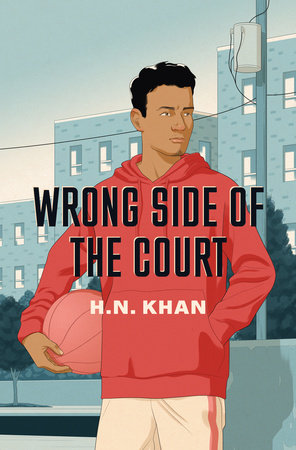
Wrong Side of the Court by H.N. Khan

Standard
Wrong Side of the Court by H.N. Khan

court

I don’t know what it is about male protagonist sports novels, but they often seem to be overly crass and crude.  Perhaps that is the real life environment that inspires such writings, or perhaps it is just male voiced YA books, but in this one in particular it seemed to stand out because the storytelling by-and-large is really enjoyable, it just has a lot of flags, A LOT.  Beside the language, sexual innuendos, drug use, violence and romance, it also has a few religious and cultural concerns that are possibly just specific to the niche that I review for, but did have me shaking my head out of confusion and sighing in disappointment. To its credit there is a decent amount of Islam featured, some male friendships that are quite heartwarming, and some emotional depth that presents really well.  The 312 page book is marketed to readers 12 and up, but there is no way I would encourage the book for anyone that young, Muslim or not.  For Muslim youth specifically I would say 17 plus.

SYNOPSIS:

The book is told from the perspective of fifteen year old Fawad who lives in Regent Park with his mom and sister.  He dreams of being the first Pakistani NBA player and the linear story bounces in time at the start and he sometimes even speaks to the reader, but the story is all his.  Regent park is a poor part of town pressed right up against a wealthy part of Toronto and the neighborhood is rough.  Fawad is a good kid: he doesn’t go out much after dark since his father died, he helps his mom, doesn’t run with a gang, he gets good grades, loves basketball, and doesn’t have a girlfriend, not yet anyway.  The story starts with him reliving the final minutes of a summer league basketball game where he opted to pass out of fear of the ever looming threat of Omar, rather than take the shot himself.  Omar ends up missing and they lose, oh yeah and Omar is the imam’s son.  Under the protection of Abshir, Fawad’s friend Yousuf’s older brother: Omar, Yousuf, and Arif have someone looking out for them on the streets.  Arif has some help from the Bengali crew, and Yousuf is Somali, but there are not enough Pakistani’s to make a stand or demand respect when out and about.  When Abshir gets murdered, Yousuf retreats into himself his music and smoking joints, Arif keeps his playboy ways to take his mind off things when he isn’t reciting Quran beautifully in classes at the masjid, and Fawad makes the high school basketball team and finds a girlfriend. Things with Omar physically escalate as well, while things at home have his mom putting in to action plans for Fawad to marry his cousin in Pakistan.

WHY I LIKE IT:

I really like that Islam and culture are presented powerfully with OWN voice strength and detail.  Things are not defined or over explained and if you don’t know what haram or Ramadan or an imam are, figure it out.  I rarely find myself wishing the ending of books were different.  You hear a lot about that in movies, that they didn’t screen well or something, and so the ending was changed, and that is how I feel about this book.  *SPOILERS* Fawad and Omar should not have resolved their issues so easily, it was more than a respect thing, there was blood and hospitalizations.  We never even knew why they had issues in the first place. Arif and Nermin should not have hooked up. The whole book she comes across as the strong Muslim hijabi that blurs the lines by side hugging her guy friends, but not being ok with it, then she shows up to a dance, and then hooks up with Arif, didn’t like that at all.  I get the mixed signals of Fawad having a girlfriend from his mom, and while he seems to be connected to the mosque it never shares that he understands Islam more than just I have to do this and I can’t do this, but I didn’t like him going back to Ashley and wanted him to choose his own self-worth and respect over accepting her apology and going back to her.  I do not understand why Fawad waited so long to tell his mother about Nusrat. It was nothing that would upset his mom, I don’t get why he dragged it out.  I do love that the cousins were friends or friendly, but were fronting to their parents, but it was unnecessarily dragged out, and the more it got dragged out, the more complicated and intertwined it got with Fawad having a girlfriend.

I did not get the mom and sister relationship at all.  The mom seems to have just given up on her, but they seem to spend a lot of time together, so that was a disconnect for me.  At first I kind of liked the twist on the stereotype that the boy was not allowed freedoms to go out, but the sister was, but it kind of unraveled in the logic department.  I am desi, (half anyway) and the stereotype is that the boys are earning before they get married.  So to be arranging Fawad’s wedding at age 15 is bonkers.  To be arranging anybody’s wedding at that age is, but it is so contrary to custom, that I couldn’t even ignore it and move on, it was constantly blocking the story from being smooth.  The mom’s rationale is that she wants a daughter-in-law to take care of her.  Again kind of bogus, but maybe there is some truth there, unfortunately there is the big gaping hole that she, the mom, doesn’t take care of her in-laws, so why the difference of expectation.  Suffice it to say the mom and sister are both road bumps in the story for me.

I was impressed at how much basketball play-by-play was in the book and how it didn’t get boring.  I love that there were plenty of male role models in the community and that the three boys really looked out for each other, supported each other, were connected to each other’s families, etc..  I didn’t like the abusive religious imam trope.  I’m glad that Omar’s dad wasn’t blind to his son, but to be abusive was uncalled for.

I don’t know why Nermin is called, “Arabic,” at one point, that is clearly erroneous and I wish that the condom talk and sexual innuendos were greatly reduced.  There isn’t a lot of resolution regarding who killed Abshir, if Fawad caused any permanent damage by playing, or what the future holds for any of the characters and their relationships, but it was a quick read and held my intention and I did quite enjoy the writing.

FLAGS:
Lying, violence, murder, physical assault, kissing, making out, talk of arousal, talk of condoms and sex and getting physical.  Drugs and alcohol and addiction.  Child abuse, theft, stealing, threats.

TOOLS FOR LEADING THE DISCUSSION:

There is no way I could teach this to middle school or high school in an Islamic school.

Good Intentions by Kasim Ali

Standard
Good Intentions by Kasim Ali

good intentions

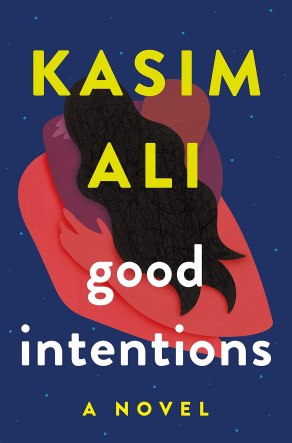
There is a reason that I read juvenile fiction: from board books to YA, but lately the “New Adult” category has really been tempting me.  Muslamic romance novels, often really need the protagonist to be looking to get married to make the plot work with some authenticity,  which means the main character usually needs to be a bit older than in their teens.  I decided to start my tiptoeing into the genre with this book, because I was intrigued at the racial and mental health themes that the blurb teased.  Sadly after reading the 288 page story, I still was waiting for more racial and mental health insight or enlightenment or perspective or deeper appreciation or anything really.  I kept reading hoping for more character growth, and to find out if the relationship worked.  I understand after finishing, that the book was intentionally more subtle and nuanced, and part of me appreciates it, but I still felt the book ultimately provided too little in either regard for me to feel satisfied or content that I had spent time with the characters.  The abruptness and harshness of the first few chapters, seemed disjointed from the dialogue filled introspective remainder of the book that showed so much potential, but left me feeling strung along for no real purpose.  The book covers mature themes of sexuality, drug use, racism, co-habitation, relationships, culture, mental health, and more.  The characters’ identify as Muslim, but aside from Eid prayers, iftar, and mentioning once that they should pray more, there is nothing religious practiced, mentioned, or contained in the story.

SYNOPSIS:

Told in a variety of timelines that all follow the relationship of Nur and Yasmina, the story begins with Nur finally after four years getting up the nerve to tell his desi parents that he has a Black girlfriend, and wants to marry her.  He leaves out that they have been living together for years, and the book then flips back to how they met and bounces around filling in the gaps that bring them back to the big reveal.

While in college, Nur had just broken up with Saara, but still goes to her fairly regular house parties.  At one such party he meets Yasmina, as a small group at the party sneak off to smoke pot, and he is immediately crushing.  His hungover broken-hearted gay friend Imran calls him out on it immediately, and his roommate Rahat chastises him for going to his ex’s parties.  Nearly all the main characters are met early on, and the rest of the book focuses on Nur and Yasmina growing closer through college, after school, through their early years of jobs and grad school, and the overshadowing of the fact that Nur has yet to tell his family about Yasmina, while Yasmina’s family is fully aware and fully supportive that they are living together.

All the characters are Muslim, but practice is pretty minimally detailed.  Yasmina tells Nur at their first meeting that she wishes she prayed more, and later it is mentioned that her parents were raised strict so they have raised their own children less so.  It is possible that Nur’s mom wears a scarf, but not clear either way, and they don’t seem to be bothered that she is living with her boyfriend.  Nur on one of his visits home goes for Eid prayers with his father, his mother and sister do not go, and it mentions that they are fasting.  Rahat does not find dating is for him, and wants to have a traditional arranged marriage, but it does not disclose if this is because of religious or cultural views.  Imran discusses his family praying and that he had to square away his sexuality with Allah swt more or less.

Nur and Yasmina’s younger sister have mental health afflictions.  Nur has anxiety attacks, and Hawa severe depression.  It does not label or identify or diagnose, this is my assumption, it does detail their experiences though, and how they affect those around them.

WHY I LIKE IT:

I actually enjoyed the writing style and the ease in which it flowed-save the beginning of the book. The beginning was a little crass, almost like the author was trying too hard to get the characters’ environment to read that they were in college.  The crude talking about sex and them talking about their parents’ intimacy and smoking and drinking and being vulgar, was in such contrast to the very subtle nuanced rest of the book that tried to show the layers of Nur and Yasmina’s relationships and lives.  Once I got through it, I genuinely wanted to know if they could make the relationship work.  No I’m not going to spoil it, but that really is why I kept reading.

I was disappointed that the book didn’t draw mental health out in the open.   I also wanted some religious based push back on racism.  It is a big thing in our communities and the book really could have had the characters argue it and make their points, right or wrong, for the disconnect between faith and culture.  It didn’t have to be preachy, or even mean that anyone changed their opinions, but it mentions numerous times, something to the effect of Nur’s parents being racist, but doesn’t detail why that is the suffocating presence in disclosing his relationship.  In four years I would imagine the opportunity to correct his parents way of thinking would have arisen, and he could have challenged it.  I get that might negate Yasmina’s point that Nur is racist, but I think it should have been made more clear then that he didn’t speak up when opportunities presented, otherwise it just seems unexplored and we, the reader, are expected to just accept the characters on face value, when the book really very easily could have nudged us, to self reflect and look inward.

FLAGS:

There is sex, and drugs, and lying, and racism, and all the other flags that adult books often have.  There is one “steamy scene” between Nur and Yasmina, but the rest of the relationship is very mild.  Nothing else is graphic in detailing their day-to-day living, or the day-to-day relationships of the other characters in the book: gay or straight.

TOOLS FOR LEADING THE DISCUSSION:

No. Would never, could never encourage unmarried Muslims living together, fictionally or otherwise.

Hakim’s Odyssey: Book 2: From Turkey to Greece by Fabien Toulme’

Standard
Hakim’s Odyssey: Book 2: From Turkey to Greece by Fabien Toulme’

hakimcover

It is easy to assume that refugee stories are all the same, but in my experience, the more I read about the journeys people take in desperation for safety, the more I realize it doesn’t matter if “parts” are similar, the individual experience should never be dismissed or become commonplace.  I try to make a point to read them, and spend time with them, and be affected by them, so as to not grow apathetic.  I have not read the first book in this series, but this book, the second book can stand alone, and I hope that you will keep an eye out for it when it is published, and spend time with Hakim and his son Hadi.  In much of the way the middle grade novel When Stars are Scattered, swept me up and consumed me, this book also enveloped me in the characters’ emotions and left me sobbing and heartbroken more than once.  The framing of the story, gratefully shows that Hakim survives, but the power of the words, illustrations, and experience, still physically move you and make you imagine how truly horrific situations must be that force people to risk it all to leave their homes and start over.  This 264 page book focuses on the part of his story that takes Hakim from Turkey to Greece, but references to Syria and his life there allow for a fleshed out understanding and appreciation for the trials he has faced, and continues to face, subhahAllah.  Suitable for mature teens, at least 16  or 17 and up.

SYNOPSIS:

The book starts out with the author/illustrator heading off with his daughter to interview Hakim.  His young daughter has heard a lot about Hakim and his family, but never met them.  They “recap” the first part of his journey, the first book, and settle in to hear more of his life and the extraordinary circumstances that he has faced to reunite with his family since fleeing the war in Syria.

The birth of his son Hadi is a definite high point in Hakim’s life and the daily struggle of selling enough goods on the streets of Turkey to provide for his son keep Hakim looking forward.  With his wife, Najmeh, and her family around them, they crave stability, but are managing.  As the days stretch on though, Hakim is prevented from selling without the proper permissions, and his father-in-law is still unable to find work. Hakim’s wife and family are granted permission to relocate, but Hakim and Hadi cannot legally join them.  The tearing apart of the family is devastating.  And carrying for his young son alone while trying to earn enough to survive is incredibly challenging.  When Hakim has exhausted all the legal ways to join his family in France, he considers illegal methods.

An Iraqi neighbor offers him the money needed to hire smugglers, so Hakim is faced with deciding what risks he and his young son are willing to take to “start living.”  The step in to the unknown, the crossing of the sea in an inflatable life raft, brings them closer, but with one more book in the series, and not knowing who the children are in the present time scenes, your heart will be made incredibly fragile as you hope that young Hadi survives.

WHY I LIKE IT:

I love that you get to know the characters and can see why they make the decisions they make, or rather why the choose to do what they choose based on the information they have, and the impossible choices before them.  I also love that it shows so much humanity.  You see Hakim’s story brought to life and you see him and his family as whole people, not just numbers or nameless, faceless victims.  You see the joy and devastation, the testament to human strength and mental anguish, it is moving and powerful.  I also love that you see the side characters, see the little mercies, and the horrific injustices, often in the same scene. The graphic novel format allows the subtleties to show without the words, it adds to the connection of emotions and truly putting yourself in the character’s shoes.

I like that it should how happenstance much of the journey was for Hakim, at times he didn’t know who to talk to, where to go, what to expect.  I was a little confused about the payment to the smugglers, and how it had to be handled after he arrived.  I don’t know if my own understanding of how shady the smugglers are based on the media is making it muddled, or if I just missed something in the telling.

There is not a lot of Islam in the book, they don’t stop and make salat or say Bismillah, but they reference thanking Allah swt, and praying to Allah in desperation.  Hakim’s mother in law and wife wear hijab.

FLAGS:

Fear, smoking, cheating, lying, illegal immigration acts.  There is nothing obscene, the older audience recommendation is because of the weight of the subject matter, and the lingering effects of war and escaping.

TOOLS FOR LEADING THE DISCUSSION:

This would be an amazing high school book club read.  The characters, the relatability, the empathy, it would be great to share it with a group of students that might have similar experiences and provide them with a platform to share with those that might not.

My World of Hamd: A Reflective Book on Gratitude by Lateefah Binuyo

Standard
My World of Hamd: A Reflective Book on Gratitude by Lateefah Binuyo

hamd

This thick hardback 46 page book is a great next step after teaching your kids to say “Alhamdulillah” to helping them to understand what it truly means.  Meant for second graders and up, this book is text heavy and encourages deeper thought, reflection, and practice.  It is not a quick read, and some children may struggle to sit through the entire book, but any time spent, I think, will be incredibly beneficial as it strives to move from the habit of just saying “Alhamdulillah” to being intentional in our appreciation and gratitude.  The thick inside pages, warm large illustrations, and colorful reflections are well done and enjoyable.  I only wish the cover better conveyed the content within.

img_6093

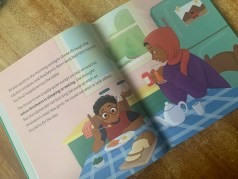
The book begins with ayat 18 from Surah Nahl stating: “If you tried to count Allah’s blessings, you would never be able to number them.  Indeed, Allah is All-Forgiving, Most Merciful. With the tone set, the fictionalized story begins with Ibraheem and his mum having breakfast.

img_6090

Ibraheem is a curious boy that is only ever quiet when he is sleeping or eating.  When his mum reminds him to say Alhamdulillah after he finishes eating, he gets to wondering, “What does Alhamdulillah mean?”

img_6092

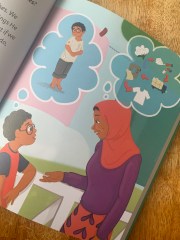
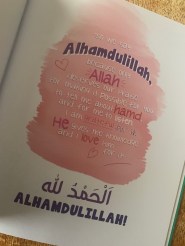
Mum explains that the hamd in Alhamdulillah means praise and gratitude, and it is for Allah swt alone.  Ibraheem then wants to know how can he feel “hamd all the time?”  He and his mum discuss that hamd has to be felt within the heart, and it isn’t just saying it after a meal, but appreciation that you have food to eat.  Appreciation when you wake up in the morning, because many do not, etc.  The two discuss small and large aspects in a day that provide opportunities to truly appreciate the gifts of Allah swt.

img_6094

The book covers topics such as: sneezing and appreciating your muscles, getting dressed and recognizing the blessing of clothing, awards at school, losing your backpack, happy times and sad times too.  Along the way mum passes on information about how when we are grateful Allah swt gives us more, about how even in sad times we have so much to learn about patience and asking Allah for help, that we can fill our days with hamd.

img_6095

The book touches on never feeling sad in Jannah, Allah’s name Al-Hameed, and explaining how we have to still thank people and show appreciation to them because Allah sends his blessings through people as well.

The book concludes with teaching duas about hamd one word at a time, a glossary, and tips for using the book.  There are a lot of hadith and ayats explained on a child’s level and overall really answers and provides insights about saying Alhamdulillah and feeling Hamd.

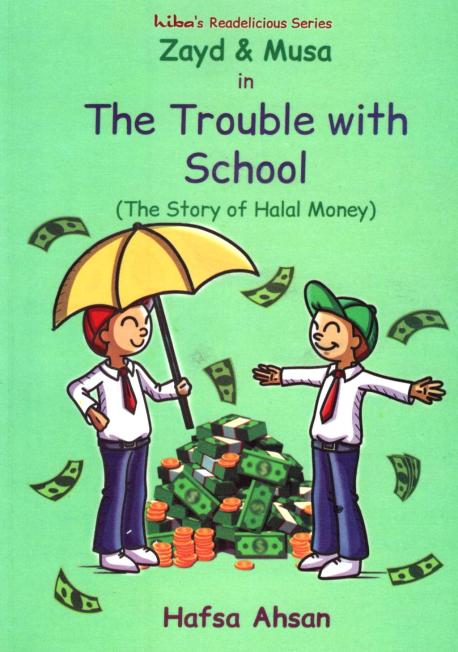
Zayd & Musa in The Trouble with School (The Story of Halal Money) by Hafsa Ahsan illustrated by Yusra bint Absar Kazmi and Urooj Khan

Standard
Zayd & Musa in The Trouble with School (The Story of Halal Money) by Hafsa Ahsan illustrated by Yusra bint Absar Kazmi and Urooj Khan

money

This delightful 70 page early chapter book is filled with humor, Islam, and a sweet story that ties it all together.  The book definitely has a teaching agenda, but it carries it with hilarious banter and relatable examples, all while covering a topic not often discussed in children’s books: money.  The book has a few grammar, vocabulary, and consistency concerns, but they are easy to overlook for readers 2nd grade and up.

SYNOPSIS:

Twins Zayd and Musa are very, very different.  Both boys enjoy cricket, but Zayd is more focused and enjoys homework, whereas Musa tends to daydream and often says something funny, but unintentionally.  When Musa makes the case in Science class that food, water, shelter, and money are all needed to survive, the class finds him hysterical.

Musa knows not to argue, his teacher is his elder and he knows he should have taqwa and be respectful, but he doesn’t give up on his idea either.  When the boys’ mom talks about halal money and gives them Islamic references for how money should be handled, Musa has a great idea: kids should be paid to go to school.

Once again, the whole school finds him funny, but Saeed Uncle, a neighbor who helps feed the poor at a roadside stand, doesn’t dismiss Musa’s idea and tells him, in some places kids are paid. And offers to take him and show him.

With references to sahabas who had great wealth and examples of how wealth can be used for good, Musa and Zayd learn numerous lessons, and share them with those around them, in a fun, engaging manner.

WHY I LIKE IT:

I get that the book is preachy, but in my mind, it is a story built around a teaching concept, so it doesn’t bother me.  I love the jokes and the tone.  At times the book is written quite formally, but being the author lives in Karachi, Pakistan, I assume that part of it, is just different standards.  I appreciate the Quran Circle table that lists where the Quran mentions wealth and the glossary.  I didn’t quite get all of the random facts included throughout, as some were about money, others about school, but I think kids will enjoy them none-the-less.  The illustrations are enjoyable, the text bubbles often hilarious (once again, a few I didn’t get).

I liked that it mentioned not drawing faces, and not going somewhere alone with someone you aren’t close with.  It is said in passing, but I love that those little nuggets exist in a book that is about something more, but normalizes and takes advantage of the opportunity to remind children of basic safety and Islamic concepts.

There are some awkward tense changes, and a few gaps in the story, but overall, I really enjoyed it and need to find the first one in the series.

FLAGS:

None

TOOLS TO LEAD THE DISCUSSION:
This would be a great book to use in a middle grades Islam class as a starting point to having students research the Quran and Sunnah to find information on a topic.  The humor will keep kids engaged, and the concept is an important one.  I plan to make all my kids read it, so that we can discuss as a family, and benefit from the lessons presented.

Nour’s Secret Library by Wafa’ Tarnowska illustrated by Vali Mintzi

Standard
Nour’s Secret Library by Wafa’ Tarnowska illustrated by Vali Mintzi

library

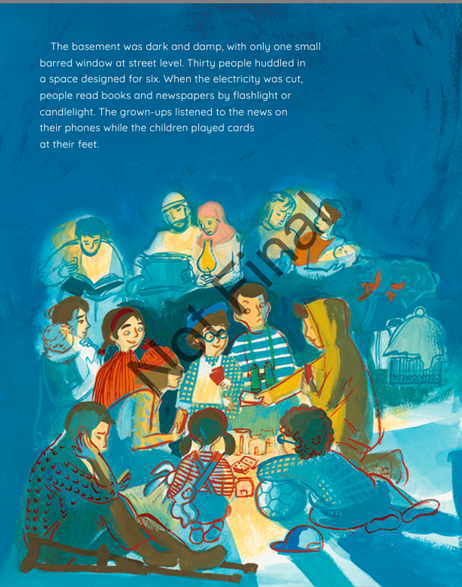
Set in Daraya, and based on a real events in Syria, as well as the author’s own life in Lebanon, this 32 page elementary and up story does an amazing job of showing relatable childhood adventures and ingenuity shining through even in the most horrific of environments.  The book is inspiring and warm, but the backdrop of war is very much present.  Some young children may be bothered by the images and text, while others will benefit from understanding the humanity that is affected by such violence.  I know the book says the pages are not final, but I wanted to put it out to help drum up interest.  I feel this story would best work in intimate settings where discussion, compassion, and gratitude can all intuitively transpire.

library1

Nour’s best friend is her cousin Amir, they love to read and imagine adventure and secret societies.  As their dream to create a secret club, complete with a secret password and handshake, for them and their friends starts to come to fruition, war arrives first. 

Families are forced to seek shelter away from the bullets at night in their basements, and only are allowed to venture out when absolutely necessary.  Every time Amir goes out, he collects any books he finds, and encourages his friends to do the same.  

library2

They begin sorting the books, and trying to decide what to do with them, when Nour has an idea to create a secret library.  Everyone pitches in when an empty, half destroyed basement is located, and the books are moved and set up on discarded planks of wood.  A boy next door is entrusted with the secret handshake and becomes the deputy librarian.
As word spreads, everyone from boys and girls to soldiers and rescuers, collect books to stock the shelves and checkout books to keep their minds busy.  The library, named Fajr, is open every day from morning to evening and closed during Jummah.  It becomes the city’s best kept secret and a source of hope for the community.

library3

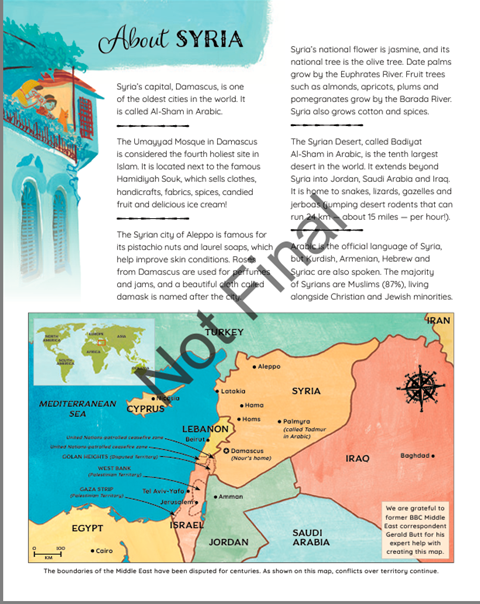
There are references at the back that tell about the true story of the Secret Library in Syria, the author’s memories of hiding in the basement in Lebanon, a glossary of terms, information about Syria, the illustrator’s research, information about the war, and famous libraries in the Middle East.

library4

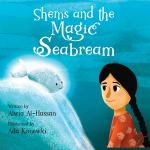
Shems and the Magic Seabream by Alwia Al-Hassan illustrated by Ada Konewki

Standard
Shems and the Magic Seabream by Alwia Al-Hassan illustrated by Ada Konewki

seabream

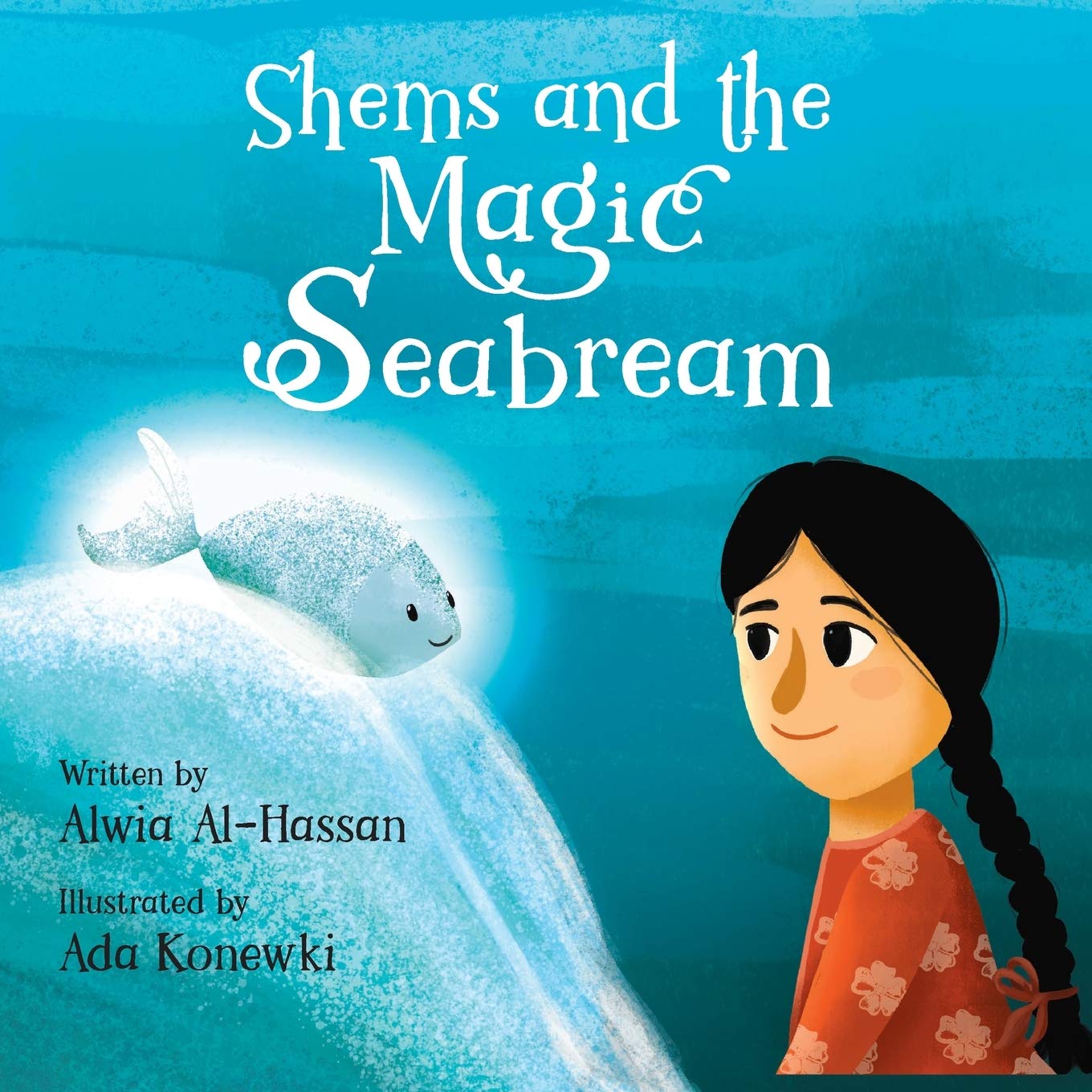
I don’t know how to review this book, I truly don’t, it claims to be based on Saudi folklore, it has #muslimsintheillustrations, and references Allah swt once, it is by a Muslim author, but it isn’t religious. And it definitely isn’t for everyone. It is terrible, and yet you can’t look away. Every stereotype about appearance and trope about step-mothers, it is all there, but EVIL CACKLE, the book is delicious, and not in the cooking the children and eating them sort of way, that is in the book too, but in the laugh-out-loud, gasp in disbelief, and be shocked at the complete disregard for political correctness, moral messaging, and lesson teaching that leaves a brightly illustrated dark tale for kids, and adults, to thoroughly enjoy. It pulls you in, it suspends reality, it makes good and bad so black and white that you accept the attempts at murder as justified, and it ultimately reminds you of the horrors that all fairytales build upon to entertain. I remember the first time as an adult I was asked to read Hansel and Gretel to a young niece. I knew the story, and started not thinking much of it, and then I froze: children are lost, they seek shelter in a home where they are not allowed to leave, the owner of the home wants to cook them and eat them. Yeah, this book is like that.

img_5299

Shems and her twin sister Shareefa live in a small town with their fisherman father. They are poor, but happy, until their father remarries and the stepmother is horrid. She is ugly and fat and covered in greasy spots, negative connotations that reflect her personality. (FLAGS: superficial judgement and body shaming). She hates children. (FLAG: Yes it uses the word hate, and calls children fat while contrasting them with cute children).

img_5300

She especially hates Shems and Shareefa. She tries to get rid of them: she puts them in the oven, abandons them in a field, tries to drown them in the night. But the girls somehow always escape and their father believes that it was all a misunderstanding. (FLAG: attempted murder).

img_5301

Now that the girls are older, they are forced to serve Mama Ouda, and when food runs low, she considers eating them. (FLAGS: abuse and threats). Luckily they are much too thin. One day when Mama Ouda is craving fish, Shems heads out to catch some seabream, yes that is a real type of fish. And the only one she catches is a magical one. (FLAG: magic).

img_5302

The next day Shems dressed as Shareefa recalls the fish’s promise near the water, and a basket of fish appears with pieces of sparkling gold. The girls eat like queens, hide the gold, and keep Mama Ouda fed. This carries on until they get caught and a murder and mermaid and moving out of their mud hut conclude the story and set up a potential sequel.

img_5298

The dad is pretty clueless and that has its own negative assumptions to counter, but if you and your kids can handle the over the top darkness, the story written in playful rhymes is sure to entertain and be asked for repeatedly. (FLAGS: stereotypes about fathers and stepmothers).

Huda F Are You? by Huda Fahmy

Standard
Huda F Are You? by Huda Fahmy

huda f

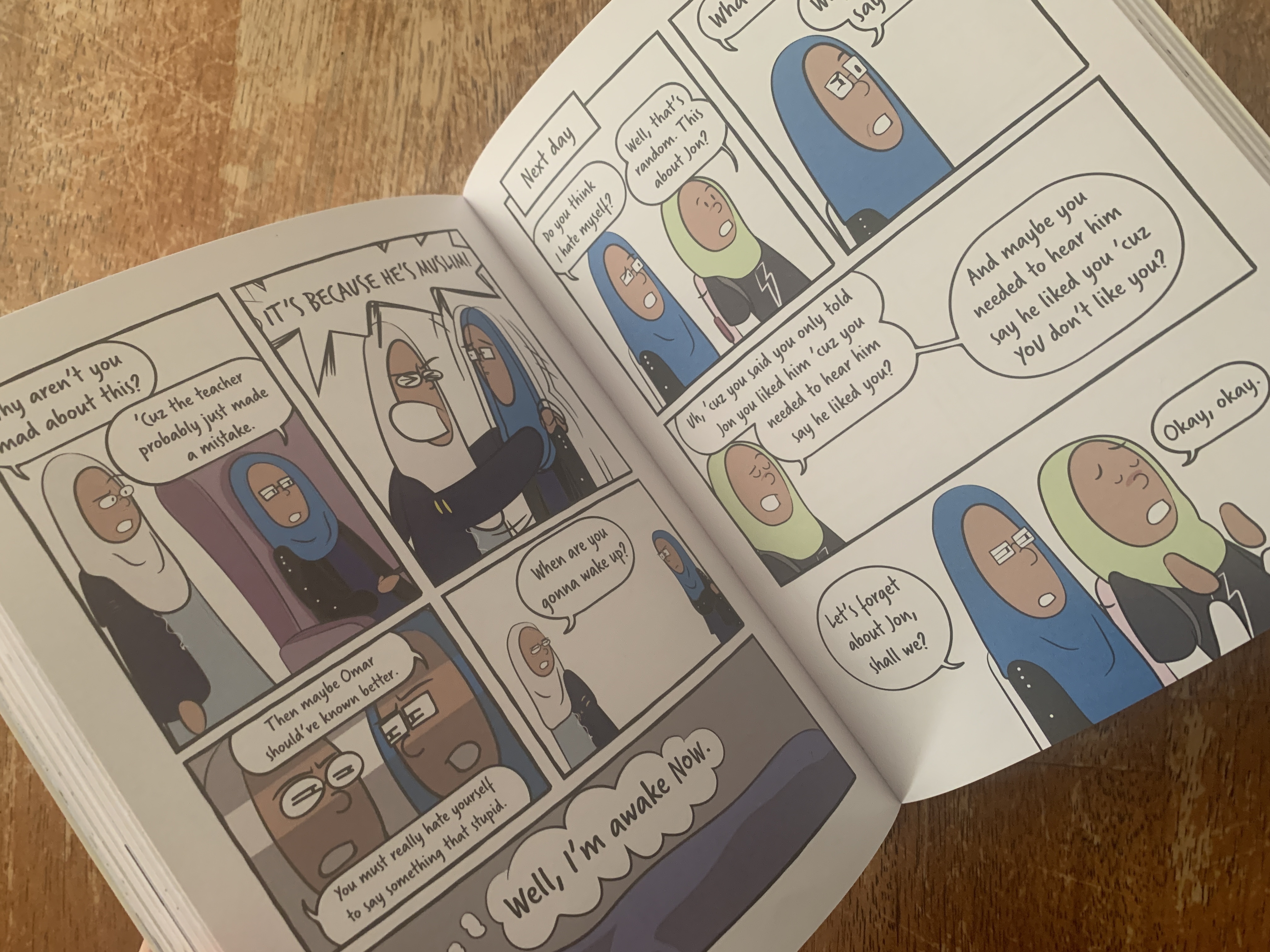
I think everyone has heard about this book by now and how fabulously fun, real, and relevant Huda’s life  is for so many.  I am happy to jump on the praising bandwagon, as this teen/YA 192 page graphic novel really is a great OWN voice unapologetically Islamic mainstream tale.  It does mention periods, relationships, hate crimes, and finding yourself, so probably 14 or 15 year olds and up.  My middle school boys read it, so it isn’t that it is inappropriate, just the target audience is more teen girl.  I know a lot of people, including Huda’s mom according to the inscription, have issues with the title, but I think it is brilliant.  She takes ownership of her name and it isn’t just for shock value, the book is about figuring out who you are, how you feel about Islam, establishing your friend circle, and growing and learning along the way.  My public library has it, as do major outlets, so what are you waiting for, go read, laugh, and feel seen.

img_5036

SYNOPSIS:

Huda has just moved to a new school and she is no longer the only hijabi.  She has moved to Dearborn, Michigan and there are A LOT of Muslims.  She is no longer defined by the cloth on her head, she has to figure out who she is.  Who she really is.  And sometimes the best way to do that, is to figure out who you are not.  

Huda tries different clubs, and different circles of friends, both at school and at the masjid.  Along the way she learns how much she craves approval and who is always in her corner.  When a kid at school is targeted for being Muslim, Huda will have to see how much internal hate she carries as well.  Her clothes change, her outlook changes, she tries new things, and she grows, all while the laughs help the story bounce from one serious topic to the next without coming across as arrogant or stereotypical.  This is Huda’s story and we are just along for the ride.

img_5035

WHY I LIKE IT:

I love that there is nothing to critique, it reads autobiographical even if parts are exaggerated or only based loosely in reality.  By being so real, and so well done, you are excited when you see yourself staring back, but you feel like you’re a friend learning about Huda even when you can’t relate exactly. Her comics online and her previous two books are all amazing, and I love that she is continually creating new material for us all to enjoy and benefit from.

img_5037

FLAGS:

She tells a boy she likes him that she doesn’t really like.  Periods are referenced and blood and a pad are shown, not graphic and gross, but the sentiment is there.  Discrimination is present, as is Islamophobia and stereotypes.

TOOLS FOR LEADING THE DISCUSSION:

Just keep the book out and around: it will be picked up, read, and mentioned, no tools needed.