Tag Archives: New York City

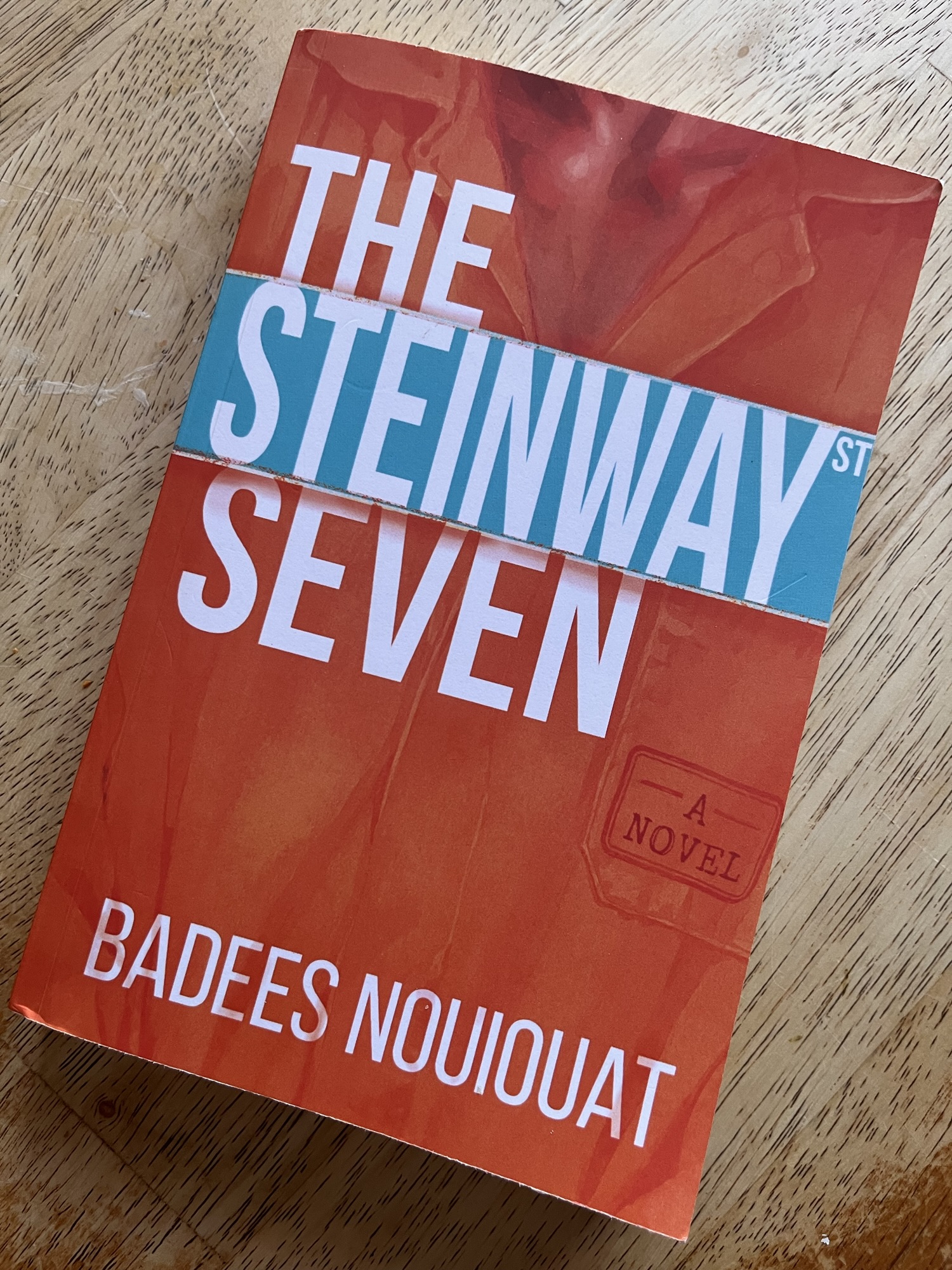
The Steinway Seven: A Novel by Badees Nouiouat

Standard
The Steinway Seven: A Novel by Badees Nouiouat

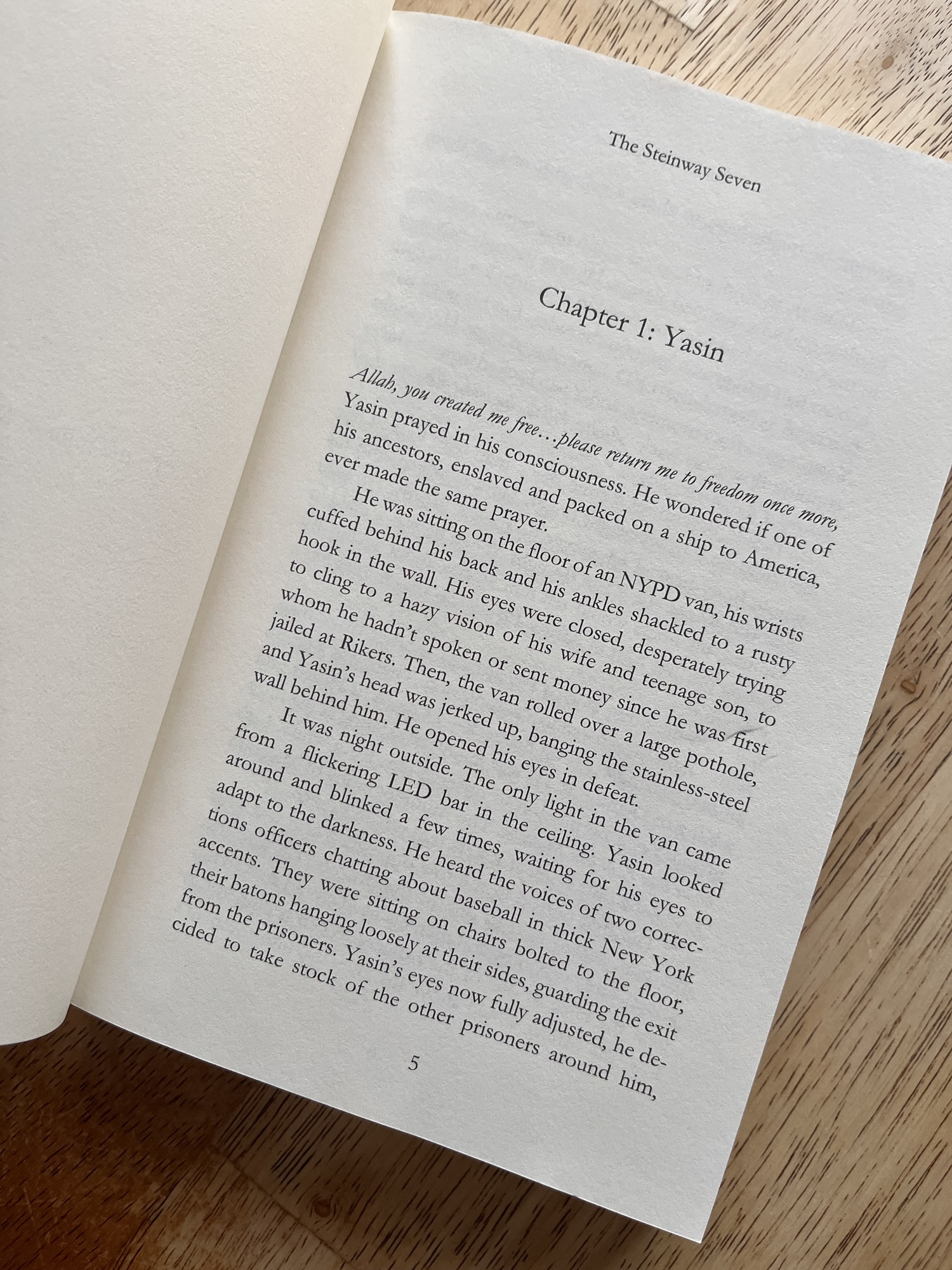
This 308 page book is classified as a YA read for content, but it plays out in dual points of view by adults.  Years ago I would have classified it as, “Islamic fiction,” but those lines have been blurred in recent years, and the author mercifully doesn’t get overly preachy or didactic with the ample Islamic references and framing- it is who the characters are, or strive to be, and part of their world.  I’ll admit by the fourth chapter, I was nervous.  The author does not shy away from positioning his characters in rough spots from the get go: an escaped convict and non practicing young Muslim man joining the NYPD, and I didn’t know if he would be able to keep it believable and engaging, but alhumdulillah he did, and I enjoyed the book. In very much a YA framing, the self awareness and character arcs of realization is the underlying heart for the surface story of being on the run and attempts to capture and avoid being caught.  With heavy themes of understanding and coming to peace with one’s past, the reader is shown historical turmoil in Algeria, insight into motives and struggles of undocumented immigration, and given plenty to ponder about forgiveness, laws, faith, kindness, and second chances.  This book would be an easy recommendation for all readers 14/15 or up, there is crime, drugs, racism, gun violence, killing, arson etc., but nothing is overly graphic or dwelled upon. The characters are “good,” but exist in situations where gray surrounds them and would offer a lot to discuss in classrooms or book clubs.
SUMMARY (from the back of the book):

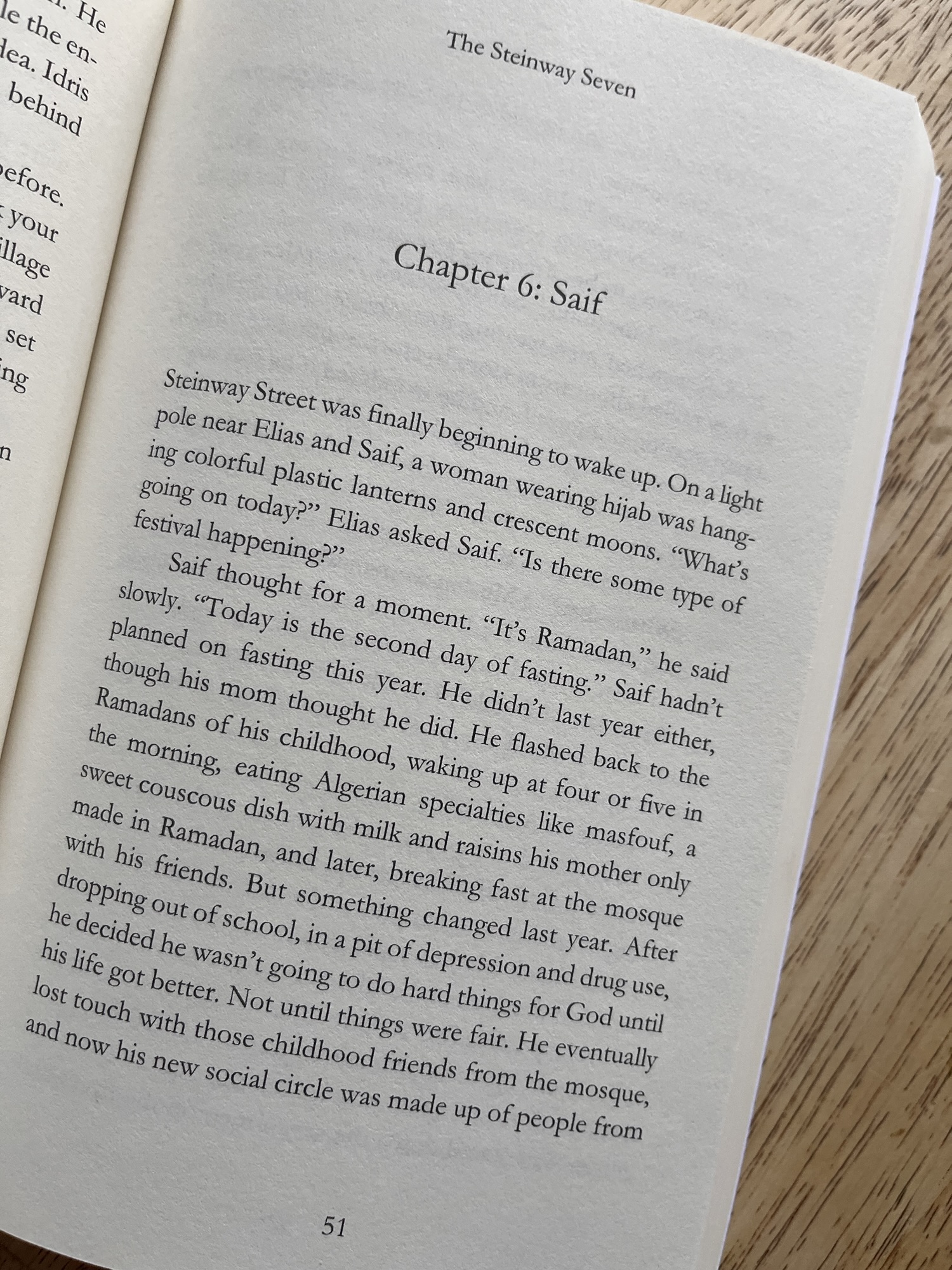
The night before 22-year old Saif Belkacem starts his new job as an NYPD officer, seven convicts escape a prison van and disappear into the streets of New York City.

Among them is Yasin Bamba, a wrongfully imprisoned Guinean immigrant who decides to seize the opportunity to find freedom.

While Saif and his colleagues race to find the seven fugitives, Saif slowly uncovers the story of his father’s death in Algeria, and his life starts to intertwine with Yasin’s in more ways than he could have imagined.
WHY I LIKE IT:
It is clear the author understands craft and storytelling, and I really think if he dug a little deeper and fleshed out some of the tension and rising action, this book could be traditionally published if he wanted to pursue it.  I’m not critiquing it to be picky for the potential readers, but rather for the author (a first for everything, forgive me if I’m overstepping), as I have a feeling he has been waiting for this review. Nonetheless here I go, voice: Saif’s voice is too immature at times, and his mother’s underdeveloped and non existent. Yasin, should be a bit wiser and hardened as a result of his circumstances and lived experience, he seems to just float from encounter to the next, not moving around like someone who has been in his own head since leaving home and mulled over some of his perceived truths.  Pacing: raise the stakes at every turn, keep the reader on the edge of their seat, for the surface story but also show the turmoil of Saif uncovering his past, at the 200 page mark it breaks from the story to info dump the historical and personal past in a way that really takes Saif out of the action. Weave it in, provide tension and motive of why his mother so easily now gives up all the information and why Saif never Googled it on his own.  The ending is beautiful and truly I wanted to know which way and what choices Yasin and Saif would make, but you didn’t really make me, the reader, work for it, and I think some twists and turns and emotional pain for the reader rather than just resolving it all for us, would give the book more depth and excitement. Show us the internal struggles, the temptation, the uncertainty raging inside them.  The heart and character arcs are there, they just feel a little too easy and surface at times, and yes I say this because I think the writing has a lot of potential and the author can do it.

TOOLS FOR LEADING THE DISCUSSION:
I would love to do this as a book club read, high school for sure, possibly middle school, depending on the kids.  There is a lot to ponder and unpack, discuss and consider.  Muslim kids particularly will have some stereotypes to grapple with and hopefully think over as the book doesn’t make the characters and their situations black and white, haram and halal.


Moonlight Hope: A Muslim American Coming of Age Story by Nora Salam

Standard
Moonlight Hope: A Muslim American Coming of Age Story by Nora Salam

moonlight hope

This 354 page New Adult read is truly Islamic fiction, and as long as you know what you are getting in to, you probably will thoroughly enjoy it.  It is Islamic centered, it is preachy, it is idyllic, it counters many stereotypes about Muslims and various cultures, while simultaneously falling into other tropes that define the genre, it has mature framing that is not suitable for younger readers, but doesn’t detail anything that is super “haram.”  If you are looking for a potentially halal romance between YA and Adult ages with Islamic messaging this book is a solid choice.  If however, you will be annoyed by any of the aforementioned labels, this book will not hold your attention or beg to be finished.  It reminds me a lot of Umm Zakiyyah’s If I Should Speak and A Voice books where the story has its own twists and character arcs but it spends a lot of time preaching and setting itself up to tout an Islamic perspective, or concept as well.  I wanted to read two books in the “New Adult” category and see if I could spread my reviews to include them, and with this being the second,  I think I should resist the temptation, and stick to what my library background familiarized me with.

SYNOPSIS:

Told in alternating voices of Intisar and Majed, two individuals in New York City, at different places in their life, but finding that when they hit rock bottom, Islam is the answer.

Intisar is graduating nursing school when the story opens and has only one goal in mind, get married.  She has strict Sudanese parents and has put all of her dreams on finding freedom in the perfect spouse.  She meets a guy at a friend’s house and they secretly date, kiss, and hold hands.  When he ghosts her, she is devastated and reluctantly finds herself agreeing to marry a much older man of her parent’s choosing.  Loosing herself in the idea of marriage, she finds herself heartbroken, ostracized and falling apart.  She starts to put herself back together slowly by finding Islam, her confidence, and some much needed perspective.

Majed has a famous family: his mother a model, his father and siblings singers, and he manages their careers.  After passing out from drugs and alcohol more than once he really starts to examine his life and the road he is on.  He sneaks away to rehab and in the process stumbles on to Islam.  He is Egyptian, but the family is not religious at all, and infact stop talking to him when he converts.  The trials of being a Muslim in New York with no family are not easy, but he feels it is worth it and his journey to Hajj and through loss brings him closer to Allah (swt).

The two stories are parallel and collide slightly in the periphery, but the book ends with them finally coming together and the ever dreaded words of “to be continued,” leaving the reader hanging.

WHY I LIKE IT:

I do like that the story shows struggles when one comes (back) to Islam, it isn’t always a walk in the park, it has challenges and stresses.  The book starts each chapter with a verse from the Quran and is very open about what it is.  So, while at times, the preachiness did get to me, it was very clear what type of book it was from the beginning and I kept reading.

Some of the side characters I felt needed to be fleshed out a bit.  I didn’t understand many of the random friends, how they affected the main character often seemed off, or completely underdeveloped in what was revealed about them: particularly Izzedine, Parita, the girl that married Mansour, the uncle at the Masjid that thought Majed was a spy, etc..  I also really struggled with the presentation of Uncle Munir and his calling Majed, baby, and how he just happened to bump in to him outside the bar, and the kisses.  I’m guessing it was meant to show him as over the top affectionate, but it just read as odd.

I like that the book addresses hypocrisy, mental health, and expectations.  It doesn’t paint all Muslims as good or bad, nor society at large.  The book reads as a journey, and many characters are given a chance to correct their errors and be seen in a new light.

The majority of the book is written well, but right away the book gave me pause as Intisar and her friends chat all through the Jummah khutbah, I get that it is trying to show her disregard for intentional practice of her faith and her “boy crazy/marriage” obsession, but you cannot speak during the khutbah, it isn’t just dirty looks, you truly cannot talk for it to count, and it isn’t even remarked upon, and it made me skeptical of the book for a while.  There is a word missing from a sentence on page 161 and at one point a brother in the prayer hall aims a shoe to throw.  But you wouldn’t be wearing shoes in the room where you pray, and the mosque has hallways and a glassed off section for women, so this seemed like an obvious oversight that should be fixed.

FLAGS:

Drugs, alcohol, lying, overdose, sneaking out, kissing, hooking up, physical affection, violence, temptation, sexual predatory behavior, it is an adult book, so I’m not going to continue listing everything. Nothing haram is overtly detailed or glorified. Ages 17 and up, could handle it.

TOOLS FOR LEADING THE DISCUSSION:
Too mature for my book club crew, but I wouldn’t mind it on a shelf in the school library.

Gokul Village and the Magic Fountain by Jeni Chapman and Bal Das illustrated by Charlene Chua

Standard
Gokul Village and the Magic Fountain by Jeni Chapman and Bal Das illustrated by Charlene Chua

gokul

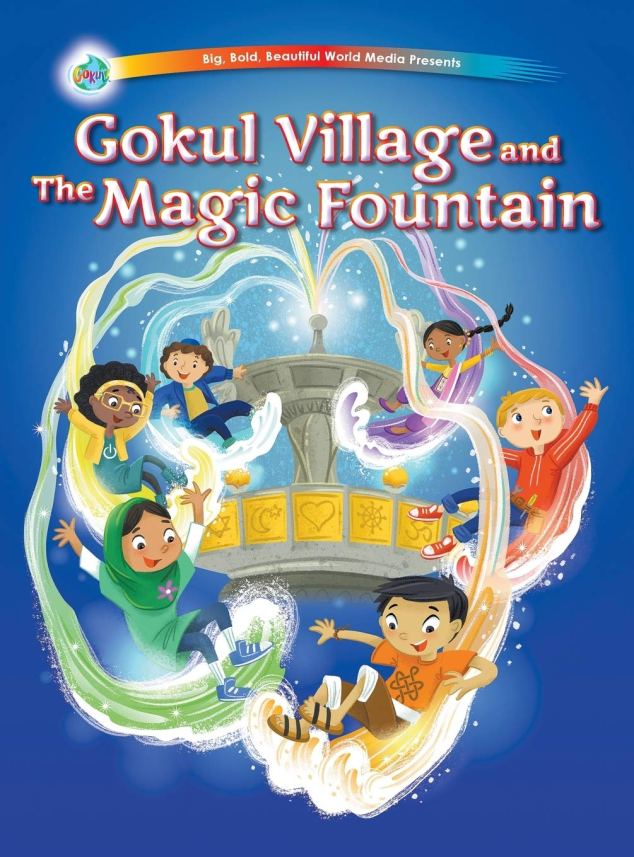
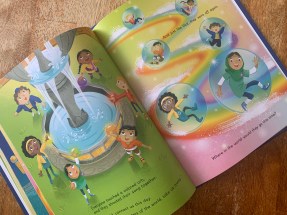
This 32 page book for preschool to second graders, 3-7, is very formulaic and reads like an episode of Handy Manny, or Dora the Explorer, or Paw Patrol.  Each of the six characters has a skill and represents a different culture, when they work together magic happens and they learn something in the process.  There is a girl with hijab and even a mayor that has to be convinced and the kids are successful and save the day.  Sure there is nothing wrong with it, but it is a bit cheesy, on the nose, and largely forgettable.  The book claims that the six kids are going to learn and celebrate other New Years festivals, as they travel to New York, China, and India for Diwali, except, nothing is really learned or even experienced at any of the festivals or the one that they are hosting in their own village.  The book is the first in a series, and I don’t plan to purchase the next one to see if it improves on showing, rather than telling, but if I could find it in a library, I would definitely read it and enjoy the bright illustrations of diverse kids.

img_2714

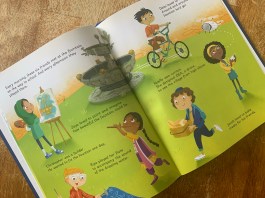
The book starts off showing a sad broken fountain that isn’t loved or used except by six kids every day who gather there to play.  Zoya to paint, Christopher to build, Riya to play her flute, Dalai to ride his bicycle, Noelle to fly her drone, and Jacob to share the treats he baked.  They like to pretend that the waters of the fountain are connected to all the water around the world and that they can go on adventures.

img_2715

When the kids learn that the New Year’s party is canceled because the fountain can’t be repaired in time the kids decide to take action.  Time-out, I know, I usually give the entire summary then highlight the holes, but the book claims no one uses the fountain, now it is in the city center and needs repairs for a party, it seemed that it was old and crumbling, but last year it was fine? And if the kids could have always fixed it, why didn’t they? Any way Riya assigns everyone jobs to fix the fountain, AND THEN they go get the mayor and let her know they are going to fix it and she agrees saying if they can get it done in time the New Year’s Celebration wouldn’t be canceled.  The order seems off to me, they start fixing it, then work it out with the mayor and then have it all fixed in two days and the mayor clears it.  The illustrations show it pretty much fixed when the mayor arrives the first time, not sure what took two more days, and how it was ok for kids to fix a fountain prior to getting permission.

img_2717

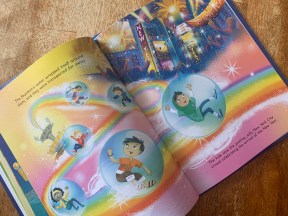
With the festival back on, the fountain looks happy and the kids suddenly have enhanced skills: notes from the flute turn in to birds, Zoya can paint in the air, Dailai’s bracelet is glowing, tools are growing and multiplying, and the drone, iDea, speaks.  She tells the children to read the inscription on the heart of the fountain.  Somehow the kids know to each touch a glowing orb and sing a song verse together.  It reminded me of Dragon Tales.

The fountain whisks the kids to New York where they see a “jostling, jolly,” crowd celebrating.  Then they are off to watch “millions of people clap and sway together, hoping for happiness and good fortune for all,” at a Chinese celebration.  That is literally all it says, it doesn’t say that Chinese New Year would be at a different time because of the lunar calendar or anything, and then they are off to celebrate Diwali, in India, which also wouldn’t be at the same time as western New Years, and all they learn about it is that it is a celebration of light over darkness.  I’d guess readers wouldn’t even realize that it often coincides with the Hindu lunar calendar’s new year celebrations.

img_2716

The kids come back, name the fountain the Friendship Fountain, use some of the decorations they saw to decorate for their own new year’s party, and then they clean up after the party.  There is no showing how their village celebrated, there are no other villagers attending or helping or participating, it just says they agreed it was “the best party ever.”

img_2718

Perhaps  I am cynical because the book is $17, but even if the book was free, it really is lacking some depth.  If you are going to highlight some cultures, then highlight some cultures, don’t just name drop and move on. I love that the characters are diverse, but I hope in future book, their own cultures and beliefs are shared not just visually represented.  The formula works for little readers, but if even a talking hammer and screw driver in Handy Manny can have their own personalities, sadly these six kids missed a chance to show themselves and foster inclusive representation and teamwork in a celebratory manner.

https://www.gokulworld.com

City of the Plague Gods (Rick Riordan Presents) by Sarwat Chadda

Standard
City of the Plague Gods (Rick Riordan Presents) by Sarwat Chadda

I was excited to hear that another Rick Riordan/ Rick Riordan Presents books featured a Muslim character and was anxious to see how the multi god genre would account for Islamic tenants.  But I was completely giddy (that’s putting it mildly), when I found out that Sarwat Chadda is aka Joshua Khan, author of the Shadow Magic Series and that this book has practicing Muslim Characters front and center.  In his own words, “it has taken be twelve years and eleven books to get around to writing a Muslim tale.” That isn’t to say that it is Islamic fiction, there is gay romance that is there if you want to see it and has been confirmed by the author outside of the book, there are  numerous fake gods in Mesopotamian mythologies, there is death and violence, but it is fun, oh so fun.  It has salat, and going to the mosque, and an imam, and saying surahs and discussing jihad an nafs, and sadaqa and it says the shahada in Arabic and English, it presents Muslims authentically in their words and actions, and it isn’t just the characters’ backstories it is who they are and how they see the world.  The book is an AR 4.5 with 383 pages and like all Rick Riordan books, full of humor, sentiment, family, growth, and ancient mythology.

SYNOPSIS:

Sikander “Sik” Aziz is 13 and when not at school is at his family’s NYC deli working away.  The son of Iraqi immigrants, he is dedicated to helping his family especially since his older brother Muhammed, Mo, has passed away.  Mo’s lifelong friend Daoud has moved in to Mo’s old room and helps out in the deli, but is really an aspiring actor who does anything to get out of work.  When the book opens, Sik and Mo are closing up when the deli is attacked by rat faced men demanding to know where it is.  Sik has no idea what they are talking about and the two demons tear apart the family restaurant until a mysterious girl appears and sends them and their stream of insects, disease and destruction from the deli.

The next day at school Sik’s injuries are healing remarkably quick and he and the new girl, Belet, find themselves getting sent to the principal’s office together.  When he learns that Belet’s mom is Ishtar, goddess of love and war, or rather passion, and was the girl at the deli, he can no longer deny that the tales Mo used to tell him about Gilgamesh, Enkido, Nergal, Kasusu, and Mesopotamian mythology are very real.  

As Sik, Belet, Ishtar, Daoud, and an army of cats, Lamassu, learn that the plague god Nergal is behind what is going on and that he plans to destroy Manhattan, it is up to them to stop the destruction, save Sik’s parents who are in the hospital, and ultimately the world.

WHY I LIKE IT:

The book was written before Covid 19 and the idea of a plague or pandemic was not yet on everyone’s mind, but when it was published in 2021 it sure become that much more relatable and close to home.  I love that some of the reactions of the characters and community to being around infected people and the backlash was so accurate to what we have all seen since 2020.  

The way that the oneness of Allah swt and the multi fake gods is reconciled is that the Mesopotamian cast are old and powerful, but not ALL-powerful, as Ishtar tells Sik, someone had to create us.  She also says that today people might call them something else.  It seems to leave open the idea that they have abilities and because of their abilities people worshipped them and the name stuck, not that they are creators or even claim to be. The concept of being between alive and dead is explored when Sik visits Kurnugi, he asks where Muhammad Ali is and Mo tells him he isn’t there, he went straight to Jannah.  It might not be a clear explanation, but it at least hints that Muslims in real life have a different view than the mythological one being explored.

I love the snark, and the humor, it flows so well and incorporates pop culture with ancient references very smoothly. I love that they say InshaAllah and AllahuAkbar and when Sik is presumed dead at one point and awakens he can’t go to the mosque because they are having his janaza and it would be awkward.  I love that there is a glossary that denotes if words are Arabic, Islamic, or Mesopotamian.  Muslim kids reading this will feel so seen and proud to be openly Muslim and inspired that they too can be heroes.

FLAGS:

Mythology, fighting, death, the use of the term badass.  Daoud and Mo’s relationship.  Daoud and Mo became friends in 5th grade and when Sik sees some photos of his brother that Daoud had taken, he says that he sees love.  When Sik and Mo are reunited in Kurnugi, Mo hints that there is more to the friendship, it is subtle.  In online interviews Chadda says they were in a romantic relationship.  It is not explored or heavily detailed.  The only other romance mentioned is that Gilgamesh in his prime refused Ishtar.

I think fans of Rick Riordan already know that there is going to mythological characters, creatures, battles and violence and a character or two that are LGBTQ+, some possible romantic angst between main characters, death, and unfaithful flirty gods.  This book is much “cleaner” than most, so 4th graders and up that are fans, will be fine reading this.  

TOOLS FOR LEADING THE DISCUSSION:

I don’t know if I could do this as a book club selection.  The romance is minor, but once you sense it and know it is there, it is a factor.  I don’t know if it would have to be discussed and how an Islamic school would want me to handle it, because both Mo and Daoud are practicing Muslims.  I think the book does a sufficient job of not committing shirk and shirk like messages with the mythology, but as always with these types of books it is a judgement call if the children (and their parents) can understand where the lines of fiction are and where they stand.

Fandom: https://riordan.fandom.com/wiki/City_of_the_Plague_God