Tag Archives: Badees Nouiouat

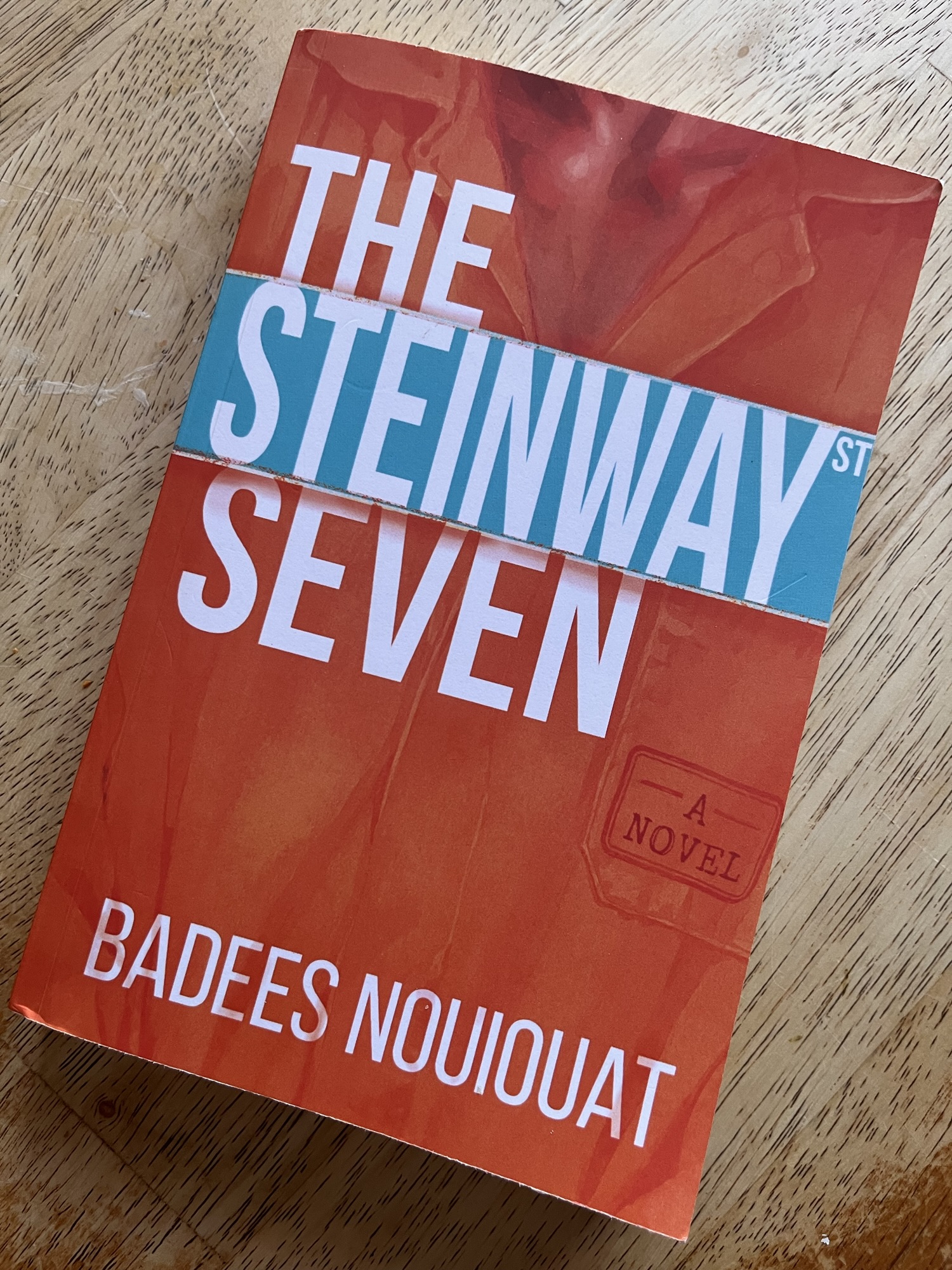
The Steinway Seven: A Novel by Badees Nouiouat

Standard
The Steinway Seven: A Novel by Badees Nouiouat

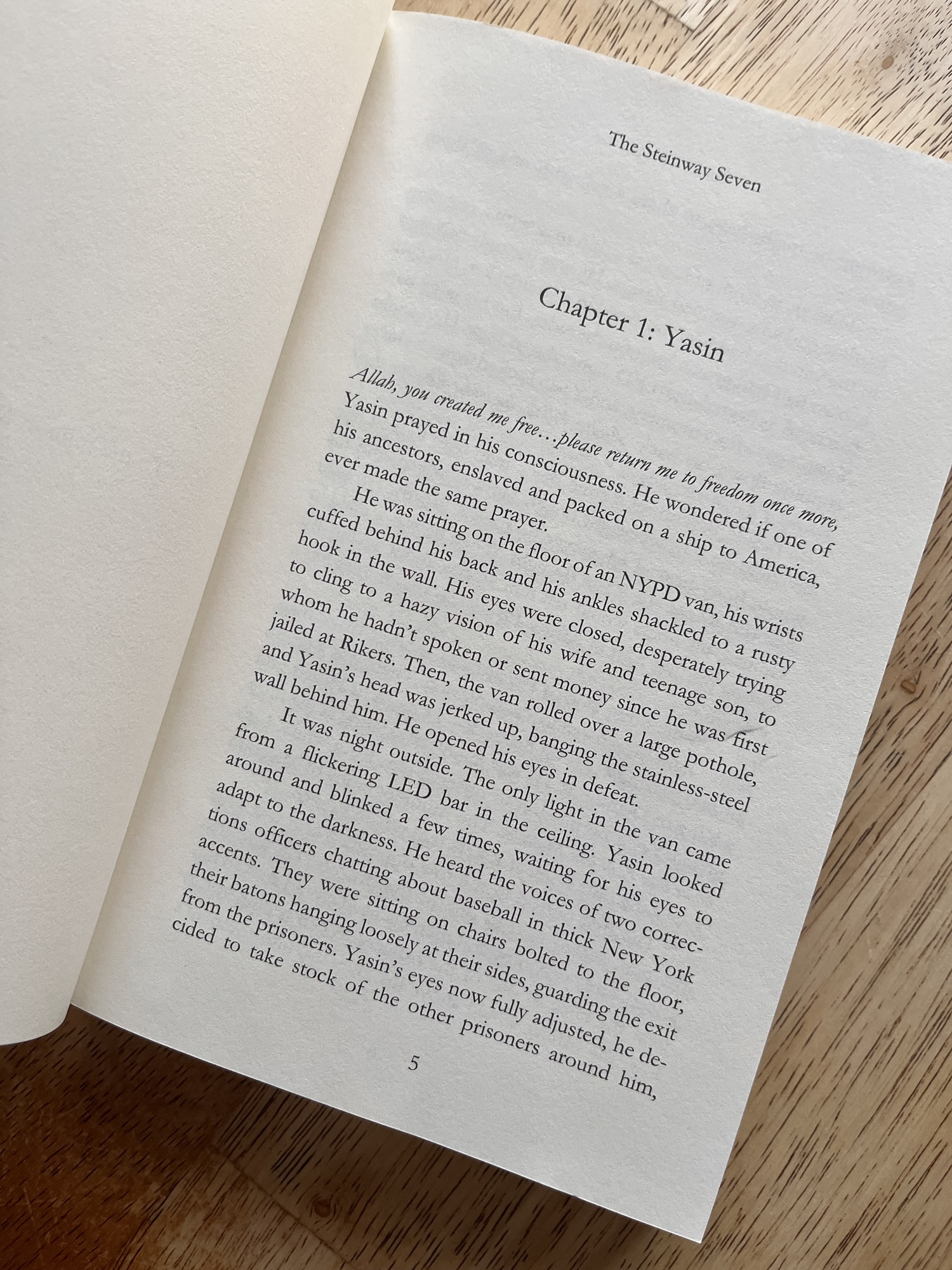
This 308 page book is classified as a YA read for content, but it plays out in dual points of view by adults.  Years ago I would have classified it as, “Islamic fiction,” but those lines have been blurred in recent years, and the author mercifully doesn’t get overly preachy or didactic with the ample Islamic references and framing- it is who the characters are, or strive to be, and part of their world.  I’ll admit by the fourth chapter, I was nervous.  The author does not shy away from positioning his characters in rough spots from the get go: an escaped convict and non practicing young Muslim man joining the NYPD, and I didn’t know if he would be able to keep it believable and engaging, but alhumdulillah he did, and I enjoyed the book. In very much a YA framing, the self awareness and character arcs of realization is the underlying heart for the surface story of being on the run and attempts to capture and avoid being caught.  With heavy themes of understanding and coming to peace with one’s past, the reader is shown historical turmoil in Algeria, insight into motives and struggles of undocumented immigration, and given plenty to ponder about forgiveness, laws, faith, kindness, and second chances.  This book would be an easy recommendation for all readers 14/15 or up, there is crime, drugs, racism, gun violence, killing, arson etc., but nothing is overly graphic or dwelled upon. The characters are “good,” but exist in situations where gray surrounds them and would offer a lot to discuss in classrooms or book clubs.
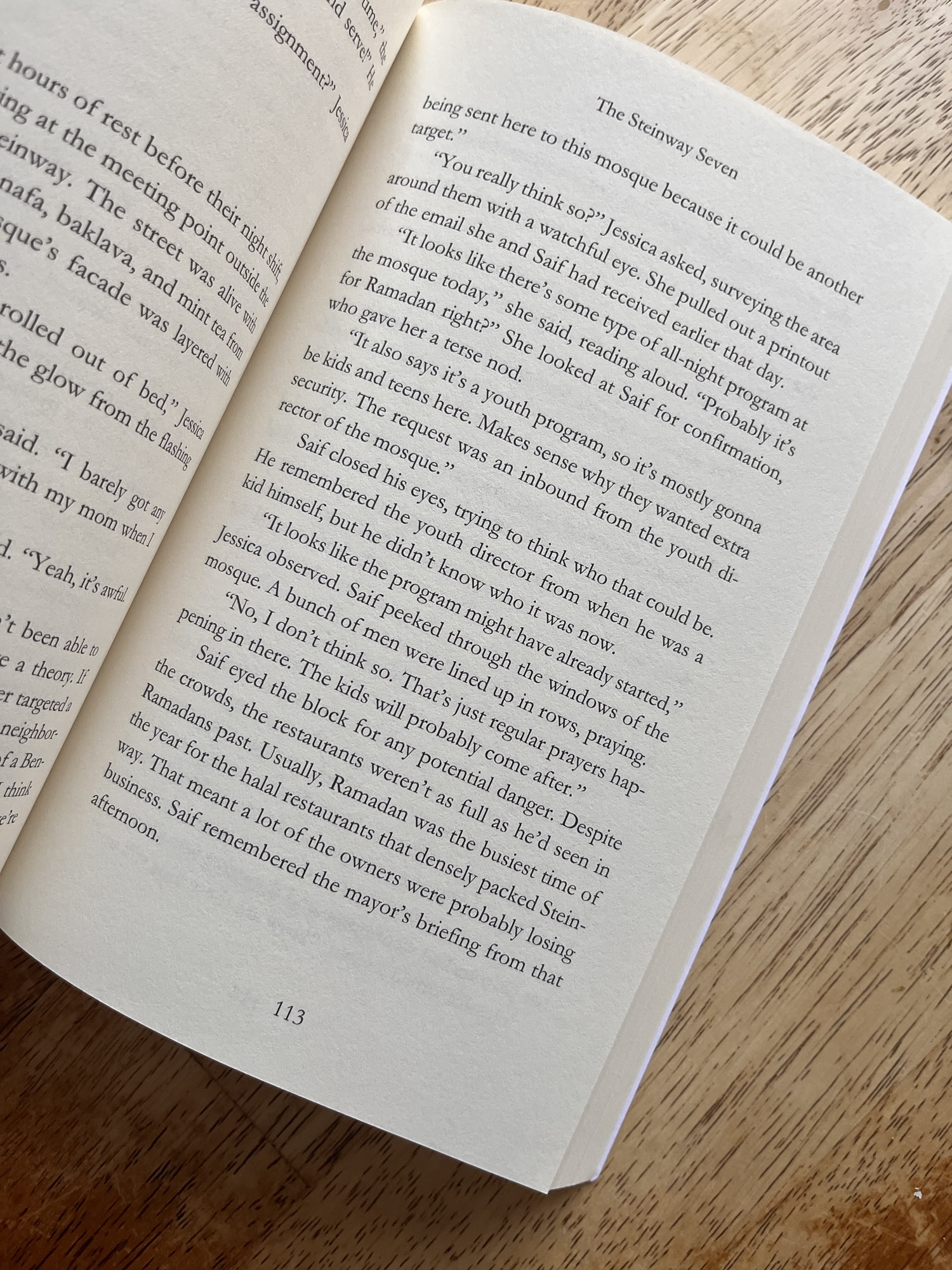
SUMMARY (from the back of the book):

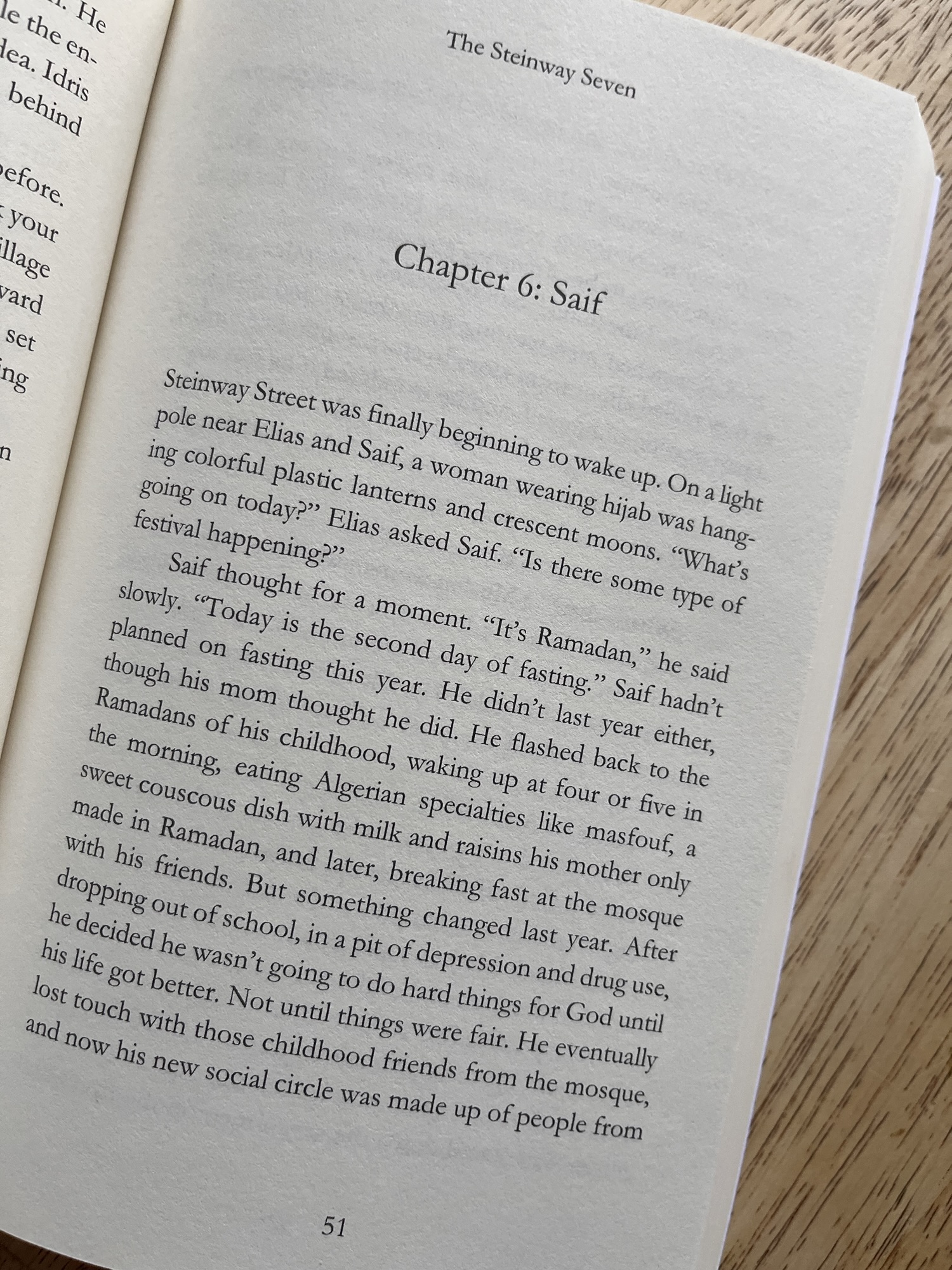
The night before 22-year old Saif Belkacem starts his new job as an NYPD officer, seven convicts escape a prison van and disappear into the streets of New York City.

Among them is Yasin Bamba, a wrongfully imprisoned Guinean immigrant who decides to seize the opportunity to find freedom.

While Saif and his colleagues race to find the seven fugitives, Saif slowly uncovers the story of his father’s death in Algeria, and his life starts to intertwine with Yasin’s in more ways than he could have imagined.
WHY I LIKE IT:
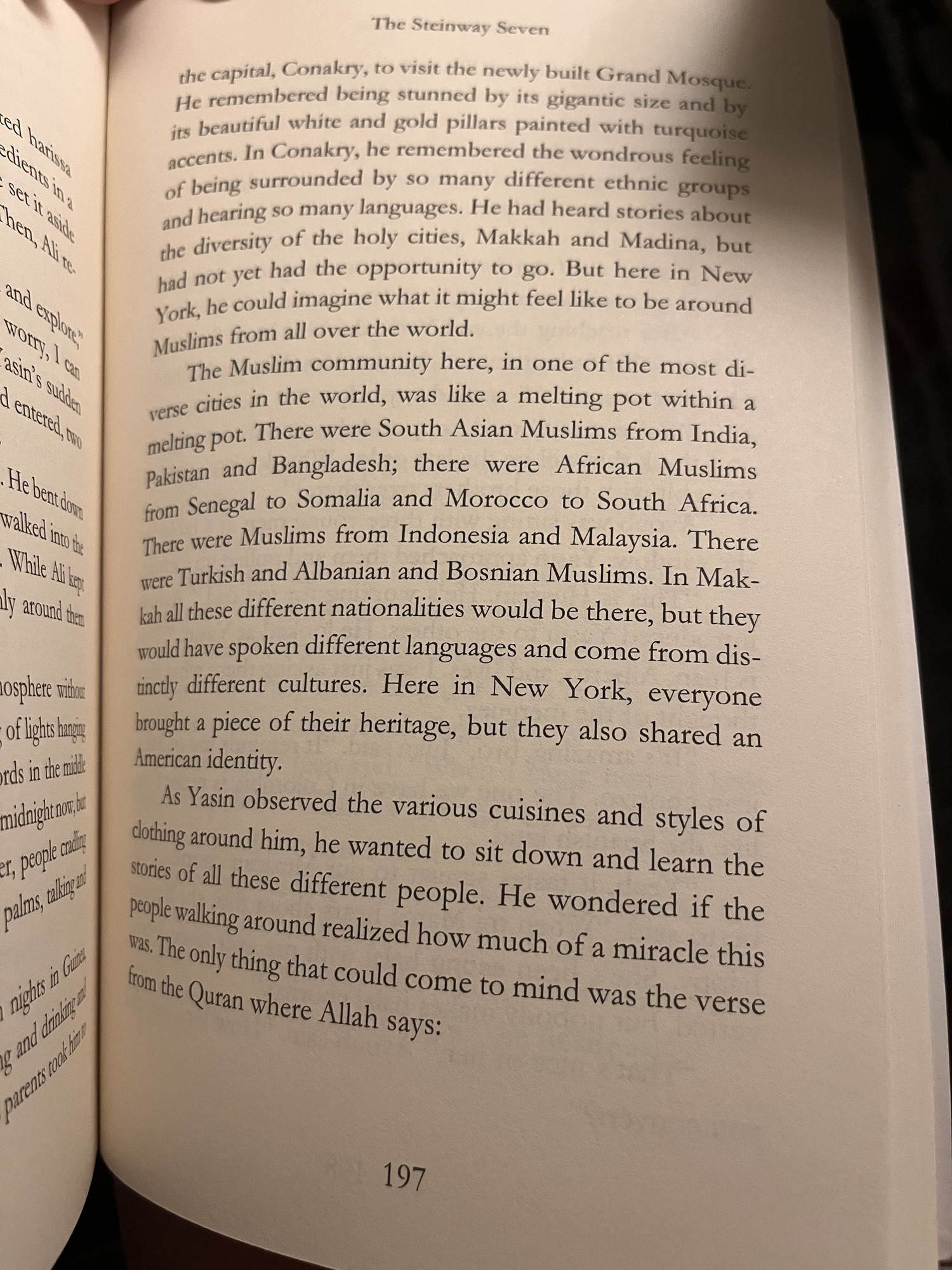
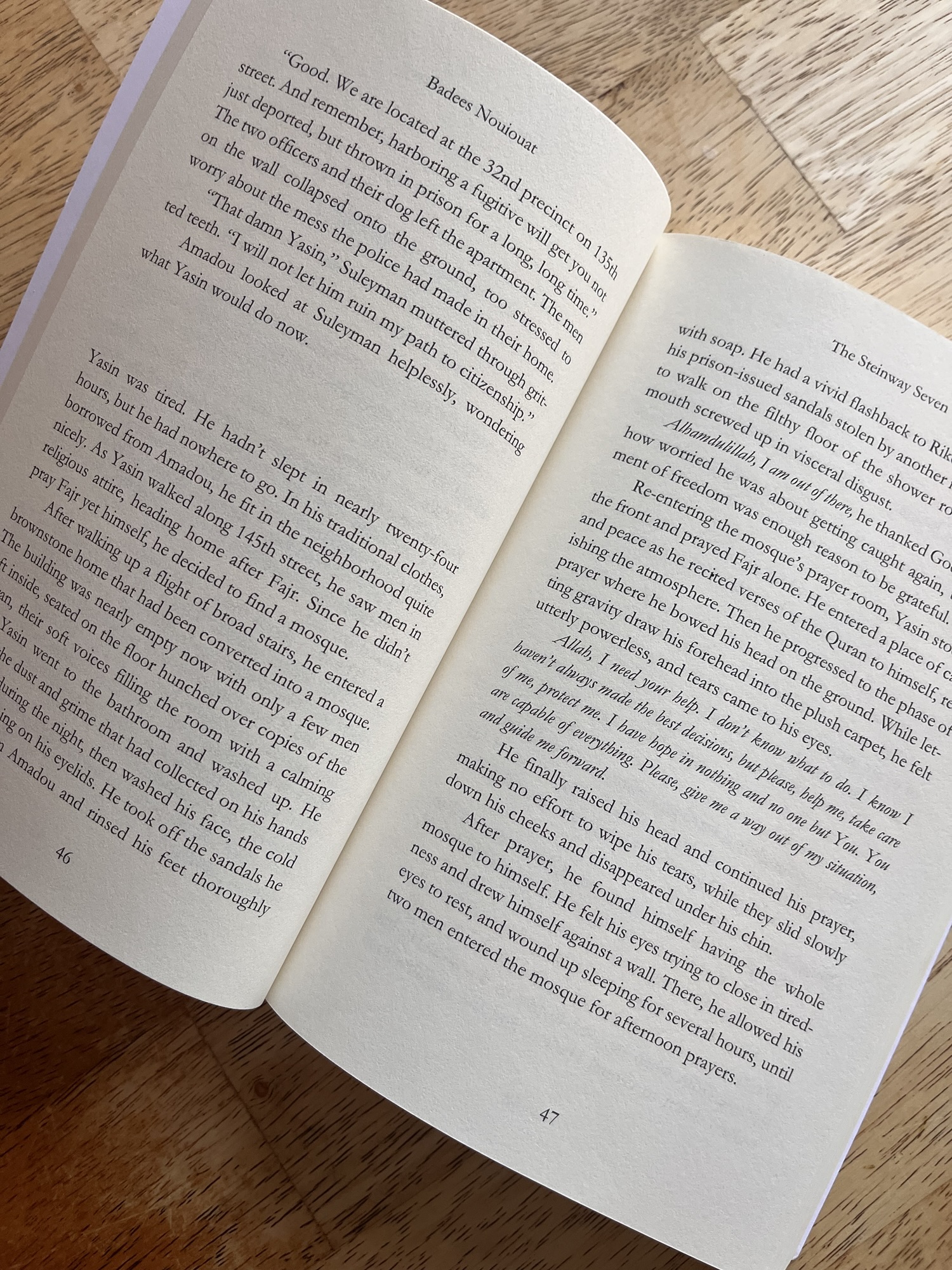
It is clear the author understands craft and storytelling, and I really think if he dug a little deeper and fleshed out some of the tension and rising action, this book could be traditionally published if he wanted to pursue it.  I’m not critiquing it to be picky for the potential readers, but rather for the author (a first for everything, forgive me if I’m overstepping), as I have a feeling he has been waiting for this review. Nonetheless here I go, voice: Saif’s voice is too immature at times, and his mother’s underdeveloped and non existent. Yasin, should be a bit wiser and hardened as a result of his circumstances and lived experience, he seems to just float from encounter to the next, not moving around like someone who has been in his own head since leaving home and mulled over some of his perceived truths.  Pacing: raise the stakes at every turn, keep the reader on the edge of their seat, for the surface story but also show the turmoil of Saif uncovering his past, at the 200 page mark it breaks from the story to info dump the historical and personal past in a way that really takes Saif out of the action. Weave it in, provide tension and motive of why his mother so easily now gives up all the information and why Saif never Googled it on his own.  The ending is beautiful and truly I wanted to know which way and what choices Yasin and Saif would make, but you didn’t really make me, the reader, work for it, and I think some twists and turns and emotional pain for the reader rather than just resolving it all for us, would give the book more depth and excitement. Show us the internal struggles, the temptation, the uncertainty raging inside them.  The heart and character arcs are there, they just feel a little too easy and surface at times, and yes I say this because I think the writing has a lot of potential and the author can do it.

TOOLS FOR LEADING THE DISCUSSION:
I would love to do this as a book club read, high school for sure, possibly middle school, depending on the kids.  There is a lot to ponder and unpack, discuss and consider.  Muslim kids particularly will have some stereotypes to grapple with and hopefully think over as the book doesn’t make the characters and their situations black and white, haram and halal.

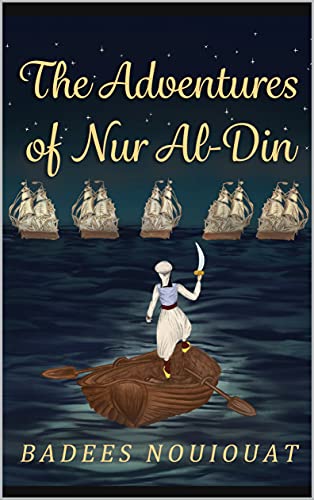
 

The Adventures of Nur Al-Din by Badees Nouiouat

Standard
The Adventures of Nur Al-Din by Badees Nouiouat

nur al din

I really enjoyed this book.  It is self published, and the expectation was zero and I honestly read all 214 pages in two sittings. I probably could have read it faster, but ahh kids and dinner, and my middle school son somehow got to it to read when I put it down.  We both enjoyed the quick pace, the strong Islamic presence, and the historical fiction based plot.  The book has a bit of language, hell and damn a few times, mentions prostitution and a brothel in two instances, and alcohol is present, but it is always crystal clear on Islamic and Muslim behavior.  The book is linear and straight forward and  probably YA readers will appreciate it, but I think it really is a middle school aged read, I think technically that makes it Young YA or Lower YA.  My only small grievance is the modern slang.  I appreciate that it isn’t written like Treasure Island and that you understand what the pirate crew is saying in plain modern English, but the few mentions of “idiot,” “chill out,” and “awesome” stick out very obviously and could easily be “fixed.”  Overall, so very impressed by the consistent pacing, historical references, writing quality, and internal reflection on our ummah’s strengths and weaknesses.

SYNOPSIS:

Farid is a young boy in Tunisia, and as the Spaniards start to flex their influence, his life begins to change.  The son of a fisherman, the family can barely enter the waters under the watchful eyes of the Spanish fleets.  When approached after a fight to join an Islamic pirate crew by Captain Aruj of the Barbarossa and his brother Khidr, he decides to leave his family and stretch his wings.   Having always dreamed of being in a leadership role, his optimism, and eagerness is quickly put to the test as the crews’ first mission in Northern Africa fails and sends the pirates scrambling on land.  They journey to the Mosque of Uqba (Great Mosque of Kairouan), and get help from the Emir in Tunis to replenish their losses.  It is then onto Tripoli where friendships and internal issues of race, and nationality threaten the cohesion of the Muslim pirates.  But it is in Spain where things really come to a head and Farid finds himself separated from his crew, in-prisoned for years, and tested both physical and emotionally that the story finds its climax before ending, and leaving the reader ready for more.

WHY I LIKE IT:

I have a soft spot for historical fiction, the original American Girl books for me were treasures to behold.  So the setting of this book really won me over: the mention of rulers, historical landmarks, the pain of the Inquisition on Spanish Muslims, the fact that there was a not just one map in the book, but two, all great things.  Like I mentioned above the pacing of the book is quick, from start to finish, and it is a pirate story so there is death, violence, battles, killing, and treason, but seeing as often in books about these type of things, I find myself glossing over the long detailed battle scenes, I was grateful that they are short and quick and possibly overly simplified.  It discusses weaponry, but it is not detailed, no glossary is needed, although there is one of the Islamic words at the beginning.  As for the Islam presence, it is very much a part of the story.  They raid a ship, the alcohol goes in the sea, they call athan differently, the characters discuss different madhhabs, just rulers are just even if they aren’t Muslim, and terrible rulers can also be Muslim, it doesn’t shy away from internal reflection and I appreciate that.  The only thing that caught my attention of being unaccounted for Islamically was when Farid puts on red and gold pants to head in to battle.  One- that seems the opposite of camouflage, and two- many Muslim don’t find it permissible for men to wear red and gold, obviously different people feel differently, but it seemed odd that the colors were specifically mentioned in such a quick moving book to no end.

Character-wise, I wanted a little more insight into Sameer and his racism, I also would have liked a little more about Farid’s first day in the sun after imprisonment.  I liked that the Jewish struggles under King Ferdinand in Spain weren’t just mentioned, but were brought in to the story.  And while I appreciate the reasoning for showing that Muslims were hiding behind a brothel to participate in learning and worship and thikr, that and the mention of a woman trying to seduce Farid in the street, both make the target audience a little more mature than the rest of the book might warrant otherwise.

FLAGS:

There is killing, fighting, raiding, stealing and there is plenty of physical violence.   The book mentions prostitution, seduction, and there is a fleeting glance at a woman that the main character pauses for, knowing he should lower his gaze, but then she is rescued and never seen or heard from again.  There is mention of alcohol as it is captured, as non Muslims stagger around drunk, etc.. There are a few curse words used a few times each: damn and hell and God.

TOOLS FOR LEADING THE DISCUSSION:

I think I would absolutely do this for a middle school book club amongst a mature group of girls and boys.  It is an easy read, but the discussions would be phenomenal as history and context would all come in to play.

For the sake of buzz and growth and attention, I hope the author will shop the book around, if he hasn’t already, see if it can be published on a larger platform and gain some traction.  We need books like this, solid Islamic fiction books, that aren’t shy to show our strengths and weaknesses and inspire our youth.