Tag Archives: powerful

Huda F Wants to Know? by Huda Fahmy

Standard
Huda F Wants to Know? by Huda Fahmy

Huda Fahmy books always make me laugh, but this is the first one that made me cry. Centering mental health and her parents divorce, we see Huda grappling with change, loss, anger, and resolve in a raw vulnerable way. While ever hopeful, and at times comical, the book is also incredibly moving and insightful.  Whether as part of the Huda F series or her two graphic novels prior, her autobiographic books always tackle heavy topics in a joyful, hilarious, honest way that appeal to girls and boys from middle school and up.  I know at 263 pages, this book is a YA read, but in my house my kids (daughter and sons) have loved reading her perspective about hijab, arranged marriages, identity, and sibling relationships. The unapologetic Muslim authenticity is unparalleled, and that non Muslims champion her books as well, truly shows the value of good story telling, and gives me hope in an often bleak world. Huda’s books are staples: new books are anxiously awaited, previous books are regularly reread, and Huda F Wants to Know? continues in that tradition.  This book isn’t just fun, it is important- it normalizes mental health, empowers families shaken up by change, and makes us all feel seen and less alone. SubhanAllah.

The book starts with Huda’s plan for her junior year in high school, her friend Nabz and her are determined to buckle down and get scholarships.  When Huda’s parents call a family meeting, she thinks she just might be getting a car, but instead she and her sisters learn, their parents are getting a divorce. The book then rewinds to show a little lead up before Huda’s world shatters, and junior year’s blue print is tossed aside.  We see her going to the masjid for weekly halaqas where Sr Amal discusses topics like societal pressures, family expectations, gender bias in education, and other relevant topics.  At one such gathering, Dr Haifa came to talk about mental health.  We also see her crushing on a boy at school, fighting with her mom and sisters, and the girls going on a road trip to a Muslim convention.

Every storyline, every twist, every page really, has Islam woven in.  It is the way the characters see themselves, see their world, handle stresses, find peace.  Mental health is not separate from the hadith and sunnah, it is blended and approached in a holistic manner.  Divorce is understood Islamically, and the clarity in which it is articulated will, I imagine, be so reassuring for Muslims who have gone through it, and seen others go through it.  Just as my boys years ago read That Can Be Arranged, and became incredibly curious about marriage in Islam, I have no doubt that this book, will also be a powerful conversation starter for so many.  I don’t know if that is part of why Huda write, but it definitely is a result of her books.  I wish I could ask her, I’d also want to know how she decides what to share of her own life, where the line of reality and fiction for her is and how she sets and maintains those boundaries? I also desperately would like to ask her if she plans to write forever, because the world benefits from her books, needs her books, I know I do.  No pressure or anything.

 There are resources for mental health at the back of the book, some even specifically for Muslims. Please preorder this book and/or request it at your local public library as a show of support, it releases in April.
Salat in Secret by Jamilah Thompkins-Bigelow illustrated by Hatem Aly

Standard
Salat in Secret by Jamilah Thompkins-Bigelow illustrated by Hatem Aly

img_8430

It is quite remarkable in the course of 40 pages that so many themes, layers, emotions, windows, mirrors, and relevance can radiate with ease and entertainment for children four and up.  The authenticity of the text and illustrations create tangible feels in this book, that months after reading it for the first time, I am still moved to tears, both inspired by joy and as a cathartic release of being seen.  The true mastery is that even if you are not Muslim and cannot relate to the nervousness of praying publicly, you understand Muhammad’s hesitancy and feel for him as he battles not just finding a place, but watching onlookers reactions to his father, police proximity, and being brave enough to push yourself even when you are scared.  Usually when asked what my favorite book is, I stumble to narrow it down to just one, but truly this book has raised the bar of not just traditional publishing representation, but Islamic/Muslim literature across the board.  It is a gift to read, to share, to enjoy, and a blessing that such an unapologetic book is available so widely for our children to connect with, and our non Muslim friends to see us through.  Please spend time with this book and make it available to your children, your students, your community, it really is that good, alhumdulillah.

img_8431

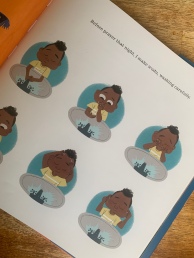
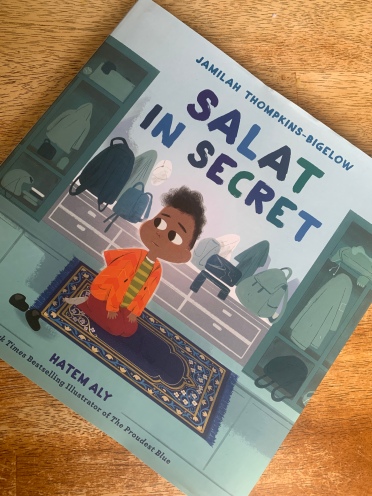
It is Muhammad’s birthday and he is seven, “Old enough to pray five times a day,” his father gifts him a prayer rug, and  Muhammad is ecstatic.  He makes wudu that night and offers salat with full attention.  He says the Sunday school words and shares his most wished for wishes to Allah swt, not even letting little sister, Maryama distract him.

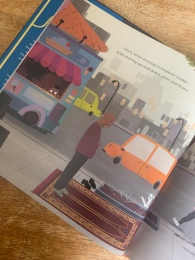
After Fajr the next morning, he is determined to find a secret place at school to pray Dhuhr. Daddy doesn’t need secret places, if prayer time comes he pulls his ice cream truck over and prays on the sidewalk, “never delay salat.”  At school, Muhammad heads to Mrs. Baker to ask for a place to pray, but his confidence waivers and he returns to his seat.

img_8432

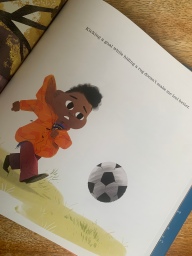
Anxiety about where to pray has him looking for spots throughout the morning, but when recess comes he finds he can’t take the prayer rug out from under his jacket.  He lingers when everyone returns to class and rushes through the words and motions in the coat closet.

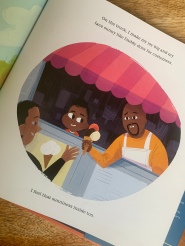
That evening he is with his daddy in the ice cream truck and the sunshine and smiles pour out of the two.  When the sun sets it is Maghrib time and Daddy heads to the sidewalk to pray, reassuring Muhammad that he can pray at home.  Muhammad watches his dad and various events spur him to make his decision.

img_8433

I love love love the way salat is approached with love and excitement and that the dad embodies safety and joy and does not pressure or force Muhammad.  The relationship is beautiful and allows for worship to be seen as both personal, as well as obligatory and merciful.  The duo also show a great parent child dynamic that warms the heart.
img_8434

I like that there really isn’t any “hate” given to anyone praying, it is hinted at, people do not understood, but the focus is not on the outside bystanders- it is what Muhammad thinks and feels.  I’m fairly certain every Muslim who has prayed in public has encountered a wide variety of responses, and this book keeps the gray to reflect and spark conversation.  It is often met with ignorance, with hate, with aggression, but it is also met with respect, apathy, and curiosity which the text and illustrations allow for.

img_8435

There is so much love and joy in the book as well as identity, that I don’t mind one bit that my littles ask me to read it over and over.  It is perfect for groups, one-on-one, and I cannot wait to share it in a story time, there is also an incredibly informative and heartfelt Author’s Note at the end.  If you haven’t preordered it yet, the book releases on June 6, 2023, please pre order it and signal the support for this book and future books that center authentic Muslim joy, Black Muslim representation, and OWN voice author and illustrator accuracy.  Request it at your library, put it on hold at your library, check it out, read it.  If you cannot preorder it, still purchase it when you can, inshaAllah it will be a beloved book in your home as well.

The Together Tree by Aisha Saeed illustrated by LeUyen Pham

Standard
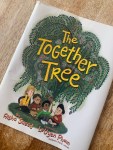
The Together Tree by Aisha Saeed illustrated by LeUyen Pham

img_7924

Being the new kid, not having friends, and being teased are not new themes in literature (or life), so if you are going to write a book about them, take a lesson from Muslim author Aisha Saeed and make sure the story is heartfelt, emotional, and well-told.  There is no Islam in the book, no foreign culture, or teasing because of skin color, it is a boy named Rumi who has moved from San Francisco to the other side of America and his shoes, with their drawings and colorings, that cause the kids to stare and start bullying.  Rumi seeks solace under a willow tree and fellow classmate Han has to be brave to put a stop to the mistreatment by finding his voice and not simply staying silent.  The text and illustrations provide a lot of opportunities for children to see themselves in the story, in the various characters, and ruminate over the actions and feelings from different points of view.  The book is lyrical, it is not heavy handed or preachy, and the Author’s Note at the end is equally touching and hopeful.

img_7925

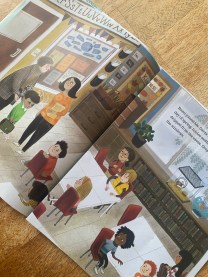
Rumi is quiet, and on his first day in Ms. Garza’s class the kids stare at him as he stares out the window.  At recess he wanders off to sit beneath the willow tree when Asher, Ella and Han leave the swings to see what he is up to.  Asher and Ella start to make fun of Rumi, Han is uncomfortable, but stays quiet.

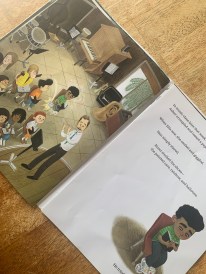
Rumi recalls coloring his shoes with his friends, and how different it was to where he is now, he picks up a twig to twirl as the hurt grows. In music class when the giggling starts, he tries not to cry.  At recess he retreats to his refuge under the tree.

When the bullying escalates, and tears fall, Han speaks up and breaks the cycle. Others follow and see the world Rumi has created with his twig and are drawn to it and to Rumi.  Forgiveness is asked for, and granted and the tree becomes a place of friendship and togetherness.

img_7928

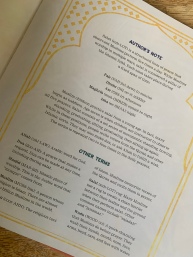
The Author’s Note shares the real life observations of the author about her son in kindergarten and how while heartbreaking, there was also hope in the concern shown by other kids that simply weren’t sure what to do.  I love that even though Rumi is being teased for his shoes and being different, he doesn’t stop wearing his shoes or try and clean the drawings off.

img_7926

I think this book is a must read in classrooms and homes were kids can slowly peel back the pieces and see where they can relate, how they can plan to act, and what parts they identify with.  The book is deliberate and slow, and while a child could read it on their own and enjoy the story and illustrations at hand, the real power it has, is being a catalyst for discussion and empathy and speaking up.

Pre order/order here on Amazon

img_7927


Salim’s Soccer Ball: A Story of Palestinian Resilience by Tala El-fahmawi illustrated by Naveen Abu Saleem

Standard
Salim’s Soccer Ball: A Story of Palestinian Resilience by Tala El-fahmawi illustrated by Naveen Abu Saleem

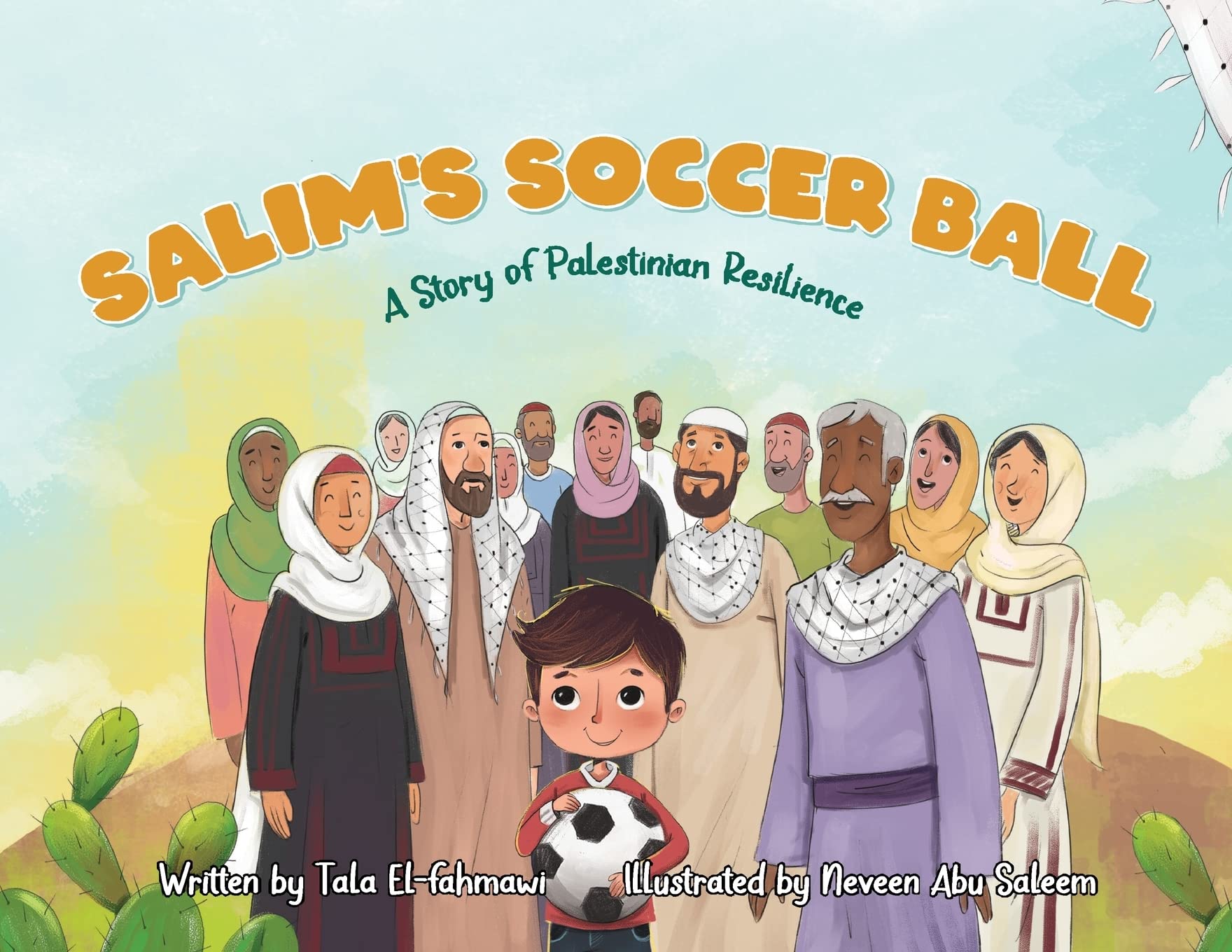
salim

This 58 page rhyming picture book weaves together a tale of a little boy and his lost soccer ball, with larger issues of community, oppression, and perspective for the youngest of readers to older children too.  I am noted to be skeptical of rhyming books, but the large font, the sweeping pictures, and the dropping of occupation, struggle, and resilience really make this book a treat. Add in discussion questions and an author’s note and you have a solid book that deserves space on home, library, and classroom shelves.  My only wish, was that the book was hardback.  The horizontal layout with a soft cover make the book difficult to read during story times as the pages flop back.  The book is long, but the text on most spreads is minimal and while I could not identify the author’s religious identity, their are numerous hijab wearing #muslimsintheillustrations as Salim journey’s around his neighborhood and into his grand father’s memories.

Salim wakes up, brushes his teeth, and is out the door to play soccer with his best friend Qusai, but the ball goes flying and Salim can’t find it. He starts walking down the hill and it seems to have disappeared.

img_5055

He asks the fisherman, Abu Zaid, if he has seen it, and he hasn’t, but he offers to help.  They then go and ask the seamstress, she hasn’t either, but she puts down her tatreez, offers reassurance, and offers to help.  As they head out they bump in to Dr. Bassam.  “‘I will help you look,’ the kindly man said. “I can fix broken bones with very few supplies.  A lack of resources has made me clever and wise. Resilience and courage are plentiful here. We will find your ball. Salim, no need to fear.'”

img_5054

The searching continues, with a small break for khanfeh, and then Qusai is found, and so is the ball.  Like so many joyful items, the barbed wire of the apartheid wall has destroyed the soccer ball. Upset, Abu Omar, calls out to Salim, and his grandpa embraces and consoles the young boy recalling a donkey with wonky ears and life on the farm.  With resilience and joy Salim heads home to a community surprise and a hopeful future inshaAllah.

img_5053

The book concludes with five discussion questions that connect Salim’s experience to universal experiences of people everywhere.  It is followed by factual and personal author’s note about Palestine and the book.  

img_5056

There is nothing religious aside from the hijabs worn, Dome of the Rock, Masjid al Aqsa, and Church of The Holy Sepulcher in the backgrounds of a few images.  I purchased my copy from Amazon HERE and can also be purchased through Shop Palestine HERE.

img_5057


Hold Them Close: A Love Letter to Black Children by Jamilah Thompkins-Bigelow illustrated by Patrick Dougher with photography by Jamel Shabazz

Standard
Hold Them Close: A Love Letter to Black Children by Jamilah Thompkins-Bigelow illustrated by Patrick Dougher with photography by Jamel Shabazz

Hold+Them+Close

The power, the lyricism, the images, the layers- this book is not just for children, it is for everyone.  I have spent time with this book and it cannot be rushed, it needs to be felt and explored and reflected upon to feel the emotion that seeps from each and every page.  The book is remarkable in the amount of hope and warmth combined with history and social activism present.  It weaves together the personal with the community with the struggle past and present so flawlessly, but for me it is the pictures that complement the text so well that make this book spectacular on so many levels.  It is not a book for me to review, it is a book for me to support and elevate in any way I can.  The author is Muslim, there is nothing Islam specific in the text, aside from mentioning Malcolm X, and it should be required reading and sharing for everyone.  May Allah swt make us better to one another and actively work against oppression, ameen.

The book is framed as a letter, encouraging happy things to be held close.  For the young and old with stars in their eyes to be be held and elevated.  For stories of greatness to be passed down.  Stories of Kings, of Sojourners and Malcolms.  

The book encourages pushing away the disappointments, but to let the tears come. To not forget the lynchings, slavery, police brutality, oppression.  To stand and make it heard that you matter.

The illustrations are a mix of photographs and collage style layers.  The joy in a child that is very real, carrying those that came before.  Images of the past pulled to be seen in the present, very much a part of today.  The colors, the expressions, the hope, it radiates off the page with the coaxing of the text and becomes a feeling of both being held, and feeling support to take the next step.  Absolutely beautiful from beginning to end.

img_3903

The backmatter contains an Author’s Note, Illustrator’s Note, Background information, and Selected Sources.

img_3904

Available in libraries and book sellers, including here.

img_3905


Dear Black Child by Rahma Rodaah illustrated by Lydia Mba

Standard
Dear Black Child by Rahma Rodaah illustrated by Lydia Mba

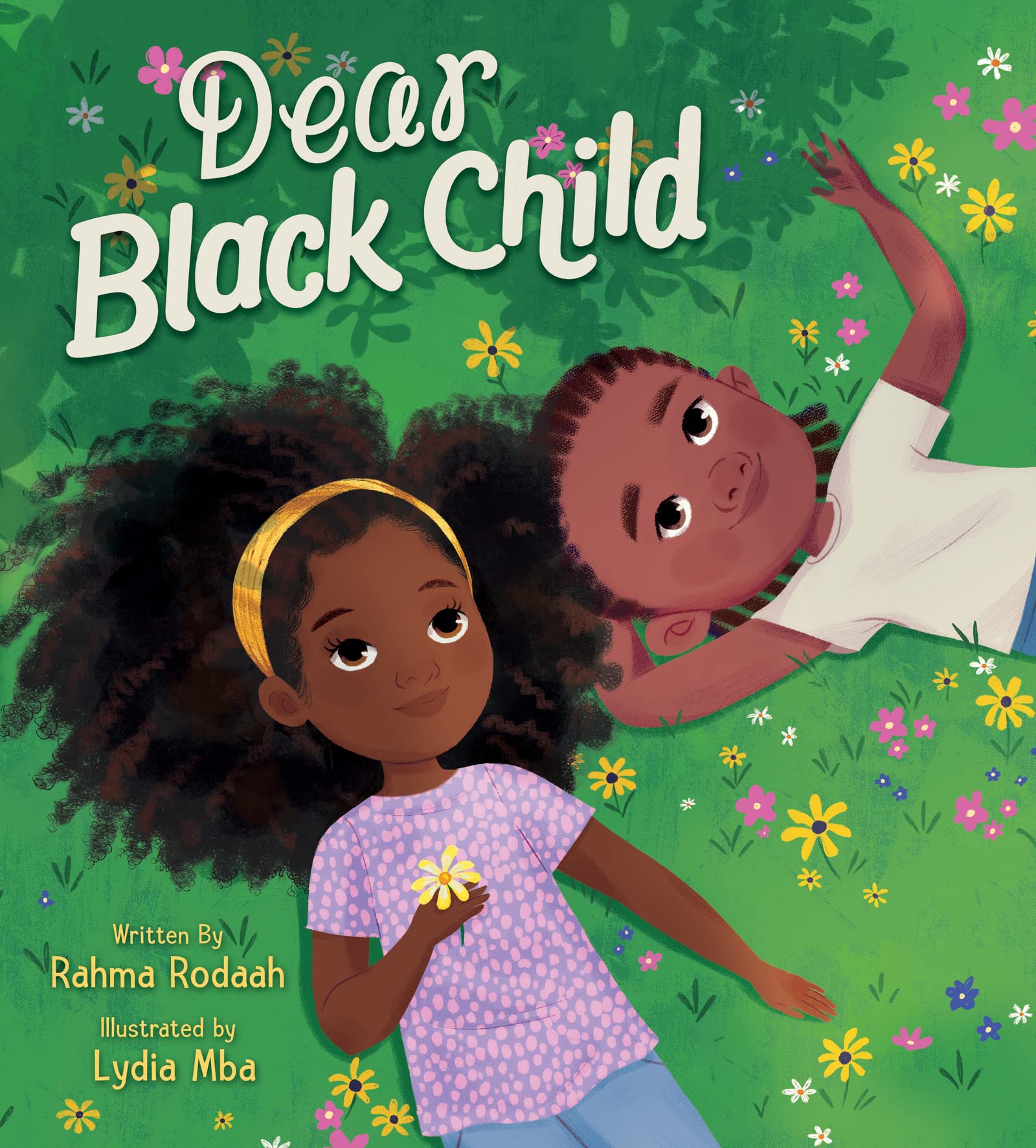
dear black child

This beautiful 32-page picture book by Muslim author Rahma Rodaah radiates joy through the text and illustrations.  The powerful and lyrical words on the page inspire confidence to take up space and encourage celebration through their messaging and tone.  My three-year-old enjoyed me reading it aloud, it kept his focus and his interest, and my seven-year-old read it over my shoulder and then numerous time on his own.  The sway and images painted by the text are so well refined that you could truly read this book a dozen times and still be moved by the passages.  The illustrations compliment the author’s message in their reflection of Black children of all shapes, sizes, shades, and mobility.  There is even a visibly Muslim woman in hijab (#muslimintheillustration) that looks like the author herself.

img_3431

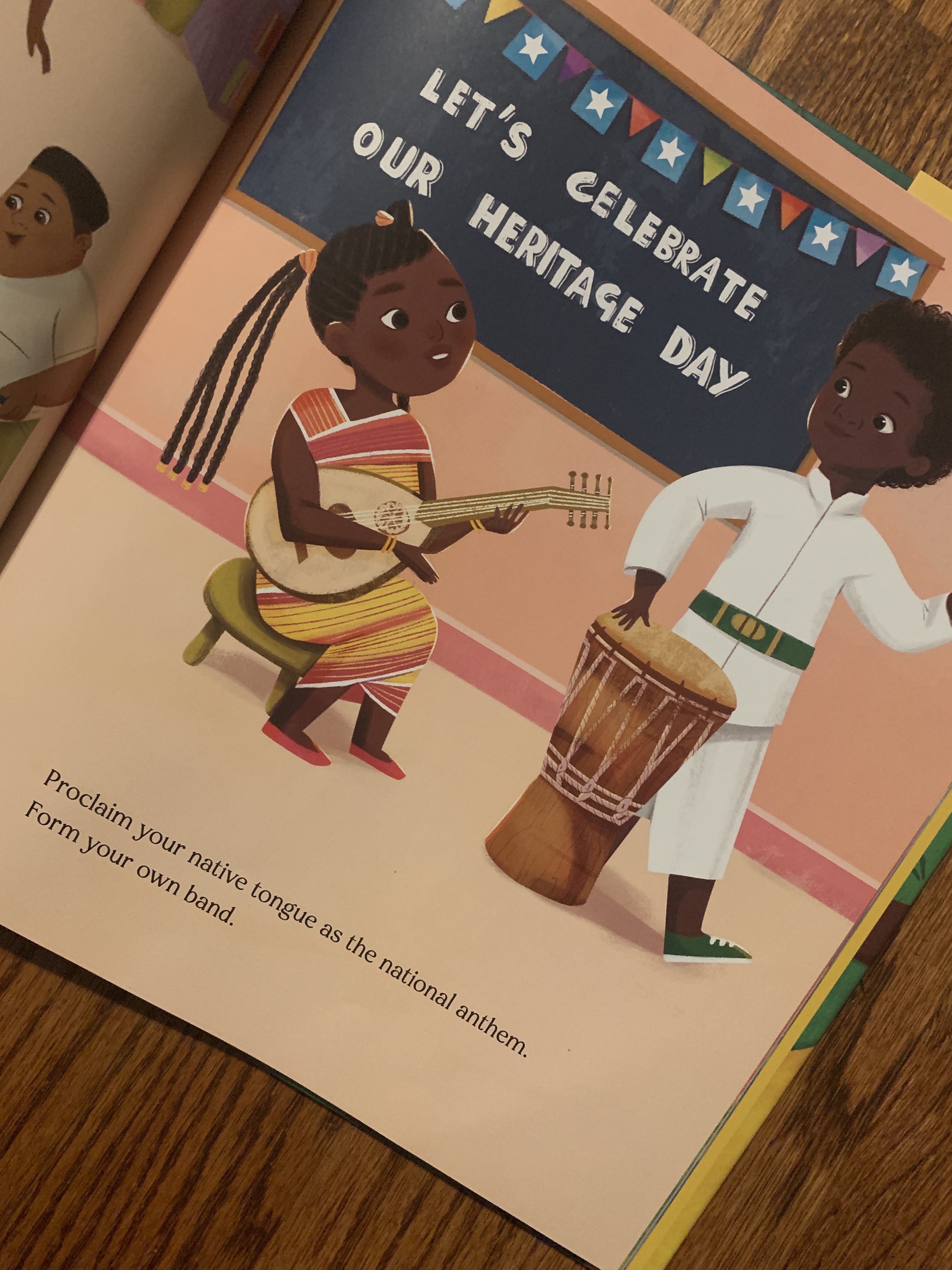
I look forward to sharing this book with various story times in the community, in my children’s classes, and in regular rotation at my own home.  Framed as a letter to a beautiful Black child, the book speaks to “you.”  It starts with encouraging you to stand in your own light, take up space, say your name proudly, and proclaim your native tongue.

img_3430

It inspires the Black child to speak confidently, roam freely, to be rooted, yet move swiftly. To write the books and tell the stories that only they can tell, and to trust their inner compass.  It also reassures them that they are not alone, that there are those that will always help, always cheer them on, and remind them of their glory.

img_3432

The book is as powerful as it is beautiful and I hope it finds a home on every classroom, library, and home bookshelf.  I purchased mine here.

img_3434

Salih by Inda Ahmad Zahri illustrated by Anne Ryan

Standard
Salih by Inda Ahmad Zahri illustrated by Anne Ryan

salih

This is an example of a picture book that should not be categorized as being only for children.  The passages of short simple text and the expansive illustrations that pull the reader in, combine to set a powerfully moving tone that holds you in it’s grips until the final page.  The names and hijab clad women could make this book a refugee tale with #muslimsintheillustrations, but because the author is Muslim, and the book so beautiful, I wanted to do a full review.  Some of the vocabulary is a bit advanced for younger children, so I think the best application of this book is not to hand it to a small child to read independently, but rather to read it to a child and let the words tickle their hearts while they immerse themselves in the pictures.  I look forward to sharing this book at story time to kindergarten through third grade.  I think the imagery, concepts, and emotion will resonate and open minds and hearts.

img_2168

Salih is like a turtle, he carries his home on his back. He and others are heading to the sea.  He tries to remember when things were better, and forget the bad times.

An old man shows him how to paint.  Salih shares this creativity with others.  Then he slips all the paintings into bottles and when he is on the rough sea, the bottles float away.

The storm rages, but then it calms, and land is seen, and hopes and dreams return.

We, collectively, have become numb, apathetic even, to the plight of refugees.  I have been trying for a while to get this book from Australia, and even though I am over a year late since its publication, it is still timely.  It will always be timely.

img_2170

We cannot be so arrogant to dismiss the plights and challenges faced by those in our world.  That is why I say, yes it is a children’s book, but people of all ages, need to be reminded.  It isn’t the worst of the worst incidents that need to only be shared, or the over the top happy stories.  We need to not let our hearts grow so hard. And this gentle book, with a sweet boy and turtle shell imagery has a lot of potential to remind us of the human element of global conflict.

Available to purchase in the USA here

img_2172

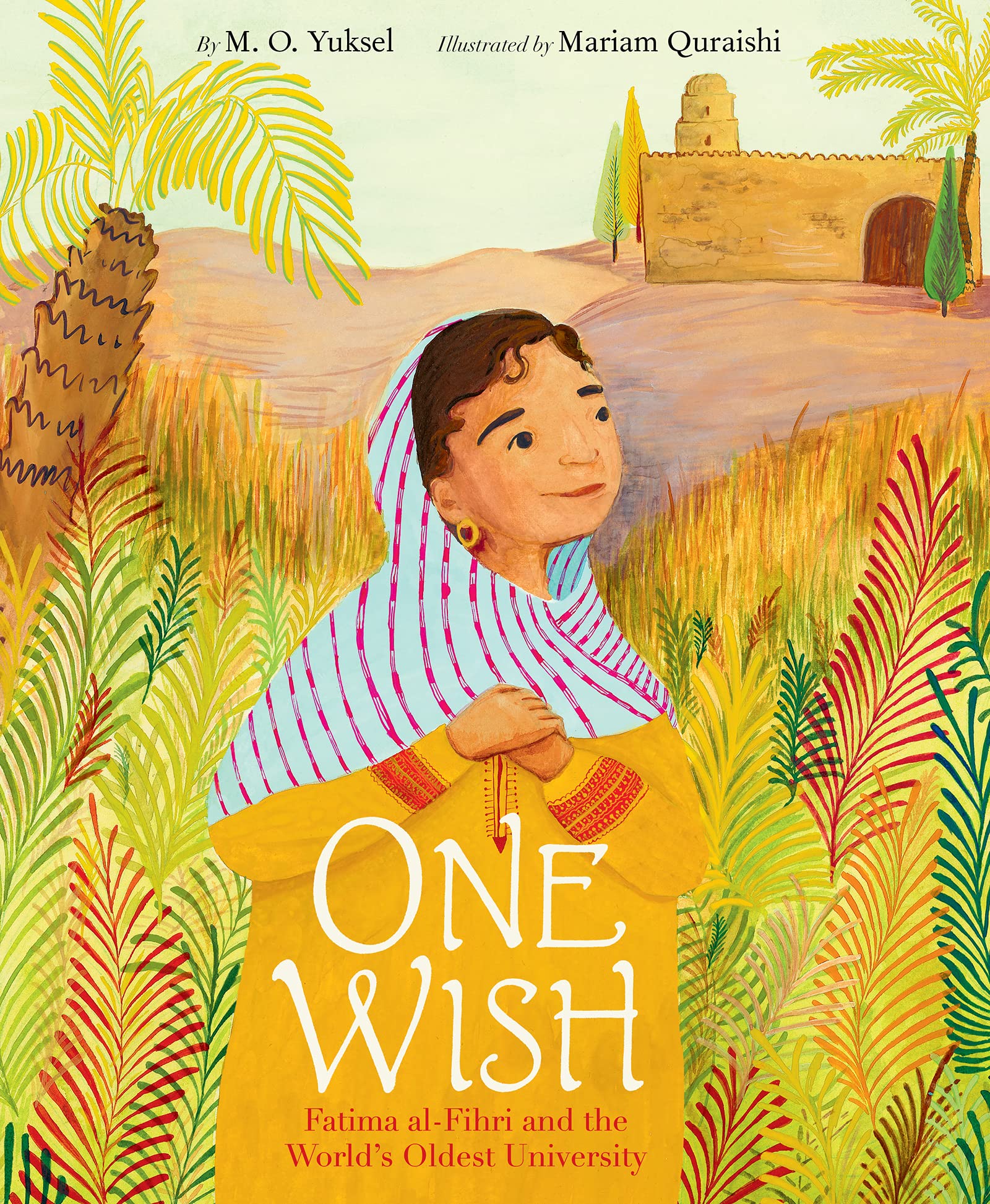
One Wish: Fatima al-Fihri and the World’s Oldest University by M.O. Yuksel illustrated by Mariam Quraishi

Standard
One Wish: Fatima al-Fihri and the World’s Oldest University by M.O. Yuksel illustrated by Mariam Quraishi

one wish

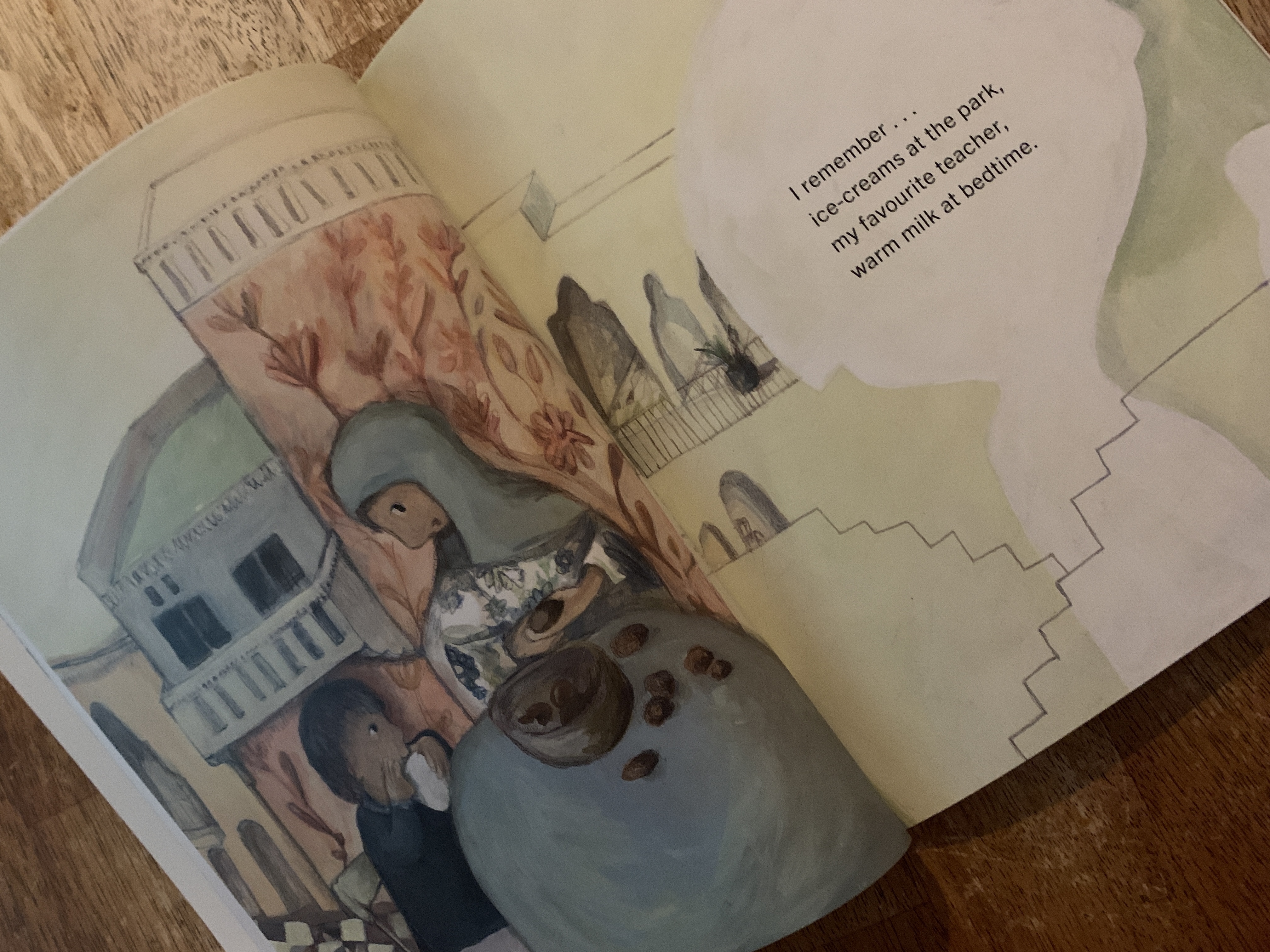
This book is so long overdue, yet at the same time it was worth the wait.  The writing is simply superb: Fatima al Fihri is celebrated, Islam is centered, there are references, and the story compelling.  We, Muslims, as a whole know so little about the beautiful impact fellow Muslims have had on the current world and our way of life, that to see this book being celebrated in public libraries, in Islamic schools, at masjids, and retail bookstores, truly makes you sit up a little straighter, and reach confidently to get this book in your hands to share with those around you.  Thank you Mindy (@moyuksel.author) for these 40 pages of absolute delight, ages 5 and up will read it to learn, read it again to enjoy, and inshaAllah read it repeatedly to be inspired.

img_7723

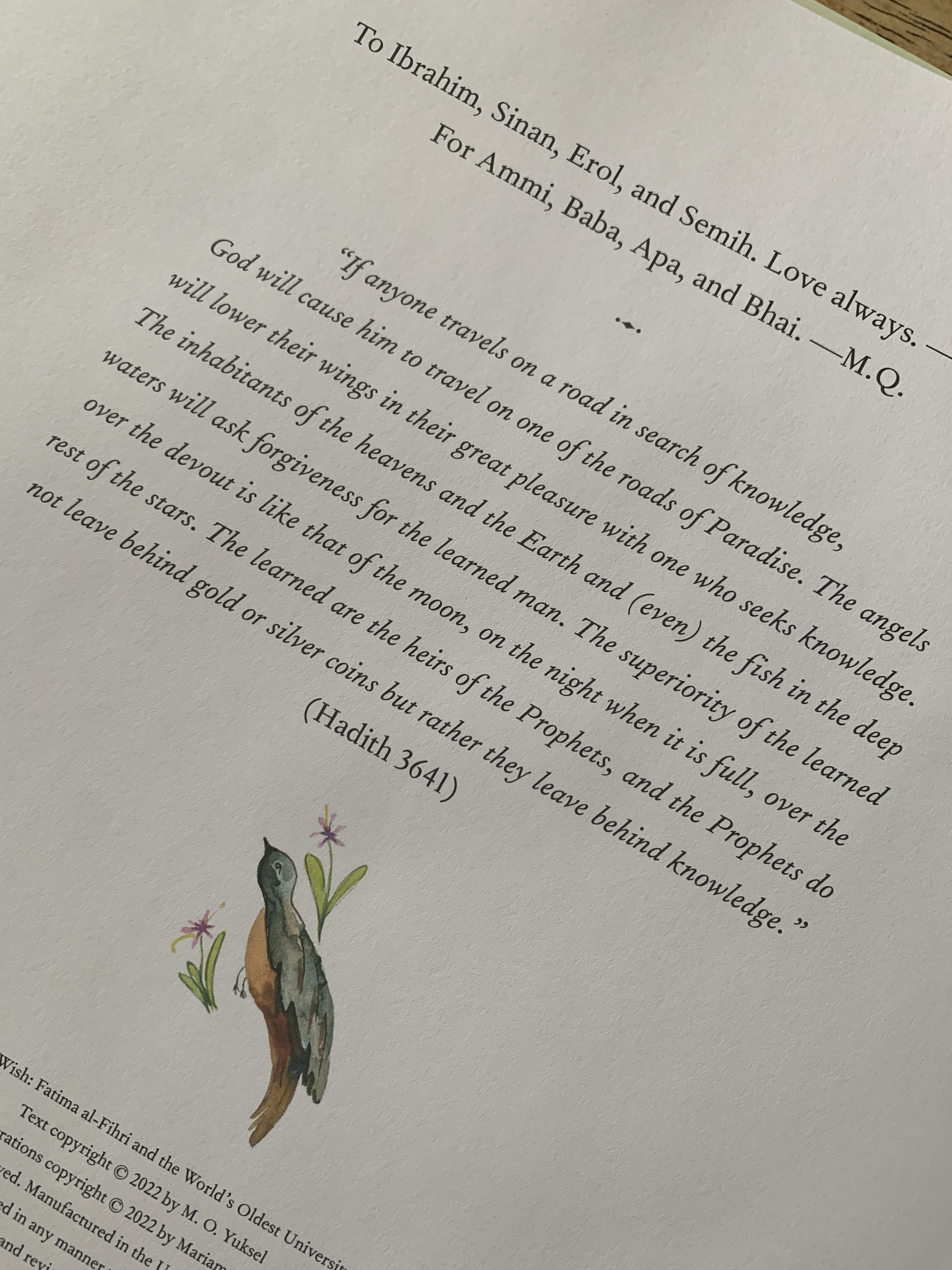
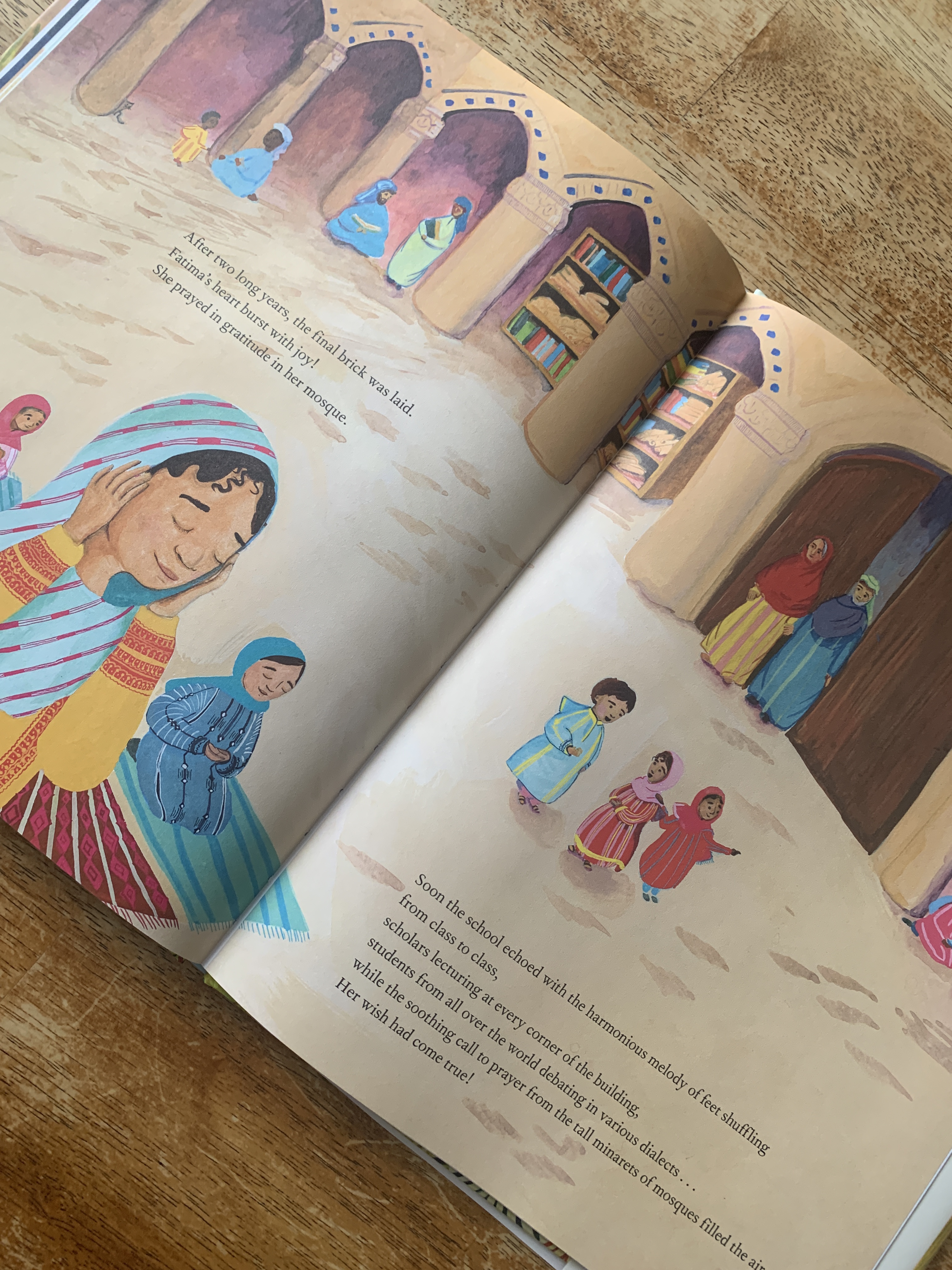
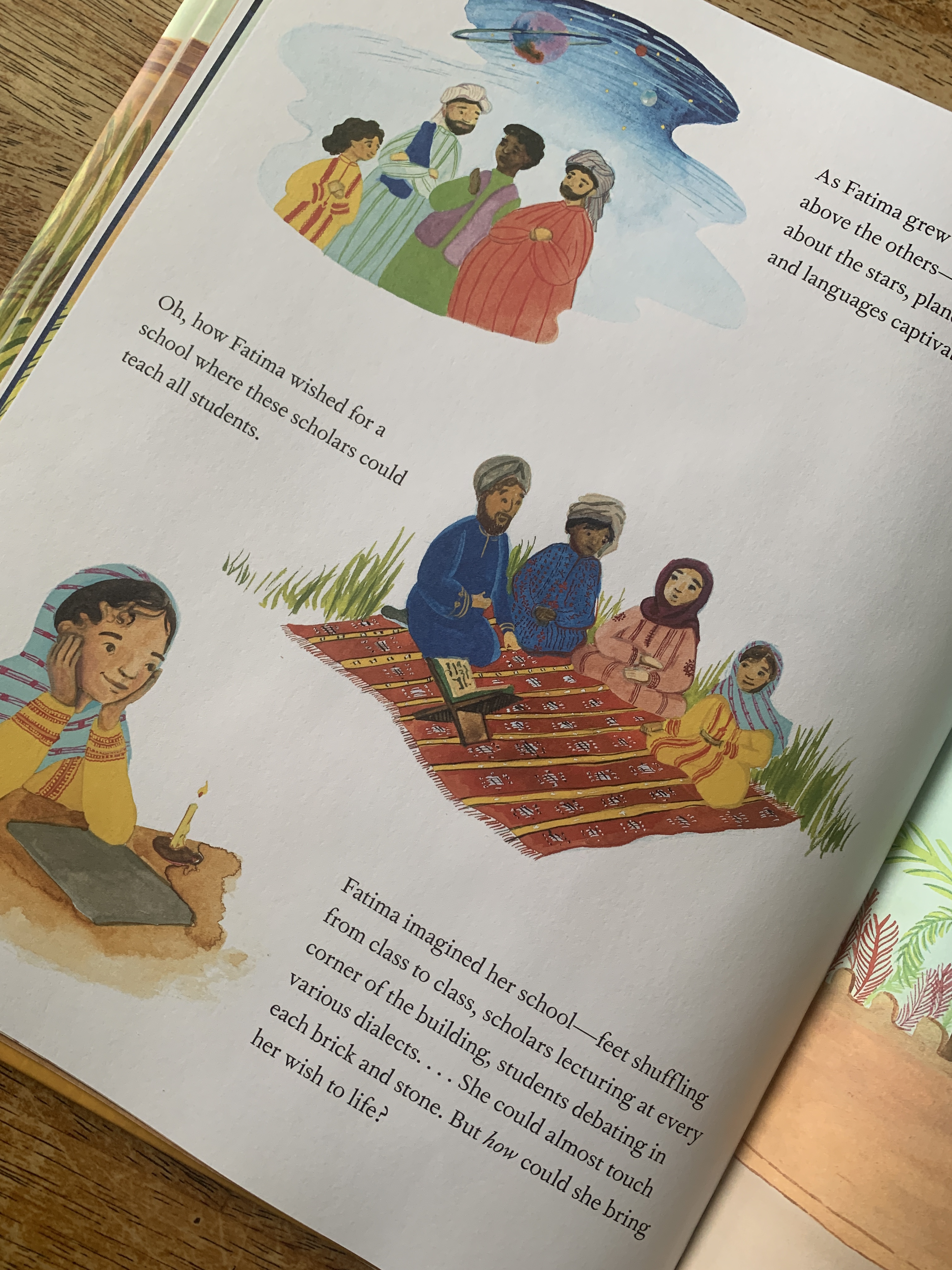
The book begins with a Hadith regarding seeking knowledge and leaving knowledge behind.  It then begins the biography of Fatima as a small girl curious about the world around her starting with the word Iqra, read, from the Qur’an.  It sets the stage of her living in the desert in the early ninth century, a time where some boys went to school and some girls learned at home. Her connection to Islam and it teaching her the value of knowledge caused her wish, to build a school, to grow stronger.

img_7726

When war destroys her town her family flees to the busy city of Fez, Morocco.  She begins to accompany her father to the souk and enjoys listening to talk of planets, distant lands and different languages and wishes these scholars could educate everyone. She grows and gets married and her and her family become wealthy merchants.

img_7725

Tragically, her father and husband die, and Fatima must decide what to do next for her family.  She decides to help her community as a form of sadaqah jariyah and make her wish a reality.  She sets out to build a school where everyone can live and study for free.  She purchases land, and the building begins.  Fatima oversees each detail and names it the al-Qarawiyyin after her hometown in Tunisia.  It takes two years to build and it still functions today.

The back matter is just as compelling as the story with an Author’s Note, information on The University of Al-Qaryawiyyin, a Glossary, Bibliography, and a Timeline.  The only complaint I have about the book, are the illustrations.  I really don’t understand why half of her hair is showing when based on the time and her connection to her faith, she most likely was a niqabi.  I don’t understand the continuity of the hijab from a young child to adulthood.  I get that it shows her influence moving forward at the end, but it could have been a small print on an outfit for token representation of symbolism, I don’t get it as being a complete outfit her whole life.

img_7724

I absolutely love the role of Islam in both Fatima’s life and in this book.  It is so much a part of her and her wish, that every reader will recognize how connected her faith and the creation of the University were and I’m confident both Muslim and non Muslim readers will be in awe of her devotion and accomplishments, inshaAllah.

Hakim’s Odyssey: Book 2: From Turkey to Greece by Fabien Toulme’

Standard
Hakim’s Odyssey: Book 2: From Turkey to Greece by Fabien Toulme’

hakimcover

It is easy to assume that refugee stories are all the same, but in my experience, the more I read about the journeys people take in desperation for safety, the more I realize it doesn’t matter if “parts” are similar, the individual experience should never be dismissed or become commonplace.  I try to make a point to read them, and spend time with them, and be affected by them, so as to not grow apathetic.  I have not read the first book in this series, but this book, the second book can stand alone, and I hope that you will keep an eye out for it when it is published, and spend time with Hakim and his son Hadi.  In much of the way the middle grade novel When Stars are Scattered, swept me up and consumed me, this book also enveloped me in the characters’ emotions and left me sobbing and heartbroken more than once.  The framing of the story, gratefully shows that Hakim survives, but the power of the words, illustrations, and experience, still physically move you and make you imagine how truly horrific situations must be that force people to risk it all to leave their homes and start over.  This 264 page book focuses on the part of his story that takes Hakim from Turkey to Greece, but references to Syria and his life there allow for a fleshed out understanding and appreciation for the trials he has faced, and continues to face, subhahAllah.  Suitable for mature teens, at least 16  or 17 and up.

SYNOPSIS:

The book starts out with the author/illustrator heading off with his daughter to interview Hakim.  His young daughter has heard a lot about Hakim and his family, but never met them.  They “recap” the first part of his journey, the first book, and settle in to hear more of his life and the extraordinary circumstances that he has faced to reunite with his family since fleeing the war in Syria.

The birth of his son Hadi is a definite high point in Hakim’s life and the daily struggle of selling enough goods on the streets of Turkey to provide for his son keep Hakim looking forward.  With his wife, Najmeh, and her family around them, they crave stability, but are managing.  As the days stretch on though, Hakim is prevented from selling without the proper permissions, and his father-in-law is still unable to find work. Hakim’s wife and family are granted permission to relocate, but Hakim and Hadi cannot legally join them.  The tearing apart of the family is devastating.  And carrying for his young son alone while trying to earn enough to survive is incredibly challenging.  When Hakim has exhausted all the legal ways to join his family in France, he considers illegal methods.

An Iraqi neighbor offers him the money needed to hire smugglers, so Hakim is faced with deciding what risks he and his young son are willing to take to “start living.”  The step in to the unknown, the crossing of the sea in an inflatable life raft, brings them closer, but with one more book in the series, and not knowing who the children are in the present time scenes, your heart will be made incredibly fragile as you hope that young Hadi survives.

WHY I LIKE IT:

I love that you get to know the characters and can see why they make the decisions they make, or rather why the choose to do what they choose based on the information they have, and the impossible choices before them.  I also love that it shows so much humanity.  You see Hakim’s story brought to life and you see him and his family as whole people, not just numbers or nameless, faceless victims.  You see the joy and devastation, the testament to human strength and mental anguish, it is moving and powerful.  I also love that you see the side characters, see the little mercies, and the horrific injustices, often in the same scene. The graphic novel format allows the subtleties to show without the words, it adds to the connection of emotions and truly putting yourself in the character’s shoes.

I like that it should how happenstance much of the journey was for Hakim, at times he didn’t know who to talk to, where to go, what to expect.  I was a little confused about the payment to the smugglers, and how it had to be handled after he arrived.  I don’t know if my own understanding of how shady the smugglers are based on the media is making it muddled, or if I just missed something in the telling.

There is not a lot of Islam in the book, they don’t stop and make salat or say Bismillah, but they reference thanking Allah swt, and praying to Allah in desperation.  Hakim’s mother in law and wife wear hijab.

FLAGS:

Fear, smoking, cheating, lying, illegal immigration acts.  There is nothing obscene, the older audience recommendation is because of the weight of the subject matter, and the lingering effects of war and escaping.

TOOLS FOR LEADING THE DISCUSSION:

This would be an amazing high school book club read.  The characters, the relatability, the empathy, it would be great to share it with a group of students that might have similar experiences and provide them with a platform to share with those that might not.

I Lost Something Very Special by Husna Rahman illustrated by Anita Bagdi

Standard
I Lost Something Very Special by Husna Rahman illustrated by Anita Bagdi

Screen Shot 2021-11-04 at 11.08.02 AM

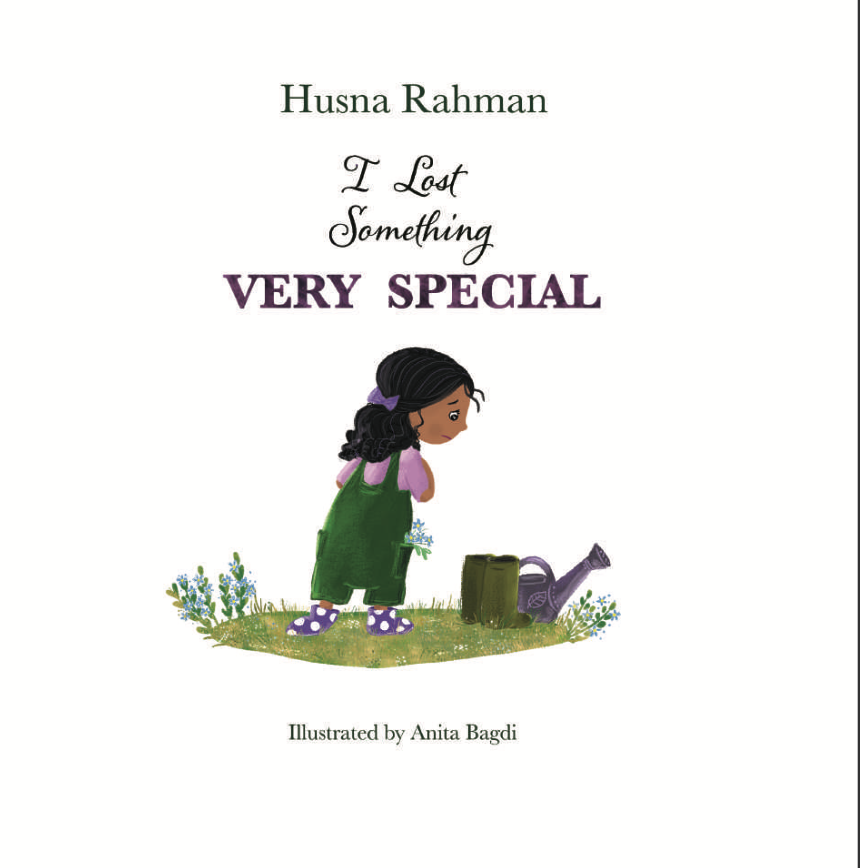
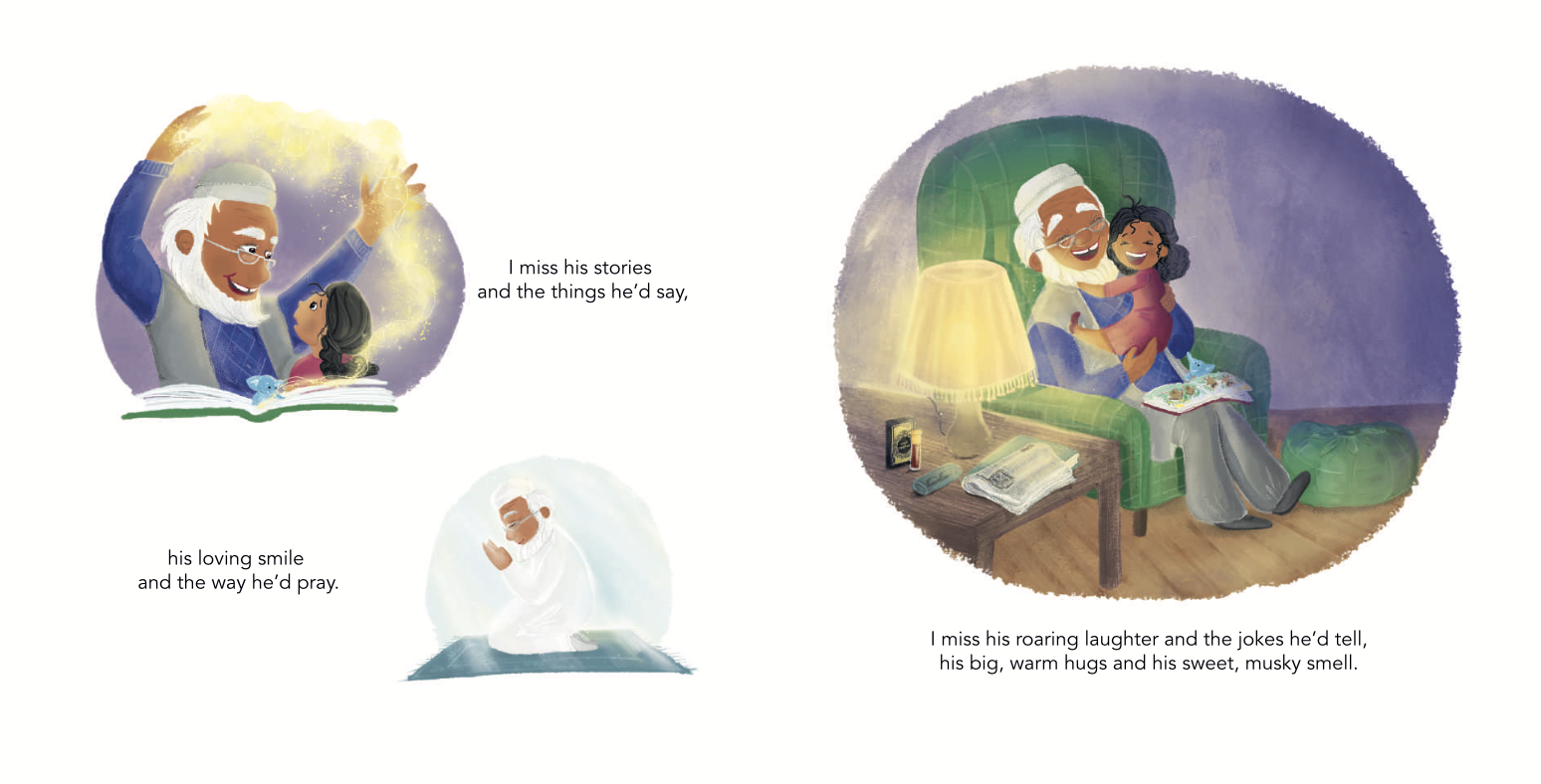
This beautifully illustrated 34 page story about the loss of a beloved grandfather is universal and heartfelt.  It is not an Islamic fiction book as there is no mention of the duniya or akhira or accepting Allah’s decree, the family however, is visibly Muslim and it shows women in hijab and the little girl narrator praying salat with her now deceased grandfather.  Similarly, there are no cultural words or references in the text, but the illustrations show Bangladeshi culture, writing, and warmth.  The author is a psychotherapist and counselor, and all readers, young children and up, will benefit from the tenderness and emotion-filled paperback book.

Screen Shot 2021-11-04 at 11.08.58 AM

A young girl starts the book stating that she has lost something.  She recalls other things she has lost, a scarf, a toy, her voice, a tooth, and how after a while the item was found or it came back and she was able to carry on.  Today, however, is not the same, she has lost her grandfather, and he isn’t coming back, and she doesn’t know if she can carry on.

Screen Shot 2021-11-04 at 11.09.36 AM

She goes to his house, and he isn’t there, and the heartbreak is palpable.  She knows in time she will forget the lost scarf and lost voice, but she doesn’t want to ever forget her grandfather.  She finds some pictures and recalls him teaching her to ride her bike, them praying together, and planting a garden, his stories, his smell, his laugh, his hugs.

Screen Shot 2021-11-04 at 11.10.21 AM

As she assembles the pictures in a scrapbook, she is filled with memories and warmth and his wisdom.  The book ends with her seemingly coming to accept her new reality and then the book asking the reader if they have felt loss, what memories they carry, and what they miss the most about those that are gone.

Screen Shot 2021-11-04 at 11.10.01 AM

The sparse text and amazingly expressive illustrations make the book a beautiful addition to help children cope with their own feelings, and to learn empathy for others going through their own trials of loss.

Screen Shot 2021-11-04 at 11.08.18 AM