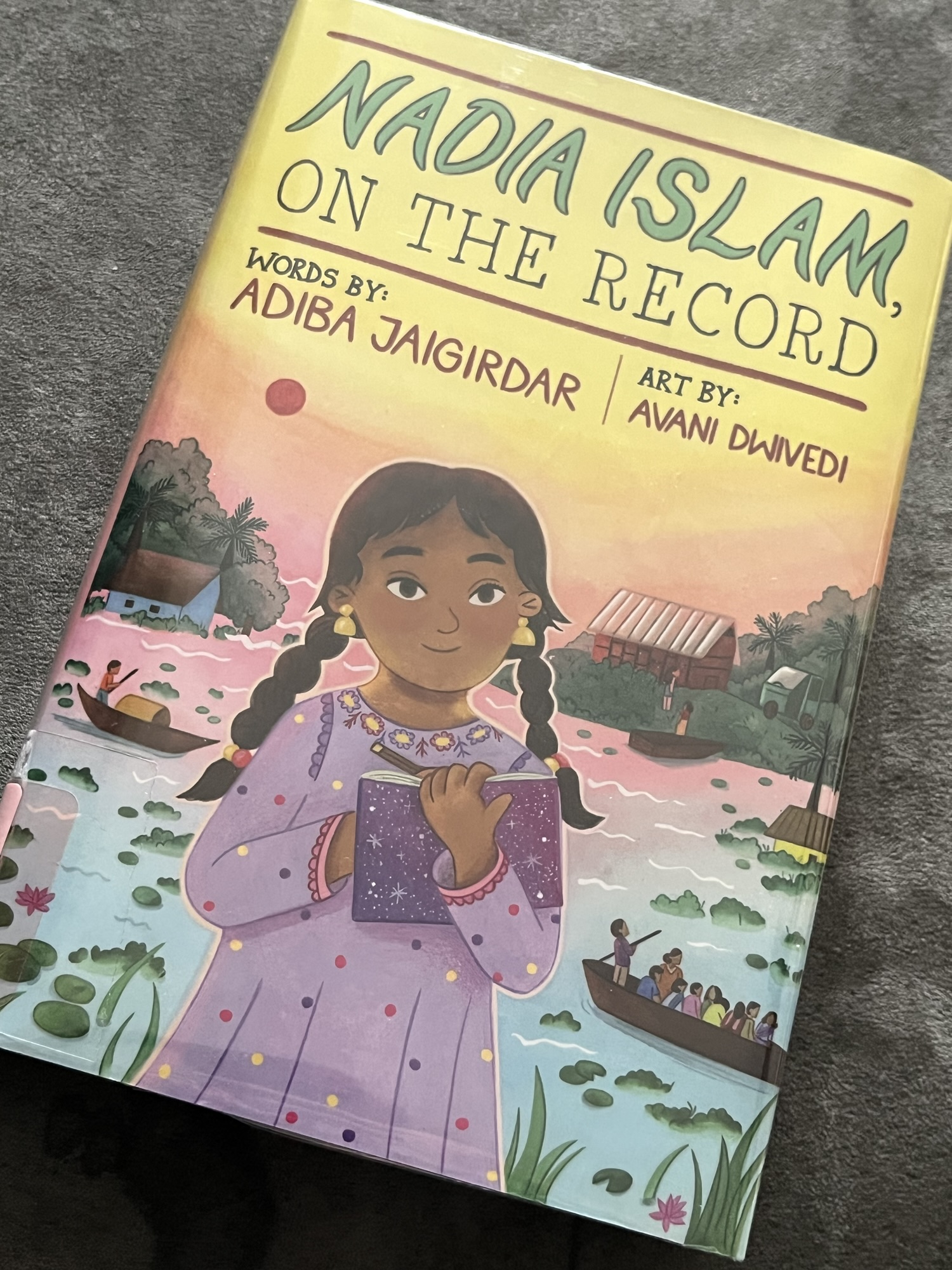
Tag Archives: charity

My First Book about Charity: teachings for Toddlers and Young Children by Sara Khan illustrated by Ali Lodge

Standard
My First Book about Charity: teachings for Toddlers and Young Children by Sara Khan illustrated by Ali Lodge

The newest board book in the My First Book series is a gentle and wonderful introduction to charity, both sadaqah and zakat. Sourced with ayats from the Quran, there is also backmatter that has Facts about Charity and Questions and Answers. I’m always amazed at how much information the series consistently contains in the 26 pages for our littlest Muslims.  With soft illustrations and smiling joyful faces, each page radiates warmth, information and simplicity in a way that grows with toddlers, to preschoolers, to early elementary aged readers, alhumdulillah.

The book starts with affirming that Allah has given us more blessings than we can count, and some of us have more than others.  To help those that have less, Allah wants us to give charity.  The book briefly explains that Zakat is one of the pillars that is required, and sadaqah is an extra reward that is not just money.

It talks about the sunnah of giving charity, and numerous ways that kindness can be carried out.  It shows respect and helping and concludes with Allah’s names of All-Knowing and All-Hearing before the final supplemental spread.

I don’t know how many books are planned for the series, but I love looking at them all lined up.  I share them with my own children and now that there are accompanying puzzles and a boxed set, I’m positive I’ll continue gifting them, not just to new parents as I’ve done in the past, but to toddler and preschoolers as well.

Sami’s Special Gift: An Eid al-Adha Story by M.O. Yuksel illustrated by Huseyin Sonmezay

Standard
Sami’s Special Gift: An Eid al-Adha Story by M.O. Yuksel illustrated by Huseyin Sonmezay

img_5215-1

This sweet 32 page story, blends themes of loss, grief, giving, homelessness, Islam, Eid al Adha, and joy with simple early reader level text and beautiful illustrations. The book never gets preachy and doesn’t other, making it a great addition to all shelves, everywhere. There is information about Eid al Adha and what a homeless shelter is in the backmatter along with a glossary that explains, Islamic and Turkish terms.

Sami loves Eid and celebrating at the carnival with Dede, his grandfather, but this year, Dede is not there, and Sami is sad. When a package from Nene arrives from Turkiye with Dede’s favorite sheep decorated Eid tie for Sami, things start to look up. Sami never wants to take it off, and even wears it over his new Eid clothes as they head to the mosque for prayers. After salat and before the carnival, the family visits a local butcher and picks up meat to take to the homeless shelter.

Sami has never been to a homeless shelter and has only heard of his parents going and helping there. He asks his parents about it on their way and once they arrive heads off to play ball with a boy, as his sister shares her doll with a little girl. When it is time to leave for the carnival, Sami imagines what the his life would be like if he lost his home and belongings, and makes a decision, knowing exactly what his Dede would do.

img_5218-1

I love how the book weaves in information about Islam by having the family praying, listening to the imam, wearing new clothes, and giving in charity, without pulling out of the story. Same for the Turkish cultural inclusions of food and words. I also like that in the illustrations the mom wears hijab when out of the house, but not inside. It all comes together smoothly and is unapologetic, even while handling the sadness of his grandfather no longer being with him, the empathy at the homeless shelter, and joy at the carnival.

My only concern is when it says both in the text and in the backmatter that meat is given: one third to friends, one third to family and one third to the poor. I don’t know that it is wrong, but to clarify you keep one third for yourself (and family), and distribute one third to friends, and one third to the poor. Additionally, I also know a lot of people might not love the illustration style, but the picture of them in the mosque, won me over.

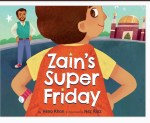
Zain’s Super Friday by Hena Khan illustrated by Nez Riaz

Standard
Zain’s Super Friday by Hena Khan illustrated by Nez Riaz

img_9576

I love the joy and normalizing of mainstream titles celebrating salat, Jummah, and the masjid becoming increasingly available for us to read and share.  This particular book is great for preschool to early elementary aged children that enjoy going to the masjid, but sometimes want to put on a cape and be the hero battling aliens, that know how to behave during salat, but sometimes have a hard time sitting still, and parents that want to play with their kids, but sometimes have to get some work done first.  With  threads of patience, kindness, and determination woven in to masjid activities, the book is both a mirror for Muslim kids and a window for those that wonder what a Friday prayer service looks like.  The 32 page book is unapologetic, joyful, and a great addition to book shelves.

img_9578

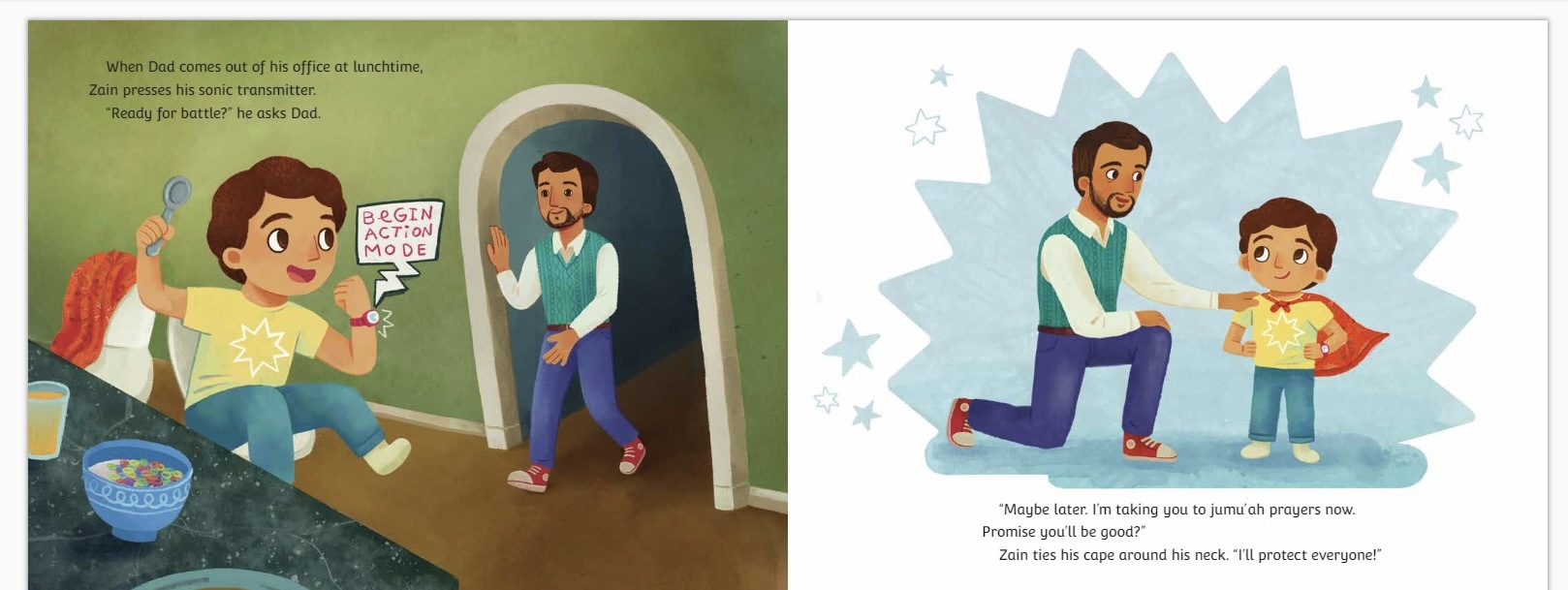
Zain wakes up early Friday morning and is ready to save the world. Dad greets Zain with a “Jum’uah Mubarak,” but has to pass on battling the aliens taking over the kitchen.  At lunchtime, when dad takes a break from work, Zain tries again to engage him in heroic play, but it is time for Jum’uah.  Zain slips on his cape and vows to protect everyone.

When they get to the mosque, aka command central, Zain tries again, but dad redirects him to make wudu before salat. Heat action dries his feet, but the adhan starts and giant shoes and aliens will have to wait, yet again.  During the khutbah, wiggly Zain sits by his dad, but when the Imam encourages them to stand for salat and fill any gaps, Zain takes it as a call to duty and races to the front announcing, “Here I come, Commander Imam, reporting for duty.”

The kind Imam knows just what to do, and as Zain controls his focus, even dad finds time to be a hero and battle the aliens on this super Friday at the mosque.

img_9580

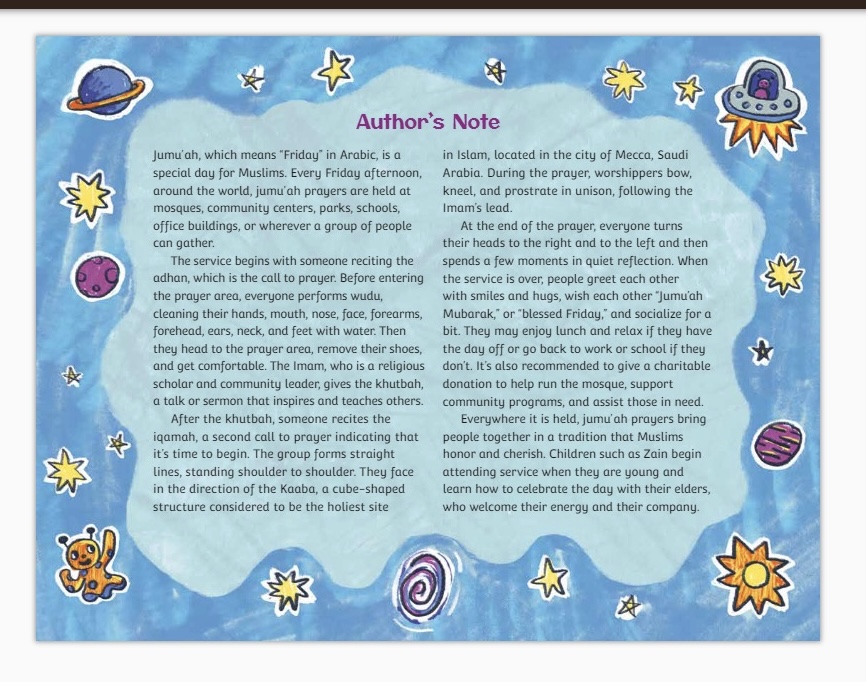
I love that wudu, athan, khutbah, Imam, are all used without a glossary and that the Author’s Note is informative and unapologetic in tying it all together and making the terms clear.  I wish masjid was used instead of mosque, but I know that is just my personal preference.  I love that the Imam is kind and the dad is gentle and playful.  Even when Zain is not getting to do what he wants, he is not unhappy with being at Jumuah, or making salat, or being redirected, he just wants to indulge his imagination.  The warmth and joy of the illustrations reinforces the tone of the book, and with the inclusion of charity, and the happy ending, I can’t wait to have a physical copy of this book in my hands.

The book releases on October 10, 2023 and can be preordered/ordered here on Amazon and I’m sure will be available once released at Crescent Moon Store, where my initials ISL at checkout will always save you 10%.

img_9582

Nadia and Nadir Eid Surprise by Marzieh A. Ali illustrated by Lala Stellune

Standard
Nadia and Nadir Eid Surprise by Marzieh A. Ali illustrated by Lala Stellune

img_7058

This is another holiday book in the Nadia and Nadir series for early readers, this one focusing on Eid al Fitr, but also celebrating Muslim American athletes Ibtijaj Muhammad and Muhammad Ali, sadqa, and the love of grandparents.  The 32 page book with four chapters shows Desi American siblings enjoying both their Pakistani and American cultures while consistently embodying their Islamic faith.  They pray salat, wear hijab, discuss sadqa, and say Salam and Eid Mubarak.  I am not sure why they pray Eid prayers at home, and not in a community congregation, no it is not a Covid set book, they then go to the mall, but the pride in their faith, culture, and family is enjoyable.  Early readers will enjoy the colorful pages, large illustrations, and relatable story situations.

img_7062

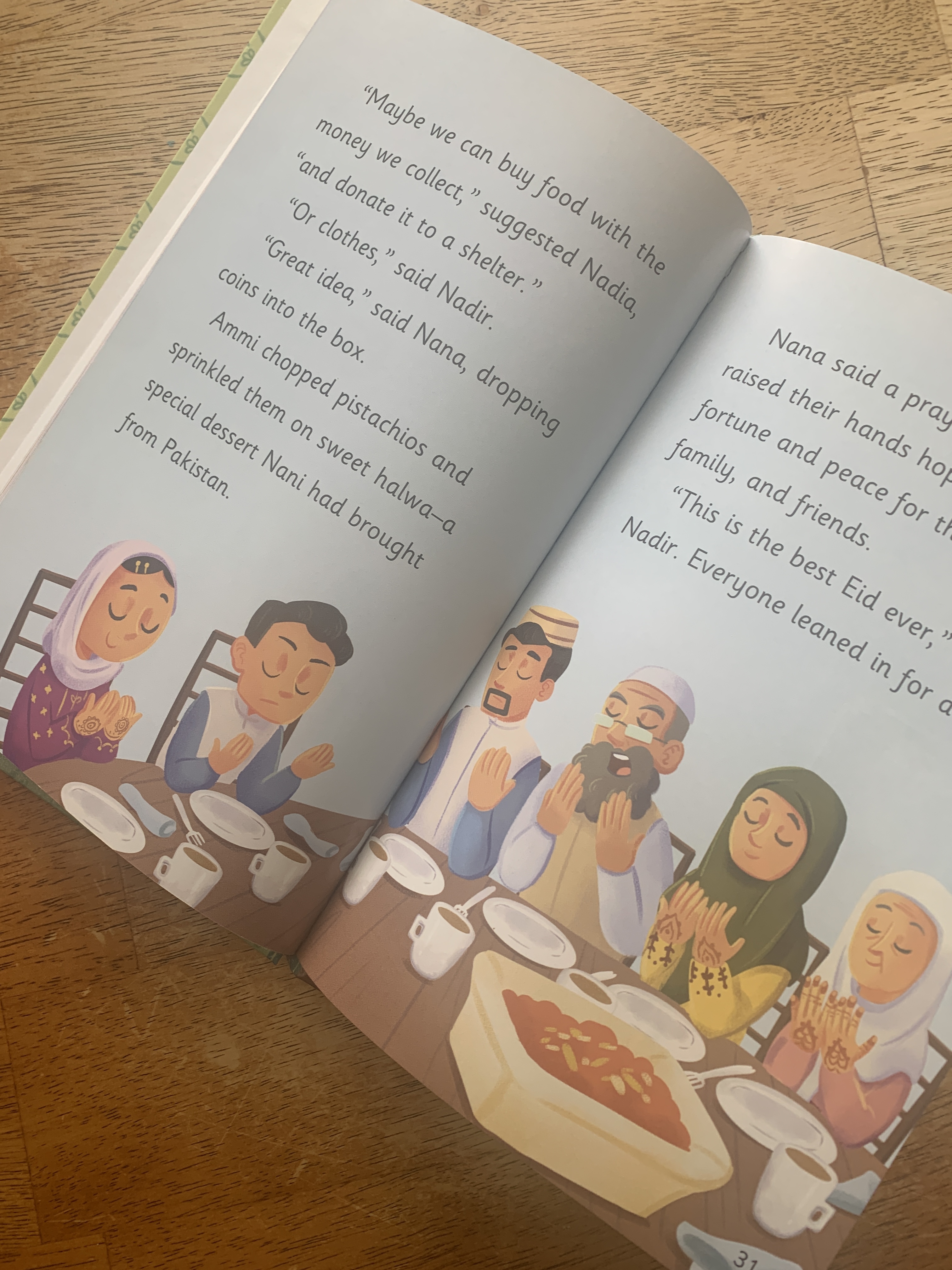
The book starts with the siblings hearing laughing downstairs, then seeing suitcases, and being surprised by their Nani and Nana coming from Pakistan to surprise them on Eid.  The family eats paratha and chai together before praying and making duas.

img_7061

After presents are passed out, the kids receive eidee and are off to the mall to pick out a toy.  Nadia sees an Ibtihaj doll, and Nadir points out that she is wearing a hijab just like his sister.  Nadia recognizes her and shares some facts since she has read her books.  Nadir wonders if Ibtihaj knows it is Eid and the family reassures him that Muslims everywhere in the world are celebrating.

img_7060

When it is Nadir’s turn to choose what to buy, he picks some boxing equipment with marketing images by Muhammad Ali.  Nana fills him in on the activism and accomplishments of Ali and how impressive his fearlessness really was.  When the change is given after paying, the kids and their grandparents discuss sadqa, charity, and this gives Nadia an idea.

The book concludes with a glossary of new words and information about the illustrator and author.  You can purchase your copy at all major retails such as here at Amazon, or you can support small business owners like Crescent Moon store and purchase your here.

The Adventures of Adam and Anisah: The Golden Trail by Zahra Patel illustrated by Reyhana Ismail

Standard
The Adventures of Adam and Anisah: The Golden Trail by Zahra Patel illustrated by Reyhana Ismail

img_6818

This third book in the Adam and Zahra series, also available with a workbook, focuses on zakat and can be read alone.  Aimed at toddlers to early preschoolers, this rhyming story can also work at story time with slightly older kids as a reminder of zakat and giving to those in needs.  The book has very minimal text and as a result if you overthink it, it could be slightly problematic: there is magic, they are taking and giving something that doesn’t belong to them, Zakat is a portion of your wealth not sharing something you found-even if a note says otherwise.  I think the book is sweet though, and the discussions to have with little ones outweigh the adult concerns I’ve mentioned. It touches on giving to others, on people in need, of people in need living very close to you, that everything being a gift from Allah (swt), it shows siblings working together, sharing, generosity, a lemonade stand for Yemen, giving of food and money, and befriending others.  I think if you liked the other books in the series regarding a “magic” pray rug and a fasting shield, both mentioned in this, you will like the presentation of sharing and the term zakat presented in a similar fantasy laced manner; if those books felt uncomfortable for you and your family, this one probably will as well.

Adam and Anisa start the story in Ramadan, a week before Eid, digging in the sand at the beach.  Adam finds a treasure box and a message in a bottle.  The treasure box is locked and the message says that “My name is Zakat and I’m for someone in need…”  Once the kids get the box home and the lock off, a beam of light shines a path for them to follow.

img_6821

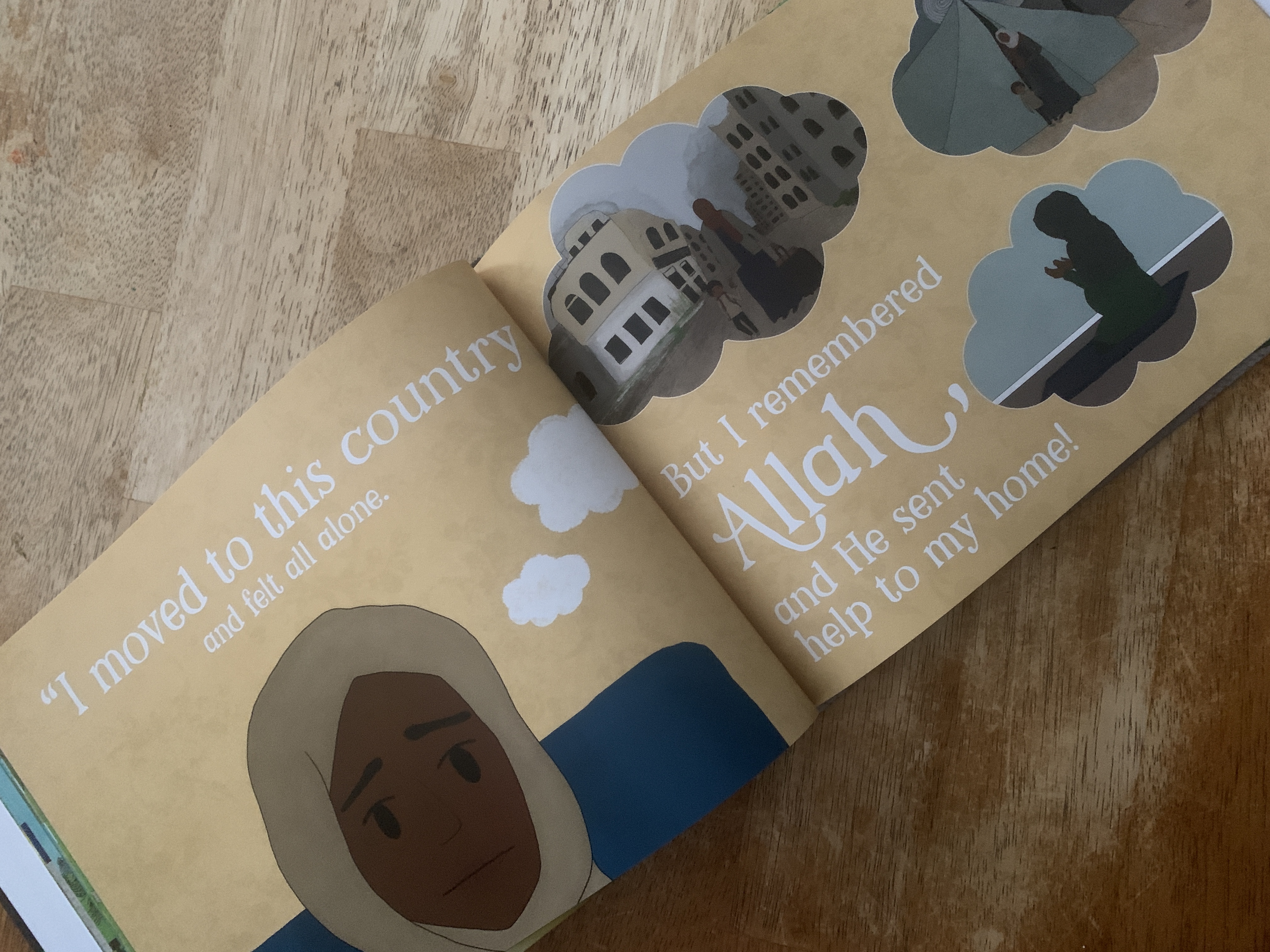
They follow the light out the door and through the field, and past the mosque and their friends, along the way they purchase a pie from the bakery for when they break their fast and keep following the light to the field as the sun starts to set.  They find a house in the forest with a mom, a baby, and a little boy, to whom they give the money and the pie. They learn that they had moved to this country and were all alone, but Allah swt provided for them, and He is never far. They all break their fast together and learn that “Whenever you give, Allah will give you more.”

img_6822

The backmatter of the book contains Context to the Story, Developing Character Strengths, Learning through Practice and a map of their adventure.  I purchased my copy from Crescent Moon Store here and if you use my initials (Islamic School Librarian) ISL at checkout you will save 10%.

img_6823

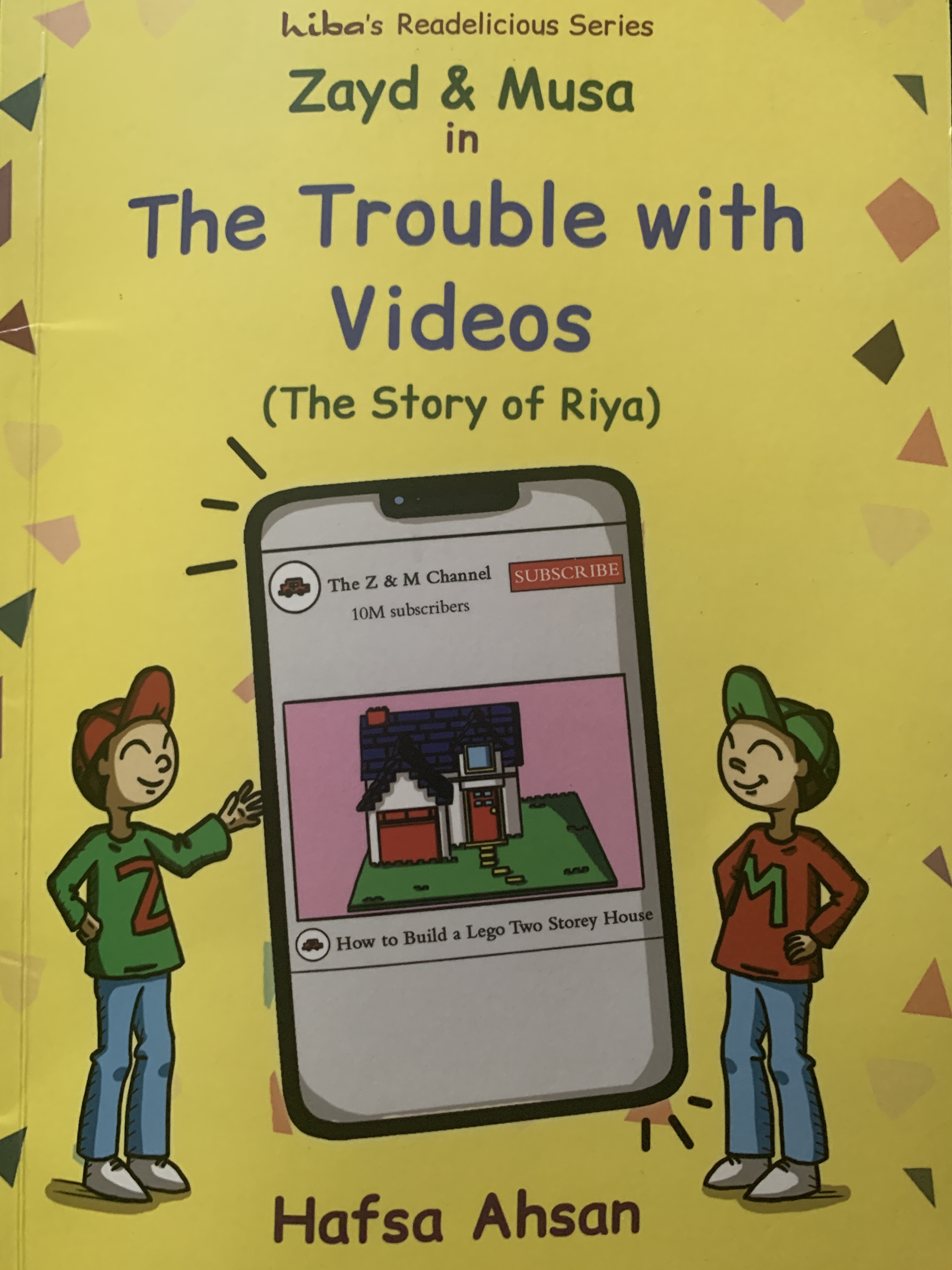
Zayd & Musa in The Trouble with Videos (The Story of Riya) by Hafsa Ahsan illustrated by Yusra binte Absar Kazmi

Standard
Zayd & Musa in The Trouble with Videos (The Story of Riya) by Hafsa Ahsan illustrated by Yusra binte Absar Kazmi

img_2466

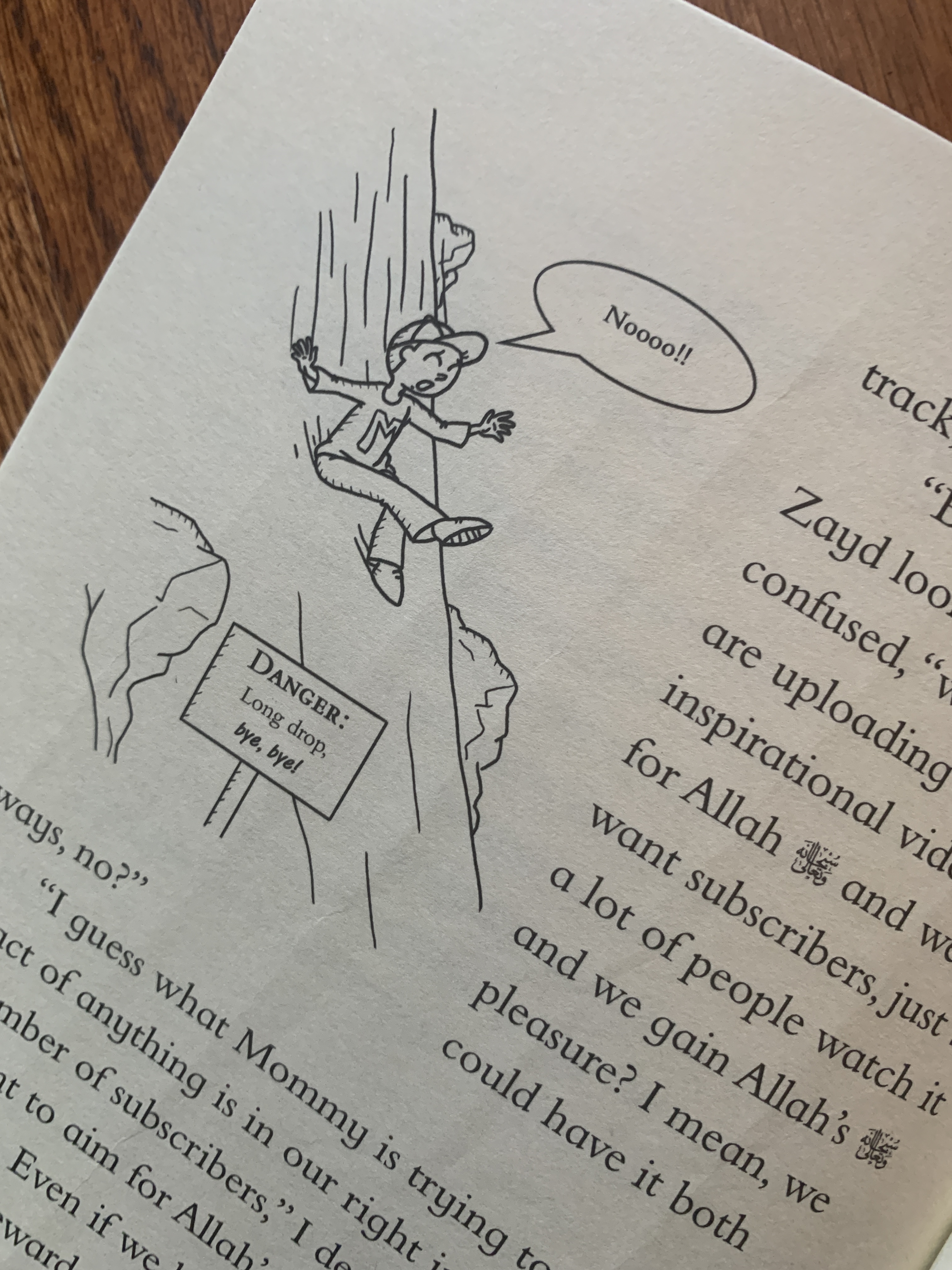
This illustrated 64 page Islamic fiction chapter book is meant for early readers, but it was a good reminder for me as well.  Tackling the rarely covered topic of Riya (to do good deeds only to be seen by others), the book has been checked by a religious scholar (and his name included), features Quranic references at the end of the story, and the book is entertaining, relatable, funny, and adorably, albeit simply illustrated, by a child no less.  Like the first book in the Hiba’s Readalicious Series, there are a few grammar errors, and the Mommy/Daddy references read childish, but the story has interest, heart, humor, and both myself and my children found the book engaging on its own while also lending itself to worthwhile discussion around the dinner table.

SYNOPSIS:

Twins Zayd and Musa don’t have a smart phone and their friend Isa not only has one, but also has a YouTube channel.  Isa’s desire for likes and followers gives Zayd and Musa a variety of feelings, and with the context of their involved parents, friendly neighbor, and their own conscious, they learn about riya, and that often things in life are not just good or bad, but one’s intention that matters.

The illustrations not only illustrate the text, but also include talking bubbles with additional comedy or facts about screen usage, internet availability and study results as pertaining to the topics raised.

WHY I LIKE IT:

I love that the topic isn’t just handed down from the adults in the story, the boys and their point of view flesh it out and make it so the reader will actually understand the concept and hopefully recall it later in life.  The humor makes it relatable and the lessons while preachy, it is that type of book, are not presented as good/bad, right/wrong, it shows different scenarios, and how we all must constantly check our intentions, not just the “antagonist” of the story.

FLAGS:

None

img_2462

TOOLS FOR LEADING THE DISCUSSION:

The book lends itself to discussion with older children than the intended audience.  While the book is meant for say a six year old, the discussion using the examples in the book, at least for my children, was much more relevant to the middle schoolers.  Naturally, teaching early readers about intention is still a valuable lesson, but I’d encourage 10 and up to also read the story, so that discussion from their perspective can occur.  It is an easy read for older kids, but a beneficial one- just give them a heads up that the kid parent relationship is notably cringe and babyish, the lessons however are food for though.

Mr. Men Little Miss Happy Eid by Roger Hargreaves

Standard
Mr. Men Little Miss Happy Eid by Roger Hargreaves

mr men

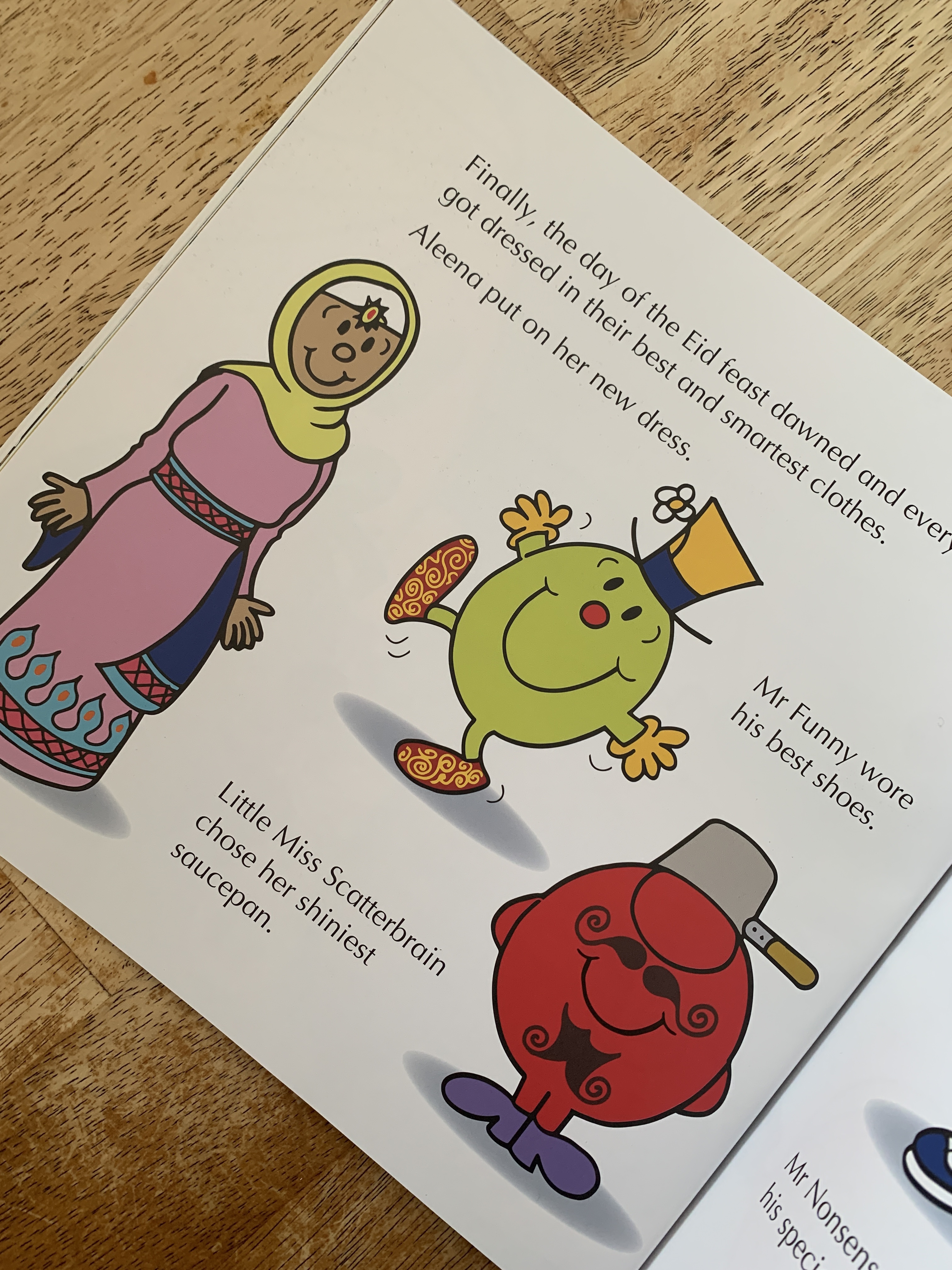
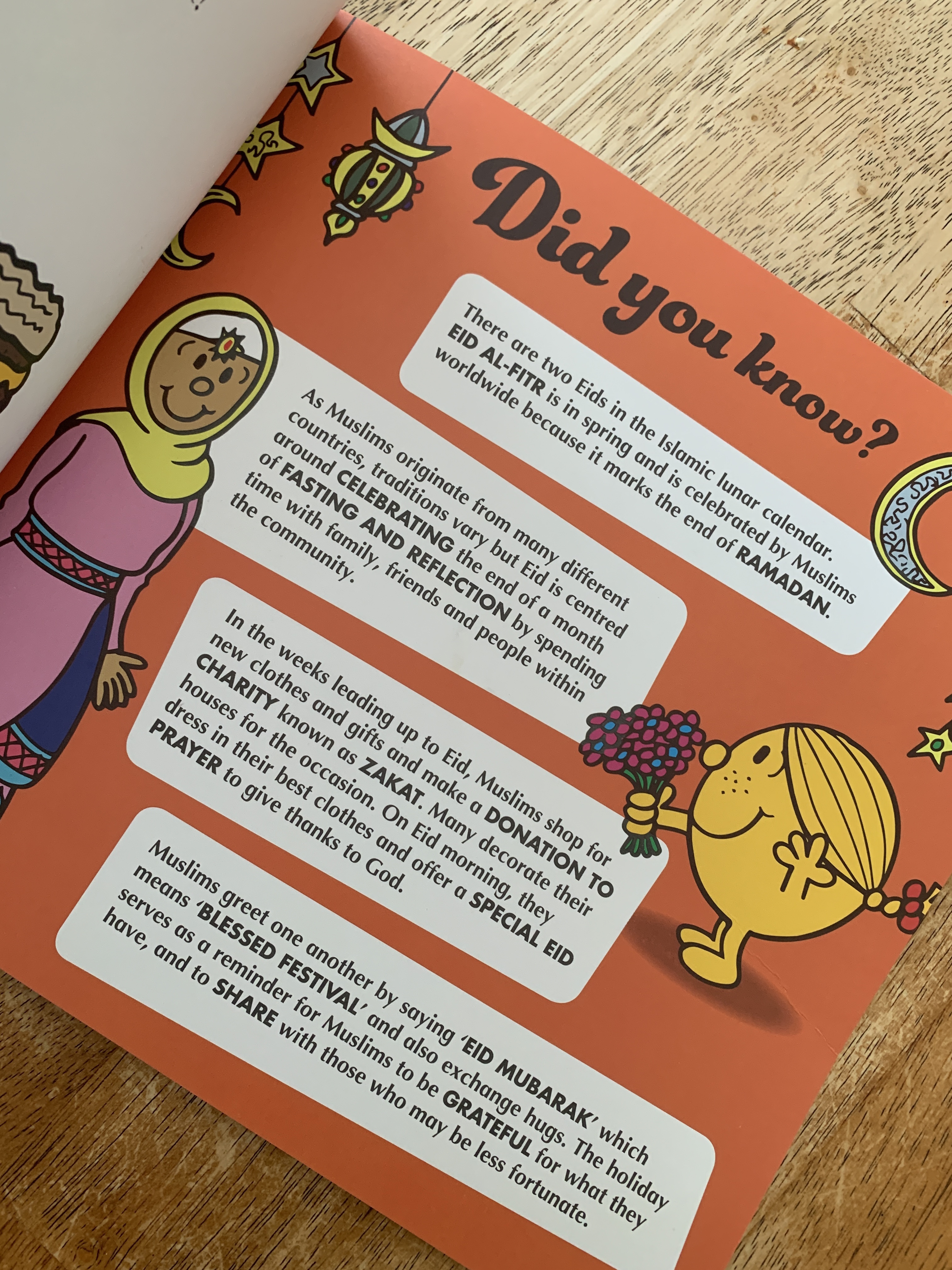
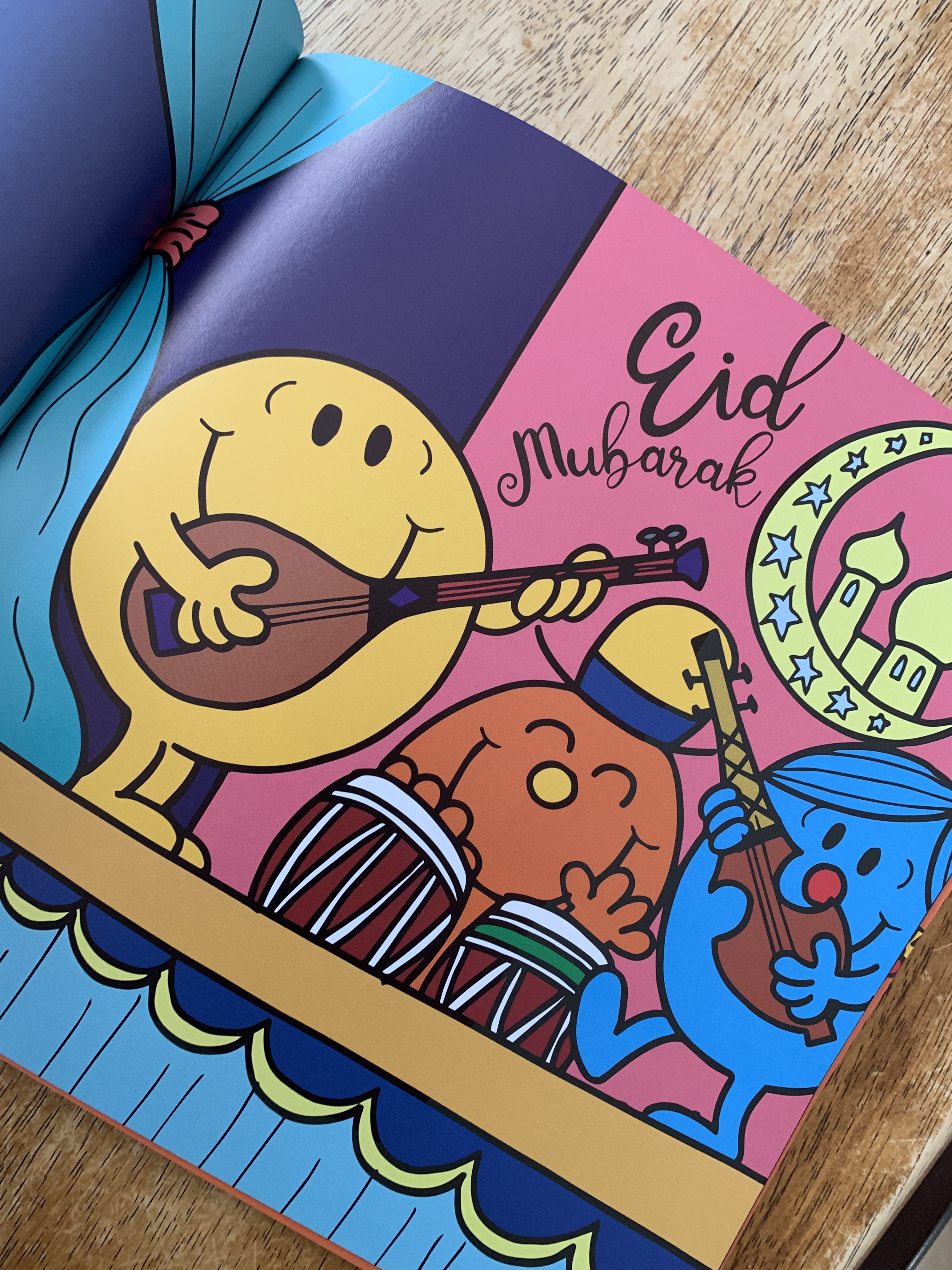
The nostalgic cast has reassembled recently, and now have an Eid title available.  Whether you grew up with Mr. Men and Little Miss or have never heard of them before, this book covers the basics of an Eid day celebration with (familiar) characters such as: Mr Greedy, Mr Bump, Miss Splendid, Mr Funny, Little Miss Scatterbrain and more.  The characters’ friend Aleena is fasting for Ramadan, the colorful crew help her to plan, and finally they all join in for the celebration.  The 32 pages are silly and random at best, but with a little discussion to help bridge the British to American English (if needed) ages three and up will enjoy the funny characters, seeing Aleena in hijab, and relating to the activities mentioned.  I love that generosity and forgiveness are included in the messaging, but was really irritated that a musical band is how they celebrate Eid night, and that Eid is compared to Christmas with gift giving.  The book is not written by a Muslim, so perhaps I should be forgiving about the Christian holiday comparison, but why write a book about Muslim joy, if you won’t let the Islamic holiday be enough on its own?  Thank you to Shifa @Muslimmommyblog for gifting me this after making fun of me for being old!

img_9333

Mr Greedy’s friend Aleena is fasting, and Mr Greedy breaks his fast nearly every hour so he is helping her.  Little Miss Inventor is out with her telescope and sees the moon, it is time for Eid.

img_9334

The days before Eid had been spent cleaning and decorating with the help of Mr Rush and Mr Bump.  They weren’t very helpful.

img_9337

Ramadan is also a time of generosity.  The football club receives donation, but what will they do with Mr Silly’s grandfather clock donation.

img_9336

Aleena puts mehndi on and is smart enough to not let Little Miss Naughty help, Little Miss Scatterbrain was not so wise.

img_9339

They all get dressed up, they give each other gifts, and share a meal. They then all settle arguments and forgive each other.

img_9338

Finally, they head to an Eid fair in town and eat treats while they watch a music show.  The book concludes with some factual information about Ramadan, Eid, and Zakat.

Title is available on Amazon.

Zahra’s Blessing by Shirin Shamsi illustrated by Manal Mirza

Standard
Zahra’s Blessing by Shirin Shamsi illustrated by Manal Mirza

Screen Shot 2021-11-18 at 11.57.45 AM

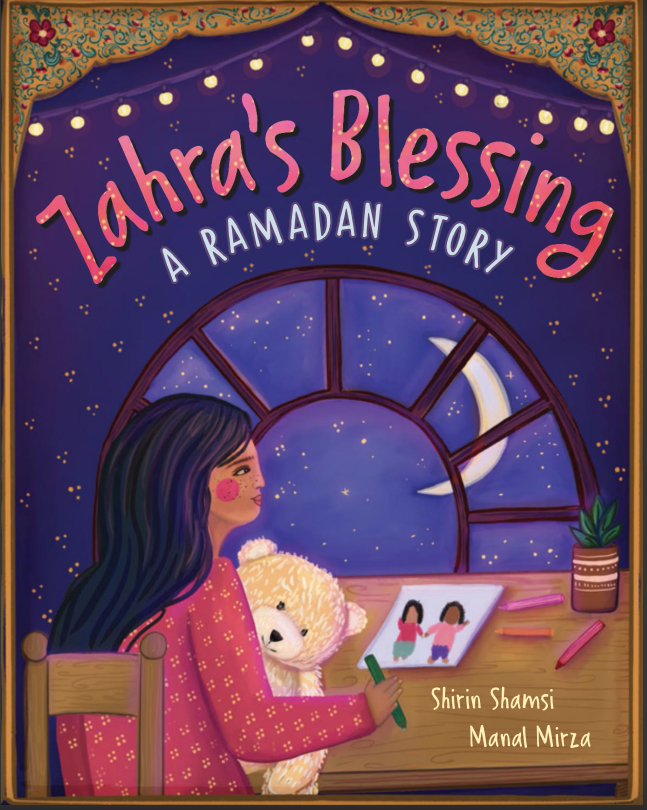
Just when you think all the Ramadan stories have been told, you flip open a new book, hold your breath as the stage of predictability is set, and alhumdulillah in this case, you squeal with delight when the big reveal in a children’s book swept you up and surprised you too.  This 32 page richly illustrated story for elementary readers is heartfelt, culture rich, informative, and embracing.  The book doesn’t dwell on the details of Ramadan, fasting, and Eid, but intentionally focuses on some of the feelings, blessings, and acts that make the month extra special.

Screen Shot 2021-11-18 at 11.58.04 AM

Zahra looks up at the Ramadan moon as she hugs her teddy bear and sends a prayer up asking for a little sister. The next day Mama is packing up beloved clothes, and ones that the family has out grown to be donated.  They discuss giving without hoping for anything in return and once again Zahra asks her mama for a little sister. To which her mother lovingly replies that she should be patient.

Screen Shot 2021-11-18 at 11.58.11 AM

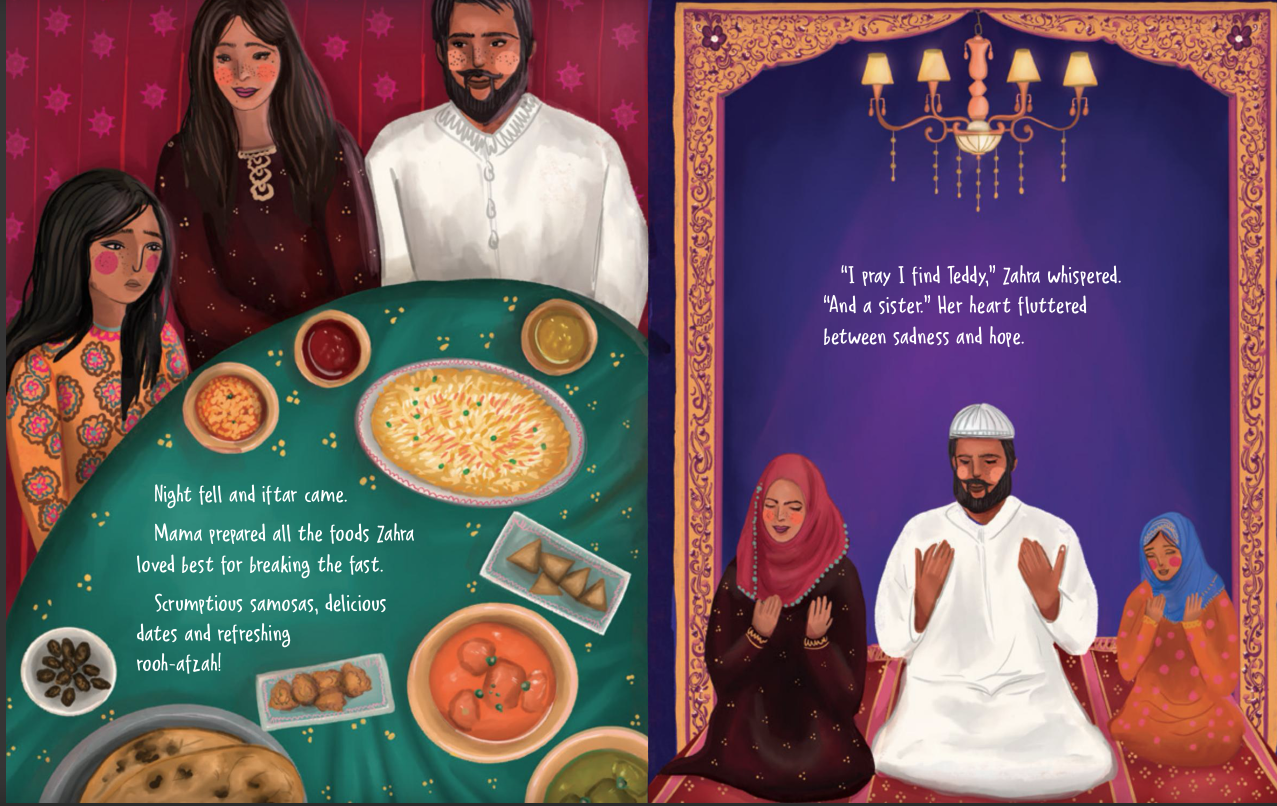
When Teddy goes missing, Zahra can’t help but think a little sister would help her find it.  Iftar that night are all of Zahra’s favorite desi foods and prayer after is her asking for a sister and Teddy.  The following day Mama and Zahra take the collected donation items to the shelter and Zahra realizes how sad she is about losing Teddy and these refugees have lost everything.

Screen Shot 2021-11-18 at 11.58.28 AM

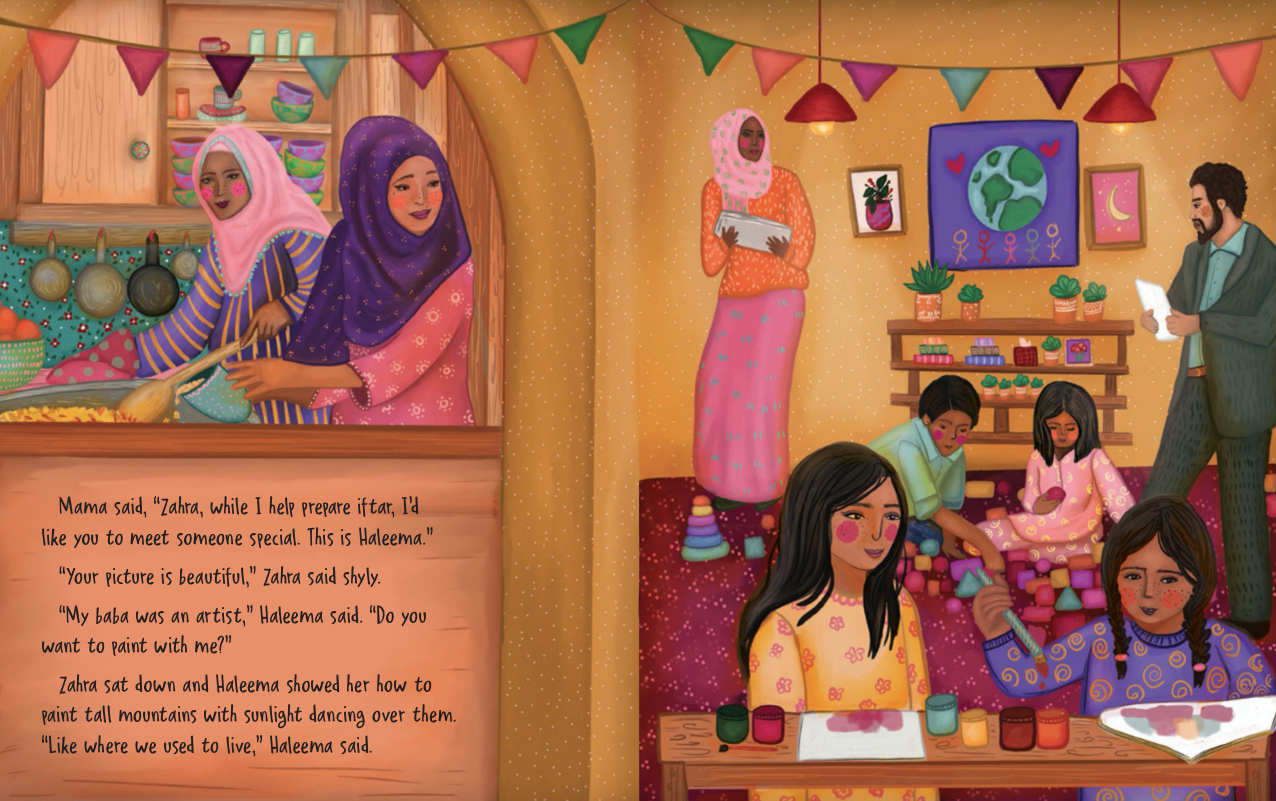
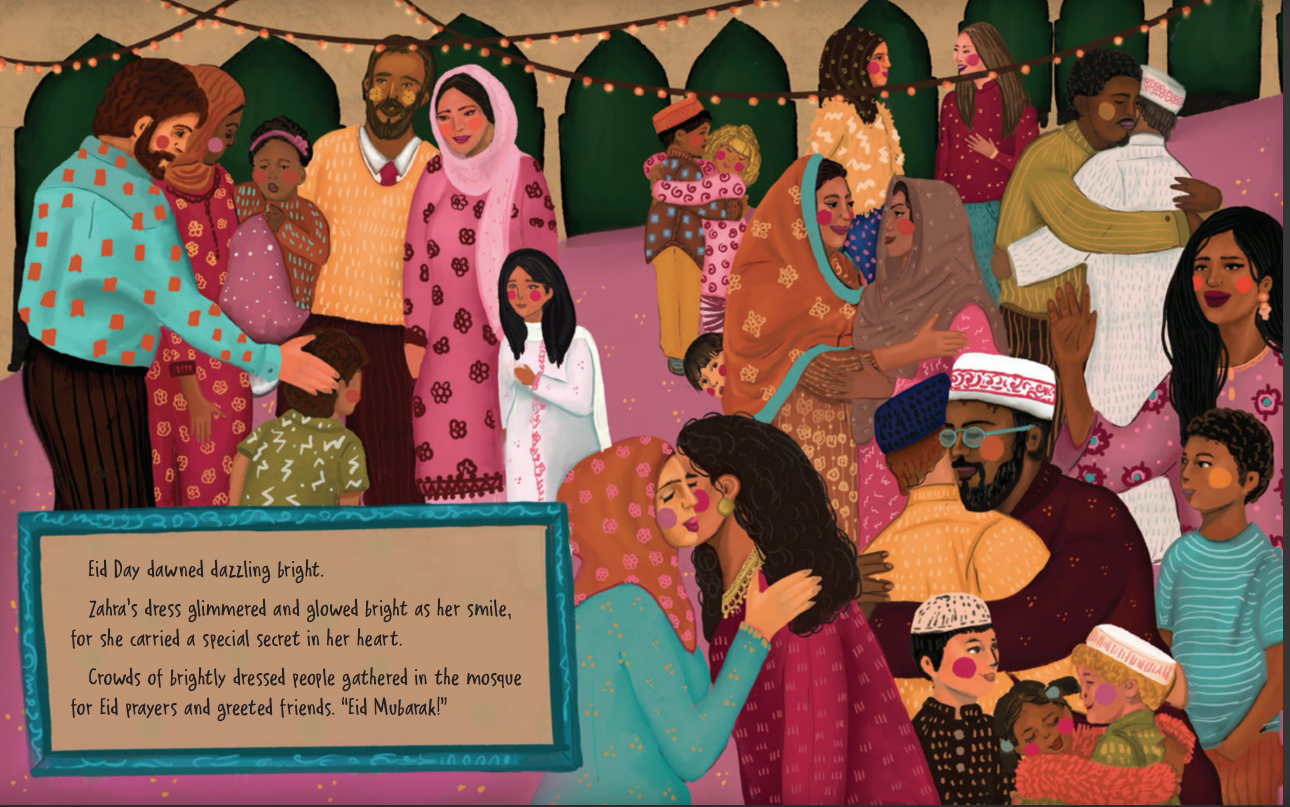
Zahra spends time with the children at the shelter and gets to know them.  She wishes she could find Teddy to gift to a young girl named Haleema.  Some days Ramadan crawls slow, and other days fast.  The family reads Quran together, fasts during the day and prays at night.  The night before Eid, Zahra’s dad whispers a secret to Zahra, one that she keeps close to her all through Eid prayers the next day.
Not going to spoil it, although I’m sure you can guess what is going to happen.  There are hints in the remaining illustrations, but I think kids will enjoy not having the heads up.  The book concludes with some informational blurbs and details about the Muslim author and Muslim illustrator.

Screen Shot 2021-11-18 at 11.58.35 AM

I enjoyed the illustrations, they are bright and bold and festive and unique.  They compliment the text completely as they show praying, reading Quran, making duas, etc.  The text doesn’t get preachy, it doesn’t even mention Allah swt or God, but talks of prayer and blessings.  The combination of the text and illustrations, however, definitely convey a strong unapologetic Ramadan/Muslim centered story.  Overall, it is universal and warm and sweet, and both Muslim and non Muslim children would benefit from reading it.

Screen Shot 2021-11-18 at 11.58.48 AM

My only concern is the page that the family is making dua together, it seems odd that they are all sitting in a line as if they have just prayed, but not prayed with the dad in front and the mom and Zahra behind. I read an electronic arc of the book and I look forward to purchasing a physical copy to add to my bookshelf.

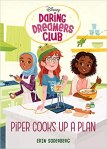
Daring Dreamers Club: Piper Cooks Up a Plan by Erin Sodenburg illustrated by Anoosha Syed

Standard
Daring Dreamers Club: Piper Cooks Up a Plan by Erin Sodenburg illustrated by Anoosha Syed

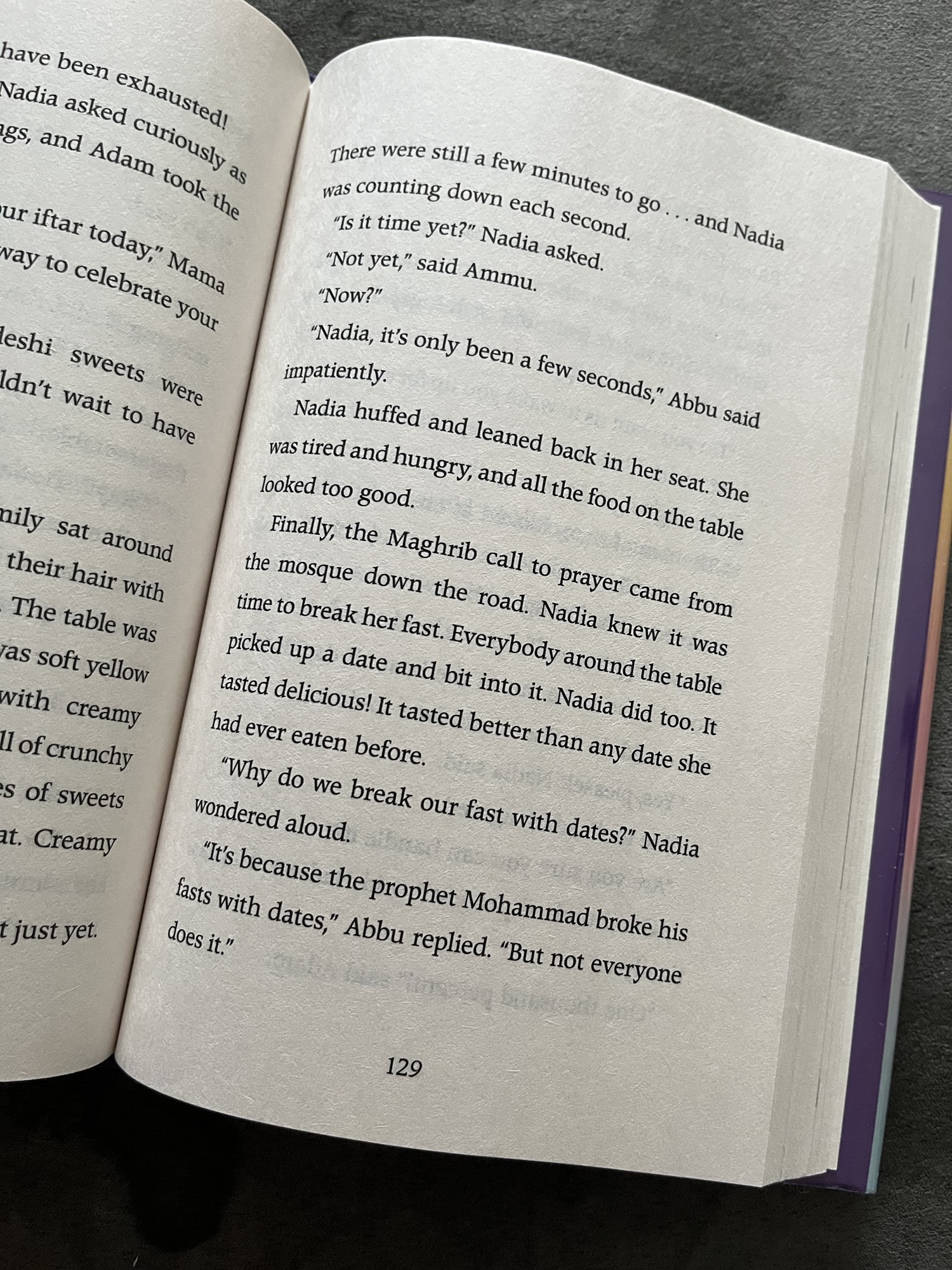
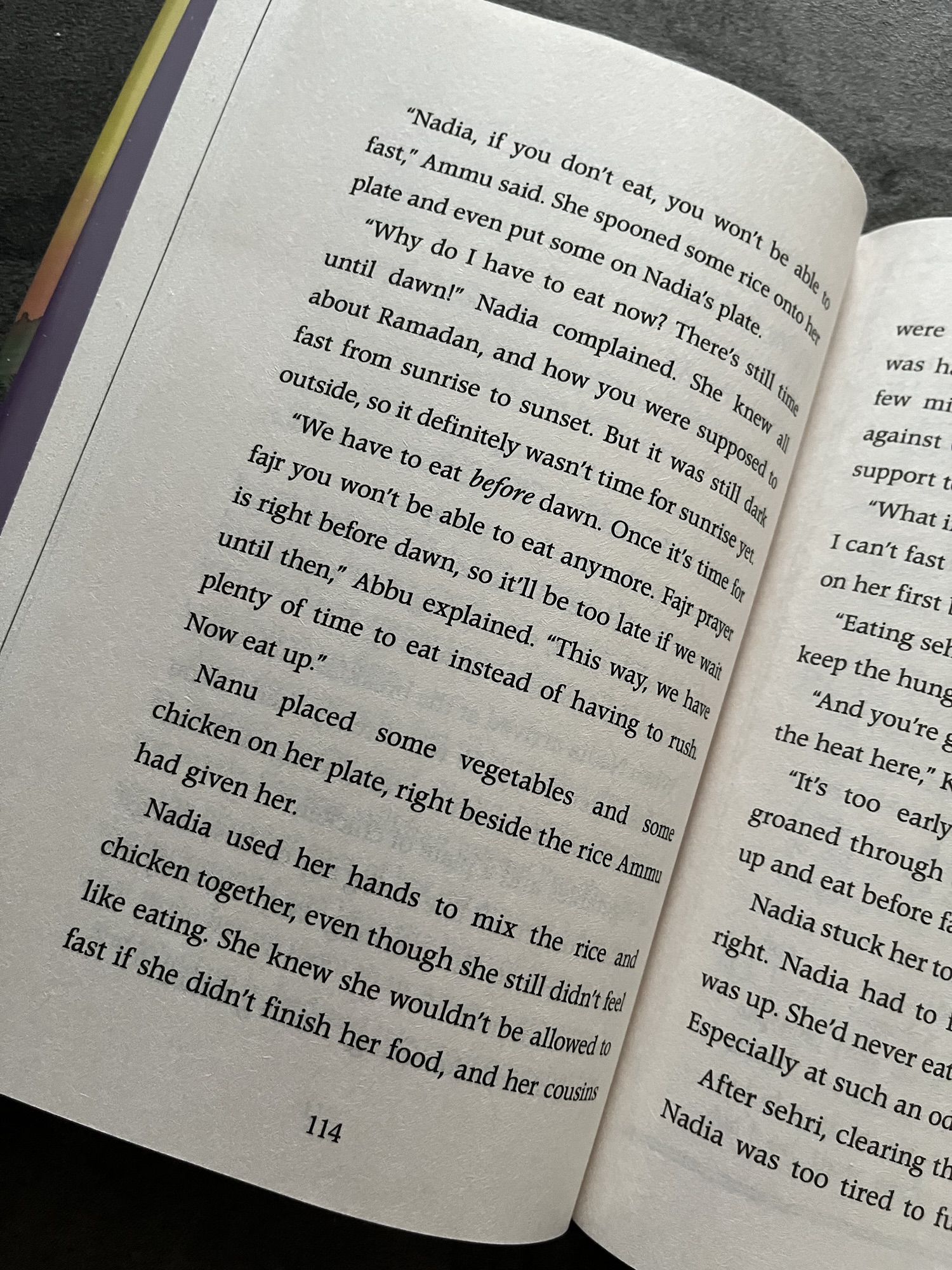
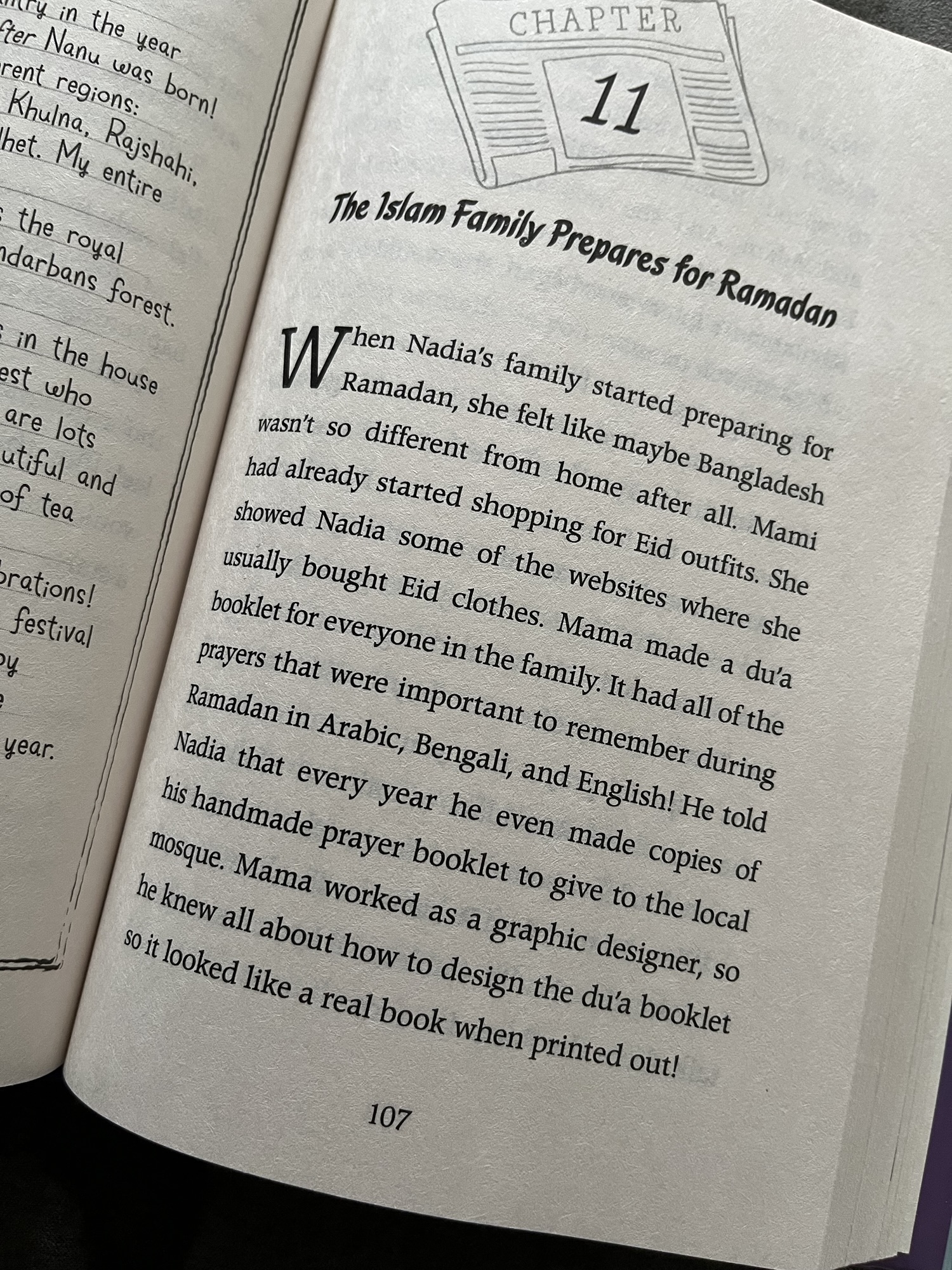
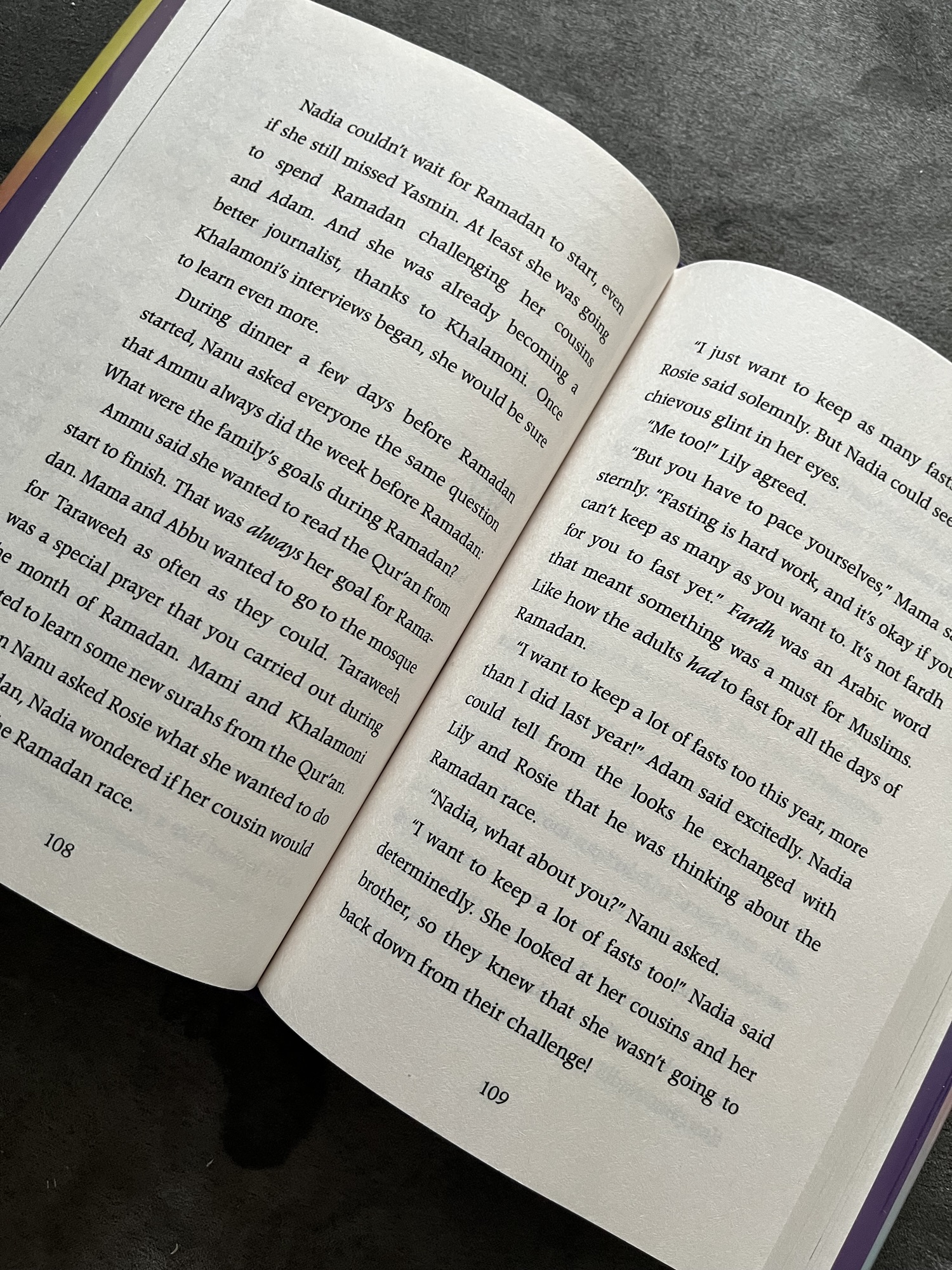
piper

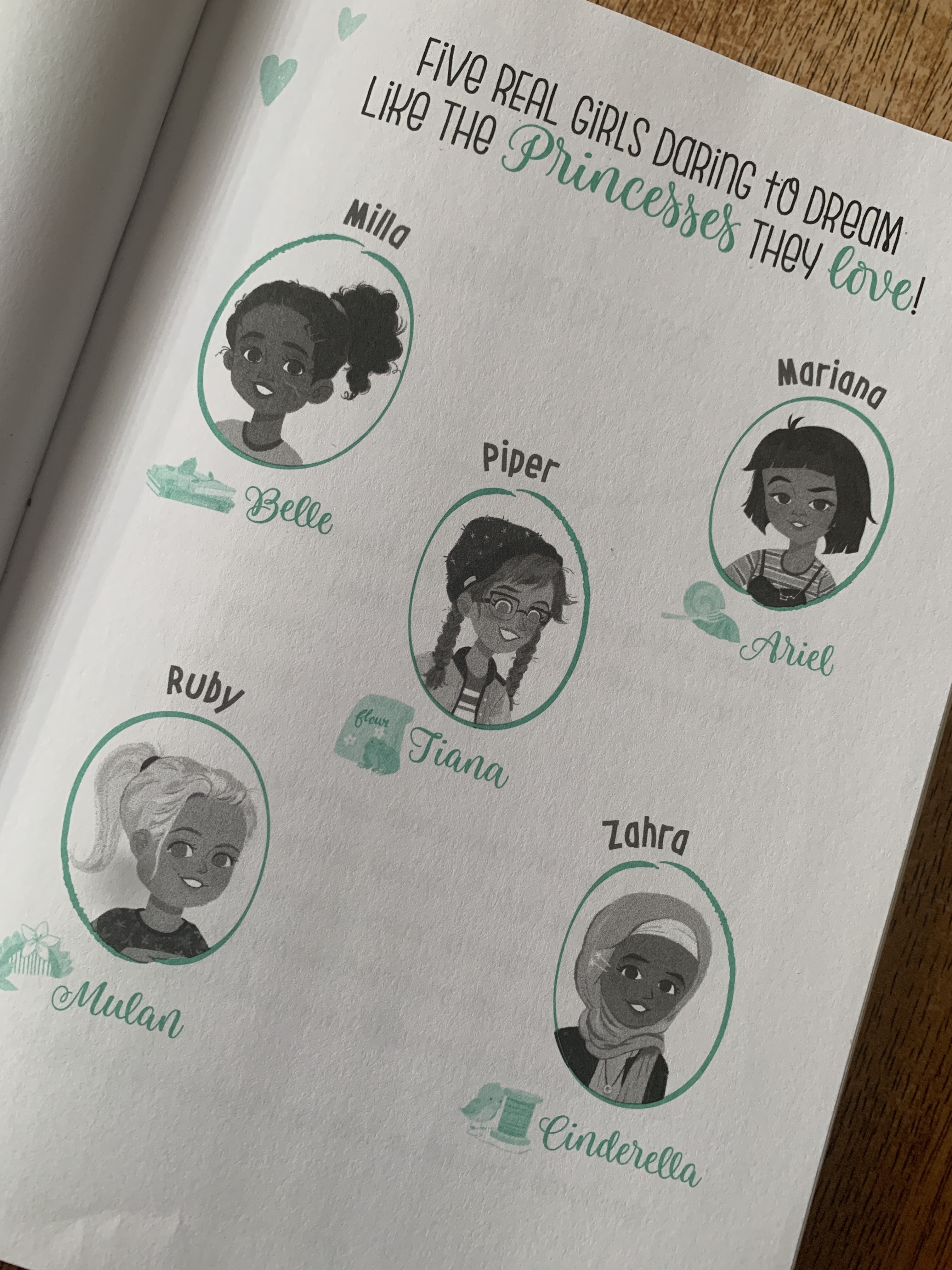
This is book two in the series, I couldn’t get the first book from the library, and I wasn’t willing to wait for the one that focuses on Muslim character, Zahra’s story to be published, it could be a few years.  At 224 pages this middle grades book is fairly formulaic with five diverse girls becoming friends, each book featuring one girl’s story with the others serving as supporting characters, and with the tie-in to Disney Princesses, I really didn’t expect much. Imagine my surprise when I found myself enjoying the characters and their lessons and struggles, sigh.  The book is sweet, the characters like-able, and the author really doesn’t try and force all the characters into every scene.  The book focuses on Piper and the other girls add to her story where it helps, they don’t all have equal time and it doesn’t get confusing because of it.  You can even read the books out of order.  Zahra wears hijab and her Islam is mentioned in a journal entry where she discusses the five pillars, the importance of charity, and getting dirty looks.  There is nothing preachy, but none of the other character’s are defined by their faith and I truly don’t know if I’m bothered by the singling out of Islam being her identity or flattered by it.

img_4279

SYNOPSIS:

Five girls are grouped together at school in an advisory class to help prepare them for middle school: Milla, Piper, Ruby, Mariana, and Zahra.  Their advisor loves Disney Princesses and in their weekly journal entries has them write about their assigned Princesses as they explore their similarities and how they would tackle challenges, face fears, and the like.  The girls are diverse in family dynamics, race, religion, ability, etc.  Milla is African American with two moms and food allergies.  Zahra is good at art, Muslim, and likes to sew.  Ruby is a twin, her parents are divorced and she is great at sports.  Mariana is hispanic, and is an amazing swimmer.  Piper is Jewish, has dyslexia and loves to cook.  In the book she is struggling with school, while she excels in her food science creations.  She gets accepted to appear in a kids cooking show competition, but will need the help of her Daring Dreamer friends to prepare for the challenges about to be thrown at her during the competition, and to help her from falling behind in school.

Each girl has their journal entry presented in the book which helps to understand more about the different girls, as well as a little bit of introspection to the events happening in the larger story.

WHY I LIKE IT:

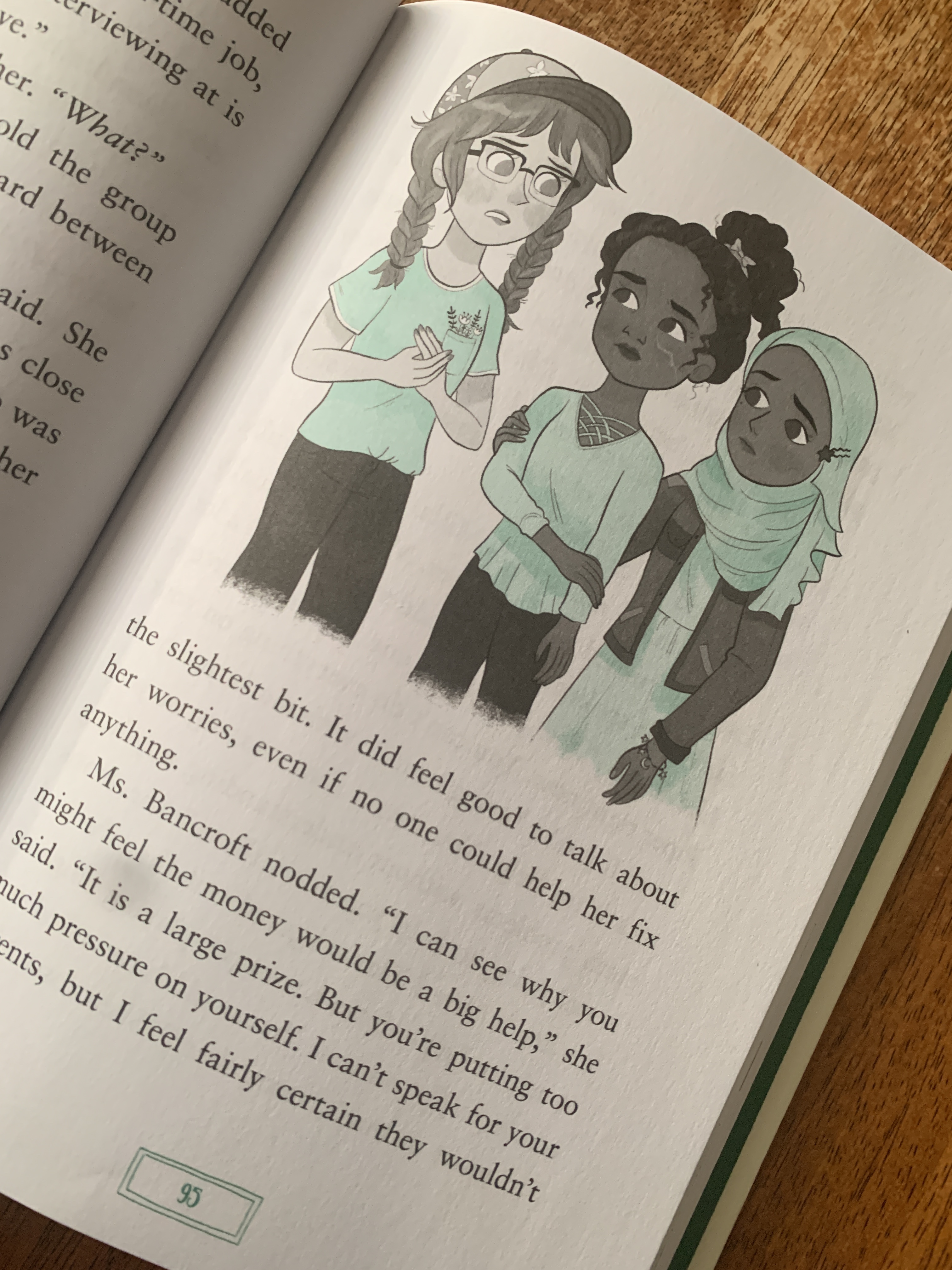
I like that the characters are really supportive, and the lessons aren’t so on the nose.  Piper isn’t just told that she doesn’t have to win the competition to have value, you feel it long before she accepts it herself.  Her personality really comes through and it isn’t for attention or for sympathy, she helps a competitor, there is no giant round of applause or moral reflection, she just helps.  I love that even though the story is Piper’s and her dream, there are larger issues woven in and felt, not necessarily preached. Piper is the middle child and feels she has to prove herself, she remarks on how being pulled out of class in early elementary school to get help has made it hard for her to ask for academic help now, the role of confidence and how charity and giving back is important, even while her own family’s financial situation isn’t clear.  I like the role of Piper’s siblings, they are quirky, but loving, and they work through their annoyances to help each other.  It is heartwarming.

I have my own mixed feelings about Disney Princesses, as a child of the 80’s, the 90’s brought all the glory of Jasmine, and Ariel, and Belle, and Mulan, and my friends and I definitely identified with different characters.  I may or may not have tied my hijab up many a days and claimed that I was Mulan in high school, but somehow with my own daughter I didn’t really bring the Princesses in to her day-to-day existence, I don’t think she has even seen all the movies, we read books (we didn’t even have a tv when she was little), she’s 14 now.  It had become too commercialized, I worried about the messaging more.  This book reminded me of what my friends and I as older “kids” channeled the Disney Princesses to be.  It wasn’t all about pink and sparkles, it was battling the bad guy, hanging on to your dreams, and persevering when things were tough.  This book channels those thoughts, it isn’t in your face Disney, it is more muted, and I appreciate that.  It is a solid middle grade read and I think an enjoyable one at that.

img_4283

FLAGS:

In this particular installment, there are no crushes, no holidays, no music, one character has two moms, but in this book, I don’t know that a casual reader would pick up on it. It says “Moms” once, it might be a bigger deal in the story that focuses on Milla, but I haven’t read it to comment.  There is lying and Piper tries to justify it, but I think it is clear and has its own resolution.

img_4284

TOOLS FOR LEADING THE DISCUSSION:

It is much too young for a middle school book club, but I think because it is such an easy engaging read, that in a home, or classroom, the book would be appealing to 3rd graders and up.

The author’s website: https://www.erinsoderberg.com/daring-dreamers-club.html

img_4280

David’s Dollar by Tariq Toure’ illustrated by Anika Sabree

Standard
David’s Dollar by Tariq Toure’ illustrated by Anika Sabree

This early elementary 20 page story is an entertaining, yet informative look at community and economics on a kid’s level.  It features black Muslim characters, business owning women of color, commerce, charity, and relevance.  I loved the cadence of the book, the illustrations, and the simple text. Sure, maybe a dollar isn’t much and it is a transparent simplistic view, but it makes the point of how when you shop local everyone benefits, and how the path money takes impacts everyone it touches.

David is getting his dollar after doing his chores, and he is ready to head to the candy shop to see what to spend it on.  At Sammy’s sweets, he decides to get five peppermints, and just like that his hard earned money is gone.  He asks his dad where the money went and off they head to Mansa’s juice shop. When Sammy comes in and buys a drink, out comes David’s dollar and now it is in Mansa’s hands.

David and his Daddy follow the money and see it change hands at Layla’s Pizza Shop, and then Madame C’s Braids, before heading to Uncle Kareem’s hardware store where the dollar too has ended up.  It is time to pray so Uncle Kareem, Daddy, and David head to the mosque.

After Salah the Imam tells the crowd that a family’s house has burned down and they are collecting sadaqah.  David tells Uncle Kareem that that dollar should go to the family.  At night, David recalls all the places his dollar traveled and resolves to learn more math.

The book starts with a beautiful heartfelt gratitude message to Allah swt and the community of supporters.  The end of the book features a detailed bio of the book’s poet author and his successes and praises.

The story is rooted in an Islamic community, but is for all readers of all faiths.  There is no preaching or details about belief. many women have hijab on, there are Islamic names, they go to the mosque, they pray, and they give sadaqah.