Category Archives: Poetry

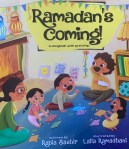
Ramadan’s Coming by Rabia Bashir illustrated by Laila Ramadhani

Standard
Ramadan’s Coming by Rabia Bashir illustrated by Laila Ramadhani

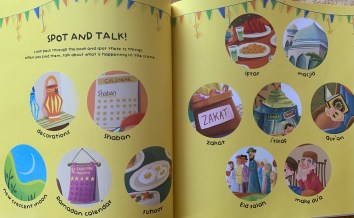
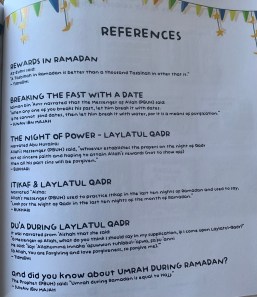
img_8785I think the illustrations in this 40 page picture song book are my favorite of the new 2021 books.  They are adorable and expressive and a big part of the story that the text alludes to, but doesn’t detail.  They also are a big part of the activities at the end of the book that encourage children to go back and find different Ramadan and Eid concepts to discuss and further understand.  I absolutely love that there is a glossary and a reference page that details and attributes the hadith implied in the simple sing song-y words.  The chorus is to the tune of jingle bells, and while I struggled to maintain the rhythm, the chorus reappears and if you are able to sing the book, your children will love it even more, haha, my voice and lack of rhythm forced me to read it, but either way it is absolutely delightful and informative for toddlers and up.
img_8787

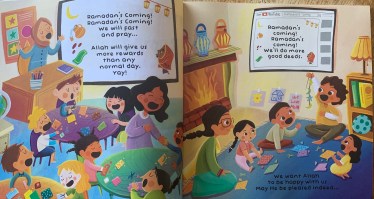
It starts out with the refrain that Ramadan is here and we will fast and pray and that Allah (swt) will give us more rewards and we will do more good deeds, than on normal days.  It then shares that Ramadan is the month after Shaban when the Qur’an first came down and that we look for the crescent moon to know when Ramadan is here.  It is important to note that the words flow and are so concise you don’t even realize that much information has been conveyed.

img_8788

The chorus repeats and shows a family praying, kids helping vacuum, and giving socks to homeless.  The family then wakes up early for a healthy suhoor, no food or drink, thinking about how the poor must feel and then having iftar with a sticky sweet date and water.  Sometimes you eat so much your belly protrudes (a great vocabulary word for little ones). The next page has salat starting and those that ate too much wishing they would have left space for air and water.
img_8792

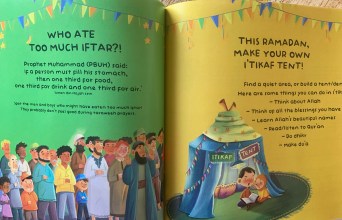
The chorus repeats again showing zakat being given, iftars being eaten in segregated large groups, before looking for Laylat ul Qadr takes place and some children read Qur’an in an itikaf tent. Then it is time for Eid hugs, salams, prayer, food and fun.
img_8791

On one page, the grammar of one line seems off, perhaps an extra word was added.  I contacted the author to see if it is an error as it is part of the chorus, but only appears wrong in one place and one time.  Even with the error, I would happily encourage this book for families with toddlers, preschoolers, and kindergarteners.  It will be read multiple times, and the pictures will hopefully offer something new with each reading as understanding increases.
img_8793

The copy I purchased from Amazon is 8.5 by 8.5 paperback, I’m not sure if they will be available from the publisher as a board book or without faces like so many of their books are.

One Perfect Eid Day and No More Cake! by Suzanne Muir illustrated by Azra Momin

Standard
One Perfect Eid Day and No More Cake! by Suzanne Muir illustrated by Azra Momin

img_8587

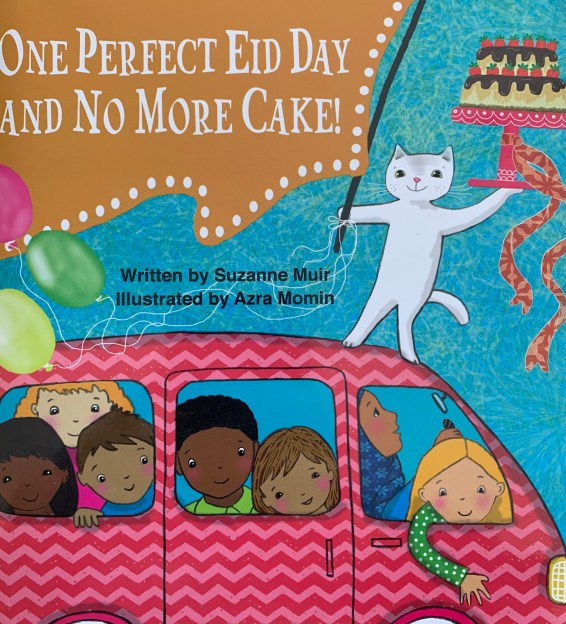
This lovely counting book celebrates the end of Ramadan and the festivities of Eid Al-Fitr by counting up to 10 and counting back down.  Over 24 pages of rhyming lines, adorable illustrations will bring the holiday to life as a group of children and a little white cat celebrate.  Aside from the title that for some reason I don’t love, the rest of the book is happy and festive and perfect for toddlers to preschoolers.

It starts with one month coming to an end, then henna cones and designs take over, before five pots and six trays of cake are prepared, decorations are hung, clothes are made ready and ten eager eyes watch the new moon rise.

Then ten sleepy cousins have to get up early for morning prayers with presents waiting, rotis are prepared before seven family members squeeze in the van. Friends are met at the masjid and coins are jingling as lunch parties are attended and fun-fair rides are riden. Two tired friends can’t stay away on this one perfect day, and no more cake.

I love the flow of the book, I’m not sure what the four henna designs are or what cousin doesn’t get a present and who doesn’t get to go for prayers, but little kids probably won’t over think it.  The little cat is delightful on each page and the book sets a marvelous tone of what one can look forward to and enjoy on this splendid holiday with friends, family, festivities, and food.

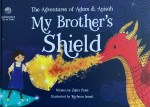
The Adventures of Adam and Anisah: My Brother’s Shield by Zahra Patel illustrated by Reyhana Ismail

Standard
The Adventures of Adam and Anisah: My Brother’s Shield by Zahra Patel illustrated by Reyhana Ismail

img_8580

Based on the idea that “Fasting is a Shield (ibn Majah),” this adorable book brings Ramadan not just to life, but makes those that fast into absolute superheroes!  Over 32 pages of simple large rhyming words, little Anisah shares her wonder and amazement toward her brother, and his shield that he wields during Ramadan.  The beauty of her admiration for her older sibling combined with the message, illustrations, and presentation, make this book (there is also an accompanying workbook) perfect for ages three and up.

img_8581

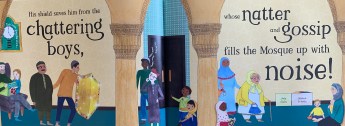
It starts with a secret.  Adam is a superhero.  When Ramadan arrives, the shield comes out and Adam carries it all day.  He doesn’t eat or drink when he has it.  It makes him brave and saves him from tempting biscuits.  It gives him peace when he reads Quran. It keeps him calm when there is a foul during a soccer game. It even keeps him away from gossip at the mosque.

img_8582

When they break their fast, they pull out their magic carpet to fly.  And when Ramadan is over the shield goes away until it is needed again. Anisah patiently marks off the days on the calendar until Ramadan will arrive, because she has another secret.  She is training to be a superhero too.

img_8583

The book concludes with how the story came about, discussion questions and some activities to help learn through practice. The illustrations show diversity and whimsy and toddlers and preschoolers, I’m certain will be begging for this story all year around.

img_8584


Becoming Muhammad Ali by James Patterson and Kwame Alexander illustrated by Dawud Anyabwile

Standard

img_8575

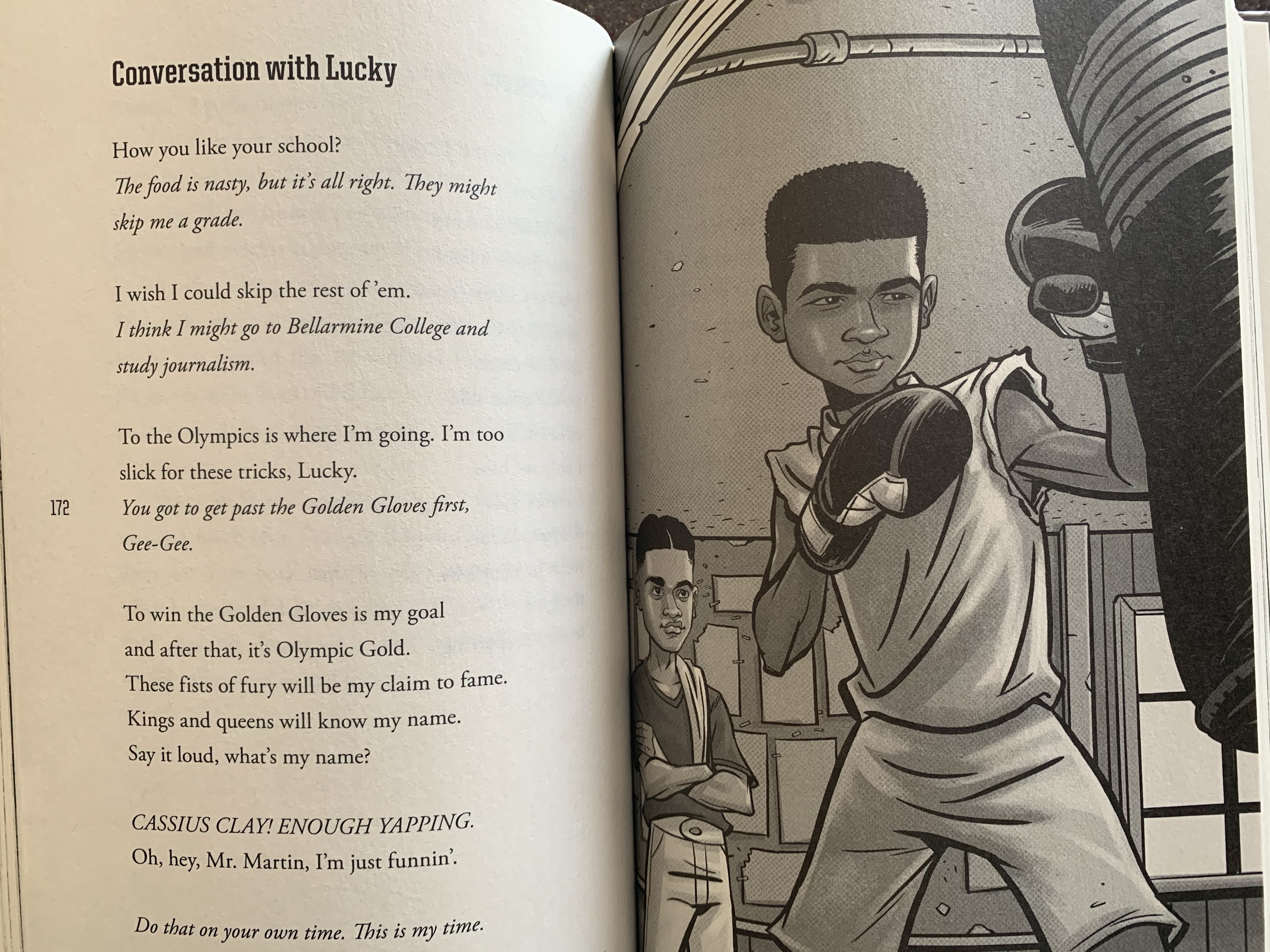
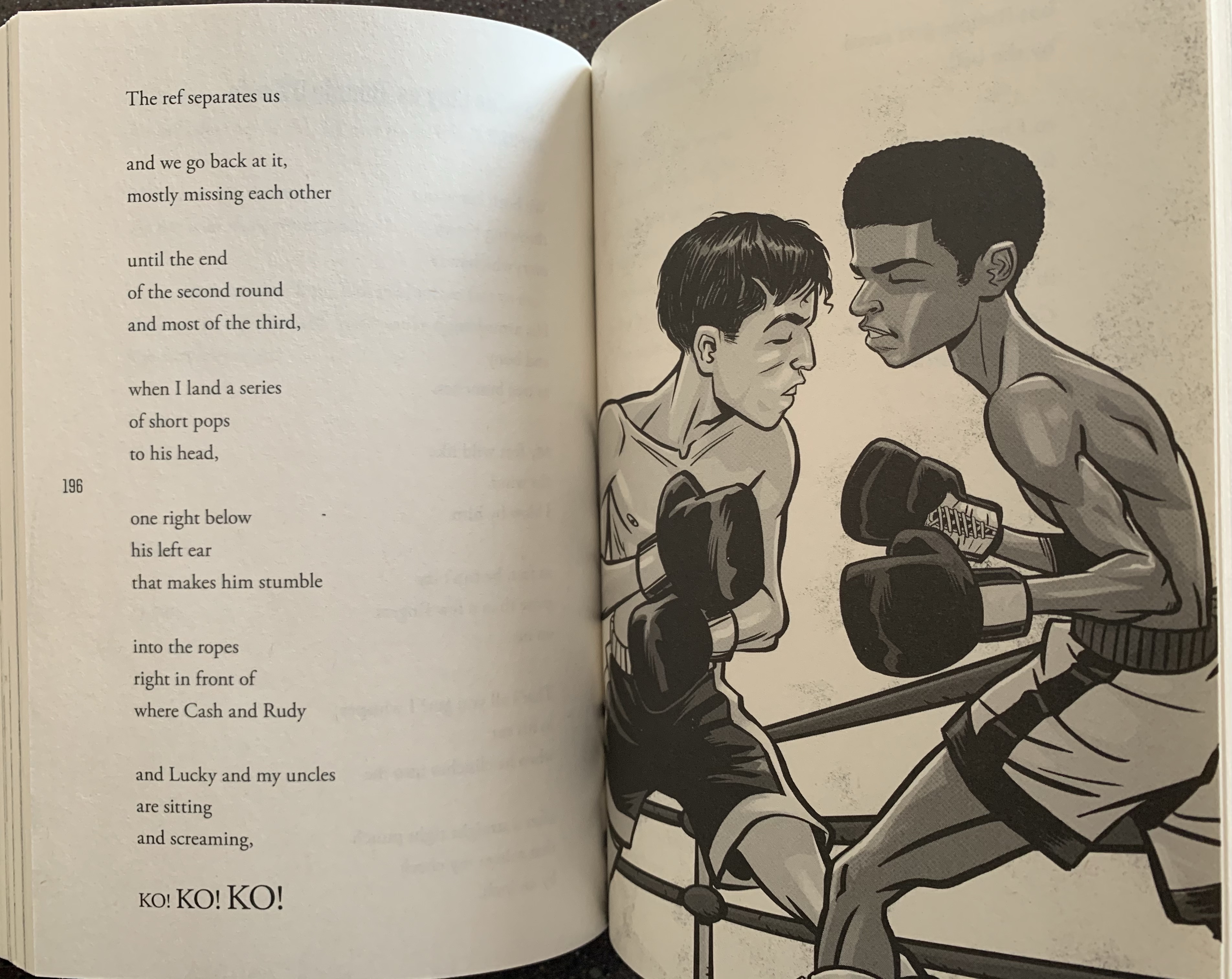
This 310 page, AR 5.4 biography reads like a dream being remembered and flowing with newly awakened images presented in a lyrical way. The changes in point of view and writing style keep the book bouncing like a boxing match, and flesh out the early life of Muhammad Ali for middle grade readers.  Only at the very end does it mention that he changed his name when he converted to The Nation of Islam, it doesn’t detail much about it, and it doesn’t mention his eventual conversion to Islam, even though it does mention him being diagnosed with Parkinson’s and his death.  I understand that the book focuses on his preteen and teen years, but it seems like The Awakening of Malcolm X also intentionally cut that footnote out of the book, and having read that book a few weeks ago, it seems a deliberate exclusion in both cases and that bothers me.  It could be coincidence, as both 2020 published middle grade coming of age books have familial support in the writing and research, admittedly it just might be my timing of reading them makes it seem that something larger is at play.  Ultimately, this book gives insight into who Cassius Clay was, and what his life and friend circle looked like as a boy in Kentucky. The verse and flow of the text make the book an easy and enjoyable read.

SYNOPSIS:

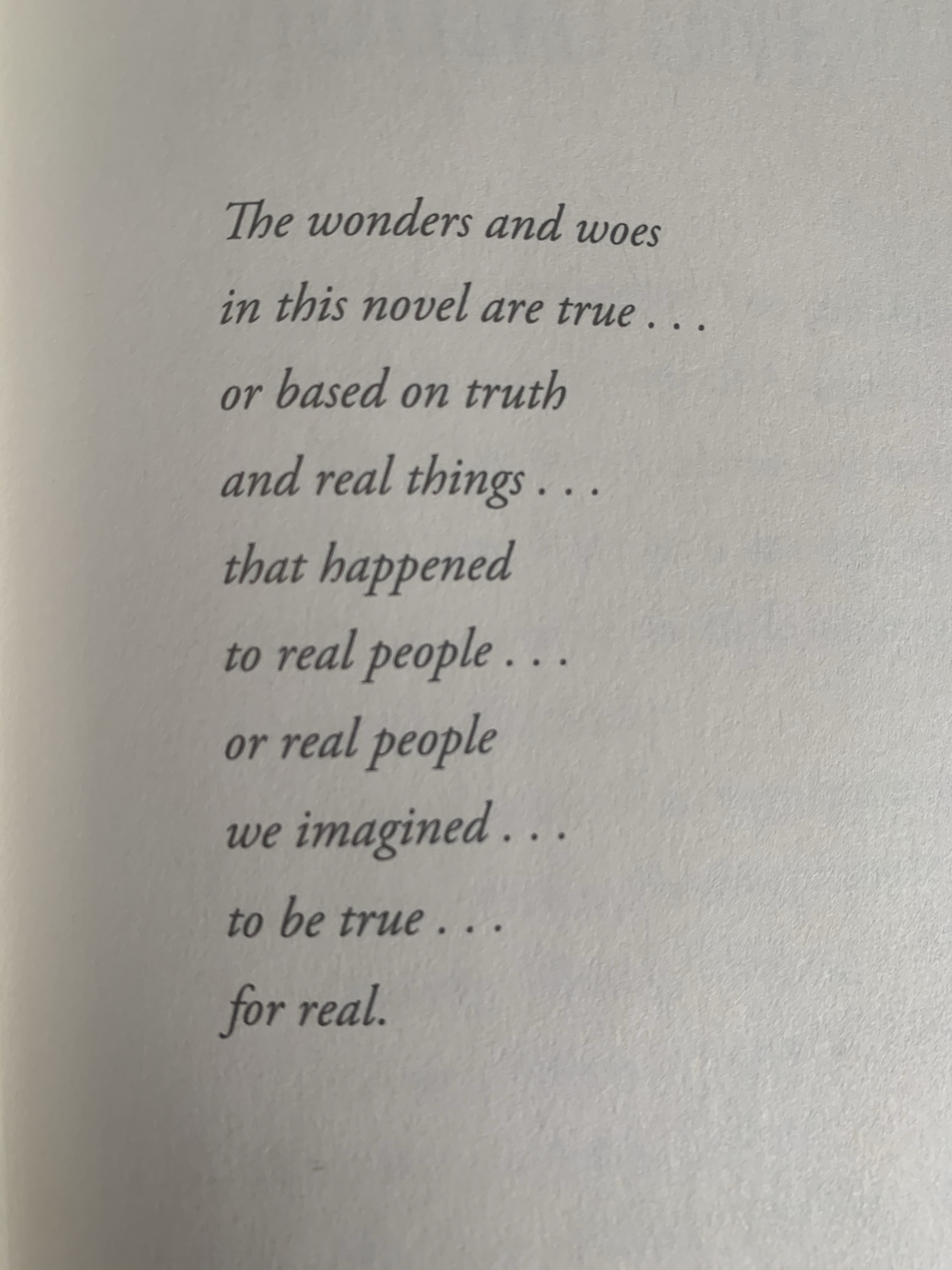
Lucky is Muhammad Ali’s friend growing up and is the narrating voice that sets up each chapter and overall framing of the book.  The bookish friend is a writer and eventually a journalist that moves the story forward.  The verses that follow each intro are the imagined voice of Muhammad Ali.  There is a bibliography at the back, but the story starts with this warning, or disclaimer, or wink of sorts:

img_8621

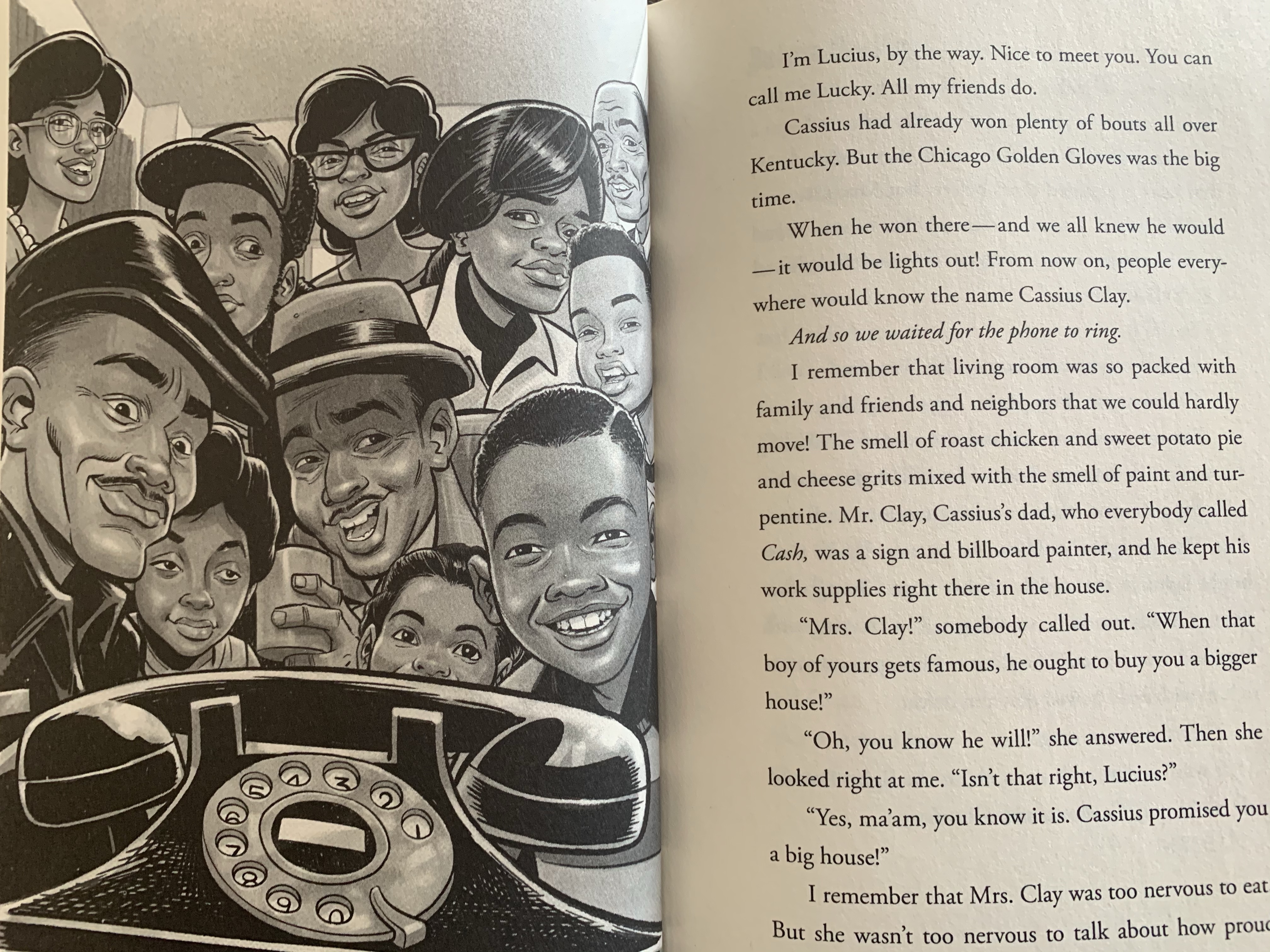
The book opens with Lucky and the Clay family waiting for the phone to ring in 1958 to find out if Cassius has won in Chicago.  He is there fighting for the National Golden Gloves.  He eventually loses the tournament, but he doesn’t stay down.  The book then rewinds and starts back before Cassius ever enters the ring.  The reader gets to know about Granddaddy Herman and the bond that the two share.  He is Cassius’s church and source of pride.  We also learn about how Cassius sees the world and the racism that exists in it. His humbleness and frustration with seeing how hard his mom has to work for so little reward.  We see how his friends shape him, but more importantly how he shapes them, and we see how although he struggles in school how he is articulate and respectful and beloved by so many.  His younger brother is a constant in the story, as is the narrator Lucky.  The book gets inside the character Cassius and if you didn’t know it was a biography, you would think it was a fictional coming of age book.  The ups and downs, the setbacks, the frustrations, the dreams, it all flows and makes you feel for this determined kid, who despite all his bravado, is really a down to earth human being.

img_8577

WHY I LIKE IT:

I don’t think I learned anything ground breakingly new reading this book, but I felt like I got to know the material in a more fleshed-out way.  It isn’t a list of facts or hight lights, it is the nuanced day-to-day that lift him off the page and out of the headlines.  I like the change of voice and style of writing, it made sense to me, and allowed the book to resonate differently than a traditional biography would.   I think it will also appeal to a wider audience because of the verse and easy flow.  I similarly enjoyed the illustrations that pepper the book.  I appreciate that the story is told from a friend looking in on someone that he knows well, but I almost would have preferred his brother being the voice and bringing the reader even closer to the boxer. Ultimately I want to know more about his parents and his brother and how they felt about his success.  The book didn’t answer a lot of question, but hopefully it will spark the curiosity of readers to go and learn more.

img_8578

FLAGS:

He slightly mentions crushes and dating, that his dad is out galavanting Friday nights until Saturday.  There is mention of a side character having part of his face damaged in an explosion, there is reference to the N word.

img_8576

TOOLS FOR LEADING THE DISCUSSION:

I would consider the book as a book club selection if it served a larger purpose or the group had a preexisting interest.  I think if I were to meet with a group of kids more than just once a month for an hour or so for a book club discussion, this book would have a lot of potential for introducing the athlete, writing styles, historical implications and so on.  I just don’t know that we could get to all that in such a limited time. If they had already learned about his boxing accomplishment,  his protesting of the war, his conversion for example, this book would be a great discussion extender to supplement basic knowledge of him.

Unsettled by Reem Faruqi

Standard
Unsettled by Reem Faruqi

img_7503

This book is a great OWN voice, middle grade coming of age book that rings with truth and hope in its poetic lines that sweep you up and keep you cheering.  Over 352 pages the author’s semi-autobiographic story of coming to Peachtree City, Georgia from Karachi, Pakistan beautifully unfolds.  I absolutely loved this book and the way it is told, in verse.  The details, often small, ring with such sincerity that even those that have never moved to a new country, or been to a new school will feel for young Nurah Haqq and be inspired by her success, touched by her hardships, and disappointed in her mistakes.

img_7544

SYNOPSIS:

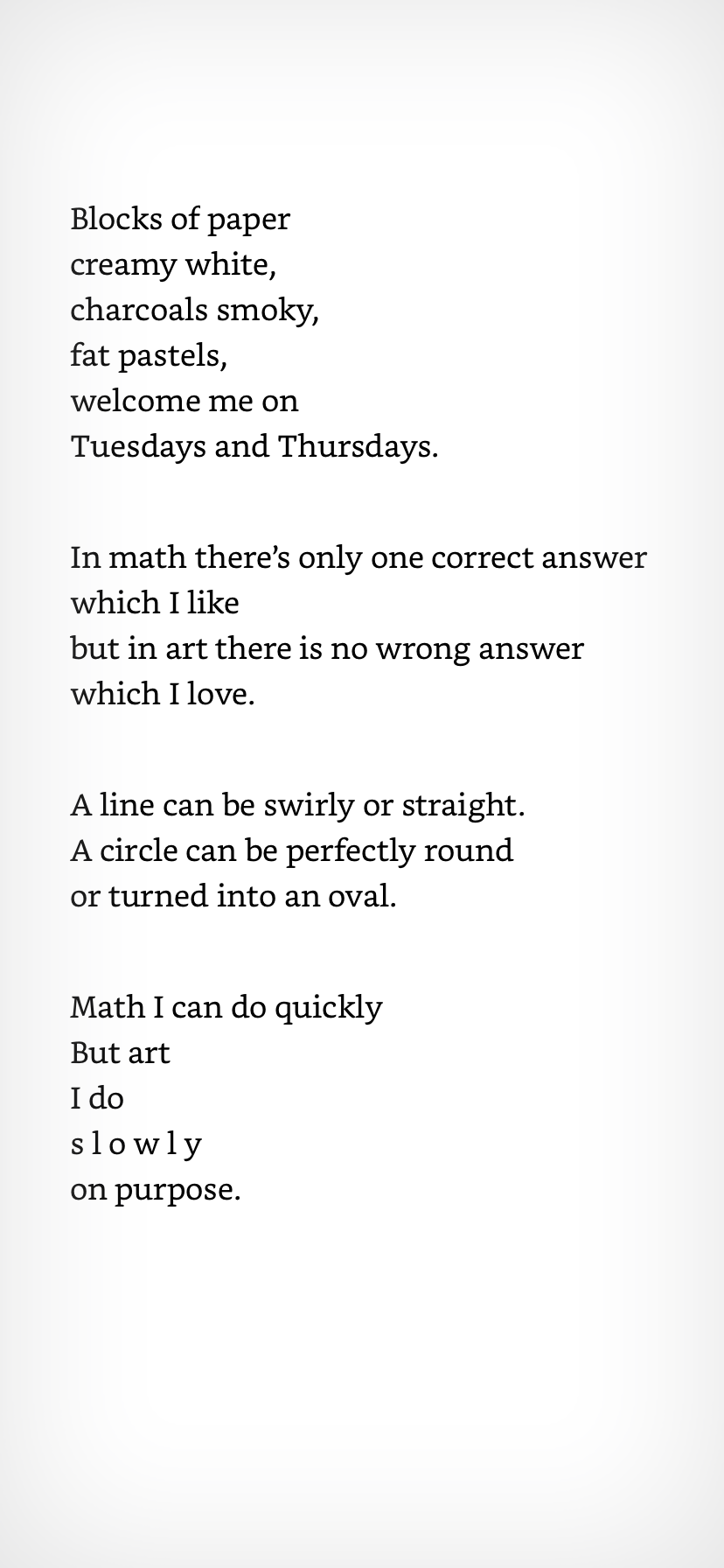
Nurah’s best day is spent on the beach with her best friend Asna, playing in the warm waves and riding camels.  However it ends up also being her worst day, when she returns home to her father’s news that they are moving to America.  Strong, confident Nurah who spends time with her grandparents, swimming with her older brother Owais, and excelling at math in school is reluctantly leaving it all behind to start anew.

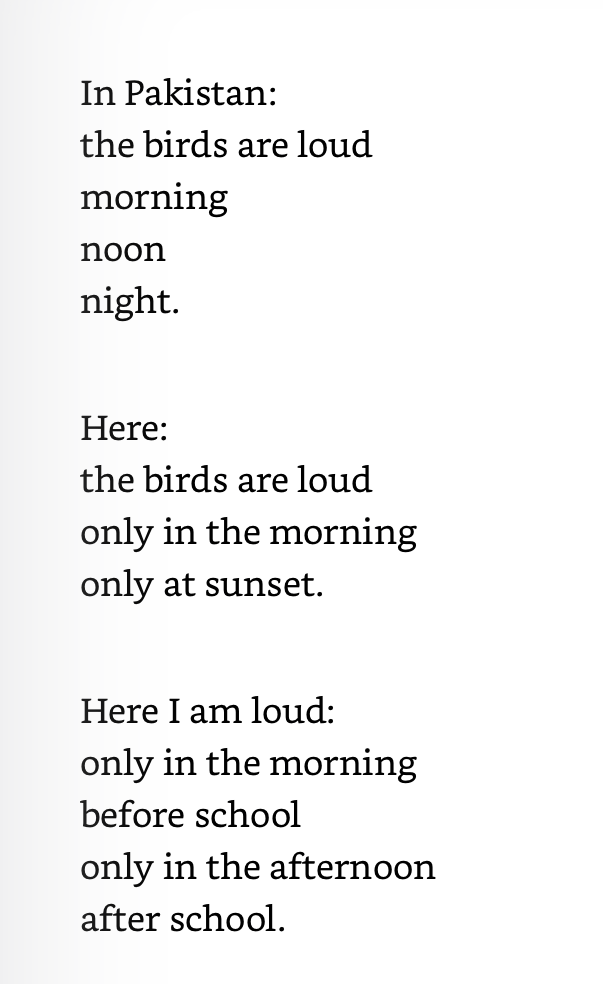
When they arrive in Georgia the family of four settles in a hotel until they find a house.  Everything is different and new, and the transition with no friends and family difficult for the entire family.  The way words are pronounced, the way the air feels and the birds chirp all make Nurah long for home.  When they find a swimming pool at the rec center, things start to slowly change.  Owais was a medal winner in Karachi, and will be one here too, people start admiring him, and Nurah tries to bask in his light.

School starts and math is a relief, but people are white, so white, and a boy reaches out to shake her hand.  She feels betrayed that she has been told the schools in America are better, and lunchtime, with no one to sit by is a huge stress.  She questions her clothing, her appearance, and the weather.

Her and Owais try out for the swim team and make it, and Nurah makes her first friend, Stahr. Stahr lives a few houses down from their new house and when Nurah’s mom has a miscarriage, it is Stahr’s mom who comes to show support and give comfort.  The support is reciprocated when Stahr and her mom need help escaping from her abusive father.

As Nurah works to win swimming races and be more like her brother, she works to find her voice and use it to defend others and herself.  A terrorist attack committed by someone claiming to be Muslim sets the family up to be targets.  In a moment of jealousy, Nurah doesn’t intervene to help her brother and the consequences are huge.

img_7502

WHY I LIKE IT:

I love the details and how they are articulated.  I related to so much of Nurah’s feeling and impressions, that I reached out to the author and found her to be just as endearing as her character.  The feeling of being different when swimming because of your decision to be modest, the role of food to comfort you and make you feel at home, the older brother that you so desperately want to resemble and be like: All of it hit close to home for me.  I love how religion and culture are so much a part of the story and about the character’s identity, not to be made preachy, just to understand her and her experiences.  She goes to the masjid, she prays, she starts to wear hijab. I love how she finds her voice and defends those that can’t, but that her path is not easy.  She makes mistakes and she has to challenge herself to do what is right.  The backdrop is always trying to “settle” in a new place, but the story has it’s own plot points that are interesting and simply made more impactful by Nurah’s unique perspective.

There are lots of little climaxes and victories for Nurah that show her to be well-rounded and relatable.  You cheer for her early on and enjoy the journey.  The only slight hiccup I felt was the name confusion of her Nana and Nani (Nana), it is explained, but it was a little rocky for me, it might be based on a real thing in her family, but once that is resolved, the book flows beautifully and smoothly.

img_7545

FLAGS:

Nothing a 3rd/4th grader would find alarming, but none-the-less:

Crushes: Nurah has a crush on a boy at school when he shakes her hand and picks her for a lab partner, but she moves on from him while still maintaining a crush on her brother’s friend Junaid.  Nothing happens, she just thinks they are cute.

Miscarriage: Her mother has a miscarriage and it details a blighted ovum and the mental strain on the mom and family in the aftermath.

Abuse: Stahr’s father is abusive

Hate: There are bullies, discrimination, physical violence.

TOOLS FOR LEADING THE DISCUSSION:

The book is a little below level for my middle school book club, but I think it it was on a bookshelf and a middle schooler picked it up, they wouldn’t set it down until they were done reading it.

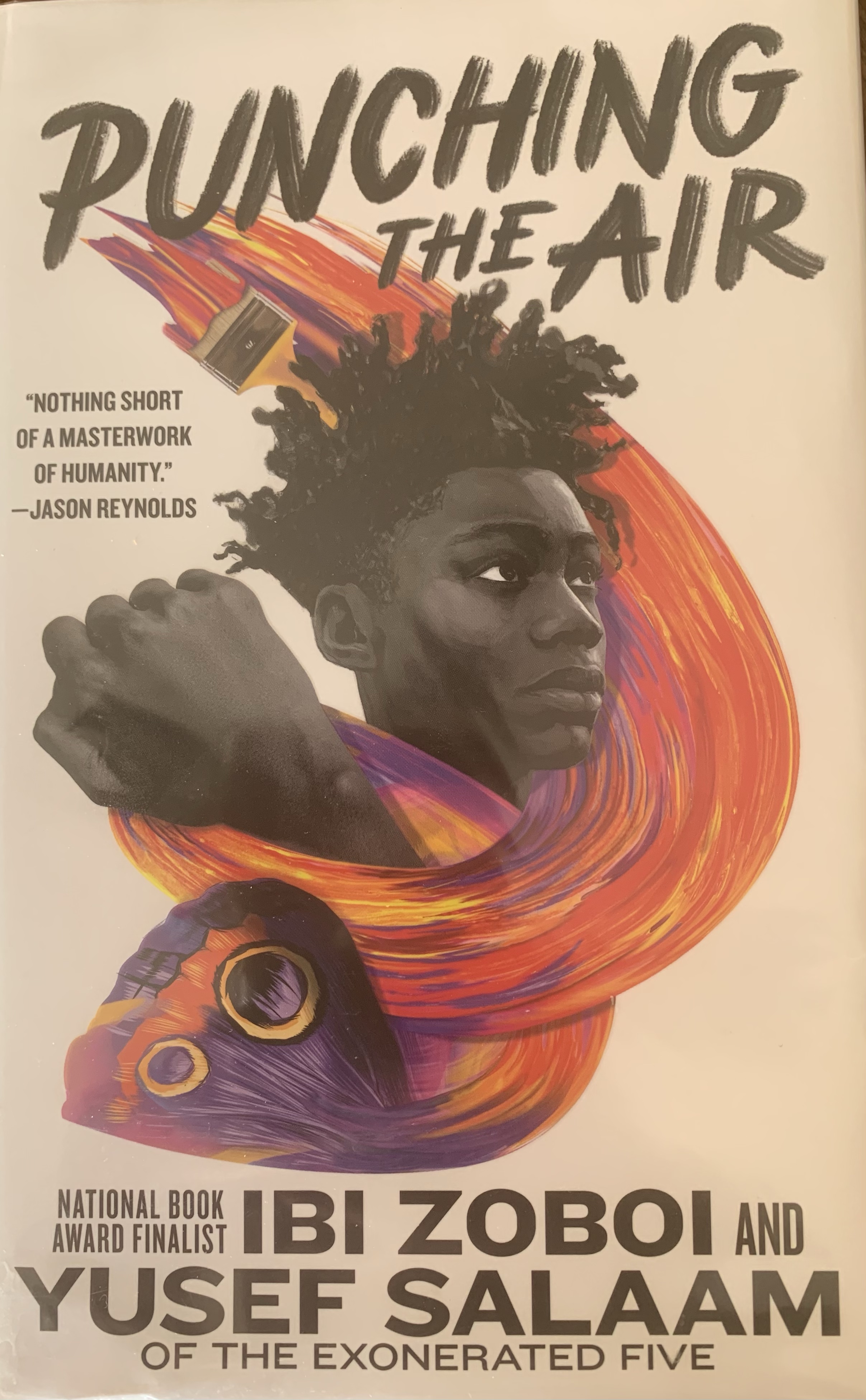
Punching the Air by Ibi Zoboi and Yusef Salaam

Standard
Punching the Air by Ibi Zoboi and Yusef Salaam

img_7268

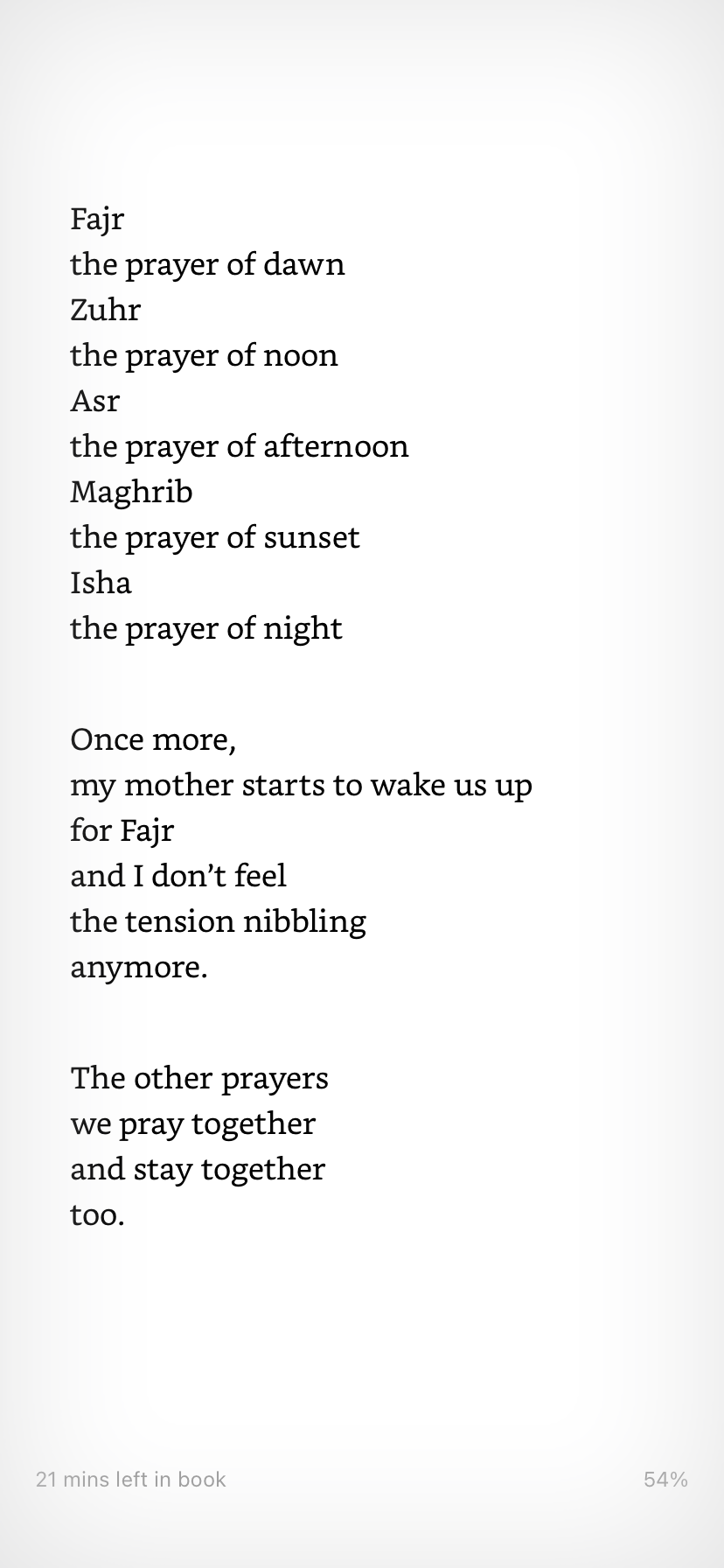
Four hundred pages of painfully powerful verse that you will have to force yourself to slow down and not rush through.  Yes, you want to know what happens to the young, black, muslim teen writing his truth, but to read it too quickly will deprive you of feeling and contemplating and absorbing the message that if, you, like me are a white (ish) person of privilege, need to surround yourself regularly with to understand.  The OWN voice narrative is co-written by one of the Central Park Exonerated Five and should be required reading for everyone 14 and up.

img_7263

SYNOPSIS:

Amal Shahid is 16 years old, and maintains he is being wrongfully accused of a crime that has left a white boy unconscious.  He acknowledges he threw the first punch, but is adamant that he didn’t throw the last.   From his trial to his incarceration in a juvenile detention facility, the narrative pushes forward as he adapts to confinement with flash backs to pivotal moments in his life.  He is a gifted artist and writer and his creativity and ability to express himself is what will hopefully provide him a way to survive.

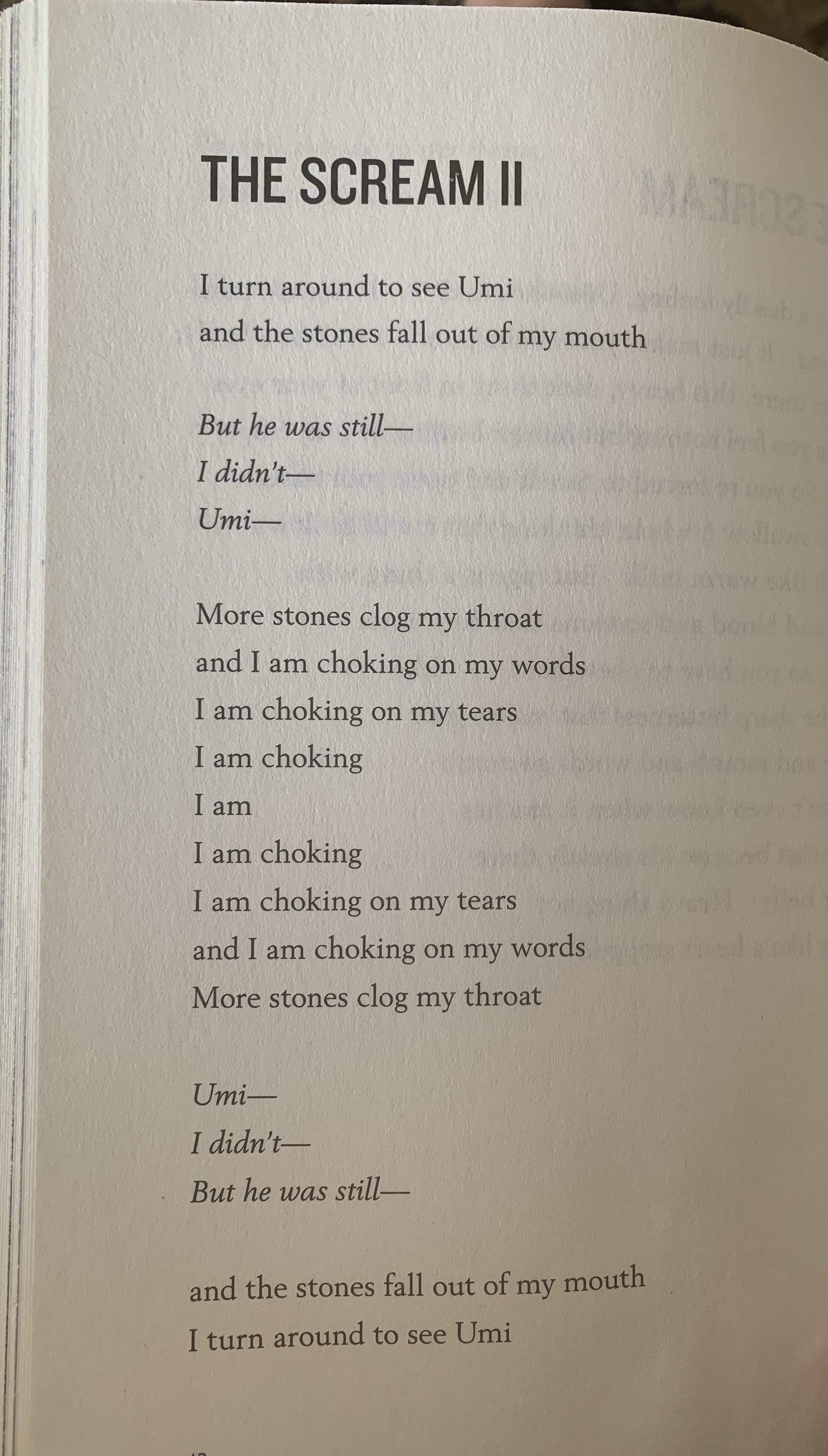
I know I’m leaving this vague, because truly I cannot do it justice.  I started taking pictures of powerful sections, and when I found myself taking pictures of nearly every page, I realized that the book is something to be experienced in its entirety and will include just a few internal pages to tempt you.


WHY I LIKE IT:

The book is impactful in that it claims only to share the protagonist’s truth, it doesn’t get off tangent from that, but allows for the reader to add to the narrative their own understanding to make it personal and resonate most profoundly.  His situation involves so many injustices plagued upon him only because of his skin color, and a system that is designed to keep racism alive and powerful.  He was at the wrong place at the wrong time perhaps, but while the book is heavy, hope is ever present.  I’d like to believe it is because of those that refuse to give up on Amal. I was swept away by the power of a mother’s love.  Truly, what strength for a young man in Amal’s situation to have the world betray him so often in his young life, to find unflinching love, support, belief, and determination in his mother.  

I love that his mother is a practicing Muslim, his grandmother attends church, and he loves them both and values their spirituality.  Allah, the Quran, and Islam are mentioned regularly.  It never is preachy, or gives much doctrine, but it is present, and is a tangible part of how Amal sees the world.

img_7266

FLAGS:

There is language and violence.  He has a crush on a girl and she writes him letters, nothing obscene.  There is racism, bullying, racial slurs.

img_7261

TOOLS FOR LEADING THE DISCUSSION:

There is so much to discuss in this book, and so many resources online.  I think the book might be too mature for my middle school book club, but I am suggesting it to the high school book club.  This book needs to be read, discussed, breathed in, and experienced.  Plus the author’s real life experiences should be incorporated into the discussion as well as the student’s understanding of how present racism is and how they can use their voices and influence to create real, lasting, change, inshaAllah.

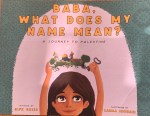
Baba, What Does My Name Mean? A Journey to Palestine by Rifk Ebeid illustrated by Lamaa Jawhari

Standard
Baba, What Does My Name Mean? A Journey to Palestine by Rifk Ebeid illustrated by Lamaa Jawhari

img_7233

This lyrical journey through Palestine’s major cities, shares historical facts, geographical information, cultural richness, and love for a homeland that will inspire and educate all readers. There is a lot of information pressed in to 32 pages and at times the rhyming text, illustrations, and maps are powerful, and at other times overwhelming. The 8.5 x 11 horizontal paperback bound book needs to be bigger to hold all that the pages contain, and hard back to hold up to the details that need to be poured over to be appreciated. The content about the names and places in Palestine is priceless and well done, but I really wanted to love the book a bit more than I ended up feeling for it. I think trying to make it all rhyme was just a bit too much for my liking, but I would buy this book again in a heartbeat to share with my children. Even though we are not Palestinian, I think all Muslims have a piece of Palestine in our hearts and feel a deep need to celebrate the culture, fight for their freedom, and demand a quality of life that they are brutally being denied by their oppressors.

img_7234

The book starts out at bedtime with a little girl, Saamideh asking her baba what her name means. He explains to her that it means “one who is patient, persistent and one who perseveres.” She is named this because she is Palestinian, he explains and then he shows her the key to their ancestral home in Palestine. He asks her to close her eyes and imagine a white dove, named Salam, taking her on tonight’s journey.

img_7235

Salam and Samamidah prepare to journey across Palestine’s mountains, hills, deserts, and plains. They start in Areeha, one of the oldest cities in the world, and one one of the lowest points on Earth.

img_7236

They journey next to Al-Quds, the capital. They see the old city, Al-Aqsa, and more, before heading off to Nablus, Yafa, Haifa and the Akka. Learning about the cities, the food, and the history of each.

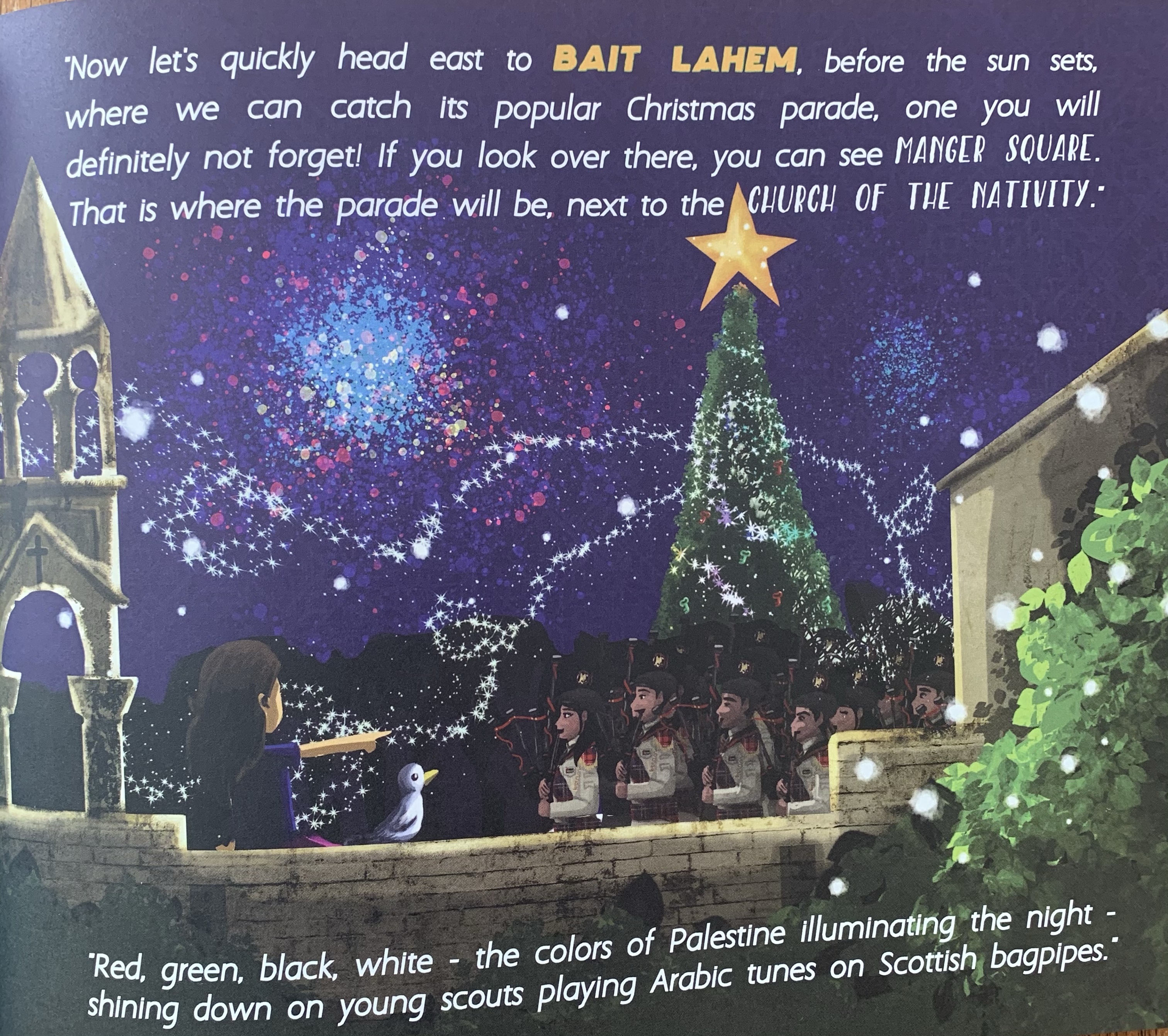
They learn about the dabkah, and the weaving in Gaza and head to Bait Lahem too. They learn about glass blowing in Al-Khalil at the Ibrabhimi Mosque, and finally they conclude their journey with the little girl dreaming of flying around the world to use her key and open people’s hearts and minds.

img_7239

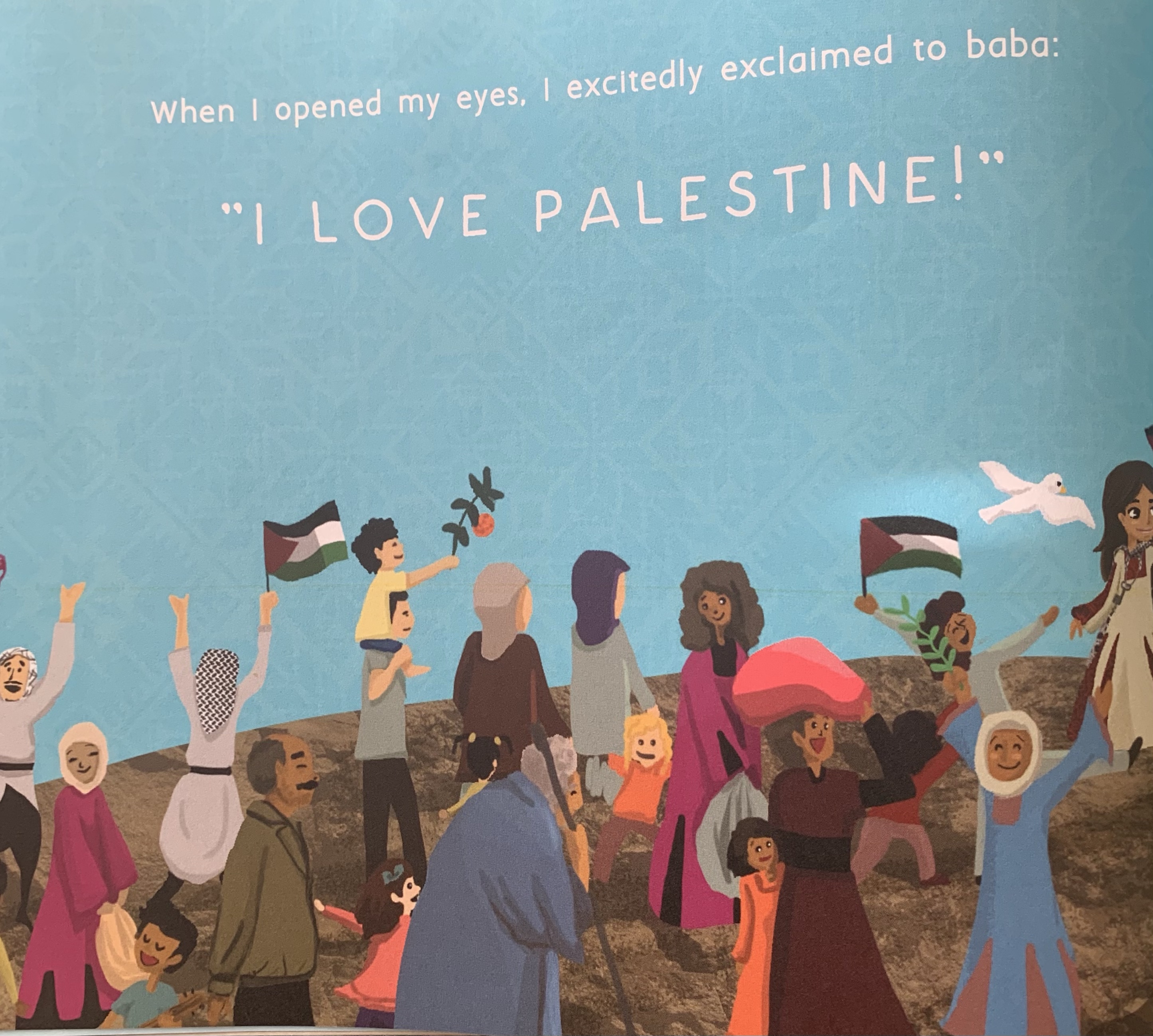
She proudly exclaims her love of Palestine and her and her baba pray that one day they will be able to return. Saamidah then asks her baba why they are refugees, and he promises to save that conversation for tomorrow’s beditme story.

img_7240

The book concludes with a list of the city names in Arabic, trasliterated in English, and then the English names. It then has discussion questions at the end.

The book is not outwardly political, nor critical. It is a celebration of a people, a culture, and land. Happy Reading!

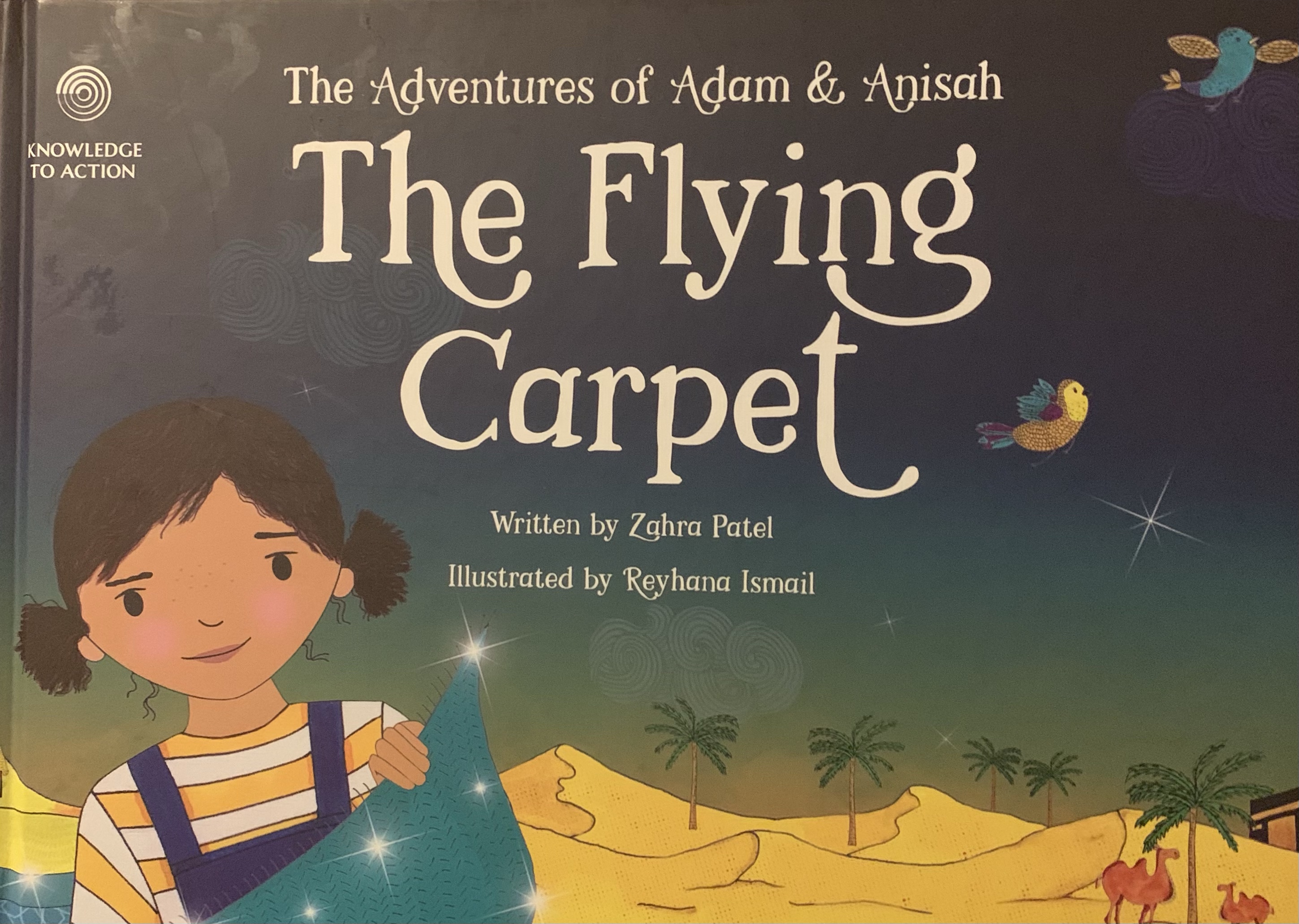
The Adventures of Adam and Anisah: The Flying Carpet by Zahra Patel illustrated by Reyhana Ismail

Standard
The Adventures of Adam and Anisah: The Flying Carpet by Zahra Patel illustrated by Reyhana Ismail


img_6995I am confident that every Muslim child has imagined their prayer rug at one time or another to be a flying carpet, so how absolutely heart filling as an adult to find a book that embraces this idea, roots it in Islamic fact and presents it so beautifully for our littlest Muslim believers.

img_6996

The occasionally rhyming and constantly cadence filled picture book features a big brother preparing for and performing salat as his enamored little sister puts imagination and celebration to the act of worship.

img_6997

I absolutely love the admiration that Anisah has for her big brother and am delighted how prayer is presented not as an obligation but as an opportunity to soar and marvel in amazement.

img_7002

The book concludes with a section that provides context to the story, questions to discuss, and ways to extend the learning.  The hardback binding, 8.5 x 13 horizontal orientation and high glossy illustrations make the book a joy in small groups and at bedtime.

img_6998

This book is really, really well done in its simplicity, and I need to order the other book in the series, My Brother’s Shield from Crescent Moon Book Store, as soon as possible.  

Yusra Swims by Julie Abery illustrated by Sally Deng

Standard
Yusra Swims by Julie Abery illustrated by Sally Deng

yusra

This 32 page biography told in sparse rhyme about Yusra Mardini is powerful in its minimal text and realistic illustrations.  Children as young as six could easily read it, but I think older kids will be more moved by the story of a 17 year old girls Olympic swimming dreams being derailed by war, and the difficult journey her and her sister took to escape.  With no more than 10 words on each two page spread, the vocabulary is more suited to perhaps third grade and up.

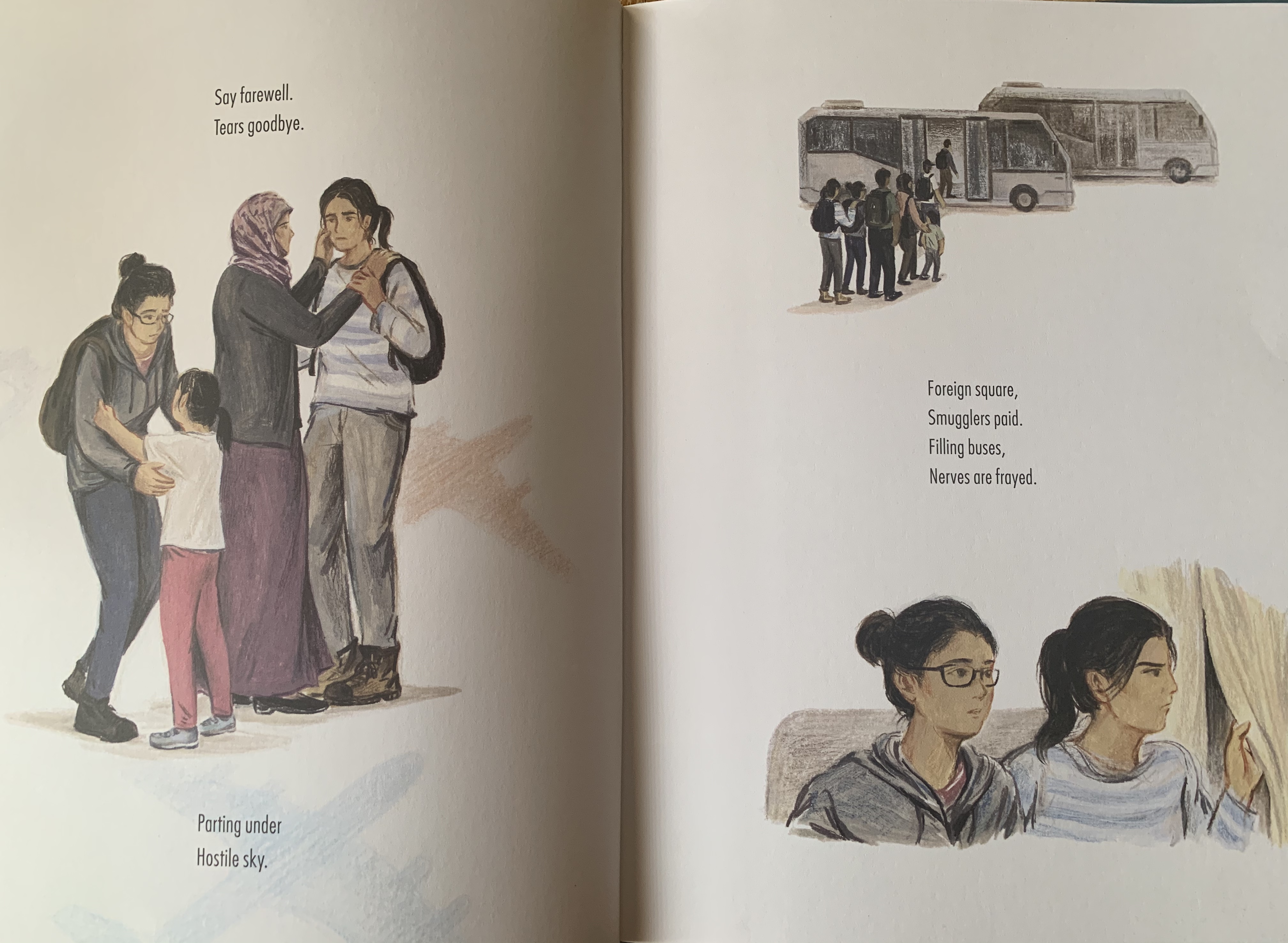
Yusra lives in Syria and dreams of the Olympics.  She trains even as conflict grows in the country.  When it gets bad, she has to flee, her father can only afford to send her and her sister.  Smugglers are paid and they leave.  They take on the open sea, and her and her sister steer the boat through the water when the engines stall.  Once they reach land, and pray, they are stared at.  A kind stranger offers her shoes. They continue on land by foot, bus and train.  They finally reach Berlin.

Once settled, she resumes her training, and a fact page at the end shares how the International Olympic Committee invited her in 2016 to join the Refugee Olympic Team and compete in Rio de Janeiro.  And thus she achieved her dream and was able to swim in the Olympics.

83175260-2878-4DDF-AA9F-3618FEEF41A5

There is nothing religious in the book, except when she is leaving and is hugging a woman in hijab.  Presumably it is her mother, and thus I’m assuming that she too is Muslim. When you google it some articles say she grew up in a muslim family while others say she is Christian, so I really have no idea.

DCAB592B-C32C-4FDB-AF1D-8CF13F36F164

Let it Go: Learning the Lesson of Forgiveness by Na’ima B. Robert and Mufti Menk illustrated by Samantha Chaffey

Standard
Let it Go: Learning the Lesson of Forgiveness by Na’ima B. Robert and Mufti Menk illustrated by Samantha Chaffey

let it go

1AA90D6C-5528-4766-B486-219F31FF7AEC

This 32 page rhyming book follows a little boy around as he is weighed down by a lot of things not going his way.  He doesn’t want to forgive until he is the one that hurts someone else and realizes we all make mistakes, forgiveness is not a weakness, and we all feel angry at times.  The book breaks from the story to ask the reader to think about their emotions in various situations, and encourages the reader to talk about their feelings.  The framework is Islamic and the repenting to Allah swt is part of the message. I found it awkward to read independently, but I read it to a small group of my own kids and their cousins, seven in all, ages four to thirteen, and it worked very well to discuss what the boy was feeling and how they would react.  I think this book would be great in a classroom or as a book an adult reads to a child at bedtime to encourage conversation.  I had to point out to the little ones, that the knapsack was getting bigger with the little boys anger, and explain what it was, but as a tool to foster dialogue it was incredibly powerful.

AF3C685C-9745-42B2-96C3-53F2B28B50B7


The book starts out with a poem/du’a by Mufti Menk that sets the tone for the book.  It makes clear that we are all human and feel things and that this book is a tool to understand and emotionally grow from.  No one is going to get in trouble or be reprimanded.

997B392B-E053-4EB3-AAAE-B40023247F90

The story stats with the little boy waking up happy and ready to have a wonderful day.  But then when he comes down for breakfast, his sister has eaten the last piece of toast.  The book asks the reader, “how do you feel when things don’t go your way?” and asks the little boy to let sorry make it better so that he can let it go.  But the little boy doesn’t want to let it go, he wants to hold on, and as a result it makes his heart feel heavy.

71B6DCC3-5B85-423E-A3F7-6F1F3DC80136

This pattern is followed throughout the book giving examples when the boy doesn’t get included in a game at school with his friends, when his friend kicks his football (soccer ball) in to the road and it gets popped by a passing car, and at dinner when his older brother laughs at him.

5BAA4271-891B-4D25-8451-B1A787D4C1F9

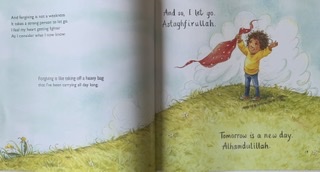
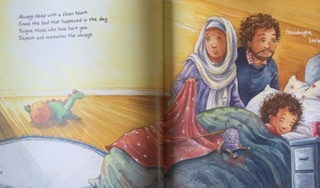
He then picks on his sister at bedtime, and doesn’t even know why he is doing it, and realizes that he too has made a mistake.  He learns that “it takes a strong person to let it go,” and that “forgiving is like taking off a heavy bag that I’ve been carrying all day long.”

4D498CEE-6886-40ED-925B-6D230205CB6C

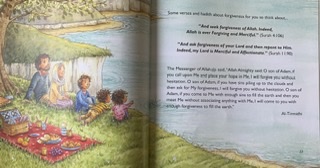
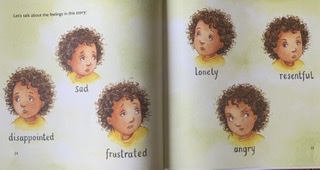
The book ends with some verses and hadith about forgiveness.  Has some facial expressions with emotions to discuss, and space to write down things that make you feel angry, hurt, or sad as well as a place to share what makes you happy, grateful, and safe.  There is also a glossary of Islamic Arabic terms on the inside back cover.

D5E111E7-2791-466B-9343-B362E7D4EB23