Beautifully Me by Nabela Noor illustrated by Nabi H. Ali

Standard
Beautifully Me by Nabela Noor illustrated by Nabi H. Ali

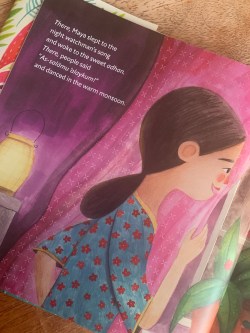
beautifullyThis 40 page glowing OWN voice book bursts with body size positivity, Bangladeshi culture, Islamic terminology, diversity, and a beautiful message.  The illustrations and theme alone make the book worth your time and reveal how few body positive books are out there for our early elementary aged children.  That being said, the book might require or benefit from some child led discussion.  If your child is aware of various body shapes including their own, then this book is a great mirror to build them up and as a tool in emphasizing the critical importance of understanding and knowing people are beautiful just as they are.  If your child doesn’t seem to be aware that society views individuals with a larger body size as being a negative, this book might take a little navigating as the theme is more focused on pushing back on fat shaming than it is on accepting all body types.  The book also opens its self up to discussions about pronoun identity, what beauty means, why people tease or be mean to themselves and others, and being aware of how our words affect those around us.

img_3976

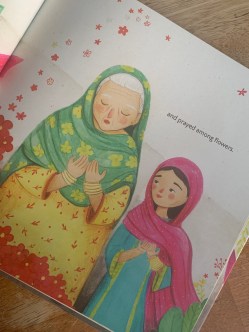
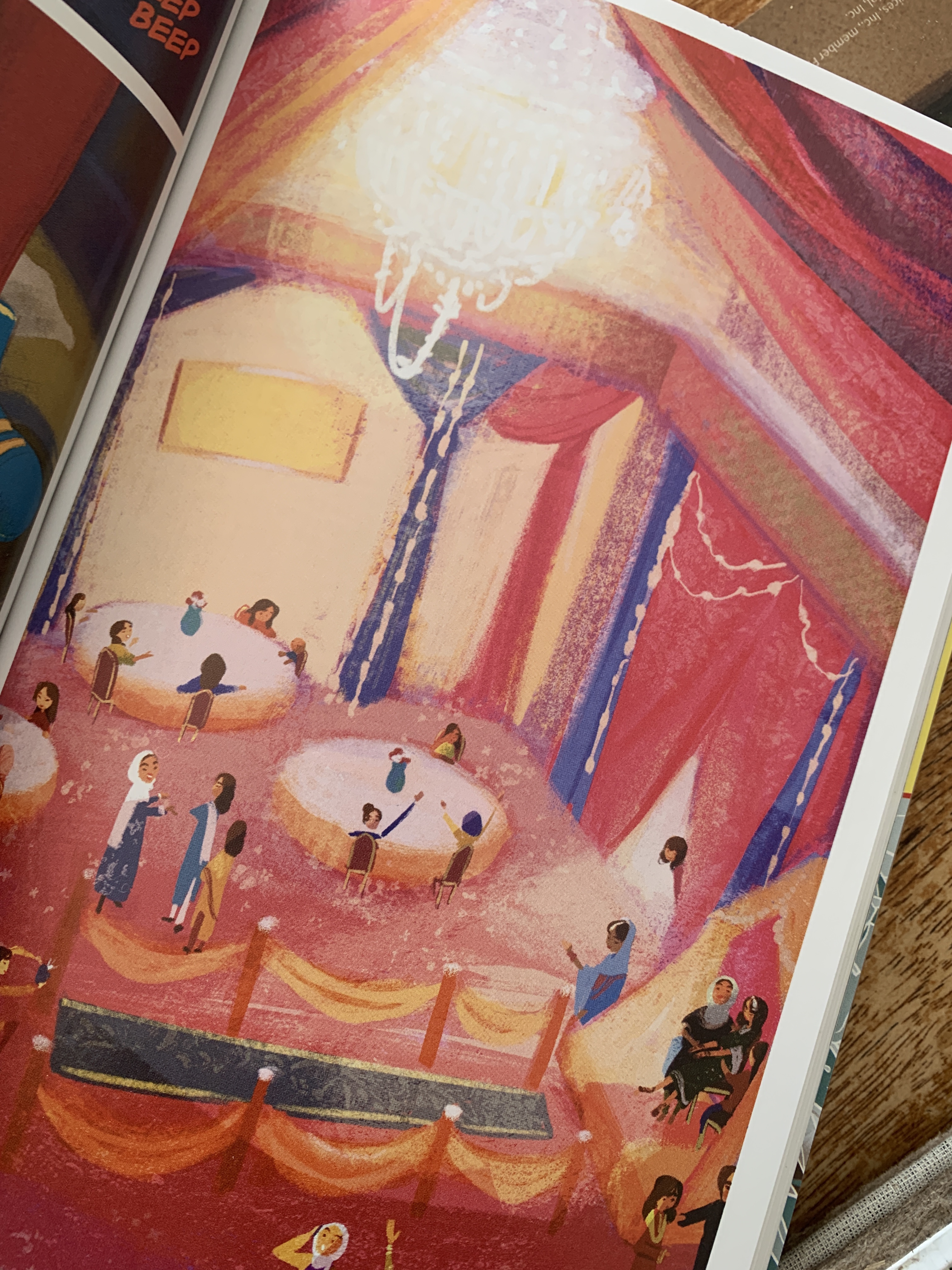
The family is visibly Muslim with Zubi starting with salaam.  The mom wears hijab and a sari, even at home, Dadi also has her head covered.  Eid is mentioned as a time when a gift was given that is too tight to wear, and worth noting from an Islamic perspective- Zubi’s sister is dieting to look pretty at a school dance.  Bangladesh is represented in the foods and some of the phrases the family says, and the clothing mentioned and depicted in the illustrations.  There is a glossary at the back.

img_3977

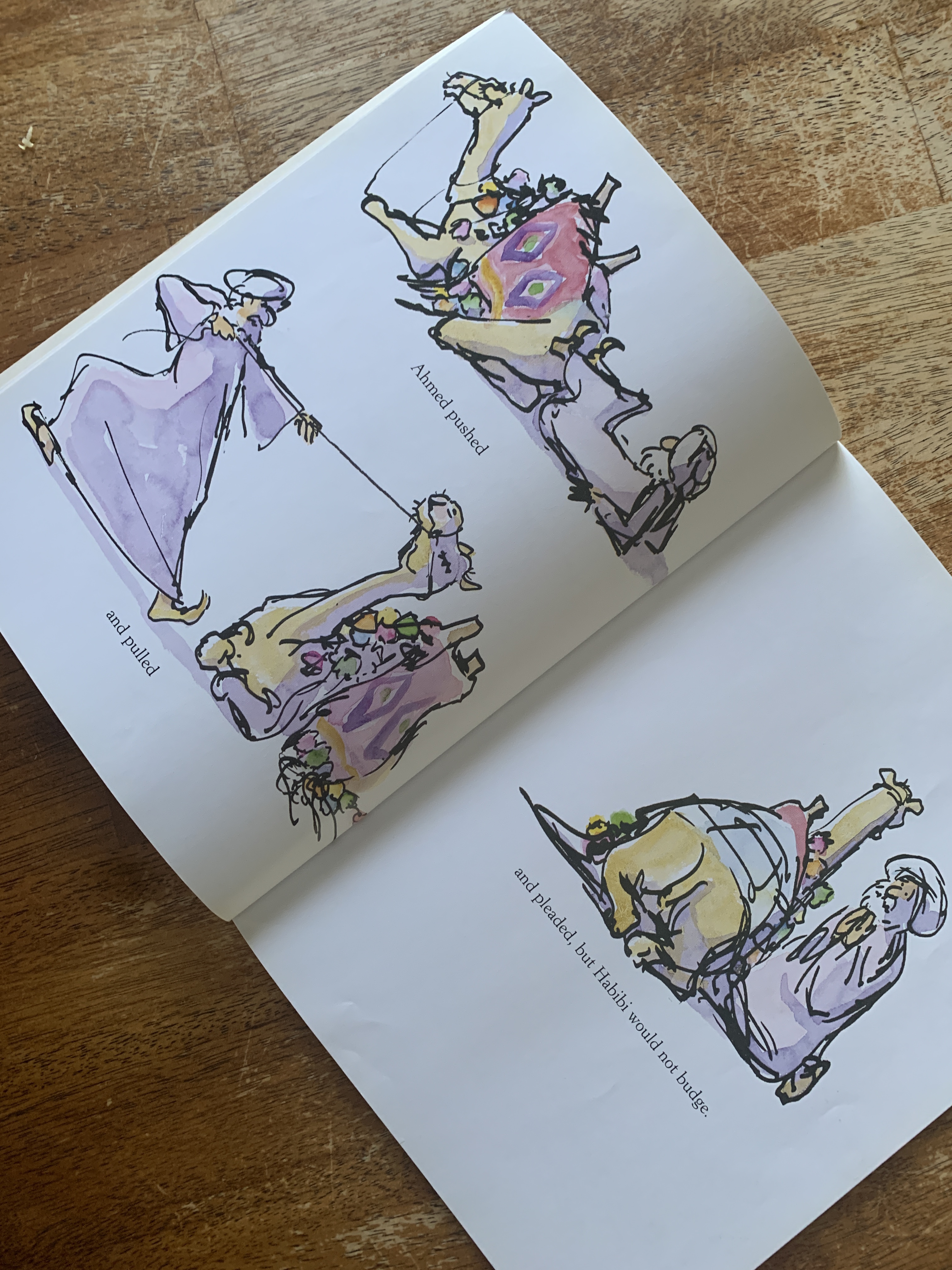
Zubi is excited for her first day of school, she slides on her dress and shirt her mom had made for her in Bangladesh and her bangles on each arm.  She heads to her parents room to show off her outfit where she finds her mom in a gorgeous yellow sari complaining about her big belly.  At breakfast Dadi has made flaky parathas, but Zubi’s older sister Naya is dieting and would rather have oatmeal. Dad calls the girls to take them to school when his mom asks how come he hasn’t worn the new shirt she got him for Eid.  He embarrassedly admits he has put on some pounds and his size is now a large, not good.

img_3978

At school she is having fun and even makes a new friend, but at recess some one yells that Alix looks fat.  Alix is wearing a yellow dress that Zubi thinks is beautiful and doesn’t understand why when they are called fat in it, it comes across as negative. After each incident Zubi mulls over what she is hearing and what it means for her, once she is home though she isn’t quite ready to talk to her family about it.  At dinner, it all hits her as she decides she too shouldn’t eat, that she should be on a diet to be pretty.  She heads off to her room, as her family realizes the impact of their own views and words about themselves, have had on Zubi.  The family works to unpack their own mistakes and be better all while making sure the message to Zubi is that you are beautifully you.

img_3979

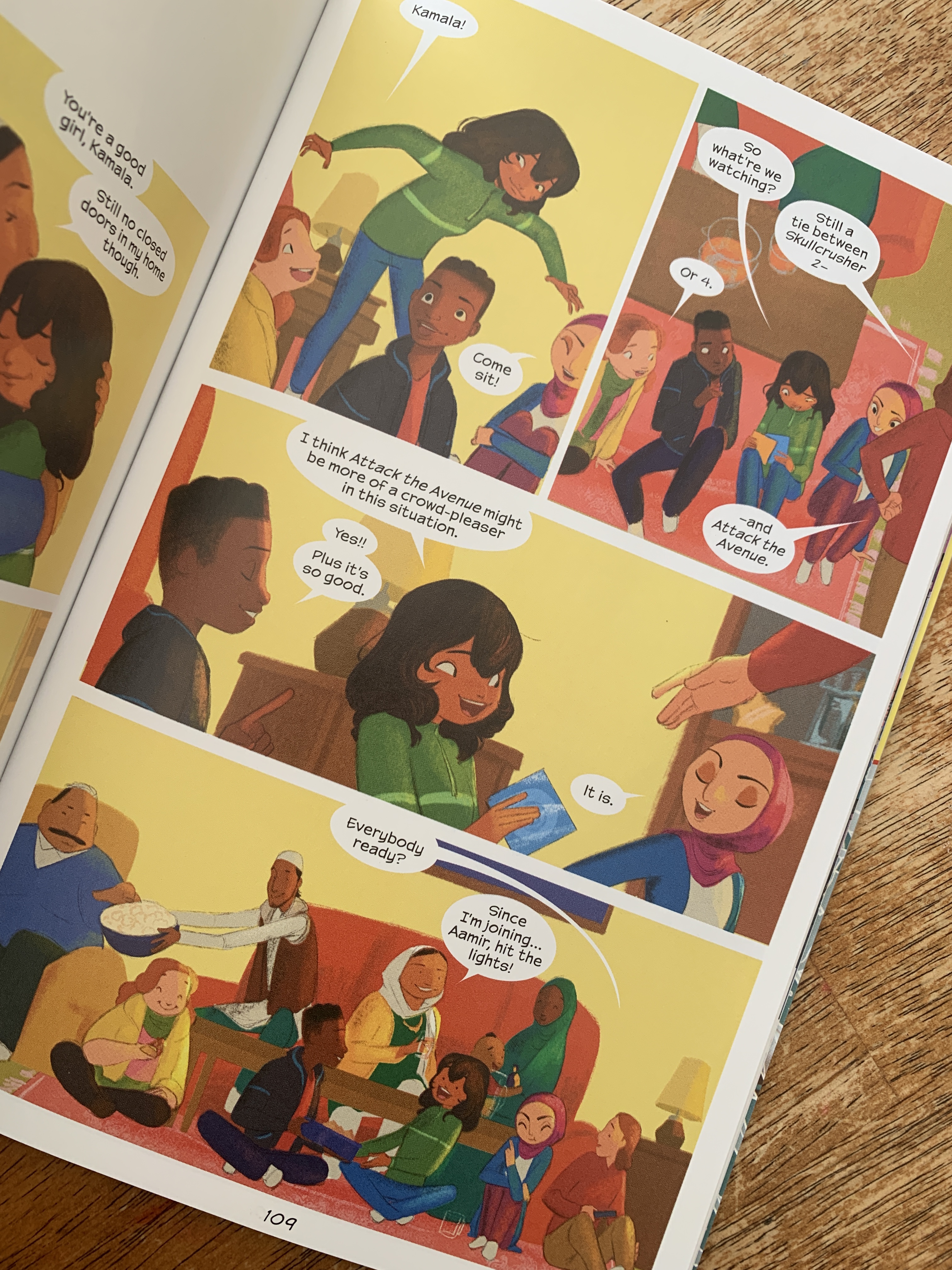
I like that the book has the dad helping the mom put on her sari, and the dad comes and chats with Zubi about what happened at school.  Mom might be in the medical field, she seems to be wearing a white coat over her sari, which is subtle and impressive that she is going to work in a sari for anyone that has ever tried to wear one and simply get in and out of a car (just me maybe).  I do like that the mom remarks that she should be kind to her body since it housed her daughters.  I think reminding us that bodies serve a miraculous function is important.   I love the diversity in the classroom and how full of life Zubi is in all aspects of her day.   She is proud of her culture, and sees those around her as being bright, kind and funny, not just the shape of their bodies.  Some of her self reflections after an incident do highlight that many kids, including Zubi, don’t see body size as good or bad, its just one’s body.  Hopefully the adults reading the book will also be reminded and realize that is a message worth actively working to maintain, at any age.

img_3980

I think some of the criticism about the book not showing healthy food choices, or overall health is that we sometimes expect one book to do it all when there aren’t a lot to chose from.  The book celebrates being beautiful AND being big.  It doesn’t need to address all the societal and adult baggage that comes from food choices, lifestyle, health, judgement, stereotypes, etc.. And I think if you feel really strongly and defensive about it, then focus on pushing for more books, not one book to do it all.  Encourage illustrators to show a variety of body types on the pages of books in young children’s hands as well as by toy makers, cartoons, movies, tv shows, etc..  Body positivity and being confident in yourself, no matter your size, shape, appearance, benefits everyone. Celebrate being beautiful.

img_3981

The Great (Food) Bank Heist by Onjali Q. Rauf illustrated by Elisa Paganelli

Standard
The Great (Food) Bank Heist by Onjali Q. Rauf illustrated by Elisa Paganelli

food bank

As an adult setting out to read this book, I imagined that the goal of the book was to bring awareness to a specific issue, food insecurity, and to rally support to help others with this basic need.  The beauty of Muslim author and activist Onjali Q. Rauf, however, is that even with such a clear intent, the storytelling, character building, and  enjoyment of the book makes you connect to the plot and issues and feel the message, not just be told it.  For children seven through 12  with no prior expectation of the book, they will be emotionally effected by the reality shown and feel empathy and compassion for characters that will hopefully translate into their real life.  My 10 and 12 year old boys read the book in about an hour, not realizing what the book was going to be about and hounded me to read it with glowing reviews.  This 103 page middle grades book has diverse characters (none are Muslim), and is a great story, a great educational tool, a great empathy check, and a great resource for how to get involved to start helping food banks, and breakfast clubs, all while being funny, relatable, kind, and engaging.

img_3836

SYNOPSIS:

Nelson, his younger sister Ashley, and their Mum work together to make hard “tricky” months manageable.  They are creative with their meals, they go to breakfast club, and they use their vouchers on Thursdays at the food bank.  Some times though, it isn’t enough, Mum has to pawn her jewelry, they go without meals, and generous friends share their snacks.  When the food bank starts running low, Nelson breaks his secrecy about breakfast club and his close friends Krish and Harriet are determined to help figure out why donated food isn’t reaching the bank and what they can do to make sure it does.
img_3837

WHY I LIKE IT:

I love that it shows how the family has food insecurities on a day-to-day basis and how never feeling full affects so much of the characters’ attention.  I also love that it shows their mom works, she is a nurse and works really hard, they don’t steal or load up on food that is donated, they are very grateful for all assistance given and their friends don’t judge them.  It shed light on a different narrative that many children perhaps don’t think about: that people they know and are close with, might be hungry.  I think the maturity of the kids is a lesson to adults reading the book too, that reminds us that kindness and assistance doesn’t need to come with judgement or arrogance.  The characters are all really likeable, they aren’t perfect, but even though the book is short, you feel your heart being affected by them in their handling of the mystery and the larger concept of hunger.

img_3838

FLAGS:

None

TOOLS FOR LEADING THE DISCUSSION:

I would read this book aloud in a classroom (2nd-5th), and if I get a chance to participate in Lunch Bunch (where a book is read to children while they eat their lunch) at our local Islamic School, I will start off with this book.  I think kids have bigger hearts than we often think they do, and while they might not recall the less fortunate when you want them to finish all the food on their plate, they often notice kids without lunches at school and share without prompting.  

Here’s a great clip and reading by the author: https://www.youtube.com/watch?v=NVYBLh0kODc

Happy Reading!


I went for Hajj by Na’ima B. Robert illustrated by Paula Pang

Standard
I went for Hajj by Na’ima B. Robert illustrated by Paula Pang

hajj

Before I review this delightful book, I would like to make a public service announcement of sorts.  It is not Hajj season, not even close.  I pre-ordered this book on June 23 from Amazon, I should have/was supposed to have it before Hajj in the middle of July.  I got it TODAY! When I realized that the US publication date was delayed for a book already published in the UK, I reached out to Kube Publishing and they suggested trying “an independent bookseller such as IslamicBookstore.com or CrescentMoonStore.com.”  I know this.  Noura is a dear friend, but I messed up.  Please don’t do the same.  SUPPORT LOCAL BOOKSELLERS! I’m sorry, lesson learned.

img_3841

Now back to the book that already feels like a classic staple that needs to be on every Muslim families book shelf, and in every public learning space for non Muslims to enjoy and benefit from as well.   The 31 page “inspirational, semi-fictional narrative” is perfect for ages two to seven as it mimics the beloved Eric Carle and Bill Martin, Jr. classic, Brown Bear, Brown Bear, What Do You See? but framed around Hajj and what is seen, done, and heard.  Each two page spread begins with, “Hajji, hajji…”.

img_3842

The book starts with a detailed Note to Parents and Teachers that explains the points to highlight, and discuss with children.  The story is then organized by the steps of hajj in broad strokes and illustrated with both charm and detail that will hold readers and listeners attention.

Hajji, hajji what did you wear?

I wore two white sheets

And my shoulder was bare.

img_3843

The book starts with the little boy narrator on the plane looking down on the clouds and sea. He then puts on his two sheets, hears the call to prayer,  sees the black stone and the station of Ibrahim before he makes his seven tawaafs, runs between safa and marwa and heads to Mina. He prays at Arafat like the Prophet (saw) did, and falls asleep in the cold night desert air.  He sees stones being thrown and eats meat on Eid before getting his head shaved.  The book concludes with a glossary.

img_3840

The book is well done and is a great mix of information and entertainment, alhumdulillah.

Amira & Hamza: The War to Save the Worlds by Samira Ahmed

Standard
Amira & Hamza: The War to Save the Worlds by Samira Ahmed

amira and hamza

Make sure you are sitting in a comfy spot when you crack open this middle grades fantasy adventure, because it hits the ground running from the very beginning and doesn’t let up over 368 pages.  The like-able and relatable brother sister duo snarkily banter and bicker about everything from cultural Indian (Desi) folklore, religious stories, Marvel, Lord of the Rings, He-Man, Arabic Sesame Street, Star Wars, hygiene, fears, potential science fair projects, and food, all while battling jinn, devs, peris, and reality as they work to save the worlds.  The book is chalked full of STEM concepts, cultural touchstone, Islamic footholds, pop culture, and fun, as one character remarks, it is the ultimate fan fiction. I regularly Googled people, references, and concepts, and ended up learning quite a bit.  And don’t fret if you ever get lost or confused, or something doesn’t make sense, you don’t have to worry that you missed something or that the author left a gap in the narrative, the book moves quick and Amira’s constant dialogue and commentary points out all the ridiculousness of what they are experiencing and the questions that she wishes she had time to ask, explore, and discover.  The author never loses control of the narrative, and keeps the world building on level without skimping on details and understanding.  I have not loved any of the author’s previous books in their entirety, I think this one, however, is her best one yet, and the switch to middle grades is a good fit.  

SYNOPSIS:

Twelve-year-old Amira and her 10-year-old brother Hamza are heading to the Shriner’s Madinah Temple in their hometown of Chicago to explore the exhibit of Ancient Astronomy artifacts, or as Hamza calls it “tools that belonged to dead Muslim Astrologers.”  Hosted by the Islamic Society of Ancient Astronomy corresponds with the eclipse viewing party of the incredibly rare super blood blue moon.  In typical Hamza fashion however, a Nerf gun is brought and things are touched.  When Amira is tasked with bringing her brother up to the roof to learn how to use the telescopes, the two scuffle over a small box with a tiny moon inside, a series of snatching and tussling between the siblings cause the Box of the Moon to break, or rather start working.  As day turns to night, the moon seems to be breaking a part, and everyone in the world is suspended in sleep except for Amira and Hamza, and an entire jinn army is heading their way.

When jinn leaders Abdul Rahman and Maqbool reach the children they must convince them that they are not there to harm them, but rather to recruit them as the chosen ones to save the worlds: Qaf and Earth and the barrier, the moon, that keeps the realms separate from destruction at the hands of Ifrit.  The confusion over there being two of them creeps up, but is squashed as Suleiman the Wise left tests to prove that the chosen one is properly equipped to battle Iftrit as it has been prophesized.  The children must work together to prove themselves they must then actually seek out and defeat Ifrit.  As tests and challenges arise, it becomes clear (pun intended) that the two are not the chosen ones, but with no option of turning back they must forge ahead none-the-less.

“What? We’re Indian, dude, we were basically born half doctor.”

WHY I LIKE IT:

I love Amira and Hamza’s banter.  The references are at times laugh out loud funny.  Similarly, I was impressed by all the historical and STEM concepts intertwined in the story, there is even a tiny bit about mental health.  I learned about parts of the moon, historical figures, folklore, and more.  The characters are Muslim, Amira wears Ayatul Kursi around her neck and they talk of Sunday school.  The book isn’t religious though, in they aren’t saying Bismillah before they embark on things, or supplicating when in danger, but they greet different beings with peace, and the framing is clearly from an Islamic paradigm.  I think the high speed pacing works for most of the book, and somehow you still get to know and connect with the characters, but at times a slight pause to clarify a point would have been nice.  I would have liked to have the kids proving they were the chosen ones a bit more articulate and dramatic before hand rather than in retrospect.  I feel like the jinn transportation of cauldrons could have used a bit of backstory as well.  And a little fleshing out of the scroll, the government structure and communication methods of Qaf, would have helped some of the transitions between the action.  I read a digital ARC and it had a page reserved for a map, and I think when the physical book comes out that will be really helpful, as I didn’t quite fully understand the 18 realms and their locations  in comparison to the locations the children encounter.  

FLAGS:

UPDATE:  I TOOK THIS BOOK AS COMPLETE FICTION. THAT THE ISLAMIC PREMISE WAS A STARTING OFF POINT, AND DIDN’T DWELL TOO MUCH ON THE ACCURACY.  I READ AN ADVANCED READER COPY OF THE BOOK THAT DID NOT HAVE ALL THE SUPPLEMENTAL AUTHOR’S NOTES AND RESOURCES AT THE END.  I WAS UNAWARE THAT THE AUTHOR FELT SHE WAS INCOPERATING FACT AND ACCURACY IN THIS INCREDIBLY FICTIONALIZED BOOK. AND AS A RESULT I AM NERVOUS TO SUGGEST THIS BOOK TO THE MIDDLE GRADE INTENDED AUDIENCE.  IF YOU HAVE A MUSLIM CHILD THAT IS WELL VERSED ON PROPHET SULAIMAN, THE CONCEPT OF FICTION, AND IS OLDER THAN THE IMPRESSIONABLE EIGHT OR NINE YEAR OLD INTENDED AUDIENCE, ONLY THEN PERHAPS WOULD THIS BOOK WORK FOR YOU.  IT WOULD BE VERY MISLEADING IF YOUR CHILD TAKES THE TWISTED STORY AS FACTUAL AND BASED ON THE NOTES AND RESOURCES AT THE END, THIS VERY WELL COULD HAPPEN. To read more about the concerns you can click here and head over to Muslim Mommy Blogs take on the book.

There is magic and magical beings. A transgendered jinn.  It mentions Amira and Hamza celebrating Halloween. Death and fighting.

TOOLS FOR LEADING THE DISCUSSION:

I think this would be a great audio book to listen to with the family or a read aloud in a middle grades classroom.  It is too young for middle school readers to not find it slightly predictable, but if you had it on a classroom or home shelf I am sure it would be picked up, read, enjoyed by middle grades and middle schoolers alike.  It reads much like the Rick Riordan Presents series and I hope that there are more books featuring Amira and Hamza in the future.


The Tale of a Tiny Droplet by Ally Daanish illustrated by Oana Cocheci

Standard
The Tale of a Tiny Droplet by Ally Daanish illustrated by Oana Cocheci

droplet

I would imagine if you were to pitch the idea of this book it would go very favorably.  A raindrop goes on an adventure to a desert kingdom after facing adversity for being small, an ocean wave wants to consume her, a chance encounter with a grain of sand and confidence in Allah swt to keep them safe leads to refuge being offered in an oyster who journeys them through the ocean to salam its inhabitants only to wash up near the palace and at the feet of a prince who has been searching for a treasure for his mother’s crown.  The problem comes in its delivery.  It is told in rhyme that is incredibly forced and trying to do too much.  It is a 32 page children’s picture book trying to blend religion, science, adventure, and two points of view.  It needs to be clear, not concerned with a rhyme scheme that muddles the themes.  The book has potential and with the QR code and online teaching resources I could see an Islamic school teacher using this to explain how a pearl is formed and the incredibleness of one of Allah’s creations, but it will take a lot of outside explanation.  I am confident that no four to six year old is going to independently understand clearly what is going on.  I myself had to read it multiple times to figure out what was going on, and even then I found more holes, inconsistencies, and head shaking then there should have been in a large, glossy, well illustrated, effort filled book.

img_3589

A tiny droplet wants to be free, but this personified little water being’s friends tell her only great things live in the kingdom and she is too small.  Not sure how greatness and physical size become synonymous, but they do apparently.  So, on a windy day, the raindrop jumps out of the sky to join the ocean as a means to reach the kingdom.  A hurricane, or wind gale, catches her and she collides with a grain of sand.  But the pov switches, and the sand collides with her and it hurts the sand.  Grain apologizes and Droplet says not to worry she she is heading to the ocean too.  Grain warns her that the ocean isn’t safe, that there is a big wave who will consume them.  Droplet says she isn’t afraid and trusts Allah swt will keep them safe.  The wave threatens to chase them with all its pride (?) if they dare to run and hide.  The pair find an oyster to hide in and they swim with the tide. The oyster is bothered by their tiny feet so he throws them a blanket.  The wave continues to give chase, but they trust Allah swt and after months and days they wash up on the kingdoms shore.

img_3590

The book then pivots and focuses on a young prince who is searching for a gem for his mother the Queen.  Her crown has lost its shine.  He has travelled for months and day through mountains and valleys to no avail. One day while walking, back home on the beach, he hears voices hoping for safety from the wave.  Droplet and Grain think the wave has perhaps finally got them, but it is the prince opening the oyster and finding just the gem he needs. The book concludes with the pearl saying “Alhumdulillah” to the distant stormy sky, “All things can live in the kingdom and its palace rising high.”

img_3591

So my questions, first I’m not sure how a droplet isn’t free, is there only one wave in the ocean? Who is talking at the end, obviously the anthropomorphism as a science lesson kind of hits a dead end, it went from two talking objects to one new talking object, so thats creepy.  Wouldn’t it have been better to end when the gem was found and then have an info or fact page highlighting how pearls are made, having two distinct characters morph into one is a bit jarring story wise. The concept of the kingdom not allowing in little things, and then concluding that all things are welcome, is also so painfully underdeveloped.  Even little readers are going to find that assumption so off the mark.  I like that they trust Allah, but Droplet keeps saying she isn’t scared, but continues to run? swim? The duo don’t want to be consumed, but essentially aren’t they consumed by the oyster? The Pearl feels like it beat the wave despite its size, but it was the other drops that were telling Droplet she was too small, not the wave.

img_3592

All confusion aside, my kids and I might just not be the ideal readers.  My six year old didn’t know what a pearl was, so he was incredibly confused.  I thought the book was going to be about the water cycle, so it took me a minute to realize that wasn’t where the story was going. There is a QR code on the front and if you go to the website a number of resources are available https://www.lotehouse.com/product-page/the-tale-of-a-tiny-droplet. I wish there was info within the binding though to explain the process of sand and water in an oyster making a pearl and I wish a heavy handed editor would have cleaned up the text.  Sadly, a potential great book mixing adventure, science and deen just really missed the mark.

Barakah Beats by Maleeha Siddiqui

Standard
Barakah Beats by Maleeha Siddiqui

barakah

I have been waiting for this book for a really long time: a girl leaves an Islamic school for a public middle school and is not just unapologetic, but proud of who she is and of her religion, all while navigating such a huge life change and the day-to-day stresses of school, family, friends, and life. This is it right, the middle grade 288 page book that holds up the mirror to our own experience as a typical Muslim family in the west, that so many of us have been waiting for? Except, sigh, for me it was just ok. Don’t get me wrong, if you are new to seeing mainstream (Scholastic) Muslim protagonists shining and making their salat on time, this book is revolutionary and amazing. But, I’ve been doing this a long time, and I guess I wanted more than a tweak on Aminah’s Voice. I wanted to relate. I’m not a hafiza, nor do I know many 12 year olds that are. I enjoy boy bands, but have never been asked to join one. Sure the details and her decision to follow Islam the way she understands it is a great message, but it doesn’t clearly appear til nearly the end of the book, and until I got there my brain was constantly finding holes in the narrative, to the point I got out a notebook and started taking notes. There is absolutely no reason you shouldn’t read the book, and I know I am clearly in the minority here, so brace yourself this is a long review. If you see this at your child’s book fair and you think it looks cute, grab it, it is. I am cynical and jaded and I’m owning it, so perhaps we can agree to disagree, I’m just sad that I didn’t absolutely love it, so hold on, because I’m going to get it all out so that I can move on, inshaAllah.

SYNOPSIS:

The book opens with Nimra at her Ameen, a celebration to acknowledge her completion of not just reading the entire Quran, but of memorizing it. Her best friend Jenna, her non Muslim neighbor, is there and as everything is explained to her, the readers learn about Surah Yaseen, becoming a hafiza, and the schooling differences that Nimra and Jenna have had. That night when Jenna is sleeping over and the girls are watching Marvel’s Infiniti War, Nimra’s parents inform Nimra that she will be starting public school and that the two girls will finally be together. The news is big, but Jenna shrugs it off, and Nimra senses that something is off between them. When school starts, Jenna is surprised that Nimra is planning to wear her hijab to school, and this is before they have even left in the morning. The rest of the day: comments by Jenna’s friends, purposefully being excluded at lunch by Jenna, and being overwhelmed with a big school and so many teachers, makes Nimra miss her small three person Islamic school. Additionally she loves art, and is always tucked away in a corner with a sketch pad, her parents, however, have made her take Spanish instead of art class, and the frustration is painful. When she asks the principal for a quiet place to pray, another girl Khadijah pipes up that she can pray in the band room where she does. Khadija and her immediately hit it off, but she has already prayed, so Nimra sets off on her own to find the room. As she is about to start, some music starts, so to tune it out and focus on her salat, she recites aloud. When she exits, three boys are in awe at her vocal abilities: Bilal, Waleed, and Matthew, three Muslim boys. Better known as the middle school celebrity boy band, Barakah Beats, the boys beg her to join them. Nimra says she’ll think about it, but as the days show her and Jenna drifting further apart, being in the band might just be the way to get Jenna to pay attention. Unfortunately, Nimra’s family doesn’t believe Islam allows for musical instruments. She acknowledges that it is controversial, but that her family doesn’t play any instruments, attend concerts, or get up and dance. She figures she can join the band, just long enough to get Jenna’s friendship back on track and then dump the band without having to tell her parents. There is just one giant hiccup, they are planning to perform at a refugee fundraiser, oh and she really likes hanging out with the boys and Bilal’s sister Khadijah.

WHY I LOVE IT:

Had I read this book five maybe seven years ago, I’d be gushing, swooning, but when the author says in the forward that she is showing a girl proudly owning her religion, and essentially daring to be her authentic self, I expect something almost radical, revolutionary even. We are all settling in to seeing our Muslim selves in fiction and acknowledging that we are not a monolith, that we are diverse and flawed and valuable, but this premise felt different somehow, and I really wanted to connect with Nimra and her family, so when I didn’t, it hurt. It isn’t just a main character Muslim POV, or an OWN voice book, it is portrayed as being authentic to those of us that love our faith and don’t feel like we need to tone it down to be American. We are second or third generation American Muslim, we know our deen and this is our country, there is no going back to a homeland or assimilating. The book is about her being true to her self, but I don’t know that I know what she wants or what she believes, aside from her parents. The book addresses intergenerational conflict of power and expectation between her parents and grandparents, but other than for Spanish vs Art class, it seems to skim by the music issue, the main issue of the book. The book expects readers to acknowledge the maturity and voice of a 12 year old girl, but that same expectation isn’t given to the readers of nearly the same age. It glosses over any articulate arguments for why musical instruments are or are not allowed. It mentions that some people feel it is ok if the lyrics are not bad, some say it isn’t ok, that there are disagreements, that there are controversies, but it never explicitly answers, why? And readers are going to notice. I found it incredibly odd, that the music controversy is at the heart of this book, but the safe alternative is art and drawing. Drawing faces is a HUGE point of differing opinions among Muslims, perhaps as big, if not bigger than music. Nimra is always sketching and it mentions that she often is drawing super heroes: people, with faces, and possibly (magic) powers! The whole book she is in the band, and she regrets that she is using it to get back at her friend, but there isn’t a whole lot of internal debate if she thinks music is haram like her parents or it is ok, she just stays in the band, and plots how she will leave it so her parents don’t find out. SPOILER: I like that she ultimately makes the decision that is best for her and leaves the band after fulfilling her commitment, but we never see that, that is what her heart is telling her. There is no self exploration or critical thinking, it is just justifying why she is doing it, and then not doing it.

In terms of character development, only Nimra is really explored, the side characters are all pretty flat. Jenna gets some depth, but not much. I mean, how does Nimra’s best friend and neighbor who comes over every day after school not know that she has been working on memorizing the Quran? Not know how to dress at a religious themed celebration, a halter dress, really? Jenna is never shown to be a good friend, or even a nice person, the tone around her is negative from the start. We are told she is a good friend, but we never see it. The conversation about Nimra wearing hijab to school is like two lines, but is made to be a much bigger issue in Nimra’s head as she feels things haven’t been right since then. But, I’m not buying it. The girls go to movies, they go shopping, and she wears hijab, so why would school be so different? All of Jenna’s friends know about Nimra, so she can’t really be that embarrassed by Nimra’s scarf if they go out when she is wearing it and none of the other classmates seem surprised. I also felt off with the portrayal of the character because we so fervently believe that often the best dawah or even method to break down stereotypes and bigotry is to get to know some one personally. Jenna knows all of Nimra’s family and has for nearly her whole life, and she is so hateful and clueless to everything Islam? It is a stretch, the family prays, fasts, dresses Islamically, cares for her, feeds her cultural food, yet she is oblivious to it all. I get that her hate or lack of interest is probably reflective of how a lot of our neighbors are, but there aren’t many non Muslims in this book, and that portrayal is going to linger heavily for young readers.

Nimra is likeable enough on the surface, but the more you think about her, she isn’t really any different than those she is hurt by. She is mad when Julie assumes she doesn’t speak English, but she assumes Matthew isn’t Muslim because he is white. She checks her self in other ways, but this one seems to slip by. Other inconsistencies I noticed are when the first day of school teachers are really mean to her, but then it is never mentioned again. I wanted to know did they keep at it, did she prove them wrong? It was built up and then just abandoned. At her old school there were two other girls doing hifz, but when she meets up with one at Saturday school it seems they both are no longer at the school either. Did they graduate? Did they abandon it? Her Quran teacher comes to see her perform a song, perhaps a little understanding about her point of view in addition to the other Muslim’s in the band would have helped explain the why music is controversial in Islam. Also, does and would ADAMS allow music at an event? I’m genuinely curious. I even tried to Google it. Most masjids probably wouldn’t, but maybe a community center would. Readers are going to be so confused why Nimra is so stressed when the religious teacher and the place of worship are fine with it.

The friends as boys thing is sweet, but a little surprising, having three boys come over to hang out and watch a movie, high fiving them, sure it isn’t shocking, but its a bit inconsistent given the narrative. Plus, Nimra trying to help hook Waleed and Julie up? For as much as the book doesn’t want to sell itself out, little acts like this without a little hesitation or comment or introspection, kind of make it seem like its trying to normalize non Islamic acts as being ok.

I love the pop culture Marvel references, The Greatest Showman songs and the shoutout to Amal Unbound. I even loved the Deen Squad remixes getting acknowledged, but it made me wonder if all the songs of Barakah Beats are Islamic themed. Perhaps it doesn’t matter, but it would be interesting to know since the entire school adores the band, even asking for autographs at one point.

FLAGS:

Nothing a third grader and up couldn’t handle: music, art, lying, bullying, talking about crushes.

TOOLS FOR LEADING THE DISCUSSION:

I think I’d pass on the book as a middle school book club option, as it really is a middle grades read, and the thematic issues brought up for discussion are better found elsewhere. If I had an in person classroom, however, I would have the book on my shelf, it is a quick short read, that I think might encourage a discussion on music to take place, or at least allow readers to see a proud Muslim doing well in different environments.

Lala Comics: The Hilarious encounters of a Muslim Woman Learning Her Religion by Umm Sulayman

Standard
Lala Comics: The Hilarious encounters of a Muslim Woman Learning Her Religion by Umm Sulayman

Lala

A mix of information and entertainment, this 124 page comic book is divided into thematic sections which further break down in to mini-episodes or comic strips that feature a situation, an Islamic advice often based on a Hadeeth or Quranic ayat that is noted, and a misinterpretation taken to a comical extreme. The book is a great way to remind ourselves and children, middle grades and up, aspects of our faith that we might know, or introduce us to specifics that we should know, by showing the concept in exaggerated action. Because the examples are relatable and come from everyday life, the humor is that much more enjoyable, and as a result makes the “lessons” that much more memorable.

The three sections cover topics included in 1: Muslim Identity/Mindset, 2: Habits/Lifestyle, and 3: Adhkaar/Prayer, after an introduction of the characters, and the magic of the ‘Aalim Hat are explained, the stories begin. They are not sequential and can be read in any order, and are about four to 10 pages each. The book surprisingly does a good job of not getting overly predictable. Even though you know something is going to be taken incorrectly or to the extreme, it doesn’t drag on or get redundant. At times Ayye, is overly preachy, ok, all the time, but the persona is intentional and reads intentional, as his grounding of events is actually the point of the book.

The illustrations are clear and enjoyable. They are expressive and easy to follow. The glossy pages and full color print help keep the readers, especially the younger ones, tuned in to what the lesson is, and what silliness is ensuing. The hardbound 6 x 9 book is great to have around where it can be picked up and thumbed through. I read the entire thing in one setting, as did my 12 and 14 year old, and all of us have subsequently picked it up and flipped through it to muse over sections once again. A few of the pages seem to bleed into the binding and require some effort to see the cut off text, hopefully the book will have multiple reprints and this can be rectified. If you don’t follow the author on Instagram you should @LalaArtwork.

It is important to note that I am not a scholar, or anywhere remotely qualified to opine on the authenticity or interpretation of the points given in the book. The hadeeth are sourced, stating if it is a Saheeh hadith or found in Bukhari or Muslim for example or who narrated it. And ayats from the Quran tell the surah and verse. They are sourced when stated, there is not a bibliography at the end.

Potential concerns in the book: it does show a Muslim celebrating halloween and birthdays in a comic about Eid. In an episode about being strangers in this duniya, it mentions drinking and clubbing and nudity, boyfriends, etc. as things to avoid in this world. There is hyperbole and revenge, and bad judgement, but it is all in fun to make clear Islamic points and I think children nine and up will have no trouble understanding what is real and what is exaggerated, inshaAllah.

It All Comes Back to You by Farah Naz Rishi

Standard
It All Comes Back to You by Farah Naz Rishi

it all comes back to you

Sometimes you just want a light fun, empty-calorie read, and in that regard I feel like this book really delivered.  The characters are in college, and yet it is published by HarperCollins Children, so I wasn’t entirely sure what to expect, which perhaps added to the lack of expectation and increased forgiveness.  It reads very much like a Bollywood movie, there is dancing, angst, romance, redemption, culture, religion, and a sense that a certain arbitrary line of it all won’t be crossed to earn the book an R rating, and will keep it safe for Muslim high school teens.   I think the book is fine for Muslim’s in 10th/11th grade and will be enjoyed by those in college (and up) as well.  Over 429 pages the highly predictable tropes find their footing in their unique religious and cultural framing.  The plot is perhaps a bit on the nose and overly serendipitous, but individually the characters show range and complexities that will resonate with readers.  They have all made good and bad choices and continue to do so, but the big ones are largely in the past, and what we, the readers, get to see in many ways is them reaching for forgiveness in a contemporary whirlwind culmination of a wedding, overcoming addiction, a past felony, secrets, ex-significant others, familial expectations, loss, change, and school.  The book is not preachy, although there is a like-able imam as a side character and he gets some advice in.  The Muslim characters grapple with their faith as they would their culture; picking and choosing what to practice, but never really escaping it or wanting to completely abandon it either, it is just who they are and part of their identity. I enjoyed the book, reading it in two sittings and not feeling guilty that I lost sleep doing so, but like most rom-coms, the specifics and characters will blur over time.  It has a lot of similarities with Hana Khan Carries On, while not having quite the religious adherance of S.K. Ali’s characters or rawness of Tahira Mafi’s.  One thing that is uniquely it’s own, however, is the author’s beginning dedication, I don’t think I have ever read one quite so perfect, memorable, and possibly guilt causing.  I laughed out loud!

img_3576

SYNOPSIS:

Kiran’s mom passed away a year ago from ALS, and with her older sister Amira in law school at the time, she dealt with her mother’s illness and passing, largely alone as she additionally had just been ghosted by her first and only boyfriend, Deen.  Now that her sister is about to graduate, and Kiran is about to start university, they can finally be roommates and reunite the family.  Except, Amira has met someone, Faisal.  Someone who was there for her when her mom died, and they are planning to move across the country to California in a few months.  Devastated Kiran forces herself to be happy for her beloved older sister, until she finds out that Faisal is Deen’s older brother, and there are some gaping holes in his past.  With her sisters future on the line, promises to her deceased mother haunting her, and a serious lack of communication abilities (more on that later), she is determined to uncover the truth about Faisal and maybe even Deen in the process.

Alternating point-of-view chapters give Deen a chance to provide his side to the story: the reason he had to disappear from Kiran’s life, what happened to his brother, and the unreasonableness of his family.  As he struggles with his own conscious and stumbles around unsure of his own potential and worth, Deen comes across as selfish and arrogant, but ultimately only cares about his brother and making things up to him.  He is determined that Deen deserves to be happy and he is committed to keeping Kiran from destroying it.

In typical desi fashion, appearances matter and while all the behind the scenes sleuthing, plotting, and fighting is taking place, on the surface, wedding plans are being made and dances choreographed.

The book includes pages of texts from three years ago between Deen and Kiran as they meet at Sunday school and sneak behind the mosque.  There are also gaming dialogues between two anonymous fantasy characters that it is pretty obvious are Kiran and Deen.  The reveal isn’t a shock to the readers, only the characters, and proves a nice way to see redeeming traits in characters who’s present real actions aren’t exactly endearing.

WHY I LIKE IT:

The OWN voice representation of Desi culture and Islam is not in addition to the story, it is woven in to the characters and the plot.  The characters are largely liberal as the families are chill with dating, mixed gender hand shaking and dancing, and what not, but their Muslim upbringing is almost always close by.  The characters say “astagfirulllah” after kissing, they acknowledge that some of the Muslims drink and some have left that lifestyle, they miss visiting the mosque, they recognize that they aren’t praying, etc., while many flags are present, they really aren’t sensationalized or given more than a single word in print.  It strikes a pretty solid balance of showing where some thoughts or values come from, and where personal individuality takes over.  I don’t think Muslims will be offended, nor non Muslims confused.

The biggest issue I had with the characters is that it really could have been resolved, all of it, with a few decent sit down conversations.  Kiran and Amira, for example, are terrible at communicating and it blows this whole thing into a ginormous mess.  Sure, there is no book if there is no drama, but they never fix this.  So many lessons are acknowledged and the character arcs are shown or hinted at, this one, not so much, if at all.  They didn’t talk when their mom was sick, when she died, about what they were going through, about their dad, about their future plans, about the wedding, about the concerns with Faisal, about Kiran and Deen having a past, about moving to California,…the list really is exhaustive, and it doesn’t seem to show that they acknowledge their role in escalating everything and vowing to be better.  Sigh.

I read a digital ARC and it had a few spelling errors, it broke down the fourth wall in one paragraph, and I’m hoping the final copy will have resolved these issues.  It mentions that typically the bride and/or her family pay for the wedding in Islam, and this is erroneous, culturally possibly: the brides family would cover the nikkah and ruhksuti, with the groom covering the walima, but to put it on religion is just incorrect.

FLAGS:

Deen talks about “knowing women,” but it isn’t explored, and the groom is teased that he will be loosing his virginity card.   The kisses aren’t usually described, it is just conveyed as something that happened.  There is a bit of detail in the chemistry felt in the dances, but in true Bollywood fashion, they stop short of kissing. There is a stripper called to the bachelor party, but the characters are appalled and she is immediately escorted out. A religious character accidentally drinks alcohol and blacks out.  There is profanity, not excessive, but conversationally.  There is talk and repercussions of addiction to prescription drugs, a felony crime committed and punished for, deceit, lying, bullying, and physical altercations briefly recalled.  There are parties attended, alcohol consumed,and  at one point a female forcefully kisses an unconsenting male.

TOOLS FOR LEADING THE DISCUSSION:

I’ve gone back and forth with suggesting to the high school book club advisor to consider this book.  I think the right group of readers could really opine on the characters actions from the shy Faisal with a huge forgiving enduring heart to the nosey obnoxious Mona Khala, but there are some potential flags that might ultimately keep this book from being entirely Islamic School appropriate even for the highest grades.  Ahh, I’ll keep you posted on what I decide.

Huda and Me by H. Hayek

Standard
Huda and Me by H. Hayek

huda

At 194 pages, this book just became required reading for all my children save the two year old.  Meant for middle graders, I absolutely loved this book.  Sure literary siblings often run away and have adventures, think Claudia and Jamie Kincaid from Mixed Up Files, or the sisters in Ticket to India, but this Australian Muslim duo adore each other and are doing it to reach their parents and save their other five siblings from an evil Aunty babysitter.  In some ways the book couldn’t and hopefully wouldn’t really happen, it is plausible however, and the way it is written bouncing back and forth in time until the resolution, and the absolute authenticity of the characters make the book hard to put down and had me laughing out loud.  The book is for everyone, Muslim kids specifically though, will feel an incredible kinship to the Muslim family and relate to the anxiety of making wudu in a public restroom, the shock of having the athan clock tossed in the freezer, the nervous looks between siblings hoping someone else will speak up about what Muslims can’t eat, mistaking a nun for a hijabi, amongst so many other little sprinkled in examples.  The power of OWN voice writing is exemplified and celebrated, and provides a mirror that a large swath of Muslims children, not just Lebanese Australians will benefit from and enjoy.

SYNOPSIS:

There are seven children in the family and when Mum and Dad announce that they have to make an emergency trip to Lebanon, the kids don’t understand why they need Mum’s friend Aunt Amel to stay with them in Australia.  They don’t really even like Aunt Amel, but they don’t really know her either and as their parents leave, they have no choice but to endure until their parents return.  When Aunt Amel assigns them all duties: 17 year old Omar is the 24/7 chauffeur, Kholoud becomes her personal stylist, twins Suha and Layla must keep her supplied with baked goods and tea, Akeal is the butler, Huda is the maid and little Raheed will be glued to her, some of the kids think it could be fun until they realize they are being used to provide Aunt Amel with a holiday in exchange for her staying with them. The kids are required to be up by five in the morning, are not allowed to talk to their parents, and some are even kept from school to provide the services Aunt Amel demands.  The kids grudgingly try to endure, but spunky Huda is pushing back, and with the help of the retired Polish Sleep Doctor next door, a plan is hatched, tickets are booked, and Akeal and Huda are making a run for Beirut. Along the way they will be met with an Islamaphobic teen pulling off Huda’s scarf, a variety of minders keeping track of the unaccompanied minors through airports and plane rides, and baited breath as they have obstacles at every step to find their parents in a country they have never even been to before.

WHY I LIKE IT:

The book is incredibly well written, I sometimes stumble a bit with Australian authored books, but this one was easy and universal in most of the dialogue and vocabulary. I enjoyed what was sprinkled in, and as a privileged American didn’t get lost at any point.  The shifts in the timeline to keep the story fast paced and moving also made the stress of “if they could pull off the escape” a little bit subdued allowing the experience and dialogue and connections along the way to really be enjoyed.  I think it was a smart move to not have it be full steam ahead, gritting your teeth, but more in the moment seeing why they had to do what they did, and how it was panning out for them.

I absolutely love that the family is unapologetically Muslim living in a western environment.  They don’t celebrate birthdays, but they seem ok with make-up, they pray, the mom wears hijab I believe, but I don’t think the sisters do, it really is such a relatable family with their own quirks and tests and they are active and doing their best.  It could be my family or most families I know, well lately my kids bicker a lot, that’s why it is required reading for them, but that is off track.  Back to the book, I was so proud of Akeal sticking up for his little sister wearing a scarf to be dressed up and not backing down from confronting her harasser.  I love the spunkiness but maturity of Huda.  From page one you are cheering them on, and it doesn’t let up.

FLAGS:

Kids scheming and lying and running away, all for good cause mind you.

TOOLS FOR LEADING THE DISCUSSION:

This would be super fun to read aloud to a 3rd or 4th grade class, but I don’t think it would work for a middle school book club, it is just too quick of a read.

Ace of Spades by Faridah Àbíké-Íyímídé

Standard
Ace of Spades by Faridah Àbíké-Íyímídé

spades

I had heard about this 420 page YA thriller and how it was written by a Muslim student at University and the seven figure book deal that she earned. It is constantly described as a combination of Gossip Girl and Get Out, having never seen either of those, I relied on the back of the book and the inside flap to see if it was something I would like to read and suggest my young teenage daughter, (and followers to read). Based on the suspense teasing and plot involving racism, I figured a contemporary YA book set in high school would have some relationship, sexuality, language and drugs, so at the last minute I decided to read it first. Alhumdulillah, I’m glad I did. The book has sex and relationships and sensual encounters between gay, queer, lesbian, bisexual, and heterosexual characters on EVERY SINGLE PAGE. I considered stopping, it was a over the top, forced, and honestly a little hard to read at times, but I continued because the commentary on racism and suspense storyline was well done that I was genuinely curious to see the climax and resolution. I write this review as a heads-up and to opine on the lack of mention of the amount of romance and sex in the book and in its blurbs. As a reader and someone who recommends books to people a lot, knowing what the majority of the book is about is helpful. To completely not mention something that is such a huge part of the book is frustrating, and so I’m writing this up more as an FYI, than a thorough and in-depth review. There are no Muslim characters, and the only mention of religion is a side character reading the Bible. Coming from an Islamic School Librarian standpoint, without exception this book would be considered inappropriate.

SYNOPSIS:

The book is told in two alternating personalities, Devon and Chiamaka. Two senior black students at a prestigious private high school. The only two black students. Chiamaka is the top of the school hierarchy, head prefect, planning on Yale for pre-med and the girl everyone wants to be. Devon is a scholarship student who plays music and dreams of Julliard. He flies under the radar and has one friend. When the book opens both are named Senior Prefects at the opening assembly of the school year, and no one is more surprised than Devon. The glory of such an honor is short lived however, as anonymous texts start popping up exposing secrets about the two. The two characters have skeletons they would rather not have exposed, and even though they barely know each other, they eventually resolve they must work together to figure out who is out to destroy them.

WHY I LIKE IT:

I like that the whodunit aspect really had me on my toes. I honestly, however, didn’t like either of the characters at all. The book has a lot going on, aside from the texts and secrets being exposed, that I wish would have gotten more page time. The two characters have very different, but very impactful home lives. Devon’s father is absent and it is learned he was executed on death row, his mom works three jobs, he has younger brothers and they struggle financial so that he has a chance at education. He lives in a tough neighborhood and runs drugs to help out with money. He hooks up with multiple guys in the book, and tries to keep it a secret so that he doesn’t get further harassed by the neighborhood guys, but it seems everyone knows he is gay even before the texts start coming. Chiamaka is Nigerian from her mom and Italian from her father. Her father’s family doesn’t accept her and her mom because of their skin color, so they no longer go to Italy to visit. Both parents are physicians and are never around. Chiamaka has no friends, picks boyfriends to further her power agenda, and spent her entire junior year having sex with her best friend, Jamie, with the hopes that he likes her too. She eventually realizes she likes a girl and hooks up with her. By-and-large for both main characters, only their sexual relationships are really explored, and most of them are brief. Thus it kind of limits the relatability to the characters in other facets of their lives. Not that people and characters have to be like-able, but they have a lot of layers, and it would have been nice to get to know them better as people, not just as shell minority representatives in a system built for them to fail.

Only a few side characters are developed, presumably just enough to make them suspect, but to drop information like one of them getting incarcerated and not explored, one diagnosed with diabetes and told without prompting and then dismissed, makes it feel like a lot is crammed in for no real purpose. As a debut novel by a young author, the writing is obviously amazing. I just didn’t connect to the characters, and the parts of the book I did like were overpowered by parts that I felt were overly forced. I will definitely read anything she writes in the future, although I will definitely research the books more thoroughly know what I’m getting in to.

FLAGS:

There is violence, sex (hetero, gay, and lesbian), cursing, drinking, drug use, drug selling, romance, kissing, hit-and-run, conspiracy, making out, drug dealing, physical beatings, passing out drunk, drunk driving, lying, cheating, racism, bigotry, hate speech, gaslighting, privilege, death, gun violence, destruction, murder, attempted murder, crude language, assault, blackmail, misogyny, homophobia, voyeurism, institutionalized racism, and probably more. Mature content.

TOOLS FOR LEADING THE DISCUSSION:

There is no way I would suggest, recommend, or encourage this book to Islamic School high schoolers.