Tag Archives: Muslim Author

Squire by Sara Alfageeh and Nadia Shammas

Standard
Squire by Sara Alfageeh and Nadia Shammas

squire

This 336 page YA graphic novel set in a fictitious world draws on the authors’ Arab culture and creates relatability for universal readers everywhere.  Themes of coming of age, war, family honor, discrimination, classism, deceit, and friendship, all interweaves with rich illustrations and warmth.  With a few unnamed #muslimsintheillustrations the story shows a lot of heart and with some language, violence, death, and oppression would be best suited for 9th grade and up.

SYNOPSIS:

Aiza and her family belong to the Ornu tribe and are treated as second class citizens in the Bayt-Sajji Empire.  With their traditional arm tattoos and seemingly more plentiful food, they are greatly disliked by the larger community and oppressed at every opportunity.  Aiza dreams of joining the army, rising in ranks, earning citizenship for her family and changing their future.  She also dreams of being a hero.  When she finally convinces her family to allow her to enlist, they also encourage her to hide her identity, and just like that, she is off.

Once in training she is pushed to excel or risk being sent to the front lines.  As she navigates new friendships, harsh instructors, and the shadowy General Hende, Aiza learns there is so much more to war and politicking than meets the eye.  Her life, her loyalties, her understanding of the world will all be tested, as Aiza must decide which path is for her.

WHY I LIKE IT:

The text and illustrations are seamless in conveying a united story, I was a little nervous with two authors, and I like that the story has twists and multitudes.  I loved seeing strong women in the military, as the authors’ say tough girls with swords.  While reading it I was completely submerged in the story and the characters, but writing this review a few days later, I’ve largely forgotten the characters names and quirks.  I’m not sure if it is because I read a digital version, or because the character building is a little lacking.  I don’t know that I was emotionally invested in some of the major plot points because I was not seeing the struggles it was requiring of the character to endure.  Admittedly I have not read a lot of fantasy graphic novels, so I don’t know that I have a lot to compare it to, but I do plan to read a physical copy when I can, and read follow up books in the series, to see if my impression changes.

FLAGS:

Some language, bullying, oppression, violence, death, killing.

TOOLS FOR LEADING THE DISCUSSION:

There is nothing religious in the text, so I wouldn’t use it as a book club selection, but I would definitely shelve it in a school library, classroom, and keep it in mind for readers that love these kind of books.
The Boy Who Met a Whale by Nizrana Farook

Standard
The Boy Who Met a Whale by Nizrana Farook

whale

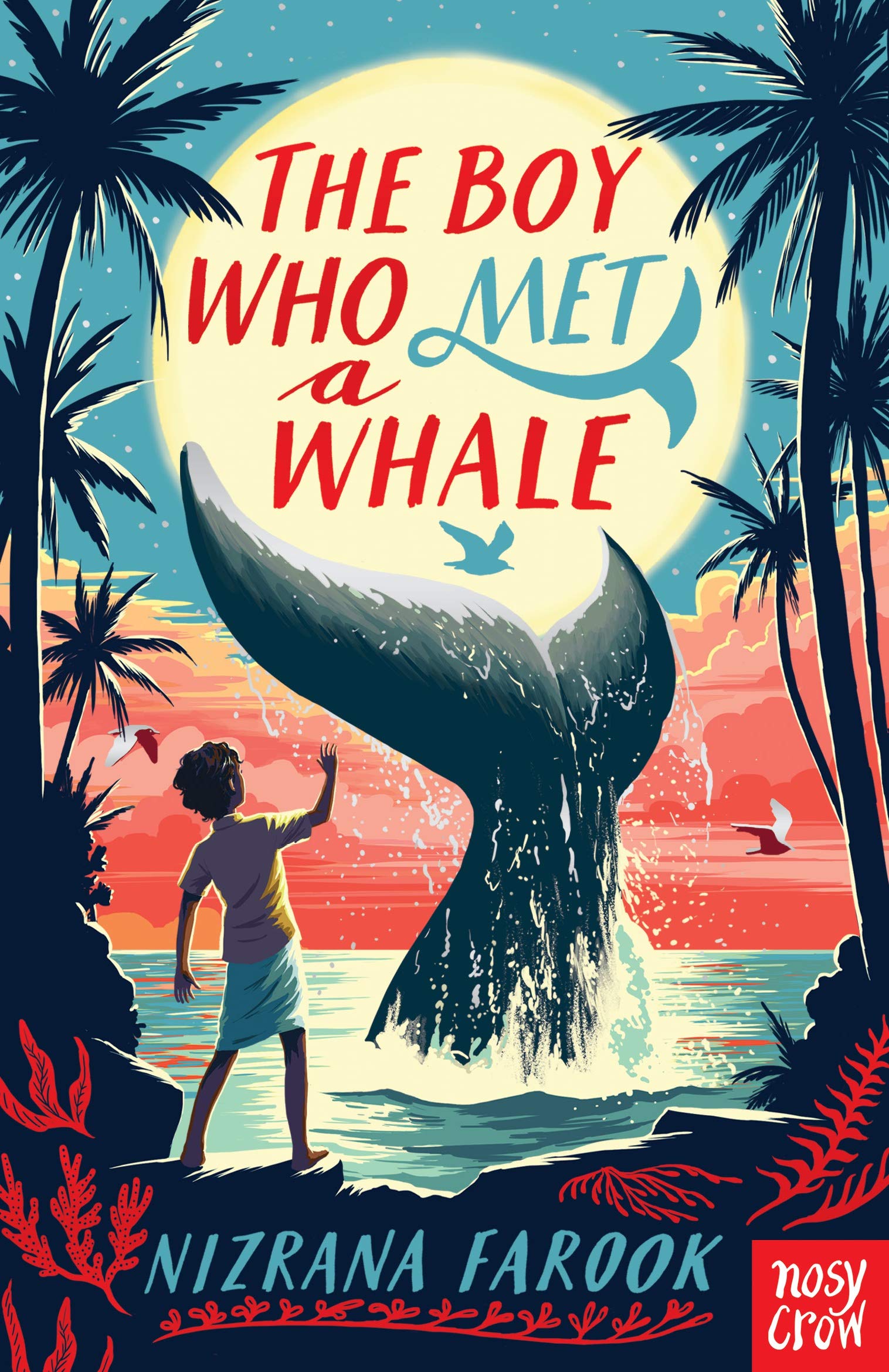
I have a vague memory of being told that this book features a Muslim family when I reviewed the author’s first book, but I can’t find the message, nor recall who sent it and to where.  The text does not suggest any religion by any of the characters, but that being said there are “Islamic” names present in this 195 page middle grades book by a Muslim author and set in Serendib, the old Arabic name for Sri Lanka.  The fast paced story pulls you in and sets three kids up for adventure, overcoming fears, outsmarting adults, and becoming heroes along the way.  I didn’t love this book as much as The Girl Who Stole an Elephant, but it probably isn’t fair to compare them.  The book was released last year in the UK and will release shortly here in the US, I don’t know that I would rush out to purchase it, but I would definitely put it on hold at the library.  It is an adventure filled read from a boy protagonist perspective, it starts with a mutiny, features treasure, plotting, close encounters with a whale, and bringing justice to murderers and thieves.

SYNOPSIS:

Zheng has never had much of a family, and when his Captain’s First Mate and the cook poison their merchant ship crew and leave them to die, Zheng escapes.  He washes up on the shore of Serendib, not far from Galle, and is found by local fisherboy Razi.  Razi is a fisherboy that doesn’t fish, or rather no longer fishes, not since his father was killed by the sea.  Razi just tries to help get Zheng some food and get him out of the sun, but when Marco and Cook question him about the whereabouts of Zheng, he protects the boy and gets himself involved.  Promising not to tell anyone about Zheng, he immediately tells his twin sister Shifa.  Shifa is the rational one int he group and doubts Zheng’s adventure stories.  Her quick thinking and clever sneakiness provides time-and-time again in the book, a chance for the three kids to rescue each other, find the treasure, and return it.  

WHY I LIKE IT:

I love that the book is so fast past and unapologetic.  The descriptions of the island, and the plants and sea life, really is impressive and insightful into a country and culture not often explored in children’s books.  My mommy heart did not like that the kids would just leave for days at a time, and they never even thought that she might be worried, spoiler, she was! 

I like how subtly the grief and loss of the father manifested in Razi.  How he had to reconcile his emotions and start to move forward.  It isn’t in your face, but I would imagine that any child who has gone through something similar, would be reassured by seeing a fictional character experiencing something similar.  It is reinforced by Zheng’s lack of family and his need to find a “home.”

I felt like a few plot holes were too quickly glossed over in the heat of action.  I don’t know that it is a result of carelessness, I think it was more to keep the story fast moving and appropriate for the target audience, but I could have used a little filling in of the gaps: the ease of pulling people in to boats, where Zheng was going at the end and how it was all figured out, how Cook and Marco found Zheng, how everyone in Galle immediately recognized the dagger, why the kids were never killed even though numerous people were drugged at the beginning without a second thought, what the praise was for the returning of the dagger, what the oxen cart owner’s response was to the damaged cart, etc..

I wish there would have been a prayer to Allah swt at some point, or a bismillah, or an Assalamualaikum. The sister’s name, Shifa, and the medicine man that she trains under, Abdul Cader, imply a tinge of Islam, but I would have liked a tiny bit more, the book sets itself for lots to be sprinkled in, the children nearly die multiple times, but it was never there.  

FLAGS:

Death, lying, sneaking, near death experiences, grief, loss, theft.

TOOLS FOR LEADING THE DISCUSSION:

This would be a fun elementary read-a-loud with the short chapters and fast paced action.

Click to access The-Girl-Who-Stole-an-Elephant-Comprehension-worksheet.pdf

An Ayesha Dean Novelette: The High School Heist by Melati Lum

Standard
An Ayesha Dean Novelette: The High School Heist by Melati Lum

ayesha deen mg

If you are a long time fan of Ayesha Dean and you have been waiting for some children in your life to grow up just a little, so you can share the strong Muslim detective books with them, you are in for treat.  This book is a short novelette for middle grade readers!  It isn’t a prequel detailing her personal backstory, but it does show how she got her first taste of sleuthing at age 13.  If you are new to the series: the book like all the others is Islam centered, fast paced, authentically voiced, and an overall fun read.  Unique to this book is that it is for ages 8 and up, and takes place in Ayesha’s home country of Australia.

SYNOPSIS:

Ayesha is at a new school, she has recently started wearing hijab and she just wants to settle in to it all with friends Jess and Sara.  Things have been going missing from year eight lockers, but it isn’t until Ayesha is a victim does the concern really hit home.  Add to that getting paired with the jerk Dylan Wyley for a project in Indonesian class, and Ayesha is not having a good day.  When she senses some suspicious activity, she is on the case: ready to get her stolen book back, take down a bully, put her Tae Kwon Do training to use, and make it to the library to pray her salat on time.

WHY I LIKE IT:

I really enjoyed the relatable voice of young Ayesha, having read all of the other books in the series, it was sweet to get a peek of her in her younger school days.  I love how much Islam is in the book, and not in a preachy way, but rather in a ‘I’m Muslim and this is how I see the world and this is what I do’ sort of way. I’m not going to lie though, I wanted more backstory on how she became friends with Jess and Sara, how she settled in to living with Uncle Day when her parents died, and all the backstory four books solving crimes around the world just couldn’t get to.  But I fully realize, that is just something I may never get (hint, hint) and will have to be content with the fast paced, culture and Islam rich stories that we thankfully get.  I’m not complaining, I just get overly invested.

To all my arrogant ignorant readers out there, that like me, might be a bit confused about Australian schooling and culture- I embarrassed and humbled myself and annoyed the ever gracious author to learn more about Ayesha’s world.  In Australia the lockers are located in the students’ homeroom classrooms (tute rooms), hence they don’t often padlock them.  High school refers to ages 12-17, and sometimes 11th and 12th grade are called senior school, and “How did you go” is a phrase in Australian English.  See, aren’t you glad I asked, now we know, and can widen our view together.

The only thing that I think I would have liked to see would have been a bit of pause before Ayesha got into a fight.  It is high energy, and she does it to help someone, but I feel like at 13 years old, in a book for 8 year olds, and as someone familiar with Tae Kwon Do, it should have been more articulated that she was nervous to engage in a physical altercation, and was only doing it because she could not diffuse the situation, get the victim away, and thus had to step in.  I recognize that pulling out of the scene might have made it lose momentum, but I felt a little off celebrating a school fight without that pause of introspection.

FLAGS:

Fighting, stealing, bullying, Islamohobia, racism, bigotry.

TOOLS FOR LEADING THE DISCUSSION:
The book is short and for a younger age than I meet with, but I look forward to purchasing the book on February 20, 2022 to have available in the school library for anyone to pick up and read, inshaAllah.

The Sleepy Farmer: The Farmer Who Almost Missed Fajr by Shazia Afzal illustrated by Ingy Hamza

Standard
The Sleepy Farmer: The Farmer Who Almost Missed Fajr by Shazia Afzal illustrated by Ingy Hamza

The Sleepy Farmer_

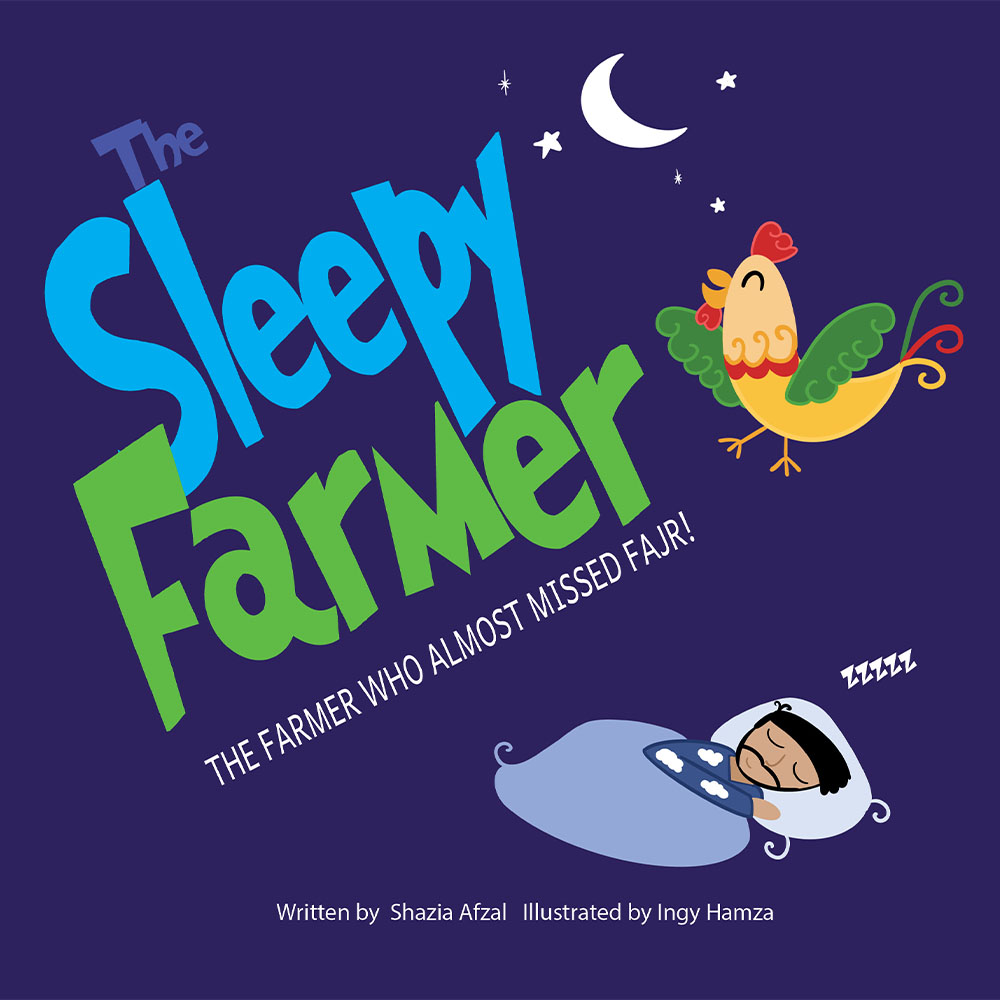
This adorable board book combines animal sounds, team work, appreciation, and getting to the masjid on time for fajr.  Oh ya, and it is silly too.

img_5554

Farmer Salman stayed up late and doesn’t wake up in the morning when the rooster crows. The crowing wakes the hen who starts to cluck, the clucking wakes the horse who starts to neigh…and before you know it, it awakens the entire farm.

img_5553

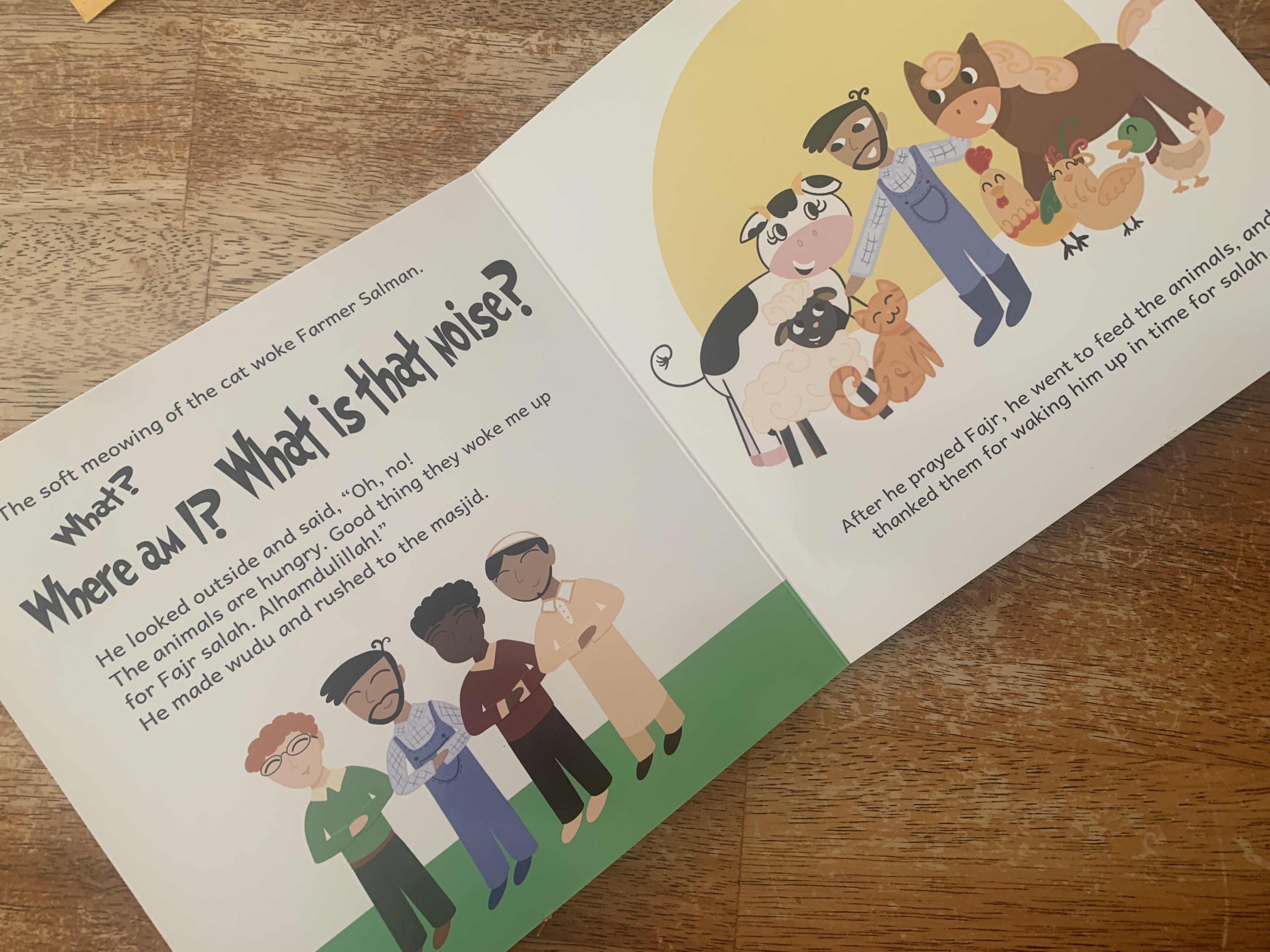
But, Farmer Salman still doesn’t wake up, so the animals get louder, and louder, and finally the cat in the house wakes up and meows in the farmer’s face.  The meowing wakes Salman up and he makes wudu and heads to the masjid, just in time for fajr salat.

img_5555

He returns from the masjid, thanks the animals and gives them their breakfast, alhumdulillah.

The book is only 10 pages and some pages are text heavy.  I think a few more pages to reduce the text on some of the pages would really make an already fun book, incredible.

My World of Hamd: A Reflective Book on Gratitude by Lateefah Binuyo

Standard
My World of Hamd: A Reflective Book on Gratitude by Lateefah Binuyo

hamd

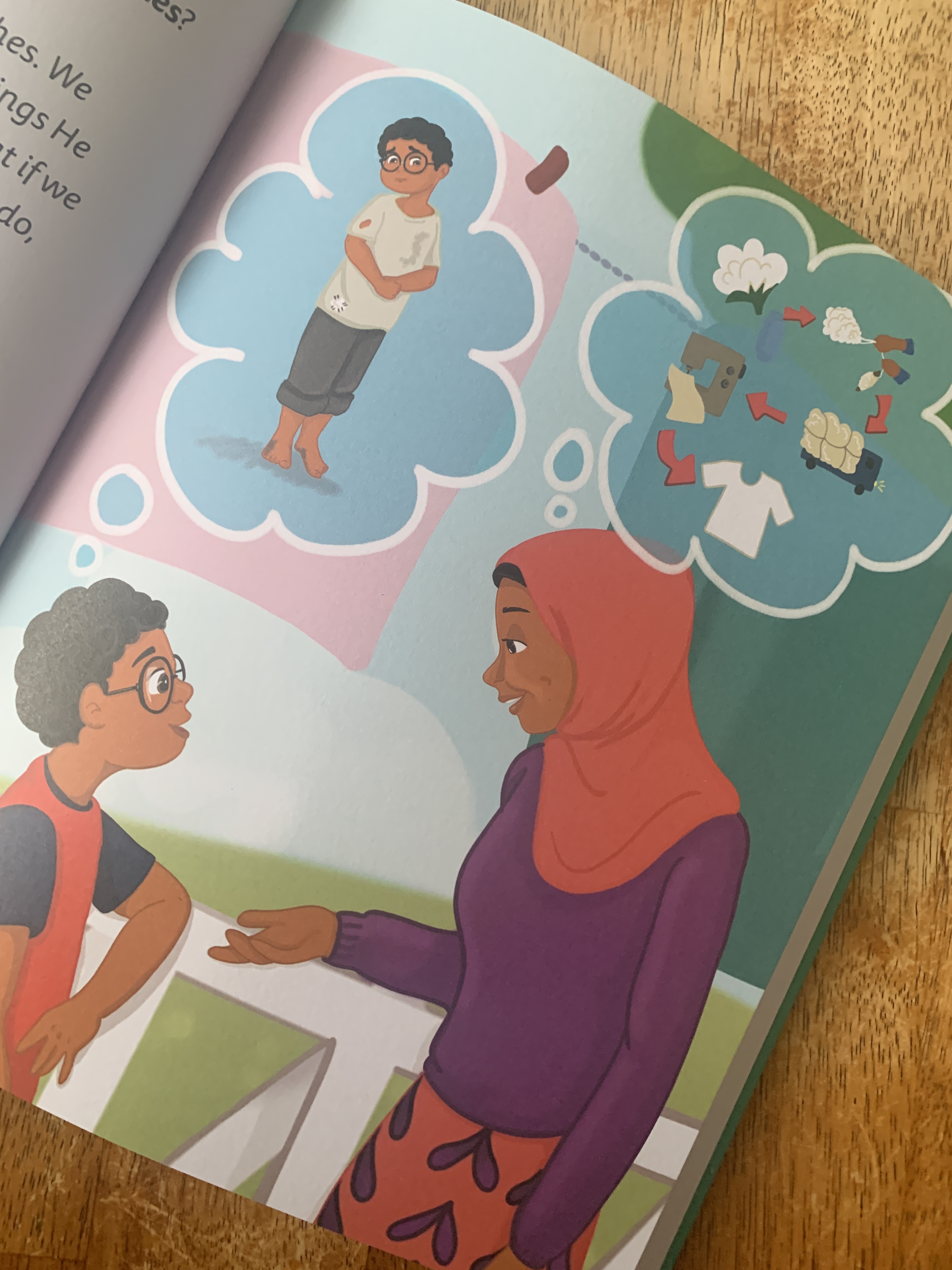
This thick hardback 46 page book is a great next step after teaching your kids to say “Alhamdulillah” to helping them to understand what it truly means.  Meant for second graders and up, this book is text heavy and encourages deeper thought, reflection, and practice.  It is not a quick read, and some children may struggle to sit through the entire book, but any time spent, I think, will be incredibly beneficial as it strives to move from the habit of just saying “Alhamdulillah” to being intentional in our appreciation and gratitude.  The thick inside pages, warm large illustrations, and colorful reflections are well done and enjoyable.  I only wish the cover better conveyed the content within.

img_6093

The book begins with ayat 18 from Surah Nahl stating: “If you tried to count Allah’s blessings, you would never be able to number them.  Indeed, Allah is All-Forgiving, Most Merciful. With the tone set, the fictionalized story begins with Ibraheem and his mum having breakfast.

img_6090

Ibraheem is a curious boy that is only ever quiet when he is sleeping or eating.  When his mum reminds him to say Alhamdulillah after he finishes eating, he gets to wondering, “What does Alhamdulillah mean?”

img_6092

Mum explains that the hamd in Alhamdulillah means praise and gratitude, and it is for Allah swt alone.  Ibraheem then wants to know how can he feel “hamd all the time?”  He and his mum discuss that hamd has to be felt within the heart, and it isn’t just saying it after a meal, but appreciation that you have food to eat.  Appreciation when you wake up in the morning, because many do not, etc.  The two discuss small and large aspects in a day that provide opportunities to truly appreciate the gifts of Allah swt.

img_6094

The book covers topics such as: sneezing and appreciating your muscles, getting dressed and recognizing the blessing of clothing, awards at school, losing your backpack, happy times and sad times too.  Along the way mum passes on information about how when we are grateful Allah swt gives us more, about how even in sad times we have so much to learn about patience and asking Allah for help, that we can fill our days with hamd.

img_6095

The book touches on never feeling sad in Jannah, Allah’s name Al-Hameed, and explaining how we have to still thank people and show appreciation to them because Allah sends his blessings through people as well.

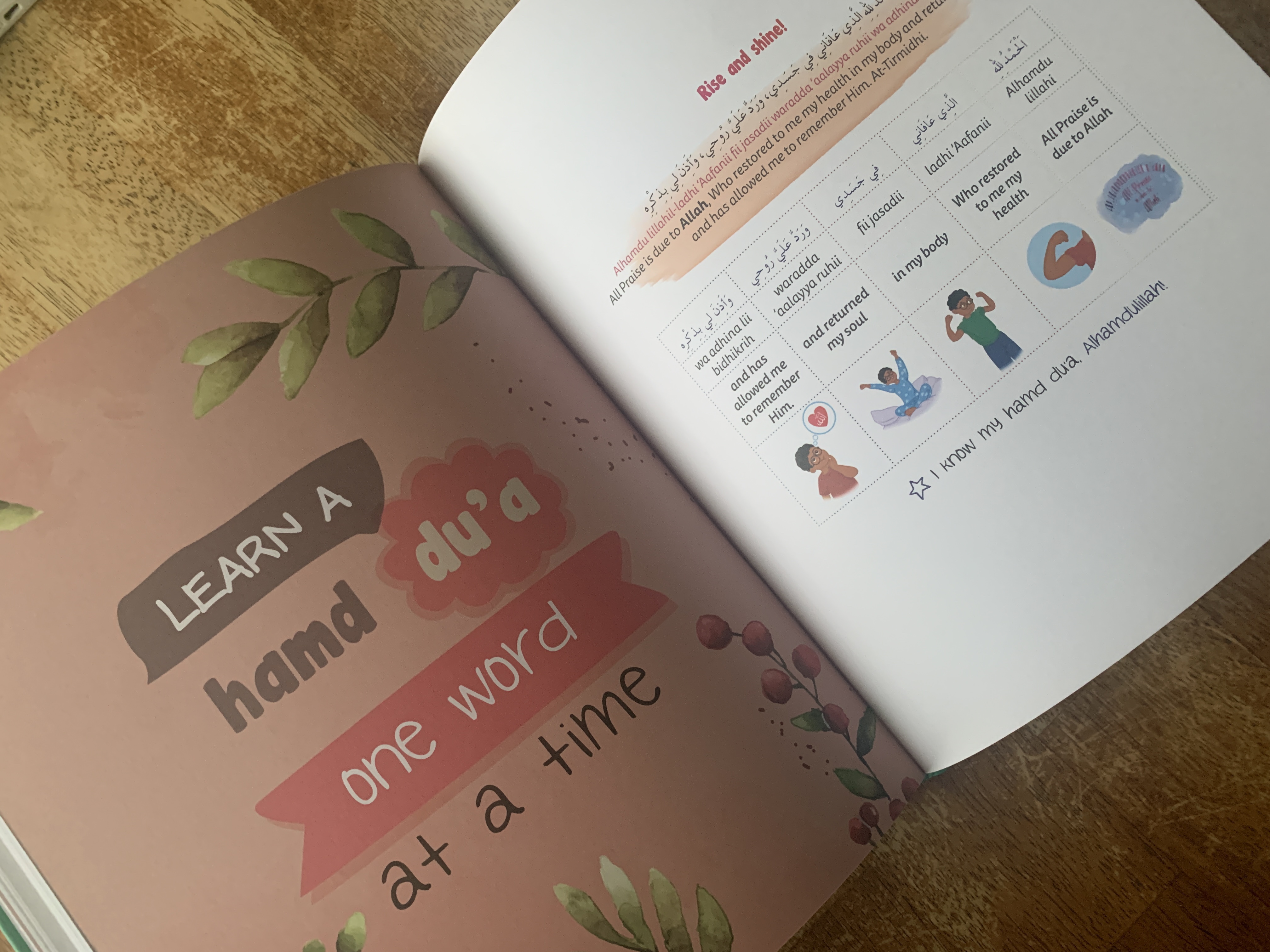
The book concludes with teaching duas about hamd one word at a time, a glossary, and tips for using the book.  There are a lot of hadith and ayats explained on a child’s level and overall really answers and provides insights about saying Alhamdulillah and feeling Hamd.

Nana Asma’u by Aaliyah Tar Mahomed illustrated by Winda Lee

Standard
Nana Asma’u by Aaliyah Tar Mahomed illustrated by Winda Lee

nana asmau

This book may only have 14 pages of text and be meant as an introduction for early preschool aged children and up, but I learned so much, or rather was made aware of so much that I knew nothing about, that I’m now eager to research her and the Sokoto Caliphate and the impact of Jajis.  The beautiful, bright, engaging pictures, the simple deliberate text, and the inspiring content matter make this a great book to share with little ones, and to keep on the shelf for repeated readings and reminders to learn more about this remarkable woman for older children.  My only wish was that there were some reference notes or sources included to give that extra reassurance of authenticity.

img_6076

The book tells about Nana Asma’u’s life starting from being a curious child and asking questions to the wise women in her community.  By the time she grew up she had memorized the Quran and spoke four languages amongst many other things, and Nana loved to write poetry.

img_6077

During this time, there was a lot of conflict in Western Africa, and Nana’s father, Shehu Usman resolved the issues and created the Sokoto Caliphate.  With peace, Nana wanted to help educate the people. She thought long and hard about how to do it.

img_6078

She eventually brought together women from different regions of the Caliphate and taught them through poetry, she then sent the women back to their homes to share what they had learned.  These women were known as Jajis, and this tradition still exists today.

img_6079

I didn’t love the phrasing that she had learned all about Islam, seeing as one can always learn more.  And I would have like Prophet to have been capitalized and salawat given for respect.  Overall, a great book that alhumdulillah I was able to purchase from Crescent Moon Store.

Zayd & Musa in The Trouble with School (The Story of Halal Money) by Hafsa Ahsan illustrated by Yusra bint Absar Kazmi and Urooj Khan

Standard
Zayd & Musa in The Trouble with School (The Story of Halal Money) by Hafsa Ahsan illustrated by Yusra bint Absar Kazmi and Urooj Khan

money

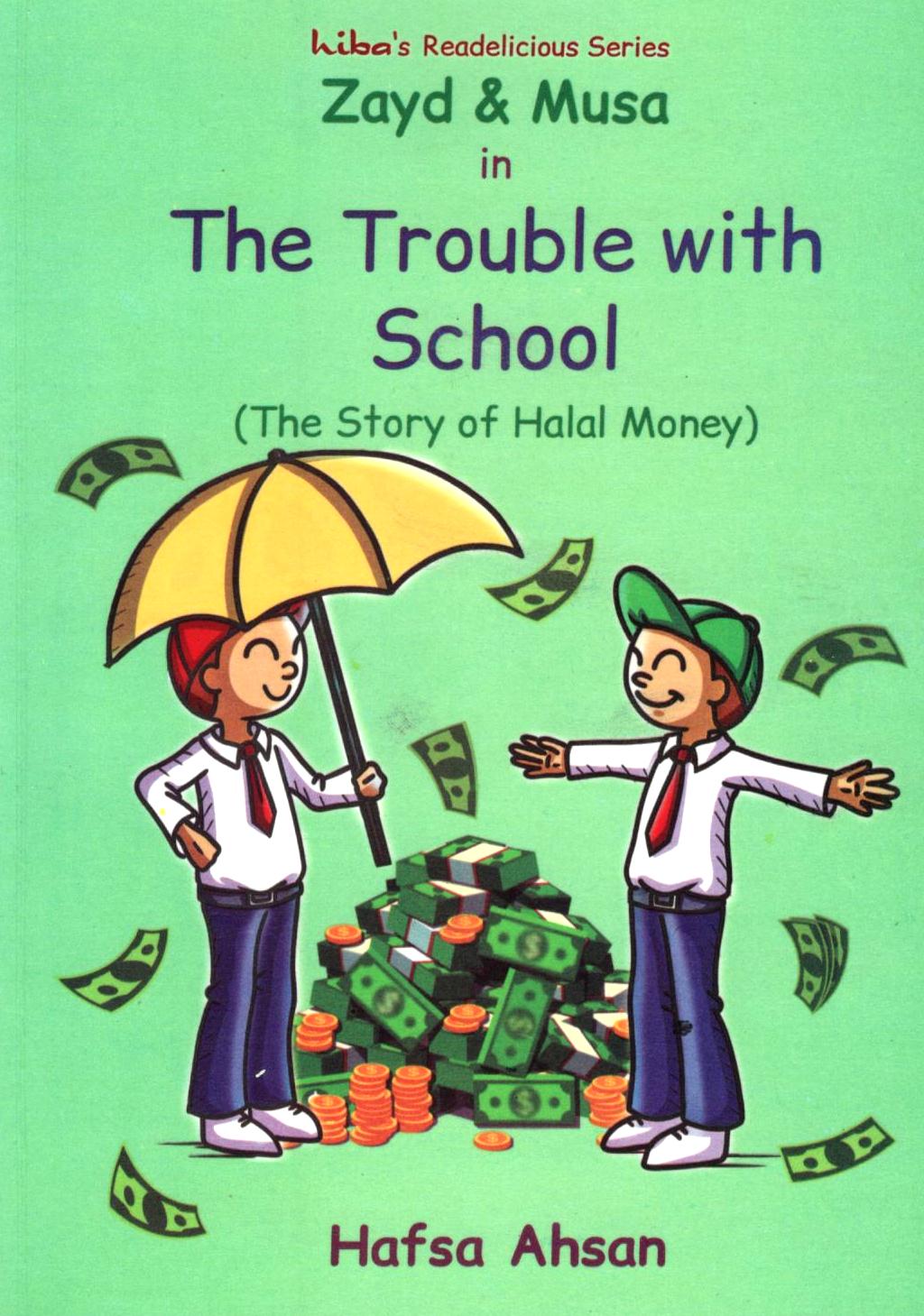
This delightful 70 page early chapter book is filled with humor, Islam, and a sweet story that ties it all together.  The book definitely has a teaching agenda, but it carries it with hilarious banter and relatable examples, all while covering a topic not often discussed in children’s books: money.  The book has a few grammar, vocabulary, and consistency concerns, but they are easy to overlook for readers 2nd grade and up.

SYNOPSIS:

Twins Zayd and Musa are very, very different.  Both boys enjoy cricket, but Zayd is more focused and enjoys homework, whereas Musa tends to daydream and often says something funny, but unintentionally.  When Musa makes the case in Science class that food, water, shelter, and money are all needed to survive, the class finds him hysterical.

Musa knows not to argue, his teacher is his elder and he knows he should have taqwa and be respectful, but he doesn’t give up on his idea either.  When the boys’ mom talks about halal money and gives them Islamic references for how money should be handled, Musa has a great idea: kids should be paid to go to school.

Once again, the whole school finds him funny, but Saeed Uncle, a neighbor who helps feed the poor at a roadside stand, doesn’t dismiss Musa’s idea and tells him, in some places kids are paid. And offers to take him and show him.

With references to sahabas who had great wealth and examples of how wealth can be used for good, Musa and Zayd learn numerous lessons, and share them with those around them, in a fun, engaging manner.

WHY I LIKE IT:

I get that the book is preachy, but in my mind, it is a story built around a teaching concept, so it doesn’t bother me.  I love the jokes and the tone.  At times the book is written quite formally, but being the author lives in Karachi, Pakistan, I assume that part of it, is just different standards.  I appreciate the Quran Circle table that lists where the Quran mentions wealth and the glossary.  I didn’t quite get all of the random facts included throughout, as some were about money, others about school, but I think kids will enjoy them none-the-less.  The illustrations are enjoyable, the text bubbles often hilarious (once again, a few I didn’t get).

I liked that it mentioned not drawing faces, and not going somewhere alone with someone you aren’t close with.  It is said in passing, but I love that those little nuggets exist in a book that is about something more, but normalizes and takes advantage of the opportunity to remind children of basic safety and Islamic concepts.

There are some awkward tense changes, and a few gaps in the story, but overall, I really enjoyed it and need to find the first one in the series.

FLAGS:

None

TOOLS TO LEAD THE DISCUSSION:
This would be a great book to use in a middle grades Islam class as a starting point to having students research the Quran and Sunnah to find information on a topic.  The humor will keep kids engaged, and the concept is an important one.  I plan to make all my kids read it, so that we can discuss as a family, and benefit from the lessons presented.

Eliya’s Explains Miracles by Zanib Mian illustrated by Daniel Hills

Standard
Eliya’s Explains Miracles by Zanib Mian illustrated by Daniel Hills

img_5692

It is quite remarkable how my standards and expectations have grown and evolved.  I anxiously have waited for the next book in the Eliyas series, having loved the Angels book that came out nearly two years ago.  Zanib Mian’s voice makes the reading of nearly all her books enjoyable, whether it is a fictionalized tale or an Islamic knowledge book with fictionalized framing.  This book disappointed me however, because I now expect and crave references and sourcing for books that present facts or at least qualified and named scholarly approval to be mentioned.  I also was not comfortable with the depiction of Buraq on the cover, on a full page illustration within the book, and on the back cover.  The text itself is lovely and informative, and nothing “seemed” off factually in this 92 page early chapter book, but the lacking reassurance of the content contained within prevented me from truly loving the book.

img_5687

SYNOPSIS:

Eliyas has finally convinced his family to go camping.  With a late start and a lot of chaos they will have to set up the tent in the dark, alhumdulillah there is a full moon out.  As they drive to their campsite and marvel at the moon, they begin to discuss the miracle of the moon being split in to two.  As they find a place to settle, they discuss miracles about water, as they collect firewood they talk about the tree where Rasul Allah gave khutbahs from crying when he moved to give the khutbah from elsewhere.

The family of Eliyas, his younger brother, older sister and parents learn and discuss the miracle of the Quran, Prophet Dawud and Prophet Sulaiman peace be upon them both speaking with animals, Buraq and the night journey, Prophet Ibrahim (as) being in the fire, Prophet Musa (as) dividing the sea amongst other things, Prophet Isa (as)’s ability to heal the sick and with Allah’s permission breath life in to a clay bird, and the she camel miracle of Prophet Salih (as).

The camping trip, the siblings bickering and then helping one another, and Eliyas having to admit to forgetting the food, all tie the miracles together in an easy to read and engaging manner.

img_5688

WHY I LIKE IT:

I really love Zani’b Mian’s books, and I genuinely hope that she will consider removing the illustration of Buraq and having the miracles sourced, or the book “approved.”  Kids will read this book over and over again, long after they have grown out of the early chapter book demographic and inshaAllah it will inspire deeper knowledge to be sought.

I love the quiz at the end-with answers, playful fonts and doodles throughout the book, the short chapters, and relatable banter between the characters.

img_5690

FLAGS:

Depiction of Buraq

img_5689

TOOLS FOR LEADING THE DISCUSSION:

Even with the depictions it could possibly be used as a read aloud story to first and second grade and up.  If you were a teacher or in a capacity to read the story to the students, so that they might not dwell on the illustrations, the book could be shared.  For reassurance, have someone more knowledgeable than I verify the miracles shared for accuracy though, before sharing.

This book, like so many of the books I review was purchased from http://www.crescentmoonstore.com and no I do not promote the store because it benefits me in any way, I just really the store, the service, the selection, and the prices.

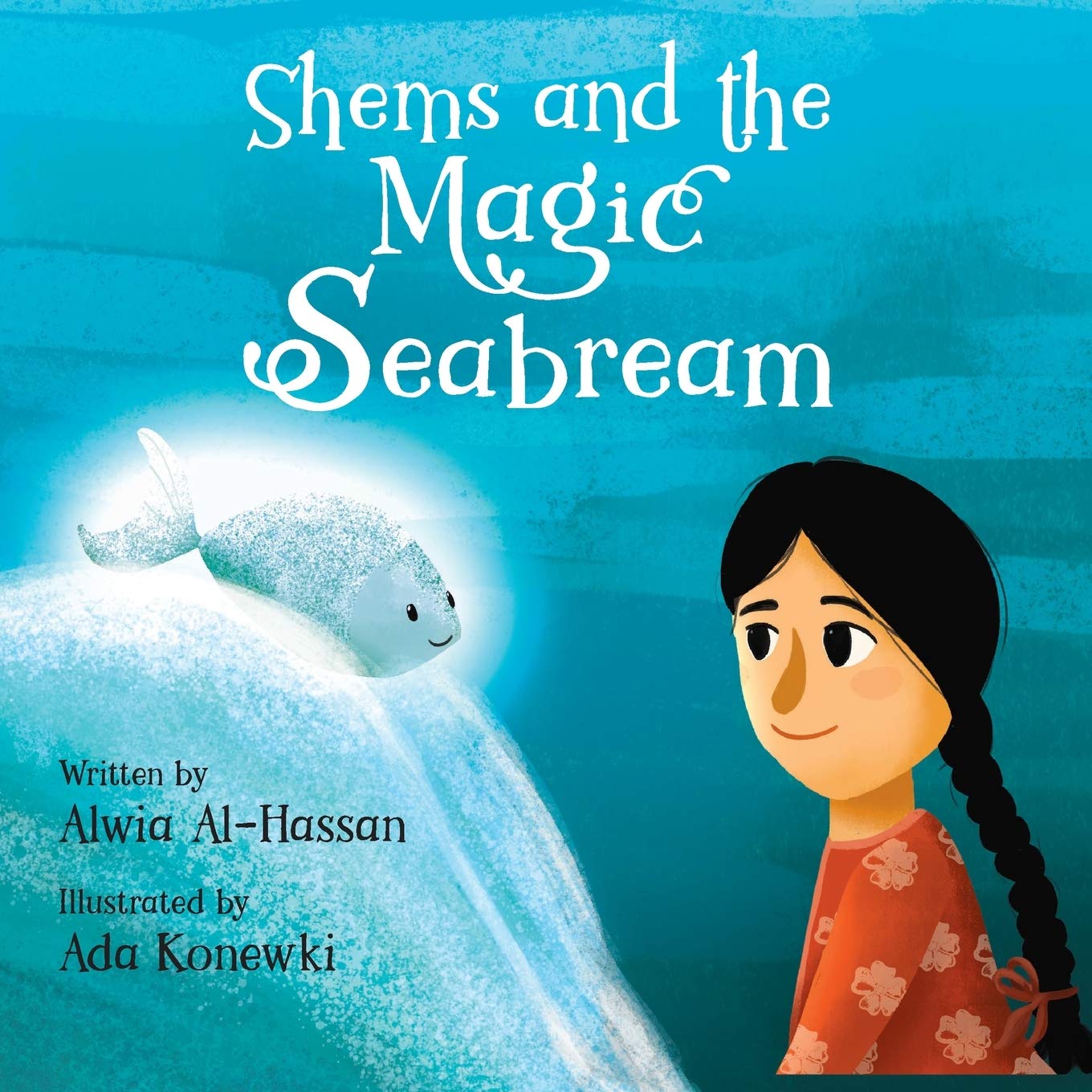
Shems and the Magic Seabream by Alwia Al-Hassan illustrated by Ada Konewki

Standard
Shems and the Magic Seabream by Alwia Al-Hassan illustrated by Ada Konewki

seabream

I don’t know how to review this book, I truly don’t, it claims to be based on Saudi folklore, it has #muslimsintheillustrations, and references Allah swt once, it is by a Muslim author, but it isn’t religious. And it definitely isn’t for everyone. It is terrible, and yet you can’t look away. Every stereotype about appearance and trope about step-mothers, it is all there, but EVIL CACKLE, the book is delicious, and not in the cooking the children and eating them sort of way, that is in the book too, but in the laugh-out-loud, gasp in disbelief, and be shocked at the complete disregard for political correctness, moral messaging, and lesson teaching that leaves a brightly illustrated dark tale for kids, and adults, to thoroughly enjoy. It pulls you in, it suspends reality, it makes good and bad so black and white that you accept the attempts at murder as justified, and it ultimately reminds you of the horrors that all fairytales build upon to entertain. I remember the first time as an adult I was asked to read Hansel and Gretel to a young niece. I knew the story, and started not thinking much of it, and then I froze: children are lost, they seek shelter in a home where they are not allowed to leave, the owner of the home wants to cook them and eat them. Yeah, this book is like that.

img_5299

Shems and her twin sister Shareefa live in a small town with their fisherman father. They are poor, but happy, until their father remarries and the stepmother is horrid. She is ugly and fat and covered in greasy spots, negative connotations that reflect her personality. (FLAGS: superficial judgement and body shaming). She hates children. (FLAG: Yes it uses the word hate, and calls children fat while contrasting them with cute children).

img_5300

She especially hates Shems and Shareefa. She tries to get rid of them: she puts them in the oven, abandons them in a field, tries to drown them in the night. But the girls somehow always escape and their father believes that it was all a misunderstanding. (FLAG: attempted murder).

img_5301

Now that the girls are older, they are forced to serve Mama Ouda, and when food runs low, she considers eating them. (FLAGS: abuse and threats). Luckily they are much too thin. One day when Mama Ouda is craving fish, Shems heads out to catch some seabream, yes that is a real type of fish. And the only one she catches is a magical one. (FLAG: magic).

img_5302

The next day Shems dressed as Shareefa recalls the fish’s promise near the water, and a basket of fish appears with pieces of sparkling gold. The girls eat like queens, hide the gold, and keep Mama Ouda fed. This carries on until they get caught and a murder and mermaid and moving out of their mud hut conclude the story and set up a potential sequel.

img_5298

The dad is pretty clueless and that has its own negative assumptions to counter, but if you and your kids can handle the over the top darkness, the story written in playful rhymes is sure to entertain and be asked for repeatedly. (FLAGS: stereotypes about fathers and stepmothers).

Huda F Are You? by Huda Fahmy

Standard
Huda F Are You? by Huda Fahmy

huda f

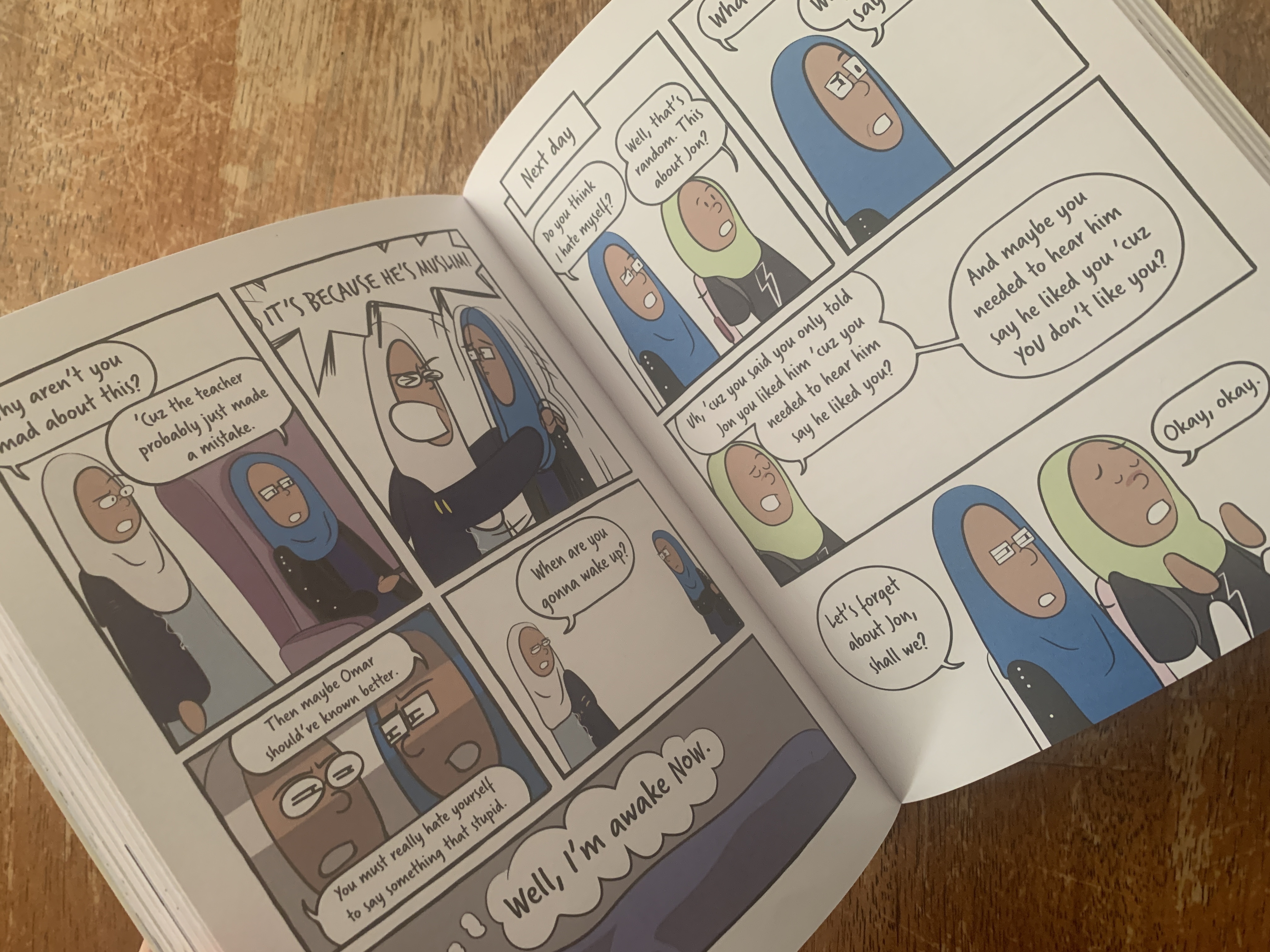
I think everyone has heard about this book by now and how fabulously fun, real, and relevant Huda’s life  is for so many.  I am happy to jump on the praising bandwagon, as this teen/YA 192 page graphic novel really is a great OWN voice unapologetically Islamic mainstream tale.  It does mention periods, relationships, hate crimes, and finding yourself, so probably 14 or 15 year olds and up.  My middle school boys read it, so it isn’t that it is inappropriate, just the target audience is more teen girl.  I know a lot of people, including Huda’s mom according to the inscription, have issues with the title, but I think it is brilliant.  She takes ownership of her name and it isn’t just for shock value, the book is about figuring out who you are, how you feel about Islam, establishing your friend circle, and growing and learning along the way.  My public library has it, as do major outlets, so what are you waiting for, go read, laugh, and feel seen.

img_5036

SYNOPSIS:

Huda has just moved to a new school and she is no longer the only hijabi.  She has moved to Dearborn, Michigan and there are A LOT of Muslims.  She is no longer defined by the cloth on her head, she has to figure out who she is.  Who she really is.  And sometimes the best way to do that, is to figure out who you are not.  

Huda tries different clubs, and different circles of friends, both at school and at the masjid.  Along the way she learns how much she craves approval and who is always in her corner.  When a kid at school is targeted for being Muslim, Huda will have to see how much internal hate she carries as well.  Her clothes change, her outlook changes, she tries new things, and she grows, all while the laughs help the story bounce from one serious topic to the next without coming across as arrogant or stereotypical.  This is Huda’s story and we are just along for the ride.

img_5035

WHY I LIKE IT:

I love that there is nothing to critique, it reads autobiographical even if parts are exaggerated or only based loosely in reality.  By being so real, and so well done, you are excited when you see yourself staring back, but you feel like you’re a friend learning about Huda even when you can’t relate exactly. Her comics online and her previous two books are all amazing, and I love that she is continually creating new material for us all to enjoy and benefit from.

img_5037

FLAGS:

She tells a boy she likes him that she doesn’t really like.  Periods are referenced and blood and a pad are shown, not graphic and gross, but the sentiment is there.  Discrimination is present, as is Islamophobia and stereotypes.

TOOLS FOR LEADING THE DISCUSSION:

Just keep the book out and around: it will be picked up, read, and mentioned, no tools needed.