Tag Archives: Muslim Author

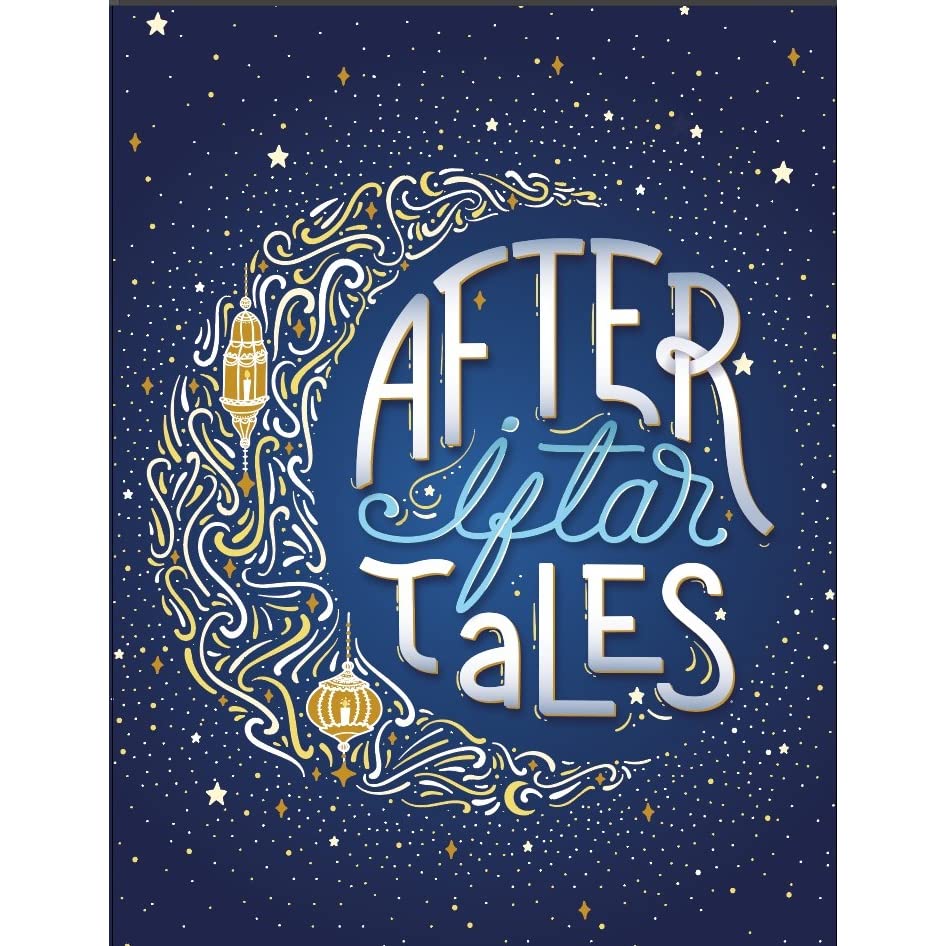
After Iftar Tales arranged by Bismillah Buddies

Standard
After Iftar Tales arranged by Bismillah Buddies

after iftar tales

This book’s beautiful dark blue cover with sparkly stars feels good in your hands and looks lovely on the shelf.  It is a collection of 10 short stories presumably to be read by an adult to a child or children during Ramadan and has its highs and lows.  As often is the case in anthologies, some are written better than others and while I particularly liked two of the stories contained, I couldn’t help wishing that the entire collection would have been better edited.  I don’t know any of the authors, or their ages, and there is not an intro or conclusion detailing how the stories were selected or compiled, but as a whole, the grammar errors (spaces before and after commas and periods), failure to spell out numbers less than ten, and the overall plot holes in so many of the stories, makes it hard to love this book.  Something about judging a book by it’s cover would seemingly apply here, the illustrations are decent, the topics and themes covered are important, but the finishing is lacking, and the book really had a lot of potential.

SYNOPSIS:
The ten stories cover Ramadan in different ways, and do not get repetitive.  With different authors and illustrators and pictures on every other page at a minimum, the books presents well.  Many of the stories are adequate, but largely forgettable as the plot holes just made me and my kids dismiss them.  A few are too lengthy and wandering, but there are two that even despite writing obstacles, thematically were memorable:  “A Ramadan Surprise” by Malika Kahn and “Iftar in Space” by Tayyaba Anwar.

“A Ramadan Surprise” is written in rhyming verse and discusses the need for wheelchair accessibility at masjids.  Focusing on a young girl it also hints on the importance of accessibility for the elderly.  This is such a needed and important reminder and I love that it is present in a book that is positioned to be read and thus hopefully discussed.

“Iftar in Space” similarly opens itself up to be discussed and marveled at between a child(ren) and an adult: how would you fast and pray if you were on the International Space Station. This connection could then be made for people that live near the poles, and how science is valued in Islam and so much more.  I love that Islamic information is seemingly sourced, but I would have loved a line or two at the end clearly articulating that in fact this is what this scholar or these scholars have declared.

WHY I LIKE IT:

At first it didn’t bother me that the text was so small, but mid way through, it started to because the pictures are so inviting and regular.  If a child is snuggled up with a reader looking at the pictures it is impossible for them to follow along. I get that that is kind of the point, but with huge margins, the text size can easily be increased.

I don’t know why the book doesn’t seem to have been edited.  The cover and illustrations and binding are all decent to high quality, the cost of the book for consumers is high, so I don’t know why an editor was not (seemingly) involved in the process.  Sure I am picky, but it isn’t one or two grammar errors, it is a lot, and when it is a regular concern, it ruins the flow and feeling of the book.

Overall, honestly there is also very little Islam present in most stories except for the timing of Ramadan, and many of the stories seem to have gaps.  In the first story, a boy is found by a stranger and gifted a lamp, and the family never even tries to find the person who saved their son to thank him? They live in a small village?  In one of the stories where a little girls is fasting for the first time she is also making a salad independently and pulling a cooked tray of lasagna out of a hot oven. A child in one story eats moldy candy, and in a contemporary story kids donate their money to an orphanage.  Are there still orphanages? In one story it opens with a banner being made that is crooked, but the accompanying illustration does not match.  One error or two is easy to overlook, but again, when it is every single story, it is incredibly disappointing.

FLAGS:

Clean

TOOLS FOR LEADING THE DISCUSSION:

I think while reading it you would find plenty to discuss with your children.  On stories where your children seem bored you could skip them, if sentences don’t make sense you can alter them.  I doubt children will read the book independently, so there is some wiggle room to add or subtract from the text to make the points you want to make and keep the stories engaging.  There are a few stories that discuss Covid and the frustration that it has caused to daily activities, which might help add another layer of connection to the text.

Ramadan Rocket by Emma Halim illustrated by Stephen Tucker

Standard
Ramadan Rocket by Emma Halim illustrated by Stephen Tucker

ramadan rocket

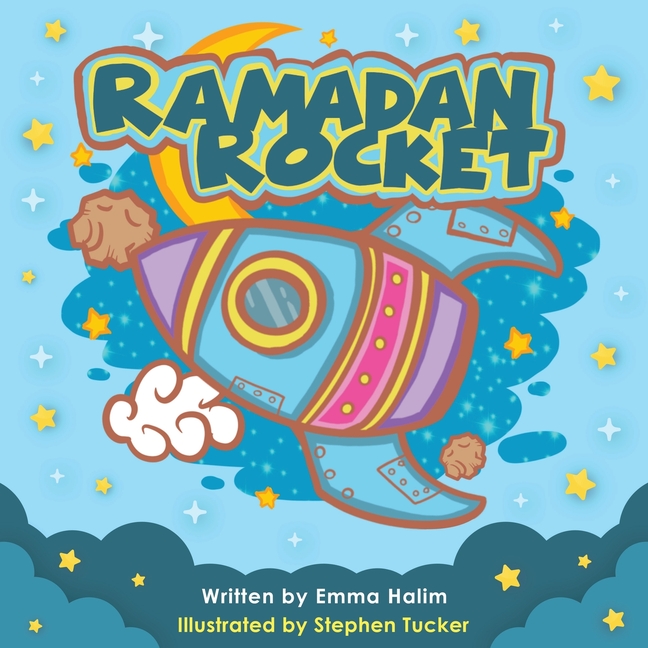
The banter in this 36 page Ramadan moon book is fun and engaging, and as the mom of five kids who was once a kid herself, the struggle is real to try and spot the Ramadan moon.   Most years, frustration abounds and nothing is seen. Haarith has the same problem, but last year he did something about it.  In this 36 page book for preschoolers and up, the faceless pictures will have kids giggling and their imagination’s soaring as they try and determine if Ramadan is about to begin.

img_7572

Haarith loves listening to stories about Ramadan, but always has trouble seeing the Ramadan moon. Last year, he decided to get a closer look.  He set out to build a rocket, but his best friend Hakeem had one he could borrow, so Haarith recruits two other friends, Jawaad and Khaleel, and plans are underway.  Jawaad will pilot since he flew out of a swing last week, and Khaleel will be in charge of food because his mom makes awesome cakes.  The boys head to space, passing, satellites, drones, and NASA rockets, before they see the moon and head back home.  After maghrib the community heads to search the sky and when they see nothing, it is Haarith that can locate exactly what they are looking for.

img_7571

I wish the moon was shown as super thin and hard to see in the illustrations, instead of as a thick crescent so that kids that might not have personal experience could at least understand why Haarith is struggling.  Also, I’m not sure why the line spacing on one page is double what it is on the others.  Many of the pages are text heavy and could have used some editing to tighten it up, but overall the story is fun.

img_7573

The premise though sent my head spinning, and yes I’m going to show my ignorance here, you can judge me. If you go to space, the moon is spherical, the earth and shadows are no longer at play right? So wouldn’t a new moon, a full moon, or a waxing gibbous all look the same? Clearly my confidence in this matter is non existant, and while I have no problem with the characters borrowing a friend’s rocket, it has been sitting unused for a year after all, I’ve been struggling to get this point clarified in my head.  And I believe it would all depend on where the rocket is and thus the boys’ point of view.  According to the University of Maryland, “The reason that we do not always see a Moon which is half lit is because of our position relative to the Moon and the Sun. As the Moon moves in its orbit, different portions of it appear (to us!) to be lit up as we look at it from Earth. This is why we see lunar phases.” So I suppose that depending on the rocket’s position in space would determine if the moon looked like a “Ramadan moon” or say a third quarter moon.  I’ve linked a NASA video that explains that the International Space Station sees the same phases as earth, so umm yeah, maybe I should take a break from fiction and go read some nonfiction basic science books. 

Eid Empanadas by Wendy Diaz illustrated by Uthman Guadalupe

Standard
Eid Empanadas by Wendy Diaz illustrated by Uthman Guadalupe

empanadas

I love books that show, not tell how diverse Muslims are and celebrate the unique ways that Islam and culture come together.  This early elementary chapter book beautifully blends, Islam with Spanish words and phrases that all come together to celebrate Ramadan and Eid in America.  At 79 pages, with illustrations sprinkled in, this is a great book to share all year long.

img_5450

SYNOPSIS:

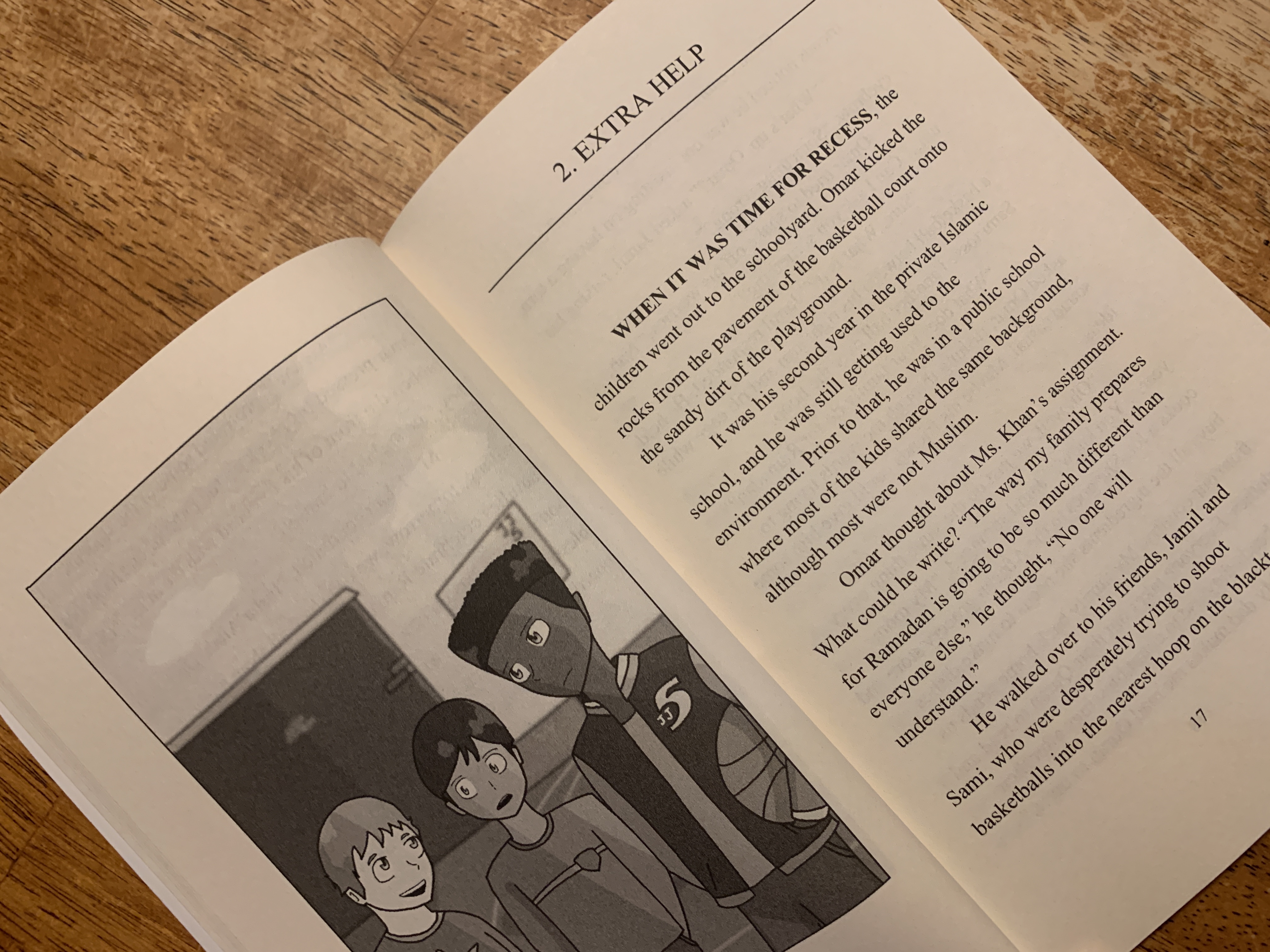
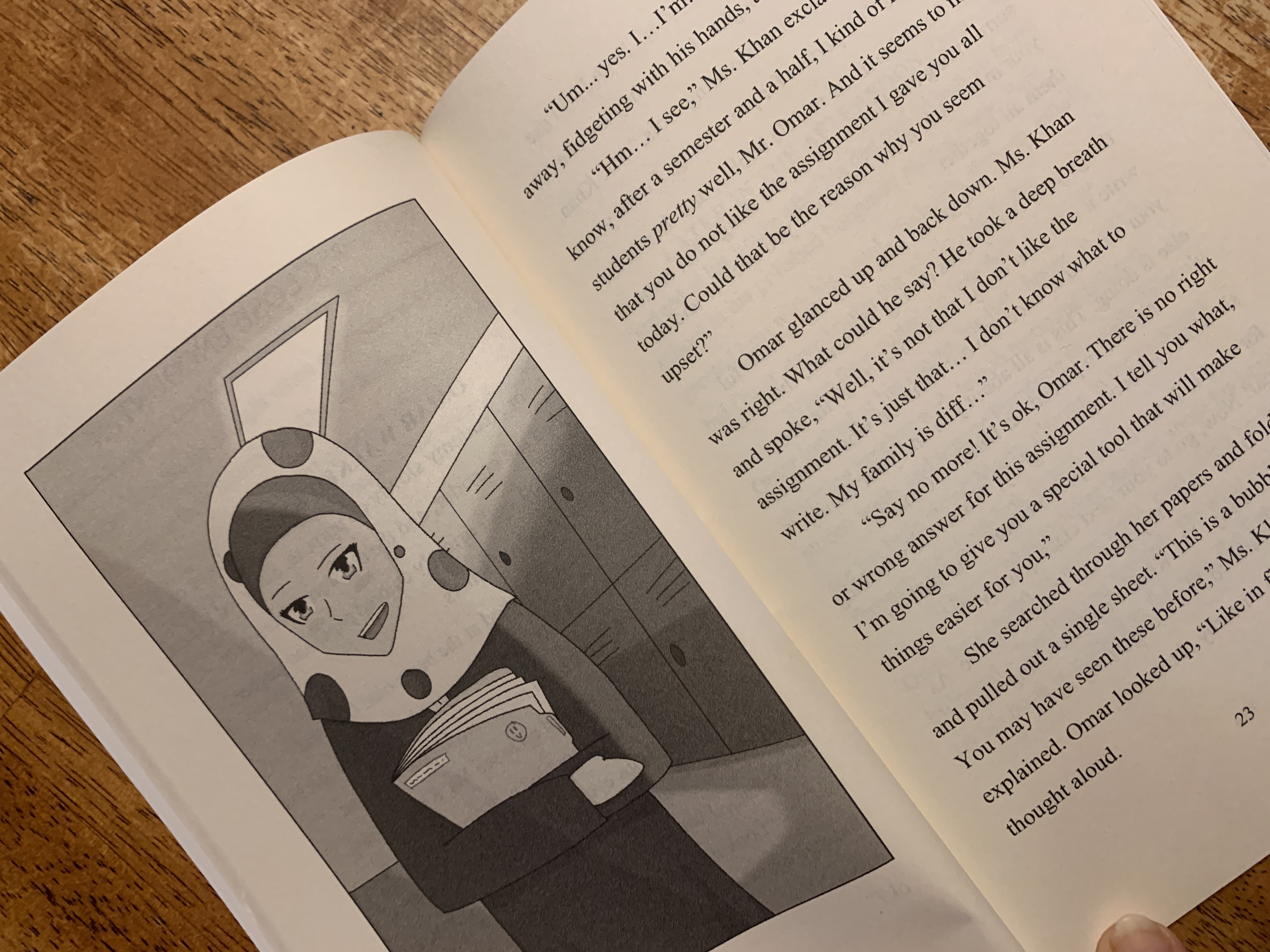
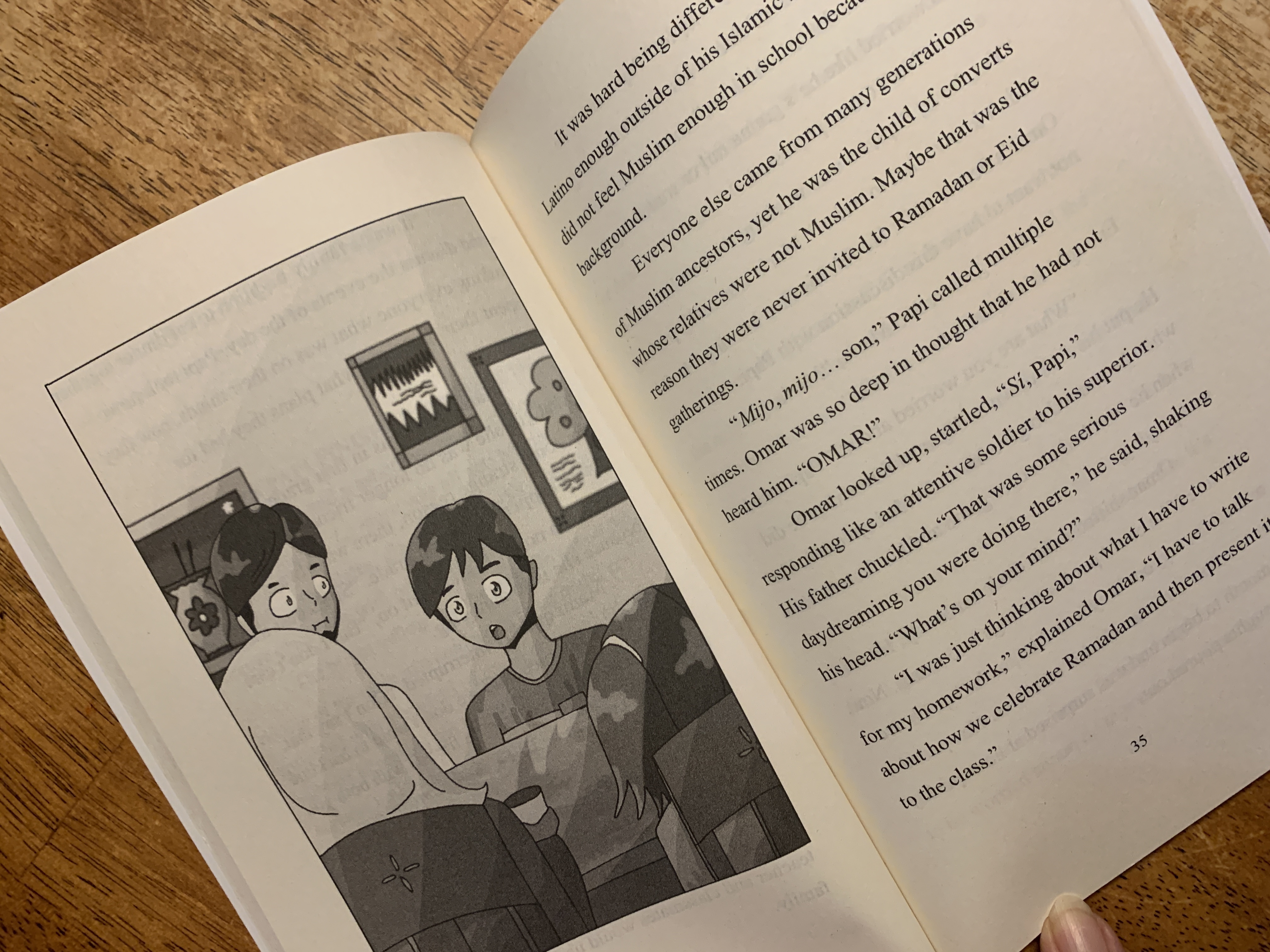
Omar is in 5th grade and when his teacher assigns the entire class to write an essay about their Ramadan and Eid traditions he is nervous that his family’s way of celebrating is very different than everyone else’s.  Omar’s mom is from Puerto Rico and his dad’s parents immigrated from Ecuador, even after a year and a half at the Islamic school, though, he still feels like the new kid, and doesn’t want to draw attention to himself.

Sensing that Omar is nervous, his teacher Ms. Khan offers ways to brainstorm and organize his thoughts.  Once home, in his casa, his little sister and parents join in to give him enough ideas, if only he can be brave enough to share them.

img_5449

WHY I LIKE IT:

I love that there is so much joy and love in this little book.  The twist of having a kid not feel like he is fitting in at an Islamic school, is also so fabulous to read.  The OWN voice narrative and recipe at the back will help kids like Omar everywhere feel confident to share their culture, and those that know kids like Omar (even if only fictiously) anxious to learn more about Latino Muslims.

The only thought that did cross my mind, when Jummah was being explained as the congregational prayer on Friday, was why not use the word Jummah, just like all the Spanish words were used, and then defined.  I would love to ask the author who the intended audience is, and how that shaped her word choice, what was defined and what wasn’t.

img_5448

FLAGS:
None

img_5447

TOOLS FOR LEADING THE DISCUSSION:

I’m hoping to get copies to the first grade and second grade teacher to read in Ramadan to their classes. This book has the potential to really excite kids, expand their understanding, and show them how beautiful and diverse Islam really is.

Wake Up! It’s the Ramadan Drummer by Mariam Hakim and Dalia Awad

Standard
Wake Up! It’s the Ramadan Drummer by Mariam Hakim and Dalia Awad

wake up

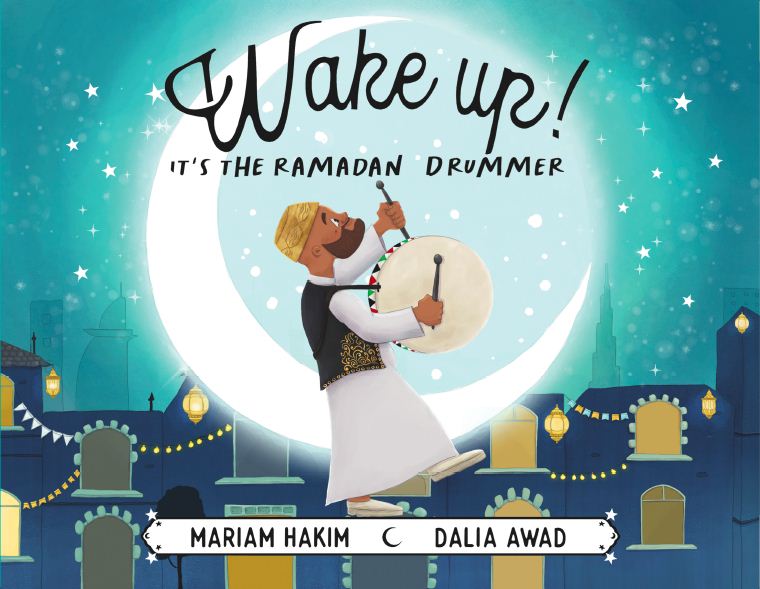
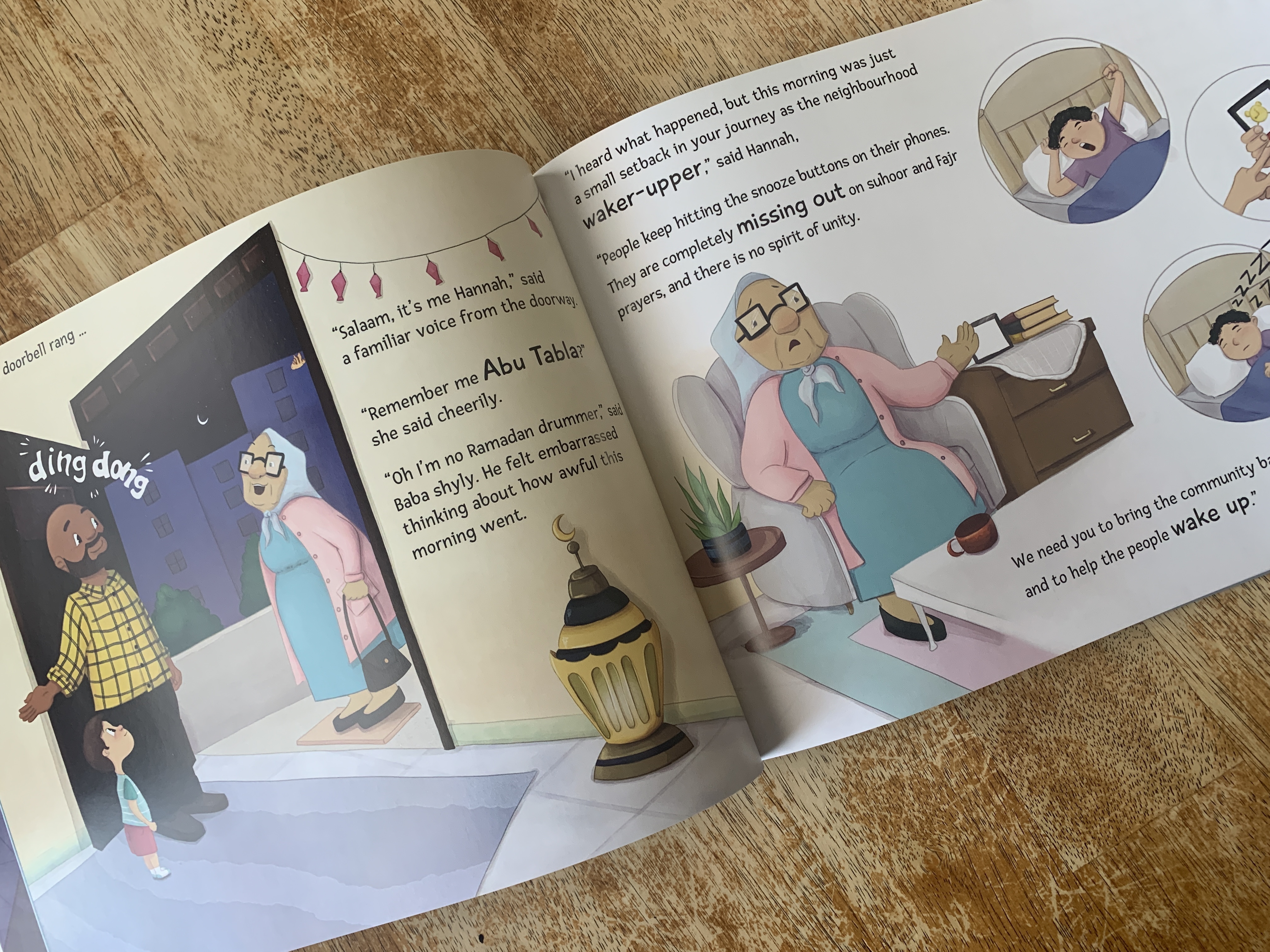
The beautiful shimmering cover of this new Ramadan book drew me in from the first few pages with the emotional impact of the father in the story losing his job.  Unfortunately the fun illustrations and overall story are not quite enough to make the book an enjoyable read over multiple readings.  By the time you read the book a second time, the missing punctuation, the assumptions and continuity holes, make the book unravel.  It has merit and highlights, I just really hope that an editor is brought in before a second printing takes place to clean up the sentences, patch the holes, and polish it to make it shine.  It has so much potential, but it is disappointing especially if you have been waiting, perhaps a bit impatiently, to share this with children to get them excited for Ramadan.  Even more so if you had hopes of reading it again and again throughout the month.

img_7075

The book summarizes Ramadan on the first page, presumably making the ideal reader a Muslim already familiar with Ramadan significance, and then jumps into revealing that the Baba has lost his job.  The optimistic mama isn’t deterred and sends the Baba and kids to the store so she can cook up something special.

img_7077

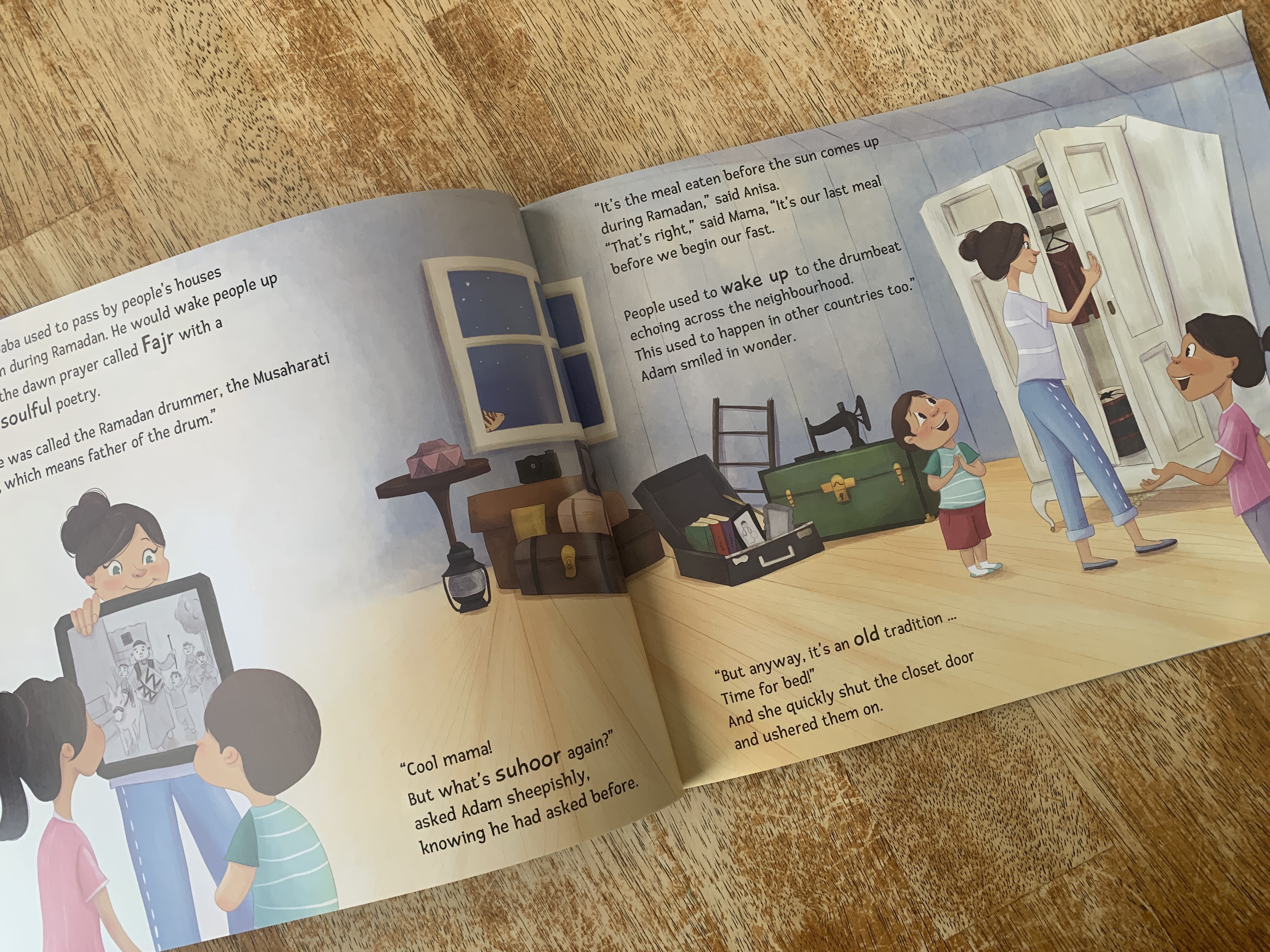
While at the store an elderly woman greets the kids and their father as, “Abu Tabla.” The son dismisses it until later that night when Baba has gone to the mosque and Mama surprises Adam and Anisa with the story of their Baba’s baba walking the streets before dawn to wake people up for suhoor.  She even digs out an old photograph, and with that, Adam is determined to get his father to revive the tradition.

img_7076

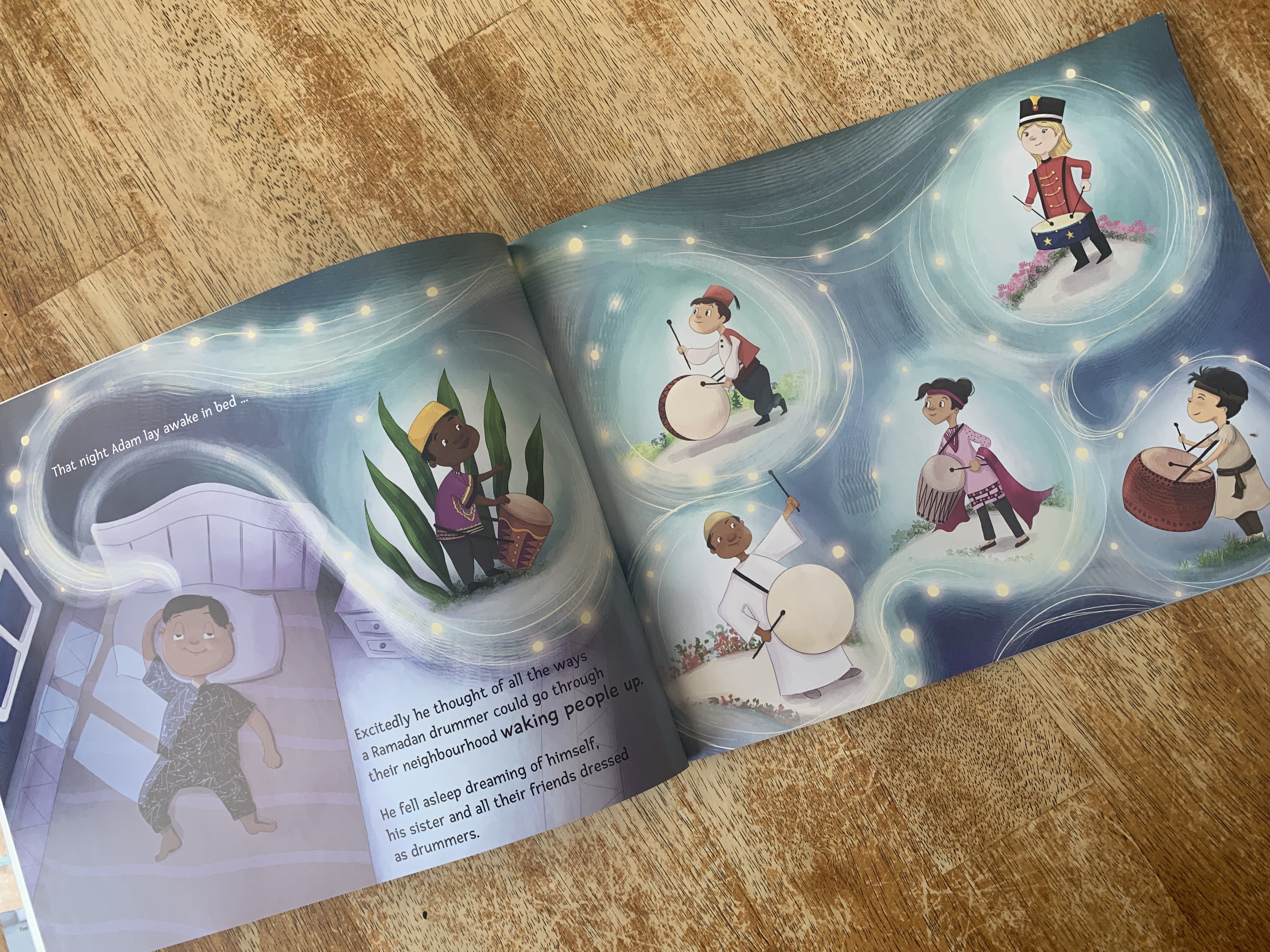
I love that Adam and his Baba work together to figure out lyrics and a beat.  I also like that it isn’t an instant success, but rather takes some grit, determination, and perseverance.  I also like that the whole family and eventually neighborhood come together, and that men and women go to the masjid for fajr.

There are some concerns I have though as well.  There are a lot of missing commas, the text uses mosque instead of masjid which reads inauthentic, and the whole old lady character, Hannah, is all sorts of underdeveloped.  She has to introduce herself, yet she knows where Abu Tabla lives, a drum magically appears in her hands, and her prodding is based on the premise that she knows what is going on inside people’s homes, what they are thinking, and what their intentions are.  I get that it is a kid’s story, but by the second or third reading it is hard to unsee how erroneous the logic is.  Especially when fasting like so many acts in Islam, are between a person and Allah swt, not for everyone else to judge.
img_7078

Presumably the story takes place in an Islamic majority setting and the neighbors are all Muslim, which offers a great discussion starter for readers in non Muslim majority places to find ways to maybe share Ramadan or to imagine living where everyone is fasting.

I feel like the last few pages about the drummer going viral is unnecessary, and the story could have, and probably should have, ended with the family and parade entering the masjid.  I particularly found it odd that a line reads, “News of the Ramadan drummer tradition starting up again reached as far as Pakistan, Egypt, Somalia, Turkey and even Indonesia,” why is Indonesia called out like that? Seems off putting somehow, not inclusive. The book concludes by circling back to the Baba getting paid to wake people up and finding jobs through the people also coming to fajr, which seems a bit raw for a children’s book.  A simpler, “even though Baba found another job, being the drummer was still the one he loved most,” would have tied everything up a little better for the demographic.  I’m hoping to include this story during one of my weekly Ramadan story times in my local community, and will probably skip the last few pages and just read the hadith at the end about waking up for suhoor.

My First Book About Ramadan: Teachings for Toddlers and Young Children by Sara Khan illustrated by Ali Lodge

Standard
My First Book About Ramadan: Teachings for Toddlers and Young Children by Sara Khan illustrated by Ali Lodge

ramadan

Once again, Sara Khan pushes the standard of what can be conveyed and presented in a toddler board book.  This book on Ramadan not only introduces concepts of the blessed month to our littles Muslims, but also provides details that will allow the book to stay relevant even as a child grows.  The soft, yet colorful pages allow the book to be engaging and attention holding for ages 2 and up, and provides a great way to get young children looking forward to Ramadan, as well as be read repeatedly during the month.  The 26 thick pages have a facts and questions about Ramadan at the end which make the book shareable with non Muslims and the many shapes, colors, cultures, and ages that make up our Muslim communities fill the pages that radiate with joy and love.

img_7070

The book starts out expressing the excitement of Ramadan, the new moon, and the anticipation.  It then talks about how Allah swt wants us to fast from dawn until sunset.  It mentions the five pillars, and fasting in Ramadan being one of them, and what it means to fast.

img_7071

It focuses on doing good deeds to make Allah swt happy.  It also dedicates a two page spread to showing who doesn’t have to fast, which answers that inevitably next question that people ask.  The book then says that even if you aren’t fasting, there are still blessings everyone enjoys in the month and spends a few pages detailing those activities and acts of worship.

img_7072

It mentions that Ramadan is the month of the Qur’an and that Laylat al-Qadr is the night of power, but doesn’t give much detail about either. Eid is celebrated at the end and a dua is made referencing a hadith in Bukhari about entering through the gate of Ar-Rayyan.

I love that the book’s tone is that this is what Allah swt wants us to do, and this is what makes Him happy.  Even with numerous Ramadan books out there, this one still manages to find a way to be unique, and truly the entire series is enjoyable and beneficial, alhumdulillah.


Zahra’s Blessing by Shirin Shamsi illustrated by Manal Mirza

Standard
Zahra’s Blessing by Shirin Shamsi illustrated by Manal Mirza

Screen Shot 2021-11-18 at 11.57.45 AM

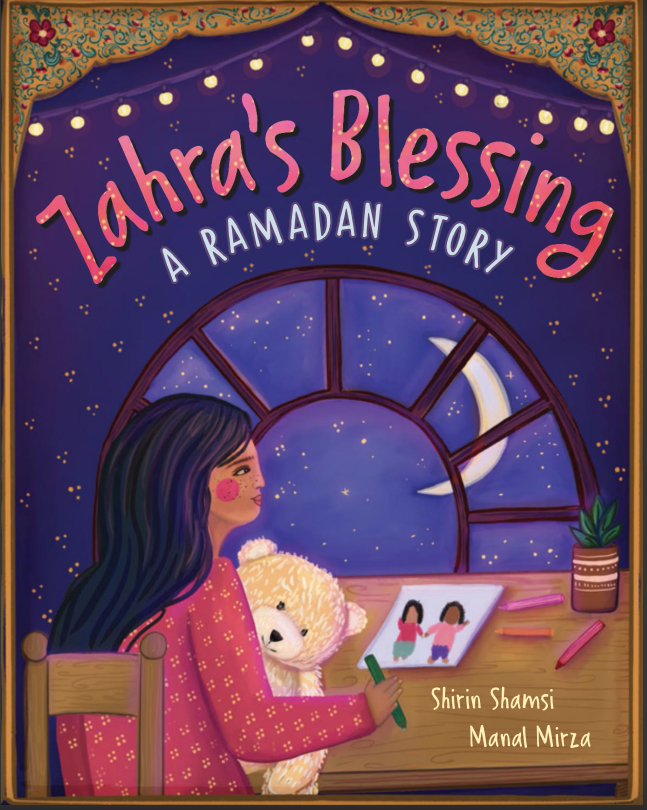
Just when you think all the Ramadan stories have been told, you flip open a new book, hold your breath as the stage of predictability is set, and alhumdulillah in this case, you squeal with delight when the big reveal in a children’s book swept you up and surprised you too.  This 32 page richly illustrated story for elementary readers is heartfelt, culture rich, informative, and embracing.  The book doesn’t dwell on the details of Ramadan, fasting, and Eid, but intentionally focuses on some of the feelings, blessings, and acts that make the month extra special.

Screen Shot 2021-11-18 at 11.58.04 AM

Zahra looks up at the Ramadan moon as she hugs her teddy bear and sends a prayer up asking for a little sister. The next day Mama is packing up beloved clothes, and ones that the family has out grown to be donated.  They discuss giving without hoping for anything in return and once again Zahra asks her mama for a little sister. To which her mother lovingly replies that she should be patient.

Screen Shot 2021-11-18 at 11.58.11 AM

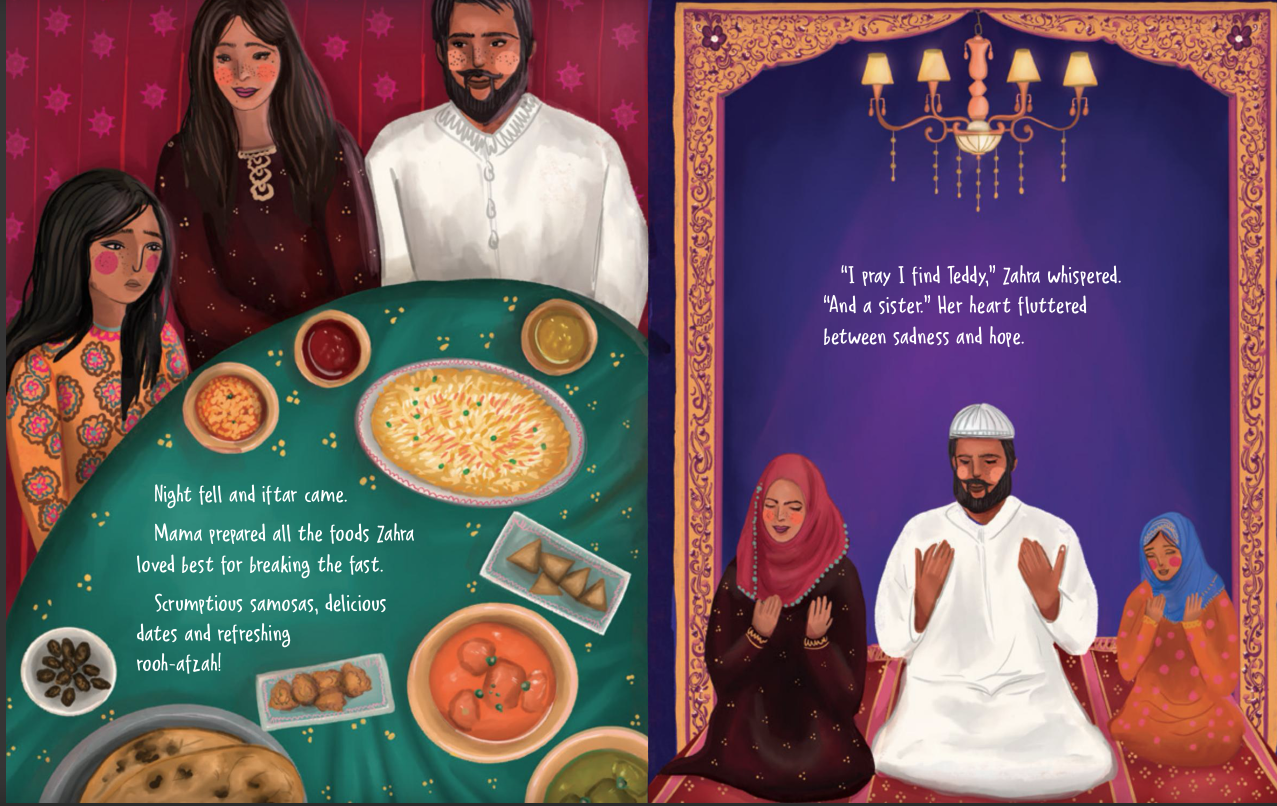
When Teddy goes missing, Zahra can’t help but think a little sister would help her find it.  Iftar that night are all of Zahra’s favorite desi foods and prayer after is her asking for a sister and Teddy.  The following day Mama and Zahra take the collected donation items to the shelter and Zahra realizes how sad she is about losing Teddy and these refugees have lost everything.

Screen Shot 2021-11-18 at 11.58.28 AM

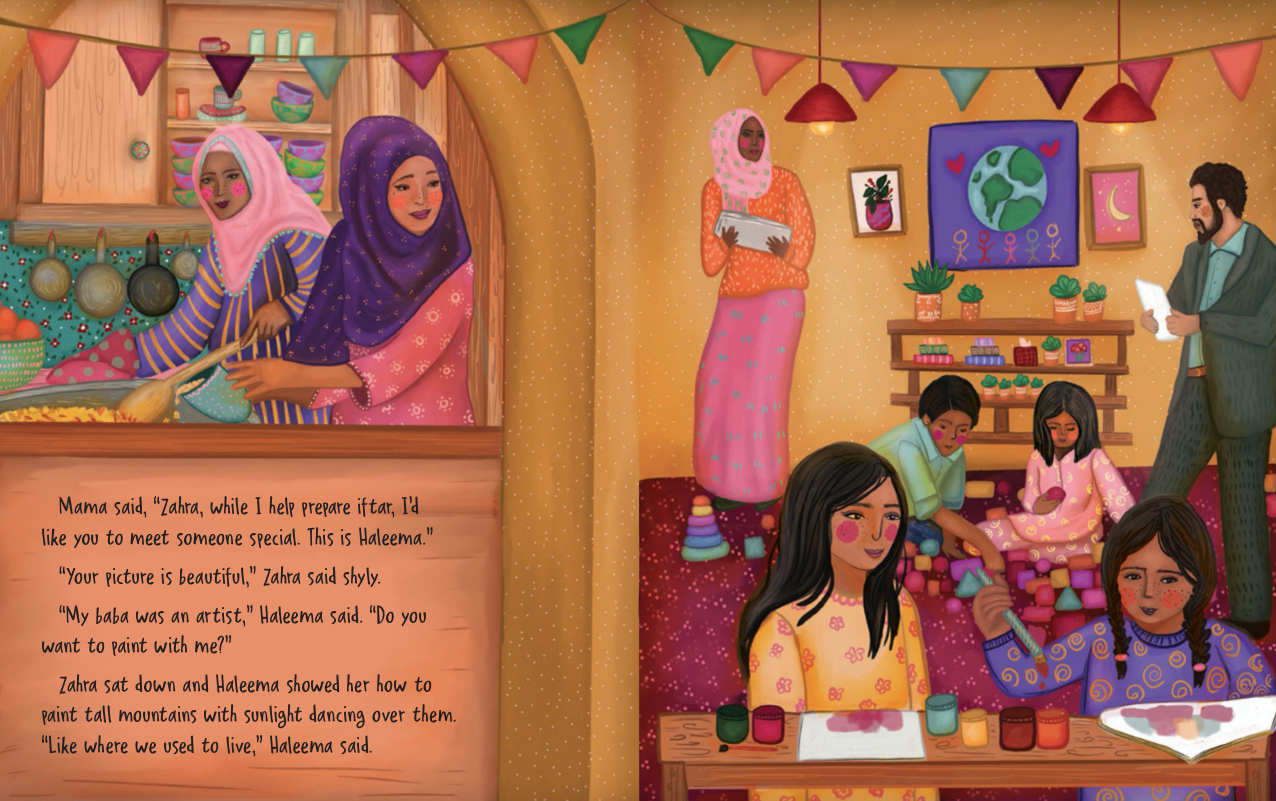
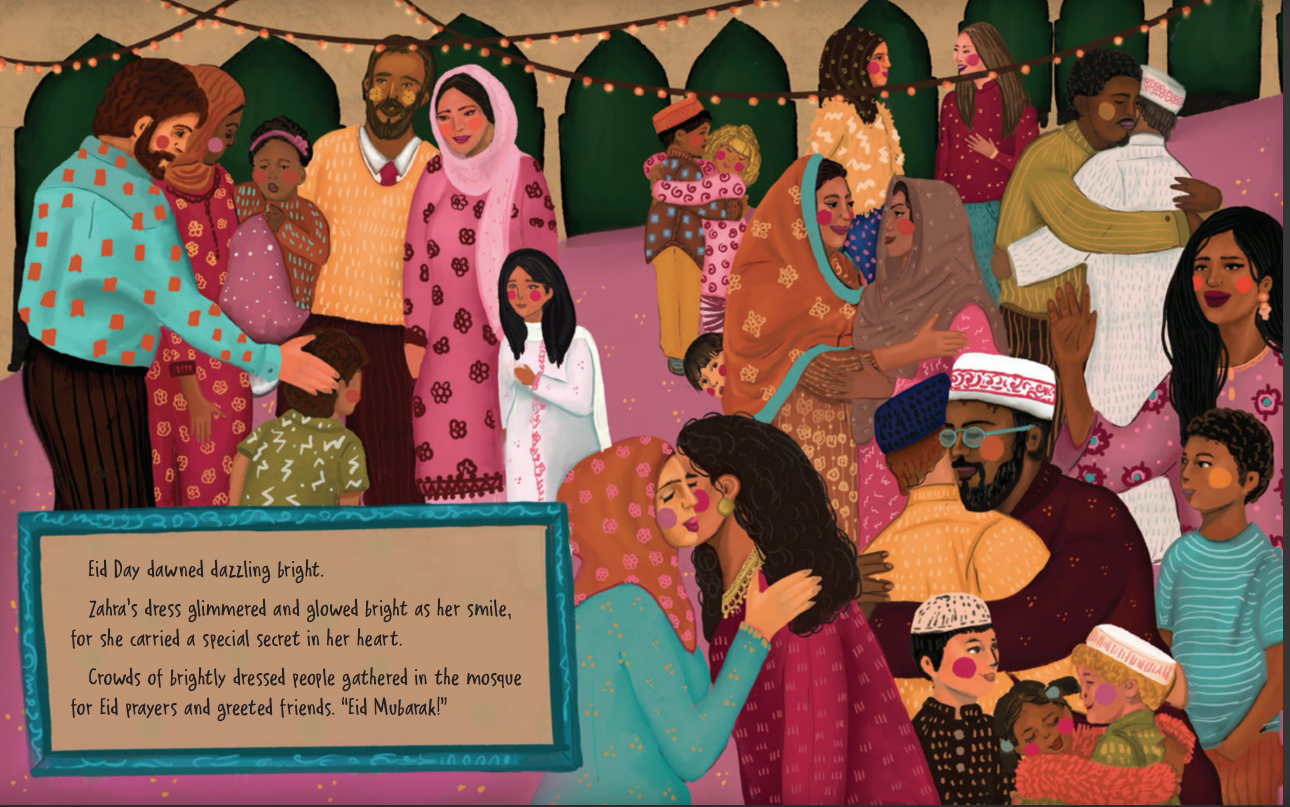
Zahra spends time with the children at the shelter and gets to know them.  She wishes she could find Teddy to gift to a young girl named Haleema.  Some days Ramadan crawls slow, and other days fast.  The family reads Quran together, fasts during the day and prays at night.  The night before Eid, Zahra’s dad whispers a secret to Zahra, one that she keeps close to her all through Eid prayers the next day.

Not going to spoil it, although I’m sure you can guess what is going to happen.  There are hints in the remaining illustrations, but I think kids will enjoy not having the heads up.  The book concludes with some informational blurbs and details about the Muslim author and Muslim illustrator.

Screen Shot 2021-11-18 at 11.58.35 AM

I enjoyed the illustrations, they are bright and bold and festive and unique.  They compliment the text completely as they show praying, reading Quran, making duas, etc.  The text doesn’t get preachy, it doesn’t even mention Allah swt or God, but talks of prayer and blessings.  The combination of the text and illustrations, however, definitely convey a strong unapologetic Ramadan/Muslim centered story.  Overall, it is universal and warm and sweet, and both Muslim and non Muslim children would benefit from reading it.

Screen Shot 2021-11-18 at 11.58.48 AM

My only concern is the page that the family is making dua together, it seems odd that they are all sitting in a line as if they have just prayed, but not prayed with the dad in front and the mom and Zahra behind. I read an electronic arc of the book and I look forward to purchasing a physical copy to add to my bookshelf.

Zahra’s Trip to Misr by Sufiya Ahmed

Standard
Zahra’s Trip to Misr by Sufiya Ahmed

misr

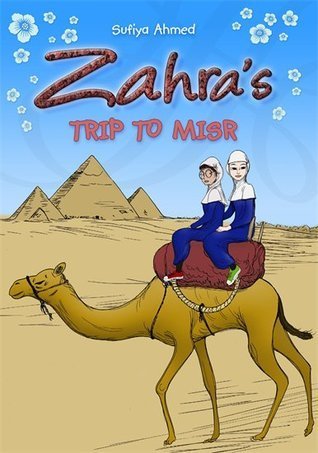
This middle grade series has been highly recommend to me numerous times over the years, and I finally found a copy to read and review.  It is book three in the series, and I have not read the first two, so I may be missing something, but the book didn’t wow me honestly.  The 147 page story published in 2011 has a lot of potential, but I felt like it didn’t know who the audience would be, and thus often felt cumbersome and disjointed to read.  At times it uses Islamic terms (muezzin), other times the Urdu words (namaz), and way too often the english meanings (ablution, peace be upon you, mosque), often all three in a single paragraph.  It is Islamic fiction and stays adventurous, without getting overly preachy and didactic, but there are some cruel life threatening antics by the girls, and some heavy themes of child trafficking, revenge, kidnapping, lying, bullying, gender treatment in Islamic spaces, finance and micro loans, but to its credit, it stays on level and, while as a mom some of the adventure needs adult intervention, I think young readers would support the young girls handling so much on their own.

SYNOPSIS:

Twelve year old Zahra and her classmates from her Islamic boarding school are headed on a class trip from England to Egypt.  For ten days they will be learning about the history, the culture, and connecting to Islam.  A group of first year girls and their chaperones in a foreign country meet with former students, another girls school from the UK, and some of their chaperone’s husbands giving this short book a lot of characters to get to know briefly, and only in passing.

The adventure starts right away as bully Saira locks a claustrophobic girl in the airplane lavatory in revenge of being locked in a freezer and forced to eat spiders earlier in the school year, and the foreshadowing that these battles are not over is set.  Once in Egypt, the girls muddle through worksheets sharing what they have learned, stopping to pray, and enjoying the experience.  Every so often at the hotel however, they see a girl they have dubbed, “sad girl” and the mystery to figure out what is making her so sad will ultimately make this a trip that brings the girls close to danger, and if successful will make them heroes. Toss in a nasheed concert, a runaway camel, and it is going to be a busy week and a half for them all.

WHY I LIKE IT:

The book presents a lot of Islam, and I think most readers will learn something and see Islam practiced authentically.  There is praying, and wearing hijabs, and halal meat, and Islamic history, and the 99 names of Allah all present in the characters naturally.

The book starts with Zahra and her mom and aunt rushing to the airport, they are running late.  Zahra’s aunt is not Muslim and presumably her mom is a convert, there is some really awkward dialogue before the family leaves, and it is called out as being awkward, but it just didn’t seem to fit either.  Why would a girl’s brother tell a non Muslim to wear a scarf? A character that is just in the first scene? I’m hoping there is more to her as a character in the first two books, and maybe this is a reference to something, but it just reads really weird and unrealistic (I hope).

Similarly, I am sure the first two books cover the forcing a bully to eat spiders and why she was locked in a freezer, but to just see that this is the level of the pranks, is a little disturbing.  The book acknowledges that locking a girl in a bathroom who has claustrophobia is dangerous, and that triggering the camel to run-off was similarly potentially deadly, but what about the other cruelties? It doesn’t even hint that there is more there, and I would have liked to see some context to recognize that these aren’t benign pranks, they are pretty big acts.

The child trafficking and kidnapping plot really had me wishing that the girls at least talked to Anu Apa. Having preteens take on such a dangerous situation so haphazardly was a little stressful for me, and I need to find some middle grade readers to help me see the actions through their eyes.

The randomness of the nasheed concert didn’t seem to fit for me, the song she wrote wasn’t that good, the whole thing came together too easily, and then some of the girls taking off their hijabs in wildness seemed such an odd tangent to me.

The biggest obstacle for me was the terminology and diction.  I don’t think it matters if the readers are Muslim or not, use the Islamic terms.  The teachers and students go to an Islamic school, it isn’t a stretch to have them use the proper term of salat instead of namaz, they can remark on the athan, not azan, they can say Assalamualaikum, they don’t need to say in english peace be upon you, and upon you when they greet, it seems so halting to the authenticity of the characters and flow of the story.

I think part of the difficulty in getting these books in the US is they just had one edition printed, and I genuinely hope that at some point the author will revisit the books especially now that she has been published mainstream for her other works, and hopefully grown as an author.  There is a lot of good in the book, it just could use some polishing and updating.

FLAGS:

Child trafficking, revenge, kidnapping, lying, bullying, cruel pranks, physical assault.

TOOLS FOR LEADING THE DISCUSSION:
I wouldn’t go out of my way to get these books on a classroom shelf based on this one book.  If a classroom or library already has them, I wouldn’t remove them.  Utlimately, I don’t know that many readers will stick with the sorting out of all the characters in the beginning of the book, and those that do I think would probably be slightly disappointed, not with the presentation of Islam, but in the side story building details.

Today I’m Strong by Nadiya Hussain & Ella Bailey

Standard
Today I’m Strong by Nadiya Hussain & Ella Bailey

strong

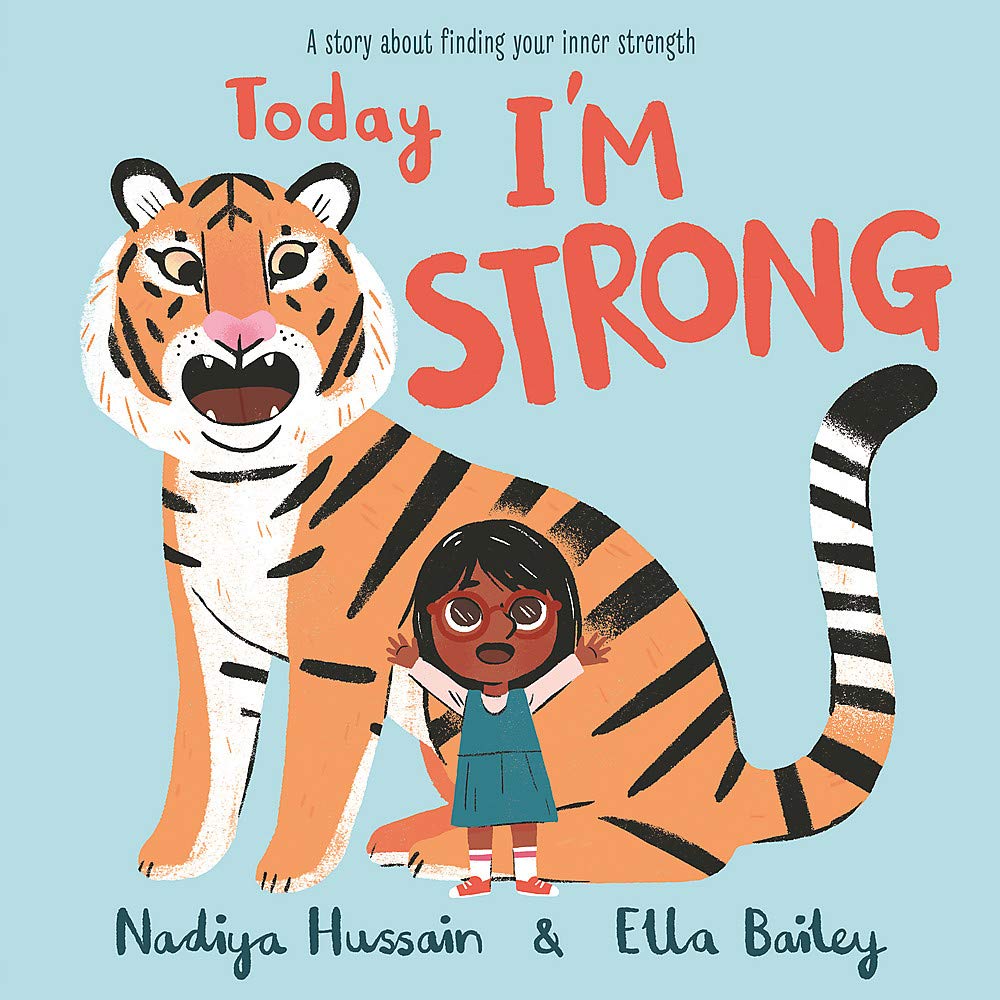
I really liked the way Nadiya Hussain’s book My Monster and Me discussed anxiety and was so eager for this book.   Unfortunately, I didn’t feel as connected to the characters, the little girls dread of dealing with a bully, or the resolution of channelling her imaginary tiger to find her voice strong enough.  With discussion I think the book would be a wonderful way to get young children, to open up about what is upsetting them, but on its own I feel like a bit more is needed to transition from thinking to action, from nerves to confidence, and from understanding what is bothering the little girl to understanding what needs to be done.

img_6852

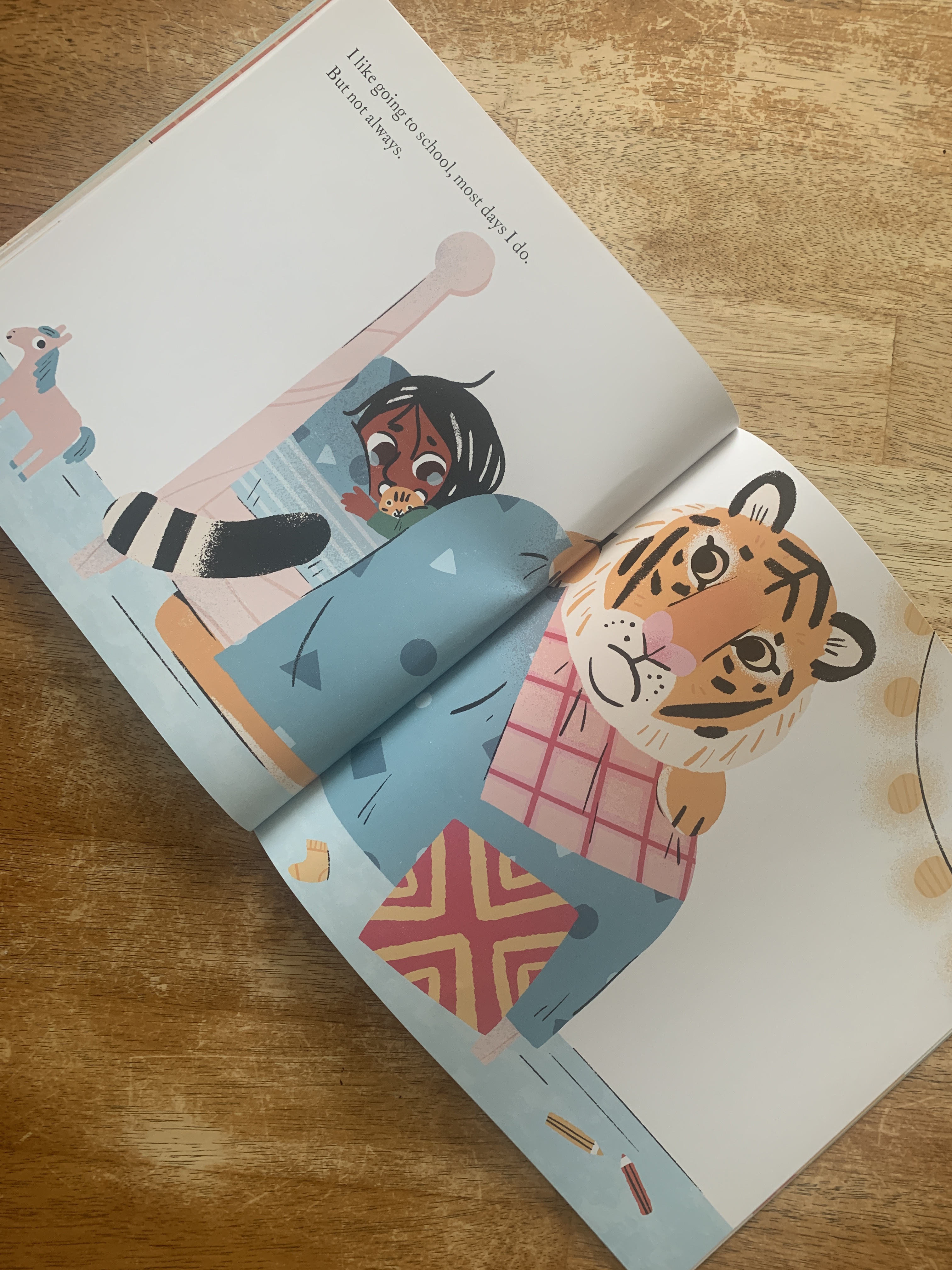
The story starts with a small girl going back and forth on whether she loves school or doesn’t and revealing that the tiger listens to her and doesn’t say a word.  It then starts the next few pages with the same line: “I love to go to school.  I do,” and detailing what parts of school make her happy.

img_6853

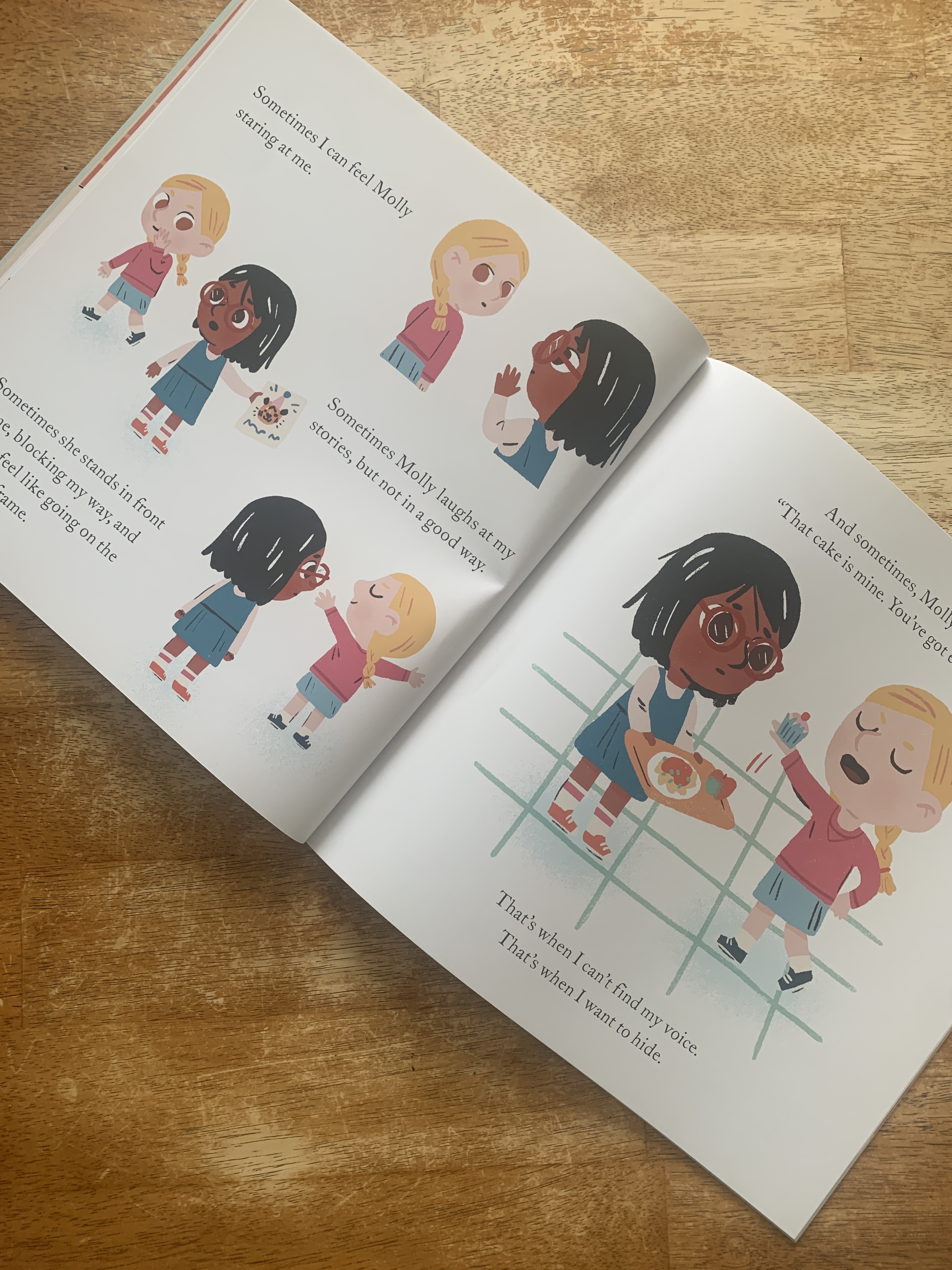
It then transitions to sharing why some days, the little girl doesn’t like school so much.  Days when her voice disappears, Molly laughs at her, or blocks her way to the climbing frame, or takes her cake.

img_6854

She then reinstates that she likes going to school most day, but not always, and then one day when Molly is mean, the little girl, thinks of the tiger, and knows what to do.  How to find her voice, and stand up to Molly. She then carries through on it, and realizes that soon she can be on top of the world.

img_6855

The messaging is universal and great, and while there is no religion shown, it is great to see a brown protagonist dealing with mental health.  The author is Muslim and I’m sure most everyone knows at least of her from the Great British Bake Off.

img_6856

Count by Ibrahim Moustafa with Brad Simpson and Hassan Otsmane-Elhadu

Standard
Count by Ibrahim Moustafa with Brad Simpson and Hassan Otsmane-Elhadu

count

This graphic novel retelling of the classic, Count of Monte Cristo, is for middle school readers and up and is by a Muslim author and illustrator. There is nothing Islamic or cultural in the text of this 136 page sci-fi twist, and there is some kissing, a whole lot of killing, brutality and violence, but I think the swashbuckling tale will appeal to early teens and adults who enjoy fast paced reads whether they have read the original tale or not.

img_6765

SYNOPSIS:

Commoner Redxan Samud is elevated to Captain and marries his beloved, the first few pages of happiness, however, quickly disintegrate as he is framed and wrongfully imprisoned by the jealous powers that be.  Life in the hovering prison are barbaric, but the meeting of Aseyr, provides him with a plan and means to move forward.  First he will have to survive the death battles in the prison, escape the inescapable fortress, before he can locate the Isle of Sorrow, take control of ARU and extract his revenge.  Oh, but his revenge is strong, so very, very strong.

img_6766

WHY I LIKE IT:

I was admittedly hesitant to give the book a try, but when writer Shireen Hakim sent it to me, and my kids saw it, I thought I should read it first before letting them dive in.  I read it in one sitting, the story is engaging and clear.  I never was confused with who was who and why something was happening.  At times though it seemed too quick and that details were glossed over, or impact was minimized because major plot points were not given enough time to be felt.  I would have liked some answers provided of basic logistics and of character’s getting from one place to another, and how plans came to fruition shared in the story.  Additionally, some fleshing out of situations to ground the story a bit and make the revenge and extraction of revenge more cathartic, would have elevated the book and made it a popular choice in my house to be reread again and again.

img_6767

FLAGS:

Death, violence, murder, rage, kissing, torture, plotting, deceit.

TOOLS FOR LEADING THE DISCUSSION:
Not a contender for a book club read, but I would shelve it in a middle school classroom and in the school library for graphic novel and comic book enthusiasts as well as for high school students who might be familiar with the classic it references.

Spirit of the Cheetah: A Somali Tale by Karen Lynn Williams & Khadra Mohammed illustrated by Julia Cairns

Standard
Spirit of the Cheetah: A Somali Tale by Karen Lynn Williams & Khadra Mohammed illustrated by Julia Cairns

cheetah

This timeless 40 page tale of a young boy as he prepares for his right of passage into adulthood is rich with wisdom, culture, and tradition.  So many gentle lessons can be found in the book, as it leaves deeper understanding and connection to be felt and explored long after the book has been closed and returned to the shelf.  There are seemingly hijab wearing #muslimsintheillustrations, and the author’s name would suggest she is also a Muslim, but with the line, “Called on the spirit of Shabelle,” and talk of the “Spirit of the cheetah,” it is hard to know for sure if the main character is.

The story starts with Roblay running everywhere in preparation for an upcoming race where he hopes to place in the top three, and prove he is a man and no longer a boy.  On the day of the race he races his fastest, but he does not come out at the top.

img_6579

His grandfather, his Awoowo, tells him that to be successful he needs to capture the spirit of their people and leave his thumbprint on a cheetah’s coat.  His grandfather then tells him about the cheetahs long ago and how the river is named after them.  He explains that thumbprints on a cheetah’s fur honor those that have proven themselves.

Roblay trains and searches for many days.  He wonders if it is enough to mark a cub.  But his grandfather asks him if he wants to remain a cub.  This motivates Roblay to work harder.  When a year has passed and the race is about to take place again, he finally touches his cheetah.

img_6580

He lines up for the race strong, proud and sleek, and he has the chance again to prove he is a man and make his family proud.  Nope, not going to tell you how it ends.

img_6583-2

The book starts with an Author’s notes from both authors and concludes with Notes on the Cheetah.