Tag Archives: hope

Fledgling: The Keepers Records of Revelation by S.K. Ali

Standard
Fledgling: The Keepers Records of Revelation by S.K. Ali

fledgling


This 544 page science fiction dystopian fantasy is in my humble opinion S.K. Ali’s best work, and that is saying something.  A lot actually, especially considering I am a Muslim book reviewer and there is no Islam featured in the book. As my author friend Shifa Safadi articulately put it, “it is Muslim coded,” a much more succinct term to describe my rambling thoughts of how Islam seems to be just below the surface, never breaking through, but making the book seem OWN voice and authentic. The book is for ages 14 and up and stays fairly clean, allowing for complete immersion in to the story, the world, the future, and the characters’ lives, without any fear that something drastically detailed and haram, would suddenly appear and pull me out of the flow of the story.  There is a bride market where women can be bought and mention of lovers being taken, but it isn’t normalized, it is for a purpose, and the acts are not detailed.  From start to finish this book is a gift to readers.  The writing quality is superb. The book is told from nine (?) points of view,  and I never once felt the need to flip back to see who was speaking, as each voice is clear and unique. The twists, the heartache, the triumph is all palpable and griping.  The mix of genres works because the characters have multitudes and incredible storytelling made the lengthy book, not nearly long enough. I can’t wait for the second part of the duology, from the Underground to Upper Earth, the world was not one I left willingly, and I look forward to returning for the conclusion.

SYNOPSIS:

I really am not sure how to summarize the book without giving much away, I’m actually surprised myself that I’m writing a full review for a book by a Muslim author with no Islam present, so here we are.  As with all S.K. Ali books, this book starts with a possible “romantic” relationship, in this case though, it is an arranged couple meeting, and it isn’t going well.  But where comedy and faith might normally then enter the story, this book, veers from her norm, drastically.  Set in a dystopian future where scalplinks and mind control allow the “enlightened” to live a vastly different life than those on Lower Earth who’s resources have been plundered, the union is to be between Raisa, of Upper Earth, and Lein the crown prince of Lower Earth as an attempt at achieving peace.  Politics, greed, loyalties, love, all add in to the mix of a rebellion and the hope that comes from the Fledgling.

WHY I LIKE IT:

The book starts with a character list which is an incredible tool for readers as the first half of the book is forced to simultaneously balances character development, world building, and plot progression with a lot of moving parts. The style of memory records, announcements, current events, flashbacks, and changing povs keep the book’s pacing moving, but it really took about until the midpoint for me to be unable to put the book down. What at times early on could be perceived as cumbersome, became truly what makes the book stand out.  To see each character through their own eyes, through their own lived experiences, and to see their thoughts and feelings grow and change, really pulls you in and brings the humanity to life in a book that could have become more plot than character. It also emotionally ties you to the characters and the twists and revelations and loss, hurt a little more than I would have expected as days later I am unable to stop my head from returning to parts of the story that still have a hold on me.

FLAGS:

Death, torture, abuse, killing, murder, hunting, manipulation, lying, a love scene between a coded married couple, oppression, colonization, bride markets, misogyny, cheating, it is YA dystopian, fantasy, sci fi, romance, adventure, so there is some grit at times, but not for sensational vulgarity, it is always for a point and not taken lightly.

TOOLS FOR LEADING THE DISCUSSION:

This book would be incredible to read in a high school class: Islamic school, home school, public school, private school, you name it.  There is so much to discuss about colonization, oppression, rebellions, politics, and yet none of it comes at the expense of good story telling.  I would love to hear students discuss their favorite characters, opine on their motivations, and argue right vs wrong with citings from the text.  No two people would feel the same, I would almost guarantee it.

Eliyas Explains + Bite-Size Journal: Why Does Allah Let Bad Things Happen? by Zanib Mian illustrated by Daniel Hills

Standard
Eliyas Explains + Bite-Size Journal: Why Does Allah Let Bad Things Happen? by Zanib Mian illustrated by Daniel Hills

img_3601-1

The book stems from the genocide occurring in Gaza, but expands to cover the more general concepts of qadr (destiny), tests, and sabr.  The book assumes that what is happening in Palestine is known and does not discuss specific details, allowing the book to be both timely, yet universal.  As with all the books in the series, the conversational humorous approach appeals to children as foundational Islamic concepts are broken down and explained.  The book is 73 pages with the journal portion starting on page 33. In some of the other books, the journal feels more of a hands on to already shared information, or an accompanying workbook of sorts.  In this book however, I feel like the second half continues to explain the topic at hand, and convey key components in understanding why Allah swt, lets “hard” things happen, how we should view the tests, approach difficulties, and inshaAllah triumph. The book has been checked by a Shaykh, and I highly recommend this important book for elementary, middle grade, and even middle school children. The concept of qadr is difficult, I struggle to truly grasp what we can and cannot change, but this book helps readers focus on what we can change and how to view terrible things that happen to us and to others.

The book starts with Eliyas introducing himself and his family, and then wondering why “Israel is being able to do what they’re doing in Gaza.  Why isn’t Allah stopping it?” As with all Eliyas books, mom and dad are sought out, food is somehow worked in, and time and space are given to Eliyas and his siblings to be given an answer. His parents start by being glad that Eliyas’s heart is soft for the Palestinians and that he is bothered by what is happening to them, before explaining that a lot of understanding is trusting and truly believing that Allah swt knows best.

img_3625-1

The book uses hadith, ayats from the Quran, it even shouts out other Zanib Mian books, The Mindful Book of Wellbeing, for seeing the bigger picture and Eliyas Explains Why Should I Pray my Salat on how to make yourself strong to get through the struggles of this duniya.

The book talks about why Allah swt didn’t make everyone good, and it is clear in saying that being mad and sad are ok too, as long as we are not questioning Allah swt. There are prompts and questions (with answers) and the book is not heavy, despite the subject matter, the tone and approach stay on level and allow readers to connect, alhumdulillah.

You can get your copy here at Crescent Moon Store.

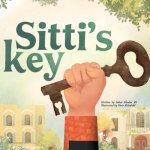
Sitti’s Key by Sahar Khader Ali illustrated by Noor Alshalabi

Standard
Sitti’s Key by Sahar Khader Ali illustrated by Noor Alshalabi

sitti key

I try and buy, read, and review every children’s book about Palestine that is published, it is the least I can do.  I also try not to compare them to each other as they present different aspects of oppression, perspectives of strength, examples of joy, and messages of hope, even among many similar themes of food, keys, traditions, and culture.  I really appreciate that this book though is incredibly blunt.  It isn’t lyrical, it isn’t poetic, and as Israel is bombing Jenin as I write this I’m glad it doesn’t mince words about the Nakba. I do think caregivers though, should probably read it first as it might be a little triggering for sensitive children.  The story is OWN voice and probably best suited for middle elementary aged children.  It is perhaps also worth noting that the book could be seen as making Jews synonymous with Zionists.  The characters are Muslim, Islamic phrases and Arabic terms are sprinkled throughout, and even despite the pain the family has endured, the book stays hopeful and proud.

Sitti is coming and Amal is excited, it has been two years since she last saw her.  She loves how excited her mom and grandma are to unpack gifts of olive oil, dates, and zataar from friends.  Amal isn’t sure what to do with the “old lady thoub” she has been gifted, but she smiles in appreciation none-the-less.  When Sitti pulls out an old key, Amal starts to ask her about it, but her mother shuffles her off to bed.

The next day at school, Amal has to work on a presentation about “culture,” but there are no Palestinian books in her school library, so she just watches the other kids.  At home they eat and listen to Sitti’s stories of long ago in Haifa, and Amal asks her why she left Palestine.  Despite her mother trying to redirect, Sitti says it is time she knew about the Nakba.

Sitti tells about living on the land for generations and how the Jews believed the land belonged to them.  In 1948 the British decided Palestine would be the homeland for the Jews.  Armed men came and arrested anyone who tried to stay in their homes. Sitti’s brother was handcuffed and never seen again.  The family grabbed what they could including the key to their home as they made their way to a refugee camp in Lebanon.  They stayed for three years, before making their way to America.

When Sitti concludes her story she hands the key to Amal and her hope that she will return to their home inshaAllah.  Feeling the pride and warmth of home, Amal has a determination to reclaim her heritage and share her “culture” with her classmates.

The illustrations are sweet, the mom and Sitti wear hijab even in the home, and the inshaAllahs and salams come naturally. The book does not stop to define zataar or marimya, which helps the flow. I also like how it shows that there aren’t books about Palestine in the school library, it is strong and important detail.  I don’t understand where Sitti is coming from though, it would seem Palestine as she is bringing gifts from friends, but in the story it says after Lebanon they made their way to America, so I’m not sure where Sitti lives, and how the logistics of the family work to be honest.  I also kind of wish there was a  recipe for zataar in the book and lyrics with translation for the song the family sings.

Book is available on Kindle or can be ordered from www.littlehibba.com

When a Brown Girl Flees By Aamna Qureshi

Standard
When a Brown Girl Flees By Aamna Qureshi

when a brown girl flees

I was both nervous and excited to read this contemporary book having loved the author’s fantasy, but unsure how a Brown Muslim Pakistani American girl running away from home would be presented.  Alhumdulillah, the author approached the story from a place of love.  There is no internalized Islamophobia, self othering, or in broad strokes even an identity crisis. The protagonist has made decisions, drastic ones, and is trying to piece her life back together on her own terms, but the love of culture, family and faith, is always upheld.  It reads like Islamic fiction, with very didactic passages and moral positioning, I’m still quite surprised that it is traditionally published.  The version I read had grammar errors, so I’m hoping that they will be corrected when the book releases in a few weeks.  The story is engaging, but the writing a bit monotone.  Much of the story is telling, not showing, and because of the surface level spoon feeding of so much of the plot, when the catalyst or rationale is not provided, the book seems underdeveloped, or lacking, unfortunately.  I would not recommend this book for the target audience of YA readers (12/13 and up) it contains sex, slut shaming, self harm, depression, suicidal thoughts, physical and emotional abuse, profanity, and mentions drug use.  I do think though, early college age readers will enjoy and benefit from reading the book.  At a time in the reader’s life when they are defining themselves on their own terms, owning up to their own mistakes and laying out a future path, this book will provide relatability amplified by religious and cultural touchstones.  The heart of the story is the connection of a girl with Allah swt after she has sinned, the guilt and regret she feels, and how she finds herself, and returns to try and fix things with her family.  The characters are flawed and the overall messaging beautiful, hopeful and uplifting.  Unfortunately, it just reads like an early draft and I wish it had a bit more refinement.  Keeping that in mind though, it does have a place, and I’m glad to see our “new adults”  can find reflections of  themselves in a piece of literature that amplifies their Islamic identity instead of criticizing or questioning it.

SYNOPSIS:

The book starts with Zahra deciding to run away from home.  She parks her car, leaves her phone and catches a flight to New York from California.  The reader doesn’t exactly know why she is running, only that a few days after high school graduation she is escaping a toxic home life, an impending wedding, and misery.  As the story peels back layers we start to see some of the nuance of what she is running from as characters from her past find her and physical space allows her some perspective to see her own role in her “old” life.  When she arrives in New York, it isn’t the city life that she seeks, but rather the nature and pace of Long Island that offers her a fresh start.  She heads to the masjid, makes a friend, and starts to put her life together without parental obligation, outside interference, and self loathing.  She cannot run forever though and she cannot escape herself.  She must confront her past, own her mistakes, be honest with her new friends, and find peace with her family, not because she has to as a Brown daughter of immigrants, but because she trusts Allah, loves her family, and wants to “fix” things.

WHY I LIKE IT:

I’m a sucker for books that show redemption through the love and mercy of Allah (swt).  Yeah her new friends were idyllic in their family life, relationships and worship, but we all want friends that make us better Muslims, so I let it slide. Islam is centered, she wears hijab, she reconnects with salat, it is her identity even when she is just going through the motions. The author at times conflated culture and faith, but it never issues blanket statements or falls into universal stereotypes for Desi culture or Muslims.  She does a good job of keeping the negatives to the people and the critiques to the failure to push back on dangerous expectations. My issues weren’t the character flaws either, I’m onboard with the messiness of being human and the ability to seek and receive forgiveness from our creator.  I just wanted to feel things more.  So much was just told when it should have been shown.  I wanted to see the stress and anguish of her family life, not simply told it was depressing.  I wanted to see her cutting life long friends out and being isolated, not told she had lost her friends.  The book focuses on her running, and why she ran, but a big plot point for why she ran, having sex, needed more fleshing out.  Why was she driven to such an act? I know that she was depressed, I’m not belittling that, but what pushed her to such a strong stance, when she was already allowed on the school trip, she hadn’t yet been given the ultimatum and over and over the book says “I miss my family,”” I miss my home,” “I miss my mom.”  I didn’t feel the connection or understand what she was feeling, thinking, and it seemed like a huge hole in the book.  For all the themes of mental illness, faith, generational trauma, misogyny, abuse, expectation, depression, lying, culture, life choices, higher education, family dynamics, self harm. the book never quite felt rich with emotion or deeper than the surface level story.  At the beginning the author says she first wrote the book when she was a senior in high school, and while that may have made the main character’s perspective and voice ring true, as a successful author now, I wish she would have added the nuance, the insight, the subtlety that would have drawn the reader in and allowed them to get inside Zahra’s head and heart to see her and perhaps even themselves.

FLAGS:

The author and book identify triggers in the book “please be mindful of TWs: depression, anxiety, emotional abuse, physical abuse, self-harm, suicidal ideation, slut-shaming, PTS.”

There is also music, boys and girls alone in cars together, lying, cursing, generational trauma, misogyny, abuse, expectation, depression, anxiety, guilt, life choices, higher education, family dynamics, cutting, a brother who is often high or smells like weed/pot, it mentions partying, a sexual event, deceit, physically assaulted by a parent.  Nothing haram is glorified, but it is there and it is detailed, and not everything is resolved.

TOOLS FOR LEADING THE DISCUSSION:

I would not be able to shelve or teach this book in an Islamic school library, but in a college MSA book club or a youth group of a similar age this book would be incredible to read and discuss.

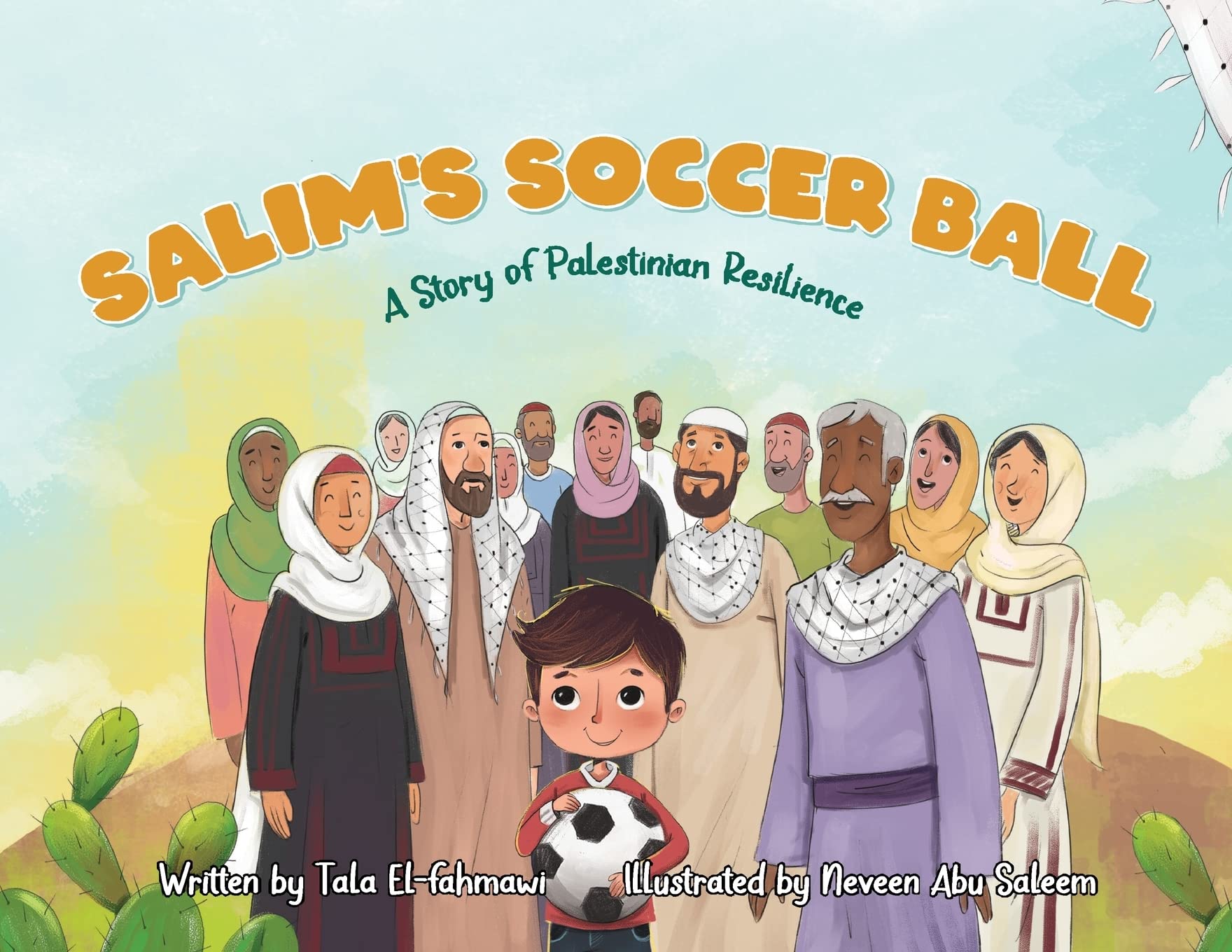
Salim’s Soccer Ball: A Story of Palestinian Resilience by Tala El-fahmawi illustrated by Naveen Abu Saleem

Standard
Salim’s Soccer Ball: A Story of Palestinian Resilience by Tala El-fahmawi illustrated by Naveen Abu Saleem

salim

This 58 page rhyming picture book weaves together a tale of a little boy and his lost soccer ball, with larger issues of community, oppression, and perspective for the youngest of readers to older children too.  I am noted to be skeptical of rhyming books, but the large font, the sweeping pictures, and the dropping of occupation, struggle, and resilience really make this book a treat. Add in discussion questions and an author’s note and you have a solid book that deserves space on home, library, and classroom shelves.  My only wish, was that the book was hardback.  The horizontal layout with a soft cover make the book difficult to read during story times as the pages flop back.  The book is long, but the text on most spreads is minimal and while I could not identify the author’s religious identity, their are numerous hijab wearing #muslimsintheillustrations as Salim journey’s around his neighborhood and into his grand father’s memories.

Salim wakes up, brushes his teeth, and is out the door to play soccer with his best friend Qusai, but the ball goes flying and Salim can’t find it. He starts walking down the hill and it seems to have disappeared.
img_5055

He asks the fisherman, Abu Zaid, if he has seen it, and he hasn’t, but he offers to help.  They then go and ask the seamstress, she hasn’t either, but she puts down her tatreez, offers reassurance, and offers to help.  As they head out they bump in to Dr. Bassam.  “‘I will help you look,’ the kindly man said. “I can fix broken bones with very few supplies.  A lack of resources has made me clever and wise. Resilience and courage are plentiful here. We will find your ball. Salim, no need to fear.'”

img_5054

The searching continues, with a small break for khanfeh, and then Qusai is found, and so is the ball.  Like so many joyful items, the barbed wire of the apartheid wall has destroyed the soccer ball. Upset, Abu Omar, calls out to Salim, and his grandpa embraces and consoles the young boy recalling a donkey with wonky ears and life on the farm.  With resilience and joy Salim heads home to a community surprise and a hopeful future inshaAllah.

img_5053

The book concludes with five discussion questions that connect Salim’s experience to universal experiences of people everywhere.  It is followed by factual and personal author’s note about Palestine and the book.  

img_5056

There is nothing religious aside from the hijabs worn, Dome of the Rock, Masjid al Aqsa, and Church of The Holy Sepulcher in the backgrounds of a few images.  I purchased my copy from Amazon HERE and can also be purchased through Shop Palestine HERE.

img_5057


My Garden Over Gaza by Sarah Musa illustrated by Saffia Bazlamit

Standard
My Garden Over Gaza by Sarah Musa illustrated by Saffia Bazlamit

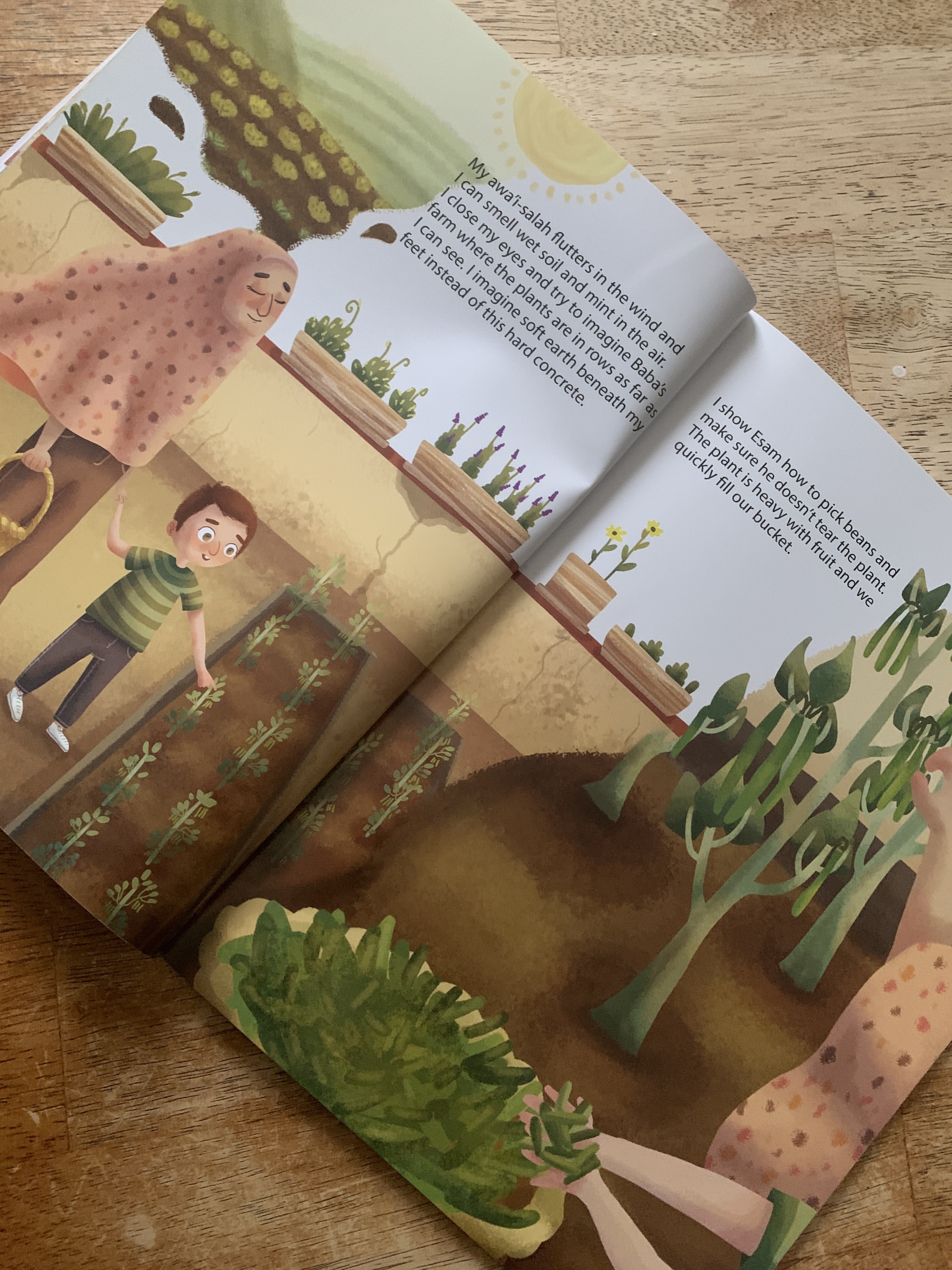
This book is hard to read, it hurts the heart, it doesn’t let you claim ignorance regarding the plight of Palestinians, and it shows cruelty,  a specific inexcusable cruelty, in a children’s book that will haunt you and infuriate you for weeks and months, if not indefinitely.  I’ve read a number of Palestine set books, but this one, in its simplicity, leaves me raw.  A child with a rooftop garden that helps feed her family is deliberately targeted by Israeli drones and destroyed.  This isn’t science fiction or dystopian, this is based on real acts.  The book itself threads in themes of hope, of not giving up, of remembering strength of a lost parent, of vowing to move forwards, but the catalyst for it all is not happenstance, and while the details of the occupation and oppression are not stressed and articulated, they are referenced and skillfully present to be discussed with children on their level with the included backmatter at the end.  This book is powerful and should be required reading. It is a difficult read and it has flags, but it is also a glimpse of the reality of our world, and the manner in which this book is told allows for the discussion to taken place with middle grade readers and up. The book is not text heavy, but the nature of the content makes me suggest it for mature children.

Noura, a young girl, is in her home in Gaza when drones are seen just out the window and she quickly pulls her little brother Esam away to safety.  To distract him she tells him about their father and his farm that he used to have in Umm An-Naser.  She explains how the wall cut them off from their land and when the drone noises fade, she takes him up to her rooftop garden to pick green beans.  Their mama works downstairs as a seamstress, and while they wish they had meat, the garden helps them have fresh vegetables.

The next day after Noura gets her little brother ready for the day they head to the roof, but drones arrive and start spraying chemicals on the growing plants, killing them, and sending Noura gasping to breathe.  She tries to cover the plants and swing a shovel at the drone, but it does little to save any of the food and Noura is devastated.

Noura’s mama reassures her daughter that the food can be regrown, but she is irreplaceable, as Noura goes to scrub the chemicals from her skin.  The frustration is real, but determination prevails as the family cleans the garden and begins again, just as their father did.

The last two page spread of the book is a basic map, general touchstones of the situation in Palestine, and the very real drones that fly in to Gaza to surveil, attack, and spray herbicides on crops. You can purchase a copy on the publisher’s website or HERE at Crescent Moon Store.

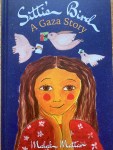
Sitti’s Bird: A Gaza Story by Malak Mattar

Standard
Sitti’s Bird: A Gaza Story by Malak Mattar

img_2562

I hate that this book is so timely.  It was written by the author/illustrator recalling the 2014 airstrikes, but alas, has anything changed for the Palestinians’ suffering at the hands of the Israeli occupiers amid the  apathetic silence of the world?  This 32 page picture book shows family love and daily life while Gaza is under siege.  The heartbreak of a young girl’s reality and perception shows the reader, in a simple empathetic, heart-wrenching, real-life example how her dream was limited and caged because she is not free.  The book is not sensationalized, nor graphic, it is written by someone who endured this as a child, and has written the book for children. The theme is not even political, but more hopeful as art is found as a respite and way to keep dreams from completely dying.  May Allah swt ease the suffering of those under occupation and free Palestine, ameen.  

img_2557

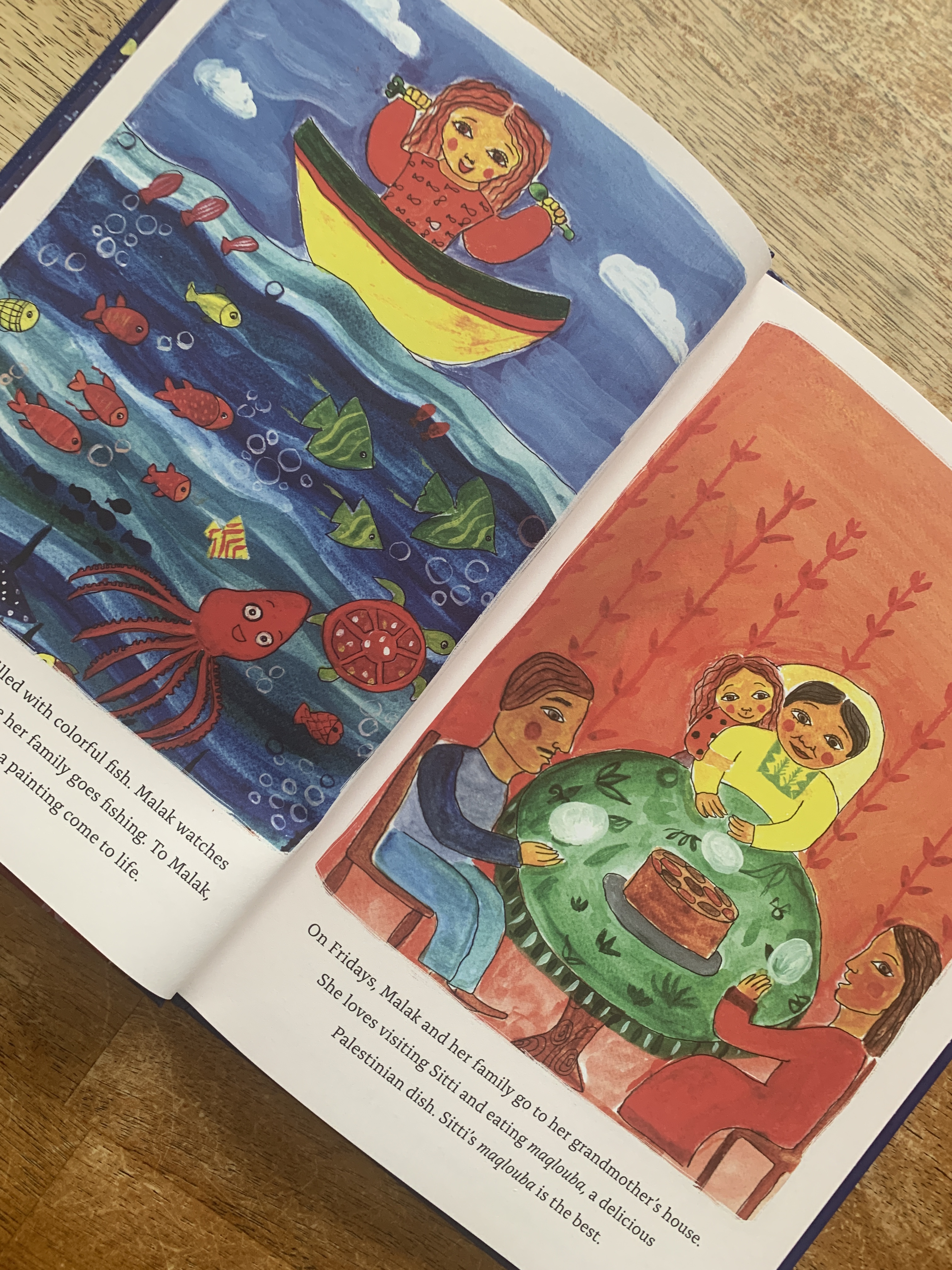
The book starts with a little girl and her parents going to Sitti’s house for the best maqlouba.  Sitti has a beloved bird, Malak wonders if she too is in a cage.  Her grandmother encourages her to fly in her dreams.  At school she is happy with her friends, playing games, listening to stories, but when an explosion sends them all home, she won’t get to return for 51 days.

img_2559

Constant airstrikes keep the family home and in fear.  Malak finds some paints and starts to create.  Sitti’s bird is lost when Sitti’s home is destroyed, but somehow shows up at Malak’s home.  Eventually Malak returns to school and she shows her teacher all her paintings. Her teacher decides to host an exhibit. 

img_2560 

People show up and marvel at her art work.  Months later an international exhibit invites her to attend with her parents, but sadly she must decline.  Gaza is closed.  She cannot leave.  

The book is hopeful, but does not have a happy ending, and I think the weight of that makes this book all the more powerful: because it is timely, because occupation persists, because dreams cannot be made into reality, generation after generation, this story inshaAllah will inspire some change and lots of compassion.

img_2558

There is nothing Islamic in the book, save some #muslimsintheillustrations, the author is Muslim.

Available here at Crescent Moon Book Store https://crescentmoonstore.com/products/sittis-bird?sca_ref=1601585.fIPhoqtScY  

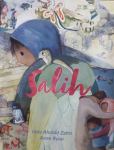
Salih by Inda Ahmad Zahri illustrated by Anne Ryan

Standard
Salih by Inda Ahmad Zahri illustrated by Anne Ryan

salih

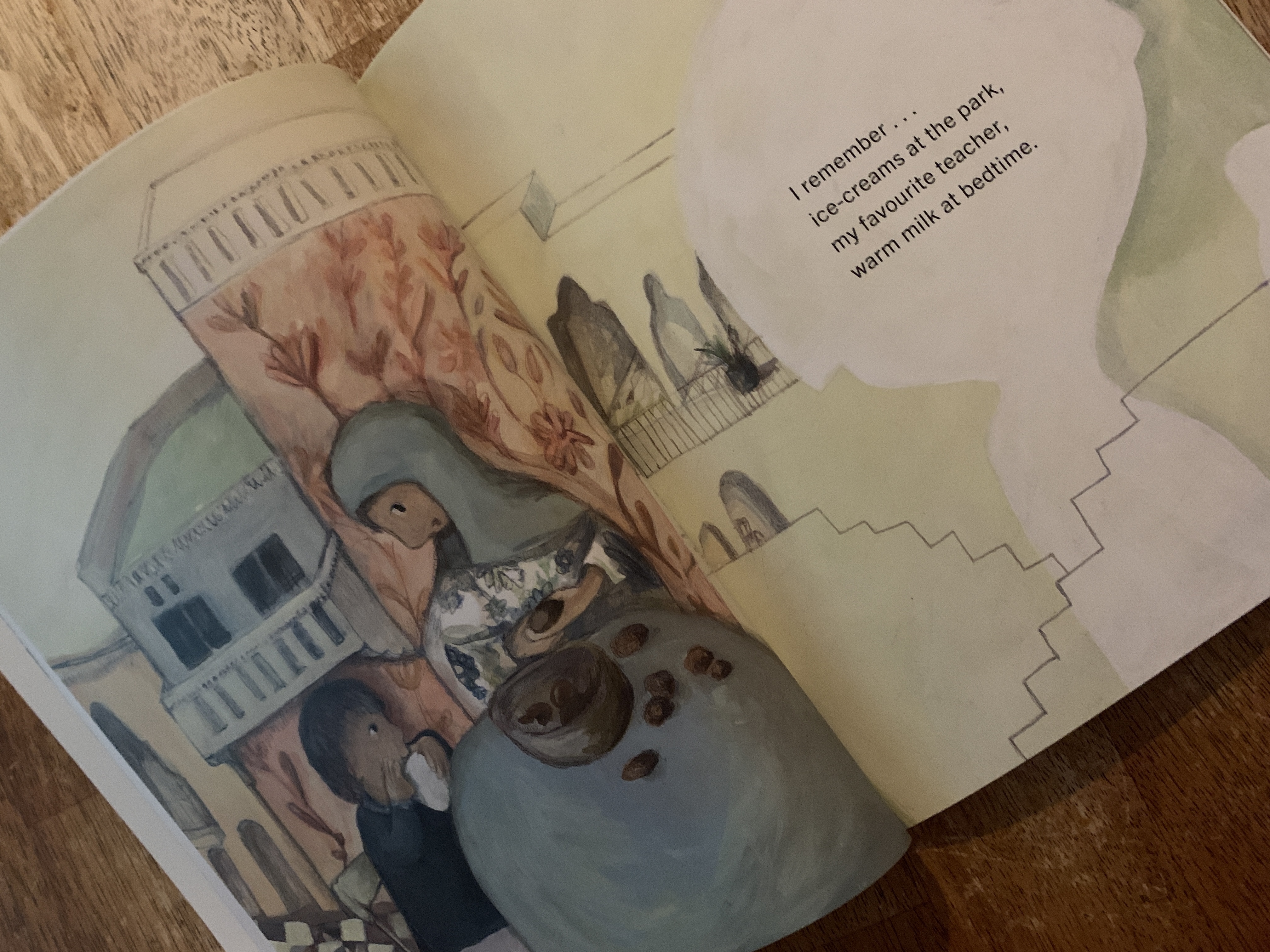
This is an example of a picture book that should not be categorized as being only for children.  The passages of short simple text and the expansive illustrations that pull the reader in, combine to set a powerfully moving tone that holds you in it’s grips until the final page.  The names and hijab clad women could make this book a refugee tale with #muslimsintheillustrations, but because the author is Muslim, and the book so beautiful, I wanted to do a full review.  Some of the vocabulary is a bit advanced for younger children, so I think the best application of this book is not to hand it to a small child to read independently, but rather to read it to a child and let the words tickle their hearts while they immerse themselves in the pictures.  I look forward to sharing this book at story time to kindergarten through third grade.  I think the imagery, concepts, and emotion will resonate and open minds and hearts.

img_2168

Salih is like a turtle, he carries his home on his back. He and others are heading to the sea.  He tries to remember when things were better, and forget the bad times.

An old man shows him how to paint.  Salih shares this creativity with others.  Then he slips all the paintings into bottles and when he is on the rough sea, the bottles float away.

The storm rages, but then it calms, and land is seen, and hopes and dreams return.

We, collectively, have become numb, apathetic even, to the plight of refugees.  I have been trying for a while to get this book from Australia, and even though I am over a year late since its publication, it is still timely.  It will always be timely.

img_2170

We cannot be so arrogant to dismiss the plights and challenges faced by those in our world.  That is why I say, yes it is a children’s book, but people of all ages, need to be reminded.  It isn’t the worst of the worst incidents that need to only be shared, or the over the top happy stories.  We need to not let our hearts grow so hard. And this gentle book, with a sweet boy and turtle shell imagery has a lot of potential to remind us of the human element of global conflict.

Available to purchase in the USA here

img_2172

As Long As the Lemon Trees Grow by Zoulfa Katouh

Standard
As Long As the Lemon Trees Grow by Zoulfa Katouh

as-long-as-the-lemon-trees-grow

Anything I write about this YA book will fail miserably in conveying how powerful, beautiful, lingering, moving, emotional, and overall masterfully written every one of the 432 pages are; it just might be my favorite book of the year.  I do know that this will be my new standard for Muslim OWN voice stories, as the authenticity was absolutely engulfing, I’m not Syrian and I could feel it and naturally, I also verified it.  There is no pandering to a western gaze, the story and characters pull you in and show you Syria from the ground, there is no telling, there is no lecturing, it is mesmerizing storytelling at its finest.  The book has mental health issues, war, and a sweet “halal” romance, that I think upper YA, 16 plus, can handle and appreciate.  I hope every adult will spend time with this book, it truly is incredibly well done, alhumdulillah.

SYNOPSIS:

Homs is under the protection of the Free Syrian Army, but that isn’t enough to keep pharmacy student Salama and her family safe.  Her mother is killed, her father and brother taken, and so she moves in with her best friend Layla, her pregnant sister-in-law, her only family left.  Working as a doctor in the hospital where anyone remaining is given responsibilities far above their skill level, education, and experience- every day is a struggle to survive.

Haunted by the physical manifestation of her fear, “Khawf,” who urges her to fulfill her promise to her brother of keeping Layla safe and getting them out of the country, Salama at eighteen years old has to find a way.

Before all the pieces come together to escape, a boy enters the picture, Kenan, who gives Salama hope, who distracts her from the death and destruction that has consumed their lives.  A boy unwilling to leave his beloved homeland.

WHY I LIKE IT:

I’m a crier, but this book brought out ugly angry tears, shocked tears, heartbroken tears, sentimental tears, you get the point, this book held me in its grasps and never let go. I.COULDN’T. PUT. IT. DOWN. If this is the author’s debut novel I can’t even fathom what is yet to come.

I love that the characters are Muslim, and that they pray together, that they plead with Allah (swt) and meet at the mosque.  It is who they are, it is not up for debate or in need of explanation, it is what it is and it is not anything to discuss.  The parts where a character pleads with Allah for death over being taken, absolutely wrecked me.  Just as efforts to keep everything halal between Salama and Kenan made me beam.  (If I’m completely honesty, I did on occasion get frustrated, I mean come on they are being shot at, bombed, nearly sexually assaulted, scoop her up in your arms and console, her, I know haram, but it is fiction and I was invested, and there is a war.  Thankfully, I am not an author and she kept it all clean and her characters much stronger and mindful of the shortness of this world.)

I love that there are political voices, but that it isn’t a political book trying to give back story to the conflict.  In so many ways the news has failed to keep a light shining on Syria and books such as this, remind those of us outside Syria without strong connections to the land, that the conflict is still raging.  If this was a journalistic article it would be a human interest piece, it is character driven.  Readers see themselves in the characters that live lives that most of us of privilege could never imagine, yet here we are spellbound by the characters, their choices, their dreams, and their safety.  This book shows the power of fiction in opening our eyes to the horrors that are happening in our time, by giving us a face and a character to care so deeply about, that we are spurred to action and determined to not remain apathetic.

FLAGS:

Death, torture, physical abuse, sexual assault, fear, loss, coercion, war, murder, torture, child abuse, crimes against humanity, starvation, mental health, PTSD.

TOOLS FOR LEADING THE DISCUSSION:

I would love to use this book in a high school book club.  The story and themes of the book would open themselves up to discussion so effortlessly and the beauty of the writing would be a gift to share with students.

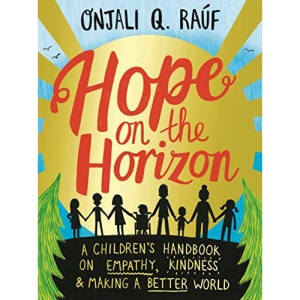
Hope on the Horizon: A Children’s Handbook on Empathy, Kindness, & Making a Better World by Onjali Q. Rauf illustrated by Isobel Lundie

Standard
Hope on the Horizon: A Children’s Handbook on Empathy, Kindness, & Making a  Better World by Onjali Q. Rauf illustrated by Isobel Lundie

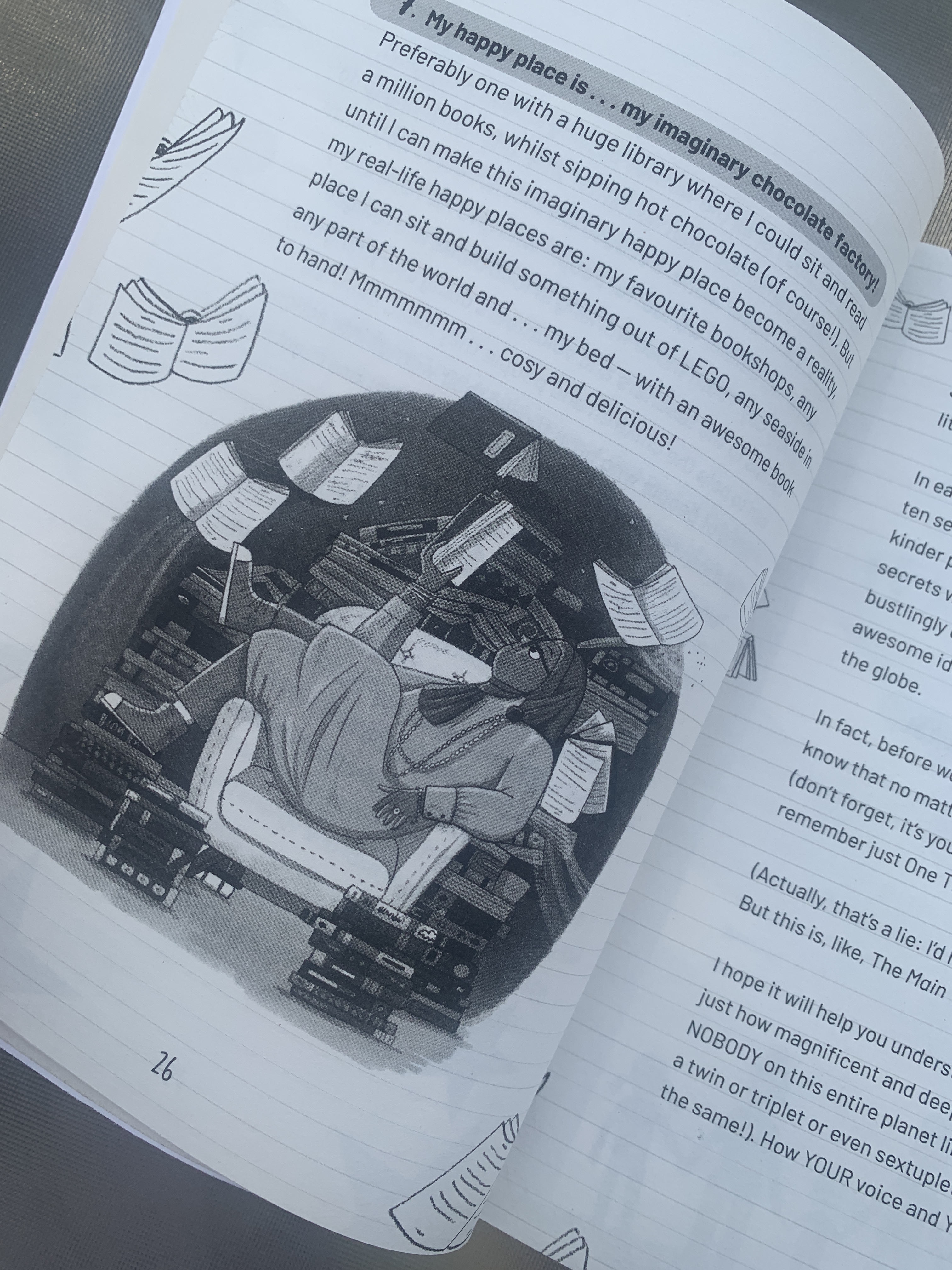
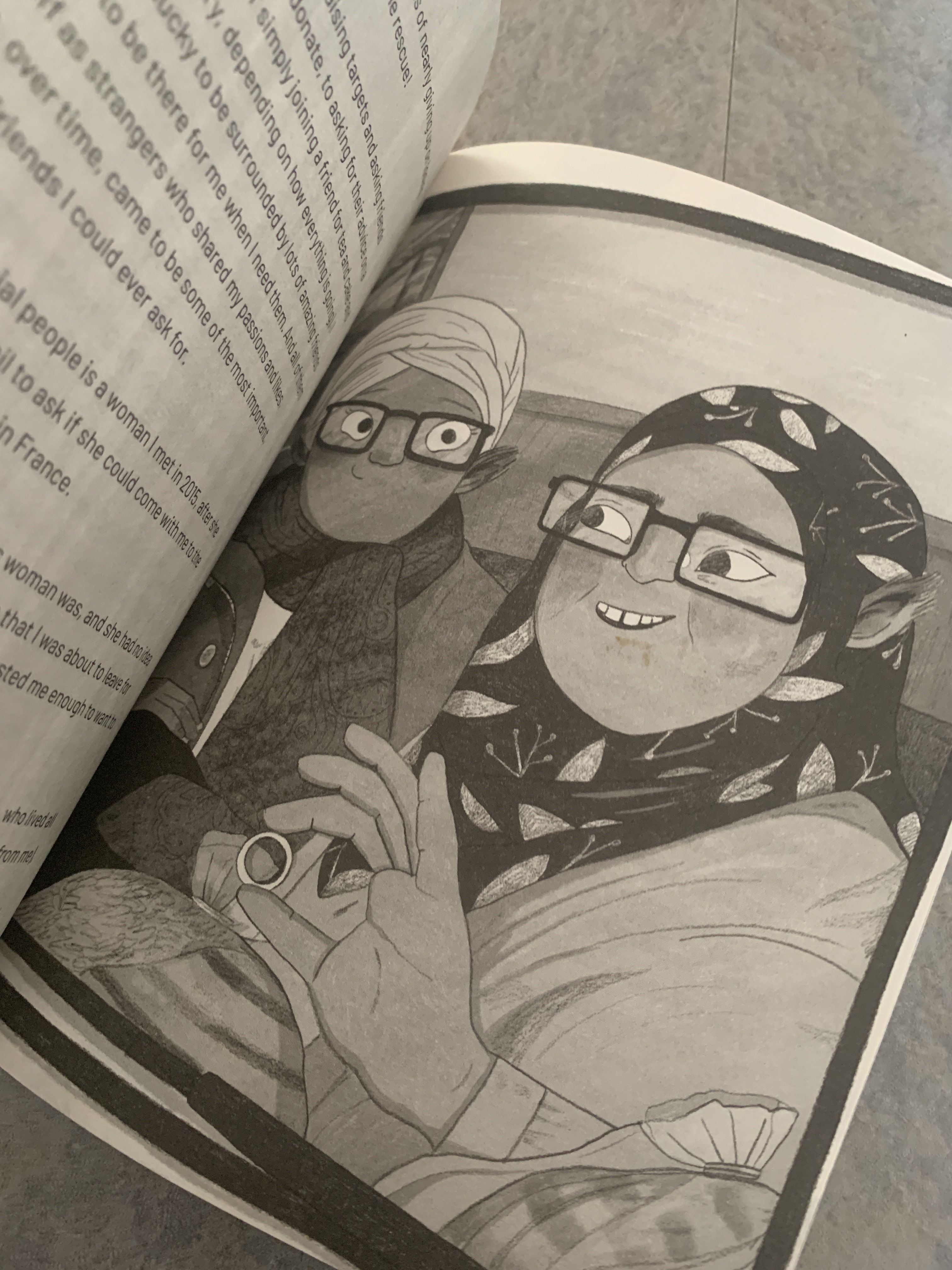
This delightful 288 page handbook pulled me in, inspired me, enlightened me, and allowed me to reminisce about incredible fictional characters from iconic books, tv shows, and movies.  Concepts such as kindness, empathy, friendship, deflecting negativity, seeing beyond labels, and asking for help, are framed around the fictional character’s strengths to introduce famous real life people from the past and present, as well as not so famous people the author personally knows and works with.  Written with the author speaking directly to the reader, there are also calls to actions, questions, prompts, and resources to help mature middle grade readers and up.

SYNOPSIS:

The book starts with an introduction about who the author is and her getting to know the reader, before introducing the concepts the book will cover and how it will go about doing so.  It establishes the super power of kindness and five golden rules.  The 10 chapters of the book then follow a loose format of introducing a fictional character and why the author admires them: Charlie Bucket from Charlie and the Chocolate Factory, Tintin, She-Ra, Superman, Samwise Gamgee, etc., her connection to them and to a theme: hope, being a ripple starter, never giving up. to name a few.  The book then highlights how the character and theme tie in to a cause that the author is passionate about, refugees, education, feeding the hungry, foster care, etc., then spotlights exceptional people the author has gotten to know personally in her activism that have made an incredible difference in the world, before offering a checklist of how you too can take action.  And finally a famous person is celebrated as being the culmination of all the strengths, characteristics, and super powers mentioned.  People such as Greta Thunberg, Albert Einstein, aerospace engineer Mary Jackson, footballer activist Marcus Rashford and more.  Often there are reflections, and the easy banter and conversation between the author and the young reader never leaves the text.  The reader and the connection to the reader is always prioritized and included in the sharing of information, motivation to action, and celebration of individuals real and pretend that have made a positive difference.

WHY I LIKE IT:

There is nothing overtly Islamic in the book, but there are Muslims featured as both famous real life examples and the author’s personal acquaintances.  Most importantly the author is unapologetically Muslim and offers glimpses of her own childhood growing up Muslim in the UK.  And as a hijab wearing Muslim, the illustrations also proudly show her smiling, eating chocolate and being an activist making the world a better place for all.

I love that the tone of the book is optimistic even when discussing difficult themes and heartbreaking realities of society.  The playfulness of the banter keeps the reader engaged and the text light.  Even if you don’t know the characters referenced, the urge to read their stories is a secondary benefit, and one that I think will further young world changers’ critical thinking skills.  Finding the good in people, even if they aren’t real, is such a lens that needs to be used more often, and the book does a tremendous job of stressing this.

FLAGS:

Talk of refugees, homelessness, food insecurities, abuse, poverty. Nothing is overly detailed, but the concepts are touched upon and explained as needed which could possibly be triggering or difficult to fully grasp to younger readers.

TOOLS FOR LEADING THE DISCUSSION:

The book can be read straight through or referenced, you can even thumb through and read sections that appeal to you.  I don’t know exactly who the book will resonate strongest with, but I’ve got my own children reading it, so I will happily report back. I think it deserves a place on every book shelf and even if only portions are shared with a class, the discussion and foundation that it could provide would be incredibly powerful.  I could see an English teacher encouraging essays about fictional character traits in the “real” world being assigned after reading, or History teachers spending time on some of the characters highlighted, it really is a great tool, a handbook, for young and old alike.