Tag Archives: Grandparents

Hilwa’s Gift by Safa Suleiman illustrated by Anait Semirdzhyan

Standard
Hilwa’s Gift by Safa Suleiman illustrated by Anait Semirdzhyan

img_6526-1

I’ve read a few children’s picture books about harvesting olives, and even some about Palestine’s olives, but this one really stands out because it is just so very joyful.  There is information about picking the fruit, processing, and making soap and oil with olives, but the book’s take away is just sore cheeks from smiling, and a full heart from feeling the importance, love, and tradition of olives, family, and being together.  The text and illustrations combine beautifully allowing the story of Hilwa, the olive tree, Ali and his Seedo to say a lot without having to spell it all out. And that it is traditionally published at such a critical time, is truly a gift.  There is nothing religious in the text, there are a few #Muslimsintheillustrations, and the author is Muslim. Additionally there is nothing about the current situation, the politics, the upheaval, or the occupation. The book follows Ali as he arrives after a long journey to his Grandparent’s home, it is harvesting season and  he is about to see all of the gifts that come from olives with the guidance of his grandfather, the cheering of his cousins, and the offerings of his beloved Hilwa.

The book starts with Ali and his parents arriving exhausted after their long flight to Palestine.  Greeted by Seedo, when Ali sees Hilwa, the olive tree his grandfather planted with his grandfather, the tiredness disappears.  When he hears Sitty whacking the trees and his cousins singing, “Zaytoon, ya zaytoon.”  He is ready to help harvest.  But, he doesn’t want to hurt Hilwa and decides to pick the olives one by one.  After his arms are tired and the basket is empty, he gently tries the traditional method and makes the zaytoon rain down with his grandparents and cousins cheering him on.

Hilwa has many gifts, and the next day they load up the olives to be taken to the press, they then prepare and enjoy the olives being pressed in to oil.  They bring the oil home to cook with, eat, turn in to soap, and the pulp is used to build the fire.  The best gift of all however, is the family, friends, and neighbors gathering to share and be together.

I read an early copy, and hope that the beginning will be smoothed out a bit.  It actually read as if a page was missing.  If the family had just arrived from overseas, and the grandfather was so excited, why wouldn’t the grandmother and cousins also leave what they are doing to great the just arrived family? It seemed a bit off, but once the story recovered, the text and story flowed without incident, so perhaps the disjointedness has been resolved.

img_6527-1

It is so important to show the richness of cultures to those that might be unaware, for a culture that is relentlessly villainized, even more so.  This 40 page picture book is great for ages 3 and up, and while it doesn’t detail Palestinian culture, it highlights a central component and shows the vibrancy and warmth of a people and their relationship to the land and the importance of olives and olive trees.  There is a glossary at the end with words in English and written in Arabic scripts as well as an Author’s Note.

The Last Man in Paradise by Syed M. Masood

Standard
The Last Man in Paradise by Syed M. Masood

paradise

I’ll be honest, if I would have read the blurb (see below) about this book from another author, I probably would not have read the book.  From the description alone, I could assume that it will undoubtedly be uncomfortable, it is an adult read, it is going to be irreverent, and I will disagree with probably whatever messaging the impossible situation the characters are placed in, come out with. But, having read his two YA books, and really liking More than Just a Pretty Face, despite the raised eyebrows I get from Muslim book fans when I say that, I felt pretty confident that Islam would not be othered or villainized, and that the writing quality would make the cringey situations worth getting through to hear the commentary that would be forth coming.  I’ve felt with the author’s other work that the Muslim characters, own their flaws as individuals, not as representatives of their faith, so, I was willing to give this book a read.

The first quarter of the book was a little stilted, but by the midpoint, I could not put the book down, as the writing did not disappoint.  Would I recommend this book? No, not to the majority of followers of my platform, much like the satire of Zarqa Nawa’s Jameela Green Ruins Everything, I know that this style of ridiculous situations to reveal humanity, consideration, and introspection, while being entertained by very Islamic concepts, is not for everyone. Did the make-out scenes in the masjid parking lot, child abuse, sleeping around, drinking alcohol, talk of pubic hair and board games, grandpa on masjid grounds watching porn, hate crimes, involuntary manslaughter, and impersonating an imam giving khutbahs and performing ghusl, cross lines? Probably, but it is fiction, it is raising the stakes to show extremes, and let the reader opine on their perspective when faced with it. And no, I won’t write my typical review about Islamic rep, because reviewers like me got called out for that too, about policing representation and confining Muslim experience to looking like one thing.  The author went really meta and called himself out for the ending of his other adult book (that I haven’t read, but probably should), The Bad Muslim Discount, so clearly no one was out of the line of fire.

Suffice it to say, this book literary wise is an easy read, the craft is on point, it flows and is compelling (except for the end, SPOILER, who was going to look after Baba, that thread just dropped), for Muslims though it will be very uncomfortable. For non Muslims, or Muslims that don’t read to see themselves represented with the fervor that I do, I think Islam is not painted in a negative light or insulted by the text.  The characters are messed up, their flaws their own, but because they are Muslim, religion is part of their understanding and view of their existence.  I do wish there was at least one Muslim character that had it together, that might hint that as a whole we are not all one extreme or another.  I don’t like labels of “liberal” or “extreme” and the book provides commentary and nuance to those flawed dichotomies as well. The book is not heavily moral, (SPOILER) the protagonist does not come back to Islam (might not have been an identity to even come back to), but identifies as Muslim, there is no YA or MG revelation or singular take away. The book centers Islam, but somehow is not Islamic rep, it simply has Muslims dealing with the messiness of life, expectation, family, relationships, and honesty.

————————————————

Blurb copied from Goodreads:
A decade ago, Azaan, a rebellious teenager with dreams of becoming an actor, was exiled from Redding, California to a religious academy in Egypt by his imam father. His crime? Getting caught kissing Madison, the girlfriend he isn’t supposed to have.

But while letting his family believe he is studying to become a preacher, Azaan ditched school and embarked on an acting career. Given that he has minimal contact and nonexistent plans to return home, he figured no one would ever know. Now, however, Azaan’s grandfather has a dying he wants to see his grandson one last time. In order to maintain the story he’s told his family for years, Azaan decides to become a fake imam. Playing at being a religious leader, he finds a community in Redding on the brink of a scandal involving his family. It’ll be the most challenging role of his life.

Navigating his new identity and old relationships, Azaan reunites with Madison, connects with old friends, and uncovers a shocking truth about his family history that threatens to expose his father as a fraud. It turns out, Azaan isn’t the only one pretending to be something he isn’t.

Before he can finish weighing the consequences of exposing his father or protecting him, an untimely death shakes Azaan’s priorities. He is forced to grapple with his religion, future, and family in a way that is sure to break hearts, but might heal a few along the way.

Sami’s Special Gift: An Eid al-Adha Story by M.O. Yuksel illustrated by Huseyin Sonmezay

Standard
Sami’s Special Gift: An Eid al-Adha Story by M.O. Yuksel illustrated by Huseyin Sonmezay

img_5215-1

This sweet 32 page story, blends themes of loss, grief, giving, homelessness, Islam, Eid al Adha, and joy with simple early reader level text and beautiful illustrations. The book never gets preachy and doesn’t other, making it a great addition to all shelves, everywhere. There is information about Eid al Adha and what a homeless shelter is in the backmatter along with a glossary that explains, Islamic and Turkish terms.

Sami loves Eid and celebrating at the carnival with Dede, his grandfather, but this year, Dede is not there, and Sami is sad. When a package from Nene arrives from Turkiye with Dede’s favorite sheep decorated Eid tie for Sami, things start to look up. Sami never wants to take it off, and even wears it over his new Eid clothes as they head to the mosque for prayers. After salat and before the carnival, the family visits a local butcher and picks up meat to take to the homeless shelter.

Sami has never been to a homeless shelter and has only heard of his parents going and helping there. He asks his parents about it on their way and once they arrive heads off to play ball with a boy, as his sister shares her doll with a little girl. When it is time to leave for the carnival, Sami imagines what the his life would be like if he lost his home and belongings, and makes a decision, knowing exactly what his Dede would do.

img_5218-1

I love how the book weaves in information about Islam by having the family praying, listening to the imam, wearing new clothes, and giving in charity, without pulling out of the story. Same for the Turkish cultural inclusions of food and words. I also like that in the illustrations the mom wears hijab when out of the house, but not inside. It all comes together smoothly and is unapologetic, even while handling the sadness of his grandfather no longer being with him, the empathy at the homeless shelter, and joy at the carnival.

My only concern is when it says both in the text and in the backmatter that meat is given: one third to friends, one third to family and one third to the poor. I don’t know that it is wrong, but to clarify you keep one third for yourself (and family), and distribute one third to friends, and one third to the poor. Additionally, I also know a lot of people might not love the illustration style, but the picture of them in the mosque, won me over.

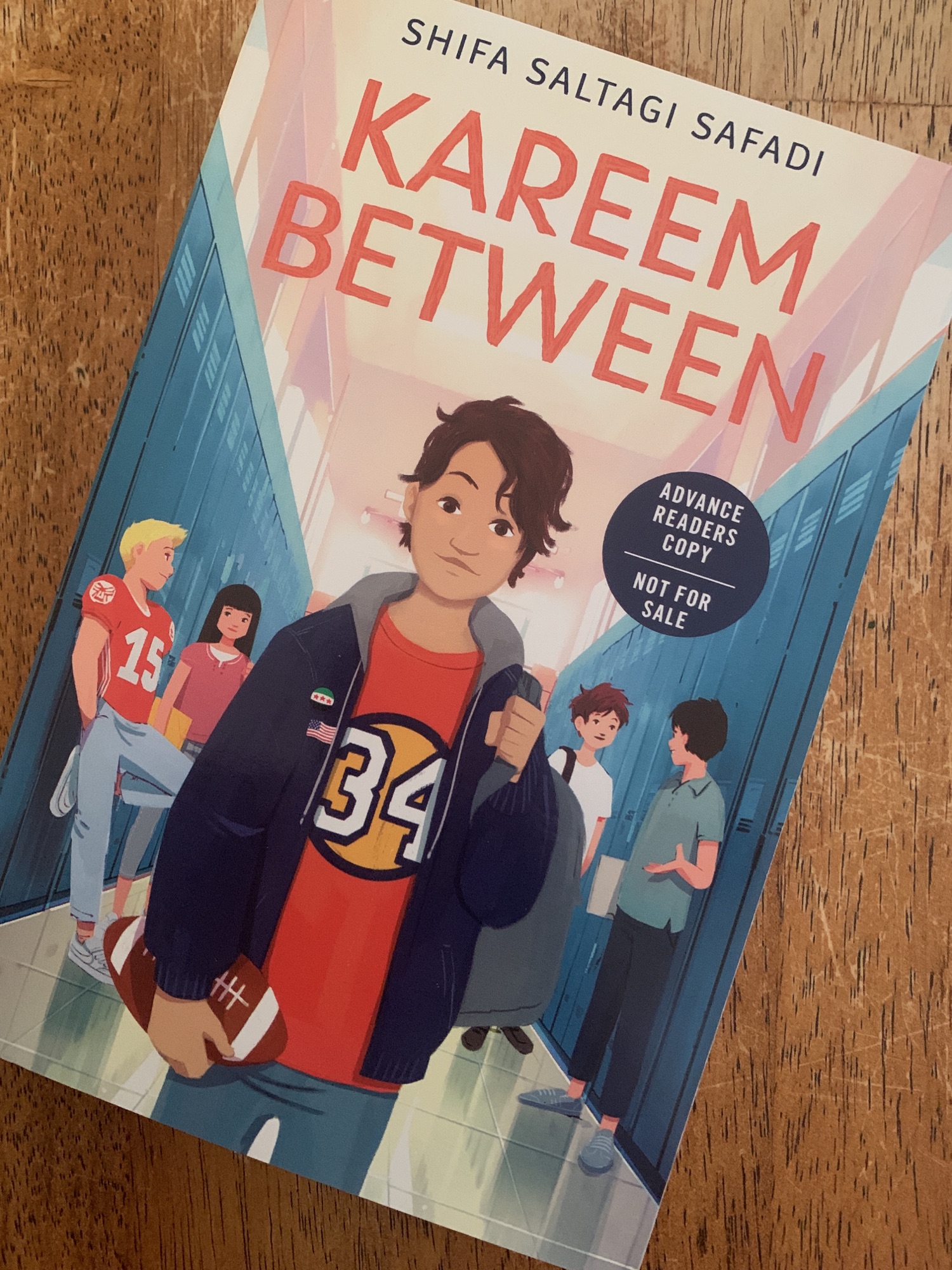
Kareem Between By Shifa Saltagi Safadi

Standard
Kareem Between By Shifa Saltagi Safadi

img_3395-1

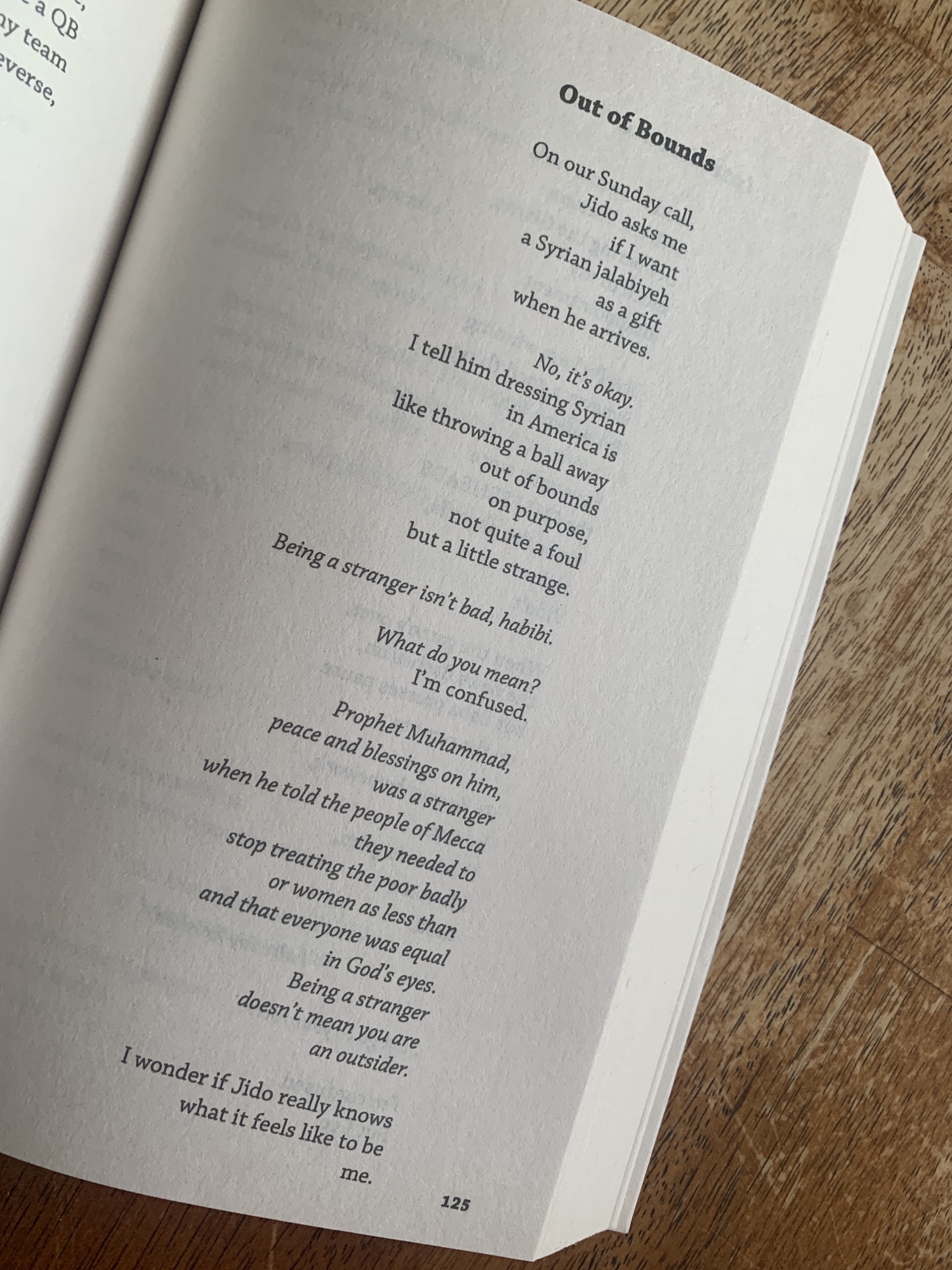
It doesn’t matter how many Word documents you read, Goggle docs you add comments to, and screen shots you revise; to hold a physical book in your hands that you have been blessed to observe from the sidelines through numerous revisions, is mind blowing.  Reading the final version from page 1 to page 324, plus the backmatter, has left me at a loss for words with tears streaming down my cheeks. I truly cannot imagine the book any other way. All past drafts and storylines, were just stepping stones to get the book to this version, and as a fan of literature my whole life, to see this metamorphosis in real time has added to my respect and admiration of authors.  Enough about me though, this review is of the middle grade novel in verse that tells the story of Syrian American Kareem, a loveable boy caught in between choices, siblings, friends, labels, and global acts beyond his control.  He makes mistakes, he tries to make things right, and at the center of it all is his Islamic identity, love of football, and genuinely good heart.  I am biased in that I have self appointed Kareem as my nephew, but even after dozens of readings, I was moved to tears three times during the course of this reading.  I made my teens read the book and they loved it, and like them, we hope we get more Kareem in the future.

img_3541-1

SYNOPSIS:

Kareem loves football, particularly the Bears, and dreams of seeing his Arabic name on an American jersey one day in the NFL.  Unfortunately, he hasn’t made the school team, his best and only friend Adam has moved away, and the coach’s son is offering to talk to his dad for Kareem in exchange for some school help.  Add in a new Syrian kid at school, his mom going to Syria to take care of his grandfather, and the fruition of Executive Order 13769 aka the Muslim Ban, and seventh grade has Kareem scrambling on every down to say the least.

img_3543-1

WHY I LOVE IT:

The football framing, the literary inclusions, the Arabic, the Islam, all combine with such tangible heart to create a seamless read both as a compelling story and as an example of literary craft.  The language is on point and intentional, that even if you don’t know the character or novel referenced, the Arabic words included, or football terminology used, you will be invested in the characters and plot, and find yourself cheering for Kareem.  Often debut authors show promise, but their stories have plot holes, or pacing issues, or inconsistencies, that is not the case with this book.  The crumbs are there that tie everything together, the depth of the characters’ personalities reveal how developed they are, and the timeline keeps the book moving forward.  There are no dry or slow spots in the entire novel, it is easily read in one sitting as you find yourself nervous for Kareem, and curious how it will resolve.

Boys and girls, Muslims and non Muslims, Arabs and non Arabs, all will find themselves drawn to this book, and thinking about the characters, particularly Kareem, long after the final page is read.

img_3544-1

FLAGS:

Some stress and anxiety with missing parents.  Death, bullying, cheating, fighting, lying, racism.

img_3540-1

TOOLS FOR LEADING THE DISCUSSION:

The book is a solid middle grade, but the quality of writing and engaging plot makes it work for a middle school book club read as well.  I cannot wait to share this book widely.

Preorders speak volumes and I truly hope if you are able that you will preorder a copy, you can do so here.  Requesting your local public library to shelve the book is also a tremendous help to signal to publishers what type of stories and OWN voice authentic representation consumers will support.

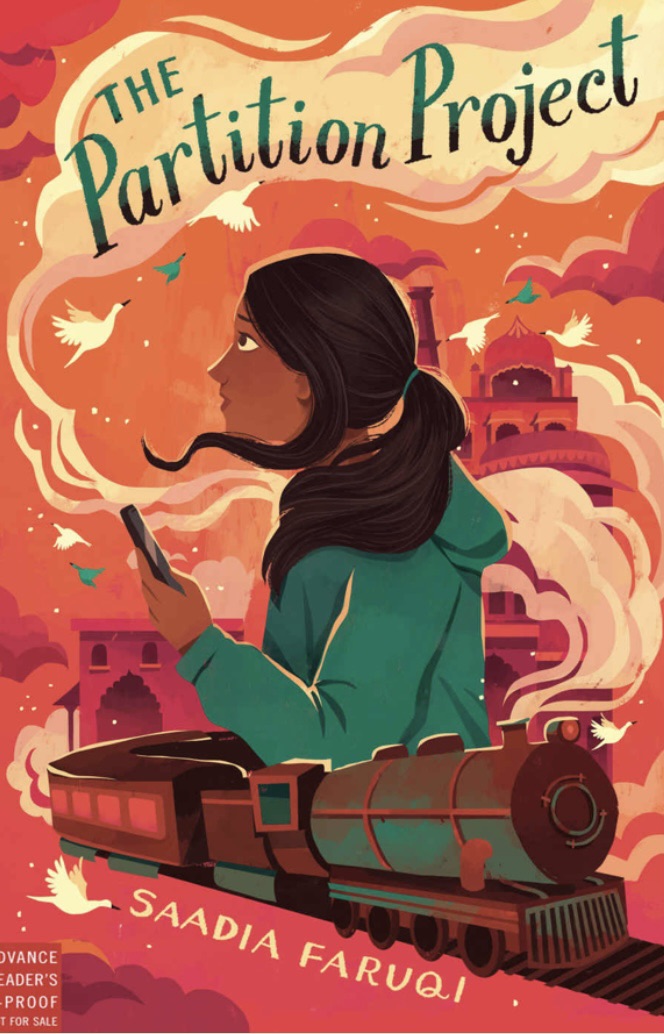
The Partition Project by Saadia Faruqi

Standard
The Partition Project by Saadia Faruqi

Screenshot

I have always maintained that my reviews are not personal, and for over 10 years, I kept to that. I recently made a public exception however, for Palestine. I cannot and have not checked every author, every illustrator, every publisher, or every agent, to see who has spoken up about the genocide, but there are a few prolific authors that are standards in the niche of Islamic fiction literature. Who have elevated our representation with a standard of quality and consistency across multiple age groups over the years, whose stature made their silence, seeming or actual, to the occupation, the apartheid, and the ongoing attempted erasure of a people and culture impossible to miss. No there is no standard or bare minimum, this is all emotion, and if you are thinking who am I to judge, or maybe I missed something, yes you are right. None-the-less it definitely caught my attention that an author who remained silent, wrote a 416 page middle grade book about partition, a historical event impossible to separate from colonization. I know the timeline for books to be published is not quick, but when I read the characters discussing that, “If we only read books by perfect authors, we’d read…nothing, I guess.” It felt a little defensive, and while I never set out to shame anyone, I have written this disclaimer to hold to my word, and to acknowledge that as much as I have set out to write the remainder of this review as I would review any book, my own disappointment in the author, may show through. Literary wise the book is moving, heartfelt even, but the performative othering, the internalized Islamophobia, and the catering to a western gaze, are subtle, but undeniably there. Perhaps the biggest example is the word “British,” the whole reason for partition, is only mentioned a grand total of six times.

SYNOPSIS:
Mahnoor, aka Maha, is in seventh grade, and her whole world has just flipped upside down. Her Dadi, her paternal grandmother, has just moved in from Pakistan, taking her room, and her free time. Plus Dadi is old and grumpy, and Maha is not amused. With parents that are too busy to spend time with her, Dadi slowly but surely starts to fill in a lot of pieces that Maha didn’t know were lacking in her life. Through food and stories and the start of Ramadan, Maha learns about Islam, Pakistan, friendship, and with a school documentary assignment, partition. A historical event she had never heard about before, starts to be all she can think about. It also seems to hang over everything she encounters from a book on a novel study English assignment list, to the train in their neighborhood, everyone at the senior center, and even Texas history. With dreams of being a journalist, Maha’s singular focus because almost obsessive, according to her friend Kim, but the more she learns, the more she changes. And the changes are for the better, even if there are some stumbles along the way, fighting with Kim, making Dadi runaway, calling out her parents preoccupation with work, missed fasts. The book has a happy ending though, as the unlikeable privileged Maha at the beginning, transforms to being someone the reader is cheering for at the end.

WHY I LIKE IT:
I am Pakistani-American, being half Pakistani and half American, the hyphen for me signals both my parents. So I was thrilled a year or so ago when I first heard about this book. I am a bit removed from partition because my father was the first in his family to be born in Pakistan, and my in-laws did not move from India until much later. That being said, I know it is a part of me, as all desis do, and was eager to read this middle grade book. Please note though, I am also white passing American (albeit with a hijab), so I can tell when I am being pandered to as well.

Do I feel the book did the topic justice? Absolutely not, by not discussing colonialism and British occupation, a huge part of the setup is conveniently ignored. It also is very placating of what the Muslims, Seikhs and Hindus seemed to want as Jinnah and Nehru are only name dropped once. Gandhi not at all. I get that the book presumably isn’t about that, but by ignoring it all together, there is some intent there, possible watering down for a white audience, that doesn’t sit right with me.

This book feels like it is written for non Muslims. The dialogues about being a good person even though they don’t follow Islam as they should, and pray and fast and eat halal, seem like internalized Islamophobia, that is trying to normalize not practicing. When the text goes so far as to call those that do fast all 30 days “ultra-religious” it seems to walk back the numerous passages of Maha loving fasting and finding peace in prayer. The takeaway for a Muslim reader will be a little self doubt, for a non Muslim reader it will reinforce the labels of “those Muslims” and “extremists.” It makes what many Muslims find basic faith requirements, come across as optional here in America, like taking off shoes when entering your house. With that being said though, the book does have a lot of heart, and in many places Islam and Pakistani culture are warm, but that warmth often comes through attempts to appeal to a non Muslim western lens. Similarly the stereotypes do as well. Pakistan is considered conservative, which is dismissed as meaning, “code for no swimsuits.” Wow, a whole culture and religion, so easily labeled and stereotyped. Stings a bit, not gonna lie.

Maha’s parents are not religious, so much of Maha’s knowledge of Islam is coming from what she sees her Dadi do, pray, fast, read Quran, etc. Except, Maha knows how to read Quran, and pray, she just needs practice. So explain, how she doesn’t know what inshaAllah means? This is just one example of inconsistency bumps in the text. At one point they eat iftar, and then a few hours later have dinner, I mean sure it is possible, but it seems weird. Her frail grandma runs away on a hiking trail? She wants the archive curators approval for her documentary and not her Dadi’s? Ahmed says he only eats hala, Maha is eating a non halal chicken salad and then they share it. Overall, Maha rarely reads like she is 12. At the start when she is whining, is about it, the rest of the book she reads much much older.

FLAGS:
Boy girl close friendships, angry mobs with guns, death, cholera, internalized islamophobia, talk of gods and demigods in Percy Jackson, mention of J.K. Rowling negative comments on trans community, fear.

TOOLS FOR LEADING THE DISCUSSION:
I cannot in good conscious purchase, recommend, or even check this book out from the library. I received an advanced digital arc, but my heart is too heavy by the author’s silence in the face of the atrocities occurring in front of us regarding Palestine.

The Night Before Eid: A Muslim Family Story by Aya Khalil illustrated by Rashin Kheiriyeh

Standard
The Night Before Eid: A Muslim Family Story by Aya Khalil illustrated by Rashin Kheiriyeh

img_7123

This 40 page early elementary picture book is set the night before Eid and radiates with love from a boy to his Teita, traditional ka’ak, and the family’s Egyptian culture.  The robust and personal backmatter shares a glimpse into the threads from the author’s real life that the story touches upon, and makes the book extend beyond the pages.  It is worth noting that this book does not articulate if it is for Eid al Fitr or Eid al Adha and thus works for both.   There is nothing religious in the book except a reference to something happening after Eid prayer in a memory, and the shape of the cookie being round like the Ramadan moon, Eid day is not mentioned, it is simply the catalyst for this warm family story about a boy and his grandma making a special treat for the first time and sharing it at school.  The large hardback book with fun illustrations is ideal for both story time and bedtime readings alike.

img_7124

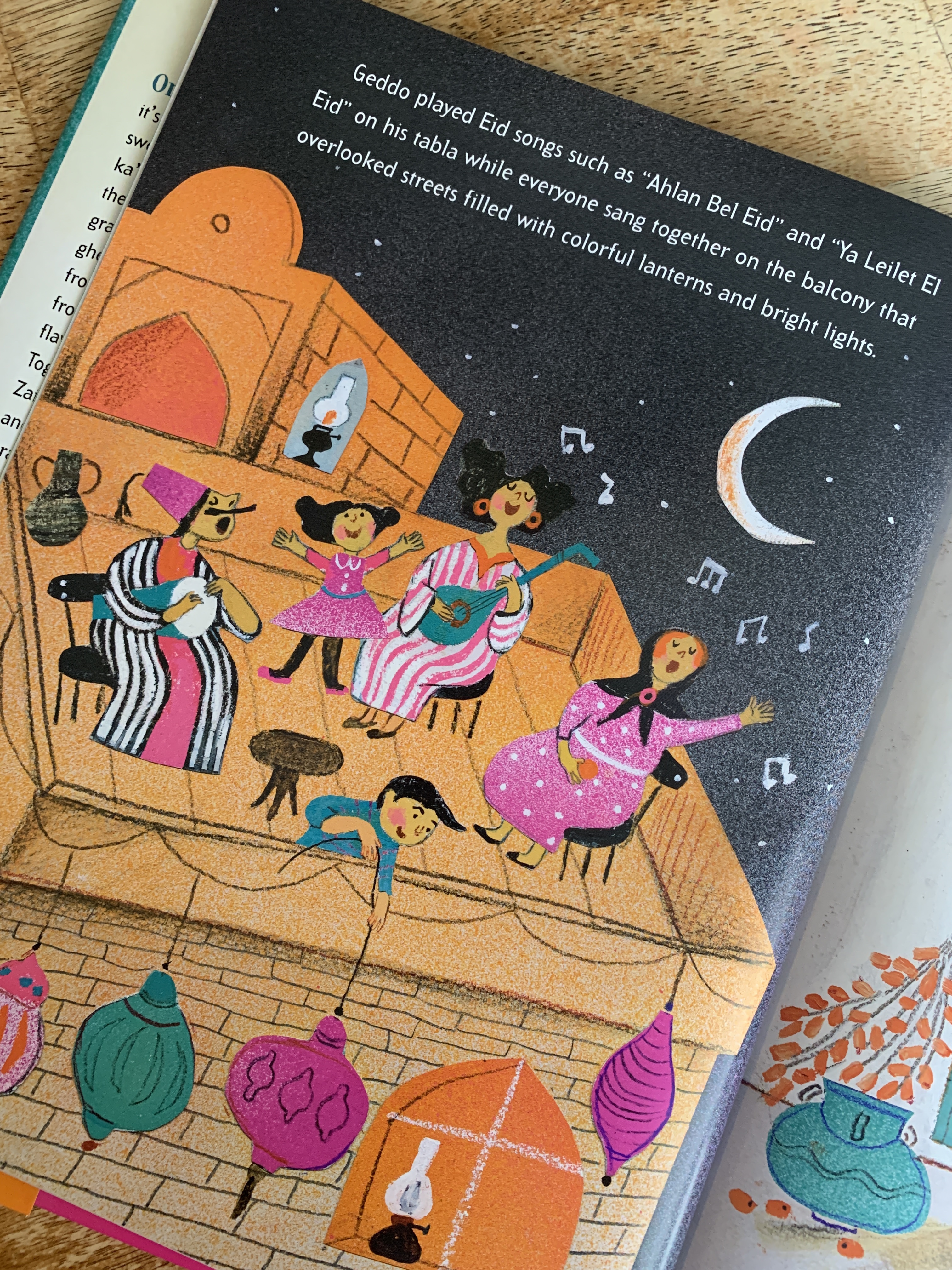
It is the night before Eid and Teita has arrived from Egypt.  Zain can’t wait to make ka’ak to take to school and share with his friends.  The beloved powdered sugar cookies are steeped in tradition, both in Zain’s family and in Egyptian history.  Once the suitcases is unpacked and the special ingredients found, Teita and Mama share memories of baking with cousins, painting henna designs on hands and putting eidiya in envelopes.  The family recalls singing together on the balcony while Geddo played the tabla and lights and lanterns filled the streets below, after Eid prayer they would hand out the ka’ak.

img_7125

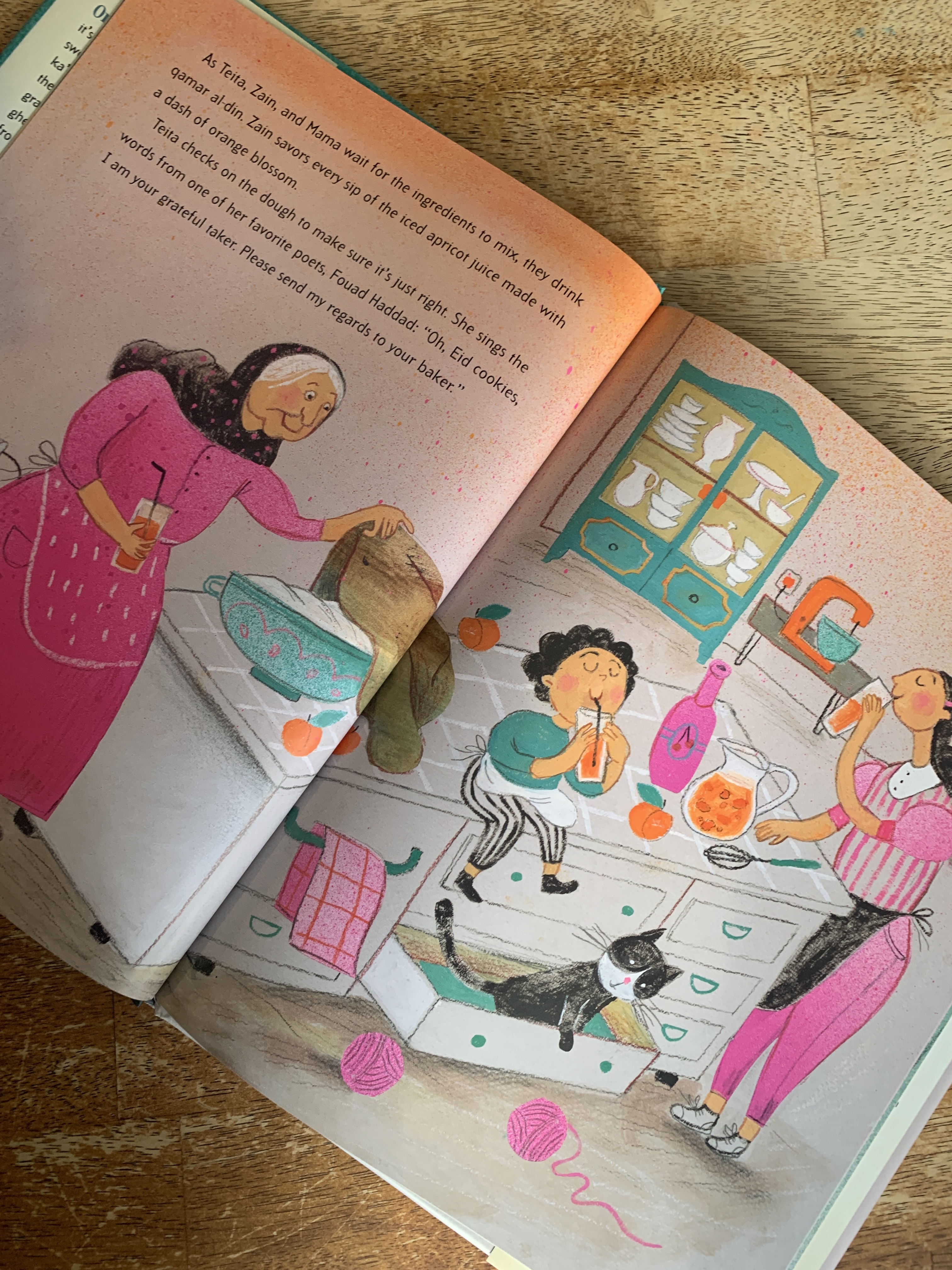
Zain wants the ka’ak to turn out perfectly so his teacher and friends will like them.  Teita tells him that ka’ak is as old as the ancient pharaohs, and that recipes were found in the pyramids.  At one time rulers would even put gold coins in the cookies.  Zain and his Teita mix and add the required ingredients, and drink iced apricot juice as they wait for the dough to be just right.  Getting the cookies pressed with the molds though is harder than it looks, and Zain gets frustrated. Teita’s love and patience and Zain’s clever thinking get the treat making back on track.  The ka’ak doesn’t have a gold coin filling, but they are filled with tradition.

img_7126

The timeline is a bit off for me with the grandma coming before Eid and then the cookies going to school on Monday, and then Monday evening when Zain is writing down the recipe with Teita he is telling her Eid Mubarak and that it is the best Eid ever.  So, it seems that he went to school on Eid, not to Eid prayers, which is fine, just a little sad that there was no Eid celebration or prayers.  I don’t know that kids will be bothered by it, but the lack of mirroring and stressing how joyous Eid is does somehow get lost and mitigated, in my opinion, by skipping acknowledgement of the religious holiday.   In the backmatter the author remarks that she has “outgrown the magic of Eid,” so perhaps it is intentional that the day is not included in the text.

img_7127

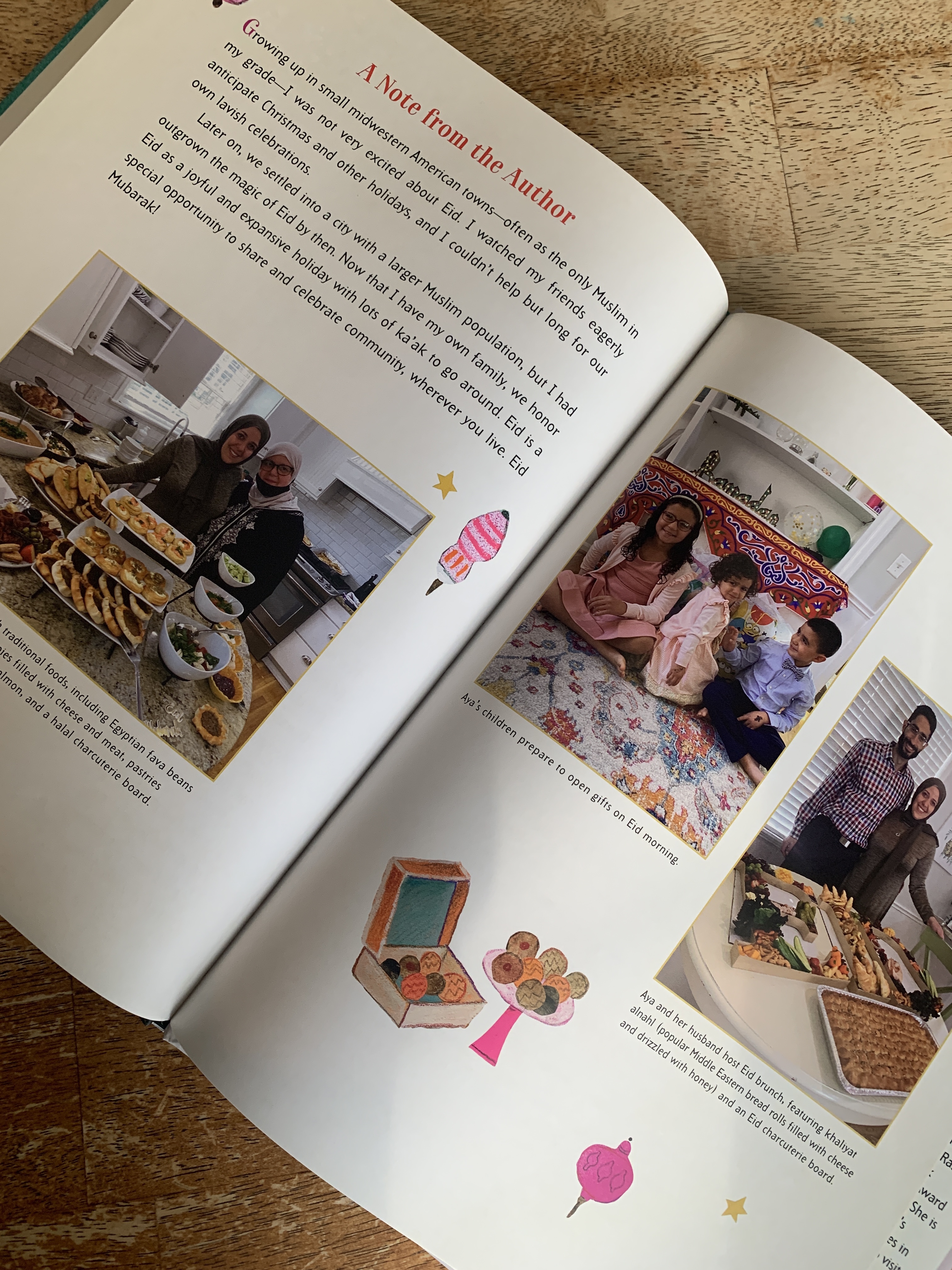
The last six pages of the book are filled with informative and engaging information about What is Eid, Ka’ak Time Line, A Note from the Author with photographs of her and her family celebrating Eid, a Simple Ka’ak Recipe and Additional Resources.

I purchased my copy from Crescent Moon Store where if you put my initials ISL (Islamic School Librarian) in at checkout you will save 10% or is available here on Amazon where the book currently has a coupon for $3.80 off.

Nadia and Nadir Eid Surprise by Marzieh A. Ali illustrated by Lala Stellune

Standard
Nadia and Nadir Eid Surprise by Marzieh A. Ali illustrated by Lala Stellune

img_7058

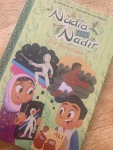
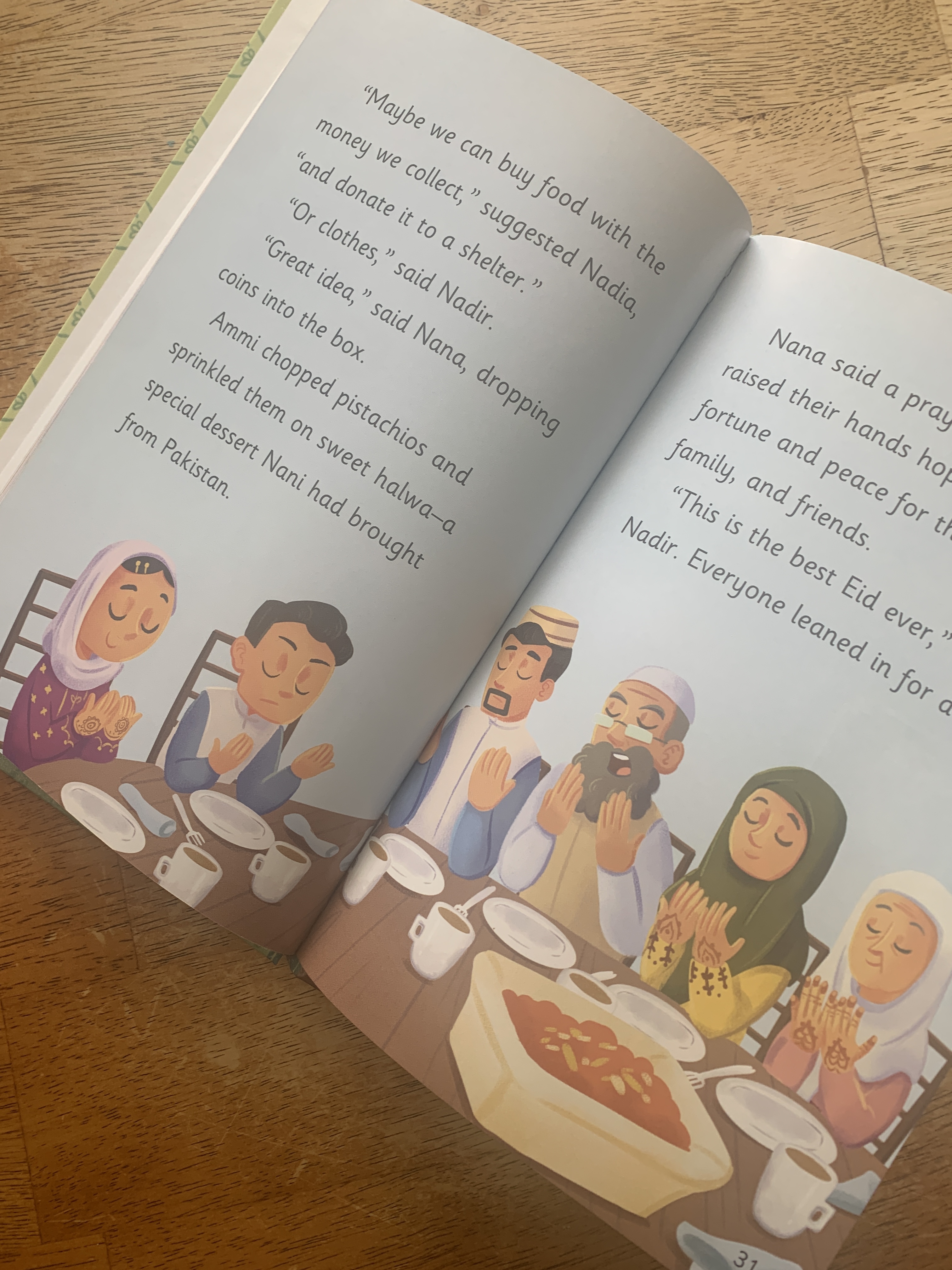
This is another holiday book in the Nadia and Nadir series for early readers, this one focusing on Eid al Fitr, but also celebrating Muslim American athletes Ibtijaj Muhammad and Muhammad Ali, sadqa, and the love of grandparents.  The 32 page book with four chapters shows Desi American siblings enjoying both their Pakistani and American cultures while consistently embodying their Islamic faith.  They pray salat, wear hijab, discuss sadqa, and say Salam and Eid Mubarak.  I am not sure why they pray Eid prayers at home, and not in a community congregation, no it is not a Covid set book, they then go to the mall, but the pride in their faith, culture, and family is enjoyable.  Early readers will enjoy the colorful pages, large illustrations, and relatable story situations.

img_7062

The book starts with the siblings hearing laughing downstairs, then seeing suitcases, and being surprised by their Nani and Nana coming from Pakistan to surprise them on Eid.  The family eats paratha and chai together before praying and making duas.

img_7061

After presents are passed out, the kids receive eidee and are off to the mall to pick out a toy.  Nadia sees an Ibtihaj doll, and Nadir points out that she is wearing a hijab just like his sister.  Nadia recognizes her and shares some facts since she has read her books.  Nadir wonders if Ibtihaj knows it is Eid and the family reassures him that Muslims everywhere in the world are celebrating.

img_7060

When it is Nadir’s turn to choose what to buy, he picks some boxing equipment with marketing images by Muhammad Ali.  Nana fills him in on the activism and accomplishments of Ali and how impressive his fearlessness really was.  When the change is given after paying, the kids and their grandparents discuss sadqa, charity, and this gives Nadia an idea.

The book concludes with a glossary of new words and information about the illustrator and author.  You can purchase your copy at all major retails such as here at Amazon, or you can support small business owners like Crescent Moon store and purchase your here.

Babajoon’s Treasure by Farnaz Esnaashari illustrated by Nabi H. Ali

Standard
Babajoon’s Treasure by Farnaz Esnaashari illustrated by Nabi H. Ali

This beautifully illustrated imaginative story focuses on Persian culture and a grandfather-granddaughter relationship.  I have no idea if the characters, author, or illustrator identify as Muslim, the scarf on the grandma and the salaam greetings might just be cultural, but Muslim kids will see themselves in those words and images and thus I am reviewing the book.  Young Miriam spends a week with her grandparents, Babajoon and Mamanjoon, every summer, and on this trip, she has reason to believe her grandpa is a pirate.  The progression of Babajoon sharing his culture with his granddaughter who has misread the signs is silly, but honestly also a little sad.  It seems she is very unaware of her family’s culture, not just generational details, but basics.  The story itself is for kids, but I think parents will find a deeper message in the importance of maintaining cultural ties and familiarity no matter where our children are raised.

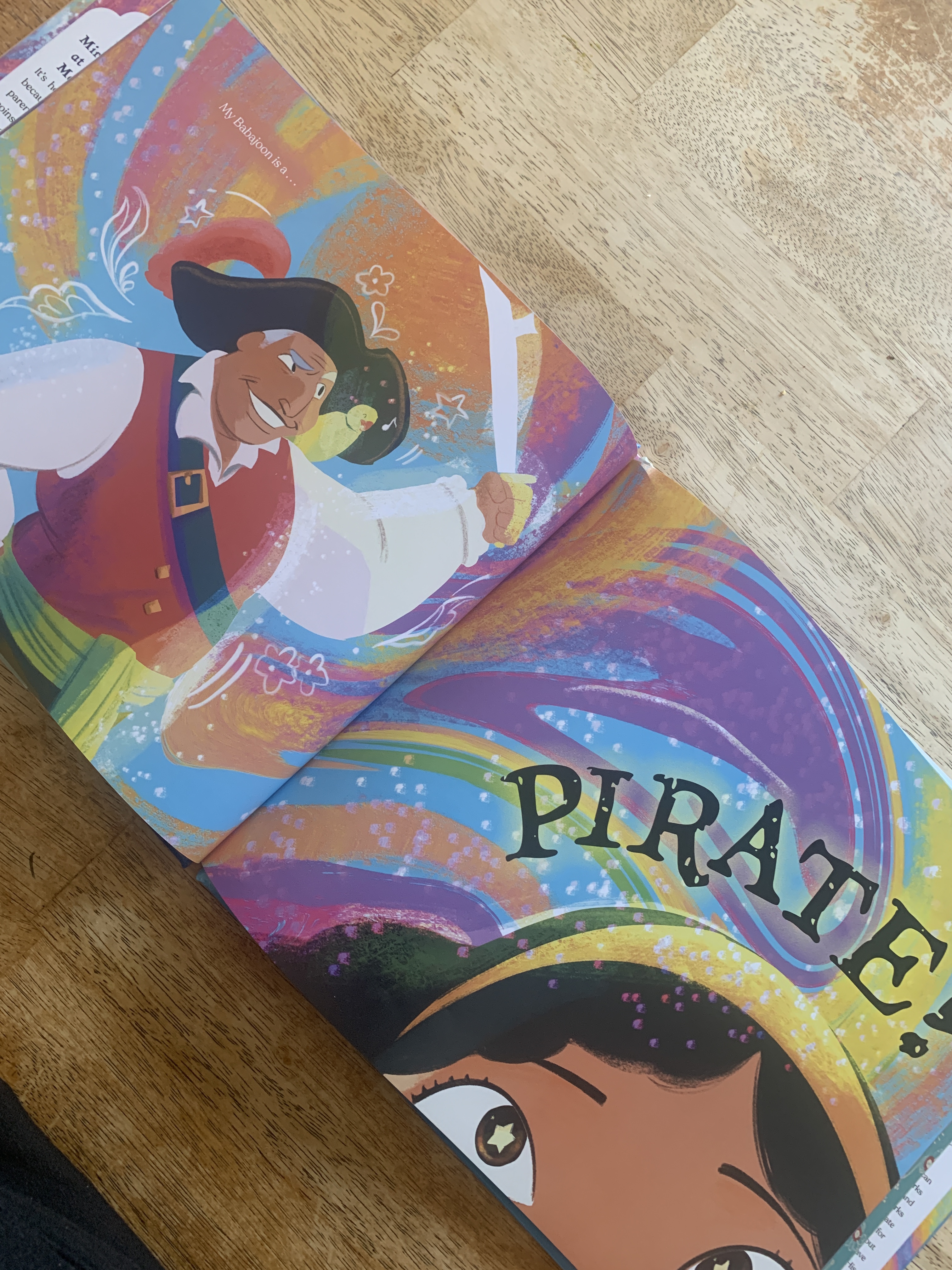
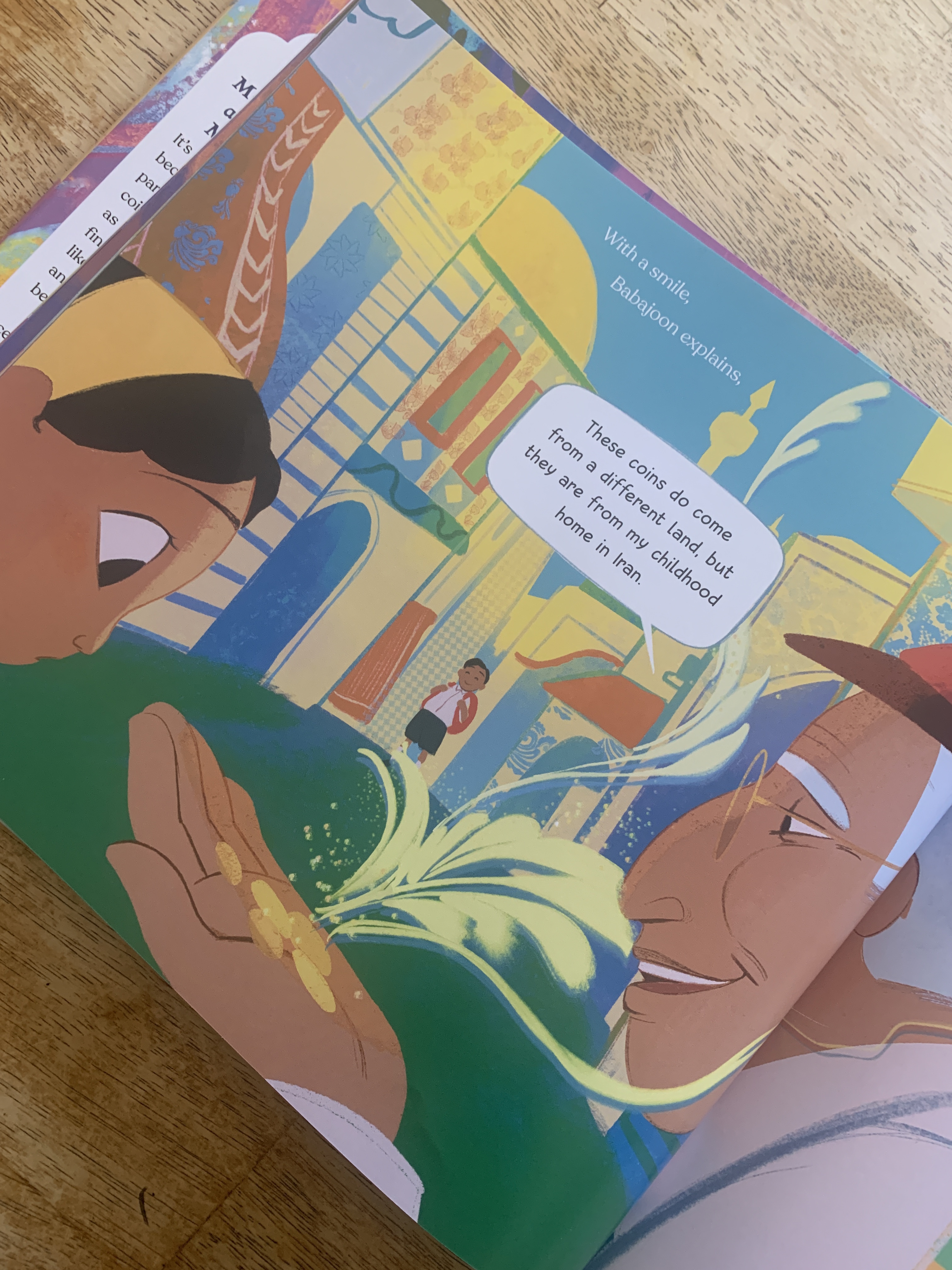
Miriam loves her week every summer with her grandparents, it is a magical adventure spending time with them at their tea shop.  One day Miriam and her Babajoon head out for rocket pops and a mysterious gold coin falls out of her grandpa’s pocket.  As they enjoy their popsicles, Babajoon starts singing with a parrot, and he has a secret language with an old friend before crystals are revealed, the only possible connection for the young girl, is that her grandfather is a pirate.

Babajoon reveals the cultural context of all the days adventures tying them back to his childhood in Iran.  He encourages her to ask questions, and Miriam worries that she isn’t like her beloved Babajoon.  His reassures her that they are alike and that they will teach each other, leaves the book with both appreciation and hope and a whole lot of love from a little girl to her family and culture.

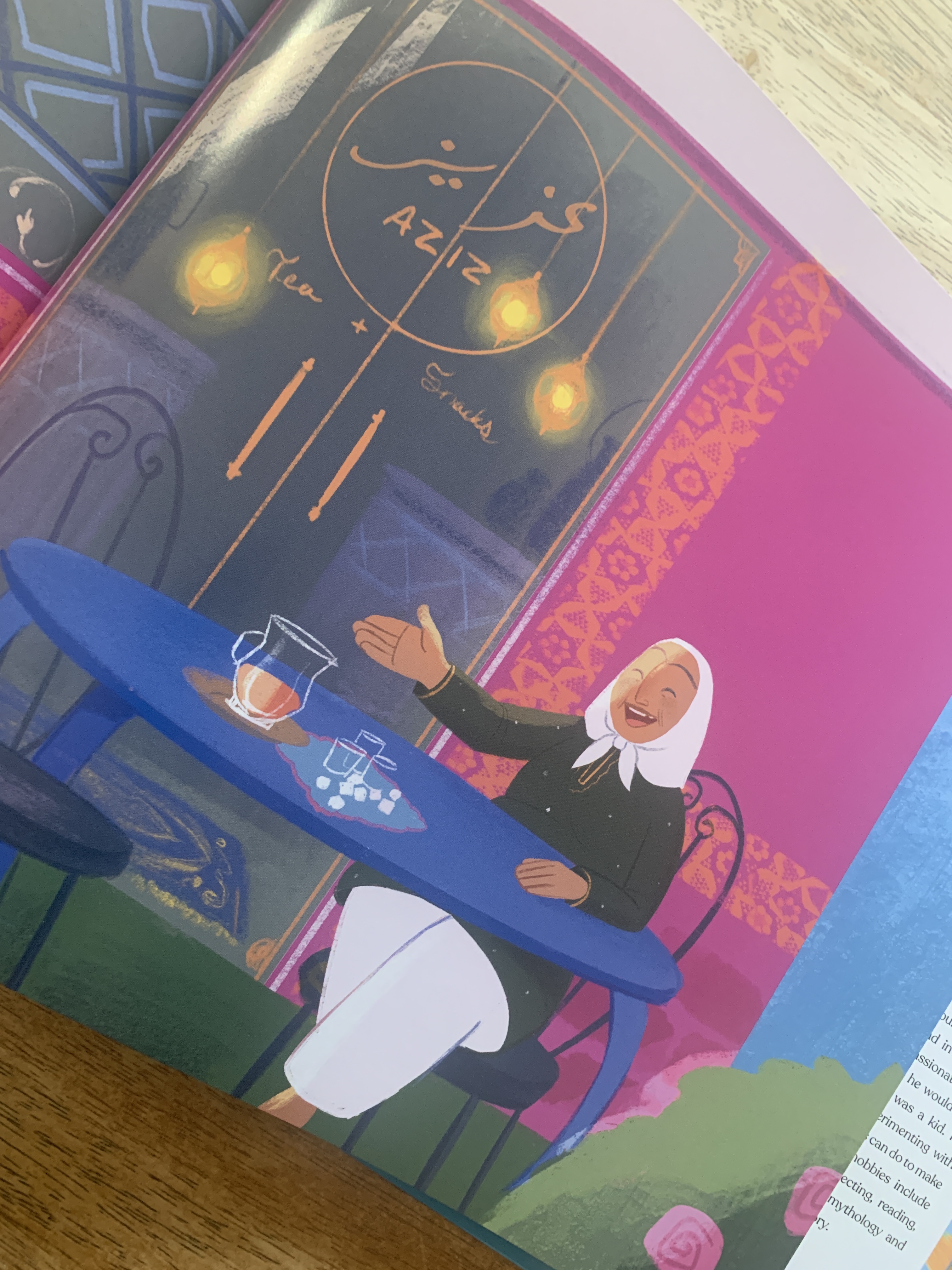
There is a bit of a continuity issue for me as the little girl is excited her grandfather is a pirate, and then at the end, glad he isn’t.  Also that she doesn’t know what Farsi sounds like or where her grandfather is from seems a little bit of a stretch as she herself calls them Babajoon and Mamajoon and says salaam to them.  They also own a Persian tea shop called Aziz and the sign board is written in English and Farsi.  If the little girl is aware enough and old enough to piece together the clues to discern that he is a pirate, clearly she recognizes the difference in the titles, foods, and clothing her grandparents wear to the larger society.  I know, I’m being picky, but it took me a few readings to get past all that, and appreciate the story for what it is, and how beneficial it really can be to encourage children to ask about their family heritage and traditions.

The 40 page horizontal hardback book is beautiful to share in groups or one-on-one.  The illustrations are enjoyable, and the pirate aspect will make this book a frequently requested read.  You can preorder your copy here, after March 28, 2023 you can still purchase through that link.

House of Yesterday by Deeba Zargarpur

Standard
House of Yesterday by Deeba Zargarpur

house of yesterday

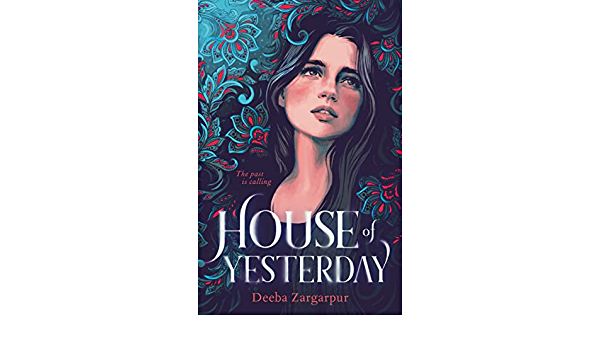
While reading this 320 page YA supernatural/contemporary book-I couldn’t turn the pages fast enough.  When finished- I was bothered that certain threads weren’t resolved, now that I’ve ruminated a bit- I think the vagueness of the author’s prose in sharing her “fever dream” on paper has lingered and the gaps not as troublesome.  The author’s OWN voice Afghan-Uzbek Muslim identity adds layers to a story that is both haunting in the literal sense and familiar in the immigration inter-generational traumas and secrets shared.  Even deeper though, the book pokes at universal themes of regret, holding on to the past, family, friendships, and grief.   The book’s characters identify as Muslim, but the story is not Islamic, nor is there much religion save a few salams and mentions of Eid.  The supernatural elements in the book, whether you understand it to be ghosts, or personified memories, or jinn, are a large part of the book, but are not framed in a belief or spiritual manner, and while some may find it Islamically off-putting, I felt the book explored what the main character was enduring and what the weight of the past was doing to her, didn’t necessarily cross the haram line.  Her father has a girlfriend he is looking to marry, but it isn’t celebrated, and there are close male/female friendships, but the book is relatively clean for the genre and would be a good fit for high school readers and up.

SYNOPSIS:

Summer on Long Island has Sara retreating into herself.  Surrounded by nearly a dozen aunts and uncles and numerous cousins, it is the separation of her parents and trouble with her best friend that makes getting out of bed every morning a challenge.  As a result, her mother ropes her in to helping with her latest remodeling project.  When she enters an old crumbling house one morning to take “before” pictures, she starts seeing things, and feeling things.  Things about her past.  Things about her beloved grandma, Bibi Jan, who is alive and deteriorating from dementia.  What is the house trying to tell her? Why won’t anyone tell the truth?
WHY I LIKE IT:

I love the mystery and the chills of the story.  As the reader you aren’t entirely sure where the story is headed, what you are to do with the bits of the puzzle you are given, but the intrigue to find out pulls you forward.  That being said, the book does reads debut, a few of the side story lines are not fleshed out enough to feel important, satisfying, or resolved and they come across as being abandoned.  I would have liked to see more of Sara and her father’s relationship, the details don’t seem to fit, and the continuity seems halfhearted.  At times so does the “night” it all changed with Sam.  I like the interpretive vagueness of the supernatural threads and that they are up for interpretation amongst readers not just at the end, but throughout the book.  I also like the family’s closeness even when they are disagreeing. For most of the book Sara and her cousins aren’t portrayed as particularly close and I didn’t invest time to differentiate one from another, but by the end, I felt that they were grounded and different and relatable, and I am not sure when that change occurred.  At times the writing seemed a bit repetitive, but the lyrical style would then catapult the story ahead.  There was one place that the fourth wall was broken though, and I was bothered by that slip.

Overall I loved that the Uzben Afghan culture sprinkles showed immigrant nuances, and that the love between the generations countered the trauma being shared as well.  The messaging is subtle but powerful long after the last page has been read.

FLAGS:

For the most part the book stays clean, the father has moved on and has met someone he would like to marry, the mom and aunts briefly recall sneaking out to attend a prom decades earlier.  There is mention of a child bride, and swimsuits, tank tops, and cocktail dresses being worn with no second thought.  For a YA book, the flags are incredibly minimal, save the “ghosts”(?). There are flags of a death that is detailed, the book is “spooky” at times, there is mental health, divorce, pain, dementia, abandonment, theft, running away, and fear.

TOOLS FOR LEADING THE DISCUSSION:

I would love to read this book with some high schoolers.  It is a quick read that would allow for a lot of self reflection, arguments, and entertainment.  The book is available here and releases in a few days, so if planning to purchase, please consider preordering and showing your support.

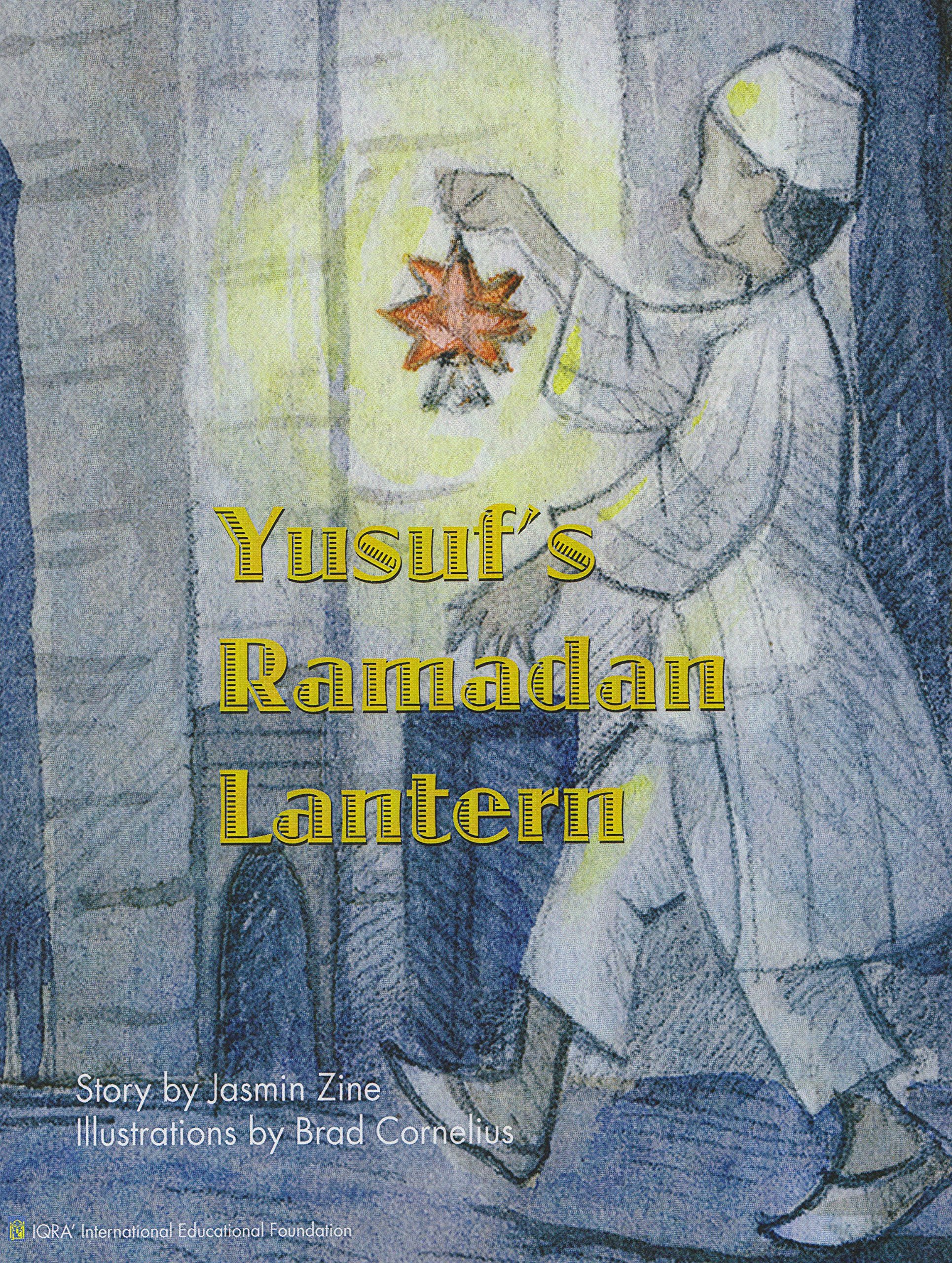
Yusuf’s Ramadan Lantern by Jasmin Zine illustrated by Brad Cornelius

Standard
Yusuf’s Ramadan Lantern by Jasmin Zine illustrated by Brad Cornelius

yusuf ramadan lantern

The soft illustrations on 32 pages, surrounded by ample, large, well -paced text for second graders and up give life to a sweet story about a young boy, his grandfather, and the passing on of a Ramadan heirloom.  While not a chapter book, and a little too long for little ones to enjoy as a simple picture book, the book may not beg children to pick it up and read it, but if they do, they will enjoy a sweet story that parents won’t mind reading more than once.

10B43E53-3B8F-46E3-AE57-F9B372D1D282

Synopsis:

Yusuf’s grandparents have just returned from their trip to Egypt and Yusuf is excited to see them, and receive the electronic fanooz he asked them to bring back. But when Grandpa takes Yusuf outside to give him the gift, it isn’t the modern light up lantern he asked for, it is an old rusty, cracked metal fanooz.  Grandpa explains that the old fanooz used to be his when he was a young boy and begins his story of himself going out with his father to wake their neighbors for suhoor in Ramadan.  The subtle details of how he would be woken up, how his dad would beat the drum and the song they would sing as they would walk around, keeps the story slow and engulfing.  He then tells about returning and eating dates soaked in milk, and bread and fava beans before the white thread of light appeared.

Slowly the little boy, seeing how happy his grandfather is in his reminiscing, realizes that the fanooz he has been entrusted with is far better than the electronic one he asked for.  As he walks his grandfather out the door, he is surprised with the gift he originally wanted, the fancy new fanooz.  Not excited, his grandfather asks Yusuf what is wrong, and Yusuf, realizes that he likes the history filled one better.

The old fanooz finds a permanent place in Yusuf’s room, and he and his father fix the broken glass and polish up the metal to be regularly lit on Ramadan mornings and remind them all of grandfather as a little boy walking and waking people up before dawn.

26BA9466-BC9A-4153-AF82-313D43366B21

WHY I LIKE IT:

I love the subtlety and detail.  There are now so many books about the tradition of waking the neighbors up for suhoor, but this one focuses on the bonding of the grandfather and his father as well as the bond between the grandfather and Yusuf.  The story speaks of the tradition with the drum, yet somehow it is the lantern that ties it all together.

There is sufficient referencing about Ramadan and fasting to appeal to Muslim kids and inform non Muslims a bit.  The book is not preachy, it is cultural and religious in a narrative story sort of way.

My only main complaint is that I don’t know who the target audience is with the long pages of text, and full page pictures.  It is a hard book to place.  The illustrations are sweet and compliment the story, but in the pictures, Yusuf just seems too young.  His ability to appreciate his grandfather’s old lantern verses the electronic fanooz he asked for implies a bit older child.  In the pictures he looks like he is three or four years old, a disconnect that often distracted me from the story.  I also wish they would have used an Arabic word or title for the grandfather.

CE5EAF67-D73D-43EF-88CA-47DA31F098CC

FLAGS:

clean

60BAECF4-FF3A-4713-89DD-E22072503E47

TOOLS FOR LEADING THE DISCUSSION:

It is obviously too short and not the correct format for a book club, but I am hoping to share it at story time.  It will be a bit of a challenge for little children to sit through, but I’m thinking it is worth the effort, inshaAllah, bismillah…

DA2E16E8-7AD1-458F-BDD5-C6373BB5D04A