Tag Archives: Family

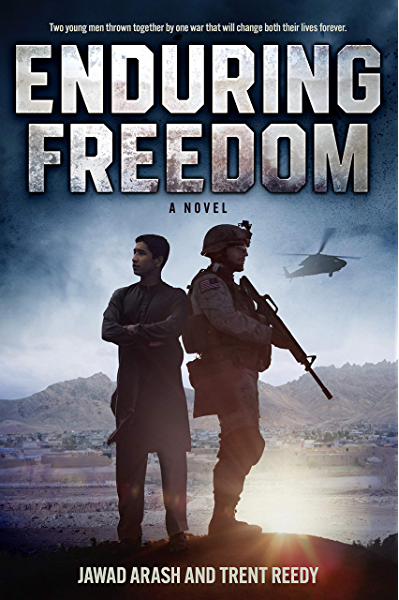
Enduring Freedom by Jawad Arash and Trent Reedy

Standard
Enduring Freedom by Jawad Arash and Trent Reedy

enduring freedom

This isn’t the type of book I am naturally drawn to, and had it not been offered to me as an arc, I didn’t even request it, I probably would not have read it.  So, to say that this young adult OWN voice 246 page post 9/11 war story had a lot to overcome for me personally, is putting it mildly.  I gave in and decided to read it for the simple fact that I was curious to see what the narrative is in today’s literature, as we approach the 20 year anniversary of the attacks on US soil.  The afterward is very clear that the agenda of the two authors, one an Afghan and the other a US veteran, was to show a personal view of growth and assumptions on both sides and how the future of Afghanistan needs to be rooted in education and stability.  I think the book accomplished its goals, and made very clear how the terrorists first victims were their own people, and that extreme ideologies of the Taliban were and are still not reflective of the larger population.  The pacing of the dual narratives, however, was a bit off to me, and I really felt that some of the major plot points didn’t get explored in a meaningful way, that they were simply glossed over and brushed aside to keep the book inline with the authors’ objectives.  The book is not overly political, and the Muslim characters are religious and knowledgeable, but for a book that talked about how even in war the people, the soldiers, are the story, I wanted to see more internal wresting with choices and their outcomes, then what was offered.

SYNOPSIS:

The book is told in alternating view points, one is that of Baheer an Afghan boy living with his large extended family in Kabul next to a Taliban compound.  The family is religious, Baheer’s grandfather, Baba Jan, is well read in poetry and religious text and often quotes the Quran by ayat and surah number.  The family sells carpets, and often hides the latest movies or news recordings in the rolls, so that they can be brought home, the blackout shades pulled and the tapes enjoyed.  They are fearful of being harassed for not having long enough beards, shaved heads, turbans and the like. Baheer and his brother Rahim do not enjoy school with the strict and abusive teachers.  The talibs seem to touch them inappropriately and scold them harshly.  Their older sister is not allowed to attend school and never has even though the family used to live in Pakistan where the boys enjoyed school. It doesn’t explain why they were there or why they returned.  One uncle is assaulted by the Taliban and soon after, a news clip showing the attacks on 9/11 is secretly watched by the family.  As a result they decide to move to Farah, in Western Afghanistan where Baba Jan has family and property, to be away from the impending US attacks and Taliban assaults.

Joe Killian is the other voice.  When the book starts he is sitting in class, his senior year, when news about the attacks on the World Trade Center starts to break.  He had joined the national guard that summer for the college money, and as his classmates sit glued to the televisions in Iowa, he is nervous that he is about to be called up to war.  He doesn’t get called up that day, he graduates, and is studying journalism in college when the call finally comes.  He is preparing for combat, but when he is deployed and discovers it is a reconstruction mission he is angry and annoyed.  A year of helping what he terms barbarians, is not what he signed up for.

The majority of the book reads like a ‘day in the life’ of each of these two voices, as they adapt to life in Farah, as they deal with each other’s presence and as their friendship forces their assumptions to change.  The interactions between Joe and Baheer show the power in getting to know someone to alter perceptions, and the threat of the Taliban on both the average citizen and the US forces on the ground as a unifying enemy to allow the friendship to grow.

The book concludes when Joe’s year of deployment is up, but really the authors’ notes at the end are a better conclusion to the real life friendship and growth of the two authors that resulted in the writing of the book

WHY I LIKE IT:

I love that the family sees the planes hitting the towers and is mortified at the brazen destruction and loss of life.  They immediately start praying for the victims even as they realize they will be the recipients of the backlash. I like that it highlights where practicing Muslims and extremists differ, by having the Quran quoted and explained as opposed to the rhetoric the Taliban is spouting.  Baba Jan’s manner for speaking the ayats is a bit awkward in that most people don’t in daily conversation source and reference their dialogues, but it does grow on you.  I think the book is very simplistic in making the Taliban to unequivocally be the ‘bad guys’ without any context of how they gained traction. It talks about the Soviets, but I think it will leave the readers wondering where this group came from and why the Afghan people allowed it. Unfortunately, there are a lot of nuances and complexities that are overlooked by such a simple narrative, and allow for an inaccurate picture to be formed.

I like that Baheer pushes back on Joe who thinks America is perfect and that Afghanistan is less than, by pointing out the flaws in American society as well as his own.  I was ok with Baheer pushing the cultural limits to talk to a girl, it was innocent and I think understandable. My biggest concern is that I really felt that there needed to be more space on the page dedicated to understanding the repercussions of him being an informant to the Americans, and his brother passing on information to the Talibs.  People were taken in to custody and injured and killed as a result of these boys’ actions and to just chalk it up to something to be forgiven, was not enough for me.  I wanted them to hash it out and wallow in their choices, not forgive and move on so quickly.  I also wanted to know more about their reconstruction efforts.  It seemed rather minimal: relocating explosives, helping a burn victim, sending supplies to a school, I think in a year, that there would be more mixing with the people than the book would suggest.  And finally, I felt like the sister not getting to go to school was handled as an obligation to address, not that any insight or understanding was really given to such a hot button issue.

The book is really slow and dragging at parts, I couldn’t tell you about any of the dozen or so soldiers that are mentioned, I don’t even recall any of their names. I think the book has a lot of potential, and perhaps it does shine in showing the effects of war and terrorism on the Afghan people.  It held my attention while actively reading it, but I just as easily could have put it down and forgotten about it if I wasn’t under obligation to offer an opinion in exchange for an early copy.

FLAGS:

There is language, stereotypes, physical abuse, sexual misconduct, death, killing, violence, acts of war, bloodshed, a crush. Upper middle school and high school can handle it.

TOOLS FOR LEADING THE DISCUSSION:

I don’t think I’d select this book as a book club selection because I’m not sure what would be gained from the book.  The characters assumptions are challenged and evolve, but I think most minorities know that, getting to know someone is often the best way to have their image changed.  I think the book still functions to make Americans feel better about  invading Afghanistan, rather than have us question what the long term affects of our involvement have been.

Sitti’s Olive Tree by Ndaa Hassan illustrated by Soumbal Qureshi

Standard
Sitti’s Olive Tree by Ndaa Hassan illustrated by Soumbal Qureshi

olive trees

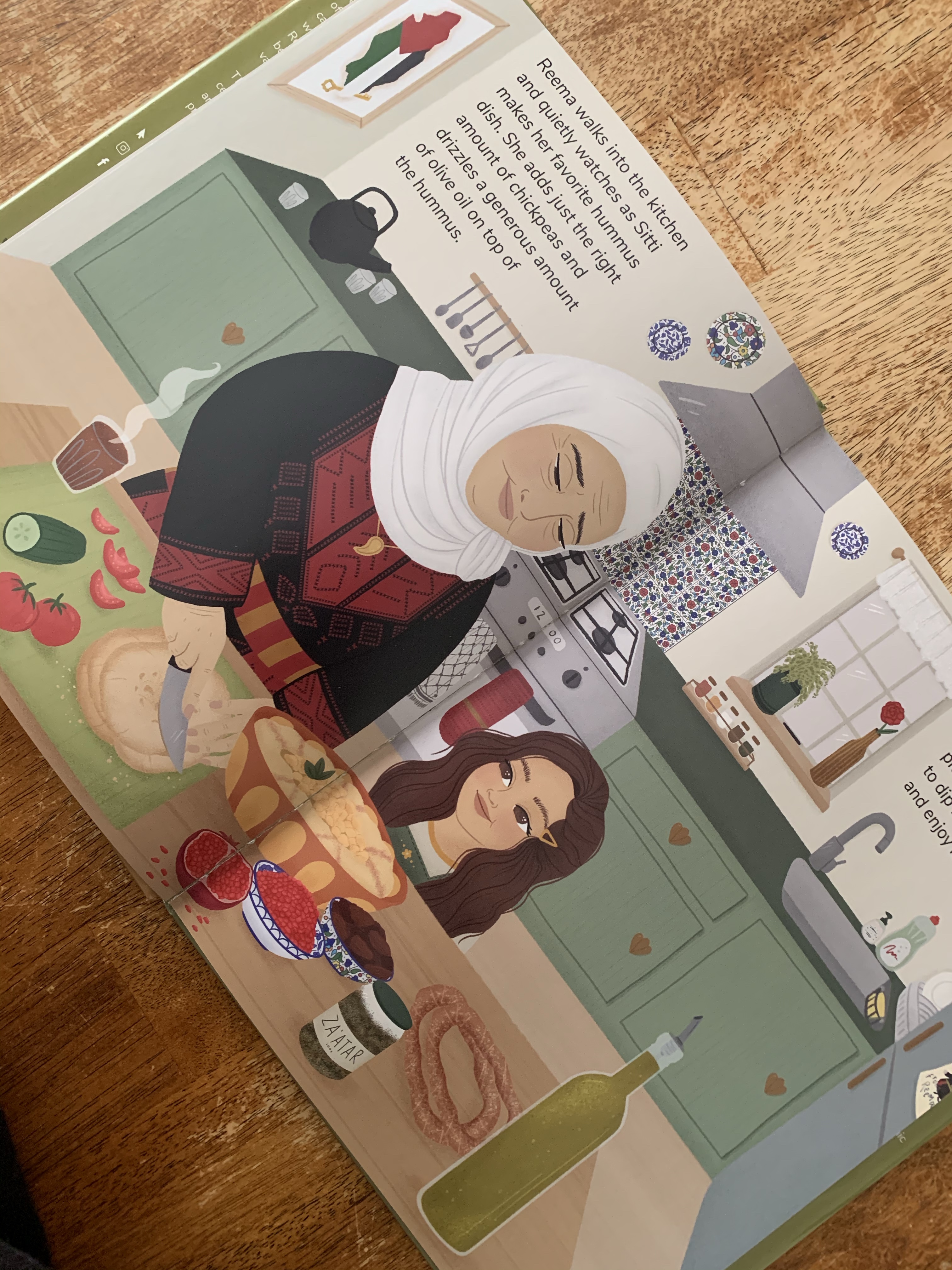
This lovely 27 page book is a story infused with love, culture, and olive oil.  The hardbound, large thick pages are richly illustrated as the text, perfect for ages preschool to second grade, tell of the olive harvesting season in Palestine.  The story is framed between a young girl learning about the past from her grandma’s memories and enjoying the olive oil sent by her uncles from their homeland.  The story is warm and informative and does not discuss politics or conflict. There is a key hanging on a map of Palestine in the illustrations, but nothing in the text.

img_1213

Young Reema watches her Sitti make hummus. When a drop of olive oil slips down the side of the bottle and Sitti wipes it up and rubs it in Reema’s hair.  Reema wants to know how olive oil, zeit zaytoun, can be used in such different ways. As Reema is reminded of how far the oil has traveled and recalls that her Sitti never buys olive oil at the store, the two settle in for Sitti to tell Reema some of her memories about the harvest on her ancestral land.

img_1214

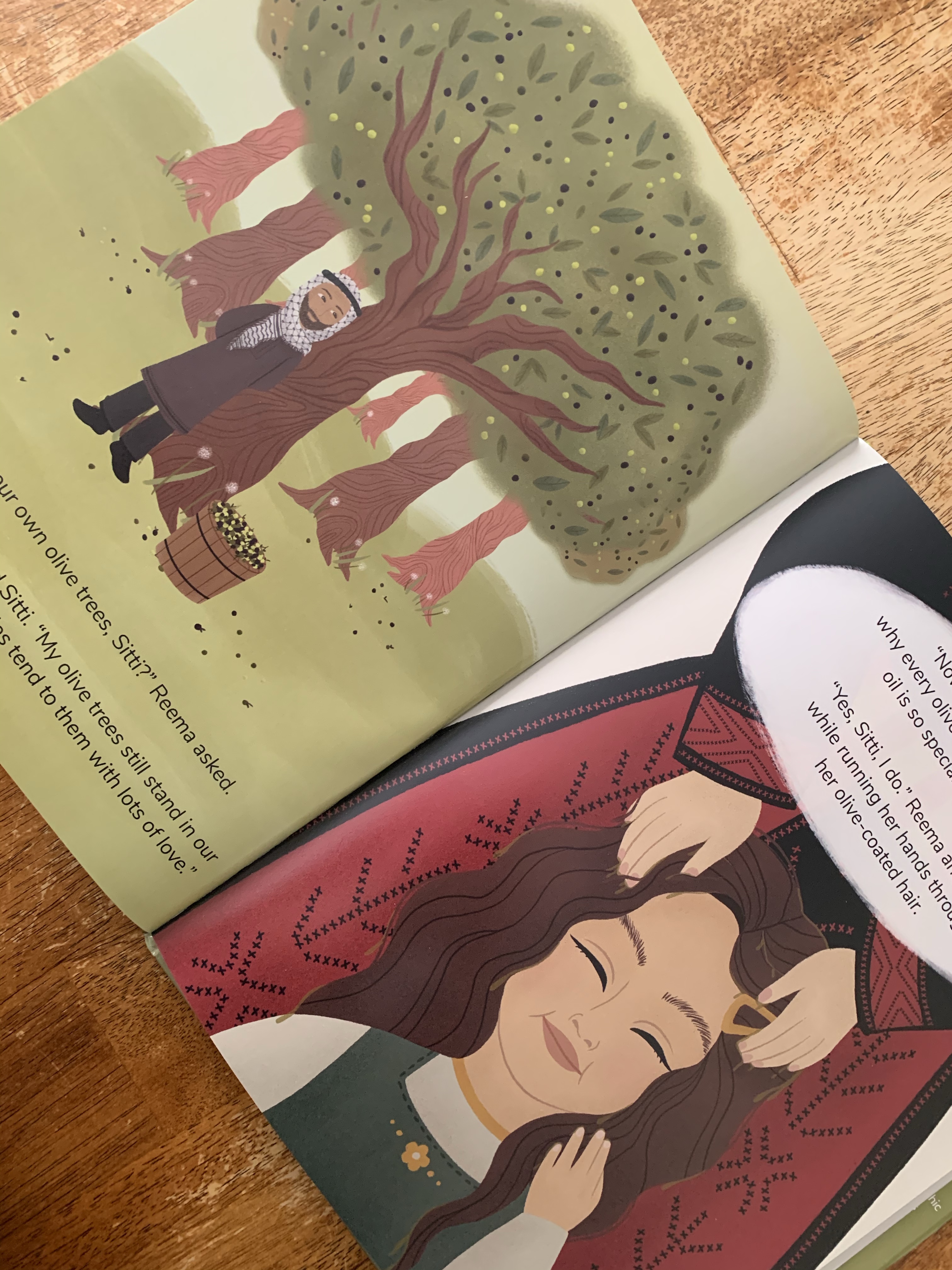
Olive harvesting season comes at the end of the year and the families gather to pick the olives and fill the buckets before climbing ladders and catch the falling olives on blankets.  The elders sort them, and at the end of the day they eat and drink tea and coffee and laugh and enjoy each other’s company.

img_1215

They tell stories to pass on to the next generation just like Sitti is doing to Reema, because the olives keep the families together.  Sitti hopes one day Reema will go to Palestine and play among her family’s trees.

I wish there was a bit more detail about the hummus, it seems to imply that the garbanzo beans are whole and not smooshed or blended, also when it lists the other things Sitti’s grandparents would do with the olives, the list is olive oil, olive soap and olives for eating.  I would imagine there are more things to do with the olives, even perhaps detailing the way the olives for eating are pickled, or preserved, or prepared would have been nice.

img_1216

There is a glossary of a few terms at the end.  There is nothing religious in the text, but many of the women wear hijab in the illustrations.

Overall this book is well done and serves an important point in showing a culture that is rich and full, aside from conflict and politics.  It is a sweet story between a grandmother and her granddaughter and shows how stories, traditions, and food help pass on culture and heritage.

.

Piece by Piece: The Story of Nisrin’s Hijab by Priya Huq

Standard
Piece by Piece: The Story of Nisrin’s Hijab by Priya Huq

piece by

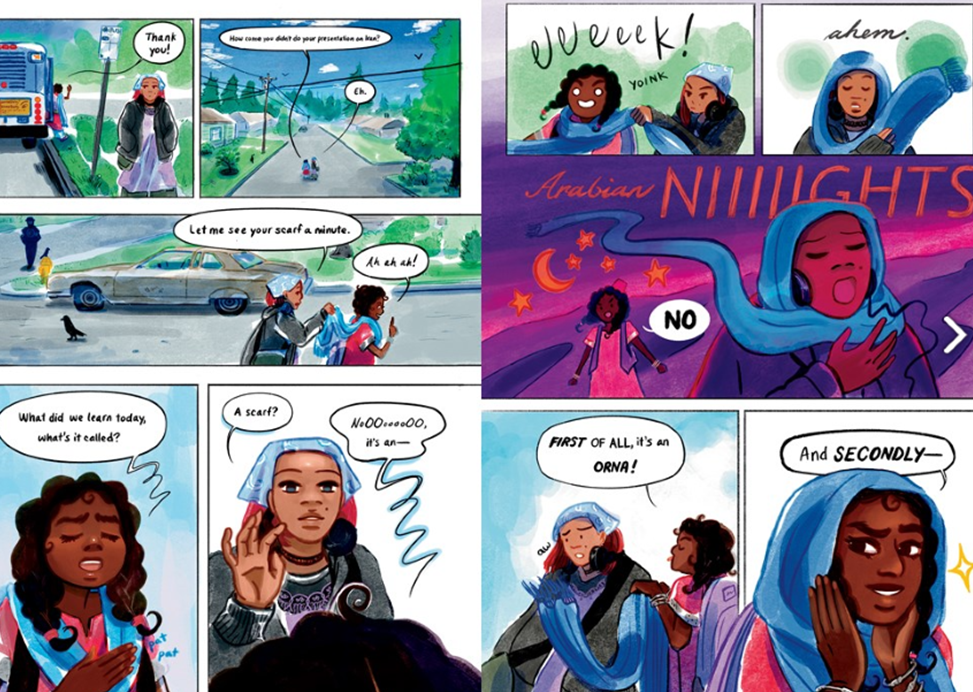
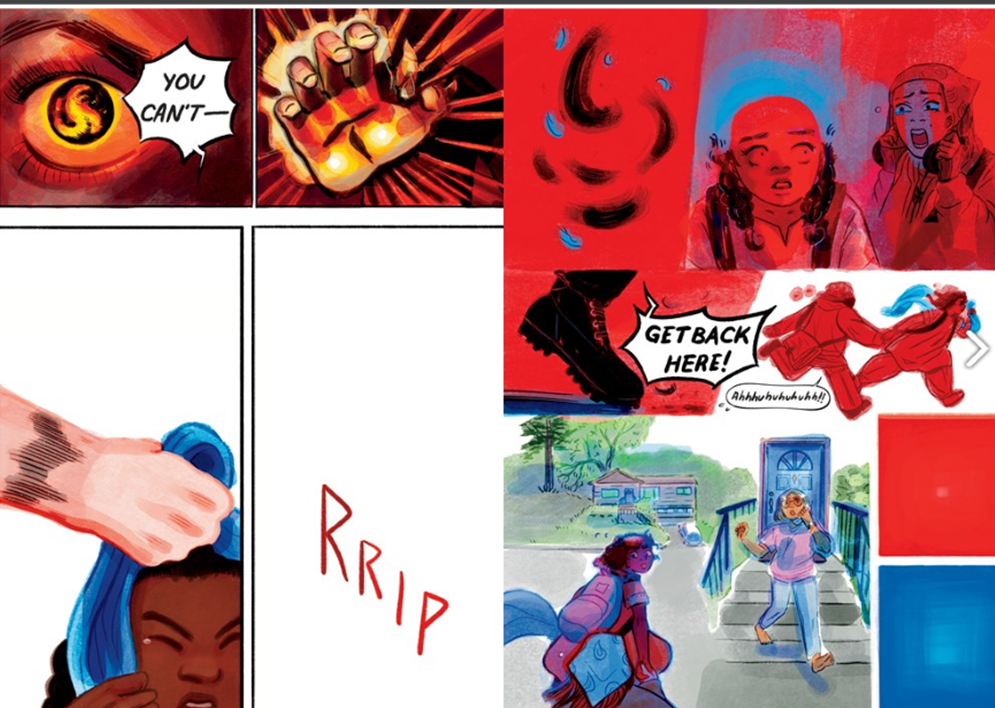
At 224 pages, this graphic novel tells an important OWN voice story in beautiful and powerful illustrations, but despite reading it multiple times, I ultimately found the pacing off, the narrative and plot holes quite large, and the conclusion too forced.  It claims to be for middle grades which would explain the happy ending, but the assault, trauma, mental health, Bengali history, language, and protagonists age (13), make it more suited for upper middle school readers.  I read a digital ARC in predominately black and white images, so I’m hopeful that part of the problem is on me, and that I simply missed or misunderstood parts that seemed to jump around and assume, or that because it was an uncorrected proof, some revisions are still to come.

piece by1

SYNOPSIS:

Nisrin is 13 and lives in Oregon with her mother, and maternal grandparents.  Her mom travels a lot and she seems to spend most of her time with her loving Nani, grandmother.  The story opens with Nisrin in 8th grade giving a presentation about her Bangladeshi heritage to her school.  On the way home with a friend, Firuzeh, she is still wearing the cultural clothing and they are playing around with the scarf, when they are violently attacked and the scarf is ripped off of Nisrin’s head.  Her hair is pulled out in the process and the two girls are taken to the hospital and when released maintain professional counseling to process and deal with the assault.  Nisrin fears leaving her house and is increasingly isolated within her home.

pice by 2

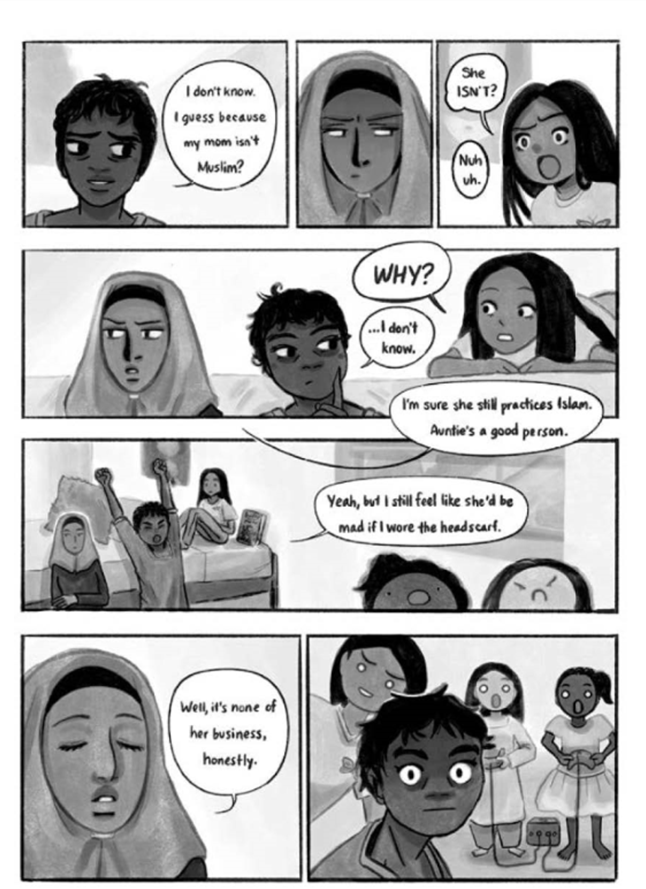
Over the summer we see her and her Nani go over to some cousin’s house where Nasrin is gawked at with her short hair and everyone is unsure how to act around her.  She joins some cousins playing video games where she asks about a cousin in hijab who says that it is essentially her choice between her and Allah (swt), that it isn’t any one else’s business.  A younger cousin tells that she plans to start hijab soon and is surprised to learn that Nisrin’s mom is not Muslim.

As summer comes to an end, Nisrin will be starting high school and exits her room the night before wearing a hijab, or in Bengali, an orna.  Her family freaks out, her Nana, maternal grandfather, is furious claiming that she should have been raised better, and Nisrin is scooted off to her room by her Nani, so that her mom and grandfather can argue.

piece by 3

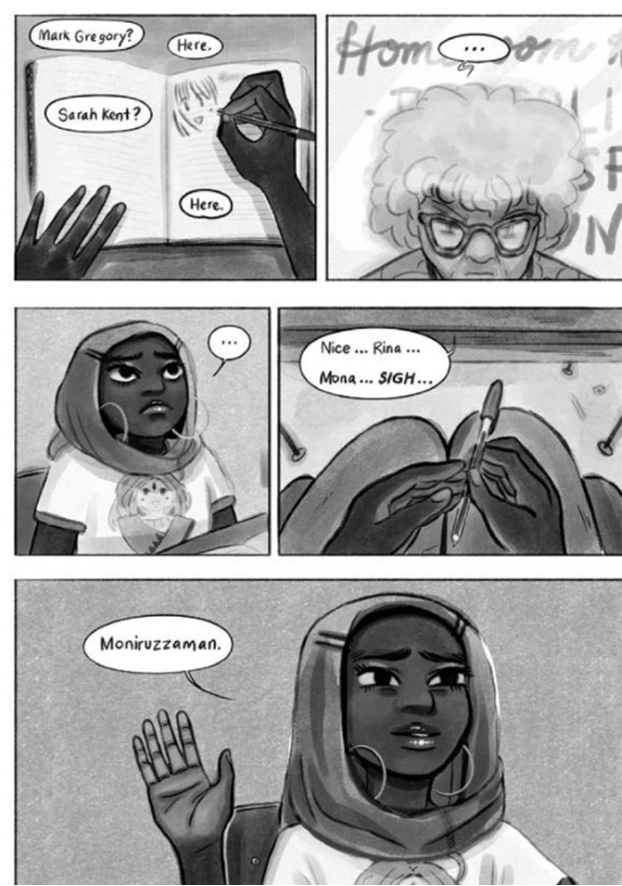
On the first day of school, Nisrin tries to talk to Firuzeh, but once again things are awkward between the two girls.  A teacher refuses to try and say Nisrin’s name and becomes angry and aggressive, and at PE she is called a slut and asked if she will be beat for showing her legs.  Nisrin goes home to research Islam and hijab, but everything is so angry and opinion based that she is more confused than when she started.

The next day she meets a nice girl, Veronica, and the two work on an assignment in class and then have lunch together.  Veronica suggests that Nisrin learns about Islam like she would a school assignment and go research it at the library.  Later at home, Nisrin starts to understand what her grandparents and mother saw and endured in the war of 1971 when Bangladesh became independent from Pakistan.  Her mom and Nana argue over what was seen and Nisrin starts to find her voice in her family.

Nani takes Nisrin shopping for long sleeved clothes and scarves, things are worked out with Firuzeh and Nisrin’s family accepts that Nisrin is not asking permission to wear her scarf, but is hoping they will accept it.

piece by 4

WHY I LIKE IT:

The book is such a flip on the over-used-stereotype that Muslim girls are forced to wear hijab, in truth many are encouraged not to.  At one point Nisrin says, “If I can’t be safe…then can’t I at least be proud.”  She was attacked for just playing with a scarf and putting it on her head, so she reasons, that there is not safety from racism and hate, she might as well be proud of who she is.  I also love the strength in the idea that she doesn’t need anyone’s permission, it is her faith, her head, her choice.

There is a lot of good in the book, but I struggled understanding quite a bit of it.  It mentions that she was at Texas and she loved it, but there was bullying? No idea what it was in reference to or what purpose it served.  At the beginning the two girls seem like they have been friends for a while, but yet Nisrin warns Firuzeh that her Nani will force her to eat.  Nisrin seems to really love her sleep overs, and I don’t know if it is just to show at the end the healing by coming full circle, but it seems a bit juvenile to be that excited about it to me.

The family dynamic and history, left me very confused.  Nisrin doesn’t know her cousin wears hijab, and is confused that her aunt doesn’t.  Nor do her cousins know that Nisrin’s mom isn’t Muslim?  These cousins call Nisrin’s Nani, Dadi, and since there is no father in the picture it is obvious to even none desi folk that these cousins are related through the mom’s family and the cousins father, so why when Nisrin decides to wear hijab is the maternal side so upset? Why does Nasrin’s mom ask if her cousins have put her up to it? Ok if the mom isn’t religious, but does she actively practice another faith? Why in one of the portraits on the wall does the woman seem to have a bindhi? The Bangladesh independence admittedly is something I should know more about, but I don’t, and this book, didn’t really fill me in.  How is the grandfather both siding? He doesn’t like invader nationalism, but I still don’t completely understand why he left, and what that solved.

The pacing and tone at times are off too me too.   I didn’t feel the strain on Nisrin and Firuzeh’s relationship, the text suggests that they are and were best friends, but when Veronica asks if Nisrin’s stress is in part to the cute girl she was staring down, I was curious too if there was more to their relationship.  A lot seems to happen between the attack and Nisrin starting to wear hijab and I wish we were allowed inside Nisrin’s head to know how she feels about her mom, her nana, starting high school, her attack, her desire to wear hijab, it seems a bit rushed.  Which is odd since, the story spends a few pages detailing when Nisrin feels like everyone hates her after Nani picks her up on the first day of school and Nani points out that not everyone hates her, the squirrels don’t, and the dogs don’t, etc..  It seems really childish for the incredible ordeal she has been through.

I like the informative section at the end about Bangledesh. I wish the book would have shared some of what Nisrin learned about Islam in her own research, she goes to the mosque, but doesn’t detail if she plans to pray regularly, fast, etc..

piece by 5

FLAGS:
Language, violence, war imagery, rape mentioned, physical assault. Use of the word slut.

piece by 6

TOOLS FOR LEADING THE DISCUSSION:

I don’t know that this would work for a middle school book club at an Islamic School, graphic novels are often to quick of reads, but I have a few friends from Bangladesh and I really want them, and their daughters, to read it and clue me in to what I am missing, their view of independence and their impression of the book.

An Emotion of Great Delight by Tahereh Mafi

Standard
An Emotion of Great Delight by Tahereh Mafi

emotion

This 256 page YA OWN voice book is a real and raw look at a character and the many layers of life weighing down on her.  At the center of it all is a strong Muslim teen dealing with post 9/11 bigotry, the shattering of her family, toxic friendships, and a broken heart.  It is a love story, but it is so much more, as the protagonist’s voice draws you in to her crumbling world from the very first page and has you begging for more when the last page is read.  So often in Muslim-lead-mainstream-romance-themed novels, I want there to be introspection at the choices that the character is making and the internal processing of navigating their wants with their beliefs, and this book surprisingly does it.  There are some kissing scenes, cigarette smoking, cosmo magazine headlines, and waiting for her father to die, but not without introspection. Shadi reflects on her smoking quite often, she questions the repercussions of her actions, and she analyzes her father’s faith and approach to Islam as she forges her own relationship with the deen.  There is mention of a Muslim character drinking, doing drugs, hooking up, and it mentions he had condoms in his car, just those exact phrases, nothing is detailed or glorified, just stated.  There are also threads of mental health, self harm, death, and grief.  The characters are genuinely Muslim and some of their experiences are universal, and some specific to the faith, culture, and time.  Muslims and non Muslims will enjoy the book, and I would imagine relate to different things, but find it overall memorable and lingering.  For my Islamic school teens, I’d suggest this book for 17/18 year olds to early twenties.  It isn’t that they haven’t read more graphic books, but to be honest, Shadi has a lot going on, and if being close to Ali can lighten her load and help her find hope and joy, I’m all for it.  I know it is “haram,” but it is fiction, and it will have readers rooting for them to be together, not a message you may want to pass on to your younger teens.  As the author says in her forward, “we, too, contain multitudes.”

SYNOPSIS:

The layout of the book bounces between December 2003 and the year before.  In a previous time, Shadi’s life was easier, her brother was alive, she had a best friend, her Iranian immigrant Muslim family may have had stresses and issues, but they were a family. In 2003, Shadi is largely forgotten by her parents, her brother is dead, her father is close to death, her mother is self harming, her older sister preoccupied, and as a high school student Shadi is both falling and being crushed by her heavy backpack both metaphorically and literally.

The story opens with Shadi being approached by a police officer wondering why she is laying in the sun, he thinks she is praying, and she doesn’t have the energy to be angry by this assumption, she is exhausted, and doesn’t want to cause any waves that might get back to her fragile mother and cause any more stress than necessary.  So she drags herself up, and begins the walk to her college level math class miles away.  The sun is short lived and the rain begins to pour, she knows no one will come to pick her up.  Her parents have long ago stop being present in her life.  She once had a best friend, but that relationship, as toxic as it was, also has ceased to exist.  So she walks, and she is drenched, and she falls, so she is now soaking wet and bloody.  A car slows down to presumably offer her a ride, but then he speeds off drenching her in a tidal-wave.  The scene is set for the tone of the book. Shadi is drowning, we don’t know all the reasons why, they unfold slowly, but we know that it is going to get worse, her phone is nearly dead and her sister has just called to let Shadi know her mother is in the hospital.

I don’t want to detail my summary as I often do, because the way the story unfolds, would really make any additional information given act as a spoiler.  The book is short and a fast read, but along the way the introspection to the chaos that is Shadi’s life, makes it impossible to put the book down.  Shadi will have to confront her crumbling life and find away to reach toward hope.  She will have to keep walking to avoid drowning and along the way cling to the few precious things that give her joy: an emotion of great delight.

WHY I LIKE IT:

I really enjoyed this book.  I loved the Islam and real approach to her volunteering at the mosque and calling out racism within the community and diving deep in to understanding is Islam more than just rules and toeing the line.  It was a great mirror for so many nuances in real life, that I will probably re-read the book again in the near future, to enjoy it all.  I absolutely love the unpacking of the toxic friendship.  When women tear each other down under the guise of caring it is brutal, and the acceptance and growth that Shadi is struggling with in regards to her best friend of six years, Zahra. who is also Ali’s sister, is a reminder that sometimes walking away is the only choice.  

The two criticisms I have of the book are: one-that the book is too short, I wanted, no, I needed more.  And two I didn’t understand why Ali’s family and Shadi’s family were no longer close.  I get that Shadi cut Ali out of her life and Zahra and Shadi had a break, but Ali/Zahra’s family still care for Shadi and she for them, so what happened between the parents? It seems that the death of a child would draw the friends out and make them protective, not push them to being aloof.  It seemed off to me and major plot hole.

FLAGS:

As I mentioned above: kissing, smoking, drugs, hooking up, referencing condoms, cosmo headlines, self harming, grief, death, alcohol.

TOOLS FOR LEADING THE DISCUSSION:

I don’t think even high school could do this as a book club selection, because you really want to ship Shadi and Ali.  If you had like an MSA book club then I think this would be a great choice.  I would love to hear teens’/young adults’ thoughts about Shadi’s view of religion, her fathers approach, and how they view passing the deen on to their children.  I think it offer great role-play scenarios in empathy and how you’d react in real life to finding your mother struggling, your best friend taking off her hijab and being so jealous of you, the bullying, the assumptions, understanding your father and where to assign the blame for such a traumatic event that claimed your brother’s life.  There is so much to discuss, and I hope at some point I find the right forum to chat about this book and listen to other’s perspectives about it.

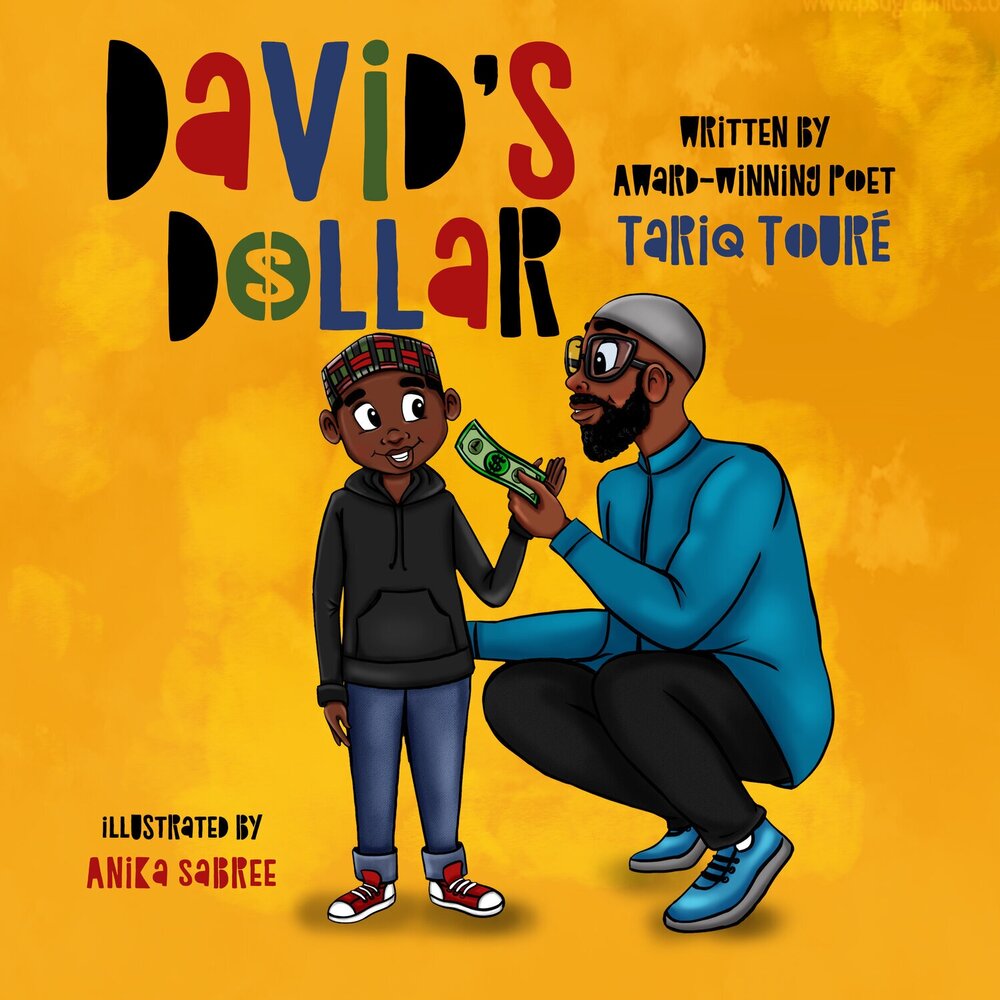
David’s Dollar by Tariq Toure’ illustrated by Anika Sabree

Standard
David’s Dollar by Tariq Toure’ illustrated by Anika Sabree

This early elementary 20 page story is an entertaining, yet informative look at community and economics on a kid’s level.  It features black Muslim characters, business owning women of color, commerce, charity, and relevance.  I loved the cadence of the book, the illustrations, and the simple text. Sure, maybe a dollar isn’t much and it is a transparent simplistic view, but it makes the point of how when you shop local everyone benefits, and how the path money takes impacts everyone it touches.

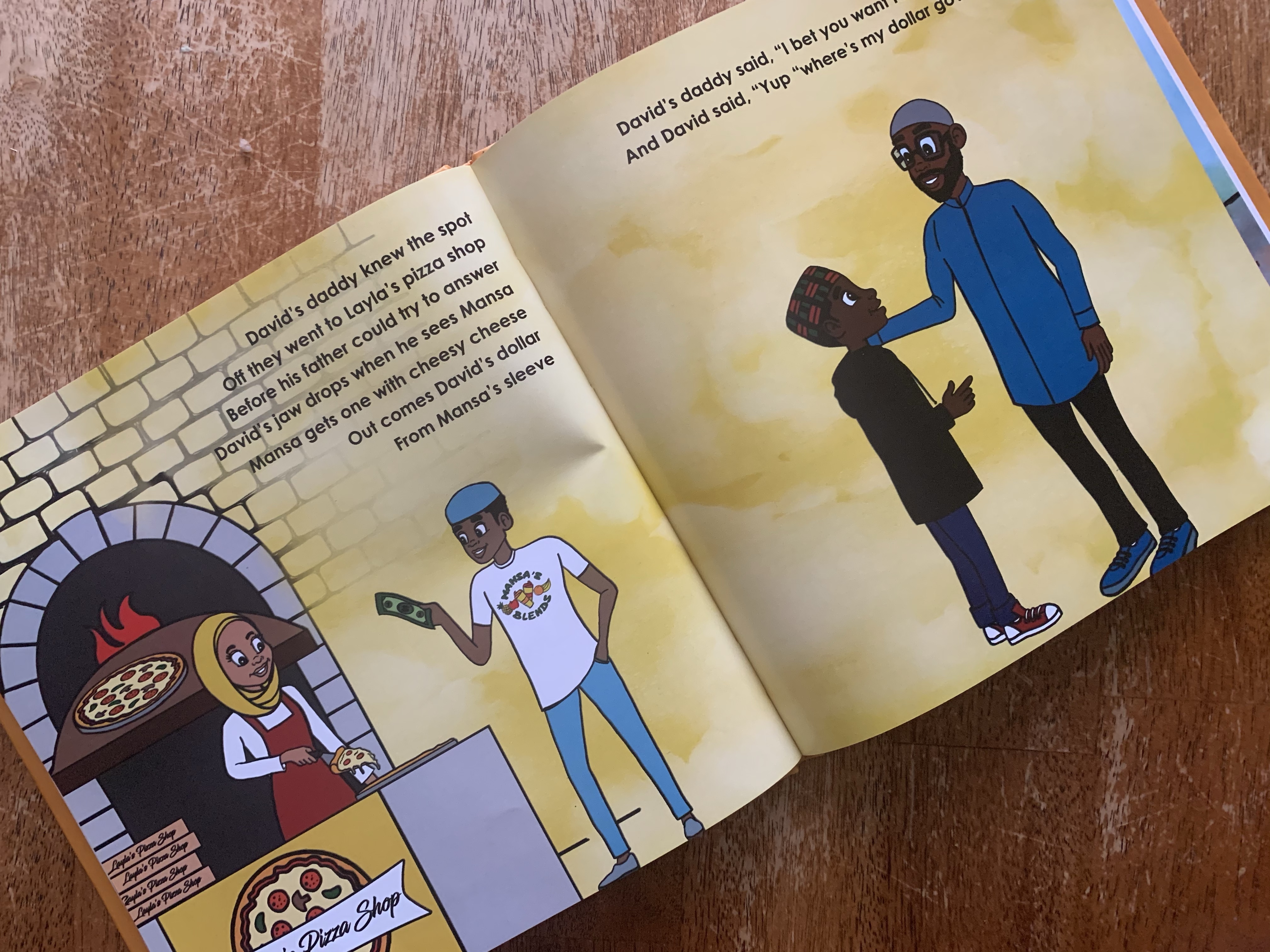
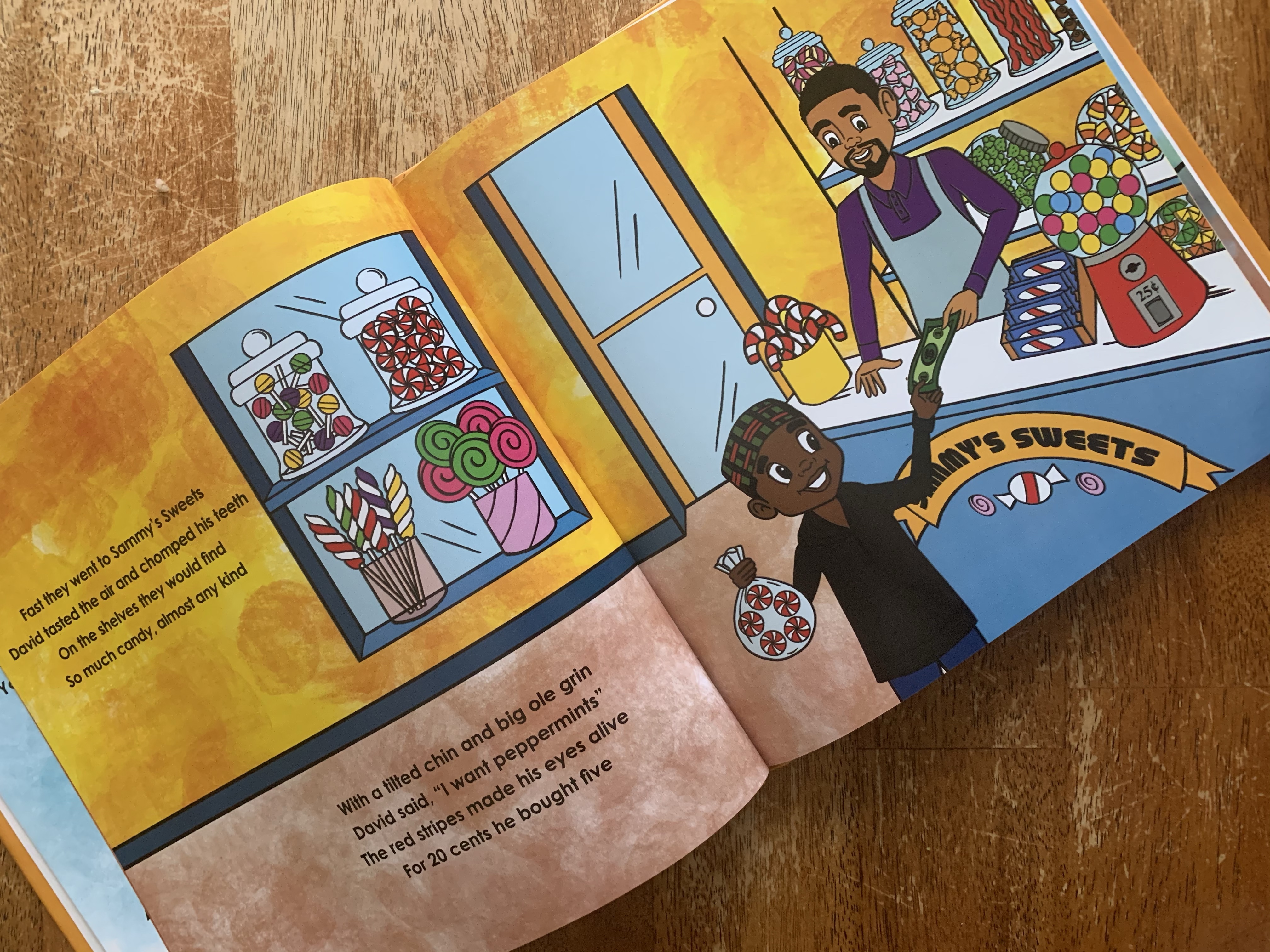
David is getting his dollar after doing his chores, and he is ready to head to the candy shop to see what to spend it on.  At Sammy’s sweets, he decides to get five peppermints, and just like that his hard earned money is gone.  He asks his dad where the money went and off they head to Mansa’s juice shop. When Sammy comes in and buys a drink, out comes David’s dollar and now it is in Mansa’s hands.

David and his Daddy follow the money and see it change hands at Layla’s Pizza Shop, and then Madame C’s Braids, before heading to Uncle Kareem’s hardware store where the dollar too has ended up.  It is time to pray so Uncle Kareem, Daddy, and David head to the mosque.

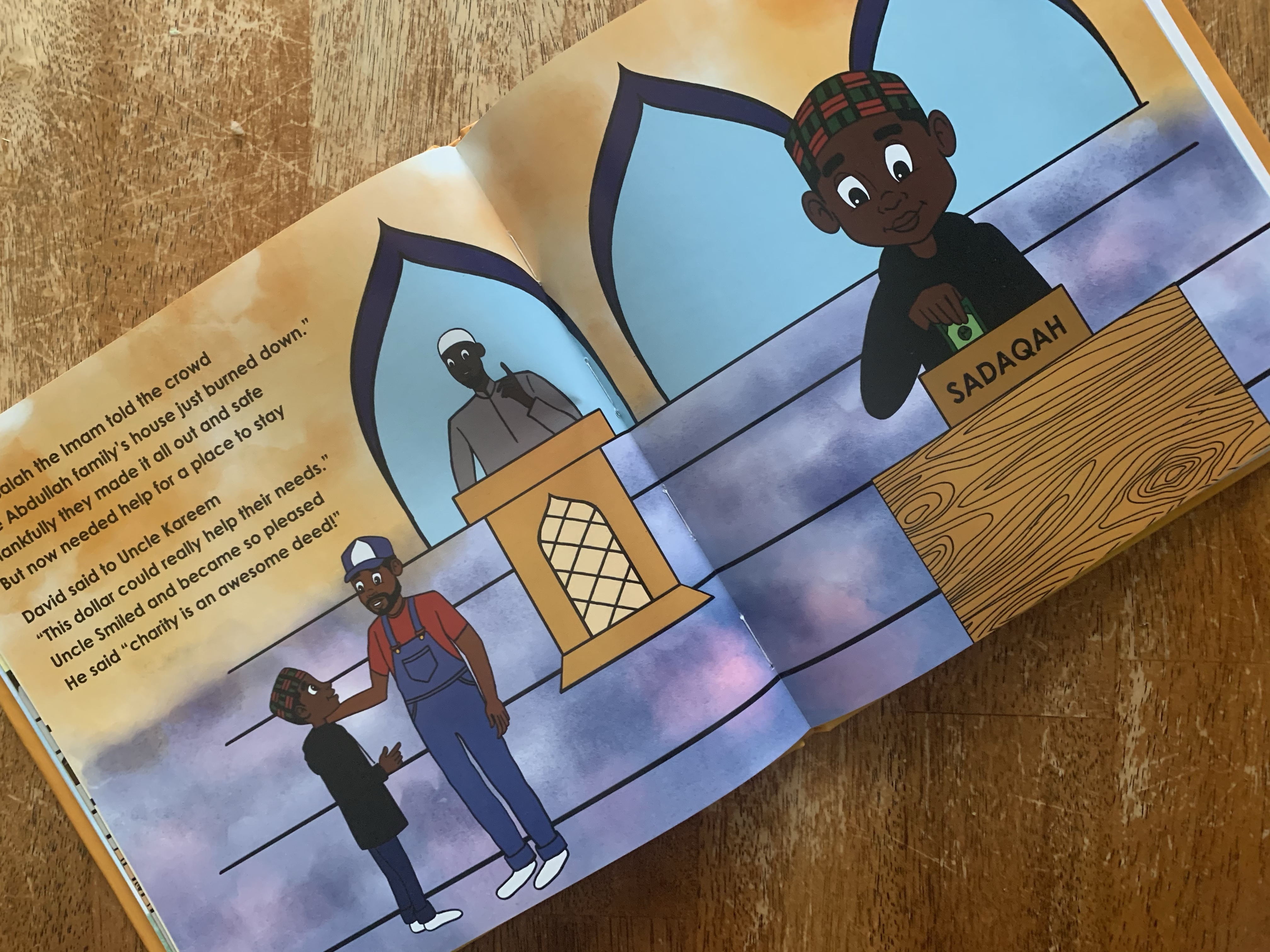
After Salah the Imam tells the crowd that a family’s house has burned down and they are collecting sadaqah.  David tells Uncle Kareem that that dollar should go to the family.  At night, David recalls all the places his dollar traveled and resolves to learn more math.

The book starts with a beautiful heartfelt gratitude message to Allah swt and the community of supporters.  The end of the book features a detailed bio of the book’s poet author and his successes and praises.

The story is rooted in an Islamic community, but is for all readers of all faiths.  There is no preaching or details about belief. many women have hijab on, there are Islamic names, they go to the mosque, they pray, and they give sadaqah.

The Cat I Never Named: A True Story of Love, War, and Survival by Amra Sabic-El-Rayess with Laura L. Sullivan

Standard
The Cat I Never Named: A True Story of Love, War, and Survival by Amra Sabic-El-Rayess with Laura L. Sullivan

img_8275

This amazingly captive 370 page, nonfiction autobiography details life during 1992 through 1995 in Bihać, Bosnia through the eyes of a 16-year-old Muslim girl.  The horrors of war, her determination to survive, a lifesaving cat, and her coming of age, all come together to make for a compelling read that is both reflective and inspiring.  I had a hard time putting the YA/Teen book down even knowing that she would obviously survive and being vaguely familiar with the Serbian attacks and ethnic genocide that occurred.  In an easy to read flowing first person narrative, somehow the book avoids being overly political, while still managing to convey the role of the media, the international world, and the hateful mindset that turned friends and neighbors into enemies.  I think teens, 15 and up, should spend some time with this book as well as adults, it really serves as a wake up call to how fragile nations can be when we turn on one another.  We must know the past, to as not repeat it.

SYNOPSIS:

The book starts out with Amra on a train returning from Belgrade where she took tests as she is one of the brightest kids in the region.  Immediately it is made clear that she is incredibly smart, and independent as she travels alone into the heart of Serbia.  The war has not yet come, but on the return trip Serbian Nationalist soldiers board the train and she is desperately afraid that she will be sexually assaulted.  Fortunately, she does not “look Muslim” and the soldiers physically leave her alone.  Her naivety, however, is lost as she realizes the war is closer than her family thinks.

Her family lives in a beautiful home that they designed and saved for, they wear hand me down clothes and watch expenses as a result.  Amra has a younger brother Dino, her older brother seemed to have some disability and has passed away, her parents are honest and value education. Her family is everything to her, they are incredibly close knit.  They are ethnically Muslim, but do not practice.  She mentions it regularly, that they are being attacked for a religion they do not practice.  They wear bikinis and date, eat pork and drink alcohol, they identify first as Bosnian and then as Muslim.  But they do identify as Muslim and they suffer for it, over and over and over again.

The story sets the stage by showing how diverse Bihać is and how Serb, Croats, Bosnians, Muslims, Christians, Catholics all live together.  It is Amra’s birthday, it really isn’t, but they could not afford the food and gifts at the time of her 16th birthday, so they are celebrating it now with a sleepover with her closest life-long friends.  When Amra and her father go in to town to get the cake, they see tanks rolling in, refugees from other cities seeking safety and Amra and her father start handing out whatever money they have and take a couple home with them.  At the party, they don’t discuss what they have seen, but when Amra’s best friend, a Serb, cannot spend the night, the parties tone changes and the mood is set for the next chapter in Amra’s life.

At school she shares how Muslims are treated and forced to take Russian, while the Serbs are encouraged in English, while the children get along as many are mixed ethnicities, there is rampant favoritism from the adults.  When one day only the Muslims arrive at school, the Serbs have all secretly evacuated in the night, there is no more denying that the war has come to Bihać. With the comfort of her cat, who she simply calls, Maci, cat in Bosnian, and his “luck” to somehow delay her or warn her of bombings, she and her family endure the first wave of attacks by hunkering down in a cousins basement.

Ultimately they decide that they cannot stop living.  Death is striking at every turn and no one is more safe in one location than another and the family returns home.  They still have electricity at first, but it soon disappears, the phone lines stay, but food starts to get scarce.  At times the family goes out of the city to stay with family on a bee farm and survive off the honey, but it is not safe there either.  School resumes a few days a month, but all the Muslim’s records have been “lost” and paper is in short supply.

Over the four years of the war, Amra’s aging diabetic father is called to fight, an explosion at the house renders her mother deaf, friends and family are killed while somehow the day to day of surviving continues.  Amra graduates from high school, works as a tutor when she cannot pursue her own education, and finds work as a translator for international workers after she teaches herself english.  There are times she is so malnourished her hair is falling out, her gums are bleeding and she blacks out, and there are times when the family is able to trade honey for food and can open a small store in the corner of their house.

The resiliency and heartache is not something a review can capture, you feel for Amra at every turn, both in delight as well as in fear and devastation.

WHY I LIKE IT:

It has a map! Seriously, thank you.  I love that the book is so emotional, it doesn’t get hung up on dates and events, but how whatever is happening affects Amra and her view of the world.  As a character, ultimately a person, she doesn’t stay down, she is capable and strong, which is so remarkable in the best of times and absolutely heroic living through this war.  The cat is a remarkable character, and while at times it seems forced, it is a great thread that keeps her story being relatable on all levels.

There are a few chances for Amra to leave her family and get away to safety, the first time it is presented to her she would have to change her name, she decides she cannot.  This is a testament to her love of her family, but also to her identity.  She is proud of who she is, which is mind blowing to me.  I talked about it in my review of The Day of the Pelican, about how Bosnian refugees I got to know in the late 90s knew nothing about Islam, but were being slaughtered for being Muslim.  Repeatedly she talks about how in Bosnia there were some conservative traditional Muslims, but that most of them are not, her family is not.  Yet, my heart truly cried out when her and her mother are trying to get food from drunk soldiers and are certain that they are going to be raped or blown up by land mines and she says the only prayer she knows.  One that she learned after the war started: “Auzubillahi Minahs Shaitan ir Rajeem.  Bismillah ir Rahman ir Rahim.  Rabbi Yassir wa la Tua’ssir, Rabbi tammim bil khayr.  I seek refuge in Allah from Satan in the the Name of Allay the Most Gracious, the Most Merciful.  O God make it easy and don’t make it difficult, O’ God, complete this with good.”  

She explains the cover of the book at the end, “the book’s jacket presents my authentic self, a liberal Muslim teen, yet a Muslim who was still so profoundly hated.  The jacket illustration serves as a reminder that the hate is a product of its perpetrators rather a reflection of its victims.

FLAGS:

The book is about war, it has rape, sexual assault, death.  At times it is descriptive and detailed, not sensationalized, but powerful.  There is kissing, boyfriends and girlfriends, nothing lewd.

TOOLS FOR LEADING THE DISCUSSION:

I learned about this book from Lovely Books Podcast when she interviewed the author: https://lovelybooks.buzzsprout.com, it is a great introduction along with many of the interviews and articles that Dr. Amra Sabic-El-Reyess has done.

I would love to do this as a book club, but I think it would have be done on a high school level, not middle school.  The dialogue and understanding I would imagine surrounding this book would be compassionate and thoughtful.  I hope those leading book clubs for older students and even adults will consider this book.
Sadiq Wants to Stitch by Mamta Nainy illustrated by Niloufer Wadia

Standard
Sadiq Wants to Stitch by Mamta Nainy illustrated by Niloufer Wadia

img_9844

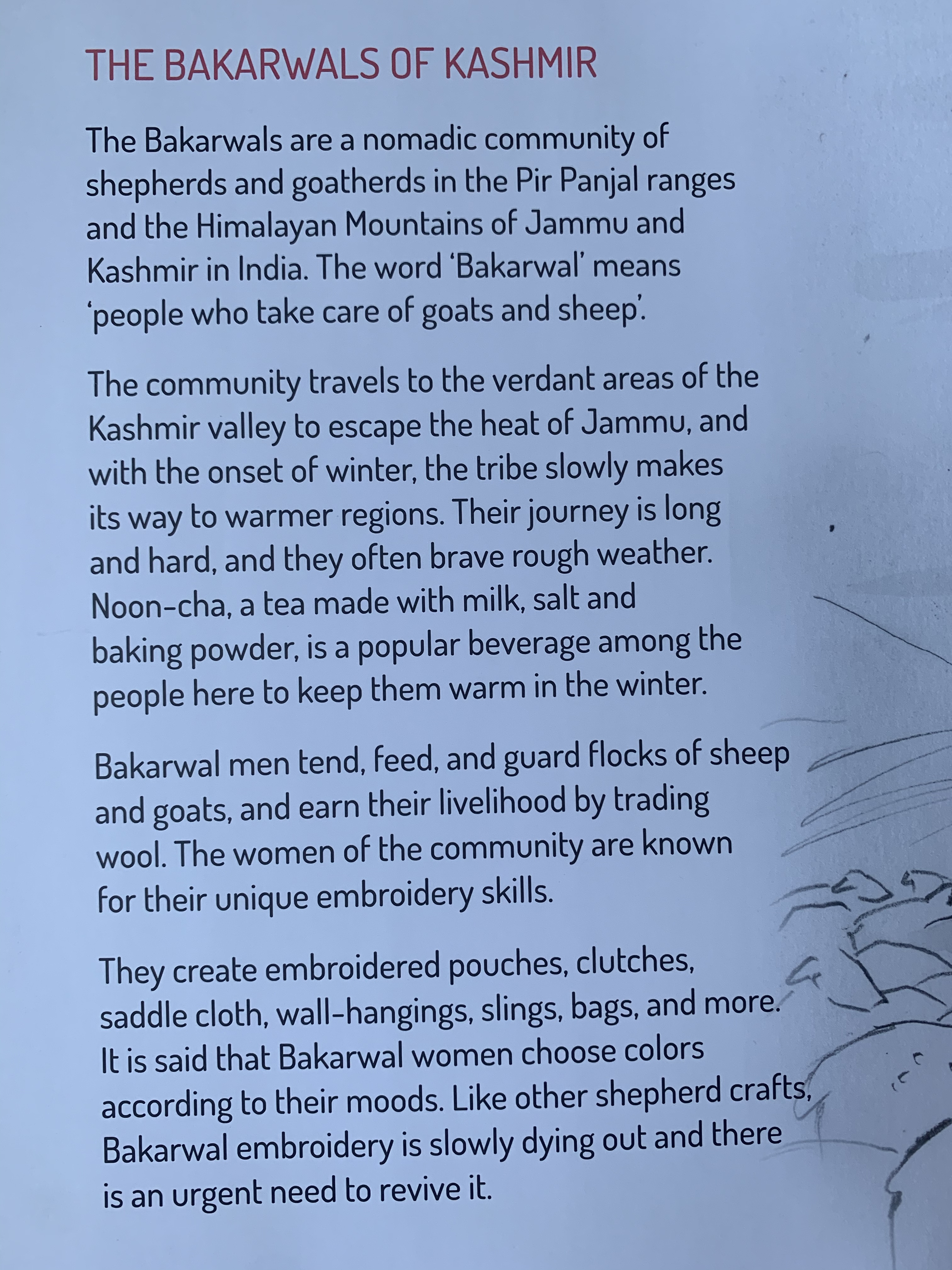
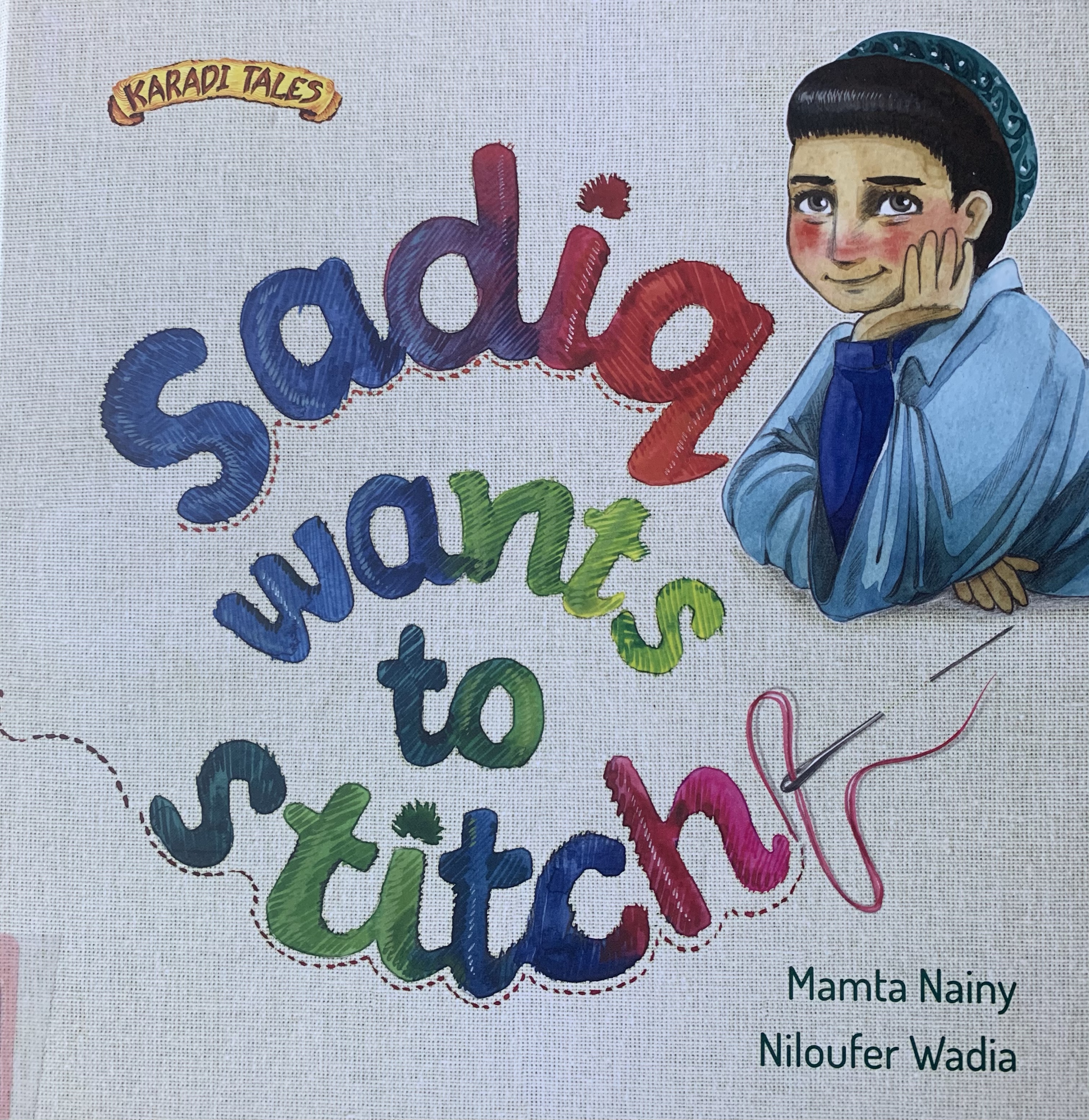
This 40 page AR 4.5 book touches on gender norms and breaking cultural expectations, as well as a mother’s love and a child’s determination.  The beautifully illustrated pages show Kashmir’s landscapes and culture.  The message is for third graders and up with its longer passages and understanding of gender roles, but younger children will enjoy the story just as well.  My only concern is the timeline of the story, the mother has a week to make two embroidered rugs and worries when she awakens with a fever on the day the rugs are expected, exclaiming that she hasn’t even started the second rug.  How was she going to meet the deadline even if she wasn’t ill? Even with the extension, she asks for a few days, not a few hours.  That aside, the book is a lovely glimpse into a nomadic culture and people.  There is no glossary at the end explaining namaz or Chacha or Bhai, but there is a bit of information about the Bakarwals of Kashmir at the end that provides context and enhances appreciation.

img_9845

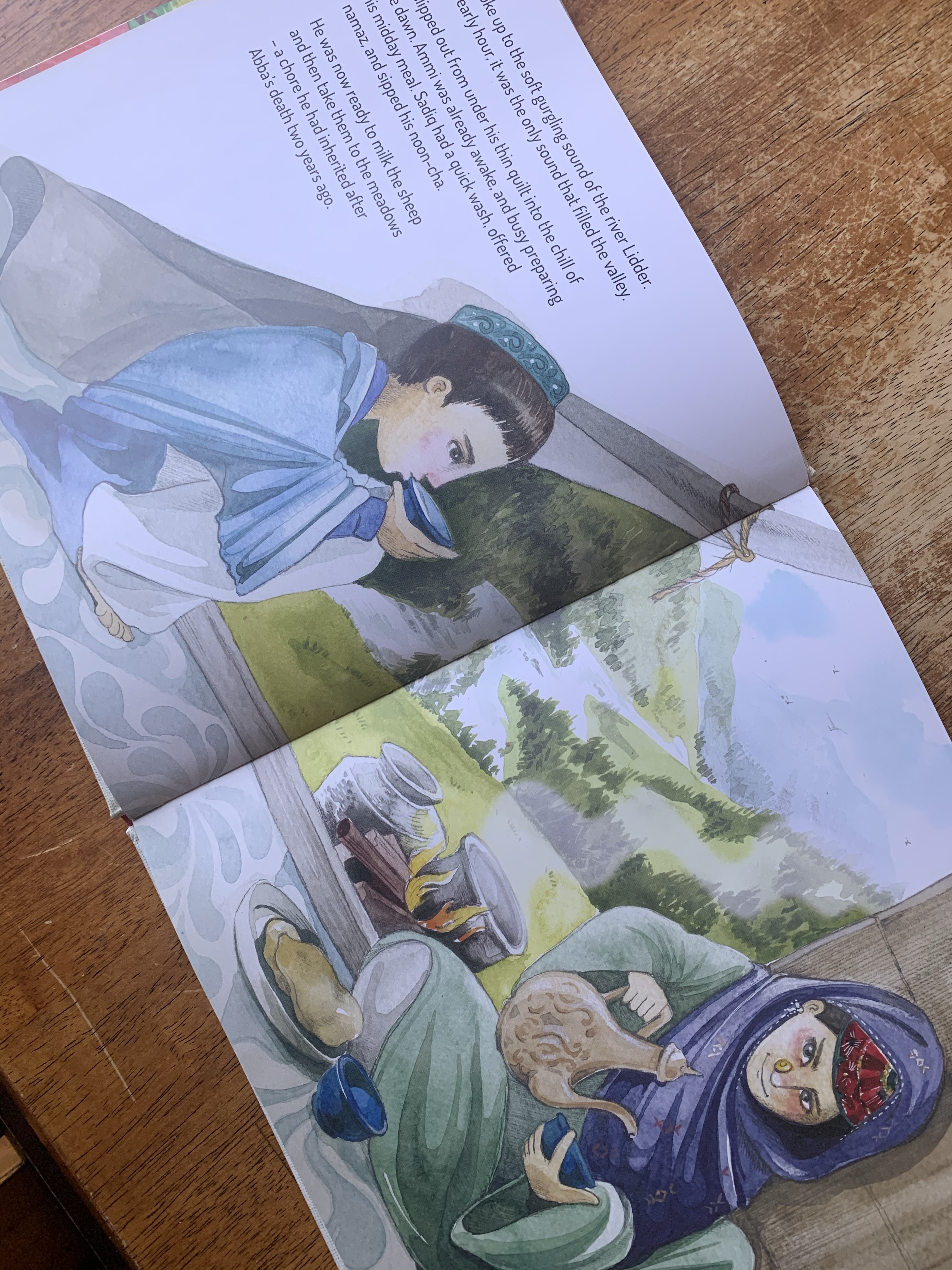
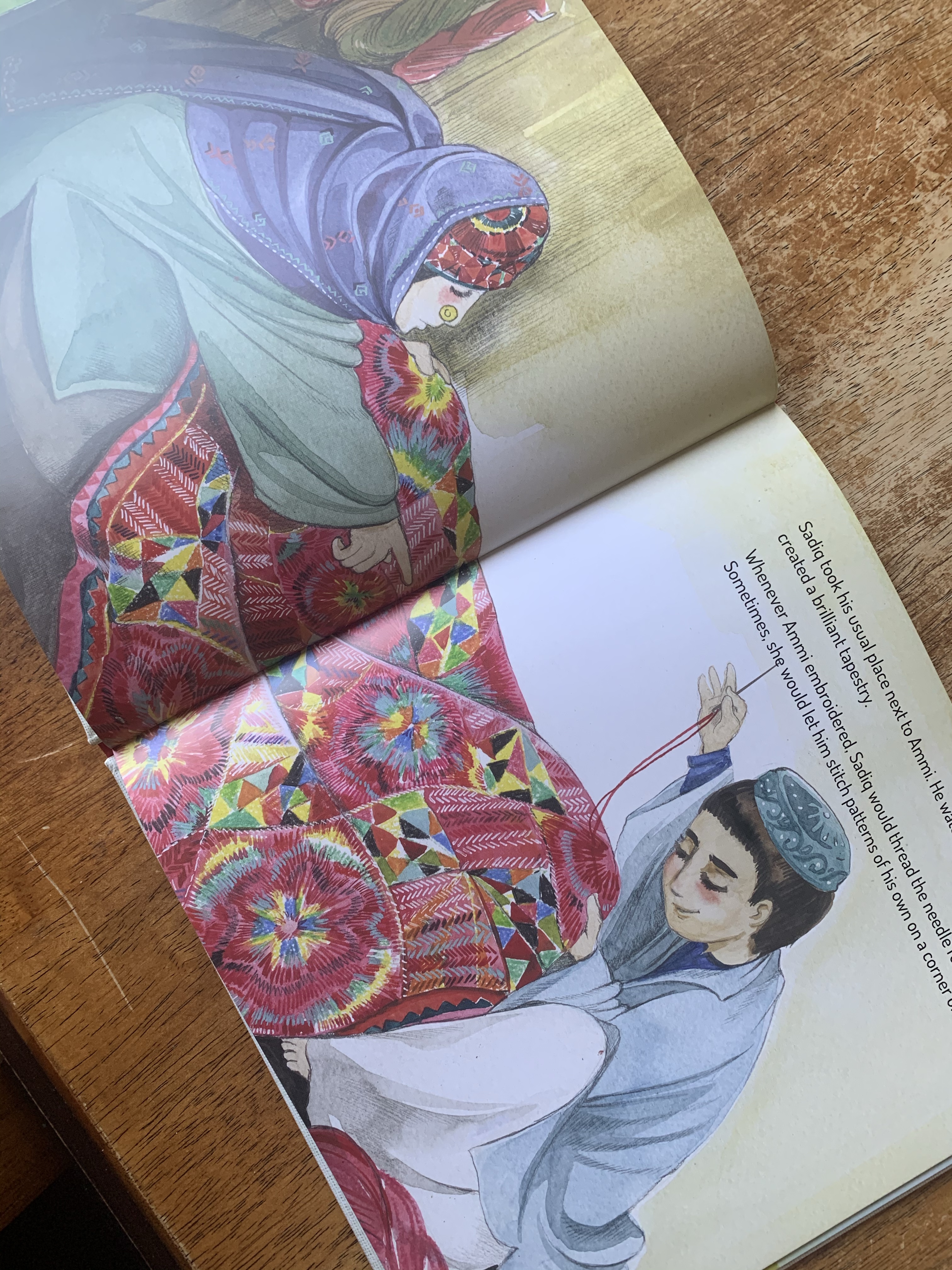
Sadiq wakes up to the sounds of the river Lidder, he prays and drinks his cha and heads to the meadow to milk the sheep and take them out to pasture.  His father died two years ago, and now the responsibility of the flock is his. After his chores are done he sits and watches his mother embroider.  He sometimes stitches his own patterns on the edges, but his mother does not like him sewing.

img_9846

When an order from the city comes in for two rugs by the end of the week, Sadiq offers to help.  His mother refuses his assistances claiming that the women stitch and the men tend to the sheep in their community. Sadiq dreams of the designs and colors he would like to sew and decides he will do so in secret.

img_9848

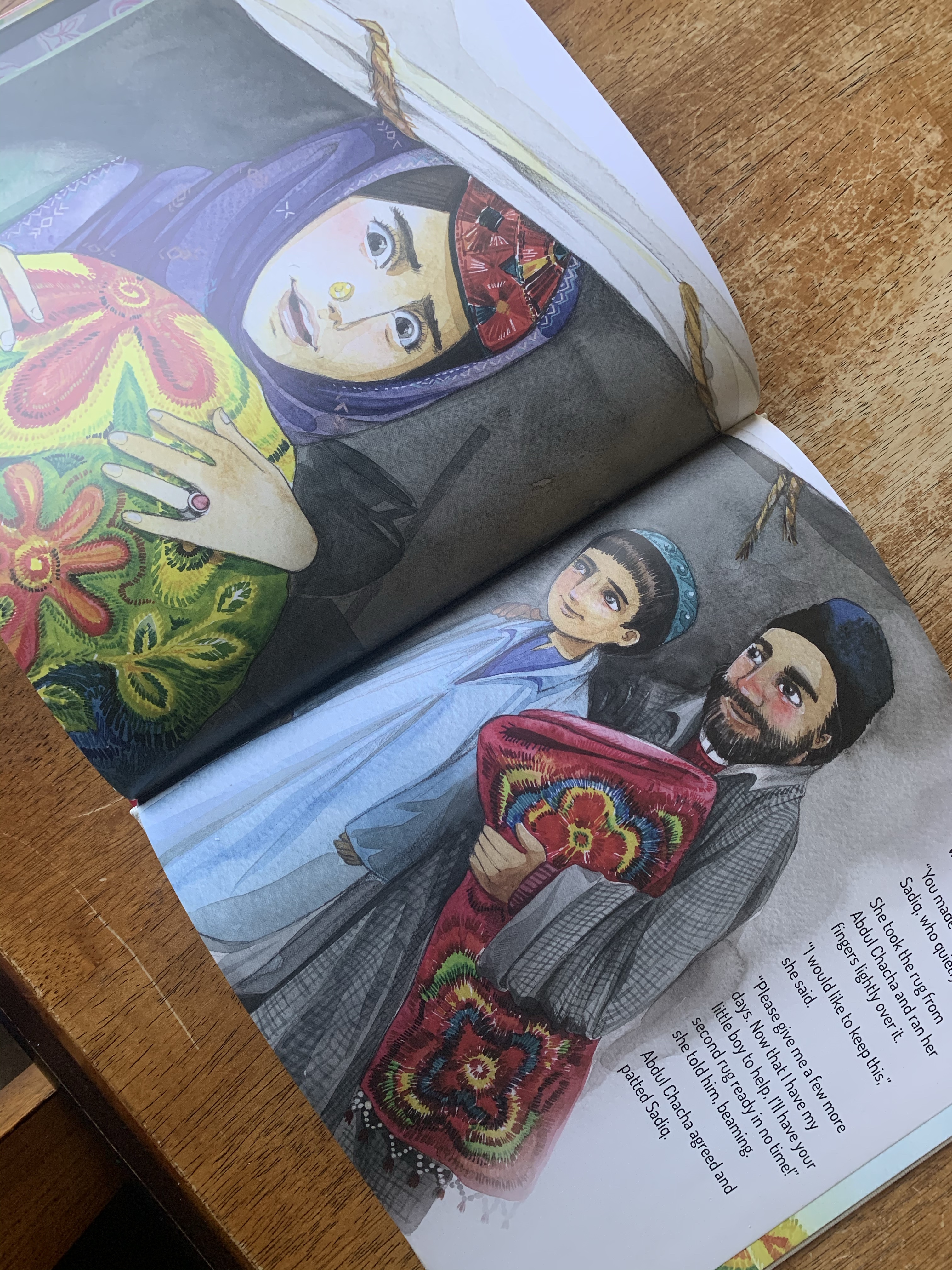
On the day when the rugs are to be picked up, Sadiq’s mother has a fever and cannot stitch.  When the man comes, Sadiq’s mother starts to explain that they are not ready, but Sadiq surprises them both with his completed rug.  The man likes it, but notes it is not what was ordered. Ammi wants to keep Sadiq’s rug and asks for a few more days to complete the second one, now that she has her son to help her.

img_9847

Abdul agrees to a few more days, and the next morning Sadiq’s mom has hung Sadiq’s rug for everyone to see, and is proudly crediting her son’s work.  She hugs him, just like she did in his dream, and chides him that she still expects him to do all his other chores before he sews.
img_9849

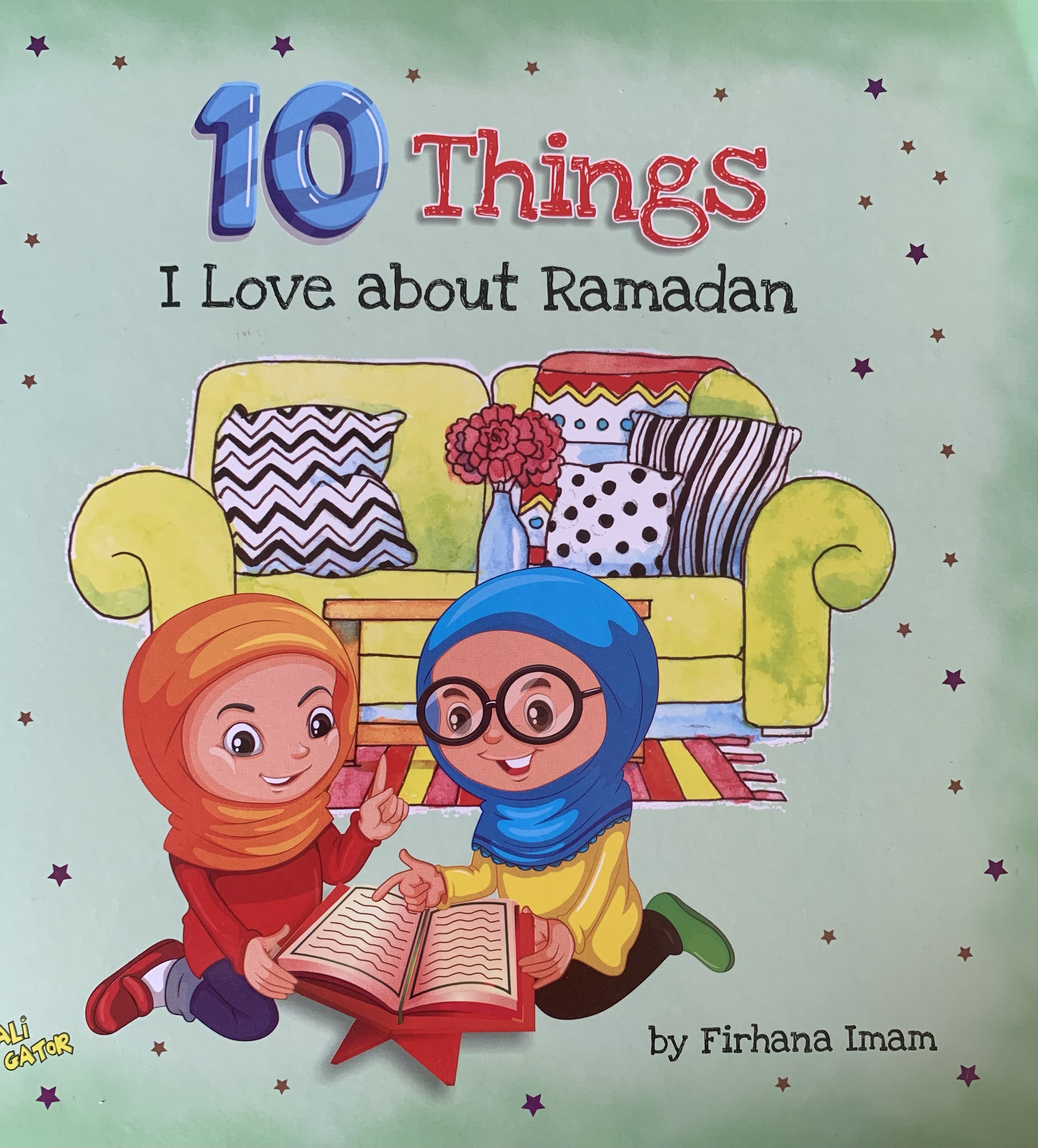
10 Things I Love about Ramadan by Firhana Imam illustrated by Ali Gator

Standard
10 Things I Love about Ramadan by Firhana Imam illustrated by Ali Gator

img_8692

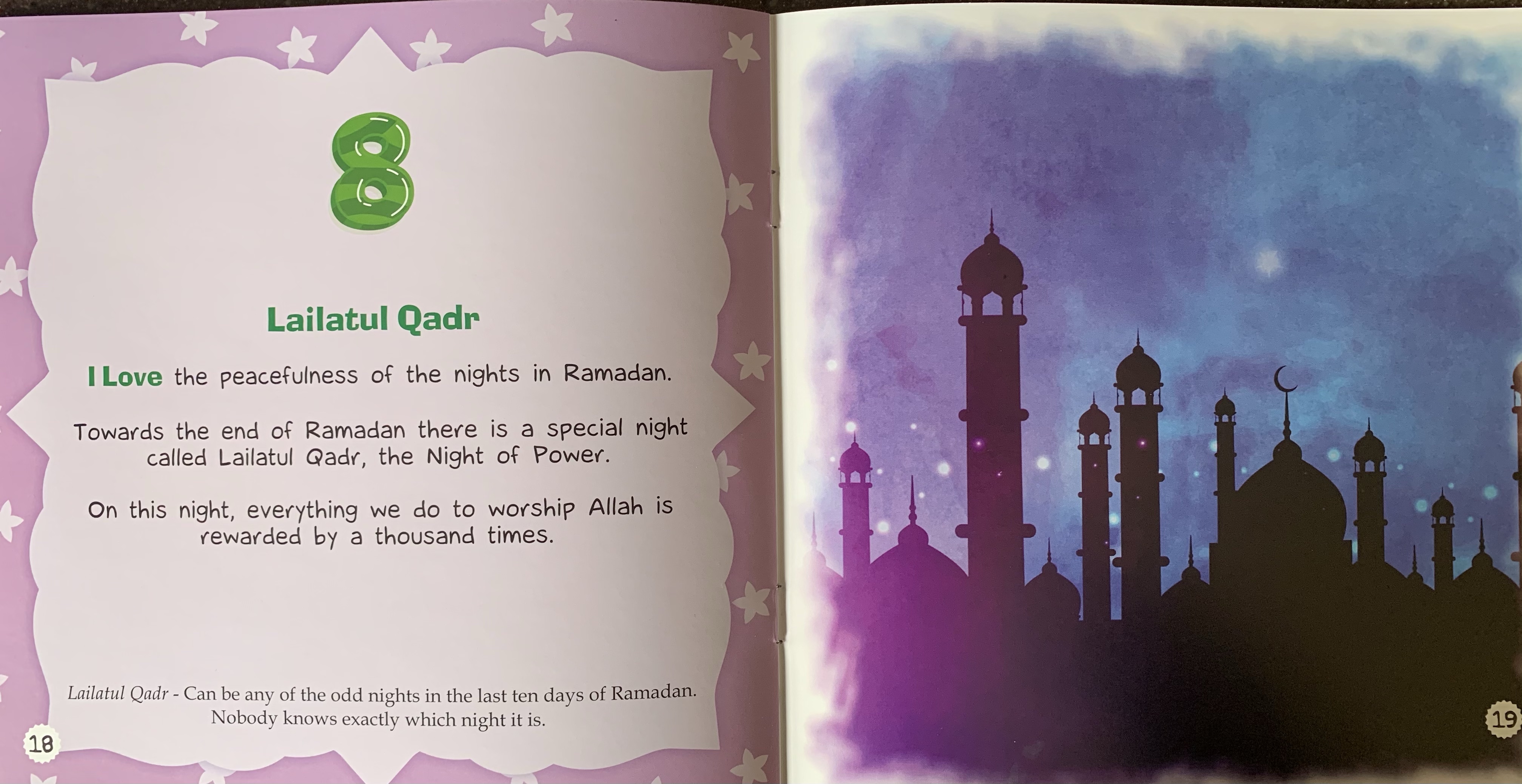
After a while a lot of Ramadan books seem repetitive with the information being more or less the same, this 24 page kindergarten and up book however, manages to present the information in a numbered format that allows for the information to flow without being constrained by an overly forced story.  The result is a fun little read that children will enjoy as they master some of the key concepts of Ramadan.  This book doesn’t have activities at the end, but would lend itself very easily to games, memorization challenges and discussion topics if read frequently for even the littlest Muslims. It would also work as an introduction to the month for non Muslims.  I know I get asked a lot for suggestions of books to be read to children’s classes in public schools, and this would definitely work for that too.

img_8694

The book starts out with an introduction to Nabeela as this is her list of 10 things that she loves about Ramadan.  She starts with Assalamu Alaikum before diving in with some facts and getting started with number one.  Each number is a two page illustrated spread, there are footnotes for any Arabic or religious terms used, and the bright colors and large fonts make the book easy for early readers to follow along with and attempt on their own.

img_8695

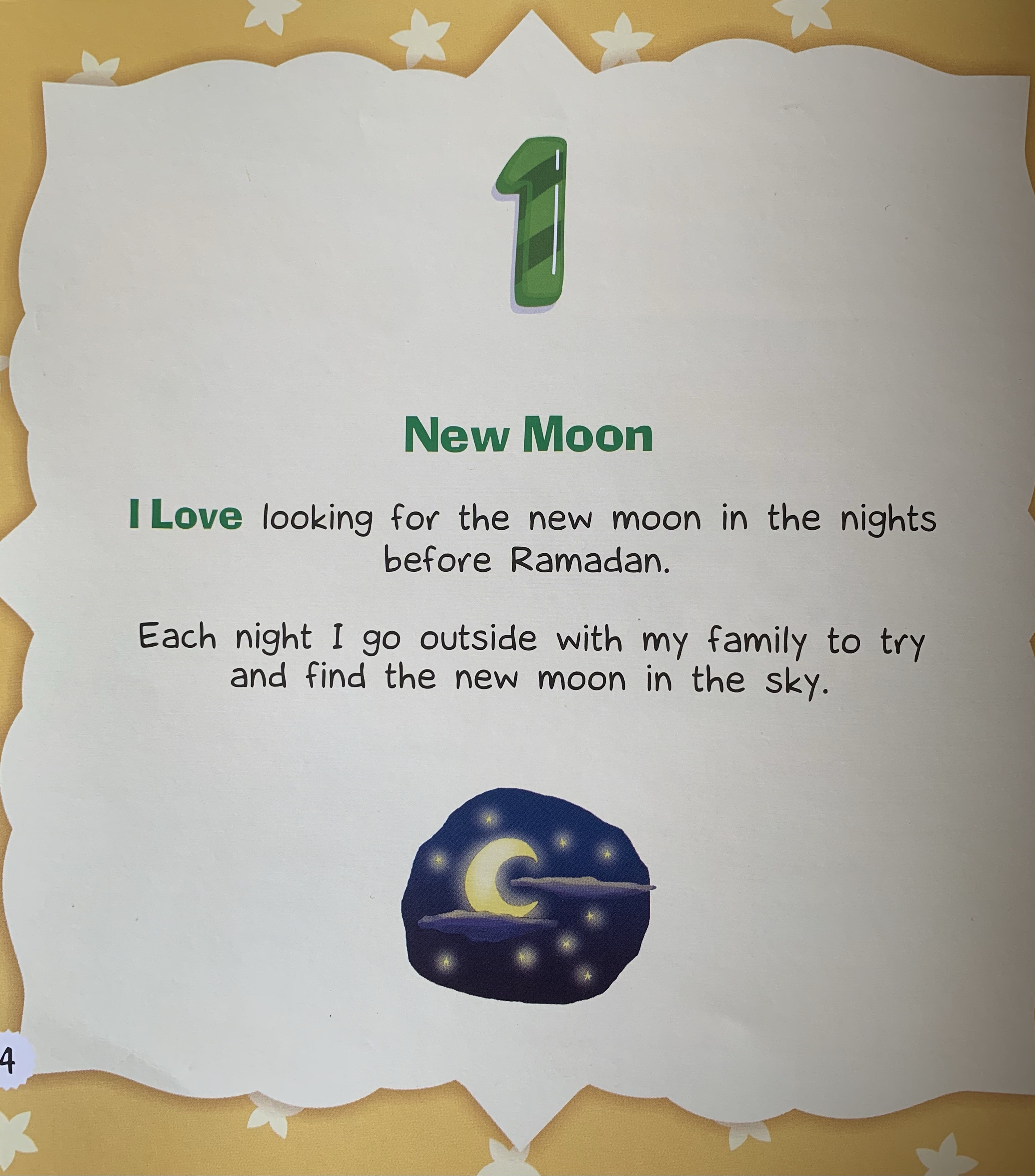
She starts by loving the new moon that her family looks for before the start of Ramadan. She loves Suhur: helping prepare for it the night before and eating her favorite pancakes early in the morning.

img_8696

Number 3 is iftar.  She loves pies and samosas and explains to us that she always has dates and water because that is the Sunnah.  Along the way she shares her love of family, making du’a because a fasting person’s du’as are always accepted, and reading Qur’an even though it is difficult because she knows she will get more rewards for trying so hard.

img_8699

She also loves Tarawih prayer whether at the mosque or at home, and the peacefulness of Lailatul Qadr.  She loves that her father and brother stay at the mosque the last ten nights of Ramadan in Itikaf and finally at number 10 is Eid!

img_8700

The book concludes with some verses from the Qur’an about Ramadan in English.  I thoroughly am impressed at how succinctly so much is conveyed and the adorable manner in which it is done, Alhumdulillah!

Red Shoes by Karen English illustrated by Ebony Glenn

Standard
Red Shoes by Karen English illustrated by Ebony Glenn

img_8529

This delightful 32 page picture book links two girls, two ends of the world, two cultures and two stories together with a pair of red shoes.  The short sentences pop with action and the perfectly illustrated two-page spreads convey relatable emotion and joy.  The beloved shoes travel on the feet of one character to a wedding, Christmas dinner, and birthdays, they are then are donated and journey to West Africa to be given as a gift for a little girl who fasted half of Ramadan.   The message I hope children ages three and up will get from the story, is that we are more alike than different, that we should take care of our things (amazingly the shoes weren’t worn out), and that we should donate things of good quality that we ourselves value.  I hope it doesn’t lend itself to perpetuate the stereotype that we can send our castaway items to Africa, being the author comments in her bio on the back flap that her husband is from West Africa and that she frequently visits there, I’m hoping that this is just me being overly cautious in the messaging, and nothing is being implied or negatively taken from a casual reader.

img_8530

Malika and her Nana see a pair of dazzling shoes perched in the window, and Malika is enamored. Her grandma later surprises Malika with the shoes.  She quickly tries them on and tests them out.  She keeps them safe from the rain and dances with them on at her Auntie’s wedding.  She kicks her cousin Jamal with them on, under the table at Christmas when he tries to steal her biscuit.

img_8531

She stomps away from her best friend in her red shoes, and jumps double Dutch with them on when she makes up with her friend at her birthday party. But at Nana’s birthday, “the shoes don’t let her forget that her feet have grown.” Nana and Malika take the shoes to the thrift store to be resold.  A sad Malika says goodbye to them, they were her favorite shoes ever.

img_8532

Inna Ziya sees the shoes in the window and knows just the little girl who will love them.  She squeezes them in to her suitcase and they are off to Africa. They wait under a table selling claypots in a market waiting for the girl who fasted half the month of Ramadan.

img_8534

When Amina comes holding her mother’s hand, Auntie Inna Ziya delivers the promised gift.  Amina thinks they are beautiful and lovingly carries them in the box on her lap as they fide the tro-tro home.  Amina’s little sister Halima, can’t wait to see the gift as she too hopes to one day fast in Ramadan.

img_8535

Amina lets her try them on and when she outgrows them she plans to pass them on to her.  Meanwhile, Malika is wondering whatever happened to her beautiful red shoes, and if someone else is wearing them.

img_8536

There is no mention of Islam nor is Ramadan explained.  There are women in hijab in America and in Africa, even in the books in a shop window there is representation.  I particularly love the shout-out in the illustrations to “Mommy’s Khimar.”

img_8533

The front of the book has Malika, and the back, Amira.

img_8537

The Shape of Thunder by Jasmine Warga

Standard
The Shape of Thunder by Jasmine Warga

shape of thunder

Usually when a book leaves me with a lot of questions, it is because the author’s writing was incomplete or flawed, this book however, left me with a lot of questions and I’m certain the author did this deliberately. Hence, I don’t know to be irritated or impressed that I care enough about the characters to want to know more. Considering I’m still emotionally attached to the two alternating voices in the book, I’m going to claim the latter, and just be grateful that I was privy to follow the two girls for 288 pages and let the impression the book left me with overpower the curiosity I have to know everything about their past and their futures. This middle grades read is absolutely wonderful and emotionally gripping. I think all kids will have a hard time forgetting the story and characters, and more importantly I think over time they will recall and re evaluate their own thoughts regarding the personal weight of school shootings, gun ownership, sibling loss, responsibility, and maybe even the possibility of time travel. I know this book will stay with me for a long time. This amazing, half-Middle-Eastern half-American author in her OWN voice book somehow manages to discuss a school shooting without being political or preachy and the result is memorable, heartbreaking, and powerful.

SYNOPSIS:

Told in alternating 12 year old voices: Quinn and Cora are neighbor girls that used to be best friends until Quinn’s brother stole his father’s guns and shot and killed students at his school before committing suicide. One of the classmates he killed was Cora’s older sister Mabel. It has been nearly a year since the incident, and since the girls last spoke, but on Cora’s 12 birthday, Quinn leaves a box on her door.

Cora is whip smart and grieving. She lives with her dad, a professor and immigrant from Lebanon who speaks little about his culture or religion to his kids, even though the kids want to know about their heritage and do identify as Arab American Muslims. She also lives with her grandma, her mom’s mom, despite the fact that her mom has left them. It never tells where she went or what happened, which I desperately wanted to know, but Cora doesn’t miss her, because Cora doesn’t remember her, and the family dynamic seemed to be working until Mabel is gunned down. The loss of Mabel is palpable as Cora recalls that she will one day be older than her older sister, and refuses to pack up or touch anything on her side of the room. Cora is in counseling and seems to have a supportive network of friends in her Junior Quiz bowl team, but she misses Quinn even though she can’t forgive her.

Quinn’s chapters begin with a small letter to her brother Parker: what she wants to say, what she feels, questions, memories, anger, disappointment, despair. They are short, but haunting and heartbreaking. Quinn’s home life is fraught with guilt and blame. Her mother has quit work and her father is always working. Her parents fight, a lot. Her mom blames her dad for owning the guns, her dad wants to move to give them all a fresh start, it isn’t pretty. Quinn often has a hard time getting her words out at the speed she wants, she calls it freezing. As a kid, Cora would help, but without Cora and with no one in the house willing or ready to listen to Quinn, Quinn is often left alone. At school Quinn is largely ignored as no one wants to be around the sister of the mass shooter, so she doesn’t try out for soccer, she has no friends, and no one to talk to get the help she so desperately needs.

Quinn has an idea about how to fix everything, and that is what is in the box. She is convinced that if she can go back in time, she can make everything right. The only problem is, she doesn’t understand all the science and needs Cora’s help. Together the two girls work to figure out a way to find a wormhole and fix the damage that occurred. Along the way the girls realize how much they need each other to heal, and the role forgiving yourself has in the process as well.

WHY I LIKE IT:

I am shocked at how deftly the book talks about a school shooting without talking about a school shooting. It is how the families feel in the day to day acts that follow a year later and how the girls are trying to carry on with the limited tools that exist for individuals dealing with the aftermath of such an act of terror. It doesn’t go in to the 2nd Amendment rights or detail the lack of legislation to curb such acts, it really stays on the two girls. The hope of finding a wormhole is really farfetched and perhaps unrealistic, but they are so desperate to believe, to find a way to make things right, that you hope for their sake that they are successful.

It is amazing to see from the sister of a shooter the isolation and pain she endures. I don’t know that I’ve really ever considered the larger families of the shooter when your heart is so devastated for the families of the victims. Occasionally you hear about the parents, but what about the siblings, cousins, distant relatives?

I desperately wanted to know where Cora and Mabel’s mom went. I was tempted to contact the author since it really was gnawing at me. I also wanted some answers as to why Parker did what he did, what hate he was spewing online, what were the signs, did he single out Mabel for being Muslim, while also appreciating that there is no satisfactory answers for any violence of this magnitude in fiction or real life.

Cora knows nothing of Islam and kind of wants to, I felt like this could have been explored a tiny bit more. Not in that she has to be religious, but I feel like after such a life altering event such as death, religion and what happens when one dies usually comes up and a person decides they are satisfied with an answer or not. The story isn’t in the immediate aftermath of dealing with the shock, but rather is a little after the event to presumably not have to deal with the raw emotion, and can focus on the pain and strength that comes with finding a new normal. I’d like to imagine at some point perhaps Cora and her dad talked about what happens after death, but the text doesn’t suggest that it was an issue of concern. She does wonder if Mabel was killed for being Muslim and asks Quinn about it. Quinn never defends or justifies what her brother does, nor does she pretend to know, she is grieving too. She is irritated that people try and define her religiosity to make themselves feel better and she does say the family occasionally fasts, makes duas, and they always celebrate Eid.

She talks a bit more about wanting to know more Arabic, saying that if you are 50% Arab you should at least know 50 words, and she only knows five. She wants to hear about her father’s life growing up, and know that side of her. It mentions that he wanted her to feel like she belonged in America, but I’d love to know more. Maybe what happened to his family, what brought him to America, why they opted not to give them more cultural names, etc..

I also enjoyed the slight science thread. It seems the author used to teach science and I love that the scientific method and various random facts find their way into the story.

POSSIBLE FLAGS:

The book talks about death, killing, suicide, and gun violence, but doesn’t relive the chain of events or detail what happened exactly. Quinn and another friend have crushes on boys in their class. There is a Fall Festival that the kids dress up for, but it isn’t called Halloween, and there is no mention of it. The book opens with Quinn’s birthday.

TOOLS FOR LEADING THE DISCUSSION:

I would definitely read this as a middle school book club selection. It is engaging and gripping and a great book to have as an introduction to hard conversations with children. The author has a note at the beginning about her own children doing active shooter drills and having to face this real fear, and I think kids talking about it through fiction is a powerful tool to get them thinking and talking.