Tag Archives: expectation

Rainbow Fair by Diana Ma

Standard
Rainbow Fair by Diana Ma


If you see this 224 page middle grade book, the title might hint that the content is LGBTQ+ as the rainbow often symbolizes such, but if you look closely at the cover you don’t see a rainbow flag, just a Chinese scene on one side and on the other you will see crescent moon lights being hung up above a masjid silhouette, merging together with a little girl holding a rehal, a book and some art supplies. If you then turn the book over, or search the internet, and read the blurb, you will learn that the book is about Sophie, a Chinese Muslim girl learning and sharing her heritage at the school’s Rainbow Fair. As a result, I requested an arc to read and review. No where does it reveal that the book centers queer characters, LGBTQ+ support and allyship, consistently parallels Islamic faith with sexual and gender identities, and prioritizes intersectional identities and agenda over plot and insight. Had I known this, I wouldn’t have read the book, I share this review simply as a heads up to its contents, so families can decide for themselves if it is for them. The book is MG and honestly, it feels misleading and intentional that it is not articulated in a book meant for nine to 12 year olds.  With identity exploration of being Chinese, a child of immigrants, a main character being bisexual, the protagonist repeatedly claims to want to learn about her Muslim identity, but very little information or interaction with the knowledge is sadly ever shown.  The plot seems to just become a forced juxtaposition of two marginalized communities: Muslim and LGBTQ+, to make the point that we are all more than one label. I understand that my view and practice of Islam, is not every Muslims, but trying to have a faith identity and sexual/gender identity parallel one another by having the protagonist “coming out as Muslim,” and being “outted” as Muslim by her bisexual friend before she is ready, is an awkward read. It continues in this approach comparing a trans character being misgendered in a locker room to a Muslim character not having a space to pray, and likens the diversity of a mosque BBQ to the pride parade. I support finding common ground, but when questions about Muslims stoning gays are left hanging, the reader never getting a convincing answer to why her parents hide their Islam, and there is no real rising action, climax, or character arcs- I feel like the labels and the author’s agenda, even if OWN voice, are the point of the book, and it doesn’t make for a compelling read.

SYNOPSIS:

Sophie and Katie did their school’s Chinese booth together last year at the Rainbow Fair, they are best friends and do everything together, but since Katie has come out as bi, she has new friends and is petitioning to add an LGBTQ+ booth, and the rules say she can only be at one booth.  When a sleep over breakfast calls attention to Sophie not eating bacon, it comes out that she is Muslim, not something she meant to keep secret all these years, but something not even Katie knew about.  When discussions about being Muslim spill over into class when booths are being assigned, Sophie decides to do the Muslim booth. She is afraid her parents will be disappointed, and even though she knows nothing about Islam, she is ready to learn.  A new kid at school, Anna, is Muslim and joins Sophie at the booth, and as the two become friends, Anna tells Sophie there “is more than one way to be Muslim” and of course she is a “real Muslim.”  Empowered by not having to pick one identity, Sophia and Katie and all the other kids change Rainbow Fair and show how everyone is more than just one label.

WHY I LIKE IT:

The premise on the back of the book is promising, I just feel like the book missed meeting its own stated intention. The characters are not developed, there are no moments of growth or self reflection, they have no arc or relatability outside of a label.  Sophie paints her parents to be strict, but the precious little that is shown, never backs that up. As a result the reader has no idea why Sophie doesn’t just tell her parents she is doing the Muslim booth and ask them about Islam. After they see the booth at the fair, they say they don’t talk about Islam because of Islamophobia in America and feeling othered in China, but that is it.  Exploration of that would be a far more interesting story: Why did they leave China for Taiwan? When did they migrate to America, was it recent, or did they slowly start to hide their Islam? Dad learned to read Arabic in Taiwan, what was the Chinese community like? Why don’t they celebrate Eid, but have a Christmas tree, did something happen? Why do they not eat pork but drink alcohol? Sadly the two dimensional parents are not fleshed out and Sophie faults them, while constantly trying not to let Chinese stereotypes define them, but the repetitive contradiction, just leans into the labels and fails to make them feel real and relatable.

The book is all talk and no show, and with no real plot, the talking gets repetitive. Breaking the fourth wall we are taken in circles of the same talking points that more than once had me checking if I had bumped the screen and gone back to pages already read. Threads are introduced and then abandoned: what is the point of the whole roller derby thread aside from showing Sophie makes powerpoints, and her parents give in? The girls never go roller skating, it is not something that bonds them. We only know they are close because we are told they are. The beginning and end show Sophie can smell food and decipher its contents, so why isn’t that part of the story as she is trying to figure out Eid foods, cooking, the lunch offerings at the mosque? It hints that the Black culture booth is being suppressed, but it never develops it, nor articulates any real push back, it just skirts the issue. Why the judge-y competitive aunt and uncle? Is their inclusion meant to make Sophie’s parents more or less likeable? Does it reinforce or dispel Asian stereotypes?

From the very start the book feels forced.  Sophie has never gone to a sleep over, her best friend plans a sleepover birthday, but is willing to change it if Sophie can’t come.  What kind of stilted set up is this, why wouldn’t these bffs plan the birthday together, and get Sophie’s parents on board first? It makes no sense that if she can’t come it will be changed and not be a problem because they are so close and she has to be there. It also immediately contradicts the looming conflict of the book, that the parents are strict.  They gave in to roller derby, they give in to this sleep over, and have no problem that two of the girls are dating that sleep over, and “Shane is non binary and doesn’t identify as a girl or a boy.” Clearly the parents are very supportive.

Consistently Sophie drops words, or cultural practices, but doesn’t explain them or engage with them, both the Chinese historical and cultural rep, and Islamic, quick example, she has a Quran but never reads it, we don’t learn about the immortals her dad wants her to feature at the Chinese booth.  It makes it seem superficial and further distances the reader from connecting with Sophie, with culture, with faith, with the book.  Speaking of books, it really bothered me that two books mentioned as being intersectional, Black Muslim Author, Autumn Allen’s All You Have to Do, and Queer Muslim Author Adiba Jaigirdar’s Hani and Ishu’s Guide to Fake Dating are YA books, isn’t that off to mention repeatedly books that your target audience won’t know, or be in the demographic yet to read?

I could go on and on, but I will stop, I think it is clear I didn’t enjoy the book. 

FLAGS:

Islamophobia, alcohol, LGBTQ+, microagressions, racism, labels, stereotypes

TOOLS FOR LEADING THE DISCUSSION:
There is no way I could shelve this in an Islamic School.

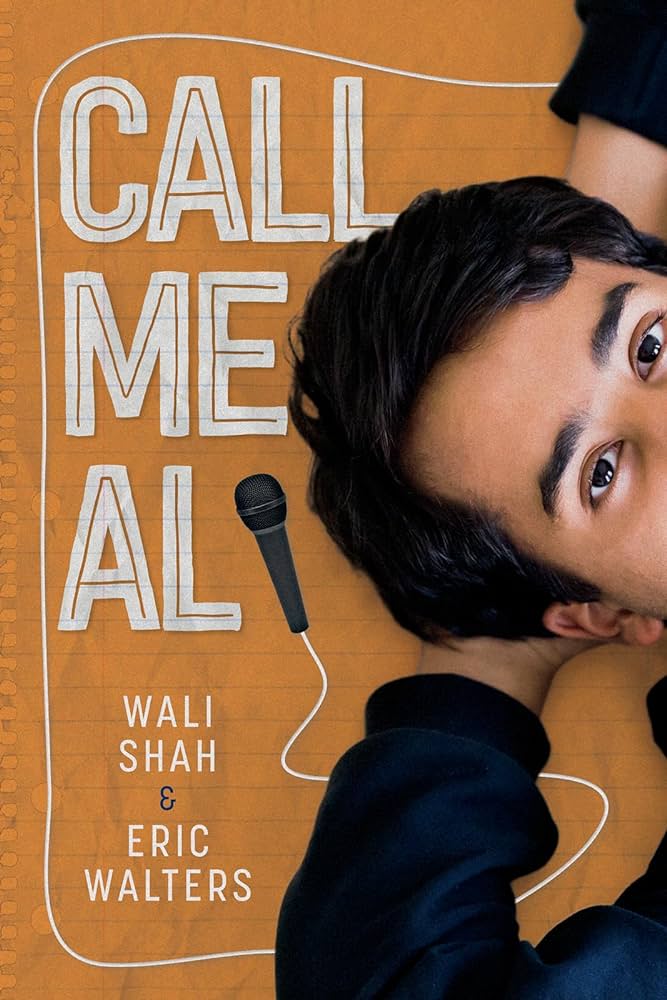
Call Me Al by Wali Shah and Eric Walters

Standard
Call Me Al by Wali Shah and Eric Walters

albook

I feel like I should have really liked this 264 page book: OWN voice, Muslim, MG, Pakistani, author is poet laureate for the City of Mississauga, Ontario, co authored by a prolific YA writer, but it unfortunately reads inconsistent and unpolished.  The characters at the beginning and their relationships with one another don’t read consistent with who they are in the middle.  Sure the character arcs from the middle to the end are nice, but it feels really disjointed from the first quarter of the book.  There are parts that feel so rushed, and other parts that are heavy handed with the preaching and the moral lessoning that I found myself skimming whole pages.  He says his family isn’t that “religious,” but Islam is centered with quotes from “the Prophet” (no salawat given, only a few times Prophet Muhammad is mentioned to identify which Prophet is being quoted) and “Imam Ali” (who the protagonist is named after), yet Al telling a girl he likes her is no problem at all.  He fasts because he has to, but tells his younger brother it is ok to sneak food, and the grandfather gives a whole speech on how the purpose of fasting is to feel empathy for the poor (face palm, in case you don’t know, it is a commandment of Allah swt).  I really struggled with how “Whites” are seen as opposites to “Muslims,” there is some push back with quotes from Malcom X on his hajj experience, but I didn’t feel like the character really ever accepted that Islam is a religion for all people, and White is a skin color.  Honestly the book reads like an early 2000 memoir.  I know it is fiction, but the cultural be-a-doctor-nothing-else-matters-stereotypes, and Islamophobic talking points that feel performative for a Western gaze, combine with a very unlikable arrogant protagonist, and result in a book that was difficult to connect with and get through.

SYNOPSIS:
Al, short for Ali does everything perfect, he has perfect grades, always listens to his parents, and respects the rules.  The book opens with him sneaking off campus with friends for lunch at the mall where he is caught by his grandfather, who seems incredibly strict, but later is the soft spot in a firm family.  His parents have moved to Canada from Pakistan, his mom used to be a teacher, but now takes care of their apartment building, his father was a physician and now drives a taxi.  It is non negotiable that Al will be a physician when he grows up.  The middle child of all brothers, his older brother Sam, short for Osama, has set the bar very high with his valedictorian status in high school, scholarships to start college, and student of the year award in middle school.  Al is in 8th grade and is expected to follow in his footsteps.  When Al’s crush on Melissa results in him writing a poem about her, he realizes he likes the written word to express himself.  His father thinks poetry is a waste of time. With a teacher that encourages creative writing, Islamophobia and hate crimes hitting close to home, and Al coming of age, the story focuses on Al’s 8th grade year as he discovers his own identity, with some help from his friends and the month of Ramadan.

WHY I LIKE IT:

I like that his friends really pushed back on him to own some of his internalized Islamophobia.  Zach is probably the most fleshed out character, and his humor, his teacher crush, his ability to apologize and make things right, is really the heart of the book.  It contrasts so greatly to how I feel about Al.  By the end he was ok, but at the beginning, his arrogance is obnoxious. I get that he is bright and a hard worker, but, yikes, he needs some humbleness.  The supporting characters are rather flat.  Al’s crush Melissa is shallow and only desired for her appearance, Dad is strict and demanding, not in an abusive way, but in a cold undeveloped way, mom is idyllic and supportive, and Ms. McIntosh is the driving motivator for Al. The other characters do little to flesh out the main players which is unfortunate.  I think some depth would have shown Al more rounded. His so called friends don’t know he is Muslim or what he eats, but they are friends, not just classmates, seems off and lacking.  The grandfather gives all the teachable moments, he starts off stern, and then is not, and the transition is jarring.  He speaks in quotes and lessons, and if it were quirky, it might help the flow of the book, but he really is the Islamic conscience of the book so to speak, but we know so little about him and his relationship with Al.

I didn’t like how fasting and Ramadan were presented. Al is embarrassed by fasting and being different.  I like that it says the family goes to the mosque, not sure why masjid wasn’t used, but there are no Muslim friends and no praying, so it has no real impact, which furthers the feeling that it is performative.  Al doesn’t seem to consider faith or culture until others question him about it, which is a missed opportunity to give Muslim kids a mirror to see themselves in the characters.  There are chapters of the book that really are wonderfully written, they just are sadly too far and few between.

FLAGS:

Crushes, Islamophobia, physical and verbal assault, racism, classism, bullying, lying, sneaking out, discussion of partition violence including great grandfather being killed. The book though, aside from the crush thread at the start and end, is quite clean, and the crush is pretty innocent.

TOOLS FOR LEADING THE DISCUSSION:
I wouldn’t seek out this book for a classroom shelf, but if it was in the library I would leave it.  I don’t think most kids would pick it up and make it past the first 25 pages though, Al is really unlikeable at the start.

Any Way You Look by Maleeha Siddiqui

Standard
Any Way You Look by Maleeha Siddiqui

img_3416-1

If you feel that hijab is like salat and that it should be done no matter what, even if you are being forced, your heart is not in it, or you are doing it to appease someone other than Allah swt, than this book might not be for you.  I am not a scholar, I should not be giving anyone Islamic advice or suggestions, but after sitting with this book, having read all 250 pages in one go, this is the crux that I have come up with regarding who will be the target Muslim audience for the book.  The Islam flows and the central Islamic message is the importance of one’s relationship with Allah swt.  So whether the fictional characters are wearing hijab, considering hijab, removing hijab, I was not overly bothered, they were still praying, going to the masjid, attending halaqas, and spending time thinking about their relationship with Allah swt at present, and what they hope it will be in the future.  The niqabi mother never forces her view on her daughters, the book does not get preachy, nor does it only show one perspective, as a result the reader is allowed to appreciate the other themes of the book and the impeccable writing.  That being said, did I wish there was more sitting on the prayer rug conversing with Allah swt about what to do? Yes.  Do I wish that everyone’s hijab journey, both real and fictitious, was easy? Yes. Do I wish we lived in a world that women were respected no matter how they dressed? Absolutely.  This book is middle grade and it takes on numerous sensitive topics, and in my very biased opinion does an incredible job.  The book contains sexual harassment, judgement, peer pressure, stereotypes, gender roles, bullying and so much more.  I truly couldn’t put the book down, the tears of being seen kicked off the book, and then tears of strength concluded the book.  Muslim and non Muslim readers alike, will be better for reading this unapologetic, OWN voice book.

SYNOPSIS:

Ainy’s life is busy: school is wrapping up, summer plans with her best friend Safiya are being made, the family has moved into the basement of her crush Izyaan’s house, her father is in Pakistan caring for an ill grandma, and Amma’s clothing store, Naseerah’s Almari, is getting busy.  Ainy begs to work at the shop as Bajjo takes on a second job to help the family make ends meet, and when her Amma finally agrees, Quratulain’s best laid plans to learn how to be a designer, and have the best summer ever, are about to be challenged.

Before she can design, she has to learn how the shop works, the frustration and time involved make her unable to fulfill her plans with Safiya causing a widening rift with the life long friends.  Bajjo who has always been Ainy’s role model starts shutting her out, and Izyaan’s cousin Yasir seems to be everywhere Ainy is. She is not comfortable with him showing up at her work, bumping in to her all over town, messaging her at night, and while she knows he is in the wrong, she starts to wonder if it is a result of something she has done.  With no one to talk to, Ainy is left to handle the Yasir problem on her own, and the relentless anxiety, isolation, and fear begin to change Ainy and everyone is too busy to notice until all the threads combine: a big wedding order from Yassir’s mom, hijabs being taken off and put on, and Ainy taking a stand.

WHY I LIKE IT:

The book hits close to some events I have experienced in my life, to the point that I had to check if the book had the typical disclaimer that the characters are a work of fiction and any resemblance is coincidental.  The characters feel that real, and their emotions that relatable, that even at my old age, I was moved, invested, and unable to look away.

I love that the author provides a lot of perspectives about hijab, but does not make a heavy handed judgement, the title of the book hints that women should be respected, and valued, no matter how they dress, and the mom in the book does a great job of setting that tone as she asks her clients how they feel in different clothes, as she models how her daughter’s choice to wear or not wear hijab is a reflection of their relationship with Allah swt, as her decision to wear niqab is hers.

There is no internalized Islamophobia, no othering, no watering down.  The book is solid and I think even if you don’t agree with the choices the characters make, the writing is strong enough that you can see why the characters do what they do for them.

My only real critique is the cover.  I don’t know why, but I don’t love it.  It doesn’t scream fashion and Islam, and the strength of the writing, the characters, and their summer together deserve a better visual representation, sorry.

FLAGS:

Triggers for those who’ve experienced unwanted attention and sexual harassment. Does have boys and girls being friends, crushes mentioned, hijab, backbiting, bullying, stereotypes, peer pressure.

TOOLS FOR LEADING THE DISCUSSION:

While I can see why some people would not “approve” of the book, and some will love the book, I think in an environment of discussion and someone qualified (not me) to guide young readers, this book would be an incredibly empowering, book to think about, enjoy, and relate to in an Islamic school book club setting.

Please consider preordering/ordering this book.  It is available here on Amazon.

The Next New Syrian Girl by Ream Shukairy

Standard
The Next New Syrian Girl by Ream Shukairy

next new syrian

This culture rich, American set, upcoming 416 page YA book proudly shows the characters’ Islam as it shares a story of pain, privilege, guilt, adversity, hope, and family dynamics.  The book is an easy read that is hard to put down, and is remarkably clean for the threads of romance, war, and mental health that permeate the pages (note that here are triggers of loss, separation, death, suicide, drowning, trauma, hate, and bullying).  There, however, are also some plot holes, contradictions, and weak threads that I feel obligated to note, but ultimately don’t make the book a bad read.  I think 16 year old readers, both Syrian and not, as well as Muslim and non Muslims will benefit from the characters sharing their lives and peeling back surface layers to show an intimate account of expectation and obligation for Syrian American girls in today’s world with the backdrop of war in Syria.  The book’s first few pages are powerful in their Islamic centering and unapologetic normalizing of salat and hijab and identity. The Islam in the forefront fades as the story progresses and I don’t think I can sign off on the relationship between two characters as being “halal,” but starting the story with fears of praying on the side of the road as a mom’s concern is next level.  Most book parents are trying to get their kids to pray, in this family- prayers are happening five times a day and on time, so the worry is knowing where you are when Maghrib time hits, because it obviously won’t be missed or delayed, alhumdulillah.

SYNOPSIS:

Khadija’s mom is queen bee in the tight knit Syrian community in Detroit and Khadija does not fit the mold of what the queen’s daughter should be.  It isn’t that Khadija is a rebel, she loves her mother, her faith, her roots, and well, boxing.  Khadija is wealthy, and privileged and so much of what is expected is for appearance sake only.  Khadija knows this, and takes boxing lessons for free in exchange for helping keep the gym clean as to establish this as her own thing, no strings attached.  When Khadija’s mom takes in a Syrian refugee and her daughter, Leene, Khadija has to figure out if she is threatened, jealous, or impressed by the new arrivals and what that means about her own family.

Leene shares the narrative with Khadija and shares her transition to life in America and in the Shaami home along with her past.  The loses she has faced, the obstacles overcome, and the secrets she keeps in order to face each new day show glimpses into the destruction of the Syrian war on a way of life and the beauty lost. 

The two girls are at odds with each other for much of the book, but as their stories start to intertwine, they find themselves with similarities and strengths that show they are a benefit to each other, despite their stubbornness and fiercely independent personalities.  In a race to reclaim what was once lost, the girls start to trust each other, and when family is further threatened the two girls allow themselves to be vulnerable and work together to save what matters.

Clearly I am trying not to spoil the book, nor takeaway from the climax, but I think most that start the book, will find themselves glued to the pages and will understand why I am choosing not to disclose too much.

WHY I LIKE IT:

The first chapter completely blew me away, I loved the idea of such a strong hijabi girl boxing and being so unapologetic about her Islam and culture.  I must admit I cried at the end as well.  It was tied up very neatly, arguably too perfectly, but there were tears none-the-less and no matter what I critique about the book, I was moved by it. The writing is engaging, and entertaining, no doubt, but alas, I have some questions, lots of questions in fact: How did the mom’s meet? One is super posh and high class, the other refugee with very little, how did their paths cross? How did Leene convince her mom to let her travel even if the ‘why’ was kept hidden? After everything they have been through wouldn’t being left to travel to the Middle East be a huge obstacle that needed to be overcome, it reads inconsistent and unbelievable. How hard was it for the “girls” to leave the “boys,” I would imagine it was devastating, yet it didn’t even get a mention.  

What changed so much about the family dynamic when they stopped going to Syria, the author shows the joy of Syria and being together for the family, but I think if you are not Syrian and do not know Syrians well, some of this thread, is going to fall short.  I talked to @muslimmommyblog and could see the reflection of the characters for her, but if I didn’t have her shared experience to flesh out the characters, I don’t know that I would have understood the weight of the guilt, the helplessness, and the frustration.  Similarly, only through talking to Shifa did I understand the pressures of being an American Syrian girl, if I’m being honest, Khadija the majority of the time, just reads whiney. Other family dynamic questions involve the dad and brother.  Was the dad always so absent? It must not have happened overnight, right? And exactly how old is Zain? He reads like he is 12, but he is in high school? Additionally, high school graduation is very important for both girls for very different reasons, but their is no talk of college or career plans, which was noticeably missing from the book.

Then there is the angsty storyline of Younes.  The perfectly selfless guy who doesn’t center his Islam as much, but does want to have a prolonged engagement.  What does that even mean, and how will that be ok Islamically, with them already laying on the 90s Bollywood style glances and loving confession?  Also why does Khadija frame morality through an Islamic lens for most things, but for the relationship resorts to worrying about what her mother will be ok with?  And was the family ok with Younes? How is he at the BBQ? Speaking of places he shouldn’t be, how was he at the party Nassima isn’t Arab enough for, when she at least speaks Arabic and he does not?

I think it best to just enjoy the story for what it is, not look too deep, not ask questions, and just enjoy the rep, the story, the characters, and the emotions released with the climax and conclusion.

FLAGS:

Romance, crushes, road rage, bullying, Islaophobia, mental health, death, killing, war, destruction, suicide, drowning, abandonment, separation, loss, grief, rebellion, angst, lying.

TOOLS FOR LEADING THE DISCUSSION:

This would not work for a middle school book club, and I really should say that this wouldn’t work for a high school book club either, but I know many older high school girls that would absolutely love this book and I think it might be possible to convince them that the relationship is more than the text shared, and was approved by the families and made halal.  Considering so many holes exist, it might be possible to control the narrative in a book club setting on the permissibility of the relationship.  It would definitely depend on the girls reading the book and I would strongly suggest that whether you read this book in a group or hand it to a teen, that you make it clear what a halal relationship looks like and that this is a work of fiction.

The book releases in March 2023 and as always to show support for OWN voice Muslim character filled stories please consider pre-ordering the book: you can do so here on Amazon.  And once the book releases please purchase, checkout from your library, and encourage your schools to shelve titles to encourage similar books to be published and made available, thank you.

Moonlight Hope: A Muslim American Coming of Age Story by Nora Salam

Standard
Moonlight Hope: A Muslim American Coming of Age Story by Nora Salam

moonlight hope

This 354 page New Adult read is truly Islamic fiction, and as long as you know what you are getting in to, you probably will thoroughly enjoy it.  It is Islamic centered, it is preachy, it is idyllic, it counters many stereotypes about Muslims and various cultures, while simultaneously falling into other tropes that define the genre, it has mature framing that is not suitable for younger readers, but doesn’t detail anything that is super “haram.”  If you are looking for a potentially halal romance between YA and Adult ages with Islamic messaging this book is a solid choice.  If however, you will be annoyed by any of the aforementioned labels, this book will not hold your attention or beg to be finished.  It reminds me a lot of Umm Zakiyyah’s If I Should Speak and A Voice books where the story has its own twists and character arcs but it spends a lot of time preaching and setting itself up to tout an Islamic perspective, or concept as well.  I wanted to read two books in the “New Adult” category and see if I could spread my reviews to include them, and with this being the second,  I think I should resist the temptation, and stick to what my library background familiarized me with.

SYNOPSIS:

Told in alternating voices of Intisar and Majed, two individuals in New York City, at different places in their life, but finding that when they hit rock bottom, Islam is the answer.

Intisar is graduating nursing school when the story opens and has only one goal in mind, get married.  She has strict Sudanese parents and has put all of her dreams on finding freedom in the perfect spouse.  She meets a guy at a friend’s house and they secretly date, kiss, and hold hands.  When he ghosts her, she is devastated and reluctantly finds herself agreeing to marry a much older man of her parent’s choosing.  Loosing herself in the idea of marriage, she finds herself heartbroken, ostracized and falling apart.  She starts to put herself back together slowly by finding Islam, her confidence, and some much needed perspective.

Majed has a famous family: his mother a model, his father and siblings singers, and he manages their careers.  After passing out from drugs and alcohol more than once he really starts to examine his life and the road he is on.  He sneaks away to rehab and in the process stumbles on to Islam.  He is Egyptian, but the family is not religious at all, and infact stop talking to him when he converts.  The trials of being a Muslim in New York with no family are not easy, but he feels it is worth it and his journey to Hajj and through loss brings him closer to Allah (swt).

The two stories are parallel and collide slightly in the periphery, but the book ends with them finally coming together and the ever dreaded words of “to be continued,” leaving the reader hanging.

WHY I LIKE IT:

I do like that the story shows struggles when one comes (back) to Islam, it isn’t always a walk in the park, it has challenges and stresses.  The book starts each chapter with a verse from the Quran and is very open about what it is.  So, while at times, the preachiness did get to me, it was very clear what type of book it was from the beginning and I kept reading.

Some of the side characters I felt needed to be fleshed out a bit.  I didn’t understand many of the random friends, how they affected the main character often seemed off, or completely underdeveloped in what was revealed about them: particularly Izzedine, Parita, the girl that married Mansour, the uncle at the Masjid that thought Majed was a spy, etc..  I also really struggled with the presentation of Uncle Munir and his calling Majed, baby, and how he just happened to bump in to him outside the bar, and the kisses.  I’m guessing it was meant to show him as over the top affectionate, but it just read as odd.

I like that the book addresses hypocrisy, mental health, and expectations.  It doesn’t paint all Muslims as good or bad, nor society at large.  The book reads as a journey, and many characters are given a chance to correct their errors and be seen in a new light.

The majority of the book is written well, but right away the book gave me pause as Intisar and her friends chat all through the Jummah khutbah, I get that it is trying to show her disregard for intentional practice of her faith and her “boy crazy/marriage” obsession, but you cannot speak during the khutbah, it isn’t just dirty looks, you truly cannot talk for it to count, and it isn’t even remarked upon, and it made me skeptical of the book for a while.  There is a word missing from a sentence on page 161 and at one point a brother in the prayer hall aims a shoe to throw.  But you wouldn’t be wearing shoes in the room where you pray, and the mosque has hallways and a glassed off section for women, so this seemed like an obvious oversight that should be fixed.

FLAGS:

Drugs, alcohol, lying, overdose, sneaking out, kissing, hooking up, physical affection, violence, temptation, sexual predatory behavior, it is an adult book, so I’m not going to continue listing everything. Nothing haram is overtly detailed or glorified. Ages 17 and up, could handle it.

TOOLS FOR LEADING THE DISCUSSION:
Too mature for my book club crew, but I wouldn’t mind it on a shelf in the school library.

Fatima’s Great Outdoors

Standard
Fatima’s Great Outdoors

fatima's great outdoors

As a partially brown person who enjoys camping and does it frequently, I have been anxiously waiting to get my hands on this beautiful 40 page, kindergarten to fourth grade picture book. So, trust me, I’ve read it multiple times to myself, to my children, and even to a Muslim storytime group to try and figure out why I like it, but, unfortunately, really don’t love it. Ultimately, I think it is because there is just too much going on.

Everything about this book is wonderful: the idea to encourage brown people to go camping, to highlight that time in the wilderness is for everyone and doesn’t have to look a certain way, that bullying and micro aggressions are oppressive, that immigrants have diverse and full lives in their home countries and work hard when they come to America, that culture and language and food and music is diverse, yet universal, that learning new skills and trying hard things makes you a super hero, that dad’s can cook and mom’s can be great fire starters and critter catchers, truly it is all so powerful and affirming, it is just a lot for one book.

It could easily be a three book series with just the information and layered themes presented, and I really wish it was spread out. If you are a 4th grade desi kid who has been camping or desperately wants to go camping this book is a great glimpse to mirror your place in the hobby without compromising your unique spin on it, but I think for anyone not in that demographic, many of the little celebrations, messages, themes, and cultural nuggets will simply be lost.

I wanted to hear the campfire stories and jokes, and laugh at the lyrics being belted out, not just told about them. I wanted to feel Fatima’s accomplishment at helping set up the tent and maybe see her struggle and rebound, not just be told she suggested reading the directions. The book has a ton of industry praise and personally came with a lot of expectation for me, so perhaps I’m overly critical, but kids in my storytime were struggling to stay focused when they couldn’t relate to the cultural touchstones being tossed out, they didn’t get the “not being good at math stereotype,” they needed the non text pictures to be explained to grasp their impact on the story, and they wanted to know why of all the Islamic things a Muslim family could do while camping, halal bacon was the only Islamic reference and came with precious little contextual defining.

The story starts with a Fatima and aapa waiting to be picked up after a terrible week of school to go camping for the first time. The Khazi family has immigrated from India and their father has told them that camping is an American pastime. During the week Fatima has been teased for her pronunciation and lunch, had her hair pulled and done poorly on a math test. But when her parent’s pull up with a packed car and the girls jump in to enjoy samosa and Bollywood songs, the weekend holds promise.

When they get to the campsite, Fatima and her dad tackle the setting up of the tent. Dad cannot seem to figure it out, and after the week she has had, Fatima is scared to help, but after a while she suggests looking at the directions and it seems that does the trick. The family enjoys shami kabab and rotis from home for dinner, before the girls climb in the tent.

A spider on the outside of the tent is magnified inside, and has the girls terrified it is a monster. Mom, the ever brave lizard and scorpion disposer in India reassures them that it is nothing and sends them off to brush their teeth before settling in for the night.

The next morning mom shows the girl the small spider keeping the mosquitos out and they all share a laugh while dad is cooking anda and roti on a gas grill. He calls the girls to come out in urdu to attempt a campfire to cook the halal beef bacon on like other American’s do. Dad and Fatima can’t get it to light, so mom, who is from a smaller town in India has to show them how it is done. Along the way Fatima looks at the other campers and is annoyed that they aren’t having trouble and that her family always is so different. The other families it is worth noting are white.

The Khazi family then starts to pack up and then they go for a hike, play in water and when the time to leave comes Fatima is sad. She doesn’t want to go back to the life they live where they are different and teased and her parents have to work two jobs each. But aapa suggests she share her fun at show and tell, and the family reassures her that they will be back.

The book ends with Fatima telling her class she is a superhero because she can build fires and tents and isn’t afraid of spider monsters. There is no glossary to define the urdu words used and spoken, but there is a reference at the end about the author’s @brownpeoplecamping initiative.

I think the book is rather remarkable and ground breaking because of its subject matter. The illustrations are wonderful, and the book a great reminder that camping and being outdoors is for all. I just wish it focused on a theme or two and highlighted them for this Indian American Muslim Family with relate-ability for other types of minority groups. The book set its own standard in what it wanted to achieve and convey, and sadly I think it missed the mark.

Counting Down with You by Tashie Bhuiyan

Standard
Counting Down with You by Tashie Bhuiyan

img_7940

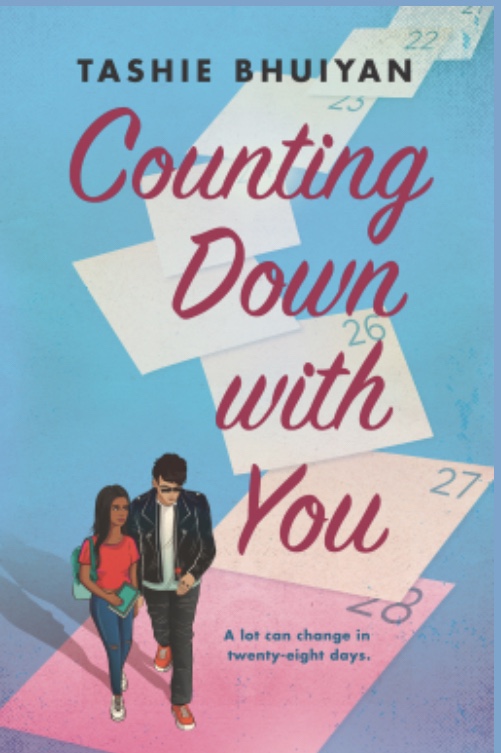
I have to be honest that this book really held my attention and was hard to put down for about two-thirds of the 416 pages.  I was genuinely invested in the characters and wanted to see how it all resolved.  Sadly, by the end, I was disappointed with the conclusion, the predictability, the stereotypes, and the cliche’ of it all.  The author mentions in the forward that she is representing her story, not a representation of all Bangladeshi- Muslim American girls, but for an OWN voice book with such a clever premise, I really wanted to be shown more than I was told, I wanted to feel the protagonists strength, and cheer her on as she found her happiness on her terms.  But alas I felt that she let other’s fight her battles and she really only threw her religion and culture around as weighted plot oppressors, not as strands of her life that she had to decide to embrace or understand in the process of growing into herself.  There was a lot of potential to discuss mental health and family expectation, but the end unraveled all that the book could have been.  Undoubtedly the author is a good writer, and brown Muslims are not a monolith, but I feel like sometimes we need to square away who we are before we just clamor for what we want.  This book has relationships, it is a romance novel afterall, but whether the characters are straight or LGBTQ+, there isn’t more than kissing and hand holding and would probably be fine for 9th grade and up if you are ok with a Muslim lead lying to her parents and having a boyfriend.

SYNOPSIS:

Karina Ahmed is 16 and expected to be a doctor when she grows up.  Her conservative Muslim parents are immigrants from Bangladesh and very over protective of their oldest child.  Samir her younger brother, a freshman, is a robotics nerd and the pride of their family.  Karina loves English and wants nothing more to major in English in college, but her parents are insistent and despite her struggles with math and science she is determined she has no choice in the matter and must make them proud by being a doctor.  This inability to be what her parents want has caused tremendous anxiety within Karina and when her parents leave for a vacation to Bangladesh for a month, she is hoping to be able to relax and enjoy life for 28 days with her Dadu, paternal grandma, and her friends, Cora and Nandini.

The only extracurricular activities Karina is allowed are Pre-Med Society and tutoring, where she helps others with English.  Her teacher asks her to tutor a classmate one on one to prepare for the end of the year exams, and reluctantly she agrees.  Very reluctantly.  The classmate is brooding resident bad boy Ace Clyde, a beautiful slacker that seems to not care about much.  In Karina’s efforts to get Ace to study and taking advantage of limited parental supervision, Karina goes with Ace to a sweetshop and even ends up at his house where she meets his family.  Ace is not ready to admit to his incredibly wealthy family that he is seeking help from a tutor and instead introduces Karina as his girlfriend.  Ace’s older brother Xander, the Student Body Class President, isn’t buying it, so Ace announces it on social media and shows up the next day with coffee for Karina as he walks her to class determined to convince everyone that they are indeed a couple. Karina is not ok with this, but he does promise her a dozen books a week and he is aware that the “relationship” can only last 28 days, so she is in.   Karina’s friends predict that they will fall hopelessly in love and they are pretty correct.  Over the course of the next three and half weeks the two grow closer, he even comes over and spends time with Dadu and Samir.  She encourages him to fix his relationship with his family, and he encourages her to fix hers.  And somewhere in the midst of pretending they decide to make it real and then Karina’s parents return.  She at this point has been cheered on to stand her ground on confronting them about not wanting to be a doctor by Ace, Cora, Nandini, Dadu and Samir.  The conversation does not go well and Karina goes into a two week slump pushing everyone out before she *spoiler alert* resolves to date Ace in secret as long as he respects her lines, and Dadu stands up to her parents for her.  The story concludes with her going to Jr. Prom and her resolved to just stay strong for a little while longer until she is “free.”

WHY I LIKE IT:

I like that I really didn’t know if the book would turn cliche until it ultimately did.  I really liked the realness and rawness of Karina coping with her anxiety and her friends supporting her in Googling coping mechanisms and helping her test them out.  I feel like it was a missed opportunity for Karina’s parents to not reach out to her, or for Karina to even mention that they were missing it.  I think readers that see themselves in Karina would have hoped to see that story thread play out and give them hope of getting help and support or at least getting it out in the open to normalize it.  I love the growth of Samir once Karina make him aware of the double standard, but I feel like he doesn’t read with a consistent persona.  He has a job, he has friends, he likes a girl, but he reads like he is clueless and maybe 10 years old at best, not in high school.  A bit off for me.  And of course you have to love Dadu, a wise old woman who supports her grandchildren and sticks up for them.  I wish Karina would have taken her cues from her beloved grandmother and stood up to her parents with Dadu in the room rather than let Dadu fight the fight and just stand there.  I thought the big climax would be Karina standing up to her parents, so I felt let down when she let someone else fight her fight.  Yes Karina tried and failed, but I think her grandmother should have backed her up in round two, not taken over.

Karina throughout says she is Bangladeshi-Muslim and uses it as a reason to fear her parents and feel obligated to not date or study English.  She does say she isn’t against religion, and actually likes being a Muslim and praying and knows Allah loves her, but that it is the tradition that blindly is followed that gives her trouble.  Her maternal grandfather is an Imam and her mom is much stricter than her father, but he follows her lead in raising the kids.  My critique isn’t so much to argue with the author’s perspective about religious standards, but more a literary one, when the character says she is Muslim and uses that to reason why she has lines, but yet is never seen praying or wresting with what she wants and what she believes.  Never asking Allah for help with her anxiety or confronting her parents or anything for that matter.  As soon as her parents leave she is in a crop top, so where is the religious line and where is the cultural one?  Where is her understanding of her culture and where it fits in her life and where she wants it to fit in her future? Is she Muslim because her parents are or because she believes it? She won’t eat ham, and eats halal, but later eats meat at Ace’s house? Everyone, even fictional characters, get agency, but in a book where the premise is a fake relationship turned real turned rebellious because of religion and culture, a little introspection seems warranted.

The conclusion after hundreds of pages of being called lionhearted and brave and strong seemed diminished when going to prom and lying to parents and having grandma fight your battle is the happy ending.

FLAGS:

Relationships: The main couple hold hands and kiss. There is a supporting character that is bisexual as is a cousin, one is gay, they hold hands and kiss as well. Nothing more than that or detailed. There is lying and deception.

TOOLS FOR LEADING THE DISCUSSION:

I don’t think I would do this as an Islamic School book club selection because it would imply agreement with lying and going behind your parents backs.  Granted her parents are difficult and her grandma is aware and ok with the situation, but I still think it would send the wrong message to endorse such behavior from a religious school perspective.

Ayesha at Last by Uzma Jalaluddin

Standard
Ayesha at Last by Uzma Jalaluddin

ayesha at last.jpg

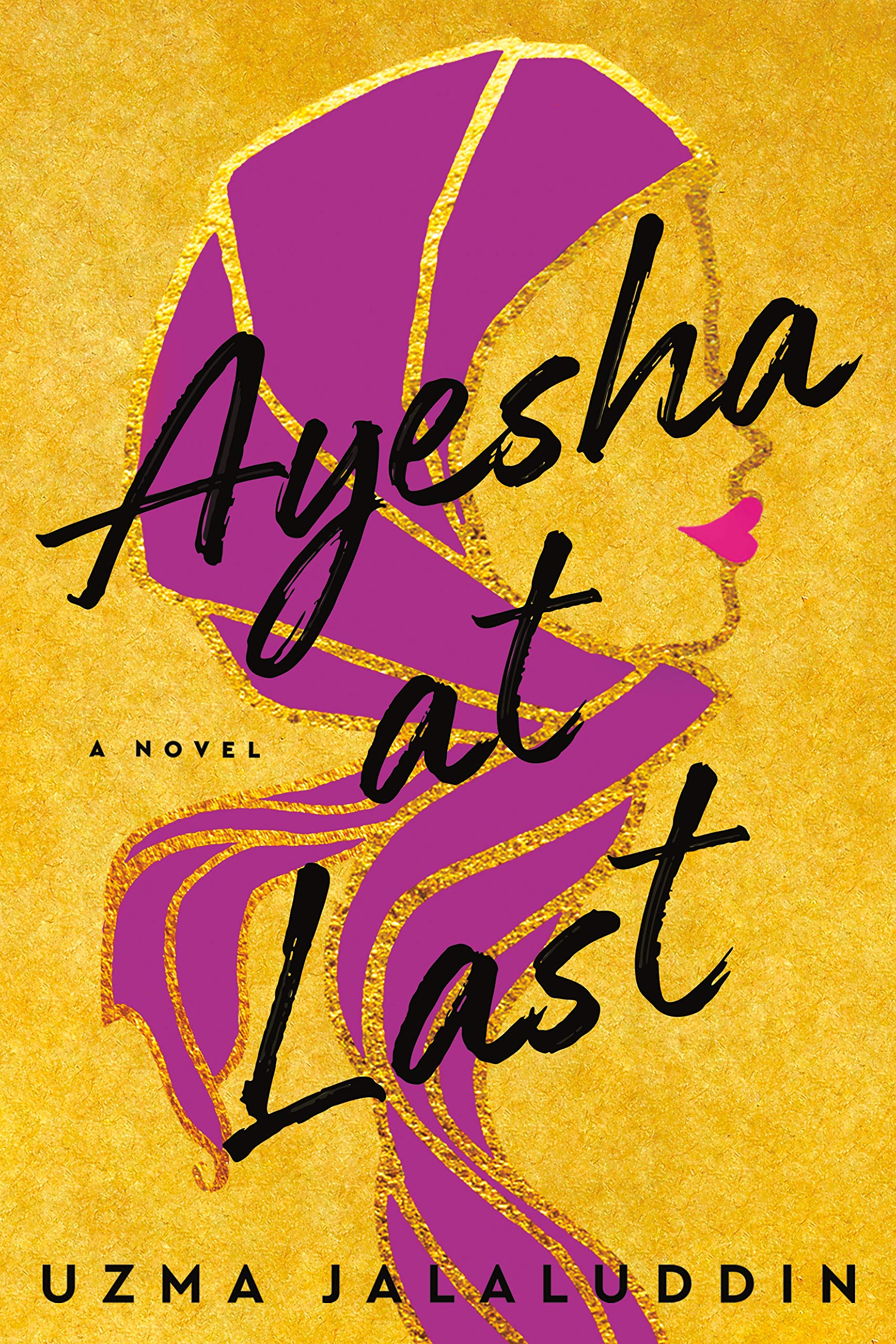
This is not a YA book.  The back of the book and about 75% of the story could really make it seem ok for mature middle school and early high school readers, but I’m reviewing it as a “public service announcement,” that it really isn’t appropriate for a young adult demographic.  No where does the book claim to be YA, I’ve just seen a lot of people online ask if their 13-16 year old (ish) daughters would like it.  That being said, the 351 pages of halal romantic comedy a’ la Pride and Prejudice inspiration, really is a fun light summer read that I enjoyed and feel young college age girls and up will too.

SYNOPSIS:

Set in Canada, Ayesha is 27 and still sorting out what she wants in life while considering expectation, obligation, and passion.  Born in India, she came to Canada after her father died in secretive circumstances, and with a workaholic mom against marriage, a Nani who once studied to be a police officer, a Nana who quotes Shakespeare at all times, Clara, a best friend, and a flighty beautiful younger richer cousin, this cast of characters cheer her on, gently nudge her, and support her, giving a diverse and nuanced view of what a Muslim family looks like and how they interact.  Then throw in Khalid.  A very black and white character in his views on Islam, and culture and pretty much everything, and you have a storyline with a lot of potential, twists, and interconnections.  

Khalid works with Clara, lives across the street from Ayesha, and has an incredibly controlling mom who has just sent a marriage proposal to Ayesha’s flighty cousin Hafsa.  When a conference at the masjid forces Ayesha and Khalid to work together after meeting earlier, tension and sparks fly, and to top it all off Ayesha is pretending to be Hafsa. 

Khalid has his own team of supporting characters, Amir an alcoholic- womanizing-homeless colleague who for some reason is considered a friend, a sister who was banished to India and forced into an arranged marriage 12 years earlier, an Islamaphobe boss, and his own baggage regarding his father’s sudden death. 

Bring in the Wickham character of Tarek and the cast of characters is complete for all the action to go down at the mosque and give the Aunty Brigade a whole lot of gossip to process and spread.

WHY I LIKE IT:

The book is fairly predictable in the major story arcs, but there are a lot of twists that keep you hooked, and the author’s writing is smooth and fluid.  Being it is a loose retelling of a classic, I wasn’t expecting much and was pleasantly surprised how well the story would stand alone as an OWN voice piece about growing, maturing, changing and willing to challenge oneself. 

I love that every Muslim and desi character in the book is different and unique and not a cookie cutter of stereotypes and tropes.  Most of the females cover, but they are nuanced in how they do it, what it means, how they carry themselves etc., some shake hands with males some don’t, some are comfortable in bars, some are more reserved, some have never had a boyfriend, some have, and they really show the reader that Islam is a deeply personal conviction and the rules are interpreted and challenged differently for each person.  It also shows different male approaches and the internal struggles of doing what you want to do and what you know you should or shouldn’t do in a very realistic non preachy way.

My favorite relationship by far is that of Ayesha and Clara, I love that Ayesha’s non Muslim friend knows that Khadijah (RA) proposed to Prophet Muhammad (SAW) and jokes about rishtas and frequently asks “What would Nana do.”  Seriously, as someone of  Paki background, who started covering in high school, who is half American and proud to be Muslim, this is friendship goals!

The book is perfect for the beach, or a day at the pool, it is light and silly and really you just go with the outrageousness of some of the details.  There are a few thought provoking themes, but really it is just fun and sweet.

FLAGS:

I was really impressed how halal the main story romance remained, however a few of the side stories are a little intense for younger readers and don’t really appear until about 2/3rds of the way into the book.  Yes, Clara has a live in boyfriend and there are a few jokes and situations involving  hooking up, virginity and porn, along with some characters smoking and drinking and being around alcohol, but then the climax really puts more mature situations on center stage. 

Khalid’s sister had an abortion resulting from a pre-marriage relationship and thus was sent to India.  Amir shows Khalid a porn website where hijabi and niqabis strip and pose, a website that is discovered Tarek runs and Hafsa is featured on. The website and the pregnancy/abortion really are the crux of the book and it becomes a big portion of the last third of the book.  It isn’t that the content is overly detailed, it just what the concept presents.  It isn’t salacious or pornographic or titillating in presenting the information to the reader, but the mere presence of it in the story would make it inappropriate for a YA book or younger readers.

TOOLS FOR LEADING THE DISCUSSION:

No way the book could be taught in an Islamic school book club setting, however, if the teachers wanted to start a book club, this one would be a great candidate.


Love, Hate & Other Filters by Samira Ahmed

Standard
Love, Hate & Other Filters by Samira Ahmed

love hate and other.jpg

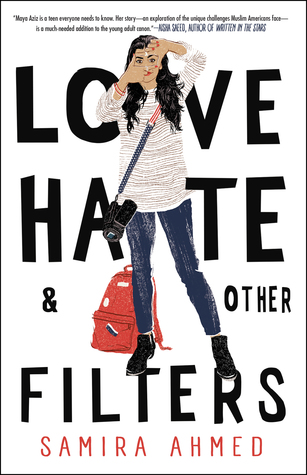
I seriously wish I could get back the few hours I spent reading this 281 page AR 4.8 book.  The blurbs talks about a girl being torn between the world around her and the world her Muslim-Indian-American parents want for her, unfortunately the protagonist is rather unlikeable and her worlds are actual not that different.  Islam is not represented at all, it is just mentioned as a checkpoint almost for the main character to continually justify her identity as “other” and try and illicit sympathy.  It seems to be a part of the story so that the story line of Islamaphobia can be addressed, but the book is cultural at best, and even that is rather lacking.

SYNOPSIS:

Maya Aziz is 17 and missing a dance her senior year to attend a wedding because she is not allowed to go to such events as the daughter of conservative Indian Muslim (dentist) immigrants living in Illinois.  But, immediately the hypocrisy shows itself as at the wedding, a boy, Kareem, deemed suitable by her parents is presented to try and woo Maya and possibly marry her, and the two of them wander off together, and consider meeting up at an after party.  As the reader gets to know Maya and her circle of characters, we meet her “cool” Aunt who lives alone and wants Maya to have a life of boys and partying and going to school in New York.  Her parents are never really defined except to maintain the stereotype of being controlling, focused on food and appearances, and not understanding their only daughter.  At school Maya has a best friend Violet who loves to flirt and remains loyal to Maya throughout, a cute boy Phil, who she has been crushing on for years, and some side figures that stir up some trouble.  

The premise of the book is that Maya loves film and wants to go to NYU to attend film school, her parents, want her to live at home and go to the University of Chicago.  The idea is that because they are immigrants, and culture and religion dictate all, that she get educated and married.  This conflict is intensified by Kareem, her sudden relationship with Phil, and a terrorist act that is first blamed on Muslims occurring hundreds of miles away in Chicago and giving someone at Maya’s school a reason to take out his anger on her and her family.

WHY I LIKE IT:

I don’t like it.  The book is presented as an own voice minority representation piece, but it isn’t.  I get that Islam is personal and that people identify with it and choose different paths, but this isn’t a case of her looking at Islam and saying it isn’t for me, this is a book that is billed as Islamic fiction, yet the character does nothing Islamic, seems to know nothing of Islam and has no moral conscious for anything about the faith.  She says she doesn’t pray or go to the mosque, the parents lament after hate crimes materialize against them, that maybe they should have gone to the mosque at some point.  She wears shorts, and tank tops and a bikini and doesn’t feel a tinge or reflection.  Even if she were to remark that this is an act of rebellion the reader would know, oh because she was perhaps raised with modesty, but no, she wears whatever.  She constantly mentions that she can’t have a boyfriend because she is Muslim, but then makes out with Kareem on like their second meeting, kisses him in her parents living room before deciding she doesn’t like him, repeatedly kisses Phil, practically spends a night with him, and then in the epilogue is kissing a Hindu guy she kind of just met.  Yes, there are Muslims that do this, I’m not judging, but how exactly is being Muslim then stopping you from doing that you want to be doing?  At one point when out with Kareem, he is drinking wine, Maya remarks she has had it before, and that at least it isn’t eating pork.  Misguided and off the mark, yes  some Muslims do drink, but with all build up that she can’t do things like that, only to find out she has, and it isn’t a big deal, and she doesn’t even see it as a deal breaker or worth mentioning to her parents who have set her up on this whole path to semi arranged marriage, seems so off.

Anyone hoping to pick up a pice of Islamic fiction to identify with, are going to be so completely let down.  The book seems to be written for non Muslims to feel good about having read a book with a minority character.  It’s like a coming of age story, except there is no self reflection or understanding of the world, no lessons learned, or wisdom gained, unfortunately.

I kept reading hoping that if even the Islam was poorly done that the love story would be sweet, or the presentation of hate and Islamaphobia would be on point, but it also was shallow.  Really only one kid had it out for Muslims, and yes he got violent with Maya and threw a brick through her parent’s dental practice, but it could have been used to show light on misguided hate and it didn’t, I don’t really even know what it was used to show.  Maya’s parents got scared and wanted to keep her close, thus forbidding her from going to NYU, but they were already on the fence about it.  Yes, maybe it added to the catalyst of her running away from home an in to the arms of Phil, but even that ended up seeming lame, as she left for NYU and was in someone else’s arms by the end of the book.  So, not sure really, what religion at all had to do with anything, and why the author and publishing team would want to advertise the book with such a strong religious angle, or even cultural one for that matter.  The parents are both successful dentists, who let their daughter do whatever, yes they have an opinion on her future, but Maya reads like a brat, I wish I could like her, and take her side against her tyrant parents, but they don’t actually seem written that bad, and Maya doesn’t make any effort, so she really comes across as whiney, privileged, and entitled.  

FLAGS:

Alcohol, lying, hate crime, terrorism, physical altercation, kissing, hand holding, talk of condoms, sneaking out.  I would not let a 4th grader read this or even a 7th grader, based on content.  Quality, I’d encourage most kids to skip it altogether.

TOOLS FOR LEADING THE DISCUSSION:

I wouldn’t consider this as a book club, I considered not even reviewing it, with the fear that people wouldn’t read the whole review and would just assume I was throwing my support behind it.  I am a bit disappointed that the book is available through Scholastic as its back flap reads very different than the text within.