Category Archives: Non Fiction

Welcome to the New World by Jake Halpern illustrated by Michael Sloan

Standard
Welcome to the New World by Jake Halpern illustrated by Michael Sloan

new world

I really like the concept and approach of this 192 page non-fiction graphic novel.  It isn’t a memoir or OWN voice retelling, it is basically an in-depth news story about a Syrian refugee family that has been fact checked and then illustrated.  Unfortunately, parts of the story are really choppy and unresolved, details shared for no purpose and occasionally reinforcing of stereotypes.  The book is an easy read and the Muslim family is shown to practice and be fleshed out, but more than once I found myself questioning what the author’s commentary was suggesting/implying based on what was being included.  I allowed my 12 year old son to read it before I was finished, but the last few pages had both misogynistic and homophobic slurs coming from bullies so I made sure to discuss that with him.  I think upper middle school to YA is probably the ideal readership because of the subject matter of escaping war, facing financial insecurities, PTSD, bullies, islamophobia, and navigating a new environment when you are not quite a child, but not yet an adult either.

SYNOPSIS:

Naji’s family is undecided if they should leave Syria or not.  Part of the family has permission to travel to Connecticut in America, but part of them still do not, including Naji’s grandmother.  The war has already imprisoned Naji’s father and uncles in the past and with the US election showing Trump having a chance, they feel like they need to make a decision quickly.  Naji loves all things American and is the only one in the family anxious to get to the US and get on with life, but when the moment of saying good-bye arrives, he has doubts.

Once they arrive in America, all their doubts multiply as life is difficult, help is hard to come by, and day to day fears of safety have not been left behind.  School, finding jobs, learning the language, and facing hate are just the big things that plague a family who has left everything to start over in this detailed account that follows Naji and his family as they navigate their new world.

WHY I LIKE IT:

I like that the book has been approached as a news article.  I just didn’t like the unresolved threads that seem to take up so much of the narrative only to be abandoned.  I really struggled with the idea that Naji knows America and obviously media is global, but is shown to be confused by a dining table.  I didn’t like the commentary of Naji’s sister Amal and her hijab, I find it hard to believe there aren’t other hijabs in the school or larger community and why it is made to be such a big deal by her, and those trying to help her.  It would seem small after everything she has been through.  I do like that there are a few other Muslims in the school and at least they discuss that there is not a nearby masjid.  I wish other Muslims would have been around to help settle the new family.  I know a few groups that helped in immigrants in New England, so that there were no Muslims in the welcoming groups seemed hard to accept.  By and large it does show Islam being practiced, not just names and hijabs, which I appreciated, but for a book that is based on a real family, with graphics, I really expected a stronger emotional impact that ultimately for me was just not there.

FLAGS:

Death, abuse of power, war, language, bullets, shooting, kidnappings, detainment, destruction, kids making out in hallways, implied rape/sexual assault, death threats, racism, islamophobia, misogyny, slurs, name calling, differential treatment, fear.

TOOLS FOR LEADING THE DISCUSSION:

This wouldn’t work for me for a book club selection, but if I ever teach a journalism class again, I think I would some how incorporate this book as a way to show what journalism can be, and also as a clear way to show how what parts you include and what parts you keep out affect the messaging of the story as well.

Let’s Think about Allah’s Great Garden by Ali Gator

Standard
Let’s Think about Allah’s Great Garden by Ali Gator

allah's garden

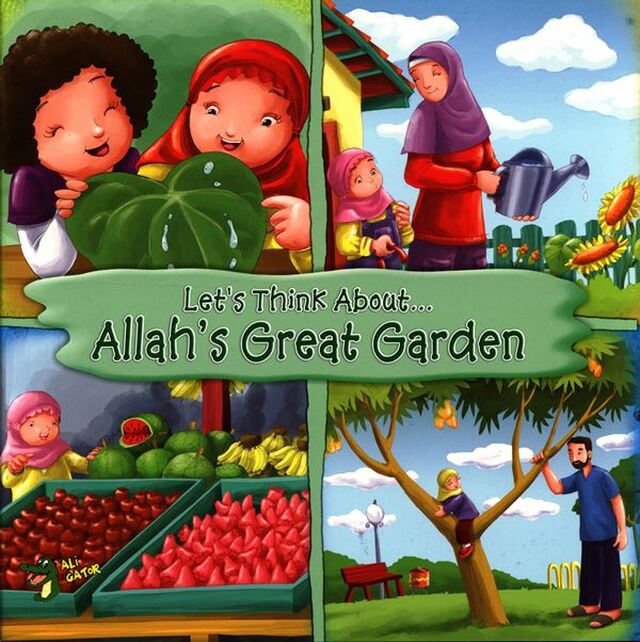
At 22 pages this book’s title aptly describes the contents within: at times factual, sometimes breaking down the fourth wall and asking readers to do something engaging, at times fictionalized, and often meandering and reflective.  The book is all over the place and only cohesive in theme.  It has sat on my shelf untouched by my children for quite a while, but when I needed options for the library during Earth Day, this book did a great job in facilitating discussion with pre k to 1st grade.  It isn’t a story time book so to speak, but it gets kids thinking and can be tailored to their level of discussion.  I don’t think that is how the book was intended, and as it is written it is rather unimpressive, but when pulled apart it did serve a very specific purpose.

img_9837

The book starts out with a few lines about Allah’s blessings of all things particularly trees and plants and gardens.  I wasn’t sure if it was trying to rhyme or not, but I think the first lines are just incidental rhyme as the flow and words quickly unravel. It talks of climbing trees and the narrator’s father telling him to be careful. It then discusses watermelons and how they grow in the ground, not on a tree and asks readers if they can see the watermelon seeds in the illustrations.

img_9836

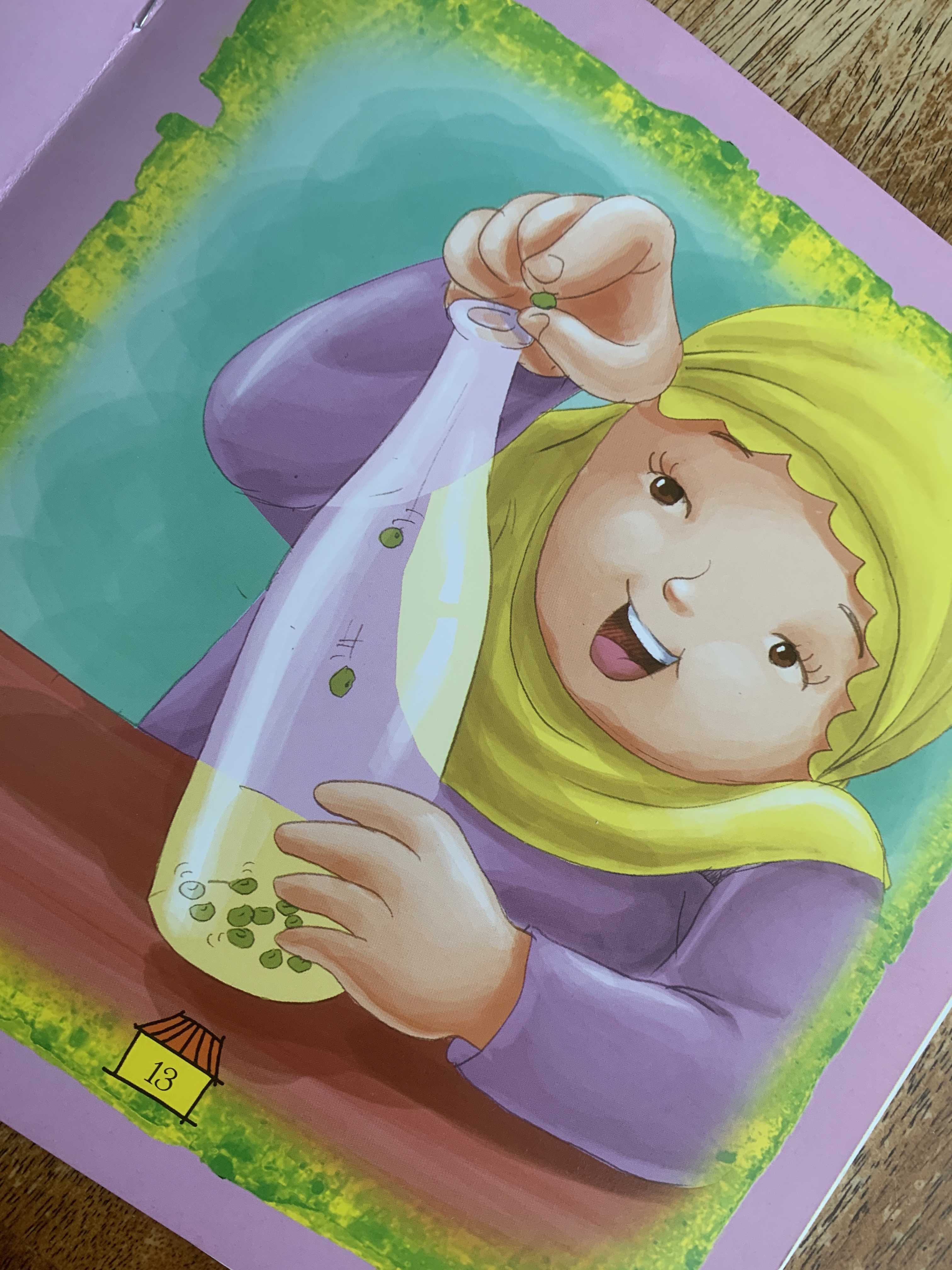
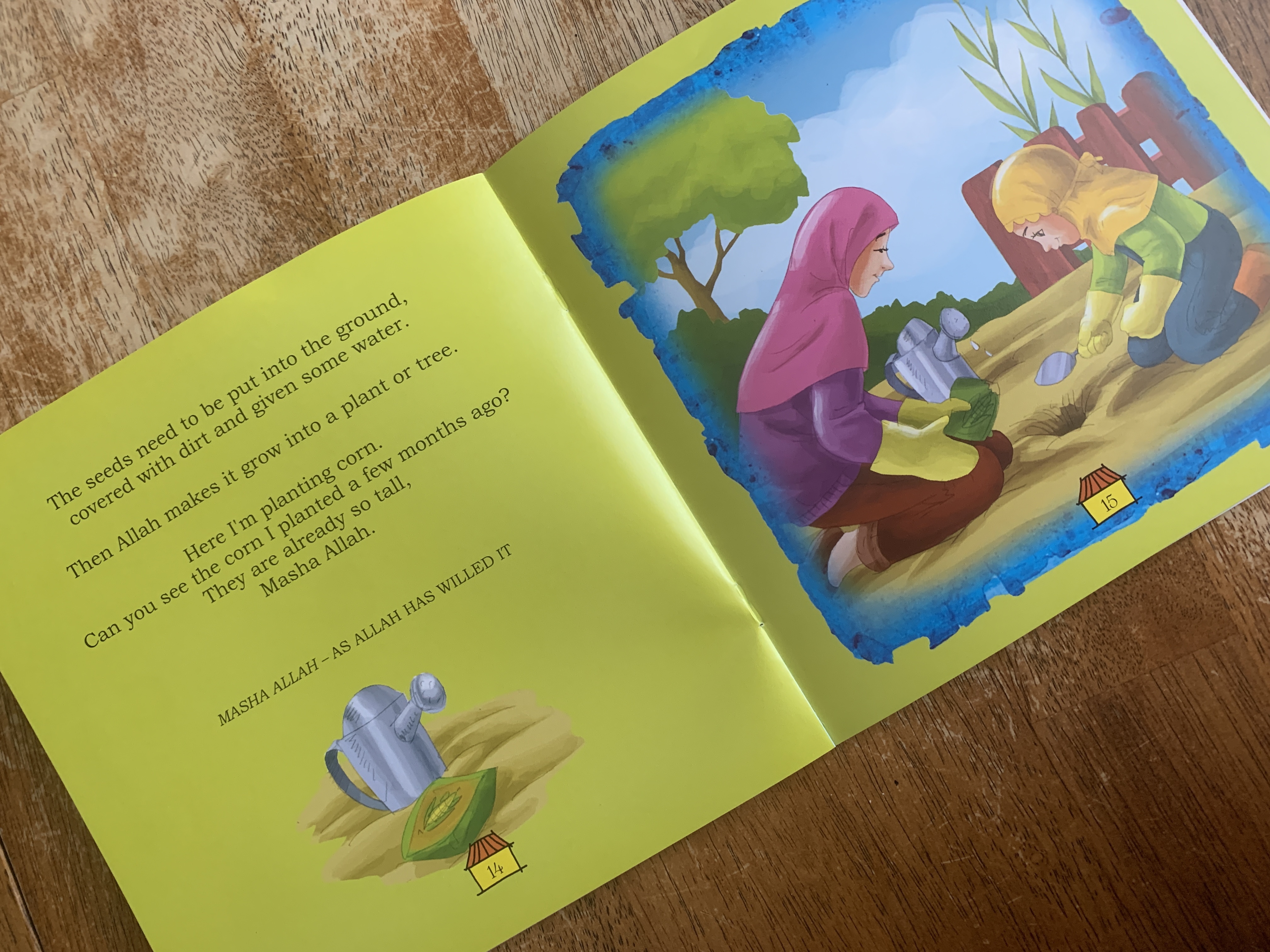
The book focuses on the life cycle of plants: seeds, flowers, trees. Drawing on that information it then shows the little girl collecting seeds to plant.  It then talks about the planting process and the needs all growing things have to prosper if Allah so wills it.

img_9838

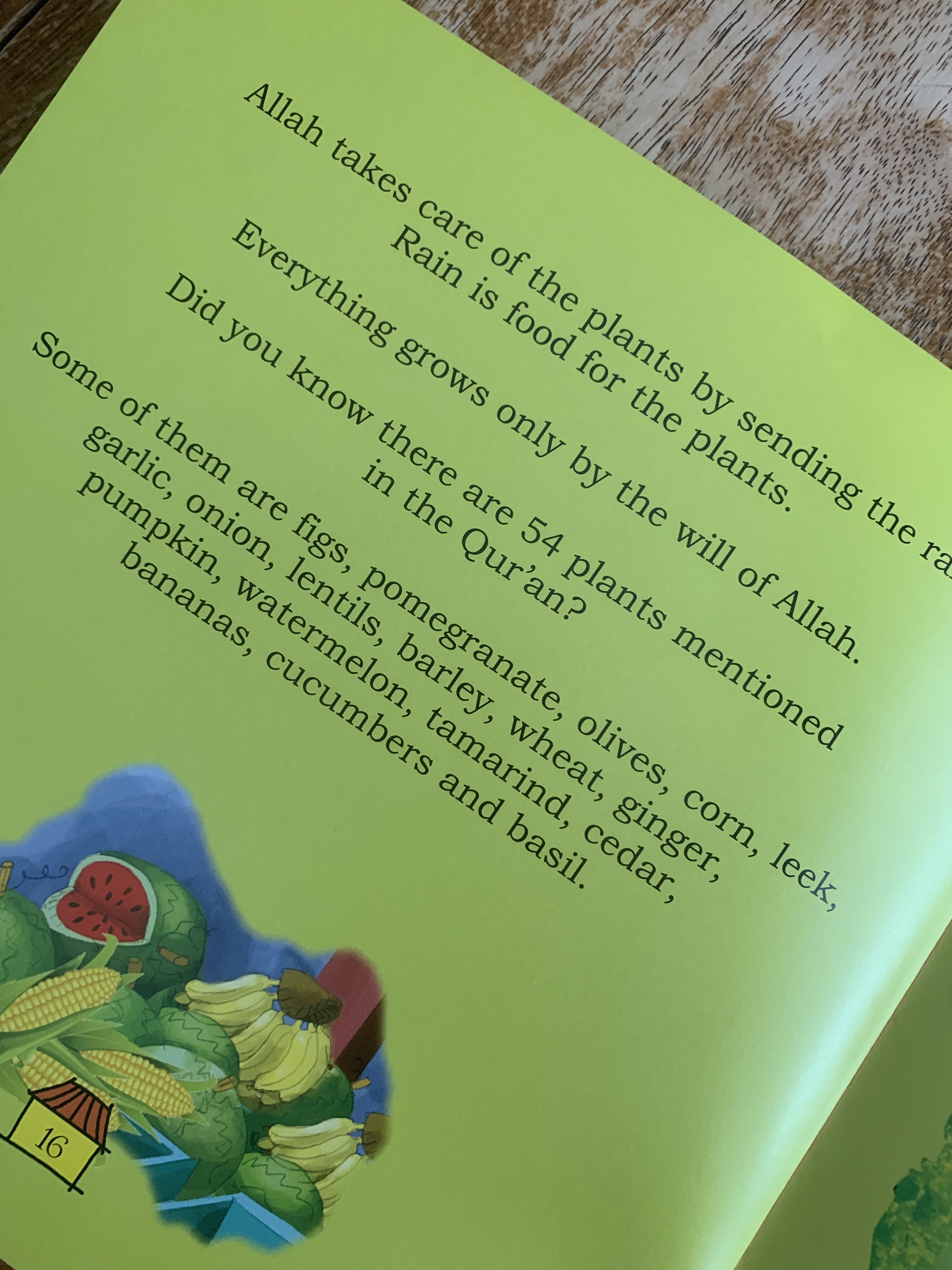
Then the book gets interesting and starts to discuss the plants mentioned in the Qur’an before returning back to the half hearted narrative remarking on how the flowers complement the color of their house.

img_9839

The story seems to then end, but it isn’t denoted that the remaining pages are factual or set aside as back matter, it just pivots and begins discussing rain in Surah an-Nahl, Trees in Paradise as mentioned in Qur’an and Hadith, and then again, but this time in table form, the fruits and vegetables mentioned in the Qur’an, and highlighting dates specifically.

img_9841

The book is all over the place, and I doubt it will be read again until next year.  There are a few other books that have come out about his topic, and I plan to look in to them to see if they work better for story time readings and child engagement.

The Wonders We Seek: Thirty Incredible Muslims Who Helped Shape the World by Saadia Faruqi and Aneesa Mumtaz illustrated by Saffa Khan

Standard
The Wonders We Seek: Thirty Incredible Muslims Who Helped Shape the World by Saadia Faruqi and Aneesa Mumtaz illustrated by Saffa Khan

wonders we seek

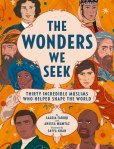
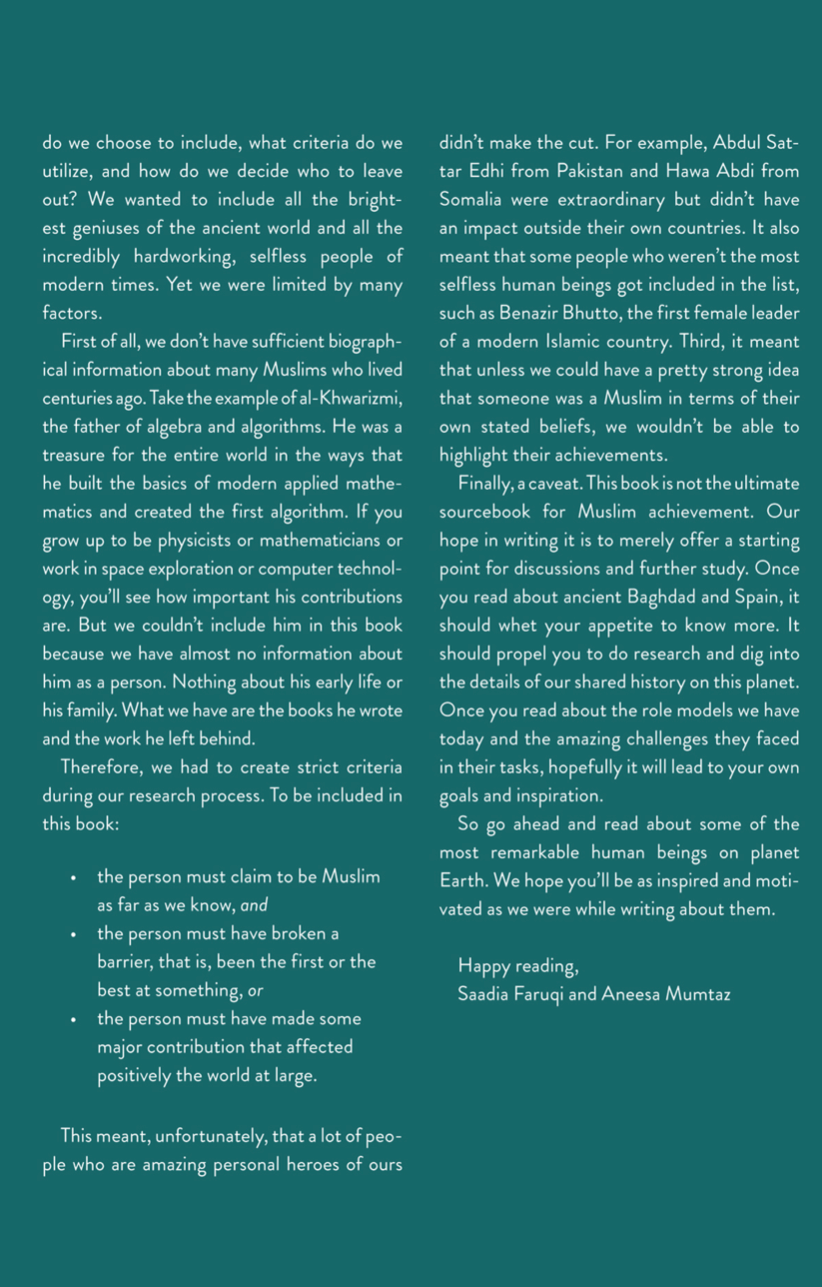
I’ve noted over the years how much I want to love these type of collections, but ultimately I just don’t.  The reason I gave this one a try was quite simply the reassuring introduction.  The book immediately detailed the checklist required to make it into the book, the criteria required, and acknowledged the limitations that the book overall, and personalities included, would have in the presentation. There are sources at the end for each of the 30 people included as well.  Unlike most books in the genre, this book got out in front of my most common complaints: the lack of transparency for how the people were selected, where the primary source information was obtained from, how the order is organized, and the Eurocentric and pop culture framing that is both pandering and renders the book cumbersome a few years after it is published.  For the most part, this book is the best I’ve seen yet, but that isn’t to say I loved it.  While the requirements to be included were made apparent, there is still a lot of opinionated statements about how “religious” or “conservative” or “devout” or “mainstream” or “strict” a person is or was, that rubbed me the wrong way.  Also knowing that the person had to identify as Muslim to be eligible seems like a black and white issue, but a few of the personalities are very controversial (some noted and some not), and I am not an expert at all.  One of the problems with books like this is they present as non fiction, and no matter the transparency, just the mere fact of who is included and who is not is a judgement call and wrought with bias.  It is nice to thumb through, but I don’t know that it would get repeated use, or that it could really be used as a reference.  It is informative and I recognize that I went in to it very skeptical, but only a few text passages connected faith to the person’s accomplishments, and so while they identify as Muslim, it doesn’t necessarily radiate pride or admiration for Muslims as a whole.  For better or worse, if anything, it made me want to conduct my own research on many that were featured. 

img_9998

The 30 included in the book:


A few I was concerned by, which made me question the ones that I learned something new about. Clearly there are reasons that I shy away from non-fiction.  I wish the book would have had Muslim beta readers, I am willing to assume that it did not.  Take for example the section on Saladin, I absolutely get why his name is shown as both Saladin and Salah al-Din, the book is in English presumably for western readers and that is how he is known.  But why when it says that his real name is Yusuf, is Joseph in the parenthesis? No one else’s names in the book are given the English equivalents of their Arabic or Persian or other native language. Similarly so few tied back to Islam or an Islamic perspective being credited for having a role in their noteworthy accomplishments.  Even Muhammad Yunus when it discusses how interest was not a part of the micro loan process- it didn’t add even one more sentence explaining that interest is not allowed in Islam, why leave that out?  

I liked that the parameters required that the person was influential more globally than just to their own country, but Rebiya Kadeer seemed to be more localized in her work with Muslims in China even when she moved out of China, blurring the rigid standards of who was to be included and who was to be left out.  

img_9968

I do like that it mentions Rumi’s religion is often conveniently ignored as the west has made him a hero and chosen to forget his faith.  Similarly, I like that it tries to correct when Ibn Battuta is called the Marco Polo of Islam, for in reality Marco Polo was the Ibn Battuta of Europe.  And I appreciated that Benazir Bhutto was noted as being controversial and not well liked. 

If this type of book appeals to you, you can purchase it here.


ABC’s of Pakistan by Marzieh Abbas illustrated by Michile Khan

Standard
ABC’s of Pakistan by Marzieh Abbas illustrated by Michile Khan

abcs of Pakistan

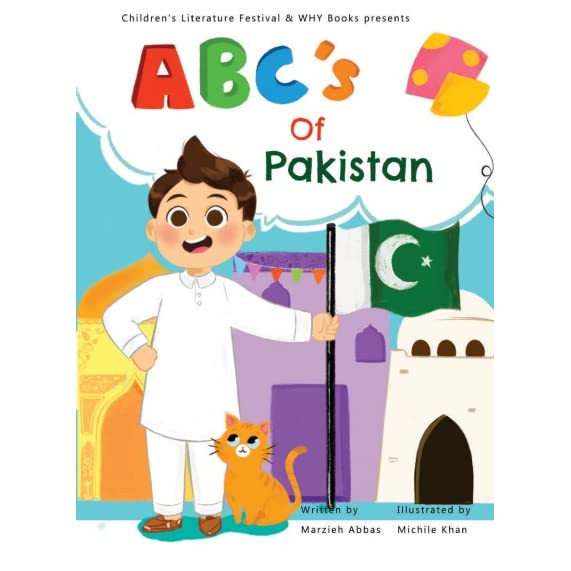
I absolutely love this ABC book, it truly does Pakistan proud and I’m thrilled that I could obtain it, it wasn’t easy, sorry not sure where you can get it in the USA, and it isn’t available even at Liberty Books in Karachi, but if you can find it, grab a copy, or two because it really is a well done tour of the country.  My only suggestions would be thicker pages, the hardback 8.5 x 11 binding is nice, but the pages seem to have curled in the transporting from overseas.  Also, some pages have a large A or E, but others such as the words for B, C, D, are just all flowing story style over a two page spread.  I don’t mind one way or another, but I do side with consistency, either have the letter on all pages singled out, or on none.  The effort to string the pages together makes it read very much like a story, and I appreciate that it features little snippets of fact and history in talking bubbles throughout.

img_7514

Little Hassan and his cat Makhan introduce themselves and then take you on a tourney of Pakistan.  Included are landmarks, handicrafts, foods, famous people, festivals, sports, and more.  It concludes with a reminder to carry facemasks and hand sanitizers, which might date the book a little in the future, it was published in 2020.

img_7517

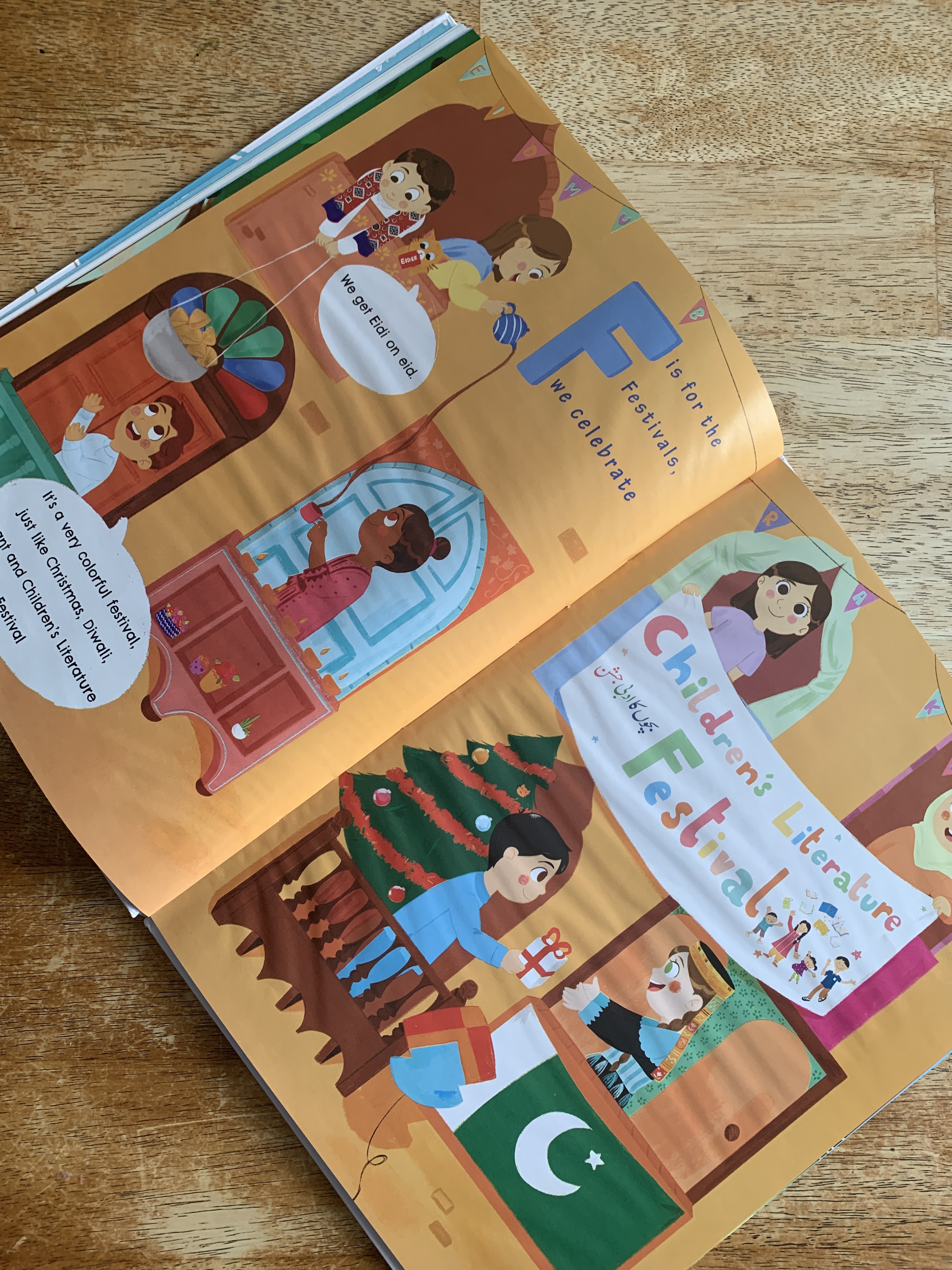
The book works for non Pakistani’s to learn, especially those of us with children that have not been to the “homeland,” as well as for Pakistanis in Pakistan to feel proud of their culture, history, tradition, and landmarks.  There are beautiful masjids and the azaan mentioned and hijab wearing and non wearing women, as well as famous men and women included.  It is inclusive on the F for festivals page where it mentions Eid, Basant, Christmas, Diwali, and Children’s Literature Festival.

img_7516

Enjoyable text and illustrations alike. InshaAllah, will be more readily available if we can convince the author and illustrator and publisher that there is demand, I hope, hint hint.  Happy Reading!

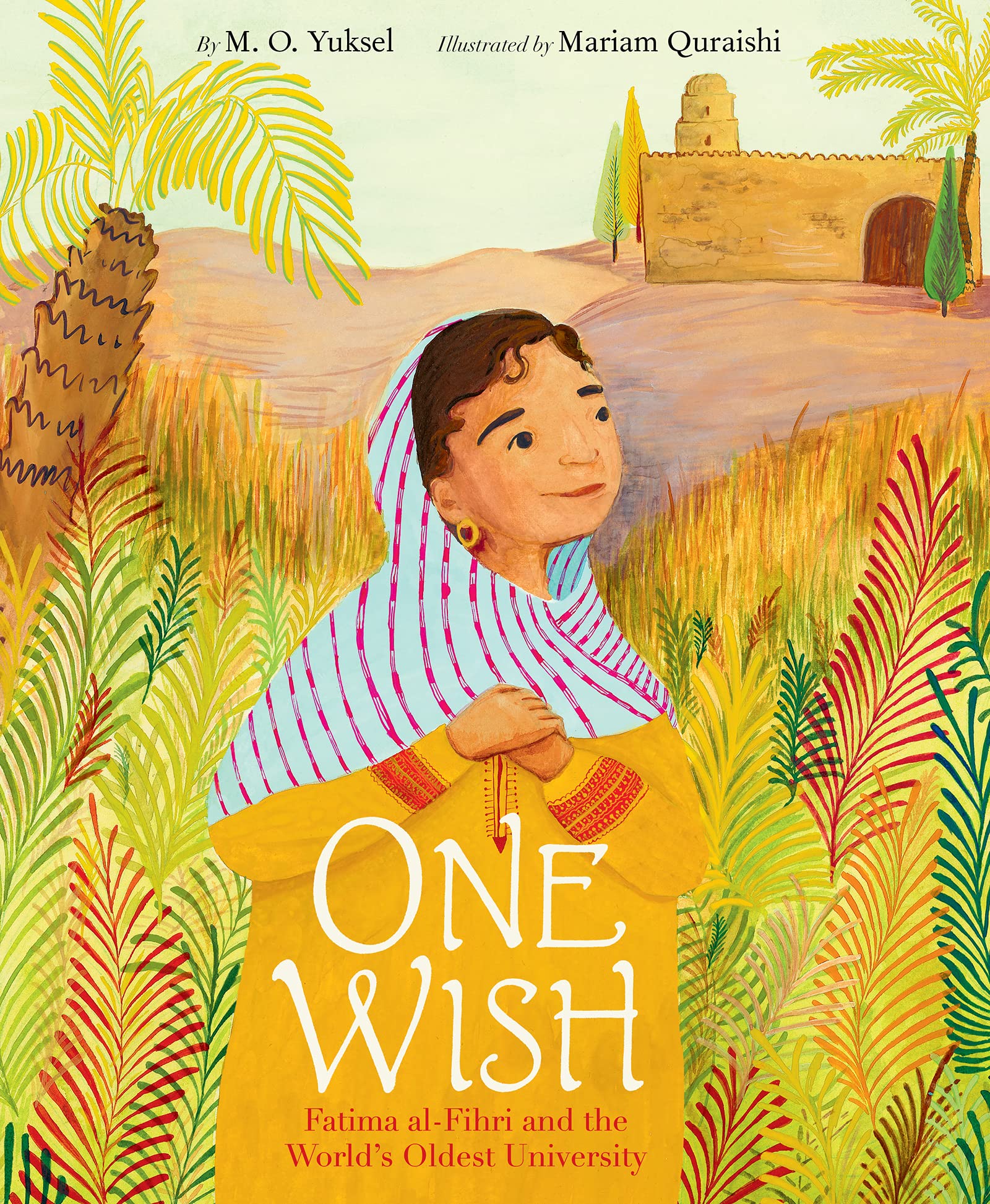
One Wish: Fatima al-Fihri and the World’s Oldest University by M.O. Yuksel illustrated by Mariam Quraishi

Standard
One Wish: Fatima al-Fihri and the World’s Oldest University by M.O. Yuksel illustrated by Mariam Quraishi

one wish

This book is so long overdue, yet at the same time it was worth the wait.  The writing is simply superb: Fatima al Fihri is celebrated, Islam is centered, there are references, and the story compelling.  We, Muslims, as a whole know so little about the beautiful impact fellow Muslims have had on the current world and our way of life, that to see this book being celebrated in public libraries, in Islamic schools, at masjids, and retail bookstores, truly makes you sit up a little straighter, and reach confidently to get this book in your hands to share with those around you.  Thank you Mindy (@moyuksel.author) for these 40 pages of absolute delight, ages 5 and up will read it to learn, read it again to enjoy, and inshaAllah read it repeatedly to be inspired.

img_7723

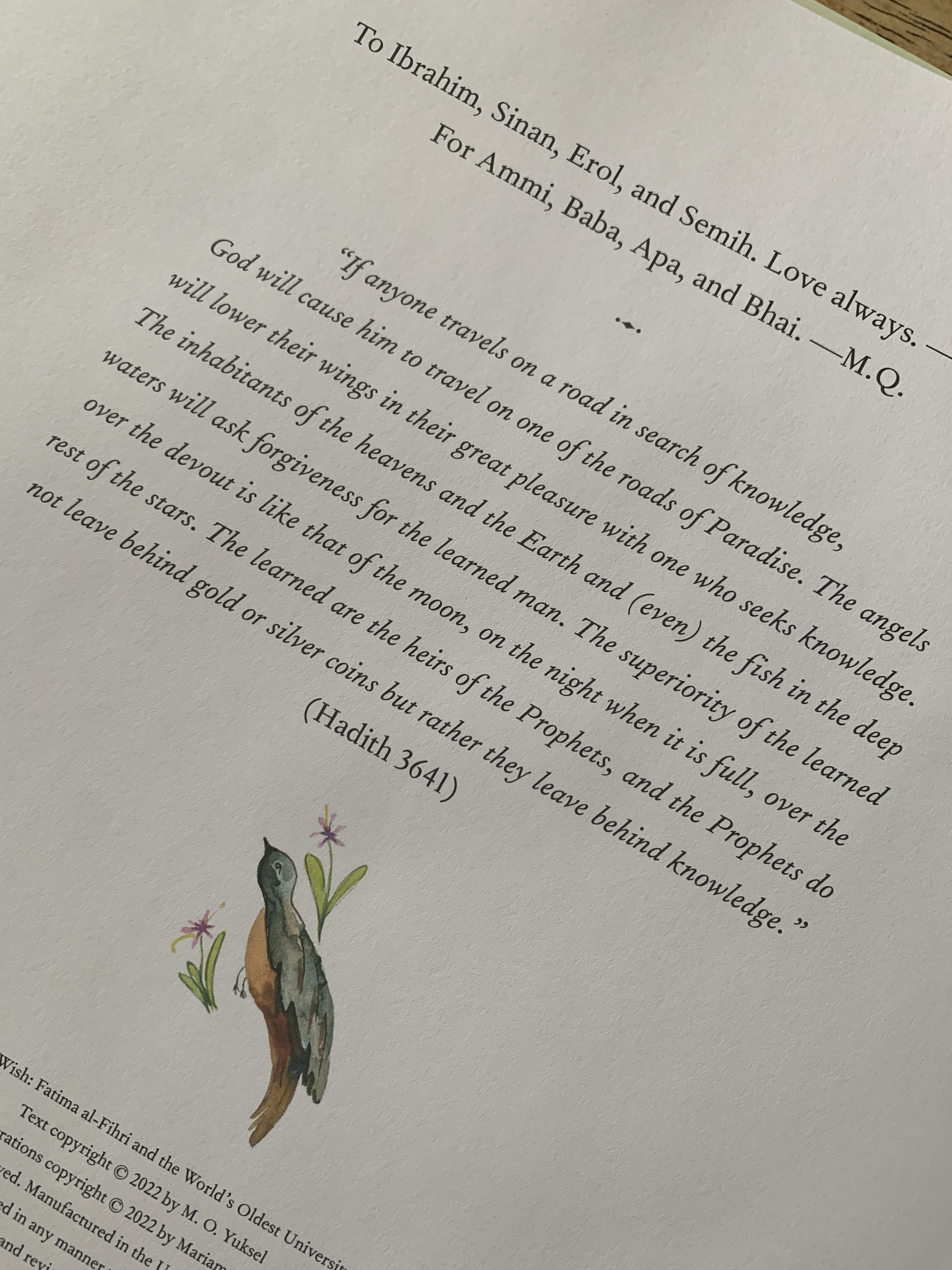
The book begins with a Hadith regarding seeking knowledge and leaving knowledge behind.  It then begins the biography of Fatima as a small girl curious about the world around her starting with the word Iqra, read, from the Qur’an.  It sets the stage of her living in the desert in the early ninth century, a time where some boys went to school and some girls learned at home. Her connection to Islam and it teaching her the value of knowledge caused her wish, to build a school, to grow stronger.

img_7726

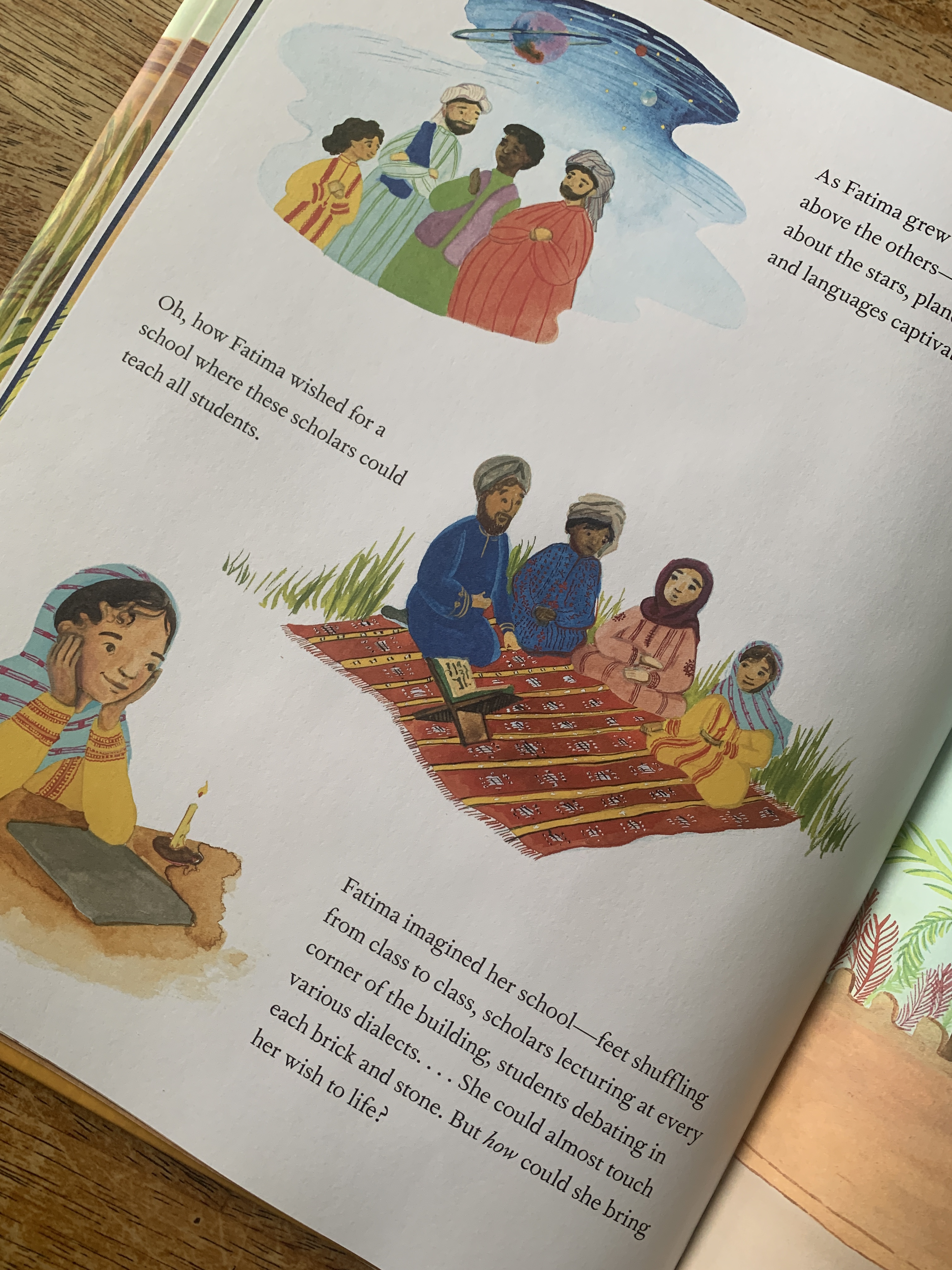
When war destroys her town her family flees to the busy city of Fez, Morocco.  She begins to accompany her father to the souk and enjoys listening to talk of planets, distant lands and different languages and wishes these scholars could educate everyone. She grows and gets married and her and her family become wealthy merchants.

img_7725

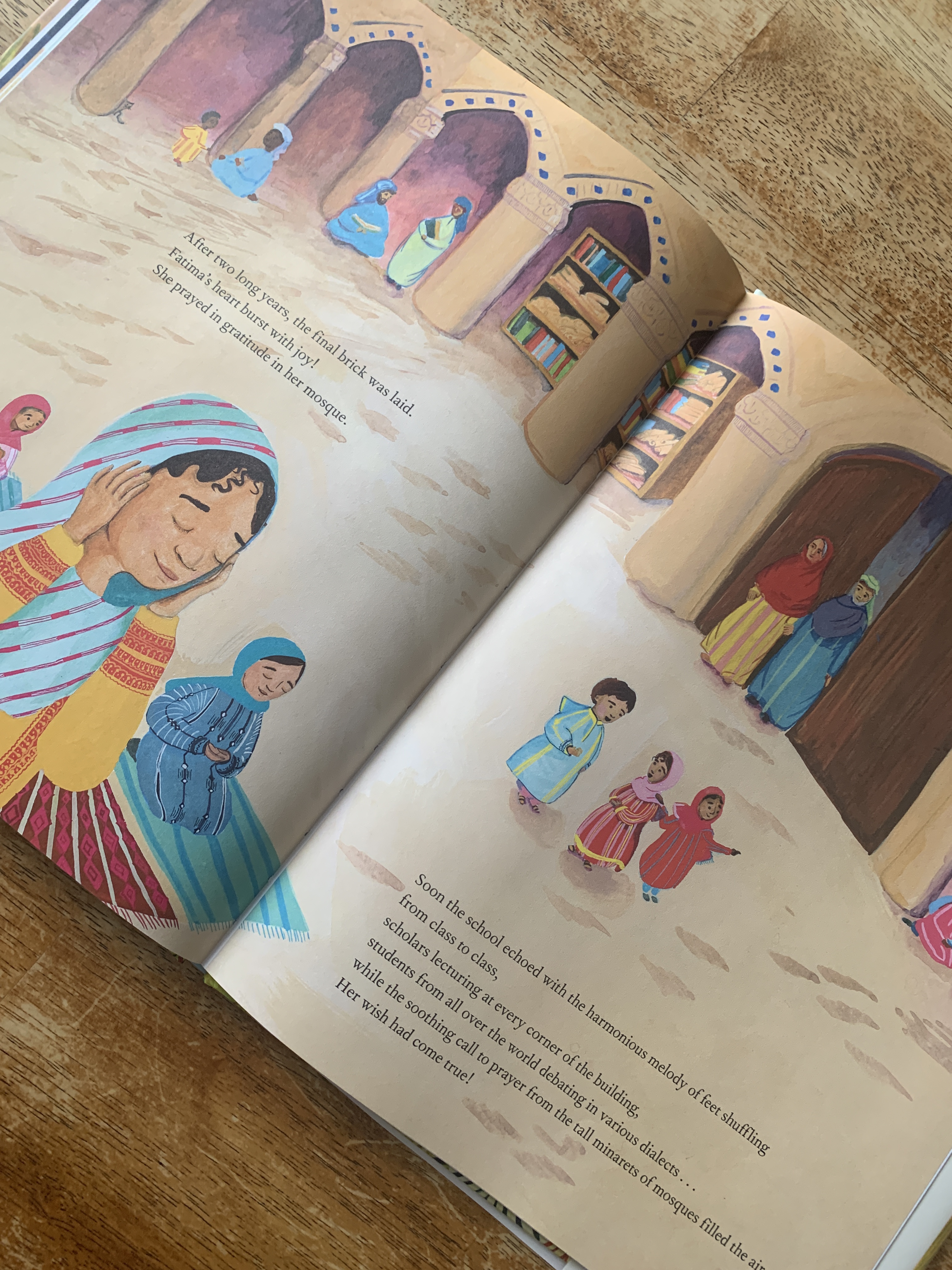
Tragically, her father and husband die, and Fatima must decide what to do next for her family.  She decides to help her community as a form of sadaqah jariyah and make her wish a reality.  She sets out to build a school where everyone can live and study for free.  She purchases land, and the building begins.  Fatima oversees each detail and names it the al-Qarawiyyin after her hometown in Tunisia.  It takes two years to build and it still functions today.

The back matter is just as compelling as the story with an Author’s Note, information on The University of Al-Qaryawiyyin, a Glossary, Bibliography, and a Timeline.  The only complaint I have about the book, are the illustrations.  I really don’t understand why half of her hair is showing when based on the time and her connection to her faith, she most likely was a niqabi.  I don’t understand the continuity of the hijab from a young child to adulthood.  I get that it shows her influence moving forward at the end, but it could have been a small print on an outfit for token representation of symbolism, I don’t get it as being a complete outfit her whole life.

img_7724

I absolutely love the role of Islam in both Fatima’s life and in this book.  It is so much a part of her and her wish, that every reader will recognize how connected her faith and the creation of the University were and I’m confident both Muslim and non Muslim readers will be in awe of her devotion and accomplishments, inshaAllah.

My First Book About Ramadan: Teachings for Toddlers and Young Children by Sara Khan illustrated by Ali Lodge

Standard
My First Book About Ramadan: Teachings for Toddlers and Young Children by Sara Khan illustrated by Ali Lodge

ramadan

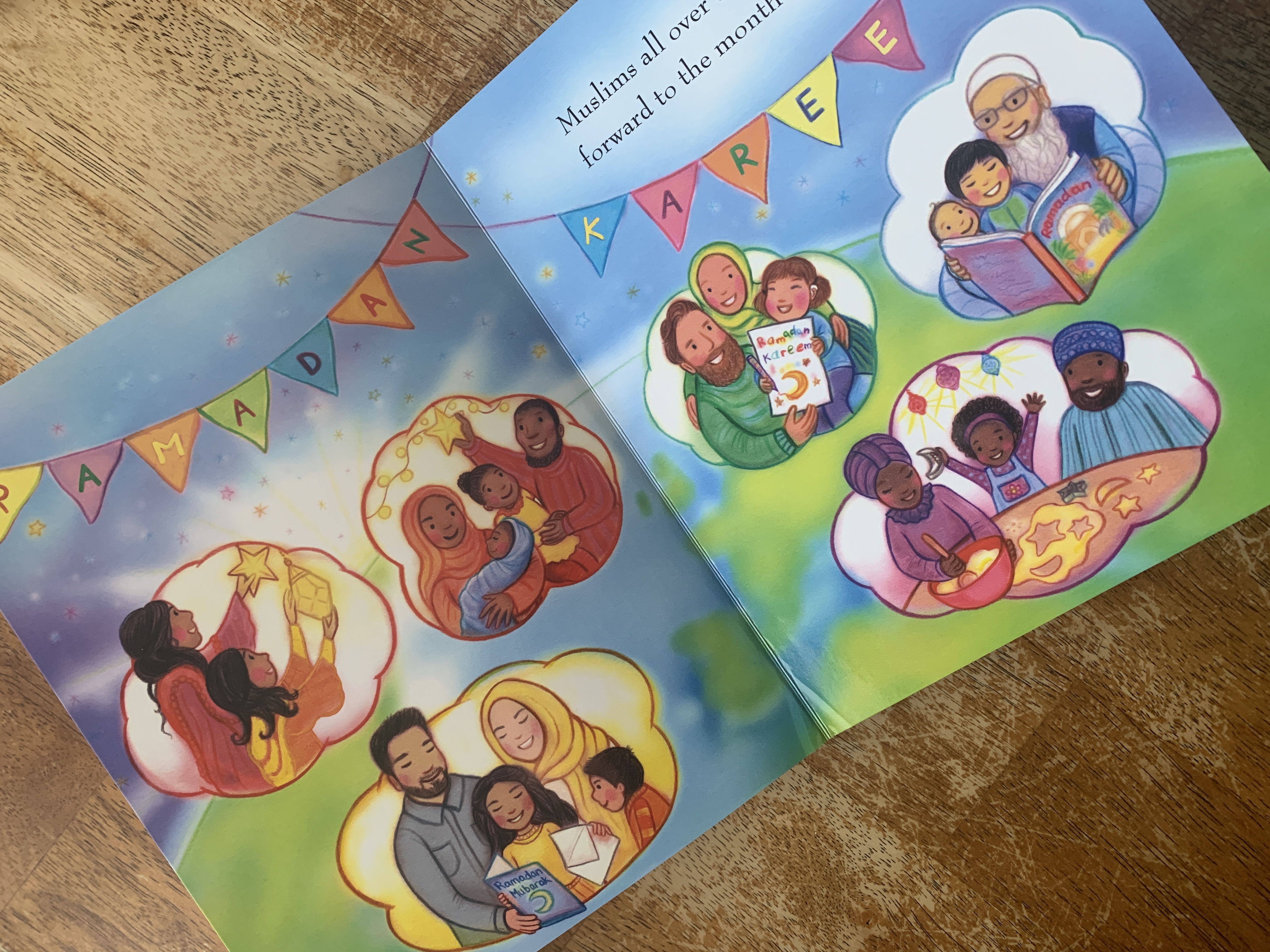
Once again, Sara Khan pushes the standard of what can be conveyed and presented in a toddler board book.  This book on Ramadan not only introduces concepts of the blessed month to our littles Muslims, but also provides details that will allow the book to stay relevant even as a child grows.  The soft, yet colorful pages allow the book to be engaging and attention holding for ages 2 and up, and provides a great way to get young children looking forward to Ramadan, as well as be read repeatedly during the month.  The 26 thick pages have a facts and questions about Ramadan at the end which make the book shareable with non Muslims and the many shapes, colors, cultures, and ages that make up our Muslim communities fill the pages that radiate with joy and love.

img_7070

The book starts out expressing the excitement of Ramadan, the new moon, and the anticipation.  It then talks about how Allah swt wants us to fast from dawn until sunset.  It mentions the five pillars, and fasting in Ramadan being one of them, and what it means to fast.

img_7071

It focuses on doing good deeds to make Allah swt happy.  It also dedicates a two page spread to showing who doesn’t have to fast, which answers that inevitably next question that people ask.  The book then says that even if you aren’t fasting, there are still blessings everyone enjoys in the month and spends a few pages detailing those activities and acts of worship.

img_7072

It mentions that Ramadan is the month of the Qur’an and that Laylat al-Qadr is the night of power, but doesn’t give much detail about either. Eid is celebrated at the end and a dua is made referencing a hadith in Bukhari about entering through the gate of Ar-Rayyan.

I love that the book’s tone is that this is what Allah swt wants us to do, and this is what makes Him happy.  Even with numerous Ramadan books out there, this one still manages to find a way to be unique, and truly the entire series is enjoyable and beneficial, alhumdulillah.


Inventors of the Golden Age (Just like) by Umm Laith and Muhammad Khaider Syafei (Proud Little Muslims)

Standard
Inventors of the Golden Age (Just like) by Umm Laith and Muhammad Khaider Syafei (Proud Little Muslims)

img_6450

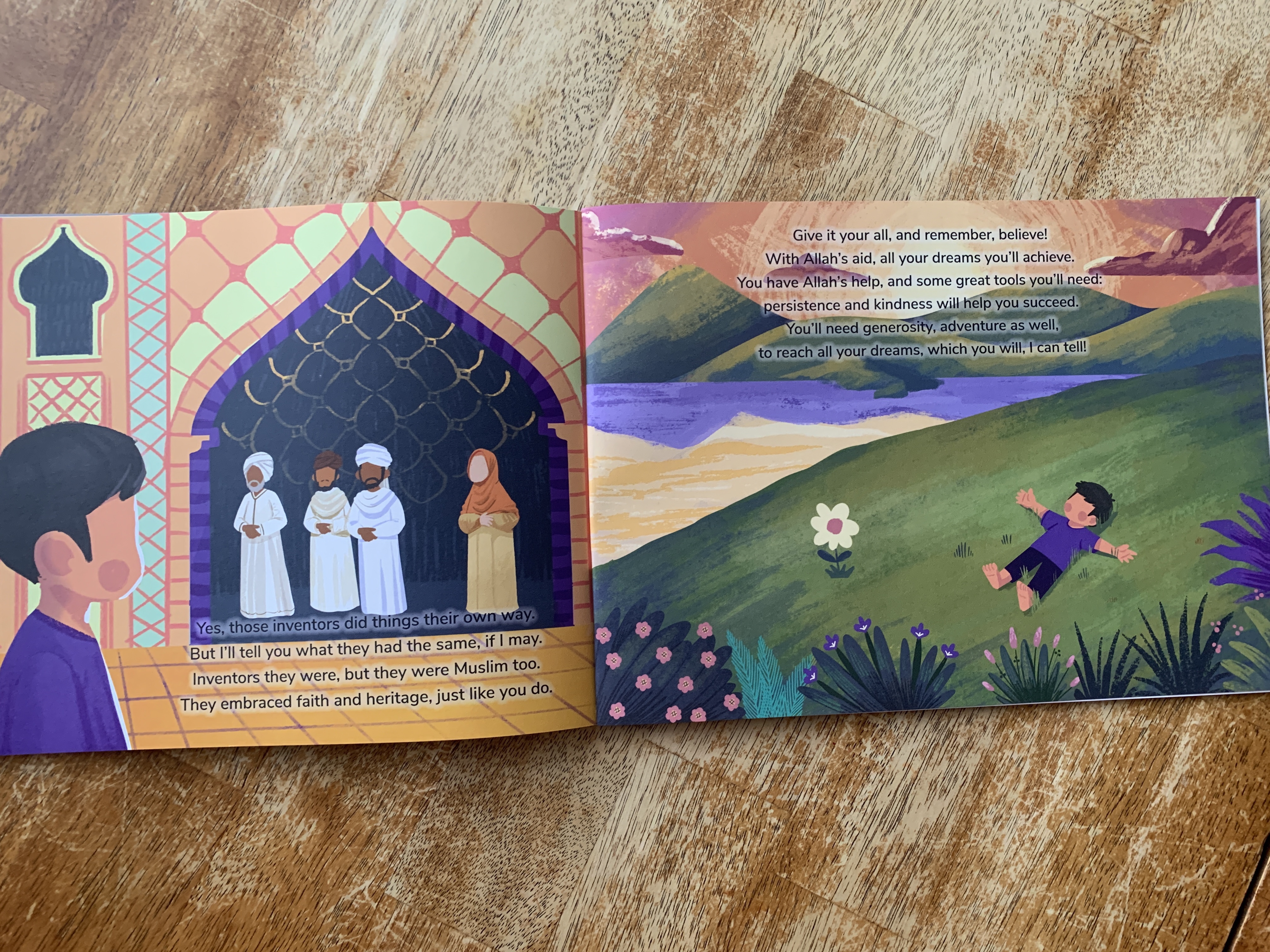
Usually when you purchase a personalized book, the charm is that you get to see a name of your choosing in the story, and that you can make the main character look a certain way.  So imagine my surprise when this book arrived, and yeah sure my son’s name and likeness was included, but the story and information contained was also really well done and engaging.  This book, even without the personalization, is a solid story highlighting Fatima al-Fihri, Abbas ibn Firnas, al-Zahrawi, al-Idrisi, and their skills of generosity, persistence, kindness, and adventure as they shaped the world as we know it.

img_6418

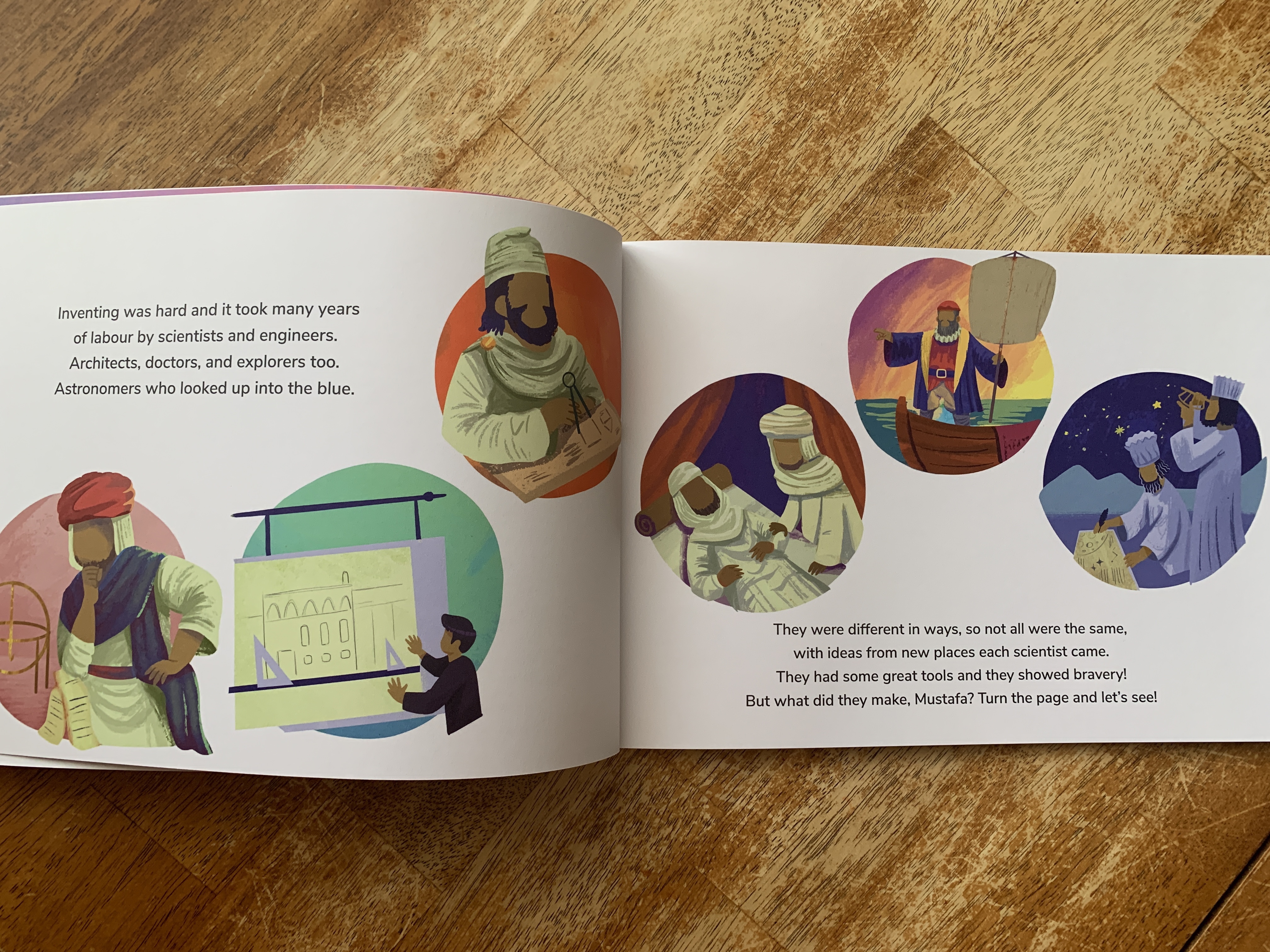
The fourth wall is broken as the book speaks to the reader encouraging them to come on an adventure in to the Golden Age.  A time when scientists, engineers, explorers, doctors, and astronomers were making remarkable advancements.

The first stop is Morocco to learn about Fatima al-Fihri and how she established the first university.  Her generosity in building and creating a place of Islam and learning is what set her apart and made her so remarkable.  It is then on to Abbas ibn-Firnas in Spain and his attempts at flying.  He failed often, but his mistakes helped him as he persisted and continued to learn and understand and make flight of humans possible.

img_6419

Al-Zahrawi, the surgeon, is who is detailed next, as his knowledge, skill, and inventions he made are still used today.  His regard for his patients fear and nerves and his kindness is what the book stresses before moving on to the mapmaker al-Idrisi.  Al-Idrisi was adventurous as he traveled the world making his maps and switching the poles.

img_6420

The book then focuses on the reader encouraging them to be generous and adventurous, kind and persistent, in making the future better like those mentioned from the past.

The book is horizontal, the pages thick, the faceless illustrations warm and detailed and the rhyming text flowing and appropriate for preschool aged children and up.

img_6421

Hakim’s Odyssey: Book 2: From Turkey to Greece by Fabien Toulme’

Standard
Hakim’s Odyssey: Book 2: From Turkey to Greece by Fabien Toulme’

hakimcover

It is easy to assume that refugee stories are all the same, but in my experience, the more I read about the journeys people take in desperation for safety, the more I realize it doesn’t matter if “parts” are similar, the individual experience should never be dismissed or become commonplace.  I try to make a point to read them, and spend time with them, and be affected by them, so as to not grow apathetic.  I have not read the first book in this series, but this book, the second book can stand alone, and I hope that you will keep an eye out for it when it is published, and spend time with Hakim and his son Hadi.  In much of the way the middle grade novel When Stars are Scattered, swept me up and consumed me, this book also enveloped me in the characters’ emotions and left me sobbing and heartbroken more than once.  The framing of the story, gratefully shows that Hakim survives, but the power of the words, illustrations, and experience, still physically move you and make you imagine how truly horrific situations must be that force people to risk it all to leave their homes and start over.  This 264 page book focuses on the part of his story that takes Hakim from Turkey to Greece, but references to Syria and his life there allow for a fleshed out understanding and appreciation for the trials he has faced, and continues to face, subhahAllah.  Suitable for mature teens, at least 16  or 17 and up.

SYNOPSIS:

The book starts out with the author/illustrator heading off with his daughter to interview Hakim.  His young daughter has heard a lot about Hakim and his family, but never met them.  They “recap” the first part of his journey, the first book, and settle in to hear more of his life and the extraordinary circumstances that he has faced to reunite with his family since fleeing the war in Syria.

The birth of his son Hadi is a definite high point in Hakim’s life and the daily struggle of selling enough goods on the streets of Turkey to provide for his son keep Hakim looking forward.  With his wife, Najmeh, and her family around them, they crave stability, but are managing.  As the days stretch on though, Hakim is prevented from selling without the proper permissions, and his father-in-law is still unable to find work. Hakim’s wife and family are granted permission to relocate, but Hakim and Hadi cannot legally join them.  The tearing apart of the family is devastating.  And carrying for his young son alone while trying to earn enough to survive is incredibly challenging.  When Hakim has exhausted all the legal ways to join his family in France, he considers illegal methods.

An Iraqi neighbor offers him the money needed to hire smugglers, so Hakim is faced with deciding what risks he and his young son are willing to take to “start living.”  The step in to the unknown, the crossing of the sea in an inflatable life raft, brings them closer, but with one more book in the series, and not knowing who the children are in the present time scenes, your heart will be made incredibly fragile as you hope that young Hadi survives.

WHY I LIKE IT:

I love that you get to know the characters and can see why they make the decisions they make, or rather why the choose to do what they choose based on the information they have, and the impossible choices before them.  I also love that it shows so much humanity.  You see Hakim’s story brought to life and you see him and his family as whole people, not just numbers or nameless, faceless victims.  You see the joy and devastation, the testament to human strength and mental anguish, it is moving and powerful.  I also love that you see the side characters, see the little mercies, and the horrific injustices, often in the same scene. The graphic novel format allows the subtleties to show without the words, it adds to the connection of emotions and truly putting yourself in the character’s shoes.

I like that it should how happenstance much of the journey was for Hakim, at times he didn’t know who to talk to, where to go, what to expect.  I was a little confused about the payment to the smugglers, and how it had to be handled after he arrived.  I don’t know if my own understanding of how shady the smugglers are based on the media is making it muddled, or if I just missed something in the telling.

There is not a lot of Islam in the book, they don’t stop and make salat or say Bismillah, but they reference thanking Allah swt, and praying to Allah in desperation.  Hakim’s mother in law and wife wear hijab.

FLAGS:

Fear, smoking, cheating, lying, illegal immigration acts.  There is nothing obscene, the older audience recommendation is because of the weight of the subject matter, and the lingering effects of war and escaping.

TOOLS FOR LEADING THE DISCUSSION:

This would be an amazing high school book club read.  The characters, the relatability, the empathy, it would be great to share it with a group of students that might have similar experiences and provide them with a platform to share with those that might not.

My World of Hamd: A Reflective Book on Gratitude by Lateefah Binuyo

Standard
My World of Hamd: A Reflective Book on Gratitude by Lateefah Binuyo

hamd

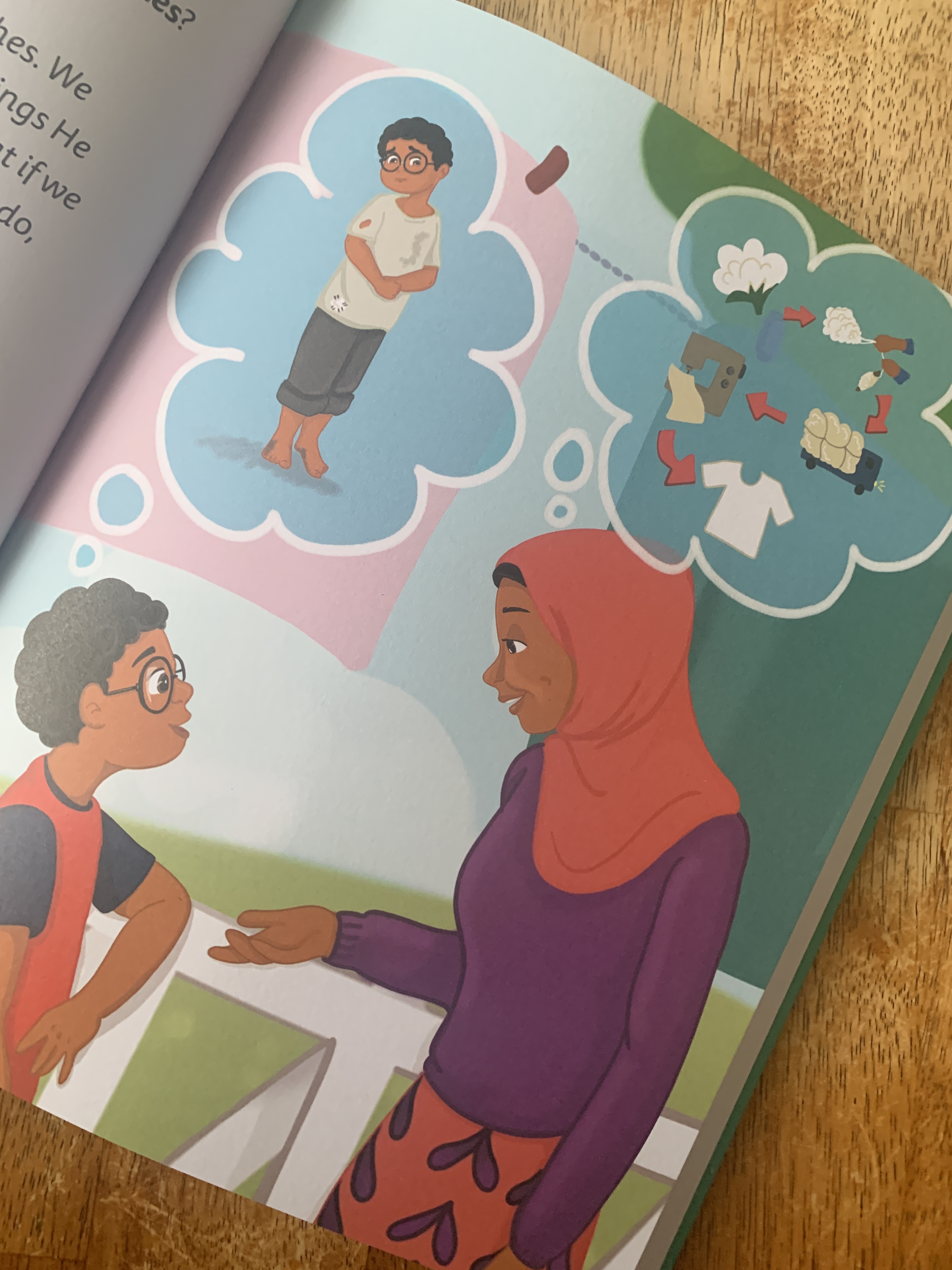
This thick hardback 46 page book is a great next step after teaching your kids to say “Alhamdulillah” to helping them to understand what it truly means.  Meant for second graders and up, this book is text heavy and encourages deeper thought, reflection, and practice.  It is not a quick read, and some children may struggle to sit through the entire book, but any time spent, I think, will be incredibly beneficial as it strives to move from the habit of just saying “Alhamdulillah” to being intentional in our appreciation and gratitude.  The thick inside pages, warm large illustrations, and colorful reflections are well done and enjoyable.  I only wish the cover better conveyed the content within.

img_6093

The book begins with ayat 18 from Surah Nahl stating: “If you tried to count Allah’s blessings, you would never be able to number them.  Indeed, Allah is All-Forgiving, Most Merciful. With the tone set, the fictionalized story begins with Ibraheem and his mum having breakfast.

img_6090

Ibraheem is a curious boy that is only ever quiet when he is sleeping or eating.  When his mum reminds him to say Alhamdulillah after he finishes eating, he gets to wondering, “What does Alhamdulillah mean?”

img_6092

Mum explains that the hamd in Alhamdulillah means praise and gratitude, and it is for Allah swt alone.  Ibraheem then wants to know how can he feel “hamd all the time?”  He and his mum discuss that hamd has to be felt within the heart, and it isn’t just saying it after a meal, but appreciation that you have food to eat.  Appreciation when you wake up in the morning, because many do not, etc.  The two discuss small and large aspects in a day that provide opportunities to truly appreciate the gifts of Allah swt.

img_6094

The book covers topics such as: sneezing and appreciating your muscles, getting dressed and recognizing the blessing of clothing, awards at school, losing your backpack, happy times and sad times too.  Along the way mum passes on information about how when we are grateful Allah swt gives us more, about how even in sad times we have so much to learn about patience and asking Allah for help, that we can fill our days with hamd.

img_6095

The book touches on never feeling sad in Jannah, Allah’s name Al-Hameed, and explaining how we have to still thank people and show appreciation to them because Allah sends his blessings through people as well.

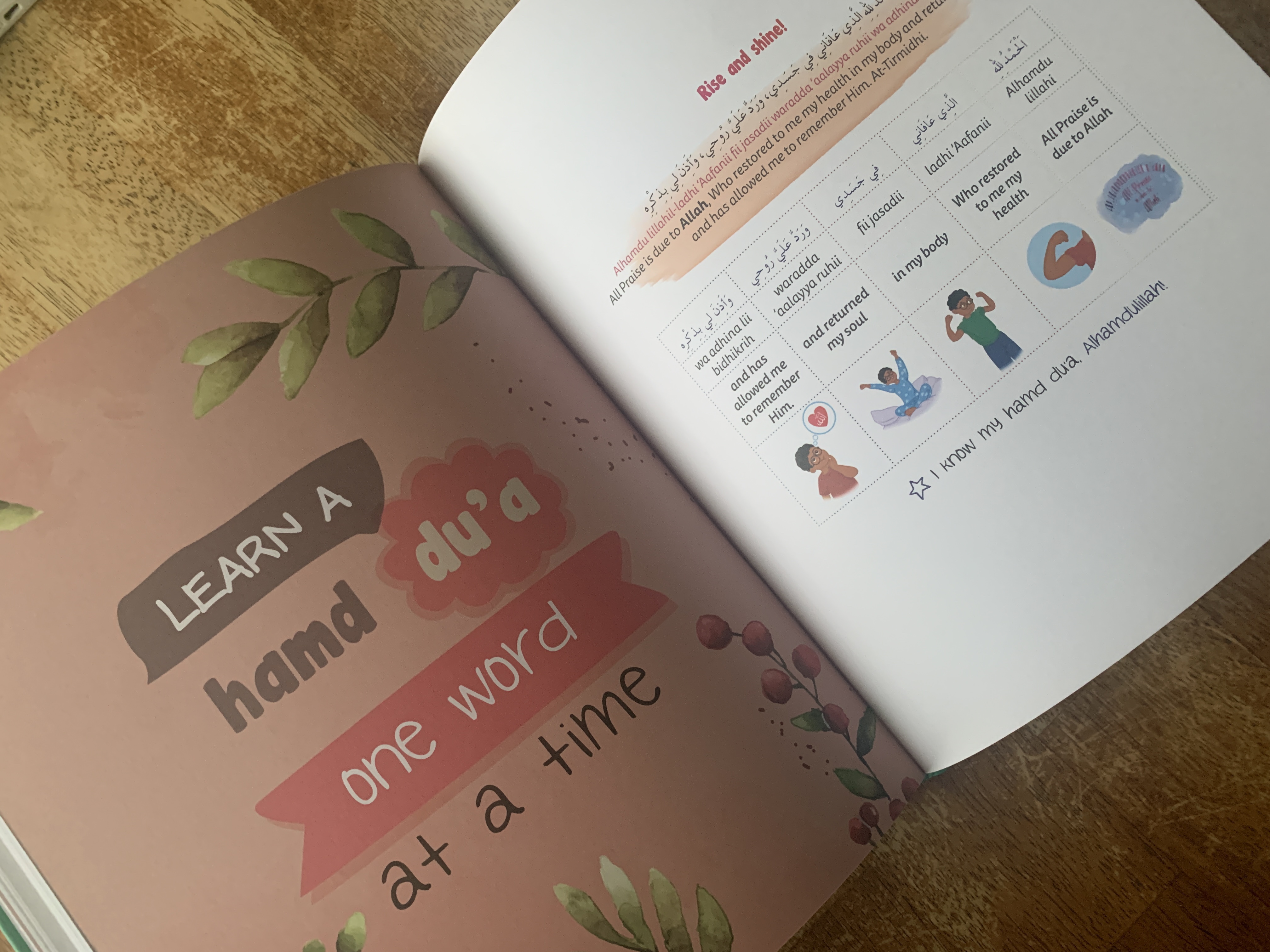
The book concludes with teaching duas about hamd one word at a time, a glossary, and tips for using the book.  There are a lot of hadith and ayats explained on a child’s level and overall really answers and provides insights about saying Alhamdulillah and feeling Hamd.
Nana Asma’u by Aaliyah Tar Mahomed illustrated by Winda Lee

Standard
Nana Asma’u by Aaliyah Tar Mahomed illustrated by Winda Lee

nana asmau

This book may only have 14 pages of text and be meant as an introduction for early preschool aged children and up, but I learned so much, or rather was made aware of so much that I knew nothing about, that I’m now eager to research her and the Sokoto Caliphate and the impact of Jajis.  The beautiful, bright, engaging pictures, the simple deliberate text, and the inspiring content matter make this a great book to share with little ones, and to keep on the shelf for repeated readings and reminders to learn more about this remarkable woman for older children.  My only wish was that there were some reference notes or sources included to give that extra reassurance of authenticity.

img_6076

The book tells about Nana Asma’u’s life starting from being a curious child and asking questions to the wise women in her community.  By the time she grew up she had memorized the Quran and spoke four languages amongst many other things, and Nana loved to write poetry.

img_6077

During this time, there was a lot of conflict in Western Africa, and Nana’s father, Shehu Usman resolved the issues and created the Sokoto Caliphate.  With peace, Nana wanted to help educate the people. She thought long and hard about how to do it.

img_6078

She eventually brought together women from different regions of the Caliphate and taught them through poetry, she then sent the women back to their homes to share what they had learned.  These women were known as Jajis, and this tradition still exists today.

img_6079

I didn’t love the phrasing that she had learned all about Islam, seeing as one can always learn more.  And I would have like Prophet to have been capitalized and salawat given for respect.  Overall, a great book that alhumdulillah I was able to purchase from Crescent Moon Store.