Category Archives: Muslim Illustrator

Yusuf and Yusra’s Spooky Dilemma by A. Dawood illustrated by Fatimah Farooqi

Standard
Yusuf and Yusra’s Spooky Dilemma by A. Dawood illustrated by Fatimah Farooqi

This 54 page early chapter book about a Muslim kid being tempted by Halloween somehow didn’t really center Islam much, it didn’t explain the origins of Halloween, and it meant well, but I didn’t get the messaging, it actually felt othering.  Young Yusra lies to her parents, gets a costume, attends a school Halloween party, and then once caught goes out to lunch and taken to a museum with her brother and friend Fatima. At the museum the vibrant room is the “From Around the World” exhibit, and the depressing room is “The World Around Me.” the dichotomy is stereotypical and presumptuous without sufficient insight.  The book’s concluding lesson being, don’t give in to peer pressure and feel like you have to celebrate something that isn’t right, “think of all the millions of Muslims in the world not celebrating.”  Wait? What? That is the exact same thing- do or not do something because other people are doing or not doing it! Literary wise there were numerous paragraphs and pages I had to reread to know who was talking, the side characters were underdeveloped as they would get mad and storm off and then be chatting shortly after, and at the end, Umar completely ceased to exist.  Having already reviewed the other title in the series Merry Dilemma, I’m going to allow myself a little forgiveness in comparing the two books, as I would imagine many consumers will buy both, and I found the messaging and presentation in the Christmas book, a lot stronger in facilitating conversation and reflecting Muslim kids’ stresses, than this Halloween book was able to do.  The discussion of Isa (A.S.) and the messaging of what Christmas means and why it is problematic for Muslims was more clear and allowed me to overlook some of the literary inconsistencies and weaknesses; I’m glad I read it first.  If you read this with your kids plan to supplement and discuss because the book does not leave you feeling like you really know why Yusra, or Muslims, don’t celebrate Halloween.

SYNOPSIS:

Halloween is here and Cedarcrest Elementary is throwing a huge party.  Yusuf isn’t going, he knows Halloween isn’t for him as a Muslim.  Family friends, Fatima and Umar, aren’t going either.  But Yusra’s best friend Amanda is really excited, and Yusra thinks she can just help Amanda celebrate, it is just for fun any way right? It isn’t like she is celebrating, she will just be there.  She tells her parents she can’t miss school, her dad buys her a costume, not for Halloween, just for dress-up, and now she is at the school party with glitter and candy and a whole lot of guilt.

WHY I LIKE IT:

I like that the parents try and meet the kids where they are.  I think a lot of Muslim parents buy candy and costumes on clearance the day after Halloween so their kids can still have treats without partaking in trick or treating and enjoy imaginative play after the holiday.  The book having the costume being purchased before the holiday, thus is a relatable occurrence.  Yusra wanting to go is also believable.  But, the parent’s letting it play out to their fourth grade daughter actually lying about a quiz and going to school is a bit of a stretch.

I struggled with the lack of explaining why Muslims don’t celebrate Halloween and what the origins of Halloween are.  It said I don’t do it because I’m Muslim, I don’t celebrate because my parents told me not to, and thank you for explaining it aunty- but in fact, there was no explanation.

The writing wasn’t great.  At one point it says, “Let’s go to the frozen food section we need milk and cereal.”  There were multiple places I didn’t know if Yusra or Yusuf were talking, they sound the same age and I don’t think they are twins, but maybe they are, they are family friends with a brother sister: Umar and Fatima at their school, but Fatima is not in Yusra’s class either, the school vibes feel more junior high than elementary. Back to Fatima though, she gets mad when Yusra doesn’t take a firm “Muslim’s don’t celebrate Halloween position” with Amanda and she walks off being labeled a party pooper, but after school everything seems fine. The plan is all four Muslim kids will hang out instead of going to school for the party, but Umar is not with Yusuf and Fatima when they bust Yusra, or at the museum, so where did he go?

The messaging hinges on Yusra’s guilt.  I don’t know that the book explores it enough, doesn’t have her struggling with it a lot, so it comes across that it is more the getting caught that caused the realization.  She remembers Allah swt when caught, she apologizes to her mom, which is good, but not celebrating Halloween then seems more a family expectation not a religious no-no.  Ultimately the book felt a bit like a missed opportunity to explain the origins of Halloween and let the child decide what to do based on their understanding of Islam and the holiday.

FLAGS:

Lying, going to a Halloween party.

TOOLS FOR LEADING THE DISCUSSION:

I have a few teenagers and a 3rd grader and a toddler, I don’t think this book will do much to foster communication and deepen their understanding about Muslims and Halloween.  For my oldest three when they were in early elementary, we would listen to a NoorArt CD Qu’an for Little Muslims it had a track about Halloween that seemed to work when they were young: you can listen to it here.

If you think this book will work for your needsthough, you can order it here.

Saving Sunshine by Saadia Faruqi illustrated by Shazleen Khan

Standard
Saving Sunshine by Saadia Faruqi illustrated by Shazleen Khan

img_9623

The themes, messaging and Islamic and cultural representation in this upper MG/lower middle school graphic novel are wonderfully unapologetically present.  Yet somehow, I never connected with the characters, and the plotting seemed stiff.  I don’t regret reading the book, and I’m sure most readers will be delighted with the main story of sibling annoyance, a sick turtle, and independent kids with reflective flashbacks and OWN voice threads of Islamophobia, immigration, starting to wear hijab, identity and othering.  I just felt the tropes were predictable, stereotypical even, and when the dad takes a stethoscope to a medical conference and the TSA agent doesn’t know what it is, I cringed.  Seriously, who takes a stethoscope on vacation? Who doesn’t know what one is? I normally love the author’s characters and wish for more Islam, this book gave me the Islam, but I really disliked the siblings, they were mean, angry, and annoying.  I own that reading a book about bickering kids a few days before my own five children returned to school may have jaded me, and I do think I found the religious touchstones predictable because I do read a lot of kid lit and I’m older, so while I’m not gushing in my praise for this book, I will be preordering a copy for myself and the school library. How is that for having an opinion and then completely walking it back? Yeah, it happens.

SYNOPSIS:

Twins Zara and Zeeshan bicker, a lot.  Zara loves animals and nature, Zeeshan space exploration, and both love their phones.  When the family heads to a medical conference in Key West where their mom is getting an award, the kids get their phones taken away by their parents when the two won’t stop fighting. The parents stick to their policy and the two are forced to stick together and entertain themselves while their parents attend lectures.  At one point they find a turtle and Zara takes the lead to try and help Sunshine, but will need her brother along the way.

WHY I LIKE IT:
I love that the characters identifying as Muslim was central and unapologetic.  I liked the flashbacks that provided a little bit of depth to the parents coming to America and their life in Pakistan, along with the personal reflections about starting to wearing hijab and when the kids started to go their own way.  But the airport scene, the identity issues, and the Islamophobia seemed a little superficial and over done.  The heart to hearts with the dad and his son and mom and Zara were sweet and insightful about belonging and where you come from, and not being so angry, but they also seemed very natural and in-character for the parents which is a disconnect from the anger the kids seem to carry.  If the parents are talking to them and modeling all this, it is a bit of a stretch that they are reacting as they are in the book.

I have a brother, it is just the two of us, we aren’t twins, but growing up in the 80s as the only Muslims in the area with a convert mom and immigrant dad, we came together a lot because only each other could understand the stresses we faced in and outside our home.  I thought this book would draw on that universal theme, and I was surprised that the point of the book felt a little underdeveloped.  I know MG can handle more than we give them credit for, but I felt like this book built up to have more of a warm hug, than I felt.  I wanted more of them plotting together, I didn’t feel like Zara really needed her brother to stick up for her, she wanted it sure, but that was a foot in the door that I think was missed.  She is strong, yet was being vulnerable with her brother, and he was able to step up for her, but it needed a few more beats to be appreciated.  I also wanted more connection to the turtle, his name is in the title, I thought he’d have a bigger role.

FLAGS:

Disrespect, lying, anger, yelling, bullying, teasing, Islamophobia, stereotypes, prejudice

TOOLS FOR LEADING THE DISCUSSION:

The book would allow for discussion for middle grade readers who might see themselves in the family dynamic or be able to relate to some of the Islamophobia.  It could also cause some worry for some children that being visibly Muslim or having cultural names, and wearing cultural clothes will bring negative differential treatment to them.

Available for order here

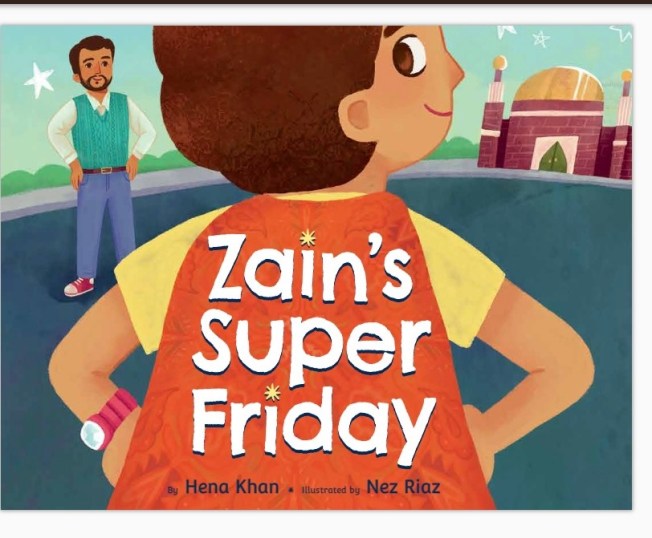
Zain’s Super Friday by Hena Khan illustrated by Nez Riaz

Standard
Zain’s Super Friday by Hena Khan illustrated by Nez Riaz

img_9576

I love the joy and normalizing of mainstream titles celebrating salat, Jummah, and the masjid becoming increasingly available for us to read and share.  This particular book is great for preschool to early elementary aged children that enjoy going to the masjid, but sometimes want to put on a cape and be the hero battling aliens, that know how to behave during salat, but sometimes have a hard time sitting still, and parents that want to play with their kids, but sometimes have to get some work done first.  With  threads of patience, kindness, and determination woven in to masjid activities, the book is both a mirror for Muslim kids and a window for those that wonder what a Friday prayer service looks like.  The 32 page book is unapologetic, joyful, and a great addition to book shelves.

img_9578

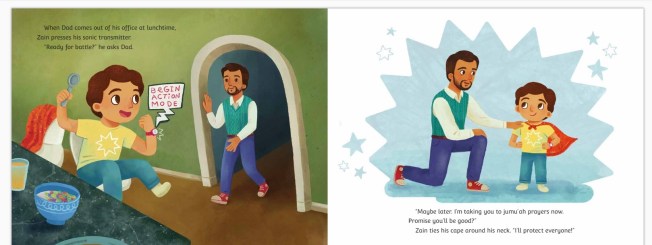
Zain wakes up early Friday morning and is ready to save the world. Dad greets Zain with a “Jum’uah Mubarak,” but has to pass on battling the aliens taking over the kitchen.  At lunchtime, when dad takes a break from work, Zain tries again to engage him in heroic play, but it is time for Jum’uah.  Zain slips on his cape and vows to protect everyone.

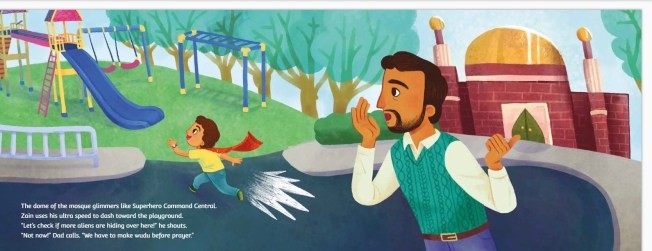
When they get to the mosque, aka command central, Zain tries again, but dad redirects him to make wudu before salat. Heat action dries his feet, but the adhan starts and giant shoes and aliens will have to wait, yet again.  During the khutbah, wiggly Zain sits by his dad, but when the Imam encourages them to stand for salat and fill any gaps, Zain takes it as a call to duty and races to the front announcing, “Here I come, Commander Imam, reporting for duty.”

The kind Imam knows just what to do, and as Zain controls his focus, even dad finds time to be a hero and battle the aliens on this super Friday at the mosque.

img_9580

I love that wudu, athan, khutbah, Imam, are all used without a glossary and that the Author’s Note is informative and unapologetic in tying it all together and making the terms clear.  I wish masjid was used instead of mosque, but I know that is just my personal preference.  I love that the Imam is kind and the dad is gentle and playful.  Even when Zain is not getting to do what he wants, he is not unhappy with being at Jumuah, or making salat, or being redirected, he just wants to indulge his imagination.  The warmth and joy of the illustrations reinforces the tone of the book, and with the inclusion of charity, and the happy ending, I can’t wait to have a physical copy of this book in my hands.

The book releases on October 10, 2023 and can be preordered/ordered here on Amazon and I’m sure will be available once released at Crescent Moon Store, where my initials ISL at checkout will always save you 10%.

img_9582

Sitti’s Key by Sahar Khader Ali illustrated by Noor Alshalabi

Standard
Sitti’s Key by Sahar Khader Ali illustrated by Noor Alshalabi

sitti key

I try and buy, read, and review every children’s book about Palestine that is published, it is the least I can do.  I also try not to compare them to each other as they present different aspects of oppression, perspectives of strength, examples of joy, and messages of hope, even among many similar themes of food, keys, traditions, and culture.  I really appreciate that this book though is incredibly blunt.  It isn’t lyrical, it isn’t poetic, and as Israel is bombing Jenin as I write this I’m glad it doesn’t mince words about the Nakba. I do think caregivers though, should probably read it first as it might be a little triggering for sensitive children.  The story is OWN voice and probably best suited for middle elementary aged children.  It is perhaps also worth noting that the book could be seen as making Jews synonymous with Zionists.  The characters are Muslim, Islamic phrases and Arabic terms are sprinkled throughout, and even despite the pain the family has endured, the book stays hopeful and proud.

Sitti is coming and Amal is excited, it has been two years since she last saw her.  She loves how excited her mom and grandma are to unpack gifts of olive oil, dates, and zataar from friends.  Amal isn’t sure what to do with the “old lady thoub” she has been gifted, but she smiles in appreciation none-the-less.  When Sitti pulls out an old key, Amal starts to ask her about it, but her mother shuffles her off to bed.

The next day at school, Amal has to work on a presentation about “culture,” but there are no Palestinian books in her school library, so she just watches the other kids.  At home they eat and listen to Sitti’s stories of long ago in Haifa, and Amal asks her why she left Palestine.  Despite her mother trying to redirect, Sitti says it is time she knew about the Nakba.

Sitti tells about living on the land for generations and how the Jews believed the land belonged to them.  In 1948 the British decided Palestine would be the homeland for the Jews.  Armed men came and arrested anyone who tried to stay in their homes. Sitti’s brother was handcuffed and never seen again.  The family grabbed what they could including the key to their home as they made their way to a refugee camp in Lebanon.  They stayed for three years, before making their way to America.

When Sitti concludes her story she hands the key to Amal and her hope that she will return to their home inshaAllah.  Feeling the pride and warmth of home, Amal has a determination to reclaim her heritage and share her “culture” with her classmates.

The illustrations are sweet, the mom and Sitti wear hijab even in the home, and the inshaAllahs and salams come naturally. The book does not stop to define zataar or marimya, which helps the flow. I also like how it shows that there aren’t books about Palestine in the school library, it is strong and important detail.  I don’t understand where Sitti is coming from though, it would seem Palestine as she is bringing gifts from friends, but in the story it says after Lebanon they made their way to America, so I’m not sure where Sitti lives, and how the logistics of the family work to be honest.  I also kind of wish there was a  recipe for zataar in the book and lyrics with translation for the song the family sings.

Book is available on Kindle or can be ordered from www.littlehibba.com

A Cat Like Me! A Fun Hajj Tale by Emma Halim illustrated by Aissa Mutiara

Standard
A Cat Like Me! A Fun Hajj Tale by Emma Halim illustrated by Aissa Mutiara

img_8799

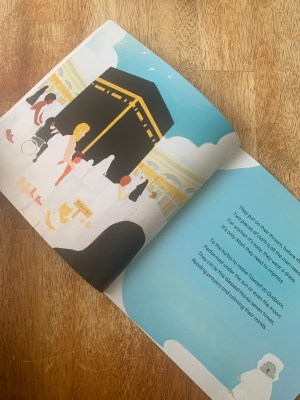
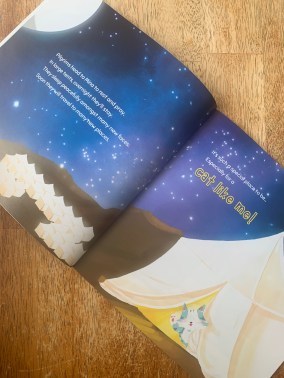
A rhyming cat centered book about hajj that has been checked by a Shaykh!  Over 46 pages, preschool aged children and up will be able to see the steps of hajj in a fun, engaging and accurate way.  This book is great for bedtime and small group story time and the reasonable price makes it perfect for sharing too.  The illustrations do not have faces with eyes, but the joy comes through and Bissa the cat makes sure you know how special hajj is.

img_8800

I love that the book identifies what type of hajj is going to be shown and thus signals that there are different ways.  I also love that the book is sourced and the Shaykh is named and qualifications listed.  For so long erroneous information in children’s books has gone unchecked and it really is such an important   verification for something critical in our faith to be sourced and checked. Plus it is reassuring for the reader to feel confident in sharing the information with others.

img_8802

The book radiates with excitement and information and the rhymes and illustrations keep kids engaged.  The book is 8.5 x 8.5 so it might not work in big groups.  I purchased mine from if you use code https://crescentmoonstore.com if you use my initials ISL (Islamic School Librarian) at checkout you will save 10% it is also available here on Amazon.

img_8803

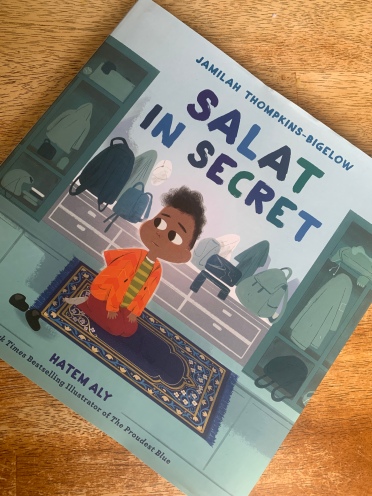
Salat in Secret by Jamilah Thompkins-Bigelow illustrated by Hatem Aly

Standard
Salat in Secret by Jamilah Thompkins-Bigelow illustrated by Hatem Aly

img_8430

It is quite remarkable in the course of 40 pages that so many themes, layers, emotions, windows, mirrors, and relevance can radiate with ease and entertainment for children four and up.  The authenticity of the text and illustrations create tangible feels in this book, that months after reading it for the first time, I am still moved to tears, both inspired by joy and as a cathartic release of being seen.  The true mastery is that even if you are not Muslim and cannot relate to the nervousness of praying publicly, you understand Muhammad’s hesitancy and feel for him as he battles not just finding a place, but watching onlookers reactions to his father, police proximity, and being brave enough to push yourself even when you are scared.  Usually when asked what my favorite book is, I stumble to narrow it down to just one, but truly this book has raised the bar of not just traditional publishing representation, but Islamic/Muslim literature across the board.  It is a gift to read, to share, to enjoy, and a blessing that such an unapologetic book is available so widely for our children to connect with, and our non Muslim friends to see us through.  Please spend time with this book and make it available to your children, your students, your community, it really is that good, alhumdulillah.
img_8431

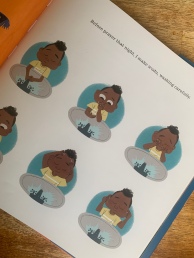
It is Muhammad’s birthday and he is seven, “Old enough to pray five times a day,” his father gifts him a prayer rug, and  Muhammad is ecstatic.  He makes wudu that night and offers salat with full attention.  He says the Sunday school words and shares his most wished for wishes to Allah swt, not even letting little sister, Maryama distract him.

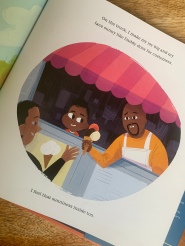
After Fajr the next morning, he is determined to find a secret place at school to pray Dhuhr. Daddy doesn’t need secret places, if prayer time comes he pulls his ice cream truck over and prays on the sidewalk, “never delay salat.”  At school, Muhammad heads to Mrs. Baker to ask for a place to pray, but his confidence waivers and he returns to his seat.
img_8432

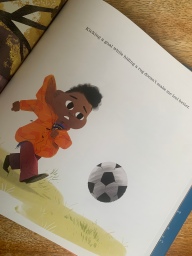
Anxiety about where to pray has him looking for spots throughout the morning, but when recess comes he finds he can’t take the prayer rug out from under his jacket.  He lingers when everyone returns to class and rushes through the words and motions in the coat closet.

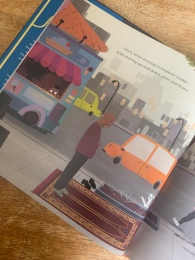
That evening he is with his daddy in the ice cream truck and the sunshine and smiles pour out of the two.  When the sun sets it is Maghrib time and Daddy heads to the sidewalk to pray, reassuring Muhammad that he can pray at home.  Muhammad watches his dad and various events spur him to make his decision.
img_8433

I love love love the way salat is approached with love and excitement and that the dad embodies safety and joy and does not pressure or force Muhammad.  The relationship is beautiful and allows for worship to be seen as both personal, as well as obligatory and merciful.  The duo also show a great parent child dynamic that warms the heart.
img_8434

I like that there really isn’t any “hate” given to anyone praying, it is hinted at, people do not understood, but the focus is not on the outside bystanders- it is what Muhammad thinks and feels.  I’m fairly certain every Muslim who has prayed in public has encountered a wide variety of responses, and this book keeps the gray to reflect and spark conversation.  It is often met with ignorance, with hate, with aggression, but it is also met with respect, apathy, and curiosity which the text and illustrations allow for.
img_8435

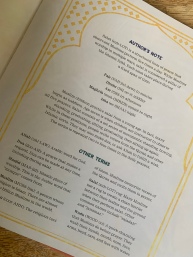
There is so much love and joy in the book as well as identity, that I don’t mind one bit that my littles ask me to read it over and over.  It is perfect for groups, one-on-one, and I cannot wait to share it in a story time, there is also an incredibly informative and heartfelt Author’s Note at the end.  If you haven’t preordered it yet, the book releases on June 6, 2023, please pre order it and signal the support for this book and future books that center authentic Muslim joy, Black Muslim representation, and OWN voice author and illustrator accuracy.  Request it at your library, put it on hold at your library, check it out, read it.  If you cannot preorder it, still purchase it when you can, inshaAllah it will be a beloved book in your home as well.
Ali the Great and the Market Mishap by Saadia Faruqi illustrated by Debby Rahmalia

Standard
Ali the Great and the Market Mishap by Saadia Faruqi illustrated by Debby Rahmalia

Akin to her beloved Yasmin series, author Saadia Faruqi offers up a new set of books similarly rich with culture, family mishaps, problem solving, and fun for early readers.  This is the first book in the series, with three more announced that follow the Pakistani American family, and seem to perhaps even connect to Yasmin (based on the cover pictures).  The books are not religious, Ali’s mom wears hijab, and there is an Eid title in the series, but having only seen this particular book I’m not sure if it is faith detailed or not.  Over three chapters and 32 brightly illustrated pages, second grader Ali Tahir, along with his little brother and Dada head to the South Asian store to find some snacks and ends up having to find little Fateh.  With a family portrait and Urdu words defined at the start, the story concludes with some jokes, some details about traditional desi snacks, questions to consider and info about the Muslim author and Muslim illustrator.

It has finally stopped raining and Dada needs snacks, so he puts Fateh in the stroller and the three of them head off to the market.  Dada is from Pakistan and he and Dadi live with Ali’s family.  Once they make their way to the store, they take in the sights and start looking for Dada’s favorite chips.   Ali has to let go of Fateh’s hand to catch a spicy chips display from falling over, and that quickly Fateh disappears.?

I love that the Yasmin series is such a staple and so widely beloved that a similar series with a boy protagonist is now going to grace our classroom, school and public libraries.  This particular book might only have a #Muslimintheillustrations, but it normalizes religious garb, cultural traditions, and larger themes that unite us all in a fun, age appropriate book that will get early readers smiling and brown Muslim kids glad that yet another mirror exists for them and a window for those around them.

Egyptian Lullaby by Zeena M. Pliska illustrated by Hatem Aly

Standard
Egyptian Lullaby by Zeena M. Pliska illustrated by Hatem Aly

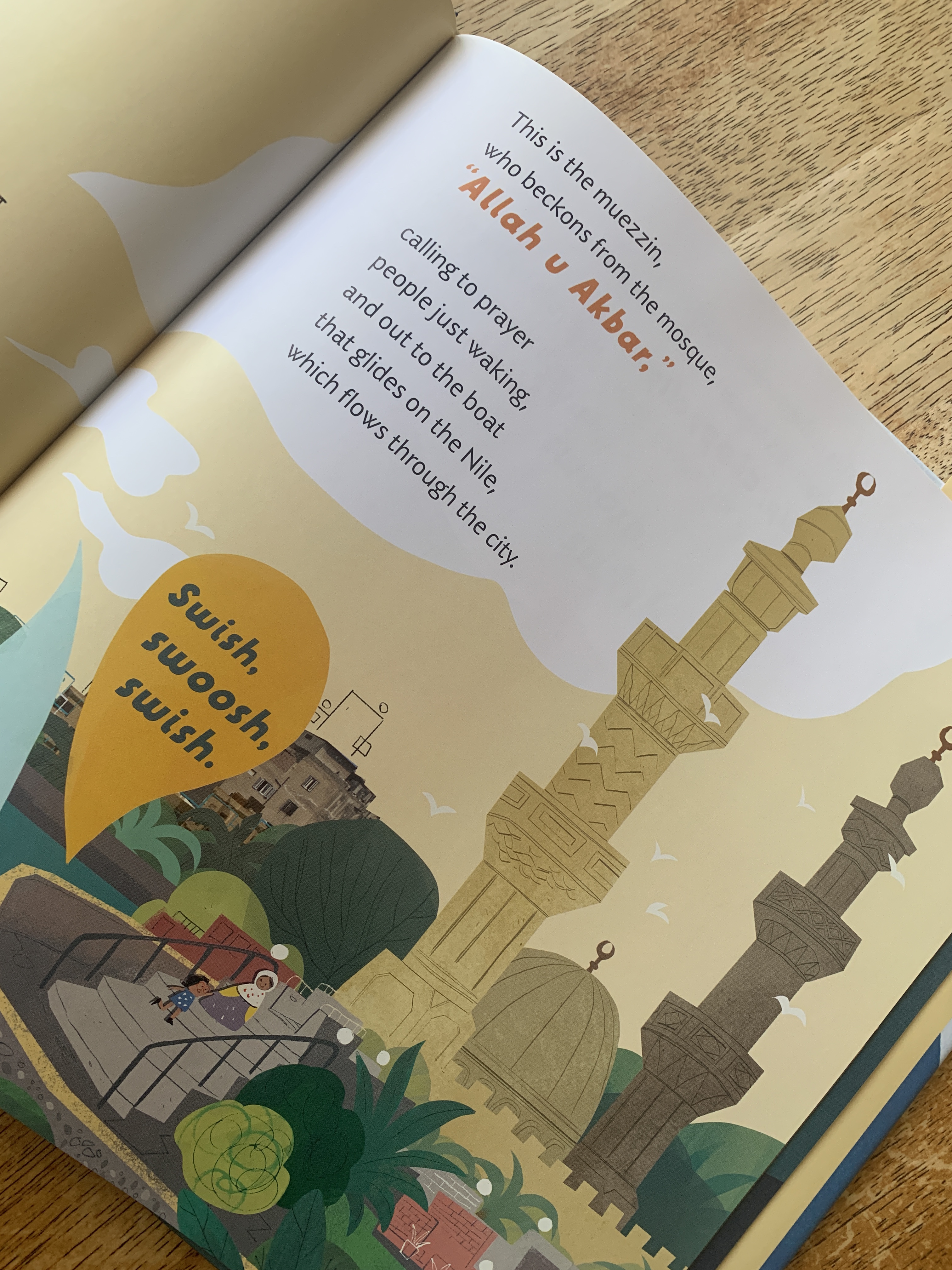
There was a time in college when my friends and I would gift each other Cinderella retellings and versions from all over the world, that was nearly 20 years ago, and I haven’t thought much of it, until this book reminded again of “This is the House that Jack Built.” Having just read and reviewed “The Masjid that Kamal Loves” which is structed similarly, I can confidently say forget Cinderella, I’m loving this new trend, of a repetitive layered story conveying love and excitement and joy to little readers in such an engaging way. This book has more of a story than the original and shows relationships and longing, even though it is primarily a love letter to Cairo.  The swapping out in some verses for Arabic words and English translations, the sound affects and the connections really elevate the OWN voice details in the text and make the book an absolute treat to read and share even for those of us who are not Egyptian and have never visited.  The Auntie who visits wears hijab, the muezzin calling Allah u Akbar is a repeated refrain, their are numerous illustrations of women in hijab and a masjid is shown repeatedly throughout allowing Muslims everywhere to feel seen with this culturally specific story.  The Glossary with the Arabic script and pronunciation guides and Notes from the Author and Illustrator really radiate with love and invite the reader to participate in the celebration on the pages.  I have no doubt children (and their parents) three and up everywhere will fall in love with the 40 page story and delightful illustrations.

Auntie Fatma comes to visit a little girl’s family from Egypt and brings sahlab and changes for two weeks to the home.  Arabic is spoken, and a nightly lullaby of the sounds of Cairo are among the beloved additions to connect the little girl to her Auntie and her culture.

The lullaby begins with the sound of the Nile, the boats floating through the city, the athan calling to prayer, the carts on the streets, the traffic.  The halawa ya battekh, swish, swoosh, swish, Allah u Akbar, beep honk toot, all add layers to the bustle of the city as the little girls memories of the sights and sounds of Egypt soothe her to sleep.  When it is time for Auntie to return the little girl’s sadness is palpable, but Auntie finds a way to reassure her and all those that have drunk from the Nile and long to return.

It is hard to say if the text adds to the illustrations or the illustrations to the story, both combine to make this book impossible to read without smiling.  I love that the mosque is shown in the daytime and at night implying that the call to prayer is not a one time thing without articulating that Muslims pray five times a day. I don’t know if the author identifies as Muslim or if the inclusion of the athan and Allah u Akbar is just an environmental reality of Egyptian daily life and thus featured.  The illustrator could have very well added the hijabs on his own as there is nothing religious or explanatory in the text.  Perhaps it is worth noting that there is a dog in the family’s home that seems to sleep with the little girl.  The book is a cultural heartfelt portrayal, and that Islam is prominently featured so beautifully made for a lovely surprise.

I hope you will consider preordering the book here, requesting it at your library, and sharing it on classroom and home bookshelves.  Happy Reading!

The Masjid Kamal Loves by Ashley Fraklin illustrated by Aaliya Jaleel

Standard
The Masjid Kamal Loves by Ashley Fraklin illustrated by Aaliya Jaleel

img_7811

I don’t normally post about upcoming releases this far in advance (2.5 months), but I am hoping that if I share the link for preorders, I just might help in signaling to the traditional publishing world that books like this are so so so important and that we will support unapologetic, well written, Muslim centered, Muslim and Black joy featured books with our purchasing power.  This book is incredible for toddlers to early elementary in its “This is the House that Jack Built” format.  Muslim kids will giggle with excitement as they see themselves happy to see their friends at Jumu’ah, flinging shoes a little too hard before entering the musallah, splashing a bit when making wudu, playing while helping put out the prayer rugs, and getting a little wiggly or tired during the khutbah.  The happiness and love radiates off the pictures and through the text that even non Muslim readers will feel our connection to our Masjids and the prayers that occur within.  Muslim authored, Muslim illustrated, masjid not mosque, and a beautiful Author’s Note, makes this book a must have on every shelf where young children need books that mirror their experiences and provide windows into the beauty of Islam.

img_7814

The book starts out describing Kamal’s smile and offering the reason for such joy as being Jumu’ah at the masjid. It then starts with describing the masjid and all that is contained with the lines adding on the refrain of “the masjid Kamal loves.”  The friends, the shoes, the feet, the rugs, etc.. Terms such as imam, ummah, salaam are in the text and the illustrations show wudu, salat, khutbah, conveying a Jumu’ah experience.

img_7813

Each page is brightly illustrated across horizontal orientated scenes.  The expressions on the kids faces, are engaging and smile inducing and the lyrical text has a rhythm and strength that makes you feel proud to also have a masjid to love like Kamal.

img_7816

I have an arc, but have preordered a copy for myself here and hope you will do the same. Please also request your public libraries to order it, and if they have already you can place the book on hold, inshaAllah little steps to show support.

What Should I Do? By Fadelah Mahmood illustrated by Ayun Sekar

Standard
What Should I Do? By Fadelah Mahmood illustrated by Ayun Sekar

img_7640

Most rhyming children’s books are absolutely terrible, but this one made me smile as the format compliments the tone of the book.  Every child has done something they regret and every parent desperate to raise truthful children; what very easily could have been a heavy handed story, stays positive as little Yousuf breaks something and seeks advice from his siblings about what to do.  The book provides a lot of teachable moments and allows discussion and reflective referencing.  It also is a reminder to us parents to praise the honesty, and forgive the transgression.  The book is 24 pages and while text heavy at times, the fairly smooth rhyme and relatable story will be great for mature toddlers to kindergarteners.  Some of the vocabulary will possibly need some explanation, but the cute pictures provide clues and the messaging will come through.

img_7641

The book starts with Mum heading out to run errands and the kids being reminded to be nice, not to fight, not to make a mess, and that dad is in the garden and call if they absolutely need her.  Did I say it is relatable? Yeah, I say this at least once a week, but dad isn’t in the garden, and I don’t rhyme.

Yousuf amuses himself and one thing leads to another and a ceramic plate gets broken.  Not just any ceramic plate, his Mum’s favorite. He heads to his brother playing playstation for advice, and then to his other brother, and then finally to his sister before his mom comes home.

img_7642

I’m sure for adults the story is predictable, but the solutions the siblings provide are similarly relatable and mom being grateful that honesty won out are conveyed on a child’s level that makes the book enjoyable at bedtime or in small groups.  It provides an entertaining and  clear reminder of how important telling the truth is.

There is nothing clearly Islamic in the text except the children’s names and the mother wearing hijab.  No hadith or ayats are mentioned in conveying the universal character trait of honesty.  The author and illustrator are Muslim and I do wish that there was a tie back to Islam either before or after the story, but alas there is not.

img_7643

I purchased my copy here at Crescent Moon where my initials ISL (Islamic School Librarian) will save you 10% and it is also available here at Amazon.