Category Archives: Muslim Illustrator

Not Now Noor! by Farhana Islam illustrated by Nabila Adani
Standard
Not Now Noor! by Farhana Islam illustrated by Nabila Adani

img_7621

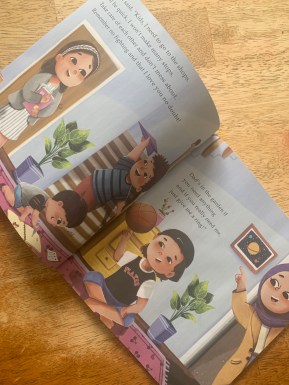
This 32 page book is incredibly adorable and silly, and yet so vague in the answer that is the whole premise of the book, that it really has me wondering why we are so afraid (in children’s books and possibly in our daily lives) to say that we wear hijab because Allah swt commands it?  The book articulates that we are Muslim and that hijab defines us, which I love, it just seems that while the rest of the book is incredibly direct and funny, the answer is fuzzy and lyrical.  It is by no means wrong, it just at the end presents what hijab means, the benefits of wearing it, and one’s personal feelings toward it, while skirting the answer the girl keeps asking of why? It seems to be a common approach lately, and I wish that more picture books about hijab would clearly articulate that the commandment to cover is in the Quran.  It isn’t for any other reasons. It may have perks of keeping your ears warm, fashion, or hiding your earbuds, but that isn’t why Muslim women wear hijab.  Perhaps the trend has me more frustrated than this book on its own warrants, it really is sweet and I don’t regret purchasing it and having it sent from the UK.  It allows for a serious conversation about hijab to occur after, and it intentionally pushes the humor, which I definitely think we need more of in Muslim centered books.

img_7623

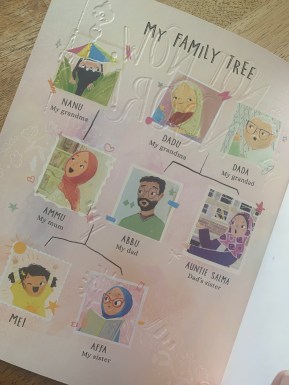
The book starts with Noor identifying what her Ammu’s hijab is and isn’t, how she wears it and how she doesn’t.  The next page shows Noor’s bustling family and she compares how her Ammu’s hijab is not the same as her Nanu’s or Dadu’s or Aunt’s or even her sister’s, but she doesn’t know why any of them wear it.  Yes, I’m sure there is some pointed criticism I should make about how can a child her age not know, but I think for the sake of it being a book and being comically done, I am willing to let it slide.  I do wish that the spread had the women and their style of wearing a scarf shown.  I appreciate that they are in the dining room at home and thus not wearing a scarf, Nanu is because Dada is in the picture, authenticity which I love seeing, but children need a little more hand holding to see which person the text is talking about. Yes I know there is a family tree on the inside cover, but at story time, it is cumbersome to flip back and forth.

img_7626

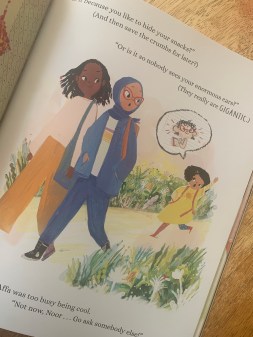
Back to the story, Noor starts by asking her sister, the coolest hijabi she knows, if she wears it to hide her snacks in, or hide her big ears, but Affa brushes her off with a, “not now, Noor” and she is off to the next family member to ask.  Each time the rationale gets more outrageous: hide the eyes on the back of your head, prevent you from getting nits, etc..  And each time the person she asks sends her on her way with a “not now, Noor.”

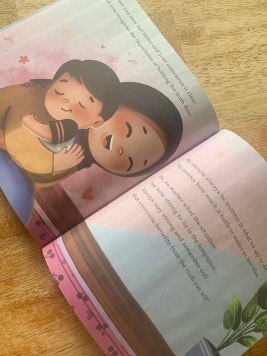
When Noor finally gets to her mom it is she who answers with poetic lyricism, “We are Muslim women, my Noor, Unapologetic and true.  We are believers.  We are dreamers.  We are thinkers. We are leaders. We can wear our hijabs on our heads like our hearts on our sleeves.  Whether you choose to or not, my Noor,, we are so many things…and we are more than enough.” On the next page it continues, “My hijab is not just a scarf.  It means more to me.  It is a reminder of who I am, where I’m from, and where I’m going to be.  And perhaps one day you’ll understand what I mean.  Because, most of all without my hijab, my Noor, I don’t feel like me.”

img_7622

A flowery sentiment, but little Noor and the reader never got the answer as to why Muslim women wear hijab, and I think that it is unfortunate.  The book is beautifully illustrated, the size is great to be shared, the text funny, the voice playful, the joy contagious but the answer for me, just missed the mark, not by a lot, but by enough that I think an adult would need to supplement the overall takeaway message.

Allah and My Heart by Humera Malik illustrated by Basmah Syadza

Standard
Allah and My Heart by Humera Malik illustrated by Basmah Syadza

img_7583

This 47 page book of feelings and reassurances shows Muslim kids that they are not alone and that Allah swt is always there for them providing love.  The book is not a story, and at times it might sit unopened on a shelf, but when it comes out as a needed tool, I think the resource it provides will be much appreciated, powerful, and useful.  The book offers scenarios with emotions: fear, excitement, anger, sadness, and then reassures the reader with Allah’s promises, and then with what we can do or say.  There are only a few words on each page, with a simple illustration that changes with each scenario and is reflective and inclusive to skin colors and abilities.  The book if rushed, will just seem like a list, it really needs to be discussed and shared with children in a way that leads to internalization, application to their own life, and appreciation that Allah swt is aware of everything.  The book is not sourced, but the sentiments are familiar.

img_7584

Here are a few samples of how the book is tied together: “When it is dark outside, I feel scared, Allah says don’t be scared I am with you.  I can say ‘Allah is my protector,’ and read the last three surahs of the Quran.” This plays out over four pages. “When I have too much to do, I feel overwhelmed.  Allah says He does not give me more than I can handle.  I can say ‘Allah I am overcome, help me’ and I can do dhikr to calm my body.

img_7586

I like that the book is well done for what it is.  The repetitive format and Islamic centering make it is a useful tool and the guidance gentle on a child’s level.  If nothing else knowing that what you are feeling is normal and common and accounted for in our deen is a tremendous reassurance in feeling big emotions.  The reasonable price and the Islamic centering makes me hope this book is shared and shelved in places that little Muslims will have access to with adults to help facilitate the messaging.

img_7588

The book can be purchased here from Amazon or from Crescent Moon Store here if you use my initial ISL (Islamic School Librarian) at checkout you will save 10%.

img_7587

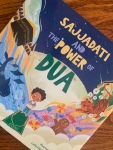
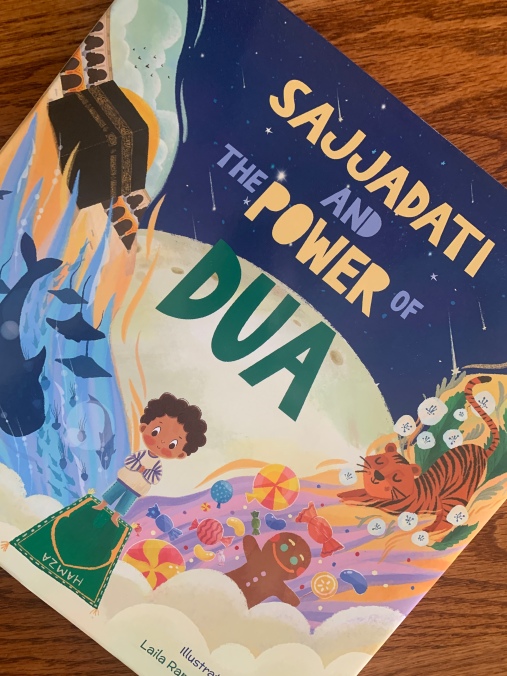
Sajjadati and the Power of Dua by Ayesha N. Rahmaan illustrated by Laila Ramadhani Ritonga

Standard
Sajjadati and the Power of Dua by Ayesha N. Rahmaan illustrated by Laila Ramadhani Ritonga

img_7520

This 38 page large hard back picture book is absolutely beautiful: the illustrations, the tone, the thickness of the pages, all come together to create a child’s wonderment about the power of salah and dua with grounding in the actual parts of prayer.  On my first reading the imaginative “magical” aspects of the prayer rug, “Sajjadati,” was sweet and endearing, but as I thought about the story and then reread it, I had some concerns.  I know the book is meant for children, I know I am a reviewer and thus am over analyzing it, so I point the following out as a “heads up” so to speak, and for you to make your own decisions if the literal text will be misleading or if the overall mood of the book will be taken as loving dua and the closeness prayer brings one to Allah swt.

img_7521

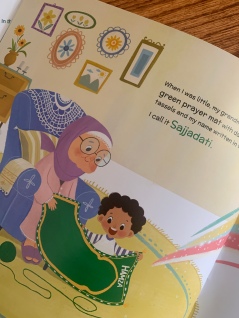
The book starts with a little boy recalling when he got his green prayer rug from his grandma, that has his name on the corner (in the illustration it is centered on the top, not in the corner) and him naming the prayer rug, “Sajjadati.” The following page, same spread, then says,  “When I have Sajjadati with me, I can pray anywhere.  And when I pray on Sajjadati, I can go anywhere.” These lines give me pause, because even if the prayer rug is lost or not with him as he grows up, he is still going to need to pray. The importance of the prayer rug seems over elevated, albeit sweet, religiously a little unsettling.  The second of the two lines, about going anywhere, is also a bit of a gateway to the rest of the book and almost encouraging one’s mind to wander during salah.

img_7522

The next page gets back on track saying that starting to pray and saying “Allahu Akbar” leaves this world behind, the little boy says surahs he has memorized, and knows Allah swt is watching him.  He asks Allah for what he wants, and his imagination takes him on adventures after each salah. He imagines flying, and being a superhero.

img_7524

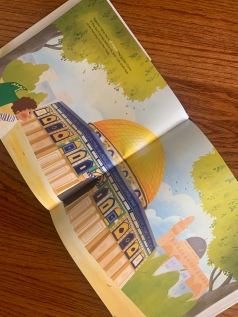
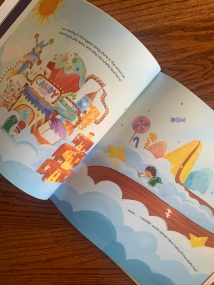
The story then returns to being in prayer, not after, and going in to ruku.  The text has him imagining he is in the “biggest candy store in the universe” wondering if Jannah has rivers of chocolate before standing up straight again saying “Sami Allahu liman hamidah,” and contemplating if there is a place where his prayers would be worth more and Sajjadati taking him to al-Aqsa.

img_7523

In sujud Sajjadati tickles his nose, but he doesn’t mind because he is closest to Allah swt in this position, and while he won’t let his “annoying little sister,” bother him, his mind does drift to being on a boat in the sea with seagulls squawking, “salaam.”

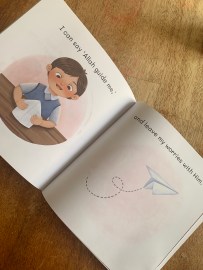
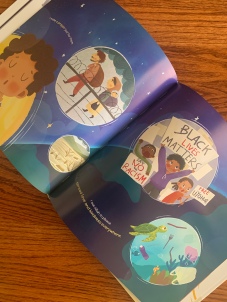
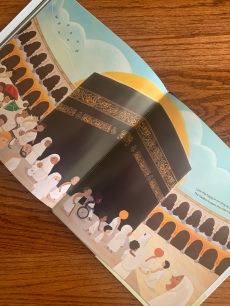
Hamza is then making dua for those suffering.  Since nothing is impossible when making dua, he is also asking for pets from the savanna, but knowing that Allah swt will provide what is best.  He makes duas to go for hajj and concludes his salah by folding up Sajjadati and finding peace in Allah swt being al-Mujeeb.

img_7525

I love the heartfelt framing of salah and the interweaving of both real and whimsical wants, as well as the sprinkling of facts about prayer into the story, but I honestly struggled a bit with the juxtaposition of the parts of prayer with the day dreaming elements.  I also struggled with the tenses, and find myself constantly rewording this review to reflect the book’s timeline.  Hamza is with his family, for example, hearing the current event news, while the next set of pages has him back making dua at the end of the prayer he started at the beginning of the book.  And the hearing the news and the praying for people is all being conveyed in the present tense, not clear if he recalled hearing about strife in the world and then made dua, or paused heard and resumed his prayer, it all seemingly happening at once, but that doesn’t really make sense. The title also says dua, not salah, and so much of the book is about prayer, that I feel like the two get conflated erroneously, and dreaming big during dua is different than having your mind wander during your salah.

img_7526

The book starts with an ayat from the Quran in Arabic text and meaning of the translation in English and concludes with a glossary and space to complete a Dua List.

If this book seems like a good fit for your young child, I ordered mine from Crescent Moon Store and you if you use my initials ISL (Islamic School Librarian) at checkout you’ll save 10%.

The Blessed Pomegranates by A. Helwa illustrated by Dasril Iqbal Al Faruqi

Standard
The Blessed Pomegranates by A. Helwa illustrated by Dasril Iqbal Al Faruqi

img_7482

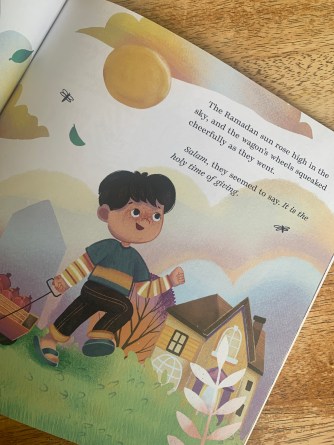
I hadn’t even heard of this new Ramadan book until @bintyounus reviewed it, so it wasn’t in my 2023 Ramadan Reads Roundup, I apologize, but I’ve bought it, read it, and am sharing it now.  I even hope to include it in my local masjid story time, if it is a smaller crowd as the 8.5 x 8.5 size is a bit small for a larger group to see the illustrations well.  The story itself, though, is nice.  It isn’t the simple list of what Ramadan is, or a first day of fasting hardship, it focuses on giving.  The plot has a predictable story line that works in a few tidbits about Ramadan, but really is more a “feeling” book about the beauty of sharing as the poetic refrain of “It is the holy time of giving” is woven in to the 32 pages that follow two siblings and their grandma as they share their pomegranates with their neighbors to have the blessings return to them.  Preschool to second graders will enjoy the sounds of the pomegranates, the happy ending, and the message of sharing what you love most.

The book starts with siblings Adam and Alyah laying under the pomegranate tree when Grandma Essi challenges them to climb the tree and pick the fruit.  Once gathered they realize they have more than they can eat and they brainstorm who they can share with.

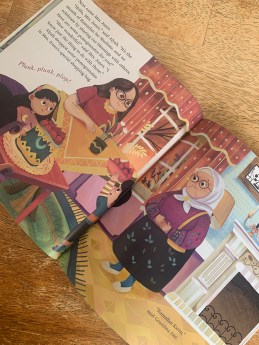
Ramadan is when the Quran was revealed, it is full of love and guidance.  It was shared with us, so we should share too.  So they load up the wagon and head out in to the neighborhood.  When they give Maryam some pomegranates, they go plunk, plunk, plop into the bucket and she knows just what she will do with them.  They wish her a Ramadan Karim and are off to the next house.

img_7485

Uncle Shakir is greeted with salam and also knows just what to do with the juicy fruits.  Mrs. Jones is given pomegranates and the trio explain that it is Ramadan a month of sharing our blessings with others for Muslims, she too knows just what she will do with her gift.

img_7486

After all the pomegranates are distributed, the sun is getting low and the kids are wishing they saved a few fruits for them.  Grandma isn’t worried though, she knows “Allah always rewards kindness with more.”  And Grandma is right.

The book concludes with a glossary of terms and the book is meant for Muslims, but I think non Muslims would grasp the love and messaging and enjoy the story as well.  I wish the book was larger, so the illustrations could be better enjoyed, but for the price point (EDIT: it has increased since I purchased it last week)tone, I was pleasantly surprised with the overall quality and tone of the book.

img_7487

I purchased my paperback version here from Amazon, but it is also available as a hardback.

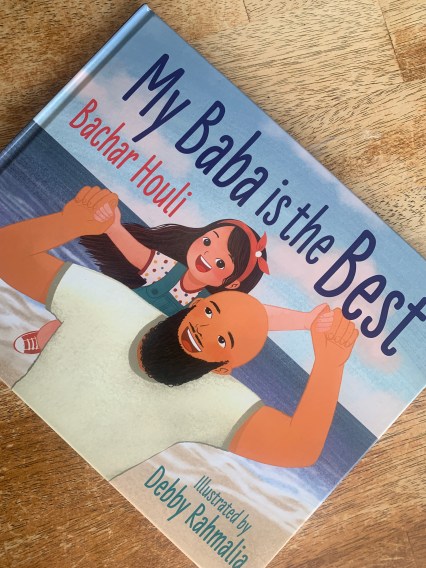
My Baba is the Best by Bachar Houli illustrated by Debby Rahmalia

Standard
My Baba is the Best by Bachar Houli illustrated by Debby Rahmalia

img_7434

This 32 page horizontal picture book by an Australian footballer starts out much like a list detailing why a little girl loves her Baba, after a few pages though of more superficial delights, the book gets deeper.  It shows the family making duas at bedtime, going to the masjid on Fridays, it even gives a little insight into Eid and fasting before it then takes readers on a camping trip.  There isn’t really a story or plot, but the bouncing around fits the narrator’s point of view and will appeal to the intended target audience.  The book is mainstream published by Penguin in Australia, so I absolutely love the inclusion of Islam, the mom in hijab, the dad’s beard and the love shown between the little girl and her Baba.  Sometimes celebrity books feel a little forced, but having never heard of this athlete, I still found the book incredibly sweet and joyful, and the illustrations by a Muslim illustrator a great amplification of the simple heartfelt text.

The book starts with a little girl rushing to give her Baba a hug on the field as fans cheer in the background.  After all her Baba gives the best hugs, it then mentions that he is always doing something and shows him washing his boat and jumping on a trampoline with the little girl and her younger sister.  The trio garden, exercise, ride bikes, train and go fishing. They also watch movies at the theater or at home with the whole family. At night Baba reads special prayers to protect them while they sleep.

On Fridays, the family goes to the mosque for prayers, and the most special time is when they all go for Eid in their best clothes.  They listen to the imam and give donations to those in need. They open presents and after fasting they eat Lebanese pizza before going to visit teta and jeddo.

The best time is when they go camping.  They all set up the tent, and get sticks to roast marshmallows.  They even see kangaroos eating dinner before heading back to eat theirs.  On many of the pages it is just the girl and her Baba, but even when the whole family is present, the focus is on the strong relationship between the two.

The book is very endearing and as a daddy’s girl myself, I love seeing the relationship unfold on the pages with big things, and little things, fun things, and reflective things, and from the little girl’s point of view.  The book is not readily available in the United States, I purchased mine from Book Depository, where they offer free shipping.

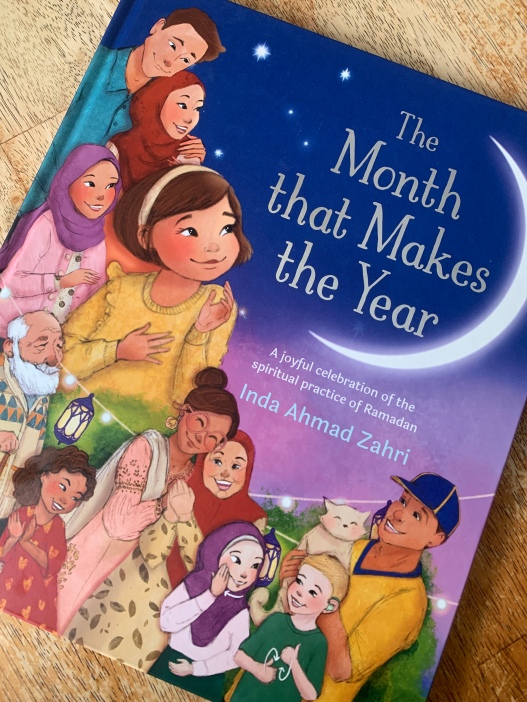
The Month that Makes the Year: A Joyful Celebration of the Spiritual Practices of Ramadan by Inda Ahmad Zahri

Standard
The Month that Makes the Year: A Joyful Celebration of the Spiritual Practices of Ramadan by Inda Ahmad Zahri

img_7355

This book was definitely worth the wait, alhumdulillah.  For all the complaining I do about books regurgitating facts, or Ramadan joy books leaving out the religion, and presentation feeling like it is more for non Muslims than for our own little children; this book does a great job of sharing key points about Ramadan with authenticity and heart that Muslims and non Muslims alike will benefit from the light story, engaging and adorable illustrations, and Muslim child centering.  This 32 page book works well for preschool to early elementary readers and listeners at bedtime, at story time, and in settings were introductions to Ramadan are shared.

img_7358

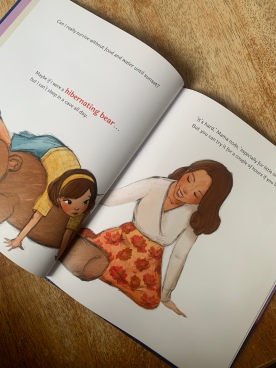
I was a little nervous that this book was framed as a child’s first fast, but a few pages in my concerns disappeared.  Little Deenie knows what Ramadan is, her family is encouraging her to try and fast for a few hours, and she knows that she can’t hide in a cave and sleep like a hibernating bear because Ramadan is so much more than going without food and drink.

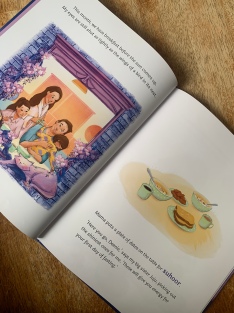
I love the shelving of tempting snacks and bad habits of unkind words, waste, impatience, and that little changes lead to big changes one at a time: kindness, love, attention, gratitude.

img_7361

Deenie goes a little longer each day, and her tummy rumbles, but where she once felt lonely in the quite spaces, she is finding new things that otherwise would have been missed.  She helps the coach off the pitch at soccer, the family connects without screens, the “ordinary feels extra-ordinary.”

img_7357

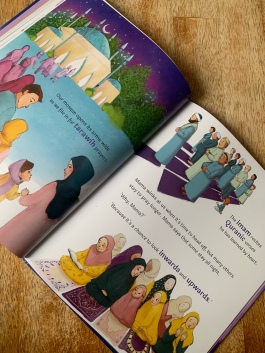
The mosque opens its arms for tarawih, and extra prayers are “a chance to look inwards and upwards.” A chance to belong.  There is sadaqah and Zakat, and being thankful, learning about traditions and connecting with others.  There are non Muslim friends changing a lunch date to a gallery stroll, and realizing the kindness is not required, but appreciated none-the-less.  The human body is amazing, and Deenie is growing stronger with each Ramadan day.  Eid is a time of celebration, but Ramadan is missed, and we are not the same people we were before the blessed month..

img_7356

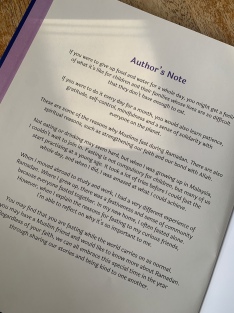
The book starts with an Author’s Note and ends with a Glossary.  The hardback 11 x 9 book is a great size to allow kids to truly enjoy the sweet illustrations that add to the text and bring the feelings to life.  There are a variety of skin tones, mobilities, clothing styles and head coverings, or not covered characters shown.  There are so many smiling faces, and relatable scenes.  This book is really well done and an absolute joy to read and share.

I personally needed to see that my expectations for a Ramadan read were not unrealistic, and this book alhumdulillah, not only proved that good representation can be beautiful and heartfelt and unapologetic, but raised the bar.  I can’t wait to share this for our Masjid Ramadan story time, I only wish it was easier to obtain in the USA.  I preordered mine from Book Depository, but since publication the price has gone up, inshaAllah if we all show our support, local stockists will find a way (www.allenandunwin.com).

Nadia and Nadir Eid Surprise by Marzieh A. Ali illustrated by Lala Stellune

Standard
Nadia and Nadir Eid Surprise by Marzieh A. Ali illustrated by Lala Stellune

img_7058

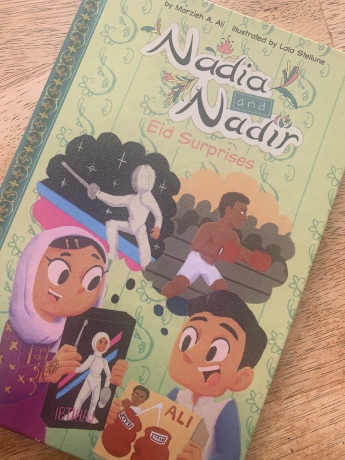
This is another holiday book in the Nadia and Nadir series for early readers, this one focusing on Eid al Fitr, but also celebrating Muslim American athletes Ibtijaj Muhammad and Muhammad Ali, sadqa, and the love of grandparents.  The 32 page book with four chapters shows Desi American siblings enjoying both their Pakistani and American cultures while consistently embodying their Islamic faith.  They pray salat, wear hijab, discuss sadqa, and say Salam and Eid Mubarak.  I am not sure why they pray Eid prayers at home, and not in a community congregation, no it is not a Covid set book, they then go to the mall, but the pride in their faith, culture, and family is enjoyable.  Early readers will enjoy the colorful pages, large illustrations, and relatable story situations.

img_7062

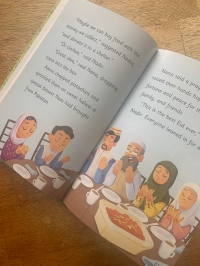
The book starts with the siblings hearing laughing downstairs, then seeing suitcases, and being surprised by their Nani and Nana coming from Pakistan to surprise them on Eid.  The family eats paratha and chai together before praying and making duas.

img_7061

After presents are passed out, the kids receive eidee and are off to the mall to pick out a toy.  Nadia sees an Ibtihaj doll, and Nadir points out that she is wearing a hijab just like his sister.  Nadia recognizes her and shares some facts since she has read her books.  Nadir wonders if Ibtihaj knows it is Eid and the family reassures him that Muslims everywhere in the world are celebrating.

img_7060

When it is Nadir’s turn to choose what to buy, he picks some boxing equipment with marketing images by Muhammad Ali.  Nana fills him in on the activism and accomplishments of Ali and how impressive his fearlessness really was.  When the change is given after paying, the kids and their grandparents discuss sadqa, charity, and this gives Nadia an idea.

The book concludes with a glossary of new words and information about the illustrator and author.  You can purchase your copy at all major retails such as here at Amazon, or you can support small business owners like Crescent Moon store and purchase your here.

Nayra and the Djinn by Iasmin Omar Ata

Standard
Nayra and the Djinn by Iasmin Omar Ata

img_6973

Set in Ramadan this graphic novel for middle grades has a coming of age theme brought to life with fantasy, religious practices, and storylines of bullying, acceptance, and folklore.  Nayra is fasting, she prays, she says bismillah and Assalamualaikum, her  practice of her deen is never in question and by and large I don’t know that anything is “haram” in the Islamic representation.  Yes, she says bismillah in julus, the sitting position of salat, there is sihr, magic. done by the djinn, and a lot of liberties about the ghayb (you can’t really disprove them), but honestly my biggest problem with this book is that somehow even though it is a graphic novel, more visual than text, there is way too much telling and not enough showing.  The reader is told that there is bullying, but only shown that one girl calls her “baba ghanoush,” we are told over and over that she is friends with Rami and that she needs to fix the relationship, but we never see what the friendship was before, only the forced awkwardness that it is now. The inside flap of the book stereotypes the “strict family,” but we never really see them being overly demanding or difficult, and the conclusion is very naïve with both the two girls and the two djinn resolving everything on Eid. I wanted to care about the characters, but never felt a connection to their stresses, traumas, and relationships, and many mirror my own life.  In full transparency though, I must acknowledge to you all, that I do not read a lot of fantasy graphic novels or even comic books, if the choppiness, and lack of depth is what makes the genre work for others, then this book will be fun with its pink and purple pallet and tracking of the Ramadan moon.  I really might just be the wrong person to review this OWN voice djinn fantasy authored by a Palestinian Muslim who like her fictitious djinn goes by they/them pronouns.

SYNOPSIS:

Nayra is being picked on by Tanya for messing up in volleyball in PE, and gets to calling Nayra “baba ganoush.”  When the book opens Nayra fasting for Ramadan is what Tanya chooses to attribute Nayra’s lacking skill too, and Nayra is ready to find a new school.  Her family offers no support, her older siblings set the bar high and got through by ignoring the bullies, and expect her to do the same.  The one other Muslim at school is Rami, and Nayra needs a break from her, they meet to break fast every evening, but Rami is exhausting.  When an online forum somehow gets a visit from a djinn, Nayra offers to be the anchor that Marjan needs to escape the ghayb and exist in the human world.  Marjan’s past comes back to haunt them, and when Zirkouniya arrives, there is only so much protection the month of Ramadan can offer as Eid arrives and the djinn are returned to full strength.  Djinn and human alike will have to own up to their mistakes, forgive others, and rebuild the relationships that matter.

WHY I LIKE IT:

I like the Ramadan centering, and appreciate that the coming of age story line was not an identity crisis about Nayra’s faith.  I  finished the book feeling like I didn’t understand much.  There was a lot of build up for a strict family, and djinn wisdom, that just didn’t exist.  The conflict with the friends was superficial and the resolution the same.  Maybe I missed the visual resonance as I tend to enjoy lyrical writing and relatable text, but the story seemed really simplistic, and the characters flat.

I honestly don’t know if the liberties of the djinn world and djinn themselves goes too far or if folklore, mythology, and fantasy give it fictional protection.  There are details that perhaps come from culture, or are completely made up, I don’t know.  Djinn in Islam are real, they are made of smokeless fire, some are good, some are bad, they have genders, and families, and feelings, and communities.  Outside of that, I don’t know much, and do not presume to, when I sent @bintyounus some of the pictures from the book, she remarked, “Djinn are part of the Ghayb/unseen, So it’s not like we say oh none of it is true, but we also don’t take it as 100% true.”

The magic is minor just a fixing of a flower and flower pot, so in reality the only fantasy are the details about the djinn and the journey to the djinn world.

FLAGS:

Lying, bullying, magic, sneaking out.

TOOLS FOR LEADING THE DISCUSSION:

There is not enough in the book to discuss in a book club, and because of the lacking resonance, I don’t know that most kids would read the book or be interested in it. I can see it being thumbed through, but I don’t think it would be finished by Muslim kids at the Islamic school, or by my own children.  Those that know the Islamic view of djinns won’t find that enough of a hook when the story inside is about a friendship, and not a particularly deep or fleshed out one.  They might see the bullying as relatable, but being called baba ganoush doesn’t really seem that bad compared to what many endure and pining for friends, when you have a very loyal friend, also will probably be met with some confusion.

Hunger Alert by Shazia Afzal illustrated by Sania Hussain

Standard
Hunger Alert by Shazia Afzal illustrated by Sania Hussain

img_6919

On my first read through, this book came across as a bit text heavy and the presentation didn’t quite fit with the content for the target audience, but when my seven year old read it, then reread it, and my 12 year old picked up and read it and both said, “it’s good,” I realized, the target audience is not little kids, nor is it adults, it is kids who have fasted and have felt the pangs of hunger.  The character is getting through his first day, but the relatability is for kids everywhere fasting for the first time the hundredth time and everywhere in between.  It is Islam centered, I appreciate the healthy food temptations and the unwavering that fasting needs to be done, but as an adult and an educator, so often I wanted to interject Islamic touchstone to getting through the day asking Allah for help, talking your self up and increasing your determination by knowing the Angels are recording your struggles and you will be rewarded in the akhira, and while Quran is read, and a surah loved, and Islamic phrases included, the focus of the book is a little boy in a very idyllic family trying to keep hungry thoughts away. The small 8 x 8 soft back book with 22 thick cardboard pages would be a bit hard to share at story time, but the simple concept story is fine in smaller groups and at bed time.

img_6920

The books starts with Ahmed fasting for the first time in Ramadan, he has a list of things he needs to complete his fast: 1-Keep busy, 2- Don’t think about food, and 3-Stay away from the kitchen.  I found when reading it to my younger kids I would pause here to discuss why we fast, and that we are doing it for the sake of Allah, so we need Him to be successful, not distractions.

img_6921

Ahmed starts with reading his favorite book about a charitable boy, the illustrations though had baskets full of shiny, big, read apples.  “Grr, Hunger Alert!” He runs to his brother’s room to keep busy with a soccer video game, but the prize on the screen are big, yellow bananas. “Grr, Hunger Alert!” This continues throughout the day, including while reading Surah Rahman, and the pomegranates trigger yet another Hunger Alert. When Grandpa asks him to take strawberries to his mom and his mom is in the kitchen, each of his rules will have to be broken.

img_6922

With iftaar approaching and fruit chaat waiting, Ahmed will have to persevere to complete his fast.  There is a glossary at the back and the book you can search online to find where the book is available near you http://www.compassbooks.ca

img_6923

Moon’s Ramadan by Natasha Khan Kazi

Standard
Moon’s Ramadan by Natasha Khan Kazi

moon

This beautiful lyrical book has a simple premise of the moon looking down on people celebrating Ramadan as it circles the Earth, but stands out as being unique thanks to the poetic language and engaging illustrations.  Each spread shows moon in a different phase over a different country, and the joy, activities and worship that Muslims are partaking in during the blessed month.  I’m embarrassed to say, I didn’t realize that the author is also the illustrator until I sat down to write this review, and honestly it makes sense, as the story text and illustrations work seamlessly together.  The tone of the book, the details in the pictures, and the rich language make this a good read for a large audience.  Little ones probably won’t fully understand the poetry, but they will be mesmerized none-the-less and feel the excitement.  My three year old calls the moon all year round, the “Ramadan Moon” and he understood that the Moon in the story is excited seeing us celebrate and worship.  He consistently would still be peeking in windows or searching the scenes, not quite ready for me to turn the page long after the text was done being read.  Older kids will appreciate the shared global bonds of Muslims and the cultural specifics too.  They will grasp the information shared and beliefs touched upon in the flowing words that do not preach.  My only criticism is that the book starts with Moon saying, “Hello.”  In an Islamic centered book I would have expected to see Assalamualaikum, especially since it appears on the page where moon is above Egypt, so I’m not sure why the English greetings is used.  The book has a glossary and notes at the end making it a great addition to Muslim and non Muslim spaces alike.  I plan to read the book for a Masjid story time as the large hardback book will work just as well for a group of kids as it does at bed time.

Told from a personified Moon’s perspective, the book begins with Moon smiling at Earth as people all over the world excitedly point and look up at her, but once they see her, they rush off to prepare for the month. Over Turkey, the Ramadan Drummer awakens sleepy people for suhoor and over Indonesia he sees families gathering for iftar. As each day passes Moon grows fuller watching the children do good deeds and people sharing their wealth.

Nights of Taraweeh and listening to the Quran over Somalia, sharing treats in the United Kingdom, and  interfaith among neighbors in the United States bring joy to Moon.  And as the waning crescent sees henna being put on hands in Dubai the month is coming to an end.  People once again look to the sky, but they cannot see Moon in Argentina, Moon is new.  It is Chaand Raat and then it is Eid.  Moon is back in Egypt watching people celebrate and then the world returns to looking up at Moon and she beams with love and gratitude.

There are diverse characters of a variety of skin tones, mobilities, ages, body size and abilities featured all throughout the book in a positive and inclusive normalizing manner.  The backmatter makes the concepts more accessible and the book work on different layers.  I really enjoyed the book and am excited to share it.  I purchased mine at Crescent Moon Store where using my initials ISL (Islamic School Librarian)  will save you 10% it is also available here at Amazon Even my local public library has it on the shelves already! Happy Ramadan!