Category Archives: Muslim Illustrator

Nadia and Nadir: Ramadan Cookies by Marzieh A. Ali illustrated by Lala Stellune

Standard
Nadia and Nadir: Ramadan Cookies by Marzieh A. Ali illustrated by Lala Stellune

nadia nadir

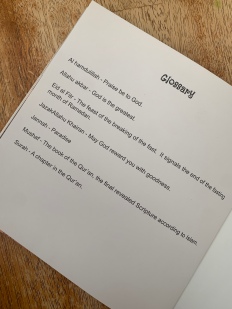
This 32 page early reader is part of the Nadia and Nadir series that can be read and purchased as a standalone.  It shows the sibling duo problem solving, working together, sharing, and getting excited for Ramadan.  With the theme of cookies, the book could work as a read aloud in a small group with an activity of making cookies following it, but the small leveled reader size and text volume would make it a hard selection for larger groups.  The setting is Ramadan, the female characters wear hijab (even in the home with just family), but there is not a lot of religious beliefs or practices included in the story. It does detail the lunar calendar and phases of the moon, but thankfully does a decent job of inserting that knowledge from Nadia who has learned about the moon in science class.  There are a few salams, and it mentions that Nadir isn’t fasting because he is young, Nadia gets up for their predawn meal, and snuggles back in to bed after saying her prayers. There is articulation that Ramadan is a month for Muslims and a time to share blessings when the kids share their cookies with the neighbors.  There is a handful of Urdu words sprinkled in and a glossary at the end.  The book shows a family’s traditions and radiates joy, it is a solid addition to Muslim and non Muslim book shelves in showing Ramadan cookie making and excitement in action, but would not inform a lot about the religious aspects, uniqueness, or basic practices about the month.

img_6746

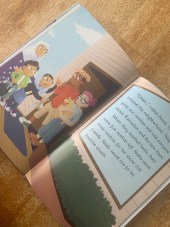
Nadia and Nadir start the book with their binoculars around their necks waiting for Abu to arrive home from work, Ammi is already on the roof and they are determined to spot the Ramadan moon.  The kids are all sorts of confused where to even look in the vast night sky, but once Abu helps them out they find it and declare, “Chand Mubarak.”

img_6748

Nadir wants to know why it isn’t a full moon, and his older sister Nadia explains the cycles, they are then off to make cookies as per their families Ramadan tradition.  The dough is ready, the star cookie cutter has been found, but where is the moon cookie cutter? Nadia has an idea, and sure enough her problem solving skills allow crescent moons to be made.

img_6747

The next morning Nadia has her predawn meal of cookies and milk and when Nadir wakes up he has the same.  The kids pack up bags of cookies with their Ammi to pass to neighbors and friends, with only one left who will get it Nadia or Nadir?

img_6750

The books are available widely at places such as Amazon but for the same price I hope you will support a small Muslim owned bookstore and purchase your copy at Crescent Moon, if you use my initials ISL (Islamic School Librarian) at checkout you will save 10%, link:

Nadia & Nadir Series

img_6749

Ramadan Nights by Jenny Molendyk Divleli illustrated by Halime Nur Sevim

Standard
Ramadan Nights by Jenny Molendyk Divleli illustrated by Halime Nur Sevim

img_6768

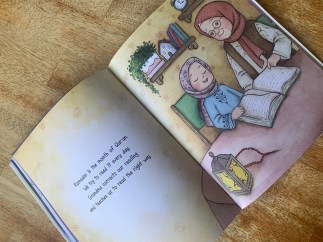
This rhyming softcover picture book sets the tone of the month with its large heartfelt images on cardstock thick pages.  The book mentions tarawih, reading Quran, suhoor, iftar, compassion, Laylatul Qadr, eid, but does so in a way that reflects what Muslim kids know and love about the month.  It is not overly descriptive, nor does it define the terms. It shows Muslim kids in Ramadan living their lives and draws out the emotional joy felt in acts of ibadah, not in the gifts and parties alone.  The rhyme works and isn’t terribly forced and the 8.5 by 11 size and the introductory framing of major Ramadan activities makes the book a good addition for toddlers and up. I plan to use this for a masjid story time for Muslim kids ages 4-9, but it can be used in non Muslim settings easily as well.

img_6770

The book starts out with decorating the home for Ramadan, as the city decorates outside too.  Ramadan has arrived, the moon has been seen with binoculars, and Tarawih at the mosque is where everyone is praying, and kids are playing.  Mornings start with the Ramadan drummer waking people up for suhoor, but mom is already up cooking.  The first few days of fasting are hard waiting for iftar, implying it gets easier.

img_6771

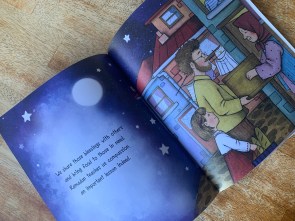
The kids and their parents make duas and thank Allah for their blessings as well as share their blessings with neighbors as they learn compassion.  The kids practice reading Qur’an every day with Grandma and before you know it, it is the last ten nights and Laylatul Qadr and then eid, alhumdulillah.  The 32 page book ends with prayers of gratitude and hope that Ramadan will be seen again.
img_6773

The book really is well done, there is no plot or story, but it introduces the month to little ones, reminds older ones what to expect and does so with accuracy and mirroring.  The book will lend itself to spark discussions about what a readers’ family can look forward to in the month, how one should behave in a masjid, perhaps some Quran goals and some appreciation for parents.  The poor mom helps decorate, stays up early to cook suhoor, cooks yummy iftar, and lays out Eid clothes all while wearing hijab.  InshaAllah a point to mention when reading how amazing moms (and dads) are in making Ramadan memories while fasting themselves.

img_6772

I purchased mine from https://crescentmoonstore.com/ if you use my initials at checkout ISL (Islamic School Librarian) you can save 10% or click this link directly to go to the book.

Ramadan Mubarak!

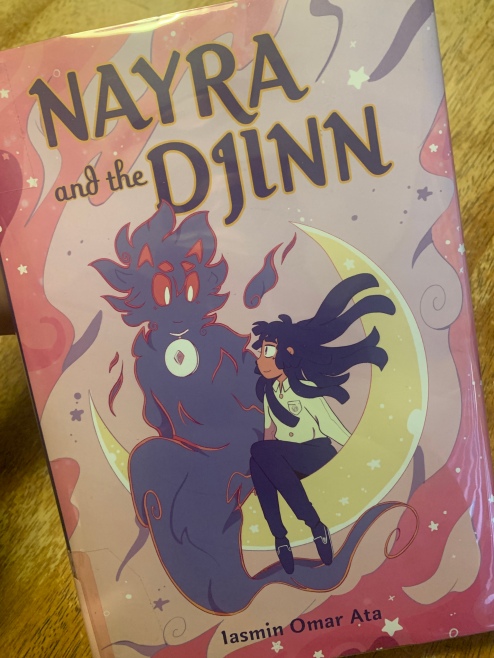
Amir’s Blue Jacket by Sarah Musa illustrated by Rania Hasan

Standard
Amir’s Blue Jacket by Sarah Musa illustrated by Rania Hasan

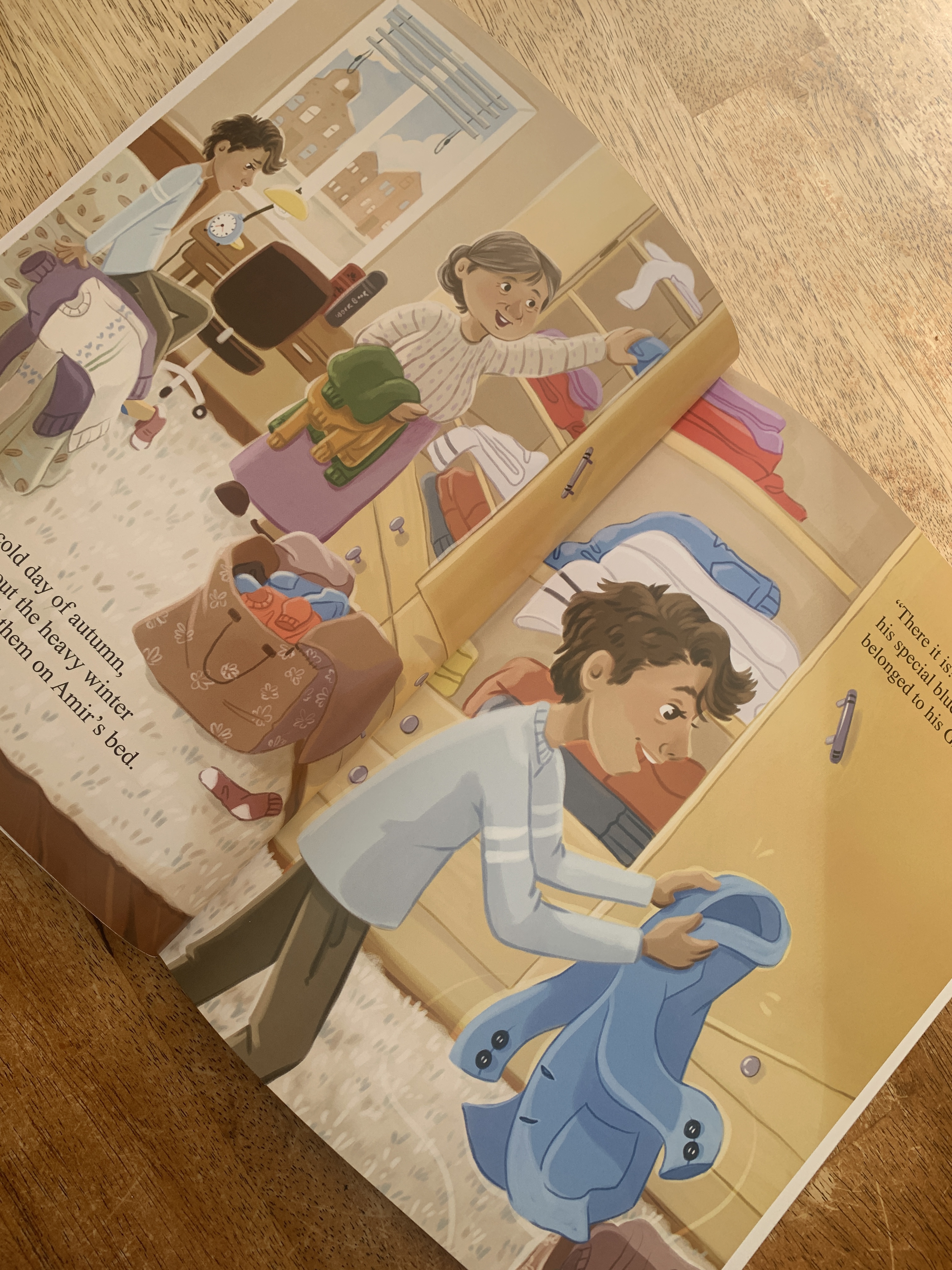
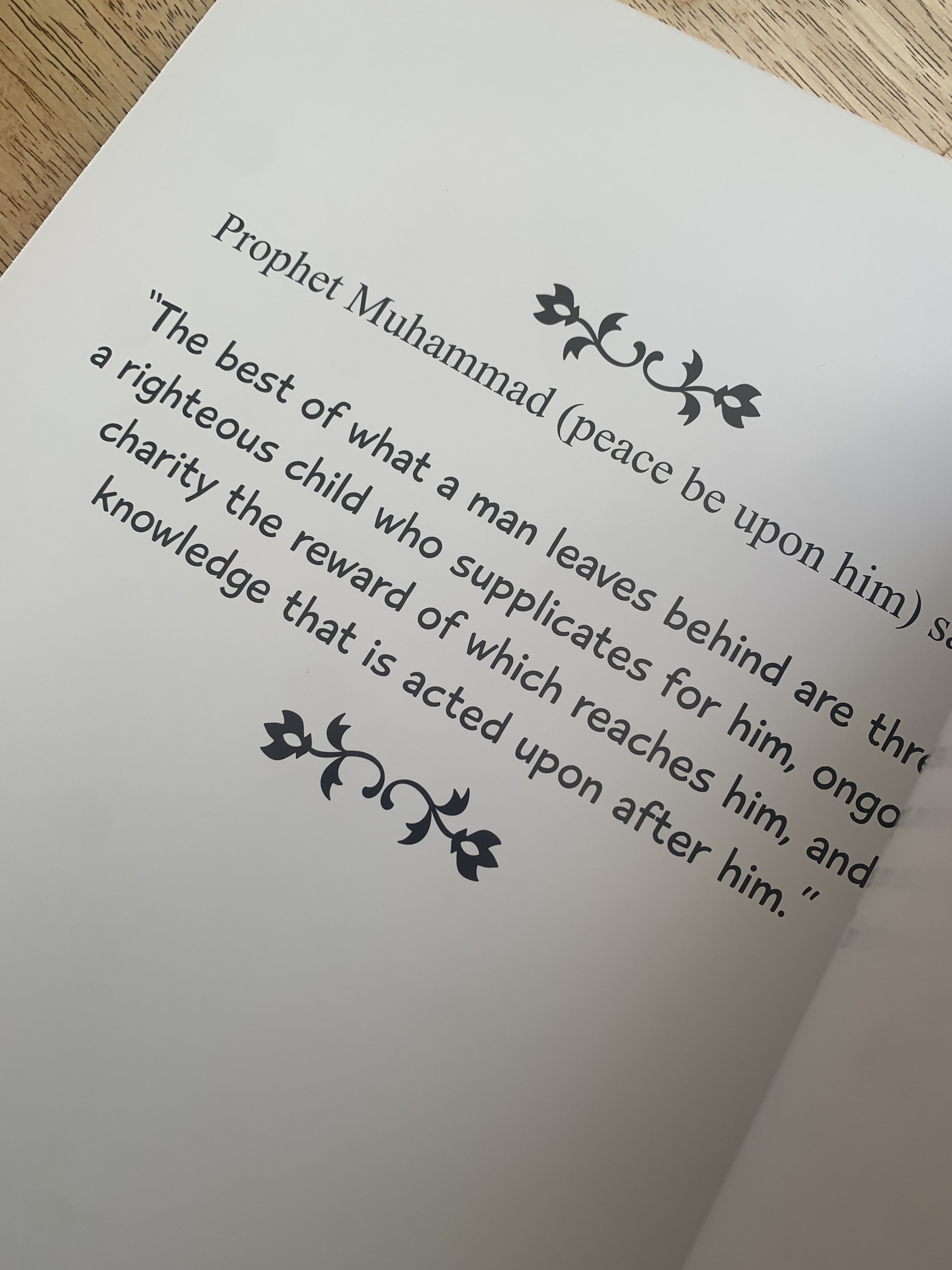
This heartfelt elementary picture book does a remarkable job of drawing the reader in to the emotions of the main character, his relationship with his grandfather, and imparting a moral message without being preachy. The illustrations are lovely on their own, but the way the muted tones convey the memories and illustrate the text really ties the book together. Whether it is for a larger story time or a one-on-one bedtime read, the book will offer discussion, comfort, guidance, and a little surprise at the end for Muslim and non Muslims alike. The slightly allegorical book does conclude with a widely known hadith (it is attributed to Prophet Muhammad saw, but is not further cited/sourced) and the family is clearly Muslim with their names mentions of Eid and God, and a hijab clad woman, but the book is universal and a lovely addition to any book shelf.

The book starts with Amir finding his Grandpa’s old blue jacket and recalling wrapping himself in it the day after his beloved Grandpa died. With it smelling like mothballs, he tosses it in the washing machine, but unfortunately when it comes out it has clearly shrunk. Amir is in denial, he says it fits fine and he has no desire for a new one. It is Grandpa’s jacket, and Amir is going to wear it, no matter how tight it is. Amir storms off to sit under the apple tree and recalls picking apples and making applesauce the year before for the whole neighborhood. Grandma shares that she used to keep grandpa’s cane but when someone needed it, she let it go.

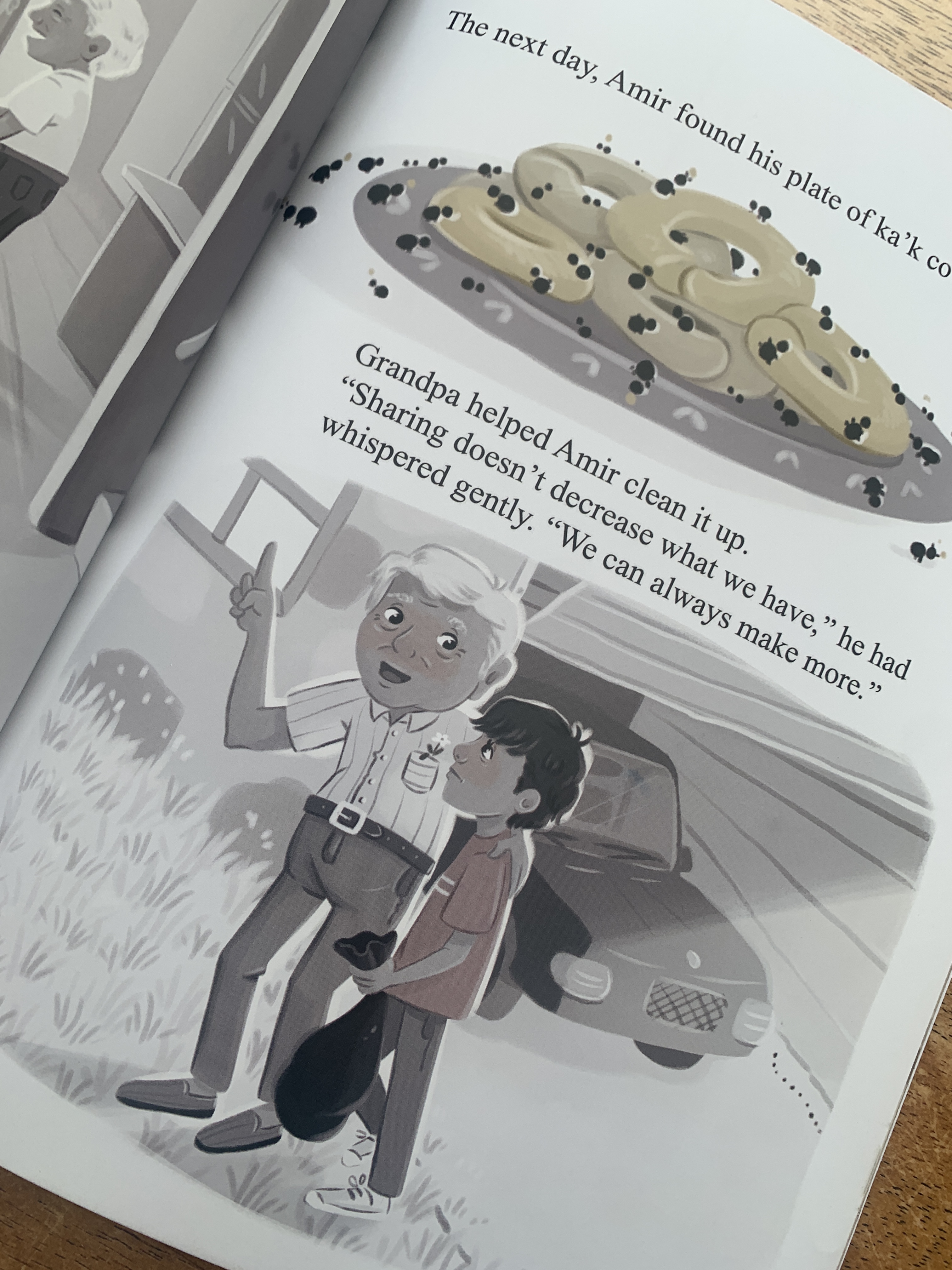
Grandma stirs another memory in Amir when she pulls the tray of ka’k out of the oven, of him trying to sneak a whole plate for himself only to have his hiding spot taken over by ants. When he is asked this time to share a plate, every step to the neighbors house reminds him even more of making the trip with his grandfather. Slowly he starts to realize that his memories are with him, not in his grandfather’s things, and Amir makes a decision that would make his grandfather proud, and (inshaAllah) give him more good deeds, even though he is gone.

The idea of sadaqah jariyah is understood through the story, and present in the hadith at the back, but it is never mentioned outright. Just as God is used, not the term Allah (swt). As Amir feels denial, frustration, and eventually peace, nothing is really told, it is shown, which really opens the book up to be a tremendous tool in sharing it with children and asking them to discuss what they understand, what they feel, and what they took away from Amir and his Grandpa’s blue jacket story.

The book is available through the publisher Ruqaya’s Bookshelf as well as HERE at Crescent Moon Bookstore where code ISL will save you 10%.

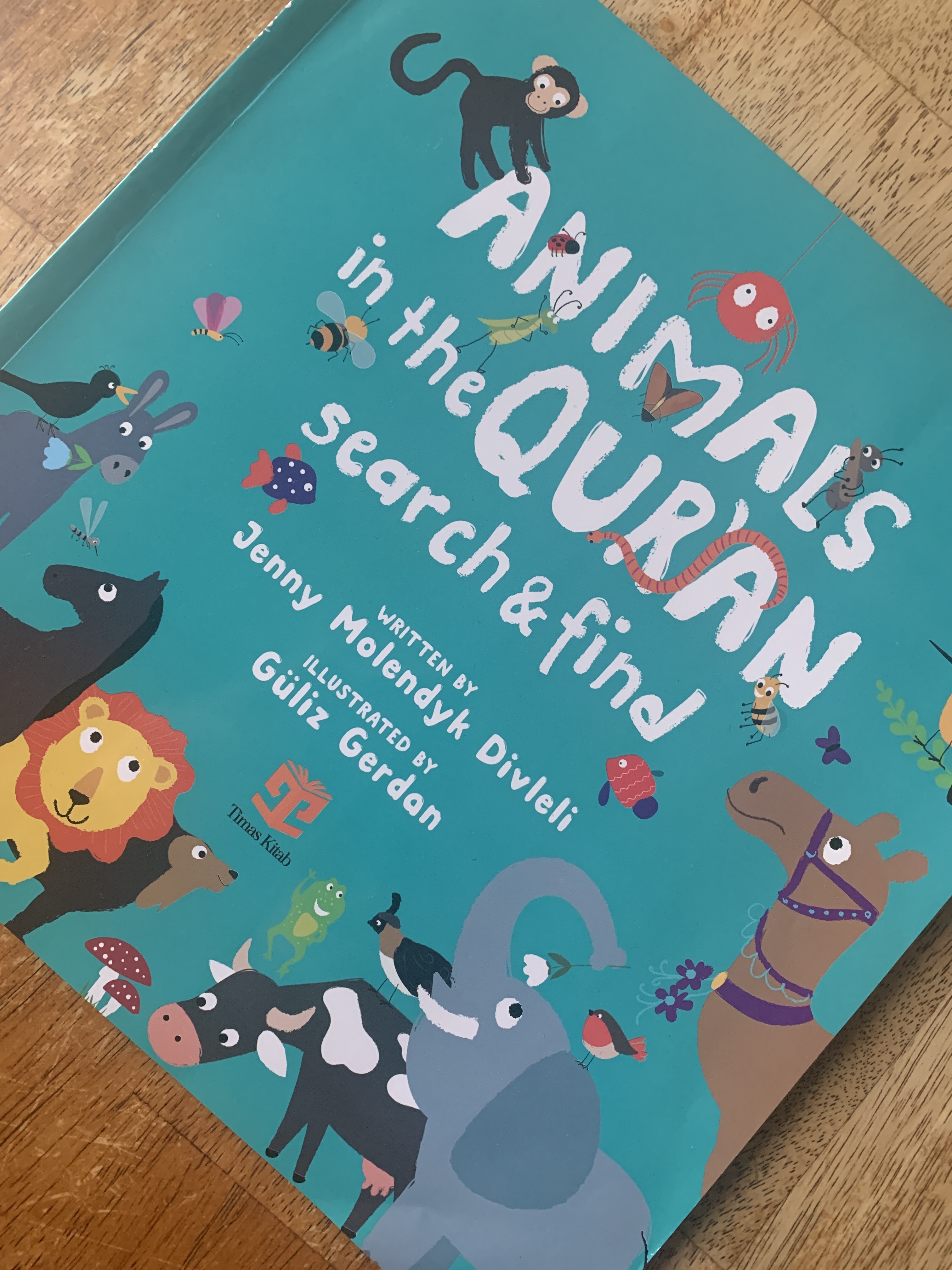
Animals in the Qur’an Search & Find by Jenny Molendyk Divleli illustrated by Guliz Gerdan

Standard
Animals in the Qur’an Search & Find by Jenny Molendyk Divleli illustrated by Guliz Gerdan

img_6282

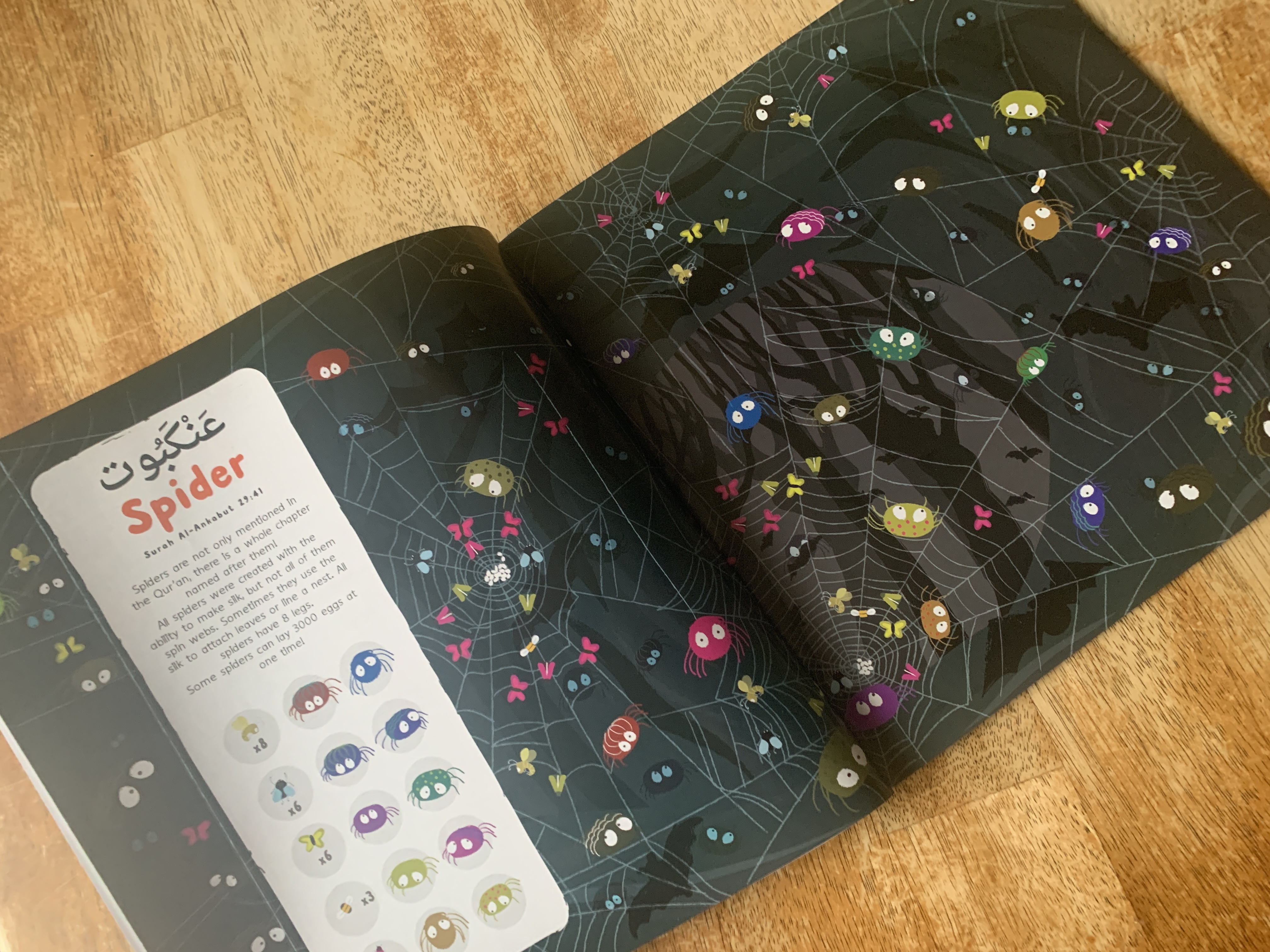
This book is targeted to preschoolers, but with the minor details the book sends readers looking for, I think children up to third grade will enjoy the mix of fun and learning that this book offers.  The book uses animals in the Qur’an as the theme for each two page spread, tells what surah the animal is mentioned in, and some Islamic context, as well as some basic facts about the animal.  Over 45 pages kids will learn about bees and snakes, donkeys and wolves, and dive in to the challenge of finding a spider with spots looking to the left or a fish with strips swimming to the right.  My three year old can not differentiate between some of the more specific markings of this cow or that, but he still loves the illustrations and benefits from the brief factual text. This book is a great addition to school, masjid, and home libraries with its Islamic foundation, beautiful large execution, and wide audience appeal.

The book starts with the Arabic ayat of verse 45 in Surah Nur and the English meaning of the translation.  It then establishes the format of the book, and then lists the 20 animals featured, where they are found in the Qur’an and on what page number, in the table of contents.
Each page offers the animals and some nature elements to be found on the large 10 x 10 pages.  The pictures are playful and colorful with the print quality glossy and a sturdy thickness.

img_6287

I enjoy the book and think most families with young elementary aged children will as well.  You can purchase a copy here from Crescent Moon Store and if you use my initials “ISL” at checkout, you will save 10%

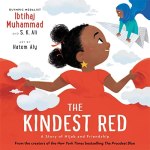
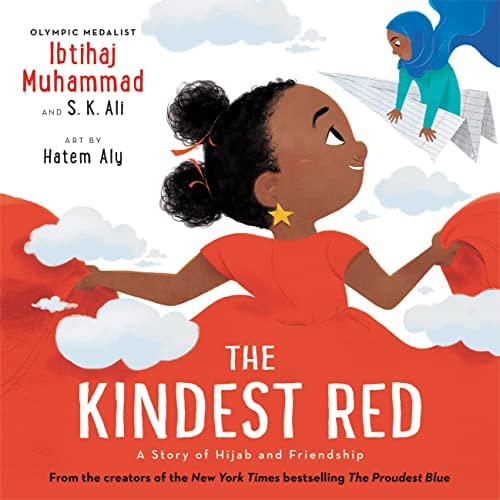
The Kindest Red: A Story of Hijab and Friendship by Ibtihaj Muhammad and S.K. Ali illustrated by Hatem Aly

Standard
The Kindest Red: A Story of Hijab and Friendship by Ibtihaj Muhammad and S.K. Ali illustrated by Hatem Aly

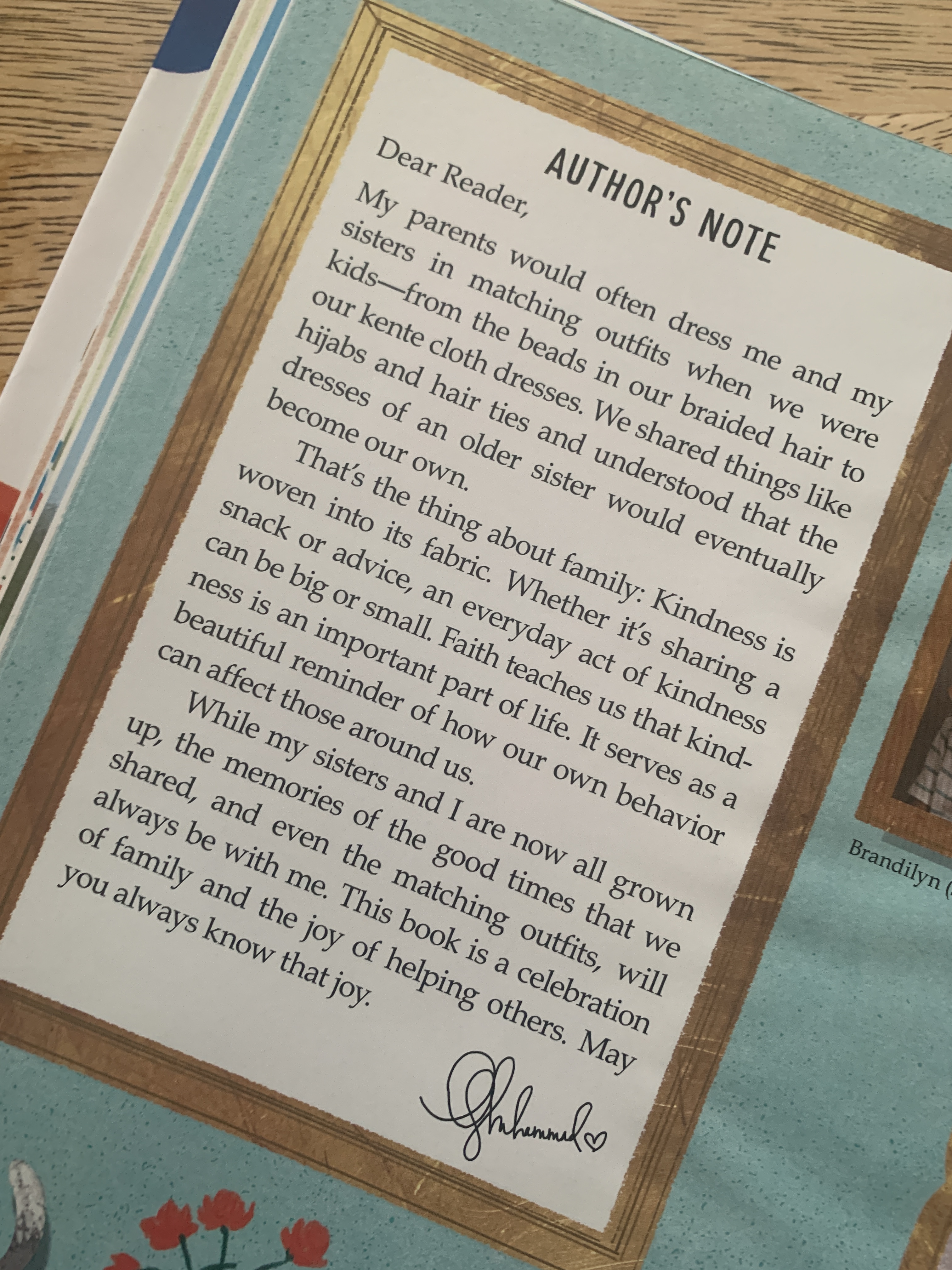
This heartwarming book centers kindness, family, and friendship in an inclusive way; and while the tagline says “A Story of Hijab and Friendship” I think the hijab angle is a bit of a stretch.  The authors are Muslims that wear hijab, the older sister and older females in the family wear hijab, but there is nothing in the story or text that connect hijab to Islam or to something Muslim women wear as part of religion.  I don’t want to compare the first book in the series, The Proudest Blue, to this book, but hijab really was centered in that book and the Author’s Note mentioned that hijab is an Islamic act.  This book does not make those same connections, which is fine, I just want consumers to be aware.  This book is beautiful and the messaging endearing, and the tone and heart over 40 pages ideal for preschool to early elementary children.  It works as a standalone, but with the same characters and sisterly love, I think most people will enjoy keeping them together.
The book starts with Mama passing on Asiya’s dress to Faizah, that had been Mama’s even before that.  It is picture day, and the girls are helping each other get ready. At school Faizah and her friend Sophie twirl in their pretty dresses before heading in to class to discuss what kind of world they want.

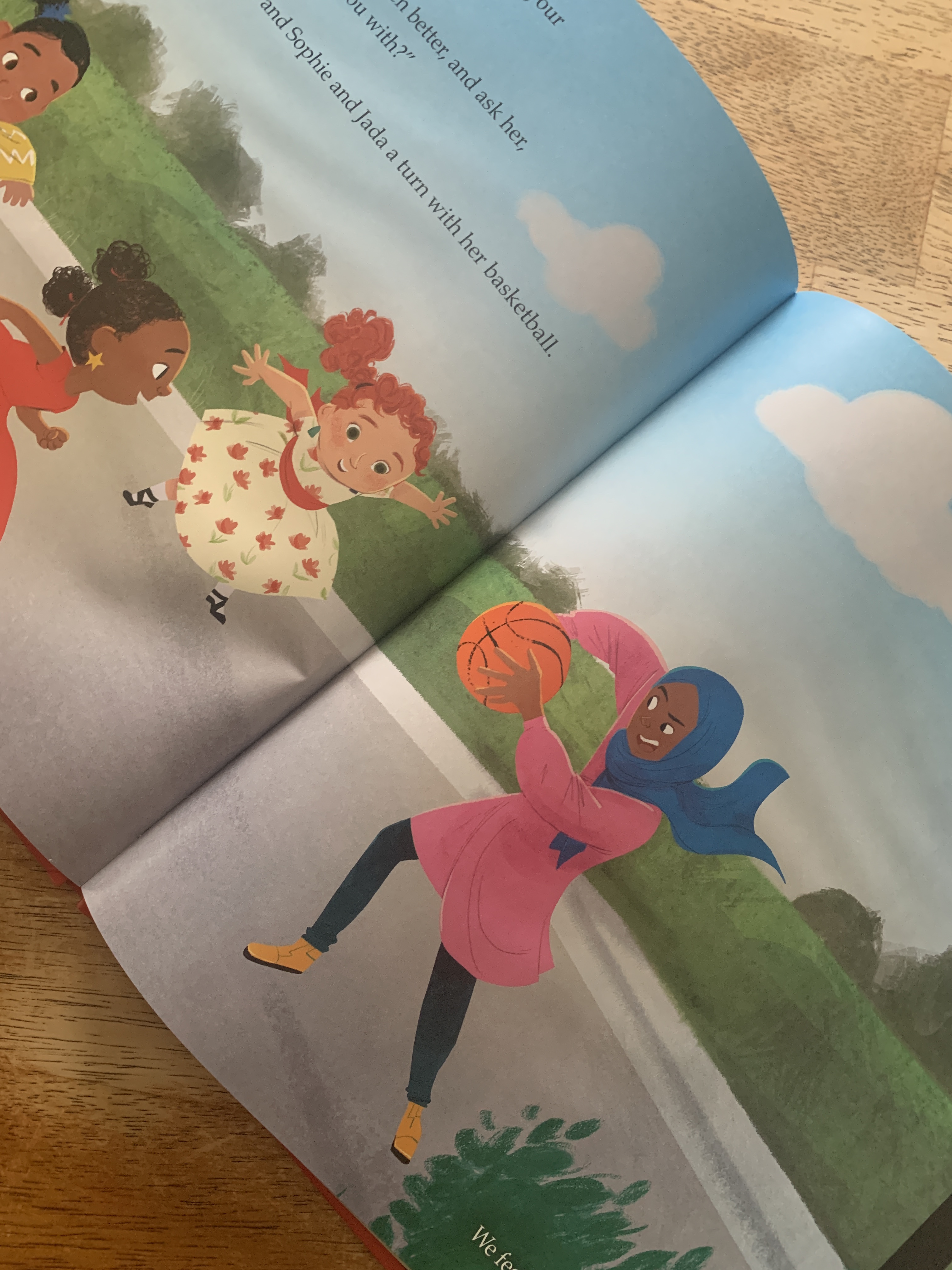
Faizah wants a kind world, where there’s always a friend nearby, where everyone helps. At recess, Sophie and Faizah combine their visions, superheroes and kindness, to help other kids on the playground.  When picture time arrives the class is full of smiles, but when it is time for sibling pictures, Faiza and Asiya realize they don’t match.

Faizah is sad, and Sophie notices, can the kindness be passed along like the dress to help the sisters? To make Faizah happy too? I’m not going to give away the conclusion, but it is sweet and idyllic and shows how lovely the world can be if we all just share some kindness.

I love the illustrations and the hijab wearing super hero that presumably Sophie drew is powerful.  I think the book does wonders to normalize hijab, even if I do wish it articulated why one would wear hijab.  It seems that the industry trend is to keep hijab superficial and I recognize I am in the minority that wants religious centering for religious tenants.  So yes, I’m fully prepared for the backlash when people want to point out that it is joyful and that I’m a naysayer, but I deal with people on a daily basis that do not know that my own hijab is a reflection of me being Muslim.  With as connected as the world is through technology, I  think those in diverse environments take for granted the understanding of basic Islamic principals in the general population.  However, not everyone has those real life connections and rely on books and media to fill the gaps, so when books about hijab, don’t actually connect hijab to faith, I feel obligated to point it out.

I purchased (preordered) my copy here, but I hope you will support small business and order yours here  use code ISL for 10% off.

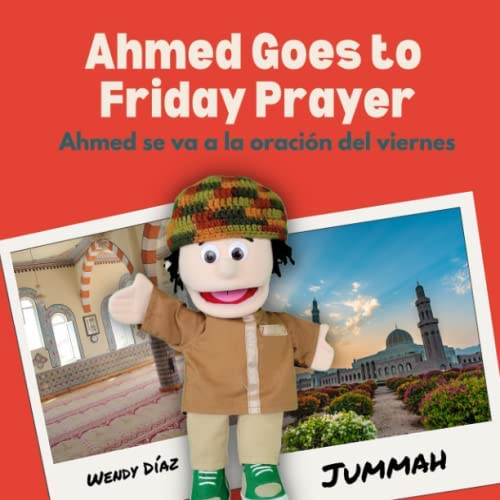
Ahmed Goes to Friday Prayer: Ahmed se va a la oración del viernes by Wendy Díaz illustrated by Muhammad & Mariam Suhaila Guadalupe

Standard
Ahmed Goes to Friday Prayer: Ahmed se va a la oración del viernes by Wendy Díaz illustrated by Muhammad & Mariam Suhaila Guadalupe


ahmed


This dual lingo: English and Spanish is a linear story of Ahmed going for Jummah prayers.  The rhyming text in both languages is fairly consistent and the information framed in an upbeat, fun, positive way.  From waking up early and taking ghusl to reading Surah al-Kahf, the book shows some spiritual aspects, some sunnah reminders, and social Jummah interactions with friends as well.  The 48 pages are good for preschool to early elementary aged readers and with the minimal text on the pages, even younger listeners will enjoy the book.  I wish the religious statements were sourced, and while I didn’t initially love the aesthetics of the puppets when I first saw the cover, I definitely warmed up to Ahmed and absolutely cooed at the adorable (puppet) Imam.  The book starts with a sourced hadith and ayat from the Quran and ends with questions to test your knowledge.

The story begins in a bit of an awkward fashion with Ahmed breaking down the fourth wall, and addressing the reader, and then on the next page, the “narrator” reaching out to the readers to have them pay attention to Ahmed.  Then the story starts with asking if the reader knows what the special day of the week is called.  It then tells us that it is called Friday in English, Jummah in Arabic and that I, Ahmed, is going to tell us about it.  With all the introductions and signposting it makes the book actually start 11 pages in.  I read the first few spreads numerous times trying to see what was going on, and finally just realized it has a lot of framing and set up before diving in.  Alhumdulillah, after the repetitive first few pages, the book reads smooth and clearly.  

Ahmed wakes up, does ghusl, puts on nice clothes, and then waits until midday to go to salatul Jummah.  Muslims read Surah al-Kahf, and then get to the mosque early.  It is noted that we get rewards for every step we take, we are encouraged to praise our Lord, we greet friends with Salam, and after athan we sit calmly and quietly listening to the Imam.  The khutbah talks about our faith and then we pray foot to foot closing the gaps. The last few spreads are about the importance of Jummah.

The illustrations show Ahmed the puppet in different places with other Wendy Diaz books displayed in poster form, books on side tables, and graffitied on a wall. The only other character beside Ahmed and the Imam is Ahmed’s un named friend.  The simple illustrated backgrounds with puppets in the foreground, the minimal rhyming text and the content presentation make this book a great addition to home and school libraries as well as ideal at story time or bedtime where early elementary aged children are able to understand both the excitement and protocols of the blessed day.

img_5601

Over the years I’ve done a few Jummah themed readings and this book would be a great addition at story time.  You can purchase the book here.

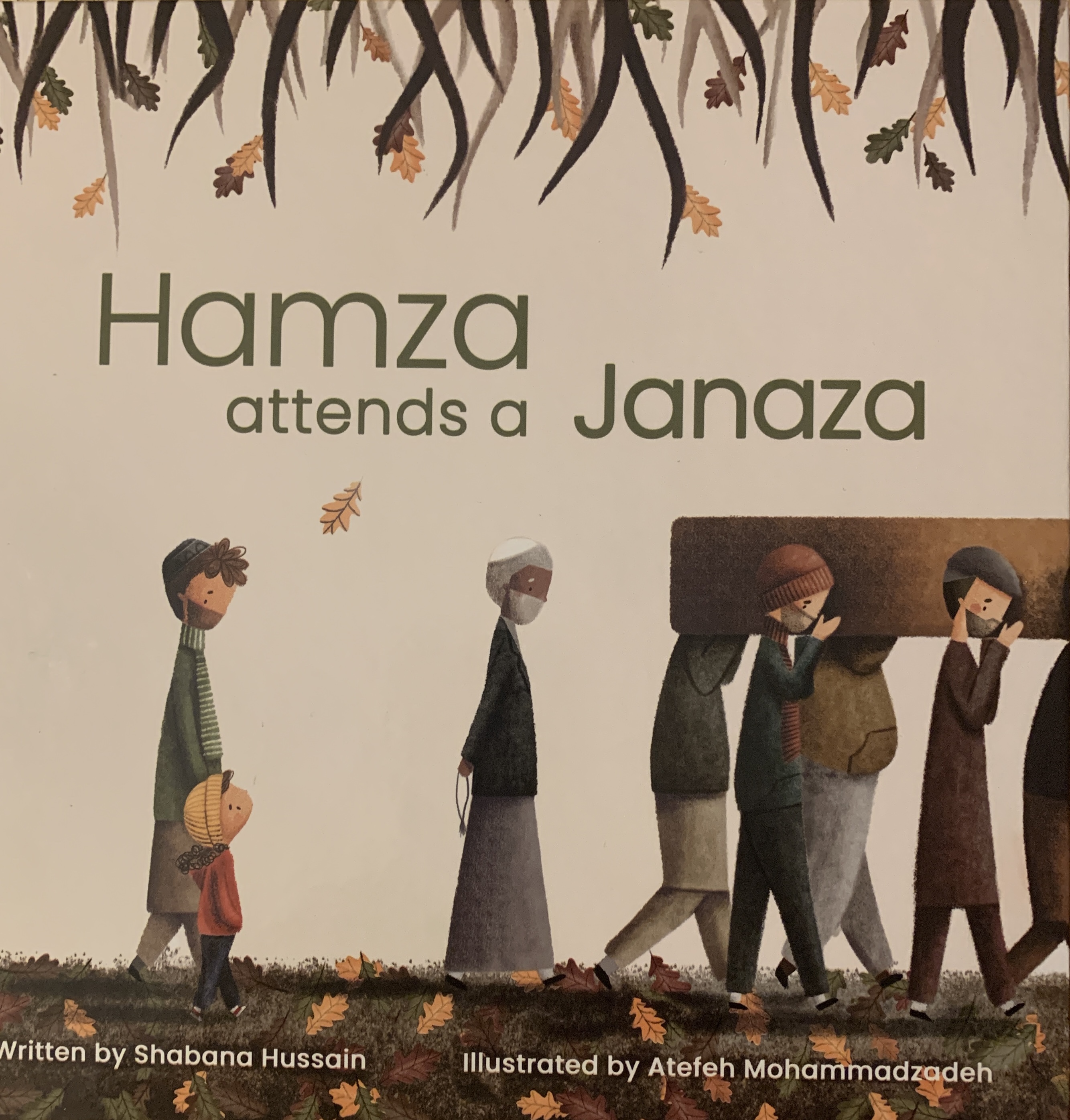
Hamza Attends a Janaza by Shabana Hussain illustrated by Atefeh Mohammadzadeh

Standard
Hamza Attends a Janaza by Shabana Hussain illustrated by Atefeh Mohammadzadeh

img_5141

For years it has been noted how few children’s Islamic books about grief and loss are available, and while numerous titles have come out in the last few years, it wasn’t until I saw this new book, did I realize how desperately we were in need of a book on janaza.  I love that the author establishes on the first page that this book is not focused on grief, but rather about death, the burial, and preparing to meet Allah (saw) in the hereafter with our deeds.  The beauty is that while the topic is critical and needed, the story is also well done.  It may not focus on emotion, but it has a lot of heart and tenderness, thus making it a wonderful addition to all book shelves for children preschool and up as a brief introduction to how Islam views death, the rituals of burial, and the worship that surrounds it. Packaged with clear text, robust backmatter and absolutely adorable illustrations, I am very happily impressed with this book.

img_5142

The book starts with Hamza telling about his favorite day of the week, Saturday, the day he spends with his Nano-ji and cousins, but one day all that changes when his mom gets a phone call about the loss of a community Uncle.  Mom says, inna lillahi wa inna illahi rajioon quietly in to the phone and Hamza knows something is wrong, but doesn’t quite understand why the passing of Uncle Sameer, the owner of the local sweet shop, means he has to attend a janaza instead of going to his grandfather’s house.

Hamza’s parents explain the reward of going, and remind him that we all have to leave this world one day. They recall Uncle Sameer helping bandage his knee when he got hurt and gave him a lollipop.  Once in the car, Hamza wants to know what is going to happen.  His parents explain the ghusl and the body being wrapped in the kafan and the body being put in the ground.

img_5144

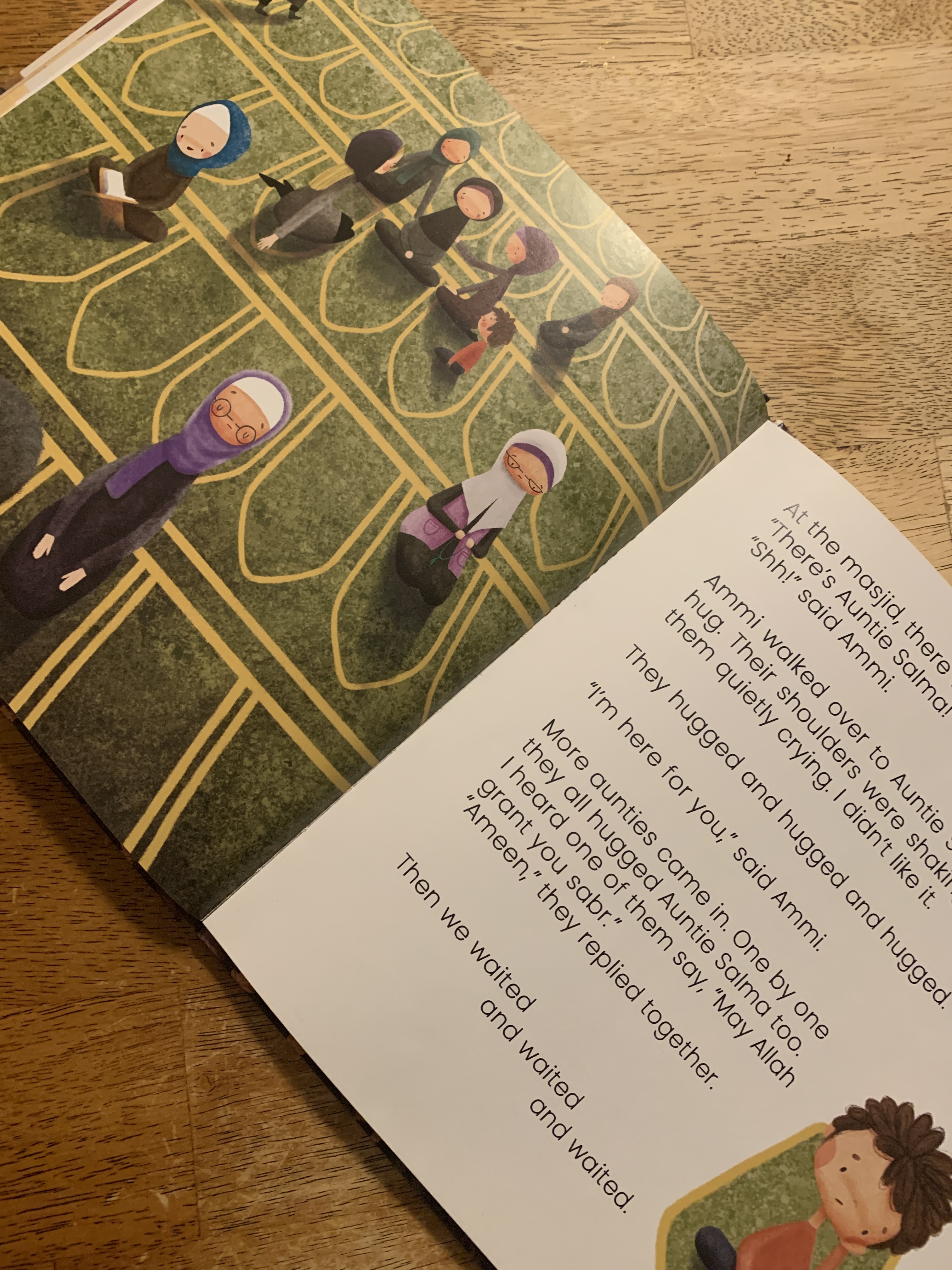
When they get to the masjid there are a lot of aunties on the women’s side, including Auntie Salma who everyone is hugging and reassuring.  After dhuhr the janaza begins, but it is a standing up namaz, and is very short, and Hamza is confused. Later outside the long box is loaded into the car, duas are made, and the body taken to the cemetery.

At the graveside, more duas are made, and Hamza worries that Uncle will be lonely.  When his father explains that his good deeds will keep him company, Hamza remembers the kindness Uncle Sameer has shown him and makes duas.

img_5146

The backmatter contains hadith about what still benefits those that have died, reward for attending a janaza, a glossary, discussion points, suggested activities, and duas.  The book is a great starting point to introducing death, rituals, and answering questions any child might have in a gentle manner.  

I bought the book from Crescent Moon Store 


What Colour is your Mosque? By Jenny Molendyk Divleli illustrated by Aybüke B. Mumcu, Damla Koçak,  Fatma Betül Akbal, Gökhan Özdemir, Gülşah Irmak, Hümeyra Yorgancı, M. Ahmet Demir, Menekşe Özdemir, Özlem Güneş, Şüheda Başer Yılgör, Zeynep Alptekin, Zeynep Begüm Şen  

Standard
What Colour is your Mosque? By Jenny Molendyk Divleli illustrated by Aybüke B. Mumcu, Damla Koçak,  Fatma Betül Akbal, Gökhan Özdemir, Gülşah Irmak, Hümeyra Yorgancı, M. Ahmet Demir, Menekşe Özdemir, Özlem Güneş, Şüheda Başer Yılgör, Zeynep Alptekin, Zeynep Begüm Şen  

img_5113

Sometimes the idea and presentation of a book make it stand out even if the writing is a bit bland and erroneous.  This book with bright colorful illustrations from 12 different illustrators highlighting the bold colors and designs of 12 masjids around the world is one such book for me.  I think young children will delight in seeing such beautiful masjids and appreciate that Muslims are found all over the world.  Adults and older children will also learn about mosques I’m sure they had never heard of before.  I kind of wish the book was a board book for little hands learning colors to enjoy, but the 8.5 x 8.5 style does suffice for story time and bedtime. 

img_5117

The book starts with an introduction to the author, Jenny and her sharing her favorite mosque in Turkey, Hagia Sophia. Each two page spread after that is a child introducing themselves, telling where they are from, and sharing their favorite mosque in their home country.  From Sri Lanka’s Jami Ul Alfar that looks like candy to the purple lights of Mohammed Al Ameen Mosque in Oman.  Some masjids stand out for their colors, others for their 99 domes, and some look like castles or are built out of mud.

img_5115

The illustrations reflect the beautiful buildings and radiate with joy from the smiling children introducing them.  I think the text is translated from Turkish to English which might account for some of the errors, but spelling Kabbah with two b’s doesn’t seem right in any language. 

img_5116

Despite it all, I’m happy with the book, I think we need to make a more intentional point to instill a sense of global community in our children and celebrate the beauty that our architecture and culture can result in for the worship of Allah swt.

The book is available from here from Crescent Moon Store.

img_5114

Mama Shamsi at the Bazaar by Mohdeh Hassani and Samira Iravani illustrated by Maya Fidawi

Standard
Mama Shamsi at the Bazaar by Mohdeh Hassani and Samira Iravani illustrated by Maya Fidawi

shamsi

At first glance it might seem that this Iranian set book with a chador at it’s core is a political statement.  I do not believe that it is.  The backmatter does state that, “Our wish in writing this book is to add to the growing list of stories for children that demystify this veil (that is too often used as a symbol of hate) and instead present a different view of it as the safe and comforting space we always knew it to be.”  This is an OWN voice authored book, from what I can find online the authors do not cover. It is a warm memory of finding love and humor and safety in the modest coverings worn by a grandmother.   I do wear hijab and I choose to do it based on my understanding of what Allah swt commands, I have never been forced to cover by a person or government, and do not know how that would effect my love of fulfilling a tenant of my faith.  But all that is an aside to make the point that this book to me is not weighing in on Iran’s politics, books are written and slated to be published years before they finally release, and this book is a silly heartfelt picture book about a girl and her chador wearing grandmother heading to the bazaar.

In the bustling city of Tehran, Samira is heading out to buy groceries in the big bazaar for the first time with her grandmother. Samira is nervous that it will be loud, and she might get lost, she asks her grandmother if she can rider under chador on her back. Her grandmother tells her no, she will look like a turtle.

Samira then suggest they walk in a line with grandma in front and her behind.  Grandmother Shamsi says, na, na, na, she doesn’t want to look like a donkey. Various other suggestions involving hiding under the big black chador and staying close to Mama Shamsi are suggested, but all make grandma look like a funny animal, and she declines.

When at last they arrive at the bazaar, Mama Shamsi encourages Samira to not hide but to use her eyes, and ears, and nose to learn about the world around her. Hand in hand, they stick close together, and enter the market.

The love between the two characters is heart warming in the text and truly elevated by the remarkable illustrations.  You love their relationship, you can feel Samira’s nerves, you appreciate Mama Shamsi’s humor to lovingly empower her granddaughter, and at the end you truly long to have your grandma next to you guiding you.

I enjoyed this book and don’t mind one bit reading it over and over again as kids giggle at the pictures and find details they hadn’t noticed before.  The book releases in February, and I hope that presales can reinforce the power of OWN voice authentic tales to be shared.  You can preorder/purchase it here.


A Sense of Gratitude: Exploring the Five Senses by Halimah Bashir illustrated by Laila Ramadhani

Standard
A Sense of Gratitude: Exploring the Five Senses by Halimah Bashir illustrated by Laila Ramadhani

img_4855

As a story time host for littles, you always need books about the five senses.  Additionally as a story reader at an Islamic school, thanking Allah swt while talking about your senses and the world around us is a staple year after year.  So purchasing this book with large adorable pictures and claims of rhyme was an easy decision to make, and while it will get used, sigh, the rhyme and lacking rhythm is terrible.  There’s also frequent illogical sentence structures and a bizarre tangent- two pages on wafting.  The book is for toddlers through kindergarteners, not kids learning experiment safety protocols.  @muslimkidsbooknook did a wonderful Instagram post regarding rhyme in kid’s books, and this book really would have benefitted from some additional editing and outside eyes reading the book aloud repeatedly.  That being said, the book will still be used and will be enjoyed with real time editing.  A positive about the book, in addition to the illustrations, is Allah (swt) in Arabic script.  But overall, it really could have, and should have been so much better.

The book starts with a note to grown ups reminding them to stress the importance of being grateful and exploring God’s creation.  It starts with what eyes can be used for, stressing the beauty in nature. and moves to the nose, and has the pages on wafting chemicals, enjoying baked goods, and saying please pardon when passing bad smells.

Tongue is next and stresses that sweets are not nutritious, and then assumes that veggies and fruits are unliked by children, but the narrator admits that they enjoy consuming them.  Hands and skin- touch and feel, and also convey love.  As an FYI- the text states and illustrations show kids petting a dog. The final sense of ears and the gift of hearing wraps up the book.

I’m terrible at grammar, really bad, but even I know not to say “colors like purple,” it should be colors “such as” purple, not “smells like Teta’s baked cookies,” but smells “such as” Teta’s baked cookies.  The formatting on a spread seems off as well with “Like slimy frogs” being under a a two line refrain and the rest of the sentence, “and hairy dogs…” being on the next page with another line and a half, it throws you off when reading aloud to keep some rhyme and rhythm going, every. single. time. On some pages the chopping of normal speech structure to make the “rhyme” is difficult to understand, and I don’t think the glossary, nor putting (God) in English was particularly necessary.

My favorite pages are when they tie directly back to ibadah and Islam, hearing the athan, using your hands to make dua and the little rhyme that starts and concludes the book. Truly the concept makes the book important on a shelf and the illustrations make it attractive, the text needs some editing.

img_4866