Category Archives: Muslim Character

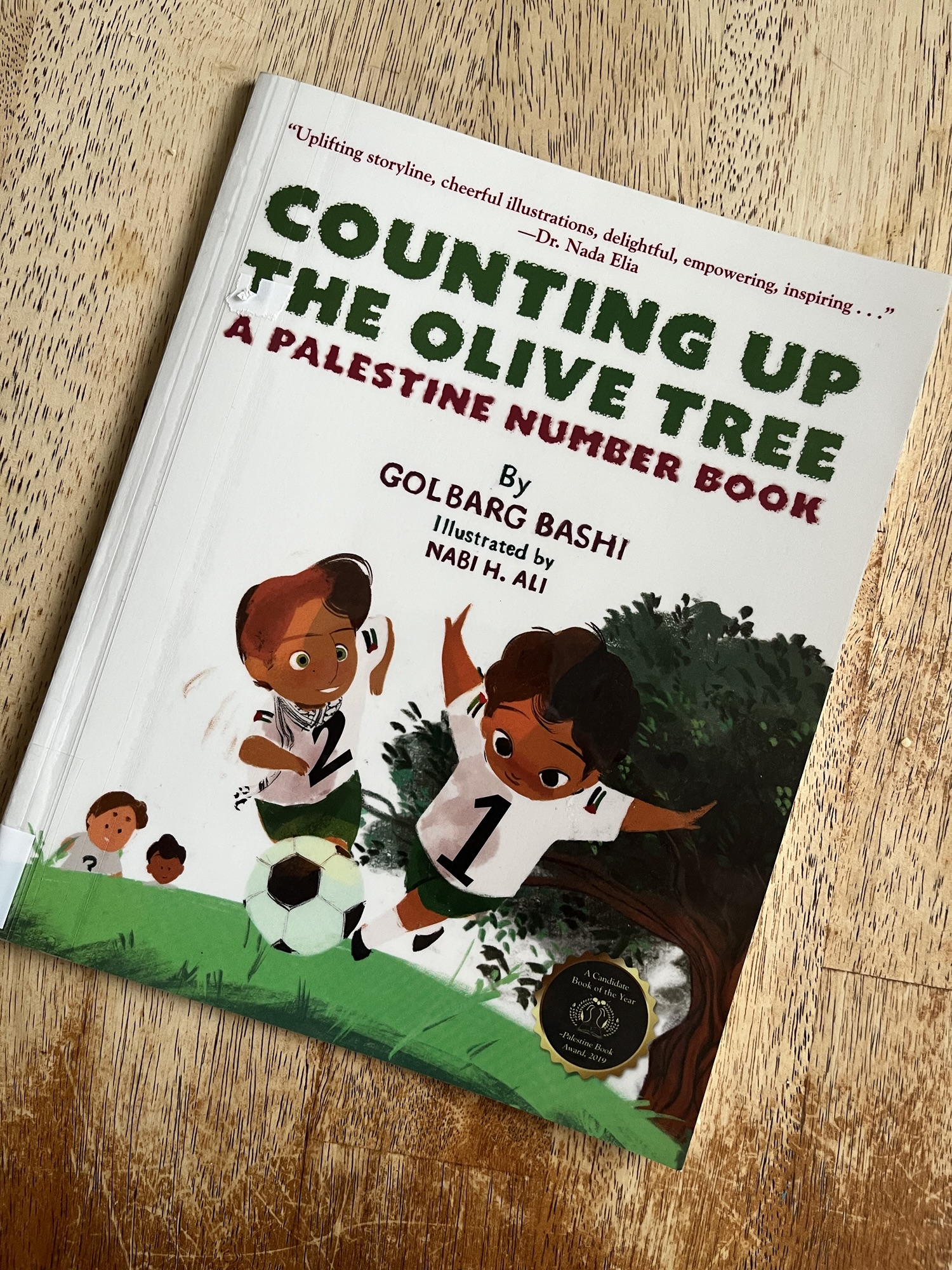
Counting Up the Olive Tree: A Palestine Number Book by Golbarg Bashi illustrated by Nabi H. Ali

Standard
Counting Up the Olive Tree: A Palestine Number Book by Golbarg Bashi illustrated by Nabi H. Ali

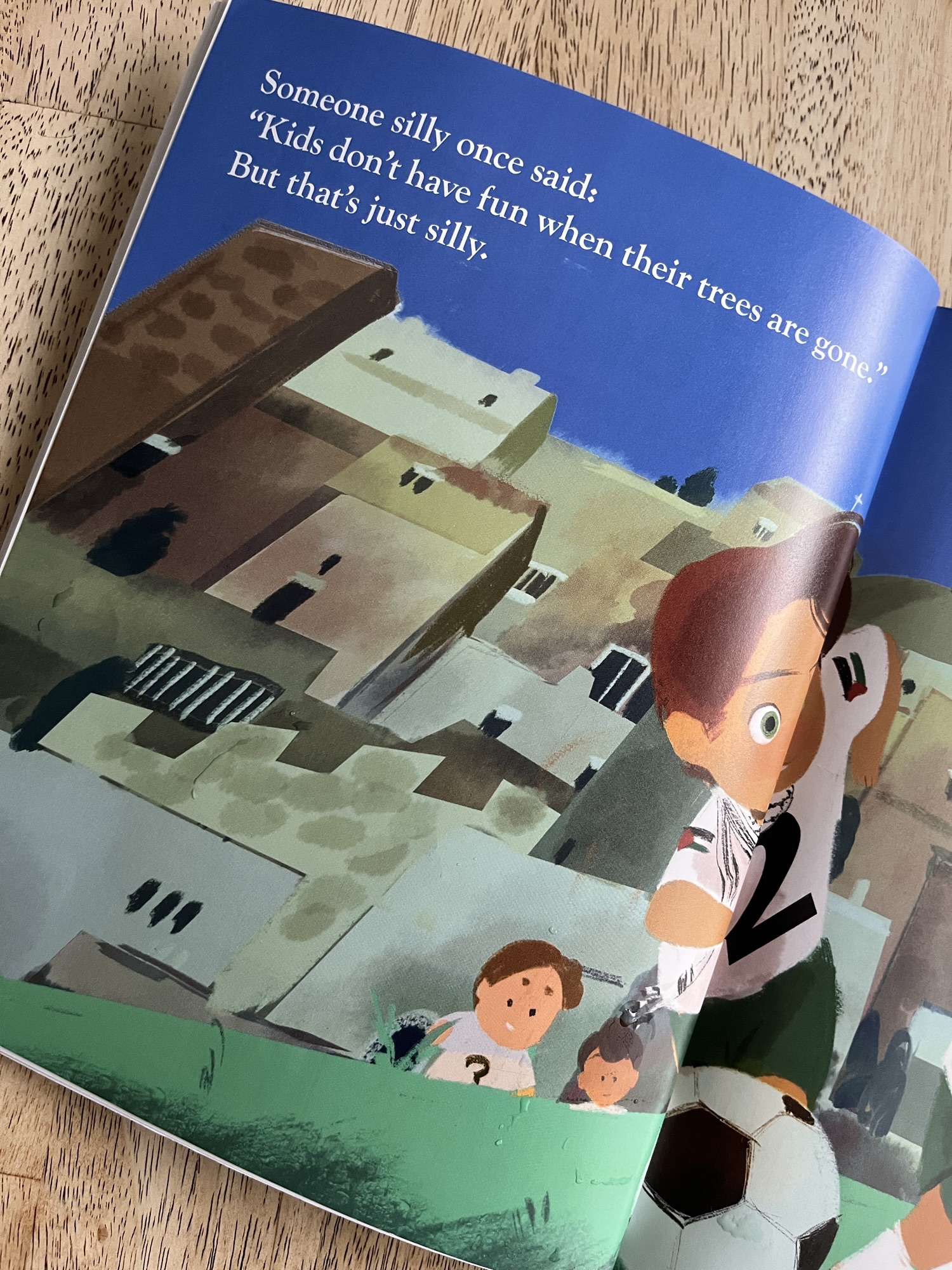
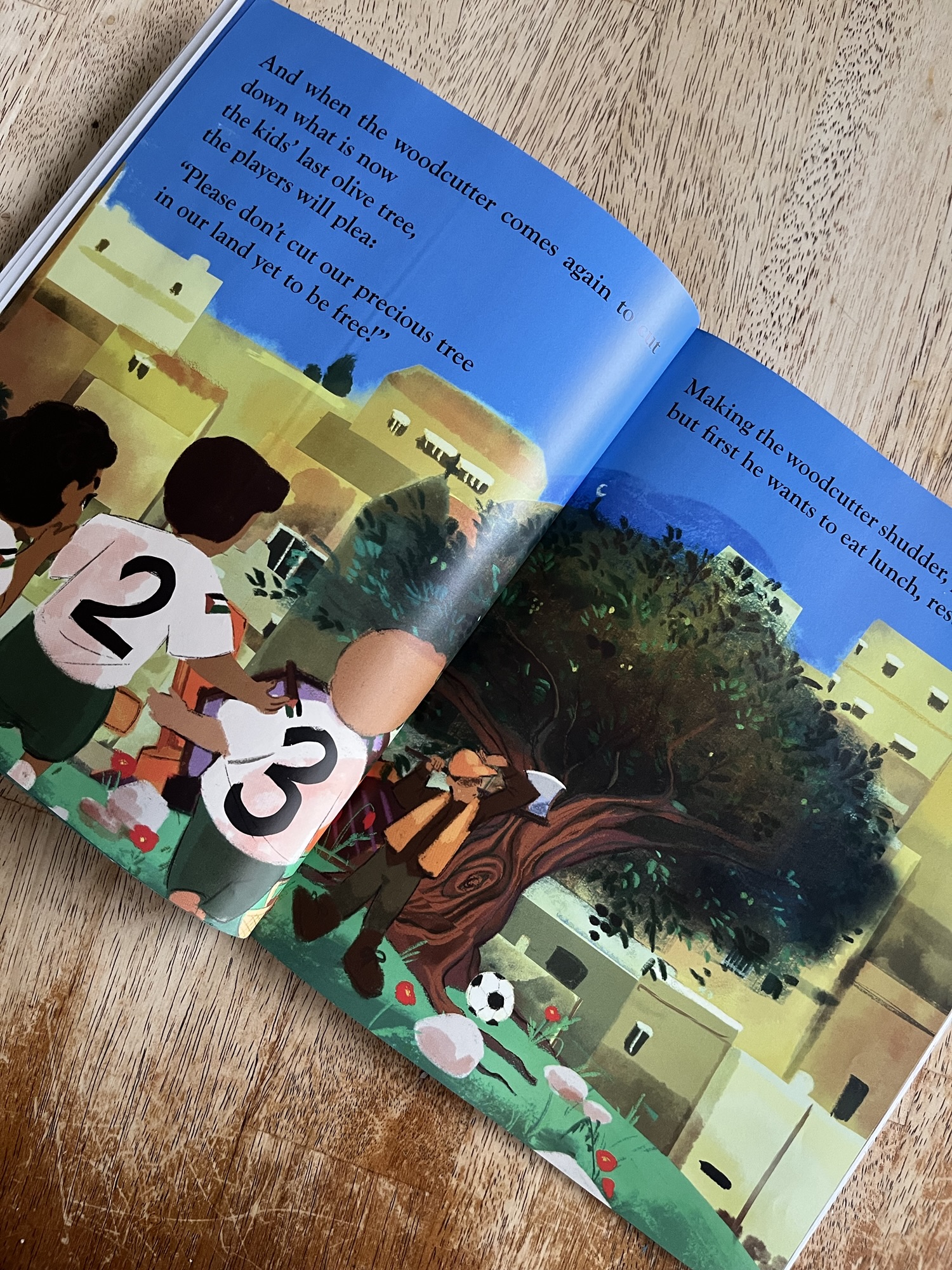
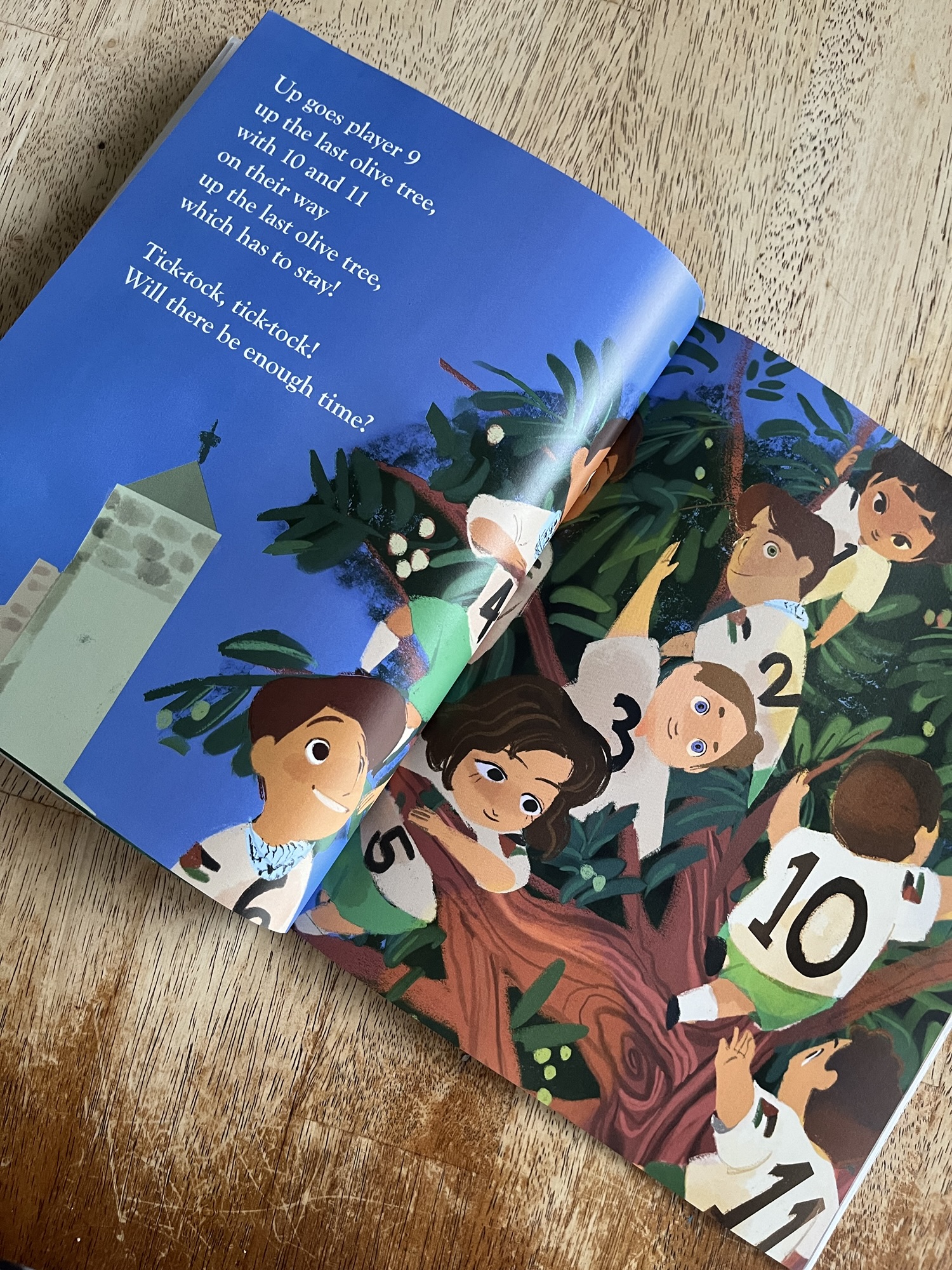
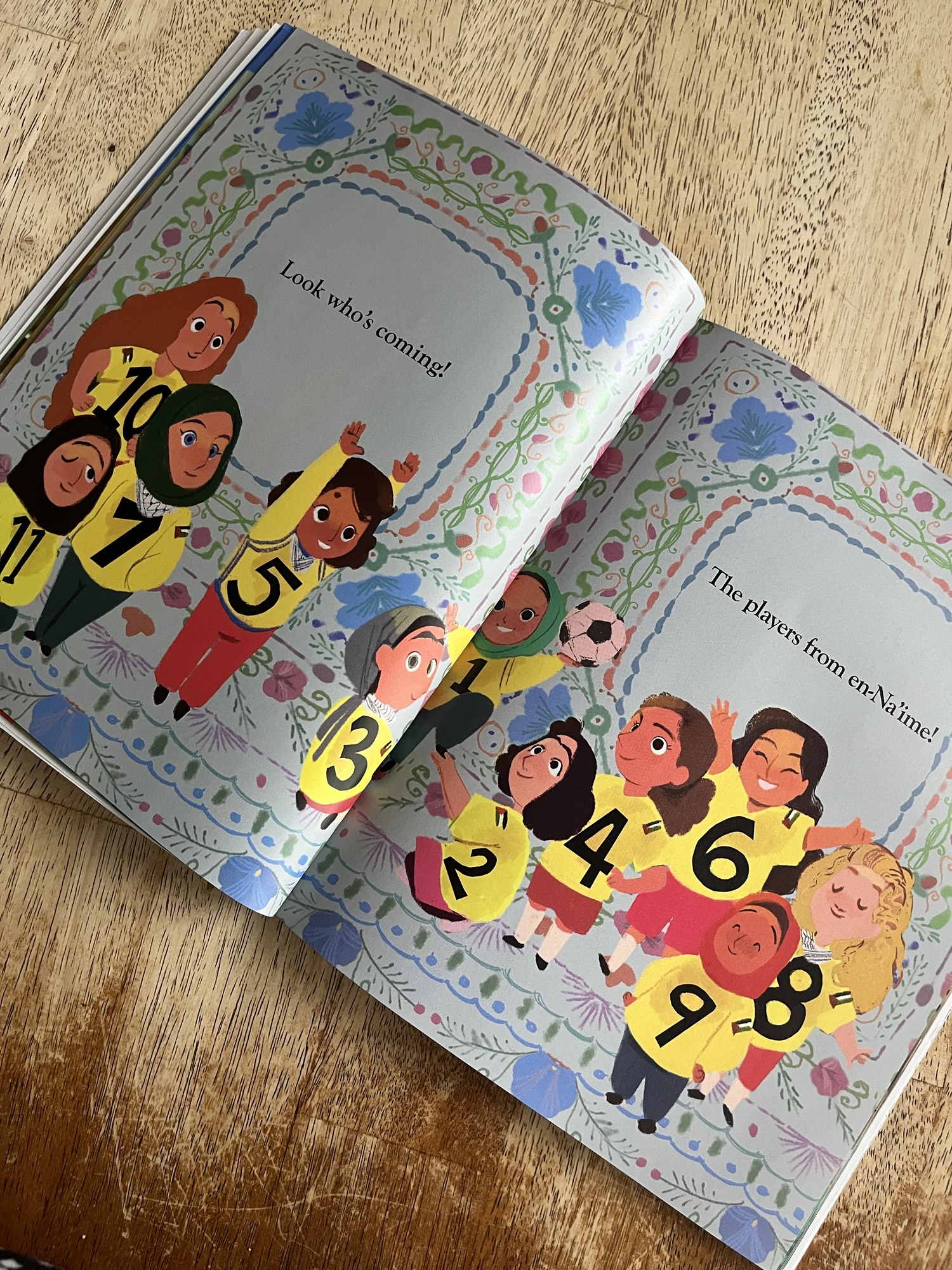
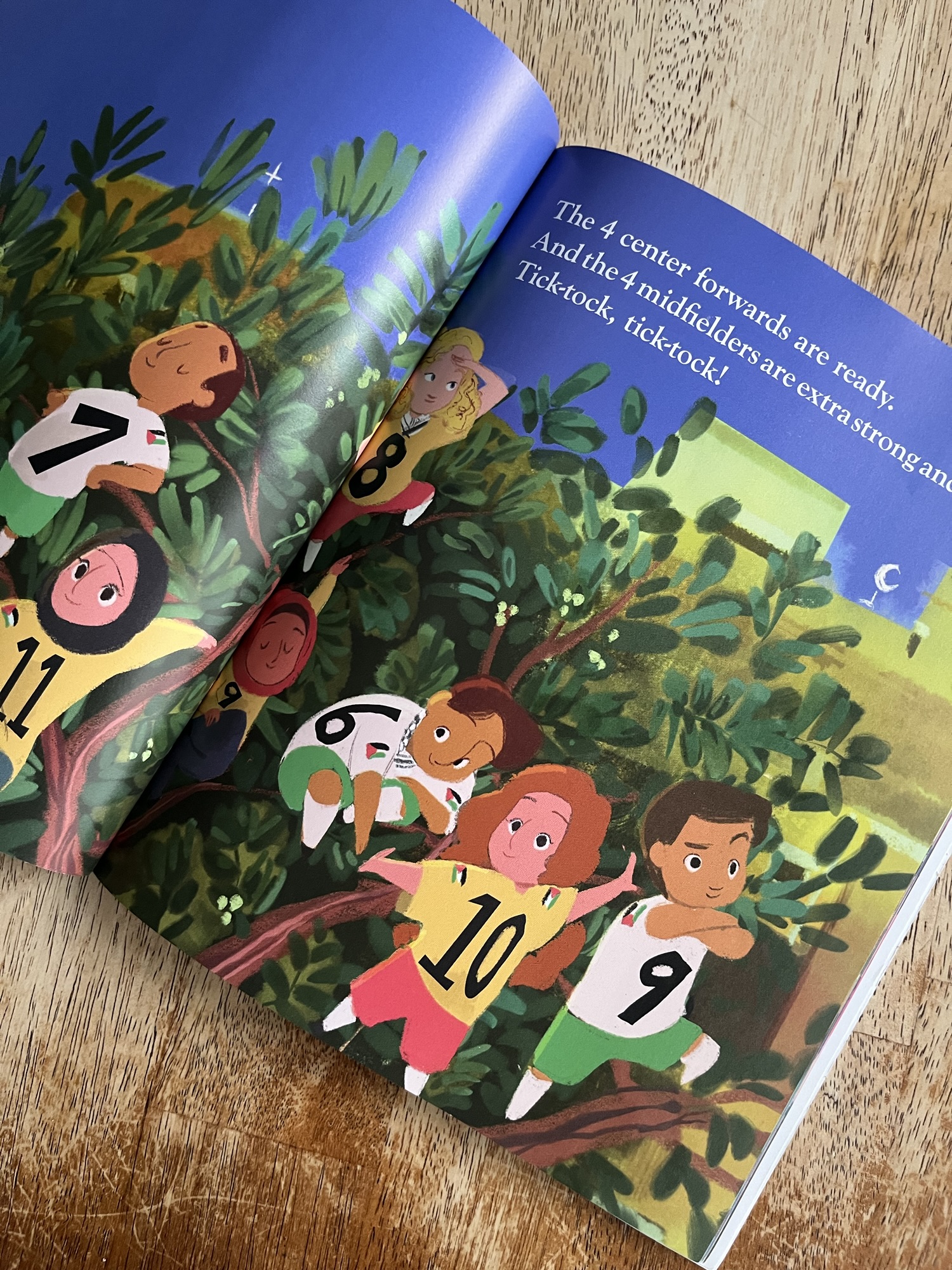
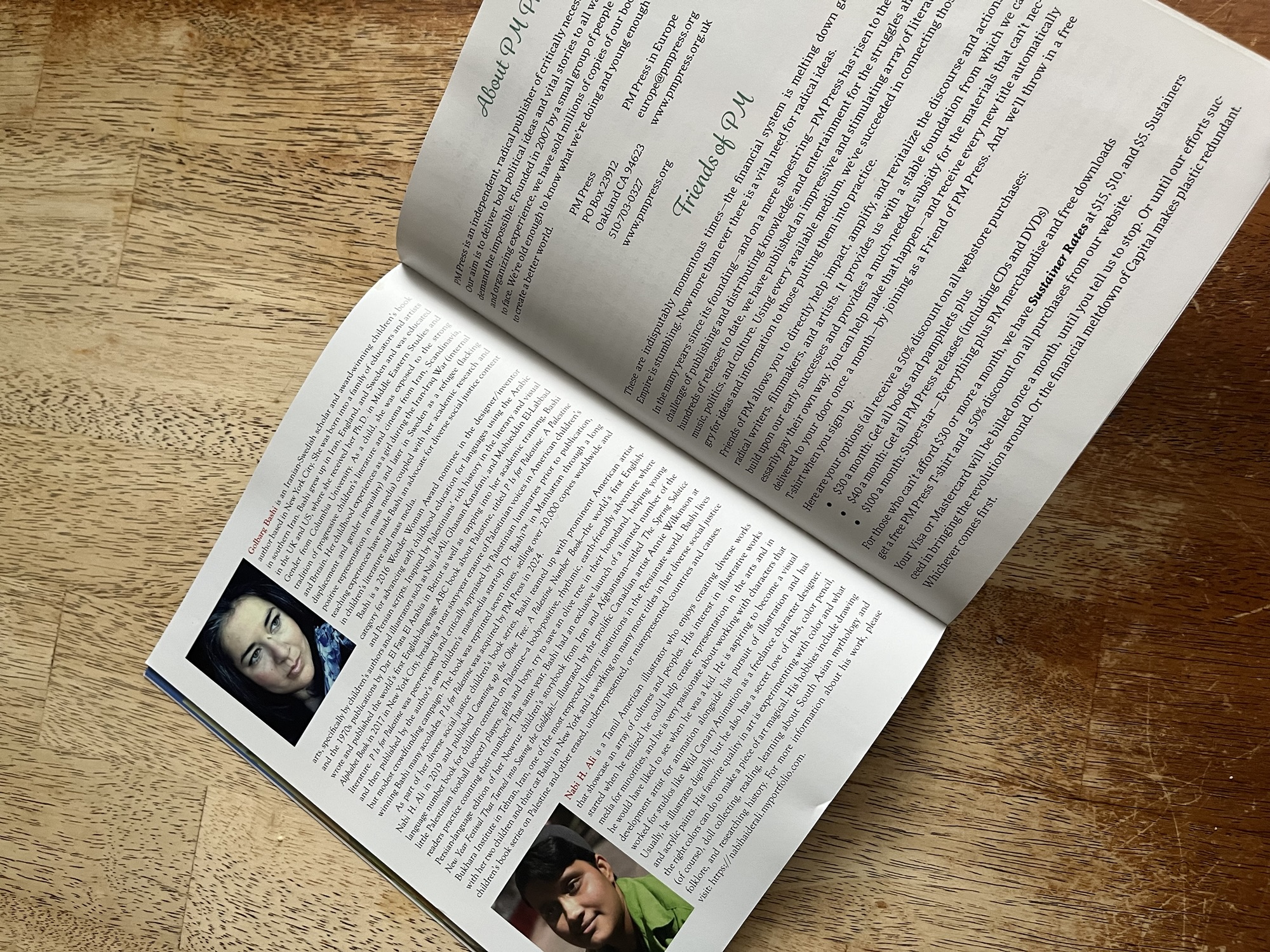
I love the idea of this book: kids saving a tree by working together, set in Palestine and calling for freedom, homage to “Chicka Chicka Boom Boom,” the girls’ soccer/football team providing reinforcements,  but alas the words are muddled, the rhyme painfully forced, and the counting of players in positions, a little awkward. I think the point is fun with numbers, but a little plot of why the woodcutter is called to cut the tree, or who hired him, and thus why he feels the burden of apologizing, would have really gone a long way to make the book cohesive. I also wish the backmatter was more about Palestine and the destruction of trees rather than the lengthy bios of the author and illustrator.  With a little telling of the story and not reading the words as written, editing as you go, and some practice, the book can make for a decent read aloud and provide teachable moments about Palestine, teamwork, resisting, and soccer.  If you really work to sell it,  the book and the numbered soccer players can also be a bit of silliness and fun too.

The book starts horrendously.  The first page, or rather the first two lines should have been the inscription and the third line completely removed, as the first page makes no sense.  Had the story started with the second page and the “let’s play ball” sentiment, readers wouldn’t immediately be confused and off put going in to the story.  “Someone silly once said: ‘Kids don’t have fun when their trees are gone,’ but that’s just silly,” un no that isn’t silly, it is actually the point of the book.

The remainder of the book is in fact the soccer/football team climbing up the tree to keep the woodcutter, who is sleeping, from chopping down their olive tree when he wakes. Eleven players going up to protect, and with the girls team joining that makes 22.  Two goalies, a whole slew of defenders, and forwards, and midfielders, and when the woodcutter awakes, he has a whole lot of people to apologize to.

As to why the woodcutter was there, why the change of heart, why the need to apologize, why there is only one tree in the first place, and why the kids love this tree, sigh, we will never know.  Free Palestine, though, and Save the Trees.

The book is not OWN voice for the author nor illustrator, and there is no religion in the book save a few hijabs in the illustrations and a masjid and church lingering in the background.

My Name is Samim by Fidan Meikle

Standard
My Name is Samim by Fidan Meikle

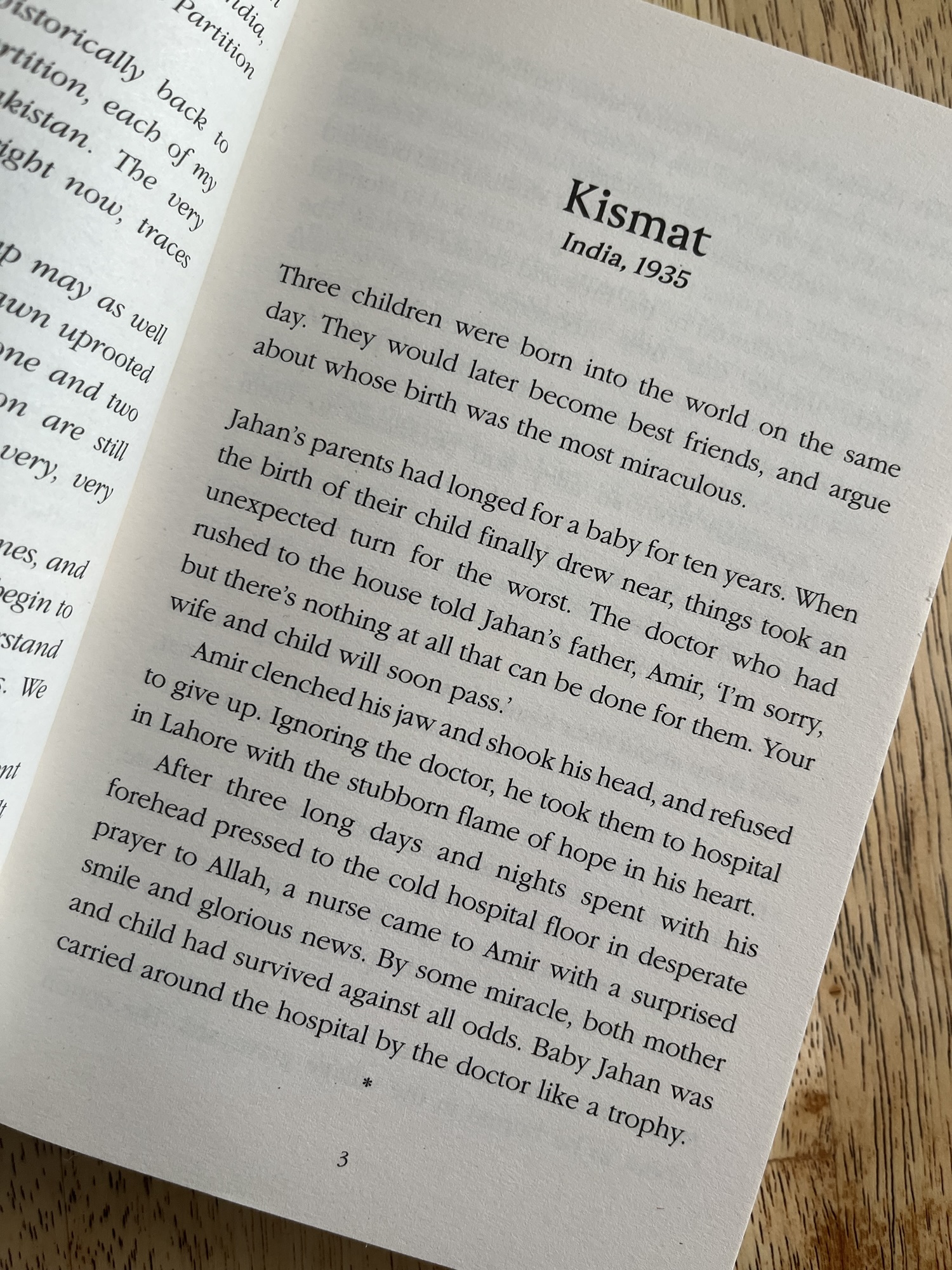
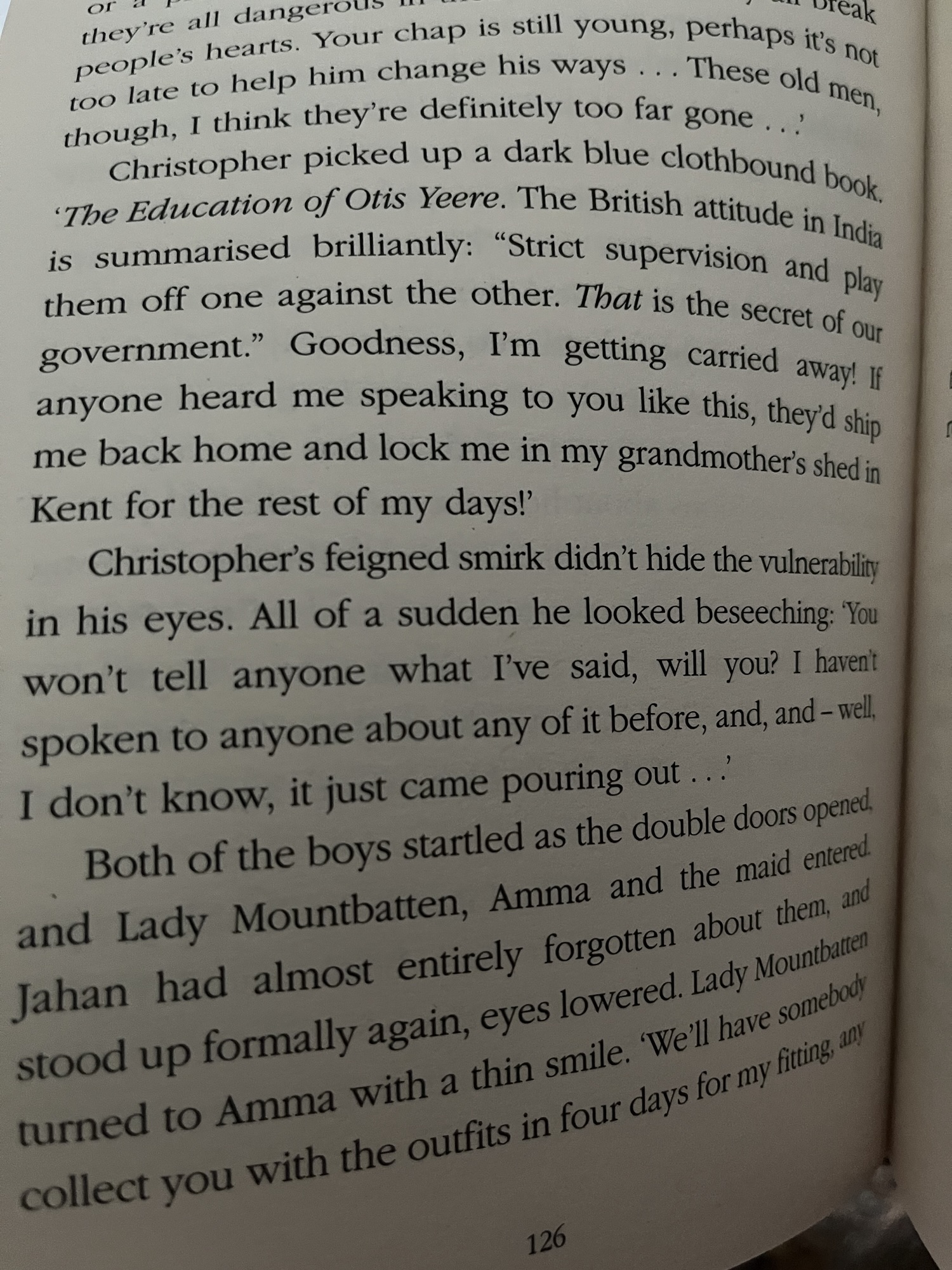
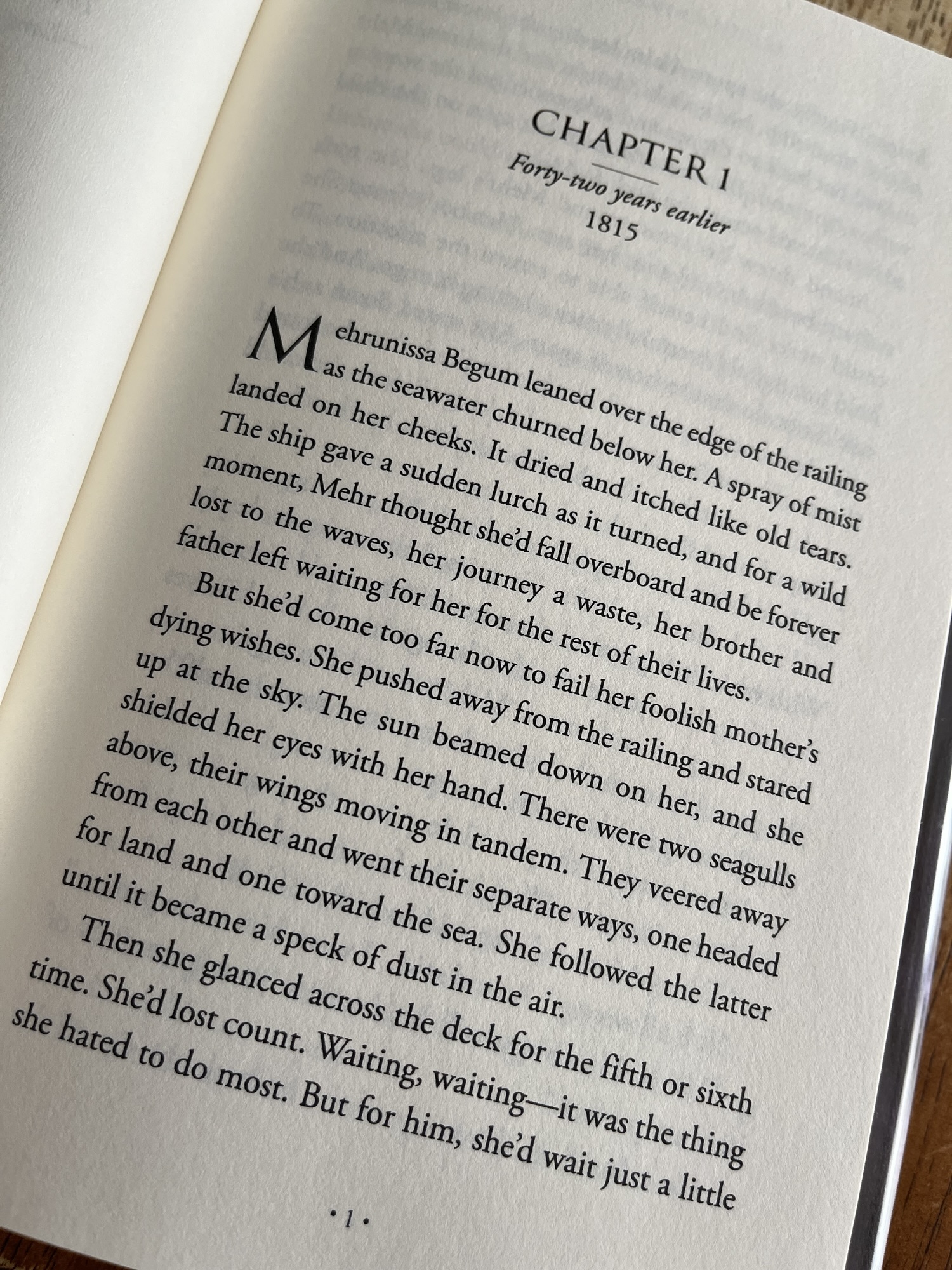
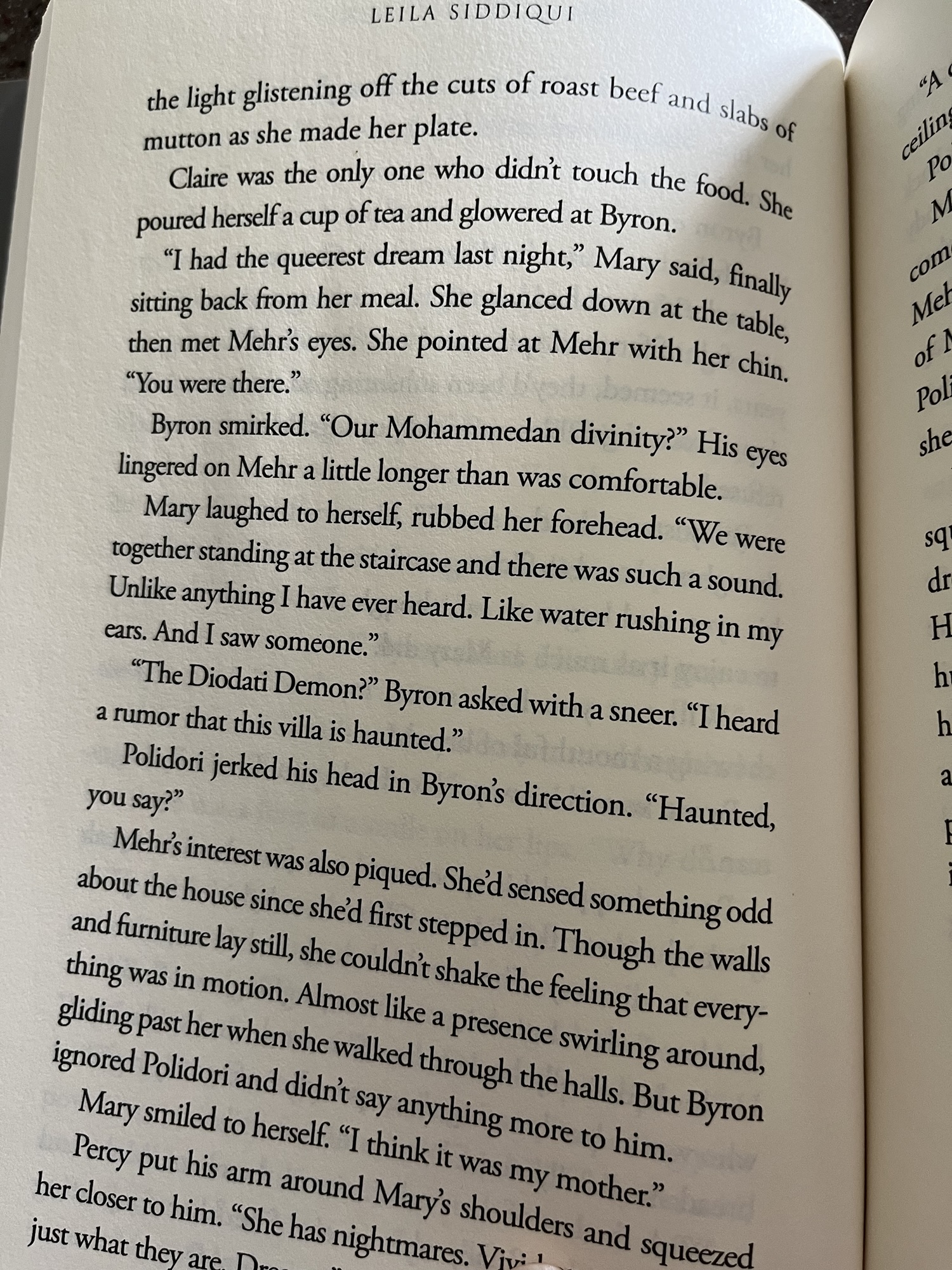
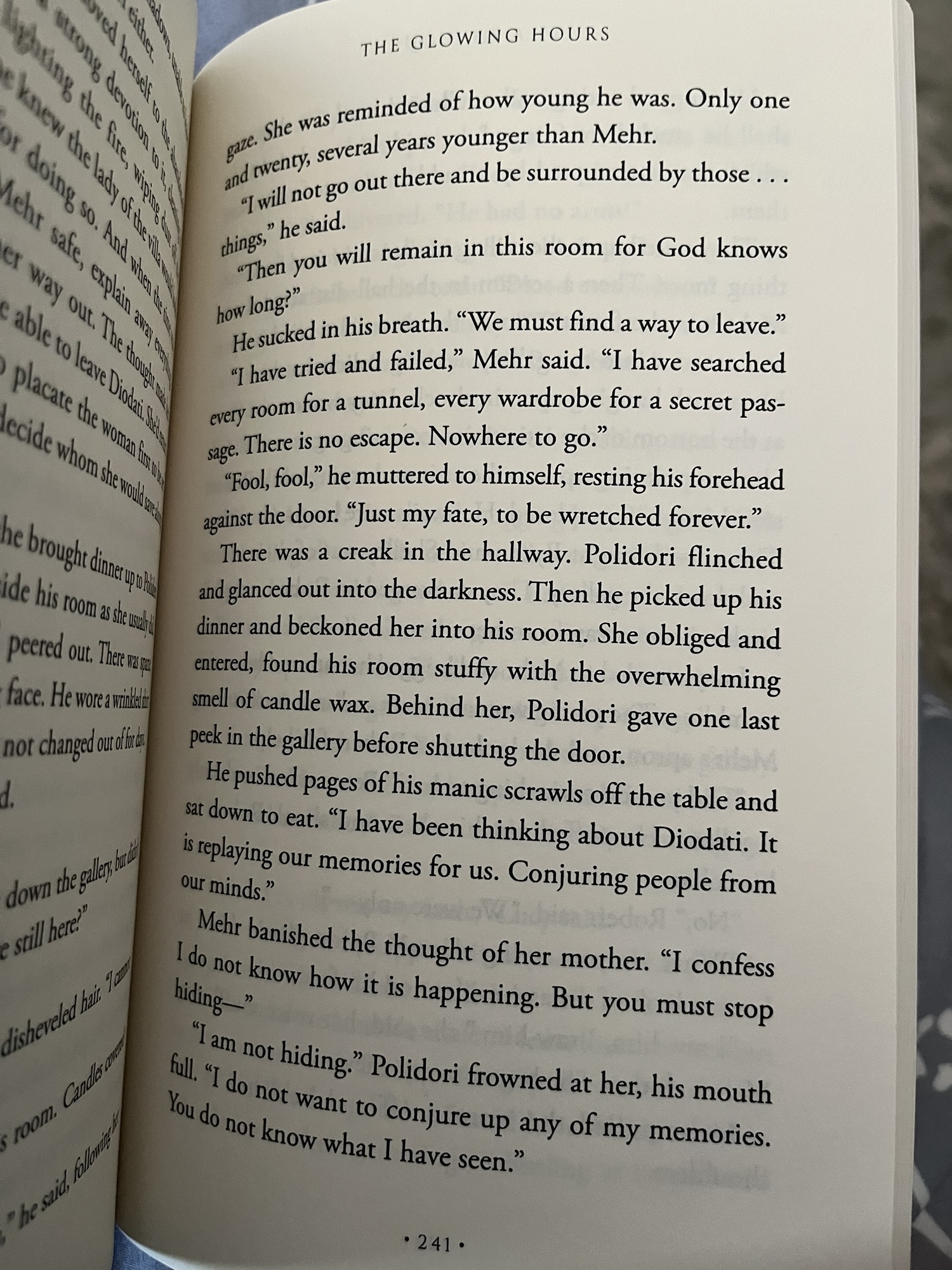
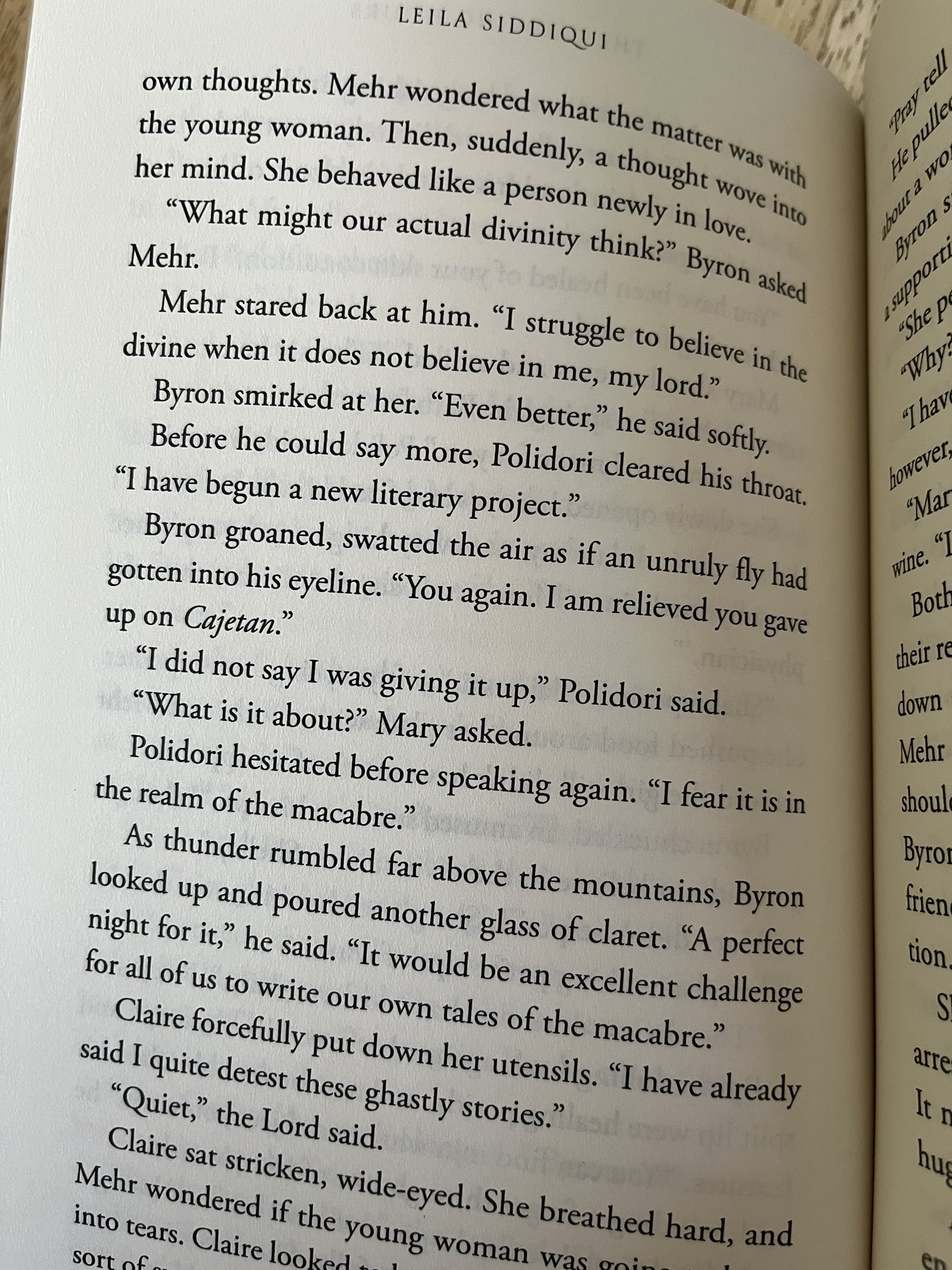
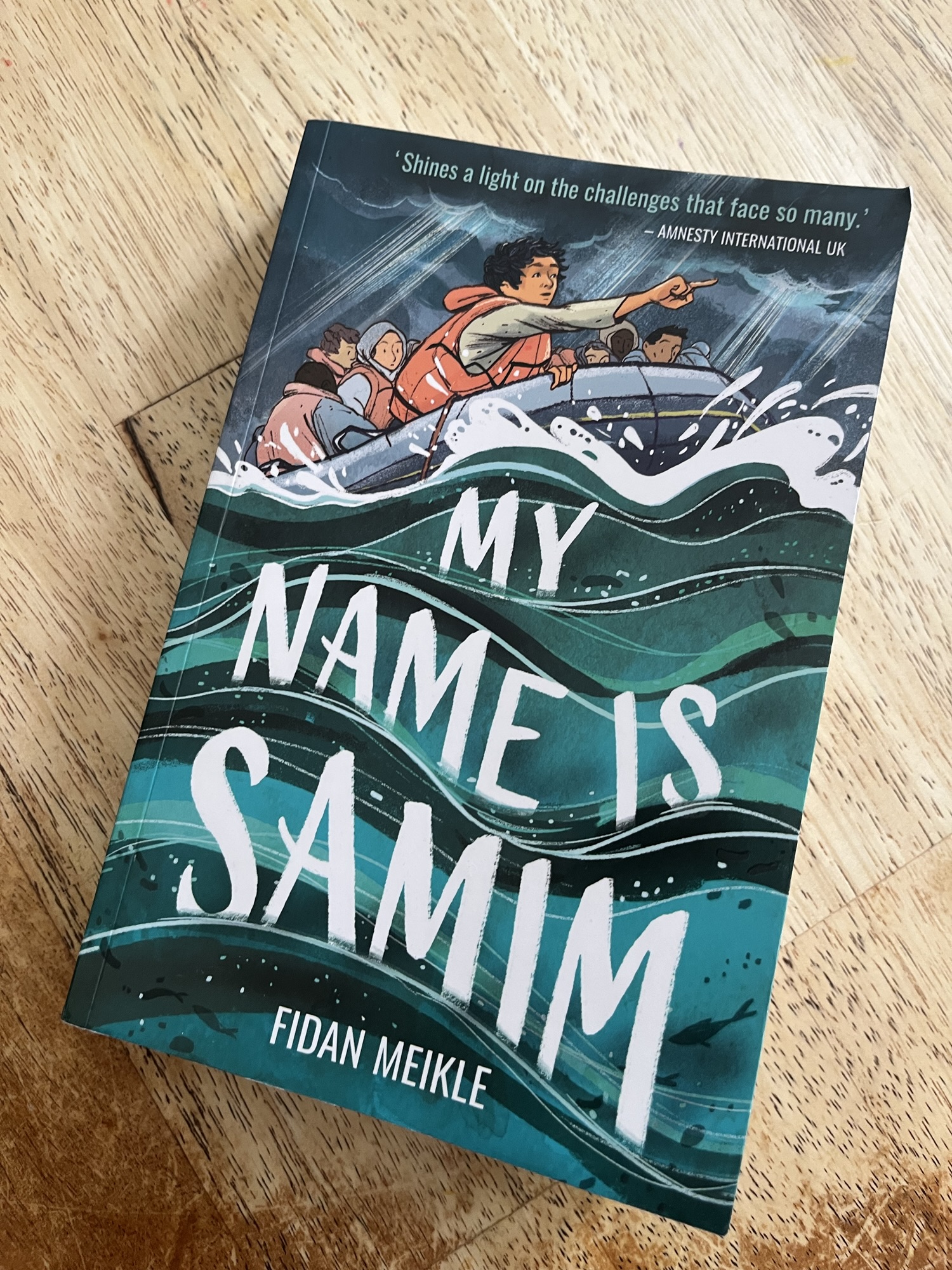
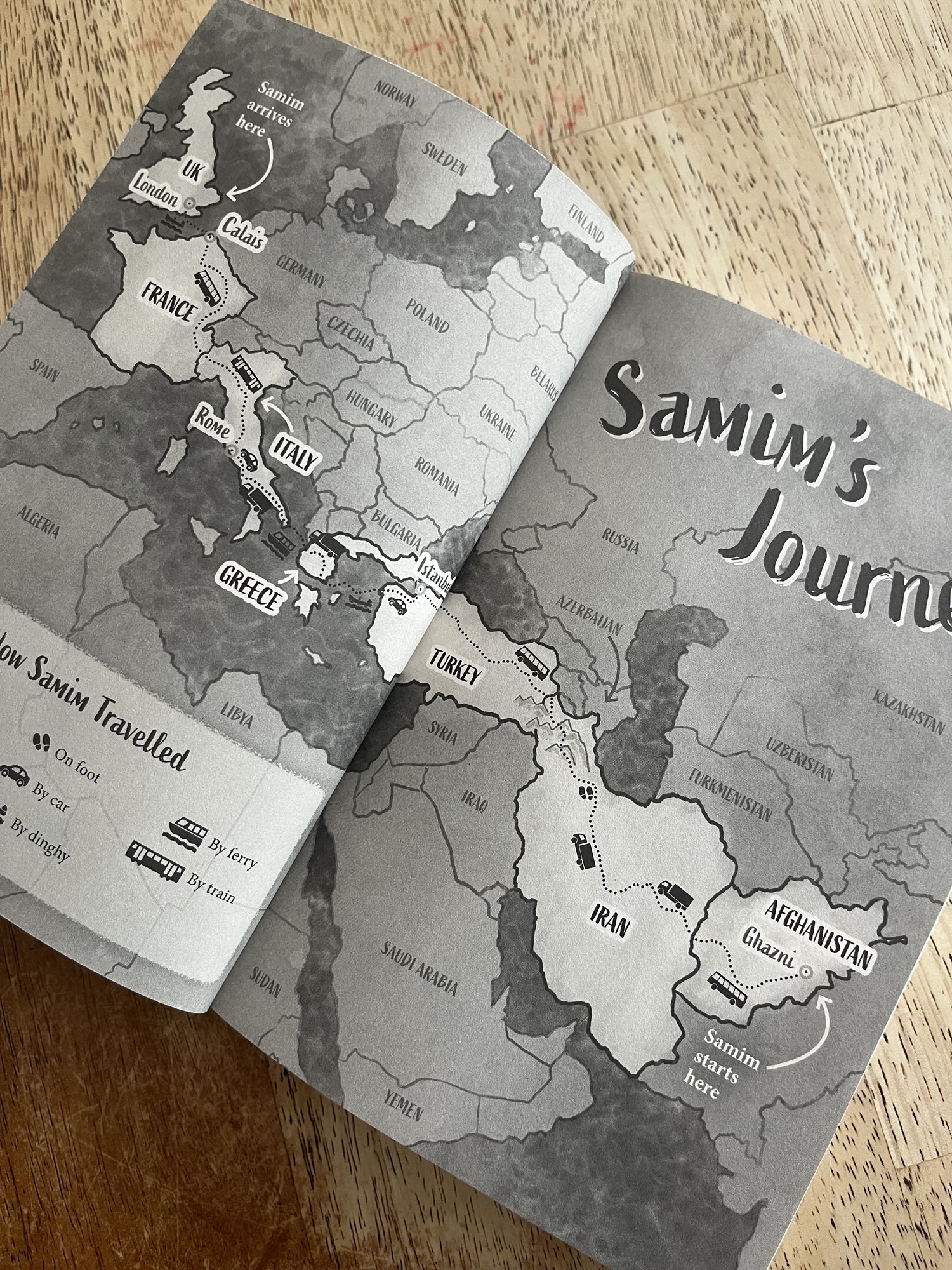
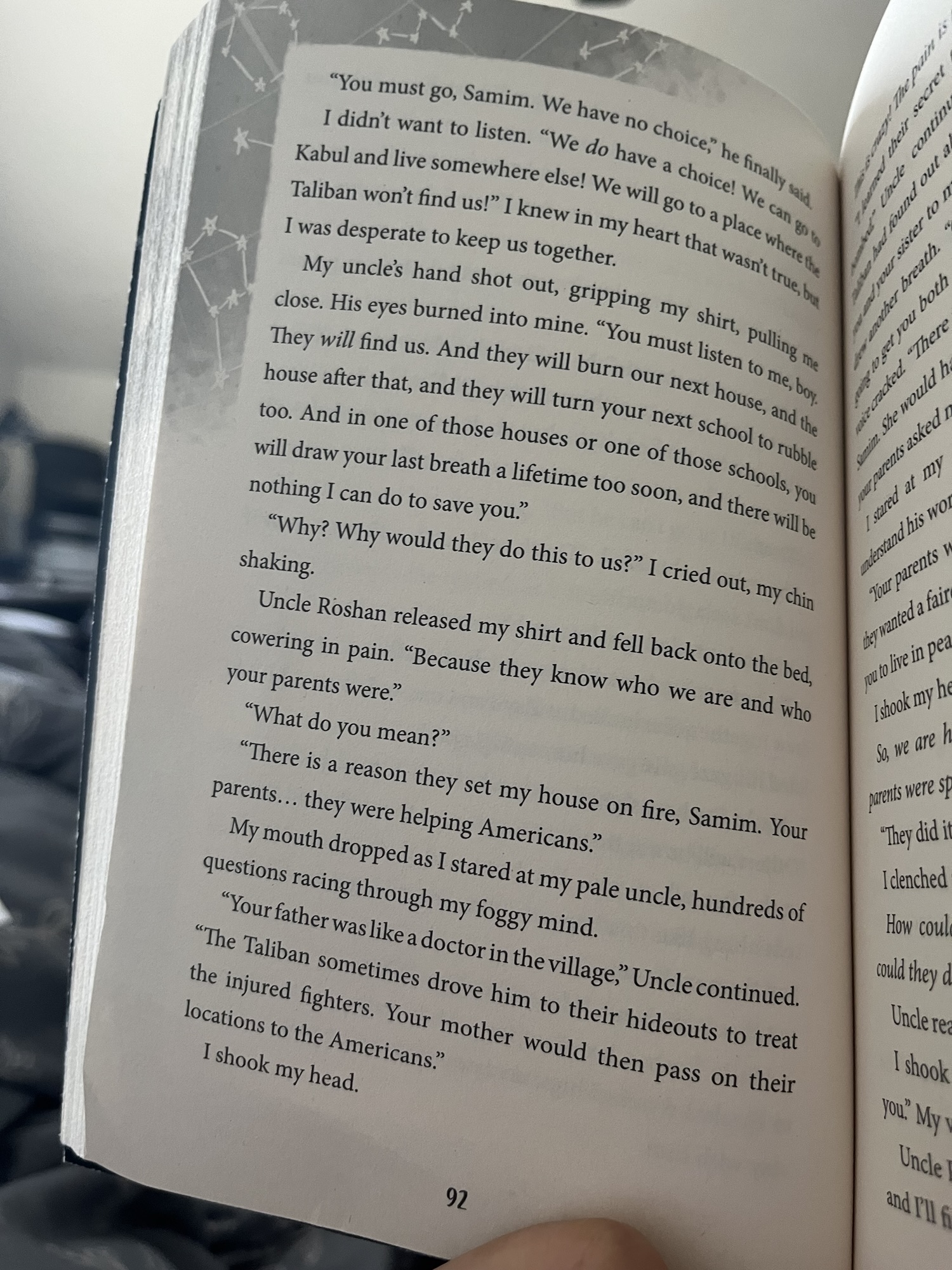
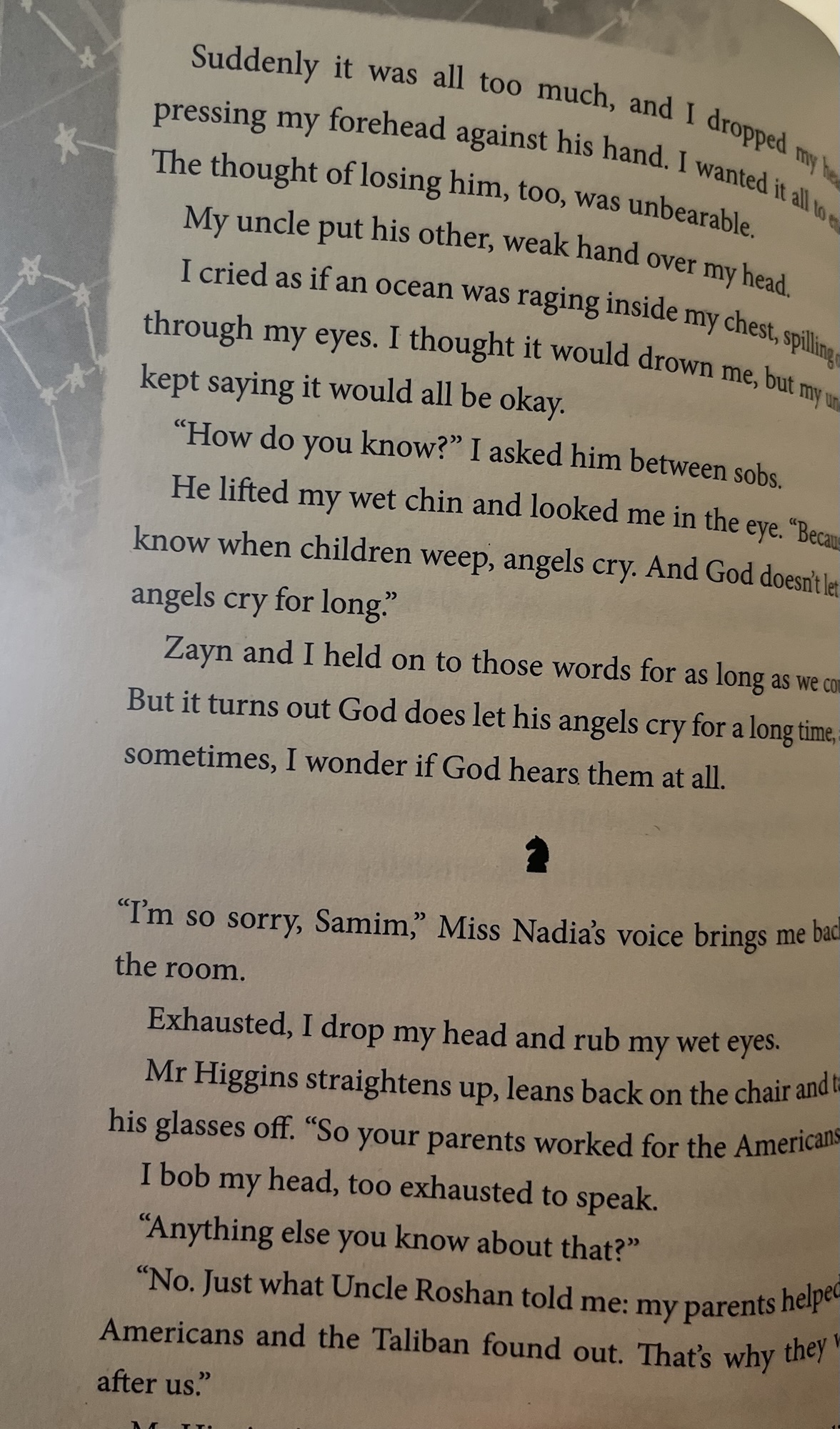
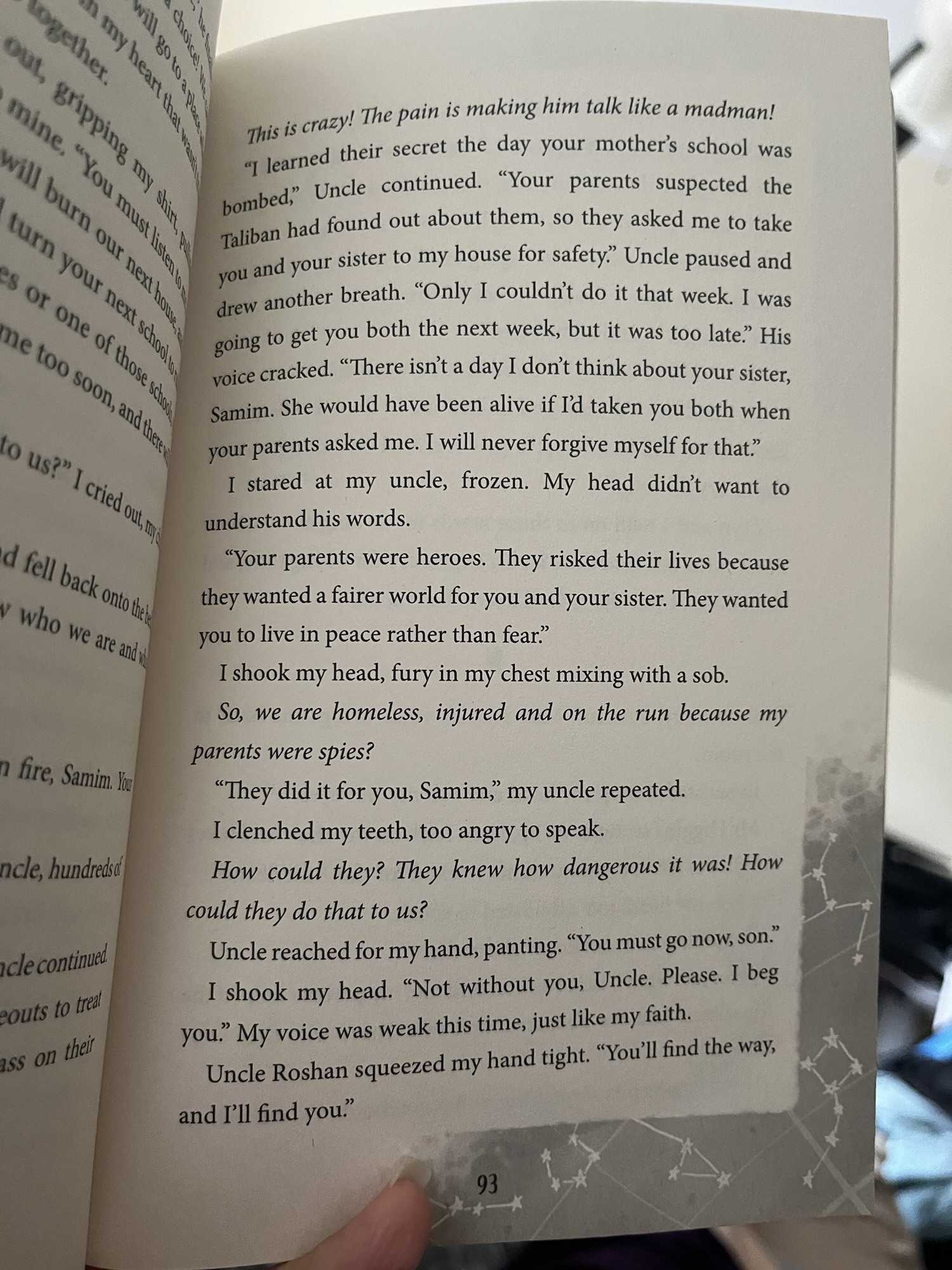
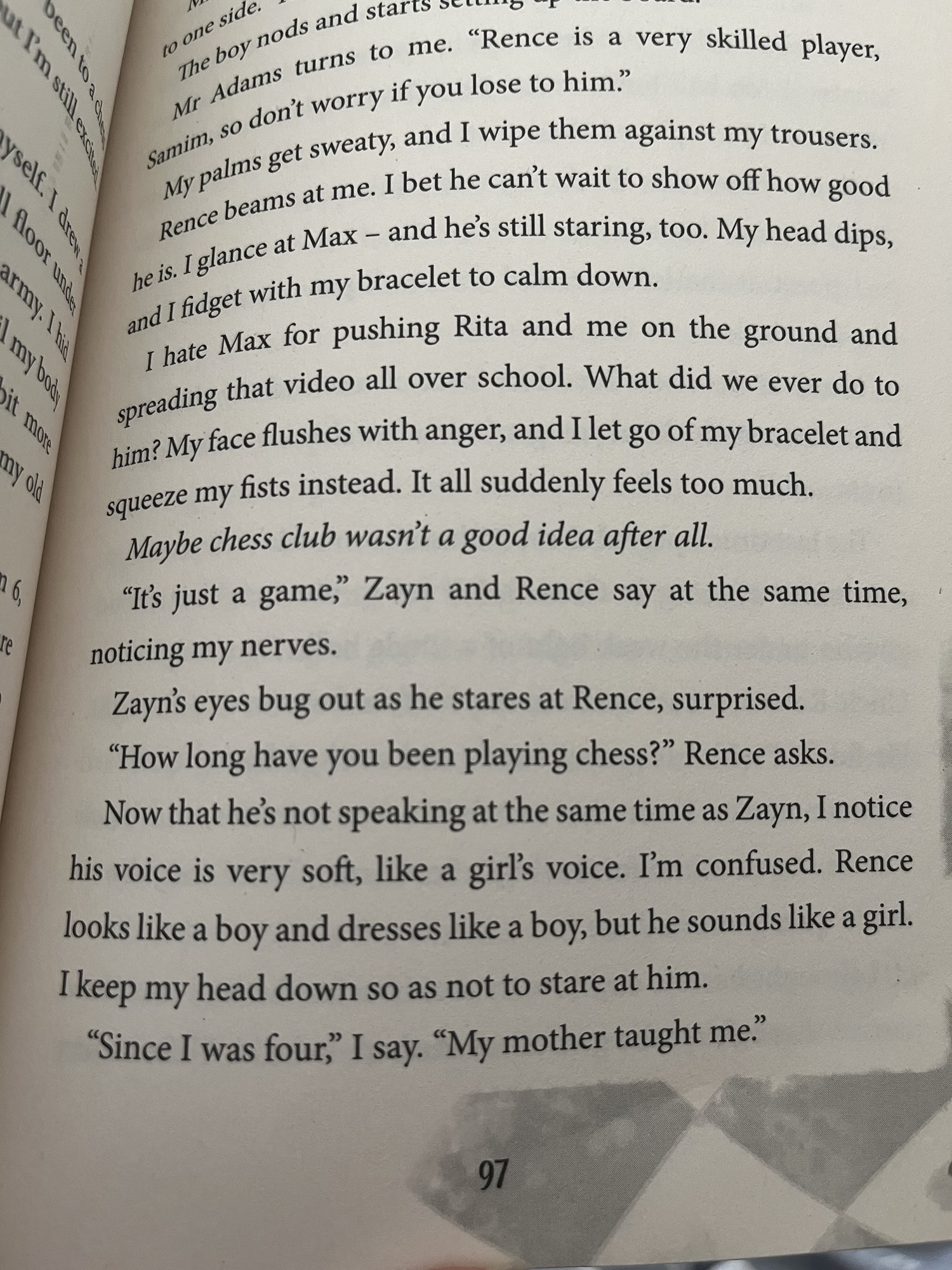
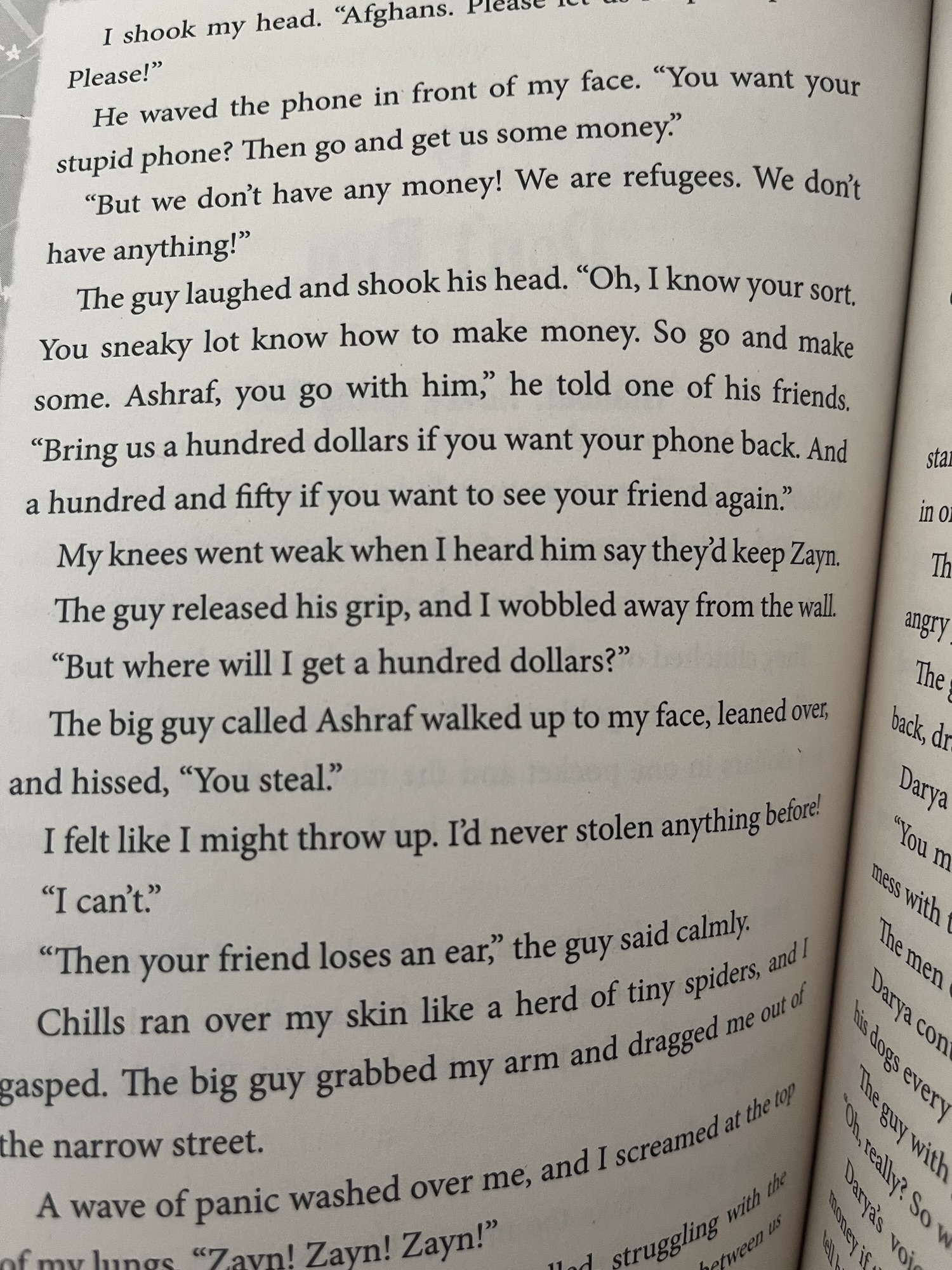
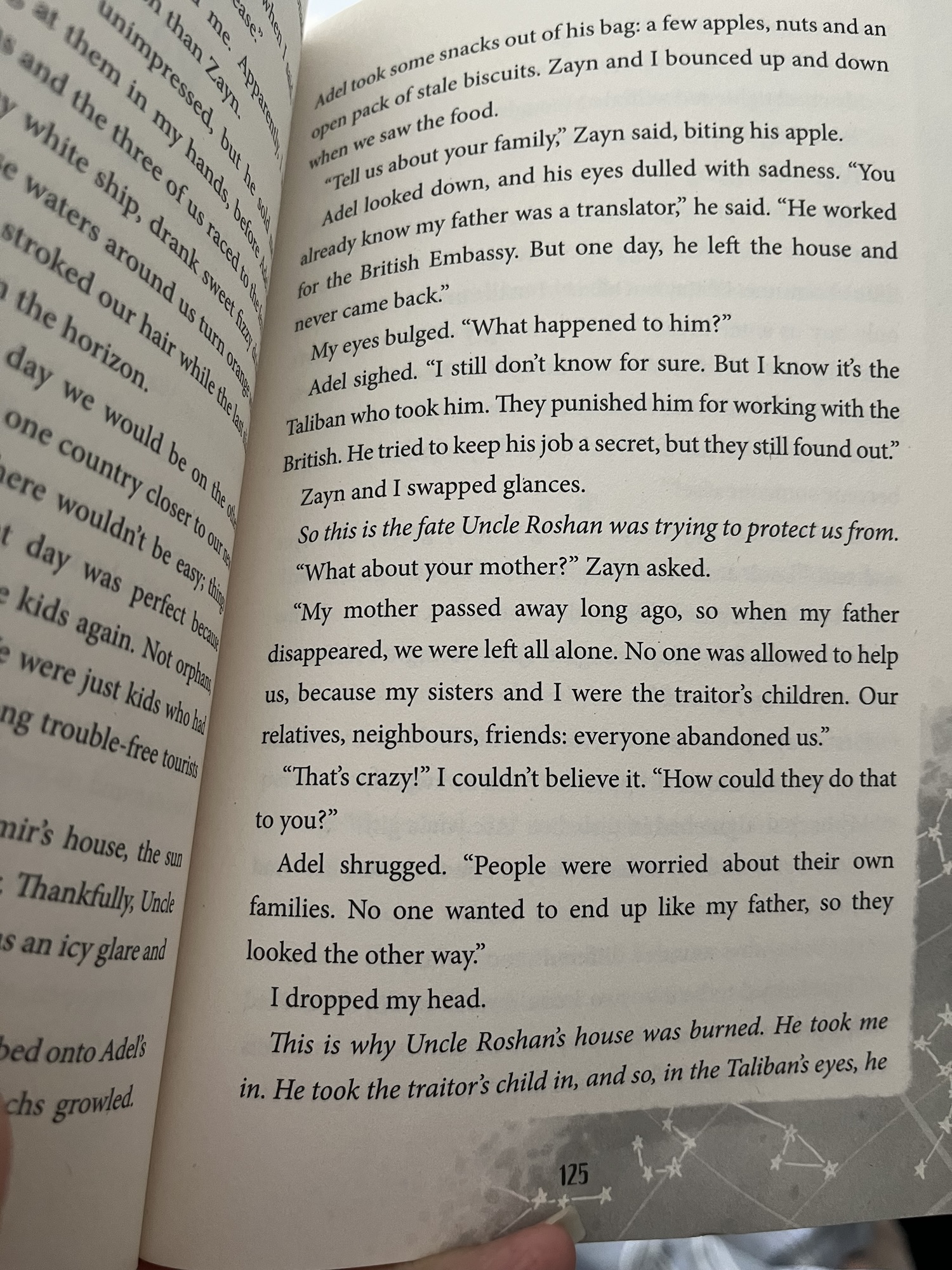
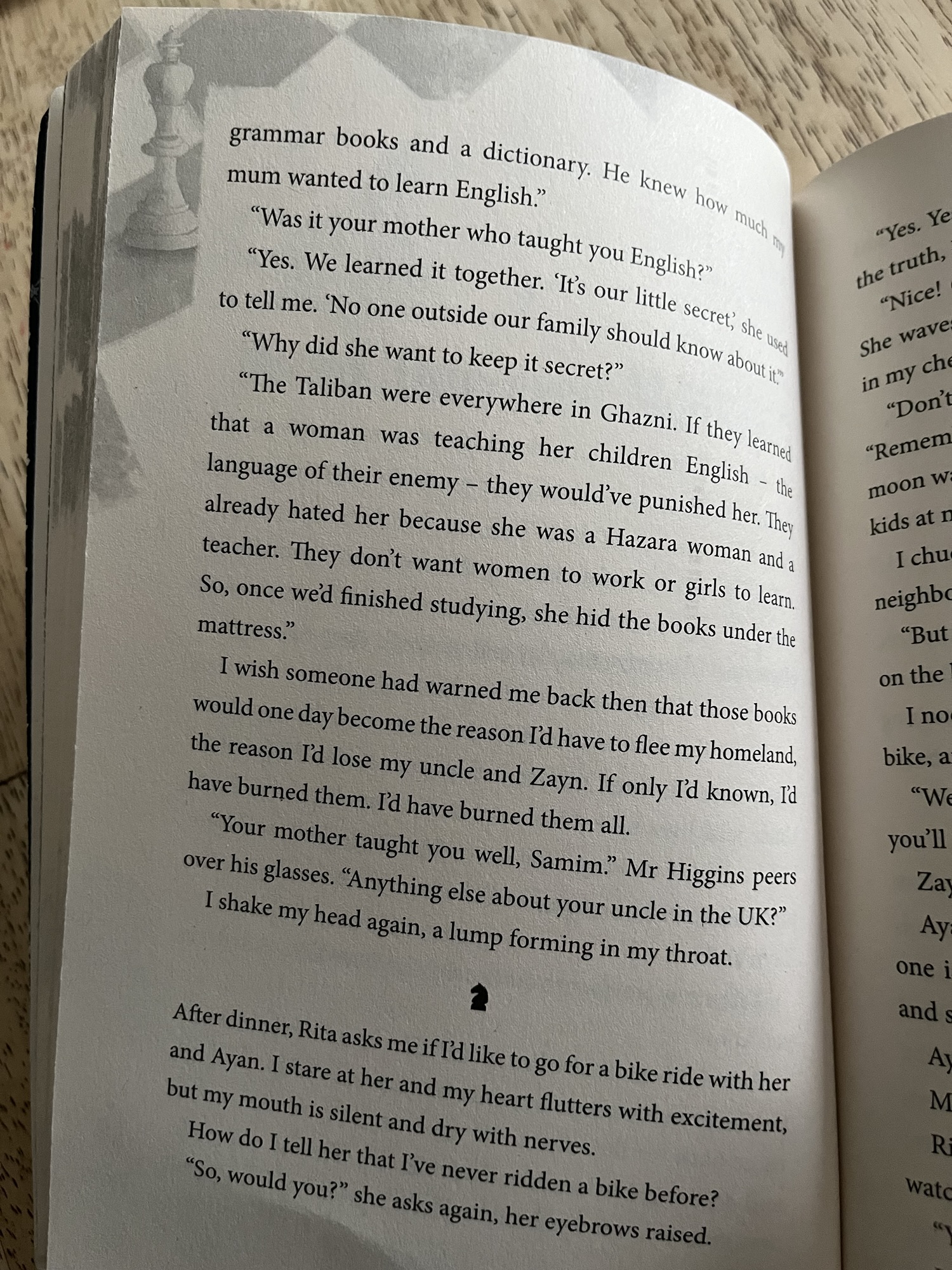
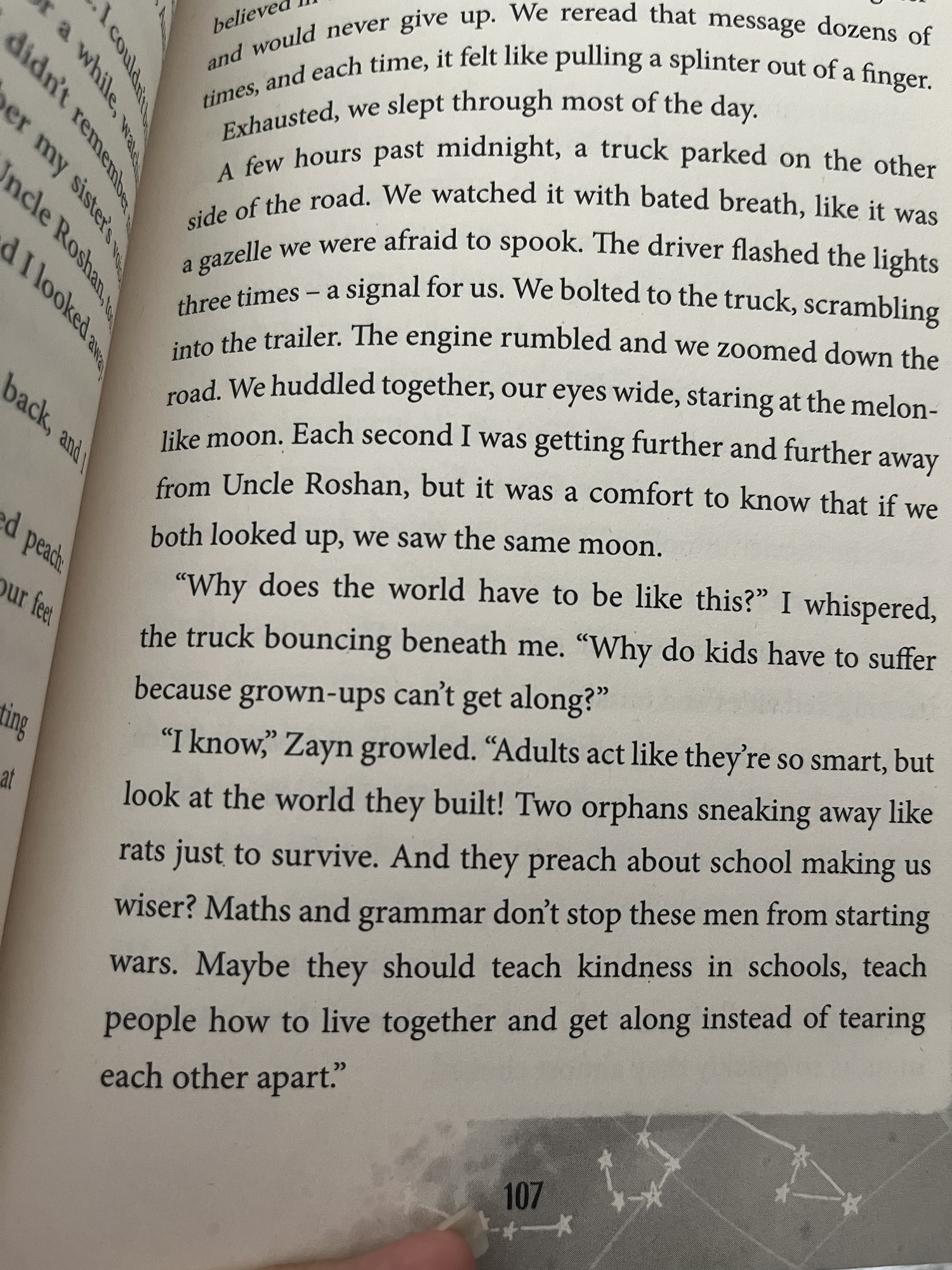
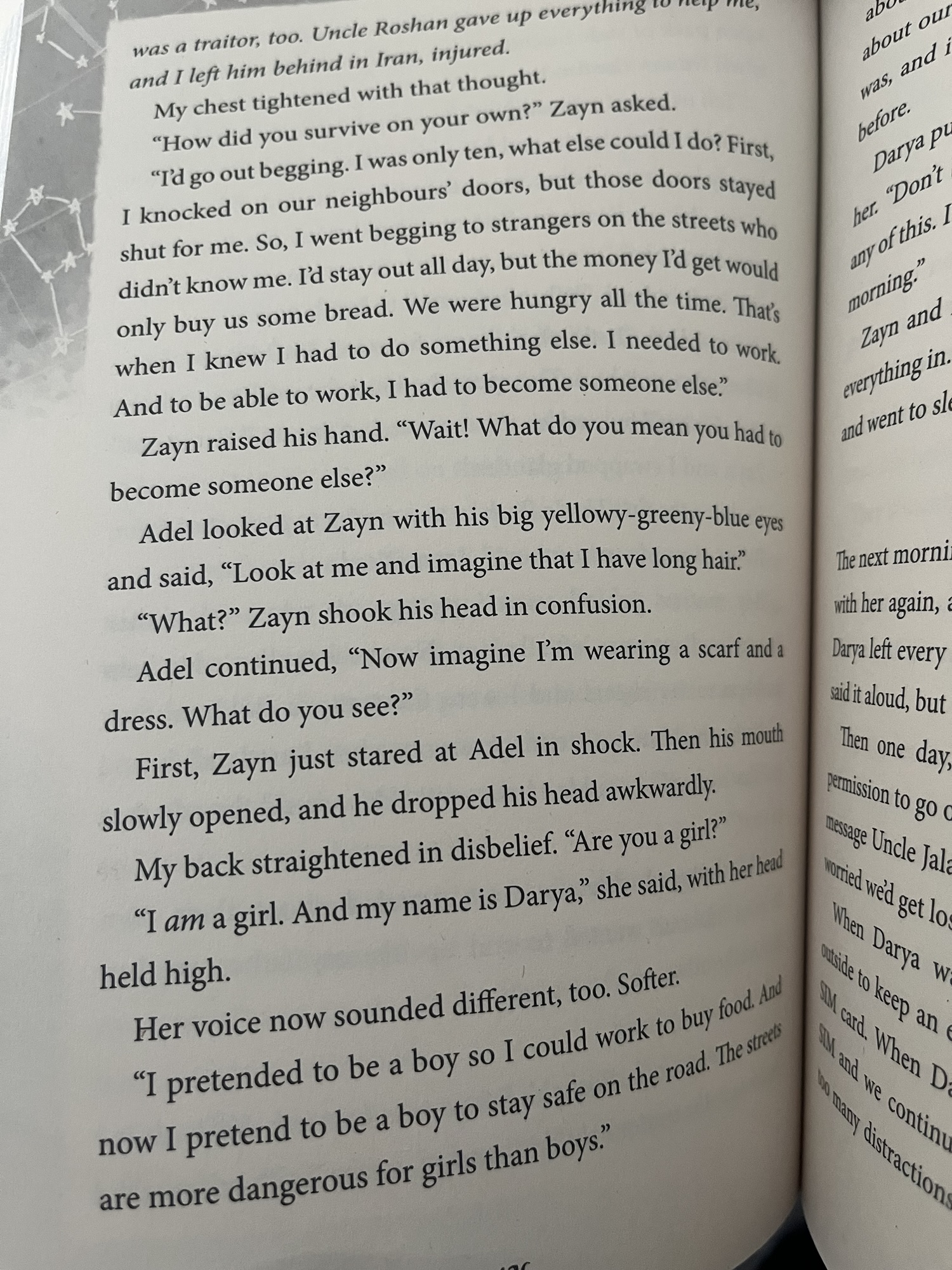
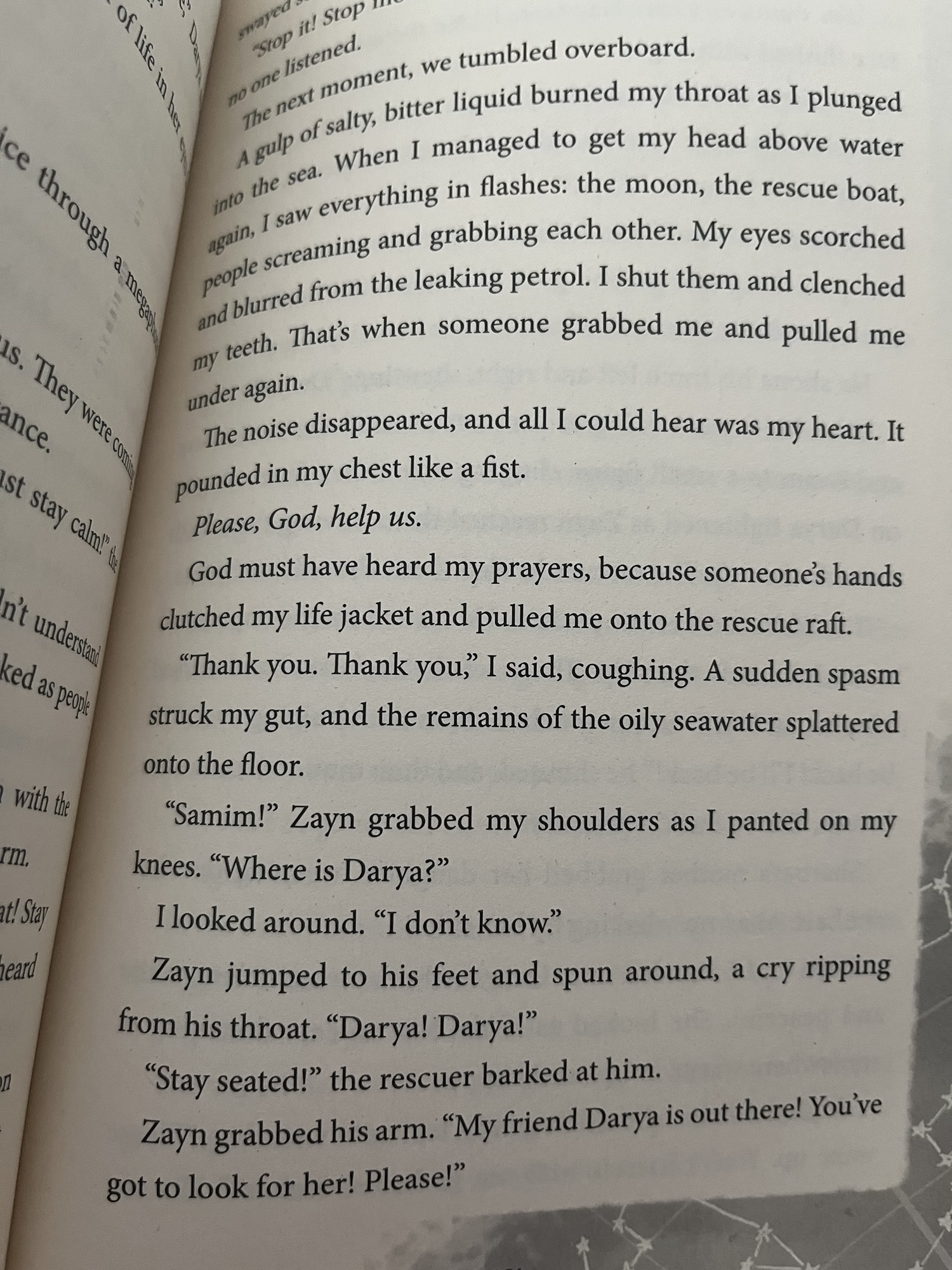
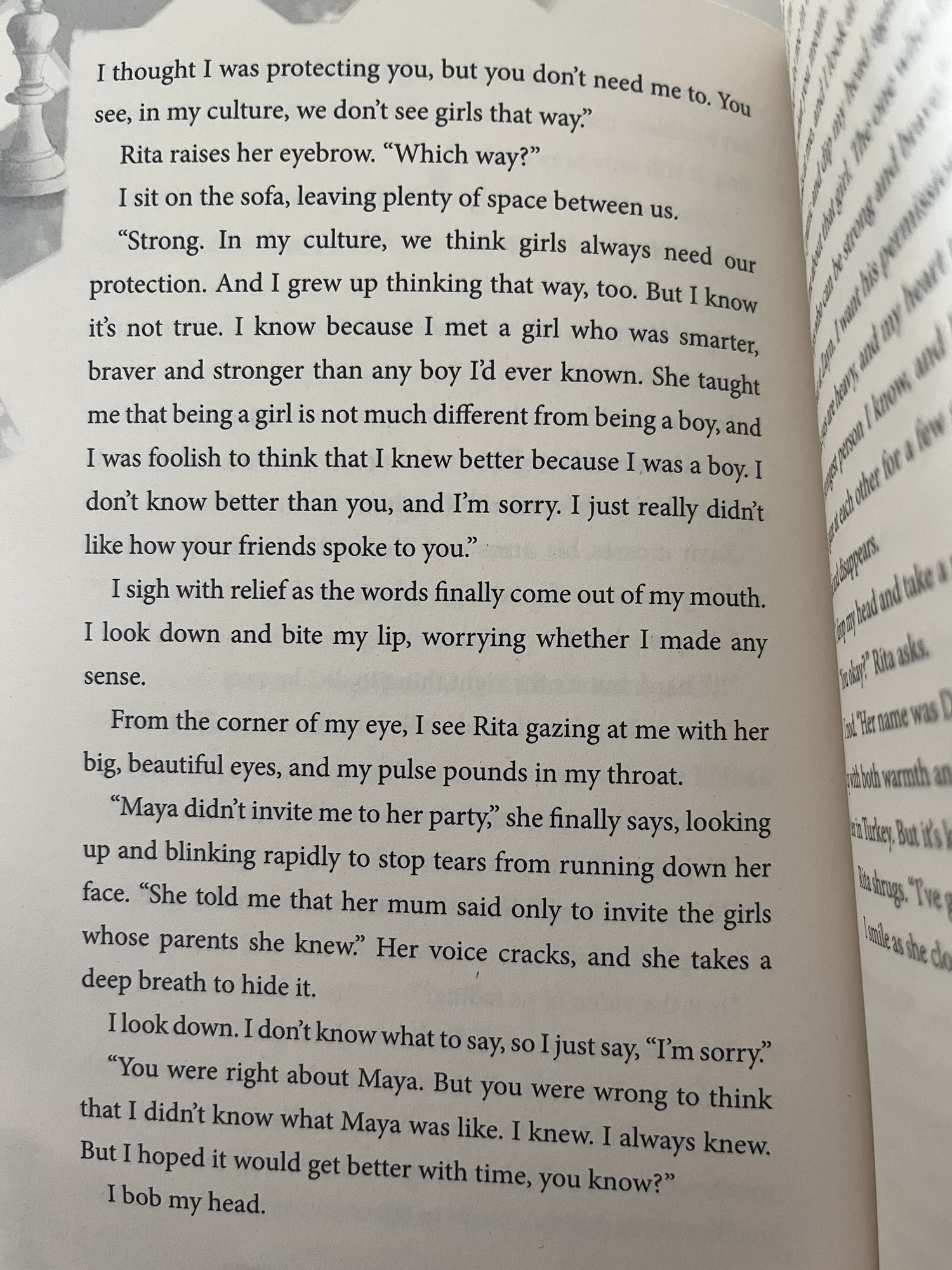
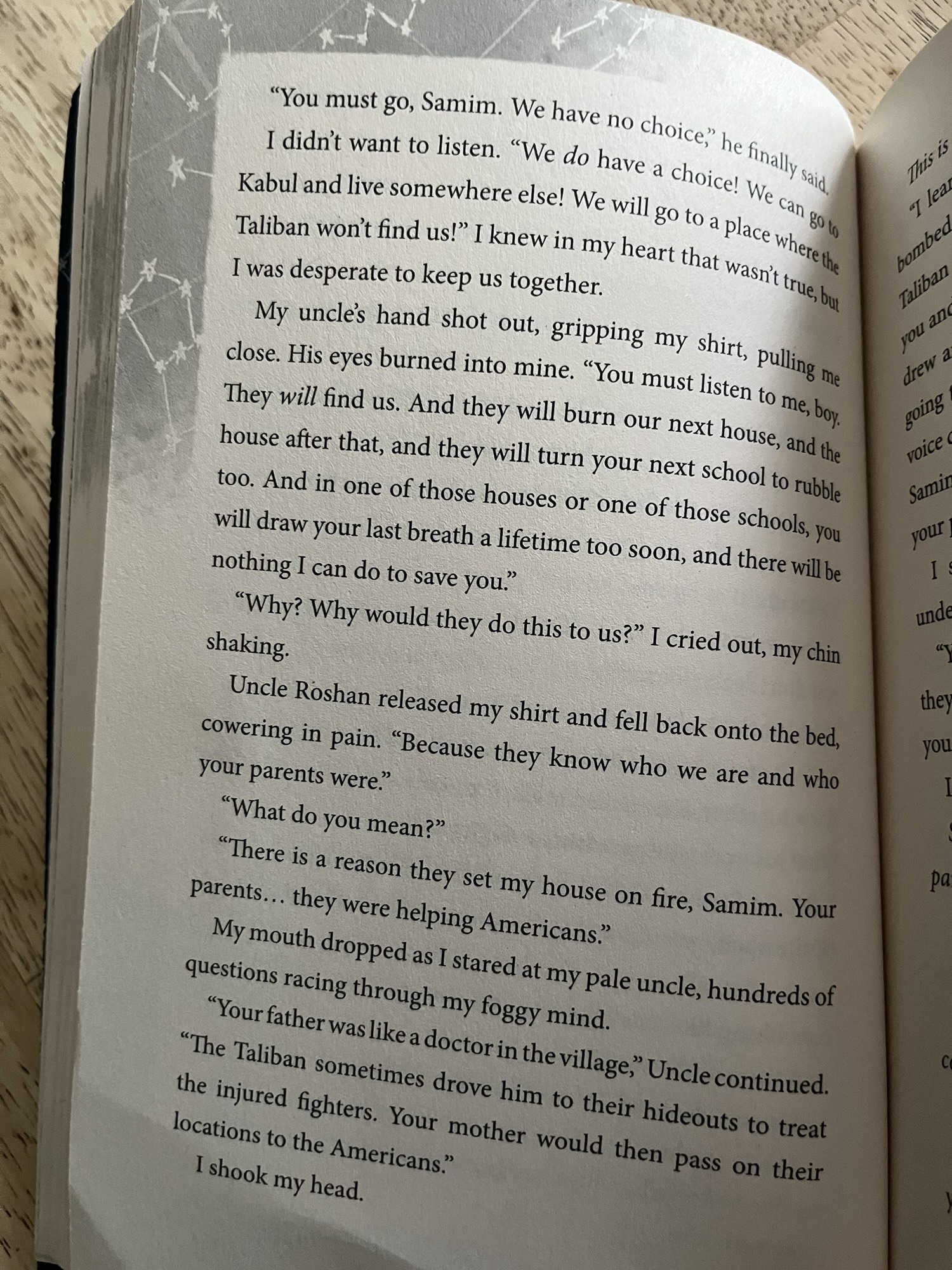
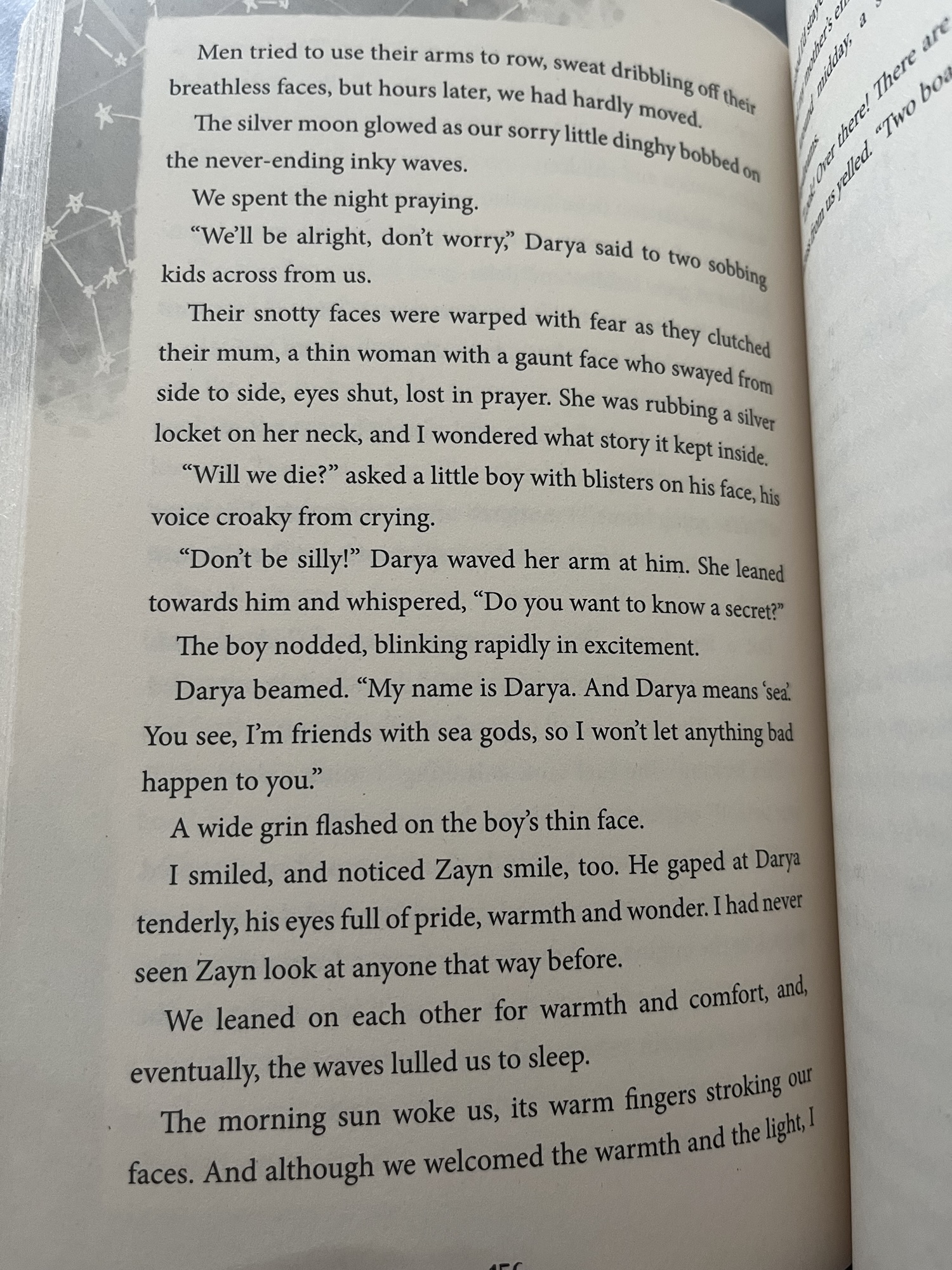
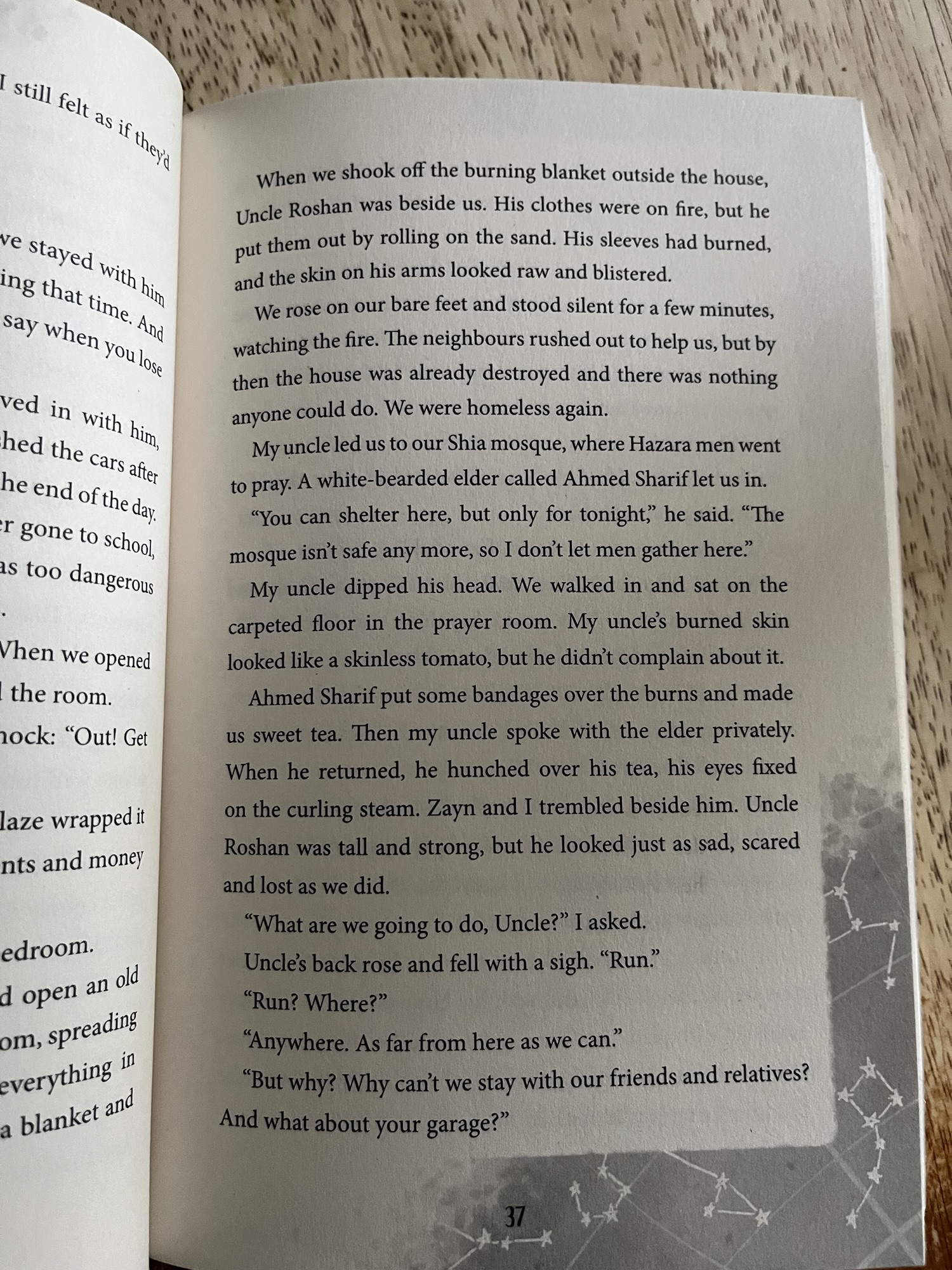
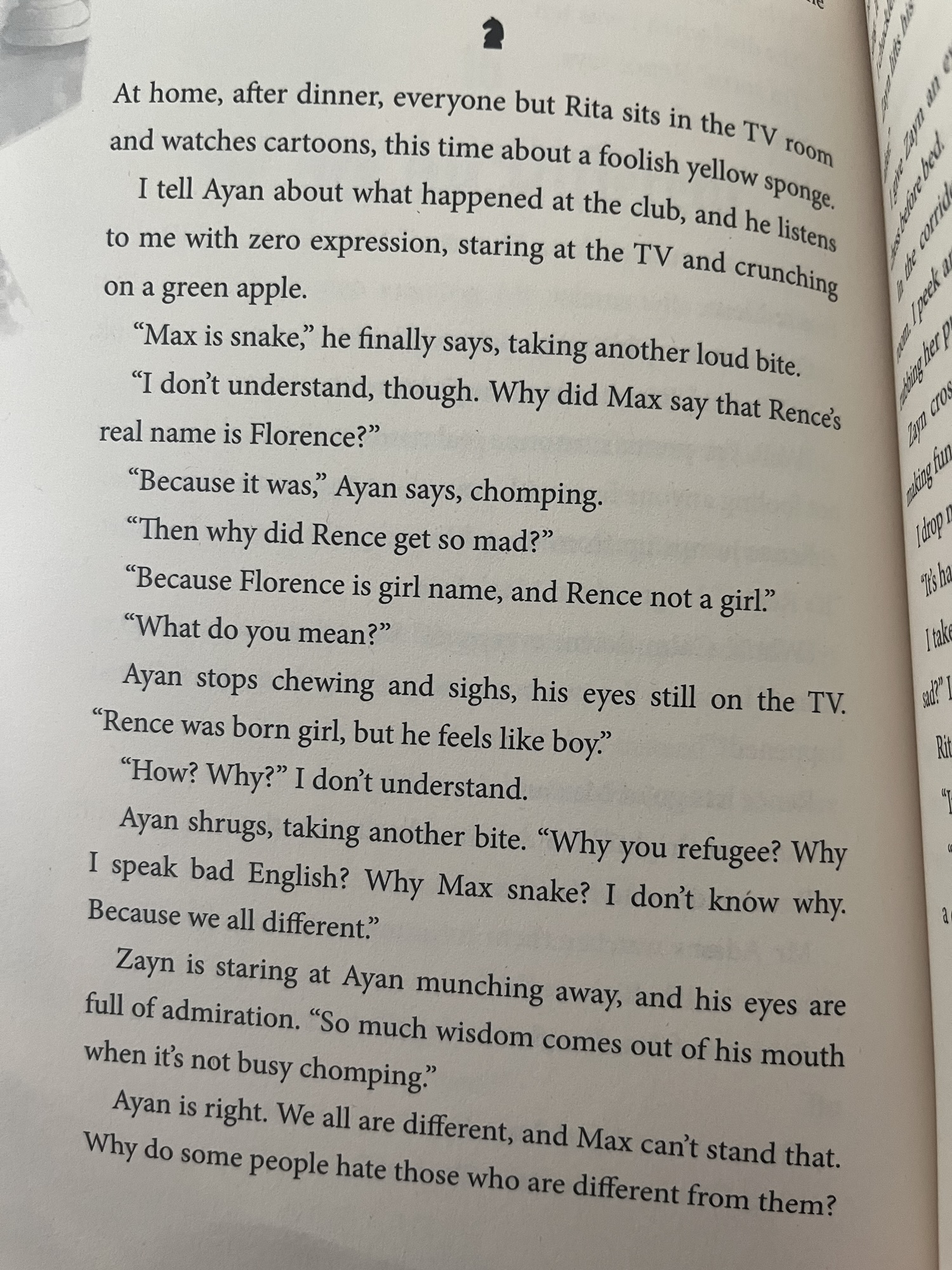
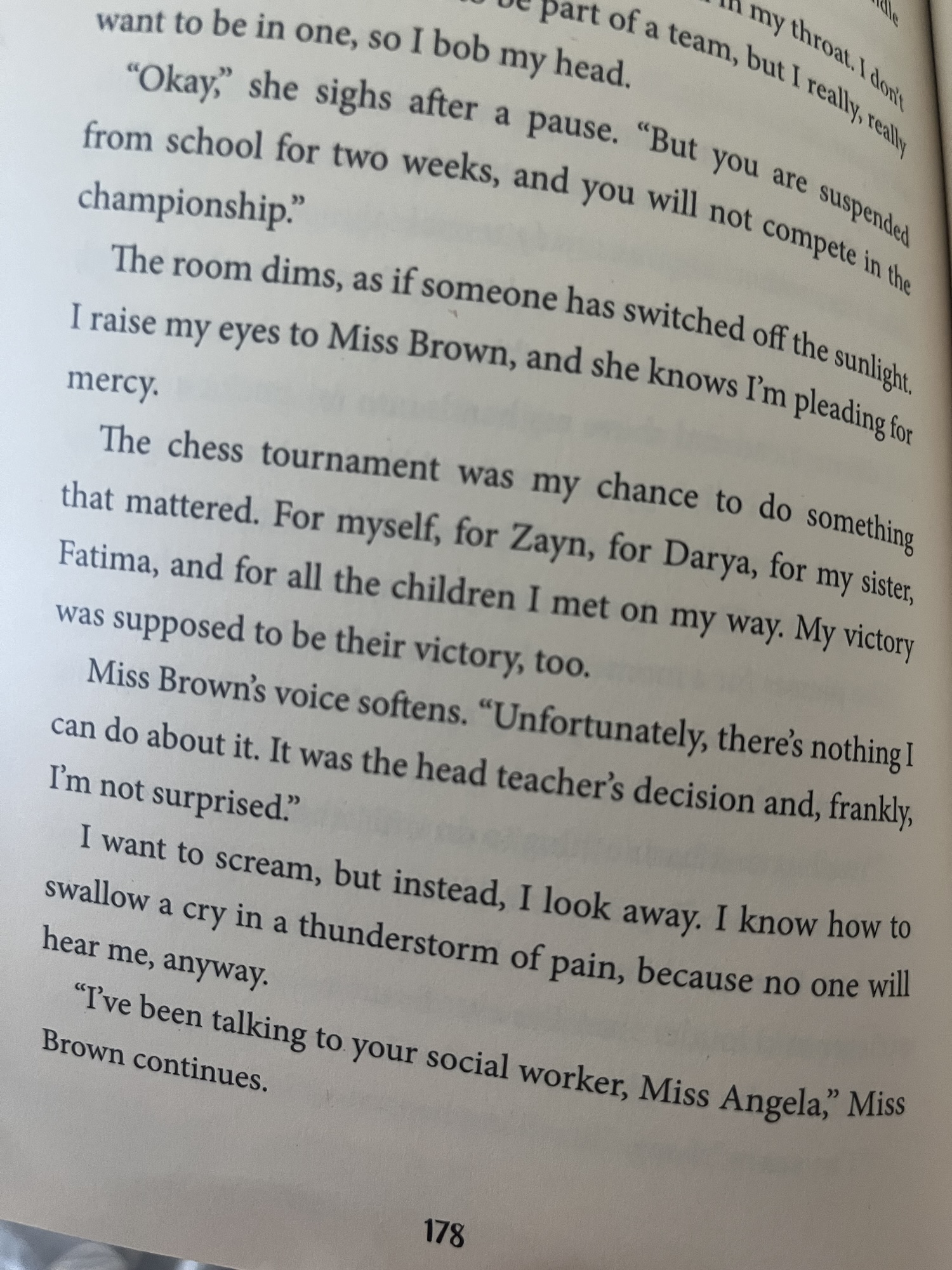
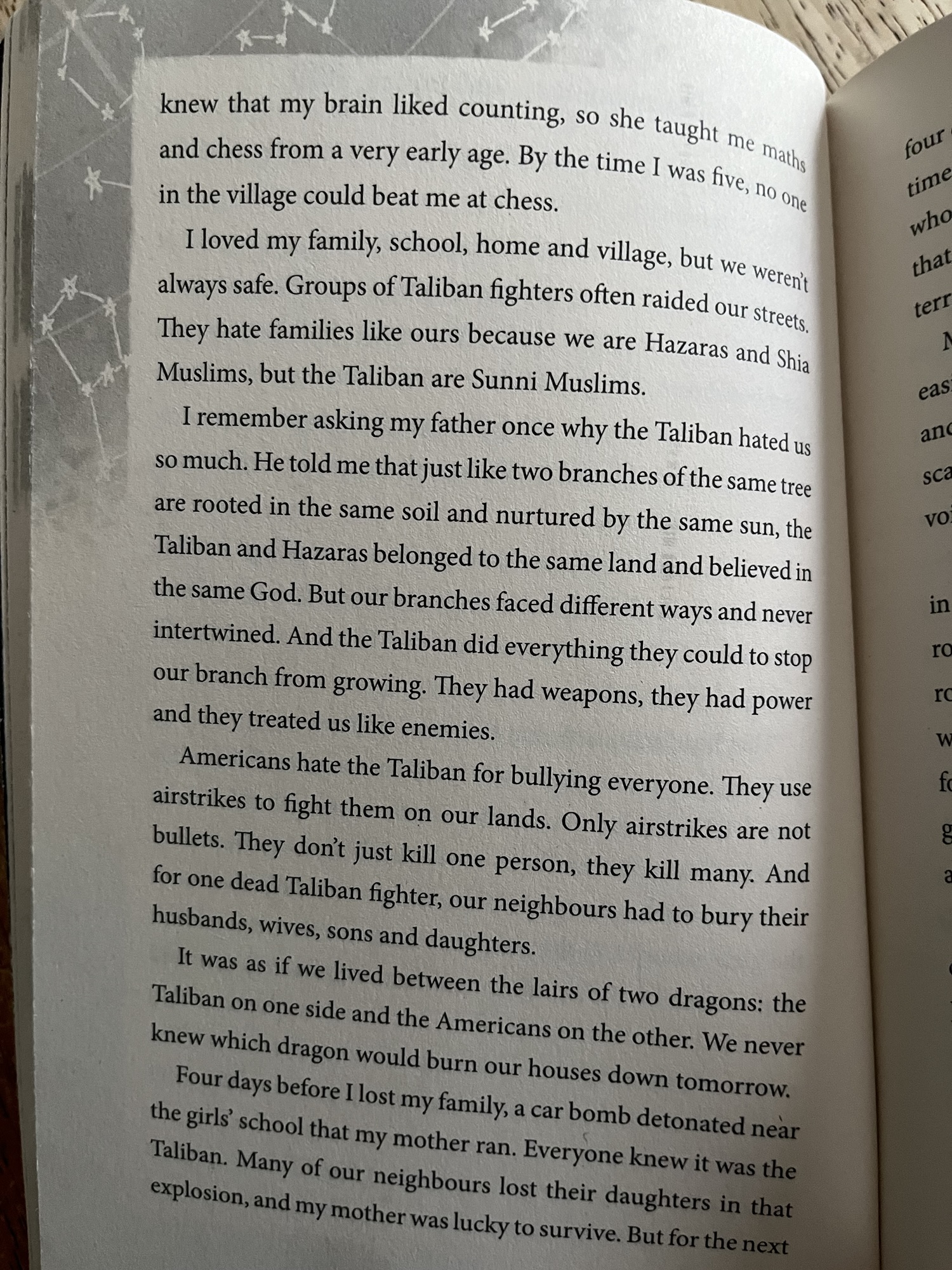
It has been a minute since I have read a refugee story, and was glad to see a new middle grade title published as the timeliness of immigrants and empathy is as critical as ever. I will admit though I was skeptical upon starting when I saw it is not OWN voice, and while grateful that a photojournalist source is named in the backmatter, through the lens of an Muslim book reviewer though, I can’t help but feel like the richness of having lived experiences reflected in the narrative or child immigrants researched to draw upon, left the Islam nonexistent and the cultural details and specifics weak. That is not to say that I wasn’t cheering for Samim, or that the craft of the book as a whole was not well done, it was. I was invested, emotional at the end, and Samim will stay with me for a while, but the protagonist is positioned as being a Shia Hazara, and for much of the story why he believes his family was killed, and yet even as he is facing repeated horrors and challenges, there are no Bismillahs, or crying out to Allah swt during a horrific series of events, no acts of worship, or relationship to faith. Nearly every time religion was mentioned I took a picture, so what you see is the religious rep nearly in its entirety not a sample. Similarly, there is some cultural foods dropped in, and awareness of gender differences once he is in the West, but honestly aside from the countries he passes through along the way, it could be a refugee from any war ravished country fleeing. Perhaps that is the point, if so it isn’t a terrible one, I just feel inclined to point it out. It is also worth nothing that this isn’t a juxtaposition story of life in Afghanistan to life in the United Kingdom, or political commentary aside from the initial premise of the Taliban wanting Shias out, it is really just a spotlight on Samim and his journey and what he, and so many go through when home is no longer safe. There is hardship, abuse, death, violence, transgender rep, bullying, human rights abuses, assault, drowning, persecution, stereotypes, bombings, displacement, theft, cruelty, violent death, loss, guilt, regret, etc. The book is not overly graphic, but the subject matter and commentary about Samim’s journey and the characters along the way may not be suitable for all children.

SYNOPSIS:

Samim is forced to leave Afghanistan when his entire family, save one uncle, are killed at the hands of the Taliban. With his uncle, and his best friend, Zayn, who has also lost everyone, a perilous journey to the United Kingdom is taken.  Once he arrives, alone, the story of how he got to the UK is shared with the readers as he seeks asylum and makes his case to stay.  His retelling of the journey is interspersed with him starting school and dealing with the stresses of uncertainty, bullies, grief, and anger.  Samim is shaped by his experiences and the people he meets, those whose stories he wants to ensure live on, and those that he longs to forget.  He is a wiz at chess, he knows 230 digits of pi, and he is carrying more, and been through more, than any child ever should.

WHY I LIKE IT:
I love that there is a map, that a source is named and that the book has a lot of heart, you really can’t help but feel for Samim. I would have liked more Hazara rep, or Shia rep, their plight is under represented in children’s literature, but I recognize I’m looking at that with adult eyes, and the target audience is probably not as critical.  I also would have liked to see more raw emotion regarding the loss of his family, and stories tying him to them.  I didn’t feel the weight of who this lone uncle was, and what his loss meant other than on the journey at hand.  Some backstory and fleshing out of family and connection would go a long way to showing additional heart and humanity for those dealing with grief and loss that would hopefully connect with young readers. And yes, I think it could have been stronger without changing the direction and purpose of the story.

While some of the exploration of themes is subtle, the commentary on gender and gender identity is not.  The reader is introduced to to a female refugee character dressing as a boy on the journey for safety, and highlights how Samim and Zayn grapple with that reveal.  And then Samim meets Rence, a trans character in the UK, who becomes a close friend, and thus shows the continuation of that normalization while also highlighting stereotypes about women and identity in both the Afghan and Western cultures.  The author also seems to be quite deliberate in showing good and bad, kind and manipulative, cruel and generous people throughout so as not to have a single character’s religion, or culture, or gender, or ethnicity shoulder the stereotype of more than just themselves in that moment.  It keeps the book from perpetuating assumptions as Samim meets and interacts with such diversity on his journey.

FLAGS:
There is hardship, abuse, death, violence, transgender rep, bullying, human rights abuses, assault, drowning, persecution, stereotypes, bombings, displacement, theft, cruelty, violent death, loss, guilt, regret, etc.

TOOLS FOR LEADING THE DISCUSSION:

As I searched to see how authentic the book is, I did find a good article about the author’s research and expertise in the area:

https://www.thebookseller.com/trade-interviews/author-fidan-meikle-on-the-story-behind-her-middle-grade-debut

I think if you know your audience, this book could work for a class or book club read, but I think with the triggers and some of the commentary, one would need to be confident that it is a good fit.  I would be ok to shelve it on a library or classroom shelf for upper middle grade, as I think the book is clear about the contents within and readers drawn to it, should hopefully be aware that refugees endure a lot of hardships, and thus the story may be difficult at times.

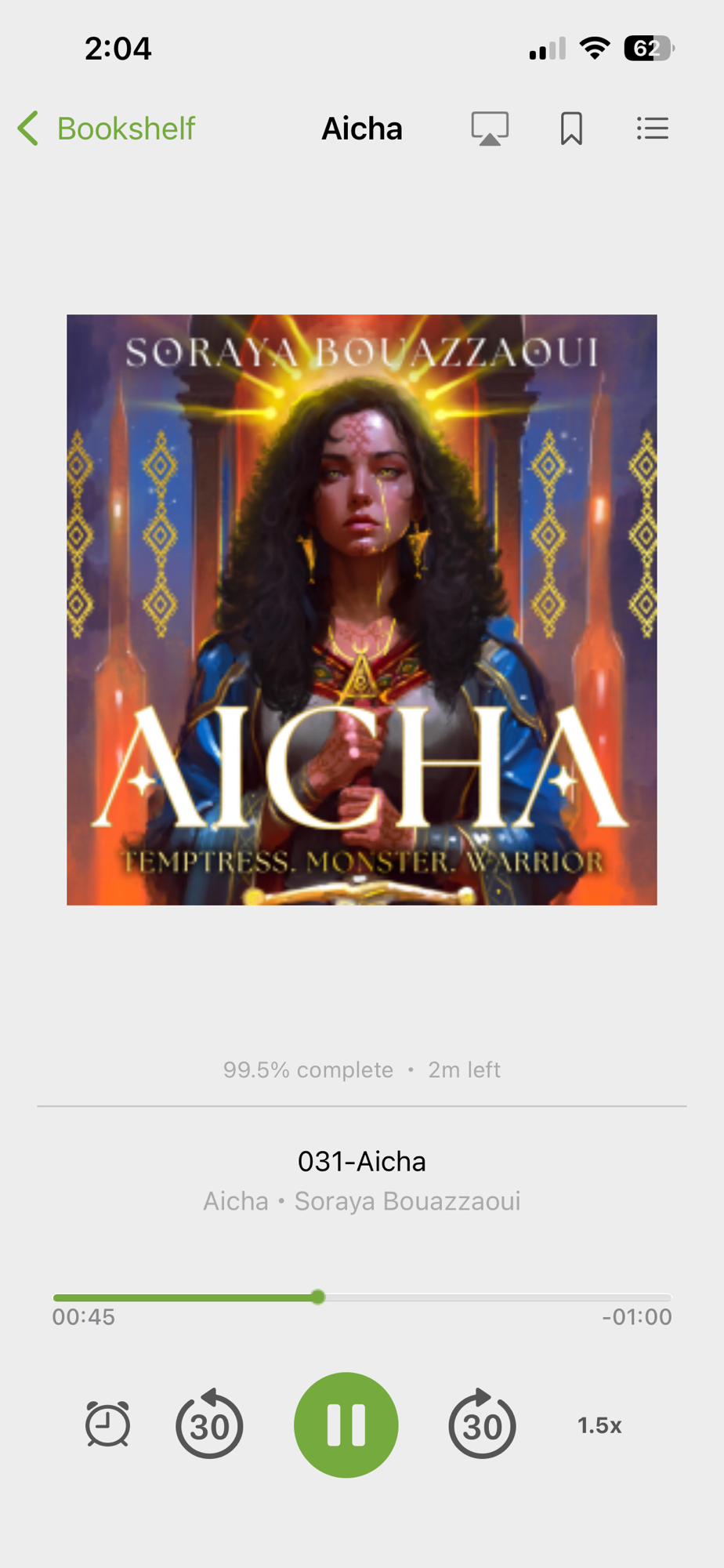
Aicha by Soraya Bouazzaoui

Standard
Aicha by Soraya Bouazzaoui

I listened to this book on my work commute, to and fro daily for weeks, Aicha would go about her day in Portuguese occupied Morocco and I would go about mine, and as the hours built, I realized this book has no plot, there is no building up for something, it really is just the two of us going about our days, granted, hers is far more interesting, but rather plotless just the same. There is world building of life under occupation and the rebel forces her family is a part of, there is even foreshadowing about who she is, but I do not, and did not, have prior knowledge of the myth the story stems from. And the more I listened and the closer we got to the approaching “siege,” the more I felt like I was mislead with the promises of what the book would be. Before I continue, there will be spoilers, and I admit while I was listening to it, I wasn’t bored, the pacing is off but the prose is lush and descriptive, albeit overly telling at the expense of showing, but none-the-less listening to it in 15 minute intervals twice a day at 1.5x speed was not a a burden, and was often enjoyable. Had I been reading it though, I think I would have dnfed mid way through after skipping pages at a time.

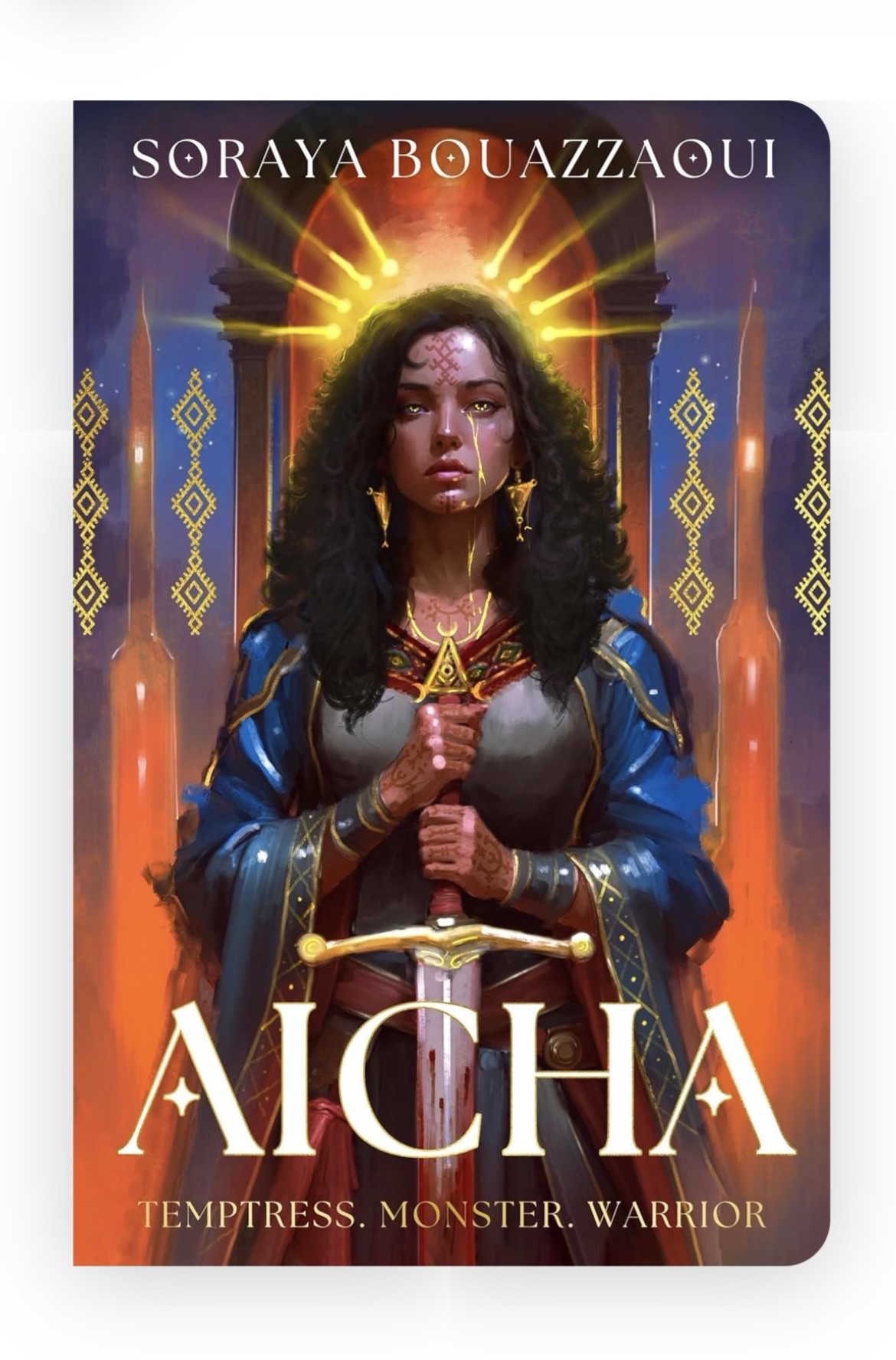
The front of the book says “Temptress, Monster, Warrior.” She is in love with Rachid, they are in a relationship, chapter 19 is a pretty intense, very adult, and mature, open door testament to that relationship, the occupiers threaten sexual assault, but she is not out flirting or tempting anyone, she is often dressed to look like a boy and disappear into shadows. Is she a monster? She has a jinn tied to her, so I’m going to say no, she is not, the jinn is blood thirsty and perhaps a monster, but the book title is her name. The daily musings, 352 pages, over 10 hours, are her life, the jinn doesn’t get top billing until the end. As for the warrior description, sure, she is a rebel, who trains at the hands of her blacksmith father, but the book is also teased as a female rage story, so when coupled with the term, warrior, why does she have to have Rachid step in to fight for her at the end? She couldn’t beat Duarte? She didn’t get to exact her revenge? Only once Aicha was dead was the jinn freed and the jinn given the pleasure of killing him-which cheapened the expectation and made the whole book feel misleading.

I also didn’t like on the back it saying, “Aicha is the story of Morocco’s warrior goddess,” the term
“goddess,” distracts for me how much Islam really is in the book. I loved how much actually. The book from the very first Author’s Note Flag Warning positions that the characters are Muslim, but they are not examples of Islam, and I might buy the book just to screen shot how fabulous the warning/statement is. The characters are Muslim through and through and that made me have a soft spot to keep listening. I’ll even admit the hasty nikkah to make it halal was emotionally charged, and nice to see.

Craft wise, aside from the lacking plot and slow pacing, I’m not sure why one chapter switched perspectives to Rachid, it felt sloppy. I don’t get why the siege wasn’t more robustly fleshed out, why the open door sex scene was so long, (I could just be a prude, and I’ve never done an audio with spice, so yeah, I might be unreliable on this point), and why did they all have to die, if it was so devastating in real life, we need backmatter to feel the weight of these characters. I will probably read anything future the author writes, so I own that, and I truly did enjoy the commentary on colonization and occupation and the last line of the backmatter being, “Free Palestine!”

I listened to the audio of this book and did not have access to the text of the book, so forgive misspellings of characters’ names.

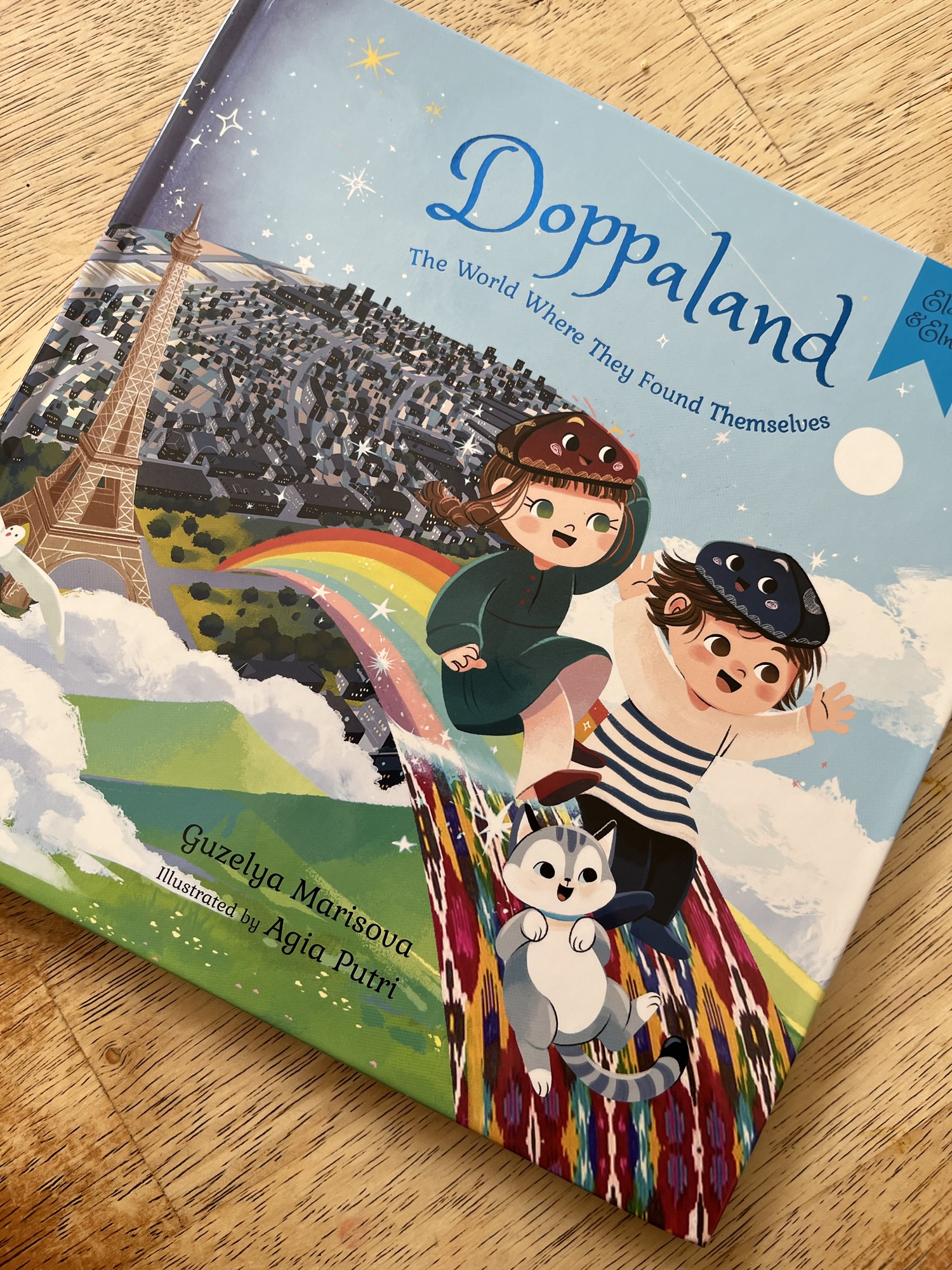
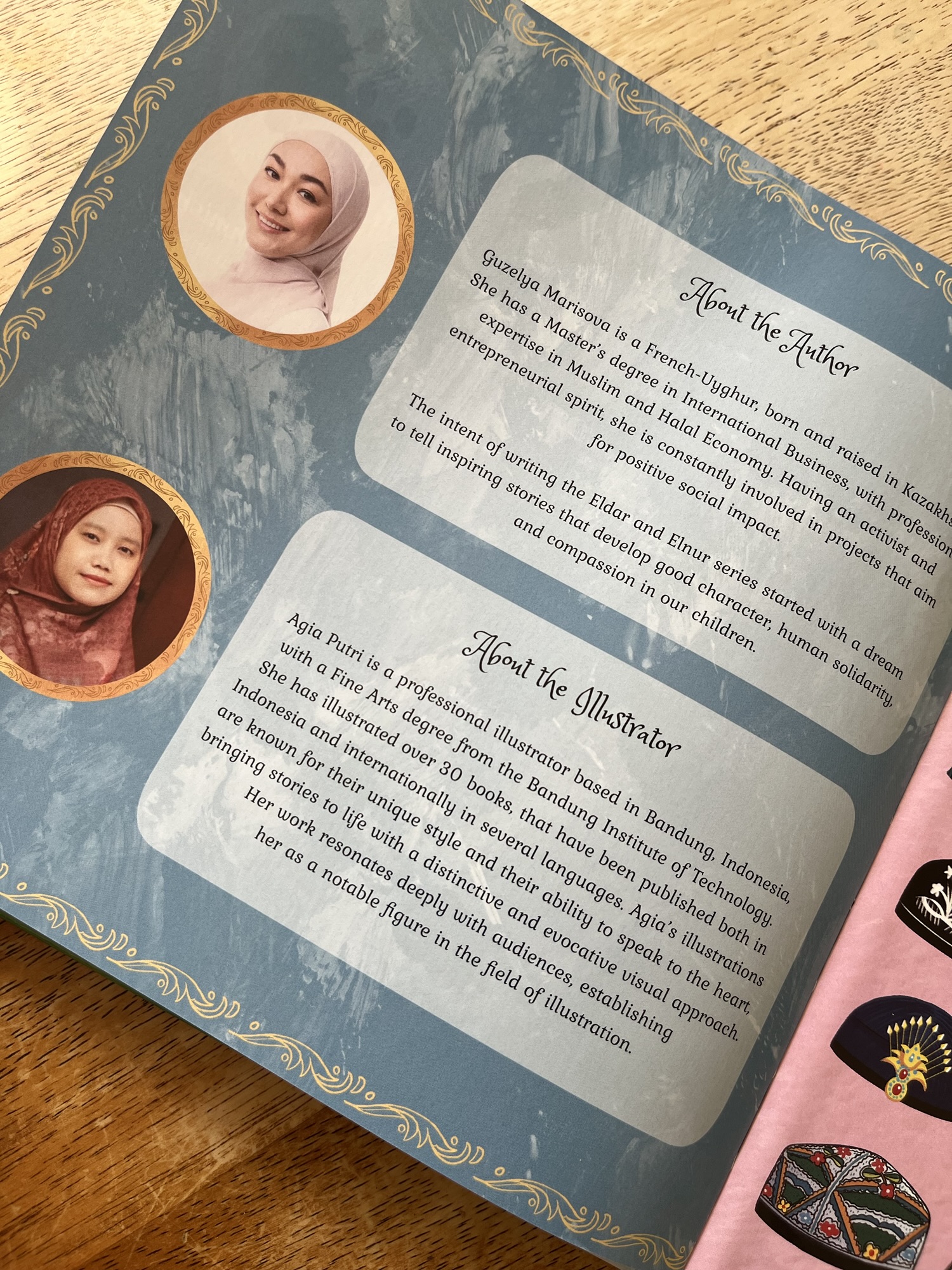
Doppaland: The World Where They Found Themselves by Guzelya Marisova illustrated by Agia Putri

Standard
Doppaland: The World Where They Found Themselves by Guzelya Marisova illustrated by Agia Putri

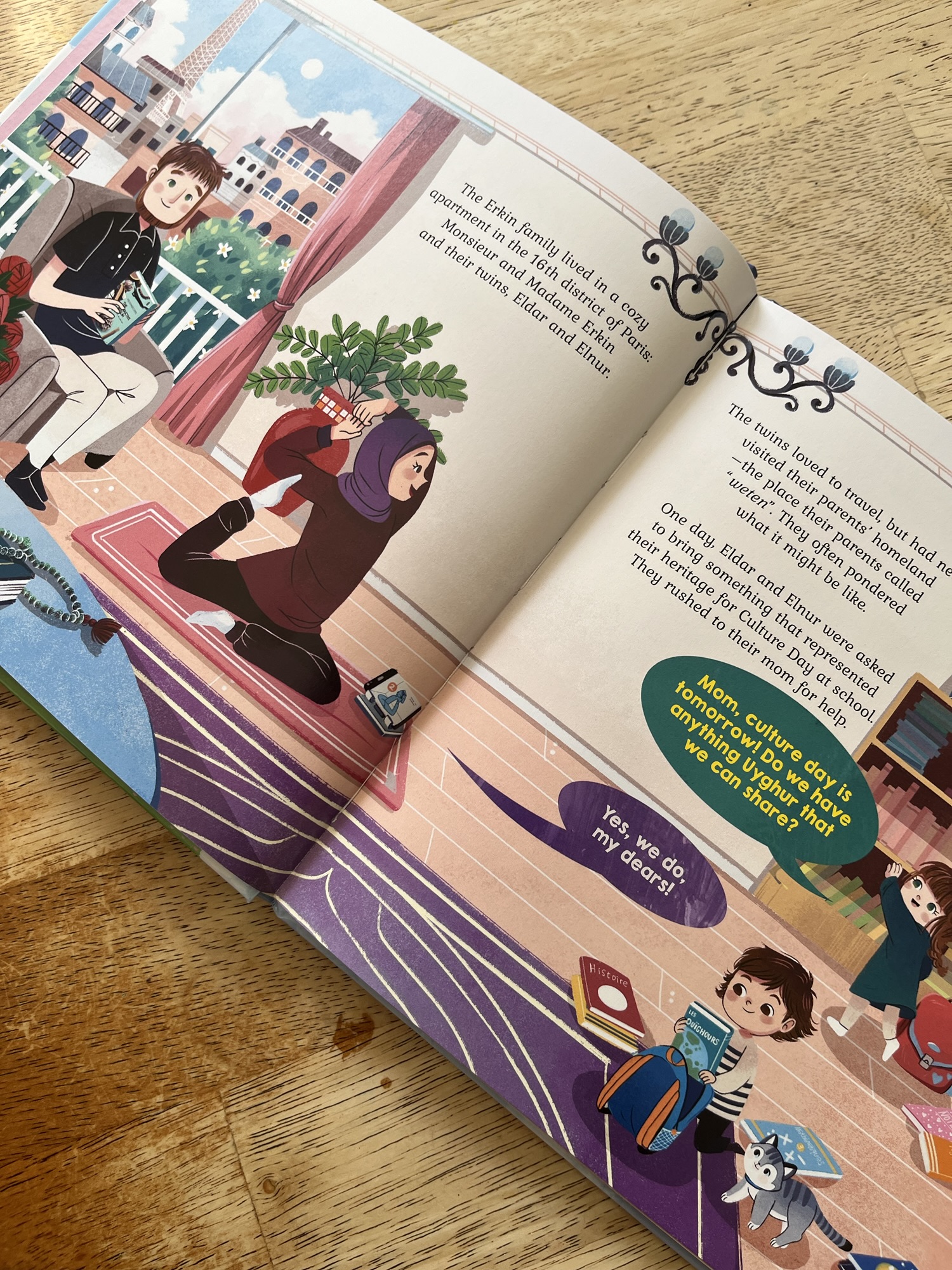
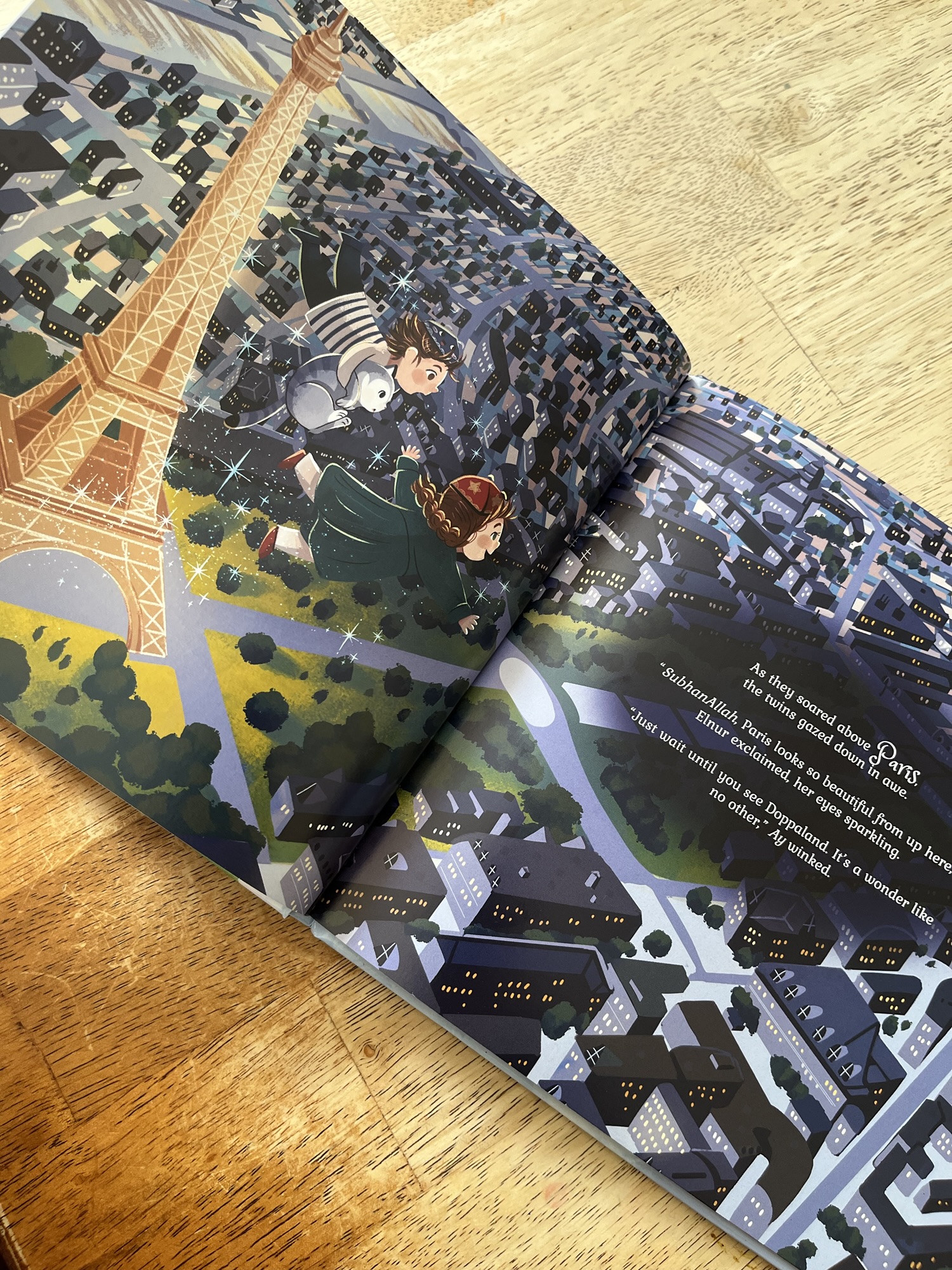
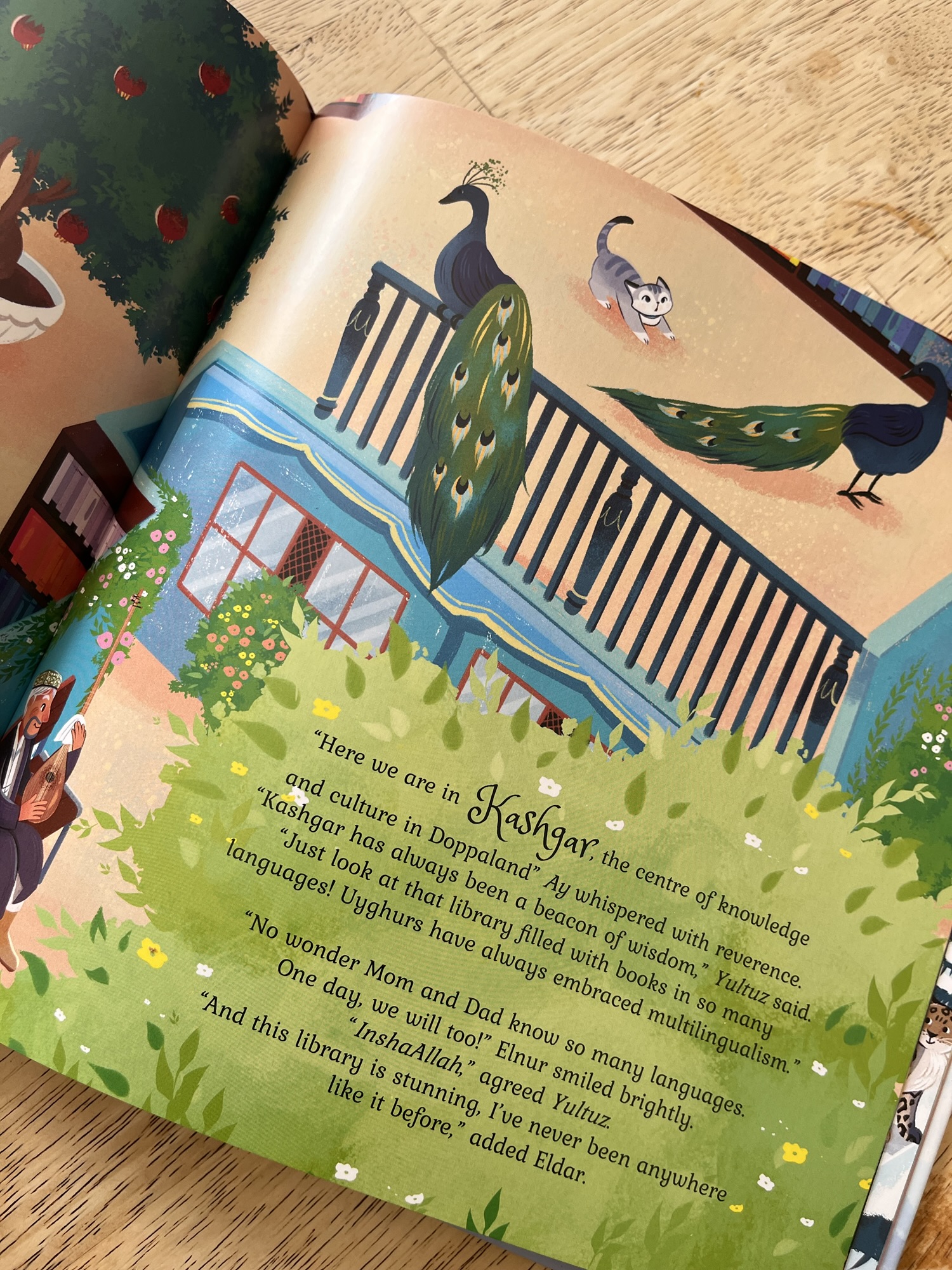
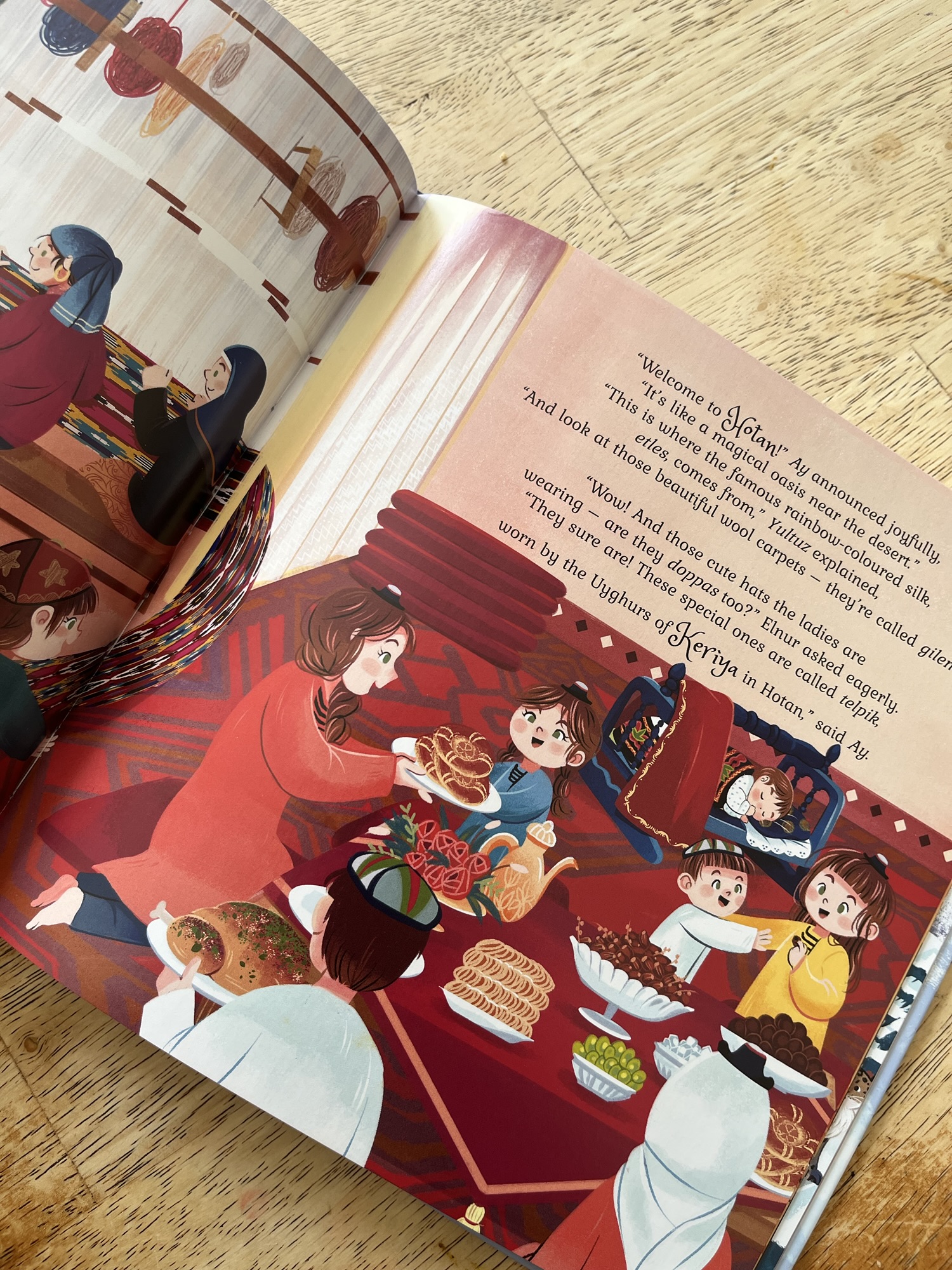
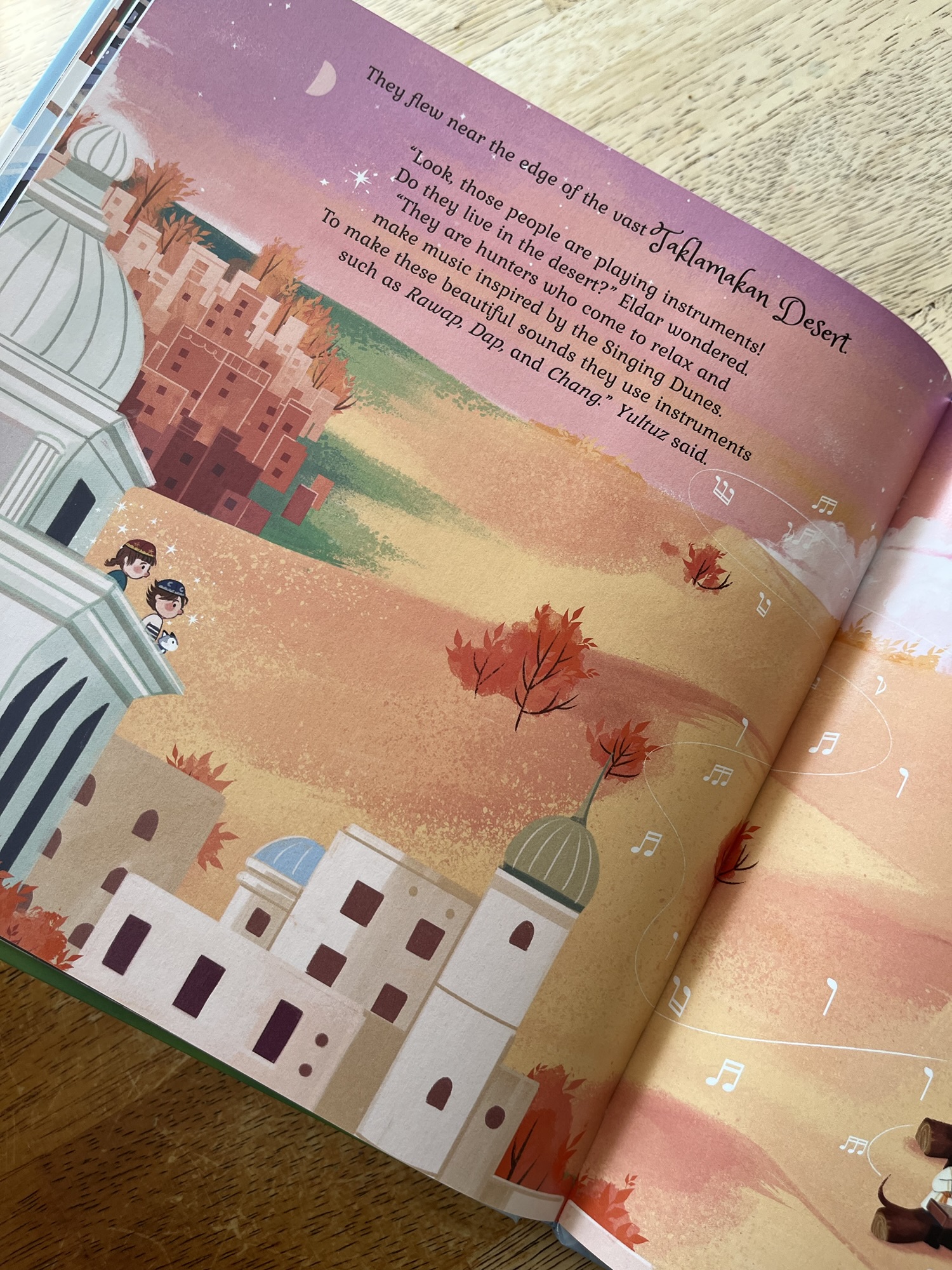
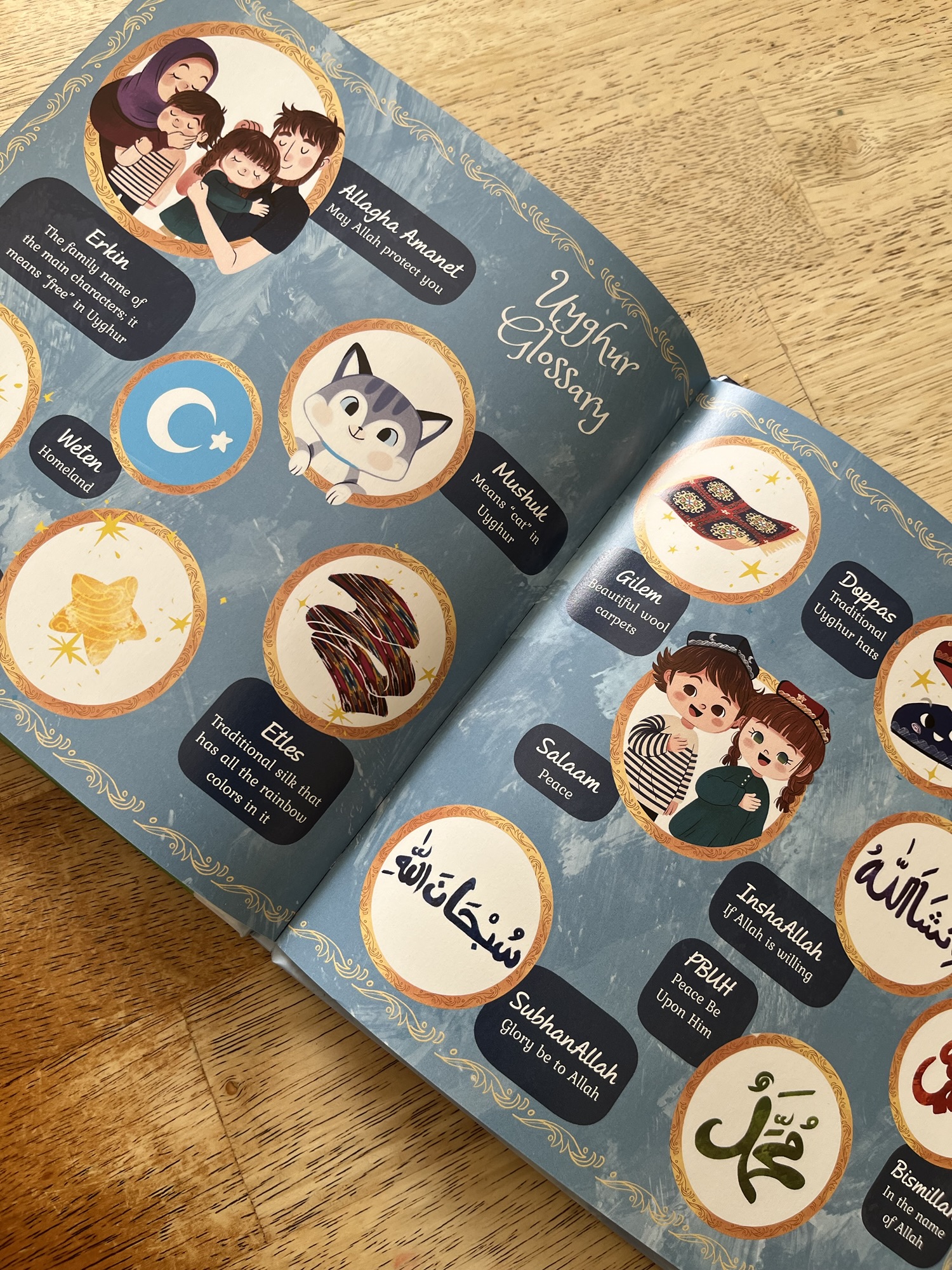
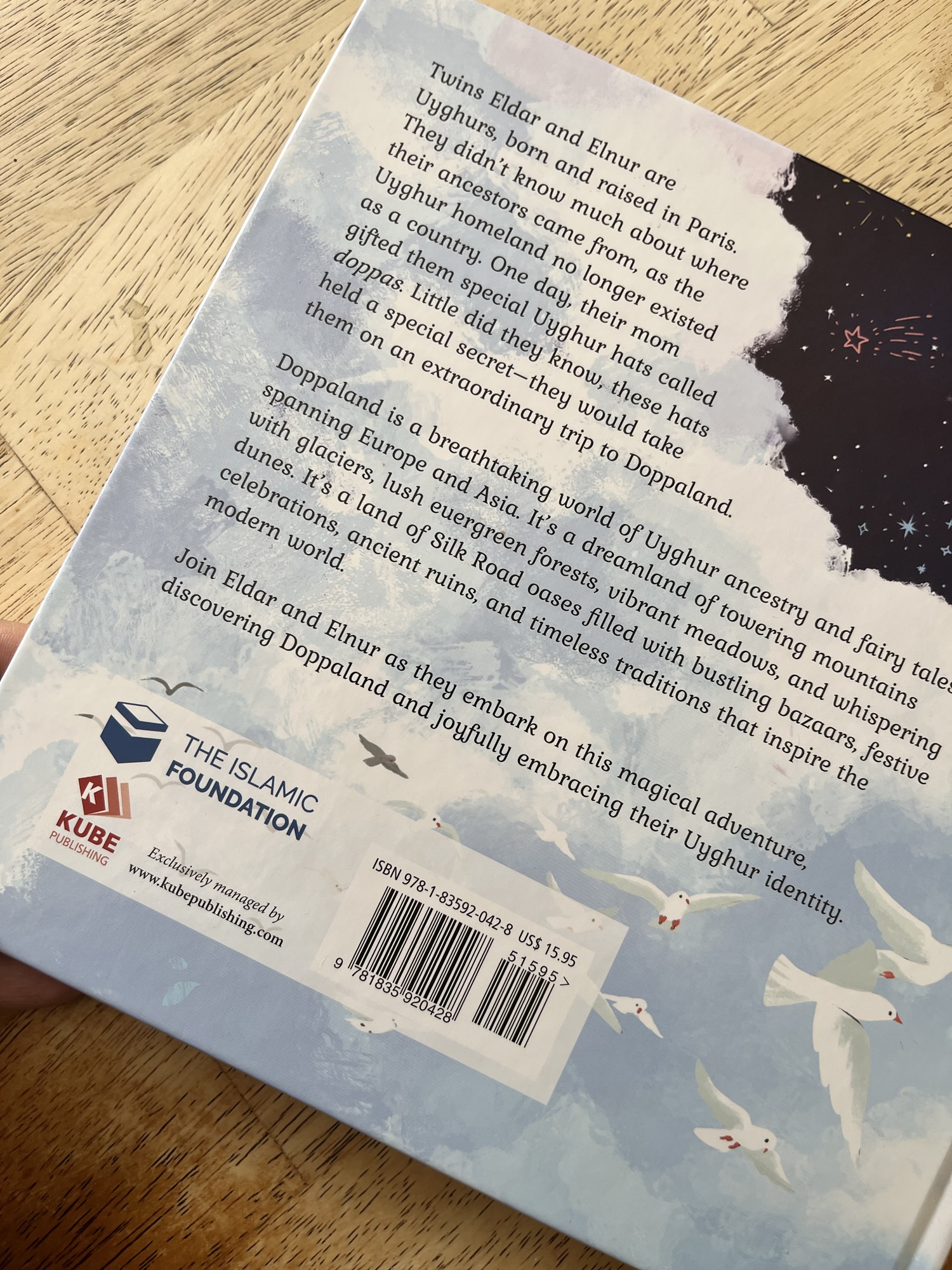
This 42 page book follows a tried and true method of kids being swept away by some magical object to a distant land to have an adventure and share with the reader what they learn. In this case it is twins Eldar and Elnur being taken from their apartment in Paris to their parents’ Ugghur homeland when they put on their doppas, Ugghur hats, that in this book have magically come to life in the night. The doppas transport the children to the Silk Road to show them and tell them about the people and traditions in Hotan, the Taklamakan Desert, Kashgar, Ghulja, the Ili River, Turpan, and the Altai Mountains. The characters are Muslim and Islam is present throughout the pages. The literary elements are fairly basic, but as far as I know this is the first and only OWN voice Ugghur picture book, and Alhumdulillah it exists. The book provides an easy way to introduce some of the culture, geography, language, and traditions to early elementary aged children. The illustrations are engaging and equally informative, and I appreciate the glossary in the back. I just wish there was a map and some information about the persecution of the community to further highlight why familiarity and support of our Muslim brothers and sisters in Northwest China is so important.

When culture day approaches the twins ask their parent’s for something from their weten to share, and mom gifts them doppas. The kids make duas that they can one day go to their parents’ homeland and see what it looks like. Awoken by a soft noise in the night, the twins, and their cat, find the doppas glowing, and talking, and ready to take them to Doppaland.

The trio, Mushuk goes too, say Bismillah and are off. They fly over Paris, and discuss how they have been mistaken for Japanese as their Turkic ethnicity is diverse and rich.  In Hotan, an oasis near the desert, they see weavers wearing little doppas called telpik.

When they reach the Taklamakan Desert they hear music from the rawap, dap, and chang.  They see hunters living the sunnahs of horse back riding and staying strong to “defend their land if needed.”

In “Kashgar, the centre of knowledge,” they spend time at the library and marvel at all the languages the Ugghurs speak.

Their adventures continue as they learn how in Ghulja they greet with salaam by placing their hand on their heart, and enjoy the fruit in Turpan and the families picking grapes together.

After seeing a snow leopard in the Altai Mountains, they return home wondering if it was all a dream, but eager to share their knowledge with their classmates on Culture Day.

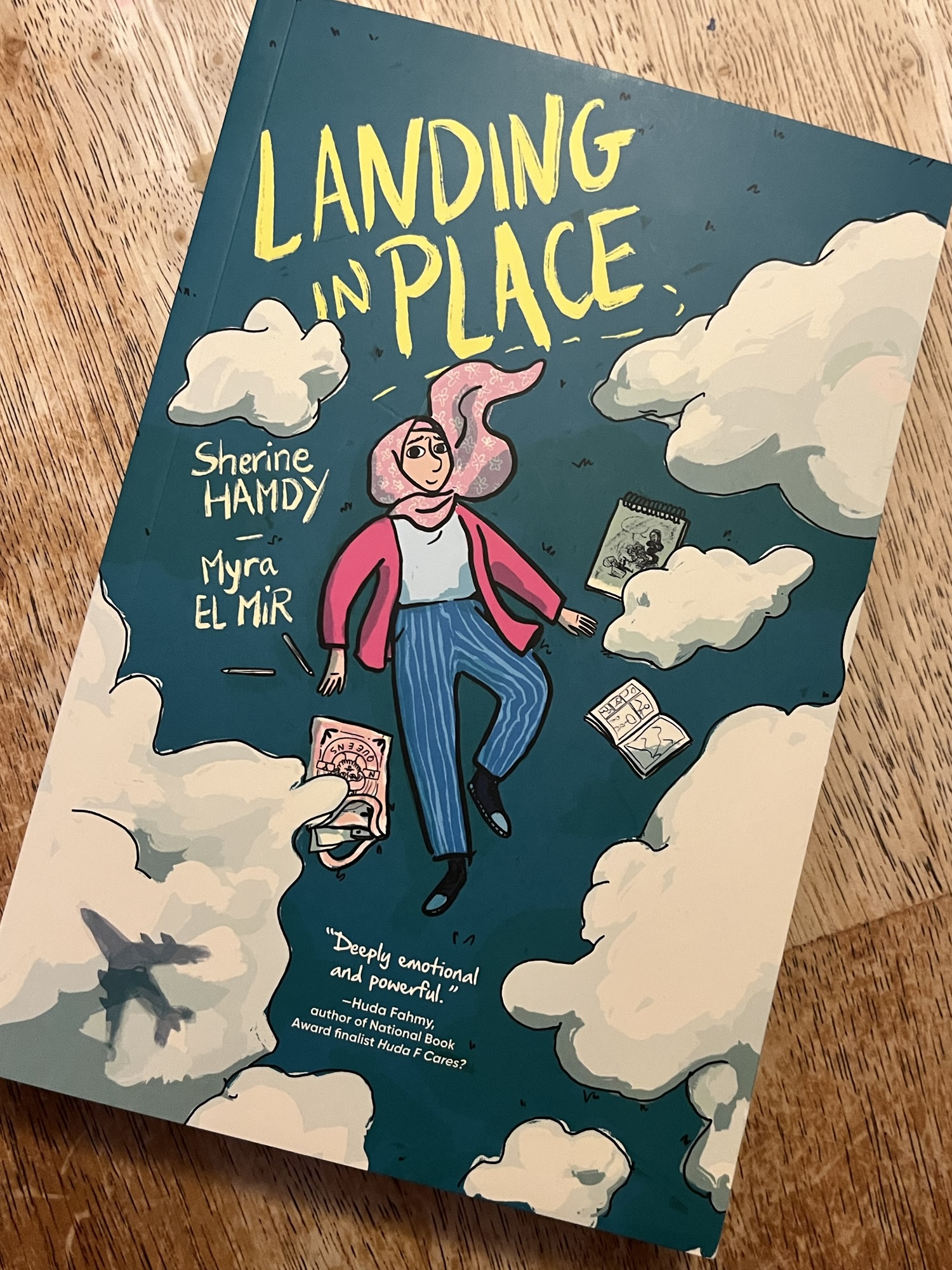
Landing in Place by Sherine Hamdy illustrated by Myra El Mir

Standard
Landing in Place by Sherine Hamdy illustrated by Myra El Mir

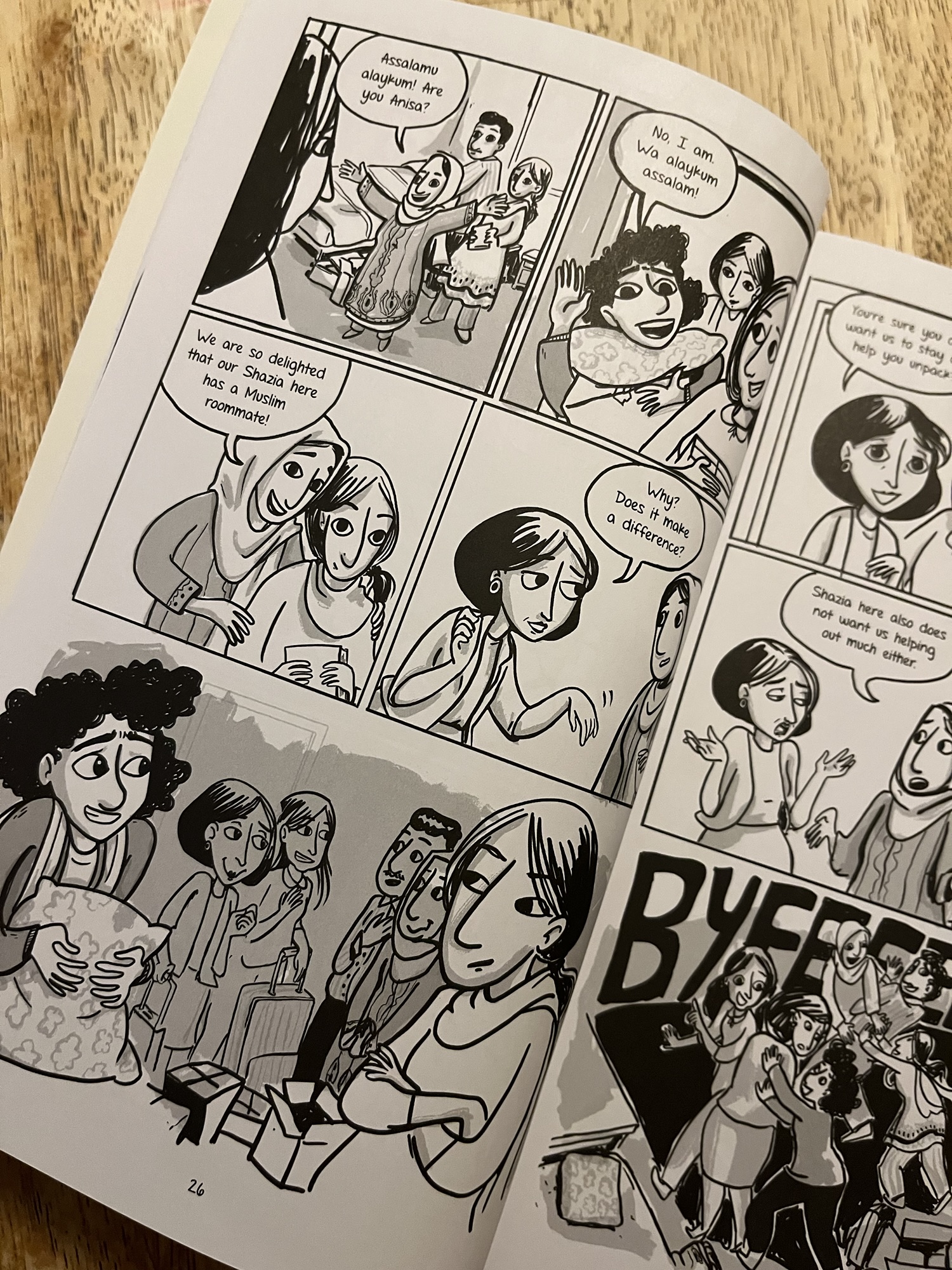
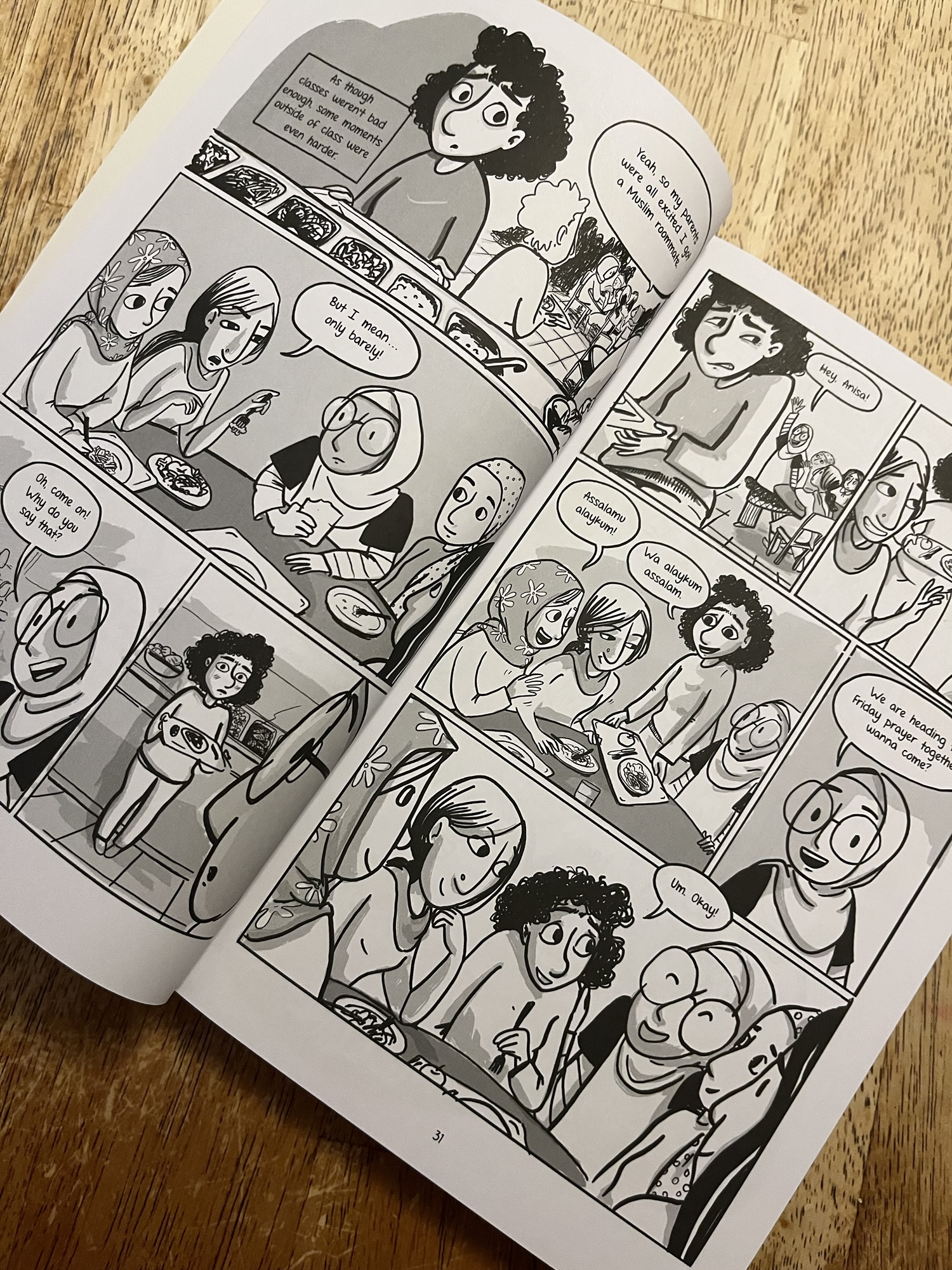
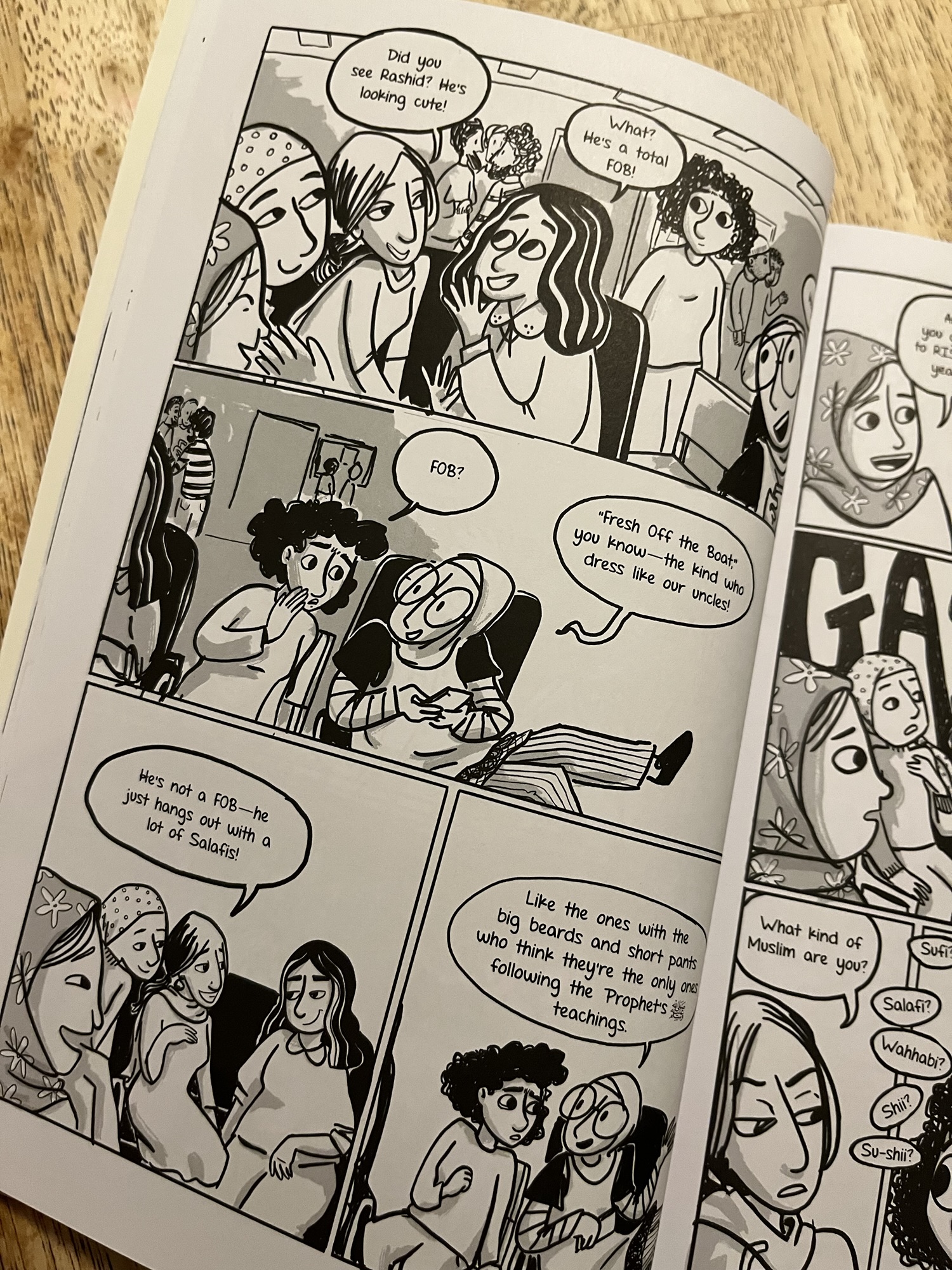
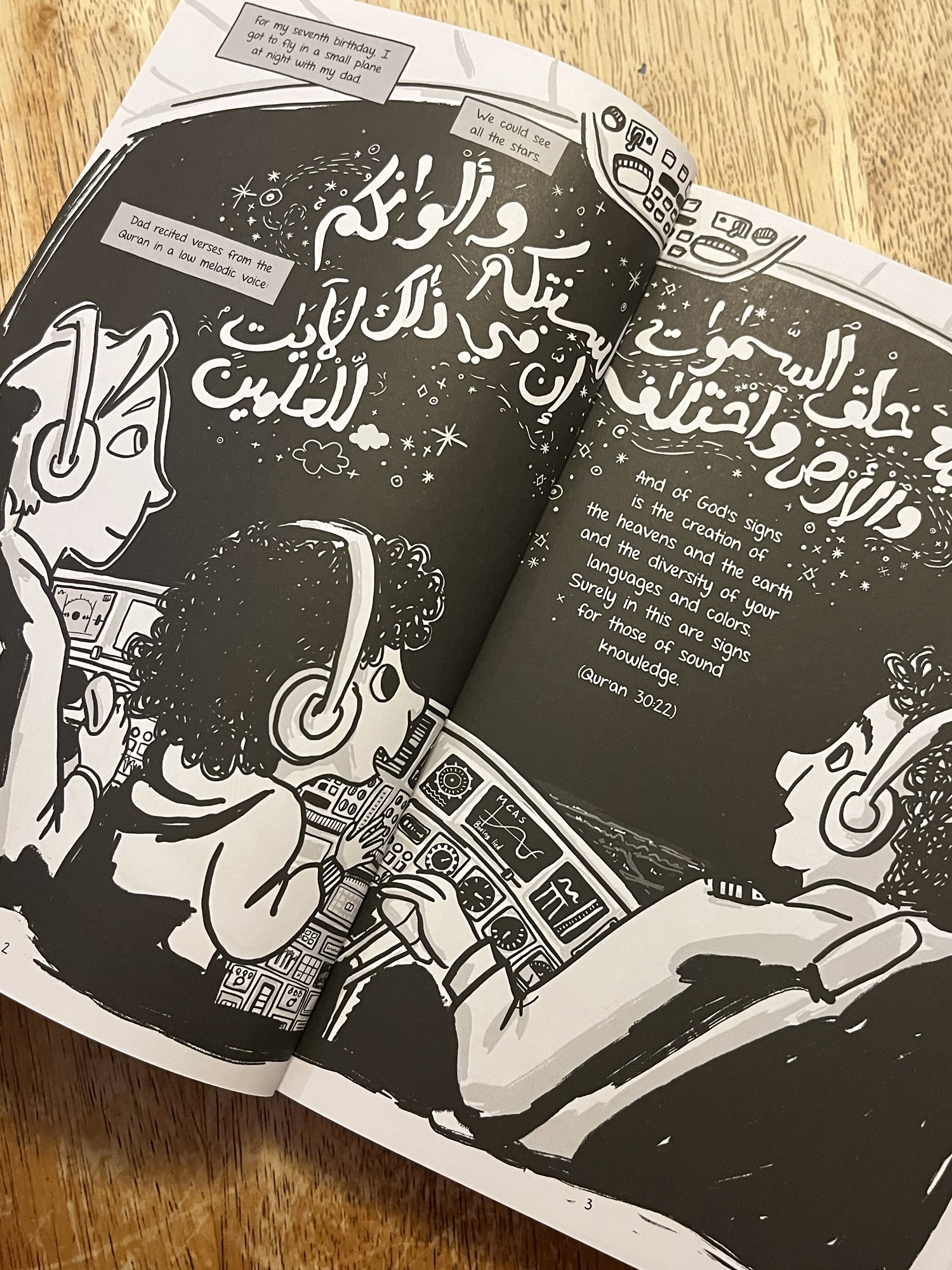
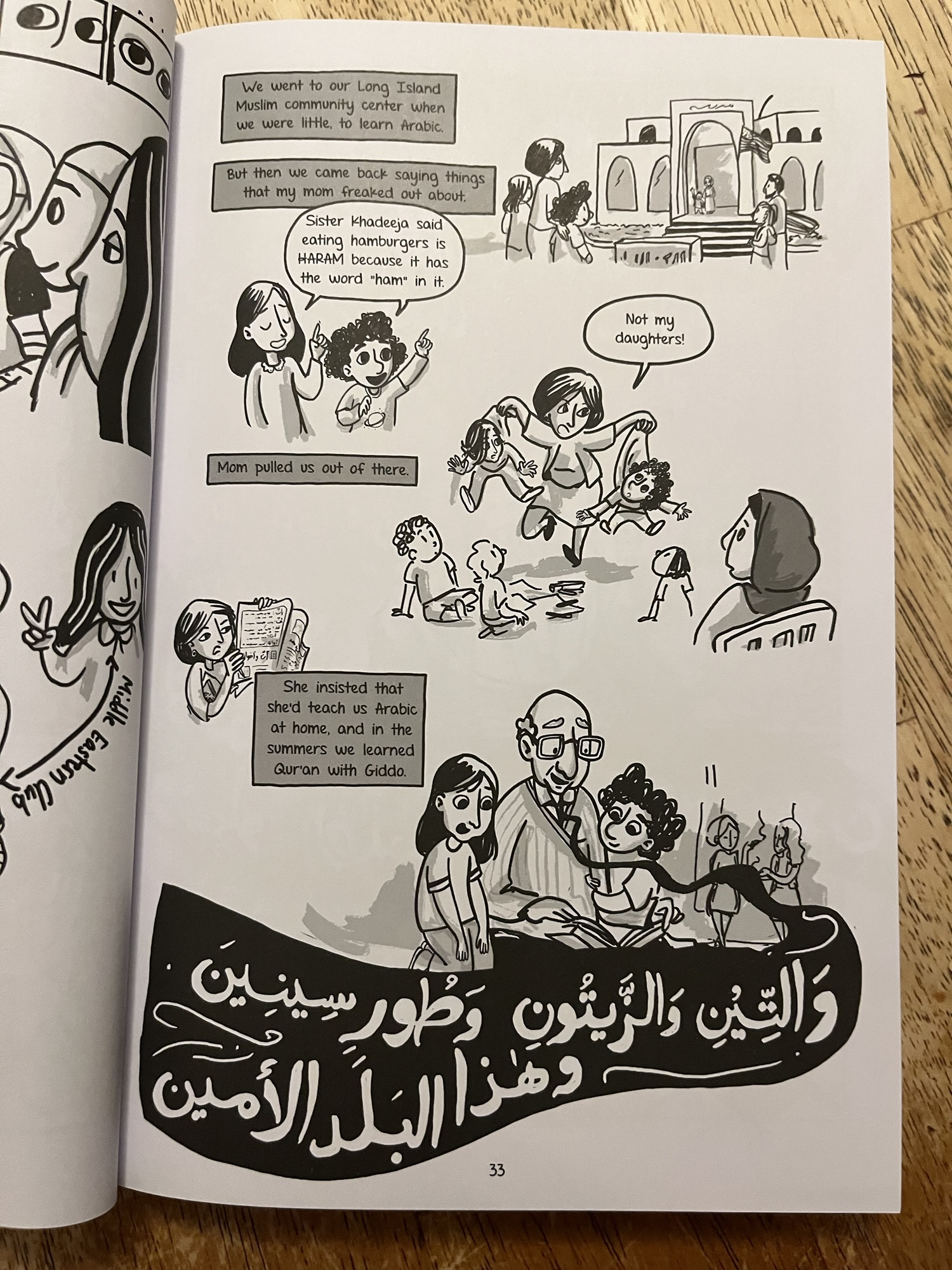
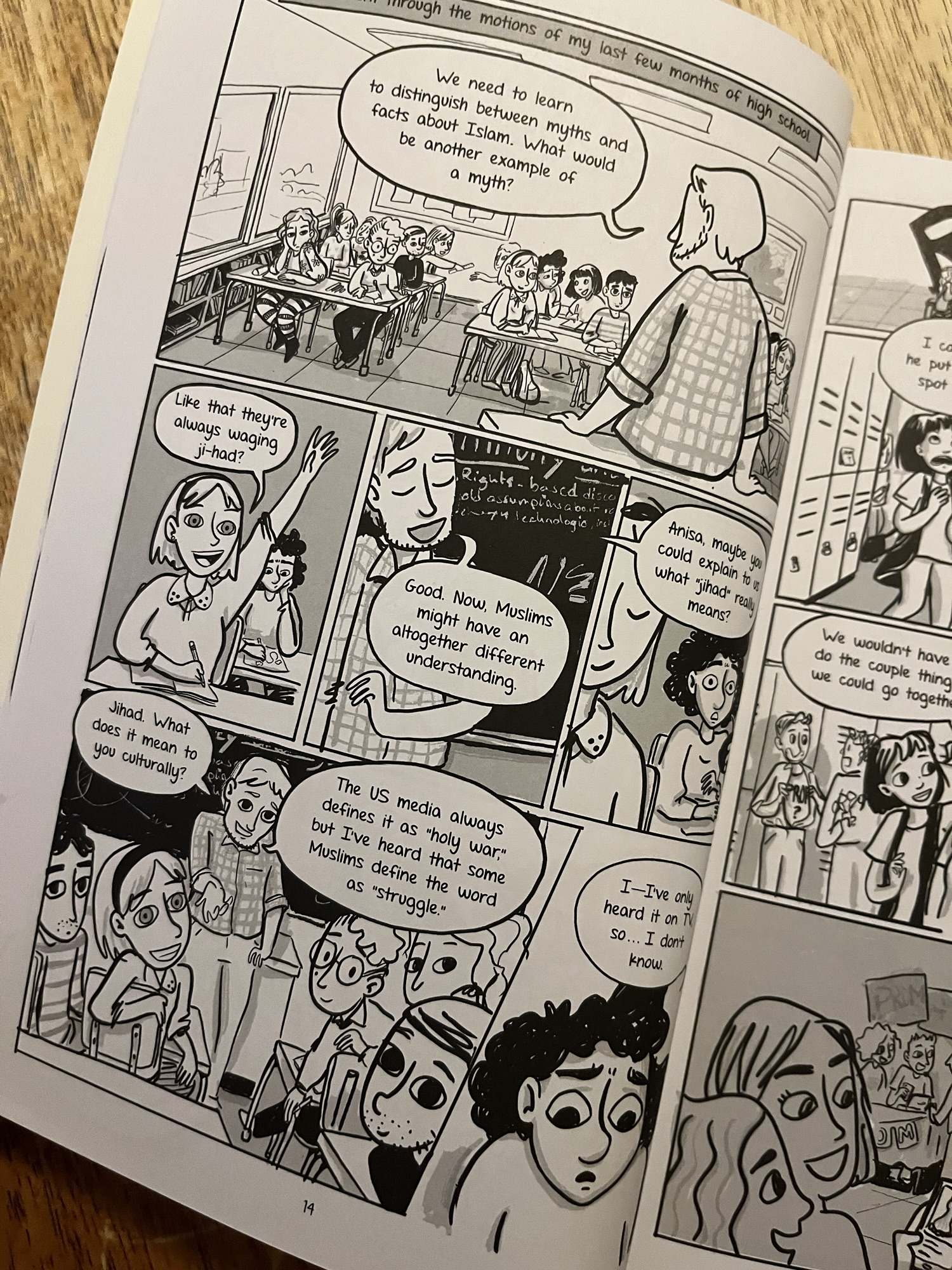
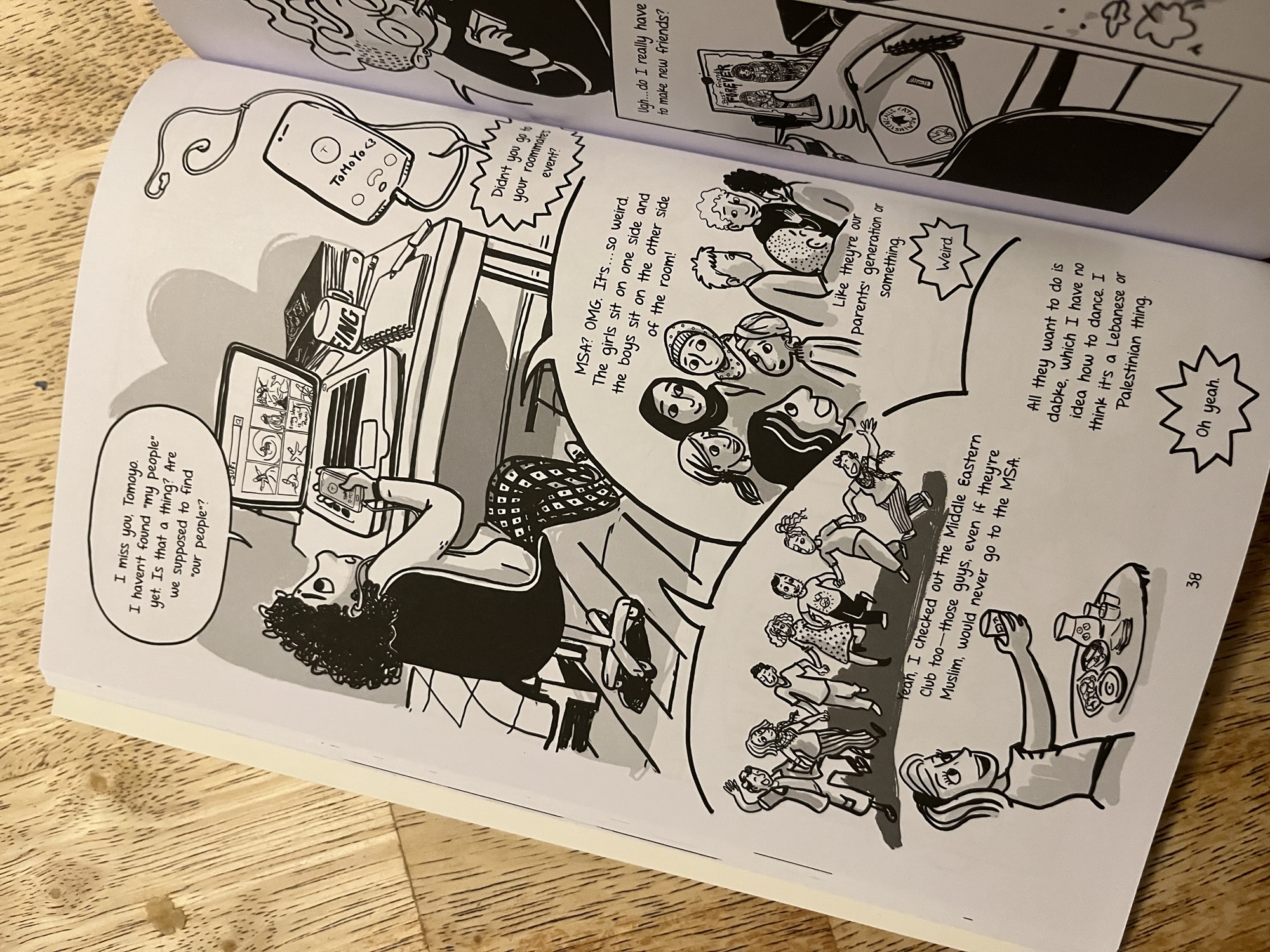
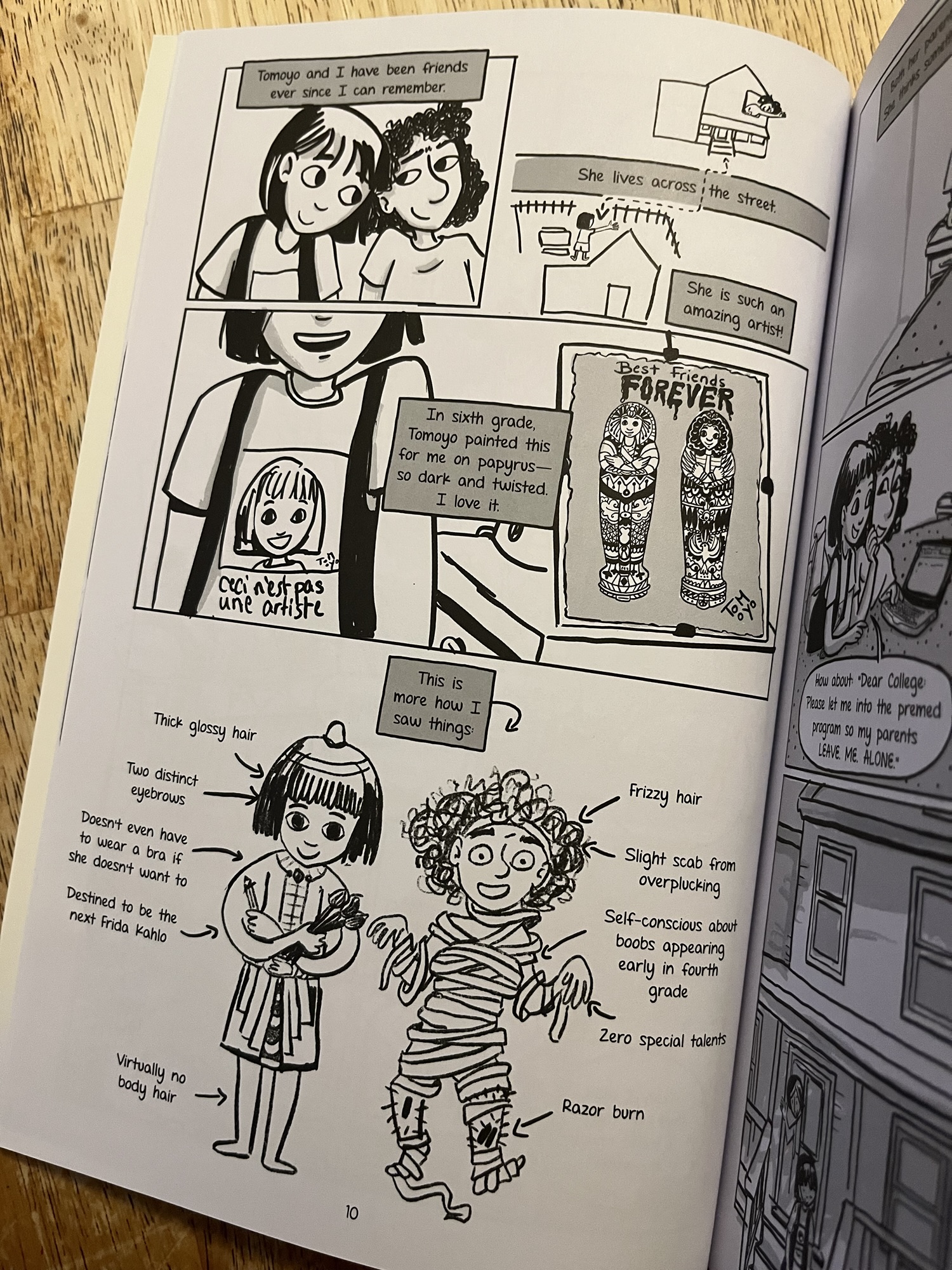
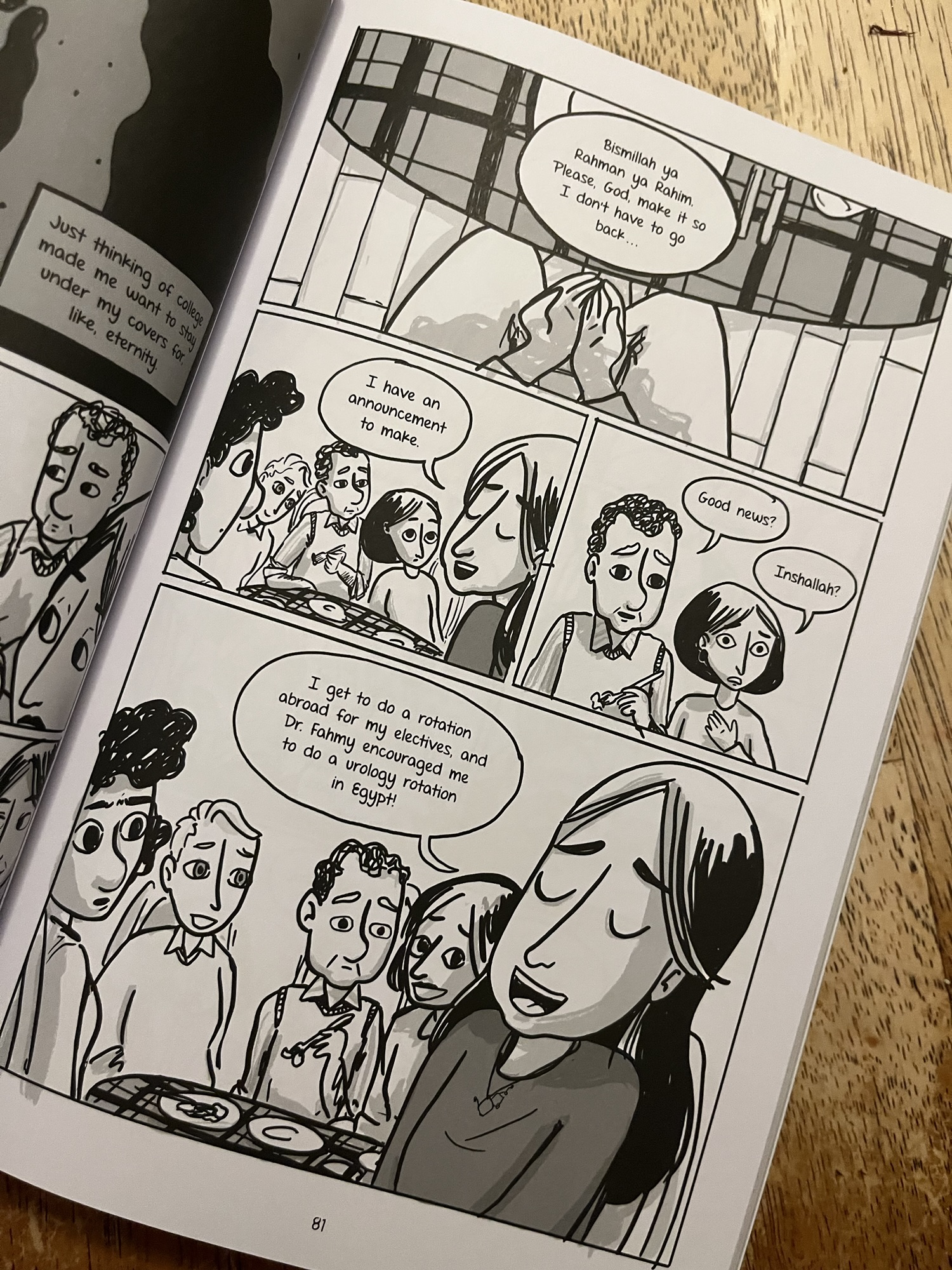
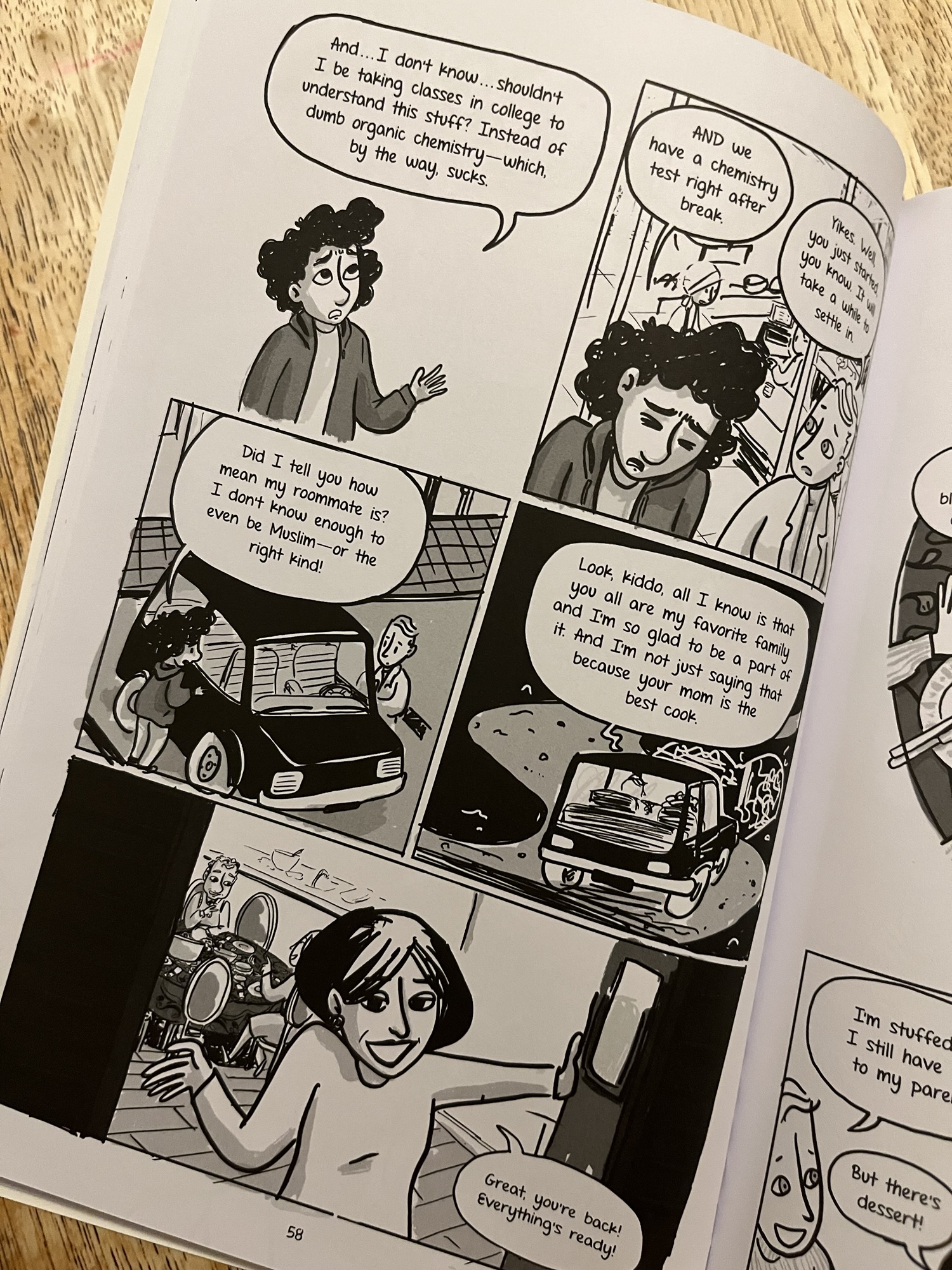
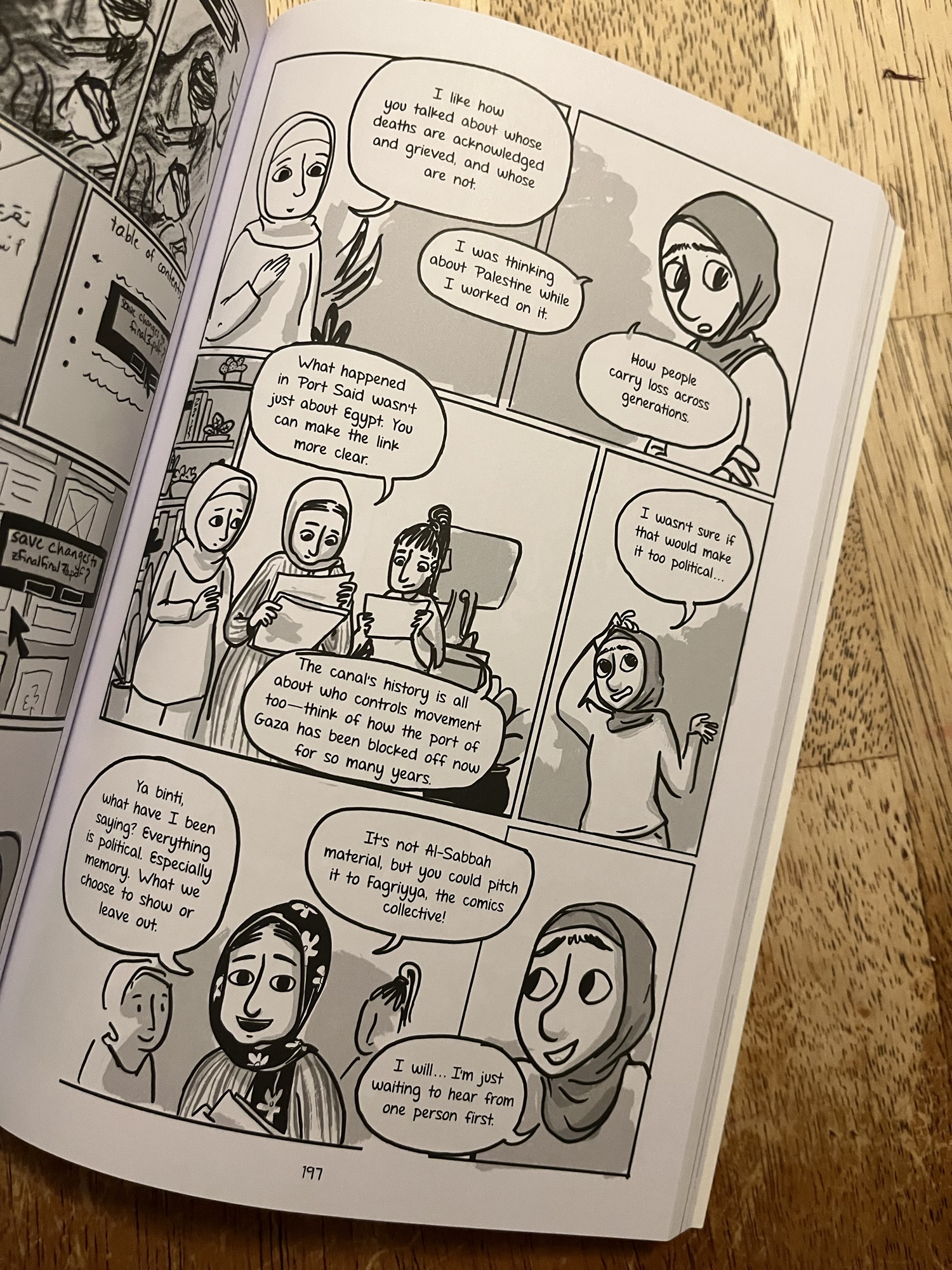
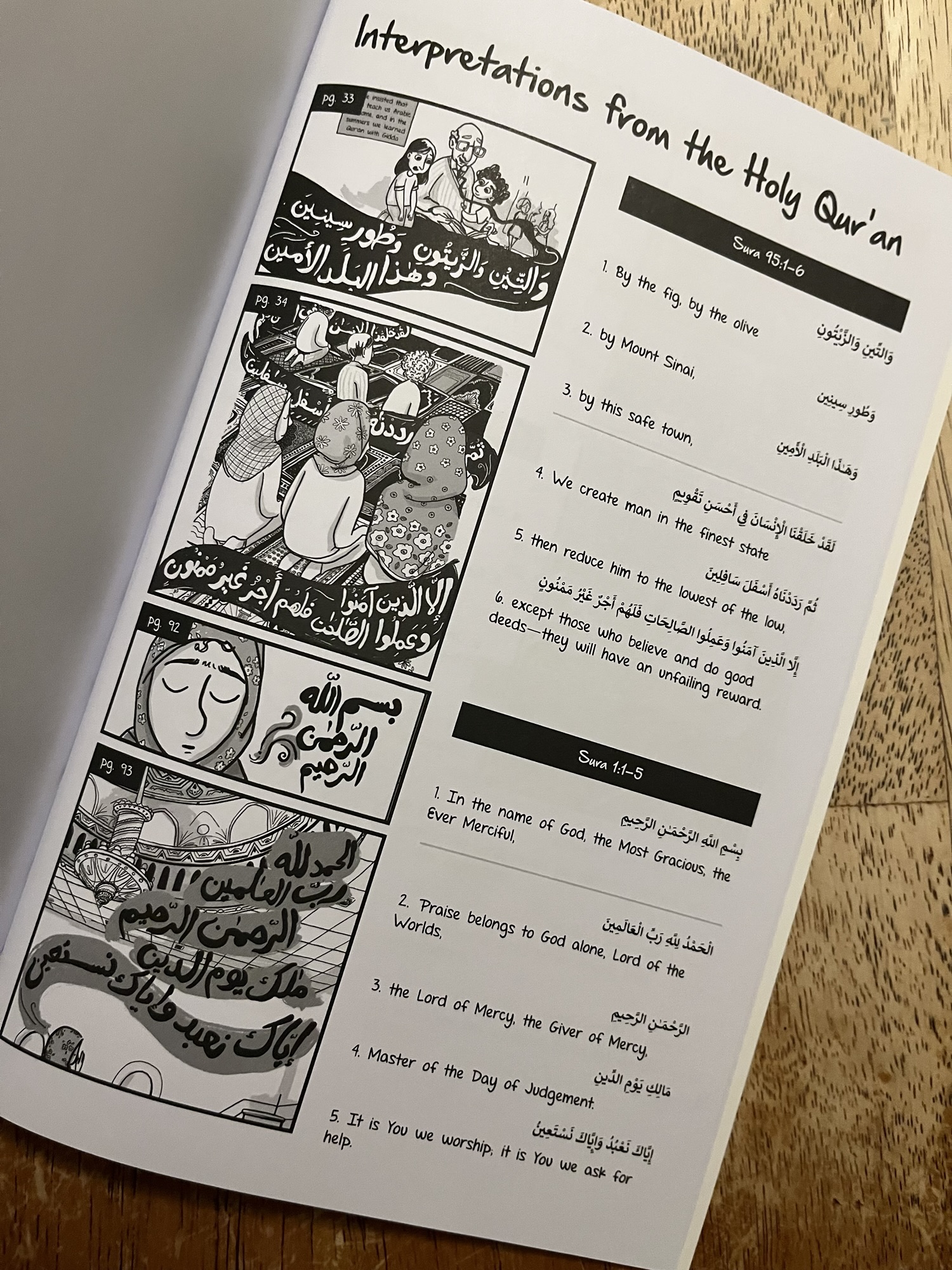
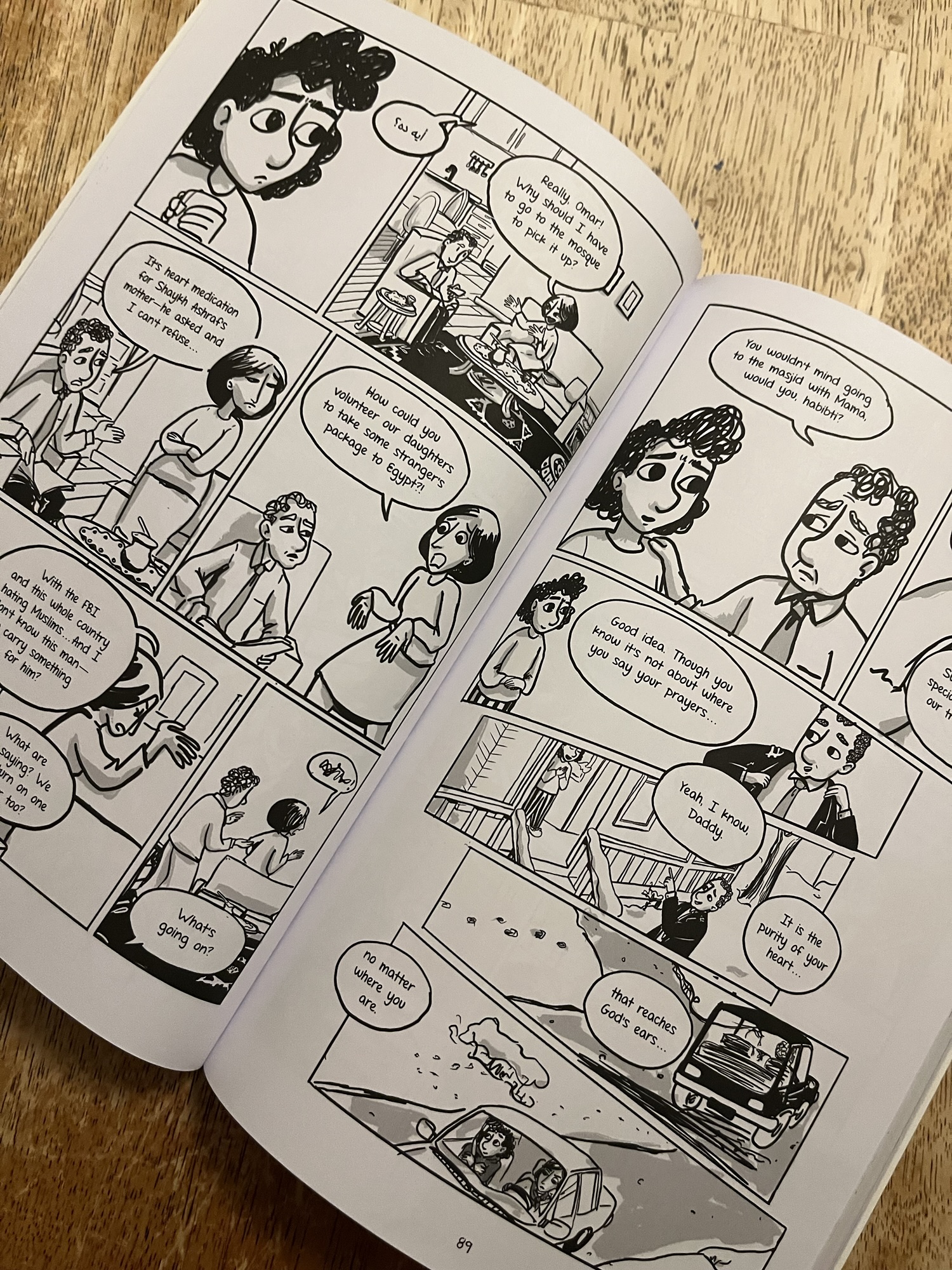
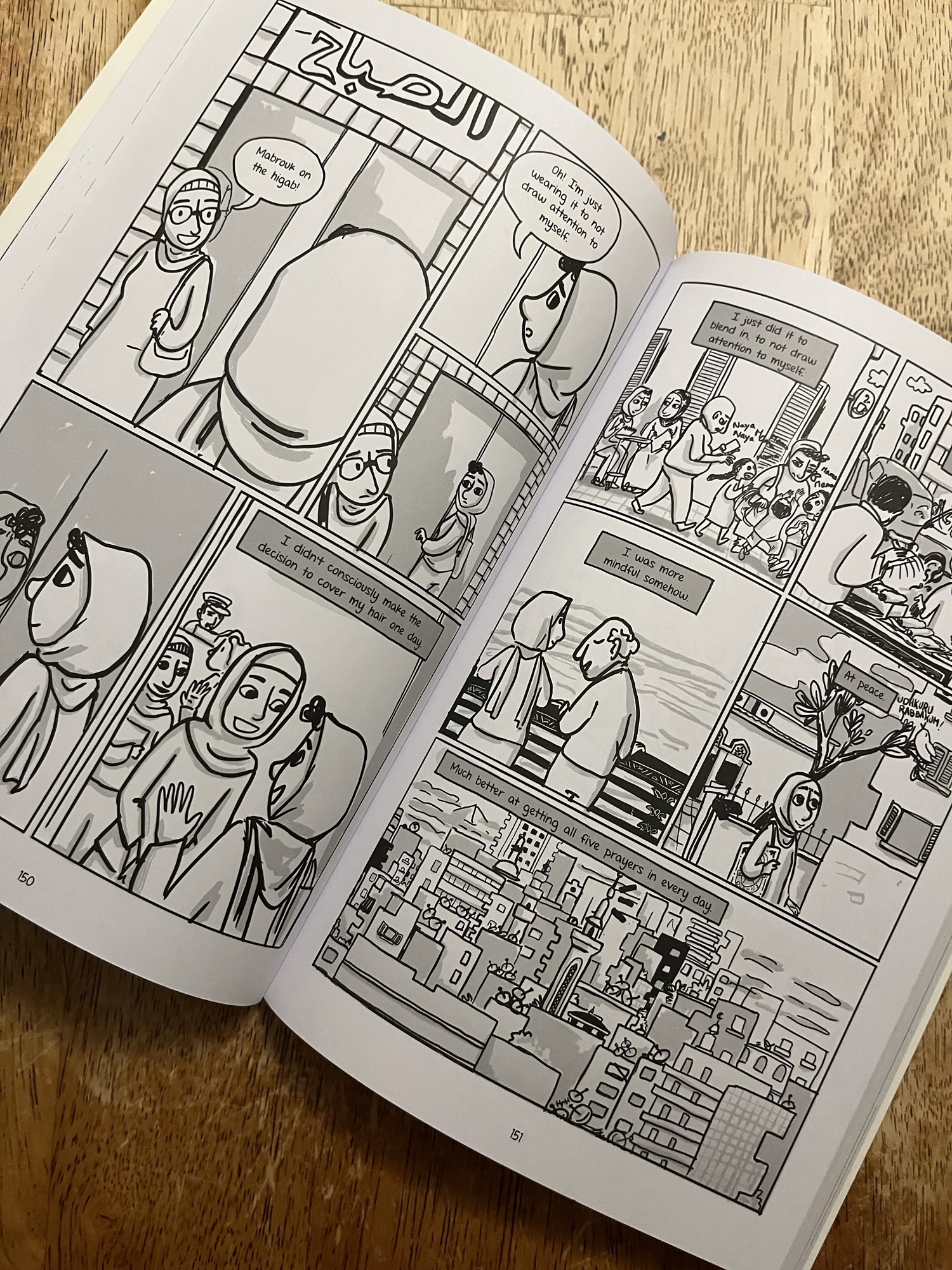
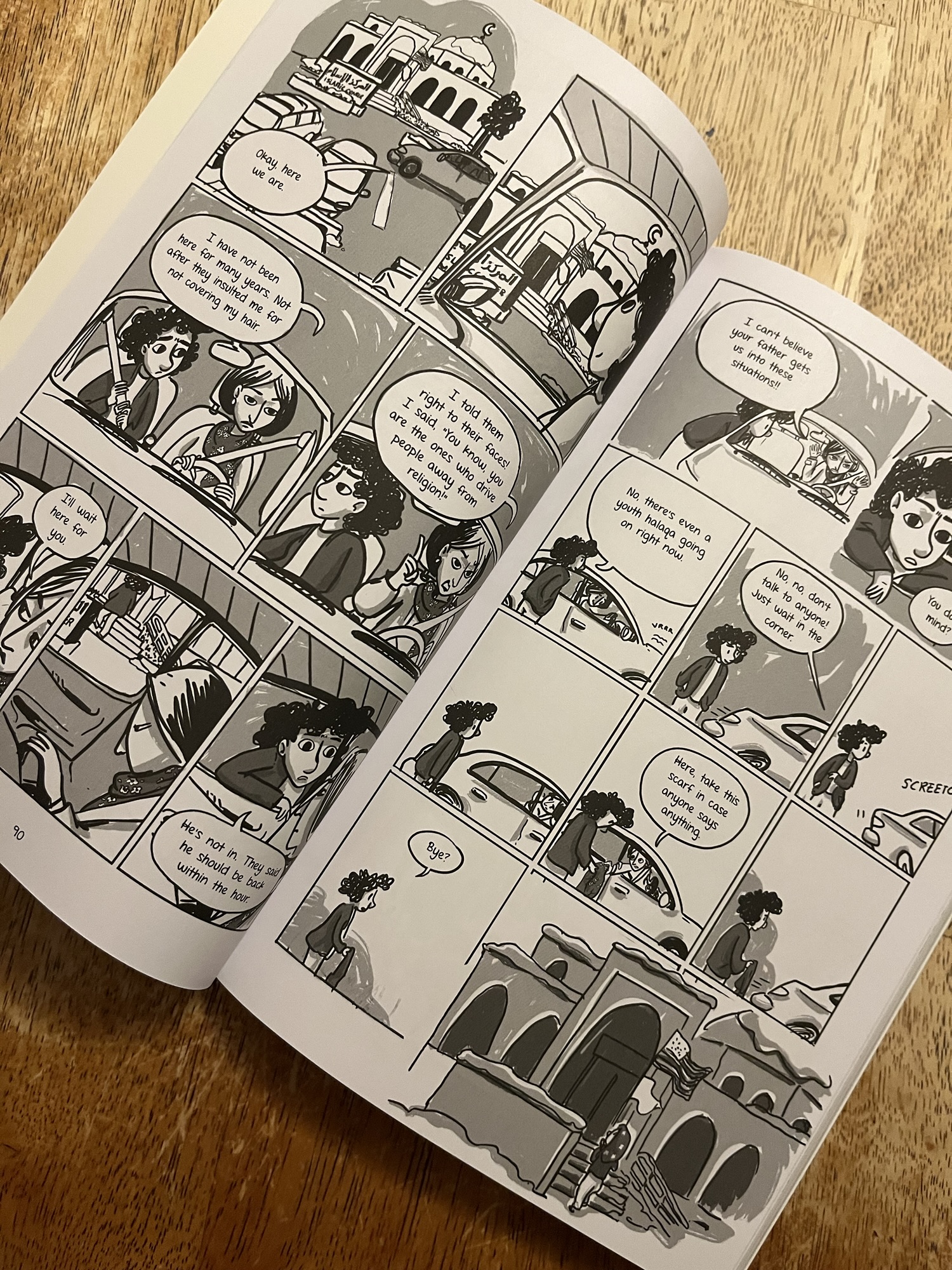
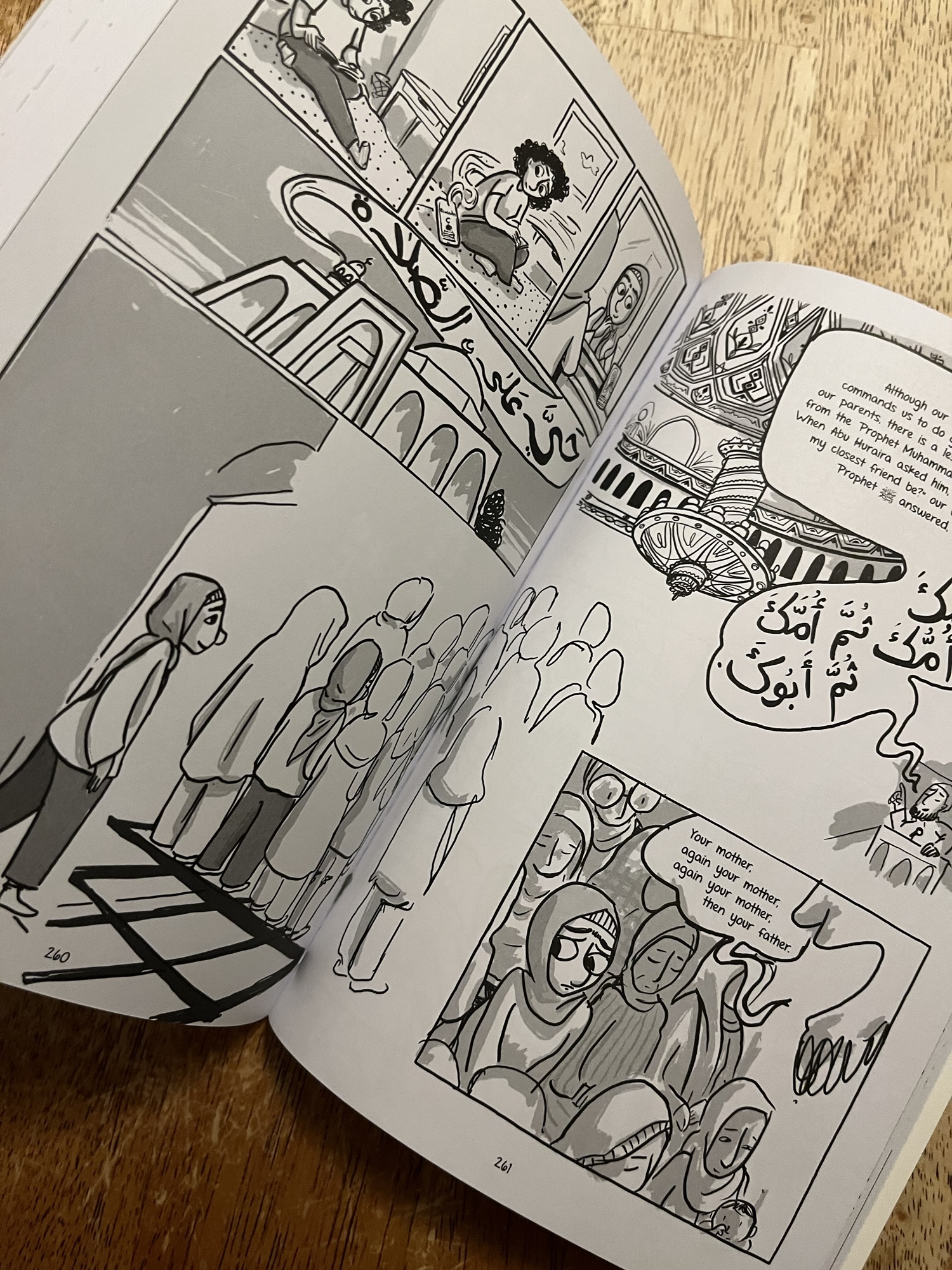
I think first and foremost I want to stress that this is a mature YA read. The majority of the book takes place after the protagonist has graduated high school, it involves a toxic mother who smokes, politics, romantic relationships, generational trauma, death, commentary on Islamic practices, relationships with opposite genders including when they are LGBTQ+, lying, and some profanity.  YA is classified as 12 and up, which given the graphic novel format, and the plot of her coming of age, I entered the book viewing it from an Islamic school librarian lens of handing or shelving the book for middle school and up, and thus it is not appropriate in my opinion. If you read it from a more adult lens, please share your impressions, as the book has a TON of Islam, and I would love to discuss.  It has Quranic ayats, it has Hadith, it has a girl fighting her family to wear hijab, it has incredible points, unfortunately  I just couldn’t quite support how the points were connected. If the book were a memoir, or I met someone and this was their lived experience, I wouldn’t find it concerning, it would be one person’s journey and them simply doing the best they can, Allahualam.  BUT, somehow the tone seems to extend beyond just Anisa living her life and growing as a result, and reads more of the author opining that this is how Islam is or this is how Muslims should or should do things, or view things, or not feel constrained by things, and by its end I just couldn’t support the character’s choices and the justifying framing, perhaps because it is fiction.

SYNOPSIS:

Because I want to spend more time on the Islam and why I struggled with how it was connected, I’m simply going to copy and paste the publisher provided summary of the book:

A poignant coming-of-age graphic novel about an Egyptian American girl grappling with college, her family, and the political realities of her wider world.

Anisa is following in her sister Reem’s footsteps: She’s a freshman at her sister’s alma mater, she’s on the same premed track, and she’s inherited Reem’s old hotpot, mini-fridge, and textbooks. Even though Anisa would prefer to study art, her parents discount that as a valid career choice. The path laid out before her starts to crumble as Anisa feels she doesn’t belong—either in her organic chemistry class or among the other Muslim students on campus.

When Anisa fails her first semester, she begs her parents to let her take time off to visit Cairo and stay with her beloved grandfather. Finally free to have her own experiences, Anisa begins a journey of self-discovery and, as she bumps up against familial, societal, and religious expectations, she starts to develop her own artistic voice. When Anisa returns to the United States, many of these expectations shift, but she learns to draw on the love of friends and family—including those she’s often at odds with—in order to stay true to herself.


WHY I LIKE IT:
I like that the book feels very real, that the character arc and growth, challenges and setbacks, struggles and character’s voice, radiate authenticity and seeks to shed light on what not only shapes us and our view of the world, but understanding the politics, culture, religious, and lived experiences of what our parents also have been shaped by in a manner that is neither overly naive or harsh.

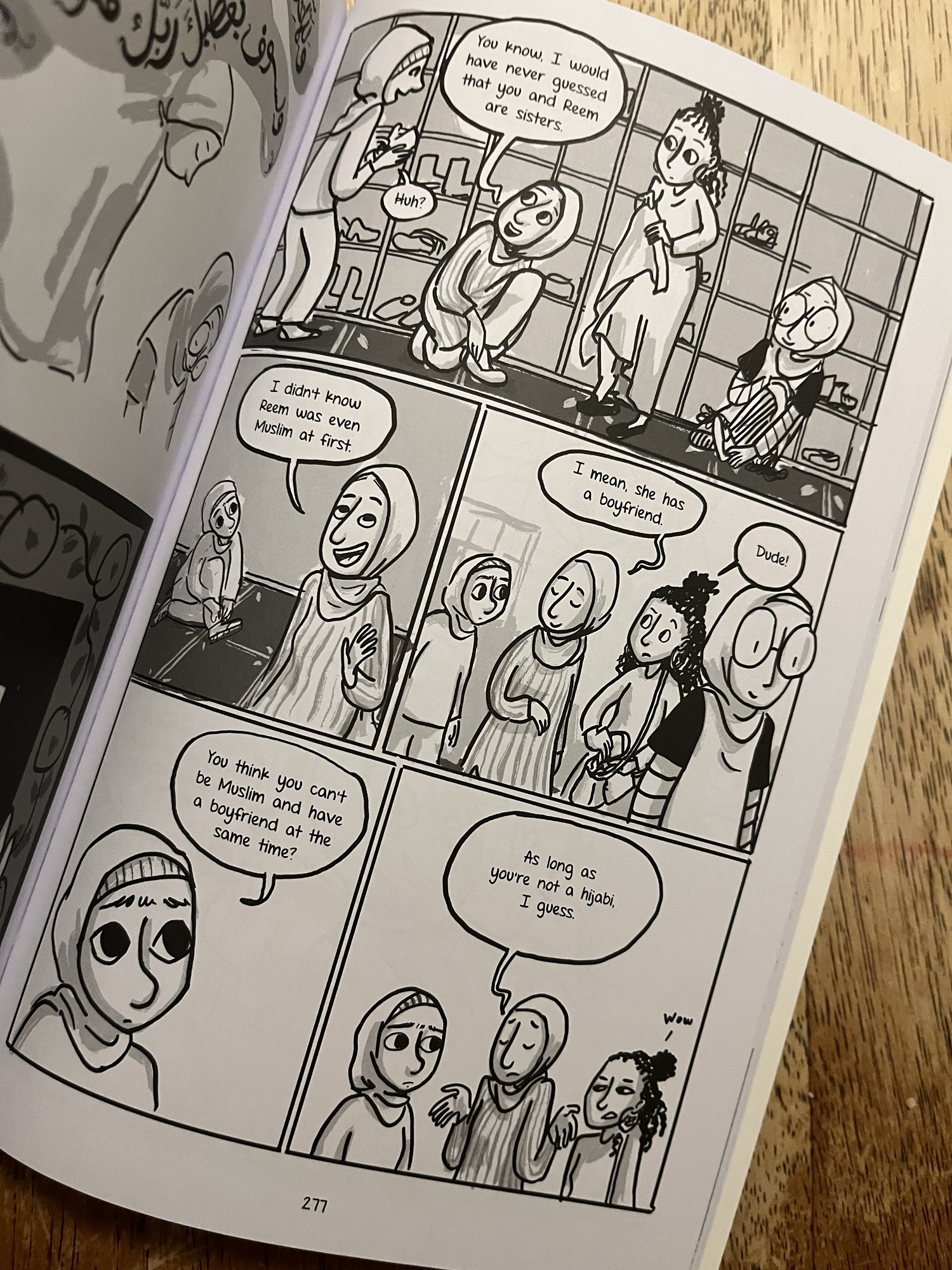
I appreciated the political commentary, the internal reflections of faith and her closeness with her grandfather in Egypt which often centers Islam. And as a work of fiction I understand in the broad sense that the book does not want to get didactic in its sharing of the deen, but it seems to want to have it both ways.  It shares the Quranic Arabic in the pages with meaning of the translation in the backmatter, quotes uncited hadith and references Islamic customs, yet I feel by staying gray in how the character interpreted Islamic teachings and failing to commit to her showing her own rationale for the choices and understanding driving those choices, the book leaves holes in the plot and a lot of questions.  For example, why is kissing her Sikh boyfriend considered a “mistake,” only because she wears hijab? She commits to him by getting her mom and Muslim friends on board with their relationship with the book sharing that different opinions are good according to Prophet Muhammad (saw).  She starts to wear hijab and says she is doing it for the right reasons, but those reasons are never shared.  She develops a relationship with Allah swt which is beautiful, but what is the messaging for the reader, with her justifying her actions in light of that relationship?

Yes, I realize that that makes me the very hypocrite the characters push back against in the book: not being able to be human and error, and struggle, and inshaAllah come back to Allah, swt, I know that, but I also know that our  youth are impressionable and we want to inspire them, not give them a “pass” through a fictional story to do haram because Allah swt is forgiving.  I also know that a 13 year old reading this and a 19 year old reading this will view it very differently  (see opening paragraph why my mindset going in was a disservice that I struggled to overcome, and why I mentioned that this is a mature read).  I also know that life, real life, is never linear and clear, and yeah people fall in love with people that are not Muslim, I’m the daughter of a convert, and my parents met in college, I get the hypocrisy, I own it, I really do.

I can’t reiterate enough how many of the points I loved about her finding herself, understanding and connecting to her deen and extended family, laughing in the relatability the book has in its commentary on Islamophobia, expectations, politics, but none-the-less, I ultimately cannot support the normalized conclusions and justifications of many of the threads.

FLAGS:
See opening paragraph

TOOLS FOR LEADING THE DISCUSSION:
Not appropriate for Islamic school book clubs, I can see perhaps college or University MSAs reading it for fun and then offering up their thoughts as being an incredible pulse on how our “New Adult” Muslims view the themes and topics the book tackles, but I take handing a book to a person as an amanah, and I don’t think I could hand this to a middle or high school student.

Hafsa’s Way by Aisha Saeed

Standard
Hafsa’s Way by Aisha Saeed

It definitely helped going in to this 224 page middle grade novel knowing that it would not have any Islam, and would most likely be a cultural read at best, based on the previous two companion books. By managing my expectations, I wasn’t overly bothered that there were only two Islamic references: fajr, as a time denoter, and the mosque, as a location marker. Sadly no salaams, religious expressions as a storm ravages a city, or duas made even when a supporting characters mentions that his dad says they should pray, and Hafsa dismisses it as not being enough.  Overall, though the story flows well, the protagonist is likeable enough, and the interweaving of medicine, climate change, determination, and speaking up for what you want, makes it a feel good story from start to finish. It does manage to share some science information without getting didactic or bogged down, but I do wish, that a bit more culture was shared. It feels like it is watered down, and more often than not felt like the story could take place anywhere.  The stresses and troubles and commentary are more suited for younger MG in my opinion with everything wrapping up neatly and easily.  The book is a quick read, and I appreciated that the backmatter highlights that the elephant storyline was inspired by a real event and offers suggestions on how to learn more.

SYNOPSIS:

Hafsa is from a village outside of Lahore, and when she gets accepted into a summer camp, she has to convince her parents to let her go.  Her newly married sister, Shabnam, offers her a home to stay in and her husband Sohail helps with the fees, but it isn’t until grandma says she can go, does Hafsa’s father reluctantly give his permission.  Once in Lahore, Hafsa realizes her information is faulty and it isn’t a mini medical summer camp, to start her on her way to being a doctor, but rather a climate change program covering zoology, weather, conservation, and action.  She also quickly learns that her sister is busy helping her new mother-in-law with a hospital fundraising gala, and doesn’t have much time to spend with her.  Add in the camp kids teasing her for bonding with an elephant, a storm that floods and knocks out their power, and Hafsa trying to figure out why Shabnam has not started culinary school, and it is a busy four weeks for Hafsa, who is determined to make the most of it all.

WHY I LIKE IT:

I grew up in Utah visiting the zoo yearly as a child, and don’t recall thinking too much of it.  On a trip to Pakistan one summer that changed. I visited the Karachi Zoo, and now 30 or so years later, I am still bothered by the chain I saw on the elephant’s leg, the kids sneaking in to the enclosures, and the trash in the animals’ water sources.  This book brought it all back and mirrored my own sentiments in incredible accuracy, and thus deepened my connection to seeing Gulab, the elephant, getting attention.

The author does a good job with the pacing and bringing in different threads, but it would have been nice to add a little more depth. Showing Hafsa pushing to get her way, not just saying she got to ride a bicycle after pushing back on her father, talking about the wedding, sharing some of the cultural words, clothes, values, fleshing out the characters and their relationships, getting to know the classmates a bit more, seeing why this is a challenging and sought after summer program.

FLAGS:

Animal neglect

TOOLS FOR LEADING THE DISCUSSION:

I don’t know that I would teach this book, nor that there is much to discuss, but it will round out the series nicely (Amal UnboundOmar Rising) on the shelf and anyone that picks it up I think would enjoy the story contained within.

Hail Mariam by Huda Al Marashi

Standard
Hail Mariam by Huda Al Marashi

In 188 pages, this middle grade book packs a lot in: immigrant children expectations, the similarities and differences between Catholics and Muslims, Sunnis and Shias, culture and religion, all while sixth grader Mariam is starting a new school, a Catholic one- as a Muslim, having her first period start during church, and handling her sister’s health crisis.  Throw in Ramadan, Bibi coming to visit, family dynamics, friendships new and old, and a school Christmas play, and phew, just writing all that out seems exhaustive, yet somehow the book doesn’t get bogged down in the heaviness of it all.  It stays relatable, funny even, interesting.  The book’s short chapters, Mariam’s voice, and the author’s ability to make this Mariam’s story, not an expectation or explanation of how all Muslims, or Iraqis, or immigrants, etc., should be, really is well done. Written first person through Mariam’s perspective, allows even her lens of comparing what she is seeing at her Catholic school with her Muslim upbringing, to not come across as critical or overly agenda filled, it is just a girl leading with her heart and making sense of life.  A lot, according to the backmatter, is based on the author’s own life, and readers should know they may or may not agree with her conclusions, and her families practices, but I think this book has a lot of potential to be enjoyed on the surface, and start dialogue and understanding if one chooses to look deeper.  I additionally think with Ramadan and Christmas aligning again in a few years, that this book will continue to have wide appeal and be a great resource to remind us that we often have more alike than we think. Just one scene really bothered me, but, I’ll delve into that more below.

SYNOPSIS:
Mariam is the eldest daughter of two Iraqi immigrant physicians, and she has been informed that she is starting a new school, a Catholic one. She would love to discuss this with her mother, but her mom doesn’t seem to have time for her, only her younger sister, Salma, nor understand why a more rigorous school isn’t a good thing. Mariam is expected to be able to handle everything, and for the most part does, to be the best example of Arabs and of Muslims, and to be a great big sister.  But idols of Nabi Isa around every turn and being chosen for the part of Mary in the school play, has Mariam confused about what is ok and what is not, and how to handle it all.  When Salma’s health starts deteriorating, the weight of Mariam’s decisions escalate in her head and she doesn’t want to mess up.  When she learns her Aunty Sawsan is Catholic, her Mom is Shia, and Dad is Sunni, she is even more determined to find common ground, to keep those closest to her happy, her sister healthy, and Allah swt pleased with her.

WHY I LIKE IT:
There is a lot of Islam in the book, and while Mariam sorts through what she thinks is right and wrong, I didn’t feel there was internalized Islamophobia or that she was ashamed of her faith. She doesn’t necessarily have all the answers about how to navigate the situations at hand, but she doesn’t hide her religion, or question the core of it. It is  something she values and believes in.  She does get a little hard on her mom’s accent and culture gets a little confusing, but even when she questions her grandmother’s prayer recipes, I didn’t feel that it was insulting or disrespectful.

The only scene I felt was off was when at the end the family put up a Christmas tree, I get craft wise that it was perhaps to highlight the religion vs culture thread, but I took it as undermining so much of Mariam’s battles at school.  By the family partaking in a clearly Pagan based Christian adopted practices when not prompted by any environment or outside expectation, I felt it was a bit forced in perhaps trying to justify that it is something a lot of Muslims do.  Mariam through much of the book was trying to be respectful to her school and their practices while staying true to herself, the family got gifts for the Christian “family,” and they brough Eid gifts to them, so blurring the line when it wasn’t needed, seemed like so much of Mariam’s stress was for not.  I feel the conversations about culture and religion were sufficient.

FLAGS:
Mariam has a crush on a hospital volunteer, religious discussions, period starting, lying, impersonating her mom in school emails, jealousy, medical worry, illness.

TOOLS FOR LEADING THE DISCUSSION:

No tools are needed, just read, and the discussions will happen


I read and listened to the audio, both were great.


Mini Muslim Minds: Heart Germs & Gems by Zanib Mian illustrated by Hilmy an Nabhany

Standard
Mini Muslim Minds: Heart Germs & Gems by Zanib Mian illustrated by Hilmy an Nabhany

These are not books that you hand to an elementary aged child to read independently, they are meant to facilitate conversation, gently guide, and be a tool in shaping awareness and emotional intelligence for our little believers.  I love that once again the author has filled a gap in our repertoire and made the information accessible, age appropriate, and easy to engage with.  We often use words like generosity, gratitude, stinginess, and fail to properly explain what they mean, what they look like, what they feel like, and how to counter them or make them grow.  These are not fictional stories with heavy moral themes, these are non-fiction self help books for little kids, that require the adults to share and tailor to the child(ren) or situation at hand.  With Eid around the corner I have spent a few evenings going through the generosity and gratitude books with my six year old and referencing it as his Eid list continues to grow out of control. And the format and voice, even though text heavy, work great one-on-one, I can also see this series working well in small groups and classrooms as they are short and relatable in presenting emotional intelligence. InshaAllah these are just the first three installments of the series.

The first few pages of each 24 page book are the same: A reference to a Hadith regarding good character admitting people into Paradise, explaining the concept of Heart Germs and Heart Gems, and giving time to explaining that there is the heart that beats, and the one that is the “place where all our big emotions happen.” The format has the illustrations on the left and the text on the right in the small 7.5 x 8 soft bound books.

Heart Germs & Gems: Generosity: The book first explains the concept of stinginess and links it to being afraid that you won’t have enough.  It shares ways to help determine if you are being stingy, and how it makes you feel. It then explores how to cure that Heart Germ with Generosity.  It provides little ways to start small and how it brings joy to others, pleases Allah swt and can lighten the heart, as you truly learn that everything comes from Allah swt.

Heart Germs & Gems: Gratitude: Alhumdulillah is not just knowing that everything is a gift from Allah swt, it is feeling happy and thankful for all of it. The book explains gratitude and then the opposite, the germ in the heart, of being ungrateful. It provides ways to be more grateful, encouraging that one notices the blessings in life.  There is an English translation of the verse in the Qur’an, Surah Ibrahim, “If you are grateful, I will give you more,” and then explains it in action and highlights how true happiness does not come from riches, but from gratitude and contentment.

Heart Germs & Gems: Anger: The book starts with how to calm your anger by first understanding why you got angry, how it feels, and how to calm it before it grows. It then takes a page explaining why controlling one’s anger is important, and what can happen when we don’t. It teaches Audhoobillhi minashaytan nirajeem as a tool to help along with taking deep breaths, changing our position, and making wudu. It then normalizes that anger is a something that everyone deals with and references that controlling it makes Allah swt happy and that Prophet Muhammad saw, said that those that can control their anger are strong. The book also shares that anger isn’t always bad and can motivate us to stand up for what’s right, and as long as we are in control of the emotion, it can be good.
My Super Fun Niqabi Mum! by Red illustrated by Abz Hakim

Standard
My Super Fun Niqabi Mum! by Red illustrated by Abz Hakim

This large 10 x 10 inch, 24 page rhyming normalization and celebration of niqab, is loads of fun. Seriously, the book is delightfully told by a child with full confidence and love for his amazing mom who wears niqab.  The book does not go into why she wears it, but addresses some of the stereotypes as it smashes through them.  The book is meant for toddlers, but is such a good reminder for Muslims and non Muslims that what you see on the outside, is just a tiny piece of all that a person is, feels, and is capable of.  I do wish there was some Islam in the book, or mention that she wears it outside her home, as the illustrations show her wearing it all the time, but I get that, that would overly complicate such a joyous concept book. There is a scannable QR code to hear the audiobook included, and no faces are shown in the illustrations.

The book is really just rhyming lines of a little boy proclaiming how fabulous his niqabi mom is, and what she does that makes her amazing like all moms.  It does empower that what she wears is her choice and does not limit her, and that he recognizes that she is different.  But there is no apologizing or over explaining, which keeps the tone exactly where it should be for praising of his dragon slaying, mountain climbing mom, who happens to wear niqab, and doesn’t mind when people ask her how she eats (but no, it doesn’t answer that question).

So good to see niqab being celebrated in a picture book through the lens of a mother and her child.

The Swallows of the Cube House by Sana Kamyar illustrated by Azam Vazehi

Standard
The Swallows of the Cube House by Sana Kamyar illustrated by Azam Vazehi

With vibes of a folktale or myth, the imaginative story of how the swallows took up residence at the Kaaba is a sweet story with beautiful illustrations.  How the story actually reads though, is a bit awkward for me.  Told from the personified perspective of a swallow, it seemed a little odd that the names of the birds: Redbreast, Skytail, Whitewing, did not start appearing until page 12, the Kaaba is never named, and there really isn’t any religion articulated. The language is lyrical, which conveys the emotions of some of the worshippers that the swallows see, but also leaves it all so very vague.  The birds giggle and laugh (yes the word giggle appears frequently), happy that they found a new home that is like the mountains, the beach, and cities, this, along with kids playing, are the main takeaways, not even hinting that the Kaaba is a place that has everything to fill one’s heart or that the acts are being done in worship to Allah swt.  The culmination of it I felt needed to be stronger, why the swallows too are circling the house of Allah, swt, but it once again is so vague, and the final page breaking the fourth wall, unfortunately just seems unnecessary, it could have been done better with informative backmatter.

The book starts with a swallow telling the reader that, “One day it finally happened.”  Not sure what it is, the story then tells how the swallows fly from location to location liking certain aspects of the mountains and coast and forest and cities, and how being in one place though, makes them miss the other places.  They come to the “cube house” and all there needs are met by the sounds, the tears, the giggles, the playing of children, etc. and so they stay.

I could see the book being a decent starting point for discussion if it crossed in to talking about how animals worship the creator, or if it gave any backmatter about swallows and their environmental or migratory tendencies, so that readers could appreciate them settling in Makkah, or even if it talked about the parts of hajj or umrah, but as just a story imaging why they settled where they did, to me feels a little short.  That it is based on a real flock of birds is amazing and I just don’t think the text gets readers to truly appreciate it, and the illustrations, while wonderful, can’t do it all on their own.