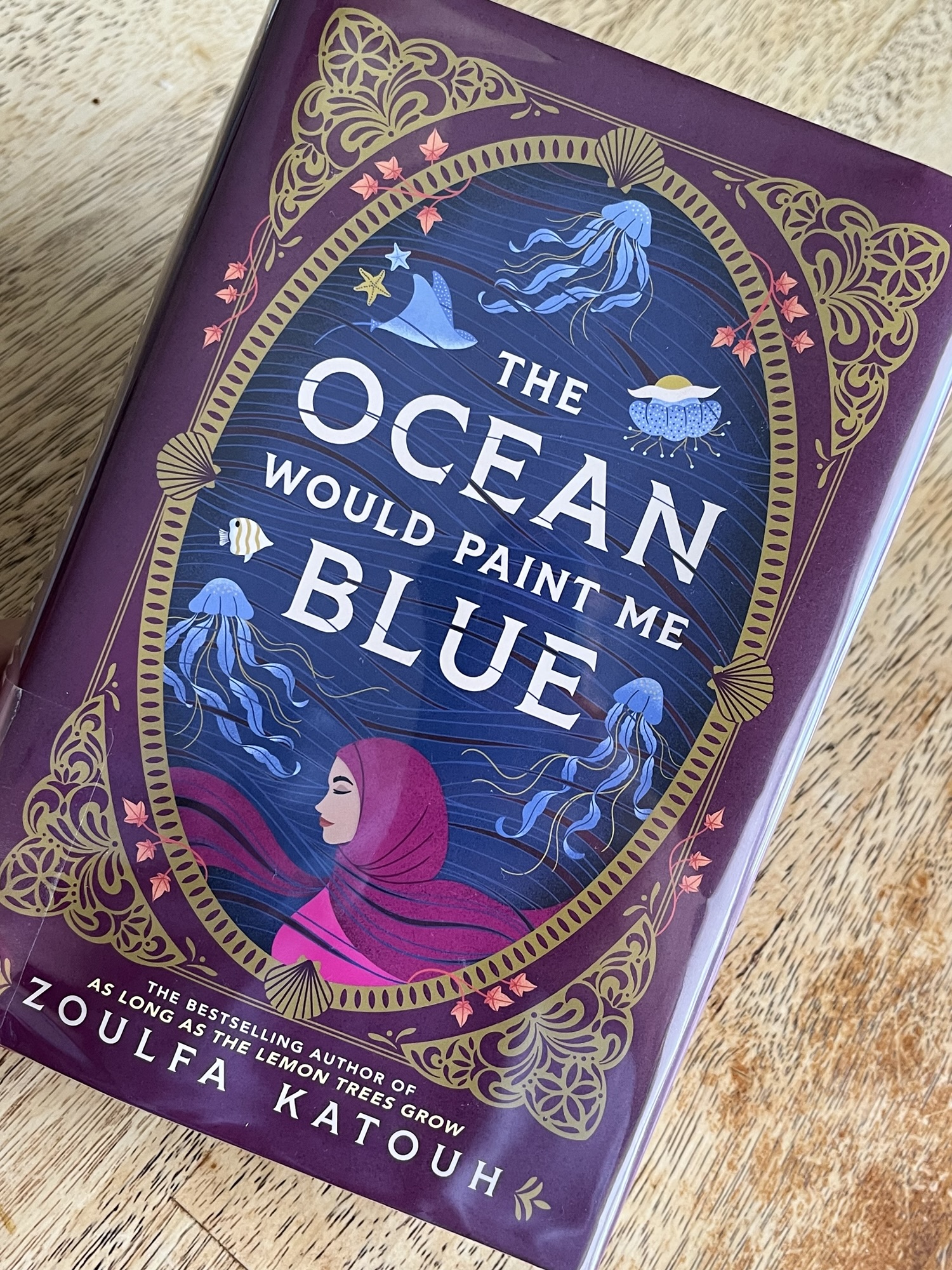
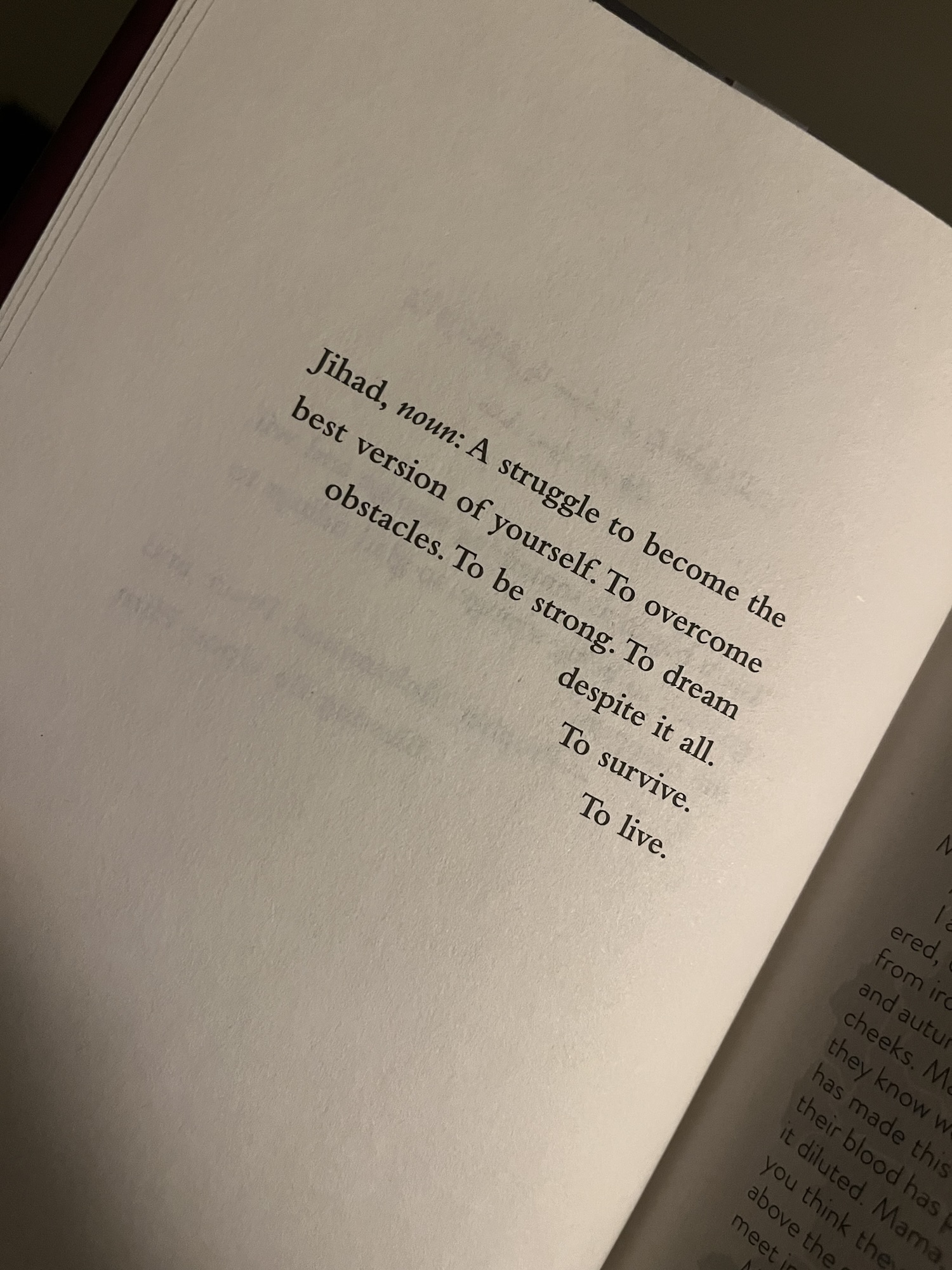
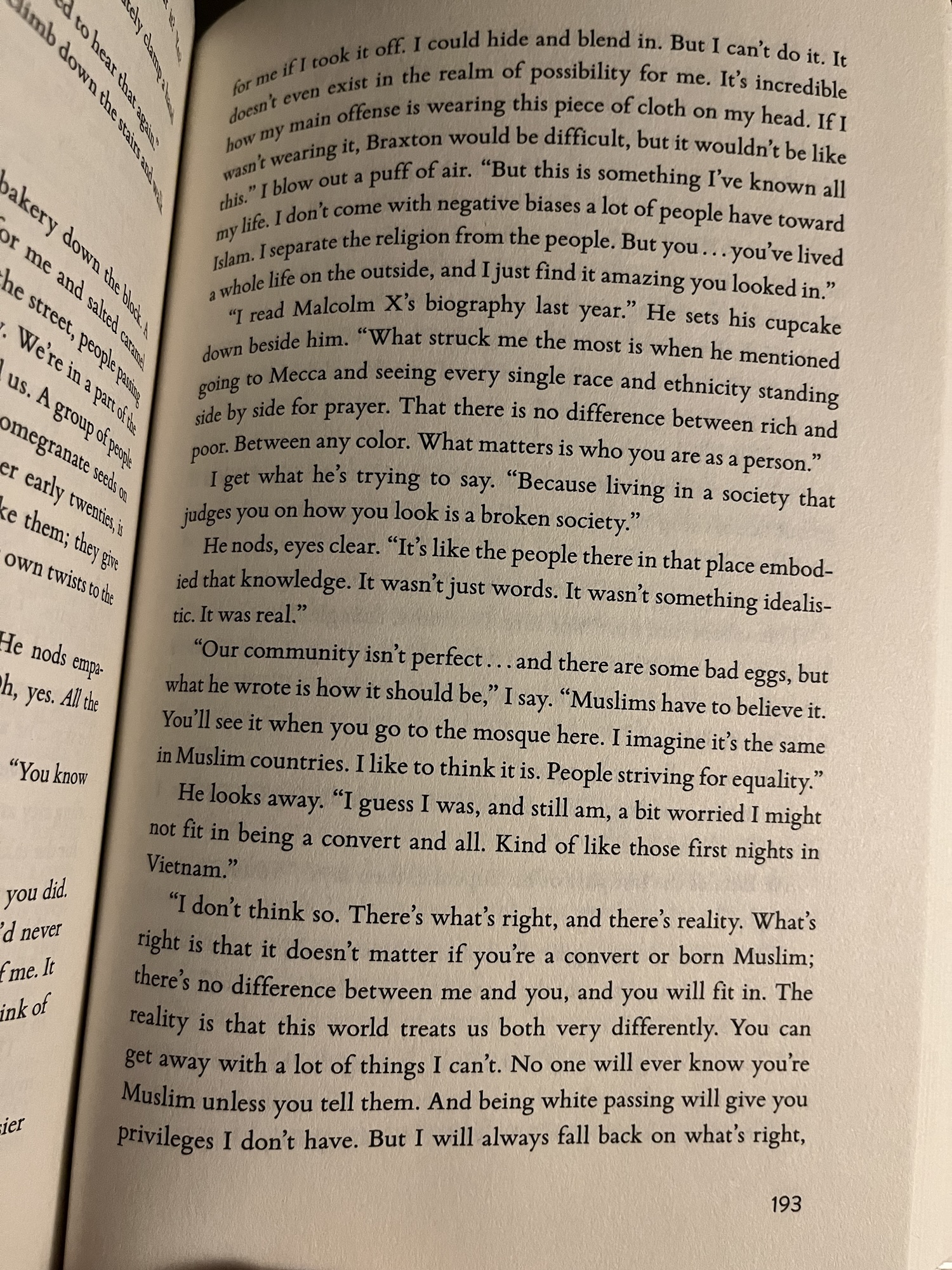
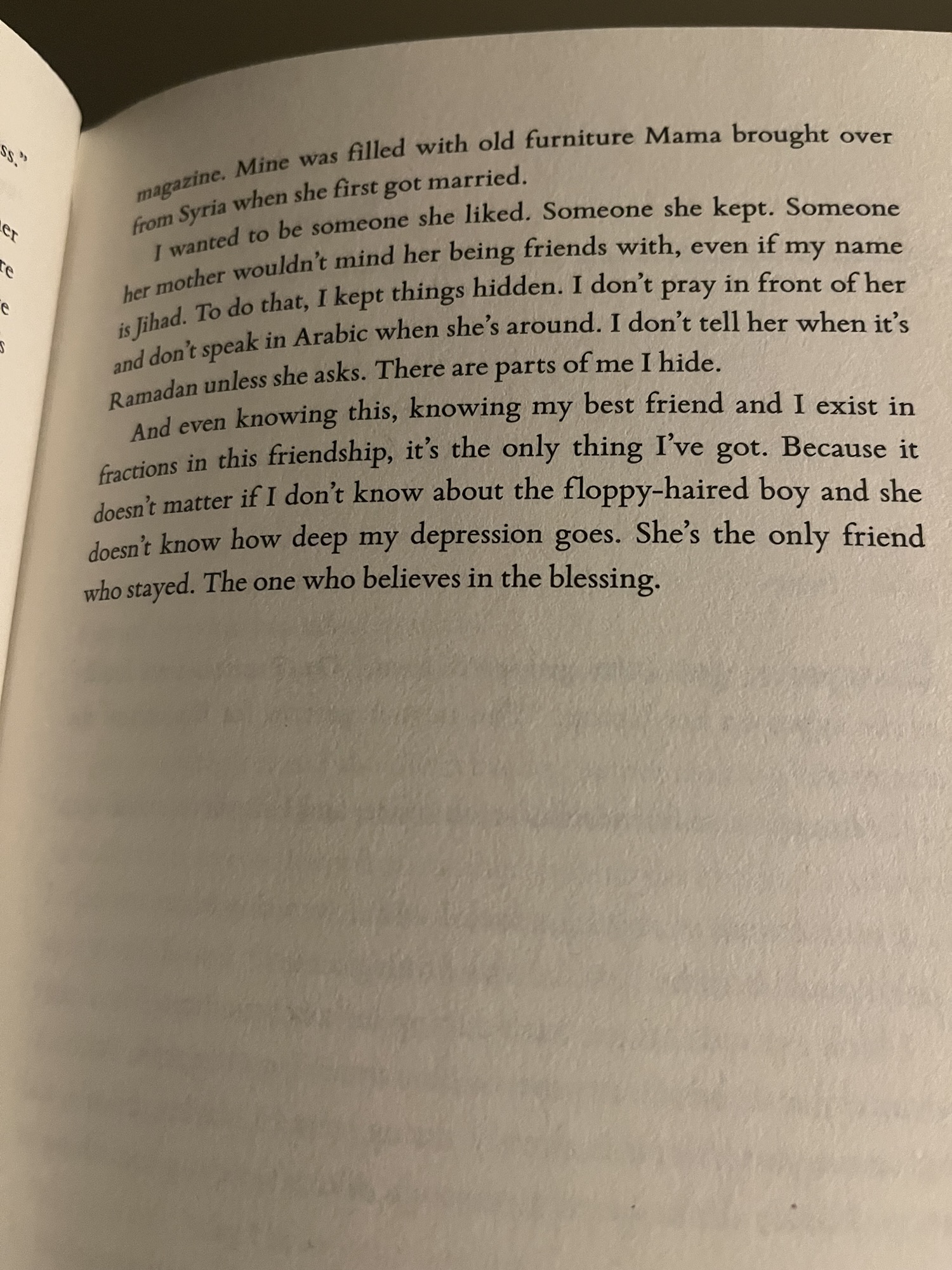
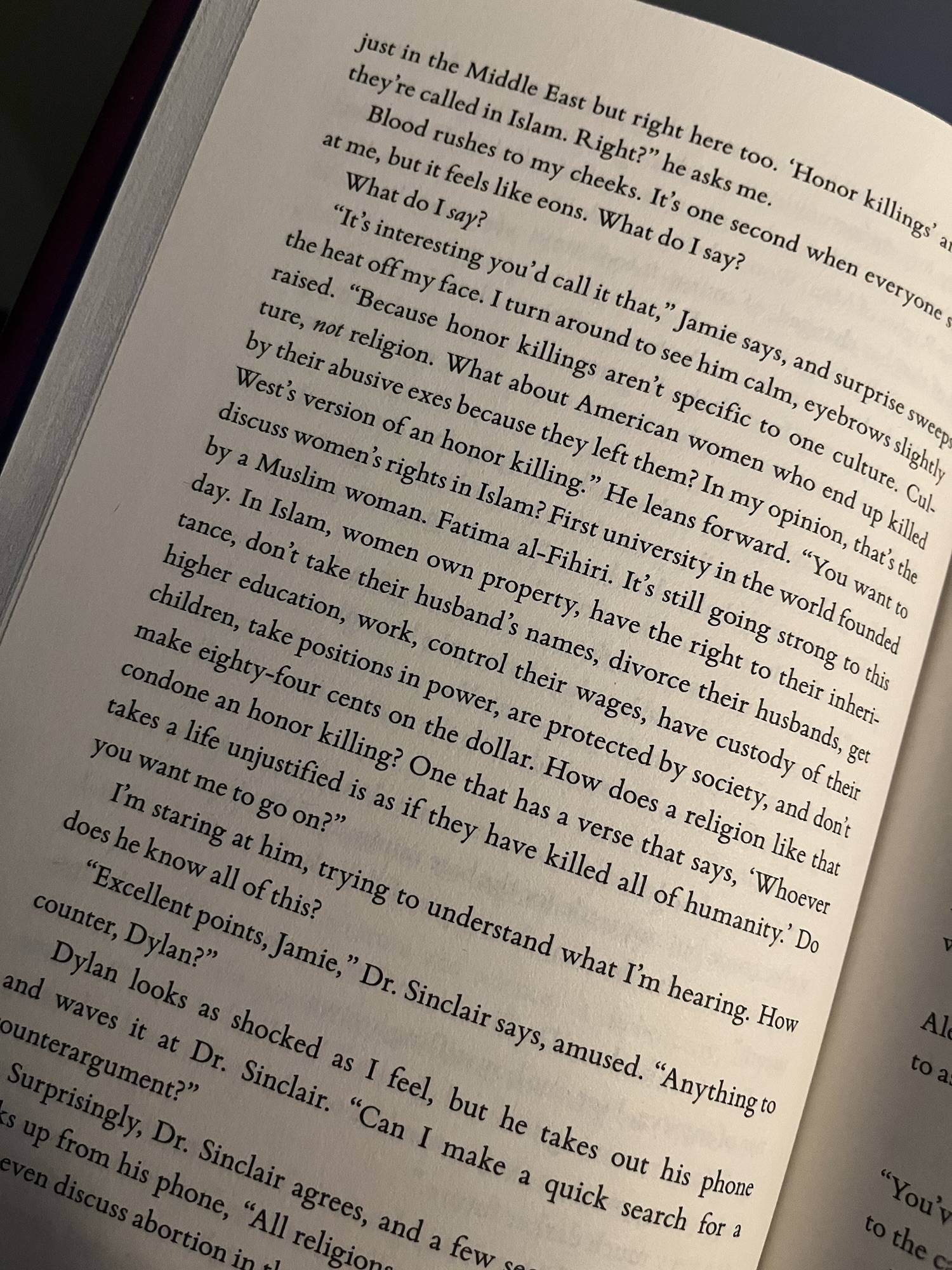
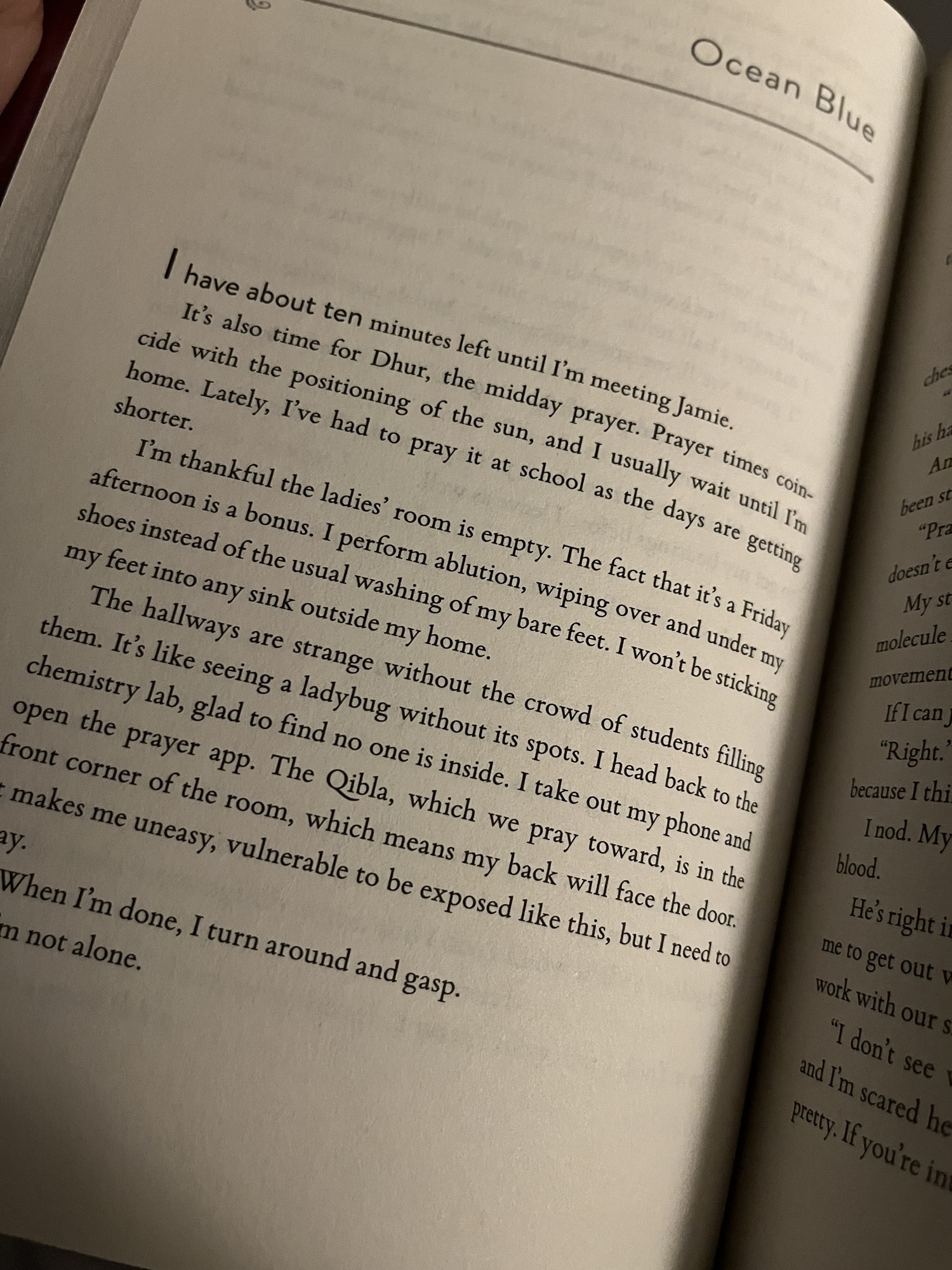
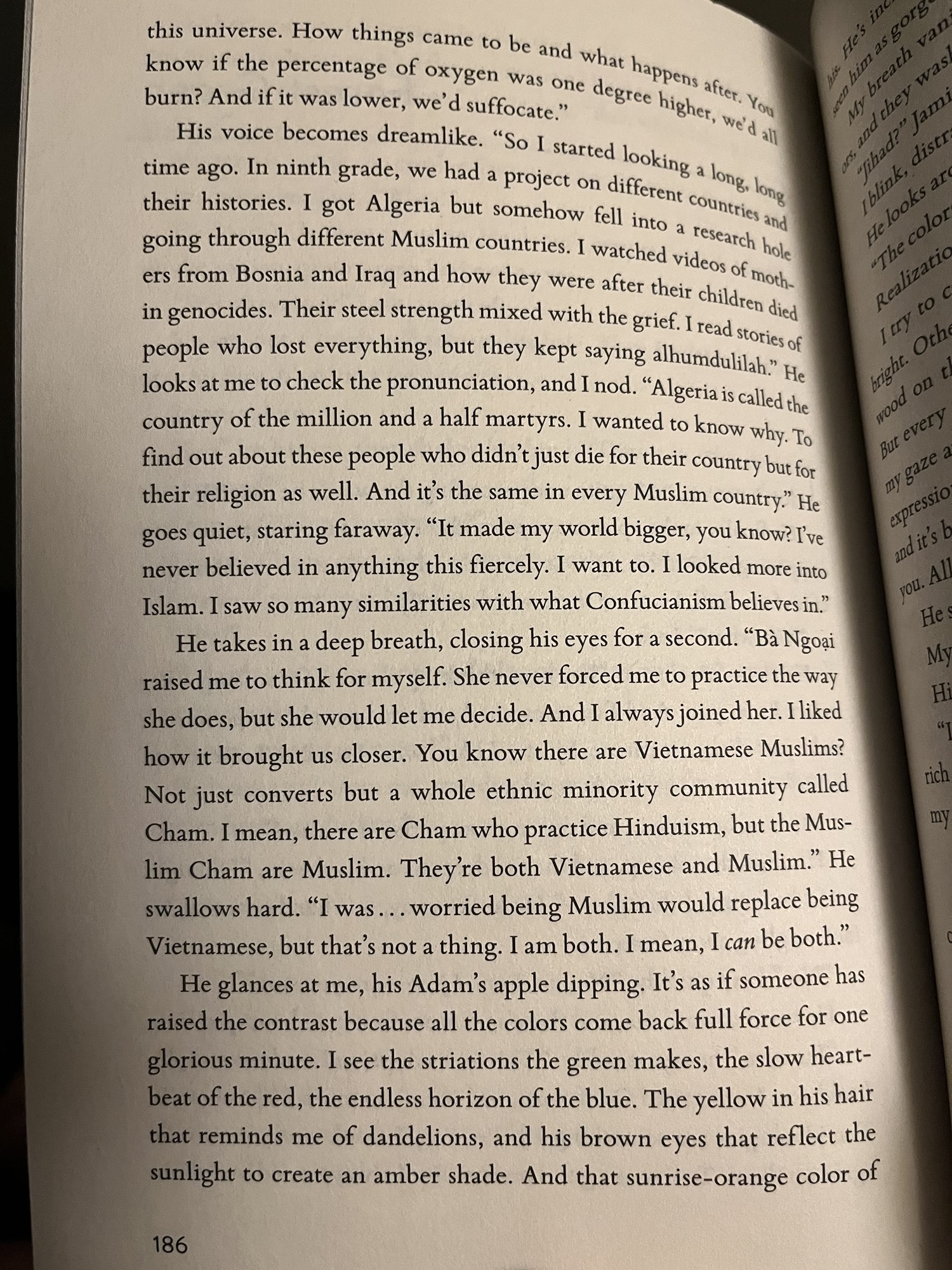
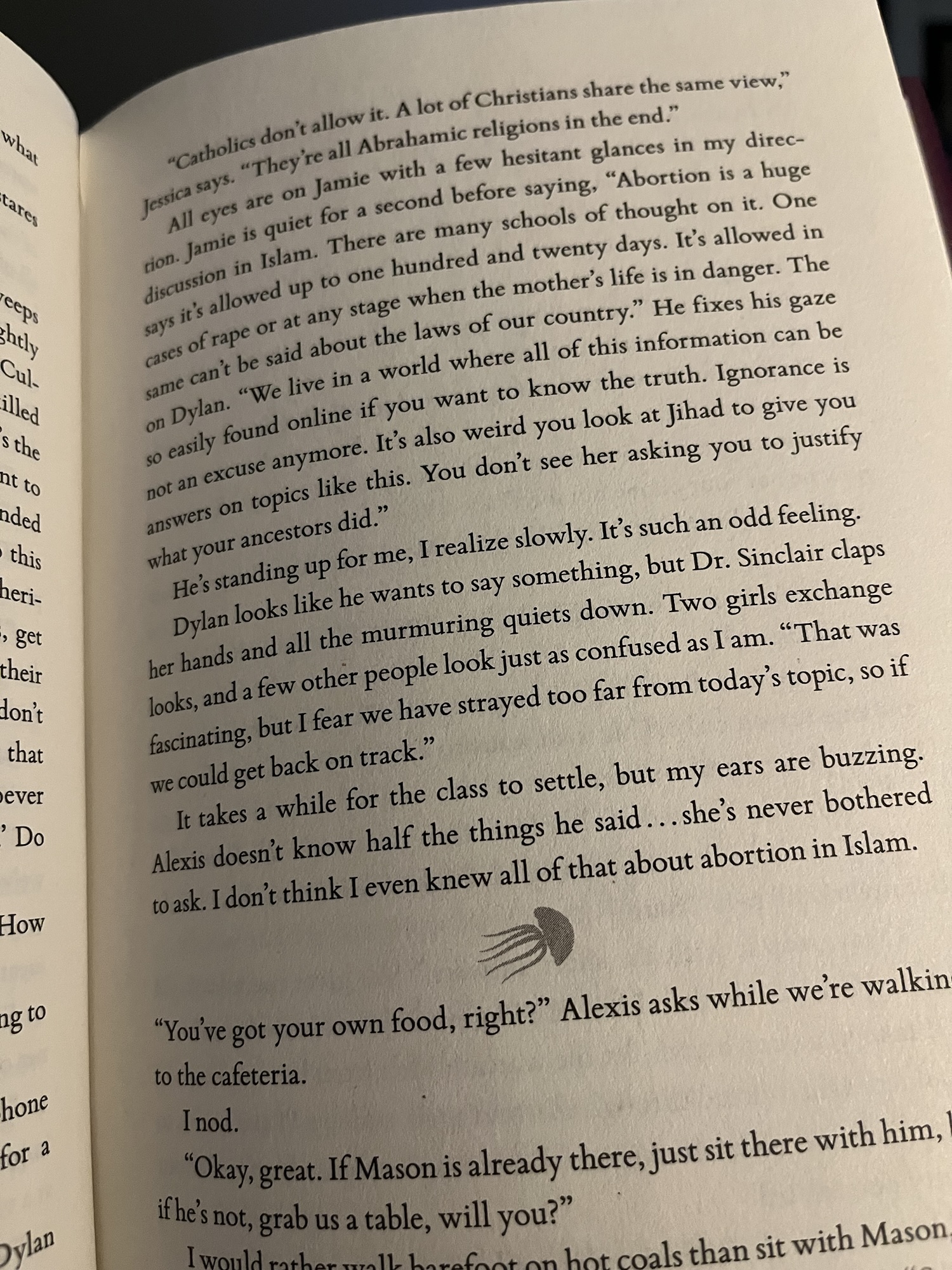
I approached reading this 358 page book with a plan: as much as possible I began with no expectations and rid myself of any Lemon Trees comparisons. And after I finished this book, which I read in two days, I have now waited a week before writing this review up, to sit with its lingering effects and takeaway impact. I did this because a YA coming of age book with a female Muslim protagonist in a new school facing Islamophobia, has been done before, the premise isn’t remarkable necessarily (like Lemon Trees), on its own. I also am not a fan of magical realism. All that to say, I really, really enjoyed the book, and appreciate what it accomplished, and the unapologetic Islam and strength of voice it did it with. A few friends remarked that teen them would have loved it, so I’d like to add that 45 year old me, also loved it. The magic realism isn’t a small thread, it is a plot point, and it adds imagery and power to a book that raises the stakes on every level. It provides a balance to the heaviness felt by Jihad’s grief, loneliness, and present bullying. I felt in many ways it also softened the questionable “halal or harmness” of the book. The relationship between Jihad and Jamie does place them in classrooms and cars alone together and sure that close of a friendship between a boy and a girl is not typically encouraged, but I would let teens read this. The book is not overly angsty, emotions are there but no acting on it, in my opinion the focus is Jihad and her finding her strength, which as a Muslim going through so much, is really empowering to see. I think young Muslim readers might find bits of her story that they relate too, but inshaAllah no one is being bullied that hard, is grieving that loss alone, is feeling that abandoned, and coupled with the “magic,” I don’t think that Jihad’s choices will normalize any haram, but rather leave the readers inspired to not lose hope. The book has a lot of Islam, not necessarily a lot of spirituality though, for me it fits with the character and what she is enduring, that she just doesn’t have any bandwidth to feel anything more. The beautiful prose brings you into the character and keeps the focus on the protagonist, the unapologetic positioning is consistent and a reminder to us all that when well done, our OWN voice stories are not just accessible and relatable to us, but to all.
SYNOPSIS: I really don’t want to spoil this book, so I’m going to just copy the publisher’s blurb for the summary portion, you are welcome.
Seventeen-year-old Jihad Dabbagh has always seen life with a heightened sense for colors, one of many magical blessings the women in her family possess. But Jihad’s gift changes depending on her mood. When depression sets in, the world is a colorless oasis, and in the wake of her mother’s sudden death, the world has become a permanent shade of grey.
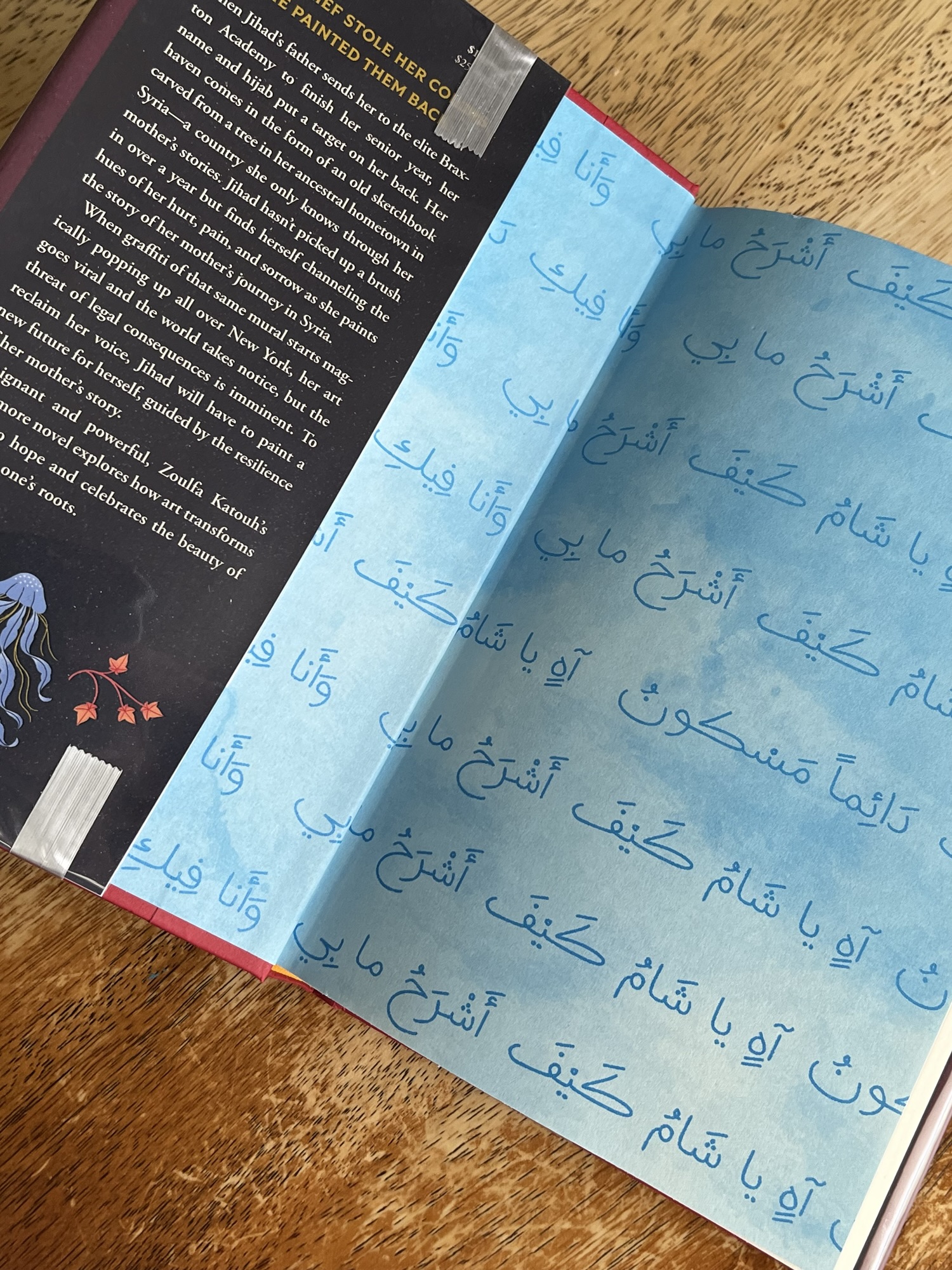
Broken by tragedy, Jihad’s family doesn’t believe her color loss. Her father sends her to the elite Braxton Academy to finish her senior year. There, Jihad’s name and hijab put a target on her back. Her haven comes in the form of an old sketchbook carved from a tree in her hometown in Syria—a country she only knew through her mother’s stories. Jihad hasn’t picked up a brush in over a year, but finds herself channeling the colors of her hurt, pain, and grief as she paints the story of her mother’s journey in Syria.
When graffiti of that same mural starts magically popping up all over New York, her art goes viral and the world takes notice, the threat of legal consequences is imminent. To reclaim her voice, Jihad will have to paint a new future for herself and Braxton, guided by the resilience of her mother’s story.
WHY I LOVE IT:
I love that regardless of what I would have done in many of the situations Jihad is put in, I can totally see, and argue, why Jihad does what she does. I think that is a testament to the writing, and while some of the relationships or side character arcs might make the most craft focused readers long for more, I was fully seeing Jihad’s world through her eyes, and ok with it. Even when major events happen to side characters, it really feeds in to how it affects Jihad and her character arc and growth.
I love the Islam and unapologetic way it is presented. There was one error about washing the bottom of her shoe while making wudu at school, but the Islam feels very real, the actions, the framing, the practice, the struggles, and it was quite refreshing.
I think in the past we have seen identity books really “other” Islam or culture and this book definitely raises the bar, by not doing that. We have also seen books that normalize haram relationships, or spend page after page trying to position the couple to not be haram at the expense of boring the reader, and I think this book is so natural in weaving it all together, that I really hope it becomes the new standard, and new chapter, pun intended, for YA Muslamic books. The book has threads of “romance,” bullying, Islamophobia, neglect, grief, family drama, violent crime, magic, but for me at the heart, once that all falls away and I sit thinking back, a week later on what I recall, it really is Muslim female strength and empowerment.
FLAGS:
Death, loss, bullying, Islamophobia, abandonment, violence, manipulation, grief, loss, boy girl friendship, threat of sexual assault, threat of violence, unwanted touch, vandalism, graffiti, systemic failure, racism, stereotypes.
TOOLS FOR LEADING THE DISCUSSION:
I would love to do this as a book club read with high schoolers. Let’s make this happen!!!
The third and final book in the standalone series is finally out and I absolutely love that Islam, salat, and the masjid are front and center. Faizah is once again brought to life through the incredible illustrations that provide all the emotional beats and make the book memorable. The story though is only just ok, to be honest, it is clunky and disjointed. I have read the book a half a dozen times to myself and twice aloud and I do not understand the Eid story line. I doesn’t fit the themes of fitting in, being a leader, being bold, it just seemed to be there to motivate a white hijab being purchased, and it was very distracting to the cadence and continuity of the story. Every time Faizah is self reflecting on her fear, suddenly a conversation about Eid with a friend named Sophie disrupts the story. Even the refrain that “Bravery grows in your mind. But its roots are in your heart,” sounds lovely, but is never explained or developed, so what are you to water it with? What are the right reasons? I’m sure most will be fine with the concepts and presentation and not be bothered, but this book is an auto buy for Muslims and non Muslims alike, and while I appreciate the packaging, I wish the story itself was more, well “Bold.”
The book starts with Faizah going to Jummah with her mom and sister, and loving being part of the crowd, she then goes to fencing and loves being part of the crowd, “it feels right. I feel right,” she says. But then the coach calls her name and she starts to worry. She doesn’t like when people stare at her, she worries she did something wrong. The coach has already reminded her to “saber first, then move forward,” so I’m not sure why she worries after if she did something wrong, it is a class, reminders and corrections are what happen in a class.
Then on Sunday, the trio is back at the masjid for salat before Asiya’s fencing lesson. The coach asks Faizah if she wants to come in for extra practice before the tournament. Faizah isn’t planning on participating in the tournament though and would rather think about Eid. Thinking about getting together in the future with Sophie to pick out Eid clothes, is more fun than fencing. The reader doesn’t know when Eid is, or why Faizah seemed to break into a day dream when asked about fencing. Furthermore the reader doesn’t feel the worry of being in a competition because Faizah is not shown to be worried.
Later that night Asiya teaches Faizah the moves she learned and Faizah practices alone. There is then a two page spread that I do not understand, on one page she is saying, “When no one is watching, I ‘m the best fencer in the world,” three lines later it says Even when others are watching, I can do it. I can be the best.” What happened in between? I get the following line, “but it’s hard to be my best when I have to stand out to do it,” but the the line in the middle makes no sense. What is the point of the book if she can do it and knows it at the mid point? And no, I’m not reading an arc, I checked out this copy from the library.
The family is back at the masjid on Friday and reassuring Faizah as they head to fencing, that she can do it even when people are watching, that bravery will come. She hasn’t been nervous at class before, and hasn’t signed up for the tournament, so why is she suddenly uncomfortable, when at the start she loved fencing class as she felt she fit in.
Then it is Saturday, and Sophie finally comes, but not to prepare for Eid, just to discuss, how they will prepare for Eid. At least now we know it will be next week. The next Friday, I know I feel like a calendar should have been included, it is fencing class again and Faizah is called up to demonstrate. She finds her strength and she is shy, but realizes they are not just looking at her, but looking at what she can do. She is leading, she is helping, she is being brave.
Finally it is Sunday, and Sophie and Faizah are at the hijab shop, and Faizah picks a white hijab because it matches the fencing clothes, and she is going to the tournament.
Yeah, sorry I spoiled it, I just really am sad that the book wasn’t as great as it could have been. It connected the dots eventually, but not in a memorable way, and for the team responsible for this book, it really could and should have been amazing.