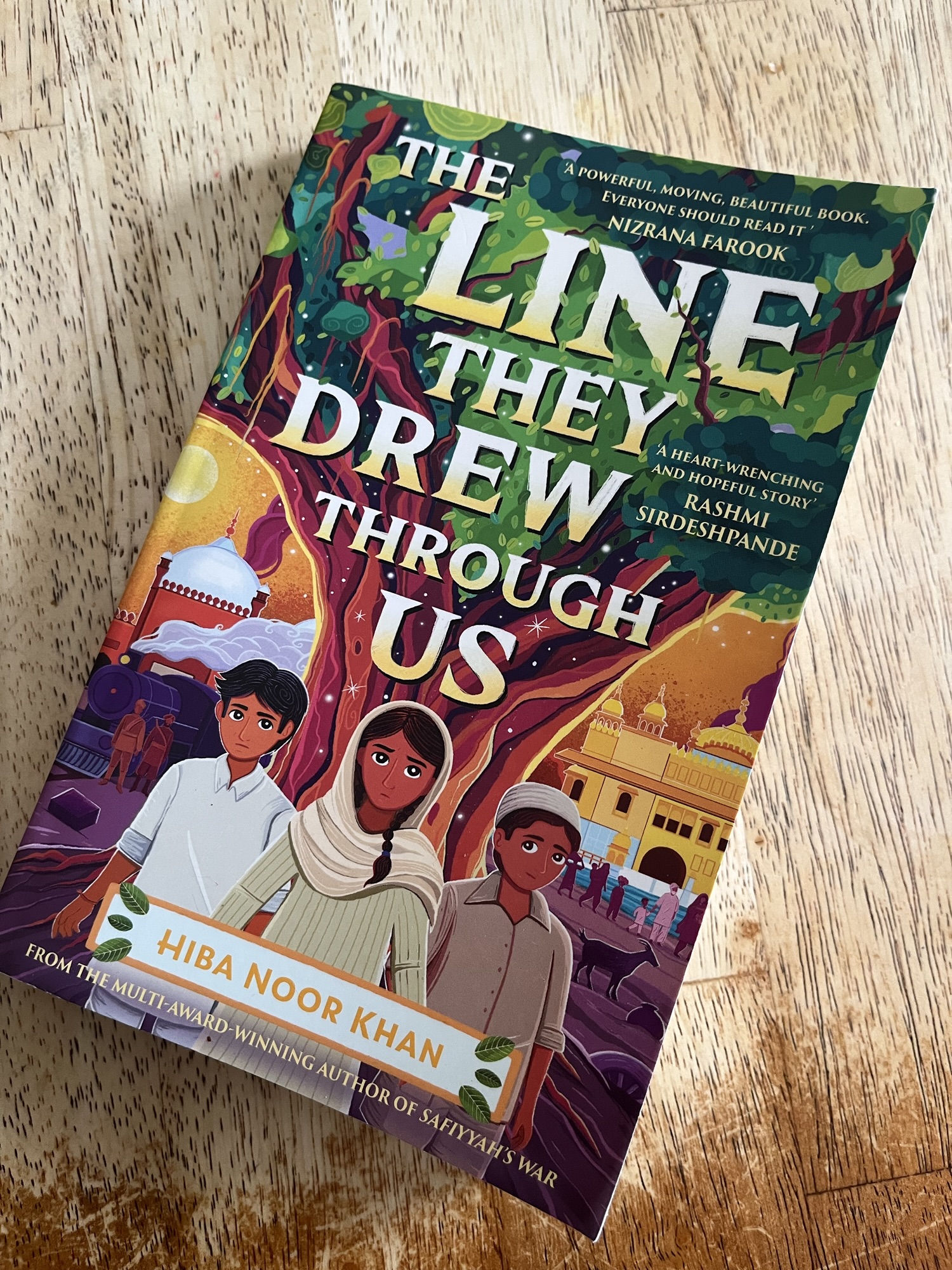
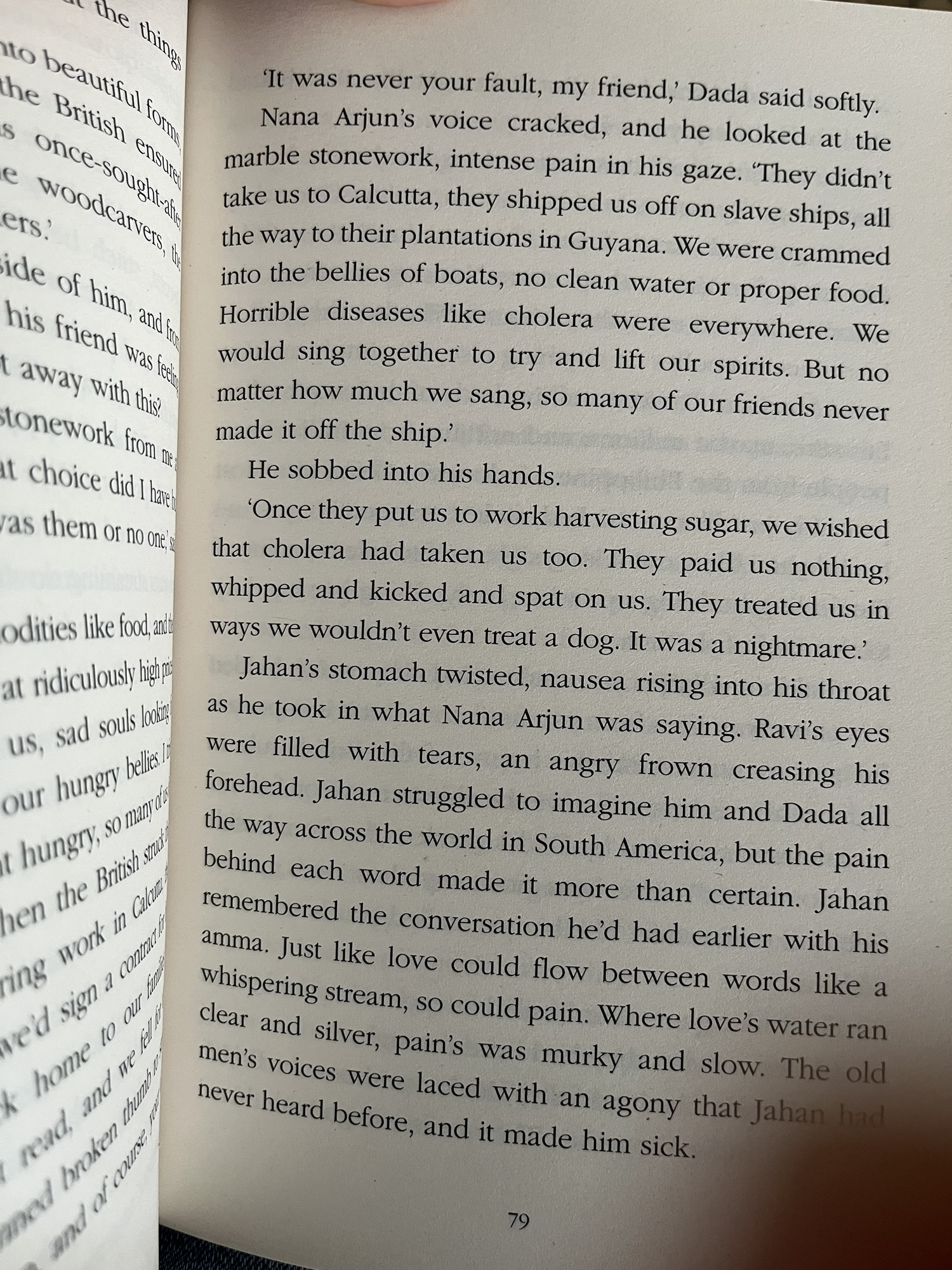
I’ve been trying to get through this middle grade 304 page book for well over a year, and it has been a struggle. I think the emotional release by the end is well done, but the journey to get there requires enduring pacing issues, truncated plot threads and scenes, magical realism, and some really forced positioning of characters and scenarios that I don’t feel warranted the time and page space to add anything to the key points of the story. When the storytelling was at its peak though, it was enjoyable and heartfelt, and the pages flew by, unfortunately though making the difference in writing more jarring and difficult to get through. I love that the book sticks to the colonizing British being the “villains,” but the individuals themselves on all sides being seen in shades of gray. No easy feat, no doubt, to feature such a wide and diverse casts of Britishers, Muslims, Hindus, Sikhs, Parsis, Jains, etc., and to keep from villainizing or glorifying any one group. I don’t know that I understood the point of the magical realism, though, of the no named village, the banyan tree, the kids all being born on the same day, it seemed unnecessary and distancing when trying to connect to the characters and their very real partition of the subcontinent. I love the idea of the book, we need more partition stories that encourage critical thinking, and aren’t all rosy and neatly tied up. I just don’t know that a middle grade reader will be able to immerse themselves in the time and environment with the often choppy breaks in events, and locations, and abandonment of scenes with no context or tie backs provided. There are a lot of names and religious identities that muddle together, and with all characters celebrating each others holidays and partaking in community without delineation, it makes for a lot going on in the beginning, that I think will be difficult for the target audience to digest and get through to appreciate the remainder of the tale.
SYNOPSIS
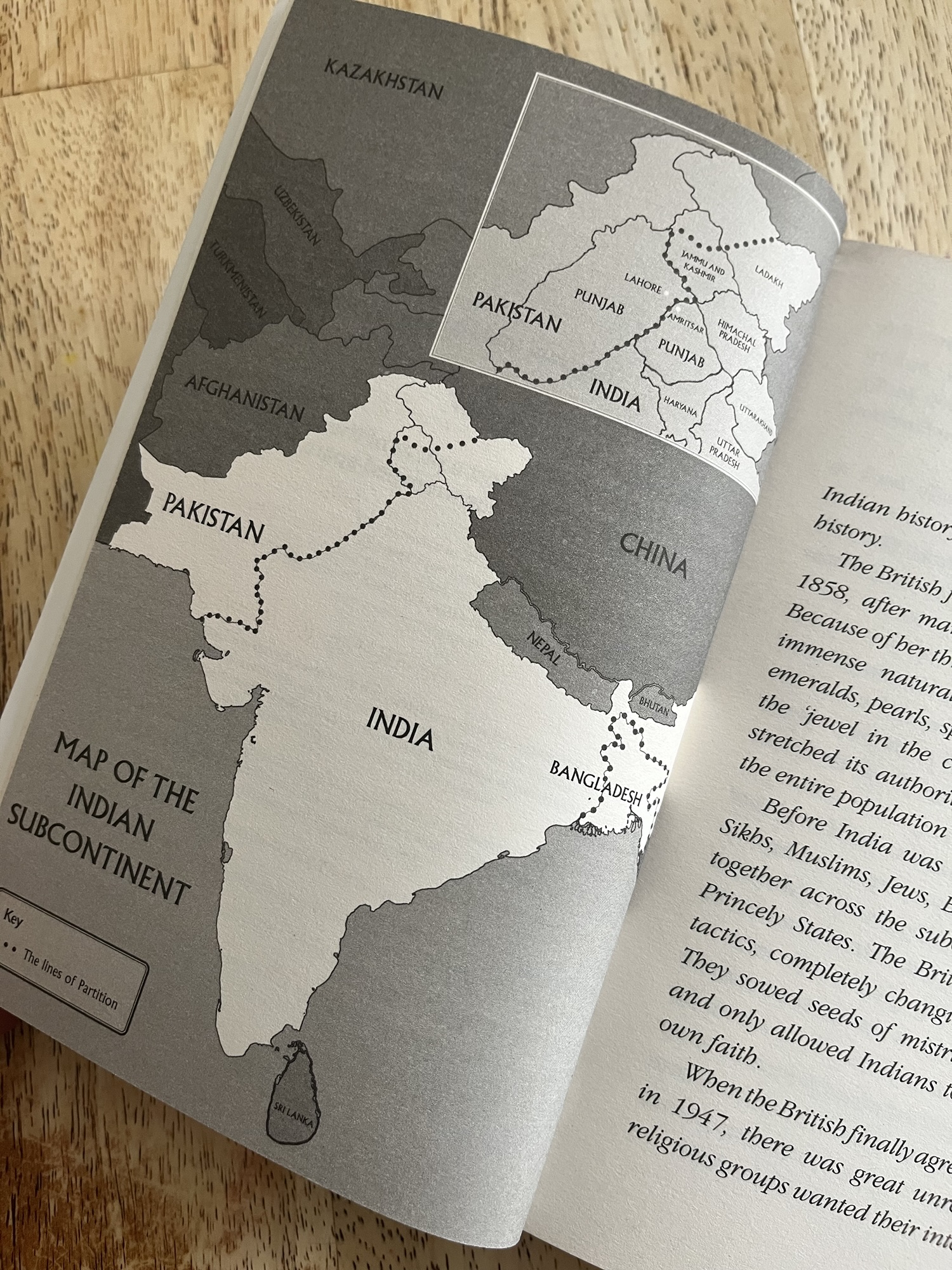
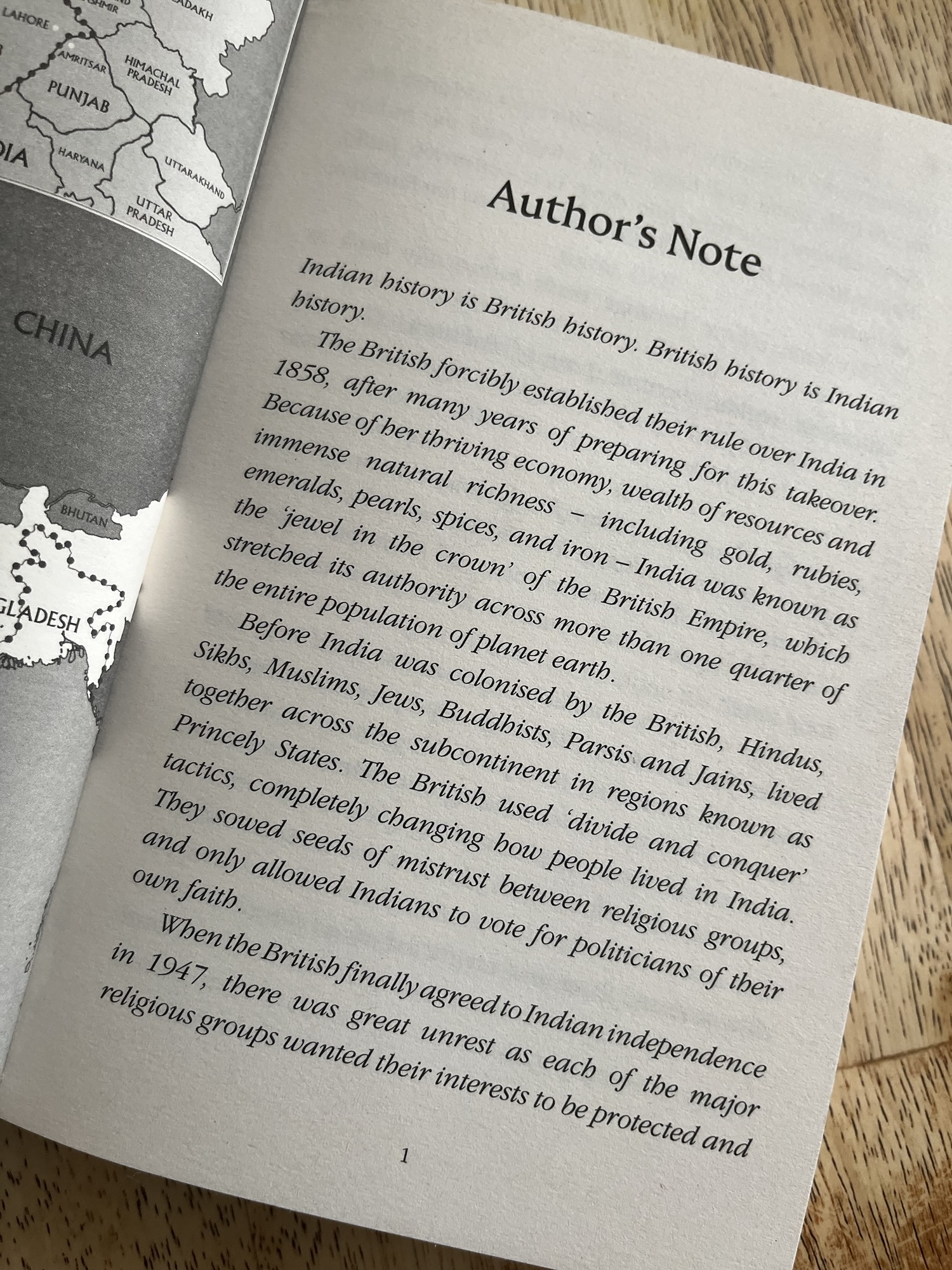
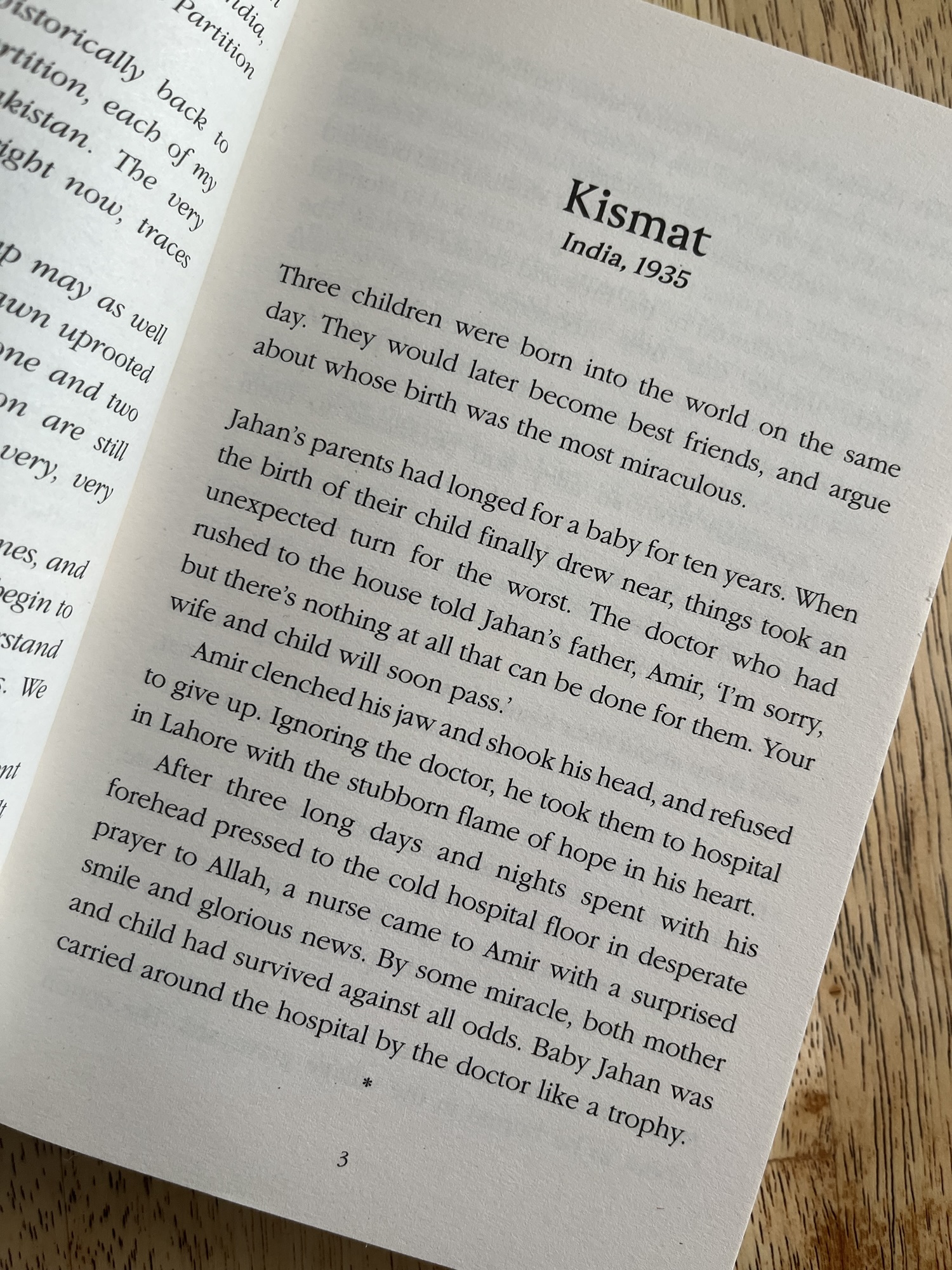
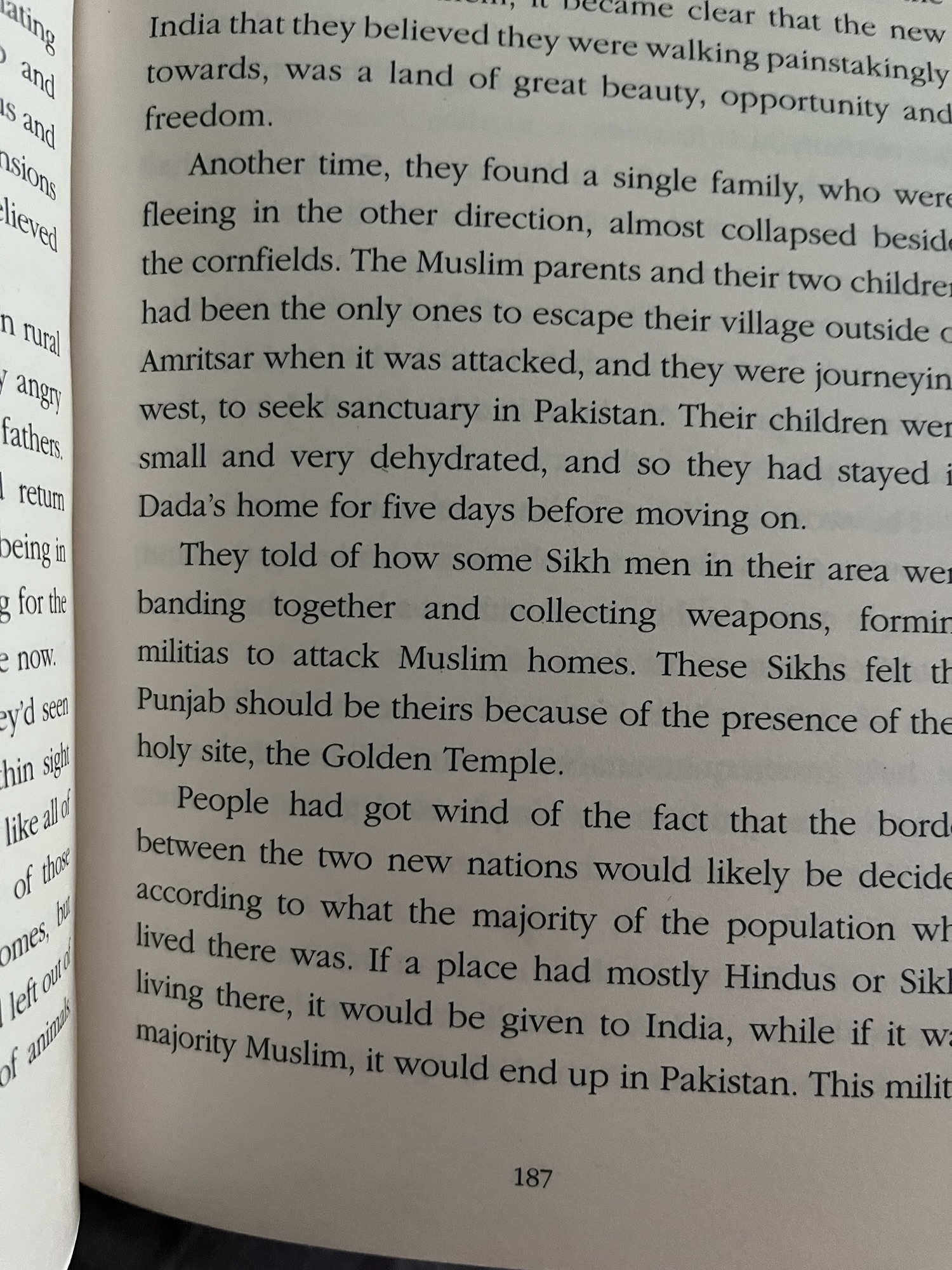
Told from Jahan’s perspective the book focuses on three kids born on the same day, to families with ties to an unnamed village that can never be on a map. Their births are recorded by a banyan tree and the Muslim Jahan, Hindu Ravi, and Muslim Aisha who is nicknamed Lakshmi, grow up as intertwined as the tree’s roots. The village raises them collectively as Nanas and Nanis and Dadas and Dadis all become elders to the children, at least that is the way I decided to take it when keeping track of all the relations (and I speak some Urdu) got a bit too confusing. As they journey back and forth between the village and Lahore prior to partition, we see the kids and the near utopia that the village represents of all faiths living together and respecting one another. Jahan is becoming a hafiz, and wakes for fajr regularly, Ravi plays his instruments and goes to Temple. As partition looms we see the effects that carving up a country that has been occupied for so long starts to have on the families, the children, the anger and tensions that are escalated and the evil that brews in chaos, all while the characters at the center strive to keep connections and hope.
WHY I LIKE IT:
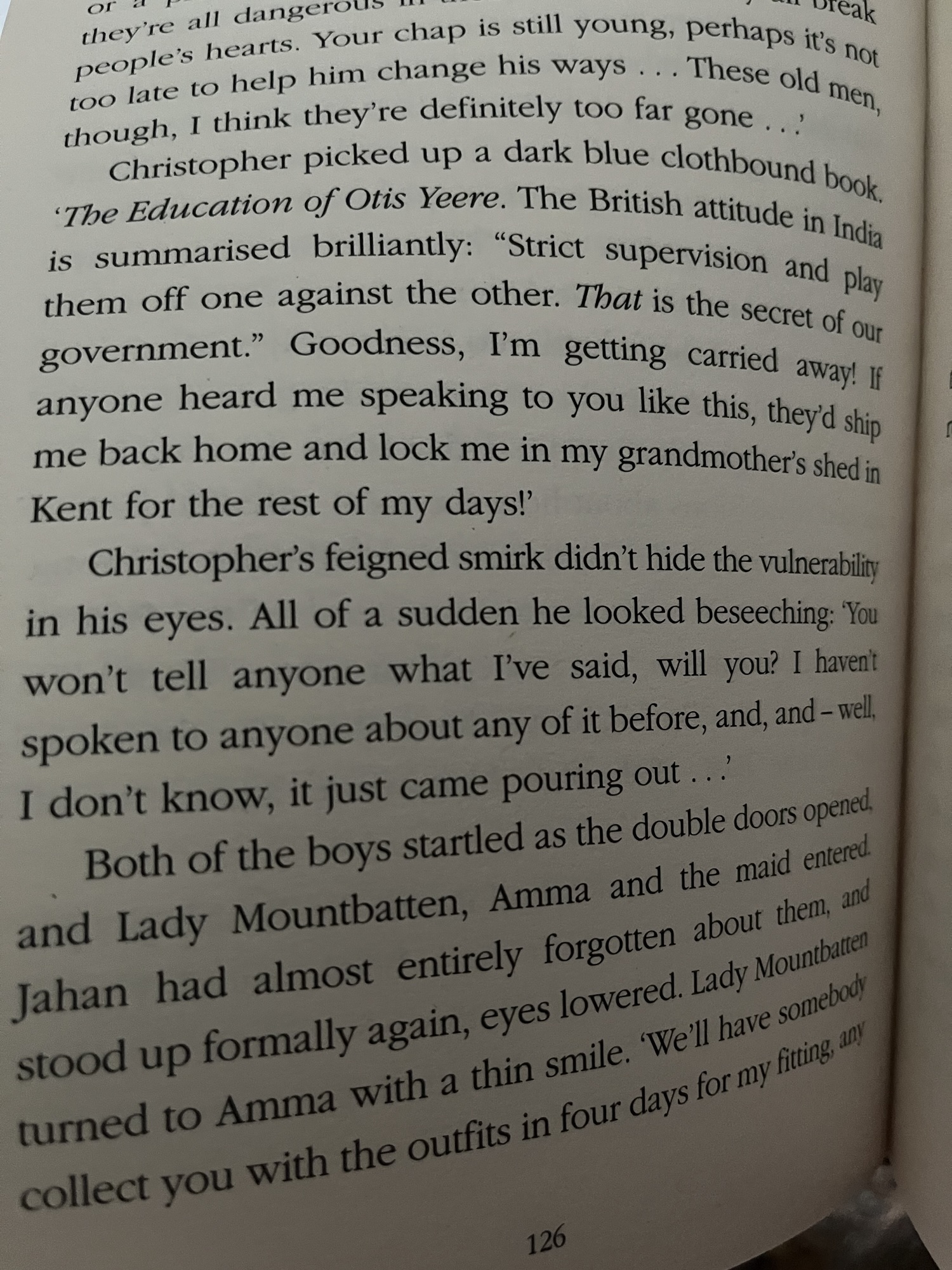
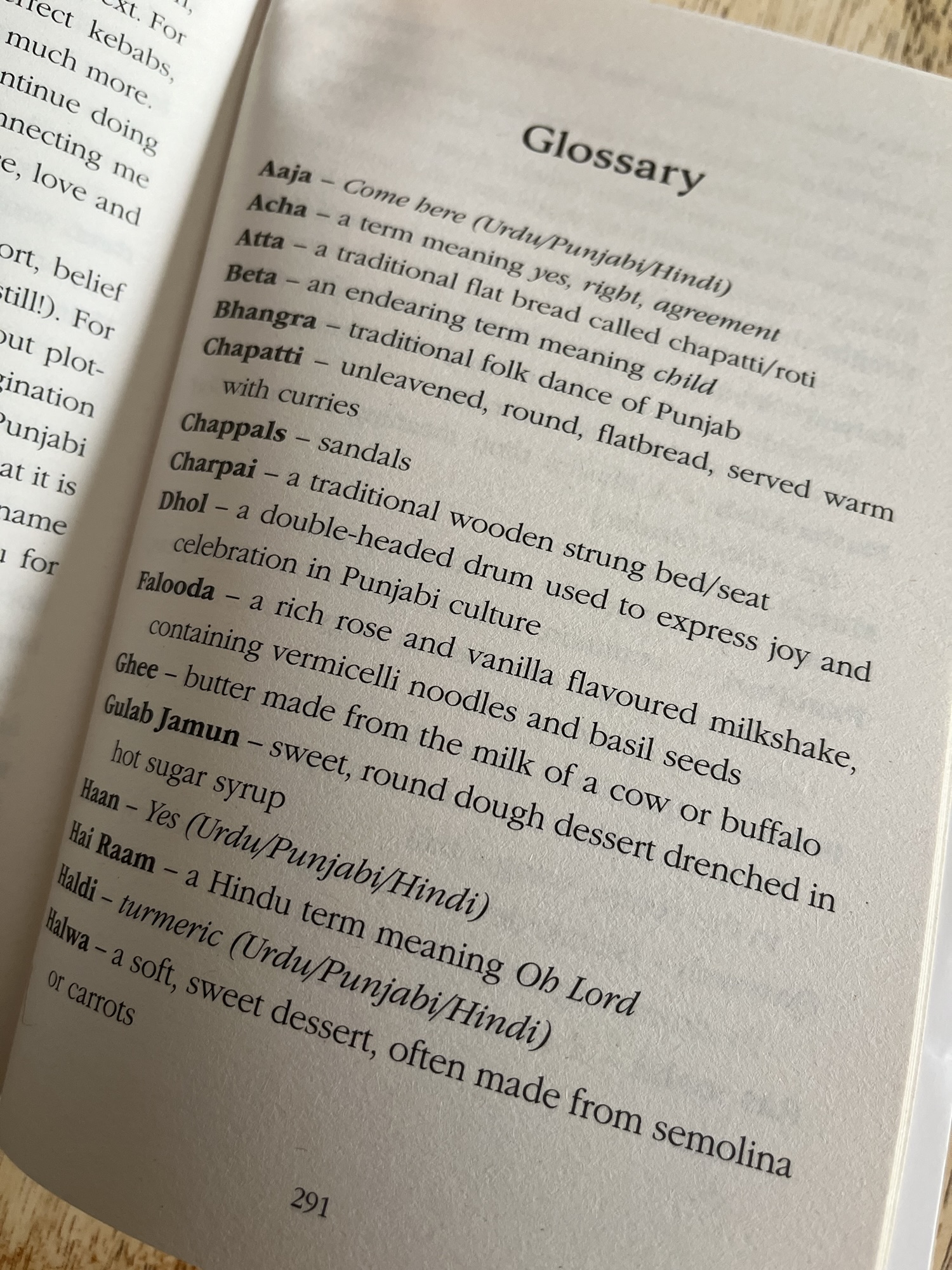
I love that the Islam is not watered down, even if at times the characters blur with partaking in each other’s rituals or considerations, I like that they believe what they believe and it is unwavering and largely uncompromised. I think the book does a good job of separating the collective labels from the individuals, to see that it was a trying time that brought out the best and worst in people of all ages. Craft wise, I just struggled with the going back and forth from Lahore to the village, the build up of planning the games and contests and pranks that had no baring on the story because they would just end and not be threaded through for a purpose or character growth or even resolved. As a result it just made the story wander and for me, at least, often lose interest. I loved when the trio was all in Lahore and thwarting the gang, solving a mystery and being the amazing clever detectives. Most of the scenes of them just being together were delightful and I wish they would have been connected better, the justification of why they were together and how their families all aligned to get them together were just unnecessarily exhausting.
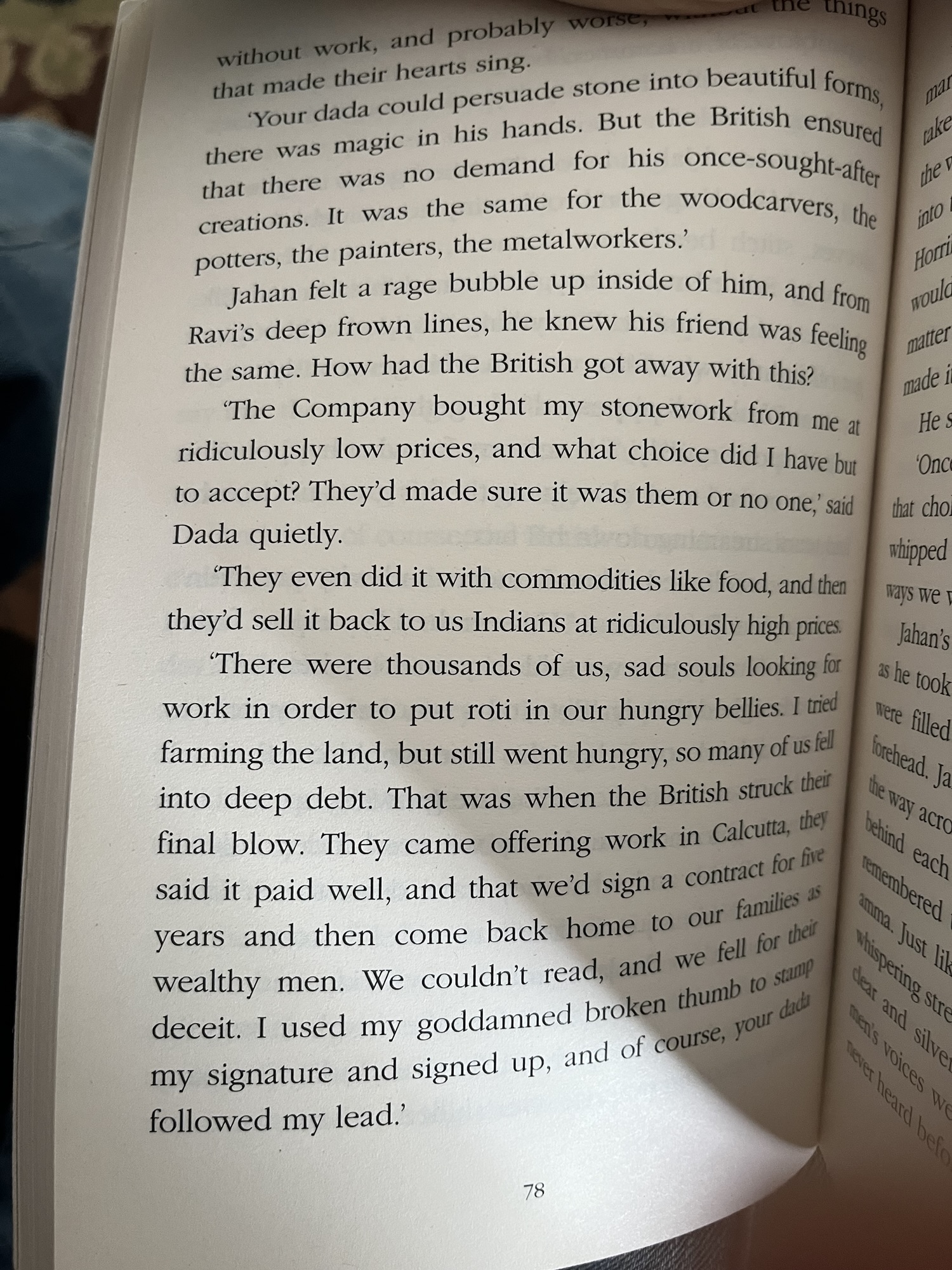
FLAGS:
Violence, death, people being lost, people disappearing, angry mobs, ghost trains, birthdays, girl boy friendships, celebrating each others holidays, lying, boys dressing as girls to sneak in to a gangs hideout, lying, sneaking, anger, riots, music, talk of possible reincarnation, magic.
TOOLS FOR LEADING THE DISCUSSION:
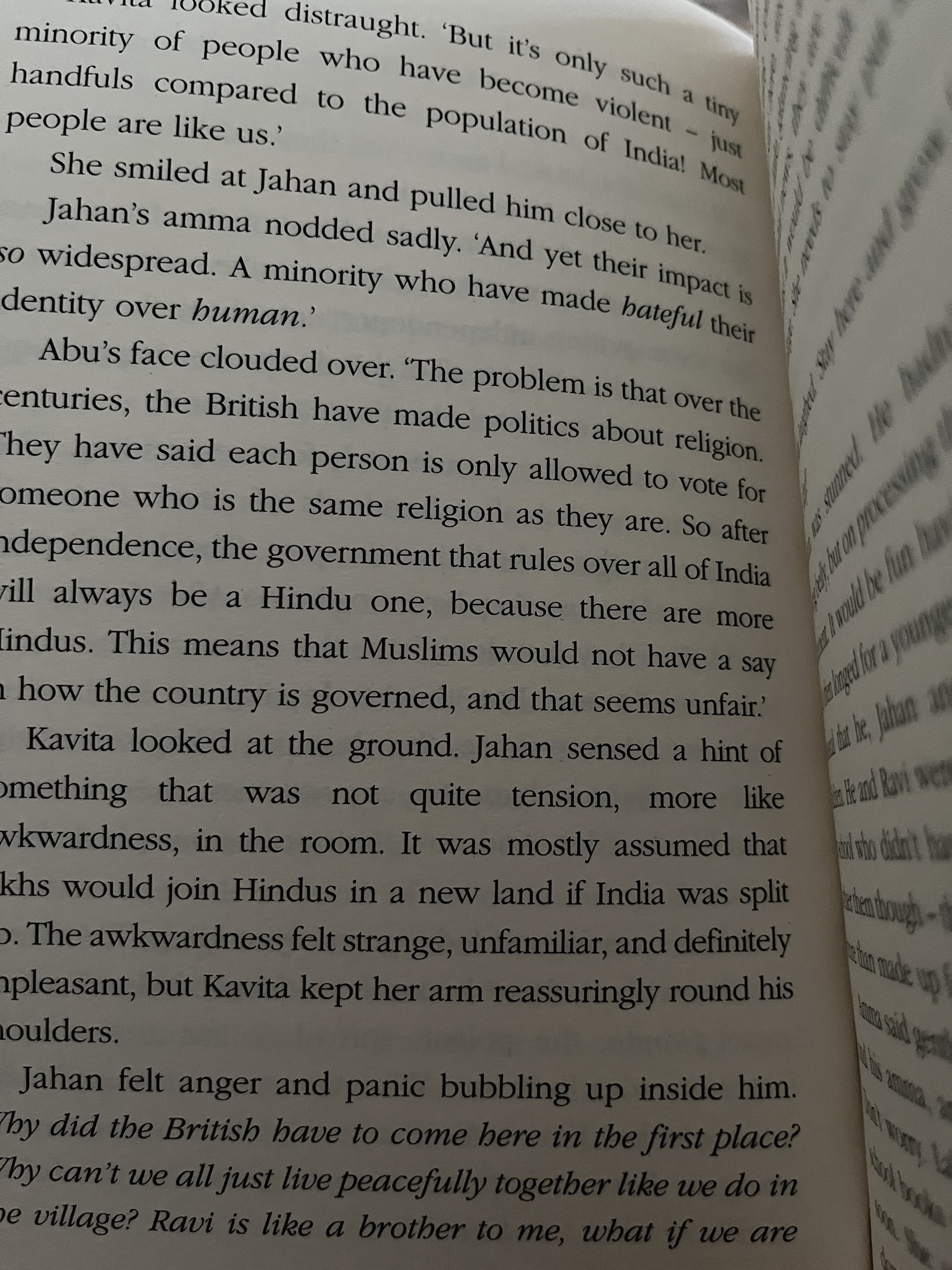
I think this book would be a great supplemental assignment to a lesson on colonization or partition. If read in a small group I think a lot discussion would be needed to help shed light on the politics and ongoing repercussions that still persist and would make for a great conversation and critical thinking exercises. I would not be opposed to shelving the book, but I think once the topic and tempting cover have been exhausted, most middle school or even middle grade readers will lose interest before the story gets good, so to speak, and I can’t see many kids reading this independently to its completion, although I do hope I am wrong.