Tag Archives: second grade

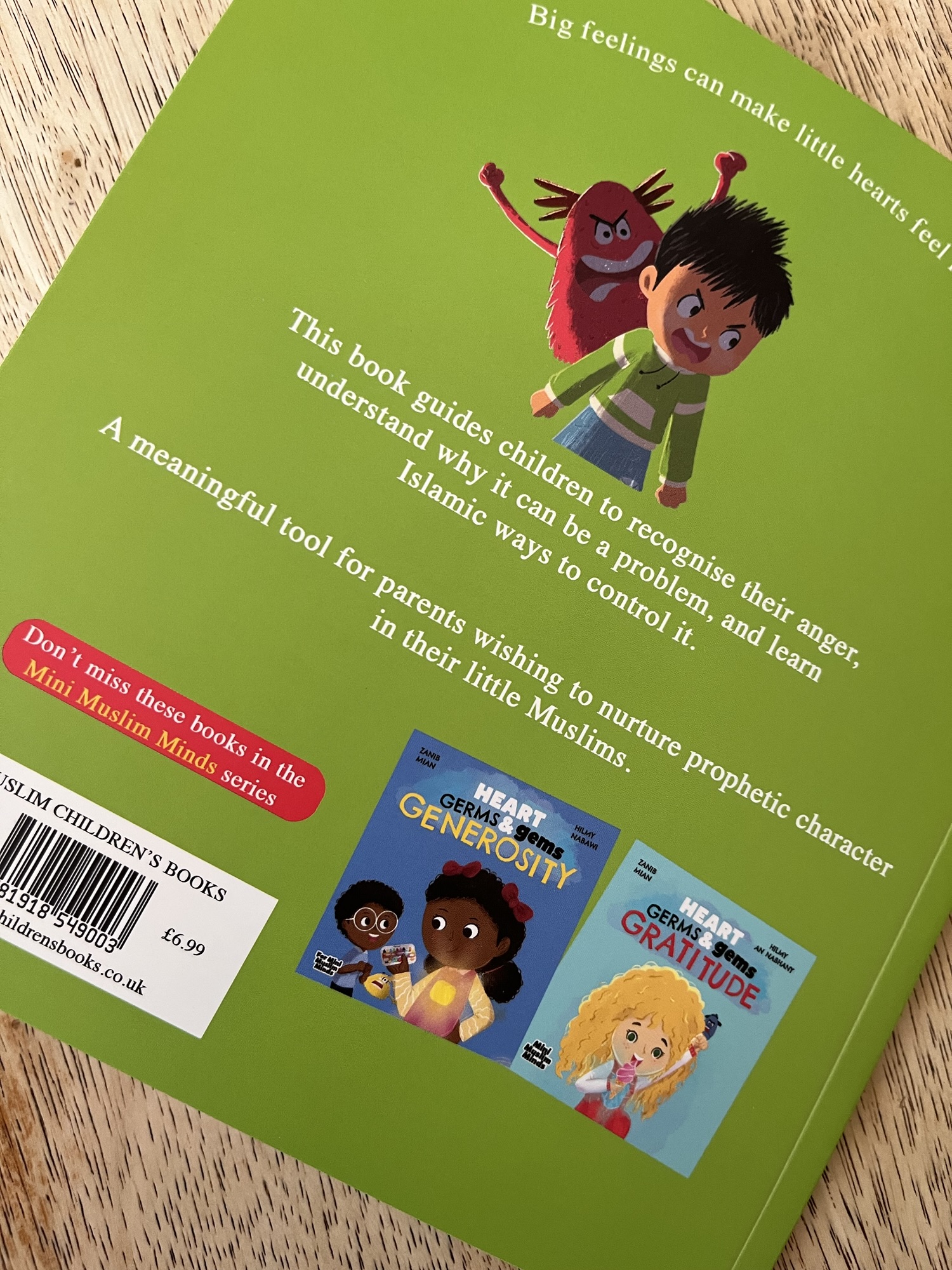
A Letter to the Beloved: Dear Prophet Muhammad (saw) by Jenny Molendyk Divleli illustrated by Rumeysa Abis

Standard
A Letter to the Beloved: Dear Prophet Muhammad (saw) by Jenny Molendyk Divleli illustrated by Rumeysa Abis

img_5332-1

I was a little skeptical about a 32 page rhyming letter to our beloved Rasullah, illustrated in book format, but it is cute and it won me over.  The rhythm keeps the rhyme from feeling too forced and allows for some forgiveness when it misses the mark, it also makes the book appeal to a wider audience. Even my preschooler could sit through it pretty well.  The book being the letter without any stilted framing, has a lovely authentic voice of a young boy, also named Muhammad, asking the Prophet (saw) questions and chatting in a very stream of conscience sort of way. It blends facts that the young boy knows with his stresses and asking the Prophet for advice.  The font is meant to look like a child wrote it, but it is a little cumbersome for children to read, and even adults (me) during read alouds.  I do wish the book was sourced, nothing really seemed wrong, but having it sourced or approved by a scholar is just a reassurance to the reader, and in my view a responsibility of the author.  The only line I didn’t like was near the end, when the boy hopes “that you will remember me, from this letter I am writing you.”  I feel like it will confuse kids, is the letter being sent? How would he know you when you’ve never met? What will be done with the letter once written? The illustrations are hit or miss, some are absolutely lovely, others a bit off, for example a music book on top of a picture of Masjid an Nabawi and the Kaaba, some also easier for small groups to see than others.  For kids there really aren’t a lot of books about Prophet Muhammad saw that are not textbook like in their portrayal, so I like the approach this takes, I just wish a few things were tweaked.

The book dives right in, with Muhamad introducing himself to our Prophet, he writes that he was named after him, and all about his family.  He then starts to tell what he knows about Prophet Muhammad, and questions he would like to ask.  Its a one sided discussion about siblings, smiles, appearances, kindness, and generosity.
The little boy then wants to know about Buraq, splitting the moon, talking to angels, standing out numbered at Badr.  It then turns to food and the little boy wondering about if RasulAllah would like mustard and relish, and burgers.  

img_5336-1

He imagines the Prophet visiting and leading his family in prayer and the scent that would then linger.  The boy hopes to meet him in Jannah, and promises to do his best to follow Allah’s decree. He signs off and sends salawat upon the Prophet. There is then a place for readers to write their own letters to the Prophet.  

Sister Friend by Jamilah Thompkins-Bigelow illustrated by Shahrzad Maydani

Standard
Sister Friend by Jamilah Thompkins-Bigelow illustrated by Shahrzad Maydani

img_3521-1

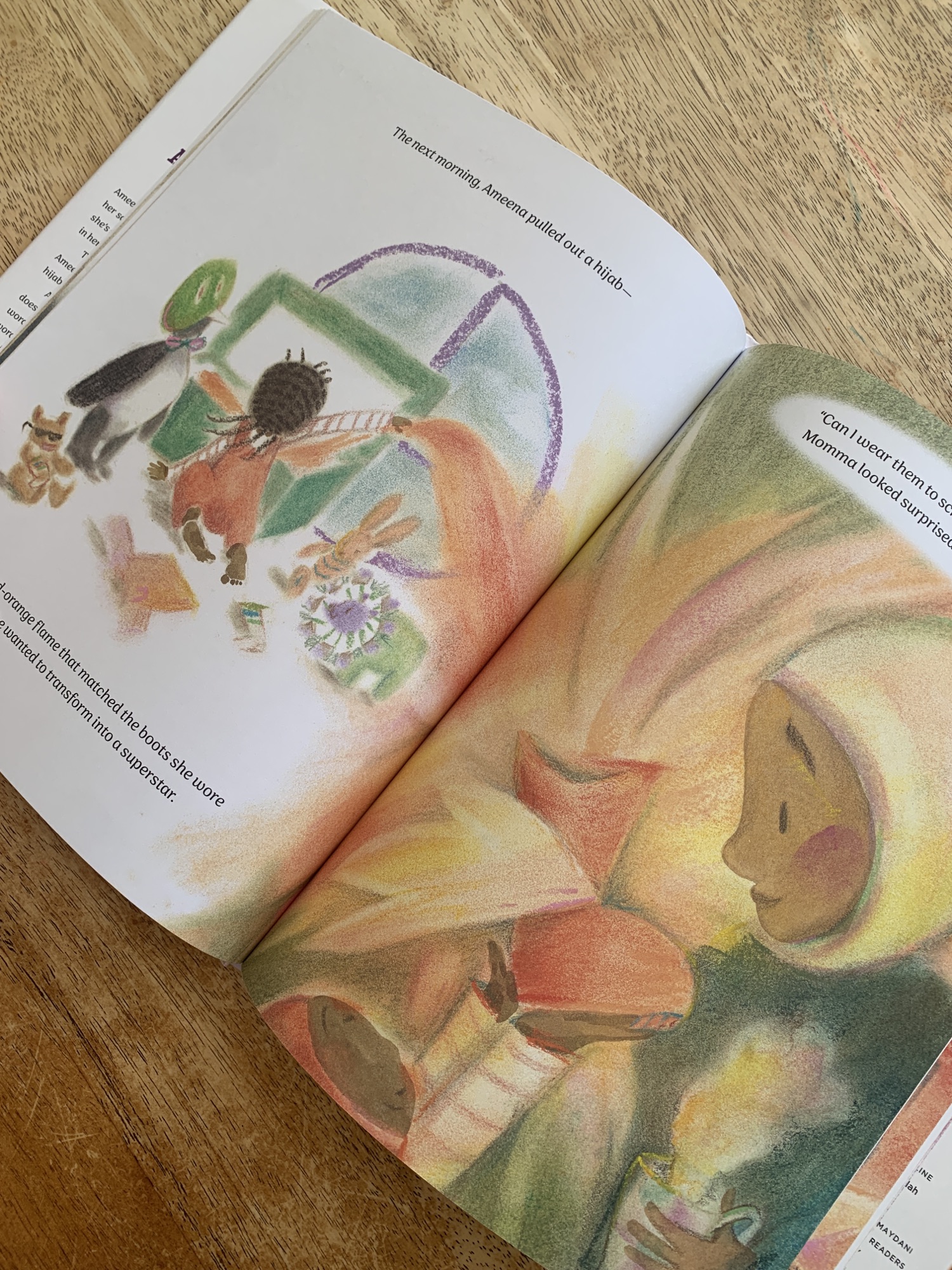
After years of teaching, librarian-ing, and mothering, my reviewers are for adults, but with kids in mind. I read in different environments and try and balance what children will think with my more critical literary impressions. But honestly, my first reaction when I see Jamilah Thompkins-Bigelow has a new book out, is not about the children, or their parents, it is incredibly selfish, and I want to read the picture book for me.  It has been about a year since I first read my all time favorite, Salat in Secret, and I still feel all the feels, every time I read the book. I even enjoy handing the book to people and watching them read it for the first time.  So, I was both excited, and nervous to read this new book, not knowing if it would measure up to my expectations or rather hopes, so to speak.  I needn’t have worried, subhanAllah, this book in it’s own right is moving, heartfelt, layered, powerful, hopeful, relatable, tender, and while staying on a kindergarten to second grade level is also unapologetic with its centering of Islam, race, and feeling invisible, being new, and making a friend.  The illustrations and words blend beautifully, and by the second page of the 40 page book, I was already emotionally attached to the little protagonist Ameena.  Good writing is good writing, and as a result this beautiful book works for all ages and will be appreciated on multiple layers even after dozens of readings, alhumdulillah.

img_3522-1

The book begins with Ameena playing a game by herself.  She always plays by herself at school, where she tends to be invisible.  Maybe it is her hair in twists or her brownness, she doesn’t know.  One day a new girl comes, her name is Sundus, she wears hijab like Ameena wears to the masjid.

All day Ameena tries to talk to Sundus, but something always seems to keep them apart.  When they finally meet,  Ameena’s excited words get all tangled, and a misunderstanding occurs.  Ameena decides the next day to transform into a rockstar: red-orange hijab and matching boots. The other kids say she is copying the new girl.  Sundus doesn’t say anything.

img_3523-1

Ameena disappears again at school, but family night at the masjid is her happy place.  Where she doesn’t play alone, and there are lots of browns, and she is seen.  When Mama meets a new sister, and greets her with Assalamu Alaikum, Ameena sees how a greeting and a hug can be the start of sisterhood and friendship. And the next time Sundus and Ameena meet, they know just what to say.

img_3525-1

The joy at the end forces you to smile, just as Ameena playing alone at the beginning tugs at your heart.  It is a great book to see yourself and see others in a beautiful, authentic way.  The universal themes of not being seen, making a friend, and being the new kid, are woven in just as hijab, masjid and Assalamu Alaikum are, making the book powerful for Muslim and non Muslims alike.

img_3524-1

I particularly love that their is no glossary, and that the text uses the word masjid not mosque, hijab not scarf and Assalamu Alaikum not salam.  That the masjid is her safe place to laugh and play, and that this book is mainstream published and will find its way to public spaces and be widely accessible.

You can preorder your copy here on Amazon.

Yusuf and Yusra’s Merry Dilemma by A. Dawood

Standard
Yusuf and Yusra’s Merry Dilemma by A. Dawood

img_8876

We need more books like this. Books that don’t dismiss the pressures of celebrating holidays that don’t belong to us and that facilitate conversation. Is this 36 page early chapter book incredible literature, no it is not, but it is important. And I strongly suggest reading this book with your children and discussing the contents sooner rather than later. Not the first week of December, when holiday music and decorations are already in full force, but when in fact, they are not. Talk to your kids before it is an emotional defensive assertion of power. Talk to them when calm thoughtful conversation can occur without being in response to an invitation to a party, or a school/community event. Equip your children and guide them where they are in their understanding. Yes, that means that you the parent will have to read this book first, and then ask your child to read it, or read it with them. It is not long, it is not deep, or a complex story, it is a relatable scenario of a a practicing Muslim kid who weighs his options, makes a choice, gets caught, and is gently talked to by his father. There is openness, their is dialogue, and yeah, it gets a bit preachy at the end, but that is kind of the point. The book does not come out for a few more months, but I hope you will preorder it, and I hope the author may consider releasing it before October. I’m the daughter of a convert, born and raised in America. We need to talk to our kids about holidays, not just demand avoidance or give in to peer pressure and imitate. It isn’t simply saying they have Christmas we have Eid, it needs to be understood, we are Muslim and we do what we do to please Allah swt. In some ways I wish the book was stronger, but every family is different, and this book gives space for you to tailor the conversation for your family about Islam, in relation to both the religious aspects and commercialization of the Christmas holiday.

SYNOPSIS:
Yusuf and his friends love video games, the book opens with them playing at a friend’s house when the conversation turns to the new Nintendo MAAX that will be out for the holidays. It is on all the boys’ wish list, Yusuf doesn’t celebrate Christmas, and the friends know that, but he feels left out thinking he will have to wait six more months until Eid. When his mom picks him up early to take him to the mall to get boots with his sister Yusra, he see’s a raffle for the gaming station and enters. There is just one catch, you have to take a picture with Santa. Yusuf knows Prophet Isa is important in Islam, and is not the son of God (astugfirallah), he also knows that Santa is a fictious character. He hesitates, but then complies, when his sister sees the proof hanging out of his pocket after he makes wudu, their dad decides to talk to them as they walk to the masjid for maghrib.

WHY I LIKE IT:
I like that the kid and his friends know that he doesn’t celebrate Christmas, that the internal debate is coming from a kid who knows his faith, it is not an identity crisis. He knows what is right and wrong, but yet the debate as to whether a picture with Santa crosses the line or not is still had. I’m sure a lot of Muslims would be fine with it, but a lot wouldn’t, and the conversation about preserving our imaan and imitating others and doing something that stems from a belief we do not share, I think is important to have with kids. Is it ok to do a gift exchange for Christmas if we are Muslim? This family says no, and dad explains it to Yusra and acknowledges that it made her sad to miss out on it. I think these are questions that families wrestle with and often instead of discussing we just ignore. We know gift giving is important and kindness is important, but when it is tied to celebration of God having a child, is that ok? The book does not give fatwas or hadith or get heavy handed, it is a gentle discussion from the father with his young children that is presented in the book and can easily be continued in real life afterward. There isn’t judgement or othering of Muslims and non Muslims, the tone allows for you to think about the concepts both in the fictious scenario, and inshaAllah also in your real life. I think whether you are strong in keeping away from Christmas activities or a little more lenient, you will find this book a benefit and not be offended or annoyed. While I wish the book was a little longer and a bit more polished on the literary side, I appreciate that the book will resonate with families facing similar situations, and that it does so for early elementary kids that are starting to have to make their own decisions when they are at school, with friends, and in front of Allah swt.

I do with the pictures were better and maybe the font a little bigger.

FLAGS:
Christmas and posing with Santa, secrets

TOOLS FOR LEADING THE DISCUSSION:
The book is for younger kids, but I think a weekend school teacher could read it aloud and lead a discussion just as well as a parent doing it at bedtime. Again though, I would present it before December, start the dialogue early so it can be referenced with situations arise.

Preorder/Order here https://amzn.to/3Jrzlsi

The Together Tree by Aisha Saeed illustrated by LeUyen Pham

Standard
The Together Tree by Aisha Saeed illustrated by LeUyen Pham

img_7924

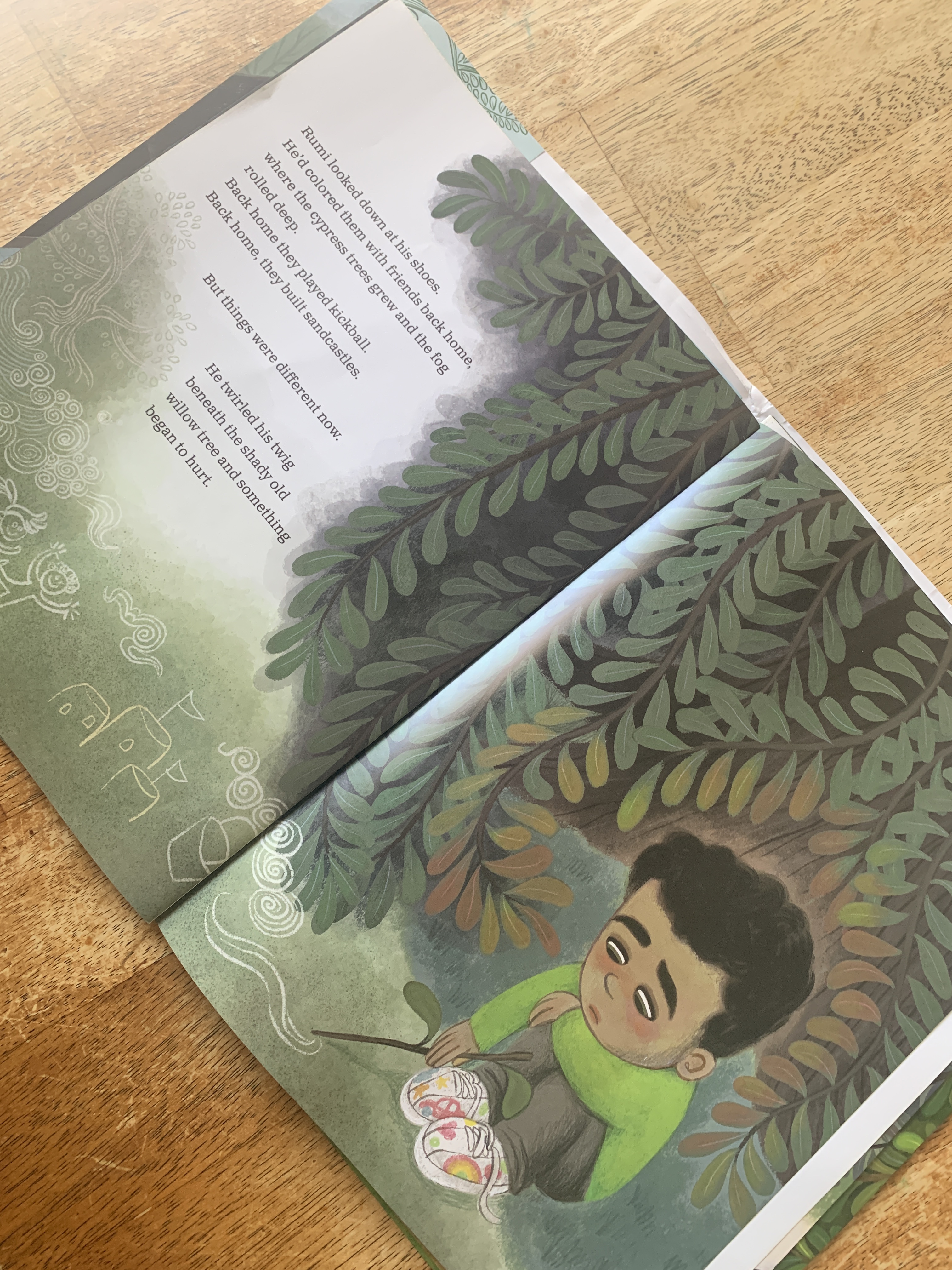
Being the new kid, not having friends, and being teased are not new themes in literature (or life), so if you are going to write a book about them, take a lesson from Muslim author Aisha Saeed and make sure the story is heartfelt, emotional, and well-told.  There is no Islam in the book, no foreign culture, or teasing because of skin color, it is a boy named Rumi who has moved from San Francisco to the other side of America and his shoes, with their drawings and colorings, that cause the kids to stare and start bullying.  Rumi seeks solace under a willow tree and fellow classmate Han has to be brave to put a stop to the mistreatment by finding his voice and not simply staying silent.  The text and illustrations provide a lot of opportunities for children to see themselves in the story, in the various characters, and ruminate over the actions and feelings from different points of view.  The book is lyrical, it is not heavy handed or preachy, and the Author’s Note at the end is equally touching and hopeful.

img_7925

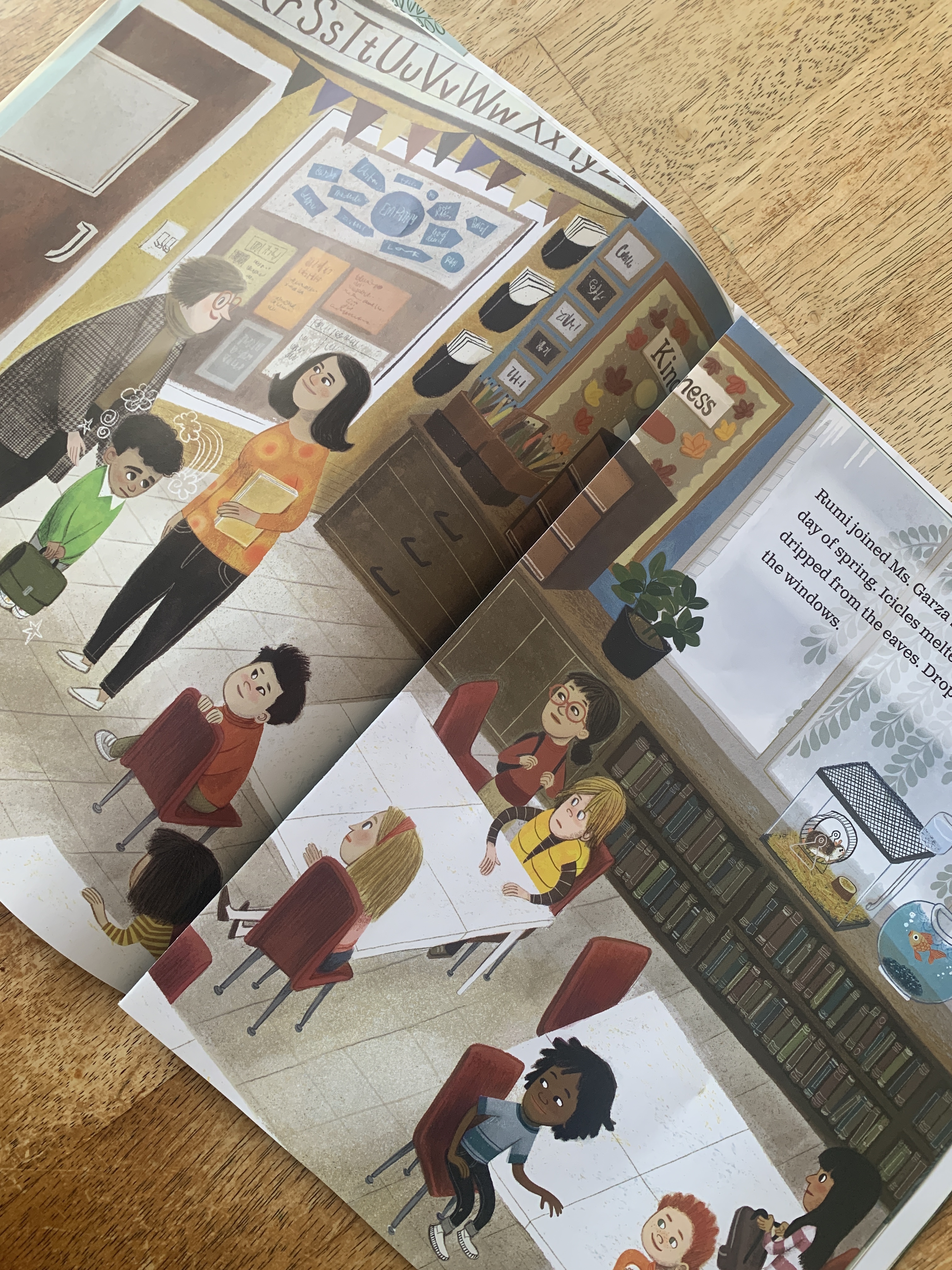
Rumi is quiet, and on his first day in Ms. Garza’s class the kids stare at him as he stares out the window.  At recess he wanders off to sit beneath the willow tree when Asher, Ella and Han leave the swings to see what he is up to.  Asher and Ella start to make fun of Rumi, Han is uncomfortable, but stays quiet.

Rumi recalls coloring his shoes with his friends, and how different it was to where he is now, he picks up a twig to twirl as the hurt grows. In music class when the giggling starts, he tries not to cry.  At recess he retreats to his refuge under the tree.

When the bullying escalates, and tears fall, Han speaks up and breaks the cycle. Others follow and see the world Rumi has created with his twig and are drawn to it and to Rumi.  Forgiveness is asked for, and granted and the tree becomes a place of friendship and togetherness.

img_7928

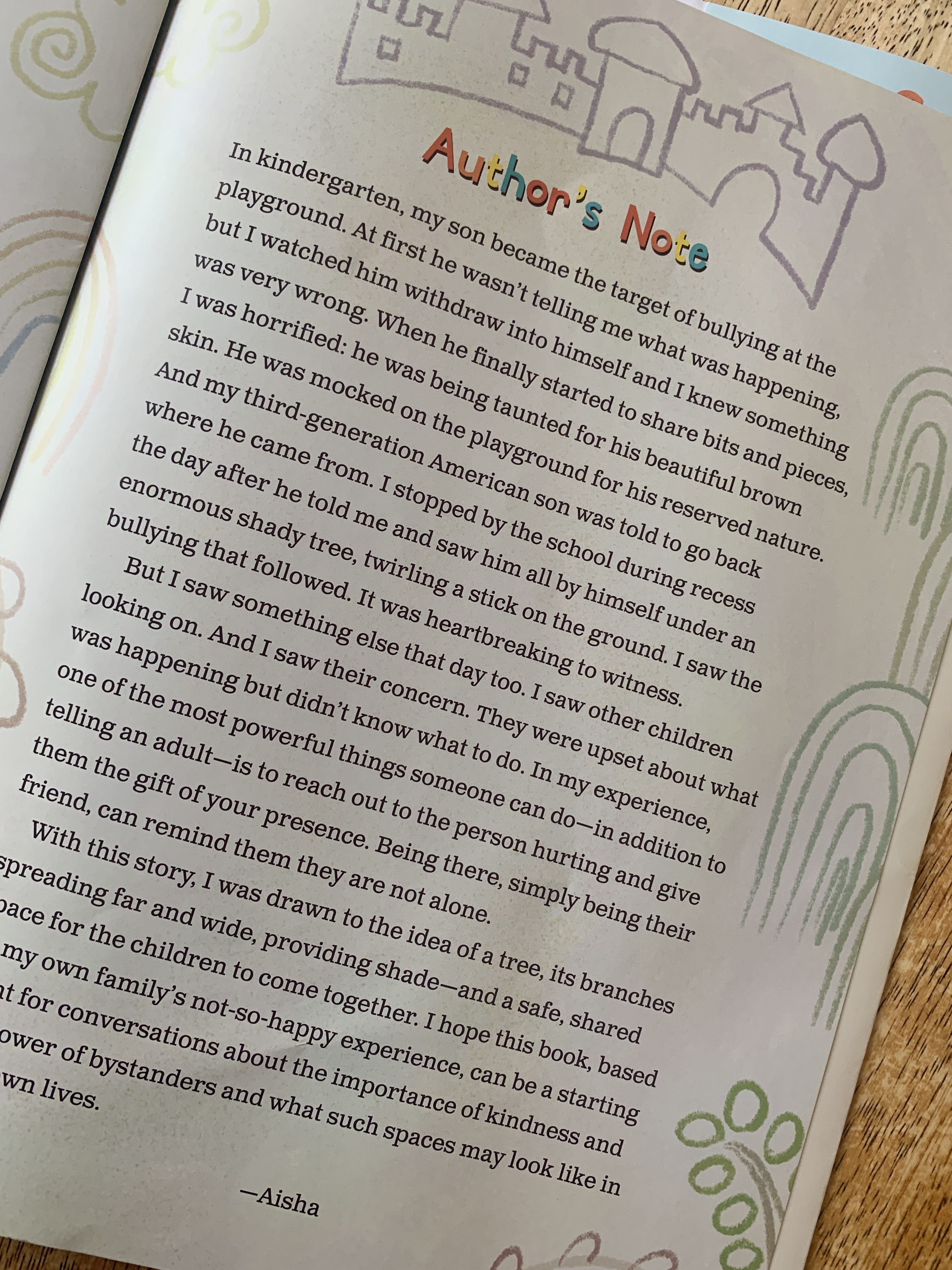
The Author’s Note shares the real life observations of the author about her son in kindergarten and how while heartbreaking, there was also hope in the concern shown by other kids that simply weren’t sure what to do.  I love that even though Rumi is being teased for his shoes and being different, he doesn’t stop wearing his shoes or try and clean the drawings off.

img_7926

I think this book is a must read in classrooms and homes were kids can slowly peel back the pieces and see where they can relate, how they can plan to act, and what parts they identify with.  The book is deliberate and slow, and while a child could read it on their own and enjoy the story and illustrations at hand, the real power it has, is being a catalyst for discussion and empathy and speaking up.

Pre order/order here on Amazon

img_7927


Nadia and Nadir Eid Surprise by Marzieh A. Ali illustrated by Lala Stellune

Standard
Nadia and Nadir Eid Surprise by Marzieh A. Ali illustrated by Lala Stellune

img_7058

This is another holiday book in the Nadia and Nadir series for early readers, this one focusing on Eid al Fitr, but also celebrating Muslim American athletes Ibtijaj Muhammad and Muhammad Ali, sadqa, and the love of grandparents.  The 32 page book with four chapters shows Desi American siblings enjoying both their Pakistani and American cultures while consistently embodying their Islamic faith.  They pray salat, wear hijab, discuss sadqa, and say Salam and Eid Mubarak.  I am not sure why they pray Eid prayers at home, and not in a community congregation, no it is not a Covid set book, they then go to the mall, but the pride in their faith, culture, and family is enjoyable.  Early readers will enjoy the colorful pages, large illustrations, and relatable story situations.

img_7062

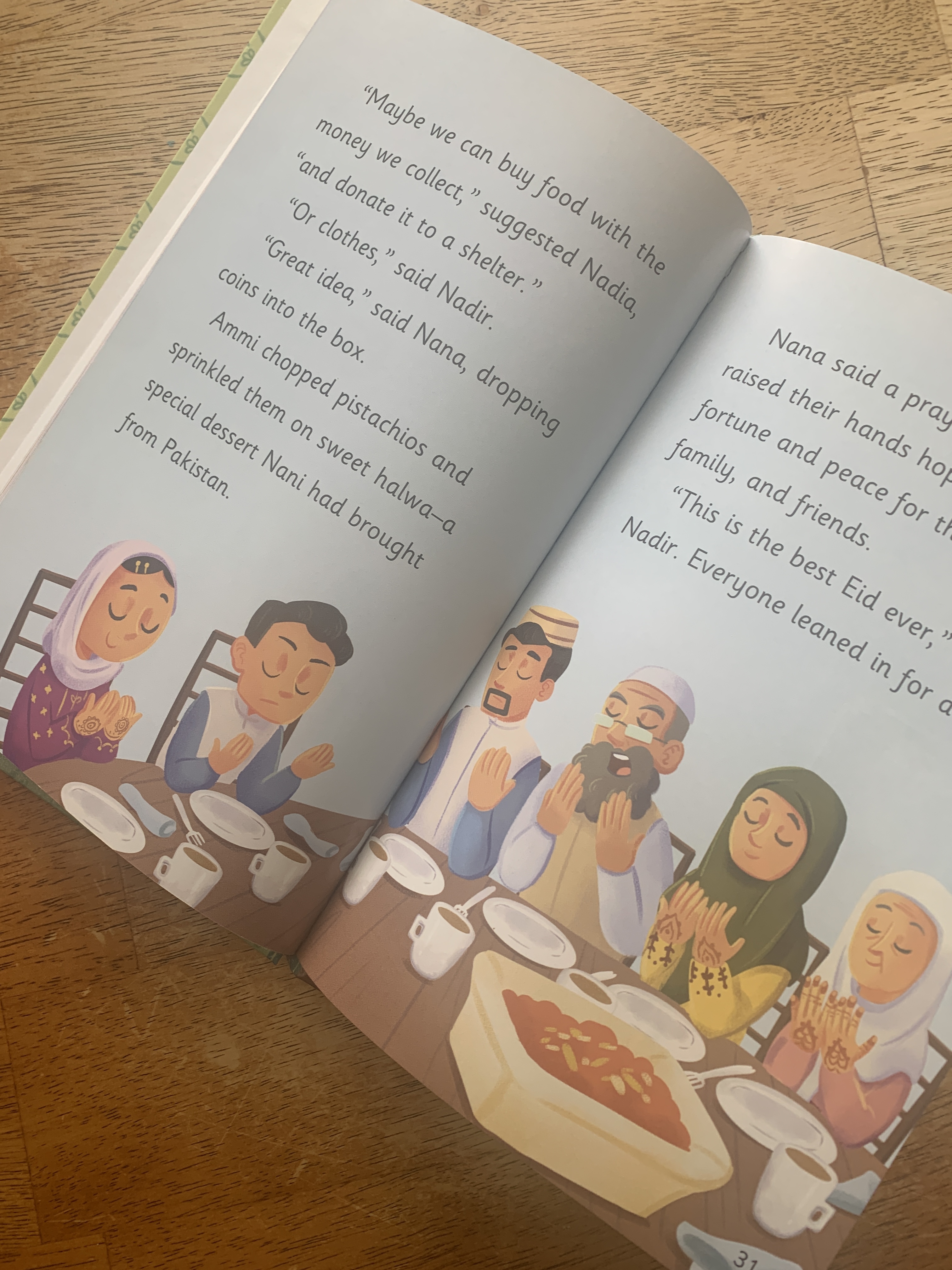
The book starts with the siblings hearing laughing downstairs, then seeing suitcases, and being surprised by their Nani and Nana coming from Pakistan to surprise them on Eid.  The family eats paratha and chai together before praying and making duas.

img_7061

After presents are passed out, the kids receive eidee and are off to the mall to pick out a toy.  Nadia sees an Ibtihaj doll, and Nadir points out that she is wearing a hijab just like his sister.  Nadia recognizes her and shares some facts since she has read her books.  Nadir wonders if Ibtihaj knows it is Eid and the family reassures him that Muslims everywhere in the world are celebrating.

img_7060

When it is Nadir’s turn to choose what to buy, he picks some boxing equipment with marketing images by Muhammad Ali.  Nana fills him in on the activism and accomplishments of Ali and how impressive his fearlessness really was.  When the change is given after paying, the kids and their grandparents discuss sadqa, charity, and this gives Nadia an idea.

The book concludes with a glossary of new words and information about the illustrator and author.  You can purchase your copy at all major retails such as here at Amazon, or you can support small business owners like Crescent Moon store and purchase your here.

Ali and the Gladiators by Farheen Khan illustrated by Evgeniya Erokhina (Ali Series Book #1)

Standard
Ali and the Gladiators by Farheen Khan illustrated by Evgeniya Erokhina (Ali Series Book #1)

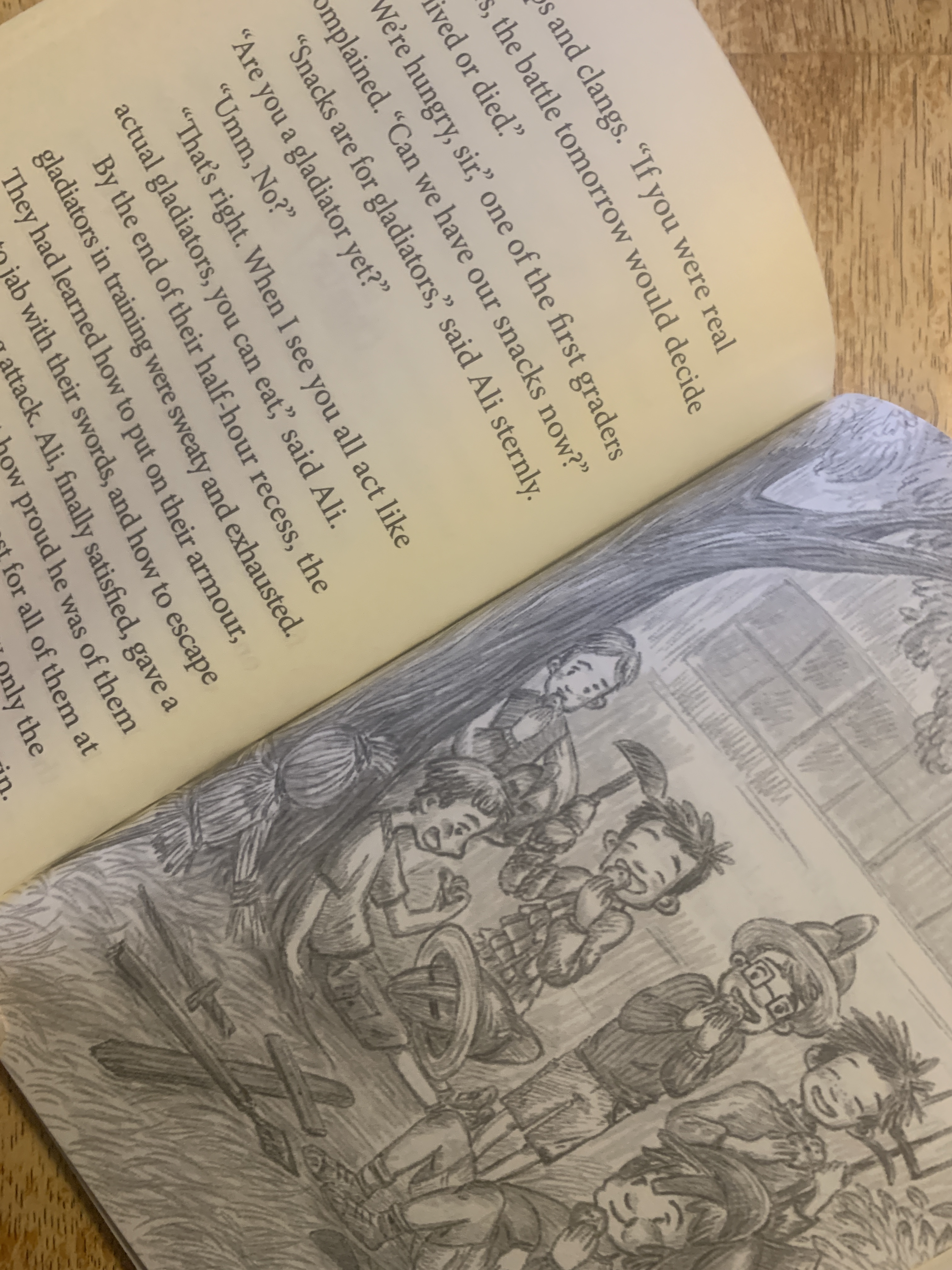
This new early chapter book series from Ruqaya’s Bookshelf comes as a boxed set (Books 1-5), so I wasn’t sure if I should review all of them as a collection, or just the first book.  I don’t typically review additional books in a series, but these books can be read out of order and stand alone just fine.  Ultimately, I’m just going to review the first book, but know the entire series is silly, clean and engaging for ages 7 and up (2nd grade will love these), they will connect with boys, girls, Muslims, non Muslims, and get readers of all ages smiling, if not laughing, at Ali’s outrageous adventures and choices.  Ali is presumably Muslim, the author is Muslim, the publisher is Muslim, but there is nothing religious at all in the text.  Even the one about Eid is very culture framed, not “I’m Muslim and this is what we do and why,” so to speak.  In Ali and the Gladiator there is a friend named Abdullah, his parents are referred to as Mama and Baba, they eat at Moe’s Shawarma Shop, and eat daal and roti at home, so there are hints of culture and religion that will further mirror a Muslim reader’s experience, but the focus is on the hilarious situations that Ali finds himself getting in to and out of with good friends, kindness, enthusiasm, and bravery.  All the books are about 60 pages long with short chapters, detailed pencil style drawings every few pages, inviting text, and an activity at the end.

TODAY (3/25/22) IS THE LAST DAY TO PREORDER AT THE SPECIAL PRICE, and THE BEAUTIFUL BOXED COLLECTION RELEASES APRIL 1st, JUST IN TIME FOR RAMADAN!

SYNOPSIS:

Ali really wants to impress his teacher, Mr. O’Reilly and a big project on Rome will be a great opportunity to do so, but he isn’t anxious to get started.  He has his April Party to prepare for, his friends to hang out with, and plus he knows he works best under pressure.  When he finally realizes he should get started, all the books on Rome are checked out, save a small book on the floor, yes Ali is on the floor in the library.  The book is about how to become a gladiator and that gives Ali an idea.  As his imagination works out the details he is off to his favorite store, the hardware store.  He has weapons to make and actors to train, and beasts to tame.  The assignment is supposed to be written, but Ali is extra and he does not want to be boring.  When he raises his hand to go first in the presentation, Mr. O’Reilly is confused, no one is presenting, they are just handing in their reports, but when gladiators and a “ferocious” cat enter the room, it is clear that Ali has his own way of doing most everything.

img_8157

WHY I LIKE IT:

I love that it is fun and well written.  The characters grow and the writing and descriptions smooth, the illustrations add detail and the books are perfectly silly for their intended audience.  So many books for this demographic resort to brattiness or potty humor, and I love that these are outrageous shenanigans, but they don’t cross into being obnoxious

I do wish there was more Islam in the books, or really any.  It doesn’t need to be Islam centered of preachy, but to add a bit of depth to the characters and flesh out their backgrounds would have been nice.  The desi foods are included, why not mention halal or toss in some inshaAllahs or that Ali gets to work on his weapons after fajr.

I absolutely love the presentation of all five books in a hard glossy case.  They look lovely on a shelf and would make wonderful gifts for Eid, or any time really.

img_8156

FLAGS:

none

img_8155

TOOLS FOR LEADING THE DISCUSSION:

I hope to have these in our school library, and encourage the 2nd and 3rd grade teacher to look in to having them on their classroom shelves.  Kids will be tempted to pick them up off the shelf, they will thumb through them and be drawn in, inshaAllah once they read one, they will read the whole series, and if that isn’t praise for a book series, I don’t know what is. Happy Reading!

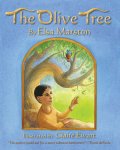
The Olive Tree by Elsa Marston illustrated by Claire Ewart

Standard
The Olive Tree by Elsa Marston illustrated by Claire Ewart

olive tree


Set in Lebanon, this 32 page book for kindergarten to second graders uses the ever important olive tree as a point of contention between two neighbors. Muna’s family moved away during the conflict because they were not like the others in the village, and while they were gone, Sameer’s family cared for the olive tree on their neighbor’s property, and collected the olives that fell on their side of the wall. But now that the neighbors have returned, Sameer is not only disappointed that they don’t have a boy his age to play with, but also clashes with Muna when she says that he shouldn’t take their olives. By the end of the book, olive branches of peace will be referenced and hope hinted at in this brightly illustrated book with a lesson.

img_1647

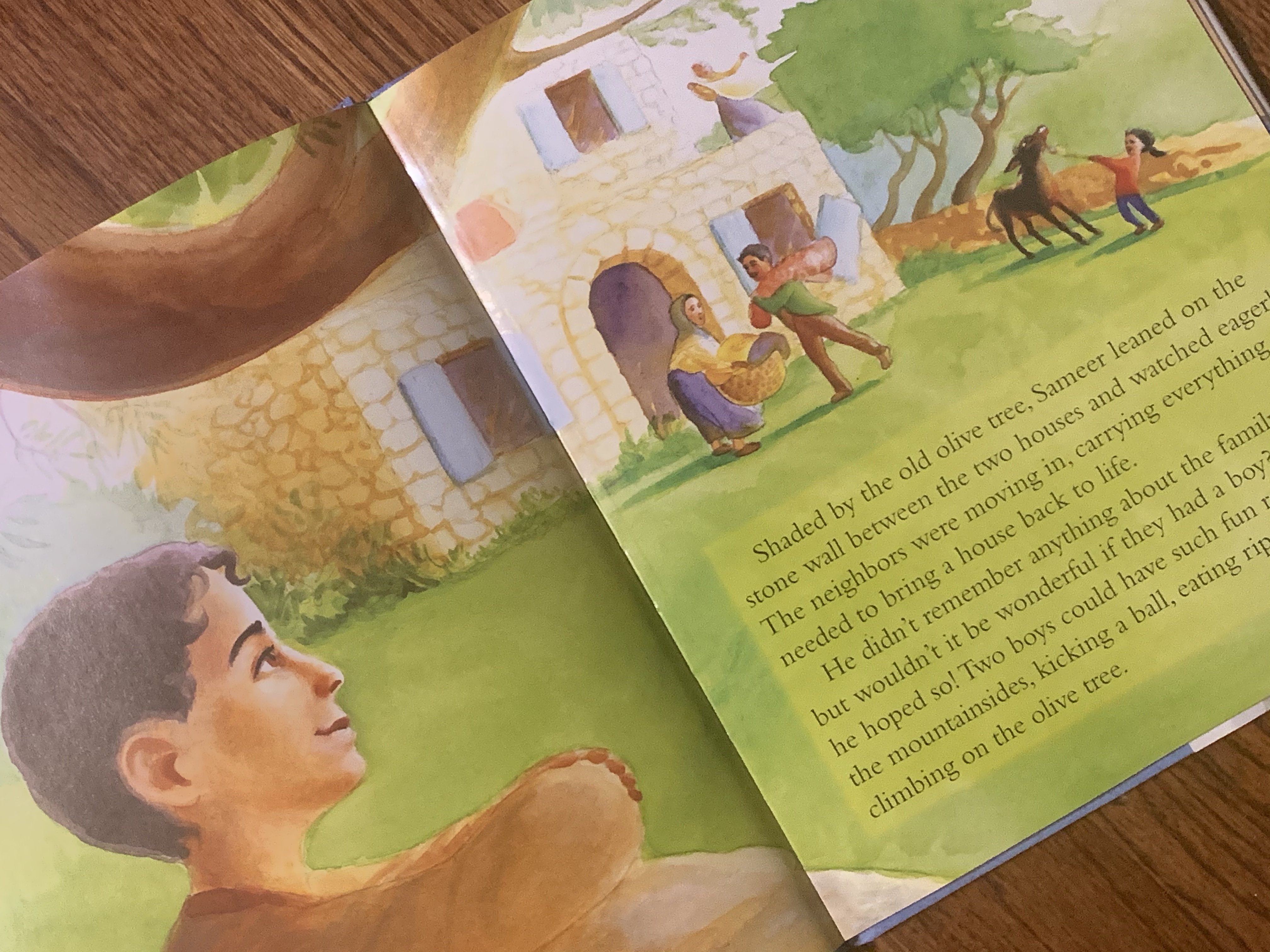
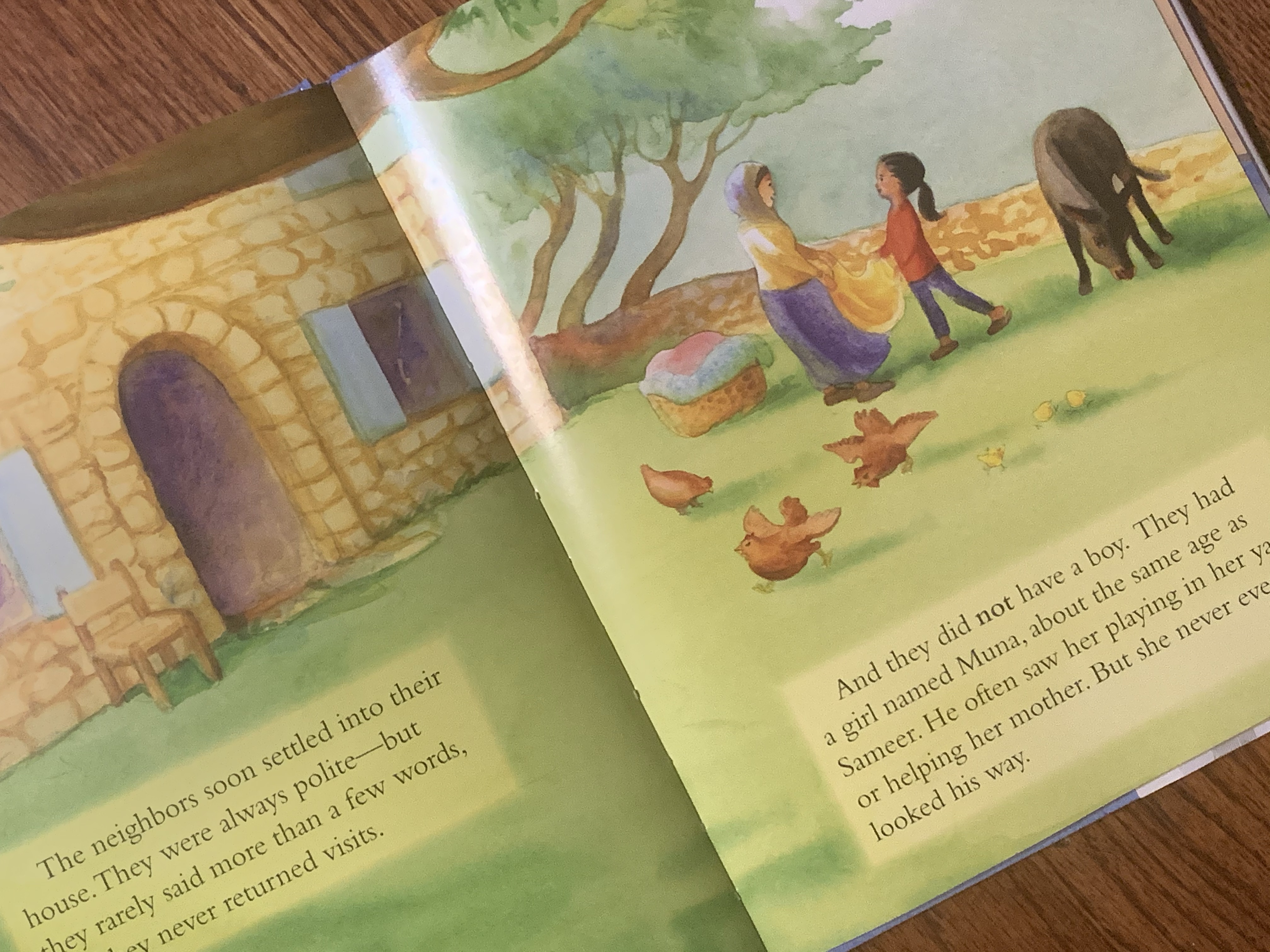
I like that why Muna’s family left is not abundantly clear, saying that “For many years the house next to Sameer’s had stood empty. . . that the family who lived there had gone away during the troubles because they were different from most of the people int he village.”  Lebanon is a diverse place and the illustrations seem to show both Mom’s wearing head scarves, the text does not detail if they are unlike each other because of religion, or culture, or some other reason, and I kind of like that it is left vague so that children learn in the end perhaps, it doesn’t matter.  

img_1648

When the family moves back home, Sameer watches them and recalls the ways his mom prepares the best olives in Lebanon.  The neighbors are polite, but not friendly.  They don’t ever say much and they don’t return visits.  One day when the ripe olives have fallen on the ground, Sameer heads out with his basket to collect them.   Muna, who has never looked over at Sameer, watches him and tells him that they are her olives, and that the tree has been in her family for a hundred years.

The two bicker about who has rights to the olives on Sameer’s side of the wall and in anger, Sameer dumps his basket of olives on Muna’s side and walks off.  After that, no one on Sameer’s side collects the olives on the ground.  One night there is a storm and the olive tree and part of the stone wall are destroyed.  The adults gather to survey the damage, but walk off without saying anything.  The two children are left to decide what to do next about their beloved tree, and their relationship with one another.

img_1649

I like that the resolution is subtle, but thought provoking and that the adults don’t seem to interfere too much.  I can’t imagine that they don’t have opinions about their neighbors and the olives, but the book stays on the children and the assumptions, stubbornness, and unsaid words that have created such a divide, and must ultimately be resolved as a result.


The Prophet (salla Llahu ‘alayhi wa sallam)Described by Zaheer Khatri illustrated by Fatima Zahur, Elaine Limm and Jannah Haque

Standard
The Prophet (salla Llahu ‘alayhi wa sallam)Described by Zaheer Khatri illustrated by Fatima Zahur, Elaine Limm and Jannah Haque

prophet described

This 48 page rhyming prose filled picture book details our beloved Prophet Muhammad (saw) in accordance with the Holy Qur’an and as stated by Hadith.  The repetitive refrain highlights the two-page spread’s thematic descriptions of Rasul Allah’s appearance, speech, mannerisms, walking style, etc., and the best part is, it is all sourced and referenced at the end.  It features the same two characters and the same layout, as The Prophet’s Pond, which this book even references, but notably, my copy of that book does not have faces in the illustrations of the boy and his mom, and this new book does.  I tried to see if you could find a faceless version and could not, perhaps, that option is forthcoming.  As I often remark to those around me, there are not that many books about Prophet Muhammad (saw) that are factual, but framed in a fictitious manner for children, or that are fun and playful, and this book helps fill that void in creating love and connection to the Prophet.  It is a bit text heavy and it is very thoughtful, but the repetition and rhyme along with the beautiful large horizontal illustrations, create a mood of reflection, appreciation, love, and admiration and will be suitable for ages five and up.

img_0618

Zayd and his mom are back and the book starts with Mummy telling Zayd that one day he will meet a special man inshaAllah, and Zayd asking her to give her details so that he can guess who it is. The first set of clues describe how gracious the most handsome man is, and how he will greet Zayd one day.

img_0619

The story then moves on to describe Prophet Muhammad’s fragrance, his hands, his words, his stature, his complexion, his hair, and so on.  As the details flow, Zayd and his Mummy journey through nature, standing near beaches, and forests, and rivers and waterfalls.  They cross a bridge on their way out of the city, and the full color pages move from night (or possibly really early morning) to day to night again.

img_0620

Zayd seems to know it is Prophet Muhammad (saw), but keeps begging to hear more details, before he proudly proclaims the only human whose beauty reaches so far is Prophet Muhammad, peace and blessings be upon him.  The book then says he will be waiting by a pond, but that is a story for another day, giving a shoutout to its companion book.

img_0624

There are questions recapping what is learned in the story before 10 pages of reference material.  It really is incredibly well done and is a great resource in addition to being a lovely story.  Thank you @crescentmoonstore for getting the book to me so quickly.

img_0625

Halal Hot Dogs by Susannah Aziz illustrated by Parwinder Singh

Standard
Halal Hot Dogs by Susannah Aziz illustrated by Parwinder Singh

hotdogs

I’m not sure what I expected this book to be, I just knew I wanted to get my hands on it, but I’m fairly certain, that even if I would have had some expectations, they would have been no where near how well done this 40 page book for four to eight year olds is overall.  It is unapologetically American-Palestinian Muslim in an inclusive funny delightful way, that only an OWN voice book can be. There have been some great picture books lately that are authentic, yet mainstream, and this book pushes that standard just a little bit higher as it normalizes jummah, halal food, dabke, hijab, with familiar threads of street food, spunky little sisters, untied shoelaces, tradition, and excitement.  The story has a twist and some intentionally misleading foreshadowing, that give the book depth and added fun.  Readers of all backgrounds will relate to this book and find something that they can relate to, as they laugh and marvel at Musa’s infectious enthusiasm for hot dogs. img_0610

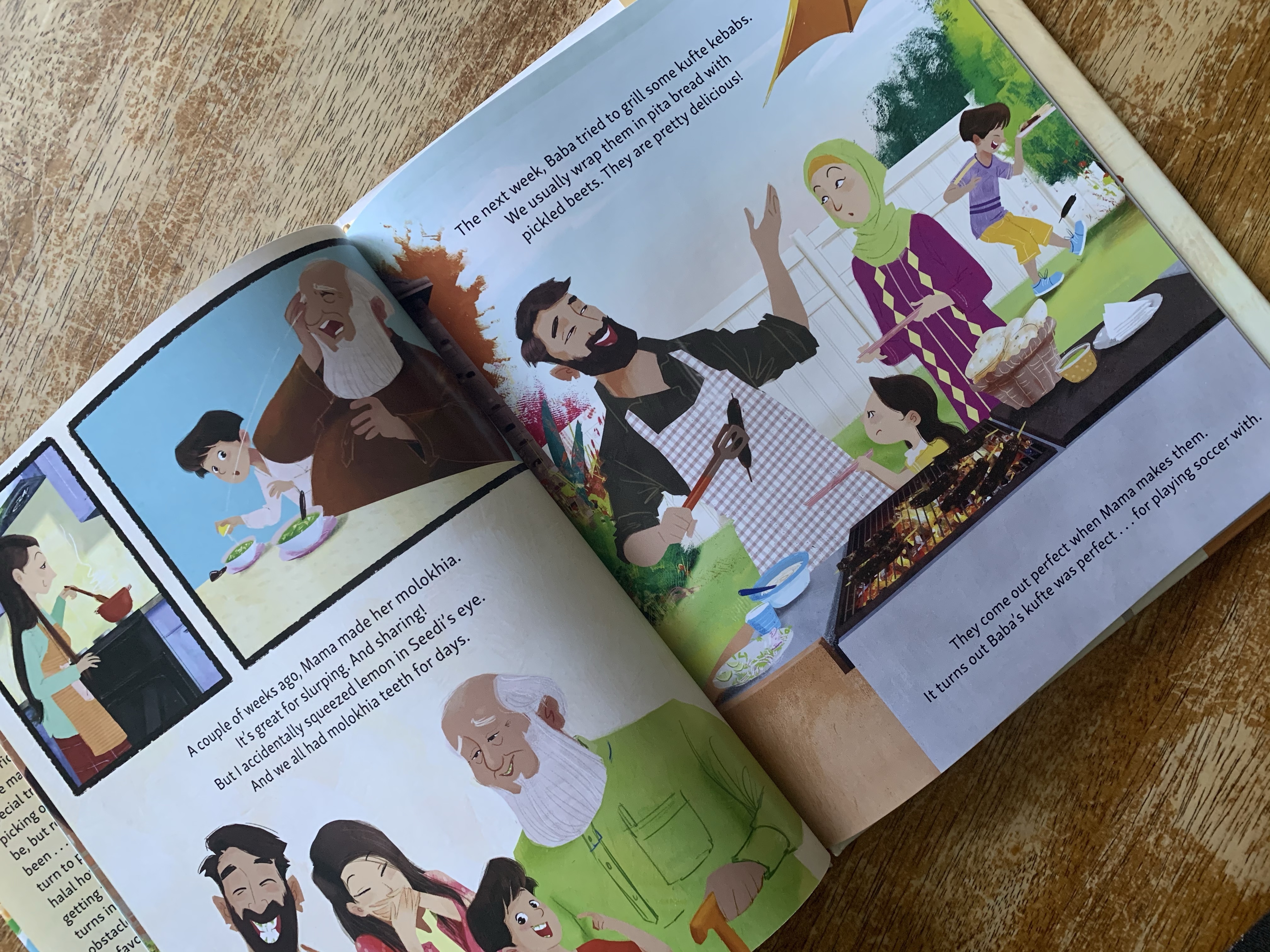
Musa Ahmed Abdul Aziz Moustafa Abdel Salam, aka Musa, loves Fridays.  His family heads to the masjid for Jummah prayer and then home for a special Jummah treat.  Lately, they’ve had molokhia, that stayed in their teeth for a week, kufte kabobs that were better for soccer playing than eating, riz bi haleeb with lost dentures, and prelicked jelly beans.  Alhumdulillah, this week is Musa’s turn to pick, and he is picking his favorite: halal hot dogs with Salam sauce.

img_0611

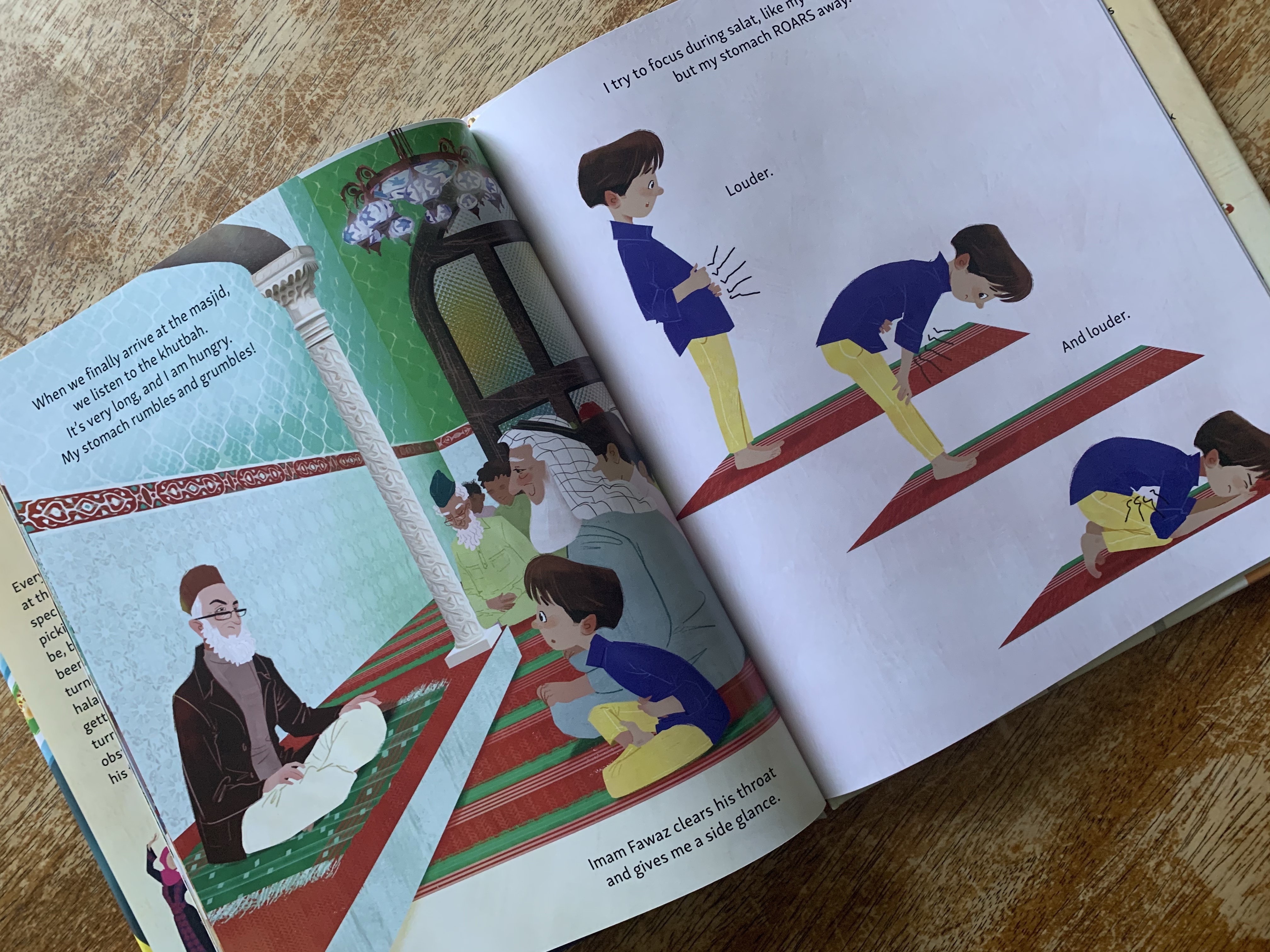
They head to the mosque dancing dabke as they leave their house with smiling faces.  The khutbah is long though, and during salat his stomach is roaring! Afterward he is off, but Seedi has to help Maryam find her red shoes in a sea of red shoes and mama is chatting with friends. 

img_0612

Dad gives in and lets Musa go get the hot dogs alone.  As he heads to the stall with the best hotdogs: the perfect amount of hot, chewy, juicy hot dog goodness, he passes all sorts of foods being eaten.  There is falafel and bao and tacos and samosas and churros, but he is determined to get hot dogs, even though the line is really long.

img_0613

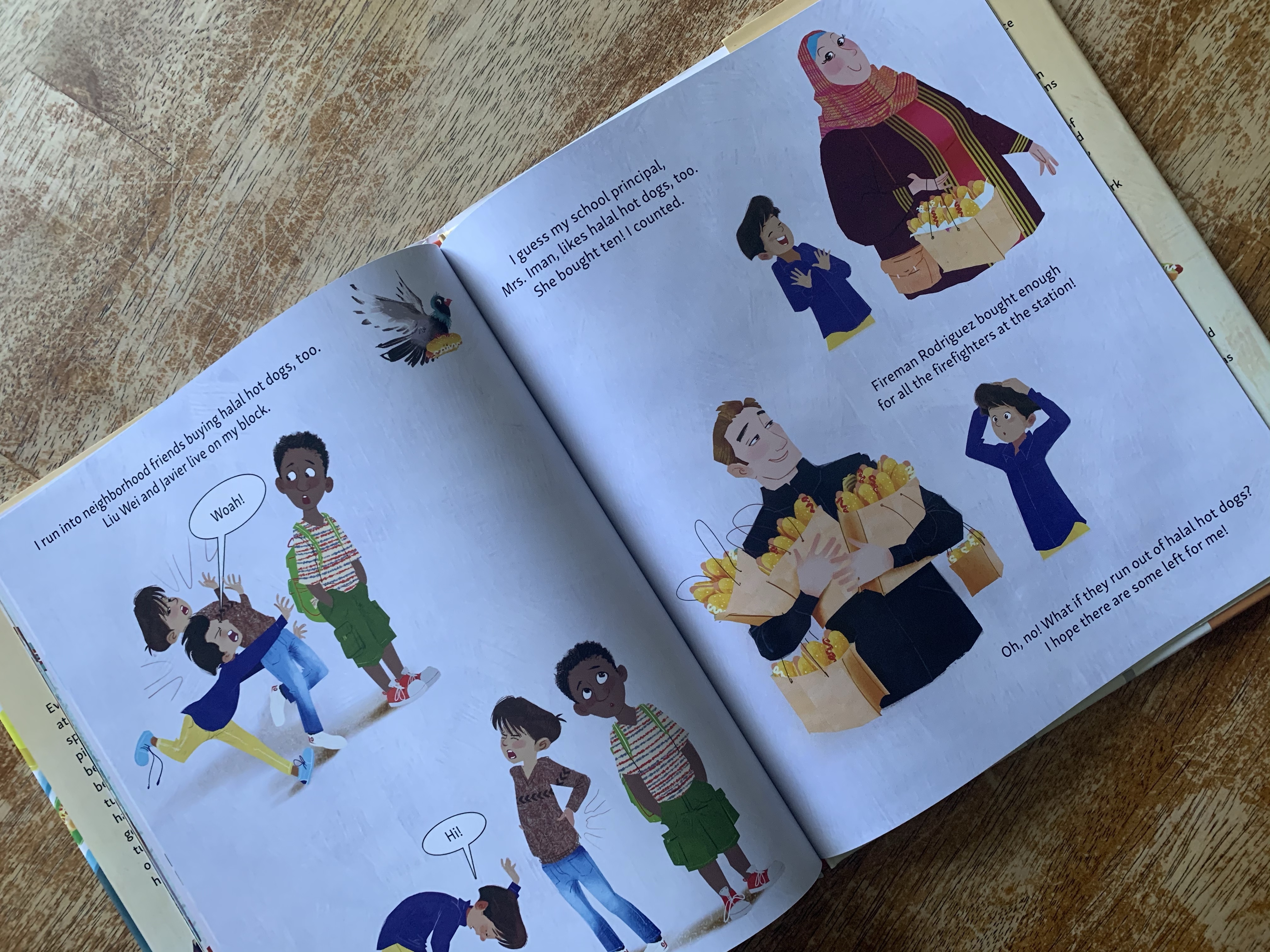
He sees friends in line, and firefighters, and even his school principal.  Everyone loves hot dogs, even birds and squirrels.  Finally he buys a whole bag full with special Salam sauce and races home to share with everyone.  But uh oh, it doesn’t go as planned, and I’m not about to spoil it, so get yourself a copy like I did from http://www.crescentmoonstore.com or your library, and maybe don’t read it while you are fasting, because you will be craving hot dogs, mmmmmm nom nom nom.

img_0614

There is an Author’s Note at the end that details her kids’ influence on the story and explains that a portion of the proceeds go to UNRWA USA, a non profit that helps Palestinian refugees.  There is a glossary of Arabic Words and Terms, and a section explaining Halal Laws.

img_0615

The book shows the mom in hijab outside the home, and uncovered within the home.  There are diverse skin colors among the Muslim and non Muslim characters in the book, as well as a variety of ages depicted.  Seedi wears a keffiyah on Jummah, but different clothes on different days.  The illustrations are wonderful and descriptive and do a lot to compliment the story by setting a relatable and diverse-positive visual.

img_0616

Elisha the Eid Fairy by Daisy Meadows (Rainbow Magic)

Standard
Elisha the Eid Fairy by Daisy Meadows (Rainbow Magic)

img_9867

If you are familiar with the Rainbow Magic fairy books, you know they are never ending, there are currently 228 titles in the collection that cover beginning readers, early chapter books, and longer solo chapter books.  They cover seasons, colors, flowers, jewels, musical instruments, pets, friends, holidays, etc., and now festivals.  They may not be the most intellectually stimulating, but they serve a purpose in getting young readers confident and engaged.  My daughter loved them in first and second grade and when this book was delivered a few days ago, she was so excited to see a Muslim fairy.  She is 14.  Representation will always matter, even when the story is a bit hokey and random, to see yourself in a beloved series, has power.  Yes, the story is predictable in the 80 drawing filled pages, but for first and second graders it is fun.  Elisha wears western clothes with her hijab, has a magical Pelita lamp that brings Eid joy to the human world, and hosts feasts with international foods.  Yes, the fairy is Muslim and Eid joy after Ramadan comes from an oil lamp apparently, it is a stretch, and if you are not comfortable with this imaginative representation of Eid joy coming from a magical creature’s enchanted item, then please don’t waste your time.  If your kids already read books about fairies, this book might be of great delight to them, and be a great conversation starter for you to have about what really makes Eid a joyous time.

img_9869

SYNOPSIS:

Jack Frost is still determined in this the third book in the four part festival series, to cancel Eid, Diwali, Hanukkah and Buddha Day to create his own Frost Day.  With the sighting of the new moon, in this book Eid is under attack.  Humans Rachel and Kirsty are summoned to help find Elisha the Eid Fairy’s magical Pelita lamp.  But, Elisha goes missing and the girls arrive on Festival Island to find goblins destroying the Eid decorations.  The fairyies divide up and Rachel and Kirsty in their fairy form are off to find Elisha, while the other fairies handle the goblins.  They find her in a tower surrounded by a hail storm, the can’t get her out unless they find her wand.  Once they find her wand they have to find her magical item.  The goblins have it and are trying to teach it to make Frost Day treats instead of the kleichas and baklava and turkish delight that it keeps creating.  With quick thinking, and an impromptu dance lesson, the lamp is recovered, Eid joy is saved, and the girls return to the human world, knowing that one more festival will need saving in the near future.

img_9870

WHY I LIKE IT:

First of all, I didn’t know what a pelita lamp or kleichas were, so I did learn something once I Googled it, but I’m not entirely convinced that a pelita lamp (sometimes it is capitalized and sometimes it isn’t) is critical to the celebration of Eid.  Aside from the religious uncomfortableness of attributing Eid joy to a magical creature and her enchanted item, the concept of the lamp seems a bit weak.  I like that information about Ramadan is included and Eid Mubarak is mentioned a few times, but a little bit more about a lamp or lantern perhaps as a cultural relic, would have really made more sense even in this fragile framework.  

I like that multiple cultures are represented in the concept of Eid and Elisha, she isn’t boxed in to one culture, she is universal.  The themes of team work and friendship are always present in these books which is a great way to show respect for multiple religions and festivals.  Jack Frost at times seems to be a good villain, but more in theory than in reality.  His spell that the fairies are trying to break:  “Ignore Eid and Buddha Day, Make Diwali go away.  Scrap Hanukkah and make them see- They should be celebrating me!  I’ll steal ideas and spoil their fun. My Frost Day plans have just begun.  Bring gifts and sweets to celebrate The many reasons I’m so great!” spells out his plans and make him the right amount of scary for early readers.

img_9874

FLAGS:

The premise of where Eid joy comes from.  The goblins say “shut up” at one point.

img_9871

TOOLS FOR LEADING THE DISCUSSION:

It is a little young for a book club selection, but if you have Rainbow Magic books on your shelf, you should definitely have this one too.