Tag Archives: Muslim Characters

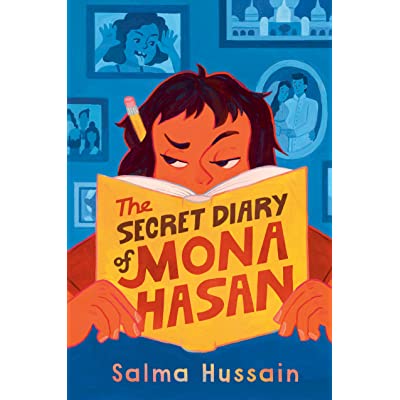
The Secret Diary of Mona Hasan by Salma Hussain

Standard
The Secret Diary of Mona Hasan by Salma Hussain

mona

I really don’t know how to review this book. Is it funny and engaging, yes at times, but I am a 41 year old, and I can attribute it (hopefully/possibly) to satire, hubris, character voice, and commentary, except it isn’t written for me, it is written for 10-14 year olds.   There is no way would I put this in the hands of a fourth grader, let alone a high schooler.  The book starts on New Year’s eve with a “Muslim” family drinking alcohol, later the 11 year old drinks to get brave enough to meet up with her boyfriend (he wanted to wait until after Ramadan), after a bad haircut she starts wearing hijab and later takes it off, her period starts and she is baffled at which hole it comes out of, she is no longer allowed to be alone in a room with a boy because that is how babies are made, but it is ok to go to a school dance and kiss them, women are rather useless, old people (31 year olds and up)  should know their place and act their age, dark skin is bad, chests need to be big, slut is both something you are and something you can do,  Aisha (RA)’s age of marriage is criticized as is Khadeeja (RA)’s, no one is as good at her, Ramadan is annoying because she has to hide when she eats in public for a whole month, Friday prayers even though they rush through them limit their fun time, the Tablighi Jamaat have to be lied to and hidden from, her mom is pregnant months after coming out of her bedroom smiling, her father claims he will only ever enter a mosque horizontally, you can see the list goes on and on.  Yet at the same time, there are true moments of strength, such as when she fights back against the creepy sexual assault vibes from “uncle annoying” and then protects her sister when her parents dismiss it, when she sticks up to a bully to protect her gay friend in Canada, the dad getting caught one day praying salat, the love of family felt despite her perceived privilege while visiting Pakistan, her constant reference to Allah swt as she asks Him and tries to understand the world around her, and her terrible, terrible poetry.  The diary style is both brilliant in trying to show the world through Mona’s eyes, and irritating as NONE of the aforementioned concerns are given any context, explanation, reflection, anything.  The thoughts pour out of her head, onto the paper, and the reader is left to figure out if this is how things are, is this her naïve view, is she commenting on society, is the author, is this fact, is it satire, is it someone with an axe to grind on culture and religion, is it showing the ridiculousness of so many stereotypes? And to be honest, I have no idea.  Which is why I can’t say that the book is good or bad, I think it is well written, my problem with it is, I don’t know who it is written for.  I think it would be very damaging to young children, the vulgarity, misogyny, racism, arrogance, will hurt both those that see parts of themselves in Mona and those that read it and assume too much about what Mona represents.

SYNOPSIS:

Mona is an 11 year old girl, and this is her diary.  She is arrogant and opinionated, but she grows and mellows as her view of the world moves from privilege in Dubai to immigrant in Canada with a bit of an awakening in Pakistan in between.  It is her view of her life, her place in the world, and the greater society around her.  It is an easy read on the surface of her living through the war without getting any days off of school, friends, maturation, first loves, hoping for a bigger chest, pulling a fire alarm to get time with a boyfriend, feminism, and the annoyance of being better than everyone else in everything she does.  There are side characters that flit in and out and family members that shape her, but the point of view is uniquely hers in all matters regarding leaving the Middle East as a Pakistani living there, spending time with her mother and father’s families in Pakistan and the rift her parents’ love marriage caused on their acceptance of her, their move to Canada to start a more peaceful life that ends up being grueling and difficult and through it all threads of Islam, fitting in, and growing up.  It is a snapshot of so much that the reader is left to connect the pieces, assign them value, and understand the larger message, if one exists.

WHY I LIKE IT:

I still don’t know if I like it or dislike it.  I dislike it for kids.  I like it for adults as a light over the top snarky read, but I think my opening paragraph is sufficient and the 296 page book doesn’t need my concerns and praises rehashed here.

FLAGS:

Misogyny, anti Islam, sexism, racism, ageism, lying, vulgarity, cursing, crude talk, lying, disrespect, lack of religious respect, kissing, sexual assault (attempt), deceit, pulling a fire alarm, physical fighting/assault, family trauma, arrogance, pettiness, stereotypes, bullying, sexual innuendos,

TOOLS FOR LEADING THE DISCUSSION:

I have suggested a few ADULT friends read the book so we can chat, but no kiddos, no teens, no early twenties, old ladies (31 plus according to the main character)!

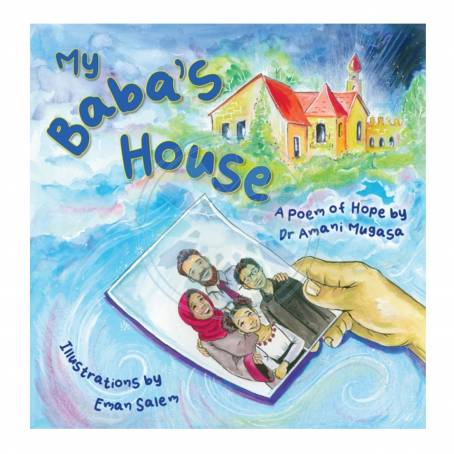
My Baba’s House: A Poem of Hope by Dr. Amani Mugasa illustrated by Eman Salem

Standard
My Baba’s House: A Poem of Hope by Dr. Amani Mugasa illustrated by Eman Salem

my babas house

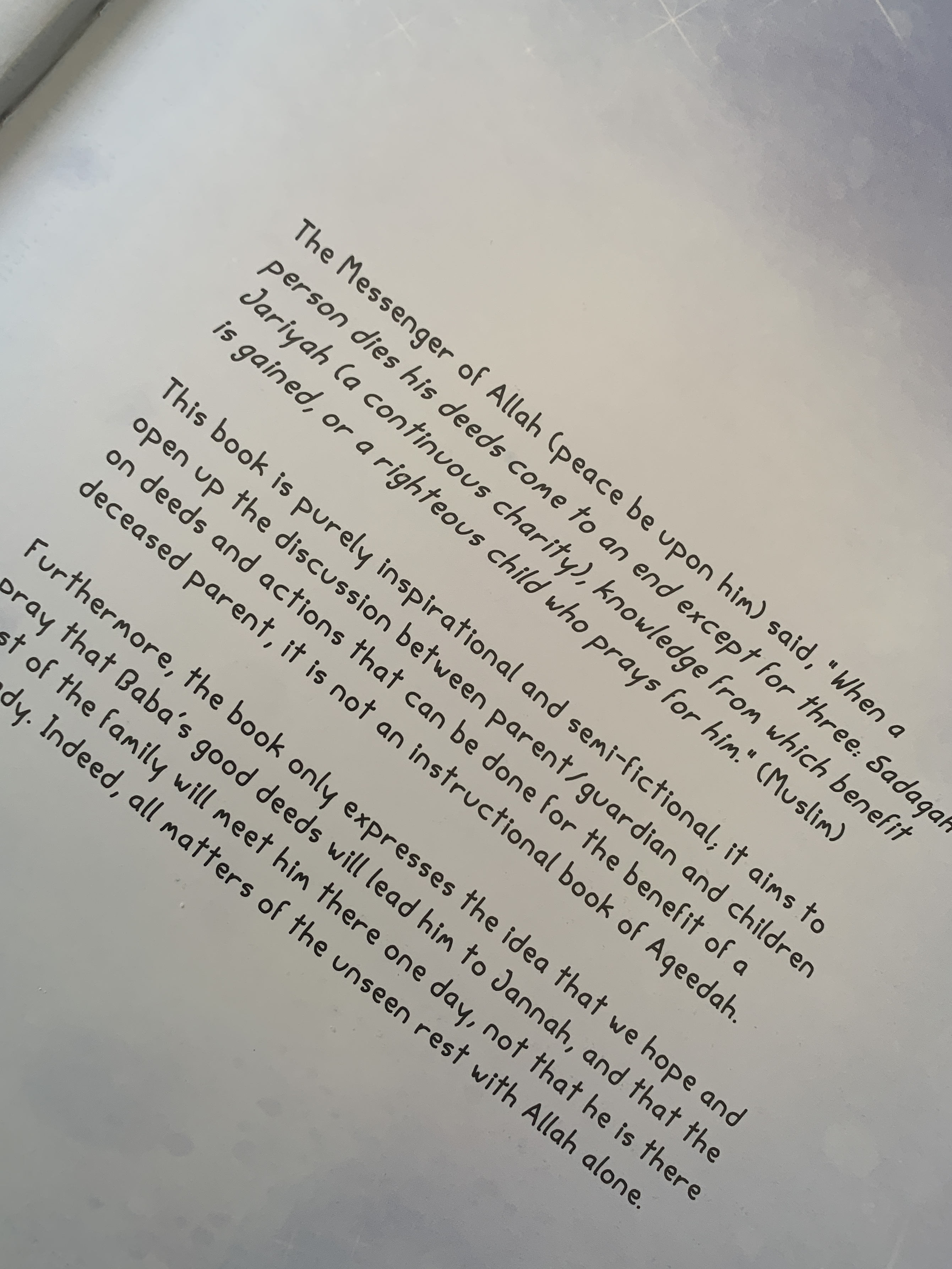
I wanted to love this Islamic centered children’s book about grief, but I found it a bit problematic and misleading.  I am by no means an expert in Islamic matters of death or in psychological bereavement, but the note at the beginning of the book- if I wasn’t already going to look at it critically- really raised some warning flags.  It says that the book is not an instructional book on Aqeedah, that even though the title and whole story is about a house being built that “the book only expresses the idea that we hope and pray that Baba’s good deeds will lead him to Jannah, that that the rest of the family will meet him there one day, not that he is there already.” So, before you even start the story, it seems that the disclaimer is making it clear that this book is not religiously accurate, and that it is just meant to soothe and provided hope.  After taking all that in to consideration, and reading the 26 pages of text over a dozen times, I think I finally pinpointed why the book further reads problematic for me.  It is the repeating phrase, “Your Baba has been building a beautiful house for you,”  because he hasn’t right? He has built a house for himself through his good deeds in this duniya, he benefited HIS parents by being a righteous Muslim.  The words “for you” completely take the book in my head from being a slight suspension of timing where the deceased are, in to be misleading.  So if the book is not accurately framed and only to be taken as something “to open the discussion,” what is the point? Why fill it with Islamic references and concepts, if they will then have to be clarified, corrected, and re taught?  Sigh, I’m happy to listen to those that want to change my mind, truly I am.

img_9013

The rhyming book starts out with a mom and two kids being consoled by the text that their Baba has been building a house for them with Allah’s help.  That it is amongst the flowers, made with Allah’s powers. That with every good deed he did, their Baba becomes a builder, that there are pure rivers and trees, and that the house is hidden through Allah’s gate.

img_9014

To find their Baba’s house they will walk with Prophets, and see ripe fruits, and smell sweet musk.  There will be rivers of milk and he will carry them above his head.  The illustrations on this page are a little off in my opinion the shadows of a person elevating and even the girl looks a little concerned.

img_9015

I like that the next spread addresses that only Allah knows when the day will come that we reunite. And then the next pages tell how the children can help decorate their Baba’s house by calling adhaan, reading Qur’an, being kind, giving charity, and making duas.

img_9016

The book concludes with encouraging patience and finding reassurance in knowing we belong to Allah and to Him we return.

With the exception of the one page, the illustrations are adequate and show a mixed racial family.  The rhyming lines are rather weak, and ultimately there are just better books out there about grief that don’t have to be so qualified for accuracy.

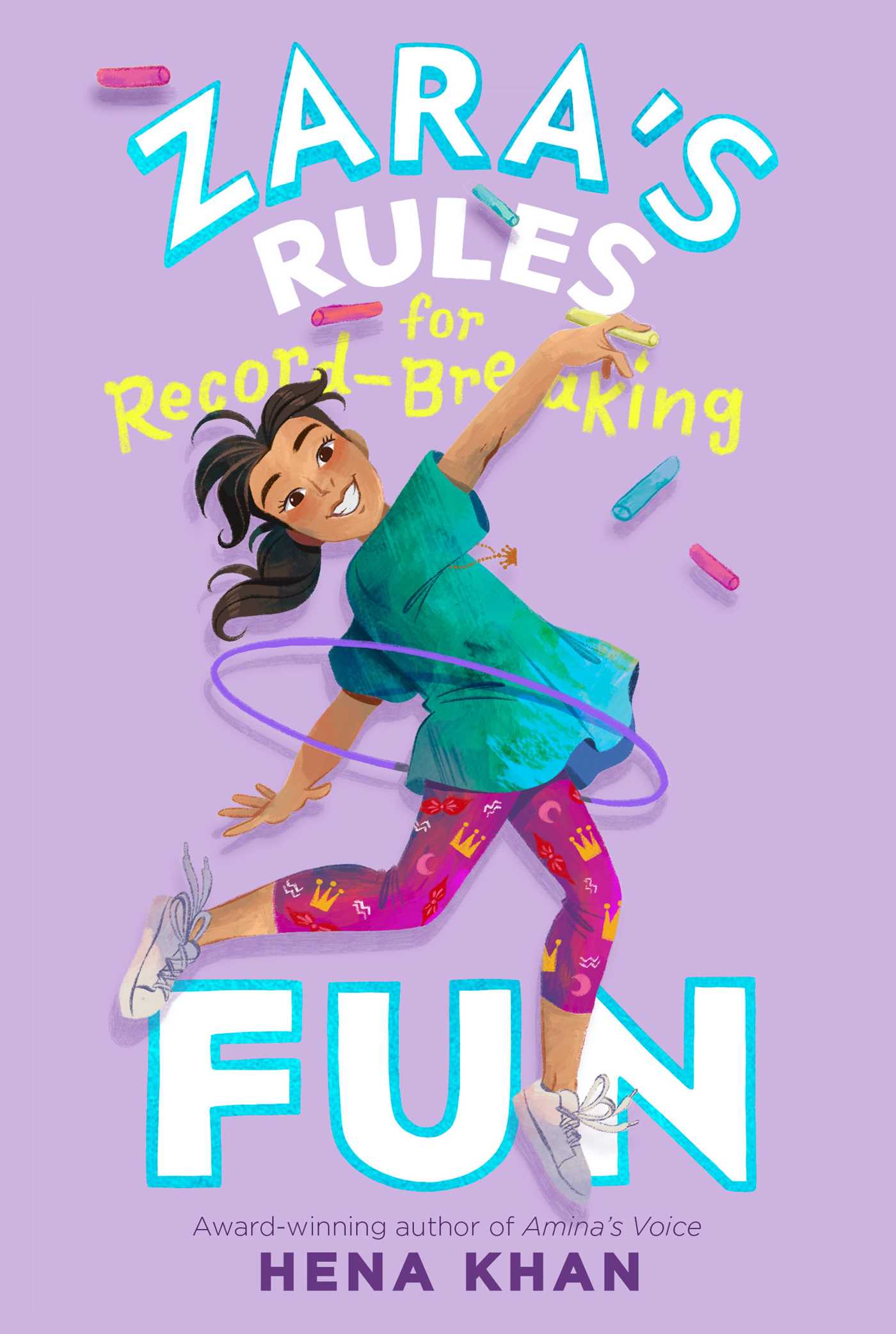
Zara’s Rules for Record-Breaking Fun by Hena Khan illustrated by Wastana Haikal

Standard
Zara’s Rules for Record-Breaking Fun by Hena Khan illustrated by Wastana Haikal

zara

This early chapter book packs a lot of personality, growth, and fun into 127 pages.  The writing quality is engaging and the characters relatable.  If you have read the Zayd Saleem books you will recognize the family in this new stand alone series.  Either way though, from the surprising Naano to the fun Mamoo, the neighborhood children and the desire to maintain her reign as Queen of the neighborhood, the book may be meant for 7-10 year olds, but based on the kids in my house, anyone that picked it up, read the entire book before putting it back down.  The grandma covers her head, it mentions she reads Quran, there is a Salaam or two, an InshaAllah, and desi cultural foods mentioned.  The focus is not on religion or culture, but the layer adds depth to the characters, and normalizes names and practices in a universal plot.

img_9060

SYNOPSIS:

Zara’s neighborhood has a lot of kids in it, and Zara has the reputation of being the leader who rules with grace and fairness.  It is a position she takes very seriously.  When Mr. Chapman moves out and a new family moves in, Zara fears losing her place.  The new girl Naomi has a lot of ideas and everyone seems to like them.  Zara has a grand idea to set a Guinness World Record, but with her little brother Zayd messing her up, nothing is going as planned for the summer.

As she finds her self alone a lot and not having much fun, she decides to change things up.  She works to be less bossy, less controlling, more willing to to share her crown.  With a lot of heart, internal growth, recognizing her strengths and weaknesses, the neighborhood kids just might have a record-breaking summer.

img_9059

WHY I LIKE IT:

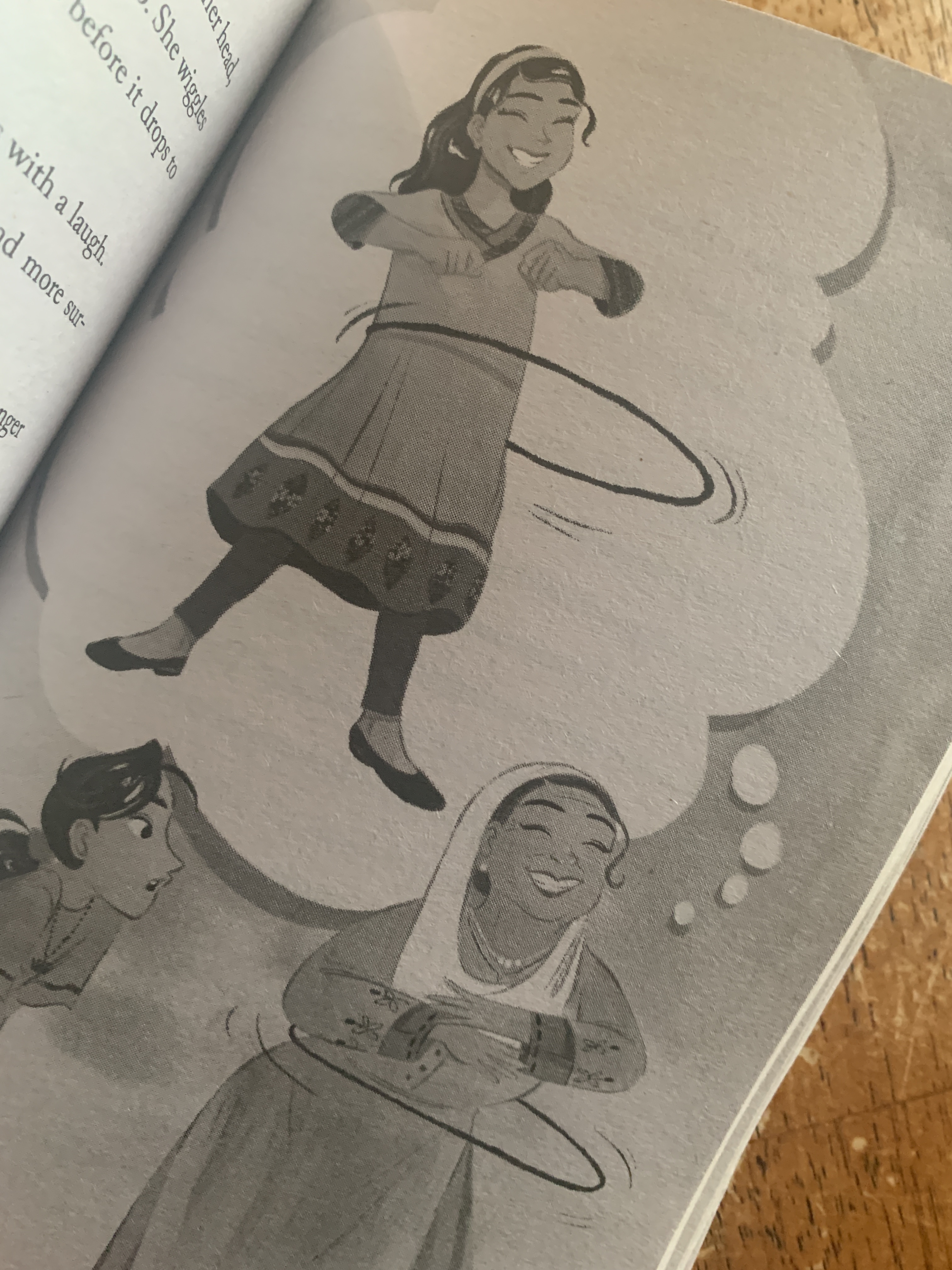
I love that the story wasn’t just surface level, it acknowledged some emotions and stresses and introspection, that I was pleasantly surprised to see played out in an early chapter book.  I really just enjoy the family, they read relatable and fun. The Nanoo’s surprise ability to hula hoop and her pettiness over a cooking competition genuinely made me smile.  The neighborhood kids and the politics of the different aged children having to find ways to compromise reminds me a lot of my summers as a kid, and the nostalgia was sweet.  I like the Islamic touchstones, I would have loved if they had to go in at sunset to pray or something of the like, but I was glad that at least that Nanoo reads Quran and an inshaAllah in the text made me feel seen.

FLAGS:

Music, dancing, frustration, jealousy

TOOLS FOR LEADING THE DISCUSSION:

I think this book should definitely be on every library and class shelf.  It releases tomorrow on Amazon, but Crescent Moon Store already has it.
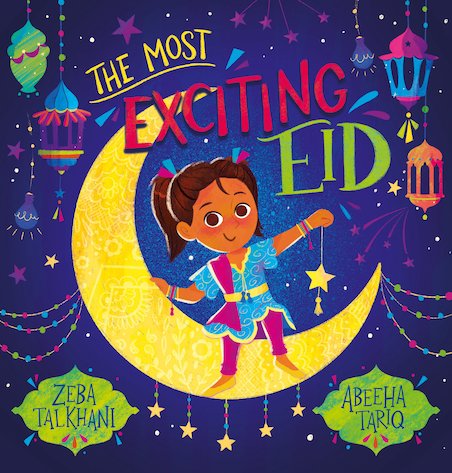
The Most Exciting Eid by Zeba Talkhani illustrated by Abeeha Tariq

Standard
The Most Exciting Eid by Zeba Talkhani illustrated by Abeeha Tariq

the most exciting eid

I was really excited for this book, I even contacted Scholastic USA and the author to see how we could get it here in America, but once I received my copy from the UK, I was disappointed.  It offers nothing new to the available Eid titles aside from the pretty illustrations. It is a rather forgettable story, with nothing more than surface level growth, predictable emotion, and a formulaic retelling of a basic Eid day.  Meant for preschoolers (3-4 year olds) the story will suffice as an introduction to Eid and reinforce the importance of sharing with others, but anyone older will find the story lacking unfortunately, and question why they didn’t go for Eid salat, if the cousin was even upset about not getting to ride Safa’s new bike, if the neighbors are poor and needy, and if they have gifts for neighbors or are just giving out random leftovers. Five years ago when reasonably priced brother sister duo books celebrating Eid were popping up everywhere, this book would have warranted excitement of representation and Eid joy, but the quality has elevated and while there might not be anything “wrong” with the book, it still feels like it sadly falls short.

img_8977

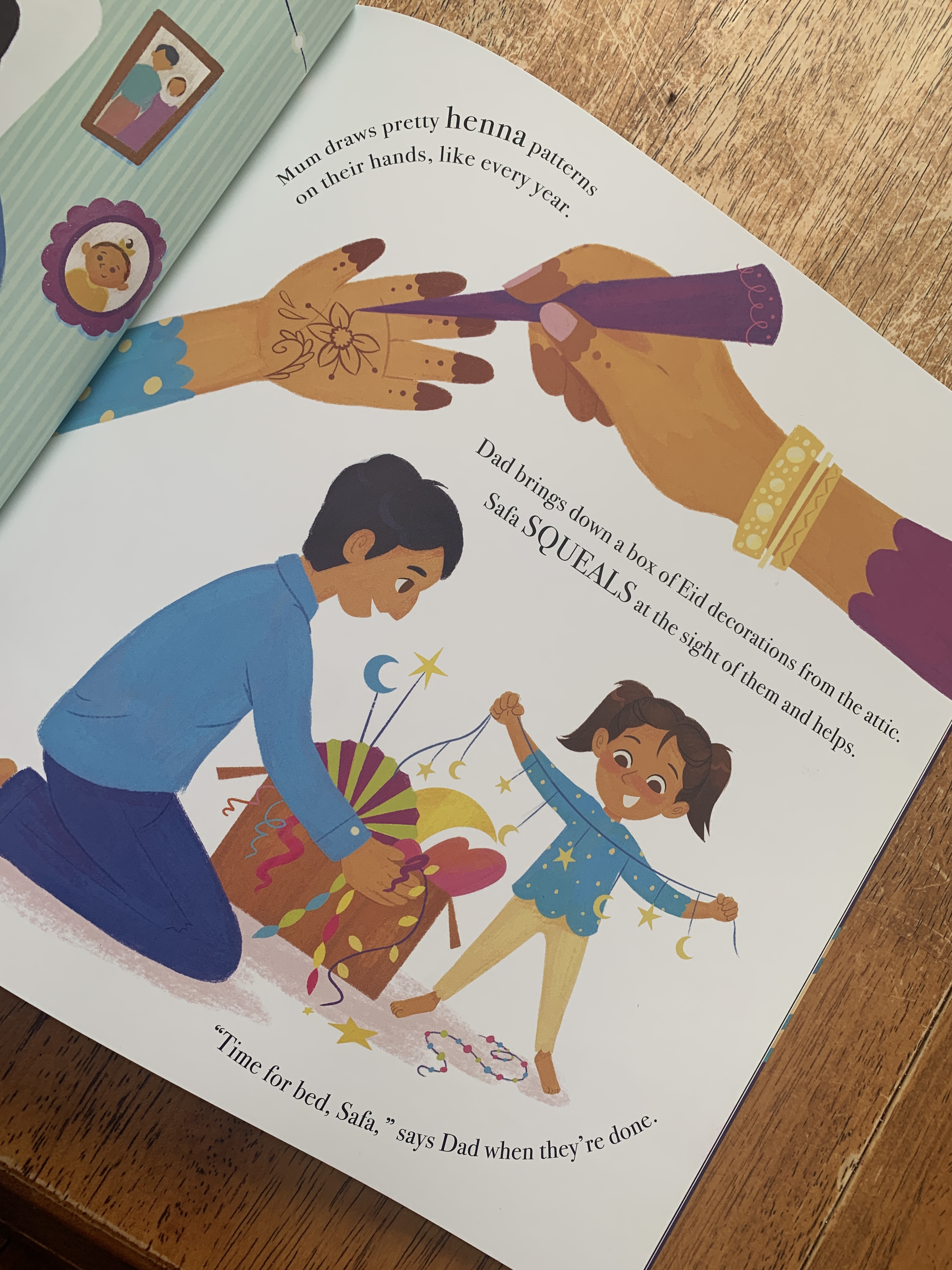
Safa and her parents see the new moon and that means it is Eid.  She is so excited as her mom puts henna on her like every year, and her dad brings out the box of decorations.  At night she is anticipating presents, gifts, new clothes and food that she can hardly sleep.

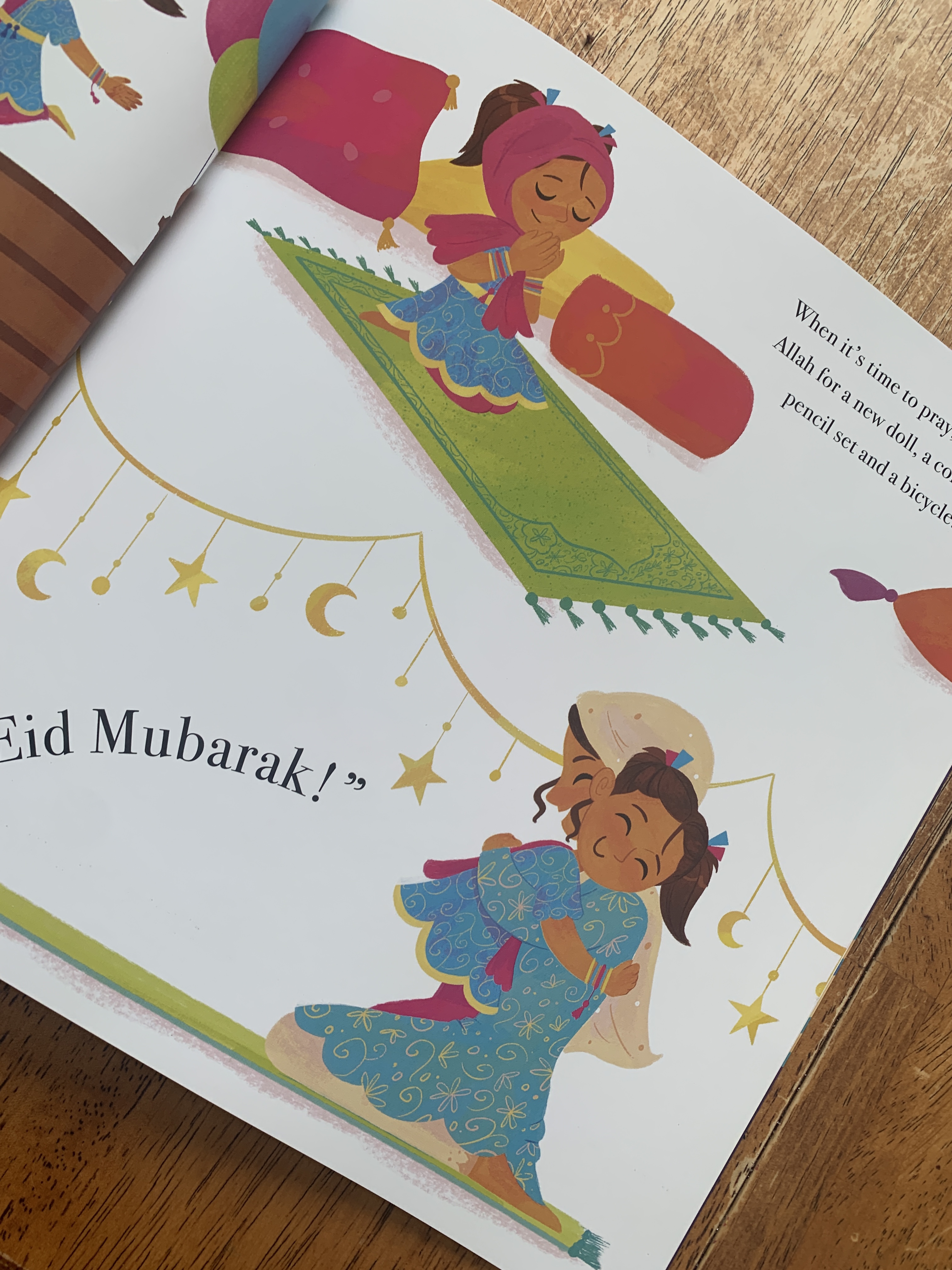
The next morning she comes down in new clothes, prays, asks Allah for a new doll, a colouring pencil set and a bicycle.  Guests come over, even Alissa her cousin. She opens her presents revealing she got everything she asked for.  Alissa calls after Safa, but Safa doesn’t want to share, she’s been waiting for this bike forever. Since sharing is the point of the story, it is worth noting that Alissa in the text shouts after her and in the illustration is shown to be calling out, there is no reinforcement that Alissa even wants to ride the bike.  I suppose I’m glad that Safa feels it, and regrets it later, but it is subtle and I don’t know that a 4 year old will even register that, that is implied.

img_8978

Mom then calls to Safa while carrying two huge purple bags to come with her to share joy and food with those in need.  Safa adds some of the treats she has received in to the big purple bags and they hand the items out to their neighbors. I love that they are visiting their neighbors and it brings the giver and receiver joy, but the set-up is that neighbors and those in need are one in the same, and I think that is conflating two different things.

Some neighbors get small gifts, one a potted plant, another homemade looking food, and then there is one bag left, somehow the purple huge garbage bag sized bags have shrunk to being a shopping bag size and the next recipient is a surprise: grandparents.

img_8979

The mom and daughter join the grandparents for desi cultural foods of samosas, kebabs, biryani.  Dad does not join them, and I’m not sure why the grandparents didn’t come to the party at Safa’s house? I also wondered if the party at the house was still happening, because once Safa realizes she enjoyed sharing, her parents and Alissa are seen outdoors, with the little girls on bikes and Alissa asking her cousin where she went.

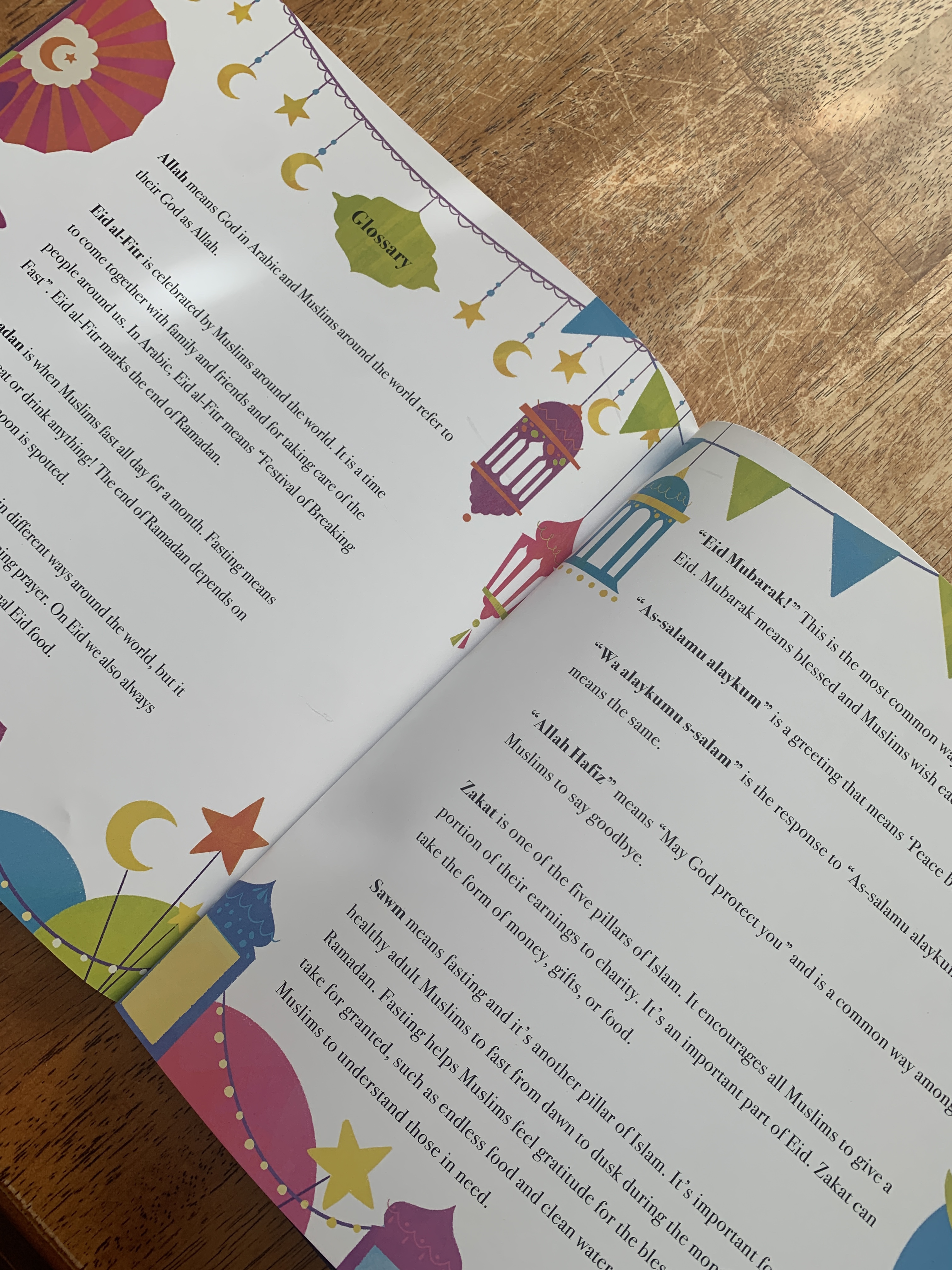
There is a two page spread glossary at the end which defines words that are not in the text, but is informative.  It mixes “cultural” words such as Allah Hafiz being defined as being a common way among Muslims to say goodbye, which technically isn’t wrong, but it is an Urdu word and only used by Desis.  It isn’t in the story, so it seems off to me as well.

img_8980

The illustrations are the highlight in the book.  They are vibrant, expressive and engaging.  The mom seems to have a dupatta on her head, it might pass for hijab, but she has wavy tendrils showing on the side, even the grandma shows much of the top of her hair.  Neither the father in the story or grandfather have beards.

A Show for Two by Tashie Bhuiyan

Standard
A Show for Two by Tashie Bhuiyan

a show for two

I didn’t love the author’s debut novel, but wanted to see what a second novel would offer, and sadly it really is a lot of the same: light funny romcom surface story featuring a Bangladeshi Muslim character lead mixed in with layers of mental health, a toxic family, high school stress, and cultural expectations driving the plot.  There is crude language, hetero, lesbian, bi, and pansexual relationships discussed, but nothing more than kissing is detailed in any of the scenes.  There is a lot of cultural trauma from the parents and to the book’s credit, it does establish pretty early on that the main character is not religious, but that she does believe in Allah swt.  Similarly, there is a Bangladeshi loving family in the story, so it is not making a critique on the entire culture, it is just the character’s family that is cruel.  Ultimately, at 416 pages I was surprised that there were gaps in character arcs and plot.  I never really liked the protagonist, Mina, but because of how underdeveloped and pivotal the best friend and younger sister were, when it all came to a climax, I found myself rooting for her, which is a very shallow reasoning in an OWN voice book. Additionally, the parents are terrible, and had I dnf-ed it (I was tempted until about 30% through it) I doubt I would have ever known that there was a time that they weren’t terrors.  The peeling back of the layers of the family came too late, too slow, and the progression was muddled.  I probably will not actively seek out further books from this author if the same themes and tropes are present, if she changes it up, I probably could be persuaded.  The book is marketed 7th grade and up, but with the triggers, hate, language, content, genre, language, length I would say 17 and up, if at all.

SYNOPSIS:
Samina “Mina” Rahman is waiting to leave New York and her hateful parents, and start her life at USC as a film student.  All she needs to do is win the Golden Ivy Film Competition, and get excepted to USC.  Her parents dismissing her dreams, passions, and abilities agree to only let her leave if she wins the competition, doubting that it would ever happen, they even put it in writing.  Co-president of the high school film club and best friend, Rosie is equally determined to win, there is just one big problem, every year the winning film has a cameo by a famous actor.  Cue accidental meeting of Mina and Emmitt Ramos, up and coming indie movie heart throb that is cast in the new Firebrand blockbuster.  Sent to Mina’s high school to research for his upcoming role, Mina is tasked with convincing him to make an appearance in their film.  It is a romance story, so you can see where it is headed in this enemies to lovers book.

As family, friends, and college admission stresses mount, the simplicity of what Mina wants and how to go about getting it will be called in to question as her walls crumble and she will have to evaluate people in her life and how they will be affected by her actions.

WHY I LIKE IT:

I like that the story is based on real events in the author’s life, not just the religion, culture, mental health threads, but that an actor came to her high school in preparation for a part: Tom Holland.  I also like that while her parents don’t value her, she has found a support group of sorts that do.  At times Mina reads a lot older than she is, particularly when she is admonishing the freshman, but at other times she storms off pouting and seems to be very childish.  I vacillate between this being intentional and it being an inconsistency in the writing. The younger sister Anam is painfully written.  She is bold and confrontational, yet at the same time so clingy and needy and all over the place.  At one point I thought she perhaps was suicidal and was braced for a really dark twist in the story, but no it was just Anam being Anam, I suppose, and the stress was never revisited let alone resolved.

I truly dreaded the passages about Mina’s home life and her family, they all were just awful to each other and rather than taking Mina’s side because I was shown, I found myself questioning what I was missing in the before and after dynamic.  It is clear they are wretched, the victim doesn’t need to justify the abuse. The transformation of the family dynamic just felt lacking and in fiction when parts are explored it could have really showed some of the micro aggressions and changes that existed and made the relationship salvageable so that the reader would understand why saving and fixing the family were no longer options.  Generational trauma is real and serious and a little more attention I think could have provided an amazing mirror to readers dealing with similar elements.

If the book was half the length I would assume that details would be glossed over, but this book had room, and I don’t understand why so few photography and director references seem to find their way into the text to show that these characters truly are passionate about what they are claiming to desire.  I know the story isn’t a film story or a culture story, but they don’t spend hours editing the film or working on props? Emmitt is regularly pulled away from shoots, but always seems to have enough photos to choose from?  Mina talks of her dad cooking, but foods aren’t detailed, the connection of food to love to family and that being severed seemed like a gaping hole in the crumbling home scenes.  If halal food and no pork can make it into a love relationship, that much cultural/religious depth should have made it inside a families home.

As mentioned in the intro, it didn’t bother me from a religious perspective that Mina was off kissing a boy, that Anam had boyfriends, etc. because Islam was accounted for and the characters are not practicing, so I do appreciate that it didn’t become a stereotypical rebelling against religion book.  Truly, thank you.

FLAGS:

Language, relationships (straight, bi, lesbian, pan), kissing, making out, hand holding, lying, mental health, hate, deception, cruelty, emotional abuse, angry ex boyfriend, triggers.

TOOLS FOR LEADING THE DISCUSSION:
Would not shelve or encourage young readers at our Islamic school to read this.

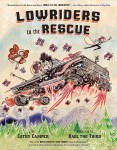
Lowriders to the Rescue by Cathy Camper illustrated by Raúl Gonzalez III

Standard
Lowriders to the Rescue by Cathy Camper illustrated by Raúl Gonzalez III

lowriders

This is my first Lowriders book, so admittedly there was a lot going on that I really don’t feel confident that I understood, but even with that, it was a sweet story of first love (crush), Arab and Latinx joy, humor, social activism, environmentalism, gentrification, and fun.  I don’t know that the other books in this middle grades series explain the characters or their world any more or less, so I think it can be read as a standalone book, and I think the 140 page detailed illustration filled pages will tempt even the most reluctant readers to give it a try.

SYNOPSIS:

Sokar is an Arab Muslim monarch butterfly, and the fires have taken so many of her family, and cut the survivors off from being able to safely migrate.  She comes to town with a broken wing and in desperate need of help, only to find prejudice against her at every corner, until she meets the Lowriders:  Lupe, Flapjack, and Elirio.  Lupe is an impala, Elirio a mosquito, and Flappy a land octopus with brand new glasses who falls for Sokar at first sight.  Sokar, however, has concerns with the environmental impact the lowrider car has knowing that the fires and pollution are all related.  Add on that the Upscale Business Association gentrifying the neighborhood, and everyone is going to need to work together to save the monarchs, the neighborhood, the environment, and a tender friendship.  As characters find connections between Arab and Latin foods, Arabic and Spanish words, the readers will find similarities from the real world with this crazy one with people, animals, insects, and flying cars.

WHY I LIKE IT:

The author saw my review of Arab Arab All Year Long! and let me know that this book also had Islamic representation, and that I should check it out.  I love that there are Islamic phrases (inshaAllah, salam), a possible hijab on Sokar, connections to Moors of Spain, and Arab culture.  Part of me doesn’t love the love interest, crush thread, but it is between a land octopus and a butterfly and there is only a kiss on the cheek, so, I’m not sure it is that big of a deal.  I love that environmental concerns, discrimination and activism are the heart of the story, yet somehow it doesn’t read preachy.

The similarities of words, foods, and my favorite throwing of a chancla/throwing of a shabashib are all amazing for readers of all backgrounds to see and be made aware of.  I love the teamwork, altruism, and compassion that so many of the characters show, while not sacrificing the humor and quirkiness of it all.

I was a bit concerned with the posters going up everywhere, that seems like a lot of waste and excess, in every other instance they were so mindful: making the car solar powered, reducing plastic in the ocean, etc..

FLAGS:

Racism, discrimination, crush, kiss on the cheek, death, loss, destruction.

TOOLS FOR LEADING THE DISCUSSION:

I don’t think this would work for a full on book club selection, but I think it would be a popular book to give to a kid to read and then chat about it with them when they finish.  The book has a lot to discuss and maybe in small groups it would be a good selection.  I’m hoping to get it in the library when it releases and I’ll come back and report on how it works with reluctant readers, avid readers, and in getting the kids reading, thinking, and laughing.  You can pre-order yours to show support for the author by clicking HERE.

It’s Springtime! by Rabia Bashir illustrated by Azra Momin

Standard
It’s Springtime! by Rabia Bashir illustrated by Azra Momin

spring time

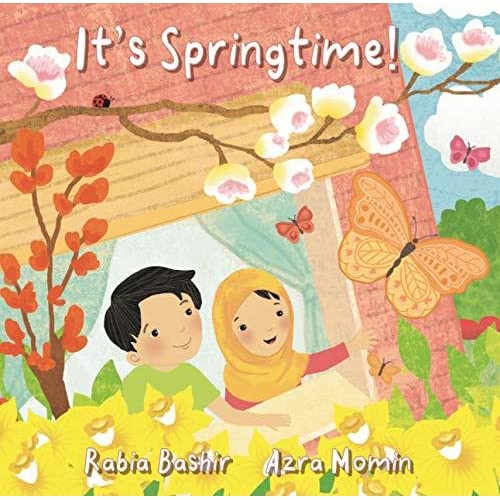
This sweet 18 page board book introduces seasons to our littlest Muslims through rhyming lines, Islamic gratitude and activities enjoyed during certain times of the year.  It even has a “spot and talk” activity at the back and a way to explain “Alhumdulillah” to children.  The text is simple and the illustrations engaging for ages infant to pre-k.

img_8386

The book starts with spring and dedicates four pages to praising Allah swt by appreciating the flowers and baby animals before looking forward to summer, that is on its way.

img_8387

Summer is also four pages of saying Alhumdulillah for the sunshine, ice cream, the beach, and sandcastles, before heading off to autumn.

img_8388

The book covers all four seasons and mentions that after winter is spring again.  The book’s size and the thickness of the pages makes it great for toting around for little ones, and the flowing lines make it a quick read that you don’t mind reading over and over again, Alhumdulillah.

img_8389

Songs and activities available at www.preciousbees.com

Rapunzel: An Islamic Tale by Fawzia Gilani illustrated by Sarah Nesti Willard

Standard
Rapunzel: An Islamic Tale by Fawzia Gilani illustrated by Sarah Nesti Willard

rapunzel

Having read the other “princess” retellings by Fawzia Gilani I didn’t rush out to acquire this book, but when a friend said it was available at the public library, I was surprised and admittedly curious.  This book just like the others in the series are very much in my eyes “Islamic fiction” for how centered Islam is for the characters and how it is used to frame the story toward a religious message.  The fact that a small city library in a Southern state purchased and shelves it, is pretty impressive.  As for the story, well it is really long, and wordy, and every page is filled with tiny text filled lines that I doubt most kids will be able to sit through.  The Islamic content is very present, the Uyghur setting appreciated, but wow do the 41 pages pack a lot of text in to a fairytale re-telling. There is a lot of Islam and Quran and at times it fits well, at other times incredibly forced.  The book claims it is for ages 5-8, but truthfully I don’t know that any age would be able to sit through it and be engaged.

img_7479

In a tangled forest lives a wife and her husband, a clockmaker and a woodcutter.  Before they married, the wealthy and cold Shuna Leng had hoped to marry the woodcutter, but he never asked, and she never forgot.  As a result seeing her neighbors happy keeps her jealous heart plotting and conniving to bring the couple misery and pain.

img_7481

One day, while pregnant, the wife has a strong craving for rapunzel greens.  Some just happen to grow on Shuna Leng’s property.  The husband is nervous to ask, but when his wife falls weak he makes an effort.  She doesn’t answer, so he picks some growing along the path and leaves coin for payment.  This wife regains her strength and then begins craving them again.  He decides to do what he did last time, but is caught.  The evil woman agrees that he can have all the rapunzel greens he wants but if the baby is a girl she shall be given in payment.

img_7480

Once born the baby is taken and kept hidden from her parents.  Various governesses are employed over the years to tend to Rapunzel and who teach her Islam and kindness.  Ever so often they have to up and move and abandon their routine when people start asking questions, but the lessons learned from the Quran stay with Rapunzel and she endures what she must.

img_7483

Eventually she ends up in a tower, she offers to help a stray boy recite Quran, and the evil plot of keeping her locked up unravels.  Yes SPOILER she is returned to her parents.

It is a decent retelling in theory, it just is really long, and there isn’t quality character building to invest the reader to the side stories being presented.

img_7482

All My Rage by Sabaa Tahir

Standard
All My Rage by Sabaa Tahir

rage

The hype is correct: this book is moving, impactful, powerful, reflective, all the feels.  The writing superb, the plot gritty, the characters seem real, so real.  One of my all time favorite authors is John Irving because every word seems deliberate in his books, not every plot point or every paragraph, every. single. word.  And it has been a long time since I’ve read a book that strikes me in that same vein of the author being so in control of the story, and my (the reader’s) emotions being so completely at the mercy of the words to come.  I think I could read this book five more times and each time peel back a new layer and see something I hadn’t seen, or understood, or felt before.  I cried, I cheered, I sighed and unclenched my jaw, and I am still haunted by the lives of the characters.  Not just the “main” ones.  All of them, they all are real and fleshed out and have character arcs and live in shades of gray.  There are no checkboxes for skin tone or religion or sexual preference they each are more than a label, they are complex and real.  I could easily be convinced that they are in fact real people and that their world and stories are not fiction at all.  That is how well it reads, that is how hard it is to close the window on the world they let us see.  The book is YA (374 pages) and with the drugs, abuse, alcohol, relationship, complexities of it all, I would think 16 year old’s and up can, strike that, should, read this book.  The characters are Muslim, but it never even goes near being preachy, these are complex characters and stories, and remarkably there is no internalized Islamophobia or watering anything down, each character deals with faith, like everything else, in their own way.

SYNOPSIS:

The story bounces between the past in Lahore, Pakistan and the present in Juniper, California.  In Lahore it is Misbah’s story and in the desert it is her son’s, Salahudin and a girl she has taken under her wing, Noor’s.  When the book starts we see Sal with a drunk father dropping him off at school where his girlfriend is waiting, and his best friend, Noor, not speaking to him for the last few months after she confessed to bein in love with him.  Noor lives with her uncle after her entire village in Pakistan was destroyed when she was 6, and he wants nothing to do with Pakistan, Islam, or Noor going to college.  He owns a liquor store and makes Noor work there.  Sal’s mom is sick and has always been there for Noor, so when she takes a turn for the worse, Noor and Sal are brought back together, Noor’s uncle is enraged that she is missing shifts, and Sal’s father is constantly searching for the bottom of a bottle.  Things are bad, but they are about to get a whole lot worse.  Sal’s mom dies, the motel Sal’s family owns is in severe debt and the options for saving it are less than ideal.  The small town starts to feel familiar as everyone’s stories are fleshed out in Juniper and Lahore and two star-crossed narrators are forced to confront both the stresses of high school and impending adulthood, and deep, dark realities of abuse, loss, and generational trauma.

WHY I LIKE IT:

The book could have been a thousand pages, and it still would have felt too short.  Much like her fantasy writing, the book seems to start with world building and roping the reader in to thinking that they can handle what is about to come, then much like a band-aid being pulled off, the pain hits, and the wound starts bleeding again.  Somehow despite it all, you can’t look away, you can’t stop reading, there is hope.  Hope for the characters, hope for happy endings, hope for survival and peace.

I absolutely love the quality of writing, things dangled early on, come back, often with subtly and restraint that you could easily miss them.  When discussing the book with @muslimmommyblog, I felt like we both were finding threads we had possibly not considered and connections that added nuance and staying power to the plot.

So often, the more religious a character in literature is, the stricter they are presented, the less kind they are seen, but in this book it was the opposite, the loving couple were the imam and his defense attorney wife, the glue that radiated kindness to Sal, Noor, and so much of the town is a hijab wearing strong woman.  So many tropes and stereotypes were uprooted, tossed aside, and reimagined.  There is compassion for a Muslim alcoholic, a liquor store being the employment of a Muslim, consequences for dealing drugs, yet nothing “haram” is really ever glorified, it is gritty and repulsive, but there is no judgement, there is only understanding and sadness.  Palpable despair that rattles your bones and makes you wish the world was different.

I don’t want to spoil the book, I was able to read it largely not knowing what the plot would delve in to. In many ways the trigger warning at the beginning was the only thing that braced me for what was to come. The level of religion and how it was woven is through the gentleness of some of the characters and hatred of others, was expertly done.  There are not ayats in the Quran quoted or speeches given, there is love, and faith and hope that manifest as duas and longing and finding ways to be Muslim in action, not just in appearance. When the characters start to make-out their Islamic conscious is drawn in, when they grapple with their hope and future- trust in something bigger is considered. It is not a Muslim book, not even an Islam centered book, perhaps Muslamic, but really about characters who are Muslim and dealing with the cards they have been dealt.

FLAGS:

Alcohol use, drug use, relationships, kissing, touching, longing, language, physical assault, physical violence, domestic violence, hate, racism, stereotyping, Islamophobia, there are mentions of a lesbian relationship and a bi relationship, a child out of wedlock, death, addiction, sexual assault, repressed trauma, bullying, teasing, lying, music,

TOOLS FOR LEADING THE DISCUSSION:

I have a 15 year old daughter, and I probably will have her read the book this summer, I think there is a lot to discuss and I think in the right hands the book could be used for a high school book club.

Available to purchase here on Amazon or here from Crescent Moon Store

One Wish: Fatima al-Fihri and the World’s Oldest University by M.O. Yuksel illustrated by Mariam Quraishi

Standard
One Wish: Fatima al-Fihri and the World’s Oldest University by M.O. Yuksel illustrated by Mariam Quraishi

one wish

This book is so long overdue, yet at the same time it was worth the wait.  The writing is simply superb: Fatima al Fihri is celebrated, Islam is centered, there are references, and the story compelling.  We, Muslims, as a whole know so little about the beautiful impact fellow Muslims have had on the current world and our way of life, that to see this book being celebrated in public libraries, in Islamic schools, at masjids, and retail bookstores, truly makes you sit up a little straighter, and reach confidently to get this book in your hands to share with those around you.  Thank you Mindy (@moyuksel.author) for these 40 pages of absolute delight, ages 5 and up will read it to learn, read it again to enjoy, and inshaAllah read it repeatedly to be inspired.

img_7723

The book begins with a Hadith regarding seeking knowledge and leaving knowledge behind.  It then begins the biography of Fatima as a small girl curious about the world around her starting with the word Iqra, read, from the Qur’an.  It sets the stage of her living in the desert in the early ninth century, a time where some boys went to school and some girls learned at home. Her connection to Islam and it teaching her the value of knowledge caused her wish, to build a school, to grow stronger.

img_7726

When war destroys her town her family flees to the busy city of Fez, Morocco.  She begins to accompany her father to the souk and enjoys listening to talk of planets, distant lands and different languages and wishes these scholars could educate everyone. She grows and gets married and her and her family become wealthy merchants.

img_7725

Tragically, her father and husband die, and Fatima must decide what to do next for her family.  She decides to help her community as a form of sadaqah jariyah and make her wish a reality.  She sets out to build a school where everyone can live and study for free.  She purchases land, and the building begins.  Fatima oversees each detail and names it the al-Qarawiyyin after her hometown in Tunisia.  It takes two years to build and it still functions today.

The back matter is just as compelling as the story with an Author’s Note, information on The University of Al-Qaryawiyyin, a Glossary, Bibliography, and a Timeline.  The only complaint I have about the book, are the illustrations.  I really don’t understand why half of her hair is showing when based on the time and her connection to her faith, she most likely was a niqabi.  I don’t understand the continuity of the hijab from a young child to adulthood.  I get that it shows her influence moving forward at the end, but it could have been a small print on an outfit for token representation of symbolism, I don’t get it as being a complete outfit her whole life.

img_7724

I absolutely love the role of Islam in both Fatima’s life and in this book.  It is so much a part of her and her wish, that every reader will recognize how connected her faith and the creation of the University were and I’m confident both Muslim and non Muslim readers will be in awe of her devotion and accomplishments, inshaAllah.