Tag Archives: community

Safiyyah’s War by Hiba Noor Khan

Standard
Safiyyah’s War by Hiba Noor Khan

safiyyah

A.M.A.Z.I.N.G! SubhanAllah the subject matter is incredible, but the characters, writing, and Islamic inclusion really make this 327 page book a must read for all upper middle grade and lower middle school aged children everywhere. The book is historical fiction, set in Paris during WWII, the Nazis are invading and the Muslims at the Grand Mosque of Paris are covertly helping, hiding, and saving their Jewish neighbors.  Based on real facts, the book does not get lost in politics, or propaganda, or the enemy, the story stays on level for an MG reader with character arcs that are not confined to the atrocities at hand. The familial love, the friendships, the bravery of so many, really lingers long after the last page is read. Knowing that Muslims in France did this and that their stories have by-and-large been lost over time, makes this book all the more important to share with our own children.  This book fills such a void for children in Western countries wondering why WWII lessons in school never mention Muslims, and that this is traditionally published in the UK, soon to be in the USA, really is a benefit to us all.  I do wish the book was more strongly sourced, there are Historical Notes at the end, but I’d love to know where to go to get more facts about it all.  Little kid me would have been obsessed, adult me can’t wait to share this book with teachers and book clubs to discuss, teach, enjoy, and be inspired by, alhumdulillah.

SYNOPSIS:

Safiyyah lives in the apartments in the compound of the Grand Mosque and while Muslims are more-or-less safe from the imminent threat of the Nazi’s, because of their connections to North Africa, their world is still changing quickly. Safiyyah loves maps, helping run errands for her father, Ammo Kader, and Ammo Imam, and spending time with her Setti.  She also loves spending time with her best friend, Isabelle at school and on weekends.  When the Nazi presence is no longer avoidable, Isabelle and her family leave, errands are no longer safe and Setti’s beloved oranges are harder and harder to get. To top it all off, her father starts acting secretive and Safiyyah starts sneaking around to find out what is going on, unraveling a clandestine network helping those needing to get away.  Her family has no intention of involving her, but when soldiers start getting suspicious of the Muslims assisting the Jews, Safiyyah takes on dangerous roles that just maybe a young girl can accomplish without drawing too much attention to herself, the cause, and the Muslim community’s commitment to helping the innocent.

WHY I LIKE IT:

I love that the book is fast paced and the fear of being caught is always present, yet the book is able to flesh out relationships, character growth, and religious understanding.  Little details weave in and out, and the confidence that the writer is in control of all the threads allows the reader to be swept away, completely. The interfaith aspects are not just check marks, the story shows the ease in which the communities work together and their connections are tangible.  There is no internalized Islamophobia or othering, and the way that Islam emboldens the characters’ actions is so beautiful: from the larger commitment for justice, to the personal internal reflections of wearing of hijab, praying, listening to the athan, making duas for the deceased, etc..  Spending time to ruminate on the idea that breaking an unjust law to save lives through an Islamic lens is empowering, and knowing that this is the risk that real Muslims in Paris took is so very humbling. I love that the conflict of France and Algeria is not left out as the Kabyle protagonist and her grandmother note that they are now supporting those wearing French uniforms to fight the Germans.

FLAGS:

Wish making, lying, death, fear, occupation, war, destruction, oath taking on a Quran, tasbeehs, working with wine barrels and smugglers.  There is a strong familiarity with Christian and Jewish holidays, some crossover celebration.  Some Christian angel imagery being used by Safiyyah for Ammo. Sneaking, hiding, forgery, skipping school.

TOOLS FOR LEADING THE DISCUSSION:

Having only ever read one other book on this topic, The Grand Mosque of Paris, that would definitely be a reference I would present when introducing the book.  Whether in a classroom, a library, a home, a book club, I hope this book gets read, passed around, shared, and discussed.  Muslims and non Muslims alike will fall in love with persistent over-eager Safiyyah and hopefully remember the resistance the characters in the book and real life sought with courage and dedication for the good of humanity.

I own my UK copy and have preordered US copies for myself, my mom, my teacher friends and hope you will do the same (you can preorder here).  Please also request your local public libraries to shelve this important book.

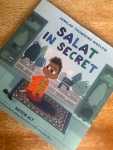
Salat in Secret by Jamilah Thompkins-Bigelow illustrated by Hatem Aly

Standard
Salat in Secret by Jamilah Thompkins-Bigelow illustrated by Hatem Aly

img_8430

It is quite remarkable in the course of 40 pages that so many themes, layers, emotions, windows, mirrors, and relevance can radiate with ease and entertainment for children four and up.  The authenticity of the text and illustrations create tangible feels in this book, that months after reading it for the first time, I am still moved to tears, both inspired by joy and as a cathartic release of being seen.  The true mastery is that even if you are not Muslim and cannot relate to the nervousness of praying publicly, you understand Muhammad’s hesitancy and feel for him as he battles not just finding a place, but watching onlookers reactions to his father, police proximity, and being brave enough to push yourself even when you are scared.  Usually when asked what my favorite book is, I stumble to narrow it down to just one, but truly this book has raised the bar of not just traditional publishing representation, but Islamic/Muslim literature across the board.  It is a gift to read, to share, to enjoy, and a blessing that such an unapologetic book is available so widely for our children to connect with, and our non Muslim friends to see us through.  Please spend time with this book and make it available to your children, your students, your community, it really is that good, alhumdulillah.

img_8431

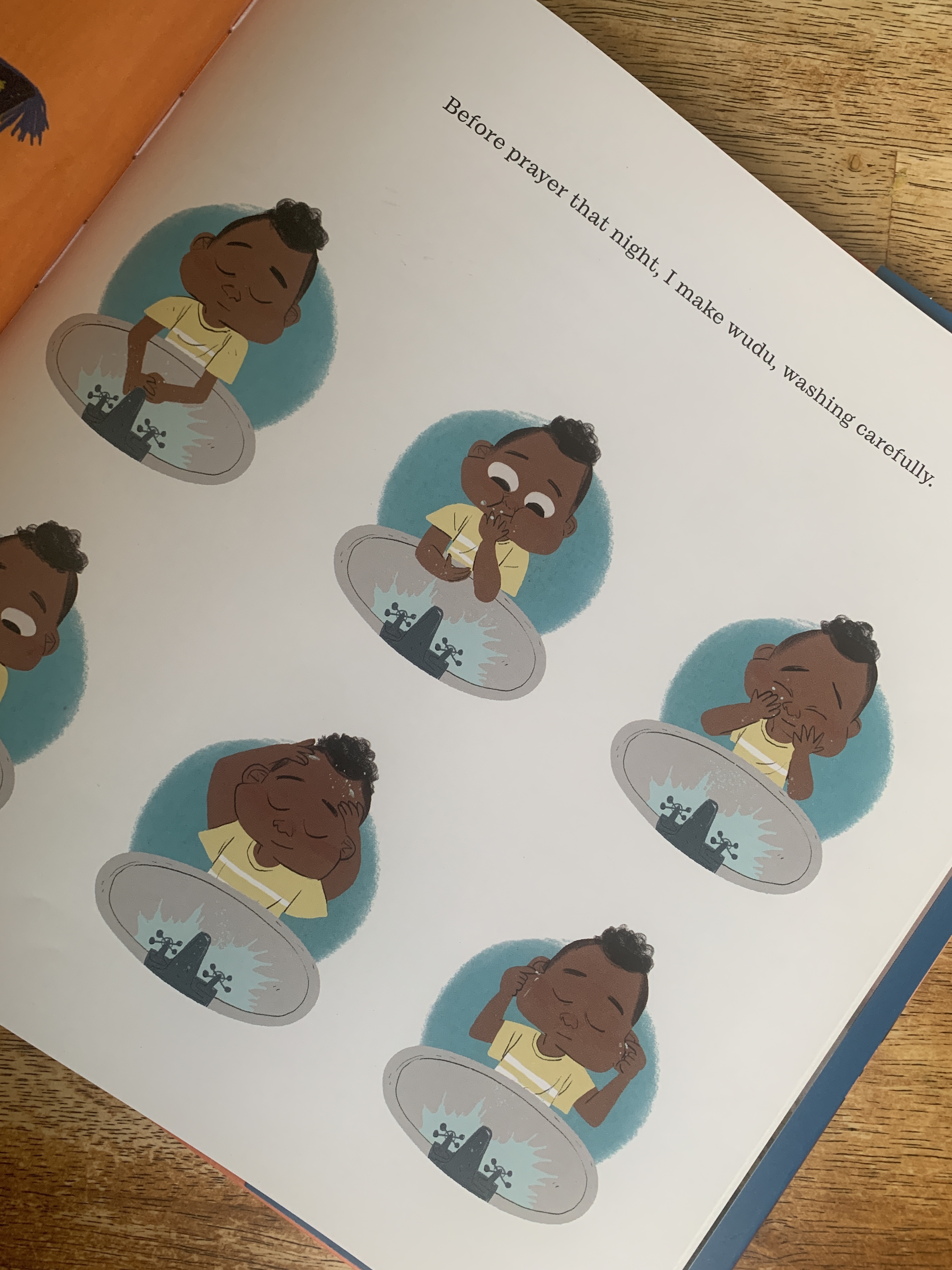
It is Muhammad’s birthday and he is seven, “Old enough to pray five times a day,” his father gifts him a prayer rug, and  Muhammad is ecstatic.  He makes wudu that night and offers salat with full attention.  He says the Sunday school words and shares his most wished for wishes to Allah swt, not even letting little sister, Maryama distract him.

After Fajr the next morning, he is determined to find a secret place at school to pray Dhuhr. Daddy doesn’t need secret places, if prayer time comes he pulls his ice cream truck over and prays on the sidewalk, “never delay salat.”  At school, Muhammad heads to Mrs. Baker to ask for a place to pray, but his confidence waivers and he returns to his seat.

img_8432

Anxiety about where to pray has him looking for spots throughout the morning, but when recess comes he finds he can’t take the prayer rug out from under his jacket.  He lingers when everyone returns to class and rushes through the words and motions in the coat closet.

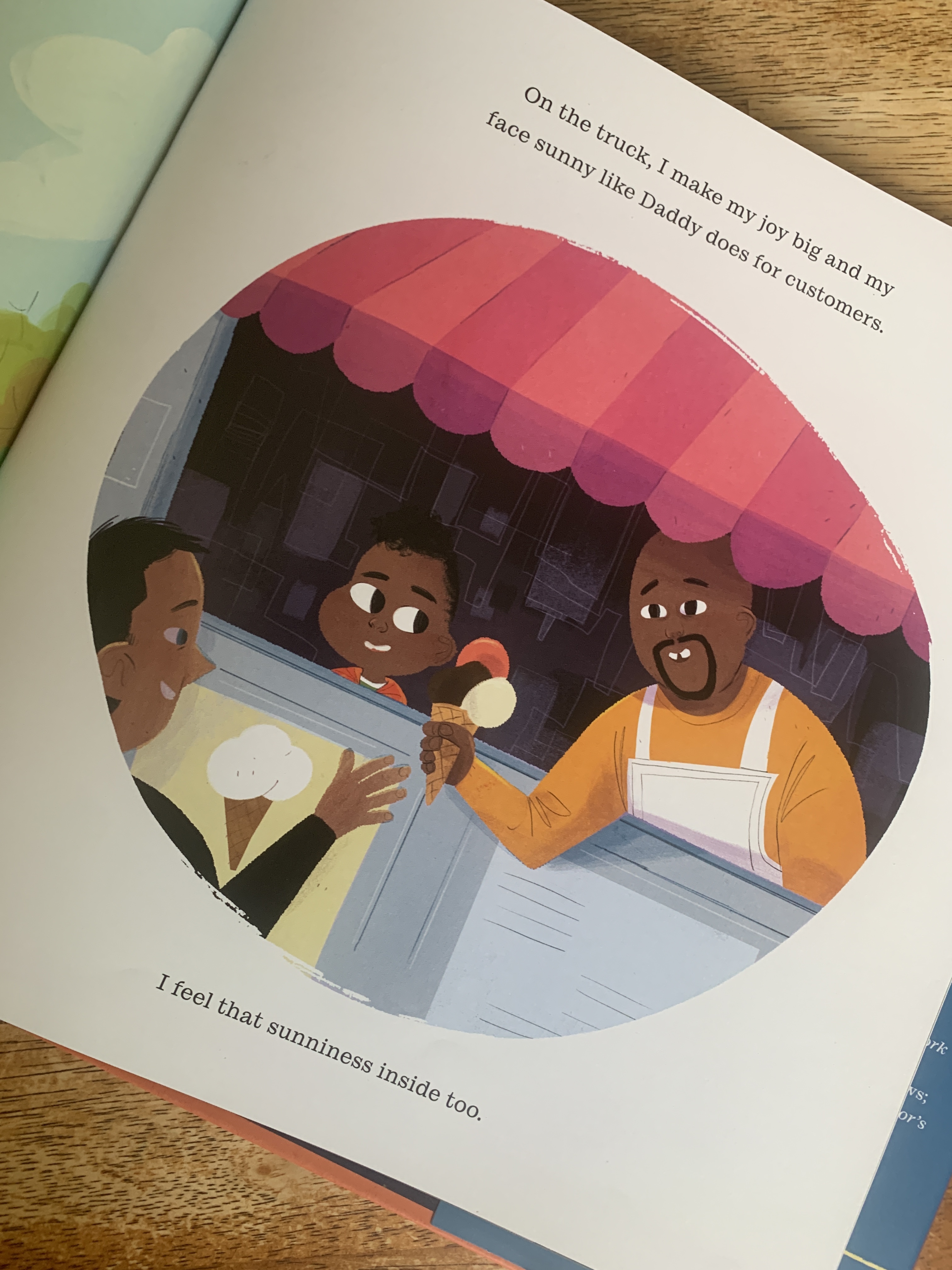
That evening he is with his daddy in the ice cream truck and the sunshine and smiles pour out of the two.  When the sun sets it is Maghrib time and Daddy heads to the sidewalk to pray, reassuring Muhammad that he can pray at home.  Muhammad watches his dad and various events spur him to make his decision.

img_8433

I love love love the way salat is approached with love and excitement and that the dad embodies safety and joy and does not pressure or force Muhammad.  The relationship is beautiful and allows for worship to be seen as both personal, as well as obligatory and merciful.  The duo also show a great parent child dynamic that warms the heart.

img_8434

I like that there really isn’t any “hate” given to anyone praying, it is hinted at, people do not understood, but the focus is not on the outside bystanders- it is what Muhammad thinks and feels.  I’m fairly certain every Muslim who has prayed in public has encountered a wide variety of responses, and this book keeps the gray to reflect and spark conversation.  It is often met with ignorance, with hate, with aggression, but it is also met with respect, apathy, and curiosity which the text and illustrations allow for.

img_8435

There is so much love and joy in the book as well as identity, that I don’t mind one bit that my littles ask me to read it over and over.  It is perfect for groups, one-on-one, and I cannot wait to share it in a story time, there is also an incredibly informative and heartfelt Author’s Note at the end.  If you haven’t preordered it yet, the book releases on June 6, 2023, please pre order it and signal the support for this book and future books that center authentic Muslim joy, Black Muslim representation, and OWN voice author and illustrator accuracy.  Request it at your library, put it on hold at your library, check it out, read it.  If you cannot preorder it, still purchase it when you can, inshaAllah it will be a beloved book in your home as well.

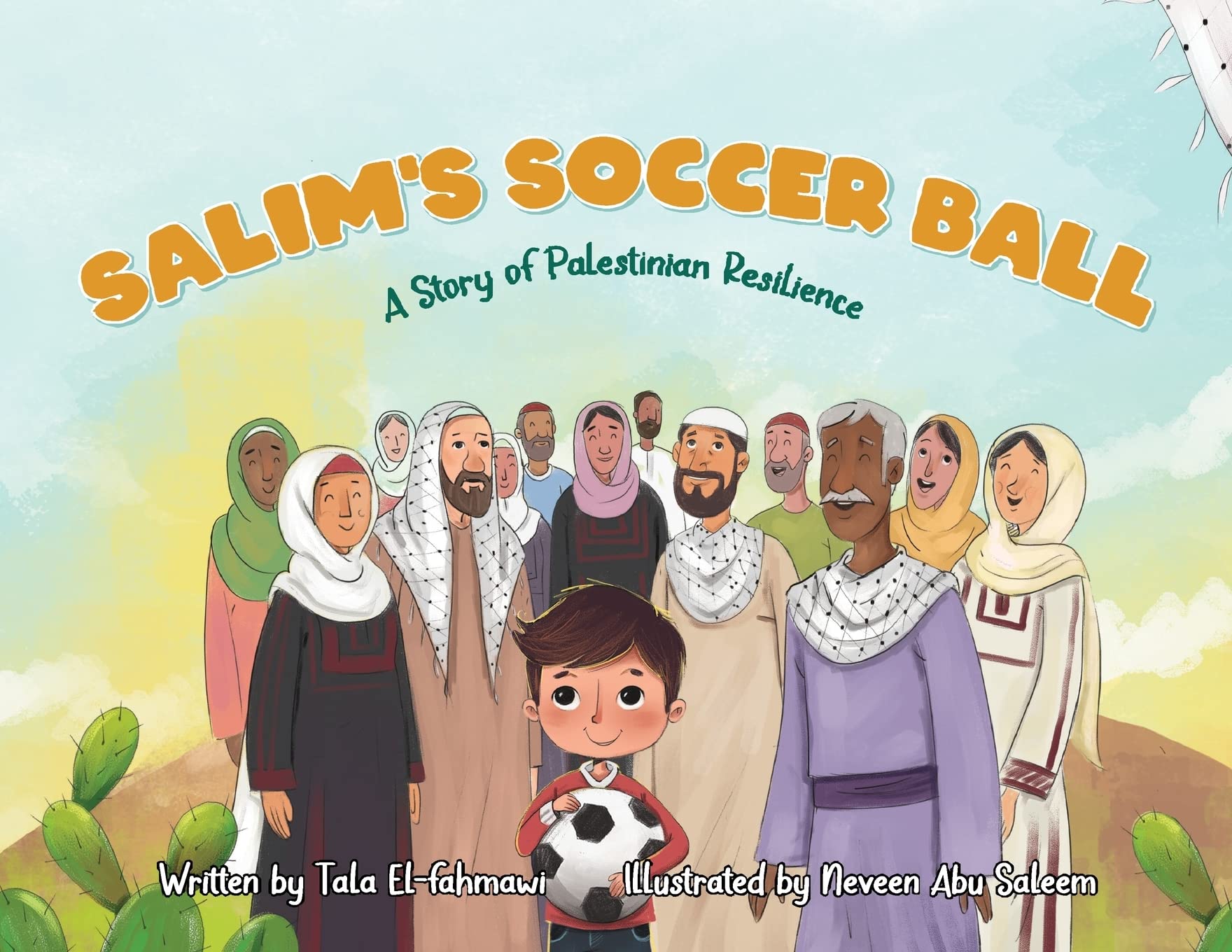
Salim’s Soccer Ball: A Story of Palestinian Resilience by Tala El-fahmawi illustrated by Naveen Abu Saleem

Standard
Salim’s Soccer Ball: A Story of Palestinian Resilience by Tala El-fahmawi illustrated by Naveen Abu Saleem

salim

This 58 page rhyming picture book weaves together a tale of a little boy and his lost soccer ball, with larger issues of community, oppression, and perspective for the youngest of readers to older children too.  I am noted to be skeptical of rhyming books, but the large font, the sweeping pictures, and the dropping of occupation, struggle, and resilience really make this book a treat. Add in discussion questions and an author’s note and you have a solid book that deserves space on home, library, and classroom shelves.  My only wish, was that the book was hardback.  The horizontal layout with a soft cover make the book difficult to read during story times as the pages flop back.  The book is long, but the text on most spreads is minimal and while I could not identify the author’s religious identity, their are numerous hijab wearing #muslimsintheillustrations as Salim journey’s around his neighborhood and into his grand father’s memories.

Salim wakes up, brushes his teeth, and is out the door to play soccer with his best friend Qusai, but the ball goes flying and Salim can’t find it. He starts walking down the hill and it seems to have disappeared.

img_5055

He asks the fisherman, Abu Zaid, if he has seen it, and he hasn’t, but he offers to help.  They then go and ask the seamstress, she hasn’t either, but she puts down her tatreez, offers reassurance, and offers to help.  As they head out they bump in to Dr. Bassam.  “‘I will help you look,’ the kindly man said. “I can fix broken bones with very few supplies.  A lack of resources has made me clever and wise. Resilience and courage are plentiful here. We will find your ball. Salim, no need to fear.'”

img_5054

The searching continues, with a small break for khanfeh, and then Qusai is found, and so is the ball.  Like so many joyful items, the barbed wire of the apartheid wall has destroyed the soccer ball. Upset, Abu Omar, calls out to Salim, and his grandpa embraces and consoles the young boy recalling a donkey with wonky ears and life on the farm.  With resilience and joy Salim heads home to a community surprise and a hopeful future inshaAllah.

img_5053

The book concludes with five discussion questions that connect Salim’s experience to universal experiences of people everywhere.  It is followed by factual and personal author’s note about Palestine and the book.  

img_5056

There is nothing religious aside from the hijabs worn, Dome of the Rock, Masjid al Aqsa, and Church of The Holy Sepulcher in the backgrounds of a few images.  I purchased my copy from Amazon HERE and can also be purchased through Shop Palestine HERE.

img_5057


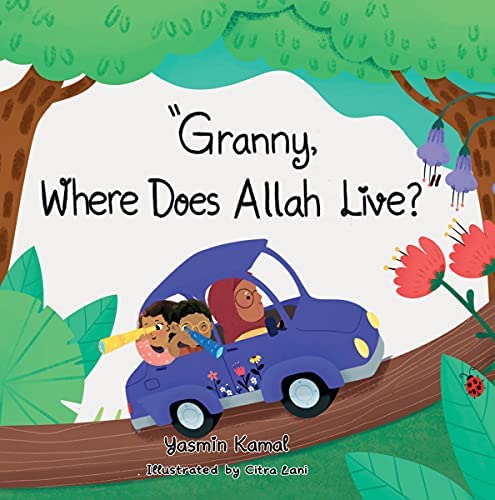
“Granny, Where Does Allah Live?” by Yasmin Kamal illustrated by Citra Lani

Standard
“Granny, Where Does Allah Live?” by Yasmin Kamal illustrated by Citra Lani


This 32 page picture book for 3-6 year olds takes readers and listeners on a car ride with Granny as questions are asked, sights are seen, and love is spread.  The rhyme is actually pretty decent, the explanation of Allah swt being on a throne above us wherever we are adhered to, and the illustrations are bright, bold, and have a lot to hold little one’s interest.  Overall, the banter between the kids and their Granny, the drive to the mosque being filled with joy and love, make me overlook a lot of little annoyances.  The book packs a lot in, but the voice and tone is easy and I think most kids will see the connection of asking where Allah is, to asking why we have to go to the mosque, to why it is important to talk to Allah swt in our prayers, etc., as a way to have their own questions touched upon.  I do wish the book was a little bigger and perhaps hardbound, to make story time sharing a possibility, the book is 7.5 x 7.5, so good for little hands and sufficient for in lap reading.  The book concludes with three activities that incorporate a few of Allah’s beautiful names.

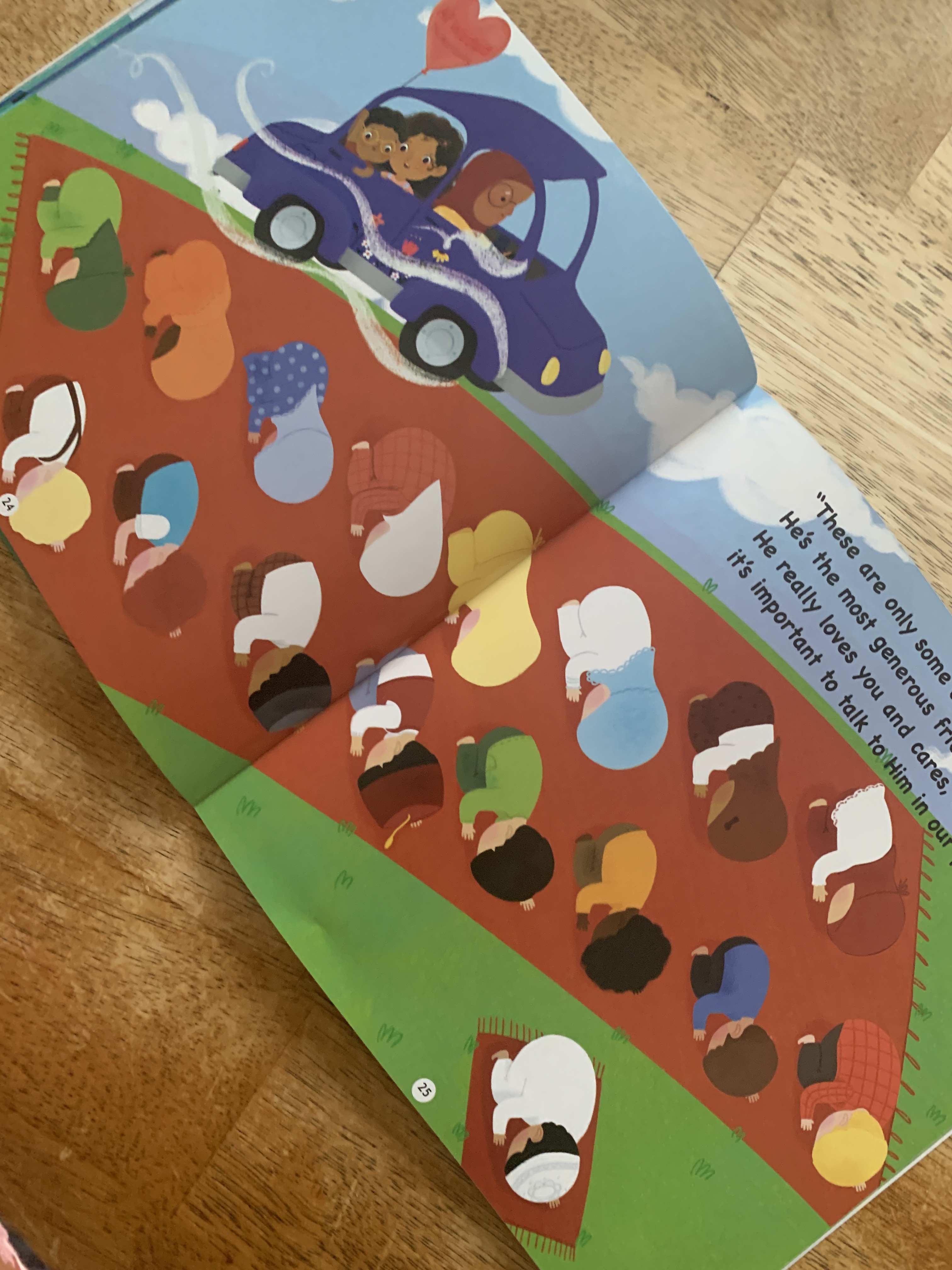
The book starts out with a young boy and girl excited to be spending the day with their Granny and going on a ride in her special car.  No idea why it is special, but it is purple and has flowers painted on it, so lets go! The kids love to ask Granny questions when they drive.  So after saying bismillah, they wonder why people don’t have tails or shells on their backs, or where they are going, or if they can have ice creams. 

As they head to the mosque to meet Grandad  they wonder if that is where Allah (swt) lives.  Granny tells them no, so they ask if He lives in the sky, when she says no, they wonder about in the trees or in the sea.  Finally she says that they “don’t have to go anywhere to find Allah, His throne is above us where ever we are.”

She then details how we can be reminded of Allah in things around us, nature, animals, land formations and then tells the children Allah is the most generous friend and it is important to talk to Him in our prayers. The children ask what we can tell Him, and Granny shares that we can tell Him everything and anything because He always hears.

Granny then explains that when we do good, we make Allah swt happy and when we aren’t nice we make him sad.  So then the kids want to know why we have to go to the mosque, Granny replies, to be part of a community.

The book is a string of questions, so it doesn’t come across as overly preachy, even though it is Islamic fiction, and the voice is natural.  It sounds like a conversation a grandma and some kids would have, I’m guessing the book was spawned by some real life experiences.  My kids and my mom definitely have this relationship.

 All this though, isn’t too say the book is perfect.  If  you read my reviews, you know there is always going to be a little nudge to try and elevate it from my perspective for the next go round. So with that in mind, the book does read a little long, the tangents get a little away from the simple articulate answer of stressing where Allah swt is, the text runs over the pictures a few too many times, and the people praying are not foot-to-foot shoulder-to-shoulder.  There are no salutations, saw, or asterisks after Allah. The word Jummah is not used although they are going to the mosque on Friday and a lot of people are gathering in the day, and the word mosque is used, not masjid.

The pictures are fun and will appeal to kids, especially when the car goes all magic school bus and starts flying, and going underwater.  I hope this is the first book in the series as it really does have potential to present answers to kids questions in a joyful colorful way.

Book available on Amazon 


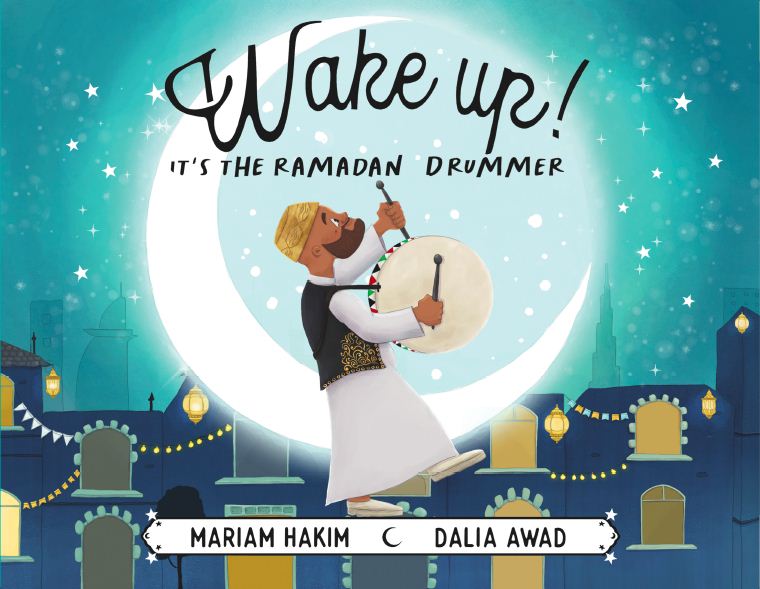
Wake Up! It’s the Ramadan Drummer by Mariam Hakim and Dalia Awad

Standard
Wake Up! It’s the Ramadan Drummer by Mariam Hakim and Dalia Awad

wake up

The beautiful shimmering cover of this new Ramadan book drew me in from the first few pages with the emotional impact of the father in the story losing his job.  Unfortunately the fun illustrations and overall story are not quite enough to make the book an enjoyable read over multiple readings.  By the time you read the book a second time, the missing punctuation, the assumptions and continuity holes, make the book unravel.  It has merit and highlights, I just really hope that an editor is brought in before a second printing takes place to clean up the sentences, patch the holes, and polish it to make it shine.  It has so much potential, but it is disappointing especially if you have been waiting, perhaps a bit impatiently, to share this with children to get them excited for Ramadan.  Even more so if you had hopes of reading it again and again throughout the month.

img_7075

The book summarizes Ramadan on the first page, presumably making the ideal reader a Muslim already familiar with Ramadan significance, and then jumps into revealing that the Baba has lost his job.  The optimistic mama isn’t deterred and sends the Baba and kids to the store so she can cook up something special.

img_7077

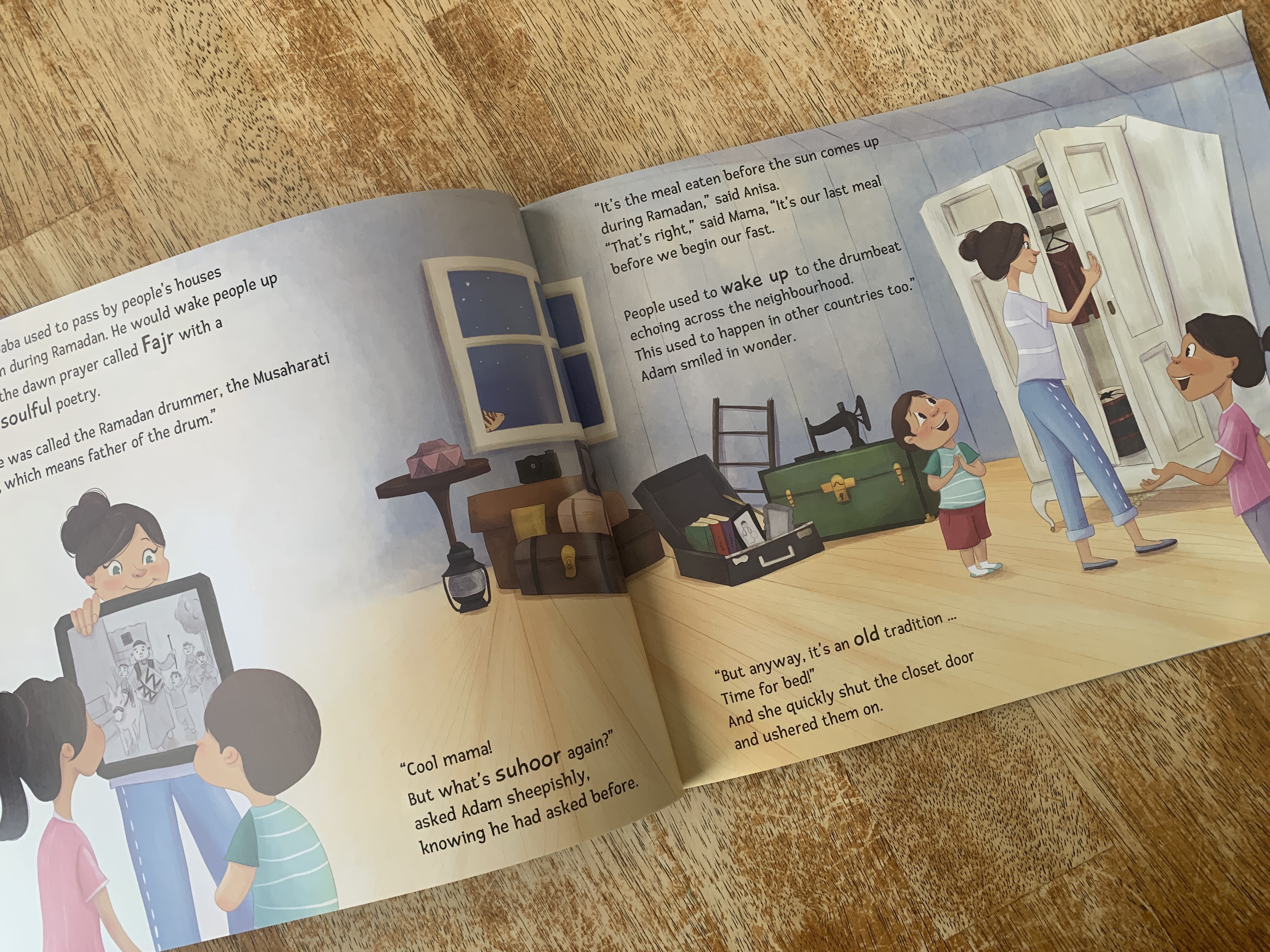
While at the store an elderly woman greets the kids and their father as, “Abu Tabla.” The son dismisses it until later that night when Baba has gone to the mosque and Mama surprises Adam and Anisa with the story of their Baba’s baba walking the streets before dawn to wake people up for suhoor.  She even digs out an old photograph, and with that, Adam is determined to get his father to revive the tradition.

img_7076

I love that Adam and his Baba work together to figure out lyrics and a beat.  I also like that it isn’t an instant success, but rather takes some grit, determination, and perseverance.  I also like that the whole family and eventually neighborhood come together, and that men and women go to the masjid for fajr.

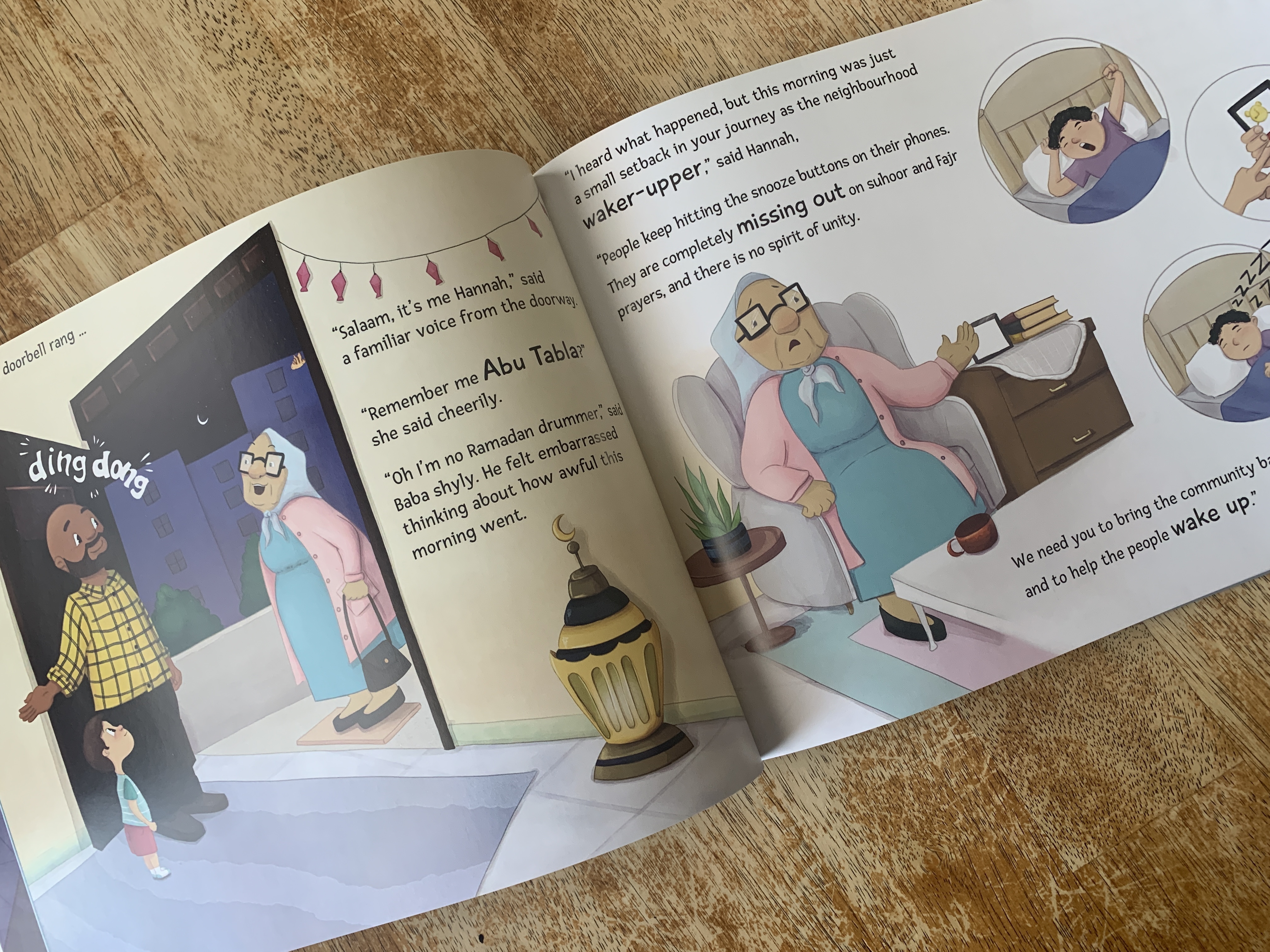
There are some concerns I have though as well.  There are a lot of missing commas, the text uses mosque instead of masjid which reads inauthentic, and the whole old lady character, Hannah, is all sorts of underdeveloped.  She has to introduce herself, yet she knows where Abu Tabla lives, a drum magically appears in her hands, and her prodding is based on the premise that she knows what is going on inside people’s homes, what they are thinking, and what their intentions are.  I get that it is a kid’s story, but by the second or third reading it is hard to unsee how erroneous the logic is.  Especially when fasting like so many acts in Islam, are between a person and Allah swt, not for everyone else to judge.

img_7078

Presumably the story takes place in an Islamic majority setting and the neighbors are all Muslim, which offers a great discussion starter for readers in non Muslim majority places to find ways to maybe share Ramadan or to imagine living where everyone is fasting.

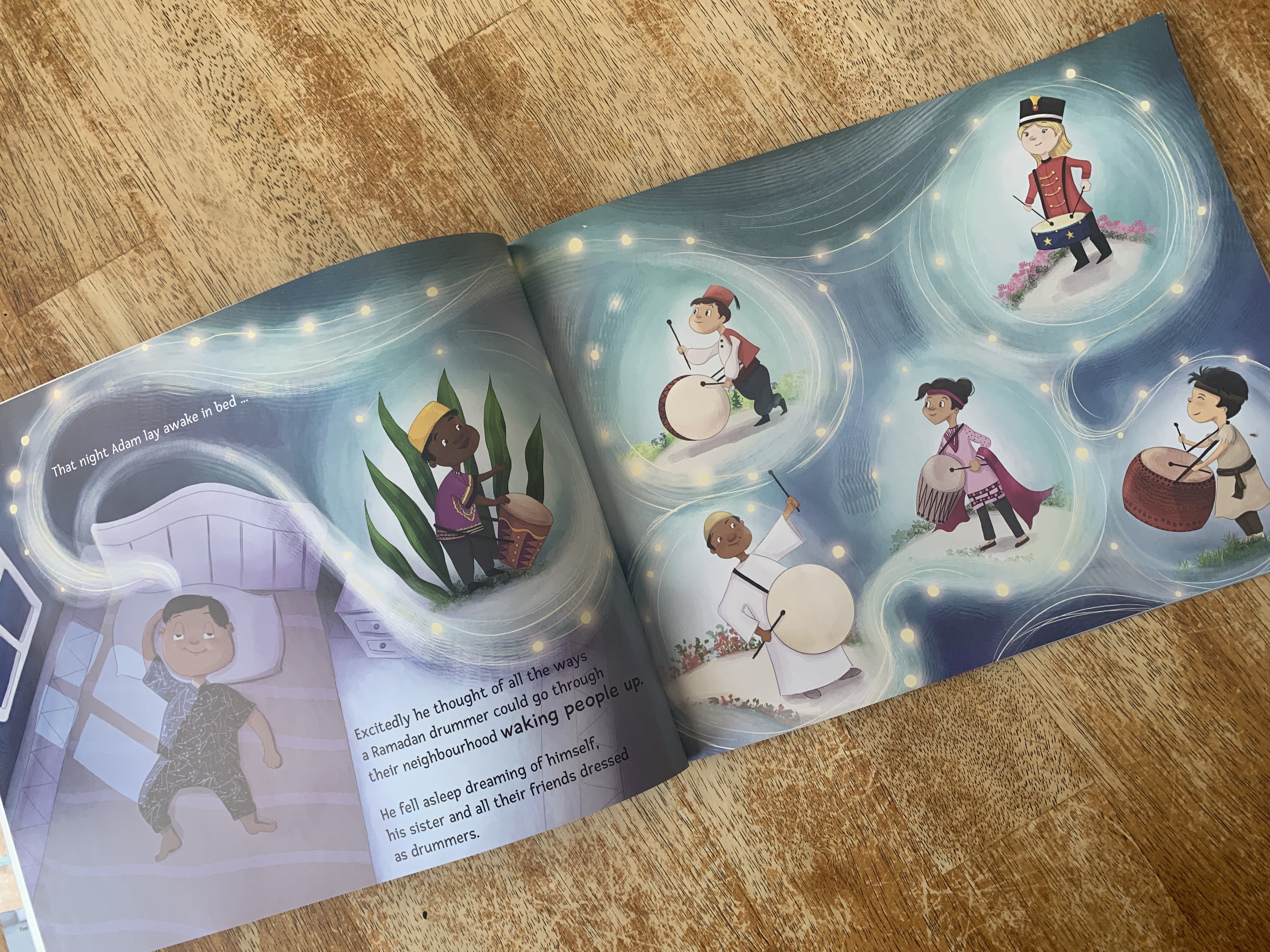
I feel like the last few pages about the drummer going viral is unnecessary, and the story could have, and probably should have, ended with the family and parade entering the masjid.  I particularly found it odd that a line reads, “News of the Ramadan drummer tradition starting up again reached as far as Pakistan, Egypt, Somalia, Turkey and even Indonesia,” why is Indonesia called out like that? Seems off putting somehow, not inclusive. The book concludes by circling back to the Baba getting paid to wake people up and finding jobs through the people also coming to fajr, which seems a bit raw for a children’s book.  A simpler, “even though Baba found another job, being the drummer was still the one he loved most,” would have tied everything up a little better for the demographic.  I’m hoping to include this story during one of my weekly Ramadan story times in my local community, and will probably skip the last few pages and just read the hadith at the end about waking up for suhoor.
Nour’s Secret Library by Wafa’ Tarnowska illustrated by Vali Mintzi

Standard
Nour’s Secret Library by Wafa’ Tarnowska illustrated by Vali Mintzi

library

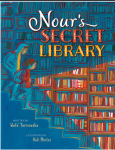
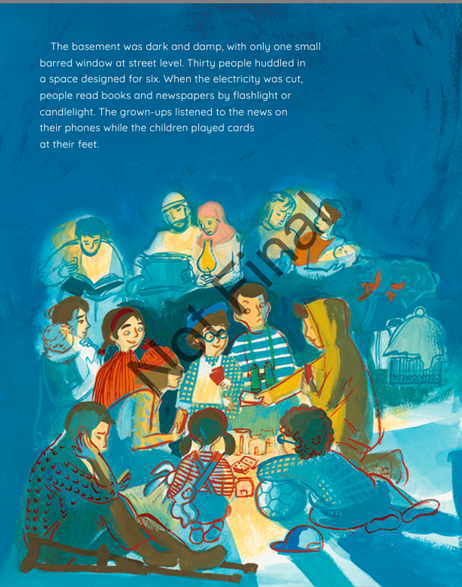
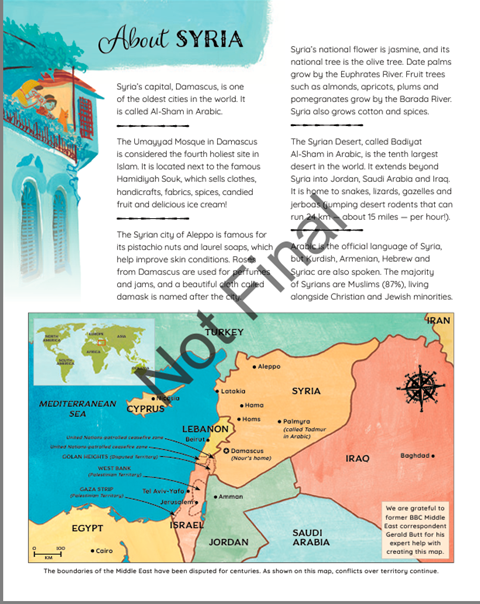
Set in Daraya, and based on a real events in Syria, as well as the author’s own life in Lebanon, this 32 page elementary and up story does an amazing job of showing relatable childhood adventures and ingenuity shining through even in the most horrific of environments.  The book is inspiring and warm, but the backdrop of war is very much present.  Some young children may be bothered by the images and text, while others will benefit from understanding the humanity that is affected by such violence.  I know the book says the pages are not final, but I wanted to put it out to help drum up interest.  I feel this story would best work in intimate settings where discussion, compassion, and gratitude can all intuitively transpire.

library1

Nour’s best friend is her cousin Amir, they love to read and imagine adventure and secret societies.  As their dream to create a secret club, complete with a secret password and handshake, for them and their friends starts to come to fruition, war arrives first. 

Families are forced to seek shelter away from the bullets at night in their basements, and only are allowed to venture out when absolutely necessary.  Every time Amir goes out, he collects any books he finds, and encourages his friends to do the same.  

library2

They begin sorting the books, and trying to decide what to do with them, when Nour has an idea to create a secret library.  Everyone pitches in when an empty, half destroyed basement is located, and the books are moved and set up on discarded planks of wood.  A boy next door is entrusted with the secret handshake and becomes the deputy librarian.

As word spreads, everyone from boys and girls to soldiers and rescuers, collect books to stock the shelves and checkout books to keep their minds busy.  The library, named Fajr, is open every day from morning to evening and closed during Jummah.  It becomes the city’s best kept secret and a source of hope for the community.

library3

There are references at the back that tell about the true story of the Secret Library in Syria, the author’s memories of hiding in the basement in Lebanon, a glossary of terms, information about Syria, the illustrator’s research, information about the war, and famous libraries in the Middle East.

library4

Journey of the Midnight Sun by Shazia Afzal illustrated by Aliya Ghare

Standard
Journey of the Midnight Sun by Shazia Afzal illustrated by Aliya Ghare

What an absolute joy to learn about something real for the first time in a children’s picture book meant for ages 3-5.  I am baffled that this story wasn’t celebrated and shared by not just Muslim’s everywhere, but Canadians as well.  It is a sweet instance of real life being harder to believe than fiction.  It warms your heart and reminds you that there are so many good people doing selfless things for the benefit of others, every single day, subhanAllah.  As for the 32 page book itself, story inspiration aside- I kind of wish it had more details of the real story in it.  The factual blurb on the back cover was a bit more awe inspiring than the totality of the book.  I think it is because it is meant for such little ones, but I don’t know for sure.  I hope that there will be more books for various ages, about this mosque’s incredible 2010 journey. 

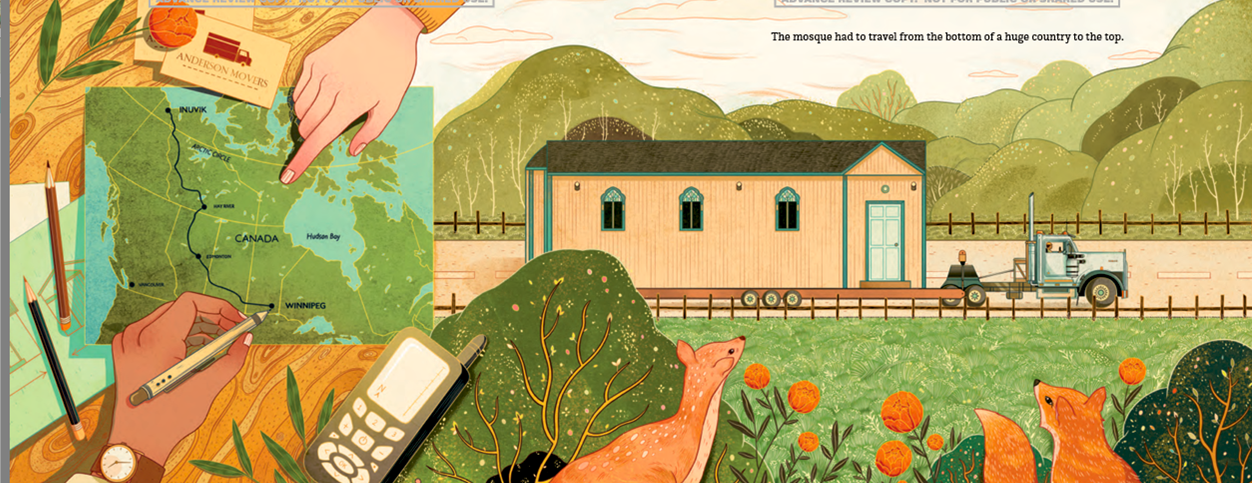
There is a small community in Inuvik, in Northern Canada.  The growing Muslim community has outgrown their one room space and it is more expensive to build a masjid there, than to deliver a pre built masjid from Winnipeg. 

With the help of some non profit and local groups, a masjid is built and sent north, hopefully able to reach its final destination before the river freezes.  The journey is fraught with obstacles: roads are too narrow, bridges not ready, low utility wires. weather concerns, construction, the masjid tipping over, but alas it arrives, alhumdulillah.

The entire community welcomes the new masjid, and the Muslim’s have a new space to pray and gather.

I like that there are maps and indicators of the distance.  And while I like the interfaith aspect in Inuvik being presented, it seems incredibly specific in a very vague book for small children. Why is the imam identified separately, the whole paragraph is just awkward.   Additionally, there is no explanation for why a minaret was needed or if it is critical to a mosque.  Some information other than the children wanted one, would help avoid confusion seeing as this mainstream published book is not targeting only Muslims who would know the function of a minaret, and that they aren’t required structures.

Some links about the event that inspired the story:

https://www.bbc.com/news/world-us-canada-11731017

https://www.thestar.com/news/canada/2010/11/10/north_americas_most_northerly_mosque_officially_opens_in_the_arctic.html

The Great (Food) Bank Heist by Onjali Q. Rauf illustrated by Elisa Paganelli

Standard
The Great (Food) Bank Heist by Onjali Q. Rauf illustrated by Elisa Paganelli

food bank

As an adult setting out to read this book, I imagined that the goal of the book was to bring awareness to a specific issue, food insecurity, and to rally support to help others with this basic need.  The beauty of Muslim author and activist Onjali Q. Rauf, however, is that even with such a clear intent, the storytelling, character building, and  enjoyment of the book makes you connect to the plot and issues and feel the message, not just be told it.  For children seven through 12  with no prior expectation of the book, they will be emotionally effected by the reality shown and feel empathy and compassion for characters that will hopefully translate into their real life.  My 10 and 12 year old boys read the book in about an hour, not realizing what the book was going to be about and hounded me to read it with glowing reviews.  This 103 page middle grades book has diverse characters (none are Muslim), and is a great story, a great educational tool, a great empathy check, and a great resource for how to get involved to start helping food banks, and breakfast clubs, all while being funny, relatable, kind, and engaging.

img_3836

SYNOPSIS:

Nelson, his younger sister Ashley, and their Mum work together to make hard “tricky” months manageable.  They are creative with their meals, they go to breakfast club, and they use their vouchers on Thursdays at the food bank.  Some times though, it isn’t enough, Mum has to pawn her jewelry, they go without meals, and generous friends share their snacks.  When the food bank starts running low, Nelson breaks his secrecy about breakfast club and his close friends Krish and Harriet are determined to help figure out why donated food isn’t reaching the bank and what they can do to make sure it does.

img_3837

WHY I LIKE IT:

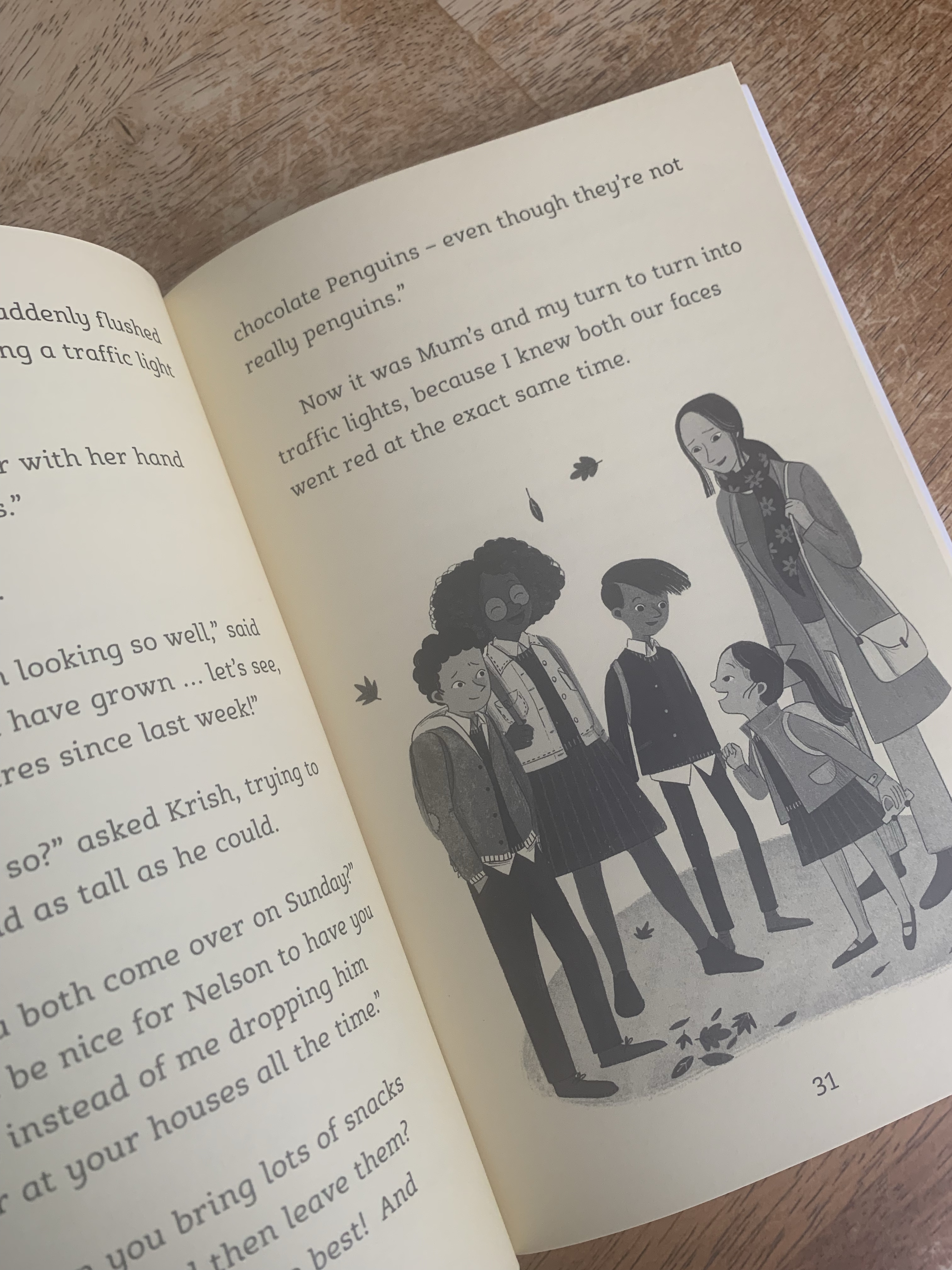
I love that it shows how the family has food insecurities on a day-to-day basis and how never feeling full affects so much of the characters’ attention.  I also love that it shows their mom works, she is a nurse and works really hard, they don’t steal or load up on food that is donated, they are very grateful for all assistance given and their friends don’t judge them.  It shed light on a different narrative that many children perhaps don’t think about: that people they know and are close with, might be hungry.  I think the maturity of the kids is a lesson to adults reading the book too, that reminds us that kindness and assistance doesn’t need to come with judgement or arrogance.  The characters are all really likeable, they aren’t perfect, but even though the book is short, you feel your heart being affected by them in their handling of the mystery and the larger concept of hunger.

img_3838

FLAGS:

None

TOOLS FOR LEADING THE DISCUSSION:

I would read this book aloud in a classroom (2nd-5th), and if I get a chance to participate in Lunch Bunch (where a book is read to children while they eat their lunch) at our local Islamic School, I will start off with this book.  I think kids have bigger hearts than we often think they do, and while they might not recall the less fortunate when you want them to finish all the food on their plate, they often notice kids without lunches at school and share without prompting.  
Here’s a great clip and reading by the author: https://www.youtube.com/watch?v=NVYBLh0kODc

Happy Reading!


Ahmed and the Very Stuck Teapot by Sarah Musa illustrated by Rania Hassan

Standard
Ahmed and the Very Stuck Teapot by Sarah Musa illustrated by Rania Hassan

This 36 page early elementary book is packed full of choices and lessons packaged in a sweet story that kids and adults will enjoy reading and discussing over and over. My only real critique is the title. I’ve had this book sitting on my shelf for nearly a year thinking it was just a silly book about a calf with a teapot on her hoof that is stuck and would probably involve different people and methods and attempts to get it off. But the teapot is off by the tenth page, and the story is really just getting started. Like all Ruqaya’s Bookshelf picture books, the large thick shiny pages with a stiff soft cover binding make the story a great choice for storytime and bedtime alike. There are Islamic threads and references, but the story overall is universal.

Ahmed and his friend Tariq are practicing their kite flying skills for tomorrow’s annual competition, when Ahmed’s kite gets destroyed in a tree. Heartbroken Tariq suggests he hurry to buy a new one before the store closes at Maghrib. As the boys rush off they come across a brown calf with a teapot on her hoof. Ahmad recognizes the teapot as his mother’s and feels like he should help the poor animal. Tariq keeps reminding him that the shop will close, but Ahmed decides to take the cow to Amo Waseem’s to get help.

Amo Waseem, is able to help the cow get free, but in the process, the cow get’s hurt. The cow needs help from a shepard, Amo Salih, but Amo Waseem can’t go, and Tariq wants to practice more. Ahmed knows the cow can’t be left untreated, and takes the little cow to get help. The cow then needs to get to his owner, and the story continues until the shop is closed, and Ahmed realizes he won’t have a kite for the competition. He goes to the mosque for salat and starts to feel better, he knows that he did the right thing, and inshaAllah Allah will reward him in some other way. His reward comes quickly, however, much to Ahmed’s surprise and in gratitude he also manages to find a way to help his mother.

I love the gentleness of the lessons of doing what needs to be done, even when you don’t really want to, and your friends are not supporting you. Ahmed had chances to walk away, but he didn’t and he was at peace with the outcome. His friend wasn’t mean or bad, he just made different choices. There are discussion questions at the end as well. I think this book would foster great conversation with even the littlest listeners, and I can’t wait to share it at our masjid’s storytime.

Too Small Tola by Atinuke illustrated by Onyinye Iwu

Standard
Too Small Tola by Atinuke illustrated by Onyinye Iwu

9781536211276

This AR 3.6, 89 page early chapter book features three stories set in Lagos, Nigeria.  The main character and her family are Christian, but many of the neighbors are Muslim, and the third story is set in Ramadan with Easter and Eid falling at the same time.  The sense of community throughout the book, the OWN voice detail and charm make this book silly, warm, and delightful for first through third grade readers.

img_9777

SYNOPSIS:

In the first story Tola heads to the market with her Grandmommy.  Not the fancy mall, but the muddy market further away.  Her older brother Dapo is too busy playing soccer to help, her older sister Moji is busy with homework, that leaves little Tola to carry the items on her head with her tough as nails little grandmother.  Everyone says she is too small, but Grandmommy knows she can do it.  As they purchase the items, and neighbors call to have them pick up items for them too, the duo have to take lots of breaks on their way home, but Too Small Tola does it and proves to herself and others that she might be small, but she is strong.

The second story once again focuses on life in Lagos and the one bedroom apartment the family shares.  One morning both the power and the water are out and the jerry bottles need to be filled at the pump.  When some bullies trip Tola and the water spills, an elderly neighbor lady patiently waits for the right time to get her revenge on Tola’s behalf, and when the bully challenges the woman, the entire line stands together.  Tola may be small, but she stood for something and made a difference.

The final story involves the neighbor, Mr. Abdul, the tailor who lives downstairs, coming to measure Tola and her family for their new Easter clothes.  He let Tola measure everyone last year and praises her as the best measurer in Lagos, and Tola is eager to take the measurements this year.  When the tailor breaks his leg, he is worried he will not be able to ride his bicycle to his clients and will not be able to prepare the Eid feast and pay rent.  Tola knows they have been fasting all Ramadan and between her, Grandmommy, and Dapo they come up with a plan to help.  Dapo will peddle the bike and take Tola to measure everyone for their orders.  Tola may be small, but she can save the day for the Abdul family.

WHY I LIKE IT:

I love little Tola and her sassy grandma.  The book would lend itself so wonderfully to be read aloud as it bursts with personality and dialogue.  I love the sense of community in such a day-to-day life that would seem to stark and hard to most western readers.  Tola’s draws on those around her to find her strength, from her Grandmommy, to her neighbors, they may tease her that she is too little, but they also build her back up and stand with her.  I love the diversity in Tola’s world.  She seems so excited that Eid and Easter will be aligned and that after her services they will be joining the Abdul’s feast, such a great lesson of tolerance and respect without being preachy about tolerance and respect.  Young readers will enjoy Tola and the insight into Nigeria.

FLAGS:

Grandmommy lies when a neighbor calls her in the market to ask her to pick up his TV, she pretends the battery dies as she and Tola laugh at how ridiculous them carrying a TV would be in addition to everything else they are carrying.  There is bullying when Tola is tripped and then when Mrs. Shaky-Shaky trips the bully.

img_9781

TOOLS FOR LEADING THE DISCUSSION:

This wouldn’t work for a book club, but would be ideal in small groups, or to be read aloud.  There would be a lot to discuss as children would relate to Tola and find themselves cheering her on.