Tag Archives: bangladesh

Always Be My Bibi by Priyanka Taslim

Standard
Always Be My Bibi by Priyanka Taslim

I had pretty low expectations going into this 368 page YA romcom- as often YA is really “adult” and if the characters/author are Muslim in a “romance” it tends to become a heavy handed rebellion against Islamic principles. So imagine my surprise when the book really is meant for teenage readers. The protagonist loves her culture, and it is established really early on that they are Muslim, but aren’t religious.  Sure as an “Islamic School Librarian,” I wish the characters practiced Islam, and that the the kissing and hugging was labeled as haram, but for the fictional story on the page, that is cultural based, it is a delightfully chaotic and fun read.  Note, the kissing and haramness occurs when they are “sneaking out,” and reads as if they are sneaking out from parental rules, not Islamic ones, as they do not view the world through an Islamic lens.  The protagonist’s sister is presented as religious in that she wears hijab, and left a prestigious private school to attend a local Islamic one, but it is not a major plot point, and if anything shows that Islam is not a monolith or something forced, really though it just shows how different the siblings are.  Does that mean the writing is some literary genius? No, not really, but it is a quick light summer read that I enjoyed. The main character, Habiba, aka Bibi, reads as a Bangladeshi Cher from Clueless through and through, and while at the start it was a bit annoying, I ultimately found her endearing by the end.  There are plot holes, but I didn’t care too much given the quick pace and the nature of the book. The ending though, was drawn out and too long, and the book could have been easily 50 pages shorter. All in all it was fun to be transported to a tea estate in Bangladeshi for a wedding, and I wouldn’t have a problem with 15 – 16 year olds or so reading the book.

SYNOPSIS:

Bibi is in hot water with her father for sneaking off to prom with a boy, the deal has always been no dating until her older, perfect, law school bound, sister Halima gets married.  And her punishment for the summer is working at the family restaurant, one of the many Royal Fried Chicken locations in the chain they started that makes her family, chicken royalty. When hijab wearing, no haram dating Halima springs on her family that she is getting married, the family all heads to Bangladesh for the summer to get to know the groom’s family on the massive tea estate, and celebrate the wedding. Oh and Bibi’s punishment will be transferred from working fast food, to working in the fields under her new brother-in-law to be’s grumpy, serious, younger brother, Sohel.  Bibi also holds her father to his end of the deal and when the big book of biodatas arrives, she is ready to have her chaperoned dates as promised.

As the prickly family of inlaws look down on Bibi and her family, Bibi and surprisingly, Sohel join forces to break the pair up. As the book unfolds their mission changes, the bio data book causes drama, old flames are sought after, and the wedding takes some surprising turns.

WHY I LIKE IT:

As I write this, I’m rolling my eyes at the fact that I really did read it in two sittings and was amused. Bibi is spoiled and clueless and yet does have a good heart.  As with most romantically inclined books, a whole lot of suspension of reality takes place and side characters are not fully fleshed out.  Halima and Sunny met in college, and there families are from the same part of Sylhet, infact Baba worked on the Rahman’s tea estate before coming to America.  The grandma is woefully underdeveloped, I get that she is a side character but the girls spend so little time with this woman they love so dearly is a blaring hole. I really didn’t get some of the scenes after the midpoint, they felt like filler and they felt forced: friends coming from America, the bachelorette party turned amusement park trip, Sohel not sticking up for Bibi, the half hearted love triangle, and the Bibi Baba multiple rehashings.

I did like that the title of the book though comes from something Baba says to Bibi, and not from a love interest, that made me smile. And I liked that the “dates” were supervised, it is vague if the dates in America would have been, or if once Halima was married she would have been allowed to “date” with a western definition, but I kind of liked that it wasn’t defined.

FLAGS:

Disrespect, sneaking out, kissing, hugging, close boy girl friendships, sneaking out, language.

TOOLS FOR LEADING THE DISCUSSION:
Definitely not a book to spotlight as a book club selection, but one that I would have on the shelf and not mind older high schoolers reading.

Lulu in the Spotlight: A South Asian Wedding Story by Natasha Khan Kazi

Standard
Lulu in the Spotlight: A South Asian Wedding Story by Natasha Khan Kazi

This adorable 40 page culture focused picture book explores a Desi tradition with layers of competition, frustration, mystery, problem solving, kindness, and joy woven in.  Lulu likes the groom and his family, but at her cousin Amirah’s wedding, the games are about to begin, and she has a plan to win the money for team bride, and prove she is old enough to share in the spotlight. Each of the traditional teasing games though find Lulu pushed aside, until the joota chupai, where the shoes go missing.  With Nani’s encouragement to stay true to herself, Lulu gets a chance to shine by doing it her way, and bringing the families together. There are a few visible hijabis in the illustrations of this Muslim author/illustrated book and the backmatter really makes the traditional references accessible to all readers.  As a Pakistani American, my children haven’t attended cultural weddings with all the traditions, fun, and games, and this book is already a favorite in discussing what this family does, where our families might do it a bit different, and how they can twist it to fit an upcoming wedding we have this summer.  The bright large pages, add to the text and illustrations truly conveying the excitement, emotions, and colors of South Asian weddings.  By focusing on one tradition, and not trying to include everything about the multiday affairs, the book stays on message and maintains an in the moment tone, keeping the readers engaged, well done.

The book opens at the mehndi ceremony of Lulu’s cousin, and while the dances are taking place, Lulu is scheming.  She knows the next day there will be chances to make some prize money from blocking the groom and stealing his shoes, and she is determined to capitalize. Normally it is just the bride’s side against the groom’s side, but Lulu has to battle her own cousins for a role in the games.  Tarek says she is too little.  Zara is clever at negotiating, and Farah is athletic and gets places fast.  In the past, Lulu hasn’t been included, but this time, this wedding, she is ready.

On the groom’s side it is Kamal, Sameer’s little brother that serves as Lulu’s biggest competition, and who trips her as she heads for the shoes. Frustration and sadness have damped the festivities for Lulu, yet she still is helpful and kind.  With the games wrapping up, a dejected Lulu finds solace in her grandmother’s lap.  When Nani shares why the shoe stealing tradition still is carried out, Lulu knows just what to do to find the spotlight her way.


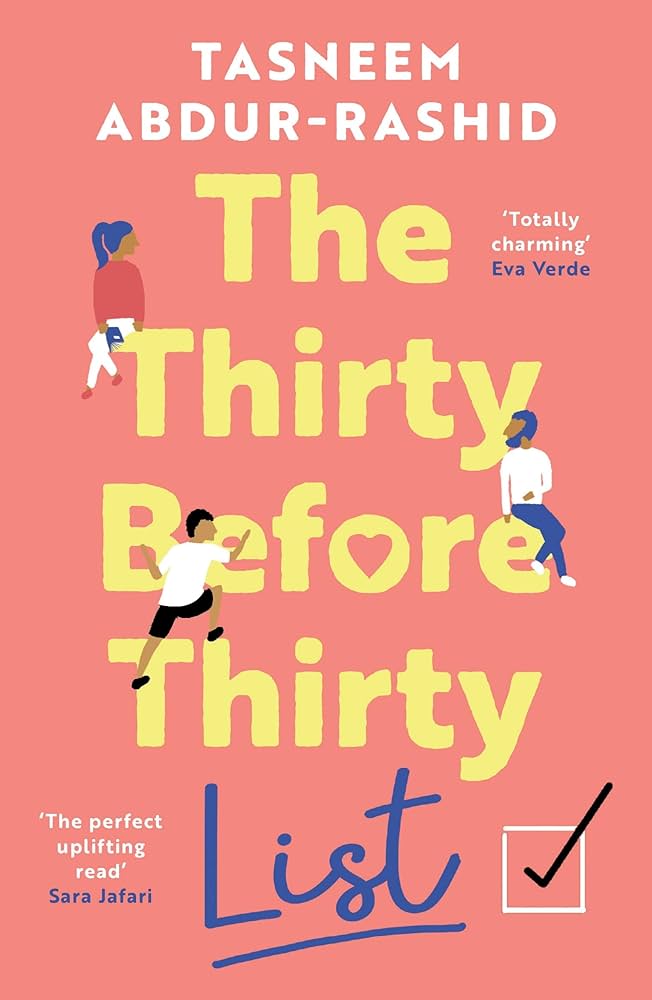
The Thirty Before Thirty List by Tasneem Abdur-Rashid

Standard
The Thirty Before Thirty List by Tasneem Abdur-Rashid

This is the second book I’ve read by the author and while I didn’t do a full review of the first (Finding Mr Perfectly Fine), I am going to do a full review of this one, because the book might not be “halal, halal” or intentionally Islam centered, but with a robust Muslim cast it stays impressively clean and there is a lot of Islam present.  I’m glad I bought a physical copy so my nieces or my daughter can pick it up and enjoy Rana’s growth and antics.  The book is nearly 400 pages long, but they fly by, and if you are 16 and up looking for a rom com style escape book this will fit the bill.  The only thing that really gave me pause is an early label the protagonist slaps on her self as “not being a devout Muslim.”  I get the point is to not let the stereotype of an arranged marriage and strict brown parents overshadow the initial impression of the book, but the author is a better writer than that early statement indicates.  As the story progresses you see her Islam IS very much part of her identity, her environment, her outlook, and the author shows it in relatable nuanced ways that the early “telling” was not needed.  Yes, the book has the protagonist and a different boy or two alone at times, and there is some hand holding and a few hugs, but the intention is always to find a spouse, and religious lines are usually clearly on the character’s radar.  There is some talk about mortgages, and a side Muslim character that has a girlfriend he keeps secret as they go on holiday together, but again, nothing obscene, or defensive, just realistic actions from contemporary characters viewing things their own way and doing the best they can.

SYNOPSIS:

Maya’s life is pretty predictable, she lives at home, goes to work, hangs out with her childhood friend on the weekend, and dodges any attempts to be set up for marriage.  Then one day on the tube a mysterious stranger, Noah, his leather bound notebook, and everyone else in her life moving forward, prompts her to open the notebook and copy his 30 before 30 list.  Adapting what doesn’t make sense at all for her life, she never peeks ahead, but rather takes one adventure at a time.  When people from different circles in her life start interacting, and Noah reenters her life, Maya will have decisions to make and a new list to commit to, her own.

WHY I LIKE IT:

I needed a diversion, I was going to be spending a few consecutive days in waiting rooms at hospitals and knew I’d need something light, easy to read, pause, and return to, and something to make me smile.  Maya is likeable, and her family and friends relatable.  Her Bangladeshi and British culture add depth and I was genuinely surprised and appreciative with how much Islam managed to find its way in to the plot and character arcs.

FLAGS:

Relationships outside of marriage, nude model, lying, hugs, hand holding.

TOOLS FOR LEADING THE DISCUSSION:

This would make a great adult, college, or even 12th grade book club selection, for just a fun book to laugh about and enjoy with friends.  It isn’t that deep, but there are threads that will hit, and to chat about it will bring friends closer together.

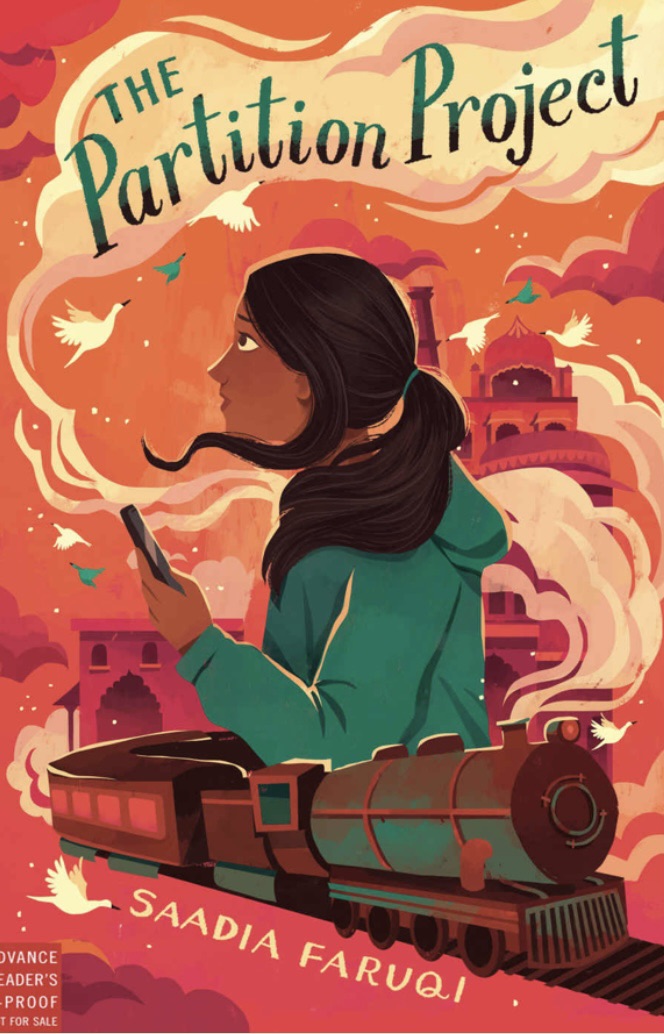
The Partition Project by Saadia Faruqi

Standard
The Partition Project by Saadia Faruqi

Screenshot

I have always maintained that my reviews are not personal, and for over 10 years, I kept to that. I recently made a public exception however, for Palestine. I cannot and have not checked every author, every illustrator, every publisher, or every agent, to see who has spoken up about the genocide, but there are a few prolific authors that are standards in the niche of Islamic fiction literature. Who have elevated our representation with a standard of quality and consistency across multiple age groups over the years, whose stature made their silence, seeming or actual, to the occupation, the apartheid, and the ongoing attempted erasure of a people and culture impossible to miss. No there is no standard or bare minimum, this is all emotion, and if you are thinking who am I to judge, or maybe I missed something, yes you are right. None-the-less it definitely caught my attention that an author who remained silent, wrote a 416 page middle grade book about partition, a historical event impossible to separate from colonization. I know the timeline for books to be published is not quick, but when I read the characters discussing that, “If we only read books by perfect authors, we’d read…nothing, I guess.” It felt a little defensive, and while I never set out to shame anyone, I have written this disclaimer to hold to my word, and to acknowledge that as much as I have set out to write the remainder of this review as I would review any book, my own disappointment in the author, may show through. Literary wise the book is moving, heartfelt even, but the performative othering, the internalized Islamophobia, and the catering to a western gaze, are subtle, but undeniably there. Perhaps the biggest example is the word “British,” the whole reason for partition, is only mentioned a grand total of six times.

SYNOPSIS:
Mahnoor, aka Maha, is in seventh grade, and her whole world has just flipped upside down. Her Dadi, her paternal grandmother, has just moved in from Pakistan, taking her room, and her free time. Plus Dadi is old and grumpy, and Maha is not amused. With parents that are too busy to spend time with her, Dadi slowly but surely starts to fill in a lot of pieces that Maha didn’t know were lacking in her life. Through food and stories and the start of Ramadan, Maha learns about Islam, Pakistan, friendship, and with a school documentary assignment, partition. A historical event she had never heard about before, starts to be all she can think about. It also seems to hang over everything she encounters from a book on a novel study English assignment list, to the train in their neighborhood, everyone at the senior center, and even Texas history. With dreams of being a journalist, Maha’s singular focus because almost obsessive, according to her friend Kim, but the more she learns, the more she changes. And the changes are for the better, even if there are some stumbles along the way, fighting with Kim, making Dadi runaway, calling out her parents preoccupation with work, missed fasts. The book has a happy ending though, as the unlikeable privileged Maha at the beginning, transforms to being someone the reader is cheering for at the end.

WHY I LIKE IT:
I am Pakistani-American, being half Pakistani and half American, the hyphen for me signals both my parents. So I was thrilled a year or so ago when I first heard about this book. I am a bit removed from partition because my father was the first in his family to be born in Pakistan, and my in-laws did not move from India until much later. That being said, I know it is a part of me, as all desis do, and was eager to read this middle grade book. Please note though, I am also white passing American (albeit with a hijab), so I can tell when I am being pandered to as well.

Do I feel the book did the topic justice? Absolutely not, by not discussing colonialism and British occupation, a huge part of the setup is conveniently ignored. It also is very placating of what the Muslims, Seikhs and Hindus seemed to want as Jinnah and Nehru are only name dropped once. Gandhi not at all. I get that the book presumably isn’t about that, but by ignoring it all together, there is some intent there, possible watering down for a white audience, that doesn’t sit right with me.

This book feels like it is written for non Muslims. The dialogues about being a good person even though they don’t follow Islam as they should, and pray and fast and eat halal, seem like internalized Islamophobia, that is trying to normalize not practicing. When the text goes so far as to call those that do fast all 30 days “ultra-religious” it seems to walk back the numerous passages of Maha loving fasting and finding peace in prayer. The takeaway for a Muslim reader will be a little self doubt, for a non Muslim reader it will reinforce the labels of “those Muslims” and “extremists.” It makes what many Muslims find basic faith requirements, come across as optional here in America, like taking off shoes when entering your house. With that being said though, the book does have a lot of heart, and in many places Islam and Pakistani culture are warm, but that warmth often comes through attempts to appeal to a non Muslim western lens. Similarly the stereotypes do as well. Pakistan is considered conservative, which is dismissed as meaning, “code for no swimsuits.” Wow, a whole culture and religion, so easily labeled and stereotyped. Stings a bit, not gonna lie.

Maha’s parents are not religious, so much of Maha’s knowledge of Islam is coming from what she sees her Dadi do, pray, fast, read Quran, etc. Except, Maha knows how to read Quran, and pray, she just needs practice. So explain, how she doesn’t know what inshaAllah means? This is just one example of inconsistency bumps in the text. At one point they eat iftar, and then a few hours later have dinner, I mean sure it is possible, but it seems weird. Her frail grandma runs away on a hiking trail? She wants the archive curators approval for her documentary and not her Dadi’s? Ahmed says he only eats hala, Maha is eating a non halal chicken salad and then they share it. Overall, Maha rarely reads like she is 12. At the start when she is whining, is about it, the rest of the book she reads much much older.

FLAGS:
Boy girl close friendships, angry mobs with guns, death, cholera, internalized islamophobia, talk of gods and demigods in Percy Jackson, mention of J.K. Rowling negative comments on trans community, fear.

TOOLS FOR LEADING THE DISCUSSION:
I cannot in good conscious purchase, recommend, or even check this book out from the library. I received an advanced digital arc, but my heart is too heavy by the author’s silence in the face of the atrocities occurring in front of us regarding Palestine.

Not Now Noor! by Farhana Islam illustrated by Nabila Adani

Standard
Not Now Noor! by Farhana Islam illustrated by Nabila Adani

img_7621

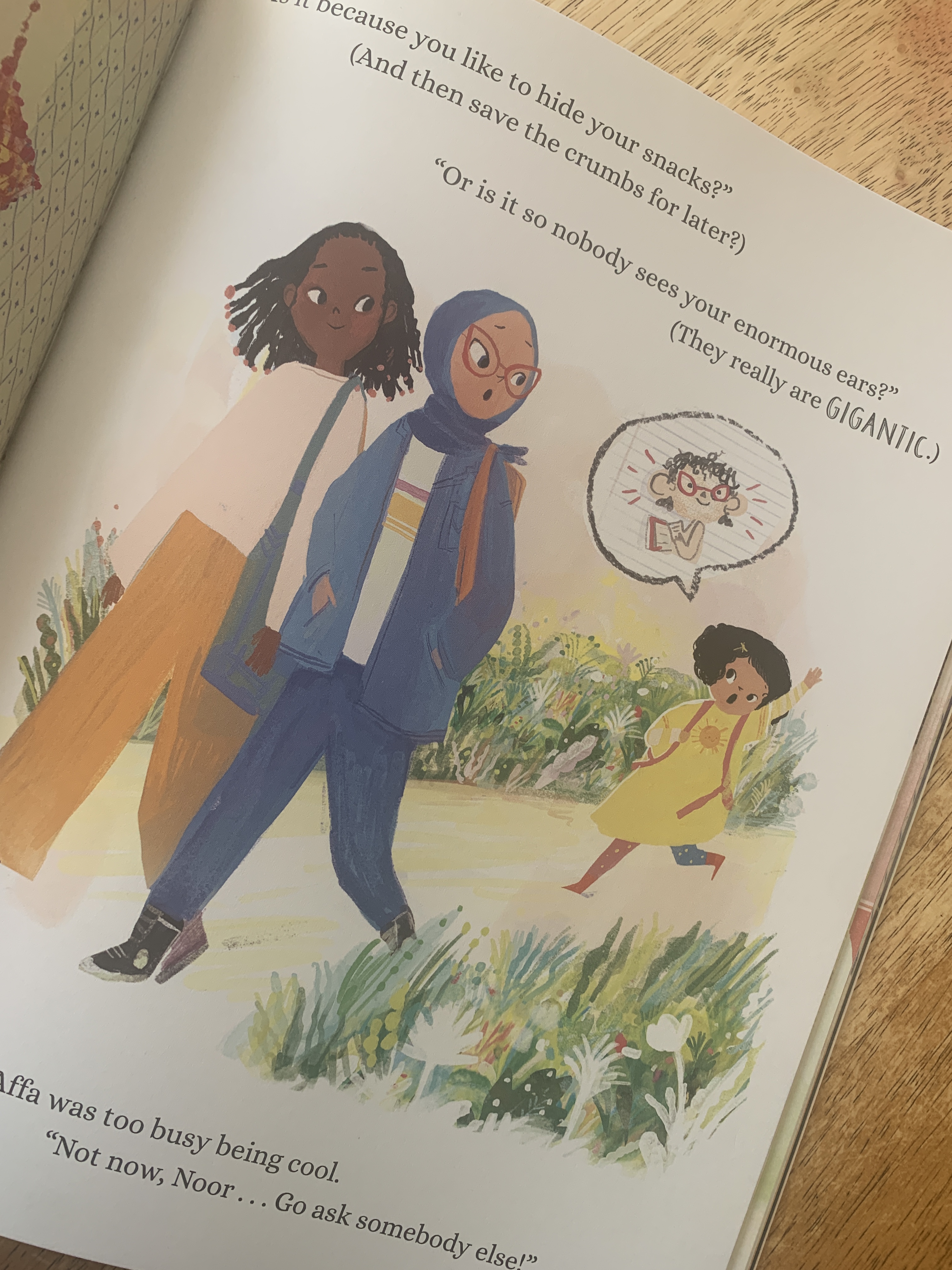
This 32 page book is incredibly adorable and silly, and yet so vague in the answer that is the whole premise of the book, that it really has me wondering why we are so afraid (in children’s books and possibly in our daily lives) to say that we wear hijab because Allah swt commands it?  The book articulates that we are Muslim and that hijab defines us, which I love, it just seems that while the rest of the book is incredibly direct and funny, the answer is fuzzy and lyrical.  It is by no means wrong, it just at the end presents what hijab means, the benefits of wearing it, and one’s personal feelings toward it, while skirting the answer the girl keeps asking of why? It seems to be a common approach lately, and I wish that more picture books about hijab would clearly articulate that the commandment to cover is in the Quran.  It isn’t for any other reasons. It may have perks of keeping your ears warm, fashion, or hiding your earbuds, but that isn’t why Muslim women wear hijab.  Perhaps the trend has me more frustrated than this book on its own warrants, it really is sweet and I don’t regret purchasing it and having it sent from the UK.  It allows for a serious conversation about hijab to occur after, and it intentionally pushes the humor, which I definitely think we need more of in Muslim centered books.

img_7623

The book starts with Noor identifying what her Ammu’s hijab is and isn’t, how she wears it and how she doesn’t.  The next page shows Noor’s bustling family and she compares how her Ammu’s hijab is not the same as her Nanu’s or Dadu’s or Aunt’s or even her sister’s, but she doesn’t know why any of them wear it.  Yes, I’m sure there is some pointed criticism I should make about how can a child her age not know, but I think for the sake of it being a book and being comically done, I am willing to let it slide.  I do wish that the spread had the women and their style of wearing a scarf shown.  I appreciate that they are in the dining room at home and thus not wearing a scarf, Nanu is because Dada is in the picture, authenticity which I love seeing, but children need a little more hand holding to see which person the text is talking about. Yes I know there is a family tree on the inside cover, but at story time, it is cumbersome to flip back and forth.

img_7626

Back to the story, Noor starts by asking her sister, the coolest hijabi she knows, if she wears it to hide her snacks in, or hide her big ears, but Affa brushes her off with a, “not now, Noor” and she is off to the next family member to ask.  Each time the rationale gets more outrageous: hide the eyes on the back of your head, prevent you from getting nits, etc..  And each time the person she asks sends her on her way with a “not now, Noor.”

When Noor finally gets to her mom it is she who answers with poetic lyricism, “We are Muslim women, my Noor, Unapologetic and true.  We are believers.  We are dreamers.  We are thinkers. We are leaders. We can wear our hijabs on our heads like our hearts on our sleeves.  Whether you choose to or not, my Noor,, we are so many things…and we are more than enough.” On the next page it continues, “My hijab is not just a scarf.  It means more to me.  It is a reminder of who I am, where I’m from, and where I’m going to be.  And perhaps one day you’ll understand what I mean.  Because, most of all without my hijab, my Noor, I don’t feel like me.”

img_7622

A flowery sentiment, but little Noor and the reader never got the answer as to why Muslim women wear hijab, and I think that it is unfortunate.  The book is beautifully illustrated, the size is great to be shared, the text funny, the voice playful, the joy contagious but the answer for me, just missed the mark, not by a lot, but by enough that I think an adult would need to supplement the overall takeaway message.

A Bit of Earth by Karuna Riazi

Standard
A Bit of Earth by Karuna Riazi

earth

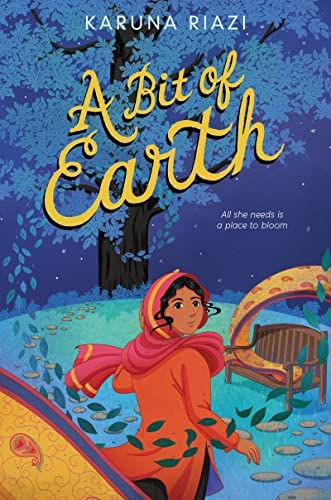
This Secret Garden retelling mixes the heart of the original with a dash of modernity, the flavor of desi culture, and the lyricism of a good writer.  Over 368 pages the slow plot but rich imagery will draw readers in, hold their attention, and leave them thinking about the characters they have been fortunate to spend time with on Long Island.  Islam is practiced and normalized and naturally woven into the Muslim characters’ daily lives without othering or over explaining.  I did struggle a bit trying to keep the relationships of who was supposed to be caring for the protagonist at various points since her parent’s died clear, but once I abandoned stressing about it I was able to be swept away.  I recently reread The Secret Garden with my own children and the original is not plot heavy, nor action packed, but I watched as my own children were drawn to the slower, more grounded (pun intended) nuanced tale, and I think this book, in the same vein, will find its way in to the hearts of middle grade readers.  The book is clean, there is a possible crush hinted very slightly at the end, periods are also endured, and I do have reservations of the terrible marital relationship between Mr. and Mrs. Clayborne, but it establishes that change will occur, so at least it isn’t normalized.  There are sprinkles of magic implied regarding the house, but it is always framed without clarity and in a subtle way to set the tone and the emotions the characters are feeling more than centralizing something rooted (see I did it again) in fantasy.

SYNOPSIS:

The book updates and mirrors the original fairly well with an obstinate orphan arriving at a sprawling house, finding a prickly boy, and setting off to form a tentative toleration of one another with friendly neighbor kids in a garden that is unquestionably off limits.

Maria Latif arrives from Pakistan against her will to be taken in by a distant relative (I’m not sure how she is related), but Asra has been called away and she is forced to stay with Lyndsay, the new wife of Mr. Clayborne.  The first wife was a friend of Maria’s family, but Lyndsay is just as emotionally overwhelmed and lost as the child in her charge.  With Mr. Clayborne away on businesses, his mother Charlotte keeps them all on edge.  When Colin Clayborne is expelled and returns home, more tension erupts and the two children find themselves in an off limits garden trying to make the most of a difficult situation.

WHY I LIKE IT:

I love the mix of poetry and standard novel format.  It is beautifully written and clearly the author does a remarkable job of making her very unlikeable characters worm their way in to the reader’s heart.  Both Maria and Colin are thorny and difficult, stubborn and rude, but you seriously cheer for them, and I did shed a few tears at the end.  With the author’s writing ability apparent, I’m still not sure why the foundation of the relationships and getting Maria to the Clayborne home is so cumbersome.  It is too muddled and it drags the book down every time it is revisited.  The Dadi having the aunt’s phone number was too easy, the inconsistency of the neighbors having no relationship to the Clayborne’s for so long and Lyndsay not even pausing to think another Bangladeshi family living a few houses down might be my husband’s first wife’s friends, seems inconsistent.  Honestly Lyndsey in general needed to read like a competent woman struggling, not a teenager in over her head. I disliked her and Mr. Clayborne’s relationship and I would hate to think any reader would find it ok or normal.

I love the Islam and how it presents when the character has to pray, she goes and prays, it is part of the story and it is seamless.  I don’t think the culture is handled quite as well.  Lyndsay is a foot writer who is always cooking, yet knows nothing of desi foods? If Colin’s mom is desi, wouldn’t she at some point tried to cook familiar foods for him.  Half the neighborhood is Bangledeshi, so it seems everyone has a parent or step parent or distant relative that is desi and I loved the normalizing, but it seemed a bit assuming.  I don’t think kids will wish it was more clear, but as an adult reading it, I felt like it needed to be interjected more without explanation, or if left as is, adding some context. I also wanted to know what Maria’s parents did and a little introspection from Maria.  Again as an adult I see how her anger and grief changes how she remembers them, but from them always being away, to such soft poignant memories at the end, I think kids will need a little hand holding to understand the grief process and her understanding of them.  As it is, they just seem terrible and then all of the sudden great, and the pacing gets thrown off in the process.

FLAGS:

It seems to hint at the end that Maria might have a bit of a crush on Colin, I honestly thought up until a single line that they were making a chosen family with the people who cared for them, but that line seemed to suggest it might be more of a romantic feeling than friend or brotherly.  I read an early copy, so this is subject to change.

Maria gets her period and it is detailed what she is feeling.  I think boys and girls can and should read it.  It is presented on age and appropriately: cramps, achy, dry about blood leakage, having it start young like her mother, etc..

Implied magic (possibly), music and musical instruments being played, milaad, lying, sneaking, being kicked out of school for physical assault, close male and female friendships, ADHD stigma.

TOOLS FOR LEADING THE DISCUSSION

I think this book would work in a classroom and would appeal to readers in an Islamic or public library.  I would consider it for a middle school book club, I think readers will connect and feel empathy for Maria, Colin, and Lyndsay and be better for it.

I preordered my copy HERE and I hope you will do the same

The Love Match by Priyanka Taslim

Standard
The Love Match by Priyanka Taslim

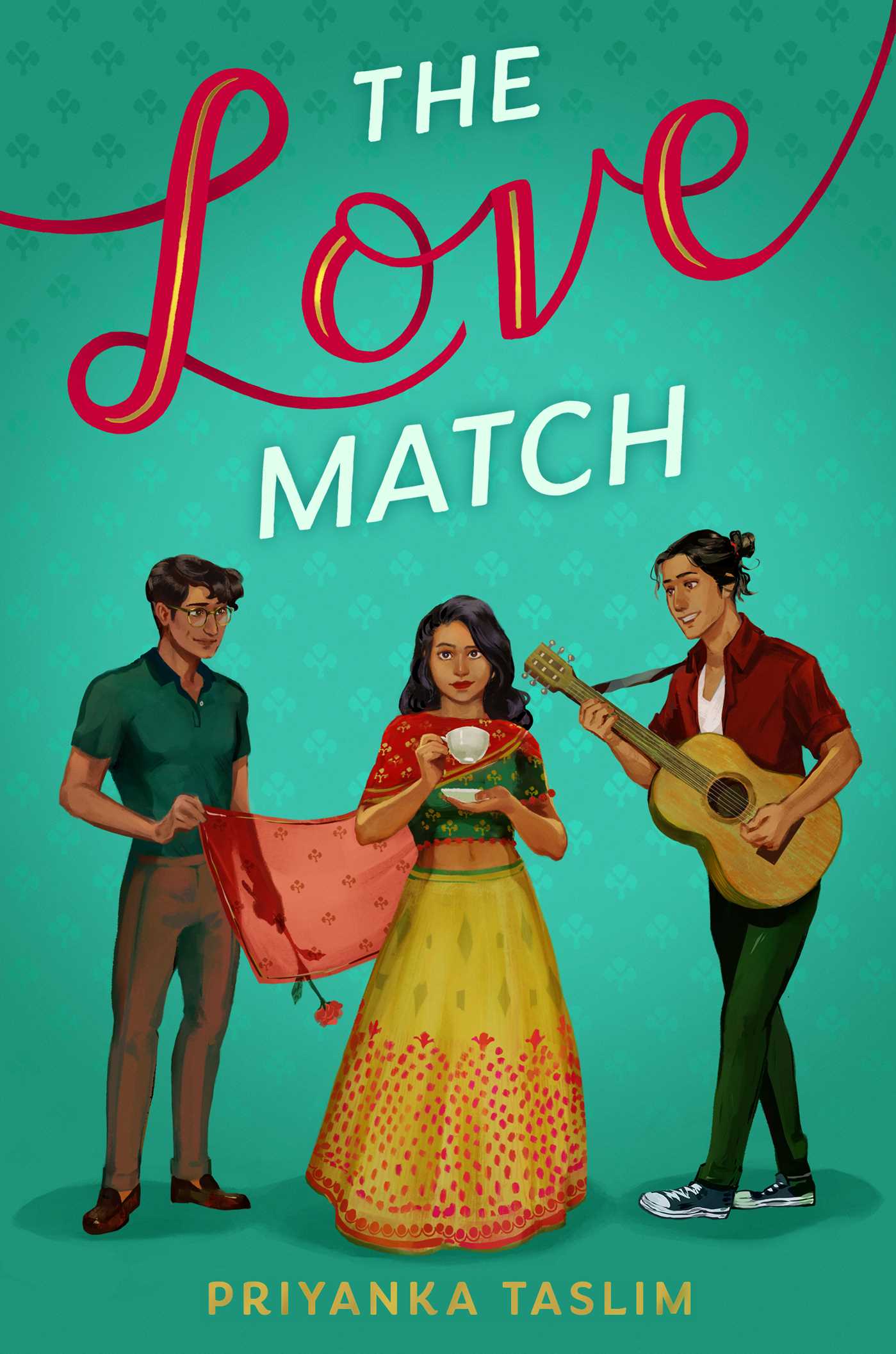
This new YA book features Muslim characters, but is not a religious conscious read that fits in the halal category.  There is a lot of Islam: waking up for fajr, celebrating Eid, a hijabi, mention of jummah, but the OWN voice rom com sets boundaries based on Bangladeshi culture and American perspectives.  The book does not other, or have internalized Islamophobia, or fall in to tropes of oppression and rebelling- quite the contrary- it normalizes everything: LGBTQ+ relationships, dating, music, etc.  The book is well written from a literary perspective: easy read, fleshed out characters, resolved plot lines, I wish there would have been more slow burn and heightened emotion, and cathartic release, but it happily held my attention for 388 pages, so I can’t really complain about plot holes or development.  The problem I have as an Islamic School Librarian is the non issue dating and romance is for the characters with their parents knowledge, both lesbian and heterosexual.  The book doesn’t get graphic, in fact there is only a handful of kisses, but there is a lot of hand holding and pdas in front of parents and even a sleepover with a lesbian couple in a Muslim family’s home, again, nothing “racy” occurs, but the normalization is worth noting for those thinking a Salaam Reads book is going to be a more Islamically centered publication.

SYNOPSIS:

Zahra Khan has graduated high school, and while she’d love to be heading to Columbia to study writing with her best friends, she is stuck deferring her admission and scholarships, and hiding her dream to be an author.  Two years earlier her father has passed away and Zahra works in a tea shop to help keep a roof over the heads of her mother, grandmother, and siblings.  In the Bangladeshi community in Patterson, New Jersey Zahra’s mom imagines arranging a marriage to a wealthy family for Zahra to ease their financial stresses.  When a potential match comes a possible reality, Zahra takes control to try and keep the peace and keep her dreams within reach.  In Jane Austin-y feels, a love triangle emerges, friends step up, culture and family touchstones shared and appreciated, and decisions about the future will have to be figured out at 18 years old.

WHY I LIKE IT:

I loved how easy a read the book is, the cultural framing was warm and rich and never overly explained or apologized for.  It is what it is, it is who the characters are, and while at times they push back on the negatives, it doesn’t disregard the love that exists at the core.  Unfortunately, I really struggled though with the ease in which the characters date with their parents’ knowledge, hold hands, cuddle.  I really couldn’t imagine a practicing Muslim family being so supportive of a lesbian daughter in the way that the Tahir family is and allowing a sleepover, nor could I see a hafiz attending musical concerts and Bollywood movies or an imam passing on “love” notes, even side comments about a loan between mother and daughter being paid back with interest felt off.  I know I know, there are lots of shades of Muslims, but the normalcy of haram I feel in a review of this book should be noted. It isn’t side mentions, they are central to the story and large portions of the book.  The reason I also feel they are worthy of note, is because the book includes a lot of Islam as well.  The characters pray and fast and eat halal.  They are conscious of chaperones in some settings and keeping things appropriate.  There is no doubt that the characters are Muslim, but I think intentionally, to avoid perhaps critiques such as mine, Islam is not used as a reason to do or not do anything, Islam is not used in the thought process or conscience of the characters, culture is.  There is no haram police setting boundaries, it just isn’t what “good Deshi girls do.” To be fair, I don’t think the author has ever claimed that this is a halal love story, or that the characters are exploring their Muslim identities, it is a love story that features Muslims is all.

FLAGS:

Straight and sapphic relationships, secret relationships, kissing, hand holding, hugging, lying, music, loss, bullying, interest.

TOOLS FOR LEADING THE DISCUSSION:

I would not be able to use this book, it would be very damaging to be given to a Muslim child from a Muslim teacher in an Islamic school.  It normalizes a lot of haram in a familiar Islamic framing that I think would really confuse YA readers who see themselves and see no push back or consequences for actions they know to be against Islamic ideology.

The Katha Chest by Radhiah Chowdhury illustrated by Lavanya Naidu

Standard
The Katha Chest by Radhiah Chowdhury illustrated by Lavanya Naidu

katha

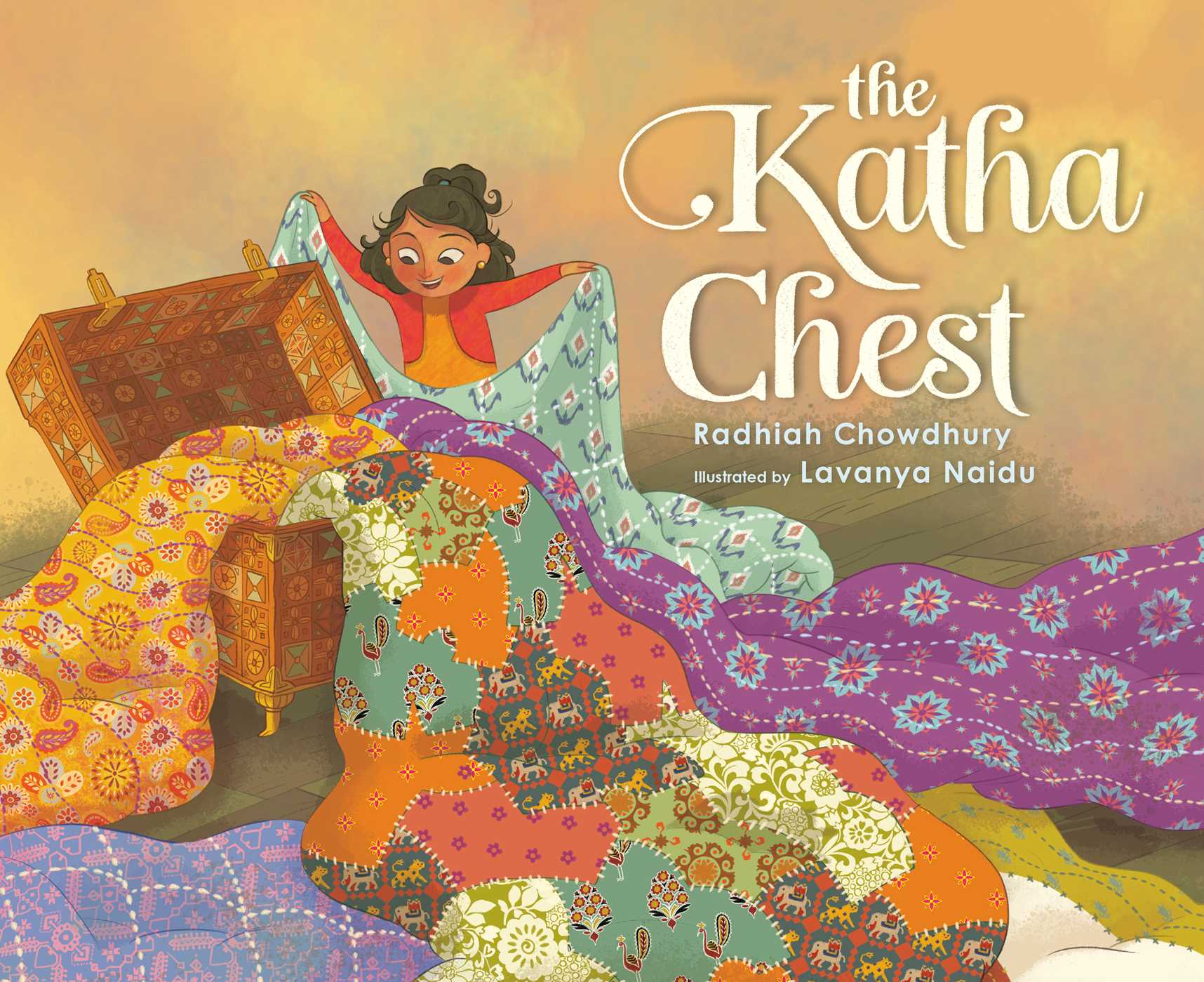
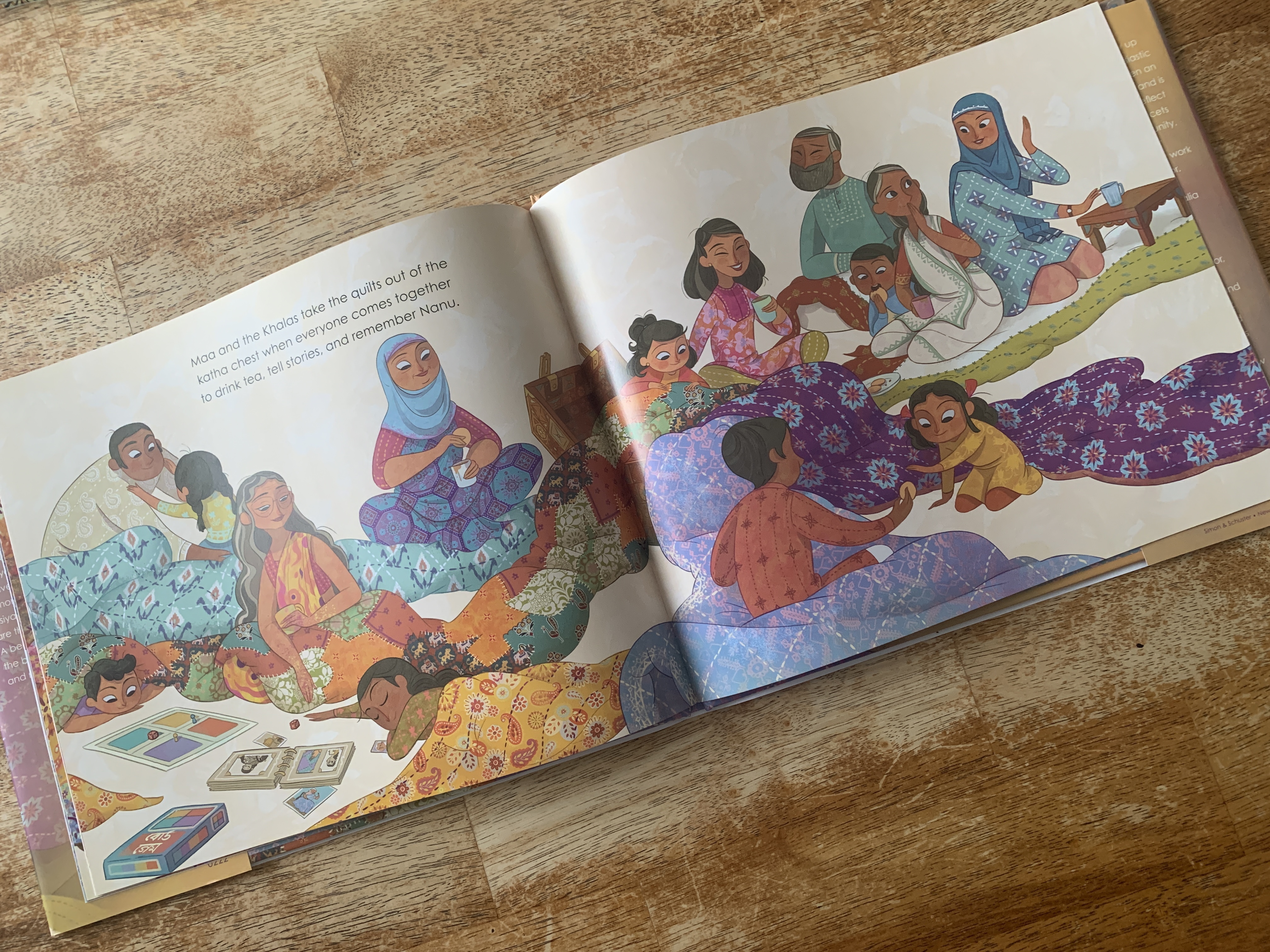
This 40 page picture book for preschoolers and up shows connection to family, memories, and Bangladeshi culture as a little girl explores the quilts made from her Maa and aunts’ worn out saris.  This book has been on my radar for a while and while there is nothing wrong with the slow and thoughtful story, it didn’t sweep me up in a hug and wow me, as I had hoped it would.  The illustrations are as critical as the words in conveying the message, and the illustrations are indeed beautiful, I guess I just needed more.  More connection to the emotion the little girl was feeling recalling the strong women in her life, more impact to the fact that her Nanu is no longer with them, and more understanding about the history of Bangladesh that seems to shape the memories.  I worry that most readers simply won’t get anything other than the surface level of the book, which is ok, the memories woven through generations manifesting in quilts, is tangible and perhaps enough.  I feel like, however, the framing of the story and the textless illustration pages attempted to add more layers to the story, and I think to anyone not Bangladeshi, those layers might not be understood.  I wish their was an afterward with notes about the pictured references, inclusion of such backmatter would really open the book up to a wider audience, and give the book discussion and staying power in my opinion.  If you are Bangladeshi this book will be a treasure I’m sure, and I’d love to hear your thoughts on it.

img_7721

Asiya loves going to her Nanu’s house, there are treasures there.  Her favorite treasure is the katha chest.  An old trunk full of the quilts made from the old worn out saris of her Nanu, Maa, and khalas. She snuggles in their warmth and listens to the stories they tell. Stories of hardship, joy, skills learned, moves made, loss, death, love and family.

img_7720

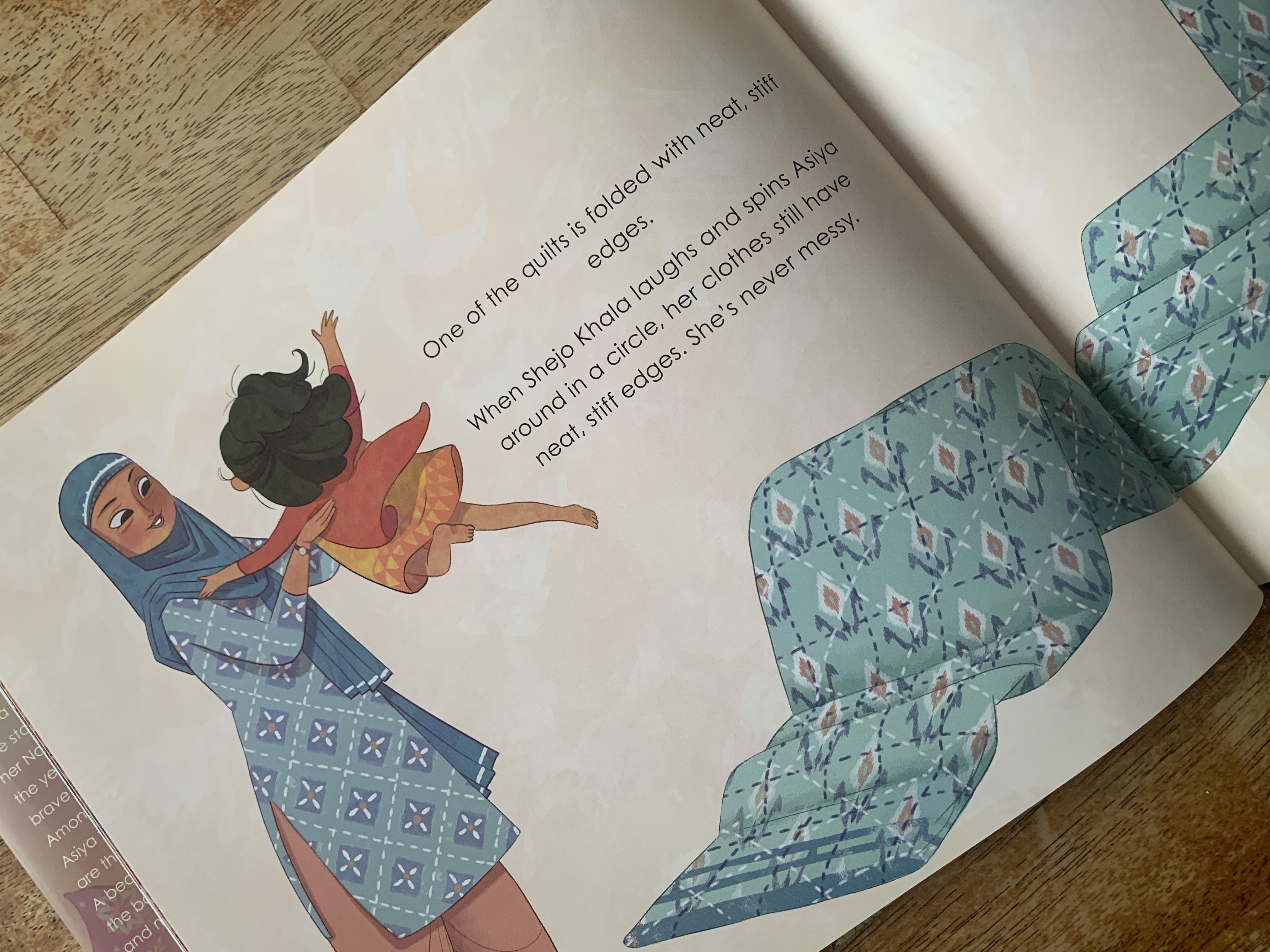
Boro Khala’s looks like Khalu’s medal, from a sad time when he was away.  Mejo Khala bright oranges and yellow like her fingers.  Shejo Khala’s is stiff and neat, she is never messy.  Choto Khala’s has a white streak like the white saris she wears since Khalu died.  Maa’s katha is patchworked and different than the others, and Nanu’s is paper thin and smells of tea, old books, porcelain and wood.

img_7718

There is an author’s note and illustrator’s note detailing the construction and value of kathas, but nothing about Bangladeshi wars, wearing white after a husband’s death, or the textile skills and artistry shown.  The book would read well with context or activities about family heirlooms, connections, and traditions.

img_7719


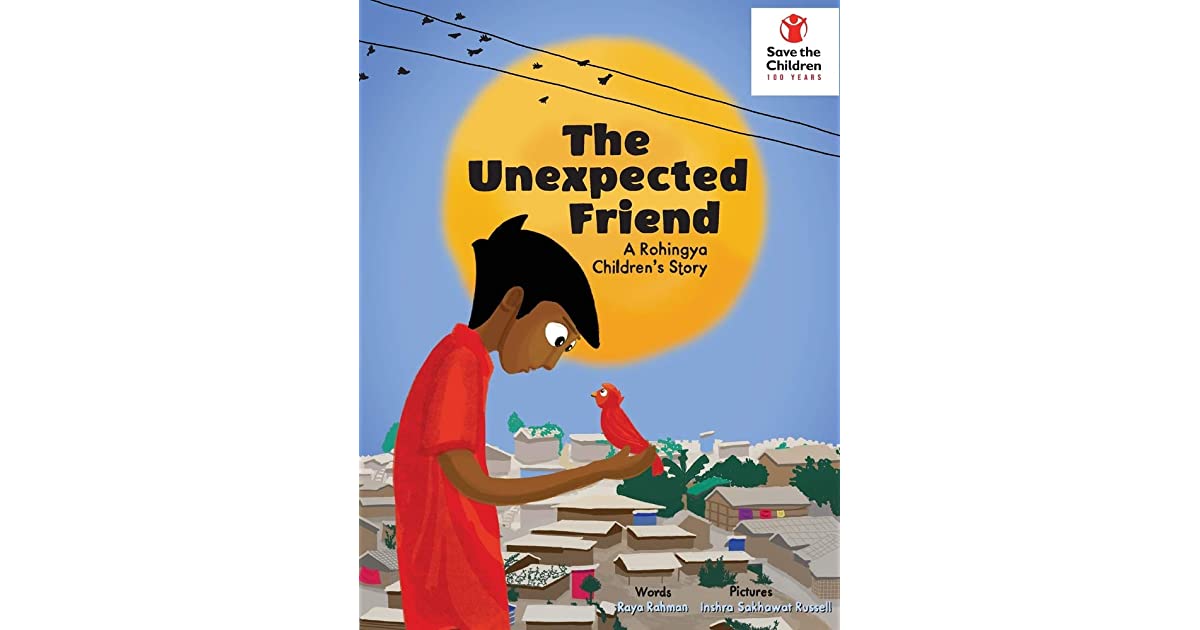
The Unexpected Friend: A Rohingya Children’s Story by Raya Rashna Rahman illustrated by Inshra Sakhawat Russell

Standard
The Unexpected Friend: A Rohingya Children’s Story by Raya Rashna Rahman illustrated by Inshra Sakhawat Russell

friend

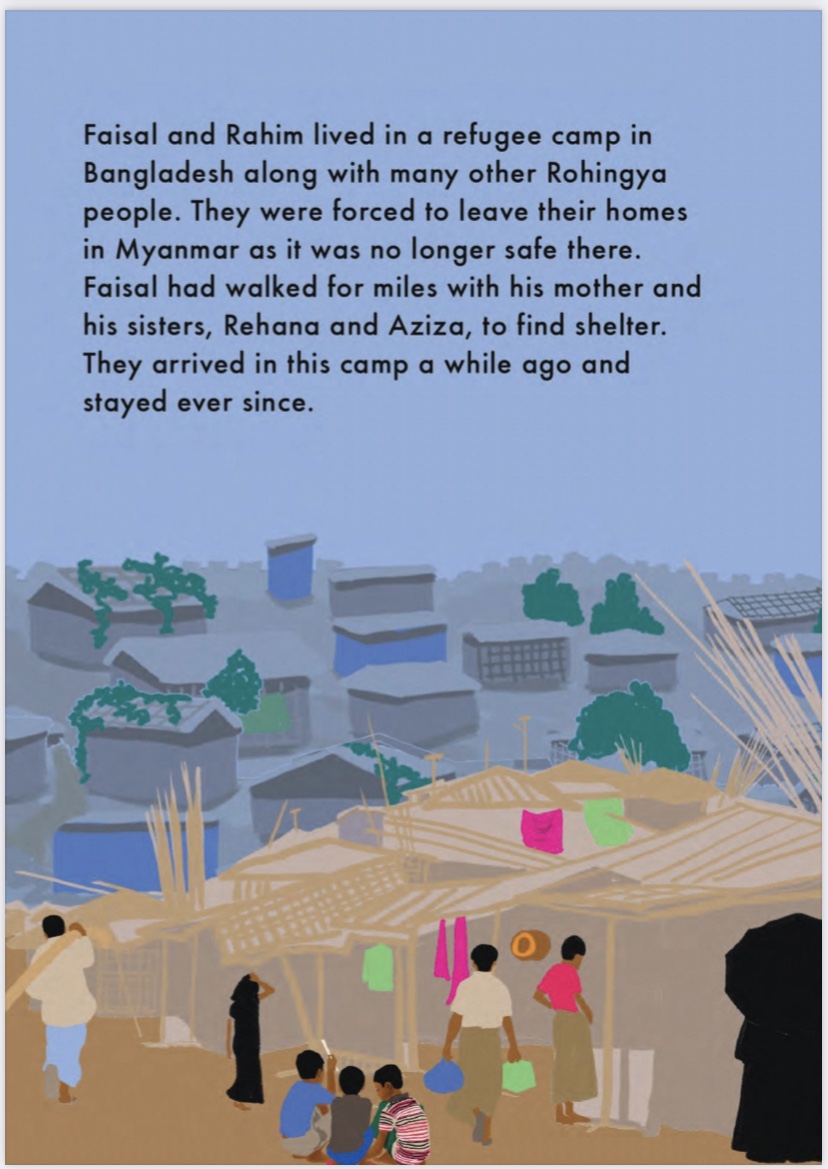
I have mixed feelings about this book. On the surface I am thrilled that there is a story highlighting the plight of the Rohingya for children and that it includes some character depth and relatability to global readers. On the flip side, the book is very vague and could be any refugee in any camp and is not Rohingya specific. Additionally, I feel that it is too idyllic. I am no expert by any means, I wouldn’t even say that I am well-versed, but the book paints an impression of a thriving organized camp with medical help, orderly food lines and a vibrant school. Yes, it talks about the lines being long, and naturally if you are out collecting firewood, it is a bit rugged, but I don’t know that the lasting impression is a humanitarian crises. I understand that in a 36 page, kindergarten to 2nd grade book, political complexities and horrors are not a natural platform, but I worry that the aim of bringing attention to the situation will miss its mark by not capturing its truth more clearly.

img_5377

Faisal has just finished his afternoon prayer and while outside the mosque he hears a faint chirping and discovers a small bird with a hurt wing.  He and his friend Rahim take the bird to the learning center to be cared for while the boys head to the forest to collect firewood.

img_5378

The forest can be dangerous, but in order to cook, they must have wood to burn.  While in the forest, the boys encounter an elephant and remark on how they are depleting the animals’ natural habitat.  When leaving Faisal trips and falls, scattering his collected firewood and breaking his arm.

img_5379

Rahim offers to share his firewood with Faisal and the two head back to camp to get Faisal to the doctor.    Like the bird, who’s wing has been bandaged, Faisal now too has a hurt appendage.  The two spend every minute together for weeks, and when both have healed, Faisal admits he doesn’t want to let the bird free. He knows it is the right thing to do and alas allows the bird to go.

img_5380

The book has an afterword regarding Cox’s Bazar and information about the author and Save the Children Foundation.

My Laugh-Out-Loud Life: Mayhem Mission by Burhana Islam

Standard
My Laugh-Out-Loud Life: Mayhem Mission by Burhana Islam

mayhem

Fairness aside, any book about a genuine Muslim British boy written in first person with doodles, lists, and hilarity for middle grade readers is going to be compared to the Planet Omar Books, and not only do they have the advantage of being first, but they also have set the bar really high.  This 266 page book is decent and fun, and if your children enjoy Omar, they will enjoy this, but even my kids compared the two and found this one just a bit lacking.  The story is outrageous and funny and has a lot of heart, the writing is sufficient, it just feels like the story gets away from the author.  Information is given for no reason and to no purpose, the story loses its way and fumbles around for a bit in the middle, seems to get off track at points, and is a bit weak in character development.  That being said, would I purchase and read future books in the series? Absolutely! I love that the standard and quality for books with Muslim characters by Muslim authors for our children are at this level.  There is no apologizing for Islamic Bangladeshi culture in this book, and the mainstream publication means Muslim and non Muslim children are seeing a nutty, loving family that they can relate to in a myriad of ways, alhumdulillah.

img_4078

SYNOPSIS:

Yusuf’s much older sister is getting married, and she remarks that he now needs to be the man of the house.  Unsure of what that means, he asks Sheikh Google, and is not prepared to do what it entails.  Not at all, he is only nine, but rather than discuss it, he decides instead that he must stop the wedding. So, with a bit of help at times from his cousin Aadam, it is full steam ahead to sabotage the upcoming nuptials.  With little time, he attempts to make his sister unwanted in her inability to cook, keep her hidden in her room by removing all the hijabs in the house, spreading rumors that she has died, ruining her wedding dress, and more, so much more.  It is cringe worthy at times, and hard to put down at others, but alas there is a happy ending, and lucky us, we get to read all about it in Yusuf’s year five what I did over summer vacation essay.

img_4077

WHY I LIKE IT:

I love that the family dynamic is a single mom, her mom, and the two kids.  I think it is important to show some diversity that reflects the family situations of many Muslim children that have thus far been a bit down played.  The book is relatable and contemporary with Marvel references, while tossing in everyday cultural references too.  The family prays, does tasbeh, memorizes Quran, covers, etc.  The book tries to give some depth to the characters, such as Yusuf’s eczema, but it kids don’t get it and the text muddles it to the point, that it misses connecting to the readers.  Also, even kid readers get that a simple conversation could have prevented most everything in the book.  Time is tight, but not that tight for things to get so outrageous.  The book is a British, but I think US readers can handle it, they may, like me, have to Google Jaffa Cakes, but I think they will be fine.
img_4076

FLAGS:

Deceit, sneaking, lying, gossip, destruction of food and property.

TOOLS FOR LEADING THE DISCUSSION:

I don’t think the book would lend itself to a book club, but I think home and classroom and library shelves will benefit from hosting this book.