Tag Archives: art

A Tariq Twins Mystery: Murder for Two by Niyla Farook

Standard
A Tariq Twins Mystery: Murder for Two by Niyla Farook

I don’t know what I was expecting, but woah once the actual crimes started piling up and the sleuthing began, I was invested in Riri and Ani working out their differences, solving the case, and freeing their accused dad.  At 336 pages, a full on murder, attempted murder, arson, thieving, and arrests all taking place, the book is definitely for older middle grade readers. The premise and dual points of view of 11 year old twins being reunited after 3 years apart by their divorced parents, getting to know how their OCD, ADHD, and autism factor in to their personalities, learning about TUSC, the town of Castlewick, and the side characters that will turn suspects, result in it taking the story a while to get going.  But if you can get through it, and can suspend belief, the book is a fun mystery that takes on heavy topics, and crime, but somehow keeps it light and consumable by the intended audience. The twins are Muslim, one wears hijab, and there are Islamic references, but once the identity is established, it really doesn’t play a role, or shape the characters’ view of the world or approach to dealing with their grief, anxiety, and obstacles they face.  There is mention of halal marshmallows and hijab, but they never say a quick dua or pray, and by the end is not really even shown to be a big part of their daily lives.  I have no idea if the neurodivergent rep is accurate, but the tone and approach is very positive and normalizing.  Parents may want to know that the book starts on the last day of school and the teacher is non binary, referred to as Mx Henderson with they/them/theirs pronouns. The character is mentioned a lot in the first nine pages, and then never again.  Pronouns for other characters are listed on their profile cards.  There is teasing of a girl having a crush on a boy, a few couples dating, a character being born out of wedlock, and a male character being in a relationship with someone named Toby that is mentioned a few times, but only on the final mention in the last few pages of the book, does it clarify that it is a boyfriend.  The book seems to be intentionally diverse in ethnicities, religions, identity, and orientation, but the story is a murder mystery, and a family reconnecting, and the mentions in passing are not detailed, or overly explored.  I mention all this for adults to determine what is best for their children.

SYNOPSIS:

Supersleuth Imani Tariq aka Ani lives in Castlewick with her father, Abderrazzak and spends time at Cafe Vivlio with Mrs. Kostas.  The small town is Ani’s stomping grounds for sleuthing and carrying out the cases her TUSC (Tariq Ultrasecret Supersleuth Centre) organization takes on.  She knows everyone, and everyone knows her, and she is not looking forward to spending the summer with her “evil twin” visiting from California.  Riri short for Noori, lives with her mom and is heading to the UK so her mom can set up a new office for her company, and the twins can reconnect after being apart for three years.  There is a lot of animosity in the former family of four, but the girls slowly start to rely on each other when they find Mrs. Kostas’ dead body in the secret garden, alibis not checking out, relationships coming to light and their dad being arrested for the murder.

WHY I LIKE IT:

I naively thought it would be a murder of a distant side character that the girls tried to solve, or maybe a trick and it looked like a murder, but ended up not being one, so I was really kind of shocked that in fact a murder occurred, that the girls found the body, and that the story of lies, deceit, art theft, secret identities, relationships, and webs of coincidences and manipulation was just getting started. The girls’ voices are distinct, but as they pop around doing what they do, the reader is often just expected to go along with it an not over analyze. I kind of liked that the ending spelled it all out, like a good villain in cartoons the culprit gets their moment to detail and confess what they did, how they did it and why.  In full disclosure though, with about 30 pages left in the book, I was genuinely still curious who the guilty person would be.

The book balances very real mirroring threads with absolutely bonkers ones.  The girls get counseling for grief, talk about their OCD and ADHD.  They also run circles around the police, unravel the plot through research, interviews, crime scene analysis and get the murderer to confess to only them.

The Islamic rep at the start really got me excited, but it stopped rather abruptly and there was no longer even any Assalamualaikums or walakumsalams after about the first 40 pages or so. The characters are of Pakistani decent, but I have never heard “hudafiz” as a farewell before, Allah hafiz and KhudaHafiz, yes, but never with an H.  It appears a few times in the book, and even the internet, for whatever it is worth, says it is probably a mistake.

FLAGS: (Things parents might want to know the book contains):

Murder, attempted murder, assault, framing, deceit, lying, arson, teasing, close boy/girl friendships (Muslim characters), hetero and lgbtq+ relationships, romantic interests, child out of wedlock, jealousy, revenge, name calling, parents are divorced, therapy/counseling, ADHD, anxiety, grief, abandonment, loss, OCD, autism, unemployment.

Dear Moon: Inspiration from the Beautiful Wisdom of the Qur’an by Zayneb Haleem

Standard
Dear Moon: Inspiration from the Beautiful Wisdom of the Qur’an by Zayneb Haleem

img_8075-1

At 128 pages, this hard back 7.5 x 8.5 inch book is a beautiful book from start to finish.  If you follow the artist online (@idotdoodle), you know her style and her incorporation of an ayat from the Qur’an or an Islamic sentiment with her signature young girl and nature embellished scenes.  But holding the book in your hands, and pausing on the two page spreads to reflect, and ponder, and be reminded to connect with the love of your creator, is truly a treat. Whether you read it from start to finish, or dip in and spend time with just a few pages at a time, the book will capture the attention of all ages and be enjoyed over and over again, alhumdulillah.

The book starts with a welcome to the reader from the artist, introducing herself, her connection to Islam, her love of art, her expression of emotions through her illustrations, how she picked the verses, where her own thoughts and reflections emerged from, and what she hopes the book will accomplish. 

The book releases in February 2025 and is available wherever you purchase your books.  I hope you will consider preordering to show your support.

Tagging Freedom by Rhonda Roumani

Standard
Tagging Freedom by Rhonda Roumani

20801TaggingFreedom

This 282 page OWN voice middle grade book weaves together two points of view that shed light on the recent events in Syria and life as a Syrian American without self-othering or over-explaining.  The characters are Muslim and while yes, I wish there was more Islam woven in,  when it did present itself in more than just a passing “inshaAllah” or “ya rab” it was heartfelt and sincere.  The book has a few plot holes, a plethora of underdeveloped characters, and the religion and cultural components take a backseat to the tropey MG themes of finding your voice, friendships, crushes, fitting in, and having hope. Despite my critiques though, I still found the book focused around graffiti and spirit squad, engaging and hard to put down.  The pacing makes for an easy read, and while the adult reviewer in me wishes there was more depth, insight, consequences, and Islamic references, I definitely appreciated the emotion and framing of this story.  The book does contain a lot of lying, crushes, sneaking out, “vandalism,” breaking laws, and mentions bombings, disappearing, and fear.  The connection though of what has been left behind and experienced in Syria is moving, and I’m glad that a book so relatable to western kids is widely available to be shared with them.

SYNOPSIS:

The chapters alternate between Kareem and his cousin Samira, aka Sam. At the beginning of the book Kareem is in Syria, spending time with his friends graffitiing in protest of Bashar al-Assad and in support of the boys from Dara’a.  They are covering their tracks, sneaking out to join rallies and finding their strength in their art, common goals, and the change that is taking over the country.  Unfortunately, his parents don’t see it that way and decide he needs to be sent to live with his uncle’s family in Massachusetts for his own safety.

Sam is Kareem’s cousin, she is great at reciting Quran, she has a best friend Eleanor who lives across the street, and is an amazing artist.  She sees people as fonts, and dreams of being a part of the school spirit squad.  Her only real problem is Cat, a girl that has bullied her for years and spread rumors about her in the past.  It is never quite articulated what was done and how bad it was, but the fact that Cat is the head of spirit squad, the daughter of influential parents, and the twin sister of Sam’s crush Dylan, has Sam trying desperately to fit in.

When Kareem arrives, he is not happy to be in America.  He calls Sam out for her inability to speak up and with Sam and her bff Ellie on the outs, Sam heads off to her new friends that have allowed her into spirit squad, and Kareem and Ellie start sharing their art around town.

Kareem’s character arc is more subtle, but Sam/Samira, finds herself with the help of her cousin as she channels the yearning of Syrians to set her free in America.

WHY I LIKE IT:
I love that it is Syrian American OWN voice MG, the news cycle has moved on, but stories are so critical to reminding the privileged outsiders what has occurred and continues to endure, so just that this book exists, is a positive for me.  I like that the code switching of being Samira and speaking Arabic at home is so clearly contrasted with Sam at school.  I struggle with the idea of dating not being a religious, but rather a cultural no-no, and her being so obsessed in the beginning with Dylan and then Amari is a bit of flag. By the end they feel like friends, but it is definitely a big part of the first half of the book that could have used some context, same with when she goes out in a tank top.  I wish there was a Muslim conscience that enters the story, to see Sam grappling with who she is from a faith perspective would have been nice.

I love that Kareem comes to America and starts school, it doesn’t have him being meek, or struggling to transition, it really is empowering that he breaks that stereotype just by allowing him to be seen from the very first day as strong and fully fleshed out.  Yes, in real life and in some books the adjustment is a plot point, but in this book it is not, and the author seems to not indulge in it deliberately.

I struggled with a few plot holes. I get that Kareem was frustrated and wanted to educate and be heard, and when Sam can’t stick up for herself and he calls her out, they are both annoyed, but to go from that to graffitiing is a big step.  A few instances of maybe trying to talk about Syria being shut down by teachers, or friends, would have made it a more logical leap.  I worry a little that there wasn’t enough hand holding regarding graffiti as a whole seeing as it is an MG book.  I understand it is expression and art, but there is some element of vandalism to it as well, and because it didn’t connect the dots that street art was the only way to be heard, I bring it up for awareness.

I needed closure on Cat, I didn’t like that we didn’t know more specifics about her torment or her thoughts at the end.  I know the story is not about her, but she was important for much of the story and to have her fade seemed a little short sighted.  I liked Ellie, but her wanting to sticker everything seemed in contradiction to her environmental activism.  Sam’s parents are barely a blip on the radar, and even some details about the supporting cast, really would have made the story that much better.

FLAGS:

Crushes, immodest clothing, lying, sneaking out, boy/girl friendships, boy/girl hugging, vandalism, breaking the law. Hearing about bombings, being taken away by the police, death.

TOOLS FOR LEADING THE DISCUSSION:

I don’t think I would use this for book club, but I would have it on the library and classroom shelf.

The Together Tree by Aisha Saeed illustrated by LeUyen Pham

Standard
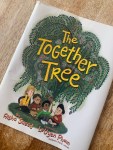
The Together Tree by Aisha Saeed illustrated by LeUyen Pham

img_7924

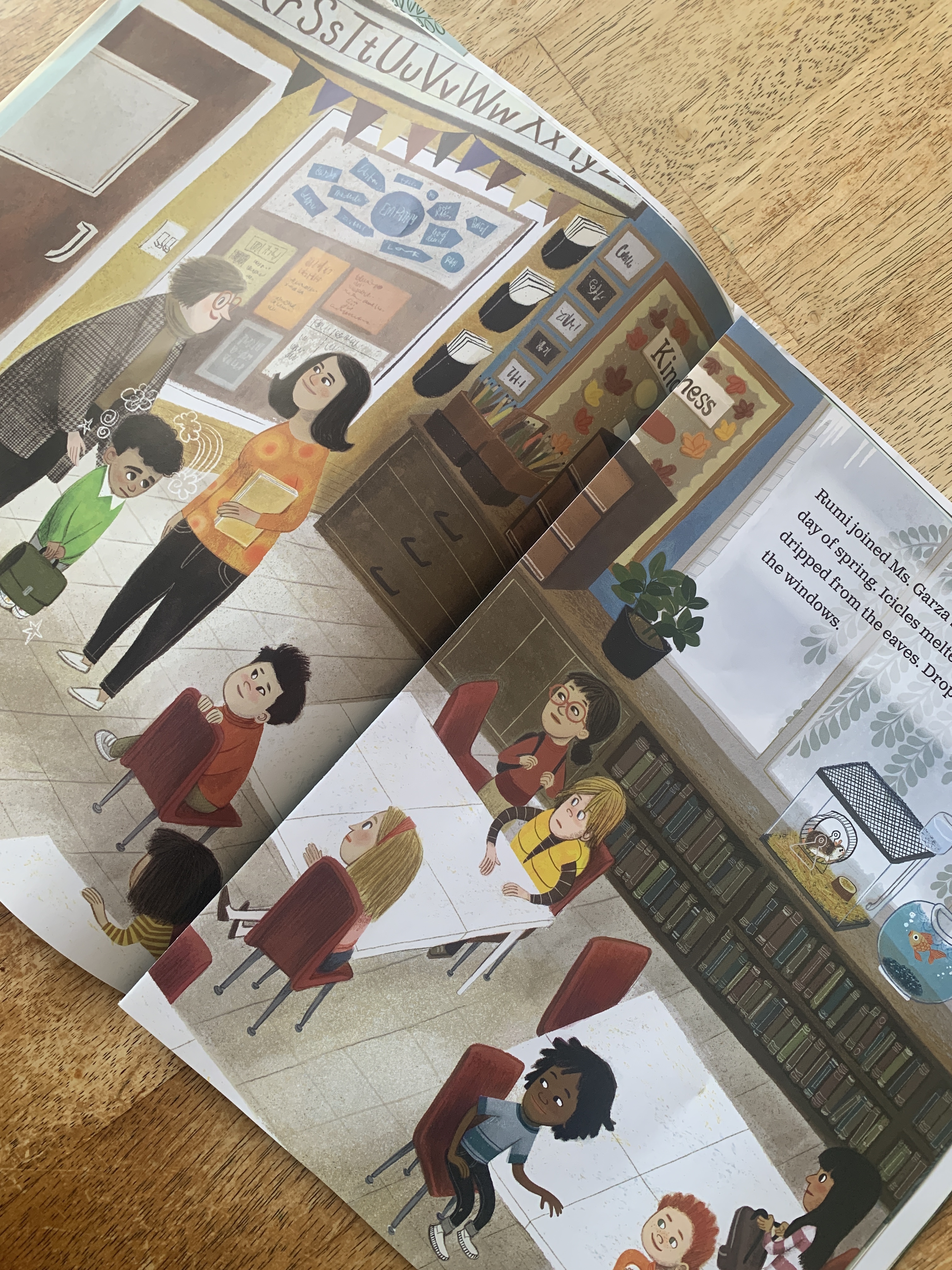
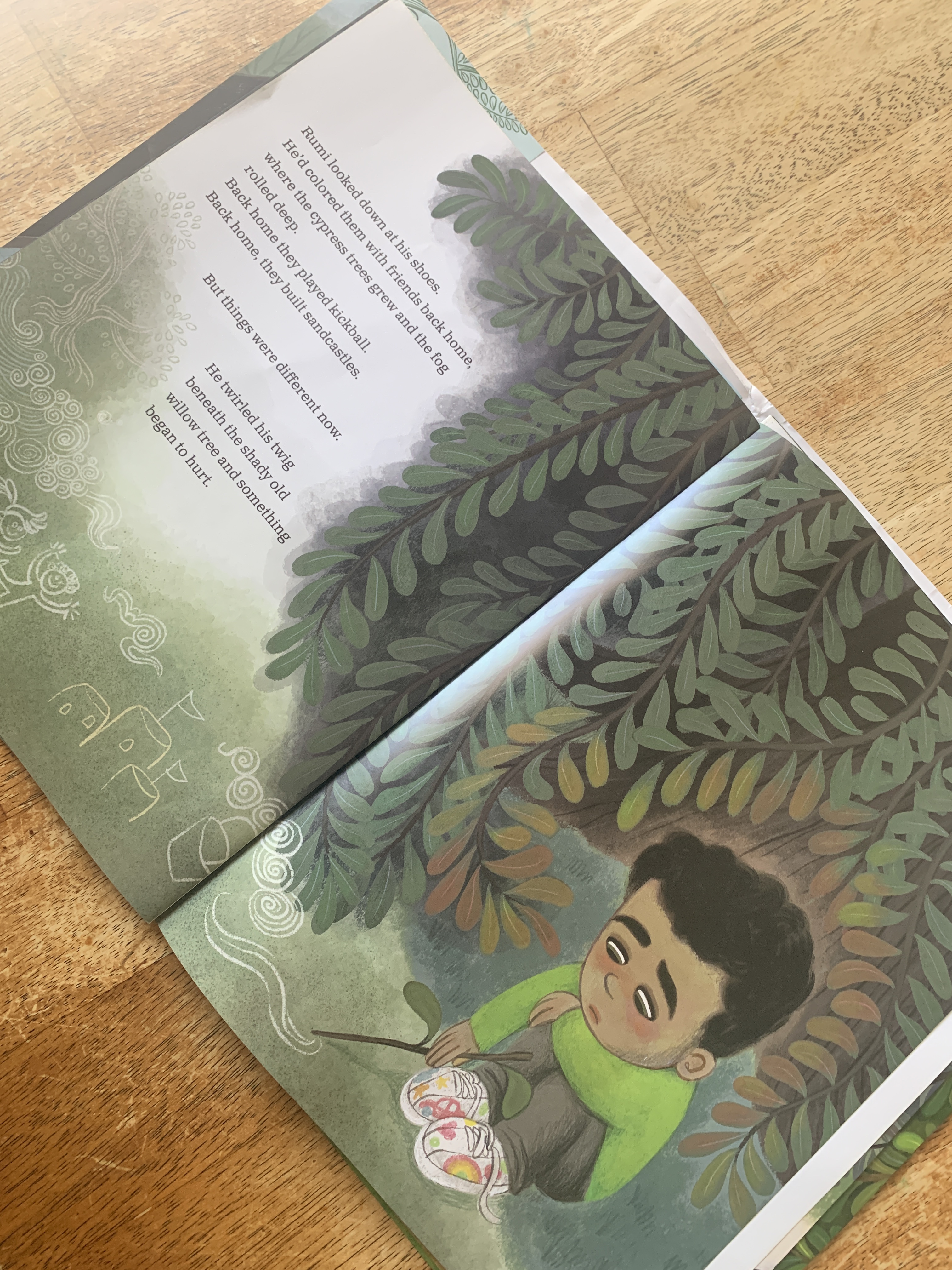
Being the new kid, not having friends, and being teased are not new themes in literature (or life), so if you are going to write a book about them, take a lesson from Muslim author Aisha Saeed and make sure the story is heartfelt, emotional, and well-told.  There is no Islam in the book, no foreign culture, or teasing because of skin color, it is a boy named Rumi who has moved from San Francisco to the other side of America and his shoes, with their drawings and colorings, that cause the kids to stare and start bullying.  Rumi seeks solace under a willow tree and fellow classmate Han has to be brave to put a stop to the mistreatment by finding his voice and not simply staying silent.  The text and illustrations provide a lot of opportunities for children to see themselves in the story, in the various characters, and ruminate over the actions and feelings from different points of view.  The book is lyrical, it is not heavy handed or preachy, and the Author’s Note at the end is equally touching and hopeful.

img_7925

Rumi is quiet, and on his first day in Ms. Garza’s class the kids stare at him as he stares out the window.  At recess he wanders off to sit beneath the willow tree when Asher, Ella and Han leave the swings to see what he is up to.  Asher and Ella start to make fun of Rumi, Han is uncomfortable, but stays quiet.

Rumi recalls coloring his shoes with his friends, and how different it was to where he is now, he picks up a twig to twirl as the hurt grows. In music class when the giggling starts, he tries not to cry.  At recess he retreats to his refuge under the tree.

When the bullying escalates, and tears fall, Han speaks up and breaks the cycle. Others follow and see the world Rumi has created with his twig and are drawn to it and to Rumi.  Forgiveness is asked for, and granted and the tree becomes a place of friendship and togetherness.

img_7928

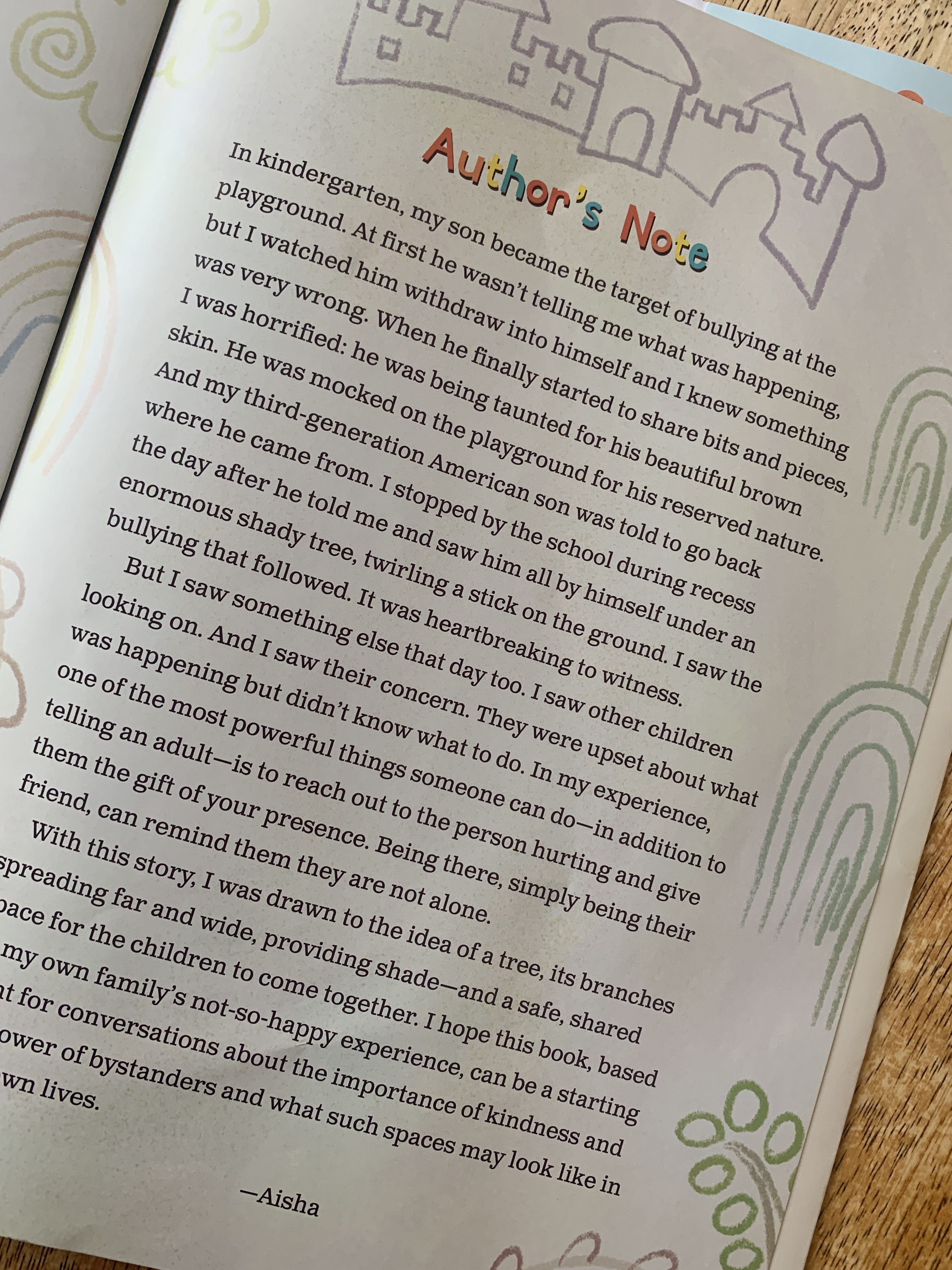
The Author’s Note shares the real life observations of the author about her son in kindergarten and how while heartbreaking, there was also hope in the concern shown by other kids that simply weren’t sure what to do.  I love that even though Rumi is being teased for his shoes and being different, he doesn’t stop wearing his shoes or try and clean the drawings off.

img_7926

I think this book is a must read in classrooms and homes were kids can slowly peel back the pieces and see where they can relate, how they can plan to act, and what parts they identify with.  The book is deliberate and slow, and while a child could read it on their own and enjoy the story and illustrations at hand, the real power it has, is being a catalyst for discussion and empathy and speaking up.

Pre order/order here on Amazon

img_7927


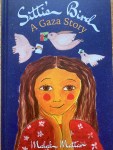
Sitti’s Bird: A Gaza Story by Malak Mattar

Standard
Sitti’s Bird: A Gaza Story by Malak Mattar

img_2562

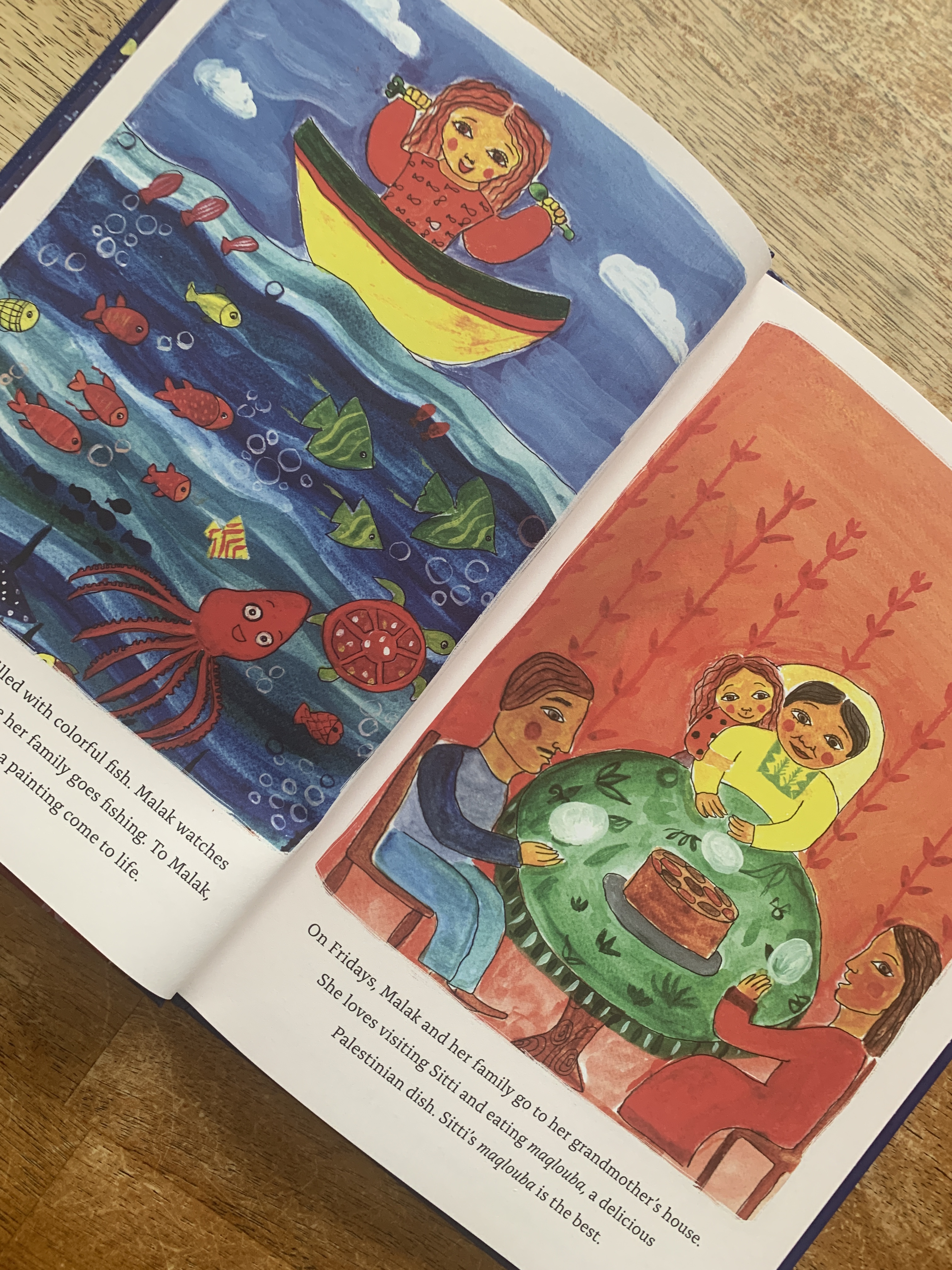
I hate that this book is so timely.  It was written by the author/illustrator recalling the 2014 airstrikes, but alas, has anything changed for the Palestinians’ suffering at the hands of the Israeli occupiers amid the  apathetic silence of the world?  This 32 page picture book shows family love and daily life while Gaza is under siege.  The heartbreak of a young girl’s reality and perception shows the reader, in a simple empathetic, heart-wrenching, real-life example how her dream was limited and caged because she is not free.  The book is not sensationalized, nor graphic, it is written by someone who endured this as a child, and has written the book for children. The theme is not even political, but more hopeful as art is found as a respite and way to keep dreams from completely dying.  May Allah swt ease the suffering of those under occupation and free Palestine, ameen.  

img_2557

The book starts with a little girl and her parents going to Sitti’s house for the best maqlouba.  Sitti has a beloved bird, Malak wonders if she too is in a cage.  Her grandmother encourages her to fly in her dreams.  At school she is happy with her friends, playing games, listening to stories, but when an explosion sends them all home, she won’t get to return for 51 days.

img_2559

Constant airstrikes keep the family home and in fear.  Malak finds some paints and starts to create.  Sitti’s bird is lost when Sitti’s home is destroyed, but somehow shows up at Malak’s home.  Eventually Malak returns to school and she shows her teacher all her paintings. Her teacher decides to host an exhibit. 

img_2560 

People show up and marvel at her art work.  Months later an international exhibit invites her to attend with her parents, but sadly she must decline.  Gaza is closed.  She cannot leave.  

The book is hopeful, but does not have a happy ending, and I think the weight of that makes this book all the more powerful: because it is timely, because occupation persists, because dreams cannot be made into reality, generation after generation, this story inshaAllah will inspire some change and lots of compassion.

img_2558

There is nothing Islamic in the book, save some #muslimsintheillustrations, the author is Muslim.

Available here at Crescent Moon Book Store https://crescentmoonstore.com/products/sittis-bird?sca_ref=1601585.fIPhoqtScY  

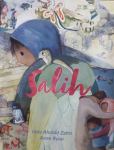
Salih by Inda Ahmad Zahri illustrated by Anne Ryan

Standard
Salih by Inda Ahmad Zahri illustrated by Anne Ryan

salih

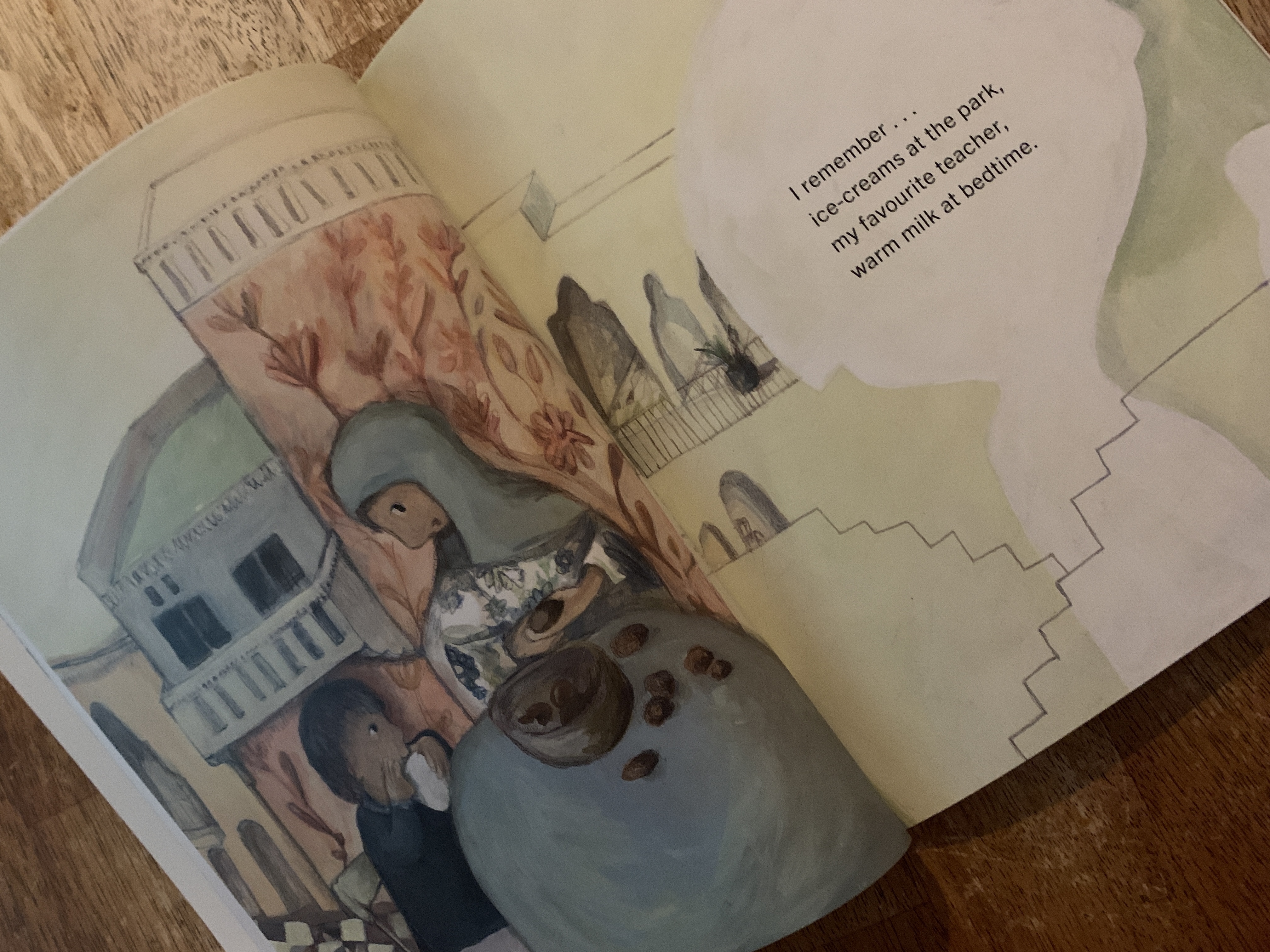
This is an example of a picture book that should not be categorized as being only for children.  The passages of short simple text and the expansive illustrations that pull the reader in, combine to set a powerfully moving tone that holds you in it’s grips until the final page.  The names and hijab clad women could make this book a refugee tale with #muslimsintheillustrations, but because the author is Muslim, and the book so beautiful, I wanted to do a full review.  Some of the vocabulary is a bit advanced for younger children, so I think the best application of this book is not to hand it to a small child to read independently, but rather to read it to a child and let the words tickle their hearts while they immerse themselves in the pictures.  I look forward to sharing this book at story time to kindergarten through third grade.  I think the imagery, concepts, and emotion will resonate and open minds and hearts.

img_2168

Salih is like a turtle, he carries his home on his back. He and others are heading to the sea.  He tries to remember when things were better, and forget the bad times.

An old man shows him how to paint.  Salih shares this creativity with others.  Then he slips all the paintings into bottles and when he is on the rough sea, the bottles float away.

The storm rages, but then it calms, and land is seen, and hopes and dreams return.

We, collectively, have become numb, apathetic even, to the plight of refugees.  I have been trying for a while to get this book from Australia, and even though I am over a year late since its publication, it is still timely.  It will always be timely.

img_2170

We cannot be so arrogant to dismiss the plights and challenges faced by those in our world.  That is why I say, yes it is a children’s book, but people of all ages, need to be reminded.  It isn’t the worst of the worst incidents that need to only be shared, or the over the top happy stories.  We need to not let our hearts grow so hard. And this gentle book, with a sweet boy and turtle shell imagery has a lot of potential to remind us of the human element of global conflict.

Available to purchase in the USA here

img_2172

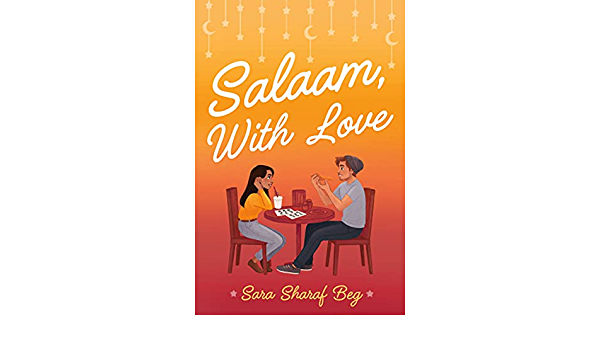
Salaam, with Love by Sara Sharaf Beg

Standard
Salaam, with Love by Sara Sharaf Beg

salaam

This 288 page YA contemporary Islamic romcom is very Islamic centered, and the storyline provides some nice twists along the way.  Unfortunately the writing is terrible.  Not the storytelling or even grammar per se, but the contradictions, errors, underdeveloped characters, and the inconsistencies. Yes I read an uncorrected proof, but this book is a mainstream major publisher presented book coming out in a few weeks, and it is in desperate need of some attention.  I really don’t think it is the author’s fault, it reads as if this was a manuscript that got shopped around and picked up and then never refined, polished, and made to sparkle.  The only saving grace is that as terrible as it is literary wise, once the main character starts to get over her “internalized islamophobia” (thank you @bintyounus for bringing this concept to my attention), the book as a whole presents a lot of unapologetic specific Islamic content on every single page: how Eid salat is different than normal salat,  the beauty of tajweed, the meanings of so many duas and surahs said regularly, the list goes on and on and doesn’t just cover the basics.  The flip side is that the characters are in a band that performs Islamic songs, but with instruments and everyone is fine with it, there are artists in the book drawing faces and portraits hang on walls, it is a romance, but it at most an arm or hand is touched and when tropes about Desi college choices are pushed back on the parents break the stereotype and relent.  There are threads of cultural-ism within Islam, Islamophobia and a violent near death experience, but the book is very clean and  honestly has a lot of potential, I have no idea why it is so sloppy.  SO SLOPPY, and I took notes, so buckle up.

SYNOPSIS:

Seventeen year old Dua is an only child and her doctor father and caterer mom are the only Pakistani and only Muslims in their small Virginia town.  They decide for Ramadan that they are all going to go and stay with family in Queens, New York for the whole month.  They have given Dua less than 48 hours notice to plan to spend the end of her summer with cousins she hasn’t seen in five years.  The parents hope that Dua will benefit from being around family, being closer to other Muslims in the month, and enjoy the cultural environment.  Dua is not excited, but when bear hugs and genuine smiles meet her at the door, she is sucked in to a bustling house and the happiness and drama that is bound to unfold.  Sharing a room with her older, law school bound cousin Mahnoor is by far the hardest relationship to cultivate.  Newly engaged, Mahnoor is quiet, reserved and deeply unhappy.  Dua makes little progress, but with Ramadan starting and her cousins setting goals for the month, Dua is determined to do better in all aspects of her life.  As she gets close to Mahnoor’s best friend, Haya, she also gets closer to Haya’s brother Hassan.   It is Ramadan though, and she isn’t good around boys, but Hassan is a hafiz and is helping her reach her memorization goals for the month, Hassan is also in a band and needs Dua’s help.  When Mahnoor’s engagement is called off to Haya and Hassan’s brother, everything comes to a standstill between the families, but when a cousin is shot, the families come back together to support one another and deal with their decisions and their outcomes.  By the end of Ramadan, every character has changed and grown and is sad the month is over and that Dua and her family are leaving.

WHY I LIKE IT:

Suffice it to say I love how Islam centered it is. I honestly checked the publishing information because of how much Islamic content is included, also for the amount of errors.  The book did not start off well for me with Dua trying to separate herself from her “religious” cousins.  The ones who practice communally and wear hijab.  She was not like “them” and the dichotomy of measuring religiosity as acceptable or not, too much or too little, enrages me.  It sets up that she practices Islam but in a relaxed manner and has been taught by her parents, and it is who she is, but it isn’t a huge part of her life.  As the story progresses, it seems that she just doesn’t know a ton of surahs, she actually is pretty religious, and devout, it is very awkward and not presented clearly, which is why I attributed it more to her being in denial or embarrassed by her identity, not about her level of belief.  Dua is also not like-able, she is incredible privileged and arrogant commenting on the size of houses and rooms, and her shoes.  About half way through she starts to comes across as clumsy, not sure then why is she always wearing heels.  Ultimately she is just not well-developed and often reads like an annoying helpless child.  The framing of Dua being a musician and not being so religious is quickly questioned as she gifts her cousins music paraphernalia, and looks at portraits on their walls.  If most are like me, and both families are praying, fasting, reading Quran, active musicians and artists and ok with hanging pictures, one would assume they are pretty in-syc with one another on their religious views and in practice.

Dua is not the only character that is poorly voiced, fractured, and inconsistent.  Her parents are so unrealistic and awkward in the beginning I physically cringed reading them telling her their reasons for going to New York.  In the car on the way, they even quiz Dua on her cousins names.  She hasn’t seen them in five years, she isn’t a toddler, she should know their names, she has clearly purchased incredibly personalized gifts for them, and is filled with detailed memories of when they all met up in Pakistan together, the whole scene is pointless. One of the cousins, Ibrahim, is blind and Dua says that a few years ago her parents had to explain to her what it meant to be blind.  Seriously?  I get the learning how to let him take the lead and how to interact, but you as a teenager didn’t know what it means to be blind? When you met him in Pakistan you didn’t know he was blind? The four year old cousin is cute and adorable, and has the vocabulary and mannerisms of a seven or eight year old at times, most times.  The 12 year old cousin has the wisdom of an old uncle and why do none of the adults in the book seem to work?  The book probably should have started at chapter five, it seems the book hits a bit of a stride that at least makes it readable.  

A huge plot of the book is the band, Sheikh, Rattle, and Roll, but the details about it are terrible.  Mahnoor is walking out the door and her mom tells her to take Dua.  The reader doesn’t know where they are going, but Mahnoor reluctantly agrees and they head out on the subway.  Mahnoor constantly is telling Dua to hurry so they aren’t late and miss it, when they arrive, the band performs one song and that is when Hassan and Dua and Haya all meet.  But the other two band members are her cousins, she is staying in their house.  What? Rabia is constantly talking, that is her character quirk, how does Dua not know that they are performing? Not know they are in a band?  No way would it not be mentioned.  And why only one song? That is so random.  At the end when they perform again on Eid, it is a concert, it is again only one song.  A concert is not one song.  Do they not practice or load up equipment, how is all this going on in one house and Dua is so clueless? 

The inconsistencies are aplenty.  A few examples: it says her cousin doesn’t wear make-up, a few chapters later has a whole face of make-up, on Eid she even does Dua’s make-up.  When they all are sitting down to write their lists of plans for Ramadan it says they don’t have to share their lists.  Yet a few lines later Dua is singled out in a very creepy way to share hers.  In a single paragraph it says that at home she prays fajr half asleep, or late and in a rush before school, but concludes the description by complaining that praying in congregation is more difficult for her to focus in.  Huh? praying while half asleep or in a rush gives you more focus than praying in jammah?  Even non Muslims are going to be scratching their heads.  At one point as Dua is trying to figure out what she wants to study and if she wants to start an MSA in her high school, since she is the only Muslim, she internally discusses how she wants to prove herself to her parents.  Then when she decides what she wants to do for her, she remarks that she isn’t just doing it to prove to her parents, but because she wants it for her.  The only problem is, no where have we seen or has it been established that her parents are requiring this proof.  

There are odd errors as well.  The athan on a phone goes off, the Uncle reaches in to his pocket for his phone and turns off his iPad.  That is a big pocket indeed.  Dua gifts Hassan a CD, really a CD? What is this 1999? Who gifts CDs in 2021? Dua starts playing a keyboard in someone elses house and no one mentions it other than the two people with her, how big is the house that you can’t hear it? The Uncle gets upset that Dua doesn’t pray Asr right at time, but a lot of people prefer Asr specifically to be prayed later within the time frame.  In a two chapter frame it mentions letting out a breath she didn’t realize she was holding three times, word for word the same.

I was genuinely surprised that music being questionable was not brought up at all, two of the bandmates are huffaz.  The author lets her own qualifiers slip in, perhaps her own desire to not take a stand that could seem alienating.  She says, “allegedly” the time right before iftar is the best time to make dua.  As Dua tries to figure out what is going on with Hassan she often remarks how it is hard or confusing “especially because he is Muslim.” Would a relationship with a non Muslim be ok, less hard, more hard? There is no lowering of any gazes, which for as religious as everyone in the book is, should have at least been mentioned even if not adhered to.  The book puts on odd stress on tasbeehs and kufis, not sure why.  

I do like the genuine love the characters have for Islam, Allah, Ramadan, salat.  It is so much a part of every thing they do, and it is lovely.  I also love Dua’s friend in Virginia, Kat, she is fasting in solidarity and wants to join the MSA even though she isn’t Muslim, but a seemingly amazing friend.

FLAGS:

The on-gain-off-again engaged couple do touch hands at Eid prayer.  Hassan touches Duas arm when she is perceived as helpless.  There are anti Islam protests and an angry man shoots Adam.

TOOLS FOR LEADING THE DISCUSSION:

If the sloppiness gets resolved, the book could be used as a high school book club choice.  Those girls love them some halal romance, and this book is incredibly religious and clean. 

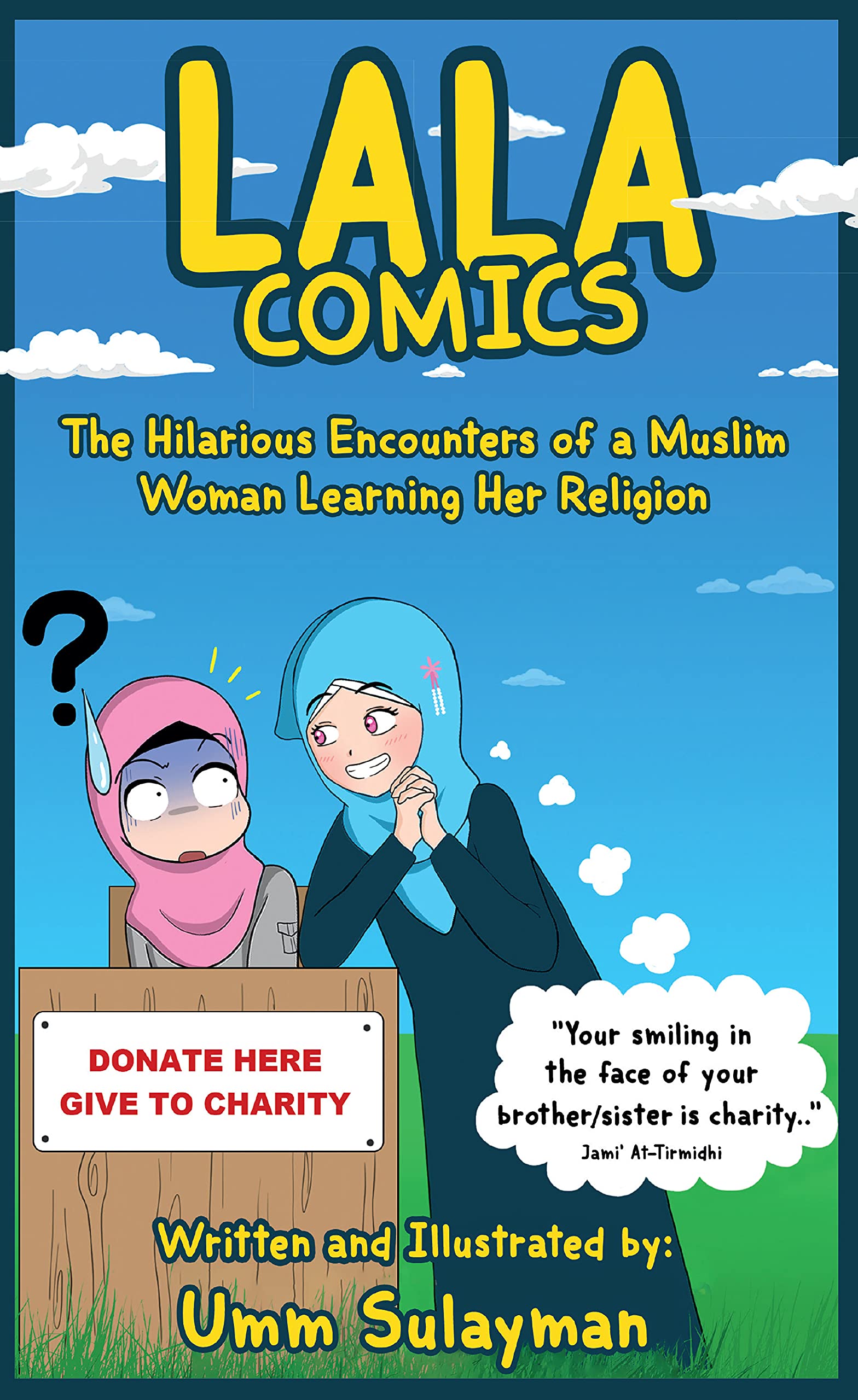
Lala Comics: The Hilarious encounters of a Muslim Woman Learning Her Religion by Umm Sulayman

Standard
Lala Comics: The Hilarious encounters of a Muslim Woman Learning Her Religion by Umm Sulayman

Lala

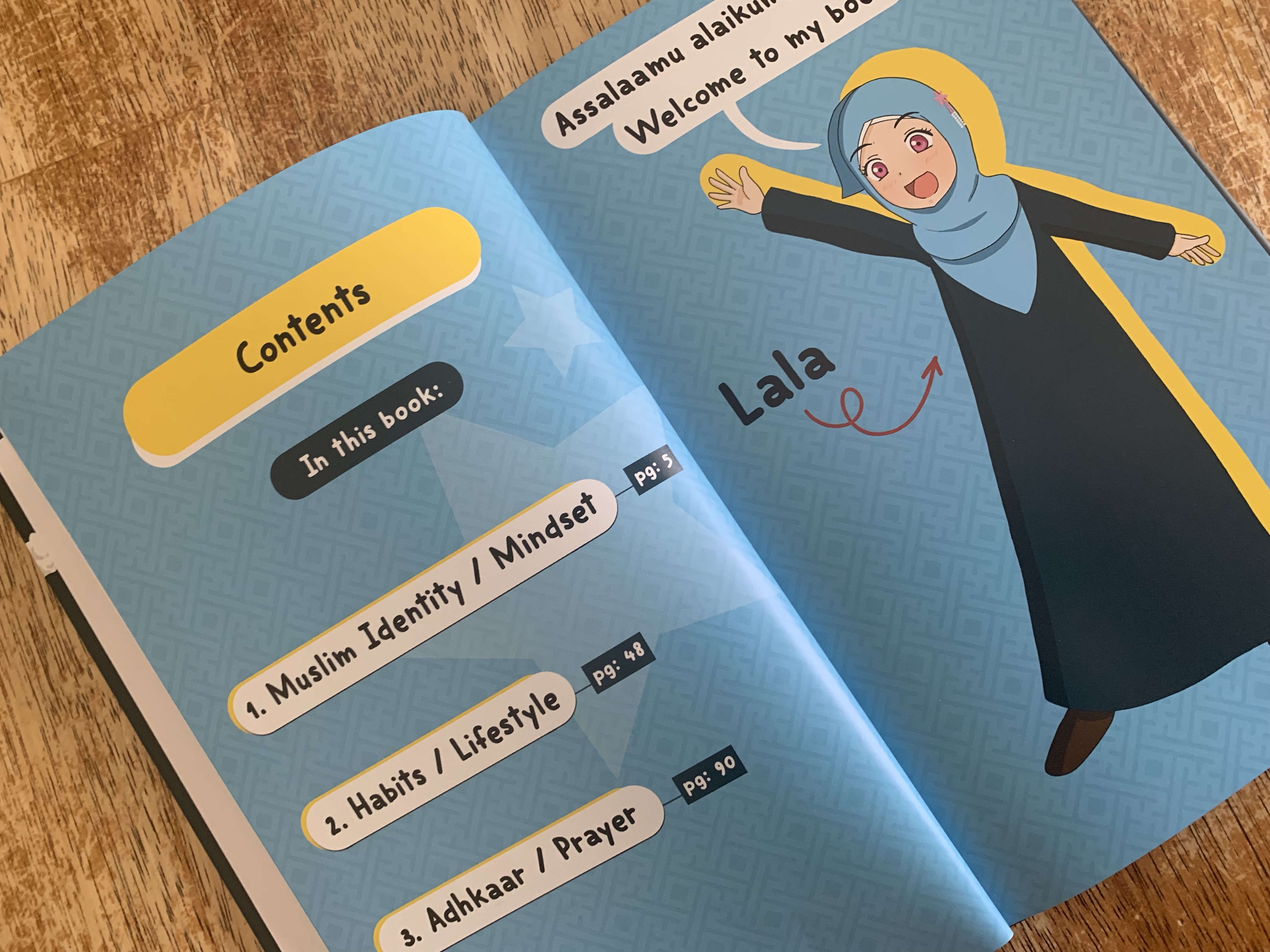
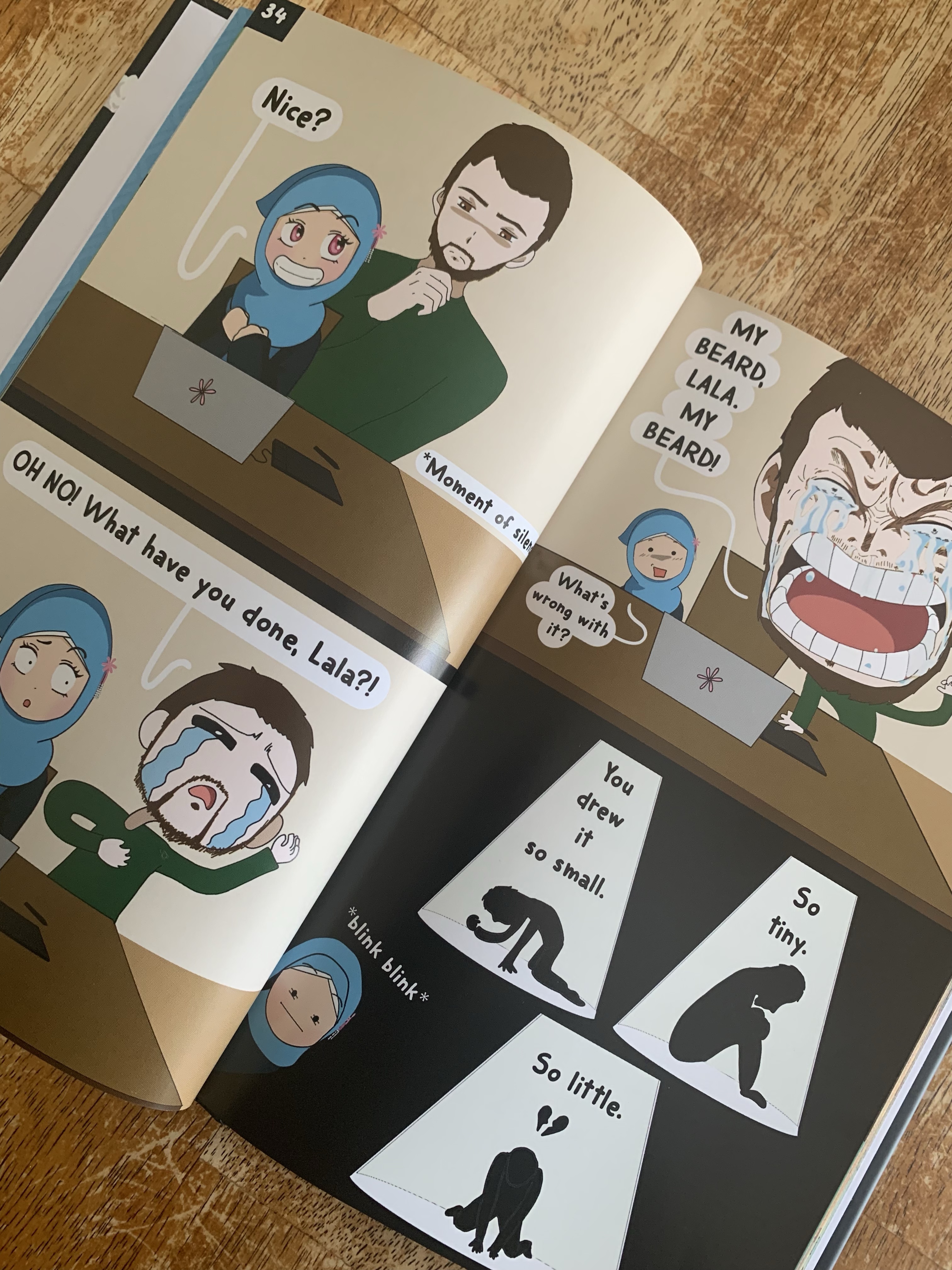
A mix of information and entertainment, this 124 page comic book is divided into thematic sections which further break down in to mini-episodes or comic strips that feature a situation, an Islamic advice often based on a Hadeeth or Quranic ayat that is noted, and a misinterpretation taken to a comical extreme. The book is a great way to remind ourselves and children, middle grades and up, aspects of our faith that we might know, or introduce us to specifics that we should know, by showing the concept in exaggerated action. Because the examples are relatable and come from everyday life, the humor is that much more enjoyable, and as a result makes the “lessons” that much more memorable.

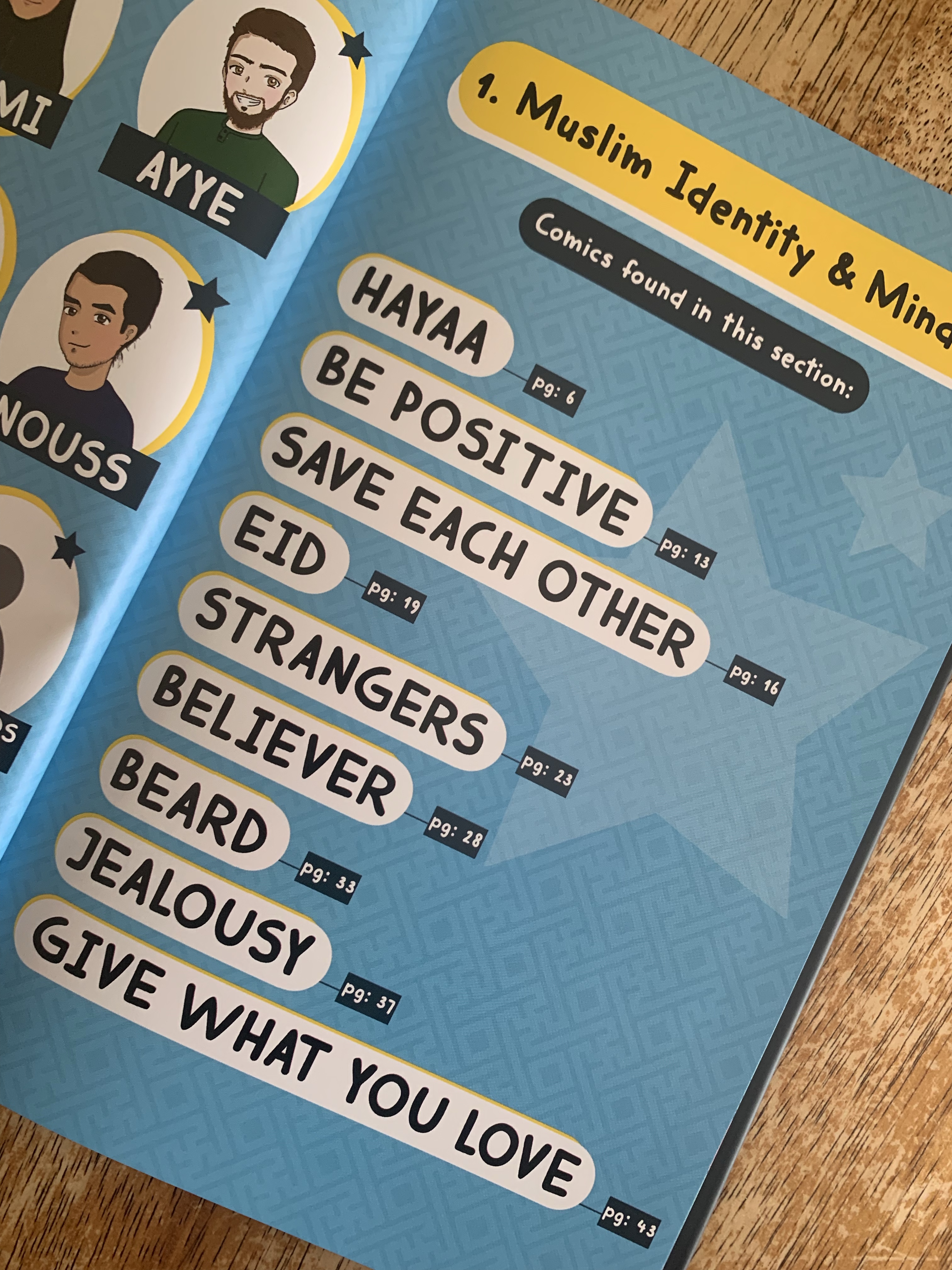
The three sections cover topics included in 1: Muslim Identity/Mindset, 2: Habits/Lifestyle, and 3: Adhkaar/Prayer, after an introduction of the characters, and the magic of the ‘Aalim Hat are explained, the stories begin. They are not sequential and can be read in any order, and are about four to 10 pages each. The book surprisingly does a good job of not getting overly predictable. Even though you know something is going to be taken incorrectly or to the extreme, it doesn’t drag on or get redundant. At times Ayye, is overly preachy, ok, all the time, but the persona is intentional and reads intentional, as his grounding of events is actually the point of the book.

The illustrations are clear and enjoyable. They are expressive and easy to follow. The glossy pages and full color print help keep the readers, especially the younger ones, tuned in to what the lesson is, and what silliness is ensuing. The hardbound 6 x 9 book is great to have around where it can be picked up and thumbed through. I read the entire thing in one setting, as did my 12 and 14 year old, and all of us have subsequently picked it up and flipped through it to muse over sections once again. A few of the pages seem to bleed into the binding and require some effort to see the cut off text, hopefully the book will have multiple reprints and this can be rectified. If you don’t follow the author on Instagram you should @LalaArtwork.

It is important to note that I am not a scholar, or anywhere remotely qualified to opine on the authenticity or interpretation of the points given in the book. The hadeeth are sourced, stating if it is a Saheeh hadith or found in Bukhari or Muslim for example or who narrated it. And ayats from the Quran tell the surah and verse. They are sourced when stated, there is not a bibliography at the end.

Potential concerns in the book: it does show a Muslim celebrating halloween and birthdays in a comic about Eid. In an episode about being strangers in this duniya, it mentions drinking and clubbing and nudity, boyfriends, etc. as things to avoid in this world. There is hyperbole and revenge, and bad judgement, but it is all in fun to make clear Islamic points and I think children nine and up will have no trouble understanding what is real and what is exaggerated, inshaAllah.

World in Between: Based on a True Refugee Story by Kenan Trebinčević and Susan Shapiro

Standard

world in between

I’ve read a lot of refugee stories over the years about people leaving a variety of countries, and while each one, no matter the quality of writing, is heartbreaking and important, this middle grades 384 page historical fiction/ fictionalized biography account stands out because it is written so incredibly well.  The story shows young Kenan’s life before the Balkan War in Bosnia, a year of the war, life in Vienna, and then in the USA.  The book is personable, relatable, and informative.  I had a very hard time putting it down despite knowing that the main character, the author, obviously survived; as the story is engaging and powerful and doesn’t rely on the horrific war to carry the character building and story arcs alone.  The character identifies as Muslim, but doesn’t actively practice or know much about Islam, sports and art are highlighted as universal activities that bridge cultures, language, and foster respect.  The book mentions drinking, kissing, hints at a crush, and features bullying, death, killing, and torture.  Suitable for mature fourth graders and up.

SYNOPSIS:

Kenan has a good life in Brčko, Yugoslavia, he is good at soccer, is an amazing artist, has a bunch of friends, a teacher he likes, loving extended family, his father owns a popular gym, and his mom is an office manager, sure his older brother picks on him sometimes and he gets called, “Bugs Bunny” because of his large protruding teeth, but when it all comes crashing down because of his religion, he is at a loss as to why it suddenly matters.  While neighbors and classmates start sneaking off in the night fearing that the Serbs are going to kill all the Muslims and Catholics, Kenan’s dad holds out hope that he is well loved by everyone at his gym, no matter their religion.  But the family waits too long to leave, and friends, neighbors, classmates, and teachers quickly turn in to enemies.  Kenan’s buddies threaten and abuse him, his favorite teacher holds him at gun point, and neighbors shoot holes in their water cans.  The family ultimately has to hunker down in their apartment without much water, food, and electricity.  They get to Kenan’s aunt’s house in a safe zone, but the men have to register and his father and brother are taken to a concentration camp.  Somehow they get released, but the family’s troubles are just beginning.  Along the way they will be betrayed by people they thought they could trust and helped by people that they thought hated them- no matter the country, no matter people’s religion.  The family will get to Austria and to Kenan’s uncle, but even being away from war doesn’t give them peace.  They don’t speak the language, they can’t work, they must take charity.  Eventually they find themselves in Connecticut, and while some American’s make their difficult lives even worse, some prove to be absolute angels to a family that is trying to make a life in a new country while the war wages on back home.

WHY I LIKE IT:

I love that stories about the Balkan War are becoming more and more available, it is long overdue, and I’m glad that through literature, authentic voices are keeping the memory of the horrific acts from being forgotten.  The story is compelling, a few threads I wanted resolved that weren’t (more information on his grandma, his uncle in Vienna, his aunt that they left behind), but the narrative is rich and does a great job staying relevant to its target audience and not overwhelming the reader with politics or sensationalized emotions.  The rawness of the experience being processed by the 11 year old protagonist is impactful enough and doesn’t need to be exaggerated.  The book is not depressing, in fact there is a lot of joy and hope and kindness.  

I love that Kenan acknowledges that he has been to the mosque once with his uncle, that they don’t fast in Ramadan, but they do celebrate Eid.  It hints that at times they may drink, but they are good about not eating pork, although they eat jell-o. In shop class in the United States his first project is a replica of the mosque in their neighborhood.  Their names are known to be Muslim in Bosnia, and that is enough for them to endure the ethnic cleansing, belief or adherence, is not a factor.

I love that sports and art are universal.  Math is too, but Kenan isn’t good at math.  He wins accolades in each country for his drawings, and gets respect from classmates for his athletic ability.  Not speaking the language is hard, but being able to prove yourself in other ways is a salvation for Kenan.  He is on teams, he goes to the World Cup, he gets in fights, he is honored in the newspaper.  Life in general grounds him, yet soccer and drawing give him a release to excel in.

I love the diversity of everyone in each country.  Heroes are seen in immigrants, minorities, Americans, a Methodist preacher, an Israeli bus driver, a Serb bus driver, a Serb soldier and his family, a .  There are awful immigrants, and white Americans, and Serbs- it really shows that some people are just good and kind, and some people are not, it isn’t linked to any faith or country or culture or neighborhood or skin tone.  I was surprised that at no point were their other Muslims.   We got to know so many wonderful Bosnians in the 90s as our family helped them get settled, that I was really hoping there would be some in Connecticut working with the churches that helped settle Kenan and his family.  That isn’t a critique of the book, though, just my disappointment in my fellow Muslim-Americans for not stepping up enough in real life to make the literary cut, I suppose.

FLAGS:

Violence, torture, death, bullying, killing, shooting, hints at sexual assault, physical assault, ethnic cleansing, genocide, war.  It mentions that Kenan’s brother got to kiss a girl and have a drink, but nothing more detailed than that.  Kenan has a crush on a girl, but it manifests periodically as him just wondering if she survived and is ok.

TOOLS FOR LEADING THE DISCUSSION:

This book is on a short list for me to use next year for middle school book club.  It is a little below grade level for my group, but book club is supposed to be fun and not a burden, so I think it will be perfect.  The kids are going to absolutely love Kenan.  He is so relatable and personable, that I don’t think any supplemental questions or discussion points will be needed.  Kids will have lots of thoughts about Islam in Bosnia, friends turn enemies, restarting in new countries again and again, anger at people that didn’t step up, glee when people did, jealousy when he gets to go to a World Cup game, and hopefully empathy for so many who’s world changed so quickly.  The biggest takeaways will be how it didn’t take much to help, and I hope all readers will recognize that we can be kind and we can help and we can respect and care enough to truly help others.  

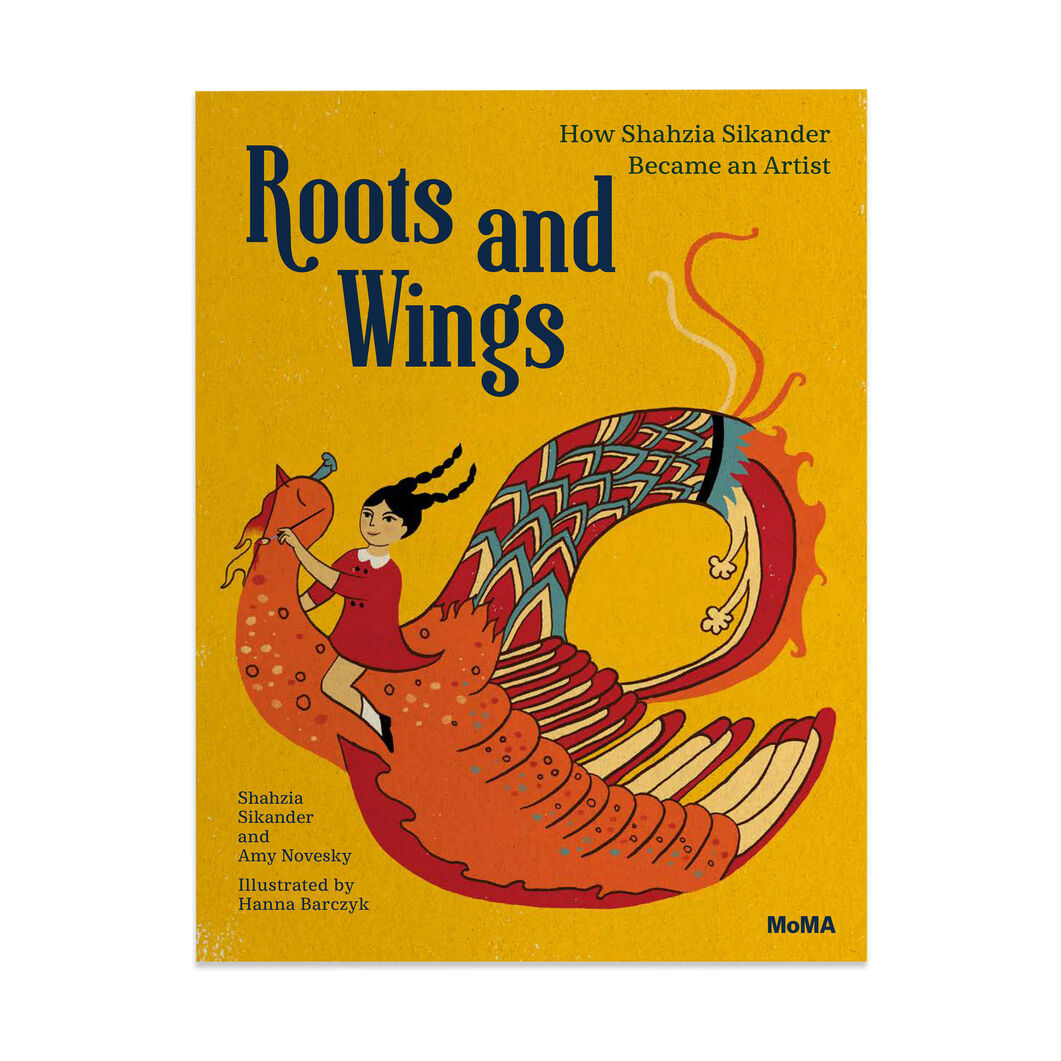
Roots and Wings: How Shahzia Sikander Became an Artist by Shahzia Sikander and Amy Novesky illustrated by Hanna Barczyk

Standard
Roots and Wings: How Shahzia Sikander Became an  Artist by Shahzia Sikander and Amy Novesky illustrated by Hanna Barczyk

roots and wings

At 40 pages, this biography about Pakistani born artist Shahzia Sikander is filled with culture and experiences.  The story shows the influences of her family, the city of Lahore, her love of math, and her art education have in shaping her in to the artist she is today.  The book features photographs of her work at the end, but I found it odd that she didn’t illustrate the book herself.  The playful blocky pictures and text would appeal to first or second graders with some assistance, but would be better suited for readers a bit older if they are unfamiliar with some of the cultural and artistic vocabulary.  There is no mention of Islam in the book, when researching, it says her family is Muslim.  It seems she went to Catholic school, and a road trip was taken that included visiting the Sistine Chapel.  A few illustrations show people in hijab and it mentions the athan ringing out five times a day.  The book was interesting, but I wish I could have found it at the library, rather than purchasing it.  I don’t know that it will be read more than once, but that speaks more to personal preference, rather than the quality of the book. If you enjoy fine art, are from Lahore, are a fan of Shahzia Sikander’s work, you will definitely enjoy this book.

img_1695

The story starts with a girl stepping in to a painting with many rooms, filled with many people in a joint family.  It is her (Shahzia’s) home, and her family.  The rooms are filled with ancient fables, Russian fairy tales, poetry, English, Urdu, Bollywood songs, and American Westerns.

img_1696

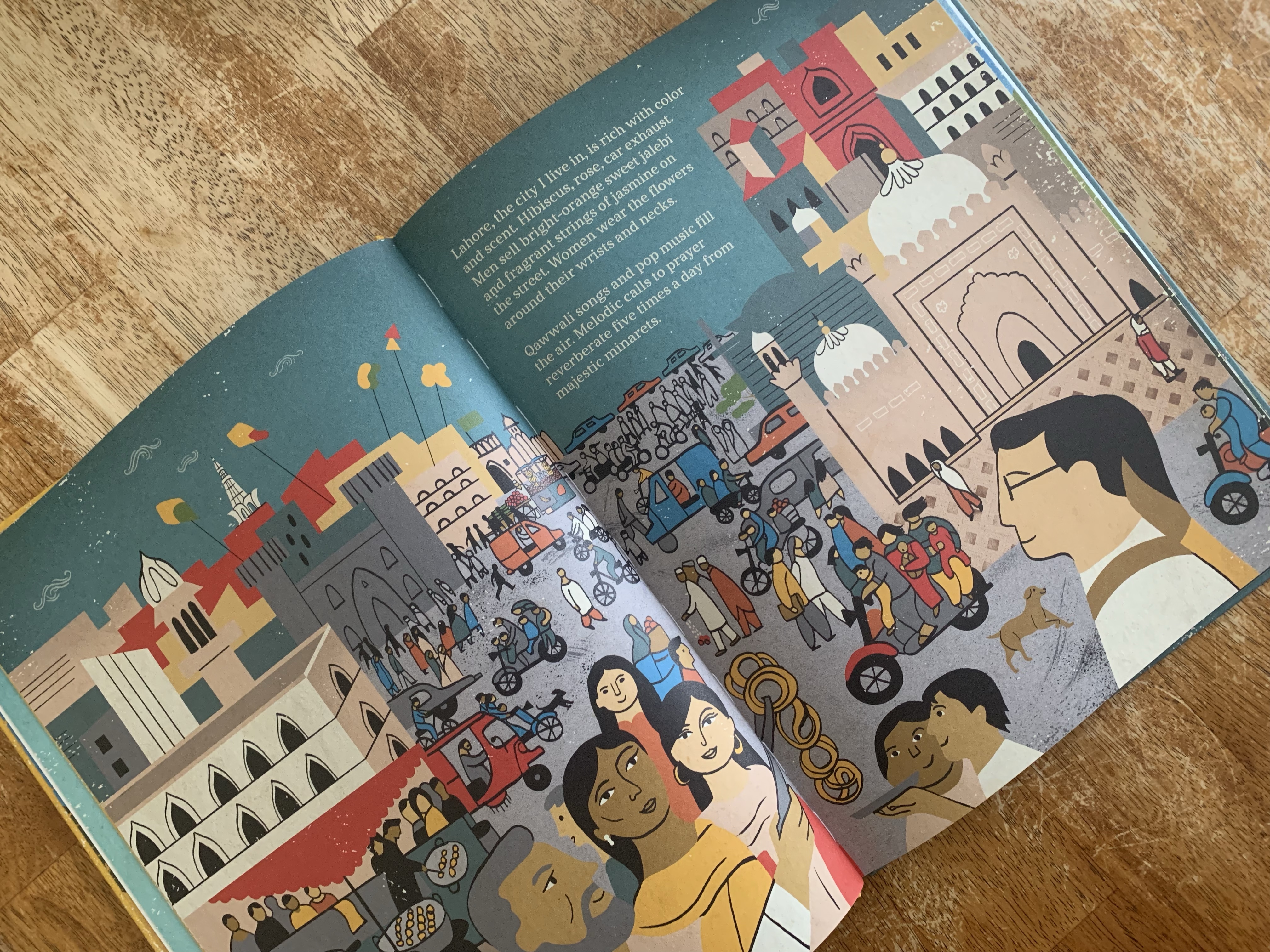
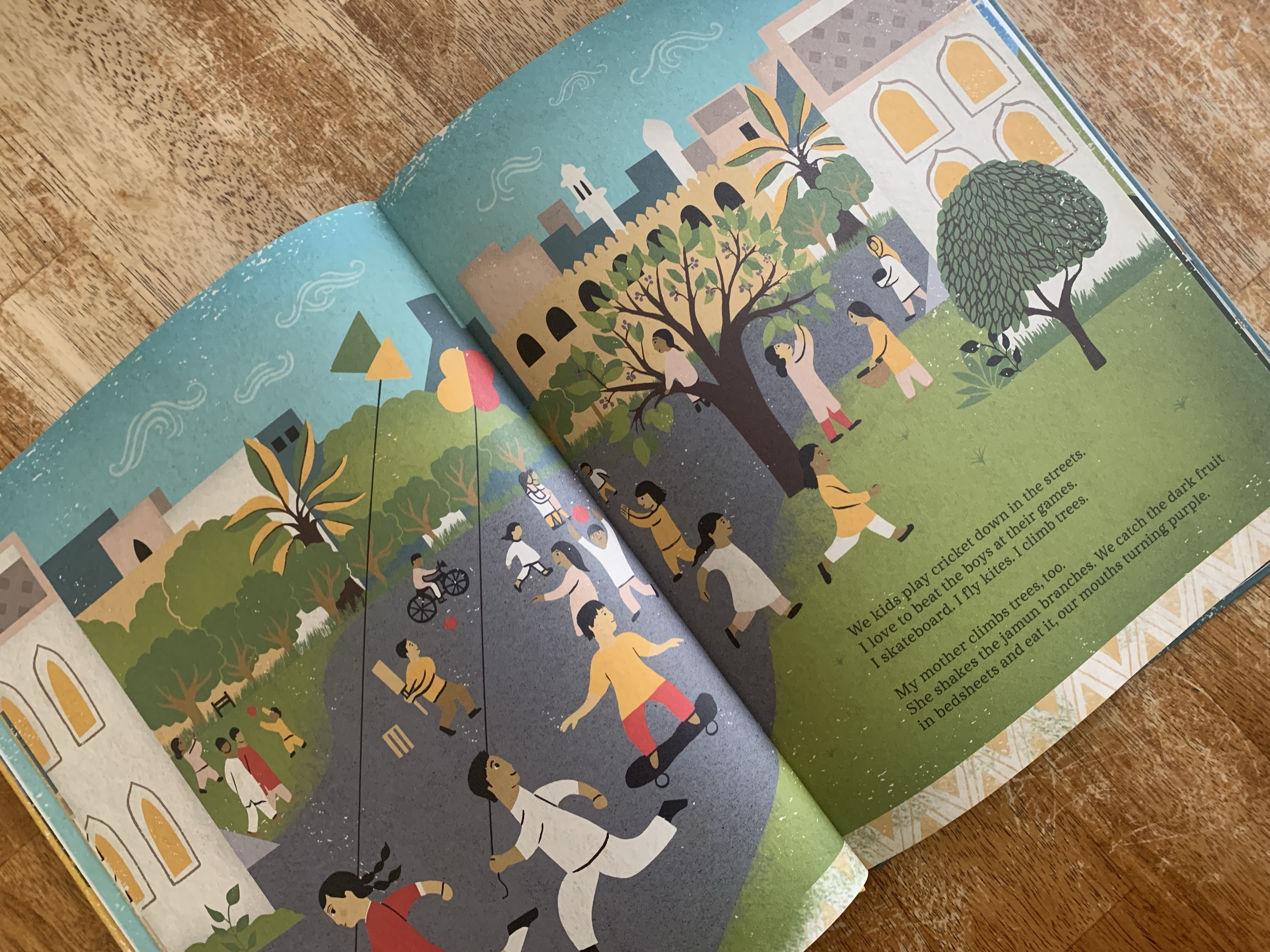
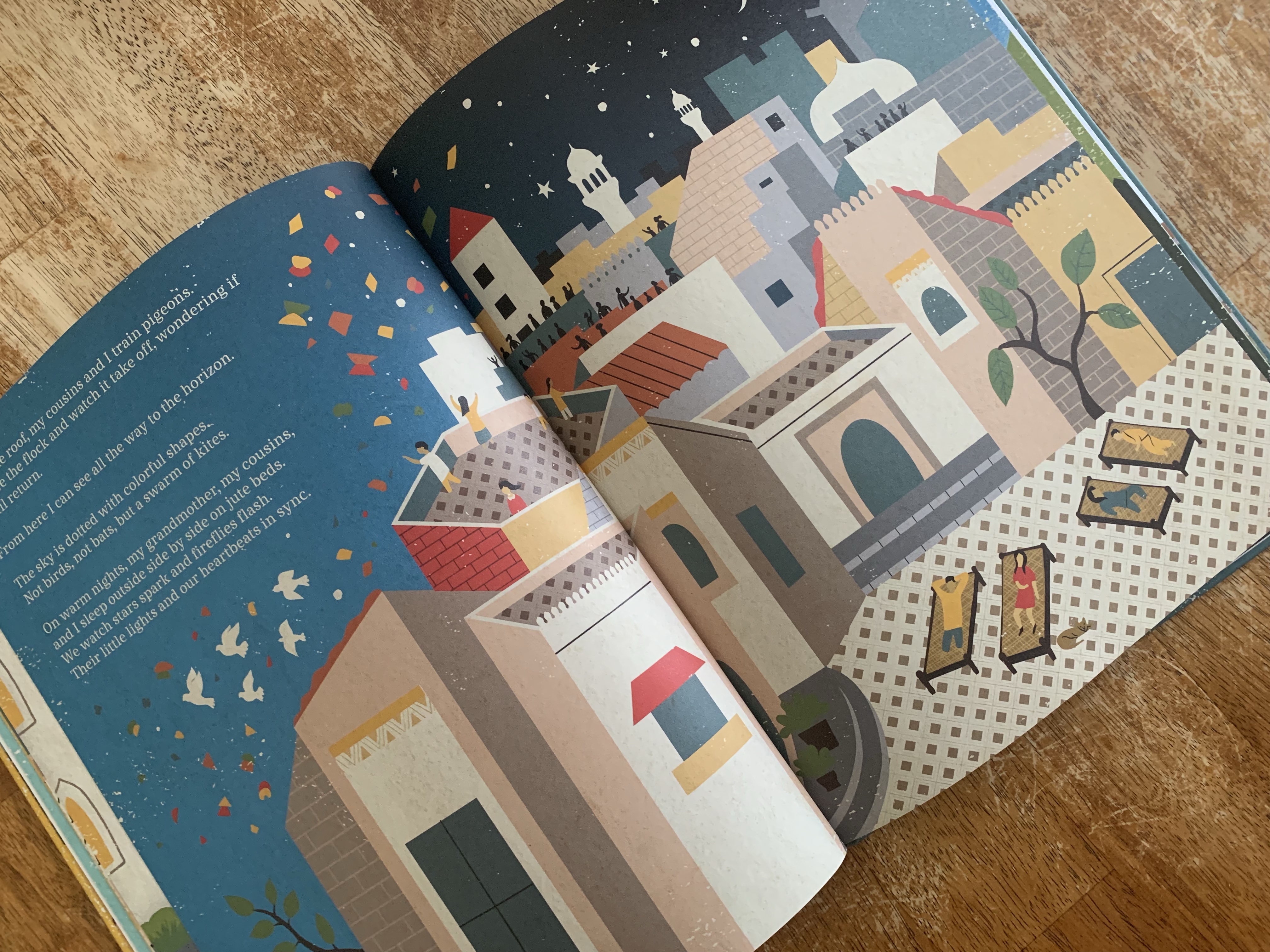
Outside is the city of Lahore, in Pakistan, streets rich in smell and color and sound exist: orange jalebi and strings of jasmine, sounds of Qawwalis and pop music, the melodic call to prayer from the minarets.  As a child she plays cricket and climbs trees and flies kites.  Up on the roof she trains pigeons and looks out at the horizon.  

img_1697

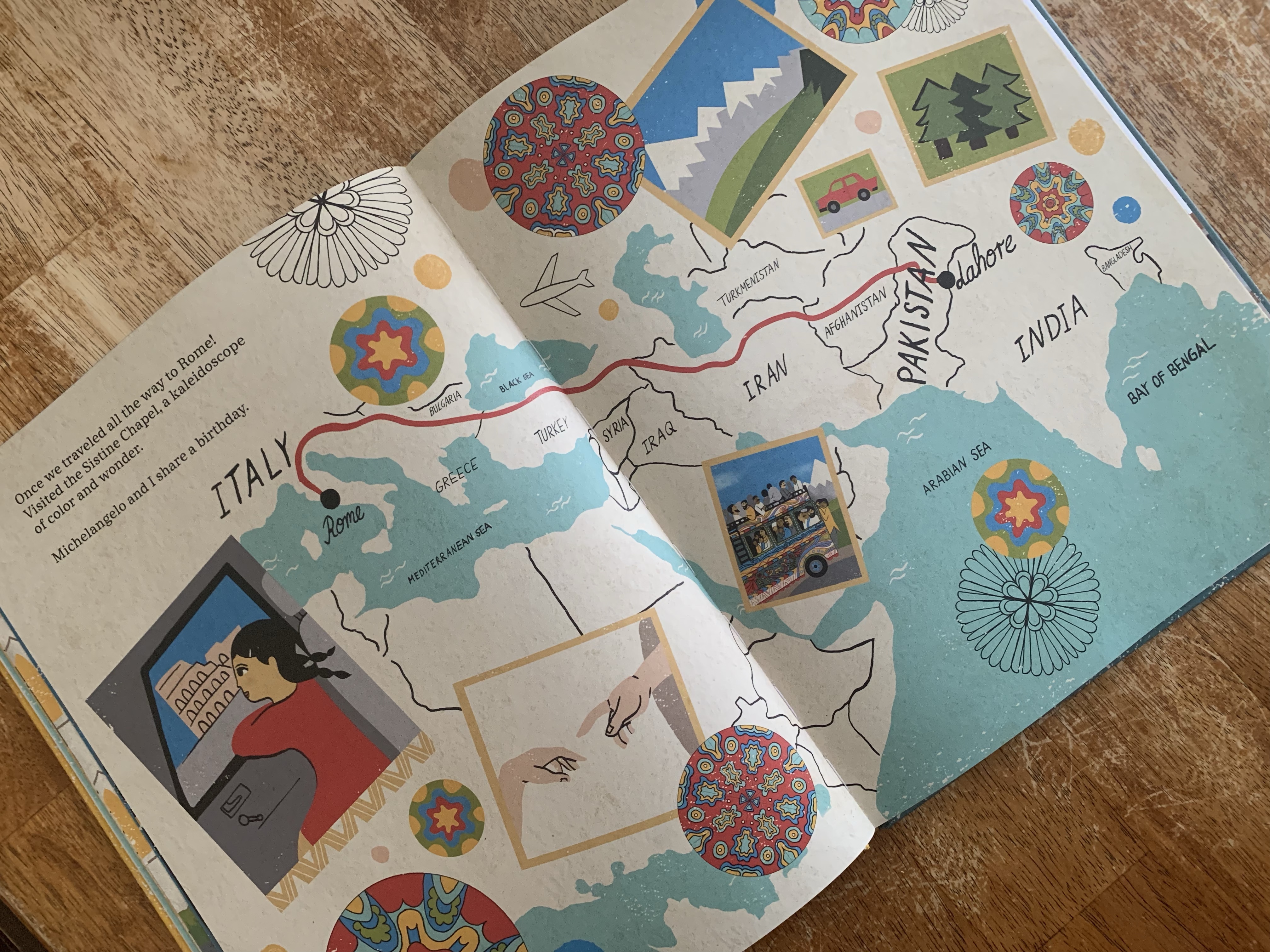
When it gets hot, her family heads north.  They once traveled all the way to Rome.  She visited the Sistine chapel, her and Michelangelo share a birthday.

img_1699

At school she is shy. She loves math, as it is a tool to understand the world.  She finds she is also good at drawing birds, and people.  She studies miniatures with a magnifying glass.  Eventually training in miniature painting with a master.  Art becomes her ticket to new worlds.

img_1698

She heads off for America, taking her roots with her, but once she arrives she cannot leave.  Her passport is the wrong, color.  She lives in New York and cannot return to Pakistan for nine years.  Now she can travel and soar and share her work with the world.

img_1701

There is a glossary at the end and more information about Shahzia and her paintings.