Tag Archives: 2022

Muhammad Najem, War Reporter: How One Boy Put the Spotlight on Syria by Muhammad Najem and Nora Neus illustrated by Julie Robine

Standard
Muhammad Najem, War Reporter: How One Boy Put the Spotlight on Syria by Muhammad Najem and Nora Neus illustrated by Julie Robine

img_2326

This 320 page full color middle grade graphic novel is a powerful and moving read. The memoir focuses on the young Syrian boy who began reporting on the war from the perspective of children and sharing his work on social media.  The raw emotion, the determination to make a difference, the familial love, are conveyed in a way that allows eight and nine year old readers to connect to living through horror with compassion and outrage and empathy.  Older readers will also be drawn in and moved by the relatability of a boy their age having his world turned upside down.  I particularly like how the book dispels so many assumptions and stereotypes by showing what life was like before the devastation, a bit about the role of outside forces and political oppression, and really creating a mood where you can imagine what you would do if you were in Muhammad’s situation.  The book is heavy, but also has a lot of hope and and joy. I tend to like nonfiction graphic novels that are character driven like this one.  I find I understand the scope of what they are enduring by seeing it through their eyes and feeling like I know them and thus can better grasp what their reality is.  There are photographs at the end which further connect the readers to Muhammad and Syria, and I hope this book finds its way into classrooms, libraries, homes, and hearts, so that we might be better to one another.  Readers of When Stars are Scattered will similarly love this book.

SYNOPSIS:

The book begins with eight-year-old Muhammad hanging around his father’s carpentry shop in Eastern Ghouta, playing soccer and pleading to by treats from the candy seller.  When Assad’s soldiers come, destroy his soccer ball, and his family warns him not to trust anyone, including the new candy seller, Muhammad’s world is suddenly not so certain.  When his family must seek shelter at a moments notice, homework is left, videogames paused, and fear very real.

Muhammad is the miracle child, born after the family didn’t know if they could have any more children, he is the fourth, and spoiled. Even with destruction and sheltering though, there is joy, more children are born in to the family, and while Muhammad’s status might be in question, his love of his little brother and sister, motivate him to do something to create a safer home.

At age 13, his father and uncle go for Jummah salat, and his father is killed while praying.  At 15 Muhammad is done hiding, he knows he will never be safe and he starts filming and sharing stories of children as a way to honor is father and fight back against oppression.

With the support of his family, and constant worry that Assad’s army will target him, Muhammad keeps telling the stories of those with no voice.  Eventually his following grows, catches international attention, and gives Muhammad purpose.

WHY I LIKE IT:

I love the format for this story, you truly can’t put it down.  It shows the emotion so powerfully that you cry when characters are lost.  You know hundreds die every day, but the singling in on a character that you have grown to love dying moves the reader, add in that you know this was a real person and that Muhammad really endured the loss, and it reminds you of your humanity.  The love the characters all have for their oldest sister is absolutely incredible.  The pages of the family just being so connected are my absolute favorites.

The characters are Muslim and it is a part of their daily lives, there is no pulling out of the narrative and explaining or preaching.  The women wear hijab, they plead with Allah swt, they reflect on Allah’s plan, they go for prayers at the masjid.

FLAGS:

Death, destruction, war, fear. It is not sensationalized, and I truly think middle grade and middle school readers will benefit from reading, even the sensitive ones.

TOOLS FOR LEADING THE DISCUSSION:
I think the book would be wonderful to teach in the classroom tying literature, current events, and history together.  I absolutely think every library, classroom, and home bookshelf should feature this book.

It can be pre-orderd here
img_2325

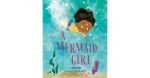
A Mermaid Girl by Sana Rafi illustrated by Olivia Aserr

Standard
A Mermaid Girl by Sana Rafi illustrated by Olivia Aserr

mermaid girl

I honestly don’t know how I feel about this book.  I have read it and reread it and thought about it and read it again, and ignored it and read it again, and alas I have no idea.  I really am having a hard time articulating my thoughts on this 40 page children’s book.  I think part of the problem is that I’m reading it shortly after reading another “religiously inclined” clothing inspired picture book for the same target demographic and I’m having a hard time not comparing them.  When I intentionally start to write a review that doesn’t compare them, I am cognizant that my readers probably will and the review spirals.  So I’m going to establish what I love about this book, and then highlight why I’m torn and leave it to you all to draw your own conclusions and opinions.  InshaAllah this will not be the new norm, I will not make a habit of straddling the fence, but for this book, I think it is the only way.

img_2174

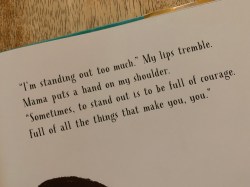
I absolutely love the illustrations.  The warmth and joy the pictures portray are endearing and smile inducing.  I love the mother and daughter relationship and how feelings are not dismissed or belittled.  The mom connects the little girl to a legacy of strength and conveys her confidence, that the little girl is similarly brave, not just when things are hard, but especially when they are.  The little girl is shown to “feel” confident and joy in her clothing, not just “look” pretty, which is messaging that I love.  It is never too early to show that how one feels is more important than how one looks.  This depth, is not examined, but by simply using the words “When I put it on, I feel like a dainty seahorse,” rather than saying, “I look like a dainty seahorse,” the priority is not lost on the reader.  I like that the character has growth and challenges and has to reaffirm her position and as a result raises herself and those around her as well.

img_2175

So why some confusion you ask.  Well- the word burkini is used to explain the little girl’s new swimsuit.  Burkini traditionally is a Muslim implied modest swimsuit, derived from combining the words burka and bikini.  That said, anyone of any faith can order a burkini online and their faith is not a factor.  The little girl is young and doesn’t wear hijab, her hair is not covered.  The mother and the ancestors pictured wear hijab, but Islam or Muslim is never in the text.  Part of me likes this, people wear modest swimwear for a lot of reasons: comfort, religion, sun protection, personal preference.  Similarly for head coverings in a pool some people where them for hair preservation, modesty, hijab, aerodynamics, speed, preference, comfort, etc..  Unlike hijab which is in the Quran, birkini is not an “Islamic requirement.”  No one is forcing you to swim, no one is forcing you to wear this brand or that style if you choose to swim.  Covering and wearing modest clothing is a must on Muslim women, covering the awrah is required after puberty.  I both like that the little girl is covering up and wish that it said why she is, but also appreciate that it is left open.  I like that you should be able to wear whatever you want and be comfortable with it.  I like that you don’t have to conform, and you can be you and whether that comes from a religious rationale or a fashion one or a health one or a comfort one, it doesn’t matter, don’t police what women wear.  But the implied illustrated framing is Islamic and the link is not there in the text.  See why my thoughts are scattered.

img_2176

Similarly, the term “mermaid” is gender specific.  But colloquially it is often used to just describe someone with a human top half and fist tail.  So, isn’t “mermaid girl” redundant? At the end when male presenting Sam asks if he can be a Mermaid girl too is it implying gender neutrality? Is it like female kids saying they want to be a girl policeman or a lady firefighter?  Does it matter?

img_2177

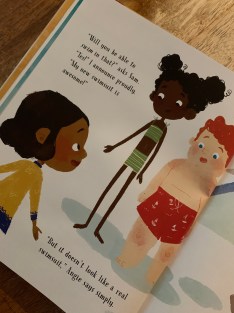
The story starts with Heba and her mother looking at photographs of past generations on their wall remarking how they are all mermaid girls.  Heba has gotten a new swimsuit, and her and mama are going to match in their new burkinis.  When they get to the pool however, all the excitement is pushed back on when her friends ask her if she can swim in that, and they tell her it doesn’t look like a real swimsuit. Heba sticks up for herself, but when she looks around, she sees, they are right, she doesn’t look like everyone else.  Mama reminds her of those before her and reassures her that she is not alone. She rejoins her friends, doing all the things she wants to do, and by the end they too want to be mermaid girls.

img_2178

There is music depicted and women in one and two piece swimsuits.  As someone who wore modest swimwear my whole life, this book had a lot of mirroring of summers arguing with life guards, showing up with other Muslims at public pools to rude comments and aggressive stares, and swimming all over the world to people asking where they could get a suit like mine as well.  Definitely normalizing swimwear that looks like a burkini is a great concept to see in a book.

I do wish there was backmatter.  Perhaps giving voice to the many reasons women should be free to wear what they want at all times, but how particularly in water activities it has become a political point of judgement and policing.  Perhaps something about how this little girl is wearing it for religion and modesty, but that people everywhere wear things for lots of reasons.  I like the ambiguity, but also wish their was more of a connection to Islam/Muslims.  I leave it to you to make your own decisions.  I found my copy at my local library, it is mainstream published and can be purchased here as well.

Bhai for Now by Maleeha Siddiqui

Standard
Bhai for Now by Maleeha Siddiqui

bhai

We tend to love people and books that do things first, for good reason, they raise the bar, set the standard, and pave the way for all those that come after.  And no, this is not the first middle grade traditionally published book to have Muslim characters having a completely non-Islamic-identity-centered plot, BUT it might just be the best one I’ve read.  The amount of Islam woven into the characters and storyline is absolutely incredible and seamless. The writing quality keeping dual male point of views separate, engaging, and unique without judgement, is nearly flawless.  The emotional connection of the writing and characters and plot had me both laughing out loud and crying unapologetically within the span of the 276 pages of the book.  This book is a treat for the readers and everyone eight and up I’m quite nearly certain will enjoy this Muslim authored, unapologetically Muslim approach about two 8th grade strangers realizing they are twin brothers and getting to know each other.

SYNOPSIS:

Shaheer lives with his dad and paternal grandfather.  They are well-to-do with his father being an ER physician, but they move around a lot, and never stay in one place long enough to make friends, unpack boxes, or feel like they have a home.  Ashar has lived in Virginia since he was four.  He and his mom recently moved out of living with her brother and his family, but they are next door so even though money is often tight, family and love are always present.

The first day of eighth grade finds the two boys at the same school, staring at each other and wondering how they can maybe find the pieces of themselves that have always been missing. The idea is good, but the reality is complicated.  Ashar and Shaheer’s parents have refused to even acknowledge each other to the boys over the years, extended family plays along, and the boys have to decide if they can even forgive their parents for doing this to them.  Throw in a cousin who knows the boys are switching places, hockey practices, a masjid remodel, and the ever looming threat that Shaheer will be moving yet again and the stage is set for a lot of laughs, tears, and characters that won’t be forgotten anytime soon.

WHY I LIKE IT:

The retelling of “The Parent Trap” is not predictable, nor does it talk down to the reader and tie everything up in a nice unrealistic bow.  There are twists and disappointment and hope and joy, not just for the characters, but for the readers as well.  The side characters are even fleshed out and memorable, not just as foils for the protagonists (I loved cousin Zohra), but as characters with a vested interest in how it all plays out.  I was surprised how clearly different the characters are, even when imitating one another and how nuanced their differences are.  They are not simply opposites: one is not good the other bad, one outgoing one an introvert, rather they are just different, as any two siblings undoubtedly would be.

I absolutely love how Islam is so much a part of the story, a part of the characters, a part of the details, but is not the whole story.  There is no Islamophobia, internal or external, there is no religious othering, it is masterfully done and Muslims and non Muslims alike will benefit from the real tangible expression, growth, and presentation of faith for the characters.

Similarly, culture is presented as a part of the characters in various forms without overly explaining or white centering.  This is who the characters are and their present predicament, as crazy as it is, could happen to anyone, of any culture or of any faith, the two are not corollary. But because it is happening to Ashar and Shaheer, the reader is brought into their world where salat/namaz, athan, mosques, hockey, entrance exams, volunteer work, finances, naan, pineapple on pizza, donuts, and nihari are all present and all unapologized for.  Well, except for the pineapple on pizza.

The best part of it all, is that it is also clean.

FLAGS:

Nothing an eight year old can’t handle, but there is deception as they imitate each other, parental arguing.  There is mention of Shaheer putting his headphones on and listening to music. Zohra plays flute in the band and it mentions when she has practice or that the family all goes and supports her. Male cousins and female cousins interact with each other freely.

TOOLS FOR LEADING THE DISCUSSION:

If my middle school book club is mostly 6th graders in the fall, I think I will feature this book as soon as it is released on October 4th.  Even if it is a bit below “reading level” the writing is engaging and I don’t think even the most cynical book club member will be sorry they spent time with this book.  It would be a quick read for them, but an enjoyable one for sure.

It can be preordered here on Amazon

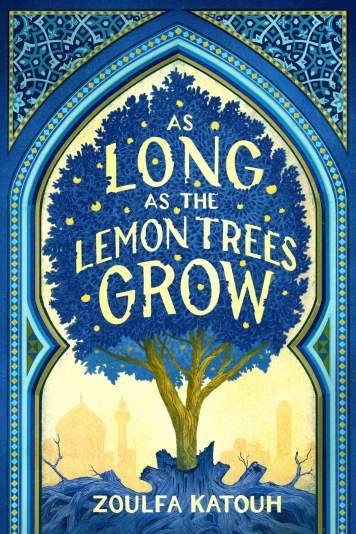
As Long As the Lemon Trees Grow by Zoulfa Katouh

Standard
As Long As the Lemon Trees Grow by Zoulfa Katouh

as-long-as-the-lemon-trees-grow

Anything I write about this YA book will fail miserably in conveying how powerful, beautiful, lingering, moving, emotional, and overall masterfully written every one of the 432 pages are; it just might be my favorite book of the year.  I do know that this will be my new standard for Muslim OWN voice stories, as the authenticity was absolutely engulfing, I’m not Syrian and I could feel it and naturally, I also verified it.  There is no pandering to a western gaze, the story and characters pull you in and show you Syria from the ground, there is no telling, there is no lecturing, it is mesmerizing storytelling at its finest.  The book has mental health issues, war, and a sweet “halal” romance, that I think upper YA, 16 plus, can handle and appreciate.  I hope every adult will spend time with this book, it truly is incredibly well done, alhumdulillah.

SYNOPSIS:

Homs is under the protection of the Free Syrian Army, but that isn’t enough to keep pharmacy student Salama and her family safe.  Her mother is killed, her father and brother taken, and so she moves in with her best friend Layla, her pregnant sister-in-law, her only family left.  Working as a doctor in the hospital where anyone remaining is given responsibilities far above their skill level, education, and experience- every day is a struggle to survive.

Haunted by the physical manifestation of her fear, “Khawf,” who urges her to fulfill her promise to her brother of keeping Layla safe and getting them out of the country, Salama at eighteen years old has to find a way.

Before all the pieces come together to escape, a boy enters the picture, Kenan, who gives Salama hope, who distracts her from the death and destruction that has consumed their lives.  A boy unwilling to leave his beloved homeland.

WHY I LIKE IT:

I’m a crier, but this book brought out ugly angry tears, shocked tears, heartbroken tears, sentimental tears, you get the point, this book held me in its grasps and never let go. I.COULDN’T. PUT. IT. DOWN. If this is the author’s debut novel I can’t even fathom what is yet to come.

I love that the characters are Muslim, and that they pray together, that they plead with Allah (swt) and meet at the mosque.  It is who they are, it is not up for debate or in need of explanation, it is what it is and it is not anything to discuss.  The parts where a character pleads with Allah for death over being taken, absolutely wrecked me.  Just as efforts to keep everything halal between Salama and Kenan made me beam.  (If I’m completely honesty, I did on occasion get frustrated, I mean come on they are being shot at, bombed, nearly sexually assaulted, scoop her up in your arms and console, her, I know haram, but it is fiction and I was invested, and there is a war.  Thankfully, I am not an author and she kept it all clean and her characters much stronger and mindful of the shortness of this world.)

I love that there are political voices, but that it isn’t a political book trying to give back story to the conflict.  In so many ways the news has failed to keep a light shining on Syria and books such as this, remind those of us outside Syria without strong connections to the land, that the conflict is still raging.  If this was a journalistic article it would be a human interest piece, it is character driven.  Readers see themselves in the characters that live lives that most of us of privilege could never imagine, yet here we are spellbound by the characters, their choices, their dreams, and their safety.  This book shows the power of fiction in opening our eyes to the horrors that are happening in our time, by giving us a face and a character to care so deeply about, that we are spurred to action and determined to not remain apathetic.

FLAGS:

Death, torture, physical abuse, sexual assault, fear, loss, coercion, war, murder, torture, child abuse, crimes against humanity, starvation, mental health, PTSD.

TOOLS FOR LEADING THE DISCUSSION:

I would love to use this book in a high school book club.  The story and themes of the book would open themselves up to discussion so effortlessly and the beauty of the writing would be a gift to share with students.

Where Butterflies Fill the Sky: A Story of Immigration, Family, and Finding Home written and illustrated by Zahra Marwan

Standard
Where Butterflies Fill the Sky: A Story of Immigration, Family, and Finding Home written and illustrated by Zahra Marwan

butter

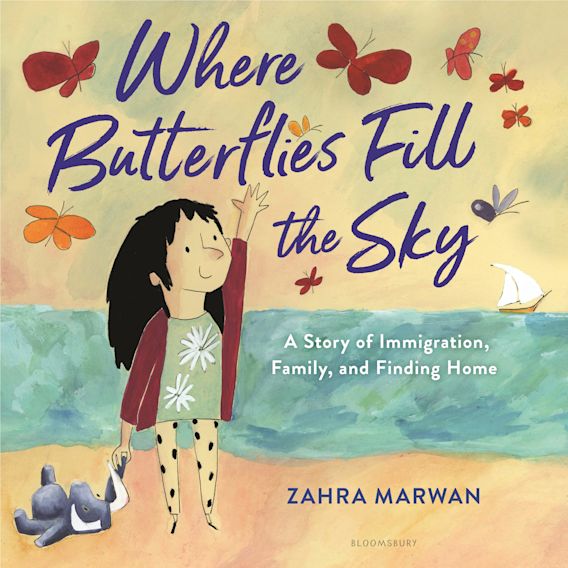
This 48 page picture book shows the journey of a young girl from one desert to another.  The soft water colors in this author illustrated book tell so much of the story and illuminate the prose.   For me the most powerful part of the book was the backmatter.  The learning why the family had to move from Kuwait to New Mexico was new and interesting and gave the story a lot of depth.  I read it to my 6 and 3 year old and it couldn’t hold their attention, the book is not text heavy, but is is long.  I think had I read the author’s note at the end first, before sharing it with my kids, we could have discussed the pages a bit more.  I think the added framing and context would have increased connection and engaged them.  The book shows one aunt in hijab, Allah swt written in Arabic and a picture of the kaba hanging on the walls of their home, a hand of Fatima as well.  There is music and dancing and connections between family, strangers, cultures, and people.

The book starts by establishing the rich and loving life the little girl enjoys in her home: butterflies, swimming in the sea, family.  It then fades to being held close and the stress of people saying they don’t belong.  The next step is the family having to leave their extended family and say their good-byes.

They arrive in a new place, not talking like others, questioning the connections of their ancestors in this far away land.  Eventually there are some similarities, and then the music of a guitarron is heard and people dance and there is joy.

The shift opens up a feeling of home, and connections are not lost, and a new comfort is felt in a place where hot air balloons fill the sky.

As an adult I appreciated the paradigm shift of not being welcome in their home elsewhere and being welcome in America, it is subtle but a nice change.  I love a lot of details come full circle.  I think the book would be a good tool not for the intended 4-8 crowd, but for older kids in a teaching setting.  There are a lot of subtle story telling techniques that could be discussed, stereotype assumptions challenged in a nudging way, and offer social studies and political discussions.

Love from Mecca to Medina by S.K. Ali

Standard
Love from Mecca to Medina by S.K. Ali

mecca to medina

This book is a game changer, or better yet: an industry changer.  It is about Muslims, for Muslims, by a Muslim- but it is MAINSTREAM and a huge panoramic window for anyone and everyone to see a “halal” fictional Muslim love story in action.  With every page proudly mirroring various Muslim experiences this sequel-ish standalone-ish book is unapologetically real, without compromising good storytelling, interesting characters, and engaging plot points.  In much the same way Reem Faruqi’s Golden Girl raised the bar for upper MG/lower YA, this book shows that upper YA Muslamic stories can be told.  That the publishing world isn’t always limiting OWN voices, and that it is up to us, the consumers, to purchase these particular books, pre-order them when announced and spread the word so that the message is loud and clear that we want more books like this.  I have no doubt S.K. Ali had to fight for her vision and advocate for her book at every turn, but now that it is here, we need to step up and show support with our purchasing power.  I’ve pre-ordered mine, and I hope you will do the same before the book releases on October 18, 2022, if you cannot, please purchase it when you can, and if that is not an option please request your libraries to shelve the book (and all of her books) and put them on hold so that the gate further opens for mainstream Islamic fiction.

Preorder link on Amazon

SYNOPSIS:

Adam and Zayneb are back after falling in love in Love from A to Z and getting their nikkah done.  They aren’t living together yet, though, and they are worlds apart with Adam jobless in Doha, and Zayneb homeless in Chicago.  When communication breaks down, exes show up, and a trip to Umrah is underway with the couple divided into gender segregated groups, the couple might fall apart in the same fashion that brought them together in the first place.  The steps of Umrah are beautifully highlighted and experienced, and characters from Misfits and A-Z come back to tie it all together and help the couple, keeping hope alive.  Throw in some marvels and oddities, artifacts and interpretive labels, a unifying cat, and a whole lot of love, and you have a sweet conclusion to a Muslamic love story.

WHY I LIKE IT:

So, I obviously love the standard of unapologetic Islam that this book offers on every page while still being accessible to the larger audience.  It took a little bit for me to be sucked in to the 352 page story, but by page 100 or so, I couldn’t put it down.  The steps of Umrah brought tears to my eyes and the awesome Sausun is fierce feminist friendship goals.  I honestly didn’t love the cat narrative that frames the story, but luckily it is sparse so I could see past it. I love that this book exists, I think I love the Misfit based duology a tiny bit more, but loved that this book had crossover characters and gave many of them a final bow of sorts as well. I read the book in two days and will probably re-read it when I receive my physical copy.  It really is remarkable how much Islam is present in a fictionalized story: not a oppressed Muslim story, or biographical memoir, or refugee story, but in a solid fiction story.   There is no “othering,” this is us, and this a love story about a Muslim couple trying to make it work with outside support and stresses, and beautiful writing.  Alhumdulillah, very well done.

FLAGS:

I’d encourage mature, older YA because the characters are married and sexually active and while it isn’t graphic or depicted it is often just the words mentioning them kissing, and sleeping together and sexting.  Nothing titillating or anywhere near inappropriate, but I think a bit of maturity would help it better reflect the values of Islamic marriages and relationships.  There is some minor language and hate speech.

TOOLS FOR LEADING THE DISCUSSION:

I would absolutely use the book for high school book club if it is mostly juniors and seniors.  I think it gives a good look at what a relationship can look like; the characters’ religious lens and lives will resonate with Islamic school students.

Hana’s Hundreds of Hijabs by Razeena Omar Gutta illustrated by Manal Mirza 

Standard
Hana’s Hundreds of Hijabs by Razeena Omar Gutta illustrated by Manal Mirza 

img_1826

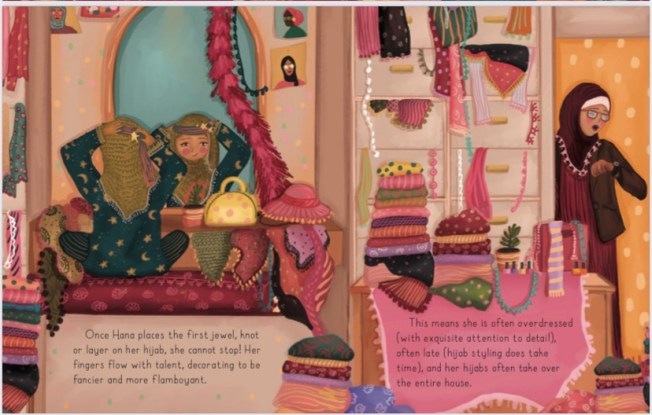
I love the idea of this book and I can see me reading it at story time to KG-2nd graders with great success. The illustrations are rich and detailed, the over the top bedazzling is fun and extra, the plot however, is non existent, surface level at best, the Islamic representation incredibly shallow, and the inconsistencies puzzling.  I’ve read this book a lot of times trying to articulate why it just rubs me the wrong way, and I think it is because it really reduces hijab to a fashion piece.  You can change the word “hijab” to hat or t-shirt or sock and the story would be EXACTLY the same. There is no connecting hijab to Islam, no showing or telling why a woman would even where it.  It presents hijab as being a costume or a decoration.  If you don’t read the author’s note at the end, you would have no idea that hijab is an obligation on Muslim women.  Even at story time in an Islamic school I don’t know that the author’s note will make the case clear enough, and I do plan to discuss with the classes how important it is to realize that hijab means something and is an act of worship and faith, and not something frivolous.  The 24 page book is cute, no doubt, but I wish it had just a bit more substance.

img_1827

A few other readers have shared that they found the story “offensive” and “triggering” for the main character’s judgmental and snooty attitude of criticizing others’ fashion sense.  As someone who doesn’t care much what I wear, I didn’t feel attacked, but their points are valid, so I share them. Hijab is incredibly personal and many women struggle with dressing for the sake of Allah swt with the messaging all around and pressures to compromise in one way or another, and this book for some could definitely add fuel to the fire of telling a woman how to dress.

img_1828

My plot concerns mainly pivot around Hana’s mom.  Why is the mom presented as irritated at the beginning and then so supportive at the end, what changed? Why doesn’t the mom remind her daughter about why one wears hijab when given the chance?  At least add the word “Muslim” in the above page between “strong” and “women.” I know the book is supposed to be fun and surface level, but connecting hijab to Islam isn’t preachy, it is logical. It is a key piece to the premise of the story.  Also, how does offering her services of styling solve the problem- wouldn’t it in fact make it worse?

img_1829

The fun illustrations and the extreme decorations really could have made the book a little girl favorite, but as it is, I don’t know that it will be requested more than once, or lend itself to being remembered once story time is over.  It draws on Fancy Nancy extremes, and thinking outside the box, but because of the faith based article at the core, it seems to miss the importance and true beauty that hijab represents.  I think Muslims will pick it up and be excited on first glance, but be left wondering what the point was, and non Muslims will probably be left with more questions than answers.

Ordinary People Change the World: I am Muhammad Ali by Brad Meltzer illustrated by Christopher Eliopoulos

Standard
Ordinary People Change the World: I am Muhammad Ali by Brad Meltzer illustrated by Christopher Eliopoulos

muhammad ali

I think this 2022 published biography of Muhammad Ali just might be my favorite.  At 40 pages long and meant for first graders and up, it actually mentions that he is Muslim in multiple places.  So often these biographies about him or Malcolm X fail to incorporate their religion and just relegate their name changes to a footnote or after thought.  The book is engaging, informative, it is sourced, and the illustrations adorable.  My kids and I have read the book multiple times and are still enjoying the detailed illustrations (they even include #muslimsintheillustrations) and text.  Sports fans and even those that are not will appreciate what Muhammad Ali achieved, overcame, and accomplished.

The biography starts at Muhammad Ali’s birth and ends with his fight in Zaire- detailing his personality, growing up, how he got into boxing, becoming Muslim, refusing to go to war, and his biggest fights.  It weaves in how he worked against racism, standing up for his religion, and living life on his terms, at every step.  As the chronological story fades, it shows him lighting the Olympic flame in Atlanta, and the text starts to focus on the lessons that Ali fought to highlight, by encouraging us to continue his legacy.

The illustrations show how his message is still powerful and inspiring to athletes, kids, ordinary people-everyone, the world over.  Ali stays depicted as a small child throughout, and the author captures his charisma, charm, and entertaining persona.  The final spread before the sources and further reading suggestions show a timeline of Muhammad Ali’s life and a few photographs of his life.

I need to read the other books in the series to see if they are just as engaging.  Undoubtedly Muhammad Ali’s story is entertaining and inspiring even when poorly written, but I have a feeling this particular biography really shines because the author and the subject matter came together.  I highly recommend this book for families, schools, and classrooms alike.

You can order it at Amazon and if you use this link, I get a few pennies! Thanks!

img_1293

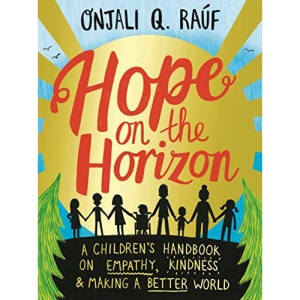
Hope on the Horizon: A Children’s Handbook on Empathy, Kindness, & Making a Better World by Onjali Q. Rauf illustrated by Isobel Lundie

Standard
Hope on the Horizon: A Children’s Handbook on Empathy, Kindness, & Making a  Better World by Onjali Q. Rauf illustrated by Isobel Lundie

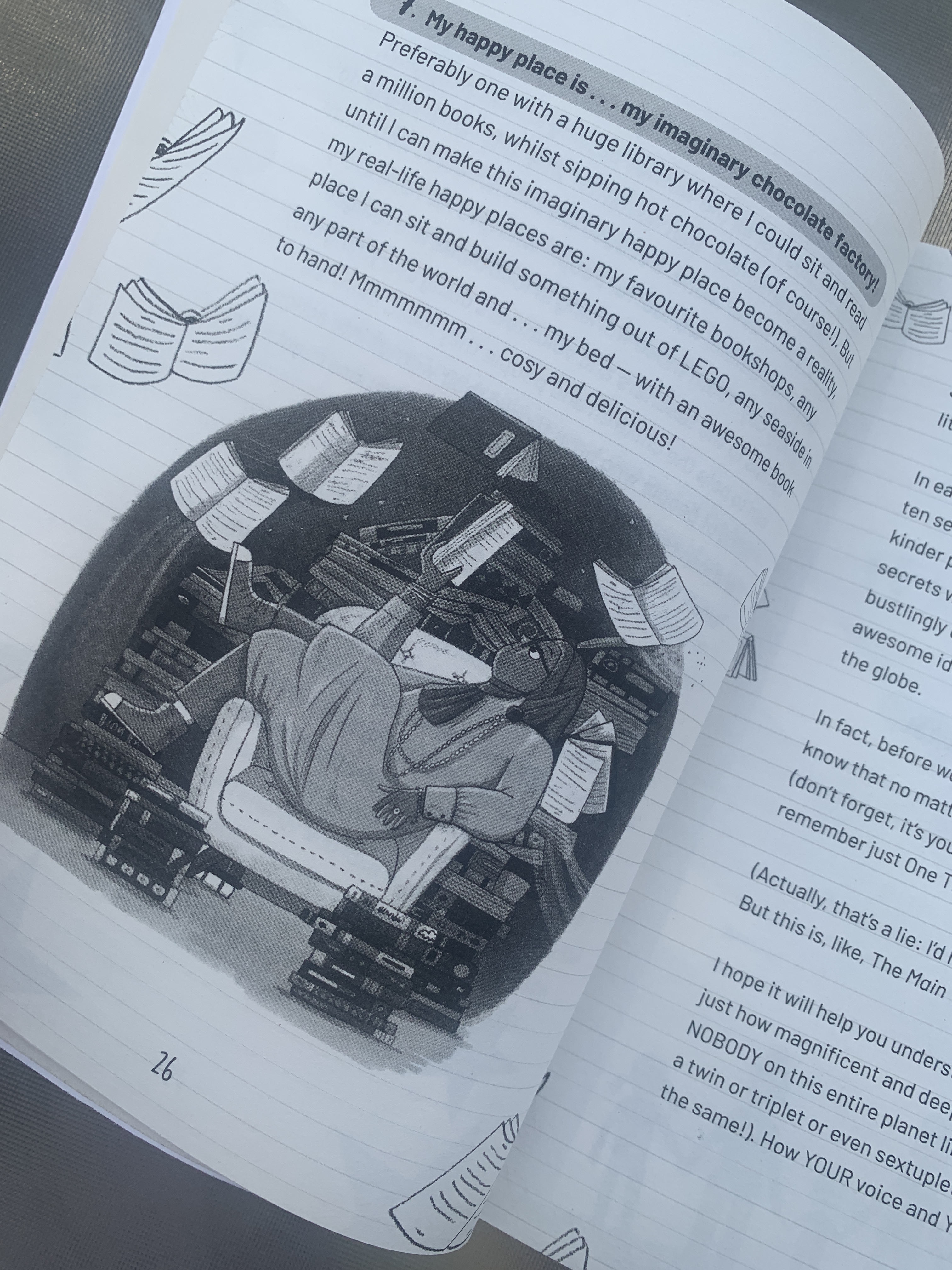
This delightful 288 page handbook pulled me in, inspired me, enlightened me, and allowed me to reminisce about incredible fictional characters from iconic books, tv shows, and movies.  Concepts such as kindness, empathy, friendship, deflecting negativity, seeing beyond labels, and asking for help, are framed around the fictional character’s strengths to introduce famous real life people from the past and present, as well as not so famous people the author personally knows and works with.  Written with the author speaking directly to the reader, there are also calls to actions, questions, prompts, and resources to help mature middle grade readers and up.

SYNOPSIS:

The book starts with an introduction about who the author is and her getting to know the reader, before introducing the concepts the book will cover and how it will go about doing so.  It establishes the super power of kindness and five golden rules.  The 10 chapters of the book then follow a loose format of introducing a fictional character and why the author admires them: Charlie Bucket from Charlie and the Chocolate Factory, Tintin, She-Ra, Superman, Samwise Gamgee, etc., her connection to them and to a theme: hope, being a ripple starter, never giving up. to name a few.  The book then highlights how the character and theme tie in to a cause that the author is passionate about, refugees, education, feeding the hungry, foster care, etc., then spotlights exceptional people the author has gotten to know personally in her activism that have made an incredible difference in the world, before offering a checklist of how you too can take action.  And finally a famous person is celebrated as being the culmination of all the strengths, characteristics, and super powers mentioned.  People such as Greta Thunberg, Albert Einstein, aerospace engineer Mary Jackson, footballer activist Marcus Rashford and more.  Often there are reflections, and the easy banter and conversation between the author and the young reader never leaves the text.  The reader and the connection to the reader is always prioritized and included in the sharing of information, motivation to action, and celebration of individuals real and pretend that have made a positive difference.

WHY I LIKE IT:

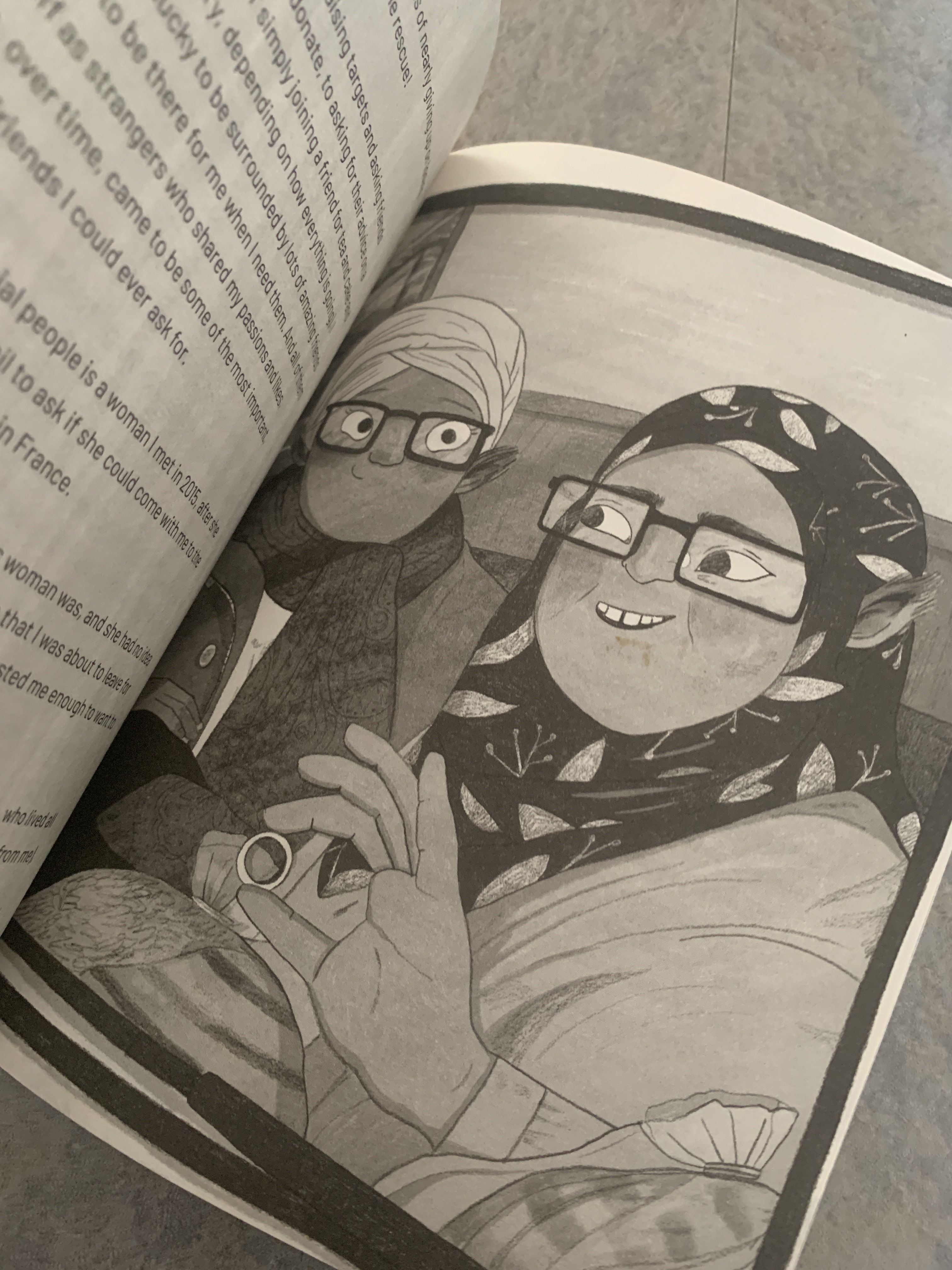
There is nothing overtly Islamic in the book, but there are Muslims featured as both famous real life examples and the author’s personal acquaintances.  Most importantly the author is unapologetically Muslim and offers glimpses of her own childhood growing up Muslim in the UK.  And as a hijab wearing Muslim, the illustrations also proudly show her smiling, eating chocolate and being an activist making the world a better place for all.

I love that the tone of the book is optimistic even when discussing difficult themes and heartbreaking realities of society.  The playfulness of the banter keeps the reader engaged and the text light.  Even if you don’t know the characters referenced, the urge to read their stories is a secondary benefit, and one that I think will further young world changers’ critical thinking skills.  Finding the good in people, even if they aren’t real, is such a lens that needs to be used more often, and the book does a tremendous job of stressing this.

FLAGS:

Talk of refugees, homelessness, food insecurities, abuse, poverty. Nothing is overly detailed, but the concepts are touched upon and explained as needed which could possibly be triggering or difficult to fully grasp to younger readers.

TOOLS FOR LEADING THE DISCUSSION:

The book can be read straight through or referenced, you can even thumb through and read sections that appeal to you.  I don’t know exactly who the book will resonate strongest with, but I’ve got my own children reading it, so I will happily report back. I think it deserves a place on every book shelf and even if only portions are shared with a class, the discussion and foundation that it could provide would be incredibly powerful.  I could see an English teacher encouraging essays about fictional character traits in the “real” world being assigned after reading, or History teachers spending time on some of the characters highlighted, it really is a great tool, a handbook, for young and old alike.

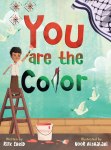
You are the Color by Rifk Ebeid illustrated by Noor Alshalabi

Standard
You are the Color by Rifk Ebeid illustrated by Noor Alshalabi

you are the color

Books like this are hard for me to review, and I have gone back and forth on whether I should post anything or not.  On the one hand, we need books that are unapologetically Palestinian written by Palestinians.  They need to be celebrated and elevated and I want to offer my support to the stories, to the voices, to the authors, illustrators, everyone involved.  On the other hand, if I didn’t love it, why should I shy away from saying so, when I have purchased the book (pre-ordered and changed the shipping address even, to have it delivered to me on vacation because I didn’t want to wait to read it).  The book is emotional, but the last six pages unraveled the whole book for me, and in a picture book particularly of this nature, when you finish- if you don’t have a cathartic pull, you start to find holes in the story as you feel deflated.  The book, I would go out on a limb to say, needs to be discussed and given context even if you are Palestinian.  As someone who is not, I recognize my arrogance in such a statement and am happy to be corrected, but from a literary reviewer standpoint the book needs discussion and additional context.  The Nakba is only articulated in one paragraph in the author’s note.  In the story itself there is no indication that what happened to Thaer happened to so many Palestinians in 1948.  The use of color and how it is depicted in the illustrations is tangible and powerful, but as odd as it is to say, the words got in the way of the story.

img_0713

The book starts with Thaer trudging to school in dull sepia filled pages to begrudgingly sit at a desk and begin an art lesson.  He is glad the spitballs are just spitballs and not real explosions, but the tone is still melancholy.  When he sees boys playing soccer he recalls the last time he played soccer, and the memory comes alive in color.  He was in Yafa, it was the day before the Zionists came and took his family’s home.

img_0714

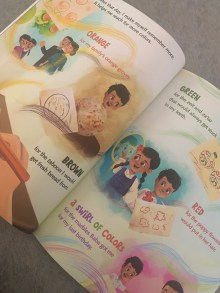
The teacher, back in muted tones, asks him to draw what has made him smile, and Thaer gives it a try.  Blue for the color of the sea, green for zeit and za’tar, brown for taboon to get fresh bread, etc..  When he takes the drawings home to his mother, she is not impressed.  Drawings are silly and colors aren’t going to bring Baba and Susu back.

img_0716

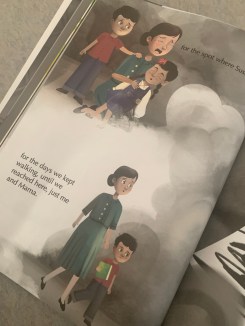
Defeated, the next day in class, Thaer recalls the men pounding down the door and Baba being shoved in a truck and Susu falling.  The next day at school they hang up some of their pictures and Thaer talks about his sister.  (SPOILER) On the way home Thaer paints the alleyway and brings color to his and his mom’s world.  His mama says that he is the color, and when the following day’s prompt is to draw what you want to be when you grow up it shows Thaer (presumably) on the beach as an adult painting.

img_0715

The disconnect for me occurred with the painting of the alleyway.  I was incredibly invested in the story, my heartstrings were being tugged, I was breaking for this character and his experiences, and it all came to a screeching halt because I couldn’t understand where the paint and the alleyway and the mama’s change of heart all manifested from.  As for the ending, I think I know what the author was going for, but it didn’t connect with any of my kids aged 2-15 nor my mother, a 40+ year early elementary veteran teacher.  I wish I could have taken a picture of their faces as she read the book to them.  The frozen expressions of huh and confusion at the end, until my 11 year old to broke the awkward silence to ask if the boy wants to be a painter or a father or an adult?  Those facets coupled with the often advanced vocabulary, makes the book an important one, but one that needs a lot of outside commentary to connect with the readers and to further the conversation about Zionism, al-Nakba, the occupation, and the continued oppression of Palestine.

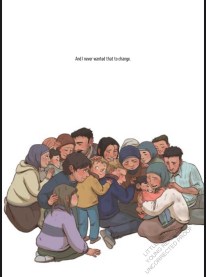
There are flags of loss, kidnapping, sorrow, violence, etc., that parents will have to gauge if their children can handle. I’m not sure what age group is the best fit, the murder of a young girl, the forced displacement from one’s home, the removal of the father are all heavy themes.  I appreciate that it isn’t “watered down” for a western gaze so to speak, but I wish there was more about what happened to the dad, is there hope he is alive? I wish there was something about this not being an isolated reality for the protagonist and his family.  I wish there was some conversation or connection between the mother and son, because the loss of continuity really derailed the story.

As for the idea of the story, and the use of the illustrations to physically show two worlds I think is a great idea, it just sadly fell apart for me at the end: the faltering conclusion and the loss of emotional buildup that the first two thirds of the story worked so hard to create.