Category Archives: Picture book

The Adventure of Faris: Faris & the Curious Case of the Missing Eid Presents by Muhammad and Husna Sattaur illustrated by Farimah Khavarine Zhad

Standard
The Adventure of Faris: Faris & the Curious Case of the Missing Eid Presents by Muhammad and Husna Sattaur illustrated by Farimah Khavarine Zhad

img_6999

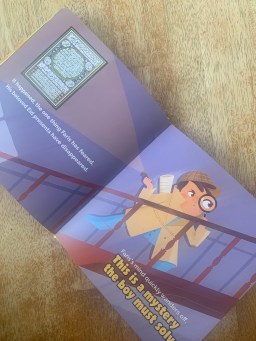
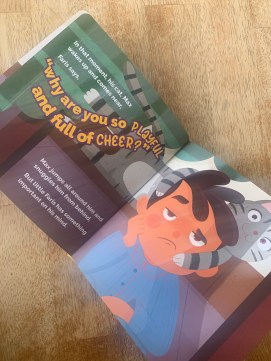
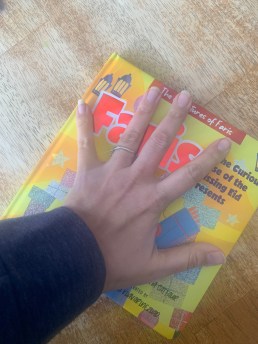
This 22 page padded cover toddler book, is not quite a board book, but the thick cardstock glossy pages are definitely meant for toddler hands.  The book works for both Eid al Fitr and Eid al Adha and my 3 year old finds it silly. My older kids that have walked in and paused to listen to me reading it, as well as myself, feel like a page is missing.  The rhyming story sets the stage of Eid morning and missing presents, but the resolution is abrupt, really abrupt, with no hinting at and the forced rhyme has you wondering who Uncle Sam is in the story.  The 22 pages are bright with Islamic decorations in the house and references to Eid and praying in the text. The excitement and joy are sweet, and the focus is presents, there is nothing about Eid or anything deeper than the story at hand as it stays on level for toddler aged children.

img_7002

The book starts with Faris waking up on a beautiful spring morning, it is Eid and he starts to sing, before tip toing down the stairs in his Eid pjs.  He sees the time and knows they won’t be up til fajr.  So, while kids won’t care, as someone who has read the book now a dozen times, I’m curious how old Faris is that he knows how to tell time, what it means and what time fajr is.  I’m also wondering how it is ok to sing and dance, but then you need to sneak down quietly, and how it is a beautiful morning, if it isn’t fajr yet, it is dark outside.

img_7003

He daydreams in the kitchen before heading off to open presents.  Except the presents are missing. He looks everywhere and imagines a dragon eating them.  I don’t want to spoil where the presents are, but they are found, and he opens them and then his parents wake up.

img_7004

It is a little sad that he opens one at least before his parents come, and I really wish there was a little hinting at what had happened to the presents, it really feels like a page is missing.  The book was published in 2021 so hopefully they will edit the text for a next printing.

img_7001

I got mine from Crescent Moon and you can purchase a copy by clicking this link here, if you use my initials ISL (Islamic School Librarian) at checkout you will save 10%.  


Little Leena Learns about Ramadan by Zainab Fadlallah

Standard
Little Leena Learns about Ramadan by Zainab Fadlallah

img_6913

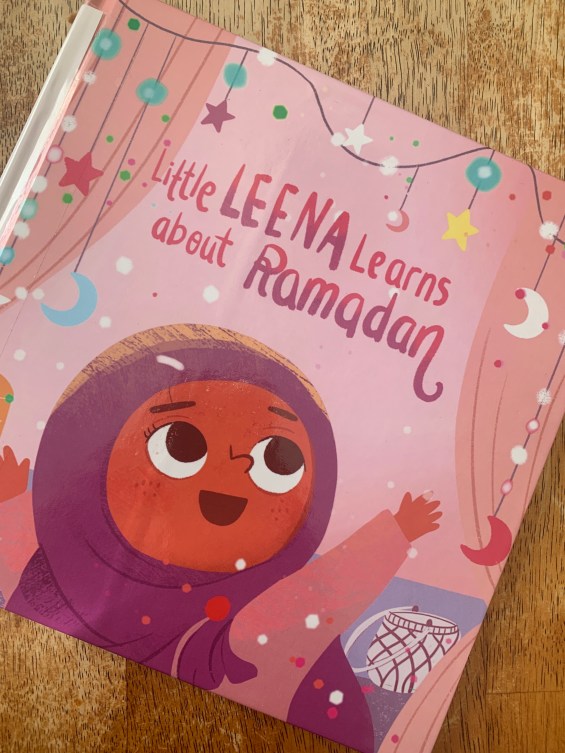
I was excited to see this 20 page book in my public library, and then once I started reading it I was equal parts frustrated, disappointed, and honestly a little upset.  The book is an example of what I posted a reel about a few days ago, about an over used, unrealistic, textbook fact share of Ramadan from a kid’s perspective in a plotless book.  In this book it is Little Leena waking up from a nap smelling something delicious and finds her family eating and wondering why.  She is told by her sister it is the ninth month of the lunar calendar, the new moon has been sighted.  Oh sure there are some mentions of cakes and cupcakes, but seriously, come on, what three year olds have a working knowledge of moon phases but don’t know what Ramadan is, know what “blessed Ramadan” means but have never heard “Ramadan Mubarak.” Ramadan is explained to be special because we try and be extra kind, and not because it is the month we are told to fast, and we get more blessings for being kind, and the month the Quran was revealed.  Yes I appreciate that hijabs are not worn in the house, but are worn outside, and the excitement and joy are visible, but how can you have a book this centered on Ramadan that contains no Islam in it.  You can’t say on the back that it is learning about “what the occasion is all about” if there are no religious inclusions: it does not say that it is an act of worship, that fasting is prescribed by Allah swt in the Quran, that we pray extra, there is nothing, it doesn’t even attribute Ramadan and Eid to a religion, sigh.  My frustration isn’t just in this book, it is in this growing trend that this book is a part of sadly.  Why have an OWN voice adorably illustrated book claiming to be teaching about Ramadan, when the religion is completely absent? If it was a cultural, or family traditional book of joy with or without Ramadan facts blended in, I might see what it was trying to accomplish, but a book for early elementary, from a toddlers perspective that is so formulaic misses the mark in my opinion, both in educating the target audience or in helping young Muslims feel seen.
img_6914

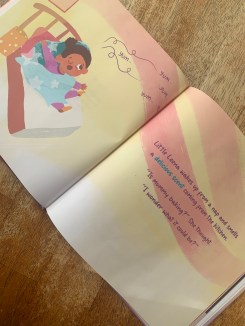
The book starts with Little Leena waking up from a nap and smelling something delicious.  She wonders if mummy has been baking cookies, or cupcakes with sprinkles, or maybe a chocolate cake.  She decides to go have a look and finds colorful lights and decorations and a magnificent chocolate cake.  She also finds her family sharing a meal, she asks what is going on and learns that it is Ramadan.

img_6915

Leena’s sister Safiyya explains that “Ramadan is the ninth month of the Lunar calendar” and “it starts as soon as the new moon is sighted.”  She further explains that “Grown ups fast from when the sun rises till the sun sets”  she says brave kids are welcome to try too.  I’m not sure what being brave has to do with fasting, to me determined or even strong would be better words to use as fasting isn’t scary, and kids are encouraged to try, not forced.

img_6916

Leena then wants her sister to explain what fasting is, and Leena can’t believe it means no food or drink during the day light hours.  Leena asks what makes Ramadan special, and is told, “Ramadan is special because during the month we try to be extra kind and do as many good deeds as we can.”  It does not say why we try and be extra kind though, before reminding that we also “try to remember to be grateful for all the things we have.” It is worth noting that in the illustration on this spread it has a Ramadan sign, that is spelled Ramadhan, not that one transliteration is write or wrong, but to have both in a children’s book is a little confusing.

img_6917

Leena then finds some presents and Saffiya explains that they are for Eid when Ramadan is over and we wear new clothes and get presents.  The two then discusses their love of presents and saying Ramadan Mubarak.

img_6918

The 8.5 inch square book is short, but the image quality and hardback binding in this library edition is nice, it just adds nothing in my opinion to the genre, to conveying to Muslim and non Muslims what Ramadan is and why it is important.  I worry that libraries might think this is good as our Ramadan reads are and not budget to get much better, engaging, reflective stories as a result.

The Adventures of Adam and Anisah: The Golden Trail by Zahra Patel illustrated by Reyhana Ismail

Standard
The Adventures of Adam and Anisah: The Golden Trail by Zahra Patel illustrated by Reyhana Ismail

img_6818

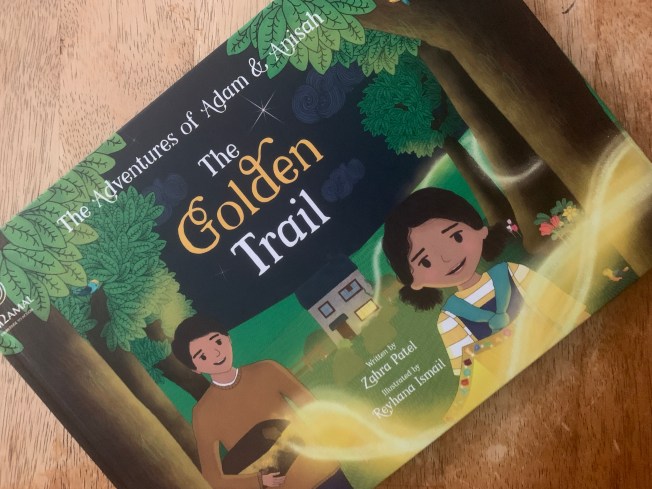
This third book in the Adam and Zahra series, also available with a workbook, focuses on zakat and can be read alone.  Aimed at toddlers to early preschoolers, this rhyming story can also work at story time with slightly older kids as a reminder of zakat and giving to those in needs.  The book has very minimal text and as a result if you overthink it, it could be slightly problematic: there is magic, they are taking and giving something that doesn’t belong to them, Zakat is a portion of your wealth not sharing something you found-even if a note says otherwise.  I think the book is sweet though, and the discussions to have with little ones outweigh the adult concerns I’ve mentioned. It touches on giving to others, on people in need, of people in need living very close to you, that everything being a gift from Allah (swt), it shows siblings working together, sharing, generosity, a lemonade stand for Yemen, giving of food and money, and befriending others.  I think if you liked the other books in the series regarding a “magic” pray rug and a fasting shield, both mentioned in this, you will like the presentation of sharing and the term zakat presented in a similar fantasy laced manner; if those books felt uncomfortable for you and your family, this one probably will as well.

Adam and Anisa start the story in Ramadan, a week before Eid, digging in the sand at the beach.  Adam finds a treasure box and a message in a bottle.  The treasure box is locked and the message says that “My name is Zakat and I’m for someone in need…”  Once the kids get the box home and the lock off, a beam of light shines a path for them to follow.

img_6821

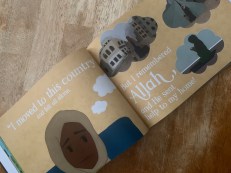
They follow the light out the door and through the field, and past the mosque and their friends, along the way they purchase a pie from the bakery for when they break their fast and keep following the light to the field as the sun starts to set.  They find a house in the forest with a mom, a baby, and a little boy, to whom they give the money and the pie. They learn that they had moved to this country and were all alone, but Allah swt provided for them, and He is never far. They all break their fast together and learn that “Whenever you give, Allah will give you more.”

img_6822

The backmatter of the book contains Context to the Story, Developing Character Strengths, Learning through Practice and a map of their adventure.  I purchased my copy from Crescent Moon Store here and if you use my initials (Islamic School Librarian) ISL at checkout you will save 10%.

img_6823

Moon’s Ramadan by Natasha Khan Kazi

Standard
Moon’s Ramadan by Natasha Khan Kazi

moon

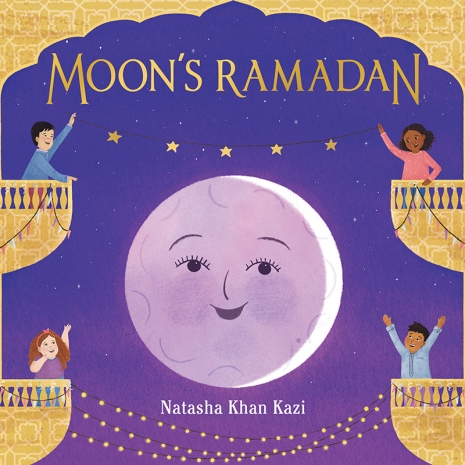
This beautiful lyrical book has a simple premise of the moon looking down on people celebrating Ramadan as it circles the Earth, but stands out as being unique thanks to the poetic language and engaging illustrations.  Each spread shows moon in a different phase over a different country, and the joy, activities and worship that Muslims are partaking in during the blessed month.  I’m embarrassed to say, I didn’t realize that the author is also the illustrator until I sat down to write this review, and honestly it makes sense, as the story text and illustrations work seamlessly together.  The tone of the book, the details in the pictures, and the rich language make this a good read for a large audience.  Little ones probably won’t fully understand the poetry, but they will be mesmerized none-the-less and feel the excitement.  My three year old calls the moon all year round, the “Ramadan Moon” and he understood that the Moon in the story is excited seeing us celebrate and worship.  He consistently would still be peeking in windows or searching the scenes, not quite ready for me to turn the page long after the text was done being read.  Older kids will appreciate the shared global bonds of Muslims and the cultural specifics too.  They will grasp the information shared and beliefs touched upon in the flowing words that do not preach.  My only criticism is that the book starts with Moon saying, “Hello.”  In an Islamic centered book I would have expected to see Assalamualaikum, especially since it appears on the page where moon is above Egypt, so I’m not sure why the English greetings is used.  The book has a glossary and notes at the end making it a great addition to Muslim and non Muslim spaces alike.  I plan to read the book for a Masjid story time as the large hardback book will work just as well for a group of kids as it does at bed time.

Told from a personified Moon’s perspective, the book begins with Moon smiling at Earth as people all over the world excitedly point and look up at her, but once they see her, they rush off to prepare for the month. Over Turkey, the Ramadan Drummer awakens sleepy people for suhoor and over Indonesia he sees families gathering for iftar. As each day passes Moon grows fuller watching the children do good deeds and people sharing their wealth.

Nights of Taraweeh and listening to the Quran over Somalia, sharing treats in the United Kingdom, and  interfaith among neighbors in the United States bring joy to Moon.  And as the waning crescent sees henna being put on hands in Dubai the month is coming to an end.  People once again look to the sky, but they cannot see Moon in Argentina, Moon is new.  It is Chaand Raat and then it is Eid.  Moon is back in Egypt watching people celebrate and then the world returns to looking up at Moon and she beams with love and gratitude.

There are diverse characters of a variety of skin tones, mobilities, ages, body size and abilities featured all throughout the book in a positive and inclusive normalizing manner.  The backmatter makes the concepts more accessible and the book work on different layers.  I really enjoyed the book and am excited to share it.  I purchased mine at Crescent Moon Store where using my initials ISL (Islamic School Librarian)  will save you 10% it is also available here at Amazon Even my local public library has it on the shelves already! Happy Ramadan!

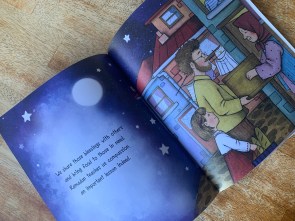
Ramadan Nights by Jenny Molendyk Divleli illustrated by Halime Nur Sevim

Standard
Ramadan Nights by Jenny Molendyk Divleli illustrated by Halime Nur Sevim

img_6768

This rhyming softcover picture book sets the tone of the month with its large heartfelt images on cardstock thick pages.  The book mentions tarawih, reading Quran, suhoor, iftar, compassion, Laylatul Qadr, eid, but does so in a way that reflects what Muslim kids know and love about the month.  It is not overly descriptive, nor does it define the terms. It shows Muslim kids in Ramadan living their lives and draws out the emotional joy felt in acts of ibadah, not in the gifts and parties alone.  The rhyme works and isn’t terribly forced and the 8.5 by 11 size and the introductory framing of major Ramadan activities makes the book a good addition for toddlers and up. I plan to use this for a masjid story time for Muslim kids ages 4-9, but it can be used in non Muslim settings easily as well.

img_6770

The book starts out with decorating the home for Ramadan, as the city decorates outside too.  Ramadan has arrived, the moon has been seen with binoculars, and Tarawih at the mosque is where everyone is praying, and kids are playing.  Mornings start with the Ramadan drummer waking people up for suhoor, but mom is already up cooking.  The first few days of fasting are hard waiting for iftar, implying it gets easier.

img_6771

The kids and their parents make duas and thank Allah for their blessings as well as share their blessings with neighbors as they learn compassion.  The kids practice reading Qur’an every day with Grandma and before you know it, it is the last ten nights and Laylatul Qadr and then eid, alhumdulillah.  The 32 page book ends with prayers of gratitude and hope that Ramadan will be seen again.

img_6773

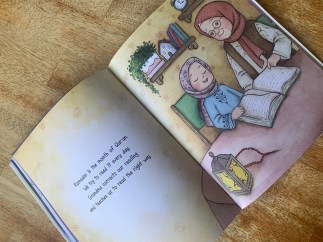
The book really is well done, there is no plot or story, but it introduces the month to little ones, reminds older ones what to expect and does so with accuracy and mirroring.  The book will lend itself to spark discussions about what a readers’ family can look forward to in the month, how one should behave in a masjid, perhaps some Quran goals and some appreciation for parents.  The poor mom helps decorate, stays up early to cook suhoor, cooks yummy iftar, and lays out Eid clothes all while wearing hijab.  InshaAllah a point to mention when reading how amazing moms (and dads) are in making Ramadan memories while fasting themselves.

img_6772

I purchased mine from https://crescentmoonstore.com/ if you use my initials at checkout ISL (Islamic School Librarian) you can save 10% or click this link directly to go to the book.

Ramadan Mubarak!

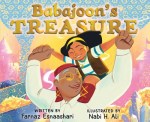
Babajoon’s Treasure by Farnaz Esnaashari illustrated by Nabi H. Ali

Standard
Babajoon’s Treasure by Farnaz Esnaashari illustrated by Nabi H. Ali

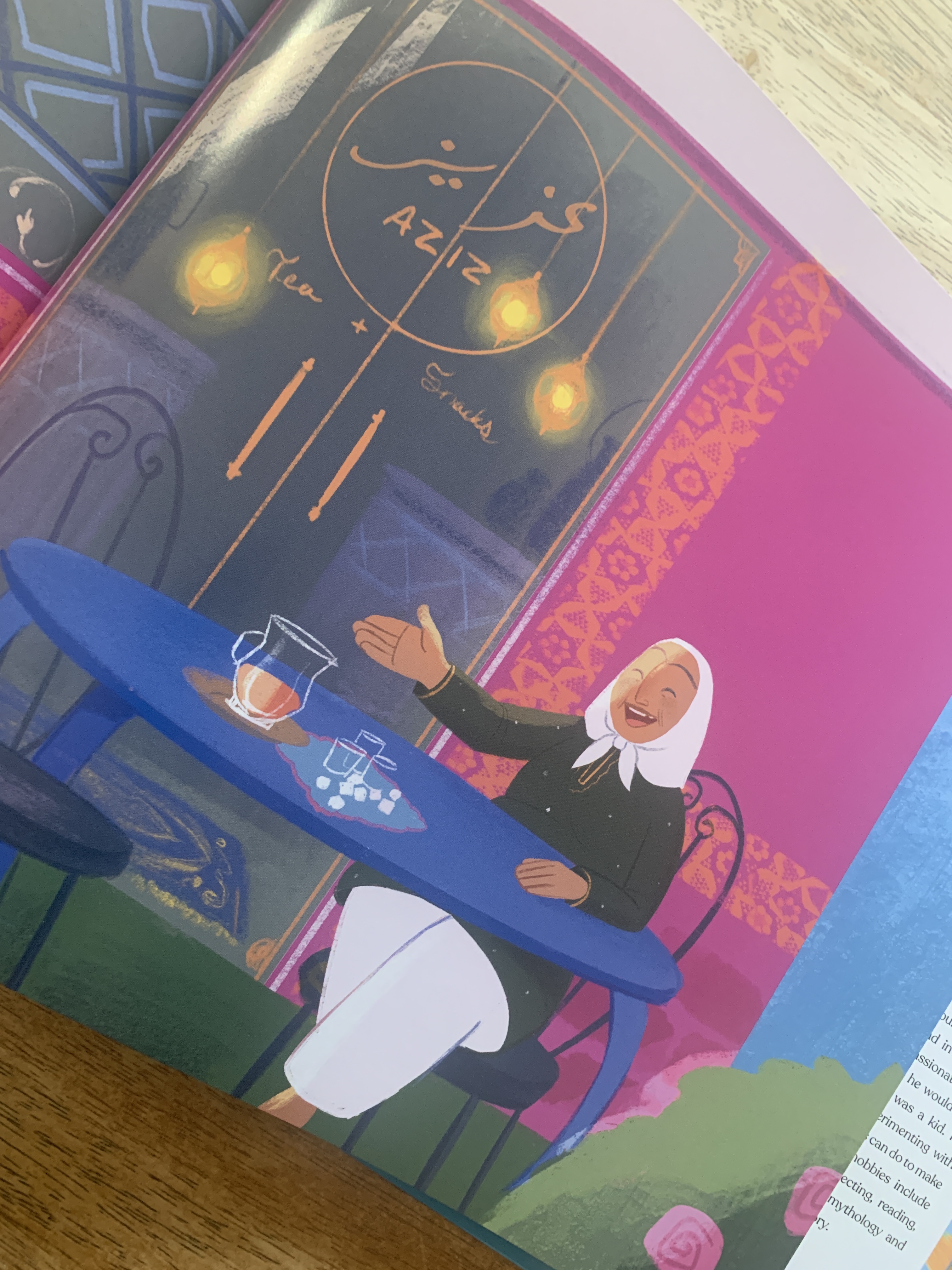
This beautifully illustrated imaginative story focuses on Persian culture and a grandfather-granddaughter relationship.  I have no idea if the characters, author, or illustrator identify as Muslim, the scarf on the grandma and the salaam greetings might just be cultural, but Muslim kids will see themselves in those words and images and thus I am reviewing the book.  Young Miriam spends a week with her grandparents, Babajoon and Mamanjoon, every summer, and on this trip, she has reason to believe her grandpa is a pirate.  The progression of Babajoon sharing his culture with his granddaughter who has misread the signs is silly, but honestly also a little sad.  It seems she is very unaware of her family’s culture, not just generational details, but basics.  The story itself is for kids, but I think parents will find a deeper message in the importance of maintaining cultural ties and familiarity no matter where our children are raised.

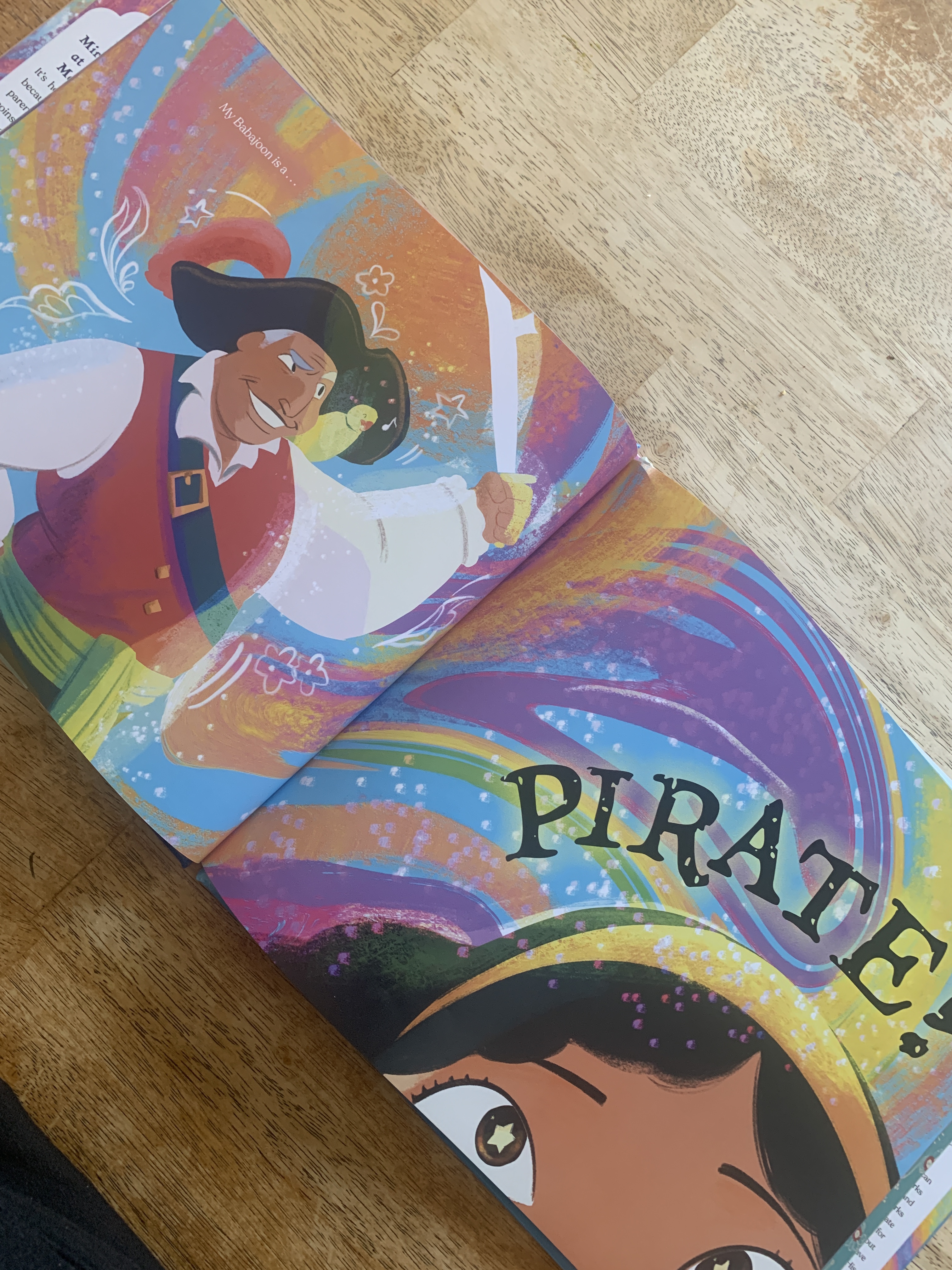
Miriam loves her week every summer with her grandparents, it is a magical adventure spending time with them at their tea shop.  One day Miriam and her Babajoon head out for rocket pops and a mysterious gold coin falls out of her grandpa’s pocket.  As they enjoy their popsicles, Babajoon starts singing with a parrot, and he has a secret language with an old friend before crystals are revealed, the only possible connection for the young girl, is that her grandfather is a pirate.

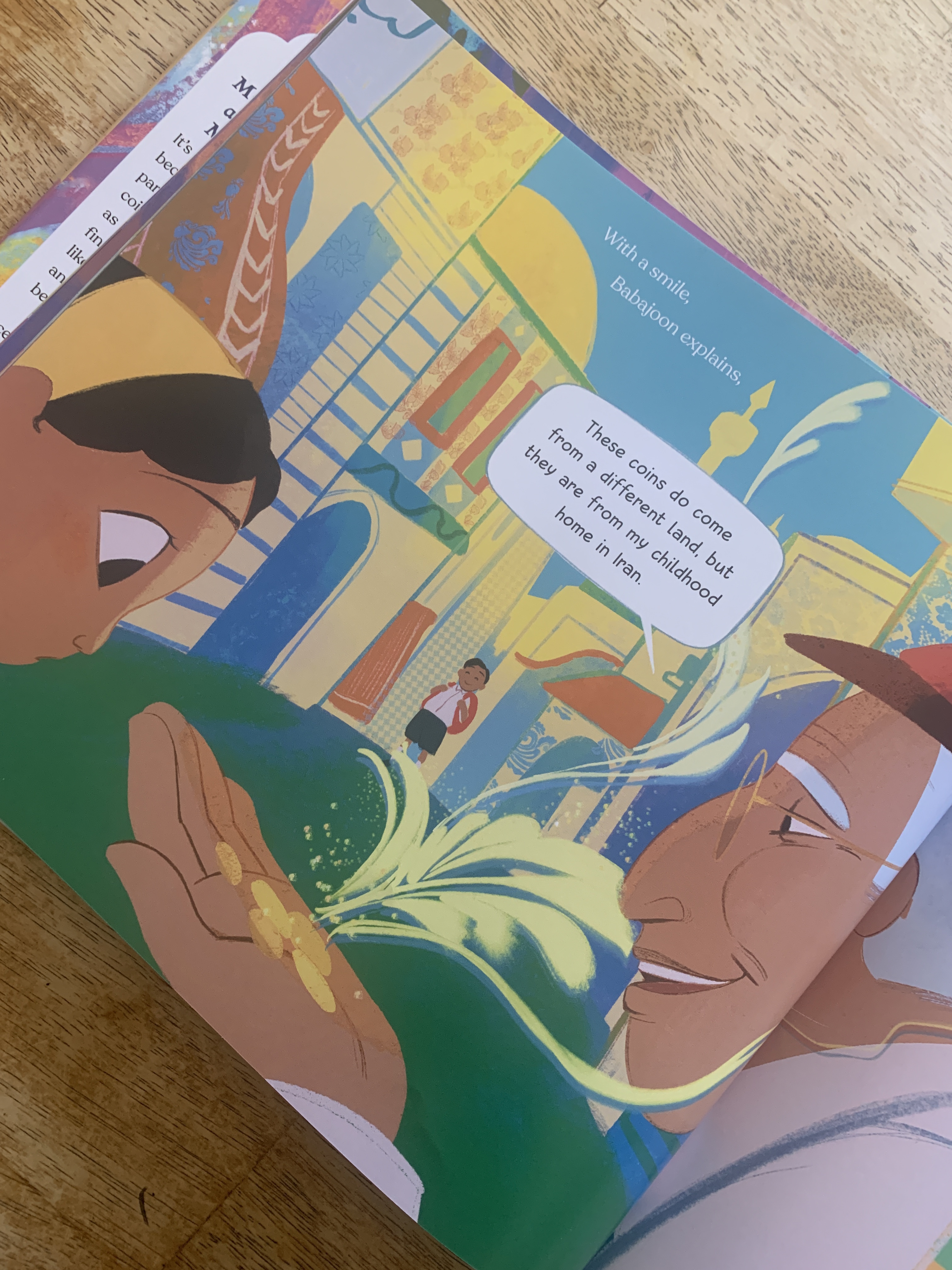
Babajoon reveals the cultural context of all the days adventures tying them back to his childhood in Iran.  He encourages her to ask questions, and Miriam worries that she isn’t like her beloved Babajoon.  His reassures her that they are alike and that they will teach each other, leaves the book with both appreciation and hope and a whole lot of love from a little girl to her family and culture.

There is a bit of a continuity issue for me as the little girl is excited her grandfather is a pirate, and then at the end, glad he isn’t.  Also that she doesn’t know what Farsi sounds like or where her grandfather is from seems a little bit of a stretch as she herself calls them Babajoon and Mamajoon and says salaam to them.  They also own a Persian tea shop called Aziz and the sign board is written in English and Farsi.  If the little girl is aware enough and old enough to piece together the clues to discern that he is a pirate, clearly she recognizes the difference in the titles, foods, and clothing her grandparents wear to the larger society.  I know, I’m being picky, but it took me a few readings to get past all that, and appreciate the story for what it is, and how beneficial it really can be to encourage children to ask about their family heritage and traditions.

The 40 page horizontal hardback book is beautiful to share in groups or one-on-one.  The illustrations are enjoyable, and the pirate aspect will make this book a frequently requested read.  You can preorder your copy here, after March 28, 2023 you can still purchase through that link.

Amir’s Blue Jacket by Sarah Musa illustrated by Rania Hasan

Standard
Amir’s Blue Jacket by Sarah Musa illustrated by Rania Hasan

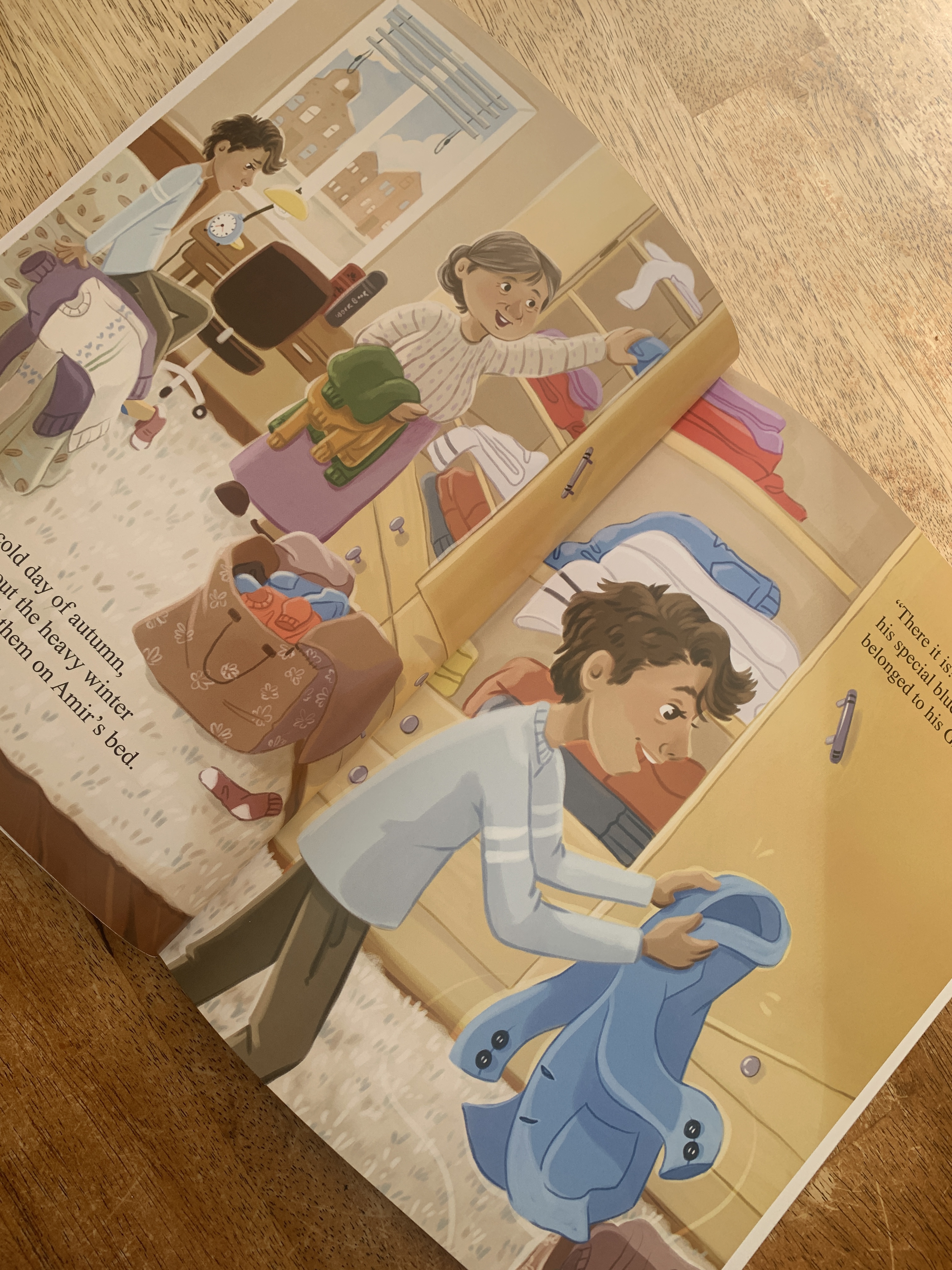
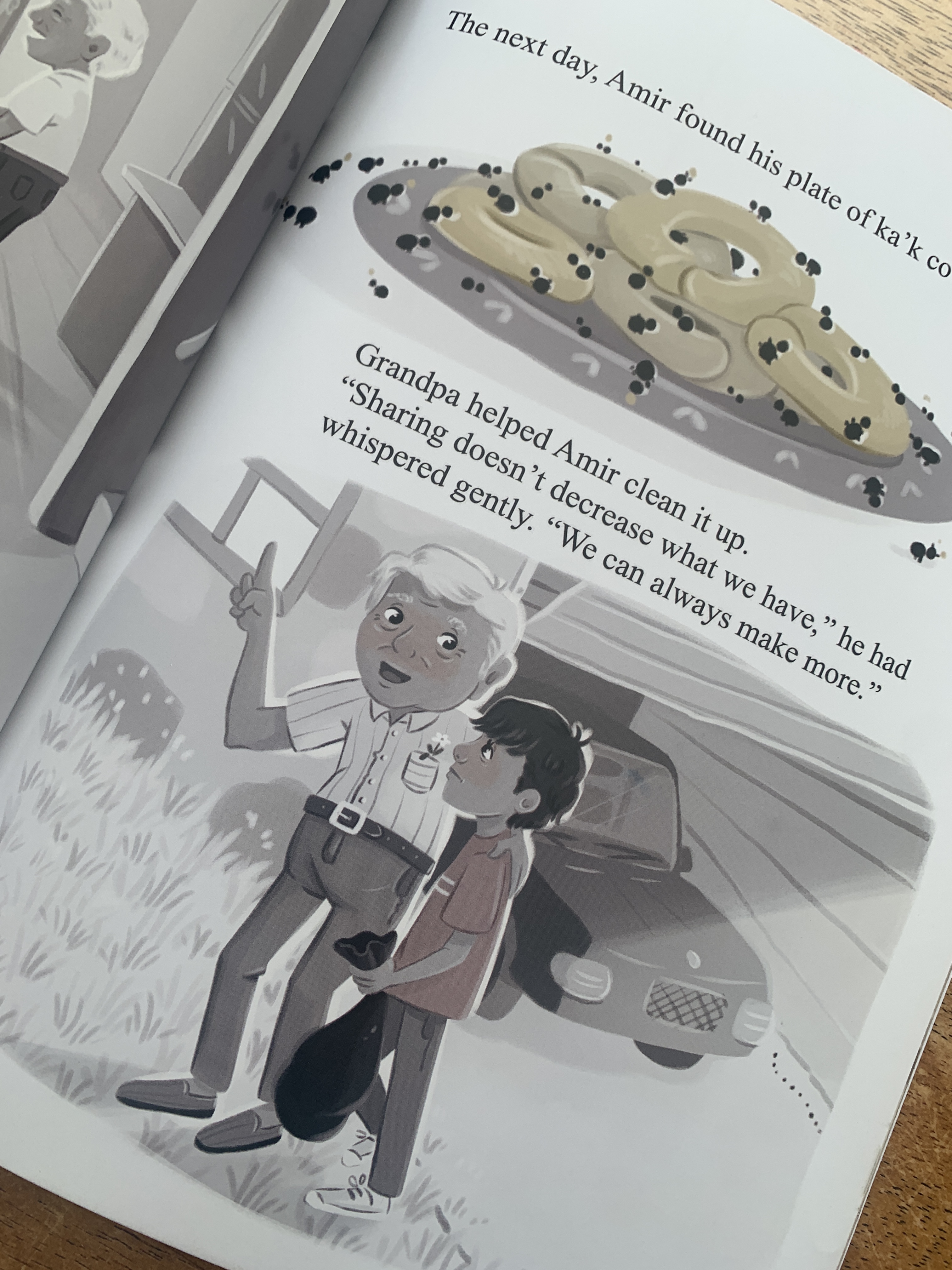
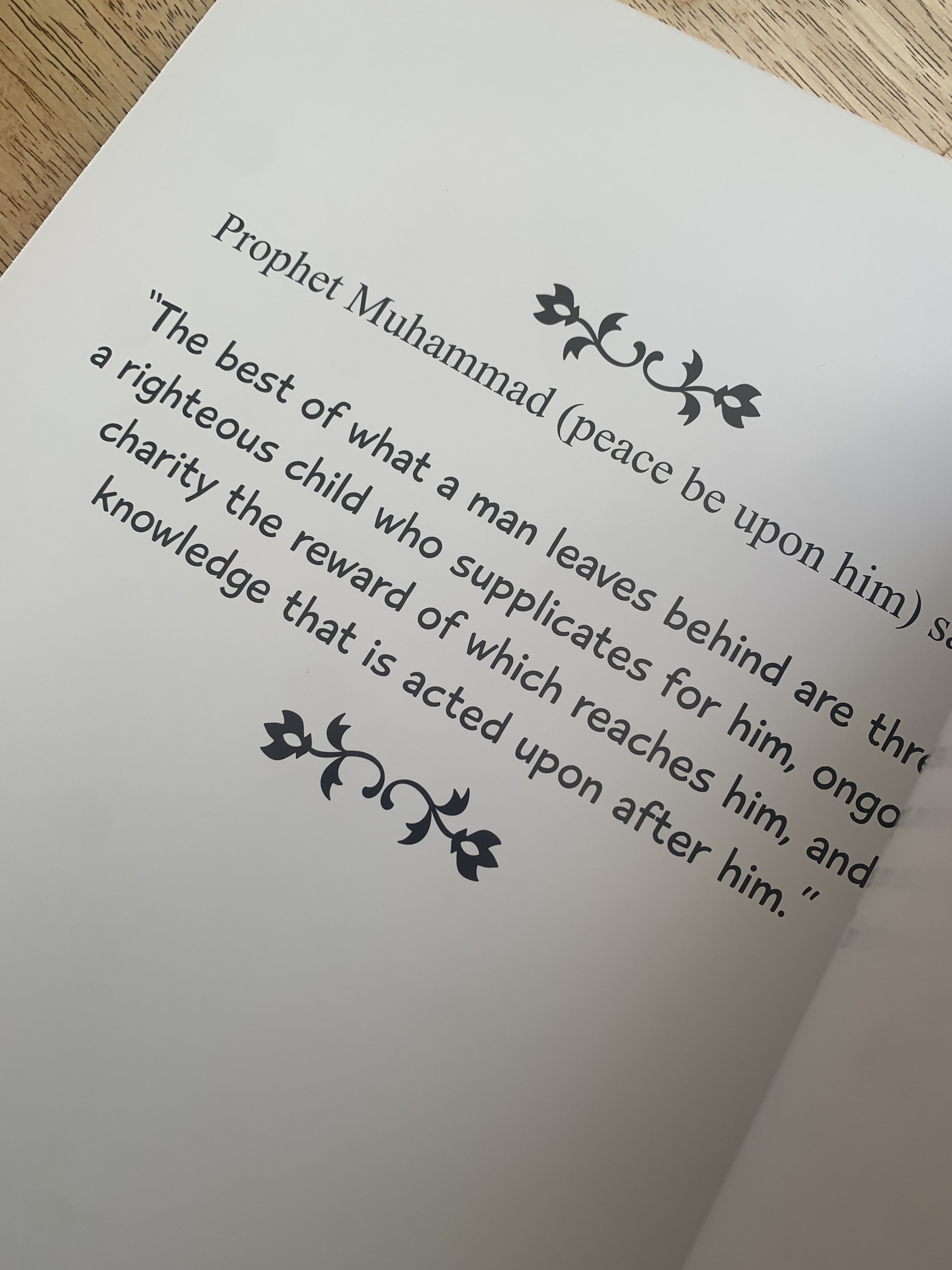
This heartfelt elementary picture book does a remarkable job of drawing the reader in to the emotions of the main character, his relationship with his grandfather, and imparting a moral message without being preachy. The illustrations are lovely on their own, but the way the muted tones convey the memories and illustrate the text really ties the book together. Whether it is for a larger story time or a one-on-one bedtime read, the book will offer discussion, comfort, guidance, and a little surprise at the end for Muslim and non Muslims alike. The slightly allegorical book does conclude with a widely known hadith (it is attributed to Prophet Muhammad saw, but is not further cited/sourced) and the family is clearly Muslim with their names mentions of Eid and God, and a hijab clad woman, but the book is universal and a lovely addition to any book shelf.

The book starts with Amir finding his Grandpa’s old blue jacket and recalling wrapping himself in it the day after his beloved Grandpa died. With it smelling like mothballs, he tosses it in the washing machine, but unfortunately when it comes out it has clearly shrunk. Amir is in denial, he says it fits fine and he has no desire for a new one. It is Grandpa’s jacket, and Amir is going to wear it, no matter how tight it is. Amir storms off to sit under the apple tree and recalls picking apples and making applesauce the year before for the whole neighborhood. Grandma shares that she used to keep grandpa’s cane but when someone needed it, she let it go.

Grandma stirs another memory in Amir when she pulls the tray of ka’k out of the oven, of him trying to sneak a whole plate for himself only to have his hiding spot taken over by ants. When he is asked this time to share a plate, every step to the neighbors house reminds him even more of making the trip with his grandfather. Slowly he starts to realize that his memories are with him, not in his grandfather’s things, and Amir makes a decision that would make his grandfather proud, and (inshaAllah) give him more good deeds, even though he is gone.

The idea of sadaqah jariyah is understood through the story, and present in the hadith at the back, but it is never mentioned outright. Just as God is used, not the term Allah (swt). As Amir feels denial, frustration, and eventually peace, nothing is really told, it is shown, which really opens the book up to be a tremendous tool in sharing it with children and asking them to discuss what they understand, what they feel, and what they took away from Amir and his Grandpa’s blue jacket story.

The book is available through the publisher Ruqaya’s Bookshelf as well as HERE at Crescent Moon Bookstore where code ISL will save you 10%.

Animals in the Qur’an Search & Find by Jenny Molendyk Divleli illustrated by Guliz Gerdan

Standard
Animals in the Qur’an Search & Find by Jenny Molendyk Divleli illustrated by Guliz Gerdan

img_6282

This book is targeted to preschoolers, but with the minor details the book sends readers looking for, I think children up to third grade will enjoy the mix of fun and learning that this book offers.  The book uses animals in the Qur’an as the theme for each two page spread, tells what surah the animal is mentioned in, and some Islamic context, as well as some basic facts about the animal.  Over 45 pages kids will learn about bees and snakes, donkeys and wolves, and dive in to the challenge of finding a spider with spots looking to the left or a fish with strips swimming to the right.  My three year old can not differentiate between some of the more specific markings of this cow or that, but he still loves the illustrations and benefits from the brief factual text. This book is a great addition to school, masjid, and home libraries with its Islamic foundation, beautiful large execution, and wide audience appeal.

The book starts with the Arabic ayat of verse 45 in Surah Nur and the English meaning of the translation.  It then establishes the format of the book, and then lists the 20 animals featured, where they are found in the Qur’an and on what page number, in the table of contents.

Each page offers the animals and some nature elements to be found on the large 10 x 10 pages.  The pictures are playful and colorful with the print quality glossy and a sturdy thickness.

img_6287

I enjoy the book and think most families with young elementary aged children will as well.  You can purchase a copy here from Crescent Moon Store and if you use my initials “ISL” at checkout, you will save 10%

A Dupatta Is…by Marzieh Abbas illustrated by Anu Chouhan

Standard
A Dupatta Is…by Marzieh Abbas illustrated by Anu Chouhan

img_6073

I read this 30 page early elementary book a few times before writing this review and honestly my cheeks hurt because I cannot stop smiling.  The lyrical writing radiates warmth and pride, culture and tradition, legacy and identity, while acknowledging both the playfulness and solemnness of a piece of fabric.  My heart breathed with the clarity and articulation that is felt and contained within the fabric that perhaps all Pakistanis feel, but cannot convey so poetically.  The book may be meant for children four to eight years old, but all readers will appreciate the text and illustrations that seamlessly flow like a favorite dupatta grabbed while running out the door. I struggled with picking only a few images to share, as every page became my new favorite as the book progressed.  Admittedly though, one page did give me pause as it conflated incense burning with getting rid of evil spirits which comes across as a religious belief, but is a cultural practice.

img_6074

The book starts out with the actual physical description of what a dupatta is and how it is adorned.  It then moves on to describing the color, the sound, the smell, the place, the function, the art, the beauty, the fun, the faith, the legacy, and the identity.  Each spread ends with the words, “but a dupatta is so much more…” seamlessly weaving so many facets of what a dupatta is together to create a true understanding of it from a tangible, to cultural, to practical perspective.

img_6076

I love that there is a page about faith, and praying five times a day with a dupatta being worn, it is a little odd that there is a portrait decorating the wall behind the two characters making dua, but at least it is clearly behind them.  I absolutely loved that so often the wearer of the dupatta was also wearing a hijab, particularly the bride picture- which is absolutely gorgeous.  It signals without words that a dupatta can be worn to cover a Muslim woman’s head, but it is also often not.  The backmatter further details that it was once worn as part of the national dress and as a form of modesty, but now is often worn as an accessory.

img_6077

One summer in Pakistan, a friend and some cousins and I started trying to formulate 101 Things to do with a dupatta (wipe noses, pull things out of the oven, catch fish), it was the year of net dupattas so clearly covering your head was not one of them.  Sure we were being silly, but to see the book also highlight wiping sticky hands, and wrapping it up like a sari, and using it as a cradle to rock a baby was very, very accurate and heartwarming.

img_6079

Please pre order this book, it signals to publishers that these books are in demand and is a way to show what type of books we want to see.  I preordered  mine here.

The Kindest Red: A Story of Hijab and Friendship by Ibtihaj Muhammad and S.K. Ali illustrated by Hatem Aly

Standard
The Kindest Red: A Story of Hijab and Friendship by Ibtihaj Muhammad and S.K. Ali illustrated by Hatem Aly

This heartwarming book centers kindness, family, and friendship in an inclusive way; and while the tagline says “A Story of Hijab and Friendship” I think the hijab angle is a bit of a stretch.  The authors are Muslims that wear hijab, the older sister and older females in the family wear hijab, but there is nothing in the story or text that connect hijab to Islam or to something Muslim women wear as part of religion.  I don’t want to compare the first book in the series, The Proudest Blue, to this book, but hijab really was centered in that book and the Author’s Note mentioned that hijab is an Islamic act.  This book does not make those same connections, which is fine, I just want consumers to be aware.  This book is beautiful and the messaging endearing, and the tone and heart over 40 pages ideal for preschool to early elementary children.  It works as a standalone, but with the same characters and sisterly love, I think most people will enjoy keeping them together.

The book starts with Mama passing on Asiya’s dress to Faizah, that had been Mama’s even before that.  It is picture day, and the girls are helping each other get ready. At school Faizah and her friend Sophie twirl in their pretty dresses before heading in to class to discuss what kind of world they want.

Faizah wants a kind world, where there’s always a friend nearby, where everyone helps. At recess, Sophie and Faizah combine their visions, superheroes and kindness, to help other kids on the playground.  When picture time arrives the class is full of smiles, but when it is time for sibling pictures, Faiza and Asiya realize they don’t match.

Faizah is sad, and Sophie notices, can the kindness be passed along like the dress to help the sisters? To make Faizah happy too? I’m not going to give away the conclusion, but it is sweet and idyllic and shows how lovely the world can be if we all just share some kindness.

I love the illustrations and the hijab wearing super hero that presumably Sophie drew is powerful.  I think the book does wonders to normalize hijab, even if I do wish it articulated why one would wear hijab.  It seems that the industry trend is to keep hijab superficial and I recognize I am in the minority that wants religious centering for religious tenants.  So yes, I’m fully prepared for the backlash when people want to point out that it is joyful and that I’m a naysayer, but I deal with people on a daily basis that do not know that my own hijab is a reflection of me being Muslim.  With as connected as the world is through technology, I  think those in diverse environments take for granted the understanding of basic Islamic principals in the general population.  However, not everyone has those real life connections and rely on books and media to fill the gaps, so when books about hijab, don’t actually connect hijab to faith, I feel obligated to point it out.

I purchased (preordered) my copy here, but I hope you will support small business and order yours here  use code ISL for 10% off.