Category Archives: Non Fiction

Mama in Congress: Rashida Tlaib’s Journey to Washington by Rashida and Adam Tlaib with Miranda Paul illustrated by Olivia Aserr

Standard
Mama in Congress: Rashida Tlaib’s Journey to Washington by Rashida and Adam Tlaib with Miranda Paul illustrated by Olivia Aserr

mama in congress

I wasn’t particularly looking forward to this book.  Books by politicians are always suspect, by a politician currently in office- more so, and a book written about one’s self can be a little self promoting to say the least, but when I saw my library had it, I put it on hold and thought to give it a shot.  Surprisingly, the book is really cute.  It is framed as her son (one of the contributors) telling his mom’s story, it owns that while yes she was one of the First Muslim Congresswomen, there were a lot of people before her that ran and paved the way.  What really shocked me was the amount of Islam in the book: Salat-al-Istikharha, actively learning about Islam not just as culture, there is an Ayat from the Quran, etc.. The book says for ages 4-8 and for the amount of text on the pages, there is no way a preschooler will sit through this. I can see this book, however, being used in an elementary classroom to teach about the American political system, and inspiring kids that they can make a difference, that they can rise to positions of leadership without compromising who they are, and that no matter their background, and that they can be successful in following their dreams.  I don’t think Congresswoman Tlaib should be put on a pedal stool for some of the policies she has supported or bills endorsed, but I think even if you don’t support her politically, her story and her accomplishments do show possibilities for minorities to reach the highest levels of government.  The fact that she is a Palestinian Muslim Women and has found success in the context of American government as told from a child’s perspective, really surprised and impressed me, and I can see it being a worthwhile story to share with young students.

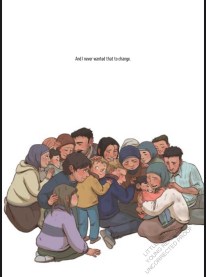
The book starts with two boys on the steps of the capitol, Adam and Yousif wondering if the president is their mom’s boss, and mom, saying that no, the 700,000 people in the district she represents are.  The book then pulls back and Adam starts to tell the story of him and his brother going to work with their mom, Congresswomen Rashida Tlaib the representative from Michigan.

img_4036

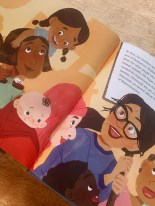
Before she was elected their yama and yaba immigrated from the West Bank to America, where Rashida was born.  Eventually there would be 14 kids born and Rashida would choreograph dances, basketball games, and seek privacy to dance like a pop star, or chase after the bookmobile.
img_4037

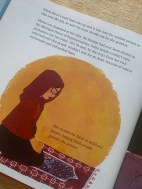
Comments toward her well-spoken mother to learn English, embarrassment at the smell of the factory polluted environment, and an offer by a high school teacher to join the debate team, helped pave the way for Rashida to find her voice and make changes.
img_4038

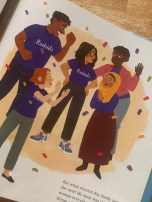
Rashida was the first in her family to graduate high school and from there she went to college and then law school.  She also started to learn more about Islam and the reasons behind her family’s traditions.  Her favorite passage from the Quran became, “with hardship comes ease.”
img_4039

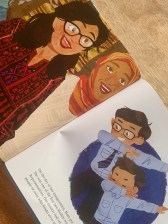
She started working with an elected official from the Michigan House of Representatives and started a family.  When a seat became vacant she was encouraged to run.  No Muslim had ever been elected to the Michigan House and even her own yaba didn’t think people would vote for an Arab, so she prayed Salat al-Istikhara and did a lot of thinking.
img_4040

The book shows what she wanted to accomplish and how she went door-to-door and found both success and hardship meeting with the people.  Ultimately though, she won the seat and held it for many years.  When Adam was 12 she decided to run for the U.S. House of Representatives, and he and his brother joined in to help knock on doors.

img_4041

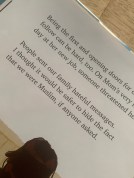
She won, and was one of two Muslim women to be elected that year.  Adam and Yousif dabbed in celebration at the inauguration as their mom was sworn in in her Palestinian thobe. On her first day, however, there were threats, and Adam though they should hide the fact that they were Muslims.  Their mom told them it is important to be their authentic selves, “that sometimes it takes many to run for there to be a first.”
img_4042

The book concludes with a glossary, an infographic of the branches of government. Can be purchased here.

They Called Me a Lioness: A Palestinian Girl’s Fight for Freedom by Ahed Tamimi and Dena Takruri

Standard
They Called Me a Lioness: A Palestinian Girl’s Fight for Freedom by Ahed Tamimi and Dena Takruri

lioness

The writing style makes this book easy reading, but the content contained is absolutely horrific, heart breaking, and hard to truly comprehend.  If this was fiction it would be overkill, barbaric, cruel; the fact that it is factual, current, and ongoing is inexcusable.  There is no humanely possible way that we can still be ignorant or apathetic to the plight of the Palestinians.  It is an occupation.  It is apartheid.  It is oppression.  I often don’t review adult non fiction, but because this is ongoing and we have the power to do something, BDS, I’m reviewing this book.  The book describes torture, death, abuse, cruelty, you name it, but I think mature young adult readers can and should read it, along with every adult. A history of major events in Palestine interwoven with Ahed Tamimi’s own experiences in the last few years, she was 16 when imprisoned, so the recent past, as lived by her and understood by her, is powerful, moving, and inspiring.

SYNOPSIS:

The book shares a lot of facts, but because the facts are contextualized you feel yourself absorbed by what it means to have your land taken, your home bulldozed.  It isn’t just statistics of growing settlements, it is being cutoff from the Mediterranean Sea that you can see from the hills in your village, but cannot access because of checkpoints and armed guards, and walls.  It is understanding why throwing a rock, or slapping and kicking are a form of defiance, not terrorism.  It is truly seeing the situation from someone living it every day.  There is nothing for me to critique or opine about in her story, nor in the book and presentation. It is hard to read, it is harder yet to know that it still persists.

WHY I LIKE IT:

I love that I sobbed and clenched my fist and Googled again what companies and organizations to Boycott, Divest and Sanction (BDS).  That is what the book is asking those of us who support the Palestinian cause to do.  She says they don’t want our pity, they want our action.  They want us to look at South Africa and realize the power of economic efforts by the global community on an issue. They want us to be educated about what they endure and educate others.  They want us to help stop the erasure of Palestine and Palestinians.  I’m so grateful that the book pointed out the direction we should take, a bleeding heart is not enough.

I love that Ahed owns her own learning and growth as she got to know Israeli Jews sympathetic to the right of Palestinians, that protested with her and her village, that fought the legal battles using their privilege to help the oppressed. I love that the book is personal and that she doesn’t apologies, that she addresses the criticisms against her, that she calls on her own people to unify, and that she is so so fierce. 

I can’t imagine what her life is like, and it is truly humbling to imagine yourself in her shoes, in her mother’s shoes, her father’s.  It isn’t a life anyone would chose, it isn’t a spotlight you would want.  No parent would willingly push their child to this, so that she at such a young age had to endure and become what she is today, is humbling.   

Islam is not a big part of the book, but Ramadan, and jummah prayers, janaza and praying salat are occasionally included.  

FLAGS:

Death, fear, torture, killing, murder, oppression, loss, hate, racism, everything you can imagine and then some.  There is also mention of two men having sex and a man stripping, while on prison to court transport.

TOOLS FOR LEADING THE DISCUSSION:

I would love to attend a book club or panel discussion by Palestinians in the community using the book as a starting point for telling their own stories.  I think a high school book club could handle the book, but nothing younger than that. Please purchase a book, check it out from your library, request your library to shelve it, and spread the word about this memoir that is both personal and informative.


My First Book About Salah: Teachings for Toddlers and Young Children by Sara Khan illustrated by Ali Lodge

Standard
My First Book About Salah: Teachings for Toddlers and Young Children by Sara Khan illustrated by Ali Lodge

img_3719

Looking at the books in the series, reading them to my children, getting the latest one delivered to my doorstep: every step along the way makes me smile, alhumdulillah.  The soft warm illustrations and impressive amount of information lovingly conveyed in board book form really makes the series a staple for young children.  The newest addition to the series is about Salah, and I love that the framing is that prayer is a blessing, it doesn’t open with listing the five daily prayers, it begins with Isra wal Miraj.  It sets the tone that prayer is special and beautiful and a gift.  It does eventually list the five required prayers, the words of the athan, Fatiha in English and Arabic, steps of wudu, and parts of salah, but the way it is woven together is seamless and so much more than just lists of information.  With ayats from the Quran sprinkled in, the book flows from one focus to the next, leaving the end as always, for facts and questions.  Appropriate for ages two and up, this 26 page board book can and will still inspire and teach older kids.

The only pause this book gave me were the illustrations.  There is not a single page where the people praying are standing shoulder to shoulder, foot to foot.  I could see if in a few pictures the creative liberty, or Covid reality manifest itself in the pictures, but whether it is a family praying, or people in a masjid, there is a gap between the individuals, and that seemed off to me.  Additionally because of the spacing in all the pictures, the pictures where perhaps the people are not praying together, but are just shown to be making tasleem or the illustration that all Muslims of all colors and all professions and all abilities pray, it almost seems to show men and women praying together.  I don’t know that the toddlers in the audience will notice, but perhaps be aware of it if when reading it to your children.  Aside from that the illustrations show the global faith of Islam and the beauty that we all worship together.

Available to purchase here and I’m sure it will be stocked by Crescent Moon as well.  Oh PS it also comes with a sheet of stickers.

Muhammad Najem, War Reporter: How One Boy Put the Spotlight on Syria by Muhammad Najem and Nora Neus illustrated by Julie Robine

Standard
Muhammad Najem, War Reporter: How One Boy Put the Spotlight on Syria by Muhammad Najem and Nora Neus illustrated by Julie Robine

img_2326

This 320 page full color middle grade graphic novel is a powerful and moving read. The memoir focuses on the young Syrian boy who began reporting on the war from the perspective of children and sharing his work on social media.  The raw emotion, the determination to make a difference, the familial love, are conveyed in a way that allows eight and nine year old readers to connect to living through horror with compassion and outrage and empathy.  Older readers will also be drawn in and moved by the relatability of a boy their age having his world turned upside down.  I particularly like how the book dispels so many assumptions and stereotypes by showing what life was like before the devastation, a bit about the role of outside forces and political oppression, and really creating a mood where you can imagine what you would do if you were in Muhammad’s situation.  The book is heavy, but also has a lot of hope and and joy. I tend to like nonfiction graphic novels that are character driven like this one.  I find I understand the scope of what they are enduring by seeing it through their eyes and feeling like I know them and thus can better grasp what their reality is.  There are photographs at the end which further connect the readers to Muhammad and Syria, and I hope this book finds its way into classrooms, libraries, homes, and hearts, so that we might be better to one another.  Readers of When Stars are Scattered will similarly love this book.

SYNOPSIS:

The book begins with eight-year-old Muhammad hanging around his father’s carpentry shop in Eastern Ghouta, playing soccer and pleading to by treats from the candy seller.  When Assad’s soldiers come, destroy his soccer ball, and his family warns him not to trust anyone, including the new candy seller, Muhammad’s world is suddenly not so certain.  When his family must seek shelter at a moments notice, homework is left, videogames paused, and fear very real.

Muhammad is the miracle child, born after the family didn’t know if they could have any more children, he is the fourth, and spoiled. Even with destruction and sheltering though, there is joy, more children are born in to the family, and while Muhammad’s status might be in question, his love of his little brother and sister, motivate him to do something to create a safer home.

At age 13, his father and uncle go for Jummah salat, and his father is killed while praying.  At 15 Muhammad is done hiding, he knows he will never be safe and he starts filming and sharing stories of children as a way to honor is father and fight back against oppression.

With the support of his family, and constant worry that Assad’s army will target him, Muhammad keeps telling the stories of those with no voice.  Eventually his following grows, catches international attention, and gives Muhammad purpose.

WHY I LIKE IT:

I love the format for this story, you truly can’t put it down.  It shows the emotion so powerfully that you cry when characters are lost.  You know hundreds die every day, but the singling in on a character that you have grown to love dying moves the reader, add in that you know this was a real person and that Muhammad really endured the loss, and it reminds you of your humanity.  The love the characters all have for their oldest sister is absolutely incredible.  The pages of the family just being so connected are my absolute favorites.

The characters are Muslim and it is a part of their daily lives, there is no pulling out of the narrative and explaining or preaching.  The women wear hijab, they plead with Allah swt, they reflect on Allah’s plan, they go for prayers at the masjid.

FLAGS:

Death, destruction, war, fear. It is not sensationalized, and I truly think middle grade and middle school readers will benefit from reading, even the sensitive ones.

TOOLS FOR LEADING THE DISCUSSION:
I think the book would be wonderful to teach in the classroom tying literature, current events, and history together.  I absolutely think every library, classroom, and home bookshelf should feature this book.

It can be pre-orderd here

img_2325

Ordinary People Change the World: I am Muhammad Ali by Brad Meltzer illustrated by Christopher Eliopoulos

Standard
Ordinary People Change the World: I am Muhammad Ali by Brad Meltzer illustrated by Christopher Eliopoulos

muhammad ali

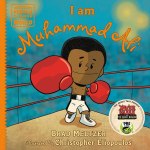
I think this 2022 published biography of Muhammad Ali just might be my favorite.  At 40 pages long and meant for first graders and up, it actually mentions that he is Muslim in multiple places.  So often these biographies about him or Malcolm X fail to incorporate their religion and just relegate their name changes to a footnote or after thought.  The book is engaging, informative, it is sourced, and the illustrations adorable.  My kids and I have read the book multiple times and are still enjoying the detailed illustrations (they even include #muslimsintheillustrations) and text.  Sports fans and even those that are not will appreciate what Muhammad Ali achieved, overcame, and accomplished.

The biography starts at Muhammad Ali’s birth and ends with his fight in Zaire- detailing his personality, growing up, how he got into boxing, becoming Muslim, refusing to go to war, and his biggest fights.  It weaves in how he worked against racism, standing up for his religion, and living life on his terms, at every step.  As the chronological story fades, it shows him lighting the Olympic flame in Atlanta, and the text starts to focus on the lessons that Ali fought to highlight, by encouraging us to continue his legacy.

The illustrations show how his message is still powerful and inspiring to athletes, kids, ordinary people-everyone, the world over.  Ali stays depicted as a small child throughout, and the author captures his charisma, charm, and entertaining persona.  The final spread before the sources and further reading suggestions show a timeline of Muhammad Ali’s life and a few photographs of his life.

I need to read the other books in the series to see if they are just as engaging.  Undoubtedly Muhammad Ali’s story is entertaining and inspiring even when poorly written, but I have a feeling this particular biography really shines because the author and the subject matter came together.  I highly recommend this book for families, schools, and classrooms alike.

You can order it at Amazon and if you use this link, I get a few pennies! Thanks!

img_1293

Hope on the Horizon: A Children’s Handbook on Empathy, Kindness, & Making a Better World by Onjali Q. Rauf illustrated by Isobel Lundie

Standard
Hope on the Horizon: A Children’s Handbook on Empathy, Kindness, & Making a  Better World by Onjali Q. Rauf illustrated by Isobel Lundie

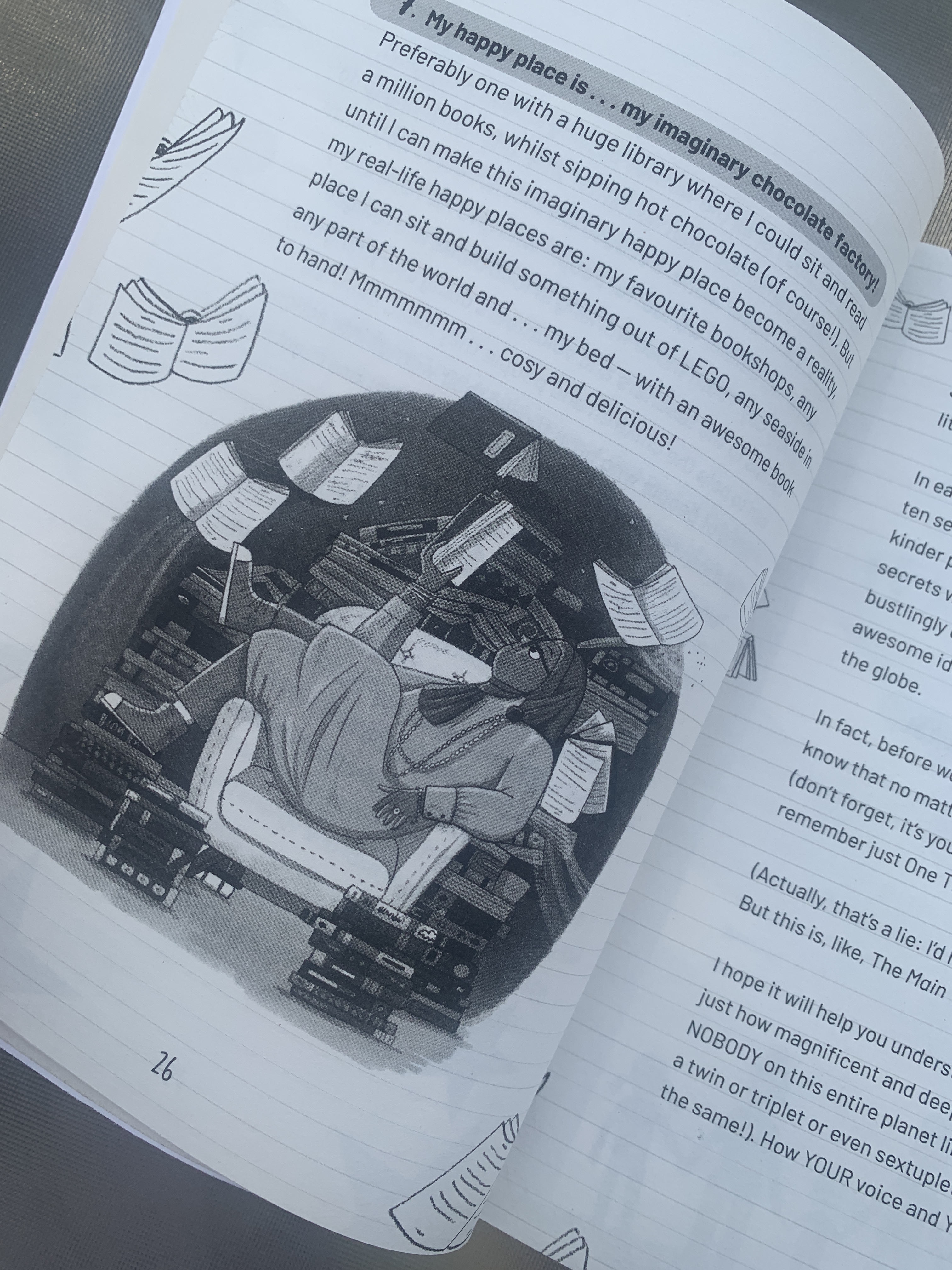
This delightful 288 page handbook pulled me in, inspired me, enlightened me, and allowed me to reminisce about incredible fictional characters from iconic books, tv shows, and movies.  Concepts such as kindness, empathy, friendship, deflecting negativity, seeing beyond labels, and asking for help, are framed around the fictional character’s strengths to introduce famous real life people from the past and present, as well as not so famous people the author personally knows and works with.  Written with the author speaking directly to the reader, there are also calls to actions, questions, prompts, and resources to help mature middle grade readers and up.

SYNOPSIS:

The book starts with an introduction about who the author is and her getting to know the reader, before introducing the concepts the book will cover and how it will go about doing so.  It establishes the super power of kindness and five golden rules.  The 10 chapters of the book then follow a loose format of introducing a fictional character and why the author admires them: Charlie Bucket from Charlie and the Chocolate Factory, Tintin, She-Ra, Superman, Samwise Gamgee, etc., her connection to them and to a theme: hope, being a ripple starter, never giving up. to name a few.  The book then highlights how the character and theme tie in to a cause that the author is passionate about, refugees, education, feeding the hungry, foster care, etc., then spotlights exceptional people the author has gotten to know personally in her activism that have made an incredible difference in the world, before offering a checklist of how you too can take action.  And finally a famous person is celebrated as being the culmination of all the strengths, characteristics, and super powers mentioned.  People such as Greta Thunberg, Albert Einstein, aerospace engineer Mary Jackson, footballer activist Marcus Rashford and more.  Often there are reflections, and the easy banter and conversation between the author and the young reader never leaves the text.  The reader and the connection to the reader is always prioritized and included in the sharing of information, motivation to action, and celebration of individuals real and pretend that have made a positive difference.

WHY I LIKE IT:

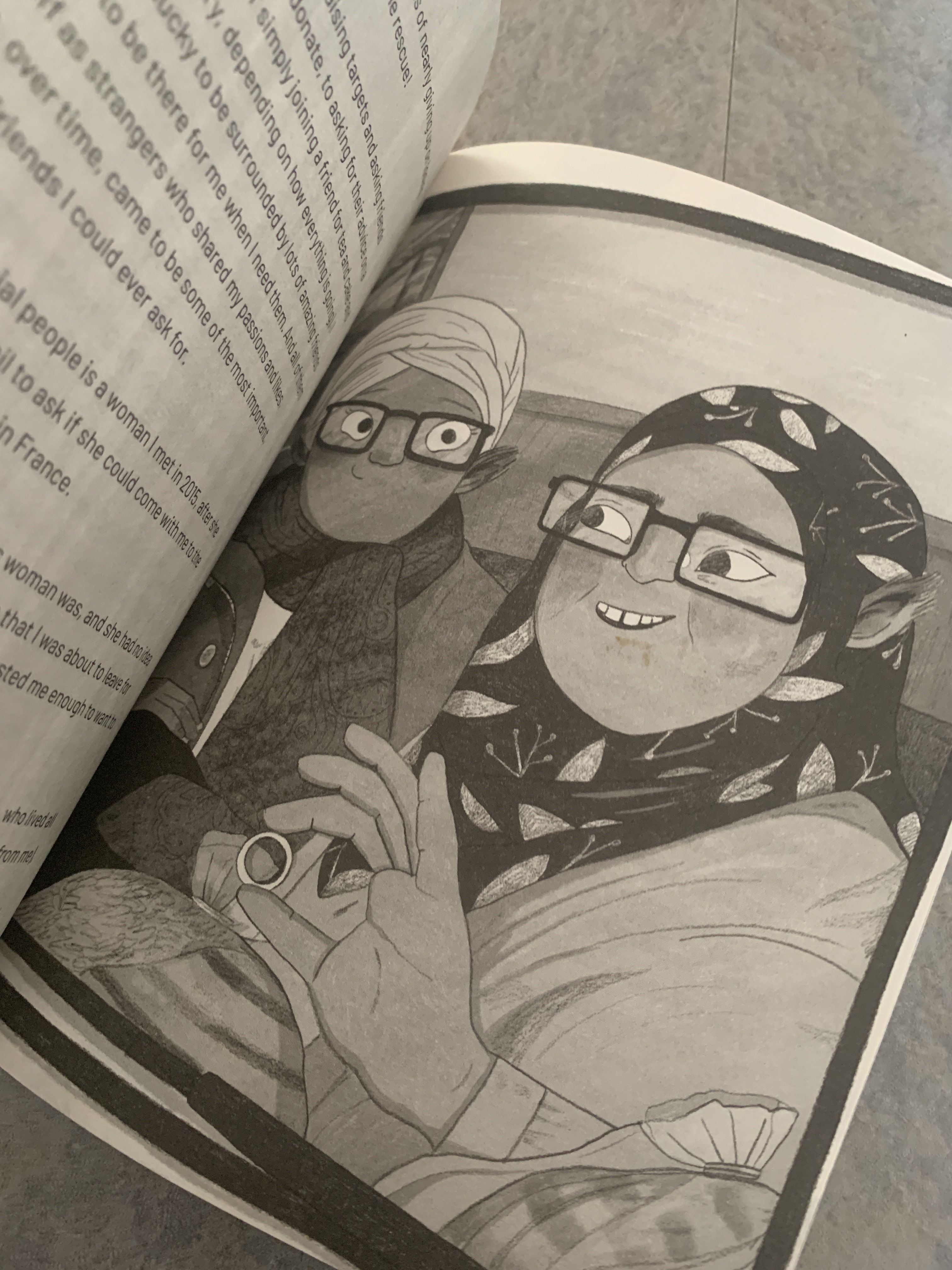
There is nothing overtly Islamic in the book, but there are Muslims featured as both famous real life examples and the author’s personal acquaintances.  Most importantly the author is unapologetically Muslim and offers glimpses of her own childhood growing up Muslim in the UK.  And as a hijab wearing Muslim, the illustrations also proudly show her smiling, eating chocolate and being an activist making the world a better place for all.

I love that the tone of the book is optimistic even when discussing difficult themes and heartbreaking realities of society.  The playfulness of the banter keeps the reader engaged and the text light.  Even if you don’t know the characters referenced, the urge to read their stories is a secondary benefit, and one that I think will further young world changers’ critical thinking skills.  Finding the good in people, even if they aren’t real, is such a lens that needs to be used more often, and the book does a tremendous job of stressing this.

FLAGS:

Talk of refugees, homelessness, food insecurities, abuse, poverty. Nothing is overly detailed, but the concepts are touched upon and explained as needed which could possibly be triggering or difficult to fully grasp to younger readers.

TOOLS FOR LEADING THE DISCUSSION:

The book can be read straight through or referenced, you can even thumb through and read sections that appeal to you.  I don’t know exactly who the book will resonate strongest with, but I’ve got my own children reading it, so I will happily report back. I think it deserves a place on every book shelf and even if only portions are shared with a class, the discussion and foundation that it could provide would be incredibly powerful.  I could see an English teacher encouraging essays about fictional character traits in the “real” world being assigned after reading, or History teachers spending time on some of the characters highlighted, it really is a great tool, a handbook, for young and old alike.

Welcome to the New World by Jake Halpern illustrated by Michael Sloan

Standard
Welcome to the New World by Jake Halpern illustrated by Michael Sloan

new world

I really like the concept and approach of this 192 page non-fiction graphic novel.  It isn’t a memoir or OWN voice retelling, it is basically an in-depth news story about a Syrian refugee family that has been fact checked and then illustrated.  Unfortunately, parts of the story are really choppy and unresolved, details shared for no purpose and occasionally reinforcing of stereotypes.  The book is an easy read and the Muslim family is shown to practice and be fleshed out, but more than once I found myself questioning what the author’s commentary was suggesting/implying based on what was being included.  I allowed my 12 year old son to read it before I was finished, but the last few pages had both misogynistic and homophobic slurs coming from bullies so I made sure to discuss that with him.  I think upper middle school to YA is probably the ideal readership because of the subject matter of escaping war, facing financial insecurities, PTSD, bullies, islamophobia, and navigating a new environment when you are not quite a child, but not yet an adult either.

SYNOPSIS:

Naji’s family is undecided if they should leave Syria or not.  Part of the family has permission to travel to Connecticut in America, but part of them still do not, including Naji’s grandmother.  The war has already imprisoned Naji’s father and uncles in the past and with the US election showing Trump having a chance, they feel like they need to make a decision quickly.  Naji loves all things American and is the only one in the family anxious to get to the US and get on with life, but when the moment of saying good-bye arrives, he has doubts.

Once they arrive in America, all their doubts multiply as life is difficult, help is hard to come by, and day to day fears of safety have not been left behind.  School, finding jobs, learning the language, and facing hate are just the big things that plague a family who has left everything to start over in this detailed account that follows Naji and his family as they navigate their new world.

WHY I LIKE IT:

I like that the book has been approached as a news article.  I just didn’t like the unresolved threads that seem to take up so much of the narrative only to be abandoned.  I really struggled with the idea that Naji knows America and obviously media is global, but is shown to be confused by a dining table.  I didn’t like the commentary of Naji’s sister Amal and her hijab, I find it hard to believe there aren’t other hijabs in the school or larger community and why it is made to be such a big deal by her, and those trying to help her.  It would seem small after everything she has been through.  I do like that there are a few other Muslims in the school and at least they discuss that there is not a nearby masjid.  I wish other Muslims would have been around to help settle the new family.  I know a few groups that helped in immigrants in New England, so that there were no Muslims in the welcoming groups seemed hard to accept.  By and large it does show Islam being practiced, not just names and hijabs, which I appreciated, but for a book that is based on a real family, with graphics, I really expected a stronger emotional impact that ultimately for me was just not there.

FLAGS:

Death, abuse of power, war, language, bullets, shooting, kidnappings, detainment, destruction, kids making out in hallways, implied rape/sexual assault, death threats, racism, islamophobia, misogyny, slurs, name calling, differential treatment, fear.

TOOLS FOR LEADING THE DISCUSSION:

This wouldn’t work for me for a book club selection, but if I ever teach a journalism class again, I think I would some how incorporate this book as a way to show what journalism can be, and also as a clear way to show how what parts you include and what parts you keep out affect the messaging of the story as well.

Let’s Think about Allah’s Great Garden by Ali Gator

Standard
Let’s Think about Allah’s Great Garden by Ali Gator

allah's garden

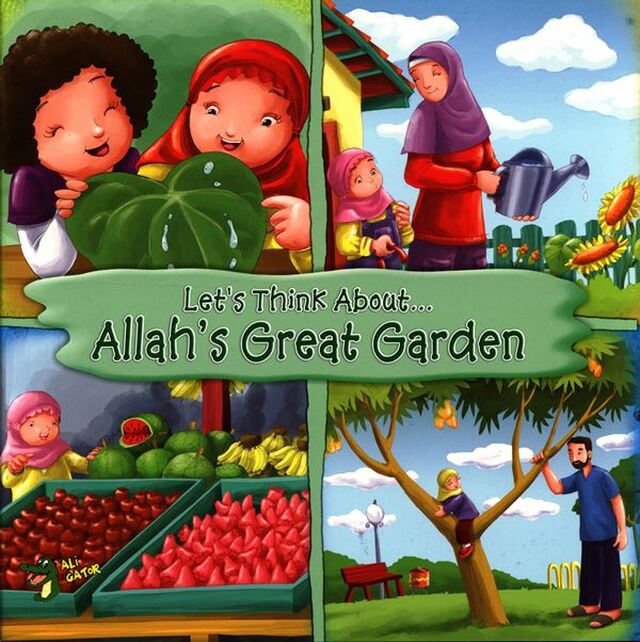
At 22 pages this book’s title aptly describes the contents within: at times factual, sometimes breaking down the fourth wall and asking readers to do something engaging, at times fictionalized, and often meandering and reflective.  The book is all over the place and only cohesive in theme.  It has sat on my shelf untouched by my children for quite a while, but when I needed options for the library during Earth Day, this book did a great job in facilitating discussion with pre k to 1st grade.  It isn’t a story time book so to speak, but it gets kids thinking and can be tailored to their level of discussion.  I don’t think that is how the book was intended, and as it is written it is rather unimpressive, but when pulled apart it did serve a very specific purpose.

img_9837

The book starts out with a few lines about Allah’s blessings of all things particularly trees and plants and gardens.  I wasn’t sure if it was trying to rhyme or not, but I think the first lines are just incidental rhyme as the flow and words quickly unravel. It talks of climbing trees and the narrator’s father telling him to be careful. It then discusses watermelons and how they grow in the ground, not on a tree and asks readers if they can see the watermelon seeds in the illustrations.

img_9836

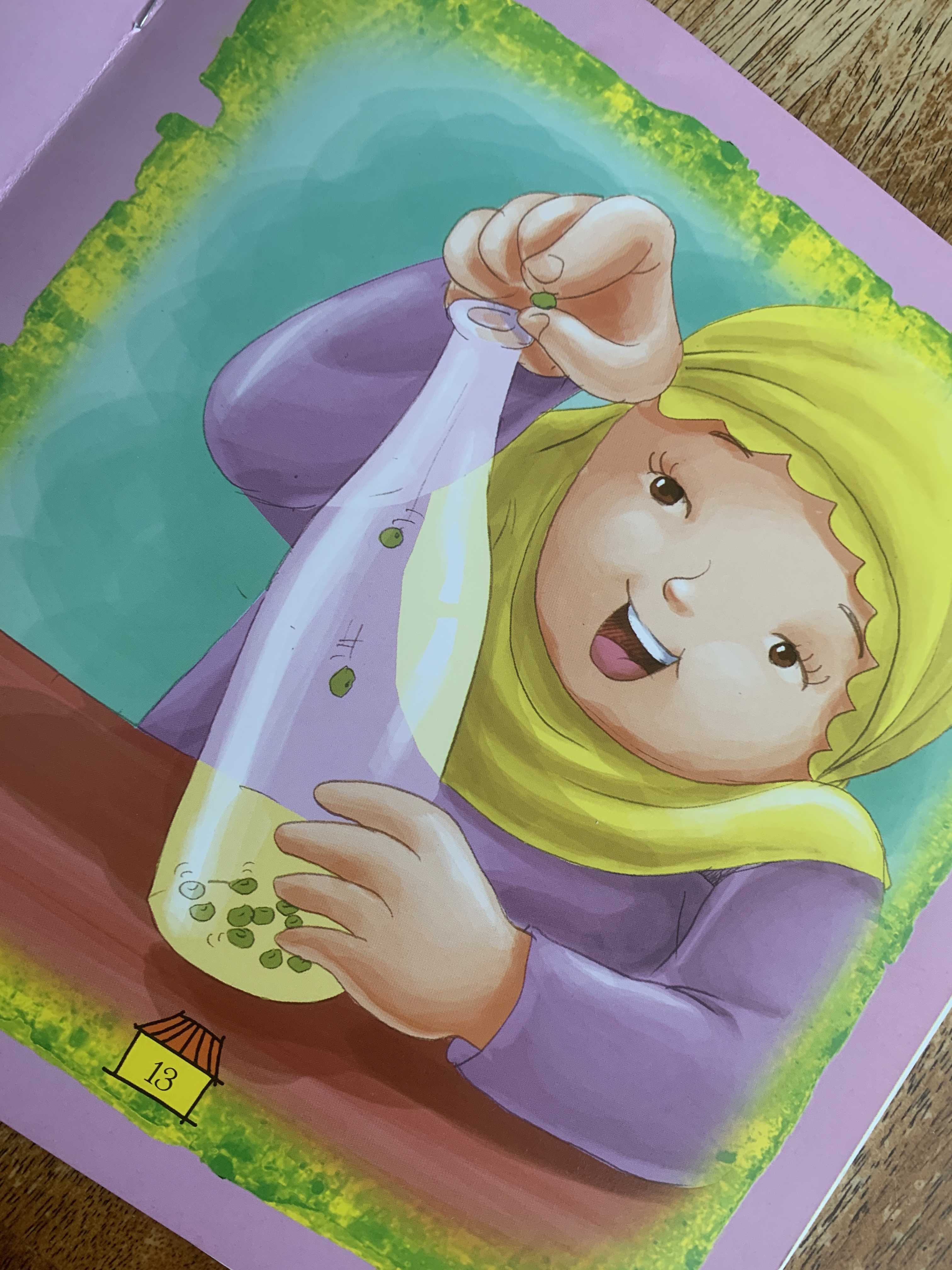
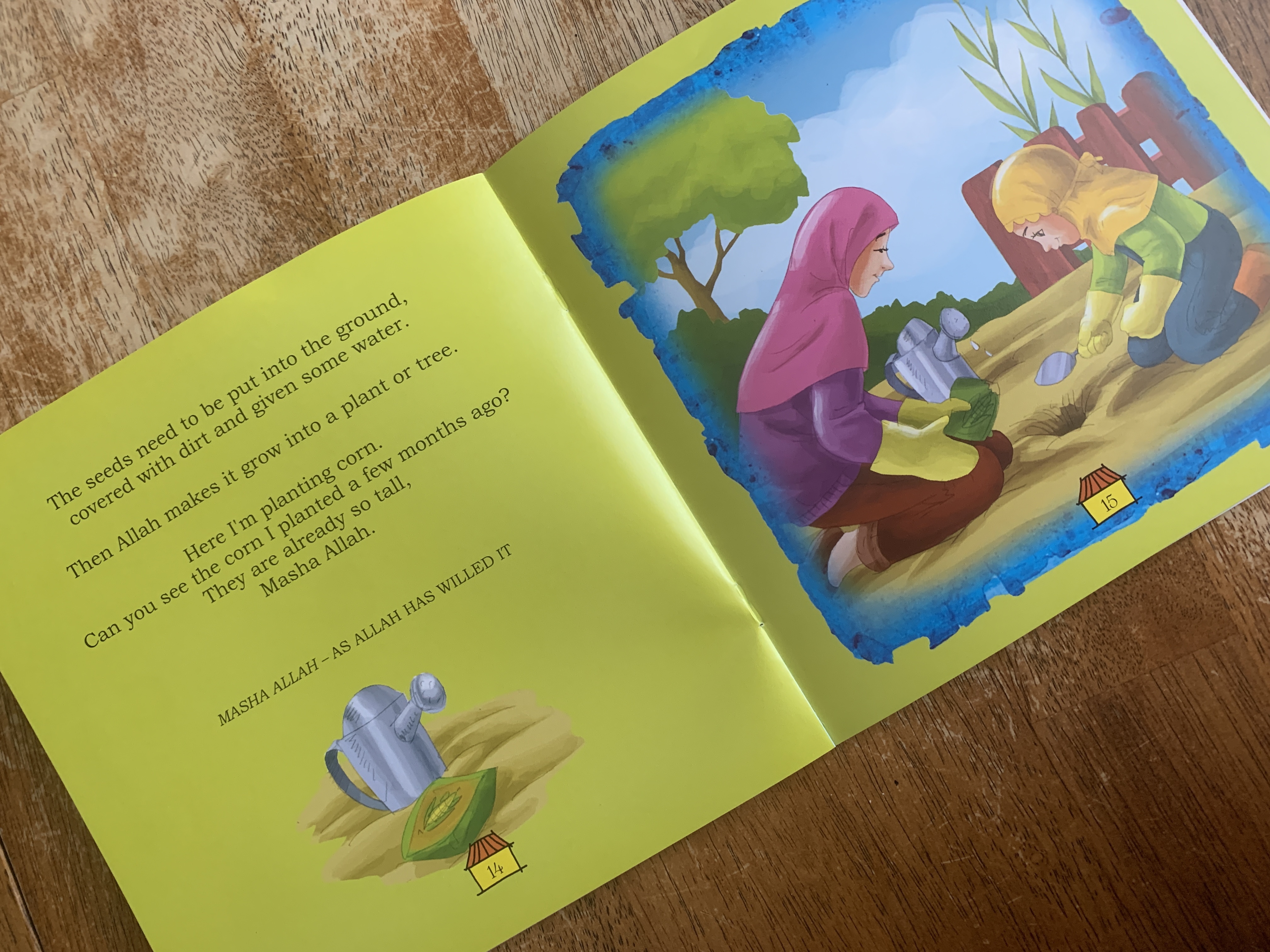
The book focuses on the life cycle of plants: seeds, flowers, trees. Drawing on that information it then shows the little girl collecting seeds to plant.  It then talks about the planting process and the needs all growing things have to prosper if Allah so wills it.

img_9838

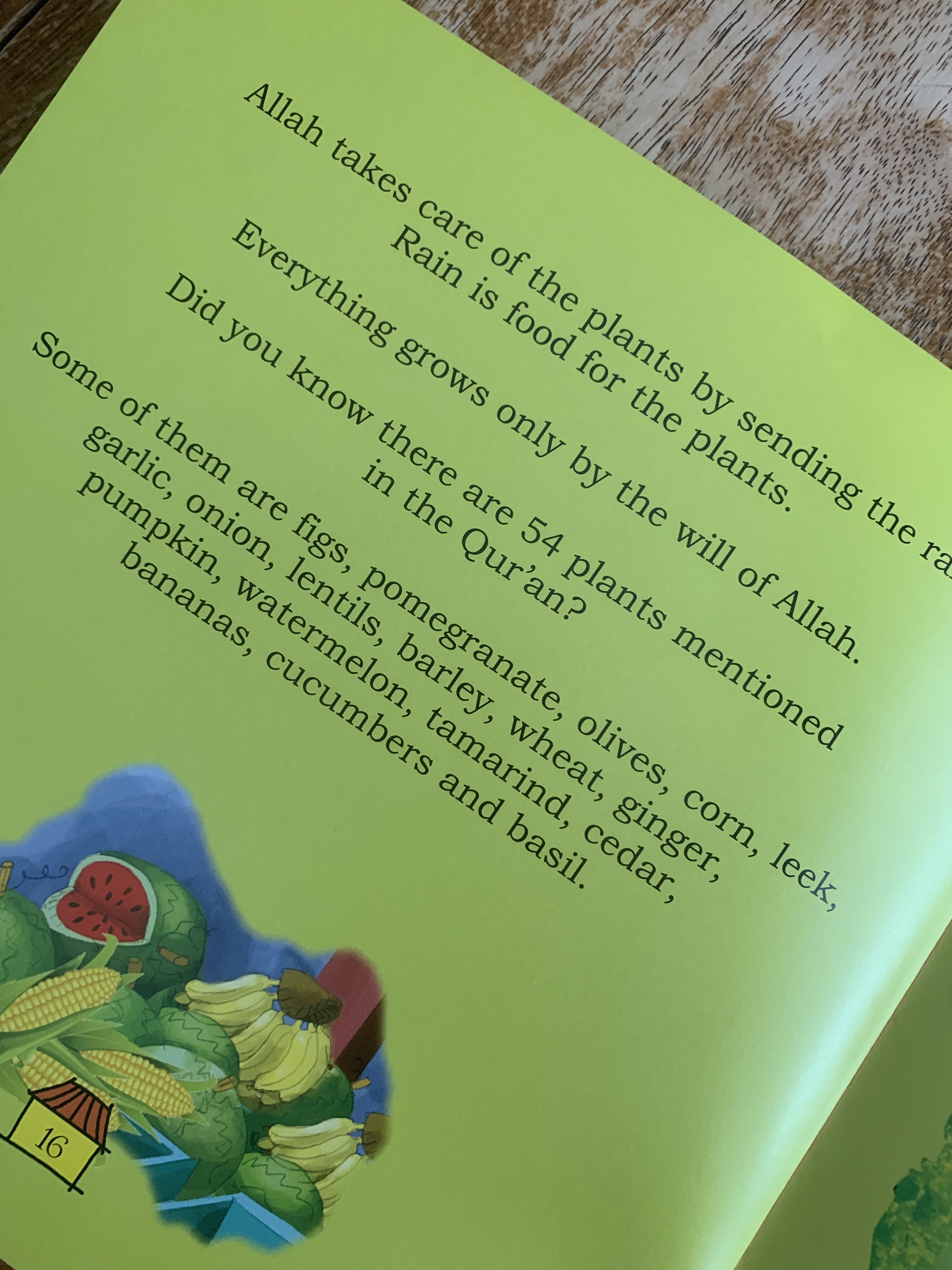
Then the book gets interesting and starts to discuss the plants mentioned in the Qur’an before returning back to the half hearted narrative remarking on how the flowers complement the color of their house.

img_9839

The story seems to then end, but it isn’t denoted that the remaining pages are factual or set aside as back matter, it just pivots and begins discussing rain in Surah an-Nahl, Trees in Paradise as mentioned in Qur’an and Hadith, and then again, but this time in table form, the fruits and vegetables mentioned in the Qur’an, and highlighting dates specifically.

img_9841

The book is all over the place, and I doubt it will be read again until next year.  There are a few other books that have come out about his topic, and I plan to look in to them to see if they work better for story time readings and child engagement.

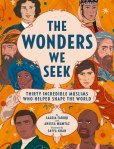
The Wonders We Seek: Thirty Incredible Muslims Who Helped Shape the World by Saadia Faruqi and Aneesa Mumtaz illustrated by Saffa Khan

Standard
The Wonders We Seek: Thirty Incredible Muslims Who Helped Shape the World by Saadia Faruqi and Aneesa Mumtaz illustrated by Saffa Khan

wonders we seek

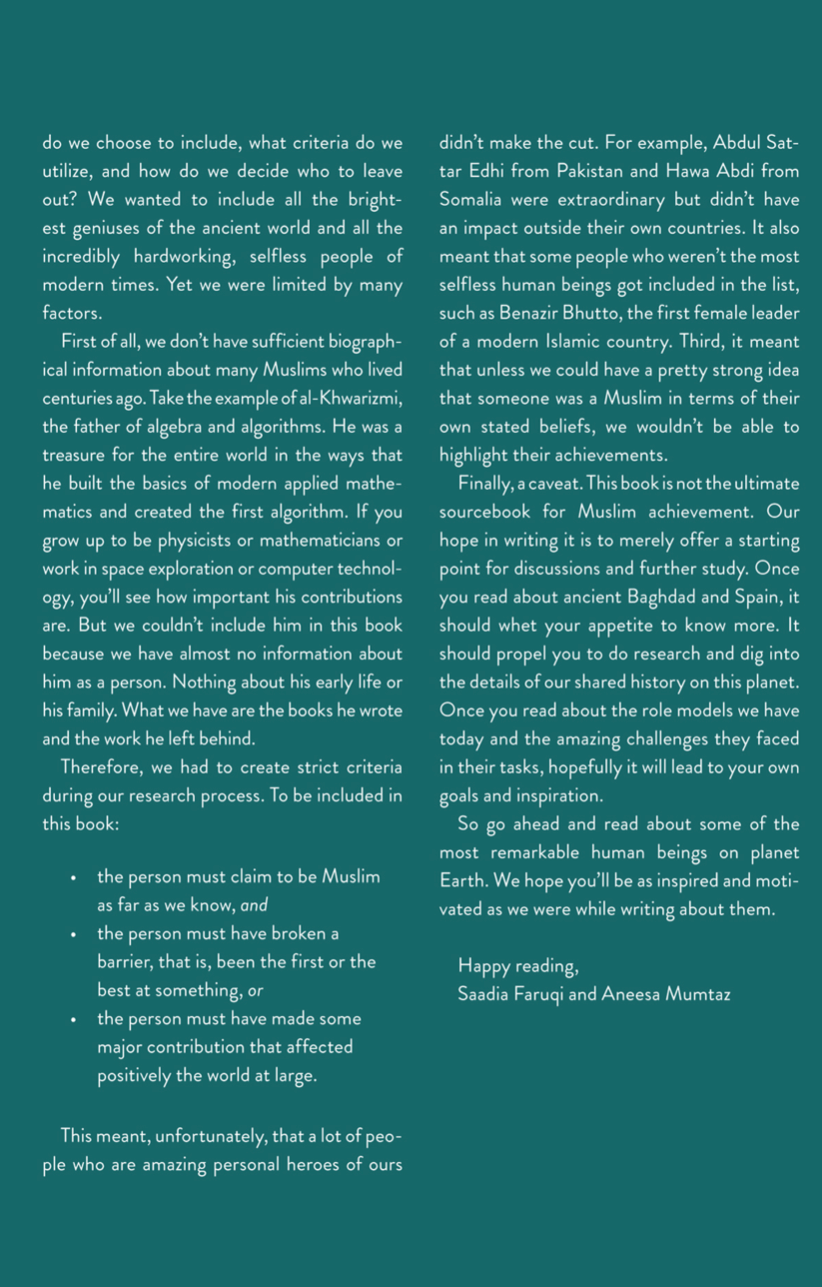
I’ve noted over the years how much I want to love these type of collections, but ultimately I just don’t.  The reason I gave this one a try was quite simply the reassuring introduction.  The book immediately detailed the checklist required to make it into the book, the criteria required, and acknowledged the limitations that the book overall, and personalities included, would have in the presentation. There are sources at the end for each of the 30 people included as well.  Unlike most books in the genre, this book got out in front of my most common complaints: the lack of transparency for how the people were selected, where the primary source information was obtained from, how the order is organized, and the Eurocentric and pop culture framing that is both pandering and renders the book cumbersome a few years after it is published.  For the most part, this book is the best I’ve seen yet, but that isn’t to say I loved it.  While the requirements to be included were made apparent, there is still a lot of opinionated statements about how “religious” or “conservative” or “devout” or “mainstream” or “strict” a person is or was, that rubbed me the wrong way.  Also knowing that the person had to identify as Muslim to be eligible seems like a black and white issue, but a few of the personalities are very controversial (some noted and some not), and I am not an expert at all.  One of the problems with books like this is they present as non fiction, and no matter the transparency, just the mere fact of who is included and who is not is a judgement call and wrought with bias.  It is nice to thumb through, but I don’t know that it would get repeated use, or that it could really be used as a reference.  It is informative and I recognize that I went in to it very skeptical, but only a few text passages connected faith to the person’s accomplishments, and so while they identify as Muslim, it doesn’t necessarily radiate pride or admiration for Muslims as a whole.  For better or worse, if anything, it made me want to conduct my own research on many that were featured. 

img_9998

The 30 included in the book:


A few I was concerned by, which made me question the ones that I learned something new about. Clearly there are reasons that I shy away from non-fiction.  I wish the book would have had Muslim beta readers, I am willing to assume that it did not.  Take for example the section on Saladin, I absolutely get why his name is shown as both Saladin and Salah al-Din, the book is in English presumably for western readers and that is how he is known.  But why when it says that his real name is Yusuf, is Joseph in the parenthesis? No one else’s names in the book are given the English equivalents of their Arabic or Persian or other native language. Similarly so few tied back to Islam or an Islamic perspective being credited for having a role in their noteworthy accomplishments.  Even Muhammad Yunus when it discusses how interest was not a part of the micro loan process- it didn’t add even one more sentence explaining that interest is not allowed in Islam, why leave that out?  

I liked that the parameters required that the person was influential more globally than just to their own country, but Rebiya Kadeer seemed to be more localized in her work with Muslims in China even when she moved out of China, blurring the rigid standards of who was to be included and who was to be left out.  

img_9968

I do like that it mentions Rumi’s religion is often conveniently ignored as the west has made him a hero and chosen to forget his faith.  Similarly, I like that it tries to correct when Ibn Battuta is called the Marco Polo of Islam, for in reality Marco Polo was the Ibn Battuta of Europe.  And I appreciated that Benazir Bhutto was noted as being controversial and not well liked. 

If this type of book appeals to you, you can purchase it here.
 

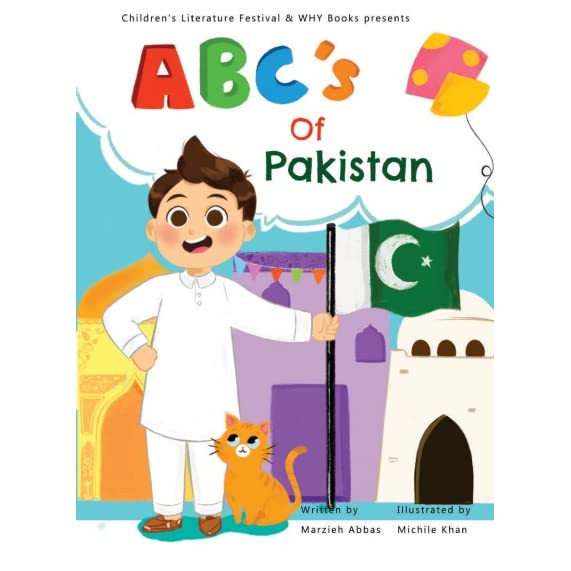
ABC’s of Pakistan by Marzieh Abbas illustrated by Michile Khan

Standard
ABC’s of Pakistan by Marzieh Abbas illustrated by Michile Khan

abcs of Pakistan

I absolutely love this ABC book, it truly does Pakistan proud and I’m thrilled that I could obtain it, it wasn’t easy, sorry not sure where you can get it in the USA, and it isn’t available even at Liberty Books in Karachi, but if you can find it, grab a copy, or two because it really is a well done tour of the country.  My only suggestions would be thicker pages, the hardback 8.5 x 11 binding is nice, but the pages seem to have curled in the transporting from overseas.  Also, some pages have a large A or E, but others such as the words for B, C, D, are just all flowing story style over a two page spread.  I don’t mind one way or another, but I do side with consistency, either have the letter on all pages singled out, or on none.  The effort to string the pages together makes it read very much like a story, and I appreciate that it features little snippets of fact and history in talking bubbles throughout.

img_7514

Little Hassan and his cat Makhan introduce themselves and then take you on a tourney of Pakistan.  Included are landmarks, handicrafts, foods, famous people, festivals, sports, and more.  It concludes with a reminder to carry facemasks and hand sanitizers, which might date the book a little in the future, it was published in 2020.
img_7517

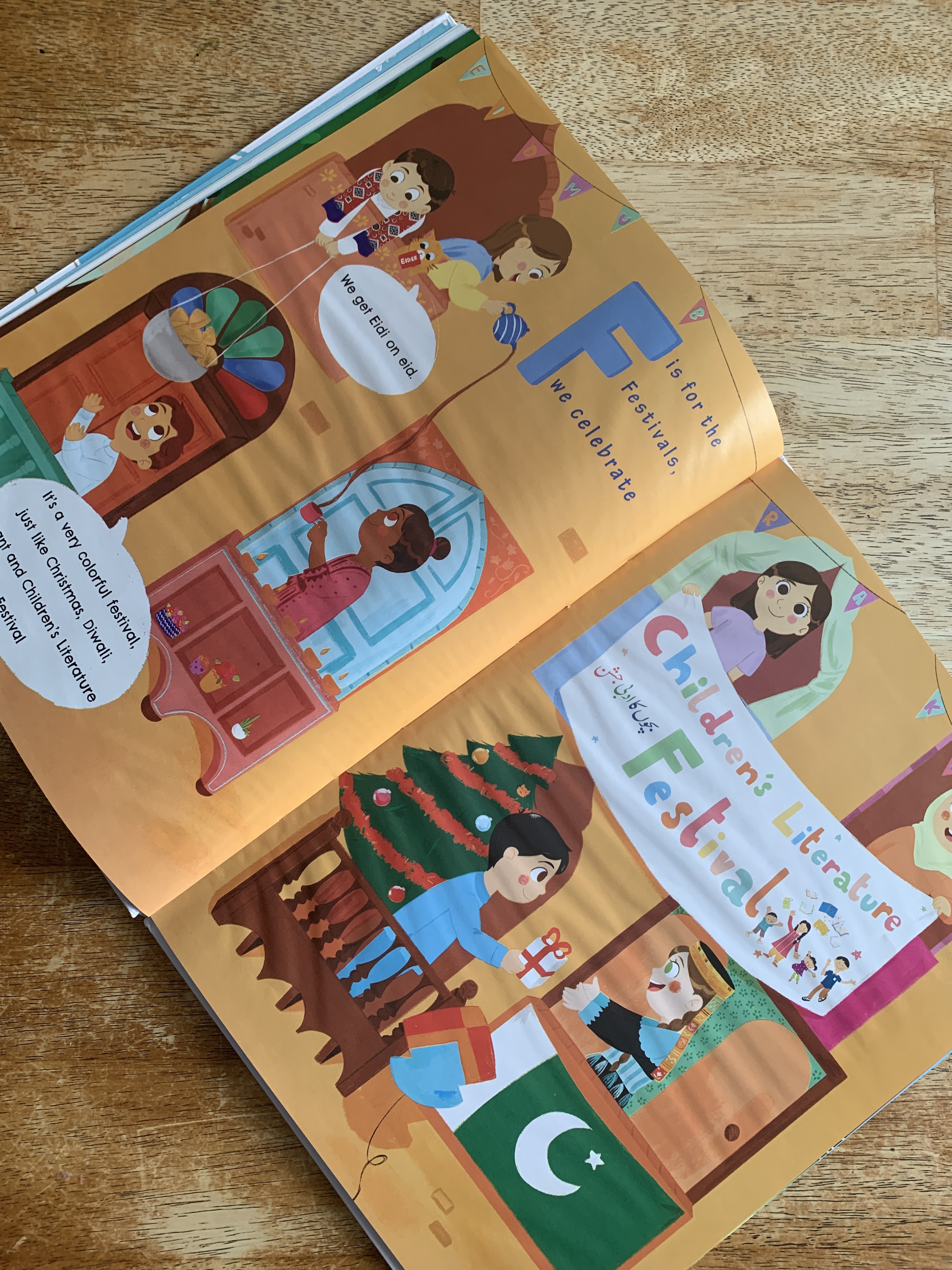
The book works for non Pakistani’s to learn, especially those of us with children that have not been to the “homeland,” as well as for Pakistanis in Pakistan to feel proud of their culture, history, tradition, and landmarks.  There are beautiful masjids and the azaan mentioned and hijab wearing and non wearing women, as well as famous men and women included.  It is inclusive on the F for festivals page where it mentions Eid, Basant, Christmas, Diwali, and Children’s Literature Festival.

img_7516

Enjoyable text and illustrations alike. InshaAllah, will be more readily available if we can convince the author and illustrator and publisher that there is demand, I hope, hint hint.  Happy Reading!