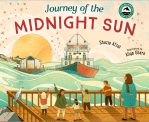

What an absolute joy to learn about something real for the first time in a children’s picture book meant for ages 3-5. I am baffled that this story wasn’t celebrated and shared by not just Muslim’s everywhere, but Canadians as well. It is a sweet instance of real life being harder to believe than fiction. It warms your heart and reminds you that there are so many good people doing selfless things for the benefit of others, every single day, subhanAllah. As for the 32 page book itself, story inspiration aside- I kind of wish it had more details of the real story in it. The factual blurb on the back cover was a bit more awe inspiring than the totality of the book. I think it is because it is meant for such little ones, but I don’t know for sure. I hope that there will be more books for various ages, about this mosque’s incredible 2010 journey.
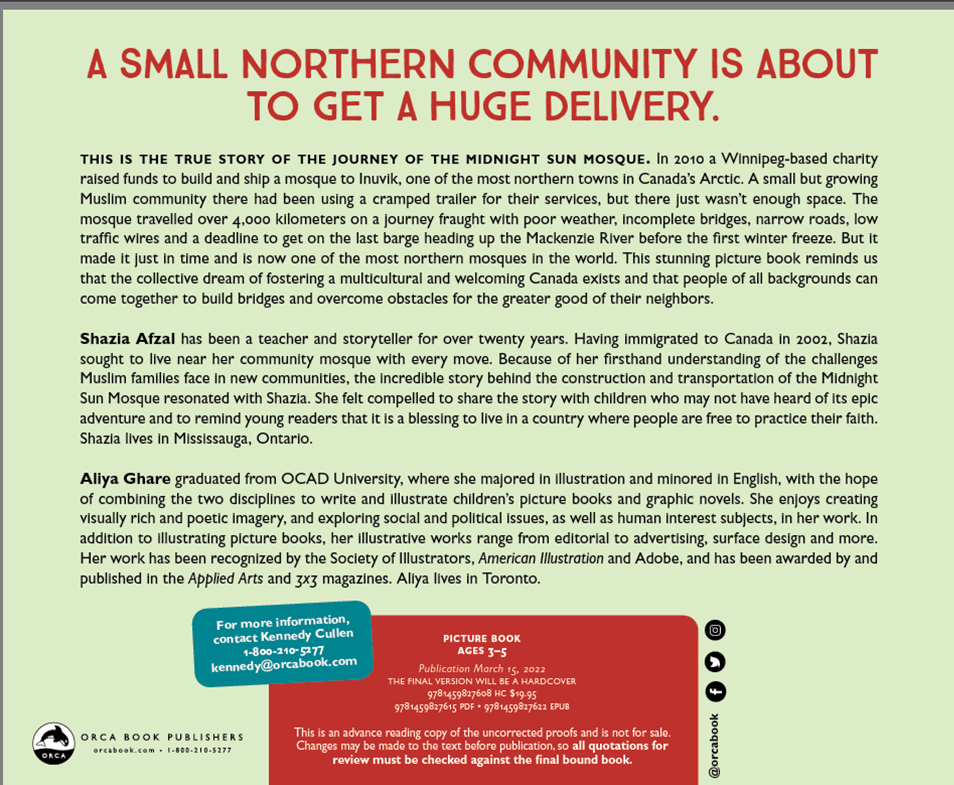
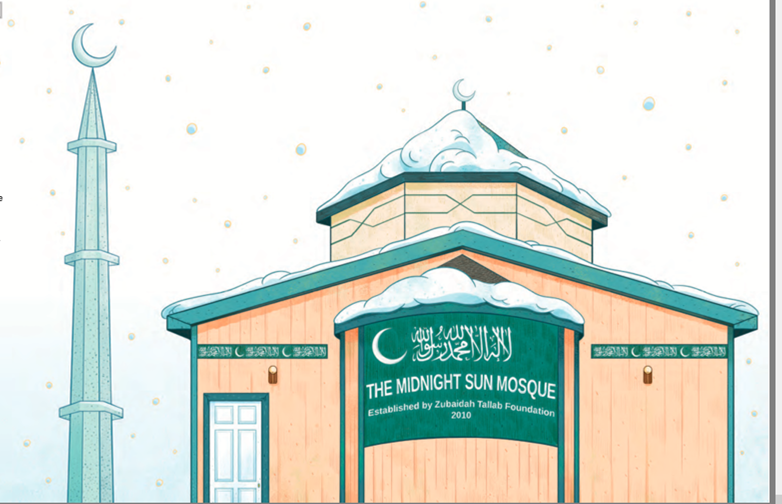
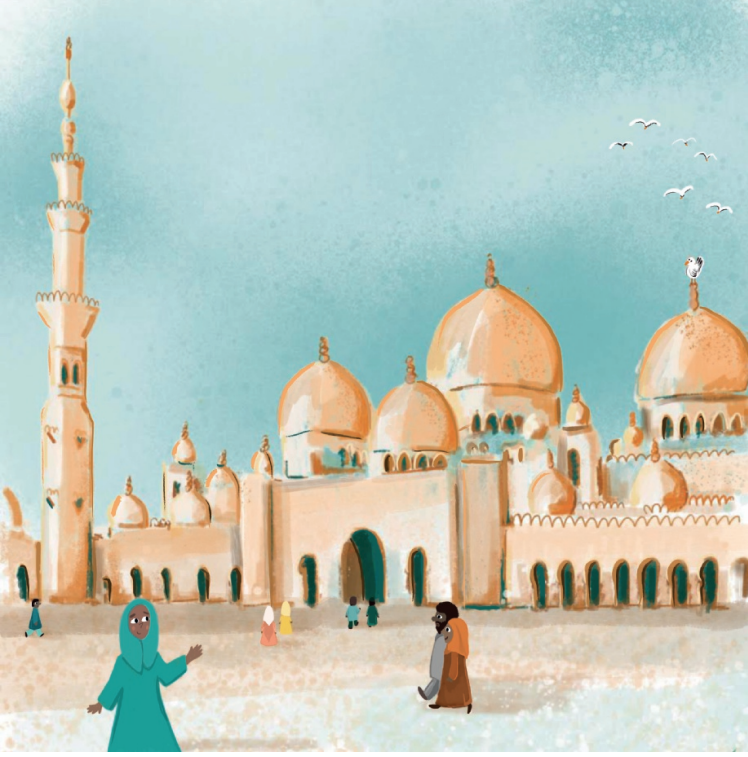
There is a small community in Inuvik, in Northern Canada. The growing Muslim community has outgrown their one room space and it is more expensive to build a masjid there, than to deliver a pre built masjid from Winnipeg.

With the help of some non profit and local groups, a masjid is built and sent north, hopefully able to reach its final destination before the river freezes. The journey is fraught with obstacles: roads are too narrow, bridges not ready, low utility wires. weather concerns, construction, the masjid tipping over, but alas it arrives, alhumdulillah.

The entire community welcomes the new masjid, and the Muslim’s have a new space to pray and gather.

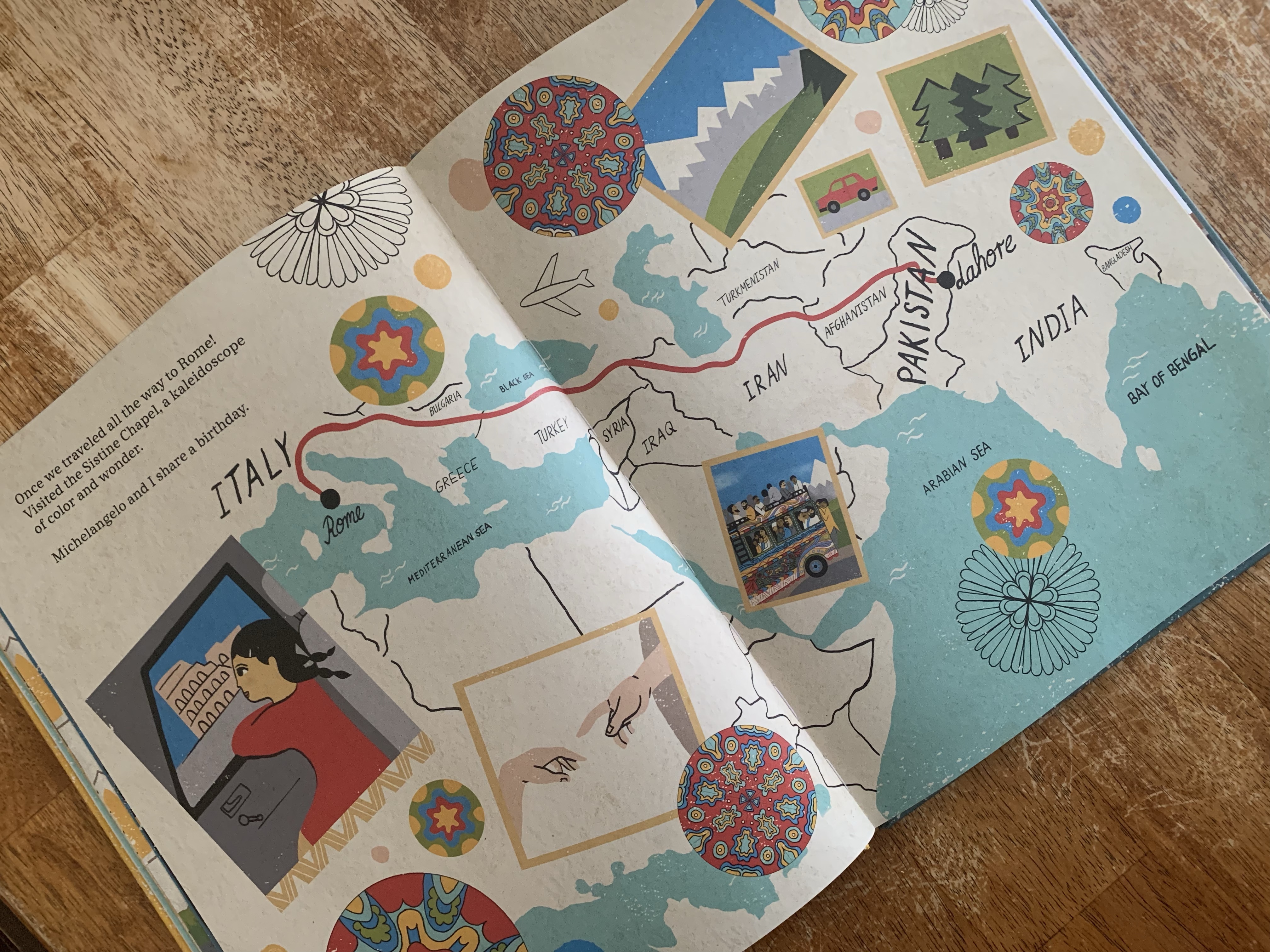
I like that there are maps and indicators of the distance. And while I like the interfaith aspect in Inuvik being presented, it seems incredibly specific in a very vague book for small children. Why is the imam identified separately, the whole paragraph is just awkward. Additionally, there is no explanation for why a minaret was needed or if it is critical to a mosque. Some information other than the children wanted one, would help avoid confusion seeing as this mainstream published book is not targeting only Muslims who would know the function of a minaret, and that they aren’t required structures.

Some links about the event that inspired the story:



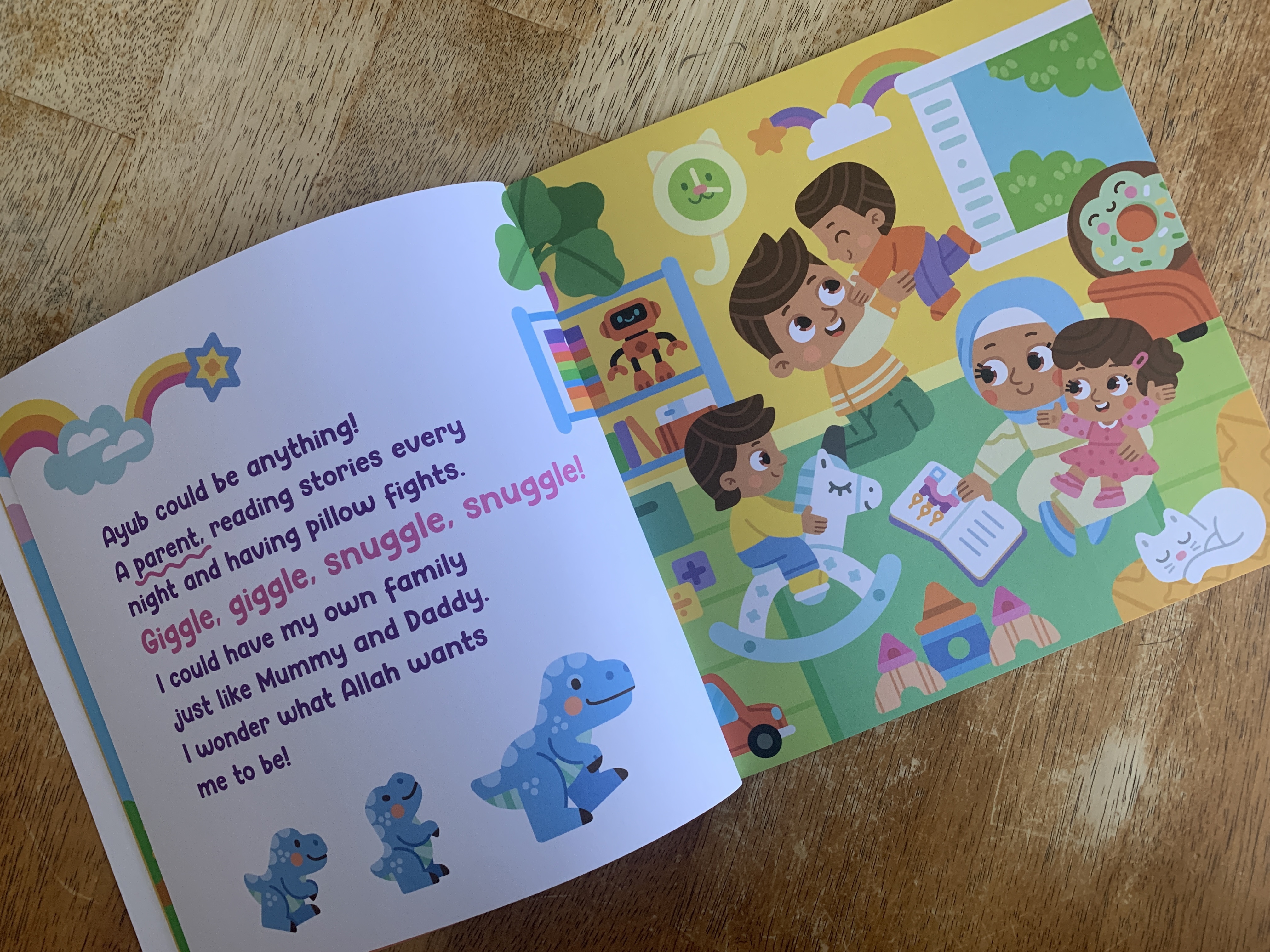



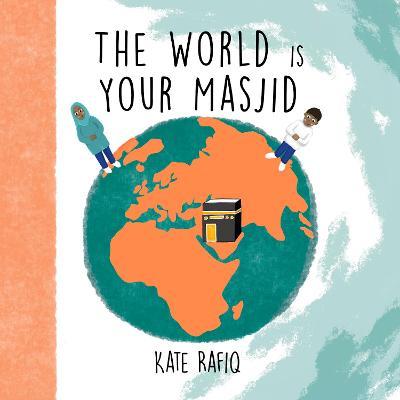




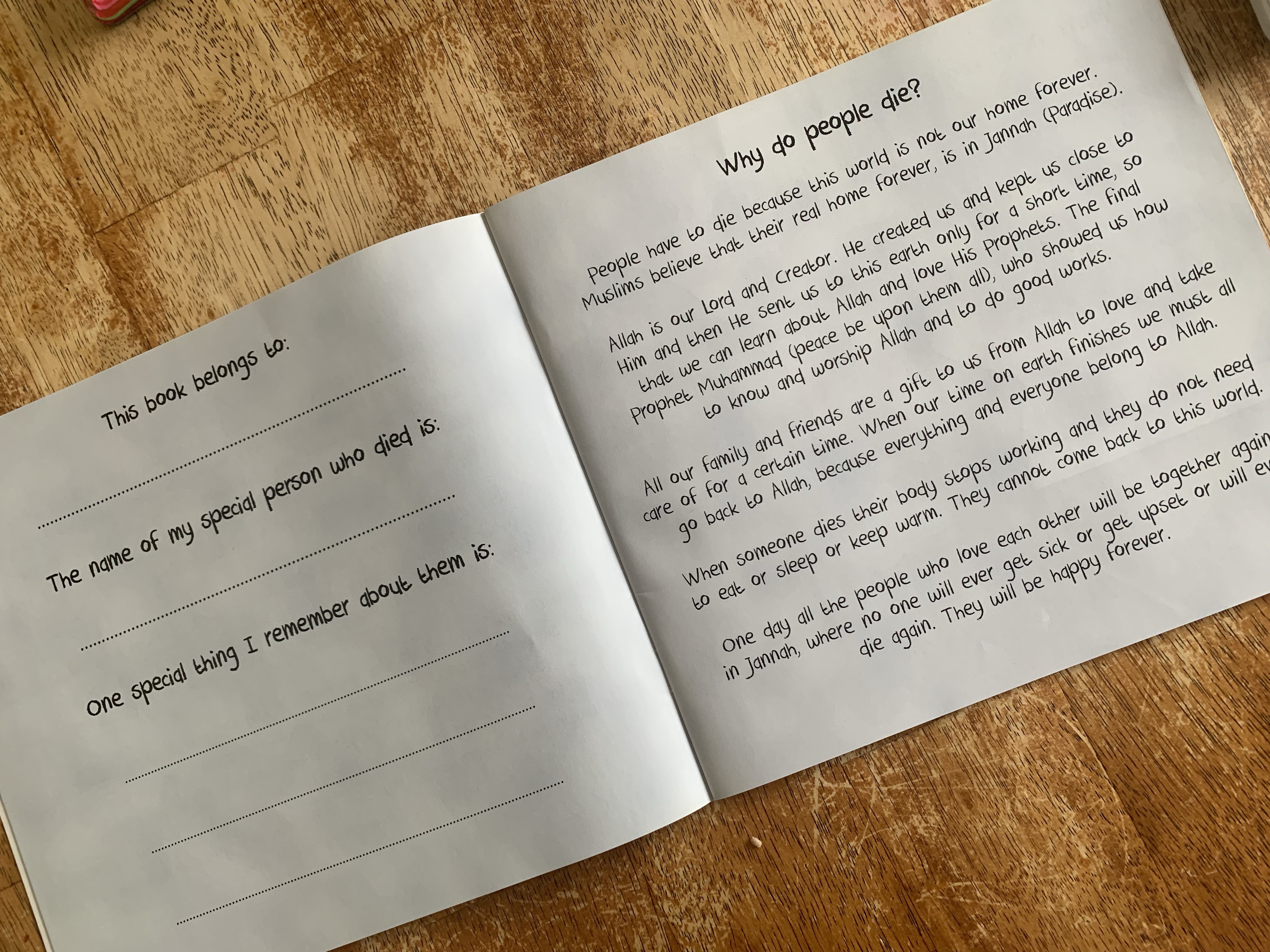
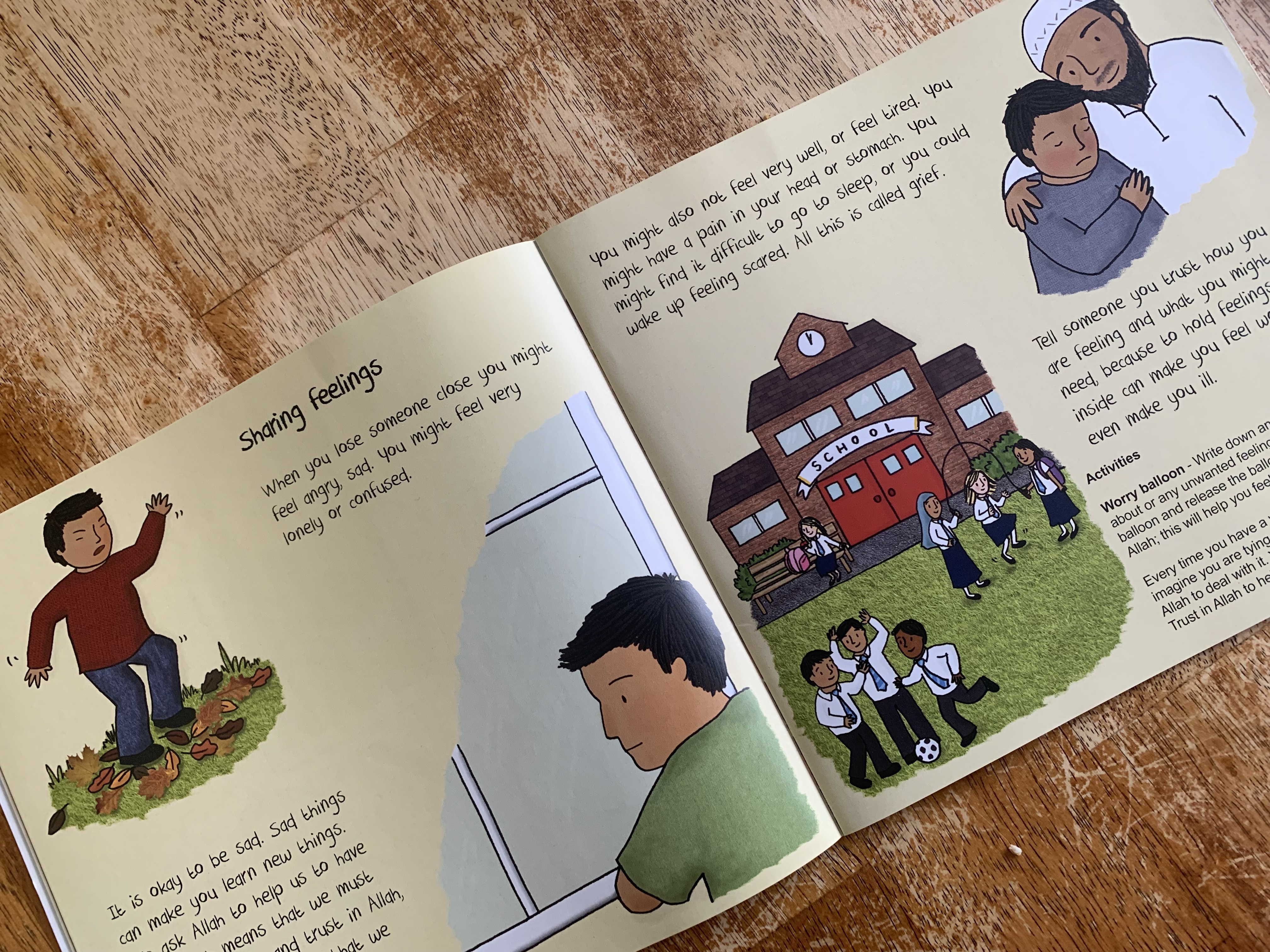
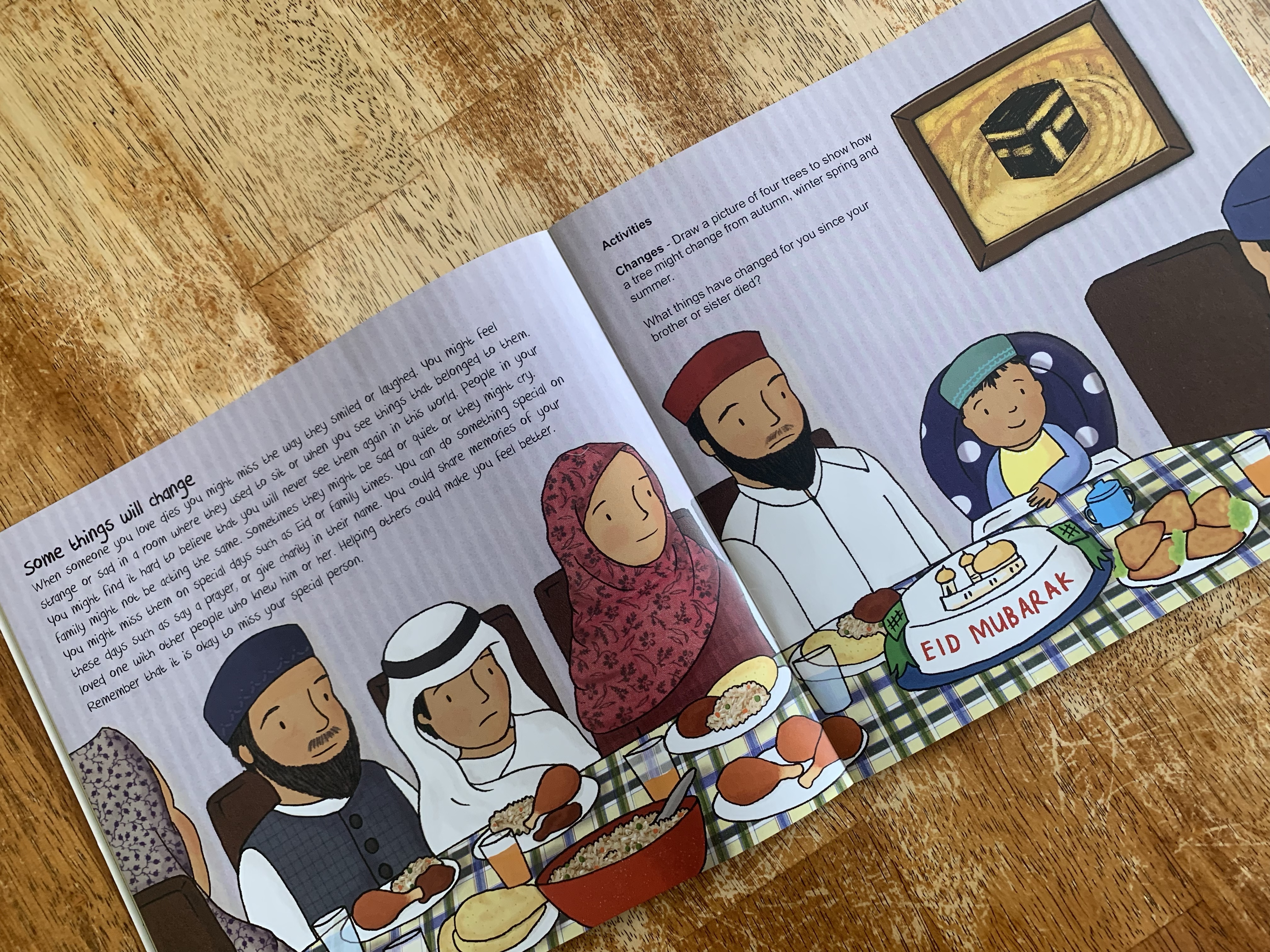


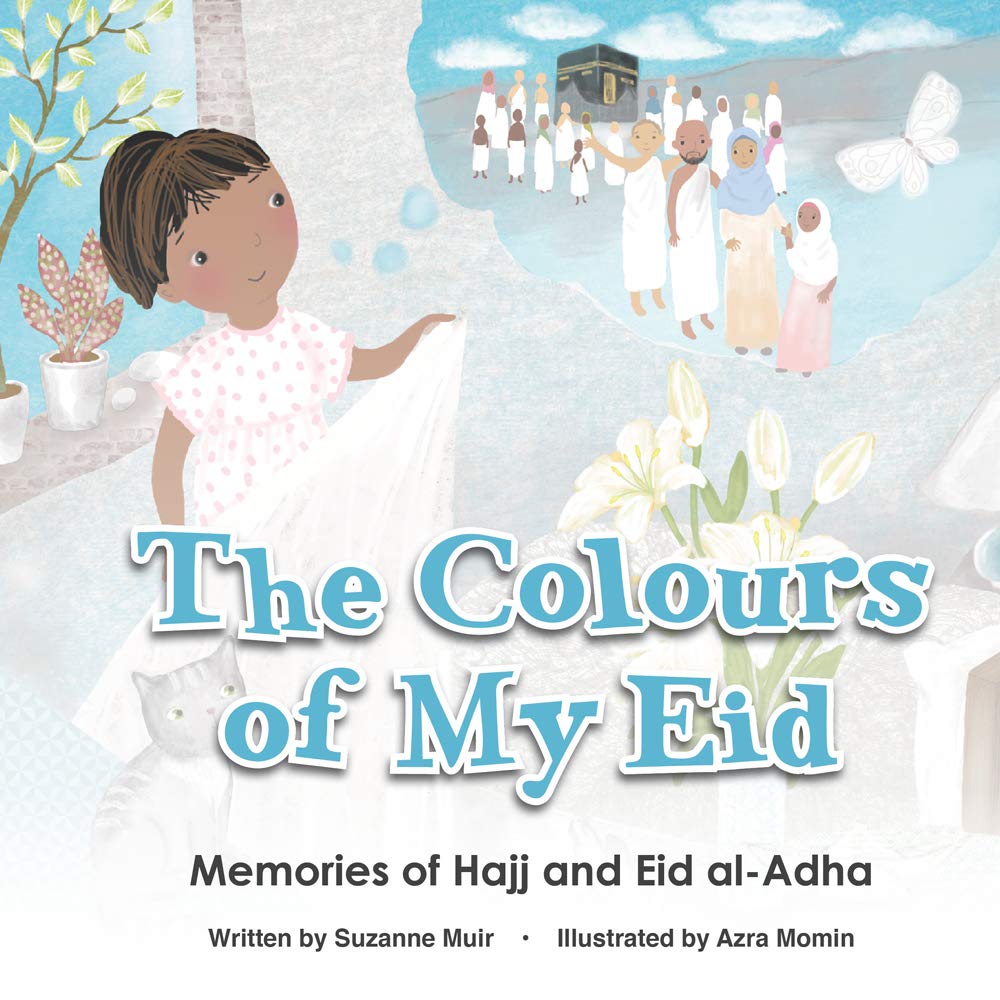
 The book starts out with a two page spread defining what a festival is. The next two pages define Islam. Page 8 then states that “Eid al-Adha is a festival celebrated by Muslims in September of every year.” And page 9 of the book says we throw pebbles at a wall, not that we throw pebbles at three representative pillars. It also says that Eid is celebrated for two to four days depending on the country. Religiously, it should say it is a three day holiday.
 It then tells the Story of Eid al-Adha aka Ibrahim (as) being to told to sacrifice his son. I’m not sure why the book doesn’t says that Muslim’s consider Ibrahim a Prophet (peace and blessings be upon him), and instead call him a wise man. Indeed he was, but it seems very awkward to not mention how Muslims regard him, and seems to go out of its way to not say he is a prophet in Islam.