Category Archives: Muslim Author

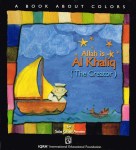
Allah is Al Khaliq (The Creator) by Saba Ghazi Ameen

Standard
Allah is Al Khaliq (The Creator) by Saba Ghazi Ameen

allah is al khaliq

This is one of the first books I got for my first unborn child nearly 14 years ago, and as I am now on my fifth child I only recently realized (thanks @Taleswithmimi) that I have never reviewed this beloved sturdy 10 page 6 x 4.5 inch board book.

BA6F2A98-9A1F-4DDA-ADC4-36FAD933FD8C

It starts by declaring and defining that Allah is Al-Khaliq, the Creator of all I see, it then, in rhyming verse lists some of Allah’s gifts as organized by colors.

Red, green, blue, yellow, orange, purple, white, pink and black, are presented in a fun, and playful way on two page spreads.  The fun illustrations and bright colors are well done and perfect size for little ones to take in.

The book was published in 2002 and is still relevant today.  I highly suggest it for toddlers to chew on and learn their colors from in an Islamic context.  That being said, any religious kids would be fine with the book, while it is Islamic fiction, any faith that acknowledges the Oness of a Creator, will not find anything more religion-specific in the book.

I love that there are tabs on the side to show the colors, and that there are NO FLAPS!  It’s companion book that goes over shapes in a similarly beautiful, Allah is Ar-Rahman (the Compassionate) but there are flaps.  Thin ones at that. Needless to say they were damaged or gone within days and four of my kids have never enjoyed them!

Tasting the Sky: A Palestinian Childhood by Ibtisam Barakat

Standard
Tasting the Sky: A Palestinian Childhood by Ibtisam Barakat

tasting the sky

This memoir may qualify as non fiction, but the majority of this 176 page book is told from the perspective of the author when she was three years old, so much of it reads to me as somewhere between historical fiction and autobiography.  No matter how you categorize it though, this AR 5.8 book is better suited for middle school and up. I love that this is is a Palestinian perspective of the Six-Day War and the immediate aftermath, but after reading it, I’m not haunted by the atrocities of the Israeli occupation so much as, some of the choices her family made.  I got my copy through Scholastic and in excitement, purchased multiple copies that I sadly think will sit in a box as I doubt I’ll find many students that will enjoy this book.

SYNOPSIS:

The book is divided into three parts with the first and third being short letters written in 1981, and the second part being the majority of the story taking place between 1967-1971.

The first part is a high school Ibtisam getting detained at a checkpoint after heading out to check a PO Box that she uses to keep in touch with her pen pals from around the world.  She reveals what life is like and shares the joy of learning about the outside world from her correspondence, but that she rarely talks about her childhood and her life during the war.  Part two is her sharing that.

The Barakat family lives removed from neighbors and a city, but Ibtisam loves her two older brothers and younger sister and at three years old is happy.  When war comes, the family decides to run, in the process Ibtisam doesn’t have time to find a shoe, and then she gets separated from her family and swept up with the people running for the caves to escape the bombings.  Once reunited with her family, they along with numerous other Palestinians make their way to Jordan and some safety.  Safety comes at a cost though and the family is separated as her father leaves to find work.  When the war ends, the family moves from the shelter and finds a small room to rent until they can return home.

Once the family returns home, things do not return to normal as the Israeli army begins training near their house causing Ibtisam’s mom to worry constantly in her attempts to keep the children inside and away from the windows.  Eventually, the mom takes the children and herself to an orphanage in Jerusalem saying that their father cannot keep them safe.  Ibtisam is close to her father and this dramatic change does not sit well with her.

In the orphanage, the boys get separated from the girls and eventually their father promises the mother to build a wall and make repairs to the home and purchase a goat if they come home.  They do, and the kids are grateful to be together again.  The boys then start school and the goat has a baby and life carries on.   Ibtisam grows close to the baby goat and their father promises that he will remain the children’s pet and will not be slaughtered.  But, when the boys are 8 and 9 they get circumcised and the feast involves the goat.

The next major event in young Ibtisam’s life is when she finally gets to go to school.  Incredibly smart, her mother essentially equates her love for her daughter with her success in school and with that motivation and predisposition to learn and excel, she does very well.  One day on the way home, she is sexually assaulted by an older boy, and makes arrangements to always have her brothers with her when walking.  Her parents are not made aware of the offense, and don’t seem to investigate Ibtisam’s change in attitude toward school.  When an Israeli soldier attempts to assault her mother, the family moves once again and part three is a teenage Ibtisam quarreling with her parents and once again excelling at school.

WHY I LIKE IT:

I like that tidbits of memories are woven together to give an overall impression of the author’s childhood.  The book is a quick read and is compelling enough to hold one’s attention.  The family is culturally religious, but the book makes a point that the father prays, not indicating that the rest of them do or even know how.  I love how the freedom and hope that Ibtisam has comes from learning the first letter of the Arabic alphabet, alef.  The love of language and the power found in reading and writing, is celebrated in its reverence to the learning of the letters.

I don’t get the mother, and while I get that war is a horrific time, and she is 24 when Ibtisam is 3 and has like four kids, so her life is definitely not easy, I still find it disturbing to me that she would lose a one shoe-ed daughter, take her kids to an orphanage to live while both parents are alive and well, and be so cold to her daughter.  The father seems to be loving to the kids, but he still slaughtered their pet, and I’m guessing culturally circumcisions are done at that age, because that seems incredibly cruel.

FLAGS:

War, loss, sexual assault, details about the circumcisions.

TOOLS FOR LEADING THE DISCUSSION:

I won’t do the book as a book club selection and while I know the book is in many libraries and classrooms I doubt many kids would be compelled to pick it up and read it based on the cover and synopsis on the back.  I have a few Palestinian friends that I will ask to read the book to see if they find it an accurate representative of life during the six-day war and even today as it could definitely be used to teach about the region, the conflict, and writing a biography about life for others to learn from.


The Candle and the Flame by Nafiza Azad

Standard
The Candle and the Flame by Nafiza Azad

flame

It takes about 124 pages to be swept away to the city of Noor, but once it happens, it is hard to come back.  The 391 page fantasy story takes a while to get going, but the character driven plot filled with amazingly strong and diverse women is worth the slow start.  Middle school readers and up (AR 5.8) will enjoy the blend of Islamic imagery, sub-continent Asian culture, fire, Ifrits, Djinn, family, relate-ablity and good quality story telling.  The fact that it is a main stream book, with so much religion and culture makes it all the more remarkable in its universal appeal.

SYNOPSIS:

Fatima is a Muslim girl adopted by a Hindu family, only everyone in the entire city was killed eight years ago except for Fatima, her adopted sister, and an elderly lady, when the Shayateen attacked.  The orderly Ifrit were asked to defeat the Shayateen and protect the city, and when they did, the wealthy returned along with people from other cities.  Thus Noor is now a vibrant city of different backgrounds, cultures, religions, and languages repopulated and ruled in halves by the Maharaja, Aarush and Ifrit Emir, Zulfikar.

Fatima works as a messenger and her favorite place to deliver packages to is an old book shop owned by Firdaus, an Ifrit she regards as a fatherly figure.  He has taught her languages and provides her a place to learn and grow.  When he dies in front of Fatima, she is forever changed, literally, he transfers his powers to her, and she is now not only part human, part Ifrit, but also the Name Giver, an incredibly powerful and important being in bringing the smokeless Djinn from their wold to her hers.

With rebel forces threatening the Maharaja’s rule, Ghul and Shayateen entering the city, a taint threatening the leader of the Ifrit, a traitor in each palace, and a budding romance between Fatima and Zulfiqar, the characters pull you in and create an enjoyable story that is vivid, fantastic, and hard to put down.

WHY I LIKE IT:

The story doesn’t have a neat and tidy plot culminating in a climax, but the character arcs and vivid world building pull you in and keep you interested.  I love that the characters are different and complex and unique, and that women are so so strong and celebrated for their strength in all spheres, not at the expense of the males, but solidly in their own right.  It is refreshing and glorious to see the matriarchal Ifrit world contrasted with the human world, and the strong females that emerge in both.

I love that there is so much diversity and tolerance and the book doesn’t shy away from presenting faith practices and acceptance in such an honest manner.  There is a four page glossary and it is needed, yet not overwhelming at the same time.  The most read page in the book for me however, was the Dramatis Personae page listing the characters.  Until that 124 page mark, I was constantly flipping back trying to keep everyone straight, not so much because the characters are confusing, but “what” they are took a little while to stick.

I got sucked in by this book truly, I ignored my children during our Corona virus quarantine one day to read the second half, and I don’t regret it one bit.  The romance, was a bit cheesy at the end, but it was clean, and sweet and presented as a way forward, not as a settling or sacrificing choice for either character which was greatly appreciated.

FLAGS:

There are a few kisses once the two main characters are married.  There is stalking and attempted sexual assault by a character, but Fatima more than took care of that with the support of many strong females.  There is mention of a homosexual relationship, but not dwelled on, and I think one could argue that there is  possibly something more going on between two of the females, but it isn’t explored.  There is death and killing and violence, but nothing extreme.

TOOLS FOR LEADING THE DISCUSSION:

I had hoped to sneak this in for book club next month, but with school closed indefinitely, it might have to wait until next year. I think girls will gravitate more to it than boys, but I think that is ok, because often girls need more of a nudge, in my experience, to give fantasy a try.  I am trying to convince my daughter to read it, but the first 100 pages are pretty slow, so if I can’t force her through it, I don’t know what chance I’ll have, here’s hoping.

NPR Review: https://www.npr.org/2019/05/18/724120066/language-has-magic-in-the-candle-and-the-flame

Interview with Nafiza Azad and Hafsah Faizal (We Hunt the Flame) https://www.slj.com/?detailStory=hafsah-faizal-and-nafiza-azad-interview

The Mighty Head of Moustafa by Rania Emara illustrated by Fruzsina Kuhari

Standard
The Mighty Head of Moustafa by Rania Emara illustrated by Fruzsina Kuhari

moustafa head

This fun new twist on “The House that Jack Built” uses the same style of building sentences on to a repeated story that the classic uses, as well as the silliness of it all, but is made unique with the Middle Eastern setting and cultural aspects.

90A73EFF-DE4E-4D30-9AF6-3353B0E0B979

The 8.5 x 11 size gives ample room to see the fun engaging illustrations that bring the comical rhymes to life in both small to medium sized groups.  I won a digital version, and will probably end up purchasing a paperback copy for my bookshelf, as the pictures and text will be easier to pour over in physical form.

1F6DDDD0-6F9D-4AFC-B8CF-8F5418D7DAD7

The book is 22 pages of text and perfect for toddlers to listen to, on up to 2nd or 3rd graders to read on their own and still be entertained.  There is nothing religious about the book, the boy is named Moustafa obviously, and there is a girl whose veil is the climax of the story, but nothing in the text is religion specific.

D7820AEC-BBAE-40AC-A521-79BDD19AD815

It all starts out with a tray on the mighty head of Moustafa.   Upon that tray is bread stacked and spread that goes with cake that was quick to bake, and before you know it, there is an aunty who rode a donkey next to a child with a veil, and then a nail, oh that tricky nail that caught the veil. . .

9568D24E-1062-4EA4-AA69-64DD4D6DCB7E

Moustafa and his tray and everything along the way are all brought to a tumbling halt, all because of a nail. The crash and falling down undoes the entire build up, and the smiling face of Moustafa makes you want to read it all over again.

266C3E0C-6233-41B9-ABE2-20C6E4307EA5

Alhumdulillah!

E2A54CA5-A964-4405-8181-F73EA84649BF

Neither This Nor That by Aliya Husain

Standard
Neither This Nor That by Aliya Husain

neither this nor that

This 251 page novel reads like a biography that has no climax or real conflict in its linear retelling of the protagonist from 3rd grade to a junior in college.  If you are part or all Desi, raised in America in the ’80s and ’90s and have fond memories of NBC’s Must See TV, rolling your pants up, your family packing Corning Ware sets to take to the homeland, and the joys of TJ Maxx, you might enjoy the nostalgic similarities you too experienced, but even at that, with no plot or character arcs, the book is easily forgettable and you might forget to finish it.  For all my critiques of Muslim stories that don’t read authentic, this one definitely does, she doesn’t rebel, she doesn’t ever go against Islam, but because she is similarly not ever tempted to, I think most readers won’t relate to this fictional girl, who’s biggest worry is smelling like her mother’s cooking.  The book seems to just want to tell her life story, and getting through it is the point of the book, not making emotional connections, giving the reader something to think about or even inspiring others, which is ultimately a missed opportunity that this book could and should have capitalized on.

SYNOPSIS:

It is the first day of school for Fatima Husein the eldest of many daughters in her Indian American suburban home.  With a mother who doesn’t speak much English and parents that don’t seem to understand Fatima’s desire to fit in, the stage is set that will carry through the entire book of Fatima loving to study and separating herself as the girl at school pretending to be more American than she really is, and the girl at home pretending to be more Indian than she feels.  As the book follows the character through college, along the way Fatima and her family have extended maternal family move to America from India and then move back, they take a trip to India which is not enjoyed at all, her dad’s family then moves from India and settles near them, they move to be closer to the masjid, and they go for Hajj.  Characters bounce in and out: school friends, community friends, cousins, etc.. The only real constant is Fatima’s love of school and her paternal grandmother grumbling about her getting married. There are the ups and downs of life that are shared, most very specific to a ABCD (American Born Confused Desi) living in the ’90s.  Fatima is religious and Islam is important to her and she never waivers in her black and white view of things.  It does take her a little while to wear hijab, but there is no real self reflection and catharsis, it is just states she wants to fit in and isn’t ready.  The conclusion is she finally accepts a proposal from the son of an old family friend who lives in Chicago.  Not so much because she likes him, but more because she has no reason not to say yes and her parents are in favor it.

WHY I LIKE IT:

If this were a biography and it was someone famous, the minutia of day to day living might be compelling, but as it is fiction and you have no idea where the story is going, it just seems to tell a story about a typical girl doing typical things.  It has value in that it shows how normal and boring even, a normal Muslim family is, but it gets really preachy at times and really dry.  None of the side characters are memorable.  I have no idea how many sisters Fatima has, when her grandfather passed away I felt nothing, when two who families died in a car accident Eid morning on their way to prayers, I had to flip back to see if the characters had ever been mentioned before.  It seems like the whole point is to get to the end, and more heart and less tedium would have made this book an amazing example of American Muslims in America.  The first page mentions friends and there is no follow up to where they are or what happened to them, and this happens all through out the book, there are no emotional connections, nor attachments among the characters to include the reader into their plight as well.  The protagonist one must assume gains her voice from the author’s experiences herself, but it just lacks internal dialogue and conviction.

Fatima lives through the Gulf War and makes big changes and has to find her place, yet the book just tells us all this, it doesn’t show us how she internalizes and processes and emerges from the experiences shared, it just gives an example and then comments on it.  The font and layout visually looks like a text book, and at times, the internal structure reads like an essay, sharing an anecdote, backing it up, and moving on to the next event on the time line.

I feel like I know the character, it definitely comes from a place of shared experience and credibility, but you have no idea where it is going, and just like I doubt anyone would want to read my life story, the book needs a little direction and editing.  In the author interview posted below in the “Tools to Lead the Discussion” she mentions that mainstream publishers wanted more rebelling and she wouldn’t compromise.  I agree with her, we need books that don’t follow that assumed track, I think that the presentation of the story, however, as it is, is lacking.  The integrity is there, but the character is really flat, and there are plenty of literary tools that could enhance the story without compromising Fatima’s character to drugs and alcohol and boys.  The book was self published in 2010 and I really hope at some point the author will re-edit it, to make it relevant to preteens and teens today and more personable.  Ultimately making it so that the successes Fatima has are cheered on by the reader, who are also inspired by her accomplishments while staying true to her beliefs.

FLAGS:

Considering how many pages are dedicated to how she and her sister are to behave in India as to not seem naughty or as arrogant Americans, the curse words flow pretty regularly in the book, and the way she speaks to her elders and in front of her elders is not always kind.  There are side comments about hooking up, STDs, and drinking, nothing any of the characters engage in, but judgments regarding these topics for those that do is present. She also talks about her mom’s failure to discuss menstruation before hand, to exemplify how things are only discussed once they need to be dealt with.

TOOLS FOR LEADING THE DISCUSSION:

I don’t know that as a book club selection today’s youth would voluntarily pick up and read this book.  There might be some ability for a teacher to assign it and then turn around and make the students write something similar about their experiences in a fictionalized form.  I think students would struggle to relate to Fatima with the outdated references and the lack of conflicts and climaxes in the narrative.


The Arabic Quilt: An Immigrant Story by Aya Khalil illustrated by Anait Semirdzhyan

Standard
The Arabic Quilt: An Immigrant Story by Aya Khalil illustrated by Anait Semirdzhyan


arabic quilt

This 36 page picture book tells a beautifully presented story that incorporates events from the author’s real life that convey a story of loving your culture, finding similarities and giving people a second chance.  Ideal for students between 2nd and 4th grade, younger children will enjoy having the story read to them, and older kids will benefit from the message as well.

7C03525B-A26D-427F-A7EA-591BB3095F10

Kanzi is about to start her first day of 3rd grade in a new school.  It doesn’t specify if she has just come from Egypt, but being she seems to speak English well, knows that she’d rather have peanut butter and jelly instead of a kofta sandwich and mentions that she got a quilt when she visited her grandmother, in Egypt, she possibly is just starting a new school, not her first in America, but it is considered an immigrant story, so I’m not certain. E403D261-438B-4263-A2FB-C3F8693C9D3E

When she arrives in class and introduces herself she bravely says that she is Egyptian-American, but on the way to school she turns down the Arabic music in the car, so the reader sees that she is a little nervous about being seen as “different.”  When her hijab wearing mom brings her forgotten kofta sandwich and calls Kanzi ‘Habibti,’ classmate Molly teases her that she is being called a hobbit.

A crying Kanzi tells her teacher and Mrs. Haugen reassures her that “being bilingual is beautiful.”  That night Kanzi asks her mom to send her a turkey sandwich for lunch the next day, and before beds she writes a poem as she snuggles in her beloved quilt.

76FCD440-0D81-4893-80F3-1CC6033E8461

At school Molly apologizes to her and says that it just sounded funny.  Kanzi tells Molly it is because she doesn’t speak Arabic and that her mom says that “learning different languages makes a person smarter and kinder.”  Molly dismisses the comment and smugly walks off.

Mrs. Haugen sees Kanzi’s poem about her quilt from her grandma in Egypt and asks her to bring her quilt to school. The kids love it, and Friday Kanzi’s mom shows up to help with a special project: an Arabic quilt with the kids names.

98E875AE-0FD1-4827-BF39-1CA7B1172843

Molly is not enthusiastic and Mrs. Haugen writes English words that come from Arabic on the board: coffee, lemon, sugar, algebra.  Telling the kids that “we can speak non-English languages and still be American.”

Kanzi and her mom write the kids names down and the children copy them.  The teacher cuts them out and makes a quilt to hang in the hall.  On Monday when everyone sees the quilt, they love the beautiful letters and colors.  Even Molly sincerely apologizes and asks Kanzi to write her mom’s name in Arabic as a gift.  The two hug and seemingly will become friends.

832244F2-1F7E-4C4A-9778-40E0EEC6BE82

Across the hall another quilt is hung with names in Japanese, as another student and teacher were inspired by Kanzi and her quilt.  The last page of the story is a letter Kanzi has written to her parents telling them how grateful she is that she has two languages and that she will speak them without guilt.

BB6797A4-05C9-4CDC-AC70-88273ED3997B

The story is beautifully told and exquisitely illustrated on well-sized 9.5 x 10.5 pages in a hardback binding.  The mom wears hijab and it mentions it, but there is nothing religious about the text.  It is a universal story of coming to be proud of your roots and inviting those around you to learn and grow.  There is a Glossary of Arabic Words at the end and a bit about the author and illustrator.

9AF3D465-F5DA-4F25-8FC1-5BEE16FD9B21

My kids favorite page by far was reading the names written in Arabic and they all enjoyed the story (ages 13, 10, 9, 4).  I actually had an issue when Molly apologized the first time, feeling that Kanzi’s response was a bit pretentious to what seemed like an 8 year old being told to go say she was sorry, but my older three unanimously and fervently disagreed with me, saying that she was obviously insincere and Kanzi knew it.  I’d love to hear from other readers if they felt like Molly was sufficient in saying sorry and admitting that it sounded funny and that Kanzi was arrogant in saying that people that know two languages are smarter and kinder, or if Molly was being rude and racist and Kanzi was sticking up for herself.

CF16ACA2-8EC4-443B-AA8B-2B9EA3D05D6D

Irregardless, the book is well done, enjoyable, and will get repeated reads by a large range of readers.  My children keep pulling it off the book shelf, and for that I need to thank Gayatri Sethi (@desibookaunty) who generously sent me the book the same day I checked it out from the public library.  Her generosity once again is a gift that I hope to pay forward in the future.  This book also highlights how amazing teachers can be and often are in facilitating inclusion, understanding, and respect.

ED8D19BC-96FE-4B8F-8B35-87A1AA885B7F


Yes No Maybe So by Becky Ablertalli and Aisha Saeed

Standard
Yes No Maybe So by Becky Ablertalli and Aisha Saeed

yes no

This new rom com in book form with a Muslim female character written by a Muslim author, sets itself apart by being co-written by a Jewish author and the other half of the love story being told by a Jewish boy’s point of view.  This YA book is very relevant as a special election in Georgia served as the catalyst of the two authors coming together and fictionalizing the effects of white supremacy, Islamaphobia, and antisemitism for the book, while real headlines were urging the two to canvas, get involved, and make a change against the increased showing of hate with the election of Trump.  The presentation of Islam is probably realistic, but definitely not ideal, and with the kissing, multiple LGBTQ+ supporting characters, the profanities, and 436 page length, the book is probably best for 15 year old readers and up.

SYNOPSIS:

Jamie Goldberg is 17 and is spending his summer helping his cousin work on a special election campaign for a Democratic candidate in an incredibly red district in Georgia.  A very nervous kid, who hates public speaking and talking to girls in general, he would rather be behind the scenes or hanging out at Target.  His little sister, Sophie’s bat mitzvah is coming and things at home are crazy with pre party planning.  His grandma, an Instagram sensation uses him for tech support and video filming, and his easy going demeanor means he spends a lot of time, being bossed around.

Maya is the 17 year old only child of a lawyer mom and physician dad and has just found out that they are separating.  With her one friend too busy with work and starting at the University of Georgia, US born, Pakistani-American Muslim Maya, is not having a very good Ramadan.  When an interfaith event reunites her with a childhood play-date friend, Jamie, her mom convinces her to help him canvas to keep busy and sweetens the deal by bribing her with a car.

Naturally the two spend a lot of time together vounteering for Jordan Rossum, stuffing envelopes, canvassing, and putting up signs.  Along their way they become good friends, and invested in the election as a House Bill banning head coverings, and antisemitic bumper stickers start getting plastered around town.  The end of Ramadan, the election, the hate the two encounter, and families changing, bring Jamie and Maya together.

Maya’s parents are pretty chill about boys, and only caution her about unnecessary complications by dating in high school, when Maya throws it back on them, that their relationship is pretty complicated, she seems to not find an Islamic reason not to make-out with Jamie.  The whole book is angsty and the two feign cluelessness, but based on the cover of the book alone you know where it is going.  The true climax is how much the relationship can be used for political gain, and if they can get their candidate elected.

WHY I LIKE IT:

I like the political setting, it is a different and very relevant slant.  It might be a little alienating to readers outside the United States, because the political process isn’t really detailed, but the characters involvement in their small slice is a major aspect of the book.  The book is definitely pro Democrat, but addresses the gas lighting, hate speech, and views of those on both sides.

I also like that two minority authors came together to share an OWN voice perspective of life today.  For the most part the story telling is smooth with the two characters getting alternating chapters to tell their story from their point of view.  A few times, I felt details were missing, for example what Maya wore for Eid, when space was given to detail that she didn’t wear ethnic clothes to an iftar, and her picking a dress for Sophie’s bat mitzvah.  Similarly, Maya’s parents seemed flat for their trial separation being a major part of Maya’s stress.  Jamie’s grandma was probably my favorite side character, and one of the most fleshed out.

I am fully aware that some Muslims pick and chose what to follow and that not everyone is strict about boy/girl relations, but I felt like for a book that is set in Ramadan, uses religion as a catalyst for civic action, Maya’s mom wearing hijab, and an opening scene being set at the masjid, there is really nothing Islam in the defining aspects of the characters or story.  It is so watered down and almost catering to non Muslims to feel comfortable, that it left me annoyed.  And I think non Muslims too will wonder why Maya’s mom covers and Maya doesn’t and how that works, or why Maya switches to having one reason for not dating and then a religious one.

The book sets out to do a lot in terms of humanizing the effects of laws and policy on average people, but I don’t know that most Muslims hoping to see a mirror to their experience will find that in Maya.  I can’t speak about Jamie, and the Jewish experience, but Maya is rather forgettable in my opinion.

FLAGS:

There is a lot of cursing, and the F word at that.  In the dialogue set in Ramadan, it becomes a joke to substitute it for something else, but once the month is over, the language resumes.  There is kissing, and making-out with the main characters.  There is talk of hooking up, but nothing explicit.  There are is a side character friend that is gay and he and his boyfriend are affectionate.  After the bat mitzvah Sophie comes out to Jamie.

TOOLS FOR LEADING THE DISCUSSION:

I don’t think that I could do this as a middle school selection, the rationale for Jamie and Maya dating, isn’t ok for an Islamic School message.  I really wish just once, a book like this would have the main character, being like, “nope, sorry.”  It is getting predictable and while I know it is countering the oppressed woman view, it is becoming equally one dimensional in its presentation of Muslim women.


Like the Moon Loves the Sky by Hena Khan illustrated by Saffa Khan

Standard
Like the Moon Loves the Sky by Hena Khan illustrated by Saffa Khan

moon

This 40 page book of prose begins each stanza with “InshaAllah” and reads as a beautiful prayer from parent to child.  Each two page spread is filled with warm vibrant colors and illustrations that radiate love while complementing the slow pace the book is meant to be read with.D900B288-5527-4519-8EDF-EE830D3A464D

The book is clearly from an Islamic perspective, yet I think any religious family would find beauty in the book.  The author has a note on the title page that defines inshaAllah as meaning God willing in Arabic and explains how it is a common wish/prayer for people of other cultures and faiths as well.  She also explains that that each line is inspired by the Quran, but universal for people everywhere.

94EE8AC2-8754-46F4-AF50-9CDB7BDFF145

Some of my favorites are:”InshaAllah you seek knowledge, reflect, and read, InshaAllah you speak truth and work for its sake. InshaAllah you have faith that won’t waiver or bend. InshaAllah you are kind to those most in need.”

287D37BD-90E8-4464-B075-524E842A4B43

The illustrations show a family that at times wears hijab and at others does not.  It shows multiple generations, and diverse characters in terms of skin color and mobility.  The illustrations at first weren’t my favorite, but they definitely grow on you.

70D903DA-9763-44CA-B765-2FE15AE34C10

Over all the story reads like a lullaby, and is soft and sweet at bedtime particularly.  The 10 x 10 size would make it work well in groups as well, and I could see it used to lull kids to sleep at nap time with great success for the youngest baby to early elementary.

F6B4AB6F-E13A-4C05-836B-24CD28BAC21C


Planet Omar: Unexpected Super Spy by Zanib Mian illustrated by Nasaya Mafaridik

Standard
Planet Omar: Unexpected Super Spy by Zanib Mian illustrated by Nasaya Mafaridik

planet omar

Omar is back, and the nine year old kid with a huge imagination, proves that his heart is even bigger.  Middle graders that loved the first version, The Muslims, and the reboot, Planet Omar: Accidental Trouble Magnet, will undoubtedly love this book’s adventures and the real, relate-abl, presentation of Islam in a Muslim family.  While it references the first book, it can work as a stand alone book too, and can and will be enjoyed by kids and adults, girls and boys, Muslims and non Muslims.  At 217 pages, the large spaces, doodles, playful fonts, and illustrations, make the book fly by and beg to be read again and again.

C95DB8C6-9652-4EB8-8008-112361FAE8DF

SYNOPSIS:

Omar’s family still has their Science Sundays, but they don’t visit a new mosque every Saturday, as they have found a mosque near their home that gives his parents, “secret smiles” and them all a sense of community.  Omar and his sister still bicker, and his little brother Esa is still lovable, and the former bully, Daniel, is now a great friend to Omar and Charlie.  Life is good, Alhumdulillah, but in the midst of the boys planning how to get laser guided Nerf guns and have an all out battle, Omar learns the mosque’s roof is in need of repair and that the congregation will need to come up with 30,000 pounds to cover the costs, and fast.  In an act of selflessness, Omar abandons his dream of a foam gun and donates to the masjid.  Seeing that is not going to be anywhere close to enough he plots and schemes with his friends, his non Muslim friends, on how to raise the funds.  They bake cookies, make origami birds, and get their school to host a talent show to raise the money.  Their teacher and the head teacher coordinate the hall and judges and winning prizes all to help out Omar and the mosque, in the end though, they raise just under 1,500 pounds.  Not enough by themselves, but a great contribution to what other people hopefully are scrounging up.  The worst part however isn’t that they didn’t make enough, but that what they did make, goes missing.  Omar, Charlie, and Daniel, along with the parents and police and school personnel, try and find the money and who might have taken it before time runs out.

0030B40D-17F8-415C-A54A-7874768A5B5D

WHY I LIKE IT:

I love how effortlessly the author adopts a nine-year-old’s voice and persona.  So many of the details, for example, about how the school administration signed off on a fundraiser for a religious building, and how tickets were sold, and the planning took place are left out, as a nine year old, probably wouldn’t know, or be concerned with the logistics of such endeavors.  It seemed like some details should be given, but I doubt readers would feel that way, so I pushed it aside and went along for the ride.

Omar has amazing friends, from the unpredictable old neighbor lady, to his non Muslim friends being so enthusiastic and supportive of saving a mosque.  I love it, and that they are that way because Omar is so unapologetically Muslim first.  They even discuss a hadith about how building a mosque, builds you a house in Jannah, and a mainstream book published this, and it is AMAZING! It isn’t just a kid and his family, who happen to be Muslim, the whole plot of the book is to save a mosque, and the fact that this book exists, seriously is so beautiful, and powerful, and hopeful, Alhumdulillah.

This book has a lot of layers, most kids won’t pick up on the interfaith aspects being so ground breaking, or the beauty of teachers and parents believing and supporting young kids, but will just read it as a funny story with anecdotes and inside jokes that they get as kids, as Muslims, and maybe even as Desis.  It truly is the culmination of an author who can write well, characters that our kids can see themselves in, and an opportunity to tell our OWN stories that make this book work for kids, adults and everyone in between.

3C3DA84E-29F6-4A6D-90FE-0BC134E7E615

FLAGS:

Omar and his sister are mean at times, but alas love each other and look out for each other too.

TOOLS FOR LEADING THE DISCUSSION:

I don’t do an elementary book club, but if I did, I would do this book in a heartbeat.  For middle school it would be too quick of a read, but I think all classrooms and all libraries should have the book, up through middle school.

https://www.alaraby.co.uk/english/society/2020/2/7/planet-omar-pushing-for-muslim-characters-in-childrens-literature

I got my copy here in the US at www.crescentmoonstore.com and as always you cannot beat their customer service and prices.  If you don’t have the first book, you can get it there, too.  Thank you Noura and Crescent Moon Store.

Muslim Girls Rise: Inspirational Champions of Our Time by Saira Mir illustrated by Aaliya Jaleel

Standard
Muslim Girls Rise: Inspirational Champions of Our Time by Saira Mir illustrated by Aaliya Jaleel

rise

Women you have heard of, some you are meeting for the first time. Some you like, some you disagree with, women that cover, women that don’t, some young, others older, some athletic, some academic, some a little bit of both.  One fictional, a few political, but in the end, all strong women of today, all Muslim, all unique, from all over the world, all known for paving the way for others to follow.

C51C5834-B3C5-4D19-94B3-99B21ADF83EA

In 42 pages, 19 females are highlighted and illustrated to inspire Muslim and non Muslim boys and girls alike, but really Muslim girls will get the most out of it.  Sure a female gets mentioned here or there in other compilations of influential people of our time, but this one, well, this one seems mostly for us.

2D8175C8-0798-4AC1-BF15-D0A9C284AEA9

There are famous females in science, activism, fashion, film, sport, education, media influencers, make-up artists, you name it, and Muslim’s participate, so finally a book shining a light on the best of the best.  With each person getting a full two page spread, a few tidbits about who they are and what they are “famous” for are detailed in easy to read sentences that inspire, and if you haven’t heard of them before, enough general knowledge to get acquainted.  A few felt a little generic, but once you have a name, Googling them or researching them, is obviously, not difficult.

6D798E55-709C-442A-8DFF-4BA184C960E1

I wish there was a bit more information detailing who was chosen and why.  At first I thought it was  US or “western” movers and shakers, but then you have Maria Toorpakai Wazir, the tennis player in Pakistan, and Shirin Ebadi from Iran.  So then I thought ok, they are all contemporary, but Maryam Mirzakhani passed away in 2017.  Needless to say, one could argue that the list is arbitrary, and I think I would agree.

85FF7A9C-FD80-4F37-A1DE-B8726762E9CB

One could also argue, that these women may make history for notable things, but that they might say or do things that you might take issue with, and again, I agree.  They are people, they are fallible, and diverse, and have different perspectives and life experiences, but that’s ok, infact I think that might even be the point.  We all have different passions, and paths, and views and yet at the end of the day we should be able to lift each other up and inspire.  I think every person who reads this book will find someone that sounds or feels or looks like them, and that is a good thing, no, a great thing!

9C6EB606-F612-40BF-A947-092D2B76F1FE

My favorite was the Kamala Khan entry, because I didn’t realize the G. Willow Wilson was Muslim.  I erroneously assumed the other co-creator, Sana Amanat gave Kamala’s back story and home life its sense of OWN Voice, and I love that I learned I was wrong from a book.

2EC5EAF4-87F4-406C-B4D1-C95341536B66

The illustrations are right on and do an amazing job of conveying the character and the inspiration of the collection.  The book is much needed and I hope they do a similar style book for Muslim women in other time periods.

Special gratitude and appreciation to Gayartri Sethi (IG @desibookaunty) for gifting me this book for no other reason than to share the power and strength of women, and being a leader in that, by sending me a beautiful book.  May I learn from your generosity and pay it forward! Thank you.